EP1575064B1 - Verfahren zur Herstellung keramischer Widerstände und mit diesem Verfahren hergestellt keramische Widerstände - Google Patents
Verfahren zur Herstellung keramischer Widerstände und mit diesem Verfahren hergestellt keramische Widerstände Download PDFInfo
- Publication number
- EP1575064B1 EP1575064B1 EP05101708A EP05101708A EP1575064B1 EP 1575064 B1 EP1575064 B1 EP 1575064B1 EP 05101708 A EP05101708 A EP 05101708A EP 05101708 A EP05101708 A EP 05101708A EP 1575064 B1 EP1575064 B1 EP 1575064B1
- Authority
- EP
- European Patent Office
- Prior art keywords
- process according
- gel
- vol
- mosi
- ceramic
- Prior art date
- Legal status (The legal status is an assumption and is not a legal conclusion. Google has not performed a legal analysis and makes no representation as to the accuracy of the status listed.)
- Expired - Lifetime
Links
Images


Classifications
-
- H—ELECTRICITY
- H01—ELECTRIC ELEMENTS
- H01C—RESISTORS
- H01C17/00—Apparatus or processes specially adapted for manufacturing resistors
- H01C17/06—Apparatus or processes specially adapted for manufacturing resistors adapted for coating resistive material on a base
- H01C17/065—Apparatus or processes specially adapted for manufacturing resistors adapted for coating resistive material on a base by thick film techniques, e.g. serigraphy
- H01C17/06506—Precursor compositions therefor, e.g. pastes, inks, glass frits or green body
- H01C17/06513—Precursor compositions therefor, e.g. pastes, inks, glass frits or green body characterised by the resistive component
- H01C17/0656—Precursor compositions therefor, e.g. pastes, inks, glass frits or green body characterised by the resistive component composed of silicides
-
- C—CHEMISTRY; METALLURGY
- C03—GLASS; MINERAL OR SLAG WOOL
- C03C—CHEMICAL COMPOSITION OF GLASSES, GLAZES OR VITREOUS ENAMELS; SURFACE TREATMENT OF GLASS; SURFACE TREATMENT OF FIBRES OR FILAMENTS MADE FROM GLASS, MINERALS OR SLAGS; JOINING GLASS TO GLASS OR OTHER MATERIALS
- C03C14/00—Glass compositions containing a non-glass component, e.g. compositions containing fibres, filaments, whiskers, platelets, or the like, dispersed in a glass matrix
- C03C14/004—Glass compositions containing a non-glass component, e.g. compositions containing fibres, filaments, whiskers, platelets, or the like, dispersed in a glass matrix the non-glass component being in the form of particles or flakes
-
- C—CHEMISTRY; METALLURGY
- C04—CEMENTS; CONCRETE; ARTIFICIAL STONE; CERAMICS; REFRACTORIES
- C04B—LIME, MAGNESIA; SLAG; CEMENTS; COMPOSITIONS THEREOF, e.g. MORTARS, CONCRETE OR LIKE BUILDING MATERIALS; ARTIFICIAL STONE; CERAMICS; REFRACTORIES; TREATMENT OF NATURAL STONE
- C04B35/00—Shaped ceramic products characterised by their composition; Ceramics compositions; Processing powders of inorganic compounds preparatory to the manufacturing of ceramic products
- C04B35/01—Shaped ceramic products characterised by their composition; Ceramics compositions; Processing powders of inorganic compounds preparatory to the manufacturing of ceramic products based on oxide ceramics
- C04B35/14—Shaped ceramic products characterised by their composition; Ceramics compositions; Processing powders of inorganic compounds preparatory to the manufacturing of ceramic products based on oxide ceramics based on silica
-
- C—CHEMISTRY; METALLURGY
- C04—CEMENTS; CONCRETE; ARTIFICIAL STONE; CERAMICS; REFRACTORIES
- C04B—LIME, MAGNESIA; SLAG; CEMENTS; COMPOSITIONS THEREOF, e.g. MORTARS, CONCRETE OR LIKE BUILDING MATERIALS; ARTIFICIAL STONE; CERAMICS; REFRACTORIES; TREATMENT OF NATURAL STONE
- C04B35/00—Shaped ceramic products characterised by their composition; Ceramics compositions; Processing powders of inorganic compounds preparatory to the manufacturing of ceramic products
- C04B35/622—Forming processes; Processing powders of inorganic compounds preparatory to the manufacturing of ceramic products
- C04B35/624—Sol-gel processing
-
- H—ELECTRICITY
- H01—ELECTRIC ELEMENTS
- H01C—RESISTORS
- H01C17/00—Apparatus or processes specially adapted for manufacturing resistors
- H01C17/06—Apparatus or processes specially adapted for manufacturing resistors adapted for coating resistive material on a base
- H01C17/065—Apparatus or processes specially adapted for manufacturing resistors adapted for coating resistive material on a base by thick film techniques, e.g. serigraphy
- H01C17/06506—Precursor compositions therefor, e.g. pastes, inks, glass frits or green body
- H01C17/06513—Precursor compositions therefor, e.g. pastes, inks, glass frits or green body characterised by the resistive component
- H01C17/06533—Precursor compositions therefor, e.g. pastes, inks, glass frits or green body characterised by the resistive component composed of oxides
-
- H—ELECTRICITY
- H01—ELECTRIC ELEMENTS
- H01C—RESISTORS
- H01C7/00—Non-adjustable resistors formed as one or more layers or coatings; Non-adjustable resistors made from powdered conducting material or powdered semi-conducting material with or without insulating material
- H01C7/04—Non-adjustable resistors formed as one or more layers or coatings; Non-adjustable resistors made from powdered conducting material or powdered semi-conducting material with or without insulating material having negative temperature coefficient
- H01C7/049—Non-adjustable resistors formed as one or more layers or coatings; Non-adjustable resistors made from powdered conducting material or powdered semi-conducting material with or without insulating material having negative temperature coefficient mainly consisting of organic or organo-metal substances
-
- C—CHEMISTRY; METALLURGY
- C03—GLASS; MINERAL OR SLAG WOOL
- C03C—CHEMICAL COMPOSITION OF GLASSES, GLAZES OR VITREOUS ENAMELS; SURFACE TREATMENT OF GLASS; SURFACE TREATMENT OF FIBRES OR FILAMENTS MADE FROM GLASS, MINERALS OR SLAGS; JOINING GLASS TO GLASS OR OTHER MATERIALS
- C03C2214/00—Nature of the non-vitreous component
- C03C2214/04—Particles; Flakes
-
- C—CHEMISTRY; METALLURGY
- C03—GLASS; MINERAL OR SLAG WOOL
- C03C—CHEMICAL COMPOSITION OF GLASSES, GLAZES OR VITREOUS ENAMELS; SURFACE TREATMENT OF GLASS; SURFACE TREATMENT OF FIBRES OR FILAMENTS MADE FROM GLASS, MINERALS OR SLAGS; JOINING GLASS TO GLASS OR OTHER MATERIALS
- C03C2214/00—Nature of the non-vitreous component
- C03C2214/20—Glass-ceramics matrix
-
- C—CHEMISTRY; METALLURGY
- C03—GLASS; MINERAL OR SLAG WOOL
- C03C—CHEMICAL COMPOSITION OF GLASSES, GLAZES OR VITREOUS ENAMELS; SURFACE TREATMENT OF GLASS; SURFACE TREATMENT OF FIBRES OR FILAMENTS MADE FROM GLASS, MINERALS OR SLAGS; JOINING GLASS TO GLASS OR OTHER MATERIALS
- C03C2214/00—Nature of the non-vitreous component
- C03C2214/32—Nature of the non-vitreous component comprising a sol-gel process
-
- C—CHEMISTRY; METALLURGY
- C04—CEMENTS; CONCRETE; ARTIFICIAL STONE; CERAMICS; REFRACTORIES
- C04B—LIME, MAGNESIA; SLAG; CEMENTS; COMPOSITIONS THEREOF, e.g. MORTARS, CONCRETE OR LIKE BUILDING MATERIALS; ARTIFICIAL STONE; CERAMICS; REFRACTORIES; TREATMENT OF NATURAL STONE
- C04B2235/00—Aspects relating to ceramic starting mixtures or sintered ceramic products
- C04B2235/02—Composition of constituents of the starting material or of secondary phases of the final product
- C04B2235/30—Constituents and secondary phases not being of a fibrous nature
- C04B2235/32—Metal oxides, mixed metal oxides, or oxide-forming salts thereof, e.g. carbonates, nitrates, (oxy)hydroxides, chlorides
- C04B2235/3217—Aluminum oxide or oxide forming salts thereof, e.g. bauxite, alpha-alumina
-
- C—CHEMISTRY; METALLURGY
- C04—CEMENTS; CONCRETE; ARTIFICIAL STONE; CERAMICS; REFRACTORIES
- C04B—LIME, MAGNESIA; SLAG; CEMENTS; COMPOSITIONS THEREOF, e.g. MORTARS, CONCRETE OR LIKE BUILDING MATERIALS; ARTIFICIAL STONE; CERAMICS; REFRACTORIES; TREATMENT OF NATURAL STONE
- C04B2235/00—Aspects relating to ceramic starting mixtures or sintered ceramic products
- C04B2235/02—Composition of constituents of the starting material or of secondary phases of the final product
- C04B2235/30—Constituents and secondary phases not being of a fibrous nature
- C04B2235/38—Non-oxide ceramic constituents or additives
- C04B2235/3817—Carbides
- C04B2235/3826—Silicon carbides
- C04B2235/383—Alpha silicon carbide
-
- C—CHEMISTRY; METALLURGY
- C04—CEMENTS; CONCRETE; ARTIFICIAL STONE; CERAMICS; REFRACTORIES
- C04B—LIME, MAGNESIA; SLAG; CEMENTS; COMPOSITIONS THEREOF, e.g. MORTARS, CONCRETE OR LIKE BUILDING MATERIALS; ARTIFICIAL STONE; CERAMICS; REFRACTORIES; TREATMENT OF NATURAL STONE
- C04B2235/00—Aspects relating to ceramic starting mixtures or sintered ceramic products
- C04B2235/02—Composition of constituents of the starting material or of secondary phases of the final product
- C04B2235/30—Constituents and secondary phases not being of a fibrous nature
- C04B2235/38—Non-oxide ceramic constituents or additives
- C04B2235/3891—Silicides, e.g. molybdenum disilicide, iron silicide
-
- C—CHEMISTRY; METALLURGY
- C04—CEMENTS; CONCRETE; ARTIFICIAL STONE; CERAMICS; REFRACTORIES
- C04B—LIME, MAGNESIA; SLAG; CEMENTS; COMPOSITIONS THEREOF, e.g. MORTARS, CONCRETE OR LIKE BUILDING MATERIALS; ARTIFICIAL STONE; CERAMICS; REFRACTORIES; TREATMENT OF NATURAL STONE
- C04B2235/00—Aspects relating to ceramic starting mixtures or sintered ceramic products
- C04B2235/02—Composition of constituents of the starting material or of secondary phases of the final product
- C04B2235/30—Constituents and secondary phases not being of a fibrous nature
- C04B2235/48—Organic compounds becoming part of a ceramic after heat treatment, e.g. carbonising phenol resins
- C04B2235/483—Si-containing organic compounds, e.g. silicone resins, (poly)silanes, (poly)siloxanes or (poly)silazanes
-
- C—CHEMISTRY; METALLURGY
- C04—CEMENTS; CONCRETE; ARTIFICIAL STONE; CERAMICS; REFRACTORIES
- C04B—LIME, MAGNESIA; SLAG; CEMENTS; COMPOSITIONS THEREOF, e.g. MORTARS, CONCRETE OR LIKE BUILDING MATERIALS; ARTIFICIAL STONE; CERAMICS; REFRACTORIES; TREATMENT OF NATURAL STONE
- C04B2235/00—Aspects relating to ceramic starting mixtures or sintered ceramic products
- C04B2235/02—Composition of constituents of the starting material or of secondary phases of the final product
- C04B2235/50—Constituents or additives of the starting mixture chosen for their shape or used because of their shape or their physical appearance
- C04B2235/54—Particle size related information
- C04B2235/5418—Particle size related information expressed by the size of the particles or aggregates thereof
- C04B2235/5436—Particle size related information expressed by the size of the particles or aggregates thereof micrometer sized, i.e. from 1 to 100 micron
-
- C—CHEMISTRY; METALLURGY
- C04—CEMENTS; CONCRETE; ARTIFICIAL STONE; CERAMICS; REFRACTORIES
- C04B—LIME, MAGNESIA; SLAG; CEMENTS; COMPOSITIONS THEREOF, e.g. MORTARS, CONCRETE OR LIKE BUILDING MATERIALS; ARTIFICIAL STONE; CERAMICS; REFRACTORIES; TREATMENT OF NATURAL STONE
- C04B2235/00—Aspects relating to ceramic starting mixtures or sintered ceramic products
- C04B2235/02—Composition of constituents of the starting material or of secondary phases of the final product
- C04B2235/50—Constituents or additives of the starting mixture chosen for their shape or used because of their shape or their physical appearance
- C04B2235/54—Particle size related information
- C04B2235/5418—Particle size related information expressed by the size of the particles or aggregates thereof
- C04B2235/5445—Particle size related information expressed by the size of the particles or aggregates thereof submicron sized, i.e. from 0,1 to 1 micron
-
- C—CHEMISTRY; METALLURGY
- C04—CEMENTS; CONCRETE; ARTIFICIAL STONE; CERAMICS; REFRACTORIES
- C04B—LIME, MAGNESIA; SLAG; CEMENTS; COMPOSITIONS THEREOF, e.g. MORTARS, CONCRETE OR LIKE BUILDING MATERIALS; ARTIFICIAL STONE; CERAMICS; REFRACTORIES; TREATMENT OF NATURAL STONE
- C04B2235/00—Aspects relating to ceramic starting mixtures or sintered ceramic products
- C04B2235/70—Aspects relating to sintered or melt-casted ceramic products
- C04B2235/80—Phases present in the sintered or melt-cast ceramic products other than the main phase
Definitions
- the present invention relates to a new process for manufacturing ceramic resistors.
- SiC silicon carbide
- MoSi 2 molybdenum disilicide
- the patent US-A-5 961 888 describes conductive ceramic resistors obtained from pyrolysis of pre-ceramic precursors.
- Said precursors are synthesized starting from compounds with a polymeric structure, such as polysiloxanes or polycarbosilanes, to which there are added in different percentages particles of MoSi 2 or SiC together with other ceramic powders, to obtain finally materials with different values of resistivity.
- the pre-ceramic precursors thus obtained which are generally in the form of thermoplastic resins in the solid state at room temperature, are subjected to a process of forming by means of melting, extrusion, or moulding under pressure at high temperature (hot-press moulding) and subsequently to a process of pyrolysis in controlled atmosphere at a high temperature for producing the desired conductive ceramic resistors.
- the purpose of the present invention is to provide a process alternative to the ones currently in use for producing conductive ceramic resistors (whatever their value of resistance/conductance may be).
- the present invention relates to the production of conductive ceramic resistors starting from silicon alkoxides in which ceramic powders (fillers) of different types are dispersed, amongst which MoSi 2 and SiC powders, exploiting the sol-gel process.
- the present invention presents the major advantage of making available a pre-ceramic precursor, which at room temperature is constituted by a sol that is readily pourable into moulds having the desired shape, and subsequently gels giving rise, at the end of the drying process, to a solid object, free from cracks, referred to as "xerogel", which can undergo pyrolysis so as to obtain a conductive ceramic resistor.
- Another advantage of the present invention is represented by the high dispersion of the filler in the liquid molecular precursor, which can also lead to the formation of primary (covalent) bonds between the filler and the alkoxide, in contrast to what is described in the patent No. US-A-5 961 888 , in which there is the dispersion of the filler in a thermoplastic polymer presumably without formation of said bonds.
- a further important advantage of the process according to the present invention lies in the possibility of introducing, into the matrix of oxycarbide glass, cations other than Si, such as for example cations of an element chosen from the group IIIB or the group IVA of the periodic table, preferably B, Ti, Al, and Zr.
- This result can be achieved by adding, to the silicon alkoxides, soluble compounds of the desired elements, such as inorganic salts or organic compounds, for example alkoxides or, in the case of boron, B(OH) 3 .
- the resulting SiXCO glass - where X is an element chosen from the group IIIB or the group IVA of the periodic table - preferably B, Ti, Al, and Zr - or other suitable elements - presents a high degree of homogeneity, and in particular the metallic cations thus added are dispersed at an atomic level, thanks to the fact that the starting gel is obtained from a solution.
- the invention relates to a process for producing ceramic resistors having the features set forth in the preamble of claim 1, which is known e.g. from US-A-5 635 250 .
- the purpose of providing a process alternative to the ones currently in use is achieved by means of a process for producing ceramic resistors having the further features set forth in the characterizing portion of claim 1.
- the process according to the present invention envisages the production of ceramic resistors using the sol-gel process, which enables the production of inorganic lattices using silicon alkoxides.
- the process envisages the synthesis of pre-ceramic precursors through: i) a reaction of hydrolysis (in acidic or basic catalysis) of the silicon alkoxides mixed with ceramic powders with formation of a colloidal suspension; ii) subsequent condensation (in acidic or basic catalysis) of the silanol groups with formation of a sol constituted by a siloxanic lattice within which the ceramic particles having the function of fillers are dispersed; iii) filling of moulds with the sol, which is converted into gel for completion of the reactions of condensation; and iv) evaporation of the water/solvent, so that the dry gel is obtained, referred to also as xerogel.
- the dried specimens thus obtained are subsequently exposed to a controlled pyrolysis environment at temperatures preferably higher than 900
- the ceramic powders and the silicon alkoxide are put into a flask, and the mixture thus obtained is stirred with an ultrasound stirrer for approximately thirty minutes so as to favour formation of a suspension of the particles of filler in the liquid reagent.
- the suspension is then mixed at 90°C in reflux conditions for approximately 12-14 hours.
- the OH groups possibly present on the surface of the particles can react, to form primary chemical bonds between the filler and the alkoxide molecules.
- the ceramic powders are homogeneously dispersed and intimately in contact with the liquid.
- the flask is brought to room temperature using a jet of cold water.
- a basic solution in an amount such as to enable a pH higher than 7 to be obtained and such as to bring about condensation of the system.
- the mixture is brought to room temperature before addition of the acidic solution, and this is generally done when MoSi 2 is present.
- the subsequent steps (such as, for example, addition of acidic or basic solutions, pouring, drying and pyrolysis) do not undergo any variation.
- the moulds may preferably be made of refractory material (for example, a ceramic material) or of a plastic material (for example, polypropylene, polystyrene, polymethylmethacrylate or any other plastic material usable in said field).
- refractory material for example, a ceramic material
- plastic material for example, polypropylene, polystyrene, polymethylmethacrylate or any other plastic material usable in said field.
- the specimens are then left to dry until they loose the liquid present therein. Finally, they assume the form of monolithic xerogels devoid of cracks, inside which the particles of ceramic fillers are homogeneously dispersed.
- the final ceramic material is obtained.
- the ceramic materials produced in the way just described consist of a matrix of oxycarbide glass, in which there may be different types of fillers in different amounts.
- the alkoxide used was methyltriethoxysilane (MTES), the chemical formula of which is CH 3 -Si(OEt) 3 .
- MTES methyltriethoxysilane
- acidic solutions with different pH values were used, all obtained mixing appropriate amounts of distilled water and HCl.
- the basic solution used was instead a 30% ammoniac solution.
- the hydrolysis was conducted by adding 3 mol of acidic solution per mole of MTES, whereas, for the condensation, 1 ml of 30% ammoniac solution was used for each 10 ml of alkoxide.
- the volume of gel must be calculated excluding the volume of the residual porosity, where by this term is meant the typical porosity of gel/xerogel specimens, which can be easily measured, for example, via techniques of N 2 adsorption (BET method).
- the sol was poured into polystyrene test tubes, inside which the gel that was formed was dried for a week in air and for seven days in an oven at 60°C.
- the filler-MTES suspension was cooled down to room temperature, and there were added thereto 5.8 ml of solution with pH 3.6 and, after 10 minutes, 2.1 ml of 30% ammoniac solution. After some minutes, the compound still liquid (sol) was poured into test tubes where it gelled in 20-30 minutes. The drying and pyrolysis of the specimens were carried out according to the modalities described previously.
- a gel having a different composition can be synthesized by adding to 21.3 ml of MTES 9.48 g of SiC and 6.31 g of MoSi 2 and causing the reactions of hydrolysis to occur at 60°C with 5.8 ml of solution with pH 2 and the condensation at room temperature with 2.1 ml of 30% ammoniac solution.
- the xerogel obtained after drying contains 10% of MoSi 2 and 30% of SiC.
- hydrolysis is conducted at room temperature with 5.8 ml of a solution with pH 5, whilst, as regards condensation, nothing changes with respect to the previous case.
- the alumina powder used has a mean grain size of approximately 1.2 ⁇ m, a density of 3.97 g/cm 3 and a purity of 99.8%.
- Electrically conductive ceramic materials were obtained, similar to the ones referred to previously but having a vitreous matrix in which, in addition to carbon, also boron is present, i.e., a SiBOC-glass matrix.
- boric acid was used in the synthesis step, causing it to dissolve in the starting alkoxide.
- the ceramic fillers were added as soon as dissolution of the boric acid (in the solution just obtained) was complete. Then ultrasound mixing and reflux stirring were carried out in a way identical to the procedure adopted in the method of synthesis explained previously.
- the synthesis then proceeds with the addition of distilled water for hydrolysis and subsequently of the 30% ammoniac solution to bring about the condensation reactions.
- acidic solutions are not used for catalysing the reactions of hydrolysis.
- a specimen with 20 vol% of MoSi 2 was for example obtained by synthesising 10 cm 3 of gel (always excluding the residual porosity from the calculation of the volume) using as alkoxide methyltriethoxysilane in an amount of 28.5 ml; this reagent was put into a flask together with 0.442 g of B(OH) 3 (boric acid) in powder form, and the mixture obtained was subjected to reflux stirring at 70°C for approximately 3 hours.
- the B/Si atomic ratio is 0.05.
- the boric acid was completely dissolved in the MTES.
- the solution was cooled to room temperature and 12.62 g of MoSi 2 in powder form were added thereto.
- the mixture was again subjected to reflux stirring at 90°C for 12-14 hours and then cooled again to room temperature using a jet of cold water. An amount of 7.7 ml of distilled water was then added to the mixture for hydrolysis, and, after 10 minutes, 2.8 ml of ammoniac solution were added, with which the reactions of hydrolysis were catalysed. After pouring the product into a test tube, drying and pyrolysis of the specimens was carried out to obtain the final ceramic material.
- Figures 1 and 2 provide images obtained with the SEM, which exemplify the microstructural characteristics of the gel and of the ceramics produced.
- Figure 1 shows an image obtained with the SEM at 1000X of the fracture surface of a gel specimen with 40 vol% of MoSi 2 .
- the filler is recognizable from the grey colour which is lighter than the surrounding matrix. From the image it may be noted how the particles of molybdenum disilicide are homogeneously dispersed within a polymethylsiloxane matrix obtained through the reactions of hydrolysis and condensation of the methyltriethoxysilane typical of the sol-gel process.
- microstructure of the gel specimens of various compositions is similar to that of Figure 1 . As compared to the latter the main differences regard the type or density of the particles of filler in the matrix.
- Figure 2 shows an image obtained with the SEM at 1000X of the polished surface of a specimen with 40 vol% of MoSi 2 pyrolysed up to 1200°C.
- the matrix presents a darker grey than do the MoSi 2 particles and consists of oxycarbide glass and free carbon. From the image there may also be noted open porosity dispersed rather homogeneously on the surface of the specimen.
- microstructure of the ceramic specimens of different compositions and treated at different temperatures differ from one another mainly as regards the type and density of filler in the matrix and as regards the amount of porosity. In any case, they maintain a fundamental resemblance with what is illustrated in Figure 2 .
- the specimens with 40 vol% of MoSi 2 treated up to 1200°C and up to 1350°C contain, in addition to oxycarbide glass and to the filler, also other three crystalline phases, which are formed during the pyrolysis of the gel: Mo 5 Si 3 , Mo 4.8 Si 3 C 0.6 , and ⁇ -SiC. If the temperature of the final heat treatment is brought from 1200°C to 1350°C, the geometrical density of the material passes from 2.72 g/cm 3 to 3.61 g/cm 3 , whilst the open porosity drops from 19.6% to 15%.
- the conductivity of the material treated up to 1200°C is 5.26E-1 ( ⁇ cm) -1 , and with a pyrolysis up to 1350°C is 3.5E1 ( ⁇ cm) -1 .
- the specimens with 30 vol% and 20 vol% of MoSi 2 treated at 1200°C and at 1350°C have the same phases present in the specimen pyrolysed at the same temperatures with 40 vol% of the same filler.
- the density of the specimen with 30 vol% of MoSi 2 pyrolysed up to 1200°C is 2.57 g/cm 3 , the porosity is 20.8%, whilst the conductivity is 1.36E-1 ( ⁇ cm) -1 .
- the material obtained following upon a pyrolysis at 1350°C has a density of 3.54 g/cm 3 , a porosity of 14.9%, and a conductivity of 4.06E1 ( ⁇ cm) -1 .
- the specimen with 40 vol% of SiC treated up to 1200°C had a density of 1.39 g/cm 3 , a porosity of 50.8%, and a conductivity of 1.05E-9 ( ⁇ cm) -1 .
- the gel with 40 vol% of SiC pyrolysed up to 1350°C gave rise to a ceramic material with a density of 1.3 g/cm 3 , a porosity of 55.2%, and an electrical conductivity of 1.63E-8 ( ⁇ cm) -1 .
- the density of the specimen with 30 vol% of SiC pyrolysed up to 1200°C was 1.46 g/cm 3 , the porosity was 44.9%, whilst the conductivity was 1.45E-9 ( ⁇ cm) -1 .
- the ceramic obtained following upon a pyrolysis up to 1350°C of the gel with 30 vol% of SiC had a density of 1.41 g/cm 3 , a porosity of 51.8%, and a conductivity of 3.82E-8 ( ⁇ cm) -1 .
- properties of density, conductivity, and porosity they varied according to the proportions of SiC and MoSi 2 added to the starting silicon alkoxide in the step of synthesis and, as in the previous cases, also according to the maximum temperature of pyrolysis.
- the specimen with 30 vol% of SiC and 10 vol% MoSi 2 treated up to 1200°C had a density of 1.74g/cm 3 , a porosity of 40 vol%, and a conductivity of 1.12E-9 ( ⁇ cm) -1 .
- the specimen containing the same fillers but treated up to 1350°C had a density of 1.83 g/cm 3 , a porosity of 43.4%, and a conductivity of 1.76E-8 ( ⁇ cm) -1 .
- the x-ray diffraction analyses conducted on the ceramics treated up to 1200°C revealed the presence, in addition to the two types of filler and of the vitreous phase, also of compounds such as Mo 5 Si 3 , Mo 4.8 Si 3 C 0.6 , and ⁇ -SiC which were already present in the specimens with MoSi 2 alone. With a pyrolysis of up to 1350°C, also cristobalite was formed, the presence of which has never been encountered in the specimens treated at the same temperature so far described.
- the specimen with 10 vol% of Al 2 O 3 and 30 vol% MoSi 2 pyrolysed up to 1200°C had a density of 2.77 g/cm 3 , a porosity of 31.4%, and a conductivity of 3.1 ( ⁇ cm) -1 .
- the specimen with 10 vol% of Al 2 O 3 and 30 vol% MoSi 2 treated up to 1350°C had a density of 3.54 g/cm 3 , a porosity of 13.3%, and a conductivity of 1.3E1 ( ⁇ cm) -1 .
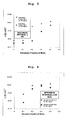
- the graphs of Figures 3 and 6 give the values of electrical conductivity referred to the ceramic specimens treated at 1200°C and at 1350°C as a function of the quantity of SiC and MoSi 2 , respectively.
- the conductivity is given as a function of the amount of molybdenum disilicide.
- the amount of filler appearing on the abscissa of each graph refers - as already specified previously - to the volumetric fraction referred to the dry gel. From Figures 3 to 6 it may be noted that, for all types of ceramic specimens, the conductivity increases as the temperature of pyrolysis increases.
- the SiBOC-based specimen pyrolysed up to 1350°C had a density of 3.39 g/cm 3 , a porosity of 2%, and a conductivity of 1.69E1 ( ⁇ cm) -1 .
- This specimen was characterized by a very low porosity.
- the conductivity was found to be slightly less than that of the specimen with 20 vol% of MoSi 2 treated up to 1350°C and synthesized without the use of boric acid.
- the x-ray diffraction analysis highlighted the formation of the same crystalline phases found in the specimen with 20 vol% of MoSi 2 obtained without the addition of boric acid.
Landscapes
- Engineering & Computer Science (AREA)
- Chemical & Material Sciences (AREA)
- Manufacturing & Machinery (AREA)
- Ceramic Engineering (AREA)
- Microelectronics & Electronic Packaging (AREA)
- Materials Engineering (AREA)
- Organic Chemistry (AREA)
- Dispersion Chemistry (AREA)
- Structural Engineering (AREA)
- General Chemical & Material Sciences (AREA)
- Physics & Mathematics (AREA)
- Inorganic Chemistry (AREA)
- Life Sciences & Earth Sciences (AREA)
- Chemical Kinetics & Catalysis (AREA)
- Electromagnetism (AREA)
- Geochemistry & Mineralogy (AREA)
- Non-Adjustable Resistors (AREA)
- Ceramic Products (AREA)
- Apparatuses And Processes For Manufacturing Resistors (AREA)
- Compositions Of Oxide Ceramics (AREA)
- Thermistors And Varistors (AREA)
- Electronic Switches (AREA)
Claims (25)
- Verfahren zur Herstellung von Keramikwiderständen, umfassend die Schritte des Herstellens eines unter Verwendung von mindestens einem Siliciumalkoxid und mindestens einem Keramikpulver erhaltenen Sols im Rahmen eines Sol-Gel-Verfahrens und Aussetzen des erhaltenen Gels einer Pyrolyseumgebung, dadurch gekennzeichnet, dass das mindestens eine Siliciumalkoxid die allgemeine Formel
Rx-Si(OR1)4-x
aufweist, wobeix = 1 oder 2;R für eine gesättigte oder ungesättigte Kohlenwasserstoffgruppe mit 1 bis 6 Kohlenstoffatomen in linearen oder verzweigten Ketten, sowie möglicherweise substituierten cyclischen Strukturen steht; undR1 für eine Alkylgruppe mit 1 bis 4 Kohlenstoffatomen steht. - Verfahren nach Anspruch 1, dadurch gekennzeichnet, dass das Verfahren das Gießen des Sols in Gussformen und Aussetzen der so beladenen Gussformen einer Pyrolyseumgebung umfasst.
- Verfahren nach Anspruch 1, wobei das mindestens eine Siliciumalkoxid ausgewählt ist aus der Gruppe, die zusammengesetzt aus CH3-Si(OEt)3, CH3-Si(OMe)3, CH3CH2-Si(OEt)3, CH3CH2-Si(OMe)3, CH2CH-Si(OEt)3 und Vinyl-Si(OEt)3.
- Verfahren nach Anspruch 1, wobei das mindestens eine Keramikpulver ausgewählt ist aus der Gruppe, zusammengesetzt aus MoSi2, SiC, Al2O3, Si3N4, BN, TiC, SiO2, TiN, B4C, CrSi2, ZrO2, AlN und TiO2.
- Verfahren nach einem der vorangehenden Ansprüche, wobei das Sol-Gel-Verfahren eine Hydrolysereaktion des mindestens einen Siliciumalkoxids vorzugsweise in saurer Katalyse unter Bildung von Silanolgruppen umfasst.
- Verfahren nach einem der vorangehenden Ansprüche, wobei das Sol-Gel-Verfahren eine Kondensationsreaktion der Silanolgruppen in basischer Katalyse unter Bildung des Sols umfasst.
- Verfahren nach einem der vorangehenden Ansprüche, wobei das in die Gussformen gegossene Sol zu einem Gel umgewandelt wird.
- Verfahren nach Anspruch 7, wobei das Gel einem Trocknungsverfahren unterzogen wird.
- Verfahren nach Anspruch 8, wobei es sich bei dem Gel um ein monolithisches Xerogel handelt, das im Wesentlichen frei von Rissen ist.
- Verfahren nach Anspruch 7, Anspruch 8 oder Anspruch 9, wobei das möglicherweise aus den Gussformen extrahierte Gel mindestens einer Pyrolysebehandlung in inerter Atmosphäre bei einer Pyrolysetemperatur von höher als 900°C unterzogen wird.
- Verfahren nach Anspruch 10, wobei die Pyrolysetemperatur höher als 1100°C, vorzugsweise höher als 1200°C und noch stärker bevorzugt höher als 1300°C ist.
- Verfahren nach Anspruch 10, wobei die Pyrolysetemperatur höher als 1350°C, vorzugsweise höher als 1400°C und noch stärker bevorzugt höher als 1450°C ist.
- Verfahren nach Anspruch 1, wobei das mindestens eine Keramikpulver in einem Volumenprozentanteil zwischen 20 Vol.-% und 40 Vol.-% in Bezug auf das hybride Silicagel vorliegt (CH3-SiO1,5)/Keramikpulver-Feststoffgemisch, wobei das Gemisch die Restporosität nicht umfasst.
- Verfahren nach Anspruch 1, wobei das Keramikpulver eine Korngröße von weniger als 10 µm aufweist.
- Verfahren nach Anspruch 14, wobei das Keramikpulver eine Korngröße von weniger als 5 µm aufweist.
- Verfahren nach Anspruch 14, wobei das Keramikpulver eine Korngröße aufweist, die zwischen 0,1 µm und 10 µm liegt.
- Verfahren nach Anspruch 4, wobei das Keramikpulver durch ein Gemisch aus MoSi2 und SiC gebildet wird.
- Verfahren nach Anspruch 4, wobei das Keramikpulver durch ein Gemisch aus MoSi2, SiC und/oder Al2O3 gebildet wird.
- Verfahren nach einem der vorangehenden Ansprüche, wobei das Keramikpulver ein weiteres Isolierungsmittel und/oder Halbleitermittel enthält.
- Verfahren nach Anspruch 1, wobei dem mindestens einen Siliciumalkoxid eine organische oder anorganische Verbindung eines Elements, ausgewählt aus der Gruppe IIIB oder der Gruppe IVA des Periodensystems, zugesetzt wird.
- Verfahren nach Anspruch 20, wobei das Element ausgewählt ist aus der Gruppe, zusammengesetzt aus B, Al, Ti und Zr.
- Verfahren nach Anspruch 20, wobei es sich bei der organischen Verbindung um ein Alkoxid handelt.
- Verfahren nach Anspruch 20, wobei es sich bei der Verbindung um B(OH)3 handelt.
- Verfahren nach Anspruch 20 oder Anspruch 21, wobei die Menge an B, ausgedrückt als Atomverhältnis B/Si, zwischen 0,01 und 0,5 liegt.
- Keramikwiderstand, der durch das Verfahren nach einem der Ansprüche 1 bis 24 erhältlich ist.
Applications Claiming Priority (2)
| Application Number | Priority Date | Filing Date | Title |
|---|---|---|---|
| ITTO20040161 | 2004-03-11 | ||
| IT000161A ITTO20040161A1 (it) | 2004-03-11 | 2004-03-11 | Procedimento per la realizzazione di resistori ceramici, e relativi resistori ceramici |
Publications (3)
| Publication Number | Publication Date |
|---|---|
| EP1575064A2 EP1575064A2 (de) | 2005-09-14 |
| EP1575064A3 EP1575064A3 (de) | 2005-10-12 |
| EP1575064B1 true EP1575064B1 (de) | 2009-02-18 |
Family
ID=34814973
Family Applications (1)
| Application Number | Title | Priority Date | Filing Date |
|---|---|---|---|
| EP05101708A Expired - Lifetime EP1575064B1 (de) | 2004-03-11 | 2005-03-04 | Verfahren zur Herstellung keramischer Widerstände und mit diesem Verfahren hergestellt keramische Widerstände |
Country Status (5)
| Country | Link |
|---|---|
| US (1) | US20050202953A1 (de) |
| EP (1) | EP1575064B1 (de) |
| AT (1) | ATE423385T1 (de) |
| DE (1) | DE602005012746D1 (de) |
| IT (1) | ITTO20040161A1 (de) |
Family Cites Families (10)
| Publication number | Priority date | Publication date | Assignee | Title |
|---|---|---|---|---|
| US3983077A (en) * | 1975-05-02 | 1976-09-28 | Texas Instruments Incorporated | Process for making ceramic resistor materials |
| US4472510A (en) * | 1982-12-23 | 1984-09-18 | Dow Corning Corporation | Carbon-containing monolithic glasses and ceramics prepared by a sol-gel process |
| US5635250A (en) * | 1985-04-26 | 1997-06-03 | Sri International | Hydridosiloxanes as precursors to ceramic products |
| USRE36753E (en) * | 1992-03-17 | 2000-06-27 | Sony Corporation | Photographic camera system |
| US5473826A (en) * | 1994-08-19 | 1995-12-12 | Yazaki Corporation | Process for drying sol-gel derived porous bodies at elevated subcritical temperatures and pressures |
| DE59505670D1 (de) * | 1994-10-19 | 1999-05-20 | Bosch Gmbh Robert | Keramischer elektrischer widerstand und dessen verwendung |
| US6099792A (en) * | 1998-10-07 | 2000-08-08 | Yazaki Corporation | Sol-gel process using porous mold |
| US6663793B2 (en) * | 2000-02-07 | 2003-12-16 | Sciperio, Inc. | Sol-gel-based composite materials for direct-write electronics applications |
| CA2478142C (en) * | 2001-03-09 | 2009-09-15 | Datec Coating Corporation | Sol-gel derived resistive and conductive coating |
| US20030108664A1 (en) * | 2001-10-05 | 2003-06-12 | Kodas Toivo T. | Methods and compositions for the formation of recessed electrical features on a substrate |
-
2004
- 2004-03-11 IT IT000161A patent/ITTO20040161A1/it unknown
-
2005
- 2005-03-04 EP EP05101708A patent/EP1575064B1/de not_active Expired - Lifetime
- 2005-03-04 DE DE602005012746T patent/DE602005012746D1/de not_active Expired - Fee Related
- 2005-03-04 AT AT05101708T patent/ATE423385T1/de not_active IP Right Cessation
- 2005-03-08 US US11/074,012 patent/US20050202953A1/en not_active Abandoned
Also Published As
| Publication number | Publication date |
|---|---|
| EP1575064A2 (de) | 2005-09-14 |
| DE602005012746D1 (de) | 2009-04-02 |
| EP1575064A3 (de) | 2005-10-12 |
| ITTO20040161A1 (it) | 2004-06-11 |
| ATE423385T1 (de) | 2009-03-15 |
| US20050202953A1 (en) | 2005-09-15 |
Similar Documents
| Publication | Publication Date | Title |
|---|---|---|
| CN100445228C (zh) | 隔热材料 | |
| Harshe et al. | Amorphous Si (Al) OC ceramic from polysiloxanes: bulk ceramic processing, crystallization behavior and applications | |
| US5455208A (en) | Carbon-containing black glass monoliths | |
| US5242866A (en) | Carbon-containing black glass monoliths | |
| WO1995030632A1 (en) | Ceramic materials fabricated from hydridosiloxane-based ceramic precursors and metal and/or ceramic powders | |
| EP0030145A1 (de) | Gesinterter keramischer Körper und Verfahren zu seiner Herstellung | |
| JP4088768B2 (ja) | 窒化アルミニウム系粉末 | |
| KR20190137446A (ko) | 열전도성이 우수한 경량 고분자 조성물과 그 제조방법 및 이 조성물을 이용하여 제조한 물품 | |
| Sorarù et al. | Development of mullite-SiC nanocomposites by pyrolysis of filled polymethylsiloxane gels | |
| EP0037249B1 (de) | Gesinterter keramischer Körper und Verfahren zu seiner Herstellung | |
| CN103058632B (zh) | 一种可陶瓷化高碳型聚合物基复合材料及其制备方法 | |
| JPH0776126B2 (ja) | マグネシア焼結体の製造方法 | |
| JP4804023B2 (ja) | 窒化アルミニウム系粉末及びその製造方法ならびにそれを含む熱伝導性材料 | |
| EP1575064A2 (de) | Verfahren zur Herstellung keramischer Widerstände und darauf keramische Widerstände | |
| EP0742180B1 (de) | Monolithisches keramisches Teil und seine Herstellung aus modifiziertem Wasserstoff-Sesquisiloxan | |
| Harshe | Synthesis and processing of amorphous Si (Al) OC bulk ceramics: high temperature properties and applications | |
| Islam et al. | Structural and dielectric properties of boron-doped and un-doped mullite thin films | |
| JP2022152981A (ja) | 高分子材料、遮熱材、防曇フィルム及び高分子材料の製造方法 | |
| JP3396113B2 (ja) | Si含有ガラス状カーボン材およびその製造方法 | |
| JP3682094B2 (ja) | 炭素繊維強化炭素複合材の製造方法 | |
| US20050153825A1 (en) | Ceramic composite material, method for the production thereof, and pencil-type glow plug containing such a composite material | |
| Tan et al. | Additive Manufacturing of Mullite Materials Based on Core‐Shell Alumina Nanoparticles | |
| CN114933806B (zh) | 一种高分子基防水阻燃耐高温绝缘材料的制备方法 | |
| Harshe | Synthesis and Processing of Amorphous Si (Al) OC Bulk Ceramics | |
| Suttor et al. | Synthetic Low‐Shrinkage Oxide‐Matrices from Filled Polymeric Siloxanes |
Legal Events
| Date | Code | Title | Description |
|---|---|---|---|
| PUAI | Public reference made under article 153(3) epc to a published international application that has entered the european phase |
Free format text: ORIGINAL CODE: 0009012 |
|
| PUAL | Search report despatched |
Free format text: ORIGINAL CODE: 0009013 |
|
| AK | Designated contracting states |
Kind code of ref document: A2 Designated state(s): AT BE BG CH CY CZ DE DK EE ES FI FR GB GR HU IE IS IT LI LT LU MC NL PL PT RO SE SI SK TR |
|
| AX | Request for extension of the european patent |
Extension state: AL BA HR LV MK YU |
|
| AK | Designated contracting states |
Kind code of ref document: A3 Designated state(s): AT BE BG CH CY CZ DE DK EE ES FI FR GB GR HU IE IS IT LI LT LU MC NL PL PT RO SE SI SK TR |
|
| AX | Request for extension of the european patent |
Extension state: AL BA HR LV MK YU |
|
| 17P | Request for examination filed |
Effective date: 20060406 |
|
| AKX | Designation fees paid |
Designated state(s): AT BE BG CH CY CZ DE DK EE ES FI FR GB GR HU IE IS IT LI LT LU MC NL PL PT RO SE SI SK TR |
|
| 17Q | First examination report despatched |
Effective date: 20060811 |
|
| RTI1 | Title (correction) |
Free format text: PROCESS FOR MANUFACTURING CERAMIC RESISTORS, AND CERAMIC RESISTORS OBTAINED THEREWITH |
|
| GRAP | Despatch of communication of intention to grant a patent |
Free format text: ORIGINAL CODE: EPIDOSNIGR1 |
|
| GRAS | Grant fee paid |
Free format text: ORIGINAL CODE: EPIDOSNIGR3 |
|
| GRAA | (expected) grant |
Free format text: ORIGINAL CODE: 0009210 |
|
| AK | Designated contracting states |
Kind code of ref document: B1 Designated state(s): AT BE BG CH CY CZ DE DK EE ES FI FR GB GR HU IE IS IT LI LT LU MC NL PL PT RO SE SI SK TR |
|
| REG | Reference to a national code |
Ref country code: GB Ref legal event code: FG4D |
|
| REG | Reference to a national code |
Ref country code: CH Ref legal event code: EP |
|
| REG | Reference to a national code |
Ref country code: IE Ref legal event code: FG4D |
|
| REF | Corresponds to: |
Ref document number: 602005012746 Country of ref document: DE Date of ref document: 20090402 Kind code of ref document: P |
|
| PG25 | Lapsed in a contracting state [announced via postgrant information from national office to epo] |
Ref country code: SI Free format text: LAPSE BECAUSE OF FAILURE TO SUBMIT A TRANSLATION OF THE DESCRIPTION OR TO PAY THE FEE WITHIN THE PRESCRIBED TIME-LIMIT Effective date: 20090218 Ref country code: ES Free format text: LAPSE BECAUSE OF FAILURE TO SUBMIT A TRANSLATION OF THE DESCRIPTION OR TO PAY THE FEE WITHIN THE PRESCRIBED TIME-LIMIT Effective date: 20090529 Ref country code: FI Free format text: LAPSE BECAUSE OF FAILURE TO SUBMIT A TRANSLATION OF THE DESCRIPTION OR TO PAY THE FEE WITHIN THE PRESCRIBED TIME-LIMIT Effective date: 20090218 Ref country code: NL Free format text: LAPSE BECAUSE OF FAILURE TO SUBMIT A TRANSLATION OF THE DESCRIPTION OR TO PAY THE FEE WITHIN THE PRESCRIBED TIME-LIMIT Effective date: 20090218 Ref country code: LT Free format text: LAPSE BECAUSE OF FAILURE TO SUBMIT A TRANSLATION OF THE DESCRIPTION OR TO PAY THE FEE WITHIN THE PRESCRIBED TIME-LIMIT Effective date: 20090218 |
|
| NLV1 | Nl: lapsed or annulled due to failure to fulfill the requirements of art. 29p and 29m of the patents act | ||
| PG25 | Lapsed in a contracting state [announced via postgrant information from national office to epo] |
Ref country code: AT Free format text: LAPSE BECAUSE OF FAILURE TO SUBMIT A TRANSLATION OF THE DESCRIPTION OR TO PAY THE FEE WITHIN THE PRESCRIBED TIME-LIMIT Effective date: 20090218 Ref country code: PL Free format text: LAPSE BECAUSE OF FAILURE TO SUBMIT A TRANSLATION OF THE DESCRIPTION OR TO PAY THE FEE WITHIN THE PRESCRIBED TIME-LIMIT Effective date: 20090218 Ref country code: SE Free format text: LAPSE BECAUSE OF FAILURE TO SUBMIT A TRANSLATION OF THE DESCRIPTION OR TO PAY THE FEE WITHIN THE PRESCRIBED TIME-LIMIT Effective date: 20090518 Ref country code: IS Free format text: LAPSE BECAUSE OF FAILURE TO SUBMIT A TRANSLATION OF THE DESCRIPTION OR TO PAY THE FEE WITHIN THE PRESCRIBED TIME-LIMIT Effective date: 20090618 |
|
| PG25 | Lapsed in a contracting state [announced via postgrant information from national office to epo] |
Ref country code: BE Free format text: LAPSE BECAUSE OF FAILURE TO SUBMIT A TRANSLATION OF THE DESCRIPTION OR TO PAY THE FEE WITHIN THE PRESCRIBED TIME-LIMIT Effective date: 20090218 |
|
| PG25 | Lapsed in a contracting state [announced via postgrant information from national office to epo] |
Ref country code: EE Free format text: LAPSE BECAUSE OF FAILURE TO SUBMIT A TRANSLATION OF THE DESCRIPTION OR TO PAY THE FEE WITHIN THE PRESCRIBED TIME-LIMIT Effective date: 20090218 Ref country code: CZ Free format text: LAPSE BECAUSE OF FAILURE TO SUBMIT A TRANSLATION OF THE DESCRIPTION OR TO PAY THE FEE WITHIN THE PRESCRIBED TIME-LIMIT Effective date: 20090218 Ref country code: PT Free format text: LAPSE BECAUSE OF FAILURE TO SUBMIT A TRANSLATION OF THE DESCRIPTION OR TO PAY THE FEE WITHIN THE PRESCRIBED TIME-LIMIT Effective date: 20090727 Ref country code: DK Free format text: LAPSE BECAUSE OF FAILURE TO SUBMIT A TRANSLATION OF THE DESCRIPTION OR TO PAY THE FEE WITHIN THE PRESCRIBED TIME-LIMIT Effective date: 20090218 Ref country code: MC Free format text: LAPSE BECAUSE OF NON-PAYMENT OF DUE FEES Effective date: 20090331 |
|
| REG | Reference to a national code |
Ref country code: CH Ref legal event code: PL |
|
| PG25 | Lapsed in a contracting state [announced via postgrant information from national office to epo] |
Ref country code: RO Free format text: LAPSE BECAUSE OF FAILURE TO SUBMIT A TRANSLATION OF THE DESCRIPTION OR TO PAY THE FEE WITHIN THE PRESCRIBED TIME-LIMIT Effective date: 20090218 Ref country code: SK Free format text: LAPSE BECAUSE OF FAILURE TO SUBMIT A TRANSLATION OF THE DESCRIPTION OR TO PAY THE FEE WITHIN THE PRESCRIBED TIME-LIMIT Effective date: 20090218 |
|
| PLBE | No opposition filed within time limit |
Free format text: ORIGINAL CODE: 0009261 |
|
| REG | Reference to a national code |
Ref country code: FR Ref legal event code: ST Effective date: 20091130 |
|
| STAA | Information on the status of an ep patent application or granted ep patent |
Free format text: STATUS: NO OPPOSITION FILED WITHIN TIME LIMIT |
|
| REG | Reference to a national code |
Ref country code: IE Ref legal event code: MM4A |
|
| 26N | No opposition filed |
Effective date: 20091119 |
|
| GBPC | Gb: european patent ceased through non-payment of renewal fee |
Effective date: 20090518 |
|
| PG25 | Lapsed in a contracting state [announced via postgrant information from national office to epo] |
Ref country code: LI Free format text: LAPSE BECAUSE OF NON-PAYMENT OF DUE FEES Effective date: 20090331 Ref country code: BG Free format text: LAPSE BECAUSE OF FAILURE TO SUBMIT A TRANSLATION OF THE DESCRIPTION OR TO PAY THE FEE WITHIN THE PRESCRIBED TIME-LIMIT Effective date: 20090518 Ref country code: IE Free format text: LAPSE BECAUSE OF NON-PAYMENT OF DUE FEES Effective date: 20090304 Ref country code: CH Free format text: LAPSE BECAUSE OF NON-PAYMENT OF DUE FEES Effective date: 20090331 Ref country code: DE Free format text: LAPSE BECAUSE OF NON-PAYMENT OF DUE FEES Effective date: 20091001 |
|
| PG25 | Lapsed in a contracting state [announced via postgrant information from national office to epo] |
Ref country code: FR Free format text: LAPSE BECAUSE OF NON-PAYMENT OF DUE FEES Effective date: 20091123 |
|
| PG25 | Lapsed in a contracting state [announced via postgrant information from national office to epo] |
Ref country code: GB Free format text: LAPSE BECAUSE OF NON-PAYMENT OF DUE FEES Effective date: 20090518 |
|
| PG25 | Lapsed in a contracting state [announced via postgrant information from national office to epo] |
Ref country code: GR Free format text: LAPSE BECAUSE OF FAILURE TO SUBMIT A TRANSLATION OF THE DESCRIPTION OR TO PAY THE FEE WITHIN THE PRESCRIBED TIME-LIMIT Effective date: 20090519 |
|
| PG25 | Lapsed in a contracting state [announced via postgrant information from national office to epo] |
Ref country code: IT Free format text: LAPSE BECAUSE OF FAILURE TO SUBMIT A TRANSLATION OF THE DESCRIPTION OR TO PAY THE FEE WITHIN THE PRESCRIBED TIME-LIMIT Effective date: 20090218 |
|
| PG25 | Lapsed in a contracting state [announced via postgrant information from national office to epo] |
Ref country code: LU Free format text: LAPSE BECAUSE OF NON-PAYMENT OF DUE FEES Effective date: 20090304 |
|
| PG25 | Lapsed in a contracting state [announced via postgrant information from national office to epo] |
Ref country code: HU Free format text: LAPSE BECAUSE OF FAILURE TO SUBMIT A TRANSLATION OF THE DESCRIPTION OR TO PAY THE FEE WITHIN THE PRESCRIBED TIME-LIMIT Effective date: 20090819 |
|
| PG25 | Lapsed in a contracting state [announced via postgrant information from national office to epo] |
Ref country code: TR Free format text: LAPSE BECAUSE OF FAILURE TO SUBMIT A TRANSLATION OF THE DESCRIPTION OR TO PAY THE FEE WITHIN THE PRESCRIBED TIME-LIMIT Effective date: 20090218 |
|
| PG25 | Lapsed in a contracting state [announced via postgrant information from national office to epo] |
Ref country code: CY Free format text: LAPSE BECAUSE OF FAILURE TO SUBMIT A TRANSLATION OF THE DESCRIPTION OR TO PAY THE FEE WITHIN THE PRESCRIBED TIME-LIMIT Effective date: 20090218 |