EP1572795B1 - Aliphatic polyester resin composition - Google Patents
Aliphatic polyester resin composition Download PDFInfo
- Publication number
- EP1572795B1 EP1572795B1 EP03786620A EP03786620A EP1572795B1 EP 1572795 B1 EP1572795 B1 EP 1572795B1 EP 03786620 A EP03786620 A EP 03786620A EP 03786620 A EP03786620 A EP 03786620A EP 1572795 B1 EP1572795 B1 EP 1572795B1
- Authority
- EP
- European Patent Office
- Prior art keywords
- polyester resin
- aliphatic polyester
- acid
- weight
- elastic modulus
- Prior art date
- Legal status (The legal status is an assumption and is not a legal conclusion. Google has not performed a legal analysis and makes no representation as to the accuracy of the status listed.)
- Expired - Lifetime
Links
Images

Classifications
-
- C—CHEMISTRY; METALLURGY
- C08—ORGANIC MACROMOLECULAR COMPOUNDS; THEIR PREPARATION OR CHEMICAL WORKING-UP; COMPOSITIONS BASED THEREON
- C08K—Use of inorganic or non-macromolecular organic substances as compounding ingredients
- C08K3/00—Use of inorganic substances as compounding ingredients
- C08K3/34—Silicon-containing compounds
- C08K3/36—Silica
-
- C—CHEMISTRY; METALLURGY
- C08—ORGANIC MACROMOLECULAR COMPOUNDS; THEIR PREPARATION OR CHEMICAL WORKING-UP; COMPOSITIONS BASED THEREON
- C08K—Use of inorganic or non-macromolecular organic substances as compounding ingredients
- C08K5/00—Use of organic ingredients
- C08K5/0008—Organic ingredients according to more than one of the "one dot" groups of C08K5/01 - C08K5/59
- C08K5/0016—Plasticisers
-
- C—CHEMISTRY; METALLURGY
- C08—ORGANIC MACROMOLECULAR COMPOUNDS; THEIR PREPARATION OR CHEMICAL WORKING-UP; COMPOSITIONS BASED THEREON
- C08L—COMPOSITIONS OF MACROMOLECULAR COMPOUNDS
- C08L67/00—Compositions of polyesters obtained by reactions forming a carboxylic ester link in the main chain; Compositions of derivatives of such polymers
Definitions
- the present invention relates to an aliphatic polyester resin composition having excellent flexibility and high heat resistance.
- Plastics are employed in various fields because of excellent chemical stability and high durability. However, plastics may cause problems upon disposal after use due to the stability. It is a social problem derived from landfill disposal and incineration of the wasted plastics. The plastics subjected to landfill disposal are not decomposed for a long period of time; thus, more landfills are necessary. Further, incineration of wasted plastics emits superheat to damage an incinerator. Furthermore, wasted plastics may generate a harmful substance.
- a biodegradable resin which is easily decomposed into water and carbon dioxide by microorganisms in earth or water.
- an aliphatic polyester resin is an excellent biodegradable resin, which is more environmentally friendly because it has a characteristic capable of being easily decomposed in the presence of water and therefore decomposed after disposal without causing environmental pollution when used as a general-purpose resin, and also which is more biologically friendly because it exerts no or little influence on the living body after achieving the purpose and then decomposed and absorbed in the living body when retained as a medical material in the living body.
- the aliphatic polyester resin caused problems when formed into a film, a filament or a molded article because of characteristics such as hardness, brittleness, and poor pliability at normal temperature. Also, the aliphatic polyester resin can not be used in hot water or a microwave oven and therefore used in limited purposes because an elastic modulus is rapidly lowered at a glass transition temperature or higher and the glass transition temperature is an upper temperature limit of the heat resistance.
- polylactic acid which is one of the aliphatic polyester resins
- polylactic acid is replaced by a copolymer with the other aliphatic polyester resin or a mixture of polylactic acid and the copolymer.
- EP 0 515 203 A discloses adding an aliphatic dihydric alcohol such as polyethylene glycol or polypropylene glycol to impart the flexibility to polylactic acid.
- JP Kokai No. 10-81815 discloses to impart the flexibility by adding silica, as an inorganic additive, and an aliphatic carboxylic acid amide to a mixture of an aliphatic polyester resin and a polyalkylene glycol.
- a lactic acid polymer composition comprising formulating 100 parts by weight of a mixture consisting of 80-95% by weight of an L-lactic acid polymer having an L-lactic acid proportion of 75% or more and 5-20% by weight of a plasticizer selected from the group consisting of a polyhydric alcohol ester and a hydroxypolycarboxylic acid ester, 0.1-5 parts by weight of an anti-blocking agent having a SiO 2 content of 90% or more and an average particle size of 7-50 nm, and 0.1-2 parts by weight of a slip agent; a molded product and film obtained from the composition; and a preparation process of the same are disclosed.
- EP 0 980 894 discloses a polylactic acid-based resin composition composed of a high molecular ingredient (A) comprising polylactic acid (a1) and an aliphatic polyester (B), and a film, particularly an inflation film, prepared from the resin composition.
- polylactic acid is hard at room temperature and has an elastic modulus of more than 10 9 Pa, and the elastic modulus decreases quickly to less than 10 6 Pa at a temperature of 100 °C or more, the heat resistance is poor.
- a means of adding several percentages to several tens of percentages of plasticizers a means of reducing the glass transition temperature by preparing a copolymer containing components (other than lactic acid) whose amount is increased by several tens of percentages, a means of blending a soft (elastic modulus is 10 9 Pa or less) resin in the service temperature range, or a combination thereof.
- the prior process can impart flexibility to polylactic acid, but not heat resistance.
- a crystal is formed by crystallization, thereby enabling the crystal to function as a crosslink point.
- polylactic acid has such a problem that it must be maintained at the temperature, at which crystallization can be performed, for a long time after melting at a temperature higher than a melting point and thus a molding operation requiring a long time is required. Therefore, the time close to the molding cycle of the general-purpose resin makes it impossible to obtain a molded article which has been crystallized to some extent. According to the prior art, it was difficult to obtain a molded article such as film, sheet, filament, or container, which has both the flexibility and the heat resistance, from a lactate polymer resin.
- a desire of the present invention is to simultaneously impart the flexibility, heat resistance, and formability to an aliphatic polyester resin such as polylactic acid, to which the flexibility, the heat resistance and the formability are hardly imparted, simultaneously, according to the prior art.
- the present invention provides an aliphatic polyester resin composition
- an aliphatic polyester resin composition comprising an aliphatic polyester resin, a plasticizer wherin the plasticizer is polyethylene glycol, an ester of poly(ethylene glycol), or a diglycerol ester, and hydrophilic silica particles, wherein the amount of the hydrophilic silica particles is within a range from 16 to 100 parts by weight based on 100 parts by weight of the total amount of the aliphatic polyester resin and the plasticizer.
- a biodegradable resin having the flexibility and improved heat resistance by adding a plasticizer and a hydrophilic silica to an aliphatic polyester resin such as polylactic acid.
- Flexibility is imparted to the aliphatic polyester resin by adding a plasticizer such as aliphatic polyhydric alcohol, while the addition of hydrophilic silica particles forms a hydrogen bond with the plasticizer, and thus making it possible to improve the heat resistance of the aliphatic polyester resin. Further, by using the aliphatic polyester resin of the present invention, various shaped articles can be formed.
- a plasticizer such as aliphatic polyhydric alcohol
- hydrophilic silica particles forms a hydrogen bond with the plasticizer
- the aliphatic polyester resin composition of the present invention contains an aliphatic polyester resin, a plasticizer, and hydrophilic silica particles.
- the aliphatic polyester resin includes an aliphatic polyhydroxycarboxylic acid, an aliphatic polyester resin, and a mixture thereof described below.
- aliphatic polyhydroxycarboxylic acid for example, copolymer of a homopolymer such as polylactic acid or polyhydroxycaproic acid and lactic acid and the other aliphatic hydroxycarboxylic acid; (2) aliphatic polyester resin comprising a lactic acid unit, an aliphatic polyhydric carboxylic acid unit, and an aliphatic polyhydric alcohol unit; (3) aliphatic polyester resin containing a lactic acid unit and polyfunctional polysaccharides; (4) aliphatic polyester resin of an aliphatic polyhydric carboxylic acid such as polybutylene succinate and an aliphatic polyhydric alcohol; and (5) mixture of the above aliphatic polyhydroxycarboxylic acid and the above aliphatic polyester resin.
- aliphatic polyhydroxycarboxylic acid for example, copolymer of a homopolymer such as polylactic acid or polyhydroxycaproic acid and lactic acid and the other aliphatic hydroxycarboxylic acid
- aliphatic polyhydroxycarboxylic acid and aliphatic polyester resin are copolymers, a random copolymer, an alternating copolymer, a block copolymer, and a graft copolymer are included.
- the concept of the mixture includes the concepts of a polymer blend and a polymer alloy.
- polylactic acid poly(L-lactic acid), wherein a constituent unit is composed only of L-lactic acid, poly(D-lactic acid), wherein a constituent unit is composed only of D-lactic acid, and poly(DL-lactic acid), wherein an L-lactic acid unit and a D-lactic acid unit exist in a different ratio
- aliphatic hydroxycarboxylic acid other than lactic acid which constitutes the aliphatic polyhydroxycarboxylic acid, include glycolic acid, 3-hydroxybutyric acid, 4-hydroxybutyric acid, 4-hydroxyvaleric acid, 5-hydroxyvaleric acid, and 6-hydroxycaproic acid.
- These aliphatic hydroxycarboxylic acids are used alone as a homopolymer, or used in combination with lactic acid as a copolymer.
- the polylactic acid used in the present invention can be prepared by the method of directly subjecting L-lactic acid, D-lactic acid, or DL-lactic acid to dehydration polycondensation. Also it can be prepared by the method of subjecting lactide as a cyclic dimer of lactic acid to ring-opening polymerization. The ring-opening polymerization may be performed in the presence of a compound having a hydroxyl group, such as higher alcohol or hydroxycarboxylic acid.
- the copolymer of lactic acid and the other aliphatic hydroxycarboxylic acid can be prepared by the method of subjecting lactic acid and the hydroxycarboxylic acid to dehydration polycondensation.
- polylactic acid can be prepared by the method of subjecting lactide as a cyclic dimer of lactic acid and a cyclic compound of the aliphatic hydroxycarboxylic acid to ring-opening copolymerization.
- the polylactic acid may be prepared by any method.
- Examples of the aliphatic polyhydric carboxylic acid which is used in the preparation of the aliphatic polyester resin containing a lactic acid unit, an aliphatic polyhydric carboxylic acid unit and an aliphatic polyhydric alcohol unit or the aliphatic polyester resin of the aliphatic polyhydric carboxylic acid and the aliphatic polyhydric alcohol, include oxalic acid, succinic acid, malonic acid, glutaric acid, adipic acid, pimelic acid, suberic acid, azelaic acid, undecanoic diacid, dodecanoic diacid, and anhydrides thereof.
- These aliphatic polyhydric carboxylic acids may be acid anhydrides or mixtures with the acid anhydrides.
- Examples of the aliphatic polyhydric alcohol include ethylene glycol, diethylene glycol, triethylene glycol, propylene glycol, dipropylene glycol, 1,3-butanediol, 1.4-butanediol, 3-methyl-1,5-pentanediol, 1,6-hexanediol, 1,9-nonanediol, neopentyl glycol, tetramethylene glycol and 1,4-cyclohexane dimethanol.
- the aliphatic polyester resin comprising a lactic acid unit, an aliphatic polyhydric carboxylic acid unit, and an aliphatic polyhydric alcohol unit can be prepared by the method of reacting the aliphatic polyhydric carboxylic acid and the aliphatic polyhydric alcohol with a copolymer of polylactic acid or lactic acid of the other hydroxycarboxylic acid, or the method of reacting the aliphatic polyhydric carboxylic acid and the aliphatic polyhydric alcohol with lactic acid.
- the aliphatic polyhydric carboxylic acid and the aliphatic polyhydric alcohol can be prepared by the method of reacting the aliphatic polyhydric carboxylic acid and the aliphatic polyhydric alcohol with lactide as the cyclic dimer of lactic acid or a cyclic ester of the hydroxycarboxylic acid.
- the aliphatic polyester resin can be prepared by any method.
- the aliphatic polyester resin of the aliphatic polyhydric carboxylic acid and the aliphatic polyhydric alcohol can be prepared by the method of reacting the aliphatic polyhydric carboxylic acid with the aliphatic polyhydric alcohol.
- polyfunctional polysaccharides used in the preparation of the aliphatic polyester resin containing a lactic acid unit and polyfunctional polysaccharides include cellulose, cellulose nitrate, cellulose acetate, methylcellulose, ethylcellulose, carboxymethylcellulose, nitrocellulose, cellophane, viscose rayon, regenerated cellulose such as cupra, hemicellulose, starch, amylopectin, dextrin, dextran, glycogen, pectin, chitin, chitosan, and mixtures and derivatives thereof.
- the aliphatic polyester resin containing a lactic acid unit and polyfunctional polysaccharides can be prepared by the method of reacting the polyfunctional polysaccharides and lactic acid or polylactic acid with a copolymer of lactic acid and hydroxycarboxylic acid. Also it can be prepared by the method of reacting the polyfunctional polysaccharides with lactide as the cyclic dimer of lactic acid or cyclic esters of the hydroxycarboxylic acid.
- the aliphatic polyester resin may be prepared by any method.
- various aliphatic polyester resins described above can be used.
- those containing a lactic acid component for example, a copolymer of a homopolymer such as polylactic acid, polybutylene succinate or polyhydroxycaproic acid, lactic acid and an aliphatic hydroxycarboxylic acid other than lactic acid (in case the transparency is required, those containing lactic acid in a weight ratio of 50% or more are preferred) and an aliphatic polyester resin of lactic acid, an aliphatic polyhydric carboxylic acid and an aliphatic polyhydric alcohol (in case the transparency is required, those containing lactic acid in a weight ratio of 50% or more are preferred) are preferably used.
- the molecular weight of the aliphatic polyester resin used in the present invention is not specifically limited as far as the resulting molded article such as container, film, sheet, or plate exhibits substantially sufficient mechanical and physical properties.
- the weight-average molecular weight of the aliphatic polyester resin used in the present invention is within a range from 10,000 to 5,000,000, preferably from 30,000 to 3,000,000, more preferably from 50,000 to 2,000,000, still more preferably from 70,000 to 1,000,000, and most preferably from 90,000 to 500,000.
- plasticizer refers to any compound having the effect capable of lowering the elastic modulus of the resin by adding to the resin, and the compound may be in the form of gas, liquid, or solid and may be an organic or inorganic compound.
- the plasticizer used in the aliphatic polyester resin composition includes triethylene glycol di-(2-ethylbutylate), triethylene glycol di-(2-ethylhexoate), polyethylene glycol di(2-ethylhexoate), dibutylmethylenebis-thioglycolate, polyethylene glycol, and polyglycol ether, and examples of the glycerin derivative, which can be used, include glycerol monoacetate, glycerol diacetate, glycerol triacetate, glycerol tributylate, glycerol tripropionate, and glycerol ether acetate.
- the amount of the plasticizer can vary according to the kind of the aliphatic polyester resin and the kind of the plasticizer. The amount may be controlled so that the aliphatic polyester resin composition plasticized by the plasticizer is softened at the temperature lower than a melting point of the aliphatic polyester resin and can be molded, and is usually within a range from 2.0 to 50 parts by weight based on 100 parts by weight of the aliphatic polyester resin.
- the hydrophilic silica particles to be added in the aliphatic polyester resin composition of the present invention can form a hydrogen bond with the plasticizer and means both hydrophilic silica particles and particles coated with the hydrophilic silica.
- the hydrophilic silica is silica having a SiOH (silanol group) formed by bonding silicon with a hydroxyl group.
- the hydrophilic silica is desirably amorphous and may be prepared by either a thermal decomposition method or a precipitation method.
- the silica prepared by the thermal decomposition method can be obtained by continuously decomposing silicon tetrachloride (SiCl 4 ) with intense heating at 1000 °C in the presence of hydrogen and oxygen.
- the silica prepared by the precipitation method is obtained by reacting a solution of an alkali metal silicate, for example, sodium silicate with an acid.
- an alkali metal silicate for example, sodium silicate
- a solution of an alkali metal silicate for example, sodium silicate
- AEROSIL 200 trade name, manufactured by Japan Aerosil Ltd.
- the particles coated with the hydrophilic silica also include particles coated entirely or partially with silica, particularly mineral particles coated entirely or partially with silica, and examples thereof include titanium oxide-containing silica beads which are commercially available from Toray Industries, Inc. under the trade name of Torayceram S-ITTM titanium oxide-containing silica alumina microsphere which is commercially available from Zeelan Co. under the trade name ofZ-Light-Sphere W1O12TM; silica/titanium oxide particles (particle diameter: 106 to 500 ⁇ m) synthesized by an amorphous precipitation method, which are commercially available from Crossfield Co.
- the average particle diameter of the hydrophilic silica particle is not specifically limited, but is within a range from 5 nm to 30 nm. Especially, in case optically transparency is required, it is within a range from 5 nm to 100 nm. When the average particle diameter of the hydrophilic silica particle is larger than 100 nm, light is scattered and transparency decreases.
- the amount of the hydrophilic silica particle is controlled within a range from 15 to 100 parts by weight, preferably 15 to 40 parts by weight based on 100 parts by weight of the total amount of the aliphatic polyester resin and the plasticizer. On the other hand, when the amount is more than 100 parts by weight, resin strength decreases and formability decreases.
- antioxidants antioxidants, ultraviolet absorbers, antistatic agents, lubricants, coloring pigments, and a small amount of other resins can be added for the purposes of improving physical properties such as elastic modulus, tensile strength, flexural strength, mechanical strength, heat resistance, and weatherability.
- various elastomers for example, SBR (styrene-butadiene rubber), NBR (acrylonitrile-butadiene rubber), SBS (polystyrene-polybutadiene-polystyrene) type thermoplastic elastomers
- additives for example, nucleating agents, pigments, stabilizers, releasants, flame retardants; antioxidants, ultraviolet absorbers, antibacterial agent, and dyes
- fillers for example, calcium carbonate, clay, carbon black, impact-resistant core/shell type particles
- pigments for example, titanium oxide, metallic pigments and pearlescent pigments
- the aliphatic polyester resin, the plasticizer, the hydrophilic silica, and other additives can be mixed in the form of a solid using publicly known kneading means such as Henschel mixer and ribbon blender.
- molded articles can be produced by an injection molding method, an extrusion blow molding method, an extrusion stretching blow molding method, an injection blow molding method, an injection stretching blow molding method, a thermoforming method, or a compression molding method.
- film-, sheet- and plate-shaped molded articles can be produced by an inflation molding method or a T-die molding method.
- the aliphatic polyester resin composition of the present invention has the flexibility at normal temperature and it is not necessary to stretch to increase the crystallinity when used as a thin film or fibers. Since a stretching operation is not required, it is possible to impart sufficient durability to a thick sheet such as doormat. Furthermore, a molded article having proper elastic modulus even at high temperature of 100 °C or higher can be produced. Therefore, it became possible to apply an aliphatic polyester resin, particularly polylactic acid, which had hitherto been used only in stationery and packaging materials, to various uses such as film-shaped molded articles having different thickness and shape in outdoor, automotive, and electrical fields. Specifically, mechanical fasteners, floor mats composed of thick fibers, agricultural films, various containers for beverages and cosmetics, and packaging films for foods can be formed by the above method.
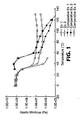
- a composition was prepared and the elastic modulus were measured according to Example 1, except that the amount of the hydrophilic amorphous silica particles is changed to 40 parts by weight.
- Polylactic acid alone used in Example 1 was formed into a film at 150 °C and the elastic modulus were measured.
- a composition was prepared, it was formed into a film, and the elastic modulus were measured according to Example 1, except that polyethylene glycol was not added.
- a composition was prepared, it was formed into a film, and the elastic modulus were measured according to Example 1, except that the hydrophilic amorphous silica particles were not added.
- Fig. 1 As shown in Fig. 1, when using polylactic acid alone (Comparative Example 1), the resulting product is hard having an elastic modulus of 10 9 Pa at 50 °C or lower.
- the elastic modulus When polyethylene glycol is added to polylactic acid (Comparative Example 3), the elastic modulus is 1.0 x 10 9 Pa or less at room temperature (25 °C) and the flexibility is imparted, while the temperature dependence of the elastic modulus is high and the elastic modulus at 40 °C is lower than that of polylactic acid. Therefore, the heat resistance is poor.
- Example 1 the addition of 20 parts by weight of hydrophilic amorphous silica particles to 100 parts by weight of the total amount of the polylactic acid and the plasticizer makes it possible to prevent lowering of the elastic modulus at high temperature, and thus the same elastic modulus as the original elastic modulus of polylactic acid can be maintained even at 80 °C or higher.
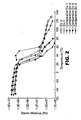
- a composition was prepared, it was formed into a film, and the elastic modulus were measured according to Example 1, except that polyethylene glycol having a weight-average molecular weight of 200 was changed to polyethylene glycol having a number-average molecular weight of 1000.
- a composition was prepared, it was formed into a film, and the elastic modulus were measured according to Example 1, except that the amount of the polyethylene glycol was changed to 15 parts by weight.
- a composition was prepared, it was formed into a film, and the elastic modulus were measured according to Example 3, except that the hydrophilic amorphous silica particles were not added.
- a composition was prepared, it was formed into a film, and the elastic modulus were measured according to Example 3, except that the amount of the hydrophilic amorphous silica particles was changed to 10 parts by weight.
- a composition was prepared, it was formed into a film, and the elastic modulus were measured according to Example 4, except that the amount of the hydrophilic amorphous silica particles was changed to 10 parts by weight.
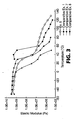
- a composition was prepared, it was formed into a film, and the elastic modulus were measured according to Example 5, except that the hydrophilic amorphous silica particles were not added.
- a composition was prepared, it was formed into a film, and the elastic modulus were measured according to Example 5, except that hydrophobic amorphous silica particles ("AEROSIL RX200" having an average primary particle diameter of 12 nm, manufactured by Japan Aerosil Ltd.) were added instead of the hydrophilic amorphous silica particles.
- hydrophobic amorphous silica particles (“AEROSIL RX200” having an average primary particle diameter of 12 nm, manufactured by Japan Aerosil Ltd.) were added instead of the hydrophilic amorphous silica particles.
- a composition was prepared, it was formed into a film, and the elastic modulus were measured according to Example 1, except the polyethylene glycol having a weight-average molecular weight of 200 was changed to a polyethylene glycol having a number-average molecular weight of 1000.
- a composition was prepared, it was formed into a film, and the elastic modulus were measured according to Example 1, except the polyethylene glycol having a weight-average molecular weight of 200 was changed to diglycerol ester having an acetylation ratio of 50% or more (manufactured by Riken Vitamin Co., Ltd., "LIKEMAL PL-710").
- a composition was prepared, it was formed into a film, and the elastic modulus were measured according to Example 6, except that the hydrophilic amorphous silica particles were not added.
- a composition was prepared, it was formed into a film, and the elastic modulus were measured according to Example 7, except that the hydrophilic amorphous silica particles were not added.
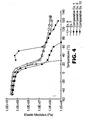
- a composition was prepared, it was formed into a film, and the elastic modulus were measured according to Example 3, except the polylactic acid having a weight-average molecular weight of 120,000 was changed to polyethylene succinate having a weight-average molecular weight of 240,000 (manufactured by Nihon Syokubai Co., Ltd., Runare SE-P1000).
- the polyethylene succinate having a weight-average molecular weight of 240,000 alone used in Example 8 was formed into film and the elastic modulus were measured according to Example 1.
- a composition was prepared, it was formed into a film, and the elastic modulus were measured according to Example 8, except that the hydrophilic amorphous silica particles were not added.
- the flexibility was evaluated by the elastic modulus, and the symbol O means that the elastic modulus is 1 x 10 9 or less at 20 °C; ⁇ means that the elastic modulus is 1 x 10 9 or less at 20 to 30 °C; and X means that the elastic modulus is 1 x 10 9 or more at 40 °C.
- the heat resistance is also evaluated by the elastic modulus, and the symbol O means that the elastic modulus is 1 x 10 6 or more at 100 °C; ⁇ means that the elastic modulus is 1 x 10 6 or less at 90 to 100 °C; and X means that the elastic modulus is 1 x 10 6 or less at 90 °C.
Landscapes
- Chemical & Material Sciences (AREA)
- Health & Medical Sciences (AREA)
- Chemical Kinetics & Catalysis (AREA)
- Medicinal Chemistry (AREA)
- Polymers & Plastics (AREA)
- Organic Chemistry (AREA)
- Compositions Of Macromolecular Compounds (AREA)
- Biological Depolymerization Polymers (AREA)
Applications Claiming Priority (3)
| Application Number | Priority Date | Filing Date | Title |
|---|---|---|---|
| JP2002362757A JP2004189991A (ja) | 2002-12-13 | 2002-12-13 | 脂肪族ポリエステル樹脂組成物 |
| JP2002362757 | 2002-12-13 | ||
| PCT/US2003/035746 WO2004055104A1 (en) | 2002-12-13 | 2003-11-11 | Aliphatic polyester resin composition |
Publications (2)
| Publication Number | Publication Date |
|---|---|
| EP1572795A1 EP1572795A1 (en) | 2005-09-14 |
| EP1572795B1 true EP1572795B1 (en) | 2007-08-15 |
Family
ID=32588171
Family Applications (1)
| Application Number | Title | Priority Date | Filing Date |
|---|---|---|---|
| EP03786620A Expired - Lifetime EP1572795B1 (en) | 2002-12-13 | 2003-11-11 | Aliphatic polyester resin composition |
Country Status (8)
| Country | Link |
|---|---|
| EP (1) | EP1572795B1 (enExample) |
| JP (1) | JP2004189991A (enExample) |
| KR (1) | KR20050090391A (enExample) |
| CN (1) | CN1326924C (enExample) |
| AT (1) | ATE370187T1 (enExample) |
| AU (1) | AU2003295434A1 (enExample) |
| DE (1) | DE60315711T2 (enExample) |
| WO (1) | WO2004055104A1 (enExample) |
Cited By (2)
| Publication number | Priority date | Publication date | Assignee | Title |
|---|---|---|---|---|
| DE102007038473A1 (de) * | 2007-08-14 | 2009-02-19 | Huhtamaki Forchheim Zweigniederlassung Der Huhtamaki Deutschland Gmbh & Co. Kg | Folienanordnung |
| FR2981355A1 (fr) * | 2011-10-17 | 2013-04-19 | Roquette Freres | Composites a base de pbs et de silice |
Families Citing this family (7)
| Publication number | Priority date | Publication date | Assignee | Title |
|---|---|---|---|---|
| KR100657936B1 (ko) * | 2004-07-07 | 2006-12-14 | 도레이새한 주식회사 | 나노입자를 함유한 생분해성 폴리에스테르 수지 조성물 |
| JP2006028219A (ja) * | 2004-07-12 | 2006-02-02 | Fuji Chemical Kk | 生分解性樹脂組成物 |
| JP4838155B2 (ja) * | 2007-01-17 | 2011-12-14 | 株式会社フジクラ | プリント基板の製造方法 |
| CN100569306C (zh) * | 2007-10-30 | 2009-12-16 | 中国科学院长春应用化学研究所 | 降解型一次性注射器及制备方法 |
| JP6220340B2 (ja) * | 2012-10-05 | 2017-10-25 | 株式会社カネカ | ポリエステル樹脂組成物およびその製造方法 |
| CN104893264A (zh) * | 2015-06-12 | 2015-09-09 | 张萍 | 一种新型增塑剂 |
| CN105754317A (zh) * | 2015-07-31 | 2016-07-13 | 南通德安化工有限公司 | 一种高效环保型复合增塑剂 |
Family Cites Families (6)
| Publication number | Priority date | Publication date | Assignee | Title |
|---|---|---|---|---|
| US4101422A (en) * | 1977-05-11 | 1978-07-18 | Emery Industries, Inc. | Copolyesters useful in blood separation assemblies |
| US5763513A (en) * | 1994-05-19 | 1998-06-09 | Mitsui Toatsu Chemicals, Inc. | L-lactic acid polymer composition, molded product and film |
| JP3557745B2 (ja) * | 1995-08-31 | 2004-08-25 | トヨタ自動車株式会社 | ポリ乳酸組成物 |
| JP3654719B2 (ja) * | 1996-09-04 | 2005-06-02 | 三井化学株式会社 | 樹脂組成物 |
| DE69918233T2 (de) * | 1998-03-05 | 2005-02-24 | Mitsui Chemicals, Inc. | Polymilchsäure zusammensetzung und daraus hergestellter film |
| JP3430125B2 (ja) * | 1999-06-25 | 2003-07-28 | 三井化学株式会社 | マスターバッチ用脂肪族ポリエステル組成物及び該組成物を用いる脂肪族ポリエステルフィルムの製造方法 |
-
2002
- 2002-12-13 JP JP2002362757A patent/JP2004189991A/ja active Pending
-
2003
- 2003-11-11 WO PCT/US2003/035746 patent/WO2004055104A1/en not_active Ceased
- 2003-11-11 CN CNB2003801059106A patent/CN1326924C/zh not_active Expired - Fee Related
- 2003-11-11 AU AU2003295434A patent/AU2003295434A1/en not_active Abandoned
- 2003-11-11 AT AT03786620T patent/ATE370187T1/de not_active IP Right Cessation
- 2003-11-11 KR KR1020057010508A patent/KR20050090391A/ko not_active Withdrawn
- 2003-11-11 EP EP03786620A patent/EP1572795B1/en not_active Expired - Lifetime
- 2003-11-11 DE DE60315711T patent/DE60315711T2/de not_active Expired - Fee Related
Non-Patent Citations (1)
| Title |
|---|
| None * |
Cited By (7)
| Publication number | Priority date | Publication date | Assignee | Title |
|---|---|---|---|---|
| DE102007038473A1 (de) * | 2007-08-14 | 2009-02-19 | Huhtamaki Forchheim Zweigniederlassung Der Huhtamaki Deutschland Gmbh & Co. Kg | Folienanordnung |
| DE102007038473B4 (de) * | 2007-08-14 | 2010-04-01 | Huhtamaki Forchheim Zweigniederlassung Der Huhtamaki Deutschland Gmbh & Co. Kg | Folienanordnung, Verfahren zu deren Herstellung und Verwendung |
| DE102007038473C5 (de) * | 2007-08-14 | 2013-11-07 | Huhtamaki Films Germany Gmbh & Co. Kg | Folienanordnung, Verfahren zu deren Herstellung und Verwendung |
| US8846202B2 (en) | 2007-08-14 | 2014-09-30 | Huhtamaki Films Germany Gmbh & Co. Kg | Film arrangement |
| FR2981355A1 (fr) * | 2011-10-17 | 2013-04-19 | Roquette Freres | Composites a base de pbs et de silice |
| WO2013057423A1 (fr) * | 2011-10-17 | 2013-04-25 | Roquette Freres | Composites à base de pbs et de silice |
| US9346937B2 (en) | 2011-10-17 | 2016-05-24 | Roquette Freres | PBS- and silica-based composites |
Also Published As
| Publication number | Publication date |
|---|---|
| WO2004055104A1 (en) | 2004-07-01 |
| ATE370187T1 (de) | 2007-09-15 |
| KR20050090391A (ko) | 2005-09-13 |
| DE60315711D1 (de) | 2007-09-27 |
| DE60315711T2 (de) | 2008-06-05 |
| EP1572795A1 (en) | 2005-09-14 |
| CN1326924C (zh) | 2007-07-18 |
| AU2003295434A1 (en) | 2004-07-09 |
| CN1726253A (zh) | 2006-01-25 |
| JP2004189991A (ja) | 2004-07-08 |
Similar Documents
| Publication | Publication Date | Title |
|---|---|---|
| KR102212601B1 (ko) | 물성이 개선된 생분해성 복합 수지 조성물 및 이의 제조 방법 | |
| KR101000749B1 (ko) | 생분해성 수지 조성물, 그의 제조방법 및 그로부터 제조되는 생분해성 필름 | |
| EP2500378A1 (en) | Bio-resins | |
| EP1674528B2 (en) | Aliphatic polyester composition and moulded article | |
| EP2080787A1 (en) | Readily degradable resin composition, and biodegradable container using the same | |
| US8409677B2 (en) | Biodegradable starch-containing blend | |
| KR101288445B1 (ko) | 내열성이 우수한 생분해성 수지 조성물 및 이를 포함하는 생분해성 성형용기 | |
| JP2006089643A (ja) | 樹脂組成物およびその成形体 | |
| JP2014156540A (ja) | ポリエステル樹脂組成物及び該ポリエステル樹脂組成物を成形してなるフィルム | |
| WO2004055104A1 (en) | Aliphatic polyester resin composition | |
| CN101010381A (zh) | 阻燃性生物降解性聚酯树脂组合物、其制造方法及成型体 | |
| JP2002012674A (ja) | マスターバッチ用脂肪族ポリエステル組成物及び該組成物を用いる脂肪族ポリエステルフィルムの製造方法 | |
| JP4117147B2 (ja) | 射出成形体 | |
| CN114854185A (zh) | 可生物降解的聚合物复合材料及其制备方法 | |
| US20050272843A1 (en) | Aliphatic polyester resin composition | |
| JP2005139280A (ja) | ポリエステル樹脂組成物およびフィルム | |
| JP2005281678A (ja) | 脂肪族ポリエステル系樹脂組成物及びその成形体 | |
| JP4846202B2 (ja) | 艶消しフィルム | |
| JP2011057993A (ja) | 生分解性樹脂組成物 | |
| JP5128750B2 (ja) | 生分解性樹脂組成物 | |
| CN112703227B (zh) | 树脂组合物及其成形体 | |
| JP2000015765A (ja) | 生分解性多層フィルム・シート | |
| JP2004323791A (ja) | 射出成形体 | |
| JP2004075727A (ja) | 生分解速度の制御されたポリ乳酸系樹脂組成物およびその成形体 | |
| JP2009293034A (ja) | 射出成形体 |
Legal Events
| Date | Code | Title | Description |
|---|---|---|---|
| PUAI | Public reference made under article 153(3) epc to a published international application that has entered the european phase |
Free format text: ORIGINAL CODE: 0009012 |
|
| 17P | Request for examination filed |
Effective date: 20050708 |
|
| AK | Designated contracting states |
Kind code of ref document: A1 Designated state(s): AT BE BG CH CY CZ DE DK EE ES FI FR GB GR HU IE IT LI LU MC NL PT RO SE SI SK TR |
|
| AX | Request for extension of the european patent |
Extension state: AL LT LV MK |
|
| DAX | Request for extension of the european patent (deleted) | ||
| 17Q | First examination report despatched |
Effective date: 20050916 |
|
| GRAP | Despatch of communication of intention to grant a patent |
Free format text: ORIGINAL CODE: EPIDOSNIGR1 |
|
| GRAS | Grant fee paid |
Free format text: ORIGINAL CODE: EPIDOSNIGR3 |
|
| GRAA | (expected) grant |
Free format text: ORIGINAL CODE: 0009210 |
|
| AK | Designated contracting states |
Kind code of ref document: B1 Designated state(s): AT BE BG CH CY CZ DE DK EE ES FI FR GB GR HU IE IT LI LU MC NL PT RO SE SI SK TR |
|
| REG | Reference to a national code |
Ref country code: GB Ref legal event code: FG4D |
|
| REG | Reference to a national code |
Ref country code: CH Ref legal event code: EP |
|
| REG | Reference to a national code |
Ref country code: IE Ref legal event code: FG4D |
|
| REF | Corresponds to: |
Ref document number: 60315711 Country of ref document: DE Date of ref document: 20070927 Kind code of ref document: P |
|
| PG25 | Lapsed in a contracting state [announced via postgrant information from national office to epo] |
Ref country code: FI Free format text: LAPSE BECAUSE OF FAILURE TO SUBMIT A TRANSLATION OF THE DESCRIPTION OR TO PAY THE FEE WITHIN THE PRESCRIBED TIME-LIMIT Effective date: 20070815 Ref country code: ES Free format text: LAPSE BECAUSE OF FAILURE TO SUBMIT A TRANSLATION OF THE DESCRIPTION OR TO PAY THE FEE WITHIN THE PRESCRIBED TIME-LIMIT Effective date: 20071126 Ref country code: BG Free format text: LAPSE BECAUSE OF FAILURE TO SUBMIT A TRANSLATION OF THE DESCRIPTION OR TO PAY THE FEE WITHIN THE PRESCRIBED TIME-LIMIT Effective date: 20071115 Ref country code: NL Free format text: LAPSE BECAUSE OF FAILURE TO SUBMIT A TRANSLATION OF THE DESCRIPTION OR TO PAY THE FEE WITHIN THE PRESCRIBED TIME-LIMIT Effective date: 20070815 |
|
| NLV1 | Nl: lapsed or annulled due to failure to fulfill the requirements of art. 29p and 29m of the patents act | ||
| PG25 | Lapsed in a contracting state [announced via postgrant information from national office to epo] |
Ref country code: AT Free format text: LAPSE BECAUSE OF FAILURE TO SUBMIT A TRANSLATION OF THE DESCRIPTION OR TO PAY THE FEE WITHIN THE PRESCRIBED TIME-LIMIT Effective date: 20070815 Ref country code: CH Free format text: LAPSE BECAUSE OF FAILURE TO SUBMIT A TRANSLATION OF THE DESCRIPTION OR TO PAY THE FEE WITHIN THE PRESCRIBED TIME-LIMIT Effective date: 20070815 Ref country code: LI Free format text: LAPSE BECAUSE OF FAILURE TO SUBMIT A TRANSLATION OF THE DESCRIPTION OR TO PAY THE FEE WITHIN THE PRESCRIBED TIME-LIMIT Effective date: 20070815 |
|
| REG | Reference to a national code |
Ref country code: CH Ref legal event code: PL |
|
| PG25 | Lapsed in a contracting state [announced via postgrant information from national office to epo] |
Ref country code: BE Free format text: LAPSE BECAUSE OF FAILURE TO SUBMIT A TRANSLATION OF THE DESCRIPTION OR TO PAY THE FEE WITHIN THE PRESCRIBED TIME-LIMIT Effective date: 20070815 |
|
| EN | Fr: translation not filed | ||
| PG25 | Lapsed in a contracting state [announced via postgrant information from national office to epo] |
Ref country code: GR Free format text: LAPSE BECAUSE OF FAILURE TO SUBMIT A TRANSLATION OF THE DESCRIPTION OR TO PAY THE FEE WITHIN THE PRESCRIBED TIME-LIMIT Effective date: 20071116 Ref country code: DK Free format text: LAPSE BECAUSE OF FAILURE TO SUBMIT A TRANSLATION OF THE DESCRIPTION OR TO PAY THE FEE WITHIN THE PRESCRIBED TIME-LIMIT Effective date: 20070815 |
|
| PGFP | Annual fee paid to national office [announced via postgrant information from national office to epo] |
Ref country code: GB Payment date: 20071128 Year of fee payment: 5 |
|
| PG25 | Lapsed in a contracting state [announced via postgrant information from national office to epo] |
Ref country code: SK Free format text: LAPSE BECAUSE OF FAILURE TO SUBMIT A TRANSLATION OF THE DESCRIPTION OR TO PAY THE FEE WITHIN THE PRESCRIBED TIME-LIMIT Effective date: 20070815 Ref country code: CZ Free format text: LAPSE BECAUSE OF FAILURE TO SUBMIT A TRANSLATION OF THE DESCRIPTION OR TO PAY THE FEE WITHIN THE PRESCRIBED TIME-LIMIT Effective date: 20070815 Ref country code: PT Free format text: LAPSE BECAUSE OF FAILURE TO SUBMIT A TRANSLATION OF THE DESCRIPTION OR TO PAY THE FEE WITHIN THE PRESCRIBED TIME-LIMIT Effective date: 20080115 |
|
| PGFP | Annual fee paid to national office [announced via postgrant information from national office to epo] |
Ref country code: DE Payment date: 20071221 Year of fee payment: 5 |
|
| PLBE | No opposition filed within time limit |
Free format text: ORIGINAL CODE: 0009261 |
|
| STAA | Information on the status of an ep patent application or granted ep patent |
Free format text: STATUS: NO OPPOSITION FILED WITHIN TIME LIMIT |
|
| PG25 | Lapsed in a contracting state [announced via postgrant information from national office to epo] |
Ref country code: MC Free format text: LAPSE BECAUSE OF NON-PAYMENT OF DUE FEES Effective date: 20071130 Ref country code: RO Free format text: LAPSE BECAUSE OF FAILURE TO SUBMIT A TRANSLATION OF THE DESCRIPTION OR TO PAY THE FEE WITHIN THE PRESCRIBED TIME-LIMIT Effective date: 20070815 Ref country code: SE Free format text: LAPSE BECAUSE OF FAILURE TO SUBMIT A TRANSLATION OF THE DESCRIPTION OR TO PAY THE FEE WITHIN THE PRESCRIBED TIME-LIMIT Effective date: 20071115 |
|
| 26N | No opposition filed |
Effective date: 20080516 |
|
| PG25 | Lapsed in a contracting state [announced via postgrant information from national office to epo] |
Ref country code: IE Free format text: LAPSE BECAUSE OF NON-PAYMENT OF DUE FEES Effective date: 20071112 |
|
| PG25 | Lapsed in a contracting state [announced via postgrant information from national office to epo] |
Ref country code: EE Free format text: LAPSE BECAUSE OF FAILURE TO SUBMIT A TRANSLATION OF THE DESCRIPTION OR TO PAY THE FEE WITHIN THE PRESCRIBED TIME-LIMIT Effective date: 20070815 |
|
| PG25 | Lapsed in a contracting state [announced via postgrant information from national office to epo] |
Ref country code: FR Free format text: LAPSE BECAUSE OF NON-PAYMENT OF DUE FEES Effective date: 20071130 |
|
| PG25 | Lapsed in a contracting state [announced via postgrant information from national office to epo] |
Ref country code: SI Free format text: LAPSE BECAUSE OF FAILURE TO SUBMIT A TRANSLATION OF THE DESCRIPTION OR TO PAY THE FEE WITHIN THE PRESCRIBED TIME-LIMIT Effective date: 20070815 |
|
| GBPC | Gb: european patent ceased through non-payment of renewal fee |
Effective date: 20081111 |
|
| PG25 | Lapsed in a contracting state [announced via postgrant information from national office to epo] |
Ref country code: CY Free format text: LAPSE BECAUSE OF FAILURE TO SUBMIT A TRANSLATION OF THE DESCRIPTION OR TO PAY THE FEE WITHIN THE PRESCRIBED TIME-LIMIT Effective date: 20070815 |
|
| PG25 | Lapsed in a contracting state [announced via postgrant information from national office to epo] |
Ref country code: LU Free format text: LAPSE BECAUSE OF NON-PAYMENT OF DUE FEES Effective date: 20071111 |
|
| PG25 | Lapsed in a contracting state [announced via postgrant information from national office to epo] |
Ref country code: TR Free format text: LAPSE BECAUSE OF FAILURE TO SUBMIT A TRANSLATION OF THE DESCRIPTION OR TO PAY THE FEE WITHIN THE PRESCRIBED TIME-LIMIT Effective date: 20070815 Ref country code: HU Free format text: LAPSE BECAUSE OF FAILURE TO SUBMIT A TRANSLATION OF THE DESCRIPTION OR TO PAY THE FEE WITHIN THE PRESCRIBED TIME-LIMIT Effective date: 20080216 |
|
| PG25 | Lapsed in a contracting state [announced via postgrant information from national office to epo] |
Ref country code: DE Free format text: LAPSE BECAUSE OF NON-PAYMENT OF DUE FEES Effective date: 20090603 |
|
| PG25 | Lapsed in a contracting state [announced via postgrant information from national office to epo] |
Ref country code: GB Free format text: LAPSE BECAUSE OF NON-PAYMENT OF DUE FEES Effective date: 20081111 |
|
| PG25 | Lapsed in a contracting state [announced via postgrant information from national office to epo] |
Ref country code: IT Free format text: LAPSE BECAUSE OF NON-PAYMENT OF DUE FEES Effective date: 20071130 |