EP1568813B1 - Waschmaschine und Regelung hierfür - Google Patents
Waschmaschine und Regelung hierfür Download PDFInfo
- Publication number
- EP1568813B1 EP1568813B1 EP04257173A EP04257173A EP1568813B1 EP 1568813 B1 EP1568813 B1 EP 1568813B1 EP 04257173 A EP04257173 A EP 04257173A EP 04257173 A EP04257173 A EP 04257173A EP 1568813 B1 EP1568813 B1 EP 1568813B1
- Authority
- EP
- European Patent Office
- Prior art keywords
- rotation speed
- drum
- resonance
- control unit
- washing machine
- Prior art date
- Legal status (The legal status is an assumption and is not a legal conclusion. Google has not performed a legal analysis and makes no representation as to the accuracy of the status listed.)
- Expired - Lifetime
Links
Images




Classifications
-
- D—TEXTILES; PAPER
- D06—TREATMENT OF TEXTILES OR THE LIKE; LAUNDERING; FLEXIBLE MATERIALS NOT OTHERWISE PROVIDED FOR
- D06F—LAUNDERING, DRYING, IRONING, PRESSING OR FOLDING TEXTILE ARTICLES
- D06F33/00—Control of operations performed in washing machines or washer-dryers
- D06F33/30—Control of washing machines characterised by the purpose or target of the control
- D06F33/32—Control of operational steps, e.g. optimisation or improvement of operational steps depending on the condition of the laundry
- D06F33/40—Control of operational steps, e.g. optimisation or improvement of operational steps depending on the condition of the laundry of centrifugal separation of water from the laundry
-
- D—TEXTILES; PAPER
- D06—TREATMENT OF TEXTILES OR THE LIKE; LAUNDERING; FLEXIBLE MATERIALS NOT OTHERWISE PROVIDED FOR
- D06F—LAUNDERING, DRYING, IRONING, PRESSING OR FOLDING TEXTILE ARTICLES
- D06F2101/00—User input for the control of domestic laundry washing machines, washer-dryers or laundry dryers
- D06F2101/02—Characteristics of laundry or load
- D06F2101/06—Type or material
-
- D—TEXTILES; PAPER
- D06—TREATMENT OF TEXTILES OR THE LIKE; LAUNDERING; FLEXIBLE MATERIALS NOT OTHERWISE PROVIDED FOR
- D06F—LAUNDERING, DRYING, IRONING, PRESSING OR FOLDING TEXTILE ARTICLES
- D06F2101/00—User input for the control of domestic laundry washing machines, washer-dryers or laundry dryers
- D06F2101/10—Spin speed
-
- D—TEXTILES; PAPER
- D06—TREATMENT OF TEXTILES OR THE LIKE; LAUNDERING; FLEXIBLE MATERIALS NOT OTHERWISE PROVIDED FOR
- D06F—LAUNDERING, DRYING, IRONING, PRESSING OR FOLDING TEXTILE ARTICLES
- D06F2101/00—User input for the control of domestic laundry washing machines, washer-dryers or laundry dryers
- D06F2101/20—Operation modes, e.g. delicate laundry washing programmes, service modes or refreshment cycles
-
- D—TEXTILES; PAPER
- D06—TREATMENT OF TEXTILES OR THE LIKE; LAUNDERING; FLEXIBLE MATERIALS NOT OTHERWISE PROVIDED FOR
- D06F—LAUNDERING, DRYING, IRONING, PRESSING OR FOLDING TEXTILE ARTICLES
- D06F2103/00—Parameters monitored or detected for the control of domestic laundry washing machines, washer-dryers or laundry dryers
- D06F2103/24—Spin speed; Drum movements
-
- D—TEXTILES; PAPER
- D06—TREATMENT OF TEXTILES OR THE LIKE; LAUNDERING; FLEXIBLE MATERIALS NOT OTHERWISE PROVIDED FOR
- D06F—LAUNDERING, DRYING, IRONING, PRESSING OR FOLDING TEXTILE ARTICLES
- D06F2103/00—Parameters monitored or detected for the control of domestic laundry washing machines, washer-dryers or laundry dryers
- D06F2103/26—Imbalance; Noise level
-
- D—TEXTILES; PAPER
- D06—TREATMENT OF TEXTILES OR THE LIKE; LAUNDERING; FLEXIBLE MATERIALS NOT OTHERWISE PROVIDED FOR
- D06F—LAUNDERING, DRYING, IRONING, PRESSING OR FOLDING TEXTILE ARTICLES
- D06F2105/00—Systems or parameters controlled or affected by the control systems of washing machines, washer-dryers or laundry dryers
- D06F2105/58—Indications or alarms to the control system or to the user
-
- D—TEXTILES; PAPER
- D06—TREATMENT OF TEXTILES OR THE LIKE; LAUNDERING; FLEXIBLE MATERIALS NOT OTHERWISE PROVIDED FOR
- D06F—LAUNDERING, DRYING, IRONING, PRESSING OR FOLDING TEXTILE ARTICLES
- D06F2105/00—Systems or parameters controlled or affected by the control systems of washing machines, washer-dryers or laundry dryers
- D06F2105/58—Indications or alarms to the control system or to the user
- D06F2105/60—Audible signals
-
- D—TEXTILES; PAPER
- D06—TREATMENT OF TEXTILES OR THE LIKE; LAUNDERING; FLEXIBLE MATERIALS NOT OTHERWISE PROVIDED FOR
- D06F—LAUNDERING, DRYING, IRONING, PRESSING OR FOLDING TEXTILE ARTICLES
- D06F33/00—Control of operations performed in washing machines or washer-dryers
- D06F33/30—Control of washing machines characterised by the purpose or target of the control
- D06F33/48—Preventing or reducing imbalance or noise
-
- D—TEXTILES; PAPER
- D06—TREATMENT OF TEXTILES OR THE LIKE; LAUNDERING; FLEXIBLE MATERIALS NOT OTHERWISE PROVIDED FOR
- D06F—LAUNDERING, DRYING, IRONING, PRESSING OR FOLDING TEXTILE ARTICLES
- D06F34/00—Details of control systems for washing machines, washer-dryers or laundry dryers
- D06F34/14—Arrangements for detecting or measuring specific parameters
- D06F34/16—Imbalance
-
- D—TEXTILES; PAPER
- D06—TREATMENT OF TEXTILES OR THE LIKE; LAUNDERING; FLEXIBLE MATERIALS NOT OTHERWISE PROVIDED FOR
- D06F—LAUNDERING, DRYING, IRONING, PRESSING OR FOLDING TEXTILE ARTICLES
- D06F34/00—Details of control systems for washing machines, washer-dryers or laundry dryers
- D06F34/28—Arrangements for programme selection, e.g. control panels therefor; Arrangements for indicating programme parameters, e.g. the selected programme or its progress
Definitions
- the present invention relates to washing machines and methods for controlling the same. More particularly the invention relates to a method and device for preventing resonance from occurring during spinning of a washing machine.
- a washing machine washes laundry by the softening action of detergent, and friction of the laundry with water circulation caused by rotation of a pulsator or drum.
- drum type washing machines has increased, which can reduce an entire height compared to a pulsator type washing machine, and prevent wrinkles from forming.
- FIG 1 illustrates a section of a prior art drum type washing machine.
- the prior art drum type washing machine is provided with a tub 3 inside of a cabinet 5 which forms an outer appearance of the drum type washing machine, and a drum 9 rotatably mounted on an inside of the tub 3.
- the cabinet 5 has a door 1 on a front for introduction of laundry, with a gasket 2 between the door 1 and the tub 3.
- the tub 3 has springs 4 each with one end secured to an upper outside circumference thereof and the other end secured to the cabinet 5, and a friction damper 10 thereunder for damping vibration.
- the motor 6 is provided with a stator 7 and a rotor 8, wherein the stator 7 is mounted to the rear surface of the tub 3, and the rotor 8 is fixed to the rotation shaft 13. Therefore, when the rotor 8 rotates, the drum 9 connected to the rotor 8 rotates at the same time.
- a sensor (not shown) at one side of the motor 6 for detecting a rotation speed of the rotor 8, and on an upper portion of a front surface of the cabinet 5, there is a control panel having various buttons for controlling operation of the washing machine.
- the rotation speed of the motor 6 is increased gradually until the rotation speed reaches a preset speed when the preset speed is maintained for a preset time period.
- the rotation speed may vary with the extent of eccentricity of the laundry. That is, if the eccentricity of the laundry is great, the rotation speed of the drum 9 drops, or the rotation shaft 13 suffers damage. Therefore, it is required to measure the eccentricity before the spinning of the washing machine starts.
- US-B1-6 546 354 relates to a control module to determine actions to balance a system.
- the present invention is directed to a washing machine, and a method for controlling the same that substantially obviates one or more problems due to limitations and disadvantages of the prior art.
- a washing machine for preventing resonance from occurring during spinning of the washing machine, and a method for controlling the same.
- a method for controlling a washing machine having a drum of which rotation speed is adjustable includes a first step for rotating the drum at a first rotation speed set at control unit, a second step for detecting whether resonance occurs or not at the drum rotating at the first rotation speed, and a third step for changing the rotation speed of the drum if the resonance is detected at the drum.
- the third step includes the step of storing the changed rotation speed in the control unit. The drum is rotated at the changed rotation speed when the washing machine is put into operation again after the washing machine is stopped.
- the third step may further include the step of measuring eccentricity of laundry held in the drum rotating at the changed rotation speed.
- the step of decreasing the rotation speed of the drum again after increasing the rotation speed of the drum is repeated, if the eccentricity is greater than a preset value.
- the drum may be rotated in regular/reverse directions alternately for a plurality of times, if the eccentricity exceeds a preset value.
- the third step may further include the steps of rotating the drum at the set second rotation speed for extracting water from the laundry, detecting whether the resonance occurs at the drum rotating at the second rotation speed or not, changing the rotation speed of the drum, if the resonance is detected at the drum, and storing the changed rotation speed in the control unit.
- the method may further include the step of measuring the eccentricity of the laundry held in the drum, if no resonance occurs in the second step.
- the step of decreasing the rotation speed of the drum again after increasing the rotation speed of the drum is repeated, if the eccentricity is greater than a preset value.
- the drum is rotated in regular/reverse directions alternately for a plurality of times, if the eccentricity exceeds a preset value.
- the method may further include the steps of rotating the drum at the set second rotation speed for extracting water from the laundry, detecting whether the resonance occurs at the drum rotating at the second rotation speed or not, changing the rotation speed of the drum, if the resonance is detected at the drum, and storing the changed rotation speed in the control unit.
- the rotation speed of the drum may increase in the third step.
- the rotation speed of the drum may decrease in the third step.
- the rotation speed of the drum may change by predetermined magnitudes each greater than 50rpm in the third step.
- the resonance of the drum may be detected by a resonance detecting device automatically in the second step.
- the third step may be performed automatically by the control unit which receives a signal from the resonance detecting device.
- the second step may include the step of sounding alarm through a speaker if the resonance of the drum is detected.
- the steps are performed in a state a test mode is selected.
- a method for controlling a washing machine having a drum of which rotation speed is adjustable for extracting water from laundry includes a first step for rotating the drum at a second rotation speed set at a control unit, a second step for increasing the rotation speed from the second rotation speed by predetermined magnitudes of rpm in succession, and whether resonance occurs or not at every rotation speed section is detected, a third step for changing the rotation speed of the drum when resonance of the drum is detected, and a fourth step for storing the changed rotation speed in the control unit.
- the first step may include the steps of selecting one of course relevant to a kind of laundry, and rotating the drum at the second rotation speed for the selected course.
- the rotation speed of the drum may increase in the third step.
- the rotation speed of the drum may decrease in the third step.
- the rotation speed of the drum may change by predetermined magnitudes each greater than 50rpm in the third step.
- the steps are performed in a state a test mode is selected.
- the drum may be rotated at the changed rotation speed when the washing machine is put into operation again after the test mode is finished.
- the fourth step may include the step of sounding an alarm from a speaker when the changed rotation speed is stored.
- the third step is performed automatically by the control unit having the signal received from a resonance detecting device.
- the second step may include the step of automatic detection of resonance occurrence at the drum by the resonance detecting device.
- the second step may further include the step of storing a preset maximum rotation speed in the control unit in a case no resonance occurs until the drum rotates up to the preset maximum speed.
- the second step may further include the step of sounding an alarm from a speaker if the resonance of the drum is detected.
- a washing machine includes a motor for generating rotating force, a drum for being rotated upon receiving driving force from the motor, a sensor for sensing rotation speed of the drum, a vibration detecting device for transmitting a signal if vibration greater than a preset value is detected at the drum, and a control unit for adjusting the rotation speed of the motor to prevent the resonance of the drum from occurring upon reception of the signal.
- the washing machine may further include a rotary key electrically connected to the control unit for a user to turn to change the rotation speed of the drum.
- the washing machine may further include a selection button connected to the control unit for selecting a course for a kind of laundry.
- the washing machine may further include a storage button connected to the control unit for storing an adjusted rotation speed.
- the washing machine may further include a test mode button connected to the control unit for performing a test mode to search a rotation speed at which the resonance of the drum occurs.
- the washing machine may further include a speaker connected to the control unit for sounding an alarm when a working rotation speed is stored.
- the washing machine may further include a display for displaying a rotation speed of the drum sensed at the sensor.
- washing machine or method for controlling the same as described herein, wherein the washing machine is a pulsator type.
- FIG 2A illustrates a perspective view of a washing machine, having a control panel 100 on a front.
- the control panel 100 includes various buttons, a rotary key 200, and a display 300.
- the rotary keys 200 and buttons are connected to a control unit 103. As the user rotates the rotary key 200, rotation speeds of the motor and the drum are adjusted.
- the buttons include a selection button 101, and a storage button 102.
- the selection button 101 is provided for selecting an operation course at various speeds depending on the kind of laundry, and the storage button 102 is provided to store the adjusted speed in the control unit.
- a test mode button 110 is provided additionally, for selecting a test mode in which the rotation speed is set separately to avoid the resonance of the drum.
- the spinning step of the washing machine additionally includes an eccentricity detecting step. That is, in the spinning step, the eccentricity of the laundry and a foam quantity are detected. It is preferable that the detection of the eccentricity is performed at a rotation speed in the vicinity of 108 rpm at which the laundry starts to be in close contact with an inside surface of the drum.
- the eccentricity is detected by detecting variation of the rotation speed.
- the eccentricity is small when the rotation speed of the drum is uniform, and the eccentricity is great if the rotation speed of the drum varies sharply and periodically.
- the eccentricity is detected, and corrected before performing the spinning step.
- the spinning of the drum in a state of great laundry eccentricity might damage to the drum and the rotation shaft.
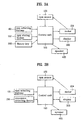
- the washing machine includes a control unit, a motor 104, a sensor 105, a selection button 101, a storage button 102, a rotary key 200, a display 300, and a speaker 400.
- the selection button 101 is connected to the control unit 103, for selecting an operation course according to the kind of laundry. Therefore, if one course is selected with the selection button 101, the motor 104 rotates at a rotation speed set to meet the course requirement.
- the rotation speed of the motor 104 is measured at the sensor 105, and provided to the control unit 103, and displayed on the display 300.
- the rotary key 200 is provided for the user to change the rotation speed.
- the user turns the rotary key 200 to adjust the rotation speed, and presses the storage button 102, to store the adjusted rotation speed in the control unit 103.
- the washing machine further includes the speaker 400 connected to the control unit 103, so that the speaker 400 sounds an alarm when the resonance of the drum is detected, or the adjusted rotation speed is stored.
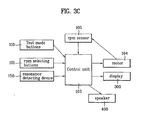
- the washing machine can detect the resonance at the drum by means of a resonance detecting device 150, automatically.
- the resonance detecting device 150 includes a spring and a grounding part. If the spring vibrates more than a preset level, the spring comes into contact with the grounding part, when a signal indicating that the resonance is occurred is generated.
- the resonance detecting device 150 provides the signal that the resonance occurs to the control unit 103 when a vibration value exceeds a preset value.
- the control unit 103 having received the signal adjusts the rotation speed of the drum, automatically.
- the adjustment of the rotation speed may be made by the user manually by turning the rotary key.
- the speaker 400 connected to the control unit 103 sounds an alarm when resonance of the drum is detected, or the adjusted rotation speed is stored. It is preferable that the adjusted rotation speed is stored automatically by the control unit 103.
- the washing machine further includes test mode buttons 110 connected to the control unit 103.
- the step of adjusting the rotation speed for avoiding the resonance of the drum is made before a regular spinning operation of the washing machine. Therefore, the step of adjusting the rotation speed is performed after the user selects the test mode button 110. The adjusted rotation speed is stored in the control unit before the test mode is finished.
- the drum rotates at the adjusted rotation speed.
- the drum is rotated at a first rotation speed set at the control unit (S1).
- the first rotation speed is in the vicinity of 108 rpm.
- the detection of the eccentricity is made when no resonance occurs at the drum.
- the rotation speed is increased or decreased, by a preset unit greater than 50 rpm.
- the resonance range of the drum varies at a certain level with a small variation of the eccentricity of the laundry, for changes of the rotation speed of the drum greater than a variation range. That is, for securer avoidance of the resonance occurrence, the rotation speed is changed by a predetermined magnitude each greater than a certain rpm.
- the resonance detecting device Even if the user can know the occurrence of resonance at the drum from sudden increase of vibration and noise in the step (S2) of detecting resonance of the drum, it is preferable that the occurrence of resonance is detected automatically by the resonance detecting device.
- the resonance detecting device provides the signal that the resonance has occurred to the control unit, automatically. It is preferable that the rotation speed is changed by the control unit which received the signal for avoiding the resonance, and the changed rotation speed is stored in the control unit as a new first rotation speed. Accordingly, when the washing machine is put into operation again, after the washing machine is stopped, the drum is controlled to rotate at the changed rotation speed.
- step (S5) to measure the eccentricity of the laundry held in the drum is performed.
- the step of decreasing the rotation speed of the drum after increasing the rotation speed of the drum is repeated. That is, by repeating the step of varying the rotation speed, the laundry is made to be spread evenly on an inside surface of the drum, so that the eccentricity of the laundry is corrected to an appropriate level.
- the drum may be rotated in regular/reverse directions alternately a plurality of times.
- the eccentricity is corrected to a value below the preset level, or the detected eccentricity is below the preset level, the rotation speed of the drum is increased, to progress the spinning.
- the step of decreasing the rotation speed of the drum after increasing the rotation speed of the drum is repeated, or the drum is rotated in regular/reverse directions alternately a plurality of times.
- the rotation speed of the drum is increased, to progress the spinning.
- step (SA) of changing the rotation speed to avoid resonance, and the detection (S5, and S6) of eccentricity of the laundry are performed in a state when the test mode is selected.
- the drum is rotated at a constant speed of a preset second rotation speed for extraction of water from the laundry (S7).
- the second rotation speeds corresponding to kinds of laundry are set at the control unit. Therefore, once a desired course is selected by the user by pressing the selection button according to the kind of the laundry initially, the drum is rotated at the second rotation speed of the selected course. It is preferable that the second rotation speed is higher than 600 rpm for smooth extraction of water from the laundry.
- a step is further performed, for detecting a volume of foam inside of the drum while rotating the drum at a constant speed of a third rotation speed (W12) before the rotation speed is increased from the first rotation speed W1 to the second rotation speed W2.
- the change of the rotation speed is made by predetermined magnitudes each greater than 50 rpm. This is for changing the rotation speed of the drum greater than a change range of a resonance range of the drum caused by a minute change of the eccentricity of the laundry.
- the rotation speed change for avoidance of the resonance is made in a state when the test mode is selected. After the finish of the rotation speed change, the test mode is finished automatically, and, then, the spinning step proceeds for a preset time period by spinning the drum.
- the rotation speed is changed by turning the rotary key, or automatically by the control unit. Then, the rotation speed is changed to 650rpm, and stored in the control unit. Thereafter, when the test mode is finished, and the washing machine is put into operation again, the drum performs the spinning at the 650rpm which is newly stored second rotation speed.
- the rotation speed of the drum is displayed on the display 300, wherein, even if the spinning is progressed at 650rpm, it is preferable that the rotation speed is displayed on the display as 700rpm as set initially. That is, at a time the washing machine is put into operation again after the washing machine is stopped, not the changed rotation speed, but the second rotation speed set initially is displayed on the display 300. This is for preventing the user from being confused by the rotation speed.
- When the display may display the changed rotation speed and the initially set second rotation speed alternately at regular time intervals.
- a method for controlling a washing machine will be described with reference to FIG 6 , in which a rotation speed of a drum is controlled for extraction of water from the laundry.
- the drum is rotated at the second rotation speed set at the control unit (S 12).
- the spinning step it is preferable that the second rotation speed is set different from each other according to the kind of laundry.
- the spinning step further includes a step for selecting a courses corresponding to a kind of the laundry, and a step for rotating the drum at a second rotation speed relevant to the selected course.
- second rotation speeds are set at the control unit for various kinds of laundry, such as lingerie, blue jeans, general clothes, and blankets, respectively. Therefore, once the user selects a desired course by pressing the selection button according to the kind of the laundry, the drum is rotated at the second rotation speed of the selected course.
- the rotation speed is increased in succession by a predetermined magnitude of rpm from the second rotation speed (S 15, and S17), and whether the resonance occurs at the drum or not is detected at every rotation speed section (S 14, S16, and S 18). It is preferable that the predetermined magnitude of rpm is 50rpm or 100rpm.
- the rotation speed of the drum is changed (S20), and if no resonance is detected, after the rotation speed is increased by predetermined magnitudes of rpm, whether the resonance occurs or not is again detected.
- the drum rotates at 500rpm which is initially set second rotation speed. If no resonance occurs, the rotation speed is increased to 600rpm. If the resonance occurs at the increased rotation speed, the rotation speed is decreased to 650rpm or increased to 700rpm.
- the rotation speed of the drum is increased or decreased, preferably by predetermined magnitudes each greater than 50rpm. According to this, occurrence of the resonance at the changed rotation speed can be prevented, securely.
- the rotation speed is adjusted for preventing occurrence of the resonance at the drum, and the adjusted rotation speed is stored in the control unit. If the resonance of the drum is detected, an alarm sounds from the speaker, by which the user can easily know occurrence of the resonance.
- control unit has a maximum rotation speed set therein, and, when no resonance occurs until the drum rotates up to the set maximum rotation speed, the maximum speed is stored in the control unit.
- the detection of resonance at the drum S14, S16, and S18, the change of the rotation speed S20, and the storage of the changed rotation speed S21 are performed in a state when the test mode is selected S21.
- the changed rotation speed is stored as a newly set second rotation speed in the control unit, when the washing machine is put into operation again after the test mode is finished, the drum is rotated at the changed rotation speed directly, instead of increasing the rotation speed gradually.
- an alarm sounds from the speaker when the changed rotation speed is stored in the control unit, and the storage of the changed rotation speed is performed automatically by the control unit in response to the signal from the resonance detecting device.
- the occurrence of the resonance at the drum is detected by the resonance detecting device, automatically.
- the washing machine is provided with a reset button for returning the rotation speed to the initial set second rotation speed, for making the next operation by the user in performing the test mode easy.
- the washing machine and the method for controlling the same have the following advantages.
- the method for controlling a washing machine of the present invention permits more accurate measurement of an eccentricity by detecting resonance and adjusting the rotation speed in measuring eccentricity of the laundry held in the drum.
- the detection of resonance at a rotation speed of the drum and adjustment of the rotation speed to avoid the resonance in the spinning step permits to enhanced reliability of the product.
- the foregoing method for controlling spinning in a washing machine is applicable not only to the drum type washing machine, but also other general washing machines, such as a pulsator type washing machine.
Landscapes
- Engineering & Computer Science (AREA)
- Textile Engineering (AREA)
- Control Of Washing Machine And Dryer (AREA)
Claims (29)
- Verfahren zum Steuern bzw. Regeln einer Waschmaschine mit einer Trommel (a) mit verstellbarer Drehzahl, umfassend:einen ersten Schritt des Drehens der Trommel mit einer ersten Drehzahl, die an einer Steuer/Regeleinheit (103) eingestellt wird;einen zweiten Schritt (S2) des Feststellens, ob bei der ersten Drehzahl eine Resonanz der Trommel auftritt oder nicht;einen dritten Schritt (S3) des Veränderns der Drehzahl der Trommel bei Festellen einer Resonanz;dadurch gekennzeichnet, dass bei Festellen einer Resonanz der dritte Schritt weiters das Messen (S5, S6) einer Exzentrizität der Wäsche umfasst, die in der mit der geänderten Drehzahl rotierenden Trommel aufgenommen ist.
- Verfahren nach Anspruch 1, wobei der dritte Schritt das Speichern der geänderten Drehzahl mit der Geschwindigkeit nach dem dritten Schritt des Ändern der Drehzahl in der Steuer/Regeleinheit umfasst, und wobei die Trommel vorzugsweise mit der veränderten Drehzahl gedreht wird, wenn die Waschmaschine nach Stoppen der Waschmaschine wieder in Betrieb gesetzt wird.
- Verfahren nach Anspruch 2, weiters umfassend das neuerliche Verändern der Drehzahl der Trommel nach der Veränderung der Drehzahl im dritten Schritt, wenn die Exzentrizität größer als ein vorgegebener Wert ist.
- Verfahren nach Anspruch 2, wobei die weitere Geschwindigkeitsänderung ein Verringern der Drehzahl umfasst und die Änderung des dritten Schritts ein Erhöhen der Drehzahl umfasst.
- Verfahren nach Anspruch 2, wobei die Trommel alternativ mehrmals in normaler/entgegengesetzter Richtung gedreht wird, wenn die Exzentrizität einen vorgegebenen Wert übersteigt.
- Verfahren nach Anspruch 2, wobei, wenn die Exzentrizität unter einem vorgegebenen Wert liegt, der dritte Schritt weiters umfasst:Rotieren der Trommel mit der eingestellten Drehzahl zum Entfernen des Wassers aus der Wäsche, Feststellen, ob eine Resonanz auftritt oder nicht, wenn sich die Trommel mit der zweiten Drehzahl dreht, Ändern der Drehzahl der Trommel, wenn eine Resonanz an der Trommel festgestellt wird, und Speichern der geänderten Drehzahl in der Steuer/Regeleinheit.
- Verfahren nach Anspruch 1, weiters umfassend den Schritt des Messens der Exzentrizität der in der Trommel aufgenommenen Wäsche, wenn keine Resonanz im zweiten Schritt auftritt.
- Verfahren nach Anspruch 7, wobei der Schritt des neuerlichen Änderns der Drehzahl der Trommel nach Erhöhen der Änderung der Drehzahl der Trommel des zweiten Schritts wiederholt wird, wenn die Exzentrizität größer als ein vorgegebener Wert ist.
- Verfahren nach Anspruch 7, wobei der Schritt des neuerlichen Änderns der Drehzahl der Trommel ein Verringern der Geschwindigkeit umfasst und die Änderung der Rotation des zweiten Schritts ein Erhöhen der Geschwindigkeit umfasst.
- Verfahren nach Anspruch 7, wobei die Trommel alternativ mehrmals in normaler/entgegengesetzter Richtung gedreht wird, wenn die Exzentrizität einen vorgegebenen Wert übersteigt.
- Verfahren nach Anspruch 7, wobei, wenn die Exzentrizität unter dem vorgegebenen Wert liegt, das Verfahren weiters das Drehen der Trommel mit der zweiten vorgegebenen Drehzahl zum Entfernen von Wasser aus der Wäsche, das Feststellen, ob bei Drehen der Trommel mit der zweiten Drehzahl eine Resonanz auftritt oder nicht, das Ändern der Drehzahl der Trommel bei Festellen einer Resonanz an der Trommel und das Speichern der geänderten Drehzahl in der Steuer/Regeleinheit umfasst.
- Verfahren nach Anspruch 1, wobei die Drehzahl der Trommel im dritten Schritt ansteigt.
- Verfahren nach Anspruch 1, wobei die Drehzahl der Trommel im dritten Schritt abnimmt .
- Verfahren nach Anspruch 1, wobei sich die Drehzahl der Trommel im dritten Schritt um vorherbestimmte Werte, die jeweils über 50 UpM liegen, ändert.
- Verfahren nach Anspruch 1, wobei der zweite Schritt den Schritt des Ertönens eines Alarms über einen Lautsprecher (400) umfasst, wenn eine Resonanz der Trommel festgestellt wird, wobei die Schritte durchgeführt werden, wenn ein Testmodus gewählt wird.
- Verfahren nach Anspruch 1, wobei die Resonanz der Trommel mit Hilfe einer Resonanz-Detektionseinrichtung automatisch im zweiten Schritt festgestellt wird.
- Verfahren nach Anspruch 16, wobei der dritte Schritt automatisch durch die Steuer/Regeleinheit ausgeführt wird, die ein Signal von der Resonanz-Detektionseinrichtung empfängt.
- Verfahren nach Anspruch 1, weiters umfassend:Drehen der Trommel mit einer in der Steuer/Regeleinheit eingestellten zweiten Drehzahl;Erhöhen der Drehzahl von der zweiten Drehzahl um vorherbestimmte aufeinanderfolgende UpM-Werte und Feststellen, ob bei jeder Drehzahl eine Resonanz auftritt oder nicht;Ändern der Drehzahl der Trommel bei Feststellen einer Resonanz der Trommel; undSpeichern der geänderten Rotation, umfassend das Speichern der Geschwindigkeit der Trommel in der Steuer/Regeleinheit nach dem Schritt des Änderns der Drehzahl der Trommel.
- Verfahren nach Anspruch 18, wobei der Schritt des Drehens der Trommel folgende Schritte umfasst:Auswählen eines Verlaufs für Drehzahlen, die für eine Art von Wäsche relevant sind, undDrehen der Trommel mit der zweiten Drehzahl für den ausgewählten Verlauf.
- Verfahren nach Anspruch 19, wobei die Drehzahl der Trommel im Schritt des Änderns der Drehzahl der Trommel ansteigt.
- Verfahren nach Anspruch 19, wobei die Drehzahl der Trommel im Schritt des Änderns der Drehzahl der Trommel abnimmt.
- Verfahren nach Anspruch 19, wobei sich die Drehzahl der Trommel im Schritt des Änderns der Drehzahl der Trommel um vorherbestimmte Werte, die jeweils über 50 UpM liegen, ändert.
- Verfahren nach Anspruch 19, wobei der Schritt des Speicherns der geänderten Rotation den Schritt des Ertönens eines Alarms aus einem Lautsprecher umfasst, wenn die geänderte Drehzahl gespeichert wird.
- Verfahren nach Anspruch 19, wobei der Schritt des Ändern der Drehzahl der Trommel automatisch durch die Steuer/Regeleinheit ausgeführt wird, die das Signal von einer Resonanz-Detektionseinrichtung empfangen hat.
- Verfahren nach Anspruch 19, wobei der Schritt des Erhöhens der Drehzahl den Schritt des automatischen Feststellens des Auftretens von Resonanz an der Trommel durch die Resonanz-Detektionseinrichtung umfasst.
- Verfahren nach Anspruch 19, wobei der Schritt des Erhöhens der Drehzahl weiters den Schritt des Speicherns einer vorgegebenen maximalen Drehzahl in der Steuer/Regeleinheit umfasst, wenn keine Resonanz auftritt, bis sich die Trommel bis zu der vorgegebenen maximalen Drehzahl dreht.
- Verfahren nach Anspruch 19, wobei der Schritt des Erhöhens der Drehzahl weiters den Schritt des Ertönens eines Alarms aus einem Lautsprecher umfasst, wenn die Resonanz der Trommel festgestellt wird.
- Verfahren nach Anspruch 18, wobei die Schritte durchgeführt werden, wenn ein Testmodus gewählt wird.
- Verfahren nach Anspruch 28, wobei die Trommel mit der geänderten Drehzahl gedreht wird, wenn die Waschmaschine nach Beendigung des Testmodus wieder in Betrieb gesetzt wird, und wobei vorzugsweise nicht die geänderte Drehzahl, sondern die zweite Drehzahl auf einer Anzeige angezeigt wird, wenn die Waschmaschine nach Stoppen der Waschmaschine wieder in Betrieb gesetzt wird.
Applications Claiming Priority (4)
| Application Number | Priority Date | Filing Date | Title |
|---|---|---|---|
| KR1020040013268A KR100672567B1 (ko) | 2004-02-27 | 2004-02-27 | 세탁기의 탈수제어방법 및 조절장치 |
| KR1020040013269A KR100662332B1 (ko) | 2004-02-27 | 2004-02-27 | 공진회피를 위한 세탁기의 rpm 조절방법 및 조절장치 |
| KR2004013269 | 2004-02-27 | ||
| KR2004013268 | 2004-02-27 |
Publications (2)
| Publication Number | Publication Date |
|---|---|
| EP1568813A1 EP1568813A1 (de) | 2005-08-31 |
| EP1568813B1 true EP1568813B1 (de) | 2013-01-02 |
Family
ID=34752265
Family Applications (1)
| Application Number | Title | Priority Date | Filing Date |
|---|---|---|---|
| EP04257173A Expired - Lifetime EP1568813B1 (de) | 2004-02-27 | 2004-11-19 | Waschmaschine und Regelung hierfür |
Country Status (5)
| Country | Link |
|---|---|
| US (2) | US20050188473A1 (de) |
| EP (1) | EP1568813B1 (de) |
| CN (1) | CN1661156B (de) |
| AU (1) | AU2004231244B2 (de) |
| ES (1) | ES2401961T3 (de) |
Families Citing this family (15)
| Publication number | Priority date | Publication date | Assignee | Title |
|---|---|---|---|---|
| KR101114740B1 (ko) * | 2004-06-30 | 2012-02-29 | 엘지전자 주식회사 | 드럼 세탁기의 탈수 제어장치 및 방법 |
| DE102006035014B4 (de) * | 2005-08-01 | 2016-02-11 | Lg Electronics Inc. | Steuerverfahren für einen Schleudergang in einer Waschmaschine |
| US8695381B2 (en) * | 2008-03-28 | 2014-04-15 | Electrolux Home Products, Inc. | Laundering device vibration control |
| RU2367735C1 (ru) * | 2008-05-22 | 2009-09-20 | Государственное образовательное учреждение высшего профессионального образования "Южно-Российский государственный университет экономики и сервиса" (ГОУ ВПО "ЮРГУЭС") | Способ преодоления резонанса в стиральной машине барабанного типа |
| US9080274B2 (en) * | 2009-12-23 | 2015-07-14 | Lg Electronics Inc. | Washing method and washing machine |
| RU2455407C1 (ru) * | 2011-02-21 | 2012-07-10 | Государственное образовательное учреждение высшего профессионального образования "Южно-Российский государственный университет экономики и сервиса" (ГОУ ВПО "ЮРГУЭС") | Способ снижения вибрации при отжиме в стиральных машинах барабанного типа |
| US8863558B2 (en) | 2012-07-10 | 2014-10-21 | Whirlpool Corporation | Laundry treating appliance and method of operation |
| US10066333B2 (en) * | 2014-02-21 | 2018-09-04 | Samsung Electronics Co., Ltd. | Washing machine with ball balancer and method of controlling vibration reduction thereof |
| CN106436146B (zh) * | 2015-08-05 | 2021-03-30 | 青岛胶南海尔洗衣机有限公司 | 一种洗衣机脱水控制方法及洗衣机 |
| CN107177956B (zh) * | 2017-05-08 | 2019-08-16 | 无锡飞翎电子有限公司 | 洗衣机及其脱水控制方法、装置 |
| CN109385808A (zh) * | 2017-08-09 | 2019-02-26 | 青岛海尔洗衣机有限公司 | 一种衣物处理装置控制方法及衣物处理装置 |
| CN109753091B (zh) * | 2017-11-07 | 2023-03-28 | 青岛海尔洗涤电器有限公司 | 组合家电防共振控制方法及组合家电 |
| CN112376207B (zh) * | 2019-07-29 | 2024-06-18 | 青岛海尔洗衣机有限公司 | 用于衣物处理设备的控制方法 |
| KR20230091480A (ko) * | 2021-12-16 | 2023-06-23 | 삼성전자주식회사 | 의류처리장치 및 의류처리장치의 제어방법 |
| WO2024241224A1 (en) * | 2023-05-23 | 2024-11-28 | Fisher & Paykel Appliances Limited | Method for controlling laundry machine and laundry machine thereof |
Family Cites Families (11)
| Publication number | Priority date | Publication date | Assignee | Title |
|---|---|---|---|---|
| GB2174513B (en) * | 1985-05-03 | 1988-11-09 | Hoover Plc | Spin speed control means for laundry spin driers or other centrifuges |
| US5070565A (en) * | 1989-04-17 | 1991-12-10 | Emerson Electric Co. | Unbalanced load detection system and method for a household appliance |
| DE4022715A1 (de) * | 1990-07-17 | 1992-01-23 | Licentia Gmbh | Waschmaschine |
| US5301523A (en) * | 1992-08-27 | 1994-04-12 | General Electric Company | Electronic washer control including automatic balance, spin and brake operations |
| DE19749657B4 (de) * | 1997-11-10 | 2006-07-06 | BSH Bosch und Siemens Hausgeräte GmbH | Programmgesteuertes Haushaltgerät |
| JP3124759B2 (ja) * | 1998-07-14 | 2001-01-15 | エルジー電子株式会社 | 洗濯機の水位/振動感知方法及び装置 |
| IT1305553B1 (it) * | 1998-11-10 | 2001-05-09 | Electrolux Zanussi Elettrodome | Metodo per controllare lo sbilanciamento del carico in unalavabiancheria |
| US6640372B2 (en) * | 2000-06-26 | 2003-11-04 | Whirlpool Corporation | Method and apparatus for detecting load unbalance in an appliance |
| US6546351B1 (en) * | 2000-07-20 | 2003-04-08 | Currency Systems International | Note-specific currency processing |
| US6546354B1 (en) * | 2001-11-15 | 2003-04-08 | Honeywell International, Inc. | Resonance identification extension for a self-balancing rotatable apparatus |
| KR100471350B1 (ko) * | 2002-05-17 | 2005-03-08 | 엘지전자 주식회사 | 드럼세탁기의 탈수 제어방법 |
-
2004
- 2004-11-19 EP EP04257173A patent/EP1568813B1/de not_active Expired - Lifetime
- 2004-11-19 ES ES04257173T patent/ES2401961T3/es not_active Expired - Lifetime
- 2004-11-22 AU AU2004231244A patent/AU2004231244B2/en not_active Ceased
- 2004-11-30 US US10/999,099 patent/US20050188473A1/en not_active Abandoned
- 2004-11-30 CN CN2004100916936A patent/CN1661156B/zh not_active Expired - Fee Related
-
2009
- 2009-01-16 US US12/320,127 patent/US20090165218A1/en not_active Abandoned
Also Published As
| Publication number | Publication date |
|---|---|
| AU2004231244B2 (en) | 2010-07-01 |
| US20090165218A1 (en) | 2009-07-02 |
| CN1661156B (zh) | 2010-06-16 |
| US20050188473A1 (en) | 2005-09-01 |
| AU2004231244A1 (en) | 2005-09-15 |
| EP1568813A1 (de) | 2005-08-31 |
| CN1661156A (zh) | 2005-08-31 |
| ES2401961T3 (es) | 2013-04-25 |
Similar Documents
| Publication | Publication Date | Title |
|---|---|---|
| US20090165218A1 (en) | Washing machine and method for controlling the same | |
| EP2260136B1 (de) | Verfahren zur wäschebearbeitung und vorrichtung zur wäschebearbeitung | |
| JP6064148B2 (ja) | ドラム式洗濯機 | |
| EP2206822B1 (de) | Waschmaschine und Betriebsverfahren dafür | |
| EP3617372B1 (de) | Verfahren zum steuern des schleudergangs eines wäschepflegegeräts | |
| EP2312047A1 (de) | Trockenmaschine sowie Wasch- und Trockenmaschine | |
| US20070039105A1 (en) | Apparatus for sensing vibration of washing machine and method thereof | |
| KR101526985B1 (ko) | 진동감지기능을 갖는 세탁기 및 이를 이용한 세탁기 제어방법 | |
| CN100519887C (zh) | 具备振动感应装置的洗衣机及其控制方法 | |
| KR100672567B1 (ko) | 세탁기의 탈수제어방법 및 조절장치 | |
| JP7765170B2 (ja) | 洗濯機 | |
| KR100672604B1 (ko) | 드럼세탁기의 탈수 제어방법 및 그 장치 | |
| JP3188230B2 (ja) | 遠心脱水装置 | |
| KR20150052696A (ko) | 세탁기 및 그 탈수 제어방법 | |
| US7654118B2 (en) | Laundry amount sensing apparatus and method for washing machine | |
| KR100662332B1 (ko) | 공진회피를 위한 세탁기의 rpm 조절방법 및 조절장치 | |
| KR102741874B1 (ko) | 세탁기 및 그 제어방법 | |
| EP4326934B1 (de) | Erkennung des einklemmens von waschartikeln für waschmaschinen | |
| US20060260066A1 (en) | Method for controlling spinning stroke of washing machine | |
| US9267225B2 (en) | Method of estimating bending moment of a laundry treating appliance drum shaft using a proximity sensor | |
| JP2025126941A (ja) | ドラム式洗濯機 | |
| JP3120507B2 (ja) | ドラム式洗濯機 | |
| JP2011030740A (ja) | 洗濯機 | |
| KR20050035390A (ko) | 진동감지장치를 구비한 세탁기 및 그 제어방법 |
Legal Events
| Date | Code | Title | Description |
|---|---|---|---|
| PUAI | Public reference made under article 153(3) epc to a published international application that has entered the european phase |
Free format text: ORIGINAL CODE: 0009012 |
|
| AK | Designated contracting states |
Kind code of ref document: A1 Designated state(s): AT BE BG CH CY CZ DE DK EE ES FI FR GB GR HU IE IS IT LI LU MC NL PL PT RO SE SI SK TR |
|
| AX | Request for extension of the european patent |
Extension state: AL HR LT LV MK YU |
|
| 17P | Request for examination filed |
Effective date: 20060216 |
|
| AKX | Designation fees paid |
Designated state(s): DE ES FR GB IT |
|
| 17Q | First examination report despatched |
Effective date: 20070529 |
|
| GRAP | Despatch of communication of intention to grant a patent |
Free format text: ORIGINAL CODE: EPIDOSNIGR1 |
|
| GRAS | Grant fee paid |
Free format text: ORIGINAL CODE: EPIDOSNIGR3 |
|
| GRAA | (expected) grant |
Free format text: ORIGINAL CODE: 0009210 |
|
| AK | Designated contracting states |
Kind code of ref document: B1 Designated state(s): DE ES FR GB IT |
|
| REG | Reference to a national code |
Ref country code: GB Ref legal event code: FG4D |
|
| REG | Reference to a national code |
Ref country code: DE Ref legal event code: R096 Ref document number: 602004040612 Country of ref document: DE Effective date: 20130228 |
|
| REG | Reference to a national code |
Ref country code: ES Ref legal event code: FG2A Ref document number: 2401961 Country of ref document: ES Kind code of ref document: T3 Effective date: 20130425 |
|
| PLBE | No opposition filed within time limit |
Free format text: ORIGINAL CODE: 0009261 |
|
| STAA | Information on the status of an ep patent application or granted ep patent |
Free format text: STATUS: NO OPPOSITION FILED WITHIN TIME LIMIT |
|
| 26N | No opposition filed |
Effective date: 20131003 |
|
| REG | Reference to a national code |
Ref country code: DE Ref legal event code: R097 Ref document number: 602004040612 Country of ref document: DE Effective date: 20131003 |
|
| REG | Reference to a national code |
Ref country code: FR Ref legal event code: PLFP Year of fee payment: 12 |
|
| REG | Reference to a national code |
Ref country code: FR Ref legal event code: PLFP Year of fee payment: 13 |
|
| REG | Reference to a national code |
Ref country code: FR Ref legal event code: PLFP Year of fee payment: 14 |
|
| PGFP | Annual fee paid to national office [announced via postgrant information from national office to epo] |
Ref country code: FR Payment date: 20171011 Year of fee payment: 14 Ref country code: DE Payment date: 20171002 Year of fee payment: 14 |
|
| PGFP | Annual fee paid to national office [announced via postgrant information from national office to epo] |
Ref country code: GB Payment date: 20171002 Year of fee payment: 14 Ref country code: IT Payment date: 20171116 Year of fee payment: 14 Ref country code: ES Payment date: 20171214 Year of fee payment: 14 |
|
| REG | Reference to a national code |
Ref country code: DE Ref legal event code: R119 Ref document number: 602004040612 Country of ref document: DE |
|
| GBPC | Gb: european patent ceased through non-payment of renewal fee |
Effective date: 20181119 |
|
| PG25 | Lapsed in a contracting state [announced via postgrant information from national office to epo] |
Ref country code: DE Free format text: LAPSE BECAUSE OF NON-PAYMENT OF DUE FEES Effective date: 20190601 Ref country code: IT Free format text: LAPSE BECAUSE OF NON-PAYMENT OF DUE FEES Effective date: 20181119 Ref country code: FR Free format text: LAPSE BECAUSE OF NON-PAYMENT OF DUE FEES Effective date: 20181130 |
|
| PG25 | Lapsed in a contracting state [announced via postgrant information from national office to epo] |
Ref country code: GB Free format text: LAPSE BECAUSE OF NON-PAYMENT OF DUE FEES Effective date: 20181119 |
|
| REG | Reference to a national code |
Ref country code: ES Ref legal event code: FD2A Effective date: 20200103 |
|
| PG25 | Lapsed in a contracting state [announced via postgrant information from national office to epo] |
Ref country code: ES Free format text: LAPSE BECAUSE OF NON-PAYMENT OF DUE FEES Effective date: 20181120 |