EP1535952B1 - Verfahren zur Herstellung vernetzter, mehrlagiger Polyelektrolytfilme - Google Patents
Verfahren zur Herstellung vernetzter, mehrlagiger Polyelektrolytfilme Download PDFInfo
- Publication number
- EP1535952B1 EP1535952B1 EP20030292972 EP03292972A EP1535952B1 EP 1535952 B1 EP1535952 B1 EP 1535952B1 EP 20030292972 EP20030292972 EP 20030292972 EP 03292972 A EP03292972 A EP 03292972A EP 1535952 B1 EP1535952 B1 EP 1535952B1
- Authority
- EP
- European Patent Office
- Prior art keywords
- pll
- film
- films
- pga
- poly
- Prior art date
- Legal status (The legal status is an assumption and is not a legal conclusion. Google has not performed a legal analysis and makes no representation as to the accuracy of the status listed.)
- Expired - Lifetime
Links
Images








Classifications
-
- C—CHEMISTRY; METALLURGY
- C08—ORGANIC MACROMOLECULAR COMPOUNDS; THEIR PREPARATION OR CHEMICAL WORKING-UP; COMPOSITIONS BASED THEREON
- C08J—WORKING-UP; GENERAL PROCESSES OF COMPOUNDING; AFTER-TREATMENT NOT COVERED BY SUBCLASSES C08B, C08C, C08F, C08G or C08H
- C08J3/00—Processes of treating or compounding macromolecular substances
- C08J3/24—Crosslinking, e.g. vulcanising, of macromolecules
- C08J3/246—Intercrosslinking of at least two polymers
-
- C—CHEMISTRY; METALLURGY
- C08—ORGANIC MACROMOLECULAR COMPOUNDS; THEIR PREPARATION OR CHEMICAL WORKING-UP; COMPOSITIONS BASED THEREON
- C08J—WORKING-UP; GENERAL PROCESSES OF COMPOUNDING; AFTER-TREATMENT NOT COVERED BY SUBCLASSES C08B, C08C, C08F, C08G or C08H
- C08J2305/00—Characterised by the use of polysaccharides or of their derivatives not provided for in groups C08J2301/00 or C08J2303/00
- C08J2305/08—Chitin; Chondroitin sulfate; Hyaluronic acid; Derivatives thereof
-
- C—CHEMISTRY; METALLURGY
- C08—ORGANIC MACROMOLECULAR COMPOUNDS; THEIR PREPARATION OR CHEMICAL WORKING-UP; COMPOSITIONS BASED THEREON
- C08J—WORKING-UP; GENERAL PROCESSES OF COMPOUNDING; AFTER-TREATMENT NOT COVERED BY SUBCLASSES C08B, C08C, C08F, C08G or C08H
- C08J2367/00—Characterised by the use of polyesters obtained by reactions forming a carboxylic ester link in the main chain; Derivatives of such polymers
-
- C—CHEMISTRY; METALLURGY
- C08—ORGANIC MACROMOLECULAR COMPOUNDS; THEIR PREPARATION OR CHEMICAL WORKING-UP; COMPOSITIONS BASED THEREON
- C08J—WORKING-UP; GENERAL PROCESSES OF COMPOUNDING; AFTER-TREATMENT NOT COVERED BY SUBCLASSES C08B, C08C, C08F, C08G or C08H
- C08J2389/00—Characterised by the use of proteins; Derivatives thereof
-
- C—CHEMISTRY; METALLURGY
- C08—ORGANIC MACROMOLECULAR COMPOUNDS; THEIR PREPARATION OR CHEMICAL WORKING-UP; COMPOSITIONS BASED THEREON
- C08K—Use of inorganic or non-macromolecular organic substances as compounding ingredients
- C08K5/00—Use of organic ingredients
- C08K5/16—Nitrogen-containing compounds
- C08K5/29—Compounds containing one or more carbon-to-nitrogen double bonds
-
- Y—GENERAL TAGGING OF NEW TECHNOLOGICAL DEVELOPMENTS; GENERAL TAGGING OF CROSS-SECTIONAL TECHNOLOGIES SPANNING OVER SEVERAL SECTIONS OF THE IPC; TECHNICAL SUBJECTS COVERED BY FORMER USPC CROSS-REFERENCE ART COLLECTIONS [XRACs] AND DIGESTS
- Y10—TECHNICAL SUBJECTS COVERED BY FORMER USPC
- Y10T—TECHNICAL SUBJECTS COVERED BY FORMER US CLASSIFICATION
- Y10T428/00—Stock material or miscellaneous articles
- Y10T428/13—Hollow or container type article [e.g., tube, vase, etc.]
- Y10T428/1334—Nonself-supporting tubular film or bag [e.g., pouch, envelope, packet, etc.]
-
- Y—GENERAL TAGGING OF NEW TECHNOLOGICAL DEVELOPMENTS; GENERAL TAGGING OF CROSS-SECTIONAL TECHNOLOGIES SPANNING OVER SEVERAL SECTIONS OF THE IPC; TECHNICAL SUBJECTS COVERED BY FORMER USPC CROSS-REFERENCE ART COLLECTIONS [XRACs] AND DIGESTS
- Y10—TECHNICAL SUBJECTS COVERED BY FORMER USPC
- Y10T—TECHNICAL SUBJECTS COVERED BY FORMER US CLASSIFICATION
- Y10T428/00—Stock material or miscellaneous articles
- Y10T428/13—Hollow or container type article [e.g., tube, vase, etc.]
- Y10T428/1352—Polymer or resin containing [i.e., natural or synthetic]
- Y10T428/139—Open-ended, self-supporting conduit, cylinder, or tube-type article
- Y10T428/1393—Multilayer [continuous layer]
-
- Y—GENERAL TAGGING OF NEW TECHNOLOGICAL DEVELOPMENTS; GENERAL TAGGING OF CROSS-SECTIONAL TECHNOLOGIES SPANNING OVER SEVERAL SECTIONS OF THE IPC; TECHNICAL SUBJECTS COVERED BY FORMER USPC CROSS-REFERENCE ART COLLECTIONS [XRACs] AND DIGESTS
- Y10—TECHNICAL SUBJECTS COVERED BY FORMER USPC
- Y10T—TECHNICAL SUBJECTS COVERED BY FORMER US CLASSIFICATION
- Y10T428/00—Stock material or miscellaneous articles
- Y10T428/31504—Composite [nonstructural laminate]
- Y10T428/31551—Of polyamidoester [polyurethane, polyisocyanate, polycarbamate, etc.]
-
- Y—GENERAL TAGGING OF NEW TECHNOLOGICAL DEVELOPMENTS; GENERAL TAGGING OF CROSS-SECTIONAL TECHNOLOGIES SPANNING OVER SEVERAL SECTIONS OF THE IPC; TECHNICAL SUBJECTS COVERED BY FORMER USPC CROSS-REFERENCE ART COLLECTIONS [XRACs] AND DIGESTS
- Y10—TECHNICAL SUBJECTS COVERED BY FORMER USPC
- Y10T—TECHNICAL SUBJECTS COVERED BY FORMER US CLASSIFICATION
- Y10T428/00—Stock material or miscellaneous articles
- Y10T428/31504—Composite [nonstructural laminate]
- Y10T428/31725—Of polyamide
Definitions
- the invention relates to methods for preparing crosslinked polyelectrolytes multilayer films according to claim 1.
- the invention also relates to a method of coating a surface, and the coated surface obtained.
- LbL self-assembly also called electrostatic self-assembly (ESA) has shown broad biotechnology and biomedical applications in thin film coating, micropatterning, nanobioreactors, artificial cells, integrated optics, microelectronic devices, sensors, optical memory devices, encapsulation and drug delivery systems. Indeed, this kind of film is very easy to manufacture.
- the film architecture is precisely designed and can be controlled to 1 nm precision with a range from 1 to 150 000 nm and with a definite knowledge of its molecular composition.
- films made from polypeptides i.e. poly(L-lysine), natural polyelectrolytes (eg hyaluronan, alginate, chitosan, collagen) allow, for example, biomimetic architectures to be created.
- Applications include also the fabrication of non adhesive barriers for vascular grafts, the fabrication of films with pro- or anti-coagulant properties or the preparation of hollow capsules for drug release. Bioactivity of the films can be achieved by their functionalization by inserting peptides associated to polyelectrolytes or through the embedding of proteins.
- biocompatibility is a major requirement : the material or the film covering a material surface must be non-cytotoxic to any living cell and not iatrogenic or allergenic. Another requirement is that the material possesses chemical and physical properties that promote specific cell interactions, either cell adhesion or non-adhesion depending on the final application. In this respect, it was shown that primary cells can be grown on poly(styrenesulfonate)/poly(allyamine hydrochloride) films and on poly(L-lysine)/poly(L-glutamic acid) films for several days while maintaining their phenotype.
- the preservation of the structural integrity of the film is crucial.
- these films e.g. days, weeks, or months
- aggressive conditions pH, ionic strength, solvents
- the stability in particular biostability
- This property is particularly of interest for films designed to be in contact with a tissue or fluid within the body (soft tissue, blood, lymph, etc.) which contains different types of proteins (for example enzymes), cells and phagocytic cells (for example white blood cells).
- proteins for example enzymes
- cells and phagocytic cells for example white blood cells.
- the covalent coupling or crosslinking may also lead to an increased stability of the film which may be of interest.
- Polyelectrolyte multilayers based on biopolymers or polyaminoacids are hydrogels and must be considered as "soft" and sensitive materials. For example, exposure to solvents, pH and ionic strength jumps can affect their structural integrity and cross-linking constitutes a possible way to stabilize them.
- the approaches generally rely on the cross-linking through condensation reaction of complementary groups located on adjacent layer.
- the different strategies make use of bifunctional aldehydes such as glutaraldehyde ( Brynda, E.; Houska, M. J. Colloid Interface Sci. 1996, 183, 18-25 ; Leporatti, S.
- heating could produce amide bonds for poly(allylamine hydrochloride/Poly(acrylic) acid films ( Harris, J. J.; DeRose, P.; Bruening, M. J. Am. Chem. Soc. 1999, 121, 1978-1979 ) or imide bonds for maleic acid copolymers and poly(allylamine) ( Lee, B. J.; Kunitake, T. Langmuir 1994, 10, 557-562 ).
- Cross-linking not only enhances the stability of the films but allows also to change their permeability, conductivity and eventually also their viscoelastic properties. All these cross-linking methods present however also drawbacks.
- Introducing linker molecules such as glutaraldehyde may, for example, not only modify the film structure in a non controlled manner but also may change its biocompatibility. On the other hand, heating is not always possible depending upon the nature of the substrate.
- EDC 1-ethyl-3-(3-dimethylaminopropyl) carbodiimide
- EDC alone has already been used for the cross-linking of hyaluronan solutions ( Tomihata, K.; Ikada, Y. J Biomed Mater Res 1997, 37, 243-251 ) and hyaluronan/collagen sponges ( Park, S.-N.; Park, J.-C.; Kim, H. O.; Song, M. J.; Suh, H. Biomaterials 2002, 23, 1205-1212 ).
- carbodiimides do not remain as a part of that linkages but simply change to water soluble urea derivatives that have very low cytotoxicity.
- the cross-linking procedure according to the invention can be carried out on different types of polyelectrolytes, as long as carboxylic groups and amine groups are present in said polyelectrolytes.
- the cross-linking procedure according to the invention can implement other types of coupling agents, including not only carbodiimide compounds, but also peptides coupling agents, such as HOBt (N-Hydroxybenzotriazole) ( Carpino, L.A.
- an object of this invention is a method for preparing cross-linked polyelectrolyte multilayers films, wherein said method comprises the reaction of complementary reactive groups : carboxylic groups and amino groups, present in the polymers that constitute the multilayer film, in the presence of a coupling agent promoting said reaction, as to form amide bonds according to claim 1.
- a further object of the invention resides in a method of coating a surface, comprising (1) sequentially depositing on a surface alternating layers of polyelectrolytes to provide a coated surface presenting complementary reactive groups: amino and carboxylic groups, wherein a first (or conversely second) polymer is a cationic polyelectrolyte and a second (or conversely first) polymer is an anionic polyelectrolyte, and (2) reacting said complementary reactive groups of the coated surface obtained according to step (1) in the presence of a coupling agent, as to form amide bonds between said complementary reactive groups.
- the invention also relates to an article coated according to a method of the present invention.
- the cross-linking procedure according to the invention presents the advantage of being very efficient on various types of polyelectrolyte films, whatever the nature of polyelectrolyte is, and whatever the film thickness is (for instance, from few nanometers to dozens of micrometers).
- the films obtained are stabilized with respect to aggressive media, such as solvents, extreme pH, ionic strengths jumps, enzymes and/or phagocytic cells, and can therefore withstand numerous physical, chemical and biological stresses. This includes increased resistance against a certain medium and the exchange of this medium against another one (pH jump, change of solvent). Consequently, even the obtained thick films, although highly swollen and hydrated, may keep their stability or positional integrity.
- aggressive media such as solvents, extreme pH, ionic strengths jumps, enzymes and/or phagocytic cells
- various cells types in particular primary cells, including chondrocytes, osteoblasts, fibroblasts, and neurons, or tumoral cells, can adhere and proliferate normally on or in films of the invention, even on or in thick polyelectrolyte films.
- the polyelectrolyte multilayers comprise at least two or more layers of polyelectrolytes, each further layer having the opposite charge of the previous layer.
- the polyelectrolyte multilayers films are more preferably biocompatible.
- biocompatible films can render any coated surface biocompatible. Consequently, such biocompatible materials when applied to biological tissues, in particular within the body, present the advantage of not irritating the surrounding tissues, not provoking an abnormal inflammatory response and not inciting allergic or immunological reaction.
- the polyelectrolyte multilayers may be constructed by different types of interactions between the polymers participating in the multilayer assembly, of special interest are interactions such as electrostatic attraction or hydrogen bridging.
- interactions such as electrostatic attraction or hydrogen bridging.
- the technology described here also applies to multilayers assembled by different interactions under the condition that they present complementary functional groups that can be covalently coupled using an external coupling agent.
- the polyelectrolyte multilayers comprise at least one pair of layers of cationic polyelectrolytes and anionic polyelectrolytes.
- the number of layer pairs can vary in a wide range and depend on the desired thickness.
- the number of layer pairs can vary from 1 to 1000, preferably from 2 to 100, more preferably from 5 to 60.
- the number of layer pairs can vary from 20 to 1000, preferably from 30 to 500 (in particular from 30 to 80).
- the thickness of the film is from 20 nm to 150 ⁇ m.
- the complementary functional groups that can be covalently coupled using an external coupling agent are amino and carboxylic groups.
- the amino groups can be present in the form of hydroxylamine, hydrazide and amine functions.
- the carboxylic groups can be present in the form of acids, acid halide (preferably, acid chloride), acid anhydride or activated esters, such as N-hydroxysulfosuccinimide ester or n-paranitrophenyl ester.
- the carboxylic groups and amino groups, used for the reaction may be present in the polyelectrolyte multilayer under different forms. In particular, they are part of the polyelectrolyte itself (attached by a covalent bond) or are not bound to the polyelectrolyte chain. To that respect, they can be introduced as free molecules during the preparation of polyelectrolyte multilayers and may be of different types such as amino-acids (glycine, ⁇ -alanine), polyethyleneglycol, or human serum albumin in PLL/PGA films.
- amino-acids glycine, ⁇ -alanine
- polyethyleneglycol polyethyleneglycol
- human serum albumin in PLL/PGA films.
- the complementary functional groups are preferably attached (in particular covalently bond) to polyelectrolytes.
- the complementary functional groups are either present in the native polymers or introduced by chemical modifications of the polymers.
- Cationic polyelectrolytes of the polyelectrolyte multilayers comprise free amino groups and anionic polyelectrolytes of the polyelectrolyte multilayers comprise free carboxylic groups. These amino and carboxylic groups are either present in the native polymers or introduced by chemical modifications of the polymers.
- Anionic polymers comprising carboxylic groups can be used in the present invention, including, without limitation thereto, poly(acrylic) acid, poly(methacrylic) acid, poly(D,L-glutamic) acid, polyuronic acid (alginic, galacturonic, glucuronic), glycosaminoglycans (hyaluronic acid, also called hyaluronan, dermatan sulphate, chondroitin sulphate, heparin, heparan sulphate, and keratan sulphate), poly(D,L-aspartic acid), any combination of the polyamino-acids, and mixtures thereof.
- Cationic polymers comprising amino groups can be used in the present invention, including, without limitation thereto, poly(D,L-lysine), poly(diallydimethylammonium chloride), poly(allylamine), poly(ethylene)imine, chitosan, Poly(L-arginine), Poly(ornithine), Poly(D,L-hystidine), poly(mannoseamine) and more generally any combination of the polyamino acids, and mixtures thereof.
- the cationic polymer comprising amino group is poly(L-lysine).
- the anionic polymer comprising amino group is the hyaluronic acid.
- the anionic polymer comprising amino group is the poly(Lrglutamic acid).
- the polyelectrolyte multilayers can further comprise different types of polymers with different functional groups, including cationic polymers (sulfonium, phosphonium, ammonium, hydroxylamine, hydrazide such as poly(hydroxylamine) or poly(hydrazide)), anionic polymers (including poly(styrene sulfonate), poly(phosphate), polynucleic acid) and neutral polymers (including polyacrylamide, polyethylene oxyde, polyvinyl alcohol).
- cationic polymers sulfonium, phosphonium, ammonium, hydroxylamine, hydrazide such as poly(hydroxylamine) or poly(hydrazide)
- anionic polymers including poly(styrene sulfonate), poly(phosphate), polynucleic acid
- neutral polymers including polyacrylamide, polyethylene oxyde, polyvinyl alcohol
- the molecular weight of the polymers identified above can vary in a wide range. More preferably, the molecular weight is in the range from 0.5 kDa to 20,000 kDa, even more preferably, the molecular weight is in the range from 5 to 2,000 kDa.
- the polyelectrolyte multilayers can further comprise a variety of materials, including synthetic polyions (polymers presenting ions), biopolymers such as DNA, RNA, collagen, peptides (such as a RGD sequence, Melanoma stimulating Hormone, or buforin), proteins, and enzymes, cells, viruses, dendrimers, colloids, inorganic or organic particles, dyes, vesicles, nano(micro)capsules and nano(micro)particles, polyelectrolytes complexes, free or complexed drugs, cyclodextrins, and more generally any object of interest for biological applications and mixtures thereof.
- synthetic polyions polymers presenting ions
- biopolymers such as DNA, RNA, collagen, peptides (such as a RGD sequence, Melanoma stimulating Hormone, or buforin), proteins, and enzymes, cells, viruses, dendrimers, colloids, inorganic or organic particles, dyes, vesicles, nano(micro
- the polyelectrolyte multilayers films of the invention comprising such materials are of particular interest, since such materials comprised therein keep their functions and/or activities.
- RGD peptide comprised in crosslinked polyelectrolyte multilayers films maintains its activity of cell adhesion.
- the crosslinked polyelectrolyte multilayers films obtained according to the invention are particularly useful when they comprise materials of biological interest, in particular various cells types, such as primary cells, including chondrocytes, osteoblasts, fibroblasts, and neurons, or tumoral cells, since said cells can adhere and proliferate normally on or in films of the invention, even on or in thick polyelectrolyte films.
- Such crosslinked films are indeed much more favorable in terms of early cell adhesion and proliferation of cells than the native (uncrosslinked) films.
- the coupling agent is an entity, preferably a chemical entity, which enables the formation of amide bonds (or derivatives thereof) between the carboxylic and amino groups of the polyelectrolyte multilayers.
- the coupling agent can act as a catalyst, which can be removed thereafter, or as a reactant, which creates a spacer (or a link) within the formed amide bonds.
- the coupling agents are preferably water soluble compounds.
- the coupling agent is a carbodiimide compound.
- the alkyl groups may be linear, cyclic or branched, they can be interrupted by heteroatoms, such S, N or O. In particular, they can be substituted by an amine group, such as for example -N + H(CH 3 ) 2 .
- alkyl groups having from 1 to 8 carbon atoms inclusive are methyl, ethyl, propyl, isopropyl, t-butyl, isobutyl, n-butyl, pentyl, isopentyl, hexyl, heptyl, octyl, 2-ethylhexyl, 2-methylbutyl, 2-methylpentyl, 1-methylhexyl, 3-methylheptyl and the other isomeric forms thereof.
- the alkyl groups have from 1 to 6 carbon atoms.
- the aryl groups are mono-, bi- or tri-cyclic aromatic hydrocarbon systems, preferably monocyclic or bicyclic aromatic hydrocarbons containing from 6 to 18 carbon atoms, even more preferably 6 carbon atoms. Examples include phenyl, naphthyl and biphenyl groups.
- the carbodiimide compounds are preferably water soluble compounds.
- the carbodiimide compound according to the invention is 1-ethyl-3-(3-dimethylaminopropyl) carbodiimide (EDC).
- the amount of coupling agent can vary on a wide range and depend on the desired degree of crosslinking. In general, said amount is from 5 mM to 1,2 M, preferably from 125 mM to 600 mM and more preferably from 150 mM to 250 mM.
- the N-hydroxysuccinimide compound is preferably N-hydroxysulfo succinimide, more preferably N-hydroxysulfo succinimide para-nitrophenol, or dimethylaminopyridine.
- the amount of N-hydroxysuccinimide compound can vary on a wide range. Generally, said amount is from 10 mM to 50 mM.
- the molar ratio coupling agent/N-hydroxysuccinimide compound is generally from 2 to 20.
- the reaction of carboxylic groups and amino groups of the polyelectrolyte multilayers in the presence of carbodiimide compounds is preferably performed in a water soluble solution, more preferably in an aqueous solution or in any kind of solvent, organic or inorganic.
- the aqueous solution is advantageously a salt free solution or an aqueous solution containing salts, such KCI, NaCl, or any kind of buffer such as Mes, Tris, Hepes, or phosphate buffers.
- Said reaction is preferably carried out at a pH ranging from 2 to 9, more preferably from 4 to 7.5.
- the cross-linking reaction can be performed over a large range of temperature from 1°C to 50°C, preferably from 4°C to 37°C, more preferably at room temperature.
- the degree of crosslinking may also be controlled by varying the concentration of the coupling agent in the solution.
- the present invention also relates to a method of coating a surface, comprising (1) sequentially depositing on a surface alternating layers of polyelectrolytes to provide a coated surface presenting complementary reactive groups: amino and carboxylic groups, wherein a first (or conversely second) polymer is a cationic polyelectrolyte and a second (or conversely first) polymer is an anionic polyelectrolyte, and (2) reacting said complementary reactive groups of the coated obtained surface in the presence of a coupling agent, as to form amide bonds between said complementary reactive groups.
- Suitable articles supporting the layer elements according to the invention are those having a surface which is preferably accessible to solvents, for example flat, cylindrical, conical, spherical or other surfaces of uniform or irregular shape. It can also include interior surfaces of bottles, tubings, beads, sponges, porous matrices and the like.
- the substrate material may be of any type such as glass and bioactive glass, plastic, metals (such as Titanium or others), polymers, ceramic, and more widely, any type of porous or non porous material.
- the coated article according to the invention is rendered or is maintained biocompatible.
- an article coated according to the method of the present invention is selected from the group consisting of blood vessel stents, tubing, angioplasty balloons, vascular graft tubing, prosthetic blood vessels, vascular shunts, heart valves, artificial heart components, pacemakers, pacemaker electrodes, pacemaker leads, ventricular assist devices, contact lenses, intraocular lenses, sponges for tissue engineering, foams for tissue engineering, matrices for tissue engineering, scaffolds for tissue engineering, biomedical membranes, dialysis membranes, cell-encapsulating membranes, drug delivery reservoirs, drug delivery matrices, drug delivery pumps, catheters, tubing, cosmetic surgery prostheses, orthopedic prostheses, dental prostheses, bone and dental implants, wound dressings, sutures, soft tissue repair meshes, percutaneous devices, diagnostic biosensors, cellular arrays, cellular networks, microfluidic devices, and protein arrays.
- the surface to be coated can be at least a portion of a surface of the article such as defined above.
- Sequentially depositing on a surface alternating layers of polyelectrolytes may be accomplished in a number of ways.
- the depositing process generally involves coating and optionally rinsing steps.
- Step (1) usually comprises sequentially bringing a surface into contact with polyelectrolyte solutions thereby adsorbing alternated layers of polyelectrolytes to provide a coated surface presenting amino and carboxylic groups
- Classic methods comprise dipping, dip-coating, rinsing, dip-rinsing, spraying, inkjet printing, stamping, printing, microcontact printing, wiping, doctor blading or spin coating.
- Another coating process embodiment involves solely spray-coating and spray-rinsing steps.
- a number of alternatives involves various combinations of spray- and dip-coating and rinsing steps. These methods may be designed by a person having ordinary skill in the art.
- One dip-coating alternative involves the steps of applying a coating of a first polyelectrolyte to a surface by immersing said surface in a first solution of a first polyelectrolyte; rinsing the surface by immersing the surface in a rinsing solution; and, optionally, drying said surface. This procedure is then repeated using a second polyelectrolyte, with the second polyelectrolyte having charges opposite of the charges of the first polyelectrolyte, in order to form a polyelectrolyte pair of layers.
- This layer pairs formation process may be repeated a plurality of times in order to produce a thicker surface coating.
- a preferred number of layer pairs is about 1 to about 1000.
- a more preferred number of layer pairs is about 5 to about 60.
- the thickness of the film is from 20 nm to 150 ⁇ m.
- the immersion time for each of the coating and rinsing steps may vary depending on a number of factors.
- contact times of the surface into the polyelectrolyte solution occurs over a period of about 1 second to 30 minutes, more preferably about 1 to 20 minutes, and most preferably about 1 to 15 minutes.
- Rinsing may be accomplished in one step, but a plurality of rinsing steps has been found to be quite efficient. Rinsing in a series of about 2 to 5 steps is preferred, with contact times with the rinsing solution preferably consuming about 1 to about 6 minutes.
- the coating process involves a series of spray coating techniques.
- the process generally includes the steps of applying a coating of a first polyelectrolyte to a surface by contacting the surface with a first solution of a first polyelectrolyte; rinsing the surface by spraying the surface with a rinsing solution; and, optionally, drying the surface.
- the spray-coating process may then be repeated with a second polyelectrolyte, with the second polyelectrolyte having charges opposite of the charges of the first polyelectrolyte.
- the contacting of surface with solution may occur by a variety of methods.
- the surface may be dipped into both solutions.
- One preferred alternative is to apply the solutions in a spray or mist form.
- various combinations may be envisioned, e.g., dipping the surface in the polyelectrolyte followed by spraying the rinsing solution.
- the spray coating application may be accomplished via a number of methods known in the art.
- a conventional spray coating arrangement may be used, i.e., the liquid material is sprayed by application of fluid, which may or may not be at elevated pressure, through a reduced diameter nozzle which is directed towards the deposition target.
- Another spray coating technique involves the use of ultrasonic energy or electrostatic spray coating in which a charge is conveyed to the fluid or droplets to increase the efficiency of coating
- a further method of atomizing liquid for spray coating involves purely mechanical energy.
- Still another method of producing microdroplets for spray coatings involves the use of piezoelectric elements to atomize the liquid.
- Some of the previously-described techniques may be used with air assist or elevated solution pressure.
- a combination of two or more techniques may prove more useful with some materials and conditions.
- the coating steps of the depositing process implement cationic and anionic polyelectrolytes as defined above.
- the obtained coated surface which comprises polyelectrolyte multilayers, presents complementary reactive groups : amino and carboxylic groups.
- These groups are generally introduced within said coated surface as explained above.
- they are connected to polyelectrolytes, e.g. bound or not to polyelectrolytes. They can be introduced as free molecules during the preparation of polyelectrolyte multilayers, for example amino-acid such as glycine, ßalanine, and the like. They are preferably attached (in particular covalently bound) to polyelectrolytes as identified above.
- Suitable solvents for polyelectrolyte solutions and rinsing solutions are: water, aqueous solutions of salts (for example NaCl, MnCl 2 , (NH 4 ) 2 SO 4 ), any type of physiological buffer (Hepes, phosphate buffer, culture medium such as minimum essential medium, Mes-Tris buffer) and water-miscible, non-ionic solvents, such as C1-C4-alkanols, C3-C6-ketones including cyclohexanone, tetrahydrofuran, dioxane, dimethyl sulphoxide, ethylene glycol, propylene glycol and oligomers of ethylene glycol and propylene glycol and ethers thereof and open-chain and cyclic amides, such as dimethylformamide, dimethylacetamide, N-methylpyrrolidone and others.
- salts for example NaCl, MnCl 2 , (NH 4 ) 2 SO 4
- any type of physiological buffer
- Polar, water-immiscible solvents such as chloroform or methylene chloride, which can contain a portion of the abovementioned organic solvents, insofar as they are miscible with them, will only be considered in special cases.
- step (2) as defined above can be carried out just after step (1) in the method as described above.
- step (1) can be followed by a deposition of another polyelectrolyte multilayer which does not present complementary reactive groups, such as amino and carboxylic groups, and step (2) as defined above is carried out thereafter.
- the cross-linked films can also be sterilized and stored for a long period (many months) in different conditions (either dried or wet) without losing their properties. Additionally, the films exhibit good mechanical properties and can be manufactured easily.
- a variety of materials including synthetic polyions, biopolymers such as DNA, RNA, collagen, peptides (such as a RGD sequence, Melanoma stimulating Hormone, or buforin), proteins, and enzymes, cells, viruses, dendrimers, colloids, inorganic and organic particles, vesicles, nano(micro)capsules and nano(micro)particles, dyes, vesicles, nano(micro)capsules and nano(micro)particles, polyelectrolytes complexes, free or complexed drugs, cyclodextrins, and more generally any object of interest for biological applications and mixtures thereof, may be readily incorporated into the polyelectrolyte multilayers.
- biopolymers such as DNA, RNA, collagen, peptides (such as a RGD sequence, Melanoma stimulating Hormone, or buforin), proteins, and enzymes, cells, viruses, dendrimers, colloids, inorganic and organic particles, vesicles,
- said materials may be incorporated by adsorption or diffusion, or by coupling said materials to at least one of polyelectrolytes and adsorption thereafter of said polyelectrolyte.
- polyelectrolyte multilayers films and the coated article of the invention comprising such materials are of particular interest, since such materials comprised therein keep their functions and/or activities.
- RGD peptide comprised in crosslinked polyelectrolyte multilayers films maintains its activity of cell adhesion.
- crosslinked films comprising cells according to the invention, and also more preferably RGD peptide are much more favorable in terms of early cell adhesion and proliferation of cells than the native (uncrosslinked) films.
- PLL and HA were dissolved at 1 mg/mL in 0.15 M NaCl at pH 6-6.5. During the film construction, all the rinsing steps were performed with an aqueous solution containing 0.15 M NaCl at pH 6-6.5.
- Fluorescein isothiocyanate labeled PLL (PLL-FITC), 1-ethyl-3-(3-dimethylaminopropyl) carbodiimide (EDC), N-Hydroxysulfo-succinimide (sulfo-NHS), and hyaluronidase (Type I) were purchased from Sigma-Aldrich and used without any purification.
- This NHS-ester activated site reacts with a primary amine sites to form an amide derivative (step 3, scheme 1). Failure to react with an amine results in hydrolysis of the intermediate, regeneration of the carboxyls and the release of the N-unsubstituted urea (step 4, scheme 1). It has to be noticed that the O-acylsourea intermediates can directly react with these primary amine sites (not shown). However, the O-acylsourea intermediates, like NHS-ester, are subjected to hydrolysis in aqueous solutions. In water, NHS-esters have a half-life of one to several hours, or even days (depending on temperature, pH) whereas O-acylisourea intermediates have a half-life measured in seconds.
- the reaction preferentially proceeds through the longer-lived intermediates. This is the reason why the EDC/NHS reaction is more efficient than the EDC reaction alone.
- the cross-linking was performed on films deposited either on the ZnSe coated crystal (for FTIR experiments), on the SiO 2 crystal (for quartz crystal microbalance experiments), or on the 12 mm glass slides introduced in 24 wells culture plates. In all cases, the EDC and sulfo-NHS solutions were mixed v/v and the film coated substrate was put in contact with the mixed EDC/NHS solution for 12 hours (For clarity, the simplified notation EDC/NHS will be used instead of the complete writing EDC/sulfo-NHS). Rinsing was performed three times with a 0.15 M NaCl solution for one hour. For the FTIR experiments, a similar protocol was used except that the EDC and NHS were dissolved in a deuterated 0.15 M NaCl solution.
- the film of (PLL/HA) 8 films deposited on a ZnSe crystal was investigated by in situ Fourier Transform Infrared (FTIR) Spectroscopy in Attenuated Total Reflection (ATR) mode with an Equinox 55 spectrophotometer (Bruker, Wissemlaub, France). All the experimental details have been given previously ( Schwinté, P.; Voegel, J.-C.; Picart, C.; Haikel, Y.; Schaaf, P.; Szalontai, B. J. Phys. Chem. 2001, 105, 11906 -11916 ). The experiments were performed in deuterated 0.15 M NaCl solution at pH ⁇ 6.
- D 2 O is used as solvent instead of water because the amide I bands of both PLL and HA are affected by the strong water band absorption around 1643 cm -1 (O-H bending), whereas the corresponding vibration in D 2 O is found around 1209 cm -1 .
- the film was continuously in contact with the 0.15M NaCl solution and was never dried.
- single-channel spectra from 512 interferograms were recorded between 400 and 4000 cm -1 with a 2 cm -1 resolution, using Blackman-Harris three-term apodization and the standard Bruker OPUS/IR software (version 3.0.4).
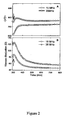
- a decrease in ⁇ f / v is usually associated, in a first approximation, to an increase of the mass coupled to the quartz and a decrease of D at constant mass is usually associated to a stiffer (less elastic) film.
- Both ⁇ f / v and D at the four resonance frequencies give thus information on the viscoelastic properties of the film.
- the multilayers were prepared with a dipping machine (Dipping Robot DR3, Kierstein and Viegler GmbH, Germany) on 12 mm glass slides (VWR Scientific, France) preliminarily cleaned with 10 mM SDS and 0.1 N HCl and extensively rinsed.
- the glass slides were introduced vertically in a home made holder which was dipped into a polyelectrolyte solution for 10 min and was subsequently rinsed in three different beakers containing the 0.15 M NaCl solution.
- the slides were dipped four times (15 s each) in the first beaker and once for five minutes in the two other beakers.
- the slides were then dipped into the oppositely charged polyelectrolyte solution followed by the same rinsing procedure. Rinsing beakers were changed every three layers. Slides were then stored at 4°C until use in 24 wells culture plates.
- CLSM Confocal Laser Scanning Microscopy
- PLL-FITC was used to image the dye labeled film in the green channel.
- the configuration of the microscope and the parameters used for the CLSM observations on a Zeiss LSM510 microscope have been given elsewhere ( Picart, C.; Mutterer, J.; Richert, L.; Luo, Y.; Prestwich, G. D.; Schaaf, P.; Voegel, J.-C.; Lavalle, P. Proc. Natl. Acad. Sci. U. S. A. 2002, 99, 12531-12535 ).
- the 12 mm glass slides were introduced in a homemade chamber and observed by imaging series of consecutive overlapping optical sections.
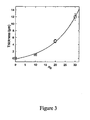
- the thickness of the film was determined by the measurement of the green band (corresponding to the PLL-FITC) in computed orthogonal vertical sections through the imaged volumes.
- FRAP Fluorescence Recovery After Photobleaching experiments
- HCS-2/8 human chondrosarcoma cells derived from chondrocyte-like cell line were routinely grown in Gibco BRL's minimum essential medium with Eagle's salts (MEM, Life Technologies), 10% fetal calf serum (FCS, Life Technologies), 50 U/mL penicillin and 50 U/mL streptomycin (Bio-Whittaker) in a 5% CO 2 and 95% air atmosphere at 37°C.
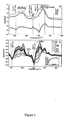
- FIG. 1A shows a typical spectrum of a (PLL/HA) 8 film deposited on a ZnSe crystal before contact with the EDC/NHS solution.
- the peaks of HA attributed to -COO - asymmetric and symmetric stretches (1606, 1412 cm -1 respectively) can be clearly identified ( Haxaire, K.; Marechal, Y.; Milas, M.; Rinaudo, M. Biopolymers 2003, 72, 10-20 ).
- the amide I and amide II bands for HA appear respectively at 1650-1675 cm -1 and 1530-1565 cm -1 (in water).
- the amide I is located at 1600-1680 cm -1 and the amide II band at 1450 cm -1 .
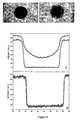
- Intensity profiles along the X axis are plotted for the two images ( Figure 4 , C and D).
- Fig. 5A, 5C For uncross-linked films ( Fig. 5A, 5C ) one observes a partial recovery of the fluorescence in the bleached zone whereas for cross-linked films no recovery is found ( Fig. 5B , 5D). This indicates the absence of PLL-FITC diffusion in the cross-linked films.
- the diffusion coefficient D of the PLL chains can be estimated to be of the order of ⁇ x 2 >/2.
- t 2. 10 -9 cm 2 .s -1 where x corresponds to half the width of the bleached rectangle ( ⁇ 28 ⁇ m) and t the diffusion time ( t ⁇ 1800s).
- the stability of the non cross-linked and cross-linked films in contact with water, with different ethanol solutions and with hyaluronidase was also investigated.
- This enzyme is able to cleave hyaluronan ( Prestwich, G. D.; Marecak, D. M.; Marecek, J. F.; Vercruysse, K. P.; Ziebell, M. R. J Control Release 1998, 53, 93-103 ).
- the non cross-linked (PLL/HA) i multilayers (built in 0.15 M NaCl solution) are stable in the 0.15M NaCl solution for several months, as checked by CLSM, and for at least two weeks when in contact with cells and culture medium (in an incubator at 37°C).
- both native and crosslinked films can be stored for a long period of time (weeks or even months) in the refrigerator (4°C) while keeping their physico-chemical properties.
- Crosslinked films are also very stable in culture media at 37°C for many weeks at least.
- the uncross-linked and cross-linked films were also tested with respect to the adhesion of chondrosarcoma cells, taking bare glass as a reference. These cells were grown on negative (PLL/HA) 12 and positive (PLL/HA) 12 -PLL films, either native or cross-linked (four conditions). Three slides were used for each condition. On the (PLL/HA) 12 and (PLL/HA) 12 -PLL films, cells neither adhere nor spread at all after two to six days of culture ( Figure 8A, C ). These results hold for both HA and PLL ending films. An important question arises as to whether any cells ever did initially adhere to and then subsequently detached from the polyelectrolyte films. Such behavior would suggest that the multilayers are potentially cytotoxic.
- the change from a non-adhesive to an adhesive character of the (PLL/HA) i films after cross-linking may originate from changes in the film rigidity as evidenced by QCM-D.
- Polyelectrolyte multilayered films containing carboxylic and ammonium groups can be chemically and efficiently cross-linked by means of a water soluble carbodiimide EDC in combination with sulfo NHS.
- Fourier transform infrared spectroscopy evidences the conversion of these groups into amide bonds.
- the zeta potential of the films becomes negative after the cross-linking.
- the rigidity and the density of the film are increased, as suggested by the decrease in the viscous dissipation observed by QCM and the increase in the film refractive index measured by OWLS.
- THP-1 macrophages Human promonecytic THP-1 cells (American Type Culture Collection) were maintained in Roswell Parc Memorial Institute (RPMI) 1640 medium containing 10% fetal bovine serum (FBS), 2 mM L-glutamine and antibiotics (all from Life Technologies, Paisley, UK). Differentiated THP-1 cells were obtained by treatment with 5 nM TPA for two days and then starved overnight in 0.5% FBS-RPMI in the presence of 5 nM TPA before stimulation ( Jessel N, Atalar F, Lavalle P, Mutterer J, Decher G, Schaaf P, Voegel JC, Ogier G. 2003. Bioactive coatings based on polyelectrolyte multilayer architecture functionalised by embedded proteins. Adv. Mater. 15(9):692-695 ).
- Chondrocytes proliferation Chondrocytes were isolated from femoral head caps and cultured as previously described ( Miralles G, Baudoin R, Dumas D, Baptiste D, Hubert P, Stoltz JF, Dellacherie E, Mainard D, Netter P, Payan E. 2001. Sodium alginate sponges with or without sodium hyaluronate: in vitro engineering of cartilage. J Biomed Mater Res 57(2):268-78 ). 3 H-thymidine uptake was used to evaluate cell proliferation. Briefly, cells were distributed into 24-well plates containing the film coated glass slides (10 5 /well/slide) in a total volume of 2ml of DMEM supplemented.
- the medium was changed after 3 days, then at 4 days, the cultures were pulsed with thymidine-methyl- 3 H (Perkin-Life Sciences, Belgium) (5 ⁇ Ci/ml) for 24 hours and the cells that were partially adherent were harvested by PBS washing (2ml). After washing, the adherent cells were trypsinized and lysed by frozen/unfrozen cycles. The cell lysates were transferred into liquid scintillation vials. Total radioactivity was quantified by liquid scintillation counting (Packard-Perkin Elmer, France). Data are expressed as mean percent ⁇ SEM of cell binding, the reference being the non-coated glass slides.
- MTT assay Cell viability (MTT assay).
- MTT is a common assay for testing the cellular viability based on the reductive cleavage of yellow tetrazolium salt to a purple formazon compound by the dehydrogenase activity of intact mitochondria ( Denizot F, Lang R. 1986. Rapid colorimetric assay for cell growth and survival : Modifications to the tetrazolium dye procedure giving improved sensitivity and reliability. J. Immunol. Methods 89(2):271-277 ). Consequently, this conversion only occurs in living cells. 100 ⁇ L of dye was added to the each well (in addition to the 1 mM DMEM). The film coated slides were incubated at 37°C for 4h in CO 2 incubator.
- the medium was gently aspirated and 300 ⁇ L of acidic propanol (500 mL propanol + 3.5 mL of 6N HCl) was added. The plates were slightly shaken for 2 hours to ensure crystal dissolution. Aliquot of 150 ⁇ L from each well were put into 96-well plate and absorbances were measured into a Multiplate Reader (Biotek) at the wavelength of 550 nm and 630 nm. The difference of adsorbance (A 550nm - A 630nm ) was calculated for each type of film. Mean value obtained for glass was taken as a reference (100%).
- Motoneurons cultures were realized as described by Martinou et al. ( Martinou JC, Martinou I, Kato AC. 1992. Cholinergic differentiation factor (CDF/LIF) promotes survival of isolated rat embryonic motoneurons in vitro. Neuron 8(4):737-44 ) with few modifications.
- the spinal cords of E13 Swiss mouse embryos were dissected and incubated for 20 min at 37°C in 0.025% trypsin solution (LPCR, France). There were added with L-15 (Leibovitz) medium and mechanically dissociated by several passages through the 21 gauge needle of a syringe, and, then centrifugated at 1000g for 10 min.
- the pellet was resuspended in L-15 medium (containing 3.5% BSA), centrifuged again, and resuspended in L-15. They were layered over a cushion of Optiprep (Nycomed Pharma AS, Norway) and centrifuged for 15 min at 650g, at room temperature. The upper phase containing the purified motoneurons was collected, once again resuspended in L-15 medium and centrifuged at 1000g for 10 min at room temperature.
- the cell pellet was finally suspended in a defined culture medium made of a mixture (v/v) of Dulbecco's modified basal medium of Eagle (DMEM) and Ham F12 (Gibco-BRL, France) supplemented with 5 mg/ml insulin, 10 mg/ml human transferrin, 0.1 mM putrescein, 1 pM oestradiol, 20 nM progesterone, 300 ml of a solution of 175 mg/ml sodium selenite and glutamine 2 (Sigma). Cells were seeded with a density of 2.5x10 4 motoneurons per well onto the (PLL/HA) 12 or (PLL/HA) 12 -PLL coated glass slides.
- DMEM Dulbecco's modified basal medium of Eagle
- Ham F12 Gibco-BRL, France
- BDNF was added at a final concentration of 100 ng/ml to the culture medium. Identification and purity of motoneurons was assessed by immunolabeling with an anti-Choline acetyl transferase (ChAT) antibody. In these experiments, more than 90% of cells were positive for ChAT immunostainings.
- the neurones were fixed in a mixture (95/5 v/v) of methanol and acetic acid during 10min, rinsed with PBS and permeabilized during 30 min with 0.1 % (v/v) of Triton X-100 and 3 % bovine serum albumin (BSA) (Sigma, France). They were then incubated overnight with a mouse monoclonal antibody anti-beta tubulin (1/1000, Sigma, T 4026) at room temperature.
- BSA bovine serum albumin
- the primary rat chondrocytes at the 2 nd passage were dissociated with trypsin/EDTA solution (Gibco BRL, UK) and 10 4 cells/mL were deposited on PEM coated slides placed into 24-well plastic plates (NUNC).
- trypsin/EDTA solution Gibco BRL, UK
- 10 4 cells/mL were deposited on PEM coated slides placed into 24-well plastic plates (NUNC).
- PBS 37°C, two washes of two minutes each
- TAAB glutaraldehyde
- Samples were rinsed in PBS (three washes of ten minutes each) and dehydrated in solutions with increasing ethanol content (50, 70, 90, 100 and 100%, 10 minutes each).
- Atomic force images were obtained in contact mode in air with the Nanoscope IIIa from Digital Instruments (Santa Barbara, CA, USA). Cantilevers with a spring constant of 0.03 N/m and with silicon nitride tips were used (Model MLCT-AUHW Park Scientific, Sunnyvale, CA, USA). Deflection and height mode images are scanned simultaneously at a fixed scan rate (between 2 and 4 Hz) with a resolution of 512 x 512 pixels. Ten cells were observed on each substrate.
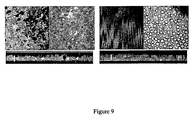
- Macrophages THP-1 cells have been deposited on top of the native and crosslinked (PLL/HA) films that had been fluorescently labeled (the last deposited PLL layer was PLL-FITC). Films containing 24 bilayers were built in order to clearly visualize them by CLSM.
- the macrophages After one day of culture, the macrophages have partly degraded the native film and have become fluorescent. Holes are visible in the film ( Figure 9A ) and the cells do exhibit some green fluorescence. This means that the macrophages have been able to digest the film. As can be seen on the side view of the film ( Figure 9C ), the film has been preferentially degraded in certain places that precisely correspond to the presence of the macrophages. This indicates that they have been able to digest the film and to incorporate the PLL-FITC The digestion of the PLL FITC by the macrophages can be also clearly seen (green fluorescence extending out of the film).
- the cross-linked films were not degraded at all (nor on a 48 hours time period) and the macrophages did not exhibit any fluorescence ( Figure 9D ). They appeared healthy and round ( Figure 9E ) and were highly mobile even in the time scale of the z-series acquisition (three to four minutes). The film has remained as a continuous green band ( Figure 9F ) of ⁇ 6 ⁇ m in thickness and no holes in the film were visible.
- the film appears homogenous at the dozen of nanometer scale ( Figure 13A )
- the primary chondrocytes are able to develop pseudopods ( Figure 13B , White arrow in Figure 13C) overall its membrane which are clearly visible in the micrometer range. With these pseudopods, they can anchor on top of the film.
- the polygonal shape of the is typical for chondrocytes.
- EDC 1-ethyl-3-(3-dimethylaminopropyl) carbodiimide
- sulfo-NHS N-Hydroxysulfo-succinimide
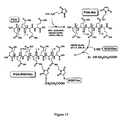
- the 15 amino acid peptide that contained a -RGD-(Arg-Gly-Asp) sequence (CGPKGDRGDAGPKGA) derived from collagen 1 was obtained from Neosystem (Strasbourg, France) and purified by high-performance liquid chromatography.
- Amino-ethylmaleimide (NH 2 EtMal) was prepared according to previously published procedures ( Boeckler C, Dautel D, Schelte P, Frisch B, Wachsmann D, Klein JP, Schuber F. 1999. Design of highly immunogenic liposomal constructs combining structurally independent B cell and T helper cell peptide epitopes. Eur J Immunol 29(7):2297-308 ). For the crosslinking of the films, the protocol described in example 1 was applied.
- OWLS optical waveguide lightmode spectroscopy
- HOs Primary osteoblasts
- the cells were prepared from a bone explant (with the informed consent of the patients).
- the bone explant was collected in DMEM medium (Life Technologies) supplemented with antibiotics (penicillin 100 U/mL, streptomycin at 100 ⁇ g/mL) and washed twice in PBS.
- the explant was treated with 50 ⁇ g/mL of collagenase I (Sigma) for 2 hours at 37°C in PBS, then washed and placed for two weeks on a Petri disch in a non mineralisation medium (0.5 mL DEM, 10% FCS and antibiotics) that was changed every four days. Osteoblasts detached from the bone explant and proliferated on the plate.
- Proliferating cells were washed twice in PBS, detached with 0.04% trypsin and cultivated in the non-mineralisation medium.
- the HOs ability to mineralize when cultivated for 25 days in a mineralisation medium (DMEM, 10% FCS, 15 mM Hepes, 1mM sodium pyruvate, 50 ⁇ g/mL vitamine C, 1.2 mM CaCl 2 and 3 mM pf ⁇ -glycerophophaste) was also checked (medium was changed every five days).
- DMEM 10% FCS, 15 mM Hepes, 1mM sodium pyruvate, 50 ⁇ g/mL vitamine C, 1.2 mM CaCl 2 and 3 mM pf ⁇ -glycerophophaste
- Confluent cells were washed twice with PBS and treated with 0.04% trypsin during 5 minutes at 37°C. Detached cells were collected in PBS, centrifuged (5 min, 1000xg) and resuspended in a serum free DMEM medium supplemented with antibiotics. Cell concentration was adjusted to 2x10 4 cells/ml and 1 ml of cells was deposed per well (ie per coated slide). For the adhesion test, the cells were incubated for 30 minutes at 37°C under a 5% CO 2 humidified atmosphere. After this time period (noted T0), cells were washed with 1 mL of PBS and medium was gently aspirated.
- the cells were maintained in culture at 37°C under a 5% CO2 humidified atmosphere for up to ten days (T2 and T10 correspond respectively to two and ten days). Medium was change every three days. Cells were observed with a brightfield microscope (Nikon, Eclipse TE200) and photographed using a digital camera (DXM-1200, Nikon). After a given time period, the medium was aspirated and the cells were washed with PBS. Cells were lysed according to the above protocol. The quantification of the number of cells that has adhered on each type of film was based on the alkaline phosphatase assay realized on the different cell lysates.
- the absorbance was measured at regular time intervals at 405 nm on Metertech plate reader with p-nitrophenol as standard.
- a standard curve was drawn from reference suspensions at known cell concentrations. The test was realized only once for all the samples at the same time, at the end of the 10 days culture period.
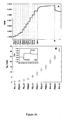
- the thickness of the (PLL/PGA) 5 -PLL films is 31.1 ⁇ 1.8 nm ( Figure 16B ) with a corresponding adsorbed mass of 1.57 ⁇ 0.16 ⁇ g/cm 2 .
- Either PGA or PGA-RGD were adsorbed on top of the film.
- the adsorbed amount of the peptide coupled polyelectrolyte was 0.23 ⁇ 0.04 ⁇ g/cm 2 .
- the evolution of the optical signal during crosslinking was also followed by OWLS.
- the optical parameters deduced before and after the crosslinking are given in Table 2. Crosslinking the film lead to an increase of its refractive index indicating that the crosslinked film has a higher density that the native one.
- the thickness was similar but the adsorbed amount apparently increased.
- Table 2 Optical parameters deduced from OWLS measurements for a (PLL/PGA) 5 -PLL film before and after contact with the EDC/NHS solution. Also given are the differences in % between the parameters after crosslinking compared to prior crosslinking. Optical parameters PLL-6 After EDC/NHS Difference n A 1.426 ⁇ 0.009 1.450 ⁇ 0.010 1.7% d A (nm) 31.1 ⁇ 1.9 31.4 ⁇ 1.6 1% q A ( ⁇ g/cm 2 ) 1.56 ⁇ 0.06 1.98 ⁇ 0.16 26.9%
- FIG. 17A shows a typical spectrum of a (PLL/PGA) 6 film deposited on a ZnSe crystal before contact with the EDC/NHS solution.
- the peaks of PGA attributed to -COO - asymmetric and symmetric stretches (1560 and 1400 cm -1 respectively) can be clearly identified ( Lenormant H, Baudras A, Blout ER. 1958. Reversible Configurational Changes in Sodium Poly-,L-glutamate Induced by Waterl.
- Crosslinking the PGA-RGD ending film enhances the initial adhesion but, once again, preferably when the film is crosslinked as the end of the buildup ( ⁇ PGA-RGD-CL) as compared to prior the PGA-RGD deposition ( ⁇ CL-PGA-RGD). It has also to be noticed that it is possible to build "mixed" films comprised of a first crosslinked part and a second uncrosslinked.
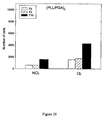
- crosslinked PGA ending film were compared to crosslinked (PLL/PGA) 6 -PLL films on top of which a last PGA or PGA-RGD layer has been deposited ( Figure 20 ).
- early cell adhesion is slightly lower than when the film is crosslinked at the end of the buildup.
- Table 3 Comparison of the early cell adhesion (at 30 min of contact) and ratio of proliferation for the different films tested. Cell adhesion is given as the percentage of cells remaining on the film after a thorough wash (the number of cell seeded was 2x10 4 cells per well).
Landscapes
- Chemical & Material Sciences (AREA)
- Health & Medical Sciences (AREA)
- Chemical Kinetics & Catalysis (AREA)
- Medicinal Chemistry (AREA)
- Polymers & Plastics (AREA)
- Organic Chemistry (AREA)
- Materials For Medical Uses (AREA)
Claims (15)
- Ein Verfahren zum Herstellen von vernetzten Polyelektrolyt-Mehrfachschichtfolien mit einer Dicke von 20nm bis 150 µm, wobei das Verfahren das Umsetzen von komplementären funktionellen Gruppen, nämlich Carboxylgruppen und Aminogruppen, die in den Polymeren vorhanden sind, die die Mehrfachschichtfolie bilden, in Anwesenheit eines Kopplungsmittels und in Anwesenheit von N-Hydroxysuccinimidverbindungen, um Amidbindungen zu bilden, umfasst, wobei die Polymere, die die Mehrfachschiciutfolie bilden, aus anionischen Polymeren, die die Carboxylgruppen umfassen, und kationischen Polymeren, die die Aminogruppen umfassen, bestehen, und wobei die anionischen Polymere aus der Gruppe bestehend aus Polyacrylsäure, Polymethacrylsäure, Poly(D,L-Glutamin)säure, Polyuronsäure, Glykosaminoglykanen, Poly(D,L-Asparaginsäure) und Mischungen davon ausgewählt werden, und die kationischen Polymere aus der Gruppe bestehend aus Poly(D,L-Lysin), Poly(diallyldimethylammoniumchlorid), Poly(allylamin), Poly(ethylen)imin, Chitosan, Poly(L-Arginin), Poly(ornithin), Poly(D, L-Histidin), Poly(Mannosamin) und Mischungen davon ausgewählt werden,
wobei das Kopplungsmittel 1-Ethyl-3-(3-dimethylaminopropyl)carbodiimid (EDC) ist. - Ein Verfahren gemäß Anspruch 1, wobei die verwendeten Polyelektrolyt-Mehrfachschichten mittels irgendeiner komplementären Interaktior, insbesondere durch elektrostatische Anziehung und das Bilden von Wasserstoffbrückenbindungen zusammengesetzt werden.
- Ein Verfahren gemäß einem der vorhergehenden Ansprüche, wobei die Polyelektrolyt-Mehrfachschichtfolien biokompatibel sind.
- Ein Verfahren gemäß einem der vorhergehenden Ansprüche, wobei die Polyelektrolyt-Mehrfachschichten mindestens ein Schichtpaar kationischer Polymere und anionischer Polymere umfassen.
- Ein Verfahren gemäß einem der vorhergehenden Ansprüche, wobei die Polyelektrolyt-Mehrfachschichten mindestens ein Schichtpaar kationischer Polymere und anionischer Polymere umfassen und die Anzahl der Schichtpaare 1 bis 1000, vorzugsweise 2 bis 100, und noch bevorzugter 5 bis 60 beträgt.
- Ein Verfahren gemäß einem der vorergehenden Ansprüche, wobei die Polyelektrolyt-Mehrfachschichten ferner Polymere mit verschiedenen funktionellen Gruppen umfassen können, die aus kationischen, anionischen und neutralen Polymeren ausgewählt werden.
- Ein Verfahren gemäß einem der vorhergehenden Ansprüche, wobei die Polyelektrolyt-Mehrfachschichten ferner eine Vielfalt an Materialien umfassen, die aus synthetischen Polyionen, Biopolymeren, zum Beispiel DNA, DNA, Kollagen, Peptiden, Proteinen und Enzymen, Zellen, Viren, Dendrimeren, Kolloiden, anorganischen und organischen Teilchen, Farbstoffen, Vesikeln, Nano- (oder Mikro-) -Kapseln, Nano-(oder Mikro-) -Teilchen, Polyelektrolytkomplexen, freien oder komplex gebundenen Medikamenten, Cyclodextrinen und Mischungen davon ausgewählt werden.
- Ein Verfahren gemäß einem der vorhergehenden Ansprüche, wobei die N-Hydroxysuccinimidverbindung N-Hydroxysulfosuccinimid ist.
- Ein Verfahren zum Beschichten einer Oberfläche, umfassend: (1) aufeinanderfolgendes Abscheiden von abwechselnden Schichten von Polyelektrolyten auf eine Oberfläche, um eine beschichtete Oberfläche bereitzustellen, die komplementäre reaktive Gruppen, nämlich Aminogruppen und Carboxylgruppen umfasst, wobei ein erstes (oder wechselweise ein zweites) Polymer ein kationisches Polyelektrolyt ist und ein zweites (oder wechselweise ein erstes) Polymer ein anionisches Polyelektrolyt ist, und (2) Umsetzen der komplementären reaktiven Gruppen der beschichteten Oberfläche durch Implementieren des Verfahrens gemäß irgendeinem der vorhergehenden Ansprüche.
- ein Verfahren gemäß Anspruch 9, wobei das Abscheiden von abwechselnden Schichten von Polyelektrolyten auf eine Oberfläche das Eintauchen, Tauch-ßeschichten, Spülen, Tausch-Spülen, Sprühen, Tintenstrahldrucken, Prägen, Drucken und Mikrokontaktdrucken, Wischen, Rakeln oder Rotationsbeschichten umfasst.
- Ein Verfahren gemäß einem der vorhergehenden Ansprüche 9 bis 10, wobei der Abscheidungsvörgang Beschichtungs- und Spülschritte beinhaltet.
- Ein Verfahren gemäß irgendeinem der Ansprüche 9 bis 11, wobei die beschichtete Oberfläche ferner eine Vielfalt an Materialien umfasst, die aus synthetischen Polyionen, Biopolymeren, zum Beispiel DNA, RNA, Kollagen, Peptiden, Proteinen und Enzymen, Zellen, Viren, Dendrimeren, Kolloiden, anorganischen oder organischen Teilchen, Farbstoffen, Vesikeln, Nano- (Mikro-) -Kapseln und Nano- (Mikro-) -Teilchen, Polyelektrolytkomplexen, freien oder komplex gebundenen Medikamenten, Cyclodextrinen und Mischungen davon ausgewählt werden.
- Ein Artikel, der durch ein Verfahren gemäß irgendeinem der Ansprüche 9 bis 12 beschichtet ist.
- Ein beschichteter Artikel gemäß Anspruch 13, wobei der beschichtete Artikel biokompatibel ist.
- Ein beschichteter Artikel gemäß Anspruch 13 oder 14, wobei der Artikel aus der Gruppe bestehend aus Blutgefäß-Stents, Angioplastie-Ballons, Gefäßtransplantathülsen, Blutgefäßprothesen, Gefäßableitungen, Herzklappen, künstlichen Herzkomponenten, Schrittmachern, Schrittmacherelektroden, Schrittmacherleitungen, ventrikulären Unterstützungsvorrichtungen, Kontaktlinsen, Intraokularlinsen, Schwämmen für die Gewebekonstruktion, Schaumstoffen für die Gewebekonstruktion, Matrizen für die Gewebekonstruktion, Gerüsten für die Gewebekonstruktion, biomedizinischen Membranen, Dialysemembranen, zellverkapselungsmembranen, Medikamentenabgabegefäßen, Medükamentenabgabematrizen, Medikamentenabgabepumpen, Kathetern, Schläuchen, Prothesen für plastische Chirurgie, orthopädischen Prothesen, Zahnprothesen, Knochen- und Zahnimplantaten, Wundauflage, Nahtmaterialien, Weichgewebe-Ausbesserungsnetzen, perkutanen Vorrichtungen, Diagnose-Biosensoren, Zell-Arrays, zellulären Netzen, Mikrofluidvorrichtungen und Protein-Arrays ausgewählt ist.
Priority Applications (4)
| Application Number | Priority Date | Filing Date | Title |
|---|---|---|---|
| EP20030292972 EP1535952B1 (de) | 2003-11-28 | 2003-11-28 | Verfahren zur Herstellung vernetzter, mehrlagiger Polyelektrolytfilme |
| PCT/IB2004/004130 WO2005052035A1 (en) | 2003-11-28 | 2004-11-29 | Method for preparing crosslinked polyelectrolyte multilayer films |
| US10/580,544 US20070129792A1 (en) | 2003-11-28 | 2004-11-29 | Method for preparing crosslinked polyelectrolyte multilayer films |
| US14/143,405 US20140328883A1 (en) | 2003-11-28 | 2013-12-30 | Method for preparing crosslinked polyelectrolyte multilayer films |
Applications Claiming Priority (1)
| Application Number | Priority Date | Filing Date | Title |
|---|---|---|---|
| EP20030292972 EP1535952B1 (de) | 2003-11-28 | 2003-11-28 | Verfahren zur Herstellung vernetzter, mehrlagiger Polyelektrolytfilme |
Publications (2)
| Publication Number | Publication Date |
|---|---|
| EP1535952A1 EP1535952A1 (de) | 2005-06-01 |
| EP1535952B1 true EP1535952B1 (de) | 2013-01-16 |
Family
ID=34443101
Family Applications (1)
| Application Number | Title | Priority Date | Filing Date |
|---|---|---|---|
| EP20030292972 Expired - Lifetime EP1535952B1 (de) | 2003-11-28 | 2003-11-28 | Verfahren zur Herstellung vernetzter, mehrlagiger Polyelektrolytfilme |
Country Status (3)
| Country | Link |
|---|---|
| US (2) | US20070129792A1 (de) |
| EP (1) | EP1535952B1 (de) |
| WO (1) | WO2005052035A1 (de) |
Families Citing this family (102)
| Publication number | Priority date | Publication date | Assignee | Title |
|---|---|---|---|---|
| AU2002345328A1 (en) * | 2001-06-27 | 2003-03-03 | Remon Medical Technologies Ltd. | Method and device for electrochemical formation of therapeutic species in vivo |
| US6865810B2 (en) * | 2002-06-27 | 2005-03-15 | Scimed Life Systems, Inc. | Methods of making medical devices |
| FR2873379B1 (fr) * | 2004-07-23 | 2008-05-16 | Jerome Asius | Procede de preparation d'acide hyaluronique reticule, acide hyaluronique reticule susceptible d'etre obtenu par ledit procede, implant contenant ledit acide hyaluronique reticule, et son utilisation |
| DE102004039628A1 (de) | 2004-08-10 | 2006-02-23 | NMI Naturwissenschaftliches und Medizinisches Institut an der Universität Tübingen | Trägerplatte zur Durchführung funktioneller Tests an biologischen Zellen sowie Verfahren zur Beschichtung der Trägerplatte |
| US20070224055A1 (en) * | 2005-11-23 | 2007-09-27 | Anex Deon S | Electrokinetic pump designs and drug delivery systems |
| US8840660B2 (en) | 2006-01-05 | 2014-09-23 | Boston Scientific Scimed, Inc. | Bioerodible endoprostheses and methods of making the same |
| US8089029B2 (en) | 2006-02-01 | 2012-01-03 | Boston Scientific Scimed, Inc. | Bioabsorbable metal medical device and method of manufacture |
| WO2008057127A2 (en) * | 2006-02-06 | 2008-05-15 | Massachusetts Institute Of Technology | Self-assembly of macromolecules on multilayered polymer surfaces |
| US8048150B2 (en) * | 2006-04-12 | 2011-11-01 | Boston Scientific Scimed, Inc. | Endoprosthesis having a fiber meshwork disposed thereon |
| FR2901143B1 (fr) * | 2006-05-16 | 2008-10-03 | Centre Nat Rech Scient | "methode de construction de materiaux vivants fonctionnels, materiaux obtenus et applications" |
| CA2659761A1 (en) | 2006-08-02 | 2008-02-07 | Boston Scientific Scimed, Inc. | Endoprosthesis with three-dimensional disintegration control |
| JP2010503490A (ja) | 2006-09-15 | 2010-02-04 | ボストン サイエンティフィック リミテッド | 調整可能な表面特徴を備えた内部人工器官 |
| WO2008034050A2 (en) * | 2006-09-15 | 2008-03-20 | Boston Scientific Limited | Endoprosthesis containing magnetic induction particles |
| ATE517590T1 (de) | 2006-09-15 | 2011-08-15 | Boston Scient Ltd | Biologisch erodierbare endoprothesen |
| US8052744B2 (en) | 2006-09-15 | 2011-11-08 | Boston Scientific Scimed, Inc. | Medical devices and methods of making the same |
| JP2010503491A (ja) | 2006-09-15 | 2010-02-04 | ボストン サイエンティフィック リミテッド | 生物学的安定性無機層を有する生浸食性エンドプロスシーシス |
| EP2068780A2 (de) * | 2006-09-15 | 2009-06-17 | Boston Scientific Limited | Medizinische vorrichtungen |
| WO2008034031A2 (en) | 2006-09-15 | 2008-03-20 | Boston Scientific Limited | Bioerodible endoprostheses and methods of making the same |
| WO2008036548A2 (en) | 2006-09-18 | 2008-03-27 | Boston Scientific Limited | Endoprostheses |
| US7940447B2 (en) | 2006-12-04 | 2011-05-10 | 3M Innovative Properties Company | Electrochromic device |
| US7764416B2 (en) | 2006-12-04 | 2010-07-27 | 3M Innovative Properties Company | Electrochromic device based on layer by layer deposition |
| ATE488259T1 (de) | 2006-12-28 | 2010-12-15 | Boston Scient Ltd | Bioerodierbare endoprothesen und herstellungsverfahren dafür |
| RU2458710C2 (ru) | 2007-01-21 | 2012-08-20 | Хемотек Аг | Медицинский продукт для лечения обтураций просветов организма и для предупреждения угрожающих повторных обтураций |
| US7867592B2 (en) * | 2007-01-30 | 2011-01-11 | Eksigent Technologies, Inc. | Methods, compositions and devices, including electroosmotic pumps, comprising coated porous surfaces |
| TW200840554A (en) * | 2007-02-28 | 2008-10-16 | Alcon Inc | Coated medical implants and lenses |
| WO2008157372A2 (en) | 2007-06-14 | 2008-12-24 | Massachusetts Institute Of Technology | Self assembled films for protein and drug delivery applications |
| US9192697B2 (en) | 2007-07-03 | 2015-11-24 | Hemoteq Ag | Balloon catheter for treating stenosis of body passages and for preventing threatening restenosis |
| US8052745B2 (en) | 2007-09-13 | 2011-11-08 | Boston Scientific Scimed, Inc. | Endoprosthesis |
| US20090130746A1 (en) * | 2007-10-25 | 2009-05-21 | Canon U.S. Life Sciences, Inc. | Microchannel surface coating |
| US8251672B2 (en) * | 2007-12-11 | 2012-08-28 | Eksigent Technologies, Llc | Electrokinetic pump with fixed stroke volume |
| US9174839B2 (en) * | 2008-01-30 | 2015-11-03 | Imbed Biosciences, Inc. | Methods and compositions for wound healing |
| WO2009097508A2 (en) * | 2008-01-30 | 2009-08-06 | Mcanulty, Jonathan | Methods and compositions for wound healing |
| KR100964451B1 (ko) * | 2008-03-26 | 2010-06-16 | 경희대학교 산학협력단 | 다층구조 고분자 전해질 및 다층구조 고분자 전해질코팅체와 그 제조방법 |
| US7998192B2 (en) | 2008-05-09 | 2011-08-16 | Boston Scientific Scimed, Inc. | Endoprostheses |
| US8236046B2 (en) | 2008-06-10 | 2012-08-07 | Boston Scientific Scimed, Inc. | Bioerodible endoprosthesis |
| WO2009158325A2 (en) * | 2008-06-25 | 2009-12-30 | Boston Scientific Scimed, Inc. | Medical devices having surface coatings |
| US7985252B2 (en) | 2008-07-30 | 2011-07-26 | Boston Scientific Scimed, Inc. | Bioerodible endoprosthesis |
| US20120052125A1 (en) * | 2008-08-04 | 2012-03-01 | Dr. Suwelack Skin & Health Care Ag | Cholesteryl Sulfate-Containing Composition As A Haemostatic |
| US9198875B2 (en) * | 2008-08-17 | 2015-12-01 | Massachusetts Institute Of Technology | Controlled delivery of bioactive agents from decomposable films |
| US8172831B2 (en) * | 2008-09-02 | 2012-05-08 | Abbott Cardiovascular Systems Inc. | Catheter configured for incremental rotation |
| CA2735173C (en) | 2008-09-02 | 2017-01-10 | Tautona Group Lp | Threads of hyaluronic acid and/or derivatives thereof, methods of making thereof and uses thereof |
| US8382824B2 (en) | 2008-10-03 | 2013-02-26 | Boston Scientific Scimed, Inc. | Medical implant having NANO-crystal grains with barrier layers of metal nitrides or fluorides |
| WO2010042546A1 (en) | 2008-10-06 | 2010-04-15 | Indiana University Research And Technology Corporation | Methods and apparatus for active or passive assistance in the circulatory system |
| WO2010064139A2 (en) * | 2008-12-04 | 2010-06-10 | Intec Pharma Ltd. | Zaleplon gastroretentive drug delivery system |
| WO2010081884A2 (en) | 2009-01-16 | 2010-07-22 | Institut Polytechnique De Grenoble | Process for preparing a surface coated by crosslinked polyelectrolyte multilayer films as a biomimetic reservoir for proteins |
| WO2010101901A2 (en) | 2009-03-02 | 2010-09-10 | Boston Scientific Scimed, Inc. | Self-buffering medical implants |
| KR101248119B1 (ko) * | 2009-05-13 | 2013-03-27 | 충남대학교산학협력단 | 고분자 전해질 다층막 및 생체감응장치 |
| KR101195533B1 (ko) | 2009-05-13 | 2012-10-30 | 충남대학교산학협력단 | 알파-사이클로덱스트린 유도체 및 상기 알파-사이클로덱스트린 유도체층을 포함하는 고분자 전해질 다층막 |
| KR101190267B1 (ko) | 2009-05-13 | 2012-10-10 | 충남대학교산학협력단 | 베타-사이클로덱스트린 유도체 및 상기 베타-사이클로덱스트린 유도체층을 포함하는 고분자 전해질 다층막 |
| KR101248120B1 (ko) * | 2009-05-13 | 2013-03-27 | 충남대학교산학협력단 | 고분자 전해질 다층막 및 생체감응장치 |
| GB2471522B (en) | 2009-07-03 | 2014-01-08 | Cambridge Entpr Ltd | Microfluidic devices |
| ES2550634T3 (es) | 2009-07-10 | 2015-11-11 | Boston Scientific Scimed, Inc. | Uso de nanocristales para un balón de suministro de fármaco |
| JP5933434B2 (ja) | 2009-07-17 | 2016-06-08 | ボストン サイエンティフィック サイムド,インコーポレイテッドBoston Scientific Scimed,Inc. | 薬剤送達バルーンの製造方法 |
| US20110172180A1 (en) | 2010-01-13 | 2011-07-14 | Allergan Industrie. Sas | Heat stable hyaluronic acid compositions for dermatological use |
| EP4062950A1 (de) | 2010-03-22 | 2022-09-28 | Allergan, Inc. | Spritze mit dermalem füllstoff zur verstärkung von weichgewebe |
| WO2011119573A1 (en) | 2010-03-23 | 2011-09-29 | Boston Scientific Scimed, Inc. | Surface treated bioerodible metal endoprostheses |
| US9011970B2 (en) * | 2010-07-30 | 2015-04-21 | Essilor International | Process for preparing articles having anti-fog layer by layer coating and coated articles having enhanced anti-fog and durability properties |
| US8889211B2 (en) | 2010-09-02 | 2014-11-18 | Boston Scientific Scimed, Inc. | Coating process for drug delivery balloons using heat-induced rewrap memory |
| WO2012149494A2 (en) * | 2011-04-27 | 2012-11-01 | Massachusetts Institute Of Technology | Coating compositions, methods and coated devices |
| JP2014519570A (ja) | 2011-05-05 | 2014-08-14 | エクシジェント テクノロジーズ, エルエルシー | 動電学的送出システム用のゲル結合部 |
| US9408797B2 (en) | 2011-06-03 | 2016-08-09 | Allergan, Inc. | Dermal filler compositions for fine line treatment |
| US9393263B2 (en) | 2011-06-03 | 2016-07-19 | Allergan, Inc. | Dermal filler compositions including antioxidants |
| RU2624239C2 (ru) | 2011-06-03 | 2017-07-03 | Аллерган, Инк. | Составы кожного наполнителя, включая антиоксиданты |
| US20130096081A1 (en) | 2011-06-03 | 2013-04-18 | Allergan, Inc. | Dermal filler compositions |
| US8669360B2 (en) | 2011-08-05 | 2014-03-11 | Boston Scientific Scimed, Inc. | Methods of converting amorphous drug substance into crystalline form |
| WO2013028208A1 (en) | 2011-08-25 | 2013-02-28 | Boston Scientific Scimed, Inc. | Medical device with crystalline drug coating |
| US9662422B2 (en) | 2011-09-06 | 2017-05-30 | Allergan, Inc. | Crosslinked hyaluronic acid-collagen gels for improving tissue graft viability and soft tissue augmentation |
| US20130244943A1 (en) | 2011-09-06 | 2013-09-19 | Allergan, Inc. | Hyaluronic acid-collagen matrices for dermal filling and volumizing applications |
| CN102416203B (zh) * | 2011-11-29 | 2013-10-23 | 北京中孵友信医药科技股份有限公司 | 具有局部抗血小板效应的rna干扰血管支架涂层材料及其制成的局部抗凝血管支架 |
| EP2841056A4 (de) | 2012-04-23 | 2015-09-16 | Massachusetts Inst Technology | Stabile schichtweise beschichtete teilchen |
| US9395468B2 (en) | 2012-08-27 | 2016-07-19 | Ocular Dynamics, Llc | Contact lens with a hydrophilic layer |
| WO2014106214A1 (en) * | 2012-12-28 | 2014-07-03 | Compagnie Generale Des Establissment Michelin | Thin film diffusion barrier |
| WO2014134029A1 (en) | 2013-02-26 | 2014-09-04 | Massachusetts Institute Of Technology | Nucleic acid particles, methods and use thereof |
| US9463244B2 (en) | 2013-03-15 | 2016-10-11 | Massachusetts Institute Of Technology | Compositions and methods for nucleic acid delivery |
| US9705167B2 (en) | 2013-06-19 | 2017-07-11 | Samsung Electronics Co., Ltd. | Lithium ion conducting protective film and method of use |
| EP3570093B1 (de) | 2013-11-15 | 2021-09-15 | Tangible Science, Inc. | Kontaktlinse mit hydrophiler schicht |
| JP6671300B2 (ja) * | 2014-05-27 | 2020-03-25 | アーティフィシャル セル テクノロジーズ インコーポレイテッド | Tffによる多層コーティング化コアの自動交互積層構築 |
| US20150376449A1 (en) * | 2014-06-27 | 2015-12-31 | Dow Global Technologies Llc | Barrier film, methods of manufacture thereof and articles comprising the same |
| US20150376450A1 (en) * | 2014-06-27 | 2015-12-31 | Dow Global Technologies Llc | Barrier film, methods of manufacture thereof and articles comprising the same |
| WO2016051219A1 (en) | 2014-09-30 | 2016-04-07 | Allergan Industrie, Sas | Stable hydrogel compositions including additives |
| DE102014017950A1 (de) * | 2014-12-05 | 2016-06-09 | Eidgenössische Technische Hochschule Zürich | Verfahren zum Verbinden von Gerüststrukturen für Tissue Engineering-Anwendungen, Implantate und Transplantate in der Chirugie mittels Layer-by-Layer-Methode |
| CN107206119B (zh) | 2014-12-09 | 2021-01-29 | 实体科学公司 | 具有生物相容性层的医疗设备涂层 |
| RU2715234C2 (ru) | 2015-02-13 | 2020-02-26 | Аллерган Эндюстри, Сас | Имплантаты для моделирования, увеличения или коррекции частей лица, например подбородка |
| KR101928048B1 (ko) * | 2016-02-29 | 2018-12-12 | 충남대학교산학협력단 | 미세 나노기공 멤브레인, 이의 제조 방법 및 이를 이용한 미세유체소자 |
| KR102637746B1 (ko) | 2016-07-29 | 2024-02-16 | 임베드 바이오사이언시스 아이엔씨. | 상처 치유를 위한 방법 및 조성물 |
| EP3336169A1 (de) | 2016-12-15 | 2018-06-20 | Institut Polytechnique de Grenoble | Robotisches verfahren zum beschichten einer multiwellplatte durch einen mehrschichtigen polyelektrolytfilm |
| CN107137788B (zh) * | 2017-04-28 | 2019-05-24 | 淮阴工学院 | 一种在医用镁合金表面制备壳聚糖/肝素化氧化石墨烯复合多层膜的方法 |
| WO2019089567A1 (en) | 2017-10-30 | 2019-05-09 | Massachusetts Institute Of Technology | Layer-by-layer nanoparticles for cytokine therapy in cancer treatment |
| EP3479851A1 (de) | 2017-11-02 | 2019-05-08 | Université de Strasbourg | Vernetzbare polypeptid- und hyaluronsäurebeschichtungen |
| CN110003272B (zh) * | 2019-03-11 | 2021-05-07 | 南京理工大学 | 功能化季鏻盐自组装材料及其生物传感器 |
| JP7618173B2 (ja) * | 2019-05-09 | 2025-01-21 | ザ ユニバーシティ オブ アクロン | 植込み型医療デバイスの感染症制御のための抗生物質溶出ポリ(エステル尿素)フィルム |
| EP3975841A1 (de) | 2019-05-30 | 2022-04-06 | Massachusetts Institute of Technology | Peptid-nukleinsäurefunktionalisierte hydrogelmikronadeln zur probenahme und detektion von nukleinsäuren in interstitieller flüssigkeit |
| WO2021150914A1 (en) * | 2020-01-24 | 2021-07-29 | Guin Technologies Llc | Nanostructure polyelectrolyte compositions, methods of making and using same |
| EP3970761A1 (de) | 2020-09-22 | 2022-03-23 | Institut Polytechnique de Grenoble | Implantierbares medizinprodukt zur knochenreparatur |
| FR3115993B1 (fr) | 2020-11-12 | 2023-12-29 | Centre Nat Rech Scient | Systemes de liberation de proteines par voie buccale |
| CN112730364A (zh) * | 2020-12-28 | 2021-04-30 | 广东工业大学 | 一种用于检测血液肝素含量的检测器 |
| CN113318270B (zh) * | 2021-05-19 | 2022-03-08 | 南方医科大学珠江医院 | 生物活性物质覆层聚酯网状片层支架的制备方法 |
| CN114669197B (zh) * | 2022-03-17 | 2023-05-30 | 山东大学 | 一种抗有机物污染和微生物粘附的改性聚酰胺复合膜的制备方法 |
| CN114891728B (zh) * | 2022-04-07 | 2023-01-03 | 广东医科大学附属医院 | 聚电解质膜、巨噬细胞外泌体及其在促进BMSCs分化中的应用 |
| CN114533231B (zh) * | 2022-04-27 | 2022-11-29 | 杭州锐健马斯汀医疗器材有限公司 | 球囊体及其制备方法和应用 |
| CN114894891B (zh) * | 2022-05-10 | 2024-10-29 | 中国石油大学(华东) | 基于海藻酸钠/聚丙烯腈复合薄膜的qcm湿敏传感器及构建方法和应用 |
| CN119548677B (zh) * | 2024-12-13 | 2025-08-12 | 江苏博创生物科技有限公司 | 一种双层结构且能够快速上皮化的胶原基人工角膜及其制备方法 |
Family Cites Families (8)
| Publication number | Priority date | Publication date | Assignee | Title |
|---|---|---|---|---|
| DE2614662A1 (de) * | 1975-04-07 | 1977-01-27 | Dow Chemical Co | Zusammensetzung zur herstellung von in wasser quellbaren gegenstaenden |
| EP0830351A1 (de) * | 1995-06-07 | 1998-03-25 | Monsanto Company | Verfahren zur herstellung von substituierten polyazamacroringen |
| US6818395B1 (en) * | 1999-06-28 | 2004-11-16 | California Institute Of Technology | Methods and apparatus for analyzing polynucleotide sequences |
| IT1317091B1 (it) * | 2000-02-08 | 2003-05-26 | S F I R Societa Fondaria Ind R | Gel di acido ialuronico cross-linked con l-amminoacidi ol-amminoesteri bifunzionali. |
| US6852353B2 (en) * | 2000-08-24 | 2005-02-08 | Novartis Ag | Process for surface modifying substrates and modified substrates resulting therefrom |
| EP1348125A1 (de) * | 2000-10-26 | 2003-10-01 | Glaucus Proteomics B.V. | Produkte mit biofunktioneller beschichtung |
| US7456025B2 (en) * | 2001-08-28 | 2008-11-25 | Porex Corporation | Sintered polymer membrane for analyte detection device |
| WO2003035278A1 (en) * | 2001-10-25 | 2003-05-01 | Massachusetts Institute Of Technology | Method of depositing polyelectrolyte multilayers and articles coated thereby |
-
2003
- 2003-11-28 EP EP20030292972 patent/EP1535952B1/de not_active Expired - Lifetime
-
2004
- 2004-11-29 US US10/580,544 patent/US20070129792A1/en not_active Abandoned
- 2004-11-29 WO PCT/IB2004/004130 patent/WO2005052035A1/en not_active Ceased
-
2013
- 2013-12-30 US US14/143,405 patent/US20140328883A1/en not_active Abandoned
Also Published As
| Publication number | Publication date |
|---|---|
| US20070129792A1 (en) | 2007-06-07 |
| EP1535952A1 (de) | 2005-06-01 |
| WO2005052035A1 (en) | 2005-06-09 |
| US20140328883A1 (en) | 2014-11-06 |
Similar Documents
| Publication | Publication Date | Title |
|---|---|---|
| EP1535952A1 (de) | Verfahren zur Herstellung vernetzter, mehrlagiger Polyelektrolytfilme | |
| Richert et al. | pH dependent growth of poly (L-lysine)/poly (L-glutamic) acid multilayer films and their cell adhesion properties | |
| EP2387423B1 (de) | Verfahren zur herstellung mehrschichtiger quervernetzter polyelektrolyt-schichten als biomimetisches protein-reservoir | |
| Picart et al. | Primary cell adhesion on RGD‐functionalized and covalently crosslinked thin polyelectrolyte multilayer films | |
| Picart et al. | Controlled degradability of polysaccharide multilayer films in vitro and in vivo | |
| Segura et al. | Crosslinked hyaluronic acid hydrogels: a strategy to functionalize and pattern | |
| Schneider et al. | Elasticity, biodegradability and cell adhesive properties of chitosan/hyaluronan multilayer films | |
| Zhang et al. | Natural polyelectrolyte films based on layer-by layer deposition of collagen and hyaluronic acid | |
| Boudou et al. | Multiple functionalities of polyelectrolyte multilayer films: new biomedical applications | |
| Mandal et al. | Silk fibroin/gelatin multilayered films as a model system for controlled drug release | |
| Richert et al. | Imaging cell interactions with native and crosslinked polyelectrolyte multilayers | |
| Mahjoubi et al. | Surface modification of poly (D, L-lactic acid) scaffolds for orthopedic applications: a biocompatible, nondestructive route via diazonium chemistry | |
| Bahrami et al. | Low‐pressure plasma surface modification of polyurethane films with chitosan and collagen biomolecules | |
| Chen et al. | Effects of surface functionalization of PLGA membranes for guided bone regeneration on proliferation and behavior of osteoblasts | |
| Gentile et al. | Alginate-based hydrogels functionalised at the nanoscale using layer-by-layer assembly for potential cartilage repair | |
| Junthip et al. | Layer‐by‐layer coating of textile with two oppositely charged cyclodextrin polyelectrolytes for extended drug delivery | |
| Brunsen et al. | Photocrosslinkable dextran hydrogel films as substrates for osteoblast and endothelial cell growth | |
| Ferreira et al. | Bioinspired porous membranes containing polymer nanoparticles for wound healing | |
| Silva et al. | Multilayered hollow tubes as blood vessel substitutes | |
| Oliveira et al. | Hierarchical fibrillar scaffolds obtained by non-conventional layer-by-layer electrostatic self-assembly | |
| Kuo et al. | Neuronal production from induced pluripotent stem cells in self-assembled collagen-hyaluronic acid-alginate microgel scaffolds with grafted GRGDSP/Ln5-P4 | |
| Zhu et al. | Photo-initiated grafting of gelatin/N-maleic acyl-chitosan to enhance endothelial cell adhesion, proliferation and function on PLA surface | |
| US20080171070A1 (en) | Polyelectrolyte Multilayer Film, Preparation And Uses Thereof | |
| Sharifi et al. | Mass Spectrometry, Structural Analysis and Anti-Inflammatory Properties of Photocrosslinked Human Albumin Hydrogels | |
| Rinckenbach et al. | Characterization of polyelectrolyte multilayer films on polyethylene terephtalate vascular prostheses under mechanical stretching |
Legal Events
| Date | Code | Title | Description |
|---|---|---|---|
| PUAI | Public reference made under article 153(3) epc to a published international application that has entered the european phase |
Free format text: ORIGINAL CODE: 0009012 |
|
| AK | Designated contracting states |
Kind code of ref document: A1 Designated state(s): AT BE BG CH CY CZ DE DK EE ES FI FR GB GR HU IE IT LI LU MC NL PT RO SE SI SK TR |
|
| AX | Request for extension of the european patent |
Extension state: AL LT LV MK |
|
| 17P | Request for examination filed |
Effective date: 20051125 |
|
| AKX | Designation fees paid |
Designated state(s): AT BE BG CH CY CZ DE DK EE ES FI FR GB GR HU IE IT LI LU MC NL PT RO SE SI SK TR |
|
| 17Q | First examination report despatched |
Effective date: 20060831 |
|
| GRAP | Despatch of communication of intention to grant a patent |
Free format text: ORIGINAL CODE: EPIDOSNIGR1 |
|
| GRAS | Grant fee paid |
Free format text: ORIGINAL CODE: EPIDOSNIGR3 |
|
| GRAA | (expected) grant |
Free format text: ORIGINAL CODE: 0009210 |
|
| AK | Designated contracting states |
Kind code of ref document: B1 Designated state(s): AT BE BG CH CY CZ DE DK EE ES FI FR GB GR HU IE IT LI LU MC NL PT RO SE SI SK TR |
|
| REG | Reference to a national code |
Ref country code: GB Ref legal event code: FG4D |
|
| REG | Reference to a national code |
Ref country code: CH Ref legal event code: EP |
|
| REG | Reference to a national code |
Ref country code: IE Ref legal event code: FG4D |
|
| REG | Reference to a national code |
Ref country code: CH Ref legal event code: EP Ref country code: AT Ref legal event code: REF Ref document number: 593897 Country of ref document: AT Kind code of ref document: T Effective date: 20130215 |
|
| REG | Reference to a national code |
Ref country code: DE Ref legal event code: R096 Ref document number: 60343118 Country of ref document: DE Effective date: 20130314 |
|
| REG | Reference to a national code |
Ref country code: AT Ref legal event code: MK05 Ref document number: 593897 Country of ref document: AT Kind code of ref document: T Effective date: 20130116 |
|
| REG | Reference to a national code |
Ref country code: NL Ref legal event code: VDEP Effective date: 20130116 |
|
| PG25 | Lapsed in a contracting state [announced via postgrant information from national office to epo] |
Ref country code: BE Free format text: LAPSE BECAUSE OF FAILURE TO SUBMIT A TRANSLATION OF THE DESCRIPTION OR TO PAY THE FEE WITHIN THE PRESCRIBED TIME-LIMIT Effective date: 20130116 Ref country code: AT Free format text: LAPSE BECAUSE OF FAILURE TO SUBMIT A TRANSLATION OF THE DESCRIPTION OR TO PAY THE FEE WITHIN THE PRESCRIBED TIME-LIMIT Effective date: 20130116 Ref country code: CY Free format text: LAPSE BECAUSE OF FAILURE TO SUBMIT A TRANSLATION OF THE DESCRIPTION OR TO PAY THE FEE WITHIN THE PRESCRIBED TIME-LIMIT Effective date: 20130116 Ref country code: ES Free format text: LAPSE BECAUSE OF FAILURE TO SUBMIT A TRANSLATION OF THE DESCRIPTION OR TO PAY THE FEE WITHIN THE PRESCRIBED TIME-LIMIT Effective date: 20130427 Ref country code: BG Free format text: LAPSE BECAUSE OF FAILURE TO SUBMIT A TRANSLATION OF THE DESCRIPTION OR TO PAY THE FEE WITHIN THE PRESCRIBED TIME-LIMIT Effective date: 20130416 Ref country code: SE Free format text: LAPSE BECAUSE OF FAILURE TO SUBMIT A TRANSLATION OF THE DESCRIPTION OR TO PAY THE FEE WITHIN THE PRESCRIBED TIME-LIMIT Effective date: 20130116 |
|
| PG25 | Lapsed in a contracting state [announced via postgrant information from national office to epo] |
Ref country code: NL Free format text: LAPSE BECAUSE OF FAILURE TO SUBMIT A TRANSLATION OF THE DESCRIPTION OR TO PAY THE FEE WITHIN THE PRESCRIBED TIME-LIMIT Effective date: 20130116 Ref country code: SI Free format text: LAPSE BECAUSE OF FAILURE TO SUBMIT A TRANSLATION OF THE DESCRIPTION OR TO PAY THE FEE WITHIN THE PRESCRIBED TIME-LIMIT Effective date: 20130116 Ref country code: PT Free format text: LAPSE BECAUSE OF FAILURE TO SUBMIT A TRANSLATION OF THE DESCRIPTION OR TO PAY THE FEE WITHIN THE PRESCRIBED TIME-LIMIT Effective date: 20130516 Ref country code: FI Free format text: LAPSE BECAUSE OF FAILURE TO SUBMIT A TRANSLATION OF THE DESCRIPTION OR TO PAY THE FEE WITHIN THE PRESCRIBED TIME-LIMIT Effective date: 20130116 Ref country code: GR Free format text: LAPSE BECAUSE OF FAILURE TO SUBMIT A TRANSLATION OF THE DESCRIPTION OR TO PAY THE FEE WITHIN THE PRESCRIBED TIME-LIMIT Effective date: 20130417 |
|
| PG25 | Lapsed in a contracting state [announced via postgrant information from national office to epo] |
Ref country code: DK Free format text: LAPSE BECAUSE OF FAILURE TO SUBMIT A TRANSLATION OF THE DESCRIPTION OR TO PAY THE FEE WITHIN THE PRESCRIBED TIME-LIMIT Effective date: 20130116 Ref country code: EE Free format text: LAPSE BECAUSE OF FAILURE TO SUBMIT A TRANSLATION OF THE DESCRIPTION OR TO PAY THE FEE WITHIN THE PRESCRIBED TIME-LIMIT Effective date: 20130116 Ref country code: SK Free format text: LAPSE BECAUSE OF FAILURE TO SUBMIT A TRANSLATION OF THE DESCRIPTION OR TO PAY THE FEE WITHIN THE PRESCRIBED TIME-LIMIT Effective date: 20130116 Ref country code: CZ Free format text: LAPSE BECAUSE OF FAILURE TO SUBMIT A TRANSLATION OF THE DESCRIPTION OR TO PAY THE FEE WITHIN THE PRESCRIBED TIME-LIMIT Effective date: 20130116 Ref country code: RO Free format text: LAPSE BECAUSE OF FAILURE TO SUBMIT A TRANSLATION OF THE DESCRIPTION OR TO PAY THE FEE WITHIN THE PRESCRIBED TIME-LIMIT Effective date: 20130116 |
|
| PLBE | No opposition filed within time limit |
Free format text: ORIGINAL CODE: 0009261 |
|
| STAA | Information on the status of an ep patent application or granted ep patent |
Free format text: STATUS: NO OPPOSITION FILED WITHIN TIME LIMIT |
|
| 26N | No opposition filed |
Effective date: 20131017 |
|
| PG25 | Lapsed in a contracting state [announced via postgrant information from national office to epo] |
Ref country code: IT Free format text: LAPSE BECAUSE OF FAILURE TO SUBMIT A TRANSLATION OF THE DESCRIPTION OR TO PAY THE FEE WITHIN THE PRESCRIBED TIME-LIMIT Effective date: 20130116 |
|
| REG | Reference to a national code |
Ref country code: DE Ref legal event code: R097 Ref document number: 60343118 Country of ref document: DE Effective date: 20131017 |
|
| REG | Reference to a national code |
Ref country code: DE Ref legal event code: R082 Ref document number: 60343118 Country of ref document: DE Representative=s name: LAVOIX MUNICH, DE |
|
| REG | Reference to a national code |
Ref country code: FR Ref legal event code: TQ Owner name: UNIVERSITE LOUIS PASTEUR, FR Effective date: 20140407 Ref country code: FR Ref legal event code: TQ Owner name: CENTRE NATIONAL DE LA RECHERCHE SCIENTIFIQUE, FR Effective date: 20140407 |
|
| REG | Reference to a national code |
Ref country code: DE Ref legal event code: R082 Ref document number: 60343118 Country of ref document: DE Representative=s name: LAVOIX MUNICH, DE Effective date: 20140414 Ref country code: DE Ref legal event code: R081 Ref document number: 60343118 Country of ref document: DE Owner name: UNIVERSITE LOUIS PASTEUR, FR Free format text: FORMER OWNER: UNIVERSITE LOUIS PASTEUR, CENTRE NATIONAL DE LA RECHERCHE, INSTITUT NATIONAL DE LA SANTE E, , FR Effective date: 20140414 Ref country code: DE Ref legal event code: R081 Ref document number: 60343118 Country of ref document: DE Owner name: CENTRE NATIONAL DE LA RECHERCHE SCIENTIFIQUE (, FR Free format text: FORMER OWNER: UNIVERSITE LOUIS PASTEUR, CENTRE NATIONAL DE LA RECHERCHE, INSTITUT NATIONAL DE LA SANTE E, , FR Effective date: 20130116 Ref country code: DE Ref legal event code: R081 Ref document number: 60343118 Country of ref document: DE Owner name: UNIVERSITE LOUIS PASTEUR, FR Free format text: FORMER OWNER: UNIVERSITE LOUIS PASTEUR, CENTRE NATIONAL DE LA RECHERCHE, INSTITUT NATIONAL DE LA SANTE E, , FR Effective date: 20130116 Ref country code: DE Ref legal event code: R081 Ref document number: 60343118 Country of ref document: DE Owner name: CENTRE NATIONAL DE LA RECHERCHE SCIENTIFIQUE (, FR Free format text: FORMER OWNER: UNIVERSITE LOUIS PASTEUR, CENTRE NATIONAL DE LA RECHERCHE, INSTITUT NATIONAL DE LA SANTE E, , FR Effective date: 20140414 Ref country code: DE Ref legal event code: R081 Ref document number: 60343118 Country of ref document: DE Owner name: CENTRE NATIONAL DE LA RECHERCHE SCIENTIFIQUE (, FR Free format text: FORMER OWNERS: UNIVERSITE LOUIS PASTEUR, STRASBOURG, FR; CENTRE NATIONAL DE LA RECHERCHE SCIENTIFIQUE (C.N.R.S.), PARIS, FR; INSTITUT NATIONAL DE LA SANTE ET DE LA RECHERCHE MEDICALE (INSERM), PARIS, FR Effective date: 20130116 Ref country code: DE Ref legal event code: R081 Ref document number: 60343118 Country of ref document: DE Owner name: CENTRE NATIONAL DE LA RECHERCHE SCIENTIFIQUE (, FR Free format text: FORMER OWNERS: UNIVERSITE LOUIS PASTEUR, STRASBOURG, FR; CENTRE NATIONAL DE LA RECHERCHE SCIENTIFIQUE (C.N.R.S.), PARIS, FR; INSTITUT NATIONAL DE LA SANTE ET DE LA RECHERCHE MEDICALE (INSERM), PARIS, FR Effective date: 20140414 Ref country code: DE Ref legal event code: R081 Ref document number: 60343118 Country of ref document: DE Owner name: UNIVERSITE LOUIS PASTEUR, FR Free format text: FORMER OWNERS: UNIVERSITE LOUIS PASTEUR, STRASBOURG, FR; CENTRE NATIONAL DE LA RECHERCHE SCIENTIFIQUE (C.N.R.S.), PARIS, FR; INSTITUT NATIONAL DE LA SANTE ET DE LA RECHERCHE MEDICALE (INSERM), PARIS, FR Effective date: 20130116 Ref country code: DE Ref legal event code: R081 Ref document number: 60343118 Country of ref document: DE Owner name: UNIVERSITE LOUIS PASTEUR, FR Free format text: FORMER OWNERS: UNIVERSITE LOUIS PASTEUR, STRASBOURG, FR; CENTRE NATIONAL DE LA RECHERCHE SCIENTIFIQUE (C.N.R.S.), PARIS, FR; INSTITUT NATIONAL DE LA SANTE ET DE LA RECHERCHE MEDICALE (INSERM), PARIS, FR Effective date: 20140414 |
|
| REG | Reference to a national code |
Ref country code: CH Ref legal event code: PL |
|
| PG25 | Lapsed in a contracting state [announced via postgrant information from national office to epo] |
Ref country code: MC Free format text: LAPSE BECAUSE OF FAILURE TO SUBMIT A TRANSLATION OF THE DESCRIPTION OR TO PAY THE FEE WITHIN THE PRESCRIBED TIME-LIMIT Effective date: 20130116 Ref country code: CH Free format text: LAPSE BECAUSE OF NON-PAYMENT OF DUE FEES Effective date: 20131130 Ref country code: LI Free format text: LAPSE BECAUSE OF NON-PAYMENT OF DUE FEES Effective date: 20131130 |
|
| REG | Reference to a national code |
Ref country code: IE Ref legal event code: MM4A |
|
| REG | Reference to a national code |
Ref country code: GB Ref legal event code: 732E Free format text: REGISTERED BETWEEN 20140828 AND 20140903 |
|
| REG | Reference to a national code |
Ref country code: GB Ref legal event code: 732E Free format text: REGISTERED BETWEEN 20140904 AND 20140910 |
|
| PG25 | Lapsed in a contracting state [announced via postgrant information from national office to epo] |
Ref country code: IE Free format text: LAPSE BECAUSE OF NON-PAYMENT OF DUE FEES Effective date: 20131128 |
|
| PG25 | Lapsed in a contracting state [announced via postgrant information from national office to epo] |
Ref country code: TR Free format text: LAPSE BECAUSE OF FAILURE TO SUBMIT A TRANSLATION OF THE DESCRIPTION OR TO PAY THE FEE WITHIN THE PRESCRIBED TIME-LIMIT Effective date: 20130116 |
|
| PG25 | Lapsed in a contracting state [announced via postgrant information from national office to epo] |
Ref country code: HU Free format text: LAPSE BECAUSE OF FAILURE TO SUBMIT A TRANSLATION OF THE DESCRIPTION OR TO PAY THE FEE WITHIN THE PRESCRIBED TIME-LIMIT; INVALID AB INITIO Effective date: 20031128 Ref country code: LU Free format text: LAPSE BECAUSE OF NON-PAYMENT OF DUE FEES Effective date: 20131128 |
|
| REG | Reference to a national code |
Ref country code: FR Ref legal event code: PLFP Year of fee payment: 13 |
|
| REG | Reference to a national code |
Ref country code: FR Ref legal event code: PLFP Year of fee payment: 14 |
|
| REG | Reference to a national code |
Ref country code: FR Ref legal event code: PLFP Year of fee payment: 15 |
|
| PGFP | Annual fee paid to national office [announced via postgrant information from national office to epo] |
Ref country code: FR Payment date: 20221013 Year of fee payment: 20 |
|
| PGFP | Annual fee paid to national office [announced via postgrant information from national office to epo] |
Ref country code: GB Payment date: 20221121 Year of fee payment: 20 Ref country code: DE Payment date: 20221114 Year of fee payment: 20 |
|
| REG | Reference to a national code |
Ref country code: DE Ref legal event code: R071 Ref document number: 60343118 Country of ref document: DE |
|
| REG | Reference to a national code |
Ref country code: GB Ref legal event code: PE20 Expiry date: 20231127 |
|
| PG25 | Lapsed in a contracting state [announced via postgrant information from national office to epo] |
Ref country code: GB Free format text: LAPSE BECAUSE OF EXPIRATION OF PROTECTION Effective date: 20231127 |
|
| PG25 | Lapsed in a contracting state [announced via postgrant information from national office to epo] |
Ref country code: GB Free format text: LAPSE BECAUSE OF EXPIRATION OF PROTECTION Effective date: 20231127 |