EP1531154A2 - Verfahren zur Herstellung linearer organischer Thiophen-Phenylen-Oligomere - Google Patents
Verfahren zur Herstellung linearer organischer Thiophen-Phenylen-Oligomere Download PDFInfo
- Publication number
- EP1531154A2 EP1531154A2 EP04025731A EP04025731A EP1531154A2 EP 1531154 A2 EP1531154 A2 EP 1531154A2 EP 04025731 A EP04025731 A EP 04025731A EP 04025731 A EP04025731 A EP 04025731A EP 1531154 A2 EP1531154 A2 EP 1531154A2
- Authority
- EP
- European Patent Office
- Prior art keywords
- general formula
- compounds
- process according
- optionally substituted
- meaning given
- Prior art date
- Legal status (The legal status is an assumption and is not a legal conclusion. Google has not performed a legal analysis and makes no representation as to the accuracy of the status listed.)
- Granted
Links
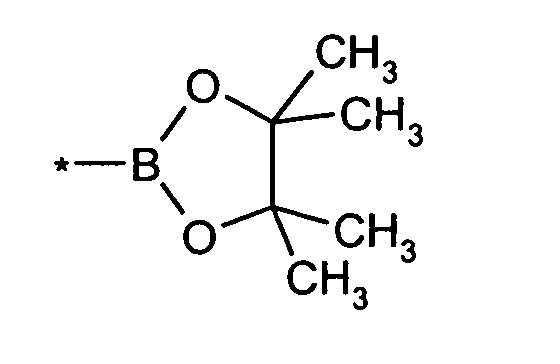
- 0 CC1(C)OB(O*)OC1(C)C Chemical compound CC1(C)OB(O*)OC1(C)C 0.000 description 1
Classifications
-
- C—CHEMISTRY; METALLURGY
- C07—ORGANIC CHEMISTRY
- C07D—HETEROCYCLIC COMPOUNDS
- C07D409/00—Heterocyclic compounds containing two or more hetero rings, at least one ring having sulfur atoms as the only ring hetero atoms
- C07D409/14—Heterocyclic compounds containing two or more hetero rings, at least one ring having sulfur atoms as the only ring hetero atoms containing three or more hetero rings
-
- C—CHEMISTRY; METALLURGY
- C07—ORGANIC CHEMISTRY
- C07D—HETEROCYCLIC COMPOUNDS
- C07D333/00—Heterocyclic compounds containing five-membered rings having one sulfur atom as the only ring hetero atom
- C07D333/02—Heterocyclic compounds containing five-membered rings having one sulfur atom as the only ring hetero atom not condensed with other rings
- C07D333/04—Heterocyclic compounds containing five-membered rings having one sulfur atom as the only ring hetero atom not condensed with other rings not substituted on the ring sulphur atom
- C07D333/06—Heterocyclic compounds containing five-membered rings having one sulfur atom as the only ring hetero atom not condensed with other rings not substituted on the ring sulphur atom with only hydrogen atoms, hydrocarbon or substituted hydrocarbon radicals, directly attached to the ring carbon atoms
- C07D333/08—Hydrogen atoms or radicals containing only hydrogen and carbon atoms
-
- C—CHEMISTRY; METALLURGY
- C07—ORGANIC CHEMISTRY
- C07D—HETEROCYCLIC COMPOUNDS
- C07D409/00—Heterocyclic compounds containing two or more hetero rings, at least one ring having sulfur atoms as the only ring hetero atoms
- C07D409/02—Heterocyclic compounds containing two or more hetero rings, at least one ring having sulfur atoms as the only ring hetero atoms containing two hetero rings
- C07D409/10—Heterocyclic compounds containing two or more hetero rings, at least one ring having sulfur atoms as the only ring hetero atoms containing two hetero rings linked by a carbon chain containing aromatic rings
-
- C—CHEMISTRY; METALLURGY
- C07—ORGANIC CHEMISTRY
- C07F—ACYCLIC, CARBOCYCLIC OR HETEROCYCLIC COMPOUNDS CONTAINING ELEMENTS OTHER THAN CARBON, HYDROGEN, HALOGEN, OXYGEN, NITROGEN, SULFUR, SELENIUM OR TELLURIUM
- C07F5/00—Compounds containing elements of Groups 3 or 13 of the Periodic Table
- C07F5/02—Boron compounds
- C07F5/025—Boronic and borinic acid compounds
-
- H—ELECTRICITY
- H10—SEMICONDUCTOR DEVICES; ELECTRIC SOLID-STATE DEVICES NOT OTHERWISE PROVIDED FOR
- H10K—ORGANIC ELECTRIC SOLID-STATE DEVICES
- H10K85/00—Organic materials used in the body or electrodes of devices covered by this subclass
- H10K85/10—Organic polymers or oligomers
- H10K85/111—Organic polymers or oligomers comprising aromatic, heteroaromatic, or aryl chains, e.g. polyaniline, polyphenylene or polyphenylene vinylene
- H10K85/113—Heteroaromatic compounds comprising sulfur or selene, e.g. polythiophene
-
- Y—GENERAL TAGGING OF NEW TECHNOLOGICAL DEVELOPMENTS; GENERAL TAGGING OF CROSS-SECTIONAL TECHNOLOGIES SPANNING OVER SEVERAL SECTIONS OF THE IPC; TECHNICAL SUBJECTS COVERED BY FORMER USPC CROSS-REFERENCE ART COLLECTIONS [XRACs] AND DIGESTS
- Y02—TECHNOLOGIES OR APPLICATIONS FOR MITIGATION OR ADAPTATION AGAINST CLIMATE CHANGE
- Y02E—REDUCTION OF GREENHOUSE GAS [GHG] EMISSIONS, RELATED TO ENERGY GENERATION, TRANSMISSION OR DISTRIBUTION
- Y02E10/00—Energy generation through renewable energy sources
- Y02E10/50—Photovoltaic [PV] energy
- Y02E10/549—Organic PV cells
-
- Y—GENERAL TAGGING OF NEW TECHNOLOGICAL DEVELOPMENTS; GENERAL TAGGING OF CROSS-SECTIONAL TECHNOLOGIES SPANNING OVER SEVERAL SECTIONS OF THE IPC; TECHNICAL SUBJECTS COVERED BY FORMER USPC CROSS-REFERENCE ART COLLECTIONS [XRACs] AND DIGESTS
- Y02—TECHNOLOGIES OR APPLICATIONS FOR MITIGATION OR ADAPTATION AGAINST CLIMATE CHANGE
- Y02P—CLIMATE CHANGE MITIGATION TECHNOLOGIES IN THE PRODUCTION OR PROCESSING OF GOODS
- Y02P70/00—Climate change mitigation technologies in the production process for final industrial or consumer products
- Y02P70/50—Manufacturing or production processes characterised by the final manufactured product
Definitions
- the invention relates to a novel process for preparing linear organic thiophene-phenylene oligomers, which are suitable for the production of semiconducting layers.
- thiophene-phenylene cooligomers hereinafter also referred to as thiophene-phenylene oligomers referred to, by means of different, known in the art Coupling reactions take place. That the suitability of the end products for use in the Semiconductor technology depends significantly on their purity and the adverse effects Contaminated semiconductor on the properties, such as a poor "on / off ratio" in OFETs, electronic applications made therefrom are well known (Handbook of Oligo- and Polythiophenes, ed. By D. Fischou, Wiley-VCH, Weinheim, pp. 469-471).
- Hotta et al. describes a series of phenylene-oligothiophenes and their preparation Grignard reactions or Suzuki coupling, but formed so heavily contaminated products be that after purification high yield losses are recorded (J. Heterocyclic Chem. 2000, 37, 281-286; J. Heterocyclic Chem. 2000, 37, 25-29, Synt. Met. 1999, 101, 551-552).
- the Suzuki coupling occurs in all cases between aryl boronic acids and thienyl halides.
- the suitability of oligothiophenes with phenyl units as end groups as light-emitting Layered materials in OLEDs have been described by Hotta et al. in Synt. Met. 1999, 106, 39-40.
- the object of the present invention was thus to provide such a method.
- thiophene units in the compounds of the general formulas (I) or (II) may be identical or different, ie the substituents R A may be identical or different in the individual thiophene units and the substituents R B may be identical or different in the individual thiophene units be.
- R A and R B are H.
- R 1 is a C 3 -C 20 -alkenyl group
- the double bond of the C 3 -C 20 -alkenyl group is preferably terminal (cf., for example, formula II-a in example 1).
- Suitable substituents for the radical Ar are, for example, linear or branched C 1 -C 20 -alkyl radicals, preferably C 1 -C 12 -alkyl radicals, or linear C 1 -C 20 -alkyl radicals interrupted by one (e) or more O atoms , At the 2,7-Fluorenylenechen sit (one or more) optionally present substituents preferably at the 9-position.
- Particularly Preferred Substituents 1,4-phenylene rings are methyl, ethyl, propyl, butyl, pentyl or hexyl groups.
- Further particularly preferred substituents for phenyl groups are methoxy, ethoxy, propoxy, buthoxy, pentoxy, hexyloxy or heptyloxy groups.
- Very particular preferred substituent is hydrogen.
- Exemplary of preferred compounds of general formula (I-a) are 5-alkyl-5 '- [4- (5'-alkyl-2,2'-bithien-5-yl) phenyl] -2,2 "-bithiophene and 5-alkyl-5 "- [4- (5" -alkyl-2,2 ': 5', 2 "-terthien-5-yl) -phenyl] -2,2 ': 5', 2" -terthiophene, especially 5-decyl-5 "- [4- (5" -decyl-2,2 ': 5', 2 "-terthien-5-yl) -phenyl] -2,2 ': 5', 2" -terthiophene, 5-hexyl-5 '- [4- (5 "-hexyl-2,2': 5 ', 2" -terthien-5-yl) phenyl] -2,2': 5 ', 2 "-terthiophen
- the process according to the invention is preferably carried out in a variant of the Suzuki coupling.
- the Suzuki coupling i. the reaction of aryl halides and organoboron compounds is e.g. in Suzuki et al., Chem. Rev. 1995, 95, 2457-2483.
- aryl or heteroaryl halides and compounds of the general formula (I) optionally in the presence of at least one base and / or at least one catalyst, the metal of the VIII.
- Subgroup of the Periodic Table of the Elements hereinafter referred to as Metal of VIII. Subgroup denotes, contains, to be reacted.
- the particularly preferred embodiment of the method is in a Temperature of + 20 ° C to + 200 ° C, preferably from + 40 ° C to + 150 ° C, more preferably from + 80 ° C to + 130 ° C, carried out in an organic solvent or solvent mixture.
- Suitable catalysts are in principle all compounds which contain a metal of subgroup VIII of the Periodic Table of the Elements, preferably Pd, Ni or Pt, more preferably Pd.
- the catalyst (s) are preferably used in amounts of from 0.05% to 10% by weight, more preferably from 0.5% to 5% by weight, based on the total weight of the compound to be coupled Links. used.
- Particularly suitable catalysts are complex compounds of metals of VIII.
- organometallic reagents eg, lithium alkyl compounds or organomagnesium compounds
- phosphines to palladium (0) complexes reduce or palladium (2) complexes optionally with the addition of PPh 3 or other phosphines.
- PdCl 2 (PPh 3 ) 2 , PdBr 2 (PPh 3 ) 2 or Pd (OAc) 2 or mixtures of these compounds can be used with the addition of PPh 3 .
- Pd (PPh 3 ) 4 without or with the addition of phosphines, in a preferred embodiment without the addition of phosphines, which is available in inexpensive form.
- phosphines preferably PPh 3, PEtPh 2, PMePh 2, PEt 2 Ph or PEt 3, particularly preferably PPh 3, are used.
- Suitable bases are hydroxides, eg NaOH, KOH, LiOH, Ba (OH) 2 , Ca (OH) 2 , alkoxides, eg NaOEt, KOEt, LiOEt, NaOMe, KOMe, LiOMe, alkali metal salts of carboxylic acids, eg sodium, potassium or lithium carbonate, bicarbonate, acetate, citrate, acetylacetonate, glycinate, or other carbonates, for example Cs 2 CO 3 or Tl 2 CO 3 , phosphates, for example sodium phosphate, potassium phosphate or lithium phosphate, or mixtures thereof.
- sodium carbonate is used.
- the bases can be used as solutions in water or as suspensions in organic solvents, such as toluene, dioxane or DMF. Preference is given to solutions in water, since the products obtained can be easily separated from the reaction mixture due to their low solubility in water.
- solvents or solvent mixtures come as organic solvents in question, which with the Pinakolinboronklareestem the general formula (II) not react. These are usually compounds which have no halogen atoms or none Having thiophene-Pinakolinboronklareestem reactive hydrogen atoms.
- Suitable solvents are, for example, alkanes such as pentane, hexane and heptane, aromatics such as benzene, toluene and xylenes, ether group-containing compounds such as dioxane, dimethoxyethane and tetrahydrofuran and polar solvents such as dimethylformamide or dimethyl sulfoxide.
- aromatics are used as solvents. Very particularly preferred Toluene. It is also possible to use as solvent mixtures of two or more of these Use solvent.
- the work-up of the reaction mixture is carried out according to methods known per se, e.g. by Dilution, precipitation, filtration, extraction, washing, recrystallization from suitable solvents, Chromatography and / or sublimation.
- the connections of the general formula (I) can already without further subsequent purification processes in high quality and purity are obtained and are semiconducting. It is possible, however Products according to known methods, e.g. by recrystallization, chromatography or Sublimation continues to clean.
- the aryldihalogen compounds of the general formula (III) used in this process can be prepared by methods known per se.
- the preparation of Pinakolinboronklareester of the general formula (II) is described, for example, in Feast et al, J. Mater. Chem. 2003, 13, 1269-1273 described, although organotin compounds as starting compounds be used. However, it would be because of their health concerns advantageous to avoid the use of such organotin compounds.
- the compounds of general formula (II) may be prepared by various methods are prepared, which are known in principle to the expert. For example, it is possible the compounds of the general formula (II) by reacting aryl halides and bis (pinacolato) diborane by metal-catalyzed coupling produce, as for example in WO-A 01/29051 A1 and Tetrahedron Lett. 2002, p. 5649. It continues possible the compounds of general formula (II) by coupling of Oligothiophenhalogeniden to produce with pinacol borane. (J. Org. Chem. 1997, B.62, p. 6458; J. Organomet. Chem. 2001, p. 640, p. 197; Chem.
- the compounds of the general formula (II) are therefore preferably prepared by reaction of organometallic compounds, e.g. organomagnesium compounds (e.g., Grignard compounds) or organolithium compounds prepared with Pinakolinboronklareestem. This is preferred inasmuch as in this reaction surprisingly no diaryls as by-products be formed.
- organometallic compounds e.g. organomagnesium compounds (e.g., Grignard compounds) or organolithium compounds prepared with Pinakolinboronklam.
- the starting compounds such as Grignard or organolithium compounds of the general Formula (V) can be prepared by known methods (see, for example, J. Mat. Chem. 2003, 13, 197) or are commercially available.
- the inventive method is carried out so that the implementation of the organometallic Compounds of general formula (V) with the Alkoxypinakolinboronklaestern the general formula (IV) at a temperature of -100 ° C to + 50 ° C, preferably from -80 ° C to + 20 ° C in an organic solvent or solvent mixture.
- organic Solvent or solvent mixtures come in principle all solvents or Solvent mixtures in question, which with the compounds of the general formula (IV) and (V) do not react.
- solvents which do not contain halogen atoms or none with respect to organolithium compounds or Grignard compounds reactive hydrogen atoms or carbonyl groups.
- Suitable solvents are, for example, alkanes such as e.g.
- the process preferably uses solvents which are ether groups contain. Very particular preference is tetrahydrofuran. It is also possible, however Solvent mixtures of two or more of the aforementioned solvents to use. For example, mixtures of the preferred solvent used tetrahydrofuran and alkanes, e.g. Hexane can be used. Such mixtures can be used, for example, in commercially available solutions of starting materials such as organolithium compounds be included.
- the compounds of general formula (II) can be prepared by known methods of work-up e.g. isolate by simple filtration from the reaction solution and optionally continue cleaning. As cleaning methods, for example, suitable recrystallization, Sublimation or chromatography.
- the compounds of general formula (II) can either in isolated form or directly in the reaction solution ("in situ") and without further Work-up can be used.
- Illustrative of compounds of general formula (II) are 4,4,5,5-tetramethyl-2- [5 '- (10-undecenyl) -2,2'-bithien-5-yl] -1,3,2- dioxaborolane (II-a), 2- (5 "-decyl-2,2 ': 5', 2" -terthien-5-yl) -4,4,5,5-tetramethyl-1,3,2-dioxaborolane (II-b), 4,4,5,5-tetramethyl-2- [5'-hexyl-2,2'-bithien-5-yl] -1,3,2-dioxaborolane (II-c), 2 - (5 "-Hexyl-2,2 ': 5', 2" -terthien-5-yl) -4,4,5,5-tetramethyl-1,3,2-dioxaborolane (II-d) called:
- the compounds of general formula (II) are characterized by particular thermal Stability and hydrolysis resistance. You can by the method according to the invention can be easily prepared and isolated and are accessible in high purity, so they excellent as precursor molecules for the preparation according to the invention of semiconducting thiophene-phenylene oligomers of general formula (I) are suitable. Surprisingly, none occurs Deboration as a side reaction to and the preparation according to the invention of the thiophene-phenylene oligomers can also be used under conditions such as presence protic solvent, e.g.
- the compounds of the general formula prepared by the process according to the invention (I) are neutral and semiconducting and, due to their purity, are particularly suitable for use as semiconductors in active and light-emitting electronic components such as field-effect transistors, organic light emitting diodes, photovoltaic cells, lasers or sensors.
- the compounds of the general formula (I) according to the invention are in the form of layers on suitable substrates, for example on with electrical or electronic Structured silicon wafer, polymer films or glass sheets of solution or from the Applied gas phase.
- suitable substrates for example on with electrical or electronic Structured silicon wafer, polymer films or glass sheets of solution or from the Applied gas phase.
- the compounds of the general formula (I) from the gas phase by evaporation or sputtering of the new compounds and subsequent condensation or solution are applied to the substrate, wherein the solvent is then evaporated.
- the solution can be applied according to the known Process, for example by spraying, dipping, printing and knife coating, spin coating and by Ink jet printing done.
- Preference is given to the compounds of general formula (I) from the Gas phase, e.g. by vapor deposition, applied. In this way, layers with the least defects and highest charge mobilities.
- Semiconductive layers made from the compounds according to the invention are characterized by high purity and consequently low defects.
- the inventive layers contain less than 0.5 Wt .-%, preferably less than 0.3 wt .-%, more preferably less than 0.05 wt .-% Halogen.
- the layers according to the invention can be further modified after application, for example by a temperature treatment, e.g. passing through a liquid crystalline Phase, or for structuring e.g. by laser ablation.
- the layers of the invention are excellent for use because of their purity in active and light-emitting electronic components such as field-effect transistors, organic light emitting diodes, photovoltaic cells, lasers or sensors suitable.
- reaction mixture was cooled down again and at -74 ° C 2-isopropoxy-4,4,5,5-tetramethyl-1,3,2-dioxaborolan (3.3 ml, 16 mmol) added via syringe. The mixture was stirred for 30 min at -74 ° C, the cooling bath removed again and the temperature allowed to rise to 20 ° C.
- the reaction mixture was poured into 200 ml of ice-cold water - mixed with 15 ml of 1 M HCl - and extracted with 500 ml of diethyl ether. The ether phase was separated, washed with water, dried over Na 2 SO 4 , filtered and the solvent was removed completely on a rotary evaporator. Yield: 6.03 g (97% of theory) of dark blue, crystalline product (II-a).
- 1,4-Dibromobenzene (142 mg, 0.6 mmol) was initially charged and under protective gas tetrakis (triphenylphosphine) palladium Pd (PPh 3 ) 4 (46 mg, 0.04 mmol) was added.
- a solution of 2- (5 "-decyl-2,2 ': 5', 2" -terthien-5-yl) -4,4,5,5-tetramethyl-1,3,2-dioxaborolane (II -b) (865 mg, 1.7 mmol) in 20 ml of anhydrous toluene and 5 ml of a 2 M aqueous Na 2 CO 3 solution and deoxidized with nitrogen.
- the melting behavior was determined with a DSC (Differential Scanning Calorimeter) Mettler TA-4000 thermosystem, scanning rate 10K / min.
Landscapes
- Chemical & Material Sciences (AREA)
- Organic Chemistry (AREA)
- Engineering & Computer Science (AREA)
- Materials Engineering (AREA)
- Low-Molecular Organic Synthesis Reactions Using Catalysts (AREA)
- Heterocyclic Carbon Compounds Containing A Hetero Ring Having Oxygen Or Sulfur (AREA)
- Paints Or Removers (AREA)
Abstract
Description

- m
- für eine ganze Zahl von 1 bis 5, bevorzugt für 1, 2 oder 3, besonders bevorzugt für 1 steht,
- Ar
- für gegebenenfalls substituiertes 1,4-Phenylen und/oder 2,7-Fluorenylen steht,
- R1
- für H oder eine gegebenenfalls substituierte lineare oder verzweigte C1-C20-Alkylgruppe, bevorzugt eine C1-C12-Alkylgruppe, besonders bevorzugt eine Ethyl-, n-Butyl, n-Hexyl-, n-Octyl, n-Decyl oder n-Dodecylgruppe, oder eine gegebenenfalls durch ein(e) oder mehrere O- oder S-Atome, Silylen-, Phosphonoyl- oder Phosphorylgruppen unterbrochene lineare C1-C20-Alkylgruppe, bevorzugt C1-C12-Alkylgruppe, oder eine C3-C20-Alkenylgruppe, bevorzugt eine C1-C12-Alkenylgruppe, besonders bevorzugt eine Allyl-, Butenyl-, Pentenyl-, Hexenyl-, Heptenyl-, Octenyl-, Decenyl-, Undecenyl- oder Dodecenyl-Gruppesteht ,
- RA, RB
- unabhängig voneinander jeweils für H oder eine gegebenenfalls substituierte und/oder gegebenenfalls mit bis zu 10 Sauerstoffatomen unterbrochene lineare oder verzweigte C1-C20-Alkylgruppe, bevorzugt für eine C1-C12-Alkylgruppe, besonders bevorzugt für eine Methyl-, Ethyl-, Propyl-, Butyl-, Pentyl- oder Hexylgruppe, eine gegebenenfalls substituierte C1-C20-Alkoxygruppe, bevorzugt für eine C1-C6-Alkoxygruppe, besonders bevorzugt für eine Methoxygruppe, oder gemeinsam für eine gegebenenfalls substituierte C1-C6-Dioxyalkylengruppe, bevorzugt für eine 3,4-Alkylendioxygruppe mit bis zu 6 Kohlenstoffatomen in der Alkylengruppe, beispielsweise eine 3,4-Ethylendioxygruppe oder 3,4-Propylendioxygruppe, stehen und
- n
- für 2, 3 oder 4 steht,

n, R1, RA und RB die oben für die allgemeine Formel (I) genannte Bedeutung haben.
mit einer Verbindung der allgemeinen Formel (III),

- m und Ar
- die für die allgemeine Formel (I) genannte Bedeutung haben und worin
- Y
- für einen Rest Cl, Br, I oder O-SO2-RC steht, wobei RC für einen Phenyl-, Tolyl-, Methyl- oder Trifluormethylrest steht,

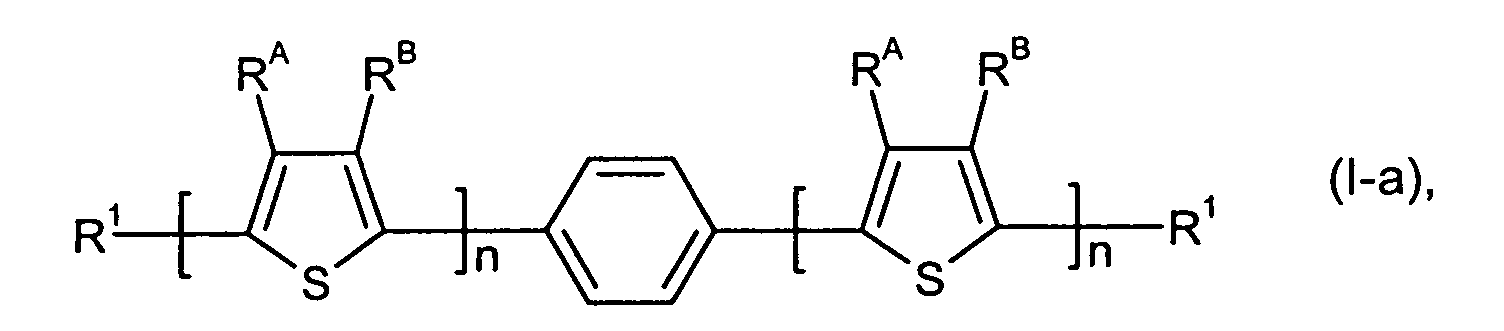
n, R1, RA und RB die oben für die allgemeine Formel (I) genannte Bedeutung haben,
wobei eine Verbindung der allgemeinen Formel (II) mit einer Verbindung der allgemeinen Formel (III-a)

- Y
- die oben für die allgemeine Formel (III) genannte Bedeutung hat,


- R2
- für einen linearen oder verzweigten C1-C20-Alkylrest steht,

- n, R1, RA und RB
- die oben für die allgemeine Formel (I) genannte Bedeutung haben und
- M
- für LiX oder MgX steht, wobei X für Cl, Br, I, bevorzugt für Br steht,
Bevorzugte Alkoxypinakolinboronsäureester der allgemeinen Formel (IV) sind dabei solche, worin R2 für einen linearen oder verzweigten C1-C12-Alkylrest steht, besonders bevorzugt für einen Rest aus der Reihe Methyl, Ethyl, n-Propyl, i-Propyl, n-Butyl, t-Butyl, i-Butyl, n-Pentyl oder n-Hexyl. In bevorzugten Ausführungsformen des erfindungsgemäßen Verfahrens werden 2-Isopropoxy-4,4,5,5-tetramethyl-1,3,2-dioxaborolan oder Methoxy-4,4,5,5-tetramethyl-1,3,2-dioxaborolan eingesetzt. Diese beiden Verbindungen haben den Vorteil, dass sie kommerziell zu erwerben sind.



1H NMR (CDCl3, TMS/ppm): 1.22-1.45 (overlapped peaks with a max at 1.283, 14H), 1.345 (s, 12 H), 1.672 (m, J=7.5 Hz, M = 5, 2H), 2.037 (q, J=7.2 Hz, 2H), 2.781 (t, J=7.3 Hz, 2H), 4.928 (d, J=10.3 Hz, 1H), 4.991 (d, J=17.1 Hz, 1H), 5.811 (m, 1H), 6.676 (d, J=3.4 Hz, 1H), 7.037 (d, J=3.9 Hz, 1H), 7.152 (d, J=3.9 Hz, 1H), 7.496 (d, J=3.4 Hz, 1H).

1H NMR (CDCl3, TMS/ppm): 0.880 (3H, t, J=6.9 Hz), 1.20-1.45 (overlapped peaks, 14 H), 1.351 (s, 12 H), 1.678 (2H, m, J=7.5 Hz), 2.787 (2H, t, J=7.6 Hz), 6.679 (1H, d, J=3.4 Hz), 6.988 (2H, dd, J1=3.9 Hz, J2=3.9 Hz), 7.111 (1H, d, J=3.9 Hz), 7.209 (1H, d, J=3.9 Hz), 7.516 ( 1 H, d, J=3.4 Hz).

EI MS Analyse (nach Aufreinigung durch Sublimation bei 0,25 mBar, 320°C)): M•+ 100%, m/e = 850.3.
Schmelzverhalten (°C): K 310 I (K = kristallin, I = isotrop flüssig).
Claims (10)
- Verfahren zur Herstellung von Verbindungen der allgemeinen Formel (I)insbesondere nach dem Prinzip der Suzuki-Kupplung,

worin- m
- für eine ganze Zahl von 1 bis 5 steht,
- Ar
- für gegebenenfalls substituiertes 1,4-Phenylen und/oder 2,7-Fluorenylen steht,
- R1
- für H oder eine gegebenenfalls subsituierte lineare oder verzweigte C1-C20-Alkylgruppe, eine gegebenenfalls durch ein(e) oder mehrere O- oder S-Atome, Silylen-, Phosphonoyl- oder Phosphorylgruppen unterbrochene lineare C1-C20-Alkylgruppe oder eine C3-C20-Alkenylgruppe steht,
- RA, RB
- unabhängig voneinander jeweils für H oder eine gegebenenfalls substituierte und/oder gegebenenfalls mit bis zu 10 Sauerstoffatomen unterbrochene lineare oder verzweigte C1-C20-Alkylgruppe, eine gegebenenfalls substituierte C1-C20-Alkoxygruppe oder gemeinsam für eine gegebenenfalls substituierte C1-C6-Dioxyalkylengruppe stehen und
- n
- für 2, 3 oder 4 steht,
worin
n, R1, RA und RB die oben für die allgemeine Formel (I) genannte Bedeutung haben.
mit einer Verbindung der allgemeinen Formel (III)worin
m und Ar die für die allgemeine Formel (I) genannte Bedeutung haben und- Y
- für einen Rest Cl, Br, I oder O-SO2-RC steht, wobei RC für einen Phenyl-, Tolyl-, Methyl- oder Trifluormethylrest steht,
- Verfahren gemäß Anspruch 1 zur Herstellung von Verbindungen der allgemeinen Formel (I-a)worin

- n, R1, RA und RB
- die in Anspruch 1 genannte Bedeutung haben,
worin
- Y
- die in Anspruch 1 genannte Bedeutung hat,
- Verfahren gemäß Anspruch 1 oder 2, dadurch gekennzeichnet, dass RA und RB für H stehen.
- Verfahren gemäß wenigstens einem der Ansprüche 1 bis 3, dadurch gekennzeichnet, dass die Umsetzung in Gegenwart wenigstens eines Katalysators enthaltend ein Metall der VIII. Nebengruppe des Periodensystems der Elemente erfolgt.
- Verfahren gemäß wenigstens einem der Ansprüche 1 bis 4, dadurch gekennzeichnet, dass die Umsetzung in Gegenwart wenigstens einer Base erfolgt.
- Verfahren gemäß wenigstens einem der Ansprüche 1 bis 5, dadurch gekennzeichnet, dass die Umsetzung in Gegenwart wenigstens eines organischen Lösungsmittels erfolgt.
- Verfahren zur Herstellung der Verbindungen der allgemeinen Formel (II)dadurch gekennzeichnet, dass Verbindungen der allgemeinen Formel (IV)
 worin
worin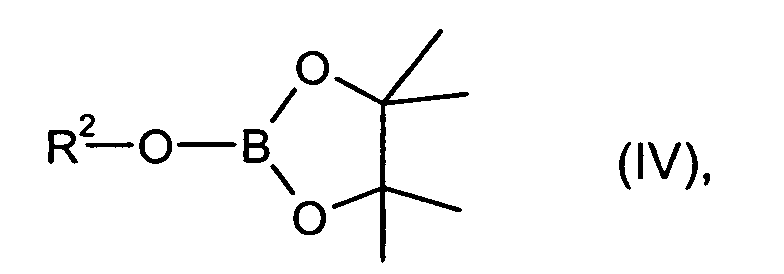
- R2
- für einen linearen oder verzweigten C1-C20-Alkylrest steht,
worin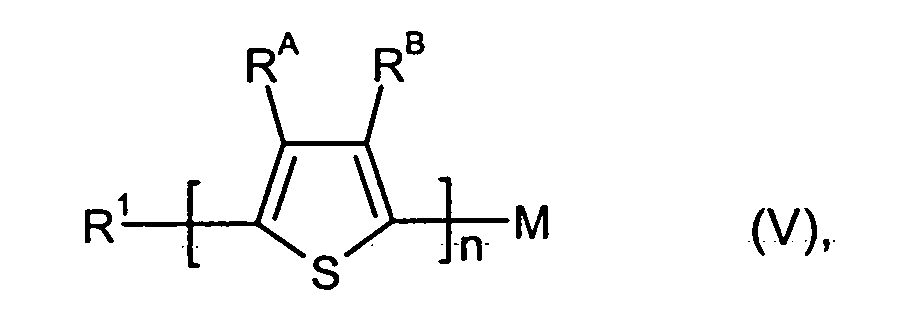
R1, RA und RB die in Anspruch 1 genannte Bedeutung haben und- M
- für LiX oder MgX steht, wobei X für Cl, Br, I steht,
- Halbleitende Schichten, dadurch gekennzeichnet, dass sie Verbindungen hergestellt nach einem Verfahren gemäß einem der Ansprüche 1 bis 6 enthalten.
- Verwendung der Schichten gemäß Anspruch 8 als halbleitende Schichten in aktiven und lichtemittierenden elektronischen Bauelementen wie Feldeffekt-Transistoren, organischen Lumineszenzdioden, photovoltaischen Zellen, Lasern oder Sensoren.
- Verfahren zur Herstellung der Schichten gemäß Anspruch 9, dadurch gekennzeichnet, dass die Verbindungen hergestellt nach einem Verfahren gemäß wenigstens einem der Ansprüche 1 bis 6 aus einer Lösung der Verbindungen in einem Lösungsmittel durch Aufbringen der Lösung und Verdampfen des Lösungsmittels oder aus der Gasphase durch Verdampfen oder Zerstäuben der Verbindungen und anschließendes Kondensieren auf ein geeignetes Substrat aufgebracht werden.
Priority Applications (1)
| Application Number | Priority Date | Filing Date | Title |
|---|---|---|---|
| EP07114437A EP1867651A1 (de) | 2003-11-12 | 2004-10-29 | Halbleitende Schichten enthaltend lineare organische Thiophen-Phenylen-Oligomere |
Applications Claiming Priority (2)
| Application Number | Priority Date | Filing Date | Title |
|---|---|---|---|
| DE10353094 | 2003-11-12 | ||
| DE10353094A DE10353094A1 (de) | 2003-11-12 | 2003-11-12 | Verfahren zur Herstellung linearer organischer Thiophen-Phenylen-Oligomere |
Related Child Applications (2)
| Application Number | Title | Priority Date | Filing Date |
|---|---|---|---|
| EP07114437A Division EP1867651A1 (de) | 2003-11-12 | 2004-10-29 | Halbleitende Schichten enthaltend lineare organische Thiophen-Phenylen-Oligomere |
| EP07114437.2 Division-Into | 2007-08-16 |
Publications (3)
| Publication Number | Publication Date |
|---|---|
| EP1531154A2 true EP1531154A2 (de) | 2005-05-18 |
| EP1531154A3 EP1531154A3 (de) | 2005-08-03 |
| EP1531154B1 EP1531154B1 (de) | 2010-04-14 |
Family
ID=34428722
Family Applications (2)
| Application Number | Title | Priority Date | Filing Date |
|---|---|---|---|
| EP04025731A Expired - Lifetime EP1531154B1 (de) | 2003-11-12 | 2004-10-29 | Verfahren zur Herstellung linearer organischer Thiophen-Phenylen-Oligomere |
| EP07114437A Withdrawn EP1867651A1 (de) | 2003-11-12 | 2004-10-29 | Halbleitende Schichten enthaltend lineare organische Thiophen-Phenylen-Oligomere |
Family Applications After (1)
| Application Number | Title | Priority Date | Filing Date |
|---|---|---|---|
| EP07114437A Withdrawn EP1867651A1 (de) | 2003-11-12 | 2004-10-29 | Halbleitende Schichten enthaltend lineare organische Thiophen-Phenylen-Oligomere |
Country Status (7)
| Country | Link |
|---|---|
| US (1) | US7199251B2 (de) |
| EP (2) | EP1531154B1 (de) |
| JP (1) | JP2005225862A (de) |
| KR (1) | KR20050045900A (de) |
| AT (1) | ATE464310T1 (de) |
| DE (2) | DE10353094A1 (de) |
| TW (1) | TW200533677A (de) |
Families Citing this family (15)
| Publication number | Priority date | Publication date | Assignee | Title |
|---|---|---|---|---|
| DE102006043039A1 (de) * | 2006-09-14 | 2008-03-27 | H.C. Starck Gmbh | Halbleiterschichten bildende Mischungen von organischen Verbindungen |
| DE102007038449A1 (de) * | 2007-08-14 | 2009-02-19 | Bayer Technology Services Gmbh | Verfahren zur Herstellung von Thiophenoligomeren |
| DE102008014158A1 (de) * | 2008-03-14 | 2009-09-17 | H.C. Starck Gmbh | Neue makromolekulare Verbindungen aufweisend eine Kern-Schale-Struktur zur Verwendung als Halbleiter |
| RU2423392C2 (ru) * | 2009-07-09 | 2011-07-10 | Учреждение Российской Академии наук Институт синтетических полимерных материалов им. Н.С. Ениколопова РАН | Сополимеры на основе производных замещенного циклопентанонбитиофена и способ их получения |
| KR101535521B1 (ko) * | 2013-11-26 | 2015-07-24 | 한국화학연구원 | 불소가 비대칭으로 도입된 2,5-비스메톡시페닐티오펜 화합물의 제조방법 |
| WO2015137193A1 (ja) * | 2014-03-12 | 2015-09-17 | Jsr株式会社 | 半導体デバイス製造用組成物および該半導体デバイス製造用組成物を用いたパターン形成方法 |
| JP7426986B2 (ja) | 2018-08-10 | 2024-02-02 | キョーセラ・エイブイエックス・コンポーネンツ・コーポレーション | ポリアニリンを含む固体電解キャパシタ |
| US11114250B2 (en) | 2018-08-10 | 2021-09-07 | Avx Corporation | Solid electrolytic capacitor formed from conductive polymer particles |
| CN117912850A (zh) | 2018-08-10 | 2024-04-19 | 京瓷Avx元器件公司 | 包含本征导电聚合物的固体电解电容器 |
| CN113196429A (zh) | 2018-12-11 | 2021-07-30 | 阿维科斯公司 | 含有本征导电聚合物的固体电解电容器 |
| WO2020236573A1 (en) | 2019-05-17 | 2020-11-26 | Avx Corporation | Solid electrolytic capacitor |
| DE112020004416T5 (de) | 2019-09-18 | 2022-06-15 | KYOCERA AVX Components Corporation | Festelektrolytkondensator zur Verwendung bei hohen Spannungen |
| WO2021119065A1 (en) | 2019-12-10 | 2021-06-17 | Avx Corporation | Solid electrolytic capacitor containing a pre-coat and intrinsically conductive polymer |
| DE112020006024T5 (de) | 2019-12-10 | 2022-10-06 | KYOCERA AVX Components Corporation | Tantalkondensator mit erhöhter Stabilität |
| US11631548B2 (en) | 2020-06-08 | 2023-04-18 | KYOCERA AVX Components Corporation | Solid electrolytic capacitor containing a moisture barrier |
Family Cites Families (9)
| Publication number | Priority date | Publication date | Assignee | Title |
|---|---|---|---|---|
| WO1991003142A1 (en) * | 1989-08-18 | 1991-03-07 | Idemitsu Kosan Co., Ltd. | Organic electroluminescent element |
| JP2826381B2 (ja) * | 1989-08-18 | 1998-11-18 | 出光興産株式会社 | 有機電界発光素子 |
| JPH04164370A (ja) * | 1990-04-13 | 1992-06-10 | Idemitsu Kosan Co Ltd | チオフェン誘導体、該チオフェン誘導体からなる有機半導体、該有機半導体を用いた半導体素子および該有機半導体を用いたダイオード素子 |
| US6355365B1 (en) | 1998-05-08 | 2002-03-12 | Japan Chemical Innovation Institute | Molecular compound, luminous material using the same, and luminous element |
| US6794529B2 (en) | 2000-07-07 | 2004-09-21 | Commonwealth Scientific And Industrial Research Organisation | Substituted diboron compounds |
| GB0215153D0 (en) * | 2002-07-01 | 2002-08-07 | Univ Hull | Luminescent compositions |
| JP4901718B2 (ja) * | 2004-02-25 | 2012-03-21 | メルク パテント ゲゼルシャフト ミット ベシュレンクテル ハフツング | 反応性メソゲン電荷輸送化合物 |
| FR2869318B1 (fr) * | 2004-04-21 | 2006-06-09 | Commissariat Energie Atomique | Composes mono-,oligo et polymeres pi -conjugues, et cellules photovoltaiques les contenant |
| WO2006050496A1 (en) * | 2004-11-02 | 2006-05-11 | E.I. Dupont De Nemours And Company | Substituted anthracenes and electronic devices containing the substituted anthracenes |
-
2003
- 2003-11-12 DE DE10353094A patent/DE10353094A1/de not_active Withdrawn
-
2004
- 2004-10-29 EP EP04025731A patent/EP1531154B1/de not_active Expired - Lifetime
- 2004-10-29 DE DE502004011022T patent/DE502004011022D1/de not_active Expired - Lifetime
- 2004-10-29 EP EP07114437A patent/EP1867651A1/de not_active Withdrawn
- 2004-10-29 AT AT04025731T patent/ATE464310T1/de not_active IP Right Cessation
- 2004-11-09 US US10/984,513 patent/US7199251B2/en not_active Expired - Fee Related
- 2004-11-11 TW TW093134392A patent/TW200533677A/zh unknown
- 2004-11-11 KR KR1020040091666A patent/KR20050045900A/ko not_active Ceased
- 2004-11-12 JP JP2004329181A patent/JP2005225862A/ja active Pending
Also Published As
| Publication number | Publication date |
|---|---|
| TW200533677A (en) | 2005-10-16 |
| EP1867651A1 (de) | 2007-12-19 |
| EP1531154B1 (de) | 2010-04-14 |
| EP1531154A3 (de) | 2005-08-03 |
| KR20050045900A (ko) | 2005-05-17 |
| JP2005225862A (ja) | 2005-08-25 |
| ATE464310T1 (de) | 2010-04-15 |
| DE10353094A1 (de) | 2005-06-09 |
| DE502004011022D1 (de) | 2010-05-27 |
| US20050098777A1 (en) | 2005-05-12 |
| US7199251B2 (en) | 2007-04-03 |
Similar Documents
| Publication | Publication Date | Title |
|---|---|---|
| EP1531154B1 (de) | Verfahren zur Herstellung linearer organischer Thiophen-Phenylen-Oligomere | |
| EP1678190B1 (de) | Metallkomplexe mit bipodalen liganden | |
| EP1749014B1 (de) | Metallkomplexe | |
| EP1428827B1 (de) | Derivate von 2,2'-Di (3,4-alkylendioxythiophen) deren Herstellung und Verwendung | |
| DE102011009415A1 (de) | Sternförmige Verbindungen für organische Solarzellen | |
| JP6080870B2 (ja) | 溶液プロセス用有機半導体材料及び有機半導体デバイス | |
| KR20100016583A (ko) | 치환 펜타센의 제조 방법 | |
| DE102011089351B4 (de) | Halbleiterzusammensetzung | |
| EP3617214B1 (de) | Organisches halbleitendes material und dessen synthese und organisches halbleitendes bauelement mit dem material | |
| DE10248876B4 (de) | Verfahren zur Herstellung linearer organischer Oligomere | |
| DE112006002392T5 (de) | Polymer, umfassend eine Einheit, umfassend einen Fluorcyclopentanring kondensiert mit einem aromatischen Ring, und organischer Dünnfilm und organisches Dünnfilmelement, die es beide umfassen | |
| GB1579038A (en) | Substituted heterofulvalenes | |
| EP1531155B1 (de) | Unsymmetrische lineare organische Oligomere | |
| EP1598358B1 (de) | Verbindungen enthaltend 3,4-Methylendioxythiopen-Einheiten | |
| KR20170046399A (ko) | 헤테로아센 화합물의 중간체 및 이를 이용한 헤테로아센 화합물의 합성 방법 | |
| CN106749236B (zh) | 一种具有二苯并环庚烯结构的氮杂螺环类有机电致发光材料及其应用 | |
| KR102730882B1 (ko) | 정공 수송 특성이 개질된 신규 유기 단분자 화합물 및 이를 포함하는 소자 | |
| CH650784A5 (de) | Verfahren zur herstellung von benzazolylverbindungen. | |
| CN114315828B (zh) | 一种可溶液加工的电子传输层修饰材料及其制备方法和应用 | |
| Adam et al. | Conjugated tris-tetrathiafulvalenes | |
| KR102835699B1 (ko) | 신규한 화합물 및 그 용도 | |
| JP2018008885A (ja) | ヘテロアセン誘導体、有機半導体層、及び有機薄膜トランジスタ | |
| WO2015067338A1 (de) | Fluorsubstituierte n-heterotetracene, deren herstellung und verwendung | |
| EP4232434A1 (de) | Heterocyclische dispirodiindenopyridine und dispirodiindenopyridazine sowie herstellung und verwendungen davon | |
| CN118359650A (zh) | 一种10-苯基-2′-硼酸频那醇酯-10h-螺[吖啶-9,9′-氧杂蒽]化合物及其制备方法 |
Legal Events
| Date | Code | Title | Description |
|---|---|---|---|
| PUAI | Public reference made under article 153(3) epc to a published international application that has entered the european phase |
Free format text: ORIGINAL CODE: 0009012 |
|
| AK | Designated contracting states |
Kind code of ref document: A2 Designated state(s): AT BE BG CH CY CZ DE DK EE ES FI FR GB GR HU IE IT LI LU MC NL PL PT RO SE SI SK TR |
|
| AX | Request for extension of the european patent |
Extension state: AL HR LT LV MK |
|
| PUAL | Search report despatched |
Free format text: ORIGINAL CODE: 0009013 |
|
| AK | Designated contracting states |
Kind code of ref document: A3 Designated state(s): AT BE BG CH CY CZ DE DK EE ES FI FR GB GR HU IE IT LI LU MC NL PL PT RO SE SI SK TR |
|
| AX | Request for extension of the european patent |
Extension state: AL HR LT LV MK |
|
| 17P | Request for examination filed |
Effective date: 20060203 |
|
| AKX | Designation fees paid |
Designated state(s): AT BE BG CH CY CZ DE DK EE ES FI FR GB GR HU IE IT LI LU MC NL PL PT RO SE SI SK TR |
|
| RAP1 | Party data changed (applicant data changed or rights of an application transferred) |
Owner name: H.C. STARCK GMBH & CO. KG |
|
| 17Q | First examination report despatched |
Effective date: 20070314 |
|
| RAP1 | Party data changed (applicant data changed or rights of an application transferred) |
Owner name: H.C. STARCK GMBH |
|
| GRAP | Despatch of communication of intention to grant a patent |
Free format text: ORIGINAL CODE: EPIDOSNIGR1 |
|
| RAP1 | Party data changed (applicant data changed or rights of an application transferred) |
Owner name: H.C. STARCK CLEVIOS GMBH |
|
| GRAS | Grant fee paid |
Free format text: ORIGINAL CODE: EPIDOSNIGR3 |
|
| GRAA | (expected) grant |
Free format text: ORIGINAL CODE: 0009210 |
|
| AK | Designated contracting states |
Kind code of ref document: B1 Designated state(s): AT BE BG CH CY CZ DE DK EE ES FI FR GB GR HU IE IT LI LU MC NL PL PT RO SE SI SK TR |
|
| REG | Reference to a national code |
Ref country code: GB Ref legal event code: FG4D Free format text: NOT ENGLISH |
|
| REG | Reference to a national code |
Ref country code: CH Ref legal event code: EP |
|
| REG | Reference to a national code |
Ref country code: IE Ref legal event code: FG4D Free format text: LANGUAGE OF EP DOCUMENT: GERMAN |
|
| REF | Corresponds to: |
Ref document number: 502004011022 Country of ref document: DE Date of ref document: 20100527 Kind code of ref document: P |
|
| REG | Reference to a national code |
Ref country code: NL Ref legal event code: VDEP Effective date: 20100414 |
|
| PG25 | Lapsed in a contracting state [announced via postgrant information from national office to epo] |
Ref country code: NL Free format text: LAPSE BECAUSE OF FAILURE TO SUBMIT A TRANSLATION OF THE DESCRIPTION OR TO PAY THE FEE WITHIN THE PRESCRIBED TIME-LIMIT Effective date: 20100414 Ref country code: ES Free format text: LAPSE BECAUSE OF FAILURE TO SUBMIT A TRANSLATION OF THE DESCRIPTION OR TO PAY THE FEE WITHIN THE PRESCRIBED TIME-LIMIT Effective date: 20100725 Ref country code: SE Free format text: LAPSE BECAUSE OF FAILURE TO SUBMIT A TRANSLATION OF THE DESCRIPTION OR TO PAY THE FEE WITHIN THE PRESCRIBED TIME-LIMIT Effective date: 20100414 |
|
| REG | Reference to a national code |
Ref country code: IE Ref legal event code: FD4D |
|
| PG25 | Lapsed in a contracting state [announced via postgrant information from national office to epo] |
Ref country code: FI Free format text: LAPSE BECAUSE OF FAILURE TO SUBMIT A TRANSLATION OF THE DESCRIPTION OR TO PAY THE FEE WITHIN THE PRESCRIBED TIME-LIMIT Effective date: 20100414 Ref country code: SI Free format text: LAPSE BECAUSE OF FAILURE TO SUBMIT A TRANSLATION OF THE DESCRIPTION OR TO PAY THE FEE WITHIN THE PRESCRIBED TIME-LIMIT Effective date: 20100414 |
|
| PG25 | Lapsed in a contracting state [announced via postgrant information from national office to epo] |
Ref country code: GR Free format text: LAPSE BECAUSE OF FAILURE TO SUBMIT A TRANSLATION OF THE DESCRIPTION OR TO PAY THE FEE WITHIN THE PRESCRIBED TIME-LIMIT Effective date: 20100715 Ref country code: CY Free format text: LAPSE BECAUSE OF FAILURE TO SUBMIT A TRANSLATION OF THE DESCRIPTION OR TO PAY THE FEE WITHIN THE PRESCRIBED TIME-LIMIT Effective date: 20100421 Ref country code: PL Free format text: LAPSE BECAUSE OF FAILURE TO SUBMIT A TRANSLATION OF THE DESCRIPTION OR TO PAY THE FEE WITHIN THE PRESCRIBED TIME-LIMIT Effective date: 20100414 |
|
| PG25 | Lapsed in a contracting state [announced via postgrant information from national office to epo] |
Ref country code: IE Free format text: LAPSE BECAUSE OF FAILURE TO SUBMIT A TRANSLATION OF THE DESCRIPTION OR TO PAY THE FEE WITHIN THE PRESCRIBED TIME-LIMIT Effective date: 20100414 Ref country code: EE Free format text: LAPSE BECAUSE OF FAILURE TO SUBMIT A TRANSLATION OF THE DESCRIPTION OR TO PAY THE FEE WITHIN THE PRESCRIBED TIME-LIMIT Effective date: 20100414 Ref country code: DK Free format text: LAPSE BECAUSE OF FAILURE TO SUBMIT A TRANSLATION OF THE DESCRIPTION OR TO PAY THE FEE WITHIN THE PRESCRIBED TIME-LIMIT Effective date: 20100414 Ref country code: PT Free format text: LAPSE BECAUSE OF FAILURE TO SUBMIT A TRANSLATION OF THE DESCRIPTION OR TO PAY THE FEE WITHIN THE PRESCRIBED TIME-LIMIT Effective date: 20100816 |
|
| PLBE | No opposition filed within time limit |
Free format text: ORIGINAL CODE: 0009261 |
|
| STAA | Information on the status of an ep patent application or granted ep patent |
Free format text: STATUS: NO OPPOSITION FILED WITHIN TIME LIMIT |
|
| PG25 | Lapsed in a contracting state [announced via postgrant information from national office to epo] |
Ref country code: CZ Free format text: LAPSE BECAUSE OF FAILURE TO SUBMIT A TRANSLATION OF THE DESCRIPTION OR TO PAY THE FEE WITHIN THE PRESCRIBED TIME-LIMIT Effective date: 20100414 Ref country code: RO Free format text: LAPSE BECAUSE OF FAILURE TO SUBMIT A TRANSLATION OF THE DESCRIPTION OR TO PAY THE FEE WITHIN THE PRESCRIBED TIME-LIMIT Effective date: 20100414 Ref country code: SK Free format text: LAPSE BECAUSE OF FAILURE TO SUBMIT A TRANSLATION OF THE DESCRIPTION OR TO PAY THE FEE WITHIN THE PRESCRIBED TIME-LIMIT Effective date: 20100414 |
|
| PGFP | Annual fee paid to national office [announced via postgrant information from national office to epo] |
Ref country code: DE Payment date: 20101130 Year of fee payment: 7 |
|
| 26N | No opposition filed |
Effective date: 20110117 |
|
| PG25 | Lapsed in a contracting state [announced via postgrant information from national office to epo] |
Ref country code: IT Free format text: LAPSE BECAUSE OF FAILURE TO SUBMIT A TRANSLATION OF THE DESCRIPTION OR TO PAY THE FEE WITHIN THE PRESCRIBED TIME-LIMIT Effective date: 20100414 |
|
| BERE | Be: lapsed |
Owner name: H.C. STARCK CLEVIOS G.M.B.H. Effective date: 20101031 |
|
| PG25 | Lapsed in a contracting state [announced via postgrant information from national office to epo] |
Ref country code: MC Free format text: LAPSE BECAUSE OF NON-PAYMENT OF DUE FEES Effective date: 20101031 |
|
| REG | Reference to a national code |
Ref country code: CH Ref legal event code: PL |
|
| GBPC | Gb: european patent ceased through non-payment of renewal fee |
Effective date: 20101029 |
|
| PG25 | Lapsed in a contracting state [announced via postgrant information from national office to epo] |
Ref country code: CH Free format text: LAPSE BECAUSE OF NON-PAYMENT OF DUE FEES Effective date: 20101031 Ref country code: FR Free format text: LAPSE BECAUSE OF NON-PAYMENT OF DUE FEES Effective date: 20101102 Ref country code: LI Free format text: LAPSE BECAUSE OF NON-PAYMENT OF DUE FEES Effective date: 20101031 |
|
| REG | Reference to a national code |
Ref country code: FR Ref legal event code: ST Effective date: 20110630 |
|
| PG25 | Lapsed in a contracting state [announced via postgrant information from national office to epo] |
Ref country code: GB Free format text: LAPSE BECAUSE OF NON-PAYMENT OF DUE FEES Effective date: 20101029 Ref country code: BE Free format text: LAPSE BECAUSE OF NON-PAYMENT OF DUE FEES Effective date: 20101031 |
|
| REG | Reference to a national code |
Ref country code: AT Ref legal event code: MM01 Ref document number: 464310 Country of ref document: AT Kind code of ref document: T Effective date: 20101029 |
|
| PG25 | Lapsed in a contracting state [announced via postgrant information from national office to epo] |
Ref country code: AT Free format text: LAPSE BECAUSE OF NON-PAYMENT OF DUE FEES Effective date: 20101029 |
|
| PG25 | Lapsed in a contracting state [announced via postgrant information from national office to epo] |
Ref country code: HU Free format text: LAPSE BECAUSE OF FAILURE TO SUBMIT A TRANSLATION OF THE DESCRIPTION OR TO PAY THE FEE WITHIN THE PRESCRIBED TIME-LIMIT Effective date: 20101015 Ref country code: BG Free format text: LAPSE BECAUSE OF FAILURE TO SUBMIT A TRANSLATION OF THE DESCRIPTION OR TO PAY THE FEE WITHIN THE PRESCRIBED TIME-LIMIT Effective date: 20100414 Ref country code: LU Free format text: LAPSE BECAUSE OF NON-PAYMENT OF DUE FEES Effective date: 20101029 |
|
| PG25 | Lapsed in a contracting state [announced via postgrant information from national office to epo] |
Ref country code: TR Free format text: LAPSE BECAUSE OF FAILURE TO SUBMIT A TRANSLATION OF THE DESCRIPTION OR TO PAY THE FEE WITHIN THE PRESCRIBED TIME-LIMIT Effective date: 20100414 |
|
| PG25 | Lapsed in a contracting state [announced via postgrant information from national office to epo] |
Ref country code: DE Free format text: LAPSE BECAUSE OF NON-PAYMENT OF DUE FEES Effective date: 20130501 |
|
| REG | Reference to a national code |
Ref country code: DE Ref legal event code: R119 Ref document number: 502004011022 Country of ref document: DE Effective date: 20130501 |
|
| PG25 | Lapsed in a contracting state [announced via postgrant information from national office to epo] |
Ref country code: BG Free format text: LAPSE BECAUSE OF FAILURE TO SUBMIT A TRANSLATION OF THE DESCRIPTION OR TO PAY THE FEE WITHIN THE PRESCRIBED TIME-LIMIT Effective date: 20100714 |