EP1528116A1 - Bauteil mit einem Platin-Aluminium-Substratbereich, Platin-Aluminium-Beschichtung und Herstellverfahren - Google Patents
Bauteil mit einem Platin-Aluminium-Substratbereich, Platin-Aluminium-Beschichtung und Herstellverfahren Download PDFInfo
- Publication number
- EP1528116A1 EP1528116A1 EP04023780A EP04023780A EP1528116A1 EP 1528116 A1 EP1528116 A1 EP 1528116A1 EP 04023780 A EP04023780 A EP 04023780A EP 04023780 A EP04023780 A EP 04023780A EP 1528116 A1 EP1528116 A1 EP 1528116A1
- Authority
- EP
- European Patent Office
- Prior art keywords
- substrate
- aluminum
- platinum
- proportion
- component
- Prior art date
- Legal status (The legal status is an assumption and is not a legal conclusion. Google has not performed a legal analysis and makes no representation as to the accuracy of the status listed.)
- Withdrawn
Links
- 239000000758 substrate Substances 0.000 title claims abstract description 233
- GIGQFSYNIXPBCE-UHFFFAOYSA-N alumane;platinum Chemical compound [AlH3].[Pt] GIGQFSYNIXPBCE-UHFFFAOYSA-N 0.000 title claims abstract description 44
- 238000000576 coating method Methods 0.000 title claims abstract description 41
- 239000011248 coating agent Substances 0.000 title claims abstract description 38
- 238000004519 manufacturing process Methods 0.000 title abstract description 6
- BASFCYQUMIYNBI-UHFFFAOYSA-N platinum Chemical compound [Pt] BASFCYQUMIYNBI-UHFFFAOYSA-N 0.000 claims abstract description 249
- 229910052782 aluminium Inorganic materials 0.000 claims abstract description 110
- XAGFODPZIPBFFR-UHFFFAOYSA-N aluminium Chemical compound [Al] XAGFODPZIPBFFR-UHFFFAOYSA-N 0.000 claims abstract description 110
- 229910052697 platinum Inorganic materials 0.000 claims abstract description 102
- 239000000203 mixture Substances 0.000 claims abstract description 34
- 238000000034 method Methods 0.000 claims abstract description 15
- 238000009792 diffusion process Methods 0.000 claims description 15
- 238000005260 corrosion Methods 0.000 claims description 7
- 230000007797 corrosion Effects 0.000 claims description 7
- 230000000694 effects Effects 0.000 claims description 6
- 229910000990 Ni alloy Inorganic materials 0.000 claims description 5
- 239000008187 granular material Substances 0.000 claims description 4
- 229910001000 nickel titanium Inorganic materials 0.000 claims description 3
- 230000010354 integration Effects 0.000 description 21
- 238000011161 development Methods 0.000 description 4
- 230000018109 developmental process Effects 0.000 description 4
- 238000010586 diagram Methods 0.000 description 3
- 229910020630 Co Ni Inorganic materials 0.000 description 2
- PXHVJJICTQNCMI-UHFFFAOYSA-N Nickel Chemical compound [Ni] PXHVJJICTQNCMI-UHFFFAOYSA-N 0.000 description 2
- 239000004411 aluminium Substances 0.000 description 2
- 230000015572 biosynthetic process Effects 0.000 description 2
- 230000001419 dependent effect Effects 0.000 description 2
- 125000004122 cyclic group Chemical group 0.000 description 1
- 239000000463 material Substances 0.000 description 1
- 229910052759 nickel Inorganic materials 0.000 description 1
- 230000003647 oxidation Effects 0.000 description 1
- 238000007254 oxidation reaction Methods 0.000 description 1
- 229910000601 superalloy Inorganic materials 0.000 description 1
Images

Classifications
-
- C—CHEMISTRY; METALLURGY
- C23—COATING METALLIC MATERIAL; COATING MATERIAL WITH METALLIC MATERIAL; CHEMICAL SURFACE TREATMENT; DIFFUSION TREATMENT OF METALLIC MATERIAL; COATING BY VACUUM EVAPORATION, BY SPUTTERING, BY ION IMPLANTATION OR BY CHEMICAL VAPOUR DEPOSITION, IN GENERAL; INHIBITING CORROSION OF METALLIC MATERIAL OR INCRUSTATION IN GENERAL
- C23C—COATING METALLIC MATERIAL; COATING MATERIAL WITH METALLIC MATERIAL; SURFACE TREATMENT OF METALLIC MATERIAL BY DIFFUSION INTO THE SURFACE, BY CHEMICAL CONVERSION OR SUBSTITUTION; COATING BY VACUUM EVAPORATION, BY SPUTTERING, BY ION IMPLANTATION OR BY CHEMICAL VAPOUR DEPOSITION, IN GENERAL
- C23C10/00—Solid state diffusion of only metal elements or silicon into metallic material surfaces
- C23C10/28—Solid state diffusion of only metal elements or silicon into metallic material surfaces using solids, e.g. powders, pastes
- C23C10/34—Embedding in a powder mixture, i.e. pack cementation
- C23C10/58—Embedding in a powder mixture, i.e. pack cementation more than one element being diffused in more than one step
-
- F—MECHANICAL ENGINEERING; LIGHTING; HEATING; WEAPONS; BLASTING
- F01—MACHINES OR ENGINES IN GENERAL; ENGINE PLANTS IN GENERAL; STEAM ENGINES
- F01D—NON-POSITIVE DISPLACEMENT MACHINES OR ENGINES, e.g. STEAM TURBINES
- F01D5/00—Blades; Blade-carrying members; Heating, heat-insulating, cooling or antivibration means on the blades or the members
- F01D5/12—Blades
- F01D5/28—Selecting particular materials; Particular measures relating thereto; Measures against erosion or corrosion
-
- F—MECHANICAL ENGINEERING; LIGHTING; HEATING; WEAPONS; BLASTING
- F01—MACHINES OR ENGINES IN GENERAL; ENGINE PLANTS IN GENERAL; STEAM ENGINES
- F01D—NON-POSITIVE DISPLACEMENT MACHINES OR ENGINES, e.g. STEAM TURBINES
- F01D5/00—Blades; Blade-carrying members; Heating, heat-insulating, cooling or antivibration means on the blades or the members
- F01D5/12—Blades
- F01D5/28—Selecting particular materials; Particular measures relating thereto; Measures against erosion or corrosion
- F01D5/288—Protective coatings for blades
-
- F—MECHANICAL ENGINEERING; LIGHTING; HEATING; WEAPONS; BLASTING
- F05—INDEXING SCHEMES RELATING TO ENGINES OR PUMPS IN VARIOUS SUBCLASSES OF CLASSES F01-F04
- F05D—INDEXING SCHEME FOR ASPECTS RELATING TO NON-POSITIVE-DISPLACEMENT MACHINES OR ENGINES, GAS-TURBINES OR JET-PROPULSION PLANTS
- F05D2300/00—Materials; Properties thereof
- F05D2300/10—Metals, alloys or intermetallic compounds
- F05D2300/12—Light metals
- F05D2300/121—Aluminium
-
- F—MECHANICAL ENGINEERING; LIGHTING; HEATING; WEAPONS; BLASTING
- F05—INDEXING SCHEMES RELATING TO ENGINES OR PUMPS IN VARIOUS SUBCLASSES OF CLASSES F01-F04
- F05D—INDEXING SCHEME FOR ASPECTS RELATING TO NON-POSITIVE-DISPLACEMENT MACHINES OR ENGINES, GAS-TURBINES OR JET-PROPULSION PLANTS
- F05D2300/00—Materials; Properties thereof
- F05D2300/10—Metals, alloys or intermetallic compounds
- F05D2300/14—Noble metals, i.e. Ag, Au, platinum group metals
- F05D2300/143—Platinum group metals, i.e. Os, Ir, Pt, Ru, Rh, Pd
-
- F—MECHANICAL ENGINEERING; LIGHTING; HEATING; WEAPONS; BLASTING
- F05—INDEXING SCHEMES RELATING TO ENGINES OR PUMPS IN VARIOUS SUBCLASSES OF CLASSES F01-F04
- F05D—INDEXING SCHEME FOR ASPECTS RELATING TO NON-POSITIVE-DISPLACEMENT MACHINES OR ENGINES, GAS-TURBINES OR JET-PROPULSION PLANTS
- F05D2300/00—Materials; Properties thereof
- F05D2300/10—Metals, alloys or intermetallic compounds
- F05D2300/17—Alloys
- F05D2300/173—Aluminium alloys, e.g. AlCuMgPb
-
- Y—GENERAL TAGGING OF NEW TECHNOLOGICAL DEVELOPMENTS; GENERAL TAGGING OF CROSS-SECTIONAL TECHNOLOGIES SPANNING OVER SEVERAL SECTIONS OF THE IPC; TECHNICAL SUBJECTS COVERED BY FORMER USPC CROSS-REFERENCE ART COLLECTIONS [XRACs] AND DIGESTS
- Y10—TECHNICAL SUBJECTS COVERED BY FORMER USPC
- Y10S—TECHNICAL SUBJECTS COVERED BY FORMER USPC CROSS-REFERENCE ART COLLECTIONS [XRACs] AND DIGESTS
- Y10S428/00—Stock material or miscellaneous articles
- Y10S428/922—Static electricity metal bleed-off metallic stock
- Y10S428/9335—Product by special process
- Y10S428/941—Solid state alloying, e.g. diffusion, to disappearance of an original layer
-
- Y—GENERAL TAGGING OF NEW TECHNOLOGICAL DEVELOPMENTS; GENERAL TAGGING OF CROSS-SECTIONAL TECHNOLOGIES SPANNING OVER SEVERAL SECTIONS OF THE IPC; TECHNICAL SUBJECTS COVERED BY FORMER USPC CROSS-REFERENCE ART COLLECTIONS [XRACs] AND DIGESTS
- Y10—TECHNICAL SUBJECTS COVERED BY FORMER USPC
- Y10T—TECHNICAL SUBJECTS COVERED BY FORMER US CLASSIFICATION
- Y10T428/00—Stock material or miscellaneous articles
- Y10T428/12—All metal or with adjacent metals
- Y10T428/12493—Composite; i.e., plural, adjacent, spatially distinct metal components [e.g., layers, joint, etc.]
- Y10T428/12736—Al-base component
-
- Y—GENERAL TAGGING OF NEW TECHNOLOGICAL DEVELOPMENTS; GENERAL TAGGING OF CROSS-SECTIONAL TECHNOLOGIES SPANNING OVER SEVERAL SECTIONS OF THE IPC; TECHNICAL SUBJECTS COVERED BY FORMER USPC CROSS-REFERENCE ART COLLECTIONS [XRACs] AND DIGESTS
- Y10—TECHNICAL SUBJECTS COVERED BY FORMER USPC
- Y10T—TECHNICAL SUBJECTS COVERED BY FORMER US CLASSIFICATION
- Y10T428/00—Stock material or miscellaneous articles
- Y10T428/12—All metal or with adjacent metals
- Y10T428/12493—Composite; i.e., plural, adjacent, spatially distinct metal components [e.g., layers, joint, etc.]
- Y10T428/12736—Al-base component
- Y10T428/1275—Next to Group VIII or IB metal-base component
-
- Y—GENERAL TAGGING OF NEW TECHNOLOGICAL DEVELOPMENTS; GENERAL TAGGING OF CROSS-SECTIONAL TECHNOLOGIES SPANNING OVER SEVERAL SECTIONS OF THE IPC; TECHNICAL SUBJECTS COVERED BY FORMER USPC CROSS-REFERENCE ART COLLECTIONS [XRACs] AND DIGESTS
- Y10—TECHNICAL SUBJECTS COVERED BY FORMER USPC
- Y10T—TECHNICAL SUBJECTS COVERED BY FORMER US CLASSIFICATION
- Y10T428/00—Stock material or miscellaneous articles
- Y10T428/12—All metal or with adjacent metals
- Y10T428/12493—Composite; i.e., plural, adjacent, spatially distinct metal components [e.g., layers, joint, etc.]
- Y10T428/12771—Transition metal-base component
- Y10T428/12861—Group VIII or IB metal-base component
- Y10T428/12875—Platinum group metal-base component
Definitions
- the invention relates to a component with a platinum-aluminum substrate region, in particular a component of a gas turbine. Furthermore, the invention relates to a platinum-aluminum coating and a method for producing such a component.
- EP 0 784 104 B1 relates to a nickel-base superalloy with optimized properties Platinum-aluminum coating.
- a platinum-aluminum surface area wherein a substrate a Having a nickel-based substrate composition and a substrate surface, wherein in the substrate surface first platinum and then diffused aluminum and thereby providing a substrate area having an integrated area Aluminum content of 18 to 24 wt .-%, an integrated platinum content of 18 to 45 wt .-% and in the rest components of the substrate mass composition having.
- the platinum and aluminum contents are relative high adjacent to the substrate surface and increase with increasing distance from the substrate surface into the substrate.
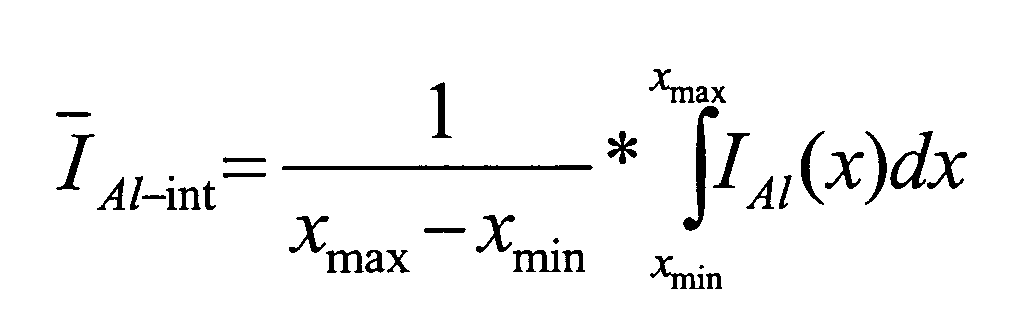
- the integrated values of aluminum and platinum determined by an integration method the platinum content and the aluminum content is integrated over the distance from the outer substrate surface.
- a lower integration limit is about 2-3 microns below the substrate surface.
- a upper limit of integration is determined by the distance from the substrate surface, wherein the measured in wt .-% aluminum content starting from larger Values has dropped to an amount of 18% by weight. This upper integration limit is used both for the determination of the integrated aluminum content and used to determine the integrated platinum content.
- the platinum-aluminum coating disclosed in EP 0 784 104 B1 or there disclosed component with such a coating has a low ductility.
- the low ductility is due to the relatively high proportion of aluminum and platinum certainly. Due to the low ductility, the coated so Components with limited thermal-mechanical strength (TMF).
- TMF thermal-mechanical strength
- the present invention is based on the problem, a novel component with a platinum-aluminum substrate area, a novel platinum-aluminum coating and a method for producing such a component propose.
- Al aluminum
- Pt platinum
- the platinum-aluminum substrate region an integrated proportion of aluminum (Al) between 10 and 17.99 Wt .-%, an integrated content of platinum (Pt) between 5 and 40 wt .-% and im Remains the components of the substrate composition of the component.
- the platinum-aluminum substrate region an integrated proportion of aluminum (Al) between 10 and 17.99 wt .-%, a integrated proportion of platinum (Pt) between 5 and 17.99 wt .-% and the rest the components having the substrate composition of the component.
- the component according to the independent Claim 19 is formed.
- Component can increase the ductility and TMF resistance and to be improved.
- Particularly advantageous in this case is the formation of a plateau of at least platinum and preferably also aluminum in that the proportion of Platinum and preferably aluminum in the substrate region starting from the substrate surface over a certain or predetermined depth of the substrate area is substantially constant.
- FIG. 1 shows a blade 10 of a gas turbine, namely an aircraft engine.
- the blade 10 has an airfoil 11 as well via a blade root 12.
- the blade 10 is in the embodiment shown in the region of its entire surface 13 coated.
- the coating in the region of the surface 13 is through Diffusion of platinum and aluminum formed in the surface 13.
- the Blade 10 thus forms a substrate for the coating, the surface 13 is also referred to as a substrate surface.
- Blades 10 for gas turbines feature usually a composition based on a nickel alloy or titanium alloy.
- the mass composition of the blade 10 and the substrate is also called a substrate composition.
- the integrated Proportion of aluminum and / or the integrated content of platinum in the substrate region is less than 18% by weight.
- the integrated proportion of aluminum is in the substrate region between 10 and 17.99 wt .-% and the integrated portion platinum in the substrate region is between 5 and 40 weight percent.
- the TMF resistance of the coated component significantly improved.
- the concentration or the proportion of aluminum in the substrate area on the TMF resistance one has greater influence than the platinum content, then, if the integrated aluminum content is limited in the substrate area to a maximum of 17.99 wt .-%, the integrated Platinum content or platinum content up to 40 wt .-% amount.
- Such a coating is characterized not only by a good TMF resistance, but also provides effective protection against oxidation or even corrosion.
- the integrated proportion of aluminum in the substrate region is between 10 and 24 Wt .-% and the integrated content of platinum in the substrate area is between 5 and 17.99% by weight.
- the integrated amount of aluminum can be up to 24% by weight.
- a platinum-aluminum substrate region in which the integrated Proportion of aluminum in the substrate region between 10 and 17.99% by weight and the integrated amount of platinum is between 5 and 17.99% by weight.
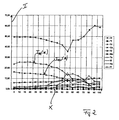
- FIG. 2 shows the proportions of the individual elements of the composition of the platinum-aluminum substrate region according to the invention over the layer thickness or the depth or the distance with respect to the outer substrate surface.
- the distance x from the outer substrate surface in micrometers (microns) is plotted on the vertical axis of the diagram of FIG. 2, the proportions I, in particular I Al and I Pt , the individual elements of the platinum-aluminum substrate area in wt .-% indicated.
- Aluminum (Al) is 12% by weight for the embodiment shown in FIG integrated content of platinum (Pt) is 19 wt .-%.
- the integrated proportion of aluminum in the substrate region is below 18 Wt .-%.
- Fig. 2 graphically, concrete embodiment of a component with a platinum-aluminum substrate region relates to a component having a composition of mass or substrate composition based on a nickel alloy.
- the underlying of Fig. 2 shares of aluminum, platinum and the components of the substrate composition are summarized in the table below.
- the proportion of platinum and the proportion of aluminum over the depth of the substrate region or the distance from the substrate surface are substantially constant, starting from the substrate surface or a point immediately below the substrate surface to a given depth.
- This predetermined depth is at least 20%, preferably at least 30%, particularly preferably at least 40% of the upper integration limit x max described above.
- the upper integration limit x max is, as described above, formed by the distance or by the depth relative to the substrate surface, in which both the proportion of platinum to 5 wt .-% and the proportion of aluminum to 8% by weight dropped are and remain below these limits later.
- At least the upper half of the above substrate region which is delimited on the one hand by the substrate surface or a point immediately below the substrate surface and on the other hand by the upper integration limit x max is predominantly, ie in a proportion of greater than 50%, in the ⁇ -NiAl structure.
- the upper integration limit x max in the embodiment shown is approximately 80 ⁇ m.
- the proportion of platinum and the proportion of aluminum in the exemplary embodiment shown are accordingly essentially constant up to a depth of at least approximately 16 ⁇ m, preferably at least approximately 24 ⁇ m, particularly preferably at least approximately 32 ⁇ m.
- the proportion of aluminum as well as platinum is then regarded as essentially constant should be, if the fluctuation around the 5 micron present proportion maximum is about ⁇ 10%.
- fluctuations of not more than ⁇ 7.5 are preferred %, particularly preferred are fluctuations of a maximum of ⁇ 5% to that present at 5 microns Proportion of.
- Fluctuations of no more than about ⁇ 10% are observed in the platinum embodiment shown in FIG. 2 to a depth of about 40 ⁇ m (50% of x max ) from the substrate surface.
- fluctuations of a maximum of approximately ⁇ 10% to a depth of approximately 25 ⁇ m (32% of x max ) from the substrate surface are maintained.
- the platinum content at 5 microns is 23.63 wt .-% in the embodiment shown.
- the exact percentage deviations are from the table above calculable. The following applies:
- the percentage deviation of the aluminum content based on the present at 5 microns Aluminum content is about 5.5% at 10 ⁇ m, about 8.1% at 15 ⁇ m 20 ⁇ m in about 8.4%, at 25 ⁇ m in about 11.4%, 30 ⁇ m in about 13.7%, at 35 ⁇ m in about 18.3% and at 40 microns in about 21.8%.
- Another concrete exemplary embodiment of a component with a platinum-aluminum substrate region according to the invention likewise relates to a component with a composition of mass or substrate composition based on a nickel alloy.
- the proportions of aluminum, platinum and the components of the substrate composition for this further specific embodiment are summarized in the following table: al Ti Cr Co Ni Not a word Ta W re Pt 5 18.94 0.00 2.18 6.56 57.83 0.33 0.08 0.22 0.00 13.86 10 18.29 0.01 2.35 6.28 56.42 0.56 1.03 0.18 0.00 14.86 15 17.39 0.05 2.54 6.75 56.09 0.40 0.63 0.53 0.00 15.61 20 17,02 0.00 2.67 6.70 52.48 0.57 2.45 0.49 1.16 16.48 25 16.18 0.04 2.89 7.11 54.54 0.71 1.95 1.09 0.29 15.19 30 15.37 0.00 2.98 7.15 50.38 0.85 3.84 2.46 1.32 15.65 35 13.47 0.00 4.02 7.70 47.98 1.60 4.12 5.37 2.46 13.28 40 11,70 0.22 3.
- the integrated amount of aluminum (Al) is 13 Wt .-% and the integrated content of platinum (Pt) is also 13 wt .-%.
- Al aluminum
- Pt platinum
- the coating according to the invention described in detail above is particularly suitable as a corrosion protection layer, in particular as a hot gas corrosion protection layer.
- a component to be coated in the illustrated embodiment a blade 10 of a gas turbine to be coated is provided, which has a substrate composition and a substrate surface. Subsequently Platinum is diffused into the substrate surface. After diffusing of the platinum into the substrate surface, aluminum is diffused into it. The diffusion of platinum and the subsequent diffusion of Aluminum is therefore made in successive steps.
- the diffusion of platinum and aluminum is carried out so that on the one hand the integrated portion of aluminum and / or the integrated portion of platinum in the coating-adjusting platinum-aluminum substrate region is less than 18% by weight and, on the other hand, the proportion of aluminum and / or platinum in the forming substrate region starting from the Substrate surface over a predetermined depth of the substrate region substantially is constant.
- a coating granules with less Activity used for diffusing aluminum. This means that in the granules the proportion of aluminum relative is low.
- coating which is preferably as a gas phase coating in one closed coating space is made by a gas circulation the coating activity in the vicinity of the substrate surface to be coated kept substantially constant over the entire coating time. This is ensured by the gas circulation in the coating room.
- the coating with low activity but with approximately constant activity nearby the substrate surface to be coated allows the plateau formation of aluminum and platinum in the substrate area.
- the proportion of Aluminum is below 18% by weight.
- the proportion of platinum is in the illustrated embodiment always below 24 wt .-%.
Landscapes
- Engineering & Computer Science (AREA)
- Chemical & Material Sciences (AREA)
- Materials Engineering (AREA)
- Mechanical Engineering (AREA)
- General Engineering & Computer Science (AREA)
- Chemical Kinetics & Catalysis (AREA)
- Metallurgy (AREA)
- Organic Chemistry (AREA)
- Turbine Rotor Nozzle Sealing (AREA)
- Other Surface Treatments For Metallic Materials (AREA)
Abstract
Description
- Fig. 1:
- ein erfindungsgemäß ausgebildetes Bauteil; und
- Fig. 2:
- ein Diagramm zur Verdeutlichung einer bevorzugten Ausbildung des Platin-Aluminium-Substratbereichs des erfindungsgemäßen Bauteils.

-
I Pt- int - = integraler Mittelwert von Platin
-
I Al- int - = integraler Mittelwert von Aluminium
- IPt (x)
- = Anteil an Platin als Funktion von x
- IAl (x)
- = Anteil an Aluminium als Funktion von x
- x
- = Abstand bzw. Tiefe von der äußeren Substratoberfläche
- xmin
- = untere Integrationsgrenze
- xmax
- = obere Integrationsgrenze
| Al | Ti | Cr | Co | Ni | Mo | Ta | W | Re | Pt | |
| 5 | 16,19 | 0,06 | 1,85 | 5,95 | 49,52 | 0,65 | 1,32 | 0,83 | 0,00 | 23,63 |
| 10 | 15,29 | 0,10 | 2,35 | 6,04 | 49,19 | 0,64 | 0,89 | 0,00 | 0,07 | 25,43 |
| 15 | 14,88 | 0,03 | 2,14 | 6,30 | 49,53 | 0,72 | 0,93 | 0,07 | 0,00 | 25,40 |
| 20 | 14,82 | 0,07 | 2,34 | 6,33 | 49,09 | 0,23 | 1,68 | 0,00 | 0,00 | 25,45 |
| 25 | 14,34 | 0,05 | 2,75 | 6,55 | 48,82 | 0,49 | 1,57 | 1,13 | 0,00 | 24,30 |
| 30 | 13,97 | 0,05 | 2,88 | 6,56 | 47,73 | 0,80 | 3,07 | 1,31 | 0,00 | 23,63 |
| 35 | 13,22 | 0,00 | 3,30 | 6,65 | 46,38 | 0,90 | 3,13 | 1,88 | 1,25 | 23,29 |
| 40 | 12,65 | 0,00 | 3,54 | 6,91 | 44,83 | 1,11 | 5,74 | 3,37 | 0,73 | 21,13 |
| 45 | 11,27 | 0,00 | 3,43 | 7,14 | 43,57 | 1,06 | 7,20 | 3,85 | 2,33 | 20,15 |
| 50 | 10,35 | 0,02 | 4,09 | 7,81 | 41,53 | 1,24 | 8,81 | 6,22 | 2,62 | 17,32 |
| 55 | 7,53 | 0,04 | 4,27 | 8,30 | 35,61 | 2,42 | 15,39 | 9,40 | 3,63 | 13,41 |
| 60 | 10,02 | 0,05 | 4,16 | 7,86 | 46,26 | 1,47 | 8,99 | 4,81 | 1,83 | 14,56 |
| 65 | 9,15 | 0,12 | 4,57 | 8,95 | 46,53 | 1,86 | 6,91 | 6,49 | 2,68 | 12,72 |
| 70 | 7,82 | 0,11 | 4,66 | 9,41 | 49,92 | 1,54 | 7,34 | 7,39 | 2,35 | 9,47 |
| 80 | 5,35 | 0,01 | 3,57 | 9,77 | 56,19 | 1,21 | 12,77 | 5,02 | 1,34 | 4,77 |
| 90 | 5,32 | 0,07 | 4,87 | 10,73 | 60,10 | 1,33 | 7,97 | 6,93 | 2,11 | 0,57 |
| 100 | 4,64 | 0,00 | 6,18 | 10,63 | 58,68 | 2,04 | 7,41 | 7,30 | 3,11 | 0,00 |
| Al | Ti | Cr | Co | Ni | Mo | Ta | W | Re | Pt | |
| 5 | 18,94 | 0,00 | 2,18 | 6,56 | 57,83 | 0,33 | 0,08 | 0,22 | 0,00 | 13,86 |
| 10 | 18,29 | 0,01 | 2,35 | 6,28 | 56,42 | 0,56 | 1,03 | 0,18 | 0,00 | 14,86 |
| 15 | 17,39 | 0,05 | 2,54 | 6,75 | 56,09 | 0,40 | 0,63 | 0,53 | 0,00 | 15,61 |
| 20 | 17,02 | 0,00 | 2,67 | 6,70 | 52,48 | 0,57 | 2,45 | 0,49 | 1,16 | 16,48 |
| 25 | 16,18 | 0,04 | 2,89 | 7,11 | 54,54 | 0,71 | 1,95 | 1,09 | 0,29 | 15,19 |
| 30 | 15,37 | 0,00 | 2,98 | 7,15 | 50,38 | 0,85 | 3,84 | 2,46 | 1,32 | 15,65 |
| 35 | 13,47 | 0,00 | 4,02 | 7,70 | 47,98 | 1,60 | 4,12 | 5,37 | 2,46 | 13,28 |
| 40 | 11,70 | 0,22 | 3,95 | 8,14 | 44,92 | 1,13 | 12,24 | 5,60 | 0,63 | 11,46 |
| 45 | 11,01 | 0,00 | 4,36 | 7,83 | 42,89 | 1,72 | 11,99 | 6,42 | 2,92 | 10,86 |
| 50 | 10,27 | 0,09 | 4,23 | 8,48 | 40,93 | 1,46 | 13,54 | 8,91 | 2,01 | 10,09 |
| 55 | 10,07 | 0,00 | 5,13 | 9,02 | 43,65 | 1,90 | 11,50 | 8,79 | 2,15 | 7,80 |
| 65 | 5,70 | 0,00 | 5,28 | 9,48 | 39,90 | 2,91 | 18,26 | 10,50 | 3,38 | 4,60 |
| 75 | 6,49 | 0,01 | 5,25 | 10,04 | 53,51 | 1,72 | 7,78 | 7,92 | 3,67 | 3,62 |
| 85 | 4,67 | 0,00 | 5,36 | 9,97 | 60,29 | 1,31 | 8,58 | 7,90 | 1,91 | 0,00 |
Claims (35)
- Bauteil mit einem Platin-Aluminium-Substratbereich, insbesondere Bauteil einer Gasturbine, mit einer Substratoberfläche (13) und einer Substratzusammensetzung des Bauteils (10), und mit einem im Bereich der Substratoberfläche (13) des Bauteils durch Eindiffundieren von Platin (Pt) und Aluminium (Al) in die Substratoberfläche (13) ausgebildeten Substratbereich, der Platin (Pt) und Aluminium (Al) und die Komponenten der Substratzusammensetzung aufweist, dadurch gekennzeichnet, dass der integrierte Anteil an Aluminium (Al) und/oder der integrierte Anteil an Platin (Pt) in dem Substratbereich kleiner als 18 Gew.-% ist.
- Bauteil nach Anspruch 1, dadurch gekennzeichnet, dass der integrierte Anteil an Aluminium (Al) in dem Substratbereich zwischen 10 und 17,99 Gew.-% und der integrierte Anteil an Platin (Pt) in dem Substratbereich zwischen 5 und 40 Gew.-% beträgt.
- Bauteil nach Anspruch 1, dadurch gekennzeichnet, dass der integrierte Anteil an Platin (Pt) in dem Substratbereich zwischen 5 und 17,99 Gew.-% und der integrierte Anteil an Aluminium (Al) in dem Substratbereich zwischen 10 und 24 Gew.-% beträgt.
- Bauteil nach Anspruch 1, dadurch gekennzeichnet, dass der integrierte Anteil an Aluminium (Al) in dem Substratbereich zwischen 10 und 17,99 Gew.-% und der integrierte Anteil an Platin (Pt) in dem Substratbereich zwischen 5 und 17,99 Gew.-% beträgt.
- Bauteil nach einem oder mehreren der vorstehenden Ansprüche, dadurch gekennzeichnet, dass ausgehend von der Substratoberfläche oder einem Punkt unmittelbar unterhalb der Substratoberfläche zumindest die obere Hälfte eines Substratsbereichs, der einerseits von der Substratoberfläche oder dem Punkt unmittelbar unterhalb der Substratoberfläche und anderseits durch die Substratbereichstiefe, bei welcher sowohl der Anteil an Platin auf 5 Gew.-% und als auch der Anteil an Aluminium auf 8 Gew.-% gesunken sind und im weiteren Verlauf unter diesen genannten Grenzen bleiben, begrenzt ist, überwiegend, also in einem Anteil von größer als 50%, in der β-NiAI-Struktur vorliegt.
- Bauteil nach einem oder mehreren der vorstehenden Ansprüche, dadurch gekennzeichnet, dass das Bauteil (10) als Gasturbinenbauteil, insbesondere als Bauteil eines Flugtriebwerks, ausgebildet ist und eine Massezusammensetzung auf Basis einer Nickellegerierung oder Titanlegierung aufweist, wobei das Bauteil (10) vorzugsweise als Schaufel einer Gasturbine, insbesondere eines Flugtriebwerks, ausgebildet ist.
- Platin-Aluminium-Beschichtung für ein Bauteil, insbesondere ein Gasturbinenbauteil, wobei das Bauteil eine Substratzusammensetzung aufweist, und wobei die Beschichtung durch Eindiffundieren von Platin (Pt) und Aluminium (Al) in eine Substratoberfläche (13) des Bauteils (10) gebildet ist und hierdurch einen Substratbereich des Bauteils bildet, der Platin (Pt) und Aluminium (Al) und die Komponenten der Substratzusammensetzung aufweist, dadurch gekennzeichnet, dass der integrierte Anteil an Aluminium (Al) und/oder der integrierte Anteil an Platin (Pt) in dem Substratbereich kleiner als 18 Gew.-% ist.
- Beschichtung nach Anspruch 7, dadurch gekennzeichnet, dass der integrierte Anteil an Aluminium (Al) in dem Substratbereich zwischen 10 und 17,99 Gew.-% und der integrierte Anteil an Platin (Pt) in dem Substratbereich zwischen 5 und 40 Gew.-% beträgt.
- Beschichtung nach Anspruch 7, dadurch gekennzeichnet, dass der integrierte Anteil an Platin (Pt) in dem Substratbereich zwischen 5 und 17,99 Gew.-% und der integrierte Anteil an Aluminium (Al) in dem Substratbereich zwischen 10 und 24 Gew.-% beträgt.
- Beschichtung nach Anspruch 7, dadurch gekennzeichnet, dass der integrierte Anteil an Aluminium (Al) in dem Substratbereich zwischen 10 und 17,99 Gew.-% und der integrierte Anteil an Platin (Pt) in dem Substratbereich zwischen 5 und 17,99 Gew.-% beträgt.
- Verwendung einer Beschichtung nach einem oder mehreren der Ansprüche 7 bis 10 als Korrosionsschutzschicht.
- Verwendung einer Beschichtung nach einem oder mehreren der Ansprüche 7 bis 10 als Heißgas-Korrosionsschutzschicht.
- Verfahren zur Herstellung eines Bauteils mit einem Platin-Aluminium Substratbereich, mit folgenden Schritten:a) Bereitstellen eines Bauteils (10) mit einer Substratoberfläche (13) und einer Substratzusammensetzung,b) anschließendes Eindiffundieren von Platin (Pt) in die Substratoberfläche (13) des Bauteils (10),c) darauffolgendes Eindiffundieren von Aluminium (Al) in die Substratoberfläche (13) des Bauteils (10), sodass das Bauteil mit dem Platin-Aluminium-Substratbereich vorliegt, wobei der integrierte Anteil an Aluminium (Al) und/oder der integrierte Anteil an Platin (Pt) in dem Platin-Aluminium-Substratbereich kleiner als 18 Gew.-% ist.
- Verfahren nach Anspruch 13, dadurch gekennzeichnet, dass das Eindiffundieren derart durchgeführt wird, dass der Platin-Aluminium-Substratbereich einen integrierten Anteil an Aluminium (Al) zwischen 10 und 17,99 Gew.-%, einen integrierten Anteil an Platin (Pt) zwischen 5 und 40 Gew.-% und im Rest die Komponenten der Substratzusammensetzung des Bauteils aufweist.
- Verfahren nach Anspruch 13, dadurch gekennzeichnet, dass das Eindiffundieren derart durchgeführt wird, dass der Platin-Aluminium-Substratbereich einen integrierten Anteil an Aluminium (Al) zwischen 10 und 24 Gew.-% , einen integrierten Anteil an Platin (Pt) zwischen 5 und 17,99 Gew.-% und im Rest die Komponenten der Substratzusammensetzung des Bauteils aufweist.
- Verfahren nach Anspruch 13, dadurch gekennzeichnet, dass das Eindiffundieren derart durchgeführt wird, dass der Platin-Aluminium-Substratbereich einen integrierten Anteil an Aluminium (Al) zwischen 10 und 17,99 Gew.-% , einen integrierten Anteil an Platin (Pt) zwischen 5 und 17,99 Gew.-% und im Rest die Komponenten der Substratzusammensetzung des Bauteils aufweist.
- Verfahren nach einem oder mehreren der Ansprüche 13 bis 16, dadurch gekennzeichnet, dass als Bauteil ein Gasturbinenbauteil, insbesondere eine Schaufel eines Flugtriebwerks, bereitgestellt wird.
- Verfahren nach Anspruch 17, dadurch gekennzeichnet, dass ein Bauteil mit einer Massezusammensetzung auf Basis einer Nickellegerierung oder Titanlegierung bereitgestellt wird.
- Bauteil mit einem Platin-Aluminium-Substratbereich, insbesondere Bauteil einer Gasturbine, mit einer Substratoberfläche (13) und einer Substratzusammensetzung des Bauteils (10), und mit einem im Bereich der Substratoberfläche (13) des Bauteils durch Eindiffundieren von Platin (Pt) und Aluminium (Al) in die Substratoberfläche (13) ausgebildeten Substratbereich, der Platin (Pt) und Aluminium (Al) und die Komponenten der Substratzusammensetzung aufweist, dadurch gekennzeichnet, dass der Anteil an Platin (Pt) und/oder der Anteil an Aluminium (Al) in dem Substratbereich ausgehend von der Substratoberfläche (13) über eine Tiefe des Substratbereichs im wesentlichen konstant ist, wobei der Anteil von Platin (Pt) ausgehend von der Substratoberfläche oder einem Punkt unmittelbar unterhalb der Substratoberfläche bis zu einer vorgegebenen Substratbereichstiefe um maximal ±10%, vorzugsweise um maximal ±7,5% oder maximal ±5%, um den Anteil schwankt.
- Bauteil nach Anspruch 19, dadurch gekennzeichnet, dass die vorgegebenen Substratbereichstiefe, bis zu welcher der Anteil an Platin (Pt) ausgehend von der Substratoberfläche oder einem Punkt unmittelbar unterhalb der Substratoberfläche im wesentlichen konstant ist, mindestens 20 % einer Substratbereichstiefe beträgt, bei welcher sowohl der Anteil an Platin auf 5 Gew.-% und als auch der Anteil an Aluminium auf 8 Gew.-% gesunken sind und im weiteren Verlauf unter diesen genannten Grenzen bleiben.
- Bauteil nach Anspruch 19 oder 20, dadurch gekennzeichnet, dass die vorgegebenen Substratbereichstiefe, bis zu welcher der Anteil an Platin (Pt) ausgehend von der Substratoberfläche oder einem Punkt unmittelbar unterhalb der Substratoberfläche im wesentlichen konstant ist, mindestens 30 %, insbesondere bevorzugt mindestens 40 %, einer Substratbereichstiefe beträgt, bei welcher sowohl der Anteil an Platin auf 5 Gew.-% und als auch der Anteil an Aluminium auf 8 Gew.-% gesunken sind und im weiteren Verlauf unter diesen genannten Grenzen bleiben.
- Bauteil nach einem oder mehreren der Ansprüche 19 bis 21, dadurch gekennzeichnet, dass der Punkt unmittelbar unterhalb der Substratoberfläche bei einer Substratbereichstiefe von in etwa 5µm unterhalb der Substratoberfläche liegt.
- Bauteil nach einem oder mehreren der Ansprüche 19 bis 22, dadurch gekennzeichnet, dass der Anteil von Aluminium (Al) an jeder Stelle unterhalb von 18 Gew.-% liegt.
- Bauteil nach einem oder mehreren der Ansprüche 19 bis 23, dadurch gekennzeichnet, dass zusätzlich der Anteil von Aluminium (Al) ausgehend von der Substratoberfläche oder dem Punkt unmittelbar unterhalb der Substratoberfläche bis zu einer vorgegebenen Substratbereichstiefe um maximal ±10%, vorzugsweise um maximal ±7,5% oder maximal ±5%, um den Anteil schwankt.
- Bauteil nach einem oder mehreren der Ansprüche 19 bis 24, dadurch gekennzeichnet, dass die vorgegebenen Substratbereichstiefe, bis zu welcher der Anteil an Aluminium (Al) ausgehend von der Substratoberfläche oder einem Punkt unmittelbar unterhalb der Substratoberfläche im wesentlichen konstant ist, mindestens 20 % der Substratbereichstiefe beträgt, bei welcher sowohl der Anteil an Platin auf 5 Gew.-% und als auch der Anteil an Aluminium auf 8 Gew.-% gesunken sind und im weiteren Verlauf unter diesen genannten Grenzen bleiben.
- Bauteil nach einem oder mehreren der Ansprüche 19 bis 25, dadurch gekennzeichnet, dass die vorgegebenen Substratbereichstiefe, bis zu welcher der Anteil an Aluminium (Al) ausgehend von der Substratoberfläche oder einem Punkt unmittelbar unterhalb der Substratoberfläche im wesentlichen konstant ist, mindestens 30 %, bevorzugt mindestens 40%, der Substratbereichstiefe beträgt, bei welcher sowohl der Anteil an Platin auf 5 Gew.-% und als auch der Anteil an Aluminium auf 8 Gew.-% gesunken sind und im weiteren Verlauf unter diesen genannten Grenzen bleiben.
- Bauteil nach einem oder mehreren der Ansprüche 19 bis 26, dadurch gekennzeichnet, dass ausgehend von der Substratoberfläche oder einem Punkt unmittelbar unterhalb der Substratoberfläche zumindest die obere Hälfte eines Substratsbereichs, der einerseits von der Substratoberfläche oder dem Punkt unmittelbar unterhalb der Substratoberfläche und anderseits durch die Substratbereichstiefe, bei welcher sowohl der Anteil an Platin auf 5 Gew.-% und als auch der Anteil an Aluminium auf 8 Gew.-% gesunken sind und im weiteren Verlauf unter diesen genannten Grenzen bleiben, begrenzt ist, überwiegend, also in einem Anteil von größer als 50%, in der β-NiAI-Struktur vorliegt.
- Platin-Aluminium-Beschichtung für ein Bauteil, insbesondere ein Gasturbinenbauteil, wobei das Bauteil eine Substratzusammensetzung aufweist, und wobei die Beschichtung durch Eindiffundieren von Platin (Pt) und Aluminium (Al) in eine Substratoberfläche (13) des Bauteils (10) gebildet ist und hierdurch einen Substratbereich des Bauteils bildet, der Platin (Pt) und Aluminium (Al) und die Komponenten der Substratzusammensetzung aufweist, dadurch gekennzeichnet, dass der Anteil an Aluminium (Al) und/oder der Anteil an Platin (Pt) in dem Substratbereich ausgehend von der Substratoberfläche über eine Tiefe des Substratbereichs im wesentlichen konstant ist, wobei der Anteil von Aluminium (Al) und/oder von Platin (Pt) ausgehend von der Substratoberfläche oder einem Punkt unmittelbar unterhalb der Substratoberfläche bis zu einer vorgegebenen Substratbereichstiefe um maximal ±10%, vorzugsweise um maximal ±7,5% oder maximal ±5%, um den Anteil schwankt.
- Platin-Aluminium-Beschichtung nach Anspruch 28, dadurch gekennzeichnet, dass die vorgegebenen Substratbereichstiefe, bis zu welcher der Anteil an Platin (Pt) und/oder Aluminium (Al) ausgehend von der Substratoberfläche oder einem Punkt unmittelbar unterhalb der Substratoberfläche im wesentlichen konstant ist, mindestens 20%, vorzugsweise mindestens 30%, einer Substratbereichstiefe beträgt, bei welcher sowohl der Anteil an Platin auf 5 Gew.-% und als auch der Anteil an Aluminium auf 8 Gew.-% gesunken sind und im weiteren Verlauf unter diesen genannten Grenzen bleiben.
- Platin-Aluminium-Beschichtung nach Anspruch 28 oder 29, dadurch gekennzeichnet, dass ausgehend von der Substratoberfläche oder einem Punkt unmittelbar unterhalb der Substratoberfläche zumindest die obere Hälfte eines Substratsbereichs, der einerseits von der Substratoberfläche oder dem Punkt unmittelbar unterhalb der Substratoberfläche und anderseits durch die Substratbereichstiefe, bei welcher sowohl der Anteil an Platin auf 5 Gew.-% und als auch der Anteil an Aluminium auf 8 Gew.-% gesunken sind und im weiteren Verlauf unter diesen genannten Grenzen bleiben, begrenzt ist, überwiegend, also in einem Anteil von größer als 50%, in der β-NiAI-Struktur vorliegt.
- Verwendung einer Beschichtung nach einem oder mehreren der Ansprüche 28 bis 30 als Korrosionsschutzschicht.
- Verwendung einer Beschichtung nach einem oder mehreren der Ansprüche 28 bis 30 als Heißgas-Korrosionsschutzschicht.
- Verfahren zur Herstellung eines Bauteils mit einem Platin-Aluminium Substratbereich, mit folgenden Schritten:a) Bereitstellen eines Bauteils (10) mit einer Substratoberfläche (13) und einer Substratzusammensetzung,b) anschließendes Eindiffundieren von Platin (Pt) in die Substratoberfläche (13) des Bauteils (10),c) darauffolgendes Eindiffundieren von Aluminium (Al) in die Substratoberfläche (13) des Bauteils (10), sodass der Anteil an Aluminium (Al) und/oder der Anteil an Platin (Pt) in dem Substratbereich ausgehend von der Substratoberfläche über eine Tiefe des Substratbereichs im wesentlichen konstant ist, wobei der Anteil von Aluminium (Al) und/oder von Platin (Pt) ausgehend von der Substratoberfläche oder einem Punkt unmittelbar unterhalb der Substratoberfläche bis zu einer vorgegebenen Substratbereichstiefe um maximal ±10%, vorzugsweise um maximal ±7,5% oder maximal ±5%, um den Anteil schwankt
- Verfahren nach Anspruch 33, dadurch gekennzeichnet, dass das Eindiffundieren von Aluminium (Al) in die Substratoberfläche (13) des Bauteils (10) gemäß Schritt c) derart durchgeführt wird, dass die vorgegebenen Substratbereichstiefe, bis zu welcher der Anteil an Platin (Pt) und/oder Aluminium (Al) ausgehend von der Substratoberfläche oder einem Punkt unmittelbar unterhalb der Substratoberfläche im wesentlichen konstant ist, mindestens 20%, vorzugsweise mindestens 30%, einer Substratbereichstiefe beträgt, bei welcher sowohl der Anteil an Platin auf 5 Gew.-% und als auch der Anteil an Aluminium auf 8 Gew.-% gesunken sind und im weiteren Verlauf unter diesen genannten Grenzen bleiben.
- Verfahren nach Anspruch 33 oder 34, dadurch gekennzeichnet, dass zum Eindiffundieren von Platin (Pt) und zum anschließenden Eindiffundieren von Aluminium (Al) ein Beschichtungsgranulat mit geringer Aktivität verwendet wird, wobei die Aktivität des Beschichtungsgranulats in der Nähe der zu beschichtenden Substratoberfläche über die Beschichtungszeit im wesentlichen konstant gehalten wird.
Applications Claiming Priority (2)
| Application Number | Priority Date | Filing Date | Title |
|---|---|---|---|
| DE10350727 | 2003-10-30 | ||
| DE10350727A DE10350727A1 (de) | 2003-10-30 | 2003-10-30 | Bauteil mit einem Platin-Aluminium-Substratbereich, Platin-Aluminium-Beschichtung und Herstellverfahren |
Publications (1)
| Publication Number | Publication Date |
|---|---|
| EP1528116A1 true EP1528116A1 (de) | 2005-05-04 |
Family
ID=34399615
Family Applications (1)
| Application Number | Title | Priority Date | Filing Date |
|---|---|---|---|
| EP04023780A Withdrawn EP1528116A1 (de) | 2003-10-30 | 2004-10-06 | Bauteil mit einem Platin-Aluminium-Substratbereich, Platin-Aluminium-Beschichtung und Herstellverfahren |
Country Status (3)
| Country | Link |
|---|---|
| US (1) | US7494719B2 (de) |
| EP (1) | EP1528116A1 (de) |
| DE (1) | DE10350727A1 (de) |
Cited By (1)
| Publication number | Priority date | Publication date | Assignee | Title |
|---|---|---|---|---|
| EP1754801A3 (de) * | 2005-08-02 | 2008-04-02 | MTU Aero Engines GmbH | Bauteil mit einer Beschichtung |
Families Citing this family (2)
| Publication number | Priority date | Publication date | Assignee | Title |
|---|---|---|---|---|
| JP4734664B1 (ja) * | 2010-09-17 | 2011-07-27 | 田中貴金属工業株式会社 | 電解用電極、オゾン電解生成用陽極、過硫酸電解生成用陽極及びクロム電解酸化用陽極 |
| US9840918B2 (en) * | 2013-04-26 | 2017-12-12 | Howmet Corporation | Internal airfoil component electroplating |
Citations (5)
| Publication number | Priority date | Publication date | Assignee | Title |
|---|---|---|---|---|
| EP0718419A2 (de) * | 1994-12-24 | 1996-06-26 | ROLLS-ROYCE plc | Hochtemperatur-Schutzschicht für Superlegierung und Verwendungsverfahren |
| EP0784104A1 (de) * | 1995-12-22 | 1997-07-16 | General Electric Company | Superlegierung auf Nickelbasis mit optimierter Platin-Aluminid Beschichtung |
| US5856027A (en) * | 1995-03-21 | 1999-01-05 | Howmet Research Corporation | Thermal barrier coating system with intermediate phase bondcoat |
| US20030044633A1 (en) * | 2001-08-16 | 2003-03-06 | Nagaraj Bangalore Aswatha | Article having an improved platinum-aluminum-hafnium protective coating |
| US6589668B1 (en) * | 2000-06-21 | 2003-07-08 | Howmet Research Corporation | Graded platinum diffusion aluminide coating |
Family Cites Families (4)
| Publication number | Priority date | Publication date | Assignee | Title |
|---|---|---|---|---|
| EP0567755B1 (de) * | 1992-04-29 | 1996-09-04 | WALBAR INC. (a Delaware Corporation) | Verbessertes Verfahren zur Diffusionsbeschichtung und Produkte |
| DE69417515T2 (de) * | 1993-11-19 | 1999-07-15 | Walbar Inc., Peabody, Mass. | Verbessertes Verfahren für eine mit Platingruppen-Silicid modifizierte Aluminid-Beschichtung und Produkte |
| US6485780B1 (en) * | 1999-08-23 | 2002-11-26 | General Electric Company | Method for applying coatings on substrates |
| US6395406B1 (en) * | 2000-04-24 | 2002-05-28 | General Electric Company | Methods for preparing and applying coatings on metal-based substrates, and related compositions and articles |
-
2003
- 2003-10-30 DE DE10350727A patent/DE10350727A1/de not_active Ceased
-
2004
- 2004-01-20 US US10/759,112 patent/US7494719B2/en not_active Expired - Fee Related
- 2004-10-06 EP EP04023780A patent/EP1528116A1/de not_active Withdrawn
Patent Citations (6)
| Publication number | Priority date | Publication date | Assignee | Title |
|---|---|---|---|---|
| EP0718419A2 (de) * | 1994-12-24 | 1996-06-26 | ROLLS-ROYCE plc | Hochtemperatur-Schutzschicht für Superlegierung und Verwendungsverfahren |
| US5856027A (en) * | 1995-03-21 | 1999-01-05 | Howmet Research Corporation | Thermal barrier coating system with intermediate phase bondcoat |
| EP0784104A1 (de) * | 1995-12-22 | 1997-07-16 | General Electric Company | Superlegierung auf Nickelbasis mit optimierter Platin-Aluminid Beschichtung |
| US20020146587A1 (en) * | 1995-12-22 | 2002-10-10 | Schaeffer Jon C. | Nickel-base superalloy having an optimized platinum-aluminide coating |
| US6589668B1 (en) * | 2000-06-21 | 2003-07-08 | Howmet Research Corporation | Graded platinum diffusion aluminide coating |
| US20030044633A1 (en) * | 2001-08-16 | 2003-03-06 | Nagaraj Bangalore Aswatha | Article having an improved platinum-aluminum-hafnium protective coating |
Cited By (2)
| Publication number | Priority date | Publication date | Assignee | Title |
|---|---|---|---|---|
| EP1754801A3 (de) * | 2005-08-02 | 2008-04-02 | MTU Aero Engines GmbH | Bauteil mit einer Beschichtung |
| US7655321B2 (en) | 2005-08-02 | 2010-02-02 | Mtu Aero Engines Gmbh | Component having a coating |
Also Published As
| Publication number | Publication date |
|---|---|
| US7494719B2 (en) | 2009-02-24 |
| US20080233427A1 (en) | 2008-09-25 |
| DE10350727A1 (de) | 2005-06-02 |
Similar Documents
| Publication | Publication Date | Title |
|---|---|---|
| DE60108212T2 (de) | Monokristalline Nickel-Basis-Legierungen und Verfahren zur Herstellung und daraus hergestellte Hochtemperaturbauteile einer Gasturbine | |
| DE69612828T3 (de) | Gegenstand aus einer Superlegierung auf Nickelbasis mit optimierter Platin-Alumid-Beschichtung und Verfahren zu dessen Herstellung | |
| DE2520192C2 (de) | Verwendung von Nicocraly-Legierungen als Werkstoffe zum Beschichten von Superlegierungsgegenständen | |
| DE69701900T2 (de) | Hochfeste Superlegierung auf Nickelbasis für gerichtet erstarrte Giesteilen | |
| DE3234090C2 (de) | ||
| DE69721905T2 (de) | Modifizierte Platinaluminid-Diffusionsbeschichtung und CVD-Verfahren | |
| DE69732046T2 (de) | Schutzbeschichtung für hochtemperatur | |
| DE3686525T2 (de) | Hochfeste einkristall-superlegierungszusammensetzungen. | |
| DE2655617C2 (de) | Knetlegierung auf Kobaltbasis und Verfahen zur Herstellung eines Bleches aus dieser Legierung | |
| EP1082216B1 (de) | Erzeugnis mit einer schutzschicht gegen korrosion sowie verfahren zur herstellung einer schutzschicht gegen korrosion | |
| DE3023576C2 (de) | ||
| DE69707365T2 (de) | Isolierendes, wärmedämmendes Beschichtungssystem | |
| DE69504023T2 (de) | Hochtemperatur-Schutzschicht für Superlegierung und Verwendungsverfahren | |
| EP3530763B1 (de) | Verfahren zur herstellung einer schaufel einer strömungsmaschine aus einer gradierten tial-legierung und entsprechend hergestelltes bauteil | |
| DE2826910A1 (de) | Ueberzogener metallgegenstand | |
| DE60022300T2 (de) | Gegenstände mit korrosionsbeständigen Beschichtungen | |
| DE112013003971T5 (de) | Nickelbasierte einkristalline Superlegierung | |
| DE102016202872A1 (de) | Bauteil aus einer Molybdän-Legierung und Verfahren zur Ausbildung einer Oxidationsschutzschicht hierfür | |
| EP2807281A1 (de) | Verfahren zur herstellung geschmiedeter bauteile aus einer tial-legierung und entsprechend hergestelltes bauteil | |
| CH632012A5 (de) | Titanlegierung und ein verfahren zu deren waermebehandlung. | |
| EP1754801B1 (de) | Bauteil mit einer Beschichtung | |
| CH657378A5 (de) | Superlegierung auf nickelbasis. | |
| DE68921530T2 (de) | Gegossenes aus stengelförmigen Kristallen bestehendes hohles Werkstück auf Nickel basierender Legierung sowie die Legierung und Wärmebehandlung für dessen Herstellung. | |
| WO2010054633A2 (de) | Verschleissschutzschicht für tial | |
| DE2821524C2 (de) | Verfahren zur Wärmebehandlung eines einkristallinen Körpers aus einer Nickel-Superlegierung |
Legal Events
| Date | Code | Title | Description |
|---|---|---|---|
| PUAI | Public reference made under article 153(3) epc to a published international application that has entered the european phase |
Free format text: ORIGINAL CODE: 0009012 |
|
| AK | Designated contracting states |
Kind code of ref document: A1 Designated state(s): AT BE BG CH CY CZ DE DK EE ES FI FR GB GR HU IE IT LI LU MC NL PL PT RO SE SI SK TR |
|
| AX | Request for extension of the european patent |
Extension state: AL HR LT LV MK |
|
| 17P | Request for examination filed |
Effective date: 20050525 |
|
| AKX | Designation fees paid |
Designated state(s): AT BE BG CH CY CZ DE DK EE ES FI FR GB GR HU IE IT LI LU MC NL PL PT RO SE SI SK TR |
|
| RAP1 | Party data changed (applicant data changed or rights of an application transferred) |
Owner name: MTU AERO ENGINES GMBH |
|
| RAP1 | Party data changed (applicant data changed or rights of an application transferred) |
Owner name: MTU AERO ENGINES AG |
|
| STAA | Information on the status of an ep patent application or granted ep patent |
Free format text: STATUS: THE APPLICATION IS DEEMED TO BE WITHDRAWN |
|
| 18D | Application deemed to be withdrawn |
Effective date: 20191022 |