EP1527086B1 - Compounds binding to p-selectin - Google Patents
Compounds binding to p-selectin Download PDFInfo
- Publication number
- EP1527086B1 EP1527086B1 EP03792179A EP03792179A EP1527086B1 EP 1527086 B1 EP1527086 B1 EP 1527086B1 EP 03792179 A EP03792179 A EP 03792179A EP 03792179 A EP03792179 A EP 03792179A EP 1527086 B1 EP1527086 B1 EP 1527086B1
- Authority
- EP
- European Patent Office
- Prior art keywords
- selectin
- compound according
- compound
- acid
- compounds
- Prior art date
- Legal status (The legal status is an assumption and is not a legal conclusion. Google has not performed a legal analysis and makes no representation as to the accuracy of the status listed.)
- Expired - Lifetime
Links
Images

Classifications
-
- C—CHEMISTRY; METALLURGY
- C07—ORGANIC CHEMISTRY
- C07K—PEPTIDES
- C07K7/00—Peptides having 5 to 20 amino acids in a fully defined sequence; Derivatives thereof
- C07K7/04—Linear peptides containing only normal peptide links
- C07K7/06—Linear peptides containing only normal peptide links having 5 to 11 amino acids
-
- A—HUMAN NECESSITIES
- A61—MEDICAL OR VETERINARY SCIENCE; HYGIENE
- A61P—SPECIFIC THERAPEUTIC ACTIVITY OF CHEMICAL COMPOUNDS OR MEDICINAL PREPARATIONS
- A61P1/00—Drugs for disorders of the alimentary tract or the digestive system
-
- A—HUMAN NECESSITIES
- A61—MEDICAL OR VETERINARY SCIENCE; HYGIENE
- A61P—SPECIFIC THERAPEUTIC ACTIVITY OF CHEMICAL COMPOUNDS OR MEDICINAL PREPARATIONS
- A61P1/00—Drugs for disorders of the alimentary tract or the digestive system
- A61P1/04—Drugs for disorders of the alimentary tract or the digestive system for ulcers, gastritis or reflux esophagitis, e.g. antacids, inhibitors of acid secretion, mucosal protectants
-
- A—HUMAN NECESSITIES
- A61—MEDICAL OR VETERINARY SCIENCE; HYGIENE
- A61P—SPECIFIC THERAPEUTIC ACTIVITY OF CHEMICAL COMPOUNDS OR MEDICINAL PREPARATIONS
- A61P11/00—Drugs for disorders of the respiratory system
-
- A—HUMAN NECESSITIES
- A61—MEDICAL OR VETERINARY SCIENCE; HYGIENE
- A61P—SPECIFIC THERAPEUTIC ACTIVITY OF CHEMICAL COMPOUNDS OR MEDICINAL PREPARATIONS
- A61P13/00—Drugs for disorders of the urinary system
- A61P13/12—Drugs for disorders of the urinary system of the kidneys
-
- A—HUMAN NECESSITIES
- A61—MEDICAL OR VETERINARY SCIENCE; HYGIENE
- A61P—SPECIFIC THERAPEUTIC ACTIVITY OF CHEMICAL COMPOUNDS OR MEDICINAL PREPARATIONS
- A61P19/00—Drugs for skeletal disorders
- A61P19/02—Drugs for skeletal disorders for joint disorders, e.g. arthritis, arthrosis
-
- A—HUMAN NECESSITIES
- A61—MEDICAL OR VETERINARY SCIENCE; HYGIENE
- A61P—SPECIFIC THERAPEUTIC ACTIVITY OF CHEMICAL COMPOUNDS OR MEDICINAL PREPARATIONS
- A61P25/00—Drugs for disorders of the nervous system
-
- A—HUMAN NECESSITIES
- A61—MEDICAL OR VETERINARY SCIENCE; HYGIENE
- A61P—SPECIFIC THERAPEUTIC ACTIVITY OF CHEMICAL COMPOUNDS OR MEDICINAL PREPARATIONS
- A61P25/00—Drugs for disorders of the nervous system
- A61P25/28—Drugs for disorders of the nervous system for treating neurodegenerative disorders of the central nervous system, e.g. nootropic agents, cognition enhancers, drugs for treating Alzheimer's disease or other forms of dementia
-
- A—HUMAN NECESSITIES
- A61—MEDICAL OR VETERINARY SCIENCE; HYGIENE
- A61P—SPECIFIC THERAPEUTIC ACTIVITY OF CHEMICAL COMPOUNDS OR MEDICINAL PREPARATIONS
- A61P29/00—Non-central analgesic, antipyretic or antiinflammatory agents, e.g. antirheumatic agents; Non-steroidal antiinflammatory drugs [NSAID]
-
- A—HUMAN NECESSITIES
- A61—MEDICAL OR VETERINARY SCIENCE; HYGIENE
- A61P—SPECIFIC THERAPEUTIC ACTIVITY OF CHEMICAL COMPOUNDS OR MEDICINAL PREPARATIONS
- A61P35/00—Antineoplastic agents
- A61P35/02—Antineoplastic agents specific for leukemia
-
- A—HUMAN NECESSITIES
- A61—MEDICAL OR VETERINARY SCIENCE; HYGIENE
- A61P—SPECIFIC THERAPEUTIC ACTIVITY OF CHEMICAL COMPOUNDS OR MEDICINAL PREPARATIONS
- A61P35/00—Antineoplastic agents
- A61P35/04—Antineoplastic agents specific for metastasis
-
- A—HUMAN NECESSITIES
- A61—MEDICAL OR VETERINARY SCIENCE; HYGIENE
- A61P—SPECIFIC THERAPEUTIC ACTIVITY OF CHEMICAL COMPOUNDS OR MEDICINAL PREPARATIONS
- A61P37/00—Drugs for immunological or allergic disorders
- A61P37/02—Immunomodulators
-
- A—HUMAN NECESSITIES
- A61—MEDICAL OR VETERINARY SCIENCE; HYGIENE
- A61P—SPECIFIC THERAPEUTIC ACTIVITY OF CHEMICAL COMPOUNDS OR MEDICINAL PREPARATIONS
- A61P37/00—Drugs for immunological or allergic disorders
- A61P37/02—Immunomodulators
- A61P37/06—Immunosuppressants, e.g. drugs for graft rejection
-
- A—HUMAN NECESSITIES
- A61—MEDICAL OR VETERINARY SCIENCE; HYGIENE
- A61P—SPECIFIC THERAPEUTIC ACTIVITY OF CHEMICAL COMPOUNDS OR MEDICINAL PREPARATIONS
- A61P7/00—Drugs for disorders of the blood or the extracellular fluid
- A61P7/02—Antithrombotic agents; Anticoagulants; Platelet aggregation inhibitors
-
- A—HUMAN NECESSITIES
- A61—MEDICAL OR VETERINARY SCIENCE; HYGIENE
- A61P—SPECIFIC THERAPEUTIC ACTIVITY OF CHEMICAL COMPOUNDS OR MEDICINAL PREPARATIONS
- A61P9/00—Drugs for disorders of the cardiovascular system
-
- A—HUMAN NECESSITIES
- A61—MEDICAL OR VETERINARY SCIENCE; HYGIENE
- A61P—SPECIFIC THERAPEUTIC ACTIVITY OF CHEMICAL COMPOUNDS OR MEDICINAL PREPARATIONS
- A61P9/00—Drugs for disorders of the cardiovascular system
- A61P9/10—Drugs for disorders of the cardiovascular system for treating ischaemic or atherosclerotic diseases, e.g. antianginal drugs, coronary vasodilators, drugs for myocardial infarction, retinopathy, cerebrovascula insufficiency, renal arteriosclerosis
-
- C—CHEMISTRY; METALLURGY
- C07—ORGANIC CHEMISTRY
- C07K—PEPTIDES
- C07K5/00—Peptides containing up to four amino acids in a fully defined sequence; Derivatives thereof
- C07K5/04—Peptides containing up to four amino acids in a fully defined sequence; Derivatives thereof containing only normal peptide links
- C07K5/10—Tetrapeptides
- C07K5/1002—Tetrapeptides with the first amino acid being neutral
- C07K5/1016—Tetrapeptides with the first amino acid being neutral and aromatic or cycloaliphatic
-
- A—HUMAN NECESSITIES
- A61—MEDICAL OR VETERINARY SCIENCE; HYGIENE
- A61K—PREPARATIONS FOR MEDICAL, DENTAL OR TOILETRY PURPOSES
- A61K38/00—Medicinal preparations containing peptides
-
- A—HUMAN NECESSITIES
- A61—MEDICAL OR VETERINARY SCIENCE; HYGIENE
- A61K—PREPARATIONS FOR MEDICAL, DENTAL OR TOILETRY PURPOSES
- A61K48/00—Medicinal preparations containing genetic material which is inserted into cells of the living body to treat genetic diseases; Gene therapy
Definitions
- the present invention relates to compounds which bind selectively to the adhesion molecule human P-selectin, to methods for preparing such compounds, to the use of such compounds in therapeutic or diagnostic methods and in pharmaceutical compositions, to binding molecules binding to said compounds, and to a method for determining whether a compound is capable of binding to P-selectin.
- cell surface adhesion molecules have become recognised as key mediators in numerous cellular processes including cell growth, differentiation, immune cell transmigration and response and cancer metastasis.
- CAMs immunoglobulin superfamily cell adhesion molecules
- cadherins the immunoglobulin superfamily cell adhesion molecules
- integrins the immunoglobulin superfamily cell adhesion molecules
- the selectins represent a family of presently three transmembraneous, carbohydrate-binding glycoproteins: "endothelial” E-selectin, "leukocyte” L-selectin and "platelet” P-selectin. All three selectins are divalent cation (e.g. calcium) dependent and possess an extracellular domain with a carbohydrate recognition motif, an epidermal growth factor-like motif, and some smaller domains related to complement-regulatory proteins.
- divalent cation e.g. calcium
- Human P-selectin (also referred to as GMP-140, LECAM-3, PADGEM, CD62 and . CD62P) is expressed by platelets and endothelial cells. When expressed on the surfaces of these cells, its most notable effect is the slowing of leukocytes as these leave the capillaries and enter the postcapillary venules, the latter representing the major site of leukocyte-endothelium adhesion. The slowing process is observed as leukocyte rolling, signifying an initial adhesion with relatively low affinity. The firm adhesion of rolling leukocytes is primarily mediated by integrins.
- P-selectin In endothelial cells, P-selectin is stored in Weibel-Palade bodies; in platelets, it is found in the ⁇ -granules. Following activation, P-selectin is mobilised to the cell surfaces within a few minutes in response to a variety of inflammatory or thrombogenic agents.
- the endothelial P-selectin's primarily function is to recruit leukocytes into postcapillary venules, while platelet P-selectin also results in the formation of thrombi.
- PSGL-1 P-selectin glycoprotein ligand-1
- a 120 kDa sialoprotein expressed on the surface of leukocytes where it is concentrated at the uropod More detailed descriptions of the structure and functions of P-selectin are found in numerous publications (e.g. J. Panes, Pathophysiology 5: 271 (1999 ); F. Chamoun et al., Frontiers in Bioscience 5: e103 (Nov. 1, 2000 ) and S.-I. Hayachi, Circulation 102: 1710 (2000 )).
- Conditions of the heart in which selectins are suggested to play a role include acute myocardial infarct, arterial injury, such as produced by angioplasty, and ischemia.
- selectins are involved in conditions of the kidneys, such as renal injury from ischemia and reperfusion, and renal failure.
- selectins appear to play a role in organ transplant rejection, cold ischemia, hemorrhagic shock, septic shock, tumour metastasis, chronic inflammation, rheumatoid arthritis, inflammatory bowel disease, atherosclerosis, restenosis, angiogenesis, disseminated intravascular coagulation, adult respiratory distress syndrome and circulatory shock.
- P-selectin ligands or antagonists may also be used for the prevention of diseases and conditions described above. Furthermore, such ligands may also be useful in the in vivo or in vitro diagnosis of these diseases.
- WO-96/09309 discloses oligosaccharide structures that are ligands to E- and P-selectin.
- WO-99/41363 discloses podocalyxin-like proteins that bind to selectins.
- WO-00/41711 describes various smaller peptides or peptide sequences that bind to members of the human selectin family; most of the sequences comprise one or more units of leucine or isoleucine.
- peptides are described which inhibit binding of selectins such as P-selectin, E-selectin and L-selectin. These peptides have as their core region portions of the 11-18 amino acid sequence of P-selectin, E-selectin or L-selectin.
- WO-95/31210 relates to peptides and compounds that bind selectins including endothelium leukocyte adhesion molecule 1 (ELAM-1). These peptides are used for blocking adhesion of leukocytes to the selectins, i.e. especially E-selectin, but also P-selectin or L-selectin, for the purpose of inhibiting inflammation.
- ELAM-1 endothelium leukocyte adhesion molecule 1
- the compound EWVDV described in the above-mentioned application has an affinity for P-selectin, as expressed by an IC 50 -value of about 2 ⁇ M. Its tetramer on streptavidin has an IC 50 of about 2 ⁇ M.
- a further object of the invention is the provision of methods for preparing such compounds.
- Yet another object is the presentation of uses of such compounds, and of compositions which contain the compounds.
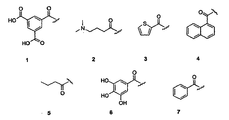
- Figure 1 shows the chemical structures of acyl moieties 1-7 introduced to core sequence compound 8.
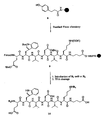
- Figure 2 is a schematic representation of the solid phase synthesis of compound library 10.
- Core sequence compound S was synthesised using standard Fmoc chemistry on Tentagel S-NH 2 resin with HMPA linker.
- the core peptide was then derivatised at the N-terminus (after removal of the Fmoc) or on the C-terminus (after selective removal of the DDE group by 2% hydrazine) with 7 different carboxylic acids (see figure 1).
- the peptides were liberated from the resin by TFA cleavage resulting in compound library 10 .
- Fmoc N- (9-fluoroenyl)methoxy-carbonyl
- HMPA 4-hydroxymethylphenoxyacetic acid
- DDE 4,4-dimethyl-2,6-dioxocyclohex-1-ylidene)ethyl.
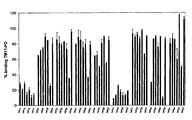
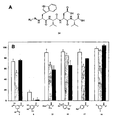
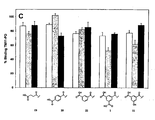
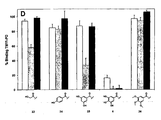
- FIGS 4-6 show the chemical structure (figure 4A) and biological activity of compound library 14 (figures 4B,5C and 6D).
- Crude peptide library 14 (1 ⁇ M) was tested in a competition assay of TM11-PO binding to human P-selectin.
- Three different spacers between the acyl moiety and the WVDV core sequence were used (R 1 ): no spacer (white bars), a glycyl spacer (grey bars) and amino butyric spacer (black bars).
- the chemical structure of the introduced acyl modification (R 2 ) is depicted below these bars.
- Figure 7 shows a graphical representation of the competition of biotin-PAA-Le a -SO 3 binding to human P-selectin ( ⁇ ), mouse P-selectin ( ⁇ ), human L-selectin ( ⁇ ) and human E-selectin ( ⁇ ) by peptide 28.
- Wells were coated with each selectin (0.3 ⁇ g/ ml) and incubated with 0.33 ⁇ g/ml biotin-PAA-Le a -SO 3 with or without peptide 28 as described in example 3.
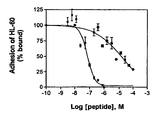
- Figure 8 is a graphical representation of the competition of HL-60 cell binding to CHO-P cells by peptide 28 ( ⁇ ) or EWVDV (•).
- CHO-P cells seeded in 96 wells were incubated with calcein labeled HL-60 cells in the presence of peptide 28 or EWVDV.
- Data points are means of 12 data points in quadruplicate.
- the compounds of the present invention have selective affinity to human P-selectin and are derivatives of peptides represented by X(A x ) m A 3 A 1 A 2 A 1 Y, wherein:
- Peptides are defined as amides that are derived from two or more amino acids by combination of the amino group of one acid with the carboxyl group of another (Merriam Webster Medical Dictionary ⁇ 2001).
- a peptide may also refer to a peptidic structure within a molecule.
- peptides are composed of naturally occurring L- ⁇ -amino acids, which are alanine (Ala or A), arginine (Arg or R), asparagine (Asn or N), aspartic acid (Asp or D), cysteine (Cys or C), glutamine (Gln or Q), glutamic acid (Glu or E), glycine (Gly or G), histidine (His or H), isoleucine (Ile or I), leucine (Leu or L), lysine (Lys or K), methionine (Met or M), phenylalanine (Phe or F), proline (Pro or P), serine (Ser or S), threonine (Thr or T), tryptophan (Trp or W), tyrosine (Tyr or Y), and valine (Val or V).
- L- ⁇ -amino acids which are alanine (Ala or A), arginine (Arg or R), asparagine (A
- the two units of A 1 within the sequence are selected independently, they can be identical or different from each other.
- at least one of the A 1 units represents valine (V). More preferably, both A 1 units are valine (V).
- a 1 is D- or L - cysteine(C) or valine (V).
- the invention also encompasses a method for determining whether a compound is capable of binding to human P-selectin, comprising substituting in a compound according to the invention, an amino acid for a conservative amino acid and determining whether the resulting compound is capable of binding to said P-selectin.
- a 2 is a D- or L-aspartic acid with a solvent exposed side chain bearing a negative charge at physiological pH.
- a 3 is a D- or L-amino acid with an aromatic side chain selected from the group consisting of phenylalanine (F), and tryptophan (W). More preferably, A 3 is an L-amino acid selected from this group. Most preferred is tryptophan (W).
- a x is a D- or L-amino acid, as defined above, selected from the group consisting of glutamine acid (E), aspartic acid (D), glycine (G) and cysteine (C).
- E glutamine acid
- D aspartic acid
- G glycine
- C cysteine
- a x is a D- or L- glutamic acid (E).
- the 2 units of A 1 are selected independently, i . e . they can be identical or different from each other.
- X marks the N-terminal group.
- X can simply be a hydrogen.
- X is a sequence of up to 6 D- or L- amino acids or analogues thereof.
- the type of amino acids(s) should of course not affect e.g. by changing the configuration of the peptide or by changing the spatial orientation of the terminal carboxylic acid with respect to the core peptide the recognition by P-selectin in such a way that, the aimed effect is no longer obtained.
- Suitable analogues include amino substituted carboxylic acids, e.g. aminocyclohexanoic acid amino benzoic acid and amino caproic acid. '
- Y marks the C-terminal group.
- Y may be a hydroxyl group.
- Y is a residue comprising 1 to 11D- or L- amino acids carrying a terminal hydroxyl group.
- the recognition by P-selectin is more tolerant to substituents at the C-terminus.
- at least one amino acid with a negatively charged side chain is present in Y, preferably being separated from the remaining X(A x ) m A 3 A 1 A 2 A 1 sequence by one to three amino acids.
- Y is D- or L-lysine (K), or comprises D- or L- lysine (K).
- the compound of the invention can possess a cyclic or otherwise constrained backbone.
- X+Y together may suitably be linked through an S-S-binding, although, of course, also other types of (chemical) linkages can be present, such as an amide binding, a thioether binding, a carbamate binding or an ester binding.
- the length of the group X+Y is not particularly critical as long as the core sequence is recognised by P-selectin. Generally, the minimum length of X+Y corresponds with the length of 5-6 amino acids.
- the group R 1 -(Z) n - with which X or Y, or both X and Y independently, are substituted may be selected from R-CO groups wherein R is an aryl or heteroalkyl group.
- the heteroalkyl group preferably has 2 to 8 carbon atoms, at least one of which is replaced by a nitrogen atom.
- An aryl group has preferably 6 to 14 carbon atoms, and the group may be substituted with at least one group selected from OH or COOH.
- Examples of compounds are those wherein Z is -CO-, and R 1 the following groups: 4-hydroxyphenylcarbonyl, 3,5-dihydroxyphenylcarbonyl, 3-hydroxy-5-carbonyloxyphenylcarbonyl, 3,4,5-tri-methoxyphenylcarbonyl, 4-carboxyphenylcarbonyl, 3-carbonylbutyric acid, 3-carboxyphenylcarbonyl,
- especially preferred groups are acyl groups and more particularly 3,5-dicarboxyphenylcarbonyl and 3,4,5-trihydroxyphenylcarbonyl groups.
- R 1 -(Z) n modification confers additional interaction of the peptide compound with the P-selectin binding pocket on P-selection, possibly by electrostatic interaction or H-bridge formation. This leads to gain inaffinity for P-selectin.
- Compounds of the invention possess linear, branched, cyclic, or constrained backbones.
- peptides with at least two cysteine (C) units can be cyclisised by oxidation. If a compound is cyclisised via such a disulfide bond, it is preferred that the participating cysteine units are members of X and Y, respectively.
- Cyclic structures are, in fact, an example for conformationally constrained backbones. Other types of constrained structures may also be introduced to decrease the conformational flexibility of the compound. Especially the presence of olefinic bonds or small ring structures in the backbone serves this purpose. Examples of such constraints are given in Pharmaceutical Biotechnology, Ed. D.J.A. Crommelin and R.D. Sindelar, Harwood Academic Publishers, 1997, p. 139f .
- the compounds of the invention are provided as multimers of the derivatised peptides.
- single derivatised peptide chains in accordance with the invention are coupled to a biocomapatible protein, such as human serum albumin, humanised antibodies, liposomes, micelles, synthetic polymers, nanoparticles, and phages.
- Multimers can also represent derivatised peptides which are serially coupled to each other via spacers, i.e. concatamers, or dendrimers, or clusters.
- the compounds can generally be prepared by the methods that are known for the preparation of peptides and derivatives thereof. Smaller compounds containing only a few amino acids and preferably not more than 30-50 units, can be prepared by chemical and/or enzymatic ligation techniques, either using the classical approach in which the reactions take place in solution or suspension, or by employing the more modern solid phase approach, in which the peptide is assembled while being anchored to a solid surface, such as a polymeric bead. Larger compounds are typically synthesised by automatic solid phase peptide synthesisers. The compounds obtained are then modified by reaction with a suitable R 1 (Z) n - source, preferably a R 1 (Z) n - OH group. Said source reacts with a primary amine group in the peptide compound.
- DDE 4,4-dimethyl-2,6-dioxocyclohex-1-ylidene)-ethyl; it can selectively be removed with 2% hydrazine without affecting acid-labile side chain protecting groups.
- Salts of the derivatives of the peptides are prepared by known methods, which typically involve the mixing of the derivative of the peptide with either a pharmaceutically acceptable acid to form an acid addition salt, or with a pharmaceutically acceptable base to form a base addition salt.
- pharmaceutically acceptable acids include organic and inorganic acids, such as formic acid, acetic acid, propionic acid, lactic acid, glycolic acid, oxalic acid, pyruvic acid, succinic acid, maleic acid, malonic acid, cinnamic acid, sulfuric acid, hydrochloric acid, hydrobromic acid, nitric acid, perchloric acid, phosphoric acid and thiocyanic acid, which form ammonium salts with free amino groups of the derivatised peptides.
- Pharmaceutically acceptable bases which form carboxylate salts with free carboxylic groups of the derivatised peptides include ethylamine, methylamine, dimethylamine, triethylamine, isopropylamine, diisopropylamine, and other mono-, di- and trialkylamines, as well as arylamines.
- Multimers of the derivatised peptides according to the invention can, for example, be prepared in a similar way as multimers of peptides, e.g. by biotinylating the N-terminus chains and subsequent complexation with streptavidin, thereby if deemed necessary adjusting the method to the specific compounds.
- streptavidin is able to bind 4 biotin molecules or conjugates with high affinity, very stable tetrameric peptide complexes can be formed by this method.
- Multimers may be composed of identical or different derivatised peptides.
- the multimers of the invention are composed of two or more identical derivatised peptides.
- the compounds of the invention have an affinity to human P-selectin, a membrane glycoprotein expressed by vascular endothelial cell and platelets, which is involved in leukocyte adhesion to the endothelium and platelets.
- the affinity or binding characteristics of compounds to P-selectin can be quantified, for example, in terms of the IC 50 -value. Typically, an IC 50 -value of about 50-100 ⁇ M or less would be considered as evidence for affinity and binding. More desirable for ligands are substances with IC 50 -values of about 10 ⁇ M or less. The lowest a IC 50 -value attainable for the non-covalent type bonds playing a role in the interactions or bindings in accordance with the present invention is about 10 -15 M. Generally, however, the IC 50 -values are higher than about 10 -12 M and in most cases higher than about 10 -9 M.
- the compounds of the invention have low micromolar to low nanomolar IC 50 -values towards P-selectin, which make them about equally potent as the natural ligand P-selectin glycoprotein ligand-1.
- N-terminally modified compounds of the invention were more effective (potent and/or specific) than the corresponding C-terminally modified compounds containing the same modifications. Very good results were obtained with modification by 1,3,5-tricarboxylic acid or gallic acid.
- the compounds according to the invention may render the peptides more stable against proteases, particularly against N-exopeptidases, due to the derivatisation.
- the compounds further may have an enhanced specificity for P-selectin and therefore modulate a pharmacological action such as interaction between monocyte and platelet, that between monocyte and endothelial cells, that between platelet cells and platelet cells. Potential side effects may thus also be diminished.
- the compounds would be cross-reactive in many species.
- a further aspect of the invention refers to the uses of the disclosed compounds. Since the compounds bind selectively to P-selectin, they can, depending on their type of interaction with P-selectin after binding, function as antagonists, partial antagonists, or as mere targeting means to target conjugated substances to cells and tissues expressing P-selectin. Thus, the compounds can be advantageously used in pharmaceutical compositions.
- compositions containing the compounds of the invention may be adapted for various routes of administration, such as parenteral, oral, transmucosal, nasal, or pulmonary. They may further contain drug targeting agents, bioavailability enhancement agents, or active ingredients other than compounds of the invention, and provide for immediate or modified release.
- compositions refers to therapeutic and diagnostic compositions, as well as to medicaments and diagnostics containing such compositions.
- Therapeutic compositions and medicaments are used for the prevention or treatment of diseases and other conditions of mammals of which conditions improvement is desirable. Diagnostics and diagnostic compositions are used for the diagnosis of such diseases in vivo and in vitro.
- a preferred use of the compounds is for preparing therapeutic compositions or medicaments to prevent or improve diseases and conditions involving the adhesion of leukocytes, such as monocytes and neutrophils, to the vascular endothelium and to platelets.
- the compounds can also be used in compositions for treating diseases in which the inhibition of P-selectin-mediated intracellular signaling is desirable.
- compositions containing one or more compounds of the invention can contribute to controlling leukocyte-mediated inflammatory processes. It is known that activated leukocytes release toxic molecules which can damage normal tissue. These inflammatory responses, some of which also involve P-selectin-mediated platelet activation, are part of several pathological conditions, such as transplant rejection, cold ischemia, hemorrhagic shock, septic shock, tumour metastasis, thrombosis, chronic inflammation, rheumatoid arthritis, inflammatory bowel disease, atherosclerosis, restenosis, angiogenesis, disseminated intravascular coagulation, adult respiratory distress syndrome, circulatory shock, severe traumatic brain injury, relapsing-remitting multiple sclerosis, cerebral artery occlusion, ischemia, stroke, acute myocardial infarct, deep vein thrombosis, arterial injury, such as produced by angioplasty, myocardial ischemia, renal injury from ischemia and reperfusion, and renal failure.
- pathological conditions such
- the compounds are used in the preparation of diagnostic compositions or products.
- Such compositions can be used for in vitro tests to quantify P-selectin concentrations in body fluids as markers for the diseases and conditions described above. They may be also used for in vivo diagnostic imaging procedures to monitor P-selectin mediated atherosclerosis, aneurisms, restenosis following percutaneous transluminal coronary angioplasty (post-PTCA restenosis) and other conditions selected from those in which P-selectin is mobilised.
- a compound according to the invention may be conjugated with a chelator, which is subsequently complexed with an isotropic label that is detectable by the chosen monitoring system.
- Another use of the compounds is as that of a tool in research. For instance, they can be used to test the binding affinity of molecules to P-selectin. To conduct this test method, P-selectin would be contacted and incubated with a molecule to be tested for binding affinity and with a compound of the invention. A reduced binding of the compound of the invention would indicate an affinity of the molecule to P-selectin.
- the compounds can also be used as targeting molecules or conjugates in pharmaceutical compositions for the targeting of drugs or genetic material to tissues that express P-selectin.
- conjugates the compounds can be directly coupled with active molecules or nucleic acids that are to be delivered to such tissues. Alternatively, they can be incorporated into or anchored onto the surface of liposomes or other lipid vesicles, emulsion droplets, polymers, nano- or microparticles to obtain targeted vehicles for drugs or genetic material which is delivered to P-selectin expressing tissues.
- compositions preferably contain one or more compounds with P-selectin affinity as disclosed herein and at least one carrier or excipient.
- a carrier or excipient is any pharmaceutically acceptable substance or mixture of substances having no substantial pharmacological activity, which can be used as a vehicle or as an auxiliary substance to formulate a compound into dosage form which is stable and easy to administer. Examples of pharmaceutically acceptable excipients are found in the monographs of all major pharmacopoeias.
- the composition is formulated and processed for parenteral injection, preferably for intravascular injection, such as intravenous or intra-arterial, but also for intramuscular, subcutaneous, intralesional, intraperitoneal or other routes of parenteral administration.
- parenteral injection preferably for intravascular injection, such as intravenous or intra-arterial, but also for intramuscular, subcutaneous, intralesional, intraperitoneal or other routes of parenteral administration.
- intravascular injection such as intravenous or intra-arterial
- intramuscular, subcutaneous, intralesional, intraperitoneal or other routes of parenteral administration will also teach those skilled in the arts on how to prepare such compositions.
- parenteral dosage forms is their sterility. Other requirements are described in all major pharmacopoeias, such as in USP 24, in the monograph " General Requirements for Tests and Assays. 1. Injections", p. 1775-1777 .
- To increase the stability of a parenteral formulation it may be necessary to provide
- Prolonged release may be provided by solid implants, nanoparticles, nanocapsules, microparticles, microcapsules, emulsions, suspensions, oily solutions, liposomes, or similar structures.
- Excipients that are particularly useful for the preparation of parenteral formulations are solvents, cosolvents and liquid or semisolid carriers, such as sterile water, ethanol, glycerol, propylene glycol, polyethylene glycol, butanediol, fatty oils, short- and medium chain triglycerides, lecithin, polyoxyethylene castor oil derivatives; substances to adjust the osmolality and pH, such as sugars, especially glucose, sugar alcohols, especially mannitol, sodium chloride, sodium carbonate, citric acid, acetate, phosphate, phosphoric acid, hydrochloric acid, sodium hydroxide etc.; stabilizers, antioxidants, and preservatives, such as ascorbic acid, sodium sulfite or -hydrogen sulfite, EDTA, benzyl alcohol etc.; other excipients and lyophilization aids, such as albumin, dextran etc.
- solvents, cosolvents and liquid or semisolid carriers such
- the pharmaceutical compositions may be designed for oral administration and processed accordingly.
- Appropriate oral dosage forms include tablets, hard capsules, soft capsules, powders, granules, orally disintegrating dosage forms, syrups, drops, suspensions, effervescent tablets, chewable tablets, oral films, lyophilised dosage forms, sustained release dosage forms and controlled release dosage forms.
- the oral dosage form is an enterically coated solid dosage form to provide protection of the compound from the acidic and proteolytic environment of the stomach.
- Transmucosal administration is possible via, for instance, nasal, buccal, sublingual, gingival or vaginal dosage forms.
- These dosage forms can be prepared by known techniques; they can be formulated to represent nasal drops or sprays, inserts, films, patches, gels, ointments or tablets.
- the excipients used for a transmucosal dosage form include one or more substances providing for mucoadhesion, thus prolonging the contact time of the dosage form with the site of absorption and thereby potentially increasing the extent of absorption.
- the compounds are administered via the pulmonary route, using a metered dose inhaler, a nebuliser, an aerosol spray, or a dry powder inhaler.
- a metered dose inhaler a nebuliser, an aerosol spray, or a dry powder inhaler.
- Appropriate formulations can be prepared by known methods and techniques. Transdermal, rectal, or ocular administration may also be feasible in some cases.
- an appropriate dosage form may contain a bioavailability enhancing agent, which may be any substance or mixture of substances which increases the availability of the compound. This may be achieved, for instance, by the protection of the compound from degradation, such as by an enzyme inhibitor or an antioxidant. More preferably, the enhancing agent increases the bioavailability of the compound by increasing the permeability of the absorption barrier, which is typically a mucosa. Permeation enhancers can act via various mechanisms; some increase the fluidity of mucosal membranes, while others open or widen the gap junctions between mucosal cells.
- bioavailability enhancers are amphiphilic substances such as cholic acid derivatives, phospholipids, ethanol, fatty acids, oleic acid, fatty acid derivatives, EDTA, carbomers, polycarbophil, and chitosan.
- molecules capable of binding to the compounds disclosed above are within the scope of the invention.
- standard hybridysation technology can be applied to prepare specific monoclonal antibodies to a compound
- Other techniques are available to design and prepare smaller molecules capable of binding to a compound of the invention.
- Core sequence compound 9 (FmocHN-Glu(OtBu)-Trp(Boc)-Val-Asp(OtBu)-Val-Lys(DDE)-GABA-HMPA-resin; see fig. 1) was synthesised on an Applied Biosystems 9050 peptide synthesizer (Warrington, UK) using standard Fmoc chemistry. In short, Tentagel S-NH 2 (load 0.26 mmol/g) was provided with 4-hydroxymethylphenoxyacetic acid (HMPA) as a linker, resulting in compound 8 (see fig. 1).
- HMPA 4-hydroxymethylphenoxyacetic acid
- Fmoc-GABA -OH (10 eq.) was attached to the HMPA resin 8 under the agency of N,N'-dicyclohexylcarbodiimide (DCC, 5 eq.) and 4-dimethylaminopyridine (DMAP, 0.5 eq.) All other amino acids, with acid labile side chain protection if necessary, were attached by coupling in the presence of HOBt/TBTU/Dipea (4/4/8 eq.). After coupling, the resin was washed with DMF, isopropanol and diethylether and subsequently dried.
- DCC N,N'-dicyclohexylcarbodiimide
- DMAP 4-dimethylaminopyridine
- the solid phase synthesis of the compound library 10 was performed using a Flexchem ® system (Robbins Scientific, Sunnyvale U.S.A.). After removal of the N-terminal Fmoc group of compound 9 by 20% piperidine in DMF, the resin was washed (DMF) and dried. The resin was distributed in 10 mg quantities over a solvent-resistant 48-well filter plate. After washing with DMF, a mixture of the desired carboxylic acid (40 eq.), BOP (20 eq.), HOBt (20 eq.) and NMM (100 eq.) was added (total volume 300 ⁇ l) and the suspended resin was incubated for 3 hours under continuous perspiration with N 2 .
- Flexchem ® system Robots Scientific, Sunnyvale U.S.A.
- the resin was washed with DMF and incubated three times for 3 minutes with hydrazine monohydrate (2% in DMF) to remove the DDE (4,4-dimethyl-2,6-dioxocyclonhex-1-ylidene)ethyl) group.
- hydrazine monohydrate 2% in DMF
- DDE 4,4-dimethyl-2,6-dioxocyclonhex-1-ylidene
- Derivatised peptides which were only modified at the C-terminal lysine (HP 01 -HP 07 see hereafter), were N-boculated with di-t.-butyl-dicarbonate ((t-Boc) 2 O; 0.25 M) and Dipea (0.125 M in NMP) prior to reaction to protect the N-terminal amine function. After removal of the solvent, peptides were cleaved off from the resin with a mixture of trifluoro acetic acid (TFA), triisopropylsilane (TIS) and water (95:2.5:2.5 v/v/v). Each sample was lyophilised and stored at -20°C until use.
- TFA trifluoro acetic acid
- TIS triisopropylsilane
- Derivatised peptides 11-13, compound library 14 and derivatised peptides 27-33 were prepared in the same manner as described for library 10 from resin bound core sequence FmocHN-Trp(Boc)-Val-Asp(OtBu)-Val-HMPA-resin.
- Derivatised peptide 11 was acetylated using acetic anhydride (0.25 M) and Dipea (0.125 M) in NMP.
- wells were washed with assay buffer and incubated for 1 hour at 37°C with blocking buffer (3% BSA in assay buffer). After washing with assay buffer, the wells were incubated for 2 hours at 37°C with the human P-selectin IgG-Fc chimera (R&D Systems Europe Ltd., Abingdon, United Kingdom) (0.3 ⁇ g/ml). Subsequently, wells were washed with assay buffer and incubated for 1 hour at 4°C with the TM11 -PO complex. The wells were washed six times with washing buffer (0.1 % Tween 20 in assay buffer).
- the derivatised peptides are coded HP ij , wherein i and j refer to the acyl moieties R 1 and R 2 attached to the N- and C-terminus, respectively, of formula 10 (Fig.1). Unmodified amino group is indicated by 0 .
- the acyl moieties 1 to 7 are shown in Fig. 2.
- Table 3 Gallic acid derivatized peptides, and their IC 50 for human P-selectin as determined by competition ELISA.
- Peptide Structure IC 50 (nM) a 12 37.1 27 18.3 28 15.4 29 62.9 30 250 31 >1000 32 590 33 580 a values are the mean of at least 3 experiments at 8 different concentrations of peptide as determined in TM 11 -PO competition ELISA (materials and methods)
- biotin-PAA-le a -SO 3 H (Synthesone, Kunststoff, Germany) instead of TM11-PO was used as ligand in the competition assay.
- This polyacrylamide (PAA) based polymer with attached sulfo-Lewis A groups is an established selectin ligand.
- CHO cells stably transfected with human P-selectin were kindly donated by Dr. Modderman (University of Amsterdam, Amsterdam, the Netherlands). Cells were grown in DMEM (BioWhittaker Europe, Verviers, Belgium) containing 10% foetal calf serum (FCS) (BioWitthaker), 5 mM L-glutamine, 20,000 units penicillin/streptomycin (Bio Whittaker) and 5 mM non-essential amino acids (Gibco, Paisley, United Kingdom). Flasks with cells were incubated at 37°C in 5% CO 2 for 3 or 4 days until cells had grown nearly confluent.
- FCS foetal calf serum
- Flasks with cells were incubated at 37°C in 5% CO 2 for 3 or 4 days until cells had grown nearly confluent.
- HL60 cells were from ATCC and grown in RPMI 1640 medium (Bio Whittaker) with 10% FCS, 5mM L-glutamine and 20,000 units penicillin/streptomycin.
- HL-60 cells were fluorescently labeled by incubation for 30 min at 37°C with 5 ⁇ M calcein-AM (Molecular Probes, Leiden, The Netherlands) in RPMI. These cells (50,000/well) were added to cultured CHO cells expressing P-selectin (CHO-P cells, cultured in DMEM with 10% FCS, 5 mM non-essential amino acids, 5 mM L-glutamine and 20,000 U penicillin/streptomycin), seeded in 96 well plates in the presence or absence of the P-selectin antagonists (1h, 4°C). After gentle washing with RPMI, CHO-P associated fluorescence was measured ( ⁇ exc 485/ ⁇ cm 530 nm).
Landscapes
- Health & Medical Sciences (AREA)
- Chemical & Material Sciences (AREA)
- Organic Chemistry (AREA)
- General Health & Medical Sciences (AREA)
- Medicinal Chemistry (AREA)
- Life Sciences & Earth Sciences (AREA)
- Veterinary Medicine (AREA)
- Public Health (AREA)
- Animal Behavior & Ethology (AREA)
- Bioinformatics & Cheminformatics (AREA)
- Chemical Kinetics & Catalysis (AREA)
- General Chemical & Material Sciences (AREA)
- Nuclear Medicine, Radiotherapy & Molecular Imaging (AREA)
- Engineering & Computer Science (AREA)
- Pharmacology & Pharmacy (AREA)
- Immunology (AREA)
- Biophysics (AREA)
- Proteomics, Peptides & Aminoacids (AREA)
- Molecular Biology (AREA)
- Biochemistry (AREA)
- Genetics & Genomics (AREA)
- Neurosurgery (AREA)
- Neurology (AREA)
- Biomedical Technology (AREA)
- Urology & Nephrology (AREA)
- Rheumatology (AREA)
- Heart & Thoracic Surgery (AREA)
- Oncology (AREA)
- Hematology (AREA)
- Cardiology (AREA)
- Psychiatry (AREA)
- Physical Education & Sports Medicine (AREA)
- Pain & Pain Management (AREA)
- Transplantation (AREA)
- Diabetes (AREA)
- Vascular Medicine (AREA)
- Orthopedic Medicine & Surgery (AREA)
- Hospice & Palliative Care (AREA)
- Pulmonology (AREA)
- Peptides Or Proteins (AREA)
Priority Applications (1)
| Application Number | Priority Date | Filing Date | Title |
|---|---|---|---|
| EP03792179A EP1527086B1 (en) | 2002-08-09 | 2003-07-04 | Compounds binding to p-selectin |
Applications Claiming Priority (4)
| Application Number | Priority Date | Filing Date | Title |
|---|---|---|---|
| EP02078308 | 2002-08-09 | ||
| EP02078308 | 2002-08-09 | ||
| EP03792179A EP1527086B1 (en) | 2002-08-09 | 2003-07-04 | Compounds binding to p-selectin |
| PCT/EP2003/007260 WO2004018502A1 (en) | 2002-08-09 | 2003-07-04 | Compounds binding to p-selectin |
Publications (2)
| Publication Number | Publication Date |
|---|---|
| EP1527086A1 EP1527086A1 (en) | 2005-05-04 |
| EP1527086B1 true EP1527086B1 (en) | 2008-01-09 |
Family
ID=31896910
Family Applications (1)
| Application Number | Title | Priority Date | Filing Date |
|---|---|---|---|
| EP03792179A Expired - Lifetime EP1527086B1 (en) | 2002-08-09 | 2003-07-04 | Compounds binding to p-selectin |
Country Status (11)
| Country | Link |
|---|---|
| US (3) | US20060217294A1 (enExample) |
| EP (1) | EP1527086B1 (enExample) |
| JP (2) | JP4563806B2 (enExample) |
| AT (1) | ATE383370T1 (enExample) |
| AU (1) | AU2003250899A1 (enExample) |
| BR (1) | BR0313019A (enExample) |
| CA (1) | CA2493471C (enExample) |
| DE (1) | DE60318585T2 (enExample) |
| ES (1) | ES2299749T3 (enExample) |
| MX (1) | MXPA05001599A (enExample) |
| WO (1) | WO2004018502A1 (enExample) |
Families Citing this family (12)
| Publication number | Priority date | Publication date | Assignee | Title |
|---|---|---|---|---|
| EP1527086B1 (en) * | 2002-08-09 | 2008-01-09 | Astellas Pharma Europe B.V. | Compounds binding to p-selectin |
| ATE444301T1 (de) | 2002-10-11 | 2009-10-15 | Astellas Pharma Europ B V | Verbindungen auf glukosebasis mit affinitüt für p-selektin |
| EP1577289A1 (en) * | 2004-03-18 | 2005-09-21 | Revotar Biopharmaceuticals AG | Non-glycosylated/-glycosidic/-peptidic small molecule selectin inhibitors for the treament of inflammatory disorders |
| EP1764093A1 (en) | 2005-09-20 | 2007-03-21 | Revotar Biopharmaceuticals AG | Novel aromatic compounds and their use in medical applications |
| EP1764095A1 (en) * | 2005-09-20 | 2007-03-21 | Revotar Biopharmaceuticals AG | Novel nitrocatechol derivatives having selectin ligand activity |
| EP1764096A1 (en) | 2005-09-20 | 2007-03-21 | Revotar Biopharmaceuticals AG | Novel phloroglucinol derivatives having selectin ligand activity |
| BRPI0716554A2 (pt) * | 2006-09-08 | 2013-09-24 | Bayer Schering Pharma Ag | compostos de mÉtodos para agentes rotulados de 18f |
| HUE034308T2 (en) | 2013-03-21 | 2018-02-28 | Sanofi Aventis Deutschland | Preparation of hydantoin-containing peptide products |
| US10450343B2 (en) | 2013-03-21 | 2019-10-22 | Sanofi-Aventis Deutschland Gmbh | Synthesis of cyclic imide containing peptide products |
| AU2021208650A1 (en) * | 2020-01-16 | 2022-08-11 | Case Western Reserve University | Neutrophil elastase binding peptides and compositions thereof |
| CN115039782A (zh) * | 2022-07-20 | 2022-09-13 | 中国农业科学院植物保护研究所 | 一种化合物在大豆孢囊线虫几丁质酶抑制剂中的应用 |
| WO2025168211A1 (en) | 2023-02-10 | 2025-08-14 | Novo Nordisk A/S | P-selectin peptide ligands |
Family Cites Families (5)
| Publication number | Priority date | Publication date | Assignee | Title |
|---|---|---|---|---|
| WO1994005314A1 (en) * | 1992-09-08 | 1994-03-17 | Centocor, Inc. | Peptide inhibitors of leukocyte adhesion |
| AU2958195A (en) * | 1994-06-29 | 1996-01-25 | Texas Biotechnology Corporation | Process to inhibit binding of the integrin alpha 4 beta 1 to vcam-1 or fibronectin |
| WO2000027420A1 (en) * | 1998-11-06 | 2000-05-18 | The Wistar Institute Of Anatomy And Biology | Compositions and methods for treatment of cancer |
| EP1288222A1 (en) * | 2001-09-03 | 2003-03-05 | Yamanouchi Europe B.V. | Peptidic compounds selectively binding to P-selectin |
| EP1527086B1 (en) * | 2002-08-09 | 2008-01-09 | Astellas Pharma Europe B.V. | Compounds binding to p-selectin |
-
2003
- 2003-07-04 EP EP03792179A patent/EP1527086B1/en not_active Expired - Lifetime
- 2003-07-04 AT AT03792179T patent/ATE383370T1/de not_active IP Right Cessation
- 2003-07-04 US US10/524,172 patent/US20060217294A1/en not_active Abandoned
- 2003-07-04 ES ES03792179T patent/ES2299749T3/es not_active Expired - Lifetime
- 2003-07-04 MX MXPA05001599A patent/MXPA05001599A/es unknown
- 2003-07-04 WO PCT/EP2003/007260 patent/WO2004018502A1/en not_active Ceased
- 2003-07-04 JP JP2004530000A patent/JP4563806B2/ja not_active Expired - Fee Related
- 2003-07-04 CA CA2493471A patent/CA2493471C/en not_active Expired - Fee Related
- 2003-07-04 BR BR0313019-3A patent/BR0313019A/pt not_active Application Discontinuation
- 2003-07-04 DE DE60318585T patent/DE60318585T2/de not_active Expired - Lifetime
- 2003-07-04 AU AU2003250899A patent/AU2003250899A1/en not_active Abandoned
-
2008
- 2008-06-25 US US12/146,302 patent/US20090062186A1/en not_active Abandoned
-
2010
- 2010-03-16 US US12/725,199 patent/US20100323969A1/en not_active Abandoned
- 2010-04-21 JP JP2010098138A patent/JP2010209088A/ja not_active Withdrawn
Also Published As
| Publication number | Publication date |
|---|---|
| ES2299749T3 (es) | 2008-06-01 |
| WO2004018502A8 (en) | 2005-05-12 |
| US20090062186A1 (en) | 2009-03-05 |
| ATE383370T1 (de) | 2008-01-15 |
| MXPA05001599A (es) | 2005-08-19 |
| WO2004018502A1 (en) | 2004-03-04 |
| DE60318585T2 (de) | 2009-01-08 |
| JP2010209088A (ja) | 2010-09-24 |
| EP1527086A1 (en) | 2005-05-04 |
| US20060217294A1 (en) | 2006-09-28 |
| US20100323969A1 (en) | 2010-12-23 |
| CA2493471C (en) | 2013-02-12 |
| CA2493471A1 (en) | 2004-03-04 |
| JP2006513141A (ja) | 2006-04-20 |
| DE60318585D1 (de) | 2008-02-21 |
| JP4563806B2 (ja) | 2010-10-13 |
| AU2003250899A1 (en) | 2004-03-11 |
| BR0313019A (pt) | 2005-07-12 |
Similar Documents
| Publication | Publication Date | Title |
|---|---|---|
| US20090062186A1 (en) | Compounds Binding To P-Selectin | |
| US5506206A (en) | Increasing blood-brain barrier permeability with permeabilizer peptides | |
| JPH05506859A (ja) | 血液―脳関門透過性の増加方法 | |
| WO2011060104A2 (en) | Compositions and methods for inhibiting cellular adhesion or directing diagnostic or therapeutic agents to rgd binding sites | |
| US7531516B2 (en) | Peptidic compounds selectively binding to P-selectin | |
| JP2006520741A (ja) | 生物医学的及び医学的使用のための新規な両親媒性(ampiphilic)フッ素化炭化水素分子ベクター | |
| JP2002511872A (ja) | 血管新生効果をもつ環状アザペプチド | |
| JP2918746B2 (ja) | ペプチド誘導体およびその用途 | |
| JPH06306096A (ja) | ペプチド誘導体及びその用途 | |
| AU2002324363A1 (en) | Peptidic compounds selectively binding to p-selectin | |
| JP3190765B2 (ja) | ペプチド誘導体及びその用途 | |
| HK40003080A (en) | High penetration prodrug compositions of peptides and peptide-related compounds | |
| HK1256180A1 (en) | High penetration prodrug compositions of peptides and peptide-related compounds | |
| JPH05163300A (ja) | ペプチド誘導体およびその用途 | |
| JPH06321987A (ja) | ペプチド誘導体及びその用途 | |
| JPH06239885A (ja) | ペプチド誘導体及びその用途 | |
| JPH0641193A (ja) | ペプチド誘導体およびその用途 | |
| HK1197994B (en) | Methods for reducing cd36 expression | |
| HK1173367A1 (en) | Methods for reducing cd36 expression |
Legal Events
| Date | Code | Title | Description |
|---|---|---|---|
| PUAI | Public reference made under article 153(3) epc to a published international application that has entered the european phase |
Free format text: ORIGINAL CODE: 0009012 |
|
| 17P | Request for examination filed |
Effective date: 20050121 |
|
| AK | Designated contracting states |
Kind code of ref document: A1 Designated state(s): AT BE BG CH CY CZ DE DK EE ES FI FR GB GR HU IE IT LI LU MC NL PT RO SE SI SK TR |
|
| AX | Request for extension of the european patent |
Extension state: AL LT LV MK |
|
| 17Q | First examination report despatched |
Effective date: 20050512 |
|
| DAX | Request for extension of the european patent (deleted) | ||
| RAP1 | Party data changed (applicant data changed or rights of an application transferred) |
Owner name: ASTELLAS PHARMA EUROPE B.V. |
|
| 17Q | First examination report despatched |
Effective date: 20050512 |
|
| GRAP | Despatch of communication of intention to grant a patent |
Free format text: ORIGINAL CODE: EPIDOSNIGR1 |
|
| RIN1 | Information on inventor provided before grant (corrected) |
Inventor name: KUIPER, JOHANLACDR Inventor name: MOLENAAR, THOMAS, JACOBUS, MARIA Inventor name: APPELDOORN, CHANTAL, CATHARINA, MARIALACDR Inventor name: BIESSEN, ERIK, ANNA, LEONARDUS Inventor name: VAN BERKEL, THEODORUS, JOSEPHUS, CORNELIS |
|
| GRAL | Information related to payment of fee for publishing/printing deleted |
Free format text: ORIGINAL CODE: EPIDOSDIGR3 |
|
| GRAS | Grant fee paid |
Free format text: ORIGINAL CODE: EPIDOSNIGR3 |
|
| GRAA | (expected) grant |
Free format text: ORIGINAL CODE: 0009210 |
|
| AK | Designated contracting states |
Kind code of ref document: B1 Designated state(s): AT BE BG CH CY CZ DE DK EE ES FI FR GB GR HU IE IT LI LU MC NL PT RO SE SI SK TR |
|
| REG | Reference to a national code |
Ref country code: GB Ref legal event code: FG4D |
|
| REG | Reference to a national code |
Ref country code: CH Ref legal event code: EP |
|
| REG | Reference to a national code |
Ref country code: IE Ref legal event code: FG4D |
|
| REF | Corresponds to: |
Ref document number: 60318585 Country of ref document: DE Date of ref document: 20080221 Kind code of ref document: P |
|
| PG25 | Lapsed in a contracting state [announced via postgrant information from national office to epo] |
Ref country code: SI Free format text: LAPSE BECAUSE OF FAILURE TO SUBMIT A TRANSLATION OF THE DESCRIPTION OR TO PAY THE FEE WITHIN THE PRESCRIBED TIME-LIMIT Effective date: 20080109 |
|
| REG | Reference to a national code |
Ref country code: ES Ref legal event code: FG2A Ref document number: 2299749 Country of ref document: ES Kind code of ref document: T3 |
|
| PG25 | Lapsed in a contracting state [announced via postgrant information from national office to epo] |
Ref country code: CH Free format text: LAPSE BECAUSE OF FAILURE TO SUBMIT A TRANSLATION OF THE DESCRIPTION OR TO PAY THE FEE WITHIN THE PRESCRIBED TIME-LIMIT Effective date: 20080109 Ref country code: FI Free format text: LAPSE BECAUSE OF FAILURE TO SUBMIT A TRANSLATION OF THE DESCRIPTION OR TO PAY THE FEE WITHIN THE PRESCRIBED TIME-LIMIT Effective date: 20080109 Ref country code: LI Free format text: LAPSE BECAUSE OF FAILURE TO SUBMIT A TRANSLATION OF THE DESCRIPTION OR TO PAY THE FEE WITHIN THE PRESCRIBED TIME-LIMIT Effective date: 20080109 |
|
| REG | Reference to a national code |
Ref country code: CH Ref legal event code: PL |
|
| PG25 | Lapsed in a contracting state [announced via postgrant information from national office to epo] |
Ref country code: BG Free format text: LAPSE BECAUSE OF FAILURE TO SUBMIT A TRANSLATION OF THE DESCRIPTION OR TO PAY THE FEE WITHIN THE PRESCRIBED TIME-LIMIT Effective date: 20080409 Ref country code: AT Free format text: LAPSE BECAUSE OF FAILURE TO SUBMIT A TRANSLATION OF THE DESCRIPTION OR TO PAY THE FEE WITHIN THE PRESCRIBED TIME-LIMIT Effective date: 20080109 |
|
| ET | Fr: translation filed | ||
| PG25 | Lapsed in a contracting state [announced via postgrant information from national office to epo] |
Ref country code: BE Free format text: LAPSE BECAUSE OF FAILURE TO SUBMIT A TRANSLATION OF THE DESCRIPTION OR TO PAY THE FEE WITHIN THE PRESCRIBED TIME-LIMIT Effective date: 20080109 Ref country code: PT Free format text: LAPSE BECAUSE OF FAILURE TO SUBMIT A TRANSLATION OF THE DESCRIPTION OR TO PAY THE FEE WITHIN THE PRESCRIBED TIME-LIMIT Effective date: 20080609 |
|
| PG25 | Lapsed in a contracting state [announced via postgrant information from national office to epo] |
Ref country code: CZ Free format text: LAPSE BECAUSE OF FAILURE TO SUBMIT A TRANSLATION OF THE DESCRIPTION OR TO PAY THE FEE WITHIN THE PRESCRIBED TIME-LIMIT Effective date: 20080109 Ref country code: DK Free format text: LAPSE BECAUSE OF FAILURE TO SUBMIT A TRANSLATION OF THE DESCRIPTION OR TO PAY THE FEE WITHIN THE PRESCRIBED TIME-LIMIT Effective date: 20080109 Ref country code: SK Free format text: LAPSE BECAUSE OF FAILURE TO SUBMIT A TRANSLATION OF THE DESCRIPTION OR TO PAY THE FEE WITHIN THE PRESCRIBED TIME-LIMIT Effective date: 20080109 Ref country code: SE Free format text: LAPSE BECAUSE OF FAILURE TO SUBMIT A TRANSLATION OF THE DESCRIPTION OR TO PAY THE FEE WITHIN THE PRESCRIBED TIME-LIMIT Effective date: 20080409 |
|
| PLBE | No opposition filed within time limit |
Free format text: ORIGINAL CODE: 0009261 |
|
| STAA | Information on the status of an ep patent application or granted ep patent |
Free format text: STATUS: NO OPPOSITION FILED WITHIN TIME LIMIT |
|
| PG25 | Lapsed in a contracting state [announced via postgrant information from national office to epo] |
Ref country code: RO Free format text: LAPSE BECAUSE OF FAILURE TO SUBMIT A TRANSLATION OF THE DESCRIPTION OR TO PAY THE FEE WITHIN THE PRESCRIBED TIME-LIMIT Effective date: 20080109 |
|
| 26N | No opposition filed |
Effective date: 20081010 |
|
| PG25 | Lapsed in a contracting state [announced via postgrant information from national office to epo] |
Ref country code: MC Free format text: LAPSE BECAUSE OF NON-PAYMENT OF DUE FEES Effective date: 20080731 |
|
| PG25 | Lapsed in a contracting state [announced via postgrant information from national office to epo] |
Ref country code: EE Free format text: LAPSE BECAUSE OF FAILURE TO SUBMIT A TRANSLATION OF THE DESCRIPTION OR TO PAY THE FEE WITHIN THE PRESCRIBED TIME-LIMIT Effective date: 20080109 |
|
| PG25 | Lapsed in a contracting state [announced via postgrant information from national office to epo] |
Ref country code: CY Free format text: LAPSE BECAUSE OF FAILURE TO SUBMIT A TRANSLATION OF THE DESCRIPTION OR TO PAY THE FEE WITHIN THE PRESCRIBED TIME-LIMIT Effective date: 20080109 Ref country code: IE Free format text: LAPSE BECAUSE OF NON-PAYMENT OF DUE FEES Effective date: 20080704 |
|
| PG25 | Lapsed in a contracting state [announced via postgrant information from national office to epo] |
Ref country code: LU Free format text: LAPSE BECAUSE OF NON-PAYMENT OF DUE FEES Effective date: 20080704 Ref country code: HU Free format text: LAPSE BECAUSE OF FAILURE TO SUBMIT A TRANSLATION OF THE DESCRIPTION OR TO PAY THE FEE WITHIN THE PRESCRIBED TIME-LIMIT Effective date: 20080710 |
|
| PG25 | Lapsed in a contracting state [announced via postgrant information from national office to epo] |
Ref country code: TR Free format text: LAPSE BECAUSE OF FAILURE TO SUBMIT A TRANSLATION OF THE DESCRIPTION OR TO PAY THE FEE WITHIN THE PRESCRIBED TIME-LIMIT Effective date: 20080109 |
|
| PG25 | Lapsed in a contracting state [announced via postgrant information from national office to epo] |
Ref country code: GR Free format text: LAPSE BECAUSE OF FAILURE TO SUBMIT A TRANSLATION OF THE DESCRIPTION OR TO PAY THE FEE WITHIN THE PRESCRIBED TIME-LIMIT Effective date: 20080410 |
|
| PGFP | Annual fee paid to national office [announced via postgrant information from national office to epo] |
Ref country code: GB Payment date: 20120719 Year of fee payment: 10 |
|
| PGFP | Annual fee paid to national office [announced via postgrant information from national office to epo] |
Ref country code: IT Payment date: 20120727 Year of fee payment: 10 Ref country code: FR Payment date: 20120806 Year of fee payment: 10 Ref country code: ES Payment date: 20120713 Year of fee payment: 10 Ref country code: DE Payment date: 20120720 Year of fee payment: 10 |
|
| PGFP | Annual fee paid to national office [announced via postgrant information from national office to epo] |
Ref country code: NL Payment date: 20120719 Year of fee payment: 10 |
|
| REG | Reference to a national code |
Ref country code: NL Ref legal event code: V1 Effective date: 20140201 |
|
| GBPC | Gb: european patent ceased through non-payment of renewal fee |
Effective date: 20130704 |
|
| REG | Reference to a national code |
Ref country code: DE Ref legal event code: R119 Ref document number: 60318585 Country of ref document: DE Effective date: 20140201 |
|
| REG | Reference to a national code |
Ref country code: FR Ref legal event code: ST Effective date: 20140331 |
|
| PG25 | Lapsed in a contracting state [announced via postgrant information from national office to epo] |
Ref country code: NL Free format text: LAPSE BECAUSE OF NON-PAYMENT OF DUE FEES Effective date: 20140201 Ref country code: GB Free format text: LAPSE BECAUSE OF NON-PAYMENT OF DUE FEES Effective date: 20130704 Ref country code: DE Free format text: LAPSE BECAUSE OF NON-PAYMENT OF DUE FEES Effective date: 20140201 |
|
| PG25 | Lapsed in a contracting state [announced via postgrant information from national office to epo] |
Ref country code: FR Free format text: LAPSE BECAUSE OF NON-PAYMENT OF DUE FEES Effective date: 20130731 Ref country code: IT Free format text: LAPSE BECAUSE OF NON-PAYMENT OF DUE FEES Effective date: 20130704 |
|
| REG | Reference to a national code |
Ref country code: ES Ref legal event code: FD2A Effective date: 20150709 |
|
| PG25 | Lapsed in a contracting state [announced via postgrant information from national office to epo] |
Ref country code: ES Free format text: LAPSE BECAUSE OF NON-PAYMENT OF DUE FEES Effective date: 20130705 |