EP1523130A2 - Kommunikationssystem für ein Strassenfahrzeug, Strassenrandvorrichtung und mobile Vorrichtung dafür - Google Patents
Kommunikationssystem für ein Strassenfahrzeug, Strassenrandvorrichtung und mobile Vorrichtung dafür Download PDFInfo
- Publication number
- EP1523130A2 EP1523130A2 EP04023562A EP04023562A EP1523130A2 EP 1523130 A2 EP1523130 A2 EP 1523130A2 EP 04023562 A EP04023562 A EP 04023562A EP 04023562 A EP04023562 A EP 04023562A EP 1523130 A2 EP1523130 A2 EP 1523130A2
- Authority
- EP
- European Patent Office
- Prior art keywords
- communication
- communication protocol
- mobile
- switching
- roadside
- Prior art date
- Legal status (The legal status is an assumption and is not a legal conclusion. Google has not performed a legal analysis and makes no representation as to the accuracy of the status listed.)
- Withdrawn
Links
Images










Classifications
-
- G—PHYSICS
- G07—CHECKING-DEVICES
- G07F—COIN-FREED OR LIKE APPARATUS
- G07F7/00—Mechanisms actuated by objects other than coins to free or to actuate vending, hiring, coin or paper currency dispensing or refunding apparatus
- G07F7/08—Mechanisms actuated by objects other than coins to free or to actuate vending, hiring, coin or paper currency dispensing or refunding apparatus by coded identity card or credit card or other personal identification means
- G07F7/10—Mechanisms actuated by objects other than coins to free or to actuate vending, hiring, coin or paper currency dispensing or refunding apparatus by coded identity card or credit card or other personal identification means together with a coded signal, e.g. in the form of personal identification information, like personal identification number [PIN] or biometric data
- G07F7/1008—Active credit-cards provided with means to personalise their use, e.g. with PIN-introduction/comparison system
-
- G—PHYSICS
- G06—COMPUTING OR CALCULATING; COUNTING
- G06Q—INFORMATION AND COMMUNICATION TECHNOLOGY [ICT] SPECIALLY ADAPTED FOR ADMINISTRATIVE, COMMERCIAL, FINANCIAL, MANAGERIAL OR SUPERVISORY PURPOSES; SYSTEMS OR METHODS SPECIALLY ADAPTED FOR ADMINISTRATIVE, COMMERCIAL, FINANCIAL, MANAGERIAL OR SUPERVISORY PURPOSES, NOT OTHERWISE PROVIDED FOR
- G06Q20/00—Payment architectures, schemes or protocols
- G06Q20/30—Payment architectures, schemes or protocols characterised by the use of specific devices or networks
- G06Q20/32—Payment architectures, schemes or protocols characterised by the use of specific devices or networks using wireless devices
- G06Q20/327—Short range or proximity payments by means of M-devices
-
- G—PHYSICS
- G06—COMPUTING OR CALCULATING; COUNTING
- G06Q—INFORMATION AND COMMUNICATION TECHNOLOGY [ICT] SPECIALLY ADAPTED FOR ADMINISTRATIVE, COMMERCIAL, FINANCIAL, MANAGERIAL OR SUPERVISORY PURPOSES; SYSTEMS OR METHODS SPECIALLY ADAPTED FOR ADMINISTRATIVE, COMMERCIAL, FINANCIAL, MANAGERIAL OR SUPERVISORY PURPOSES, NOT OTHERWISE PROVIDED FOR
- G06Q20/00—Payment architectures, schemes or protocols
- G06Q20/30—Payment architectures, schemes or protocols characterised by the use of specific devices or networks
- G06Q20/34—Payment architectures, schemes or protocols characterised by the use of specific devices or networks using cards, e.g. integrated circuit [IC] cards or magnetic cards
- G06Q20/341—Active cards, i.e. cards including their own processing means, e.g. including an IC or chip
-
- G—PHYSICS
- G06—COMPUTING OR CALCULATING; COUNTING
- G06Q—INFORMATION AND COMMUNICATION TECHNOLOGY [ICT] SPECIALLY ADAPTED FOR ADMINISTRATIVE, COMMERCIAL, FINANCIAL, MANAGERIAL OR SUPERVISORY PURPOSES; SYSTEMS OR METHODS SPECIALLY ADAPTED FOR ADMINISTRATIVE, COMMERCIAL, FINANCIAL, MANAGERIAL OR SUPERVISORY PURPOSES, NOT OTHERWISE PROVIDED FOR
- G06Q20/00—Payment architectures, schemes or protocols
- G06Q20/30—Payment architectures, schemes or protocols characterised by the use of specific devices or networks
- G06Q20/36—Payment architectures, schemes or protocols characterised by the use of specific devices or networks using electronic wallets or electronic money safes
- G06Q20/363—Payment architectures, schemes or protocols characterised by the use of specific devices or networks using electronic wallets or electronic money safes with the personal data of a user
-
- G—PHYSICS
- G07—CHECKING-DEVICES
- G07B—TICKET-ISSUING APPARATUS; FARE-REGISTERING APPARATUS; FRANKING APPARATUS
- G07B15/00—Arrangements or apparatus for collecting fares, tolls or entrance fees at one or more control points
- G07B15/06—Arrangements for road pricing or congestion charging of vehicles or vehicle users, e.g. automatic toll systems
- G07B15/063—Arrangements for road pricing or congestion charging of vehicles or vehicle users, e.g. automatic toll systems using wireless information transmission between the vehicle and a fixed station
-
- G—PHYSICS
- G07—CHECKING-DEVICES
- G07F—COIN-FREED OR LIKE APPARATUS
- G07F17/00—Coin-freed apparatus for hiring articles; Coin-freed facilities or services
- G07F17/0014—Coin-freed apparatus for hiring articles; Coin-freed facilities or services for vending, access and use of specific services not covered anywhere else in G07F17/00
-
- G—PHYSICS
- G07—CHECKING-DEVICES
- G07F—COIN-FREED OR LIKE APPARATUS
- G07F17/00—Coin-freed apparatus for hiring articles; Coin-freed facilities or services
- G07F17/16—Coin-freed apparatus for hiring articles; Coin-freed facilities or services for devices exhibiting advertisements, announcements, pictures or the like
-
- G—PHYSICS
- G07—CHECKING-DEVICES
- G07F—COIN-FREED OR LIKE APPARATUS
- G07F17/00—Coin-freed apparatus for hiring articles; Coin-freed facilities or services
- G07F17/24—Coin-freed apparatus for hiring articles; Coin-freed facilities or services for parking meters
- G07F17/246—Coin-freed apparatus for hiring articles; Coin-freed facilities or services for parking meters provided with vehicle proximity-detectors
-
- G—PHYSICS
- G07—CHECKING-DEVICES
- G07F—COIN-FREED OR LIKE APPARATUS
- G07F7/00—Mechanisms actuated by objects other than coins to free or to actuate vending, hiring, coin or paper currency dispensing or refunding apparatus
- G07F7/08—Mechanisms actuated by objects other than coins to free or to actuate vending, hiring, coin or paper currency dispensing or refunding apparatus by coded identity card or credit card or other personal identification means
- G07F7/0866—Mechanisms actuated by objects other than coins to free or to actuate vending, hiring, coin or paper currency dispensing or refunding apparatus by coded identity card or credit card or other personal identification means by active credit-cards adapted therefor
-
- G—PHYSICS
- G07—CHECKING-DEVICES
- G07F—COIN-FREED OR LIKE APPARATUS
- G07F7/00—Mechanisms actuated by objects other than coins to free or to actuate vending, hiring, coin or paper currency dispensing or refunding apparatus
- G07F7/08—Mechanisms actuated by objects other than coins to free or to actuate vending, hiring, coin or paper currency dispensing or refunding apparatus by coded identity card or credit card or other personal identification means
- G07F7/0873—Details of the card reader
- G07F7/088—Details of the card reader the card reader being part of the point of sale [POS] terminal or electronic cash register [ECR] itself
- G07F7/0886—Details of the card reader the card reader being part of the point of sale [POS] terminal or electronic cash register [ECR] itself the card reader being portable for interacting with a POS or ECR in realizing a payment transaction
-
- H—ELECTRICITY
- H04—ELECTRIC COMMUNICATION TECHNIQUE
- H04L—TRANSMISSION OF DIGITAL INFORMATION, e.g. TELEGRAPHIC COMMUNICATION
- H04L61/00—Network arrangements, protocols or services for addressing or naming
-
- H—ELECTRICITY
- H04—ELECTRIC COMMUNICATION TECHNIQUE
- H04L—TRANSMISSION OF DIGITAL INFORMATION, e.g. TELEGRAPHIC COMMUNICATION
- H04L61/00—Network arrangements, protocols or services for addressing or naming
- H04L61/09—Mapping addresses
- H04L61/10—Mapping addresses of different types
-
- H—ELECTRICITY
- H04—ELECTRIC COMMUNICATION TECHNIQUE
- H04L—TRANSMISSION OF DIGITAL INFORMATION, e.g. TELEGRAPHIC COMMUNICATION
- H04L67/00—Network arrangements or protocols for supporting network services or applications
- H04L67/01—Protocols
- H04L67/12—Protocols specially adapted for proprietary or special-purpose networking environments, e.g. medical networks, sensor networks, networks in vehicles or remote metering networks
-
- H—ELECTRICITY
- H04—ELECTRIC COMMUNICATION TECHNIQUE
- H04L—TRANSMISSION OF DIGITAL INFORMATION, e.g. TELEGRAPHIC COMMUNICATION
- H04L9/00—Cryptographic mechanisms or cryptographic arrangements for secret or secure communications; Network security protocols
- H04L9/40—Network security protocols
-
- H—ELECTRICITY
- H04—ELECTRIC COMMUNICATION TECHNIQUE
- H04W—WIRELESS COMMUNICATION NETWORKS
- H04W4/00—Services specially adapted for wireless communication networks; Facilities therefor
- H04W4/30—Services specially adapted for particular environments, situations or purposes
- H04W4/40—Services specially adapted for particular environments, situations or purposes for vehicles, e.g. vehicle-to-pedestrians [V2P]
- H04W4/44—Services specially adapted for particular environments, situations or purposes for vehicles, e.g. vehicle-to-pedestrians [V2P] for communication between vehicles and infrastructures, e.g. vehicle-to-cloud [V2C] or vehicle-to-home [V2H]
-
- H—ELECTRICITY
- H04—ELECTRIC COMMUNICATION TECHNIQUE
- H04W—WIRELESS COMMUNICATION NETWORKS
- H04W8/00—Network data management
- H04W8/26—Network addressing or numbering for mobility support
-
- G—PHYSICS
- G08—SIGNALLING
- G08G—TRAFFIC CONTROL SYSTEMS
- G08G1/00—Traffic control systems for road vehicles
- G08G1/09—Arrangements for giving variable traffic instructions
- G08G1/0962—Arrangements for giving variable traffic instructions having an indicator mounted inside the vehicle, e.g. giving voice messages
- G08G1/0967—Systems involving transmission of highway information, e.g. weather, speed limits
-
- G—PHYSICS
- G08—SIGNALLING
- G08G—TRAFFIC CONTROL SYSTEMS
- G08G1/00—Traffic control systems for road vehicles
- G08G1/09—Arrangements for giving variable traffic instructions
- G08G1/0962—Arrangements for giving variable traffic instructions having an indicator mounted inside the vehicle, e.g. giving voice messages
- G08G1/0967—Systems involving transmission of highway information, e.g. weather, speed limits
- G08G1/096733—Systems involving transmission of highway information, e.g. weather, speed limits where a selection of the information might take place
- G08G1/096741—Systems involving transmission of highway information, e.g. weather, speed limits where a selection of the information might take place where the source of the transmitted information selects which information to transmit to each vehicle
-
- H—ELECTRICITY
- H04—ELECTRIC COMMUNICATION TECHNIQUE
- H04L—TRANSMISSION OF DIGITAL INFORMATION, e.g. TELEGRAPHIC COMMUNICATION
- H04L69/00—Network arrangements, protocols or services independent of the application payload and not provided for in the other groups of this subclass
- H04L69/30—Definitions, standards or architectural aspects of layered protocol stacks
- H04L69/32—Architecture of open systems interconnection [OSI] 7-layer type protocol stacks, e.g. the interfaces between the data link level and the physical level
-
- H—ELECTRICITY
- H04—ELECTRIC COMMUNICATION TECHNIQUE
- H04L—TRANSMISSION OF DIGITAL INFORMATION, e.g. TELEGRAPHIC COMMUNICATION
- H04L69/00—Network arrangements, protocols or services independent of the application payload and not provided for in the other groups of this subclass
- H04L69/30—Definitions, standards or architectural aspects of layered protocol stacks
- H04L69/32—Architecture of open systems interconnection [OSI] 7-layer type protocol stacks, e.g. the interfaces between the data link level and the physical level
- H04L69/322—Intralayer communication protocols among peer entities or protocol data unit [PDU] definitions
- H04L69/329—Intralayer communication protocols among peer entities or protocol data unit [PDU] definitions in the application layer [OSI layer 7]
-
- H—ELECTRICITY
- H04—ELECTRIC COMMUNICATION TECHNIQUE
- H04W—WIRELESS COMMUNICATION NETWORKS
- H04W4/00—Services specially adapted for wireless communication networks; Facilities therefor
- H04W4/24—Accounting or billing
-
- H—ELECTRICITY
- H04—ELECTRIC COMMUNICATION TECHNIQUE
- H04W—WIRELESS COMMUNICATION NETWORKS
- H04W80/00—Wireless network protocols or protocol adaptations to wireless operation
-
- H—ELECTRICITY
- H04—ELECTRIC COMMUNICATION TECHNIQUE
- H04W—WIRELESS COMMUNICATION NETWORKS
- H04W88/00—Devices specially adapted for wireless communication networks, e.g. terminals, base stations or access point devices
- H04W88/02—Terminal devices
- H04W88/06—Terminal devices adapted for operation in multiple networks or having at least two operational modes, e.g. multi-mode terminals
Definitions
- This invention relates to a road-vehicle communication system which carries out communication between a roadside apparatus and an in-vehicle apparatus bymeans of electromagnetic waves, infrared rays and so on.
- JP-A-2003-92576 publication known was such a method that, in a road-vehicle communication system, a roadside apparatus generates an IP address (Internet Protocol Address) including an in-vehicle apparatus identifier which was obtained from an in-vehicle apparatus, and that IP address is notified to the in-vehicle apparatus to thereby assign the IP address to the in-vehicle apparatus, which is then connected to Internet.
- IP address Internet Protocol Address
- the roadside apparatus obtains the in-vehicle apparatus identifier LID (Link Identifier) which is defined in ARIB-STD-T75 (basis standard of DSRC communication technology in Japan. Hereinafter, inscribed as T75), and combines it with network prefix to generate an IP address, and at the time of DSRC initial connection response, overlaps the IP address with transmission data, and then, notifies it to the in-vehicle apparatus.
- LID Link Identifier
- new communication sequence is not required for assigning an IP address, and communication by means of communication protocol for specifying an in-vehicle apparatus by use of LID and communication by means of communication protocol for specifying an in-vehicle apparatus by use of an IP address become possible.
- an application which was loaded in a roadside apparatus carries out data communication with an application which was loaded in an in-vehicle apparatus by use of a first communication protocol (e.g., IP series communication protocol for specifying an in-vehicle apparatus by use of an IP address), and a second communication protocol (e.g., non-IP series communication protocol for specifying an in-vehicle apparatus by use of LID)
- a first communication protocol e.g., IP series communication protocol for specifying an in-vehicle apparatus by use of an IP address
- a second communication protocol e.g., non-IP series communication protocol for specifying an in-vehicle apparatus by use of LID
- an application of a roadside apparatus does not handle an identifier which specifies an in-vehicle apparatus by the first communication protocol (e.g. , IP address) and an identifier which specifies an in-vehicle apparatus by the second communication protocol in combination, and therefore, there was a problem that a roadside apparatus can not
- Ipv4 Internet Protocol Version 4
- Ipv4 Internet Protocol Version 4
- a hash function etc. That is, in case of assigning, for example, an IP address with class B, to LID which is represented by 32 bits, 16 bits are of a host address, and therefore, there is a necessity to make LID 16 bits by use of the hash function. On that account, there was a problem that there is a possibility of giving an identical IP address to different vehicles erroneously, respectively.
- the invention was made in view of such conventional problems, and aims to provide a road-vehicle communication system in which a roadside apparatus can specify an arbitrary mobile apparatus with concomitant use of a plurality of communication protocols.
- the invention aims to provide a road-vehicle communication system which is available with concomitant use of an IP series communication protocol for specifying a mobile apparatus by an IP address which was assigned to the mobile apparatus, and a non-IP series communication protocol for specifying a mobile apparatus by use of LID.
- the invention aims to provide a road-vehicle communication system in which a roadside apparatus specifies an arbitrary mobile apparatus on a plurality of communication protocols, and according to need, a plurality of the communication protocols can be changed over and used.
- the invention aims to provide a road-vehicle communication system in which there occurs a no case that an identical IP address is not assigned to different vehicles.
- a road-vehicle communication system of the invention has a roadside means disposed in the vicinity of an area through which a mobile passes, for carrying out communication with the mobile without wires, a mobile means loaded on the mobile, for carrying out communication with the roadside means without wires, by use of any one of communication protocols including at least first and second communication protocols, and a specifying means for specifying the mobile means by associating first identifying information for identifying the mobile means by the first communication protocol with second identifying information for identifying the mobile means by the second communication protocol.
- a roadside apparatus for example, between a roadside apparatus and a mobile apparatus, enabled is data communication which utilized, in parallel, the IP series communication protocol for specifying a mobile apparatus by use of an IP address which was assigned with respect to each mobile apparatus and the non-IP series communication protocol for specifying a mobile apparatus by use of LID, and also, since assignment of IP address and assignment of LID are carried out independently, it is possible to avoid such a conventional problem that an identical IP address is assigned to different vehicles. Therefore, it becomes possible to realize a road-vehicle communication system which can carry out data communication in accordance with a type of data which is exchanged, by use of a communication protocol which is suitable for it.
- the specifying means has an associating means for associating the first identifying information and the second identifying information which were disposed in the roadside means.
- the specifyingmeans of the roadside apparatus which has the associating means, can specify the mobile means with concomitant use of a plurality of communication protocols.
- the associating means receives the first identifying information and the second identifying information which were notified from the mobile means, respectively, and stores these in association with each other.
- the associating means obtains the first identifying information and the second identifying information in the roadside means, and stores these in association with each other.
- the specifying means has a notifying means disposed in the mobile means for notifying the first identifying information and the second identifying information to the roadside means.
- the notifying means notifies the first identifying information to the roadside means, by use of the second communication protocol.
- a mobile apparatus has an operation that a mobile apparatus can notify an IP address and LID, which were assignedwith respect to each mobile apparatus, respectively to a roadside apparatus, by storing an IP address which was assigned with respect to each mobile apparatus in data which is transmitted to a roadside apparatus and transmitting it to the roadside apparatus by use of the non-IP series communication protocol for specifying a mobile apparatus by use of LID. Therefore, without tampering with a conventional roadside apparatus, it is possible to realize a road-vehicle communication system which had a notifying function in which it is possible to notify an IP address and LID, which were assigned with respect to each mobile apparatus, to a roadside apparatus.
- the notifying means notifies the second identifying information to the roadside apparatus by use of the first communication protocol.
- a mobile apparatus can notify an IP address and LID, which were assigned with respect to each mobile apparatus, respectively to a roadside apparatus, by storing LID in data which is transmitted to a roadside apparatus and transmitting it to the roadside apparatus by use of the IP series communication protocol for specifying a mobile apparatus by use of an IP address. Therefore, without tampering with a conventional mobile apparatus, it is possible to realize a road-vehicle communication system which had a notifying function in which it is possible to notify an IP address and LID, which were assignedwith respect to eachmobile apparatus, to a roadside apparatus.
- the specifying means has a communication protocol switching request issuing means disposed on the roadside means for issuing a switching request to the second communication protocol by the first communication protocol, to the mobile means, a switching response receiving means for receiving a switching response to the switching request by the second communication protocol from the mobile means, an associating means for associating the switching request which was issued by the switching request issuing means and the switching response which was received by the switching response receiving means, a switching request receiving means disposed on the mobile means for receiving a switching request to the second communication protocol by the first communication protocol, a communication protocol switching means for switching a communication protocol which is used for the communication to the second communication protocol according to a switching request which was received by the switching request receiving means, and a switching response transmitting means for transmitting a switching response to the switching request by the second communication protocol.
- the switching request includes a request identifier for identifying the switching request
- the switching response includes a response identifier which corresponds to the request identifier
- a roadside apparatus can know that a switching response, which was received from a mobile apparatus, corresponds to a switching request of which one of communication protocols that the roadside apparatus issued in the past. That is, it is possible to know which mobile apparatus the response comes from. Therefore, a roadside apparatus transmits data to a mobile apparatus as a source for sending a switching response, and thereby, it becomes possible to specify an identical mobile apparatus on a plural types of communication protocols and carry out data communication.
- the first communication protocol is a communication protocol for specifying the mobile means by use of the first identifying information other than IP address
- the second communication protocol is a communication protocol for specifying the mobile means by use of the second identifying information which is an IP address.
- the first communication protocol is a communication protocol for specifying the mobile means by use of an IP address which is the first identifying information
- the second communication protocol is a communication protocol for specifying the mobile means by use of the second identifying information other than an IP address.
- a roadside apparatus can select a communication protocol for specifying a mobile apparatus by a mobile apparatus identifier other than an IP address, according to a type of data which is transmitted and received in data communication between a roadside apparatus and a mobile apparatus.
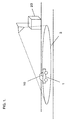
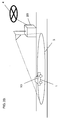
- Fig. 1 is a conceptual diagram which shows a configuration of a road-vehicle communication system in a first exemplary embodiment of the invention.
- a vehicle 1 exists in a communication area 3 which is formed by a roadside system which includes a roadside apparatus 20 and a vehicle entering and leaving gate (not shown in the figure) , and transmission and reception of data are carried out between an in-vehicle apparatus 10, as a mobile apparatus, which was loaded in the vehicle 1 and the roadside apparatus 20.
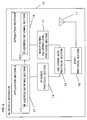
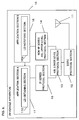
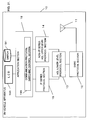
- the in-vehicle apparatus 10 which was loaded in the vehicle 1, has, as shown in Fig.2, an antenna 11 for carrying out electromagnetic wave transmission to the roadside apparatus 20 which configures a roadside system, and electromagnetic wave reception from the roadside apparatus 20, a DSRC protocol section 12 which is defined by T75, for carrying out modulation/demodulation etc. of data, and an ASL lower level protocol section 13 which is defined byARIB TR-T17 (hereinafter, referred to as T17) for carrying out various communication controls etc.
- a DSRC protocol section 12 which is defined by T75, for carrying out modulation/demodulation etc. of data
- ASL lower level protocol section 13 which is defined byARIB TR-T17 (hereinafter, referred to as T17) for carrying out various communication controls etc.
- the in-vehicle apparatus 10 has a non-IP series ASL upper level protocol section 14 which is defined in T17, for carrying out controls etc. regarding coordination with an application, an IP series protocol section 15 for realizing IP series communication on DSRC protocol, an application section B 16 which operates on the non-IP series ASL upper level protocol section 14, and an application section A 17 which operates on the IP series protocol section 15.
- the application section A 17 has an IP address notifying section 171 for notifying an IP address, which was assigned to the in-vehicle apparatus 10, to the application section B 16, and also, the application section B 16 has an IP address obtaining section 161 for receiving an IP address from the application section A 17, and transmitting the IP address to the roadside apparatus 20, by use of the non-IP series ASL upper level protocol section 14.
- the roadside apparatus 20 which configures a roadside system, is connected to a roadside network which is not shown in the figure, and has, as shown in Fig. 3, an antenna 21 for carrying out electromagnetic wave transmission to the in-vehicle apparatus 10 and electromagnetic wave reception from the in-vehicle apparatus 10, a DSRC protocol section 22 which is defined in T75 for carrying out modulation/demodulation etc. of data, and an ASL lower level protocol section 23 which is defined in T17 for carrying out various communication controls etc.
- the roadside apparatus 20 has a non-IP series ASL upper level protocol section 24 which is defined in T17 for carrying out controls etc. regarding coordination with an application, an IP series protocol section 25 for realizing IP series communication on DSRC protocol, and an application section 26 which operates on the non-IP series ASL upper level protocol section 24 and the IP series protocol section 25.
- the application section 26 has an associating section for associating LID of the in-vehicle apparatus 10 and an IP address of the in-vehicle apparatus 10 to store the same.
- the DSRC protocol section 12 notifies LID to the roadside apparatus 20 at the time of DSRC initial connection request.
- the IP series protocol section 25 In the roadside apparatus 20, the IP series protocol section 25 generates a new IP address, according to need, and associates it with LID which was obtained from the in-vehicle apparatus 10 to store the same, and notifies the generated IP address to the in-vehicle apparatus 10 through the ASL lower level protocol section 23 and the DSRC protocol section 22, and in the in-vehicle apparatus 10, the IP series protocol section 15 stores it for the purpose of conversion with LID of itself.
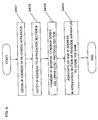
- the IP series protocol section 15 of the in-vehicle apparatus 10 obtains an IP address which was assigned to the in-vehicle apparatus 10, from the IP series protocol section 25 of the roadside apparatus 20, through the DSRC protocol section 12 (step S401), the IP address notifying section 171 in the application section A 17 of the in-vehicle apparatus 10 notifies the IP address which was obtained by the IP series protocol section 15, to the application section B 16 (step S402).
- the IP address obtaining section 161 of the application section B 16 transmits the obtained IP address to the roadside apparatus 20 through the non-IP series ASL upper level protocol section 14, as transmission data (step S403).
- the IP address which was obtained from the in-vehicle apparatus 10 is obtained through the non-IP series ASL upper level protocol section 24, and in the associating section 261 of the application section 26, it is associated with LID which was obtained from the non-IP series ASL upper level protocol section 24, and these are stored together, or separately (step S404).
- the associating section 261 associates LID and an IP address with respect to each management No. of the in-vehicle apparatus 10, to store them, respectively.
- LID (0x34343434) of the in-vehicle apparatus 10 with in-vehicle apparatus management No. 3 is associated with an IP address (192.168.0.4) and stored.
- an IP address of the in-vehicle apparatus 10 is inquired to the associating section 261 according to a communication protocol which is utilized, in each case, and thereby, it becomes possible to specify the in-vehicle apparatus 10 in a plurality of communication protocols.
- a card reader which can read and write an IC card 18 having a credit function as defined in ISO 7816 etc.
- a confirmation switch 191 for accepting an input from a user and a monitor which is activated by a browser 192 having an application for browsing web pages and a screen for visually displaying information, etc. are connected to the application section A 17, it becomes possible to carry out transmission and reception of information which is displayed on the browser 192 by the IP series communication, and to carry out transmission and reception of IC card control commands by the non-IP series communication, and it becomes possible to easily carry out payment processing by use of an IC card.
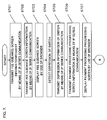
- Figs.7 and 8 are flow charts which show operations in case of carrying out such IC card payment processing, and hereinafter, on the basis of this, the operation will be described.
- step S701 When the application section A 17 of the in-vehicle apparatus 10 transmits a request of fee guidance screen information by use of IP series communication to the application section 26 of the roadside apparatus 20 (step S701), the application section 26 of the roadside apparatus 20 transmits fee guidance screen information by use of IP series communication, to the application section A 17 of the in-vehicle apparatus 10 (step S702).
- the application section A 17 of the in-vehicle apparatus 10 displays the fee guidance screen by use of the browser 192, and waits for depression of the switch 191 by a user for the purpose of confirmation of fee payment approval (step S703).
- the application section A 17 of the in-vehicle apparatus 10 detects depression of the switch 191 (step S704), the application section A 17 of the in-vehicle apparatus 10 transmits depression information of the switch 191 by use of the IP series communication, to the application section 26 of the roadside apparatus 20 (step S705).
- the application section 26 of the roadside apparatus 20 transmits screen information which is currently in payment processing by use of the IP series communication, to the application section A 17 of the in-vehicle apparatus 10 (step S706), and the application section A 17 of the in-vehicle apparatus 10 displays a screen which is currently in payment processing, by use of the browser 192 (step S707).
- the associating section 261 of the roadside apparatus 20 searches LID of the in-vehicle apparatus 10 from an IP address of the in-vehicle apparatus 10 (step S801) .
- the application section 26 of the roadside apparatus 20 transmits an access request of the IC card 18 by use of the non-IP communication, to the application section B 16 of the in-vehicle apparatus 10 (step S802).
- the application section B 16 of the in-vehicle apparatus 10 accesses to the IC card 18, and carries out predetermined payment processing (step S803).
- an access response of the IC card 18 is transmitted by use of the non-IP series communication, to the application section 26 of the roadside apparatus 20 (step S804).
- step S805 the predetermined payment processing is carried out (step S805), and IC card payment processing is finished.
- a conceptual diagram of a road-vehicle communication system in a second exemplary embodiment of the invention, and a block diagram of a roadside apparatus 20 are configured in the same manner as in the first exemplary embodiment shown in Figs.1 and 3, and therefore, detailed explanation thereof will be omitted here.
- Fig.9 is a block diagram which shows an in-vehicle apparatus 10 in the second exemplary embodiment of the invention, and identical numbers are given to identical sections to those of the first exemplary embodiment shown in Fig. 2, and detailed explanation thereof will be omitted there.
- a different point of the second exemplary embodiment from the first exemplary embodiment is a point that the application section A 17, which configures the in-vehicle apparatus 10, has a LID obtaining section 172 which receives LID from the application section B 16 and transmits LID to the roadside apparatus 20 by use of the IP series protocol section 15, and also, the application section B 16 has a LID notifying section 162 for notifying LID to the application section A 17.
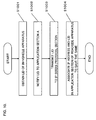
- the LID notifying section 162 which configures the application section B 16 of the in-vehicle apparatus 10, obtains LID of the in-vehicle apparatus 10 from the non-IP series ASL upper level protocol section 14 (step S1001) , and notifies the obtained LID to the application section A 17 (step S1002).
- the LID obtaining section 172 of the application section A 17 transmits the obtained LID to the IP series protocol section 15, as transmission data to the roadside apparatus 20 (step S1003).
- LID which was obtained from the in-vehicle apparatus 10 is obtained through the IP series protocol section 25, and in the associating section 261 of the application section 26, it is stored together with LID, or separately in association with an IP address which was obtained from the IP series protocol section 25 (step S1004).
- a card reader which can read and write the IC card 18 having a credit function as defined in ISO 7816 etc.
- the application section B 16 and the confirmation switch 191 for accepting an input from a user, and a monitor which is activated by the browser 192 having an application for browsing web pages and a screen for visually displaying information, etc. are connected to the application section A 17, and transmission and reception of information which is displayed on the browser 192 is carried out by the IP series communication, and transmission and reception of IC card control commands is carried out by the non-IP series communication, it becomes possible to easily carry out payment processing by use of an IC card.
- a conceptual diagram of a road-vehicle communication system in a third exemplary embodiment of the invention is configured as shown in Fig.1, in the same manner as in the first and second exemplary embodiments.
- the in-vehicle apparatus 10 and the roadside apparatus 20 are configured as shown in Figs.12 and 13, respectively, and in Figs. 12, 13, the same numbers given in Figs. 2, 3, and 9 indicate the same things as those described in the previously explained first and second exemplary embodiments, and therefore, detailed explanation thereof will be omitted here, and only different points will be described.
- a different point of the third exemplary embodiment from the first and second exemplary embodiments is firstly that the application section A 16, and the application section B 17, which configure the in-vehicle apparatus 10, do not have the notifying sections 171 and 162, and the obtaining sections 161 and 172, of an IP address and LID.
- the IP series protocol section 25 which configures the roadside apparatus 20
- a LID obtaining section 251 for taking out LID of the in-vehicle apparatus 10 from data which was transmitted from the in-vehicle apparatus 10 and for carrying out notification of LID to the application section 26, and also, the application section 26 has an associating section 261 for associating LID, which was notified through the LID obtaining section 251, with an IP address which was obtained by the IP series protocol section 25, to store the same.
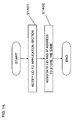
- the roadside apparatus 20 receives LID of the in-vehicle apparatus 10 by the LID obtaining section 251 which exists in an inside of the IP series protocol section 25, and notifies it to the application section 26 (step S1401).
- the associating section 261 associates an IP address which was obtained from the IP series protocol section 25 and LID which was obtained from the LID obtaining section 251, respectively to store the same (step S1402).
- a card reader which can read and write the IC card 18 having a credit function as defined in ISO 7816 etc.
- the confirmation switch 191 for accepting an input from a user and a monitor which is activated by the browser 192 having an application for browsing web pages and a screen for visually displaying information, etc. are connected to the application section A 17
- transmission and reception of information which is displayed on the browser 192 is carried out by the IP series communication
- transmission and reception of IC card control commands is carried out by the non-IP series communication
- each of the application section A 17, the IP series protocol section 15, the application section B 16, the non-IP series ASL upper level protocol section 14, and the ASL lower level protocol section 13 is disposed in the same in-vehicle apparatus 10, but it may be all right even if it is configured in such a manner that at least one or a plurality of these things are disposed in an apparatus which is outside the in-vehicle apparatus 10, and can communicate with the in-vehicle apparatus 10 with wires or without wires.
- each of the application section 26, the IP series protocol section 25, the non-IP series ASL upper level protocol section 24, and the ASL lower level protocol section 23 is disposed in the same roadside apparatus 20, but it may be all right even if at least one of or a plurality of these things are disposed in an apparatus which is outside the roadside apparatus 20, and can communicate with the roadside apparatus 20 with wires or without wires.
- the first through third exemplary embodiments of the invention is a thing which has a roadside apparatus, and an in-vehicle apparatus for carrying out wireless data communication with the roadside apparatus, and in which the roadside apparatus has an associating means for associating an IP address which was assigned with respect to each in-vehicle apparatus, and an in-vehicle apparatus identifier other than an IP address, and by this configuration, between the roadside apparatus and the in-vehicle apparatus, enabled is data communication which utilized, for example, an IP series communication protocol for specifying an in-vehicle apparatus by use of an IP address which was assigned with respect to each in-vehicle apparatus and a non-IP series communication protocol for specifying an in-vehicle apparatus by use of LID, in parallel, and also, assignment of an IP address and assignment of LID are carried out independently, and therefore, it is possible to avoid such a conventional problem that an identical IP address is assigned to different vehicles.
- FIG.1 A conceptual diagram of a road-vehicle communication system in a fourth exemplary embodiment of the invention is configured as shown in Fig.1, in the same manner as in the previous exemplary embodiments.
- Fig.16 is a block diagram of the in-vehicle apparatus 10 which was loaded on the vehicle 1 of the road-vehicle communication system in the fourth exemplary embodiment.
- a different point of the fourth exemplary embodiment from the previous exemplary embodiments is firstly that the in-vehicle apparatus 10 has one application section 19 which operates on protocols of the non-IP series ASL upper level protocol section 14 and the IP series protocol section 15, and that the application section 19 has a communication protocol switching control section 195 for switching a communication protocol which is used in data communication, according to a request from the roadside apparatus 20.
- the communication protocol switching control section 195 has a switching request receiving section 1951 which receives the communication protocol switching request and generates a corresponding response identifier from the request identifier, and a communication protocol switching section 1952 which switches a communication protocol to non-IP series in compliance with the switching request transmitted from the roadside apparatus, and a switching response transmitting section 1953 which transmits response data including the response identifier to the roadside apparatus 20 by non-IP series communication.
- a different point of the fourth exemplary embodiment from the previous exemplary embodiments is that a card reader which reads the IC card 18, the confirmation switch 191 for accepting an input from a user, and a monitor which is activated by the browser 192, are connected to the application section 19.
- Fig. 17 is a block diagram which shows a roadside apparatus of the road-vehicle communication system in the forth exemplary embodiment.
- a different point of the fourth exemplary embodiment from the previous exemplary embodiments is that the application section 26 has a communication protocol control section 262 for carrying out a switching request of a communication protocol which is used on the occasion of carrying out data communication with the in-vehicle apparatus 10, to the in-vehicle apparatus 10.
- the communication protocol control section 262 has a communication protocol switching request transmitting section 2621 which transmits the communication protocol switching request to the in-vehicle apparatus 10 by IP series communication, a switching response receiving section 2622 which receives the response data, which was transmitted from the in-vehicle apparatus 10, by means of non-IP series communication, and an associating section 2623 which associates the response identifier included in the obtained response data with the request identifier already issued.
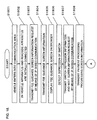
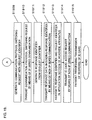
- a parking lot fee payment system which is a road-vehicle communication system in a fourth exemplary embodiment of the invention, drawing attention particularly to the time of pulling out of a parking lot, its operation will be described by use of flow charts of Figs.18 and 19.
- step S1801 When the vehicle 1, on which the in-vehicle apparatus 10 was loaded, is about to reach a pull-out gate which was disposed in a parking lot and enters into the communication area 3 which is configured by the roadside system with the roadside apparatus 20 (step S1801), the roadside apparatus 20 and the in-vehicle apparatus 10 carry out predetermined initial connection processing by DSRC and come into a communication-feasible state (step S1802).
- the in-vehicle apparatus 10 notifies LID to the roadside apparatus 20 at the time of initial connection request.
- a new IP address is generated in the IP series protocol section 25 according to need, and associated with LID which was obtained from the in-vehicle apparatus 10. Also, the generated IP address is notified to the in-vehicle apparatus 10, and stored in the IP series protocol section 15 for the purpose of conversion with LID of itself.
- an initial access URL (Uniform Resource Locator) is notified from the IP series protocol section 25 of the roadside apparatus 20 to the in-vehicle apparatus 10.
- the application section 19 of the in-vehicle apparatus 10 transmits a fee guidance screen information request to the initial access URL which was notified from the application section 26 of the roadside apparatus 20 through the IP series protocol section 25 at the time of initial connection processing, by use of IP series communication (step S1803).
- the application section 26 of the roadside apparatus 20 transmits fee guidance screen information including fee charge information to the vehicle 1 andpayment confirmation information, in compliance with the fee guidance screen information request from the in-vehicle apparatus 10 (step S1804).
- the application section 19 of the in-vehicle apparatus 10 displays a fee guidance screen by use of the browser 192 and waits for depression of the switch 191 for user confirmation (step S1805).
- the application section 19 of the in-vehicle apparatus 10 when it detects the depression of the switch 191 (step S1806), transmits switch depression information and a next screen information request to the application section 26 of the roadside apparatus 20, by use of IP series communication (step S1807).
- step S1808 the application section 19 of the in-vehicle apparatus 10 displays a payment processing progressing screen by use of the browser 192.
- a communication protocol switching request is generated for the purpose of carrying out non-IP series communication with the in-vehicle apparatus 10 (step S1909).
- a request identifier for identifying a request (e.g., time when the communication protocol switching request was generated) is given.
- a communication protocol switching request transmitting section 2621 in the communication protocol control section 262 of the roadside apparatus 20 transmits the communication protocol switching request to the in-vehicle apparatus 10 by IP series communication (step S1910).
- a corresponding response identifier (e.g. , the same content of the request identifier) is generated from the request identifier which is included in the communication protocol switching request (step S1911).
- a communication protocol is switched to non-IP series, in compliance with the switching request which was transmitted from the roadside apparatus 20, and response data including the above-described response identifier which was generated is transmitted from a switching response transmitting section 1953 to the roadside apparatus 20 by non-IP series communication (step S1912).
- the response data, which was transmitted from the in-vehicle apparatus 10 is received by a switching response receiving section 2622 by means of non-IP series communication, and in an associating section 2623, the response identifier which is included in the obtained response data and the request identifier which was already issued are associated with each other, and thereby, LID of the in-vehicle apparatus 10 which transmitted the response data is specified (step S1913).
- the application section 26 of the roadside apparatus 20 transmits an IC card access request to the application section 19 of the in-vehicle apparatus 10 by means of non-IP series communication (step S1914).
- predetermined payment processing is carried out to the IC card 19, and a response from the IC card 18 is transmitted to the application section 26 of the roadside apparatus 20 by means of non-IP series communication (step S1915).
- the roadside system 2 opens a vehicle entering and leaving gate.
- FIG.20 A conceptual diagram, which represents a configuration of an electronic mail distribution systemwhich is a road-vehicle communication system in a fifth exemplary embodiment of the invention, is shown in Fig.20.
- the fifth exemplary embodiment shown in Fig.20 and the first exemplary embodiment shown in Fig.1 have slightly different configurations.
- an identical number given shows an identical thing to the thing of the first exemplary embodiment shown in Fig.1, and detailed explanation thereof will be omitted here, and only a different point will be described.
- a different point is that the roadside apparatus 20 is connected to Internet 4.
- Fig.21 is a block diagram of the in-vehicle apparatus 10 of the road-vehicle communication system in the fifth exemplary embodiment, and same numbers are given to the same constituent elements as those in the fourth exemplary embodiment, and explanation will be omitted.
- a different point of the fifth exemplary embodiment and the fourth exemplary embodiment is that the confirmation switch 191 and a liquid crystal display section (LCD) 194 were connected to the application section 19 which configures the in-vehicle apparatus 10.
- LCD liquid crystal display section
- Fig.22 is a block diagram of the roadside apparatus 20 of the road-vehicle communication system in the fifth exemplary embodiment, and same numbers are given to the same constituent elements as those in the fourth exemplary embodiment shown in Fig. 17, and explanation will be omitted.
- a different point of the fifth exemplary embodiment and the fourth exemplary embodiment is that the roadside apparatus 20 is connected to Internet 4, and the application section 26 of the roadside apparatus 20 has an electronic mail management section 263 which obtains and saves electronic mails sent to a mail address of a user who owns the in-vehicle apparatus 10 and was registered in advance, through Internet 4, and transmits it to the in-vehicle apparatus 10.
- the electronic mail management section 263 of the application section 26 of the roadside apparatus 20 obtains an electronic mail which was sent to a mail address registered in advance, of a user who owns the in-vehicle apparatus 10, through Internet 4 (step S2301).
- the application section 19 of the in-vehicle apparatus 10 when it receives the electronic mail reception notification, responds to the roadside apparatus 20 as to acceptance of the electronicmailreceptionnotification, bymeans of non-IP series communication (step S2303).
- the application section 19 of the in-vehicle apparatus 10 when it receives the switching request to IP series communication, carries out a response of switching completion to IP series communication, to the roadside apparatus 20, by means of IP series communication (step S2305).
- the application section 19 of the in-vehicle apparatus 10 when it receives the electronic mail obtaining instruction, transmits an electronic mail obtaining request, to the roadside apparatus 20, by means of IP series communication (step S2307) .
- the application section 19 of the in-vehicle apparatus 10 when it obtains an electronic mail, displays an obtaining message for notifying that an electronic mail was obtained, on LCD 194, and waits for confirmation of a user by depression of the switch 191 as to whether a content of the obtained electronic mail is displayed (step S2309).
- the application section 19 of the in-vehicle apparatus 10 when it detects switch depression (step S2310), displays the obtained electronic mail on LCD 194 (step S2311).
- each of the application section 19, the IP series protocol section 15, the non-IP series ASL upper level protocol section 14 and the ASL lower level protocol section 13 is configured in the same in-vehicle apparatus 10, but it may be all right even if it is configured in such a manner that at least one of these things is disposed in an apparatus which is outside the in-vehicle apparatus 10, and can communicate with the in-vehicle apparatus 10 with wire communication or wireless communication.
- each of the application section 26, the IP series protocol section 25, the non-IP series ASL upper level protocol section 24 and the ASL lower level protocol section 23 is configured in the same roadside apparatus 20, but it may be all right even if it is configured in such a manner that at least one of these things is disposed in an apparatus which is outside the roadside apparatus 20, and can communicate with the roadside apparatus 20 with wire communication or wireless communication.
- Figs.16 and 21 it may be all right even if it is configured in such a manner that the application section 19 is divided into a plurality of pieces.
- Figs.17 and 22 it may be all right even if it is configured in such a manner that the application section 26 is divided into a plurality of pieces.
- the request identifier time when the roadside apparatus generated the communication protocol switching request was described as an example, and as the response identifier, the case of the same content as the request identifier was described as an example, but if the roadside apparatus can discriminate a relevant request identifier by the response identifier, the request identifier may be time when the roadside apparatus transmitted the communication protocol switching request, a sequential number that the roadside apparatus gave to transmission of the communication protocol switching request, or a management number that the roadside apparatus gave to an in-vehicle apparatus which is present in a communication area of itself.
- the first communication protocol is a IP series communication protocol and the second communication protocol is a non-IP series communication protocol
- it may be all right even if the request identifier does not exist or is an IP address, and the response identifier is set to an IP address
- the first communication protocol is a non-IP series communication protocol and the second communication protocol is a IP series communication protocol
- it may be all right even if the request identifier does not exist or is LID, and the response identifier is set to LID.
- the in-vehicle apparatus issues a switching request to the second communication protocol by the first communication protocol, and the in-vehicle apparatus switches a communication protocol to the second communication protocol in compliance with the switching request and transmits the switching response, and the roadside apparatus receives the switching response and associates it with the switching response, and thereby, the roadside apparatus specifies an arbitrary in-vehicle apparatus on a plurality of communication protocols, and it becomes possible to switch and use a plurality of communication protocols according to need.
- this invention has an advantage that it is possible to provide a road-vehicle communication system which can be utilized with concomitantly using both of for example, an IP series communication protocol for specifying an in-vehicle apparatus by an IP address which was assigned to the in-vehicle apparatus, and an non-IP series communication protocol for specifying an in-vehicle apparatus by use of LID.
Landscapes
- Engineering & Computer Science (AREA)
- Physics & Mathematics (AREA)
- General Physics & Mathematics (AREA)
- Computer Networks & Wireless Communication (AREA)
- Business, Economics & Management (AREA)
- Signal Processing (AREA)
- Accounting & Taxation (AREA)
- General Business, Economics & Management (AREA)
- Theoretical Computer Science (AREA)
- Strategic Management (AREA)
- Finance (AREA)
- Health & Medical Sciences (AREA)
- Databases & Information Systems (AREA)
- Microelectronics & Electronic Packaging (AREA)
- Computer Security & Cryptography (AREA)
- Computing Systems (AREA)
- General Health & Medical Sciences (AREA)
- Medical Informatics (AREA)
- Automation & Control Theory (AREA)
- Mobile Radio Communication Systems (AREA)
- Traffic Control Systems (AREA)
- Devices For Checking Fares Or Tickets At Control Points (AREA)
Applications Claiming Priority (4)
| Application Number | Priority Date | Filing Date | Title |
|---|---|---|---|
| JP2003349268 | 2003-10-08 | ||
| JP2003349268A JP4168896B2 (ja) | 2003-10-08 | 2003-10-08 | 路車間通信システム |
| JP2003353455A JP4168897B2 (ja) | 2003-10-14 | 2003-10-14 | 路車間通信システムにおける路側装置及び車載装置 |
| JP2003353455 | 2003-10-14 |
Publications (2)
| Publication Number | Publication Date |
|---|---|
| EP1523130A2 true EP1523130A2 (de) | 2005-04-13 |
| EP1523130A3 EP1523130A3 (de) | 2007-01-03 |
Family
ID=34315752
Family Applications (1)
| Application Number | Title | Priority Date | Filing Date |
|---|---|---|---|
| EP04023562A Withdrawn EP1523130A3 (de) | 2003-10-08 | 2004-10-04 | Kommunikationssystem für ein Strassenfahrzeug, Strassenrandvorrichtung und mobile Vorrichtung dafür |
Country Status (3)
| Country | Link |
|---|---|
| US (1) | US7890057B2 (de) |
| EP (1) | EP1523130A3 (de) |
| CN (1) | CN100373820C (de) |
Cited By (4)
| Publication number | Priority date | Publication date | Assignee | Title |
|---|---|---|---|---|
| WO2009027251A1 (de) * | 2007-08-29 | 2009-03-05 | Continental Teves Ag & Co. Ohg | Vorrichtung und verfahren zum übertragen von informationen |
| US8838383B2 (en) | 2009-06-05 | 2014-09-16 | Continental Teves Ag & Co., Ohg | Vehicle antenna unit |
| CN106790752A (zh) * | 2016-12-19 | 2017-05-31 | 中车株洲电力机车研究所有限公司 | 一种基于wtb通信的列车车辆地址排序方法 |
| WO2022110201A1 (zh) * | 2020-11-30 | 2022-06-02 | 华为技术有限公司 | 一种汽车电子标识传输方法、车载设备与读写器 |
Families Citing this family (18)
| Publication number | Priority date | Publication date | Assignee | Title |
|---|---|---|---|---|
| US7848278B2 (en) * | 2006-10-23 | 2010-12-07 | Telcordia Technologies, Inc. | Roadside network unit and method of organizing, managing and maintaining local network using local peer groups as network groups |
| JP4317882B2 (ja) * | 2007-03-19 | 2009-08-19 | 株式会社日立製作所 | 無線通信システムおよび監視装置 |
| JP2009199313A (ja) * | 2008-02-21 | 2009-09-03 | Kenwood Corp | 路車間通信システム |
| JP5067217B2 (ja) * | 2008-03-18 | 2012-11-07 | アイシン・エィ・ダブリュ株式会社 | 交通情報処理システム、統計処理装置、交通情報処理方法及び交通情報処理プログラム |
| JP2009267666A (ja) * | 2008-04-24 | 2009-11-12 | Aisin Aw Co Ltd | 車載装置及びプログラム |
| EP2394255B1 (de) * | 2009-02-03 | 2013-07-24 | Continental Teves AG & Co. oHG | Sprachverbindung nach einem ereignis zu einer infrastruktureinrichtung |
| US20110222433A1 (en) * | 2010-03-12 | 2011-09-15 | Gilbert Guy Jones | Automatic address configuration of vehicle network devices during installation |
| US20130194108A1 (en) * | 2012-01-30 | 2013-08-01 | Telcordia Technologies, Inc. | System, Method, Control Device and Program for Vehicle Collision Avoidance Using Cellular Communication |
| WO2015019234A1 (en) | 2013-08-05 | 2015-02-12 | Universidade De Aveiro | Method and apparatus for multi-network communication in vehicular networks |
| JP6348019B2 (ja) * | 2014-08-28 | 2018-06-27 | ルネサスエレクトロニクス株式会社 | 通信システム、通信装置、自動車および通信方法 |
| CN104869563B (zh) * | 2015-04-07 | 2018-03-13 | 常熟理工学院 | 一种下一代城市车联网的通信实现方法 |
| CN104869601B (zh) * | 2015-04-07 | 2018-05-11 | 常熟理工学院 | 一种下一代车联网的通信实现方法 |
| US9998547B2 (en) * | 2015-06-25 | 2018-06-12 | Livio, Inc. | Vehicle computing systems and methods for delivery of a mobile device lockout icon |
| KR101655822B1 (ko) * | 2015-06-29 | 2016-09-22 | 현대자동차주식회사 | 차량 아이피 접속 방법과 프로그램 및 이를 실행하는 텔레매틱스 단말기와 컴퓨터 판독 가능한 기록 매체 |
| CN105225524A (zh) * | 2015-11-11 | 2016-01-06 | 中国联合网络通信集团有限公司 | 停车场管理方法及装置 |
| JP6141564B1 (ja) | 2016-09-21 | 2017-06-07 | 三菱電機株式会社 | 路側通信装置および車載通信装置 |
| JP7500925B2 (ja) * | 2018-08-10 | 2024-06-18 | 株式会社デンソー | 車両情報通信システム、センター装置、車両情報通信方法及びコンピュータプログラム |
| CN111731278B (zh) * | 2020-05-29 | 2021-10-08 | 广东中科臻恒信息技术有限公司 | 一种基于车载单元、路侧单元的自动驾驶视觉检测系统 |
Family Cites Families (29)
| Publication number | Priority date | Publication date | Assignee | Title |
|---|---|---|---|---|
| US4403112A (en) | 1981-05-18 | 1983-09-06 | Modafferi Acoustical Systems, Ltd. | Phase shift low frequency loudspeaker system |
| US4906439A (en) * | 1986-03-25 | 1990-03-06 | Pb Diagnostic Systems, Inc. | Biological diagnostic device and method of use |
| JP2723153B2 (ja) | 1988-04-23 | 1998-03-09 | 亮三 山田 | 小音像複合スピーカシステムの使用方法 |
| US5051237A (en) * | 1988-06-23 | 1991-09-24 | P B Diagnostic Systems, Inc. | Liquid transport system |
| US5147609A (en) * | 1989-05-19 | 1992-09-15 | Pb Diagnostic Systems, Inc. | Assay element |
| US5207987A (en) * | 1990-05-21 | 1993-05-04 | Pb Diagnostic Systems Inc. | Temperature controlled chamber for diagnostic analyzer |
| US5181247A (en) | 1990-07-23 | 1993-01-19 | Bose Corporation | Sound image enhancing |
| US5251205A (en) * | 1990-09-04 | 1993-10-05 | Digital Equipment Corporation | Multiple protocol routing |
| WO1994001781A1 (en) * | 1992-07-01 | 1994-01-20 | Behring Diagnostics, Inc. | Automated analytical instrument having a fluid sample holding tray transport assembly |
| CN100469166C (zh) * | 1994-02-24 | 2009-03-11 | Gte无线公司 | 多模式个人无线通信系统 |
| US5732074A (en) * | 1996-01-16 | 1998-03-24 | Cellport Labs, Inc. | Mobile portable wireless communication system |
| JP3832006B2 (ja) * | 1996-02-26 | 2006-10-11 | 富士ゼロックス株式会社 | セルラ通信網およびその通信方法 |
| WO1999022301A1 (en) | 1997-10-24 | 1999-05-06 | Cellport Labs, Inc. | Communications system with modular devices |
| US6714536B1 (en) * | 1998-07-21 | 2004-03-30 | Eric M. Dowling | Method and apparatus for cosocket telephony |
| CA2263063C (en) * | 1999-02-26 | 2004-08-10 | Skye Pharmatech Incorporated | Method for diagnosing and distinguishing stroke and diagnostic devices for use therein |
| US6780606B1 (en) * | 1999-02-26 | 2004-08-24 | Synx Pharma, Inc. | Method for diagnosing and distinguishing stroke and diagnostic devices for use therein |
| FI108834B (fi) * | 1999-03-29 | 2002-03-28 | Nokia Corp | IP-liikkuvuudenhallinta matkaviestinjärjestelmässä |
| AU5741200A (en) * | 1999-06-14 | 2001-01-02 | Sun Microsystems, Inc. | System and method for providing services to a vehicle |
| DE19927304C2 (de) * | 1999-06-15 | 2002-10-24 | Siemens Ag | Verfahren und Einrichtung zum Übermitteln von Daten |
| US7177952B1 (en) * | 1999-10-01 | 2007-02-13 | Nortel Networks Limited | Method and system for switching between two network access technologies without interrupting active network applications |
| AU2001283464A1 (en) * | 2000-08-31 | 2002-03-13 | Padcom, Inc. | Method and apparatus for routing data over multiple wireless networks |
| US7035932B1 (en) * | 2000-10-27 | 2006-04-25 | Eric Morgan Dowling | Federated multiprotocol communication |
| US7379475B2 (en) * | 2002-01-25 | 2008-05-27 | Nvidia Corporation | Communications processor |
| JP2002344381A (ja) | 2001-05-18 | 2002-11-29 | Fujitsu Ltd | ディジタル移動通信システム |
| US7369529B2 (en) * | 2001-05-24 | 2008-05-06 | Qualcomm.Incorporated. | Method and apparatus for differentiating point to point protocol session termination points |
| JP2003092576A (ja) * | 2001-09-18 | 2003-03-28 | Matsushita Electric Ind Co Ltd | アドレス割当方式並びにそれを用いた路側装置及び車載装置 |
| US20040176128A1 (en) * | 2003-01-30 | 2004-09-09 | 3Com Corporation | System, mobile communications unit, and softswitch method and apparatus for establishing an Internet Protocol communication link |
| US7394761B2 (en) * | 2003-04-29 | 2008-07-01 | Avocent Huntsville Corporation | System and method for delivering messages using alternate modes of communication |
| US20050014468A1 (en) * | 2003-07-18 | 2005-01-20 | Juha Salokannel | Scalable bluetooth multi-mode radio module |
-
2004
- 2004-09-30 CN CNB2004100811510A patent/CN100373820C/zh not_active Expired - Fee Related
- 2004-10-04 EP EP04023562A patent/EP1523130A3/de not_active Withdrawn
- 2004-10-04 US US10/957,943 patent/US7890057B2/en not_active Expired - Fee Related
Non-Patent Citations (1)
| Title |
|---|
| None * |
Cited By (5)
| Publication number | Priority date | Publication date | Assignee | Title |
|---|---|---|---|---|
| WO2009027251A1 (de) * | 2007-08-29 | 2009-03-05 | Continental Teves Ag & Co. Ohg | Vorrichtung und verfahren zum übertragen von informationen |
| US8451786B2 (en) | 2007-08-29 | 2013-05-28 | Continental Teves Ag & Co. Ohg | Device and method for transmitting information |
| US8838383B2 (en) | 2009-06-05 | 2014-09-16 | Continental Teves Ag & Co., Ohg | Vehicle antenna unit |
| CN106790752A (zh) * | 2016-12-19 | 2017-05-31 | 中车株洲电力机车研究所有限公司 | 一种基于wtb通信的列车车辆地址排序方法 |
| WO2022110201A1 (zh) * | 2020-11-30 | 2022-06-02 | 华为技术有限公司 | 一种汽车电子标识传输方法、车载设备与读写器 |
Also Published As
| Publication number | Publication date |
|---|---|
| EP1523130A3 (de) | 2007-01-03 |
| US7890057B2 (en) | 2011-02-15 |
| US20050083866A1 (en) | 2005-04-21 |
| CN1606258A (zh) | 2005-04-13 |
| CN100373820C (zh) | 2008-03-05 |
Similar Documents
| Publication | Publication Date | Title |
|---|---|---|
| EP1523130A2 (de) | Kommunikationssystem für ein Strassenfahrzeug, Strassenrandvorrichtung und mobile Vorrichtung dafür | |
| CN102901511B (zh) | 车载导航方法及系统、终端和移动终端 | |
| KR101569660B1 (ko) | 위치 정보 서비스 시스템, 전자 태그를 이용한 위치 정보 서비스 방법, 휴대 정보 단말, 및 단말 프로그램이 저장된 컴퓨터 판독가능 기록매체 | |
| US20060189297A1 (en) | System and method for providing public transport information | |
| Steffen et al. | Near field communication (NFC) in an automotive environment | |
| CN109685924A (zh) | 一种智能车载电子标签及其发行方法 | |
| JP5370341B2 (ja) | 通信装置及びデータ通信システム | |
| CN104180812A (zh) | 一种POI发送到汽车的Telematics系统及其控制方法 | |
| CN112802214A (zh) | 用于连接车载单元的方法、用户设备和etc系统 | |
| CN104750629B (zh) | 联锁车辆终端与便携式终端的系统和方法 | |
| CN106323300A (zh) | 一种离线地图获取方法及车载单元 | |
| CN101287608B (zh) | 打印装置、信息处理装置及其控制方法 | |
| TW589856B (en) | Information transmission system, information sending/receiving system and information terminal | |
| KR960025213A (ko) | 교통업무용 카드 및 이를 이용한 교통업무 처리장치 및 방법 | |
| CN103186871A (zh) | 基于车载交易系统的验证方法及验证系统 | |
| KR20010107177A (ko) | 무인관광 안내 시스템 및 그 방법 | |
| CN104463989A (zh) | 一种电子标签自充值的装置、系统和方法 | |
| JP5905253B2 (ja) | 注文管理システム、注文管理方法、注文管理装置、プログラム、及び記録媒体 | |
| JP4168897B2 (ja) | 路車間通信システムにおける路側装置及び車載装置 | |
| KR100852345B1 (ko) | 차량용 통행료 정산단말기 모듈을 포함하는 네비게이션과 그 네비게이션을 포함하는 전자지도 데이터베이스 다운로드 시스템 및 그 제어방법 | |
| JP5326844B2 (ja) | 配信システム | |
| JP2002015342A (ja) | Dsrc車載器 | |
| JP4168896B2 (ja) | 路車間通信システム | |
| KR20180051927A (ko) | Nfc를 이용한 하이패스 단말기 등록시스템 및 등록방법 | |
| CN114245320A (zh) | 一种车载物联网的测试方法及系统 |
Legal Events
| Date | Code | Title | Description |
|---|---|---|---|
| PUAI | Public reference made under article 153(3) epc to a published international application that has entered the european phase |
Free format text: ORIGINAL CODE: 0009012 |
|
| AK | Designated contracting states |
Kind code of ref document: A2 Designated state(s): AT BE BG CH CY CZ DE DK EE ES FI FR GB GR HU IE IT LI LU MC NL PL PT RO SE SI SK TR |
|
| AX | Request for extension of the european patent |
Extension state: AL HR LT LV MK |
|
| PUAL | Search report despatched |
Free format text: ORIGINAL CODE: 0009013 |
|
| AK | Designated contracting states |
Kind code of ref document: A3 Designated state(s): AT BE BG CH CY CZ DE DK EE ES FI FR GB GR HU IE IT LI LU MC NL PL PT RO SE SI SK TR |
|
| AX | Request for extension of the european patent |
Extension state: AL HR LT LV MK |
|
| 17P | Request for examination filed |
Effective date: 20070613 |
|
| AKX | Designation fees paid |
Designated state(s): AT BE BG CH CY CZ DE DK EE ES FI FR GB GR HU IE IT LI LU MC NL PL PT RO SE SI SK TR |
|
| RAP1 | Party data changed (applicant data changed or rights of an application transferred) |
Owner name: PANASONIC CORPORATION |
|
| 17Q | First examination report despatched |
Effective date: 20140312 |
|
| RAP1 | Party data changed (applicant data changed or rights of an application transferred) |
Owner name: PANASONIC INTELLECTUAL PROPERTY MANAGEMENT CO., LT |
|
| STAA | Information on the status of an ep patent application or granted ep patent |
Free format text: STATUS: EXAMINATION IS IN PROGRESS |
|
| RIC1 | Information provided on ipc code assigned before grant |
Ipc: G07F 17/16 19680901ALI20181011BHEP Ipc: H04W 8/26 20050413ALI20181011BHEP Ipc: H04L 29/06 19900101AFI20181011BHEP Ipc: H04W 80/00 20050413ALI20181011BHEP |
|
| GRAP | Despatch of communication of intention to grant a patent |
Free format text: ORIGINAL CODE: EPIDOSNIGR1 |
|
| STAA | Information on the status of an ep patent application or granted ep patent |
Free format text: STATUS: GRANT OF PATENT IS INTENDED |
|
| INTG | Intention to grant announced |
Effective date: 20181203 |
|
| RIC1 | Information provided on ipc code assigned before grant |
Ipc: H04W 8/26 20090101ALI20181011BHEP Ipc: H04L 29/06 20060101AFI20181011BHEP Ipc: H04W 80/00 20090101ALI20181011BHEP Ipc: G07F 17/16 20060101ALI20181011BHEP |
|
| RIC1 | Information provided on ipc code assigned before grant |
Ipc: G07F 17/16 20060101ALI20181011BHEP Ipc: H04W 8/26 20090101ALI20181011BHEP Ipc: H04L 29/06 20060101AFI20181011BHEP Ipc: H04W 80/00 20090101ALI20181011BHEP |
|
| STAA | Information on the status of an ep patent application or granted ep patent |
Free format text: STATUS: THE APPLICATION IS DEEMED TO BE WITHDRAWN |
|
| 18D | Application deemed to be withdrawn |
Effective date: 20190416 |