EP1504086B1 - Kontrolle der selbsterneuerung embryonaler stammzellen, deren differenzierung und kulturmedium dafür - Google Patents
Kontrolle der selbsterneuerung embryonaler stammzellen, deren differenzierung und kulturmedium dafür Download PDFInfo
- Publication number
- EP1504086B1 EP1504086B1 EP03725376A EP03725376A EP1504086B1 EP 1504086 B1 EP1504086 B1 EP 1504086B1 EP 03725376 A EP03725376 A EP 03725376A EP 03725376 A EP03725376 A EP 03725376A EP 1504086 B1 EP1504086 B1 EP 1504086B1
- Authority
- EP
- European Patent Office
- Prior art keywords
- cells
- medium
- cell
- culture
- serum
- Prior art date
- Legal status (The legal status is an assumption and is not a legal conclusion. Google has not performed a legal analysis and makes no representation as to the accuracy of the status listed.)
- Expired - Lifetime
Links
- 230000037361 pathway Effects 0.000 claims abstract description 9
- 230000007783 downstream signaling Effects 0.000 claims abstract description 4
- 210000004027 cell Anatomy 0.000 claims description 272
- 239000002609 medium Substances 0.000 claims description 73
- 210000002966 serum Anatomy 0.000 claims description 55
- 238000000034 method Methods 0.000 claims description 42
- 102000004127 Cytokines Human genes 0.000 claims description 41
- 108090000695 Cytokines Proteins 0.000 claims description 41
- 230000004069 differentiation Effects 0.000 claims description 36
- 102100024505 Bone morphogenetic protein 4 Human genes 0.000 claims description 34
- 101000762379 Homo sapiens Bone morphogenetic protein 4 Proteins 0.000 claims description 33
- 241000282414 Homo sapiens Species 0.000 claims description 28
- 239000000284 extract Substances 0.000 claims description 24
- 239000003112 inhibitor Substances 0.000 claims description 24
- 108091008794 FGF receptors Proteins 0.000 claims description 20
- 102000044168 Fibroblast Growth Factor Receptor Human genes 0.000 claims description 20
- 210000001778 pluripotent stem cell Anatomy 0.000 claims description 19
- 238000012258 culturing Methods 0.000 claims description 18
- 239000001963 growth medium Substances 0.000 claims description 17
- NOESYZHRGYRDHS-UHFFFAOYSA-N insulin Chemical compound N1C(=O)C(NC(=O)C(CCC(N)=O)NC(=O)C(CCC(O)=O)NC(=O)C(C(C)C)NC(=O)C(NC(=O)CN)C(C)CC)CSSCC(C(NC(CO)C(=O)NC(CC(C)C)C(=O)NC(CC=2C=CC(O)=CC=2)C(=O)NC(CCC(N)=O)C(=O)NC(CC(C)C)C(=O)NC(CCC(O)=O)C(=O)NC(CC(N)=O)C(=O)NC(CC=2C=CC(O)=CC=2)C(=O)NC(CSSCC(NC(=O)C(C(C)C)NC(=O)C(CC(C)C)NC(=O)C(CC=2C=CC(O)=CC=2)NC(=O)C(CC(C)C)NC(=O)C(C)NC(=O)C(CCC(O)=O)NC(=O)C(C(C)C)NC(=O)C(CC(C)C)NC(=O)C(CC=2NC=NC=2)NC(=O)C(CO)NC(=O)CNC2=O)C(=O)NCC(=O)NC(CCC(O)=O)C(=O)NC(CCCNC(N)=N)C(=O)NCC(=O)NC(CC=3C=CC=CC=3)C(=O)NC(CC=3C=CC=CC=3)C(=O)NC(CC=3C=CC(O)=CC=3)C(=O)NC(C(C)O)C(=O)N3C(CCC3)C(=O)NC(CCCCN)C(=O)NC(C)C(O)=O)C(=O)NC(CC(N)=O)C(O)=O)=O)NC(=O)C(C(C)CC)NC(=O)C(CO)NC(=O)C(C(C)O)NC(=O)C1CSSCC2NC(=O)C(CC(C)C)NC(=O)C(NC(=O)C(CCC(N)=O)NC(=O)C(CC(N)=O)NC(=O)C(NC(=O)C(N)CC=1C=CC=CC=1)C(C)C)CC1=CN=CN1 NOESYZHRGYRDHS-UHFFFAOYSA-N 0.000 claims description 12
- 239000003550 marker Substances 0.000 claims description 12
- 210000000130 stem cell Anatomy 0.000 claims description 12
- 108090000623 proteins and genes Proteins 0.000 claims description 11
- 230000011664 signaling Effects 0.000 claims description 11
- 102000004169 proteins and genes Human genes 0.000 claims description 10
- 238000012423 maintenance Methods 0.000 claims description 9
- 238000007747 plating Methods 0.000 claims description 8
- 102000004877 Insulin Human genes 0.000 claims description 6
- 108090001061 Insulin Proteins 0.000 claims description 6
- 229940125396 insulin Drugs 0.000 claims description 6
- 230000001737 promoting effect Effects 0.000 claims description 6
- 108090000723 Insulin-Like Growth Factor I Proteins 0.000 claims description 5
- 238000002955 isolation Methods 0.000 claims description 5
- 230000004083 survival effect Effects 0.000 claims description 5
- 210000001519 tissue Anatomy 0.000 claims description 5
- 241000283690 Bos taurus Species 0.000 claims description 4
- 108091006975 Iron transporters Proteins 0.000 claims description 4
- 241000283984 Rodentia Species 0.000 claims description 4
- 239000007640 basal medium Substances 0.000 claims description 4
- 239000006143 cell culture medium Substances 0.000 claims description 4
- 241000271566 Aves Species 0.000 claims description 3
- 108090001005 Interleukin-6 Proteins 0.000 claims description 3
- 241000288906 Primates Species 0.000 claims description 3
- 210000000988 bone and bone Anatomy 0.000 claims description 3
- 230000000921 morphogenic effect Effects 0.000 claims description 3
- 230000003115 biocidal effect Effects 0.000 claims description 2
- 239000002458 cell surface marker Substances 0.000 claims description 2
- 102000004889 Interleukin-6 Human genes 0.000 claims 2
- 102000010781 Interleukin-6 Receptors Human genes 0.000 claims 2
- 108010038501 Interleukin-6 Receptors Proteins 0.000 claims 2
- 102000013275 Somatomedins Human genes 0.000 claims 1
- 210000005260 human cell Anatomy 0.000 claims 1
- 230000019491 signal transduction Effects 0.000 abstract description 14
- 108090001012 Transforming Growth Factor beta Proteins 0.000 abstract description 7
- 102000004887 Transforming Growth Factor beta Human genes 0.000 abstract description 7
- ZRKFYGHZFMAOKI-QMGMOQQFSA-N tgfbeta Chemical compound C([C@H](NC(=O)[C@H](C(C)C)NC(=O)CNC(=O)[C@H](CCC(O)=O)NC(=O)[C@H](CCCNC(N)=N)NC(=O)[C@H](CC(N)=O)NC(=O)[C@H](CC(C)C)NC(=O)[C@H]([C@@H](C)O)NC(=O)[C@H](CCC(O)=O)NC(=O)[C@H]([C@@H](C)O)NC(=O)[C@H](CC(C)C)NC(=O)CNC(=O)[C@H](C)NC(=O)[C@H](CO)NC(=O)[C@H](CCC(N)=O)NC(=O)[C@@H](NC(=O)[C@H](C)NC(=O)[C@H](C)NC(=O)[C@@H](NC(=O)[C@H](CC(C)C)NC(=O)[C@@H](N)CCSC)C(C)C)[C@@H](C)CC)C(=O)N[C@@H]([C@@H](C)O)C(=O)N[C@@H](C(C)C)C(=O)N[C@@H](CC=1C=CC=CC=1)C(=O)N[C@@H](C)C(=O)N1[C@@H](CCC1)C(=O)N[C@@H]([C@@H](C)O)C(=O)N[C@@H](CC(N)=O)C(=O)N[C@@H](CCC(O)=O)C(=O)N[C@@H](C)C(=O)N[C@@H](CC=1C=CC=CC=1)C(=O)N[C@@H](CCCNC(N)=N)C(=O)N[C@@H](C)C(=O)N[C@@H](CC(C)C)C(=O)N1[C@@H](CCC1)C(=O)N1[C@@H](CCC1)C(=O)N[C@@H](CCCNC(N)=N)C(=O)N[C@@H](CCC(O)=O)C(=O)N[C@@H](CCCNC(N)=N)C(=O)N[C@@H](CO)C(=O)N[C@@H](CCCNC(N)=N)C(=O)N[C@@H](CC(C)C)C(=O)N[C@@H](CC(C)C)C(O)=O)C1=CC=C(O)C=C1 ZRKFYGHZFMAOKI-QMGMOQQFSA-N 0.000 abstract description 5
- 239000012190 activator Substances 0.000 abstract description 3
- 239000000556 agonist Substances 0.000 description 13
- 239000000203 mixture Substances 0.000 description 12
- 102000001893 Bone Morphogenetic Protein Receptors Human genes 0.000 description 11
- 108010040422 Bone Morphogenetic Protein Receptors Proteins 0.000 description 11
- 238000004113 cell culture Methods 0.000 description 9
- 102000005962 receptors Human genes 0.000 description 9
- 108020003175 receptors Proteins 0.000 description 9
- 210000002257 embryonic structure Anatomy 0.000 description 8
- 229920000159 gelatin Polymers 0.000 description 7
- 235000019322 gelatine Nutrition 0.000 description 7
- 108010010803 Gelatin Proteins 0.000 description 6
- RJKFOVLPORLFTN-LEKSSAKUSA-N Progesterone Chemical compound C1CC2=CC(=O)CC[C@]2(C)[C@@H]2[C@@H]1[C@@H]1CC[C@H](C(=O)C)[C@@]1(C)CC2 RJKFOVLPORLFTN-LEKSSAKUSA-N 0.000 description 6
- 108010023082 activin A Proteins 0.000 description 6
- 239000008273 gelatin Substances 0.000 description 6
- 235000011852 gelatine desserts Nutrition 0.000 description 6
- 229920001184 polypeptide Polymers 0.000 description 6
- 102000004196 processed proteins & peptides Human genes 0.000 description 6
- 108090000765 processed proteins & peptides Proteins 0.000 description 6
- KIDHWZJUCRJVML-UHFFFAOYSA-N putrescine Chemical compound NCCCCN KIDHWZJUCRJVML-UHFFFAOYSA-N 0.000 description 6
- 239000006144 Dulbecco’s modified Eagle's medium Substances 0.000 description 5
- 241000699666 Mus <mouse, genus> Species 0.000 description 5
- 239000004017 serum-free culture medium Substances 0.000 description 5
- 241000894007 species Species 0.000 description 5
- XEEYBQQBJWHFJM-UHFFFAOYSA-N Iron Chemical compound [Fe] XEEYBQQBJWHFJM-UHFFFAOYSA-N 0.000 description 4
- 230000003213 activating effect Effects 0.000 description 4
- 230000004913 activation Effects 0.000 description 4
- 108010054176 apotransferrin Proteins 0.000 description 4
- 238000010494 dissociation reaction Methods 0.000 description 4
- 230000005593 dissociations Effects 0.000 description 4
- 210000001671 embryonic stem cell Anatomy 0.000 description 4
- 230000026731 phosphorylation Effects 0.000 description 4
- 238000006366 phosphorylation reaction Methods 0.000 description 4
- 239000012679 serum free medium Substances 0.000 description 4
- 101150021185 FGF gene Proteins 0.000 description 3
- 241000699670 Mus sp. Species 0.000 description 3
- 239000005700 Putrescine Substances 0.000 description 3
- 230000008901 benefit Effects 0.000 description 3
- 230000008859 change Effects 0.000 description 3
- BVTBRVFYZUCAKH-UHFFFAOYSA-L disodium selenite Chemical compound [Na+].[Na+].[O-][Se]([O-])=O BVTBRVFYZUCAKH-UHFFFAOYSA-L 0.000 description 3
- 210000002950 fibroblast Anatomy 0.000 description 3
- 210000001161 mammalian embryo Anatomy 0.000 description 3
- 238000004264 monolayer culture Methods 0.000 description 3
- 238000000879 optical micrograph Methods 0.000 description 3
- 229960003387 progesterone Drugs 0.000 description 3
- 239000000186 progesterone Substances 0.000 description 3
- 229960001471 sodium selenite Drugs 0.000 description 3
- 239000011781 sodium selenite Substances 0.000 description 3
- 235000015921 sodium selenite Nutrition 0.000 description 3
- 108010088751 Albumins Proteins 0.000 description 2
- 102000009027 Albumins Human genes 0.000 description 2
- 108091003079 Bovine Serum Albumin Proteins 0.000 description 2
- 241000255581 Drosophila <fruit fly, genus> Species 0.000 description 2
- 108010007457 Extracellular Signal-Regulated MAP Kinases Proteins 0.000 description 2
- 102000007665 Extracellular Signal-Regulated MAP Kinases Human genes 0.000 description 2
- 241000251188 Holocephali Species 0.000 description 2
- 102000004218 Insulin-Like Growth Factor I Human genes 0.000 description 2
- 102000014429 Insulin-like growth factor Human genes 0.000 description 2
- 101100247004 Rattus norvegicus Qsox1 gene Proteins 0.000 description 2
- 108010017324 STAT3 Transcription Factor Proteins 0.000 description 2
- 108010071390 Serum Albumin Proteins 0.000 description 2
- 102000007562 Serum Albumin Human genes 0.000 description 2
- 102100024040 Signal transducer and activator of transcription 3 Human genes 0.000 description 2
- 102100038126 Tenascin Human genes 0.000 description 2
- 108010008125 Tenascin Proteins 0.000 description 2
- 102000046299 Transforming Growth Factor beta1 Human genes 0.000 description 2
- 101800002279 Transforming growth factor beta-1 Proteins 0.000 description 2
- 238000004115 adherent culture Methods 0.000 description 2
- 230000015572 biosynthetic process Effects 0.000 description 2
- 210000002459 blastocyst Anatomy 0.000 description 2
- 230000021164 cell adhesion Effects 0.000 description 2
- 230000024245 cell differentiation Effects 0.000 description 2
- 239000012636 effector Substances 0.000 description 2
- 230000000694 effects Effects 0.000 description 2
- 108020001507 fusion proteins Proteins 0.000 description 2
- 102000037865 fusion proteins Human genes 0.000 description 2
- 230000012010 growth Effects 0.000 description 2
- 239000003102 growth factor Substances 0.000 description 2
- 238000003119 immunoblot Methods 0.000 description 2
- 238000000338 in vitro Methods 0.000 description 2
- 230000006698 induction Effects 0.000 description 2
- 229910052742 iron Inorganic materials 0.000 description 2
- 230000004060 metabolic process Effects 0.000 description 2
- 238000001000 micrograph Methods 0.000 description 2
- 229920003023 plastic Polymers 0.000 description 2
- 239000004033 plastic Substances 0.000 description 2
- RXWNCPJZOCPEPQ-NVWDDTSBSA-N puromycin Chemical compound C1=CC(OC)=CC=C1C[C@H](N)C(=O)N[C@H]1[C@@H](O)[C@H](N2C3=NC=NC(=C3N=C2)N(C)C)O[C@@H]1CO RXWNCPJZOCPEPQ-NVWDDTSBSA-N 0.000 description 2
- 230000004044 response Effects 0.000 description 2
- 238000003153 stable transfection Methods 0.000 description 2
- 210000002536 stromal cell Anatomy 0.000 description 2
- 239000000758 substrate Substances 0.000 description 2
- 238000011144 upstream manufacturing Methods 0.000 description 2
- 108010059616 Activins Proteins 0.000 description 1
- 102000002260 Alkaline Phosphatase Human genes 0.000 description 1
- 108020004774 Alkaline Phosphatase Proteins 0.000 description 1
- 102100026189 Beta-galactosidase Human genes 0.000 description 1
- 108010049955 Bone Morphogenetic Protein 4 Proteins 0.000 description 1
- 108010007726 Bone Morphogenetic Proteins Proteins 0.000 description 1
- 102000007350 Bone Morphogenetic Proteins Human genes 0.000 description 1
- 102100024506 Bone morphogenetic protein 2 Human genes 0.000 description 1
- 102100022544 Bone morphogenetic protein 7 Human genes 0.000 description 1
- 102100022545 Bone morphogenetic protein 8B Human genes 0.000 description 1
- OKTJSMMVPCPJKN-UHFFFAOYSA-N Carbon Chemical compound [C] OKTJSMMVPCPJKN-UHFFFAOYSA-N 0.000 description 1
- 108010005939 Ciliary Neurotrophic Factor Proteins 0.000 description 1
- 102100031614 Ciliary neurotrophic factor Human genes 0.000 description 1
- 241000699800 Cricetinae Species 0.000 description 1
- 241000255601 Drosophila melanogaster Species 0.000 description 1
- 239000001828 Gelatine Substances 0.000 description 1
- 102000003693 Hedgehog Proteins Human genes 0.000 description 1
- 108090000031 Hedgehog Proteins Proteins 0.000 description 1
- 101000762366 Homo sapiens Bone morphogenetic protein 2 Proteins 0.000 description 1
- 101000899361 Homo sapiens Bone morphogenetic protein 7 Proteins 0.000 description 1
- 101000899368 Homo sapiens Bone morphogenetic protein 8B Proteins 0.000 description 1
- 102100026818 Inhibin beta E chain Human genes 0.000 description 1
- 108010063738 Interleukins Proteins 0.000 description 1
- 102000015696 Interleukins Human genes 0.000 description 1
- 102100021747 Leukemia inhibitory factor receptor Human genes 0.000 description 1
- 101710142062 Leukemia inhibitory factor receptor Proteins 0.000 description 1
- 241001529936 Murinae Species 0.000 description 1
- 101100310657 Mus musculus Sox1 gene Proteins 0.000 description 1
- 241000772415 Neovison vison Species 0.000 description 1
- 102000004140 Oncostatin M Human genes 0.000 description 1
- 108090000630 Oncostatin M Proteins 0.000 description 1
- 241001494479 Pecora Species 0.000 description 1
- 239000001888 Peptone Substances 0.000 description 1
- 108010080698 Peptones Proteins 0.000 description 1
- 239000004372 Polyvinyl alcohol Substances 0.000 description 1
- 229940124158 Protease/peptidase inhibitor Drugs 0.000 description 1
- 101710150336 Protein Rex Proteins 0.000 description 1
- 108700008625 Reporter Genes Proteins 0.000 description 1
- 108090000901 Transferrin Proteins 0.000 description 1
- 102000004338 Transferrin Human genes 0.000 description 1
- 239000000488 activin Substances 0.000 description 1
- 230000006978 adaptation Effects 0.000 description 1
- 239000000654 additive Substances 0.000 description 1
- 230000001464 adherent effect Effects 0.000 description 1
- 210000000577 adipose tissue Anatomy 0.000 description 1
- 239000011324 bead Substances 0.000 description 1
- 108010005774 beta-Galactosidase Proteins 0.000 description 1
- 229940112869 bone morphogenetic protein Drugs 0.000 description 1
- 229940098773 bovine serum albumin Drugs 0.000 description 1
- 244000309466 calf Species 0.000 description 1
- 229910052799 carbon Inorganic materials 0.000 description 1
- -1 cardiotrophin Proteins 0.000 description 1
- 230000010261 cell growth Effects 0.000 description 1
- 230000003833 cell viability Effects 0.000 description 1
- 238000010367 cloning Methods 0.000 description 1
- 239000011248 coating agent Substances 0.000 description 1
- 238000000576 coating method Methods 0.000 description 1
- 230000000052 comparative effect Effects 0.000 description 1
- 230000002860 competitive effect Effects 0.000 description 1
- 239000002131 composite material Substances 0.000 description 1
- 150000001875 compounds Chemical class 0.000 description 1
- 230000002939 deleterious effect Effects 0.000 description 1
- 238000009795 derivation Methods 0.000 description 1
- 238000011161 development Methods 0.000 description 1
- 230000018109 developmental process Effects 0.000 description 1
- 238000002474 experimental method Methods 0.000 description 1
- 210000004700 fetal blood Anatomy 0.000 description 1
- 239000012091 fetal bovine serum Substances 0.000 description 1
- 230000001605 fetal effect Effects 0.000 description 1
- 210000003754 fetus Anatomy 0.000 description 1
- 238000002073 fluorescence micrograph Methods 0.000 description 1
- 239000012634 fragment Substances 0.000 description 1
- 238000010353 genetic engineering Methods 0.000 description 1
- 210000001368 germline stem cell Anatomy 0.000 description 1
- 238000011194 good manufacturing practice Methods 0.000 description 1
- 210000004524 haematopoietic cell Anatomy 0.000 description 1
- 230000003394 haemopoietic effect Effects 0.000 description 1
- 239000008241 heterogeneous mixture Substances 0.000 description 1
- 238000001727 in vivo Methods 0.000 description 1
- 230000002401 inhibitory effect Effects 0.000 description 1
- 229910052500 inorganic mineral Inorganic materials 0.000 description 1
- 229940047122 interleukins Drugs 0.000 description 1
- 208000032839 leukemia Diseases 0.000 description 1
- 239000003446 ligand Substances 0.000 description 1
- 239000012528 membrane Substances 0.000 description 1
- 210000001704 mesoblast Anatomy 0.000 description 1
- 108020004999 messenger RNA Proteins 0.000 description 1
- 239000002184 metal Substances 0.000 description 1
- 229910052751 metal Inorganic materials 0.000 description 1
- 239000011707 mineral Substances 0.000 description 1
- 235000010755 mineral Nutrition 0.000 description 1
- 230000000877 morphologic effect Effects 0.000 description 1
- 230000001537 neural effect Effects 0.000 description 1
- 210000001020 neural plate Anatomy 0.000 description 1
- 210000001178 neural stem cell Anatomy 0.000 description 1
- 210000002569 neuron Anatomy 0.000 description 1
- 239000000137 peptide hydrolase inhibitor Substances 0.000 description 1
- 235000019319 peptone Nutrition 0.000 description 1
- 230000001817 pituitary effect Effects 0.000 description 1
- 229920002451 polyvinyl alcohol Polymers 0.000 description 1
- 239000002243 precursor Substances 0.000 description 1
- 238000002360 preparation method Methods 0.000 description 1
- 230000000750 progressive effect Effects 0.000 description 1
- 230000035755 proliferation Effects 0.000 description 1
- 230000000644 propagated effect Effects 0.000 description 1
- 229950010131 puromycin Drugs 0.000 description 1
- 239000000018 receptor agonist Substances 0.000 description 1
- 229940044601 receptor agonist Drugs 0.000 description 1
- 239000002464 receptor antagonist Substances 0.000 description 1
- 229940044551 receptor antagonist Drugs 0.000 description 1
- 238000011160 research Methods 0.000 description 1
- 238000013341 scale-up Methods 0.000 description 1
- 210000002460 smooth muscle Anatomy 0.000 description 1
- 210000001988 somatic stem cell Anatomy 0.000 description 1
- 238000010186 staining Methods 0.000 description 1
- 230000004936 stimulating effect Effects 0.000 description 1
- 230000000638 stimulation Effects 0.000 description 1
- 238000004114 suspension culture Methods 0.000 description 1
- 229920001059 synthetic polymer Polymers 0.000 description 1
- 230000001225 therapeutic effect Effects 0.000 description 1
- 239000012581 transferrin Substances 0.000 description 1
- 230000001052 transient effect Effects 0.000 description 1
- 235000013343 vitamin Nutrition 0.000 description 1
- 239000011782 vitamin Substances 0.000 description 1
- 229940088594 vitamin Drugs 0.000 description 1
- 229930003231 vitamin Natural products 0.000 description 1
Images



Classifications
-
- C—CHEMISTRY; METALLURGY
- C12—BIOCHEMISTRY; BEER; SPIRITS; WINE; VINEGAR; MICROBIOLOGY; ENZYMOLOGY; MUTATION OR GENETIC ENGINEERING
- C12N—MICROORGANISMS OR ENZYMES; COMPOSITIONS THEREOF; PROPAGATING, PRESERVING, OR MAINTAINING MICROORGANISMS; MUTATION OR GENETIC ENGINEERING; CULTURE MEDIA
- C12N5/00—Undifferentiated human, animal or plant cells, e.g. cell lines; Tissues; Cultivation or maintenance thereof; Culture media therefor
- C12N5/06—Animal cells or tissues; Human cells or tissues
- C12N5/0602—Vertebrate cells
- C12N5/0603—Embryonic cells ; Embryoid bodies
- C12N5/0606—Pluripotent embryonic cells, e.g. embryonic stem cells [ES]
-
- C—CHEMISTRY; METALLURGY
- C12—BIOCHEMISTRY; BEER; SPIRITS; WINE; VINEGAR; MICROBIOLOGY; ENZYMOLOGY; MUTATION OR GENETIC ENGINEERING
- C12N—MICROORGANISMS OR ENZYMES; COMPOSITIONS THEREOF; PROPAGATING, PRESERVING, OR MAINTAINING MICROORGANISMS; MUTATION OR GENETIC ENGINEERING; CULTURE MEDIA
- C12N2500/00—Specific components of cell culture medium
- C12N2500/90—Serum-free medium, which may still contain naturally-sourced components
-
- C—CHEMISTRY; METALLURGY
- C12—BIOCHEMISTRY; BEER; SPIRITS; WINE; VINEGAR; MICROBIOLOGY; ENZYMOLOGY; MUTATION OR GENETIC ENGINEERING
- C12N—MICROORGANISMS OR ENZYMES; COMPOSITIONS THEREOF; PROPAGATING, PRESERVING, OR MAINTAINING MICROORGANISMS; MUTATION OR GENETIC ENGINEERING; CULTURE MEDIA
- C12N2501/00—Active agents used in cell culture processes, e.g. differentation
- C12N2501/10—Growth factors
- C12N2501/15—Transforming growth factor beta (TGF-β)
-
- C—CHEMISTRY; METALLURGY
- C12—BIOCHEMISTRY; BEER; SPIRITS; WINE; VINEGAR; MICROBIOLOGY; ENZYMOLOGY; MUTATION OR GENETIC ENGINEERING
- C12N—MICROORGANISMS OR ENZYMES; COMPOSITIONS THEREOF; PROPAGATING, PRESERVING, OR MAINTAINING MICROORGANISMS; MUTATION OR GENETIC ENGINEERING; CULTURE MEDIA
- C12N2501/00—Active agents used in cell culture processes, e.g. differentation
- C12N2501/10—Growth factors
- C12N2501/155—Bone morphogenic proteins [BMP]; Osteogenins; Osteogenic factor; Bone inducing factor
-
- C—CHEMISTRY; METALLURGY
- C12—BIOCHEMISTRY; BEER; SPIRITS; WINE; VINEGAR; MICROBIOLOGY; ENZYMOLOGY; MUTATION OR GENETIC ENGINEERING
- C12N—MICROORGANISMS OR ENZYMES; COMPOSITIONS THEREOF; PROPAGATING, PRESERVING, OR MAINTAINING MICROORGANISMS; MUTATION OR GENETIC ENGINEERING; CULTURE MEDIA
- C12N2501/00—Active agents used in cell culture processes, e.g. differentation
- C12N2501/20—Cytokines; Chemokines
- C12N2501/23—Interleukins [IL]
- C12N2501/235—Leukemia inhibitory factor [LIF]
Definitions
- the present invention relates to culture conditions and methods of culturing pluripotent stem cells in order to promote stem cell self renewal and to prevent or control differentiation of the stem cells.
- the invention further provides methods for isolating and maintaining homogeneous preparations of pluripotent stem cells.
- the methods and compositions provided are suitable for culturing and isolating pluripotent stem cells such as embryonic stem (ES) cells, provided the cells are not derived from human embryos.
- ES embryonic stem
- pluripotent stem cell cultures in the presence of medium containing serum and Leukaemia Inhibitory Factor (LIF) is well known ( Smith et al. (1988) Nature 336: 688-90 ).
- LIF Leukaemia Inhibitory Factor
- Such methods have been used to maintain pluripotent embryonic stem (ES) cells from strains of permissive mice over many passages. Maintenance and self renewal of pluripotent stem cell cultures is further supported where the stem cells are cultured in the presence of feeder cells or extracts thereof, usually mouse fibroblast cells. Under such conditions it is possible to maintain human ES cells in a pluripotent state over many passages in culture.
- pluripotent cultures of ES cells can be derived and maintained for extended periods only from a few species and even in those species not from all embryos.
- pluripotent cells can be identified but can not then be maintained in culture for sufficient time to enable study of the cells or their genetic manipulation. This is particularly the case for rodent (other than some strains of mice) cells.
- ES cells that can indeed be maintained in a pluripotent state in culture over many passages can only be so maintained using medium that contains serum or serum extract, and hence is undefined, or using cell culture conditions that require the presence of other cells, such as the fibroblast feeder cells used to maintain human ES cells.
- medium that contains serum or serum extract, and hence is undefined, or using cell culture conditions that require the presence of other cells, such as the fibroblast feeder cells used to maintain human ES cells.
- fibroblast feeder cells used to maintain human ES cells.
- the serum typically used in culturing pluripotent stem cells is fetal calf (bovine) serum, which is known to contain a complex mixture of cytokines and other signalling molecules. In order to control differentiation pathways it is undesirable to introduce unknown cytokines to the culture medium whose influence on the eventual outcome of differentiation is unquantifiable, and could be potentially deleterious. Further, each serum batch is unique and introduces variation into culture protocols.
- the ES cells obtained by culture in such complex media, and any differentiated progeny thereof, risk being contaminated by components of the media and/or by cells such as feeder cells that are required to maintain the ES cells.
- EP 1077254 describes methods and compositions for the differentiation of stromal cells from adipose tissue, which may include interleukins, FGF and serum, and amounts of TGF- ⁇ sufficient to induce differentiation into smooth muscle.
- EP 0753574 describes methods and compositions for ex vivo human progenitor cell expansion.
- the culture medium contains stromal cells, typically transformed fibroblast cells.
- WO 00/05344 describes maintenance of Drosophila germline stem cells and propagation of somatic stem cells of other species when co-cultured with genetically engineered Drosophila cells.
- WO 96/40866 describes serum-free culture of human haematopoietic progenitor and stem cells in a culture medium containing at least one of a peptone, a protease inhibitor and a pituitary extract.
- US 2002/0028510 describes methods and compositions for the differentiation of pluripotent cells from umbilical cord blood into neuronal cell types.
- US 5750376 describes methods and compositions for differentiation of multipotent neural stem cells in culture medium supplemented with at least one growth factor.
- pgs 241-248 describes maintenance of undifferentiated cell lines in the presence of LIF and Fetal Bovine Serum. When ES cells were grown in a serum free medium they rapidly lost their ES cell phenotype and developed into a range of cell types, including neuroectoderm.
- an object of the invention is to provide methods of culturing and culture media suitable for pluripotent stem cells, which are capable of supporting self-renewal of said stem cells in an undifferentiated state for many passages, provided the cells are not derived from human embryos.
- a further object of the invention is to provide a culturing system that permits maintenance of a pluripotent stem cell culture in vitro until differentiation of the cells is induced in a controlled manner, provided the cells are not derived from human embryos.
- a still further object of the invention is to provide methods and compositions that enhance the isolation of pluripotent stem cells and facilitate their isolation from organisms refractory to ES cell isolation or from which pluripotent stem cells have not yet been isolated.
- the present invention is based on the observation that culturing pluripotent stem cells, such as ES cells, in serum-free media comprising agonists of the gp130 (e.g. LIF) and bone morphogenic protein (BMP) family (e.g. BMP4) signalling pathways promotes self renewal of the stem cells for multiple passages.
- gp130 e.g. LIF
- BMP bone morphogenic protein family
- an agonist of the BMP family signalling pathway provides a self renewal stimulus rather than a pro-differentiation signal.
- a first aspect of the invention provides the use of a combination of:-
- One or more signalling pathways downstream from a BMP receptor can be activated using a polypeptide agonist of a BMP receptor.
- Activation of one or more gp130 downstream signalling pathways can be achieved by use of a cytokine acting through gp130, for example a cytokine or other agonist of the LIF receptor.
- An agonist of a BMP receptor is preferably a bone morphogenetic protein (BMP) such as BMP-4.
- BMP bone morphogenetic protein
- BMP4 bone morphogenetic protein
- BMP2 and BMP7 are also suitable, as are homologues from non-mammalian species such as decapentaplegic (dpp) from Drosophila melanogaster. Good results have been obtained using BMPs 4, 8 and 2. Good results have also been obtained using a chimera of BMP4 and BMP8, which is easier to obtain in secreted form than BMP4.
- agonist is also intended to embrace mimetics, fusion proteins or chimaeras of BMP signalling polypeptides, and fragments, variants and derivatives thereof, capable of activating BMP receptors.
- Cytokines capable of acting through gp130, and thus of activating gp130 signal transduction include LIF, CNTF, cardiotrophin, oncostatin M and IL-6 plus sIL-6 receptor.
- Suitable cytokines include mimetics, fusion proteins or chimaeras that can bind to and/or activate signalling though gp130.
- cytokines acting through gp130 The role of cytokines acting through gp130 in the presence of serum is well established, but the capacity of those cytokines to sustain undifferentiated cells in the absence of serum is limited.
- the present invention therefore provides, in one embodiment, culture of ES cells in medium that may be free of serum, serum extract, feeder cells and feeder cell extract, provided the cells are not derived from human embryos.
- murine ES cells have been maintained for more than 20 passages over a three month period. Cells were passaged every 2-4 days depending on the plating cell density, though occasionally cells were passaged 7-10 days after plating at low density.
- Another advantage of the present culture system is that differentiation of ES cells is reduced compared to culture in the presence of serum. This is significant because often the most pluripotent ES cells tend to differentiate considerably in serum, making their manipulation and expansion problematic.
- ES cells in the cultures were examined and found still to maintain ES cell morphology and to express ES cell markers (positive staining for alkaline phosphatase).
- ES cell markers positive staining for alkaline phosphatase.
- GFP reporter gene under the control of the ES cell specific Oct-4 promoter green fluorescence was seen in the ES cells.
- ⁇ -galactosidase expression from the Sox2 promoter was maintained.
- ES cell mRNA markers such as Oct4, Nanog, Rex1 and Sox2 are expressed, further confirming the cells are ES cells.
- the morphological differentiation of cells in the culture is found to be very low, and lower than a comparative culture of ES cells in serum-containing medium.
- the culture conditions of the present invention enable ES cells to self-renew in the absence of serum.
- Embryonic stem cells have been reported from a number of mammalian sources including mouse ( Bradley et al (1984) Nature 309: 255-56 ), American mink ( Mol Reprod Dev (1992) Dec;33(4):418-31 ), pig and sheep ( J Reprod Fertil Suppl (1991);43:255-60 ), hamster ( Dev Biol (1988) May;127(1):224-7 ) and cow ( Roux Arch Dev Biol (1992); 201: 134-141 ).
- compositions of the present invention are suitable for adaptation to culturing of other mammalian pluripotent cell cultures, including human, primate and rodent, and avian ES cells, provided the cells are not derived from human embryos.
- human ES cells respond to LIF and therefore the medium and methods disclosed herein, in which a self-renewal stimulus is obtained in response to a combination of LIF and BMP4, are of application to human ES cells.
- Suitable cell densities for the methods of the invention will vary according to the pluripotent stem cells being used and the natures of any desired progeny. Good results have been obtained by culturing embryonic stem cells in monolayer culture, dissociating the embryonic stem cells and subsequently culturing the embryonic stem cells in monolayer culture on a culture surface at a density of from 0.2 - 2.5 x 10 4 cells per cm 2 , more particularly at a density of from 0.5 - 1.5 x 10 4 per cm 2 . The cells proliferate as adherent monolayers and are observed to have a doubling time comparable to ES cells grown in serum-containing media together with LIF.
- Typical surfaces for culture of ES cells and their progeny according to the invention are culture surfaces recognized in this field as useful for cell culture, and these include surfaces of plastics, metal, composites, though commonly a surface such as a plastic tissue culture plate, widely commercially available, is used. Such plates are often a few centimetres in diameter. For scale up, this type of plate can be used at much larger diameters and many repeats plate units used.
- the culture surface comprises a cell adhesion protein, usually coated onto the surface.
- Receptors or other molecules on the cells bind to the protein or other cell culture substrate and this promotes adhesion to the surface and it is suggested promotes growth.
- Gelatin coated plates are commonly available and are suitable for the invention, and other proteins may also be used.
- Including inhibitor of the FGF receptor in an amount sufficient to suppress the differentiation of the ES cells in the culture medium for at least part of the culturing period is found to suppress the tendency of ES cells to differentiate.
- the ES cells are cultured in defined serum-free media comprising LIF and an FGF receptor inhibitor for a specified period before the FGF receptor inhibitor is removed and replaced by an agonist of the BMP signalling pathway (e.g. BMP4).
- Suitable FGF receptor inhibitors include the compounds SU5402 and PD173074.
- a competitive inhibitor of the FGF receptor can be used, suitably a soluble form of the receptor.
- the FGF receptor inhibitor is present in the culture medium for an extended period, either in the presence or absence of an agonist of the BMP signalling pathway.
- ES cells can be grown in culture for at least 20 passages in N2B27 medium in the presence of LIF and an FGF inhibitor, in the absence of BMP. If the FGF receptor inhibitor is not removed from the medium, it is preferred that it is a specific inhibitor and has little or no activity on other receptors.
- a second aspect of the invention provides a method of culture of non-human ES cells so as to promote ES cell self renewal, comprising maintaining the ES cells in medium containing:-
- Methods disclosed herein can be used for stimulating self-renewal of ES cells in medium which is free of serum and free of serum extract, which cells have previously been passaged in the presence of serum or serum extract.
- such methods are also carried out in the absence of feeder cells and/or feeder cell extracts.
- culture of non-human ES cells can be carried out comprising the steps of:-
- the serum or extract of serum is withdrawn from the medium, it is an option to add to the medium an FGF receptor inhibitor in an amount sufficient to suppress differentiation of the ES cells. It is an option for the FGF receptor inhibitor to be withdrawn at the same time as or subsequent to maintenance of the cells in the presence of a polypeptide agonist of a BMP receptor.
- the present invention also provides a method of obtaining a transfected population of non-human ES cells, comprising:-
- the selectable marker may encode antibiotic resistance, a cell surface marker or another selectable marker as described e.g. in EP-A-0695351 .
- the present invention provides a method of culture of non-human ES cells, comprising the steps of transferring an individual ES cell to a culture vessel, such as an individual well on a plate, and culturing the ES cell in the presence of a BMP and a cytokine acting through gp130 so as to obtain a clonal population of ES cells, all of which are progeny of a single ES cell.
- the culture conditions can be altered to direct differentiation of the cells into one or more cell types selected from ectodermal, mesodermal or endodermal cell fates. Addition of, or withdrawal of cytokines and signalling factors, can enable the derivation of specific differentiated cell populations at high efficiency. Differentiation of an ES cell towards a non-neuroectodermal fate may be achieved by maintaining the ES cell in the presence of a cytokine acting through gp130 and a polypeptide agonist of the BMP receptor and then withdrawing the cytokine whilst maintaining the BMP receptor agonist and/or adding a further signalling molecule capable of directing differentiation.
- cytokines acting through gp130 and polypeptide agonists of a BMP receptor and/or blockade of both pathways leads to induction of a neurectodermal phenotype.
- other signalling factors can be added to the culture conditions to direct other differentiation pathways - for example, activin, sonic hedgehog (shh), Wnts and FGFs.
- an FGF receptor antagonist is added to the cultures for one to two passages whilst removing BMP from the cultures.
- One such medium comprises:
- Basal medium is medium that supplies essential sources of carbon and/or vitamins and/or minerals for the ES cells.
- the basal medium is generally free of protein and incapable on its own of supporting self-renewal of ES cells.
- the iron transporter provides a source of iron or provides ability to take up iron from the culture medium. Suitable iron transporters include transferrin and apotransferrin.
- the medium further comprises insulin or insulin-like growth factor and is free of feeder cells and feeder cell extract.
- the invention also provides cell culture media comprising:-
- the culture medium is optionally supplemented with an inhibitor of an FGF receptor in an amount sufficient to suppress differentiation of ES cells, or, when differentiation is desired, signalling factors that direct differentiation of ES cells toward a specific phenotype.
- the medium is free of serum or serum extract. Most preferably, the medium is fully defined.
- the culture medium comprises the gp130 receptor binding cytokine, LIF, at a concentration of between 10U/ml and 1000U/ml, more preferably between 50U/ml and 500U/ml, even more preferably in the region of 100 U/ml.
- activation of signalling pathways downstream from a BMP receptor can be effected by either upstream agonists of the receptor (e.g. receptor ligands), constitutively active receptors, or activated downstream components of the signalling pathway, for example the SMAD signal transduction molecules.
- upstream effectors e.g. cytokines
- downstream effectors e.g. Stats
- compositions comprising molecules capable of activating BMP receptor signalling pathways and gp130 signalling pathways in order to promote self renewal of pluripotent stem cells are also disclosed herein.
- culture of cells is carried out in an adherent culture, and in examples of the invention it has been found that following maintenance of cells in a pluripotent state, differentiation can be induced with a high degree of uniformity and with high cell viability.
- Adherent cultures may be promoted by the inclusion of a cell adhesion protein, and in specific examples of the invention gelatin has been used as a coating for the culture substrate.
- pluripotent cells according to the invention in monolayer culture, though it is optional for cells to be grown in suspension culture or as pre-cell aggregates; cells can also be grown on beads or on other suitable scaffolds such as membranes or other 3-dimensional structures.
- a further component of medium for culture of pluripotent cells according to the invention, and which is preferred to be present, is a factor promoting survival and/or metabolism of the cells.
- cells are cultured in the presence of insulin.
- An alternative factor is insulin-like growth factor and other such survival and/or metabolism promoting factors may alternatively be used.
- Culture medium used in the examples of the invention preferably also comprises serum albumin.
- serum albumin This can be used in purified or recombinant form, and if in a recombinant form this has the advantage of absence of potential contaminating factors, cytokines etc.
- the culture medium does not need to contain serum albumin and this component can be omitted or replaced by another bulk protein or by a synthetic polymer (polyvinyl alcohol) as described by Wiles et al.
- a particularly preferred medium of the invention is one that is fully defined.
- This medium does not contain any components which are undefined, that is to say components whose content is unknown or which may contain undefined or varying factors that are unspecified.
- An advantage of using a fully defined medium is that efficient and consistent protocols for culture and subsequent manipulation of pluripotent cells can be derived. Further, it is found that maintenance of cells in a pluripotent state is achievable with higher efficiency and greater predictability and that when differentiation is induced in cells cultured using a defined medium the response to the differentiation signal is more homogenous then when undefined medium is used.
- Methods of the invention also include a method of obtaining a differentiated cell comprising culturing a pluripotent cell as described and allowing or causing the cell to differentiate, wherein the cell contains a selectable marker which is capable of differential expression in the desired differentiated cell compared with other cell-types, including pluripotent stem cells, whereby differential expression of the selectable marker results in preferential isolation and/or survival and/or division of the desired differentiated cells, provided the cells are not derived from human embryos.
- the differentiated cell can be a tissue stem or progenitor cell, and may be a terminally differentiated cell.
- Also disclosed herein is a method of isolating a pluripotent stem cell or an EG or EC cell comprising culturing tissue from an embryo, fetus or adult in medium containing:-
- the medium is a fully defined medium.
- Example 1 Method for growing ES cells in serum free, feeder cell free defined culture media
- ES cells were cultured in 0.1% gelatin coated dishes in N2B27 medium supplemented with LIF (100U/ml) and BMP4 (10ng/ml). For passaging, a standard protein-free cell dissociation buffer was used to dissociate cells.
- the plating density of the cells was approximately 1-5 x 10 4 /cm 2 .
- the medium was further supplemented with SU5402 (5 ⁇ M) to suppress differentiation.
- Cells were transferred to media free of SU5402 after two passages.
- ES cells were maintained in these serum free conditions for 20 passages over a three month period. Cells were normally passaged every 2-4 days depending on plating density. Occasionally, cell were passaged 7-10 days after plating at low clonal density.
- the ES cells maintained pluripotency after multiple passages. Upon withdrawal of LIF and BMP4 the ES cells differentiated into Sox1 expressing neural precursor cells. In the presence of BMP4 but absence of LIF, the ES cells differentiated into large flat cells of characteristic morphology.
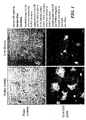
- Oct4GFP (clone C1) ES cells were cultured in N2B27 medium supplemented with LIF and SU5402 (see Example 1) in 0.1% gelatine coated plates. After two passages cells were cultured in N2B27 medium supplemented with LIF and BMP4. After a further two passages light microscope images were taken of the cells under phase contrast to show morphology and UV fluorescence to show expression of GFP. The microscopy images are shown in Fig. 1 .
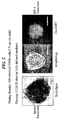
- E14 TG2A ES cells were cultured in DMEM F12 plus neurobasal medium supplemented with N2-B27 additives and also supplemented with LIF and BMP4. The cells were propagated on 0.1% gelatin coated plates, harvested and electroporated with pPCAG-tauGFP-IP. Transfected cells were replated on a 10cm diameter dish at a density of 10 5 -10 6 per dish. After 24 hours, 0.5 ⁇ g/ml puromycin was added to select for positive colonies.
- GFP expressing ES cells obtained as described in Example 3 above were injected into blastocysts.
- GFP expressing ES cells contributed to a wide range of cell-types in a chimeric mouse embryo, as shown in Fig. 3 (embryonic day 11).
- Live bom chimeric mice were obtained, having a chimeric coat, confirming that the cells were true ES cells.
- ES cells were grown in a fully defined, albumin free, medium comprising DMEM F12 plus neurobasal medium (ratio 1:1) supplemented with IGF-1 10 ⁇ g/ml (or insulin at 5-25 ⁇ g/ml), apotransferrin 100 ⁇ g/ml, progesterone 6 ⁇ g/ml, putrescine 16 ⁇ g/ml and sodium selenite 30nmol.
- Oct4GFP ES cells were passaged 6 times (cells passaged every 6-8 days) using cell dissociation buffer and replated after each passage at low density. Microscopy images taken after passage 3 are shown in Fig. 5 .
- ES cells were grown initially in a medium comprising DMEM F12 plus neurobasal medium (ratio 1:1) supplemented with N2-B27. ES cells were plated at very low density, about 1000-10,000 cells on a 3.5cm diameter plate and grown on in the same medium supplemented with LIF and BMP4.
- TGF ⁇ at 1-2ng/ml or activin A at 5ng/ml were added to the culture medium and the cells grown on again.
- Example 8 Comparison of ES cells grown in serum-free and serum-containing medium.
- the invention thus provides medium and methods for self-renewal of ES cells of many species.
- Comparison of ES cells grown in serum-free and serum-containing medium N2B27+LIF N2B27+LIF+BMP4 GMEM/10%FCS+LIF Fold change Oct4GFP% Fold change Oct4GFP% Fold change Oct4GFP% P1 3.1 ⁇ 0.4 93.7 ⁇ 0.8 2.4 ⁇ 0.3 93.3 ⁇ 0.8 2.4 ⁇ 0.3 92.4 ⁇ 2.4 P2 2.3 ⁇ 0.5 96.1 ⁇ 1.6 2.2t0.3 95.5 ⁇ 1.0 1.8 ⁇ 0.3 96.8 ⁇ 0.4 P3 3.5 ⁇ 0.7 95.0 ⁇ 2.2 2.7 ⁇ 0.5 93.5 ⁇ 2.8 3.3 ⁇ 0.7 94.0 ⁇ 1.9 P4 2.2 ⁇ 0.5 91.4 ⁇ 2.4 3.6 ⁇ 0.8 95.7 ⁇ 1.2 1.7 ⁇ 0.2 90.3 ⁇ 0.9 P5 1.3 ⁇ 0.4 95.3 ⁇ 2.6 2.4 ⁇ 0.2 97.7 ⁇ 1.8 1.9 ⁇ 0.2 95.1 ⁇ 3.7 P6 3.2 ⁇ 0.3 97.2 ⁇ 1.0 1.5 ⁇ 0.3 94.2 ⁇ 2.4 P7 3.9 ⁇ 1.0 97.4 ⁇ 0.4 2.0 ⁇ 0.5 8
Landscapes
- Health & Medical Sciences (AREA)
- Life Sciences & Earth Sciences (AREA)
- Engineering & Computer Science (AREA)
- Biomedical Technology (AREA)
- Genetics & Genomics (AREA)
- Zoology (AREA)
- Gynecology & Obstetrics (AREA)
- Biotechnology (AREA)
- Organic Chemistry (AREA)
- Bioinformatics & Cheminformatics (AREA)
- Developmental Biology & Embryology (AREA)
- Chemical & Material Sciences (AREA)
- Wood Science & Technology (AREA)
- Reproductive Health (AREA)
- Microbiology (AREA)
- Biochemistry (AREA)
- General Engineering & Computer Science (AREA)
- General Health & Medical Sciences (AREA)
- Cell Biology (AREA)
- Micro-Organisms Or Cultivation Processes Thereof (AREA)
- Preparation Of Compounds By Using Micro-Organisms (AREA)
- Medicines Containing Material From Animals Or Micro-Organisms (AREA)
Claims (39)
- Verwendung einer Kombination aus:-(a) einem morphogenetischen Knochenprotein (Bone Morphogenetic Protein: BMP); und(b) einem Cytokin, das durch gp130 wirkt,zur Förderung der Selbsterneuerung von pluripotenten Zellen in Kultur, wobei die pluripotenten Zellen nicht aus menschlichen Embryonen stammen.
- Verwendung nach Anspruch 1, wobei das BMP BMP-4 ist.
- Verwendung nach Anspruch 1 oder 2, wobei das Cytokin LIF ist.
- Verwendung nach einem der Ansprüche 1 bis 3, wobei das Cytokin lösliches IL-6 in Kombination mit dem löslichen IL-6-Rezeptor ist.
- Verwendung nach einem der Ansprüche 1 bis 4, wobei die pluripotenten Zellen ES-Zellen sind und in der Gegenwart von einem FGF-Rezeptor-Inhibitor kultiviert werden, wobei der FGF-Rezeptor-Inhibitor SU5402 oder PD173074 ist.
- Verwendung nach Anspruch 5, wobei die ES-Zellen zuerst in der Gegenwart von dem FGF-Rezeptor-Inhibitor kultiviert sind und anschließend dieser Inhibitor entfernt wird.
- Verwendung nach einem der Ansprüche 1 bis 6 zur Kultur von pluripotenten Zellen, die aus den pluripotenten Zellen von Säugern und Vögeln ausgewählt werden.
- Verwendung nach einem der Ansprüche 1 bis 7 zur Kultur von ES-Zellen, die aus den ES-Zellen von Säugern und Vögeln ausgewählt werden.
- Verwendung nach einem der Ansprüche 1 bis 8 zur Kultur von pluripotenten Stammzellen, die aus den pluripotenten Stammzellen von Nagern, Rindern, Schweinen, Schafen und Primaten ausgewählt werden.
- Verwendung nach einem der Ansprüche 1 bis 9 zur Kultur von ES-Zellen, die aus den ES-Zellen von Nagern, Rindern, Schweinen, Schafen und Primaten ausgewählt werden.
- Verwendung nach Anspruch 7 oder 8 zur Kultur von Ratten- oder Mäusezellen.
- Verwendung nach Anspruch 7 oder 8 zur Kultur von menschlichen Zellen.
- Verwendung nach einem der Ansprüche 1 bis 12, wobei die ES-Zellen in einem Medium kultiviert werden, das frei von Serum, Serumextrakt, Feederzellen und Extrakt von Feederzellen ist.
- Verwendung nach einem der Ansprüche 1 bis 13, wobei die ES-Zellen in einem definierten synthetischen Medium kultiviert werden.
- Verfahren zur Kultur von nicht-menschlichen ES-Zellen, um die Selbsterneuerung von ES-Zellen zu fördern, umfassend das Erhalten der ES-Zellen in einem Medium, das enthält:-a. ein BMP; undb. ein Cytokin, das durch gp130 wirkt,
- Verfahren nach Anspruch 15, wobei das Cytokin LIF oder IL-6 plus löslichem IL-6-Rezeptor ist.
- Verfahren nach Anspruch 15, wobei das Medium ferner einen Inhibitor von einem FGF-Rezeptor umfasst, welcher SU5402 oder PD173074 ist.
- Verfahren zur Kultur von nicht-menschlichen ES-Zellen, umfassend:-Erhalten der ES-Zellen in einem pluripotenten Zustand in der Kultur, wahlweise auf Feederzellen, in der Gegenwart von einem Cytokin, das durch gp130 wirkt, und Serum oder einem Extrakt von Serum;Mindestens einmal Passagieren der ES-Zellen;Entfernen von dem Serum oder dem Serumextrakt aus dem Medium und Entfernen der Feederzellen, falls vorhanden, derart, dass das Medium frei von Feederzellen, Serum und Serumextrakt ist; undanschließendes Erhalten der ES-Zellen in einem pluripotenten Zustand in der Gegenwart von(h) einem BMP; und(i) einem Cytokin, das durch gp130 wirkt.
- Verfahren nach Anspruch 18, wobei dieses das Kultivieren der ES-Zellen in der Gegenwart von einem Inhibitor von einem FGF-Rezeptor, welcher SU5402 oder PD173074 ist, umfasst.
- Verfahren nach Anspruch 19, wobei der Inhibitor um den Zeitpunkt herum, wo das Serum oder der Serumextrakt entfernt werden, zu dem Kulturmedium hinzugefügt wird.
- Verfahren nach Anspruch 20, wobei zur selben Zeit oder anschließend an die Erhaltung von den Zellen in der Gegenwart von BMP der Inhibitor entfernt wird.
- Verfahren zur Erlangung einer transfizierten Population von nicht-menschlichen ES-Zellen, umfassend:-Transfizieren von ES-Zellen mit einem Konstrukt, das einen auswählbaren Marker kodiert;Ausplattieren der ES-Zellen;Kultivieren der ES-Zellen in der Gegenwart von(a) einem BMP; und(b) einem Cytokin, das durch gp130 wirkt; undAuswählen von den ES-Zellen, welche den auswählbaren Marker exprimieren.
- Verfahren nach Anspruch 22, wobei der auswählbare Marker eine Antibiotika-Resistenz oder einen Zelloberflächen-Marker kodiert.
- Verfahren zur Kultur von nicht-menschlichen ES-Zellen, das umfasst:-Überführen von einer individuellen ES-Zelle in ein Kulturgefäß; undKultivieren der ES-Zelle in der Gegenwart von(a) einem BMP; und(b) einem Cytokin, das durch gp130 wirkt,um so eine klonale Population von ES-Zellen zu erhalten, von denen alle Nachkommen von der ES-Zelle sind.
- Verfahren nach Anspruch 24, wobei das Kulturgefäß eine einzelne Vertiefung in einer Platte ist.
- Verfahren zum Steuern der Differenzierung von einer nicht-menschlichen ES-Zelle in Richtung auf eine neuroektodermale Entwicklung, welches umfasst:-Erhaltung der ES-Zelle in der Gegenwart von:-(a) einem BMP; und(b) einem Cytokin, das durch gp130 wirkt, und Entfernen sowohl von (a) als auch von (b) aus dem Medium.
- Verfahren zum Steuern der Differenzierung von einer nicht-menschlichen ES-Zelle in Richtung auf eine nicht-neuroektodermale Entwicklung, welches umfasst:-Erhaltung der ES-Zelle in der Gegenwart von(a) einem Cytokin, das durch gp130 wirkt; und(b) einem BMP; undEntfernen von dem Cytokin während(I) dem Beibehalten von dem BMP; und/oder(II) dem Hinzufügen von einem weiteren Signalmolekül, das in der Lage ist, die Differenzierung zu steuern.
- Medium zur Selbsterneuerung der ES-Zellen, umfassend:- Basalmedium;
ein BMP;
ein Cytokin, das durch gp130 wirkt; und
ein Eisen-Transportprotein;
wobei das Medium frei von Serum oder Serumextrakt ist. - Medium nach Anspruch 28, das ferner Insulin oder Insulinartiger Wachstumsfaktor umfasst.
- Medium nach Anspruch 28 oder 29, wobei das Medium frei von Feederzellen oder dem Extrakt von Feederzellen ist.
- ES-Zellkulturmedium, das umfasst:-(a) ein BMP;(b) ein Cytokin, das durch gp130 wirkt; undwobei das Medium frei von Serum oder Serumextrakt ist.
- ES-Zellkulturmedium, das umfasst:-(a) ein BMP;(b) ein Cytokin, das durch gp130 wirkt, und wobei das Medium ein definiertes synthetisches Medium ist.
- Medium nach Anspruch 31, wobei es ferner einen Inhibitor von einem FGF-Rezeptor umfasst, welcher SU5402 oder PD173074 ist.
- Medium nach Anspruch 29 bis 31, wobei das Cytokin, das durch gp130 wirkt, LIF ist, mit einer Konzentration von mindestens 10 U/ml.
- Verfahren zum Erlangen einer differenzierten Zelle, welches das Kultivieren einer ES-Zelle nach einem der Ansprüche 15 bis 27 und das Zulassen oder Auslösen der Differenzierung einer ES-Zelle umfasst, wobei die ES-Zelle einen auswählbaren Marker enthält, welcher gegenüber anderen Zelltypen zur differentiellen Expression in der erwünschten differenzierten Zelle, einschließlich pluripotenter Stammzellen, in der Lage ist, wobei die differentielle Expression von dem auswählbaren Marker in der bevorzugten Isolierung und/oder dem Überleben und/oder der Teilung von den erwünschten differenzierten Zellen resultiert.
- Verfahren nach Anspruch 35, wobei die differenzierte Zelle eine Gewebestammzelle oder eine Gewebe-Vorläuferzelle ist.
- Verfahren nach Anspruch 36, wobei die differenzierte Zelle eine terminal differenzierte Zelle ist.
- Verfahren nach einem der Ansprüche 15 bis 27 oder 35 bis 37, wobei das Medium ein definiertes synthetisches Medium ist.
- Verfahren zum Erlangen von differenzierten Zellen, das umfasst:-Erhalten von nicht-menschlichen ES-Zellen in einem Medium, das umfasst:wahlweise, das Hinzufügen anderer Signalfaktoren zu der Kultur und dadurch die erwünschten differenzierten Zellen zu erhalten.(a) ein BMP; und(b) ein Cytokin, das durch den gp130 nachgeschalteten Signaltransduktionsweg wirkt, und Entfernen von einem oder von beiden von (a) und (b) aus dem Medium;
Applications Claiming Priority (3)
| Application Number | Priority Date | Filing Date | Title |
|---|---|---|---|
| GB0210539 | 2002-05-08 | ||
| GBGB0210539.3A GB0210539D0 (en) | 2002-05-08 | 2002-05-08 | Control of es cell self renewal and lineage specification, and medium therefor |
| PCT/GB2003/001967 WO2003095628A2 (en) | 2002-05-08 | 2003-05-08 | Control of es cell self renewal and lineage specification, and medium therefor |
Publications (2)
| Publication Number | Publication Date |
|---|---|
| EP1504086A2 EP1504086A2 (de) | 2005-02-09 |
| EP1504086B1 true EP1504086B1 (de) | 2008-05-14 |
Family
ID=9936286
Family Applications (1)
| Application Number | Title | Priority Date | Filing Date |
|---|---|---|---|
| EP03725376A Expired - Lifetime EP1504086B1 (de) | 2002-05-08 | 2003-05-08 | Kontrolle der selbsterneuerung embryonaler stammzellen, deren differenzierung und kulturmedium dafür |
Country Status (15)
| Country | Link |
|---|---|
| US (2) | US20050221478A1 (de) |
| EP (1) | EP1504086B1 (de) |
| JP (2) | JP4185489B2 (de) |
| CN (1) | CN1659273A (de) |
| AT (1) | ATE395412T1 (de) |
| AU (1) | AU2003227912B8 (de) |
| CA (1) | CA2484701A1 (de) |
| DE (1) | DE60320977D1 (de) |
| DK (1) | DK1504086T3 (de) |
| ES (1) | ES2305460T3 (de) |
| GB (1) | GB0210539D0 (de) |
| IL (1) | IL165062A (de) |
| NZ (1) | NZ536580A (de) |
| RU (1) | RU2342427C2 (de) |
| WO (1) | WO2003095628A2 (de) |
Families Citing this family (25)
| Publication number | Priority date | Publication date | Assignee | Title |
|---|---|---|---|---|
| GB0210539D0 (en) * | 2002-05-08 | 2002-06-19 | Univ Edinburgh | Control of es cell self renewal and lineage specification, and medium therefor |
| US8647873B2 (en) | 2004-04-27 | 2014-02-11 | Viacyte, Inc. | PDX1 expressing endoderm |
| AU2015200780B2 (en) * | 2003-12-23 | 2017-03-02 | Viacyte, Inc. | Definitive endoderm |
| JP4901471B2 (ja) * | 2004-02-19 | 2012-03-21 | 国立大学法人京都大学 | 体細胞核初期化物質のスクリーニング方法 |
| US8476070B2 (en) | 2005-08-29 | 2013-07-02 | Technion Research & Development Foundation Limited | Media for culturing stem cells |
| GB0615327D0 (en) | 2006-03-30 | 2006-09-13 | Univ Edinburgh | Culture medium containing kinase inhibitors and uses thereof |
| EP1999249B8 (de) | 2006-03-30 | 2012-02-15 | The University Court Of The University of Edinburgh | Kulturmedium mit kinasehemmern und verwendung |
| ES2704401T3 (es) * | 2006-08-02 | 2019-03-18 | Technion Res & Dev Foundation | Métodos de expansión de células madre embrionarias en un cultivo en suspensión |
| US9080145B2 (en) | 2007-07-01 | 2015-07-14 | Lifescan Corporation | Single pluripotent stem cell culture |
| US9096832B2 (en) | 2007-07-31 | 2015-08-04 | Lifescan, Inc. | Differentiation of human embryonic stem cells |
| JP5951254B2 (ja) | 2008-03-17 | 2016-07-13 | ザ スクリプス リサーチ インスティテュート | 人工多能性幹細胞を作製するための化学的手法と遺伝的手法の組み合わせ法 |
| KR101651661B1 (ko) | 2008-06-30 | 2016-08-26 | 얀센 바이오테크 인코포레이티드 | 만능 줄기 세포의 분화 |
| JP6093110B2 (ja) * | 2008-12-17 | 2017-03-08 | ザ スクリプス リサーチ インスティテュート | 幹細胞の作製と維持 |
| US20120122212A1 (en) * | 2009-03-06 | 2012-05-17 | Marica Grskovic | Tgf-beta pathway inhibitors for enhancement of cellular reprogramming of human cells |
| US9005968B2 (en) | 2009-10-16 | 2015-04-14 | The Scripps Research Institute | Induction of pluripotent cells |
| WO2011118655A1 (ja) * | 2010-03-23 | 2011-09-29 | オリンパス株式会社 | 幹細胞の分化状態をモニタリングする方法 |
| EP2553086B1 (de) | 2010-03-31 | 2017-04-19 | The Scripps Research Institute | Umprogrammierung von zellen |
| EP3399026B1 (de) | 2010-06-14 | 2024-06-26 | The Scripps Research Institute | Neuprogrammierung von zellen für ein neues zellschicksal |
| AU2011349446C1 (en) | 2010-12-22 | 2016-01-21 | Fate Therapauetics, Inc. | Cell culture platform for single cell sorting and enhanced reprogramming of iPSCs |
| CA2866590A1 (en) * | 2012-03-07 | 2013-09-12 | Janssen Biotech, Inc. | Defined media for expansion and maintenance of pluripotent stem cells |
| SG11201606934SA (en) | 2014-03-04 | 2016-09-29 | Fate Therapeutics Inc | Improved reprogramming methods and cell culture platforms |
| CA3001917A1 (en) | 2015-10-16 | 2017-04-20 | Fate Therapeutics, Inc. | Platform for the induction & maintenance of ground state pluripotency |
| JP6705911B2 (ja) | 2016-04-14 | 2020-06-03 | ヤンセン バイオテツク,インコーポレーテツド | 多能性幹細胞の中腸内胚葉細胞への分化 |
| CN108359638B (zh) * | 2018-04-04 | 2020-02-14 | 浙江霍德生物工程有限公司 | 功能大脑皮层细胞的诱导分化方法 |
| CN111574593B (zh) * | 2020-05-28 | 2022-05-24 | 澳门大学 | 一种基于毒液的肽及其应用 |
Family Cites Families (11)
| Publication number | Priority date | Publication date | Assignee | Title |
|---|---|---|---|---|
| JP2898064B2 (ja) * | 1989-08-03 | 1999-05-31 | 忠三 岸本 | ヒトgp130蛋白質 |
| RU2164240C2 (ru) * | 1990-12-17 | 2001-03-20 | Риджентс оф дзе Юниверсити оф Мичиган | Способ культивирования, фибробласт, способ отделения клеток |
| US5750376A (en) * | 1991-07-08 | 1998-05-12 | Neurospheres Holdings Ltd. | In vitro growth and proliferation of genetically modified multipotent neural stem cells and their progeny |
| US5523226A (en) * | 1993-05-14 | 1996-06-04 | Biotechnology Research And Development Corp. | Transgenic swine compositions and methods |
| US6251671B1 (en) * | 1996-02-28 | 2001-06-26 | Vanderbilt University | Compositions and methods of making embryonic stem cells |
| DE19632532A1 (de) * | 1996-08-13 | 1998-02-19 | Boehringer Ingelheim Int | Verfahren zur Herstellung von Säugetieren mit definierten genetischen Eigenschaften |
| US6750376B1 (en) * | 1997-02-05 | 2004-06-15 | Utah State University | Methods for producing apomictic plants |
| EP1263930A4 (de) * | 2000-03-09 | 2004-07-21 | Saneron Ccel Therapeutics Inc | Menschliches nabelschnurblut als quelle für neurales gewebe zur heilung von gehirn und rückenmark |
| AU2001293586A1 (en) * | 2000-09-29 | 2002-04-08 | Vincent Tropepe | Primitive neural stem cells and method for differentiation of stem cells to neural cells |
| EP2292734A1 (de) * | 2001-12-07 | 2011-03-09 | Geron Corporation | Hämatopoietische Zellen aus menschlichen Embryostammzellen |
| GB0210539D0 (en) * | 2002-05-08 | 2002-06-19 | Univ Edinburgh | Control of es cell self renewal and lineage specification, and medium therefor |
-
2002
- 2002-05-08 GB GBGB0210539.3A patent/GB0210539D0/en not_active Ceased
-
2003
- 2003-05-08 US US10/513,675 patent/US20050221478A1/en not_active Abandoned
- 2003-05-08 AT AT03725376T patent/ATE395412T1/de not_active IP Right Cessation
- 2003-05-08 NZ NZ536580A patent/NZ536580A/xx not_active IP Right Cessation
- 2003-05-08 AU AU2003227912A patent/AU2003227912B8/en not_active Ceased
- 2003-05-08 WO PCT/GB2003/001967 patent/WO2003095628A2/en not_active Ceased
- 2003-05-08 DE DE60320977T patent/DE60320977D1/de not_active Expired - Lifetime
- 2003-05-08 EP EP03725376A patent/EP1504086B1/de not_active Expired - Lifetime
- 2003-05-08 JP JP2004503622A patent/JP4185489B2/ja not_active Expired - Fee Related
- 2003-05-08 CN CN038129108A patent/CN1659273A/zh active Pending
- 2003-05-08 CA CA002484701A patent/CA2484701A1/en not_active Abandoned
- 2003-05-08 RU RU2004135816/13A patent/RU2342427C2/ru not_active IP Right Cessation
- 2003-05-08 DK DK03725376T patent/DK1504086T3/da active
- 2003-05-08 ES ES03725376T patent/ES2305460T3/es not_active Expired - Lifetime
-
2004
- 2004-11-07 IL IL165062A patent/IL165062A/en not_active IP Right Cessation
-
2008
- 2008-01-07 US US11/970,377 patent/US20080145936A1/en not_active Abandoned
- 2008-06-20 JP JP2008162287A patent/JP2008228742A/ja active Pending
Also Published As
| Publication number | Publication date |
|---|---|
| US20080145936A1 (en) | 2008-06-19 |
| JP4185489B2 (ja) | 2008-11-26 |
| JP2005524411A (ja) | 2005-08-18 |
| GB0210539D0 (en) | 2002-06-19 |
| WO2003095628A2 (en) | 2003-11-20 |
| US20050221478A1 (en) | 2005-10-06 |
| AU2003227912A1 (en) | 2003-11-11 |
| IL165062A (en) | 2010-12-30 |
| ATE395412T1 (de) | 2008-05-15 |
| RU2004135816A (ru) | 2005-06-27 |
| JP2008228742A (ja) | 2008-10-02 |
| DE60320977D1 (de) | 2008-06-26 |
| RU2342427C2 (ru) | 2008-12-27 |
| CA2484701A1 (en) | 2003-11-20 |
| ES2305460T3 (es) | 2008-11-01 |
| NZ536580A (en) | 2006-03-31 |
| EP1504086A2 (de) | 2005-02-09 |
| AU2003227912B2 (en) | 2006-11-16 |
| IL165062A0 (en) | 2005-12-18 |
| CN1659273A (zh) | 2005-08-24 |
| WO2003095628A3 (en) | 2004-03-18 |
| DK1504086T3 (da) | 2008-08-25 |
| AU2003227912B8 (en) | 2009-07-02 |
Similar Documents
| Publication | Publication Date | Title |
|---|---|---|
| US20080145936A1 (en) | Control of ES Cell Self Renewal and Lineage Specification, and Medium Therefor | |
| US20080124801A1 (en) | Pluripotent cell growth media | |
| US9309495B2 (en) | Neural stem cells | |
| US20090130759A1 (en) | Culture Medium Containing Kinase Inhibitor, and Use Thereof | |
| IL266965A (en) | Preparations containing non-multipurpose pancreatic progenitor cells and methods for their preparation | |
| US20070178439A1 (en) | Control of es cell self renewal and lineage specification, and medium therefor | |
| CN117264888A (zh) | 一种制备造血干细胞和祖细胞的方法 | |
| KR20050023254A (ko) | Es 세포 자가 증식 및 계통 특정화의 조절 및 그를 위한배지 | |
| Puri et al. | Growth factors and embryonic stem cells: a review | |
| Dimarakis | Cytokines and Stem Cell Differentiation into Cardiomyocyte Lineage Cells | |
| HUE026274T2 (en) | Neural stem cells |
Legal Events
| Date | Code | Title | Description |
|---|---|---|---|
| PUAI | Public reference made under article 153(3) epc to a published international application that has entered the european phase |
Free format text: ORIGINAL CODE: 0009012 |
|
| 17P | Request for examination filed |
Effective date: 20041207 |
|
| AK | Designated contracting states |
Kind code of ref document: A2 Designated state(s): AT BE BG CH CY CZ DE DK EE ES FI FR GB GR HU IE IT LI LU MC NL PT RO SE SI SK TR |
|
| AX | Request for extension of the european patent |
Extension state: AL LT LV MK |
|
| DAX | Request for extension of the european patent (deleted) | ||
| RAP1 | Party data changed (applicant data changed or rights of an application transferred) |
Owner name: THE UNIVERSITY COURT OF THE UNIVERSITY OF EDINBURG |
|
| 17Q | First examination report despatched |
Effective date: 20050721 |
|
| GRAP | Despatch of communication of intention to grant a patent |
Free format text: ORIGINAL CODE: EPIDOSNIGR1 |
|
| GRAS | Grant fee paid |
Free format text: ORIGINAL CODE: EPIDOSNIGR3 |
|
| GRAA | (expected) grant |
Free format text: ORIGINAL CODE: 0009210 |
|
| AK | Designated contracting states |
Kind code of ref document: B1 Designated state(s): AT BE BG CH CY CZ DE DK EE ES FI FR GB GR HU IE IT LI LU MC NL PT RO SE SI SK TR |
|
| REG | Reference to a national code |
Ref country code: GB Ref legal event code: FG4D |
|
| REG | Reference to a national code |
Ref country code: CH Ref legal event code: EP |
|
| REG | Reference to a national code |
Ref country code: IE Ref legal event code: FG4D Free format text: LANGUAGE OF EP DOCUMENT: FRENCH |
|
| REF | Corresponds to: |
Ref document number: 60320977 Country of ref document: DE Date of ref document: 20080626 Kind code of ref document: P |
|
| REG | Reference to a national code |
Ref country code: CH Ref legal event code: NV Representative=s name: DR. JOACHIM LAUER PATENTANWALT |
|
| REG | Reference to a national code |
Ref country code: SE Ref legal event code: TRGR |
|
| REG | Reference to a national code |
Ref country code: DK Ref legal event code: T3 |
|
| PG25 | Lapsed in a contracting state [announced via postgrant information from national office to epo] |
Ref country code: SI Free format text: LAPSE BECAUSE OF FAILURE TO SUBMIT A TRANSLATION OF THE DESCRIPTION OR TO PAY THE FEE WITHIN THE PRESCRIBED TIME-LIMIT Effective date: 20080514 |
|
| REG | Reference to a national code |
Ref country code: ES Ref legal event code: FG2A Ref document number: 2305460 Country of ref document: ES Kind code of ref document: T3 |
|
| PG25 | Lapsed in a contracting state [announced via postgrant information from national office to epo] |
Ref country code: PT Free format text: LAPSE BECAUSE OF FAILURE TO SUBMIT A TRANSLATION OF THE DESCRIPTION OR TO PAY THE FEE WITHIN THE PRESCRIBED TIME-LIMIT Effective date: 20081014 |
|
| PG25 | Lapsed in a contracting state [announced via postgrant information from national office to epo] |
Ref country code: SK Free format text: LAPSE BECAUSE OF FAILURE TO SUBMIT A TRANSLATION OF THE DESCRIPTION OR TO PAY THE FEE WITHIN THE PRESCRIBED TIME-LIMIT Effective date: 20080514 Ref country code: RO Free format text: LAPSE BECAUSE OF FAILURE TO SUBMIT A TRANSLATION OF THE DESCRIPTION OR TO PAY THE FEE WITHIN THE PRESCRIBED TIME-LIMIT Effective date: 20080514 |
|
| PLBE | No opposition filed within time limit |
Free format text: ORIGINAL CODE: 0009261 |
|
| STAA | Information on the status of an ep patent application or granted ep patent |
Free format text: STATUS: NO OPPOSITION FILED WITHIN TIME LIMIT |
|
| 26N | No opposition filed |
Effective date: 20090217 |
|
| PG25 | Lapsed in a contracting state [announced via postgrant information from national office to epo] |
Ref country code: BG Free format text: LAPSE BECAUSE OF FAILURE TO SUBMIT A TRANSLATION OF THE DESCRIPTION OR TO PAY THE FEE WITHIN THE PRESCRIBED TIME-LIMIT Effective date: 20080814 Ref country code: EE Free format text: LAPSE BECAUSE OF FAILURE TO SUBMIT A TRANSLATION OF THE DESCRIPTION OR TO PAY THE FEE WITHIN THE PRESCRIBED TIME-LIMIT Effective date: 20080514 |
|
| PG25 | Lapsed in a contracting state [announced via postgrant information from national office to epo] |
Ref country code: MC Free format text: LAPSE BECAUSE OF NON-PAYMENT OF DUE FEES Effective date: 20090531 |
|
| PGFP | Annual fee paid to national office [announced via postgrant information from national office to epo] |
Ref country code: LU Payment date: 20100429 Year of fee payment: 8 |
|
| PGFP | Annual fee paid to national office [announced via postgrant information from national office to epo] |
Ref country code: GB Payment date: 20100323 Year of fee payment: 8 |
|
| PGFP | Annual fee paid to national office [announced via postgrant information from national office to epo] |
Ref country code: DK Payment date: 20100507 Year of fee payment: 8 Ref country code: ES Payment date: 20100510 Year of fee payment: 8 Ref country code: FI Payment date: 20100518 Year of fee payment: 8 Ref country code: IE Payment date: 20100514 Year of fee payment: 8 |
|
| PGFP | Annual fee paid to national office [announced via postgrant information from national office to epo] |
Ref country code: AT Payment date: 20100520 Year of fee payment: 8 Ref country code: CZ Payment date: 20100406 Year of fee payment: 8 Ref country code: DE Payment date: 20100512 Year of fee payment: 8 Ref country code: NL Payment date: 20100517 Year of fee payment: 8 |
|
| PG25 | Lapsed in a contracting state [announced via postgrant information from national office to epo] |
Ref country code: GR Free format text: LAPSE BECAUSE OF FAILURE TO SUBMIT A TRANSLATION OF THE DESCRIPTION OR TO PAY THE FEE WITHIN THE PRESCRIBED TIME-LIMIT Effective date: 20080815 |
|
| PGFP | Annual fee paid to national office [announced via postgrant information from national office to epo] |
Ref country code: BE Payment date: 20100505 Year of fee payment: 8 Ref country code: CH Payment date: 20100514 Year of fee payment: 8 |
|
| PGFP | Annual fee paid to national office [announced via postgrant information from national office to epo] |
Ref country code: SE Payment date: 20100520 Year of fee payment: 8 |
|
| PG25 | Lapsed in a contracting state [announced via postgrant information from national office to epo] |
Ref country code: HU Free format text: LAPSE BECAUSE OF FAILURE TO SUBMIT A TRANSLATION OF THE DESCRIPTION OR TO PAY THE FEE WITHIN THE PRESCRIBED TIME-LIMIT Effective date: 20081115 |
|
| PGFP | Annual fee paid to national office [announced via postgrant information from national office to epo] |
Ref country code: FR Payment date: 20110610 Year of fee payment: 9 |
|
| PG25 | Lapsed in a contracting state [announced via postgrant information from national office to epo] |
Ref country code: TR Free format text: LAPSE BECAUSE OF FAILURE TO SUBMIT A TRANSLATION OF THE DESCRIPTION OR TO PAY THE FEE WITHIN THE PRESCRIBED TIME-LIMIT Effective date: 20080514 |
|
| PG25 | Lapsed in a contracting state [announced via postgrant information from national office to epo] |
Ref country code: CY Free format text: LAPSE BECAUSE OF FAILURE TO SUBMIT A TRANSLATION OF THE DESCRIPTION OR TO PAY THE FEE WITHIN THE PRESCRIBED TIME-LIMIT Effective date: 20080514 |
|
| BERE | Be: lapsed |
Owner name: THE UNIVERSITY COURT OF THE UNIVERSITY OF EDINBUR Effective date: 20110531 |
|
| REG | Reference to a national code |
Ref country code: NL Ref legal event code: V1 Effective date: 20111201 |
|
| REG | Reference to a national code |
Ref country code: CH Ref legal event code: PL |
|
| REG | Reference to a national code |
Ref country code: DK Ref legal event code: EBP |
|
| REG | Reference to a national code |
Ref country code: SE Ref legal event code: EUG |
|
| GBPC | Gb: european patent ceased through non-payment of renewal fee |
Effective date: 20110508 |
|
| PG25 | Lapsed in a contracting state [announced via postgrant information from national office to epo] |
Ref country code: LI Free format text: LAPSE BECAUSE OF NON-PAYMENT OF DUE FEES Effective date: 20110531 Ref country code: NL Free format text: LAPSE BECAUSE OF NON-PAYMENT OF DUE FEES Effective date: 20111201 Ref country code: CH Free format text: LAPSE BECAUSE OF NON-PAYMENT OF DUE FEES Effective date: 20110531 Ref country code: CZ Free format text: LAPSE BECAUSE OF NON-PAYMENT OF DUE FEES Effective date: 20110508 Ref country code: FI Free format text: LAPSE BECAUSE OF NON-PAYMENT OF DUE FEES Effective date: 20110508 |
|
| REG | Reference to a national code |
Ref country code: AT Ref legal event code: MM01 Ref document number: 395412 Country of ref document: AT Kind code of ref document: T Effective date: 20110508 |
|
| PG25 | Lapsed in a contracting state [announced via postgrant information from national office to epo] |
Ref country code: AT Free format text: LAPSE BECAUSE OF NON-PAYMENT OF DUE FEES Effective date: 20110508 Ref country code: IT Free format text: LAPSE BECAUSE OF NON-PAYMENT OF DUE FEES Effective date: 20110508 |
|
| REG | Reference to a national code |
Ref country code: IE Ref legal event code: MM4A |
|
| REG | Reference to a national code |
Ref country code: DE Ref legal event code: R119 Ref document number: 60320977 Country of ref document: DE Effective date: 20111201 |
|
| PG25 | Lapsed in a contracting state [announced via postgrant information from national office to epo] |
Ref country code: BE Free format text: LAPSE BECAUSE OF NON-PAYMENT OF DUE FEES Effective date: 20110531 |
|
| PG25 | Lapsed in a contracting state [announced via postgrant information from national office to epo] |
Ref country code: IE Free format text: LAPSE BECAUSE OF NON-PAYMENT OF DUE FEES Effective date: 20110509 |
|
| PG25 | Lapsed in a contracting state [announced via postgrant information from national office to epo] |
Ref country code: GB Free format text: LAPSE BECAUSE OF NON-PAYMENT OF DUE FEES Effective date: 20110508 Ref country code: DK Free format text: LAPSE BECAUSE OF NON-PAYMENT OF DUE FEES Effective date: 20110531 |
|
| REG | Reference to a national code |
Ref country code: FR Ref legal event code: ST Effective date: 20130131 |
|
| PG25 | Lapsed in a contracting state [announced via postgrant information from national office to epo] |
Ref country code: FR Free format text: LAPSE BECAUSE OF NON-PAYMENT OF DUE FEES Effective date: 20120531 Ref country code: SE Free format text: LAPSE BECAUSE OF NON-PAYMENT OF DUE FEES Effective date: 20110509 |
|
| PG25 | Lapsed in a contracting state [announced via postgrant information from national office to epo] |
Ref country code: LU Free format text: LAPSE BECAUSE OF NON-PAYMENT OF DUE FEES Effective date: 20110508 |
|
| REG | Reference to a national code |
Ref country code: ES Ref legal event code: FD2A Effective date: 20130604 |
|
| PG25 | Lapsed in a contracting state [announced via postgrant information from national office to epo] |
Ref country code: DE Free format text: LAPSE BECAUSE OF NON-PAYMENT OF DUE FEES Effective date: 20111201 |
|
| PG25 | Lapsed in a contracting state [announced via postgrant information from national office to epo] |
Ref country code: ES Free format text: LAPSE BECAUSE OF NON-PAYMENT OF DUE FEES Effective date: 20110509 |