EP1501801B1 - 2,6-chinolinyl- und 2,6-naphthylderivate und deren verwendungen zur behandlung von vla-4 bezogenen krankheiten - Google Patents
2,6-chinolinyl- und 2,6-naphthylderivate und deren verwendungen zur behandlung von vla-4 bezogenen krankheiten Download PDFInfo
- Publication number
- EP1501801B1 EP1501801B1 EP03747411A EP03747411A EP1501801B1 EP 1501801 B1 EP1501801 B1 EP 1501801B1 EP 03747411 A EP03747411 A EP 03747411A EP 03747411 A EP03747411 A EP 03747411A EP 1501801 B1 EP1501801 B1 EP 1501801B1
- Authority
- EP
- European Patent Office
- Prior art keywords
- amino
- quinolinyl
- propanoic acid
- methyl
- dichlorophenyl
- Prior art date
- Legal status (The legal status is an assumption and is not a legal conclusion. Google has not performed a legal analysis and makes no representation as to the accuracy of the status listed.)
- Expired - Lifetime
Links
- 0 CO*(C(Cc(cc1)cc(cc2)c1nc2-c(c(Cl)ccc1)c1Cl)=*C([C@](CCCC1)N1S(C)(=O)=O)=O)=O Chemical compound CO*(C(Cc(cc1)cc(cc2)c1nc2-c(c(Cl)ccc1)c1Cl)=*C([C@](CCCC1)N1S(C)(=O)=O)=O)=O 0.000 description 4
- WQSQZLGTHDODEY-RANOIECZSA-N C/C=C/C=C\C(\c(c(Cl)ccc1)c1Cl)=N/NC(c(c(Cl)ccc1)c1Cl)=O Chemical compound C/C=C/C=C\C(\c(c(Cl)ccc1)c1Cl)=N/NC(c(c(Cl)ccc1)c1Cl)=O WQSQZLGTHDODEY-RANOIECZSA-N 0.000 description 1
- JQAOHGMPAAWWQO-QMMMGPOBSA-N CC(C)(C)OC(N(CCCC1)[C@@H]1C(O)=O)=O Chemical compound CC(C)(C)OC(N(CCCC1)[C@@H]1C(O)=O)=O JQAOHGMPAAWWQO-QMMMGPOBSA-N 0.000 description 1
- BMJFBCNEIDGVPY-LURJTMIESA-N CS(N(CCCC1)[C@@H]1C(N)=O)(=O)=O Chemical compound CS(N(CCCC1)[C@@H]1C(N)=O)(=O)=O BMJFBCNEIDGVPY-LURJTMIESA-N 0.000 description 1
Classifications
-
- C—CHEMISTRY; METALLURGY
- C07—ORGANIC CHEMISTRY
- C07C—ACYCLIC OR CARBOCYCLIC COMPOUNDS
- C07C309/00—Sulfonic acids; Halides, esters, or anhydrides thereof
- C07C309/63—Esters of sulfonic acids
- C07C309/64—Esters of sulfonic acids having sulfur atoms of esterified sulfo groups bound to acyclic carbon atoms
- C07C309/65—Esters of sulfonic acids having sulfur atoms of esterified sulfo groups bound to acyclic carbon atoms of a saturated carbon skeleton
-
- C—CHEMISTRY; METALLURGY
- C07—ORGANIC CHEMISTRY
- C07D—HETEROCYCLIC COMPOUNDS
- C07D215/00—Heterocyclic compounds containing quinoline or hydrogenated quinoline ring systems
- C07D215/02—Heterocyclic compounds containing quinoline or hydrogenated quinoline ring systems having no bond between the ring nitrogen atom and a non-ring member or having only hydrogen atoms or carbon atoms directly attached to the ring nitrogen atom
- C07D215/12—Heterocyclic compounds containing quinoline or hydrogenated quinoline ring systems having no bond between the ring nitrogen atom and a non-ring member or having only hydrogen atoms or carbon atoms directly attached to the ring nitrogen atom with substituted hydrocarbon radicals attached to ring carbon atoms
- C07D215/14—Radicals substituted by oxygen atoms
-
- A—HUMAN NECESSITIES
- A61—MEDICAL OR VETERINARY SCIENCE; HYGIENE
- A61P—SPECIFIC THERAPEUTIC ACTIVITY OF CHEMICAL COMPOUNDS OR MEDICINAL PREPARATIONS
- A61P1/00—Drugs for disorders of the alimentary tract or the digestive system
-
- A—HUMAN NECESSITIES
- A61—MEDICAL OR VETERINARY SCIENCE; HYGIENE
- A61P—SPECIFIC THERAPEUTIC ACTIVITY OF CHEMICAL COMPOUNDS OR MEDICINAL PREPARATIONS
- A61P1/00—Drugs for disorders of the alimentary tract or the digestive system
- A61P1/04—Drugs for disorders of the alimentary tract or the digestive system for ulcers, gastritis or reflux esophagitis, e.g. antacids, inhibitors of acid secretion, mucosal protectants
-
- A—HUMAN NECESSITIES
- A61—MEDICAL OR VETERINARY SCIENCE; HYGIENE
- A61P—SPECIFIC THERAPEUTIC ACTIVITY OF CHEMICAL COMPOUNDS OR MEDICINAL PREPARATIONS
- A61P11/00—Drugs for disorders of the respiratory system
- A61P11/02—Nasal agents, e.g. decongestants
-
- A—HUMAN NECESSITIES
- A61—MEDICAL OR VETERINARY SCIENCE; HYGIENE
- A61P—SPECIFIC THERAPEUTIC ACTIVITY OF CHEMICAL COMPOUNDS OR MEDICINAL PREPARATIONS
- A61P11/00—Drugs for disorders of the respiratory system
- A61P11/06—Antiasthmatics
-
- A—HUMAN NECESSITIES
- A61—MEDICAL OR VETERINARY SCIENCE; HYGIENE
- A61P—SPECIFIC THERAPEUTIC ACTIVITY OF CHEMICAL COMPOUNDS OR MEDICINAL PREPARATIONS
- A61P17/00—Drugs for dermatological disorders
-
- A—HUMAN NECESSITIES
- A61—MEDICAL OR VETERINARY SCIENCE; HYGIENE
- A61P—SPECIFIC THERAPEUTIC ACTIVITY OF CHEMICAL COMPOUNDS OR MEDICINAL PREPARATIONS
- A61P17/00—Drugs for dermatological disorders
- A61P17/04—Antipruritics
-
- A—HUMAN NECESSITIES
- A61—MEDICAL OR VETERINARY SCIENCE; HYGIENE
- A61P—SPECIFIC THERAPEUTIC ACTIVITY OF CHEMICAL COMPOUNDS OR MEDICINAL PREPARATIONS
- A61P17/00—Drugs for dermatological disorders
- A61P17/06—Antipsoriatics
-
- A—HUMAN NECESSITIES
- A61—MEDICAL OR VETERINARY SCIENCE; HYGIENE
- A61P—SPECIFIC THERAPEUTIC ACTIVITY OF CHEMICAL COMPOUNDS OR MEDICINAL PREPARATIONS
- A61P19/00—Drugs for skeletal disorders
- A61P19/02—Drugs for skeletal disorders for joint disorders, e.g. arthritis, arthrosis
-
- A—HUMAN NECESSITIES
- A61—MEDICAL OR VETERINARY SCIENCE; HYGIENE
- A61P—SPECIFIC THERAPEUTIC ACTIVITY OF CHEMICAL COMPOUNDS OR MEDICINAL PREPARATIONS
- A61P25/00—Drugs for disorders of the nervous system
- A61P25/28—Drugs for disorders of the nervous system for treating neurodegenerative disorders of the central nervous system, e.g. nootropic agents, cognition enhancers, drugs for treating Alzheimer's disease or other forms of dementia
-
- A—HUMAN NECESSITIES
- A61—MEDICAL OR VETERINARY SCIENCE; HYGIENE
- A61P—SPECIFIC THERAPEUTIC ACTIVITY OF CHEMICAL COMPOUNDS OR MEDICINAL PREPARATIONS
- A61P27/00—Drugs for disorders of the senses
- A61P27/02—Ophthalmic agents
-
- A—HUMAN NECESSITIES
- A61—MEDICAL OR VETERINARY SCIENCE; HYGIENE
- A61P—SPECIFIC THERAPEUTIC ACTIVITY OF CHEMICAL COMPOUNDS OR MEDICINAL PREPARATIONS
- A61P29/00—Non-central analgesic, antipyretic or antiinflammatory agents, e.g. antirheumatic agents; Non-steroidal antiinflammatory drugs [NSAID]
-
- A—HUMAN NECESSITIES
- A61—MEDICAL OR VETERINARY SCIENCE; HYGIENE
- A61P—SPECIFIC THERAPEUTIC ACTIVITY OF CHEMICAL COMPOUNDS OR MEDICINAL PREPARATIONS
- A61P37/00—Drugs for immunological or allergic disorders
-
- A—HUMAN NECESSITIES
- A61—MEDICAL OR VETERINARY SCIENCE; HYGIENE
- A61P—SPECIFIC THERAPEUTIC ACTIVITY OF CHEMICAL COMPOUNDS OR MEDICINAL PREPARATIONS
- A61P37/00—Drugs for immunological or allergic disorders
- A61P37/02—Immunomodulators
- A61P37/06—Immunosuppressants, e.g. drugs for graft rejection
-
- A—HUMAN NECESSITIES
- A61—MEDICAL OR VETERINARY SCIENCE; HYGIENE
- A61P—SPECIFIC THERAPEUTIC ACTIVITY OF CHEMICAL COMPOUNDS OR MEDICINAL PREPARATIONS
- A61P37/00—Drugs for immunological or allergic disorders
- A61P37/08—Antiallergic agents
-
- A—HUMAN NECESSITIES
- A61—MEDICAL OR VETERINARY SCIENCE; HYGIENE
- A61P—SPECIFIC THERAPEUTIC ACTIVITY OF CHEMICAL COMPOUNDS OR MEDICINAL PREPARATIONS
- A61P9/00—Drugs for disorders of the cardiovascular system
- A61P9/10—Drugs for disorders of the cardiovascular system for treating ischaemic or atherosclerotic diseases, e.g. antianginal drugs, coronary vasodilators, drugs for myocardial infarction, retinopathy, cerebrovascula insufficiency, renal arteriosclerosis
-
- C—CHEMISTRY; METALLURGY
- C07—ORGANIC CHEMISTRY
- C07D—HETEROCYCLIC COMPOUNDS
- C07D215/00—Heterocyclic compounds containing quinoline or hydrogenated quinoline ring systems
- C07D215/02—Heterocyclic compounds containing quinoline or hydrogenated quinoline ring systems having no bond between the ring nitrogen atom and a non-ring member or having only hydrogen atoms or carbon atoms directly attached to the ring nitrogen atom
- C07D215/16—Heterocyclic compounds containing quinoline or hydrogenated quinoline ring systems having no bond between the ring nitrogen atom and a non-ring member or having only hydrogen atoms or carbon atoms directly attached to the ring nitrogen atom with hetero atoms or with carbon atoms having three bonds to hetero atoms with at the most one bond to halogen, e.g. ester or nitrile radicals, directly attached to ring carbon atoms
- C07D215/20—Oxygen atoms
- C07D215/22—Oxygen atoms attached in position 2 or 4
-
- C—CHEMISTRY; METALLURGY
- C07—ORGANIC CHEMISTRY
- C07D—HETEROCYCLIC COMPOUNDS
- C07D215/00—Heterocyclic compounds containing quinoline or hydrogenated quinoline ring systems
- C07D215/02—Heterocyclic compounds containing quinoline or hydrogenated quinoline ring systems having no bond between the ring nitrogen atom and a non-ring member or having only hydrogen atoms or carbon atoms directly attached to the ring nitrogen atom
- C07D215/16—Heterocyclic compounds containing quinoline or hydrogenated quinoline ring systems having no bond between the ring nitrogen atom and a non-ring member or having only hydrogen atoms or carbon atoms directly attached to the ring nitrogen atom with hetero atoms or with carbon atoms having three bonds to hetero atoms with at the most one bond to halogen, e.g. ester or nitrile radicals, directly attached to ring carbon atoms
- C07D215/20—Oxygen atoms
- C07D215/22—Oxygen atoms attached in position 2 or 4
- C07D215/227—Oxygen atoms attached in position 2 or 4 only one oxygen atom which is attached in position 2
-
- C—CHEMISTRY; METALLURGY
- C07—ORGANIC CHEMISTRY
- C07D—HETEROCYCLIC COMPOUNDS
- C07D401/00—Heterocyclic compounds containing two or more hetero rings, having nitrogen atoms as the only ring hetero atoms, at least one ring being a six-membered ring with only one nitrogen atom
- C07D401/02—Heterocyclic compounds containing two or more hetero rings, having nitrogen atoms as the only ring hetero atoms, at least one ring being a six-membered ring with only one nitrogen atom containing two hetero rings
- C07D401/12—Heterocyclic compounds containing two or more hetero rings, having nitrogen atoms as the only ring hetero atoms, at least one ring being a six-membered ring with only one nitrogen atom containing two hetero rings linked by a chain containing hetero atoms as chain links
Definitions
- the present invention concerns 2,6-quinolinyl and 2,6-naphthyl derivatives, processes for preparing them, pharmaceutical compositions containing them and their use as pharmaceuticals.
- This recruitment into areas of inflammation involves the binding of leukocytes to endothelium followed by their transmigration into the tissue. Each step of this process is mediated by specific interactions between adhesion molecules present on the leukocyte cell surface and their counter-ligands expressed on vascular endothelium, epithelium and matrix proteins ( B.S. Bochner in Allergy Principles and Practice, E. Middleton et al, Eds. St Louis: Mosby, 1998, 94-107 ).
- Adhesion molecules expressed on leukocytes can be sub-divided into different groups according to their structures.
- the two principal groups are the selectin family or their ligands and the integrin family.
- the different patterns and levels of the expression of these molecules on different leukocyte subsets may explain, to some extent, the differential pattern of leukocyte recruitment in inflamed tissues ( B.S. Bochner et al., Immunological Reviews (2001), 179, 5-15 ).
- leukocytes undergo tethering and rolling, which are principally mediated by the interaction of selectins with their carbohydrated counter-ligands. It has been reported that for some leukocytes, especially eosinophils, the interaction of the ⁇ 4 ⁇ 1 integrin with its endothelial ligand stabilizes rolling and enhances the cell's arrest ( J. Kitayama, J. Immunol. (1997),159, 3929-3939 ).
- the following firm adhesion to endothelium and cell spreading are mediated by leukocyte integrin interaction with immunoglobulin super-family molecules expressed on the activated endothelium.
- This step requires leukocyte activation by chemo-attractants or other factors produced in close proximity to the endothelium or by direct interaction with it.
- Such activation leads to an increase in affinity and/or expression of the integrin resulting in an increased binding to endothelial counter-ligands. Rapid and reversible up-regulation of these molecules allows cells to adhere, detach and migrate.
- Leukocytes subsequently transmigrate to the tissue, a process which is also influenced by the interaction of integrins with their endothelial ligands.
- cells may remain tissue resident, a process maintained by integrin interaction with matrix proteins. Cells may also undergo apoptosis, a process that may be inhibited by integrin/matrix protein interaction ( A.R.E. Anwar et al, J. Exp. Med. (1993), 177, 839-843 ).
- Integrins are hetero-dimeric membrane glycoproteins composed of non-covalently associated ⁇ and ⁇ subunits in combinations that determine ligand specificity. So far 15 ⁇ and 8 ⁇ chains have been identified and 13 different integrins are expressed on leukocytes. Sub-families ⁇ 1, ⁇ 2 and ⁇ 7 are involved in cell adhesion to endothelium.
- the integrin ⁇ 4 ⁇ 1 (also termed VLA-4 or Very Late Antigen-4 and designated CD49d/CD29) is predominantly expressed on eosinophils, lymphocytes, monocytes and basophils. It binds primarily to the vascular cell surface adhesion molecule VCAM-1 that is expressed on endothelium in response to inflammatory cytokines (TNF- ⁇ , IL-1 and selectively IL-4 and IL-13) and to the extracellular matrix protein fibronectin.
- VCAM-1 vascular cell surface adhesion molecule
- VLA-4 is not expressed on circulating neutrophils, which are the first defense against infection, it is an attractive target for the pharmacological control of inflammatory diseases.
- VLA-4 is involved in allergic diseases such asthma and that blocking its function is beneficial.
- Asthma is characterized by the accumulation of eosinophils and lymphocytes in bronchial tissue.
- Immuno-histological analysis of bronchial sub-mucosa obtained from asthmatic patients revealed that VLA-4 is strongly expressed in infiltrated eosinophils and T lymphocytes ( V. Bocchino et al, Allergy Clin. Immunol. (2000), 105, 65-70 ; K. Tomita, Clin. Exp. Allergy (1997), 27, 664-671 ; Y. Okhawara, Am. J. Respir. Cell Mol. Biol. (1995), 12, 4-12 ).
- VCAM-1 Over-expression of VCAM-1 was reported in bronchial biopsies from allergic asthmatics compared to normals ( P. Gosset et al, Int. Arch. Allergy Immunol. (1995), 106, 69-77 ). Allergen challenge experiments have shown that several adhesion molecules, including VCAM-1, are up-regulated following the exposure and that this increased expression is correlated with eosinophil infiltration into the tissue space ( J. Zangrilli et al, Am. J. Respir. Crit. Care Med. (1995), 151, 1346-1353 ; T. Fukuda, Am. J. Respir. Cell Mol. Biol. (1996), 14, 84-94 ).
- VLA-4 monoclonal antibody inhibited the late phase response with a modest reduction in the number of BAL eosinophils ( W.M. Abraham et al, J. Clin. Invest. (1994), 93, 776-787 ).
- intrapulmonary blockade of VLA-4 decreased hyperresponsiveness and Th2 cytokine release whereas VLA-4 blockade on circulating leukocytes decreased the number of eosinophils in BAL fluid ( W.R. Henderson et al, J. Clin. Invest. (1997), 100, 3083-3092 ).
- VCAM deficient mice failed to develop pulmonary eosinophilia following ovalbumin challenge ( J.-A. Gonzalo et al, J. Clin. Invest. (1996), 10, 2332-2345 ).
- VCAM-1/VLA-4 adhesion pathway appears to be of key importance ( B. Cannella et al, Ann-Neurol. (1995), 37, 424-435 ; I. Elovaara et al, Arch-Neurol. (2000), 57, 546-551 ; S. Lujan et al, Mult-Scler. (1998), 4, 239-242 ).
- treatment with a monoclonal antibody against VLA-4 decreased both clinical and histopathological parameters ( E. Keszthelyi et al, Neurology (1996), 47, 1053-1059 ).
- Rheumatoid arthritis is characterized by infiltration of mononuclear cells into the synovial tissue. Interaction of VLA-4 with VCAM-1 and with the alternative spliced fibronectin containing the CS1 region is thought to mediate the recruitment, the retention and the activation of VLA-4-bearing cells in the inflamed joints ( P.P. Sfikakis, Clin. Rheumatol. (1999), 18, 317-327 ). Treatment with a monoclonal antibody against VLA-4 significantly reduced oedema formation in an animal model of polyarthritis (which shares features with RA ( A. Inaro, Lab. Invest. (2000), 80, 73-80 )) and inflammatory cell tissue infiltration in the inflamed rat knee joint capsule ( V. Finkenauer, Microcirculation (1999), 6, 141-152 ).
- VLA-4 interaction with its ligands VCAM-1 or fibronectin may be effective in the treatment of asthma and other inflammatory disorders.
- the international patent application WO 99/10312 discloses N-alkanoylphenylalanine derivatives which have activity as inhibitors of binding between VCAM-1 and cells expressing VLA-4.
- the invention therefore provides a compound having the formula I or a pharmaceutically acceptable salt thereof, wherein
- alkyl is defined as including saturated, monovalent hydrocarbon radicals having straight, branched or cyclic moieties or combinations thereof and containing 1-20 carbon atoms, preferably 1-6 carbon atoms for non-cyclic alkyl and 3-8 carbon atoms for cycloalkyl (in these two preferred cases, unless otherwise specified, "lower alkyl”) and includes alkyl moieties substituted by 1 to 5 substituents independently selected from the group consisting of halogen, hydroxy, thiol, amino, nitro, cyano, acyl derivative, sulfonyl derivative, sulfinyl derivative, alkylamino, carboxy, ester, ether, amido, azido, cycloalkyl, sulfonic acid, sulfonamide, thio derivative, esteroxy, amidooxy, heterocycle, vinyl, C 1-6-alkoxy, C6-10-ary
- Preferred alkyl groups are methyl, ethyl, propyl, isopropyl, butyl, iso- or tert-butyl, and 2,2-dimethylpropyl each optionally substituted by at least one substituent selected from the group consisting of halogen, hydroxy, thiol, amino, nitro and cyano, such as trifluoromethyl, trichloromethyl, 2,2,2-trichloroethyl, 1,1-dimethyl-2,2-dibromoethyl, 1,1-dimethyl-2,2,2-trichloroethyl.
- cycloalkyl refers to a monovalent group of 3 to 18 carbons derived from a saturated cyclic or polycyclic hydrocarbon such as adamantyl, which can optionally be substituted with any suitable group, including but not limited to one or more moieties selected from lower alkyl or other groups as described above for the alkyl groups.
- suitable group including but not limited to one or more moieties selected from lower alkyl or other groups as described above for the alkyl groups.
- Non-limiting examples are cyclopropyl, cyclobutyl, cyclopentyl, cyclohexyl, cycloheptanyl, cyclooctanyl, bicyclo[3.2.1]cyclooctanyl or adamantyl.
- alkyl, alkenyl and alkynyl represent straight or branched chains, C1-12-, preferably C1-4-alkylene or C2-12-, preferably C2-4-alkenylene or -alkynylene moieties respectively.
- aryl as used herein, is defined as including an organic radical derived from an aromatic hydrocarbon consisting of 1-3 rings and containing 6-30 carbon atoms by removal of one hydrogen, such as phenyl and naphthyl each optionally substituted by 1 to 5 substituents independently selected from halogen, hydroxy, thiol, amino, nitro, cyano, acyl derivative, sulfonyl derivative, sulfinyl derivative, alkylamino, carboxy, ester, ether, amido, azido, C1-6-alkyl, C1-6-haloalkyl, C3-8-cycloalkyl, sulfonic acid, sulfonamide, thio derivative, esteroxy, amidooxy, heterocycle, vinyl, C1-6-alkoxy, C6-10-aryloxy or C6-10 aryl, where two or more substituents may form a ring attached to the aryl moiety.
- Preferred aryl groups are phenyl and naphthyl each optionally substituted by 1 to 5 substituents independently selected from halogen, nitro, amino, azido, C1-6-alkoxy, C1-6-alkylthio, C1-6-alkyl, C1-6-haloalkyl and phenyl.
- aralkyl represents a group of the formula -R 13 -aryl in which R 13 is C1-12- straight, branched or cyclic alkylene, or C2-12- straight or branched alkenylene or alkynylene groups.
- R 13 is C1-12- straight, branched or cyclic alkylene, or C2-12- straight or branched alkenylene or alkynylene groups.
- Non-limiting examples are benzyl, halobenzyl, cyanobenzyl, methoxybenzyl, nitrobenzyl, 2-phenylethyl, diphenylmethyl, (4-methoxyphenyl)diphenylmethyl, anthracenylmethyl.
- halogen includes a Cl, Br, F or I atom.
- hydroxy represents a group of the formula -OH.
- thiol represents a group of the formula -SH.
- cyano represents a group of the formula -CN.
- nitro represents a group of the formula -NO 2 .
- amino represents a group of the formula -NH 2 .
- hydroxylamino represents a group of the formula - NHOH.
- azido represents a group of the formula -N 3 .
- sulfonic acid represents a group of the formula -SO 3 H.
- sulfonamide represents a group of the formula -SO 2 NH 2 .
- R 11 and R 12 are the same or different and each is independently amido, alkyl, alkenyl, alkynyl, acyl, ester, ether, aryl, aralkyl, heterocycle, heterocycle-alkyl, or an oxy derivative, thio derivative, acyl derivative, amino derivative, sulfonyl derivative, or sulfinyl derivative, each optionally substituted with any suitable group, including, but not limited to, one or more moieties selected from lower alkyl or other groups as described above as substituents for alkyl.
- esters as used herein is defined as including a group of formula -COO-R 11a wherein R 11a is as defined above for R 11 except for "oxy derivative", “thio derivative” or "amino derivative".
- ether is defined as including a group selected from C1-50- straight or branched alkyl, or C2-50- straight or branched alkenyl or alkynyl groups or a combination of the same, interrupted by one or more oxygen atoms.
- amido is defined as including a group of formula -CONH 2 or - CONHR 11b or -CONR 11b R 12a wherein R 11b and R 12a are as defined above for R 11 and R 12 .
- oxy derivative as used herein is defined as including -O-R 11c groups wherein R 11c is as defined above for R 11 except for "oxy derivative", "thio derivative” and "amino derivative".
- Non-limiting examples are alkoxy, alkenyloxy, alkynyloxy, acyloxy, esteroxy, amidooxy, alkylsulfonyloxy, alkylsulfinyloxy, arylsulfonyloxy, arylsulfinyloxy, aryloxy, aralkoxy or heterocyclooxy such as pentyloxy, allyloxy, methoxy, ethoxy, phenoxy, benzyloxy, 2-naphthyloxy, 2-pyridyloxy, methylenedioxy, carbonate.
- thio derivative is defined as including -S-R 11d groups wherein R 11d is as defined above for R 1 except for "thio derivative", "oxy derivative” and "amino derivative".
- Non-limiting examples are alkylthio, alkenylthio, alkynylthio and arylthio.
- acyl derivative represents a radical derived from carboxylic acid and thus is defined as including groups of the formula R 11e -CO-, wherein R 11e is as defined above for R 11 and may also be hydrogen.
- Non-limiting examples are formyl, acetyl, propionyl, isobutyryl, valeryl, lauroyl, heptanedioyl, cyclohexanecarbonyl, crotonoyl, fumaroyl, acryloyl, benzoyl, naphthoyl, furoyl, nicotinoyl, 4-carboxybutanoyl, oxalyl, ethoxalyl, cysteinyl, oxamoyl.
- amino derivative as used herein, is defined as including -NHR 11f or - NR 11f R 12b groups wherein R 11f and R 12b are as defined above for R 11 and R 12 .
- Non-limiting examples are mono- or di-alkyl-, alkenyl-, alkynyl- and arylamino or mixed amino.
- sulfonyl derivative is defined as including a group of the formula -SO 2 -R 11g , wherein R 11g is as defined above for R 1 except for "sulfonyl derivative".
- R 11g is as defined above for R 1 except for "sulfonyl derivative".
- Non-limiting examples are alkylsulfonyl, alkenylsulfonyl, alkynylsulfonyl and arylsulfonyl.
- sulfinyl derivative is defined as including a group of the formula -SO-R 11h , wherein R 11h is as defined above for R 11 except for "sulfinyl derivative".
- R 11h is as defined above for R 11 except for "sulfinyl derivative".
- Non-limiting examples are alkylsulfinyl, alkenylsulfinyl, alkynylsulfinyl and arylsulfinyl.
- heterocycle is defined as including an aromatic or non aromatic cyclic alkyl, alkenyl, or alkynyl moiety as defined above, having at least one O, S and/or N atom interrupting the carbocyclic ring structure and optionally, one of the carbon of the carbocyclic ring structure may be replaced by a carbonyl.
- heterocycles comprising a S atom, the S atom may be replaced by a sulfoxide or a sulfone.
- Non-limiting examples of aromatic heterocycles are pyridyl, furyl, pyrrolyl, thienyl, isothiazolyl, imidazolyl, benzimidazolyl, tetrazolyl, quinazolinyl, quinolizinyl, naphthyridinyl, pyridazinyl, pyrimidinyl, pyrazinyl, quinolyl, isoquinolyl, isobenzofuranyl, benzothienyl, pyrazolyl, indolyl, indolizinyl, purinyl, isoindolyl, carbazolyl, thiazolyl, 1,2,4-thiadiazolyl, thieno(2,3-b)furanyl, furopyranyl, benzofuranyl, benzoxepinyl, isooxazolyl, oxazolyl, thianthrenyl, benzothiazolyl, or benzox
- Non-limiting examples of non aromatic heterocycles are tetrahydrofuranyl, tetrahydropyranyl, piperidinyl, piperidyl, piperazinyl, imidazolidinyl, morpholino, morpholinyl, 1-oxaspiro(4.5)dec-2-yl, pyrrolidinyl, 2-oxo-pyrrolidinyl, 1,1-dioxido-1,3-thiazolidin-4-yl, sugar moieties (i.e.
- heterocycle also includes bicyclic, tricyclic and tetracyclic, spiro groups in which any of the above heterocyclic rings is fused to one or two rings independently selected from an aryl ring, a cycloalkyl ring, a cycloalkenyl ring or another monocyclic heterocyclic ring or where a monocyclic heterocyclic group is bridged by an alkylene group, such as quinuclidinyl, 7-azabicyclo(2.2.1)heptanyl, 7-oxabicyclo(2.2. I)heptanyl, 8-azabicyclo(3.2. I)octanyl.
- heterocycle-alkyl represents a group of the formula - R 14 -heterocycle in which R 14 is C1-12- straight, branched or cyclic alkylene, or C2-12-straight or branched alkenylene or alkynylene groups.
- R 14 is C1-12- straight, branched or cyclic alkylene, or C2-12-straight or branched alkenylene or alkynylene groups.
- Non-limiting examples are thiophenemethyl, thiophenethyl, pyridylmethyl and pyridylethyl.
- the asterisk (*) indicates the point of attachment of the substituents.
- R 1 is cycloalkyl, aryl, heterocycle, aralkyl, heterocycle-alkyl, or an oxy derivative, or a group of formula:
- R 4 is H, -G 1 -R 8 , or a group of formula:
- R 3 is tetrazole, -CN, -CH 2 OH or -CO-R 7 ; and R 7 is hydroxy, amino, hydroxylamine, an oxy derivative or an amino derivative.
- R 1 is cycloalkyl, aryl, aromatic heterocycle or aralkyl.
- R 2 is -NR 4 R 5 , wherein R 4 and R 5 are as defined above.
- R 3 is -CO-R 7 , wherein R 7 is as defined above.
- R 4 is -G 1 -R 8 , wherein G 1 and R 8 are as defined above.
- R 7 is hydroxy, amino, hydroxylamino or an oxy derivative.
- G 1 is CO.
- R 8 is aryl, heterocycle, cycloalkyl or -NH-aryl.
- R 1 is 2,6-dichlorophenyl, 2,4-dichlorophenyl, 2,6-dimethoxyphenyl, 2-nitrophenyl, 2-(trifluoromethyl)phenyl, 2-bromophenyl, 2-(1,3-benzodioxol-5-yl)-1-methylethyl, 2-methoxyphenyl, 4-(methylsulfonyl)phenyl, 5-chloro-1-methyl-3-(trifluoromethyl)-1H-pyrazol-4-yl, 2,6-dimethylphenyl, 2-chloro-6-nitrophenyl, 3,5-dichloro-4-pyridinyl, 2-chloro-6-fluorophenyl, 2-methoxy-1-naphthyl, 2-mesityl.
- R 2 is -NHR 4 , wherein R 4 is as defined above.
- R 4 is -G 1 -R 8 , wherein G 1 and R 8 are as defined above.
- R 7 is hydroxy, amino or C1-4-alkyloxy.
- R 8 is 2,6-dichlorophenyl, 1-carboxy-1,2,2-trimethyl-3-cyclopentyl, 1-((4-methylphenyl)sulfonyl)-2-piperidinyl, 1-[(4-methylphenyl)sulfonyl]octahydro-1H-indol-2-yl, 1-(4-chlorophenyl)cyclopentyl, 2-chloro-4-(methylsulfonyl)phenyl, 2-chloro-6-methylphenyl, 3-acetyl-1,3-thiazolidin-4-yl, 2,6-dimethoxyphenyl, 2,6-dimethylphenyl, 2,6-difluorophenyl, 2-chloro-4-(methylsulfonyl)phenyl, 1-(methylsulfonyl)-2-piperidinyl, 2-methyltetrahydro-2-furanyl, 1-acetyl-2-pyrrolidinyl,
- R 1 is 2,6-dichlorophenyl, 2,6-dimethoxyphenyl, 3,5-dichloro-4-pyridinyl, 2-nitrophenyl, 2-chloro-6-fluorophenyl, 2-methoxy-1-naphthyl, 2-chloro-6-nitrophenyl.
- R 7 is hydroxy or C1-4-alkyloxy.
- Best R 8 is 2,6-dichlorophenyl, 1-carboxy-1,2,2-trimethyl-3-cyclopentyl, 1-((4-methylphenyl)sulfonyl)-2-piperidinyl, 1-[(4-methylphenyl)sulfonyl]octahydro-1H-indol-2-yl, 1-(4-chlorophenyl)cyclopentyl, 2-chloro-4-(methylsulfonyl)phenyl, 2-chloro-6-methylphenyl, 1-(phenylsulfonyl)-2-pyrrolidinyl, 2,4-dichloro-6-methyl-3-pyridinyl, 1-benzyl-5-oxo-2-pyrrolidinyl.
- Combinations of one or more of these preferred compound groups are especially preferred.
- More preferred compounds are: methyl (2S)-2-[(2,6-dichlorobenzoyl)amino]-3-[2-(2,6-dichlorophenyl)-6-quinolinyllpropanoate; 2-[(2,6-dichlorobenzoyl)amino]-3-[2-(2,6-dichlorophenyl)-6-quinolinyl]propanoic acid; (2S)-2-[(2,6-dichlorobenzoyl)amino]-3-[2-(2,6-dichlorophenyl)-6-quinolinyl]propanoic acid; 2-( ⁇ [(4R)-3-acetyl-1,3-thiazolidin-4-yl]carbonyl ⁇ amino)-3-[2-(2,6-dichlorophenyl)-6-quinolinyl]propanoic acid; 2-[(2,6-dichlorobenzoyl)amino]-3-[2-(2,6-dime
- Most preferred compounds are: methyl (2S)-2-[(2,6-dichlorobenzoyl)aminol-3-[2-(2,6-dichlorophenyl)-6-quinolinyl]propanoate; 2-[(2,6-dichlorobenzoyl)amino]-3-[2-(2,6-dichlorophenyl)-6-quinolinyl]propanoic acid; (2S)-2-[(2,6-dichlorobenzoyl)amino]-3-[2-(2,6-dichlorophenyl)-6-quinohnyl]propanoic acid; 2-( ⁇ [(4R)-3-acetyl-1,3-thiazolidin-4-yl]carbonyl ⁇ amino)-3-[2-(2,6-dichlorophenyl)-6-quinolinyl]propanoic acid; 2-[(2,6-dichlorobenzoyl)amino]-3-[2-(2,6-d
- stereogenic center may be present in a R or a S configuration, said R and S notation is used in correspondence with the rules described in Pure Appl. Chem. (1976), 45, 11-30 .
- compositions of formula I include therapeutically active, non-toxic base and acid salt forms which the compounds of formula I are able to form.
- the acid addition salt form of a compound of formula I that occurs in its free form as a base can be obtained by treating the free base with an appropriate acid such as an inorganic acid, for example, a hydrohalic such as hydrochloric or hydrobromic, sulfuric, nitric, phosphoric and the like; or an organic acid, such as, for example, acetic, hydroxyacetic, propanoic, lactic, pyruvic, malonic, succinic, maleic, fumaric, malic, tartaric, citric, methanesulfonic, ethanesulfonic, benzenesulfonic, p-toluenesulfonic, cyclamic, salicylic, p-aminosalicylic, pamoic and the like ( Handbook of Pharmaceutical Salts, P. Heinrich Stahl & Camille G. Wermuth (Eds), Verlag Helvetica Chimica Acta - Zürich, 2002, 329-345 ).
- an appropriate acid such as an inorgan
- the compounds of formula I containing acidic protons may be converted into their therapeutically active, non-toxic base addition salt forms, e.g. metal or amine salts, by treatment with appropriate organic and inorganic bases.
- Appropriate base salt forms include, for example, ammonium salts, alkali and earth alkaline metal salts, e.g. lithium, sodium, potassium, magnesium, calcium salts and the like, salts with organic bases, e.g. N-methyl-D-glucamine, hydrabamine salts, and salts with amino acids such as, for example, arginine, lysine and the like ( Hanbook of Pharmaceutical Salts, P. Heinrich Stahl & Camille G. Wermuth (Eds), Verlag Helvetica Chimica Acta - Switzerland, 2002, 329-345 ).
- salt forms can be converted into the free forms by treatment with an appropriate base or acid.
- solvates include for example hydrates, alcoholates and the like.
- the invention also relates to all stereoisomeric forms such as enantiomeric and diastereoisomeric forms of the compounds of formula I or mixtures thereof (including all possible mixtures of stereoisomers).
- the protecting group P may be any suitable amine protecting group such as, for example, esters, sulfenyl derivatives, sulfonyl derivatives, alkyl and aryl.
- suitable amine protecting group such as, for example, esters, sulfenyl derivatives, sulfonyl derivatives, alkyl and aryl.
- Non-limiting examples are methoxycarbonyl, ethoxycarbonyl, tert-butoxycarbonyl (Boc), 9-fluorenylmethoxycarbonyl (Fmoc), 9-(2-sulfo)fluorenylmethoxycarbonyl, 9-(2,7-dibromo)fluorenylmethoxycarbonyl, 2,2,2-trichloroethoxycarbonyl (Troc), 2-phenylethoxycarbonyl, 2-chloroethoxycarbonyl, benzyloxycarbonyl, p-methoxybenzyloxycarbonyl,
- the present invention concerns also processes for preparing the compounds of formula I.
- Oxidation may be carried out with NaIO 4 in dioxane/H 2 O or in a mixture alcohol/H 2 O, with H 2 O 2 in methanol, with tert-butyl hydroperoxide (TBHP) in toluene or alcohol or with meta-chloro-perbenzoic acid (mCPBA) in an inert solvent such as dichloromethane.
- TBHP tert-butyl hydroperoxide
- mCPBA meta-chloro-perbenzoic acid
- the following elimination is carried out in a mixture dioxane/H 2 O, at a temperature between 40 and 80 °C.
- This reaction may be carried out according to any procedure known to the person skilled in the art.
- This transformation may be carried out according to any procedure known to the person skilled in the art.
- This transformation may be carried out according to any procedure known to the person skilled in the art.
- This transformation may be carried out according to any procedure known to the person skilled in the art, or according to the procedure described in S. Conti, Tetrahedron (1994), 50 (47), 13493-13500 .
- This reaction may be carried out according to the procedure described in S. Conti, Tetrahedron (1994), 50 (47), 13493-13500 .
- This reaction may be carried out according to the procedure described in S. Kobayashi et al., Synthesis (1995), 1195-1202 .
- This reaction may be carried out according to the procedure described in M.A. Vela et al., J. Org. Chem. (1990), 55, 2913-2918 .
- This reaction may be carried out according to the procedure described in A. Arcadi et al, Tetrahedron (1990), 46 (20), 7151-7164 .
- This reaction may be carried out for example according to the procedures described in H. Kosuki et al., Synthesis (1990), 12, 1145-1147 ; K. Koch, J. Org. Chem. 1994, 59, 1216-1218 or V. Drachsler et al., Synlett (1998), 11, 1207-1208 .
- This reaction may be carried out according to procedures described in " Protective Groups in Organic Synthesis", Th. W. Greene, John Wiley & Sons, 1999 .
- This reaction may be carried out according to the procedure described in N.M. Ali et al., Tetrahedron (1992), 48, 8117-8126 .
- This reaction may be carried out according to procedures described in " Protective Groups in Organic Synthesis", Chapter 2, Th. W. Greene, John Wiley & Sons, 1999 .
- This reaction may be carried out according to the procedure described in Y. Tagawa et al., Heterocycles (1998), 48, 2379-2387 or in M. Fernandez et al., Heterocycles (1994), 38, 2615-2620 .
- a derivative of formula XIIIa may be deprotected, for example by treatment with BBr 3 , according to equation:
- This reaction may be carried out according to procedures described in " Protective Groups in Organic Synthesis", Chapter 2, Th. W. Greene, John Wiley & Sons, 1999 .
- This reaction may be carried out according to any procedure known to the person skilled in the art or to the procedure described in PCT patent application WO9834115-A1 for compounds attached to the Wang Resin.
- This transformation may be carried out according to any procedure known to the person skilled in the art.
- resolution of the mixture of stereoisomers can best be effected in one or several steps, involving generally sequential separation of mixtures of diastereomers into their constituting racemates, using preferably chromatographic separations on achiral or chiral phase in reversed or preferably in direct mode, followed by at least one ultimate step of resolution of each racemate into its enantiomers, using most preferably chromatographic separation on chiral phase in reversed or preferably in direct mode.
- the ultimate step may be a separation of diastereomers using preferably chromatographic separations on achiral or chiral phase in reversed or preferably in direct mode.
- the present invention concerns also the synthesis intermediates of formula II wherein
- the synthesis intermediates of formula II are selected from the group consisting of methyl 2-[(tert-butoxycarbonyl)amino]-3-[2-(2,6-dichlorophenyl)-4-(phenylsulfanyl)-1,2,3,4-tetrahydro-6-quinolinyl]propanoate; methyl 2-[(tert-butoxycarbonyl)amino]-3-[2-phenyl-4-(phenylsulfanyl)-1,2,3,4-tetrahydro-6-quinolinyl]propanoate; methyl 2-[(tert-butoxycarbonyl)amino]-3-[2-(2,6-dimethoxyphenyl)-4-(phenylsulfanyl)-1,2,3,4-tetrahydro-6-quinolinyl]propanoate; methyl 2-[(2,6-dichlorobenzoyl)amino]-3-[2-(2,6-dichlorophen
- the present invention concerns also the synthesis intermediates of formula III wherein X and R 1 are as defined above for compounds of formula I and R 7 is hydroxy or an oxy derivative, with the proviso that when X is CH, then R 1 is cycloalkyl, aryl, heterocycle, aralkyl, heterocycle-alkyl or a group of formula:
- the synthesis intermediate of formula III is methyl 3-[2-(2,6-dichlorophenyl)-6-quinolinyl]-2-hydroxy-2-propenoate.
- the present invention concerns also the synthesis intermediates of formula IV wherein
- the synthesis intermediates of formula IV are selected from the group consisting of methyl 2-[(tert-butoxycarbonyl)amino]-3-[2-(2,6-dichlorophenyl)-6-quinolinyl]propanoate; methyl 2-[(tert-butoxycarbonyl)amino]-3-(2-phenyl-6-quinolinyl)propanoate; methyl 2-[(tert-butoxycarbonyl)amino]-3-[2-(2,6-dimethoxyphenyl)-6-quinolinyl]propanoate; methyl 2-[(tert-butoxycarbonyl)amino]-3-(2-phenoxy-6-quinolinyl)propanoate; methyl 2-[(tert-butoxycarbonyl)amino]-3-[2-(4-chlorophenoxy)-6-quinolinyl]propanoate; methyl 2-[(tert-butoxycarbonyl)amino]-3-(2-(4-
- the present invention concerns also the synthesis intermediates of formula VI
- the synthesis intermediates of formula VI are selected from the group consisting of methyl 2-[(tert-butoxycarbonyl)amino]-3-(2-phenoxy-6-quinolinyl)-2-propenoate; methyl 2-[(tert-butoxycarbonyl)amino]-3-[2-(4-chlorophenoxy)-6-quinolinyl]-2-propenoate; methyl 2-[(tert-butoxycarbonyl)amino]-3-(2-methoxy-6-quinolinyl)-2-propenoate; methyl 2-[(tert-butoxycarbonyl)amino]-3-[2-(2-methoxyphenoxy)-6-quinolinyl]-2-propenoate; methyl 2-[(tert-butoxycarbonyl)amino]-3-[2-(2,6-dimethoxyphenoxy)-6-quinolinyl]-2-propenoate; methyl 2-[(tert-butoxycarbonyl)amino]-3-
- the present invention concerns also the synthesis intermediates selected from the group consisting of methyl 2-[(2,6-dichlorobenzoyl)amino]-3-(4-nitrophenyl)propanoate; methyl 2-[(2,6-dichlorobenzyl)amino]-3-(4-nitrophenyl)propanoate; methyl 3-(4-aminophenyl)-2-[(2,6-dichlorobenzoyl)amino]propanoate; methyl 3-(4-aminophenyl)-2-[(2,6-dichlorobenzyl)amino]propanoate; 6-(benzyloxy)-2-chloroquinoline; 6-(benzyloxy)-2-phenoxyquinoline; 6-(benzyloxy)-2-(4-chlorophenoxy)quinoline; 6-(benzyloxy)-2-methoxyquinoline; 6-(benzyloxy)-2-(2-methoxyphenoxy)quinoline; 6-(benzyloxy
- the compounds according to the invention are useful for the treatment of asthma, allergic rhinitis, sinusitis, conjunctivitis, food allergy, inflammatory skin disorders including dermatitis, psoriasis, urticaria, pruritus and eczema, rheumatoid arthritis, inflammatory bowel diseases including Crohn's disease and ulcerative colitis, multiple sclerosis and other autoimmune disorders, and atherosclerosis.
- the present invention in a further aspect, concerns the use of a compound of formula I or a pharmaceutically acceptable salt thereof for the manufacture of a medicament for the treatment of disorders such as mentioned above.
- the present invention concerns the use of a compound of formula I or a pharmaceutically acceptable salt thereof, for the manufacture of a medicament for the treatment of VLA-4 dependent inflammatory diseases such as for example asthma, allergic rhinitis, sinusitis, conjunctivitis, food allergy, inflammatory skin disorders including dermatitis, psoriasis, urticaria, pruritus and eczema, rheumatoid arthritis, inflammatory bowel diseases including Crohn's disease and ulcerative colitis, multiple sclerosis and other autoimmune disorders, and atherosclerosis.
- VLA-4 dependent inflammatory diseases such as for example asthma, allergic rhinitis, sinusitis, conjunctivitis, food allergy, inflammatory skin disorders including dermatitis, psoriasis, urticaria, pruritus and eczema, rheumatoid arthritis, inflammatory bowel diseases including Crohn's disease and ulcerative colitis, multiple sclerosis and other autoimmune disorders, and
- the compounds of the invention are useful for treating conditions in which there is an influx of leukocytes in the tissues.
- These conditions include preferably asthma, allergic rhinitis, sinusitis, conjunctivitis, food allergy, inflammatory skin disorders including dermatitis, psoriasis, urticaria, pruritus and eczema, rheumatoid arthritis, inflammatory bowel diseases including Crohn's disease and ulcerative colitis, multiple sclerosis and other autoimmune disorders, and atherosclerosis.
- the compounds exhibit this biological activity by inhibiting the VCAM/VLA-4 interaction.
- Subjects in need of treatment for a VLA-4 dependent inflammatory condition preferably asthma, allergic rhinitis, sinusitis, conjunctivitis, food allergy, inflammatory skin disorders including dermatitis, psoriasis, urticaria, pruritus and eczema, rheumatoid arthritis, inflammatory bowel diseases including Crohn's disease and ulcerative colitis, multiple sclerosis and other autoimmune disorders, and atherosclerosis, can be treated by administering to the patient an effective amount of one or more of the above-identified compounds or a pharmaceutically acceptable derivative or salt thereof in a pharmaceutically acceptable carrier or diluent to reduce formation of oxygen radicals.
- the active materials can be administered by any appropriate route, for example, orally, parenterally, intravenously, intradermally, subcutaneously, intramuscularly or topically, in liquid, cream, gel or solid form, via a buccal or nasal spray, or aerosol.
- the invention further concerns the use of the compounds of formula I for the manufacture of a medicament for therapeutic application.
- the invention concerns the use of the compounds of formula I for the manufacture of a medicament useful for treating conditions in which there is likely to be a VLA-4 dependent inflammatory component.
- the invention concerns the use of the compound of formula I for the manufacture of a medicament useful for treating asthma, allergic rhinitis, sinusitis, conjunctivitis, food allergy, inflammatory skin disorders including dermatitis, psoriasis, urticaria, pruritus and eczema, rheumatoid arthritis, inflammatory bowel diseases including Crohn's disease and ulcerative colitis, multiple sclerosis and other autoimmune disorders, and atherosclerosis.
- the invention further concerns the compounds of formula I for use as medicaments.
- the invention concerns the compounds of formula I for use as a medicament for treating asthma, allergic rhinitis, sinusitis, conjunctivitis, food allergy, inflammatory skin disorders including dermatitis, psoriasis, urticaria, pruritus and eczema, rheumatoid arthritis, inflammatory bowel diseases including Crohn's disease and ulcerative colitis, multiple sclerosis and other autoimmune disorders, and atherosclerosis.
- the activity and properties of the active compounds, oral availability and stability in vitro or in vivo can vary significantly among the optical isomers of the disclosed compounds.
- the active compound is administered in an enantiomerically enriched form, i.e., substantially in the form of one isomer.
- the present invention also concerns a method for treating VLA-4 dependent inflammatory condition (preferably asthma, allergic rhinitis, sinusitis, conjunctivitis, food allergy, inflammatory skin disorders including dermatitis, psoriasis, urticaria, pruritus and eczema, rheumatoid arthritis, inflammatory bowel diseases including Crohn's disease and ulcerative colitis, multiple sclerosis and other autoimmune disorders, and atherosclerosis) in a mammal in need of such treatment, comprising administering a therapeutic dose of at least one compound of formula I or a pharmaceutically acceptable salt thereof to a patient.
- VLA-4 dependent inflammatory condition preferably asthma, allergic rhinitis, sinusitis, conjunctivitis, food allergy, inflammatory skin disorders including dermatitis, psoriasis, urticaria, pruritus and eczema, rheumatoid arthritis, inflammatory bowel diseases including Crohn's disease and ulcerative
- the methods of the invention comprise administration to a mammal (preferably human) suffering from above mentioned conditions or disorders, of a compound according to the invention in an amount sufficient to alleviate or prevent the disorder or condition.
- the compound is conveniently administered in any suitable unit dosage form, including but not limited to one containing 0.01 to 1000 mg, preferably 0.05 to 500 mg of active ingredient per unit dosage form.
- treatment includes curative treatment and prophylactic treatment.
- curative is meant efficacy in treating a current symptomatic episode of a disorder or condition.
- prophylactic is meant prevention of the occurrence or recurrence of a disorder or condition.
- the activity of the compounds of formula I, or their pharmaceutically acceptable salts, as VLA-4 antagonists can be determined in a cell adhesion assay.
- the objective of this test is to evaluate the anti-VLA-4 potential of a compound by measuring its inhibitory effect on the adhesion of a VLA-4 expressing cell line to human recombinant VCAM (adapted from A. L. Akeson et al., J. Immunol. Methods (1993), 163, 181-185 ).
- compounds of formula I or their pharmaceutically acceptable salts may be employed at an effective daily dosage and administered in the form of a pharmaceutical composition.
- another embodiment of the present invention concerns a pharmaceutical composition
- a pharmaceutical composition comprising an effective amount of a compound of formula I or a pharmaceutically acceptable salt thereof in combination with a pharmaceutically acceptable diluent or carrier.
- one or more of the compounds of formula I or a pharmaceutically acceptable salt thereof is intimately admixed with a pharmaceutical diluent or carrier according to conventional pharmaceutical compounding techniques known to the skilled practitioner.
- Suitable diluents and carriers may take a wide variety of forms depending on the desired route of administration, e.g., oral, rectal, or parenteral.
- compositions comprising compounds according to the invention can, for example, be administered orally or parenterally, i.e., intravenously, intramuscularly, subcutaneously or intrathecally.
- compositions suitable for oral administration can be solids or liquids and can, for example, be in the form of tablets, pills, dragees, gelatine capsules, solutions, syrups, and the like.
- the active ingredient may be mixed with an inert diluent or a non-toxic pharmaceutically acceptable carrier such as starch or lactose.
- these pharmaceutical compositions can also contain a binder such as microcrystalline cellulose, gum tragacanth or gelatine, a disintegrant such as alginic acid, a lubricant such as magnesium stearate, a glidant such as colloidal silicon dioxide, a sweetener such as sucrose or saccharin, or colouring agents or a flavouring agent such as peppermint or methyl salicylate.
- a binder such as microcrystalline cellulose, gum tragacanth or gelatine
- a disintegrant such as alginic acid
- a lubricant such as magnesium stearate
- a glidant such as colloidal silicon dioxide
- a sweetener such as sucrose or saccharin
- colouring agents or a flavouring agent such as peppermint or methyl salicylate.
- compositions which can release the active substance in a controlled manner are in conventional form such as aqueous or oily solutions or suspensions generally contained in ampoules, disposable syringes, glass or plastics vials or infusion containers.
- these solutions or suspensions can optionally also contain a sterile diluent such as water for injection, a physiological saline solution, oils, polyethylene glycols, glycerine, propylene glycol or other synthetic solvents, antibacterial agents such as benzyl alcohol, antioxidants such as ascorbic acid or sodium bisulphite, chelating agents such as ethylene diamine-tetra-acetic acid, buffers such as acetates, citrates or phosphates and agents for adjusting the osmolarity, such as sodium chloride or dextrose.
- a sterile diluent such as water for injection, a physiological saline solution, oils, polyethylene glycols, glycerine, propylene glycol or other synthetic solvents, antibacterial agents such as benzyl alcohol, antioxidants such as ascorbic acid or sodium bisulphite, chelating agents such as ethylene diamine-tetra-acetic acid, buffers such as acetates, citrate
- the amount of active ingredient in the pharmaceutical compositions can fall within a wide range of concentrations and depends on a variety of factors such as the patient's sex, age, weight and medical condition, as well as on the method of administration.
- the quantity of compound of formula I in compositions for oral administration is at least 0.5 % by weight and can be up to 80 % by weight with respect to the total weight of the composition.
- the daily dosage is in the range 0.01 to 1000 milligrams (mg) of compounds of formula I.
- the quantity of compound of formula I present is at least 0.5 % by weight and can be up to 33 % by weight with respect to the total weight of the composition.
- the dosage unit is in the range 0.01 mg to 1000 mg of compounds of formula I.
- the daily dose can fall within a wide range of dosage units of compound of formula I and is generally in the range 0.01 to 1000 mg. However, it should be understood that the specific doses could be adapted to particular cases depending on the individual requirements, at the physician's discretion.
- NMR spectra are recorded on a BRUKER AC 250 Fourier Transform NMR Spectrometer fitted with an Aspect 3000 computer and a 5mm 1 H/ 13 C dual probehead or BRUKER DRX 400 FT NMR fitted with a SG Indigo 2 computer and a 5 mm inverse geometry 1 H/ 13 C/ 15 N triple probehead.
- the compound is studied in DMSO-d 6 (or CDCl 3 ) solution at a probe temperature of 313 K or 300 K and at a concentration of 20 mg/ml.
- the instrument is locked on the deuterium signal of DMSO-d 6 (or CDCl 3 ). Chemical shifts are given in ppm downfield from TMS taken as internal standard.
- HPLC analyses are performed using one of the following systems:
- the gradient ran from 100 % solvent A (acetonitrile, water, TFA (10/90/0.1, v/v/v)) to 100 % solvent B (acetonitrile, water, TFA (90/10/0.1, v/v/v)) in 7 min with a hold at 100 % B of 4 min.
- the flow rate is set at 2.5 ml/min and a split of 1/25 is used just before API source.
- API spectra (+ or -) are performed using a FINNIGAN (San Jose, CA, USA) LCQ ion trap mass spectrometer.
- APCI source operated at 450 °C and the capillary heater at 160 °C.
- ESI source operated at 3.5 kV and the capillary heater at 210 °C.
- Mass spectrometric measurements in DIP/EI mode are performed as follows: samples are vaporized by heating the probe from 50 °C to 250 °C in 5 min. EI (Electron Impact) spectra are recorded using a FINNIGAN (San Jose, CA, USA) TSQ 700 tandem quadrupole mass spectrometer. The source temperature is set at 150 °C.
- Preparative chromatographic separations are performed on silicagel 60 Merck, particle size 15-40 ⁇ m, reference 1.15111.9025, using Novasep axial compression columns (80 mm i.d.), flow rates between 70 and 150 ml/min. Amount of silicagel and solvent mixtures as described in individual procedures.
- Preparative Chiral Chromatographic separations are performed on a DAICEL Chiralpak AD 20 ⁇ m, 100*500 mm column using an in-house build instrument with various mixtures of lower alcohols and C5 to C8 linear, branched or cyclic alkanes at ⁇ 350 ml/min. Solvent mixtures as described in individual procedures.
- Methyl 2-amino-3-(4-nitrophenyl)propanoate 2 (21 g) and powdered NaOH (1.2 equ.) are suspended in THF (5 ml/g). Boc 2 O (1.2 equ.) solubilized in THF (2 ml/g) is added slowly to the solution. The mixture is stirred for 1 h at room temperature, poured into water and then extracted with AcOEt (2 x 900 ml). The organic phase is dried over MgSO 4 and evaporated to dryness. No further purification is needed.
- Methyl 3-(4-aminophenyl)-2-[(tert-butoxycarbonyl)amino]propanoate 4 (38.2 g) solubilized in a 50/50 mixture of CH 3 CN/CH 2 Cl 2 is added, at room temperature, to a mixture of Yb(OTf) 3 (0.05equ.) and MgSO 4 (3equ.) in CH 3 CN/CH 2 Cl 2 (50/50, 400 ml).
- Solid 2,6-dichlorobenzaldehyde (1.1 equ.) is then added and after 2 h, phenyl vinyl sulfide (1.2 equ.) is added dropwise. After one night, insolubles are filtered and the solvents evaporated.
- Methyl 2-[(tert-butoxycarbonyl)amino]-3-[2-[2,6-dichlorophenyl]-4-(phenylsulfanyl)-1,2,3,4-tetrahydro-6-quinolinyl]propanoate 5 (32 g) is solubilized in dioxane (10 ml/g of 5). Water (0.5 ml/g of 5) and solid NaIO 4 (1.1 equ.) are added, and the mixture is stirred at 80 °C for 40 h. The solvent is evaporated and the resulting mixture is extracted with CH 2 Cl 2 . The insoluble part is filtered and after evaporation, the residue is purified by silica gel chromatography using Hexane mixture/AcOEt 75/25 as eluent.
- Methyl 2-[(2,6-dichlorobenzoyl)amino]-3-[2-(2,6-dichlorophenyl)-6-quinolinyl]propanoate 35 (0.2 g) is solubilized in CH 3 CN/H 2 O/NaOH 0.1N (4 ml / 0.22 ml / 3.65 ml). After 1 night at room temperature, 10 % KHSO 4 (9 ml) is added and CH 3 CN is evaporated. The resulting aqueous phase is extracted two times with AcOEt (2 x 12 ml). The organic phase is washed with brine, dried over MgSO 4 and evaporated under vacuum. The residue is purified by silica gel chromatography using CH 2 Cl 2/ CH 3 OH/NH 4 OH cc (90/ 10/ 1) as eluent.
- the organic phase is washed one time with 5 % NaHCO 3 (150 ml), one time with water, one time with 10 % KHSO 4 (150 ml) and one time with brine, dried over MgSO 4 and evaporated. No further purification is needed.
- Methyl 2-[(2,6-dichlorobenzoyl)amino]-3-(4-nitrophenyl)propanoate 7 (7 g) is solubilized in CH 3 OH in presence of Pt(S)/C (5 % in weight). H 2 pressure is then applied at RT for 2 h. The catalyst is filtered over celite and the solvent is evaporated to give methyl 3-(4-aminophenyl)-2-[(2,6-dichlorobenzoyl)amino]propanoate 8.
- Methyl 2-[(2,6-dichlorobenzoyl)amino]-3-[2-(2,6-dichlorophenyl)-4-(phenylsulfonyl)-1,2,3,4-tetrahydro-6-quinolinyl]propanoate 9 is prepared according to the method described for compound 5 in scheme 1.
- Methyl 2-[(2,6-dichlorobenzoyl)amino]-3-[2-(2,6-dichlorophenyl)-6-quinolinyl]propanoate 35 is prepared according to the method described for compound 6 in scheme 1.
- Methyl 2-[(2,6-dichlorobenzyl)amino]-3-[2-(2,6-dichlorophenyl)-6-quinolinyl]propanoate 41 can be synthesized according to the same method.
- Compound 64 is synthesized according to Chem. Pharm. Bull. (1984), 32, (11), 4466-4477 starting from compound 35 followed by basic hydrolysis, as described for the transformation of compound 46 into compound 90.
- Table 1 n° IUPAC Name MS (MH + ) 13a 6-(benzyloxy)-2-(4-chlorophenoxy)quinoline 362 13b 6-(benzyloxy)-2-methoxyquinoline 266 13c 6-(benzyloxy)-2-(2-methoxyphenoxy)quinoline 358 13d 6-(benzyloxy)-2-(2,6-dimethoxyphenoxy)quinoline 388 13e 6-(benzyloxy)-2-(2,6-dichlorophenoxy)quinoline 396/398
- Table 2 n° IUPAC Name MS (MH + ) 14a 2-(4-chlorophenoxy)-6-quinolinol 272 14b 2-methoxy-6-quinolinol 176 14c 2-(2-methoxyphenoxy)-6-quinolinol 268 14d 2-(2,6-dimethoxyphenoxy)-6-quinolinol 298 14e 2-(2,6-dichlorophenoxy)-6-quinolinol 306/308
- Table 3 n° IUPAC Name MS (MH + ) 15a 2-(4-chlorophenoxy)-6-quinolinyl trifluoromethanesulfonate 404 15b 2-methoxy-6-quinolinyl trifluoromethanesulfonate 308 15c 2-(2-methoxyphenoxy)-6-quinolinyl trifluoromethanesulfonate 400 15d 2-(2,6-dimethoxyphenoxy)-6-quinolinyl trifluoromethanesulfonate 430 15e 2-(2,6-dichlorophenoxy)-6-quinolinyl trifluoromethanesulfonate 438/440
- the obtained residue is purified over silica gel using (CH 2 Cl 2 /CH 3 OH 90/10 + 5 % NEt 3 ) as eluent to give methyl 2-amino-3-(2-phenoxy-6-quinolinyl)propanoate 53 as an oil.
- Methyl 2-[(2,6-dichlorobenzoyl)amino]-3-(2-phenoxy-6-quinolinyl) propanoate 54 is added to a mixture of CH 3 CN (10.99 ml), NaOH 1N (0.914 ml) and water (0.545 ml). The reaction is stirred at room temperature for 3 h. After addition of KHSO 4 (10 %, 22.4 ml), CH 3 CN is evaporated under vacuum. The aqueous phase is extracted with AcOEt (2 x 5 ml). The organic phases are washed with brine, dried over MgSO 4 and evaporated under vacuum.
- the aqueous phase is extracted with AcOEt (3 x 10 ml), and the organic phases are washed with water (2 x 10 ml), brine and dried over MgSO 4 . After evaporation under vacuum, the residue is purified over silica gel using AcOEt/petroleum ether 20/80 as eluent.
- the resulting residue is purified twice over silica gel using one time CH 2 Cl 2 /CH 3 OH 85/15 as eluent and the second time CH 2 Cl 2 /(CH 3 OH-10 % NH 4 OH) 85/15 to give 2,6-dichloro-N-[2-[2-(2,6-dichlorophenyl)-6-quinolinyl]-1-(1H-tetraazol-5-yl)ethyl]benzamide 126.
- Compound 264 is synthesized from compound 38 according to method described in Takeda K., Synthesis (1994), 1063 .
- Compounds 36 and 37 are obtained by chiral chromatography of racemic compound 35 (Chiralpak AD 100*500 nm, flow: 300 ml/min, length wave: 220 nm, Hexane mixture/ethanol 50/50 as eluent).
- (2S)-2-[(2,6-dichlorobenzoyl)amino]-3-[2-(2,6-dichlorophenyl)-6-quinolinyl] propanoic acid 39 can also be synthesised starting from (L)-p-nitro-Phe-OMe according to the synthesis described in scheme 2, involving methyl (2S)-2-[(2,6-dichlorobenzoyl)amino]-3- [2-(2,6-dichlorophenyl)-4-(phenylsulfanyl)-1,2,3,4-tetrahydro-6-quinolinyl]propanoate 24 (MS (MH + ): 659/661) as intermediate.
- (2R)-2-[(2,6-dichlorobenzoyl)amino]-3-[2-(2,6-dichlorophenyl)-6-quinolinyl] propanoic acid 40 can be synthesised according to the same procedure but starting from (D)-p-nitro-Phe-OMe, involving methyl (2R)-2-[(2,6-dichlorobenzoyl)anfIno]-3-[2-(2,6-dichlorophenyl)-4-(phenylsulfanyl)-1,2,3,4-tetrahydro-6-quinolinyl]propanoate 24a (MS (MH + ): 659/661) as intermediate.
- (2S)-2-[(2,6-dichlorobenzoyl)amino]-3-[2-(2,6-dichlorophenyl)-6-quinolinyl] propanoic acid 39 can also be synthesised starting from (L)-p-nitro-Phe-OMe according to the synthesis described in scheme 1, involving methyl (2S)-2-[(tert-butoxycarbonyl)amino]-3-[2-(2,6-dichlorophenyl)-4-(phenylsulfanyl)-1,2,3,4-tetrahydro-6-quinolinyl]propanoate 25 (MS (MH + ): 587/589/591), methyl (2S)-2-[(tert-butoxycarbonyl)amino]-3-[2-(2,6-dichlorophenyl)-6-quinolinyl]propanoate 26 (MS (MH + ): 475/477/479) and methyl (2S)-2-amino-3-
- (2R)-2-[(2,6-dichlorobenzoyl)amino]-3-[2-(2,6-dichlorophenyl)-6-quinolinyl] propanoic acid 40 can be synthesised according to the same procedure but starting from (D)-p-nitro-Phe-OMe, involving methyl (2R)-2-[(tert-butoxycarbonyl)amino]-3-[2-(2,6-dichlorophenyl)-4-(phenylsulfanyl)-1,2,3,4-tetrahydro-6-quinolinyl]propanoate 25a, methyl (2R)-2-[(tert-butoxycarbonyl)amino]-3-[2-(2,6-dichlorophenyl)-6-quinolinyl]propanoate 26a and methyl (2R)-2-amino-3-[2-(2,6-dichlorophenyl)-6-quinolinyl]propanoate 34a (MS
- aqueous phase is extracted with CH 2 Cl 2 (20 ml) and the pH of aqueous phase ajusted to 12 with 6 N NaOH.
- the organic phase is dried over MgSO 4 and concentrated. The residue is treated with diethyl ether (10 ml) and the white solid is filtrated.
- Methyl 1-[2-(diethylamino)ethyl]cyclopentanecarboxylate 280 is obtained as a yellow liquid after concentration of the ether solution.
- the resin (Fmoc (L)-Phe (4-NO 2 )-Wang Resin 200-400 Mesh (loading 0.75 mmol/g) is washed with MeOH, CH 2 Cl 2 and DMF (3 times each, volume: 10 ml/g).
- the resin is prewashed with 20 % piperidine in DMF (10 ml/g) for 5 minutes and then filtered.
- a 20 % solution of piperidine in DMF (10 ml/g) is again added and stirring is maintained for 25 minutes.
- the resin is then filtered and washed 6 times with DMF and 3 times with CH 2 Cl 2 .
- the resin (compound 28) is washed 3 times with CH 2 Cl 2 (volume: 10 ml/g). Ten equivalents of R 8 -COCl in CH 2 Cl 2 (10 ml/g) are then added, followed by 10 equivalents of DIPEA. Stirring is maintained for 2 h. The resin is filtered and washed with CH 2 Cl 2 , DMF and MeOH (3 times each, volume: 10 ml/g). Completion of the reaction is checked using a chloranil test on a small resin sample.
- the resin (compound 28) is washed with CH 2 CI 2 followed by DMF (3 times each, volume: 10 ml/g). 10 equivalents of TBTU and 10 equivalents of HOBT (both as solids) are then added to the resin followed by R 8 -COOH in DMF (10 ml/g). 30 equivalents of DIPEA are then added dropwise. Stirring is maintained for 2 h and the resin is filtered and washed 3 times with DMF, 3 times with CH 2 CI 2 , 3 times with DMF and 3 times with MeOH (volume: 10 ml/g). Completion of the reaction is checked using a chloranil test on a small resin sample. If the reaction is not complete, the same procedure is started again but reaction is maintained overnight.
- the resin (compound 29) is washed with CH 2 CI 2 followed by DMF (3 times each, volume: 10 ml/g). A 2M solution of SnCl 2 .2H 2 O in DMF is then added (volume: 10 ml/g). Stirring is maintained 16 hours. The resin is then filtered and washed 6 times with DMF, 3 times with CH 2 CI 2 , 3 times with CH 2 CI 2 + 10 % TEA, 6 times with CH 2 CI 2 and 3 times with MeOH (volume: 10 ml/g).
- the resin (compound 30) is washed 3 times with CH 2 Cl 2 (volume: 10 ml/g). Ten equivalents of aldehyde R 1 CHO in CH 2 Cl 2 (5 ml/g) are added to the resin and the slurry is stirred for 10 minutes. Yb(OTf) 3 (0.05 equivalents, 5 % mol) in CH 3 CN (10 ml/g) is added, then 10 equivalents of phenyl vinyl sulfide, and the stirring is maintained for 20 hours. The resin is filtered and washed with MeOH, CH 2 Cl 2 , DMF, CH 2 Cl 2 and MeOH (3 times each, volume: 10 ml/g).
- the resin (compound 31) is washed 3 times with CH 2 Cl 2 (10 ml/g). 1.3 equivalents of mCPBA in CH 2 Cl 2 (10 ml/g) are subsequently added. After 1 hour of stirring the resin is filtered and washed with CH 2 Cl 2 , DMF, CH 2 Cl 2 and MeOH (3 times each, 10 ml/g). The resin in DMF (10 ml/g) is then heated at 80 °C for 16 hours. The resin is then washed with DMF, CH 2 Cl 2 and MeOH (3 times each, 10 ml/g).
- the resin (compound 32, 500 mg/well) is dried under vacuum and the compounds of formula I are cleaved from by treating the resin 3 times with 5 ml solution of TFA/Water 95/5 during 15 minutes. After filtration, the resin is washed with the same solvent. Solvent is removed at RT under vacuum using a Genevac apparatus and the product is purified by reverse phase chromatography (CH 3 CN/water/0.1 % TFA).
- 2-[(2,6-dichlorobenzoyl)amino]-3-[6-(2,6-dichlorophenyl)-2-naphthyl]propanoic acid 214 can be synthesised starting from 2-amino-3-[6-(2,6-dichlorophenyl)-2-naphthyl]propanoic acid hydrochloride 211 according to the synthesis described in scheme 19.
- the stereochemical information is contained in the two columns headed 'configuration data'.
- the second column indicates whether a compound is a pure configuration isomer or enantiomer (Pure), a racemate (Rac) or is a mixture of two or more stereoisomers, possibly in unequal proportions (Mixt).
- the first column contains the stereochemical assignment for each recognised center, following the IUPAC numbering used in the preceding column. A number alone indicates the existence of both configurations at that center. A number followed by ⁇ R' or'S' indicates the known absolute configuration at that center. A number followed by ' ⁇ ' indicates the existence of only one but unknown absolute configuration at that center.
- Example 6 In vitro biological assay. U937 / VCAM-1 adhesion assay.
- the VLA-4 expressing cell line U937 (ATCC n°: CRL 1593) is cultured in RPMI 1640 medium supplemented with foetal bovine serum 10 %. Prior to the assay cells are washed, resuspended in HBSS BSA 0.1 % at 5x10 6 cells/ml and loaded with the fluorescent dye Calcein-AM at a final concentration of 10 ⁇ mol/1 for 15 min at 37 °C. After washing, cells are resuspended in RPMI at 2x10 6 cells/ml.
- 96 well microtiter plates are coated with 50 ⁇ l aliquots of soluble human recombinant VCAM-1 (2.5 ⁇ g/ml in DPBS) overnight at 4 °C.
- DPBS alone is added to some wells for non specific adhesion measurement.
- Wells are washed to remove unbound protein and blocked by incubation with 1 % BSA for 1 h at 37 °C to reduce background adherence.
- Fluorescence is measured using the Cytofluor plate reader (excitation:485 nm; emission: 530 nm).
- the percentage of cell adhesion is calculated as: fluorescence of adherent cells/ fluorescence of total cells x 100 (F x %).
- Nonspecific adhesion is calculated from DPBS wells (F ns %).
- Specific adhesion is : F x % - F ns %.
- Adhesion inhibition is calculated as the decrease of the adhesion of treated cells compared to the adhesion of control cells and expressed in percent as: 100 - [(F X %-F ns %) / (F c %- F ns %) x 100].
- Preferred compounds of the invention inhibit the U937 adhesion to VCAM with IC 50 values below 1 ⁇ mol/1.
Landscapes
- Health & Medical Sciences (AREA)
- Chemical & Material Sciences (AREA)
- Organic Chemistry (AREA)
- Engineering & Computer Science (AREA)
- Bioinformatics & Cheminformatics (AREA)
- Chemical Kinetics & Catalysis (AREA)
- Veterinary Medicine (AREA)
- Public Health (AREA)
- General Chemical & Material Sciences (AREA)
- Medicinal Chemistry (AREA)
- Nuclear Medicine, Radiotherapy & Molecular Imaging (AREA)
- Pharmacology & Pharmacy (AREA)
- Life Sciences & Earth Sciences (AREA)
- Animal Behavior & Ethology (AREA)
- General Health & Medical Sciences (AREA)
- Immunology (AREA)
- Pulmonology (AREA)
- Dermatology (AREA)
- Neurosurgery (AREA)
- Rheumatology (AREA)
- Neurology (AREA)
- Biomedical Technology (AREA)
- Psychiatry (AREA)
- Orthopedic Medicine & Surgery (AREA)
- Ophthalmology & Optometry (AREA)
- Vascular Medicine (AREA)
- Hospice & Palliative Care (AREA)
- Urology & Nephrology (AREA)
- Cardiology (AREA)
- Heart & Thoracic Surgery (AREA)
- Transplantation (AREA)
- Pain & Pain Management (AREA)
- Physical Education & Sports Medicine (AREA)
- Otolaryngology (AREA)
- Pharmaceuticals Containing Other Organic And Inorganic Compounds (AREA)
- Plural Heterocyclic Compounds (AREA)
- Nitrogen Condensed Heterocyclic Rings (AREA)
- Organic Low-Molecular-Weight Compounds And Preparation Thereof (AREA)
- Acyclic And Carbocyclic Compounds In Medicinal Compositions (AREA)
- Quinoline Compounds (AREA)
Claims (16)
- Verbindung der Formel I oder ein pharmazeutisch akzeptables Salz davon,
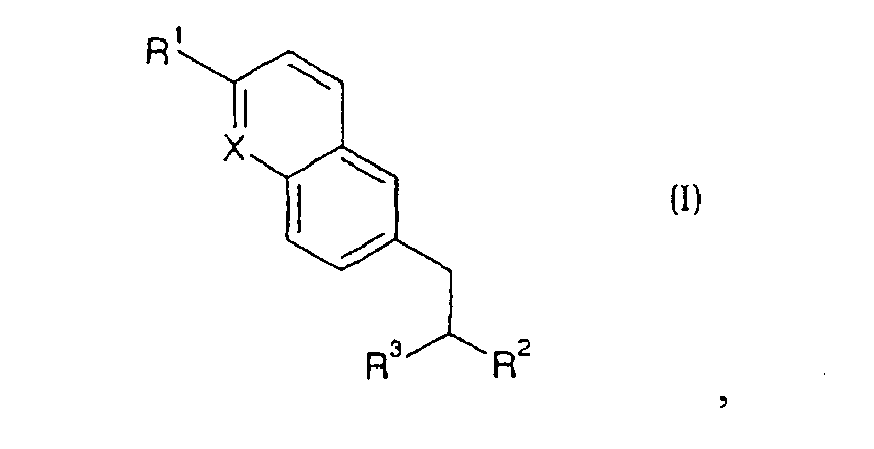 X N oder CH ist;R1 C3-18-Cycloalkyl, abgeleitet von einem gesättigten cyclischen oder polycyclischen Kohlenwasserstoff, das gegebenenfalls substituiert sein kann durch eine oder mehrere Komponenten, ausgewählt aus nicht-cyclischem C1-6-Alkyl und C3-8-Cycloalkyl oder aus der Gruppe, bestehend aus Halogen, Hydroxy, Thiol, Amino, Nitro, Cyano, einem Acylderivat, einem Sulfonylderivat, einem Sulfinylderivat, Alkylamino, Carboxy, Ester, Ether, Amido, Azido, Cycloalkyl, Sulfonsäure, Sulfonamid, einem Thioderivat, Esteroxy, Amidooxy, einem Heterocyclus, Vinyl, C1-6-Alkoxy, C6-10-Aryloxy und C6-10-Aryl, oder
ein Aryl aus 1 - 3 aromatischen Kohlenwasserstoffringen, gegebenenfalls substituiert durch 1. bis 5 Substituenten, unabhängig ausgewählt aus Halogen, Hydroxy, Thiol, Amino, Nitro, Cyano, einem Acylderivat, einem Sulfonylderivat, einem Sulfinylderivat, Alkylamino, Carboxy, Ester, Ether, Amido, Azido, C1-6-Alkyl, C1-6-Halogenalkyl, C3-8-Cycloalkyl, Sulfonsäure, Sulfonamid, einem Thioderivat, Esteroxy, Amidooxy, einem Heterocyclus, Vinyl, C1-6-Alkoxy, C6-10-Aryloxy oder C6-10-Aryl, worin zwei oder mehr Substituenten einen Ring bilden können, der an die Arylkomponente angelagert ist, oder
ein Heterocyclus, umfassend eine aromatische oder nicht-aromatische cyclische Alkyl-, Alkenyl- oder Alkinylkomponente, der mindestens ein O-, S- und/oder N-Atom aufweist, das die carbocyclische Ringstruktur unterbricht, und gegebenenfalls kann einer der Kohlenstoffe der carbocyclischen Ringstruktur durch ein Carbonyl ersetzt sein, in den Heterocyclen, die ein S-Atom umfassen, kann das S-Atom durch ein Sulfoxid oder ein Sulfon ersetzt sein, oder
ein Aralkyl, in dem die Arylgruppe mit dem Rest des Moleküls durch gerade, verzweigte oder cyclische C1-12-Alkyle oder gerade oder verzweigte C2-12-Alkenylen- oder -Alkinylengruppen verknüpft ist, oder
ein Heterocyclus-alkyl, in dem die Heterocyclusgruppe mit dem Rest des Moleküls durch gerade, verzweigte oder cyclische C1-12-Alkylen- oder gerade oder verzweigte C2-12-Alkenylen oder -Alkinylengruppen verknüpft ist, oder
ein Oxyderivat, definiert als ein O, verknüpft mit einem Amido, Alkyl, Alkenyl, Alkinyl, Acyl, Ester, Ether, Aryl, Aralkyl, einem Heterocyclus oder einer Heterocyclus-alkyl-Komponente;
oder eine Gruppe der Formel R2 -NR4R5, -OR4 oder -C(=O)NR5R6 ist;R3 Tetrazol, -CN, -CH2OH oder -CO-R7 ist;R4 H, -G1-R8 oder eine Gruppe der Formel:
 R3 H, C1-4-Alkyl ist; oder -NR4R5 einen Heterocyclus, umfassend eine aromatische oder nicht-aromatische cyclische Alkyl-, Alkenyl- oder Alkinylkomponente, der mindestens ein O-, S- und/oder N-Atom aufweist, das die carbocyclische Ringstruktur unterbricht, und gegebenenfalls kann einer der Kohlenstoffe der carbocyclischen Ringstruktur durch ein Carbonyl ersetzt sein, in den Heterocyclen, die ein S-Atom umfassen, kann das S-Atom durch ein Sulfoxid oder ein Sulfon ersetzt sein, oder -N=CR9R10 darstellt;R6 ein Aryl aus 1 - 3 aromatischen Kohlenwasserstoffringen, gegebenenfalls substituiert durch 1 bis 5 Substituenten, unabhängig ausgewählt aus Halogen, Hydroxy, Thiol, Amino, Nitro, Cyano, einem Acylderivat, einem Sulfonylderivat, einem Sulfinylderivat, Alkylamino, Carboxy, Ester, Ether, Amido, Azido, C1-6-Alkyl, C1-6-Halogenalkyl, C3-8-Cycloalkyl, Sulfonsäure, Sulfonamid, einem Thioderivat, Esteroxy, Amidooxy, einem Heterocyclus, Vinyl, C1-6-Alkoxy, C6-10-Aryloxy oder C6-10-Aryl, worin zwei oder mehr Substituenten einen Ring bilden können, der an die Arylkomponente angelagert ist, oder
ein Heterocyclus, umfassend eine aromatische oder nicht-aromatische cyclische Alkyl-, Alkenyl- oder Alkinylkomponente, wie vorstehend definiert, der mindestens ein O-, S- und/oder N-Atom aufweist, das die carbocyclische Ringstruktur unterbricht, und gegebenenfalls kann einer der Kohlenstoffe der carbocyclischen Ringstruktur durch ein Carbonyl ersetzt sein, in den Heterocyclen, die ein S-Atom umfassen, kann das S-Atom durch ein Sulfoxid oder ein Sulfon ersetzt sein; oder
ein C3-18-Cycloalkyl, abgeleitet von einem gesättigten, cyclischen oder polycyclischen Kohlenwasserstoff, der gegebenenfalls substituiert sein kann durch eine oder mehrere Komponenten, ausgewählt aus nicht-cyclischem C1-6-Alkyl und C3-8-Cycloalkyl oder aus der Gruppe, bestehend aus Halogen, Hydroxy, Thiol, Amino, Nitro, Cyano, einem Acylderivat, einem Sulfonylderivat, einem Sulfinylderivat, Alkylamino, Carboxy, Ester, Ether, Amido, Azido, Cycloalkyl, Sulfonsäure, Sulfonamid, einem Thioderivat, Esteroxy, Amidooxy, einem Heterocyclus, Vinyl, C1-6-Alkoxy, C6-10-Aryloxy und C6-10-Aryl, oder
ein Aralkyl, in dem die Arylgruppe an den Rest des Moleküls durch gerade, verzweigte oder cyclische C1-12, Alkylen- oder gerade oder verzweigte C2-12-Alkenylen- oder -Alkinylengruppen gebunden ist, ist;R7 Hydroxy, Amino, Hydroxylamino, ein Oxyderivat, definiert als ein O, verknüpft mit einem Amido, Alkyl, Alkenyl, Alkinyl, Acyl, Ester, Ether, Aryl, Aralkyl, einem Heterocyclus oder einer Heterocyclus-alkyl-Komponente, oder ein Aminoderivat ist; G1 CO, CH2, SO2 ist;R8 ein Aryl aus 1 - 3 aromatischen Kohlenwasserstoffringen, gegebenenfalls substituiert durch 1 bis 5 Substituenten, unabhängig ausgewählt aus Halogen, Hydroxy, Thiol, Amino, Nitro, Cyano, einem Acylderivat, einem Sulfonylderivat, einem Sulfinylderivat, Alkylamino, Carboxy, Ester, Ether, Amido, Azido, C1-6-Alkyl, C1-6-Halogenalkyl, C3-8-Cycloalkyl, Sulfonsäure, Sulfonamid, einem Thioderivat, Esteroxy, Amidooxy, einem Heterocyclus, Vinyl, C1-6-Alkoxy, C6-10-Aryloxy oder C6-10-Aryl, worin zwei oder mehr Substituenten einen Ring bilden können, der an die Arylkomponente angelagert ist, oder
ein Heterocyclus, umfassend eine aromatische oder nicht-aromatische cyclische Alkyl-, Alkenyl- oder Alkinylkomponente, wie vorstehend definiert, der mindestens ein O-, S- und/oder N-Atom aufweist, das die carbocyclische Ringstruktur unterbricht, und gegebenenfalls kann einer der Kohlenstoffe der carbocyclischen Ringstruktur durch ein Carbonyl ersetzt sein, in den Heterocyclen, die ein S-Atom umfassen, kann das S-Atom durch ein Sulfoxid oder ein Sulfon ersetzt sein, oder
ein C3-18-Cycloalkyl, abgeleitet von einem gesättigten, cyclischen oder polycyclischen Kohlenwasserstoff, der gegebenenfalls substituiert sein kann durch eine oder mehrere Komponenten, ausgewählt aus nicht-cyclischem C1-6-Alkyl und C3-8-Cycloalkyl oder aus der Gruppe, bestehend aus Halogen, Hydroxy, Thiol, Amino, Nitro, Cyano, einem Acylderivat, einem Sulfonylderivat, einem Sulfinylderivat, Alkylamino; Carboxy, Ester, Ether, Amido, Azido, Cycloalkyl, Sulfonsäure, Sulfonamid, einem Thioderivat, Esteroxy, Amidooxy, einem Heterocyclus, Vinyl, C1-6-Alkoxy, C6-10-Aryloxy und C6-10-Aryl, oder
ein Aralkyl, in dem die Arylgruppe an den Rest des Moleküls durch gerade, verzweigte oder cyclische C1-12-Alkylen- oder gerade oder verzweigte C2-12-Alkenylen- oder-Alkinylengruppen gebunden ist, oder -NH-Aryl ist;R9 ein Aryl aus 1 - 3 aromatischen Kohlenwasserstoffringen, gegebenenfalls substituiert durch 1 bis 5 Substituenten, unabhängig ausgewählt aus Halogen, Hydroxy, Thiol, Amino, Nitro, Cyano, einem Acylderivat, einem Sulfonylderivat, einem Sulfinylderivat, Alkylamino, Carboxy, Ester, Ether, Amido, Azido, C1-6-Alkyl, C1-6-Halogenalkyl, C3-8-Cycloalkyl, Sulfonsäure, Sulfonamid, einem Thioderivat, Esteroxy, Amidooxy, einem Heterocyclus, Vinyl, C1-6-Alkoxy, C6-10-Aryloxy oder C6-10-Aryl, worin zwei oder mehr Substituenten einen Ring bilden können, der an die Arylkomponente angelagert ist, ist; undR10 Ether ist;
mit der Maßgabe, daß, wenn X CH ist, dann R1 Aryl, Heteroaryl, Aralkyl, Heterocyclus-alkyl oder eine Gruppe der Formel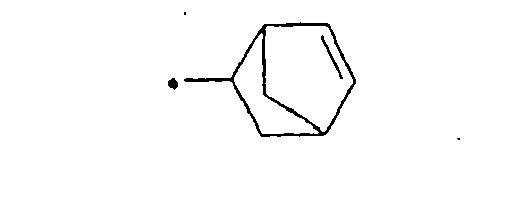
und mit der Maßgabe, daß, wenn X CH ist, R1 Cycloalkyl ist, R2 -NR4R5 ist, R3 -CO-R7 ist, R4 H oder -G1-R8 ist, R5 H, C1-4-Alkyl ist, G1 CO, CH2, SO2 ist, R8 ein gegebenenfalls substituiertes Phenyl, Cycloalkyl oder -NH-Phenyl (gegebenenfalls substituiert) ist, dann R7 weder ein Oxyderivat der Formel -O-CHRbRc, worin Rb H, C1-6-Alkyl oder ein gegebenenfalls substituiertes Phenyl ist und Rc ein gegebenenfalls substituiertes Phenyl ist, noch ein Aminoderivat der Formel -NRd-CHRbRc ist, worin Rb und Rc die gleichen Definitionen wie oben beschrieben haben und Rd H oder C1-6-Alkyl ist. - Verbindung nach Anspruch 1, wobei
R1 Cycloalkylaryl oder ein aromatischer Heterocyclus oder ein Aralkyl ist;
R2 -NR4R5 ist;
R3 -CO-R7 ist;
R4 -G1-R8 ist,
R5 H oder C1-4-Alkyl ist;
R7 Hydroxy, Amino, Hydroxylamino oder ein Oxyderivat ist, definiert als ein O, verknüpft mit einem Amido, Alkyl, Alkenyl, Alkinyl, Acyl, Ester, Ether, Aryl, Aralkyl, einem Heterocyclus oder einer Heterocyclus-alkyl-Komponente;
G1 CO ist und
R8 Aryl, ein Heterocyclus, Cycloalkyl oder -NH-Aryl ist. - Verbindung nach Anspruch 2, wobei
R1 2,6-Dichlorphenyl, 2,4-Dichlorphenyl, 2,6-Dimethoxyphenyl, 2-Nitrophenyl, 2-(Trifluormethyl)phenyl, 2-Bromphenyl, 2-(1,3-Benzodioxol-5-yl)-1-methylethyl, 2-Methoxyphenyl, 4-(Methylsulfonyl)phenyl, 5-Chlor-1-methyl-3-(trifluormethyl)-1H-pyrazol-4-yl, 2,6-Dimethylphenyl, 2-Chlor-6-nitrophenyl, 3,5-Dichlor-4-pyridinyl, 2-Chlor-6-fluorphenyl, 2-Methoxy-1-naphthyl, 2-Mesityl ist;
R2 -NHR4 ist, worin R4 -G1-R8 ist;
R7 Hydroxy, Amino oder C1-4-Alkyloxy ist;
G1 CO ist und
R8 2,6-Dichlorphenyl, 1-Carboxy-1,2,2-trimethyl-3-cyclopentyl, 1-((4-Methylphenyl)sulfonyl)-2-piperidinyl, 1-[(4-Methylphenyl)sulfonyl]octahydro-1H-indol-2-yl, 1-(4-Chlorphenyl)-cyclopentyl, 2-Chlor-4-(methylsulfonyl)phenyl, 2-Chlor-6-methylphenyl, 3-Acetyl-1,3-thiazolidin-4-yl, 2,6-Dimethoxyphenyl, 2,6-Dimethylphenyl, 2,6-Difluorphenyl, 2-Chlor-4-(methylsulfonyl)phenyl, 1-(Methylsulfonyl)-2-piperidinyl, 2-Methyltetrahydro-2-furanyl, 1-Acetyl-2-pyrrolidinyl, 1-(Phenylsulfonyl)-2-pyrrolidinyl, 2,4-Dichlor-6-methyl-3-pyridinyl, 1-Benzyl-5-oxo-2-pyrrolidinyl, 3-Acetyl-1,1-dioxido-1,3-thiazolidin-4-yl oder 1-[2-(Diethylamino)ethyl]cyclopentyl ist. - Verbindung nach Anspruch 3, wobei
R1 2,6-Dichlorphenyl, 2,6-Dimethoxyphenyl, 3,5-Dichlor-4-pyridinyl, 2-Nitrophenyl, 2-Chlor-6-fluorphenyl, 2-Methoxy-1-naphthyl oder 2-Chlor-6-nitrophenyl ist;
R2 -NH-C(=O)-R8 ist;
R7 Hydroxy oder C1-4-Alkyloxy ist; und
R8 2,6-Dichlorphenyl, 1-Carboxy-1,2,2-trimethyl-3-cyclopentyl, 1-((4-Methylphenyl)sulfonyl)-2-piperidinyl, 1-[(4-Methylphenyl)sulfonyl]octahydro-1H-indol-2-yl, 1-(4-Chlorphenyl)-cyclopentyl, 2-Chlor-4-(methylsulfonyl)phenyl, 2-Chlor-6-methylphenyl, 1-(Phenylsulfonyl)-2-pyrrolidinyl, 2,4-Dichlor-6-methyl-3-pyridinyl oder 1-Benzyl-5-oxo-2-pyrrolidinyl ist. - Verbindung nach einem der Ansprüche 1 bis 4, wobei, wenn das Kohlenstoffatom, an das R2 und R3 gebunden sind, asymmetrisch ist, es in "S"-Konfiguration vorliegt.
- Verbindung nach Anspruch 1, ausgewählt aus der Gruppe, bestehend aus Methyl(2S)-2-[(2,6-dichlorbenzoyl)amino]-3-[2-(2,6-dichlorphenyl)-6-chinolinyl]propanoat; 2-[(2,6-Dichlorbenzoyl)amino]-3-[2-(2,6-dichlorphenyl)-6-chinolinyl]propionsäure; (2S)-2-[(2,6-Dichlorbenzoyl)amino]-3-[2-(2,6-dichlorphenyl)-6-chinolinyl]propionsäure; 2-({[(4R)-3-Acetyl-1,3-thiazolidin-4-yl]carbonyl}amino)-3-[2-(2,6-dichlorphenyl)-6-chinolinyl]propionsäure; 2-[(2,6-Dichlorbenzoyl)amino]-3-[2-(2,6-dimethoxyphenyl)-6-chinolinyl]propionsäure; 3-[2-(2,6-Dichlorphenyl)-6-chinolinyl]-2-[(2,6-dimethoxybenzoyl)amino]propionsäure; 3-[2-(2,6-Dichlorphenyl)-6-chinolinyl]-2-[(2,6-dimethylbenzoyl)amino]propionsäure; 2-[(2,6-Dichlorbenzoyl)amino]-3-[2-(4-pyridinyl)-6-chinolinyl]propionsäure; 2-[(2,6-Dichlorbenzoyl)amino]-3-[2-(3,5-dichlor-4-pyridinyl)-6-chinolinyl]propionsäure; Methyl-2-[(2,6-dichlorbenzoyl)amino]-3-[2-(3,5-dichlor-4-pyridinyl)-6-chinolinyl]propanoat; 3-[2-(2,6-Dichlorphenyl)-6-chinolinyl]-2-[(2,6-difluorbenzoyl)amino]propionsäure; Methyl(2S)-2-{[2-chlor-4-(methylsulfonyl)benzoyl]amino}-3-[2-(2,6-dichlorphenyl)-6-chinolinyl]propanoat; (2S)-2-[(2-Chlor-6-methylbenzoyl)amino]-3-[2-(2,6-dichlorphenyl)-6-chinolinyl]propionsäure; (2S)-2-{[2-Chlor-4-(methylsulfonyl)benzoyl]amino}-3-[2-(2,6-dichlorphenyl)-6-chinolinyl]propionsäure; 2-({[(2,6-Dichlorphenyl)amino]carbonyl}amino)-3-[2-(2,6-dichlorphenyl)-6-chinolinyl]propionsäure; (2S)-2-({[1-(4-Chlorphenyl)cyclopentyl]carbonyl}-amino)-3-[2-(2,6-dichlorphenyl)-6-chinolinyl]propionsäure; 3-[2-(2,6-Dichlorphenyl)-6-chinolinyl]-2-[({(2S)-1-[(4-methylphenyl)sulfonyl]piperidinyl}carbonyl)amino]propionsäure; (1R,3S)-3-[({1-Carboxy-2- [2-(2, 6-dichlorphenyl)-6-chinolinyl]ethyl}amino)carbonyl]-1,2,2-trimethylcyclopentancarbonsäure; (2S)-2-[(2,6-Difluorbenzoyl)amino]-3-[2-(2-nitrophenyl)-6-chinolinyl]propionsäure; (2S)-3-[2-(2-Chlor-6-fluorphenyl)-6-chinolinyl]-2-[(2,6-difluorbenzoyl)amino]propionsäure; (2S)-2-[(2,6-Difluorbenzoyl)amino]-3-[2-(2-methoxy-1-naphthyl)-6-chinolinyl]propionsäure; (2S)-2-[(2,6-Diclilorbenzoyl)amino]-3-[2-(2-nitrophenyl)-6-chinolinyl]propionsäure; (2S)-2-[(2,6-Dichlorbenzoyl)amino]-3-{2-[2-(trifluormethyl)phenyl]-6-chinolinyl}propionsäure; (2S)-3-[2-(2-Chlor-6-fluorphenyl)-6-chinolinyl]-2-[(2,6-dichlorbenzoyl)amino]propionsäure; (2S)-2-[(2,6-Dichlorbenzoyl)-amino]-3-[2-(2-methoxy-1-naphthyl)-6-chinolinyl]propionsäure; (2S)-2-[(2-Chlor-6-methylbenzoyl)amino]-3-[2-(2-nitrophenyl)-6-chinolinyl]propionsäure; (2S)-2-[(2-Chlor-6-methylbenzoyl)ammo]-3-{2-[2-(trifluormethyl)phenyl]-6-chinolinyl}propionsäure; (2S)-3-[2-(2-Chlor-6-fluorphenyl)-6-chinolinyl]-2-[(2-chlor-6-methylbenzoyl)amino]propionsäure; (2S)-2-[(2-Chlor-6-methylbenzoyl)amino]-3-[2-(2-methoxy-1-naphthyl)-6-chinoliyl]-propionsäure; (2S)-2-{[2-Chlor-4-(methylsulfonyl)benzoyl]amino}-3-{2-[2-nitrophenyl]-6-chinolinyl}propionsäure; (2S)-2-{[2-Chlor-4-(methylsulfonyl)benzoyl]amino}-3-{2-[2-(ti-i-fluormethyl)phenyl]-6-chinolinyl}propionsäure; (2S)-3-[2-(2-Chlor-6-fluorphenyl)-6-chinolinyl]-2-{[2-chlor-4-(methylsulfonyl)benzoyl]amino}propionsäure; (2S)-2-{[2-Chlor-4-(methylsulfonyl)benzoyl]amino}-3-[2-(2-methoxy-1-naphthyl)-6-chinolinyl]propionsäure; (2S)-2-({[(4R)-3-Acetyl-1,3-thiazolidin-4-yl]carbonyl}amino)-3-[2-(2,6-dimethoxyphenyl)-6-chinolinyl]propionsäure; 2-[({(2S,3aS,7aS)-1-[(4-Methylphenyl)sulfonyl]octahydro-1H-indol-2-yl}carbonyl)amino]-3-[2-(2,6-dichlorphenyl)-6-chinolinyl]propionsäure; Methyl-(2S)-3-[2-(2,6-dichlorphenyl)-6-chinolinyl]-2-({[(2R)-2-methyltetrahydro-2-furanyl]carbonyl}amino)propanoat; (2S)-3-[2-(2,6-Dichlorphenyl)-6-chinolinyl]-2-({[(2S)-2-methyltetrahydro-2-furanyl]carbonyl}amino)propionsäure; (2S)-3-[2-(2,6-Dichlorphenyl)-6-chinolinyl]-2-({[(2R)-2-methyltetrahydro-2-furanyl]carbonyl}amino)propionsäure; 2,6-Dichlor-N-{1- {[2-(2,6-dichlorphenyl)-6-chinolinyl]methyl}-2-(hydroxyamino)-2-oxoethyl]benzamid; N-(2-Amino-1-{[2-(2,6-dichlorphenyl)-6-chinolinyl]methyl}-2-oxoethyl)-2,6-dichlorbenzamid; Methyl-(2S)-3-[2-(2,6-dichlorphenyl)-6-chinolinyl]-2-({[(2S)-1-(methylsulfonyl)piperidinyl]carbonyl}amino)propanoat; (2S)-3-[2-(2,6-Dichlorphenyl)-6-chinolinyl]-2-({[(2S)-1-(methylsulfonyl)piperidinyl]carbonyl}amino)propionsäure; ({2-[(2,6-Dichlorbenzoyl)amino]-3-[2-(2,6-dichlorphenyl)-6-chinolinyl]pr opanoyl}oxy)methylpivalat; 2-[({(2S,3aS,7aS)-1-[(4-Methylphenyl)sulfonyl] octahydro-1H-indol-2-yl}carbonyl)amino]-3-[2-(2-chlorphenyl)-6-chinolinyl]propionsäure; 3-[2-(2-Bromphenyl)-6-chinolinyl]-2-[(2,6-dichlorbenzoyl)amino]propionsäure; 3-[2-(2-Bromphenyl)-6-chinolinyl]-2-[({(2S)-1-[(4-methylphenyl)sulfonyl]piperidinyl}carbonyl)amino]propionsäure; 2-[({(2S,3aS,7aS)-1-[(4-Methylphenyl)sulfonyl]octahydro-1H-indol-2-yl}carbonyl)amino]-3-[2-(2-bromphenyl)-6-chinolinyl]propionsäure; 3-{2-[2-Chlor-5-(trifluromethyl)phenyl]-6-chinolinyl}-2-[(2,6-dichlorbenzoyl)amino]propionsäure; 2-[(2-Chlor-6-methylbenzoyl)-amino]-3-{2-[2-chlor-5-(trifluormethyl)phenyl]-6-chinolinyl}propionsäure; 2-{[2-Chlor-4-(methylsulfonyl)benzoyl]amino}-3-{2-[2-chlor-5-(trifluoromethyl)phenyl]-6-chinolinyl}propionsäure; 3-{2-[2-Chlor-5-(trifluormethyl)phenyl]-6-chinolinyl}-2-[({(2S)-1-[(4-methylphenyl)sulfonyl]piperidinyl}carbonyl)amino]propionsäure; 2-[({(2S,3aS,7aS)-1-[(4-Methylphenyl)sulfonyl]octahydro-1H-indol-2-yl}carbonyl)amino]3-{2-[2-Chlor-5-(trifluormethyl)phenyl]-6-chinolinyl}propionsäure; 2-({[1-(4-Chlorphenyl)cyclopentyl]carbonyl}amino)-3-[2-(2-nitrophenyl)-6-chinolinyl]propionsäure; 2-[(2,6-Dimethoxybenzoyl)amino]-3-[2-(2-nitrophenyl)-6-chinolinyl]propionsäure; 2-[(2-Chlor-6-methylbenzoyl)amino]-3-(2-cyclohexyl-6-chinolinyl)propionsäure; 3-{2-[2-(1,3-Benzodioxol-5-yl)-1-methylethyl]-6-chinolinyl}-2-[(2-chlor-6-methylbenzoyl)amino]propionsäure; 3-{2-[2-(1,3-Benzodioxol-5-yl)-1-methylethyl]-6-chinolinyl}-2-{[2-chlor-4-(methylsulfonyl)benzoyl]amino}propionsäure; 2-({[1-(4-Chlorphenyl)cyclopentyl]carbonyl}amino)-3-[2-(2-methoxyphenyl)-6-chinolinyl]propionsäure; 2-({[1-(4-Chlorphenyl)cyclopentyl]carbonyl}amino)-3-[2-(2,6-dimethoxyphenyl)-6-chinolinyl]propionsäure; 2-[(2-Chlor-6-methylbenzoyl)amino]-3-[2-(2-methoxyphenyl)-6-chinolinyl]propionsäure; 2-[(2-Chlor-6-methylbenzoyl)amino]-3-[2-(2,3-dimethoxyphenyl)-6-chinolinyl]propionsäure; 2-{[2-Chlor-4-(methylsulfonyl)benzoyl]amino}-3-[2-(2-methoxyphenyl)-6-chinolinyl]propionsäure; 2-{[2-Chlor-4-(methylsulfonyl)benzoyl]-amino}-3-[2-(2,3-dimethoxyphenyl)-6-chinolinyl]propionsäure; 2-{[2-Chlor-4-(methylsulfonyl)benzoyl]amino}-3-[2-(2,6-dimethoxyphenyl)-6-chinolinyl]propionsäure; 2-[(2,6-Dichlorbenzoyl)amino]-3-[2-(2,4-dichlorphenyl)-6-chinolinyl]propionsäure; 2-[(2,6-Dichlorbenzoyl)-amino]-3-{2-[4-(methylsulfonyl)phenyl]-6-chinolinyl}propionsäure; 3-[2-(2-Chlor-6-fluorphenyl)-6-chinolinyl]-2-({[1-(4-chlorphenyl)cyclopentyl]carbonyl}amino)propionsäure; 2-({[1-(4-Chlorphenyl)cyclopentyl]carbonyl}amino)-3-{2-[2-(trifluonnethyl)phenyl]-6-chinolinyl}propionsäure; 3-[2-(2,4-Dichlorphenyl)-6-chinolinyl]-2-[(2,6-dimethoxybenzoyl)amino]propionsäure; 2-[(2,6-Dimethoxybenzoyl)amino]-3-{2-[2-(trifluormethyl)phenyl]-6-chinolinyl} propionsäure; 2-[(2,6-Difluorbenzoyl)amino]-3-{2-[4-(methylsulfonyl)phenyl]-6-chinolinyl}propionsäure; 2-[(2-Chlor-6-methylbenzoyl)amino]-3-(2-mesityl-6-chinolinyl)propionsäure; 2-[(2-Chlor-6-methylbenzoyl)amino]-3-[2-(2,4-dichlorphenyl)-6-chinolinyl]propionsäure; 2-{[2-Chlor-4-(methylsulfonyl)benzoyl]amino}-3-(2-mesityl-6-chinolinyl)propionsäure; 2-{[2-Chlor-4-(methylsulfonyl)benzoyl]amino}-3-[2-(2,4-dichlorphenyl)-6-chinolinyl]propionsäure; 2-{[(1-Acetyl-2-pyrrolidinyl)carbonyl]amino}-3-[2-(2,4-dichlorphenyl)-6-chinolinyl]propionsäure; (2S)-2-[(2,6-Dichlorbenzoyl)amino]-3-[2-(2,6-dimethylphenyl)-6-chinolinyl]propionsäure; 2-({[1-(4-Chlorphenyl)cyclopentyl]carbonyl}amino)-3-[2-(2,3-difluorphenyl)-6-chinolinyl]propionsäure; 2-[(2,6-Dimethoxybenzoyl)amino]-3-[2-(2-methoxy-1-naphthyl)-6-chinolinyl]propionsäure; 2-[(2-Chlor-6-methylbenzoyl)amino]-3-{2-[5-chlor-1-methyl-3-(trifluormethyl)-1H-pyrazol-4-yl]-6-chinolinyl}propionsäure ;2-{[2-Chlor-4-(methylsulfonyl)benzoyl]amino}-3-{2-[5-chlor-1-methyl-3-(trifluormethyl)-1H-pyrazol-4-yl]-6-chinolinyl}propionsäure; (2S)-2-{[2-Chlor-4-(methylsulfonyl)benzoyl]amino}-3-[2-(2,6-dimethylphenyl)-6-chinolinyl]propionsäure; 2-[(2,6-Dichlorbenzoyl)amino]-3-[2-(2,6-difluorphenyl)-6-chinolinyl]propionsäure; 3-[2-(2-Chlor-6-nitrophenyl)-6-chinolinyl]-2-[(2,6-dichlorbenzoyl)amino]propionsäure; 3-[2-(2-Chlor-6-nitrophenyl)-6-chinolinyl]-2-[(2,6-dimethoxybenzoyl)amino]propionsäure; 2-[(2-Chlor-6-methylbenzoyl)amino]-3-[2-(2,6-difluorphenyl)-6-chinolinyl]propionsäure; 2-[(2-Chlor-6-methylbenzoyl)amino]-3-[2-(2-chlor-6-nitrophenyl)-6-chinolinyl]propionsäure; 2-[(2,6-Dichlorbenzoyl)amino]-3-[6-(2,6-dimethoxyphenyl)-2-naphthyl]propionsäure; (-)-Methyl-2-[(2,6-dichlorbenzoyl)amino]-3-[6-(2,6-dimethoxyphenyl)-2-naphthyl]propanoat; (-)-2-[(2,6-Dichlorbenzoyl)amino]-3-[6-(2,6-dimethoxyphenyl)-2-naphthyl]propionsäure; (+)-2-[(2,6-Dichlorbenzoyl)amino]-3-[6-(2,6-dimethoxyphenyl)-2-naphthyl]propionsäure; 3-[6-(2,6-Dimethoxyphenyl)-2-naphthyl]-2-({[(2S)-1-(phenylsulfonyl)pyrrolidinyl]carbonyl}amino)propionsäure; Methyl-3-[6-(2,6-dimethoxyphenyl)-2-naphthyl]-2-({[(2S)-1-(phenylsulfonyl)pyrrolidinyl]carbonyl}amino)propanoat; Methyl-(2S)-2-{[(2,4-dichlor-6-methyl-3-pyridinyl)carbonyl]amino}-3-[2-(2,6-dichlorphenyl)-6-chinolinyl]propanoat; (1R,3S)-3-{[((1S)-1-{[2-(2,6-Dichlorphenyl)-6-chinolinyl]-methyl}-2-methoxy-2-oxoethyl)amino]carbonyl}-1,2,2-trimethylcyclopentancarbonsäure; Methyl-2-[(2,6-dichlorbenzoyl)amino]-3-[2-(2,6-dimethoxyphenyl)-6-chinolinyl]propanoat; (1R,3S)-3-[({(1S)-1-Carboxy-2-[2-(2,6-dichlorphenyl)-6-chinolinyl]ethyl}amino)carbonyl]-1,2,2-trimethylcyclopentancarbonsäure; (2S)-2-({[(4R)-3-Acetyl-1,1-dioxido-1,3-thiazolidin-4-yl]carbonyl}amino)-3-[2-(2,6-dichlorphenyl)-6-chinolinyl]propionsäure; (2S)-2-{[(2,4-Dichlor-6-methyl-3-pyridinyl)carbonyl]amino}-3-[2-(2,6-dichlorphenyl)-6-chinolinyl]propionsäure; Methyl-(2S)-2-[(2,6-dichlorbenzoyl)amino]-3-[2-(2,6-dimethoxyphenyl)-6-chinolinyl]-propanoat; Methyl-(2S)-2-[(2,6-dichlorbenzoyl)amino]-3-[2-(2,6-dimethylphenyl)-6-chinolinyl]propanoat; (2S)-2-[(2,6-Dichlorbenzoyl)amino]-3-[2-(2,6-dimethoxyphenyl)-6-chinolinyl]propionsäure; (2R)-2-[(2,6-Dichlorbenzoyl)amino]-3-[2-(2,6-dimethoxyphenyl)-6-chinolinyl]propionsäure; (2S)-3-[2-(2,6-Dimethoxyphenyl)-6-chinolinyl]-2-({[(2R)-2-methyltetrahydro-2-furanyl]carbonyl}amino)propionsäure; 2-{[(1-Aminocyclopentyl)carbonyl]amino}-3-[2-(2,6-dichlorphenyl)-6-chinolinyl]propionsäure; (2S)-3-[2-(2,6-Dichlorphenyl)-6-chinolinyl]-2-[({ 1-[2-(diethylamino)ethyl]cyclopentyl}carbonyl)amino]propionsäure; (2S)-2-[(2,6-Dichlorbenzoyl)amino]-3-[2-(3,5-dichlor-4-pyridinyl)-6-chinolinyl]propionsäure; (2S)-3-[2-(3,5-Dichlor-4-pyridinyl)-6-chinolinyl]-2-({[(2R)-2-methyltetrahydro-2-furanyl]carbonyl}amino)propionsäure; Methyl-3-[2-(2,6-dichlorphenyl)-6-chinolinyl]-2-({[(2S)-1-(phenylsulfonyl)pyrrolidinyl]carbonyl}amino)propanoat; Methyl(2S)-2-({[1-(4-chlorphenyl)cyclopentyl]carbonyl}amino)-3-[2-(3,5-dichlor-4-pyridinyl)-6-chinolinyl]propanoat; (28)-2-({[1-(4-Chlorphenyl)cyclopentyl]carbonyl}amino)-3-[2-(3,5-dichlor-4-pyridinyl)-6-chinolinyl]propionsäure; (2S)-2-({[(2S)-1-Benzyl-5-oxopyrrolidinyl]carbonyl}amino)-3-[2-(2,6-dichlorphenyl)-6-chinolinyl]propionsäure und 3-[2-(2,6-Dichlorphenyl)-6-chinolinyl]-2-({[(2S)-1-(phenylsulfonyl)pyrrolidinyl]carbonyl}amino)propionsäure.
- Verbindung nach Anspruch 1, ausgewählt aus der Gruppe, bestehend aus (2S)-2-[(2,6-Dichlorbenzoyl)amino]-3-[2-(2,6-dichlorphenyl)-6-chinolinyl]propionsäure; (2S)-2-({[(2S)-1-Benzyl-5-oxopyrrolidinyl]carbonyl}amino)-3-[2-(2,6-dichlorphenyl)-6-chinolinyl]propionsäure und (-)-2-[(2,6-Dichlorbenzoyl)amino]-3-[6-(2,6-dimethoxyphenyl)-2-naphthyl]propionsäure.
- Pharmazeutische Zusammensetzung, umfassend als Wirkstoff eine therapeutisch wirksame Menge einer Verbindung nach einem der Ansprüche 1 bis 7 und ein pharmazeutisch akzeptables Adjuvans, Verdünnungsmittel oder einen pharmazeutisch akzeptablen Träger.
- Verbindung nach einem der Ansprüche 1 bis 7 zur Verwendung als ein Arzneimittel.
- Verwendung einer Verbindung nach einem der Ansprüche 1 bis 7 bei der Herstellung eines Medikaments zur Behandlung von VLA-4-abhängigen Entzündungskrankheiten.
- Verwendung einer Verbindung nach einem der Ansprüche 1 bis 7 zur Herstellung eines Medikaments zur Behandlung von Asthma, allergischer Rhinitis, Sinusitis, Konjunktivitis, Lebensmittelallergie, entzündlichen Hauterkrankungen, einschließlich Dermatitis, Psoriasis, Urtikaria, Pruritus und Ekzem, Rheumatoidarthritis, entzündlicher Darmerkrankung, einschließlich der Crohn-Krankheit und Colitis ulcerosa, multipler Sklerose und anderen Autoimmunstörungen und Atherosklerose.
- Synthesezwischenprodukte der Formel II
 R1 C3-18-Cycloalkyl, abgeleitet von einem gesättigten, cyclischen oder polycyclischen Kohlenwasserstoff, der gegebenenfalls substituiert sein kann durch eine oder mehrere Komponenten, ausgewählt aus nicht-cyclischem C1-6-Alkyl und C3-8-Cycloalkyl oder aus der Gruppe, bestehend aus Halogen, Hydroxy, Thiol, Amino, Nitro, Cyano, einem Acylderivat, einem Sulfonylderivat, einem Sulfinylderivat, Alkylamino, Carboxy, Ester, Ether, Amido, Azido, Cycloalkyl, Sulfonsäure, Sulfonamid, einem Thioderivat, Esteroxy, Amidooxy, einem Heterocyclus, Vinyl, C1-6-Alkoxy, C6-10-Aryloxy und C6-10-Aryl, oder
ein Aryl aus 1 - 3 aromatischen Kohlenwasserstoffringen, gegebenenfalls substituiert durch 1 bis 5 Substituenten, unabhängig ausgewählt aus Halogen, Hydroxy, Thiol, Amino, Nitro, Cyano, einem Acylderivat, einem Sulfonylderivat, einem Sulfinylderivat, Alkylamino, Carboxy, Ester, Ether, Amido, Azido, C1-6-Alkyl, C1-6-Halogenalkyl, C3-8-Cycloalkyl, Sulfonsäure, Sulfonamid, einem Thioderivat, Esteroxy, Amidooxy, einem Heterocyclus, Vinyl, C1-6-Alkoxy, C6-10-Aryloxy oder C6-10-Aryl, worin zwei oder mehr Substituenten einen Ring bilden können, der an die Arylkomponente angelagert ist, oder
ein Heterocyclus, umfassend eine aromatische oder nicht-aromatische cyclische Alkyl-, Alkenyl- oder Alkinylkomponente, der mindestens ein O-, S- und/oder N-Atom aufweist, das die carbocyclische Ringstruktur unterbricht, und gegebenenfalls kann einer der Kohlenstoffe der carbocyclischen Ringstruktur durch ein Carbonyl ersetzt sein, in den Heterocyclen, die ein S-Atom umfassen, kann das S-Atom durch ein Sulfoxid oder ein Sulfon ersetzt sein, oder
ein Aralkyl, in dem die Arylgruppe mit dem Rest des Moleküls durch gerade, verzweigte oder cyclische C1-12-Alkylen- oder gerade oder verzweigte C2-12-Alkenylen- oder -Alkinylengruppen verknüpft ist, oder
ein Heterocyclus-alkyl, in dem die Heterocyclusgruppe mit dem Rest des Moleküls durch gerade, verzweigte oder cyclische C1-12-Alkylen- oder gerade oder verzweigte C2-12-Alke-nylen- oder -Alkinylengruppen verknüpft ist, oder
eine Gruppe der Formel R4a R4 oder P ist,R4 H, -G1-R8 oder eine Gruppe der Formel
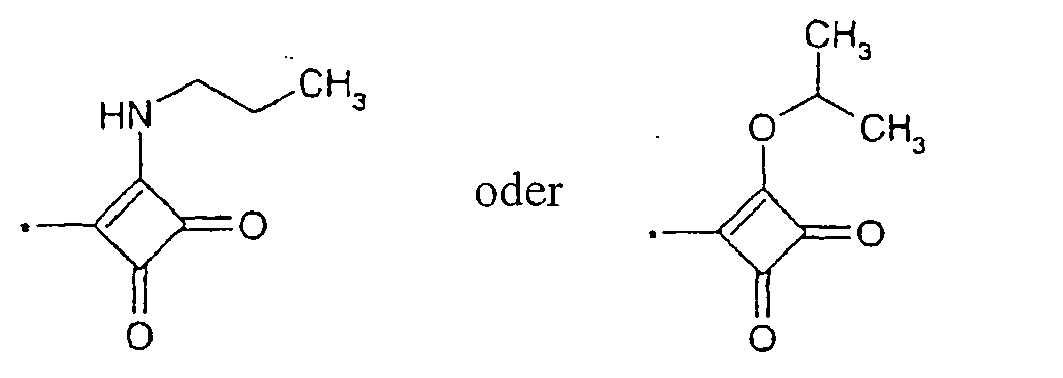 R7 Hydroxy oder ein Oxyderivat, definiert als ein O, verknüpft mit einem Amido, Alkyl, Alkenyl, Alkinyl, Acyl, Ester, Ether, Aryl, Aralkyl, einem Heterocyclus oder einer Heterocyclus-alkyl-Komponente, ist;G1 CO, CH2, SO2 ist;R8 ein Aryl aus 1 - 3 aromatischen Kohlenwasserstoffringen, gegebenenfalls substituiert durch 1 bis 5 Substituenten, unabhängig ausgewählt aus Halogen, Hydroxy, Thiol, Amino, Nitro, Cyano, einem Acylderivat, einem Sulfonylderivat, einem Sulfinylderivat, Alkylamino, Carboxy, Ester, Ether, Amido, Azido, C1-6-Alkyl, C1-6-Halogenalkyl, C3-8-Cycloalkyl, Sulfonsäure, Sulfonamid, einem Thioderivat, Esteroxy, Amidooxy, einem Heterocyclus, Vinyl, C1-6-Alkoxy, C6-10-Aryloxy oder C6-10-Aryl, worin zwei oder mehr Substituenten einen Ring bilden können, der an die Arylkomponente angelagert ist, oder
ein Heterocyclus, umfassend eine aromatische oder nicht-aromatische cyclische Alkyl-, Alkenyl- oder Alkinylkomponente, der mindestens ein O-, S- und/oder N-Atom aufweist, das die carbocyclische Ringstruktur unterbricht, und gegebenenfalls kann einer der Kohlenstoffe der carbocyclischen Ringstruktur durch ein Carbonyl ersetzt sein, in den Heterocyclen, die ein S-Atom umfassen, kann das S-Atom durch ein Sulfoxid oder ein Sulfon ersetzt sein, oder
ein C3-18-Cycloalkyl, abgeleitet von einem gesättigten cyclischen oder polycyclischen Kohlenwasserstoff, der gegebenenfalls substituiert sein kann durch eine oder mehrere Komponenten, ausgewählt aus nicht-cyclischem C1-6-Alkyl und C3-8-Cycloalkyl oder aus der Gruppe, bestehend aus Halogen, Hydroxy, Thiol, Amino, Nitro, Cyano, einem Acylderivat, einem Sulfonylderivat, einem Sulfinylderivat, Alkylamino, Carboxy, Ester, Ether, Amido, Azido, Cycloalkyl, Sulfonsäure, Sulfonamid, einem Thioderivat, Esteroxy, Amidooxy, einem Heterocyclus, Vinyl, C1-6-Alkoxy, C6-10-Aryloxy und C6-10-Aryl, oder
ein Aralkyl, in dem die Arylgruppe an den Rest des Moleküls durch gerade, verzweigte oder cyclische C1-12-Alkylen- oder gerade oder verzweigte C2-12-Alkenylen- oder -Alkinylengruppen gebunden ist, oder
-NH-Aryl ist; undP eine Aminschutzgruppe: Methoxycarbonyl, Ethoxycarbonyl, tert-Butoxycarbonyl (Boc), 9-Fluorenylmethoxycarbonyl (Fmoc), 9-(2-Sulfo)fluorenylmethoxycarbonyl, 9-(2,7-Dibrom)-fluorenylmethoxycarbonyl, 2,2,2-Trichlorethoxycarbonyl (Troc), 2-Phenylethoxycarbonyl, 2-Chlorethoxycarbonyl, Benzyloxycarbonyl, p-Methoxybenzyloxycarbonyl, Benzolsulfenyl, 2-Nitrobenzolsulfenyl, Tosyl, Benzolsulfonyl, Methyl, tert-Butyl, Allyl, Benzyl, Bis(4-methoxyphenyl)methyl oder 2,4-Dinitrophenyl, ist. - Synthesezwischenprodukte der Formel III
 X N oder CH ist;R1 C3-18-Cycloalkyl, abgeleitet von einem gesättigten cyclischen oder polycyclischen Kohlenwasserstoff, der gegebenenfalls substituiert sein kann durch eine oder mehrere Komponenten, ausgewählt aus nicht-cyclischem C1-6-Alkyl und C3-8-Cycloalkyl oder aus der Gruppe, bestehend aus Halogen, Hydroxy, Thiol, Amino, Nitro, Cyano, einem Acylderivat, einem Sulfonylderivat, einem Sulfinylderivat, Alkylamino, Carboxy, Ester, Ether, Amido, Azido, Cycloalkyl, Sulfonsäure, Sulfonamid, einem Thioderivat, Esteroxy, Amidooxy, einem Heterocyclus, Vinyl, C1-6-Alkoxy, C6-10-Aryloxy und C6-10-Aryl, oder
ein Aryl aus 1 - 3 aromatischen Kohlenwasserstoffringen, gegebenenfalls substituiert durch 1 bis 5 Substituenten, unabhängig ausgewählt aus Halogen, Hydroxy, Thiol, Amino, Nitro, Cyano, einem Acylderivat, einem Sulfonylderivat, einem Sulfinylderivat, Alkylamino, Carboxy, Ester, Ether, Amido, Azido, C1-6-Alkyl, C1-6-Halogenalkyl, C3-8-Cycloalkyl, Sulfonsäure, Sulfonamid, einem Thioderivat, Esteroxy, Amidooxy, einem Heterocyclus, Vinyl, C1-6-Alkoxy, C6-10-Aryloxy oder C6-10-Aryl, worin zwei oder mehr Substituenten einen Ring bilden können, der an die Arylkomponente angelagert ist, oder
ein Heterocyclus, umfassend eine aromatische oder nicht-aromatische cyclische Alkyl-, Alkenyl- oder Alkinylkomponente, der mindestens ein O-, S- und/oder N-Atom aufweist, das die carbocyclische Ringstruktur unterbricht, und gegebenenfalls kann einer der Kohlenstoffe der carbocyclischen Ringstruktur durch ein Carbonyl ersetzt sein, in den Heterocyclen, die ein S-Atom umfassen, kann das S-Atom durch ein Sulfoxid oder ein Sulfon ersetzt sein, oder
ein Aralkyl, in dem die Arylgruppe mit dem Rest des Moleküls durch gerade, verzweigte oder cyclische C1-12-Alkylen- oder gerade oder verzweigte C2-12-Alkenylen- oder -Alkinylengruppen verknüpft: ist, oder
ein Heterocyclus-alkyl, in dem die Heterocyclusgruppe mit dem Rest des Moleküls durch gerade, verzweigte oder cyclische C1-12-Alkylen- oder gerade oder verzweigte C2-12-Alkenylen- oder -Alkinylengruppen verknüpft: ist, oder
ein Oxyderivat, definiert als ein O, verknüpft mit einem Amido, Alkyl, Alkenyl, Alkinyl, Acyl, Ester, Ether, Aryl, Aralkyl, einem Heterocyclus oder einer Heterocyclus-alkyl-Komponente; oder
eine Gruppe der Formel R7 Hydroxy oder
ein Oxyderivat, definiert als ein O, verknüpft mit einem Amido, Alkyl, Alkenyl, Alkinyl, Acyl, Ester, Ether, Aryl, Aralkyl, einem Heterocyclus oder einer Heterocyclus-alkyl-Komponente, ist,
mit der Maßgabe, daß wenn X CH ist, dannR1 C3-18-Cycloalkyl, abgeleitet von einem gesättigten cyclischen oder polycyclischen Kohlenwasserstoff, der gegebenenfalls substituiert sein kann durch eine oder mehrere Komponenten, ausgewählt aus nicht-cyclischem C1-6-Alkyl und C3-8-Cycloalkyl oder aus der Gruppe, bestehend aus Halogen, Hydroxy, Thiol, Amino, Nitro, Cyano, einem Acylderivat, einem Sulfonylderivat, einem Sulfinylderivat, Alkylamino, Carboxy, Ester, Ether, Amido, Azido, Cycloalkyl, Sulfonsäure, Sulfonamid, einem Thioderivat, Esteroxy, Amidooxy, einem Heterocyclus, Vinyl, C1-6-Alkoxy, C6-10-Aryloxy und C6-10-Aryl, oder
ein Aryl aus 1 - 3 Kohlenwasserstoffringen, gegebenenfalls substituiert durch 1 bis 5 Substituenten, unabhängig ausgewählt aus Halogen, Hydroxy, Thiol, Amino, Nitro, Cyano, einem Acylderivat, einem Sulfonylderivat, einem Sulfinylderivat, Alkylamino, Carboxy, Ester, Ether, Amido, Azido, C1-6-Alkyl, C1-6-Halogenalkyl, C3-8-Cycloalkyl, Sulfonsäure, Sulfonamid, einem Thioderivat, Esteroxy, Amidooxy, einem Heterocyclus, Vinyl, C1-6-Alkoxy, C6-10-Aryloxy oder C6-10-Aryl, worin zwei oder mehr Substituenten einen Ring bilden können, der an die Arylkomponente angelagert ist, oder
ein Heterocyclus, umfassend eine aromatische oder nicht-aromatische cyclische Alkyl-, Alkenyl- oder Alkinylkomponente, der mindestens ein O-, S- und/oder N-Atom aufweist, das die carbocyclische Ringstruktur unterbricht, und gegebenenfalls kann einer der Kohlenstoffe der carbocyclischen Ringstruktur durch ein Carbonyl ersetzt sein, in den Heterocyclen, die ein S-Atom umfassen, kann das S-Atom durch ein Sulfoxid oder ein Sulfon ersetzt sein, oder
ein Aralkyl, in dem die Arylgruppe mit dem Rest des Moleküls durch gerade, verzweigte oder cyclische C1-12-Alkylen- oder gerade oder verzweigte C2-12-Alkenylen- oder -Alkinylengruppen verknüpft ist, oder
ein Heterocyclus-alkyl, in dem die Heterocyclusgruppe mit dem Rest des Moleküls durch gerade, verzweigte oder cyclische C1-12-Alkylen- oder gerade oder verzweigte C2-12-Alkenylen- oder -Alkinylengruppen verknüpft ist, oder
eine Gruppe der Formel
- Synthesezwischenprodukte der Formel IV
 XN oder CH ist;R1 C3-18-Cycloalkyl, abgeleitet von einem gesättigten cyclischen oder polycyclischen Kohlenwasserstoff, der gegebenenfalls substituiert sein kann durch eine oder mehrere Komponenten, ausgewählt aus nicht-cyclischem C1-6-Alkyl und C3-8-Cycloalkyl oder aus der Gruppe, bestehend aus Halogen, Hydroxy, Thiol, Amino, Nitro, Cyano, einem Acylderivat, einem Sulfonylderivat, einem Sulfinylderivat, Alkylamino, Carboxy, Ester, Ether, Amido, Azido, Cycloalkyl, Sulfonsäure, Sulfonamid, einem Thioderivat, Esteroxy, Amidooxy, einem Heterocyclus, Vinyl, C1-6-Alkoxy, C6-10-Aryloxy und C6-10-Aryl, oder
ein Aryl aus 1 - 3 aromatischen Kohlenwasserstoffringen, gegebenenfalls substituiert durch 1 bis 5 Substituenten, unabhängig ausgewählt aus Halogen, Hydroxy, Thiol, Amino, Nitro, Cyano, einem Acylderivat, einem Sulfonylderivat, einem Sulfinylderivat, Alkylamino, Carboxy, Ester, Ether, Amido, Azido, C1-6-Alkyl, C1-6-Halögenalkyl, C3-8-Cycloalkyl, Sulfonsäure, Sulfonamid, einem Thioderivat, Esteroxy, Amidooxy, einem Heterocyclus, Vinyl, C1-6-Alkoxy, C6-10-Aryloxy oder C6-10-Aryl, worin zwei oder mehr Substituenten einen Ring bilden können, der an die Arylkomponente angelagert ist, oder
ein Heterocyclus, umfassend eine aromatische oder nicht-aromatische cyclische Alkyl-, Alkenyl- oder Alkinylkomponente, der mindestens ein O-, S- und/oder N-Atom aufweist, das die carbocyclische Ringstruktur unterbricht, und gegebenenfalls kann einer der Kohlenstoffe der carbocyclischen Ringstruktur durch ein Carbonyl ersetzt sein, in den Heterocyclen, die ein S-Atom umfassen, kann das S-Atom durch ein Sulfoxid oder ein Sulfon ersetzt sein, oder
ein Aralkyl, in dem die Arylgruppe mit dem Rest des Moleküls durch gerade, verzweigte oder cyclische C1-12-Alkylen- oder gerade oder verzweigte C2-12-Alkenylen- oder -Alkinylengruppen verknüpft ist, oder
ein Heterocyclus-alkyl, in dem die Heterocyclusgruppe mit dem Rest des Moleküls durch gerade, verzweigte oder cyclische C1-12-Alkylen- oder gerade oder verzweigte C2-12-Alkenylen- oder -Alkinylengruppen verknüpft ist, oder
ein Oxyderivat, definiert als ein O, verknüpft mit einem Amido, Alkyl, Alkenyl, Alkinyl, Acyl, Ester, Ether, Aryl, Aralkyl, einem Heterocyclus oder einer Heterocyclus-alkyl-Komponente; oder
eine Gruppe der Formel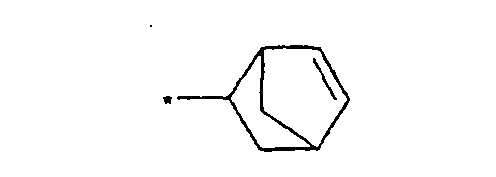 R3 -CO-R7 ist;R7 Hydroxy oder
ein Oxyderivat, definiert als ein O, verknüpft mit einem Amido, Alkyl, Alkenyl, Alkinyl, Acyl, Ester, Ether, Aryl, Aralkyl, einem Heterocyclus oder
einer Heterocyclus-alkyl-Komponente, ist undP eine Aminschutzgruppe: Methoxycarbonyl, Ethoxycarbonyl, tert-Butoxycarbonyl (Boc), 9-Fluorenylmethoxycarbonyl (Fmoc), 9-(2-Sulfo)fluorenylmethoxycarbonyl, 9-(2,7-Dibrom)-fluorenylmethoxycarbonyl, 2,2,2-Trichlorethoxycarbonyl (Troc), 2-Phenylethoxycarbonyl, 2-Chlorethoxycarbonyl, Benzyloxycarbonyl, p-Methoxybenzoyloxycarbonyl, Benzolsulfenyl, 2-Nitrobenzolsulfenyl, Tosyl, Benzolsulfonyl, Methyl, tert-Butyl, Allyl, Benzyl, Bis(4-methoxyphenyl)methyl oder 2,4-Dinitrophenyl, ist; mit der Maßgabe, daß, wenn X CH ist, dannR1 C3-18-Cycloalkyl, abgeleitet von einem gesättigten cyclischen oder polycyclischen Kohlenwasserstoff, der gegebenenfalls substituiert sein kann durch eine oder mehrere Komponenten, ausgewählt aus nicht-cyclischem C1-6-Alkyl und C3-8-Cycloalkyl oder aus der Gruppe, bestehend aus Halogen, Hydroxy, Thiol, Amino, Nitro, Cyano, einem Acylderivat, einem Sulfonylderivat, einem Sulfinylderivat, Alkylamino, Carboxy, Ester, Ether, Amido, Azido, Cycloalkyl, Sulfonsäure, Sulfonamid, einem Thioderivat, Esteroxy, Amidooxy, einem Heterocyclus, Vinyl, C1-6-Alkoxy, C6-10-Aryloxy und C6-10-Aryl, oder
ein Aryl aus 1 - 3 aromatischen Kohlenwasserstoffringen, gegebenenfalls substituiert durch 1 bis 5 Substituenten, unabhängig ausgewählt aus Halogen, Hydroxy, Thiol, Amino, Nitro, Cyano, einem Acylderivat, einem Sulfonylderivat, einem Sulfinylderivat, Alkylamino, Carboxy, Ester, Ether, Amido, Azido, C1-6-Alkyl, C1-6-Halogenalkyl, C3-8-Cycloalkyl, Sulfonsäure, Sulfonamid, einem Thioderivat, Esteroxy, Amidooxy, einem Heterocyclus, Vinyl, C1-6-Alkoxy, C6-10-Aryloxy oder C6-10-Aryl, worin zwei oder mehr Substituenten einen Ring bilden können, der an die Arylkomponente angelagert ist, oder
ein Heterocyclus, umfassend eine aromatische oder nicht-aromatische cyclische Alkyl-, Alkenyl- oder Alkinylkomponente, der mindestens ein O-, S- und/oder N-Atom aufweist, das die carbocyclische Ringstruktur unterbricht, und gegebenenfalls kann einer der Kohlenstoffe der carbocyclischen Ringstruktur durch ein Carbonyl ersetzt sein, in den Heterocyclen, die ein S-Atom umfassen, kann das S-Atom durch ein Sulfoxid oder ein Sulfon ersetzt sein, oder
ein Aralkyl, in dem die Arylgruppe mit dem Rest des Moleküls durch gerade, verzweigte oder cyclische C1-12-Alkylen- oder gerade oder verzweigte C2-12-Alkenylen- oder -Alkinylengruppen verknüpft ist, oder
ein Heterocyclus-alkyl, in dem die Heterocyclusgruppe mit dem Rest des Moleküls durch gerade, verzweigte oder cyclische C1-12-Alkylen- oder gerade oder verzweigte C2-12-Alkenylen- oder -Alkinylengruppen verknüpft ist, oder
eine Gruppe der Formel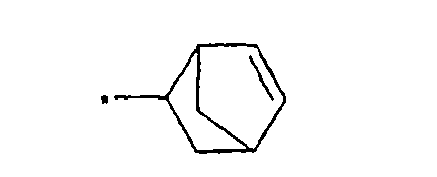
- Synthesezwischenprodukte der Formel VI
 X N oder CH ist,R1 C3-18-Cycloalkyl, abgeleitet von einem gesättigten cyclischen oder polycyclischen Kohlenwasserstoff, der gegebenenfalls substituiert sein kann durch eine oder mehrere Komponenten, ausgewählt aus nicht-cyclischem C1-6-Alkyl und C3-8-Cycloalkyl oder aus der Gruppe, bestehend aus Halogen, Hydroxy, Thiol, Amino, Nitro, Cyano, einem Acylderivat, einem Sulfonylderivat, einem Sulfinylderivat, Alkylamino, Carboxy, Ester, Ether, Amido, Azido, Cycloalkyl, Sulfonsäure, Sulfonamid, einem Thioderivat, Esteroxy, Amidooxy, einem Heterocyclus, Vinyl, C1-6-Alkoxy, C6-10-Aryloxy und C6-10-Aryl, oder
ein Aryl aus 1 - 3 aromatischen Kohlenwasserstoffringen, gegebenenfalls substituiert durch 1 bis 5 Substituenten, unabhängig ausgewählt aus Halogen, Hydroxy, Thiol, Amino, Nitro, Cyano, einem Acylderivat, einem Sulfonylderivat, einem Sulfinylderivat, Alkylamino, Carboxy, Ester, Ether, Amido, Azido, C1-6-Alkyl, C1-6-Halogenalkyl, C3-8-Cycloalkyl, Sulfonsäure, Sulfonamid, einem Thioderivat, Esteroxy, Amidooxy, einem Heterocyclus, Vinyl, C1-6-Alkoxy, C6-10-Aryloxy oder C6-10-Aryl, worin zwei oder mehr Substituenten einen Ring bilden können, der an die Arylkomponente angelagert ist, oder
ein Heterocyclus, umfassend eine aromatische oder nicht-aromatische cyclische Alkyl-, Alkenyl- oder Alkinylkomponente, der mindestens ein O-, S- und/oder N-Atom aufweist, das die carbocyclische Ringstruktur unterbricht, und gegebenenfalls kann einer der Kohlenstoffe der carbocyclischen Ringstruktur durch ein Carbonyl ersetzt sein, in den Heterocyclen, die ein S-Atom umfassen, kann das S-Atom durch ein Sulfoxid oder ein Sulfon ersetzt sein, oder
ein Aralkyl, in dem die Arylgruppe mit dem Rest des Moleküls durch gerade, verzweigte oder cyclische Cl-12-Alkylen- oder gerade oder verzweigte C2-12-Alkenylen- oder -Alkinylengruppen verknüpft ist, oder
ein Heterocyclus-alkyl, in dem die Heterocyclusgruppe mit dem Rest des Moleküls durch gerade, verzweigte oder cyclische C1-12-Alkylen- oder gerade oder verzweigte C2-12-Alkenylen- oder -Alkinylengruppen verknüpft ist, oder
ein Oxyderivat, definiert als ein O, verknüpft mit einem Amido, Alkyl, Alkenyl, Alkinyl, Acyl, Ester, Ether, Aryl, Aralkyl, einem Heterocyclus oder einer Heterocyclus-alkyl-Komponente; oder
eine Gruppe der Formel R3 -CO-R7 ist;R7 Hydroxy oder
ein Oxyderivat, definiert als ein O, verknüpft mit einem Amido, Alkyl, Alkenyl, Alkinyl, Acyl, Ester, Ether, Aryl, Aralkyl, einem Heterocyclus oder einer Heterocyclus-alkyl-Komponente, ist und
P eine Aminschutzgruppe: Methoxycarbonyl, Ethoxycarbonyl, tert-Butoxycarbonyl (Boc), 9-Fluorenylmethoxycarbonyl (Fmoc), 9-(2-Sulfo)fluorenylmethoxycarbonyl, 9-(2,7-Dibrom)-fluorenylmethoxycarbonyl, 2,2,2-Trichlorethoxycarbonyl (Troc), 2-Phenylethoxycarbonyl, 2-Chlorethoxycarbonyl, Benzyloxycarbonyl, p-Methoxybenzyloxycarbonyl, Benzolsulfenyl, 2-Nitrobenzolsulfenyl, Tosyl, Benzolsulfonyl, Methyl, tert-Butyl, Allyl, Benzyl, Bis(4-methoxyphenyl)methyl oder 2,4-Dinitrophenyl, ist; mit der Maßgabe, daß, wenn X CH ist, dannR1 C3-18-Cycloalkyl, abgeleitet von einem gesättigten cyclischen oder polycyclischen Kohlenwasserstoff, der gegebenenfalls substituiert sein kann durch eine oder mehrere Komponenten, ausgewählt aus nicht-cyclischem C1-6-Alkyl und C3-8-Cycloalkyl oder aus der Gruppe, bestehend aus Halogen, Hydroxy, Thiol, Amino, Nitro, Cyano, einem Acylderivat, einem Sulfonylderivat, einem Sulfinylderivat, Alkylamino, Carboxy, Ester, Ether, Amido, Azido, Cycloalkyl, Sulfonsäure, Sulfonamid, einem Thioderivat, Esteroxy, Amidooxy, einem Heterocyclus, Vinyl, C1-6-Alkoxy, C6-10-Aryloxy und C6-10-Aryl, oder
ein Aryl aus 1 - 3 aromatischen Kohlenwasserstoffringen, gegebenenfalls substituiert durch 1 bis 5 Substituenten, unabhängig ausgewählt aus Halogen, Hydroxy, Thiol, Amino, Nitro, Cyano, einem Acylderivat, einem Sulfonylderivat, einem Sulfinylderivat, Alkylamino, Carboxy, Ester, Ether, Amido, Azido, C1-6-Alkyl, C1-6-Halogenalkyl, C3-8-Cycloalkyl, Sulfonsäure, Sulfonamid, einem Thioderivat, Esteroxy, Amidooxy, einem Heterocyclus, Vinyl, C1-6-Alkoxy, C6-10-Aryloxy oder C6-10-Aryl, worin zwei oder mehr Substituenten einen Ring bilden können, der an die Arylkomponente angelagert ist, oder
ein Heterocyclus, umfassend eine aromatische oder nicht-aromatische cyclische Alkyl-, Alkenyl- oder Alkinylkomponente, der mindestens ein O-, S- und/oder N-Atom aufweist, das die carbocyclische Ringstruktur unterbricht, und gegebenenfalls kann einer der Kohlenstoffe der carbocyclischen Ringstruktur durch ein Carbonyl ersetzt sein, in den Heterocyclen, die ein S-Atom umfassen, kann das S-Atom durch ein Sulfoxid oder ein Sulfon ersetzt sein, oder
ein Aralkyl, in dem die Arylgruppe mit dem Rest des Moleküls durch gerade, verzweigte oder cyclische C1-12-Alkylen- oder gerade oder verzweigte C2-12-Alkenylen- oder -Alkinylengruppen verknüpft ist, oder
ein Heterocyclus-alkyl, in dem die Heterocyclusgruppe mit dem Rest des Moleküls durch gerade, verzweigte oder cyclische C1-12-Alkylen- oder gerade oder verzweigte C2-12-Alkenylen- oder -Alkinylengruppen verknüpft ist, oder
eine Gruppe der Formel
- Synthesezwischenprodukte nach einem der Ansprüche 12 - 15, ausgewählt aus der Gruppe, bestehend aus Methyl-2-[(tert-butoxycarbonyl)amino]-3-[2-(2,6-dichlorphenyl)-4-(phenylsulfanyl)-1,2,3,4-tetrahydro-6-chinolinyl]propanoat; Methyl-2-[(tert-butoxycarbonyl)-amino]-3-[2-phenyl-4-(phenylsulfanyl)-1,2,3,4-tetrahydro-6-chinolinyl]propanoat; Methyl-2-[(tert-butoxycarbonyl)amino]-3-[2-(2,6-dimethoxyphenyl)-4-(phenylsulfanyl)-1,2,3,4-tetrahydro-6-chinolinyl]propanoat; Methyl-2-[(2,6-dichlorbenzoyl)amino]-3-[2-(2,6-dichlorphenyl)-4-(phenylsulfanyl)-1,2,3,4-tetrahydro-6-chinolinyl]propanoat; Methyl-2-(benzoylamino)-3-[2-(2,6-dichlorphenyl)-4-(phenylsulfanyl)-1,2,3,4-tetrahydro-6-chinolinyl]propanoat; Methyl-2- [(2,6-dichlorbenzyl)amino]- 3-[2-(2,6-dichlorphenyl)-4-(phenylsulfanyl)-1,2,3,4-tetrahydro-6-chinolinyl]propanoat; Methyl-2-[(2,6-dichlorbenzoyl)amino]-3-[2-(2,6-dimethoxyphenyl)-4-(phenylsulfanyl)-1,2,3,4-tetrahydro-6-chinolinyl]propanoat; Methyl-2-[(2,6-dichlorbenzoyl)amino]-3-[4-(phenylsulfanyl)-2-(1,3-thiazol-2-yl)-1,2,3,4-tetrahydro-6-chinolinyl]propanoat; Methyl-2-[(2,6-dichlorbenzoyl)amino]-3-[2-(3,5-dichlor-4-pyridinyl)-4-(phenylsulfanyl)-1,2,3,4-tetrahydro-6-chinolinyl]propanoat; Methyl-2-[(2,6-dichlorbenzoyl)amino]-3-[4-(phenylsulfanyl)-2-(4-pyridinyl)-1,2,3,4-tetrahydro-6-chinolinyl]propanoat; Methyl-(2S)-2-[(2,6-dichlorbenzoyl)amino]-3-[2-(2,6-dichlorphenyl)-4-(phenylsulfanyl)-1,2,3,4-tetrahydro-6-chinolinyl]propanoat; Methyl-(2R)-2-[(2,6-dichlorbenzoyl)amino]-3-[2-(2,6-dichlorphenyl)-4-(phenylsulfanyl)-1,2,3,4-tetrahydro-6-chinolinyl]propanoat; Methyl-(2S)-2-[(tert-butoxycarbonyl)amino]-3-[2-(2,6-dichlorphenyl)-4-(phenylsulfanyl)-1,2,3,4-tetrahydro-6-chinolinyl]propanoat; Methyl-(2R)-2-[(tert-butoxycarbonyl)amino]-3-[2-(2,6-dichlorphenyl)-4-(phenylsulfanyl)-1,2,3,4-tetrahydro-6-chinolinyl]propanoat; Methyl-(2S)-2-[(tert-butoxycarbonyl)amino]-3-[2-(2,6-dimethoxyphenyl)-4-(phenylsulfanyl)-1,2,3,4-tetrahydro-6-chinolinyl]propanoat; Methyl-(2R)-2-[(tert-butoxycarbonyl)amino]-3-[2-(2,6-dimethoxyphenyl)-4-(phenylsulfanyl)-1,2,3,4-tetrahydro-6-chinolinyl]propanoat; Methyl-(2S)-2-[(tert-butoxycarbonyl)amino]-3-[2-(2, 6-dimethylphenyl)-4-(phenylsulfanyl)-1,2, 3,4-tetrahydro-6-chinolinyl]propanoat; Methyl-(2S)-2-[(tert-butoxycarbonyl)amino]-3-[2-(3,5-dichlor-4-pyridinyl)-4-(phenylsulfanyl)-1,2,3,4-tetrahydro-6-chinolinyl]propanoat; Methyl-3-[2-(2,6-dichlorphenyl)-6-chinolinyl]-2-hydroxy-2-propenoat; Methyl-2-[(tert-butoxycarbonyl)amino]-3-[2-(2,6-dichlorphenyl)-6-chinolinyl]propanoat; Methyl-2-[(tert-butoxycarbonyl)amino]-3-(2-phenyl-6-chinolinyl)propanoat; Methyl-2-[(tert-butoxycarbonyl)amino]-3-[2-(2,6-dimethoxyphenyl)-6-chinolinyl]propanoat; Methyl-2-[(tert-butoxycarbonyl)amino]-3-(2-phenoxy-6-chinolinyl)propanoat; Methyl-2-[(tert-butoxycarbonyl)amino]-3-[2-(4-chlorphenoxy)-6-chinolinyl]propanoat; Methyl-2-[(tert-butoxycarbonyl)amino]-3-(2-methoxy-6-chinolinyl)-propanoat; Methyl-2-[(tert-butoxycarbonyl)amino]-3-[2-(2-methoxyphenoxy)-6-chinolinyl]-propanoat; Methyl-2-[(tert-butoxycarbonyl)amino]-3-[2-(2,6-dimethoxyphenoxy)-6-chinolinyl]propanoat; Methyl-2-[(tert-butoxycarbonyl)amino]-3-[2-(2,6-dichlorphenoxy)-6-chinolinyl]propanoat; Methyl-(2S)-2-[(tert-butoxycarbonyl)amino]-3-[2-(2,6-dichlorphenyl)-6-chinolinyl]propanoat; Methyl-(2R)-2-[(tert-butoxycarbonyl)amino]-3-[2-(2,6-dichlorphenyl)-6-chinolinyl]propanoat; Methyl-(2S)-2-[(tert-butoxycarbonyl)amino]-3-[2-(2,6-dimethoxyphenyl)-6-chinolinyl]propanoat; Methyl-(2R)-2-[(tert-butoxycarbonyl)amino]-3-[2-(2,6-dimethoxyphenyl)-6-chinolinyl]propanoat; Methyl-(2S)-2-[(tert-butoxycarbonyl)amino]-3-[2-(2,6-dimethylphenyl)-6-chinolinyl]propanoat; Methyl-(2S)-2-[(tert-butoxycarbonyl)-amino]-3-[2-(3,5-dichlor-4-pyridinyl)-6-chinolinyl]propanoat; Methyl-2-(acetylamino)-3-[6-(2,6-dimethoxyphenyl)-2-naphthyl]propanoat; Ethyl-2-(actylamino)-3-[6-(2,6-dichlorphenyl)-2-naphthyl]propanoat; Methyl-2-[(tert-butoxycarbonyl)amino]-3-(2-phenoxy-6-chinolinyl)-2-propenoat; Methyl-2-[(tert-butoxycarbonyl.)amino]-3-[2-(4-chlorphenoxy)-6-chinolinyl]-2-propenoat; Methyl-2-[(tert-butoxycarbonyl)amino]-3-(2-methoxy-6-chinolinyl)-2-propenoat; Methyl-2-[(tert-butoxycarbonyl)amino]-3-[2-(2-methoxyphenoxy)-6-chinolinyl]-2-propenoat; Methyl-2-[(tert-butoxycarbonyl)amino]-3-[2-(2,6-dimethoxyphenoxy)-6-chinolinyl]-2-propenoat; Methyl-2-[(tert-butoxycarbonyl)amino]-3-[2-(2,6-dichlorphenoxy)-6-chinolinyl]-2-propenoat; Methyl-2-[(tert-butoxycarbonyl)amino]-3-[2-(2,6-dichlorphenyl)-6-chinolinyl]-2-propenoat; Methyl-(2-(acetylamino)-3-[6-(2,6-dimethoxyphenyl)-2-naphthyl]-2-propenoat; Methyl-2-[(2,6-dichlorbenzoyl)arnino]-3-(4-nitrophenyl)propanoat; Methyl-2-[(2,6-dichlorbenzyl)amino]-3-(4-nitrophenyl)propanoat; Methyl-3-(4-aminophenyl)-2-[(2,6-dichlorbenzoyl)amino]propanoat; Methyl-3-(4-aminophenyl)-2-[(2,6-dichlorbenzyl)amino]propanoat; 6-(Benzyloxy)-2-chlorchinolin; 6-(Benzyloxy)-2-phenoxychinolin; 6-(Benzyloxy)-2-(4-chlorphenoxy)chinolin; 6-(Benzyloxy)-2-methoxychinolin; 6-(Benzyloxy)-2-(2-methoxyphenoxy)chinolin; 6-(Benzyloxy)-2-(2,6-dimethoxyphenoxy)chinolin; 6-(Benzyloxy)-2-(2,6-dichlorphenoxy)chinolin; 2-Phenoxy-6-chinolinol; 2-(4-Chlorphenoxy)-6-chinolinol; 2-Methoxy-6-chinolinol; 2-(2-Methoxyphenoxy)-6-chinolinol; 2-(2,6-Dimethoxyphenoxy)-6-chinolinol; 2-(2,6-Dichlorphenoxy)-6-chinolinol; 2-Phenoxy-6-chinolinyltrifluormethansulfonat; 2-(4-Chlorphenoxy)-6-chinolinyltrifluormethansulfonat; 2-Methoxy-6-chinolinyltrifluormethansulfonat; 2-(2-Methoxyphenoxy)-6-chinolinyltrifluormethansulfonat; 2-(2,6-Dimethoxyphenoxy)-6-chinolinyltrifluormethansulfonat; 2-(2,6-Dichlorphenoxy)-6-chinolinyltrifluormethansulfonat; 6-(Benzyloxy)-2-(2,6-dichlorphenyl)chinolin; 2-(2,6-Dichlorphenyl)-6-chinolinol; 2-(2,6-Dichlorphenyl)-6-chinolinyltrifluomethansulfonat; 2-(Benzyloxy)-6-(2,6-dimethoxyphenyl)naphthalin; 6-(2,6-Dimethoxyphenyl)-2-naphthol und 6-(2,6-Dimethoxyphenyl)-2-naphthyltrifluormethansulfonat.
Priority Applications (2)
| Application Number | Priority Date | Filing Date | Title |
|---|---|---|---|
| EP03747411A EP1501801B1 (de) | 2002-04-30 | 2003-04-15 | 2,6-chinolinyl- und 2,6-naphthylderivate und deren verwendungen zur behandlung von vla-4 bezogenen krankheiten |
| EP07017712A EP1870402A1 (de) | 2002-04-30 | 2003-04-15 | 2,6-Chinolinyl und 2,6-Naphthylderivate, Verfahren zu ihrer Herstellung und ihre Verwendung als VLA-4 Inhibitoren |
Applications Claiming Priority (4)
| Application Number | Priority Date | Filing Date | Title |
|---|---|---|---|
| EP02009746 | 2002-04-30 | ||
| EP02009746 | 2002-04-30 | ||
| EP03747411A EP1501801B1 (de) | 2002-04-30 | 2003-04-15 | 2,6-chinolinyl- und 2,6-naphthylderivate und deren verwendungen zur behandlung von vla-4 bezogenen krankheiten |
| PCT/EP2003/003909 WO2003093237A1 (en) | 2002-04-30 | 2003-04-15 | 2,6-quinolinyl and 2,6-naphthyl derivatives, processes for preparing them and their uses as vla-4 inhibitors |
Related Child Applications (1)
| Application Number | Title | Priority Date | Filing Date |
|---|---|---|---|
| EP07017712A Division EP1870402A1 (de) | 2002-04-30 | 2003-04-15 | 2,6-Chinolinyl und 2,6-Naphthylderivate, Verfahren zu ihrer Herstellung und ihre Verwendung als VLA-4 Inhibitoren |
Publications (2)
| Publication Number | Publication Date |
|---|---|
| EP1501801A1 EP1501801A1 (de) | 2005-02-02 |
| EP1501801B1 true EP1501801B1 (de) | 2008-01-23 |
Family
ID=29286106
Family Applications (2)
| Application Number | Title | Priority Date | Filing Date |
|---|---|---|---|
| EP07017712A Withdrawn EP1870402A1 (de) | 2002-04-30 | 2003-04-15 | 2,6-Chinolinyl und 2,6-Naphthylderivate, Verfahren zu ihrer Herstellung und ihre Verwendung als VLA-4 Inhibitoren |
| EP03747411A Expired - Lifetime EP1501801B1 (de) | 2002-04-30 | 2003-04-15 | 2,6-chinolinyl- und 2,6-naphthylderivate und deren verwendungen zur behandlung von vla-4 bezogenen krankheiten |
Family Applications Before (1)
| Application Number | Title | Priority Date | Filing Date |
|---|---|---|---|
| EP07017712A Withdrawn EP1870402A1 (de) | 2002-04-30 | 2003-04-15 | 2,6-Chinolinyl und 2,6-Naphthylderivate, Verfahren zu ihrer Herstellung und ihre Verwendung als VLA-4 Inhibitoren |
Country Status (24)
| Country | Link |
|---|---|
| US (2) | US7638630B2 (de) |
| EP (2) | EP1870402A1 (de) |
| JP (1) | JP2005535583A (de) |
| KR (1) | KR100841165B1 (de) |
| CN (2) | CN101200450A (de) |
| AR (1) | AR039341A1 (de) |
| AT (1) | ATE384699T1 (de) |
| AU (1) | AU2003232472B2 (de) |
| BR (1) | BR0309719A (de) |
| CA (1) | CA2484954C (de) |
| CO (1) | CO5450243A1 (de) |
| CU (1) | CU23415B7 (de) |
| DE (1) | DE60318839T2 (de) |
| ES (1) | ES2298543T3 (de) |
| IL (1) | IL164516A0 (de) |
| MX (1) | MXPA04010673A (de) |
| MY (1) | MY135218A (de) |
| NO (1) | NO20045234L (de) |
| NZ (1) | NZ536180A (de) |
| PL (1) | PL373763A1 (de) |
| RU (1) | RU2315041C2 (de) |
| TW (2) | TWI267508B (de) |
| WO (1) | WO2003093237A1 (de) |
| ZA (1) | ZA200408447B (de) |
Families Citing this family (27)
| Publication number | Priority date | Publication date | Assignee | Title |
|---|---|---|---|---|
| CN101200450A (zh) * | 2002-04-30 | 2008-06-18 | Ucb公司 | 2,6-喹啉基和2,6-萘基衍生物、用于制备它们的方法和它们作为vla-4抑制剂的用途 |
| US7153889B2 (en) | 2002-11-12 | 2006-12-26 | Abbott Laboratories | Bicyclic-substituted amines as histamine-3 receptor ligands |
| JP4572832B2 (ja) * | 2003-02-20 | 2010-11-04 | 味の素株式会社 | キナゾリンジオン骨格を有するフェニルアラニン誘導体の製造方法及び製造中間体 |
| US7098222B2 (en) | 2004-05-12 | 2006-08-29 | Abbott Laboratories | Bicyclic-substituted amines having cyclic-substituted monocyclic substituents |
| US7145005B2 (en) | 2004-05-12 | 2006-12-05 | Abbott Laboratories | 2-(6-{2-[(2R)-2-Methyl-1-pyrrolidin-1-yl]-ethyl}-2-naphthalen-2-yl)-2H-pyridazin-3-one salts and their preparation |
| US7205316B2 (en) | 2004-05-12 | 2007-04-17 | Abbott Laboratories | Tri- and bi-cyclic heteroaryl histamine-3 receptor ligands |
| DE602006019731D1 (de) * | 2005-06-09 | 2011-03-03 | Ucb Pharma Sa | 2,6-chinolinderivate sowie verfahren zu ihrer herstellung und verwendung als arzneimittel |
| PL2085387T3 (pl) | 2006-11-14 | 2013-09-30 | Ayumi Pharmaceutical Corp | Nowe pochodne 1,2-dihydrochinoliny zawierające jako podstawniki fenylochalkogeno-podstawioną niższą grupę alkilową oraz wprowadzoną przez ester grupę fenylową |
| WO2008125215A1 (en) * | 2007-04-12 | 2008-10-23 | Ucb Pharma, S.A. | Bicyclic and heterobicyclic derivatives, processes for preparing them and their uses |
| WO2008125210A1 (en) * | 2007-04-12 | 2008-10-23 | Ucb Pharma, S.A. | Quinoline and naphthalene derivatives, processes for their preparation and their use in treatment of inflammatory diseases |
| WO2008138592A1 (en) * | 2007-05-14 | 2008-11-20 | Ucb Pharma, S.A. | Bicyclic and heterobicyclic derivatives, processes for preparing them and their uses |
| WO2008138615A1 (en) * | 2007-05-16 | 2008-11-20 | Ucb Pharma, S.A. | Bicyclic and heterobicyclic derivatives, processes for preparing them and their uses |
| KR20100098683A (ko) * | 2007-12-12 | 2010-09-08 | 아스트라제네카 아베 | 펩티딜 니트릴, 및 디펩티딜 펩티다제 i 억제제로서의 그의 용도 |
| EP2085407A1 (de) | 2008-02-04 | 2009-08-05 | Sahltech I Göteborg AB | Behandlung von idiopathischer thrombozytopenischer Purpura |
| KR20110010634A (ko) | 2008-05-12 | 2011-02-01 | 산텐 세이야꾸 가부시키가이샤 | 치환 옥시기를 가지는 2,2,4-트리메틸-6-페닐-1,2-디하이드로퀴놀린 유도체를 포함하는 글루코코르티코이드 수용체 작용제 |
| US20120258093A1 (en) | 2009-08-20 | 2012-10-11 | Institut National De La Sante Et De La Recherche Medicale (Inserm) | Vla-4 as a biomarker for prognosis and target for therapy in duchenne muscular dystrophy |
| WO2015196086A1 (en) * | 2014-06-20 | 2015-12-23 | The University of Montana, Missoula, MT | NOVEL INHIBITORS OF SYSTEM Xc(-) |
| CN115925679A (zh) | 2014-12-24 | 2023-04-07 | 株式会社Lg化学 | 作为gpr120激动剂的联芳基衍生物 |
| US20200087390A1 (en) | 2016-12-21 | 2020-03-19 | Amgen Inc. | Anti-tnf alpha antibody formulations |
| AU2019373242B2 (en) | 2018-10-30 | 2023-07-13 | Gilead Sciences, Inc. | Compounds for inhibition of alpha 4 beta 7 integrin |
| KR102630416B1 (ko) | 2018-10-30 | 2024-02-01 | 길리애드 사이언시즈, 인코포레이티드 | 알파4베타7 인테그린 억제제로서의 퀴놀린 유도체 |
| ES3013256T3 (en) | 2018-10-30 | 2025-04-11 | Gilead Sciences Inc | Imidazo[1,2-a]pyridine derivatives as alpha4beta7 integrin inhibitors for the treatment of inflammatory diseases |
| US11179383B2 (en) | 2018-10-30 | 2021-11-23 | Gilead Sciences, Inc. | Compounds for inhibition of α4β7 integrin |
| CN114222730B (zh) | 2019-08-14 | 2024-09-10 | 吉利德科学公司 | 用于抑制α4β7整合素的化合物 |
| JP7635962B2 (ja) * | 2021-01-12 | 2025-02-26 | 国立大学法人山口大学 | フルオロアルキル置換ビニルフルオロアルカンスルホニルアミドの製造方法 |
| US20240301512A1 (en) | 2021-01-29 | 2024-09-12 | INSERM (Institut National de la Santé et de la Recherche Médicale) | Methods of assessing the risk of developing progressive multifocal leukoencephalopathy in patients treated with vla-4 antagonists |
| CN116410136B (zh) * | 2023-03-03 | 2025-07-11 | 五邑大学 | 一种喹啉衍生物及其制备方法 |
Family Cites Families (14)
| Publication number | Priority date | Publication date | Assignee | Title |
|---|---|---|---|---|
| US5721255A (en) * | 1992-08-19 | 1998-02-24 | Pfizer Inc. | Substituted benzylamino nitrogen containing non-aromatic heterocycles |
| US5550139A (en) * | 1994-01-03 | 1996-08-27 | The Wichita State University | Serine protease inhibitors |
| EP0798291B1 (de) * | 1994-12-14 | 2002-09-11 | Santen Pharmaceutical Co., Ltd. | Neue 1,3-dialkylharnstoff-derivate |
| JP2920741B2 (ja) * | 1994-12-14 | 1999-07-19 | 参天製薬株式会社 | 新規1,3−ジアルキルウレア誘導体 |
| JPH0987291A (ja) * | 1995-09-26 | 1997-03-31 | Wakamoto Pharmaceut Co Ltd | 新規なアラニン誘導体 |
| WO1998034115A1 (en) | 1997-02-04 | 1998-08-06 | Trega Biosciences, Inc. | 4-substituted-quinoline derivatives and 4-substitute-quinoline combinatorial libraries |
| AR016133A1 (es) * | 1997-07-31 | 2001-06-20 | Wyeth Corp | Compuesto de carbamiloxi que inhiben la adhesion de leucocitos mediada por vla-4, compuestos que son prodrogas de dichos compuestos, composicionfarmaceutica, metodo para fijar vla-4 a una muestra biologica, metodo para el tratamiento de una condicion inflamatoria |
| ATE267801T1 (de) * | 1997-08-22 | 2004-06-15 | Hoffmann La Roche | N-alkanoylphenylalaninderivate |
| SK2612001A3 (en) * | 1998-08-26 | 2001-11-06 | Aventis Pharma Ltd | Aza-bicycles which modulate the inhibition of cell adhesion |
| JP2002543194A (ja) * | 1999-04-28 | 2002-12-17 | ドクター・レディーズ・ラボラトリーズ・リミテッド | 置換二環系ヘテロ環化合物、その製造方法、並びに抗肥満症及び抗高コレステロール血症剤としてのこれらの使用 |
| US6280442B1 (en) * | 1999-09-01 | 2001-08-28 | Sdgi Holdings, Inc. | Multi-axial bone screw assembly |
| US6399599B1 (en) * | 1999-10-13 | 2002-06-04 | Novartis Ag | Substituted 2-oxo-1,4-diazacycloalkanes |
| CN101200450A (zh) * | 2002-04-30 | 2008-06-18 | Ucb公司 | 2,6-喹啉基和2,6-萘基衍生物、用于制备它们的方法和它们作为vla-4抑制剂的用途 |
| DE602006019731D1 (de) | 2005-06-09 | 2011-03-03 | Ucb Pharma Sa | 2,6-chinolinderivate sowie verfahren zu ihrer herstellung und verwendung als arzneimittel |
-
2003
- 2003-04-15 CN CNA2007101934884A patent/CN101200450A/zh active Pending
- 2003-04-15 DE DE60318839T patent/DE60318839T2/de not_active Expired - Lifetime
- 2003-04-15 AT AT03747411T patent/ATE384699T1/de not_active IP Right Cessation
- 2003-04-15 US US10/513,347 patent/US7638630B2/en not_active Expired - Fee Related
- 2003-04-15 CN CNA038097907A patent/CN1649842A/zh active Pending
- 2003-04-15 JP JP2004501376A patent/JP2005535583A/ja not_active Ceased
- 2003-04-15 BR BR0309719-6A patent/BR0309719A/pt not_active IP Right Cessation
- 2003-04-15 KR KR1020047017498A patent/KR100841165B1/ko not_active Expired - Fee Related
- 2003-04-15 EP EP07017712A patent/EP1870402A1/de not_active Withdrawn
- 2003-04-15 NZ NZ536180A patent/NZ536180A/en not_active IP Right Cessation
- 2003-04-15 AU AU2003232472A patent/AU2003232472B2/en not_active Ceased
- 2003-04-15 MX MXPA04010673A patent/MXPA04010673A/es active IP Right Grant
- 2003-04-15 CA CA2484954A patent/CA2484954C/en not_active Expired - Fee Related
- 2003-04-15 WO PCT/EP2003/003909 patent/WO2003093237A1/en not_active Ceased
- 2003-04-15 EP EP03747411A patent/EP1501801B1/de not_active Expired - Lifetime
- 2003-04-15 ES ES03747411T patent/ES2298543T3/es not_active Expired - Lifetime
- 2003-04-15 PL PL03373763A patent/PL373763A1/xx not_active Application Discontinuation
- 2003-04-15 RU RU2004135304/04A patent/RU2315041C2/ru not_active IP Right Cessation
- 2003-04-23 AR ARP030101389A patent/AR039341A1/es unknown
- 2003-04-25 TW TW092109709A patent/TWI267508B/zh not_active IP Right Cessation
- 2003-04-25 TW TW094147669A patent/TWI268278B/zh active
- 2003-04-29 MY MYPI20031612A patent/MY135218A/en unknown
- 2003-04-29 CO CO03035403A patent/CO5450243A1/es not_active Application Discontinuation
-
2004
- 2004-10-12 IL IL16451604A patent/IL164516A0/xx unknown
- 2004-10-19 ZA ZA200408447A patent/ZA200408447B/en unknown
- 2004-11-01 CU CU20040252A patent/CU23415B7/es not_active IP Right Cessation
- 2004-11-29 NO NO20045234A patent/NO20045234L/no unknown
-
2009
- 2009-10-23 US US12/604,959 patent/US20100105681A1/en not_active Abandoned
Also Published As
Similar Documents
| Publication | Publication Date | Title |
|---|---|---|
| US7638630B2 (en) | 2,6-quinolinyl and 2,6-naphthyl derivatives, processes for preparing them and their uses as VLA-4 inhibitors | |
| DE60132606T2 (de) | Isochinolinone als kalium-kanal-inhibitoren | |
| JP5426813B2 (ja) | 強力な抗糖尿病薬化合物の塩および多形体 | |
| TWI389904B (zh) | 抑制由vla-4所調節的白血球黏附之嘧啶磺醯胺化合物 | |
| US5434188A (en) | 1-ether and 1-thioether-naphthalene-2-carboxamides as inhibitors of cell adhesion and as inhibitors of the activation of HIV | |
| EP1415990B1 (de) | Diazepan Derivate als Faktor X Inhibitor | |
| TW200307671A (en) | Heteroaryl compounds which inhibit leukocyte adhesion mediated by α 4 integrins | |
| JPH05239008A (ja) | アリールエーテル、それらの製造方法および治療方法 | |
| EP0288973A2 (de) | Benzothiazolinon-Derivate, ihre Herstellung und pharmazeutische Zusammensetzung | |
| WO2011017612A1 (en) | Substituted diphenylpyrazine derivatives | |
| EP1879580B1 (de) | 4-phenyl-5-oxo-1,4,5,6,7,8-hexahydrochinolin-derivate als arzneimittel zur behandlung von unfruchtbarkeit | |
| EP1879866B1 (de) | Dihydropyridinderivate | |
| US6482827B1 (en) | Matrix metalloproteinase inhibitors | |
| KR20010022147A (ko) | 아미노시클로알칸 화합물 | |
| US4981860A (en) | Pyridinium nitrate, composition containing same and their use for inhibiting platelet activating factor | |
| SK42003A3 (en) | New bispidine compounds and their use in the treatment of cardiac arrhythmias | |
| JP3846899B2 (ja) | メタンスルホンアミドの抗不整脈(s)−エナンチオマー | |
| KR100485479B1 (ko) | 금속 단백질 분해효소 저해제 | |
| KR840001671B1 (ko) | 4-히드록시페닐 알칸올아민 유도체의 제조방법 | |
| KR20260064237A (ko) | S1pr1과 s1pr4에 대한 기능적 저해제로서의 신규 화합물 | |
| CN114436945A (zh) | 一种苯磺酰胺类化合物、制备方法及应用 | |
| HK40049241B (zh) | 一种并环THRβ受体激动剂化合物及其制备方法和用途 | |
| WO2008138592A1 (en) | Bicyclic and heterobicyclic derivatives, processes for preparing them and their uses | |
| HK1110855B (en) | Dihydropyridine derivatives | |
| KR19980701303A (ko) | 메탄설폰아미드의 항부정맥성 (s)-에난티오머 |
Legal Events
| Date | Code | Title | Description |
|---|---|---|---|
| PUAI | Public reference made under article 153(3) epc to a published international application that has entered the european phase |
Free format text: ORIGINAL CODE: 0009012 |
|
| 17P | Request for examination filed |
Effective date: 20041130 |
|
| AK | Designated contracting states |
Kind code of ref document: A1 Designated state(s): AT BE BG CH CY CZ DE DK EE ES FI FR GB GR HU IE IT LI LU MC NL PT RO SE SI SK TR |
|
| AX | Request for extension of the european patent |
Extension state: AL LT LV MK |
|
| 17Q | First examination report despatched |
Effective date: 20060523 |
|
| 17Q | First examination report despatched |
Effective date: 20060523 |
|
| RAX | Requested extension states of the european patent have changed |
Extension state: MK Payment date: 20041130 Extension state: LV Payment date: 20041130 Extension state: LT Payment date: 20041130 Extension state: AL Payment date: 20041130 |
|
| RTI1 | Title (correction) |
Free format text: 2,6-QUINOLINYL AND 2,6-NAPHTHYL DERIVATIVES AND THEIR USE IN THE TREATMENT OF VLA-4 DEPENDENT DISEASES |
|
| GRAP | Despatch of communication of intention to grant a patent |
Free format text: ORIGINAL CODE: EPIDOSNIGR1 |
|
| RAP1 | Party data changed (applicant data changed or rights of an application transferred) |
Owner name: UCB PHARMA, S.A. |
|
| GRAS | Grant fee paid |
Free format text: ORIGINAL CODE: EPIDOSNIGR3 |
|
| GRAA | (expected) grant |
Free format text: ORIGINAL CODE: 0009210 |
|
| AK | Designated contracting states |
Kind code of ref document: B1 Designated state(s): AT BE BG CH CY CZ DE DK EE ES FI FR GB GR HU IE IT LI LU MC NL PT RO SE SI SK TR |
|
| AX | Request for extension of the european patent |
Extension state: AL LT LV MK |
|
| REG | Reference to a national code |
Ref country code: GB Ref legal event code: FG4D |
|
| REG | Reference to a national code |
Ref country code: CH Ref legal event code: EP |
|
| REG | Reference to a national code |
Ref country code: IE Ref legal event code: FG4D |
|
| REF | Corresponds to: |
Ref document number: 60318839 Country of ref document: DE Date of ref document: 20080313 Kind code of ref document: P |
|
| REG | Reference to a national code |
Ref country code: CH Ref legal event code: NV Representative=s name: HEPP, WENGER & RYFFEL AG |
|
| REG | Reference to a national code |
Ref country code: ES Ref legal event code: FG2A Ref document number: 2298543 Country of ref document: ES Kind code of ref document: T3 |
|
| NLV1 | Nl: lapsed or annulled due to failure to fulfill the requirements of art. 29p and 29m of the patents act | ||
| PG25 | Lapsed in a contracting state [announced via postgrant information from national office to epo] |
Ref country code: FI Free format text: LAPSE BECAUSE OF FAILURE TO SUBMIT A TRANSLATION OF THE DESCRIPTION OR TO PAY THE FEE WITHIN THE PRESCRIBED TIME-LIMIT Effective date: 20080123 |
|
| ET | Fr: translation filed | ||
| PG25 | Lapsed in a contracting state [announced via postgrant information from national office to epo] |
Ref country code: BG Free format text: LAPSE BECAUSE OF FAILURE TO SUBMIT A TRANSLATION OF THE DESCRIPTION OR TO PAY THE FEE WITHIN THE PRESCRIBED TIME-LIMIT Effective date: 20080423 |
|
| PG25 | Lapsed in a contracting state [announced via postgrant information from national office to epo] |
Ref country code: SI Free format text: LAPSE BECAUSE OF FAILURE TO SUBMIT A TRANSLATION OF THE DESCRIPTION OR TO PAY THE FEE WITHIN THE PRESCRIBED TIME-LIMIT Effective date: 20080123 Ref country code: PT Free format text: LAPSE BECAUSE OF FAILURE TO SUBMIT A TRANSLATION OF THE DESCRIPTION OR TO PAY THE FEE WITHIN THE PRESCRIBED TIME-LIMIT Effective date: 20080623 |
|
| PG25 | Lapsed in a contracting state [announced via postgrant information from national office to epo] |
Ref country code: NL Free format text: LAPSE BECAUSE OF FAILURE TO SUBMIT A TRANSLATION OF THE DESCRIPTION OR TO PAY THE FEE WITHIN THE PRESCRIBED TIME-LIMIT Effective date: 20080123 Ref country code: CZ Free format text: LAPSE BECAUSE OF FAILURE TO SUBMIT A TRANSLATION OF THE DESCRIPTION OR TO PAY THE FEE WITHIN THE PRESCRIBED TIME-LIMIT Effective date: 20080123 Ref country code: DK Free format text: LAPSE BECAUSE OF FAILURE TO SUBMIT A TRANSLATION OF THE DESCRIPTION OR TO PAY THE FEE WITHIN THE PRESCRIBED TIME-LIMIT Effective date: 20080123 Ref country code: SE Free format text: LAPSE BECAUSE OF FAILURE TO SUBMIT A TRANSLATION OF THE DESCRIPTION OR TO PAY THE FEE WITHIN THE PRESCRIBED TIME-LIMIT Effective date: 20080423 Ref country code: SK Free format text: LAPSE BECAUSE OF FAILURE TO SUBMIT A TRANSLATION OF THE DESCRIPTION OR TO PAY THE FEE WITHIN THE PRESCRIBED TIME-LIMIT Effective date: 20080123 |
|
| PG25 | Lapsed in a contracting state [announced via postgrant information from national office to epo] |
Ref country code: RO Free format text: LAPSE BECAUSE OF FAILURE TO SUBMIT A TRANSLATION OF THE DESCRIPTION OR TO PAY THE FEE WITHIN THE PRESCRIBED TIME-LIMIT Effective date: 20080123 Ref country code: MC Free format text: LAPSE BECAUSE OF NON-PAYMENT OF DUE FEES Effective date: 20080430 |
|
| PLBE | No opposition filed within time limit |
Free format text: ORIGINAL CODE: 0009261 |
|
| STAA | Information on the status of an ep patent application or granted ep patent |
Free format text: STATUS: NO OPPOSITION FILED WITHIN TIME LIMIT |
|
| 26N | No opposition filed |
Effective date: 20081024 |
|
| PG25 | Lapsed in a contracting state [announced via postgrant information from national office to epo] |
Ref country code: EE Free format text: LAPSE BECAUSE OF FAILURE TO SUBMIT A TRANSLATION OF THE DESCRIPTION OR TO PAY THE FEE WITHIN THE PRESCRIBED TIME-LIMIT Effective date: 20080123 |
|
| PG25 | Lapsed in a contracting state [announced via postgrant information from national office to epo] |
Ref country code: CY Free format text: LAPSE BECAUSE OF FAILURE TO SUBMIT A TRANSLATION OF THE DESCRIPTION OR TO PAY THE FEE WITHIN THE PRESCRIBED TIME-LIMIT Effective date: 20080123 |
|
| PG25 | Lapsed in a contracting state [announced via postgrant information from national office to epo] |
Ref country code: LU Free format text: LAPSE BECAUSE OF NON-PAYMENT OF DUE FEES Effective date: 20080415 Ref country code: HU Free format text: LAPSE BECAUSE OF FAILURE TO SUBMIT A TRANSLATION OF THE DESCRIPTION OR TO PAY THE FEE WITHIN THE PRESCRIBED TIME-LIMIT Effective date: 20080724 |
|
| PGFP | Annual fee paid to national office [announced via postgrant information from national office to epo] |
Ref country code: IE Payment date: 20100416 Year of fee payment: 8 |
|
| PG25 | Lapsed in a contracting state [announced via postgrant information from national office to epo] |
Ref country code: TR Free format text: LAPSE BECAUSE OF FAILURE TO SUBMIT A TRANSLATION OF THE DESCRIPTION OR TO PAY THE FEE WITHIN THE PRESCRIBED TIME-LIMIT Effective date: 20080123 |
|
| PGFP | Annual fee paid to national office [announced via postgrant information from national office to epo] |
Ref country code: AT Payment date: 20100413 Year of fee payment: 8 |
|
| PG25 | Lapsed in a contracting state [announced via postgrant information from national office to epo] |
Ref country code: GR Free format text: LAPSE BECAUSE OF FAILURE TO SUBMIT A TRANSLATION OF THE DESCRIPTION OR TO PAY THE FEE WITHIN THE PRESCRIBED TIME-LIMIT Effective date: 20080424 |
|
| PGFP | Annual fee paid to national office [announced via postgrant information from national office to epo] |
Ref country code: FR Payment date: 20110426 Year of fee payment: 9 Ref country code: DE Payment date: 20110413 Year of fee payment: 9 Ref country code: ES Payment date: 20110518 Year of fee payment: 9 Ref country code: CH Payment date: 20110412 Year of fee payment: 9 |
|
| PGFP | Annual fee paid to national office [announced via postgrant information from national office to epo] |
Ref country code: BE Payment date: 20110411 Year of fee payment: 9 Ref country code: GB Payment date: 20110413 Year of fee payment: 9 |
|
| PGFP | Annual fee paid to national office [announced via postgrant information from national office to epo] |
Ref country code: IT Payment date: 20110420 Year of fee payment: 9 |
|
| REG | Reference to a national code |
Ref country code: AT Ref legal event code: MM01 Ref document number: 384699 Country of ref document: AT Kind code of ref document: T Effective date: 20110415 |
|
| REG | Reference to a national code |
Ref country code: IE Ref legal event code: MM4A |
|
| PG25 | Lapsed in a contracting state [announced via postgrant information from national office to epo] |
Ref country code: AT Free format text: LAPSE BECAUSE OF NON-PAYMENT OF DUE FEES Effective date: 20110415 |
|
| PG25 | Lapsed in a contracting state [announced via postgrant information from national office to epo] |
Ref country code: IE Free format text: LAPSE BECAUSE OF NON-PAYMENT OF DUE FEES Effective date: 20110415 |
|
| BERE | Be: lapsed |
Owner name: UCB PHARMA, S.A. Effective date: 20120430 |
|
| REG | Reference to a national code |
Ref country code: CH Ref legal event code: PL |
|
| GBPC | Gb: european patent ceased through non-payment of renewal fee |
Effective date: 20120415 |
|
| REG | Reference to a national code |
Ref country code: FR Ref legal event code: ST Effective date: 20121228 |
|
| PG25 | Lapsed in a contracting state [announced via postgrant information from national office to epo] |
Ref country code: GB Free format text: LAPSE BECAUSE OF NON-PAYMENT OF DUE FEES Effective date: 20120415 Ref country code: BE Free format text: LAPSE BECAUSE OF NON-PAYMENT OF DUE FEES Effective date: 20120430 Ref country code: LI Free format text: LAPSE BECAUSE OF NON-PAYMENT OF DUE FEES Effective date: 20120430 Ref country code: CH Free format text: LAPSE BECAUSE OF NON-PAYMENT OF DUE FEES Effective date: 20120430 |
|
| REG | Reference to a national code |
Ref country code: DE Ref legal event code: R119 Ref document number: 60318839 Country of ref document: DE Effective date: 20121101 |
|
| PG25 | Lapsed in a contracting state [announced via postgrant information from national office to epo] |
Ref country code: IT Free format text: LAPSE BECAUSE OF NON-PAYMENT OF DUE FEES Effective date: 20120415 Ref country code: FR Free format text: LAPSE BECAUSE OF NON-PAYMENT OF DUE FEES Effective date: 20120430 |
|
| REG | Reference to a national code |
Ref country code: ES Ref legal event code: FD2A Effective date: 20131023 |
|
| PG25 | Lapsed in a contracting state [announced via postgrant information from national office to epo] |
Ref country code: ES Free format text: LAPSE BECAUSE OF NON-PAYMENT OF DUE FEES Effective date: 20120416 |
|
| PG25 | Lapsed in a contracting state [announced via postgrant information from national office to epo] |
Ref country code: DE Free format text: LAPSE BECAUSE OF NON-PAYMENT OF DUE FEES Effective date: 20121101 |