EP1501736B1 - Verfahren zum einsetzen eines einsatzes in den hals eines flexiblen behälters - Google Patents
Verfahren zum einsetzen eines einsatzes in den hals eines flexiblen behälters Download PDFInfo
- Publication number
- EP1501736B1 EP1501736B1 EP03721596A EP03721596A EP1501736B1 EP 1501736 B1 EP1501736 B1 EP 1501736B1 EP 03721596 A EP03721596 A EP 03721596A EP 03721596 A EP03721596 A EP 03721596A EP 1501736 B1 EP1501736 B1 EP 1501736B1
- Authority
- EP
- European Patent Office
- Prior art keywords
- fitment
- webs
- neck
- bottle
- flexible container
- Prior art date
- Legal status (The legal status is an assumption and is not a legal conclusion. Google has not performed a legal analysis and makes no representation as to the accuracy of the status listed.)
- Expired - Lifetime
Links
- 238000000034 method Methods 0.000 title claims description 37
- 239000000463 material Substances 0.000 claims description 37
- 238000007789 sealing Methods 0.000 claims description 26
- 238000003780 insertion Methods 0.000 claims description 4
- 230000037431 insertion Effects 0.000 claims description 4
- 238000004519 manufacturing process Methods 0.000 description 22
- 230000008569 process Effects 0.000 description 15
- 238000004826 seaming Methods 0.000 description 15
- XEEYBQQBJWHFJM-FTXFMUIASA-N iron-51 Chemical compound [51Fe] XEEYBQQBJWHFJM-FTXFMUIASA-N 0.000 description 8
- XEEYBQQBJWHFJM-UHFFFAOYSA-N Iron Chemical compound [Fe] XEEYBQQBJWHFJM-UHFFFAOYSA-N 0.000 description 6
- 238000013461 design Methods 0.000 description 5
- 229920001684 low density polyethylene Polymers 0.000 description 4
- 239000004702 low-density polyethylene Substances 0.000 description 4
- 239000000203 mixture Substances 0.000 description 4
- 229920003023 plastic Polymers 0.000 description 4
- 239000004033 plastic Substances 0.000 description 4
- 230000007704 transition Effects 0.000 description 4
- 239000011248 coating agent Substances 0.000 description 3
- 238000000576 coating method Methods 0.000 description 3
- 239000000470 constituent Substances 0.000 description 3
- 239000011888 foil Substances 0.000 description 3
- 229910052742 iron Inorganic materials 0.000 description 3
- 239000007788 liquid Substances 0.000 description 3
- 229920000728 polyester Polymers 0.000 description 3
- 239000000047 product Substances 0.000 description 3
- 230000001154 acute effect Effects 0.000 description 2
- 238000013459 approach Methods 0.000 description 2
- 230000000694 effects Effects 0.000 description 2
- 238000003475 lamination Methods 0.000 description 2
- 230000007246 mechanism Effects 0.000 description 2
- 239000000123 paper Substances 0.000 description 2
- 238000010516 chain-walking reaction Methods 0.000 description 1
- 230000008859 change Effects 0.000 description 1
- 239000002131 composite material Substances 0.000 description 1
- 238000005520 cutting process Methods 0.000 description 1
- 239000012467 final product Substances 0.000 description 1
- 238000009459 flexible packaging Methods 0.000 description 1
- 230000009969 flowable effect Effects 0.000 description 1
- 239000011521 glass Substances 0.000 description 1
- 230000013011 mating Effects 0.000 description 1
- 238000012986 modification Methods 0.000 description 1
- 230000004048 modification Effects 0.000 description 1
- 238000012856 packing Methods 0.000 description 1
- 230000003252 repetitive effect Effects 0.000 description 1
- 238000007493 shaping process Methods 0.000 description 1
- 239000002910 solid waste Substances 0.000 description 1
- 230000007723 transport mechanism Effects 0.000 description 1
- 238000011144 upstream manufacturing Methods 0.000 description 1
- 230000037303 wrinkles Effects 0.000 description 1
Images



Classifications
-
- B—PERFORMING OPERATIONS; TRANSPORTING
- B65—CONVEYING; PACKING; STORING; HANDLING THIN OR FILAMENTARY MATERIAL
- B65D—CONTAINERS FOR STORAGE OR TRANSPORT OF ARTICLES OR MATERIALS, e.g. BAGS, BARRELS, BOTTLES, BOXES, CANS, CARTONS, CRATES, DRUMS, JARS, TANKS, HOPPERS, FORWARDING CONTAINERS; ACCESSORIES, CLOSURES, OR FITTINGS THEREFOR; PACKAGING ELEMENTS; PACKAGES
- B65D75/00—Packages comprising articles or materials partially or wholly enclosed in strips, sheets, blanks, tubes or webs of flexible sheet material, e.g. in folded wrappers
- B65D75/52—Details
- B65D75/58—Opening or contents-removing devices added or incorporated during package manufacture
- B65D75/5861—Spouts
- B65D75/5872—Non-integral spouts
- B65D75/5883—Non-integral spouts connected to the package at the sealed junction of two package walls
-
- B—PERFORMING OPERATIONS; TRANSPORTING
- B29—WORKING OF PLASTICS; WORKING OF SUBSTANCES IN A PLASTIC STATE IN GENERAL
- B29C—SHAPING OR JOINING OF PLASTICS; SHAPING OF MATERIAL IN A PLASTIC STATE, NOT OTHERWISE PROVIDED FOR; AFTER-TREATMENT OF THE SHAPED PRODUCTS, e.g. REPAIRING
- B29C65/00—Joining or sealing of preformed parts, e.g. welding of plastics materials; Apparatus therefor
- B29C65/02—Joining or sealing of preformed parts, e.g. welding of plastics materials; Apparatus therefor by heating, with or without pressure
-
- B—PERFORMING OPERATIONS; TRANSPORTING
- B29—WORKING OF PLASTICS; WORKING OF SUBSTANCES IN A PLASTIC STATE IN GENERAL
- B29C—SHAPING OR JOINING OF PLASTICS; SHAPING OF MATERIAL IN A PLASTIC STATE, NOT OTHERWISE PROVIDED FOR; AFTER-TREATMENT OF THE SHAPED PRODUCTS, e.g. REPAIRING
- B29C65/00—Joining or sealing of preformed parts, e.g. welding of plastics materials; Apparatus therefor
- B29C65/78—Means for handling the parts to be joined, e.g. for making containers or hollow articles, e.g. means for handling sheets, plates, web-like materials, tubular articles, hollow articles or elements to be joined therewith; Means for discharging the joined articles from the joining apparatus
-
- B—PERFORMING OPERATIONS; TRANSPORTING
- B29—WORKING OF PLASTICS; WORKING OF SUBSTANCES IN A PLASTIC STATE IN GENERAL
- B29C—SHAPING OR JOINING OF PLASTICS; SHAPING OF MATERIAL IN A PLASTIC STATE, NOT OTHERWISE PROVIDED FOR; AFTER-TREATMENT OF THE SHAPED PRODUCTS, e.g. REPAIRING
- B29C65/00—Joining or sealing of preformed parts, e.g. welding of plastics materials; Apparatus therefor
- B29C65/78—Means for handling the parts to be joined, e.g. for making containers or hollow articles, e.g. means for handling sheets, plates, web-like materials, tubular articles, hollow articles or elements to be joined therewith; Means for discharging the joined articles from the joining apparatus
- B29C65/7855—Provisory fixing
-
- B—PERFORMING OPERATIONS; TRANSPORTING
- B29—WORKING OF PLASTICS; WORKING OF SUBSTANCES IN A PLASTIC STATE IN GENERAL
- B29C—SHAPING OR JOINING OF PLASTICS; SHAPING OF MATERIAL IN A PLASTIC STATE, NOT OTHERWISE PROVIDED FOR; AFTER-TREATMENT OF THE SHAPED PRODUCTS, e.g. REPAIRING
- B29C65/00—Joining or sealing of preformed parts, e.g. welding of plastics materials; Apparatus therefor
- B29C65/78—Means for handling the parts to be joined, e.g. for making containers or hollow articles, e.g. means for handling sheets, plates, web-like materials, tubular articles, hollow articles or elements to be joined therewith; Means for discharging the joined articles from the joining apparatus
- B29C65/7858—Means for handling the parts to be joined, e.g. for making containers or hollow articles, e.g. means for handling sheets, plates, web-like materials, tubular articles, hollow articles or elements to be joined therewith; Means for discharging the joined articles from the joining apparatus characterised by the feeding movement of the parts to be joined
- B29C65/7879—Means for handling the parts to be joined, e.g. for making containers or hollow articles, e.g. means for handling sheets, plates, web-like materials, tubular articles, hollow articles or elements to be joined therewith; Means for discharging the joined articles from the joining apparatus characterised by the feeding movement of the parts to be joined said parts to be joined moving in a closed path, e.g. a rectangular path
- B29C65/7882—Means for handling the parts to be joined, e.g. for making containers or hollow articles, e.g. means for handling sheets, plates, web-like materials, tubular articles, hollow articles or elements to be joined therewith; Means for discharging the joined articles from the joining apparatus characterised by the feeding movement of the parts to be joined said parts to be joined moving in a closed path, e.g. a rectangular path said parts to be joined moving in a circular path
-
- B—PERFORMING OPERATIONS; TRANSPORTING
- B29—WORKING OF PLASTICS; WORKING OF SUBSTANCES IN A PLASTIC STATE IN GENERAL
- B29C—SHAPING OR JOINING OF PLASTICS; SHAPING OF MATERIAL IN A PLASTIC STATE, NOT OTHERWISE PROVIDED FOR; AFTER-TREATMENT OF THE SHAPED PRODUCTS, e.g. REPAIRING
- B29C66/00—General aspects of processes or apparatus for joining preformed parts
- B29C66/004—Preventing sticking together, e.g. of some areas of the parts to be joined
-
- B—PERFORMING OPERATIONS; TRANSPORTING
- B29—WORKING OF PLASTICS; WORKING OF SUBSTANCES IN A PLASTIC STATE IN GENERAL
- B29C—SHAPING OR JOINING OF PLASTICS; SHAPING OF MATERIAL IN A PLASTIC STATE, NOT OTHERWISE PROVIDED FOR; AFTER-TREATMENT OF THE SHAPED PRODUCTS, e.g. REPAIRING
- B29C66/00—General aspects of processes or apparatus for joining preformed parts
- B29C66/01—General aspects dealing with the joint area or with the area to be joined
- B29C66/345—Progressively making the joint, e.g. starting from the middle
- B29C66/3452—Making complete joints by combining partial joints
-
- B—PERFORMING OPERATIONS; TRANSPORTING
- B29—WORKING OF PLASTICS; WORKING OF SUBSTANCES IN A PLASTIC STATE IN GENERAL
- B29C—SHAPING OR JOINING OF PLASTICS; SHAPING OF MATERIAL IN A PLASTIC STATE, NOT OTHERWISE PROVIDED FOR; AFTER-TREATMENT OF THE SHAPED PRODUCTS, e.g. REPAIRING
- B29C66/00—General aspects of processes or apparatus for joining preformed parts
- B29C66/40—General aspects of joining substantially flat articles, e.g. plates, sheets or web-like materials; Making flat seams in tubular or hollow articles; Joining single elements to substantially flat surfaces
- B29C66/41—Joining substantially flat articles ; Making flat seams in tubular or hollow articles
- B29C66/43—Joining a relatively small portion of the surface of said articles
- B29C66/431—Joining the articles to themselves
- B29C66/4312—Joining the articles to themselves for making flat seams in tubular or hollow articles, e.g. transversal seams
- B29C66/43121—Closing the ends of tubular or hollow single articles, e.g. closing the ends of bags
-
- B—PERFORMING OPERATIONS; TRANSPORTING
- B29—WORKING OF PLASTICS; WORKING OF SUBSTANCES IN A PLASTIC STATE IN GENERAL
- B29C—SHAPING OR JOINING OF PLASTICS; SHAPING OF MATERIAL IN A PLASTIC STATE, NOT OTHERWISE PROVIDED FOR; AFTER-TREATMENT OF THE SHAPED PRODUCTS, e.g. REPAIRING
- B29C66/00—General aspects of processes or apparatus for joining preformed parts
- B29C66/50—General aspects of joining tubular articles; General aspects of joining long products, i.e. bars or profiled elements; General aspects of joining single elements to tubular articles, hollow articles or bars; General aspects of joining several hollow-preforms to form hollow or tubular articles
- B29C66/51—Joining tubular articles, profiled elements or bars; Joining single elements to tubular articles, hollow articles or bars; Joining several hollow-preforms to form hollow or tubular articles
- B29C66/53—Joining single elements to tubular articles, hollow articles or bars
- B29C66/532—Joining single elements to the wall of tubular articles, hollow articles or bars
- B29C66/5324—Joining single elements to the wall of tubular articles, hollow articles or bars said single elements being substantially annular, i.e. of finite length
- B29C66/53245—Joining single elements to the wall of tubular articles, hollow articles or bars said single elements being substantially annular, i.e. of finite length said articles being hollow
- B29C66/53246—Joining single elements to the wall of tubular articles, hollow articles or bars said single elements being substantially annular, i.e. of finite length said articles being hollow said single elements being spouts, e.g. joining spouts to containers
-
- B—PERFORMING OPERATIONS; TRANSPORTING
- B29—WORKING OF PLASTICS; WORKING OF SUBSTANCES IN A PLASTIC STATE IN GENERAL
- B29C—SHAPING OR JOINING OF PLASTICS; SHAPING OF MATERIAL IN A PLASTIC STATE, NOT OTHERWISE PROVIDED FOR; AFTER-TREATMENT OF THE SHAPED PRODUCTS, e.g. REPAIRING
- B29C66/00—General aspects of processes or apparatus for joining preformed parts
- B29C66/50—General aspects of joining tubular articles; General aspects of joining long products, i.e. bars or profiled elements; General aspects of joining single elements to tubular articles, hollow articles or bars; General aspects of joining several hollow-preforms to form hollow or tubular articles
- B29C66/61—Joining from or joining on the inside
-
- B—PERFORMING OPERATIONS; TRANSPORTING
- B29—WORKING OF PLASTICS; WORKING OF SUBSTANCES IN A PLASTIC STATE IN GENERAL
- B29C—SHAPING OR JOINING OF PLASTICS; SHAPING OF MATERIAL IN A PLASTIC STATE, NOT OTHERWISE PROVIDED FOR; AFTER-TREATMENT OF THE SHAPED PRODUCTS, e.g. REPAIRING
- B29C66/00—General aspects of processes or apparatus for joining preformed parts
- B29C66/50—General aspects of joining tubular articles; General aspects of joining long products, i.e. bars or profiled elements; General aspects of joining single elements to tubular articles, hollow articles or bars; General aspects of joining several hollow-preforms to form hollow or tubular articles
- B29C66/61—Joining from or joining on the inside
- B29C66/612—Making circumferential joints
-
- B—PERFORMING OPERATIONS; TRANSPORTING
- B29—WORKING OF PLASTICS; WORKING OF SUBSTANCES IN A PLASTIC STATE IN GENERAL
- B29C—SHAPING OR JOINING OF PLASTICS; SHAPING OF MATERIAL IN A PLASTIC STATE, NOT OTHERWISE PROVIDED FOR; AFTER-TREATMENT OF THE SHAPED PRODUCTS, e.g. REPAIRING
- B29C66/00—General aspects of processes or apparatus for joining preformed parts
- B29C66/50—General aspects of joining tubular articles; General aspects of joining long products, i.e. bars or profiled elements; General aspects of joining single elements to tubular articles, hollow articles or bars; General aspects of joining several hollow-preforms to form hollow or tubular articles
- B29C66/63—Internally supporting the article during joining
-
- B—PERFORMING OPERATIONS; TRANSPORTING
- B29—WORKING OF PLASTICS; WORKING OF SUBSTANCES IN A PLASTIC STATE IN GENERAL
- B29C—SHAPING OR JOINING OF PLASTICS; SHAPING OF MATERIAL IN A PLASTIC STATE, NOT OTHERWISE PROVIDED FOR; AFTER-TREATMENT OF THE SHAPED PRODUCTS, e.g. REPAIRING
- B29C66/00—General aspects of processes or apparatus for joining preformed parts
- B29C66/80—General aspects of machine operations or constructions and parts thereof
- B29C66/83—General aspects of machine operations or constructions and parts thereof characterised by the movement of the joining or pressing tools
- B29C66/832—Reciprocating joining or pressing tools
- B29C66/8322—Joining or pressing tools reciprocating along one axis
- B29C66/83221—Joining or pressing tools reciprocating along one axis cooperating reciprocating tools, each tool reciprocating along one axis
-
- B—PERFORMING OPERATIONS; TRANSPORTING
- B31—MAKING ARTICLES OF PAPER, CARDBOARD OR MATERIAL WORKED IN A MANNER ANALOGOUS TO PAPER; WORKING PAPER, CARDBOARD OR MATERIAL WORKED IN A MANNER ANALOGOUS TO PAPER
- B31B—MAKING CONTAINERS OF PAPER, CARDBOARD OR MATERIAL WORKED IN A MANNER ANALOGOUS TO PAPER
- B31B50/00—Making rigid or semi-rigid containers, e.g. boxes or cartons
- B31B50/74—Auxiliary operations
- B31B50/81—Forming or attaching accessories, e.g. opening devices, closures or tear strings
- B31B50/84—Forming or attaching means for filling or dispensing contents, e.g. valves or spouts
-
- B—PERFORMING OPERATIONS; TRANSPORTING
- B65—CONVEYING; PACKING; STORING; HANDLING THIN OR FILAMENTARY MATERIAL
- B65D—CONTAINERS FOR STORAGE OR TRANSPORT OF ARTICLES OR MATERIALS, e.g. BAGS, BARRELS, BOTTLES, BOXES, CANS, CARTONS, CRATES, DRUMS, JARS, TANKS, HOPPERS, FORWARDING CONTAINERS; ACCESSORIES, CLOSURES, OR FITTINGS THEREFOR; PACKAGING ELEMENTS; PACKAGES
- B65D11/00—Containers having bodies formed by interconnecting or uniting two or more rigid, or substantially rigid, components made wholly or mainly of plastics material
- B65D11/02—Containers having bodies formed by interconnecting or uniting two or more rigid, or substantially rigid, components made wholly or mainly of plastics material of curved cross-section
- B65D11/04—Bottles or similar containers with necks or like restricted apertures designed for pouring contents
-
- B—PERFORMING OPERATIONS; TRANSPORTING
- B65—CONVEYING; PACKING; STORING; HANDLING THIN OR FILAMENTARY MATERIAL
- B65D—CONTAINERS FOR STORAGE OR TRANSPORT OF ARTICLES OR MATERIALS, e.g. BAGS, BARRELS, BOTTLES, BOXES, CANS, CARTONS, CRATES, DRUMS, JARS, TANKS, HOPPERS, FORWARDING CONTAINERS; ACCESSORIES, CLOSURES, OR FITTINGS THEREFOR; PACKAGING ELEMENTS; PACKAGES
- B65D75/00—Packages comprising articles or materials partially or wholly enclosed in strips, sheets, blanks, tubes or webs of flexible sheet material, e.g. in folded wrappers
- B65D75/008—Standing pouches, i.e. "Standbeutel"
-
- B—PERFORMING OPERATIONS; TRANSPORTING
- B29—WORKING OF PLASTICS; WORKING OF SUBSTANCES IN A PLASTIC STATE IN GENERAL
- B29C—SHAPING OR JOINING OF PLASTICS; SHAPING OF MATERIAL IN A PLASTIC STATE, NOT OTHERWISE PROVIDED FOR; AFTER-TREATMENT OF THE SHAPED PRODUCTS, e.g. REPAIRING
- B29C2793/00—Shaping techniques involving a cutting or machining operation
- B29C2793/0009—Cutting out
- B29C2793/0018—Cutting out for making a hole
-
- B—PERFORMING OPERATIONS; TRANSPORTING
- B29—WORKING OF PLASTICS; WORKING OF SUBSTANCES IN A PLASTIC STATE IN GENERAL
- B29C—SHAPING OR JOINING OF PLASTICS; SHAPING OF MATERIAL IN A PLASTIC STATE, NOT OTHERWISE PROVIDED FOR; AFTER-TREATMENT OF THE SHAPED PRODUCTS, e.g. REPAIRING
- B29C65/00—Joining or sealing of preformed parts, e.g. welding of plastics materials; Apparatus therefor
- B29C65/02—Joining or sealing of preformed parts, e.g. welding of plastics materials; Apparatus therefor by heating, with or without pressure
- B29C65/08—Joining or sealing of preformed parts, e.g. welding of plastics materials; Apparatus therefor by heating, with or without pressure using ultrasonic vibrations
-
- B—PERFORMING OPERATIONS; TRANSPORTING
- B29—WORKING OF PLASTICS; WORKING OF SUBSTANCES IN A PLASTIC STATE IN GENERAL
- B29C—SHAPING OR JOINING OF PLASTICS; SHAPING OF MATERIAL IN A PLASTIC STATE, NOT OTHERWISE PROVIDED FOR; AFTER-TREATMENT OF THE SHAPED PRODUCTS, e.g. REPAIRING
- B29C65/00—Joining or sealing of preformed parts, e.g. welding of plastics materials; Apparatus therefor
- B29C65/02—Joining or sealing of preformed parts, e.g. welding of plastics materials; Apparatus therefor by heating, with or without pressure
- B29C65/18—Joining or sealing of preformed parts, e.g. welding of plastics materials; Apparatus therefor by heating, with or without pressure using heated tools
-
- B—PERFORMING OPERATIONS; TRANSPORTING
- B29—WORKING OF PLASTICS; WORKING OF SUBSTANCES IN A PLASTIC STATE IN GENERAL
- B29C—SHAPING OR JOINING OF PLASTICS; SHAPING OF MATERIAL IN A PLASTIC STATE, NOT OTHERWISE PROVIDED FOR; AFTER-TREATMENT OF THE SHAPED PRODUCTS, e.g. REPAIRING
- B29C65/00—Joining or sealing of preformed parts, e.g. welding of plastics materials; Apparatus therefor
- B29C65/74—Joining or sealing of preformed parts, e.g. welding of plastics materials; Apparatus therefor by welding and severing, or by joining and severing, the severing being performed in the area to be joined, next to the area to be joined, in the joint area or next to the joint area
- B29C65/743—Joining or sealing of preformed parts, e.g. welding of plastics materials; Apparatus therefor by welding and severing, or by joining and severing, the severing being performed in the area to be joined, next to the area to be joined, in the joint area or next to the joint area using the same tool for both joining and severing, said tool being monobloc or formed by several parts mounted together and forming a monobloc
-
- B—PERFORMING OPERATIONS; TRANSPORTING
- B29—WORKING OF PLASTICS; WORKING OF SUBSTANCES IN A PLASTIC STATE IN GENERAL
- B29C—SHAPING OR JOINING OF PLASTICS; SHAPING OF MATERIAL IN A PLASTIC STATE, NOT OTHERWISE PROVIDED FOR; AFTER-TREATMENT OF THE SHAPED PRODUCTS, e.g. REPAIRING
- B29C66/00—General aspects of processes or apparatus for joining preformed parts
- B29C66/01—General aspects dealing with the joint area or with the area to be joined
- B29C66/05—Particular design of joint configurations
- B29C66/10—Particular design of joint configurations particular design of the joint cross-sections
- B29C66/11—Joint cross-sections comprising a single joint-segment, i.e. one of the parts to be joined comprising a single joint-segment in the joint cross-section
- B29C66/112—Single lapped joints
- B29C66/1122—Single lap to lap joints, i.e. overlap joints
-
- B—PERFORMING OPERATIONS; TRANSPORTING
- B29—WORKING OF PLASTICS; WORKING OF SUBSTANCES IN A PLASTIC STATE IN GENERAL
- B29C—SHAPING OR JOINING OF PLASTICS; SHAPING OF MATERIAL IN A PLASTIC STATE, NOT OTHERWISE PROVIDED FOR; AFTER-TREATMENT OF THE SHAPED PRODUCTS, e.g. REPAIRING
- B29C66/00—General aspects of processes or apparatus for joining preformed parts
- B29C66/01—General aspects dealing with the joint area or with the area to be joined
- B29C66/05—Particular design of joint configurations
- B29C66/20—Particular design of joint configurations particular design of the joint lines, e.g. of the weld lines
- B29C66/24—Particular design of joint configurations particular design of the joint lines, e.g. of the weld lines said joint lines being closed or non-straight
- B29C66/242—Particular design of joint configurations particular design of the joint lines, e.g. of the weld lines said joint lines being closed or non-straight said joint lines being closed, i.e. forming closed contours
-
- B—PERFORMING OPERATIONS; TRANSPORTING
- B29—WORKING OF PLASTICS; WORKING OF SUBSTANCES IN A PLASTIC STATE IN GENERAL
- B29C—SHAPING OR JOINING OF PLASTICS; SHAPING OF MATERIAL IN A PLASTIC STATE, NOT OTHERWISE PROVIDED FOR; AFTER-TREATMENT OF THE SHAPED PRODUCTS, e.g. REPAIRING
- B29C66/00—General aspects of processes or apparatus for joining preformed parts
- B29C66/70—General aspects of processes or apparatus for joining preformed parts characterised by the composition, physical properties or the structure of the material of the parts to be joined; Joining with non-plastics material
- B29C66/71—General aspects of processes or apparatus for joining preformed parts characterised by the composition, physical properties or the structure of the material of the parts to be joined; Joining with non-plastics material characterised by the composition of the plastics material of the parts to be joined
-
- B—PERFORMING OPERATIONS; TRANSPORTING
- B29—WORKING OF PLASTICS; WORKING OF SUBSTANCES IN A PLASTIC STATE IN GENERAL
- B29C—SHAPING OR JOINING OF PLASTICS; SHAPING OF MATERIAL IN A PLASTIC STATE, NOT OTHERWISE PROVIDED FOR; AFTER-TREATMENT OF THE SHAPED PRODUCTS, e.g. REPAIRING
- B29C66/00—General aspects of processes or apparatus for joining preformed parts
- B29C66/70—General aspects of processes or apparatus for joining preformed parts characterised by the composition, physical properties or the structure of the material of the parts to be joined; Joining with non-plastics material
- B29C66/71—General aspects of processes or apparatus for joining preformed parts characterised by the composition, physical properties or the structure of the material of the parts to be joined; Joining with non-plastics material characterised by the composition of the plastics material of the parts to be joined
- B29C66/712—General aspects of processes or apparatus for joining preformed parts characterised by the composition, physical properties or the structure of the material of the parts to be joined; Joining with non-plastics material characterised by the composition of the plastics material of the parts to be joined the composition of one of the parts to be joined being different from the composition of the other part
-
- B—PERFORMING OPERATIONS; TRANSPORTING
- B29—WORKING OF PLASTICS; WORKING OF SUBSTANCES IN A PLASTIC STATE IN GENERAL
- B29C—SHAPING OR JOINING OF PLASTICS; SHAPING OF MATERIAL IN A PLASTIC STATE, NOT OTHERWISE PROVIDED FOR; AFTER-TREATMENT OF THE SHAPED PRODUCTS, e.g. REPAIRING
- B29C66/00—General aspects of processes or apparatus for joining preformed parts
- B29C66/70—General aspects of processes or apparatus for joining preformed parts characterised by the composition, physical properties or the structure of the material of the parts to be joined; Joining with non-plastics material
- B29C66/72—General aspects of processes or apparatus for joining preformed parts characterised by the composition, physical properties or the structure of the material of the parts to be joined; Joining with non-plastics material characterised by the structure of the material of the parts to be joined
- B29C66/723—General aspects of processes or apparatus for joining preformed parts characterised by the composition, physical properties or the structure of the material of the parts to be joined; Joining with non-plastics material characterised by the structure of the material of the parts to be joined being multi-layered
-
- B—PERFORMING OPERATIONS; TRANSPORTING
- B29—WORKING OF PLASTICS; WORKING OF SUBSTANCES IN A PLASTIC STATE IN GENERAL
- B29C—SHAPING OR JOINING OF PLASTICS; SHAPING OF MATERIAL IN A PLASTIC STATE, NOT OTHERWISE PROVIDED FOR; AFTER-TREATMENT OF THE SHAPED PRODUCTS, e.g. REPAIRING
- B29C66/00—General aspects of processes or apparatus for joining preformed parts
- B29C66/90—Measuring or controlling the joining process
- B29C66/91—Measuring or controlling the joining process by measuring or controlling the temperature, the heat or the thermal flux
- B29C66/914—Measuring or controlling the joining process by measuring or controlling the temperature, the heat or the thermal flux by controlling or regulating the temperature, the heat or the thermal flux
- B29C66/9141—Measuring or controlling the joining process by measuring or controlling the temperature, the heat or the thermal flux by controlling or regulating the temperature, the heat or the thermal flux by controlling or regulating the temperature
- B29C66/91441—Measuring or controlling the joining process by measuring or controlling the temperature, the heat or the thermal flux by controlling or regulating the temperature, the heat or the thermal flux by controlling or regulating the temperature the temperature being non-constant over time
- B29C66/91443—Measuring or controlling the joining process by measuring or controlling the temperature, the heat or the thermal flux by controlling or regulating the temperature, the heat or the thermal flux by controlling or regulating the temperature the temperature being non-constant over time following a temperature-time profile
- B29C66/91445—Measuring or controlling the joining process by measuring or controlling the temperature, the heat or the thermal flux by controlling or regulating the temperature, the heat or the thermal flux by controlling or regulating the temperature the temperature being non-constant over time following a temperature-time profile by steps
-
- B—PERFORMING OPERATIONS; TRANSPORTING
- B29—WORKING OF PLASTICS; WORKING OF SUBSTANCES IN A PLASTIC STATE IN GENERAL
- B29K—INDEXING SCHEME ASSOCIATED WITH SUBCLASSES B29B, B29C OR B29D, RELATING TO MOULDING MATERIALS OR TO MATERIALS FOR MOULDS, REINFORCEMENTS, FILLERS OR PREFORMED PARTS, e.g. INSERTS
- B29K2023/00—Use of polyalkenes or derivatives thereof as moulding material
- B29K2023/04—Polymers of ethylene
- B29K2023/06—PE, i.e. polyethylene
- B29K2023/0608—PE, i.e. polyethylene characterised by its density
- B29K2023/0633—LDPE, i.e. low density polyethylene
-
- B—PERFORMING OPERATIONS; TRANSPORTING
- B29—WORKING OF PLASTICS; WORKING OF SUBSTANCES IN A PLASTIC STATE IN GENERAL
- B29K—INDEXING SCHEME ASSOCIATED WITH SUBCLASSES B29B, B29C OR B29D, RELATING TO MOULDING MATERIALS OR TO MATERIALS FOR MOULDS, REINFORCEMENTS, FILLERS OR PREFORMED PARTS, e.g. INSERTS
- B29K2067/00—Use of polyesters or derivatives thereof, as moulding material
-
- B—PERFORMING OPERATIONS; TRANSPORTING
- B29—WORKING OF PLASTICS; WORKING OF SUBSTANCES IN A PLASTIC STATE IN GENERAL
- B29L—INDEXING SCHEME ASSOCIATED WITH SUBCLASS B29C, RELATING TO PARTICULAR ARTICLES
- B29L2009/00—Layered products
-
- B—PERFORMING OPERATIONS; TRANSPORTING
- B29—WORKING OF PLASTICS; WORKING OF SUBSTANCES IN A PLASTIC STATE IN GENERAL
- B29L—INDEXING SCHEME ASSOCIATED WITH SUBCLASS B29C, RELATING TO PARTICULAR ARTICLES
- B29L2009/00—Layered products
- B29L2009/005—Layered products coated
-
- B—PERFORMING OPERATIONS; TRANSPORTING
- B29—WORKING OF PLASTICS; WORKING OF SUBSTANCES IN A PLASTIC STATE IN GENERAL
- B29L—INDEXING SCHEME ASSOCIATED WITH SUBCLASS B29C, RELATING TO PARTICULAR ARTICLES
- B29L2022/00—Hollow articles
- B29L2022/02—Inflatable articles
-
- B—PERFORMING OPERATIONS; TRANSPORTING
- B29—WORKING OF PLASTICS; WORKING OF SUBSTANCES IN A PLASTIC STATE IN GENERAL
- B29L—INDEXING SCHEME ASSOCIATED WITH SUBCLASS B29C, RELATING TO PARTICULAR ARTICLES
- B29L2031/00—Other particular articles
- B29L2031/46—Knobs or handles, push-buttons, grips
- B29L2031/463—Grips, handles
-
- B—PERFORMING OPERATIONS; TRANSPORTING
- B29—WORKING OF PLASTICS; WORKING OF SUBSTANCES IN A PLASTIC STATE IN GENERAL
- B29L—INDEXING SCHEME ASSOCIATED WITH SUBCLASS B29C, RELATING TO PARTICULAR ARTICLES
- B29L2031/00—Other particular articles
- B29L2031/712—Containers; Packaging elements or accessories, Packages
- B29L2031/7128—Bags, sacks, sachets
-
- B—PERFORMING OPERATIONS; TRANSPORTING
- B29—WORKING OF PLASTICS; WORKING OF SUBSTANCES IN A PLASTIC STATE IN GENERAL
- B29L—INDEXING SCHEME ASSOCIATED WITH SUBCLASS B29C, RELATING TO PARTICULAR ARTICLES
- B29L2031/00—Other particular articles
- B29L2031/712—Containers; Packaging elements or accessories, Packages
- B29L2031/7158—Bottles
Definitions
- a "canoe” style fitment is characterized by having a sealing surface that includes relatively sharp changes in direction around the sealing periphery so as to permit the pieces of material being sealed to the fitment to approach the fitment sealing surface (laterally) at relatively shallow angles. Or, put another way, as two webs separate to go around the fitment in opposite directions, the angle of divergence is relatively small.
- Canoe style fitments are illustrated in, e.g., US Patent No. 5,660,477 , US Patent No. 4,415,085 , and US Patent No. 4,732,299 .
- Doyen style pouches with fitments there are at least two other shortcomings of Doyen style pouches with fitments, as compared with the present invention.
- One is that, because the Doyen body tapers from the bottom to the top, and the present invention has a body that approximates a rectangular parallelepiped, for a given volume contained, the bottle of the present invention requires substantially less material to fabricate. Since material cost is a large part of the cost of flexible packaging, this is a significant factor.
- Another shortcoming of the Doyen style (and other ungusseted styles), compared to the present invention is that, because the upper body is fabricated from two flat sheets, when the pouch is partly full, the weight of the fitment tends to cause the top of the pouch to fold over, rather than stand erect.
- US Patent No. 5,660,477, Ichikawa discloses a gusseted pouch with a fitment.
- the fitment shown has flanges protruding from the central section; these create even more sealing problems than a conventional canoe style fitment. Additionally, because of the way the top of the pouch is configured, i.e., the gussets are closed at the top, the fitment weight tends to cause this pouch to fold over when partly full, in a manner very much like a Doyen pouch with fitment.
- WO 86/06 344 A1 describes insertion of a fitment through the opened end of a pouch into the opening of the neck of the pouch and heat-scaling of the fitment to the neck.
- the bottle disclosed herein could, but preferably does not, utilize canoe style fitments and is fabricated from flexible films (i.e., thin plastic, foil, paper, or the like) fed as webs from rolls of material.
- the bottle includes a gusseted body section that opens so as to form a substantially square or rectangular cross section.
- the gussets are terminated at the bottom of the bottle to form a substantially flat base, providing stability when the bottle is partially or wholly filled.
- the top portion of the bottle includes a fitment passing through a necked down portion of the bottle.
- the fitment is preferably sealed to the neck in two or more sealing operations carried out at different radial angles, preferably, but not necessarily, 90°, thus assuring an adequate seal between the fitment and the bottle neck around the entire periphery of the fitment.
- the present invention permits, and preferably utilizes, "cylindrical base” fitments.
- the sealing surface (or “base”) of a cylindrical base style fitment (as that term is used in the present application) is preferably (but not necessarily) substantially parallel to the axis of the fitment, as in the canoe style, but does not include external corners at sharply acute angles around its circumference, as do canoe style fitments. Rather, the circumference is preferably comprised of smooth and preferably convex curves. Having the circumference comprised of smooth curves is intended to facilitate the sealing of web material to the base of the fitment with two overlapping sealing steps applied from different directions.
- the cross sectional shape of the sealing area of a cylindrical base fitment is preferably circular, but may be oval, or have some other curved shape. While the word "cylindrical” is used herein to help define a “non-canoe” style of fitment, it should be understood that the fitment may be tapered somewhat (axially) to facilitate insertion or for other reasons.
- the sealing surface of a cylindrical base fitment may include intersections at an angle, provided that the angle is not so acute as to make a second sealing step difficult or impractical. Intersection angles that are greater than about 90° are generally deemed to be satisfactory, hence the term "cylindrical base", as used in this specification, refers to the base (i.e., the sealing surface) of a fitment wherein the webs of material surrounding and sealed to the fitment diverge at angles greater than about 90° as they separate to encircle the fitment.
- Figure 15 which is a fragmentary sectional view of a cylindrical base fitment, illustrates the approximate minimum angle of approach of surfaces of what is termed here as a "cylindrical base” fitment.
- the base of a cylindrical base style of fitment could, for example, have a hexagonal shape (in cross section).
- a method of fabricating the bottle generally comprises:
- the present invention consists in a method of inserting a fitment into the neck portion of a flexible container while the container is fabricated as defined in claim 1.
- the bottle disclosed herein is intended to be fabricated from webs of flexible heat sealable plastic, foil, paper, or similar material. Two to four webs may be involved in “one up” fabrication, or three to five webs may be involved in “two up” fabrication. The number of webs used in each case is a matter of convenience.
- a composite sheet is generally used. It is preferable that the sheets (or webs) have one heat sealable surface, and the other not heat sealable. In other words, the sheets used should be such that one face of a first sheet is heat sealable to an abutting face of a second sheet, whereas the second face of the first sheet will not form a bond to the second face of the second sheet (at least not at the temperatures and pressures used to bond the first faces). It will be appreciated that the preferred method of manufacture could be modified to permit the use of materials, both faces of which are heat sealable.
- One material that has been found to work well for fabricating items such as the bottle is a polyester sheet having a coating of low density polyethylene on one face.
- the low density polyethylene coating has the property of being able to be sealed to a like coating on another sheet, but the polyester base sheet will not seal to another sheet of polyester.
- This selective sealing property of the film used permits gussets in the web to be conveniently formed, (i.e., without sealing the inside faces of the gussets to each other), yet permitting other laminations to be sealed to the gussets, as will be described below.
- the bottle is described as though it were fabricated from four webs (in a "one up” configuration), but it will be appreciated that it is contemplated that fabrication in accordance with the method described could be accomplished using as few as two webs.
- the webs during the course of fabrication will be referred to as "top”, “bottom”, “left center”, and “right center”, corresponding to their relative positions when passing through the first stages of fabrication.
- top and bottom webs sometimes called laminations
- the center webs (the gussets) will form two side panels and also be part of the top and bottom portions of the bottle.
- the neck being a part of the top portion of the bottle, is formed from extensions of the front, back, and gusseted side panels.
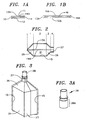
- Figure 1A shows the relative positions of the various webs (in a "one up” configuration) as they pass through the fabrication process. For clarity, the webs are shown separated and the seams not made.
- the constituent webs are top web 11, bottom web 12, left center web 13 and right center web 14.
- the two center webs are folded, and form gussets in the finished product.
- the numerals 13A and 14A indicate the inner extent of the gusset folds.
- the webs 11, 12, 13, and 14 are discussed herein as if they were separate pieces of material at the outset, it will be appreciated that any number of the seams between the webs could be "pre-made", as by folding one or more of the source webs to create the effect of a seam or seams. For example, if it were desired to fabricate the bottle from two webs instead of four, the bottom, left center, and right center webs could be a single folded web, instead of three separate webs.
- the gussets when the bottle is complete, and contains liquid, the gussets will be open, and the bottle will have a substantially square or rectangular shape in cross section. Also, as will be noted below, even though the cross section is substantially rectangular, the body of the bottle may be shaped with pleasing curves in the vertical direction. When partially or completely full, the bottle is remarkably stable.
- top and bottom webs 11 and 12 that are coated with sealable material face toward the interior of the bottle, whereas the coated faces of the center webs 13 and 14 face outward of the gussets.
- sealable material i.e. the low density polyethylene in the case of the illustrative web material
- Figure 2 depicts the outline of a completed bottle, (except without the fitment), and with the gussets folded. What can be seen is top web 11, and the seam pattern 15. Section 1 is a portion of what will become the bottom, Section 2 is what will become the front panel, section 3 is a portion of the transition section, and section 4 is a portion of the bottle neck (where the fitment is placed).
- the dashed lines 13A and 14A indicate the folds of the gussets.
- the edges of the webs at section 1 preferably taper inward at approximately a 45° angle, terminating at approximately the inside edges of the gussets.
- the bottom could be cut straight across, without the 45° cuts.
- a bottle made in this manner would unfold to a flat bottom, as does the 45° cut embodiment, but it has been found that such a bottom does not contribute to quite as stable a structure as does the 45° cut bottom.
- Figure 3 is a trimetric view of one embodiment of a completed bottle as it would appear filled impartially or completely) with liquid or other flowable product.
- Front panel 21 (a part of web 11 during fabrication) is visible, as is transition section 26, neck 27, and fitment 28.
- the gusset which was the right center web 13 during fabrication can be seen as side panel 23.
- the rear panel and the other side panel cannot be seen.
- Figure 3A is a trimetric view of a representative fitment 28, with the numeral 28A indicating the base of the fitment. A round base is illustrated, but as noted above, other shapes are also contemplated.
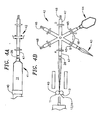
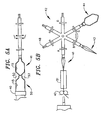
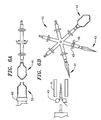
- FIG. 4 through 9 A presently preferred method of fabricating the invented bottle is illustrated in Figures 4 through 9 .
- the "A" portion of each figure is a plan view showing the webs at a particular stage in the fabrication process as the webs pass through the fabricating machine, while the "B" portion is a side view.
- all figures are somewhat schematic in nature. Since fabrication is a continuous repetitive process, the point in the process where explanation starts is somewhat arbitrary.
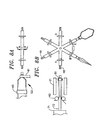
- FIG. 4 For greater detail of the fabrication process, first refer to Figure 4 , where the webs 11, 12, 13, and 14 are seen being fed into the fabricating machine around a pair of idler rolls 40. A first nascent bottle 41 is seen being held at the end of an arm 47 of ferris wheel 42 at station A (the holding means (48) will be described later). At the time depicted in Figure 4 , the top portion of the perimeter seams for bottle 41 have been formed, and the fitment 28 has been placed, but the bottom portion of the bottle is still unseamed. Partially completed bottles 43 and 44 are attached to the ferris wheel at stations B and C. Ferris wheel 42 is rotatable by means not shown.
- seaming iron 51 has closed on the web, and is forming the top portion of the perimeter seams (15) for the next bottle (52), as well as the bottom portion of the perimeter seams for the bottle 41.
- seaming iron 51 clamps the webs together, as noted previously, the inside surfaces of the gussets (not being coated) will not adhere, but seams will be formed between the gusset material and the top and bottom webs (since these abutting faces are coated with sealable material).
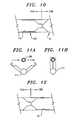
- Figure 10 illustrates an exemplary pattern of the perimeter seams 15 formed by seaming iron 51.
- the numeral 15A indicates the seams for the top portion of one bottle, while 15B indicates the seams for the bottom portion of the prior bottle. For clarity, only the seams made at one closing of seaming iron 51 are shown in the figure.
- a notching means - which may be integral with the seaming iron - cuts the extraneous material (indicated by the numeral 53) from around the neck and transition areas of the bottle being formed, and also severs the web between bottles 41 and 52.
- the extraneous material (53) is commonly removed from the area by a vacuum system, and is discarded.
- the ferris wheel is rotated so that bottle 41, which was at station A, is rotated 60° (counterclockwise as viewed in the drawings) to station B.
- the seaming iron 51 members separate, as do the rollers comprising idler rolls 40. This is illustrated in Figure 6 .
- fitment driver 71 drives mandrel 72 (which has a fitment 28 positioned on its end) in through the open bottom of the bottle in process, and positions the fitment in the neck portion of the bottle ( Figure 7 ).
- mandrel 72 which has a fitment 28 positioned on its end
- Fitment handling and positioning on the mandrels such as mandrel 72 is known in the art and therefore is not further described.
- the fitment should fit reasonably closely to the neck portion of the bottle so that wrinkles do not appear when the neck is sealed to the fitment.
- the maximum looseness of fit depends in great measure on the particular circumstances, but in general, if the inner circumference, of the neck is more than about 3% larger than the circumference of the base of the fitment, there is a danger of wrinkling. It may be desired to taper the base of fitment 28 somewhat as an aid to fitting it into the neck,
- clamp 81 ( Figure 8 ) clamps the bottle neck 27 to the fitment 28.
- Clamp 81 is preferably heated so that a first (at least temporary) bonding of the bottle material to the fitment is accomplished.
- Clamp 81 is then moved to engage the fitment with an arm of the ferris wheel ( Figure 9 ).
- the end 48 of the arm on which the bottle is held is preferably split, is compliant, and has a slightly larger diameter at its end than the hole in the fitment (so as to hold the fitment from the inside).
- the idler rolls 40 turn as the material feeds.
- mandrel 72 is retracted.
- the clamp 81 is then released and moved back to its at rest position and a new fitment is positioned on the end of mandrel 72 (not illustrated).
- the nascent bottle 52 that is held by an arm of the ferris wheel at station A is in same condition as bottle 41 was just before the step described in connection with Figure 4 .
- the next step is to repeat the step of Figure 4 by closing the idler rolls 40, following which the seaming iron 51 will create another set of perimeter seals, etc.
- bottles 41, 43, and 44 can be seen attached at the ends of the arms 47 of the ferris wheel at stations B, C, and D.
- Bottle 44 is pulled off the ferris wheel leg at this time (by means not shown) and transferred to a packing station or to a bottle filling station.
- a heated clamp 111 (as shown in Figures 11A and 11B ) is located at each of stations B and C.
- both clamps 111 are closed around the base 28A of fitment 28 of the bottles which are then at stations B and C, as indicated in Figure 11B , creating seals between the neck and the fitment.
- the clamps open ( Figure 11A ) to allow the ferris wheel to move.
- the clamps 111 are not shown in Figures 4-9 .
- the seals can be effected by applying ultrasonic energy to the interface.
- the perimeter seams also may be made by using ultrasonic energy. Ultrasonic sealing is well known, and need not be described further.
- each end of the ferris wheel arms 47 are rotatable with respect to the arms, and, to effect such rotation, each end includes a gear or friction wheel 45 that engages a mating rack or friction pad 46 fastened to the machine frame between stations B and C.
- the length of the rack 46 is such that each arm end (and attached bottle) turns about 90° between stations B and C.
- the heated clamps 111 at stations B and C (which are heated hot enough, and apply sufficient clamping pressure to form a seal between the web material and the fitment) therefore provide a uniform seal between the neck of the bottle 27 and the fitment 28 around the circumference.
- the use of two heated clamps 111 to apply pressure to the sealing area at different radial angles assures that the needed sealing pressure is exerted on the fitment at all areas around the entire circumference, and thereby provides complete and reliable sealing.
- the two clamps could be positioned so as to apply clamping force from different directions.
- Another alternate method of sealing that would be suitable for use with symmetrical fitments, would be to use only one heated clamp, actuating it twice, and causing it move angularly between actuations.
- Figure 12 depicts an alternate configuration of the seaming pattern for the perimeter seams.
- the portion 2 (as shown in Figure 2 ) is formed at the same time as portion 1 is formed, rather than at the time portions 3 and 4 are formed. Forming the seams in this manner will involve some differences in timing of the process, as will be apparent to those skilled in the art, but can be accommodated, if deemed convenient.
- Figures 13A and B depict the fabrication of a bottle of the type shown in Figure 3 , except for the inclusion of a handle.
- the process is shown at the stage as depicted in Figure 5 , i.e., at the stage when the perimeter seals are being formed, and the excess material is cut away by notching means.
- the gusset webs 13 and 14 are introduced into the process prior to the introduction of the top and bottom webs 11 and 12.
- the gusset webs 13 and 14 are shown entering the process over idler roll 131.
- a hole punch 131 punches several small holes 132 through gusset web 14 at the first station.
- seaming iron 51 forms the perimeter seams as described previously, and also seals the top and bottom webs 11 and 12 together through the holes 132.
- the notching means cuts a hole 133 through webs 11, 14, and 12. The remainder of the fabrication process is as described above in connection with the first embodiment, and the final product is a bottle having a handle 134.
- Figure 14 is intended to show that the body of the invented bottle need not be a rectangular parallelepiped (when filled). While a horizontal cross section of the the body is square or rectangular, the body may have a pleasing shape, as illustrated in Figure 14 , where a bottle 141 is shown with its sides notched out (as indicated by the numeral 142) providing an "hour glass" or other desirable shape. The notching preferably is accomplished at the same time as material 53 is cut away.
- the bottle of Figure 14 is shown in the same condition as the bottle of Figure 2 , namely flat, and without fitment inserted.
- Figures 4-9 and 13 show a "ferris wheel” type of device for holding the bottles at spaced stations A, B, C, and D, and transporting them between stations. It will be appreciated by those skilled in the art that other suitable transport means could be used to accomplish the same function, e., a chain running around a pair of sprockets, a carousel, ballets travelling down a track, or other means.
- Figure 1B depicts a web configuration that could be used for "two-up" production.
- Webs 11A, 12A, 13A, and 14A correspond to webs 11, 12, 13, and L4 of Figure 1A .
- An additional web 16 occupies the central area. It will be appreciated that by slitting the web configuration depicted in Figure 1B down the middle, two webs of the configuration shown in Figure 1A will be created. Hence, the web configuration shown in Figure 1B can result in two lines proceeding side by side, utilizing two ferris wheels, two fitment arms, etc.
- the web must be slit into two parallel webs. Slitting webs is a common procedure in the art, and, accordingly, need not be discussed in detail.
Landscapes
- Engineering & Computer Science (AREA)
- Mechanical Engineering (AREA)
- Making Paper Articles (AREA)
- Bag Frames (AREA)
Claims (11)
- Verfahren zum Einsetzen eines Einsatzstücks in den Halsabschnitt eines flexiblen Behälters bei dessen Herstellung, wobei der Behälter einen oberen Abschnitt und einen unteren Abschnitt umfasst, wobei sich der Halsabschnitt im oberen Abschnitt befindet und das Einsatzstück eine Basis umfasst, das die Schritte aufweist:intermittierendes Zuführen von mehreren Bahnen (11, 12, 13, 14) als das Material für einen flexiblen Behälter;Bilden von Nähten (15), die die Bahnen längs mindestens eines Abschnitts dessen befestigen, was dazu bestimmt ist, der Umriss des Behälters am oberen Abschnitt zu werden, wobei die Nähte diskontinuierlich sind und dazwischen einen Halsabschnitt (27) des Behälters definieren;Anordnen eines Einsatzstücks (28) auf einem Dorn (72); Trennen der Bahnen am unteren Abschnitt;Einführen das Dorns (72) zwischen die Bahnen durch den unteren Abschnitt des Behälters und Anordnen der Basis des Einsatzstücks (28) im Halsabschnitt (27);Abdichten des Halsabschnitts (27) an der Basis des Einsatzstücks (28); und dannHerausziehen des Dorns.
- Verfahren zum Einsetzen eines Einsatzstücks in den Hals eines flexiblen Behälters bei dessen Herstellung nach Anspruch 1, wobei die mehreren Bahnen erste und zweite ebene Bahnen (11, 12) und erste und zweite gefaltete Seitenfaltenbahnen (13, 14) dazwischen umfassen, und wobei die Nähte (15) die ersten und zweiten ebenen Bahnen an den ersten und zweiten gefalteten Seitenfaltenbahnen befestigen, um den Halsabschnitt (27) zu bilden.
- Verfahren zum Einsetzen eines Einsatzstücks in den Hals eines flexiblen Behälters bei dessen Herstellung nach Anspruch 2, wobei die ersten und zweiten ebenen Bahnen (11, 12) und die ersten und zweiten gefalteten Seitenfaltenbahnen (13, 14) jeweils vorgegebene Breiten aufweisen, und das ferner den Schritt des Reduzierens der Breiten am Halsabschnitt umfasst, wodurch der Halsabschnitt (27) eine reduzierte Größe aufweisen wird.
- Verfahren zum Einsetzen eines Einsatzstücks in den Hals eines flexiblen Behälters bei dessen Herstellung nach Anspruch 1, wobei die ersten und zweiten gefalteten Seitenfaltenbahnen Abschnitte desselben Materialstücks wie eine der ebenen Bahnen sind.
- Verfahren zum Einsetzen eines Einsatzstücks in den Hals eines flexiblen Behälters bei dessen Herstellung nach Anspruch 1, wobei die ersten und zweiten gefalteten Seitenfaltenbahnen (13, 14) und die ersten und zweiten ebenen Bahnen (11, 12) vier getrennte Materialstücke sind.
- Verfahren zum Einsetzen eines Einsatzstücks in den Hals eines flexiblen Behälters bei dessen Herstellung nach Anspruch 1, wobei die Einführungsbewegung des Dorns in die Richtung stattfindet, in die die Bahnen zugeführt werden.
- Verfahren zum Einsetzen eines Einsatzstücks in den Hals eines flexiblen Behälters bei dessen Herstellung nach Anspruch 6, wobei die mehreren Bahnen erste und zweite ebene Bahnen (11, 12) und erste und zweite gefaltete Seitenfaltenbahnen (13, 14) dazwischen aufweisen, und wobei die Nähte (15) die ersten und zweiten ebenen Bahnen (11, 12) an den ersten und zweiten gefalteten Seitenfaltenbahnen (13, 14) befestigen, um den Halsabschnitt (27) zu bilden.
- Verfahren zum Einsetzen eines Einsatzstücks in den Hals eines flexiblen Behälters bei dessen Herstellung nach Anspruch 6, wobei die ersten und zweiten ebenen Bahnen (11, 12) und ersten und zweiten gefalteten Seitenfaltenbahnen (13, 14) jeweils vorgegebene Breiten aufweisen, und das ferner den Schritt des Reduzierens der Breiten am Halsabschnitt aufweist, wodurch der Halsabschnitt (27) eine reduzierte Größe umfassen wird.
- Verfahren zum Einsetzen eines Einsatzstücks in den Hals eines flexiblen Behälters bei dessen Herstellung nach Anspruch 6, wobei die ersten und zweiten gefalteten Seitenfaltenbahnen Abschnitte desselben Materialstücks wie eine der ebenen Bahnen sind.
- Verfahren zum Einsetzen eines Einsatzstücks in den Hals eines flexiblen Behälters bei dessen Herstellung nach Anspruch 6, wobei die ersten und zweiten gefalteten Seitenfaltenbahnen (13, 14) und die ersten und zweiten ebenen Bahnen (11, 12) vier getrennte Materialstücke sind.
- Verfahren zum Einsetzen eines Einsatzstücks in den Hals eines flexiblen Behälters bei dessen Herstellung nach Anspruch 1, wobei der Innenumfang des Halsabschnitts nicht mehr als etwa 3% größer als der Umfang der Basis des Einsatzstücks ist.
Priority Applications (2)
| Application Number | Priority Date | Filing Date | Title |
|---|---|---|---|
| DK12192751.1T DK2573004T3 (en) | 2002-04-27 | 2003-04-09 | FOLDED FLEXIBLE BOTTLE WITH MOUNTING PART AND MANUFACTURING METHOD. |
| EP12192751.1A EP2573004B1 (de) | 2002-04-27 | 2003-04-09 | Flexible Seitenfaltflasche mit Einsatz |
Applications Claiming Priority (5)
| Application Number | Priority Date | Filing Date | Title |
|---|---|---|---|
| US13343602A | 2002-04-27 | 2002-04-27 | |
| US133436 | 2002-04-27 | ||
| US195097 | 2002-07-11 | ||
| US10/195,097 US6832852B2 (en) | 2002-04-27 | 2002-07-11 | Gusseted flexible bottle with fitment and method of fabrication |
| PCT/US2003/010905 WO2003093126A1 (en) | 2002-04-27 | 2003-04-09 | Gusseted flexible bottle with fitment and method of fabrication |
Related Child Applications (1)
| Application Number | Title | Priority Date | Filing Date |
|---|---|---|---|
| EP12192751.1A Division EP2573004B1 (de) | 2002-04-27 | 2003-04-09 | Flexible Seitenfaltflasche mit Einsatz |
Publications (3)
| Publication Number | Publication Date |
|---|---|
| EP1501736A1 EP1501736A1 (de) | 2005-02-02 |
| EP1501736A4 EP1501736A4 (de) | 2011-05-25 |
| EP1501736B1 true EP1501736B1 (de) | 2012-11-21 |
Family
ID=29406228
Family Applications (1)
| Application Number | Title | Priority Date | Filing Date |
|---|---|---|---|
| EP03721596A Expired - Lifetime EP1501736B1 (de) | 2002-04-27 | 2003-04-09 | Verfahren zum einsetzen eines einsatzes in den hals eines flexiblen behälters |
Country Status (6)
| Country | Link |
|---|---|
| US (1) | US7147597B2 (de) |
| EP (1) | EP1501736B1 (de) |
| JP (1) | JP4418363B2 (de) |
| AU (1) | AU2003224903A1 (de) |
| DK (1) | DK2573004T3 (de) |
| WO (1) | WO2003093126A1 (de) |
Families Citing this family (25)
| Publication number | Priority date | Publication date | Assignee | Title |
|---|---|---|---|---|
| WO2006073403A1 (en) * | 2005-01-07 | 2006-07-13 | Krw Consulting, Llc | Triangularly shaped flexible bottle with fitment, and method of fabrication |
| US7794149B2 (en) * | 2005-05-31 | 2010-09-14 | Smart Bottle Inc. | Container of selectively expanded plastic film with fitment |
| US7328543B2 (en) * | 2006-05-17 | 2008-02-12 | Plitek, L.L.C. | Apparatus and method for the application of pressure relief valves |
| USD578896S1 (en) | 2007-07-09 | 2008-10-21 | Steven Herman | Liquid container |
| US8945459B2 (en) * | 2008-09-24 | 2015-02-03 | Smart Bottle Inc. | Container made from expanded plastic film |
| EP2246270B1 (de) * | 2009-04-29 | 2013-12-11 | SMQ Group B.V. | Falttasche und Verfahren zur Herstellung einer Falttasche |
| US8468779B2 (en) * | 2009-05-05 | 2013-06-25 | Sealed Air Corporation (Us) | Method and apparatus for positioning, inflating, and sealing a mailer comprising an inner inflatable liner |
| BR122013020236B1 (pt) * | 2009-09-10 | 2020-12-15 | Smart Bottle Inc. | Recipiente flexível com alças flexíveis |
| US8348509B2 (en) * | 2009-09-10 | 2013-01-08 | Smart Bottle, Inc. | Flexible container with fitment and handle |
| US20110083402A1 (en) * | 2009-10-09 | 2011-04-14 | Larry Dee Walker | Vertical form, fill, and seal system for hot fill liquids |
| US20110192121A1 (en) | 2010-02-08 | 2011-08-11 | Sealed Air Corporation (Us) | Inflatable Mailer, Apparatus, and Method for Making the Same |
| US8388886B2 (en) | 2010-06-10 | 2013-03-05 | Smart Bottle, Inc. | Blow-molded plastic bottle and method of manufacture |
| PH12013501651A1 (en) * | 2011-02-17 | 2013-10-14 | Nihon Yamamura Glass Co Ltd | Pump-equipped container and dispensing pump used for same |
| US9284106B2 (en) * | 2011-10-24 | 2016-03-15 | Smart Bottle, Inc. | Bottle registration feature |
| DE202011109209U1 (de) | 2011-12-16 | 2012-07-24 | Bischof + Klein Gmbh & Co. Kg | Seitenfaltenbeutel aus Folie |
| WO2015160735A1 (en) | 2014-04-15 | 2015-10-22 | Intelligent Energy Limited | Elastomeric hydrogen reactor with clog-less filter |
| CZ2016749A3 (cs) | 2014-05-05 | 2018-01-31 | Dow Global Technologies Llc | Pružná nádoba |
| PL3169593T3 (pl) * | 2014-07-16 | 2019-09-30 | Dow Global Technologies Llc | Elastyczny pojemnik z osprzętem i sposób jego wytwarzania |
| BR112017000283A2 (pt) * | 2014-07-16 | 2017-10-31 | Dow Global Technologies Llc | recipiente flexível com encaixe e processo para produzir o mesmo |
| WO2016016720A1 (en) | 2014-07-29 | 2016-02-04 | Intelligent Energy Limited | Performance balancing elastomeric hydrogen reactor |
| WO2016030766A2 (en) * | 2014-08-29 | 2016-03-03 | Intelligent Energy Limited | Flexible volumetric container |
| AR115063A1 (es) | 2018-04-26 | 2020-11-25 | Dow Global Technologies Llc | Dispositivos y métodos para sellar un accesorio en una botella flexible |
| MX2021012965A (es) * | 2019-04-23 | 2022-04-06 | Smart Bottle Inc | Recipiente flexible y proceso para instalar un accesorio en el mismo. |
| CN114302796B (zh) | 2019-09-06 | 2024-07-09 | 陶氏环球技术有限责任公司 | 柔性薄膜流体分配衬垫构件 |
| WO2024049936A1 (en) | 2022-08-31 | 2024-03-07 | Dow Global Technologies Llc | Method for making molded polymer foam |
Family Cites Families (28)
| Publication number | Priority date | Publication date | Assignee | Title |
|---|---|---|---|---|
| FR1306328A (fr) * | 1961-11-14 | 1962-10-13 | Procédé de fabrication de sacs à valve en matière plastique | |
| NL126868C (de) | 1962-11-14 | 1900-01-01 | ||
| US4669124A (en) * | 1984-05-23 | 1987-05-26 | Yoken Co., Ltd. | Beverage container with tamperproof screwthread cap |
| EP0221893A4 (de) * | 1985-04-22 | 1988-09-07 | Inpaco Inc | Fixierverfahren in waagerechten vorrichtungen für zubehör zum giessen, füllen und schliessen. |
| DE3612196A1 (de) * | 1986-04-11 | 1987-10-22 | Bosch Gmbh Robert | Vorrichtung zum herstellen von beutelpackungen mit entnahmestutzen |
| US4658434A (en) * | 1986-05-29 | 1987-04-14 | Grain Security Foundation Ltd. | Laminates and laminated articles |
| US5087235A (en) * | 1990-09-11 | 1992-02-11 | Custom Packaging Systems, Inc. | Method for making a collapsible bag with spout |
| FR2672033A1 (fr) * | 1991-01-25 | 1992-07-31 | Bottari Pierre | Sac polygonal a paroi transversale plane et dispositif pour sa mise en óoeuvre. |
| US5324233A (en) * | 1992-09-09 | 1994-06-28 | W. R. Grace & Co.-Conn. | Method and apparatus for sealing fitment tubes into pouches |
| US5348525A (en) * | 1993-08-09 | 1994-09-20 | Jebco Packaging Systems, Inc. | Method of constructing flexible containers with tubular fitments |
| JPH07323478A (ja) * | 1994-05-31 | 1995-12-12 | Sumitomo Bakelite Co Ltd | 注出栓溶着方法及びその装置 |
| IL111114A0 (en) * | 1994-09-30 | 1994-11-28 | Geller Avner | Package having a rectangular base and its manufacture |
| JP3048888B2 (ja) * | 1995-06-28 | 2000-06-05 | 株式会社細川洋行 | 液体充填容器およびその製造方法 |
| US5918984A (en) | 1996-08-29 | 1999-07-06 | Custom Packaging Systems, Inc. | Collapsible bag with handle |
| JP3336878B2 (ja) * | 1996-09-27 | 2002-10-21 | 花王株式会社 | ガゼット袋 |
| CN1111494C (zh) * | 1997-03-12 | 2003-06-18 | H·奥布里斯特股份公司 | 袋管 |
| JPH1143155A (ja) * | 1997-07-23 | 1999-02-16 | Hosokawa Yoko Co Ltd | 液体容器 |
| US5855544A (en) * | 1997-08-12 | 1999-01-05 | Technical Developers, Inc. | Flexible container with tubular fitment and method and apparatus for assembling same |
| JPH11208676A (ja) * | 1998-01-27 | 1999-08-03 | Toppan Printing Co Ltd | スパウト付きガゼット袋 |
| JP2000025793A (ja) * | 1998-07-09 | 2000-01-25 | Toyo Seikan Kaisha Ltd | 吊り環付パウチ |
| JP2000072161A (ja) * | 1998-08-28 | 2000-03-07 | Mitsubishi Heavy Ind Ltd | 口栓付不定形容器 |
| ATE353764T1 (de) * | 1998-12-24 | 2007-03-15 | Seiko Epson Corp | Tintensack für tintenstrahlaufzeichnungsgerät und packung zum verpacken eines solchen sackes |
| US6549744B2 (en) | 2000-01-07 | 2003-04-15 | Ricoh Company, Ltd. | Powder container for an image forming apparatus and powder discharging device |
| US6612466B1 (en) * | 2000-08-21 | 2003-09-02 | Illinois Tool Works Inc. | Thin wall fitment for spouted pouch |
| US6695757B2 (en) * | 2001-01-12 | 2004-02-24 | Scholle Corporation | Method of manufacturing a standup bag |
| US6810636B2 (en) * | 2001-01-30 | 2004-11-02 | Fogg Filler Company | Container and spout assembly apparatus and method of assembly |
| US6860406B2 (en) * | 2001-08-13 | 2005-03-01 | Illinois Tool Works Inc. | Flexible pouch fitment structure |
| US7407326B2 (en) * | 2003-12-08 | 2008-08-05 | Wilkes Kenneth R | Triangularly shaped flexible bottle with fitment, and method of fabrication |
-
2003
- 2003-04-09 JP JP2004501273A patent/JP4418363B2/ja not_active Expired - Fee Related
- 2003-04-09 DK DK12192751.1T patent/DK2573004T3/en active
- 2003-04-09 AU AU2003224903A patent/AU2003224903A1/en not_active Abandoned
- 2003-04-09 EP EP03721596A patent/EP1501736B1/de not_active Expired - Lifetime
- 2003-04-09 WO PCT/US2003/010905 patent/WO2003093126A1/en not_active Ceased
-
2004
- 2004-09-01 US US10/932,516 patent/US7147597B2/en not_active Expired - Lifetime
Also Published As
| Publication number | Publication date |
|---|---|
| US7147597B2 (en) | 2006-12-12 |
| JP4418363B2 (ja) | 2010-02-17 |
| US20050026761A1 (en) | 2005-02-03 |
| JP2005523853A (ja) | 2005-08-11 |
| AU2003224903A1 (en) | 2003-11-17 |
| EP1501736A4 (de) | 2011-05-25 |
| EP1501736A1 (de) | 2005-02-02 |
| DK2573004T3 (en) | 2017-07-17 |
| WO2003093126A1 (en) | 2003-11-13 |
Similar Documents
| Publication | Publication Date | Title |
|---|---|---|
| EP2573004B1 (de) | Flexible Seitenfaltflasche mit Einsatz | |
| DK2573004T3 (en) | FOLDED FLEXIBLE BOTTLE WITH MOUNTING PART AND MANUFACTURING METHOD. | |
| US7407326B2 (en) | Triangularly shaped flexible bottle with fitment, and method of fabrication | |
| US4384440A (en) | Method for the continuous manufacture of packing containers | |
| US5704886A (en) | Method and apparatus for scoring paperboard package sheets | |
| JPS58203839A (ja) | 流体用容器 | |
| US8388886B2 (en) | Blow-molded plastic bottle and method of manufacture | |
| US20170197771A1 (en) | Stand-up flexible container with top and bottom handles | |
| AU2014321228C1 (en) | Bottom-gusseted package and method | |
| JP2002172717A (ja) | 筒状容器の製造装置、筒状容器の製造方法、及び筒状容器 | |
| WO2006073403A1 (en) | Triangularly shaped flexible bottle with fitment, and method of fabrication | |
| US20210188472A1 (en) | Flexible container and process for installation of fitment in same | |
| HK1184768A (en) | Gusseted flexible bottle with fitment | |
| HK1184768B (en) | Gusseted flexible bottle with fitment | |
| CA1336671C (en) | Method of making a laminated tubular body | |
| US20110235951A1 (en) | Reclosable bag with tear open feature | |
| JP3390147B2 (ja) | 自立袋連続製造方法 | |
| US20040053759A1 (en) | Packaging | |
| US5034080A (en) | Method of making a laminated tubular body | |
| JPS5944264B2 (ja) | ラベル付きの容器,びんに装飾ラベルを貼る方法およびびんへ貼りつけるラベル装置 | |
| JPH0423905B2 (de) | ||
| JPH0624787B2 (ja) | 角底容器の製造方法 | |
| NZ717988B2 (en) | Bottom-gusseted package and method |
Legal Events
| Date | Code | Title | Description |
|---|---|---|---|
| PUAI | Public reference made under article 153(3) epc to a published international application that has entered the european phase |
Free format text: ORIGINAL CODE: 0009012 |
|
| 17P | Request for examination filed |
Effective date: 20041109 |
|
| AK | Designated contracting states |
Kind code of ref document: A1 Designated state(s): AT BE BG CH CY CZ DE DK EE ES FI FR GB GR HU IE IT LI LU MC NL PT RO SE SI SK TR |
|
| AX | Request for extension of the european patent |
Extension state: AL LT LV MK |
|
| RAP1 | Party data changed (applicant data changed or rights of an application transferred) |
Owner name: WILKES, KENNETH R. |
|
| RIN1 | Information on inventor provided before grant (corrected) |
Inventor name: WILKES, KENNETH R. |
|
| RAP1 | Party data changed (applicant data changed or rights of an application transferred) |
Owner name: OKLAHOMA PACKAGING, LLC |
|
| RIN1 | Information on inventor provided before grant (corrected) |
Inventor name: WILKES, KENNETH R. |
|
| RAP1 | Party data changed (applicant data changed or rights of an application transferred) |
Owner name: RIVER SOLUTIONS, INC |
|
| RAP1 | Party data changed (applicant data changed or rights of an application transferred) |
Owner name: SMART BOTTLE, INC |
|
| A4 | Supplementary search report drawn up and despatched |
Effective date: 20110421 |
|
| 17Q | First examination report despatched |
Effective date: 20110805 |
|
| RTI1 | Title (correction) |
Free format text: METHOD OF INSERTING A FITMENT INTO THE NECK PORTION OF A FLEXIBLE CONTAINER |
|
| GRAP | Despatch of communication of intention to grant a patent |
Free format text: ORIGINAL CODE: EPIDOSNIGR1 |
|
| GRAS | Grant fee paid |
Free format text: ORIGINAL CODE: EPIDOSNIGR3 |
|
| GRAP | Despatch of communication of intention to grant a patent |
Free format text: ORIGINAL CODE: EPIDOSNIGR1 |
|
| GRAA | (expected) grant |
Free format text: ORIGINAL CODE: 0009210 |
|
| AK | Designated contracting states |
Kind code of ref document: B1 Designated state(s): AT BE BG CH CY CZ DE DK EE ES FI FR GB GR HU IE IT LI LU MC NL PT RO SE SI SK TR |
|
| REG | Reference to a national code |
Ref country code: GB Ref legal event code: FG4D |
|
| REG | Reference to a national code |
Ref country code: CH Ref legal event code: EP |
|
| REG | Reference to a national code |
Ref country code: AT Ref legal event code: REF Ref document number: 584946 Country of ref document: AT Kind code of ref document: T Effective date: 20121215 |
|
| REG | Reference to a national code |
Ref country code: IE Ref legal event code: FG4D |
|
| REG | Reference to a national code |
Ref country code: CH Ref legal event code: NV Representative=s name: KIRKER AND CIE S.A., CH |
|
| REG | Reference to a national code |
Ref country code: DE Ref legal event code: R096 Ref document number: 60342642 Country of ref document: DE Effective date: 20130117 |
|
| REG | Reference to a national code |
Ref country code: NL Ref legal event code: VDEP Effective date: 20121121 |
|
| REG | Reference to a national code |
Ref country code: AT Ref legal event code: MK05 Ref document number: 584946 Country of ref document: AT Kind code of ref document: T Effective date: 20121121 |
|
| PG25 | Lapsed in a contracting state [announced via postgrant information from national office to epo] |
Ref country code: FI Free format text: LAPSE BECAUSE OF FAILURE TO SUBMIT A TRANSLATION OF THE DESCRIPTION OR TO PAY THE FEE WITHIN THE PRESCRIBED TIME-LIMIT Effective date: 20121121 Ref country code: ES Free format text: LAPSE BECAUSE OF FAILURE TO SUBMIT A TRANSLATION OF THE DESCRIPTION OR TO PAY THE FEE WITHIN THE PRESCRIBED TIME-LIMIT Effective date: 20130304 Ref country code: SE Free format text: LAPSE BECAUSE OF FAILURE TO SUBMIT A TRANSLATION OF THE DESCRIPTION OR TO PAY THE FEE WITHIN THE PRESCRIBED TIME-LIMIT Effective date: 20121121 |
|
| PG25 | Lapsed in a contracting state [announced via postgrant information from national office to epo] |
Ref country code: GR Free format text: LAPSE BECAUSE OF FAILURE TO SUBMIT A TRANSLATION OF THE DESCRIPTION OR TO PAY THE FEE WITHIN THE PRESCRIBED TIME-LIMIT Effective date: 20130222 Ref country code: PT Free format text: LAPSE BECAUSE OF FAILURE TO SUBMIT A TRANSLATION OF THE DESCRIPTION OR TO PAY THE FEE WITHIN THE PRESCRIBED TIME-LIMIT Effective date: 20130321 Ref country code: SI Free format text: LAPSE BECAUSE OF FAILURE TO SUBMIT A TRANSLATION OF THE DESCRIPTION OR TO PAY THE FEE WITHIN THE PRESCRIBED TIME-LIMIT Effective date: 20121121 |
|
| PG25 | Lapsed in a contracting state [announced via postgrant information from national office to epo] |
Ref country code: AT Free format text: LAPSE BECAUSE OF FAILURE TO SUBMIT A TRANSLATION OF THE DESCRIPTION OR TO PAY THE FEE WITHIN THE PRESCRIBED TIME-LIMIT Effective date: 20121121 |
|
| PG25 | Lapsed in a contracting state [announced via postgrant information from national office to epo] |
Ref country code: CZ Free format text: LAPSE BECAUSE OF FAILURE TO SUBMIT A TRANSLATION OF THE DESCRIPTION OR TO PAY THE FEE WITHIN THE PRESCRIBED TIME-LIMIT Effective date: 20121121 Ref country code: BG Free format text: LAPSE BECAUSE OF FAILURE TO SUBMIT A TRANSLATION OF THE DESCRIPTION OR TO PAY THE FEE WITHIN THE PRESCRIBED TIME-LIMIT Effective date: 20130221 Ref country code: SK Free format text: LAPSE BECAUSE OF FAILURE TO SUBMIT A TRANSLATION OF THE DESCRIPTION OR TO PAY THE FEE WITHIN THE PRESCRIBED TIME-LIMIT Effective date: 20121121 Ref country code: DK Free format text: LAPSE BECAUSE OF FAILURE TO SUBMIT A TRANSLATION OF THE DESCRIPTION OR TO PAY THE FEE WITHIN THE PRESCRIBED TIME-LIMIT Effective date: 20121121 Ref country code: EE Free format text: LAPSE BECAUSE OF FAILURE TO SUBMIT A TRANSLATION OF THE DESCRIPTION OR TO PAY THE FEE WITHIN THE PRESCRIBED TIME-LIMIT Effective date: 20121121 |
|
| PG25 | Lapsed in a contracting state [announced via postgrant information from national office to epo] |
Ref country code: RO Free format text: LAPSE BECAUSE OF FAILURE TO SUBMIT A TRANSLATION OF THE DESCRIPTION OR TO PAY THE FEE WITHIN THE PRESCRIBED TIME-LIMIT Effective date: 20121121 Ref country code: NL Free format text: LAPSE BECAUSE OF FAILURE TO SUBMIT A TRANSLATION OF THE DESCRIPTION OR TO PAY THE FEE WITHIN THE PRESCRIBED TIME-LIMIT Effective date: 20121121 |
|
| REG | Reference to a national code |
Ref country code: DE Ref legal event code: R082 Ref document number: 60342642 Country of ref document: DE |
|
| PLBE | No opposition filed within time limit |
Free format text: ORIGINAL CODE: 0009261 |
|
| STAA | Information on the status of an ep patent application or granted ep patent |
Free format text: STATUS: NO OPPOSITION FILED WITHIN TIME LIMIT |
|
| 26N | No opposition filed |
Effective date: 20130822 |
|
| PG25 | Lapsed in a contracting state [announced via postgrant information from national office to epo] |
Ref country code: MC Free format text: LAPSE BECAUSE OF FAILURE TO SUBMIT A TRANSLATION OF THE DESCRIPTION OR TO PAY THE FEE WITHIN THE PRESCRIBED TIME-LIMIT Effective date: 20121121 |
|
| REG | Reference to a national code |
Ref country code: DE Ref legal event code: R097 Ref document number: 60342642 Country of ref document: DE Effective date: 20130822 |
|
| REG | Reference to a national code |
Ref country code: IE Ref legal event code: MM4A |
|
| PG25 | Lapsed in a contracting state [announced via postgrant information from national office to epo] |
Ref country code: IE Free format text: LAPSE BECAUSE OF NON-PAYMENT OF DUE FEES Effective date: 20130409 |
|
| PG25 | Lapsed in a contracting state [announced via postgrant information from national office to epo] |
Ref country code: CY Free format text: LAPSE BECAUSE OF FAILURE TO SUBMIT A TRANSLATION OF THE DESCRIPTION OR TO PAY THE FEE WITHIN THE PRESCRIBED TIME-LIMIT Effective date: 20121121 Ref country code: TR Free format text: LAPSE BECAUSE OF FAILURE TO SUBMIT A TRANSLATION OF THE DESCRIPTION OR TO PAY THE FEE WITHIN THE PRESCRIBED TIME-LIMIT Effective date: 20121121 |
|
| PG25 | Lapsed in a contracting state [announced via postgrant information from national office to epo] |
Ref country code: LU Free format text: LAPSE BECAUSE OF NON-PAYMENT OF DUE FEES Effective date: 20130409 Ref country code: HU Free format text: LAPSE BECAUSE OF FAILURE TO SUBMIT A TRANSLATION OF THE DESCRIPTION OR TO PAY THE FEE WITHIN THE PRESCRIBED TIME-LIMIT; INVALID AB INITIO Effective date: 20030409 |
|
| REG | Reference to a national code |
Ref country code: FR Ref legal event code: PLFP Year of fee payment: 14 |
|
| REG | Reference to a national code |
Ref country code: FR Ref legal event code: PLFP Year of fee payment: 15 |
|
| REG | Reference to a national code |
Ref country code: FR Ref legal event code: PLFP Year of fee payment: 16 |
|
| PGFP | Annual fee paid to national office [announced via postgrant information from national office to epo] |
Ref country code: IT Payment date: 20210421 Year of fee payment: 19 Ref country code: DE Payment date: 20210428 Year of fee payment: 19 Ref country code: FR Payment date: 20210426 Year of fee payment: 19 |
|
| PGFP | Annual fee paid to national office [announced via postgrant information from national office to epo] |
Ref country code: BE Payment date: 20210427 Year of fee payment: 19 Ref country code: GB Payment date: 20210427 Year of fee payment: 19 Ref country code: CH Payment date: 20210505 Year of fee payment: 19 |
|
| REG | Reference to a national code |
Ref country code: DE Ref legal event code: R119 Ref document number: 60342642 Country of ref document: DE |
|
| REG | Reference to a national code |
Ref country code: CH Ref legal event code: PL |
|
| GBPC | Gb: european patent ceased through non-payment of renewal fee |
Effective date: 20220409 |
|
| REG | Reference to a national code |
Ref country code: BE Ref legal event code: MM Effective date: 20220430 |
|
| PG25 | Lapsed in a contracting state [announced via postgrant information from national office to epo] |
Ref country code: LI Free format text: LAPSE BECAUSE OF NON-PAYMENT OF DUE FEES Effective date: 20220430 Ref country code: GB Free format text: LAPSE BECAUSE OF NON-PAYMENT OF DUE FEES Effective date: 20220409 Ref country code: FR Free format text: LAPSE BECAUSE OF NON-PAYMENT OF DUE FEES Effective date: 20220430 Ref country code: DE Free format text: LAPSE BECAUSE OF NON-PAYMENT OF DUE FEES Effective date: 20221103 Ref country code: CH Free format text: LAPSE BECAUSE OF NON-PAYMENT OF DUE FEES Effective date: 20220430 |
|
| PG25 | Lapsed in a contracting state [announced via postgrant information from national office to epo] |
Ref country code: BE Free format text: LAPSE BECAUSE OF NON-PAYMENT OF DUE FEES Effective date: 20220430 |
|
| PG25 | Lapsed in a contracting state [announced via postgrant information from national office to epo] |
Ref country code: IT Free format text: LAPSE BECAUSE OF NON-PAYMENT OF DUE FEES Effective date: 20220409 |
|
| P01 | Opt-out of the competence of the unified patent court (upc) registered |
Effective date: 20230609 |
|
| P02 | Opt-out of the competence of the unified patent court (upc) corrected |
Effective date: 20230617 |