EP1494549B1 - Use of oxyhydroxide compounds for reducing carbon monoxide in the mainstream smoke of a cigarette - Google Patents
Use of oxyhydroxide compounds for reducing carbon monoxide in the mainstream smoke of a cigarette Download PDFInfo
- Publication number
- EP1494549B1 EP1494549B1 EP03707722.9A EP03707722A EP1494549B1 EP 1494549 B1 EP1494549 B1 EP 1494549B1 EP 03707722 A EP03707722 A EP 03707722A EP 1494549 B1 EP1494549 B1 EP 1494549B1
- Authority
- EP
- European Patent Office
- Prior art keywords
- cigarette
- oxyhydroxide
- carbon monoxide
- carbon dioxide
- cut filler
- Prior art date
- Legal status (The legal status is an assumption and is not a legal conclusion. Google has not performed a legal analysis and makes no representation as to the accuracy of the status listed.)
- Expired - Lifetime
Links
- 235000019504 cigarettes Nutrition 0.000 title claims description 124
- UGFAIRIUMAVXCW-UHFFFAOYSA-N Carbon monoxide Chemical compound [O+]#[C-] UGFAIRIUMAVXCW-UHFFFAOYSA-N 0.000 title claims description 122
- 229910002091 carbon monoxide Inorganic materials 0.000 title claims description 122
- 150000001875 compounds Chemical class 0.000 title claims description 81
- 239000000779 smoke Substances 0.000 title description 26
- CURLTUGMZLYLDI-UHFFFAOYSA-N Carbon dioxide Chemical compound O=C=O CURLTUGMZLYLDI-UHFFFAOYSA-N 0.000 claims description 198
- 229910002092 carbon dioxide Inorganic materials 0.000 claims description 101
- 239000001569 carbon dioxide Substances 0.000 claims description 97
- 238000006243 chemical reaction Methods 0.000 claims description 82
- JEIPFZHSYJVQDO-UHFFFAOYSA-N iron(III) oxide Inorganic materials O=[Fe]O[Fe]=O JEIPFZHSYJVQDO-UHFFFAOYSA-N 0.000 claims description 63
- 239000003054 catalyst Substances 0.000 claims description 56
- 241000208125 Nicotiana Species 0.000 claims description 51
- 235000002637 Nicotiana tabacum Nutrition 0.000 claims description 51
- 230000000391 smoking effect Effects 0.000 claims description 49
- 239000000203 mixture Substances 0.000 claims description 48
- 239000000945 filler Substances 0.000 claims description 47
- 238000002485 combustion reaction Methods 0.000 claims description 41
- 239000007800 oxidant agent Substances 0.000 claims description 39
- 230000001590 oxidative effect Effects 0.000 claims description 39
- 239000002105 nanoparticle Substances 0.000 claims description 38
- 238000000034 method Methods 0.000 claims description 33
- 229910002588 FeOOH Inorganic materials 0.000 claims description 22
- 238000000354 decomposition reaction Methods 0.000 claims description 21
- 239000002245 particle Substances 0.000 claims description 20
- 238000004519 manufacturing process Methods 0.000 claims description 13
- GWEVSGVZZGPLCZ-UHFFFAOYSA-N Titan oxide Chemical compound O=[Ti]=O GWEVSGVZZGPLCZ-UHFFFAOYSA-N 0.000 claims description 10
- PNEYBMLMFCGWSK-UHFFFAOYSA-N aluminium oxide Inorganic materials [O-2].[O-2].[O-2].[Al+3].[Al+3] PNEYBMLMFCGWSK-UHFFFAOYSA-N 0.000 claims description 10
- 229910052593 corundum Inorganic materials 0.000 claims description 10
- 229910001845 yogo sapphire Inorganic materials 0.000 claims description 10
- 229910002706 AlOOH Inorganic materials 0.000 claims description 6
- 229910010275 TiOOH Inorganic materials 0.000 claims description 5
- 229960004424 carbon dioxide Drugs 0.000 description 87
- UQSXHKLRYXJYBZ-UHFFFAOYSA-N Iron oxide Chemical compound [Fe]=O UQSXHKLRYXJYBZ-UHFFFAOYSA-N 0.000 description 26
- QVGXLLKOCUKJST-UHFFFAOYSA-N atomic oxygen Chemical compound [O] QVGXLLKOCUKJST-UHFFFAOYSA-N 0.000 description 24
- 229910052760 oxygen Inorganic materials 0.000 description 24
- 239000001301 oxygen Substances 0.000 description 24
- 239000000047 product Substances 0.000 description 22
- OKTJSMMVPCPJKN-UHFFFAOYSA-N Carbon Chemical compound [C] OKTJSMMVPCPJKN-UHFFFAOYSA-N 0.000 description 16
- 229910052799 carbon Inorganic materials 0.000 description 15
- 238000007254 oxidation reaction Methods 0.000 description 13
- SZVJSHCCFOBDDC-UHFFFAOYSA-N ferrosoferric oxide Chemical compound O=[Fe]O[Fe]O[Fe]=O SZVJSHCCFOBDDC-UHFFFAOYSA-N 0.000 description 12
- XLYOFNOQVPJJNP-UHFFFAOYSA-N water Substances O XLYOFNOQVPJJNP-UHFFFAOYSA-N 0.000 description 11
- 230000003647 oxidation Effects 0.000 description 10
- 238000000197 pyrolysis Methods 0.000 description 9
- 230000009467 reduction Effects 0.000 description 9
- 239000007789 gas Substances 0.000 description 8
- 230000000694 effects Effects 0.000 description 7
- 230000002349 favourable effect Effects 0.000 description 7
- 238000011065 in-situ storage Methods 0.000 description 7
- 239000000463 material Substances 0.000 description 7
- 239000010453 quartz Substances 0.000 description 7
- VYPSYNLAJGMNEJ-UHFFFAOYSA-N silicon dioxide Inorganic materials O=[Si]=O VYPSYNLAJGMNEJ-UHFFFAOYSA-N 0.000 description 7
- UFHFLCQGNIYNRP-UHFFFAOYSA-N Hydrogen Chemical compound [H][H] UFHFLCQGNIYNRP-UHFFFAOYSA-N 0.000 description 6
- 238000010438 heat treatment Methods 0.000 description 6
- 239000001307 helium Substances 0.000 description 6
- 229910052734 helium Inorganic materials 0.000 description 6
- SWQJXJOGLNCZEY-UHFFFAOYSA-N helium atom Chemical compound [He] SWQJXJOGLNCZEY-UHFFFAOYSA-N 0.000 description 6
- 239000007787 solid Substances 0.000 description 6
- 238000012360 testing method Methods 0.000 description 6
- 230000004913 activation Effects 0.000 description 5
- 238000001914 filtration Methods 0.000 description 5
- 239000000843 powder Substances 0.000 description 5
- 238000009833 condensation Methods 0.000 description 4
- 230000005494 condensation Effects 0.000 description 4
- 239000001257 hydrogen Substances 0.000 description 4
- 229910052739 hydrogen Inorganic materials 0.000 description 4
- 239000000126 substance Substances 0.000 description 4
- 239000000654 additive Substances 0.000 description 3
- 230000015572 biosynthetic process Effects 0.000 description 3
- 238000011109 contamination Methods 0.000 description 3
- 230000009849 deactivation Effects 0.000 description 3
- 238000004821 distillation Methods 0.000 description 3
- AEIXRCIKZIZYPM-UHFFFAOYSA-M hydroxy(oxo)iron Chemical compound [O][Fe]O AEIXRCIKZIZYPM-UHFFFAOYSA-M 0.000 description 3
- 229910044991 metal oxide Inorganic materials 0.000 description 3
- 150000004706 metal oxides Chemical class 0.000 description 3
- 238000003860 storage Methods 0.000 description 3
- 230000008901 benefit Effects 0.000 description 2
- 239000006227 byproduct Substances 0.000 description 2
- UBAZGMLMVVQSCD-UHFFFAOYSA-N carbon dioxide;molecular oxygen Chemical compound O=O.O=C=O UBAZGMLMVVQSCD-UHFFFAOYSA-N 0.000 description 2
- 230000015556 catabolic process Effects 0.000 description 2
- 239000012018 catalyst precursor Substances 0.000 description 2
- 230000003197 catalytic effect Effects 0.000 description 2
- 238000006555 catalytic reaction Methods 0.000 description 2
- 239000003610 charcoal Substances 0.000 description 2
- 239000003086 colorant Substances 0.000 description 2
- 230000007423 decrease Effects 0.000 description 2
- 230000002950 deficient Effects 0.000 description 2
- 238000006731 degradation reaction Methods 0.000 description 2
- 238000009792 diffusion process Methods 0.000 description 2
- 239000006185 dispersion Substances 0.000 description 2
- 238000005259 measurement Methods 0.000 description 2
- 238000012986 modification Methods 0.000 description 2
- 230000004048 modification Effects 0.000 description 2
- 230000008569 process Effects 0.000 description 2
- 238000005979 thermal decomposition reaction Methods 0.000 description 2
- VTLYFUHAOXGGBS-UHFFFAOYSA-N Fe3+ Chemical compound [Fe+3] VTLYFUHAOXGGBS-UHFFFAOYSA-N 0.000 description 1
- 239000012494 Quartz wool Substances 0.000 description 1
- CUPCBVUMRUSXIU-UHFFFAOYSA-N [Fe].OOO Chemical compound [Fe].OOO CUPCBVUMRUSXIU-UHFFFAOYSA-N 0.000 description 1
- 239000002250 absorbent Substances 0.000 description 1
- 230000002745 absorbent Effects 0.000 description 1
- 239000011230 binding agent Substances 0.000 description 1
- 229910001593 boehmite Inorganic materials 0.000 description 1
- 229910002090 carbon oxide Inorganic materials 0.000 description 1
- 230000008859 change Effects 0.000 description 1
- 150000005829 chemical entities Chemical class 0.000 description 1
- 239000003795 chemical substances by application Substances 0.000 description 1
- 239000000470 constituent Substances 0.000 description 1
- 238000011161 development Methods 0.000 description 1
- 230000018109 developmental process Effects 0.000 description 1
- 229910001648 diaspore Inorganic materials 0.000 description 1
- 230000009977 dual effect Effects 0.000 description 1
- 238000002474 experimental method Methods 0.000 description 1
- 239000000796 flavoring agent Substances 0.000 description 1
- 235000019634 flavors Nutrition 0.000 description 1
- 229910052598 goethite Inorganic materials 0.000 description 1
- 229910052737 gold Inorganic materials 0.000 description 1
- 229910002804 graphite Inorganic materials 0.000 description 1
- 239000010439 graphite Substances 0.000 description 1
- 239000013056 hazardous product Substances 0.000 description 1
- 150000002431 hydrogen Chemical class 0.000 description 1
- OUUQCZGPVNCOIJ-UHFFFAOYSA-N hydroperoxyl Chemical group O[O] OUUQCZGPVNCOIJ-UHFFFAOYSA-N 0.000 description 1
- FAHBNUUHRFUEAI-UHFFFAOYSA-M hydroxidooxidoaluminium Chemical compound O[Al]=O FAHBNUUHRFUEAI-UHFFFAOYSA-M 0.000 description 1
- 230000006872 improvement Effects 0.000 description 1
- 238000010348 incorporation Methods 0.000 description 1
- 239000011256 inorganic filler Substances 0.000 description 1
- 229910003475 inorganic filler Inorganic materials 0.000 description 1
- XEEYBQQBJWHFJM-UHFFFAOYSA-N iron Substances [Fe] XEEYBQQBJWHFJM-UHFFFAOYSA-N 0.000 description 1
- 150000002506 iron compounds Chemical class 0.000 description 1
- 229910021519 iron(III) oxide-hydroxide Inorganic materials 0.000 description 1
- 229910052751 metal Inorganic materials 0.000 description 1
- 239000002184 metal Substances 0.000 description 1
- 229910021518 metal oxyhydroxide Inorganic materials 0.000 description 1
- 238000012856 packing Methods 0.000 description 1
- 229910052763 palladium Inorganic materials 0.000 description 1
- 239000012256 powdered iron Substances 0.000 description 1
- 239000010970 precious metal Substances 0.000 description 1
- 238000004321 preservation Methods 0.000 description 1
- 238000012545 processing Methods 0.000 description 1
- 230000002035 prolonged effect Effects 0.000 description 1
- 238000006557 surface reaction Methods 0.000 description 1
- 238000012932 thermodynamic analysis Methods 0.000 description 1
- 229910006540 α-FeOOH Inorganic materials 0.000 description 1
- 229910003153 β-FeOOH Inorganic materials 0.000 description 1
- 229910006636 γ-AlOOH Inorganic materials 0.000 description 1
- 229910006299 γ-FeOOH Inorganic materials 0.000 description 1
Images











Classifications
-
- A—HUMAN NECESSITIES
- A24—TOBACCO; CIGARS; CIGARETTES; SIMULATED SMOKING DEVICES; SMOKERS' REQUISITES
- A24B—MANUFACTURE OR PREPARATION OF TOBACCO FOR SMOKING OR CHEWING; TOBACCO; SNUFF
- A24B15/00—Chemical features or treatment of tobacco; Tobacco substitutes, e.g. in liquid form
- A24B15/18—Treatment of tobacco products or tobacco substitutes
- A24B15/28—Treatment of tobacco products or tobacco substitutes by chemical substances
- A24B15/287—Treatment of tobacco products or tobacco substitutes by chemical substances by inorganic substances only
- A24B15/288—Catalysts or catalytic material, e.g. included in the wrapping material
-
- A—HUMAN NECESSITIES
- A24—TOBACCO; CIGARS; CIGARETTES; SIMULATED SMOKING DEVICES; SMOKERS' REQUISITES
- A24B—MANUFACTURE OR PREPARATION OF TOBACCO FOR SMOKING OR CHEWING; TOBACCO; SNUFF
- A24B15/00—Chemical features or treatment of tobacco; Tobacco substitutes, e.g. in liquid form
-
- A—HUMAN NECESSITIES
- A24—TOBACCO; CIGARS; CIGARETTES; SIMULATED SMOKING DEVICES; SMOKERS' REQUISITES
- A24B—MANUFACTURE OR PREPARATION OF TOBACCO FOR SMOKING OR CHEWING; TOBACCO; SNUFF
- A24B15/00—Chemical features or treatment of tobacco; Tobacco substitutes, e.g. in liquid form
- A24B15/10—Chemical features of tobacco products or tobacco substitutes
-
- A—HUMAN NECESSITIES
- A24—TOBACCO; CIGARS; CIGARETTES; SIMULATED SMOKING DEVICES; SMOKERS' REQUISITES
- A24B—MANUFACTURE OR PREPARATION OF TOBACCO FOR SMOKING OR CHEWING; TOBACCO; SNUFF
- A24B15/00—Chemical features or treatment of tobacco; Tobacco substitutes, e.g. in liquid form
- A24B15/18—Treatment of tobacco products or tobacco substitutes
-
- A—HUMAN NECESSITIES
- A24—TOBACCO; CIGARS; CIGARETTES; SIMULATED SMOKING DEVICES; SMOKERS' REQUISITES
- A24B—MANUFACTURE OR PREPARATION OF TOBACCO FOR SMOKING OR CHEWING; TOBACCO; SNUFF
- A24B15/00—Chemical features or treatment of tobacco; Tobacco substitutes, e.g. in liquid form
- A24B15/18—Treatment of tobacco products or tobacco substitutes
- A24B15/28—Treatment of tobacco products or tobacco substitutes by chemical substances
- A24B15/285—Treatment of tobacco products or tobacco substitutes by chemical substances characterised by structural features, e.g. particle shape or size
- A24B15/286—Nanoparticles
-
- A—HUMAN NECESSITIES
- A24—TOBACCO; CIGARS; CIGARETTES; SIMULATED SMOKING DEVICES; SMOKERS' REQUISITES
- A24B—MANUFACTURE OR PREPARATION OF TOBACCO FOR SMOKING OR CHEWING; TOBACCO; SNUFF
- A24B15/00—Chemical features or treatment of tobacco; Tobacco substitutes, e.g. in liquid form
- A24B15/18—Treatment of tobacco products or tobacco substitutes
- A24B15/28—Treatment of tobacco products or tobacco substitutes by chemical substances
- A24B15/287—Treatment of tobacco products or tobacco substitutes by chemical substances by inorganic substances only
Definitions
- the invention relates generally to methods for reducing the amount of carbon monoxide in the mainstream smoke of a cigarette during smoking. More specifically, the invention relates to cut filler compositions, cigarettes, methods for making cigarettes and methods for smoking cigarettes that involve the use of oxyhydroxide compounds, which decompose during smoking to produce one or more products capable of acting as an oxidant for the conversion of carbon monoxide to carbon dioxide and/or as a catalyst for the conversion of carbon monoxide to carbon dioxide.
- British Patent No. 863,287 describes methods for treating tobacco prior to the manufacture of tobacco articles, such that incomplete combustion products are removed or modified during smoking of the tobacco article.
- cigarettes comprising absorbents, generally in a filter tip have been suggested for physically absorbing some of the carbon monoxide.
- Cigarette filters and filtering materials are described, for example, in U.S. Reissue Patent No. RE 31,700 ; U.S. Patent No. 4,193,412 ; British Patent No. 973,854 ; British Patent No. 685,822 ; British Patent No. 1,104,993 and Swiss patent 609,217 .
- such methods are usually not completely efficient.
- Catalysts for the conversion of carbon monoxide to carbon dioxide are described, for example, in U.S. Patent Nos. 4,317,460 , 4,956,330 ; 5,258,330 ; 4,956,330 ; 5,050,621 ; and 5,258,340 , as well as in British Patent No. 1,315,374 .
- the disadvantages of incorporating a conventional catalyst into a cigarette include the large quantities of oxidant that need to be incorporated into the filter to achieve considerable reduction of carbon monoxide. Moreover, if the ineffectiveness of the heterogeneous reaction is taken into account, the amount of the oxidant required would be even larger.
- Iron oxide has also been incorporated into cigarettes for various purposes. See, for example, International Publications WO 87/06104 and WO 00/40104 , as well as U.S. Patent Nos. 3,807,416 and 3,720,214 . Iron oxide has also been proposed for incorporation into tobacco articles, for a variety of other purposes. For example, iron oxide has been described as particulate inorganic filler ( e.g. U.S. Patent Nos. 4,197,861 ; 4,195,645 ; and 3,931,824 ), as a coloring agent (e.g. U.S. Patent No. 4,119,104 ) and in powder form as a burn regulator (e.g. U.S. Patent No.
- the invention provides cut filler compositions, cigarettes, methods for making cigarettes and methods for smoking cigarettes that involve the use of an oxyhydroxide compound, which is capable of decomposing to form at least one product capable of acting as an oxidant for the conversion of carbon monoxide to carbon dioxide and/or as a catalyst for the conversion of carbon monoxide to carbon dioxide.
- One embodiment of the invention relates to a cut filler composition
- a cut filler composition comprising tobacco and an oxyhydroxide compound, wherein during combustion of the cut filler composition, the oxyhydroxide compound is capable of decomposing to form at least one product capable of acting as an oxidant for the conversion of carbon monoxide to carbon dioxide and/or as a catalyst for the conversion of carbon monoxide to carbon dioxide.
- a cigarette comprising a tobacco rod, wherein the tobacco rod comprises a cut filler composition comprising tobacco and an oxyhydroxide compound.
- the oxyhydroxide compound is capable of decomposing to form at least one product capable of acting as an oxidant for the conversion of carbon monoxide to carbon dioxide and/or as a catalyst for the conversion of carbon monoxide to carbon dioxide.
- the cigarette preferably comprises from 5 mg to 200 mg of the oxyhydroxide compound per cigarette, and more preferably from 40 mg to 100 mg of the oxyhydroxide compound per cigarette.
- a further embodiment of the invention relates to a method of making a cigarette, comprising (i) adding an oxyhydroxide compound to a cut filler, wherein the oxyhydroxide compound is capable of decomposing during the smoking of the cigarette to form at least one product capable of acting as an oxidant for the conversion of carbon monoxide to carbon dioxide and/or as a catalyst for the conversion of carbon monoxide to carbon dioxide; (ii) providing the cut filler comprising the oxyhydroxide compound to a cigarette making machine to form a tobacco rod; and (iii) placing a paper wrapper around the tobacco rod to form the cigarette.
- the cigarette thus produced preferably comprises from 5 mg to 200 mg of the oxyhydroxide compound per cigarette, and more preferably from 40 mg to 100 mg of the oxyhydroxide compound per cigarette.
- Yet another embodiment of the invention relates to a method of smoking the cigarette described above, which involves lighting the cigarette to form smoke and inhaling the smoke, wherein during the smoking of the cigarette, the oxyhydroxide compound is capable of decomposing to form at least one product capable of acting as an oxidant for the conversion of carbon monoxide to carbon dioxide and/or as a catalyst for the conversion of carbon monoxide to carbon dioxide.
- the oxyhydroxide compound is capable of decomposing to form at least one product capable of acting as both an oxidant for the conversion of carbon monoxide to carbon dioxide and as a catalyst for the conversion of carbon monoxide to carbon dioxide.
- Preferred oxyhydroxide compounds include, but are not limited to: FeOOH, AlOOH, TiOOH, and mixtures thereof, with FeOOH being particularly preferred.
- the oxyhydroxide compound is capable of decomposing to form at least one product selected from the group consisting of Fe 2 O 3 , Al 2 O 3 , TiO 2 , and mixtures thereof.
- the product formed from the decomposition of the oxyhydroxide during combustion of the cut filler composition is present in an amount effective to convert at least 50 % of the carbon monoxide to carbon dioxide.
- the oxyhydroxide compound and/or the product formed from the decomposition of the oxyhydroxide during combustion of the cut filler composition is in the form of nanoparticles, preferably having an average particle size less than about 500 nm, more preferably having an average particle size less than about 100 nm, more preferably having an average particle size less than about 50 nm, and most preferably having an average particle size less than about 5 nm.
- the invention provides cut filler compositions, cigarettes, methods for making cigarettes and methods for smoking cigarettes which involve the use of an oxyhydroxide compound that is capable of decomposing during smoking to form at least one product capable of acting as an oxidant for the conversion of carbon monoxide to carbon dioxide and/or as a catalyst for the conversion of carbon monoxide to carbon dioxide.
- an oxyhydroxide compound that is capable of decomposing during smoking to form at least one product capable of acting as an oxidant for the conversion of carbon monoxide to carbon dioxide and/or as a catalyst for the conversion of carbon monoxide to carbon dioxide.
- mainstream smoke refers to the mixture of gases passing down the tobacco rod and issuing through the filter end, i.e. the amount of smoke issuing or drawn from the mouth end of a cigarette during smoking of the cigarette.
- the mainstream smoke contains smoke that is drawn in through both the lit region of the cigarette, as well as through the cigarette paper wrapper.
- the total amount of carbon monoxide present in mainstream smoke and formed during smoking comes from a combination of three main sources: thermal decomposition (about 30%), combustion (about 36%) and reduction of carbon dioxide with carbonized tobacco (at least 23%).
- thermal decomposition about 30%
- combustion about 36%
- reduction of carbon dioxide with carbonized tobacco at least 23%).
- Formation of carbon monoxide from thermal decomposition starts at a temperature of about 180°C, and finishes at around 1050°C, and is largely controlled by chemical kinetics.
- Formation of carbon monoxide and carbon dioxide during combustion is controlled largely by the diffusion of oxygen to the surface (k a ) and the surface reaction (k b ).
- k a and k b are about the same.
- the reaction becomes diffusion controlled.
- the reduction of carbon dioxide with carbonized tobacco or charcoal occurs at temperatures around 390°C and above.
- the temperature and the oxygen concentration are the two most significant factors affecting the formation and reaction of carbon monoxide and carbon dioxide.
- the oxyhydroxide compounds decompose under conditions for the combustion of the cut filler or the smoking of the cigarette to produce either catalyst or oxidant compounds, which target the various reactions that occur in different regions of the cigarette during smoking.
- the combustion zone is the burning zone of the cigarette, produced during smoking of the cigarette, usually at the lit end of a cigarette.
- the temperature in the combustion zone ranges from about 700°C to about 950°C, and the heating rate can go as high as 500°C/second.
- the concentration of oxygen is low in this region, since it is being consumed in the combustion of tobacco to produce carbon monoxide, carbon dioxide, water vapor, and various organics. This reaction is highly exothermic and the heat generated here is carried by gas to the pyrolysis/distillation zone.
- the low oxygen concentrations coupled with the high temperature in the combustion region leads to the reduction of carbon dioxide to carbon monoxide by the carbonized tobacco.
- the oxidation reaction begins at around 150°C, and reaches maximum activity at temperatures higher than about 460°C.
- the "pyrolysis region” is the region behind the combustion region, where the temperatures range from about 200°C to about 600°C. This is where most of the carbon monoxide is produced.
- the major reaction in this region is the pyrolysis (i.e. the thermal degradation) of the tobacco that produces carbon monoxide, carbon dioxide, smoke components, and charcoal using the heat generated in the combustion zone.
- There is some oxygen present in this zone and thus it is desirable to use an oxyhydroxide that decomposes to produce a catalyst in situ for the oxidation of carbon monoxide to carbon dioxide.
- the catalytic reaction begins at 150°C and reaches maximum activity around 300°C.
- the catalyst may also retain oxidant capability after it has been used as a catalyst, so that it can also function as an oxidant in the combustion region as well.
- condensation/filtration zone where the temperature ranges from ambient to about 150°C.
- the major process is the condensation/filtration of the smoke components. Some amount of carbon monoxide and carbon dioxide diffuse out of the cigarette and some oxygen diffuses into the cigarette. However, in general, the oxygen level does not recover to the atmospheric level.
- oxyhydroxide is meant a compound containing a hydroperoxo moiety, i . e. "-O-O-H" .
- oxyhydroxides include, but are not limited to: FeOOH, AlOOH, and TiOOH. Any suitable oxyhydroxide compound may be used, which is capable of decomposing, under the temperature conditions achieved during smoking of a cigarette, to produce compounds which function as an oxidant and/or as a catalyst for converting carbon monoxide to carbon dioxide.
- the oxyhydroxide forms a product that is capable of acting as both an oxidant for the conversion of carbon monoxide to carbon dioxide and as a catalyst for the conversion of carbon monoxide to carbon dioxide. It is also possible to use combinations of oxyhydroxide compounds to obtain this effect.
- the selection of an appropriate oxyhydroxide compound will take into account such factors as stability and preservation of activity during storage conditions, low cost and abundance of supply.
- the oxyhydroxide will be a benign material. Further, it is preferred that the oxyhydroxide compound does not react or form unwanted byproducts during smoking.
- Preferred oxyhydroxide compounds are stable when present in cut filler compositions or in cigarettes, at typical room temperature and pressure, as well as under prolonged storage conditions.
- Preferred oxyhydroxide compounds include inorganic oxyhydroxide compounds that decompose during smoking of a cigarette, to form metal oxides.
- M represents a metal: 2 M-O-O-H ⁇ M 2 O 3 + H 2 O
- one or more oxyhydroxides may also be used as mixtures or in combination, where the oxyhydroxides may be different chemical entities or different forms of the same metal oxyhydroxides.
- Preferred oxyhydroxide compounds include, but are not limited to: FeOOH, AlOOH, TiOOH, and mixtures thereof, with FeOOH being particularly preferred.
- Other preferred oxyhydroxide compounds include those that are capable of decomposing to form at least one product selected from the group consisting of Fe 2 O 3 , Al 2 O 3 , TiO 2 , and mixtures thereof.
- Particularly preferred oxyhydroxides include FeOOH, particularly in the form of ⁇ -FeOOH (goethite); however, other forms of FeOOH such as ⁇ -FeOOH (lepidocrocite), ⁇ -FeOOH (akaganeite), and ⁇ '-FeOOH (feroxyhite) may also be used.
- Other preferred oxyhydroxides include ⁇ -AlOOH (boehmite) and ⁇ -AlOOH (diaspore).
- the oxyhydroxide compound may be made using any suitable technique, or purchased from a commercial supplier, such as Aldrich Chemical Company, Milwaukee, Wisconsin.
- FeOOH is preferred because it produces Fe 2 O 3 upon thermal degradation.
- Fe 2 O 3 is a preferred catalyst/oxidant because it is not known to produce any unwanted byproducts, and will simply be reduced to FeO or Fe after the reaction. Further, when Fe 2 O 3 is used as the oxidant/catalyst, it will not be converted to an environmentally hazardous material. In addition, use of a precious metal can be avoided, as both Fe 2 O 3 and Fe 2 O 3 nanoparticles are economical and readily available.
- Fe 2 O 3 is capable of acting as both an oxidant for the conversion of carbon monoxide to carbon dioxide and as a catalyst for the conversion of carbon monoxide to carbon dioxide.
- FIG. 1 shows a thermodynamic analysis of the Gibbs Free Energy and Enthalpy temperature dependence for the oxidation of carbon monoxide to carbon dioxide.
- FIG. 2 shows the temperature dependence of the percentage of carbon dioxide conversion with carbon to form carbon monoxide.
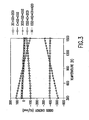
- FIG. 3 shows a comparison of the Gibbs free energy changes of various reactions involving carbon, carbon monoxide, carbon dioxide, and oxygen.
- both the oxidation reaction of carbon to carbon monoxide, and the oxidation of carbon monoxide to carbon dioxide are thermodynamically favorable.
- the oxidation of carbon to carbon dioxide is more favorable, according the ⁇ G of the reaction.
- the oxidation of carbon monoxide to carbon dioxide is also strongly favorable. Therefore, in the combustion zone, carbon dioxide should be the dominating product unless there is a shortage of oxygen.
- carbon dioxide under oxygen deficient conditions, carbon dioxide can be reduced to carbon monoxide by carbon.
- the carbon dioxide may be reduced to carbon monoxide by hydrogen, since hydrogen is also generated in the combustion process.
- FIG. 4 shows the percentage of carbon dioxide converted to carbon monoxide, by carbon and hydrogen respectively, under oxygen deficient conditions at different temperatures.
- the reduction of carbon dioxide by carbon starts at about 700 K, which is very close to the experimental observation of about 400°C.
- the temperature is about 800°C, as shown in FIG. 4 , about 80% of carbon dioxide will be reduced to carbon monoxide. While the carbon dioxide may be reduced by hydrogen gas, this reaction is unlikely as hydrogen gas diffuses out of the cigarette quickly.
- FIGs. 5-8 illustrate the effect of using iron compounds as oxidant and/or catalyst in cigarettes for the oxidation of carbon monoxide to carbon dioxide.
- the oxidation of carbon monoxide to carbon dioxide is energetically favorable for Fe 2 O 3 , even at room temperature. At higher temperature, the oxidation of carbon by Fe 2 O 3 also becomes energetically favorable. Similar trends are observed for the reactions of Fe 3 O 4 with carbon and carbon monoxide, but generally the reactions with Fe 3 O 4 are less energetically favorable than with Fe 2 O 3 .
- the competition with carbon with carbon monoxide should not be significant since the reaction with carbon is solid to solid reaction that usually cannot proceed unless the temperature is very high.
- FIG. 6 shows the temperature dependence for the conversion of carbon monoxide to carbon dioxide.
- Fe 2 O 3 the carbon monoxide to carbon dioxide conversion percentage can reach almost 100% in a broad temperature range staring with the ambient temperature.
- Fe 3 O 4 is less effective. It is desirable to use freshly prepared Fe 2 O 3 to maintain the high activity.
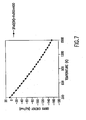
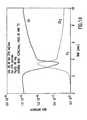
- One possible way to do this is generating the Fe 2 O 3 in situ from an iron oxyhydroxide, such as FeOOH. While FeOOH is stable at ambient temperature, it will thermally decompose to form Fe 2 O 3 and water, at temperatures around 200°C. Thermodynamic calculations confirm that decomposition is an energetically favorable process, as shown in FIG. 7 .
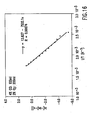
- Another advantage of using FeOOH instead of Fe 2 O 3 as the oxidant is that the decomposition of FeOOH is endothermic over a broad temperature range, as shown in FIG. 8 .
- the heat consumed in the decomposition is more than the heat generated by the reduction of Fe 2 O 3 by carbon monoxide.
- the net result is a slight decrease of the temperature in the combustion zone, which also contributes to the reduction of carbon monoxide concentration in mainstream smoke.
- NO is also produced in mainstream smoke at a concentration of about 0.45 mg/cigarette.
- NO can be reduced by carbon monoxide according to the following reactions: 2NO + CO ⁇ N 2 O + CO 2 N 2 O + CO ⁇ N 2 + CO 2 Iron oxide, either in the reduced form of Fe 3 O 4 or in the oxidized form of Fe 2 O 3 , acts as a good catalyst for these two reactions at temperatures around about 300°C. Therefore, the addition of iron oxide or its generation in situ in the cigarette during smoking could potentially minimize the concentration of NO in mainstream smoke as well.
- the oxyhydroxide compound and/or the product formed from the decomposition of the oxyhydroxide during combustion or smoking is in the form of nanoparticles.
- nanoparticles is meant that the particles have an average particle size of less than a micron.
- the preferred average particle size is less than 500 nm, more preferably less than 100 nm, even more preferably less than 50 nm, and most preferably less than 5 nm.
- the oxyhydroxide compound and/or the product formed from the decomposition of the oxyhydroxide during combustion or smoking has a surface area from 20 m 2 /g to 400 m 2 /g, or more preferably from 200 m 2 /g to 300 m 2 /g.
- FIG. 9 shows a comparison between the catalytic activity of Fe 2 O 3 nanoparticles (NANOCAT ® Superfine Iron Oxide (SFIO) from MACH I, Inc., King of Prussia, PA) having an average particle size of about 3 nm, versus Fe 2 O 3 powder (from Aldrich Chemical Company) having an average particle size of about 5 ⁇ m.
- the Fe 2 O 3 nanoparticles show a much higher percentage of conversion of carbon monoxide to carbon dioxide than the Fe 2 O 3 having an average particle size of about 5 ⁇ m.
- Such results may also be achieved using FeOOH particles that decompose during smoking to produce Fe 2 O 3 nanoparticles in situ.
- the Fe 2 O 3 nanoparticles act as a catalyst in the pyrolysis zone, and act as an oxidant in the combustion region.
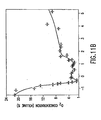
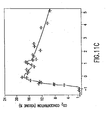
- FIG. 11A shows various temperature zones in a lit cigarette
- FIGs. 11B , 11C and 11D show the respective amounts of oxygen, carbon dioxide and carbon monoxide in each region of the cigarette during smoking.
- the oxidant/catalyst dual function and the reaction temperature range make Fe 2 O 3 a preferred oxidant/catalyst to be generated in situ.
- the Fe 2 O 3 may be used initially as a catalyst ( i.e. in the pyrolysis zone), and then as an oxidant ( i.e. in the combustion region).
- FIG. 13 is a graph of temperature versus QMS intensity for a test wherein Fe 2 O 3 nanoparticles are used as a catalyst for the reaction of carbon monoxide with oxygen to produce carbon dioxide.
- about 82 mg of Fe 2 O 3 nanoparticles are loaded in the quartz flow tube reactor.
- Carbon monoxide is provided at 4% concentration in helium at a flow rate of about 270 mL/min
- oxygen is provided at 21% concentration in helium at a flow rate of about 270 mL/min.
- the heating rate is about 12.1 K/min.
- Fe 2 O 3 nanoparticles are effective at converting carbon monoxide to carbon dioxide at temperatures above around 225°C.
- FIG. 14 is a graph of time versus QMS intensity for a test wherein Fe 2 O 3 nanoparticles are studied as an oxidant for the reaction of Fe 2 O 3 with carbon monoxide to produce carbon dioxide and FeO.
- Fe 2 O 3 nanoparticles are loaded in the quartz flow tube reactor.
- Carbon monoxide is provided at 4% concentration in helium at a flow rate of about 270 mL/min, and the heating rate is about 137 K/min to a maximum temperature of 460 °C.
- Fe 2 O 3 nanoparticles are effective in conversion of carbon monoxide to carbon dioxide under conditions similar to those during smoking of a cigarette.
- FIGs. 15A and 15B are graphs showing the reaction orders of carbon monoxide and carbon dioxide with Fe 2 O 3 as a catalyst.
- FIG. 16 depicts the measurement of the activation energy and the pre-exponential factor for the reaction of carbon monoxide with oxygen to produce carbon dioxide, using Fe 2 O 3 nanoparticles as a catalyst for the reaction.
- a summary of activation energies is provided in Table 2. Table 2.
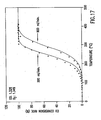
- FIG. 17 depicts the temperature dependence for the conversion rate of carbon monoxide using 50 mg Fe 2 O 3 nanoparticles as catalyst in the quartz tube reactor, for flow rates of 300mL/min and 900 mL/min respectively.
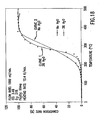
- FIG. 18 depicts contamination and deactivation studies for water using 50 mg Fe 2 O 3 nanoparticles as catalyst in the quartz tube reactor. As can be seen from the graph, compared to curve 1 (without water), the presence of up to 3% water (curve 2) has little effect on the ability of Fe 2 O 3 nanoparticles to convert carbon monoxide to carbon dioxide.
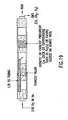
- FIG. 19 shows a flow tube reactor to simulate a cigarette in evaluating different nanopaticle catalysts.
- Table 3 shows a comparison between the ratio of carbon monoxide to carbon dioxide, and the percentage of oxygen depletion when using Al 2 O 3 and Fe 2 O 3 nanoparticles.
- Table 3. Comparison between Al 2 O 3 , and Fe 2 O 3 nanoparticles Nanoparticle CO/CO 2 O 2 Depletion (%) None 0.51 48 Al 2 O 3 0.40 60 Fe 2 O 3 0.23 100 In the absence of nanoparticles, the ratio of carbon monxide to carbon dioxide is about 0.51 and the oxygen depletion is about 48%.
- the data in Table 3 illustrates the improvement obtained by using nanoparticles.
- the ratio of carbon monoxide to carbon dioxide drops to 0.40 and 0.23 for Al 2 O 3 and Fe 2 O 3 nanoparticles, respectively.
- the oxygen depletion increases to 60% and 100% for Al 2 O 3 and Fe 2 O 3 nanoparticles, respectively.
- FIG. 20 is a graph of temperature versus QMS intensity in a test which shows the amounts of carbon monoxide and carbon dioxide production without a catalyst present.
- FIG. 21 is a graph of temperature versus QMS intensity in a test which shows the amounts of carbon monoxide and carbon dioxide production when using Fe 2 O 3 nanoparticles as a catalyst. As can be seen by comparing FIG. 20 and FIG. 21 , the presence of Fe 2 O 3 nanoparticles increases the ratio of carbon dioxide to carbon monoxide present, and decreases the amount of carbon monoxide present.
- the oxyhydroxide compounds may be provided along the length of a tobacco rod by distributing the oxyhydroxide compounds on the tobacco or incorporating them into the cut filler tobacco using any suitable method.
- the oxyhydroxide compounds may be provided in the form of a powder or in a solution in the form of a dispersion, for example. In a preferred method, the oxyhydroxide compounds in the form of a dry powder are dusted on the cut filler tobacco.
- the oxyhydroxide compounds may also be present in the form of a solution or dispersion, and sprayed on the cut filler tobacco. Alternatively, the tobacco may be coated with a solution containing the oxyhydroxide compounds.
- the oxyhydroxide compounds may also be added to the cut filler tobacco stock supplied to the cigarette making machine or added to a tobacco rod prior to wrapping cigarette paper around the cigarette rod.
- the oxyhydroxide compounds will preferably be distributed throughout the tobacco rod portion of a cigarette and optionally the cigarette filter. By providing the oxyhydroxide compounds throughout the entire tobacco rod, it is possible to reduce the amount of carbon monoxide throughout the cigarette, and particularly at both the combustion region and in the pyrolysis zone.
- the amount of oxyhydroxide compound to be used may be determined by routine experimentation.
- the product formed from the decomposition of the oxyhydroxide during combustion of the cut filler composition is present in an amount effective to convert at least 50% of the carbon monoxide to carbon dioxide.
- the amount of the oxyhydroxide will be from about a few milligrams, for example, 5 mg/cigarette, to about 200 mg/cigarette. More preferably, the amount of oxyhydroxide will be from about 40 mg/cigarette to about 100 mg/cigarette.
- One embodiment of the invention relates to a cut filler composition
- a cut filler composition comprising tobacco and at least one oxyhydroxide compound, as described above, which is capable of acting as an oxidant for the conversion of carbon monoxide to carbon dioxide and/or as a catalyst for the conversion of carbon monoxide to carbon dioxide.
- Any suitable tobacco mixture may be used for the cut filler.
- suitable types of tobacco materials include flue-cured, Burley, Maryland or Oriental tobaccos, the rare or specialty tobaccos, and blends thereof.
- the tobacco material can be provided in the form of tobacco lamina; processed tobacco materials such as volume expanded or puffed tobacco, processed tobacco stems such as cut-rolled or cut-puffed stems, reconstituted tobacco materials; or blends thereof.
- the invention may also be practiced with tobacco substitutes.
- the tobacco is normally employed in the form of cut filler, i . e. in the form of shreds or strands cut into widths ranging from about 2.5 mm (1/10 inch) to about 1.3 mm (1/20 inch) or even 0.6 mm (1/40 inch).
- the lengths of the strands range from between about 0.6 mm (0.25 inches) to about 7.6 cm (3.0 inches).
- the cigarettes may further comprise one or more flavorants or other additives (e.g . burn additives, combustion modifying agents, coloring agents, binders, etc.) known in the art.
- Another embodiment of the invention relates to a cigarette comprising a tobacco rod, wherein the tobacco rod comprises cut filler having at least one oxyhydroxide compound, as described above, which is capable of decomposing during smoking to produce a product that is capable of acting as an oxidant for the conversion of carbon monoxide to carbon dioxide and/or as a catalyst for the conversion of carbon monoxide to carbon dioxide.
- a further embodiment of the invention relates to a method of making a cigarette, comprising (i) adding an oxyhydroxide compound to a cut filler, wherein the oxyhydroxide compound is capable of decomposing during smoking to produce a product that is capable of acting as an oxidant for the conversion of carbon monoxide to carbon dioxide and/or as a catalyst for the conversion of carbon monoxide to carbon dioxide; (ii) providing the cut filler comprising the oxyhydroxide compound to a cigarette making machine to form a tobacco rod; and (iii) placing a paper wrapper around the tobacco rod to form the cigarette.
- any conventional or modified cigarette making technique may be used to incorporate the oxyhydroxide compounds.
- the resulting cigarettes can be manufactured to any desired specification using standard or modified cigarette making techniques and equipment.
- the cut filler composition of the invention is optionally combined with other cigarette additives, and provided to a cigarette making machine to produce a tobacco rod, which is then wrapped in cigarette paper, and optionally tipped with filters.
- the cigarettes of the invention may range from about 50 mm to about 120 mm in length.
- a regular cigarette is about 70 mm long
- a "King Size” is about 85 mm long
- a "Super King Size” is about 100 mm long
- a "Long” is usually about 120 mm in length.
- the circumference is from about 15 mm to about 30 mm in circumference, and preferably around 25 mm.
- the packing density is typically between the range of about 100 mg/cm 3 to about 300 mg/cm 3 , and preferably 150 mg/cm 3 to about 275 mg/cm 3 .
- Yet another embodiment of the invention relates to methods of smoking the cigarette described above, which involve lighting the cigarette to form smoke and inhaling the smoke, wherein during the smoking of the cigarette, the oxyhydroxide compound decomposes during smoking to form a compound that acts as an oxidant for the conversion of carbon monoxide to carbon dioxide and/or as a catalyst for the conversion of carbon monoxide to carbon dioxide.
- “Smoking" of a cigarette means the heating or combustion of the cigarette to form smoke, which can be inhaled.
- smoking of a cigarette involves lighting one end of the cigarette and inhaling the cigarette smoke through the mouth end of the cigarette, while the tobacco contained therein undergoes a combustion reaction.
- the cigarette may also be smoked by other means.
- the cigarette may be smoked by heating the cigarette and/or heating using electrical heater means, as described in commonly-assigned U.S. Patent Nos. 6,053,176 ; 5,934,289 ; 5,934,289 , 5,591,368 or 5,322,075 , for example.
Landscapes
- Chemical & Material Sciences (AREA)
- Chemical Kinetics & Catalysis (AREA)
- General Chemical & Material Sciences (AREA)
- Toxicology (AREA)
- Health & Medical Sciences (AREA)
- General Health & Medical Sciences (AREA)
- Inorganic Chemistry (AREA)
- Engineering & Computer Science (AREA)
- Nanotechnology (AREA)
- Cigarettes, Filters, And Manufacturing Of Filters (AREA)
- Manufacture Of Tobacco Products (AREA)
- Catalysts (AREA)
- Carbon And Carbon Compounds (AREA)
Applications Claiming Priority (3)
| Application Number | Priority Date | Filing Date | Title |
|---|---|---|---|
| US117220 | 2002-04-08 | ||
| US10/117,220 US6769437B2 (en) | 2002-04-08 | 2002-04-08 | Use of oxyhydroxide compounds for reducing carbon monoxide in the mainstream smoke of a cigarette |
| PCT/US2003/003456 WO2003086112A1 (en) | 2002-04-08 | 2003-02-06 | Use of oxyhydroxide compounds for reducing carbon monoxide in the mainstream smoke of a cigarette |
Publications (3)
| Publication Number | Publication Date |
|---|---|
| EP1494549A1 EP1494549A1 (en) | 2005-01-12 |
| EP1494549A4 EP1494549A4 (en) | 2011-01-05 |
| EP1494549B1 true EP1494549B1 (en) | 2015-12-23 |
Family
ID=28674150
Family Applications (1)
| Application Number | Title | Priority Date | Filing Date |
|---|---|---|---|
| EP03707722.9A Expired - Lifetime EP1494549B1 (en) | 2002-04-08 | 2003-02-06 | Use of oxyhydroxide compounds for reducing carbon monoxide in the mainstream smoke of a cigarette |
Country Status (18)
| Country | Link |
|---|---|
| US (2) | US6769437B2 (https=) |
| EP (1) | EP1494549B1 (https=) |
| JP (1) | JP2005527205A (https=) |
| KR (1) | KR100960215B1 (https=) |
| CN (1) | CN100353875C (https=) |
| AR (1) | AR038539A1 (https=) |
| AU (1) | AU2003208997B2 (https=) |
| BR (1) | BRPI0309062B1 (https=) |
| CA (1) | CA2481871C (https=) |
| EA (1) | EA007169B1 (https=) |
| EG (1) | EG23566A (https=) |
| ES (1) | ES2561109T3 (https=) |
| MY (1) | MY135128A (https=) |
| PL (1) | PL213105B1 (https=) |
| TW (1) | TWI312666B (https=) |
| UA (1) | UA78764C2 (https=) |
| WO (1) | WO2003086112A1 (https=) |
| ZA (1) | ZA200408010B (https=) |
Families Citing this family (41)
| Publication number | Priority date | Publication date | Assignee | Title |
|---|---|---|---|---|
| EA005980B1 (ru) * | 2002-04-12 | 2005-08-25 | Филип Моррис Продактс С.А. | Частично восстановленные добавки в виде наночастиц для снижения количества монооксида углерода и/или оксида азота в сигаретном дыме основного потока |
| US9107452B2 (en) | 2003-06-13 | 2015-08-18 | Philip Morris Usa Inc. | Catalyst to reduce carbon monoxide in the mainstream smoke of a cigarette |
| US7152609B2 (en) | 2003-06-13 | 2006-12-26 | Philip Morris Usa Inc. | Catalyst to reduce carbon monoxide and nitric oxide from the mainstream smoke of a cigarette |
| US7243658B2 (en) * | 2003-06-13 | 2007-07-17 | Philip Morris Usa Inc. | Nanoscale composite catalyst to reduce carbon monoxide in the mainstream smoke of a cigarette |
| US20050005947A1 (en) * | 2003-07-11 | 2005-01-13 | Schweitzer-Mauduit International, Inc. | Smoking articles having reduced carbon monoxide delivery |
| US7934510B2 (en) * | 2003-10-27 | 2011-05-03 | Philip Morris Usa Inc. | Cigarette wrapper with nanoparticle spinel ferrite catalyst and methods of making same |
| US8051859B2 (en) * | 2003-10-27 | 2011-11-08 | Philip Morris Usa Inc. | Formation and deposition of sputtered nanoscale particles in cigarette manufacture |
| US20050166935A1 (en) * | 2003-10-27 | 2005-08-04 | Philip Morris Usa Inc. | Reduction of carbon monoxide in smoking articles using transition metal oxide clusters |
| US8006703B2 (en) * | 2003-10-27 | 2011-08-30 | Philip Morris Usa Inc. | In situ synthesis of composite nanoscale particles |
| US7677254B2 (en) * | 2003-10-27 | 2010-03-16 | Philip Morris Usa Inc. | Reduction of carbon monoxide and nitric oxide in smoking articles using iron oxynitride |
| US8701681B2 (en) * | 2003-10-27 | 2014-04-22 | Philip Morris Usa Inc. | Use of oxyhydroxide compounds in cigarette paper for reducing carbon monoxide in the mainstream smoke of a cigarette |
| US7640936B2 (en) * | 2003-10-27 | 2010-01-05 | Philip Morris Usa Inc. | Preparation of mixed metal oxide catalysts from nanoscale particles |
| US20050121044A1 (en) * | 2003-12-09 | 2005-06-09 | Banerjee Chandra K. | Catalysts comprising ultrafine particles |
| US20050274390A1 (en) * | 2004-06-15 | 2005-12-15 | Banerjee Chandra K | Ultra-fine particle catalysts for carbonaceous fuel elements |
| US7549427B2 (en) | 2004-07-20 | 2009-06-23 | Board Of Supervisors Of Louisiana State University And Agricultural And Mechanical College | Nanolayer catalysts useful in promoting oxidation, and their manufacture and use |
| WO2006046145A2 (en) * | 2004-10-25 | 2006-05-04 | Philip Morris Products S.A. | Gold-ceria catalyst for oxidation of carbon monoxide |
| US20060185687A1 (en) * | 2004-12-22 | 2006-08-24 | Philip Morris Usa Inc. | Filter cigarette and method of making filter cigarette for an electrical smoking system |
| US8151806B2 (en) * | 2005-02-07 | 2012-04-10 | Schweitzer-Mauduit International, Inc. | Smoking articles having reduced analyte levels and process for making same |
| US7744846B2 (en) * | 2005-03-11 | 2010-06-29 | Philip Morris Usa Inc. | Method for forming activated copper oxide catalysts |
| US7405246B2 (en) * | 2005-04-05 | 2008-07-29 | Momentive Performance Materials Inc. | Cure system, adhesive system, electronic device |
| US7446136B2 (en) * | 2005-04-05 | 2008-11-04 | Momentive Performance Materials Inc. | Method for producing cure system, adhesive system, and electronic device |
| US7878209B2 (en) * | 2005-04-13 | 2011-02-01 | Philip Morris Usa Inc. | Thermally insulative smoking article filter components |
| WO2007143101A2 (en) * | 2006-06-01 | 2007-12-13 | Schweitzer-Mauduit International, Inc. | Free air burning smoking articles with reduced ignitiion proclivity characteristics |
| US20080216852A1 (en) * | 2006-12-29 | 2008-09-11 | Philip Morris Usa Inc. | Banded cigarette paper with reduced ignition propensity |
| TW201026242A (en) | 2008-11-06 | 2010-07-16 | Japan Tobacco Inc | Smoking article and manufacturing method for the same, and method for manufacturing carbon monoxide reducer |
| ES2593112T3 (es) * | 2009-04-03 | 2016-12-05 | Japan Tobacco, Inc. | Cigarrillo y método para tratar material para cigarrillos |
| WO2010114096A1 (ja) * | 2009-04-03 | 2010-10-07 | 日本たばこ産業株式会社 | 喫煙物品用一酸化炭素低減触媒およびその製造方法 |
| CN101696037B (zh) * | 2009-11-05 | 2012-01-04 | 中国烟草总公司郑州烟草研究院 | 一种β-FeOOH颗粒及其制备方法和应用 |
| US8997755B2 (en) | 2009-11-11 | 2015-04-07 | R.J. Reynolds Tobacco Company | Filter element comprising smoke-altering material |
| US20110271968A1 (en) | 2010-05-07 | 2011-11-10 | Carolyn Rierson Carpenter | Filtered Cigarette With Modifiable Sensory Characteristics |
| US8720450B2 (en) | 2010-07-30 | 2014-05-13 | R.J. Reynolds Tobacco Company | Filter element comprising multifunctional fibrous smoke-altering material |
| US10609955B2 (en) | 2011-04-08 | 2020-04-07 | R.J. Reynolds Tobacco Company | Filtered cigarette comprising a tubular element in filter |
| US11957163B2 (en) | 2011-04-08 | 2024-04-16 | R.J. Reynolds Tobacco Company | Multi-segment filter element including smoke-altering flavorant |
| US9382127B2 (en) * | 2011-05-11 | 2016-07-05 | Maohong Fan | Catalytic CO2 desorption on the interface between NaHCO3 and multifunctional nanoporous TiO(OH)2 |
| US10064429B2 (en) | 2011-09-23 | 2018-09-04 | R.J. Reynolds Tobacco Company | Mixed fiber product for use in the manufacture of cigarette filter elements and related methods, systems, and apparatuses |
| US9179709B2 (en) | 2012-07-25 | 2015-11-10 | R. J. Reynolds Tobacco Company | Mixed fiber sliver for use in the manufacture of cigarette filter elements |
| US9119419B2 (en) | 2012-10-10 | 2015-09-01 | R.J. Reynolds Tobacco Company | Filter material for a filter element of a smoking article, and associated system and method |
| CN104797147B (zh) | 2012-10-11 | 2019-08-13 | 施韦特-莫迪国际公司 | 具有降低引燃倾向特性的包装材料 |
| SG11201600359PA (en) | 2013-07-19 | 2016-02-26 | Philip Morris Products Sa | Smoking article having a particle containing wrapper |
| KR20180076244A (ko) * | 2016-12-27 | 2018-07-05 | 주식회사 마일스톤인터내셔널 | 감마 보헤마이트를 이용하여 일산화탄소 발생을 저감시키는 담배, 담배용 필터, 및 담배용 종이 |
| CN112034004B (zh) * | 2020-08-12 | 2021-06-29 | 北京科技大学 | 一种测试镁合金燃烧风险性的试验系统与方法 |
Family Cites Families (58)
| Publication number | Priority date | Publication date | Assignee | Title |
|---|---|---|---|---|
| US31700A (en) * | 1861-03-19 | Improvement in corn-planters | ||
| GB562786A (en) | 1941-10-09 | 1944-07-17 | Int Cigar Mach Co | Improvements in or relating to the preparation of material in sheet, web, or filament form from tobacco |
| GB685822A (en) | 1951-05-22 | 1953-01-14 | Mario Francone | An improved filtering agent for tobacco smoke |
| GB863287A (en) | 1957-12-13 | 1961-03-22 | Lorillard Co P | Smoking tobacco product |
| US2995476A (en) | 1959-10-02 | 1961-08-08 | Philip Morris Inc | Organoleptic materials and method of production thereof |
| NL267205A (https=) | 1960-07-22 | |||
| NL293155A (https=) | 1963-03-04 | |||
| BR6462336D0 (pt) | 1963-09-03 | 1973-08-28 | United States Filter Corp | Um metodo para a obtencao de filtros para tabaco |
| GB1113979A (en) | 1966-05-19 | 1968-05-15 | Ici Ltd | Modified carbohydrate material for smoking mixtures |
| US3638660A (en) | 1968-09-10 | 1972-02-01 | Howard J Davis | Method for making a tobacco substitute composition |
| GB1315374A (en) | 1970-04-20 | 1973-05-02 | British American Tobacco Co | Catalytic oxidation of carbon monoxide |
| US3720214A (en) | 1970-12-03 | 1973-03-13 | Liggett & Myers Inc | Smoking composition |
| JPS547796B1 (https=) | 1971-04-14 | 1979-04-10 | ||
| ZA723458B (en) | 1971-06-11 | 1973-03-28 | British American Tobacco Co | Improvements relating to reconstituted-tobacco smoking materials |
| NL7301732A (https=) | 1972-02-10 | 1973-08-14 | ||
| US3931824A (en) | 1973-09-10 | 1976-01-13 | Celanese Corporation | Smoking materials |
| US4109663A (en) | 1974-10-17 | 1978-08-29 | Takeda Chemical Industries, Ltd. | Tobacco product containing a thermo-gelable β-1,3-glucan-type polysaccharide |
| US4197861A (en) | 1975-06-24 | 1980-04-15 | Celanese Corporation | Smoking material |
| CH609217A5 (en) | 1975-09-29 | 1979-02-28 | Neukomm Serge | Filter for tobacco smoke |
| AU1871276A (en) | 1975-11-11 | 1978-04-20 | Brown & Williamson Tobacco Corp | Tobacco |
| US4149549A (en) | 1976-05-17 | 1979-04-17 | Montclair Research Corporation | Cigarette and filter |
| DE2658479C3 (de) | 1976-12-23 | 1981-10-01 | Rhodia Ag, 7800 Freiburg | Zusatzmittel für Rauchtabakprodukte und deren Filterelemente |
| DE2729759C2 (de) | 1977-07-01 | 1985-05-30 | Bayer Ag, 5090 Leverkusen | Rauchbare Produkte |
| US4317460A (en) | 1978-01-20 | 1982-03-02 | Gallaher Limited | Smoking products |
| US4195645A (en) | 1978-03-13 | 1980-04-01 | Celanese Corporation | Tobacco-substitute smoking material |
| JPS5554888A (en) | 1978-10-13 | 1980-04-22 | Takeyoshi Yamaguchi | Tobacco filter |
| JPS5590296U (https=) * | 1978-12-20 | 1980-06-21 | ||
| US4874000A (en) * | 1982-12-30 | 1989-10-17 | Philip Morris Incorporated | Method and apparatus for drying and cooling extruded tobacco-containing material |
| DE3600462A1 (de) | 1986-01-10 | 1987-07-16 | Hoelter Heinz | Chemisorptionsfilterpaket zur beseitigung von faekalgeruechen, geruechen in krankenzimmern und tabakrauch |
| GB8609603D0 (en) | 1986-04-19 | 1986-05-21 | Hardy L R | Tobacco products |
| DE3640953C2 (de) | 1986-11-29 | 1993-11-25 | Hoelter Heinz | Chemisorptionsfilter zur Filterung von Luft |
| US5074321A (en) * | 1989-09-29 | 1991-12-24 | R. J. Reynolds Tobacco Company | Cigarette |
| GB8819291D0 (en) | 1988-08-12 | 1988-09-14 | British American Tobacco Co | Improvements relating to smoking articles |
| US4956330A (en) | 1989-06-19 | 1990-09-11 | Phillips Petroleum Company | Catalyst composition for the oxidation of carbon monoxide |
| US4959330A (en) | 1989-06-20 | 1990-09-25 | E. I. Du Pont De Nemours And Company | Crystallizable glass and thick film compositions thereof |
| US5101839A (en) | 1990-08-15 | 1992-04-07 | R. J. Reynolds Tobacco Company | Cigarette and smokable filler material therefor |
| US5129408A (en) | 1990-08-15 | 1992-07-14 | R. J. Reynolds Tobacco Company | Cigarette and smokable filler material therefor |
| US5105836A (en) | 1989-09-29 | 1992-04-21 | R. J. Reynolds Tobacco Company | Cigarette and smokable filler material therefor |
| US5188130A (en) * | 1989-11-29 | 1993-02-23 | Philip Morris, Incorporated | Chemical heat source comprising metal nitride, metal oxide and carbon |
| US5258330A (en) * | 1990-09-24 | 1993-11-02 | Tessera, Inc. | Semiconductor chip assemblies with fan-in leads |
| US5258340A (en) | 1991-02-15 | 1993-11-02 | Philip Morris Incorporated | Mixed transition metal oxide catalysts for conversion of carbon monoxide and method for producing the catalysts |
| US5591368A (en) * | 1991-03-11 | 1997-01-07 | Philip Morris Incorporated | Heater for use in an electrical smoking system |
| US5246018A (en) * | 1991-07-19 | 1993-09-21 | Philip Morris Incorporated | Manufacturing of composite heat sources containing carbon and metal species |
| US5322075A (en) * | 1992-09-10 | 1994-06-21 | Philip Morris Incorporated | Heater for an electric flavor-generating article |
| JPH06105675A (ja) * | 1992-09-29 | 1994-04-19 | Matsushita Electric Ind Co Ltd | たばこフィルタ |
| US5386838A (en) | 1993-07-09 | 1995-02-07 | Kimberly-Clark Corporation | High surface area iron-magnesium smoke suppressive compositions |
| PT781101E (pt) | 1994-09-07 | 2001-01-31 | British American Tobacco Co | Artigos para fumar |
| US6342191B1 (en) * | 1994-12-07 | 2002-01-29 | Apyron Technologies, Inc. | Anchored catalyst system and method of making and using thereof |
| US5934289A (en) * | 1996-10-22 | 1999-08-10 | Philip Morris Incorporated | Electronic smoking system |
| KR20000047148A (ko) | 1998-12-30 | 2000-07-25 | 최상구 | 황토분을 첨가한 담배와 그 제조방법 |
| US6053176A (en) * | 1999-02-23 | 2000-04-25 | Philip Morris Incorporated | Heater and method for efficiently generating an aerosol from an indexing substrate |
| US6052176A (en) * | 1999-03-31 | 2000-04-18 | Lam Research Corporation | Processing chamber with optical window cleaned using process gas |
| AU2002220121A1 (en) * | 2000-11-28 | 2002-06-11 | Lorillard Licensing Company, Llc | A smoking article including a selective carbon monoxide pump |
| EP1234512A3 (en) * | 2001-02-26 | 2003-08-06 | Meier, Markus W. | Tobacco product carrying catalytically active material, its use in a smokers' article and a process for preparing it |
| US7011096B2 (en) * | 2001-08-31 | 2006-03-14 | Philip Morris Usa Inc. | Oxidant/catalyst nanoparticles to reduce carbon monoxide in the mainstream smoke of a cigarette |
| DE10146810A1 (de) * | 2001-09-22 | 2003-04-10 | Ufl Umweltanalytik Und Forschu | Zigarette mit einem reduzierten Kohlenstoffmonoxidgehalt im Hauptstromrauch |
| EA005980B1 (ru) * | 2002-04-12 | 2005-08-25 | Филип Моррис Продактс С.А. | Частично восстановленные добавки в виде наночастиц для снижения количества монооксида углерода и/или оксида азота в сигаретном дыме основного потока |
| US7165553B2 (en) * | 2003-06-13 | 2007-01-23 | Philip Morris Usa Inc. | Nanoscale catalyst particles/aluminosilicate to reduce carbon monoxide in the mainstream smoke of a cigarette |
-
2002
- 2002-04-08 US US10/117,220 patent/US6769437B2/en not_active Expired - Lifetime
-
2003
- 2003-02-06 KR KR1020047015989A patent/KR100960215B1/ko not_active Expired - Lifetime
- 2003-02-06 ES ES03707722.9T patent/ES2561109T3/es not_active Expired - Lifetime
- 2003-02-06 WO PCT/US2003/003456 patent/WO2003086112A1/en not_active Ceased
- 2003-02-06 EP EP03707722.9A patent/EP1494549B1/en not_active Expired - Lifetime
- 2003-02-06 BR BRPI0309062A patent/BRPI0309062B1/pt not_active IP Right Cessation
- 2003-02-06 CA CA2481871A patent/CA2481871C/en not_active Expired - Fee Related
- 2003-02-06 AU AU2003208997A patent/AU2003208997B2/en not_active Ceased
- 2003-02-06 EA EA200401333A patent/EA007169B1/ru not_active IP Right Cessation
- 2003-02-06 PL PL372100A patent/PL213105B1/pl unknown
- 2003-02-06 CN CNB038112035A patent/CN100353875C/zh not_active Expired - Lifetime
- 2003-02-06 JP JP2003583144A patent/JP2005527205A/ja active Pending
- 2003-02-17 MY MYPI20030534A patent/MY135128A/en unknown
- 2003-02-20 AR ARP030100555A patent/AR038539A1/es not_active Application Discontinuation
- 2003-03-17 TW TW092105772A patent/TWI312666B/zh not_active IP Right Cessation
- 2003-03-31 EG EG2003030305A patent/EG23566A/xx active
- 2003-06-02 UA UA20041008151A patent/UA78764C2/uk unknown
-
2004
- 2004-02-23 US US10/782,812 patent/US7228862B2/en not_active Expired - Lifetime
- 2004-10-05 ZA ZA200408010A patent/ZA200408010B/en unknown
Also Published As
| Publication number | Publication date |
|---|---|
| ZA200408010B (en) | 2006-06-28 |
| US20040159328A1 (en) | 2004-08-19 |
| CN100353875C (zh) | 2007-12-12 |
| TW200304778A (en) | 2003-10-16 |
| BR0309062A (pt) | 2005-02-22 |
| EA007169B1 (ru) | 2006-08-25 |
| MY135128A (en) | 2008-02-29 |
| PL372100A1 (en) | 2005-07-11 |
| TWI312666B (en) | 2009-08-01 |
| KR100960215B1 (ko) | 2010-05-27 |
| AU2003208997A1 (en) | 2003-10-27 |
| EG23566A (en) | 2006-06-25 |
| KR20040097311A (ko) | 2004-11-17 |
| PL213105B1 (pl) | 2013-01-31 |
| WO2003086112A1 (en) | 2003-10-23 |
| AU2003208997B2 (en) | 2009-01-22 |
| US20030188758A1 (en) | 2003-10-09 |
| AR038539A1 (es) | 2005-01-19 |
| US6769437B2 (en) | 2004-08-03 |
| BRPI0309062B1 (pt) | 2016-10-04 |
| CA2481871C (en) | 2011-05-24 |
| ES2561109T3 (es) | 2016-02-24 |
| EP1494549A4 (en) | 2011-01-05 |
| EA200401333A1 (ru) | 2005-02-24 |
| JP2005527205A (ja) | 2005-09-15 |
| CA2481871A1 (en) | 2003-10-23 |
| US7228862B2 (en) | 2007-06-12 |
| EP1494549A1 (en) | 2005-01-12 |
| CN1655695A (zh) | 2005-08-17 |
| UA78764C2 (uk) | 2007-04-25 |
Similar Documents
| Publication | Publication Date | Title |
|---|---|---|
| EP1494549B1 (en) | Use of oxyhydroxide compounds for reducing carbon monoxide in the mainstream smoke of a cigarette | |
| EP1427300B1 (en) | Oxidant/catalyst nanoparticles to reduce carbon monoxide in the mainstream smoke of a cigarette | |
| US6782892B2 (en) | Manganese oxide mixtures in nanoparticle form to lower the amount of carbon monoxide and/or nitric oxide in the mainstream smoke of a cigarette | |
| AU2003226302B2 (en) | partially reduced nanoparticle additives | |
| US8631803B2 (en) | Tobacco powder supported catalyst particles | |
| US20070113862A1 (en) | Oxidant/catalyst nanoparticles to reduce tobacco smoke constituents such as carbon monoxide |
Legal Events
| Date | Code | Title | Description |
|---|---|---|---|
| PUAI | Public reference made under article 153(3) epc to a published international application that has entered the european phase |
Free format text: ORIGINAL CODE: 0009012 |
|
| 17P | Request for examination filed |
Effective date: 20041101 |
|
| AK | Designated contracting states |
Kind code of ref document: A1 Designated state(s): AT BE BG CH CY CZ DE DK EE ES FI FR GB GR HU IE IT LI LU MC NL PT SE SI SK TR |
|
| AX | Request for extension of the european patent |
Extension state: AL LT LV MK RO |
|
| REG | Reference to a national code |
Ref country code: HK Ref legal event code: DE Ref document number: 1073412 Country of ref document: HK |
|
| A4 | Supplementary search report drawn up and despatched |
Effective date: 20101208 |
|
| 17Q | First examination report despatched |
Effective date: 20110404 |
|
| GRAP | Despatch of communication of intention to grant a patent |
Free format text: ORIGINAL CODE: EPIDOSNIGR1 |
|
| INTG | Intention to grant announced |
Effective date: 20150209 |
|
| GRAP | Despatch of communication of intention to grant a patent |
Free format text: ORIGINAL CODE: EPIDOSNIGR1 |
|
| INTG | Intention to grant announced |
Effective date: 20150630 |
|
| GRAS | Grant fee paid |
Free format text: ORIGINAL CODE: EPIDOSNIGR3 |
|
| GRAA | (expected) grant |
Free format text: ORIGINAL CODE: 0009210 |
|
| AK | Designated contracting states |
Kind code of ref document: B1 Designated state(s): AT BE BG CH CY CZ DE DK EE ES FI FR GB GR HU IE IT LI LU MC NL PT SE SI SK TR |
|
| AX | Request for extension of the european patent |
Extension state: LT LV RO |
|
| REG | Reference to a national code |
Ref country code: GB Ref legal event code: FG4D |
|
| REG | Reference to a national code |
Ref country code: CH Ref legal event code: EP |
|
| REG | Reference to a national code |
Ref country code: IE Ref legal event code: FG4D |
|
| REG | Reference to a national code |
Ref country code: AT Ref legal event code: REF Ref document number: 766122 Country of ref document: AT Kind code of ref document: T Effective date: 20160115 |
|
| REG | Reference to a national code |
Ref country code: DE Ref legal event code: R096 Ref document number: 60348359 Country of ref document: DE |
|
| REG | Reference to a national code |
Ref country code: FR Ref legal event code: PLFP Year of fee payment: 14 |
|
| REG | Reference to a national code |
Ref country code: ES Ref legal event code: FG2A Ref document number: 2561109 Country of ref document: ES Kind code of ref document: T3 Effective date: 20160224 |
|
| REG | Reference to a national code |
Ref country code: LT Ref legal event code: MG9D |
|
| REG | Reference to a national code |
Ref country code: NL Ref legal event code: MP Effective date: 20151223 |
|
| REG | Reference to a national code |
Ref country code: AT Ref legal event code: MK05 Ref document number: 766122 Country of ref document: AT Kind code of ref document: T Effective date: 20151223 |
|
| PG25 | Lapsed in a contracting state [announced via postgrant information from national office to epo] |
Ref country code: FI Free format text: LAPSE BECAUSE OF FAILURE TO SUBMIT A TRANSLATION OF THE DESCRIPTION OR TO PAY THE FEE WITHIN THE PRESCRIBED TIME-LIMIT Effective date: 20151223 Ref country code: BE Free format text: LAPSE BECAUSE OF NON-PAYMENT OF DUE FEES Effective date: 20160229 Ref country code: NL Free format text: LAPSE BECAUSE OF FAILURE TO SUBMIT A TRANSLATION OF THE DESCRIPTION OR TO PAY THE FEE WITHIN THE PRESCRIBED TIME-LIMIT Effective date: 20151223 Ref country code: SE Free format text: LAPSE BECAUSE OF FAILURE TO SUBMIT A TRANSLATION OF THE DESCRIPTION OR TO PAY THE FEE WITHIN THE PRESCRIBED TIME-LIMIT Effective date: 20151223 Ref country code: GR Free format text: LAPSE BECAUSE OF FAILURE TO SUBMIT A TRANSLATION OF THE DESCRIPTION OR TO PAY THE FEE WITHIN THE PRESCRIBED TIME-LIMIT Effective date: 20160324 |
|
| PG25 | Lapsed in a contracting state [announced via postgrant information from national office to epo] |
Ref country code: CZ Free format text: LAPSE BECAUSE OF FAILURE TO SUBMIT A TRANSLATION OF THE DESCRIPTION OR TO PAY THE FEE WITHIN THE PRESCRIBED TIME-LIMIT Effective date: 20151223 |
|
| PG25 | Lapsed in a contracting state [announced via postgrant information from national office to epo] |
Ref country code: PT Free format text: LAPSE BECAUSE OF FAILURE TO SUBMIT A TRANSLATION OF THE DESCRIPTION OR TO PAY THE FEE WITHIN THE PRESCRIBED TIME-LIMIT Effective date: 20160426 Ref country code: EE Free format text: LAPSE BECAUSE OF FAILURE TO SUBMIT A TRANSLATION OF THE DESCRIPTION OR TO PAY THE FEE WITHIN THE PRESCRIBED TIME-LIMIT Effective date: 20151223 Ref country code: AT Free format text: LAPSE BECAUSE OF FAILURE TO SUBMIT A TRANSLATION OF THE DESCRIPTION OR TO PAY THE FEE WITHIN THE PRESCRIBED TIME-LIMIT Effective date: 20151223 Ref country code: SK Free format text: LAPSE BECAUSE OF FAILURE TO SUBMIT A TRANSLATION OF THE DESCRIPTION OR TO PAY THE FEE WITHIN THE PRESCRIBED TIME-LIMIT Effective date: 20151223 |
|
| REG | Reference to a national code |
Ref country code: HK Ref legal event code: WD Ref document number: 1073412 Country of ref document: HK |
|
| REG | Reference to a national code |
Ref country code: DE Ref legal event code: R097 Ref document number: 60348359 Country of ref document: DE |
|
| PG25 | Lapsed in a contracting state [announced via postgrant information from national office to epo] |
Ref country code: LU Free format text: LAPSE BECAUSE OF FAILURE TO SUBMIT A TRANSLATION OF THE DESCRIPTION OR TO PAY THE FEE WITHIN THE PRESCRIBED TIME-LIMIT Effective date: 20160206 Ref country code: MC Free format text: LAPSE BECAUSE OF FAILURE TO SUBMIT A TRANSLATION OF THE DESCRIPTION OR TO PAY THE FEE WITHIN THE PRESCRIBED TIME-LIMIT Effective date: 20151223 |
|
| REG | Reference to a national code |
Ref country code: CH Ref legal event code: PL |
|
| PLBE | No opposition filed within time limit |
Free format text: ORIGINAL CODE: 0009261 |
|
| STAA | Information on the status of an ep patent application or granted ep patent |
Free format text: STATUS: NO OPPOSITION FILED WITHIN TIME LIMIT |
|
| PG25 | Lapsed in a contracting state [announced via postgrant information from national office to epo] |
Ref country code: LI Free format text: LAPSE BECAUSE OF NON-PAYMENT OF DUE FEES Effective date: 20160229 Ref country code: DK Free format text: LAPSE BECAUSE OF FAILURE TO SUBMIT A TRANSLATION OF THE DESCRIPTION OR TO PAY THE FEE WITHIN THE PRESCRIBED TIME-LIMIT Effective date: 20151223 Ref country code: CH Free format text: LAPSE BECAUSE OF NON-PAYMENT OF DUE FEES Effective date: 20160229 |
|
| 26N | No opposition filed |
Effective date: 20160926 |
|
| REG | Reference to a national code |
Ref country code: IE Ref legal event code: MM4A |
|
| PG25 | Lapsed in a contracting state [announced via postgrant information from national office to epo] |
Ref country code: BE Free format text: LAPSE BECAUSE OF FAILURE TO SUBMIT A TRANSLATION OF THE DESCRIPTION OR TO PAY THE FEE WITHIN THE PRESCRIBED TIME-LIMIT Effective date: 20151223 |
|
| PG25 | Lapsed in a contracting state [announced via postgrant information from national office to epo] |
Ref country code: IE Free format text: LAPSE BECAUSE OF NON-PAYMENT OF DUE FEES Effective date: 20160206 |
|
| REG | Reference to a national code |
Ref country code: FR Ref legal event code: PLFP Year of fee payment: 15 |
|
| PG25 | Lapsed in a contracting state [announced via postgrant information from national office to epo] |
Ref country code: SI Free format text: LAPSE BECAUSE OF FAILURE TO SUBMIT A TRANSLATION OF THE DESCRIPTION OR TO PAY THE FEE WITHIN THE PRESCRIBED TIME-LIMIT Effective date: 20151223 |
|
| REG | Reference to a national code |
Ref country code: FR Ref legal event code: PLFP Year of fee payment: 16 |
|
| PG25 | Lapsed in a contracting state [announced via postgrant information from national office to epo] |
Ref country code: CY Free format text: LAPSE BECAUSE OF FAILURE TO SUBMIT A TRANSLATION OF THE DESCRIPTION OR TO PAY THE FEE WITHIN THE PRESCRIBED TIME-LIMIT Effective date: 20151223 Ref country code: HU Free format text: LAPSE BECAUSE OF FAILURE TO SUBMIT A TRANSLATION OF THE DESCRIPTION OR TO PAY THE FEE WITHIN THE PRESCRIBED TIME-LIMIT; INVALID AB INITIO Effective date: 20030206 |
|
| PG25 | Lapsed in a contracting state [announced via postgrant information from national office to epo] |
Ref country code: BG Free format text: LAPSE BECAUSE OF FAILURE TO SUBMIT A TRANSLATION OF THE DESCRIPTION OR TO PAY THE FEE WITHIN THE PRESCRIBED TIME-LIMIT Effective date: 20151223 |
|
| PGFP | Annual fee paid to national office [announced via postgrant information from national office to epo] |
Ref country code: TR Payment date: 20190130 Year of fee payment: 17 |
|
| PG25 | Lapsed in a contracting state [announced via postgrant information from national office to epo] |
Ref country code: ES Free format text: LAPSE BECAUSE OF NON-PAYMENT OF DUE FEES Effective date: 20200207 |
|
| PGFP | Annual fee paid to national office [announced via postgrant information from national office to epo] |
Ref country code: GB Payment date: 20220223 Year of fee payment: 20 Ref country code: DE Payment date: 20220217 Year of fee payment: 20 |
|
| PGFP | Annual fee paid to national office [announced via postgrant information from national office to epo] |
Ref country code: IT Payment date: 20220217 Year of fee payment: 20 Ref country code: FR Payment date: 20220216 Year of fee payment: 20 |
|
| PG25 | Lapsed in a contracting state [announced via postgrant information from national office to epo] |
Ref country code: TR Free format text: LAPSE BECAUSE OF NON-PAYMENT OF DUE FEES Effective date: 20200206 |
|
| REG | Reference to a national code |
Ref country code: DE Ref legal event code: R071 Ref document number: 60348359 Country of ref document: DE |
|
| REG | Reference to a national code |
Ref country code: GB Ref legal event code: PE20 Expiry date: 20230205 |
|
| PG25 | Lapsed in a contracting state [announced via postgrant information from national office to epo] |
Ref country code: GB Free format text: LAPSE BECAUSE OF EXPIRATION OF PROTECTION Effective date: 20230205 |