EP1494443B1 - Réservation de ressources éloignées et transfert automatique de paramètres téléphoniques personnelles à ses ressources utilisant une application logicielle - Google Patents
Réservation de ressources éloignées et transfert automatique de paramètres téléphoniques personnelles à ses ressources utilisant une application logicielle Download PDFInfo
- Publication number
- EP1494443B1 EP1494443B1 EP04076857A EP04076857A EP1494443B1 EP 1494443 B1 EP1494443 B1 EP 1494443B1 EP 04076857 A EP04076857 A EP 04076857A EP 04076857 A EP04076857 A EP 04076857A EP 1494443 B1 EP1494443 B1 EP 1494443B1
- Authority
- EP
- European Patent Office
- Prior art keywords
- telephone device
- shared
- ecp
- network
- csta
- Prior art date
- Legal status (The legal status is an assumption and is not a legal conclusion. Google has not performed a legal analysis and makes no representation as to the accuracy of the status listed.)
- Expired - Lifetime
Links
- 238000000034 method Methods 0.000 claims description 19
- 238000004891 communication Methods 0.000 claims description 6
- 102100031237 Cystatin-A Human genes 0.000 claims 8
- 101000921786 Homo sapiens Cystatin-A Proteins 0.000 claims 8
- 230000010354 integration Effects 0.000 description 5
- 238000010586 diagram Methods 0.000 description 3
- 230000008901 benefit Effects 0.000 description 2
- 230000006855 networking Effects 0.000 description 2
- 230000003213 activating effect Effects 0.000 description 1
- 230000001413 cellular effect Effects 0.000 description 1
- 230000007812 deficiency Effects 0.000 description 1
- 238000012217 deletion Methods 0.000 description 1
- 230000037430 deletion Effects 0.000 description 1
Images
Classifications
-
- H—ELECTRICITY
- H04—ELECTRIC COMMUNICATION TECHNIQUE
- H04M—TELEPHONIC COMMUNICATION
- H04M3/00—Automatic or semi-automatic exchanges
- H04M3/42—Systems providing special services or facilities to subscribers
- H04M3/42314—Systems providing special services or facilities to subscribers in private branch exchanges
- H04M3/42323—PBX's with CTI arrangements
-
- H—ELECTRICITY
- H04—ELECTRIC COMMUNICATION TECHNIQUE
- H04M—TELEPHONIC COMMUNICATION
- H04M3/00—Automatic or semi-automatic exchanges
- H04M3/42—Systems providing special services or facilities to subscribers
- H04M3/42229—Personal communication services, i.e. services related to one subscriber independent of his terminal and/or location
-
- H—ELECTRICITY
- H04—ELECTRIC COMMUNICATION TECHNIQUE
- H04M—TELEPHONIC COMMUNICATION
- H04M7/00—Arrangements for interconnection between switching centres
- H04M7/009—Arrangements for interconnection between switching centres in systems involving PBX or KTS networks
-
- Y—GENERAL TAGGING OF NEW TECHNOLOGICAL DEVELOPMENTS; GENERAL TAGGING OF CROSS-SECTIONAL TECHNOLOGIES SPANNING OVER SEVERAL SECTIONS OF THE IPC; TECHNICAL SUBJECTS COVERED BY FORMER USPC CROSS-REFERENCE ART COLLECTIONS [XRACs] AND DIGESTS
- Y10—TECHNICAL SUBJECTS COVERED BY FORMER USPC
- Y10S—TECHNICAL SUBJECTS COVERED BY FORMER USPC CROSS-REFERENCE ART COLLECTIONS [XRACs] AND DIGESTS
- Y10S379/00—Telephonic communications
- Y10S379/913—Person locator or person-specific
Definitions
- the present invention relates generally to shared telephonic communication devices, and more specifically, to a desk sharing system incorporating a method for automatically transferring telephonic settings and configurations from the user's telephonic device to a shared telephonic device in a telecommunication network.
- Desk sharing also known as office sharing or real estate/resource hoteling
- office sharing facilitates the temporary allocation of a limited number of shared resources to a greater number of users.
- Desk sharing is particularly suitable for office environments where employees work multiple shifts, or where office personnel tend to move between multiple locations.
- Siemens: "Hi Path Teleworking” solution "Mobile Work” Nomination Entry for The Tele-Workweek 2000 3 rd October 2000 XP002299684 discloses a system enabling a user to establish a number of profiles including profiles to be used when mobile. A user has to configure his profile or to remember the parameters of his usual telephone device and to then select a suitable profile when operating at a temporary location.
- US 6,301,339 discloses system in which when a user remotely logs on using a laptop the logon is detected by a virtual presence server. A PBX is then instructed to route calls to the remote device.
- a desk sharing application is a software program, typically incorporating a graphic user interface (GUI), that is used to view shared office spaces and their associated devices and to allow authorized users to reserve these office spaces and resources.
- GUI graphic user interface
- Authorized users can select and reserve a shared office and its associated resources from the set of available resources, for a specified period of time. At the end of the desk sharing period, the resource is released and therefore becomes ready to be reserved and allocated by a different user.
- Desk sharing applications may be used to reserve a physical location along with the computing and telephonic resources associated with that location.
- PC personal computers
- workstations the user gains full access to the company computing resources, email and Internet services as a result of logging in to the Local Area Network (LAN) or Wide Area Network (WAN) from any shared and connected workstation.
- LAN Local Area Network
- WAN Wide Area Network
- PC users maintain their own customized setting as a result of the system automatically downloading their profile to the utilized workstation upon logging in to the network.
- the utilization of the user's standard profile while using the shared workstation allows that user to retain the preferred work environment, and consequently improve overall efficiency.
- the telephonic network environment is different from the LAN or WAN network.
- an Enterprise Communication Platform (ECP) represents a single node in the communication network, typically comprising a PBX, a Common Access Platform (CAP), a desk sharing server and associated telephonic equipment.
- the interconnection of a plurality of these ECP nodes forms an "ECP network".
- the various components of the ECP are connected using a number of standard or proprietary interfaces.
- local desk sharing capability exists for the user to configure the new telephonic device with the desired settings either using the Private Branch Exchange (PBX) "autoset relocate" function (using one of the supported PBX interfaces) or by manually configuring the new device.
- PBX Private Branch Exchange
- autoset relocate using one of the supported PBX interfaces
- An example of intra-ECP applicability achieved via the integration of autoset relocate with desk sharing is described in co-pending application entitled "Desk Sharing With Automatic Device Relocation" and commonly assigned to the assignee hereof.
- ECP networks do not allow the standard device features of a telephone user to be transferred automatically to another telephonic device in connection with a desk sharing procedure. Nonetheless, a limited telephonic feature transfer is available for devices in an ECP network.
- modem connectivity is utilized to access the PBX administrative terminal and execute the "modem relocate" function of the PBX between ECPs, the user is able to configure call forwarding and message waiting indication for the shared telephonic device.
- the modem relocate function allows the user to access the administrative terminal at the ECP (via a modem) and execute commands that result in mirroring the call waiting indicator and call forwarding of the home telephonic device at the shared telephonic device.
- the user may manually program the newly shared telephonic device with the desired features in a separate procedure and with no integration with the desk sharing application.
- the modem relocate function is not completely integrated with the desk sharing application, thus requiring the user to separately perform office space reservation using the desk sharing application and device impersonation using modem connectivity. Further, it does not provide transfer of feature or telephonic device identity between telephonic devices belonging to two different ECP nodes (current capability is limited to call forwarding and message waiting indicator). Since the full feature set is not transferred, some of the features and attributes of the new telephonic device will not correctly reflect the actual user (such as the name display and billing information). While manual configuration of shared telephonic devices is an option, as more features are added to telephonic devices the manual configuration task becomes more difficult and time consuming, e.g. to accommodate users who frequently use the shared device for only short periods of time. Furthermore, deletion of or otherwise resetting a prior user's configured features from the shared device might be necessary in the prior art.
- CSTA Computer Supported Telephony Application
- the present invention in part, essentially impersonates the network Personal Identification Number (PIN) and call forwarding attributes of a default telephonic device at a shared telephonic device, using the CSTA connectivity module.
- PIN Personal Identification Number
- the CSTA link is used to communicate with different ECPs and to access the call control for each ECP. It also allows the execution of the modem relocate commands at the ECP.
- the device impersonation capability of the present invention allows feature settings to be transported from the default (Home) dedicated telephonic device to the shared (Host) device, for the duration of a reservation period.
- the transported telephonic device profile includes inter alia the network PIN and call forwarding. These two features (which can be activated, e.g., using CSTA protocol) represent an important and highly desirable subset of the complete feature set.
- Network PIN allows the transfer of essential telephonic services including the desired identity and feature functionality, such as caller identity, class of service, call detail recording, dialing restrictions, mailbox and voice mail integration and dynamic grouping features (for example, pickup groups).
- Call forwarding allows automatic transfer of calls from the original user's device to the shared device, thus making it possible for the client to be reached with little delay, if not immediately.
- the default user's telephonic device could be an actual dedicated telephonic device or a virtual device in the form of a database entry representing the telephony identity and preferred configuration for that client.
- transfer can include a simple mirroring of functionality or an actual transfer of functions, as will be understood by those skilled in the art
- transfer can include a simple mirroring of functionality or an actual transfer of functions, as will be understood by those skilled in the art
- telephonic properties and feature set between the user default telephonic device and the allocated shared device, where the default device can be an actual or virtual telephonic device.
- the present invention integrates the desk sharing application with the telephonic device impersonation feature through the utilization of the network connectivity of the ECP network.
- This invention inter alia integrates the ECP call control capabilities with the desk sharing application.
- a connection to the ECP is established at the Common Access Platform (CAP) and the client's network PIN and call forwarding options are transferred from the user default device to the newly allocated physical device.
- CAP Common Access Platform
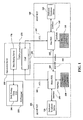
- FIG. 1 is a block diagram of an illustrative embodiment of the present invention for an ECP network consisting of two CSTA compatible ECP nodes.
- CSTA is an ECMA (European Computer Manufacturer's Association) standard that is widely employed by PBX manufacturers to facilitate the interworking of applications to ECPs from different vendors.
- the Home ECP 100 comprises a Home PBX 110, a dedicated telephone device 120 and a shared telephone device 130. Both the dedicated (i.e. default or home) telephone device 120 and the shared (i.e. host) telephone device 130 are connected to the Home PBX 110 using the proprietary interface 140.
- the host ECP 105 also comprises a Host PBX 115, a dedicated telephone device 125 and a shared telephone device 135.
- the dedicated telephone device 125 and the shared telephone device 135 are connected to the Host PBX 115 via the proprietary interface 145.
- any interface e.g. other proprietary or standard
- any interface may be utilized instead of the proprietary interfaces 140 and 145 so long as it accommodates the telephone device interface with the deployed Home PBX 110 and Host PBX 115, respectively.
- Home ECP 100 and Host ECP 105 are interconnected via the ECP Networkwide (NW) interface 155.
- ECP NW interface 155 is a networking connection for transporting voice and data across Home ECP 100 and Host ECP 105 using various traditional private or standard networking protocols for intercommunication (e.g. ISDN, ECMA-QSIG).
- the Home PBX 110 and Host PBX 115 are connected to the CAP 150.
- the ACL interfaces 160 and 165 are used to provide a call control connection between the CAP 150 and Home PBX 110 and the Host PBX 115, respectively.
- a standard interface e.g. CSTA
- a different proprietary interface can be employed, as will be understood.
- the CAP 150 is part of the Application Server 180 that connects the Home ECP 100 and the Host ECP 105.
- both the CAP 150 and the desk sharing server 170 reside in the Application Server 180 and interface with each other via the CSTA protocol link 175.
- a desk sharing server may reside outside the Application Server180 and connect to the CAP 150 using the same CSTA protocol link 175.
- the desk sharing server 170 performs the function of a server application, allowing the user to request the device impersonation feature between the dedicated telephone devices (120 or 125) and the shared telephone devices (130 or 135).
- the telephone devices 120, 130, 125 and 135 may be, e.g., an IP phone, an ISDN phone or a digital PBX telephone.
- the dedicated telephone devices 120 and 125 may be virtual telephones that are represented as a database entry at the ECP indicating the user identity and the preferred telephonic settings.
- the dedicated and shared telephone devices may belong to the same ECP or to different ECPs.
- the Application Server 180 and CAP 150 are logical blocks that represent an architectural view of any ECP that is capable of communicating using the CSTA protocol.
- the desk sharing server is normally co-located to one ECP, but it needs to coordinate with the other ECPs.
- Both the Home ECP 100 and the Host ECP 105 need to be CSTA compatible, but do not necessarily need to have the same capabilities.
- CAP 150 is a middleware that connects to the various ECP nodes and acts as a translator between these various nodes and provides the applications with a common and unified call control interface. Furthermore, CAP 150 exposes a CSTA protocol link 175 that allows communication with CSTA compatible solutions, such as the desk sharing server 170. Thus, the administrator or desk sharing client user may use a desk sharing client GUI 190 from a terminal or a PC 195 to connect to the Desk Sharing Server 170 and subsequently request the networkwide relocation to the corresponding ECP via the CSTA Link 175. Furthermore, the ability of CAP 150 to support a standard protocol further facilitates the integration of external (third party) PBXs/ECPs.
- the desk sharing server application When an authorized dedicated telephone user (for example 120), or an administrator representing the telephone user, accesses the desk sharing server 170 via PC 195 and requests to reserve a shared office space and the corresponding shared telephone device (for example, shared telephone 135 at Host ECP 105) the desk sharing server application initiates the transaction. If a telephone device is associated with the selected shared office space, a request is submitted (via the CSTA protocol link 175) to the ECP call control link at CAP 150 to perform the features transfer.
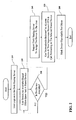
- FIG. 2 illustrates the procedure involved in networkwide device impersonation according to an illustrative embodiment of the present invention.
- the present invention allows the user to interface to the GUI of the desk sharing application (residing on the client PC 195).
- the procedure starts when the administrator, or an authorized telephone user, logs-on to the desk sharing system and executes the desk sharing application at 210.
- the user then identifies a shared working area and selects an associated shared telephone device at 220.
- the desk sharing application verifies the availability of the requested shared telephone device at 230. If the shared telephone device has already been allocated to another client or otherwise unavailable, the user is directed to restart the selection process at 220. Otherwise, if the shared telephone device is available, the desk sharing application assigns the shared telephone device to the requesting user at 240.
- networkwide relocate functionality is emulated to impersonate the network PIN and call forwarding at 250.
- impersonation is achieved by using the pre-configured user dedicated telephone device's PIN (which is stored in the desk sharing server database) and activating it together with the call forwarding feature at the administrative library of the Host ECP.
- This impersonation causes the network PIN and call forwarding attributes of the default telephonic device to be reflected at the shared telephone device.
- the functional attributes of the dedicated and shared devices are reset to the pre-desk sharing status.
- networkwide relocate may be performed for both intra-ECP and inter-ECP sharing conditions, as long as both ECPs are CSTA capable.
- the ECP administrator is able to restrict the use of the networkwide relocate to, e.g., inter-ECP device sharing conditions and use the autoset relocate based desk sharing for intra ECP telephone device sharing conditions (as disclosed in the co-pending application referenced above).
- the desk sharing application will determine if the dedicated telephone device and the shared telephone device belong to the same ECP, and subsequently perform the appropriate desk sharing application based on the ECP administrator selection.
- the application reports the status of the desk sharing procedure to the user and marks the shared device as unavailable to other users for the duration of the desk sharing period at 260.
- PDA Personal Digital Assistant
- comparably equipped cellular telephone to browse through available vacant seats in a theater, a stadium, or a hotel and consequently utilize stored client preferences (location, price range, etc.) to narrow the search for a specific location.
- client preferences location, price range, etc.
- the invention may be used for the assignment of "fixed resources" in order to move telephone users around office permanently or for an extended period of time, using a different platform such as, for example the location assignment application instead of the desk sharing application described herein.
Landscapes
- Engineering & Computer Science (AREA)
- Signal Processing (AREA)
- Telephonic Communication Services (AREA)
Claims (20)
- Desk-Sharing-Verfahren zum Übertragen einer Persönlichen Identifikationsnummer (Personal Identification Number) im Netz PIN und von Rufweiterleitungs- (Call Forwarding) Attributen CFW von einer fest zugeordneten Telefoneinrichtung (120) zu einer gemeinsam genutzten Telefoneinrichtung (130) in einem mit einer computergestützten Telefonieanwendung (Computer Supported Telephony Application) CSTA kompatiblen Unternehmens-Kommunikationsplattform- (Enterprise Communication Platform) ECP Netz, welches die folgenden Schritte umfasst:Ausführen einer Desk-Sharing-Anwendung (210);Reservieren einer verfügbaren gemeinsam genutzten Telefoneinrichtung (130); undautomatisches Übertragen der besagten Netz-PIN und besagten Einrichtungs-CFW-Attribute von der besagten fest zugeordneten Telefoneinrichtung (120) zu der besagten gemeinsam genutzten Telefoneinrichtung (130).
- Verfahren nach Anspruch 1, wobei die besagte fest zugeordnete Telefoneinrichtung (120) und die besagte gemeinsam genutzte Telefoneinrichtung (130) zu einem einzigen ECP-Knoten gehören.
- Verfahren nach Anspruch 1, wobei die besagte fest zugeordnete Telefoneinrichtung (120, 125) und die besagte gemeinsam genutzte Telefoneinrichtung (130, 135) zu zwei verschiedenen ECP-Knoten gehören.
- Verfahren nach Anspruch 1, wobei die besagte Desk-Sharing-Anwendung mit einer Verbindungssteuerungs-Schnittstelle des besagten CSTA-kompatiblen ECP-Netzes integriert ist.
- Verfahren nach Anspruch 1, wobei der besagte Schritt des Reservierens der besagten verfügbaren gemeinsam genutzten Telefoneinrichtung das Reservieren wenigstens einer weiteren gemeinsam genutzten Ressource umfasst.
- Verfahren nach Anspruch 5, wobei die besagte weitere gemeinsam genutzte Ressource eine gemeinsam genutzte Bürofläche ist.
- Verfahren nach Anspruch 5, wobei die besagte weitere gemeinsam genutzte Ressource ein gemeinsam genutzter Computer ist.
- Verfahren nach Anspruch 1, wobei die besagte fest zugeordnete Telefoneinrichtung eine virtuelle Telefoneinrichtung ist, die durch einen Datenbankeintrag an einem ECP-Knoten in dem besagten CSTA-kompatiblen ECP-Netz repräsentiert ist.
- Verfahren nach Anspruch 1, wobei eine CSTA-Protokoll-Verbindung verwendet wird, um die besagte automatische Übertragung der besagten Netz-PIN und der besagten Einrichtungs-CFW-Attribute von der besagten fest zugeordneten Telefoneinrichtung zu der besagten gemeinsam genutzten Telefoneinrichtung durchzuführen.
- Verfahren nach Anspruch 1, wobei die besagte Desk-Sharing-Anwendung außerhalb des besagten ECP-Netzes resident ist.
- Desk-Sharing-Vorrichtung zum Übertragen einer Persönlichen Identifikationsnummer (Personal Identification Number) im Netz PIN und von Rufweiterleitungs- (Call Forwarding) Attributen CFW von einer fest zugeordneten Telefoneinrichtung zu einer gemeinsam genutzten Telefoneinrichtung in einem mit einer computergestützten Telefonieanwendung (Computer Supported Telephony Application) CSTA kompatiblen Unternehmens-Kommunikationsplattform- (Enterprise Communication Platform) ECP Netz, welche umfasst:Mittel zum Ausführen einer Desk-Sharing-Anwendung;Mittel zum Reservieren einer verfügbaren gemeinsam genutzten Telefoneinrichtung; undMittel zum automatischen Übertragen der besagten Netz-PIN und besagten Einrichtungs-CFW-Attribute von der besagten fest zugeordneten Telefoneinrichtung zu der besagten gemeinsam genutzten Telefoneinrichtung.
- Vorrichtung nach Anspruch 11, wobei die besagte fest zugeordnete Telefoneinrichtung (120, 125) und die besagte gemeinsam genutzte Telefoneinrichtung (130, 135) zu einem einzigen ECP-Knoten (100,: 105) gehören.
- Vorrichtung nach Anspruch 11, wobei die besagte fest zugeordnete Telefoneinrichtung (120) und die besagte gemeinsam genutzte Telefoneinrichtung (135) zu zwei verschiedenen ECP-Knoten (100, 105) gehören.
- Vorrichtung nach Anspruch 11, wobei die besagte Desk-Sharing-Anwendung (170) mit einer Verbindungssteuerungs-Schnittstelle des besagten CSTA-kompatiblen ECP-Netzes integriert ist.
- Vorrichtung nach Anspruch 11, wobei die besagten Mittel zum Reservieren der besagten verfügbaren gemeinsam genutzten Telefoneinrichtung (130, 135) Mittel zum Reservieren wenigstens einer weiteren gemeinsam genutzten Ressource umfassen.
- Vorrichtung nach Anspruch 15, wobei die besagte weitere gemeinsam genutzte Ressource eine gemeinsam genutzte Bürofläche ist.
- Vorrichtung nach Anspruch 15, wobei die besagte weitere gemeinsam genutzte Ressource ein gemeinsam genutzter Computer ist.
- Vorrichtung nach Anspruch 11, wobei die besagte fest zugeordnete Telefoneinrichtung eine virtuelle Telefoneinrichtung ist, die durch einen Datenbankeintrag an einem ECP-Knoten in dem besagten CSTA-kompatiblen ECP-Netz repräsentiert ist.
- Vorrichtung nach Anspruch 11, wobei eine CSTA-Protokoll-Verbindung (175) in den besagten Mitteln zur automatischen Übertragung der besagten Netz-PIN und der besagten Einrichtungs-CFW-Attribute von der besagten fest zugeordneten Telefoneinrichtung zu der besagten gemeinsam genutzten Telefoneinrichtung verwendet wird.
- Vorrichtung nach Anspruch 11, wobei die besagte Desk-Sharing-Anwendung außerhalb des besagten ECP-Netzes resident ist.
Applications Claiming Priority (2)
| Application Number | Priority Date | Filing Date | Title |
|---|---|---|---|
| US610451 | 2003-06-30 | ||
| US10/610,451 US7149297B2 (en) | 2003-06-30 | 2003-06-30 | Networkwide desk sharing with automatic device relocation |
Publications (2)
| Publication Number | Publication Date |
|---|---|
| EP1494443A1 EP1494443A1 (de) | 2005-01-05 |
| EP1494443B1 true EP1494443B1 (de) | 2007-04-04 |
Family
ID=33435406
Family Applications (1)
| Application Number | Title | Priority Date | Filing Date |
|---|---|---|---|
| EP04076857A Expired - Lifetime EP1494443B1 (de) | 2003-06-30 | 2004-06-25 | Réservation de ressources éloignées et transfert automatique de paramètres téléphoniques personnelles à ses ressources utilisant une application logicielle |
Country Status (3)
| Country | Link |
|---|---|
| US (1) | US7149297B2 (de) |
| EP (1) | EP1494443B1 (de) |
| DE (1) | DE602004005632T2 (de) |
Families Citing this family (23)
| Publication number | Priority date | Publication date | Assignee | Title |
|---|---|---|---|---|
| US7046659B1 (en) * | 2001-07-03 | 2006-05-16 | Cisco Technology, Inc. | Call signaling approach to user self-provisioning on VoIP using a touch-tone interface |
| US7555107B2 (en) * | 2003-12-30 | 2009-06-30 | Alcatel-Lucent Usa Inc. | “Roaming” method and apparatus for use in emulating a user's “home” telecommunications environment |
| US7673021B2 (en) * | 2004-02-12 | 2010-03-02 | Cisco Technology, Inc. | Automated provisioning of phones in packet voice networks |
| US8194836B2 (en) * | 2004-04-14 | 2012-06-05 | Cisco Technology, Inc. | Enhanced extension mobility |
| JP4346519B2 (ja) * | 2004-07-13 | 2009-10-21 | 株式会社東芝 | 電話システム、その通信制御方法、およびアプリケーション制御装置 |
| US7602770B2 (en) * | 2004-08-23 | 2009-10-13 | Avaya Inc. | Telecommunication terminal identification on a switching system |
| US8732279B2 (en) * | 2006-08-18 | 2014-05-20 | Cisco Technology, Inc. | Secure network deployment |
| US7839879B2 (en) * | 2007-02-01 | 2010-11-23 | Cisco Technology, Inc. | Method and system for supporting cross cluster extension mobility in internet-protocol telephony |
| US8791817B2 (en) | 2008-10-22 | 2014-07-29 | Centurylink Intellectual Property Llc | System and method for monitoring a location |
| US8983488B2 (en) * | 2008-12-11 | 2015-03-17 | Centurylink Intellectual Property Llc | System and method for providing location based services at a shopping facility |
| US20100150336A1 (en) * | 2008-12-12 | 2010-06-17 | Edward Chungming Chen | Cross-call agent extension mobility with call admission control and emergency calling |
| US8428244B2 (en) * | 2008-12-12 | 2013-04-23 | Cisco Technology, Inc. | Cross-call agent extension mobility with call admission control and emergency calling |
| US8139565B2 (en) * | 2009-02-09 | 2012-03-20 | Zoltes, Inc. | Telecommunications system and method for connecting a CSTA client to several PBXS |
| US9307037B2 (en) | 2009-04-15 | 2016-04-05 | Centurylink Intellectual Property Llc | System and method for utilizing attendee location information with an event planner |
| US8428620B2 (en) | 2009-04-22 | 2013-04-23 | Centurylink Intellectual Property Llc | Mass transportation service delivery platform |
| US8644473B1 (en) * | 2009-04-27 | 2014-02-04 | Ernst & Young U.S. Llp | Method and system for providing telephony services |
| US8655693B2 (en) * | 2009-07-08 | 2014-02-18 | Centurylink Intellectual Property Llc | System and method for automating travel related features |
| US8169898B2 (en) * | 2009-09-28 | 2012-05-01 | Avaya Inc. | Modular telephone |
| US20110213843A1 (en) * | 2010-02-26 | 2011-09-01 | Ferrazzini Axel Denis | System and method for providing access to a service relating to an account for an electronic device in a network |
| US20130209108A1 (en) * | 2012-02-14 | 2013-08-15 | Avaya Inc. | System and method for personalized hoteling of mobile workers |
| WO2014142830A1 (en) | 2013-03-13 | 2014-09-18 | Unify Gmbh & Co. Kg | Method, device, and system for communicating a changeability attribute |
| DE102016116077A1 (de) * | 2016-08-29 | 2018-03-01 | Unify Patente Gmbh & Co. Kg | Verfahren zum Zuweisen einer MAC-Adresse zu einem Kommunikationsgerät in einer Netzwerkumgebung und Datenbank mit MAC-Adressen |
| EP3986005B1 (de) | 2020-10-16 | 2022-11-30 | Axis AB | Einrichten eines drahtlosen netzwerks |
Family Cites Families (10)
| Publication number | Priority date | Publication date | Assignee | Title |
|---|---|---|---|---|
| US4899373A (en) * | 1986-11-28 | 1990-02-06 | American Telephone And Telegraph Company At&T Bell Laboratories | Method and apparatus for providing personalized telephone subscriber features at remote locations |
| JPH0715523A (ja) * | 1993-06-23 | 1995-01-17 | Toshiba Corp | 電話装置 |
| CA2100699C (en) * | 1993-07-16 | 1997-07-08 | Mitel Corporation | Portable telephone user profiles using central computer |
| US6301339B1 (en) * | 1995-11-15 | 2001-10-09 | Data Race, Inc. | System and method for providing a remote user with a virtual presence to an office |
| US6252953B1 (en) * | 1996-09-30 | 2001-06-26 | Ameritech Services, Inc. | Method and system for providing a work-at-home telecommunication service |
| CA2275481A1 (en) * | 1998-08-13 | 2000-02-13 | Richard M. Ubowski | User mapped authorization codes for central office feature services |
| DE19946976A1 (de) * | 1999-09-30 | 2001-04-12 | Siemens Ag | Verfahren für ein Kommunikationsnetz zur Realisierung einer netzknotenübergreifenden Benutzermobilität |
| US6584185B1 (en) * | 2000-01-31 | 2003-06-24 | Microsoft Corporation | Telephone abstraction layer and system in a computer telephony system |
| GB2361831B (en) * | 2000-04-28 | 2003-11-05 | Mitel Corp | Telephone system with programmable line appearances |
| US20020188490A1 (en) * | 2001-06-12 | 2002-12-12 | Kruse Patricia S. | Meeting scheduling/meeting room reservation linkage method |
-
2003
- 2003-06-30 US US10/610,451 patent/US7149297B2/en not_active Expired - Lifetime
-
2004
- 2004-06-25 DE DE602004005632T patent/DE602004005632T2/de not_active Expired - Lifetime
- 2004-06-25 EP EP04076857A patent/EP1494443B1/de not_active Expired - Lifetime
Also Published As
| Publication number | Publication date |
|---|---|
| US20040264665A1 (en) | 2004-12-30 |
| DE602004005632T2 (de) | 2008-01-10 |
| EP1494443A1 (de) | 2005-01-05 |
| US7149297B2 (en) | 2006-12-12 |
| DE602004005632D1 (de) | 2007-05-16 |
Similar Documents
| Publication | Publication Date | Title |
|---|---|---|
| EP1494443B1 (de) | Réservation de ressources éloignées et transfert automatique de paramètres téléphoniques personnelles à ses ressources utilisant une application logicielle | |
| JP4362178B2 (ja) | ユーザ・アプリケーション・プログラムと電話プログラム間のapiを備える無線通信装置およびその方法 | |
| CA2294692C (en) | Call center telephone and data flow connection system | |
| US5764639A (en) | System and method for providing a remote user with a virtual presence to an office | |
| US20020118808A1 (en) | Conference system | |
| JP3449684B2 (ja) | ソフトウェア設定装置及びソフトウェア設定方法及び当該方法を実現するプログラムを記録した記録媒体 | |
| US6618476B1 (en) | Line information security interface for TAPI service provider | |
| US6125108A (en) | Method and system for enhanced client identification | |
| US6847639B2 (en) | Managing feature interaction among a plurality of independent feature servers in telecommunications servers | |
| JP4361212B2 (ja) | 通信システム | |
| CN112995427A (zh) | 固话线路网络化接入系统 | |
| US7151825B2 (en) | Desk sharing with automatic device relocation | |
| JP2009171478A (ja) | 電話システム | |
| JP3468868B2 (ja) | 通信ネットワークシステムおよび情報処理端末 | |
| US8284910B2 (en) | Acceptance of inputs from various interfaces to a telephony system | |
| JP2003324524A (ja) | 構内電話交換システム、端末、サーバ及びゲートウェイ | |
| JP3822677B2 (ja) | コンピュータ・テレフォニ・システム | |
| JP4729174B2 (ja) | 交換システムにおけるプログラミング通話処理アプリケーション | |
| US20070286237A1 (en) | System and method for providing an integrated communications manager | |
| EP1484902B1 (de) | Verfahren und Apparat zur Bestimmung von Telekommunikationsrufnummern auf der Grundlage von Präsenzinformationen | |
| US20070274494A1 (en) | Computer-readable recording medium having recorded therein telephone-call connection program, telephone-call connection method, and telephone-call connection apparatus | |
| US7965831B2 (en) | Telephone control device, telephone control method, telephone control program, telephone terminal, telephone calling method, telephone calling program and telephone control system | |
| CN100559816C (zh) | 软件呼叫控制代理 | |
| KR100943059B1 (ko) | 아이피 센트렉스 기반 콜센터 서비스 제공 시스템 및 방법,아이피 센트렉스 기반 콜센터 서비스 준비 방법 | |
| US20060029039A1 (en) | Method, apparatus, and article of manufacture for web-based control of a call server |
Legal Events
| Date | Code | Title | Description |
|---|---|---|---|
| PUAI | Public reference made under article 153(3) epc to a published international application that has entered the european phase |
Free format text: ORIGINAL CODE: 0009012 |
|
| AK | Designated contracting states |
Kind code of ref document: A1 Designated state(s): AT BE BG CH CY CZ DE DK EE ES FI FR GB GR HU IE IT LI LU MC NL PL PT RO SE SI SK TR |
|
| AX | Request for extension of the european patent |
Extension state: AL HR LT LV MK |
|
| 17P | Request for examination filed |
Effective date: 20050126 |
|
| 17Q | First examination report despatched |
Effective date: 20050225 |
|
| AKX | Designation fees paid |
Designated state(s): DE FR GB IT |
|
| RAP1 | Party data changed (applicant data changed or rights of an application transferred) |
Owner name: SIEMENS COMMUNICATIONS, INC. |
|
| GRAP | Despatch of communication of intention to grant a patent |
Free format text: ORIGINAL CODE: EPIDOSNIGR1 |
|
| GRAS | Grant fee paid |
Free format text: ORIGINAL CODE: EPIDOSNIGR3 |
|
| GRAA | (expected) grant |
Free format text: ORIGINAL CODE: 0009210 |
|
| AK | Designated contracting states |
Kind code of ref document: B1 Designated state(s): DE FR GB IT |
|
| REG | Reference to a national code |
Ref country code: GB Ref legal event code: FG4D |
|
| REF | Corresponds to: |
Ref document number: 602004005632 Country of ref document: DE Date of ref document: 20070516 Kind code of ref document: P |
|
| ET | Fr: translation filed | ||
| PLBE | No opposition filed within time limit |
Free format text: ORIGINAL CODE: 0009261 |
|
| STAA | Information on the status of an ep patent application or granted ep patent |
Free format text: STATUS: NO OPPOSITION FILED WITHIN TIME LIMIT |
|
| 26N | No opposition filed |
Effective date: 20080107 |
|
| REG | Reference to a national code |
Ref country code: DE Ref legal event code: R081 Ref document number: 602004005632 Country of ref document: DE Owner name: SIEMENS ENTERPRISE COMMUNICATIONS, INC., US Free format text: FORMER OWNER: SIEMENS COMMUNICATIONS, INC., BOCA RATON, US Effective date: 20120809 Ref country code: DE Ref legal event code: R082 Ref document number: 602004005632 Country of ref document: DE Representative=s name: FRITZSCHE PATENT, DE Effective date: 20120809 Ref country code: DE Ref legal event code: R081 Ref document number: 602004005632 Country of ref document: DE Owner name: UNIFY INC. (N.D.GES.D. STAATES DELAWARE), US Free format text: FORMER OWNER: SIEMENS COMMUNICATIONS, INC., BOCA RATON, US Effective date: 20120809 Ref country code: DE Ref legal event code: R081 Ref document number: 602004005632 Country of ref document: DE Owner name: UNIFY INC. (N.D.GES.D. STAATES DELAWARE), BOCA, US Free format text: FORMER OWNER: SIEMENS COMMUNICATIONS, INC., BOCA RATON, FLA., US Effective date: 20120809 Ref country code: DE Ref legal event code: R082 Ref document number: 602004005632 Country of ref document: DE Representative=s name: FRITZSCHE PATENTANWAELTE, DE Effective date: 20120809 |
|
| REG | Reference to a national code |
Ref country code: DE Ref legal event code: R082 Ref document number: 602004005632 Country of ref document: DE Representative=s name: FRITZSCHE PATENT, DE |
|
| REG | Reference to a national code |
Ref country code: DE Ref legal event code: R082 Ref document number: 602004005632 Country of ref document: DE Representative=s name: FRITZSCHE PATENT, DE Effective date: 20140110 Ref country code: DE Ref legal event code: R081 Ref document number: 602004005632 Country of ref document: DE Owner name: UNIFY INC. (N.D.GES.D. STAATES DELAWARE), US Free format text: FORMER OWNER: SIEMENS ENTERPRISE COMMUNICATIONS, INC., BOCA RATON, US Effective date: 20140110 Ref country code: DE Ref legal event code: R081 Ref document number: 602004005632 Country of ref document: DE Owner name: UNIFY INC. (N.D.GES.D. STAATES DELAWARE), BOCA, US Free format text: FORMER OWNER: SIEMENS ENTERPRISE COMMUNICATIONS, INC., BOCA RATON, FLA., US Effective date: 20140110 Ref country code: DE Ref legal event code: R082 Ref document number: 602004005632 Country of ref document: DE Representative=s name: FRITZSCHE PATENTANWAELTE, DE Effective date: 20140110 |
|
| REG | Reference to a national code |
Ref country code: FR Ref legal event code: PLFP Year of fee payment: 12 |
|
| REG | Reference to a national code |
Ref country code: FR Ref legal event code: CA Effective date: 20160308 |
|
| REG | Reference to a national code |
Ref country code: FR Ref legal event code: PLFP Year of fee payment: 13 |
|
| REG | Reference to a national code |
Ref country code: FR Ref legal event code: CD Owner name: UNIFY, INC., US Effective date: 20160524 Ref country code: FR Ref legal event code: TP Owner name: UNIFY, INC., US Effective date: 20160524 |
|
| REG | Reference to a national code |
Ref country code: FR Ref legal event code: PLFP Year of fee payment: 14 |
|
| REG | Reference to a national code |
Ref country code: FR Ref legal event code: PLFP Year of fee payment: 15 |
|
| PGFP | Annual fee paid to national office [announced via postgrant information from national office to epo] |
Ref country code: IT Payment date: 20200630 Year of fee payment: 17 |
|
| REG | Reference to a national code |
Ref country code: DE Ref legal event code: R082 Ref document number: 602004005632 Country of ref document: DE Representative=s name: SCHAAFHAUSEN PATENTANWAELTE PARTNERSCHAFTSGESE, DE |
|
| PG25 | Lapsed in a contracting state [announced via postgrant information from national office to epo] |
Ref country code: IT Free format text: LAPSE BECAUSE OF NON-PAYMENT OF DUE FEES Effective date: 20210625 |
|
| PGFP | Annual fee paid to national office [announced via postgrant information from national office to epo] |
Ref country code: FR Payment date: 20230622 Year of fee payment: 20 Ref country code: DE Payment date: 20230620 Year of fee payment: 20 |
|
| PGFP | Annual fee paid to national office [announced via postgrant information from national office to epo] |
Ref country code: GB Payment date: 20230622 Year of fee payment: 20 |
|
| REG | Reference to a national code |
Ref country code: DE Ref legal event code: R071 Ref document number: 602004005632 Country of ref document: DE |
|
| PG25 | Lapsed in a contracting state [announced via postgrant information from national office to epo] |
Ref country code: GB Free format text: LAPSE BECAUSE OF EXPIRATION OF PROTECTION Effective date: 20240624 |
|
| REG | Reference to a national code |
Ref country code: GB Ref legal event code: PE20 Expiry date: 20240624 |
|
| PG25 | Lapsed in a contracting state [announced via postgrant information from national office to epo] |
Ref country code: GB Free format text: LAPSE BECAUSE OF EXPIRATION OF PROTECTION Effective date: 20240624 |