EP1483743B1 - Selection of orthodontic brackets - Google Patents
Selection of orthodontic brackets Download PDFInfo
- Publication number
- EP1483743B1 EP1483743B1 EP02795992A EP02795992A EP1483743B1 EP 1483743 B1 EP1483743 B1 EP 1483743B1 EP 02795992 A EP02795992 A EP 02795992A EP 02795992 A EP02795992 A EP 02795992A EP 1483743 B1 EP1483743 B1 EP 1483743B1
- Authority
- EP
- European Patent Office
- Prior art keywords
- teeth
- tooth
- dimensional
- bracket
- arch model
- Prior art date
- Legal status (The legal status is an assumption and is not a legal conclusion. Google has not performed a legal analysis and makes no representation as to the accuracy of the status listed.)
- Expired - Lifetime
Links
- 238000012986 modification Methods 0.000 claims abstract description 13
- 230000004048 modification Effects 0.000 claims abstract description 13
- 238000000034 method Methods 0.000 claims description 119
- 230000003993 interaction Effects 0.000 claims description 11
- 230000001815 facial effect Effects 0.000 claims description 4
- 230000008569 process Effects 0.000 description 61
- 238000010187 selection method Methods 0.000 description 18
- 210000002455 dental arch Anatomy 0.000 description 11
- 238000010586 diagram Methods 0.000 description 10
- 210000003484 anatomy Anatomy 0.000 description 7
- 230000006870 function Effects 0.000 description 6
- 230000008859 change Effects 0.000 description 5
- 229920000535 Tan II Polymers 0.000 description 4
- 238000004590 computer program Methods 0.000 description 4
- 238000012804 iterative process Methods 0.000 description 4
- 238000005259 measurement Methods 0.000 description 4
- 238000002560 therapeutic procedure Methods 0.000 description 4
- 238000013519 translation Methods 0.000 description 4
- 230000000694 effects Effects 0.000 description 3
- 238000004519 manufacturing process Methods 0.000 description 3
- 239000000463 material Substances 0.000 description 3
- 210000000214 mouth Anatomy 0.000 description 3
- 230000036961 partial effect Effects 0.000 description 3
- 230000002093 peripheral effect Effects 0.000 description 3
- VNQABZCSYCTZMS-UHFFFAOYSA-N Orthoform Chemical compound COC(=O)C1=CC=C(O)C(N)=C1 VNQABZCSYCTZMS-UHFFFAOYSA-N 0.000 description 2
- 210000000988 bone and bone Anatomy 0.000 description 2
- 238000012937 correction Methods 0.000 description 2
- 239000002184 metal Substances 0.000 description 2
- 239000000203 mixture Substances 0.000 description 2
- 238000012545 processing Methods 0.000 description 2
- 230000002829 reductive effect Effects 0.000 description 2
- 238000003860 storage Methods 0.000 description 2
- 230000036339 tooth positioning Effects 0.000 description 2
- 230000000007 visual effect Effects 0.000 description 2
- XUIMIQQOPSSXEZ-UHFFFAOYSA-N Silicon Chemical compound [Si] XUIMIQQOPSSXEZ-UHFFFAOYSA-N 0.000 description 1
- 239000000853 adhesive Substances 0.000 description 1
- 230000001070 adhesive effect Effects 0.000 description 1
- 238000004458 analytical method Methods 0.000 description 1
- 238000013459 approach Methods 0.000 description 1
- 230000009286 beneficial effect Effects 0.000 description 1
- 239000000919 ceramic Substances 0.000 description 1
- 230000001055 chewing effect Effects 0.000 description 1
- 230000019771 cognition Effects 0.000 description 1
- 238000012790 confirmation Methods 0.000 description 1
- 230000003247 decreasing effect Effects 0.000 description 1
- 208000002925 dental caries Diseases 0.000 description 1
- 238000013461 design Methods 0.000 description 1
- 238000005516 engineering process Methods 0.000 description 1
- 208000024693 gingival disease Diseases 0.000 description 1
- 238000003384 imaging method Methods 0.000 description 1
- 210000004283 incisor Anatomy 0.000 description 1
- 230000001788 irregular Effects 0.000 description 1
- 230000000670 limiting effect Effects 0.000 description 1
- 229910052755 nonmetal Inorganic materials 0.000 description 1
- 238000005457 optimization Methods 0.000 description 1
- 230000010076 replication Effects 0.000 description 1
- 230000000717 retained effect Effects 0.000 description 1
- 230000002441 reversible effect Effects 0.000 description 1
- 238000012552 review Methods 0.000 description 1
- -1 self-ligating Substances 0.000 description 1
- 238000000926 separation method Methods 0.000 description 1
- 229910052710 silicon Inorganic materials 0.000 description 1
- 239000010703 silicon Substances 0.000 description 1
- 239000007787 solid Substances 0.000 description 1
- 230000000153 supplemental effect Effects 0.000 description 1
- 230000009466 transformation Effects 0.000 description 1
Images






Classifications
-
- A—HUMAN NECESSITIES
- A61—MEDICAL OR VETERINARY SCIENCE; HYGIENE
- A61C—DENTISTRY; APPARATUS OR METHODS FOR ORAL OR DENTAL HYGIENE
- A61C7/00—Orthodontics, i.e. obtaining or maintaining the desired position of teeth, e.g. by straightening, evening, regulating, separating, or by correcting malocclusions
- A61C7/002—Orthodontic computer assisted systems
-
- A—HUMAN NECESSITIES
- A61—MEDICAL OR VETERINARY SCIENCE; HYGIENE
- A61C—DENTISTRY; APPARATUS OR METHODS FOR ORAL OR DENTAL HYGIENE
- A61C7/00—Orthodontics, i.e. obtaining or maintaining the desired position of teeth, e.g. by straightening, evening, regulating, separating, or by correcting malocclusions
Definitions
- the present invention relates to orthodontia. More particularly, the present invention relates to the selection of orthodontic appliances, e.g., orthodontic brackets.
- Orthodontia is a branch of dentistry that prevents or treats irregular positions of the teeth. Teeth that are not in correct positions may hinder proper chewing of food, and may also tend to develop caries or contribute to gum disease. Furthermore, malpositioned or maloccluded teeth may present an unsightly appearance, especially if located in the anterior portions of the patient's oral cavity.
- An orthodontic brace is a device used to move teeth to orthodontically correct positions along the dental arch.
- the orthodontic practitioner will create a custom orthodontic brace for each patient by selecting components that apply gentle pressure to the teeth in certain directions. Over a period of time, the teeth tend to slowly shift toward desired positions. After an extended period of time, the growth of new bone tissue in areas next to the roots of the teeth hold the teeth in their new positions.
- One type of orthodontic brace that is in widespread use includes a set of orthodontic appliances along with an archwire.
- the appliances typically include a number of small, slotted brackets, each of which is mounted on a corresponding tooth along the dental arch.
- An archwire is received in the slot of each bracket and forms a track to guide the teeth toward desired positions.
- a set of appliances and an archwire are provided for both the upper and the lower dental arch of the patient. In other words, treatment of both arches is generally carried out at the same time.
- Brackets having slots that are designed to be in a common plane once the teeth have moved to desired, final positions. Although the slots of the brackets are not aligned at the beginning of treatment due to the various malpositions of the teeth, the inherent resilience of the archwire provides a restoring force that tends to move the archwire and hence the slots of the associated brackets into alignment in a common plane.
- each of the selected brackets has a certain "prescription" that represents particular characteristics of the bracket.
- the prescription can include numerous different aspects or features of the bracket, such as the size of the archwire slot, as well as orientation of a slot relative to a base of the bracket that is intended to be mounted on a surface of the tooth.
- the prescription describes the orientation of the archwire slot relative to the base of the bracket and may include values for torque, angulation, and rotation.
- teeth In terms of tooth movement, "torque” is often defined as tipping movement of the long axis of the tooth in a buccolabial-lingual direction (i.e., in directions toward and away from the patient's lips or cheeks and the patient's tongue), “angulation” is defined as tipping movement of the long axis of the tooth in mesial and distal directions (i.e., in directions toward and away from the center of the patient's dental arch), and “rotation” is defined as rotational movement of the tooth about its long axis.
- the prescription for orthodontic brackets often varies from tooth to tooth to achieve desired tooth positions.
- many practitioners prefer that the long axes of the lower anterior teeth be as upright as possible, and consequently will prescribe for those teeth a bracket having torque and angulation values of zero (0).
- the upper central incisor teeth normally have long axes that are slanted.
- the practitioner may prescribe upper central brackets having a torque of, for example, 17 degrees and an angulation of, for example, 5 degrees.
- the desired prescription may change from one orthodontist to the next orthodontist.
- the prescription is varied from the practitioner's normal practice to accommodate the initial position of a patient's tooth, the location of adjacent teeth of the patient, or the orientation of opposing teeth for a particular patient.
- WO 01/85047 relates to a method and apparatus for generating an orthodontic template that assists in the placement of an orthodontic apparatus.
- the method includes a process that begins by obtaining a digital model of an orthodontic structure of a patient by directly scanning the orthodontic structure of the orthodontic patient. The processing continues by obtaining a selection of one of a plurality of orthodontic apparatuses for the orthodontic structure to produce a selected orthodontic apparatus.
- a database include a plurality of orthodontic appliances. This database is used by the orthodontist to select the given apparatus to be used on a given patient.
- brackets are designed and manufactured to average anatomy.
- the orthodontic brackets are not tailored to any individual anatomy of the patient.
- a practitioner may have the ability to choose predefined and existing brackets having the following torques for an upper central tooth (0, 7, 12, 14, 17, 22).
- custom orthodontic appliances be manufactured around the anatomy of the individual patient.
- the custom orthodontic products are manufactured and used in a tailored manner to the individual anatomy of the patient.
- an orthodontic bracket may be automatically designed from the digitized tooth shape information and then provided using numerical controlled manufacturing technology.
- the digitized information may be generated from measurements of the mouth of the patient, either taken directly or from a model thereof, and may include information associated with the shape of the individual teeth of the patient and/or of the patient's arches.
- the present invention is directed toward facilitating the selection of orthodontic brackets from predefined and existing orthodontic brackets.
- a user views a patient's teeth and using, for example, a user interface, a three-dimensional maloccluded tooth/arch model can be defined using three-dimensional tooth/arch model data.
- a prescription is selected representative of desired final positions for the teeth of the patient. With such information, the teeth of the maloccluded tooth/arch model can be positioned in the desired final positions.
- predefined and existing orthodontic brackets can be selected, e.g., such selection can be based on selection criteria used to search a database including parameters defining such predefined and existing orthodontic brackets.
- the present invention reduces such complexity and cost by a large degree while the optimization regarding the functional process of selecting appropriate brackets is reduced only by a small factor.
- a beneficial method for selecting one or more predefined and existing orthodontic brackets is provided.
- a computer-implemented method of orthodontic appliance selection includes providing tooth/arch model data in a library of data (e.g., individual separated three-dimensional models of teeth) and defining a three-dimentional maloccluded tooth/arch model using the tooth/arch model data from the library of data as a function of patient information (e.g., patient information provided using a user interface for input of data). Further, the method includes providing prescription data representative of desired final positions for one or more teeth of the defined three-dimensional maloccluded tooth/arch model and bracket data representative of one or more parameters defining a plurality of predefined and existing orthodontic brackets. One or more of the plurality of predefined and existing orthodontic brackets are selected by executing bracket selection software for use in moving one or more teeth of the defined three-dimensional maloccluded tooth/arch model to the desired final positions based on at least the prescription data.
- a library of data e.g., individual separated three-dimensional models of teeth
- bracket data representative of one or more parameters defining a plurality of predefined and existing orthodontic
- one or more of the plurality of predefined and existing orthodontic brackets are selected that move the one or more teeth of the defined three-dimensional maloccluded tooth/arch model at least close to, but not necessarily exactly to, the desired final positions represented by the prescription data.
- the method then further includes repositioning the one or more teeth of the defined three-dimensional maloccluded tooth/arch model to positions based on at least bracket data representative of the selected predefined and existing orthodontic brackets.
- a representation of the one or more teeth of the defined three-dimensional maloccluded tooth/arch model in desired final positions represented by the prescription data is provided, along with a representation of the one or more teeth of the defined three-dimensional maloccluded tooth/arch model as repositioned based on at least bracket data representative of the selected predefined and existing orthodontic brackets.
- These representations can be compared, e.g., for use in modifying the selection of the one or more of the plurality of predefined and existing orthodontic brackets.
- archwire data representative of one or more parameters defining a plurality of predefined and existing orthodontic archwires is provided. At least one of the plurality of predefined and existing orthodontic archwires is selected for use in moving the one or more teeth of the defined three-dimensional maloccluded tooth/arch model to the desired final positions. Repositioning of one or more teeth of the defined three-dimensional maloccluded tooth/arch model may then be based on at least bracket data representative of the selected one or more predefined and existing orthodontic brackets and archwire data representative of the selected at least one predefined and existing orthodontic archwire.
- the method includes providing a representation of one or more teeth of the defined three-dimensional maloccluded tooth/arch model for a patient and providing one or more patient images representative of the patient's actual teeth (e.g., two-dimensional images and three-dimensional images) for use in comparison to the representation of the one or more teeth of the defined three-dimensional maloccluded tooth/arch model.
- the defined three-dimensional maloccluded tooth/arch model may be modified based on the comparison.
- another embodiment of the method includes providing a representation of the one or more teeth of the defined three-dimensional maloccluded tooth/arch model for a patient and providing a representation of the one or more teeth of the defined three-dimensional maloccluded tooth/arch model in desired final positions represented by the prescription data.
- Such representations can be used to, for example, change patient information or prescription data resulting in a modification to the representations.
- a method for use in orthodontia includes providing model data representative of at least one or more teeth, providing archwire data representative of at least an archwire, and providing position data defining one or more tooth positions.
- a representation of the one or more teeth is provided by providing a global coordinate system on a surface of the archwire and defining a local coordinate system at a facial axis point of each of the one or more teeth.
- the local coordinate system corresponding to each tooth is placed relative to the global coordinate system to a position defined at least in part by the position data. Thereafter, each tooth is attached to the corresponding moved local coordinate system.
- the position data may include prescription data defining one or more desired tooth positions and/or bracket data representative of one or more parameters defining one or more orthodontic brackets. Further, a representation of orthodontic brackets with the representation of the one or more teeth may be provided in a similar manner to the placing of the teeth using the local coordinate system.
- a method of orthodontic appliance selection according to the present invention includes providing tooth/arch model data for use in defining a three-dimensional maloccluded tooth/arch model and providing a user interface for allowing a user to define a three-dimensional maloccluded tooth/arch model as a function of patient information.
- a user interface is also provided for allowing a user to define prescription data representative of desired final tooth positions for one or more teeth of the defined three-dimensional maloccluded tooth/arch model.
- bracket data representative of one or more parameters defining a plurality of predefined and existing orthodontic brackets is provided and one or more of the plurality of predefined and existing orthodontic brackets are selected from a database for use in moving one or more teeth of the defined three-dimensional maloccluded tooth/arch model to the desired final positions based on at least the prescription data.
- Another method of orthodontic appliance selection includes providing tooth/arch model data representative of at least one or more teeth and defining a three-dimensional maloccluded tooth/arch model using the tooth/arch model data as a function of patient information.
- Prescription data representative of desired final positions for one or more teeth of the defined maloccluded tooth/arch model and archwire data representative of one or more parameters defining a plurality of predefined and existing orthodontic archwires are also provided. At least one of the plurality of predefined and existing archwires is selected for use in moving one or more teeth of the defined three-dimensional maloccluded tooth/arch model to the desired final positions.
- bracket data representative of one or more parameters defining a plurality of predefined and existing orthodontic brackets is provided and one or more of the plurality of predefined and existing orthodontic brackets are selected for use in moving one or more teeth of the defined three-dimensional maloccluded tooth/arch model to the desired final positions based on at least the prescription data.
- the present invention includes computer-readable medium tangibly embodying a program executable for carrying out one or more of the functional elements described above.
- Bracket selection method 10 is shown and broadly described with reference to the flow diagram shown in Figure 1 .
- the bracket selection method 10 generally includes patient's maloccluded tooth/arch model definition block 12 and prescription selection block 14.
- Patient's maloccluded tooth/arch model definition block 12 generally represents the definition by a user of a three-dimensional maloccluded tooth/arch model as a function of patient information, e.g., a patient's tooth/arch information, such as tooth size, gender, age, impression information, etc.
- a maloccluded tooth/arch model refers to any model including one or more teeth that may, but do not necessarily, require movement using orthodontic therapy.
- the definition of the three-dimensional tooth/arch model is developed from a plurality of three-dimensional models.
- the three-dimensional models available are provided as model data in a computer database.
- the model data is representative of one or more teeth, alone or in combination with arch information.
- the arch information may include arch form or shape information that facilitates the selection of an archwire.
- the arch form by way of reference to a central plane of a corresponding selected archwire that follows the arch form (see Figure 7 ), i.e., a central plane parallel to the occlusal plane, provides a reference datum for subsequent tooth and bracket positioning as described further herein.
- the three-dimensional model data is representative of separate individual teeth.
- Such separate individual teeth can be manipulated individually without further separation when placing them in models described herein.
- This is unlike the use of an actual replication of teeth, where, for example, a bite impression and later digitization is used to provide model data.
- the multiple teeth digitized together must still be separated to provide individuality, and completion or provision of the entire tooth, e.g., root.
- such digitization does not provide for root structure that is not physically represented by the impression.
- Such model data may be representative of various configurations of tooth and/or arch models created by, for example, imaging and/or recording actual patient teeth and providing an average common representation thereof.
- the three-dimensional models may be defined by or correspond to various patient criteria such as gender, age, race, tooth size, arch size, arch shape, etc.
- a user interface provided to a practitioner may allow the input of various patient information.
- Such patient information can then be used to search a database defining the models to result in the selection of a best match three-dimensional model data from the plurality of available three-dimensional models provided by the model data in the computer database.
- the patient's maloccluded tooth/arch model may be defined by the user through selection of an arch form, individual teeth, groupings of an arch form and teeth, groupings of multiple teeth, or through selection of any other model data representative of one or more teeth and/or arch forms.
- an arch form and individual teeth are selected for definition of the patient's maloccluded tooth/arch model based on user input of patient information.
- the prescription selection block 14 is generally representative of the user selecting prescription data from multiple available prescriptions representative of desired final positions for one or more of the teeth of the maloccluded tooth/arch model defined for a patient.
- the multiple available prescriptions may be provided by prescription data in a computer database.
- the prescription for each patient/tooth can be selected on an individual basis or as a group.
- the selected prescription data representative of desired final positions for one or more of the patient's teeth is not limited to the choice of one or more predefined bracket prescription systems.
- the prescription data representative of desired final positions for one or more of the patient's teeth is not the same as the prescription information that is representative of one or more parameters of predefined and existing orthodontic brackets to be selected according to the present invention.
- the prescription information that is representative of one or more parameters of predefined orthodontic brackets will be referred to herein and in the claims as bracket data.
- a tooth/arch model having the desired occlusion for the teeth of the patient can be achieved (block 16) by providing the teeth of the three-dimensional maloccluded tooth/arch model defined by the user in the desired prescribed positions (block 17). The user can then determine if these final positions are actually desired for the teeth or if modifications need to be made (block 18).
- the user may optionally modify prescription or patient information as represented by block 18 and the loops back to block 12 and 14.
- modification of the prescription or patient information may provide a better representation of the teeth of the patient's maloccluded tooth/arch model positioned as prescribed by the selected prescription, and as such, may provide for a better selection of brackets from predefined and existing orthodontic brackets (block 20), e.g., a bracket selection that moves the maloccluded teeth closer to the prescribed positions.
- Block 20 of the bracket selection method 10 is generally representative of the selection of standard brackets, i.e., predefined and existing orthodontic brackets, from a plurality of predefined and existing orthodontic brackets defined by one or more parameters representative thereof in a computer database. At least one archwire corresponding to the arch form defined for the patient may also be selected from a plurality of predefined and existing archwires.
- the selection of the predefined and existing brackets is, in many circumstances, affected by the interaction between the archwire and the brackets when moving the maloccluded teeth of the model into the desired final positions as defined by the prescription data. As such, this interaction should be considered as further described below in the selection of the predefined and existing brackets.
- Such selection of predefined and existing orthodontic brackets may be performed in any number of manners. For example, such selection may be performed by the user entering bracket selection criteria via a user interface, e.g., based on the selected prescription.
- bracket selection criteria is used in a search of a database providing the bracket data representative of one or more parameters defining the plurality of predefined and existing orthodontic brackets such that selected brackets, i.e., best match brackets or brackets that will best move the maloccluded teeth into the prescribed desired positions, result from the search.
- the bracket selection criteria is generally representative of at least the prescription data selected by the user or otherwise defined by the user (block 14) and the defined maloccluded tooth/arch model (block 12).
- such selection of predefined and existing orthodontic brackets may be performed by the system searching the database using the angulation, in/out, or other prescription data selected by the user (block 14). Yet further, such selection may be performed by taking into account one or more other parameters such as torque loss (see Figure 11B ).
- multiple iterations of a combination of one or more different selection processes described herein may be used to select the brackets that will best move the maloccluded teeth into the prescribed desired positions. For example, a first cycle of selection may be performed by the system based only on the selected prescription data (e.g., the selected prescription data being the bracket selection criteria) defining the desired positions for the teeth of the maloccluded model, with a second cycle performed using additional user entered bracket selection criteria to further modify the selection process.
- the combinations of processes used to select the brackets are numerous and one skilled in the art will recognize that each and every possible combination is not listed specifically herein but that such combinations are clearly within the scope of the present invention.
- bracket selection the teeth of the maloccluded model are repositioned based on the bracket data (i.e., bracket prescription information) representative of the selected orthodontic brackets (block 22).
- bracket data i.e., bracket prescription information
- the bracket data representative of parameters of the selected predefined and existing brackets is used to modify the position of one or more teeth of the patient maloccluded tooth/arch model.
- the selection process of block 20 may not result in an exact match with the selected prescription for the desired final tooth positions.
- the teeth of the patient maloccluded tooth/arch model will most likely only be moved close to, but not necessarily exactly to, the desired final positions as represented by the selected prescription of block 14.
- the repositioned teeth may be displayed to the user.
- the maloccluded teeth repositioned based on the bracket data may be displayed alone or in conjunction with other defined models (e.g., the maloccluded tooth/arch model for the patient, the maloccluded teeth moved into the desired final positions based on the selected prescription data, other image data, etc.).
- the teeth may then be repositioned again using the bracket data of the new or modified selection. This modification and repositioning process can be repeated until a suitable final position for the teeth is attained as represented by the loop between blocks 24 and 22.
- This modification and repositioning process can be repeated until a suitable final position for the teeth is attained as represented by the loop between blocks 24 and 22.
- this modification process may never achieve the desired positions of the selected prescription data of block 14.
- a display of the final tooth model with or without brackets based on the final selection of predefined and existing orthodontic brackets is provided (block 26).
- the model data representative of a plurality of three-dimensional tooth/arch models may include model data representative of a full set of teeth or one or more individual teeth with one, both, or partial arches.
- a user may select the patient's tooth/arch model data from a library of data. For example, if a user enters various patient information, one or more three-dimensional tooth/arch models may be displayed for a user, e.g., practitioner, to review and modify as appropriate.
- user-entered data may result in the program displaying a selection of matches in thumbnail images, e.g., teeth which match the patient information supplied by the user. Thereafter, the user may click on selections, e.g., particular teeth, and build a three-dimensional model and fine tune the model if desired.
- model data representative of the plurality of three-dimensional tooth/arch models may be either representative of individual teeth or multiple teeth.
- the model data is not an actual model of the patient's actual teeth, but is representative of the patient's teeth.
- the model data is representative of individual teeth and/or arch forms that may be selected by the user to define the maloccluded tooth/arch model for a patient.
- Such model data may be provided by using actual three-dimensional models to generate a computer tooth library, e.g., a tooth library including teeth for various tooth positions.
- a computer tooth library e.g., a tooth library including teeth for various tooth positions.
- the present invention is not limited to any particular manner of providing the model data.
- model data representative of the teeth may be provided by use of data for a model tooth that is scaled in dimensions as needed to relative dimensions corresponding to the patient's tooth.
- data representing a tooth model may be obtained from the library of teeth. The data may then be changed as needed to increase or decrease the size of the tooth model along one or more reference axes until the tooth model is similar in size and/or shape of the corresponding tooth of the patient.
- the scaling operation i.e., the manipulation of the data to increase or decrease the size of the model tooth along one or more axes, may be carried out by the user through the input of numerical data from measurements of the patient's actual tooth or a relative ranking of the size of the patient's actual tooth. If the selection method includes the optional step, as described below, of including digitized images of the patient's actual teeth, scaling may be carried out by the user through visual comparison of the image of the model tooth to the appearance of the patient's actual tooth. The scaling process may be carried out for each tooth in the dental arch as needed. For example, the scaling operation may be performed by selecting and dragging a border or surface of the tooth being scaled.
- the estimated models of teeth selected by the user utilized according to the present invention are sufficiently close to the patient's actual teeth such that an exact replica of the patient's teeth is unnecessary in the bracket selection method 10.
- using such computer-generated model teeth as opposed to using digitized representations of a patient's actual teeth reduces the complexity and cost of attempting to provide an exact model or replica of the patient's actual teeth.
- the individual nature of the teeth provide a far less complex process of providing separated teeth that can be easily manipulated, as opposed to capturing an actual representation of the teeth and then further needing to perform complex algorithms to separate the teeth captured into individual separated teeth.
- the bracket selection method 10 is used to select predefined and existing brackets that are defined by certain bracket data.
- the bracket data i.e., orthodontic bracket prescription information, representative of parameters of predefined and existing orthodontic brackets and used in the selection process described herein may include values representing the torque, angulation, and rotation provided by the bracket.
- the bracket data may also include an "in/out" value which may represent, for example, the shortest distance between the lingual side of the archwire slot and the outwardly facing side of the bracket base that is intended to contact or be closely adjacent the surface of the patient's tooth.
- Bracket data may also include other aspects such as labial-lingual depth of the archwire slot, the occlusal-gingival width of the archwire slot, and the mesial-distal length of the archwire slot.
- the bracket data may also optionally include the material of the bracket and/or the material of the structure defining the archwire slot (such as an archwire slot liner), and the type or classification of appliance (e.g., a "Begg" bracket, a twin bracket, or a bracket with rotation wings).
- the bracket data may also include linear and/or angular tolerances of the various dimensions and angulations.
- the bracket selection method 10 may also be used to select predefined and existing archwires that are defined by certain archwire data.
- the archwire data representative of parameters of predefined and existing orthodontic archwires and used in the selection process may include values that represent the shape of the archwire, such as the cross-sectional shape (e.g., round, rectangular, or square) as well as its overall shape when in its normally relaxed configuration (e.g., whether it lies in a flat plane when relaxed or whether it is constructed to have a reverse curve of Spee when relaxed).
- the archwire data for the archwires may include overall dimensions when relaxed as well as its cross-sectional dimensions (e.g., its diameter for an archwire having a round cross-sectional configuration, and its width and depth for archwires having a rectangular cross-sectional configuration). Further, the archwire data may also include its composition, stiffness, and/or values representing frictional characteristics of the archwire in use.
- the word “bracket” may include any orthodontic brackets and also orthodontic tubes, such as buccal tubes.
- Buccal tube brackets are typically mounted on the patient's molar teeth and receive ends of the archwire.
- the buccal tubes are convertible.
- the tubular passage may be “opened” by the practitioner when desired to create a slot that is open along one side, such as along its buccal side.
- buccal tubes are welded to metallic orthodontic bands that are placed around the molar teeth to provide a stable base for mounting the buccal tubes. Orthodontic bands may be selected and applied as described, for example, in U.S. Patent No. 6,089,868 issued 18 July 2000 entitled, “Selection of Orthodontic Appliances.”
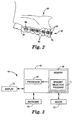
- FIG. 2 An example of a system of brackets and archwires is shown in Figure 2 .
- a dental arch 60 of a patient is shown along with a first brace 62.
- the first brace 62 includes a set of brackets 64, each of which is bonded to a respective tooth 66 of the dental arch 60.
- Buccal tube brackets 68 are mounted on molar teeth 69 of the dental arch 60.
- the brackets 64, 68 have slots or grooves that receive an archwire 70.
- the archwire 70 is secured to the brackets 64, 68 by ligating structure, such as wire ties or the tiny elastomeric O-rings shown in Figure 2 .
- the bracket 64, 68 may be of the type known as "self-ligating" brackets that include sliding clips, shutters, or other types of latches to retain the archwire 70 in place.
- the archwire 70 forms a track to guide movement to the bracket 64, 68 as well as the associated teeth toward prescribed positions as selected by the practitioner.
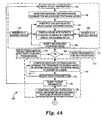
- a selection program 11 for performing the bracket selection method 10, or at least portions thereof is resident in memory 48 of a computing unit 42 of an orthodontic appliance selection system 40.
- the computing unit 42 further includes processor 46.
- the data representative of the various elements of the present invention e.g., the one or more prescriptions, the plurality of three-dimensional tooth/arch models, the data representative of one or more parameters defining a plurality of predefined and existing orthodontic brackets, etc.
- such data may be provided as inputs to computing unit 42 by a user or by some other peripheral device for use by program 11 or for storage in memory 48.
- the present invention may be adapted to be operable using any bit processor-based system, e.g., a personal computer, and, further, that the present invention is in no manner limited to any particular processing system.
- the amount of memory of the system should be sufficient to allow for operation of the program 11 and storage of data, such as model teeth data and prescription data, for use by program 11. It is readily apparent that such a memory may be provided by peripheral memory devices.
- the system 40 may include any number of other peripheral devices as desired for operation of the system 40, such as, for example, the following respective devices: display 54, keyboard 50, and mouse 52. However, one skilled in the art will recognize that the system is in no manner limited to use of such devices, nor that such devices are necessarily required for operation of the system 40.
- computing system 40 may be a Net Power Semetra-II with a true-TX graphics card.
- any suitable computing system may be used.
- Various programs and languages may be used to accomplish the functions as described herein, as would be readily apparent to one skilled in the art.
- such functionality may be provided using C++ language, Open GL, etc.
- available software packages may be used for providing various functions, such as display of images, manipulation of images, etc.
- Open Inventor available from Silicon Graphics may be used to display images
- Digital Diagnostic Protocol may be used to communicate the information.
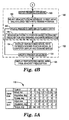
- bracket selection method 10 More detailed illustrative embodiments of the bracket selection method 10 according to the present invention are shown by the tooth movement and bracket selection method 100 and embodiments thereof as shall be described with reference to Figures 4-12 .
- the bracket selection method 100 includes block 112 representative of a user entering patient information for use in the definition of a three-dimensional maloccluded tooth/arch model for a patient.
- the present invention includes a user interface which instructs the user to provide certain types of patient information (block 140).
- the patient information may include any information that is pertinent to or which leads to distinguishing characteristics of teeth or arches of a patient.
- patient information may include the patient's gender, age, race, or any other type of information descriptive of a group of patients that is useful in defining an estimated tooth/arch model.
- group-type information representative of the patient certain sizes and tooth shapes can be selected.
- patient information may include tooth size such as from a scale of 1-5, arch size such as from a scale of 1-5, and arch shape (e.g., Orthoform 1, 2, and 3). This patient information may also be bite impression information taken directly from a patient by the user of the bracket selection system described herein.
- the computer program Upon entering of such patient information, the computer program, e.g., computer program 11, searches for tooth and arch models from a tooth/arch model database (block 142).
- the tooth/arch model database includes model data representative of one or more teeth, either individually or in combination, whole or partial arch models, combination tooth and arch models, or any other three-dimensional models including tooth and/or arch information. Separate tooth and arch models are stored as a library file in the tooth/arch model database. Further after entry of such patient information, various tooth models and arches are provided for viewing by a user and the user is allowed to select one or more tooth models and arch models to estimate the patient's teeth/arch configuration. As described further below, such a selection may be modified if desired.
- scaling may be used to define the teeth of the maloccluded tooth/arch model.
- an arch form may be defined by scaling.
- the shape of the generic arch form is increased or decreased along one or more references axes until reaching the shape desired by the user.
- Scaling of the arch form may be carried out by any one of a number of methods. For example, a model of the patient's arch form may be created and measured at certain reference points, and the generic arch form can then be scaled as needed.
- the arch form may be scaled from a single arch form, or may be scaled from one of a number of generic arch forms that are retained in a data file containing a library of arch forms.
- the teeth of the maloccluded model may be placed in the defined positions, and the user may view such teeth on the display (block 144) to determine whether the displayed maloccluded teeth satisfy the user's expectations. If the user is satisfied with the displayed maloccluded teeth, then the user can move forward and select prescription data for such teeth as shown in block 114.
- the maloccluded teeth may be placed in positions in the maloccluded tooth/arch model in a manner such that they best match the patient's maloccluded teeth.
- a representation of the one or more teeth of the defined three-dimensional maloccluded tooth/arch model for a patient may be provided by moving each tooth to a position that matches, as close as possible, the position of the corresponding tooth of the patient or, for example, models formed of multiple teeth may be chosen wherein little positioning of individual teeth is required.
- the maloccluded model may be changed (block 152).
- patient information may be changed to reselect teeth.
- information concerning the patient may be changed such that the maloccluded model teeth or the arch form is changed and through the previous process described herein displayed to the user in a changed form.
- patient two-dimensional digitized images (block 148) or patient three-dimensional digitized images (block 150) may be overlaid with the maloccluded tooth/arch model on the computer display (block 146). This would allow the user to fine tune the displayed maloccluded model teeth such that the estimated teeth representative of the patient's teeth are as desired by the user.
- use of digitized two-dimensional or three-dimensional images is only a supplemental tool that may be used optionally in the present invention.
- information e.g., full bite impression information or digitized representations
- the separate individual selected model teeth e.g., complete with root
- this embodiment makes use of actual patient information while still reducing the complexity and cost of attempting to provide an exact model or replica of each of the patient's actual teeth.
- the individual nature of the model teeth i.e., individual separated teeth
- a model created from information more closely defining the actual patient Therefore, a partial capture of the patient's actual configuration is used, while the need to perform complex algorithms to separate the teeth captured (e.g., by impression or digitization) into individual separated teeth is eliminated.
- prescription data representative of desired final positions for the teeth of the maloccluded model can be selected or otherwise defined (block 114). As shown in Figure 4 , prescription information can be provided to the computer program in multiple ways.
- Block 160 allows a user via a user interface to select a standard prescription for tooth positions from one or more prescriptions stored in a database.
- known prescription values are commonly used for tooth positions according to known techniques. Examples of well-known techniques include those taught by Drs. McLaughlin, Bennett, and Trevisi (the "MBT" brand bracket prescription), those taught by Dr. Ron Roth, and those taught by Dr. Lawrence F. Andrews.
- the prescription information may be provided by the user through an additional user interface that allows the user to enter various prescription parameters such as in/out, angulation, and torque for each tooth (block 162).
- Such modification provides the user, e.g., an orthodontist, the ability to achieve positions for the model teeth corresponding to the prescription that cannot be achieved with a standard prescription.
- Figure 5A shows a typical prescription from L. F. Andrews, "Straight Wire, the Concept and Appliance", L. A. Wells (1989 ). The in/outs were calculated from subtracting crown prominence of each tooth from 3.5 millimeters.
- the prescription 170 is just one of many different types of prescriptions that may be stored in a library database and selected by a user via a user interface provided by program 11.
- the method 100 proceeds to place the maloccluded teeth of the patient according to the desired final tooth positions corresponding to, or prescribed by, the selected prescription and, optionally modify the model resulting from such placement (block 116).
- a tooth positioning process block 170 for positioning the maloccluded teeth to the desired or prescribed occlusion is shown in the flow diagram of Figure 6 .
- any method of placing the teeth or moving the teeth to the desired positions may be used according to the present invention.
- the process may include searching a tooth/arch model database for a prescribed tooth/arch model as opposed to modifying the positions of the maloccluded teeth into the desired final positions.
- Such position modification of the maloccluded teeth may include positioning each of the teeth selected for the maloccluded model to the desired prescribed occlusion.
- a local coordinate system already created for the teeth of the maloccluded model may be repositioned and each tooth reattached thereafter.
- FIG. 6 One illustrative tooth positioning process 118 for providing a representation of the one or more maloccluded teeth based on the selected prescription data representative of the desired final positions for the teeth is shown in Figure 6 and can be generally described with reference to Figures 7A-7C.
- Figures 7A and 7B are representative of upper archwire 250 and lower archwire 252 corresponding to defined arch forms defined for the patient in the definition of the maloccluded tooth/arch model.
- the method is initialized by positioning a global coordinate system on an inner surface of the archwire and at the midpoint of the archwire (and at the central plane thereof).
- global coordinate system 260 is positioned with its origin 261 on the inner surface and midpoint of the upper archwire 250.
- global coordinate system 262 is initialized with its origin 263 on the inner surface and midpoint of the lower archwire 252.
- the tooth placement process 118 includes moving a local coordinate system 272 associated with a tooth relative to the global coordinate system 262 of archwire 252 to a prescribed position as shown in Figure 7C . Thereafter, preferably, tooth 270 is then attached to the local coordinate system 272. Likewise, all the other model teeth (if any) of the lower arch 252 are moved in the same manner to the prescribed positions. For simplicity, only descriptions relative to the lower arch 252 shall be provided herein. However, via symmetry, substantially the same process applies to the upper arch 250.
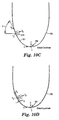
- a global coordinate system 262 is initialized on the inner surface 267 and midpoint 269 of the archwire 252 as shown by the global coordinate system 262 having its origin at the inner surface 267 and midpoint 269 of archwire 252 shown in Figure 10A .
- orthodontic archwires for example, are often sold according to standardized shapes that have been developed over the years. Archwires typically appear as a smooth curve that is symmetrical on either side of a midpoint, but the radius of the curvature of the archwire typically varies along the length of the archwire.
- the global coordinate system 262 as described herein is generally tangent to the inside (lingual side) of the archwire at its midpoint in the mesial-distal direction, and is parallel and normal to the occlusal plane.
- the computer program automatically creates the global coordinate system on the archwire 252.
- data representative of the surface of the archwire, or at least approximately representative of the archwire surface is created if it does not yet exist in the model data, e.g., an archwire that follows the arch form.
- the surface of the archwire could be provided by data of a solid model, wire frame data, data representing the surface, or data representing a point cloud surface.
- the archwire follows the arch form defined for the patient (block 112).
- the global coordinate system 262 is positioned with its origin on the inner surface 267 of the archwire and at the midpoint 269 of the archwire 252.
- a local coordinate system 272 for each model tooth is then moved as further described below.
- Each tooth is later attached to the corresponding local coordinate system with its origin at the facial axis (FA) point 278 of each tooth.
- FA facial axis
- Figure 8 illustrates the attachment of local coordinate system 272 at the FA point 278 of the tooth 270.
- the z axis of the local coordinate system 272 is perpendicular to the crown surface while the y axis and the x axis are tangent to the crown.
- the local coordinate system 272 which may initially coincide with the global coordinate system 262 as shown in Figure 10A is then translated along the inner midline of the archwire by tooth widths (block 204).
- b n is a factor greater than one or smaller than one to account for the larger (or smaller for lingual arch) arch radius of the archwire than the crown prominence arch on which the tooth widths are measured.
- the local coordinate system becomes x 1 , y 1 , and z 1 , where y 1 is normal to the view shown in Figure 10B .
- the local coordinate system x 1 , y 1 , z 1 is rotated by an angle beta ( ⁇ ) with respect to the y axis to ensure that the z 1 -axis is perpendicular to the inner surface of the archwire 252.
- the new local coordinate system resulting from the rotation becomes X 2 , y 2 , z 2 .
- the coordinate system x 2 , y 2 , z 2 is translated along the z 2 axis, or in the lingual direction, by a distance equal to the in/out value, d. This results in another local coordinate system x 3 , y 3 , Z 3 .
- the coordinate system x 4 , y 4 , z 4 is rotated by an angle - ⁇ which approximates to the inclination (or torque), with respect to the x 4 axis to the desired inclination, ⁇ i , while maintaining angulation.
- ⁇ ⁇ i
- ⁇ - ⁇ i
- the new coordinate system resulting from such rotation is x 5 , y 5 , and z 5 , as shown in Figure 10F .
- ⁇ tan - 1 tan ⁇ ⁇ cos ⁇
- the model tooth 270 is attached to the new local coordinate system x 5 , y 5 , z 5 as shown in Figure 10F .
- teeth are also shown in the other diagrams of Figures 10A-F , such teeth are provided only for illustration purposes to show rotation and translation.
- attachment of the tooth to the local coordinate system is not performed until the local coordinate system is in its proper position per the selected prescription data.
- Attachment of the tooth 270 to the new local coordinate system x 5 , y 5 , z 5 is represented in block 214. All the teeth are moved to their particular prescribed positions as represented by block 216 until the final tooth has been placed in its prescribed position. The movement and placement process is then done (block 218).
- the user may view such teeth on the display to determine whether the displayed teeth satisfy the user's expectations (block 176). If the user is satisfied with the displayed teeth in the prescribed position, the displayed model teeth represent the final desired positions for the teeth of the maloccluded tooth/arch model.
- patient information may be changed (block 174) or the prescription data may be changed (block 172).
- information concerning the patient may be changed such that the model teeth or the arch form are changed.
- the model may be displayed to the user in a changed form.
- a prescription is changed (e.g., by selecting a new prescription for tooth positions from a database or entering various other parameters such as in/out, angulation, and torque) for one or more teeth, then the teeth are placed in the new prescribed positions and may be displayed to the user.
- the user may be provided with a representation of the one or more teeth of the defined three-dimensional maloccluded tooth/arch model in desired final positions represented by the selected prescription data overlaid with a representation of the defined three-dimensional maloccluded tooth/arch model.
- a visual comparison can be made to assist in defining a more effective prescription. For example, simultaneous display of teeth in two or more different positions is described in U.S. Patent Application Serial No. 09/918,226 filed July 30, 2001 and entitled "Method and Apparatus for Selecting a Prescription for an Orthodontic Brace.”
- predefined and existing orthodontic brackets and/or archwires are selected from a database based on at least the maloccluded tooth/arch model and the selected prescription data corresponding to the final desired positions of the patient's teeth (block 120).
- the brackets selected from the database are the brackets which best move the maloccluded teeth into the desired final positions (block 182).
- the teeth may be moved close, but not necessarily exactly, to the desired final positions.
- the archwire is selected by the user to attempt to best move the patient's maloccluded teeth to the desired final positions represented by the selected prescription data (block 180) at the conclusion of treatment.
- an archwire for the patient may be chosen from a library of predefined and existing archwires based on the arch form defined by the user (block 112) via the input of patient information.
- the archwire may be an "Orthoform" brand archwire sold by 3M Unitek Corporation.
- the practitioner may select an archwire from a library of archwire data representative of parameters of predefined and existing archwires.
- the system may do a database search based on the arch form information and select an archwire to be used.
- bracket selection processes (block 182) are possible. Several illustrative exemplary embodiments of bracket selection processes shall be described with reference to Figures 11-12 .
- FIG 11A a flow diagram of an illustrative bracket selection process 301 is shown in Figure 11A .
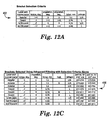
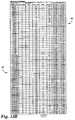
- Such a process employs a database including bracket data representative of predefined and existing orthodontic brackets, such as the database 400 shown in Figure 12 represented generally by the table 404.
- the database 400 includes one or more parameters defining predefined and existing brackets. For example, such parameters include torque, angulation, in/out, hook, left/right, slot size, etc.
- parameters include torque, angulation, in/out, hook, left/right, slot size, etc.
- bracket selection may proceed using a database search based substantially only on bracket selection criteria corresponding to the prescription data selected defining the desired position of teeth of the patient, e.g., torque, angulation, in/out, etc.
- a user interface is provided to allow the user to provide various types of bracket information (block 300) as shown in Figure 11A for use in limiting the search of the database.
- the user may be allowed to select the bracket type, e.g., metal or non-metal, full size or miniature, a particular style or system, etc., to limit the search to some degree.
- the computer search of the predefined and existing brackets in the database is performed to find the best orthodontic brackets that can move the maloccluded teeth to the desired final positions (block 302).
- the best brackets may actually have a prescription that matches exactly to the final selected prescription (block 114).
- the brackets resulting from the computer search will most likely not be an exact match.
- the computer search for the brackets may be performed directly from the selected prescription data (block 114) that resulted in the representation of the model teeth in the desired final positions (block 176) as shown and described with reference to Figure 4 .
- Such a prescription may provide bracket selection criteria 402 as shown in Figure 12 to be used for the search of the database 400.
- a user interface may be provided to the user for allowing the user to modify or input bracket selection criteria based on various circumstances, such as experience, model teeth represented in the final positions (block 176), start position of teeth in the maloccluded model, or any other data, either displayed or known otherwise to the user that might affect the bracket selection process.
- the anterior lower arch bracket may have a torque greater than -5 as defined by the final desired positions of the model teeth (block 176).
- a user may wish to change such values based on prior experience.
- the prescription data selected for the desired tooth positions may be presented to the user for confirmation prior to using such selected information for searching the database 400. This also would allow the user to have an opportunity to make bracket selection criteria changes, for example, based on experience.
- a user interface may allow the user to modify or input bracket selection criteria based on the direction of the orthodontic correction required to move a patient's maloccluded teeth to the represented final desired positions (block 176) and accommodate the clearance between the final archwire and bracket slot.
- the effect of the start position of the archwire in the slot of the bracket is preferably considered.
- Such clearance has an effect on torque loss, as well as angulation.
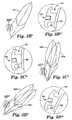
- FIGs 5B'-5B"' such clearance is illustrated in Figures 5B'-5B"' and is preferably taken into account when selecting the brackets.
- a tooth 500 and bracket 502 are shown in nominal positions in Figure 5B' .
- the bracket 502 has a base 508 fixed to the tooth 500 with a bracket slot 506 for receiving archwire 504. Note that in the nominal positions, very little clearance between the archwire and slot exists.
- Figure 5B" shows the tooth 500A starting with excess negative torque
- Figure 5B"' shows the tooth starting with excess positive torque.
- Using the same bracket for such varied start positions would result in completely different final positions for the different start positions. For example, as shown in Fig. 5B" , movement from tooth position 500A proceeds to 500B, while movement from tooth position 500C goes to 500D.
- bracket selection criteria may be modified by the user to input more effective criteria for certain start positions of the teeth, or a computer process may automatically take into account the start positions of the maloccluded teeth to provide for a more effective bracket selection process 317 as further described below with reference to Figure 11B .
- the brackets 406 selected for best moving the maloccluded to the desired final positions may be displayed with the values called for by the selected prescription (block 304) so as to provide further information to the user.
- the user may compare the selected prescription data to the bracket data, e.g., bracket prescription information, for the selected brackets and decide whether the bracket selection process should be completed (block 305) or whether adjustments in the bracket selection criteria (block 306) should be made.
- bracket prescription information e.g., bracket prescription information
- bracket selection criteria 402 needs to be adjusted (block 306)
- the user is provided with an interface to modify the bracket selection criteria 402, e.g., torque, angulation, etc. Thereafter, another computer search of the bracket database is performed to find the best match brackets that correspond to the new bracket selection criteria 402 (block 302).
- Microsoft Excel is utilized to provide a database of predefined and existing brackets. Using a Microsoft Excel advanced filter defined by the bracket selection criteria, an efficient bracket selection process can be performed.
- any database and search process may be used according to the present invention.
- the predefined and existing brackets selected from the database may be placed onto the teeth in a certain position (block 190).
- Data representing such brackets are stored in memory for use in placing such brackets onto the model teeth.
- One such bracket is illustratively shown in Figure 9 .
- the brackets may be moved and placed onto the teeth in any manner as known to one skilled in the art.
- substantially the same method of placing the model teeth in the prescribed positions as described with reference to process 118 of Figure 6 is used to place the brackets onto the teeth in a prescribed position.
- a global coordinate system is provided on the surface of the archwire for the three-dimensional tooth/arch model.
- a local coordinate system is defined for the bracket, and the local coordinate system is moved relative to the global coordinate system to a position defined at least in part by the bracket prescription. Thereafter, the bracket is attached to the corresponding moved local coordinate system.
- One embodiment of providing the global coordinate system is the same as described with reference to Figure 6 .
- the global coordinate system is initialized on the inner surface and midpoint of the archwire.
- the local coordinate system 284 for each bracket 280 is provided at the bottom surface 287 of the base 285 where the origin 286 of the local coordinate system 284 is at the projection of the center of the archwire slot 282 to the bracket base surface 287.
- the x axis of the local coordinate system 284 is in the direction of the archwire slot 282 and the y axis is tangent to the bracket base 285 in the occlusal direction. The z axis therefore is pointing in the lingual direction.
- the teeth can be repositioned to orientations associated with the bracket data of the selected orthodontic brackets (block 192).
- the teeth may be moved to new bracket in/out, angulation, and torque prescription values of the predefined and existing orthodontic brackets selected.
- One illustrative end result of the movement process is a display of the tooth model with the brackets positioned thereon.
- bracket prescription interaction with the finishing archwire, particularly to compensate for the start position of the teeth.
- selection of brackets and repositioning of the maloccluded teeth should take into account this interaction.
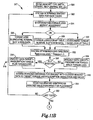
- One illustrative bracket selection process 317 that provides for such compensation shall be described with reference to Figure 11B .
- the user enters via a user interface certain bracket information to limit the later to be performed search (block 320).
- the information may include the bracket type, such as metal, ceramic, self-ligating, mix, etc.
- the system then initializes the determination of bracket data for each tooth of the model (block 322) in a torque adjustment process 318. For example, the amount of torque loss adjustment necessary to make an effective bracket selection needs to be defined (block 324).
- the amount of torque loss adjustment can be determined in any variety of ways.
- the amount of torque loss adjustment can be determined using a subroutine (block 326) based on the nominal slot, i.e., bracket slot, and archwire data by calculating the angle at which diagonal corners of the archwire would contact the occlusal and gingival walls of the bracket slot using an average wire corner radius.
- the amount of torque loss adjustment can be determined with use of a look up table based on nominal slot and archwire data.
- a certain amount of torque loss adjustment is selected using the look up table based on selecting the contact angle from an array of values pre-calculated using standard slot, archwire and corner radius data.
- the amount of torque loss adjustment can be determined with use of a customized torque loss look up table including amounts of torque loss that can be looked up based on selecting the contact angle from an array of values modified by or for the user through a user interface.
- Custom correction angles would be pre-calculated and entered into the table based on special wire and slot combinations or developed as the result of the user's own clinical experience.
- the direction that the loss occurs must be determined (block 332) such that the proper direction adjustment can be made to the prescription data, e.g., torque data.
- Such direction of loss may be determine by
- ⁇ MALOCCLUDED - ⁇ FINISH ⁇ , where ⁇ is the adjusted torque angle applied to the local coordinate system and ⁇ is the difference between the adjusted torque in the maloccluded tooth local coordinate system, and the adjusted torque in the finished position local coordinate system for that tooth.
- the desired or adjusted target bracket data to account for torque loss is equal to the torque of the selected prescription data plus the determined amount of torque loss adjustment.
- the desired or adjusted target bracket data to account for torque loss is equal to the torque of the selected prescription data minus the determined amount of torque loss adjustment.
- the system can then search the database for brackets with the closest bracket data to the target adjusted torque bracket selection criteria along with angulation and in/out as defined by the selected prescription data (block 340).
- the bracket selection criteria used for the search are the torque of the prescription data adjusted for torque loss due to the slot/archwire interaction, along with angulation and in/out from the prescription data (e.g., selected prescription data per block 114).
- bracket identified from the predefined and existing brackets in the database is then ready for placement on the tooth (block 350) with the other brackets of the selected array of brackets for the teeth. The process is repeated for each of the teeth until brackets have been selected for each tooth (block 352).
- brackets have been selected based on an adjusted torque
- the teeth are repositioned based on the bracket data for the selected brackets as previously described herein (block 354).
- the local coordinate system for each tooth i.e., each tooth being repositioned based on the bracket data for the selected bracket on the selected archwire
- the teeth may then be attached to the local coordinate system.
- an angulation adjustment process 319 is then preferably employed.
- the adjustment process 319 may be provided, on a tooth-by-tooth basis, by first comparing the angulation, ⁇ , of the tooth to the desired finished position for the tooth as defined by the selected prescription (block 356).
- the bracket search criteria can be modified with an adjusted target torque that also adjusts for the angulation difference so that the tooth can be moved closer to the desired finished position as defined by the selected prescription.
- a search of the database for a new bracket using the target torque and the other previously defined criteria, e.g., in/out, is then performed (block 358).
- the new bracket selected replaces the previously selected bracket in the selection array of brackets for the teeth (block 362).
- the position of the bracket on the tooth is adjusted to compensate for the angulation difference (block 364).
- the angulation adjustment process 319 continues for each of the teeth as represented by block 366 and the loop back to block 356.
- bracket placement is performed (block 368) along with repositioning of the teeth according to the final brackets selected. For example, position of the bracket on the tooth is performed according to the bracket data as adjusted taking into consideration angulation difference as just described.
- bracket fit to the teeth could be accommodated during bracket bonding by use of indirect bonding, where brackets are first bonded to a physical model of the patient's teeth and transferred to the patient using a placement tray or the like. Computer controlled placement of the bracket during either direct or indirect bonding could maintain the selected prescription.
- a bracket selection adjustment process 122 may then be employed to attempt to provide for selection of even more effective orthodontic brackets.
- the adjustment process for example, with the teeth of the maloccluded model placed in the positions based on the bracket data, e.g., bracket data and interaction with the archwire, the user may view such teeth on the display to determine whether the displayed repositioned teeth satisfy the user's expectations, e.g., match the final desired positions for the teeth. If the user is satisfied with the displayed repositioned teeth, then the user can move forward and the final teeth/bracket model representation with the final bracket selection can be provided (block 126).
- bracket selection can be changed (block 124).
- different bracket selection criteria may be used to change the bracket selection.
- information concerning the process of selecting brackets may be changed such that a new selection of brackets is provided.
- the teeth of the maloccluded model may then be represented based on the new selection of brackets and through the previous process described herein displayed to the user in a changed form. This process can be reiterated until the user is satisfied with the resultant teeth repositioned based on the newly selected brackets.
- the user may be provided with a representation of the one or more teeth of the defined three-dimensional maloccluded tooth/arch model in desired final positions represented by the selected prescription data overlaid with a representation of the one or more teeth of the defined three-dimensional maloccluded tooth/arch model as repositioned based on the bracket data representative of the selected brackets (block 194).
- a comparison can be used by a user to modify the bracket selection.
- the user of the system can use a mouse or other pointing device to identify and drag a certain tooth, teeth and/or bracket(s) for translation or rotation.
- the computer can update the display to the new positions in real time.
- the user or patient can view the tooth model with or without the brackets from different viewing points and angles.
- Multi-media presentations such as sound to represent collision between two teeth or brackets, or between teeth and brackets, can also be provided.
- the repositioned model corresponding to the final bracket selection may be displayed (block 126).
- brackets may be brackets precoated with an adhesive material, e.g., at the manufacturer or in an orthodontist's office.
- bracket selection method of the present invention One illustrative embodiment of the use of the bracket selection method of the present invention shall be described below. It will be recognized that the various techniques described previously herein and below may be used together or certain techniques can be used alone to assist in bracket selection.
- the user would maintain an in-office inventory of predefined and existing brackets.
- this inventory would include the most popular bracket types in the user's preferred prescription, plus brackets with feature options, such as with or without hooks, and prescription options, such as additional torques and angulations. These additional brackets could be limited to those most commonly used based on patient statistics.
- the inventory provides a ready supply of brackets for initial patient bonding as well as replacement brackets when required. As the selection system uses brackets, a running count could be kept to maintain the in-office inventory.
- the orthodontic user would enter patient information via a user interface into a computer using the bracket selection program previously described herein.
- a maloccluded model for the patient may be defined through an iterative process described previously herein.
- the system would use the information in its tooth/arch model database to produce a virtual maloccluded tooth/arch model to closely represent the patient's teeth and arch.
- the generated maloccluded tooth/arch model may then be displayed to the user for modification if desired through a user interface.
- the user would then select an initial prescription for the patient, and through an iterative process as previously described herein, the one or more teeth of the maloccluded model for the patient may be moved to the desired final positions as prescribed.
- the system would use the prescription selected to provide a tooth/arch model having the teeth in the prescribed occlusion.
- the generated tooth/arch model with the teeth in the prescribed positions may be displayed to the user for modification if desired through a user interface, e.g., entry of new or modified patient information or new or modified prescription information.
- the system continues with selection of brackets from a database of existing and predefined orthodontic brackets that best move the maloccluded teeth to the desired prescribed positions.
- additional bracket criteria e.g., selection using torque adjustment
- the system selects the specific brackets, places and displays bracket representations thereof on the tooth/arch model.
- the system would generate a final tooth/arch model with the teeth in the final positions based on a final bracket selection.
- bracket selection process is complete.
- the chosen brackets would be dispensed from the in-office inventory for application at time of the actual bonding procedure. If, in an exceptional case, the selected bracket is not in the inventory, it could be procured from a supplier prior to the time of bonding the set of brackets. Beyond the selection process, the information in the system could be utilized to guide the placement of the bonded brackets for the specific patient by direct or indirect bonding methods.
Landscapes
- Health & Medical Sciences (AREA)
- Life Sciences & Earth Sciences (AREA)
- Oral & Maxillofacial Surgery (AREA)
- Dentistry (AREA)
- Epidemiology (AREA)
- Animal Behavior & Ethology (AREA)
- General Health & Medical Sciences (AREA)
- Public Health (AREA)
- Veterinary Medicine (AREA)
- General Engineering & Computer Science (AREA)
- Engineering & Computer Science (AREA)
- Dental Tools And Instruments Or Auxiliary Dental Instruments (AREA)
- Processing Or Creating Images (AREA)
- Endoscopes (AREA)
Applications Claiming Priority (3)
| Application Number | Priority Date | Filing Date | Title |
|---|---|---|---|
| US10/081,220 US7155373B2 (en) | 2002-02-22 | 2002-02-22 | Selection of orthodontic brackets |
| US81220 | 2002-02-22 | ||
| PCT/US2002/040978 WO2003073382A1 (en) | 2002-02-22 | 2002-12-19 | Selection of orthodontic brackets |
Publications (2)
| Publication Number | Publication Date |
|---|---|
| EP1483743A1 EP1483743A1 (en) | 2004-12-08 |
| EP1483743B1 true EP1483743B1 (en) | 2009-06-17 |
Family
ID=27752925
Family Applications (1)
| Application Number | Title | Priority Date | Filing Date |
|---|---|---|---|
| EP02795992A Expired - Lifetime EP1483743B1 (en) | 2002-02-22 | 2002-12-19 | Selection of orthodontic brackets |
Country Status (7)
| Country | Link |
|---|---|
| US (1) | US7155373B2 (enExample) |
| EP (1) | EP1483743B1 (enExample) |
| JP (1) | JP4369244B2 (enExample) |
| AT (1) | ATE434236T1 (enExample) |
| AU (1) | AU2002360711A1 (enExample) |
| DE (1) | DE60232684D1 (enExample) |
| WO (1) | WO2003073382A1 (enExample) |
Families Citing this family (142)
| Publication number | Priority date | Publication date | Assignee | Title |
|---|---|---|---|---|
| US11026768B2 (en) | 1998-10-08 | 2021-06-08 | Align Technology, Inc. | Dental appliance reinforcement |
| US7160110B2 (en) * | 1999-11-30 | 2007-01-09 | Orametrix, Inc. | Three-dimensional occlusal and interproximal contact detection and display using virtual tooth models |
| US6776614B2 (en) * | 2002-02-13 | 2004-08-17 | Lingualcare, Inc. | Modular system for customized orthodontic appliances |
| DE60326951D1 (de) * | 2002-05-31 | 2009-05-14 | Ormco Corp | Kundenspezifische orthodontische behandlung mit aus einer bestandsliste entnommenen komponenten |
| US20080311535A1 (en) * | 2007-05-04 | 2008-12-18 | Ormco Corporation | Torque Overcorrection Model |
| US6928733B2 (en) * | 2002-11-06 | 2005-08-16 | Lingualcare, Inc. | Method and system for customizing an orthodontic archwire |
| US7695278B2 (en) * | 2005-05-20 | 2010-04-13 | Orametrix, Inc. | Method and system for finding tooth features on a virtual three-dimensional model |
| US20040259049A1 (en) * | 2003-06-17 | 2004-12-23 | Avi Kopelman | Method and system for selecting orthodontic appliances |
| US7137812B2 (en) * | 2003-10-03 | 2006-11-21 | 3M Innovative Properties Company | Apparatus for indirect bonding of orthodontic appliances and method of making the same |
| US20050074717A1 (en) * | 2003-10-03 | 2005-04-07 | 3M Innovative Properties Company | Method and apparatus for bonding orthodontic appliances to teeth |
| US8194067B2 (en) | 2004-02-04 | 2012-06-05 | 3M Innovative Properties Company | Planar guides to visually aid orthodontic appliance placement within a three-dimensional (3D) environment |
| US9492245B2 (en) | 2004-02-27 | 2016-11-15 | Align Technology, Inc. | Method and system for providing dynamic orthodontic assessment and treatment profiles |
| US7904308B2 (en) | 2006-04-18 | 2011-03-08 | Align Technology, Inc. | Method and system for providing indexing and cataloguing of orthodontic related treatment profiles and options |
| US8874452B2 (en) * | 2004-02-27 | 2014-10-28 | Align Technology, Inc. | Method and system for providing dynamic orthodontic assessment and treatment profiles |
| US11298209B2 (en) * | 2004-02-27 | 2022-04-12 | Align Technology, Inc. | Method and system for providing dynamic orthodontic assessment and treatment profiles |
| US7987099B2 (en) * | 2004-02-27 | 2011-07-26 | Align Technology, Inc. | Dental data mining |
| WO2005107628A1 (en) * | 2004-05-12 | 2005-11-17 | E-Brackets Pty Ltd | Placement of orthodontic brackets |
| US8517727B2 (en) * | 2004-07-30 | 2013-08-27 | 3M Innovative Properties Company | Automatic adjustment of an orthodontic bracket to a desired occlusal height within a three-dimensional (3D) environment |
| US7291011B2 (en) * | 2004-10-06 | 2007-11-06 | 3M Innovative Properties Company | Placing orthodontic objects along an archwire within a three-dimensional (3D) environment |
| US7354268B2 (en) * | 2004-10-06 | 2008-04-08 | 3M Innovative Properties Company | Movement of orthodontic objects along a virtual archwire within a three-dimensional (3D) environment |
| US7357634B2 (en) * | 2004-11-05 | 2008-04-15 | Align Technology, Inc. | Systems and methods for substituting virtual dental appliances |
| US20060100832A1 (en) * | 2004-11-08 | 2006-05-11 | Bowman Gerald D | Method a designing, engineering modeling and manufacturing orthotics and prosthetics integrating algorithm generated predictions |
| US7869983B2 (en) | 2004-11-17 | 2011-01-11 | 3M Innovative Properties Company | Computing final occlusion with respect to torque loss in a three-dimensional virtual orthodontic system |
| US20060127834A1 (en) * | 2004-12-09 | 2006-06-15 | 3M Innovative Properties Company | Orthodontic kits and methods |
| US8308478B2 (en) | 2005-03-01 | 2012-11-13 | Dentsply International Inc. | Methods for indirect bonding of orthodontic appliances |
| US7556496B2 (en) | 2005-04-04 | 2009-07-07 | 3M Innovative Properties Company | Method of making indirect bonding apparatus for orthodontic therapy |
| US7452205B2 (en) | 2005-04-04 | 2008-11-18 | 3M Innovative Properties Company | Orthodontic indirect bonding apparatus with occlusal positioning stop members |
| US7762815B2 (en) | 2005-05-13 | 2010-07-27 | 3M Innovative Properties Co. | Method of making an indirect bonding tray for orthodontic treatment |
| US8029277B2 (en) * | 2005-05-20 | 2011-10-04 | Orametrix, Inc. | Method and system for measuring tooth displacements on a virtual three-dimensional model |
| US7751925B2 (en) * | 2006-01-27 | 2010-07-06 | 3M Innovative Properties Company | System to manufacture custom orthodontic appliances, program product, and related methods |
| US7613527B2 (en) * | 2006-03-16 | 2009-11-03 | 3M Innovative Properties Company | Orthodontic prescription form, templates, and toolbar for digital orthodontics |
| US7940258B2 (en) * | 2006-04-10 | 2011-05-10 | 3M Innovative Properties Company | Automatic adjustment of an orthodontic bracket to a desired mesio-distal position within a three-dimensional (3D) environment |
| US9326831B2 (en) * | 2006-10-20 | 2016-05-03 | Align Technology, Inc. | System and method for positioning three-dimensional brackets on teeth |
| US8401826B2 (en) * | 2006-12-22 | 2013-03-19 | Align Technology, Inc. | System and method for representation, modeling and application of three-dimensional digital pontics |
| US7878805B2 (en) | 2007-05-25 | 2011-02-01 | Align Technology, Inc. | Tabbed dental appliance |
| US8738394B2 (en) | 2007-11-08 | 2014-05-27 | Eric E. Kuo | Clinical data file |
| ATE546107T1 (de) * | 2007-12-13 | 2012-03-15 | 3M Innovative Properties Co | Kieferorthopädische artikel mit einer teilweise gehärteten zusammensetzung und anwendungs- und herstellungsverfahren |
| US8108189B2 (en) | 2008-03-25 | 2012-01-31 | Align Technologies, Inc. | Reconstruction of non-visible part of tooth |
| US8092215B2 (en) | 2008-05-23 | 2012-01-10 | Align Technology, Inc. | Smile designer |
| US9492243B2 (en) | 2008-05-23 | 2016-11-15 | Align Technology, Inc. | Dental implant positioning |
| US8172569B2 (en) | 2008-06-12 | 2012-05-08 | Align Technology, Inc. | Dental appliance |
| US8235716B2 (en) * | 2008-06-24 | 2012-08-07 | Marc Lemchen | Method for using radio frequency identification microchips in orthodontic brackets |
| US8509932B2 (en) * | 2008-07-17 | 2013-08-13 | Cadent Ltd. | Methods, systems and accessories useful for procedures relating to dental implants |
| US9503282B2 (en) | 2008-09-19 | 2016-11-22 | 3M Innovative Properties Company | Methods and systems for determining the positions of orthodontic appliances |
| US8152518B2 (en) | 2008-10-08 | 2012-04-10 | Align Technology, Inc. | Dental positioning appliance having metallic portion |
| US8292617B2 (en) | 2009-03-19 | 2012-10-23 | Align Technology, Inc. | Dental wire attachment |
| US8765031B2 (en) | 2009-08-13 | 2014-07-01 | Align Technology, Inc. | Method of forming a dental appliance |
| US9241774B2 (en) | 2010-04-30 | 2016-01-26 | Align Technology, Inc. | Patterned dental positioning appliance |
| US9211166B2 (en) | 2010-04-30 | 2015-12-15 | Align Technology, Inc. | Individualized orthodontic treatment index |
| US9336336B2 (en) | 2010-06-29 | 2016-05-10 | 3Shape A/S | 2D image arrangement |
| US9155599B2 (en) | 2010-11-03 | 2015-10-13 | Global Dental Science Llc | Systems and processes for forming anatomical features in dentures |
| US20150037760A1 (en) | 2010-11-03 | 2015-02-05 | Timothy C. Thompson | System and Process for Duplication of Dentures |
| US9213784B2 (en) * | 2010-11-03 | 2015-12-15 | Global Dental Science Llc | System and process for optimization of dentures |
| ITTO20100922A1 (it) * | 2010-11-22 | 2012-05-23 | Alessandro Gianolio | Procedimento per la realizzazione di un apparecchio ortodontico. |
| WO2012112867A2 (en) * | 2011-02-18 | 2012-08-23 | 3M Innovative Properties Company | Orthodontic digital setups |
| US9403238B2 (en) | 2011-09-21 | 2016-08-02 | Align Technology, Inc. | Laser cutting |
| US8875398B2 (en) | 2012-01-04 | 2014-11-04 | Thomas J. Balshi | Dental prosthesis and method of its production utilizing standardized framework keys and matching premanufactured teeth |
| US9375300B2 (en) | 2012-02-02 | 2016-06-28 | Align Technology, Inc. | Identifying forces on a tooth |
| US9364302B2 (en) | 2012-02-08 | 2016-06-14 | Global Dental Science Llc | Process and systems for molding thermosetting plastics |
| US9220580B2 (en) | 2012-03-01 | 2015-12-29 | Align Technology, Inc. | Determining a dental treatment difficulty |
| US9414897B2 (en) | 2012-05-22 | 2016-08-16 | Align Technology, Inc. | Adjustment of tooth position in a virtual dental model |
| ES2874777T3 (es) | 2012-10-30 | 2021-11-05 | Univ Southern California | Aparato de ortodoncia con arco de alambre encajado a presión, antideslizante |
| WO2014130536A1 (en) | 2013-02-19 | 2014-08-28 | Global Dental Science Llc | Removable system and method for dentures and surgical guides |
| US9867684B2 (en) | 2013-03-14 | 2018-01-16 | Global Dental Sciences LLC | System and process for manufacturing of dentures |
| US9055993B2 (en) | 2013-08-29 | 2015-06-16 | Global Dental Science Llc | Denture reference and registration system |
| US9486299B2 (en) | 2013-09-20 | 2016-11-08 | Brandon Owen | Bracket system |
| EP2886077A1 (en) * | 2013-12-18 | 2015-06-24 | 3M Innovative Properties Company | Method of making a transfer tray |
| US10206764B2 (en) | 2014-03-03 | 2019-02-19 | Global Dental Sciences, LLC | System and method for manufacturing layered dentures |
| US10251733B2 (en) | 2014-03-03 | 2019-04-09 | Global Dental Science Llc | System and method for manufacturing layered dentures |
| CN105078600B (zh) * | 2014-05-15 | 2017-04-26 | 邱玟鑫 | 全口义齿重建方法及其装置 |
| US9610141B2 (en) | 2014-09-19 | 2017-04-04 | Align Technology, Inc. | Arch expanding appliance |
| US10449016B2 (en) | 2014-09-19 | 2019-10-22 | Align Technology, Inc. | Arch adjustment appliance |
| US9744001B2 (en) | 2014-11-13 | 2017-08-29 | Align Technology, Inc. | Dental appliance with cavity for an unerupted or erupting tooth |
| US10504386B2 (en) | 2015-01-27 | 2019-12-10 | Align Technology, Inc. | Training method and system for oral-cavity-imaging-and-modeling equipment |
| US11648084B2 (en) | 2015-06-11 | 2023-05-16 | Global Dental Science Llc | Positioning method and system for implant-supported dentures |
| US10588717B2 (en) * | 2015-10-20 | 2020-03-17 | Hankookin, Inc. | Detachable orthodontic bracket and wire system |
| US11931222B2 (en) | 2015-11-12 | 2024-03-19 | Align Technology, Inc. | Dental attachment formation structures |
| US11554000B2 (en) | 2015-11-12 | 2023-01-17 | Align Technology, Inc. | Dental attachment formation structure |
| US11596502B2 (en) | 2015-12-09 | 2023-03-07 | Align Technology, Inc. | Dental attachment placement structure |
| US11103330B2 (en) | 2015-12-09 | 2021-08-31 | Align Technology, Inc. | Dental attachment placement structure |
| WO2017111184A1 (ko) * | 2015-12-22 | 2017-06-29 | 김태환 | 치아 모델링 방법 |
| EP4437943B1 (en) | 2016-02-24 | 2026-04-15 | 3Shape A/S | Detecting and monitoring development of a dental condition |
| CN113288475B (zh) | 2016-04-18 | 2023-12-26 | 斯威夫特健康系统有限公司 | 具有非滑动的绑扎弓丝的牙齿正畸矫正器 |
| EP3471653B1 (en) | 2016-06-17 | 2021-12-22 | Align Technology, Inc. | Orthodontic appliance performance monitor |
| EP4670634A3 (en) | 2016-06-17 | 2026-01-21 | Align Technology, Inc. | Intraoral appliances with sensing |
| CN210727927U (zh) | 2016-07-27 | 2020-06-12 | 阿莱恩技术有限公司 | 口内扫描系统 |
| EP4295748A3 (en) | 2016-11-04 | 2024-03-27 | Align Technology, Inc. | Methods and apparatuses for dental images |
| CA3043049A1 (en) | 2016-12-02 | 2018-06-07 | Align Technology, Inc. | Methods and apparatuses for customizing rapid palatal expanders using digital models |
| CN110177521A (zh) | 2016-12-02 | 2019-08-27 | 斯威夫特健康系统有限公司 | 用于托槽放置的间接正畸粘结系统和方法 |
| US11026831B2 (en) | 2016-12-02 | 2021-06-08 | Align Technology, Inc. | Dental appliance features for speech enhancement |
| US11376101B2 (en) | 2016-12-02 | 2022-07-05 | Align Technology, Inc. | Force control, stop mechanism, regulating structure of removable arch adjustment appliance |
| ES2845198T3 (es) | 2016-12-02 | 2021-07-26 | Align Technology Inc | Expansor palatino |
| US10548700B2 (en) | 2016-12-16 | 2020-02-04 | Align Technology, Inc. | Dental appliance etch template |
| US11160638B2 (en) | 2017-01-03 | 2021-11-02 | World Class Technology Corporation | Orthodontic system with variably-sized archwire slot |
| US10357337B2 (en) * | 2017-01-03 | 2019-07-23 | World Class Technology Corporation | Orthodontic system with variably-sized archwire slot |
| US10881489B2 (en) | 2017-01-31 | 2021-01-05 | Swift Health Systems Inc. | Hybrid orthodontic archwires |
| US10779718B2 (en) | 2017-02-13 | 2020-09-22 | Align Technology, Inc. | Cheek retractor and mobile device holder |
| US10809697B2 (en) | 2017-03-20 | 2020-10-20 | Advanced Orthodontic Solutions | Wire path design tool |
| US12090020B2 (en) | 2017-03-27 | 2024-09-17 | Align Technology, Inc. | Apparatuses and methods assisting in dental therapies |
| US10613515B2 (en) | 2017-03-31 | 2020-04-07 | Align Technology, Inc. | Orthodontic appliances including at least partially un-erupted teeth and method of forming them |
| CN110740704B (zh) | 2017-04-21 | 2021-10-29 | 斯威夫特健康系统有限公司 | 间接粘接托盘、非滑动正畸矫正器和使用其的配准系统 |
| US11045283B2 (en) | 2017-06-09 | 2021-06-29 | Align Technology, Inc. | Palatal expander with skeletal anchorage devices |
| WO2018232299A1 (en) | 2017-06-16 | 2018-12-20 | Align Technology, Inc. | Automatic detection of tooth type and eruption status |
| WO2019005808A1 (en) | 2017-06-26 | 2019-01-03 | Align Technology, Inc. | BIOCAPTOR PERFORMANCE INDICATOR FOR INTRABUCCAL DEVICES |
| US10885521B2 (en) | 2017-07-17 | 2021-01-05 | Align Technology, Inc. | Method and apparatuses for interactive ordering of dental aligners |
| CN114903623B (zh) | 2017-07-21 | 2026-06-19 | 阿莱恩技术有限公司 | 颚轮廓锚固 |
| CN110996836B (zh) | 2017-07-27 | 2023-04-11 | 阿莱恩技术有限公司 | 用于通过光学相干断层扫描术来处理正畸矫正器的系统和方法 |
| US11633268B2 (en) | 2017-07-27 | 2023-04-25 | Align Technology, Inc. | Tooth shading, transparency and glazing |
| US12274597B2 (en) | 2017-08-11 | 2025-04-15 | Align Technology, Inc. | Dental attachment template tray systems |
| US11116605B2 (en) | 2017-08-15 | 2021-09-14 | Align Technology, Inc. | Buccal corridor assessment and computation |
| WO2019036677A1 (en) | 2017-08-17 | 2019-02-21 | Align Technology, Inc. | SURVEILLANCE OF CONFORMITY OF DENTAL DEVICE |
| US10575928B2 (en) | 2017-09-21 | 2020-03-03 | Brandon Owen | Orthodontic bracket retention anchor |
| US12171575B2 (en) | 2017-10-04 | 2024-12-24 | Align Technology, Inc. | Intraoral systems and methods for sampling soft-tissue |
| US10813720B2 (en) | 2017-10-05 | 2020-10-27 | Align Technology, Inc. | Interproximal reduction templates |
| CN114939001B (zh) | 2017-10-27 | 2025-02-18 | 阿莱恩技术有限公司 | 替代咬合调整结构 |
| WO2019089773A1 (en) | 2017-10-31 | 2019-05-09 | Align Technology, Inc. | Dental appliance having selective occlusal loading and controlled intercuspation |
| CN119235481A (zh) | 2017-11-01 | 2025-01-03 | 阿莱恩技术有限公司 | 自动治疗规划 |
| WO2019100022A1 (en) | 2017-11-17 | 2019-05-23 | Align Technology, Inc. | Orthodontic retainers |
| WO2019108978A1 (en) | 2017-11-30 | 2019-06-06 | Align Technology, Inc. | Sensors for monitoring oral appliances |
| US11432908B2 (en) | 2017-12-15 | 2022-09-06 | Align Technology, Inc. | Closed loop adaptive orthodontic treatment methods and apparatuses |
| US10980613B2 (en) | 2017-12-29 | 2021-04-20 | Align Technology, Inc. | Augmented reality enhancements for dental practitioners |
| EP4792730A2 (en) | 2018-01-26 | 2026-08-19 | Align Technology, Inc. | Intraoral scanning system |
| WO2019155315A1 (en) | 2018-02-07 | 2019-08-15 | 3M Innovative Properties Company | Standard orthodontic appliances with semi-custom bases |
| US11937991B2 (en) | 2018-03-27 | 2024-03-26 | Align Technology, Inc. | Dental attachment placement structure |
| US11331165B2 (en) | 2018-03-27 | 2022-05-17 | Klowen Braces, Inc. | Orthodontic treatment system |
| WO2019200008A1 (en) | 2018-04-11 | 2019-10-17 | Align Technology, Inc. | Releasable palatal expanders |
| US11464604B2 (en) * | 2018-06-29 | 2022-10-11 | Align Technology, Inc. | Dental arch width measurement tool |
| US11123159B2 (en) | 2018-07-16 | 2021-09-21 | Brandon Owen | Orthodontic bracket identification mark |
| US20200275996A1 (en) | 2019-03-01 | 2020-09-03 | Swift Health Systems Inc. | Indirect bonding trays with bite turbo and orthodontic auxiliary integration |
| FI129361B (en) * | 2019-03-11 | 2021-12-31 | Lm Instr Oy | Determination of at least one suitable removable orthodontic device |
| WO2021087158A1 (en) | 2019-10-31 | 2021-05-06 | Swift Health Systems Inc. | Indirect orthodontic bonding systems and methods |
| CN110751720B (zh) * | 2019-12-09 | 2023-06-27 | 深圳牙领科技有限公司 | 托槽模型的处理方法、矫正系统及计算机存储介质 |
| KR102301769B1 (ko) * | 2020-01-16 | 2021-09-16 | 디디에이치 주식회사 | 교정적 치아배열 형상 생성 방법 및 장치 |
| KR102329976B1 (ko) * | 2020-05-22 | 2021-11-23 | 오스템임플란트 주식회사 | 환자 유형 분류 방법 및 장치 |
| US12090025B2 (en) | 2020-06-11 | 2024-09-17 | Swift Health Systems Inc. | Orthodontic appliance with non-sliding archform |
| EP4304519A4 (en) | 2021-03-12 | 2025-01-15 | Swift Health Systems Inc. | INDIRECT ORTHODONTIC BONDING SYSTEMS AND PROCEDURES |
| CN117412727A (zh) * | 2021-06-01 | 2024-01-16 | 阿莱恩技术有限公司 | 使用三维控件对治疗计划的临床修改的自动化管理 |
| EP4395688A4 (en) | 2021-09-03 | 2025-07-02 | Swift Health Systems Inc | METHOD OF ADMINISTERING ADHESIVE FOR BONDING ORTHODONTIC BRACKET BRACKET |
| US12193908B2 (en) | 2021-09-03 | 2025-01-14 | Swift Health Systems, Inc. | Orthodontic appliance with non-sliding archform |
| CN114170386B (zh) * | 2021-12-10 | 2024-03-29 | 奥世美医疗科技(江苏)有限公司 | 一种数字化固定正畸方案制定的方法、装置及存储介质 |
| USD1043994S1 (en) | 2022-01-06 | 2024-09-24 | Swift Health Systems Inc. | Archwire |
| CN116452789B (zh) * | 2022-09-06 | 2026-04-24 | 太原理工大学 | 一种牙齿特征点的自动确定方法 |
Family Cites Families (67)
| Publication number | Priority date | Publication date | Assignee | Title |
|---|---|---|---|---|
| US35169A (en) * | 1862-05-06 | Improvement in drawing-cans for cotton rovings | ||
| US3861044A (en) * | 1972-05-04 | 1975-01-21 | Jr William E Swinson | Dental fitting process |
| US4204325A (en) * | 1978-05-12 | 1980-05-27 | Arroyo Research and Consulting Company | Orthodontic bracket bonding system |
| FR2525103B1 (fr) * | 1982-04-14 | 1985-09-27 | Duret Francois | Dispositif de prise d'empreinte par des moyens optiques, notamment en vue de la realisation automatique de protheses |
| US4528627A (en) * | 1982-11-12 | 1985-07-09 | Coben Eugene S | Method for cephalometric quantitation and expression of growth |
| US4663720A (en) * | 1984-02-21 | 1987-05-05 | Francois Duret | Method of and apparatus for making a prosthesis, especially a dental prosthesis |
| US4668192A (en) * | 1983-12-16 | 1987-05-26 | Lavin Joseph J | Apparatus and method for executing orthodontic procedure |
| CH672722A5 (enExample) * | 1986-06-24 | 1989-12-29 | Marco Brandestini | |
| DE3723555C2 (de) * | 1987-07-16 | 1994-08-11 | Steinbichler Hans | Verfahren zur Herstellung von Zahnersatz |
| DE3810455A1 (de) | 1988-03-26 | 1989-10-05 | Michael Dr Radu | Verfahren und vorrichtung zur beruehrungsfreien raeumlichen erfassung eines unregelmaessigen koerpers |
| US5372502A (en) * | 1988-09-02 | 1994-12-13 | Kaltenbach & Voight Gmbh & Co. | Optical probe and method for the three-dimensional surveying of teeth |
| FR2639211A1 (fr) * | 1988-11-18 | 1990-05-25 | Hennson Int | Procede de correlation des saisies tridimensionnelles d'organes humains et dispositif pour sa mise en oeuvre |
| US5011405A (en) | 1989-01-24 | 1991-04-30 | Dolphin Imaging Systems | Method for determining orthodontic bracket placement |
| EP0455700A1 (en) * | 1989-01-24 | 1991-11-13 | Dolphin Imaging Systems Inc. | Method and apparatus for generating cephalometric images |
| DE3911568A1 (de) * | 1989-04-08 | 1990-10-18 | Krupp Medizintechnik | Verfahren und vorrichtung zur ueberpruefung eines zahnaerztlichen abdruckes eines gebisses |
| US4919615A (en) * | 1989-04-28 | 1990-04-24 | Croll Theodore P | Orthodontic band cap |
| US5027281A (en) * | 1989-06-09 | 1991-06-25 | Regents Of The University Of Minnesota | Method and apparatus for scanning and recording of coordinates describing three dimensional objects of complex and unique geometry |
| US5395238A (en) * | 1990-01-19 | 1995-03-07 | Ormco Corporation | Method of forming orthodontic brace |
| US5368478A (en) * | 1990-01-19 | 1994-11-29 | Ormco Corporation | Method for forming jigs for custom placement of orthodontic appliances on teeth |
| US5454717A (en) * | 1990-01-19 | 1995-10-03 | Ormco Corporation | Custom orthodontic brackets and bracket forming method and apparatus |
| US5139419A (en) * | 1990-01-19 | 1992-08-18 | Ormco Corporation | Method of forming an orthodontic brace |
| US5533895A (en) | 1990-01-19 | 1996-07-09 | Ormco Corporation | Orthodontic appliance and group standardized brackets therefor and methods of making, assembling and using appliance to straighten teeth |
| ATE145125T1 (de) | 1991-03-06 | 1996-11-15 | Ormco Corp | Orthodontische stütze und verfahren zu ihrer herstellung |
| US5131844A (en) * | 1991-04-08 | 1992-07-21 | Foster-Miller, Inc. | Contact digitizer, particularly for dental applications |
| US5354199A (en) * | 1991-08-02 | 1994-10-11 | Minnesota Mining And Manufacturing Company | Adhesive for packaged orthodontic appliance |
| JPH05269146A (ja) * | 1992-03-23 | 1993-10-19 | Nikon Corp | クラウン設計時におけるマ−ジンラインの抽出方法 |
| NL9200642A (nl) * | 1992-04-06 | 1993-11-01 | Elephant Holding Bv | Werkwijze voor het vervaardigen van een tandheelkundige prothese. |
| US5250918A (en) * | 1992-05-05 | 1993-10-05 | Square D Company | Automatic miniature circuit breaker with Z-axis assemblage current response mechanism |
| US5212871A (en) * | 1992-05-28 | 1993-05-25 | Luccarelli Steven J | Measuring device for an orthodonitic band |
| US5342194A (en) * | 1992-06-03 | 1994-08-30 | Feldman Richard L | Dental imaging matrix band for making or setting crowns and bridges on prepared teeth |
| US5322436A (en) | 1992-10-26 | 1994-06-21 | Minnesota Mining And Manufacturing Company | Engraved orthodontic band |
| EP0667753B1 (en) * | 1992-11-09 | 2000-01-19 | Ormco Corporation | Custom orthodontic appliance forming method and apparatus |
| SE501410C2 (sv) | 1993-07-12 | 1995-02-06 | Nobelpharma Ab | Förfarande och anordning i samband med framställning av tand, brygga, etc |
| US5338198A (en) * | 1993-11-22 | 1994-08-16 | Dacim Laboratory Inc. | Dental modeling simulator |
| SE502035C2 (sv) * | 1993-12-06 | 1995-07-24 | Nobelpharma Ab | Metod och och anordning för framtagning av information för framställning av artifiella stödorgan eller ersättningsdelar till människokroppen |
| US5572645A (en) * | 1994-03-01 | 1996-11-05 | International Business Machines Corporation | Buffer management policy for an on-demand video server |
| US5674069A (en) * | 1995-01-13 | 1997-10-07 | Osorio; Julian | Customized dental abutment |
| US6059568A (en) | 1995-03-10 | 2000-05-09 | Munro; Donald Malcolm | Orthodontic bands |
| US5538129A (en) * | 1995-03-21 | 1996-07-23 | Minnesota Mining And Manufacturing Company | Package for adhesive precoated dental appliance |
| JP3672966B2 (ja) * | 1995-04-14 | 2005-07-20 | 株式会社ユニスン | 歯科用予測模型の作成方法および作成装置 |
| EP0840574B1 (en) | 1995-07-21 | 2003-02-19 | Cadent Ltd. | Method and system for acquiring three-dimensional teeth image |
| IL114691A0 (en) | 1995-07-21 | 1995-11-27 | Cadent Ltd | Method and system and acquiring three-dimensional teeth image |
| AUPO280996A0 (en) | 1996-10-04 | 1996-10-31 | Dentech Investments Pty Ltd | Creation and utilization of 3D teeth models |
| DE19651223A1 (de) | 1996-12-10 | 1998-06-25 | Winkelstroeter Dentaurum | Vorrichtung zur Abwicklung von Aufträgen zur Lieferung von orthodontischen Bändern |
| US5879158A (en) * | 1997-05-20 | 1999-03-09 | Doyle; Walter A. | Orthodontic bracketing system and method therefor |
| IL120892A (en) | 1997-05-22 | 2000-08-31 | Cadent Ltd | Method for obtaining a dental occlusion map |
| US5975893A (en) * | 1997-06-20 | 1999-11-02 | Align Technology, Inc. | Method and system for incrementally moving teeth |
| US6309215B1 (en) * | 1997-06-20 | 2001-10-30 | Align Technology Inc. | Attachment devices and method for a dental applicance |
| US6471511B1 (en) | 1997-06-20 | 2002-10-29 | Align Technology, Inc. | Defining tooth-moving appliances computationally |
| US6152731A (en) * | 1997-09-22 | 2000-11-28 | 3M Innovative Properties Company | Methods for use in dental articulation |
| IL121872A (en) | 1997-09-30 | 2002-12-01 | Cadent Ltd | Position of an orthodontic element on a tooth surface |
| US5882192A (en) * | 1997-10-30 | 1999-03-16 | Ortho-Tain, Inc. | Computerized orthodontic diagnosis and appliance dispenser |
| IL122807A0 (en) * | 1997-12-30 | 1998-08-16 | Cadent Ltd | Virtual orthodontic treatment |
| US6089868A (en) * | 1998-05-14 | 2000-07-18 | 3M Innovative Properties Company | Selection of orthodontic appliances |
| US6227850B1 (en) * | 1999-05-13 | 2001-05-08 | Align Technology, Inc. | Teeth viewing system |
| US6318994B1 (en) * | 1999-05-13 | 2001-11-20 | Align Technology, Inc | Tooth path treatment plan |
| US6648640B2 (en) | 1999-11-30 | 2003-11-18 | Ora Metrix, Inc. | Interactive orthodontic care system based on intra-oral scanning of teeth |
| US6350120B1 (en) * | 1999-11-30 | 2002-02-26 | Orametrix, Inc. | Method and apparatus for designing an orthodontic apparatus to provide tooth movement |
| US6736638B1 (en) * | 2000-04-19 | 2004-05-18 | Orametrix, Inc. | Method and apparatus for orthodontic appliance optimization |
| US6315553B1 (en) * | 1999-11-30 | 2001-11-13 | Orametrix, Inc. | Method and apparatus for site treatment of an orthodontic patient |
| US6632089B2 (en) * | 1999-11-30 | 2003-10-14 | Orametrix, Inc. | Orthodontic treatment planning with user-specified simulation of tooth movement |
| US6250918B1 (en) | 1999-11-30 | 2001-06-26 | Orametrix, Inc. | Method and apparatus for simulating tooth movement for an orthodontic patient |
| CA2292141A1 (en) | 1999-12-15 | 2001-06-15 | John Voudouris | Diagnostic invention on the internet |
| JP3771498B2 (ja) | 2000-04-19 | 2006-04-26 | オラメトリックス インコーポレイテッド | 歯列矯正装置を配置するための方法およびシステム |
| WO2001082192A1 (en) | 2000-04-25 | 2001-11-01 | Align Technology, Inc. | Treatment analysis systems and methods |
| JP2003530948A (ja) | 2000-04-25 | 2003-10-21 | アライン テクノロジー, インコーポレイテッド | 歯科治療計画のためのシステムおよび方法 |
| DE10024833B4 (de) | 2000-05-19 | 2006-07-20 | Albert Nadler | Vorrichtung zum automatischen Platzieren von Zahnspangen-Brackets auf Zähnen |
-
2002
- 2002-02-22 US US10/081,220 patent/US7155373B2/en not_active Expired - Lifetime
- 2002-12-19 JP JP2003571998A patent/JP4369244B2/ja not_active Expired - Fee Related
- 2002-12-19 WO PCT/US2002/040978 patent/WO2003073382A1/en not_active Ceased
- 2002-12-19 AT AT02795992T patent/ATE434236T1/de not_active IP Right Cessation
- 2002-12-19 AU AU2002360711A patent/AU2002360711A1/en not_active Abandoned
- 2002-12-19 DE DE60232684T patent/DE60232684D1/de not_active Expired - Lifetime
- 2002-12-19 EP EP02795992A patent/EP1483743B1/en not_active Expired - Lifetime
Also Published As
| Publication number | Publication date |
|---|---|
| WO2003073382A1 (en) | 2003-09-04 |
| JP2005518263A (ja) | 2005-06-23 |
| US7155373B2 (en) | 2006-12-26 |
| EP1483743A1 (en) | 2004-12-08 |
| DE60232684D1 (de) | 2009-07-30 |
| US20030163291A1 (en) | 2003-08-28 |
| JP4369244B2 (ja) | 2009-11-18 |
| ATE434236T1 (de) | 2009-07-15 |
| AU2002360711A1 (en) | 2003-09-09 |
Similar Documents
| Publication | Publication Date | Title |
|---|---|---|
| US7155373B2 (en) | Selection of orthodontic brackets | |
| US20240065808A1 (en) | Orthodontic treatment planning systems and methods | |
| EP2008231B1 (en) | Automatic adjustment of an orthodontic bracket to a desired mesio-distal position within a three-dimensional (3d) environment | |
| EP1542611B1 (en) | Method of providing a custom orthodontic appliance | |
| EP1658821B1 (en) | Method and apparatus for selecting a prescription for an orthodontic brace | |
| EP1786353B1 (en) | Automatic adjustment of an orthodontic bracket to a desired occlusal height within a three-dimensional (3d) environment | |
| EP1991939B1 (en) | Software and methods for dental treatment planning | |
| EP2068748B1 (en) | System and method for automatic construction of tooth axes | |
| US9844419B2 (en) | Custom orthodontic appliance system and method | |
| US7744369B2 (en) | Method and system for enhanced orthodontic treatment planning | |
| EP3962401A1 (en) | Dental appliances and associated methods of manufacturing |
Legal Events
| Date | Code | Title | Description |
|---|---|---|---|
| PUAI | Public reference made under article 153(3) epc to a published international application that has entered the european phase |
Free format text: ORIGINAL CODE: 0009012 |
|
| 17P | Request for examination filed |
Effective date: 20040813 |
|
| AK | Designated contracting states |
Kind code of ref document: A1 Designated state(s): AT BE BG CH CY CZ DE DK EE ES FI FR GB GR IE IT LI LU MC NL PT SE SI SK TR |
|
| AX | Request for extension of the european patent |
Extension state: AL LT LV MK RO |
|
| 17Q | First examination report despatched |
Effective date: 20070329 |
|
| GRAP | Despatch of communication of intention to grant a patent |
Free format text: ORIGINAL CODE: EPIDOSNIGR1 |
|
| GRAS | Grant fee paid |
Free format text: ORIGINAL CODE: EPIDOSNIGR3 |
|
| GRAA | (expected) grant |
Free format text: ORIGINAL CODE: 0009210 |
|
| AK | Designated contracting states |
Kind code of ref document: B1 Designated state(s): AT BE BG CH CY CZ DE DK EE ES FI FR GB GR IE IT LI LU MC NL PT SE SI SK TR |
|
| REG | Reference to a national code |
Ref country code: GB Ref legal event code: FG4D |
|
| REG | Reference to a national code |
Ref country code: CH Ref legal event code: EP |
|
| REG | Reference to a national code |
Ref country code: IE Ref legal event code: FG4D |
|
| REF | Corresponds to: |
Ref document number: 60232684 Country of ref document: DE Date of ref document: 20090730 Kind code of ref document: P |
|
| PG25 | Lapsed in a contracting state [announced via postgrant information from national office to epo] |
Ref country code: FI Free format text: LAPSE BECAUSE OF FAILURE TO SUBMIT A TRANSLATION OF THE DESCRIPTION OR TO PAY THE FEE WITHIN THE PRESCRIBED TIME-LIMIT Effective date: 20090617 Ref country code: AT Free format text: LAPSE BECAUSE OF FAILURE TO SUBMIT A TRANSLATION OF THE DESCRIPTION OR TO PAY THE FEE WITHIN THE PRESCRIBED TIME-LIMIT Effective date: 20090617 |
|
| PG25 | Lapsed in a contracting state [announced via postgrant information from national office to epo] |
Ref country code: SE Free format text: LAPSE BECAUSE OF FAILURE TO SUBMIT A TRANSLATION OF THE DESCRIPTION OR TO PAY THE FEE WITHIN THE PRESCRIBED TIME-LIMIT Effective date: 20090917 Ref country code: SI Free format text: LAPSE BECAUSE OF FAILURE TO SUBMIT A TRANSLATION OF THE DESCRIPTION OR TO PAY THE FEE WITHIN THE PRESCRIBED TIME-LIMIT Effective date: 20090617 |
|
| NLV1 | Nl: lapsed or annulled due to failure to fulfill the requirements of art. 29p and 29m of the patents act | ||
| PG25 | Lapsed in a contracting state [announced via postgrant information from national office to epo] |
Ref country code: EE Free format text: LAPSE BECAUSE OF FAILURE TO SUBMIT A TRANSLATION OF THE DESCRIPTION OR TO PAY THE FEE WITHIN THE PRESCRIBED TIME-LIMIT Effective date: 20090617 Ref country code: CZ Free format text: LAPSE BECAUSE OF FAILURE TO SUBMIT A TRANSLATION OF THE DESCRIPTION OR TO PAY THE FEE WITHIN THE PRESCRIBED TIME-LIMIT Effective date: 20090617 Ref country code: ES Free format text: LAPSE BECAUSE OF FAILURE TO SUBMIT A TRANSLATION OF THE DESCRIPTION OR TO PAY THE FEE WITHIN THE PRESCRIBED TIME-LIMIT Effective date: 20090928 |
|
| PG25 | Lapsed in a contracting state [announced via postgrant information from national office to epo] |
Ref country code: NL Free format text: LAPSE BECAUSE OF FAILURE TO SUBMIT A TRANSLATION OF THE DESCRIPTION OR TO PAY THE FEE WITHIN THE PRESCRIBED TIME-LIMIT Effective date: 20090617 Ref country code: BE Free format text: LAPSE BECAUSE OF FAILURE TO SUBMIT A TRANSLATION OF THE DESCRIPTION OR TO PAY THE FEE WITHIN THE PRESCRIBED TIME-LIMIT Effective date: 20090617 Ref country code: SK Free format text: LAPSE BECAUSE OF FAILURE TO SUBMIT A TRANSLATION OF THE DESCRIPTION OR TO PAY THE FEE WITHIN THE PRESCRIBED TIME-LIMIT Effective date: 20090617 |
|
| PG25 | Lapsed in a contracting state [announced via postgrant information from national office to epo] |
Ref country code: BG Free format text: LAPSE BECAUSE OF FAILURE TO SUBMIT A TRANSLATION OF THE DESCRIPTION OR TO PAY THE FEE WITHIN THE PRESCRIBED TIME-LIMIT Effective date: 20090917 Ref country code: PT Free format text: LAPSE BECAUSE OF FAILURE TO SUBMIT A TRANSLATION OF THE DESCRIPTION OR TO PAY THE FEE WITHIN THE PRESCRIBED TIME-LIMIT Effective date: 20091017 |
|
| PLBE | No opposition filed within time limit |
Free format text: ORIGINAL CODE: 0009261 |
|
| STAA | Information on the status of an ep patent application or granted ep patent |
Free format text: STATUS: NO OPPOSITION FILED WITHIN TIME LIMIT |
|
| PG25 | Lapsed in a contracting state [announced via postgrant information from national office to epo] |
Ref country code: DK Free format text: LAPSE BECAUSE OF FAILURE TO SUBMIT A TRANSLATION OF THE DESCRIPTION OR TO PAY THE FEE WITHIN THE PRESCRIBED TIME-LIMIT Effective date: 20090617 |
|
| 26N | No opposition filed |
Effective date: 20100318 |
|
| PG25 | Lapsed in a contracting state [announced via postgrant information from national office to epo] |
Ref country code: MC Free format text: LAPSE BECAUSE OF NON-PAYMENT OF DUE FEES Effective date: 20100701 |
|
| REG | Reference to a national code |
Ref country code: CH Ref legal event code: PL |
|
| PG25 | Lapsed in a contracting state [announced via postgrant information from national office to epo] |
Ref country code: LI Free format text: LAPSE BECAUSE OF NON-PAYMENT OF DUE FEES Effective date: 20091231 Ref country code: IE Free format text: LAPSE BECAUSE OF NON-PAYMENT OF DUE FEES Effective date: 20091219 Ref country code: GR Free format text: LAPSE BECAUSE OF FAILURE TO SUBMIT A TRANSLATION OF THE DESCRIPTION OR TO PAY THE FEE WITHIN THE PRESCRIBED TIME-LIMIT Effective date: 20090918 Ref country code: CH Free format text: LAPSE BECAUSE OF NON-PAYMENT OF DUE FEES Effective date: 20091231 |
|
| PG25 | Lapsed in a contracting state [announced via postgrant information from national office to epo] |
Ref country code: LU Free format text: LAPSE BECAUSE OF NON-PAYMENT OF DUE FEES Effective date: 20091219 |
|
| PG25 | Lapsed in a contracting state [announced via postgrant information from national office to epo] |
Ref country code: TR Free format text: LAPSE BECAUSE OF FAILURE TO SUBMIT A TRANSLATION OF THE DESCRIPTION OR TO PAY THE FEE WITHIN THE PRESCRIBED TIME-LIMIT Effective date: 20090617 |
|
| PG25 | Lapsed in a contracting state [announced via postgrant information from national office to epo] |
Ref country code: CY Free format text: LAPSE BECAUSE OF FAILURE TO SUBMIT A TRANSLATION OF THE DESCRIPTION OR TO PAY THE FEE WITHIN THE PRESCRIBED TIME-LIMIT Effective date: 20090617 |
|
| REG | Reference to a national code |
Ref country code: FR Ref legal event code: PLFP Year of fee payment: 14 |
|
| REG | Reference to a national code |
Ref country code: FR Ref legal event code: PLFP Year of fee payment: 15 |
|
| REG | Reference to a national code |
Ref country code: FR Ref legal event code: PLFP Year of fee payment: 16 |
|
| PGFP | Annual fee paid to national office [announced via postgrant information from national office to epo] |
Ref country code: FR Payment date: 20191115 Year of fee payment: 18 Ref country code: IT Payment date: 20191209 Year of fee payment: 18 |
|
| PGFP | Annual fee paid to national office [announced via postgrant information from national office to epo] |
Ref country code: GB Payment date: 20191219 Year of fee payment: 18 |
|
| PGFP | Annual fee paid to national office [announced via postgrant information from national office to epo] |
Ref country code: DE Payment date: 20201208 Year of fee payment: 19 |
|
| GBPC | Gb: european patent ceased through non-payment of renewal fee |
Effective date: 20201219 |
|
| PG25 | Lapsed in a contracting state [announced via postgrant information from national office to epo] |
Ref country code: IT Free format text: LAPSE BECAUSE OF NON-PAYMENT OF DUE FEES Effective date: 20201219 Ref country code: FR Free format text: LAPSE BECAUSE OF NON-PAYMENT OF DUE FEES Effective date: 20201231 |
|
| PG25 | Lapsed in a contracting state [announced via postgrant information from national office to epo] |
Ref country code: GB Free format text: LAPSE BECAUSE OF NON-PAYMENT OF DUE FEES Effective date: 20201219 |
|
| REG | Reference to a national code |
Ref country code: DE Ref legal event code: R119 Ref document number: 60232684 Country of ref document: DE |
|
| PG25 | Lapsed in a contracting state [announced via postgrant information from national office to epo] |
Ref country code: DE Free format text: LAPSE BECAUSE OF NON-PAYMENT OF DUE FEES Effective date: 20220701 |