EP1474914B1 - Einrichtung und verfahren zum versenden von bilddaten - Google Patents
Einrichtung und verfahren zum versenden von bilddaten Download PDFInfo
- Publication number
- EP1474914B1 EP1474914B1 EP03701614A EP03701614A EP1474914B1 EP 1474914 B1 EP1474914 B1 EP 1474914B1 EP 03701614 A EP03701614 A EP 03701614A EP 03701614 A EP03701614 A EP 03701614A EP 1474914 B1 EP1474914 B1 EP 1474914B1
- Authority
- EP
- European Patent Office
- Prior art keywords
- communications network
- image signal
- receiving device
- sending
- characteristic
- Prior art date
- Legal status (The legal status is an assumption and is not a legal conclusion. Google has not performed a legal analysis and makes no representation as to the accuracy of the status listed.)
- Expired - Lifetime
Links
- 238000000034 method Methods 0.000 title claims description 18
- 238000004891 communication Methods 0.000 claims description 33
- 238000012360 testing method Methods 0.000 description 18
- 230000005540 biological transmission Effects 0.000 description 11
- 230000009467 reduction Effects 0.000 description 7
- 230000000694 effects Effects 0.000 description 4
- 230000001154 acute effect Effects 0.000 description 3
- 239000003086 colorant Substances 0.000 description 3
- 239000000463 material Substances 0.000 description 2
- 238000012545 processing Methods 0.000 description 2
- 229920006395 saturated elastomer Polymers 0.000 description 2
- 238000005054 agglomeration Methods 0.000 description 1
- 230000002776 aggregation Effects 0.000 description 1
- 230000015556 catabolic process Effects 0.000 description 1
- 238000006731 degradation reaction Methods 0.000 description 1
- 238000010586 diagram Methods 0.000 description 1
- 238000005516 engineering process Methods 0.000 description 1
- 230000008014 freezing Effects 0.000 description 1
- 238000007710 freezing Methods 0.000 description 1
- 238000013507 mapping Methods 0.000 description 1
- 238000005259 measurement Methods 0.000 description 1
- 238000009877 rendering Methods 0.000 description 1
- 239000007787 solid Substances 0.000 description 1
- 230000003068 static effect Effects 0.000 description 1
- 230000001960 triggered effect Effects 0.000 description 1
Images

Classifications
-
- H—ELECTRICITY
- H04—ELECTRIC COMMUNICATION TECHNIQUE
- H04N—PICTORIAL COMMUNICATION, e.g. TELEVISION
- H04N1/00—Scanning, transmission or reproduction of documents or the like, e.g. facsimile transmission; Details thereof
- H04N1/32—Circuits or arrangements for control or supervision between transmitter and receiver or between image input and image output device, e.g. between a still-image camera and its memory or between a still-image camera and a printer device
- H04N1/333—Mode signalling or mode changing; Handshaking therefor
- H04N1/33376—Mode signalling or mode changing; Handshaking therefor according to characteristics or state of one of the communicating parties, e.g. available memory capacity
-
- H—ELECTRICITY
- H04—ELECTRIC COMMUNICATION TECHNIQUE
- H04N—PICTORIAL COMMUNICATION, e.g. TELEVISION
- H04N7/00—Television systems
- H04N7/14—Systems for two-way working
-
- H—ELECTRICITY
- H04—ELECTRIC COMMUNICATION TECHNIQUE
- H04N—PICTORIAL COMMUNICATION, e.g. TELEVISION
- H04N1/00—Scanning, transmission or reproduction of documents or the like, e.g. facsimile transmission; Details thereof
- H04N1/32—Circuits or arrangements for control or supervision between transmitter and receiver or between image input and image output device, e.g. between a still-image camera and its memory or between a still-image camera and a printer device
- H04N1/333—Mode signalling or mode changing; Handshaking therefor
-
- H—ELECTRICITY
- H04—ELECTRIC COMMUNICATION TECHNIQUE
- H04N—PICTORIAL COMMUNICATION, e.g. TELEVISION
- H04N7/00—Television systems
- H04N7/01—Conversion of standards, e.g. involving analogue television standards or digital television standards processed at pixel level
-
- H—ELECTRICITY
- H04—ELECTRIC COMMUNICATION TECHNIQUE
- H04N—PICTORIAL COMMUNICATION, e.g. TELEVISION
- H04N2201/00—Indexing scheme relating to scanning, transmission or reproduction of documents or the like, and to details thereof
- H04N2201/32—Circuits or arrangements for control or supervision between transmitter and receiver or between image input and image output device, e.g. between a still-image camera and its memory or between a still-image camera and a printer device
- H04N2201/333—Mode signalling or mode changing; Handshaking therefor
- H04N2201/33307—Mode signalling or mode changing; Handshaking therefor of a particular mode
- H04N2201/33314—Mode signalling or mode changing; Handshaking therefor of a particular mode of reading or reproducing mode
- H04N2201/33328—Resolution
-
- H—ELECTRICITY
- H04—ELECTRIC COMMUNICATION TECHNIQUE
- H04N—PICTORIAL COMMUNICATION, e.g. TELEVISION
- H04N2201/00—Indexing scheme relating to scanning, transmission or reproduction of documents or the like, and to details thereof
- H04N2201/32—Circuits or arrangements for control or supervision between transmitter and receiver or between image input and image output device, e.g. between a still-image camera and its memory or between a still-image camera and a printer device
- H04N2201/333—Mode signalling or mode changing; Handshaking therefor
- H04N2201/33307—Mode signalling or mode changing; Handshaking therefor of a particular mode
- H04N2201/33378—Type or format of data, e.g. colour or B/W, halftone or binary, computer image file or facsimile data
Definitions
- the present invention relates to the transmission of image related material to a displaying device.
- the present invention in particular, relates to the provision of an image to a mobile telephone device
- US 2002/0003535 describes an image processor including a model destination controller for designating a model type of a portable terminal to which an image is to be displayed.
- the image processor also includes a screen format controller for determining at least one screen format among a plurality of screen formats of the designated model, a data capacity and data format of the image.
- the image processor further includes an image adjuster for adjusting the image, and a transmitter for transmitting the adjusted image to a server to which the portable terminal of a receiving party has access.
- an apparatus for sending an image signal over a communications network to a receiving device having data-handling characteristics unknown to the apparatus comprising learning means for learning a current status of the data-handling characteristics of the receiving device, wherein the data-handling characteristics learned about the receiving device, include at least one of current receiver available memory capacity and current receiver processor availability; employing means for employing the learned data-handling characteristics to select a compatible version of the image signal compatible with the data-handling characteristics; creating means for creating the compatible version of the image signal; and sending means for sending the compatible version of the image signal to the receiving device via the communications network.
- a method of sending an image signal over a communications network from a sending apparatus to a receiving device having data-handling characteristics unknown to the sending apparatus comprising: learning a current status of the data-handling characteristics of the receiving device, wherein the learning step comprises learning the current status of at least one of: current receiver available memory capacity and current receiver processor availability, of the receiving device; employing the learned data-handling characteristics to select a compatible version of the image signal compatible with the characteristics; creating the compatible version of the image signal; and sending the compatible version of the image signal to the receiving device via the communications network.
- the learning means is further arranged to determine constant resource characteristics about the receiving device.
- the communications network may comprise a shared communications network having time-variable bandwidth characteristic
- the Apparatus may further comprise determining means for determining the current bandwidth characteristic of the communications network connecting the apparatus and the receiving device, and wherein the employing means is arranged to employ the determined bandwidth characteristic in the selection of the compatible version of the image signal.
- the constant resource characteristics, learned about the receiving device can include one, some or all of: receiver display resolution; receiver display size; and receiver colour depth.
- the communications network may comprise a shared communications network having time-variable bandwidth characteristic
- the apparatus may further comprise determining means for determining the current bandwidth characteristic of the communications network connecting the apparatus and the receiving device and adjusting means for adjusting an image characteristic of the selected compatible version of the image signal to account for the determined current bandwidth characteristic.
- the adjusting means can be arranged to adjust at least one of depth of colour, resolution or frame rate of the selected compatible version of the image signal.
- the apparatus can be arranged to send an image signal to a mobile telephone, a computer device or a television device.
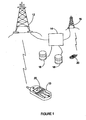
- a mobile telephone 10 is in radio communication with a mobile telephone network base station 12 which is, in turn, connected via the terrestrial telephone network 14 to other base stations 16 and one or more servers 18.
- the terrestrial telephone network 14 can comprise land lines, high band width cables, and microwave and satellite links.
- the terrestrial telephone network 14 allows connection to other mobile telephones 20, fixed telephones and fixed computer terminals.
- a mobile telephone 10 can access a server 18 for data, information and other resources.
- a server 18 can provide a mobile telephone 10 with images to display.
- the base stations 12 can be on any style or generation of mobile telephone system, provided it has the ability to display an image.
- the mobile telephone 10 comprises a screen 22 capable of displaying images.
- the mobile telephone 10 is the preferred method of trans mission and reception in the chosen embodiment of the present invention. It is to be appreciated that the present invention encompasses any means for sending and receiving images and is not limited to mobile telephones 10, 20 or a mobile telephone network 12, 14, 16.
- the present invention equally allows personal digital assistants (PDA),televisions, computers and computer terminals to receive images through any other system including, for example, a wire or cable system or by satellite.
- PDA personal digital assistants
- the example of a mobile telephone is merely given as an apt application for the present invention.
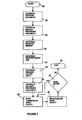
- Figure 2 a flowchart showing the general activity of a transmitting device such as the server 18 of Figure 1, when functioning within the present invention.
- the server 18 is charged with providing a frame of a moving image to a mobile telephone 10.
- the server 18 might, equally well, have been charged with sending a static image, a constructed scene, or any other pictorial representation. This example is merely chosen as being a more usual and demanding application for the system.
- a first operation 26 has the server 18 determine the network bandwidth.
- the network bandwidth may be larger or smaller.
- the network bandwidth will be allocated as a reasonably high fixed figure, which is only reduced, on each base station, when the number of subscribers exceeds a predetermined limit on each base station.
- Different base stations can have different band widths.
- the present invention permits that not only the radio link from each base station, but also the land line connection to and from a base station, may also be subjected to bandwidth limitation when many subscribers are present.
- the bandwidth can be measured or, more usually, will arise as a result of the operating parameters of the system being set, and be a value of which the server 18 will simply be informed.
- a second operation 28 determines the sending processor availability. That is to say, if a frame of a moving image of particular size or complexity is to be sent, a certain, minimum amount of processor activity will be required at the server. Now, the server is simultaneously servicing many other base stations, and has, in addition, to perform many other tasks. It may be that the processor in the server 18 is not actually capable of handling that frame transmission activity given all of the other tasks which it is required to do. It is therefore essential to know, in advance, whether or not the processor in the server 18 is instantly capable of performing the task, and, if not, just what task it is capable of performing. The second operation 28 discovers what server processor resources can be allocated for the transmission task.
- a third operation 30 determines the receiving device memory. It may be that the mobile telephone 10 which, in this example, is acting as a receiving device, has a particularly large memory footprint. In this case, it will be capable of receiving complex and elaborate images. On the other hand, it is possible that the receiving mobile telephone 10 has only a very small memory footprint. In this case, the receiving mobile telephone 10 will be capable only of receiving a low resolution image. There is no point in sending a huge file to a small memory. The memory will simply be unable to hold the file. Equally, it would be a pity to lose the chance to display a truly detailed image by not sending a large file to a memory which is quite capable of containing that file.
- the size of the memory footprint in a receiving device can be determined not only by the amount of storage present, but can be reduced by memory usage for other tasks.
- a fourth operation 32 determines the receiver display size.
- the receiving mobile telephone 10 might have a physically large screen with a high pixel density.
- the receiving mobile telephone 10 might have a display of small size and of a coarse pixel density. There is no point in attempting to display an image of a high pixel density on a coarse resolution screen.
- the pixels have to match.
- Screens 22 can have different numbers of rows and columns of pixels.
- the transmitted frame has to be compatible with the pixels on the screen 22 of the receiving device 10.
- a fifth operation 34 determines the receiving mobile telephone 10's depth of colour.
- the display 22 may merely be black and white, in which case there will be, transmitted, for each pixel, a brightness number consisting of a predetermined number of binary digits (bits) which determine the grey scale.
- bits binary digits
- a four binary digit number allows for a grey scale with 16 levels of lightness.
- An eight binary digit number allows for a grey scale with 256 levels.
- Grey scales are known which use twelve, twenty-four, thirty six and even larger numbers of binary digits.
- the display 22 may be a full colour display 22.
- each pixel has a hue (the exact shade of its colour) and a saturation (the proportion of the coloured light which is not white).
- hue and saturation the proportion of the coloured light which is not white.
- it is general to approximate the hue and saturation of a pixel using different intensities of three colours.
- the pixel itself comprises three visible points which make up a full colour pixel, the three points being so close together that, at a viewing distance, they confuse the eye into a sense of unity.
- the colours are the radiative primary colours of red, blue and green.
- the colours are the radiative primary colours of red, blue and green.
- Full red, full green and full blue is full intensity white.
- Half red, half blue and half green is half intensity white (grey).
- Full red is one hundred percent saturated red.
- Full red, one third green and one third blue are fifty percent saturated red (pillar box red). All manner of hues and saturations are possible in between.
- each of the red, green and blue lights is represented by a proportion of its full intensity. That proportion is represented by a number which is given by a string of binary digits. The more binary digits present in the string, the finer the resolution of the intensity of each light. In some, low resolution, systems, there may be only 16 levels of intensity for each primary colour. In the most sensitive current systems, it may take 42 binary digits (bits) to represent the intensity of each primary colour.
- a sixth operation 36 determines the receiving mobile telephone's 10 processor availability.
- the data processor in the receiving mobile telephone 10 may be wide, fast and hardly used.
- the processor in the receiving mobile telephone 10 may be narrow, slow and hard pressed. The state of the processor in the receiving mobile telephone 10 largely determines what it will be possible to ask the receiving mobile telephone 10 to do to an image signal before it is displayed.
- An eighth operation 40 then sends an image the selected image quality.
- the first test 42 terminates the operation in exit 44 if no further matter is to be sent, or passes control back to the seventh operation 38 if more images or frames are to be sent from the server 18 to the receiving mobile telephone 10.
- the various circuit and receiver parameters determined in the first operation 26 to the sixth operation 36 can be determined by consulting a pre-loaded memory containing facts about particular types of mobile telephone 10, can be determined by actual measurements, or can be learned by receiving instructional updates from the base station 12 as the available bandwidth, for example, is racked up and down.
- the mobile telephone network 14 would know, all of the time, the nature of the mobile telephone 10 which is connected to a particular subscriber slot.
- Figure 3 showing a flowchart, roughly corresponding to the seventh operation 38 of Figure 2, showing how the server 18 can select the image quality to be sent to the receiving mobile telephone 10.
- a second test 48 looks to see if a copy of the frame of the selected image quality is pre-stored. If a frame of the selected image quality is pre-stored, a ninth operation 50 has the server 18 retrieve the required frame from an image store 52.
- the required image is selectable one from among a plurality of stored images of differing qualities 54A, 54B, 54C, 54D, 54E.
- Each of the stored image qualities, 54A - 54E has a differing quality from all of the others.
- One image 54B for example, may have a smaller number of pixels.
- Another, 54C may have a lesser depth of colour (number of bits defining hue and saturation). All of the stored images 54A - 54E represent a different image frame, each suitable for a particular style of receiving mobile telephone 10.
- a third test 56 checks to see if the selected image is capable of being derived by image processing. If it is not, a tenth operation 58 selects another image option and returns control to the second test 48.
- an eleventh operation 60 provides the on-board processor 62 with all of the instructions necessary to generate a signal of the required image quality. Thereafter, the eleventh operation 60 passes control to a twelfth operation 64 which receives the results back from the processor 62. A thirteenth operation 66 then sends the image to the receiving mobile telephone 10 and terminates in exit 68. The ninth operation 50 also transfers control to the thirteenth operation 66.
- the activities of the processor 62 under instruction from the eleventh operation 60 can be many and varied. For example, if a receiving microprocessor 10 does not have a particularly large depth of colour, the processor 62 can be instructed to reduce the number of binary digits used to define the colour of a pixel in the displayed image. If the display 22 on the receiving mobile telephone 10 is of a particularly low resolution, the processor 62 can be instructed to send only every other pixel, or to merge pixels to reduce the number by half. Other numbers are also possible.
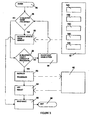
- Figure 4 showing a flowchart illustrating how, having accommodated a particular network and receiving radio telephone 10, a transmitting server, according to the present invention, is capable, automatically, to adapt to varying bandwidth and other conditions found on the network.
- a fourteenth operation 72 elicits the maximum values for each of the parameters of the frame of the moving image. That is to say, the server 18 learns, for example, the maximum number of horizontal pixels, the maximum number of vertical pixels, the maximum number of bits defining the colour of a pixel, the maximum frame rate, etc. In other words, the fourteenth operation 72 calls forth the parameters which would define highest possible quality resolution of the image. The fifteenth operation 74 then compares the maximum parameter values which can be attained by the image with the material available to the server 18 with the values of the image parameters possessed by the receiver. The fifteenth operation 74 thus calls forth the best resolution which can be obtained on the receiving mobile telephone 10.
- a sixteenth operation 76 then equalises the values of the image parameters of the fourteenth operation 72 with the values of the receiver parameters of the fifteenth operation 74. This obtains, or gets at least a close approximation to, the selected image quality of the operation shown in Figure 3. All things being equal, the result at the end of the sixteenth operation 76 would be the sent image from the thirteenth operation 66 of Figure 3. However, it is essential to take account of the variable bandwidth available.
- a fourth test 78 checks to see if the resulting signal is compatible with the channel down which it is to be sent. If it is, that is to say, the channel does not have restricted bandwidth, or a lesser bandwidth that would normally be capable of being handled by the receiving mobile telephone 10, a seventeenth operation 80 transmits the frame and terminates the operation through exit 82. If, however, the fourth test 78 detects that the signal it is proposed to transmit is not compatible with the instantaneous condition of the channel, a fifth test 84 looks to see if the proposed signal carries an excessive amount of colour.
- the human eye is sensitive to gross changes of hue, but is quite insensitive to quite gross changes in saturation, of a colour.
- the fifth test 84 detects, say, that the signal proposes to use a large number of pigment-defining data bits (for example, 42 or 24) when a perfectly reasonable result would be obtained with a lesser number of pigment-defining binary digits, for example, 12, an eighteenth operation 86 reduces the number of colour-defining binary digits and returns control back to the fifth test 84. If the colour is still excessive and the signal is still not compatible with the channel, further reduction of the number of colour-defining binary digits is undertaken until either the colour is no longer excessive and the signal is compatible with the channel, or the colour is no longer excessive but the signal is still not compatible with the width of the channel.
- Control passes to a sixth test 88 where the proposed transmitted signal is, once again, examined to see if it is consistent with the bandwidth and other restrictions on the channel.
- the human eye's awareness of resolution of a screen image varies widely. Very young children have acute but unaware resolution. As age progresses, up to the mid or late twenties, vision is both acute and practised. Beyond the thirties, vision becomes less acute. Ocular acuteness is measured, in the individual, as the minimum solid angle which can be individually resolved. From the screen's 22 point of view, display acuteness the size of the smallest item which can be individually perceived by a viewer at the minimum viewing distance. There is a lot of leeway in the viewing parameters for the screen 22. The screen 22 is seldom viewed from as short a distance as the minimum viewing distance. The minimum viewing distance is generally set for a shortest focal distance which is less than half of the mean shortest focal distance for the population. All this means that, all things being equal, it would probably be possible to reduce the acuteness of the image by a factor of at least four or eight before half of the population noticed any degradation whatsoever.
- the invention can include any means whereby the acuteness of the displayed image can be reduced.
- the nineteenth operation 90 returns control to the sixth test 88.
- Control only passes to a seventh test 92 whenever either the signal, which it is proposed to transmit, is compatible with the channel or the signal is not compatible with the channel but has reached a lower limit of pixel density (displayed acuteness) beyond which it is not advisable to go.
- Control passes to a seventh test 92 which, yet again, looks to see if the proposed signal for transmission is compatible with the bandwidth and other restrictions on the channel. If it is not, as a final measure, in this example, a twentieth operation 94 elects to reduce the frame repetition rate. This can only be taken so far.
- the human eye is sensitive to flicker, in general, for images presented below ten or twelve per second. Certain individuals can detect flicker at image presentation rates up to 25 per second. Very few human individuals detect flicker at presentation rates above this. Reduction in frame repetition rate can be made towards the rates indicated.
- a low frame rate test 93 checks to see if the frame rate has reached a lower boundary below which it is not allowed to fall.
- the seventh test 92 passes control to the seventeenth operation 80 which transmits the frame.
- Figure 4 While the action of Figure 4 has been described in terms of testing signals to see if they fit through a band width of the channel, it is to be appreciated that the same result, within the invention, can be achieved by simply calculating what changes need to be made to the ideal signal and applying those changes prior to transmission. The explanation of Figure 4 is given in the manner that it is in order to facilitate understanding.
- the various measures, taken to reduce the bandwidth of the signal, while shown as being applied in separate epochs in this example, can be applied together.
- the colour can be reduced, together with a little loss of resolution, and a little further loss of colour, and some, all or none of each possible type of bandwidth reduction measure, applied in turn, until a signal, sufficiently low in bandwidth to be transmissible via the channel, is obtained.
- the same result can be achieved, within the invention, by means of calculation.
- Figure 4 the action of Figure 4 is to create an image consistent with the best quality that the receiving mobile telephone 10 is capable of receiving or of the best quality that the channel, unrestricted, can carry. This is the "ideal" frame or image. In a perfect world, this is the frame or image which would be sent and received.
- the bandwidth available to transmit the frame or image is not necessarily wide enough to transmit the ideal frame or image. Up to a certain number of subscribers on a base station, there may be no problem, each subscriber being allocated a fixed, adequate amount. Beyond a certain number of subscribers on a base station, the bandwidth allocated to each subscriber can be reduced.
- the adopted measures may be set up frame by frame, or block by block, or may be set up and maintained for a predetermined time to allow for changes in base station bandwidth as with varying subscriber numbers, or may be set up and maintained for a session.
- the measures can be triggered to change as the bandwidth of the system alters.
- Certain subscribers or mobile telephone 10 types can have a higher category of access, whereby they enjoy no cutoff and/or higher bandwidth while lower category subscribers risk having their signal frozen or cut off as bandwidth reduces.
Landscapes
- Engineering & Computer Science (AREA)
- Multimedia (AREA)
- Signal Processing (AREA)
- Mobile Radio Communication Systems (AREA)
- Apparatus For Radiation Diagnosis (AREA)
- Information Transfer Between Computers (AREA)
- Two-Way Televisions, Distribution Of Moving Picture Or The Like (AREA)
- Telephonic Communication Services (AREA)
- Auxiliary Devices For And Details Of Packaging Control (AREA)
- Liquid Crystal Substances (AREA)
Claims (20)
- Einrichtung (18) zum Senden eines Bildsignals über ein Kommunikationsnetzwerk (14) an ein Empfangsgerät (10) mit der Einrichtung unbekannten Datenhandhabungs-Eigenschaften, wobei die Einrichtung umfasst:- Lernmittel zum Lernen (30, 36) des aktuellen Status der Datenhandhabungseigenschaften des Empfangsgeräts, wobei die über das Empfangsgerät (10) gelernten Datenhandhabungseigenschaften die aktuelle dem Empfänger zur Verfügung stehende Speicherkapazität und/oder die aktuelle Empfänger-Prozessorverfügbarkeit umfassen,- Anwendungsmittel zum Anwenden der gelernten Datenhandhabungseigenschaften, um eine kompatible Version (54A-E) des Bildsignals auszuwählen (38), die oder der mit den Datenhandhabungs-Eigenschaften kompatibel ist,- Erzeugungsmittel zum Erzeugen der kompatiblen Version (54A-E) des Bildsignals, und- Sendemittel zum Senden (40) der kompatiblen Version (54A-E) des Bildsignals an das Empfangsgerät (10) über das Kommunikationsnetzwerk (14).
- Einrichtung nach Anspruch 1,
wobei das Lernmittel ferner dafür ausgelegt ist, konstante Ressourceneigenschaften des Empfangsgeräts (10) zu bestimmen (32, 34). - Einrichtung nach Anspruch 2,
wobei die über das Empfangsgerät (10) gelernten konstanten Ressourceneigenschaften die Empfänger-Displaygröße, Empfänger-Farbtiefe und/oder Empfänger-Displayauflösung umfassen. - Einrichtung nach einem der vorhergehend Ansprüche,
wobei das Kommunikationsnetzwerk (14) ein Shared-Communications-Netzwerk mit zeitvariablen Bandbreiteneigenschaften ist und die Einrichtung (18) ferner umfasst:- Sendekapazitätsbestimmungsmittel zum Bestimmen (28) der aktuellen Sendekapazitätseigenschaft der Einrichtung (18), und wobei- das Anwendungsmittel dafür ausgelegt ist, die bestimmte Sendekapazitätseigenschaft bei der Auswahl der kompatiblen Version des Bildsignals anzuwenden. - Einrichtung nach einem der vorhergehenden Ansprüche,
wobei das Kommunikationsnetzwerk ein Shared-Communications-Netzwerk mit zeitvariablen Bandbreiteneigenschaften ist und die Einrichtung ferner umfasst:- Bestimmungsmittel zum Bestimmen der aktuellen Bandbreiteneigenschaft des Kommunikationsnetzwerks, das die Einrichtung und das Empfangsgerät miteinander verbindet, und wobei- das Anwendungsmittel dafür ausgelegt ist, die bestimmte Bandbreiteneigenschaft bei der Auswahl der kompatiblen Version des Bildsignals anzuwenden. - Einrichtung nach einem der Ansprüche 1 bis 4,
wobei das Kommunikationsnetzwerk ein Shared-Communications-Netzwerk mit zeitvariablen Bandbreiteneigenschaften ist und die Einrichtung ferner umfasst:- Bestimmungsmittel zum Bestimmen der aktuellen Bandbreiteneigenschaft des Kommunikationsnetzwerks, das die Einrichtung und das Empfangsgerät miteinander verbindet, und- Einstellmittel zum Einstellen einer Bildeigenschaft der gewählten kompatiblen Version des Bildsignals, um die bestimmte aktuelle Bandbreiteneigenschaft zu berücksichtigen. - Einrichtung nach Anspruch 6,
wobei das Einstellmittel dafür ausgelegt ist, die Farbtiefe, Auflösung und/oder Frame-Rate der gewählten kompatiblen Version des Bildsignals einzustellen. - Einrichtung nach Anspruch 6 oder 7,
wobei das Bestimmungsmittel dafür ausgelegt ist, Befehlsaktualisierungen vom Shared-Communications-Netzwerk im Hinblick auf die verfügbare Bandbreite für eine Verbindung von der Einrichtung zum Empfangsgerät zu empfangen. - Einrichtung nach einem der vorhergehenden Ansprüche,
wobei die Einrichtung einen Mobil-Telekommunikationsserver umfasst, der dafür ausgelegt ist, mit einem Mobil-Telekommunikationsnetzwerk zu arbeiten, um ein Bildsignal an ein Mobil-Telekommunikationsgerät zu senden. - Einrichtung nach einem der Ansprüche 1 bis 8,
wobei die Einrichtung dafür ausgelegt ist, ein Bildsignal an ein Computergerät oder ein Fernsehgerät zu senden. - Verfahren zum Senden eines Bildsignals über ein Kommunikationsnetzwerk von einer Sendeeinrichtung an ein Empfangsgerät mit der Sendeeinrichtung unbekannten Datenhandhabungseigenschaften, wobei das Verfahren umfasst:- Lernen des aktuellen Status der Datenhandhabungseigenschaften des Empfangsgeräts, wobei der Lernschritt das Lernen des aktuellen Status der aktuellen dem Empfänger zur Verfügung stehenden Speicherkapazität und/oder der aktuellen Empfänger-Prozessorverfügbarkeit des Empfangsgeräts umfasst,- Anwenden der gelernten Datenhandhabungseigenschaften, um eine kompatible Version des Bildsignals auszuwählen, die mit den Eigenschaften kompatibel ist,- Erzeugen der kompatiblen Version des Bildsignals, und- Senden der kompatiblen Version des Bildsignals an das Empfangsgerät über das Kommunikationsnetzwerk.
- Verfahren nach Anspruch 11,
wobei der Lernschritt ferner das Bestimmen konstanter Ressourceneigenschaften des Empfangsgeräts umfasst. - Verfahren nach Anspruch 12,
wobei die über das Empfangsgerät gelernten konstanten Ressourceneigenschaften die Empfänger-Displaygröße, Empfänger-Farbtiefe und/oder Empfänger-Displayauflösung umfassen. - Verfahren nach einem der Ansprüche 11 bis 13,
wobei das Kommunikationsnetzwerk ein Shared-Communications-Netzwerk mit zeitvariablen Bandbreiteneigenschaften ist und das Verfahren ferner umfasst:- Bestimmen der aktuellen Sendekapazitätseigenschaft der Einrichtung, und wobei- der Anwendungsschritt das Anwenden der bestimmten Sendekapazitätseigenschaft bei der Auswahl der kompatiblen Version des Bildsignals umfasst. - Verfahren nach einem der Ansprüche 11 bis 14,
wobei das Kommunikationsnetzwerk ein Shared-Communications-Netzwerk mit zeitvariablen Bandbreiteneigenschaften ist und das Verfahren ferner umfasst:- Bestimmen der aktuellen Bandbreiteneigenschaft des Kommunikationsnetzwerks, das die Einrichtung und das Empfangsgerät miteinander verbindet, und wobei- der Anwendungsschritt das Anwenden der bestimmten Bandbreiteneigenschaft bei der Auswahl der kompatiblen Version des Bildsignals umfasst. - Verfahren nach einem der Ansprüche 11 bis 14,
wobei das Kommunikationsnetzwerk ein Shared-Communications-Netzwerk mit zeitvariablen Bandbreiteneigenschaften ist und das Verfahren ferner umfasst:- Bestimmen der aktuellen Bandbreiteneigenschaft des Kommunikationsnetzwerks, das die Einrichtung und das Empfangsgerät miteinander verbindet, und- Einstellen einer Bildeigenschaft der gewählten kompatiblen Version des Bildsignals, um die bestimmte aktuelle Bandbreiteneigenschaft zu berücksichtigen. - Verfahren nach Anspruch 16,
wobei der Einstellschritt das Einstellen der Farbtiefe, Auflösung und/oder Frame-Rate der gewählten kompatiblen Version des Bildsignals umfasst. - Verfahren nach Anspruch 16 oder 17,
wobei der Bestimmungsschritt das Empfangen von Befehlsaktualisierungen vom Shared-Communications-Netzwerk im Hinblick auf die verfügbare Bandbreite für eine Verbindung von der Einrichtung zum Empfangsgerät umfasst. - Verfahren nach einem der Ansprüche 11 bis 18,
wobei der Sendeschritt das Senden der gewählten Version des Bildsignals von einem Mobil-Telekommunikationsserver über ein Mobil-Telekommunikationsnetzwerk an ein Mobil-Telekommunikationsgerät umfasst. - Verfahren nach einem der Ansprüche 11 bis 18,
wobei der Sendeschritt das Senden der gewählten Version des Bildsignals an ein Computergerät oder ein Fernsehgerät umfasst.
Applications Claiming Priority (3)
| Application Number | Priority Date | Filing Date | Title |
|---|---|---|---|
| GB0202460 | 2002-02-02 | ||
| GBGB0202460.2A GB0202460D0 (en) | 2002-02-02 | 2002-02-02 | Resource tailoring |
| PCT/GB2003/000407 WO2003067870A1 (en) | 2002-02-02 | 2003-01-31 | Apparatus and method for sending image data |
Related Child Applications (1)
| Application Number | Title | Priority Date | Filing Date |
|---|---|---|---|
| EP06023427 Division | 2006-11-10 |
Publications (2)
| Publication Number | Publication Date |
|---|---|
| EP1474914A1 EP1474914A1 (de) | 2004-11-10 |
| EP1474914B1 true EP1474914B1 (de) | 2007-06-13 |
Family
ID=9930293
Family Applications (1)
| Application Number | Title | Priority Date | Filing Date |
|---|---|---|---|
| EP03701614A Expired - Lifetime EP1474914B1 (de) | 2002-02-02 | 2003-01-31 | Einrichtung und verfahren zum versenden von bilddaten |
Country Status (11)
| Country | Link |
|---|---|
| US (1) | US20050164679A1 (de) |
| EP (1) | EP1474914B1 (de) |
| JP (2) | JP2005517258A (de) |
| KR (1) | KR100624759B1 (de) |
| CN (1) | CN1625892A (de) |
| AT (1) | ATE364964T1 (de) |
| AU (1) | AU2003202703A1 (de) |
| CA (1) | CA2474889C (de) |
| DE (1) | DE60314373T2 (de) |
| GB (2) | GB0202460D0 (de) |
| WO (1) | WO2003067870A1 (de) |
Families Citing this family (19)
| Publication number | Priority date | Publication date | Assignee | Title |
|---|---|---|---|---|
| KR100606715B1 (ko) * | 2004-04-20 | 2006-08-01 | 엘지전자 주식회사 | 이동통신 단말기의 액정표시장치 인터페이싱 장치 및인터페이싱 방법 |
| JP3856810B2 (ja) * | 2005-04-06 | 2006-12-13 | シャープ株式会社 | コンテンツのダウンロード方法および再生方法 |
| WO2007053050A1 (en) * | 2005-11-02 | 2007-05-10 | Informap Worldwide Limited | Method and system for transmitting an information item and for paying thereof with the aid of telecommunication channels |
| WO2009092142A1 (en) * | 2008-01-24 | 2009-07-30 | Global Digital Networks Pty Lt | A system and method for providing content to mobile devices |
| CN101668107B (zh) * | 2008-09-04 | 2011-05-11 | 中国移动通信集团公司 | 色深变换、传输色深变换后图像的方法、系统和装置 |
| CN101742136B (zh) * | 2008-11-18 | 2012-05-23 | 中兴通讯股份有限公司 | 一种基于多媒体终端的自适应显示方法 |
| US8332606B2 (en) * | 2009-06-15 | 2012-12-11 | Boldyrev Sergey | System and method for distributed persistent computing platform |
| US9082203B2 (en) * | 2009-12-10 | 2015-07-14 | Harris Corporation | Image processing system for image resizing based upon operational feedback parameters and related methods |
| CN102137248B (zh) * | 2010-01-21 | 2015-05-20 | 腾讯科技(深圳)有限公司 | 视频分辨率的切换方法及装置、终端及切换系统 |
| CN101848382A (zh) * | 2010-05-31 | 2010-09-29 | 深圳市景阳科技股份有限公司 | 一种视频流图像分辨率和码流的调整方法及系统 |
| US8947506B2 (en) * | 2010-08-27 | 2015-02-03 | Broadcom Corporation | Method and system for utilizing depth information for generating 3D maps |
| TWI473498B (zh) * | 2011-01-20 | 2015-02-11 | Tencent Tech Shenzhen Co Ltd | A video resolution switching method and device, a terminal and a switching system |
| JP5864876B2 (ja) * | 2011-03-25 | 2016-02-17 | オリンパス株式会社 | 画像処理装置及び画像処理方法 |
| US8914004B2 (en) * | 2011-04-19 | 2014-12-16 | Samsung Electronics Co., Ltd | Apparatus and method of selecting resource of application in wireless terminal |
| CN103765913B (zh) * | 2011-08-25 | 2018-01-12 | Lg电子株式会社 | 移动终端、安装在车辆上的图像显示设备及使用其的数据处理方法 |
| CN102364963A (zh) * | 2011-11-08 | 2012-02-29 | 叶尔肯.拜山 | 一种针对不同访问终端的互联网视频数据提供方法 |
| US8918453B2 (en) | 2012-01-03 | 2014-12-23 | Qualcomm Incorporated | Managing data representation for user equipments in a communication session |
| KR101404203B1 (ko) * | 2012-11-06 | 2014-06-05 | 삼성에스디에스 주식회사 | 통합 ims 네트워크 환경에 따라 영상통화 해상도를 자동으로 변경하는 단말 및 그 방법 |
| KR101641305B1 (ko) * | 2015-02-17 | 2016-07-20 | 주식회사 포워드벤처스 | 이미지 디스플레이 시스템 및 이미지 디스플레이 방법 |
Family Cites Families (23)
| Publication number | Priority date | Publication date | Assignee | Title |
|---|---|---|---|---|
| JPH09233467A (ja) * | 1996-02-21 | 1997-09-05 | Fujitsu Ltd | 画像データ通信装置及び画像データ通信システムにおける通信データ量調整方法 |
| JPH1146361A (ja) * | 1997-07-25 | 1999-02-16 | Mitsubishi Electric Corp | 画像圧縮方法、画像圧縮装置、デジタルカメラ、携帯情報端末、画像伸張装置、並びに、画像伝送システム |
| JPH11122398A (ja) * | 1997-10-09 | 1999-04-30 | Sony Corp | 携帯通信端末、画像表示制御方法、画像情報伝送装置および方法、並びに伝送媒体 |
| JPH11191764A (ja) * | 1997-12-25 | 1999-07-13 | Kawasaki Steel Systems R & D Corp | ファイル転送制御方法、装置、及び、その記録媒体 |
| JP3967443B2 (ja) * | 1998-01-22 | 2007-08-29 | 富士通株式会社 | 画像データ送受信システムおよびその送信側装置およびその受信側装置並びにそのプログラムを記憶した記憶媒体 |
| JP4328422B2 (ja) * | 1999-01-29 | 2009-09-09 | インターナショナル・ビジネス・マシーンズ・コーポレーション | 交換符号化プロキシのための方法およびシステム |
| JP3170491B2 (ja) * | 1999-03-29 | 2001-05-28 | 松下電送システム株式会社 | 画像通信装置及びサーバ装置並びに能力交換方法 |
| US6684087B1 (en) * | 1999-05-07 | 2004-01-27 | Openwave Systems Inc. | Method and apparatus for displaying images on mobile devices |
| US7069573B1 (en) * | 1999-12-09 | 2006-06-27 | Vidiator Enterprises Inc. | Personal broadcasting and viewing method of audio and video data using a wide area network |
| JP2001177561A (ja) * | 1999-12-20 | 2001-06-29 | Sharp Corp | 通信システム |
| JP3475142B2 (ja) * | 2000-03-01 | 2003-12-08 | 三菱電機株式会社 | 地図データ送信装置、地図データ送信方法、及び、地図データ送信方法をコンピュータに実行させるためのプログラムを記録したコンピュータ読み取り可能な記録媒体 |
| US6353448B1 (en) * | 2000-05-16 | 2002-03-05 | Ez Online Network, Inc. | Graphic user interface display method |
| AU2001248773A1 (en) * | 2000-05-26 | 2001-12-03 | Craftec Co., Ltd. | Image processing apparatus, image processing method, image processing system andinformation recorded medium |
| JP3667197B2 (ja) * | 2000-06-05 | 2005-07-06 | 富士写真フイルム株式会社 | 画像登録システム |
| JP3767330B2 (ja) * | 2000-06-19 | 2006-04-19 | Kddi株式会社 | 帯域共有制御システム |
| US8126960B2 (en) * | 2000-07-28 | 2012-02-28 | Silver State Intellectual Technologies, Inc. | Technique for effective organization and communication of information |
| TW564372B (en) * | 2000-09-22 | 2003-12-01 | Seiko Epson Corp | Image processing method |
| US6931661B2 (en) * | 2000-10-19 | 2005-08-16 | Motorola, Inc. | Dynamic image provisioning |
| US6915327B1 (en) * | 2000-10-30 | 2005-07-05 | Raja Singh Tuli | Portable high speed communication device peripheral connectivity |
| FR2817429B1 (fr) * | 2000-11-29 | 2003-01-31 | Eastman Kodak Co | Procede pour envoyer des images sur un terminal a faible capacite d'affichage |
| US7206806B2 (en) * | 2001-05-30 | 2007-04-17 | Pineau Richard A | Method and system for remote utilizing a mobile device to share data objects |
| US20030065922A1 (en) * | 2001-09-28 | 2003-04-03 | Fredlund John R. | System and method of authenticating a digitally captured image |
| US20030120478A1 (en) * | 2001-12-21 | 2003-06-26 | Robert Palmquist | Network-based translation system |
-
2002
- 2002-02-02 GB GBGB0202460.2A patent/GB0202460D0/en not_active Ceased
-
2003
- 2003-01-31 US US10/503,344 patent/US20050164679A1/en not_active Abandoned
- 2003-01-31 GB GB0418010A patent/GB2401001C/en not_active Expired - Fee Related
- 2003-01-31 JP JP2003567081A patent/JP2005517258A/ja not_active Abandoned
- 2003-01-31 CN CNA038031612A patent/CN1625892A/zh active Pending
- 2003-01-31 EP EP03701614A patent/EP1474914B1/de not_active Expired - Lifetime
- 2003-01-31 AU AU2003202703A patent/AU2003202703A1/en not_active Abandoned
- 2003-01-31 CA CA002474889A patent/CA2474889C/en not_active Expired - Fee Related
- 2003-01-31 DE DE60314373T patent/DE60314373T2/de not_active Expired - Lifetime
- 2003-01-31 KR KR1020047011953A patent/KR100624759B1/ko not_active Expired - Fee Related
- 2003-01-31 WO PCT/GB2003/000407 patent/WO2003067870A1/en not_active Ceased
- 2003-01-31 AT AT03701614T patent/ATE364964T1/de not_active IP Right Cessation
-
2009
- 2009-08-07 JP JP2009184904A patent/JP2010040050A/ja active Pending
Non-Patent Citations (1)
| Title |
|---|
| None * |
Also Published As
| Publication number | Publication date |
|---|---|
| JP2010040050A (ja) | 2010-02-18 |
| US20050164679A1 (en) | 2005-07-28 |
| GB2401001A (en) | 2004-10-27 |
| GB0202460D0 (en) | 2002-03-20 |
| DE60314373D1 (de) | 2007-07-26 |
| JP2005517258A (ja) | 2005-06-09 |
| GB0418010D0 (en) | 2004-09-15 |
| AU2003202703A1 (en) | 2003-09-02 |
| DE60314373T2 (de) | 2008-02-14 |
| KR20040089139A (ko) | 2004-10-20 |
| EP1474914A1 (de) | 2004-11-10 |
| WO2003067870A1 (en) | 2003-08-14 |
| CN1625892A (zh) | 2005-06-08 |
| GB2401001C (en) | 2011-06-20 |
| KR100624759B1 (ko) | 2006-09-19 |
| CA2474889A1 (en) | 2003-08-14 |
| ATE364964T1 (de) | 2007-07-15 |
| CA2474889C (en) | 2008-04-29 |
| GB2401001B (en) | 2005-11-16 |
Similar Documents
| Publication | Publication Date | Title |
|---|---|---|
| EP1474914B1 (de) | Einrichtung und verfahren zum versenden von bilddaten | |
| US7426316B2 (en) | Method and apparatus for image improvement | |
| US7468813B1 (en) | Dynamic selection of rendering intent for color proofing transforms | |
| US9049487B2 (en) | Communication method and system for providing content to a communication device according to a user preference | |
| US7408678B1 (en) | Composite rendering intent for color proofing applications | |
| CN112801858B (zh) | 颜色转换方法、装置、设备及存储介质 | |
| EP0596698B1 (de) | Kommunikationsendgerät und Kommunikationsverfahren | |
| US20050102376A1 (en) | Image-correction processing apparatus and program | |
| US7068857B1 (en) | Method and device for presenting digital images on a low-definition screen | |
| GB2335326A (en) | Image processing device and method, image transmission/reception system and method, and providing medium | |
| US20220327982A1 (en) | Metameric stabilization via custom viewer color matching function | |
| EP2272237B1 (de) | Verfahren zur übertragung von daten in einem kommunikationssystem | |
| EP0725533A2 (de) | Verarbeitung von halbtongerasterten Farbbildern | |
| Laird et al. | Development and evaluation of gamut extension algorithms | |
| Park et al. | Image quality equivalence between peak luminance and chromaticity gamut | |
| US11361413B2 (en) | Image transformation system and method | |
| EP0842496B1 (de) | Verfahren und apparat zum maximierung der visuellen qualität eines in elektrischer form präsentierten bildes | |
| CA2329426A1 (en) | Method and apparatus of supporting a video protocol in a network environment | |
| JP6628829B2 (ja) | 無線映像接続装置 | |
| US6980325B1 (en) | Automated color property adaptation in computer output devices | |
| MacDonald et al. | Assessing image quality | |
| KR102022082B1 (ko) | 무선영상 접속장치 | |
| EP4525428A1 (de) | Farbumsetzungsvorrichtung, farbumsetzungstabellenerzeugungsvorrichtung, programm und verfahren | |
| Motomura | Categorical color mapping for gamut mapping: II. Using block average image | |
| US20030053120A1 (en) | Image transfer method, image server system, and program therefor |
Legal Events
| Date | Code | Title | Description |
|---|---|---|---|
| PUAI | Public reference made under article 153(3) epc to a published international application that has entered the european phase |
Free format text: ORIGINAL CODE: 0009012 |
|
| 17P | Request for examination filed |
Effective date: 20040902 |
|
| AK | Designated contracting states |
Kind code of ref document: A1 Designated state(s): AT BE BG CH CY CZ DE DK EE ES FI FR GB GR HU IE IT LI LU MC NL PT SE SI SK TR |
|
| AX | Request for extension of the european patent |
Extension state: AL LT LV MK RO |
|
| 17Q | First examination report despatched |
Effective date: 20050307 |
|
| REG | Reference to a national code |
Ref country code: HK Ref legal event code: DE Ref document number: 1071005 Country of ref document: HK |
|
| GRAP | Despatch of communication of intention to grant a patent |
Free format text: ORIGINAL CODE: EPIDOSNIGR1 |
|
| GRAS | Grant fee paid |
Free format text: ORIGINAL CODE: EPIDOSNIGR3 |
|
| GRAA | (expected) grant |
Free format text: ORIGINAL CODE: 0009210 |
|
| AK | Designated contracting states |
Kind code of ref document: B1 Designated state(s): AT BE BG CH CY CZ DE DK EE ES FI FR GB GR HU IE IT LI LU MC NL PT SE SI SK TR |
|
| PG25 | Lapsed in a contracting state [announced via postgrant information from national office to epo] |
Ref country code: CH Free format text: LAPSE BECAUSE OF FAILURE TO SUBMIT A TRANSLATION OF THE DESCRIPTION OR TO PAY THE FEE WITHIN THE PRESCRIBED TIME-LIMIT Effective date: 20070613 Ref country code: LI Free format text: LAPSE BECAUSE OF FAILURE TO SUBMIT A TRANSLATION OF THE DESCRIPTION OR TO PAY THE FEE WITHIN THE PRESCRIBED TIME-LIMIT Effective date: 20070613 |
|
| REG | Reference to a national code |
Ref country code: GB Ref legal event code: FG4D |
|
| REG | Reference to a national code |
Ref country code: CH Ref legal event code: EP |
|
| REG | Reference to a national code |
Ref country code: IE Ref legal event code: FG4D |
|
| REF | Corresponds to: |
Ref document number: 60314373 Country of ref document: DE Date of ref document: 20070726 Kind code of ref document: P |
|
| PG25 | Lapsed in a contracting state [announced via postgrant information from national office to epo] |
Ref country code: SE Free format text: LAPSE BECAUSE OF FAILURE TO SUBMIT A TRANSLATION OF THE DESCRIPTION OR TO PAY THE FEE WITHIN THE PRESCRIBED TIME-LIMIT Effective date: 20070913 |
|
| PG25 | Lapsed in a contracting state [announced via postgrant information from national office to epo] |
Ref country code: AT Free format text: LAPSE BECAUSE OF FAILURE TO SUBMIT A TRANSLATION OF THE DESCRIPTION OR TO PAY THE FEE WITHIN THE PRESCRIBED TIME-LIMIT Effective date: 20070613 |
|
| NLV1 | Nl: lapsed or annulled due to failure to fulfill the requirements of art. 29p and 29m of the patents act | ||
| REG | Reference to a national code |
Ref country code: CH Ref legal event code: PL |
|
| PG25 | Lapsed in a contracting state [announced via postgrant information from national office to epo] |
Ref country code: BE Free format text: LAPSE BECAUSE OF FAILURE TO SUBMIT A TRANSLATION OF THE DESCRIPTION OR TO PAY THE FEE WITHIN THE PRESCRIBED TIME-LIMIT Effective date: 20070613 |
|
| PG25 | Lapsed in a contracting state [announced via postgrant information from national office to epo] |
Ref country code: SI Free format text: LAPSE BECAUSE OF FAILURE TO SUBMIT A TRANSLATION OF THE DESCRIPTION OR TO PAY THE FEE WITHIN THE PRESCRIBED TIME-LIMIT Effective date: 20070613 Ref country code: PT Free format text: LAPSE BECAUSE OF FAILURE TO SUBMIT A TRANSLATION OF THE DESCRIPTION OR TO PAY THE FEE WITHIN THE PRESCRIBED TIME-LIMIT Effective date: 20071113 Ref country code: CZ Free format text: LAPSE BECAUSE OF FAILURE TO SUBMIT A TRANSLATION OF THE DESCRIPTION OR TO PAY THE FEE WITHIN THE PRESCRIBED TIME-LIMIT Effective date: 20070613 Ref country code: BG Free format text: LAPSE BECAUSE OF FAILURE TO SUBMIT A TRANSLATION OF THE DESCRIPTION OR TO PAY THE FEE WITHIN THE PRESCRIBED TIME-LIMIT Effective date: 20070913 Ref country code: NL Free format text: LAPSE BECAUSE OF FAILURE TO SUBMIT A TRANSLATION OF THE DESCRIPTION OR TO PAY THE FEE WITHIN THE PRESCRIBED TIME-LIMIT Effective date: 20070613 Ref country code: ES Free format text: LAPSE BECAUSE OF FAILURE TO SUBMIT A TRANSLATION OF THE DESCRIPTION OR TO PAY THE FEE WITHIN THE PRESCRIBED TIME-LIMIT Effective date: 20070924 |
|
| EN | Fr: translation not filed | ||
| PG25 | Lapsed in a contracting state [announced via postgrant information from national office to epo] |
Ref country code: SK Free format text: LAPSE BECAUSE OF FAILURE TO SUBMIT A TRANSLATION OF THE DESCRIPTION OR TO PAY THE FEE WITHIN THE PRESCRIBED TIME-LIMIT Effective date: 20070613 |
|
| PLBE | No opposition filed within time limit |
Free format text: ORIGINAL CODE: 0009261 |
|
| STAA | Information on the status of an ep patent application or granted ep patent |
Free format text: STATUS: NO OPPOSITION FILED WITHIN TIME LIMIT |
|
| PG25 | Lapsed in a contracting state [announced via postgrant information from national office to epo] |
Ref country code: DK Free format text: LAPSE BECAUSE OF FAILURE TO SUBMIT A TRANSLATION OF THE DESCRIPTION OR TO PAY THE FEE WITHIN THE PRESCRIBED TIME-LIMIT Effective date: 20070613 Ref country code: GR Free format text: LAPSE BECAUSE OF FAILURE TO SUBMIT A TRANSLATION OF THE DESCRIPTION OR TO PAY THE FEE WITHIN THE PRESCRIBED TIME-LIMIT Effective date: 20070914 Ref country code: IT Free format text: LAPSE BECAUSE OF FAILURE TO SUBMIT A TRANSLATION OF THE DESCRIPTION OR TO PAY THE FEE WITHIN THE PRESCRIBED TIME-LIMIT Effective date: 20070613 |
|
| 26N | No opposition filed |
Effective date: 20080314 |
|
| PG25 | Lapsed in a contracting state [announced via postgrant information from national office to epo] |
Ref country code: FR Free format text: LAPSE BECAUSE OF FAILURE TO SUBMIT A TRANSLATION OF THE DESCRIPTION OR TO PAY THE FEE WITHIN THE PRESCRIBED TIME-LIMIT Effective date: 20080208 |
|
| PG25 | Lapsed in a contracting state [announced via postgrant information from national office to epo] |
Ref country code: MC Free format text: LAPSE BECAUSE OF NON-PAYMENT OF DUE FEES Effective date: 20080131 |
|
| PG25 | Lapsed in a contracting state [announced via postgrant information from national office to epo] |
Ref country code: IE Free format text: LAPSE BECAUSE OF NON-PAYMENT OF DUE FEES Effective date: 20080131 Ref country code: EE Free format text: LAPSE BECAUSE OF FAILURE TO SUBMIT A TRANSLATION OF THE DESCRIPTION OR TO PAY THE FEE WITHIN THE PRESCRIBED TIME-LIMIT Effective date: 20070613 |
|
| PG25 | Lapsed in a contracting state [announced via postgrant information from national office to epo] |
Ref country code: FI Free format text: LAPSE BECAUSE OF FAILURE TO SUBMIT A TRANSLATION OF THE DESCRIPTION OR TO PAY THE FEE WITHIN THE PRESCRIBED TIME-LIMIT Effective date: 20070613 |
|
| REG | Reference to a national code |
Ref country code: GB Ref legal event code: 732E Free format text: REGISTERED BETWEEN 20090423 AND 20090429 |
|
| PG25 | Lapsed in a contracting state [announced via postgrant information from national office to epo] |
Ref country code: CY Free format text: LAPSE BECAUSE OF FAILURE TO SUBMIT A TRANSLATION OF THE DESCRIPTION OR TO PAY THE FEE WITHIN THE PRESCRIBED TIME-LIMIT Effective date: 20070613 |
|
| PG25 | Lapsed in a contracting state [announced via postgrant information from national office to epo] |
Ref country code: HU Free format text: LAPSE BECAUSE OF FAILURE TO SUBMIT A TRANSLATION OF THE DESCRIPTION OR TO PAY THE FEE WITHIN THE PRESCRIBED TIME-LIMIT Effective date: 20071214 Ref country code: LU Free format text: LAPSE BECAUSE OF NON-PAYMENT OF DUE FEES Effective date: 20080131 |
|
| PG25 | Lapsed in a contracting state [announced via postgrant information from national office to epo] |
Ref country code: TR Free format text: LAPSE BECAUSE OF FAILURE TO SUBMIT A TRANSLATION OF THE DESCRIPTION OR TO PAY THE FEE WITHIN THE PRESCRIBED TIME-LIMIT Effective date: 20070613 |
|
| REG | Reference to a national code |
Ref country code: HK Ref legal event code: WD Ref document number: 1071005 Country of ref document: HK |
|
| PGFP | Annual fee paid to national office [announced via postgrant information from national office to epo] |
Ref country code: DE Payment date: 20150126 Year of fee payment: 13 |
|
| REG | Reference to a national code |
Ref country code: DE Ref legal event code: R119 Ref document number: 60314373 Country of ref document: DE |
|
| PG25 | Lapsed in a contracting state [announced via postgrant information from national office to epo] |
Ref country code: DE Free format text: LAPSE BECAUSE OF NON-PAYMENT OF DUE FEES Effective date: 20160802 |
|
| PGFP | Annual fee paid to national office [announced via postgrant information from national office to epo] |
Ref country code: GB Payment date: 20201231 Year of fee payment: 19 |
|
| GBPC | Gb: european patent ceased through non-payment of renewal fee |
Effective date: 20220131 |
|
| PG25 | Lapsed in a contracting state [announced via postgrant information from national office to epo] |
Ref country code: GB Free format text: LAPSE BECAUSE OF NON-PAYMENT OF DUE FEES Effective date: 20220131 |