EP1453052A2 - System zur Bereitstellung von Informationen, Gerät, Verfahren und Programm welche auf einem Aufzeichnungsmedium zur Informationsbereitstellung aufgezeichnet sind, Gerät zur Informationsaufzeichnung, und Programm welches auf ein Aufzeichnungsmedium zur Informationsaufzeichnung aufgezeichnet ist. - Google Patents
System zur Bereitstellung von Informationen, Gerät, Verfahren und Programm welche auf einem Aufzeichnungsmedium zur Informationsbereitstellung aufgezeichnet sind, Gerät zur Informationsaufzeichnung, und Programm welches auf ein Aufzeichnungsmedium zur Informationsaufzeichnung aufgezeichnet ist. Download PDFInfo
- Publication number
- EP1453052A2 EP1453052A2 EP04250926A EP04250926A EP1453052A2 EP 1453052 A2 EP1453052 A2 EP 1453052A2 EP 04250926 A EP04250926 A EP 04250926A EP 04250926 A EP04250926 A EP 04250926A EP 1453052 A2 EP1453052 A2 EP 1453052A2
- Authority
- EP
- European Patent Office
- Prior art keywords
- information
- recording
- user
- network
- recording medium
- Prior art date
- Legal status (The legal status is an assumption and is not a legal conclusion. Google has not performed a legal analysis and makes no representation as to the accuracy of the status listed.)
- Withdrawn
Links
Images


Classifications
-
- G—PHYSICS
- G11—INFORMATION STORAGE
- G11B—INFORMATION STORAGE BASED ON RELATIVE MOVEMENT BETWEEN RECORD CARRIER AND TRANSDUCER
- G11B20/00—Signal processing not specific to the method of recording or reproducing; Circuits therefor
- G11B20/00086—Circuits for prevention of unauthorised reproduction or copying, e.g. piracy
- G11B20/00855—Circuits for prevention of unauthorised reproduction or copying, e.g. piracy involving a step of exchanging information with a remote server
-
- G—PHYSICS
- G06—COMPUTING OR CALCULATING; COUNTING
- G06F—ELECTRIC DIGITAL DATA PROCESSING
- G06F21/00—Security arrangements for protecting computers, components thereof, programs or data against unauthorised activity
- G06F21/10—Protecting distributed programs or content, e.g. vending or licensing of copyrighted material ; Digital rights management [DRM]
- G06F21/106—Enforcing content protection by specific content processing
- G06F21/1063—Personalisation
-
- G—PHYSICS
- G11—INFORMATION STORAGE
- G11B—INFORMATION STORAGE BASED ON RELATIVE MOVEMENT BETWEEN RECORD CARRIER AND TRANSDUCER
- G11B20/00—Signal processing not specific to the method of recording or reproducing; Circuits therefor
- G11B20/00086—Circuits for prevention of unauthorised reproduction or copying, e.g. piracy
-
- G—PHYSICS
- G11—INFORMATION STORAGE
- G11B—INFORMATION STORAGE BASED ON RELATIVE MOVEMENT BETWEEN RECORD CARRIER AND TRANSDUCER
- G11B20/00—Signal processing not specific to the method of recording or reproducing; Circuits therefor
- G11B20/10—Digital recording or reproducing
- G11B20/10527—Audio or video recording; Data buffering arrangements
-
- G—PHYSICS
- G11—INFORMATION STORAGE
- G11B—INFORMATION STORAGE BASED ON RELATIVE MOVEMENT BETWEEN RECORD CARRIER AND TRANSDUCER
- G11B27/00—Editing; Indexing; Addressing; Timing or synchronising; Monitoring; Measuring tape travel
- G11B27/02—Editing, e.g. varying the order of information signals recorded on, or reproduced from, record carriers
- G11B27/031—Electronic editing of digitised analogue information signals, e.g. audio or video signals
- G11B27/034—Electronic editing of digitised analogue information signals, e.g. audio or video signals on discs
-
- G—PHYSICS
- G11—INFORMATION STORAGE
- G11B—INFORMATION STORAGE BASED ON RELATIVE MOVEMENT BETWEEN RECORD CARRIER AND TRANSDUCER
- G11B27/00—Editing; Indexing; Addressing; Timing or synchronising; Monitoring; Measuring tape travel
- G11B27/10—Indexing; Addressing; Timing or synchronising; Measuring tape travel
- G11B27/11—Indexing; Addressing; Timing or synchronising; Measuring tape travel by using information not detectable on the record carrier
-
- G—PHYSICS
- G11—INFORMATION STORAGE
- G11B—INFORMATION STORAGE BASED ON RELATIVE MOVEMENT BETWEEN RECORD CARRIER AND TRANSDUCER
- G11B2220/00—Record carriers by type
- G11B2220/20—Disc-shaped record carriers
-
- G—PHYSICS
- G11—INFORMATION STORAGE
- G11B—INFORMATION STORAGE BASED ON RELATIVE MOVEMENT BETWEEN RECORD CARRIER AND TRANSDUCER
- G11B2220/00—Record carriers by type
- G11B2220/20—Disc-shaped record carriers
- G11B2220/25—Disc-shaped record carriers characterised in that the disc is based on a specific recording technology
- G11B2220/2537—Optical discs
- G11B2220/2545—CDs
Definitions
- This invention relates to an information-providing system, information-recording apparatus, information -providing apparatus, and information-providing method that provide information over a network.
- the CD is a so-called CCCD (Copy Controlled Compact Disc) for which recording of program data such as music data recorded on the CD is restricted, such as in the case of the aforementioned CD ripping using a personal computer (PC), from the aspect of protecting the copyright of the recorded music data, there was a inconvenience in that it was not possible to record onto the HD (Hard Disk) installed in the user's own apparatus, such as the AV (Audio Visual) apparatus for an automobile, even though the CD may have been purchased properly by the user.
- HD Hard Disk
- AV Audio Visual
- the object of the present invention is to provide an information-providing system and information-providing program that are capable of providing the user with corresponding data related to program information, when recording program information recorded on one recording medium having protection information for copyright protection to another recording medium.
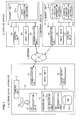
- FIG. 1 is a block diagram showing the construction of an AV system S for an automobile as an example of the information-providing system of a first embodiment of the invention.
- the AV system for an automobile comprises: an automobile-AV apparatus 1 as an example of an information-recording/reproduction apparatus that contains the information-recording apparatus and information -reproduction apparatus of this invention; and a service server 2 and contents server 3 as an example of the information-providing apparatus of this invention.
- the service server and contents server 3 are connected together over a network 4.
- the automobile-AV apparatus 1 can access the service server 2 and contents server 3 over the network 4.
- the network 4 can be a network such as an LAN, mobile communication network, the Internet, or the like. In actuality, there is a plurality of automobile-AV apparatuses 1 corresponding to the number of users.
- the automobile-AV apparatus 1 is an apparatus that is mounted in the automobile, and as shown in FIG. 1, it comprises: a CD-reproduction unit 11 that reproduces information on a CD (Compact Disc) as one recording medium; a recording unit comprising, an HD (Hard Disk) 12c installed in the automobile-AV apparatus 1 as another recording medium, an HD-recording unit 12a, and an HD-reproduction unit 12b; an input unit 13 the includes a remote control unit and control buttons and the like; a display-control unit 14; audio-output unit 15; communication unit 16; and a control unit 17 that controls all of the components; and where all of the components are connected to each other by way of a bus 18.
- a CD-reproduction unit 11 that reproduces information on a CD (Compact Disc) as one recording medium
- a recording unit comprising, an HD (Hard Disk) 12c installed in the automobile-AV apparatus 1 as another recording medium, an HD-recording unit 12a, and an HD-reproduction unit 12b
- the CD-reproduction unit 11 comprises: a mounting mechanism for mounting a CD (for example, a CD legally purchased by the user and owned by the user); a pick up that optically reads music data recorded on a CD; a spindle motor that drives and turns the CD; a servo circuit that performs servo control of the spindle motor and pick up; and a signal processing unit that performs processing such as a specified demodulation process on the music data (RF signal) as the program information that is read; and where under the control of the control unit 17, reproduces music data, and outputs it to the audio-output unit 15 via the bus 18.
- a mounting mechanism for mounting a CD for example, a CD legally purchased by the user and owned by the user
- a pick up that optically reads music data recorded on a CD
- a spindle motor that drives and turns the CD
- a servo circuit that performs servo control of the spindle motor and pick up
- a signal processing unit that performs processing such as a specified
- the CD-reproduction unit 11 under the control of the control unit 17, reads the TOC (Table of Contents) information that is recorded on the inner most part of the CD as an example of ID information, and outputs it to the control unit 17 via the bus 18.
- This TOC information contains the track number on the CD for each item of normal music data, the absolute time for the starting position and the ending position of each item of music data.
- the CD-reproduction unit comprises a protection-information-ID unit that determines whether or not there is copyright information in the CD program information (part of the music data or part of other data) that prevents output of the program information to the HD-recording unit 12a for copyright protection.
- determination is performed by the control unit 17 as the protection-information-IF device, and when the mounted CD is not a CCCD (Copy Controlled Compact Disc) that contains this copyright information (as will be described later, this is onlywhen there is a record instruction from the user), the CD-reproduction unit 11 outputs music data to the HD-recording unit 12a via the bus 18.
- CCCD Code Controlled Compact Disc
- the HD-recording unit 12a comprises a buffer memory.
- the control unit 17 determines in this way that the mounted CD mounted is not a CD (CCCD) that contains copyright information
- the music data that is output from the CD-reproduction unit 11 as described above, under the control of the control unit 17 (only when there is a record instruction from the user, for example) is stored temporarily in the buffer memory via the bus 18, and then it is recorded on the HD 12c by the HD-recording unit 12a.
- the TOC information is correlated with the music data and recorded on the HD12c.
- the HD-reproduction unit 12b reproduces the music data that is recorded on the HD 12c under the control of the control unit 17 and outputs it to the audio-output unit 15 via the bus 18.
- the HD-recording unit 12a when trying to record music data from the CD to the HD 12c and it is determined by the control unit 17 as a protection-information-ID device that the mounted CD is a CD (CCCD) that contains copyright information, the HD-recording unit 12a, under the control of the control unit 17 (only when there is a record instruction from the user, for example), records distributed music data onto the HD 12c as trial-listening information and corresponding information related to the music data (that will be described later) that is sent (provided) from the service server 2, and correlates the TOC information that is read from that CD with that trial-listening information and corresponding information in a specified memory area on the HD 12c.
- CCCD CD
- the HD-recording unit 12a under the control of the control unit 17 (only when there is a record instruction from the user, for example), records distributed music data onto the HD 12c as trial-listening information and corresponding information related to the music data (that will be described later) that is sent (provided) from the service
- the TOC information can also be stored in a non-volatile memory (for example, an EEPROM) that is separate from the HD12c.
- a non-volatile memory for example, an EEPROM
- the HD-reproduction unit 12b reproduces the trial-listening information and corresponding information that is recorded on the HD 12c under the control of the control unit 17, and after storing it temporarily in the buffer memory, outputs it to the audio-output unit 15 via the bus 18.
- Information necessary for accessing the service server 2 and contents server 3 via the network 4 for example, the addresses of the servers 2, 3 on the network
- the apparatus ID information for the automobile-AV apparatus 1 unique for each automobile-AV apparatus
- the input unit 13 receives operating instructions from the user such as a record instruction by the user operating the remote controller or control buttons, and generates an operating signal that corresponds to that operation and outputs it to the control unit 17 via the bus 18.
- the audio-output unit comprises a sound-processing unit that performs specified sound processing on the music data, a DAC (Digital-to-Analog Converter) that converts digital music data to an analog audio signal, an amplifier that amplifies the analog audio signal and speakers that convert the amplified analog signal to sound waves and output the sound.
- DAC Digital-to-Analog Converter
- the audio-output unit 15 outputs the music data that is output from the CD-reproduction unit 11, or the trial-listening or corresponding data that is output from the HD-reproduction unit 12b from the speakers as sound waves.
- the communication unit 16 performs data communication with the service server 2 or contents server 3 via the network 4, and when information (a signal) to be sent is input, it executes a preset output-interface process on the signal under the control of the control unit 17, and outputs that signal to the service server 2 or contents server 3 via the network 4. Moreover, under the control of the control unit 17, the communication unit 16 executes a preset input-interface process on information (signal) sent from the service server 2 or contents server 3 via the network 4 and outputs it to the control unit 17.
- the control unit 17 comprises a CPU as a computer having a calculation function, a work RAM, a ROM for storing various kinds of processing programs and data (including the apparatus-ID information that will be described later) including the communication program, and an oscillation circuit; and when a control signal is received from the input unit 5, it generates control information for controlling all of the components based on the contents contained in that signal and outputs the information to the components via the bus 18. In this way, the control unit 17 controls all of the operations of the components of the automobile-AV apparatus 1.
- the control unit 17 is able to control the components of the automobile-AV apparatus 1 to function as the ID-information-acquisition device, protection -information-ID device, ID-information-sending device, trial-information-receiving device, corresponding -information-receiving device, information-reproduction device, information-recording device, corresponding -information-request device, user-information-acquisition device and user-information-sending device of this invention.
- control unit 17 acquires TOC information corresponding to the music data recorded on the mounted CD from the CD-reproduction unit 11.
- control unit 17 determines whether or not protection information for copyright protection is contained in the music data of the mounted CD.
- the control unit 17 sends the TOC information to the service server 2 or contents server 3 via the network 4.
- control unit 17 receives the corresponding information or trial-listening information that is sent from the service server 2 via the network 4 according to the TOC information.
- control unit 17 outputs the distributed music data, which is the corresponding data, or the trial-listening information, from the speakers.
- control unit 17 correlates the corresponding information or trial-listening information with the TOC information and records it on a specified area of the HD 12c.
- the control unit 17 determines whether or not corresponding information that corresponds to that TOC information is already recorded on the HD 12c, and when it is determined that it is recorded, it performs control so as not to send the TOC information. Also, by functioning together with the communication unit 16 as the corresponding-information-request device, the control unit 17 requests the service server 2 to send the distributed music data as corresponding information via the network 4 after checking the trial-listening information.
- the control unit 17 acquires the apparatus-ID information that is recording on the HD 12c and that is unique to the automobile-AV apparatus. Also, by functioning together with the communication unit 16 as the user-information-sending device, the control unit 17 sends the apparatus-ID information to the service server 2 via the network 4.
- the service server 2 is an apparatus that is set up by the information-providing business, and as shown in FIG. 1, it comprises a memory unit 21, input unit 22, communication. unit 23 and control unit 24, and all of the components are connected together by way of a bus 25.
- the memory unit 21 comprises an HD (Hard Disc) or the like, and here, as shown in the figure, a database 21a is created for the user information.
- HD Hard Disc
- User information for automobile-AV apparatuses 1 is recorded (stored) in the user-information database 21a for each user.
- the user information contains apparatus-ID information (unique for each automobile-AV apparatus 1) and an access log from the automobile-AV apparatus 1.
- the access log contains the access date and time, and information for specifying the corresponding information (distributed music data) that is sent from the automobile-AV apparatus 1 that is being accessed. In other words, with this information it is possible to know how many times corresponding information related to certain music data on a certain CD is accessed by the automobile-AV apparatus 1.
- the apparatus-ID information could be recorded by the operator who purchased the automobile-AV apparatus 1 by using the input unit 22, or could be automatically registered when the automobile-AV apparatus 1 accesses the service server 2 for the first time.
- the input unit 22 comprises a keyboard, a mouse and the like, and when the operator uses them, the input unit 22 receives the operating instruction from the operator and generates an operation signal that corresponds to that operation; and in the latter case, apparatus-ID information that is sent fro the automobile-AV apparatus 1 is input as a signal and is output by way of the bus 25 to the control unit 24.
- the communication unit 23 performs data communication with the automobile-AV apparatus 1 or the contents server 3 via the network 4.
- the control unit 24 comprises a CPU as a computer that has a calculation function, a work RAM, a ROM for stored various processing programs and data, including a communication-process program, and an oscillation circuit; and when a signal is received from the input unit 22 or communication unit 23, it generates control information for controlling each of the components based on the contents of the signal and outputs the information to the components via the bus 25. In this way, the control unit 24 performs overall control of each of the components of the service server 2.
- control unit 24 controls each of the components to function as the ID-information-receiving device, corresponding-information-acquisition device, trial-listening-information-acquisition device, trial -listening-information-sending device, corresponding -information-sending device and user-information-receiving device of this invention.
- control unit 24 receives the TOC information sent from the automobile-AV apparatus 1 via the network 4.
- the control unit 24 sends that TOC information to the contents server (described later) via the network 4, and acquires the trial-listening information and corresponding information from the contents server 3.
- the control unit 24 sends the trial-listening information and corresponding information to the automobile-AV apparatus 1 via the network 4.
- control unit 24 receives the apparatus-ID information sent from the automobile-AV apparatus 1 via the network 4.
- the information-providing program can be downloaded from a specified server that is connected to the network 4.
- the contents server3 comprises a memory unit 31, input unit 32, communication unit 33 and control unit 34, and all of the components are connected together by way of a bus 35.
- the memory unit 31 comprises an HD (Hard Disc), and as shown in the figure, a database 31a for trial-listening information, and a database 31b for corresponding information are created.
- HD Hard Disc
- the database 31a for trial-listening information and the database 31b for corresponding information are both for searching for corresponding information or trial-listening information that is related to the music data from the TOC information, and the same distributed music information is registered (stored) in them as trial-listening information or corresponding information as the music data that corresponds to the TOC information.
- the trial-listening information that is registered in this trial-listening-information database 31a is part of the music data, and as an example, it is information such as the beginning part (introduction) of the music data or a specified portion of the music (such as the so-called song's climax).
- trial-listening information and corresponding information are registered in the trial-listening database 31a and corresponding-information database 31b by way of the input unit 32 by the operator or from another database (not shown in figure) when the a new CD is sold.
- the control unit 34 comprises: a CPU as a computer having a calculation function; work RAM; ROM for storing various processing programs and data, including the communication-processing program; and an oscillation circuit; and when it receives a signal from the input unit 32, it generates control information for controlling each of the components based on the contents contained in the signal and outputs that information to the components by way of the bus 35. In this way, the control unit 34 performs overall control of the operation of all of the components of the contents server 3.
- control unit 34 when the control unit 34 receives the TOC information that is sent from the service server 2 via the network 4 and communication unit 33, it searches the trial-listening database 31a and corresponding-information database 31b and acquires corresponding information and trial-listening information related to the music data corresponding to that TOC information and sends (returns) it to the service server 2.
- the service server 2 may receive the TOC information directly from the automobile-AV apparatus 1 via the network 4.
- the control unit 34 acquires trial-listening information and corresponding information related to the music data corresponding to the TOC information from the automobile-AV apparatus 1 and sends it to the service server 2.
- the function of the input unit 32 and communication unit 33 is the same as the function of the input unit 22 and communication unit 23.
- FIG. 1 to FIG. 4 will be used to explain to explain the operation of the automobile-AV system S.
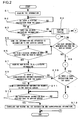
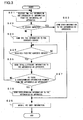
- FIG. 2 and FIG. 4 are drawings showing the processing when using the automobile-AV apparatus 1 to record from the CD to the HD 12c (so-called CD ripping), and more specifically, FIG. 2 is a flowchart showing the processing by the control unit 17 of the automobile-AV apparatus 1, FIG. 3 is a flowchart showing the processing by the control unit 24 of the service server 2 and FIG. 4 is a flowchart showing the processing by the control unit 34 of the contents server 3.
- FIG. 2 will be used to explain the processing of the automobile-AV apparatus 1.
- the processing shown in FIG. 2 is performed by the control unit 17 executing the information-recording program.
- step S1 After the user mounts a CD owned by the user in the CD-reproduction unit 11 that is brought and put into the automobile, the control unit 17 of the automobile-AV apparatus 1 acquires the TOC information that is read from the inner-most part of that CD by the CD-reproduction unit 11 and records it in the work RAM, for example (step S1).
- step S2 when the user operates the control buttons located on the input unit 13 and inputs an operating instruction to record from the CD to the HD 12c, or to perform so-called CD ripping, the control unit 17 recognizes that (step S2: YES), and determines whether or not the mounted CD is a CD having protection information for protecting the copyright of the music data (step S3). On the other hand, when there is no operating instruction to perform CD ripping (step S2: NO), the process returns to the judgment process of step S2.
- step S3 When the result of the judgment in step S3 is that the mounted CD is not a CD having protection information (step S3: NO), the normal CD ripping process is performed. More specifically, a reproduction instruction to reproduce the music data is given to the CD-reproduction unit 11, and a recording instruction to record the music data is given to the HD-recording unit 12a. By doing this, the CD-reproduction unit 11 prepares for reproduction and moves to the reproduction operation, and the HD-recording unit 12a prepares which records and moves to the recording operation (in this way, normal CD ripping operation is performed at the same time as CD reproduction). When music data is recorded to the HD 12c, the TOC information is also correlated with that music data and recorded.
- step S3 when the result of the judgment in step 3 is that the mounted CD is a CD having protection information (step S3: YES), the control unit 17, by way of the communication unit 16, establishes communication with the service server 2 via the network 4, and sends the acquired TOC information together with the apparatus-ID information recorded in the HD 12c to the service server 2 via network 4 (step S5).
- the processing by the service server 2 after receiving that TOC information is explained later.
- the control unit 17 can also establish communication with the contents server 3 via network 4 and send the TOC information to the contents server 3. In this case, it is also possible for the control unit 17 to send only the apparatus-ID information to the service server 2.
- step S6 when the automobile-AV apparatus 1 received the trial-listening information that was sent from the service server 2 according to the TOC information via network 4 (step S6: YES), the control unit 17, by way of the HD-recording unit, records the trial-listening information on to the HD 12c, and then by way of the HD-reproduction unit 12b and the audio-output unit 15, reproduces and outputs that trial-listening information (step S7).
- step S6: NO when trial-listening information is not received from the service server 2 (step S6: NO), the control unit 17 determines whether or not deny-information is received from the service server 2, and when deny-information is received, the control unit 17, by way of the communication unit 16, cuts off communication with the service server 2 and ends all processing (step S8: YES), however when deny-information is also not received (step S8: NO), the control unit 17 moves to step S5 and resends the TOC information together with the apparatus-ID information to the service server 2 via network 4. This is done in order to try sending the TOC information and apparatus-ID information again in case, due to some communication trouble with the service server 2, the TOC information and the apparatus-ID information were not properly sent to the service server 2. In this case, this process is set beforehand by control of the control unit 17 to be repeated a set number of times.
- the control unit 17 prompts the user to determine whether or not to request corresponding information (distributed music data) related to the trial-listening information by operating the control buttons located on the input unit 13 (step S9), and when there is an instruction to request corresponding information (step S9: YES), it sends the corresponding-information request to the service server 2 (step S11).
- step S9 NO
- the control unit 17 prompts the user to determine whether or not to cancel all recording operations (CD ripping) to the HD12c by operating the control buttons located on the input unit 13 (step S10), and when there is a cancel instruction, the control unit 17, by way of the communication 16, cuts off communication with the service server 2 and ends all processing (step S10: YES). This is because after the user checked the music data using the trial-listening information, the user canceled receiving the corresponding information.
- step S10 NO
- the control unit returns to step S5.
- This process is set beforehand by control of the control unit 17 to be repeated a set number of times.
- step S11 when the corresponding-information -request instruction is sent to the service server 2, the automobile-AV apparatus 1 repeats the judgment process of step S12 until the corresponding information sent from the service server 2 is received via the network 4 (step S12: NO), and when the corresponding information is received (step S12: YES), the control unit 17 correlates the TOC information with the corresponding information and, by way of the HD-recording unit 12a, records them on the HD 12c (step S13). After that, by way of the communication unit 16, it cuts off communication with the service server 2 and ends all processing.
- FIG. 3 and FIG. 4 will be used to explain the processing by the service server 2 and contents server 3.
- the processing shown in FIG. 3 is performed by executing the information-providing program by the control unit 24.
- the control unit 24 searches the user-information database 21a, and checks the date and time of access from the automobile-AV apparatus that corresponds to the received apparatus-ID information, and checks the information for specifying the trial-listening information and corresponding information sent to that automobile-AV apparatus 1 to determine whether or not the access may be improper access (step S22).
- Improper access referred to here could be, when in order to prevent improper copying, the number of times the trial-listening information and corresponding information can be downloaded is set as a specified number of times (number of times distribution is possible), and when there is an attempt to download the trial-listening information and corresponding information is more than this specified number of times.
- step S22 when it is determined that the access is improper access (step S22: YES), deny-information is sent to the automobile-AV apparatus 1 (step S23), and the user information corresponding to the received apparatus-ID information is updated and processing ends (step S29).
- This update of the user information is a process of adding the date and time of access from the automobile-AV apparatus 1 to that user information. By doing this, it is possible to always know from the latest information how many times the user has requested corresponding information.
- step S22 when the access is not improper access (step S22: NO) , the control unit 24, byway of the communication unit 23, establishes communication with the contents server 3 via the network 4, and sends the TOC information to the contents server 3 via the network 4 (step S24).
- step S31 when the control unit 34 of the contents server 3 receives the sent TOC information via the network 4 (step S31), the control unit 34 searches the trial-listening database 31a and corresponding-information database 31b and acquires the distribution music data as trial-listening information and corresponding information that is related to the music data corresponding to the TOC information (step S32), and sends (returns) it to the service server 2 (step S33).
- step S32 the control unit 34 of the contents server 3 receives the sent TOC information via the network 4
- step S32 searches the trial-listening database 31a and corresponding-information database 31b and acquires the distribution music data as trial-listening information and corresponding information that is related to the music data corresponding to the TOC information (step S32), and sends (returns) it to the service server 2 (step S33).
- the processing of steps S32 and s33 is executed even when the TOC information is received directly from the automobile-AV apparatus 1 via the network 4.
- step S25 the control unit 24 of the service server 2 repeats the judgment process of step S25 until the trial-listening information and corresponding information corresponding to the TOC information is received from the contents server 3 via the network 4 (step S25: NO), and when the trial-listening information and corresponding information is received (step S25: YES), the control unit 24, by way of the communication unit 23, sends that trial-listening information to the automobile-AV apparatus 1 (step S26).
- the control unit 24 receives a corresponding-information request from the automobile-AV apparatus 1 (step S27: YES), it sends the corresponding information to the automobile-AV apparatus 1 by way of the communication unit 23 (step S28).
- step S21 the control unit returns to step S21. This is done in order to try receiving the TOC information again when communication was not possible due to some kind of communication trouble with the automobile-AV apparatus 1.
- this process is set beforehand by control of the control unit 17 to be repeated only a set number of times (this is the same as step S8: NO and step S10: NO in FIG. 2).
- control unit 24 searches the user-information database 21a and updates the user information corresponding to the received apparatus-ID information, then ends processing (step S29).
- This update of the user information is performed by adding the date and time of access from the automobile-AV apparatus 1 and the information for specifying the trial-listening information and corresponding information sent to that automobile-AV apparatus 1 to that user information. That is, this process updates the number of times of access by the user, or more specifically, updates the number of times corresponding information that corresponds to the music data of one CD is downloaded via the network 4. In this way, the control unit 24 is able to check in step S22 described above whether downloading has been performed over several times when there is a chance of improper access.
- recording on to the HD 12c was made possible by acquiring TOC information corresponding to the music data is acquired from the CD, and then based on it, acquiring corresponding information related to that music data from the service server 2, so it is possible for the user to record the music data from a CD purchased by the user to another medium of the user's such as a HD 12c (instead of CD ripping), even when the CD is a CD having protection information that protects the copyright of the music data.
- a user-information database 21a in the service server 2 to manage the user information, it is possible to know the number of times there was access from one automobile-AV apparatus 1, and it is possible to prevent improper access by not sending corresponding information when there is access several times from the same apparatus.
- TOC information was used as one example of the ID information of this invention, however, it is not limited to this, and in the case that there is copyright protection for the TOC information itself, other information which is readable from the CD and that can identify that CD can be used, and in that case, the automobile-AV apparatus 1 can acquire that information for identifying the CD as ID information instead of the TOC information, and send it to the service server 2 via the network 4.
- the control unit 17 can perform control such as to not to send the TOC information. By doing this, it is possible to prevent performing the operation of acquiring corresponding information again when the corresponding information has already been downloaded and stored on the HD 12c.
- the trial-listening information and corresponding information were correlated with the TOC information and recorded on the HD 12c, however, the invention is not limited to this, and in the case where corresponding information is received, it is possible to improve the efficiency of the memory space of the HD 12c by deleting the trial-listening information from the HD 12c and correlating just the corresponding information with the TOC information.
- a CD-reproduction unit 11 was used as an example of the information-reproduction unit, however the invention is not limited to this, and it is possible to use a DVD-reproduction unit that reproduces music and video data that are recorded on a DVD (Digital Versatile Disc), or a MD-reproduction unit that reproduces music data recorded on a MD (Mini Disc), or even a combination of these.
- DVD-reproduction unit that reproduces music and video data that are recorded on a DVD (Digital Versatile Disc), or a MD-reproduction unit that reproduces music data recorded on a MD (Mini Disc), or even a combination of these.
- a HD-recording unit and HD-reproduction unit 12b were used as an example, however, the invention is not limited to these, and it is also possible to use, for example, a CD-R recording unit and CD-R reproduction unit that record and reproduce music data on a CD-R, or a DVD-R/W recording unit and DVD-R/W unit that record and reproduce music data on a DVD-R/W, or even a combination of these.
- user information was registered in the user-information database 21a as ID information unique to the automobile-AV apparatus 1, however, as other examples, it is possible to record the information entered on the user-registration form when purchasing the CD (name, telephone number, e-mail address, or the like that were entered when the user purchased the CD) on part of the CD as user information, and register (store in memory) the same information or corresponding user information in the user-information database 21a of the service server 2.
- the TOC information and user information of the purchaser of the CD is acquired under the control of the control unit 17 of the automobile-AV apparatus 1 and sent to the service server 2 via the network 4.
- recording the music data as trial-listening information and corresponding information as is on the HD 12c in the same way as the program information recorded on the CD was explained as a premise, however, it is also possible to compress the trial-listening information and corresponding information using a format such as MP3, ATRAC3 or the like, or to encode the trial-listening information and corresponding information for copyright protection before recording it onto the HD 12c.
- an automobile-AV apparatus was used as the information-recording apparatus and information-reproduction apparatus of this invention, however, the invention is not limited to this, and it is possible, for example, to use a home-AV apparatus, automobile-navigation apparatus, personal computer (PC) or the like.
- PC personal computer
- the hardware of the service server 2 and contents server 3 as an example of the information-providing apparatus of this invention were separate, however, it is possible to use a single server that integrates the function of the service server 2 and contents server 3, or to set up a plurality of contents servers 3 when the service server 2 and contents server 3 are separate.
- this second embodiment further receives the cost when the corresponding information is received.
- the other construction and forms of this embodiment can be changed according to first embodiment.
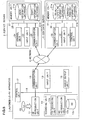
- the memory unit 21 of the service server 2 comprises a user-information database 21a and cost-information database 21b.
- the method of payment that was entered by the user when purchasing the apparatus is further registered (stored) in this user-information database 21a for each user. That is, information for billing the cost of the corresponding information is registered as user information for the automobile-AV apparatus 1 that requests corresponding information from the service server 2.
- the cost information that will be the base for calculating the cost is registered (stored) in the cost-information database 21b.
- the user-information database 21a is searched under the control of the control unit 24 to determine whether or not the download is greater than a preset number of times (for example greater than 10 times), and information such as, information for charging a fee using a pre-determined calculation method, the cost set for each music data, or discount information that is applied when a problem occurs in recording to the HD 12c due to protection information such as copyright information, is registered.
- control unit 17 in the automobile-AV apparatus 1 makes the components of the automobile-AV apparatus 1 function further as a cost-information-receiving device and cost-information-supply device
- control unit 24 in the service server 2 makes the components of the service server 2 function further as a cost-information -acquisition device, cost-information-sending device and user-information-management device.
- control unit 17 accesses the service server 2 to acquire corresponding information, it also receives the cost information the corresponds to that corresponding information from the service server 2.
- control unit 17 further functions as the cost-information-supply device, and supplies that cost information to the user by displaying the cost information received from the service server 2 on a display unit (not shown in the figure) in the apparatus, outputting the information as an audio message from the audio-output unit, etc.
- control unit 24 searches the cost-information database 21b and acquires the cost information.
- control unit 24 sends the acquired cost information to the automobile-AV apparatus 1.
- the control unit 24 manages the user information, which was received from the automobile-AV apparatus 1 by way of the communication unit 23, using the user-information database 21a, and each time there is apparatus-ID information sent from an automobile-AV apparatus 1, it compares that information with the registered user information and updates the number of times there was access from that user, billing information and the like, and according to that, as the cost-information-acquisition uses the cost-information database 21b to set the cost.
- the billing information can be input and registered in the database by the operator when checking the billing, or can be registered automatically when the account-settlement device registered in the user-information database is an electronic account using electronic money and when a bill is recognized by insufficient account balance.
- FIG. 4 to FIG. 7 will be used to explain the operation of the automobile-AV system S.
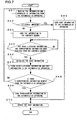
- FIG. 6 and FIG. 7 show the processing when using the automobile-AV apparatus 1 to record from the CD to the HD 12c (so-called CD ripping), and more specifically, FIG. 6 is a flowchart showing the processing by the control unit 17 of the automobile-AV apparatus 1, and FIG. 7 is a flowchart showing the processing by the control unit 24 of the service server 2.
- FIG. 4 is a flowchart showing the processing by the control unit 34 of the contents server 3, and is the same operation as in the first embodiment.
- FIG. 6 will be used to explain the processing of the automobile-AV apparatus 1.
- the process shown in FIG. 6 is performed by the control unit 17 executing the information-recording program.
- the control unit 17 of the automobile-AV apparatus 1 acquires the TOC information that is read from the inner-most part of the CD by the CD-reproduction unit 11, and stores it in the work RAM, for example (step S41).
- step S42 when the user operates the control buttons located on the input unit 13 and inputs an operating instruction to record from the CD to the HD 12c, so-called CD ripping, the control unit 17 recognizedthis (step S42: YES) , and determines whether or not the mounted CD is a CD having protection information for protecting the copyright of the music data (step S43). On the other hand, when there is no instruction to perform CD ripping (step S42: NO), the control unit 17 repeats to the judgment process of step S42.
- step S43: NO When the result of the judgment in step S43 indicates that the mounted CD does not have protection information (step S43: NO), the normal CD-ripping process is performed. However, when the result of the judgment in step S43 indicates that the mounted CD does have protection information (step S43: YES), the control unit 17, by way of the communication unit 23, establishes communication with the service server 2 via the network 4, and sends the acquired TOC information together with the apparatus-ID information recorded on the HD 12c to the service server 2 via the network 4 (step S45). The processing by the service server 2 that receives this TOC information will be described later.
- step S46 when the automobile-AV apparatus 1 receives the trial-listening information and cost information that corresponds to the TOC information from the service server 2 via the network 4 (step S46: YES), the control unit 17, by way of the HD-recording unit 12a, records the trial-listening information on the HD 12c, and by way of the HD-reproduction unit 12b and audio-output unit 15, reproduces and outputs that trial listening information, and displays and outputs the cost information on the display unit or the like of the apparatus (not shown in the figure) (step S47).
- step S46: NO the control unit 17 determines whether or not deny-information was received from service server, and when deny-information was received, the control unit 17, by way of the communication unit 16, cut off communication with the service server 2 and ends all processing (step S48: YES), however, when deny-information was not received (step S48: NO), the control unit 17 advances to step S45, and sends the TOC information and apparatus-ID information to the service server 2 again via the network 4. This is done in order to try sending the TOC information and apparatus-ID information again, in case the TOC information and apparatus-ID information were not properly sent to the service server 2 due to some kind of communication trouble with the service server 2. In this case, the number of time to repeat the operation is set in advance by control from the control unit 17.
- the control unit 17 prompts the user to operate the control buttons on the input unit 13 to decide and input whether or not to request corresponding information (distributed music data) that corresponds to the trial-listening information (step S49), and when there is an instruction to request corresponding information (step S49: YES), the control unit 17 sends the corresponding-information request to the service server 2 (step S51).
- step S49: NO the control unit 17 prompts the user to operate the control buttons on the input unit 13 to decide whether or not to cancel all recording operations (CD ripping) to the HD 12c (step S50), and when there is a cancel instruction, the control unit 17, by way of the communication unit 16, cuts off communication with the service server 2 and ends all processing (step S50: YES). This is done because receiving the corresponding information related to the music data may be canceled after the user checks the trial-listening information or cost information.
- step S50 when there is no cancel instruction from the user in step S50 (step S50: NO), the control unit 17 returns to step S45. This is done in order to try to send TOC information and apparatus-ID information again when the instruction whether or not to request corresponding information was not sent to the service server 2, or when even before that, the TOC information and apparatus-ID information were not sent to the service server 2 due to some kind of communication trouble with the service server 2.
- the number of times the process is repeated is set beforehand by control from the control unit 17.
- step S51 when a corresponding-information -request instruction is sent to the service server 2, the automobile-AV apparatus 1 repeats the judgment process of step S52 until it receives the corresponding information sent from the service server 2 via the network 4 (step S52: NO), and when the corresponding information is received (step S52: YES), the control unit 17 correlates the TOC information with the corresponding information and, by way of the HD recording unit 12a, records them on the HD 12c (step S53).
- control unit 17 cuts of communication with the service server 2 and ends all processing.
- the user is able to record corresponding information (distributed music data) on to the HD 12c via the network even when it is not possible to perform CD ripping to the user's own HD 12c because the user's CD is a CD having protection information for copyright protection of the music data on the CD.
- the user can use the cost information to check the price (cost) of acquiring corresponding information, and to decide whether or not to acquire that corresponding information before actually acquiring the corresponding information.
- the processing shown in FIG. 7 is performed by the control unit 24 executing the information-providing program.
- control unit 24 of the service server 2 when the control unit 24 of the service server 2 receives TOC information and apparatus-ID information that was sent from the automobile-AV apparatus 1 via the network 4 (step S61), the control unit 24 searches the user-information database 21a and checks information that gives the access dates and times for the automobile-AV apparatus that corresponds to the received apparatus-ID information and checks information that indicates what trial-listening information and corresponding information have been sent to that automobile-AV apparatus 1, and then determines whether or not the access is improper access that exceeds the preset number of times access is allowed, and determines whether or not the user pays the cost on time (step S62).
- step S62 when it is determined that access is improper access (step S62: YES), the control unit 24 sends deny-information to the automobile-AV apparatus 1 (step S63), then updates the received user information and ends processing (step S70).
- This update of user information is a process of adding the access date and time information for the access from the automobile-AV apparatus 1 to the user information of that user. By doing this, the control unit 24 is able to always know the latest information for how many times the user has requested corresponding information.
- step S62 NO
- the control unit 24, byway of the communication unit 23, establishes communication with the contents server 3 via the network 4, and sends the TOC information to the contents server 3 via the network 4 (step S64).
- control unit 34 of the contents server 3 when the control unit 34 of the contents server 3 receives the TOC information that was sent from the service server 2 via the network 4 (step S31), the control unit 34 searches the trial-listening -information database 31a and corresponding-information database 31b and acquires distribution music data as the trial-listening information and corresponding information related to the music data corresponding to the TOC information (step S32), and sends (returns) it to the service server 2 (step S33).
- step S65 the control unit 24 of the service server 2 repeats the judgment process of step S65 until it receives the trial-listening information and corresponding information that correspond to the TOC information from the contents server 3 via the network 4 (step S65: NO), and when it receives the trial-listening information and corresponding information (step S65: YES), the control unit 24 searches the user-information database 21a and the cost-information database 21b, and calculates the cost information (step S66).
- control unit 24 by way of the communication unit 23, sends the trial-listening information and corresponding information to the automobile-AV apparatus 1 (step S67).
- step S68 when the control unit 24 receives a corresponding -information request from the automobile-AV apparatus 1 (step S68: YES), by way of the communication unit 23, it sends the corresponding information to the automobile-AV apparatus 1 (step S69). However, when no corresponding-information request is received from the automobile-AV apparatus 1, the control unit 24 returns to step S61. This is done in order to try receiving the TOC information again when communication was not possible due to some kind of communication trouble with the automobile-AV apparatus 1. In this case, the number of times the process is repeated is set beforehand by control from the control unit 24 (this is the same as step S48: NO, and step S50: NO shown in FIG. 6).
- control unit 24 searches the user-information database 21a and updates the received user information, then ends processing (step S70).
- the update of this user information is performed by adding information for indicating the access date and time of the access from the automobile-AV apparatus 1 and information for indicating what trial-listening information and corresponding information was sent to that automobile-AV apparatus 1 to the user information for that user. In other words, it updates the number of times there was access from the user, and more specifically, updates the number of times corresponding information that corresponds to the music data of a CD has been downloaded via the network. In this way, in the processing of step S62, the control unit 24 is able to know when downloading has been performed many times and may be improper.
- the user is able to record to another recording medium such as the HD 12c owned by the user, even when the user's CD is a CD having protection information for copyright protection of the music data on that CD.
- the user can use the cost information to check the price (cost) of acquiring corresponding information, and to decide whether or not to acquire that corresponding information before actually acquiring the corresponding information.
- the cost-information database 21b described above could also be located in the contents server 3. In this case, the cost is billed when sending corresponding information from the contents server 3 to the service server 2.
- receiving the cost information can be performed automatically by electronic money via the network 4, or the bill can be sent at a later date to the user's address that is registered as user information.
- the trial-listening information and corresponding information were downloaded and acquired via the network 4 from the service server 2 and contents server 3, which are the information-providing apparatuses, however, besides this, there are various forms of protection information, such as deliberately inserting error information beforehand into part of the ID information (TOC) or program information (music data) as protection information, and in the case of these, the protection-information-recognition unit can recognize the existence of protection information by detecting defects such as errors or sound jumps that occur when recording from the CD to the HD 12c.
- TOC ID information
- music data music data
- the protection-information-recognition unit recognizes the existence of protection information by detecting defects such as error or sound jumps, it is possible to download and acquire trial-listening information and corresponding information from the service server 2 and contents server 3, which are the information-providing apparatuses, instead of program information that cannot be recorded on the HD 12c, even when there are scratches or defects on the CD itself, or when the program information recorded on the CD is damaged.
- the invention is not limited to this, and of course construction in which corresponding information is automatically acquired without acquiring trial-listening information when there is a recording instruction to record from one recording medium (CD or the like) to another recording medium (HD 12c or the like) is also possible.
Landscapes
- Engineering & Computer Science (AREA)
- Signal Processing (AREA)
- Computer Security & Cryptography (AREA)
- Multimedia (AREA)
- Software Systems (AREA)
- Theoretical Computer Science (AREA)
- Computer Hardware Design (AREA)
- Physics & Mathematics (AREA)
- General Engineering & Computer Science (AREA)
- General Physics & Mathematics (AREA)
- Technology Law (AREA)
- Signal Processing For Digital Recording And Reproducing (AREA)
- Storage Device Security (AREA)
- Reverberation, Karaoke And Other Acoustics (AREA)
Applications Claiming Priority (2)
| Application Number | Priority Date | Filing Date | Title |
|---|---|---|---|
| JP2003047587A JP4343551B2 (ja) | 2003-02-25 | 2003-02-25 | 情報提供システムおよび情報提供プログラム等 |
| JP2003047587 | 2003-02-25 |
Publications (2)
| Publication Number | Publication Date |
|---|---|
| EP1453052A2 true EP1453052A2 (de) | 2004-09-01 |
| EP1453052A3 EP1453052A3 (de) | 2006-05-10 |
Family
ID=32767727
Family Applications (1)
| Application Number | Title | Priority Date | Filing Date |
|---|---|---|---|
| EP04250926A Withdrawn EP1453052A3 (de) | 2003-02-25 | 2004-02-20 | System zur Bereitstellung von Informationen, Gerät, Verfahren und Programm welche auf einem Aufzeichnungsmedium zur Informationsbereitstellung aufgezeichnet sind, Gerät zur Informationsaufzeichnung, und Programm welches auf ein Aufzeichnungsmedium zur Informationsaufzeichnung aufgezeichnet ist. |
Country Status (4)
| Country | Link |
|---|---|
| US (1) | US20040167856A1 (de) |
| EP (1) | EP1453052A3 (de) |
| JP (1) | JP4343551B2 (de) |
| CN (1) | CN1525360B (de) |
Families Citing this family (12)
| Publication number | Priority date | Publication date | Assignee | Title |
|---|---|---|---|---|
| WO2005006611A1 (ja) * | 2003-07-14 | 2005-01-20 | Sony Corporation | 報記録装置、情報記録方法及び情報記録プログラム |
| JP2006129169A (ja) * | 2004-10-29 | 2006-05-18 | Toshiba Corp | コンテンツ記録媒体補償システム、コンテンツ再生/記録装置及びコンテンツ再生/記録方法 |
| US20070220060A1 (en) * | 2005-10-14 | 2007-09-20 | Leviathan Entertainment, Llc | Scanning and Altering Patent Applications |
| US20070219939A1 (en) * | 2005-10-14 | 2007-09-20 | Leviathan Entertainment, Llc | Portfolio Mapping of Intellectual Property |
| US8369971B2 (en) * | 2006-04-11 | 2013-02-05 | Harman International Industries, Incorporated | Media system having preemptive digital audio and/or video extraction function |
| WO2008127339A1 (en) * | 2007-04-16 | 2008-10-23 | Leviathan Entertainment | Protection of intellectual property |
| JP2009301666A (ja) * | 2008-06-16 | 2009-12-24 | Hitachi Ltd | 光ディスク再生装置、車載光ディスク再生装置、および、車載光ディスク再生システム、ならびに、光ディスク再生方法 |
| CN102118701A (zh) * | 2009-12-31 | 2011-07-06 | 上海博泰悦臻电子设备制造有限公司 | 汽车信息系统 |
| CN102118415A (zh) * | 2009-12-31 | 2011-07-06 | 上海博泰悦臻电子设备制造有限公司 | 汽车信息系统 |
| CN102118703A (zh) * | 2009-12-31 | 2011-07-06 | 上海博泰悦臻电子设备制造有限公司 | 汽车信息系统 |
| JP4927974B2 (ja) * | 2010-06-29 | 2012-05-09 | シャープ株式会社 | 情報再生装置 |
| JP6221325B2 (ja) * | 2013-04-25 | 2017-11-01 | 株式会社デンソー | データ検索装置、データ検索プログラムおよびデータ検索方法 |
Family Cites Families (63)
| Publication number | Priority date | Publication date | Assignee | Title |
|---|---|---|---|---|
| US6963859B2 (en) * | 1994-11-23 | 2005-11-08 | Contentguard Holdings, Inc. | Content rendering repository |
| US7366908B2 (en) * | 1996-08-30 | 2008-04-29 | Digimarc Corporation | Digital watermarking with content dependent keys and autocorrelation properties for synchronization |
| US20030040962A1 (en) * | 1997-06-12 | 2003-02-27 | Lewis William H. | System and data management and on-demand rental and purchase of digital data products |
| KR100279522B1 (ko) * | 1997-11-20 | 2001-03-02 | 니시무로 타이죠 | 카피 방지장치 및 이와 같은 카피 방지장치에 사용되는 정보 기록매체 |
| EP0977200A4 (de) * | 1998-02-19 | 2001-05-16 | Sony Corp | Aufzeichnungs- und wiedergabegerät, aufzeichnungs- und wiedergabeverfahren sowie datenprozessor |
| US6684199B1 (en) * | 1998-05-20 | 2004-01-27 | Recording Industry Association Of America | Method for minimizing pirating and/or unauthorized copying and/or unauthorized access of/to data on/from data media including compact discs and digital versatile discs, and system and data media for same |
| US20010051995A1 (en) * | 1998-06-02 | 2001-12-13 | Reinder Haakma | System for obtaining data related to multimedia carriers |
| US7346580B2 (en) * | 1998-08-13 | 2008-03-18 | International Business Machines Corporation | Method and system of preventing unauthorized rerecording of multimedia content |
| JP2000115517A (ja) * | 1998-10-06 | 2000-04-21 | Canon Inc | 電子透かしを行なうことが可能な情報処理装置及び前記情報処理装置を接続可能な通信ネットワーク |
| JP2000278290A (ja) * | 1999-03-29 | 2000-10-06 | Matsushita Electric Ind Co Ltd | ネットワーク管理システム |
| US6810200B1 (en) * | 1999-04-14 | 2004-10-26 | Matsushita Electric Industrial Co., Ltd. | Digital data processing device that restricts usage of data present on a recording medium |
| DE19916846A1 (de) * | 1999-04-14 | 2000-10-19 | Volkswagen Ag | Verfahren und Einrichtung zum Audiobetrieb von Kompaktdisc-Tonträgern in Kraftfahrzeugen |
| US6453420B1 (en) * | 1999-04-21 | 2002-09-17 | Research Investment Network, Inc. | System, method and article of manufacture for authorizing the use of electronic content utilizing a laser-centric medium |
| US7209900B2 (en) * | 1999-08-27 | 2007-04-24 | Charles Eric Hunter | Music distribution systems |
| US7020704B1 (en) * | 1999-10-05 | 2006-03-28 | Lipscomb Kenneth O | System and method for distributing media assets to user devices via a portal synchronized by said user devices |
| JP2001110171A (ja) * | 1999-10-13 | 2001-04-20 | Sony Corp | 記録再生装置および方法、端末装置、送受信方法、ならびに、記憶媒体 |
| US7305713B1 (en) * | 1999-10-14 | 2007-12-04 | Aol Llc | Method and system for preventing capture of electronic digital content |
| JP2001160262A (ja) * | 1999-11-30 | 2001-06-12 | Pioneer Electronic Corp | 情報記録読取方法ならびに装置 |
| WO2001054123A1 (en) * | 2000-01-21 | 2001-07-26 | Sony Corporation | Optical disk discriminating method and optical disk reproducing method and optical disk device |
| US7069590B1 (en) * | 2000-02-17 | 2006-06-27 | Microsoft Corporation | System and method for protecting data streams in hardware components |
| DE10008440C2 (de) * | 2000-02-23 | 2003-01-09 | Harman Becker Automotive Sys | Verfahren zum Betreiben eines Wiedergabegerätes zur Wiedergabe von auf einem Datenträger gespeicherten Daten in einem Fahrzeug und Verfahren zum Abrufen von Daten von einem Datenserver |
| JP2001291365A (ja) * | 2000-03-31 | 2001-10-19 | Pioneer Electronic Corp | 記録再生装置及び記録方法 |
| JP2001344429A (ja) * | 2000-05-31 | 2001-12-14 | Noritsu Koki Co Ltd | 情報配信システム、情報配信装置、情報受信装置、情報配信方法、情報配信プログラムを記録した記録媒体、情報受信方法、情報受信プログラムを記録した記録媒体 |
| JP2001351319A (ja) * | 2000-06-06 | 2001-12-21 | Pioneer Electronic Corp | 著作権保護方法、再生方法、再生装置、記録方法及び記録装置 |
| US7213266B1 (en) * | 2000-06-09 | 2007-05-01 | Intertrust Technologies Corp. | Systems and methods for managing and protecting electronic content and applications |
| JP2001357001A (ja) * | 2000-06-12 | 2001-12-26 | Pioneer Electronic Corp | 情報出力装置及び情報出力方法、情報記録装置及び情報記録方法、情報出力記録システム並びに情報記録媒体 |
| US7076467B1 (en) * | 2000-08-04 | 2006-07-11 | Sony Computer Entertainment America Inc. | Network-based method and system for transmitting digital data to a client computer and charging only for data that is used by the client computer user |
| JP3776712B2 (ja) * | 2000-10-24 | 2006-05-17 | 株式会社ケンウッド | オーディオシステム、制御装置およびタイトル情報登録方法 |
| JP4300705B2 (ja) * | 2000-12-05 | 2009-07-22 | ソニー株式会社 | データ転送システム、データ転送装置、データ転送方法、記録媒体 |
| US7150045B2 (en) * | 2000-12-14 | 2006-12-12 | Widevine Technologies, Inc. | Method and apparatus for protection of electronic media |
| US7266704B2 (en) * | 2000-12-18 | 2007-09-04 | Digimarc Corporation | User-friendly rights management systems and methods |
| JP2002312054A (ja) * | 2001-02-01 | 2002-10-25 | Sony Computer Entertainment Inc | コンピュータシステム及びその使用方法 |
| KR100392089B1 (ko) * | 2001-02-02 | 2003-07-22 | 스톰 씨엔씨 인코포레이티드 | 통신상에서 불법 유통되는 디지털 음악파일에 의해 음반의판매량이 감소되는 것을 방지하는 방법 |
| JP2002244926A (ja) * | 2001-02-15 | 2002-08-30 | Matsushita Electric Ind Co Ltd | データ無効化装置 |
| US6950804B2 (en) * | 2001-02-26 | 2005-09-27 | Pika Media | Systems and methods for distributing targeted multimedia content and advertising |
| KR20020072453A (ko) * | 2001-03-10 | 2002-09-16 | 삼성전자 주식회사 | 재생장치 및 부가정보 서비스 서버 시스템 |
| JP2002269904A (ja) * | 2001-03-15 | 2002-09-20 | Sony Corp | データ管理装置 |
| US7191190B2 (en) * | 2001-03-27 | 2007-03-13 | Microsoft Corporation | Meta data management for media content objects |
| AUPR439501A0 (en) * | 2001-04-12 | 2001-05-17 | Set for Study Pty Ltd. | System and method for preventing unauthorised copying of electronic document |
| US7424747B2 (en) * | 2001-04-24 | 2008-09-09 | Microsoft Corporation | Method and system for detecting pirated content |
| US7395245B2 (en) * | 2001-06-07 | 2008-07-01 | Matsushita Electric Industrial Co., Ltd. | Content usage management system and server used in the system |
| JP3809779B2 (ja) * | 2001-06-18 | 2006-08-16 | ソニー株式会社 | データ転送システム、データ転送装置、データ記録装置、データ転送方法 |
| US7203966B2 (en) * | 2001-06-27 | 2007-04-10 | Microsoft Corporation | Enforcement architecture and method for digital rights management system for roaming a license to a plurality of user devices |
| US7062622B2 (en) * | 2001-06-29 | 2006-06-13 | Microsoft Corporation | Protection of content stored on portable memory from unauthorized usage |
| US7130829B2 (en) * | 2001-06-29 | 2006-10-31 | International Business Machines Corporation | Digital rights management |
| JP4830225B2 (ja) * | 2001-07-18 | 2011-12-07 | ソニー株式会社 | 記録装置および方法、記録媒体、並びにプログラム |
| GB2378273A (en) * | 2001-07-31 | 2003-02-05 | Hewlett Packard Co | Legitimate sharing of electronic content |
| JP4422930B2 (ja) * | 2001-08-07 | 2010-03-03 | パイオニア株式会社 | 情報処理システム、情報処理システムの情報処理方法、情報処理装置および情報処理プログラム |
| US20030046338A1 (en) * | 2001-09-04 | 2003-03-06 | Runkis Walter H. | System and method for using programable autonomous network objects to store and deliver content to globally distributed groups of transient users |
| CN1310239C (zh) * | 2001-09-28 | 2007-04-11 | 松下电器产业株式会社 | 光盘 |
| US7487363B2 (en) * | 2001-10-18 | 2009-02-03 | Nokia Corporation | System and method for controlled copying and moving of content between devices and domains based on conditional encryption of content key depending on usage |
| JP4128348B2 (ja) * | 2001-10-25 | 2008-07-30 | 富士通株式会社 | データ管理システム |
| KR100947152B1 (ko) * | 2001-11-15 | 2010-03-12 | 소니 주식회사 | 이동식 매체상에 배포된 디지털 콘텐츠의 사용 및 복사를 제어하는 방법 및 그를 이용하는 디지털 저장 매체 |
| US6952479B2 (en) * | 2001-11-27 | 2005-10-04 | Macrovision Europe Limited | Dynamic copy protection of optical media |
| US7231450B1 (en) * | 2002-04-24 | 2007-06-12 | At&T Corporation | Method for providing reliable soft goods license authorization |
| US7316033B2 (en) * | 2002-11-25 | 2008-01-01 | Music Public Broadcasting, Inc. | Method of controlling recording of media |
| US7281273B2 (en) * | 2002-06-28 | 2007-10-09 | Microsoft Corporation | Protecting content on medium from unfettered distribution |
| US7340778B2 (en) * | 2002-07-24 | 2008-03-04 | Macrovision Corporation | Method and apparatus for ensuring the copy protection of digital data |
| US7228567B2 (en) * | 2002-08-30 | 2007-06-05 | Avaya Technology Corp. | License file serial number tracking |
| US20040054923A1 (en) * | 2002-08-30 | 2004-03-18 | Seago Tom E. | Digital rights and content management system and method for enhanced wireless provisioning |
| US7188173B2 (en) * | 2002-09-30 | 2007-03-06 | Intel Corporation | Method and apparatus to enable efficient processing and transmission of network communications |
| US7254608B2 (en) * | 2002-10-31 | 2007-08-07 | Sun Microsystems, Inc. | Managing distribution of content using mobile agents in peer-topeer networks |
| US7191193B2 (en) * | 2003-01-02 | 2007-03-13 | Catch Media | Automatic digital music library builder |
-
2003
- 2003-02-25 JP JP2003047587A patent/JP4343551B2/ja not_active Expired - Fee Related
-
2004
- 2004-02-20 EP EP04250926A patent/EP1453052A3/de not_active Withdrawn
- 2004-02-24 US US10/786,404 patent/US20040167856A1/en not_active Abandoned
- 2004-02-25 CN CN200410006625.5A patent/CN1525360B/zh not_active Expired - Fee Related
Non-Patent Citations (1)
| Title |
|---|
| None |
Also Published As
| Publication number | Publication date |
|---|---|
| CN1525360A (zh) | 2004-09-01 |
| US20040167856A1 (en) | 2004-08-26 |
| EP1453052A3 (de) | 2006-05-10 |
| JP4343551B2 (ja) | 2009-10-14 |
| JP2004258197A (ja) | 2004-09-16 |
| CN1525360B (zh) | 2010-04-28 |
Similar Documents
| Publication | Publication Date | Title |
|---|---|---|
| US10991032B2 (en) | Information communication terminal, information distribution apparatus, information distribution system, content management method, broadcast reception method, information distribution method, programs and storage medium | |
| US7295994B2 (en) | Information distribution system, terminal apparatus, information center, recording medium, and information distribution method | |
| KR100607210B1 (ko) | 기록재생장치, 기록재생방법 및 데이터처리장치 | |
| US20180145778A1 (en) | Information processing apparatus and information processing method, and program storing medium for distinguishing suffixes appended to contents data | |
| JP2003044058A (ja) | 通信システム、通信装置、通信方法、通信方法及び記録媒体 | |
| EP1453052A2 (de) | System zur Bereitstellung von Informationen, Gerät, Verfahren und Programm welche auf einem Aufzeichnungsmedium zur Informationsbereitstellung aufgezeichnet sind, Gerät zur Informationsaufzeichnung, und Programm welches auf ein Aufzeichnungsmedium zur Informationsaufzeichnung aufgezeichnet ist. | |
| US7421425B2 (en) | Information providing method and information providing system | |
| US20040205150A1 (en) | Information providing system and method and information recorded medium so on | |
| JP2002341900A (ja) | 高能率符号化方法、高能率符号化装置、符号化データ復号方法、符号化データ復号装置、データ伝送方法、データ伝送装置、付加情報付加方法、付加情報付加装置および記録媒体 | |
| JP2002073047A (ja) | キオスク型端末装置 | |
| JP2002341878A (ja) | データ配信システム、端末装置、および、配信センタ装置 | |
| JP2001324985A (ja) | 音楽配信方法及び音楽保管方法 | |
| JP2002344324A (ja) | 高能率符号化方法、高能率符号化装置、データ伝送方法、データ伝送装置、および、記録媒体 | |
| EP1102269A2 (de) | AV-Informationsverarbeitungsgerät und Computerprogramm | |
| JP2008192025A (ja) | コンテンツ検索システム及びコンテンツ検索方法 | |
| JP2001350478A (ja) | 音楽配信方法 |
Legal Events
| Date | Code | Title | Description |
|---|---|---|---|
| PUAI | Public reference made under article 153(3) epc to a published international application that has entered the european phase |
Free format text: ORIGINAL CODE: 0009012 |
|
| AK | Designated contracting states |
Kind code of ref document: A2 Designated state(s): AT BE BG CH CY CZ DE DK EE ES FI FR GB GR HU IE IT LI LU MC NL PT RO SE SI SK TR |
|
| AX | Request for extension of the european patent |
Extension state: AL LT LV MK |
|
| PUAL | Search report despatched |
Free format text: ORIGINAL CODE: 0009013 |
|
| AK | Designated contracting states |
Kind code of ref document: A3 Designated state(s): AT BE BG CH CY CZ DE DK EE ES FI FR GB GR HU IE IT LI LU MC NL PT RO SE SI SK TR |
|
| AX | Request for extension of the european patent |
Extension state: AL LT LV MK |
|
| 17P | Request for examination filed |
Effective date: 20060516 |
|
| AKX | Designation fees paid |
Designated state(s): DE FR GB |
|
| RAP1 | Party data changed (applicant data changed or rights of an application transferred) |
Owner name: PIONEER CORPORATION |
|
| 17Q | First examination report despatched |
Effective date: 20111013 |
|
| STAA | Information on the status of an ep patent application or granted ep patent |
Free format text: STATUS: THE APPLICATION IS DEEMED TO BE WITHDRAWN |
|
| 18D | Application deemed to be withdrawn |
Effective date: 20130903 |