EP1432847B1 - Verfahren zur entfernung von zumindest einem schichtbereich eines bauteils aus metall oder einer metallverbindung - Google Patents
Verfahren zur entfernung von zumindest einem schichtbereich eines bauteils aus metall oder einer metallverbindung Download PDFInfo
- Publication number
- EP1432847B1 EP1432847B1 EP02730264A EP02730264A EP1432847B1 EP 1432847 B1 EP1432847 B1 EP 1432847B1 EP 02730264 A EP02730264 A EP 02730264A EP 02730264 A EP02730264 A EP 02730264A EP 1432847 B1 EP1432847 B1 EP 1432847B1
- Authority
- EP
- European Patent Office
- Prior art keywords
- component
- layer
- cleaning agent
- metal
- corrosion products
- Prior art date
- Legal status (The legal status is an assumption and is not a legal conclusion. Google has not performed a legal analysis and makes no representation as to the accuracy of the status listed.)
- Expired - Lifetime
Links
- 238000000034 method Methods 0.000 title claims abstract description 73
- 229910052751 metal Inorganic materials 0.000 title claims abstract description 27
- 239000002184 metal Substances 0.000 title claims abstract description 27
- 150000002736 metal compounds Chemical class 0.000 title claims abstract description 5
- 238000005260 corrosion Methods 0.000 claims abstract description 61
- 230000007797 corrosion Effects 0.000 claims abstract description 61
- 239000012459 cleaning agent Substances 0.000 claims abstract description 50
- 238000010438 heat treatment Methods 0.000 claims abstract description 24
- 229910052782 aluminium Inorganic materials 0.000 claims description 30
- XAGFODPZIPBFFR-UHFFFAOYSA-N aluminium Chemical compound [Al] XAGFODPZIPBFFR-UHFFFAOYSA-N 0.000 claims description 28
- 150000001875 compounds Chemical class 0.000 claims description 16
- 238000009792 diffusion process Methods 0.000 claims description 15
- 238000005470 impregnation Methods 0.000 claims description 15
- 239000011651 chromium Substances 0.000 claims description 14
- 229910052804 chromium Inorganic materials 0.000 claims description 12
- 239000000126 substance Substances 0.000 claims description 12
- VYZAMTAEIAYCRO-UHFFFAOYSA-N Chromium Chemical compound [Cr] VYZAMTAEIAYCRO-UHFFFAOYSA-N 0.000 claims description 10
- 238000007669 thermal treatment Methods 0.000 claims description 10
- 230000004913 activation Effects 0.000 claims description 6
- 239000011230 binding agent Substances 0.000 claims description 5
- 150000002366 halogen compounds Chemical class 0.000 claims description 5
- PNEYBMLMFCGWSK-UHFFFAOYSA-N Alumina Chemical group [O-2].[O-2].[O-2].[Al+3].[Al+3] PNEYBMLMFCGWSK-UHFFFAOYSA-N 0.000 claims description 4
- 230000015572 biosynthetic process Effects 0.000 claims description 4
- 238000000137 annealing Methods 0.000 claims description 3
- 235000011837 pasties Nutrition 0.000 claims description 3
- 229910052729 chemical element Inorganic materials 0.000 claims description 2
- 230000008021 deposition Effects 0.000 claims description 2
- 238000002844 melting Methods 0.000 claims description 2
- 230000008018 melting Effects 0.000 claims description 2
- 229910001092 metal group alloy Inorganic materials 0.000 claims description 2
- 239000004411 aluminium Substances 0.000 claims 3
- 150000001399 aluminium compounds Chemical class 0.000 claims 1
- 229940077746 antacid containing aluminium compound Drugs 0.000 claims 1
- 239000000047 product Substances 0.000 abstract description 52
- 239000000843 powder Substances 0.000 abstract description 6
- 239000007795 chemical reaction product Substances 0.000 abstract description 2
- 239000010410 layer Substances 0.000 description 111
- 239000000758 substrate Substances 0.000 description 25
- 239000000463 material Substances 0.000 description 17
- 239000003599 detergent Substances 0.000 description 16
- 230000008569 process Effects 0.000 description 15
- 239000002253 acid Substances 0.000 description 12
- 230000003628 erosive effect Effects 0.000 description 11
- 239000012720 thermal barrier coating Substances 0.000 description 11
- 239000000919 ceramic Substances 0.000 description 10
- 238000010306 acid treatment Methods 0.000 description 8
- 239000003795 chemical substances by application Substances 0.000 description 8
- 239000000203 mixture Substances 0.000 description 8
- 239000007789 gas Substances 0.000 description 7
- PXHVJJICTQNCMI-UHFFFAOYSA-N Nickel Chemical compound [Ni] PXHVJJICTQNCMI-UHFFFAOYSA-N 0.000 description 6
- 230000003213 activating effect Effects 0.000 description 6
- 229910000601 superalloy Inorganic materials 0.000 description 5
- NLXLAEXVIDQMFP-UHFFFAOYSA-N Ammonia chloride Chemical compound [NH4+].[Cl-] NLXLAEXVIDQMFP-UHFFFAOYSA-N 0.000 description 4
- -1 aluminum compound Chemical class 0.000 description 4
- 230000015556 catabolic process Effects 0.000 description 4
- 238000006731 degradation reaction Methods 0.000 description 4
- 239000007788 liquid Substances 0.000 description 4
- 230000035515 penetration Effects 0.000 description 4
- 238000005488 sandblasting Methods 0.000 description 4
- XEEYBQQBJWHFJM-UHFFFAOYSA-N Iron Chemical compound [Fe] XEEYBQQBJWHFJM-UHFFFAOYSA-N 0.000 description 3
- 238000002679 ablation Methods 0.000 description 3
- 230000008901 benefit Effects 0.000 description 3
- 238000006243 chemical reaction Methods 0.000 description 3
- 238000000576 coating method Methods 0.000 description 3
- 239000002131 composite material Substances 0.000 description 3
- 238000010297 mechanical methods and process Methods 0.000 description 3
- 229910052759 nickel Inorganic materials 0.000 description 3
- 230000003647 oxidation Effects 0.000 description 3
- 238000007254 oxidation reaction Methods 0.000 description 3
- XKRFYHLGVUSROY-UHFFFAOYSA-N Argon Chemical compound [Ar] XKRFYHLGVUSROY-UHFFFAOYSA-N 0.000 description 2
- 238000005299 abrasion Methods 0.000 description 2
- VSCWAEJMTAWNJL-UHFFFAOYSA-K aluminium trichloride Chemical compound Cl[Al](Cl)Cl VSCWAEJMTAWNJL-UHFFFAOYSA-K 0.000 description 2
- 235000019270 ammonium chloride Nutrition 0.000 description 2
- 239000002585 base Substances 0.000 description 2
- 230000008859 change Effects 0.000 description 2
- 239000011248 coating agent Substances 0.000 description 2
- 150000004696 coordination complex Chemical class 0.000 description 2
- 238000004090 dissolution Methods 0.000 description 2
- 238000009413 insulation Methods 0.000 description 2
- 239000011229 interlayer Substances 0.000 description 2
- 229910052742 iron Inorganic materials 0.000 description 2
- TWNQGVIAIRXVLR-UHFFFAOYSA-N oxo(oxoalumanyloxy)alumane Chemical compound O=[Al]O[Al]=O TWNQGVIAIRXVLR-UHFFFAOYSA-N 0.000 description 2
- 230000009467 reduction Effects 0.000 description 2
- 238000005486 sulfidation Methods 0.000 description 2
- IRPGOXJVTQTAAN-UHFFFAOYSA-N 2,2,3,3,3-pentafluoropropanal Chemical compound FC(F)(F)C(F)(F)C=O IRPGOXJVTQTAAN-UHFFFAOYSA-N 0.000 description 1
- 229910018072 Al 2 O 3 Inorganic materials 0.000 description 1
- 229910000838 Al alloy Inorganic materials 0.000 description 1
- 229910016569 AlF 3 Inorganic materials 0.000 description 1
- KLZUFWVZNOTSEM-UHFFFAOYSA-K Aluminum fluoride Inorganic materials F[Al](F)F KLZUFWVZNOTSEM-UHFFFAOYSA-K 0.000 description 1
- CURLTUGMZLYLDI-UHFFFAOYSA-N Carbon dioxide Chemical compound O=C=O CURLTUGMZLYLDI-UHFFFAOYSA-N 0.000 description 1
- 229920002134 Carboxymethyl cellulose Polymers 0.000 description 1
- UFHFLCQGNIYNRP-UHFFFAOYSA-N Hydrogen Chemical compound [H][H] UFHFLCQGNIYNRP-UHFFFAOYSA-N 0.000 description 1
- YKTSYUJCYHOUJP-UHFFFAOYSA-N [O--].[Al+3].[Al+3].[O-][Si]([O-])([O-])[O-] Chemical compound [O--].[Al+3].[Al+3].[O-][Si]([O-])([O-])[O-] YKTSYUJCYHOUJP-UHFFFAOYSA-N 0.000 description 1
- 239000012790 adhesive layer Substances 0.000 description 1
- AZDRQVAHHNSJOQ-UHFFFAOYSA-N alumane Chemical class [AlH3] AZDRQVAHHNSJOQ-UHFFFAOYSA-N 0.000 description 1
- 229910052786 argon Inorganic materials 0.000 description 1
- 238000005422 blasting Methods 0.000 description 1
- 238000011088 calibration curve Methods 0.000 description 1
- 235000011089 carbon dioxide Nutrition 0.000 description 1
- AWGWKAZLSXEUBI-UHFFFAOYSA-N carboxy 2-methylprop-2-enoate Chemical compound CC(=C)C(=O)OC(O)=O AWGWKAZLSXEUBI-UHFFFAOYSA-N 0.000 description 1
- 239000013043 chemical agent Substances 0.000 description 1
- 238000001311 chemical methods and process Methods 0.000 description 1
- 238000004140 cleaning Methods 0.000 description 1
- 230000015271 coagulation Effects 0.000 description 1
- 238000005345 coagulation Methods 0.000 description 1
- 229910017052 cobalt Inorganic materials 0.000 description 1
- 239000010941 cobalt Substances 0.000 description 1
- GUTLYIVDDKVIGB-UHFFFAOYSA-N cobalt atom Chemical compound [Co] GUTLYIVDDKVIGB-UHFFFAOYSA-N 0.000 description 1
- 239000000567 combustion gas Substances 0.000 description 1
- 238000002485 combustion reaction Methods 0.000 description 1
- 239000000470 constituent Substances 0.000 description 1
- 230000001419 dependent effect Effects 0.000 description 1
- 238000011161 development Methods 0.000 description 1
- 230000018109 developmental process Effects 0.000 description 1
- 238000001035 drying Methods 0.000 description 1
- 230000000694 effects Effects 0.000 description 1
- 230000008030 elimination Effects 0.000 description 1
- 238000003379 elimination reaction Methods 0.000 description 1
- 230000009969 flowable effect Effects 0.000 description 1
- APURLPHDHPNUFL-UHFFFAOYSA-M fluoroaluminum Chemical compound [Al]F APURLPHDHPNUFL-UHFFFAOYSA-M 0.000 description 1
- 239000001257 hydrogen Substances 0.000 description 1
- 229910052739 hydrogen Inorganic materials 0.000 description 1
- 238000007654 immersion Methods 0.000 description 1
- 239000011261 inert gas Substances 0.000 description 1
- 230000007774 longterm Effects 0.000 description 1
- 239000000155 melt Substances 0.000 description 1
- 150000002739 metals Chemical class 0.000 description 1
- 238000002156 mixing Methods 0.000 description 1
- 150000004767 nitrides Chemical class 0.000 description 1
- 238000007750 plasma spraying Methods 0.000 description 1
- 238000010248 power generation Methods 0.000 description 1
- 230000002035 prolonged effect Effects 0.000 description 1
- 239000011241 protective layer Substances 0.000 description 1
- 230000009257 reactivity Effects 0.000 description 1
- 238000009419 refurbishment Methods 0.000 description 1
- 230000000284 resting effect Effects 0.000 description 1
- 238000005204 segregation Methods 0.000 description 1
- 239000007787 solid Substances 0.000 description 1
- 238000000859 sublimation Methods 0.000 description 1
- 230000008022 sublimation Effects 0.000 description 1
- 239000002344 surface layer Substances 0.000 description 1
- 230000008646 thermal stress Effects 0.000 description 1
- 150000003568 thioethers Chemical class 0.000 description 1
- XLYOFNOQVPJJNP-UHFFFAOYSA-N water Substances O XLYOFNOQVPJJNP-UHFFFAOYSA-N 0.000 description 1
Images



Classifications
-
- F—MECHANICAL ENGINEERING; LIGHTING; HEATING; WEAPONS; BLASTING
- F01—MACHINES OR ENGINES IN GENERAL; ENGINE PLANTS IN GENERAL; STEAM ENGINES
- F01D—NON-POSITIVE DISPLACEMENT MACHINES OR ENGINES, e.g. STEAM TURBINES
- F01D5/00—Blades; Blade-carrying members; Heating, heat-insulating, cooling or antivibration means on the blades or the members
- F01D5/12—Blades
- F01D5/28—Selecting particular materials; Particular measures relating thereto; Measures against erosion or corrosion
- F01D5/288—Protective coatings for blades
-
- C—CHEMISTRY; METALLURGY
- C23—COATING METALLIC MATERIAL; COATING MATERIAL WITH METALLIC MATERIAL; CHEMICAL SURFACE TREATMENT; DIFFUSION TREATMENT OF METALLIC MATERIAL; COATING BY VACUUM EVAPORATION, BY SPUTTERING, BY ION IMPLANTATION OR BY CHEMICAL VAPOUR DEPOSITION, IN GENERAL; INHIBITING CORROSION OF METALLIC MATERIAL OR INCRUSTATION IN GENERAL
- C23C—COATING METALLIC MATERIAL; COATING MATERIAL WITH METALLIC MATERIAL; SURFACE TREATMENT OF METALLIC MATERIAL BY DIFFUSION INTO THE SURFACE, BY CHEMICAL CONVERSION OR SUBSTITUTION; COATING BY VACUUM EVAPORATION, BY SPUTTERING, BY ION IMPLANTATION OR BY CHEMICAL VAPOUR DEPOSITION, IN GENERAL
- C23C10/00—Solid state diffusion of only metal elements or silicon into metallic material surfaces
- C23C10/28—Solid state diffusion of only metal elements or silicon into metallic material surfaces using solids, e.g. powders, pastes
- C23C10/30—Solid state diffusion of only metal elements or silicon into metallic material surfaces using solids, e.g. powders, pastes using a layer of powder or paste on the surface
-
- C—CHEMISTRY; METALLURGY
- C23—COATING METALLIC MATERIAL; COATING MATERIAL WITH METALLIC MATERIAL; CHEMICAL SURFACE TREATMENT; DIFFUSION TREATMENT OF METALLIC MATERIAL; COATING BY VACUUM EVAPORATION, BY SPUTTERING, BY ION IMPLANTATION OR BY CHEMICAL VAPOUR DEPOSITION, IN GENERAL; INHIBITING CORROSION OF METALLIC MATERIAL OR INCRUSTATION IN GENERAL
- C23G—CLEANING OR DE-GREASING OF METALLIC MATERIAL BY CHEMICAL METHODS OTHER THAN ELECTROLYSIS
- C23G5/00—Cleaning or de-greasing metallic material by other methods; Apparatus for cleaning or de-greasing metallic material with organic solvents
-
- F—MECHANICAL ENGINEERING; LIGHTING; HEATING; WEAPONS; BLASTING
- F01—MACHINES OR ENGINES IN GENERAL; ENGINE PLANTS IN GENERAL; STEAM ENGINES
- F01D—NON-POSITIVE DISPLACEMENT MACHINES OR ENGINES, e.g. STEAM TURBINES
- F01D5/00—Blades; Blade-carrying members; Heating, heat-insulating, cooling or antivibration means on the blades or the members
- F01D5/005—Repairing methods or devices
-
- F—MECHANICAL ENGINEERING; LIGHTING; HEATING; WEAPONS; BLASTING
- F05—INDEXING SCHEMES RELATING TO ENGINES OR PUMPS IN VARIOUS SUBCLASSES OF CLASSES F01-F04
- F05B—INDEXING SCHEME RELATING TO WIND, SPRING, WEIGHT, INERTIA OR LIKE MOTORS, TO MACHINES OR ENGINES FOR LIQUIDS COVERED BY SUBCLASSES F03B, F03D AND F03G
- F05B2230/00—Manufacture
- F05B2230/90—Coating; Surface treatment
-
- F—MECHANICAL ENGINEERING; LIGHTING; HEATING; WEAPONS; BLASTING
- F05—INDEXING SCHEMES RELATING TO ENGINES OR PUMPS IN VARIOUS SUBCLASSES OF CLASSES F01-F04
- F05D—INDEXING SCHEME FOR ASPECTS RELATING TO NON-POSITIVE-DISPLACEMENT MACHINES OR ENGINES, GAS-TURBINES OR JET-PROPULSION PLANTS
- F05D2230/00—Manufacture
- F05D2230/90—Coating; Surface treatment
Definitions
- the invention relates to a method for removing one Layer region of a metal or a metal compound existing component, in which a multi-component Cleaning agent in a simple way to the component or the layer area is applied, which causes a heat treatment of the component with the cleaning agent the layer area easier to remove or remove.
- ceramic thermal barrier coatings have been developed on thermally loaded components, eg. From Superalloys, are applied alone the high Inlet temperatures could not withstand in the long term.
- the ceramic thermal barrier coating offers the advantage of a high temperature resistance due to their ceramic Properties and the metallic substrate offers the advantage the good mechanical properties in this composite or Layer system.
- composition of these MCrAlY layers can vary, however, all MCrAlY layers are subject despite the overlying Ceramic layer of corrosion by oxidation, sulfidation, Nitridation or other chemical and / or mechanical Attacks.
- the MCrAlY layer often degrades in a stronger one Dimensions as the metallic substrate, i. the life of the Composite system of substrate and layer is determined by the lifetime of the MCrAlY layer.
- the MCrAlY interlayer is only after prolonged use conditionally functional, however, the substrate can still be fully functional.
- the powder bed requires a lot of material and the crucible takes up a lot of space in the oven during the heat treatment.
- the heat process also takes because of the large heat capacity longer.
- EP-A-0 713 957 discloses a method for local Removal of corrosion products from turbine components. Of the Component is masked and aluminum is applied and into it diffused to create a sacrificial zone, which then removed along with the corrosion products.
- the invention overcomes the disadvantages described a method as described in claim 1.
- the method according to the invention has the advantage that layer regions, for example corrosion products of components, are removed in a simple manner.
- layer regions for example corrosion products of components
- the ablation can be achieved by mechanical methods, e.g. Sandblasting, Water jets, dry ice blasting, and / or by chemical processes, e.g. an acid treatment.
- the detergent on the component at least partially liable, can in an advantageous manner, for example. Front and Rear side of the component at the same time according to the invention Procedure of corrosion products are removed.
- the adhesion of the cleaning agent on the component can on advantageous manner done by the fact that the detergent has a paste-like consistency, for example the cleaning agent contains a binder.
- the cleaning agent can also be mixed with a carrier liquid with or without binder and be brushed onto the component or the component is coated by immersion in a flowable mass of liquid and detergent with the cleaning agent.
- the cleaning agent can also be advantageously applied only locally on the component, since areas that are not corroded need no application of the cleaning agent, which detergent can be saved.
- the application of the cleaning agent is advantageously carried out near the corrosion products because it causes the at least one component of the cleaning agent has short diffusion paths during the heat treatment.
- the cleaning agent is, for example, in a thin layer the component is applied so that in relation to the embedding of the Component consumed in a powder bed significantly less material becomes.
- the crucible means Heat treatment, that in the oven no place through the voluminous crucible is consumed, so that more components in a furnace cycle can be accommodated, which the Reduced process costs.
- an ablation process for example an acid treatment
- the surface of the non-corroded component becomes uniform ablated.
- the corrosion creates areas of the component and / or corrosion products resulting from the acid treatment not so easy to remove or remove, So they are more resistant to erosion. This leads to a Acid treatment as ablation process to an unwanted, uneven erosion on corroded or degraded Components.
- the formation effected by the treatment according to the invention at least one victim zone in theBasedtragenden Layer area, i. the more erosion resistant areas of the component causes that by degradation areas that have become more resistant to abrasion than material of the non-degraded component can be removed or the any existing high erosion resistance of a not degrade degraded layer area.
- the sacrificial zone advantageously has MCrAlY layers a metallic impregnating component, advantageously Aluminum, aluminum compound or an aluminum alloy on,
- the cleaning agent may be advantageous to the metal component Way also included in the form of a metal complex. Consequently For example, the mixing of a metallic one is omitted Powder with a carrier substance or the activating agent.
- the impregnating component must be removed from the cleaning agent at least partially diffuse into the component. This happens advantageously in that the impregnating component is applied in gaseous form to the component.
- the gaseous Compound is formed by a reaction with the activating agent, wherein the impregnating agent advantageously does not melt, causing the process temperatures and thus process costs are reduced.
- halogen compounds e.g. Ammonium chloride, which forms aluminum chloride with aluminum.
- the formation of the gaseous compound can be controlled by advantageously adding a carrier substance, for example aluminum oxide, to the cleaning agent, whereby the gas formation is controlled and uniform.
- a carrier substance for example aluminum oxide
- the method is advantageously suitable for layer systems, such as a turbine blade, which have a layer system consisting of a metallic substrate, an MCrAlY layer and a ceramic thermal barrier coating applied thereto.
- Corrosion products on the MCrAlY layer lead below the corrosion products (Al 2 O 3 ), to a depletion of aluminum in the MCrAlY layer, which thereby become more resistant to acid treatment.
- the cleaning agent contains aluminum as a metallic component, however, aluminum according to the process of the invention re-accumulates in the previous aluminum-depleted areas of the MCrAlY layer, so that these areas, such as the MCrAlY layer, then dissolve by acid treatment on these areas located corrosion products are replaced with.
- abrasion resistant layer areas or degraded areas e.g. Areas that Contain corrosion products that have a layer on the corroded component form, but also corrosion products, extending below the surface of the corroded component are located.
- the area of detergent on the component near the surface is disposed of the component, depleted at the at least one Impregnation.
- the heat treatment is over, if the victim zones are large enough, i. in case of MCrAlY layer sufficient on aluminum depleted areas again enriched with aluminum. If not already the case is, the detergent can be removed and the component can then undergo a thermal treatment be, wherein advantageously the impregnating component of the detergent already in the component through Diffusion is present, by diffusion deeper into the Part penetrates and so the victim zone or Sacrificial layer in an advantageous manner in depth increased.
- An optimal temperature of the thermal treatment is above the temperature of the heat treatment to the solution annealing temperature of the component.
- FIG. 1 shows a component 1 made of metal, a metal alloy or of a metal compound attached to a surface 7 outer corrosion products 4 and / or inside the component 1 internal corrosion products 5, the example in Separate areas are available.
- the corrosion products 4 may also be contiguous, or be present on the entire surface 7, so one Form corrosion layer.
- the component 1 may be solid or a layer or a region a composite or layer system 16 (Fig. 5, 6).
- the Corrosion products 4, 5 have been found during the use of the Component 1 formed and are for further use of the Component 1 undesirable and must be removed. this happens often by a treatment in an acid bath.
- the method according to the invention makes it possible to use the corrosion products completely and evenly with the material of the Component 1 to remove.
- a coarse Removal of corrosion products or other areas by mechanical methods e.g. Sandblasting, and / or chemical Means, e.g. Acid bath, done.
- the ablated layer region 52 is through a Dashed line marked and includes all Corrosion products 4, 5.
- the cleaning agent 10 contains at least one impregnating component 13, which in a heat treatment with at least one Activation component of the cleaning agent 10 to at least a gaseous compound reacts.
- the gaseous compound becomes the impregnating component 13 is brought into contact with the component 1 or beats There down and forms there in the material of the component. 1 for example, an impregnation layer. From this impregnation layer or directly from the gaseous compound diffuses the Impregnating agent in the areas with the corrosion products 4, 5 a. The impregnation component 13 is then at least partly in the areas with the corrosion products 4, 5 available.
- a layer region 52 to be removed is indicated by a dashed line.
- the Layer region 52 to be removed comprises all Corrosion products, but can also be deeper than the deepest Corrosion product 5 be present.
- the acid treatment reduces a thickness of the component 1, of a thickness d (FIG. 3) to a smaller thickness d '( Figure 4).
- FIG. 4 shows a component 1 without internal and external corrosion products 4, 5 due to the treatment according to the invention Method.
- the choice of the material of the at least one impregnating component depends on the composition of the material of the component 1 and / or the corrosion products 4, 5 from.
- the activation component has the task of the impregnating component to bring to the surface 7 of the part. This happens because the activation component with the Impregnating component can form a gaseous compound, which can be deposited on the surface 7 of the component 1. To this end, e.g. Halogen compounds into consideration.
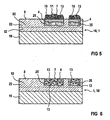
- FIG. 5 shows as a component 1 a layer system 16 which for example, by a turbine blade or vane is formed.
- the layer system 16 consists in this case of a Sub-3strat 19, for example a superalloy, for example.
- the base composition Ni 3 Al.
- a layer 22 is applied, for example of the composition MCrAlY, where M stands for a chemical element Cr, Ni or Fe.
- This so-called MCrAlY layer forms a corrosion protection layer, which can also act as an adhesion-promoting layer for a ceramic thermal insulation layer (not shown) applied to the layer 22.
- the layer system 16 it comes, for example. for oxidation, nitridation or sulfidation, i. degradation the MCrAlY layer 22, so that in the layer 22 Form areas with corrosion products 4, 5 (not shown).
- the corrosion products 4, 5 form an at least partially existing layer in or on or below the surface 7 of the component 16.
- the layer region 52 to be removed is indicated by a dashed line and includes all Corrosion products 4, 5 or the entire layer 22.
- the MCrAlY layer can also deplete of chromium (Cr), so that the impregnating component 13, for example the elements Al and / or Cr having.
- Cr chromium
- Impregnating component 13 may also include other metals, e.g. Cobalt, or elements or combinations thereof. Both the corrosion products 4 and the sacrificial zone 25 have in the acid bath opposite the material of the layer 22, So the MCrAlY, a higher acid resistance.
- a rough removal the ceramic thermal barrier coating, the corrosion products or from other areas by mechanical methods, e.g. Sandblasting, and / or chemical agents, e.g. acid bath respectively.
- the metal component 13 which in this example is aluminum contains, both in the areas with the corrosion products 4 as well as in the victim zones 25, so that there at least a metal component 13 is present. Only through the enrichment with the metal component 13 may be in an acid bath treatment of the layer system 16 a certain layer thickness Layer 22 (MCrAlY) are removed evenly.
- MrAlY layer thickness Layer 22
- the cleaning agent 10 may also include several metallic components 13 (Al, Cr), if that for the composition the corrosion products or the depleted victim zones 25 is required.
- the metallic component 13 is, for example, with at least one Carrier substance, for example aluminum oxide or aluminum silicate, mixed.
- the cleaning agent 10 may be metallic Component 13 also in the form of a metal complex.
- the cleaning agent 10 has at least one activating agent, for example a halogen compound, for example in the form of ammonium chloride (NH 4 Cl).
- a halogen compound for example in the form of ammonium chloride (NH 4 Cl).
- the aluminum reacts as metal component 13 with the halogen compound to a gaseous compound.
- a gaseous compound This is in Example of ammonium chloride aluminum chloride.
- the gaseous Connection penetrates into the at least one victim zone 25 or makes it possible to diffuse the aluminum into the component 1, by, for example, forming an impregnating layer (FIG. 6). Therefore, the metal component 13 does not need to be melted become. But it can also be that the gaseous Compound forms only at temperatures above the Melting point of the at least one impregnating component is because, for example, a sublimation occurs.
- the impregnating component 13 and the activating component are contained in a compound (eg AlF 3 ).
- the heat treatment forms a gaseous compound aluminum fluoride (AlF).
- the heat treatment can be carried out in vacuum or inert gases Hydrogen and / or argon are performed.
- the cleaning agent 10 may, in addition to the metal component 13, the carrier substance and the activating agent one more for example, organic binders (carboxyl methacrylate, carboxyl methyl cellulose or similar compounds), so that the detergent 10 is a pasty or muddy Has consistency, so the corroded component Apply 1 well and due to the binder on the component 1, 16 can adhere.
- organic binders carboxyl methacrylate, carboxyl methyl cellulose or similar compounds
- the invention is not limited to the said application methods.
- the concentration is reduced the metal component 13 in the surface 7 facing Range of detergent 10. From this range can only still slightly a metal component 13 or in extreme cases no metal component 13 more diffuse into the component 1. Another, desired deeper penetration of the Metal component 13 in the depth of the material 1 is only by further diffusion of the already diffused Metal component 13 instead. However, a longer hold would be of the component 1 at elevated temperature cause from a surface 11 of the cleaning agent 10 the Metal component 13 via the gaseous compound to Surface regions 8 of the component 1 passes, on which no Detergent 10 was applied and also no penetration the metallic component 13 or the reaction products is desired.
- the cleaning agent 10 in this case after a certain duration of the heat treatment removed and finds it just another, desired penetration of the Metal component 13 in the depth of the material 1 by Diffusion of already diffused into the component 1 metallic component 13 due to a thermal treatment of the component 1 without detergent 10 instead.
- the Thermal treatment is, for example, by a solution annealing of Component 1 allows.
- the removal of the cleaning agent 1 poses no problems because the metallic component 13 is not melted is.
- the cleaning agent 10 may be local, in particular via the erosion resistant Areas, large or full the component 1, 16 may be applied.
- Layer material MCrAlY
- Depth of corrosion products in the layer 150 ⁇ m (depleted Al area)
- Application of the cleaning agent 10 results in a sacrificial zone 25 to a depth of 80 microns with a heat treatment at 925 ° C and 2h duration, After removal of the cleaning agent, a thermal treatment takes place at 1120 ° C for a maximum of 20 hours: Sacrificial zone 25 has a depth of 150 ⁇ m.
- the duration of the thermal treatment or the temperature can be based on of calibration curves (diffusion depth depending on time and temperature) of the spatial extent of the corrosion products be adapted in the component.
- the cleaning agent 10 may before the Heating a mask layer are applied, which prevents that of the surface 11 of the cleaning agent 10 the metallic component 13 reaches surfaces 8 of the component 1, on which no detergent was applied and also no penetration of the metallic component 13 is desired is.
- the cleaning agent 10 remain on the component 1 and still carried out a heat treatment to achieve the effect described above.
- the invention is not limited to parts of gas turbines, but also works for components that have at least one Layer, for example.
- the invention is not limited to components that have no layers, but their corrosion products removed must be such. in reaction vessels in the chemical industry.
- FIG. 7 shows a layer system 16 that consists of a substrate 19, for example a nickel-based superalloy, an intermediate layer, in particular an MCrAlY layer 28, and an outer heat-insulating layer 31.
- the layer system 16 was exposed in use mechanical and thermal loads and should be restored for re-use (refurbishment).
- the thermal barrier coating 31 is removed by sandblasting, for example. This can be done in a simple manner by mechanical means, since the heat-insulating layers 31 are mostly ceramic, ie brittle layers.
- the at least one intermediate layer 28 is metallic and is more difficult to remove by mechanical means.
- FIG. 8 shows the layer system 16 in which the thermal barrier coating 31 has already been removed and the intermediate layer 28 is shown enlarged.
- the intermediate layer 28 is degraded. Degradation means in the case that corrosion products, ie oxides, nitrides and sulfides have formed or that a phase segregation has taken place, for example the coagulation of aluminum phases 43 or a change in the concentration structure due to diffusion.
- the intermediate layer 28 does not necessarily have the following appearance: In a first zone 34, on which the thermal barrier coating 31 was applied, there are external 4 and internal corrosion products 5 which have been formed by contact and reaction with a reactive medium.
- a second zone 37 extending towards the substrate 19 connects to the first zone 34, for example, are none Corrosive products present, but through thermal Stress related diffusion has become aluminum or Aluminum phases or other elements coagulated.
- the second zone 37 is followed by a third zone 40, located between the substrate 19 and the second zone 37 located.
- the concentration has the intermediate layer 28 starting from their Initial composition due to diffusion of elements changed into the substrate 19.
- This is in the case of a MCrAlY interlayer 28 and a Ni-A1 superalloy as Substrate 19, for example, aluminum, in the MCrAlY layer in higher concentration than in the substrate 19 exists and therefore due to the Concentration difference in the substrate diffuses. So is, for example, the entire intermediate layer 28 degrades the layer 52 to be removed represents.
- the third zone 40 can also be that only the first zone and the second zone 34, 37 are degraded and the third zone 40 shows no signs of degradation. Nevertheless, can also the third zone 40 by impregnation with the Impregnating 13 made part of a sacrificial zone 25 and be removed.
- FIG. 10 shows a substrate 19, for example a nickel-base superalloy a turbine blade through the Use in a degraded near-surface region 46 which degrades the layer region 52 to be removed represents.
- the degraded area 46 is for example by corrosion or by in-diffusion of elements in the substrate 19 or path diffusion of elements of the Substrate 19 in layers or layers resting thereon Layer regions of the substrate emerged.
- Impregnating 13 in the degraded area 46th introduced so that the degraded region 46 to a Sacrificial zone 25 will and remove itself completely and easily leaves (Figure 11).
- the layer region 52 to be removed comprises but at least the degraded area can also be increased become.
- FIG. 12 shows a layer system 16 that consists of a substrate 19 and a, for example, undegraded chromium layer 49, which represents the layer region 52 to be removed, since a chromium-containing or chromium layer 49 has a high resistance to erosion against chemical erosion processes.
- a chromium-containing or chromium layer 49 has a high resistance to erosion against chemical erosion processes.
- the application example is not limited to a chromium layer or the chromium layer can also be degraded by corrosion, for example.
- the layer 49 can be badly removed with the usual removal methods such as acid stripping.
- Impregnating 13 penetrate into the layer 49, whereby the layer 49 with the usual methods, For example, it is easier to remove acid stripping (Figure 13) because the resistance to erosion has been reduced.
- the impregnating component 13 in the Substrate penetrate or increases the victim zone 25th through an extension zone 54 during the thermal treatment due to diffusion.
Landscapes
- Chemical & Material Sciences (AREA)
- Engineering & Computer Science (AREA)
- Mechanical Engineering (AREA)
- Materials Engineering (AREA)
- Organic Chemistry (AREA)
- Metallurgy (AREA)
- Chemical Kinetics & Catalysis (AREA)
- General Engineering & Computer Science (AREA)
- General Chemical & Material Sciences (AREA)
- ing And Chemical Polishing (AREA)
- Other Surface Treatments For Metallic Materials (AREA)
- Cleaning And De-Greasing Of Metallic Materials By Chemical Methods (AREA)
- Turbine Rotor Nozzle Sealing (AREA)
Abstract
Description
Dabei ist es erstmals möglich, die Abscheidung von einem Imprägnierstoff aus der Gasphase in einem lokal kontrollierbaren Verfahren durchzuführen, so dass es trotz der gasförmigen Verbindung mit dem Imprägnierstoff nicht zu einer Imprägnation in Bereichen kommt, die unbehandelt bleiben sollen.
Das Reinigungsmittel kann auch auf vorteilhafte Art und Weise nur lokal auf dem Bauteil aufgebracht werden, da Bereiche, die nicht korrodiert sind, keine Auftragung des Reinigungsmittels benötigen, wodurch Reinigungsmittel gespart werden kann.
Das Verfahren eignet sich vorteilhafterweise für Schichtsysteme wie z.B. eine Turbinenschaufel, die ein Schichtsystem aus einem metallischen Substrat, einer MCrAlY-Schicht und einer darauf aufgebrachten keramischen Wärmedämmschicht aufweisen.
Tiefe der Korrosionsprodukte in der Schicht: 150µm (verarmter Al-Bereich),
Aufbringen des Reinigungsmittel 10 ergibt eine Opferzone 25 bis in eine Tiefe von 80µm bei einer Wärmebehandlung bei 925°C und 2h Dauer,
nach Entfernen des Reinigungsmittels findet eine Thermobehandlung bei 1120°C für höchstens 20h statt:
Opferzone 25 hat eine Tiefe von 150µm.
Das Schichtsystem 16 war im Einsatz mechanischen und thermischen Belastungen ausgesetzt und soll für einen erneuten Einsatz wieder hergestellt werden (Refurbishment). Dabei wird die Wärmedämmschicht 31 beispielsweise durch Sandstrahlen entfernt. Dies kann auf einfache Art und Weise mit mechanischen Mitteln erfolgen, da es sich bei den Wärmedämmschichten 31 meistens um keramische, d.h. spröde Schichten handelt. Die zumindest eine Zwischenschicht 28 ist metallisch und lässt sich schwieriger mit mechanischen Mitteln entfernen.
Dabei sieht die Zwischenschicht 28 aber nicht notwendigerweise wie folgt aus: In einer ersten Zone 34, auf der die Wärmedämmschicht 31 aufgebracht war, sind äußere 4 und innere Korrosionsprodukte 5 vorhanden, die durch Kontakt und Reaktion mit einem reaktiven Medium entstanden sind.
Das Anwendungsbeispiel ist jedoch nicht auf eine Chromschicht beschränkt bzw. die Chromschicht kann auch bspw. durch Korrosion degradiert sein. Die Schicht 49 lässt sich mit den üblichen Entfernungsmethoden wie z.B. Säurestrippen schlecht entfernen.
Claims (27)
- Verfahren zur Entfernung von zumindest einem Schichtbereich (52) eines Bauteils (1) aus Metall und/oder aus zumindest einer Metallverbindung,
das folgende Schritte umfasst:lokale Aufbringung eines mehrkomponentigen Reinigungsmittels (10) auf einer Oberfläche des korrodierten Bauteils (1), wobei das Reinigungsmittel (10) zumindest eine Imprägnierkomponente (13), die in den Schichtbereich (52) des Bauteils (1) diffundieren kann, und zumindest eine Aktivierungskomponente enthält,Wärmebehandlung des Bauteils (1) mit dem Reinigungsmittel (10) so,
dass die zumindest eine Imprägnierkomponente (13) und die zumindest eine Aktivierungskomponente zumindest eine gasförmige Verbindung bilden,Bildung von zumindest einer Opferzone (25) zumindest teilweise in dem abzutragenden Schichtbereich (52) des Bauteils (1) aufgrund der Wärmebehandlung, indem die zumindest eine gasförmige Verbindung in Kontakt mit dem Bauteil (1) kommt, wodurch die Abtragungsresistenz der bisherigen abtragungsreststenteren Bereiche zumindest verringert wird,Abtragung der abzutragenden Schicht (52) mit der zumindest einen Opferzone (25). - Verfahren nach Anspruch 1,
dadurch gekennzeichnet, dass
das Reinigungsmittel (10) auf dem Bauteil (1) zumindest teilweise haftet. - Verfahren nach Anspruch 1,
dadurch gekennzeichnet, dass
die zumindest eine Opferzone (25) zumindest teilweise durch Bereiche des Bauteils (1) gebildet wird, die die zumindest eine Imprägnierkomponente (13) aufweisen. - Verfahren nach Anspruch 1,
dadurch gekennzeichnet, dass
das Reinigungsmittel (10) als zumindest eine Imprägnierkomponente (13) zumindest eine Metallkomponente (13) aus einem Metall oder einer Metalllegierung oder eine metallhaltige Komponente (13) aufweist. - Verfahren nach Anspruch 1,
dadurch gekennzeichnet, dass
die zumindest eine Imprägnierkomponente (13) unmittelbar aus der Gasphase oder nach Abscheiden auf dem Bauteil (1) durch Diffusion in das Bauteil (1) eindringt. - Verfahren nach Anspruch 1,
dadurch gekennzeichnet, dass
die Temperatur bei der Wärmebehandlung des Bauteils (1) mit dem Reinigungsmittel (10) unterhalb des niedrigsten Schmelzpunkts der zumindest einen Imprägnierkomponente (13) liegt. - Verfahren nach Anspruch 1,
dadurch gekennzeichnet, dass
das Reinigungsmittel (10) als zumindest eine Aktivierungskomponente eine Halogenverbindung enthält. - Verfahren nach Anspruch 4,
dadurch gekennzeichnet, dass
die Metallkomponente (13) aus Aluminium ist oder die metallhaltige Komponente (13) Aluminium enthält. - Verfahren nach Anspruch 1 oder 3,
dadurch gekennzeichnet, dass
die zumindest eine Opferzone (25) zumindest teilweise Aluminium oder Aluminiumverbindungen aufweist. - Verfahren nach einem oder mehreren der Ansprüche 1, 2, 4 oder 7, dadurch gekennzeichnet, dass das Reinigungsmittel (10) als weitere Komponente zumindest eine Trägersubstanz aufweist.
- Verfahren nach Anspruch 10,
dadurch gekennzeichnet, dass
die Trägersubstanz Aluminiumoxid ist. - Verfahren nach Anspruch 1, oder 2,
dadurch gekennzeichnet, dass
das Reinigungsmittel (10) eine pastenartige Konsistenz aufweist. - Verfahren nach Anspruch 1, 2 oder 12,
dadurch gekennzeichnet, dass
das Reinigungsmittel (10) als eine weitere Komponente zumindest einen Binder zur Herstellung der pastenartigen Konsistenz des Reinigungsmittels (10) aufweist. - Verfahren nach Anspruch 1 oder 2,
dadurch gekennzeichnet, dass
das Bauteil (1) ein Schichtsystem (16) mit zumindest einer Schicht (22), insbesondere eine beschichtete Turbinenschaufel, ist,
wobei der abzutragende Schichtbereich (52) der Schicht (22) entspricht. - Verfahren nach Anspruch 14,
dadurch gekennzeichnet, dass
die Schicht (22) eine MCrAlY-Schicht ist. - Verfahren nach Anspruch 1, 2 oder 15,
dadurch gekennzeichnet, dass äußere Korrosionsprodukte (4) in der Oberfläche (7) des Bauteils (1, 16) entfernt werden. - Verfahren nach Anspruch 1, 2 oder 15,
dadurch gekennzeichnet, dass innere Korrosionsprodukte (5) unterhalb der Oberfläche (7) des Bauteils (1, 16) entfernt werden. - Verfahren nach Anspruch 1 oder 2,
dadurch gekennzeichnet, dass
in einem Zwischenschritt das Reinigungsmittel (10) nach der Wärmebehandlung entfernt wird. - Verfahren nach Anspruch 18,
dadurch gekennzeichnet, dass
in einem Zwischenschritt die zumindest eine Opferzone (25) in der Tiefe des Bauteils (1) durch eine Thermobehandlung vergrößert wird. - Verfahren nach Anspruch 19,
dadurch gekennzeichnet, dass
die Temperatur der Thermobehandlung zumindest teilweise oberhalb der Temperatur der Wärmebehandlung liegt. - Verfahren nach Anspruch 4 oder 20,
dadurch gekennzeichnet, dass
die Temperatur der Thermobehandlung ein Lösungsglühen des Bauteils (1) ermöglicht. - Verfahren nach Anspruch 1,
dadurch gekennzeichnet, dass
das Reinigungsmittel (10) auf die Oberfläche (7) des Bauteils (1) im Bereich von Korrosionsprodukten (4, 5) aufgetragen wird. - Verfahren nach Anspruch 1, 5 oder 6,
dadurch gekennzeichnet, dass
die gasförmige Verbindung eine Imprägnierschicht in dem Bauteil (1) erzeugt, die zumindest teilweise aus der zumindest einen Imprägnierkomponente (13) besteht. - Verfahren nach Anspruch 1,
dadurch gekennzeichnet, dass
der Schichtbereich (52) Korrosionsprodukte (4, 5) enthält. - Verfahren nach Anspruch 1,
dadurch gekennzeichnet, dass
der Schichtbereich (52) zumindest bereichsweise degradiert ist. - Verfahren nach Anspruch 1,
dadurch gekennzeichnet, dass
der Schichtbereich (52) zumindest bereichsweise degradiert ist durch Diffusion von chemischen Elementen aus oder in den Schichtbereich (52). - Verfahren nach Anspruch 1,
dadurch gekennzeichnet, dass der Schichtbereich (52) eine Chrom- oder chromhaltige Schicht ist.
Priority Applications (1)
| Application Number | Priority Date | Filing Date | Title |
|---|---|---|---|
| EP02730264A EP1432847B8 (de) | 2001-10-01 | 2002-05-17 | Verfahren zur entfernung von zumindest einem schichtbereich eines bauteils aus metall oder einer metallverbindung |
Applications Claiming Priority (4)
| Application Number | Priority Date | Filing Date | Title |
|---|---|---|---|
| EP01123593A EP1298230A1 (de) | 2001-10-01 | 2001-10-01 | Verfahren zur Entfernung von Schichtbereichen eines Bauteils aus Metall |
| EP01123593 | 2001-10-01 | ||
| EP02730264A EP1432847B8 (de) | 2001-10-01 | 2002-05-17 | Verfahren zur entfernung von zumindest einem schichtbereich eines bauteils aus metall oder einer metallverbindung |
| PCT/EP2002/005490 WO2003029521A1 (de) | 2001-10-01 | 2002-05-17 | Verfahren zur entfernung von zumindest einem schichtbereich eines bauteils aus metall oder einer metallverbindung |
Publications (3)
| Publication Number | Publication Date |
|---|---|
| EP1432847A1 EP1432847A1 (de) | 2004-06-30 |
| EP1432847B1 true EP1432847B1 (de) | 2005-03-09 |
| EP1432847B8 EP1432847B8 (de) | 2005-06-29 |
Family
ID=8178822
Family Applications (2)
| Application Number | Title | Priority Date | Filing Date |
|---|---|---|---|
| EP01123593A Withdrawn EP1298230A1 (de) | 2001-10-01 | 2001-10-01 | Verfahren zur Entfernung von Schichtbereichen eines Bauteils aus Metall |
| EP02730264A Expired - Lifetime EP1432847B8 (de) | 2001-10-01 | 2002-05-17 | Verfahren zur entfernung von zumindest einem schichtbereich eines bauteils aus metall oder einer metallverbindung |
Family Applications Before (1)
| Application Number | Title | Priority Date | Filing Date |
|---|---|---|---|
| EP01123593A Withdrawn EP1298230A1 (de) | 2001-10-01 | 2001-10-01 | Verfahren zur Entfernung von Schichtbereichen eines Bauteils aus Metall |
Country Status (6)
| Country | Link |
|---|---|
| US (2) | US7138065B2 (de) |
| EP (2) | EP1298230A1 (de) |
| JP (1) | JP2005504179A (de) |
| CN (1) | CN1328413C (de) |
| DE (1) | DE50202441D1 (de) |
| WO (1) | WO2003029521A1 (de) |
Families Citing this family (16)
| Publication number | Priority date | Publication date | Assignee | Title |
|---|---|---|---|---|
| EP1298230A1 (de) * | 2001-10-01 | 2003-04-02 | Siemens Aktiengesellschaft | Verfahren zur Entfernung von Schichtbereichen eines Bauteils aus Metall |
| EP1367144A1 (de) * | 2002-05-29 | 2003-12-03 | Siemens Aktiengesellschaft | Verfahren zur Entfernung von zumindest einem Teilbereich eines Bauteils aus Metall oder einer Metallverbindung |
| EP1676938A1 (de) * | 2004-12-30 | 2006-07-05 | Siemens Aktiengesellschaft | Verfahren zur Herstellung eines Bauteils einer Turbine und ein Bauteil einer Turbine |
| EP1870485A1 (de) * | 2006-06-22 | 2007-12-26 | Siemens Aktiengesellschaft | Zusammensetzung und Verfahren zur Metallisierung eines Bauteils |
| EP1870497A1 (de) * | 2006-06-23 | 2007-12-26 | Siemens Aktiengesellschaft | Verfahren zum elektrochemischen Entfernen einer metallischen Beschichtung von einem Bauteil |
| EP1890004A1 (de) | 2006-08-08 | 2008-02-20 | Siemens Aktiengesellschaft | Verfahren zum Herstellen einer Nutzschicht aus wiederverwendetem Schichtmaterial |
| DE102006044416A1 (de) * | 2006-09-18 | 2008-03-27 | Siemens Ag | Verfahren zum elektrochemischen Be- oder Entschichten von Bauteilen |
| DE102008004559B4 (de) * | 2007-01-23 | 2017-03-16 | General Electric Technology Gmbh | Verfahren zum Bearbeiten eines thermisch belasteten Bauteils |
| WO2009036776A1 (de) | 2007-09-13 | 2009-03-26 | Siemens Aktiengesellschaft | Korrosionsbeständiges druckbehälterstahlerzeugnis, ein verfahren zur herstellung desselben und eine gasturbinenkomponente |
| DE102013111854A1 (de) * | 2013-10-28 | 2015-05-21 | Aixtron Se | Verfahren zum Entfernen von Ablagerungen an den Wänden einer Prozesskammer |
| CN106757044B (zh) * | 2016-12-21 | 2018-12-14 | 中国南方航空工业(集团)有限公司 | 一种空心叶片内腔低熔点合金清理方法 |
| PL429832A1 (pl) * | 2019-05-05 | 2020-11-16 | Żrodowski Łukasz | Sposób wytwarzania addytywnego trójwymiarowych obiektów |
| EP4175772A4 (de) * | 2020-07-03 | 2024-08-28 | Applied Materials, Inc. | Verfahren zur sanierung von luft- und raumfahrtkomponenten |
| CN115595581B (zh) * | 2022-11-10 | 2024-04-26 | 上海电气燃气轮机有限公司 | 一种服役后热部件粘接层的去除方法 |
| US12203384B1 (en) * | 2023-09-15 | 2025-01-21 | Rtx Corporation | Method of restoring alloy depletion in an airfoil around cooling holes |
| US20260028918A1 (en) * | 2024-07-25 | 2026-01-29 | Rtx Corporation | Method for repairing a gas turbine engine component |
Family Cites Families (21)
| Publication number | Priority date | Publication date | Assignee | Title |
|---|---|---|---|---|
| US3544348A (en) * | 1968-10-25 | 1970-12-01 | United Aircraft Corp | Overhaul process for aluminide coated gas turbine engine components |
| US3622391A (en) * | 1969-04-04 | 1971-11-23 | Alloy Surfaces Co Inc | Process of stripping aluminide coating from cobalt and nickel base alloys |
| US4004047A (en) * | 1974-03-01 | 1977-01-18 | General Electric Company | Diffusion coating method |
| US4526814A (en) * | 1982-11-19 | 1985-07-02 | Turbine Components Corporation | Methods of forming a protective diffusion layer on nickel, cobalt, and iron base alloys |
| US4724172A (en) * | 1983-12-29 | 1988-02-09 | Sermatech International, Inc. | Thick coating compositions |
| US4566939A (en) * | 1985-01-25 | 1986-01-28 | Avco Corporation | Surface preparation of nickel base alloys for brazing |
| US4933239A (en) * | 1989-03-06 | 1990-06-12 | United Technologies Corporation | Aluminide coating for superalloys |
| US5254413A (en) * | 1991-01-31 | 1993-10-19 | General Electric Company | Method for repair and restoration of a ceramic thermal barrier-coated substrate by providing an intermetallic coating |
| DE69109077T2 (de) | 1991-01-31 | 1995-12-14 | Gen Electric | Aluminisieren von Gegenständen, geschützt durch ein thermisch gesperrtes Überzugssystem. |
| GB9116332D0 (en) * | 1991-07-29 | 1991-09-11 | Diffusion Alloys Ltd | Refurbishing of corroded superalloy or heat resistant steel parts and parts so refurbished |
| GB9210683D0 (en) * | 1992-05-19 | 1992-07-08 | Rolls Royce Plc | Multiplex aluminide-silicide coating |
| EP0713957A1 (de) * | 1994-11-25 | 1996-05-29 | FINMECCANICA S.p.A. AZIENDA ANSALDO | Methode zum Reparieren von Schutzschichten auf Gasturbinenschaufeln |
| US5728227A (en) * | 1996-06-17 | 1998-03-17 | General Electric Company | Method for removing a diffusion coating from a nickel base alloy |
| US6022632A (en) * | 1996-10-18 | 2000-02-08 | United Technologies | Low activity localized aluminide coating |
| US6036995A (en) * | 1997-01-31 | 2000-03-14 | Sermatech International, Inc. | Method for removal of surface layers of metallic coatings |
| US6042879A (en) * | 1997-07-02 | 2000-03-28 | United Technologies Corporation | Method for preparing an apertured article to be recoated |
| US6110262A (en) * | 1998-08-31 | 2000-08-29 | Sermatech International, Inc. | Slurry compositions for diffusion coatings |
| US6203847B1 (en) * | 1998-12-22 | 2001-03-20 | General Electric Company | Coating of a discrete selective surface of an article |
| US6199276B1 (en) * | 1999-08-11 | 2001-03-13 | General Electric Company | Method for removing a dense ceramic thermal barrier coating from a surface |
| US6560870B2 (en) * | 2001-05-08 | 2003-05-13 | General Electric Company | Method for applying diffusion aluminide coating on a selective area of a turbine engine component |
| EP1298230A1 (de) * | 2001-10-01 | 2003-04-02 | Siemens Aktiengesellschaft | Verfahren zur Entfernung von Schichtbereichen eines Bauteils aus Metall |
-
2001
- 2001-10-01 EP EP01123593A patent/EP1298230A1/de not_active Withdrawn
-
2002
- 2002-05-17 US US10/490,567 patent/US7138065B2/en not_active Expired - Fee Related
- 2002-05-17 DE DE50202441T patent/DE50202441D1/de not_active Expired - Lifetime
- 2002-05-17 WO PCT/EP2002/005490 patent/WO2003029521A1/de not_active Ceased
- 2002-05-17 JP JP2003532728A patent/JP2005504179A/ja active Pending
- 2002-05-17 CN CNB028170555A patent/CN1328413C/zh not_active Expired - Fee Related
- 2002-05-17 EP EP02730264A patent/EP1432847B8/de not_active Expired - Lifetime
-
2006
- 2006-09-29 US US11/541,253 patent/US7429337B2/en not_active Expired - Fee Related
Also Published As
| Publication number | Publication date |
|---|---|
| EP1432847B8 (de) | 2005-06-29 |
| US7138065B2 (en) | 2006-11-21 |
| US20040244817A1 (en) | 2004-12-09 |
| JP2005504179A (ja) | 2005-02-10 |
| CN1549874A (zh) | 2004-11-24 |
| DE50202441D1 (de) | 2005-04-14 |
| WO2003029521A1 (de) | 2003-04-10 |
| EP1298230A1 (de) | 2003-04-02 |
| CN1328413C (zh) | 2007-07-25 |
| US20070023392A1 (en) | 2007-02-01 |
| EP1432847A1 (de) | 2004-06-30 |
| US7429337B2 (en) | 2008-09-30 |
Similar Documents
| Publication | Publication Date | Title |
|---|---|---|
| EP1432847B8 (de) | Verfahren zur entfernung von zumindest einem schichtbereich eines bauteils aus metall oder einer metallverbindung | |
| DE102005025071B4 (de) | Verfahren zum Löten von Teilen aus Verbundwerkstoff, die mit einer Zusammensetzung auf Siliziumbasis abgedichtet sind | |
| DE69717007T2 (de) | Wärmedämmschicht für Superlegierung und Methode zu deren Auftragung | |
| DE3229293C2 (de) | ||
| DE69504023T2 (de) | Hochtemperatur-Schutzschicht für Superlegierung und Verwendungsverfahren | |
| DE69218061T2 (de) | Instandhaltung von Werkstücken aus korrodierten Superlegierungen oder korrodiertem hitzebeständigem Stahl und so instandgesetzte Teile | |
| DE69916149T2 (de) | Verbesserte Aluminid-Diffusionsverbundschicht für thermische Sperrschichtsysteme und Verfahren dazu | |
| DE3329908C2 (de) | ||
| DE602004012039T2 (de) | Diffusionsbeschichtungsverfahren | |
| EP2391742A1 (de) | Zinkdiffusionsbeschichtungsverfahren | |
| WO2005035819A1 (de) | Verfahren zu lokalen alitierung, silizierung oder chromierung von metallischen bauteilen | |
| DE69526524T2 (de) | Verbessertes Packzementierungsverfahren für Gegenstände mit kleinen Durchgängen | |
| DE2819856C2 (de) | Verfahren zur Erzeugung einer Carbidschicht aus Chrom, Vanadin, Niob und/oder Tantal auf Gegenständen aus Stahl oder legiertem Stahl und Schmelzbad zur Durchführung des Verfahrens | |
| DE2051925C3 (de) | Verzinkungspaste und Verfahren zur Herstellung von Überzügen aus dieser Paste auf Eisen- und Stahlgegenständen | |
| EP1097249B1 (de) | Verfahren zur herstellung einer panzerung für ein metallisches bauteil | |
| DE3148198A1 (de) | "hochtemperaturschutzschicht" | |
| DE19920567C2 (de) | Verfahren zur Beschichtung eines im wesentlichen aus Titan oder einer Titanlegierung bestehenden Bauteils | |
| DE19946650C2 (de) | Verfahren zum Herstellen einer Panzerung für ein metallisches Bauteil | |
| EP1367144A1 (de) | Verfahren zur Entfernung von zumindest einem Teilbereich eines Bauteils aus Metall oder einer Metallverbindung | |
| DE2531835C3 (de) | Verfahren zur Bildung eines Überzugs auf der Grundlage von Nickel und/oder Kobalt auf Gegenständen aus hochwarmfesten Metallmaterialien | |
| EP1870485A1 (de) | Zusammensetzung und Verfahren zur Metallisierung eines Bauteils | |
| DE1952370C (de) | Ahtierungsverfahren | |
| DE102004015989A1 (de) | Verfahren zum Aufbringen einer dünnen metallischen Haftschicht auf ein metallisches Substrat als Träger für Funktionsbeschichtungen wie z.B. für eine warmfeste keramische Deckschicht | |
| DE2452446A1 (de) | Verfahren zum aluminisieren eines eisengegenstands mit mindestens einer nichteisen-hartloetstelle | |
| DE102004028672A1 (de) | Verfahren zum Beschichten von Innenflächen hohler Gasturbinenschaufeln |
Legal Events
| Date | Code | Title | Description |
|---|---|---|---|
| PUAI | Public reference made under article 153(3) epc to a published international application that has entered the european phase |
Free format text: ORIGINAL CODE: 0009012 |
|
| 17P | Request for examination filed |
Effective date: 20031205 |
|
| AK | Designated contracting states |
Kind code of ref document: A1 Designated state(s): AT BE CH CY DE DK ES FI FR GB GR IE IT LI LU MC NL PT SE TR |
|
| GRAP | Despatch of communication of intention to grant a patent |
Free format text: ORIGINAL CODE: EPIDOSNIGR1 |
|
| RIN1 | Information on inventor provided before grant (corrected) |
Inventor name: REICHE, RALPH Inventor name: WILKENHOENER, ROLF Inventor name: KEMPSTER, ADRIAN Inventor name: JEUTTER, ANDRE Inventor name: CZECH, NORBERT |
|
| GRAS | Grant fee paid |
Free format text: ORIGINAL CODE: EPIDOSNIGR3 |
|
| RBV | Designated contracting states (corrected) |
Designated state(s): CH DE FR GB IT LI NL |
|
| GRAA | (expected) grant |
Free format text: ORIGINAL CODE: 0009210 |
|
| AK | Designated contracting states |
Kind code of ref document: B1 Designated state(s): CH DE FR GB IT LI NL |
|
| REG | Reference to a national code |
Ref country code: GB Ref legal event code: FG4D Free format text: NOT ENGLISH |
|
| REG | Reference to a national code |
Ref country code: CH Ref legal event code: EP |
|
| REF | Corresponds to: |
Ref document number: 50202441 Country of ref document: DE Date of ref document: 20050414 Kind code of ref document: P |
|
| REG | Reference to a national code |
Ref country code: CH Ref legal event code: NV Representative=s name: SIEMENS SCHWEIZ AG |
|
| GBT | Gb: translation of ep patent filed (gb section 77(6)(a)/1977) |
Effective date: 20050404 |
|
| RAP2 | Party data changed (patent owner data changed or rights of a patent transferred) |
Owner name: SIEMENS AG Owner name: DIFFUSION ALLOYS LIMITED |
|
| NLT2 | Nl: modifications (of names), taken from the european patent patent bulletin |
Owner name: SIEMENS AG EN DIFFUSION ALLOYS LIMITED Effective date: 20050622 |
|
| PLBE | No opposition filed within time limit |
Free format text: ORIGINAL CODE: 0009261 |
|
| STAA | Information on the status of an ep patent application or granted ep patent |
Free format text: STATUS: NO OPPOSITION FILED WITHIN TIME LIMIT |
|
| 26N | No opposition filed |
Effective date: 20051212 |
|
| EN | Fr: translation not filed | ||
| PG25 | Lapsed in a contracting state [announced via postgrant information from national office to epo] |
Ref country code: FR Free format text: LAPSE BECAUSE OF NON-PAYMENT OF DUE FEES Effective date: 20050531 |
|
| PG25 | Lapsed in a contracting state [announced via postgrant information from national office to epo] |
Ref country code: FR Free format text: LAPSE BECAUSE OF NON-PAYMENT OF DUE FEES Effective date: 20050309 |
|
| REG | Reference to a national code |
Ref country code: CH Ref legal event code: PCAR Free format text: SIEMENS SCHWEIZ AG;INTELLECTUAL PROPERTY FREILAGERSTRASSE 40;8047 ZUERICH (CH) |
|
| PGFP | Annual fee paid to national office [announced via postgrant information from national office to epo] |
Ref country code: NL Payment date: 20110517 Year of fee payment: 10 Ref country code: GB Payment date: 20110512 Year of fee payment: 10 |
|
| PGFP | Annual fee paid to national office [announced via postgrant information from national office to epo] |
Ref country code: IT Payment date: 20110526 Year of fee payment: 10 |
|
| PGFP | Annual fee paid to national office [announced via postgrant information from national office to epo] |
Ref country code: CH Payment date: 20110809 Year of fee payment: 10 |
|
| PGFP | Annual fee paid to national office [announced via postgrant information from national office to epo] |
Ref country code: DE Payment date: 20110718 Year of fee payment: 10 |
|
| REG | Reference to a national code |
Ref country code: NL Ref legal event code: V1 Effective date: 20121201 |
|
| REG | Reference to a national code |
Ref country code: CH Ref legal event code: PL |
|
| GBPC | Gb: european patent ceased through non-payment of renewal fee |
Effective date: 20120517 |
|
| PG25 | Lapsed in a contracting state [announced via postgrant information from national office to epo] |
Ref country code: LI Free format text: LAPSE BECAUSE OF NON-PAYMENT OF DUE FEES Effective date: 20120531 Ref country code: CH Free format text: LAPSE BECAUSE OF NON-PAYMENT OF DUE FEES Effective date: 20120531 |
|
| PG25 | Lapsed in a contracting state [announced via postgrant information from national office to epo] |
Ref country code: IT Free format text: LAPSE BECAUSE OF NON-PAYMENT OF DUE FEES Effective date: 20120517 |
|
| REG | Reference to a national code |
Ref country code: DE Ref legal event code: R119 Ref document number: 50202441 Country of ref document: DE Effective date: 20121201 |
|
| PG25 | Lapsed in a contracting state [announced via postgrant information from national office to epo] |
Ref country code: NL Free format text: LAPSE BECAUSE OF NON-PAYMENT OF DUE FEES Effective date: 20121201 |
|
| PG25 | Lapsed in a contracting state [announced via postgrant information from national office to epo] |
Ref country code: GB Free format text: LAPSE BECAUSE OF NON-PAYMENT OF DUE FEES Effective date: 20120517 |
|
| PG25 | Lapsed in a contracting state [announced via postgrant information from national office to epo] |
Ref country code: DE Free format text: LAPSE BECAUSE OF NON-PAYMENT OF DUE FEES Effective date: 20121201 |