EP1407587B1 - Dispersitätskodierung für inverse multiplexierung - Google Patents
Dispersitätskodierung für inverse multiplexierung Download PDFInfo
- Publication number
- EP1407587B1 EP1407587B1 EP02747732A EP02747732A EP1407587B1 EP 1407587 B1 EP1407587 B1 EP 1407587B1 EP 02747732 A EP02747732 A EP 02747732A EP 02747732 A EP02747732 A EP 02747732A EP 1407587 B1 EP1407587 B1 EP 1407587B1
- Authority
- EP
- European Patent Office
- Prior art keywords
- data
- stream
- data elements
- buffer
- packet
- Prior art date
- Legal status (The legal status is an assumption and is not a legal conclusion. Google has not performed a legal analysis and makes no representation as to the accuracy of the status listed.)
- Expired - Lifetime
Links
- 230000002441 reversible effect Effects 0.000 claims abstract description 14
- 239000000872 buffer Substances 0.000 claims description 151
- 238000000034 method Methods 0.000 claims description 65
- 230000005540 biological transmission Effects 0.000 claims description 16
- 238000013500 data storage Methods 0.000 claims description 7
- 238000012790 confirmation Methods 0.000 claims description 2
- 238000010276 construction Methods 0.000 claims description 2
- 238000007599 discharging Methods 0.000 claims 2
- 238000012546 transfer Methods 0.000 description 4
- 230000000295 complement effect Effects 0.000 description 3
- 238000012545 processing Methods 0.000 description 2
- RYGMFSIKBFXOCR-UHFFFAOYSA-N Copper Chemical compound [Cu] RYGMFSIKBFXOCR-UHFFFAOYSA-N 0.000 description 1
- 101150116749 chuk gene Proteins 0.000 description 1
- 238000004590 computer program Methods 0.000 description 1
- 239000010949 copper Substances 0.000 description 1
- 229910052802 copper Inorganic materials 0.000 description 1
- 230000005611 electricity Effects 0.000 description 1
- 239000003365 glass fiber Substances 0.000 description 1
- 230000007257 malfunction Effects 0.000 description 1
Images


Classifications
-
- H—ELECTRICITY
- H04—ELECTRIC COMMUNICATION TECHNIQUE
- H04L—TRANSMISSION OF DIGITAL INFORMATION, e.g. TELEGRAPHIC COMMUNICATION
- H04L1/00—Arrangements for detecting or preventing errors in the information received
- H04L1/02—Arrangements for detecting or preventing errors in the information received by diversity reception
- H04L1/04—Arrangements for detecting or preventing errors in the information received by diversity reception using frequency diversity
-
- H—ELECTRICITY
- H04—ELECTRIC COMMUNICATION TECHNIQUE
- H04L—TRANSMISSION OF DIGITAL INFORMATION, e.g. TELEGRAPHIC COMMUNICATION
- H04L25/00—Baseband systems
- H04L25/02—Details ; arrangements for supplying electrical power along data transmission lines
- H04L25/14—Channel dividing arrangements, i.e. in which a single bit stream is divided between several baseband channels and reassembled at the receiver
-
- H—ELECTRICITY
- H04—ELECTRIC COMMUNICATION TECHNIQUE
- H04L—TRANSMISSION OF DIGITAL INFORMATION, e.g. TELEGRAPHIC COMMUNICATION
- H04L12/00—Data switching networks
- H04L12/54—Store-and-forward switching systems
- H04L12/56—Packet switching systems
- H04L12/5601—Transfer mode dependent, e.g. ATM
- H04L2012/5603—Access techniques
Definitions
- the invention relates to inverse multiplexing of digital data.
- the data are sent in the form of data packets via a medium. This can take place via physical cabling in, for instance, copper or glass fibre, or cordlessly, for instance via infrared or radio waves.
- Maxem chuk in " Dispersity Routing", IEEE Conference on Communications, 1975 , discloses the transmission of data in three streams
- the invention provides a device for sending a packet of digital data consisting of data elements, using the method of claim 1, according to claim 19.
- the invention provides a device for receiving a packet of digital data consisting of data elements, transmited using the method of claim 1, according to claim 20.
- the invention provides an apparatus comprising a machine-readable medium containing instructions which, when executed by a machine, causes the machine to perform the method of the method of
- the invention further provides the machine-readable medium of claim 28, and the methods of claim 30 and claim 31.
- the machine readable instructions can be computer software in any conceivable form.
- the software can be man-readable, i.e. instructions in C, Basic, Pascal, or machine-readable only, i.e. in HEX or in digital form.
- the data connection is a-symmetrical: the transfer capacity is smaller than the receiving capacity.
- the entire receiving capacity can be used despite the smaller transmission capacity.
- This may for instance be of Importance In so-called streaming broadcasts through the internet, wherein through the internet digital radio broadcasts and in the future even television or video can take place.
- the data flows can also enter via various lines. For instance one data flow can for example enter via a telephone line, and another data flow via a cable, the electricity grid or cordlessly via GSM. It is also possible to let the data flows enter via one cable by means of physical multiplexing. The invention therefore actually offers a specific form of digital inverse multiplexing.
- Inverse multiplexing according to the invention can take place at different levels, at micro level and at macro level, or simultaneously at different levels.
- a possible micro level is bit level.
- a possible macro level is the level of data packets that are merged into data at receipt, as known from connections that run via the internet.
- consecutive first data elements from the rear part of the front subarea are selected from rear to front.
- consecutive second data elements from the front part of the rear subarea are selected from front to rear, which once more considerably simplifies the control.
- the packet of digital data if necessary supplemented to a packet that can be split into two equal parts, can be split into two equal sized parts. As a result fewer positions have to be tallied, and a simple method can be guaranteed.
- the first and second data elements are bits of the packet of digital data
- the third data element is the result of a single binary operation, preferably an XOR operation, on the first data element and the second data element.
- An XOR operation is the most simple operation.
- the data elements of the first, second and third flow, respectively are placed in a first, second and third data buffer, respectively.
- the data buffers can have the size of half the packet of digital data. In this way a simple method can be realised with minimal memory means and control.
- the data elements of the first, second and third flow, respectively are placed in one data buffer having the size of the packet of digital data.
- the first flow can fill the data buffer from front to rear
- the second flow can fill the data buffer from rear to front
- the third flow is duplicated, wherein one duplicated flow fills the data buffer from the middle to the front, and the other duplicated flow fills the data buffer from the middle to the rear.
- the data elements of the first and second flow are placed in a first data buffer, wherein the first flow fills the data buffer from front to rear, and the second flow fills the data buffer from rear to front, and the data elements of the third flow are placed in a second data buffer.
- either the first or the second flow can overwrite data elements already present in the data buffer originating from the third flow.
- a first, second or third device respectively, sends the first, second and third flow, respectively, to a fourth device.
- the fourth device can send a signal to the first, second and third device when either the data buffer is full or the respective data buffers are full, or stops sending receipt confirmations as soon as the data buffer is full or the respective data buffers are full.
- the flows are almost simultaneously sent.
- An embodiment of the method described above relates to a method wherein a transmitting device sends the first, second and third flow to a first, second and third receiving device, respectively, and wherein the first, second and third receiving device forward their respective flows to the other two receiving devices.
- the invention relates to a method for sending a packet of digital data to a first device in an organic data network, wherein at least two transmitting devices in the data network simultaneously send complementary data packets to the first device and a third transmitting data device sends data packets to the first device that have been obtained from each time a first data element from the rear part of the front subarea of the packet and the second data element from the front part of the rear subarea of the packet which by means of a reversible operation have been reduced into one third data element, wherein the data packets of the transmitting devices form the packet when merged.
- the first device controls the transmission of the transmitting devices, and the first device forwards the data packet to at least one device in the data network, independent of the transmitting device or devices.
- the software or the device can be deployed in an organic network as described in Dutch patent 1017388 .
- the invention relates to a method for receiving a packet of digital data, wherein a receiving device provided with data storage means creates a data buffer in the data storage means the size of a packet of digital data to be received, and after that almost simultaneously receives a first flow, a second flow, and at least one third flow of data elements, wherein the receiving device fills the data buffer from front to rear with the first flow of data elements and fills the data buffer from rear to front with the second flow of data elements, and fills the data buffer from the middle to the front and to the rear with the third flow of data elements.
- the receiving device makes it known to transmitting devices of the flows of data elements when the front or rear half of the data buffer is full and the quantity of data of the third flow and the flow that does not fill the data buffer halfway yet together are sufficient to fill the other half of the data buffer.
- the invention relates to a method for sending a packet of digital data, wherein a device provided with data storage means creates a data buffer in the data storage means, stores the packet of digital data in the data buffer, converts each time a first data element from the rear part of the front subarea of the data buffer and a second data element from the front part of the rear subarea of the data buffer into one data element by means of a reversible operation, and transmits said data element.
- a device for receiving according to the invention can furthermore comprise a duplicating module, adapted for duplicating a data element and writing each of the duplicated data elements to the memory module.
- the invention relates to software for sending a packet of digital data according to a method described above, wherein the software is provided with:
- a device stops sending after receipt of a signal from the receiving device.
- the coordination is again simple.
- routines for carrying out the method according to one or more of the preceding claims. From the above description, in combination with the figures and their description, it will immediately be obvious to the expert which routines are necessary to that end, and how said routines have to work with respect to each other.
- Such software can of course be immediately implemented in hardware, for instance in a PROM, EPROM or the like, or entered into hardware, for instance at chip level in hardware logic.
- the invention relates to a carrier provided with software as described.
- the invention relates to a device, provided with software as described.
- the software can also be provided on a machine, comprising a machine-readable medium containing instructions which, when executed by a machine, cause the machine to perform the operations described above.
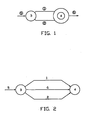
- Figure 1 shows a situation as has also been described in Dutch patent 1017870 , wherein a signal 5 conventionally enters a receiver 3.
- Receiver 3 splits the signal, or each data packet of which the signal has been built up, into two flows 1 and 2 to forward it to receiver 4.
- Flow 1 is the signal, sent from the front, that means the first bit of the data packet or the signal is sent first, then the second, etc.
- Flow 2 is the signal 5 or a data packet thereof, but then backwards, that means first the last bit is sent, then the penultimate one, etc.
- Receiver 4 fills its data buffer simultaneously from the front with signal 1 and from the rear with signal 2. This can also take place by means of a computer program, but can also be implemented by way of hardware.
- the receiver 4 sends a signal to transmitter/sender 3 that the buffer is full, that means that the signal has been received. It is of course also possible that receiver 4 keeps sending a signal to transmitter/sender 3 until the buffer is full, or just closes down the connection when the buffer is full, or sets a port at high or low.
- figure 2 almost the same situation is described as in figure 1 , however, a third data flow or signal 6 is present according to the present invention.
- the complete signal or data packet can be reconstructed here when one of both other signals 1 or 2 has been completely received, that means that one half of the data has been received and the other two flows 1 or 2 together with 6 form the other half of the data or the packet of data. Whether the data of the three flows together are sufficient for reconstructing the packet of digital data, can also be used as criterion. This is further elucidated in among others figures 5A-5D .
- FIG 3 a possible situation is shown in which a first, second and third device (10, 11, 12) send flows of data 13, 14 and 15, respectively, to a fourth device 16.
- Device 16 reconstructs the original signal or the original data flow, and forwards it as data flow 17. This may for instance be advantageous when the receiving capacity of device 16 is larger or equal to the common transmission capacity of 10, 11 and 12. An even larger advantage is created when the transmission capacity of 16 is larger than the transmission capacity of 10, 11 or 12. After all a flow 17 is thus obtained that has a larger speed than the three separate flows 13, 14 and 15.
- Figure 4 shows an embodiment wherein a first device 20 receives a data flow 21. Said flow is split in three separate flows 22, 23 and 24 to devices 25, 26 and 27, respectively. Said devices forward their received data to each other. This is possible in various ways. Shown is and option wherein 25 exchanges with 26 and 26 with 27. It is also possible that all three devices 25, 26 and 27 exchange one with the other. The three devices can all three of them forward the data again, as a result of which effectively a transmission capacity is achieved that is three times as large.
- Figure 5A-5D shows an embodiment of the operation of the invention.
- one device 30 sends three flows A, B and C and one device 31 receives three flows A, B and C (as is also the case in figures 6A-C and 7A-B ).
- the transmitting device 30 is provided with a data buffer 32 provided with n data elements 1....n. Said data elements may for instance be little data packets, bits or bytes.
- Flow A consists of data elements that are consecutively are retrieved from the data buffer 32 according to the sequence indicated with direction a.
- Flow C consists of data elements that are consecutively retrieved from the data buffer 32 according to the sequence indicated by direction c.
- Flow B arises as a result of data elements that are consecutively retrieved from the data buffer according to the sequence indicated by the direction b, and data elements that are retrieved from the data buffer according to the sequence that is indicated by the direction b'. Two data elements in this case are subjected to an XOR operation 33 resulting in one output data element.
- the receiving device in this example comprises two data buffers, data packet buffer 36 that may contain n data elements, and an auxiliary data buffer 35 that may contain n/2 data elements.
- the incoming flow A fills data packet buffer 36 from front to rear and flow C fills data packet buffer 36 from rear to front. Sofar the method is the same as the one described in Dutch patent 1017870 .
- the incoming flow B fills the auxiliary data buffer 35 from front to rear. In figure 5B said progress is shown. In this example 3 data elements are sent via flow A and number 4 starts (dotted line), 7 data elements are sent via flow C and via flow B 11 data elements and number 12 starts (dotted line).
- Successively the data elements according to the sequence indicated by arrow e are retrieved one by one from the auxiliary data buffer 35 and supplied to XOR operation device (or XOR operator) 38.
- XOR operation device or XOR operator
- the output of the XOR operation device 38 is an original data element of the original packet of data that is placed in the data packet buffer 36, from the middle of the data packet buffer towards the rear, according to the direction indicated by arrow h.
- the complete data packet buffer 36 is filled and the original packet of data is reconstructed.
- FIG 5D the situation is shown wherein almost the entire data packet buffer 36 is filled.
- the flow C that still continues here, can already be stopped when flow A has been completely received, in this case n/2 data elements large, and the number of data elements of flow B and C together are equal to the remaining part of the data elements, in this case n/2.
- FIG 6A the situation is shown wherein at the receiving side 41 use is made of three data buffers A, B and C. From the transmitting side three data flows A, B and C are running, which at the receiving side are put in the data buffers A, B and C, respectively.
- said receiving buffers are n/2 data elements large.
- An advantage of making use of three data buffers is that checking is easy. When a buffer is full sending the flow that fills the buffer can be stopped with. Also when a buffer is full, the flow that filled the now full buffer can be diverted and fill another buffer from another side than from where an existing flow already fills it.
- FIG 6C a flow chart is shown of a check algorithm for a situation as depicted in figures 6A and 6B for the receiving side to determine whether the transmission of data can already be stopped.
- pointers x, y and z are indicated that tally where the data received have to be placed.
- On the basis of the algorithm it is determined which data buffer is not full yet, and whether the contents of the other two data buffers is sufficient to completely fill the data buffer A or C that is not completely filled yet.
- FIGS 7A-7B an embodiment is shown wherein at the receiving device 51 use is made of one data buffer 52.
- the transmitting device 50 is provided with a data buffer 54 and an XOR operator 55
- the receiving device 52 is also provided with a data buffer 52 and an XOR operator 53.
- the receiving device 51 is provided with a duplicator 56 to place the data of data flow B on two positions in the data buffer 52.
- the operation is as follows. Via the data flow A data are sent, wherein the data buffer 54 is read in the direction a. Via the data flow C the data are sent, wherein the data buffer 54 is read in the direction c, and two flows of data that from the middle in the direction b and b' comprise data from the data buffer 54 are led to the XOR operator 55, where each time two data elements are converted into one data element that is sent via data flow B.
- data flows enter via receiving means.
- the data elements of data flow A are put in the data buffer 52 from the front towards the rear in the direction a.
- the data elements of flow C are put in data buffer 52 from the rear towards the front in the direction c.
- the data elements of data flow B are duplicated by means of duplicator 56 and put in the data buffer 52 from the middle in the direction b and b'.
- the data buffer 52 is full, wherein at least one half (either the front or rear half) is filled with data from data flow A or C, the reconstruction of the other data elements can begin as indicated in figure 7B .
- the data flows can stop then.
- Two data elements that are symmetrically situated with respect to the middle of the data buffer 52 are read and supplied to an XOR operator. The result is, starting from the middle, entered into the data buffer 52. Subsequently the next data elements in the direction e and f are read and written to the right-hand side of the data buffer. This can be seen by means of the hatched lines.
- the third flow is present only a little while, and it may therefore occur that the third flow does not contribute to the overall transmission of the data at all.
- the method according to the invention may for instance be used in GSM or other cordless telephony.
- a conversation or a data flow can be divided into little packets which can be sent in accordance to the method according to the invention.
- Use can also be made of the available band width: each data flow can be sent over another band, so that optimal use can be made of the available band width. It is also possible to send different flows over different frequencies.
- the devices described can be (personal) computers or PDA's that are connected to each other via the internet or an intranet.
- the data packet can be a data file or internet page, but also a streaming audio or video broadcast.
- the device can also be an (intelligent) television which via a data connection downloads a film or the like.
Landscapes
- Engineering & Computer Science (AREA)
- Computer Networks & Wireless Communication (AREA)
- Signal Processing (AREA)
- Power Engineering (AREA)
- Data Exchanges In Wide-Area Networks (AREA)
- Communication Control (AREA)
- Compression, Expansion, Code Conversion, And Decoders (AREA)
- Stereo-Broadcasting Methods (AREA)
- Emulsifying, Dispersing, Foam-Producing Or Wetting Agents (AREA)
- Amplifiers (AREA)
Claims (27)
- Verfahren zum inversen Multiplexen von digitalen Daten zum Senden eines Pakets digitaler Daten (32, 54), das digitale Elemente 1 bis n umfasst, umfassend: Unterteilen des Pakets digitaler Daten (32, 54) in wenigstens einen vorderen Teilbereich 1 bis p und einen hinteren Teilbereich p+1 bis n und Senden der digitalen Daten in wenigstens drei Strömen (A, B, C):- einem ersten Strom (A), der Daten (32, 54) aus dem vorderen Teilbereich beginnend mit dem digitalen Datenelement 1 sendet;- einem zweiten Strom (B), der Daten (32, 54) aus dem hinteren Teilbereich beginnend mit dem digitalen Datenelement n und in umgekehrter Reihenfolge sendet, und- einem dritten Strom (B) digitaler Datenelemente, die sich jeweils aus einer umkehrbaren Operation (33, 55) ergeben, welche durchgeführt wird für ein erstes digitales Datenelement, beginnend mit dem digitalen Datenelement p aus dem vorderen Teilbereich des Pakets und anschließend vorhergehenden digitalen Datenelementen, und ein zweites digitales Datenelement beginnend mit dem digitalen Datenelement p+1 aus dem hinteren Teilbereich des Pakets und anschließend folgenden digitalen Datenelementen, wobei das Element p elementweise mit p+1, p-1 mit p+2 und so weiter kombiniert wird, wobei die umkehrbare Operation (33, 55) als eine Operation definiert ist, die ein erstes Element und ein zweites Element in ein drittes Element umwandelt und diese Operation zulässt, dass das erste Element aus dem dritten Element und dem zweiten Element rekonstruiert wird, und diese Operation zulässt, dass das zweite Element aus dem dritten Element und dem ersten Element rekonstruiert wird.
- Verfahren nach der vorangehenden Anspruch, wobei das Paket digitaler Daten in zwei Teile, den genannten vorderen Teilbereich und den genannten hinteren Teilbereich, getrennt werden kann, wobei diese zwei Teile oder Teilbereiche gleich große Teile sind.
- Verfahren nach einem der vorangehenden Ansprüche, wobei die ersten und zweiten Datenelemente Bits aus dem Paket digitaler Daten sind und das dritte Datenelement das Ergebnis einer einzigen Binäroperation für das erste Datenelement und das zweite Datenelement ist.
- Verfahren nach Anspruch 3, wobei die Binäroperation eine XODER-Operation für das erste Datenelement und das zweite Datenelement ist.
- Verfahren nach einem der vorangehenden Ansprüche, wobei die Datenelemente des ersten, zweiten und dritten Stroms jeweils in einem ersten, zweiten und dritten Datenpuffer angeordnet werden.
- Verfahren nach Anspruch 5, wobei die Datenpuffer die Größe des halben Pakets digitaler Daten haben.
- Verfahren nach einem der Ansprüche 1 - 4, wobei die Datenelemente des ersten, zweiten und dritten Stroms jeweils in einem Datenpuffer angeordnet werden, der die Größe des Pakets digitaler Daten hat.
- Verfahren nach Anspruch 7, wobei der erste Strom den Datenpuffer von vorne nach hinten füllt, der zweite Strom den Datenpuffer von hinten nach vorne füllt, und der dritte Strom dupliziert wird, wobei ein duplizierter Strom den Datenpuffer von der Mitte nach vorn, p bis 1, füllt, und der andere duplizierte Strom den Datenpuffer von der Mitte nach hinten, p+1 bis n, füllt.
- Verfahren nach einem der Ansprüche 1 bis 4, wobei die Datenelemente des ersten und zweiten Stroms in einem ersten Datenpuffer angeordnet werden, wobei der erste Strom den Datenpuffer von vorn nach hinten, 1 bis p, füllt, und der zweite Strom den Datenpuffer von hinten nach vorn, n bis p+1, füllt, und die Datenelemente des dritten Stroms in einem zweiten Datenpuffer angeordnet werden.
- Verfahren nach einem der Ansprüche 5 bis 9, wobei entweder der erste Strom oder der zweite Strom Datenelemente überschreibt, die bereits in dem Datenpuffer vorhanden sind und von dem dritten Strom stammen.
- Verfahren nach einem der vorangehenden Ansprüche, wobei eine erste, zweite und dritte Vorrichtung jeweils den ersten, zweiten und dritten Strom an eine Empfangsvorrichtung sendet.
- Verfahren nach Anspruch 11, wobei die Empfangsvorrichtung ein Signal an die erste, zweite und dritte Vorrichtung sendet, wenn entweder der Datenpuffer voll ist oder die jeweiligen Datenpuffer voll sind; oder aufhört, Empfangsbestätigungen zu senden, sobald der Datenpuffer voll ist oder die jeweiligen Datenpuffer voll sind.
- Verfahren nach einem der vorangehenden Ansprüche, wobei die Ströme gleichzeitig gesendet werden.
- Verfahren nach einem der vorangehenden Ansprüche, wobei eine Sendevorrichtung den ersten, zweiten und dritten Strom jeweils an erste, zweite und dritte Empfangsvorrichtungen sendet und wobei die ersten, zweiten und dritten Empfangsvorrichtungen ihre jeweiligen Strome an die anderen zwei Empfangsvorrichtungen weiterleiten.
- Verfahren zum Senden eines Pakets digitaler Daten nach einem der vorangehenden Ansprüche 1 - 14 an eine erste Empfangsvorrichtung (16) in einem Datennetz, das umfasst:gleichzeitiges Senden des ersten Stroms (A, 13) von einer ersten Sendevorrichtung (10) in dem Datennetz an die Empfangsvorrichtung (16) und des zweiten Stroms (B) von einer zweiten Sendevorrichtung (11) in dem Datennetz an die Empfangsvorrichtung (16),Senden des dritten Stroms (C) von einer dritten Sendevorrichtung (12) an die Empfangsvorrichtung (16), wobei die Empfangsvorrichtung (16) die Datenpakete der Sendevorrichtungen zusammenfasst, um das Paket (32, 54) zu rekonstruieren.
- Verfahren nach Anspruch 15, wobei die Empfangsvorrichtung (16) die Übertragung der Sendevorrichtungen steuert und das Datenpaket (17) an wenigstens eine weitere Vorrichtung in dem Datennetz weiterleitet.
- Verfahren zum Empfangen eines Pakets digitaler Daten, das mit dem Verfahren nach einem der vorangehenden Ansprüche 1 - 14 gesendet wird, umfassend:Erzeugen eines Datenpuffers (36, 52) für digitale Datenelemente 1 - n in einer Empfangsvorrichtung (31, 51) mit einem Datenspeichermittel, wobei der Datenpuffer die Größe des Pakets digitaler Daten (32, 54), das empfangen werden soll, hat;Empfangen des ersten Stroms (A), des zweiten Stroms (C) und des dritten Stroms (B), wobei die Empfangsvorrichtung (31, 52) den Datenpuffer von vorn nach hinten, 1 bis p, mit dem ersten Strom (A) füllt, und den Datenpuffer von hinten nach vorn, n bis p+1, mit dem zweiten Strom (C) füllt, und den Datenpuffer von P nach vorne, p bis 1, und nach hinten, p+1 bis n, mit dem dritten Strom (B) füllt, wobei die Datenelemente des Stroms A und des Stroms C bereits gespeicherte Datenelemente von dem Strom B überschreiben, wenn diese bereits vorhanden sind, und Rekonstruieren von Datenelementen aus dem Strom A des Stroms C unter Verwendung der umkehrbaren Operation für die Datenelemente des Stroms B und entsprechender Datenelemente des Stroms C oder A.
- Verfahren nach Anspruch 17, wobei die Empfangsvorrichtung die Sendevorrichtung oder Vorrichtungen wissen lässt, wenn die vordere oder hintere Hälfte des Datenpuffers voll ist und die Datenmenge des dritten Stroms und des Stroms, der den Datenpuffer noch nicht halb füllt, zusammen ausreichend sind, um die andere Hälfte des Datenpuffers zu füllen.
- Vorrichtung (30, 20, 3, 25, 26, 27, 40, 50) zum Senden eines Pakets digitaler Daten (32, 54), das aus Datenelementen 1 - n besteht, unter Verwendung des Verfahrens nach einem der vorangehenden Ansprüche 1 - 14, umfassend:- ein Sendemodul, das geeignet ist, die Datenelemente zu übertragen;- ein Speichermodul (32, 54), das für die Speicherung des Pakets digitaler Daten (32, 54) geeignet ist;- ein Lesemodul, das geeignet ist zum Lesen von zwei Datenelementen aus zwei Teilen des Speichermoduls, ein Datenelement aus dem hinteren Teil des vorderen Teilbereichs des Pakets beginnend mit dem Element p, p-1 und so weiter und ein Datenelement aus dem Vorderteil des hinteren Teilbereichs des Pakets beginnend mit dem Element p+1, p+2 und so weiter;- einen Operator (33, 55), der geeignet ist, die zwei Datenelemente in ein Datenelement umzuwandeln, das übertragen werden soll, wobei der Operator geeignet ist, die umkehrbare Operation durchzuführen,- ein Einrichtungsmodul, das geeignet ist, die Datenelemente des Lesemoduls zu empfangen, die Datenelemente an den Operator (33, 55) zu liefern, das sich ergebende Datenelement von dem Operator (33, 55) zu empfangen und das Datenelement an das Sendemodul zu liefern, um diese Datenelemente als den dritten Strom (B) zu übertragen.
- Vorrichtung (4, 16, 25, 26, 27, 31, 51) zum Empfangen eines Pakets digitaler Daten (32, 54), das aus Datenelementen 1 - n besteht, unter Verwendung des Verfahrens nach einem der vorangehenden Ansprüche 1 - 14, umfassend:- ein Empfangsmodul (31, 41, 51), das geeignet ist, die wenigstens drei Ströme (A, B, C) von Datenelementen zu empfangen;- ein Speichermodul (35, 36, 52), das für die Speicherung der Datenelemente geeignet ist;- einen Operator (38, 56, 53), der geeignet ist, zwei Datenelemente in ein sich ergebendes Datenelement umzuwandeln, wobei der Operator geeignet ist, die umkehrbare Operation durchzuführen;- ein Zählmodul, das geeignet ist, die Menge der Datenelemente, die von jedem Strom (A, B, C) empfangen wurden, zusammenzuzählen;- ein Entscheidungsmodul, das geeignet ist, um zu bestimmen, ob alle Datenelemente, die zum Rekonstruieren des vollständigen Pakets digitaler Daten (32, 54) notwendig sind, vorhanden sind, und um zu bestimmen, welcher Teil des Pakets digitaler Daten mittels Rekonstruktion bestimmt werden muss, und- ein Rekonstruktionsmodul zum Abrufen von zwei Datenelementen aus dem Speichermittel, einem aus dem Strom A oder C und einem entsprechenden Datenelement aus dem Strom B, und Liefern der Datenelemente an den Operator, Ausgeben des sich ergebenden Datenelements des Operators und Schreiben des sich ergebenden Datenelemente in das Speichermodul.
- Vorrichtung nach Anspruch 20, das ferner ein Duplizierungsmodul umfasst, das geeignet ist, ein Datenelement zu duplizieren und jedes der duplizierten Datenelemente in das Speichermodul zu schreiben.
- Maschinenlesbares Medium, das Anweisungen enthält, die, wenn sie von einer Maschine ausgeführt werden, bewirken, dass die Maschine die Schritte des Verfahrens nach einem der Ansprüche 1 bis 14 durchführt.
- Maschinenlesbares Medium nach Anspruch 22, das ferner Anweisungen umfasst, die, wenn sie von einer Maschine ausgeführt werden, bewirken, dass die Maschine Arbeitsgänge durchführt, die umfassen:Empfangen einer Anweisung in Bezug darauf, welcher der Ströme von Datenelementen (A, B, C) gesendet werden muss.
- Maschinenlesbares Medium, das Anweisungen enthält, die, wenn sie von einer Maschine ausgeführt werden, bewirken, dass die Maschine Arbeitsgänge durchführt, die umfassen:Empfangen eines Pakets digitaler Daten, das in wenigstens drei Strömen von Datenelementen nach dem Verfahren eines der vorangehenden Ansprüche 1 - 14 gesendet wird;Schreiben der Datenelemente der Ströme von Datenelementen in Speichermittel;Zusammenrechnen der Menge der Datenelemente, die von jedem Strom empfangen wurden;Bestimmen, ob alle Datenelemente vorhanden sind, die zum Rekonstruieren des vollständigen Pakets digitaler Daten notwendig sind, und um zu bestimmen, welcher Teil des Pakets mittels Rekonstruktion bestimmt werden muss;und für jedes Datenelement dieses Teils des Pakets Umwandeln von zwei Datenelementen in ein Datenelement unter Verwendung der umkehrbaren Operation, indem zwei Datenelemente aus dem Speichermittel, eines aus dem Strom A oder C und ein entsprechendes Datenelement aus dem Strom B, abgerufen werden, diese Datenelemente an die Operatorroutine geliefert werden, wobei das sich ergebende Datenelement von der Operatorroutine ausgegeben wird; undSchreiben des sich ergebenden Datenelements in das Speichermittel.
- Maschinenlesbares Medium nach Anspruch 28, das ferner Anweisungen enthält, die, wenn sie von einer Maschine ausgeführt werden, bewirken, dass die Maschine Arbeitsgänge durchführt, die umfassen:Senden einer Nachricht an eine Quelle eines der Ströme von Datenelementen zum Stoppen der Übertragung dieses Stroms.
- Verfahren zum Empfangen eines Pakets digitaler Daten, das mit dem Verfahren nach einem der vorangehenden Schritte 1 - 14 gesendet wurde, das außerdem umfasst:Erzeugen eines ersten Datenpuffers (36, 52) in einer Empfangsvorrichtung (31, 51) mit einem Datenspeichermittel, wobei der erste Datenpuffer die Größe des Pakets digitaler Daten (32, 54) hat, das empfangen werden soll;Empfangen des ersten Stroms (A), des zweiten Stroms (C) und des dritten Stroms (B) aus Datenelementen, wobei die Empfangsvorrichtung (31, 51) den ersten Datenpuffer von vorn nach hinten, 1 bis p, mit dem ersten Strom (A) von Datenelementen füllt und den ersten Datenpuffer von hinten nach vorn, n bis p+1, mit dem zweiten Strom (C) von Datenelementen füllt, und einen zweiten Datenpuffer mit dem dritten Strom (B) von Datenelementen füllt, und wobei der erste Strom (A), der zweite Strom (C) und der wenigstens eine dritte Strom (B) gleichzeitig empfangen werden und Datenelemente aus dem Strom A oder dem Strom C unter Verwendung der umkehrbaren Operation für Datenelemente des Stroms B aus dem zweiten Puffer und jeweils entsprechenden Datenelementen des Stroms C oder des Stroms A aus dem ersten Puffer rekonstruiert werden.
- Verfahren zum Empfangen eines Pakets digitaler Daten, das mit dem Verfahren gemäß einem der vorangehenden Ansprüche 1 - 14 gesendet wird, das außerdem umfasst:Erzeugen eines ersten, zweiten und dritten Datenpuffers (36, 52) in einer Empfangsvorrichtung (31, 51) mit einem Datenspeichermittel, wobei die ersten, zweiten und dritten Datenpuffer die halbe Größe des Pakets digitaler Daten (32, 54), das empfangen werden soll, haben;Empfangen des ersten Stroms (A), des zweiten Stroms (C) und des dritten Stroms (B) von Datenelementen, wobei die Empfangsvorrichtung (31, 51) den ersten Datenpuffer mit dem ersten Strom (A) von Datenelementen, 1 bis p, füllt, den zweiten Datenpuffer mit dem zweiten Strom (C) von Datenelementen n bis p+1, füllt und den dritten Datenpuffer mit dem dritten Strom (B) von Datenelementen füllt, und wobei der erste Strom (A), der zweite Strom (C) und der wenigstens eine dritte Strom (B) gleichzeitig empfangen werden, und Rekonstruieren von Datenelementen aus dem Strom A oder C unter Verwendung der umkehrbaren Operation für Datenelemente des Stroms B aus dem dritten Puffer und jeweils entsprechenden Datenelementen des Stroms C aus dem zweiten Puffer oder entsprechenden Datenelementen des Stroms A aus dem ersten Puffer.
Applications Claiming Priority (3)
| Application Number | Priority Date | Filing Date | Title |
|---|---|---|---|
| NL1018463A NL1018463C2 (nl) | 2001-07-04 | 2001-07-04 | Werkwijze, inrichting en programmatuur voor digitaal inverse multiplexen. |
| NL1018463 | 2001-07-04 | ||
| PCT/NL2002/000439 WO2003005661A1 (en) | 2001-07-04 | 2002-07-04 | Dispersity coding for inverse multiplexing |
Publications (2)
| Publication Number | Publication Date |
|---|---|
| EP1407587A1 EP1407587A1 (de) | 2004-04-14 |
| EP1407587B1 true EP1407587B1 (de) | 2009-04-08 |
Family
ID=19773671
Family Applications (1)
| Application Number | Title | Priority Date | Filing Date |
|---|---|---|---|
| EP02747732A Expired - Lifetime EP1407587B1 (de) | 2001-07-04 | 2002-07-04 | Dispersitätskodierung für inverse multiplexierung |
Country Status (14)
| Country | Link |
|---|---|
| US (2) | US6751237B2 (de) |
| EP (1) | EP1407587B1 (de) |
| JP (1) | JP4101171B2 (de) |
| KR (1) | KR100630856B1 (de) |
| CN (1) | CN1541472B (de) |
| AT (1) | ATE428248T1 (de) |
| AU (1) | AU2002318050B2 (de) |
| BR (1) | BR0210843A (de) |
| CA (1) | CA2452557C (de) |
| DE (1) | DE60231878D1 (de) |
| EA (1) | EA006982B1 (de) |
| IL (2) | IL159672A0 (de) |
| NL (1) | NL1018463C2 (de) |
| WO (1) | WO2003005661A1 (de) |
Families Citing this family (14)
| Publication number | Priority date | Publication date | Assignee | Title |
|---|---|---|---|---|
| NL1017870C2 (nl) | 2001-04-18 | 2002-10-25 | Marc Van Oldenborgh | Werkwijze voor invers multiplexen. |
| NL1018463C2 (nl) | 2001-07-04 | 2003-01-08 | Marc Van Oldenborgh | Werkwijze, inrichting en programmatuur voor digitaal inverse multiplexen. |
| NL1023631C2 (nl) * | 2003-06-10 | 2004-12-14 | Tno | Verbindingsstelsel, inverse multiplexer, data communicatie netwerk, werkwijze en computerprogramma. |
| US20050122978A1 (en) * | 2003-12-05 | 2005-06-09 | Nicholson Robert D. | Systems and methods for ADSL inverse multiplexing |
| US7333555B2 (en) * | 2004-03-30 | 2008-02-19 | Intel Corporation | Device, system and method for wireless combined-signal communication |
| US7539141B2 (en) * | 2004-05-28 | 2009-05-26 | Intel Corporation | Method and apparatus for synchronous unbuffered flow control of packets on a ring interconnect |
| JP4906354B2 (ja) | 2006-01-17 | 2012-03-28 | 株式会社リコー | 画像形成装置及び該画像形成装置の消耗品に係る出力の設定方法 |
| WO2007143796A1 (en) * | 2006-06-15 | 2007-12-21 | Seagull Ip Pty Ltd | A delivery system and process |
| EP2183927A4 (de) * | 2007-05-14 | 2014-12-17 | Sigma Group Inc | Drahtloses multimedia-system |
| US20090002556A1 (en) * | 2007-06-11 | 2009-01-01 | Picongen Wireless Inc. | Method and Apparatus for Packet Insertion by Estimation |
| GB2460434A (en) * | 2008-05-30 | 2009-12-02 | Roke Manor Research | Encoding data with parity information and transmitting it over at least three paths to enable data reconstruction in the event of a path failure |
| US9608936B1 (en) * | 2014-07-03 | 2017-03-28 | Sanmina Corporation | Network system with offload services for flash storage |
| US9940241B1 (en) | 2014-07-03 | 2018-04-10 | Sanmina Corporation | Network system with cache offload service for flash storage |
| US9672180B1 (en) | 2014-08-06 | 2017-06-06 | Sanmina Corporation | Cache memory management system and method |
Family Cites Families (37)
| Publication number | Priority date | Publication date | Assignee | Title |
|---|---|---|---|---|
| GB2229832B (en) * | 1989-03-30 | 1993-04-07 | Intel Corp | Byte swap instruction for memory format conversion within a microprocessor |
| JPH0342940A (ja) | 1989-07-11 | 1991-02-25 | Mitsubishi Electric Corp | Atm交換装置 |
| JPH0575651A (ja) * | 1991-09-13 | 1993-03-26 | Nec Corp | パケツト伝送方式 |
| EP0614323B1 (de) | 1993-03-02 | 1999-11-03 | International Business Machines Corporation | Verfahren und Vorrichtung zur Übertragung von einem Datenstrom mit hoher Bitfolgefrequenz über unabhängige digitale Kommunikationskanäle |
| EP0695088B1 (de) * | 1994-07-29 | 2000-05-10 | Sharp Kabushiki Kaisha | Fernsehübermittlungsanlage mit Speichermöglichkeit |
| US5617417A (en) * | 1994-09-07 | 1997-04-01 | Stratacom, Inc. | Asynchronous transfer mode communication in inverse multiplexing over multiple communication links |
| US5668923A (en) | 1995-02-28 | 1997-09-16 | Motorola, Inc. | Voice messaging system and method making efficient use of orthogonal modulation components |
| WO1996032710A1 (en) * | 1995-04-10 | 1996-10-17 | Corporate Computer Systems, Inc. | System for compression and decompression of audio signals for digital transmission |
| US5570356A (en) * | 1995-06-07 | 1996-10-29 | International Business Machines Corporation | High bandwidth communications system having multiple serial links |
| JPH0964913A (ja) | 1995-08-24 | 1997-03-07 | Chokosoku Network Computer Gijutsu Kenkyusho:Kk | パケット通信のデータ保証方法 |
| US6415398B1 (en) * | 1995-09-29 | 2002-07-02 | Kabushiki Kaisha Toshiba | Coding system and decoding system |
| US5819117A (en) * | 1995-10-10 | 1998-10-06 | Microunity Systems Engineering, Inc. | Method and system for facilitating byte ordering interfacing of a computer system |
| JP3405034B2 (ja) * | 1995-12-27 | 2003-05-12 | ソニー株式会社 | ディジタル信号多重化方法及び装置、並びにディジタル信号記録媒体 |
| GB2310106B (en) * | 1996-02-12 | 2000-07-05 | Northern Telecom Ltd | Communications in a distribution network |
| DE69738484T2 (de) * | 1996-08-16 | 2008-05-21 | Nortel Networks Ltd., St. Laurent | Invertierte multiplexierung von digitalen daten |
| US5875192A (en) * | 1996-12-12 | 1999-02-23 | Pmc-Sierra Ltd. | ATM inverse multiplexing system |
| US6665733B1 (en) | 1996-12-30 | 2003-12-16 | Hewlett-Packard Development Company, L.P. | Network communication device including bonded ports for increased bandwidth |
| US6198749B1 (en) * | 1997-04-03 | 2001-03-06 | Nortel Networks Limited | System for inverse multiplexing analog channels |
| US6078565A (en) * | 1997-06-20 | 2000-06-20 | Digital Equipment Corporation | Method and apparatus to expand an on chip FIFO into local memory |
| JP3897427B2 (ja) * | 1997-12-01 | 2007-03-22 | 松下電器産業株式会社 | 基地局装置、移動局装置、移動体通信システム、無線送信方法及び無線受信方法 |
| US6160808A (en) * | 1997-12-18 | 2000-12-12 | 3Com Corporation | Technique for transmitting incoming multi-link point-to-point (PPP) packet traffic over multiple outgoing links in a multi-link bundle |
| US6134246A (en) * | 1998-01-26 | 2000-10-17 | Samsung Electronics Co., Ltd. | Inverse multiplexing within asynchronous transfer mode communication networks |
| JPH11225161A (ja) | 1998-02-05 | 1999-08-17 | Matsushita Electric Ind Co Ltd | データ処理方法およびデータ処理装置 |
| US6275503B1 (en) * | 1998-07-24 | 2001-08-14 | Honeywell International Inc. | Method for transmitting large information packets over networks |
| DE19841531B4 (de) | 1998-09-10 | 2011-07-28 | T-Mobile Deutschland GmbH, 53227 | Verfahren zur optimierten Übertragung von multimedialen Diensten in mobilen Kommunikationsnetzen (Mobilfunknetzen) |
| IT1307016B1 (it) | 1999-01-27 | 2001-10-11 | Cselt Centro Studi Lab Telecom | Procedimento e dispositivo per la trasmissione di segnali numerici. |
| JP2000269999A (ja) | 1999-03-19 | 2000-09-29 | Fujitsu Ltd | ネットワーク間通信装置 |
| JP4276698B2 (ja) | 1999-04-20 | 2009-06-10 | 富士通株式会社 | データ通信システムおよび記録媒体 |
| AU5369400A (en) | 1999-10-05 | 2001-04-12 | Alcatel | Traffic allocation on virtual trunks |
| US6775305B1 (en) * | 1999-10-21 | 2004-08-10 | Globespanvirata, Inc. | System and method for combining multiple physical layer transport links |
| WO2001037443A1 (en) * | 1999-11-16 | 2001-05-25 | Samsung Electronics Co., Ltd | Power controlling apparatus and method in mobile communication system |
| US6876669B2 (en) * | 2001-01-08 | 2005-04-05 | Corrigent Systems Ltd. | Packet fragmentation with nested interruptions |
| US6707864B2 (en) * | 2001-01-25 | 2004-03-16 | Interdigital Technology Corporation | Simplified block linear equalizer with block space time transmit diversity |
| GB2399998B (en) * | 2001-02-01 | 2005-04-13 | Fujitsu Ltd | Communications systems |
| NL1017870C2 (nl) | 2001-04-18 | 2002-10-25 | Marc Van Oldenborgh | Werkwijze voor invers multiplexen. |
| US7068657B2 (en) * | 2001-04-24 | 2006-06-27 | Alcatel | Facilitating inverse multiplexing over asynchronous transfer mode via communication links having disparate data transmission rates |
| NL1018463C2 (nl) | 2001-07-04 | 2003-01-08 | Marc Van Oldenborgh | Werkwijze, inrichting en programmatuur voor digitaal inverse multiplexen. |
-
2001
- 2001-07-04 NL NL1018463A patent/NL1018463C2/nl not_active IP Right Cessation
-
2002
- 2002-02-27 US US10/085,225 patent/US6751237B2/en not_active Expired - Lifetime
- 2002-07-04 DE DE60231878T patent/DE60231878D1/de not_active Expired - Lifetime
- 2002-07-04 EA EA200400141A patent/EA006982B1/ru not_active IP Right Cessation
- 2002-07-04 BR BR0210843-7A patent/BR0210843A/pt not_active IP Right Cessation
- 2002-07-04 CN CN028158199A patent/CN1541472B/zh not_active Expired - Fee Related
- 2002-07-04 IL IL15967202A patent/IL159672A0/xx active IP Right Grant
- 2002-07-04 EP EP02747732A patent/EP1407587B1/de not_active Expired - Lifetime
- 2002-07-04 AU AU2002318050A patent/AU2002318050B2/en not_active Ceased
- 2002-07-04 CA CA2452557A patent/CA2452557C/en not_active Expired - Fee Related
- 2002-07-04 AT AT02747732T patent/ATE428248T1/de not_active IP Right Cessation
- 2002-07-04 JP JP2003511495A patent/JP4101171B2/ja not_active Expired - Fee Related
- 2002-07-04 WO PCT/NL2002/000439 patent/WO2003005661A1/en not_active Ceased
- 2002-07-04 KR KR1020047000128A patent/KR100630856B1/ko not_active Expired - Fee Related
-
2004
- 2004-01-01 IL IL159672A patent/IL159672A/en not_active IP Right Cessation
- 2004-04-29 US US10/837,546 patent/US7529190B2/en not_active Expired - Fee Related
Also Published As
| Publication number | Publication date |
|---|---|
| KR100630856B1 (ko) | 2006-10-04 |
| US7529190B2 (en) | 2009-05-05 |
| CA2452557C (en) | 2012-08-28 |
| US6751237B2 (en) | 2004-06-15 |
| AU2002318050B2 (en) | 2006-05-25 |
| IL159672A0 (en) | 2004-06-20 |
| WO2003005661A1 (en) | 2003-01-16 |
| DE60231878D1 (de) | 2009-05-20 |
| KR20040013111A (ko) | 2004-02-11 |
| CA2452557A1 (en) | 2003-01-16 |
| JP2004523185A (ja) | 2004-07-29 |
| ATE428248T1 (de) | 2009-04-15 |
| NL1018463C2 (nl) | 2003-01-08 |
| EP1407587A1 (de) | 2004-04-14 |
| JP4101171B2 (ja) | 2008-06-18 |
| IL159672A (en) | 2008-11-26 |
| CN1541472A (zh) | 2004-10-27 |
| CN1541472B (zh) | 2013-01-09 |
| US20040202115A1 (en) | 2004-10-14 |
| US20030016703A1 (en) | 2003-01-23 |
| EA006982B1 (ru) | 2006-06-30 |
| EA200400141A1 (ru) | 2004-06-24 |
| BR0210843A (pt) | 2004-07-13 |
Similar Documents
| Publication | Publication Date | Title |
|---|---|---|
| US7995624B2 (en) | Systems and methods for multiplexing digital data | |
| CA2452557C (en) | Dispersity coding for inverse multiplexing | |
| EP0124590B1 (de) | Doppelt ausgeführte vermittlungs- und steuereinrichtungen für ein paketvermittlungsnetz | |
| AU2002307631A1 (en) | Method for inverse multiplexing | |
| AU2002318050A1 (en) | Dispersity coding for inverse multiplexing | |
| US3848093A (en) | Apparatus and method for increasing the transmission capacity of a time division synchronous satellite telecommunication system | |
| EP0112831A1 (de) | Schnelle paketvermittlungseinheit. | |
| EP0112336A1 (de) | Schnittstelle in einem paketvermittelten übertragungssystem. | |
| EP0026708A1 (de) | System zum Senden von Daten und Empfangsausrüstung für ein solches System | |
| US6694373B1 (en) | Method and apparatus for hitless switchover of a voice connection in a voice processing module | |
| JPH0145261B2 (de) | ||
| US6587478B1 (en) | Cell interleaving method in ATM switching system | |
| JPH0591072A (ja) | 高速データ転送方式 | |
| JPH05268685A (ja) | 構内自動交換機 | |
| JPS59154872A (ja) | 複合ネツトワ−クデ−タ蓄積装置 | |
| Mullins | Message communications protocol for tactical satellite links | |
| JPH0523096B2 (de) | ||
| JPH11352998A (ja) | 音声復号装置 |
Legal Events
| Date | Code | Title | Description |
|---|---|---|---|
| PUAI | Public reference made under article 153(3) epc to a published international application that has entered the european phase |
Free format text: ORIGINAL CODE: 0009012 |
|
| 17P | Request for examination filed |
Effective date: 20040203 |
|
| AK | Designated contracting states |
Kind code of ref document: A1 Designated state(s): AT BE BG CH CY CZ DE DK EE ES FI FR GB GR IE IT LI LU MC NL PT SE SK TR |
|
| AX | Request for extension of the european patent |
Extension state: AL LT LV MK RO SI |
|
| 17Q | First examination report despatched |
Effective date: 20040616 |
|
| 17Q | First examination report despatched |
Effective date: 20040616 |
|
| GRAP | Despatch of communication of intention to grant a patent |
Free format text: ORIGINAL CODE: EPIDOSNIGR1 |
|
| GRAS | Grant fee paid |
Free format text: ORIGINAL CODE: EPIDOSNIGR3 |
|
| GRAA | (expected) grant |
Free format text: ORIGINAL CODE: 0009210 |
|
| AK | Designated contracting states |
Kind code of ref document: B1 Designated state(s): AT BE BG CH CY CZ DE DK EE ES FI FR GB GR IE IT LI LU MC NL PT SE SK TR |
|
| REG | Reference to a national code |
Ref country code: GB Ref legal event code: FG4D |
|
| REG | Reference to a national code |
Ref country code: CH Ref legal event code: EP |
|
| REG | Reference to a national code |
Ref country code: IE Ref legal event code: FG4D |
|
| REF | Corresponds to: |
Ref document number: 60231878 Country of ref document: DE Date of ref document: 20090520 Kind code of ref document: P |
|
| PG25 | Lapsed in a contracting state [announced via postgrant information from national office to epo] |
Ref country code: ES Free format text: LAPSE BECAUSE OF FAILURE TO SUBMIT A TRANSLATION OF THE DESCRIPTION OR TO PAY THE FEE WITHIN THE PRESCRIBED TIME-LIMIT Effective date: 20090719 Ref country code: PT Free format text: LAPSE BECAUSE OF FAILURE TO SUBMIT A TRANSLATION OF THE DESCRIPTION OR TO PAY THE FEE WITHIN THE PRESCRIBED TIME-LIMIT Effective date: 20090908 Ref country code: FI Free format text: LAPSE BECAUSE OF FAILURE TO SUBMIT A TRANSLATION OF THE DESCRIPTION OR TO PAY THE FEE WITHIN THE PRESCRIBED TIME-LIMIT Effective date: 20090408 Ref country code: AT Free format text: LAPSE BECAUSE OF FAILURE TO SUBMIT A TRANSLATION OF THE DESCRIPTION OR TO PAY THE FEE WITHIN THE PRESCRIBED TIME-LIMIT Effective date: 20090408 |
|
| PG25 | Lapsed in a contracting state [announced via postgrant information from national office to epo] |
Ref country code: SE Free format text: LAPSE BECAUSE OF FAILURE TO SUBMIT A TRANSLATION OF THE DESCRIPTION OR TO PAY THE FEE WITHIN THE PRESCRIBED TIME-LIMIT Effective date: 20090708 |
|
| PG25 | Lapsed in a contracting state [announced via postgrant information from national office to epo] |
Ref country code: DK Free format text: LAPSE BECAUSE OF FAILURE TO SUBMIT A TRANSLATION OF THE DESCRIPTION OR TO PAY THE FEE WITHIN THE PRESCRIBED TIME-LIMIT Effective date: 20090408 Ref country code: CZ Free format text: LAPSE BECAUSE OF FAILURE TO SUBMIT A TRANSLATION OF THE DESCRIPTION OR TO PAY THE FEE WITHIN THE PRESCRIBED TIME-LIMIT Effective date: 20090408 Ref country code: EE Free format text: LAPSE BECAUSE OF FAILURE TO SUBMIT A TRANSLATION OF THE DESCRIPTION OR TO PAY THE FEE WITHIN THE PRESCRIBED TIME-LIMIT Effective date: 20090408 |
|
| PLBE | No opposition filed within time limit |
Free format text: ORIGINAL CODE: 0009261 |
|
| STAA | Information on the status of an ep patent application or granted ep patent |
Free format text: STATUS: NO OPPOSITION FILED WITHIN TIME LIMIT |
|
| PG25 | Lapsed in a contracting state [announced via postgrant information from national office to epo] |
Ref country code: MC Free format text: LAPSE BECAUSE OF NON-PAYMENT OF DUE FEES Effective date: 20090731 Ref country code: SK Free format text: LAPSE BECAUSE OF FAILURE TO SUBMIT A TRANSLATION OF THE DESCRIPTION OR TO PAY THE FEE WITHIN THE PRESCRIBED TIME-LIMIT Effective date: 20090408 Ref country code: BE Free format text: LAPSE BECAUSE OF FAILURE TO SUBMIT A TRANSLATION OF THE DESCRIPTION OR TO PAY THE FEE WITHIN THE PRESCRIBED TIME-LIMIT Effective date: 20090408 |
|
| 26N | No opposition filed |
Effective date: 20100111 |
|
| PG25 | Lapsed in a contracting state [announced via postgrant information from national office to epo] |
Ref country code: BG Free format text: LAPSE BECAUSE OF FAILURE TO SUBMIT A TRANSLATION OF THE DESCRIPTION OR TO PAY THE FEE WITHIN THE PRESCRIBED TIME-LIMIT Effective date: 20090708 |
|
| PG25 | Lapsed in a contracting state [announced via postgrant information from national office to epo] |
Ref country code: GR Free format text: LAPSE BECAUSE OF FAILURE TO SUBMIT A TRANSLATION OF THE DESCRIPTION OR TO PAY THE FEE WITHIN THE PRESCRIBED TIME-LIMIT Effective date: 20090709 |
|
| PG25 | Lapsed in a contracting state [announced via postgrant information from national office to epo] |
Ref country code: IT Free format text: LAPSE BECAUSE OF FAILURE TO SUBMIT A TRANSLATION OF THE DESCRIPTION OR TO PAY THE FEE WITHIN THE PRESCRIBED TIME-LIMIT Effective date: 20090408 |
|
| PG25 | Lapsed in a contracting state [announced via postgrant information from national office to epo] |
Ref country code: TR Free format text: LAPSE BECAUSE OF FAILURE TO SUBMIT A TRANSLATION OF THE DESCRIPTION OR TO PAY THE FEE WITHIN THE PRESCRIBED TIME-LIMIT Effective date: 20090408 |
|
| PG25 | Lapsed in a contracting state [announced via postgrant information from national office to epo] |
Ref country code: CY Free format text: LAPSE BECAUSE OF FAILURE TO SUBMIT A TRANSLATION OF THE DESCRIPTION OR TO PAY THE FEE WITHIN THE PRESCRIBED TIME-LIMIT Effective date: 20090408 |
|
| PGFP | Annual fee paid to national office [announced via postgrant information from national office to epo] |
Ref country code: LU Payment date: 20130730 Year of fee payment: 12 |
|
| PGFP | Annual fee paid to national office [announced via postgrant information from national office to epo] |
Ref country code: CH Payment date: 20130729 Year of fee payment: 12 Ref country code: IE Payment date: 20130725 Year of fee payment: 12 |
|
| PG25 | Lapsed in a contracting state [announced via postgrant information from national office to epo] |
Ref country code: LU Free format text: LAPSE BECAUSE OF NON-PAYMENT OF DUE FEES Effective date: 20140704 |
|
| PGFP | Annual fee paid to national office [announced via postgrant information from national office to epo] |
Ref country code: NL Payment date: 20140926 Year of fee payment: 13 |
|
| REG | Reference to a national code |
Ref country code: CH Ref legal event code: PL |
|
| REG | Reference to a national code |
Ref country code: IE Ref legal event code: MM4A |
|
| PG25 | Lapsed in a contracting state [announced via postgrant information from national office to epo] |
Ref country code: LI Free format text: LAPSE BECAUSE OF NON-PAYMENT OF DUE FEES Effective date: 20140731 Ref country code: CH Free format text: LAPSE BECAUSE OF NON-PAYMENT OF DUE FEES Effective date: 20140731 |
|
| REG | Reference to a national code |
Ref country code: FR Ref legal event code: PLFP Year of fee payment: 14 |
|
| PG25 | Lapsed in a contracting state [announced via postgrant information from national office to epo] |
Ref country code: IE Free format text: LAPSE BECAUSE OF NON-PAYMENT OF DUE FEES Effective date: 20140704 |
|
| PGFP | Annual fee paid to national office [announced via postgrant information from national office to epo] |
Ref country code: DE Payment date: 20150729 Year of fee payment: 14 |
|
| PGFP | Annual fee paid to national office [announced via postgrant information from national office to epo] |
Ref country code: FR Payment date: 20150717 Year of fee payment: 14 |
|
| REG | Reference to a national code |
Ref country code: NL Ref legal event code: MM Effective date: 20150801 |
|
| PG25 | Lapsed in a contracting state [announced via postgrant information from national office to epo] |
Ref country code: NL Free format text: LAPSE BECAUSE OF NON-PAYMENT OF DUE FEES Effective date: 20150801 |
|
| REG | Reference to a national code |
Ref country code: DE Ref legal event code: R119 Ref document number: 60231878 Country of ref document: DE |
|
| PG25 | Lapsed in a contracting state [announced via postgrant information from national office to epo] |
Ref country code: FR Free format text: LAPSE BECAUSE OF NON-PAYMENT OF DUE FEES Effective date: 20160801 Ref country code: DE Free format text: LAPSE BECAUSE OF NON-PAYMENT OF DUE FEES Effective date: 20170201 |
|
| REG | Reference to a national code |
Ref country code: FR Ref legal event code: ST Effective date: 20170331 |
|
| PGFP | Annual fee paid to national office [announced via postgrant information from national office to epo] |
Ref country code: GB Payment date: 20170131 Year of fee payment: 15 |
|
| GBPC | Gb: european patent ceased through non-payment of renewal fee |
Effective date: 20170704 |
|
| PG25 | Lapsed in a contracting state [announced via postgrant information from national office to epo] |
Ref country code: GB Free format text: LAPSE BECAUSE OF NON-PAYMENT OF DUE FEES Effective date: 20170704 |
|
| REG | Reference to a national code |
Ref country code: GB Ref legal event code: S28 Free format text: APPLICATION FILED |
|
| REG | Reference to a national code |
Ref country code: GB Ref legal event code: S28 Free format text: RESTORATION ALLOWED Effective date: 20181115 |
|
| REG | Reference to a national code |
Ref country code: GB Ref legal event code: PE20 Expiry date: 20220703 |
|
| PG25 | Lapsed in a contracting state [announced via postgrant information from national office to epo] |
Ref country code: GB Free format text: LAPSE BECAUSE OF EXPIRATION OF PROTECTION Effective date: 20220703 |