EP1402005B1 - Verfahren zur reinigung von zellen - Google Patents
Verfahren zur reinigung von zellen Download PDFInfo
- Publication number
- EP1402005B1 EP1402005B1 EP02774007A EP02774007A EP1402005B1 EP 1402005 B1 EP1402005 B1 EP 1402005B1 EP 02774007 A EP02774007 A EP 02774007A EP 02774007 A EP02774007 A EP 02774007A EP 1402005 B1 EP1402005 B1 EP 1402005B1
- Authority
- EP
- European Patent Office
- Prior art keywords
- cells
- nscs
- cell
- population
- pna
- Prior art date
- Legal status (The legal status is an assumption and is not a legal conclusion. Google has not performed a legal analysis and makes no representation as to the accuracy of the status listed.)
- Expired - Lifetime
Links
- 238000000034 method Methods 0.000 title claims abstract description 65
- 238000000746 purification Methods 0.000 title abstract description 12
- 210000004027 cell Anatomy 0.000 claims abstract description 313
- 210000001178 neural stem cell Anatomy 0.000 claims abstract description 203
- 210000001519 tissue Anatomy 0.000 claims description 65
- 239000012472 biological sample Substances 0.000 claims description 15
- 239000000203 mixture Substances 0.000 claims description 15
- 239000000725 suspension Substances 0.000 claims description 7
- 102000010834 Extracellular Matrix Proteins Human genes 0.000 claims description 6
- 108010037362 Extracellular Matrix Proteins Proteins 0.000 claims description 6
- 210000002744 extracellular matrix Anatomy 0.000 claims description 6
- 239000000523 sample Substances 0.000 claims description 6
- 210000000130 stem cell Anatomy 0.000 abstract description 73
- 241001465754 Metazoa Species 0.000 abstract description 37
- 230000004069 differentiation Effects 0.000 abstract description 35
- 230000035755 proliferation Effects 0.000 abstract description 26
- 210000002569 neuron Anatomy 0.000 abstract description 20
- 210000003169 central nervous system Anatomy 0.000 abstract description 18
- 230000008439 repair process Effects 0.000 abstract description 16
- 239000002243 precursor Substances 0.000 abstract description 13
- 241000124008 Mammalia Species 0.000 abstract description 10
- 238000012216 screening Methods 0.000 abstract description 10
- 238000011161 development Methods 0.000 abstract description 9
- 230000018109 developmental process Effects 0.000 abstract description 9
- 210000001130 astrocyte Anatomy 0.000 abstract description 7
- 238000012423 maintenance Methods 0.000 abstract description 7
- 230000008929 regeneration Effects 0.000 abstract description 7
- 238000011069 regeneration method Methods 0.000 abstract description 7
- 210000004498 neuroglial cell Anatomy 0.000 abstract description 6
- 210000004248 oligodendroglia Anatomy 0.000 abstract description 6
- 102000004127 Cytokines Human genes 0.000 abstract description 5
- 108090000695 Cytokines Proteins 0.000 abstract description 5
- 239000003814 drug Substances 0.000 abstract description 5
- 239000000126 substance Substances 0.000 abstract description 5
- 229930014626 natural product Natural products 0.000 abstract description 4
- 230000000692 anti-sense effect Effects 0.000 description 87
- 230000001537 neural effect Effects 0.000 description 27
- 108010046016 Peanut Agglutinin Proteins 0.000 description 22
- 101000884281 Rattus norvegicus Signal transducer CD24 Proteins 0.000 description 20
- 239000005090 green fluorescent protein Substances 0.000 description 16
- 241000282414 Homo sapiens Species 0.000 description 13
- 210000003061 neural cell Anatomy 0.000 description 13
- 238000009256 replacement therapy Methods 0.000 description 12
- 230000000694 effects Effects 0.000 description 11
- 230000014509 gene expression Effects 0.000 description 11
- 208000037265 diseases, disorders, signs and symptoms Diseases 0.000 description 10
- 238000002054 transplantation Methods 0.000 description 10
- 238000000926 separation method Methods 0.000 description 9
- 230000001225 therapeutic effect Effects 0.000 description 9
- 210000004556 brain Anatomy 0.000 description 8
- 230000001114 myogenic effect Effects 0.000 description 8
- 210000000056 organ Anatomy 0.000 description 8
- 238000002560 therapeutic procedure Methods 0.000 description 8
- 150000001875 compounds Chemical class 0.000 description 7
- 239000003102 growth factor Substances 0.000 description 7
- 102100031573 Hematopoietic progenitor cell antigen CD34 Human genes 0.000 description 6
- 101000777663 Homo sapiens Hematopoietic progenitor cell antigen CD34 Proteins 0.000 description 6
- 241000699670 Mus sp. Species 0.000 description 6
- 108010014608 Proto-Oncogene Proteins c-kit Proteins 0.000 description 6
- 102000016971 Proto-Oncogene Proteins c-kit Human genes 0.000 description 6
- -1 Tbr1 Proteins 0.000 description 6
- 230000003416 augmentation Effects 0.000 description 6
- 210000003719 b-lymphocyte Anatomy 0.000 description 6
- 210000003995 blood forming stem cell Anatomy 0.000 description 6
- 239000002458 cell surface marker Substances 0.000 description 6
- 239000006285 cell suspension Substances 0.000 description 6
- 108091000099 cysteine desulfurase Proteins 0.000 description 6
- 201000010099 disease Diseases 0.000 description 6
- 210000000663 muscle cell Anatomy 0.000 description 6
- 108091003079 Bovine Serum Albumin Proteins 0.000 description 5
- 102100033070 Histone acetyltransferase KAT6B Human genes 0.000 description 5
- 101000944174 Homo sapiens Histone acetyltransferase KAT6B Proteins 0.000 description 5
- 241000699666 Mus <mouse, genus> Species 0.000 description 5
- 241000288906 Primates Species 0.000 description 5
- 210000001744 T-lymphocyte Anatomy 0.000 description 5
- 239000000427 antigen Substances 0.000 description 5
- 102000036639 antigens Human genes 0.000 description 5
- 108091007433 antigens Proteins 0.000 description 5
- 230000024245 cell differentiation Effects 0.000 description 5
- 239000012894 fetal calf serum Substances 0.000 description 5
- 238000000338 in vitro Methods 0.000 description 5
- 239000003550 marker Substances 0.000 description 5
- 241000283690 Bos taurus Species 0.000 description 4
- 238000012413 Fluorescence activated cell sorting analysis Methods 0.000 description 4
- 101710193519 Glial fibrillary acidic protein Proteins 0.000 description 4
- 101000738771 Homo sapiens Receptor-type tyrosine-protein phosphatase C Proteins 0.000 description 4
- 101000687808 Homo sapiens Suppressor of cytokine signaling 2 Proteins 0.000 description 4
- 102100037422 Receptor-type tyrosine-protein phosphatase C Human genes 0.000 description 4
- 102100024784 Suppressor of cytokine signaling 2 Human genes 0.000 description 4
- 102000004243 Tubulin Human genes 0.000 description 4
- 108090000704 Tubulin Proteins 0.000 description 4
- 208000036815 beta tubulin Diseases 0.000 description 4
- 208000035475 disorder Diseases 0.000 description 4
- 230000006870 function Effects 0.000 description 4
- 230000002068 genetic effect Effects 0.000 description 4
- 210000005046 glial fibrillary acidic protein Anatomy 0.000 description 4
- 238000001727 in vivo Methods 0.000 description 4
- 208000014674 injury Diseases 0.000 description 4
- 125000001810 isothiocyanato group Chemical group *N=C=S 0.000 description 4
- 208000015122 neurodegenerative disease Diseases 0.000 description 4
- 108090000623 proteins and genes Proteins 0.000 description 4
- 238000011282 treatment Methods 0.000 description 4
- JKMHFZQWWAIEOD-UHFFFAOYSA-N 2-[4-(2-hydroxyethyl)piperazin-1-yl]ethanesulfonic acid Chemical compound OCC[NH+]1CCN(CCS([O-])(=O)=O)CC1 JKMHFZQWWAIEOD-UHFFFAOYSA-N 0.000 description 3
- FWBHETKCLVMNFS-UHFFFAOYSA-N 4',6-Diamino-2-phenylindol Chemical compound C1=CC(C(=N)N)=CC=C1C1=CC2=CC=C(C(N)=N)C=C2N1 FWBHETKCLVMNFS-UHFFFAOYSA-N 0.000 description 3
- KCXVZYZYPLLWCC-UHFFFAOYSA-N EDTA Chemical compound OC(=O)CN(CC(O)=O)CCN(CC(O)=O)CC(O)=O KCXVZYZYPLLWCC-UHFFFAOYSA-N 0.000 description 3
- 102000003974 Fibroblast growth factor 2 Human genes 0.000 description 3
- 108090000379 Fibroblast growth factor 2 Proteins 0.000 description 3
- 102100039289 Glial fibrillary acidic protein Human genes 0.000 description 3
- 241000282412 Homo Species 0.000 description 3
- 101001046686 Homo sapiens Integrin alpha-M Proteins 0.000 description 3
- 102100022338 Integrin alpha-M Human genes 0.000 description 3
- 101150043341 Socs3 gene Proteins 0.000 description 3
- 108700027337 Suppressor of Cytokine Signaling 3 Proteins 0.000 description 3
- 102100024283 Suppressor of cytokine signaling 3 Human genes 0.000 description 3
- 208000027418 Wounds and injury Diseases 0.000 description 3
- 238000003556 assay Methods 0.000 description 3
- 238000004113 cell culture Methods 0.000 description 3
- 238000005119 centrifugation Methods 0.000 description 3
- 238000006243 chemical reaction Methods 0.000 description 3
- 239000003795 chemical substances by application Substances 0.000 description 3
- 238000012258 culturing Methods 0.000 description 3
- 230000006378 damage Effects 0.000 description 3
- 230000007812 deficiency Effects 0.000 description 3
- 230000007850 degeneration Effects 0.000 description 3
- 230000004064 dysfunction Effects 0.000 description 3
- MHMNJMPURVTYEJ-UHFFFAOYSA-N fluorescein-5-isothiocyanate Chemical compound O1C(=O)C2=CC(N=C=S)=CC=C2C21C1=CC=C(O)C=C1OC1=CC(O)=CC=C21 MHMNJMPURVTYEJ-UHFFFAOYSA-N 0.000 description 3
- 238000001415 gene therapy Methods 0.000 description 3
- RAXXELZNTBOGNW-UHFFFAOYSA-N imidazole Natural products C1=CNC=N1 RAXXELZNTBOGNW-UHFFFAOYSA-N 0.000 description 3
- 230000028993 immune response Effects 0.000 description 3
- 238000011065 in-situ storage Methods 0.000 description 3
- 238000002372 labelling Methods 0.000 description 3
- 244000144972 livestock Species 0.000 description 3
- 229910052751 metal Inorganic materials 0.000 description 3
- 239000002184 metal Substances 0.000 description 3
- 210000002894 multi-fate stem cell Anatomy 0.000 description 3
- 230000004770 neurodegeneration Effects 0.000 description 3
- 102000039446 nucleic acids Human genes 0.000 description 3
- 108020004707 nucleic acids Proteins 0.000 description 3
- 150000007523 nucleic acids Chemical class 0.000 description 3
- 210000000956 olfactory bulb Anatomy 0.000 description 3
- 238000007747 plating Methods 0.000 description 3
- 230000008569 process Effects 0.000 description 3
- 102000004169 proteins and genes Human genes 0.000 description 3
- 238000010926 purge Methods 0.000 description 3
- 230000007306 turnover Effects 0.000 description 3
- 230000002861 ventricular Effects 0.000 description 3
- YBJHBAHKTGYVGT-ZKWXMUAHSA-N (+)-Biotin Chemical compound N1C(=O)N[C@@H]2[C@H](CCCCC(=O)O)SC[C@@H]21 YBJHBAHKTGYVGT-ZKWXMUAHSA-N 0.000 description 2
- 241000251468 Actinopterygii Species 0.000 description 2
- 208000024827 Alzheimer disease Diseases 0.000 description 2
- 102100024222 B-lymphocyte antigen CD19 Human genes 0.000 description 2
- 108010055179 EphA4 Receptor Proteins 0.000 description 2
- 102100021616 Ephrin type-A receptor 4 Human genes 0.000 description 2
- 241000283086 Equidae Species 0.000 description 2
- 101000980825 Homo sapiens B-lymphocyte antigen CD19 Proteins 0.000 description 2
- 101000878602 Homo sapiens Immunoglobulin alpha Fc receptor Proteins 0.000 description 2
- 101001078143 Homo sapiens Integrin alpha-IIb Proteins 0.000 description 2
- 101000884271 Homo sapiens Signal transducer CD24 Proteins 0.000 description 2
- 102100038005 Immunoglobulin alpha Fc receptor Human genes 0.000 description 2
- 102100025306 Integrin alpha-IIb Human genes 0.000 description 2
- 102100026879 Interleukin-2 receptor subunit beta Human genes 0.000 description 2
- 101100335081 Mus musculus Flt3 gene Proteins 0.000 description 2
- QPCDCPDFJACHGM-UHFFFAOYSA-N N,N-bis{2-[bis(carboxymethyl)amino]ethyl}glycine Chemical compound OC(=O)CN(CC(O)=O)CCN(CC(=O)O)CCN(CC(O)=O)CC(O)=O QPCDCPDFJACHGM-UHFFFAOYSA-N 0.000 description 2
- 101150111783 NTRK1 gene Proteins 0.000 description 2
- 101150117329 NTRK3 gene Proteins 0.000 description 2
- 102100031900 Neogenin Human genes 0.000 description 2
- 102000007354 PAX6 Transcription Factor Human genes 0.000 description 2
- 101150081664 PAX6 gene Proteins 0.000 description 2
- 208000018737 Parkinson disease Diseases 0.000 description 2
- RJKFOVLPORLFTN-LEKSSAKUSA-N Progesterone Chemical compound C1CC2=CC(=O)CC[C@]2(C)[C@@H]2[C@@H]1[C@@H]1CC[C@H](C(=O)C)[C@@]1(C)CC2 RJKFOVLPORLFTN-LEKSSAKUSA-N 0.000 description 2
- 241000700159 Rattus Species 0.000 description 2
- 101100247004 Rattus norvegicus Qsox1 gene Proteins 0.000 description 2
- 102100038081 Signal transducer CD24 Human genes 0.000 description 2
- UIIMBOGNXHQVGW-UHFFFAOYSA-M Sodium bicarbonate Chemical compound [Na+].OC([O-])=O UIIMBOGNXHQVGW-UHFFFAOYSA-M 0.000 description 2
- 241000282887 Suidae Species 0.000 description 2
- 230000002159 abnormal effect Effects 0.000 description 2
- 239000012190 activator Substances 0.000 description 2
- 238000013459 approach Methods 0.000 description 2
- 210000004227 basal ganglia Anatomy 0.000 description 2
- 230000008901 benefit Effects 0.000 description 2
- 238000001574 biopsy Methods 0.000 description 2
- 239000008280 blood Substances 0.000 description 2
- 208000029028 brain injury Diseases 0.000 description 2
- 230000001413 cellular effect Effects 0.000 description 2
- 208000015114 central nervous system disease Diseases 0.000 description 2
- 230000008859 change Effects 0.000 description 2
- 238000012512 characterization method Methods 0.000 description 2
- 239000013611 chromosomal DNA Substances 0.000 description 2
- 238000010494 dissociation reaction Methods 0.000 description 2
- 230000005593 dissociations Effects 0.000 description 2
- 229940079593 drug Drugs 0.000 description 2
- 206010015037 epilepsy Diseases 0.000 description 2
- 238000000684 flow cytometry Methods 0.000 description 2
- 239000007850 fluorescent dye Substances 0.000 description 2
- 210000003714 granulocyte Anatomy 0.000 description 2
- 238000003365 immunocytochemistry Methods 0.000 description 2
- 238000012744 immunostaining Methods 0.000 description 2
- NOESYZHRGYRDHS-UHFFFAOYSA-N insulin Chemical compound N1C(=O)C(NC(=O)C(CCC(N)=O)NC(=O)C(CCC(O)=O)NC(=O)C(C(C)C)NC(=O)C(NC(=O)CN)C(C)CC)CSSCC(C(NC(CO)C(=O)NC(CC(C)C)C(=O)NC(CC=2C=CC(O)=CC=2)C(=O)NC(CCC(N)=O)C(=O)NC(CC(C)C)C(=O)NC(CCC(O)=O)C(=O)NC(CC(N)=O)C(=O)NC(CC=2C=CC(O)=CC=2)C(=O)NC(CSSCC(NC(=O)C(C(C)C)NC(=O)C(CC(C)C)NC(=O)C(CC=2C=CC(O)=CC=2)NC(=O)C(CC(C)C)NC(=O)C(C)NC(=O)C(CCC(O)=O)NC(=O)C(C(C)C)NC(=O)C(CC(C)C)NC(=O)C(CC=2NC=NC=2)NC(=O)C(CO)NC(=O)CNC2=O)C(=O)NCC(=O)NC(CCC(O)=O)C(=O)NC(CCCNC(N)=N)C(=O)NCC(=O)NC(CC=3C=CC=CC=3)C(=O)NC(CC=3C=CC=CC=3)C(=O)NC(CC=3C=CC(O)=CC=3)C(=O)NC(C(C)O)C(=O)N3C(CCC3)C(=O)NC(CCCCN)C(=O)NC(C)C(O)=O)C(=O)NC(CC(N)=O)C(O)=O)=O)NC(=O)C(C(C)CC)NC(=O)C(CO)NC(=O)C(C(C)O)NC(=O)C1CSSCC2NC(=O)C(CC(C)C)NC(=O)C(NC(=O)C(CCC(N)=O)NC(=O)C(CC(N)=O)NC(=O)C(NC(=O)C(N)CC=1C=CC=CC=1)C(C)C)CC1=CN=CN1 NOESYZHRGYRDHS-UHFFFAOYSA-N 0.000 description 2
- 230000003993 interaction Effects 0.000 description 2
- 238000002955 isolation Methods 0.000 description 2
- 238000009533 lab test Methods 0.000 description 2
- 239000003446 ligand Substances 0.000 description 2
- 230000007774 longterm Effects 0.000 description 2
- 238000004020 luminiscence type Methods 0.000 description 2
- 210000004698 lymphocyte Anatomy 0.000 description 2
- 210000002540 macrophage Anatomy 0.000 description 2
- 230000007246 mechanism Effects 0.000 description 2
- 230000001404 mediated effect Effects 0.000 description 2
- 239000002609 medium Substances 0.000 description 2
- 150000002739 metals Chemical class 0.000 description 2
- 230000005012 migration Effects 0.000 description 2
- 238000013508 migration Methods 0.000 description 2
- 238000012544 monitoring process Methods 0.000 description 2
- 201000006417 multiple sclerosis Diseases 0.000 description 2
- 210000003205 muscle Anatomy 0.000 description 2
- 210000000107 myocyte Anatomy 0.000 description 2
- 108010076969 neogenin Proteins 0.000 description 2
- 210000000944 nerve tissue Anatomy 0.000 description 2
- 239000002773 nucleotide Substances 0.000 description 2
- 125000003729 nucleotide group Chemical group 0.000 description 2
- 230000037361 pathway Effects 0.000 description 2
- 238000002360 preparation method Methods 0.000 description 2
- 102000005962 receptors Human genes 0.000 description 2
- 108020003175 receptors Proteins 0.000 description 2
- 238000011160 research Methods 0.000 description 2
- 230000000717 retained effect Effects 0.000 description 2
- 230000009758 senescence Effects 0.000 description 2
- 238000010186 staining Methods 0.000 description 2
- 208000024891 symptom Diseases 0.000 description 2
- JGVWCANSWKRBCS-UHFFFAOYSA-N tetramethylrhodamine thiocyanate Chemical compound [Cl-].C=12C=CC(N(C)C)=CC2=[O+]C2=CC(N(C)C)=CC=C2C=1C1=CC=C(SC#N)C=C1C(O)=O JGVWCANSWKRBCS-UHFFFAOYSA-N 0.000 description 2
- 231100000331 toxic Toxicity 0.000 description 2
- 230000002588 toxic effect Effects 0.000 description 2
- 238000001890 transfection Methods 0.000 description 2
- BFSVOASYOCHEOV-UHFFFAOYSA-N 2-diethylaminoethanol Chemical compound CCN(CC)CCO BFSVOASYOCHEOV-UHFFFAOYSA-N 0.000 description 1
- HUDPLKWXRLNSPC-UHFFFAOYSA-N 4-aminophthalhydrazide Chemical compound O=C1NNC(=O)C=2C1=CC(N)=CC=2 HUDPLKWXRLNSPC-UHFFFAOYSA-N 0.000 description 1
- 101150069931 Abcg2 gene Proteins 0.000 description 1
- 241000023308 Acca Species 0.000 description 1
- 108010000239 Aequorin Proteins 0.000 description 1
- 101710186708 Agglutinin Proteins 0.000 description 1
- VWEWCZSUWOEEFM-WDSKDSINSA-N Ala-Gly-Ala-Gly Chemical compound C[C@H](N)C(=O)NCC(=O)N[C@@H](C)C(=O)NCC(O)=O VWEWCZSUWOEEFM-WDSKDSINSA-N 0.000 description 1
- 102100032964 Alpha-actinin-2 Human genes 0.000 description 1
- 101710115259 Alpha-actinin-2 Proteins 0.000 description 1
- 241000486679 Antitype Species 0.000 description 1
- 241000271566 Aves Species 0.000 description 1
- 108090001008 Avidin Proteins 0.000 description 1
- 238000011749 CBA mouse Methods 0.000 description 1
- 241000282472 Canis lupus familiaris Species 0.000 description 1
- 101000936738 Coturnix japonica Astacin-like metalloendopeptidase Proteins 0.000 description 1
- IGXWBGJHJZYPQS-SSDOTTSWSA-N D-Luciferin Chemical compound OC(=O)[C@H]1CSC(C=2SC3=CC=C(O)C=C3N=2)=N1 IGXWBGJHJZYPQS-SSDOTTSWSA-N 0.000 description 1
- 101150051240 DLX2 gene Proteins 0.000 description 1
- CYCGRDQQIOGCKX-UHFFFAOYSA-N Dehydro-luciferin Natural products OC(=O)C1=CSC(C=2SC3=CC(O)=CC=C3N=2)=N1 CYCGRDQQIOGCKX-UHFFFAOYSA-N 0.000 description 1
- 102000016911 Deoxyribonucleases Human genes 0.000 description 1
- 108010053770 Deoxyribonucleases Proteins 0.000 description 1
- 102000004648 Distal-less homeobox proteins Human genes 0.000 description 1
- 101150070666 Dlx1 gene Proteins 0.000 description 1
- 206010059866 Drug resistance Diseases 0.000 description 1
- 241000282326 Felis catus Species 0.000 description 1
- BJGNCJDXODQBOB-UHFFFAOYSA-N Fivefly Luciferin Natural products OC(=O)C1CSC(C=2SC3=CC(O)=CC=C3N=2)=N1 BJGNCJDXODQBOB-UHFFFAOYSA-N 0.000 description 1
- 241000287828 Gallus gallus Species 0.000 description 1
- 102000053171 Glial Fibrillary Acidic Human genes 0.000 description 1
- WQZGKKKJIJFFOK-GASJEMHNSA-N Glucose Natural products OC[C@H]1OC(O)[C@H](O)[C@@H](O)[C@@H]1O WQZGKKKJIJFFOK-GASJEMHNSA-N 0.000 description 1
- 108010043121 Green Fluorescent Proteins Proteins 0.000 description 1
- 102000004144 Green Fluorescent Proteins Human genes 0.000 description 1
- 239000007995 HEPES buffer Substances 0.000 description 1
- 102100036242 HLA class II histocompatibility antigen, DQ alpha 2 chain Human genes 0.000 description 1
- 239000012981 Hank's balanced salt solution Substances 0.000 description 1
- 206010019196 Head injury Diseases 0.000 description 1
- 108090000246 Histone acetyltransferases Proteins 0.000 description 1
- 101000930801 Homo sapiens HLA class II histocompatibility antigen, DQ alpha 2 chain Proteins 0.000 description 1
- 101000935040 Homo sapiens Integrin beta-2 Proteins 0.000 description 1
- 101000980827 Homo sapiens T-cell surface glycoprotein CD1a Proteins 0.000 description 1
- 101000716149 Homo sapiens T-cell surface glycoprotein CD1b Proteins 0.000 description 1
- 101000716124 Homo sapiens T-cell surface glycoprotein CD1c Proteins 0.000 description 1
- 101710146024 Horcolin Proteins 0.000 description 1
- 208000023105 Huntington disease Diseases 0.000 description 1
- 102000004877 Insulin Human genes 0.000 description 1
- 108090001061 Insulin Proteins 0.000 description 1
- ZDXPYRJPNDTMRX-VKHMYHEASA-N L-glutamine Chemical compound OC(=O)[C@@H](N)CCC(N)=O ZDXPYRJPNDTMRX-VKHMYHEASA-N 0.000 description 1
- 229930182816 L-glutamine Natural products 0.000 description 1
- 101710189395 Lectin Proteins 0.000 description 1
- 108090001090 Lectins Proteins 0.000 description 1
- 102000004856 Lectins Human genes 0.000 description 1
- 241000270322 Lepidosauria Species 0.000 description 1
- 108060001084 Luciferase Proteins 0.000 description 1
- 239000005089 Luciferase Substances 0.000 description 1
- DDWFXDSYGUXRAY-UHFFFAOYSA-N Luciferin Natural products CCc1c(C)c(CC2NC(=O)C(=C2C=C)C)[nH]c1Cc3[nH]c4C(=C5/NC(CC(=O)O)C(C)C5CC(=O)O)CC(=O)c4c3C DDWFXDSYGUXRAY-UHFFFAOYSA-N 0.000 description 1
- 108010047357 Luminescent Proteins Proteins 0.000 description 1
- 102000006830 Luminescent Proteins Human genes 0.000 description 1
- 101000962498 Macropis fulvipes Macropin Proteins 0.000 description 1
- 101710179758 Mannose-specific lectin Proteins 0.000 description 1
- 101710150763 Mannose-specific lectin 1 Proteins 0.000 description 1
- 101710150745 Mannose-specific lectin 2 Proteins 0.000 description 1
- 102000018697 Membrane Proteins Human genes 0.000 description 1
- 108010052285 Membrane Proteins Proteins 0.000 description 1
- 241000699660 Mus musculus Species 0.000 description 1
- 101100019692 Mus musculus Kat6b gene Proteins 0.000 description 1
- 102000005604 Myosin Heavy Chains Human genes 0.000 description 1
- 108010084498 Myosin Heavy Chains Proteins 0.000 description 1
- 101000794562 Naegleria gruberi Calmodulin, flagellar Proteins 0.000 description 1
- 208000012902 Nervous system disease Diseases 0.000 description 1
- 102000008730 Nestin Human genes 0.000 description 1
- 108010088225 Nestin Proteins 0.000 description 1
- 206010029333 Neurosis Diseases 0.000 description 1
- 108091034117 Oligonucleotide Proteins 0.000 description 1
- 229930040373 Paraformaldehyde Natural products 0.000 description 1
- 241001494479 Pecora Species 0.000 description 1
- 108010053210 Phycocyanin Proteins 0.000 description 1
- 108010004729 Phycoerythrin Proteins 0.000 description 1
- 102100024616 Platelet endothelial cell adhesion molecule Human genes 0.000 description 1
- 102000001708 Protein Isoforms Human genes 0.000 description 1
- 108010029485 Protein Isoforms Proteins 0.000 description 1
- 208000028017 Psychotic disease Diseases 0.000 description 1
- 101710183160 Serine/threonine-protein kinase PLK1 Proteins 0.000 description 1
- 229910000831 Steel Inorganic materials 0.000 description 1
- 108010090804 Streptavidin Proteins 0.000 description 1
- 208000006011 Stroke Diseases 0.000 description 1
- 108091008874 T cell receptors Proteins 0.000 description 1
- 102000016266 T-Cell Antigen Receptors Human genes 0.000 description 1
- 102100024219 T-cell surface glycoprotein CD1a Human genes 0.000 description 1
- 102100023935 Transmembrane glycoprotein NMB Human genes 0.000 description 1
- 102000004142 Trypsin Human genes 0.000 description 1
- 108090000631 Trypsin Proteins 0.000 description 1
- 108060008683 Tumor Necrosis Factor Receptor Proteins 0.000 description 1
- JLCPHMBAVCMARE-UHFFFAOYSA-N [3-[[3-[[3-[[3-[[3-[[3-[[3-[[3-[[3-[[3-[[3-[[5-(2-amino-6-oxo-1H-purin-9-yl)-3-[[3-[[3-[[3-[[3-[[3-[[5-(2-amino-6-oxo-1H-purin-9-yl)-3-[[5-(2-amino-6-oxo-1H-purin-9-yl)-3-hydroxyoxolan-2-yl]methoxy-hydroxyphosphoryl]oxyoxolan-2-yl]methoxy-hydroxyphosphoryl]oxy-5-(5-methyl-2,4-dioxopyrimidin-1-yl)oxolan-2-yl]methoxy-hydroxyphosphoryl]oxy-5-(6-aminopurin-9-yl)oxolan-2-yl]methoxy-hydroxyphosphoryl]oxy-5-(6-aminopurin-9-yl)oxolan-2-yl]methoxy-hydroxyphosphoryl]oxy-5-(6-aminopurin-9-yl)oxolan-2-yl]methoxy-hydroxyphosphoryl]oxy-5-(6-aminopurin-9-yl)oxolan-2-yl]methoxy-hydroxyphosphoryl]oxyoxolan-2-yl]methoxy-hydroxyphosphoryl]oxy-5-(5-methyl-2,4-dioxopyrimidin-1-yl)oxolan-2-yl]methoxy-hydroxyphosphoryl]oxy-5-(4-amino-2-oxopyrimidin-1-yl)oxolan-2-yl]methoxy-hydroxyphosphoryl]oxy-5-(5-methyl-2,4-dioxopyrimidin-1-yl)oxolan-2-yl]methoxy-hydroxyphosphoryl]oxy-5-(5-methyl-2,4-dioxopyrimidin-1-yl)oxolan-2-yl]methoxy-hydroxyphosphoryl]oxy-5-(6-aminopurin-9-yl)oxolan-2-yl]methoxy-hydroxyphosphoryl]oxy-5-(6-aminopurin-9-yl)oxolan-2-yl]methoxy-hydroxyphosphoryl]oxy-5-(4-amino-2-oxopyrimidin-1-yl)oxolan-2-yl]methoxy-hydroxyphosphoryl]oxy-5-(4-amino-2-oxopyrimidin-1-yl)oxolan-2-yl]methoxy-hydroxyphosphoryl]oxy-5-(4-amino-2-oxopyrimidin-1-yl)oxolan-2-yl]methoxy-hydroxyphosphoryl]oxy-5-(6-aminopurin-9-yl)oxolan-2-yl]methoxy-hydroxyphosphoryl]oxy-5-(4-amino-2-oxopyrimidin-1-yl)oxolan-2-yl]methyl [5-(6-aminopurin-9-yl)-2-(hydroxymethyl)oxolan-3-yl] hydrogen phosphate Polymers Cc1cn(C2CC(OP(O)(=O)OCC3OC(CC3OP(O)(=O)OCC3OC(CC3O)n3cnc4c3nc(N)[nH]c4=O)n3cnc4c3nc(N)[nH]c4=O)C(COP(O)(=O)OC3CC(OC3COP(O)(=O)OC3CC(OC3COP(O)(=O)OC3CC(OC3COP(O)(=O)OC3CC(OC3COP(O)(=O)OC3CC(OC3COP(O)(=O)OC3CC(OC3COP(O)(=O)OC3CC(OC3COP(O)(=O)OC3CC(OC3COP(O)(=O)OC3CC(OC3COP(O)(=O)OC3CC(OC3COP(O)(=O)OC3CC(OC3COP(O)(=O)OC3CC(OC3COP(O)(=O)OC3CC(OC3COP(O)(=O)OC3CC(OC3COP(O)(=O)OC3CC(OC3COP(O)(=O)OC3CC(OC3COP(O)(=O)OC3CC(OC3CO)n3cnc4c(N)ncnc34)n3ccc(N)nc3=O)n3cnc4c(N)ncnc34)n3ccc(N)nc3=O)n3ccc(N)nc3=O)n3ccc(N)nc3=O)n3cnc4c(N)ncnc34)n3cnc4c(N)ncnc34)n3cc(C)c(=O)[nH]c3=O)n3cc(C)c(=O)[nH]c3=O)n3ccc(N)nc3=O)n3cc(C)c(=O)[nH]c3=O)n3cnc4c3nc(N)[nH]c4=O)n3cnc4c(N)ncnc34)n3cnc4c(N)ncnc34)n3cnc4c(N)ncnc34)n3cnc4c(N)ncnc34)O2)c(=O)[nH]c1=O JLCPHMBAVCMARE-UHFFFAOYSA-N 0.000 description 1
- 230000005856 abnormality Effects 0.000 description 1
- DZBUGLKDJFMEHC-UHFFFAOYSA-N acridine Chemical class C1=CC=CC2=CC3=CC=CC=C3N=C21 DZBUGLKDJFMEHC-UHFFFAOYSA-N 0.000 description 1
- 230000004913 activation Effects 0.000 description 1
- 210000000577 adipose tissue Anatomy 0.000 description 1
- 210000004504 adult stem cell Anatomy 0.000 description 1
- 239000000910 agglutinin Substances 0.000 description 1
- 239000000556 agonist Substances 0.000 description 1
- 108010004469 allophycocyanin Proteins 0.000 description 1
- 150000001413 amino acids Chemical group 0.000 description 1
- 206010002026 amyotrophic lateral sclerosis Diseases 0.000 description 1
- 238000004458 analytical method Methods 0.000 description 1
- 238000010171 animal model Methods 0.000 description 1
- 108010054176 apotransferrin Proteins 0.000 description 1
- 239000011324 bead Substances 0.000 description 1
- 238000005415 bioluminescence Methods 0.000 description 1
- 230000029918 bioluminescence Effects 0.000 description 1
- 230000015572 biosynthetic process Effects 0.000 description 1
- 229960002685 biotin Drugs 0.000 description 1
- 235000020958 biotin Nutrition 0.000 description 1
- 239000011616 biotin Substances 0.000 description 1
- 210000004369 blood Anatomy 0.000 description 1
- 210000000601 blood cell Anatomy 0.000 description 1
- 210000000988 bone and bone Anatomy 0.000 description 1
- 210000002798 bone marrow cell Anatomy 0.000 description 1
- 239000000872 buffer Substances 0.000 description 1
- 239000007975 buffered saline Substances 0.000 description 1
- 229960001714 calcium phosphate Drugs 0.000 description 1
- 229910000389 calcium phosphate Inorganic materials 0.000 description 1
- 239000001506 calcium phosphate Substances 0.000 description 1
- 235000011010 calcium phosphates Nutrition 0.000 description 1
- 239000000969 carrier Substances 0.000 description 1
- 230000003197 catalytic effect Effects 0.000 description 1
- 230000020411 cell activation Effects 0.000 description 1
- 230000005779 cell damage Effects 0.000 description 1
- 230000030833 cell death Effects 0.000 description 1
- 230000011712 cell development Effects 0.000 description 1
- 230000032823 cell division Effects 0.000 description 1
- 230000003915 cell function Effects 0.000 description 1
- 210000000170 cell membrane Anatomy 0.000 description 1
- 230000004663 cell proliferation Effects 0.000 description 1
- 238000003320 cell separation method Methods 0.000 description 1
- 230000003833 cell viability Effects 0.000 description 1
- 206010008129 cerebral palsy Diseases 0.000 description 1
- 235000013330 chicken meat Nutrition 0.000 description 1
- 230000001149 cognitive effect Effects 0.000 description 1
- 230000008878 coupling Effects 0.000 description 1
- 238000010168 coupling process Methods 0.000 description 1
- 238000005859 coupling reaction Methods 0.000 description 1
- 238000012786 cultivation procedure Methods 0.000 description 1
- 210000000805 cytoplasm Anatomy 0.000 description 1
- 230000001086 cytosolic effect Effects 0.000 description 1
- 230000002950 deficient Effects 0.000 description 1
- 210000004443 dendritic cell Anatomy 0.000 description 1
- 238000013461 design Methods 0.000 description 1
- 238000001514 detection method Methods 0.000 description 1
- 230000001627 detrimental effect Effects 0.000 description 1
- 235000015872 dietary supplement Nutrition 0.000 description 1
- BVTBRVFYZUCAKH-UHFFFAOYSA-L disodium selenite Chemical compound [Na+].[Na+].[O-][Se]([O-])=O BVTBRVFYZUCAKH-UHFFFAOYSA-L 0.000 description 1
- 239000002552 dosage form Substances 0.000 description 1
- 210000004670 early embryonic cell Anatomy 0.000 description 1
- 230000013020 embryo development Effects 0.000 description 1
- 210000002889 endothelial cell Anatomy 0.000 description 1
- 230000003511 endothelial effect Effects 0.000 description 1
- 108010048367 enhanced green fluorescent protein Proteins 0.000 description 1
- 230000002255 enzymatic effect Effects 0.000 description 1
- 210000000981 epithelium Anatomy 0.000 description 1
- 230000007717 exclusion Effects 0.000 description 1
- 230000001747 exhibiting effect Effects 0.000 description 1
- 238000010304 firing Methods 0.000 description 1
- ZFKJVJIDPQDDFY-UHFFFAOYSA-N fluorescamine Chemical compound C12=CC=CC=C2C(=O)OC1(C1=O)OC=C1C1=CC=CC=C1 ZFKJVJIDPQDDFY-UHFFFAOYSA-N 0.000 description 1
- 238000001215 fluorescent labelling Methods 0.000 description 1
- SXXHYAMKYMNIHI-UHFFFAOYSA-N fluoroimino(sulfanylidene)methane Chemical compound FN=C=S SXXHYAMKYMNIHI-UHFFFAOYSA-N 0.000 description 1
- 230000004927 fusion Effects 0.000 description 1
- 239000011521 glass Substances 0.000 description 1
- 210000001905 globus pallidus Anatomy 0.000 description 1
- 239000008103 glucose Substances 0.000 description 1
- 239000008187 granular material Substances 0.000 description 1
- 239000001963 growth medium Substances 0.000 description 1
- 210000004524 haematopoietic cell Anatomy 0.000 description 1
- 238000003306 harvesting Methods 0.000 description 1
- 210000002443 helper t lymphocyte Anatomy 0.000 description 1
- 230000002607 hemopoietic effect Effects 0.000 description 1
- 210000003630 histaminocyte Anatomy 0.000 description 1
- 238000011534 incubation Methods 0.000 description 1
- 239000003112 inhibitor Substances 0.000 description 1
- 238000002347 injection Methods 0.000 description 1
- 239000007924 injection Substances 0.000 description 1
- 229940125396 insulin Drugs 0.000 description 1
- 230000003834 intracellular effect Effects 0.000 description 1
- 238000001990 intravenous administration Methods 0.000 description 1
- 150000002540 isothiocyanates Chemical class 0.000 description 1
- 101150066555 lacZ gene Proteins 0.000 description 1
- 229910052747 lanthanoid Inorganic materials 0.000 description 1
- 150000002602 lanthanoids Chemical class 0.000 description 1
- 239000002523 lectin Substances 0.000 description 1
- 231100000518 lethal Toxicity 0.000 description 1
- 230000001665 lethal effect Effects 0.000 description 1
- 238000001638 lipofection Methods 0.000 description 1
- 210000005228 liver tissue Anatomy 0.000 description 1
- HWYHZTIRURJOHG-UHFFFAOYSA-N luminol Chemical compound O=C1NNC(=O)C2=C1C(N)=CC=C2 HWYHZTIRURJOHG-UHFFFAOYSA-N 0.000 description 1
- 238000007885 magnetic separation Methods 0.000 description 1
- 210000005171 mammalian brain Anatomy 0.000 description 1
- 238000004519 manufacturing process Methods 0.000 description 1
- 239000000463 material Substances 0.000 description 1
- 239000011159 matrix material Substances 0.000 description 1
- 210000003593 megakaryocyte Anatomy 0.000 description 1
- 238000000520 microinjection Methods 0.000 description 1
- 238000000386 microscopy Methods 0.000 description 1
- 239000003226 mitogen Substances 0.000 description 1
- 239000003068 molecular probe Substances 0.000 description 1
- 210000001616 monocyte Anatomy 0.000 description 1
- 230000000877 morphologic effect Effects 0.000 description 1
- 229940126619 mouse monoclonal antibody Drugs 0.000 description 1
- 230000035772 mutation Effects 0.000 description 1
- 210000003098 myoblast Anatomy 0.000 description 1
- 210000000822 natural killer cell Anatomy 0.000 description 1
- 210000001577 neostriatum Anatomy 0.000 description 1
- 210000000653 nervous system Anatomy 0.000 description 1
- 210000005055 nestin Anatomy 0.000 description 1
- 230000009251 neurologic dysfunction Effects 0.000 description 1
- 208000015015 neurological dysfunction Diseases 0.000 description 1
- 208000015238 neurotic disease Diseases 0.000 description 1
- 239000002858 neurotransmitter agent Substances 0.000 description 1
- 231100000956 nontoxicity Toxicity 0.000 description 1
- 229920002866 paraformaldehyde Polymers 0.000 description 1
- 239000008188 pellet Substances 0.000 description 1
- 239000008194 pharmaceutical composition Substances 0.000 description 1
- 239000000546 pharmaceutical excipient Substances 0.000 description 1
- RXNXLAHQOVLMIE-UHFFFAOYSA-N phenyl 10-methylacridin-10-ium-9-carboxylate Chemical compound C12=CC=CC=C2[N+](C)=C2C=CC=CC2=C1C(=O)OC1=CC=CC=C1 RXNXLAHQOVLMIE-UHFFFAOYSA-N 0.000 description 1
- ZWLUXSQADUDCSB-UHFFFAOYSA-N phthalaldehyde Chemical compound O=CC1=CC=CC=C1C=O ZWLUXSQADUDCSB-UHFFFAOYSA-N 0.000 description 1
- 230000000704 physical effect Effects 0.000 description 1
- 101150105924 plx-2 gene Proteins 0.000 description 1
- 108010055896 polyornithine Proteins 0.000 description 1
- 238000012545 processing Methods 0.000 description 1
- 229960003387 progesterone Drugs 0.000 description 1
- 239000000186 progesterone Substances 0.000 description 1
- 230000000750 progressive effect Effects 0.000 description 1
- 238000011321 prophylaxis Methods 0.000 description 1
- XJMOSONTPMZWPB-UHFFFAOYSA-M propidium iodide Chemical compound [I-].[I-].C12=CC(N)=CC=C2C2=CC=C(N)C=C2[N+](CCC[N+](C)(CC)CC)=C1C1=CC=CC=C1 XJMOSONTPMZWPB-UHFFFAOYSA-M 0.000 description 1
- 210000001938 protoplast Anatomy 0.000 description 1
- 210000002637 putamen Anatomy 0.000 description 1
- 238000011536 re-plating Methods 0.000 description 1
- 238000011084 recovery Methods 0.000 description 1
- 230000001172 regenerating effect Effects 0.000 description 1
- 230000008458 response to injury Effects 0.000 description 1
- 230000001177 retroviral effect Effects 0.000 description 1
- 230000002441 reversible effect Effects 0.000 description 1
- PYWVYCXTNDRMGF-UHFFFAOYSA-N rhodamine B Chemical compound [Cl-].C=12C=CC(=[N+](CC)CC)C=C2OC2=CC(N(CC)CC)=CC=C2C=1C1=CC=CC=C1C(O)=O PYWVYCXTNDRMGF-UHFFFAOYSA-N 0.000 description 1
- 150000003839 salts Chemical class 0.000 description 1
- 201000000980 schizophrenia Diseases 0.000 description 1
- 238000010187 selection method Methods 0.000 description 1
- 210000002966 serum Anatomy 0.000 description 1
- 210000003491 skin Anatomy 0.000 description 1
- 210000004927 skin cell Anatomy 0.000 description 1
- 229910000030 sodium bicarbonate Inorganic materials 0.000 description 1
- 229960001471 sodium selenite Drugs 0.000 description 1
- 235000015921 sodium selenite Nutrition 0.000 description 1
- 239000011781 sodium selenite Substances 0.000 description 1
- 239000007787 solid Substances 0.000 description 1
- 239000002904 solvent Substances 0.000 description 1
- 241000894007 species Species 0.000 description 1
- 238000010561 standard procedure Methods 0.000 description 1
- 239000010959 steel Substances 0.000 description 1
- 210000003523 substantia nigra Anatomy 0.000 description 1
- 210000004281 subthalamic nucleus Anatomy 0.000 description 1
- 238000001356 surgical procedure Methods 0.000 description 1
- 238000003786 synthesis reaction Methods 0.000 description 1
- 230000008685 targeting Effects 0.000 description 1
- 229940126585 therapeutic drug Drugs 0.000 description 1
- 231100001274 therapeutic index Toxicity 0.000 description 1
- 230000001988 toxicity Effects 0.000 description 1
- 231100000419 toxicity Toxicity 0.000 description 1
- 238000012546 transfer Methods 0.000 description 1
- 230000009466 transformation Effects 0.000 description 1
- 238000011830 transgenic mouse model Methods 0.000 description 1
- 230000001052 transient effect Effects 0.000 description 1
- 230000010474 transient expression Effects 0.000 description 1
- 230000007704 transition Effects 0.000 description 1
- 108091007466 transmembrane glycoproteins Proteins 0.000 description 1
- 230000008733 trauma Effects 0.000 description 1
- QORWJWZARLRLPR-UHFFFAOYSA-H tricalcium bis(phosphate) Chemical compound [Ca+2].[Ca+2].[Ca+2].[O-]P([O-])([O-])=O.[O-]P([O-])([O-])=O QORWJWZARLRLPR-UHFFFAOYSA-H 0.000 description 1
- 239000012588 trypsin Substances 0.000 description 1
- 102000003298 tumor necrosis factor receptor Human genes 0.000 description 1
- 210000004515 ventral tegmental area Anatomy 0.000 description 1
Images



Classifications
-
- A—HUMAN NECESSITIES
- A61—MEDICAL OR VETERINARY SCIENCE; HYGIENE
- A61K—PREPARATIONS FOR MEDICAL, DENTAL OR TOILETRY PURPOSES
- A61K35/00—Medicinal preparations containing materials or reaction products thereof with undetermined constitution
- A61K35/12—Materials from mammals; Compositions comprising non-specified tissues or cells; Compositions comprising non-embryonic stem cells; Genetically modified cells
- A61K35/30—Nerves; Brain; Eyes; Corneal cells; Cerebrospinal fluid; Neuronal stem cells; Neuronal precursor cells; Glial cells; Oligodendrocytes; Schwann cells; Astroglia; Astrocytes; Choroid plexus; Spinal cord tissue
-
- A—HUMAN NECESSITIES
- A61—MEDICAL OR VETERINARY SCIENCE; HYGIENE
- A61P—SPECIFIC THERAPEUTIC ACTIVITY OF CHEMICAL COMPOUNDS OR MEDICINAL PREPARATIONS
- A61P25/00—Drugs for disorders of the nervous system
-
- A—HUMAN NECESSITIES
- A61—MEDICAL OR VETERINARY SCIENCE; HYGIENE
- A61P—SPECIFIC THERAPEUTIC ACTIVITY OF CHEMICAL COMPOUNDS OR MEDICINAL PREPARATIONS
- A61P25/00—Drugs for disorders of the nervous system
- A61P25/14—Drugs for disorders of the nervous system for treating abnormal movements, e.g. chorea, dyskinesia
- A61P25/16—Anti-Parkinson drugs
-
- A—HUMAN NECESSITIES
- A61—MEDICAL OR VETERINARY SCIENCE; HYGIENE
- A61P—SPECIFIC THERAPEUTIC ACTIVITY OF CHEMICAL COMPOUNDS OR MEDICINAL PREPARATIONS
- A61P25/00—Drugs for disorders of the nervous system
- A61P25/28—Drugs for disorders of the nervous system for treating neurodegenerative disorders of the central nervous system, e.g. nootropic agents, cognition enhancers, drugs for treating Alzheimer's disease or other forms of dementia
-
- C—CHEMISTRY; METALLURGY
- C12—BIOCHEMISTRY; BEER; SPIRITS; WINE; VINEGAR; MICROBIOLOGY; ENZYMOLOGY; MUTATION OR GENETIC ENGINEERING
- C12N—MICROORGANISMS OR ENZYMES; COMPOSITIONS THEREOF; PROPAGATING, PRESERVING, OR MAINTAINING MICROORGANISMS; MUTATION OR GENETIC ENGINEERING; CULTURE MEDIA
- C12N5/00—Undifferentiated human, animal or plant cells, e.g. cell lines; Tissues; Cultivation or maintenance thereof; Culture media therefor
- C12N5/06—Animal cells or tissues; Human cells or tissues
- C12N5/0602—Vertebrate cells
- C12N5/0618—Cells of the nervous system
- C12N5/0623—Stem cells
Definitions
- the present invention relates generally to a method for the generation of a substantially homogeneous population of undifferentiated cells. More particularly, the present invention relates to the purification of a substantially homogeneous population of stem cells and their progenitor or precursor cells.
- neural stem cells particularly NSCs and precursor cells with the capacity to differentiate into cells and cell lineages required for the development, maintenance or repair of the central nervous system in an animal such as a mammal.
- NSCs and progenitor and/or precursor cells are capable of proliferation and differentiation into multiple cell lineages, such as but not limited to neurons, oligodendrocytes, glia and astrocytes.
- NSCs and/or precursor cells for the repair or regeneration of tissue, such as tissue associated with the central nervous system, in an animal including a mammal.
- tissue such as tissue associated with the central nervous system
- the NSCs disclosed herein may be used to identify naturally occurring molecules such as cytokines as well as molecules obtained from natural product screening or screening of chemical libraries which induce proliferation of the NSCs. Such molecules are useful in the development of therapeutics.
- Stem cells are undifferentiated cells which are capable of proliferation and, self-maintenance, have the ability and capacity to generate a large repertoire of functional, differentiated progeny and are capable of responding to stimuli to initiate a regeneration of tissue after an injury.
- stem cells are present in tissues which have high turnover of terminally differentiated cells such as blood and skin cells.
- Stem cells are also found to exist in tissues with little turnover of differentiated cells.
- An example mammalian tissue exhibiting low turnover is the adult mammalian central nervous system or central nervous system (CNS) [ Reynolds, B.A. and Weiss, S., Science 255: 1707-1710, 1992 ; Richards et al., Natl. Acad. Sci. USA 89: 8591-8595, 1992 ; McKay, R., Science 276: 66-71, 1997 ; Gage, F.H., Science 287: 1433-1438, 2000 ].
- CNS central nervous system
- the putative role of stem cells in the adult animal or human is to replace cells which are lost by natural cell death, injury or disease.
- treatment for replacing defective or damaged organs or tissues has primarily been achieved via allogenic transplantation and by the administration of pharmaceutical compounds to reduce an immune response which can arise when allographed material is incompatible with the recipient.
- tissue grafting has been applied to the treatment of numerous diseases. In allografting procedures, either whole organs may be replaced or transplanted or small sections of tissue replaced such as in a skin graft.
- multipotent stem cells have been proposed for use in allograft procedures. In this type of allograft strategy, stem cells which have the capacity to differentiate into a particular tissue type are transplanted into a recipient.
- stem cells then receive signals from surrounding tissue or other forms of stimulus resulting ultimately in differentiation into a mature cell.
- large numbers of stem cells are required. Suitable sources of sufficient numbers of stem cells can be harvested from embryonic and/or adult sources.
- current protocols for the culture of stem cells are cumbersome and often cannot provide sufficient numbers of stem cells required for tissue replacement therapy. In fact, hemopoietic stem cells cannot be expanded in culture.
- NSCs do have the capacity to be expanded in culture but, until the advent of the present invention, it was not possible to initiate the culture with a homogenous population of NSCs.
- stem cell tissue replacement therapy will require an ability to isolate and culture appropriate quantities of stem cells that will differentiate along a known pathway.
- the fertilized egg is the ultimate stem cell from which all other cell lineages derive.
- early embryonic cells respond to growth and differentiation signals which gradually narrow the cell's developmental potential, until the cells reach developmental maturity, and become terminally differentiated.
- These terminally differentiated cells have specialized functions and characteristics, and represent the last step in a multi-step process of precursor cell differentiation into a particular cell. The transition from one step to the next in cell differentiation is governed by specific biochemical mechanisms that gradually control the progression of cell differentiation until maturity is reached. It is clear that differentiation of tissues and cells is a gradual process that follows specific steps until a terminally differentiated state is reached.
- stem cells represent a source of undifferentiated cells which can be used in the maintenance of tissues whether during normal life or in response to injury and disease.
- NSCs multipotent precursor cells
- Some NSCs have also been shown to possess the potential to give rise to hemopoietic and muscle cells ( Clark, D.L., Science 288: 1660-1663, 2000 ; Bjornson et al., Science 283: 534-537, 1999 ).
- NSCs are classically defined as having the ability to self-renew, to proliferate and been shown to differentiate into multiple different phenotypic lineages including neurons, astrocytes and oligodendrocytes.
- NSC activity has been detected from all mammalian species studied to date including mice, rats, non-human primates and humans.
- the present invention relates to the purification of NSCs based on size discrimination and levels of PNA and HSA. Although the potential for size discrimination to isolate NSCs was known ( McLaren et al., Journal of Neuroimmunology, 112: 35-46, 2001 ), there was no indication that further purification of NSCs would be achieved with the specific markers PNA and HSA.
- the inventors sought to provide a method for the isolation of a substantially homogenous population of undifferentiated cells and in particular stem cells and more particularly NSCs.
- the inventors utilized cell surface markers in combination with cell sorting procedures based on cell size to purify a population of NSCs to substantial homogeneity.
- the inventors determined that a highly homogenous population of NSCs can be isolated from mammalian brain tissue.
- the inventors have developed protocols and methods to propagate NSCs and form a highly homogenous population of NSCs which retain the ability to differentiate into mature cell lineages.
- the instant invention overcomes the difficulty of producing undifferentiated cells in purified form.
- the homogeneous cell populations disclosed are useful in a range of situations including transplantation methodologies in therapeutic approaches to repair and replace damaged and/or dysfunctional tissue, tissue augmentation, delivery of genetic and proteinaceous molecules including therapeutic cytokine delivery, identification of factors controlling differentiation and/or proliferation including inhibitors thereof and identification of diagnostic and therapeutic markers. Furthermore, by identifying and purifying a NSC population, it can be determined which factor(s) regulate the proliferation, self-maintenance and differentiative properties of NSCs in situ , thereby overcoming the need for transplantation of donor cells. The activation of NSCs in situ represents a major advantage over transplantation therapies in that it avoids major surgery and issues of tissue rejection.
- SEQ ID NO: Nucleotide and amino acid sequences are referred to by a sequence identifier number (SEQ ID NO:).
- the SEQ ID NOs: correspond numerically to the sequence identifiers ⁇ 400>1 (SEQ ID NO:1), ⁇ 400>2 (SEQ ID NO:2), etc.
- SEQ ID NO:1 sequence identifier 1
- SEQ ID NO:2 sequence identifier 2
- the present invention relates to the purification of a substantially homogeneous population of undifferentiated cells such as stem cells which are capable of differentiation into multiple mature cell lineages.
- the present invention results in NSCs that may be used in transplantation strategies for the replacement or repair of degenerate tissue.
- the ability to now generate homogenous populations of stem cells further enables the identification of factors which may be used to stimulate proliferation, differentiation and self-maintenance of stem cells in vivo.
- the present invention provides a method for generating a substantially homogeneous population of undifferentiated cells which are phenotypically PNA lo HSA lo , wherein the undifferentiated cells are undifferentiated or semi-differentiated neural stem cells (NSCs) from a biological sample, said method comprising subjecting said biological sample or a sub-sample thereof to tissue-disruption means to provide a mixed population comprising the undifferentiated cells to be purified, subjecting said mixture population of cells to cell size-discrimination means to generate a population of cells wherein substantially all cells fall within a particular size range and simultaneously or sequentially with the size-discrimination step, subjecting said population to cell surface marker-discrimination means to generate a substantially homogeneous population of undifferentiated cells which are phenotypically PNA lo HSA lo , wherein the undifferentiated cells are undifferentiated or semi-differentiated neural stem cells (NSCs).
- the substantially homogenous population of cells comprises at least
- the tissue-disruption means comprises dissociating individual cells from connecting extracellular matrix (ECM) tissue.
- ECM extracellular matrix
- cells of from 5 to 50 microns are obtained in suspension, more preferably cells of greater than 12 microns are obtained in a suspension.
- NSCs that can be derived from the NSCs include but are not limited to neurones, oligodendrocytes, glia and astrocytes. Cell types also include bone marrow cells amongst other non-neural cells.
- the produced NSCs can be used for the repair or regeneration of tissue associated with the CNS, as well as in tissue augmentation, gene therapy and therapeutic drug targeting in an animal or a human.
- the NSCs and their progenitors or precursors are further useful in a method for repair and/or regeneration of tissue in an animal or a mammal such as a human.
- the NSC cultures prepared in accordance with the present invention are useful in screening for molecules which can influence the growth and differentiation of stem cells. Such molecules are referred to as endogenous activators. The use of endogenous activators avoids the need for transplantation of stem cells into a subject.
- Undifferentiated cells include primordial cells isolatable from neural tissue which are capable of differentiation and proliferation into multiple cell lineages and capable of self-renewal.
- HSA heat stable antigen
- PNA peanut agglutinin
- the substantially homogenous NSC population (i.e. phenotypically HSA lo PNA lo ) may be further characterized as lacking EphA4, TrkA, TrkC, LIFR ⁇ , ⁇ 1, SOCS2, SOCS3, Pax6, Tbr1, Plx2, SCL, Bcrp1 and Sca-1; having reduced levels of p75 and Trb ⁇ ; and expressing DCC, neogenin, Notch 1, 2 and 3, Dlx1 and Sox2.
- HSA lo PNA lo markers which are at low levels of cells phenotypically HSA lo PNA lo include CD3e, CD4, CD8a, CD11b, CD19, CD24 (equivalent to HSA), mcD30.1, CD1, CD34, CD41, CD45R, CD45RA, CD45RB, CD45RC, CD45RO, CD89, CD90.2, CD99R, CD117, CD135, H-2K b and Sca-1.
- the present invention identifies NSCs which are destined to become neural cells such as neurons. Discussed are any drug or naturally or non-naturally occurring molecules which act on the subject NSCs to facilitate proliferation and/or differentiation into particular neural cells.
- Figure 1A is a graphical representation of a dot plot showing the FACS sorting of viable cells by forward light scatter ( ⁇ 7 ⁇ m, 7-12 ⁇ m and >12 ⁇ m) and PNA expression (PNA lo box, PNA mid and PNA hi box).
- Figure 1B is a graphical representation of a dot plot showing FACS sorting of viable cells (which are >12 ⁇ m or 90 units) by PNA expression and HSA expression. Gated region indicates PSA lo HSA lo cells.
- Figure 1C is a graphical representation showing a FACS contour plot of the PSA lo HSA lo cells of the gated region shown in Figure 1B .
- Figure 2A is a graphical representation of a dot plot showing FACS sorting of viable cells (which are >12 ⁇ m or 90 units) by PNA expression and HSA expression. These cells have been harvested from an individual wild-type littermate control mouse as compared to a querkopf mutant mouse which was employed in Figure 2B . Values within gated regions indicates the percentage of cells contained within that region, as compared to overall viable cell number. For example, PNA lo HSA lo cells represent 0.28% while PNA lo HSA mid-hi cells represent 1.43% of overall viable cells.
- Figure 2B is a graphical representation of a dot plot showing FACS sorting of viable cells (which are >12 ⁇ m or 90 units) by PNA expression and HSA expression. These cells have been harvested from an individual querkopf mutant mouse. Values within gated regions indicates the percentage of cells contained within that region, as compared to overall viable cell number. For example, PNA lo HSA lo cells represent 0.05% while PNA lo HSA mid-hi cells represent 1.21 % of overall viable cells.
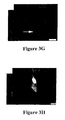
- FIG. 3 is a photographic representation of PNA lo HSA lo adult NSCs give rise to undifferentiated (neurospheres) and differentiated neural and muscle cell types.
- a single PNA lo HSA lo cell proliferates to form neurospheres [3A] whose progeny, when transferred to differentiating conditions [3B], includes neurons (red, ⁇ -III-tubulin) and astrocytes (blue, GFAP) and oligodendrocytes (green, 04).
- neurons red, ⁇ -III-tubulin
- astrocytes blue, GFAP
- oligodendrocytes green, 04.
- GFP +ve PNA lo HSA lo NCSs assume a spindle-like morphology [3C-D] and often possess multiple DAPI +ve nuclei (arrow, [3D]) suggestive of muscle cells.
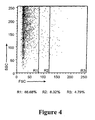
- Figure 4 is a graphical representation of a dot plot showing the FACS sorting of CNS cells harvested from adult human periventricular region. Cells are sorted on the basis of forward light scatter (0-80, 80-120, >120 units). Stem cell activity is confined to R3 (region 3). Percentage of total cells listed below.
- Figure 5 is a graphical representation of a dot plot showing the FACS sorting of viable CNS cells harvested from adult human periventricular region.
- A Cells are sorted on the basis of forward light scatter (>100 units) and PNA binding ability. Unlike mouse stem cells, adult human stem cell activity is confined to R2 (region 2). When sorting viable cells which are also >100 units FSC on the basis of PNA binding and HSA expression.
- B The inventors can enrich for stem cell activity by harvesting cells from R5. Cells in R3 have no stem cell activity, while those in R4 most comprise differentiated neural cell types. Percentage of total cells listed below.
- the present invention provides a method for generating a substantially homogeneous population of undifferentiated cells which are phenotypically PNA lo HSA lo , wherein the undifferentiated cells are undifferentiated or semi-differentiated neural stem cells (NSCs) from a biological sample, said method comprising subjecting said biological sample or a sub-sample thereof to tissue-disruption means to provide a mixed population comprising the undifferentiated cells to be purified, subjecting said mixture population of cells to cell size-discrimination means to generate a population of cells wherein substantially all cells fall within a particular size range and simultaneously or sequentially with the size-discrimination step, subjecting said population to cell surface marker-discrimination means to generate a substantially homogeneous population of undifferentiated cells which are phenotypically PNA lo HSA lo , wherein the undifferentiated cells are undifferentiated or semi-differentiated neural stem cells (NSCs).
- NSCs neural stem cells
- Undifferentiated cells include an oligopotent or pluripotent cell capable of differentiation and proliferation into multiple cell types or lineages as well as self-renewal.
- NSCs and their progeny in a method for repair, regeneration and/or augmentation of tissue in an animal or a mammal such as a human. Such an approach includes delaying cellular degeneration and senescence. Also discloses is the transplantation and differentiation of NSCs in an animal or a mammal such as a human for the prophylaxis and treatment of neuro-degenerative disorders and to correct neurological dysfunction and/or trauma.
- the ability to generate a purified preparation of stem cells or their precursors enables the screening of molecules and compounds and genetic elements which influence or otherwise facilitate cell proliferation and/or differentiation.
- purified stem cells to screen for molecules capable of influencing the growth, proliferation and/or differentiation of stem cells.
- Such molecules enable proliferation and differentiation of endogenous stem cells thereby avoiding the need to proliferate cells in culture and transplanting them to a subject.
- purified stem cells permit the identification of cell surface markers capable of interaction with ligands including antibodies. Such markers are useful in monitoring stem cells and/or the efficacy of therapeutic protocols.
- identified herein is the population of NSCs which are destined to become neuronal cells. Discussed are any drugs or agents which act on these cells to facilitate proliferation and/or further differentiation.
- a “population” of cells means two or more cells.
- a “homogeneous population” means a population comprising substantially only one cell type.
- a “cell type” may be cells of the same lineage or sub-type having substantially the same physiological status.
- a "substantially homogeneous population” refers to a cell population in which a substantial number of the total population of the cells are of the same type and/or are in the same state of differentiation.
- a "substantially homogeneous population" of undifferentiated cells comprises a population of cells of which at least about 50% are of the same cell type, more preferably that at least 75% are of the same cell type even more preferably 85% are of the same cell type, still even more preferably at least 95% of the cells are the same type, and even more preferably 97% (e.g. 98%, 99% or 100%) are of the same cell type.
- tissue-disruption means includes dissociation of individual cells from the connecting extracellular matrix (ECM) of the tissue.
- ECM extracellular matrix
- a single cell suspension is produced.
- the individual cells are of a minimal size, preferably from about 5 to about 50 microns or from about 7 to about 30 microns or from about 7 to about 20 microns. Most preferably, the cells are greater than about 12 microns.
- Undifferentiated means a primordial state of a cell or cells capable of differentiation and proliferation to produce progeny cells that can be physiologically, biochemically, morphologically, anatomically, immunologically, physiologically, or genetically distinct from the primordial state.
- the undifferentiated cells are NSCs which can give rise to multiple cell lineages, are capable of differentiation and proliferation and are capable of self-renewal.
- the most preferred NSCs give rise to neuronal cells.
- the NSCs may be pluripotent NSCs or non-pluripotent NSCs or a mixture of both.
- a “biological sample” is a tissue or organ such as but not limited to epithelial tissue, liver tissue, muscle tissue, adipose tissue, connective tissue, bone marrow, blood or nervous tissue.
- a “sub-sample” may be a portion of a tissue, such as a biopsy or a part or portion of an organ or a tissue.
- An in vitro culture of cells is also regarded as a biological sample.
- sequential and/or simultaneous is meant at the same time (i.e. simultaneous) or within microseconds, seconds, minutes, hours or days (i.e. sequential). Accordingly, size-discrimination and cell surface marker discrimination may be conducted at the same time or within seconds, minutes, hours or days of each other.
- NCSs prepared by the method of the invention.
- a method of producing a homogenous population of NSCs which are capable of giving rise to multiple cell lineages provides a means for gene therapy, augmentation therapy and therapy to repair, replace and to delay senescence neural and non-neural tissue. It also enables identification of growth factors and other agents which can promote proliferation and/or differentiation of endogenous cells.
- a method for cell replacement therapy in an animal comprising, generating a substantially homogeneous population of NSCs from a biological sample, and then introducing said homogeneous population of cells to said same animal or an animal capable of receiving said NSCs.
- cell replacement therapy includes, in one form, a process in which undifferentiated cells are strategically placed in vivo or in vitro such as to differentiate and proliferate into a particular cell lineage or into multiple cell lineages.
- cell replacement therapy requires that an undifferentiated cell appropriately differentiates for the purposes of providing repair, regeneration or replacement of a cell function including the replacement of an organ or a tissue.
- Cell replacement therapy also includes augmentation therapy. The latter includes the removal of existing cells or tissue, expanding in culture and then replacing. This is a particular advantage where a single or a few NSCs are capable of expansion in culture to a large number of NSCs. This is not a feature of hemopoietic stem cells which cannot be expanded in a culture.
- the subject into which the purified stem cells or their progeny are implanted for the purpose of "cell replacement therapy” or repair of tissue, or from which stem cells can be derived is preferably an animal including but not limited to animals such as cows, pigs, horses, chickens, cats, dogs and is preferably a mammal such as a primate and most preferably a human.
- tissue is meant a part of an organism consisting of a number of cells having a similar structure or a similar function.
- neural tissue may consist of a number of cells comprising one or more cell type including but not limited to neurones, glia, oligodendrocytes, astrocytes and ependymal cells.
- Organs are considered herein to comprise tissue and a brain is encompassed by the term organ, and a sub-sample includes a biopsy of a tissue such as but not limited to nervous tissue or an organ such as but not limited to a brain.
- an "animal” refers to mammal, reptile, amphibian, fish or bird or a live stock animal. More preferably, the animal is a mammal such as a human or a primate.
- compositions for cell replacement therapy wherein the composition comprises a substantially homogeneous population of NSCs, which population may be obtained by the method of claim 1.
- the NSCs may be pluripotent or oligopotent or may be committed to neuronal cell development or be a mixture of two or more of the above.
- the present invention is directed to methods of the purification of non-terminally differentiated cells or undifferentiated neural stem cells, such that the differentiation of the cell is not inhibited without destroying the ability of the cell to proliferate.
- pluripotent cells shall mean any non-terminally differentiated cells.
- a “stem cell” is an undifferentiated cell that can be induced to proliferate and generate progeny which includes but is not limited to more stem cells or more differentiated progeny or more mature cell types, while also retaining one or more cells with parental developmental potential.
- a stem cell is a pluripotent cell capable of self-renewal and differentiation into multiple cell lineages. In many biological instances, stem cells are also considered to be pluripotent because they can produce progeny of more than one distinct tissue type. The ability of a stem cell to self-renew itself is an essential aspect of the definition of a stem cell as used herein.
- Stem cells may divide asymmetrically, with one daughter retaining the stem cell state and the other daughter expressing a specific function and/or a phenotype distinct from the first mentioned daughter cell.
- some of the stem cells in a population can divide symmetrically into two stem cells, thus maintaining the same stem cells in the population as a whole, while other cells in the population give rise to differentiated progeny only. It is possible that cells that begin as stem cells might proceed towards a differentiated phenotype, but then reverse and re-express a stem cell phenotype.
- a stem cell is an operational term meaning a cell which can divide to produce another stem cell (i.e. has a self renewal capacity), as well as a cell which can differentiate along multiple specific differentiation paths.
- the population of undifferentiated cells are neural stem cells, and more preferably are pluripotent NSCs.
- the NSCs in the homogeneous population disclosed herein are in a viable state and, hence, have potential in various therapeutic protocols especially in the treatment of CNS disorders.
- CNS disorders encompass numerous afflictions such as neurodegenerative diseases (e.g. Alzheimer's disease and Parkinson's disease), acute brain injury (e.g. stroke, head injury, cerebral palsy) and a large number of CNS dysfunctions (e.g. depression, epilepsy, and schizophrenia).
- neurodegenerative diseases e.g. Alzheimer's disease and Parkinson's disease
- acute brain injury e.g. stroke, head injury, cerebral palsy
- CNS dysfunctions e.g. depression, epilepsy, and schizophrenia.
- CNS dysfunctions e.g. depression, epilepsy, and schizophrenia.
- a large number of CNS dysfunctions e.g. depression, epilepsy, and schizophrenia.
- neurodegenerative diseases e.g. Alzheimer's disease and Parkinson's disease
- MS multiple sclerosis
- Huntington's disease amyotrophic lateral sclerosis
- Parkinson's disease have been linked to the degeneration of neural cells in particular locations of the CNS, leading to the inability of these cells or the
- the basal ganglia consists of many separate regions, including the striatum (which consists of the caudate and putamen), the globus pallidus, the substantia nigra, substantia innominate, ventral pallidum, nucleus basalis of Meynert, ventral tegmental area and the subthalamic nucleus.
- differentiation of NSCs can replace damaged neural and/or non-neural tissue.
- the pluripotent NSCs are used in cell replacement therapy, tissue augmentation therapy, gene therapy, amongst other methodologies.
- growth factors identified using purified cultures of NSCs, are used to stimulate NSC proliferation and/or differentiation of cells in vivo.
- animal includes a human, primate, livestock animal, laboratory test animal, avian species and fish species, amongst other animals.
- compositions for use in nerve tissue replacement therapy comprising a population of substantially homogeneous NSCs prepared by the method of generating a substantially homogeneous population of NSCs from a biological sample.
- a number of cell isolation, cell separation and cell purging strategies are known for purifying or removing cells from a suspension comprising a diverse population of cells.
- Cell separation methods are used to isolate cells or purge cell suspensions or cell populations typically fall into one of three broad categories.
- Physical separation methods typically exploit differences in a physical property between cell types, such as cell size or density (e.g. centrifugation or elutriation); chemical-based methods typically employ an agent which selectively kills or purges one or more undesirable cell types; and affinity-based methods typically exploit antibodies or molecules with a selective binding capacity which bind selectively to marker ligands on a cell membrane surface of desired or undesired cell types, which antibodies may subsequently enable the cells to be isolated or removed from the suspension.
- the substantially homogeneous population of NSCs are subjected to size discrimination means, such that the substantially homogeneous population of undifferentiated cells comprises NSCs that are about 12 microns or greater in diameter.
- the method of the present invention preferably provides a substantially homogeneous population of NSCs which are from about 5 to about 50 microns in diameter prepared by the method of comprising subjecting a biological sample or a sub-sample thereof to tissue-disrupting means to provide a mixed population comprising the NSCs, subjecting said mixed population of cells to cell size-discrimination means to generate a population of cells wherein substantially all cells are from about 5 to about 50 microns in diameter and simultaneously or sequentially with the size-discrimination step, subjecting said population to NSCs surface marker-discrimination means to generate a substantially homogeneous population of NSCs which are from about 5 to about 50 microns in diameter.
- the population of NSCs which may be used to replace or repair neural tissue are from about 5 to about 50 microns in diameter.
- a method for the replacement of neural tissue in an animal comprising, generating a substantially homogeneous population of NSCs which are from about 5 to about 50 microns in diameter from a biological sample, and then introducing said homogeneous population of NSCs which are from about 5 to about 50 microns in diameter to said same animal or an animal capable of receiving said NSCs.
- composition comprising NSCs which are from about 5 to about 50 microns in diameter that are capable of proliferation and/or differentiating into neural tissue.
- This composition is suitable for use in nerve tissue replacement therapy.
- the cell size is from about 7 to about 30 and even more preferably from about 7 to about 20 microns. Generally, a size of greater than about 12 microns is particularly useful.
- the goal of the separation of a mixed population of nerve cells is to produce a substantially homogeneous population of NSCs.
- Antibodies and cell specific surface markers which present on NSCs can be used to identify and sort a population of NSCs capable of differentiation into mature cell types.
- the cells can be cultured in physiological buffer or culture medium and induced to differentiate by culturing in the presence of appropriate factors.
- basic fibroblast growth factor can be added to induce the NSCs to divide and proliferate and/or differentiate.
- Such growth factors have the potential to change the pattern of NSC differentiation.
- Cells can be washed, resuspended in, for example, buffered saline and reintroduced into a patient via, preferably, intravenous administration.
- the cells can also be used to identify new growth factors (either naturally occurring in a subject or following natural product screening or the screening of a chemical library) which can be used to induce proliferation, differentiation and/or maintenance of endogenous stem cells.
- NSCs in vitro , from a population of neural cells comprising NSCs.
- the NSCs may be endogenous to the animal or patient being treated or may be derived from a non-endogenous source.
- An initial NSC containing population of cells, such as a population of cells derived from neural tissue, can be obtained using standard procedures well known to those of skill in the art.
- Particularly useful sources of NSCs include but are not limited to brains or CNS from a range of animals such as primates, humans, livestock animals (e.g. sheep, cows, horses, pigs, etc.) and laboratory test animals (e.g.
- mice, rats), porcine and bovine brains can be utilized as potential starting sources for the purification of NSCs.
- the population may comprise pluripotent NSCs or a mixture of pluripotent or non-pluripotent NSCs or may comprise substantially all committed NSCs.
- NSCs can be removed, and thus selectively separated and purified, by various methods which utilize, for example, antibodies and cell surface markers and size discrimination means (see below).
- the bound molecule then acts as a flag to signal the identification of the appropriate NSCs type.
- FACS fluorescence activated cell sorter
- biotin-avidin or biotin-streptavidin separations using biotin conjugated to cell surface marker-specific antibodies and avidin or streptavidin bound to a solid support such as affinity column matrix or plastic surfaces or magnetic separations using antibody-coated magnetic beads.
- a negative selection protocol is adopted.
- the markers are on cell types other than NSCs. Consequently, non-NSCs are removed.
- separation via cell surface marker discrimination utlilizes antibodies or other molecules which selectively bind specific markers and can be achieved by negative or positive selection procedures.
- antibodies are used which are specific for markers present on undesired cells.
- Cell surface markers suitable for such a method of cell surface discrimination include but are not limited to S100, ⁇ -tubulin type III and 04 amongst many others (see below).
- pluripotent or non-pluripotent NSCs from a population of nerve cells.
- antibodies or other molecules that selectively bind an extracellular domain of a cell surface protein can be used. Cells bound by such an antibody to such a cell surface marker can be sorted and the remaining cells removed and the desired mixture retained.
- the cell surface markers used for cell discrimination means may be labeled with a fluorescent compound.
- a fluorescent compound When the fluorescently labeled antibody or molecule with selective binding capacity is exposed to light of the proper wavelength, its presence can then be detected due to fluorescence.
- fluorescent labeling compounds are fluorescein isothiocyanate, rhodamine, isothiocyanate, phycoerythrin, phycocyanin, allophycocyanin, o-phthaldehyde and fluorescamine.
- the antibody or molecule with selective binding capacity can also be detectably labeled using fluorescence emitting metals such as 152 Eu or others of the lanthanide series.
- metals can be attached to the antibody or molecule with selective binding capacity using such metal chelating groups as diethylenetriaminepentacetic acid (DTPA) or ethylenediaminetetraacetic acid (EDTA).
- DTPA diethylenetriaminepentacetic acid
- EDTA ethylenediaminetetraacetic acid
- the antibody also can be detectably labeled by coupling it to a chemiluminescent compound. The presence of the chemiluminescent-tagged antibody or molecule with selective binding capacity is then determined by detecting the presence of luminescence that arises during the course of a chemical reaction.
- chemiluminescent labeling compounds are luminol, isoluminol, theromatic acridinium ester, imidazole, acridinium salt and oxalate ester.
- a bioluminescent compound can be used to label the antibody or molecule with selective binding capacity of the present invention.
- Bioluminescence is a type of chemiluminescence found in biological systems in which a catalytic protein increases the efficiency of the chemiluminescent reaction. The presence of a bioluminescent protein is determined by detecting the presence of luminescence.
- Important bioluminescent compounds for purposes of labelling are luciferin, luciferase and aequorin. All such methods of labelling an antibody or a molecule with selective binding capacity are contemplated by the present invention.
- NSCs capable of proliferation and/or differentiation are selected from a population of size discriminated cells. Size selection may be simultaneous or sequential to the means of cell surface discrimination.
- Cell surface markers useful for cell surface discrimination include but are not limited to PNA and HSA. It is preferable that size discriminated NSCs which are from about 5 to about 50 microns are simultaneously or sequentially subjected to cell surface marker discrimination means, wherein NSCs which are from about 5 to about 50 microns in diameter are also phenotypically PNA lo HSA lo .
- identified herein are three populations of cells of which one is substantially homogenous for NSCs, another comprises some progenitor cells whereas the third comprises substantially all differentiated cells.
- HSA hi PNA lo comprises some progenitor cells
- the HSA lo PNA lo populations of cells may be further characterized as having low levels of the markers listed in Table 3.
- Low level intracellular markers include ⁇ -tubulin type III and 04.
- TABLE 3 PNA lo HSA lo cell surface markers which are low on NSC population CELL SURFACE MARKER DESCRIPTION CD3e T-cell receptor CD4 T-cells and lymphocytes (helper T cells) CD8a T-cells CD11b Granulocytes, macrophages, dendritic cells, NK cells (also known as MAC-1) CD19 B-cells CD24 RBC, granulo-, mono-, lymphocytes mCD30.1 Activated T-cells (TNF receptor family) CD31 Endothelial cells (platelet endothelial CAM-1) CD34 Glycosylated transmembrane glycoprotein which acts as a putative HSC marker CD41 Platelet, megakaryocytes CD45R B lymphocytes (aka B220) CD45RA B lymphocytes
- cells phenotypically HSA lo PNA lo express DCC, neogenin, Notch 1, 2 and 3, Plx1 and Sox2; these cells have reduced levels of p75 and Trk ⁇ ; these cells do not express or express very low levels of EphA4, TrkA, TrkC, LIFR ⁇ , gp130, ⁇ 1, SOCS2, Pax6, Tbr1, Dlx2, SCL, Burp1 and Sca-1
- phenotypically refers to the physical constitution of an organism or cell that is determined by the interaction of its genetic component with the environment. "Phenotypic" characteristics are detectable and permit the identification and grouping of cells or organisms with like characteristics. In the present invention, the phenotype of the cell surface characteristic of NSCs is used to distinguish NSCs from more differentiated or committed cell types.
- PNA lo and/or HSA lo refers to an NSC with a phenotype that comprises a low presence of or an absence of surface PNA and/or a surface HSA.
- NSCs which are from about 5 to about 50 microns in diameter and which are phenotypically PNA lo HSA lo .
- the population of NSCs used to replace or repair neural or non-neural tissue are from about 5 to about 50 microns in diameter and are phenotypically PNA lo HSA lo .
- a method for the replacement of neural or non-neural tissue in an animal comprising, generating a substantially homogeneous population of NSCs which are from about 5 to about 50 microns in diameter and are phenotypically PNA lo HSA lo from a biological sample, said method of generation being defined in the claims hereto.
- an “animal” includes a human or primate, amongst others.
- a composition comprising NSCs may be used to replace neural tissue.
- the composition of cells of differentiating into neural and regenerating NSCs which are from about 5 to about 50 microns in diameter and are phenotypically PNA lo HSA lo .
- Damaged tissue or dysfunctional neural tissues can be replaced or regenerated by the appropriate proliferation and/or differentiation and/or self-renewal of NSCs.
- Increasing numbers of undifferentiated cells such as NSCs are required to replace or repair increasingly larger areas of damaged neural tissue.
- Genetically modified NSCs may be provided with additional genetic characteristics as drug resistance or characteristics that increase the longevity of cells during purification. Accordingly, the present invention contemplates the generation of a substantially homogeneous population of genetically modified NSCs which are from about 5 to about 50 microns in diameter and are phenotypically PNA lo HSA lo .
- the term "genetically modified NSCs" refers to NSCs into which a foreign (i.e., non-naturally occurring) nucleic acid, e.g., DNA, has been introduced.
- the foreign nucleic acid may be introduced by a variety of techniques, including, but not limited to, calcium-phosphate-mediated transfection, DEAE-mediated transfection, microinjection, retroviral transformation, protoplast fusion and lipofection.
- the genetically modified cell may express the foreign nucleic acid in either a transient or long-term manner. In general, transient expression occurs when foreign DNA does not stably integrate into the chromosomal DNA of the transfected cell. In contrast, long-term expression of foreign DNA occurs when the foreign DNA has been stably integrated into the chromosomal DNA of the transfected cell.
- the NSCs are preferably phenotypically PNA lo HSA lo .
- a method for the replacement of neural tissue in an animal comprising, generating a substantially homogeneous population of genetically modified NSCs which are from about 5 to about 50 microns in diameter and are phenotypically PNA lo HSA lo from a biological sample, and then introducing said homogeneous population of genetically modified NSCs which are from about 5 to about 50 microns in diameter and are phenotypically PNA lo HSA lo to said same animal or an animal capable of receiving said NSCs.
- the preferred size is from about 7 to about 30 microns although a size of greater than 12 microns is particularly useful.
- the substantially homogeneous population of NSCs described herein can be administered to a patient at a therapeutically effective dose to treat or ameliorate disorders of the nervous system including for repair or replacement of nervous tissue.
- a therapeutically effective dose refers to that amount of a substantially homogeneous population of NSCs sufficient to result in amelioration symptoms of a nervous system disorder.
- Toxicity and therapeutic efficacy of a substantially homogeneous population of NSCs can be determined by standard and modified pharmaceutical procedures in cell cultures or experimental animals, e.g., for determining the LD 50 (the dose lethal to 50% of the population) and the ED 50 (the dose therapeutically effective in 50% of the population).
- the dose ratio between toxic and therapeutic effects is the therapeutic index and it can be expressed as the ratio LD 50 /ED 50 .
- a substantially homogeneous population of NSCs which exhibits large therapeutic indices are preferred. It is formally possible that NSCs may exhibit toxic side effects by eliciting an immune response, care should be taken to design a delivery system that prevents detrimental immune responses.
- the data obtained from the cell culture assays and animal studies can be used in formulating a range of dosage for use in humans.
- the dosage of such substantially homogeneous population of pluripotent NCSs lies preferably within a range of concentrations that include the ED 50 with little or no toxicity.
- the dosage can vary within this range depending upon the dosage form employed and the route of administration utilized.
- the therapeutically effective dose can be estimated initially from cell culture assays.
- compositions can be formulated in conventional manner using one or more physiologically acceptable carriers or excipients.
- the substantially homogeneous population of NCSs and their physiologically acceptable salts and solvents can be formulated for administration by a range of routes including injection or oral delivery.
- the NCS populations generated by the subject methods have a range of utilities.
- Other utilities include putting a marker on or within a NSC and then using this to track the NSC and/or its progeny throughout the body and to monitor is physiological changes. This provides an ability to direct therapies to multiple targets.
- the purified populations of NSCs are also useful for gene and protein discovery and in particular the mechanisms involved in differentiation and proliferation. This enables the therapeutic production of new neurons in various disease states.
- the NSCs disclosed herein are useful in cytokine delivery via , for example, endogenous stem cell activation and for selective migration of NSCs and their progress to sites of injury.
- the purified stem cells may also be used to screen for molecules which can influence the growth, proliferation and/or differentiation of stem cells.
- the significance of such factors is that:-
- a method for isolating growth factors capable of facilitating NSC growth, proliferation and/or differentiation said growth factors obtainable from the homogenous population of NSCs prepared according to the method herein described.
- NSCs which become neuronal cells.
- a naturally occurring agonist e.g. a cytokine
- a molecule found through natural product screening or through screening of a chemical library which act on the subject population of cells.
- mice 8-10 weeks old were sacrificed by cervical dislocation CNS tissue dissected into Hepes buffered Eagle's medium (HEM) essentially as per Lois and Alvarez-Buylla, (Proc. Natl. Acad. Sci. USA 90: 2074-2077, 1993 ). Both the ventricular and subventricular (SVZ) zones of the lateral ventricular walls of adult CBA mice were used as the source of NSC. CNS tissue was diced then transferred to Mg ++ /Ca ++ free HBSS (containing 10 mM Hepes, 200 g/ml EDTA, 0.5 mM trypsin, 0.001% w/v DNase; pH 7.6, for 10 minutes at 37°C.
- HEM Hepes buffered Eagle's medium
- the resulting suspension was incubated for 20 minutes at 4°C with FITC conjugated PNA (1:200; Vecta, Burlingame, CA), or PNA-FITC combined with PE-conjugated mCD24a (1:200; Clone M1/69, Pharmingen).
- the cell suspension was rinsed twice with PBS via centrifugation, and finally in PBS + 1% v/v FCS Propidium Iodide (P.I.; 100 pg/ml; Molecular Probes) to label dead cells before FACS analysis.
- Cell viability was typically greater than 95% and all FACS gates were set using unlabelled cells.
- NSC forward light scatter
- the final enrichment step was using Heat Stable Antigen [HSA] (mCD24a) to effectively enrich for NSCs in sub-populations of PNA lo cells.
- HSA Heat Stable Antigen
- PNA lo HSA lo NSCs expressed nestin, a marker of putative neural stem and precursor cells ( Calaora et al., Neuroscience 73: 581-594 1996 ), however, they did not express the cell type specific neural markers ( ⁇ -tubulin type III, 04 or GFAP).
- the PNA lo HSA lo NSCs did not have the ciliated morphology of ependymal cells, previously implicated as the origin of NSCs. Further since ependymal cells have been previously shown to express high levels of HSA, this favors the conclusion of others that the vast majority of stem cells reside in the SVZ ( Tropepe et al., J. Neurosci. 17: 7850-7859, 1997 ).
- sorted cells were plated in growth factor free defined NS-A media (basal media; consisting of Dulbecco's Modified Eagles Medium (DMEM) with a nutrient supplement F12 (Gibco) (1;1) and containing 0.6% glucose, 3 mM NaHCO 3 , 5 mM HEPES, and 2 mM L-glutamine, 0.1 mg/ml apo-transferrin, 25 ⁇ g/ml insulin, 60 ⁇ M putrescene, 30 mM sodium selenite and 20 nM progesterone (Sigma))(1,10) containing FGF-2 (bovine 20 recombinant, 10 ng/ml; Boehringer Mannheim) and EGF (receptor grade, 20 ng/ml; Collaborative
- Clonally-derived spheres from PNA lo HSA lo cells [ Figure 3A ] were differentiated by transfer to poly-L-ornithine coated glass coverslips (1 sphere per coverslip) in basal media for 1 day then basal media + 1% v/v FCS for 5-6 days, then assessed by immunocytochemistry (ICC) for the presence of neurons and glia.
- clonally derived spheres contained glial fibrillary acidic protein positive (GFAP +ve ) astrocytes and ( ⁇ -tubulin type III positive ( ⁇ -tub +ve ) neurons and 04 +ve oligonucleotides [ Figure 3B ].
- PNA lo HSA lo NSCs were isolated from BU5X transgenic mice which ubiquitously express both lacZ (22) and enhanced GFP ( Hadjantonakis et al., Mech. Dev. 76: 79-90, 1998 ).
- the PNA lo HSA lo NSCs from the BU5X mice showed identical characteristics to that from the CBA.
- Freshly isolated NSCs were assessed for their myogenic potential by co-culturing them at a clonal density in vitro with the C2C12 myogenic cells (5 x 10 3 cells/cm 2 ) for two days in DME media (Gibco) containing 20% v/v heat inactivated FCS, then in DME supplemented with 1% v/v normal horse serum (CSL, Australia) for an additional 2-4 DIV. Cultures were then fixed for 5 minutes with 4% v/v paraformaldehyde and then the phenotype of the GFP +ve cells was assessed.
- Neural derived muscle cells were identified by simultaneous detection of endogenous GFP and muscle cell types identified by mouse monoclonal antibodies to MyHCfast or MyHCdevelopmental (NCL-MHCf or NCL-MHCd respectively, both 1:10, Novocastra Labs Ltd.), or ⁇ -actinin-225 (1:750, E. Hardeman). These antigens were detected by appropriate TRITC-conjugated IgG secondary antibody (1:200; Southern Biotech). The proportion of neural cells which differentiated into muscle cells was determined by counting the number of GFP +ve nuclei expressing myogenic markers divided by the number of NSCs plated (counted 6 hrs post-plating).
- GFP expressing cells assumed a spindle, myocyte-like shape [ Figures 3C-D and often contained multiple nuclei characteristic of myotubes [arrow, Figures 3D ]. Their muscle phenotype was confirmed by the staining of ⁇ 99% of the spindle shaped cells and myotubes with myogenic-specific antibodies to ⁇ -actinin-2 [ Figures 3F )] and two isoforms of MyHC [ Figures 3E , G and H]. Most importantly, GFP was found to be co-expressed in cells labelled with myogenic markers [ Figure 3E-H )].
- the following example shows that the cells isolated act as functional NSCs in vivo.
- the results are shown in Table 4. These data are derived employing the mutant mouse querkopf , which has a mutation in a histone acetyltransferase gene ( Thomas et al., Development 127: 2537, 2000 ).
- the observation of interest for this study is Querkopf's progressive deficiency in the size of the olfactory bulb, when compared to wild-type from the postnatal period onward. Recall that the olfactory bulb grows throughout postnatal life due to the continual migration of cells derived from subventricular region stem cells, which ultimately differentiate into olfactory granule and periglomerular neurons.
- the inventors have examined whether the deficiency in querkopf is reflected in the loss of stem cells in the periventricular region, and if so, in which sort population they reside.
- the inventors found by FACS analysis that the mutant and wild-type profiles are exactly the same except for an approximately 6-fold diminution in the PNA lo HSA lo population ( Figure 2 ).
- the frequency of stem cell activity in both wild-type and mutant PNA lo HSA lo populations is not significantly different, indicating that there is no intrinsic difference in the functional capacity of the PNA lo HSA lo stem cell, but that there is a dramatic decrease in their overall number.
- no change in stem cell activity can be found in other sorted populations, this could not be explained by a shift in stem cell phenotype.
- NSC frequency represents the number of neurospheres generated after seven divisions per viable cell plated, where viable cells were counted four hrs after plating.
- a range of primers defining a variety of markers are used to assess and phenotypically characterize populations of cells.
- the markers and the nucleotide sequence of primers used are shown in Table 5.
- Cells phenotypically HSA lo PNA lo exhibit markers which are characteristic of being a homogenous population of NSCs (Table 6).
- Cells phenotypically HSA hi PNA lo comprise some progenitors whereas HSA lo PNA hi /HSA hi PNA hi cells are substantially all differentiated cells (Table 6).
Landscapes
- Health & Medical Sciences (AREA)
- Engineering & Computer Science (AREA)
- Life Sciences & Earth Sciences (AREA)
- Biomedical Technology (AREA)
- Neurosurgery (AREA)
- Neurology (AREA)
- Chemical & Material Sciences (AREA)
- Bioinformatics & Cheminformatics (AREA)
- General Health & Medical Sciences (AREA)
- Organic Chemistry (AREA)
- Zoology (AREA)
- Biotechnology (AREA)
- Developmental Biology & Embryology (AREA)
- Cell Biology (AREA)
- Public Health (AREA)
- Animal Behavior & Ethology (AREA)
- Medicinal Chemistry (AREA)
- Veterinary Medicine (AREA)
- Pharmacology & Pharmacy (AREA)
- Genetics & Genomics (AREA)
- Wood Science & Technology (AREA)
- Nuclear Medicine, Radiotherapy & Molecular Imaging (AREA)
- General Chemical & Material Sciences (AREA)
- Chemical Kinetics & Catalysis (AREA)
- Microbiology (AREA)
- Immunology (AREA)
- Virology (AREA)
- General Engineering & Computer Science (AREA)
- Epidemiology (AREA)
- Biochemistry (AREA)
- Ophthalmology & Optometry (AREA)
- Psychology (AREA)
- Psychiatry (AREA)
- Hospice & Palliative Care (AREA)
- Micro-Organisms Or Cultivation Processes Thereof (AREA)
- Medicines Containing Material From Animals Or Micro-Organisms (AREA)
- Medicines That Contain Protein Lipid Enzymes And Other Medicines (AREA)
- Measuring Or Testing Involving Enzymes Or Micro-Organisms (AREA)
Claims (5)
- Verfahren zur Erzeugung einer im wesentlichen homogenen Population undifferenzierter Zellen, die phänotypisch PNAlo HSAlo sind, wobei die undifferenzierten Zellen undifferenzierte oder semidifferenzierte neurale Stammzellen (NSCs) sind aus einer biologischen Probe, wobei das Verfahren umfasst, dass die biologische Probe oder eine Teilprobe derselben einer Gewebezerkleinerungsmaßnahme unterworfen wird, um eine Mischpopulation zu erhalten, die die aufzureinigenden undifferenzierten Zellen umfasst, die Mischpopulation der Zellen einer Zellgrößendiskriminierungsmaßnahme unterworfen wird, um eine Zellpopulation zu erzeugen, in der im wesentlichen alle Zellen in einen speziellen Größenbereich fallen, und gleichzeitig mit oder nachfolgend zu der Größendiskriminierungsstufe die Population einer Zelloberflächenmarkerdiskriminierungsmaßnahme unterworfen wird, um eine im wesentlichen homogene Population undifferenzierter Zellen, die phänotypisch PNAlo HSAlo sind, wobei die undifferenzierten Zellen undifferenzierte oder semidifferenzierte neurale Stammzellen (NSCs) sind, zu erzeugen.
- Verfahren nach Anspruch 1, wobei die im wesentlichen homogene Zellpopulation eine Population umfasst, in der mindestens etwa 50 % der Zellen die gleiche Art von NSCs sind.
- Verfahren nach Anspruch 1 oder 2, wobei die Gewebezerkleinerungsmaßnahme das Dissoziieren individueller Zellen von verbundenen extrazellulären Matrix(ECM)-Gewebe umfasst.
- Verfahren nach einem der Ansprüche 1 bis 3, wobei Zellen von 5 bis 50 µm in einer Suspension erhalten werden.
- Verfahren nach Anspruch 4, wobei Zellen von größer als 12 µm in einer Suspension erhalten werden.
Applications Claiming Priority (3)
| Application Number | Priority Date | Filing Date | Title |
|---|---|---|---|
| AUPR5403A AUPR540301A0 (en) | 2001-06-01 | 2001-06-01 | A method of purification of cells |
| AUPR540301 | 2001-06-01 | ||
| PCT/AU2002/000700 WO2002097067A1 (en) | 2001-06-01 | 2002-05-31 | A method of purification of cells |
Publications (3)
| Publication Number | Publication Date |
|---|---|
| EP1402005A1 EP1402005A1 (de) | 2004-03-31 |
| EP1402005A4 EP1402005A4 (de) | 2006-02-22 |
| EP1402005B1 true EP1402005B1 (de) | 2008-10-29 |
Family
ID=3829381
Family Applications (1)
| Application Number | Title | Priority Date | Filing Date |
|---|---|---|---|
| EP02774007A Expired - Lifetime EP1402005B1 (de) | 2001-06-01 | 2002-05-31 | Verfahren zur reinigung von zellen |
Country Status (9)
| Country | Link |
|---|---|
| US (1) | US7435586B2 (de) |
| EP (1) | EP1402005B1 (de) |
| JP (3) | JP5027376B2 (de) |
| AT (1) | ATE412735T1 (de) |
| AU (2) | AUPR540301A0 (de) |
| CA (1) | CA2449979C (de) |
| DE (1) | DE60229636D1 (de) |
| NZ (1) | NZ529896A (de) |
| WO (1) | WO2002097067A1 (de) |
Families Citing this family (22)
| Publication number | Priority date | Publication date | Assignee | Title |
|---|---|---|---|---|
| WO2002040047A2 (en) * | 2000-11-20 | 2002-05-23 | Canadian Blood Services | Method for treating thrombocytopenia with monoclonal ivig |
| WO2006113731A2 (en) * | 2005-04-20 | 2006-10-26 | University Of Florida Research Foundation, Inc. | Bone marrow-derived neurogenic cells and uses thereof |
| US9388382B2 (en) | 2005-10-05 | 2016-07-12 | The Board Of Trustees Of The University Of Illinois | Isolation of CD14 negative, CD45 positive and CD117 positive embryonic-like stem cells free of monocytes from human umbilical cord blood mononuclear cells |
| CA2666789C (en) | 2006-10-18 | 2016-11-22 | Yong Zhao | Embryonic-like stem cells derived from adult human peripheral blood and methods of use |
| US8309343B2 (en) | 2008-12-01 | 2012-11-13 | Baxter International Inc. | Apparatus and method for processing biological material |
| PT105083A (pt) * | 2009-04-28 | 2011-07-25 | Univ De Coimbra | Processo para cultura de células estaminais neurais baseado nas ampacinas e/ou outros moduladores de receptores glutamatérgicos ionotrópicos, composições e seu uso em condições do sistema nervoso central |
| WO2012048276A2 (en) | 2010-10-08 | 2012-04-12 | Caridianbct, Inc. | Customizable methods and systems of growing and harvesting cells in a hollow fiber bioreactor system |
| US9790468B2 (en) * | 2013-03-15 | 2017-10-17 | Avita Iinternational Ltd. | Multifunctional immature dental pulp stem cells and therapeutic applications |
| WO2015073913A1 (en) | 2013-11-16 | 2015-05-21 | Terumo Bct, Inc. | Expanding cells in a bioreactor |
| WO2015148704A1 (en) | 2014-03-25 | 2015-10-01 | Terumo Bct, Inc. | Passive replacement of media |
| EP3198006B1 (de) | 2014-09-26 | 2021-03-24 | Terumo BCT, Inc. | Geplante fütterung |
| WO2017004592A1 (en) | 2015-07-02 | 2017-01-05 | Terumo Bct, Inc. | Cell growth with mechanical stimuli |
| US11965175B2 (en) | 2016-05-25 | 2024-04-23 | Terumo Bct, Inc. | Cell expansion |
| US11685883B2 (en) | 2016-06-07 | 2023-06-27 | Terumo Bct, Inc. | Methods and systems for coating a cell growth surface |
| US11104874B2 (en) | 2016-06-07 | 2021-08-31 | Terumo Bct, Inc. | Coating a bioreactor |
| CN117247899A (zh) | 2017-03-31 | 2023-12-19 | 泰尔茂比司特公司 | 细胞扩增 |
| US11624046B2 (en) | 2017-03-31 | 2023-04-11 | Terumo Bct, Inc. | Cell expansion |
| US12234441B2 (en) | 2017-03-31 | 2025-02-25 | Terumo Bct, Inc. | Cell expansion |
| TW202013385A (zh) * | 2018-06-07 | 2020-04-01 | 美商河谷控股Ip有限責任公司 | 基於差異的基因組之辨識分數 |
| EP4314244B1 (de) | 2021-03-23 | 2025-07-23 | Terumo BCT, Inc. | Zellerfassung und -erweiterung |
| US12209689B2 (en) | 2022-02-28 | 2025-01-28 | Terumo Kabushiki Kaisha | Multiple-tube pinch valve assembly |
| USD1099116S1 (en) | 2022-09-01 | 2025-10-21 | Terumo Bct, Inc. | Display screen or portion thereof with a graphical user interface for displaying cell culture process steps and measurements of an associated bioreactor device |
Family Cites Families (3)
| Publication number | Priority date | Publication date | Assignee | Title |
|---|---|---|---|---|
| ES2351170T3 (es) | 1999-02-12 | 2011-02-01 | Stemcells California, Inc. | Poblaciones enriquecidas de células del sistema nervioso central. |
| US20030003572A1 (en) | 1999-03-05 | 2003-01-02 | David J. Anderson | Isolation and enrichment of neural stem cells from uncultured tissue based on cell-surface marker expression |
| US20030040119A1 (en) * | 2001-04-11 | 2003-02-27 | The Regents Of The University Of Michigan | Separation devices and methods for separating particles |
-
2001
- 2001-06-01 AU AUPR5403A patent/AUPR540301A0/en not_active Abandoned
-
2002
- 2002-05-31 CA CA2449979A patent/CA2449979C/en not_active Expired - Lifetime
- 2002-05-31 AU AU2002308446A patent/AU2002308446B2/en not_active Expired
- 2002-05-31 JP JP2003500235A patent/JP5027376B2/ja not_active Expired - Lifetime
- 2002-05-31 NZ NZ529896A patent/NZ529896A/en not_active IP Right Cessation
- 2002-05-31 US US10/479,306 patent/US7435586B2/en not_active Expired - Lifetime
- 2002-05-31 AT AT02774007T patent/ATE412735T1/de not_active IP Right Cessation
- 2002-05-31 EP EP02774007A patent/EP1402005B1/de not_active Expired - Lifetime
- 2002-05-31 WO PCT/AU2002/000700 patent/WO2002097067A1/en not_active Ceased
- 2002-05-31 DE DE60229636T patent/DE60229636D1/de not_active Expired - Lifetime
-
2008
- 2008-10-22 JP JP2008271668A patent/JP2009077725A/ja not_active Withdrawn
-
2012
- 2012-03-27 JP JP2012070492A patent/JP2012120545A/ja active Pending
Also Published As
| Publication number | Publication date |
|---|---|
| DE60229636D1 (de) | 2008-12-11 |
| EP1402005A1 (de) | 2004-03-31 |
| JP2004532041A (ja) | 2004-10-21 |
| ATE412735T1 (de) | 2008-11-15 |
| JP2012120545A (ja) | 2012-06-28 |
| AUPR540301A0 (en) | 2001-06-28 |
| AU2002308446B2 (en) | 2007-08-23 |
| CA2449979A1 (en) | 2002-12-05 |
| EP1402005A4 (de) | 2006-02-22 |
| NZ529896A (en) | 2005-02-25 |
| CA2449979C (en) | 2015-11-24 |
| US7435586B2 (en) | 2008-10-14 |
| JP2009077725A (ja) | 2009-04-16 |
| JP5027376B2 (ja) | 2012-09-19 |
| US20040235158A1 (en) | 2004-11-25 |
| WO2002097067A1 (en) | 2002-12-05 |
Similar Documents
| Publication | Publication Date | Title |
|---|---|---|
| EP1402005B1 (de) | Verfahren zur reinigung von zellen | |
| AU2002308446A1 (en) | A method of purification cells | |
| US7160724B2 (en) | Human cord blood as a source of neural tissue for repair of the brain and spinal cord | |
| TWI686202B (zh) | 體幹細胞 | |
| AU2001243464A1 (en) | Human cord blood as a source of neural tissue for repair of the brain and spinal cord | |
| JP2005512592A (ja) | 細胞性組成物ならびに細胞性組成物の作製法および細胞性組成物の使用法 | |
| WO2001075094A1 (en) | Application of myeloid-origin cells to the nervous system | |
| JP2001526884A (ja) | 神経前駆細胞、その製造方法および神経性欠陥治療におけるその使用 | |
| WO2012133948A1 (ja) | 生体組織から単離できるssea-3陽性の多能性幹細胞を含む他家移植用細胞治療用組成物 | |
| WO2012133942A1 (ja) | 生体の臍帯又は脂肪組織から単離できる多能性幹細胞 | |
| MXPA00012078A (es) | Celulas ependimarias del tallo neural y metodo para su aislamiento. | |
| Young et al. | Persistence of multipotential progenitors in the juvenile rat subventricular zone | |
| US20080213892A1 (en) | Self-renewal of neural stem cells is promoted by wnt proteins | |
| AU2013354909A1 (en) | A method of generating multilineage potential cells | |
| WO2017155865A1 (en) | Neural stem cells and uses thereof | |
| US20240345082A1 (en) | Identification and application of selective cell surface markers and additional methods for human red/green cone photoreceptor precursor enrichment | |
| WO2006113731A9 (en) | Bone marrow-derived neurogenic cells and uses thereof | |
| WO2007138577A2 (en) | Methods of generating a neural tissue using muscle-derived cells | |
| MXPA00005880A (en) | Neural precursor cells, method for the production and use thereof in neural defect therapy | |
| WO2008104065A1 (en) | Neural cell preparations and methods of making and using them |
Legal Events
| Date | Code | Title | Description |
|---|---|---|---|
| PUAI | Public reference made under article 153(3) epc to a published international application that has entered the european phase |
Free format text: ORIGINAL CODE: 0009012 |
|
| 17P | Request for examination filed |
Effective date: 20031229 |
|
| AK | Designated contracting states |
Kind code of ref document: A1 Designated state(s): AT BE CH CY DE DK ES FI FR GB GR IE IT LI LU MC NL PT SE TR |
|
| AX | Request for extension of the european patent |
Extension state: AL LT LV MK RO SI |
|
| A4 | Supplementary search report drawn up and despatched |
Effective date: 20060109 |
|
| 17Q | First examination report despatched |
Effective date: 20060823 |
|
| GRAP | Despatch of communication of intention to grant a patent |
Free format text: ORIGINAL CODE: EPIDOSNIGR1 |
|
| RAP1 | Party data changed (applicant data changed or rights of an application transferred) |
Owner name: THE UNIVERSITY OF QUEENSLAND |
|
| GRAS | Grant fee paid |
Free format text: ORIGINAL CODE: EPIDOSNIGR3 |
|
| GRAA | (expected) grant |
Free format text: ORIGINAL CODE: 0009210 |
|
| AK | Designated contracting states |
Kind code of ref document: B1 Designated state(s): AT BE CH CY DE DK ES FI FR GB GR IE IT LI LU MC NL PT SE TR |
|
| REG | Reference to a national code |
Ref country code: GB Ref legal event code: FG4D |
|
| REG | Reference to a national code |
Ref country code: CH Ref legal event code: EP |
|
| REG | Reference to a national code |
Ref country code: IE Ref legal event code: FG4D |
|
| REF | Corresponds to: |
Ref document number: 60229636 Country of ref document: DE Date of ref document: 20081211 Kind code of ref document: P |
|
| NLV1 | Nl: lapsed or annulled due to failure to fulfill the requirements of art. 29p and 29m of the patents act | ||
| PG25 | Lapsed in a contracting state [announced via postgrant information from national office to epo] |
Ref country code: ES Free format text: LAPSE BECAUSE OF FAILURE TO SUBMIT A TRANSLATION OF THE DESCRIPTION OR TO PAY THE FEE WITHIN THE PRESCRIBED TIME-LIMIT Effective date: 20090209 Ref country code: AT Free format text: LAPSE BECAUSE OF FAILURE TO SUBMIT A TRANSLATION OF THE DESCRIPTION OR TO PAY THE FEE WITHIN THE PRESCRIBED TIME-LIMIT Effective date: 20081029 |
|
| PG25 | Lapsed in a contracting state [announced via postgrant information from national office to epo] |
Ref country code: FI Free format text: LAPSE BECAUSE OF FAILURE TO SUBMIT A TRANSLATION OF THE DESCRIPTION OR TO PAY THE FEE WITHIN THE PRESCRIBED TIME-LIMIT Effective date: 20081029 Ref country code: PT Free format text: LAPSE BECAUSE OF FAILURE TO SUBMIT A TRANSLATION OF THE DESCRIPTION OR TO PAY THE FEE WITHIN THE PRESCRIBED TIME-LIMIT Effective date: 20090330 Ref country code: NL Free format text: LAPSE BECAUSE OF FAILURE TO SUBMIT A TRANSLATION OF THE DESCRIPTION OR TO PAY THE FEE WITHIN THE PRESCRIBED TIME-LIMIT Effective date: 20081029 |
|
| PG25 | Lapsed in a contracting state [announced via postgrant information from national office to epo] |
Ref country code: DK Free format text: LAPSE BECAUSE OF FAILURE TO SUBMIT A TRANSLATION OF THE DESCRIPTION OR TO PAY THE FEE WITHIN THE PRESCRIBED TIME-LIMIT Effective date: 20081029 Ref country code: BE Free format text: LAPSE BECAUSE OF FAILURE TO SUBMIT A TRANSLATION OF THE DESCRIPTION OR TO PAY THE FEE WITHIN THE PRESCRIBED TIME-LIMIT Effective date: 20081029 |
|
| PG25 | Lapsed in a contracting state [announced via postgrant information from national office to epo] |
Ref country code: IT Free format text: LAPSE BECAUSE OF FAILURE TO SUBMIT A TRANSLATION OF THE DESCRIPTION OR TO PAY THE FEE WITHIN THE PRESCRIBED TIME-LIMIT Effective date: 20081029 Ref country code: SE Free format text: LAPSE BECAUSE OF FAILURE TO SUBMIT A TRANSLATION OF THE DESCRIPTION OR TO PAY THE FEE WITHIN THE PRESCRIBED TIME-LIMIT Effective date: 20090129 |
|
| PLBE | No opposition filed within time limit |
Free format text: ORIGINAL CODE: 0009261 |
|
| STAA | Information on the status of an ep patent application or granted ep patent |
Free format text: STATUS: NO OPPOSITION FILED WITHIN TIME LIMIT |
|
| 26N | No opposition filed |
Effective date: 20090730 |
|
| PG25 | Lapsed in a contracting state [announced via postgrant information from national office to epo] |
Ref country code: MC Free format text: LAPSE BECAUSE OF NON-PAYMENT OF DUE FEES Effective date: 20090531 |
|
| REG | Reference to a national code |
Ref country code: CH Ref legal event code: PL |
|
| PG25 | Lapsed in a contracting state [announced via postgrant information from national office to epo] |
Ref country code: CH Free format text: LAPSE BECAUSE OF NON-PAYMENT OF DUE FEES Effective date: 20090531 Ref country code: LI Free format text: LAPSE BECAUSE OF NON-PAYMENT OF DUE FEES Effective date: 20090531 |
|
| PG25 | Lapsed in a contracting state [announced via postgrant information from national office to epo] |
Ref country code: IE Free format text: LAPSE BECAUSE OF NON-PAYMENT OF DUE FEES Effective date: 20090531 |
|
| PG25 | Lapsed in a contracting state [announced via postgrant information from national office to epo] |
Ref country code: GR Free format text: LAPSE BECAUSE OF FAILURE TO SUBMIT A TRANSLATION OF THE DESCRIPTION OR TO PAY THE FEE WITHIN THE PRESCRIBED TIME-LIMIT Effective date: 20090130 |
|
| PG25 | Lapsed in a contracting state [announced via postgrant information from national office to epo] |
Ref country code: LU Free format text: LAPSE BECAUSE OF NON-PAYMENT OF DUE FEES Effective date: 20090531 |
|
| PG25 | Lapsed in a contracting state [announced via postgrant information from national office to epo] |
Ref country code: TR Free format text: LAPSE BECAUSE OF FAILURE TO SUBMIT A TRANSLATION OF THE DESCRIPTION OR TO PAY THE FEE WITHIN THE PRESCRIBED TIME-LIMIT Effective date: 20081029 |
|
| PG25 | Lapsed in a contracting state [announced via postgrant information from national office to epo] |
Ref country code: CY Free format text: LAPSE BECAUSE OF FAILURE TO SUBMIT A TRANSLATION OF THE DESCRIPTION OR TO PAY THE FEE WITHIN THE PRESCRIBED TIME-LIMIT Effective date: 20081029 |
|
| REG | Reference to a national code |
Ref country code: FR Ref legal event code: PLFP Year of fee payment: 15 |
|
| REG | Reference to a national code |
Ref country code: FR Ref legal event code: PLFP Year of fee payment: 16 |
|
| REG | Reference to a national code |
Ref country code: FR Ref legal event code: PLFP Year of fee payment: 17 |
|
| PGFP | Annual fee paid to national office [announced via postgrant information from national office to epo] |
Ref country code: DE Payment date: 20210520 Year of fee payment: 20 Ref country code: FR Payment date: 20210520 Year of fee payment: 20 |
|
| PGFP | Annual fee paid to national office [announced via postgrant information from national office to epo] |
Ref country code: GB Payment date: 20210520 Year of fee payment: 20 |
|
| REG | Reference to a national code |
Ref country code: DE Ref legal event code: R071 Ref document number: 60229636 Country of ref document: DE |
|
| REG | Reference to a national code |
Ref country code: GB Ref legal event code: PE20 Expiry date: 20220530 |
|
| PG25 | Lapsed in a contracting state [announced via postgrant information from national office to epo] |
Ref country code: GB Free format text: LAPSE BECAUSE OF EXPIRATION OF PROTECTION Effective date: 20220530 |