EP1362634A1 - Process for producing emulsion and microcapsules and apparatus therefor - Google Patents
Process for producing emulsion and microcapsules and apparatus therefor Download PDFInfo
- Publication number
- EP1362634A1 EP1362634A1 EP02700576A EP02700576A EP1362634A1 EP 1362634 A1 EP1362634 A1 EP 1362634A1 EP 02700576 A EP02700576 A EP 02700576A EP 02700576 A EP02700576 A EP 02700576A EP 1362634 A1 EP1362634 A1 EP 1362634A1
- Authority
- EP
- European Patent Office
- Prior art keywords
- phase
- forming
- continuous
- dispersion
- flows
- Prior art date
- Legal status (The legal status is an assumption and is not a legal conclusion. Google has not performed a legal analysis and makes no representation as to the accuracy of the status listed.)
- Granted
Links
Images




Classifications
-
- B—PERFORMING OPERATIONS; TRANSPORTING
- B01—PHYSICAL OR CHEMICAL PROCESSES OR APPARATUS IN GENERAL
- B01J—CHEMICAL OR PHYSICAL PROCESSES, e.g. CATALYSIS OR COLLOID CHEMISTRY; THEIR RELEVANT APPARATUS
- B01J13/00—Colloid chemistry, e.g. the production of colloidal materials or their solutions, not otherwise provided for; Making microcapsules or microballoons
- B01J13/02—Making microcapsules or microballoons
- B01J13/04—Making microcapsules or microballoons by physical processes, e.g. drying, spraying
-
- B—PERFORMING OPERATIONS; TRANSPORTING
- B01—PHYSICAL OR CHEMICAL PROCESSES OR APPARATUS IN GENERAL
- B01F—MIXING, e.g. DISSOLVING, EMULSIFYING OR DISPERSING
- B01F33/00—Other mixers; Mixing plants; Combinations of mixers
- B01F33/30—Micromixers
- B01F33/301—Micromixers using specific means for arranging the streams to be mixed, e.g. channel geometries or dispositions
- B01F33/3011—Micromixers using specific means for arranging the streams to be mixed, e.g. channel geometries or dispositions using a sheathing stream of a fluid surrounding a central stream of a different fluid, e.g. for reducing the cross-section of the central stream or to produce droplets from the central stream
-
- B—PERFORMING OPERATIONS; TRANSPORTING
- B01—PHYSICAL OR CHEMICAL PROCESSES OR APPARATUS IN GENERAL
- B01F—MIXING, e.g. DISSOLVING, EMULSIFYING OR DISPERSING
- B01F23/00—Mixing according to the phases to be mixed, e.g. dispersing or emulsifying
- B01F23/40—Mixing liquids with liquids; Emulsifying
- B01F23/41—Emulsifying
-
- B—PERFORMING OPERATIONS; TRANSPORTING
- B01—PHYSICAL OR CHEMICAL PROCESSES OR APPARATUS IN GENERAL
- B01F—MIXING, e.g. DISSOLVING, EMULSIFYING OR DISPERSING
- B01F23/00—Mixing according to the phases to be mixed, e.g. dispersing or emulsifying
- B01F23/40—Mixing liquids with liquids; Emulsifying
- B01F23/41—Emulsifying
- B01F23/4105—Methods of emulsifying
-
- B—PERFORMING OPERATIONS; TRANSPORTING
- B01—PHYSICAL OR CHEMICAL PROCESSES OR APPARATUS IN GENERAL
- B01F—MIXING, e.g. DISSOLVING, EMULSIFYING OR DISPERSING
- B01F25/00—Flow mixers; Mixers for falling materials, e.g. solid particles
- B01F25/30—Injector mixers
- B01F25/31—Injector mixers in conduits or tubes through which the main component flows
- B01F25/313—Injector mixers in conduits or tubes through which the main component flows wherein additional components are introduced in the centre of the conduit
-
- B—PERFORMING OPERATIONS; TRANSPORTING
- B01—PHYSICAL OR CHEMICAL PROCESSES OR APPARATUS IN GENERAL
- B01F—MIXING, e.g. DISSOLVING, EMULSIFYING OR DISPERSING
- B01F25/00—Flow mixers; Mixers for falling materials, e.g. solid particles
- B01F25/30—Injector mixers
- B01F25/31—Injector mixers in conduits or tubes through which the main component flows
- B01F25/314—Injector mixers in conduits or tubes through which the main component flows wherein additional components are introduced at the circumference of the conduit
-
- B—PERFORMING OPERATIONS; TRANSPORTING
- B01—PHYSICAL OR CHEMICAL PROCESSES OR APPARATUS IN GENERAL
- B01F—MIXING, e.g. DISSOLVING, EMULSIFYING OR DISPERSING
- B01F25/00—Flow mixers; Mixers for falling materials, e.g. solid particles
- B01F25/30—Injector mixers
- B01F25/31—Injector mixers in conduits or tubes through which the main component flows
- B01F25/314—Injector mixers in conduits or tubes through which the main component flows wherein additional components are introduced at the circumference of the conduit
- B01F25/3142—Injector mixers in conduits or tubes through which the main component flows wherein additional components are introduced at the circumference of the conduit the conduit having a plurality of openings in the axial direction or in the circumferential direction
- B01F25/31422—Injector mixers in conduits or tubes through which the main component flows wherein additional components are introduced at the circumference of the conduit the conduit having a plurality of openings in the axial direction or in the circumferential direction with a plurality of perforations in the axial direction only
-
- B—PERFORMING OPERATIONS; TRANSPORTING
- B01—PHYSICAL OR CHEMICAL PROCESSES OR APPARATUS IN GENERAL
- B01F—MIXING, e.g. DISSOLVING, EMULSIFYING OR DISPERSING
- B01F33/00—Other mixers; Mixing plants; Combinations of mixers
- B01F33/30—Micromixers
- B01F33/3031—Micromixers using electro-hydrodynamic [EHD] or electro-kinetic [EKI] phenomena to mix or move the fluids
-
- B—PERFORMING OPERATIONS; TRANSPORTING
- B01—PHYSICAL OR CHEMICAL PROCESSES OR APPARATUS IN GENERAL
- B01F—MIXING, e.g. DISSOLVING, EMULSIFYING OR DISPERSING
- B01F35/00—Accessories for mixers; Auxiliary operations or auxiliary devices; Parts or details of general application
- B01F35/71—Feed mechanisms
- B01F35/712—Feed mechanisms for feeding fluids
-
- B—PERFORMING OPERATIONS; TRANSPORTING
- B01—PHYSICAL OR CHEMICAL PROCESSES OR APPARATUS IN GENERAL
- B01F—MIXING, e.g. DISSOLVING, EMULSIFYING OR DISPERSING
- B01F35/00—Accessories for mixers; Auxiliary operations or auxiliary devices; Parts or details of general application
- B01F35/71—Feed mechanisms
- B01F35/717—Feed mechanisms characterised by the means for feeding the components to the mixer
- B01F35/7179—Feed mechanisms characterised by the means for feeding the components to the mixer using sprayers, nozzles or jets
- B01F35/71791—Feed mechanisms characterised by the means for feeding the components to the mixer using sprayers, nozzles or jets using ink jet heads or cartridges, e.g. of the thermal bubble jet or piezoelectric type
-
- B—PERFORMING OPERATIONS; TRANSPORTING
- B01—PHYSICAL OR CHEMICAL PROCESSES OR APPARATUS IN GENERAL
- B01F—MIXING, e.g. DISSOLVING, EMULSIFYING OR DISPERSING
- B01F35/00—Accessories for mixers; Auxiliary operations or auxiliary devices; Parts or details of general application
- B01F35/71—Feed mechanisms
- B01F35/717—Feed mechanisms characterised by the means for feeding the components to the mixer
- B01F35/71805—Feed mechanisms characterised by the means for feeding the components to the mixer using valves, gates, orifices or openings
-
- B—PERFORMING OPERATIONS; TRANSPORTING
- B01—PHYSICAL OR CHEMICAL PROCESSES OR APPARATUS IN GENERAL
- B01J—CHEMICAL OR PHYSICAL PROCESSES, e.g. CATALYSIS OR COLLOID CHEMISTRY; THEIR RELEVANT APPARATUS
- B01J19/00—Chemical, physical or physico-chemical processes in general; Their relevant apparatus
- B01J19/0093—Microreactors, e.g. miniaturised or microfabricated reactors
-
- B—PERFORMING OPERATIONS; TRANSPORTING
- B01—PHYSICAL OR CHEMICAL PROCESSES OR APPARATUS IN GENERAL
- B01F—MIXING, e.g. DISSOLVING, EMULSIFYING OR DISPERSING
- B01F2215/00—Auxiliary or complementary information in relation with mixing
- B01F2215/04—Technical information in relation with mixing
- B01F2215/0413—Numerical information
- B01F2215/0418—Geometrical information
- B01F2215/0431—Numerical size values, e.g. diameter of a hole or conduit, area, volume, length, width, or ratios thereof
-
- B—PERFORMING OPERATIONS; TRANSPORTING
- B01—PHYSICAL OR CHEMICAL PROCESSES OR APPARATUS IN GENERAL
- B01F—MIXING, e.g. DISSOLVING, EMULSIFYING OR DISPERSING
- B01F23/00—Mixing according to the phases to be mixed, e.g. dispersing or emulsifying
- B01F23/40—Mixing liquids with liquids; Emulsifying
- B01F23/41—Emulsifying
- B01F23/414—Emulsifying characterised by the internal structure of the emulsion
- B01F23/4143—Microemulsions
-
- B—PERFORMING OPERATIONS; TRANSPORTING
- B01—PHYSICAL OR CHEMICAL PROCESSES OR APPARATUS IN GENERAL
- B01F—MIXING, e.g. DISSOLVING, EMULSIFYING OR DISPERSING
- B01F23/00—Mixing according to the phases to be mixed, e.g. dispersing or emulsifying
- B01F23/40—Mixing liquids with liquids; Emulsifying
- B01F23/41—Emulsifying
- B01F23/414—Emulsifying characterised by the internal structure of the emulsion
- B01F23/4144—Multiple emulsions, in particular double emulsions, e.g. water in oil in water; Three-phase emulsions
-
- B—PERFORMING OPERATIONS; TRANSPORTING
- B01—PHYSICAL OR CHEMICAL PROCESSES OR APPARATUS IN GENERAL
- B01J—CHEMICAL OR PHYSICAL PROCESSES, e.g. CATALYSIS OR COLLOID CHEMISTRY; THEIR RELEVANT APPARATUS
- B01J2219/00—Chemical, physical or physico-chemical processes in general; Their relevant apparatus
- B01J2219/00781—Aspects relating to microreactors
- B01J2219/00783—Laminate assemblies, i.e. the reactor comprising a stack of plates
-
- B—PERFORMING OPERATIONS; TRANSPORTING
- B01—PHYSICAL OR CHEMICAL PROCESSES OR APPARATUS IN GENERAL
- B01J—CHEMICAL OR PHYSICAL PROCESSES, e.g. CATALYSIS OR COLLOID CHEMISTRY; THEIR RELEVANT APPARATUS
- B01J2219/00—Chemical, physical or physico-chemical processes in general; Their relevant apparatus
- B01J2219/00781—Aspects relating to microreactors
- B01J2219/00851—Additional features
- B01J2219/00853—Employing electrode arrangements
-
- B—PERFORMING OPERATIONS; TRANSPORTING
- B01—PHYSICAL OR CHEMICAL PROCESSES OR APPARATUS IN GENERAL
- B01L—CHEMICAL OR PHYSICAL LABORATORY APPARATUS FOR GENERAL USE
- B01L3/00—Containers or dishes for laboratory use, e.g. laboratory glassware; Droppers
- B01L3/50—Containers for the purpose of retaining a material to be analysed, e.g. test tubes
- B01L3/502—Containers for the purpose of retaining a material to be analysed, e.g. test tubes with fluid transport, e.g. in multi-compartment structures
- B01L3/5027—Containers for the purpose of retaining a material to be analysed, e.g. test tubes with fluid transport, e.g. in multi-compartment structures by integrated microfluidic structures, i.e. dimensions of channels and chambers are such that surface tension forces are important, e.g. lab-on-a-chip
-
- Y—GENERAL TAGGING OF NEW TECHNOLOGICAL DEVELOPMENTS; GENERAL TAGGING OF CROSS-SECTIONAL TECHNOLOGIES SPANNING OVER SEVERAL SECTIONS OF THE IPC; TECHNICAL SUBJECTS COVERED BY FORMER USPC CROSS-REFERENCE ART COLLECTIONS [XRACs] AND DIGESTS
- Y10—TECHNICAL SUBJECTS COVERED BY FORMER USPC
- Y10S—TECHNICAL SUBJECTS COVERED BY FORMER USPC CROSS-REFERENCE ART COLLECTIONS [XRACs] AND DIGESTS
- Y10S366/00—Agitating
- Y10S366/04—Micromixers: with application of energy to influence mixing/agitation, e.g. magnetic, electrical, e-m radiation, particulate radiation, or ultrasound
-
- Y—GENERAL TAGGING OF NEW TECHNOLOGICAL DEVELOPMENTS; GENERAL TAGGING OF CROSS-SECTIONAL TECHNOLOGIES SPANNING OVER SEVERAL SECTIONS OF THE IPC; TECHNICAL SUBJECTS COVERED BY FORMER USPC CROSS-REFERENCE ART COLLECTIONS [XRACs] AND DIGESTS
- Y10—TECHNICAL SUBJECTS COVERED BY FORMER USPC
- Y10S—TECHNICAL SUBJECTS COVERED BY FORMER USPC CROSS-REFERENCE ART COLLECTIONS [XRACs] AND DIGESTS
- Y10S516/00—Colloid systems and wetting agents; subcombinations thereof; processes of
- Y10S516/924—Significant dispersive or manipulative operation or step in making or stabilizing colloid system
-
- Y—GENERAL TAGGING OF NEW TECHNOLOGICAL DEVELOPMENTS; GENERAL TAGGING OF CROSS-SECTIONAL TECHNOLOGIES SPANNING OVER SEVERAL SECTIONS OF THE IPC; TECHNICAL SUBJECTS COVERED BY FORMER USPC CROSS-REFERENCE ART COLLECTIONS [XRACs] AND DIGESTS
- Y10—TECHNICAL SUBJECTS COVERED BY FORMER USPC
- Y10S—TECHNICAL SUBJECTS COVERED BY FORMER USPC CROSS-REFERENCE ART COLLECTIONS [XRACs] AND DIGESTS
- Y10S516/00—Colloid systems and wetting agents; subcombinations thereof; processes of
- Y10S516/924—Significant dispersive or manipulative operation or step in making or stabilizing colloid system
- Y10S516/927—Significant dispersive or manipulative operation or step in making or stabilizing colloid system in situ formation of a colloid system making or stabilizing agent which chemical reaction
-
- Y—GENERAL TAGGING OF NEW TECHNOLOGICAL DEVELOPMENTS; GENERAL TAGGING OF CROSS-SECTIONAL TECHNOLOGIES SPANNING OVER SEVERAL SECTIONS OF THE IPC; TECHNICAL SUBJECTS COVERED BY FORMER USPC CROSS-REFERENCE ART COLLECTIONS [XRACs] AND DIGESTS
- Y10—TECHNICAL SUBJECTS COVERED BY FORMER USPC
- Y10T—TECHNICAL SUBJECTS COVERED BY FORMER US CLASSIFICATION
- Y10T137/00—Fluid handling
- Y10T137/0318—Processes
- Y10T137/0324—With control of flow by a condition or characteristic of a fluid
- Y10T137/0329—Mixing of plural fluids of diverse characteristics or conditions
-
- Y—GENERAL TAGGING OF NEW TECHNOLOGICAL DEVELOPMENTS; GENERAL TAGGING OF CROSS-SECTIONAL TECHNOLOGIES SPANNING OVER SEVERAL SECTIONS OF THE IPC; TECHNICAL SUBJECTS COVERED BY FORMER USPC CROSS-REFERENCE ART COLLECTIONS [XRACs] AND DIGESTS
- Y10—TECHNICAL SUBJECTS COVERED BY FORMER USPC
- Y10T—TECHNICAL SUBJECTS COVERED BY FORMER US CLASSIFICATION
- Y10T428/00—Stock material or miscellaneous articles
- Y10T428/29—Coated or structually defined flake, particle, cell, strand, strand portion, rod, filament, macroscopic fiber or mass thereof
- Y10T428/2982—Particulate matter [e.g., sphere, flake, etc.]
- Y10T428/2984—Microcapsule with fluid core [includes liposome]
Definitions
- the present invention relates to a process and apparatus for producing a microemulsion and microcapsules in water, oil, and chemically inert liquid.
- the present invention provides the following methods and apparatuses.
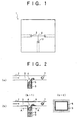
- FIG. 1 is a plan view showing an apparatus for producing microdroplets according to a first embodiment of the present invention
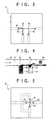
- FIG. 2 is an illustration showing processes for producing such microdroplets.
- FIG. 2(a) is an illustration showing a microdroplet-producing process (No. 1)
- FIG. 2(b) is another illustration showing a microdroplet-producing process (No. 2)
- FIG. 2(b-1) is a fragmentary sectional view thereof
- FIG. 2(b-2) is the sectional view of FIG. 2(b-1) taken along the line A-A.
- reference numeral 1 represents a main body of the microdroplet-producing apparatus
- reference numeral 2 represents a microchannel in which a continuous phase flows and which is disposed in the main body 1
- reference numeral 3 represents a dispersion phase-feeding channel placed such that the dispersion phase-feeding channel 3 and the microchannel 2 cross
- reference numeral 4 represents a dispersion phase-feeding port
- reference numeral 5 represents the continuous phase (for example, oil)
- reference numeral 6 represents a dispersion phase (for example, water)
- reference numeral 7 represents a microdroplet
- reference numeral 8 represents hydrophobic film.
- the dispersion phase 6 is fed to the continuous phase 5 flowing in the microchannel 2 in such a manner that flows of the dispersion phase 6 and the continuous phase 5 cross each other, as shown in FIG. 2.
- Part of the continuous phase 5 extends through each dispersion phase-feeding port 4, thereby producing the microdroplets 7 having a diameter smaller than the width of the dispersion phase-feeding channel 3.
- microdroplets having a diameter of about 25 ⁇ m can be obtained when the pressure of the dispersion phase (water) 6 is set to 2.45 kPa, the pressure of the continuous phase (oil containing 70% of oleic acid) 5 is set to 4.85 kPa, and the microchannel 2 and the dispersion phase-feeding channel 3 have a width of 100 ⁇ m and a height of 100 ⁇ m.
- the pressure of the continuous phase is set to 5.03 kPa
- microdroplets having a diameter of about 5 ⁇ m can be obtained.
- the hydrophobic films 8 are preferably disposed on portions of the inner walls of the microchannel 2, in which the continuous phase 5 flows, and the dispersion phase-feeding channel 3, wherein the portions are disposed at the vicinity of the junction of the flows of the continuous phase (for example, oil) 5 and the dispersion phase (for example, water) 6.
- the hydrophobic films 8 are preferably used.
- hydrophilic films are preferably used.
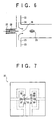
- FIG. 3 is a plan view showing an apparatus for producing microcapsules according to a second embodiment
- FIG. 4 is an illustration showing a process for producing such microcapsules.
- reference numeral 11 represents a main body of the microcapsule-producing apparatus
- reference numeral 12 represents a microchannel in which a continuous phase flows and which is disposed in the main body 11
- reference numeral 13 represents a shell-forming phase-feeding channel placed such that the shell-forming phase-feeding channel 13 and the microchannel 12 cross
- reference numeral 14 represents a content-forming phase-feeding channel placed such that the content-forming phase-feeding channel 14 and the microchannel 12 cross
- reference numeral 15 represents a shell-forming phase-feeding port
- reference numeral 16 represents a content-forming phase-feeding port
- reference numeral 17 represents the continuous phase (for example, water)
- reference numeral 18 represents a shell-forming phase
- reference numeral 19 represents a content-forming phase
- reference numeral 20 represents a microcapsule.
- the shell-forming phase 18 and the content-forming phase 19 are fed to the continuous phase 17 flowing in the microchannel 12 in such a manner that flows of the shell-forming phase 18 and the content-forming phase 19 join the flow of the continuous phase 17, as shown in FIG. 4.
- the shell-forming phase 18 is fed from positions upstream to positions for feeding the content-forming phase 19 in such a manner that shell-forming phase 18 forms a thin layer.
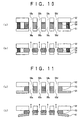
- FIG. 5 is a plan view showing an apparatus for producing microdroplets according to a third embodiment
- FIG. 6 is an illustration showing a process for producing such microdroplets.
- reference numeral 21 represents a main body of the microdroplet-producing apparatus
- reference numeral 22 represents a first microchannel
- reference numeral 23 represents a second microchannel
- reference numeral 24 represents a first continuous phase
- reference numeral 25 represents a second continuous phase
- reference numeral 26 represents the junction of flows of the first continuous phase 24 and the second continuous phase
- reference numeral 27 represents a dispersion phase-feeding channel
- reference numeral 28 represents a dispersion phase
- reference numeral 29 represents a microdroplet.
- the dispersion phase 28 is ejected toward the junction 26 of flows of the first continuous phase 24 and the second continuous phase 25 flowing in the microchannels 22 and 23, respectively, in such a manner that the flow of the dispersion phase 28 joins the flows of the first continuous phase 24 and the second continuous phase 25, as shown in FIG. 6.
- the microdroplets 29 can be produced.
- FIG. 7 is a plan view showing an apparatus for producing microcapsules according to a fourth embodiment
- FIG. 8 is an illustration showing a process for producing such microcapsules.
- reference numeral 31 represents a main body of the microcapsule-producing apparatus
- reference numeral 32 represents a first microchannel in which a continuous phase flows and which is disposed in the main body
- reference numeral 33 represents a second microchannel in which another continuous phase flows and which is disposed in the main body
- reference numeral 34 represents a first continuous phase (for example, oil)
- reference numeral 35 represents a second continuous phase (for example, oil)
- reference numeral 36 represents the junction of flows of the first continuous phase 34 and the second continuous phase 35
- reference numeral 37 represents a content-forming phase-feeding channel
- reference numeral 38 represents a content-forming phase (for example, water)
- reference numeral 39 represents a microdroplet (for example, water spheres)
- reference numeral 40 represents a third microchannel in which another continuous phase flows and which is disposed in the main body
- reference numeral 41 represents a fourth microchannel in which another continuous phase flows and which is disposed in the main body
- reference numeral 42 represents a third continuous phase
- the content-forming phase 38 is fed to the continuous phases 34 and 35 flowing in the first and second microchannels 32 and 33, respectively, in such a manner that the flow of the content-forming phase 38 joins the flows of the continuous phases 34 and 35. Thereby, the microdroplets 39 for forming contents are formed.
- the shell-forming phase 45 containing the first and second continuous phases 34 and 35 mixed together is fed to the continuous phases 42 and 43 flowing in the third and fourth microchannels 40 and 41 in such a manner that the flow of the shell-forming phase 45 joins the junction of the flows of the third and fourth continuous phases 42 and 43.
- a coating for forming a shell is formed on each microdroplet 39 for forming a content, thereby forming each microcapsule 47.
- the microcapsule 47 contains the single microdroplet 39.
- the microcapsule 47 may contain a plurality of the microdroplets 39.
- FIG. 9 shows the particle size obtained by varying the height (which can be converted into the pressure) of the continuous phases and dispersion phases, when the first and second microchannels 32 and 33 and the content-forming phase-feeding channel 37 have a width of 100 ⁇ m and a height of 100 ⁇ m and the channel in which the microdroplets 39 are present have a width of 500 ⁇ m and a height of 100 ⁇ m. It is clear that the particle size can be controlled by varying the height (which can be converted into the pressure) of the continuous phases and dispersion phases.
- FIG. 10 is an illustration showing a mechanism for ejecting a dispersion phase, a shell-forming phase, or a content-forming phase placed in a microdroplet-producing apparatus according to a fifth embodiment of the present invention.
- FIG. 10(a) is an illustration showing such a situation that piezoelectric actuators are expanded and therefore such a phase is not ejected
- FIG. 10(b) is an illustration showing such a situation that the piezoelectric actuators are contracted to eject the phase.
- reference numeral 51 represents a substrate
- reference numeral 52 represents a driven plate
- reference numeral 53 represents rubber
- reference numeral 54 represents the piezoelectric actuators each disposed at the corresponding ends of the driven plate 52
- reference numerals 55a-55d represent a plurality of feeding ports
- reference numerals 56a-56d represent a plurality of channels arranged for a single dispersion phase. A back pressure is applied to the bottom portion of the dispersion phase.
- a plurality of the channels 56a-56d are arranged, and the dispersion phase can be ejected therefrom at the same time when the piezoelectric actuators 54 are contracted, as shown in FIG. 10(b).
- FIG. 11 is an illustration showing a mechanism for ejecting a dispersion phase, a shell-forming phase, or a content-forming phase placed in a microdroplet-producing apparatus according to a sixth embodiment of the present invention.
- FIG. 11(a) is an illustration showing such a situation that a bimorph actuator is not warped and therefore such a phase is not ejected
- FIG. 11(b) is an illustration showing such a situation that the bimorph actuator is warped, thereby ejecting the phase.
- reference numeral 61 represents the bimorph actuator
- reference numeral 62 represents a fixed plate
- reference numeral 63 represents rubber
- reference numerals 64a-64d represent a plurality of feeding ports
- reference numerals 65a-65d represent a plurality of channels arranged for a single dispersion phase. A back pressure is applied to the bottom portion of the dispersion phase.
- a plurality of the channels 65a-65d are arranged, and the dispersion phase can be ejected therefrom at the same time by the operation (upward warping) of the bimorph actuator 61, as shown in FIG. 11(b).
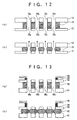
- FIG. 12 is an illustration showing a mechanism for ejecting a dispersion phase, a shell-forming phase, or a content-forming phase placed in a microdroplet-producing apparatus according to a seventh embodiment of the present invention.
- FIG. 12(a) is an illustration showing such a situation that an electrostrictive polymer is not energized and therefore such a phase is not ejected
- FIG. 12(b) is an illustration showing such a situation that the electrostrictive polymer is energized (contracted), thereby ejecting the phase.
- reference numeral 71 represents a substrate
- reference numeral 72 represents a driven plate
- reference numeral 73 represents the electrostrictive polymer
- reference numerals 74a-74d represent a plurality of feeding ports
- reference numerals 75a-75d represent a plurality of channels arranged for a single dispersion phase. A back pressure is applied to the bottom portion of the dispersion phase.
- a plurality of the channels 75a-75d are arranged, and the dispersion phase can be ejected therefrom at the same time by the operation (contraction) of the electrostrictive polymer 73, as shown in FIG. 12(b).
- FIG. 13 is an illustration showing a mechanism for opening or closing a dispersion phase-feeding port of a microdroplet-producing apparatus according to an eighth embodiment of the present invention.
- FIG. 13(a) is an illustration showing such a situation that piezoelectric actuators are not energized (contracted) and therefore gates for a phase are opened
- FIG. 13(b) is an illustration showing such a situation that the piezoelectric actuators are energized (expanded) and thereby the gates for the phase are closed.
- reference numeral 81 represents a substrate
- reference numeral 82 represents rubber
- reference numeral 83 represents a driven plate
- reference numeral 84 represents the piezoelectric actuators
- reference numeral 85 represent a fixed plate
- reference numerals 86a-86d represent a plurality of the gates.
- a plurality of the gates 86a-86d are arranged, and all the gates for the phase can be closed by the operation of the two piezoelectric actuators 84 disposed at both sides.
- actuators may be used instead of the above actuators.
- FIG. 14 is an illustration showing a mechanism for opening or closing a dispersion phase-feeding port of a microdroplet-producing apparatus according to a ninth embodiment of the present invention.
- FIG. 14(a) is an illustration showing such a situation that a bimorph actuator is not energized (not warped) and therefore gates for a phase are opened
- FIG. 14(b) is an illustration showing such a situation that the bimorph actuator is energized (warped downward) and thereby the gates for the phase are closed.
- reference numeral 91 represents a substrate
- reference numeral 92 represents rubber
- reference numeral 93 represents the bimorph actuator
- reference numerals 94a-94d represent a plurality of the gates.
- a plurality of the gates 94a-94d are arranged, and all the gates can be closed at the same time by the operation of the bimorph actuator 93.
- FIG. 15 is an illustration showing a mechanism for opening or closing a dispersion phase-feeding port of a microdroplet-producing apparatus according to a tenth embodiment of the present invention.
- FIG. 15(a) is an illustration showing such a situation that an electrostrictive polymer is not energized and therefore gates for a phase are opened
- FIG. 15(b) is an illustration showing such a situation that the electrostrictive polymer is energized (contracted) and thereby the gates for the phase are closed.
- reference numeral 101 represents a substrate
- reference numeral 102 represents a driven plate
- reference numeral 103 represents the electrostrictive polymer
- reference numerals 104a-104d represent a plurality of the gates.
- a plurality of the gates 104a-104d are opened when the electrostrictive polymer 103 is not energized (expanded). As shown in FIG. 15(b), a plurality of the gates 104a-104d are closed at the same time when the electrostrictive polymer 103 is energized (contracted).
- FIG. 16 is a plan view showing an emulsion-producing apparatus according to an eleventh embodiment of the present invention.
- FIG. 16(a) is a plan view showing the emulsion-producing apparatus to which a dispersion phase has not been introduced yet
- FIG. 16(b) is a plan view showing the emulsion-producing apparatus to which liquid has been charged
- FIG. 16(c) is an illustration showing such a situation that a large droplet is set for the emulsion-producing apparatus and microdroplets (emulsion) are produced due to a moving electric field induced by static electricity.
- reference numeral 111 represents a substrate
- reference numeral 112 represents electrodes disposed on the substrate 111
- reference numeral 113 represents a microchannel disposed above the substrate 111 having the electrodes 112 thereon
- reference numeral 114 represents a dispersion phase
- reference numeral 115 represents an emulsion formed by causing the dispersion phase 114 to pass through the microchannel 113.
- the electrodes 112 are arranged to be perpendicular to the microchannel 113, and a moving electric field is applied to the electrodes 112, thereby forming the emulsion 115.
- the emulsion 115 is guided in the direction perpendicular to the electrodes (in the downward direction herein) depending on the moving electric field induced by the static electricity applied to the electrodes 112.
- the rate of forming the microdroplets can be changed by varying the moving speed of the moving electric field.
- FIG. 17 is a plan view showing an emulsion-producing apparatus according to a twelfth embodiment of the present invention.
- FIG. 17(a) is a plan view showing the emulsion-producing apparatus to which a dispersion phase has not been introduced yet
- FIG. 17(b) is an illustration showing such a situation that the dispersion phase is introduced to the emulsion-producing apparatus, thereby forming an emulsion.
- reference numeral 121 represents a substrate
- reference numeral 122 represents electrodes disposed on the substrate 121
- reference numeral 123 represents a microchannel disposed above the substrate 121 having the electrodes 122 thereon
- reference numeral 124 represents a dispersion phase
- reference numeral 125 represents an emulsion formed by causing the dispersion phase 124 to pass through the microchannel 123.
- the electrodes 122 are vertically arranged and thereby the formed emulsion 125 is guided in the horizontal direction depending on a static electricity applied to the electrodes 122.
- FIG. 18 is an illustration showing an emulsion-forming apparatus according to a thirteenth embodiment of the present invention.
- FIG. 18(a) is a schematic view showing the total configuration of the monodispersed emulsion-forming apparatus, and FIG. 18(a-1) is the left side elevational view thereof, FIG. 18(a-2) is a schematic plan view thereof, FIG. 18(a-3) is the right side elevational view thereof.
- FIG. 18(b) is an illustration showing a first junction, and FIG. 18(C) is an illustration showing a second junction.
- reference numeral 131 represents a main body of the emulsion-forming apparatus
- reference numeral 132 represents a microchannel in which a dispersion phase flows
- reference numeral 133 represents a microchannel in which a first continuous phase flows
- reference numeral 134 represents a microchannel in which a second continuous phase flows
- reference numeral 135 represents the first junction at which flows of the dispersion phase and the first continuous phase are joined together
- reference numeral 136 represents the second junction at which flows of the dispersion phase, the first continuous phase, and the second continuous phase are joined together
- reference numeral 137 represents the first continuous phase
- reference numeral 138 represents the dispersion phase
- reference numeral 139 represents the second continuous phase
- reference numeral 140 represents a formed emulsion.
- the flows of the dispersion phase 138 and the first continuous phase 137 are joined together at the first junction 135, thereby forming a two-phase flow containing the first continuous phase 137 and the dispersion phase 138.
- a flow of the second continuous phase 139 and the two-phase flow containing the first continuous phase 137 and the dispersion phase 138 are joined together, and thereby the emulsion 140 is formed from the dispersion phase 138.
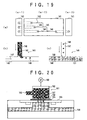
- FIG. 19 is an illustration showing a microcapsule-forming apparatus according to a fourteenth embodiment of the present invention.
- FIG. 19(a) is a schematic view showing the total configuration of the microcapsule-forming apparatus, and FIG. 19(a-1) is the left side elevational view thereof, FIG. 19(a-2) is a schematic plan view thereof, FIG. 19(a-3) is the right side elevational view thereof.
- FIG. 19(b) is an illustration showing a first junction, and FIG. 19(C) is an illustration showing a second junction.
- reference numeral 141 represents a main body of the microcapsule-forming apparatus
- reference numeral 142 represents a microchannel in which a dispersion phase (for example, water) flows
- reference numeral 143 represents a microchannel in which a first continuous phase (for example, oil) flows
- reference numeral 144 represents a microchannel in which a second continuous phase (for example, water) flows
- reference numeral 145 represents the first junction at which flows of the dispersion phase and the first continuous phase are joined together
- reference numeral 146 represents the second junction at which flows of the dispersion phase, the first continuous phase, and the second continuous phase are joined together
- reference numeral 147 represents the first continuous phase
- reference numeral 148 represents the dispersion phase
- reference numeral 149 represents an emulsion (for example, water)
- reference numeral 150 represents the second continuous phase
- reference numeral 151 represents formed microcapsules.
- the microcapsules 151 can contain one or more emulsions 149.
- FIG. 20 is an illustration showing a configuration of an apparatus of the present invention, wherein the apparatus can be used for forming a large amount of microdroplets (emulsion/microcapsules) using the elastic deformation of rubber.
- FIG. 21 is an illustration showing the operation of a first forming apparatus therefor.
- reference numeral 160 represents a linear motor
- reference numeral 161 represents a liquid chamber
- reference numeral 162 represents a cover
- reference numeral 163 represents a dispersion phase
- reference numeral 164 represents an upper stainless plate
- reference numeral 165 represents a rubber member
- reference numeral 166 represents a lower stainless plate
- reference numeral 167 represents microchannels
- reference numeral 168 represents a continuous phase
- reference numeral 169 represents a formed emulsion (microdroplets).
- Another actuator including a piezoelectric actuator may be used instead of the linear motor 160 functioning as an actuator.
- the linear motor 160 When the linear motor 160 is operated to apply a pressure to the liquid chamber 161 (see FIG. 21(a)), to which a back pressure is applied, from above, the rubber member 165 disposed between the upper stainless plate 164 and the lower stainless plate 166 is pressed (see FIG. 21(b)) and thereby part of the dispersion phase 163 is separated and then ejected from each microchannel 167, thereby forming the microdroplets 169.
- a large number of the microchannels 167 extend through the upper stainless plate 164, the rubber member 165, and the lower stainless plate 166, a large amount of the microdroplets 169 can be readily produced by the operation of the linear motor 160 at a time.
- FIG. 22 is an illustration showing the operation of a second apparatus, shown in FIG. 20, for forming a large amount of microdroplets.
- a plurality of the microchannels 167 each have a narrow section 167B having a tapered portion 167A formed by narrowing a lower channel portion.
- FIG. 23 is an illustration showing the operation of a third apparatus, shown in FIG. 20, for forming a large amount of microdroplets.
- a plurality of the microchannels 167 each have a narrow section 167E that has a first tapered portion 167C formed by narrowing a lower channel portion and a second tapered portion 167D formed by expanding a further lower channel portion.
- each microdroplet 169' is separated at each microchannel 167 having the first tapered portion 167C, and the microdroplet 169' formed by separating part of the dispersion phase is guided along the second tapered portion 167D in the downward direction and then efficiently ejected.
- an emulsion and microcapsules can be rapidly formed in a simple manner.
- the formed emulsion can be guided in a predetermined direction and the rate of forming the emulsion can be varied.
- the emulsion can be produced in a large scale.
- an emulsion and microcapsules can be rapidly formed in a simple manner.
- Such a process and apparatus are fit for the field of drug production and biotechnology.
Landscapes
- Chemical & Material Sciences (AREA)
- Chemical Kinetics & Catalysis (AREA)
- Organic Chemistry (AREA)
- Dispersion Chemistry (AREA)
- Physics & Mathematics (AREA)
- Fluid Mechanics (AREA)
- Manufacturing Of Micro-Capsules (AREA)
- Physical Or Chemical Processes And Apparatus (AREA)
- Colloid Chemistry (AREA)
Abstract
Description
Claims (20)
- A process for producing an emulsion, comprising a step of ejecting a dispersion phase from a dispersion phase-feeding port toward a continuous phase flowing in a microchannel in such a manner that flows of the dispersion phase and the continuous phase cross each other, whereby microdroplets are formed by the shear force of the continuous phase and the size of the microdroplets is controlled.
- A process for producing microcapsules, comprising a step of feeding a shell-forming phase and a content-forming phase to a continuous phase flowing in a microchannel, in such a manner that flows of the shell-forming phase and the content-forming phase join the flow of the continuous phase, to obtain microcapsules, wherein the shell-forming phase is fed from positions upstream to positions for feeding the content-forming phase in such a manner that the shell-forming phase forms a thin layer.
- A process for producing an emulsion, comprising a step of ejecting a dispersion phase toward the junction of flows of continuous phases flowing in microchannels extending in the directions opposite to each other, in such a manner that the flow of the dispersion phase joins the flows of the continuous phases, to obtain microdroplets.
- A process for producing microcapsules, comprising a step of feeding a content-forming phase to first and second continuous phases flowing in first and second microchannels extending in the directions opposite to each other, in such a manner that the flow of the content-forming phase joins the flows of the first and second continuous phases, to form microdroplets for forming contents; and then feeding a shell-forming phase to third and fourth continuous phases flowing in third and fourth microchannels, in such a manner that the flow of the shell-forming phase joins the junction of flows of the third and fourth continuous phases, to form microdroplets for forming shells to obtain microcapsules.
- A process for producing an emulsion, comprising a step of allowing flows of a first continuous phase and a dispersion phase to join together at a first junction to form a two-phase flow and then allowing the two-phase flow, consisting of the flows of the first continuous phase and the dispersion phase joined together, to join a flow of a second continuous phase at a second junction to form an emulsion containing the dispersion phase.
- A process for producing microcapsules, comprising a step of allowing flows of a first continuous phase and a dispersion phase to join together at a first junction to form microdroplets and then allowing the flow of the first continuous phase containing the microdroplets to join a flow of a second continuous phase at a second junction to form microcapsules containing the first continuous phase containing the microcapsules.
- An apparatus for producing an emulsion, comprising means for forming a continuous phase flowing in a microchannel, means for feeding a dispersion phase to the continuous phase in such a manner that flows of the continuous phase and the dispersion phase cross each other, dispersion phase-ejecting means for ejecting the dispersion phase from a dispersion phase-feeding port, and means for forming microdroplets by the shear force of the continuous phase to control the size of the microdroplets.
- An apparatus for producing microcapsules, comprising means for forming a continuous phase flowing in a microchannel, means for feeding a shell-forming phase and a content-forming phase to a dispersion phase in such a manner that flows of the shell-forming phase and content-forming phase join the flow of the continuous phase, and means for feeding the shell-forming phase from positions upstream to positions for feeding the content-forming phase in such a manner that shell-forming phase forms a thin layer.
- An apparatus for producing an emulsion, comprising means for forming continuous phases flowing in microchannels extending in the directions opposite to each other; and means for ejecting a dispersion phase toward the junction of flows of the continuous phases, in such a manner that the flow of the dispersion phase joins the flows of the continuous phases, to obtain microdroplets.
- An apparatus for producing microcapsules, comprising means for feeding a content-forming phase to first and second continuous phases flowing in first and second microchannels extending in the directions opposite to each other, in such a manner that the flow of the content-forming phase joins the flows of the first and second continuous phases, to form microdroplets for forming contents; and then feeding a shell-forming phase to third and fourth continuous phases flowing in third and fourth microchannels, in such a manner that the flow of the shell-forming phase joins the junction of flows of the third and fourth continuous phases, to form coatings for forming shells to obtain microcapsules.
- The apparatus for producing an emulsion according to Claim 7 or 9, wherein the means for feeding a plurality of the dispersion phases each include a substrate, a driven plate, an elastic member disposed between the substrate and the driven plate, and an actuator for driving the driven plate and thereby a plurality of the dispersion phases are fed at the same time.
- The apparatus for producing microcapsules according to Claim 8 or 10, wherein the means for feeding a plurality of shell-forming phases and content-forming phases each include a substrate, a driven plate, an elastic member disposed between the substrate and the driven plate, and an actuator for driving the driven plate, and thereby a plurality of the shell-forming phases and content-forming phases are fed at the same time.
- The apparatus for producing an emulsion according to Claim 7 or 9 further comprising films, disposed on portions of inner wall surfaces of the microchannel in which the continuous phase flows and the channel for feeding the dispersion phase, for readily forming the microdroplets, wherein the portions include the junction of the flows of the continuous phase and the dispersion phase and the vicinity of the junction.
- The apparatus for producing microcapsules according to Claim 8 or 10 further comprising films, disposed on portions of inner wall surfaces of the microchannel in which the continuous phase flows and the channel for feeding the dispersion phase, for readily forming the microdroplets, wherein the portions include the junction of the flows of the continuous phase and the dispersion phase and the vicinity of the junctions.
- An apparatus for producing an emulsion, comprising:(a) a substrate having parallel electrodes; and(b) a microchannel disposed on the substrate,(c) wherein a dispersion phase disposed at the upstream side of the microchannel is attracted and then ejected by a moving electric field, applied to the parallel electrodes, to form the emulsion.
- The apparatus for producing an emulsion according to Claim 15, wherein the arrangement of the parallel electrodes disposed at the side close to the continuous phase is changed, whereby the formed emulsion is guided in a predetermined direction.
- The apparatus for producing an emulsion according to Claim 15, wherein the moving speed of the moving electric field applied to the parallel electrodes is varied, whereby the forming rate of the emulsion is varied.
- An apparatus for producing an emulsion, comprising:(a) an elastic member disposed between rigid members, placed at a lower section of a liquid chamber for a dispersion phase, having a plurality of microchannels therein;(b) an actuator for applying a stress to the elastic member; and(c) a continuous phase communicatively connected to a plurality of the microchannels.
- The apparatus for producing an emulsion according to Claim 18, wherein a plurality of the microchannels each have a section, of which the diameter is decreased, having a tapered portion.
- The apparatus for producing an emulsion according to Claim 18, wherein a plurality of the microchannels each have a lower section, of which the diameter is decreased, having a first tapered portion and also each have a protrusion having a second tapered portion for increasing the diameter of a further lower section.
Priority Applications (5)
| Application Number | Priority Date | Filing Date | Title |
|---|---|---|---|
| EP20040011291 EP1447127B1 (en) | 2001-02-23 | 2002-02-13 | Apparatus for producing emulsion |
| EP06003618A EP1741482B1 (en) | 2001-02-23 | 2002-02-13 | Process and apparatus for producing microcapsules |
| EP06003619.1A EP1721658B2 (en) | 2001-02-23 | 2002-02-13 | Process and apparatus for producing microcapsules |
| EP20040028678 EP1510251B1 (en) | 2001-02-23 | 2002-02-13 | Process and apparatus for producing microcapsules |
| EP20060020469 EP1745839B1 (en) | 2001-02-23 | 2002-02-13 | Apparatus for producing emulsion |
Applications Claiming Priority (5)
| Application Number | Priority Date | Filing Date | Title |
|---|---|---|---|
| JP2001048097 | 2001-02-23 | ||
| JP2001480097 | 2001-02-23 | ||
| JP2001238624 | 2001-08-07 | ||
| JP2001238624 | 2001-08-07 | ||
| PCT/JP2002/001186 WO2002068104A1 (en) | 2001-02-23 | 2002-02-13 | Process for producing emulsion and microcapsules and apparatus therefor |
Related Child Applications (4)
| Application Number | Title | Priority Date | Filing Date |
|---|---|---|---|
| EP06003618A Division EP1741482B1 (en) | 2001-02-23 | 2002-02-13 | Process and apparatus for producing microcapsules |
| EP20040028678 Division EP1510251B1 (en) | 2001-02-23 | 2002-02-13 | Process and apparatus for producing microcapsules |
| EP06003619.1A Division EP1721658B2 (en) | 2001-02-23 | 2002-02-13 | Process and apparatus for producing microcapsules |
| EP20040011291 Division EP1447127B1 (en) | 2001-02-23 | 2002-02-13 | Apparatus for producing emulsion |
Publications (3)
| Publication Number | Publication Date |
|---|---|
| EP1362634A1 true EP1362634A1 (en) | 2003-11-19 |
| EP1362634A4 EP1362634A4 (en) | 2004-08-11 |
| EP1362634B1 EP1362634B1 (en) | 2006-05-31 |
Family
ID=26609974
Family Applications (5)
| Application Number | Title | Priority Date | Filing Date |
|---|---|---|---|
| EP06003619.1A Expired - Lifetime EP1721658B2 (en) | 2001-02-23 | 2002-02-13 | Process and apparatus for producing microcapsules |
| EP20040028678 Expired - Lifetime EP1510251B1 (en) | 2001-02-23 | 2002-02-13 | Process and apparatus for producing microcapsules |
| EP20060020469 Expired - Lifetime EP1745839B1 (en) | 2001-02-23 | 2002-02-13 | Apparatus for producing emulsion |
| EP20020700576 Expired - Lifetime EP1362634B1 (en) | 2001-02-23 | 2002-02-13 | Process for producing emulsion and apparatus therefor |
| EP20040011291 Expired - Lifetime EP1447127B1 (en) | 2001-02-23 | 2002-02-13 | Apparatus for producing emulsion |
Family Applications Before (3)
| Application Number | Title | Priority Date | Filing Date |
|---|---|---|---|
| EP06003619.1A Expired - Lifetime EP1721658B2 (en) | 2001-02-23 | 2002-02-13 | Process and apparatus for producing microcapsules |
| EP20040028678 Expired - Lifetime EP1510251B1 (en) | 2001-02-23 | 2002-02-13 | Process and apparatus for producing microcapsules |
| EP20060020469 Expired - Lifetime EP1745839B1 (en) | 2001-02-23 | 2002-02-13 | Apparatus for producing emulsion |
Family Applications After (1)
| Application Number | Title | Priority Date | Filing Date |
|---|---|---|---|
| EP20040011291 Expired - Lifetime EP1447127B1 (en) | 2001-02-23 | 2002-02-13 | Apparatus for producing emulsion |
Country Status (6)
| Country | Link |
|---|---|
| US (6) | US7268167B2 (en) |
| EP (5) | EP1721658B2 (en) |
| JP (1) | JP3746766B2 (en) |
| CA (1) | CA2438856C (en) |
| DE (6) | DE60211857T2 (en) |
| WO (1) | WO2002068104A1 (en) |
Cited By (65)
| Publication number | Priority date | Publication date | Assignee | Title |
|---|---|---|---|---|
| WO2004071638A3 (en) * | 2003-02-11 | 2004-12-09 | Univ California | Microfluidic devices and method for controlled viscous shearing and formation of amphiphilic vesicles |
| WO2006039568A1 (en) * | 2004-10-01 | 2006-04-13 | Velocys Inc. | Multiphase mixing process using microchannel process technology |
| US7029647B2 (en) | 2004-01-27 | 2006-04-18 | Velocys, Inc. | Process for producing hydrogen peroxide using microchannel technology |
| EP1486251A3 (en) * | 2003-06-11 | 2006-04-19 | Asahi Glass Company Ltd. | Process and apparatus for producing inorganic spheres |
| WO2006046200A1 (en) * | 2004-10-29 | 2006-05-04 | Koninklijke Philips Electronics N.V. | Preparation of dispersions of particles for use as contrast agents in ultrasound imaging |
| US7084180B2 (en) | 2004-01-28 | 2006-08-01 | Velocys, Inc. | Fischer-tropsch synthesis using microchannel technology and novel catalyst and microchannel reactor |
| WO2006096571A3 (en) * | 2005-03-04 | 2006-11-23 | Harvard College | Method and apparatus for forming multiple emulsions |
| WO2006137206A1 (en) * | 2005-06-23 | 2006-12-28 | Seiko Chemical Co., Ltd. | Method for manufacturing particulate chemical substances and particulate products of such substances |
| WO2007039265A1 (en) * | 2005-10-06 | 2007-04-12 | Unilever Plc | Microfluidic network and method |
| US7307104B2 (en) | 2003-05-16 | 2007-12-11 | Velocys, Inc. | Process for forming an emulsion using microchannel process technology |
| US7305850B2 (en) | 2004-07-23 | 2007-12-11 | Velocys, Inc. | Distillation process using microchannel technology |
| WO2008063227A3 (en) * | 2006-05-11 | 2008-11-06 | Raindance Technologies Inc | Microfluidic devices |
| CN100431679C (en) * | 2004-03-23 | 2008-11-12 | 独立行政法人科学技术振兴机构 | Method and device for generating tiny droplets |
| US7485671B2 (en) | 2003-05-16 | 2009-02-03 | Velocys, Inc. | Process for forming an emulsion using microchannel process technology |
| US7507274B2 (en) | 2005-03-02 | 2009-03-24 | Velocys, Inc. | Separation process using microchannel technology |
| WO2009068673A1 (en) * | 2007-11-30 | 2009-06-04 | Centrum Für Angewandte Nanotechnologie Gmbh | Inkjet printer for the manufacture of emulsions |
| US7553434B2 (en) | 2002-04-25 | 2009-06-30 | Tosoh Corporation | Fine channel device, fine particle producing method and solvent extraction method |
| US7610775B2 (en) | 2004-07-23 | 2009-11-03 | Velocys, Inc. | Distillation process using microchannel technology |
| WO2010025988A1 (en) * | 2008-09-04 | 2010-03-11 | Unilever Plc | Method and apparatus for producing microparticles |
| US7708949B2 (en) | 2002-06-28 | 2010-05-04 | President And Fellows Of Harvard College | Method and apparatus for fluid dispersion |
| US7776927B2 (en) | 2007-03-28 | 2010-08-17 | President And Fellows Of Harvard College | Emulsions and techniques for formation |
| DE102009024048B3 (en) * | 2009-05-08 | 2010-08-19 | Institut für Bioprozess- und Analysenmesstechnik e.V. | Mountable and demountable microfluidic system used for producing, cultivating, manipulating, analyzing and preserving single-phase and multiphase fluids, comprises stack of plates |
| US7935734B2 (en) | 2005-07-08 | 2011-05-03 | Anna Lee Tonkovich | Catalytic reaction process using microchannel technology |
| US8114319B2 (en) | 2005-02-04 | 2012-02-14 | Q Chip Limited | Device and method for producing spherical segmented flow |
| US8383872B2 (en) | 2004-11-16 | 2013-02-26 | Velocys, Inc. | Multiphase reaction process using microchannel technology |
| WO2012162296A3 (en) * | 2011-05-23 | 2013-02-28 | President And Fellows Of Harvard College | Control of emulsions, including multiple emulsions |
| US8580211B2 (en) | 2003-05-16 | 2013-11-12 | Velocys, Inc. | Microchannel with internal fin support for catalyst or sorption medium |
| US8703984B2 (en) | 2004-08-12 | 2014-04-22 | Velocys, Inc. | Process for converting ethylene to ethylene oxide using microchannel process technology |
| US8747805B2 (en) | 2004-02-11 | 2014-06-10 | Velocys, Inc. | Process for conducting an equilibrium limited chemical reaction using microchannel technology |
| US9006298B2 (en) | 2012-08-07 | 2015-04-14 | Velocys, Inc. | Fischer-Tropsch process |
| US9023900B2 (en) | 2004-01-28 | 2015-05-05 | Velocys, Inc. | Fischer-Tropsch synthesis using microchannel technology and novel catalyst and microchannel reactor |
| US9038919B2 (en) | 2003-04-10 | 2015-05-26 | President And Fellows Of Harvard College | Formation and control of fluidic species |
| US9068699B2 (en) | 2007-04-19 | 2015-06-30 | Brandeis University | Manipulation of fluids, fluid components and reactions in microfluidic systems |
| CN104741158A (en) * | 2015-04-03 | 2015-07-01 | 北京大学 | Device and method for generating microdroplets by inertial force |
| US9101890B2 (en) | 2005-05-25 | 2015-08-11 | Velocys, Inc. | Support for use in microchannel processing |
| US9150494B2 (en) | 2004-11-12 | 2015-10-06 | Velocys, Inc. | Process using microchannel technology for conducting alkylation or acylation reaction |
| EP2473262A4 (en) * | 2009-09-02 | 2015-12-02 | Harvard College | MULTIPLE EMULSIONS CREATED USING JUNCTION |
| US9228229B2 (en) | 2010-02-12 | 2016-01-05 | Raindance Technologies, Inc. | Digital analyte analysis |
| US9328344B2 (en) | 2006-01-11 | 2016-05-03 | Raindance Technologies, Inc. | Microfluidic devices and methods of use in the formation and control of nanoreactors |
| US9366632B2 (en) | 2010-02-12 | 2016-06-14 | Raindance Technologies, Inc. | Digital analyte analysis |
| US9440232B2 (en) | 2007-02-06 | 2016-09-13 | Raindance Technologies, Inc. | Manipulation of fluids and reactions in microfluidic systems |
| US9562837B2 (en) | 2006-05-11 | 2017-02-07 | Raindance Technologies, Inc. | Systems for handling microfludic droplets |
| US9789482B2 (en) | 2003-08-27 | 2017-10-17 | President And Fellows Of Harvard College | Methods of introducing a fluid into droplets |
| US10195571B2 (en) | 2011-07-06 | 2019-02-05 | President And Fellows Of Harvard College | Multiple emulsions and techniques for the formation of multiple emulsions |
| US10351905B2 (en) | 2010-02-12 | 2019-07-16 | Bio-Rad Laboratories, Inc. | Digital analyte analysis |
| US10358604B2 (en) | 2015-06-12 | 2019-07-23 | Velocys, Inc. | Method for stopping and restarting a Fischer-Tropsch process |
| EP3471865A4 (en) * | 2016-10-21 | 2019-08-14 | Hewlett-Packard Development Company, L.P. | Droplet generator |
| US10647981B1 (en) | 2015-09-08 | 2020-05-12 | Bio-Rad Laboratories, Inc. | Nucleic acid library generation methods and compositions |
| US10732649B2 (en) | 2004-07-02 | 2020-08-04 | The University Of Chicago | Microfluidic system |
| US10874997B2 (en) | 2009-09-02 | 2020-12-29 | President And Fellows Of Harvard College | Multiple emulsions created using jetting and other techniques |
| US11077415B2 (en) | 2011-02-11 | 2021-08-03 | Bio-Rad Laboratories, Inc. | Methods for forming mixed droplets |
| US11168353B2 (en) | 2011-02-18 | 2021-11-09 | Bio-Rad Laboratories, Inc. | Compositions and methods for molecular labeling |
| US11174509B2 (en) | 2013-12-12 | 2021-11-16 | Bio-Rad Laboratories, Inc. | Distinguishing rare variations in a nucleic acid sequence from a sample |
| US11187702B2 (en) | 2003-03-14 | 2021-11-30 | Bio-Rad Laboratories, Inc. | Enzyme quantification |
| US11390917B2 (en) | 2010-02-12 | 2022-07-19 | Bio-Rad Laboratories, Inc. | Digital analyte analysis |
| US11474109B2 (en) | 2018-11-16 | 2022-10-18 | Scintimetrics, Inc. | Compositions and methods for controllably merging emulsion droplets and sample analysis |
| US11511242B2 (en) | 2008-07-18 | 2022-11-29 | Bio-Rad Laboratories, Inc. | Droplet libraries |
| US11635427B2 (en) | 2010-09-30 | 2023-04-25 | Bio-Rad Laboratories, Inc. | Sandwich assays in droplets |
| US11786872B2 (en) | 2004-10-08 | 2023-10-17 | United Kingdom Research And Innovation | Vitro evolution in microfluidic systems |
| US11901041B2 (en) | 2013-10-04 | 2024-02-13 | Bio-Rad Laboratories, Inc. | Digital analysis of nucleic acid modification |
| US11898193B2 (en) | 2011-07-20 | 2024-02-13 | Bio-Rad Laboratories, Inc. | Manipulating droplet size |
| US12038438B2 (en) | 2008-07-18 | 2024-07-16 | Bio-Rad Laboratories, Inc. | Enzyme quantification |
| US12097475B2 (en) | 2004-07-02 | 2024-09-24 | The University Of Chicago | Microfluidic system |
| US12352673B2 (en) | 2009-03-23 | 2025-07-08 | Bio-Rad Laboratories, Inc. | Manipulation of microfluidic droplets |
| US12372465B2 (en) | 2019-11-15 | 2025-07-29 | Scintimetrics, Inc. | Compositions and methods based on diffusion of fluorophores |
Families Citing this family (227)
| Publication number | Priority date | Publication date | Assignee | Title |
|---|---|---|---|---|
| DE60211857T2 (en) * | 2001-02-23 | 2006-12-21 | Japan Science And Technology Agency, Kawaguchi | METHOD FOR PRODUCING AN EMULSION AND DEVICE THEREFOR |
| US6932502B2 (en) * | 2002-05-01 | 2005-08-23 | Hewlett-Packard Development Company, L.P. | Mixing apparatus |
| JP2004154745A (en) * | 2002-09-10 | 2004-06-03 | Tosoh Corp | Microchannel structure for droplet generation, droplet generation method using the same, and product thereof |
| JP4186637B2 (en) * | 2002-11-06 | 2008-11-26 | 東ソー株式会社 | Particle manufacturing method and microchannel structure therefor |
| JP4527384B2 (en) * | 2002-12-06 | 2010-08-18 | 綜研化学株式会社 | Manufacturing method of colored spherical particles using microchannel, and microchannel manufacturing apparatus used in the manufacturing method |
| JP4356312B2 (en) * | 2002-12-17 | 2009-11-04 | 東ソー株式会社 | Microchannel structure |
| JP4306243B2 (en) * | 2002-12-17 | 2009-07-29 | 東ソー株式会社 | Particle production method |
| JP4166590B2 (en) * | 2003-02-04 | 2008-10-15 | 独立行政法人科学技術振興機構 | Double emulsion microcapsule generator |
| US7041481B2 (en) | 2003-03-14 | 2006-05-09 | The Regents Of The University Of California | Chemical amplification based on fluid partitioning |
| GB0307403D0 (en) | 2003-03-31 | 2003-05-07 | Medical Res Council | Selection by compartmentalised screening |
| US20060078893A1 (en) * | 2004-10-12 | 2006-04-13 | Medical Research Council | Compartmentalised combinatorial chemistry by microfluidic control |
| GB0307428D0 (en) | 2003-03-31 | 2003-05-07 | Medical Res Council | Compartmentalised combinatorial chemistry |
| AU2004285960A1 (en) * | 2003-10-30 | 2005-05-12 | Cytonome/St, Llc | Multilayer hydrodynamic sheath flow structure |
| ES2283158B1 (en) * | 2003-11-10 | 2008-09-16 | Universidad De Sevilla | PROCEDURE AND DEVICE FOR THE GENERATION OF FOAMS AND EMULSIONS THROUGH PAIRS OF FACED TUBES. |
| JP4042683B2 (en) * | 2003-11-17 | 2008-02-06 | 東ソー株式会社 | Microchannel structure and microparticle manufacturing method using the same |
| US20050103690A1 (en) * | 2003-11-19 | 2005-05-19 | Aisin Seiki Kabushiki Kaisha | Micro liquid control system |
| JP4352890B2 (en) * | 2003-12-24 | 2009-10-28 | 東ソー株式会社 | Fine particle production apparatus and fine particle production method using the same |
| JP2005238118A (en) * | 2004-02-26 | 2005-09-08 | Tosoh Corp | Method and apparatus for producing solidified particles using microchannel structure |
| JP2005254124A (en) * | 2004-03-11 | 2005-09-22 | Yokohama Tlo Co Ltd | Production method of droplet dispersion |
| JP4639624B2 (en) * | 2004-03-30 | 2011-02-23 | 東ソー株式会社 | Micro channel structure |
| US20050221339A1 (en) * | 2004-03-31 | 2005-10-06 | Medical Research Council Harvard University | Compartmentalised screening by microfluidic control |
| JP4470640B2 (en) * | 2004-08-12 | 2010-06-02 | 東ソー株式会社 | Fine particle manufacturing method and microchannel structure therefor |
| JP5079977B2 (en) * | 2004-09-16 | 2012-11-21 | 大日本塗料株式会社 | Method for producing monodisperse particles |
| CA2587412C (en) * | 2004-11-17 | 2013-03-26 | Velocys Inc. | Emulsion process using microchannel process technology |
| US20070054119A1 (en) * | 2005-03-04 | 2007-03-08 | Piotr Garstecki | Systems and methods of forming particles |
| JP4580801B2 (en) * | 2005-03-29 | 2010-11-17 | 株式会社東芝 | Composite type fine particle manufacturing method and composite type fine particle manufacturing apparatus |
| WO2007011310A1 (en) * | 2005-07-21 | 2007-01-25 | Nanyang Technological University | Methods and apparatus for microfluidic mixing |
| DE102005037401B4 (en) * | 2005-08-08 | 2007-09-27 | MAX-PLANCK-Gesellschaft zur Förderung der Wissenschaften e.V. | Formation of an emulsion in a fluidic microsystem |
| DE102005048259B4 (en) * | 2005-10-07 | 2007-09-13 | Landesstiftung Baden-Württemberg | Apparatus and method for producing a mixture of two intractable phases |
| US20070085227A1 (en) * | 2005-10-13 | 2007-04-19 | Tonkovich Anna L | Multi-phase contacting process using microchannel technology |
| WO2007089541A2 (en) * | 2006-01-27 | 2007-08-09 | President And Fellows Of Harvard College | Fluidic droplet coalescence |
| JP4921829B2 (en) * | 2006-03-30 | 2012-04-25 | 株式会社東芝 | Fine particle production apparatus, emulsifier holding part, fine particle production method, and molecular film production method |
| US7811603B2 (en) * | 2006-05-09 | 2010-10-12 | The Regents Of The University Of California | Microfluidic device for forming monodisperse lipoplexes |
| EP2077912B1 (en) | 2006-08-07 | 2019-03-27 | The President and Fellows of Harvard College | Fluorocarbon emulsion stabilizing surfactants |
| US8524173B2 (en) | 2006-09-01 | 2013-09-03 | Tosoh Corporation | Microchannel structure and fine-particle production method using the same |
| JP4417361B2 (en) * | 2006-09-27 | 2010-02-17 | 独立行政法人科学技術振興機構 | Double emulsion microcapsule generator |
| JP2007044692A (en) * | 2006-09-27 | 2007-02-22 | Japan Science & Technology Agency | Double emulsion microcapsule generator |
| FR2907030B1 (en) * | 2006-10-13 | 2014-06-06 | Rhodia Recherches & Tech | METHOD AND DEVICE FOR MANAGING PLUGS IN A FLUID FLOW |
| JP5640196B2 (en) * | 2006-11-02 | 2014-12-17 | 国立大学法人名古屋大学 | Method for producing microcapsules |
| US20080121733A1 (en) * | 2006-11-29 | 2008-05-29 | Donald Ackley | Droplet generating device and method |
| US7985058B2 (en) * | 2007-01-12 | 2011-07-26 | Mark Gray | Method and apparatus for making uniformly sized particles |
| US9029085B2 (en) | 2007-03-07 | 2015-05-12 | President And Fellows Of Harvard College | Assays and other reactions involving droplets |
| US8961898B2 (en) * | 2007-03-30 | 2015-02-24 | Tokyo Institute Of Technology | Method for producing bilayer membrane and planar bilayer membrane |
| EP2235210B1 (en) | 2007-12-21 | 2015-03-25 | President and Fellows of Harvard College | Methods for nucleic acid sequencing |
| KR100942184B1 (en) | 2008-04-25 | 2010-02-11 | 한국과학기술연구원 | Microcapsule manufacturing apparatus and method |
| FR2931082B1 (en) * | 2008-05-13 | 2010-05-21 | Commissariat Energie Atomique | DEVICE, SYSTEM AND MICROFLUIDIC PROCESS FOR THE CONTROLLED ENCAPSULATION OF PARTICLES OR AMOUNTS OF PARTICLES |
| US8583380B2 (en) | 2008-09-05 | 2013-11-12 | Aueon, Inc. | Methods for stratifying and annotating cancer drug treatment options |
| US20110218123A1 (en) | 2008-09-19 | 2011-09-08 | President And Fellows Of Harvard College | Creation of libraries of droplets and related species |
| US8709762B2 (en) | 2010-03-02 | 2014-04-29 | Bio-Rad Laboratories, Inc. | System for hot-start amplification via a multiple emulsion |
| CA2738578C (en) | 2008-09-23 | 2021-05-04 | Quantalife, Inc. | Droplet-based assay system |
| US11130128B2 (en) | 2008-09-23 | 2021-09-28 | Bio-Rad Laboratories, Inc. | Detection method for a target nucleic acid |
| US9764322B2 (en) | 2008-09-23 | 2017-09-19 | Bio-Rad Laboratories, Inc. | System for generating droplets with pressure monitoring |
| US9156010B2 (en) | 2008-09-23 | 2015-10-13 | Bio-Rad Laboratories, Inc. | Droplet-based assay system |
| US8633015B2 (en) * | 2008-09-23 | 2014-01-21 | Bio-Rad Laboratories, Inc. | Flow-based thermocycling system with thermoelectric cooler |
| US10512910B2 (en) | 2008-09-23 | 2019-12-24 | Bio-Rad Laboratories, Inc. | Droplet-based analysis method |
| US9132394B2 (en) | 2008-09-23 | 2015-09-15 | Bio-Rad Laboratories, Inc. | System for detection of spaced droplets |
| US12090480B2 (en) | 2008-09-23 | 2024-09-17 | Bio-Rad Laboratories, Inc. | Partition-based method of analysis |
| US12162008B2 (en) | 2008-09-23 | 2024-12-10 | Bio-Rad Laboratories, Inc. | Partition-based method of analysis |
| US8951939B2 (en) | 2011-07-12 | 2015-02-10 | Bio-Rad Laboratories, Inc. | Digital assays with multiplexed detection of two or more targets in the same optical channel |
| US9492797B2 (en) | 2008-09-23 | 2016-11-15 | Bio-Rad Laboratories, Inc. | System for detection of spaced droplets |
| US9598725B2 (en) | 2010-03-02 | 2017-03-21 | Bio-Rad Laboratories, Inc. | Emulsion chemistry for encapsulated droplets |
| US9417190B2 (en) | 2008-09-23 | 2016-08-16 | Bio-Rad Laboratories, Inc. | Calibrations and controls for droplet-based assays |
| EP3587594B1 (en) | 2008-12-19 | 2022-04-13 | President and Fellows of Harvard College | Particle-assisted nucleic acid sequencing |
| US9713802B2 (en) * | 2009-01-13 | 2017-07-25 | Kobe Steel, Ltd. | Method and apparatus for manufacturing liquid microspheres |
| JP2009166039A (en) * | 2009-03-11 | 2009-07-30 | Tosoh Corp | Fine particle production equipment |
| JP5909095B2 (en) | 2009-03-13 | 2016-04-26 | プレジデント アンド フェローズ オブ ハーバード カレッジ | Scale up microfluidic devices |
| EP4019977B1 (en) | 2009-06-26 | 2024-11-20 | President and Fellows of Harvard College | Fluid injection |
| GB2471522B (en) * | 2009-07-03 | 2014-01-08 | Cambridge Entpr Ltd | Microfluidic devices |
| CA2767056C (en) | 2009-09-02 | 2018-12-04 | Bio-Rad Laboratories, Inc. | System for mixing fluids by coalescence of multiple emulsions |
| US10520500B2 (en) | 2009-10-09 | 2019-12-31 | Abdeslam El Harrak | Labelled silica-based nanomaterial with enhanced properties and uses thereof |
| EP3842150A1 (en) | 2009-10-27 | 2021-06-30 | President and Fellows of Harvard College | Droplet creation techniques |
| WO2011056389A2 (en) * | 2009-11-03 | 2011-05-12 | Manuel Marquez | Method of making an artificial micro-gland using taxis |
| EP2517025B1 (en) | 2009-12-23 | 2019-11-27 | Bio-Rad Laboratories, Inc. | Methods for reducing the exchange of molecules between droplets |
| BR112012023441A2 (en) * | 2010-03-17 | 2016-05-24 | Basf Se | fusion emulsification |
| CA2767113A1 (en) | 2010-03-25 | 2011-09-29 | Bio-Rad Laboratories, Inc. | Detection system for droplet-based assays |
| EP2556170A4 (en) | 2010-03-25 | 2014-01-01 | Quantalife Inc | Droplet transport system for detection |
| CA2767182C (en) | 2010-03-25 | 2020-03-24 | Bio-Rad Laboratories, Inc. | Droplet generation for droplet-based assays |
| DE102010017523A1 (en) * | 2010-06-22 | 2011-12-22 | Technische Universität Berlin | Method and mixing device for mixing two fluids and their use |
| WO2012008497A1 (en) | 2010-07-13 | 2012-01-19 | 国立大学法人東京工業大学 | Apparatus for producing micro liquid drops |
| EP2595754B1 (en) * | 2010-07-22 | 2018-04-04 | Gencell Biosystems Limited | Composite liquid cells |
| JP2012024313A (en) | 2010-07-23 | 2012-02-09 | Nitto Denko Corp | Device for forming droplets, and method for forming droplets |
| RU2565550C2 (en) | 2010-09-24 | 2015-10-20 | Те Борд Оф Трастиз Оф Те Лилэнд Стэнфорд Джуниор Юниверсити | Direct capture, amplification and sequencing of target dna using immobilised primers |
| SG190074A1 (en) | 2010-11-01 | 2013-06-28 | Bio Rad Laboratories | System for forming emulsions |
| WO2012087350A2 (en) * | 2010-12-21 | 2012-06-28 | President And Fellows Of Harvard College | Spray drying techniques |
| CN104772056A (en) | 2010-12-23 | 2015-07-15 | 赢创有限公司 | Apparatus and methods for preparing an emulsion |
| US12097495B2 (en) | 2011-02-18 | 2024-09-24 | Bio-Rad Laboratories, Inc. | Methods and compositions for detecting genetic material |
| AU2012231098B2 (en) | 2011-03-18 | 2016-09-29 | Bio-Rad Laboratories, Inc. | Multiplexed digital assays with combinatorial use of signals |
| WO2012149042A2 (en) | 2011-04-25 | 2012-11-01 | Bio-Rad Laboratories, Inc. | Methods and compositions for nucleic acid analysis |
| US8841071B2 (en) | 2011-06-02 | 2014-09-23 | Raindance Technologies, Inc. | Sample multiplexing |
| US8944083B2 (en) | 2011-06-15 | 2015-02-03 | Ut-Battelle, Llc | Generation of monodisperse droplets by shape-induced shear and interfacial controlled fusion of individual droplets on-demand |
| WO2013019751A1 (en) | 2011-07-29 | 2013-02-07 | Bio-Rad Laboratories, Inc., | Library characterization by digital assay |
| WO2013155531A2 (en) | 2012-04-13 | 2013-10-17 | Bio-Rad Laboratories, Inc. | Sample holder with a well having a wicking promoter |
| WO2014018562A1 (en) * | 2012-07-23 | 2014-01-30 | Bio-Rad Laboratories, Inc. | Droplet generation system with features for sample positioning |
| US9701998B2 (en) | 2012-12-14 | 2017-07-11 | 10X Genomics, Inc. | Methods and systems for processing polynucleotides |
| US10273541B2 (en) | 2012-08-14 | 2019-04-30 | 10X Genomics, Inc. | Methods and systems for processing polynucleotides |
| US10752949B2 (en) | 2012-08-14 | 2020-08-25 | 10X Genomics, Inc. | Methods and systems for processing polynucleotides |
| US10323279B2 (en) | 2012-08-14 | 2019-06-18 | 10X Genomics, Inc. | Methods and systems for processing polynucleotides |
| JP6367196B2 (en) | 2012-08-14 | 2018-08-01 | テンエックス・ジェノミクス・インコーポレイテッド | Microcapsule composition and method |
| US10584381B2 (en) | 2012-08-14 | 2020-03-10 | 10X Genomics, Inc. | Methods and systems for processing polynucleotides |
| US11591637B2 (en) | 2012-08-14 | 2023-02-28 | 10X Genomics, Inc. | Compositions and methods for sample processing |
| US10221442B2 (en) | 2012-08-14 | 2019-03-05 | 10X Genomics, Inc. | Compositions and methods for sample processing |
| US9951386B2 (en) | 2014-06-26 | 2018-04-24 | 10X Genomics, Inc. | Methods and systems for processing polynucleotides |
| US9790546B2 (en) | 2012-08-31 | 2017-10-17 | Roche Molecular Systems, Inc. | Microfluidic chip, device and system for the generation of aqueous droplets in emulsion oil for nucleic acid amplification |
| EP2703497B1 (en) * | 2012-08-31 | 2016-06-22 | Roche Diagniostics GmbH | Microfluidic chip, device and system for the generation of aqueous droplets in emulsion oil for nucleic acid amplification |
| US10533221B2 (en) | 2012-12-14 | 2020-01-14 | 10X Genomics, Inc. | Methods and systems for processing polynucleotides |
| EP3567116A1 (en) | 2012-12-14 | 2019-11-13 | 10X Genomics, Inc. | Methods and systems for processing polynucleotides |
| CN103071550A (en) * | 2012-12-17 | 2013-05-01 | 西安交通大学 | Multi-component liquid drop generation device based on different-incidence-angle micro-channels, and method thereof |
| KR102190198B1 (en) | 2013-02-08 | 2020-12-14 | 10엑스 제노믹스, 인크. | Polynucleotide barcode generation |
| EP4220124A1 (en) | 2013-03-14 | 2023-08-02 | Cytonome/ST, LLC | Hydrodynamic focusing apparatus and methods |
| KR101424610B1 (en) | 2013-06-14 | 2014-08-04 | (주) 라미나 | An Apparatus of Core-Shell Particles and Preparation Methods Using Thereof |
| US10395758B2 (en) | 2013-08-30 | 2019-08-27 | 10X Genomics, Inc. | Sequencing methods |
| US9233859B2 (en) | 2013-09-30 | 2016-01-12 | Uchicago Argonne, Llc. | Microfluidic process monitor for industrial solvent extraction system |
| WO2015069634A1 (en) | 2013-11-08 | 2015-05-14 | President And Fellows Of Harvard College | Microparticles, methods for their preparation and use |
| US9824068B2 (en) | 2013-12-16 | 2017-11-21 | 10X Genomics, Inc. | Methods and apparatus for sorting data |
| EP3089822B1 (en) | 2013-12-30 | 2022-04-06 | Atreca, Inc. | Analysis of nucleic acids associated with single cells using nucleic acid barcodes |
| US11193176B2 (en) | 2013-12-31 | 2021-12-07 | Bio-Rad Laboratories, Inc. | Method for detecting and quantifying latent retroviral RNA species |
| CA2943624A1 (en) | 2014-04-10 | 2015-10-15 | 10X Genomics, Inc. | Fluidic devices, systems, and methods for encapsulating and partitioning reagents, and applications of same |
| EP4574974A3 (en) | 2014-06-26 | 2025-10-08 | 10x Genomics, Inc. | Methods of analyzing nucleic acids from individual cells or cell populations |
| JP2017526046A (en) | 2014-06-26 | 2017-09-07 | 10エックス ゲノミクス,インコーポレイテッド | Nucleic acid sequence assembly process and system |
| WO2015200869A1 (en) | 2014-06-26 | 2015-12-30 | 10X Genomics, Inc. | Analysis of nucleic acid sequences |
| US12312640B2 (en) | 2014-06-26 | 2025-05-27 | 10X Genomics, Inc. | Analysis of nucleic acid sequences |
| TWI523684B (en) * | 2014-07-15 | 2016-03-01 | Metal Ind Res & Dev Ct | Combined microsphere manufacturing device |
| WO2016069939A1 (en) | 2014-10-29 | 2016-05-06 | 10X Genomics, Inc. | Methods and compositions for targeted nucleic acid sequencing |
| US9975122B2 (en) | 2014-11-05 | 2018-05-22 | 10X Genomics, Inc. | Instrument systems for integrated sample processing |
| EP3017868A1 (en) | 2014-11-10 | 2016-05-11 | Leibniz-Institut für Naturstoff-Forschung und Infektionsbiologie - Hans-Knöll-Institut - | Device and method for extracting individual picoliter droplets from microfluidic emulsions for further analysis and scale-up |
| CN107427808B (en) | 2015-01-12 | 2020-10-23 | 10X基因组学有限公司 | Method and system for preparing nucleic acid sequencing library and library prepared by using same |
| WO2016115273A1 (en) | 2015-01-13 | 2016-07-21 | 10X Genomics, Inc. | Systems and methods for visualizing structural variation and phasing information |
| CN107208156B (en) | 2015-02-09 | 2021-10-08 | 10X基因组学有限公司 | Systems and methods for determining structural variation and phasing using variant calling data |
| CN107532202A (en) | 2015-02-24 | 2018-01-02 | 10X 基因组学有限公司 | Methods for Targeted Nucleic Acid Sequence Coverage |
| EP3262407B1 (en) | 2015-02-24 | 2023-08-30 | 10X Genomics, Inc. | Partition processing methods and systems |
| WO2017004250A1 (en) | 2015-06-29 | 2017-01-05 | Arizona Board Of Regents, A Body Corporate Of The State Of Arizona, Acting For And On Behalf Of Arizona State University | Systems and methods for continuous flow digital droplet polymerase chain reaction bioanalysis |
| EP3362032A4 (en) | 2015-10-13 | 2019-05-01 | President and Fellows of Harvard College | SYSTEMS AND METHODS OF MAKING AND USING GEL MICROSPHERES |
| AU2016348439B2 (en) | 2015-11-04 | 2023-03-09 | Atreca, Inc. | Combinatorial sets of nucleic acid barcodes for analysis of nucleic acids associated with single cells |
| US11371094B2 (en) | 2015-11-19 | 2022-06-28 | 10X Genomics, Inc. | Systems and methods for nucleic acid processing using degenerate nucleotides |
| SG10202108763UA (en) | 2015-12-04 | 2021-09-29 | 10X Genomics Inc | Methods and compositions for nucleic acid analysis |
| SG11201806757XA (en) | 2016-02-11 | 2018-09-27 | 10X Genomics Inc | Systems, methods, and media for de novo assembly of whole genome sequence data |
| WO2017197343A2 (en) | 2016-05-12 | 2017-11-16 | 10X Genomics, Inc. | Microfluidic on-chip filters |
| WO2017197338A1 (en) | 2016-05-13 | 2017-11-16 | 10X Genomics, Inc. | Microfluidic systems and methods of use |
| US10654040B2 (en) | 2016-08-18 | 2020-05-19 | Northeastern University | Platform for liquid droplet formation and isolation |
| US20190316180A1 (en) | 2016-11-23 | 2019-10-17 | Universite De Strasbourg | Tandem barcoding of target molecules for their absolute quantification at single-entity resolution |
| JP2020500517A (en) | 2016-11-28 | 2020-01-16 | アリゾナ ボード オブ リージェンツ オン ビハーフ オブ アリゾナ ステート ユニバーシティ | Systems and methods relating to continuous flow droplet reactions |
| US10011872B1 (en) | 2016-12-22 | 2018-07-03 | 10X Genomics, Inc. | Methods and systems for processing polynucleotides |
| US10550429B2 (en) | 2016-12-22 | 2020-02-04 | 10X Genomics, Inc. | Methods and systems for processing polynucleotides |
| US10815525B2 (en) | 2016-12-22 | 2020-10-27 | 10X Genomics, Inc. | Methods and systems for processing polynucleotides |
| EP3343223A1 (en) | 2016-12-30 | 2018-07-04 | Blink AG | A prefabricated microparticle for performing a digital detection of an analyte |
| US12264411B2 (en) | 2017-01-30 | 2025-04-01 | 10X Genomics, Inc. | Methods and systems for analysis |
| EP4310183B1 (en) | 2017-01-30 | 2025-07-09 | 10X Genomics, Inc. | Methods and systems for droplet-based single cell barcoding |
| US10995333B2 (en) | 2017-02-06 | 2021-05-04 | 10X Genomics, Inc. | Systems and methods for nucleic acid preparation |
| KR102371209B1 (en) | 2017-03-24 | 2022-03-07 | (주)아모레퍼시픽 | Apparatus for manufacturing cosmetic using instantaneous emulsification and maufacturing method of cosmetic using instantaneous emulsification |
| EP4215616B1 (en) | 2017-05-18 | 2024-09-04 | 10X Genomics, Inc. | Methods and systems for sorting droplets and beads |
| US10544413B2 (en) | 2017-05-18 | 2020-01-28 | 10X Genomics, Inc. | Methods and systems for sorting droplets and beads |
| CN110870018B (en) | 2017-05-19 | 2024-11-22 | 10X基因组学有限公司 | Systems and methods for analyzing data sets |
| US10844372B2 (en) | 2017-05-26 | 2020-11-24 | 10X Genomics, Inc. | Single cell analysis of transposase accessible chromatin |
| CN109526228B (en) | 2017-05-26 | 2022-11-25 | 10X基因组学有限公司 | Single cell analysis of transposase accessible chromatin |
| US10639607B2 (en) | 2017-06-16 | 2020-05-05 | Matralix Pte Ltd | Systems and methods for preparing wax and lipid particles |
| WO2019006190A1 (en) * | 2017-06-28 | 2019-01-03 | Bio-Rad Laboratories, Inc. | System and method for droplet detection |
| US10357771B2 (en) | 2017-08-22 | 2019-07-23 | 10X Genomics, Inc. | Method of producing emulsions |
| US10837047B2 (en) | 2017-10-04 | 2020-11-17 | 10X Genomics, Inc. | Compositions, methods, and systems for bead formation using improved polymers |
| JPWO2019078311A1 (en) * | 2017-10-19 | 2020-11-05 | 国立大学法人北陸先端科学技術大学院大学 | Approximately 1 fL Encapsulated body manufacturing method and equipment used for it |
| WO2019079787A1 (en) * | 2017-10-20 | 2019-04-25 | The Regents Of The University Of California | Microfluidic systems and methods for lipoplex-mediated cell transfection |
| WO2019084043A1 (en) | 2017-10-26 | 2019-05-02 | 10X Genomics, Inc. | Methods and systems for nuclecic acid preparation and chromatin analysis |
| WO2019083852A1 (en) | 2017-10-26 | 2019-05-02 | 10X Genomics, Inc. | Microfluidic channel networks for partitioning |
| CN111479631B (en) | 2017-10-27 | 2022-02-22 | 10X基因组学有限公司 | Methods and systems for sample preparation and analysis |
| WO2019089979A1 (en) | 2017-11-01 | 2019-05-09 | Bio-Rad Laboratories, Inc. | Microfluidic system and method for arranging objects |
| CN111051523B (en) | 2017-11-15 | 2024-03-19 | 10X基因组学有限公司 | Functionalized gel beads |
| US10829815B2 (en) | 2017-11-17 | 2020-11-10 | 10X Genomics, Inc. | Methods and systems for associating physical and genetic properties of biological particles |
| WO2019108851A1 (en) | 2017-11-30 | 2019-06-06 | 10X Genomics, Inc. | Systems and methods for nucleic acid preparation and analysis |
| US11618023B2 (en) | 2017-12-06 | 2023-04-04 | Samplix Aps | Microfluidic device and a method for provision of emulsion droplets |
| US11779923B2 (en) | 2017-12-06 | 2023-10-10 | Samplix Aps | Microfluidic device and a method for provision of double emulsion droplets |
| CN111699388B (en) | 2017-12-12 | 2024-08-02 | 10X基因组学有限公司 | Systems and methods for single cell processing |
| CN111712579B (en) | 2017-12-22 | 2024-10-15 | 10X基因组学有限公司 | Systems and methods for processing nucleic acid molecules from one or more cells |
| SG11202007686VA (en) | 2018-02-12 | 2020-09-29 | 10X Genomics Inc | Methods characterizing multiple analytes from individual cells or cell populations |
| US11639928B2 (en) | 2018-02-22 | 2023-05-02 | 10X Genomics, Inc. | Methods and systems for characterizing analytes from individual cells or cell populations |
| WO2019169028A1 (en) | 2018-02-28 | 2019-09-06 | 10X Genomics, Inc. | Transcriptome sequencing through random ligation |
| EP3543351B1 (en) | 2018-03-19 | 2022-08-10 | Ricoh Company, Ltd. | Nucleic acid sample-contained container, method for producing nucleic acid sample-contained container, and nucleic acid sample |
| CA3095588A1 (en) | 2018-04-02 | 2019-10-10 | Dropworks, Inc. | Systems and methods for serial flow emulsion processes |
| WO2019195166A1 (en) | 2018-04-06 | 2019-10-10 | 10X Genomics, Inc. | Systems and methods for quality control in single cell processing |
| US20190321791A1 (en) * | 2018-04-19 | 2019-10-24 | President And Fellows Of Harvard College | Apparatus and method for forming emulsions |
| WO2019217758A1 (en) | 2018-05-10 | 2019-11-14 | 10X Genomics, Inc. | Methods and systems for molecular library generation |
| EP3797162A1 (en) | 2018-05-22 | 2021-03-31 | Université de Strasbourg | Absolute quantification of target molecules at single-entity resolution using tandem barcoding |
| US11932899B2 (en) | 2018-06-07 | 2024-03-19 | 10X Genomics, Inc. | Methods and systems for characterizing nucleic acid molecules |
| US11703427B2 (en) | 2018-06-25 | 2023-07-18 | 10X Genomics, Inc. | Methods and systems for cell and bead processing |
| US12188014B1 (en) | 2018-07-25 | 2025-01-07 | 10X Genomics, Inc. | Compositions and methods for nucleic acid processing using blocking agents |
| US20200032335A1 (en) | 2018-07-27 | 2020-01-30 | 10X Genomics, Inc. | Systems and methods for metabolome analysis |
| SG11202101164TA (en) | 2018-08-03 | 2021-03-30 | 10X Genomics Inc | Methods and systems to minimize barcode exchange |
| CN109046482A (en) * | 2018-08-16 | 2018-12-21 | 复旦大学 | It is a kind of singly to pump microlayer model control system and application thereof |
| WO2020041148A1 (en) | 2018-08-20 | 2020-02-27 | 10X Genomics, Inc. | Methods and systems for detection of protein-dna interactions using proximity ligation |
| US12065688B2 (en) | 2018-08-20 | 2024-08-20 | 10X Genomics, Inc. | Compositions and methods for cellular processing |
| US11459607B1 (en) | 2018-12-10 | 2022-10-04 | 10X Genomics, Inc. | Systems and methods for processing-nucleic acid molecules from a single cell using sequential co-partitioning and composite barcodes |
| US12169198B2 (en) | 2019-01-08 | 2024-12-17 | 10X Genomics, Inc. | Systems and methods for sample analysis |
| US11845983B1 (en) | 2019-01-09 | 2023-12-19 | 10X Genomics, Inc. | Methods and systems for multiplexing of droplet based assays |
| FR3092011B1 (en) * | 2019-01-25 | 2021-11-05 | Fluigent | Device and method for creating an emulsion |
| JP7335343B2 (en) | 2019-01-31 | 2023-08-29 | サンプリックス エーピーエス | Microfluidic device and method for delivery of emulsion droplets |
| CN113710352B (en) | 2019-01-31 | 2024-03-26 | 赛普公司 | Microfluidic device and method for providing dual emulsion droplets |
| US12305239B2 (en) | 2019-02-12 | 2025-05-20 | 10X Genomics, Inc. | Analysis of nucleic acid sequences |
| WO2020167866A1 (en) | 2019-02-12 | 2020-08-20 | 10X Genomics, Inc. | Systems and methods for transposon loading |
| US11467153B2 (en) | 2019-02-12 | 2022-10-11 | 10X Genomics, Inc. | Methods for processing nucleic acid molecules |
| WO2020167862A1 (en) | 2019-02-12 | 2020-08-20 | 10X Genomics, Inc. | Systems and methods for transfer of reagents between droplets |
| US11851683B1 (en) | 2019-02-12 | 2023-12-26 | 10X Genomics, Inc. | Methods and systems for selective analysis of cellular samples |
| US12275993B2 (en) | 2019-02-12 | 2025-04-15 | 10X Genomics, Inc. | Analysis of nucleic acid sequences |
| EP3924505B1 (en) | 2019-02-12 | 2025-12-17 | 10X Genomics, Inc. | Methods for processing nucleic acid molecules |
| US11655499B1 (en) | 2019-02-25 | 2023-05-23 | 10X Genomics, Inc. | Detection of sequence elements in nucleic acid molecules |
| US11920183B2 (en) | 2019-03-11 | 2024-03-05 | 10X Genomics, Inc. | Systems and methods for processing optically tagged beads |
| EP3947722A1 (en) | 2019-03-27 | 2022-02-09 | 10X Genomics, Inc. | Systems and methods for processing rna from cells |
| AU2020299588B2 (en) | 2019-07-01 | 2022-03-03 | Oakwood Laboratories, Llc | System and method for making microspheres and emulsions |
| WO2021016605A1 (en) | 2019-07-23 | 2021-01-28 | Orange Maker LLC | Improvements to security features and anti-counterfeiting and part tracking system for 3d printed parts |
| US12235262B1 (en) | 2019-09-09 | 2025-02-25 | 10X Genomics, Inc. | Methods and systems for single cell protein analysis |
| JP7236679B2 (en) * | 2019-09-26 | 2023-03-10 | パナソニックIpマネジメント株式会社 | mist generator |
| EP4073573A4 (en) | 2019-12-10 | 2024-04-10 | Enumerix, Inc. | THREE-DIMENSIONAL LIGHT SHAPE IMAGING METHODS AND SYSTEMS |
| US12449419B1 (en) | 2020-02-12 | 2025-10-21 | 10X Genomics, Inc. | Methods for detecting binding of peptide-MHC monomers to T cells |
| US12421558B2 (en) | 2020-02-13 | 2025-09-23 | 10X Genomics, Inc. | Systems and methods for joint interactive visualization of gene expression and DNA chromatin accessibility |
| JP2021139793A (en) | 2020-03-06 | 2021-09-16 | 株式会社エンプラス | Fluid handling device, dispersed liquid manufacturing set, and method for manufacturing dispersed liquid |
| US11851700B1 (en) | 2020-05-13 | 2023-12-26 | 10X Genomics, Inc. | Methods, kits, and compositions for processing extracellular molecules |
| JP7440905B2 (en) | 2020-08-25 | 2024-02-29 | 株式会社オンチップ・バイオテクノロジーズ | Particle purification method, single particle dispensing method, cell cluster analysis method, and apparatus used therefor |
| JP2022049382A (en) | 2020-09-16 | 2022-03-29 | 株式会社エンプラス | Fluid handling device and manufacturing method of fluid handling device |
| US12084715B1 (en) | 2020-11-05 | 2024-09-10 | 10X Genomics, Inc. | Methods and systems for reducing artifactual antisense products |
| US12480158B1 (en) | 2020-11-05 | 2025-11-25 | 10X Genomics, Inc. | Methods and systems for processing polynucleotides |
| WO2022107898A1 (en) * | 2020-11-20 | 2022-05-27 | 国立大学法人東京工業大学 | Micro two-phase liquid droplet generation device |
| US12398262B1 (en) | 2021-01-22 | 2025-08-26 | 10X Genomics, Inc. | Triblock copolymer-based cell stabilization and fixation system and methods of use thereof |
| CN120158497A (en) | 2021-02-23 | 2025-06-17 | 10X基因组学有限公司 | Probe-based nucleic acid and protein analysis |
| CN117241878A (en) | 2021-03-05 | 2023-12-15 | 伊努梅里斯公司 | Systems and methods for generating droplets and performing digital analysis |
| US11819850B2 (en) | 2021-05-12 | 2023-11-21 | Enplas Corporation | Fluid handling device |
| US12252745B2 (en) | 2021-09-02 | 2025-03-18 | Enumerix, Inc. | Detection and digital quantitation of multiple targets |
| CN114042426B (en) * | 2021-11-17 | 2024-07-12 | 徐州工程学院 | Pulse electric field auxiliary film dispersing device and polymer microcapsule preparation method |
| EP4453246A4 (en) | 2021-12-20 | 2025-12-24 | Countable Labs Inc | VERIFICATION AND DIGITAL QUANTIFICATION OF MULTIPLE GOALS |
| WO2023210755A1 (en) * | 2022-04-28 | 2023-11-02 | 国立研究開発法人理化学研究所 | Method for screening for useful microorganism |
| CN118988185B (en) * | 2024-09-14 | 2025-11-28 | 华侨大学 | Polymer microsphere integrated preparation device and preparation method based on microfluidic technology |
Family Cites Families (44)
| Publication number | Priority date | Publication date | Assignee | Title |
|---|---|---|---|---|
| US535267A (en) * | 1895-03-05 | Electrolytic conduit for beer or other liquids | ||
| US3054553A (en) * | 1959-08-11 | 1962-09-18 | Cottrell Res Inc | Electrostatic blower apparatus |
| US3885180A (en) * | 1973-07-10 | 1975-05-20 | Us Army | Microchannel imaging display device |
| US4360376A (en) * | 1978-03-17 | 1982-11-23 | Pennwalt Corporation | Microencapsulated trifluralin |
| US4280909A (en) * | 1978-05-30 | 1981-07-28 | Deutsch Daniel Harold | Microporous member with interconnected, oriented tapered voids |
| JPS5915005B2 (en) * | 1979-10-17 | 1984-04-07 | コニカ株式会社 | Distribution method |
| GB2097692B (en) * | 1981-01-10 | 1985-05-22 | Shaw Stewart P D | Combining chemical reagents |
| ATE85903T1 (en) * | 1985-12-05 | 1993-03-15 | Abs Int Sa | DEVICE FOR GASING LIQUIDS OR FOR MIXING LIQUIDS. |
| US4908112A (en) * | 1988-06-16 | 1990-03-13 | E. I. Du Pont De Nemours & Co. | Silicon semiconductor wafer for analyzing micronic biological samples |
| US5078504A (en) * | 1989-02-06 | 1992-01-07 | Spectrum Sciences B.V. | Dispersion apparatus |
| DE3930866C1 (en) * | 1989-09-15 | 1991-02-28 | Didier-Werke Ag, 6200 Wiesbaden, De | |
| GB9107628D0 (en) * | 1991-04-10 | 1991-05-29 | Moonbrook Limited | Preparation of diagnostic agents |
| FR2703927B1 (en) | 1993-04-13 | 1995-07-13 | Coletica | Use of a transacylation reaction between an esterified polysaccharide and a polyamine to form in an aqueous medium a membrane at least on the surface of gelled particles. |
| US5632876A (en) * | 1995-06-06 | 1997-05-27 | David Sarnoff Research Center, Inc. | Apparatus and methods for controlling fluid flow in microchannels |
| US5718922A (en) * | 1995-05-31 | 1998-02-17 | Schepens Eye Research Institute, Inc. | Intravitreal microsphere drug delivery and method of preparation |
| US5827707A (en) * | 1995-06-07 | 1998-10-27 | Neocrin Company | Method for manufacturing minimal volume capsules containing biological materials |
| US5990183A (en) * | 1996-02-26 | 1999-11-23 | Reika Kogyo Kabushiki Kaisha | Porous particles, porous hollow particles and method of preparing such particles |
| US6033544A (en) * | 1996-10-11 | 2000-03-07 | Sarnoff Corporation | Liquid distribution system |
| US6120666A (en) * | 1996-09-26 | 2000-09-19 | Ut-Battelle, Llc | Microfabricated device and method for multiplexed electrokinetic focusing of fluid streams and a transport cytometry method using same |
| US5858187A (en) * | 1996-09-26 | 1999-01-12 | Lockheed Martin Energy Systems, Inc. | Apparatus and method for performing electrodynamic focusing on a microchip |
| US5915925A (en) * | 1997-01-07 | 1999-06-29 | North, Jr.; Howard L. | Pulseless liquid supply system for flow cytometry |
| US6042209A (en) * | 1997-07-28 | 2000-03-28 | Eastman Kodak Company | Microfluidic printing with optical density control |
| US6334676B1 (en) * | 1997-09-29 | 2002-01-01 | Eastman Kodak Company | Using colorant precursors and reactants in microfluidic printing |
| US6103537A (en) * | 1997-10-02 | 2000-08-15 | Aclara Biosciences, Inc. | Capillary assays involving separation of free and bound species |
| JP3081880B2 (en) * | 1998-03-30 | 2000-08-28 | 農林水産省食品総合研究所長 | Microsphere continuous manufacturing equipment |
| US6170981B1 (en) * | 1998-05-07 | 2001-01-09 | Purdue Research Foundation | In situ micromachined mixer for microfluidic analytical systems |
| EP0964001A1 (en) * | 1998-06-12 | 1999-12-15 | Bayer Aktiengesellschaft | Process for preparing microencapsulated polymers |
| JP2981547B1 (en) * | 1998-07-02 | 1999-11-22 | 農林水産省食品総合研究所長 | Cross-flow type microchannel device and method for producing or separating emulsion using the device |
| JP3012608B1 (en) * | 1998-09-17 | 2000-02-28 | 農林水産省食品総合研究所長 | Microchannel device and method for producing emulsion using the same |
| US6136171A (en) * | 1998-09-18 | 2000-10-24 | The University Of Utah Research Foundation | Micromachined electrical field-flow fractionation system |
| US6146103A (en) * | 1998-10-09 | 2000-11-14 | The Regents Of The University Of California | Micromachined magnetohydrodynamic actuators and sensors |
| US6032689A (en) * | 1998-10-30 | 2000-03-07 | Industrial Technology Research Institute | Integrated flow controller module |
| JP4009035B2 (en) * | 1999-03-05 | 2007-11-14 | 株式会社フジキン | Static mixing and stirring device |
| JP3030364B1 (en) * | 1999-03-24 | 2000-04-10 | 農林水産省食品総合研究所長 | Method for producing monodisperse solid lipid microspheres |
| US6846399B2 (en) * | 1999-05-12 | 2005-01-25 | Sandia National Laboratories | Castable three-dimensional stationary phase for electric field-driven applications |
| US6408884B1 (en) * | 1999-12-15 | 2002-06-25 | University Of Washington | Magnetically actuated fluid handling devices for microfluidic applications |
| DE10000621A1 (en) * | 2000-01-10 | 2001-07-12 | Basf Ag | Low-viscosity, formaldehyde-reduced dispersions of microcapsules made from melamine-formaldehyde resins |
| GB2359765B (en) * | 2000-03-02 | 2003-03-05 | Univ Newcastle | Capillary reactor distribution device and method |
| JP3805746B2 (en) * | 2001-02-23 | 2006-08-09 | 独立行政法人科学技術振興機構 | Method and apparatus for handling liquid fine particles |
| DE60211857T2 (en) | 2001-02-23 | 2006-12-21 | Japan Science And Technology Agency, Kawaguchi | METHOD FOR PRODUCING AN EMULSION AND DEVICE THEREFOR |
| WO2004103539A2 (en) * | 2003-05-16 | 2004-12-02 | Velocys Inc. | Process for forming an emulsion using microchannel process technology |
| US7485671B2 (en) * | 2003-05-16 | 2009-02-03 | Velocys, Inc. | Process for forming an emulsion using microchannel process technology |
| EP1757357B1 (en) * | 2004-03-23 | 2013-04-24 | Japan Science and Technology Agency | Method and device for producing micro-droplets |
| CA2587412C (en) * | 2004-11-17 | 2013-03-26 | Velocys Inc. | Emulsion process using microchannel process technology |
-
2002
- 2002-02-13 DE DE2002611857 patent/DE60211857T2/en not_active Expired - Lifetime
- 2002-02-13 EP EP06003619.1A patent/EP1721658B2/en not_active Expired - Lifetime
- 2002-02-13 CA CA 2438856 patent/CA2438856C/en not_active Expired - Lifetime
- 2002-02-13 DE DE2002621036 patent/DE60221036T2/en not_active Expired - Lifetime
- 2002-02-13 US US10/468,015 patent/US7268167B2/en not_active Expired - Lifetime
- 2002-02-13 DE DE60229454T patent/DE60229454D1/en not_active Expired - Lifetime
- 2002-02-13 EP EP20040028678 patent/EP1510251B1/en not_active Expired - Lifetime
- 2002-02-13 EP EP20060020469 patent/EP1745839B1/en not_active Expired - Lifetime
- 2002-02-13 DE DE60238955T patent/DE60238955D1/en not_active Expired - Lifetime
- 2002-02-13 WO PCT/JP2002/001186 patent/WO2002068104A1/en not_active Ceased
- 2002-02-13 DE DE60238085T patent/DE60238085D1/en not_active Expired - Lifetime
- 2002-02-13 EP EP20020700576 patent/EP1362634B1/en not_active Expired - Lifetime
- 2002-02-13 JP JP2002567454A patent/JP3746766B2/en not_active Expired - Lifetime
- 2002-02-13 EP EP20040011291 patent/EP1447127B1/en not_active Expired - Lifetime
- 2002-02-13 DE DE2002614604 patent/DE60214604T2/en not_active Expired - Lifetime
-
2005
- 2005-11-28 US US11/287,253 patent/US7717615B2/en not_active Expired - Lifetime
- 2005-11-28 US US11/287,251 patent/US7375140B2/en not_active Expired - Lifetime
- 2005-11-28 US US11/287,254 patent/US20060079585A1/en not_active Abandoned
- 2005-11-28 US US11/287,252 patent/US7772287B2/en not_active Expired - Lifetime
-
2010
- 2010-06-30 US US12/826,845 patent/US8883864B2/en not_active Expired - Lifetime
Cited By (123)
| Publication number | Priority date | Publication date | Assignee | Title |
|---|---|---|---|---|
| US7553434B2 (en) | 2002-04-25 | 2009-06-30 | Tosoh Corporation | Fine channel device, fine particle producing method and solvent extraction method |
| US7718099B2 (en) | 2002-04-25 | 2010-05-18 | Tosoh Corporation | Fine channel device, fine particle producing method and solvent extraction method |
| US8986628B2 (en) | 2002-06-28 | 2015-03-24 | President And Fellows Of Harvard College | Method and apparatus for fluid dispersion |
| US7708949B2 (en) | 2002-06-28 | 2010-05-04 | President And Fellows Of Harvard College | Method and apparatus for fluid dispersion |
| US8337778B2 (en) | 2002-06-28 | 2012-12-25 | President And Fellows Of Harvard College | Method and apparatus for fluid dispersion |
| WO2004071638A3 (en) * | 2003-02-11 | 2004-12-09 | Univ California | Microfluidic devices and method for controlled viscous shearing and formation of amphiphilic vesicles |
| US7595195B2 (en) | 2003-02-11 | 2009-09-29 | The Regents Of The University Of California | Microfluidic devices for controlled viscous shearing and formation of amphiphilic vesicles |
| US11187702B2 (en) | 2003-03-14 | 2021-11-30 | Bio-Rad Laboratories, Inc. | Enzyme quantification |
| US9038919B2 (en) | 2003-04-10 | 2015-05-26 | President And Fellows Of Harvard College | Formation and control of fluidic species |
| US20150283546A1 (en) | 2003-04-10 | 2015-10-08 | President And Fellows Of Harvard College | Formation and control of fluidic species |
| US10293341B2 (en) | 2003-04-10 | 2019-05-21 | President And Fellows Of Harvard College | Formation and control of fluidic species |
| US11141731B2 (en) | 2003-04-10 | 2021-10-12 | President And Fellows Of Harvard College | Formation and control of fluidic species |
| US7307104B2 (en) | 2003-05-16 | 2007-12-11 | Velocys, Inc. | Process for forming an emulsion using microchannel process technology |
| US8580211B2 (en) | 2003-05-16 | 2013-11-12 | Velocys, Inc. | Microchannel with internal fin support for catalyst or sorption medium |
| US7485671B2 (en) | 2003-05-16 | 2009-02-03 | Velocys, Inc. | Process for forming an emulsion using microchannel process technology |
| EP1486251A3 (en) * | 2003-06-11 | 2006-04-19 | Asahi Glass Company Ltd. | Process and apparatus for producing inorganic spheres |
| US7537746B2 (en) | 2003-06-11 | 2009-05-26 | Asahi Glass Company, Limited | Process and apparatus for producing inorganic spheres |
| US9789482B2 (en) | 2003-08-27 | 2017-10-17 | President And Fellows Of Harvard College | Methods of introducing a fluid into droplets |
| US10625256B2 (en) | 2003-08-27 | 2020-04-21 | President And Fellows Of Harvard College | Electronic control of fluidic species |
| US11383234B2 (en) | 2003-08-27 | 2022-07-12 | President And Fellows Of Harvard College | Electronic control of fluidic species |
| US9878325B2 (en) | 2003-08-27 | 2018-01-30 | President And Fellows Of Harvard College | Electronic control of fluidic species |
| US7029647B2 (en) | 2004-01-27 | 2006-04-18 | Velocys, Inc. | Process for producing hydrogen peroxide using microchannel technology |
| US9453165B2 (en) | 2004-01-28 | 2016-09-27 | Velocys, Inc. | Fischer-tropsch synthesis using microchannel technology and novel catalyst and microchannel reactor |
| US9023900B2 (en) | 2004-01-28 | 2015-05-05 | Velocys, Inc. | Fischer-Tropsch synthesis using microchannel technology and novel catalyst and microchannel reactor |
| US7722833B2 (en) | 2004-01-28 | 2010-05-25 | Velocys, Inc. | Microchannel reactor |
| US7084180B2 (en) | 2004-01-28 | 2006-08-01 | Velocys, Inc. | Fischer-tropsch synthesis using microchannel technology and novel catalyst and microchannel reactor |
| US8747805B2 (en) | 2004-02-11 | 2014-06-10 | Velocys, Inc. | Process for conducting an equilibrium limited chemical reaction using microchannel technology |
| CN100431679C (en) * | 2004-03-23 | 2008-11-12 | 独立行政法人科学技术振兴机构 | Method and device for generating tiny droplets |
| EP1757357A4 (en) * | 2004-03-23 | 2012-01-25 | Japan Science & Tech Agency | METHOD AND DEVICE FOR MANUFACTURING MICRO-DARTS |
| US12097475B2 (en) | 2004-07-02 | 2024-09-24 | The University Of Chicago | Microfluidic system |
| US10732649B2 (en) | 2004-07-02 | 2020-08-04 | The University Of Chicago | Microfluidic system |
| US7610775B2 (en) | 2004-07-23 | 2009-11-03 | Velocys, Inc. | Distillation process using microchannel technology |
| US7305850B2 (en) | 2004-07-23 | 2007-12-11 | Velocys, Inc. | Distillation process using microchannel technology |
| US8703984B2 (en) | 2004-08-12 | 2014-04-22 | Velocys, Inc. | Process for converting ethylene to ethylene oxide using microchannel process technology |
| WO2006039568A1 (en) * | 2004-10-01 | 2006-04-13 | Velocys Inc. | Multiphase mixing process using microchannel process technology |
| US7816411B2 (en) | 2004-10-01 | 2010-10-19 | Velocys, Inc. | Multiphase mixing process using microchannel process technology |
| US7622509B2 (en) | 2004-10-01 | 2009-11-24 | Velocys, Inc. | Multiphase mixing process using microchannel process technology |
| US11786872B2 (en) | 2004-10-08 | 2023-10-17 | United Kingdom Research And Innovation | Vitro evolution in microfluidic systems |
| WO2006046200A1 (en) * | 2004-10-29 | 2006-05-04 | Koninklijke Philips Electronics N.V. | Preparation of dispersions of particles for use as contrast agents in ultrasound imaging |
| US9150494B2 (en) | 2004-11-12 | 2015-10-06 | Velocys, Inc. | Process using microchannel technology for conducting alkylation or acylation reaction |
| US8383872B2 (en) | 2004-11-16 | 2013-02-26 | Velocys, Inc. | Multiphase reaction process using microchannel technology |
| US8114319B2 (en) | 2005-02-04 | 2012-02-14 | Q Chip Limited | Device and method for producing spherical segmented flow |
| US7507274B2 (en) | 2005-03-02 | 2009-03-24 | Velocys, Inc. | Separation process using microchannel technology |
| US9039273B2 (en) | 2005-03-04 | 2015-05-26 | President And Fellows Of Harvard College | Method and apparatus for forming multiple emulsions |
| US10316873B2 (en) | 2005-03-04 | 2019-06-11 | President And Fellows Of Harvard College | Method and apparatus for forming multiple emulsions |
| WO2006096571A3 (en) * | 2005-03-04 | 2006-11-23 | Harvard College | Method and apparatus for forming multiple emulsions |
| EP2248578A1 (en) * | 2005-03-04 | 2010-11-10 | President and Fellows of Harvard College | Method for forming multiple emulsions |
| US9101890B2 (en) | 2005-05-25 | 2015-08-11 | Velocys, Inc. | Support for use in microchannel processing |
| WO2006137206A1 (en) * | 2005-06-23 | 2006-12-28 | Seiko Chemical Co., Ltd. | Method for manufacturing particulate chemical substances and particulate products of such substances |
| US8075811B2 (en) | 2005-06-23 | 2011-12-13 | Seiko Chemical Co., Ltd. | Method for manufacturing particulate chemical substances and particulate products of such substances |
| US7935734B2 (en) | 2005-07-08 | 2011-05-03 | Anna Lee Tonkovich | Catalytic reaction process using microchannel technology |
| WO2007039265A1 (en) * | 2005-10-06 | 2007-04-12 | Unilever Plc | Microfluidic network and method |
| US9534216B2 (en) | 2006-01-11 | 2017-01-03 | Raindance Technologies, Inc. | Microfluidic devices and methods of use in the formation and control of nanoreactors |
| US9328344B2 (en) | 2006-01-11 | 2016-05-03 | Raindance Technologies, Inc. | Microfluidic devices and methods of use in the formation and control of nanoreactors |
| US9410151B2 (en) | 2006-01-11 | 2016-08-09 | Raindance Technologies, Inc. | Microfluidic devices and methods of use in the formation and control of nanoreactors |
| US12146134B2 (en) | 2006-01-11 | 2024-11-19 | Bio-Rad Laboratories, Inc. | Microfluidic devices and methods of use in the formation and control of nanoreactors |
| US12091710B2 (en) | 2006-05-11 | 2024-09-17 | Bio-Rad Laboratories, Inc. | Systems and methods for handling microfluidic droplets |
| US11351510B2 (en) | 2006-05-11 | 2022-06-07 | Bio-Rad Laboratories, Inc. | Microfluidic devices |
| US12337287B2 (en) | 2006-05-11 | 2025-06-24 | Bio-Rad Laboratories, Inc. | Microfluidic devices |
| EP2481815A1 (en) * | 2006-05-11 | 2012-08-01 | Raindance Technologies, Inc. | Microfluidic devices |
| US10639597B2 (en) | 2006-05-11 | 2020-05-05 | Bio-Rad Laboratories, Inc. | Microfluidic devices |
| WO2008063227A3 (en) * | 2006-05-11 | 2008-11-06 | Raindance Technologies Inc | Microfluidic devices |
| US9562837B2 (en) | 2006-05-11 | 2017-02-07 | Raindance Technologies, Inc. | Systems for handling microfludic droplets |
| US9440232B2 (en) | 2007-02-06 | 2016-09-13 | Raindance Technologies, Inc. | Manipulation of fluids and reactions in microfluidic systems |
| US11819849B2 (en) | 2007-02-06 | 2023-11-21 | Brandeis University | Manipulation of fluids and reactions in microfluidic systems |
| US10603662B2 (en) | 2007-02-06 | 2020-03-31 | Brandeis University | Manipulation of fluids and reactions in microfluidic systems |
| US7776927B2 (en) | 2007-03-28 | 2010-08-17 | President And Fellows Of Harvard College | Emulsions and techniques for formation |
| US10960397B2 (en) | 2007-04-19 | 2021-03-30 | President And Fellows Of Harvard College | Manipulation of fluids, fluid components and reactions in microfluidic systems |
| US12590508B2 (en) | 2007-04-19 | 2026-03-31 | President And Fellows Of Harvard College | Manipulation of fluids, fluid components and reactions in microfluidic systems |
| US11224876B2 (en) | 2007-04-19 | 2022-01-18 | Brandeis University | Manipulation of fluids, fluid components and reactions in microfluidic systems |
| US9068699B2 (en) | 2007-04-19 | 2015-06-30 | Brandeis University | Manipulation of fluids, fluid components and reactions in microfluidic systems |
| US10357772B2 (en) | 2007-04-19 | 2019-07-23 | President And Fellows Of Harvard College | Manipulation of fluids, fluid components and reactions in microfluidic systems |
| US11618024B2 (en) | 2007-04-19 | 2023-04-04 | President And Fellows Of Harvard College | Manipulation of fluids, fluid components and reactions in microfluidic systems |
| US10675626B2 (en) | 2007-04-19 | 2020-06-09 | President And Fellows Of Harvard College | Manipulation of fluids, fluid components and reactions in microfluidic systems |
| WO2009068673A1 (en) * | 2007-11-30 | 2009-06-04 | Centrum Für Angewandte Nanotechnologie Gmbh | Inkjet printer for the manufacture of emulsions |
| US11596908B2 (en) | 2008-07-18 | 2023-03-07 | Bio-Rad Laboratories, Inc. | Droplet libraries |
| US11534727B2 (en) | 2008-07-18 | 2022-12-27 | Bio-Rad Laboratories, Inc. | Droplet libraries |
| US12038438B2 (en) | 2008-07-18 | 2024-07-16 | Bio-Rad Laboratories, Inc. | Enzyme quantification |
| US11511242B2 (en) | 2008-07-18 | 2022-11-29 | Bio-Rad Laboratories, Inc. | Droplet libraries |
| WO2010025988A1 (en) * | 2008-09-04 | 2010-03-11 | Unilever Plc | Method and apparatus for producing microparticles |
| US12352673B2 (en) | 2009-03-23 | 2025-07-08 | Bio-Rad Laboratories, Inc. | Manipulation of microfluidic droplets |
| DE102009024048B3 (en) * | 2009-05-08 | 2010-08-19 | Institut für Bioprozess- und Analysenmesstechnik e.V. | Mountable and demountable microfluidic system used for producing, cultivating, manipulating, analyzing and preserving single-phase and multiphase fluids, comprises stack of plates |
| EP2473262A4 (en) * | 2009-09-02 | 2015-12-02 | Harvard College | MULTIPLE EMULSIONS CREATED USING JUNCTION |
| US10874997B2 (en) | 2009-09-02 | 2020-12-29 | President And Fellows Of Harvard College | Multiple emulsions created using jetting and other techniques |
| US12529097B2 (en) | 2010-02-12 | 2026-01-20 | Bio-Rad Laboratories, Inc. | Digital analyte analysis |
| US10808279B2 (en) | 2010-02-12 | 2020-10-20 | Bio-Rad Laboratories, Inc. | Digital analyte analysis |
| US12454718B2 (en) | 2010-02-12 | 2025-10-28 | Bio-Rad Laboratories, Inc. | Digital analyte analysis |
| US9228229B2 (en) | 2010-02-12 | 2016-01-05 | Raindance Technologies, Inc. | Digital analyte analysis |
| US10351905B2 (en) | 2010-02-12 | 2019-07-16 | Bio-Rad Laboratories, Inc. | Digital analyte analysis |
| US11254968B2 (en) | 2010-02-12 | 2022-02-22 | Bio-Rad Laboratories, Inc. | Digital analyte analysis |
| US9366632B2 (en) | 2010-02-12 | 2016-06-14 | Raindance Technologies, Inc. | Digital analyte analysis |
| US11390917B2 (en) | 2010-02-12 | 2022-07-19 | Bio-Rad Laboratories, Inc. | Digital analyte analysis |
| US11635427B2 (en) | 2010-09-30 | 2023-04-25 | Bio-Rad Laboratories, Inc. | Sandwich assays in droplets |
| US11077415B2 (en) | 2011-02-11 | 2021-08-03 | Bio-Rad Laboratories, Inc. | Methods for forming mixed droplets |
| US11168353B2 (en) | 2011-02-18 | 2021-11-09 | Bio-Rad Laboratories, Inc. | Compositions and methods for molecular labeling |
| US11965877B2 (en) | 2011-02-18 | 2024-04-23 | Bio-Rad Laboratories, Inc. | Compositions and methods for molecular labeling |
| US12461094B2 (en) | 2011-02-18 | 2025-11-04 | Bio-Rad Laboratories, Inc. | Compositions and methods for molecular labeling |
| US12140591B2 (en) | 2011-02-18 | 2024-11-12 | Bio-Rad Laboratories, Inc. | Compositions and methods for molecular labeling |
| US11747327B2 (en) | 2011-02-18 | 2023-09-05 | Bio-Rad Laboratories, Inc. | Compositions and methods for molecular labeling |
| US12140590B2 (en) | 2011-02-18 | 2024-11-12 | Bio-Rad Laboratories, Inc. | Compositions and methods for molecular labeling |
| US11768198B2 (en) | 2011-02-18 | 2023-09-26 | Bio-Rad Laboratories, Inc. | Compositions and methods for molecular labeling |
| CN103547362B (en) * | 2011-05-23 | 2016-05-25 | 哈佛学院院长等 | Emulsion, comprise the control of multiple emulsion |
| US9238206B2 (en) | 2011-05-23 | 2016-01-19 | President And Fellows Of Harvard College | Control of emulsions, including multiple emulsions |
| US9573099B2 (en) | 2011-05-23 | 2017-02-21 | President And Fellows Of Harvard College | Control of emulsions, including multiple emulsions |
| WO2012162296A3 (en) * | 2011-05-23 | 2013-02-28 | President And Fellows Of Harvard College | Control of emulsions, including multiple emulsions |
| CN103547362A (en) * | 2011-05-23 | 2014-01-29 | 哈佛学院院长等 | Control of emulsions, including multiple emulsions |
| US11754499B2 (en) | 2011-06-02 | 2023-09-12 | Bio-Rad Laboratories, Inc. | Enzyme quantification |
| US10195571B2 (en) | 2011-07-06 | 2019-02-05 | President And Fellows Of Harvard College | Multiple emulsions and techniques for the formation of multiple emulsions |
| US11898193B2 (en) | 2011-07-20 | 2024-02-13 | Bio-Rad Laboratories, Inc. | Manipulating droplet size |
| US9359271B2 (en) | 2012-08-07 | 2016-06-07 | Velocys, Inc. | Fischer-Tropsch process |
| US9006298B2 (en) | 2012-08-07 | 2015-04-14 | Velocys, Inc. | Fischer-Tropsch process |
| US11901041B2 (en) | 2013-10-04 | 2024-02-13 | Bio-Rad Laboratories, Inc. | Digital analysis of nucleic acid modification |
| US11174509B2 (en) | 2013-12-12 | 2021-11-16 | Bio-Rad Laboratories, Inc. | Distinguishing rare variations in a nucleic acid sequence from a sample |
| CN104741158B (en) * | 2015-04-03 | 2019-04-12 | 北京天天极因科技有限公司 | A kind of method and apparatus generating microlayer model using inertia force |
| CN104741158A (en) * | 2015-04-03 | 2015-07-01 | 北京大学 | Device and method for generating microdroplets by inertial force |
| US10358604B2 (en) | 2015-06-12 | 2019-07-23 | Velocys, Inc. | Method for stopping and restarting a Fischer-Tropsch process |
| US10752843B2 (en) | 2015-06-12 | 2020-08-25 | Velocys, Inc. | Synthesis gas conversion process |
| US11661553B2 (en) | 2015-06-12 | 2023-05-30 | Velocys, Inc. | Synthesis gas conversion process |
| US10647981B1 (en) | 2015-09-08 | 2020-05-12 | Bio-Rad Laboratories, Inc. | Nucleic acid library generation methods and compositions |
| EP3471865A4 (en) * | 2016-10-21 | 2019-08-14 | Hewlett-Packard Development Company, L.P. | Droplet generator |
| US11911731B2 (en) | 2016-10-21 | 2024-02-27 | Hewlett-Packard Development Company, L.P. | Droplet generator |
| US11474109B2 (en) | 2018-11-16 | 2022-10-18 | Scintimetrics, Inc. | Compositions and methods for controllably merging emulsion droplets and sample analysis |
| US12372465B2 (en) | 2019-11-15 | 2025-07-29 | Scintimetrics, Inc. | Compositions and methods based on diffusion of fluorophores |
Also Published As
Similar Documents
| Publication | Publication Date | Title |
|---|---|---|
| CA2438856C (en) | Process and apparatus for producing emulsion and microcapsules | |
| EP1741482A2 (en) | Process and apparatus for producing microcapsules | |
| US8746285B2 (en) | Programmable fluidic droplet generation | |
| US8465706B2 (en) | On-demand microfluidic droplet or bubble generation | |
| Xu et al. | Drop on demand in a microfluidic chip | |
| DE60031540T2 (en) | MICROMECHANICAL PUMP AND VALVE SYSTEMS | |
| Lin et al. | Droplet formation utilizing controllable moving-wall structures for double-emulsion applications | |
| US20130273591A1 (en) | On-demand microfluidic droplet or bubble generation | |
| US20210370303A1 (en) | Pressure insensitive microfluidic circuit for droplet generation and uses thereof | |
| WO2012099532A1 (en) | Microfluidic droplet generator | |
| JP3860186B2 (en) | Emulsion production equipment | |
| EP3600639B1 (en) | Device and method for generating droplets | |
| JP2004290977A (en) | Method and apparatus for producing microcapsules | |
| JP4639391B2 (en) | Method and apparatus for forming droplets by fusing fine droplets | |
| JP2005297150A (en) | Microchannel structure and droplet generation method using the same | |
| Gongora-Rubio et al. | Preparation of polymeric microspheres by an emulsification/solvent diffusion process employing LTCC microfluidic structures |
Legal Events
| Date | Code | Title | Description |
|---|---|---|---|
| PUAI | Public reference made under article 153(3) epc to a published international application that has entered the european phase |
Free format text: ORIGINAL CODE: 0009012 |
|
| 17P | Request for examination filed |
Effective date: 20030822 |
|
| AK | Designated contracting states |
Kind code of ref document: A1 Designated state(s): AT BE CH CY DE DK ES FI FR GB GR IE IT LI LU MC NL PT SE TR |
|
| RAP1 | Party data changed (applicant data changed or rights of an application transferred) |
Owner name: JAPAN SCIENCE AND TECHNOLOGY AGENCY |
|
| RIC1 | Information provided on ipc code assigned before grant |
Ipc: 7B 01F 3/08 A Ipc: 7B 01F 13/00 B |
|
| A4 | Supplementary search report drawn up and despatched |
Effective date: 20040624 |
|
| 17Q | First examination report despatched |
Effective date: 20040902 |
|
| GRAP | Despatch of communication of intention to grant a patent |
Free format text: ORIGINAL CODE: EPIDOSNIGR1 |
|
| RTI1 | Title (correction) |
Free format text: PROCESS FOR PRODUCING EMULSION AND APPARATUS THEREFOR |
|
| GRAS | Grant fee paid |
Free format text: ORIGINAL CODE: EPIDOSNIGR3 |
|
| GRAA | (expected) grant |
Free format text: ORIGINAL CODE: 0009210 |
|
| AK | Designated contracting states |
Kind code of ref document: B1 Designated state(s): CH DE FR GB LI NL SE |
|
| REG | Reference to a national code |
Ref country code: GB Ref legal event code: FG4D Ref country code: CH Ref legal event code: EP |
|
| REF | Corresponds to: |
Ref document number: 60211857 Country of ref document: DE Date of ref document: 20060706 Kind code of ref document: P |
|
| REG | Reference to a national code |
Ref country code: SE Ref legal event code: TRGR |
|
| REG | Reference to a national code |
Ref country code: CH Ref legal event code: NV Representative=s name: PATENTANWAELTE SCHAAD, BALASS, MENZL & PARTNER AG |
|
| ET | Fr: translation filed | ||
| PLBE | No opposition filed within time limit |
Free format text: ORIGINAL CODE: 0009261 |
|
| STAA | Information on the status of an ep patent application or granted ep patent |
Free format text: STATUS: NO OPPOSITION FILED WITHIN TIME LIMIT |
|
| 26N | No opposition filed |
Effective date: 20070301 |
|
| REG | Reference to a national code |
Ref country code: FR Ref legal event code: PLFP Year of fee payment: 14 |
|
| REG | Reference to a national code |
Ref country code: FR Ref legal event code: PLFP Year of fee payment: 15 |
|
| REG | Reference to a national code |
Ref country code: FR Ref legal event code: PLFP Year of fee payment: 16 |
|
| REG | Reference to a national code |
Ref country code: FR Ref legal event code: PLFP Year of fee payment: 17 |
|
| PGFP | Annual fee paid to national office [announced via postgrant information from national office to epo] |
Ref country code: CH Payment date: 20210105 Year of fee payment: 20 Ref country code: FR Payment date: 20210107 Year of fee payment: 20 Ref country code: NL Payment date: 20210106 Year of fee payment: 20 |
|
| PGFP | Annual fee paid to national office [announced via postgrant information from national office to epo] |
Ref country code: DE Payment date: 20210105 Year of fee payment: 20 Ref country code: SE Payment date: 20210106 Year of fee payment: 20 Ref country code: GB Payment date: 20210107 Year of fee payment: 20 |
|
| REG | Reference to a national code |
Ref country code: DE Ref legal event code: R079 Ref document number: 60211857 Country of ref document: DE Free format text: PREVIOUS MAIN CLASS: B01F0003080000 Ipc: B01F0023400000 |
|
| REG | Reference to a national code |
Ref country code: DE Ref legal event code: R071 Ref document number: 60211857 Country of ref document: DE |
|
| REG | Reference to a national code |
Ref country code: CH Ref legal event code: PL |
|
| REG | Reference to a national code |
Ref country code: NL Ref legal event code: MK Effective date: 20220212 |
|
| REG | Reference to a national code |
Ref country code: GB Ref legal event code: PE20 Expiry date: 20220212 |
|
| REG | Reference to a national code |
Ref country code: SE Ref legal event code: EUG |
|
| PG25 | Lapsed in a contracting state [announced via postgrant information from national office to epo] |
Ref country code: GB Free format text: LAPSE BECAUSE OF EXPIRATION OF PROTECTION Effective date: 20220212 |