EP1351069B1 - Procédé de détection multicible, notamment pour radar de surveillance avec la formation de plusieurs faisceaux en élévation - Google Patents
Procédé de détection multicible, notamment pour radar de surveillance avec la formation de plusieurs faisceaux en élévation Download PDFInfo
- Publication number
- EP1351069B1 EP1351069B1 EP03100775A EP03100775A EP1351069B1 EP 1351069 B1 EP1351069 B1 EP 1351069B1 EP 03100775 A EP03100775 A EP 03100775A EP 03100775 A EP03100775 A EP 03100775A EP 1351069 B1 EP1351069 B1 EP 1351069B1
- Authority
- EP
- European Patent Office
- Prior art keywords
- track
- scan
- radar
- scans
- target
- Prior art date
- Legal status (The legal status is an assumption and is not a legal conclusion. Google has not performed a legal analysis and makes no representation as to the accuracy of the status listed.)
- Expired - Lifetime
Links
Images


Classifications
-
- G—PHYSICS
- G01—MEASURING; TESTING
- G01S—RADIO DIRECTION-FINDING; RADIO NAVIGATION; DETERMINING DISTANCE OR VELOCITY BY USE OF RADIO WAVES; LOCATING OR PRESENCE-DETECTING BY USE OF THE REFLECTION OR RERADIATION OF RADIO WAVES; ANALOGOUS ARRANGEMENTS USING OTHER WAVES
- G01S13/00—Systems using the reflection or reradiation of radio waves, e.g. radar systems; Analogous systems using reflection or reradiation of waves whose nature or wavelength is irrelevant or unspecified
- G01S13/02—Systems using reflection of radio waves, e.g. primary radar systems; Analogous systems
- G01S13/06—Systems determining position data of a target
- G01S13/42—Simultaneous measurement of distance and other co-ordinates
-
- G—PHYSICS
- G01—MEASURING; TESTING
- G01S—RADIO DIRECTION-FINDING; RADIO NAVIGATION; DETERMINING DISTANCE OR VELOCITY BY USE OF RADIO WAVES; LOCATING OR PRESENCE-DETECTING BY USE OF THE REFLECTION OR RERADIATION OF RADIO WAVES; ANALOGOUS ARRANGEMENTS USING OTHER WAVES
- G01S13/00—Systems using the reflection or reradiation of radio waves, e.g. radar systems; Analogous systems using reflection or reradiation of waves whose nature or wavelength is irrelevant or unspecified
- G01S13/66—Radar-tracking systems; Analogous systems
- G01S13/72—Radar-tracking systems; Analogous systems for two-dimensional [2D] tracking, e.g. combination of angle and range tracking, track-while-scan radar
- G01S13/723—Radar-tracking systems; Analogous systems for two-dimensional [2D] tracking, e.g. combination of angle and range tracking, track-while-scan radar by using numerical data
- G01S13/726—Multiple target tracking
-
- G—PHYSICS
- G01—MEASURING; TESTING
- G01S—RADIO DIRECTION-FINDING; RADIO NAVIGATION; DETERMINING DISTANCE OR VELOCITY BY USE OF RADIO WAVES; LOCATING OR PRESENCE-DETECTING BY USE OF THE REFLECTION OR RERADIATION OF RADIO WAVES; ANALOGOUS ARRANGEMENTS USING OTHER WAVES
- G01S7/00—Details of systems according to groups G01S13/00, G01S15/00, G01S17/00
- G01S7/02—Details of systems according to groups G01S13/00, G01S15/00, G01S17/00 of systems according to group G01S13/00
- G01S7/28—Details of pulse systems
- G01S7/285—Receivers
- G01S7/292—Extracting wanted echo-signals
- G01S7/2923—Extracting wanted echo-signals based on data belonging to a number of consecutive radar periods
-
- G—PHYSICS
- G01—MEASURING; TESTING
- G01S—RADIO DIRECTION-FINDING; RADIO NAVIGATION; DETERMINING DISTANCE OR VELOCITY BY USE OF RADIO WAVES; LOCATING OR PRESENCE-DETECTING BY USE OF THE REFLECTION OR RERADIATION OF RADIO WAVES; ANALOGOUS ARRANGEMENTS USING OTHER WAVES
- G01S13/00—Systems using the reflection or reradiation of radio waves, e.g. radar systems; Analogous systems using reflection or reradiation of waves whose nature or wavelength is irrelevant or unspecified
- G01S13/02—Systems using reflection of radio waves, e.g. primary radar systems; Analogous systems
- G01S13/06—Systems determining position data of a target
- G01S13/42—Simultaneous measurement of distance and other co-ordinates
- G01S13/424—Stacked beam radar
-
- G—PHYSICS
- G01—MEASURING; TESTING
- G01S—RADIO DIRECTION-FINDING; RADIO NAVIGATION; DETERMINING DISTANCE OR VELOCITY BY USE OF RADIO WAVES; LOCATING OR PRESENCE-DETECTING BY USE OF THE REFLECTION OR RERADIATION OF RADIO WAVES; ANALOGOUS ARRANGEMENTS USING OTHER WAVES
- G01S13/00—Systems using the reflection or reradiation of radio waves, e.g. radar systems; Analogous systems using reflection or reradiation of waves whose nature or wavelength is irrelevant or unspecified
- G01S13/02—Systems using reflection of radio waves, e.g. primary radar systems; Analogous systems
- G01S13/50—Systems of measurement based on relative movement of target
- G01S13/52—Discriminating between fixed and moving objects or between objects moving at different speeds
- G01S13/522—Discriminating between fixed and moving objects or between objects moving at different speeds using transmissions of interrupted pulse modulated waves
- G01S13/524—Discriminating between fixed and moving objects or between objects moving at different speeds using transmissions of interrupted pulse modulated waves based upon the phase or frequency shift resulting from movement of objects, with reference to the transmitted signals, e.g. coherent MTi
Definitions
- the invention relates to a radar method for detecting targets. It can be applied to surveillance radars, for example with multi-beamforming in elevation, and more generally to all kinds of radars.
- a surveillance radar consists of a multi-beam radar with a rotating antenna, of which mission is to detect targets at a long range.
- target tracks are formed by combining target plots extracted from the received radar signal in separate scans using a track filter and a track initiation logic.
- Target detection in a single scan of a surveillance radar system is performed by binary integration of target detections, so-called hits, in consecutive coherent processing intervals of a scan.
- Each scan of a surveillance radar consists of a large number of coherent processing intervals, or bursts, each covering a bearing interval. Since the radar beamwidth in bearing typically is several times the size of the bearing interval covered by a burst, target signal will be present in a number of consecutive bursts of a scan, the N b bursts on target.
- the received signal in a range-doppler frame is obtained from each burst after appropriate range sampling and application of a doppler filter bank.
- a hit detection is declared if the received signal is above the threshold guaranteeing a predetermined constant false alarm probability on hit level.
- a target detection in a scan, a plot is declared if for the same range and doppler speed there are N h hits in N b consecutive bursts.
- N h and N b , and the threshold on hit level are chosen such that a certain false alarm probability on plot level is guaranteed.
- a target plot is used to initialize a track filter.
- the track filter prediction for subsequent scans is used to identify possible target plots that can be associated to the track.
- N s scans including the scan that produced the initial plot
- confirmed target track detection is declared if there are N p plots out of the possible N s associated to the track.
- the parameters N p and N s , and the false alarm probability on plot level are chosen such that a certain false alarm probability on track level is guaranteed.
- TBD Track-Before-Detect
- one aims to threshold the integrated target signal present at the targets elevation, range, and doppler in the N b bursts on target of the N s scans over which we integrate. It is well known that by delaying the thresholding and thereby allowing the target signal to build up, a large improvement in detection probability can be achieved over traditional multi-stage track detection schemes at equal false alarm probability.
- Track-Before-Detect scheme is for example described in Blackman, S.S. and Popoli, R « Design and Analasys of Modern Tracking Systems » Norwood, MA : Artech House, 1999 .
- Four-dimensional measurement space can be defined as partitioned in range-bearing-elevation-doppler cells, or radar cells.
- the size of a radar cell is equal to that of the range-doppler bin in range and doppler, the bearing interval of a burst in bearing, and the elevation beamwidth in elevation.
- the radar cell centers coincide in range and doppler with the centers of the range-doppler bins of the range-doppler frame, and in elevation with the elevation beam centers. In case of an odd number of bursts on target N b , the radar cell centers in bearing coincide with those of the bearing intervals of the bursts.
- the radar cells are centered on the borders of the bearing intervals of the bursts. This allows to define the measured signal in a radar cell to be the summation of the N b power measurements of the N b bursts closest to the radar cells bearing in the range-doppler bin and elevation beam corresponding to the radar cells range, doppler, and elevation. As such, one can project the signal integrated over the bursts on target into the radar cells.
- each radar cell of a scan could be the origin of a new track, which after processing of N s scans may lead to a track detection.
- the number of radar cells in a scan and thus the number of potential starting points can amount to 10 9 .
- the four-dimensional area the target may have moved to may well consist of several hundred radar cells in the next scan, which number increases exponentially with each scan in the integration period.
- an object of the invention is a method as described in claim 1.
- the mains advantages of the invention are that it does not reduce the detection performance compared to a true Track-Before-Detect technique, it can be used to increase detection performance for any sensor system where processing power limitations render brute-force track-before-detect architectures useless in practice and it is simple to implement.
- a preselection mechanism is in a first step used.
- This preselection mechanism solely identifies radar cells in a scan for which it might be worth to initiate a TBD processing. So upon a preselection, the TBD algorithm is initialized and the raw radar video is processed for a limited number of scans backward and forward. Thus, starting from a preselection, raw measured data is processed and only integrated signal strengh thresholding on track level will take place, as intented in a true TBD scheme.
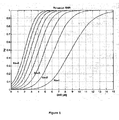
- Figure 1 shows a theorical detection probability of TBD for surveillance radar versus Signal to Noise Ratio (SNR).
- the method according to the invention approaches the theoretical detection performance for TBD algorithm.
- the preselection stage allows to significantly reduce the number of radar cells to be considered each scan at a minimal performance reduction.
- the statistics of the integrated target signal for example the probability density function, that would be output by an ideal TBD processing are considered.
- a preselection scheme is used to overcome the problem that for each radar cell of each scan a computationally expensive TBD algorithm should be started.
- a preselection initializes a TBD algorithm that recursively processes N s - 1 scans back and subsequently N s - 1 scans forward.
- N s unique correlated integration periods of the first integration period the scan the preselection originated from is the last one, and of the last integration period it is the first scan. Also going backward, processing previous scans, is needed to arrive at an acceptable detection loss on track level due to preselection. It does however require the radar video of the last N s scans to be available, i.e. stored in memory.
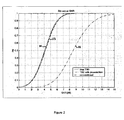
- the theoretical detection probabiliy of TBD has been plotted versus SNR, with and without preselection.
- the detection probability for a conventional three-stage track detection scheme over four scans is plotted and represented through a curve 21.
- the false alarm probability on track level for the conventional detection scheme also is equal to 10 -10 .
- the TBD algorithm that is initialized by a preselection uses the corresponding radar cells range, doppler, bearing and elevation to initialize a recursive track filter.
- validation gates are searched for target presence based on the track filter prediction and the previously measured SNR, and a radar cell is selected to update the track filter with.
- the area to be searched by the TBD algorithm, the validation gate is kept at a minimum. Without updating, the area the target may have moved to would grow exponentially with each additional scan of the integration period. Finally, the integrated signal over the selected radar cells is thresholded.
- the method according to the invention uses it in recursive filtering based TBD algorithms to select which data of a scan is considered for association. As such, not only data that would have to lead to a plot is selected, but all the data within the validation gate as intented in a true TBD processing.
- An other approach consists for example in thresholding on the integrated likelihood instead of on the integrated signal strength.
- the integrated signal strength together with the position data is for example used to calculate a likelihood.
- This likelihood together with the likelihood of other scans is used for thresholding on track level.
- the integrated likelihood over Ns scans to be thresholded, leading to a track detection, is equal to the product of the likelihoods of the separate scans.
- the track is for example deleted when the over Ns scans integrated likelihood is below the threshold for a number of consecutive scans.
- the block diagram of figure 3 summarizes the basic approach to recursive filtering based TBD algorithm.
- a first step 31 the data that has to be considered for association are selected from each scan.
- the next step 32 actually associates from the data within the validation gate the data that is most likely to have originated from the target in the track. It is possible for example to base this on the distance to the prediction point, and the observed signal strengh, using whatever information available about the targets maneuverability and target signal strengh.
- a trackfilter algorithm 30 has the outcome of the association algorithm 31, 32 as input.
- the trackfilter algorithm update track atributes with the associated data.
- track attributes » stands for the kinematic aspects of a track, such as the position and velocity, and the energetic aspects, such as the SNR and the integration sum.
- the algorithm predicts track attributes in the next scan from the updated track attibutes.
- the predicted track attributes that outcome from this last step 34 are also inputs of previous steps 31, 32, 33.
- the block diagram of figure 3 represents the track maintenance stage.
- the method according to the invention bases the updated track attributes on the attributes of the preselection plot.
- the process of figure 3 is then first applied backward in time, retrodicting, instead of predicting, to the previous scans to be processed. After those scans have been processed, the first integration period to be tried for track initiation is available. Next, the processing continues forward in time from the scan the preselection originated from, and the integrated signal over subsequent integration periods is thresholded. If none of the first N s integration periods leads to detection, the track initiation is stopped. Otherwise, the track maintenance phase is entered.
- a track is deleted when the integration sum is below the threshold for a number of scans in a row (this number can be a design parameter).
- the outcome of the trackfiltering, the predicted track attributes is used in the data-association to construct the validation gate and select the data to be associated from within it.
- a logical candidate for tracking the kinematic attributes is for example the Kalman filter, since it is recursive, provides estimation error characteristics upon which the data-association can be based, and is cheap in terms of processing load.
- various Kalman filter based trackfilters designed to deal with multiple and/or weak plots, that can be used to derive possible TBD trackfilters from, such as described for example in Lerro, D and Bar-Shalom, Y "Automated Tracking withTarget Amplitude Information" Proc. American Control Conference, San Diego, CA, 1990, pp.2875-2880 or in Zwaga, J.H. and Driessen, H. "An Efficient One-Scan-Back PDAF for Target Tracking in Clutter", Proc. SPIE Conf. On Signal and Data Processing of Small Targets, 2001, pp. 393-404 .
- the target SNR can simply be tracked using the, possibly weighted, average over the last scans. Depending on the relative range rate of the target during the averaging period, one has to correct for 1/ r 4 change in SNR with changing range r .
- RCS Radar Cross Section
- RCS Radar Cross Section
- Averaging out RCS fluctuations speaks for a long averaging period, whereas being able to follow temporal changes in the RCS speaks for a short averaging period.
- t that the measured amplitudes A k + 1 i that contribute to the integration sum of a range-doppler cell in scan k+ 1 are target originated is given by p s
- T based on the measured signal strength
- T p s
- k , ... , k - N s - 1 2 ⁇ i 1 N b A k + 1 i ⁇ 2 ⁇ exp - A k + 1 i 2 2 ⁇ ⁇ 2 which can be simplified to L S
- T 2 ⁇ ⁇ 2 A ⁇ k
- k , ... , k - N s - 1 2 ⁇ i 1 N b A k + 1 i A ⁇ k
- k + 1 r cell , k + 1 b cell , k + 1 e cell , k + 1 v cell , k + 1 d T
- k + 1 ⁇ r cell , k + 1 ⁇ RBSize 2 r cell , k + 1 ⁇ RBSize 2 ⁇ v cell , k + 1 d + DBSize 2 v cell , k + 1 d + DBSize 2 ⁇ b cell , k + 1 ⁇ BISize 2 b cell , k + 1 ⁇ BISize 2 ⁇ e cell , k + 1 ⁇ EBWidth 2 e
- T based on the position of the radar cell is given by L P
- T p p
- n p p
- the preselection radar cell center equal to the preselection radar cell center
- associated measurement error covariance R equal to that of a Gaussian approximation of a uniform probability density over the radar cell volume
- R diag RBSize 2 12
- DBSize 2 12 diag ⁇ r , q 2 ⁇ b , q 2 ⁇ e , q 2 ⁇ d v , q 2
- the target dynamics are modeled as experiencing no random perturbations, i.e. the process noise is set to zero. This is in accordance with conventional tracking systems, where track initialization is only done for exact straight target trajectories to reduce the number of initializations on false alarms.
- This probability can be derived from the likelihood ratio L SP
- T - n s of the associated radar cell from the n s -th scan back as p ⁇ - n s t L SP
- the information reduction factor will analogously be applied in the scan processing part of the RFB-TBD algorithm.
- the RFB-TBD algorithm uses the predicted state vector s k+ 1
- the last step of the RFB-TBD algorithm is to associate the radar cell with the maximum likelihood ratio L SP
- Particle filter As track filter.
- a Particle filter is particularly described in Y. Boers and J.N. Driessen « Particle Filter Based Detection For Tracking » Proc. of the American Control Conference June 25-27, 2001 Arlington, VA.
- the raw data in a validation gate are input for the track filter calculating the conditinal probability density of the state given the measurement data. This probability density is used to estimate the target state and likelihood of target presence, the latter being used for thresholding on track level.
- the recursive filtering based TBD algorithm can be implemented for example for application of a pulse-doppler surveillance radar with multi-beamforming in elevation of which mission is to detect multi-targets. This algorithm is well suited for processing multiple elevation beams.
- a target RCS Radar Cross Section
- the targets initial position and velocity of the fighter-bomber in the radar domain are:
- recursive track filter it is possible to use a filter tracking the three-dimensional position and velocity with a piecewise constant white acceleration model (as for example described in Blackman, S.S. and Popoli, R) for the target dynamics, where the standard deviation of the random accelerations is set to 1m/s 2 , corresponding to a maximum assumed acceleration of 0.2g.
- the maximum assumed target velocity taken into account in the track filter initialization is 1000m/s.
- a run consists of 4 scans to determine the detection probability for the N s -1 scans back and forward RFB-TBD initialization method upon a preselection. Analogous to the theoretical detection probability derivation, this is accomplished by allowing each of the 4 scans of a run to generate a preselection upon which the RFB-TBD algorithm is started.
- the initial range is chosen randomly to obtain the detection probability from 500km, where it would be nearly 0 for TBD processing, until 150km, where it would be nearly 1 for conventional processing.
- randomly choosing the initial range introduces a straddling loss since the target range varies relative to the position of the range-bins.
- the initial radial velocity is chosen randomly within a bracket equal to the doppler-bin size around a nominal velocity.
- the search area restricting character of the RFB-TBD algorithm suggests that this penalty will be limited.
- the target power is approximately equal for both radar cells.
- the noise realization differs, however, occasionally resulting in a higher amplitude in a radar cell next to the exact radar cell the target is in.
- the recursive filtering based approach i.e. restricting the search area to the validation gate of a track filter and only associating the radar cell that most likely contains the target, does not reduce the detection performance.
- a recursive filtering based approach to TBD can be used for surveillance radar.
- an initial RFB-TBD algorithm has been given using for example a Kalman track filter as recursive filter which is updated with the radar cell that most likely contains the target each scan.
- a preselection scheme has been introduced where only for those radar cells in a scan that have exceeded a preselection threshold a TBD processing is initiated that also processes a limited number of scans backward.
- the applicant has shown that using this preselection scheme to initiate a TBD processing, the computational demands can be significantly reduced at a negligible loss in detection performance. Simulation results carried out by the applicant indicate that the theoretical TBD performance can be achieved using the proposed RFB-TBD processing for track initialization.
- the invention can also be used to increase detection performance for sensor systems where processing power limitations render brute-force track-before-detect architectures useless in practice.
- the invention is simple to implement.
- the invention has been described for a surveillance radar, however it can be applied for all kind of radars, such as for example search, track or multi-functions radars.
Landscapes
- Engineering & Computer Science (AREA)
- Radar, Positioning & Navigation (AREA)
- Remote Sensing (AREA)
- Computer Networks & Wireless Communication (AREA)
- Physics & Mathematics (AREA)
- General Physics & Mathematics (AREA)
- Radar Systems Or Details Thereof (AREA)
Claims (19)
- Procédé de détection d'une cible par un radar, le radar comprenant des moyens d'émission pour générer des salves d'impulsions radar, chaque balayage d'un radar étant composé d'un certain nombre (Nb(k)) de salves, caractérisé en ce que, pour chaque balayage k :- dans une première étape, des cellules radar sont présélectionnées par un processus de détection ;- dans une deuxième étape, un processus de poursuite avant détection est initialisé sur les cellules radar présélectionnées, en utilisant un filtre de poursuite pour établir une fenêtre de validation associée au balayage suivant k+1 ;- dans une troisième étape, les données se trouvant à l'intérieur de la fenêtre de validation du balayage k+1 sont utilisées pour mettre à jour le processus de poursuite avant détection et pour établir la fenêtre de validation associée au balayage suivant k+2 ;la troisième étape étant répétée d'un balayage à l'autre.
- Procédé selon la revendication 1, caractérisé en ce que le processus de poursuite avant détection traite des données brutes se trouvant dans la fenêtre de validation pour un nombre limité de balayages en remontant dans le temps et en avançant dans le temps.
- Procédé selon la revendication 2, caractérisé en ce que le processus de poursuite avant détection traite les données brutes qui se trouvent dans la fenêtre de validation pendant Ns - 1 balayages en remontant dans le temps et par la suite Ns - 1 balayages en avançant dans le temps.
- Procédé selon l'une quelconque des revendications 2 ou 3, caractérisé en ce que les données brutes se trouvant dans la fenêtre de validation sont transformées en un plot virtuel caractérisé par une position en portée, une vitesse Doppler, une position en élévation, une position en azimut et une intensité de signal intégrée, ces informations de portée, de Doppler, d'élévation et d'azimut étant utilisées comme une entrée pour le filtre de poursuite, l'intensité de signal intégrée avec les intensités de signal intégrées d'autres balayages étant utilisée pour un seuillage au niveau de la piste.
- Procédé selon la revendication 4, caractérisé en ce que, l'intensité de signal intégrée étant une somme d'intégration sumE sur Ns balayages avec Nb(k) salves sur cible à chaque balayage, la somme d'intégration sumE à seuiller qui conduit à une détection de piste est égale à une somme de mesures d'énergie x(k,b) distribuées selon la loi de Rayleigh et indépendantes :

- Procédé selon l'une quelconque des revendications 2 ou 3, caractérisé en ce que les données brutes qui se trouvent dans la fenêtre de validation sont transformées en un tracé virtuel caractérisé par une position en portée, une vitesse Doppler, une position en élévation, une position en azimut et une intensité de signal intégrée, ces informations de portée, de Doppler, d'élévation et d'azimut étant utilisées comme une entrée pour le filtre de poursuite, l'intensité de signal intégrée étant utilisée avec les données de position pour calculer une probabilité, cette probabilité avec la probabilité d'autres balayages étant utilisée pour un seuillage au niveau de la piste.
- Procédé selon la revendications 2 ou 3, caractérisé en ce que les données brutes qui se trouvent dans la fenêtre de validation sont entrées dans le filtre de poursuite calculant la densité de probabilité conditionnelle de l'état compte tenu des données mesurées, cette densité de probabilité étant utilisée pour estimer l'état de la cible et la probabilité de présence de la cible, cette dernière étant utilisée pour un seuillage au niveau de la piste.
- Procédé selon l'une quelconque des revendications précédentes 6 ou 7, caractérisé en ce que la probabilité intégrée sur Ns balayages à seuiller, conduisant à une détection de piste, est égale au produit des probabilités des balayages séparés.
- Procédé selon l'une quelconque des revendications 1 à 8, caractérisé en ce que le filtre de poursuite est un filtre récursif.
- Procédé selon l'une quelconque des revendications 1 à 6, caractérisé en ce que le filtre de poursuite est un filtre de Kalman.
- Procédé selon la revendication 9, caractérisé en ce que le filtre de poursuite est un filtre à particules.
- Procédé selon l'une quelconque des revendications 1 à 11, caractérisé en ce que le filtre de poursuite :- sélectionne (31) les données qui sont à prendre en considération pour une association à partir de chaque balayage ;- associe (32) parmi les données dans la fenêtre de validation les données ayant la plus grande probabilité de provenir de la cible sur la piste ;- met à jour (33) des attributs de piste avec les données associées ;- prédit (34) des attributs de piste dans le balayage suivant à partir des attributs de piste mis à jour.
- Procédé selon la revendication 12, caractérisé en ce que le résultat du filtrage des pistes, les attributs de piste prédits, est utilisé pour établir la fenêtre de validation, et cette fenêtre de validation est utilisée pour sélectionner les données brutes à utiliser pour la mise à jour de piste suivante.
- Procédé selon la revendication 13 ou 12, caractérisé en ce que les attributs de piste comprennent des attributs cinématiques.
- Procédé selon l'une quelconque des revendications 12 à 14, caractérisé en ce que les attributs de piste comprennent des attributs énergétiques.
- Procédé selon l'une quelconque des revendications 12 à 15, caractérisé en ce que lors de l'initialisation d'une piste, les attributs de piste mis à jour sont mis à jour sur les attributs de la cellule présélectionnée.
- Procédé selon la revendication 5 et l'une quelconque des revendications 12 à 16, caractérisé en ce qu'une piste est supprimée lorsque la somme d'intégration sumE est inférieure au seuil pour un certain nombre de balayages dans une série de balayages consécutifs.
- Procédé selon la revendication 8 et l'une quelconque des revendications 12 à 16, caractérisé en ce que la piste est supprimée lorsque la probabilité intégrée sur Ns balayages est inférieure au seuil pour un certain nombre de balayages consécutifs.
- Procédé selon l'une quelconque des revendications 12 à 18, caractérisé en ce qu'il est appliqué à un radar de surveillance avec une formation de faisceau en élévation.
Applications Claiming Priority (2)
| Application Number | Priority Date | Filing Date | Title |
|---|---|---|---|
| NL1020287A NL1020287C2 (nl) | 2002-04-02 | 2002-04-02 | Werkwijze voor meerdoelendetectie, met name voor toepassing in rondzoekradars met meerbundelvorming in elevatie. |
| NL1020287 | 2002-04-02 |
Publications (2)
| Publication Number | Publication Date |
|---|---|
| EP1351069A1 EP1351069A1 (fr) | 2003-10-08 |
| EP1351069B1 true EP1351069B1 (fr) | 2011-06-15 |
Family
ID=28036329
Family Applications (1)
| Application Number | Title | Priority Date | Filing Date |
|---|---|---|---|
| EP03100775A Expired - Lifetime EP1351069B1 (fr) | 2002-04-02 | 2003-03-25 | Procédé de détection multicible, notamment pour radar de surveillance avec la formation de plusieurs faisceaux en élévation |
Country Status (9)
| Country | Link |
|---|---|
| US (1) | US6888493B2 (fr) |
| EP (1) | EP1351069B1 (fr) |
| CN (1) | CN100357760C (fr) |
| AT (1) | ATE513227T1 (fr) |
| CA (1) | CA2424151C (fr) |
| ES (1) | ES2365703T3 (fr) |
| IL (1) | IL155168A (fr) |
| NL (1) | NL1020287C2 (fr) |
| RU (1) | RU2317565C2 (fr) |
Families Citing this family (81)
| Publication number | Priority date | Publication date | Assignee | Title |
|---|---|---|---|---|
| NL1020287C2 (nl) * | 2002-04-02 | 2003-10-03 | Thales Nederland Bv | Werkwijze voor meerdoelendetectie, met name voor toepassing in rondzoekradars met meerbundelvorming in elevatie. |
| ATE419544T1 (de) * | 2003-02-03 | 2009-01-15 | Ericsson Telefon Ab L M | Verfahren zur evaluierung und steuerung einer radaranlage |
| US7038615B2 (en) * | 2003-10-10 | 2006-05-02 | Raytheon Company | Efficient technique for estimating elevation angle when using a broad beam for search in a radar |
| GB0504889D0 (en) * | 2005-03-08 | 2005-08-17 | Advanced System Architecture L | Management of tracking models suitable for demanding defence scenarios |
| NL1029993C2 (nl) * | 2005-09-21 | 2007-03-22 | Thales Nederland Bv | Werkwijze voor het volgen van minstens één doel. |
| US7764217B2 (en) * | 2005-10-13 | 2010-07-27 | Bae Systems Information And Electronic Systems Integration Inc. | Surface RF emitter passive ranging accuracy confirmation algorithm |
| GB2435138B (en) * | 2006-02-13 | 2010-04-07 | Thales Holdings Uk Plc | Radar apparatus |
| US7626535B2 (en) * | 2006-11-09 | 2009-12-01 | Raytheon Company | Track quality based multi-target tracker |
| US7675458B2 (en) * | 2006-11-09 | 2010-03-09 | Raytheon Canada Limited | Dual beam radar system |
| US7623061B2 (en) | 2006-11-15 | 2009-11-24 | Autoliv Asp | Method and apparatus for discriminating with respect to low elevation target objects |
| CN100498372C (zh) * | 2007-07-06 | 2009-06-10 | 哈尔滨工程大学 | 跟踪同一载体上三部雷达信号的装置 |
| RU2449307C2 (ru) * | 2009-04-02 | 2012-04-27 | ОАО "Научно-производственное объединение "ЛЭМЗ" | Способ обзорной импульсно-доплеровской радиолокации целей на фоне отражений от земной поверхности |
| US8405540B2 (en) * | 2010-04-02 | 2013-03-26 | Mitsubishi Electric Research Laboratories, Inc. | Method for detecting small targets in radar images using needle based hypotheses verification |
| EP2558878A4 (fr) * | 2010-04-15 | 2015-10-21 | Ats Group Ip Holdings Ltd | Système et procédé de surveillance d'objectifs multiples |
| US8325082B2 (en) * | 2010-08-31 | 2012-12-04 | Raytheon Company | Predictive and adaptive wide area surveillance |
| JP5492135B2 (ja) * | 2011-04-06 | 2014-05-14 | 株式会社東芝 | レーダ装置及び受信データ処理方法 |
| CN102788971B (zh) * | 2011-05-17 | 2014-05-28 | 苏州市江海通讯发展实业有限公司 | 一种校准雷达应答器定位精度的方法 |
| CN102788974B (zh) * | 2011-05-17 | 2014-05-07 | 苏州市江海通讯发展实业有限公司 | 一种雷达应答器精确定位的方法 |
| CN102540181B (zh) * | 2011-12-26 | 2013-12-04 | 南京鹏力系统工程研究所 | 一种基于环境信息图点迹预处理的航迹起始方法 |
| CN102901959B (zh) * | 2012-02-27 | 2013-12-25 | 西北工业大学 | Ud分解的多目标跟踪方法 |
| US9495778B2 (en) * | 2012-08-27 | 2016-11-15 | Kabushiki Kaisha Toshiba | Information presenting apparatus and method for confirmed and tentative tracks |
| CN102901956B (zh) * | 2012-09-27 | 2014-08-06 | 电子科技大学 | 一种雷达微弱目标检测方法 |
| JP5985372B2 (ja) * | 2012-11-28 | 2016-09-06 | 株式会社東芝 | 目標検出装置及び目標検出方法 |
| US8976059B2 (en) | 2012-12-21 | 2015-03-10 | Raytheon Canada Limited | Identification and removal of a false detection in a radar system |
| CN103298156B (zh) * | 2013-06-13 | 2016-01-20 | 北京空间飞行器总体设计部 | 基于无线传感器网络的无源多目标检测跟踪方法 |
| CN103472445B (zh) * | 2013-09-18 | 2015-06-17 | 电子科技大学 | 一种针对多目标场景的检测跟踪一体化方法 |
| US9507020B2 (en) * | 2013-12-05 | 2016-11-29 | Honeywell International Inc. | Unmanned aircraft systems sense and avoid sensor fusion track initialization |
| CN104007422B (zh) * | 2014-05-21 | 2016-06-15 | 西安电子科技大学 | 基于动态规划的复似然比检测前跟踪方法 |
| US11175142B2 (en) | 2014-07-31 | 2021-11-16 | Honeywell International Inc. | Updating intensities in a PHD filter based on a sensor track ID |
| US10309784B2 (en) | 2014-07-31 | 2019-06-04 | Honeywell International Inc. | Merging intensities in a PHD filter based on a sensor track ID |
| US10605607B2 (en) * | 2014-07-31 | 2020-03-31 | Honeywell International Inc. | Two step pruning in a PHD filter |
| US10222454B2 (en) * | 2014-08-19 | 2019-03-05 | Navico Holding As | Combining Reflected Signals |
| US10114116B2 (en) * | 2014-08-19 | 2018-10-30 | Navico Holding As | Common burst for pulse compression radar |
| CN104297748B (zh) * | 2014-10-20 | 2017-03-08 | 西安电子科技大学 | 一种基于轨迹增强的雷达目标检测前跟踪方法 |
| CN104330791B (zh) * | 2014-10-24 | 2017-03-29 | 上海无线电设备研究所 | 一种基于频域切变的相参积累方法 |
| CN104407345B (zh) * | 2014-12-05 | 2017-01-11 | 杭州电子科技大学 | 一种用于弱目标检测跟踪中的改进型动态规划方法 |
| CN104486775B (zh) * | 2015-01-08 | 2018-03-27 | 西安电子科技大学 | 基于用户位置的跟踪预测的有源天线阵列波束优化方法 |
| US10054668B2 (en) | 2015-02-26 | 2018-08-21 | Src, Inc. | Probabilistic signal, detection, and track processing architecture and system |
| EP3098623A1 (fr) * | 2015-05-25 | 2016-11-30 | Autoliv Development AB | Système de radar de véhicule |
| CN105044686B (zh) * | 2015-08-03 | 2017-05-10 | 中国电子科技集团公司第二十八研究所 | 一种雷达密集假目标干扰抑制方法 |
| CN105137419B (zh) * | 2015-09-09 | 2017-08-11 | 电子科技大学 | 一种利用栅瓣增益的粒子滤波检测前跟踪方法 |
| FR3041438B1 (fr) * | 2015-09-22 | 2019-06-07 | Thales | Procede d'amelioration des performances de detection d'un radar en phase de poursuite et radar mettant en oeuvre ce procede |
| CN106054150B (zh) * | 2016-05-18 | 2018-11-09 | 西安电子科技大学 | 一种先起始后确认的雷达航迹起始方法 |
| US10564276B2 (en) * | 2017-03-02 | 2020-02-18 | GM Global Technology Operations LLC | Adaptive process noise description for improved kalman filter target tracking |
| US10421452B2 (en) * | 2017-03-06 | 2019-09-24 | GM Global Technology Operations LLC | Soft track maintenance |
| US11047970B2 (en) * | 2017-05-05 | 2021-06-29 | Texas Instruments Incorporated | Multi-mode radar systems, signal processing methods and configuration methods using pushing windows |
| DE102018117557B4 (de) * | 2017-07-27 | 2024-03-21 | Harman Becker Automotive Systems Gmbh | Adaptives nachfiltern |
| CN107656265B (zh) * | 2017-09-19 | 2021-03-30 | 电子科技大学 | 针对多帧检测前跟踪短航迹的粒子滤波融合方法 |
| JP6923799B2 (ja) * | 2017-09-29 | 2021-08-25 | ミツミ電機株式会社 | レーダー装置 |
| US20190107615A1 (en) * | 2017-10-05 | 2019-04-11 | GM Global Technology Operations LLC | Method of tracking an object |
| FR3076029B1 (fr) * | 2017-12-27 | 2020-01-17 | Avantix | Procede de traitement pour la detection, la caracterisation et le suivi multi-cibles et dispositif associes |
| FR3076910B1 (fr) * | 2018-01-18 | 2020-02-28 | Thales | Procede de pistage d'une cible aerienne, et radar mettant en oeuvre un tel procede |
| US11391831B2 (en) * | 2018-04-25 | 2022-07-19 | Qualcomm Incorporated | Association aware radar beamforming |
| CN109143219B (zh) * | 2018-08-21 | 2020-07-03 | 西安长远电子工程有限责任公司 | 一种提高tws雷达俯仰角测量精度的方法 |
| CN109613483B (zh) * | 2018-10-30 | 2021-07-20 | 上海无线电设备研究所 | 一种基于Hough变换的多目标航迹起始方法 |
| FR3089017B1 (fr) * | 2018-11-23 | 2020-12-11 | Thales Sa | Procede de detection par integration longue et systeme radar correspondant |
| CN109901154B (zh) * | 2019-03-29 | 2023-03-03 | 中国人民解放军海军航空大学 | 基于递推rtht-tbd的自适应调整方法 |
| US11709245B2 (en) * | 2019-04-29 | 2023-07-25 | Adnoviv Inc. | System and methods for radar-based detection of people in a room |
| EP3754361B1 (fr) * | 2019-06-19 | 2023-04-26 | Aptiv Technologies Limited | Procédé de prédiction d'un faux positif pour capteur de radar |
| RU2724115C1 (ru) * | 2019-08-06 | 2020-06-22 | Федеральное государственное казенное военное образовательное учреждение высшего образования "Военный учебно-научный центр Военно-Морского Флота "Военно-морская академия им. Адмирала Флота Советского Союза Н.Г. Кузнецова" | Способ автоматического сопровождения подвижной цели при сглаживании в декартовых координатах с учетом измерений радиальной составляющей скорости |
| CN111381216B (zh) * | 2020-03-10 | 2022-03-11 | 中国科学院微电子研究所 | 混合分布的雷达海杂波分析方法及装置 |
| US11714154B2 (en) * | 2020-05-05 | 2023-08-01 | Cisco Technology, Inc. | Using recursive phase vector subspace estimation to localize and track client devices |
| US11650290B2 (en) * | 2020-05-29 | 2023-05-16 | Viettel Group | System and method of determining target's range profiles for costal surveillance radars |
| CN111856411B (zh) * | 2020-07-28 | 2023-09-29 | 北京环境特性研究所 | 一种双门限目标检测方法及装置 |
| RU2753615C1 (ru) * | 2020-08-11 | 2021-08-18 | Федеральное государственное бюджетное учреждение "3 Центральный научно-исследовательский институт" Министерства обороны Российской Федерации | Способ определения курса объекта на линейной траектории с использованием выборок квадратов дальности |
| CN112213706B (zh) * | 2020-10-13 | 2022-11-22 | 中国人民解放军海军工程大学 | 多维数字化波门帧间递进关联的逻辑tbd检测方法 |
| CN112379366B (zh) * | 2020-11-16 | 2023-07-04 | 成都汇蓉国科微系统技术有限公司 | 一种基于粒子群滤波的雷达目标跟踪算法 |
| CN112526521B (zh) * | 2020-11-25 | 2022-08-19 | 湖北工业大学 | 一种汽车毫米波防撞雷达的多目标跟踪方法 |
| CN113093174B (zh) * | 2021-03-03 | 2023-05-30 | 桂林电子科技大学 | 基于phd滤波雷达起伏微弱多目标的检测前跟踪方法 |
| CN113514823B (zh) * | 2021-04-25 | 2022-06-17 | 哈尔滨工业大学 | 一种基于伪谱的多模型机动目标检测前跟踪方法 |
| CN113866755B (zh) * | 2021-07-20 | 2025-07-04 | 桂林电子科技大学 | 基于多伯努利滤波的雷达微弱起伏目标检测前跟踪方法 |
| CN113671482B (zh) * | 2021-09-18 | 2022-04-08 | 哈尔滨工业大学 | 基于多维筛选并行Hough变换的航迹起始方法 |
| CN113566953B (zh) * | 2021-09-23 | 2021-11-30 | 中国空气动力研究与发展中心设备设计与测试技术研究所 | 一种柔壁喷管的在线监测方法 |
| US11921194B2 (en) * | 2021-12-15 | 2024-03-05 | GM Global Technology Operations LLC | Radar anti-spoofing systems for an autonomous vehicle that identify ghost vehicles |
| CN114859339B (zh) * | 2022-04-29 | 2023-06-02 | 电子科技大学 | 一种基于毫米波雷达的多目标跟踪方法 |
| CN115469270B (zh) * | 2022-08-16 | 2023-06-27 | 哈尔滨工程大学 | 基于检测前跟踪的长基线定位方法及系统 |
| CN115856869B (zh) * | 2022-12-15 | 2025-06-06 | 安徽博微长安电子有限公司 | 一种多层次智能航迹跟踪关联方法、电子设备及存储介质 |
| CN117197182B (zh) * | 2023-11-07 | 2024-02-27 | 华诺星空技术股份有限公司 | 雷视标定方法、设备及存储介质 |
| CN117687018B (zh) * | 2024-01-31 | 2024-04-19 | 四川省华盾防务科技股份有限公司 | 一种相控阵波束跟踪方法、装置、系统及存储介质 |
| CN119511231B (zh) * | 2024-11-20 | 2026-01-06 | 哈尔滨工业大学 | 一种可变拖尾莱斯海杂波幅度分布模型及其参数估计方法 |
| CN119535398B (zh) * | 2025-01-23 | 2025-04-04 | 北京理工大学前沿技术研究院 | 一种非均匀杂波背景下目标检测方法、设备及介质 |
Family Cites Families (13)
| Publication number | Priority date | Publication date | Assignee | Title |
|---|---|---|---|---|
| US3731304A (en) * | 1961-09-08 | 1973-05-01 | Us Navy | Track-before-detect system |
| US4335383A (en) * | 1979-02-12 | 1982-06-15 | Kustom Electronics, Inc. | Method and apparatus for digitally determining the speed of a target vehicle while the radar platform vehicle is in motion |
| US5559515A (en) * | 1981-11-27 | 1996-09-24 | Northrop Grumman Norden Systems | Channel switching interferometric AMTI radar |
| US4651152A (en) * | 1983-09-26 | 1987-03-17 | Geophysical Survey Systems, Inc. | Large relative bandwidth radar |
| US5020411A (en) * | 1989-03-06 | 1991-06-04 | Larry Rowan | Mobile assault logistic kinetmatic engagement device |
| FR2656108B1 (fr) * | 1989-12-19 | 1993-02-05 | Thomson Applic Radars Centre | Procede et systeme radar coherent a impulsions pour la detection d'unhe cible presentant des eclairs de tres courte duree. |
| NL9401767A (nl) * | 1994-10-25 | 1996-06-03 | Hollandse Signaalapparaten Bv | Radarapparaat. |
| RU2083993C1 (ru) * | 1995-03-17 | 1997-07-10 | Военная академия противовоздушной обороны сухопутных войск Российской Федерации | Радиолокационное устройство распознавания воздушных целей |
| RU2096829C1 (ru) * | 1995-08-24 | 1997-11-20 | Олег Евгеньевич Антонов | Способ обнаружения и распознавания объектов |
| RU2119242C1 (ru) * | 1995-12-13 | 1998-09-20 | Борис Тиборович Будаи | Цифровой трансверсальный фильтр |
| AUPN722695A0 (en) * | 1995-12-19 | 1996-03-14 | Commonwealth Of Australia, The | A tracking method for a radar system |
| EP1031853A3 (fr) * | 1999-02-27 | 2001-04-25 | Delphi Technologies, Inc. | Capteurs et système radar pour surveillance d'un espace |
| NL1020287C2 (nl) * | 2002-04-02 | 2003-10-03 | Thales Nederland Bv | Werkwijze voor meerdoelendetectie, met name voor toepassing in rondzoekradars met meerbundelvorming in elevatie. |
-
2002
- 2002-04-02 NL NL1020287A patent/NL1020287C2/nl not_active IP Right Cessation
-
2003
- 2003-03-25 AT AT03100775T patent/ATE513227T1/de not_active IP Right Cessation
- 2003-03-25 EP EP03100775A patent/EP1351069B1/fr not_active Expired - Lifetime
- 2003-03-25 ES ES03100775T patent/ES2365703T3/es not_active Expired - Lifetime
- 2003-03-27 US US10/400,072 patent/US6888493B2/en not_active Expired - Fee Related
- 2003-03-31 IL IL155168A patent/IL155168A/en not_active IP Right Cessation
- 2003-04-01 RU RU2003108903/09A patent/RU2317565C2/ru not_active IP Right Cessation
- 2003-04-01 CA CA2424151A patent/CA2424151C/fr not_active Expired - Fee Related
- 2003-04-02 CN CNB031367801A patent/CN100357760C/zh not_active Expired - Fee Related
Also Published As
| Publication number | Publication date |
|---|---|
| CN100357760C (zh) | 2007-12-26 |
| ES2365703T3 (es) | 2011-10-10 |
| US20040027274A1 (en) | 2004-02-12 |
| US6888493B2 (en) | 2005-05-03 |
| RU2317565C2 (ru) | 2008-02-20 |
| EP1351069A1 (fr) | 2003-10-08 |
| ATE513227T1 (de) | 2011-07-15 |
| IL155168A (en) | 2008-12-29 |
| CA2424151A1 (fr) | 2003-10-02 |
| CN1453595A (zh) | 2003-11-05 |
| NL1020287C2 (nl) | 2003-10-03 |
| IL155168A0 (en) | 2003-10-31 |
| CA2424151C (fr) | 2011-11-08 |
Similar Documents
| Publication | Publication Date | Title |
|---|---|---|
| EP1351069B1 (fr) | Procédé de détection multicible, notamment pour radar de surveillance avec la formation de plusieurs faisceaux en élévation | |
| US8094060B2 (en) | Method of detecting a target | |
| JP3426584B2 (ja) | 改善された検出評価性能のためのノンコヒーレントな利得向上技術 | |
| Li et al. | An efficient track-before-detect for multi-PRF radars with range and Doppler ambiguities | |
| Kirubarajan et al. | IMMPDA solution to benchmark for radar resource allocation and tracking in the presence of ECM | |
| EP2326967B1 (fr) | Architecture de processeur de ligne de visée (los) tout-numérique | |
| US8314733B1 (en) | Adjustment of radar parameters to maintain accelerating target in track | |
| Zhou et al. | Multiple-kernelized-correlation-filter-based track-before-detect algorithm for tracking weak and extended target in marine radar systems | |
| Grossi et al. | A heuristic algorithm for track-before-detect with thresholded observations in radar systems | |
| CN112698295B (zh) | 一种知识辅助的雷达检测跟踪一体化方法及系统 | |
| US20240302521A1 (en) | Radar target tracking device and method | |
| Fang et al. | A multi-frame track-before-detect algorithm for maneuvering targets in radar system | |
| Zwaga et al. | Track-before-detect for surveillance radar: A recursive filter-based approach | |
| Kramer et al. | Track-before-detect processing for a range-ambiguous radar | |
| Hughes et al. | Target manoeuvre detection using radar glint | |
| US20210373123A1 (en) | System and method of determining target's range profiles for costal surveillance radars | |
| CN112816973A (zh) | 一种跟踪信息辅助的目标检测方法 | |
| Herrmann et al. | Track Initiation and Adaptive Target Birth in Existence-Based Poisson Histogram-PMHT | |
| Musicki et al. | Target existence based mht | |
| Grossi et al. | A novel track-before-detect procedure for multi-frame detection in radar systems | |
| Zheng et al. | Maneuvering target joint detection and tracking using multi-frame integration | |
| Musicki et al. | State dependent detection and object tracking | |
| Hussain et al. | A case study: Kalman & alpha-beta computation under high correlation | |
| Meng et al. | Radar detection improvement by integration of multi-object tracking | |
| Mayor et al. | A multi-target track initiation algorithm |
Legal Events
| Date | Code | Title | Description |
|---|---|---|---|
| PUAI | Public reference made under article 153(3) epc to a published international application that has entered the european phase |
Free format text: ORIGINAL CODE: 0009012 |
|
| AK | Designated contracting states |
Kind code of ref document: A1 Designated state(s): AT BE BG CH CY CZ DE DK EE ES FI FR GB GR HU IE IT LI LU MC NL PT SE SI SK TR |
|
| AX | Request for extension of the european patent |
Extension state: AL LT LV MK |
|
| 17P | Request for examination filed |
Effective date: 20040319 |
|
| AKX | Designation fees paid |
Designated state(s): AT BE BG CH CY CZ DE DK EE ES FI FR GB GR HU IE IT LI LU MC NL PT SE SI SK TR |
|
| 17Q | First examination report despatched |
Effective date: 20070921 |
|
| GRAP | Despatch of communication of intention to grant a patent |
Free format text: ORIGINAL CODE: EPIDOSNIGR1 |
|
| GRAS | Grant fee paid |
Free format text: ORIGINAL CODE: EPIDOSNIGR3 |
|
| GRAA | (expected) grant |
Free format text: ORIGINAL CODE: 0009210 |
|
| AK | Designated contracting states |
Kind code of ref document: B1 Designated state(s): AT BE BG CH CY CZ DE DK EE ES FI FR GB GR HU IE IT LI LU MC NL PT SE SI SK TR |
|
| REG | Reference to a national code |
Ref country code: GB Ref legal event code: FG4D Ref country code: CH Ref legal event code: EP |
|
| REG | Reference to a national code |
Ref country code: IE Ref legal event code: FG4D |
|
| REG | Reference to a national code |
Ref country code: DE Ref legal event code: R096 Ref document number: 60337384 Country of ref document: DE Effective date: 20110728 |
|
| REG | Reference to a national code |
Ref country code: NL Ref legal event code: T3 |
|
| REG | Reference to a national code |
Ref country code: SE Ref legal event code: TRGR |
|
| REG | Reference to a national code |
Ref country code: ES Ref legal event code: FG2A Ref document number: 2365703 Country of ref document: ES Kind code of ref document: T3 Effective date: 20111010 |
|
| PG25 | Lapsed in a contracting state [announced via postgrant information from national office to epo] |
Ref country code: FI Free format text: LAPSE BECAUSE OF FAILURE TO SUBMIT A TRANSLATION OF THE DESCRIPTION OR TO PAY THE FEE WITHIN THE PRESCRIBED TIME-LIMIT Effective date: 20110615 Ref country code: GR Free format text: LAPSE BECAUSE OF FAILURE TO SUBMIT A TRANSLATION OF THE DESCRIPTION OR TO PAY THE FEE WITHIN THE PRESCRIBED TIME-LIMIT Effective date: 20110916 Ref country code: AT Free format text: LAPSE BECAUSE OF FAILURE TO SUBMIT A TRANSLATION OF THE DESCRIPTION OR TO PAY THE FEE WITHIN THE PRESCRIBED TIME-LIMIT Effective date: 20110615 Ref country code: SI Free format text: LAPSE BECAUSE OF FAILURE TO SUBMIT A TRANSLATION OF THE DESCRIPTION OR TO PAY THE FEE WITHIN THE PRESCRIBED TIME-LIMIT Effective date: 20110615 Ref country code: CY Free format text: LAPSE BECAUSE OF FAILURE TO SUBMIT A TRANSLATION OF THE DESCRIPTION OR TO PAY THE FEE WITHIN THE PRESCRIBED TIME-LIMIT Effective date: 20110615 |
|
| PG25 | Lapsed in a contracting state [announced via postgrant information from national office to epo] |
Ref country code: BE Free format text: LAPSE BECAUSE OF FAILURE TO SUBMIT A TRANSLATION OF THE DESCRIPTION OR TO PAY THE FEE WITHIN THE PRESCRIBED TIME-LIMIT Effective date: 20110615 |
|
| PG25 | Lapsed in a contracting state [announced via postgrant information from national office to epo] |
Ref country code: PT Free format text: LAPSE BECAUSE OF FAILURE TO SUBMIT A TRANSLATION OF THE DESCRIPTION OR TO PAY THE FEE WITHIN THE PRESCRIBED TIME-LIMIT Effective date: 20111017 Ref country code: EE Free format text: LAPSE BECAUSE OF FAILURE TO SUBMIT A TRANSLATION OF THE DESCRIPTION OR TO PAY THE FEE WITHIN THE PRESCRIBED TIME-LIMIT Effective date: 20110615 Ref country code: CZ Free format text: LAPSE BECAUSE OF FAILURE TO SUBMIT A TRANSLATION OF THE DESCRIPTION OR TO PAY THE FEE WITHIN THE PRESCRIBED TIME-LIMIT Effective date: 20110615 |
|
| PG25 | Lapsed in a contracting state [announced via postgrant information from national office to epo] |
Ref country code: SK Free format text: LAPSE BECAUSE OF FAILURE TO SUBMIT A TRANSLATION OF THE DESCRIPTION OR TO PAY THE FEE WITHIN THE PRESCRIBED TIME-LIMIT Effective date: 20110615 |
|
| PLBE | No opposition filed within time limit |
Free format text: ORIGINAL CODE: 0009261 |
|
| STAA | Information on the status of an ep patent application or granted ep patent |
Free format text: STATUS: NO OPPOSITION FILED WITHIN TIME LIMIT |
|
| 26N | No opposition filed |
Effective date: 20120316 |
|
| PG25 | Lapsed in a contracting state [announced via postgrant information from national office to epo] |
Ref country code: DK Free format text: LAPSE BECAUSE OF FAILURE TO SUBMIT A TRANSLATION OF THE DESCRIPTION OR TO PAY THE FEE WITHIN THE PRESCRIBED TIME-LIMIT Effective date: 20110615 |
|
| REG | Reference to a national code |
Ref country code: DE Ref legal event code: R097 Ref document number: 60337384 Country of ref document: DE Effective date: 20120316 |
|
| PG25 | Lapsed in a contracting state [announced via postgrant information from national office to epo] |
Ref country code: MC Free format text: LAPSE BECAUSE OF NON-PAYMENT OF DUE FEES Effective date: 20120331 |
|
| REG | Reference to a national code |
Ref country code: CH Ref legal event code: PL |
|
| REG | Reference to a national code |
Ref country code: IE Ref legal event code: MM4A |
|
| PG25 | Lapsed in a contracting state [announced via postgrant information from national office to epo] |
Ref country code: CH Free format text: LAPSE BECAUSE OF NON-PAYMENT OF DUE FEES Effective date: 20120331 Ref country code: IE Free format text: LAPSE BECAUSE OF NON-PAYMENT OF DUE FEES Effective date: 20120325 Ref country code: LI Free format text: LAPSE BECAUSE OF NON-PAYMENT OF DUE FEES Effective date: 20120331 |
|
| PG25 | Lapsed in a contracting state [announced via postgrant information from national office to epo] |
Ref country code: BG Free format text: LAPSE BECAUSE OF FAILURE TO SUBMIT A TRANSLATION OF THE DESCRIPTION OR TO PAY THE FEE WITHIN THE PRESCRIBED TIME-LIMIT Effective date: 20110915 |
|
| PG25 | Lapsed in a contracting state [announced via postgrant information from national office to epo] |
Ref country code: TR Free format text: LAPSE BECAUSE OF FAILURE TO SUBMIT A TRANSLATION OF THE DESCRIPTION OR TO PAY THE FEE WITHIN THE PRESCRIBED TIME-LIMIT Effective date: 20110615 |
|
| PG25 | Lapsed in a contracting state [announced via postgrant information from national office to epo] |
Ref country code: LU Free format text: LAPSE BECAUSE OF NON-PAYMENT OF DUE FEES Effective date: 20120325 |
|
| PG25 | Lapsed in a contracting state [announced via postgrant information from national office to epo] |
Ref country code: HU Free format text: LAPSE BECAUSE OF FAILURE TO SUBMIT A TRANSLATION OF THE DESCRIPTION OR TO PAY THE FEE WITHIN THE PRESCRIBED TIME-LIMIT Effective date: 20030325 |
|
| REG | Reference to a national code |
Ref country code: FR Ref legal event code: PLFP Year of fee payment: 13 |
|
| PGFP | Annual fee paid to national office [announced via postgrant information from national office to epo] |
Ref country code: ES Payment date: 20150227 Year of fee payment: 13 Ref country code: IT Payment date: 20150220 Year of fee payment: 13 Ref country code: NL Payment date: 20150309 Year of fee payment: 13 Ref country code: DE Payment date: 20150317 Year of fee payment: 13 |
|
| PGFP | Annual fee paid to national office [announced via postgrant information from national office to epo] |
Ref country code: SE Payment date: 20150311 Year of fee payment: 13 Ref country code: GB Payment date: 20150325 Year of fee payment: 13 Ref country code: FR Payment date: 20150309 Year of fee payment: 13 |
|
| REG | Reference to a national code |
Ref country code: DE Ref legal event code: R119 Ref document number: 60337384 Country of ref document: DE |
|
| REG | Reference to a national code |
Ref country code: SE Ref legal event code: EUG |
|
| REG | Reference to a national code |
Ref country code: NL Ref legal event code: MM Effective date: 20160401 |
|
| GBPC | Gb: european patent ceased through non-payment of renewal fee |
Effective date: 20160325 |
|
| PG25 | Lapsed in a contracting state [announced via postgrant information from national office to epo] |
Ref country code: SE Free format text: LAPSE BECAUSE OF NON-PAYMENT OF DUE FEES Effective date: 20160326 |
|
| REG | Reference to a national code |
Ref country code: FR Ref legal event code: ST Effective date: 20161130 |
|
| PG25 | Lapsed in a contracting state [announced via postgrant information from national office to epo] |
Ref country code: FR Free format text: LAPSE BECAUSE OF NON-PAYMENT OF DUE FEES Effective date: 20160331 Ref country code: NL Free format text: LAPSE BECAUSE OF NON-PAYMENT OF DUE FEES Effective date: 20160401 Ref country code: DE Free format text: LAPSE BECAUSE OF NON-PAYMENT OF DUE FEES Effective date: 20161001 Ref country code: GB Free format text: LAPSE BECAUSE OF NON-PAYMENT OF DUE FEES Effective date: 20160325 |
|
| PG25 | Lapsed in a contracting state [announced via postgrant information from national office to epo] |
Ref country code: IT Free format text: LAPSE BECAUSE OF NON-PAYMENT OF DUE FEES Effective date: 20160325 |
|
| REG | Reference to a national code |
Ref country code: ES Ref legal event code: FD2A Effective date: 20170428 |
|
| PG25 | Lapsed in a contracting state [announced via postgrant information from national office to epo] |
Ref country code: ES Free format text: LAPSE BECAUSE OF NON-PAYMENT OF DUE FEES Effective date: 20160326 |