EP1310481A1 - Verfahren zur Herstellung von N-Formyl-aminocarbonsäureestern - Google Patents
Verfahren zur Herstellung von N-Formyl-aminocarbonsäureestern Download PDFInfo
- Publication number
- EP1310481A1 EP1310481A1 EP02023509A EP02023509A EP1310481A1 EP 1310481 A1 EP1310481 A1 EP 1310481A1 EP 02023509 A EP02023509 A EP 02023509A EP 02023509 A EP02023509 A EP 02023509A EP 1310481 A1 EP1310481 A1 EP 1310481A1
- Authority
- EP
- European Patent Office
- Prior art keywords
- optionally substituted
- formic acid
- methyl
- radical
- acid esters
- Prior art date
- Legal status (The legal status is an assumption and is not a legal conclusion. Google has not performed a legal analysis and makes no representation as to the accuracy of the status listed.)
- Withdrawn
Links
- IBRZMAIAORVEIM-UHFFFAOYSA-N formylcarbamic acid Chemical class OC(=O)NC=O IBRZMAIAORVEIM-UHFFFAOYSA-N 0.000 title claims abstract description 12
- 238000000034 method Methods 0.000 title claims description 24
- 238000002360 preparation method Methods 0.000 title claims description 4
- KXDHJXZQYSOELW-UHFFFAOYSA-N Carbamic acid Chemical class NC(O)=O KXDHJXZQYSOELW-UHFFFAOYSA-N 0.000 claims abstract description 18
- -1 formic acid ester Chemical class 0.000 claims description 122
- BDAGIHXWWSANSR-UHFFFAOYSA-N Formic acid Chemical class OC=O BDAGIHXWWSANSR-UHFFFAOYSA-N 0.000 claims description 47
- 235000019253 formic acid Nutrition 0.000 claims description 19
- 229910052757 nitrogen Inorganic materials 0.000 claims description 12
- 150000001875 compounds Chemical class 0.000 claims description 10
- 125000003118 aryl group Chemical group 0.000 claims description 8
- 229910052739 hydrogen Inorganic materials 0.000 claims description 7
- 239000001257 hydrogen Substances 0.000 claims description 7
- 229910052717 sulfur Inorganic materials 0.000 claims description 7
- 229910052736 halogen Inorganic materials 0.000 claims description 6
- 150000002367 halogens Chemical class 0.000 claims description 6
- 125000006710 (C2-C12) alkenyl group Chemical group 0.000 claims description 5
- LFQSCWFLJHTTHZ-UHFFFAOYSA-N Ethanol Chemical compound CCO LFQSCWFLJHTTHZ-UHFFFAOYSA-N 0.000 claims description 5
- 125000000623 heterocyclic group Chemical group 0.000 claims description 5
- 125000003107 substituted aryl group Chemical group 0.000 claims description 5
- 125000000217 alkyl group Chemical group 0.000 claims description 4
- 125000005842 heteroatom Chemical group 0.000 claims description 4
- 239000000203 mixture Substances 0.000 claims description 4
- 229910052760 oxygen Inorganic materials 0.000 claims description 4
- 229920006395 saturated elastomer Polymers 0.000 claims description 4
- 125000003710 aryl alkyl group Chemical group 0.000 claims description 3
- 125000006711 (C2-C12) alkynyl group Chemical group 0.000 claims description 2
- 125000000753 cycloalkyl group Chemical group 0.000 claims description 2
- 125000001072 heteroaryl group Chemical group 0.000 claims description 2
- 125000004435 hydrogen atom Chemical class [H]* 0.000 claims 2
- 239000007858 starting material Substances 0.000 claims 1
- 238000004519 manufacturing process Methods 0.000 abstract description 5
- 150000004675 formic acid derivatives Chemical class 0.000 abstract 1
- 150000003254 radicals Chemical class 0.000 description 22
- IJGRMHOSHXDMSA-UHFFFAOYSA-N Atomic nitrogen Chemical compound N#N IJGRMHOSHXDMSA-UHFFFAOYSA-N 0.000 description 12
- 229960003767 alanine Drugs 0.000 description 8
- 235000004279 alanine Nutrition 0.000 description 8
- 125000002496 methyl group Chemical group [H]C([H])([H])* 0.000 description 8
- QNAYBMKLOCPYGJ-REOHCLBHSA-N L-alanine Chemical compound C[C@H](N)C(O)=O QNAYBMKLOCPYGJ-REOHCLBHSA-N 0.000 description 7
- XYAQYTADJIMJOD-UHFFFAOYSA-N butyl 2-formamidopropanoate Chemical compound CCCCOC(=O)C(C)NC=O XYAQYTADJIMJOD-UHFFFAOYSA-N 0.000 description 7
- VEXZGXHMUGYJMC-UHFFFAOYSA-N Hydrochloric acid Chemical compound Cl VEXZGXHMUGYJMC-UHFFFAOYSA-N 0.000 description 6
- NMJJFJNHVMGPGM-UHFFFAOYSA-N butyl formate Chemical compound CCCCOC=O NMJJFJNHVMGPGM-UHFFFAOYSA-N 0.000 description 6
- 229940024606 amino acid Drugs 0.000 description 5
- 235000001014 amino acid Nutrition 0.000 description 5
- 150000001413 amino acids Chemical class 0.000 description 5
- 230000015572 biosynthetic process Effects 0.000 description 5
- 244000309464 bull Species 0.000 description 5
- 238000003786 synthesis reaction Methods 0.000 description 5
- OSWFIVFLDKOXQC-UHFFFAOYSA-N 4-(3-methoxyphenyl)aniline Chemical compound COC1=CC=CC(C=2C=CC(N)=CC=2)=C1 OSWFIVFLDKOXQC-UHFFFAOYSA-N 0.000 description 4
- QNAYBMKLOCPYGJ-UHFFFAOYSA-N Alanine Chemical compound CC([NH3+])C([O-])=O QNAYBMKLOCPYGJ-UHFFFAOYSA-N 0.000 description 4
- ZHNUHDYFZUAESO-UHFFFAOYSA-N Formamide Chemical compound NC=O ZHNUHDYFZUAESO-UHFFFAOYSA-N 0.000 description 4
- LRHPLDYGYMQRHN-UHFFFAOYSA-N N-Butanol Chemical compound CCCCO LRHPLDYGYMQRHN-UHFFFAOYSA-N 0.000 description 4
- 239000006227 byproduct Substances 0.000 description 4
- 125000001495 ethyl group Chemical group [H]C([H])([H])C([H])([H])* 0.000 description 4
- 150000002431 hydrogen Chemical class 0.000 description 4
- TZIHFWKZFHZASV-UHFFFAOYSA-N methyl formate Chemical compound COC=O TZIHFWKZFHZASV-UHFFFAOYSA-N 0.000 description 4
- 125000001997 phenyl group Chemical group [H]C1=C([H])C([H])=C(*)C([H])=C1[H] 0.000 description 4
- QTBSBXVTEAMEQO-UHFFFAOYSA-N Acetic acid Chemical compound CC(O)=O QTBSBXVTEAMEQO-UHFFFAOYSA-N 0.000 description 3
- UFHFLCQGNIYNRP-UHFFFAOYSA-N Hydrogen Chemical compound [H][H] UFHFLCQGNIYNRP-UHFFFAOYSA-N 0.000 description 3
- SIKJAQJRHWYJAI-UHFFFAOYSA-N Indole Chemical compound C1=CC=C2NC=CC2=C1 SIKJAQJRHWYJAI-UHFFFAOYSA-N 0.000 description 3
- 125000000959 isobutyl group Chemical group [H]C([H])([H])C([H])(C([H])([H])[H])C([H])([H])* 0.000 description 3
- 125000001449 isopropyl group Chemical group [H]C([H])([H])C([H])(*)C([H])([H])[H] 0.000 description 3
- 125000000999 tert-butyl group Chemical group [H]C([H])([H])C(*)(C([H])([H])[H])C([H])([H])[H] 0.000 description 3
- 125000004400 (C1-C12) alkyl group Chemical group 0.000 description 2
- 0 *C(*1(CC1)C(*)N)C(O)=O Chemical compound *C(*1(CC1)C(*)N)C(O)=O 0.000 description 2
- FCEHBMOGCRZNNI-UHFFFAOYSA-N 1-benzothiophene Chemical compound C1=CC=C2SC=CC2=C1 FCEHBMOGCRZNNI-UHFFFAOYSA-N 0.000 description 2
- 125000001637 1-naphthyl group Chemical group [H]C1=C([H])C([H])=C2C(*)=C([H])C([H])=C([H])C2=C1[H] 0.000 description 2
- HBEDSQVIWPRPAY-UHFFFAOYSA-N 2,3-dihydrobenzofuran Chemical compound C1=CC=C2OCCC2=C1 HBEDSQVIWPRPAY-UHFFFAOYSA-N 0.000 description 2
- 125000000069 2-butynyl group Chemical group [H]C([H])([H])C#CC([H])([H])* 0.000 description 2
- 125000002941 2-furyl group Chemical group O1C([*])=C([H])C([H])=C1[H] 0.000 description 2
- 125000001622 2-naphthyl group Chemical group [H]C1=C([H])C([H])=C2C([H])=C(*)C([H])=C([H])C2=C1[H] 0.000 description 2
- 125000001494 2-propynyl group Chemical group [H]C#CC([H])([H])* 0.000 description 2
- 125000004105 2-pyridyl group Chemical group N1=C([*])C([H])=C([H])C([H])=C1[H] 0.000 description 2
- 125000000389 2-pyrrolyl group Chemical group [H]N1C([*])=C([H])C([H])=C1[H] 0.000 description 2
- 125000000175 2-thienyl group Chemical group S1C([*])=C([H])C([H])=C1[H] 0.000 description 2
- 125000003682 3-furyl group Chemical group O1C([H])=C([*])C([H])=C1[H] 0.000 description 2
- 125000003349 3-pyridyl group Chemical group N1=C([H])C([*])=C([H])C([H])=C1[H] 0.000 description 2
- 125000001397 3-pyrrolyl group Chemical group [H]N1C([H])=C([*])C([H])=C1[H] 0.000 description 2
- 125000001541 3-thienyl group Chemical group S1C([H])=C([*])C([H])=C1[H] 0.000 description 2
- 125000000339 4-pyridyl group Chemical group N1=C([H])C([H])=C([*])C([H])=C1[H] 0.000 description 2
- KDDQRKBRJSGMQE-UHFFFAOYSA-N 4-thiazolyl Chemical group [C]1=CSC=N1 KDDQRKBRJSGMQE-UHFFFAOYSA-N 0.000 description 2
- CWDWFSXUQODZGW-UHFFFAOYSA-N 5-thiazolyl Chemical group [C]1=CN=CS1 CWDWFSXUQODZGW-UHFFFAOYSA-N 0.000 description 2
- NLXLAEXVIDQMFP-UHFFFAOYSA-N Ammonia chloride Chemical compound [NH4+].[Cl-] NLXLAEXVIDQMFP-UHFFFAOYSA-N 0.000 description 2
- XBDQKXXYIPTUBI-UHFFFAOYSA-M Propionate Chemical compound CCC([O-])=O XBDQKXXYIPTUBI-UHFFFAOYSA-M 0.000 description 2
- SMWDFEZZVXVKRB-UHFFFAOYSA-N Quinoline Chemical compound N1=CC=CC2=CC=CC=C21 SMWDFEZZVXVKRB-UHFFFAOYSA-N 0.000 description 2
- NINIDFKCEFEMDL-UHFFFAOYSA-N Sulfur Chemical compound [S] NINIDFKCEFEMDL-UHFFFAOYSA-N 0.000 description 2
- HSFWRNGVRCDJHI-UHFFFAOYSA-N alpha-acetylene Natural products C#C HSFWRNGVRCDJHI-UHFFFAOYSA-N 0.000 description 2
- QVGXLLKOCUKJST-UHFFFAOYSA-N atomic oxygen Chemical compound [O] QVGXLLKOCUKJST-UHFFFAOYSA-N 0.000 description 2
- IOJUPLGTWVMSFF-UHFFFAOYSA-N benzothiazole Chemical compound C1=CC=C2SC=NC2=C1 IOJUPLGTWVMSFF-UHFFFAOYSA-N 0.000 description 2
- 125000000484 butyl group Chemical group [H]C([*])([H])C([H])([H])C([H])([H])C([H])([H])[H] 0.000 description 2
- 229910052799 carbon Inorganic materials 0.000 description 2
- 238000006243 chemical reaction Methods 0.000 description 2
- 125000000582 cycloheptyl group Chemical group [H]C1([H])C([H])([H])C([H])([H])C([H])([H])C([H])(*)C([H])([H])C1([H])[H] 0.000 description 2
- 125000000113 cyclohexyl group Chemical group [H]C1([H])C([H])([H])C([H])([H])C([H])(*)C([H])([H])C1([H])[H] 0.000 description 2
- 125000001511 cyclopentyl group Chemical group [H]C1([H])C([H])([H])C([H])([H])C([H])(*)C1([H])[H] 0.000 description 2
- 150000002148 esters Chemical class 0.000 description 2
- LWYAOXMPTVOERN-UHFFFAOYSA-N ethyl 2-formamidopropanoate Chemical compound CCOC(=O)C(C)NC=O LWYAOXMPTVOERN-UHFFFAOYSA-N 0.000 description 2
- 125000002534 ethynyl group Chemical group [H]C#C* 0.000 description 2
- WBJINCZRORDGAQ-UHFFFAOYSA-N formic acid ethyl ester Natural products CCOC=O WBJINCZRORDGAQ-UHFFFAOYSA-N 0.000 description 2
- 230000022244 formylation Effects 0.000 description 2
- 238000006170 formylation reaction Methods 0.000 description 2
- IXCSERBJSXMMFS-UHFFFAOYSA-N hydrogen chloride Substances Cl.Cl IXCSERBJSXMMFS-UHFFFAOYSA-N 0.000 description 2
- 229910000041 hydrogen chloride Inorganic materials 0.000 description 2
- AWJUIBRHMBBTKR-UHFFFAOYSA-N isoquinoline Chemical compound C1=NC=CC2=CC=CC=C21 AWJUIBRHMBBTKR-UHFFFAOYSA-N 0.000 description 2
- 125000004108 n-butyl group Chemical group [H]C([H])([H])C([H])([H])C([H])([H])C([H])([H])* 0.000 description 2
- 125000000449 nitro group Chemical group [O-][N+](*)=O 0.000 description 2
- 125000001715 oxadiazolyl group Chemical group 0.000 description 2
- 239000001301 oxygen Substances 0.000 description 2
- 239000002243 precursor Substances 0.000 description 2
- 125000001436 propyl group Chemical group [H]C([*])([H])C([H])([H])C([H])([H])[H] 0.000 description 2
- 125000002206 pyridazin-3-yl group Chemical group [H]C1=C([H])C([H])=C(*)N=N1 0.000 description 2
- 125000004940 pyridazin-4-yl group Chemical group N1=NC=C(C=C1)* 0.000 description 2
- 125000004941 pyridazin-5-yl group Chemical group N1=NC=CC(=C1)* 0.000 description 2
- 125000004942 pyridazin-6-yl group Chemical group N1=NC=CC=C1* 0.000 description 2
- 125000002914 sec-butyl group Chemical group [H]C([H])([H])C([H])([H])C([H])(*)C([H])([H])[H] 0.000 description 2
- 125000001424 substituent group Chemical group 0.000 description 2
- 239000011593 sulfur Substances 0.000 description 2
- 125000001113 thiadiazolyl group Chemical group 0.000 description 2
- 125000004306 triazinyl group Chemical group 0.000 description 2
- RBCOYOYDYNXAFA-UHFFFAOYSA-L (5-hydroxy-4,6-dimethylpyridin-3-yl)methyl phosphate Chemical compound CC1=NC=C(COP([O-])([O-])=O)C(C)=C1O RBCOYOYDYNXAFA-UHFFFAOYSA-L 0.000 description 1
- 125000006079 1,1,2-trimethyl-2-propenyl group Chemical group 0.000 description 1
- 125000006059 1,1-dimethyl-2-butenyl group Chemical group 0.000 description 1
- 125000006033 1,1-dimethyl-2-propenyl group Chemical group 0.000 description 1
- 125000006060 1,1-dimethyl-3-butenyl group Chemical group 0.000 description 1
- 125000005919 1,2,2-trimethylpropyl group Chemical group 0.000 description 1
- 125000006062 1,2-dimethyl-2-butenyl group Chemical group 0.000 description 1
- 125000006035 1,2-dimethyl-2-propenyl group Chemical group 0.000 description 1
- 125000006063 1,2-dimethyl-3-butenyl group Chemical group 0.000 description 1
- 125000005918 1,2-dimethylbutyl group Chemical group 0.000 description 1
- BCMCBBGGLRIHSE-UHFFFAOYSA-N 1,3-benzoxazole Chemical compound C1=CC=C2OC=NC2=C1 BCMCBBGGLRIHSE-UHFFFAOYSA-N 0.000 description 1
- 125000006065 1,3-dimethyl-2-butenyl group Chemical group 0.000 description 1
- 125000006066 1,3-dimethyl-3-butenyl group Chemical group 0.000 description 1
- 125000005940 1,4-dioxanyl group Chemical group 0.000 description 1
- 125000006080 1-ethyl-1-methyl-2-propenyl group Chemical group 0.000 description 1
- 125000006074 1-ethyl-2-butenyl group Chemical group 0.000 description 1
- 125000006082 1-ethyl-2-methyl-2-propenyl group Chemical group 0.000 description 1
- 125000006037 1-ethyl-2-propenyl group Chemical group 0.000 description 1
- 125000006075 1-ethyl-3-butenyl group Chemical group 0.000 description 1
- 125000006218 1-ethylbutyl group Chemical group [H]C([H])([H])C([H])([H])C([H])([H])C([H])(*)C([H])([H])C([H])([H])[H] 0.000 description 1
- 125000006028 1-methyl-2-butenyl group Chemical group 0.000 description 1
- 125000006048 1-methyl-2-pentenyl group Chemical group 0.000 description 1
- 125000006021 1-methyl-2-propenyl group Chemical group 0.000 description 1
- 125000006030 1-methyl-3-butenyl group Chemical group 0.000 description 1
- 125000006055 1-methyl-4-pentenyl group Chemical group 0.000 description 1
- HYZJCKYKOHLVJF-UHFFFAOYSA-N 1H-benzimidazole Chemical compound C1=CC=C2NC=NC2=C1 HYZJCKYKOHLVJF-UHFFFAOYSA-N 0.000 description 1
- BAXOFTOLAUCFNW-UHFFFAOYSA-N 1H-indazole Chemical compound C1=CC=C2C=NNC2=C1 BAXOFTOLAUCFNW-UHFFFAOYSA-N 0.000 description 1
- 125000006067 2,2-dimethyl-3-butenyl group Chemical group 0.000 description 1
- 125000006069 2,3-dimethyl-2-butenyl group Chemical group 0.000 description 1
- 125000006070 2,3-dimethyl-3-butenyl group Chemical group 0.000 description 1
- 125000004974 2-butenyl group Chemical group C(C=CC)* 0.000 description 1
- 125000006077 2-ethyl-2-butenyl group Chemical group 0.000 description 1
- 125000006078 2-ethyl-3-butenyl group Chemical group 0.000 description 1
- 125000006176 2-ethylbutyl group Chemical group [H]C([H])([H])C([H])([H])C([H])(C([H])([H])*)C([H])([H])C([H])([H])[H] 0.000 description 1
- 125000006040 2-hexenyl group Chemical group 0.000 description 1
- 125000006029 2-methyl-2-butenyl group Chemical group 0.000 description 1
- 125000006049 2-methyl-2-pentenyl group Chemical group 0.000 description 1
- 125000006022 2-methyl-2-propenyl group Chemical group 0.000 description 1
- 125000006031 2-methyl-3-butenyl group Chemical group 0.000 description 1
- 125000006056 2-methyl-4-pentenyl group Chemical group 0.000 description 1
- 125000004493 2-methylbut-1-yl group Chemical group CC(C*)CC 0.000 description 1
- 125000006024 2-pentenyl group Chemical group 0.000 description 1
- 125000003903 2-propenyl group Chemical group [H]C([*])([H])C([H])=C([H])[H] 0.000 description 1
- 125000004975 3-butenyl group Chemical group C(CC=C)* 0.000 description 1
- 125000000474 3-butynyl group Chemical group [H]C#CC([H])([H])C([H])([H])* 0.000 description 1
- 125000006041 3-hexenyl group Chemical group 0.000 description 1
- 125000006050 3-methyl-2-pentenyl group Chemical group 0.000 description 1
- 125000006032 3-methyl-3-butenyl group Chemical group 0.000 description 1
- 125000006054 3-methyl-3-pentenyl group Chemical group 0.000 description 1
- 125000003542 3-methylbutan-2-yl group Chemical group [H]C([H])([H])C([H])(*)C([H])(C([H])([H])[H])C([H])([H])[H] 0.000 description 1
- 125000006042 4-hexenyl group Chemical group 0.000 description 1
- 125000006051 4-methyl-2-pentenyl group Chemical group 0.000 description 1
- 125000003119 4-methyl-3-pentenyl group Chemical group [H]\C(=C(/C([H])([H])[H])C([H])([H])[H])C([H])([H])C([H])([H])* 0.000 description 1
- 125000006058 4-methyl-4-pentenyl group Chemical group 0.000 description 1
- 125000006043 5-hexenyl group Chemical group 0.000 description 1
- SNRUBQQJIBEYMU-UHFFFAOYSA-N Dodecane Natural products CCCCCCCCCCCC SNRUBQQJIBEYMU-UHFFFAOYSA-N 0.000 description 1
- 239000005977 Ethylene Substances 0.000 description 1
- 150000001298 alcohols Chemical class 0.000 description 1
- 150000001348 alkyl chlorides Chemical class 0.000 description 1
- 235000019270 ammonium chloride Nutrition 0.000 description 1
- 150000008064 anhydrides Chemical class 0.000 description 1
- 150000005840 aryl radicals Chemical class 0.000 description 1
- ZSIQJIWKELUFRJ-UHFFFAOYSA-N azepane Chemical compound C1CCCNCC1 ZSIQJIWKELUFRJ-UHFFFAOYSA-N 0.000 description 1
- 125000002785 azepinyl group Chemical group 0.000 description 1
- RFRXIWQYSOIBDI-UHFFFAOYSA-N benzarone Chemical compound CCC=1OC2=CC=CC=C2C=1C(=O)C1=CC=C(O)C=C1 RFRXIWQYSOIBDI-UHFFFAOYSA-N 0.000 description 1
- 125000003785 benzimidazolyl group Chemical group N1=C(NC2=C1C=CC=C2)* 0.000 description 1
- 125000001164 benzothiazolyl group Chemical group S1C(=NC2=C1C=CC=C2)* 0.000 description 1
- 125000004541 benzoxazolyl group Chemical group O1C(=NC2=C1C=CC=C2)* 0.000 description 1
- 125000001797 benzyl group Chemical group [H]C1=C([H])C([H])=C(C([H])=C1[H])C([H])([H])* 0.000 description 1
- XYAQYTADJIMJOD-ZETCQYMHSA-N butyl (2s)-2-formamidopropanoate Chemical compound CCCCOC(=O)[C@H](C)NC=O XYAQYTADJIMJOD-ZETCQYMHSA-N 0.000 description 1
- 150000001732 carboxylic acid derivatives Chemical group 0.000 description 1
- 150000001733 carboxylic acid esters Chemical class 0.000 description 1
- 239000003153 chemical reaction reagent Substances 0.000 description 1
- 229920001577 copolymer Chemical class 0.000 description 1
- 238000005260 corrosion Methods 0.000 description 1
- 230000007797 corrosion Effects 0.000 description 1
- ZFLAEHBSVFWEHW-UHFFFAOYSA-N cyanomethyl formate Chemical compound O=COCC#N ZFLAEHBSVFWEHW-UHFFFAOYSA-N 0.000 description 1
- 125000001995 cyclobutyl group Chemical group [H]C1([H])C([H])([H])C([H])(*)C1([H])[H] 0.000 description 1
- 125000001559 cyclopropyl group Chemical group [H]C1([H])C([H])([H])C1([H])* 0.000 description 1
- 125000003493 decenyl group Chemical group [H]C([*])=C([H])C([H])([H])C([H])([H])C([H])([H])C([H])([H])C([H])([H])C([H])([H])C([H])([H])C([H])([H])[H] 0.000 description 1
- 125000002704 decyl group Chemical group [H]C([H])([H])C([H])([H])C([H])([H])C([H])([H])C([H])([H])C([H])([H])C([H])([H])C([H])([H])C([H])([H])C([H])([H])* 0.000 description 1
- 125000005066 dodecenyl group Chemical group C(=CCCCCCCCCCC)* 0.000 description 1
- 125000003438 dodecyl group Chemical group [H]C([H])([H])C([H])([H])C([H])([H])C([H])([H])C([H])([H])C([H])([H])C([H])([H])C([H])([H])C([H])([H])C([H])([H])C([H])([H])C([H])([H])* 0.000 description 1
- VUWZPRWSIVNGKG-UHFFFAOYSA-N fluoromethane Chemical compound F[CH2] VUWZPRWSIVNGKG-UHFFFAOYSA-N 0.000 description 1
- 238000004508 fractional distillation Methods 0.000 description 1
- RCFDIXKVOHJQPP-UHFFFAOYSA-N furo[2,3-b]pyridine Chemical compound C1=CN=C2OC=CC2=C1 RCFDIXKVOHJQPP-UHFFFAOYSA-N 0.000 description 1
- YRTCKZIKGWZNCU-UHFFFAOYSA-N furo[3,2-b]pyridine Chemical compound C1=CC=C2OC=CC2=N1 YRTCKZIKGWZNCU-UHFFFAOYSA-N 0.000 description 1
- 239000007789 gas Substances 0.000 description 1
- 125000003187 heptyl group Chemical group [H]C([*])([H])C([H])([H])C([H])([H])C([H])([H])C([H])([H])C([H])([H])C([H])([H])[H] 0.000 description 1
- 125000004051 hexyl group Chemical group [H]C([H])([H])C([H])([H])C([H])([H])C([H])([H])C([H])([H])C([H])([H])* 0.000 description 1
- 150000002460 imidazoles Chemical class 0.000 description 1
- 125000003453 indazolyl group Chemical group N1N=C(C2=C1C=CC=C2)* 0.000 description 1
- PZOUSPYUWWUPPK-UHFFFAOYSA-N indole Natural products CC1=CC=CC2=C1C=CN2 PZOUSPYUWWUPPK-UHFFFAOYSA-N 0.000 description 1
- RKJUIXBNRJVNHR-UHFFFAOYSA-N indolenine Natural products C1=CC=C2CC=NC2=C1 RKJUIXBNRJVNHR-UHFFFAOYSA-N 0.000 description 1
- 125000003387 indolinyl group Chemical group N1(CCC2=CC=CC=C12)* 0.000 description 1
- 125000001041 indolyl group Chemical group 0.000 description 1
- 125000002183 isoquinolinyl group Chemical group C1(=NC=CC2=CC=CC=C12)* 0.000 description 1
- SVSWJSUDUWAMGX-UHFFFAOYSA-N methyl 2-formamidopropanoate Chemical compound COC(=O)C(C)NC=O SVSWJSUDUWAMGX-UHFFFAOYSA-N 0.000 description 1
- 125000002757 morpholinyl group Chemical group 0.000 description 1
- 125000004123 n-propyl group Chemical group [H]C([H])([H])C([H])([H])C([H])([H])* 0.000 description 1
- 125000001971 neopentyl group Chemical group [H]C([*])([H])C(C([H])([H])[H])(C([H])([H])[H])C([H])([H])[H] 0.000 description 1
- 125000005187 nonenyl group Chemical group C(=CCCCCCCC)* 0.000 description 1
- 125000001400 nonyl group Chemical group [H]C([*])([H])C([H])([H])C([H])([H])C([H])([H])C([H])([H])C([H])([H])C([H])([H])C([H])([H])C([H])([H])[H] 0.000 description 1
- 125000004365 octenyl group Chemical group C(=CCCCCCC)* 0.000 description 1
- 125000002347 octyl group Chemical group [H]C([*])([H])C([H])([H])C([H])([H])C([H])([H])C([H])([H])C([H])([H])C([H])([H])C([H])([H])[H] 0.000 description 1
- 150000002916 oxazoles Chemical class 0.000 description 1
- 125000000160 oxazolidinyl group Chemical group 0.000 description 1
- 125000005968 oxazolinyl group Chemical group 0.000 description 1
- 125000003585 oxepinyl group Chemical group 0.000 description 1
- 125000003538 pentan-3-yl group Chemical group [H]C([H])([H])C([H])([H])C([H])(*)C([H])([H])C([H])([H])[H] 0.000 description 1
- 125000001147 pentyl group Chemical group C(CCCC)* 0.000 description 1
- 125000004193 piperazinyl group Chemical group 0.000 description 1
- 125000003386 piperidinyl group Chemical group 0.000 description 1
- 125000001844 prenyl group Chemical group [H]C([*])([H])C([H])=C(C([H])([H])[H])C([H])([H])[H] 0.000 description 1
- 125000002924 primary amino group Chemical group [H]N([H])* 0.000 description 1
- 239000000047 product Substances 0.000 description 1
- 150000003216 pyrazines Chemical class 0.000 description 1
- 125000000719 pyrrolidinyl group Chemical group 0.000 description 1
- 125000001422 pyrrolinyl group Chemical group 0.000 description 1
- 125000002943 quinolinyl group Chemical group N1=C(C=CC2=CC=CC=C12)* 0.000 description 1
- 239000011541 reaction mixture Substances 0.000 description 1
- 230000035484 reaction time Effects 0.000 description 1
- 125000003548 sec-pentyl group Chemical group [H]C([H])([H])C([H])([H])C([H])([H])C([H])(*)C([H])([H])[H] 0.000 description 1
- 238000006467 substitution reaction Methods 0.000 description 1
- 238000010189 synthetic method Methods 0.000 description 1
- 125000001973 tert-pentyl group Chemical group [H]C([H])([H])C([H])([H])C(*)(C([H])([H])[H])C([H])([H])[H] 0.000 description 1
- 125000003718 tetrahydrofuranyl group Chemical group 0.000 description 1
- 125000001412 tetrahydropyranyl group Chemical group 0.000 description 1
- 230000007306 turnover Effects 0.000 description 1
- 125000005065 undecenyl group Chemical group C(=CCCCCCCCCC)* 0.000 description 1
- 125000002948 undecyl group Chemical group [H]C([*])([H])C([H])([H])C([H])([H])C([H])([H])C([H])([H])C([H])([H])C([H])([H])C([H])([H])C([H])([H])C([H])([H])C([H])([H])[H] 0.000 description 1
- 125000000391 vinyl group Chemical group [H]C([*])=C([H])[H] 0.000 description 1
- 229920002554 vinyl polymer Polymers 0.000 description 1
- 239000002699 waste material Substances 0.000 description 1
Classifications
-
- C—CHEMISTRY; METALLURGY
- C07—ORGANIC CHEMISTRY
- C07C—ACYCLIC OR CARBOCYCLIC COMPOUNDS
- C07C231/00—Preparation of carboxylic acid amides
- C07C231/02—Preparation of carboxylic acid amides from carboxylic acids or from esters, anhydrides, or halides thereof by reaction with ammonia or amines
Definitions
- the invention relates to a method for producing N-formyl-aminocarboxylic.
- N-formyl-aminocarboxylic acid esters are important precursors to production of heterocycles such as oxazoles [Bull. Chem. Soc. Jpn. 1971, 44, 1407-1410], imidazoles [J. Med. Chem. 1969, 12 (5), 804-806], or pyrazines [Chim. Ind. 1988, 70, 70-71].
- N-formylalanine butyl ester FAB
- N-formylalanine ethyl ester N-formylalanine butyl ester
- FAB N-formylalanine ethyl ester
- the industrial synthesis starts from alanine, one forms with HCl the hydrochloride, then sets in hydrochloric acid with butanol to the ester and then formylates in another Step with formamide.
- FAB synthesis based on alanine succeeds in about 90% yield.
- Corrosion problems are disadvantageous here by hydrogen chloride gas or the onset of one Equivalent ammonium chloride as a by-product.
- form industrially questionable by-products such as alkyl chlorides and Dialkyl.
- N-formyl aminocarboxylic acid esters starting from the amino acid is described in Bull. Chem. Soc. Jap. 1972, 45, 1917-1918.
- the amino acid in the presence of formic acid and an alcohol at temperatures heated from 120 to 180 ° C in an autoclave.
- yields of 35-71% reached. These yields are for industrial use not yet satisfactory.
- the method also has the Disadvantage that large amounts of carboxylic acid esters as waste products attack.
- the present invention is therefore based on the object Another salt-free, one-step process for the production of To provide N-formyl aminocarboxylic acid esters that the Does not have disadvantages of the prior art, on an industrial scale is applicable and the N-formyl aminocarboxylic acid esters in high Yields, selectivities and with small amounts of by-products supplies.
- Aminocarboxylic acids are organic in a manner known per se Compounds understood the free amino function and carry a free carboxylic acid function.
- the method according to the invention is not limited to certain amino carboxylic acids and therefore applicable to all amino carboxylic acids.
- Formic acid esters are esters in a manner known per se of formic acid understood with alcohols.
- the process is not limited to certain formic acid esters and therefore applicable to all formic acid esters.
- n is 0 to 4, n is particularly preferably 0 or 1. n is 0, that the carboxyl carbon is directly adjacent to the ⁇ -carbon like natural amino acids.
- m is 0 up to 2.
- Branched or unbranched C 1 -C 12 alkyl radicals for R 1 and R 2 are, for example, methyl, ethyl, propyl, 1-methylethyl, butyl, 1-methylpropyl, 2-methylpropyl, 1,1-dimethylethyl, pentyl, 1- Methylbutyl, 2-methylbutyl, 1,2-dimethylpropyl, 1,1-dimethylpropyl, 2,2-dimethylpropyl, 1-ethylpropyl, hexyl, 1-methylpentyl, 1,2-dimethylbutyl, 1,3-dimethylbutyl, 2,3- Dimethylbutyl, 1,1-dimethylbutyl, 2,2-dimethylbutyl, 3,3-dimethylbutyl, 1,1,2-trimethylpropyl, 1,2,2-trimethylpropyl, 1-ethylbutyl, 2-ethylbutyl, 1-ethyl-2- methylpropyl, h
- R 1 and R 2 are independently, for example, vinyl, 2-propenyl, 2-butenyl, 3-butenyl, 1-methyl-2-propenyl, 2-methyl-2- propenyl, 2-pentenyl, 3-pentenyl, 4-pentenyl, 1-methyl-2-butenyl, 2-methyl-2-butenyl, 3-methyl-2-butenyl, 1-methyl-3-butenyl, 2-methyl 3-butenyl, 3-methyl-3-butenyl, 1,1-dimethyl-2-propenyl, 1,2-dimethyl-2-propenyl, 1-ethyl-2-propenyl, 2-hexenyl, 3-hexenyl, 4- Hexenyl, 5-hexenyl, 1-methyl-2-pentenyl, 2-methyl-2-pentenyl, 3-methyl-2-pentenyl, 4-methyl-2-pentenyl, 3-methyl-3-pentenyl, 4-methyl 3-methyl-3-pentenyl, 4-methyl 3-
- R 1 and R 2 independently of one another, for example, ethynyl, 2-propynyl, 2-butynyl, 3-butynyl, 1-methyl-2-propynyl, 2-pentynyl, 3- Pentynyl, 4-pentynyl, 1-methyl-3-butynyl, 2-methyl-3-butynyl, 1-methyl-2-butynyl, 1,1-dimethyl-2-propynyl, 1-ethyl-2-propynyl, 2- Hexynyl, 3-hexynyl, 4-hexynyl, 5-hexynyl, 1-methyl-2-pentynyl, 1-methyl-2-pentynyl, 1-methyl-3-pentynyl, 1-methyl-4-pentynyl, 2-methyl- 3-pentinyl, 2-methyl-4-pentinyl, 3-methyl
- a C 3 -C 7 cycloalkyl radical for R 1 means, for example, cyclopropyl, cyclobutyl, cyclopentyl, cyclohexyl or cycloheptyl.
- Branched or unbranched C 1 -C 6 alkylene-C 3 -C 7 cycloalkyl radicals are composed, for example, of branched or unbranched C 1 -C 6 alkylene radicals and the above-mentioned C 3 -C 7 cycloalkyl radicals.
- Preferred, optionally substituted aryl radicals for R 1 and R 2 are, independently of one another, optionally substituted phenyl, 1-naphthyl or 2-naphthyl.
- Preferred, optionally substituted arylalkyl radicals for R 1 and R 2 are, independently of one another, optionally substituted benzyl or ethylene phenyl (homobenzyl).
- Hetaryl radicals for R 1 include, for example, radicals such as 2-pyridyl, 3-pyridyl, 4-pyridyl, 2-furyl, 3-furyl, 2-pyrrolyl, 3-pyrrolyl, 2-thienyl, 3-thienyl, 2-thiazolyl, 4 -Thiazolyl, 5-thiazolyl, 2-oxazolyl, 4-oxazolyl, 5-oxazolyl, 2-pyrimidyl, 4-pyrimidyl, 5-pyrimidyl, 6-pyrimidyl, 3-pyrazolyl, 4-pyrazolyl, 5-pyrazolyl, 3-isothiazolyl , 4-isothiazolyl, 5-isothiazolyl, 2-imidazolyl, 4-imidazolyl, 5-imidazolyl, 3-pyridazinyl, 4-pyridazinyl, 5-pyridazinyl, 6-pyridazinyl, 3-isoxazolyl, 4-iso
- Substituted hetaryl radicals for R 1 also mean fused derivatives of the above-mentioned hetaryl radicals, such as, for example, indazole, indole, benzothiophene, benzofuran, indoline, benzimidazole, benzothiazole, benzoxazole, quinoline, 2,3-dihydro-1-benzofuran, furo [2, 3] pyridine, furo [3,2] pyridine or isoquinoline.
- fused derivatives of the above-mentioned hetaryl radicals such as, for example, indazole, indole, benzothiophene, benzofuran, indoline, benzimidazole, benzothiazole, benzoxazole, quinoline, 2,3-dihydro-1-benzofuran, furo [2, 3] pyridine, furo [3,2] pyridine or isoquinoline.
- Hetarlyalkyl radicals are understood as R 1 radicals which are composed, for example, of C 1 -C 6 alkylene radicals and of the hetaryl radicals described above, such as the radicals -CH 2 -2-pyridyl, -CH 2 -3-pyridyl, -CH 2 -4-pyridyl, -CH 2 -2-thienyl, -CH 2 -3-thienyl, -CH 2 -2-thiazolyl, -CH 2 -4-thiazolyl, CH 2 -5-thiazolyl, -CH 2 -CH 2 -2-pyridyl, -CH 2 -CH 2 -3-pyridyl, -CH 2 -CH 2 -4-pyridyl, -CH 2 -CH 2 -2-thienyl, -CH 2 -CH 2 -2-thienyl, -CH 2 -CH 2 -3-thienyl, -CH 2 -
- Preferred radicals for R 1 are hydrogen, optionally substituted C 1 -C 12 alkyl, preferably C 1 -C 6 alkyl, in particular C 1 -C 4 alkyl, and optionally substituted aryl, preferably phenyl.
- Particularly preferred residues for R 1 are the side chains of natural amino acids, especially hydrogen and methyl.
- Preferred radicals for R 2 are optionally substituted C 1 -C 12 alkyl, preferably C 1 -C 6 alkyl, in particular C 1 -C 4 alkyl, and optionally substituted aryl, preferably phenyl.
- radicals for R 2 are methyl, ethyl, n-propyl, isopropyl, n-butyl, iso-butyl or tert-butyl, in particular methyl, ethyl and n-butyl.
- the two radicals R 3 and R 4 together form, via the radical X m, a 5 to 7-membered, optionally substituted, saturated, unsaturated or aromatic carbocycle or heterocycle which contain up to three heteroatoms selected from the group 0, N or S. can.
- X means oxygen, sulfur, nitrogen, (CR 5 ) or (CH-R 5 ), the radicals R 5 independently of one another being hydrogen, halogen, -NO 2, or -CN.
- X is oxygen, sulfur, nitrogen m means is 1 or 2, preferably 1.
- X is part of an aromatic or unsaturated cycle, where X is involved in a double bond.
- X is equal to (CH-R 5 ), X is part of a saturated or unsaturated cycle, where X is not involved in a double bond.
- the two radicals R 3 and R 4 together form a 5 to 7-membered aromatic carbo- or heterocycle via the radical X m , which can contain up to three heteroatoms selected from the group 0, N or S.
- the particularly preferred amino carboxylic acids selected from the Group of the compounds of formula III and IV expose themselves the preferred residues of aminocarboxylic acids described above together.
- Particularly preferred amino carboxylic acids are natural amino acids, in particular Ala, Arg, Asp, Cys, Phe, Gly, His, Ile, Leu, Met, Glu, Ser, Thr, Val, Trp and Tyr, especially prefers alanine.
- aminocarboxylic acids can be enantiomerically pure as racemic mixtures or in any stereoisomeric ratio.
- the particularly preferred formic acid esters of the formula V are composed of the preferred radical R 2 described above.
- Very particularly preferred formic acid esters are methyl formate, ethyl formate and n-butyl formate.
- the invention preferably relates to a process for the preparation of N-formylaminocarboxylic acid esters, selected from the group of compounds of the formula I and II by aminocarboxylic acids selected from the group of compounds of formula III and IV with formic acid esters of formula V implemented, the radicals have the meaning described above.
- Preferred N-formyl aminocarboxylic acid esters selected from the Group of compounds of formula I and II result from the use of the corresponding, preferred aminocarboxylic acids, selected from the group of compounds of the formula III and IV and the corresponding, preferred formic acid ester of the formula V as educts of the process according to the invention.
- the temperature at which the process according to the invention is carried out is not critical. Advantageously arise higher yields and selectivities at temperatures above 110 ° C.
- the process is therefore preferably at 110 to 200 ° C, particularly preferably at 140 to 180 ° C, very particularly preferably at 155 to 165 ° C carried out.
- the pressure at which the method according to the invention is carried out is not critical. To when using educts that Boil below 110 ° C, the advantageous temperatures of higher To reach 110 ° C, it is advantageous to use the process under autogenous pressure or under a pressure greater than 1 bar. The Pressure typically does not exceed 15 bar.
- the method can be used particularly advantageously in an autoclave carry out.
- the reaction mixture of aminocarboxylic acid and formic acid ester under autogenous pressure to the desired Temperature, preferably to the advantageous described above Brought temperature.
- the molar ratio between aminocarboxylic acid and formic acid ester is also not critical and is preferably 1: 1 to 1:15, preferably 1: 1 to 1:10. Is the mole fraction of formic acid ester A corresponding by-product of greater than 1: 1 is obtained Amount of formic acid ester.
- the formic acid ester can distilled off as low boilers and returned to the reaction become.
- the formic acid ester of the formula V used is a mixture of formic acid ester of the formula V and the corresponding alcohol R 2 -OH.
- the molar ratio of formic acid ester of the formula V to the corresponding alcohol R 2 -OH is not critical and is typically 10: 1 to 1:10, preferably 1: 1 to 1: 5.
- the reaction time is not critical and is typically 4 to 24 hours, preferably 6 to 12 hours. Because in In any case, the selectivity of the reaction is over 90% Procedures can also be carried out with partial turnover.
- the N-formylaminocarboxylic acid ester is usually distilled, for example by fractional distillation in a known manner Wisely separated from the educt.
Landscapes
- Chemical & Material Sciences (AREA)
- Organic Chemistry (AREA)
- Chemical Kinetics & Catalysis (AREA)
- Organic Low-Molecular-Weight Compounds And Preparation Thereof (AREA)
Abstract
Die Erfindung betrifft ein Verfahren zur Herstellung von N-Formyl-aminocarbonsäureestern durch Umsetzung von Aminocarbonsäuren mit Ameisensäureestern.
Description
Die Erfindung betrifft ein Verfahren zur Herstellung von
N-Formyl-aminocarbonsäureestern.
N-Formyl-aminocarbonsäureester sind wichtige Vorstufen zu Herstellung
von Heterocyklen wie Oxazolen [Bull. Chem. Soc. Jpn.
1971, 44, 1407-1410], Imidazolen [J. Med. Chem. 1969, 12(5),
804-806], oder Pyrazinen [Chim. Ind. 1988, 70, 70-71].
Von den N-Formyl-aminocarbonsäureestern ist N-Formylalaninbutylester
(FAB) und der N-Formylalaninethylester von besonderer industrieller
Bedeutung, da beide Verbindungen Vorstufen zur Herstellung
von Vitamin B6 darstellen [Bull. Chem. Soc. Jpn. 1971, 44,
1407-1410]. Großtechnisch wird beispielsweise FAB in mehreren
1000 Tonnen hergestellt.
Die industrielle Synthese geht dabei von Alanin aus, man bildet
mit HCl das Hydrochlorid, setzt dann im Salzsauren mit Butanol
zum Ester um und formyliert anschließend in einem weiteren
Schritt mit Formamid. Die Synthese zum FAB ausgehend von Alanin
gelingt in ca. 90% Ausbeute. Nachteilig dabei sind Korrosionsprobleme
durch Chlorwasserstoff-Gas bzw. der Anfall von einem
Äquivalent Ammoniumchlorid als Nebenprodukt. Außerdem bilden sich
industriell bedenkliche Nebenprodukte, wie Alkylchloride und
Dialkylether.
Neben der Formylierung mit Formamid werden in der Literatur noch
zahlreiche andere Formylierungs-Reagenzien beschrieben, wie beispielsweise
Ameisensäure [Bull. Chem. Soc. Jpn. 1972, 45,
1917-1918], gemischte Anhydrid aus Essigsäure und Ameisensäure
[Bull. Chem. Soc. Jpn. 1965, 38, 244-246], Orthoameisensäureester
[Synthesis 1994, 1023-1025] oder Cyanomethylformiat [Synthesis
1996,1,37-38].
Sämtliche vorstehend beschriebenen Fälle gehen aber vom Hydrochlorid
des Alaninesters aus und ein kostengünstiges, chlorfreies
Verfahren ist dann nicht möglich. Ferner sind diese Syntheseverfahren
aufwendig, da sie über mehrere Stufen laufen.
Eine salzfreie, einstufige Synthese von N-Formyl-aminocarbonsäureestern
ausgehend von der Aminosäure ist in Bull. Chem. Soc.
Jap. 1972, 45, 1917-1918 beschrieben. Hierbei wird die Aminosäure
in Gegenwart von Ameisensäure und eines Alkohols auf Temperaturen
von 120 bis 180 °C in einem Autoclav erhitzt. Je nach Substitutionsmuster
und verwendeten Alkohol werden dabei Ausbeuten von
35-71% erreicht. Diese Ausbeuten sind für eine großtechnische Anwendung
noch nicht befriedigend. Das Verfahren weist ferner den
Nachteil auf, daß große Mengen Carbonsäureester als Abfallprodukt
anfallen.
Der vorliegenden Erfindung liegt daher die Aufgabe zu Grunde, ein
weiteres, salzfreies, einstufiges Verfahren zur Herstellung von
N-Formyl-aminocarbonsäureestern zur Verfügung zu stellen, daß die
Nachteile des Standes der Technik nicht aufweist, großtechnisch
anwendbar ist und die N-Formyl-aminocarbonsäureester in hohen
Ausbeuten, Selektivitäten und mit geringen Nebenproduktmengen
liefert.
Diese Aufgabe wurde erfindungsgemäß gelöst durch ein Verfahren
zur Herstellung von N-Formyl-aminocarbonsäureestern, indem man
Aminocarbonsäuren mit Ameisensäureestern umsetzt.
Unter Aminocarbonsäuren werden in an sich bekannter Weise organische
Verbindungen verstanden die eine freie Aminofunktion und
eine freie Carbonsäurefunktion tragen. Das erfindungsgemäße Verfahren
ist nicht auf bestimmte Aminocarbonsäuren beschränkt und
daher auf alle Aminocarbonsäuren anwendbar.
Vorzugsweise verwendet man als Aminocarbonsäuren Aminocarbonsäuren,
ausgewählt aus der Gruppe der Verbindungen der Formel III
und IV,
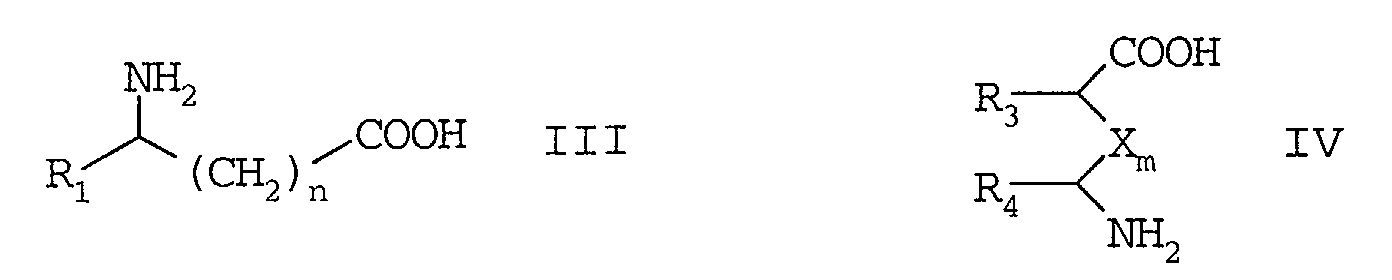 wobei
wobei
- n
- 0 bis 12,
- m
- 0 bis 4,
- R1
- Wasserstoff, einen verzweigten oder unverzweigten, gegebenenfalls substituierten C1-C12-Alkyl-, C2-C12-Alkenyl-, C2-C12-Alkinyl- oder C1-C6-Alkylen-C3-C7-Cycloalkylrest, einen gegebenenfalls substituierten C3-C7-Cycloalkyl-, Aryl-, Arylalkyl-, Hetaryl- oder Hetarylalkylrest,
- R3, R4
- beide Reste R3 und R4 zusammen einen 5 bis 7-gliedrigen, gegebenenfalls substituierten, gesättigten, ungesättigten oder aromatischen Carbo- oder Heterocyclus, der bis zu drei Heteroatome ausgewählt aus der Gruppe O, N oder S enthalten kann,
- X
- (C-R5) oder (CH-R5) und
- R5
- unabhängig voneinander Wasserstoff, Halogen, -NO2, oder -CN
Unter Ameisensäurestern werden in an sich bekannter Weise Ester
der Ameisensäure mit Alkoholen verstanden. Das erfindungsgemäße
Verfahren ist nicht auf bestimmte Ameisensäureester beschränkt
und daher auf alle Ameisensäureester anwendbar. Vorzugsweise wird
der Ameisensäureester als Edukt in isolierter Form eingesetzt.
Vorzugsweise verwendet man als Ameisensäureester Ameisensäureester
der Formel V
 wobei
wobei
- R2
- einen verzweigten oder unverzweigten, gegebenenfalls substituierten C1-C12-Alkyl-, C2-C12-Alkenyl- oder C2-C12-Alkinylrest oder einen gegebenenfalls substituierten Aryl- oder Arylalkylrest
Unter gegebenenfalls substituierten Resten werden erfindungsgemäß
die entsprechenden unsubstituierten und substituierten Reste verstanden.
Für alle substituierten Reste der vorliegenden Erfindung
kommen, wenn die Substituenten nicht näher spezifiziert sind, unabhängig
voneinander bis zu 5 Substituenten, beispielsweise ausgewählt
aus der folgenden Gruppe in Frage:
In einer bevorzugten Ausführungsform bedeutet n gleich 0 bis 4,
besonders bevorzugt bedeutet n gleich 0 oder 1. n gleich 0 bedeutet,
daß der Carboxyl-Kohlenstoff dem α-Kohlenstoff direkt benachbart
ist, wie beispielsweise bei natürlichen Aminosäuren.
In einer weiteren bevorzugten Ausführungsform bedeutet m gleich 0
bis 2.
Verzweigte oder unverzweigte C1-C12-Alkylreste für R1 und R2 sind
unabhängig voneinander beispielsweise Methyl, Ethyl, Propyl,
1-Methylethyl, Butyl, 1-Methylpropyl, 2-Methylpropyl, 1,1-Dimethylethyl,
Pentyl, 1-Methylbutyl, 2-Methylbutyl, 1,2-Dimethylpropyl,
1,1-Dimethylpropyl, 2,2-Dimethylpropyl, 1-Ethylpropyl,
Hexyl, 1-Methylpentyl, 1,2-Dimethylbutyl, 1,3-Dimethylbutyl,
2,3-Dimethylbutyl, 1,1-Dimethylbutyl, 2,2-Dimethylbutyl, 3,3-Dimethylbutyl,
1,1,2-Trimethylpropyl, 1,2,2-Trimethylpropyl,
1-Ethylbutyl, 2-Ethylbutyl, 1-Ethyl-2-methylpropyl, Heptyl,
Octyl, Nonyl, Decyl, Undecyl oder Dodecyl, vorzugsweise verzweigte
oder unverzweigte C1-C4-Alkylreste wie beispielsweise
Methyl, Ethyl, Propyl, 1-Methylethyl, Butyl, 1-Methylpropyl,
2-Methylpropyl oder 1,1-Dimethylethyl, besonders bevorzugt
Methyl.
Unter einem verzweigten oder unverzweigten C2-C12-Alkenylrest
werden für R1 und R2 unabhängig voneinander beispielsweise Vinyl,
2-Propenyl, 2-Butenyl, 3-Butenyl, 1-Methyl-2-propenyl,
2-Methyl-2-propenyl, 2-Pentenyl, 3-Pentenyl, 4-Pentenyl,
1-Methyl-2-butenyl, 2-Methyl-2-butenyl, 3-Methyl-2-butenyl,
1-Methyl-3-butenyl, 2-Methyl-3-butenyl, 3-Methyl-3-butenyl,
1,1-Dimethyl-2-propenyl, 1,2-Dimethyl-2-propenyl, 1-Ethyl-2-propenyl,
2-Hexenyl, 3-Hexenyl, 4-Hexenyl, 5-Hexenyl,
1-Methyl-2-pentenyl, 2-Methyl-2-pentenyl, 3-Methyl-2-pentenyl,
4-Methyl-2-pentenyl, 3-Methyl-3-pentenyl, 4-Methyl-3-pentenyl,
1-Methyl-4-pentenyl, 2-Methyl-4-pentenyl, 3-Methyl-4-entenyl,
4-Methyl-4-pentenyl, 1,1-Dimethyl-2-butenyl, 1,1-Dimethyl-3-butenyl,
1,2-Dimethyl-2-butenyl, 1,2-Dimethyl-3-butenyl,
1,3-Dimethyl-2-butenyl, 1,3-Dimethyl-3-butenyl, 2,2-Dimethyl-3-butenyl,
2,3-Dimethyl-2-butenyl, 2,3-Dimethyl-3-butenyl,
1-Ethyl-2-butenyl, 1-Ethyl-3-butenyl, 2-Ethyl-2-butenyl,
2-Ethyl-3-butenyl, 1,1,2-Trimethyl-2-propenyl, 1-Ethyl-1-methyl-2-propenyl,
1-Ethyl-2-methyl-2-propenyl sowie die entsprechenden
Heptenyle, Octenyle, Nonenyle, Decenyle, Undecenyle
und Dodecenyle verstanden.
Unter einem verzweigten oder unverzweigten C2-C12-Alkinylrest
werden für R1 und R2 unabhängig voneinander beispielsweise Ethinyl,
2-Propinyl, 2-Butinyl, 3-Butinyl, 1-Methyl-2-propinyl,
2-Pentinyl, 3-Pentinyl, 4-Pentinyl, 1-Methyl-3-butinyl,
2-Methyl-3-butinyl, 1-Methyl-2-butinyl, 1,1-Dimethyl-2-propinyl,
1-Ethyl-2-propinyl, 2-Hexinyl, 3-Hexinyl, 4-Hexinyl, 5-Hexinyl,
1-Methyl-2-pentinyl, 1-Methyl-2-pentinyl, 1-Methyl-3-pentinyl,
1-Methyl-4-pentinyl, 2-Methyl-3-pentinyl, 2-Methyl-4-pentinyl,
3-Methyl-4-pentinyl, 4-Methyl-2-pentinyl, 1,1-Dimethyl-2-butinyl,
1,1-Dimethyl-3-butinyl, 1,2-Dimethyl-3-butinyl, 2,2-Dimethyl-3-butinyl,
1-Ethyl-2-butinyl, 1-Ethyl-3-butinyl, 2-Ethyl-3-butinyl
und 1-Ethyl-1-methyl-2-propinyl, vorzugsweise Ethinyl, 2-Propinyl,
2-Butinyl, 1-Methyl-2-propinyl oder 1-Methyl-2-butinyl, sowie
die entsprechenden Heptinyle, Octinyle, Noninyle, Decinyle,
Undecinyle und Dodecinyle verstanden.
Unter einem C3-C7-Cycloalkylrest werden für R1 beispielsweise
Cyclopropyl, Cyclobutyl, Cyclopentyl, Cyclohexyl oder Cycloheptyl
verstanden.
Verzweigte oder unverzweigte C1-C6-Alkylen-C3-C7-Cycloalkylreste
setzen sich beispielsweise aus verzweigten oder unverzweigten
C1-C6-Alkylenresten und den vorstehend erwähnten C3-C7-Cycloalkylresten
zusammen.
Bevorzugte, gegebenenfalls substituierte Arylreste für R1 und R2
sind unabhängig voneinander gegebenenfalls substituiertes Phenyl,
1-Naphthyl oder 2-Naphthyl.
Bevorzugte, gegebenenfalls substituierte Arylalkylreste für R1 und
R2 sind unabhängig voneinander gegebenenfalls substituiertes Benzyl
oder Ethylenphenyl (Homobenzyl).
Unter Hetarylresten für R1 werden beispielsweise Reste wie 2-Pyridyl,
3-Pyridyl, 4-Pyridyl, 2-Furyl, 3-Furyl, 2-Pyrrolyl, 3-Pyrrolyl,
2-Thienyl, 3-Thienyl, 2-Thiazolyl, 4-Thiazolyl, 5-Thiazolyl,
2-Oxazolyl, 4-Oxazolyl, 5-Oxazolyl, 2-Pyrimidyl, 4-Pyrimidyl,
5-Pyrimidyl, 6-Pyrimidyl, 3-Pyrazolyl, 4-Pyrazolyl, 5-Pyrazolyl,
3-Isothiazolyl, 4-Isothiazolyl, 5-Isothiazolyl, 2-Imidazolyl,
4-Imidazolyl, 5-Imidazolyl, 3-Pyridazinyl, 4-Pyridazinyl,
5-Pyridazinyl, 6-Pyridazinyl, 3-Isoxazolyl, 4-Isoxazolyl, 5-Isoxazolyl,
Thiadiazolyl, Oxadiazolyl oder Triazinyl verstanden.
Unter substituierten Hetarylresten für R1 werden auch anellierte
Derivate der vorstehend erwähnten Hetarylreste verstanden, wie
beispielsweise Indazol, Indol, Benzothiophen, Benzofuran, Indolin,
Benzimidazol, Benzthiazol, Benzoxazol, Chinolin, 2,3-Dihydro-1-benzofuran,
Furo[2,3]pyridin, Furo[3,2]pyridin oder Isochinolin.
Unter Hetarlyalkylresten werden für R1 Reste verstanden, die sich
beispielsweise aus C1-C6-Alkylenresten und aus den vorstehend beschriebenen
Hetarylresten zusammensetzen, wie beispielsweise die
Reste -CH2-2-Pyridyl, -CH2-3-Pyridyl, -CH2-4-Pyridyl,
-CH2-2-Thienyl, -CH2-3-Thienyl, -CH2-2-Thiazolyl, -CH2-4-Thiazolyl,
CH2-5-Thiazolyl, -CH2-CH2-2-Pyridyl, -CH2-CH2-3-Pyridyl,
-CH2-CH2-4-Pyridyl, -CH2-CH2-2-Thienyl, -CH2-CH2-3-Thienyl,
-CH2-CH2-2-Thiazolyl, -CH2-CH2-4-Thiazolyl, oder -CH2-CH2-5-Thiazolyl.
Bevorzugte Reste für R1 sind Wasserstoff, gegebenenfalls substituiertes
C1-C12-Alkyl, vorzugsweise C1-C6-Alkyl, insbesondere
C1-C4-Alkyl, sowie gegebenenfalls substituiertes Aryl, vorzugsweise
Phenyl.
Besonders bevorzugte Reste für R1 sind die Seitenketten natürlicher
Aminosäuren, insbesondere Wasserstoff und Methyl.
Bevorzugte Reste für R2 sind gegebenenfalls substituiertes C1-C12-Alkyl,
vorzugsweise C1-C6-Alkyl, insbesondere C1-C4-Alkyl, sowie
gegebenenfalls substituiertes Aryl, vorzugsweise Phenyl.
Besonders bevorzugte Reste für R2 sind Methyl, Ethyl, n-Propyl,
Isopropyl, n-Butyl, iso-Butyl- oder tert-Butyl, insbesondere
Methyl, Ethyl und n-Butyl.
Die beiden Reste R3 und R4 bilden zusammen über den Rest Xm einen
5 bis 7-gliedrigen, gegebenenfalls substituierten, gesättigten,
ungesättigten oder aromatischen Carbo- oder Heterocyclus, der bis
zu drei Heteroatome ausgewählt aus der Gruppe 0, N oder S enthalten
kann.
X bedeutet dabei Sauerstoff, Schwefel, Stickstoff, (C-R5) oder
(CH-R5), wobei die Rest R5 unabhängig voneinander Wasserstoff,
Halogen, -NO2, oder -CN bedeuten.
Für den Fall X gleich Sauerstoff, Schwefel, Stickstoff bedeutet m
gleich 1 oder 2, vorzugsweise 1.
Im Fall X gleich (C-R5) ist X Teil eines aromatischen oder ungesättigten
Cyclus, wobei X an einer Doppelbindung beteiligt ist.
Im Fall X gleich (CH-R5) ist X Teil eines gesättigten oder ungesättigten
Cyclus, wobei X nicht an einer Doppelbindung beteiligt
ist.
Beispielsweise können die Reste R3 und R4 zusammen über den Rest X
(m = 1) oder die Reste X (m>1) einen gegebenenfalls substituierten
C5-C7-Cycloalkylrest, wie beispielsweise Cyclopentyl, Cyclohexyl
oder Cycloheptyl, einen gegebenenfalls substituierten
Arylrest, wie beispielsweise Phenyl, 1-Naphthyl oder 2-Naphthyl,
einen gegebenenfalls substituierten C5-C7-Heterocycloalkylrest,
wie beispielsweise gegebenenfalls substituiertes Pyrrolidinyl,
Piperazinyl, Morpholinyl, Piperidinyl, Tetrahydrofuranyl, Tetrahydropyranyl,
1,4-Dioxanyl, Hexahydroazepinyl, Oxepanyl,
1,2-Oxathiolanyl oder Oxazolidinyl, einen gegebenenfalls substituierten
C3-C7-Heterocycloalkenylrest, wie beispielsweise gegebenenfalls
substituierte Pyrrolinyle, Oxazolinyle, Azepinyl, Oxepinyl,
α-Pyranyl, β-Pyranyl, γ-Pyranyl, Dihydropyranyle, 2,5-Dihydro-pyrrolinyl
oder 4,5-Dihydro-oxazolyl, einen gegebenenfalls
substituierten Hetarylrest, wie beispielsweise gegebenenfalls
substituiertes 2-Pyridyl, 3-Pyridyl, 4-Pyridyl, 2-Furyl, 3-Furyl,
2-Pyrrolyl, 3-Pyrrolyl, 2-Thienyl, 3-Thienyl, 2-Thiazolyl,
4-Thiazolyl, 5-Thiazolyl, 2-Oxazolyl, 4-Oxazolyl, 5-Oxazolyl,
2-Pyrimidyl, 4-Pyrimidyl, 5-Pyrimidyl, 6-Pyrimidyl, 3-Pyrazolyl,
4-Pyrazolyl, 5-Pyrazolyl, 3-Isothiazolyl, 4-Isothiazolyl, 5-Isothiazolyl,
2-Imidazolyl, 4-Imidazolyl, 5-Imidazolyl, 3-Pyridazinyl,
4-Pyridazinyl, 5-Pyridazinyl, 6-Pyridazinyl, 3-Isoxazolyl,
4-Isoxazolyl, 5-Isoxazolyl, Thiadiazolyl, Oxadiazolyl oder Triazinyl
oder deren anellierten Derivate wie beispielsweise Indazolyl,
Indolyl, Benzothiophenyl, Benzofuranyl, Indolinyl, Benzimidazolyl,
Benzthiazolyl, Benzoxazolyl, Chinolinyl oder Isochinolinyl.
In einer bevorzugten Ausführungsform bilden die beiden Reste R3
und R4 zusammen über den Rest Xm einen 5 bis 7-gliedrigen aromatischen
Carbo- oder Heterocyclus, der bis zu drei Heteroatome ausgewählt
aus der Gruppe 0, N oder S enthalten kann.
Die besonders bevorzugten Aminocarbonsäuren, ausgewählt aus der
Gruppe der Verbindungen der Formel III und IV, setzen sich aus
den bevorzugten, vorstehend beschriebenen Resten der Aminocarbonsäuren
zusammen. Besonders bevorzugte Aminocarbonsäuren sind die
natürlichen Aminosäuren, insbesondere Ala, Arg, Asp, Cys, Phe,
Gly, His, Ile, Leu, Met, Glu, Ser, Thr, Val, Trp und Tyr, besonders
bevorzugt Alanin.
Die Aminocarbonsäuren können enantiomerenrein, als racemische Gemische
oder in beliebigen Stereoisomerenverhältnissen vorliegen.
Die besonders bevorzugten Ameisensäureester der Formel V setzen
sich aus dem bevorzugten, vorstehend beschriebenen Rest R2 zusammen.
Ganz besonders bevorzugte Ameisensäureester sind Methylformiat,
Ethylformiat und n-Butylformiat.
Dementsprechend betrifft die Erfindung vorzugsweise ein Verfahren
zur Herstellung von N-Formyl-aminocarbonsäureester, ausgewählt
aus der Gruppe von Verbindungen der Formel I und II
 indem man Aminocarbonsäuren, ausgewählt aus der Gruppe der Verbindungen
der Formel III und IV
indem man Aminocarbonsäuren, ausgewählt aus der Gruppe der Verbindungen
der Formel III und IV
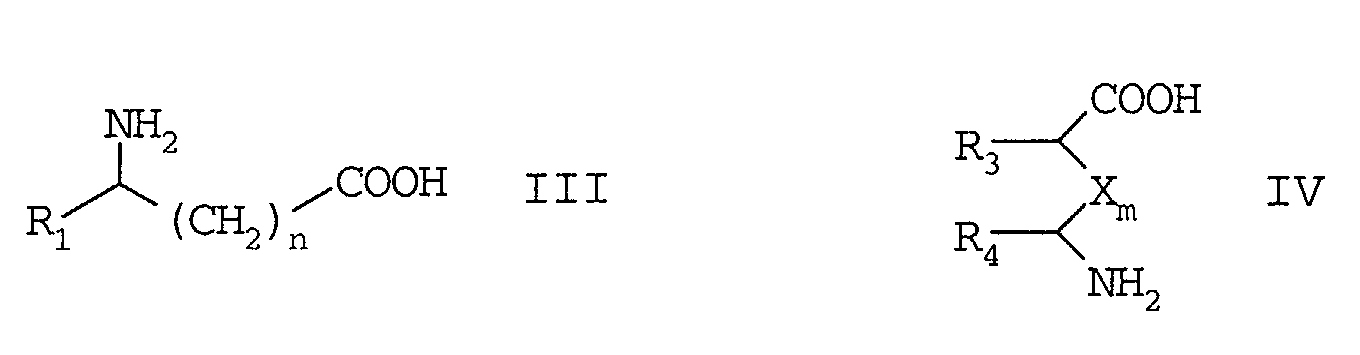 mit Ameisensäureestern der Formel V
 umsetzt, wobei die Reste die vorstehend beschriebene Bedeutung
haben.
umsetzt, wobei die Reste die vorstehend beschriebene Bedeutung
haben.
Bevorzugte N-Formyl-aminocarbonsäureester, ausgewählt aus der
Gruppe von Verbindungen der Formel I und II, ergeben sich durch
die Verwendung der entsprechenden, bevorzugten Aminocarbonsäuren,
ausgewählt aus der Gruppe der Verbindungen der Formel III und IV
und der entsprechenden, bevorzugten Ameisensäureester der Formel
V als Edukte des erfindunsgemäßen Verfahrens.
Die Temperatur bei der das erfindungsgemäße verfahren durchgeführt
wird ist nicht kritisch. Vorteilhafterweise ergeben sich
bei Temperaturen größer 110°C höhere Ausbeuten und Selektivitäten.
Das Verfahren wird daher vorzugsweise bei 110 bis 200°C, besonders
bevorzugt bei 140 bis 180°C, ganz besonders bevorzugt bei 155 bis
165°C durchgeführt.
Der Druck bei dem das erfindungsgemäße verfahren durchgeführt
wird ist nicht kritisch. Um bei der Verwendung von Edukten, die
unter 110°C sieden, die vorteilhaften Temperaturen von größer
110°C zu erreichen, ist es vorteilhaft das Verfahren unter Eigendruck
oder unter einem Druck größer 1 bar durchzuführen. Der
Druck übersteigt typischerweise nicht 15 bar.
Besonders vorteilhaft läßt sich das Verfahren in einem Autoclaven
durchführen. Hierbei wird das Reaktionsgemisch aus Aminocarbonsäure
und Ameisensäureester unter Eigendruck auf die gewünschte
Temperatur, vorzugsweise auf die vorstehend beschriebene vorteilhafte
Temperatur gebracht.
Das Molverhältnis zwischen Aminocarbonsäure und Ameisensäureester
ist ebenfalls nicht kritisch und beträgt vorzugsweise 1:1 bis
1:15, vorzugsweise 1:1 bis 1:10. Ist der Molanteil an Ameisensäureester
größer als 1:1 erhält man als Nebenprodukt eine entsprechende
Menge Ameisensäureester. Der Ameisensäureester kann
als Leichtsieder abdestilliert und in die Reaktion erneut zurückgeführt
werden.
In einer weiteren, bevorzugten Ausführungsform verwendet man als
Ameisensäureester der Formel V, Mischungen aus Ameisensäureester
der Formel V und dem entsprechenden Alkohol R2-OH. Das Molverhältnis
von Ameisensäureester der Formel V zu dem entsprechenden Alkohol
R2-OH ist nicht kritisch und beträgt typischerweise 10:1 bis
1:10, vorzugsweise 1:1 bis 1:5.
Die Reaktionsdauer ist nicht kritisch und beträgt typischerweise
4 bis 24 Stunden, vorzugsweise 6 bis 12 Stunden. Dadurch, dass in
jedem Fall die Selektivität der Reaktion über 90% liegt, kann ein
Verfahren auch mit Teilumsatz durchgeführt werden.
Der N-Formylaminocarbonsäureester wird üblicherweise destillativ,
beispielsweise durch fraktionierte Destillation in an sich bekannter
Weise vom Edukt abgetrennt.
Durch das erfindungsgemäße Verfahren werden im Vergleich zum
Stand der Technik hohe Umsätze, Ausbeuten und Selektivitäten
erreicht.
Die nachstehenden Beispiele verdeutlichen die Erfindung ohne
darauf beschränkt zu sein.
In einem Autoclav wurden 13,35 g (0,15 mol) D,L-Alanin in 90,1 g
(1,5 mol) Methylformiat suspendiert und unter Eigendruck 12 h bei
160°C unter Stickstoff gerührt. Nichtumgesetztes Alanin wurde abfiltriert
und die Lösung fraktioniert destilliert. Man erhielt
18,5 g (0,141 mol) N-Formyl-D,L-alaninmethylester. Dies entspricht
einer Ausbeute von 94,2% bei einer Selektivität von
97,5%.
In einem Autoclav wurden 13,35 g (0,15 mol) D,L-Alanin in 111,1 g
(1,5 mol) Ethylformiat suspendiert und unter Eigendruck 12 h bei
160°C unter Stickstoff gerührt. Nichtumgesetztes Alanin wurde abfiltriert
und die Lösung fraktioniert destilliert. Man erhielt
19,8 g (0,136 mol) N-Formyl-D,L-alaninethylester. Dies entspricht
einer Ausbeute von 90,9%.
In einem Autoclav wurden 13,35 g (0,15 mol) D,L-Alanin in 122,4 g
(1,2 mol) Butylformiat suspendiert und unter Eigendruck 8 h bei
160°C unter Stickstoff gerührt. Nichtumgesetztes Alanin wurde abfiltriert
und die Lösung fraktioniert destilliert. Man erhielt
23,5 g (0,136 mol) N-Formyl-D,L-alaninbutylester (FAB). Dies entspricht
einer Ausbeute von 90,4%.
In einem Autoclav wurden 13,35 g (0,15 mol) D,L-Alanin in einem
Gemisch aus 85,7 g (0,84 mol) Butylformiat und 26,7 g (0,36 mol)
Butanol suspendiert und unter Eigendruck 8 h bei 160°C unter
Stickstoff gerührt. Nichtumgesetztes Alanin wurde abfiltriert und
die Lösung fraktioniert destilliert. Man erhielt 23,1 g (0,133
mol) N-Formyl-D,L-alaninbutylester (FAB). Dies entspricht einer
Ausbeute von 88,8%.
Claims (6)
- Verfahren zur Herstellung von N-Formyl-aminocarbonsäureestern durch Umsetzung von Aminocarbonsäuren mit Ameisensäureestern.
- Verfahren nach Anspruch 1, dadurch gekennzeichnet daß man N-Formyl-aminocarbonsäureester, ausgewählt aus der Gruppe von Verbindungen der Formel I und IIherstellt, wobei

- n
- 0 bis 12,
- m
- 0 bis 4,
- R1
- Wasserstoff, einen verzweigten oder unverzweigten, gegebenenfalls substituierten C1-C12-Alkyl-, C2-C12-Alkenyl-, C2-C12-Alkinyl- oder C1-C6-Alkylen-C3-C7-Cycloalkylrest, einen gegebenenfalls substituierten C3-C7-Cycloalkyl-, Aryl-, Arylalkyl-, Hetaryl- oder Hetarylalkylrest,
- R2
- einen verzweigten oder unverzweigten, gegebenenfalls substituierten C1-C12-Alkyl-, C2-C12-Alkenyl- oder C2-C12-Alkinylrest, einen gegebenenfalls substituierten Aryl- oder Arylalkylrest,
- R3, R4
- beide Reste R3 und R4 zusammen über den Rest Xm einen 5 bis 7-gliedrigen, gegebenenfalls substituierten, gesättigten, ungesättigten oder aromatischen Carbo- oder Heterocyclus, der bis zu drei Heteroatome ausgewählt aus der Gruppe 0, N oder S enthalten kann,
- X
- O, S, N, (C-R5) oder (CH-R5) und
- R5
- unabhängig voneinander Wasserstoff, Halogen, -NO2, oder -CN
indem man Aminocarbonsäuren, ausgewählt aus der Gruppe der Verbindungen der Formel III und IVmit Ameisensäureestern der Formel V umsetzt.
- Verfahren nach Anspruch 1 oder 2, dadurch gekennzeichnet, daß man das Verfahren bei 110°C bis 200°C durchführt.
- Verfahren nach einem der Ansprüche 1 bis 3, dadurch gekennzeichnet, daß man das Verfahren bei Verwendung von Edukten die unter 110°C sieden unter Eigendruck oder unter einem Druck größer 1 bar durchführt.
- Verfahren nach einem der Ansprüche 1 bis 4, dadurch gekennzeichnet, daß das Molverhältnis zwischen Aminocarbonsäure und Ameisensäureester 1:1 bis 1:10 beträgt.
- Verfahren nach einem der Ansprüche 2 bis 5 dadurch gekennzeichnet, daß man als Ameisensäureester der Formel V, Mischungen aus Ameisensäureester der Formel V und dem entsprechenden Alkohol R2-OH verwendet.
Applications Claiming Priority (2)
| Application Number | Priority Date | Filing Date | Title |
|---|---|---|---|
| DE10154716A DE10154716A1 (de) | 2001-11-09 | 2001-11-09 | Verfahren zur Herstellung von N-Formyl-aminocarbonsäureestern |
| DE10154716 | 2001-11-09 |
Publications (1)
| Publication Number | Publication Date |
|---|---|
| EP1310481A1 true EP1310481A1 (de) | 2003-05-14 |
Family
ID=7704941
Family Applications (1)
| Application Number | Title | Priority Date | Filing Date |
|---|---|---|---|
| EP02023509A Withdrawn EP1310481A1 (de) | 2001-11-09 | 2002-10-22 | Verfahren zur Herstellung von N-Formyl-aminocarbonsäureestern |
Country Status (5)
| Country | Link |
|---|---|
| US (1) | US20030100790A1 (de) |
| EP (1) | EP1310481A1 (de) |
| JP (1) | JP2003146954A (de) |
| CN (1) | CN1417202A (de) |
| DE (1) | DE10154716A1 (de) |
Citations (1)
| Publication number | Priority date | Publication date | Assignee | Title |
|---|---|---|---|---|
| US3646061A (en) * | 1968-06-10 | 1972-02-29 | Ajinomoto Kk | Method of preparing n-alkoxalyl and n-formyl derivatives of alpha-amino acid esters |
-
2001
- 2001-11-09 DE DE10154716A patent/DE10154716A1/de not_active Withdrawn
-
2002
- 2002-10-22 EP EP02023509A patent/EP1310481A1/de not_active Withdrawn
- 2002-10-29 US US10/282,017 patent/US20030100790A1/en not_active Abandoned
- 2002-11-06 JP JP2002322894A patent/JP2003146954A/ja active Pending
- 2002-11-08 CN CN02146456.1A patent/CN1417202A/zh active Pending
Patent Citations (1)
| Publication number | Priority date | Publication date | Assignee | Title |
|---|---|---|---|---|
| US3646061A (en) * | 1968-06-10 | 1972-02-29 | Ajinomoto Kk | Method of preparing n-alkoxalyl and n-formyl derivatives of alpha-amino acid esters |
Non-Patent Citations (1)
| Title |
|---|
| ITSUTOSHI MAEDA ET AL.: "The Synthetic Intermediate of Pyridoxine. III. The Simple Synthesis of Ethyl N-Ethoxalylalaninate and Ethyl N-Formylalaninate", SYNTHESIS, vol. 45, no. 6, June 1972 (1972-06-01), STUTTGART DE, pages 1917 - 1918, XP002230522 * |
Also Published As
| Publication number | Publication date |
|---|---|
| DE10154716A1 (de) | 2003-05-22 |
| US20030100790A1 (en) | 2003-05-29 |
| CN1417202A (zh) | 2003-05-14 |
| JP2003146954A (ja) | 2003-05-21 |
Similar Documents
| Publication | Publication Date | Title |
|---|---|---|
| DE2524929C3 (de) | 2-Hydroxyäthylidencyanessigsäureanilide, Verfahren zu ihrer Herstellung und diese Verbindungen enthaltende Mittel | |
| DE197308C (de) | ||
| CH636839A5 (de) | 4-(2-oxo-1-cycloalkylidenmethyl)-phenylessigsaeurederivate, sowie verfahren zu deren herstellung und pharmazeutisch zulaessige salze solcher verbindungen. | |
| CH500987A (de) | Neues Verfahren zur Herstellung von 2-Arylamino-1,3-diazacycloalkenen-(2) | |
| DE69302309T2 (de) | Verfahren für die Herstellung von Dialkyl-2,3-pyridinedicarboxylaten und deren Derivaten aus einem alpha-beta-ungesättigten Oxim und einem Aminobutenedioat | |
| EP1310481A1 (de) | Verfahren zur Herstellung von N-Formyl-aminocarbonsäureestern | |
| DE69102352T2 (de) | N-Benzyl-N1-phenyl und -phenalkyl-thioharnstoffe. | |
| CH396923A (de) | Verfahren zur Herstellung von 4-Mercapto-pyrazolo(3,4-d)pyrimidinen | |
| DE60318444T2 (de) | Verfahren zur herstellung von nevirapin | |
| DE2347015C2 (de) | Neue Pyrazolyloxyessigsäurederivate, Verfahren zu ihrer Herstellung und diese enthaltende Mittel | |
| DE2264235A1 (de) | Verfahren zur herstellung von 6-methyl3,4-dihydro-1,2,3-oxathiazin-4-on-2,2dioxid | |
| DE60028990T2 (de) | Verfahren zur herstellung von aliphatischen carboxylatenmit piperazinsubstituenten | |
| DE69605208T2 (de) | Verfahren zur herstellung von 2-(pyrid-2-yloxymethyl)phenylacetate als pestizidzwischenprodukte | |
| DE2446100A1 (de) | Phenoxyalkancarbonsaeureamide von substituierten thiazolidincarbonsaeuren, verfahren zu ihrer herstellung und ihre verwendung in arzneimitteln | |
| DE69300376T2 (de) | Verfahren zur Herstellung von 2,3-Pyridindicarbonsäuren aus 3-(2-Imidazolin-2-Yl)Picolinsäuren. | |
| DE2362687C3 (de) | Verfahren zur Gewinnung der optischen Isomeren des Penicillamins | |
| DE2653251A1 (de) | Azabicyclo eckige klammer auf 3.1.o eckige klammer zu hexan-derivate, ihre herstellung und verwendung | |
| DE69226717T2 (de) | Verfahren zum Extrahieren von Pyridin und Chinolincarbonsäuren aus wässerigen Medien | |
| DE3037086A1 (de) | 3-(m-chloranilino-)acrylsaeureaethylester und ein verfahren zu dessen herstellung | |
| EP0587072B1 (de) | Verfahren zur Herstellung von alpha,beta-ungesättigten beta-Oxycarbonsäurechloriden | |
| EP0342482B1 (de) | Verfahren zur Herstellung von Pyrimidinderivaten | |
| CH650772A5 (de) | Verfahren zur herstellung von pyrrolidin-2-onen aus 3-pyrrolin-2-onen und verfahren zur herstellung der 3-pyrrolin-2-on-ausgangsstoffe. | |
| DE3043948A1 (de) | Verfahren zur herstellung von 4,6-subst. -5-cyano-3-aryl-isoxazolo (5,4-b) pyridinen | |
| DE1770177A1 (de) | Monoaryl-substituierte Oxazole | |
| DE10160149A1 (de) | Verfahren zur Herstellung von Dihydroxycarbonsäureestern in Abwesenheit von Lösungsmitteln |
Legal Events
| Date | Code | Title | Description |
|---|---|---|---|
| PUAI | Public reference made under article 153(3) epc to a published international application that has entered the european phase |
Free format text: ORIGINAL CODE: 0009012 |
|
| AK | Designated contracting states |
Designated state(s): AT BE BG CH CY CZ DE DK EE ES FI FR GB GR IE IT LI LU MC NL PT SE SK TR |
|
| AX | Request for extension of the european patent |
Extension state: AL LT LV MK RO SI |
|
| 17P | Request for examination filed |
Effective date: 20030403 |
|
| STAA | Information on the status of an ep patent application or granted ep patent |
Free format text: STATUS: THE APPLICATION HAS BEEN WITHDRAWN |
|
| 18W | Application withdrawn |
Effective date: 20031201 |