EP1300488A2 - Plating path and method for depositing a metal layer on a substrate - Google Patents
Plating path and method for depositing a metal layer on a substrate Download PDFInfo
- Publication number
- EP1300488A2 EP1300488A2 EP01308486A EP01308486A EP1300488A2 EP 1300488 A2 EP1300488 A2 EP 1300488A2 EP 01308486 A EP01308486 A EP 01308486A EP 01308486 A EP01308486 A EP 01308486A EP 1300488 A2 EP1300488 A2 EP 1300488A2
- Authority
- EP
- European Patent Office
- Prior art keywords
- acid
- membered
- alkyl
- copper
- linear
- Prior art date
- Legal status (The legal status is an assumption and is not a legal conclusion. Google has not performed a legal analysis and makes no representation as to the accuracy of the status listed.)
- Granted
Links
Images

Classifications
-
- C—CHEMISTRY; METALLURGY
- C25—ELECTROLYTIC OR ELECTROPHORETIC PROCESSES; APPARATUS THEREFOR
- C25D—PROCESSES FOR THE ELECTROLYTIC OR ELECTROPHORETIC PRODUCTION OF COATINGS; ELECTROFORMING; APPARATUS THEREFOR
- C25D3/00—Electroplating: Baths therefor
- C25D3/02—Electroplating: Baths therefor from solutions
- C25D3/38—Electroplating: Baths therefor from solutions of copper
-
- C—CHEMISTRY; METALLURGY
- C25—ELECTROLYTIC OR ELECTROPHORETIC PROCESSES; APPARATUS THEREFOR
- C25D—PROCESSES FOR THE ELECTROLYTIC OR ELECTROPHORETIC PRODUCTION OF COATINGS; ELECTROFORMING; APPARATUS THEREFOR
- C25D3/00—Electroplating: Baths therefor
- C25D3/02—Electroplating: Baths therefor from solutions
-
- H—ELECTRICITY
- H05—ELECTRIC TECHNIQUES NOT OTHERWISE PROVIDED FOR
- H05K—PRINTED CIRCUITS; CASINGS OR CONSTRUCTIONAL DETAILS OF ELECTRIC APPARATUS; MANUFACTURE OF ASSEMBLAGES OF ELECTRICAL COMPONENTS
- H05K3/00—Apparatus or processes for manufacturing printed circuits
- H05K3/22—Secondary treatment of printed circuits
- H05K3/24—Reinforcing of the conductive pattern
- H05K3/241—Reinforcing of the conductive pattern characterised by the electroplating method; means therefor, e.g. baths or apparatus
Definitions
- the present invention is directed to a plating bath and method for improving deposition of a metal on a substrate. More specifically, the present invention is directed to a plating bath and method for improving deposition of a metal on a substrate by including organic compounds in the plating bath that inhibit the degradation of plating bath additives.
- Deposition of a metal on a substrate is used in a variety of industrial applications such as electroforming, electrorefining, manufacture of copper powder, electroplating, electroless plating and the like.
- the process of plating a substrate with a metal is used in the production of decorative articles for sanitary appliances, automobile parts, jewelry and furniture fittings, many electrical devices and circuits such as printed wiring and circuit boards, electrolytic foil, silicon wafer plating, and the like.
- Examples of metals that may be plated on a substrate include copper, gold, silver, palladium, platinum, zinc, tin, nickel, lead, cobalt and alloys thereof.
- copper is one of the most common metals plated.
- the electronics industry extensively employs copper as a metal in the manufacture of printed wiring and circuit boards as well as other electronic articles.
- copper layers can not form any cracks when subject to thermal shock (immersed at least once for 10 sec. in liquid tin/lead solder at 288° C).
- thermal shock immersed at least once for 10 sec. in liquid tin/lead solder at 288° C.
- the copper layers must be smooth, and as uniformly thick at all locations of a coated surface. Also, deposition procedures must be easy to manage and economical.
- Anodes such as copper anodes, that may decompose during electroplating are often used in the electroplating of copper.
- Such anodes are known in the industry as soluble anodes.
- Soluble anodes may be in the form of plates, bars or spheres. The plates and bars are connected to a power supply with a suitable fastening means.
- the spheres come in baskets that often consist of titanium. The spheres are connected to a power supply with suitable fastening means.
- Such anodes decompose at about the same rate during deposition as the copper is deposited from the deposition bath, the amount of copper in the deposition solution remains about constant. Thus, copper replenishment is not necessary.
- anode is the insoluble anode. Exterior dimensions of insoluble anodes do not change during metal deposition process. Such anodes consist of inert materials such as titanium or lead that can be coated with catalytic metals such as platinum to prevent high anodic overvoltages. Insoluble anodes are preferred over the soluble anodes in the production of printed wiring and circuit boards. Electroplating processes employing insoluble anodes are more versatile than those using consumable electrodes, permit higher plating speeds, require smaller apparatus size, ease of maintenance, improved solution flow and agitation and allow anodes to be placed close to the cathodes. Particularly advantageous is the fact that the insoluble anode does not change size (i.e., cell geometry remains fixed). Thus, more uniform plating results are obtained.
- copper salts used to provide a source of copper are often available as products of etching procedures associated with the production of copper plated devices.
- a copper layer is put down over an entire surface of an insulating substrate and part of the copper etched off to produce the circuit board of interest.
- Plating metal on a substrate such as electroplating with copper, is used extensively in a variety of manufacturing procedures. Copper plating is used to prevent corrosion on various surfaces (i.e., iron surfaces), as a binding layer for additional metal layers, to increase electrical or thermal conductivity and to provide conducting paths in many electrical applications. Electroplating with copper is employed in the manufacture of electrical devices such as circuit boards, integrated circuits, electrical contact surfaces and the like.
- Plating metal is a complex process that involves multiple ingredients in a plating bath.
- plating baths such as electroplating baths, contain chemical compounds that improve various aspects of the plating process.
- chemical compounds or additives are auxiliary bath components that are used to improve the brightness of the metal plating, the physical properties of the plated metal especially with respect to ductility and the micro-throwing power as well as the macro-throwing power of the electroplating bath.
- additives that have an effect on the bright finish, leveling and uniformity of metal deposition on surfaces. Maintaining bath concentrations of such additives within close tolerances is important to obtain high quality metal deposits.
- additives do breakdown during metal plating.
- the additives breakdown due to oxidation at the anode, reduction at the cathode and by chemical degradation.
- the breakdown products may result in metal layer deposit characteristics that are less than satisfactory for industry standards.
- Regular additions of additives based upon empirical rules established by workers in the industry to try and maintain optimum concentrations of the additives have been employed.
- monitoring the concentrations of the additives that improve metal plating is still very difficult because the additives are present in small concentrations, i.e., parts per million of solution, in the plating baths.
- the complex mixtures of the additives and the degraded products formed from the additives during plating complicate the replenishment process.
- Stability and lifetime of a plating bath is very important. Increased stability of the additives that improve metal plating leads to longer lifetimes for plating baths. Plating baths having longer lifetimes are economically very important. Frequent replacement of plating baths, as mentioned above, as well as disposal of baths containing degraded additives interrupts metal plating operations. Such interruptions reduce product yield. Accordingly, stable plating baths where breakdown of the additives is prevented or reduced, are highly desirable.
- U.S. Pat. No. 4,469,564 discloses a copper electroplating process that allegedly increases the electroplating bath lifetime.
- the patent states that the process may be employed with a soluble or insoluble anode.
- a cation-permeable membrane surrounds the anode to prevent organic additives from contacting the anode and being oxidized by the anode.
- a disadvantage to such a process is that the cation-permeable membranes are exposed to corrosive chemicals for long periods of time that may cause the membranes to decompose.
- bath pH ranges may be less than 1.0 to as high as 11.0 and higher.
- bath pH ranges may fluctuate over time as bath components are consumed or breakdown.
- addition of the organic compounds of the present invention that inhibit additive consumption to a plating bath provide for a plating bath that has a long life, and a method of metal plating that is very efficient. Also, because the organic compounds of the present invention inhibit degradation of the additives, plating baths of the present invention provide for uniform, high brightness metal layers with good physical-mechanical characteristics on substrates.
- the additive consumption inhibiting organic compounds and methods of the present invention may be employed in any industry where metal plating is used.
- the metal plating baths may be employed in the manufacture of electrical devices such as printed circuit and wiring boards, integrated circuits, electrical contact surfaces and connectors, electrolytic foil, silicon wafers for microchip applications, semi-conductors and semi-conductor packaging, lead frames, optoelectronics and optoelectronics packaging, solder bumps such as on wafers, and the like.
- the metal plating baths may be employed for metal plating decorative articles for jewelry, furniture fittings, automobile parts, sanitary appliances, and the like.
- organic compounds of the present invention may be employed in waste treatment methods.
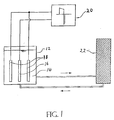
- the present invention also includes an apparatus composed of an electrical power source, an anode, a cathode, and a metal plating bath containing the additive consumption inhibiting organic compounds of the present invention.
- the cathode of the apparatus is the article that is to be metal plated.
- the apparatus may be a vertical or a horizontal metal plating apparatus.
- a primary objective of the present invention is to provide organic compounds that inhibit degradation of additives in a metal plating bath.
- An additional objective of the present invention is to provide for an efficient method for plating a metal on a substrate.
- a further objective of the present invention is to provide a method for plating a uniform, high brightness metal layer with good physical-mechanical properties on a substrate.
- an additional objective of the present invention is to provide an apparatus containing a metal plating bath with an organic compound that inhibits additive consumption.
- Metal plating baths of the present invention contain organic compounds that inhibit the degradation of additives added to metal plating baths to improve metal deposition on a substrate.
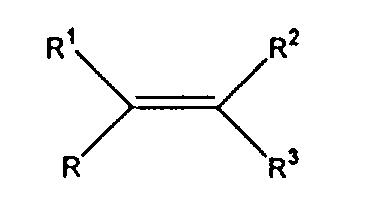
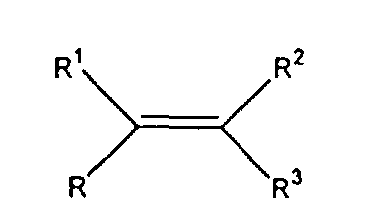
- R 1 and R 2 may be taken together to form a carbon-carbon bond; or R 1 and R 2 may be taken together to form a 5 to 7 membered carbocyclic ring, or a 5 to 7 membered carbocyclic ring fused with one or more five or six membered rings.
- the 5 to 7 membered carbocyclic ring and the one or more five or six membered fused rings may each contain one or more carbonyls in the ring.
- the 5 to 7 membered rings and the five or six membered fused rings may each optionally contain a hetero-atom such as oxygen or nitrogen to form one or more heterocyclic rings.
- the heterocyclic rings may contain a carbonyl in the ring.
- the 5 to 7 membered rings, the five to six membered fused rings, and the heterocyclic rings may be unsubstituted or substituted.
- substituents include, but are not limited to,
- a hydroxyl group is included as a substituent on an additive consumption inhibiting compound of the present invention with the proviso that the additive consumption inhibiting compound also has at least one carboxyl group.
- R 4 and M are as defined above.
- the cyclic alkenyl groups and the aryl radical include, but are not limited to, phenyl, naphthyl, anthryl, phenanthryl, furanyl, pyridinyl, and pyrimidinyl radicals. Substitution within the scope of the present invention means that a hydrogen is replaced with a substituent such as the substituent groups mentioned above.
- the organic additive consumption inhibiting compounds of the present invention also include salts, hydrates and acid anhydrides of the foregoing compounds.
- Such salts include, but are not limited to, alkali metal salts of acids.
- Preferred compounds of the present invention are aromatic compounds as well as compounds with triple bonds. Such compounds are where at least one of R, R 1 , R 2 , or R 3 is (C 5 -C 20 ) cyclic alkenyl, or where R 1 and R 2 are taken together to form a bond, or where R 1 and R 2 are taken together to form a 5 to 7 membered ring, a 5 to 7 membered ring fused with one or more 5 or 6 membered ring, or a 5 to 7 membered heterocyclic ring fused with one or more 5 to 6 membered ring, or a 5 to 7 membered heterocyclic ring fused with one or more 5 to 6 membered heterocyclic ring.
- the foregoing rings are sufficiently unsaturated to form one or more aromatic ring and may be unsubstituted or substituted with the substituent groups recited above.
- Especially preferred compounds for practicing the present invention are aromatic compounds with at least one carboxyl substituent.
- Most preferred compounds for practicing the present invention are unsaturated compounds with at least one carboxyl group and at least one hydroxyl group, especially aromatic compounds.
- Examples of other suitable organic compounds within the scope of the present invention include aromatic hydrocarbons, unsubstituted or substituted, such as phenyl methyl and the like.
- the additive consumption inhibiting organic compounds may be employed in metal plating baths for plating copper, gold, silver, palladium, platinum, cobalt, chromium, cadmium, bismuth, indium, rhodium, iridium, and ruthenium.
- the foregoing compounds may be employed in metal plating baths for plating metals selected from the group consisting of copper, gold, silver, platinum, palladium, iridium, and ruthenium. More preferably the foregoing additive consumption inhibiting compounds are employed in baths for plating metals selected from copper, iridium, or ruthenium. Most preferably, the foregoing additive consumption inhibiting compounds are employed in plating baths for plating copper.
- the additive consumption inhibiting organic compounds may be added to plating baths by any suitable method employed to add components to a bath. One method is to mix the organic compounds into the plating bath with the other bath components and additives.
- additives that the organic compounds inhibit degradation of include, but are not limited to, brighteners, levelers, hardeners, wetting agents, malleability, ductility and deposition modifiers, suppressants and the like. Such additives are predominantly organic compounds.
- the additive consumption inhibiting organic compounds are especially effective in inhibiting consumption of brighteners and levelers.
- Additives as defined within the scope of the present invention include any compound, salt or liquid that may be added to a metal plating bath with the exception of a consumption inhibiting organic compounds of the present invention.
- the additive consumption inhibiting organic compounds of the present invention are believed to inhibit additive consumption by one or a combination of the following mechanisms.
- Many additives break down or decompose at the anode to oxidation products.
- the organic compounds of the present invention may competitively adsorb onto an anode over additives, and become oxidized in place of the additives.
- Many metal plating baths contain chloride. Chloride is often added to metal plating baths in the form of HCI. Chloride is oxidized at the anode to chlorine. Chlorine may then oxidize the bath additives reducing the effectiveness of the additives in the metal plating bath.
- the additive consumption inhibiting compounds By adding one or more of the additive consumption inhibiting compounds to the metal plating bath, chlorine oxidizes the one or more organic compounds over the additives.
- the additive consumption inhibiting organic compounds may perform as sacrificial species.
- the additive consumption inhibiting organic compounds compete with chloride, or with both chloride and the additives at the anode surface.
- the additive consumption inhibiting organic compounds are oxidized at the anode over the chloride, or both the chloride and the additives.
- suitable brighteners employed in plating baths of the present invention include but are not limited to, compounds that contain structural formulas: HO 3 S-R 11 -SH, HO 3 S-R 11 -S-S-R 11 -SO 3 H, where R 11 is C 1 -C 6 or an aryl group, and HO 3 S-Ar-S-S-Ar-SO 3 H, where Ar is phenyl or naphthyl.
- Substituents of the alkyl and aryl groups may be, for example, alkyl, halo and alkoxy.
- Such brightening agents are 3-mercapto-propylsulfonic acid (sodium salt), 2-mercapto-ethanesulfonic acid (sodium salt), and bissulfopropyl disulfide (BSDS).
- BSDS bissulfopropyl disulfide
- Such compounds are disclosed in U.S. Pat. Nos. 3,770,598, 4,374,709, 4,376,685, 4,555,315 and 4,673,469, all incorporated herein in their entirety by reference.
- Such polysulfides also may be employed to increase ductility of deposited metal.
- levelers that may be employed in a plating bath include, but are not limited to, alkylated polyalkyleneimines and organic sulfo sulfonates.
- alkylated polyalkyleneimines examples include 1-(2-hydroxyethyl)-2-imidazolidinethione (HIT), 4-mercaptopyridine, 2-mercaptothiazoline, ethylene thiourea, thiourea and alkylated polyalkyleneimine.
- HIT 1-(2-hydroxyethyl)-2-imidazolidinethione
- 4-mercaptopyridine 2-mercaptothiazoline
- ethylene thiourea thiourea
- alkylated polyalkyleneimine alkylated polyalkyleneimine
- oxygen containing high molecular weight compounds examples include carboxymethylcellulose, nonylphenolpolyglycol ether, octandiolbis-(polyalkylene glycolether), octanolpolyalkylene glycolether, oleic acidpolyglycol ester, polyethylenepropylene glycol, polyethylene glycol, polyethylene glycoldimethylether, polyoxypropylene glycol, polypropylene glycol, polyvinylalcohol, stearic acidpolyglycol ester, stearyl alcoholpolyglycol ether, and the like.
- Aromatic and aliphatic quaternary amines also may be added to plating baths to improve deposit brightness.
- Dyes of the phenazine class (Safranine type) and phenazine azo dyes (Janus Green B type) may be employed as levelers.
- Polyethers are used to improve thickness and uniformity of metal plating.
- Brighteners and levelers are added to plating baths in amounts of from about 1 part per billion to about 1 g/L of bath. More often, brighteners and levelers range from about 10 parts per billion to about 500 parts per million. Ranges for bath components may vary from one bath composition to the next. Thus, the foregoing weight ranges for the additives are general ranges.
- suitable wetting agents containing multiple oxyethylene groups also may be employed.
- Such wetting agents include compounds of polyoxyethylene polymers having from as many as 20 to 150 repeating units. Such compounds also may perform as suppressors.
- block copolymers of polyoxyethylene and polyoxypropylene are also included in the class of polymers. Surfactants and wetting agents are added in conventional amounts.
- plating baths are included in plating baths as a source of metal ions, pH adjusters, such as inorganic acids, and a source of halide ions.
- plating baths are aqueous.
- the pH range of the baths may range from 0 to about 14, preferably from 0 to about 8.
- Wetting agents employed in plating baths and amounts employed in such baths are well known in the art.
- Inorganic acids employed include, but are not limited to, sulfuric acid, hydrochloric acid, nitric acid, phosphoric acid and the like. Sulfuric acid is a preferred acid.
- Halogen ions are optional. Halogen ions employed in plating baths preferably include chloride, fluoride, and bromide.
- Such halides are added into the bath as a water soluble salt.
- Chloride is preferred, and is introduced into the bath, preferably, as HCI.
- Water soluble salts of metals provide a source of the metal to be plated on a substrate.
- Such water soluble salts include metal salts of copper, chromium, gold, silver, cadmium, platinum, palladium, cobalt, bismuth, indium, rhodium, ruthenium, and iridium.
- the most preferred selected metal to be plated with the baths of the present invention consists of copper.
- the copper is electroplated.
- Copper that is useful may be in the form of any solution soluble copper compound. Suitable copper compounds include, but are not limited to, copper halides, copper sulfates, copper alkane sulfonate, copper alkanol sulfonate, and the like. When copper halide is used, chloride is the preferred halide.
- Preferred copper compounds are copper sulfate, copper alkane sulfonate, or mixtures thereof. The more preferred are copper sulfate, copper methane sulfonate or mixtures thereof.
- Copper compounds useful in the present invention are generally commercially available or may be prepared by methods known in the literature.
- the pH of the bath may range from 0 to about 14.0.
- the bath ranges from a pH of from 0 to about 8.0.
- Metal ions range in concentration in the plating baths of from about 0.010 g/L to about 200 g/L, preferably from about 0.5 g/L to about 100.0 g/L.
- the amount of copper may range from about 0.01 to about 100 g/L.
- copper ranges from about 0.10 g/L to about 50 g/L.
- the amount of copper present in the bath ranges from about 0.02 g/L to about 25 g/L.
- the amount of copper present in the bath ranges from about 1.0 g/L to about 100 g/L, preferably from about 2.0 g/L to about 50 g/L.
- Halide ions range in concentration of from 0 mg/L to about 1g/L, preferably from about 1.0 mg/L to about 150 mg/L. Acids are added to the plating baths to obtain a pH range of from about 0 to about 8.0. Accordingly, acids are added in amounts of from about 10 g/L to about 600 g/L, preferably from about 15 g/L to about 500 g/L.
- An example of an acid copper electroplating bath for practicing the present invention has a composition as follows: Copper Ions (as Copper Sulfate) 0.01 to 50 g/L Sulfuric Acid (Concentrated) 15 to 500 g/L Chloride Ions (as Sodium Chloride) 1 ppm to 150 ppm Additives As Required Additive Preserving Compound 0.1 to 10 g/L Water To 1 liter
- the organic compounds of the present invention may be employee to prevent degradation of additives in any suitable plating bath where a substrate is to be metal plated, preferably, the additive consumption inhibiting compounds are employed in electroplating baths.
- electroplating baths are employed in electrodeposition of a metal on a substrate such as in the manufacture of printed wiring boards and silicon wafers used in microchip applications, and in the manufacture of other components for electrical devices. Electroplating processes involve passing current through an anode, an electroplating solution, and a cathode for a sufficient amount of time to metal plate a substrate to a desired thickness.
- the anode may be a soluble anode (composed of a metal such as copper that dissolves and replenishes the electroplating bath as plating occurs).
- an insoluble anode (composed of an inert material such as platinum, platinized titanium, lead, and the like) may be employed where electroplating rates are greater than in methods using soluble anodes.
- the present invention is employed in plating processes employing an insoluble anode where problems associated with additive consumption (often oxidation at the anode) are greater than with processes employing soluble anodes.
- Examples of useful insoluble anodes are anodes that have surfaces with oxides of iridium and tantalum. Such anodes have from about 20 to about 90 moles percent of iridium with the remainder tantalum. Preferred is about 60 to about 90 mole percent of iridium with the remainder tantalum.
- the anodes are made by coating iridium and tantalum on a conducting substrate such as a titanium substrate.
- Three baths were prepared with about 80 g/L of copper sulfate pentahydrate, about 225 g/L of sulfuric acid, about 1 g/L of polyethylene oxide and about 1 ppm of bissulfopropyl disulfide (brightener).
- One bath contained about 10 g/L of Na 2 MoO 4
- a second bath contained about 10 g/L of MnSO 4
- a third bath contained about 1 g/L of MnSO 4
- a fourth bath contained about 1 g/L of TeO 2 .
- a fifth bath acted as a control and contained no transition metal compounds.
- Brightener consumption was tested in Hull Cells employing copper clad FR4/glass-epoxy panels as the cathode and an IrO2 coated titanium anode. Electroplating was performed for about 10 minutes at about 3 amps using a DC rectifier with air agitation. Current density was in the range of about 5-90 ASF.
- the baths containing the transition elements produced panels that were semi-bright in contrast to the control panel, none of the baths produced fully bright cathodes in the about 5-90 ASF current density range.
- the baths containing the transition metal salts provided copper deposits that were slightly brighter than the control.
- the additive consumption inhibiting compounds of the present invention as shown in Example 1 above had improved brightener preservation activity in contrast to the transition metal salts of the present example.
- Several fully bright panels were produced with plating baths containing the additive consumption inhibiting compounds of Example 1 in contrast to none with baths containing the transition elements.
Landscapes
- Chemical & Material Sciences (AREA)
- Engineering & Computer Science (AREA)
- Chemical Kinetics & Catalysis (AREA)
- Electrochemistry (AREA)
- Materials Engineering (AREA)
- Metallurgy (AREA)
- Organic Chemistry (AREA)
- Electroplating And Plating Baths Therefor (AREA)
- Electroplating Methods And Accessories (AREA)
- Manufacturing Of Printed Wiring (AREA)
Abstract
Description
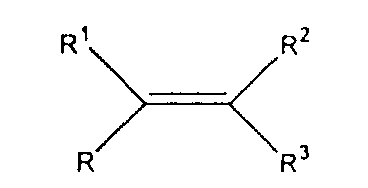
R1 and R2 may be taken together to form a chemical bond; or R1 and R2 may be taken together along with the atoms to which they are attached to form a 5 to 7 membered ring, or to form a 5 to 7 membered heterocyclic ring where oxygen or nitrogen are hetero-atoms in the ring, the 5 to 7 membered ring, or the 5 to 7 membered heterocyclic ring may contain one or more carbonyl groups; the 5 to 7 membered ring or the 5 to 7 membered heterocyclic ring may be fused with one or more five to six membered rings, the one or more five to six membered fused rings may contain one or more hetero-atoms where the hetero-atom is oxygen or nitrogen, the 5 to 6 membered fused rings and the 5 to 6 membered fused rings with a heteroatom may contain a carbonyl group; and the 5 to 7 membered rings, the 5 to 6 membered fused rings, and the heterocyclic rings may be unsubstituted or substituted.
| Copper Ions (as Copper Sulfate) | 0.01 to 50 g/L |
| Sulfuric Acid (Concentrated) | 15 to 500 g/L |
| Chloride Ions (as Sodium Chloride) | 1 ppm to 150 ppm |
| Additives | As Required |
| Additive Preserving Compound | 0.1 to 10 g/L |
| Water | To 1 liter |
| Bath Component | Amount |
| Copper Sulfate Pentahydrate | 80 g/L |
| Sulfuric Acid (Concentrated) | 225g/L |
| Chloride (as sodium chloride) | 50 ppm |
| Polyethylene Oxide (suppressor) | 1 g/L |
| Bissulfopropyl Disulfide (brightener) | 1 ppm |
| Water | To 1 L |
| Compound | Number of Bright Hull Cells |
| 2,4,6-trihydroxybenzoic acid | 7 |
| 2,4-dihydroxybenzoic acid | 6 |
| 2,3- | 3 |
| 4- | 3 |
| 2,6- | 3 |
| Vinyl | 3 |
| Control (no compound added) | Less than 1 |
| Bath Component | Amount |
| Copper Sulfate Pentahydrate | 80 g/L |
| Sulfuric Acid (Concentrated) | 225 g/L |
| Chloride (as sodium chloride) | 50 ppm |
| Polyethylene Oxide (suppressor) | 1 g/L |
| Bissulfopropyl Disulfide (brightener) | 1 ppm |
| Water | To 1 L |
| Compound | Number of Bright Hull Cells |
| 2,4,6- | 3 |
| 2,3- | 3 |
| 4- | 3 |
| 2,4- | 3 |
| 2,6- | 3 |
| 2,3,4- | 3 |
| Hexadienoic acid | 1 |
| Trans-1-pentanoic acid | 1 |
| 4-vinylbenzoic acid | 1 |
| Control (free of consumption inhibiting compound) | Less than 1 |
Claims (52)
- A metal plating bath comprising an additive consumption inhibiting organic compound with a formula as follows:wherein R, R1, R2 and R3 independently comprise hydrogen; halogen; (C1-C20) linear, branched, or cyclic alkyl; (C2-C20) linear, branched, or cyclic alkenyl; (C2-C20) linear, or branched alkynyl; CN; -SCN; -C=NS; -SH; -NO2; SO2H; -SO3M; PO3M; (C1-C20) alkyl-O(C2-C3))xR6, (C1-C12) alkylphenyl-O(C2-C3O)xR6, -phenyl-O(C2-C3O)xR6, where x is an integer of from 1-500 and R6 is hydrogen, (C1-C4) alkyl or phenyl; -P(R4)2, where R4 is hydrogen or halogen; silane; silyl; Si(OH)3; sulfonyl halide; acyl halide; aminyl; aminyl halide; -COR5, where R5 is OH, or (C1-C20) linear, branched or cyclic alkyl, (C2-C20) branched, linear or cyclic alkenyl, (C2-C20) linear or branched alkynyl, (C1-C20) linear, or branched alkoxy; or ―OH with the proviso that a carboxy is present as a substituent on the compound; the (C1-C20) alkyl, (C2-C20) alkenyl, and the (C2-C20) alkynyl groups may be unsubstituted or substituted; M is hydrogen or an alkali metal; or R1 and R2 are taken together to form a chemical bond; or R1 and R2 are taken together along with atoms to which they are attached to form a 5 to 7 membered ring, or to form a 5 to 7 membered heterocyclic ring where oxygen or nitrogen are hetero-atoms in the ring, the 5-7 membered ring or the 5-7 membered heterocyclic ring may comprise one or more carbonyl groups; the 5 to 7 membered ring or the 5 to 7 membered heterocyclic ring may be fused with one or more five or six membered rings, the one or more five or six membered rings may contain one or more oxygen or nitrogen atoms, the fused rings may contain a carbonyl in the ring; the 5 to 7 membered rings, the one or more five or six membered fused rings, and the heterocyclic rings may be unsubstituted or substituted; and a salt of a metal selected from metals consisting of copper, gold, silver, palladium, platinum, cobalt, cadmium, chromium, bismuth, indium, iridium, ruthenium, and rhodium.

- The metal plating bath of claim 1, wherein the (C1-C20) alkyl, (C2-C20) alkenyl, (C2-C20) alkynyl, the (C1-C20) alkoxy, the 5 to 7 membered rings, the five to six membered fused rings, and the heterocyclic rings are substituted with one or more substituents comprising halogen, siliane, silyl, aryl, alkoxy, -Si(OH)3, -CN, -SCN, -C=NS, -SH, -NO2, -SO2H, sulfonyl halide, acyl halide, aminyl, hydroxyaminyl, aminyl halide, SO3M, -PO3M, P(R4)2, carboxyl, keto, ester containing group, or OH, with the proviso that when -OH is a substituent a carboxyl substituent is present on the compound.
- The metal plating bath of claim 1, wherein the additive consumption inhibiting compound comprises 2,6-dihydroxybenzoic acid, 4-hydroxybenzoic acid resorcinol, 2,3-dihydroxybenzoic acid, 2,4-dihydroxybenzoic acid, 2,4,6-trihydroxybenzoic acid, 2,3,4-trihydroxybenzoic acid, methyl-3,4,5-trihydroxybenzoate, methyl-2,4-dihydroxybenzoate, 4-hydroxymandelic acid monohydrate, 3-(phenylthio) acetic acid, gallic acid, 4-vinylbenzoic acid, 3,4-dihydroxy-cinnamic acid, 4-methoxy cinnamic acid, 2-hydroxy cinnamic acid, phthalic acid, trans-3-furanacrylic acid, sulfanilic acid, or mixtures thereof.
- The metal plating bath of claim 1, wherein the additive consumption inhibiting alcohol comprises from about 0.001 g/L to about 100 g/L of the bath.
- The metal plating bath of claim 1, further comprising additives comprising brighteners, levelers, hardeners, wetting agents, malleability modifiers, ductility modifiers, deposition modifiers, or suppressors.
- The metal plating bath of claim 5, wherein the brighteners comprise compounds having the formulas: HO3-S-R11-SH; HO3S-R11-S-S-R11-SO3H, where R11 is C1-C6 alkyl or an aryl group; or HO3-Ar-S-S-Ar-SO3H, where Ar is phenyl or naphthyl, the alky and aryl groups may be unsubstituted or substituted with an alkyl group, halo or alkoxy group.
- The metal plating bath of claim 5, wherein the brighteners comprise 3-mercapto-propylsulfonic acid sodium salt, 2-mercapto-ethanesulfonic acid sodium salt, bissulfopropyl disulfide, or mixtures thereof.
- The plating bath of claim 5, wherein the levelers comprise alkylated polyalkyleneimines, organo sulfo sulfones, dyes of the phenazine class, phenazine azo dyes, or mixtures thereof.
- The plating bath of claim 1, further comprising the additives 3-(benzthiazoyl-2-thio)-propylsulfonic acid sodium salt, 3-mercaptopropane-1-sulfonic acid sodium salt, ethylenedithiodipropylsulfonic acid sodium salt, bis-(p-sulfopehnyl)-disulfide disodium salt, bis-(ω-sulfobutyl)-disulfide disodium salt, bis-(ω-sulfohydroxypropyl)-disulfide disodium salt, bis-(ω-sulfopropyl)-disulfide disodium salt, bis-(ω-sulfopropyl)-sulfide disodium salt, methyl-(ω-sulfopropyl) sodium salt, methyl-(ω-sulfopropyl)-trisulfide disodium salt, O-ethyl-dithiocarbonic acid-S-(ω-sulfopropyl)-ester, potassium salt thioglycolic acid, thiophosphoric acid-O-ethyl-bis-(ω-sulfopropyl)-ester disodium salt, thiophosphoric acid-tri(ω-sulfopropyl)-ester trisodium salt, N,N-dimethyldithiocarbamic acid (3-sulfopropyl) ester sodium salt, (O-ethyldithiocarbonato)-S-(3-sulfopropyl) ester potassium salt, 3-[(amino-iminomethyl)-thio]-1-propanesulfonic acid, 3-(2-benzthiazolylthio)-1-propanesulfonic acid sodium salt, or mixtures thereof.
- The plating bath of claim 1, further comprising the additives carboxymethylcellulose, nonyphenolpolyglycol ether, octandiolbis-(polyalkylene glycolether), octanolpolyalkylene glycolether, oleic acidpolyglycol ester, polyethylenepropylene glycol, polyethylene glycol, polyethylene glycoldimethylether, polyoxypropylene glycol, polypropylene glycol, polyvinylalcohol, stearic acidpolyglycol ester, stearyl alcoholpolyglycol ether, or mixtures thererof. -
- The metal plating bath of claim 1, wherein the pH of the bath ranges from 0 to about 4.0.
- A copper metal plating bath comprising a copper salt, and an additive consumption inhibiting compound having a formula:wherein R, R1, R2 and R3 independently comprise hydrogen; halogen; (C1-C20) linear, branched, orcyclicalkyl;(C2-C20)linear,branched, or cyclic alkenyl; (C2-C20) linear, or branched alkynyl; sulfonyl halide; silane; silyl; -Si(OH)3; -CN; -SCN; -C=NS; -SH; -NO2; SO2H; -SO3M; -PO3M; aminyl; aminyl halide; hydroxyaminyl; (C1-C20) alkyl-O(C2-C3O)xR6, (C1-C12) alkylphenyl-O(C2-C3O)xR6, -phenyl-O(C2-C3O)xR6, where x is an integer of from 1-500 and R6 is hydrogen, (C1-C4) alkyl or phenyl; -P(R4)2 where R4 is hydrogen or halogen; acyl halide; COR5, where R5 is ―OH, or (C1-C20) linear, branched, or cyclic alkyl, (C2-C20) linear, branched or cyclic alkenyl, (C2-C20) linear or branched alkynyl, (C1-C20) linear, or branched alkoxy; or ―OH with the proviso that a carboxyl is present as a substituent on the compound; the (C1-C20) alkyl, (C2-C20) alkenyl, (C2-C20) alkynyl and the (C1-C20) alkoxy may be unsubstituted or substituted; and M is hydrogen or an alkali metal; or
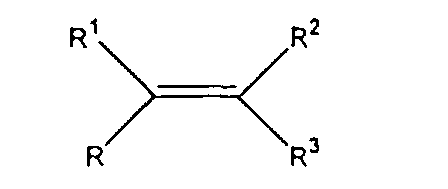
R1 and R2 are taken together to form a chemical bond; or are taken together along with the atoms to which they are attached to form a 5 to 7 membered ring, or to form a 5 to 7 membered heterocyclic ring where oxygen or nitrogen are hetero-atoms in the ring, the 5 to 7 membered ring and the 5 to 7 membered heterocyclic ring may comprise one or more carbonyl groups; the 5 to 7 membered ring or the 5 to 7 membered heterocyclic ring may be fused with one or more five or six membered rings, the one or more five or six membered rings may contain one or more oxygen or nitrogen atoms, the fused rings may contain a carbonyl in the ring; the 5 to 7 membered rings, the one or more five or six membered fused rings, and the heterocyclic rings may be unsubstituted or substituted. - The copper metal plating bath of claim 12, wherein the (C1-C20) alkyl, (C2-C20) alkenyl, (C2-C20) alkynyl, (C1-C20) alkoxy groups, the 5 to 7 membered rings, the 5 to 6 membered fused rings and the heterocyclic rings are substituted with one or more substituents comprising halogen, aryl, silane, silyl, -Si(OH)3, -CN, -SCN, -C=NS, -SH, -NO2, -SO2H, sulfonyl halide, acyl halide, aminyl, aminyl halide, hydroxyaminyl, -SO3M, -PO3M, -P(R4), keto, alkoxy, ester containing group, carboxyl, or―OH with the proviso that when a hydroxyl group is a substituent a carboxyl substituent is present on the compound.
- The copper metal plating bath of claim 12, wherein the additive consumption inhibiting compound comprises 2,6-dihydroxybenzoic acid, 4-hydroxybenzoic acid resorcinol, 2,3-dihydroxybenzoic acid, 2,4-dihydroxybenzoic acid, 2,4,6-trihydroxybenzoic acid, 2,3,4-trihydroxybenzoic acid, methyl-3,4,5-trihydroxybenzoate, methyl-2,4-dihydroxybenzoate, 4-hydroxymandelic acid monohydrate, 3-(phenylthio) acetic acid, gallic acid, 4-vinylbenzoic acid, 3,4-dihydroxy-cinnamic acid, 4-methoxy cinnamic acid, 2-hydroxy cinnamic acid, phthalic acid, 3-furanacrylic acid, sulfanilic, or mixtures thereof.
- The copper metal plating bath of claim 12, wherein the additive consumption inhibiting alcohol comprises from about 0.001 g/L to about 100 g/L of the bath.
- The copper metal plating bath of claim 12, wherein the copper salt comprises copper halides, copper sulfates, copper alkane sulfonate, copper alkanol sulfonate, or mixtures thereof.
- The copper metal plating bath of claim 12, wherein the bath has a pH of from 0 to about 4.0.
- The copper metal plating bath of claim 12, further comprising additives comprising brighteners, levelers, hardeners, wetting agents, malleability modifiers, ductility modifiers, deposition modifiers, suppressants, or mixtures thereof.
- The copper metal plating bath of claim 18, wherein the brighteners comprise compounds having the formulas: HO3-S-R11-SH; HO3S-R11-S-S-R11-SO3H, where R11 is C1-C6 alkyl or aryl group; or HO3-Ar-S-S-Ar-SO3H, where Ar is phenyl or naphthyl, the alkyl and aryl groups may be unsubstituted or substituted with an alkyl group, halo, or alkoxy.
- The copper metal plating bath of claim 18, wherein the brighteners comprise 3-mercapto-propylsulfonic acid sodium salt, 2-mercapto-ethanesulfonic acid sodium salt, bissulfopropyl disulfide, or mixtures thereof.
- The copper metal plating bath of claim 18, wherein the levelers comprise alkylated polyalkyleneimines, organo sulfo sulfones, dyes of the phenazine class, phenazine azo dyes, or mixtures thereof.
- The copper metal plating bath of claim 18, wherein the brighteners comprise 3-(benzthiazoyl-2-thio)-propylsulfonic acid sodium salt, 3-mercaptopropane-1-sulfonic acid sodium salt, ethylenedithiodipropylsulfonic acid sodium salt, bis-(p-sulfophenyl)-disulfide disodium salt, bis-(ω-sulfobutyl)-disulfide disodium salt, bis-(ω-sulfohydroxypropyl)-disulfide disodium salt, bis-(ω-sulfopropyl)-disulfide disodium salt, bis-(ω-sulfopropyl)-sulfide disodium salt, methyl-(ω-sulfopropyl) sodium salt, methyl-(ω-sulfopropyl)-trisulfide disodium salt, O-ethyl-dithiocarbonic acid-S-(ω-sulfopropyl)-ester, potassium salt thioglycolic acid, thiophosphoric acid-O-ethyl-bis-(ω-sulfopropyl)-ester disodium salt, thiophosphoric acid-tri(ω-sulfopropyl)-ester trisodium salt, N,N-dimethyldithiocarbamic acid (3-sulfopropyl) ester sodium salt, (O-ethyldithiocarabonato)-S-(3-sulfopropyl) ester potassium salt, 3-[(amino-iminomethyl)-thio]-1-propanesulfonic acid, 3-(2-benzthiazolylthio)-1-propanesulfonic acid sodium salt, or mixtures thereof.
- The copper plating bath of claim 18, wherein the levelers comprise carboxymethylcellulose, nonyphenolpolyglycol ether, octandiolbis-(polyalkylene glycolether), octanolpolyalkylene glycolether, oleic acidpolyglycol ester, polyethylenepropylene glycol, polyethylene glycol, polyethylene glycoldimethylether, polyoxypropylene glycol, polypropylene glycol, polyvinylalcohol, stearic acidpolyglycol ester, stearyl alcoholpolyglycol ether, or mixtures thereof.
- A method for plating a metal on a substrate comprising: contacting the substrate with a metal plating bath; and applying a sufficient current density to the plating bath to deposit the metal on the substrate; the metal plating bath comprises a salt of a metal selected from metals consisting of copper, gold, silver, palladium, platinum, cobalt, cadmium, chromium, bismuth, indium, rhodium, ruthenium, and iridium, and an additive consumption inhibiting compound having the formula:where R, R1, R2, and R3 independently comprise hydrogen; halogen; (C1-C20) linear, branched, or cyclic alkyl; (C2-C20) linear, branched, or cyclic alkenyl; (C2-C20) linear, or branched alkynyl; silane; silyl; -Si(OH)3; -CN; -SCN; -C=NS; -SH; -NO2; SO2H; -SO3M; -PO3M; aminyl; aminyl halide; hydroxyaminyl; sulfonyl halide; (C1-C20) alkyl-O(C2-C3O)xR6, (C1-C12) alkylphenyl-O(C2-C3O)xR6, -phenyl-O(C2-C3O)xR6, where x is an integer of from 1-500 and R6 is hydrogen, (C1-C4) alkyl or phenyl; -P(R4)2; acyl halide; -COR5, where R5 is -OH, or (C1-C20) linear, branched, or cyclic alkyl, (C2-C20) linear, branched, or cyclic alkenyl, (C2-C20) linear or branched alkynyl, or (C1-C20) linear, or branched alkoxy; or -OH with the proviso that a carboxyl is present as a substituent on the compound; and M is hydrogen or an alkali metal; or R1 and R2 are taken together to form a chemical bond; or R1 and R2 are taken together along with the atoms to which they are attached to form a 5 to 7 membered ring, or to form a 5 to 7 membered heterocyclic ring where oxygen or nitrogen are hetero-atoms in the ring the 5 to 7 membered ring or the 5 to 7 membered heterocyclic ring may comprise one or more carbonyl groups; the 5 to 7 membered ring or the 5 to 7 membered heterocyclic ring may be fused with one or more five or six memberd rings, the one or more five or six membered rings may contain one or more oxygen or nitrogen hetero-atoms, the fused rings may contain a carbonyl in the ring; the 5 to 7 membered rings, the fused five or six membered rings and the heterocyclic rings may be unsubstituted or substituted.
- The method of claim 24, wherein the (C1-C20) alkyl, (C2-C20) alkenyl, (C2-C20) alkynyl, (C1-C20) alkoxy, the 5 to 7 membered rings, the 5 to 6 membered fused rings and the heterocyclic rings are substituted with one or more substituents comprising halogen, -CN, -SCN, -C=NS, aryl, -SH, NO2, -SO2H, sulfonyl halide, acyl halide, -SO3M, -PO3M, -PR5, aminyl, aminyl halide, hydroxyaminyl, silane, silyl, -Si(OH)3, keto, alkoxy, ester containing group, carboxyl, or ―OH with the proviso that a carboxyl is a substituent on the compound when hydroxyl is a substituent.
- The method of claim 24, wherein the additive consumption inhibiting compound comprises 2,6-dihydroxybenzoic acid, 4-hydroxybenzoic acid resorcinol, 2,3-dihydroxybenzoic acid, 2,4-dihydroxybenzoic acid, 2,4,6-trihydroxybenzoic acid, 2,3,4-trihydroxybenzoic acid, methyl-3,4,5-trihydroxybenzoate, methyl-2,4-dihydroxybenzoate, 4-hydroxmandelic acid monohydrate, 3-(phenylthio) acetic acid, gallic acid, 4-vinylkbenzoic acid, 3,4-dihydroxy-cinnamic, 4-methoxy cinnamic acid, 2-hydroxy cinnamic acid, phthalic acid, trans-3-furanacrylic acid, sulfanilic acid, or mixtures thereof.
- The method of claim 24, wherein the additive consumption inhibiting compound comprises from about 0.001 g/L to about 100 g/L of the bath.
- The method of claim 24, wherein the bath has a pH of from 0 to about 8.0.
- The method of claim 24, further comprising brighteners, levelers, hardeners, wetting agents, malleability modifiers, ductility modifiers, deposition modifiers, suppressants, or mixtures thereof.
- The method of claim 29, wherein the brighteners comprise compounds of having the formulas: HO3-S-R11-SH; HO3-S-R11-S-S-R11-SO3H, where R11 is C1-C6 alkyl or an aryl group; or HO3-Ar-S-S-Ar-SO3H, where Ar is phenyl or naphthyl, the alkyl and aryl groups may be unsubstituted or substituted with an alkyl group, halo or alkoxy group.
- The method of claim 24, wherein the substrate comprise a printed wiring board, an integrated circuit, an electrical contact surface, a connector, an electrolytic foil, a silicon wafer, a semi-conductor, a lead frame, a optoelectronic component, a solder bump, a decorative article, a sanitary appliance, and the like.
- A method for plating copper metal on a substrate comprising: contacting the substrate with a copper plating bath; and applying sufficient current density to the copper plating bath to deposit copper metal on the substrate; the copper metal plating bath comprises a copper salt and an additive consumption inhibiting compound having the formula:where R, R1, R2, and R3 independently comprise hydrogen; halogen; (C1-C20) linear, branched, or cyclic alkyl; (C2-C20) linear, branched, or cyclic alkenyl; (C2-C20) linear or branched alkynyl; sulfonyl halide; -CN; -SCN; -C=NS; -SH; -NO2; SO2H; -SO3M; -PO3M; -P(R4)2, where R4 is hydrogen or halogen; (C1-C20) alkyl-O(C2-C3O)xR6, (C1-C12) alkylphenyl-O(C2-C3O)xR6, - phenyl-O(C2-C3O)xR6, where x is an integer of from 1-500 and R6 is hydrogen, (C1-C4) alkyl or phenyl; Si(OH)3; silyl; silane; aminyl; aminyl halide; hydroxyaminyl; acyl halide; -COR5, where R5 is OH, or (C1-C20) linear, branched, or cyclic alkyl, (C2-C20) linear, branched or cyclic alkenyl, (C2-C20) linear, or branched alkynyl, or (C1-C20) linear or branched alkxoy; or ―OH with the proviso that a carboxyl is present as a substituent on the compound when hydroxyl is a substituent on the compound; the (C1-C20) alkyl, (C2-C20) alkenyl, (C2-C20) alkynyl and the (C1-C20) alkoxy groups may be unsubstituted or substituted; and M is hydrogen or an alkali metal; or R1 and R2 are taken together to form a bond; or R1 and R2 may be taken together along with the atoms to which they are attached to form a 5 to 7 membered ring, or to form a 5 to 7 membered heterocyclic ring where oxygen or nitrogen are hetero-atoms in the ring; the 5 to 7 membered ring, or the 5 to 7 membered heterocyclic ring may comprise one or more carbonyl groups; the 5 to 7 membered ring or the 5 to 7 membered heterocyclic ring may be fused with one or more five or six membered rings, the one or more five or six membered rings may contain one or more oxygen or nitrogen atoms, the fused rings may contain a carbonyl in the ring; the 5 to 7 membered rings, the five or six membered fused rings, and the heterocyclic rings may be unsubstituted or substituted.

- The method of claim 32, wherein the (C1-C20) alkyl, (C2-C20) alkenyl, (C2-C20) alkynyl, (C1-C20) alkoxy, the 5 to 7 membered rings, the 5 to 6 membered fused rings and the heterocyclic rings are substituted with one or more substituents comprising halogen, -CN, -SCN, -C=NS, sulfonyl halide, aryl, -SH, -NO2, -SO2H, -SO3M, -PO3M, -P(R4)2, -Si(OH)3, silyl, silane, aminyl, aminyl halide, hydroxyaminyl, acyl halide, carboxyl, -COO(C1-C12) alkyl, or ―OH with the proviso that when ―OH is a substituent a carboxyl group is also a substituent on the compound.
- The method of claim 32, wherein the additive consumption inhibiting compound comprises 2,6-dihydroxybenzoic acid, 4-hydroxybenzoic acid resorcinol, 2,3-dihydroxybenzoic acid, 2,4-dihydroxybenzoic acid, 2,4,6-trihydroxybenzoic acid, 2,3,4-trihydroxybenzoic acid, methyl-3,4,5-trihydroxsybenzoate, methyl-2,4-dihydroxybenzoate, 4-hydroxymandelic acid monohydrate, 3-(phenylthio) acetic acid, gallic acid, 4-vinylbenzoic acid, 3,4-dihydroxy-cinnamic acid, 4-methoxy cinnamic acid, 2-hydroxy cinnamic acid, pthalic acid, sulfanilic acid, trans-3-furanacrylic acid, or mixtures thereof.
- The method of claim 49, wherein the additive consumption inhibiting compound comprises from about 0.001 g/L to about 100 g/L of the bath.
- The method of claim 32, wherein the bath has a pH of from 0 to about 8.0.
- The method of claim 32, further comprising brighteners, levelers, hardeners, wetting agents, malleability modifiers, ductility modifiers, deposition modifiers, suppressors, or mixtures thererof.
- The method of claim 37, wherein the brighteners comprise compounds having the formulas: HO3S-S-R11-SH; HO3-S-R11-S-S-R11-SO3H, where R11 is C1-C6 alkyl or an aryl group; or HO3S-Ar-S-S-Ar-SO3H, where Ar is phenyl or naphthyl, the alkyl and aryl groups may be unsubstituted or substituted with an alkyl group, halo or alkoxy group.
- The method of claim 32, wherein the electroplating method may be employed to plate a substrate in manufacturing printed wiring boards, integrated circuits, electrical contact surfaces, connectors, electrolytic foil, silicon wafers, semi-conductors, lead frames, optoelectronic components, solder bumps, decorative articles, sanitary appliances and the like.
- An apparatus for electroplating a substrate comprising an electrical power source electrically connected with an insoluble anode and a cathode such that an electrical current can pass through the insoluble anode and the cathode, the insoluble anode and the cathode are in contact with a metal plating bath comprising a salt of a metal selected from the group consisting of copper, gold, silver, palladium, platinum, cobalt, cadmium, chromium, bismuth, indium, rhodium, iridium, and ruthenium, and an additive consumption inhibiting compound having a formula:wherein R, R1, R2 and R3 independently comprise hydrogen; halogen; (C1-C20) linear, branched, or cyclic alkyl; (C2-C20) linear, branched, or cyclic alkenyl; (C2-C20) linear, or branched alkynyl; halogen; sulfonyl halide; -CN; -SCN; -C=NS; -SH; -NO2; -SO2H; -SO3M; -PO3M; (C1-C20) alkyl-O(C2-C3O)xR6, (C1-C12) alkylphenyl-O(C2-C3O)xR6, -phenyl-O(C2-C3O)xR6, where x is an integer of from 1-500 and R6 is hydrogen, (C1-C4) alkyl or phenyl; -P(R4)2, where R4 is hydrogen or halogen; silyl; silane; -Si(OH)3; aminyl; aminyl halide; hydroxyaminyl; acyl halide; -COR5, where R5 is ―OH, or (C1-C20) linear, branched or cyclic alkyl, (C2-C20) linear, branched, or cyclic alkenyl, (C2-C20) linear or branched alkynyl, or (C1-C20) linear or branched alkoxy; or―OH with the proviso that when -OH is a substituent a carboxyl group is present on the compound; the (C1-C20) alkyl, (C2-C20) alkenyl, (C2-C20) alkynyl, and the (C1-C20) alkoxy groups may be unsubstituted or substituted; and M is hydrogen or an alkali metal; or

R' and R2 are taken together to form a chemical bond; or R1 and R2 are taken together along with the atoms to which they attached to form a 5 to 7 membered ring, or to form a 5 to 7 membered heterocyclic ring where oxygen or nitrogen are hetero-atoms in the ring, the 5-7 membered ring may comprise one or more carbonyl groups; the 5 to 7 membered ring or the 5 to 7 membered heterocyclic ring may be fused with one or more five or six membered rings, the one or more five or six membered rings may contain one or more oxygen or nitrogen atoms, the fused rings may contain a carbonyl group in the ring; the 5 to 7 membered rings, the five and six membered rings, and the heterocyclic rings may be unsubstituted or substituted. - The apparatus of claim 40, wherein the (C1-C20) alkyl, (C2-C20) alkenyl, (C2-C20) alkynyl, (C1-C20) alkoxy, hydroxyaryl, (C1-C20) alky, and the (C1-C20) alkoxy are substituted with one or more substituents comprising halogen, aryl, -CN, -SCN, -C=NS, -SH, -NO2, -SO2H, sulfonyl halide, acyl halide, silyl, silane, -Si(OH)3, -SO3M, -PO3M, aminyl, aminyl halide, hydroxyaminyl, carboxyl, keto, ester containing group, or ―OH with the proviso that when ―OH is a substituent a carboxyl is present as a substituent on the compound.
- The apparatus of claim 41, wherein the additive consumption inhibiting compound comprises 2,6-dihydroxybenzoic acid, 4-hydroxybenzoic acid resorcinol, 2,3-dihydroxybenzoic acid, 2,4-dihydroxybenzoic acid, 2,4,6-trihydroxybenzoic acid, 2,3,4-trihydroxybenzoic acid, methyl-3,4,5-trihydroxybenzoate, methyl-2,4-dihydroxybenzoate, 4-hydroxymandelic acid monohydrate, 3-(phenylthio) acetic acid, gallic acid, 4-vinylbenzoic acid, 3,4-dihydroxy-cinnamic acid, 4-methoxy cinnamic acid, 2-hydroxy cinnamic acid, phthalic acid, sulfanilic acid, trans-3-furanyl acrylic acid, or mixtures.
- The apparatus of claim 40, wherein the additive consumption inhibiting compound comprises from about 0.001 g/L to about 100 g/L of the bath.
- The apparatus of claim 40, wherein the metal plating bath further comprises brighteners, levelers, hardeners, wetting agents, malleability modifiers, ductility modifiers, deposition modifiers, or suppressors.
- The apparatus of claim 40, wherein the metal plating bath has a pH of from 0 to about 8.0.
- The apparatus of claim 40, wherein the metal salt comprises copper halides, copper sulfate, copper alkane sulfonate, copper alkanol sulfonate, or mixtures thereof.
- The apparatus of claim 40, wherein the insoluble anode comprises metals of cobalt, nickel, ruthenium, rhodium, palladium, iridium, or platinum.
- The apparatus of claim 47, wherein the insoluble anode further comprises metals of titanium, zirconium, hafnium, vanadium, niobium, or tantalum.
- The apparatus of claim 48, wherein the insoluble anode further comprises beryllium, calcium, strontium, barium, scandium, yttrium, lanthanum, or rare earth elements.
- The apparatus of claim 40, wherein the insoluble anode comprises iridium dioxide.
- The apparatus of claim 40, wherein the cathode comprises a wiring board, an integrated circuit, an electrical contact surface, a connector, an electrolyte foil, a silicon wafer, a semi-conductor, a lead frame, an optoelectronic component, a solder bump, a decorative article, a sanitary appliance, and the like.
- The apparatus of claim 40, wherein the insoluble anode and the cathode have a current density of from about 1 to about 1000 amps/ft2.
Applications Claiming Priority (2)
| Application Number | Priority Date | Filing Date | Title |
|---|---|---|---|
| US09/970,171 US6911068B2 (en) | 2001-10-02 | 2001-10-02 | Plating bath and method for depositing a metal layer on a substrate |
| US970171 | 2001-10-02 |
Publications (3)
| Publication Number | Publication Date |
|---|---|
| EP1300488A2 true EP1300488A2 (en) | 2003-04-09 |
| EP1300488A3 EP1300488A3 (en) | 2005-03-02 |
| EP1300488B1 EP1300488B1 (en) | 2017-09-27 |
Family
ID=25516528
Family Applications (1)
| Application Number | Title | Priority Date | Filing Date |
|---|---|---|---|
| EP01308486.8A Expired - Lifetime EP1300488B1 (en) | 2001-10-02 | 2001-10-04 | Plating path and method for depositing a metal layer on a substrate |
Country Status (5)
| Country | Link |
|---|---|
| US (2) | US6911068B2 (en) |
| EP (1) | EP1300488B1 (en) |
| JP (2) | JP4559696B2 (en) |
| KR (1) | KR20030028694A (en) |
| TW (1) | TWI248478B (en) |
Cited By (4)
| Publication number | Priority date | Publication date | Assignee | Title |
|---|---|---|---|---|
| WO2010142437A1 (en) * | 2009-06-09 | 2010-12-16 | Coventya S.P.A. | Cyanide-free electrolyte for galvanic deposition of gold or alloys thereof |
| CN106574390A (en) * | 2014-04-25 | 2017-04-19 | 株式会社杰希优 | High-speed filling method for copper |
| WO2017142513A1 (en) * | 2016-02-16 | 2017-08-24 | Lumishield Technologies, Incorporated | Electrochemical deposition of elements in aqueous media |
| CN109666926A (en) * | 2019-01-28 | 2019-04-23 | 安徽大地熊新材料股份有限公司 | A kind of method of simple electroless plating on powders |
Families Citing this family (41)
| Publication number | Priority date | Publication date | Assignee | Title |
|---|---|---|---|---|
| US7297190B1 (en) * | 2006-06-28 | 2007-11-20 | Lam Research Corporation | Plating solutions for electroless deposition of copper |
| US7306662B2 (en) * | 2006-05-11 | 2007-12-11 | Lam Research Corporation | Plating solution for electroless deposition of copper |
| DE10337669B4 (en) * | 2003-08-08 | 2006-04-27 | Atotech Deutschland Gmbh | Aqueous, acid solution and process for the electrodeposition of copper coatings and use of the solution |
| JP2006283169A (en) * | 2005-04-04 | 2006-10-19 | Okuno Chem Ind Co Ltd | Acidic solution for electrolytic copper plating, and electrolytic copper-plating method with little consumption of sulfur-containing organic compound due to electrolysis |
| JP2007051362A (en) * | 2005-07-19 | 2007-03-01 | Ebara Corp | Plating apparatus and plating solution management method |
| US7410899B2 (en) * | 2005-09-20 | 2008-08-12 | Enthone, Inc. | Defectivity and process control of electroless deposition in microelectronics applications |
| KR100859259B1 (en) * | 2005-12-29 | 2008-09-18 | 주식회사 엘지화학 | Cobalt-based alloy electroless plating solution for cap layer formation and electroless plating method using the same |
| JP5659411B2 (en) * | 2006-01-27 | 2015-01-28 | 奥野製薬工業株式会社 | Additive for electrolytic copper plating solution using phosphorous copper as anode, electrolytic copper plating solution and electrolytic copper plating method |
| US20070175358A1 (en) * | 2006-02-01 | 2007-08-02 | Kilnam Hwang | Electroless gold plating solution |
| US20070175359A1 (en) * | 2006-02-01 | 2007-08-02 | Kilnam Hwang | Electroless gold plating solution and method |
| JP5050048B2 (en) * | 2006-03-31 | 2012-10-17 | アトテック・ドイチュラント・ゲーエムベーハー | Crystalline chromium deposits |
| KR100797405B1 (en) | 2006-12-12 | 2008-01-24 | 케이. 에이. 티. (주) | Superconducting Wire and Manufacturing Method |
| US7858146B2 (en) | 2007-06-29 | 2010-12-28 | Rohm And Haas Electronic Materials Llc | Method of electrolessly depositing metal on the walls of through-holes |
| WO2009046181A1 (en) * | 2007-10-02 | 2009-04-09 | Atotech Deutschland Gmbh | Crystalline chromium alloy deposit |
| EP2848714B1 (en) * | 2008-04-22 | 2016-11-23 | Rohm and Haas Electronic Materials LLC | Method of replenishing indium ions in indium electroplating compositions |
| US9045839B2 (en) * | 2008-06-10 | 2015-06-02 | General Electric Company | Methods and systems for in-situ electroplating of electrodes |
| US9657400B2 (en) * | 2008-06-10 | 2017-05-23 | General Electric Company | Electrolyzer assembly method and system |
| US20090301868A1 (en) * | 2008-06-10 | 2009-12-10 | General Electric Company | Methods and systems for assembling electrolyzer stacks |
| US9080242B2 (en) * | 2008-09-30 | 2015-07-14 | General Electric Company | Pressurized electrolysis stack with thermal expansion capability |
| US8277620B2 (en) * | 2008-09-30 | 2012-10-02 | General Electric Company | Electrolyzer module forming method and system |
| US9765437B2 (en) * | 2009-03-24 | 2017-09-19 | Roderick D. Herdman | Chromium alloy coating with enhanced resistance to corrosion in calcium chloride environments |
| US8608931B2 (en) * | 2009-09-25 | 2013-12-17 | Rohm And Haas Electronic Materials Llc | Anti-displacement hard gold compositions |
| US9175400B2 (en) * | 2009-10-28 | 2015-11-03 | Enthone Inc. | Immersion tin silver plating in electronics manufacture |
| EP2537962A1 (en) * | 2011-06-22 | 2012-12-26 | Atotech Deutschland GmbH | Method for copper plating |
| EP2568063A1 (en) | 2011-09-09 | 2013-03-13 | Rohm and Haas Electronic Materials LLC | Low internal stress copper electroplating method |
| KR20140034529A (en) * | 2012-09-12 | 2014-03-20 | 삼성전기주식회사 | Electro-copper plating apparatus |
| US9598787B2 (en) | 2013-03-14 | 2017-03-21 | Rohm And Haas Electronic Materials Llc | Method of filling through-holes |
| CN103290438B (en) * | 2013-06-25 | 2015-12-02 | 深圳市创智成功科技有限公司 | For copper electroplating solution and the electro-plating method of wafer-level packaging |
| KR101662759B1 (en) * | 2015-01-09 | 2016-10-10 | 건국대학교 글로컬산학협력단 | Production method of metal plated fiber by adopting consecutive electroless plating and electroplating process, metal plated fiber produced by said method and a filter comprising siad metal plated fiber |
| US20160355939A1 (en) * | 2015-06-05 | 2016-12-08 | Lam Research Corporation | Polarization stabilizer additive for electroplating |
| US10508357B2 (en) | 2016-02-15 | 2019-12-17 | Rohm And Haas Electronic Materials Llc | Method of filling through-holes to reduce voids and other defects |
| US10512174B2 (en) | 2016-02-15 | 2019-12-17 | Rohm And Haas Electronic Materials Llc | Method of filling through-holes to reduce voids and other defects |
| KR102277675B1 (en) * | 2018-11-07 | 2021-07-14 | 서울대학교산학협력단 | The electrolyte solution containing bromide ion for copper electrodeposition and copper electrodeposition method using the same |
| JP7107190B2 (en) * | 2018-11-28 | 2022-07-27 | 住友金属鉱山株式会社 | Method for manufacturing copper-clad laminate |
| US11242609B2 (en) * | 2019-10-15 | 2022-02-08 | Rohm and Hass Electronic Materials LLC | Acidic aqueous silver-nickel alloy electroplating compositions and methods |
| US11434577B2 (en) * | 2019-10-17 | 2022-09-06 | Rohm And Haas Electronic Materials Llc | Acid aqueous binary silver-bismuth alloy electroplating compositions and methods |
| CN111188070A (en) * | 2020-01-22 | 2020-05-22 | 惠州中京电子科技有限公司 | Manufacturing method for electroplating nickel, silver and gold on IC packaging board |
| CN114134530A (en) * | 2022-01-19 | 2022-03-04 | 辽宁大学 | Preparation method of Cu-P-100 catalyst and application thereof in carbon dioxide electrocatalytic reduction |
| CN115449862B (en) * | 2022-10-11 | 2025-09-16 | 广东利尔化学有限公司 | Brightening agent for printed circuit board copper electroplating solution and preparation method thereof |
| CN115652378B (en) * | 2022-10-25 | 2025-06-24 | 常州大学 | An electroforming nickel solution containing azo additives for secondary electroforming nickel mesh |
| CN115928161B (en) * | 2022-12-29 | 2024-08-27 | 华为技术有限公司 | Gold electroplating solution and application thereof, gold bump and preparation method thereof, electronic component and electronic equipment |
Family Cites Families (32)
| Publication number | Priority date | Publication date | Assignee | Title |
|---|---|---|---|---|
| GB1114615A (en) * | 1965-03-26 | 1968-05-22 | Harshaw Chem Corp | Electrodeposition of nickel |
| GB1283417A (en) * | 1968-10-24 | 1972-07-26 | Kewanee Oil Co | High speed electrodeposition of nickel and/or cobalt |
| GB1304844A (en) * | 1969-04-24 | 1973-01-31 | ||
| US3770598A (en) * | 1972-01-21 | 1973-11-06 | Oxy Metal Finishing Corp | Electrodeposition of copper from acid baths |
| US3920528A (en) * | 1973-10-25 | 1975-11-18 | Schering Ag | Bright acid zinc plating method and electrolyte |
| US4129482A (en) * | 1977-06-24 | 1978-12-12 | M&T Chemicals Inc. | Electroplating iron group metal alloys |
| JPS5531121A (en) * | 1978-08-25 | 1980-03-05 | Toyo Soda Mfg Co Ltd | Chrome plating bath |
| JPS56119791A (en) * | 1980-02-28 | 1981-09-19 | Nippon Mining Co Ltd | Black ruthenium plating solution |
| JPS5757882A (en) * | 1980-09-25 | 1982-04-07 | Nippon Mining Co Ltd | Black or blue rhodium coated articles, production thereof and plating bath used therefor |
| US4416742A (en) * | 1980-09-25 | 1983-11-22 | Nippon Mining Co., Ltd. | Process and electrolytic bath for making a rhodium-plated article having a black or blue color |
| US4472249A (en) * | 1981-08-24 | 1984-09-18 | M&T Chemicals Inc. | Bright chromium plating baths and process |
| US4441969A (en) * | 1982-03-29 | 1984-04-10 | Omi International Corporation | Coumarin process and nickel electroplating bath |
| US4469564A (en) * | 1982-08-11 | 1984-09-04 | At&T Bell Laboratories | Copper electroplating process |
| US4673469A (en) * | 1984-06-08 | 1987-06-16 | Mcgean-Rohco, Inc. | Method of plating plastics |
| JPS61195985A (en) * | 1985-02-25 | 1986-08-30 | Nippon Engeruharudo Kk | Lusterless high-velocity silver plating liquid |
| JPH0246675B2 (en) * | 1986-07-04 | 1990-10-16 | Nippon Kagaku Sangyo Kk | SANSEIDOMETSUKYOKU |
| JPH0673393B2 (en) * | 1988-09-09 | 1994-09-14 | ペルメレック電極株式会社 | Copper plating method for printed circuit boards |
| DE4126502C1 (en) * | 1991-08-07 | 1993-02-11 | Schering Ag Berlin Und Bergkamen, 1000 Berlin, De | |
| DE4238956A1 (en) * | 1992-06-30 | 1994-05-19 | Schering Ag | Water-soluble organic cpds used as additives in electrolytic bath anolyte(s) - inhibit halogen gas formation during metal deposition, said cpds contg at least one double or triple bond and at least one hydrophilic group |
| US5282953A (en) * | 1993-06-28 | 1994-02-01 | Technic Incorporated | Polyoxyalklene compounds terminated with ketone groups for use as surfactants in alkanesulfonic acid based solder plating baths |
| JPH07102392A (en) * | 1993-10-06 | 1995-04-18 | Sumitomo Metal Mining Co Ltd | Electrolytic copper plating solution and plating method using the same |
| JPH07316875A (en) * | 1994-05-23 | 1995-12-05 | C Uyemura & Co Ltd | Additive for electrolytic copper plating and electrolytic copper plating bath |
| JPH07316876A (en) * | 1994-05-23 | 1995-12-05 | C Uyemura & Co Ltd | Additive for electrolytic copper plating and electrolytic copper plating bath |
| JP3571768B2 (en) * | 1994-08-09 | 2004-09-29 | エヌ・イーケムキャット株式会社 | Gold-tin alloy plating liquid |
| JPH0860395A (en) * | 1994-08-24 | 1996-03-05 | Japan Energy Corp | Palladium plating solution |
| JP2000248397A (en) * | 1999-02-26 | 2000-09-12 | Electroplating Eng Of Japan Co | Copper sulfate plating solution and electrolytic plating method using the same |
| JP2000256898A (en) * | 1999-03-03 | 2000-09-19 | Permelec Electrode Ltd | Copper plating method of wafer |
| JP3302949B2 (en) * | 1999-08-03 | 2002-07-15 | 株式会社日鉱マテリアルズ | Black ruthenium plating solution |
| JP2001172791A (en) * | 1999-12-16 | 2001-06-26 | Ishihara Chem Co Ltd | Tin-copper alloy plating bath, and electronic component formed with tin-copper alloy film by the plating bath |
| JP3181571B2 (en) * | 2000-01-27 | 2001-07-03 | 日本エレクトロプレイテイング・エンジニヤース株式会社 | Gold plating solution and gold plating method using the same |
| JP4481541B2 (en) * | 2000-12-20 | 2010-06-16 | 日本リーロナール有限会社 | Electrolytic copper plating solution and management method of electrolytic copper plating solution |
| JP2003105584A (en) * | 2001-07-26 | 2003-04-09 | Electroplating Eng Of Japan Co | Copper plating solution for embedding fine wiring and copper plating method using the same |
-
2001
- 2001-10-02 US US09/970,171 patent/US6911068B2/en not_active Expired - Lifetime
- 2001-10-04 EP EP01308486.8A patent/EP1300488B1/en not_active Expired - Lifetime
- 2001-11-28 TW TW090129372A patent/TWI248478B/en not_active IP Right Cessation
- 2001-12-14 KR KR1020010079154A patent/KR20030028694A/en not_active Withdrawn
-
2002
- 2002-10-02 JP JP2002289422A patent/JP4559696B2/en not_active Expired - Fee Related
-
2004
- 2004-12-29 US US11/025,273 patent/US20050139118A1/en not_active Abandoned
-
2009
- 2009-03-04 JP JP2009050496A patent/JP5380113B2/en not_active Expired - Fee Related
Cited By (5)
| Publication number | Priority date | Publication date | Assignee | Title |
|---|---|---|---|---|
| WO2010142437A1 (en) * | 2009-06-09 | 2010-12-16 | Coventya S.P.A. | Cyanide-free electrolyte for galvanic deposition of gold or alloys thereof |
| CN106574390A (en) * | 2014-04-25 | 2017-04-19 | 株式会社杰希优 | High-speed filling method for copper |
| WO2017142513A1 (en) * | 2016-02-16 | 2017-08-24 | Lumishield Technologies, Incorporated | Electrochemical deposition of elements in aqueous media |
| CN108779566A (en) * | 2016-02-16 | 2018-11-09 | 鲁米士德科技公司 | The electrochemical deposition of element in water-bearing media |
| CN109666926A (en) * | 2019-01-28 | 2019-04-23 | 安徽大地熊新材料股份有限公司 | A kind of method of simple electroless plating on powders |
Also Published As
| Publication number | Publication date |
|---|---|
| US20040206631A1 (en) | 2004-10-21 |
| US20050139118A1 (en) | 2005-06-30 |
| EP1300488A3 (en) | 2005-03-02 |
| JP5380113B2 (en) | 2014-01-08 |
| US6911068B2 (en) | 2005-06-28 |
| TWI248478B (en) | 2006-02-01 |
| JP4559696B2 (en) | 2010-10-13 |
| KR20030028694A (en) | 2003-04-10 |
| EP1300488B1 (en) | 2017-09-27 |
| JP2009167531A (en) | 2009-07-30 |
| JP2003147572A (en) | 2003-05-21 |
Similar Documents
| Publication | Publication Date | Title |
|---|---|---|
| US6911068B2 (en) | Plating bath and method for depositing a metal layer on a substrate | |
| US6652731B2 (en) | Plating bath and method for depositing a metal layer on a substrate | |
| US6773573B2 (en) | Plating bath and method for depositing a metal layer on a substrate | |
| EP1308540B1 (en) | Plating bath and method for depositing a metal layer on a substrate | |
| EP1308541A1 (en) | Plating bath and method for depositing a metal layer on a substrate | |
| JP4342294B2 (en) | Reverse pulse plating composition and reverse pulse plating method | |
| TWI448588B (en) | Continuous copper electroplating method | |
| JP2005320631A (en) | Improved plating method | |
| JP2006316328A (en) | Method for manufacturing two-layer flexible copper-clad laminate | |
| KR20030029004A (en) | Plating bath and method for depositing a metal layer on a substrate |
Legal Events
| Date | Code | Title | Description |
|---|---|---|---|
| PUAI | Public reference made under article 153(3) epc to a published international application that has entered the european phase |
Free format text: ORIGINAL CODE: 0009012 |
|
| 17P | Request for examination filed |
Effective date: 20011018 |
|
| AK | Designated contracting states |
Kind code of ref document: A2 Designated state(s): AT BE CH CY DE DK ES FI FR GB GR IE IT LI LU MC NL PT SE TR |
|
| AX | Request for extension of the european patent |
Extension state: AL LT LV MK RO SI |
|
| PUAL | Search report despatched |
Free format text: ORIGINAL CODE: 0009013 |
|
| AK | Designated contracting states |
Kind code of ref document: A3 Designated state(s): AT BE CH CY DE DK ES FI FR GB GR IE IT LI LU MC NL PT SE TR |
|
| AX | Request for extension of the european patent |
Extension state: AL LT LV MK RO SI |
|
| AKX | Designation fees paid |
Designated state(s): DE FR GB |
|
| 17Q | First examination report despatched |
Effective date: 20111230 |
|
| RAP1 | Party data changed (applicant data changed or rights of an application transferred) |
Owner name: ROHM AND HAAS ELECTRONIC MATERIALS LLC |
|
| GRAP | Despatch of communication of intention to grant a patent |
Free format text: ORIGINAL CODE: EPIDOSNIGR1 |
|
| INTG | Intention to grant announced |
Effective date: 20170510 |
|
| GRAS | Grant fee paid |
Free format text: ORIGINAL CODE: EPIDOSNIGR3 |
|
| GRAA | (expected) grant |
Free format text: ORIGINAL CODE: 0009210 |
|
| AK | Designated contracting states |
Kind code of ref document: B1 Designated state(s): DE FR GB |
|
| REG | Reference to a national code |
Ref country code: GB Ref legal event code: FG4D |
|
| REG | Reference to a national code |
Ref country code: FR Ref legal event code: PLFP Year of fee payment: 17 |
|
| REG | Reference to a national code |
Ref country code: DE Ref legal event code: R096 Ref document number: 60150611 Country of ref document: DE |
|
| REG | Reference to a national code |
Ref country code: DE Ref legal event code: R097 Ref document number: 60150611 Country of ref document: DE |
|
| PLBE | No opposition filed within time limit |
Free format text: ORIGINAL CODE: 0009261 |
|
| STAA | Information on the status of an ep patent application or granted ep patent |
Free format text: STATUS: NO OPPOSITION FILED WITHIN TIME LIMIT |
|
| GBPC | Gb: european patent ceased through non-payment of renewal fee |
Effective date: 20171227 |
|
| 26N | No opposition filed |
Effective date: 20180628 |
|
| REG | Reference to a national code |
Ref country code: FR Ref legal event code: PLFP Year of fee payment: 18 |
|
| PG25 | Lapsed in a contracting state [announced via postgrant information from national office to epo] |
Ref country code: GB Free format text: LAPSE BECAUSE OF NON-PAYMENT OF DUE FEES Effective date: 20171227 |
|
| PGFP | Annual fee paid to national office [announced via postgrant information from national office to epo] |
Ref country code: FR Payment date: 20190913 Year of fee payment: 19 |
|
| PGFP | Annual fee paid to national office [announced via postgrant information from national office to epo] |
Ref country code: DE Payment date: 20190924 Year of fee payment: 19 |
|
| REG | Reference to a national code |
Ref country code: DE Ref legal event code: R119 Ref document number: 60150611 Country of ref document: DE |
|
| PG25 | Lapsed in a contracting state [announced via postgrant information from national office to epo] |
Ref country code: FR Free format text: LAPSE BECAUSE OF NON-PAYMENT OF DUE FEES Effective date: 20201031 Ref country code: DE Free format text: LAPSE BECAUSE OF NON-PAYMENT OF DUE FEES Effective date: 20210501 |