EP1239628B1 - Vorrichtung und Verfahren zur Synchronisation von Endgeräten - Google Patents
Vorrichtung und Verfahren zur Synchronisation von Endgeräten Download PDFInfo
- Publication number
- EP1239628B1 EP1239628B1 EP01205056A EP01205056A EP1239628B1 EP 1239628 B1 EP1239628 B1 EP 1239628B1 EP 01205056 A EP01205056 A EP 01205056A EP 01205056 A EP01205056 A EP 01205056A EP 1239628 B1 EP1239628 B1 EP 1239628B1
- Authority
- EP
- European Patent Office
- Prior art keywords
- signals
- terminal devices
- synchronizing signals
- vertical synchronizing
- respective terminal
- Prior art date
- Legal status (The legal status is an assumption and is not a legal conclusion. Google has not performed a legal analysis and makes no representation as to the accuracy of the status listed.)
- Expired - Lifetime
Links
- 238000004891 communication Methods 0.000 title claims description 53
- 238000000034 method Methods 0.000 title claims description 18
- 238000012545 processing Methods 0.000 description 50
- 238000010586 diagram Methods 0.000 description 6
- 230000001360 synchronised effect Effects 0.000 description 5
- 238000012790 confirmation Methods 0.000 description 3
- 239000002131 composite material Substances 0.000 description 2
- 230000005540 biological transmission Effects 0.000 description 1
- 238000005266 casting Methods 0.000 description 1
- 230000001934 delay Effects 0.000 description 1
- 238000012986 modification Methods 0.000 description 1
- 230000004048 modification Effects 0.000 description 1
- 230000001902 propagating effect Effects 0.000 description 1
- 230000000717 retained effect Effects 0.000 description 1
Images



Classifications
-
- H—ELECTRICITY
- H04—ELECTRIC COMMUNICATION TECHNIQUE
- H04L—TRANSMISSION OF DIGITAL INFORMATION, e.g. TELEGRAPHIC COMMUNICATION
- H04L12/00—Data switching networks
-
- H—ELECTRICITY
- H04—ELECTRIC COMMUNICATION TECHNIQUE
- H04N—PICTORIAL COMMUNICATION, e.g. TELEVISION
- H04N5/00—Details of television systems
- H04N5/04—Synchronising
-
- A—HUMAN NECESSITIES
- A63—SPORTS; GAMES; AMUSEMENTS
- A63F—CARD, BOARD, OR ROULETTE GAMES; INDOOR GAMES USING SMALL MOVING PLAYING BODIES; VIDEO GAMES; GAMES NOT OTHERWISE PROVIDED FOR
- A63F13/00—Video games, i.e. games using an electronically generated display having two or more dimensions
- A63F13/30—Interconnection arrangements between game servers and game devices; Interconnection arrangements between game devices; Interconnection arrangements between game servers
- A63F13/33—Interconnection arrangements between game servers and game devices; Interconnection arrangements between game devices; Interconnection arrangements between game servers using wide area network [WAN] connections
- A63F13/338—Interconnection arrangements between game servers and game devices; Interconnection arrangements between game devices; Interconnection arrangements between game servers using wide area network [WAN] connections using television networks
-
- A—HUMAN NECESSITIES
- A63—SPORTS; GAMES; AMUSEMENTS
- A63F—CARD, BOARD, OR ROULETTE GAMES; INDOOR GAMES USING SMALL MOVING PLAYING BODIES; VIDEO GAMES; GAMES NOT OTHERWISE PROVIDED FOR
- A63F13/00—Video games, i.e. games using an electronically generated display having two or more dimensions
- A63F13/30—Interconnection arrangements between game servers and game devices; Interconnection arrangements between game devices; Interconnection arrangements between game servers
- A63F13/35—Details of game servers
- A63F13/358—Adapting the game course according to the network or server load, e.g. for reducing latency due to different connection speeds between clients
-
- A—HUMAN NECESSITIES
- A63—SPORTS; GAMES; AMUSEMENTS
- A63F—CARD, BOARD, OR ROULETTE GAMES; INDOOR GAMES USING SMALL MOVING PLAYING BODIES; VIDEO GAMES; GAMES NOT OTHERWISE PROVIDED FOR
- A63F13/00—Video games, i.e. games using an electronically generated display having two or more dimensions
- A63F13/30—Interconnection arrangements between game servers and game devices; Interconnection arrangements between game devices; Interconnection arrangements between game servers
- A63F13/33—Interconnection arrangements between game servers and game devices; Interconnection arrangements between game devices; Interconnection arrangements between game servers using wide area network [WAN] connections
- A63F13/335—Interconnection arrangements between game servers and game devices; Interconnection arrangements between game devices; Interconnection arrangements between game servers using wide area network [WAN] connections using Internet
-
- A—HUMAN NECESSITIES
- A63—SPORTS; GAMES; AMUSEMENTS
- A63F—CARD, BOARD, OR ROULETTE GAMES; INDOOR GAMES USING SMALL MOVING PLAYING BODIES; VIDEO GAMES; GAMES NOT OTHERWISE PROVIDED FOR
- A63F2300/00—Features of games using an electronically generated display having two or more dimensions, e.g. on a television screen, showing representations related to the game
- A63F2300/40—Features of games using an electronically generated display having two or more dimensions, e.g. on a television screen, showing representations related to the game characterised by details of platform network
- A63F2300/407—Data transfer via internet
-
- A—HUMAN NECESSITIES
- A63—SPORTS; GAMES; AMUSEMENTS
- A63F—CARD, BOARD, OR ROULETTE GAMES; INDOOR GAMES USING SMALL MOVING PLAYING BODIES; VIDEO GAMES; GAMES NOT OTHERWISE PROVIDED FOR
- A63F2300/00—Features of games using an electronically generated display having two or more dimensions, e.g. on a television screen, showing representations related to the game
- A63F2300/40—Features of games using an electronically generated display having two or more dimensions, e.g. on a television screen, showing representations related to the game characterised by details of platform network
- A63F2300/409—Data transfer via television network
-
- A—HUMAN NECESSITIES
- A63—SPORTS; GAMES; AMUSEMENTS
- A63F—CARD, BOARD, OR ROULETTE GAMES; INDOOR GAMES USING SMALL MOVING PLAYING BODIES; VIDEO GAMES; GAMES NOT OTHERWISE PROVIDED FOR
- A63F2300/00—Features of games using an electronically generated display having two or more dimensions, e.g. on a television screen, showing representations related to the game
- A63F2300/50—Features of games using an electronically generated display having two or more dimensions, e.g. on a television screen, showing representations related to the game characterized by details of game servers
- A63F2300/53—Features of games using an electronically generated display having two or more dimensions, e.g. on a television screen, showing representations related to the game characterized by details of game servers details of basic data processing
- A63F2300/534—Features of games using an electronically generated display having two or more dimensions, e.g. on a television screen, showing representations related to the game characterized by details of game servers details of basic data processing for network load management, e.g. bandwidth optimization, latency reduction
-
- H—ELECTRICITY
- H04—ELECTRIC COMMUNICATION TECHNIQUE
- H04H—BROADCAST COMMUNICATION
- H04H20/00—Arrangements for broadcast or for distribution combined with broadcast
- H04H20/65—Arrangements characterised by transmission systems for broadcast
- H04H20/67—Common-wave systems, i.e. using separate transmitters operating on substantially the same frequency
-
- H—ELECTRICITY
- H04—ELECTRIC COMMUNICATION TECHNIQUE
- H04N—PICTORIAL COMMUNICATION, e.g. TELEVISION
- H04N5/00—Details of television systems
- H04N5/04—Synchronising
- H04N5/08—Separation of synchronising signals from picture signals
-
- H—ELECTRICITY
- H04—ELECTRIC COMMUNICATION TECHNIQUE
- H04N—PICTORIAL COMMUNICATION, e.g. TELEVISION
- H04N5/00—Details of television systems
- H04N5/04—Synchronising
- H04N5/08—Separation of synchronising signals from picture signals
- H04N5/10—Separation of line synchronising signal from frame synchronising signal or vice versa
Definitions
- the present invention relates to a terminals synchronizing method for synchronizing a plurality of terminals interconnected by a communication line.
- the present invention relates to a communication system including a plurality of terminals interconnected by a communication line. Furthermore, the present invention relates to terminal devices interconnected by a communication line.
- Network games in which car races are competed by a plurality of game players on a plurality of game apparatuses installed side by side in game centers or others and interconnected to one another through communication line are known as popular games.
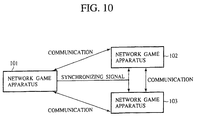
- a plurality of network game apparatuses 101, 102, 103 are interconnected directly to one another by a cable, and one, e.g., the network game apparatus 101, of the network game apparatuses 101, 102, 103 is a host.
- the host network game apparatus 101 supplies synchronizing signals to the rest network game apparatuses 102, 103, and the rest network game apparatuses 102, 103 time a start of game processing with the synchronizing signals.
- the network game apparatuses 101, 102, 103 which are installed near one another, have little delay due to interconnection by the cable, and good synchronizing control can be realized.
- the respective game apparatus make data processing and image processing in synchronization with signals of their own transmitters. Also in communicating with the rest of the game apparatuses and the center, the respective game apparatuses communicate at a certain interval (1 int) with respect to a signal of their own transmitters. The respective game apparatuses take in data supplied by the rest of the game apparatuses to make data processing and image processing.
- the transmitters of the respective game apparatuses have errors with respect to the transmitters of the rest game apparatuses, and the respective game apparatuses have communication intervals different from one another. Accordingly, when the errors are accumulated, the respective game apparatuses cannot receive data from the respective game apparatuses and cannot make data processing and image processing. Thus, even when high-speed data communication is realized, for games requiring precise timing control, suitable game processing cannot be made due to the timing offset.
- United States Patent 5775996 discloses an apparatus and method for synchronizing the execution of multiple video game systems in a networked environment. No external synchronization signals are used. The method of United States Patent 5775996 allows synchronization with an imprecise timing reference and a protocol ensures that each video game system remains in from synchronization with the other systems. Messages are sent between the video game systems over the communication network such as a telephone line.
- An object of the present invention is to provide a method according to claim 1 for synchronizing terminals which can suitably synchronize timings of communication among a plurality of terminals.
- Another object of the present invention is to provide a communication system according to claim 1 which can suitably synchronize timings of the communication among a plurality of terminals.
- Another object of the present invention is to provide a terminal device according to claim 7 which can synchronize communication timings.
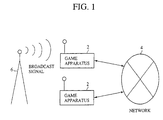
- a plurality of terminals e.g., game apparatuses 2 are interconnected to each other through a network 4.
- the respective game apparatuses 2 receive signals inputted from the outside, e.g., television signals broadcasted from a broadcasting antenna 6, and extract a synchronizing signal from the broadcast signals. Based on the extracted synchronizing signal, the respective game apparatuses 2 synchronize operations with the rest of the game apparatuses 2 and make data communication between the respective game apparatuses 2. Based on the common signal, the respective game apparatuses 2 are synchronized with each other. Accordingly, the respective game apparatuses 2 have no communication timing offset with respect to each other, and can be suitably synchronized with each other.
- Theabove-described object is achieved by a terminal devices synchronizing method for synchronizing a plurality of terminal devices interconnected through a network, the respective terminal devices making synchronization control of operations, and data communication among the respective terminal devices, based on synchronizing signals extracted from signals inputted from the outside other than the respective terminal devices.
- the respective terminal devices make the synchronization control of the data processing among the respective terminal devices, based on synchronizing signals extracted from either of broadcasting signals, time reference signals and an a.c. power source.
- the respective terminal devices make the synchronization control, based on synchronizing signals extracted from broadcasting signals of the same channel.
- a communication system comprising a plurality of terminal devices interconnected through a communication line, wherein the respective terminal devices make synchronization control by a terminal synchronizing method, the terminal devices synchronizing method synchronizing the terminal devices interconnected through the communication line, the respective terminal devices making synchronization control of operations, and data communication among the respective terminal devices, based on synchronizing signals extracted from signals inputted from the outside other than the respective terminal devices.
- a terminal device interconnected to another terminal device through a network, the terminal device comprising: synchronizing signal generating means for generating synchronizing signals from signals inputted from the outside other than the terminal device; and control means for making synchronization control operations and data communication, based on the synchronizing signals.
- the synchronizing signal generating means generates synchronizing signals from broad casting signals, time reference signals or an a.c. power source.
- the terminal devices further comprises means for supplying synchronizing signals when said synchronizing signals cannot be generated from the signals inputted from the outside.
- the communication system according to the present embodiment is diagrammatically shown in Fig. 2.
- the communication system according to the present embodiment is for playing a network game.
- Networks 12, 14 are formed respectively by a plurality of terminal devices 10.
- the networks 12 and the network 14 are interconnected to each other, and all the terminal devices 10 constitute one network. Receipt and transmission of information among the terminal devices 10 are made through the networks 12, 14.
- each terminal device 10 comprises a game processing unit 20 for operating a network game, a television tuner 22 for receiving television signals of groundwaves, and a synchronizing signal generating unit 24 for generating synchronizing signals from the television signals.
- Television signals received by the television tuner 22 are filtered by the synchronizing signal generating unit 24 in order to extract a vertical synchronizing signal, the vertical synchronizing signal being outputted to the game processing unit 20.
- the game processing unit 20 makes data processing and image processing in the unit of a frame.
- the game processing unit 20 is connected to the associated network 12, 14.
- the television tuners 22 of the respective terminal devices 10 are set to receive television signals of the same channel.
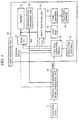
- FIG. 4 details each terminal device 10.
- the game processing unit 20 comprises a main CPU 30 for generally controlling the terminal device 10, a memory 32, and an image processing unit 34 for generating an image for each frame.
- the image processing unit 34 is connected to a video RAM 36 used in image processing.
- the image processing unit 34 is connected to a television monitor 40 through a video encoder 38.
- the video encoder 38 digital-analog converts digital signals from the image processing unit 34 to output the signal to the television monitor 40.
- the game processing unit 20 comprises an oscillator 42 for generating clock signals which are a reference for the game processing unit 20.
- the vertical synchronizing signal (V sync) and horizontal synchronizing signal (H sync) generating circuit 44 counts clock signals from the oscillator 42 to generates horizontal synchronizing signals and vertical synchronizing signals.
- the horizontal synchronizing signals and the vertical synchronizing signals are outputted to the image processing unit 34 and the main CPU 30.
- the main CPU 30 controls the image processing unit 34, the vertical synchronizing signal generating unit 24, the V sync H sync generating circuit 44 to generally control the communication of the game processing unit 20.
- the vertical synchronizing signal from the vertical synchronizing signal generating unit 24 resets the V sync H sync generating circuit 44.
- the game processing unit 20 makes data processing and image processing in synchronization with television signals supplied from the outside.
- FIG. 5 details the television tuner 22 and the synchronizing signal generating unit 24.
- Television signals are received by a TV antenna 50.
- the television signals are inputted to a high-frequency amplifying circuit 54 via an impedance matching circuit 52.
- Television signals are weakened while propagating.
- Television signals are amplified by the high-frequency amplifying circuit 54.
- the amplified signals are multiplied with signals of a frequency of a local oscillator (VCO) 56 by a mixer 58.
- Channel data and control signals from the main CPU 30 are converted by a D/A converter 60 to be inputted to the local oscillator (VCO) 56.
- VCO local oscillator
- the waveform given by the multiplication by the mixer 58 contains a sum and a difference between an amplified waveform and a frequency of the local oscillator 56.
- the sum and the difference are removed by an intermediate frequency filter 62.
- the signals filtered by the intermediate frequency filter 62 are amplified by the intermediate frequency amplifying circuit 64.
- the amplified signals are phase-detected by a video signal wave detecting circuit 66, and composite signals containing vertical synchronizing signals, horizontal synchronizing signals, bast signals and color signals are generated.
- the composite video signals are separated by the synchronization separating circuit 68 into vertical synchronizing signals and horizontal synchronizing signals.
- the synchronization separating circuit 68 includes a low-pass filter (LPF) 70 and a clamp circuit 72 and a comparator 74. Out of the vertical synchronizing signals and the horizontal synchronizing signals separated by the synchronization separating circuit 68, the vertical synchronizing signals are separated by the vertical synchronizing signal separating circuit 76 to be outputted as reset signals.
- the vertical synchronizing signal separating circuit 76 includes a secondary active filter.
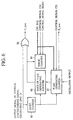
- FIG. 6 details the V sync H sync generating circuit 44 of the game processing unit 20.
- vertical synchronizing signals (V sync) outputted by the vertical synchronizing signal generating unit 24 are outputted as they are to the image processing unit 34 via an OR gate 80 to be used as vertical synchronizing signals in the game processing unit 20.
- the vertical synchronizing signals of the vertical synchronizing signal generating unit 24 are also output to a reset circuit 88. Reset signals synchronized with the vertical synchronizing signals are outputted to a H sync counter 82 and also to a back-up V sync generating counter 86.
- the H sync counter 82 is reset in synchronization with a vertical synchronizing signal from the vertical synchronizing signal generating unit 24 and counts output signals of the oscillator 42 to output horizontal synchronizing signals (H sync).
- the back-up V sync generating counter 86 counts horizontal synchronizing signals from the H sync counter 82 to generate back-up vertical synchronizing signals. However, the output of the generated vertical synchronizing signals is retained when a reset signal is inputted by the reset circuit 88.
- a reset signal of the reset circuit 88 is not outputted, and back-up vertical synchronizing signals of the back-up V sync generating counter 86 are outputted to the OR gate 80.
- the back-up vertical synchronizing signals are outputted also to an error counter 84, and times of the back-up vertical synchronizing signals having compensated vertical synchronizing signals are counted.
- the main CPU 30 can read counted values of the error counter 84.
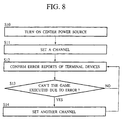
- the flow chart of FIG. 8 shows the operation of the center.
- the power source of the center is turned on (Step S10).
- a channel of television signals to be used is set (Step S11).
- error reports of the terminal devices 10 are confirmed (Step S12), and it is judged whether or not the errors will disable the execution of a game (Step S13).
- another channel is set as television signals to be used (Step S14).
- the processing is returned to the step S12, and error reports of the terminal devices 10 are waited. Even when it is judged impossible to execute the game, the processing is returned to the step S12 to watch error reports of the terminal devices 10.
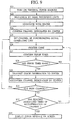
- the flow chart of FIG. 9 shows the operation of the terminal devices.
- the power source of each terminal device 10 is turned on (Step S21).
- the game processing unit 20 makes self-check (Step S22).
- the terminal devices negotiate communication with the center through the networks 12, 14 (Step S23).
- the terminal device 10 confirms a channel designated by the center (Step S24).
- the channel is set in the synchronizing signal generating unit 24 (Step S25).
- Step S27 While the processing of the game is being executed, counted values of the error counter 82 are counted at a prescribed time interval (Step S27). It is judged whether error times are many, the error information is transmitted to the center (Step S29). Subsequently, the channel designated by the center is re-confirmed (Step S30). When the channel designated by the center is changed, the processing is returned to Step S25 to set another channel of the synchronizing signal generating unit 24.
- Step S32 When the channel designated by the center has not been changed, it is judged whether or not the re-confirmation of the channel has reached a specified time (Step S32). When the re-confirmation has not reached the specified time, the processing is returned to Step S26 to continue the game processing. When the re-confirmation has not reached the specified time, an error message is displayed on the screen of the terminal device 10 to stop the game processing (Step S33)
- the respective terminal devices receive television signals of the same channel and extract vertical synchronizing signals from the television signals, whereby the respective terminal devices can make data processing and image processing in synchronization with one another. Unless synchronizing signals can be temporarily extracted from television signals due to radio wave troubles, etc., the synchronizing signals can be supplied at substantially correct timings.
- television signals of ground waves are used as reference signals for generating synchronizing signals.
- television signals of satellite broadcasting such as BS broadcasting, CS broadcasting or others, or television signals of CATV broadcasting may be used.
- the television signals may be analog or digital signals.
- the reference signals can be broadcasting signals other than television signals.
- time reference signals used in electric wave clocks, etc. or signals, such as a.c. source signals, etc., which can be time reference may be used.
- the tuner used exclusively for receiving the broadcasting signals as the reference signals is provided. Instead, an external input terminal is provided, and the broadcasting signals maybe inputted to the external input terminal. For example, in a case where a television monitor is used for games, the broadcasting signals may be inputted to the television monitor.
- the communication system is for playing network games but it can also be for making any processing other than games as long as the communication system comprises a plurality of terminal devices connected to networks.
- the present invention based on synchronizing signals extracted from signals inputted from the outside other than the respective terminal devices, synchronous operation of the respective terminal devices and data communication among the terminal devices are performed, whereby timings of the communication among a plurality of terminal devices forming a network or others can be suitably synchronized.
Landscapes
- Engineering & Computer Science (AREA)
- Multimedia (AREA)
- Signal Processing (AREA)
- Computer Networks & Wireless Communication (AREA)
- Synchronisation In Digital Transmission Systems (AREA)
- Small-Scale Networks (AREA)
- Synchronizing For Television (AREA)
- Multi Processors (AREA)
Claims (7)
- Verfahren zum Synchronisieren einer Vielzahl von Endgeräten, die über ein Netzwerk miteinander verbunden sind, wobei die betreffenden Endgeräte (10) Erzeugungseinrichtungen (24) für vertikale Synchronisierungssignale zum Erzeugen von vertikalen Synchronisierungssignalen sowie Steuereinrichtungen (20) zur Durchführung von Synchronisationssteueroperationen und einer Datenkommunikation aufweisen; dadurch gekennzeichnet, dass die betreffenden Endgeräte (10) Synchronisierungssignale entweder aus Übertragungssignalen, Zeitreferenzsignalen oder einer Wechselstromquelle extrahieren, die von außerhalb der betreffenden Endgeräte (10) zugeführt werden; dass die Erzeugungseinrichtungen (24) für vertikale Synchronisierungssignale der betreffenden Endgeräte (10) die Synchronisierungssignale als vertikale Synchronisierungssignale ausgeben, wenn die Synchronisierungssignale extrahiert werden, aber vertikale Back-Up-Synchronisierungssignale ausgeben, wenn die Synchronisierungssignale nicht extrahiert werden; und dass die Steuereinrichtungen (20) der betreffenden Endgeräte (10) Synchronisationssteueroperationen und eine Datenkommunikation ausführen, die auf den vertikalen Synchronisierungssignalen oder den vertikalen Back-Up-Synchronisierungssignalen basieren.
- Verfahren nach Anspruch 1, wobei die betreffenden Endgeräte die Synchronisationssteuerung auf der Basis von vertikalen Synchronisierungssignalen ausführen, die aus Übertragungssignalen des gleichen Kanals extrahiert werden.
- Verfahren nach Anspruch 2, wobei, wenn es schwierig ist, die Synchronisierungssignale aus den Übertragungssignalen in einem der betreffenden Endgeräte (10) zu extrahieren, der Kanal der Übertragungssignale geändert wird.
- Kommunikationssystem, das eine Vielzahl von Endgeräten (10) aufweist, die über eine Kommunikationsleitung miteinander verbunden sind, wobei die betreffenden Endgeräte (10) dafür ausgelegt sind, eine Synchronisationssteuerung durch ein Endgeräte-Synchronisationsverfahren auszuführen, und Erzeugungseinrichtungen (24) für vertikale Synchronisierungssignale zum Erzeugen von vertikalen Synchronisierungssignalen sowie Steuereinrichtungen (20) zur Druchführung von Synchronisationssteueroperationen und einer Datenkommunikation aufweisen; dadurch gekennzeichnet, dass die betreffenden Endgeräte (10) dafür ausgelegt sind, Synchronisierungssignale entweder aus Übertragungssignalen, Zeitreferenzsignalen oder einer Wechselstromquelle zu extrahieren, die von außerhalb der betreffenden Endgeräte (10) zugeführt werden; dass die Erzeugungseinrichtungen (24) für vertikale Synchronisierungssignale der betreffenden Endgeräte (10) dafür ausgelegt sind, die Synchronisierungssignale als vertikale Synchronisierungssignale auszugeben, wenn die Synchronisierungssignale extrahiert werden, wobei sie aber dafür ausgelegt sind, vertikale Back-Up-Synchronisierungssignale auszugeben, wenn die Synchronisierungssignale nicht extrahiert werden; und dass die Steuereinrichtungen (20) der betreffenden Endgeräte (10) dafür ausgelegt sind, Synchronisationssteueroperationen und eine Datenkommunikation auszuführen, die auf den vertikalen Synchronisierungssignalen oder den vertikalen Back-Up-Synchronisierungssignalen basieren.
- Kommunikationssystem nach Anspruch 4, wobei die betreffenden Endgeräte (10) dafür ausgelegt sind, die Synchronisationssteuerung auf der Basis von Synchronisierungssignalen auszuführen, die aus Übertragungssignalen des gleichen Kanals extrahiert werden.
- Kommunikationssystem nach Anspruch 5, wobei, wenn es schwierig ist, die Synchronisierungssignale aus den Übertragungssignalen in einem der betreffenden Endgeräte (10) zu extrahieren, der Kanal der Übertragungssignale geändert wird.
- Endgerät (10), das über ein Netzwerk mit einem anderen Endgerät verbunden ist, wobei das Endgerät aufweist: Erzeugungseinrichtungen (24) für vertikale Synchronisierungssignale zum Erzeugen von vertikalen Synchronisierungssignalen sowie Steuereinrichtungen (20) zur Durchführung von Synchronisationssteueroperationen und einer Datenkommunikation, die auf den vertikalen Synchronisierumgssignalen basieren; dadurch gekennzeichnet, dass das Endgerät (10) dafür ausgelegt ist, Synchronisierungssignale entweder aus Übertragungssignalen, Zeitreferenzsignalen oder einer Wechselstromquelle zu extrahieren, die von außerhalb des Endgeräts (10) zugeführt werden; und dass die Erzeugungsseinrichtungen (24) für vertikale Synchronisierungssignale dafür ausgelegt sind, die Synchronisierungssignale als vertikale Synchronisierungssignale auszugeben, wenn die Synchronisierungssignale extrahiert werden, aber vertikale Back-Up-Synchronisierungssignale auszugeben, wenn die Synchronisierungssignale nicht extrahiert werden.
Applications Claiming Priority (2)
| Application Number | Priority Date | Filing Date | Title |
|---|---|---|---|
| JP2001066506A JP2002271307A (ja) | 2001-03-09 | 2001-03-09 | 端末同期方法、通信システム及び端末装置 |
| JP2001066506 | 2001-03-09 |
Publications (3)
| Publication Number | Publication Date |
|---|---|
| EP1239628A2 EP1239628A2 (de) | 2002-09-11 |
| EP1239628A3 EP1239628A3 (de) | 2003-05-14 |
| EP1239628B1 true EP1239628B1 (de) | 2005-02-23 |
Family
ID=18924983
Family Applications (1)
| Application Number | Title | Priority Date | Filing Date |
|---|---|---|---|
| EP01205056A Expired - Lifetime EP1239628B1 (de) | 2001-03-09 | 2001-12-20 | Vorrichtung und Verfahren zur Synchronisation von Endgeräten |
Country Status (5)
| Country | Link |
|---|---|
| US (1) | US7376753B2 (de) |
| EP (1) | EP1239628B1 (de) |
| JP (1) | JP2002271307A (de) |
| KR (1) | KR100801414B1 (de) |
| DE (1) | DE60109020T2 (de) |
Families Citing this family (10)
| Publication number | Priority date | Publication date | Assignee | Title |
|---|---|---|---|---|
| JP2002271307A (ja) * | 2001-03-09 | 2002-09-20 | Sega Corp | 端末同期方法、通信システム及び端末装置 |
| JP2005535181A (ja) * | 2002-07-31 | 2005-11-17 | ブルーストリーク テクノロジー インコーポレイテッド | リアルタイムのチッカー情報を提供するためのシステムおよび方法 |
| US7010279B2 (en) * | 2002-11-27 | 2006-03-07 | Broadcom Corporation | Radio frequency integrated circuit electro-static discharge circuit |
| US20040230673A1 (en) * | 2003-04-17 | 2004-11-18 | International Business Machines Corporation | Virtual counter device tolerant to hardware counter resets |
| JP3686415B2 (ja) * | 2003-11-10 | 2005-08-24 | コナミ株式会社 | ゲーム装置、ゲーム方法、及びゲームプログラム |
| JP4342356B2 (ja) | 2004-03-22 | 2009-10-14 | 任天堂株式会社 | ゲームシステム、ゲーム装置、およびゲームプログラム |
| JP5255196B2 (ja) * | 2006-10-19 | 2013-08-07 | 任天堂株式会社 | ゲーム機、無線モジュール、ゲームシステムおよびゲーム処理方法 |
| US8308570B2 (en) * | 2009-11-18 | 2012-11-13 | Sony Computer Entertainment America Inc. | Synchronizing mission progress in peer-to-peer cooperative games |
| US9918181B2 (en) | 2012-06-26 | 2018-03-13 | Lg Electronics Inc. | Synchronization method and synchronization apparatus for D2D communication in wireless communication system |
| KR101467681B1 (ko) * | 2013-05-07 | 2014-12-01 | 울산대학교 산학협력단 | 무선 네트워크에서의 에너지 고효율을 위한 시간 동기화 방법 및 이를 적용한 네트워크 |
Family Cites Families (25)
| Publication number | Priority date | Publication date | Assignee | Title |
|---|---|---|---|---|
| US4089524A (en) * | 1977-01-18 | 1978-05-16 | Gremlin Industries, Inc. | Digitally controlled electronic game |
| US4253116A (en) * | 1979-11-27 | 1981-02-24 | Rca Corporation | Television synchronizing system operable from nonstandard signals |
| US4516035A (en) * | 1983-08-22 | 1985-05-07 | Ncr Corporation | Phase synchronization and control circuit |
| US4570930A (en) | 1983-10-03 | 1986-02-18 | At&T Bell Laboratories | System, method, and station interface arrangement for playing video game over telephone lines |
| JPS60103748A (ja) | 1983-11-09 | 1985-06-08 | Sony Corp | デイジタル信号伝送方式 |
| US4803553A (en) * | 1988-01-11 | 1989-02-07 | Eastman Kodak Company | Video timing system which has signal delay compensation and which is responsive to external synchronization |
| CA2091962A1 (en) * | 1992-03-31 | 1993-10-01 | Mark L. Witsaman | Clock synchronization system |
| US5579348A (en) * | 1994-02-02 | 1996-11-26 | Gi Corporation | Method and apparatus for improving the apparent accuracy of a data receiver clock circuit |
| FI95976C (fi) * | 1994-02-25 | 1996-04-10 | Nokia Telecommunications Oy | Verkkojärjestely |
| US5685775A (en) * | 1994-10-28 | 1997-11-11 | International Business Machines Corporation | Networking video games over telephone network |
| AU4158496A (en) * | 1994-11-14 | 1996-06-06 | Catapult Entertainment, Inc. | Method and apparatus for synchronizing the execution of multiple video game systems in a networked environment |
| JP3072709B2 (ja) * | 1994-11-21 | 2000-08-07 | インターナショナル・ビジネス・マシーンズ・コーポレ−ション | 要求伝達方法 |
| KR960028366A (ko) * | 1994-12-28 | 1996-07-22 | 배순훈 | A/v 시스템용 텔레비젼의 입출력단자의 접속판별장치 |
| KR970031583A (ko) * | 1995-11-08 | 1997-06-26 | 양승택 | 에이티엠(atm)망 상에서의 통신을 이용한 실시간의 온라인 영상 게임 장치 및 방법 |
| JP2838995B2 (ja) * | 1995-12-27 | 1998-12-16 | 日本電気株式会社 | 水平同期信号発生回路 |
| US5738583A (en) * | 1996-02-02 | 1998-04-14 | Motorola, Inc. | Interactive wireless gaming system |
| GB9708061D0 (en) | 1997-04-22 | 1997-06-11 | Two Way Tv Ltd | Interactive, predictive game control system |
| CA2204971A1 (en) * | 1997-05-09 | 1998-11-09 | Michael Cheng | Uniform access to and interchange between objects employing a plurality of access methods |
| JPH1133230A (ja) * | 1997-07-16 | 1999-02-09 | Sega Enterp Ltd | 通信ゲームシステム |
| CA2210755C (en) * | 1997-07-17 | 2003-12-23 | Ibm Canada Limited - Ibm Canada Limitee | Creating proxies for distribution of beans and event objects |
| JP3152299B2 (ja) * | 1998-09-11 | 2001-04-03 | 日本電気株式会社 | 時分割チャネル方式における外部信号同期メッセージ送出方式 |
| TW448686B (en) * | 1998-09-14 | 2001-08-01 | Sony Corp | External synchronization system using composite synchronization signal, and camera system using the same |
| US6447396B1 (en) * | 2000-10-17 | 2002-09-10 | Nearlife, Inc. | Method and apparatus for coordinating an interactive computer game with a broadcast television program |
| US20020069299A1 (en) * | 2000-12-01 | 2002-06-06 | Rosener Douglas K. | Method for synchronizing clocks |
| JP2002271307A (ja) * | 2001-03-09 | 2002-09-20 | Sega Corp | 端末同期方法、通信システム及び端末装置 |
-
2001
- 2001-03-09 JP JP2001066506A patent/JP2002271307A/ja not_active Withdrawn
- 2001-12-19 US US10/020,892 patent/US7376753B2/en not_active Expired - Fee Related
- 2001-12-20 EP EP01205056A patent/EP1239628B1/de not_active Expired - Lifetime
- 2001-12-20 DE DE60109020T patent/DE60109020T2/de not_active Expired - Lifetime
-
2002
- 2002-01-21 KR KR1020020003305A patent/KR100801414B1/ko not_active Expired - Fee Related
Also Published As
| Publication number | Publication date |
|---|---|
| KR20020072188A (ko) | 2002-09-14 |
| US7376753B2 (en) | 2008-05-20 |
| US20020129169A1 (en) | 2002-09-12 |
| DE60109020T2 (de) | 2006-04-13 |
| DE60109020D1 (de) | 2005-03-31 |
| EP1239628A2 (de) | 2002-09-11 |
| EP1239628A3 (de) | 2003-05-14 |
| JP2002271307A (ja) | 2002-09-20 |
| KR100801414B1 (ko) | 2008-02-05 |
Similar Documents
| Publication | Publication Date | Title |
|---|---|---|
| US7552352B2 (en) | Synchronization of signals | |
| US6151479A (en) | Single clock 27 MHZ oscillator in MPEG-2 system | |
| KR19990063287A (ko) | 디지털 화상 복호 방법 및 장치 | |
| US7376753B2 (en) | Terminal devices synchronizing method communication system and terminal device | |
| JPH11177652A (ja) | 同期化方法及びデコーダ | |
| GB2400255A (en) | Video synchronisation | |
| CA1150818A (en) | Subscription television coding system | |
| KR0151569B1 (ko) | 실시간데이터전송장치와 수신장치 | |
| CN114337890B (zh) | 一种基于ptp网络同步的多终端播发同步系统及方法 | |
| JP2001230750A (ja) | ストリーム送信装置とその受信装置、及び基本周波数同期方法 | |
| US4589017A (en) | Pay television receiving system | |
| EP0615359A2 (de) | Verfahren und Vorrichtung zum Senden und Empfangen eines digitalen Signals mit Stopfen | |
| EP0749240B1 (de) | Multiplexübertragungssystem für digitale Bildsignale | |
| JP4000771B2 (ja) | 同期管理システム | |
| KR19990055332A (ko) | Pip 회로를 내장한 텔레비전에 있어서 동기 일치 장치 | |
| JP4947447B2 (ja) | リアルタイムデータ伝送システム | |
| JP3717173B2 (ja) | デジタルデータ受信装置およびデジタルデータ受信方法 | |
| JP4023350B2 (ja) | ネットワーク接続機器及びこれに用いるタイムスタンプ処理方法 | |
| KR0157496B1 (ko) | 주파수조절장치 | |
| JPH1041911A (ja) | カウンタ装置、多重化装置及びカウンタ同期方法 | |
| TW202527557A (zh) | 發射器與接收器之間的時鐘同步方法 | |
| JPH0698196A (ja) | テレビジョン信号デジタル伝送方式 | |
| JP2001251182A (ja) | 基準波切り換え装置および通信装置、並びに、デジタル放送システムおよび方法 | |
| JP2632269B2 (ja) | 共同聴視システムにおける再送信伝送用シグナルプロセッサ | |
| JPH05300078A (ja) | ゾーン間tdmaフレーム同期方法 |
Legal Events
| Date | Code | Title | Description |
|---|---|---|---|
| PUAI | Public reference made under article 153(3) epc to a published international application that has entered the european phase |
Free format text: ORIGINAL CODE: 0009012 |
|
| AK | Designated contracting states |
Kind code of ref document: A2 Designated state(s): AT BE CH CY DE DK ES FI FR GB GR IE IT LI LU MC NL PT SE TR |
|
| AX | Request for extension of the european patent |
Free format text: AL;LT;LV;MK;RO;SI |
|
| PUAL | Search report despatched |
Free format text: ORIGINAL CODE: 0009013 |
|
| AK | Designated contracting states |
Designated state(s): AT BE CH CY DE DK ES FI FR GB GR IE IT LI LU MC NL PT SE TR |
|
| AX | Request for extension of the european patent |
Extension state: AL LT LV MK RO SI |
|
| RIC1 | Information provided on ipc code assigned before grant |
Ipc: 7H 04N 7/035 B Ipc: 7H 04L 12/28 B Ipc: 7A 63F 13/12 B Ipc: 7H 04L 7/04 A Ipc: 7H 04N 5/00 B Ipc: 7H 04L 5/02 B Ipc: 7H 04L 1/20 B |
|
| 17P | Request for examination filed |
Effective date: 20030624 |
|
| 17Q | First examination report despatched |
Effective date: 20030930 |
|
| AKX | Designation fees paid |
Designated state(s): DE ES FR GB IT |
|
| GRAP | Despatch of communication of intention to grant a patent |
Free format text: ORIGINAL CODE: EPIDOSNIGR1 |
|
| GRAS | Grant fee paid |
Free format text: ORIGINAL CODE: EPIDOSNIGR3 |
|
| GRAA | (expected) grant |
Free format text: ORIGINAL CODE: 0009210 |
|
| AK | Designated contracting states |
Kind code of ref document: B1 Designated state(s): DE ES FR GB IT |
|
| PG25 | Lapsed in a contracting state [announced via postgrant information from national office to epo] |
Ref country code: IT Free format text: LAPSE BECAUSE OF FAILURE TO SUBMIT A TRANSLATION OF THE DESCRIPTION OR TO PAY THE FEE WITHIN THE PRESCRIBED TIME-LIMIT;WARNING: LAPSES OF ITALIAN PATENTS WITH EFFECTIVE DATE BEFORE 2007 MAY HAVE OCCURRED AT ANY TIME BEFORE 2007. THE CORRECT EFFECTIVE DATE MAY BE DIFFERENT FROM THE ONE RECORDED. Effective date: 20050223 Ref country code: ES Free format text: LAPSE BECAUSE OF FAILURE TO SUBMIT A TRANSLATION OF THE DESCRIPTION OR TO PAY THE FEE WITHIN THE PRESCRIBED TIME-LIMIT Effective date: 20050223 |
|
| REG | Reference to a national code |
Ref country code: GB Ref legal event code: FG4D |
|
| REF | Corresponds to: |
Ref document number: 60109020 Country of ref document: DE Date of ref document: 20050331 Kind code of ref document: P |
|
| PLBE | No opposition filed within time limit |
Free format text: ORIGINAL CODE: 0009261 |
|
| STAA | Information on the status of an ep patent application or granted ep patent |
Free format text: STATUS: NO OPPOSITION FILED WITHIN TIME LIMIT |
|
| ET | Fr: translation filed | ||
| 26N | No opposition filed |
Effective date: 20051124 |
|
| PGFP | Annual fee paid to national office [announced via postgrant information from national office to epo] |
Ref country code: GB Payment date: 20101221 Year of fee payment: 10 |
|
| PGFP | Annual fee paid to national office [announced via postgrant information from national office to epo] |
Ref country code: FR Payment date: 20120105 Year of fee payment: 11 |
|
| PGFP | Annual fee paid to national office [announced via postgrant information from national office to epo] |
Ref country code: DE Payment date: 20111222 Year of fee payment: 11 |
|
| GBPC | Gb: european patent ceased through non-payment of renewal fee |
Effective date: 20121220 |
|
| REG | Reference to a national code |
Ref country code: FR Ref legal event code: ST Effective date: 20130830 |
|
| REG | Reference to a national code |
Ref country code: DE Ref legal event code: R119 Ref document number: 60109020 Country of ref document: DE Effective date: 20130702 |
|
| PG25 | Lapsed in a contracting state [announced via postgrant information from national office to epo] |
Ref country code: DE Free format text: LAPSE BECAUSE OF NON-PAYMENT OF DUE FEES Effective date: 20130702 |
|
| PG25 | Lapsed in a contracting state [announced via postgrant information from national office to epo] |
Ref country code: FR Free format text: LAPSE BECAUSE OF NON-PAYMENT OF DUE FEES Effective date: 20130102 Ref country code: GB Free format text: LAPSE BECAUSE OF NON-PAYMENT OF DUE FEES Effective date: 20121220 |