EP1222298B1 - Vectors and methods for recombinant protein expression - Google Patents
Vectors and methods for recombinant protein expression Download PDFInfo
- Publication number
- EP1222298B1 EP1222298B1 EP00970900A EP00970900A EP1222298B1 EP 1222298 B1 EP1222298 B1 EP 1222298B1 EP 00970900 A EP00970900 A EP 00970900A EP 00970900 A EP00970900 A EP 00970900A EP 1222298 B1 EP1222298 B1 EP 1222298B1
- Authority
- EP
- European Patent Office
- Prior art keywords
- expression
- cells
- coding sequence
- expression vector
- protein
- Prior art date
- Legal status (The legal status is an assumption and is not a legal conclusion. Google has not performed a legal analysis and makes no representation as to the accuracy of the status listed.)
- Expired - Lifetime
Links
- 238000000034 method Methods 0.000 title claims abstract description 38
- 102000007056 Recombinant Fusion Proteins Human genes 0.000 title claims description 43
- 108010008281 Recombinant Fusion Proteins Proteins 0.000 title claims description 43
- 239000013598 vector Substances 0.000 title abstract description 28
- 230000008488 polyadenylation Effects 0.000 claims abstract description 71
- 239000013604 expression vector Substances 0.000 claims abstract description 57
- 239000003550 marker Substances 0.000 claims abstract description 35
- 210000004027 cell Anatomy 0.000 claims description 111
- 108091026890 Coding region Proteins 0.000 claims description 30
- 108010022394 Threonine synthase Proteins 0.000 claims description 30
- 102000004419 dihydrofolate reductase Human genes 0.000 claims description 28
- 241000829100 Macaca mulatta polyomavirus 1 Species 0.000 claims description 27
- 108020004684 Internal Ribosome Entry Sites Proteins 0.000 claims description 17
- 210000004962 mammalian cell Anatomy 0.000 claims description 14
- 239000002773 nucleotide Substances 0.000 claims description 11
- 125000003729 nucleotide group Chemical group 0.000 claims description 11
- 238000012258 culturing Methods 0.000 claims description 6
- 230000001737 promoting effect Effects 0.000 claims description 3
- 108090000623 proteins and genes Proteins 0.000 abstract description 116
- 102000004169 proteins and genes Human genes 0.000 abstract description 84
- 108020004414 DNA Proteins 0.000 description 54
- 108020004999 messenger RNA Proteins 0.000 description 19
- FBOZXECLQNJBKD-ZDUSSCGKSA-N L-methotrexate Chemical compound C=1N=C2N=C(N)N=C(N)C2=NC=1CN(C)C1=CC=C(C(=O)N[C@@H](CCC(O)=O)C(O)=O)C=C1 FBOZXECLQNJBKD-ZDUSSCGKSA-N 0.000 description 18
- 229960000485 methotrexate Drugs 0.000 description 18
- 230000003321 amplification Effects 0.000 description 12
- 108040006852 interleukin-4 receptor activity proteins Proteins 0.000 description 12
- 238000004519 manufacturing process Methods 0.000 description 12
- 238000003199 nucleic acid amplification method Methods 0.000 description 12
- 230000001105 regulatory effect Effects 0.000 description 12
- 239000002299 complementary DNA Substances 0.000 description 11
- 108090000765 processed proteins & peptides Proteins 0.000 description 11
- 238000001890 transfection Methods 0.000 description 11
- 150000007523 nucleic acids Chemical class 0.000 description 10
- 229920001184 polypeptide Polymers 0.000 description 10
- 102000004196 processed proteins & peptides Human genes 0.000 description 10
- 238000002965 ELISA Methods 0.000 description 9
- 239000003153 chemical reaction reagent Substances 0.000 description 9
- 239000013612 plasmid Substances 0.000 description 9
- 230000014616 translation Effects 0.000 description 9
- 108091032973 (ribonucleotides)n+m Proteins 0.000 description 8
- 241000710188 Encephalomyocarditis virus Species 0.000 description 8
- 108020004707 nucleic acids Proteins 0.000 description 8
- 102000039446 nucleic acids Human genes 0.000 description 8
- 238000003752 polymerase chain reaction Methods 0.000 description 8
- 238000013519 translation Methods 0.000 description 8
- 150000001413 amino acids Chemical group 0.000 description 7
- 210000004978 chinese hamster ovary cell Anatomy 0.000 description 7
- 102000037865 fusion proteins Human genes 0.000 description 7
- 108020001507 fusion proteins Proteins 0.000 description 7
- 230000001965 increasing effect Effects 0.000 description 7
- 239000003446 ligand Substances 0.000 description 7
- DHMQDGOQFOQNFH-UHFFFAOYSA-N Glycine Chemical compound NCC(O)=O DHMQDGOQFOQNFH-UHFFFAOYSA-N 0.000 description 6
- 241000282414 Homo sapiens Species 0.000 description 6
- 108091028043 Nucleic acid sequence Proteins 0.000 description 6
- IQFYYKKMVGJFEH-XLPZGREQSA-N Thymidine Chemical compound O=C1NC(=O)C(C)=CN1[C@@H]1O[C@H](CO)[C@@H](O)C1 IQFYYKKMVGJFEH-XLPZGREQSA-N 0.000 description 6
- 239000012634 fragment Substances 0.000 description 6
- FDGQSTZJBFJUBT-UHFFFAOYSA-N hypoxanthine Chemical compound O=C1NC=NC2=C1NC=N2 FDGQSTZJBFJUBT-UHFFFAOYSA-N 0.000 description 6
- 230000008569 process Effects 0.000 description 6
- 102000005962 receptors Human genes 0.000 description 6
- 108020003175 receptors Proteins 0.000 description 6
- 230000003612 virological effect Effects 0.000 description 6
- 102000007469 Actins Human genes 0.000 description 5
- 108010085238 Actins Proteins 0.000 description 5
- 101100257421 Arabidopsis thaliana SPA4 gene Proteins 0.000 description 5
- 102100040269 Cleavage stimulation factor subunit 2 Human genes 0.000 description 5
- 101710159037 Cleavage stimulation factor subunit 2 Proteins 0.000 description 5
- 230000004927 fusion Effects 0.000 description 5
- 238000002360 preparation method Methods 0.000 description 5
- 101710132601 Capsid protein Proteins 0.000 description 4
- 101710094648 Coat protein Proteins 0.000 description 4
- 102000004127 Cytokines Human genes 0.000 description 4
- 108090000695 Cytokines Proteins 0.000 description 4
- 102000004190 Enzymes Human genes 0.000 description 4
- 108090000790 Enzymes Proteins 0.000 description 4
- 108091060211 Expressed sequence tag Proteins 0.000 description 4
- 102100021181 Golgi phosphoprotein 3 Human genes 0.000 description 4
- 108060003951 Immunoglobulin Proteins 0.000 description 4
- 101710125418 Major capsid protein Proteins 0.000 description 4
- 101710141454 Nucleoprotein Proteins 0.000 description 4
- 101710083689 Probable capsid protein Proteins 0.000 description 4
- 230000004570 RNA-binding Effects 0.000 description 4
- 102100040247 Tumor necrosis factor Human genes 0.000 description 4
- 230000027455 binding Effects 0.000 description 4
- 238000012217 deletion Methods 0.000 description 4
- 230000037430 deletion Effects 0.000 description 4
- 229940088598 enzyme Drugs 0.000 description 4
- 210000003527 eukaryotic cell Anatomy 0.000 description 4
- 102000018358 immunoglobulin Human genes 0.000 description 4
- 230000001939 inductive effect Effects 0.000 description 4
- 238000013518 transcription Methods 0.000 description 4
- 230000035897 transcription Effects 0.000 description 4
- 230000002103 transcriptional effect Effects 0.000 description 4
- 238000011144 upstream manufacturing Methods 0.000 description 4
- 238000005406 washing Methods 0.000 description 4
- DWRXFEITVBNRMK-UHFFFAOYSA-N Beta-D-1-Arabinofuranosylthymine Natural products O=C1NC(=O)C(C)=CN1C1C(O)C(O)C(CO)O1 DWRXFEITVBNRMK-UHFFFAOYSA-N 0.000 description 3
- 108010029697 CD40 Ligand Proteins 0.000 description 3
- 102100032937 CD40 ligand Human genes 0.000 description 3
- 239000004471 Glycine Substances 0.000 description 3
- 102100021519 Hemoglobin subunit beta Human genes 0.000 description 3
- 108091005904 Hemoglobin subunit beta Proteins 0.000 description 3
- 101000611183 Homo sapiens Tumor necrosis factor Proteins 0.000 description 3
- 108010001336 Horseradish Peroxidase Proteins 0.000 description 3
- UGQMRVRMYYASKQ-UHFFFAOYSA-N Hypoxanthine nucleoside Natural products OC1C(O)C(CO)OC1N1C(NC=NC2=O)=C2N=C1 UGQMRVRMYYASKQ-UHFFFAOYSA-N 0.000 description 3
- 108010002386 Interleukin-3 Proteins 0.000 description 3
- 102100039064 Interleukin-3 Human genes 0.000 description 3
- 241001529936 Murinae Species 0.000 description 3
- 229930193140 Neomycin Natural products 0.000 description 3
- 108700026244 Open Reading Frames Proteins 0.000 description 3
- 239000004698 Polyethylene Substances 0.000 description 3
- 241001505332 Polyomavirus sp. Species 0.000 description 3
- 108010076504 Protein Sorting Signals Proteins 0.000 description 3
- 108010038036 Receptor Activator of Nuclear Factor-kappa B Proteins 0.000 description 3
- 102000010498 Receptor Activator of Nuclear Factor-kappa B Human genes 0.000 description 3
- 108060008683 Tumor Necrosis Factor Receptor Proteins 0.000 description 3
- 102100024598 Tumor necrosis factor ligand superfamily member 10 Human genes 0.000 description 3
- 101710097160 Tumor necrosis factor ligand superfamily member 10 Proteins 0.000 description 3
- IQFYYKKMVGJFEH-UHFFFAOYSA-N beta-L-thymidine Natural products O=C1NC(=O)C(C)=CN1C1OC(CO)C(O)C1 IQFYYKKMVGJFEH-UHFFFAOYSA-N 0.000 description 3
- 238000004113 cell culture Methods 0.000 description 3
- 239000003795 chemical substances by application Substances 0.000 description 3
- 238000003776 cleavage reaction Methods 0.000 description 3
- 238000010367 cloning Methods 0.000 description 3
- 229940079593 drug Drugs 0.000 description 3
- 239000003814 drug Substances 0.000 description 3
- 230000000694 effects Effects 0.000 description 3
- 239000003623 enhancer Substances 0.000 description 3
- 239000012530 fluid Substances 0.000 description 3
- 239000003102 growth factor Substances 0.000 description 3
- 239000002609 medium Substances 0.000 description 3
- 230000000813 microbial effect Effects 0.000 description 3
- 238000007838 multiplex ligation-dependent probe amplification Methods 0.000 description 3
- 229960004927 neomycin Drugs 0.000 description 3
- 210000001938 protoplast Anatomy 0.000 description 3
- 230000002829 reductive effect Effects 0.000 description 3
- 230000010076 replication Effects 0.000 description 3
- 210000003705 ribosome Anatomy 0.000 description 3
- 230000007017 scission Effects 0.000 description 3
- 239000006228 supernatant Substances 0.000 description 3
- 230000001225 therapeutic effect Effects 0.000 description 3
- 229940104230 thymidine Drugs 0.000 description 3
- 102000003298 tumor necrosis factor receptor Human genes 0.000 description 3
- IAKHMKGGTNLKSZ-INIZCTEOSA-N (S)-colchicine Chemical compound C1([C@@H](NC(C)=O)CC2)=CC(=O)C(OC)=CC=C1C1=C2C=C(OC)C(OC)=C1OC IAKHMKGGTNLKSZ-INIZCTEOSA-N 0.000 description 2
- 102000002627 4-1BB Ligand Human genes 0.000 description 2
- 108010082808 4-1BB Ligand Proteins 0.000 description 2
- 101710169336 5'-deoxyadenosine deaminase Proteins 0.000 description 2
- 102000055025 Adenosine deaminases Human genes 0.000 description 2
- 102000011591 Cleavage And Polyadenylation Specificity Factor Human genes 0.000 description 2
- 108010076130 Cleavage And Polyadenylation Specificity Factor Proteins 0.000 description 2
- 102000005221 Cleavage Stimulation Factor Human genes 0.000 description 2
- 108010081236 Cleavage Stimulation Factor Proteins 0.000 description 2
- 241000699802 Cricetulus griseus Species 0.000 description 2
- 101150074155 DHFR gene Proteins 0.000 description 2
- AOJJSUZBOXZQNB-TZSSRYMLSA-N Doxorubicin Chemical compound O([C@H]1C[C@@](O)(CC=2C(O)=C3C(=O)C=4C=CC=C(C=4C(=O)C3=C(O)C=21)OC)C(=O)CO)[C@H]1C[C@H](N)[C@H](O)[C@H](C)O1 AOJJSUZBOXZQNB-TZSSRYMLSA-N 0.000 description 2
- YQYJSBFKSSDGFO-UHFFFAOYSA-N Epihygromycin Natural products OC1C(O)C(C(=O)C)OC1OC(C(=C1)O)=CC=C1C=C(C)C(=O)NC1C(O)C(O)C2OCOC2C1O YQYJSBFKSSDGFO-UHFFFAOYSA-N 0.000 description 2
- 108010017213 Granulocyte-Macrophage Colony-Stimulating Factor Proteins 0.000 description 2
- 102100039620 Granulocyte-macrophage colony-stimulating factor Human genes 0.000 description 2
- 102100037852 Insulin-like growth factor I Human genes 0.000 description 2
- 108090000581 Leukemia inhibitory factor Proteins 0.000 description 2
- 102000004058 Leukemia inhibitory factor Human genes 0.000 description 2
- 206010048723 Multiple-drug resistance Diseases 0.000 description 2
- 101100278853 Mus musculus Dhfr gene Proteins 0.000 description 2
- 108090000630 Oncostatin M Proteins 0.000 description 2
- 102000004140 Oncostatin M Human genes 0.000 description 2
- 108091000080 Phosphotransferase Proteins 0.000 description 2
- 241000700584 Simplexvirus Species 0.000 description 2
- 108020004440 Thymidine kinase Proteins 0.000 description 2
- 241000700605 Viruses Species 0.000 description 2
- OIRDTQYFTABQOQ-KQYNXXCUSA-N adenosine Chemical compound C1=NC=2C(N)=NC=NC=2N1[C@@H]1O[C@H](CO)[C@@H](O)[C@H]1O OIRDTQYFTABQOQ-KQYNXXCUSA-N 0.000 description 2
- 230000000340 anti-metabolite Effects 0.000 description 2
- 239000000427 antigen Substances 0.000 description 2
- 108091007433 antigens Proteins 0.000 description 2
- 102000036639 antigens Human genes 0.000 description 2
- 229940100197 antimetabolite Drugs 0.000 description 2
- 239000002256 antimetabolite Substances 0.000 description 2
- 238000013459 approach Methods 0.000 description 2
- 210000003719 b-lymphocyte Anatomy 0.000 description 2
- 230000008901 benefit Effects 0.000 description 2
- 230000003115 biocidal effect Effects 0.000 description 2
- 230000033228 biological regulation Effects 0.000 description 2
- 230000015572 biosynthetic process Effects 0.000 description 2
- 108010006025 bovine growth hormone Proteins 0.000 description 2
- 229910000389 calcium phosphate Inorganic materials 0.000 description 2
- 239000001506 calcium phosphate Substances 0.000 description 2
- 235000011010 calcium phosphates Nutrition 0.000 description 2
- 210000004748 cultured cell Anatomy 0.000 description 2
- 231100000433 cytotoxic Toxicity 0.000 description 2
- 230000001472 cytotoxic effect Effects 0.000 description 2
- 230000002950 deficient Effects 0.000 description 2
- 238000010586 diagram Methods 0.000 description 2
- 238000010790 dilution Methods 0.000 description 2
- 239000012895 dilution Substances 0.000 description 2
- 238000004520 electroporation Methods 0.000 description 2
- 230000001976 improved effect Effects 0.000 description 2
- 239000003112 inhibitor Substances 0.000 description 2
- 239000002502 liposome Substances 0.000 description 2
- 210000001672 ovary Anatomy 0.000 description 2
- 102000020233 phosphotransferase Human genes 0.000 description 2
- 230000004481 post-translational protein modification Effects 0.000 description 2
- 210000001236 prokaryotic cell Anatomy 0.000 description 2
- 230000008707 rearrangement Effects 0.000 description 2
- 238000011160 research Methods 0.000 description 2
- 230000003248 secreting effect Effects 0.000 description 2
- -1 selectable markers Proteins 0.000 description 2
- 239000000758 substrate Substances 0.000 description 2
- QORWJWZARLRLPR-UHFFFAOYSA-H tricalcium bis(phosphate) Chemical compound [Ca+2].[Ca+2].[Ca+2].[O-]P([O-])([O-])=O.[O-]P([O-])([O-])=O QORWJWZARLRLPR-UHFFFAOYSA-H 0.000 description 2
- 241000701161 unidentified adenovirus Species 0.000 description 2
- FPVKHBSQESCIEP-UHFFFAOYSA-N (8S)-3-(2-deoxy-beta-D-erythro-pentofuranosyl)-3,6,7,8-tetrahydroimidazo[4,5-d][1,3]diazepin-8-ol Natural products C1C(O)C(CO)OC1N1C(NC=NCC2O)=C2N=C1 FPVKHBSQESCIEP-UHFFFAOYSA-N 0.000 description 1
- 108091007505 ADAM17 Proteins 0.000 description 1
- 102100033350 ATP-dependent translocase ABCB1 Human genes 0.000 description 1
- 102100029457 Adenine phosphoribosyltransferase Human genes 0.000 description 1
- 108010024223 Adenine phosphoribosyltransferase Proteins 0.000 description 1
- 102000002260 Alkaline Phosphatase Human genes 0.000 description 1
- 108020004774 Alkaline Phosphatase Proteins 0.000 description 1
- 108010049777 Ankyrins Proteins 0.000 description 1
- 102000008102 Ankyrins Human genes 0.000 description 1
- 108020005544 Antisense RNA Proteins 0.000 description 1
- 241000283690 Bos taurus Species 0.000 description 1
- 108090000715 Brain-derived neurotrophic factor Proteins 0.000 description 1
- 102000004219 Brain-derived neurotrophic factor Human genes 0.000 description 1
- 102100032528 C-type lectin domain family 11 member A Human genes 0.000 description 1
- 101710167766 C-type lectin domain family 11 member A Proteins 0.000 description 1
- 239000002126 C01EB10 - Adenosine Substances 0.000 description 1
- 102000007499 CD27 Ligand Human genes 0.000 description 1
- 108010046080 CD27 Ligand Proteins 0.000 description 1
- 102100027207 CD27 antigen Human genes 0.000 description 1
- 102000004634 CD30 Ligand Human genes 0.000 description 1
- 108010017987 CD30 Ligand Proteins 0.000 description 1
- 101150013553 CD40 gene Proteins 0.000 description 1
- 108090000994 Catalytic RNA Proteins 0.000 description 1
- 102000053642 Catalytic RNA Human genes 0.000 description 1
- 241000282693 Cercopithecidae Species 0.000 description 1
- 108010055166 Chemokine CCL5 Proteins 0.000 description 1
- 102000001327 Chemokine CCL5 Human genes 0.000 description 1
- 108010005939 Ciliary Neurotrophic Factor Proteins 0.000 description 1
- 102100031614 Ciliary neurotrophic factor Human genes 0.000 description 1
- 102000053602 DNA Human genes 0.000 description 1
- 230000004544 DNA amplification Effects 0.000 description 1
- 230000004568 DNA-binding Effects 0.000 description 1
- 102000010170 Death domains Human genes 0.000 description 1
- 108050001718 Death domains Proteins 0.000 description 1
- 102100031111 Disintegrin and metalloproteinase domain-containing protein 17 Human genes 0.000 description 1
- 239000006144 Dulbecco’s modified Eagle's medium Substances 0.000 description 1
- 102100029722 Ectonucleoside triphosphate diphosphohydrolase 1 Human genes 0.000 description 1
- 102000009024 Epidermal Growth Factor Human genes 0.000 description 1
- 101800003838 Epidermal growth factor Proteins 0.000 description 1
- 102000003951 Erythropoietin Human genes 0.000 description 1
- 108090000394 Erythropoietin Proteins 0.000 description 1
- 241000588724 Escherichia coli Species 0.000 description 1
- 102000034615 Glial cell line-derived neurotrophic factor Human genes 0.000 description 1
- 108091010837 Glial cell line-derived neurotrophic factor Proteins 0.000 description 1
- 108010017080 Granulocyte Colony-Stimulating Factor Proteins 0.000 description 1
- 102000004269 Granulocyte Colony-Stimulating Factor Human genes 0.000 description 1
- 108010054017 Granulocyte Colony-Stimulating Factor Receptors Proteins 0.000 description 1
- 102100039622 Granulocyte colony-stimulating factor receptor Human genes 0.000 description 1
- 108010092372 Granulocyte-Macrophage Colony-Stimulating Factor Receptors Proteins 0.000 description 1
- 102000016355 Granulocyte-Macrophage Colony-Stimulating Factor Receptors Human genes 0.000 description 1
- 108010051696 Growth Hormone Proteins 0.000 description 1
- 241000238631 Hexapoda Species 0.000 description 1
- 101000914511 Homo sapiens CD27 antigen Proteins 0.000 description 1
- 101001012447 Homo sapiens Ectonucleoside triphosphate diphosphohydrolase 1 Proteins 0.000 description 1
- 101000599951 Homo sapiens Insulin-like growth factor I Proteins 0.000 description 1
- 101001002709 Homo sapiens Interleukin-4 Proteins 0.000 description 1
- 101000851376 Homo sapiens Tumor necrosis factor receptor superfamily member 8 Proteins 0.000 description 1
- 241000701109 Human adenovirus 2 Species 0.000 description 1
- 241000701024 Human betaherpesvirus 5 Species 0.000 description 1
- 241000713772 Human immunodeficiency virus 1 Species 0.000 description 1
- 108010091358 Hypoxanthine Phosphoribosyltransferase Proteins 0.000 description 1
- 102100029098 Hypoxanthine-guanine phosphoribosyltransferase Human genes 0.000 description 1
- 108700001097 Insect Genes Proteins 0.000 description 1
- 102000014150 Interferons Human genes 0.000 description 1
- 108010050904 Interferons Proteins 0.000 description 1
- 102000019223 Interleukin-1 receptor Human genes 0.000 description 1
- 108050006617 Interleukin-1 receptor Proteins 0.000 description 1
- 102000004556 Interleukin-15 Receptors Human genes 0.000 description 1
- 108010017535 Interleukin-15 Receptors Proteins 0.000 description 1
- 102000004554 Interleukin-17 Receptors Human genes 0.000 description 1
- 108010017525 Interleukin-17 Receptors Proteins 0.000 description 1
- 102000004557 Interleukin-18 Receptors Human genes 0.000 description 1
- 108010017537 Interleukin-18 Receptors Proteins 0.000 description 1
- 102000010787 Interleukin-4 Receptors Human genes 0.000 description 1
- 108010038486 Interleukin-4 Receptors Proteins 0.000 description 1
- 102000015696 Interleukins Human genes 0.000 description 1
- 108010063738 Interleukins Proteins 0.000 description 1
- 101710177504 Kit ligand Proteins 0.000 description 1
- 241000235649 Kluyveromyces Species 0.000 description 1
- ZDXPYRJPNDTMRX-VKHMYHEASA-N L-glutamine Chemical compound OC(=O)[C@@H](N)CCC(N)=O ZDXPYRJPNDTMRX-VKHMYHEASA-N 0.000 description 1
- 229930182816 L-glutamine Natural products 0.000 description 1
- 102000003959 Lymphotoxin-beta Human genes 0.000 description 1
- 108090000362 Lymphotoxin-beta Proteins 0.000 description 1
- 241000124008 Mammalia Species 0.000 description 1
- 108010047230 Member 1 Subfamily B ATP Binding Cassette Transporter Proteins 0.000 description 1
- 101000845218 Mus musculus Thymic stromal lymphopoietin Proteins 0.000 description 1
- 108010025020 Nerve Growth Factor Proteins 0.000 description 1
- 102000007072 Nerve Growth Factors Human genes 0.000 description 1
- 102000004473 OX40 Ligand Human genes 0.000 description 1
- 108010042215 OX40 Ligand Proteins 0.000 description 1
- 241000283973 Oryctolagus cuniculus Species 0.000 description 1
- 102000010292 Peptide Elongation Factor 1 Human genes 0.000 description 1
- 108010077524 Peptide Elongation Factor 1 Proteins 0.000 description 1
- 102000003992 Peroxidases Human genes 0.000 description 1
- 241000235648 Pichia Species 0.000 description 1
- 102000001253 Protein Kinase Human genes 0.000 description 1
- 102000014128 RANK Ligand Human genes 0.000 description 1
- 108010025832 RANK Ligand Proteins 0.000 description 1
- 238000010802 RNA extraction kit Methods 0.000 description 1
- 102000044126 RNA-Binding Proteins Human genes 0.000 description 1
- 108700020471 RNA-Binding Proteins Proteins 0.000 description 1
- 108020004511 Recombinant DNA Proteins 0.000 description 1
- 102000004389 Ribonucleoproteins Human genes 0.000 description 1
- 108010081734 Ribonucleoproteins Proteins 0.000 description 1
- CGNLCCVKSWNSDG-UHFFFAOYSA-N SYBR Green I Chemical compound CN(C)CCCN(CCC)C1=CC(C=C2N(C3=CC=CC=C3S2)C)=C2C=CC=CC2=[N+]1C1=CC=CC=C1 CGNLCCVKSWNSDG-UHFFFAOYSA-N 0.000 description 1
- 241000235070 Saccharomyces Species 0.000 description 1
- 240000004808 Saccharomyces cerevisiae Species 0.000 description 1
- 102100038803 Somatotropin Human genes 0.000 description 1
- 108010039445 Stem Cell Factor Proteins 0.000 description 1
- 108010023197 Streptokinase Proteins 0.000 description 1
- 101150056647 TNFRSF4 gene Proteins 0.000 description 1
- 102000036693 Thrombopoietin Human genes 0.000 description 1
- 108010041111 Thrombopoietin Proteins 0.000 description 1
- 102000006601 Thymidine Kinase Human genes 0.000 description 1
- 108090000373 Tissue Plasminogen Activator Proteins 0.000 description 1
- 102000003978 Tissue Plasminogen Activator Human genes 0.000 description 1
- 108091023040 Transcription factor Proteins 0.000 description 1
- 102000040945 Transcription factor Human genes 0.000 description 1
- 108060008682 Tumor Necrosis Factor Proteins 0.000 description 1
- 102100031988 Tumor necrosis factor ligand superfamily member 6 Human genes 0.000 description 1
- 108050002568 Tumor necrosis factor ligand superfamily member 6 Proteins 0.000 description 1
- 101710165473 Tumor necrosis factor receptor superfamily member 4 Proteins 0.000 description 1
- 102100022153 Tumor necrosis factor receptor superfamily member 4 Human genes 0.000 description 1
- 102100040245 Tumor necrosis factor receptor superfamily member 5 Human genes 0.000 description 1
- 102100036857 Tumor necrosis factor receptor superfamily member 8 Human genes 0.000 description 1
- 241000251539 Vertebrata <Metazoa> Species 0.000 description 1
- 108700005077 Viral Genes Proteins 0.000 description 1
- HMNZFMSWFCAGGW-XPWSMXQVSA-N [3-[hydroxy(2-hydroxyethoxy)phosphoryl]oxy-2-[(e)-octadec-9-enoyl]oxypropyl] (e)-octadec-9-enoate Chemical compound CCCCCCCC\C=C\CCCCCCCC(=O)OCC(COP(O)(=O)OCCO)OC(=O)CCCCCCC\C=C\CCCCCCCC HMNZFMSWFCAGGW-XPWSMXQVSA-N 0.000 description 1
- 238000009825 accumulation Methods 0.000 description 1
- 230000006978 adaptation Effects 0.000 description 1
- 229960005305 adenosine Drugs 0.000 description 1
- 229940009456 adriamycin Drugs 0.000 description 1
- 230000004075 alteration Effects 0.000 description 1
- 229940126575 aminoglycoside Drugs 0.000 description 1
- 238000004458 analytical method Methods 0.000 description 1
- 238000003556 assay Methods 0.000 description 1
- 230000001580 bacterial effect Effects 0.000 description 1
- 229940077737 brain-derived neurotrophic factor Drugs 0.000 description 1
- 210000000170 cell membrane Anatomy 0.000 description 1
- 108091092328 cellular RNA Proteins 0.000 description 1
- 230000001413 cellular effect Effects 0.000 description 1
- 230000019522 cellular metabolic process Effects 0.000 description 1
- 238000012512 characterization method Methods 0.000 description 1
- 235000019365 chlortetracycline Nutrition 0.000 description 1
- 230000002759 chromosomal effect Effects 0.000 description 1
- 210000000349 chromosome Anatomy 0.000 description 1
- 238000012411 cloning technique Methods 0.000 description 1
- 238000012761 co-transfection Methods 0.000 description 1
- 229960001338 colchicine Drugs 0.000 description 1
- 238000011109 contamination Methods 0.000 description 1
- 230000001276 controlling effect Effects 0.000 description 1
- 239000012228 culture supernatant Substances 0.000 description 1
- 210000000805 cytoplasm Anatomy 0.000 description 1
- 230000034994 death Effects 0.000 description 1
- 230000007423 decrease Effects 0.000 description 1
- 230000003247 decreasing effect Effects 0.000 description 1
- 230000001419 dependent effect Effects 0.000 description 1
- 238000011161 development Methods 0.000 description 1
- 230000004069 differentiation Effects 0.000 description 1
- 238000005516 engineering process Methods 0.000 description 1
- 230000002708 enhancing effect Effects 0.000 description 1
- 229940116977 epidermal growth factor Drugs 0.000 description 1
- 229940105423 erythropoietin Drugs 0.000 description 1
- 238000002474 experimental method Methods 0.000 description 1
- 239000013613 expression plasmid Substances 0.000 description 1
- 108700014844 flt3 ligand Proteins 0.000 description 1
- 230000002068 genetic effect Effects 0.000 description 1
- 239000000122 growth hormone Substances 0.000 description 1
- 230000003394 haemopoietic effect Effects 0.000 description 1
- 238000003306 harvesting Methods 0.000 description 1
- 230000036541 health Effects 0.000 description 1
- 102000055229 human IL4 Human genes 0.000 description 1
- 238000000338 in vitro Methods 0.000 description 1
- 238000010348 incorporation Methods 0.000 description 1
- 238000011534 incubation Methods 0.000 description 1
- 230000005764 inhibitory process Effects 0.000 description 1
- 238000003780 insertion Methods 0.000 description 1
- 230000037431 insertion Effects 0.000 description 1
- 230000003993 interaction Effects 0.000 description 1
- 229940047124 interferons Drugs 0.000 description 1
- 229940047122 interleukins Drugs 0.000 description 1
- 238000002955 isolation Methods 0.000 description 1
- 229930027917 kanamycin Natural products 0.000 description 1
- 229960000318 kanamycin Drugs 0.000 description 1
- SBUJHOSQTJFQJX-NOAMYHISSA-N kanamycin Chemical compound O[C@@H]1[C@@H](O)[C@H](O)[C@@H](CN)O[C@@H]1O[C@H]1[C@H](O)[C@@H](O[C@@H]2[C@@H]([C@@H](N)[C@H](O)[C@@H](CO)O2)O)[C@H](N)C[C@@H]1N SBUJHOSQTJFQJX-NOAMYHISSA-N 0.000 description 1
- 229930182823 kanamycin A Natural products 0.000 description 1
- 210000003292 kidney cell Anatomy 0.000 description 1
- 210000000265 leukocyte Anatomy 0.000 description 1
- 230000000670 limiting effect Effects 0.000 description 1
- 238000012423 maintenance Methods 0.000 description 1
- 239000000463 material Substances 0.000 description 1
- MYWUZJCMWCOHBA-VIFPVBQESA-N methamphetamine Chemical compound CN[C@@H](C)CC1=CC=CC=C1 MYWUZJCMWCOHBA-VIFPVBQESA-N 0.000 description 1
- HPNSFSBZBAHARI-UHFFFAOYSA-N micophenolic acid Natural products OC1=C(CC=C(C)CCC(O)=O)C(OC)=C(C)C2=C1C(=O)OC2 HPNSFSBZBAHARI-UHFFFAOYSA-N 0.000 description 1
- ZAHQPTJLOCWVPG-UHFFFAOYSA-N mitoxantrone dihydrochloride Chemical compound Cl.Cl.O=C1C2=C(O)C=CC(O)=C2C(=O)C2=C1C(NCCNCCO)=CC=C2NCCNCCO ZAHQPTJLOCWVPG-UHFFFAOYSA-N 0.000 description 1
- 229960000951 mycophenolic acid Drugs 0.000 description 1
- HPNSFSBZBAHARI-RUDMXATFSA-N mycophenolic acid Chemical compound OC1=C(C\C=C(/C)CCC(O)=O)C(OC)=C(C)C2=C1C(=O)OC2 HPNSFSBZBAHARI-RUDMXATFSA-N 0.000 description 1
- AEMBWNDIEFEPTH-UHFFFAOYSA-N n-tert-butyl-n-ethylnitrous amide Chemical compound CCN(N=O)C(C)(C)C AEMBWNDIEFEPTH-UHFFFAOYSA-N 0.000 description 1
- 239000003900 neurotrophic factor Substances 0.000 description 1
- 230000003287 optical effect Effects 0.000 description 1
- FPVKHBSQESCIEP-JQCXWYLXSA-N pentostatin Chemical compound C1[C@H](O)[C@@H](CO)O[C@H]1N1C(N=CNC[C@H]2O)=C2N=C1 FPVKHBSQESCIEP-JQCXWYLXSA-N 0.000 description 1
- 108040007629 peroxidase activity proteins Proteins 0.000 description 1
- 229920000573 polyethylene Polymers 0.000 description 1
- OXCMYAYHXIHQOA-UHFFFAOYSA-N potassium;[2-butyl-5-chloro-3-[[4-[2-(1,2,4-triaza-3-azanidacyclopenta-1,4-dien-5-yl)phenyl]phenyl]methyl]imidazol-4-yl]methanol Chemical compound [K+].CCCCC1=NC(Cl)=C(CO)N1CC1=CC=C(C=2C(=CC=CC=2)C2=N[N-]N=N2)C=C1 OXCMYAYHXIHQOA-UHFFFAOYSA-N 0.000 description 1
- 238000001556 precipitation Methods 0.000 description 1
- 239000002243 precursor Substances 0.000 description 1
- 238000012545 processing Methods 0.000 description 1
- 239000000047 product Substances 0.000 description 1
- 230000012846 protein folding Effects 0.000 description 1
- 108060006633 protein kinase Proteins 0.000 description 1
- 238000011002 quantification Methods 0.000 description 1
- 238000012207 quantitative assay Methods 0.000 description 1
- 238000002708 random mutagenesis Methods 0.000 description 1
- 238000003259 recombinant expression Methods 0.000 description 1
- 108091092562 ribozyme Proteins 0.000 description 1
- 230000028327 secretion Effects 0.000 description 1
- 230000035945 sensitivity Effects 0.000 description 1
- 239000012679 serum free medium Substances 0.000 description 1
- 239000000243 solution Substances 0.000 description 1
- 230000004936 stimulating effect Effects 0.000 description 1
- 229960005202 streptokinase Drugs 0.000 description 1
- 238000003786 synthesis reaction Methods 0.000 description 1
- 229960000187 tissue plasminogen activator Drugs 0.000 description 1
- VBEQCZHXXJYVRD-GACYYNSASA-N uroanthelone Chemical compound C([C@@H](C(=O)N[C@H](C(=O)N[C@@H](CS)C(=O)N[C@@H](CC(N)=O)C(=O)N[C@@H](CS)C(=O)N[C@H](C(=O)N[C@@H]([C@@H](C)CC)C(=O)NCC(=O)N[C@@H](CC=1C=CC(O)=CC=1)C(=O)N[C@@H](CO)C(=O)NCC(=O)N[C@@H](CC(O)=O)C(=O)N[C@@H](CCCNC(N)=N)C(=O)N[C@@H](CS)C(=O)N[C@@H](CCC(N)=O)C(=O)N[C@@H]([C@@H](C)O)C(=O)N[C@@H](CCCNC(N)=N)C(=O)N[C@@H](CC(O)=O)C(=O)N[C@@H](CC(C)C)C(=O)N[C@@H](CCCNC(N)=N)C(=O)N[C@@H](CC=1C2=CC=CC=C2NC=1)C(=O)N[C@@H](CC=1C2=CC=CC=C2NC=1)C(=O)N[C@@H](CCC(O)=O)C(=O)N[C@@H](CC(C)C)C(=O)N[C@@H](CCCNC(N)=N)C(O)=O)C(C)C)[C@@H](C)O)NC(=O)[C@H](CO)NC(=O)[C@H](CC(O)=O)NC(=O)[C@H](CC(C)C)NC(=O)[C@H](CO)NC(=O)[C@H](CCC(O)=O)NC(=O)[C@@H](NC(=O)[C@H](CC=1NC=NC=1)NC(=O)[C@H](CCSC)NC(=O)[C@H](CS)NC(=O)[C@@H](NC(=O)CNC(=O)CNC(=O)[C@H](CC(N)=O)NC(=O)[C@H](CC(C)C)NC(=O)[C@H](CS)NC(=O)[C@H](CC=1C=CC(O)=CC=1)NC(=O)CNC(=O)[C@H](CC(O)=O)NC(=O)[C@H](CC=1C=CC(O)=CC=1)NC(=O)[C@H](CO)NC(=O)[C@H](CO)NC(=O)[C@H]1N(CCC1)C(=O)[C@H](CS)NC(=O)CNC(=O)[C@H]1N(CCC1)C(=O)[C@H](CC=1C=CC(O)=CC=1)NC(=O)[C@H](CO)NC(=O)[C@@H](N)CC(N)=O)C(C)C)[C@@H](C)CC)C1=CC=C(O)C=C1 VBEQCZHXXJYVRD-GACYYNSASA-N 0.000 description 1
- 230000035899 viability Effects 0.000 description 1
- OGWKCGZFUXNPDA-XQKSVPLYSA-N vincristine Chemical compound C([N@]1C[C@@H](C[C@]2(C(=O)OC)C=3C(=CC4=C([C@]56[C@H]([C@@]([C@H](OC(C)=O)[C@]7(CC)C=CCN([C@H]67)CC5)(O)C(=O)OC)N4C=O)C=3)OC)C[C@@](C1)(O)CC)CC1=C2NC2=CC=CC=C12 OGWKCGZFUXNPDA-XQKSVPLYSA-N 0.000 description 1
- 229960004528 vincristine Drugs 0.000 description 1
- OGWKCGZFUXNPDA-UHFFFAOYSA-N vincristine Natural products C1C(CC)(O)CC(CC2(C(=O)OC)C=3C(=CC4=C(C56C(C(C(OC(C)=O)C7(CC)C=CCN(C67)CC5)(O)C(=O)OC)N4C=O)C=3)OC)CN1CCC1=C2NC2=CC=CC=C12 OGWKCGZFUXNPDA-UHFFFAOYSA-N 0.000 description 1
Images
Classifications
-
- C—CHEMISTRY; METALLURGY
- C12—BIOCHEMISTRY; BEER; SPIRITS; WINE; VINEGAR; MICROBIOLOGY; ENZYMOLOGY; MUTATION OR GENETIC ENGINEERING
- C12N—MICROORGANISMS OR ENZYMES; COMPOSITIONS THEREOF; PROPAGATING, PRESERVING, OR MAINTAINING MICROORGANISMS; MUTATION OR GENETIC ENGINEERING; CULTURE MEDIA
- C12N15/00—Mutation or genetic engineering; DNA or RNA concerning genetic engineering, vectors, e.g. plasmids, or their isolation, preparation or purification; Use of hosts therefor
- C12N15/09—Recombinant DNA-technology
- C12N15/63—Introduction of foreign genetic material using vectors; Vectors; Use of hosts therefor; Regulation of expression
- C12N15/67—General methods for enhancing the expression
-
- C—CHEMISTRY; METALLURGY
- C07—ORGANIC CHEMISTRY
- C07K—PEPTIDES
- C07K14/00—Peptides having more than 20 amino acids; Gastrins; Somatostatins; Melanotropins; Derivatives thereof
- C07K14/435—Peptides having more than 20 amino acids; Gastrins; Somatostatins; Melanotropins; Derivatives thereof from animals; from humans
- C07K14/705—Receptors; Cell surface antigens; Cell surface determinants
- C07K14/715—Receptors; Cell surface antigens; Cell surface determinants for cytokines; for lymphokines; for interferons
- C07K14/7155—Receptors; Cell surface antigens; Cell surface determinants for cytokines; for lymphokines; for interferons for interleukins [IL]
-
- C—CHEMISTRY; METALLURGY
- C12—BIOCHEMISTRY; BEER; SPIRITS; WINE; VINEGAR; MICROBIOLOGY; ENZYMOLOGY; MUTATION OR GENETIC ENGINEERING
- C12N—MICROORGANISMS OR ENZYMES; COMPOSITIONS THEREOF; PROPAGATING, PRESERVING, OR MAINTAINING MICROORGANISMS; MUTATION OR GENETIC ENGINEERING; CULTURE MEDIA
- C12N15/00—Mutation or genetic engineering; DNA or RNA concerning genetic engineering, vectors, e.g. plasmids, or their isolation, preparation or purification; Use of hosts therefor
- C12N15/09—Recombinant DNA-technology
- C12N15/63—Introduction of foreign genetic material using vectors; Vectors; Use of hosts therefor; Regulation of expression
- C12N15/79—Vectors or expression systems specially adapted for eukaryotic hosts
- C12N15/85—Vectors or expression systems specially adapted for eukaryotic hosts for animal cells
-
- C—CHEMISTRY; METALLURGY
- C12—BIOCHEMISTRY; BEER; SPIRITS; WINE; VINEGAR; MICROBIOLOGY; ENZYMOLOGY; MUTATION OR GENETIC ENGINEERING
- C12N—MICROORGANISMS OR ENZYMES; COMPOSITIONS THEREOF; PROPAGATING, PRESERVING, OR MAINTAINING MICROORGANISMS; MUTATION OR GENETIC ENGINEERING; CULTURE MEDIA
- C12N2840/00—Vectors comprising a special translation-regulating system
- C12N2840/20—Vectors comprising a special translation-regulating system translation of more than one cistron
- C12N2840/203—Vectors comprising a special translation-regulating system translation of more than one cistron having an IRES
Definitions
- the present invention relates to expression of recombinant proteins in eukaryotic cells.
- Expression systems for production of recombinant proteins is important for providing a source of a given protein for research or therapeutic use.
- Expression systems have been developed for both prokaryotic cells, such as E. coli , and for eukaryotic cells, such as yeast (i.e., Saccharomyces, Pichia and Kluyveromyces spp) and mammalian cells.
- prokaryotic cells such as E. coli
- eukaryotic cells such as yeast (i.e., Saccharomyces, Pichia and Kluyveromyces spp) and mammalian cells.
- yeast i.e., Saccharomyces, Pichia and Kluyveromyces spp
- mammalian cells is often preferred for manufacturing of therapeutic proteins, since post-translational modifications in such expression systems are more likely to resemble those occurring on endogenous proteins in a mammal, than the type of post-translational modifications that occur in microbial expression systems.
- a dicistronic expression vector wherein a first open reading frame encodes a polypeptide of interest and a second open reading frame encodes a selectable marker, is one method that has been used to obtain recombinant proteins.
- a preferred marker for use in such systems is dihydrofolate reductase (DHFR), which has the advantage of being an amplifiable gene, allowing selection for cells having high copy numbers of the inserted DNA by culturing them in increasing levels of methotrexate (MTX).
- DHFR dihydrofolate reductase
- MTX methotrexate
- translation of the selectable marker gene is up to 100-fold less efficient than translation of the gene of interest, which reduces the efficiency of the selection process.
- dicistronic expression vectors tend to undergo deletion or rearrangement under amplification conditions, in an uncontrolled manner, increasing the chances that amplified cells will no longer express the protein of interest.
- IRES Internal ribosome entry sites
- the amount of recombinant protein produced by a transfected cell is generally proportional to the amount of mRNA available for translation of the protein, the use of dicistronic expression vectors may result in low levels of production of the desired recombinant protein. Accordingly, there is a need in the art to develop improved methods that retain the utility of a selectable, amplifiable marker such as DHFR, while increasing the proportion of mRNAs encoding the desired recombinant protein. Moreover, there is a need to develop methods that facilitate selection of those transfectants that integrate into more transcriptionally active sites, and that allow production of useful levels of recombinant protein from mammalian cells in a relatively short period of time.
- an expression vector comprises a DNA encoding a first protein, operably linked to a DNA encoding a second protein, wherein a DNA encoding a polyadenylation (polyA) site is inserted between the DNA encoding the first protein of interest and the DNA encoding the second protein, such that the DNA encoding the polyadenylation site is operably linked to the DNA encoding the first.
- a preferred second protein is selectable marker, preferably dihydrofolate reductase (DHFR); other amplifiable markers are also suitable for use in the inventive expression vectors.
- the polyadenylation signal utilized to provide the internal polyadenylation site is an SV40 polyadenylation signal, more preferably, the late SV40 polyadenylation signal, and most preferably, residues 80 to 222 of SEQ. ID NO: 1.
- the preferred polyadenylation signals are presented in the Sequence Listing and described further below.
- the polyadenylation signal is inducible.
- the expression vector may further comprise an IRES sequence between the DNA encoding the first protein, and the DNA encoding the second protein, operably linked to both and downstream of the polyadenylation site.
- the expression vector may comprise mRNA splice donor and acceptor sites substantially as described by Lucas et al. infra.
- Another aspect of the invention comprises an expression vector into which a DNA encoding a protein.
- Such an expression vector comprises a site into which a DNA encoding a recombinant, heterologous protein can be inserted (referred to as a cloning site), such that it is operably linked to an polyadenylation site and a DNA encoding a second protein (such as a selectable marker).
- a cloning site a site into which a DNA encoding a recombinant, heterologous protein can be inserted
- a cloning site a site into which a DNA encoding a recombinant, heterologous protein can be inserted
- other regulatory elements may also be included, for example, an IRES sequence downstream of the polyadenylation site, or mRNA splice donor and acceptor sites substantially as described by Lucas et al. infra, operably linked to the polyadenylation site and the DNA encoding the second protein.
- Host cells can be transfected with the inventive expression vectors. Accordingly, another embodiment of the invention provides a transfected host cell. Also provided are cell lines cloned from the host cells. Preferred host cells are mammalian cells. In a most preferred embodiment, the host cells are CHO cells.
- the invention also provides a method for obtaining a recombinant protein, comprising transfecting a host cell with an inventive expression vector, culturing the transfected host cell under conditions promoting expression of the protein, and recovering the protein.
- transfected host cell lines are selected with two selection steps, the first to select for cells expressing the dominant amplifiable marker, and the second step for high expression levels and/or amplification of the marker gene as well as the gene of interest.
- the selection or amplification agent is methotrexate, an inhibitor of DHFR that has been shown to cause amplification of endogenous DHFR genes and transfected DHFR sequences.
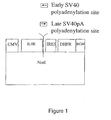
- Figure 1 is a diagram of constructs prepared in Example 1.
- the construct in which the SV40 early polyadenylation signal was included was designated SPA6; that in which the late polyadenylation signal was included was designated SPA4.
- a control construct was designated BGH.
- inventive expression vectors that retain the utility of a selectable, amplifiable marker such as DHFR, while increasing the proportion of mRNAs encoding a desired recombinant protein, are provided herein.
- the inventive expression vectors comprise a polyadenylation signal inserted between a first coding sequence and a second or subsequent coding sequence (referred to as an internal polyadenylation site).
- transcripts originating at the promoter can be polyadenylated following the first coding sequence (monocistronic message) or after the second or subsequent coding sequence (multicistronic message).
- the first coding sequence encodes a protein of interest
- the second (or subsequent) coding sequence encodes a selectable marker.
- a second polyadenylation site follows the second or subsequent coding sequence, and is operably linked thereto. In this embodiment, the internal polyadenylation site thus becomes the first polyadenylation site.
- inventive vectors Because many transcripts encode only the gene of interest and not the selectable marker, the inventive vectors produce less selectable marker protein, and only those transfectants that integrate into more transcriptionally active sites survive the selection process. Accordingly, use of the inventive expression vectors facilitates isolation of transfected pools and clones that express high levels of recombinant protein using lower levels of a selection agent than is possible in the absence of the internal polyadenylation signal.
- An additional benefit of utilizing the inventive expression vectors is that monocistronic messages may be more stable or more efficiently processed than dicistronic messages, potentially leading to increased accumulation of the message encoding the protein of interest, and hence to higher levels of protein production.
- Use of the inventive internal polyadenylation site will thus facilitate production of useful levels of recombinant protein by transfected cells in a relatively short period of time.
- Multicistronic expression vectors allow the coordinated expression of two or more genes (see, for example, Fussenegger et al., Biotechnol Prog 13:733; 1997). Inserting a polyadenylation site after a first cistron would result in high level expression of the first cistron and lower level expression of any following cistrons. Potential applications of this technology would be to facilitate expression of large amounts of a therapeutic protein (or other, desired recombinant proteins) and lower amounts of other proteins such as selectable markers, transcription factors, enzymes involved in protein folding, and other proteins that regulate cell metabolism and expression.
- the polyadenylation site is inserted after the second or third (or subsequent) cistron. This would allow high expression of the first two (or three or more) cistrons, followed by lower expression of the cistron following the internal polyadenylation site.
- This embodiment will find use, for example, in recombinant antibody synthesis where the heavy and light chains are synthesized independently at high levels.
- a tricistronic vector is constructed with the heavy and light chains encoded by the first two cistrons.
- the polyadenlylation site is inserted following the second cistron allowing high level expression of the first two cistrons.
- the selectable marker is expressed from the third cistron (i.e., after the polyadenylation site) and would be expressed at lower levels.
- the term 'expression vector' is understood to describe a vector that comprises various regulatory elements, described in detail below, that are necessary for the expression of recombinant, heterologous proteins in cells.
- the expression vector can include signals appropriate for maintenance in prokaryotic or eukaryotic cells, and/or the expression vector can be integrated into a chromosome.
- Recombinant expression vectors may include a coding sequence encoding a protein of interest (or fragment thereof), ribozymes, ribosomal mRNAs, antisense RNAs and the like.
- the coding sequence encodes a protein or peptide.
- the coding sequence may be synthetic, a cDNA-derived nucleic acid fragment or a nucleic acid fragment isolated by polymerase chain reaction (PCR).
- PCR polymerase chain reaction
- the coding sequence is operably linked to suitable transcriptional or translational regulatory elements derived from mammalian, viral or insect genes. Such regulatory elements include a transcriptional promoter, a sequence encoding suitable mRNA ribosomal binding sites, and sequences which control the termination of transcription and translation (i.e., a polyadenylation signal), as described in detail below.
- Expression vectors may also comprise non-transcribed elements such as a suitable promoter and/or enhancer linked to the gene to be expressed, other 5' or 3' flanking non-transcribed sequences, 5' or 3' non-translated sequences such as ribosome binding sites, a polyadenylation site, splice donor and acceptor sites, and transcriptional termination sequences.
- a suitable promoter and/or enhancer linked to the gene to be expressed other 5' or 3' flanking non-transcribed sequences, 5' or 3' non-translated sequences such as ribosome binding sites, a polyadenylation site, splice donor and acceptor sites, and transcriptional termination sequences.
- An origin of replication that confers the ability to replicate in a host, and a selectable gene to facilitate recognition of transfectants, may also be incorporated.
- DNA regions are operably linked when they are functionally related to each other.
- DNA for a signal peptide secretory leader
- DNA for a polypeptide if it is expressed as a precursor which participates in the secretion of the polypeptide; thus, in the case of DNA encoding secretory leaders, operably linked means contiguous and in reading frame.
- a promoter is operably linked to a coding sequence if it controls the transcription of the sequence; and a ribosome binding site is operably linked to a coding sequence if it is positioned so as to permit translation.
- Dicistronic expression vectors used for the expression of multiple transcripts have been described previously (Kim S.K. and Wold B.J., Cell 42:129, 1985; Kaufman et al. 1991, supra).
- Dicistronic expression vectors comprise two cistrons, or open reading frames, capable of encoding two proteins, for example, a recombinant of interest and a selectable marker.
- An example of such dicistronic expression vector is pCAVDHFR, a derivative of pCD302 (Mosley et al., Cell 1989) containing the coding sequence for mouse DHFR (Subramani et al., Mol. Cell. Biol . 1:854, 1981).
- pCDE vector a derivative of pCAVDHFR containing the murine encephalomyocarditis virus internal ribosomal entry site (nucleotides 260 through 824; Jang and Wimmer, Genes and Dev. 4:1560, 1990) cloned between the adenovirus tripartite leader and the DHFR cDNA coding sequence.
- Other types of expression vectors will also be useful in combination with the invention, for example, those described in U.S. patents 4,634,665 (Axel et al.) and 4,656,134 (Ringold et al.).
- the transcriptional and translational control sequences in expression vectors to be used in transfecting cells may be provided by viral sources.
- promoters and enhancers are derived from Polyoma, Adenovirus 2, Simian Virus 40 (SV40), and human cytomegalovirus.
- Viral genomic promoters, control and/or signal sequences may be utilized to drive expression, provided such control sequences are compatible with the host cell chosen. Examples of such vectors can be constructed as disclosed by Okayama and Berg ( Mol . Cell . Biol . 3:280, 1983).
- Non-viral cellular promoters can also be used (i.e., the beta-globin and the EF-1alpha promoters), depending on the cell type in which the recombinant protein is to be expressed.
- DNA sequences derived from the SV40 viral genome for example, SV40 origin, early and late promoter, enhancer, splice, and polyadenylation sites may be used to provide the other genetic elements required for expression of a heterologous DNA sequence.
- the early and late promoters are particularly useful because both are obtained easily from the virus as a fragment which also contains the SV40 viral origin of replication (Fiers et al., Nature 273:113, 1978). Smaller or larger SV40 fragments may also be used, provided the approximately 250 bp sequence extending from the Hind III site toward the BglI site located in the viral origin of replication is included.
- a polyadenylation site inserted downstream of, and operably linked to, the second cistron (usually, a DNA encoding a selectable marker), is often used to regulate transcription and translation.
- Many such polyadenylation signal are known (see for example, Table 1 below).
- the present invention utilizes an internal polyadenylation signal, eg., one that is inserted between the two cistrons of a dicistronic expression vector, in addition to a polyadenylation signal or other suitable regulatory element downstream of the second cistron.
- Both the early and late polyadenylation signals of SV40 are useful in the instant invention. These sequences are encoded within the 237-base pair fragment between the Bam HI site at nucleotide 2533 and the Bcl I site at nucleotide 2770 of the SV40 genome (Carswell and Alwine, Mol. Cell. Biol . 9:4248; 1989). Carswell and Alwine concluded that, of the two SV40 polyadenylation signals, the late signal was more efficient, most likely because it comprises both downstream and upstream sequence elements that facilitate efficient cleavage and polyadenylation.
- polyadenylation signals are known in the art, and will also be useful in the instant invention. Examples include those shown in Table 1 below. Polyadenylation Signals SV40 late polyA and deletion mutants thereof Schek, N, Cooke, C., and J.C. Alwine (1992): Definition of the upstream efficiency element of the simian virus 40 late polyadenylation signal by using in vitro analysis. Mol . Cell Biol . 12:5386-5393 HIV-1 polyA Klasens, B.I.F., Das, A.T., and B. Berkhout (1998): Inhibition of polyadenylation by stable RNA secondary structure. Nucleic Acids Res .
- polyadenylation sites can be identified or constructed using methods that are known in the art.
- a minimal polyadenylation site is composed of AAUAAA and a second recognition sequence, generally a G/U rich sequence, found about 30 nucleotides downstream.
- the sequences are presented as DNA, rather than RNA, to facilitate preparation of suitable DNAs for incorporation into expression vectors.
- the polyadenylation site is composed of AATAAA, with, for example, a G/T rich region downstream (see for example, nucleotides 123 through 128 and 151 through 187, respectively, of SEQ ID NO:1).
- Both sequences must be present to form an efficient polyadenylation site.
- the purpose of these sites is to recruit specific RNA binding proteins to the RNA.
- the AAUAAA binds cleavage polyadenylation specificity factor (CPSF; Murthy K.G., and Manley J.L. (1995), Genes Dev 9:2672-2683), and second site, frequently a G/U sequence, binds to Cleavage stimulatory factor (CstF; Takagaki Y. and Manley J.L. (1997) Mol Cell Biol 17:3907-3914).
- CPSF cleavage polyadenylation specificity factor
- CstF Cleavage stimulatory factor
- CstF is composed of several proteins, but the protein responsible for RNA binding is CstF-64, a member of the ribonucleoprotein domain family of proteins (Takagaki et al. (1992) Proc Natl Acad Sci USA 89:1403-1407).
- an inducible polyadenylation site can be constructed based on this naturally occurring regulation of polyadenylation usage in B-cell, by controlling the interaction of CstF-64 with an mRNA of choice to induce polyadenylation.
- the CstF-64 may be fused to the RNA binding domain of the MS2 phage coat protein, which binds a specific RNA sequence (ACAUGAGGAUUACCCAUGU; SEQ ID NO:4) distinct from the G/U rich element (Lowary and Uhlenbeck (1987) Nucleic Acids Res. 15:10483+10493).
- the target mRNA would contain an AAUAAA sequence and an MS2 coat protein RNA recognition sequence.
- standard inducible expression systems for example, an Ecdysone-inducible mammalian expression system described by No et al. (1996) Proc Natl Acad Sci USA 93:3346-3351), the usage of the inducible polyA site could be controlled.
- Polyadenylation may also be regulated by developing temperature-sensitive MS2 RNA binding domain mutants.
- MS2 RNA binding domain mutants may be generated using random mutagenesis, and screened for temperature sensitivity.
- the temperature-sensitive MS2 coat protein When used as a fusion partner with CstF-64 as described above, the temperature-sensitive MS2 coat protein would be inactive and fail to bind RNA at 37°C; thus the internal polyA site would not function at this temperature. However, at reduced temperature, for example 32°C, the MS2 coat protein would be active, would recognize the RNA sequence target, and the message would be polyadenylated.
- Temperature regulation would be particularly useful for recombinant protein expression, since reducing the temperature of expression cultures is typically used to increase protein expression.
- Lucas et al. Nucleic Acids Res. 24:1774; 1996.
- Lucas et al. utilized mRNA splice donor and acceptor sites to develop stable clones that produced both a selectable marker and recombinant proteins.
- the vectors they prepared resulted in the transcription of a high proportion of mRNA encoding the desired protein, and a fixed, relatively low level of the selection marker that allowed selection of stable transfectants.
- Transfected host cells are cells which have been transfected (sometimes referred to as 'transformed') with heterologous DNA. Many techniques for transfecting cells are known; in one approach, cells are transfected with expression vectors constructed using recombinant DNA techniques and which contain sequences encoding recombinant proteins. Expressed proteins will preferably be secreted into the culture supernatant, but may be associated with the cell membrane, depending on the particular polypeptide that is expressed. Mammalian host cells are preferred for the instant invention. Various mammalian cell culture systems can be employed to express recombinant protein.
- suitable mammalian host cell lines include the COS-7 lines of monkey kidney cells, described by Gluzman ( Cell 23:175, 1981), CV-1/EBNA (ATCC CRL 10478), L cells, C127, 3T3, Chinese hamster ovary (CHO), HeLa and BHK cell lines.
- DHFR- CHO cells which are auxotrophic for glycine, thymidine and hypoxanthine, and can be transformed to the DHFR+ phenotype using DHFR cDNA as an amplifiable dominant marker.
- DXB11 DHFR- CHO cell line
- Another example of a DHFR- CHO cell line is DG44 (see, for example, Kaufman, R.J., Meth. Enzymology 185:537 (1988)).
- Other cell lines developed for specific selection or amplification schemes will also be useful with the invention.
- eukaryotic cells will also be useful in the present invention, including cells from other vertebrates, and insect cells.
- Those of skill in the art will be able to select appropriate vectors, regulatory elements, transfection and culture schemes according to the needs of their preferred culture system.
- transfection protocols are known in the art, and are reviewed in Kaufman, R.J., supra.
- the transfection protocol chosen will depend on the host cell type and the nature of the protein of interest, and can be chosen based upon routine experimentation.
- the basic requirements of any such protocol are first to introduce DNA encoding the protein of interest into a suitable host cell, and then to identify and isolate host cells which have incorporated the heterologous DNA in a stable, expressible manner.
- Polyethylene-induced fusion of bacterial protoplasts with mammalian cells is another useful method of introducing heterologous DNA.
- Protoplast fusion protocols frequently yield multiple copies of the plasmid DNA integrated into the mammalian host cell genome. This technique requires the selection and amplification marker to be on the same plasmid as the gene of interest.
- Electroporation can also be used to introduce DNA directly into the cytoplasm of a host cell, as described by Potter et al. ( Proc . Natl. Acad . Sci . USA 81:7161, 1988) or Shigekawa and Dower ( BioTechniques 6:742, 1988). Unlike protoplast fusion, electroporation does not require the selection marker and the gene of interest to be on the same plasmid.
- reagents useful for introducing heterologous DNA into a mammalian cell include Lipofectin® Reagent and LipofectamineTM Reagent (Gibco BRL, Gaithersburg, MD). Both of these reagents are commercially available reagents used to form lipid-nucleic acid complexes (or liposomes) which, when applied to cultured cells, facilitate uptake of the nucleic acid into the cells.
- Transfection of cells with heterologous DNA and selection for cells that have taken up the heterologous DNA and express the selectable marker results in a pool of transfected cells.
- Individual cells in these pools will vary in the amount of DNA incorporated and in the chromosomal location of the transfected DNA. After repeated passage, pools frequently lose the ability to express the heterologous protein.
- To generate stable cell lines individual cells can be isolated from the pools and cultured (a process referred to as cloning), a laborious time consuming process. However, in some instances, the pools them selves may be stable (i.e., production of the heterologous recombinant protein remains stable). The ability to select and culture such stable pools of cells would be desirable as it would allow rapid production of relatively large amounts of recombinant protein from mammalian cells.
- a method of amplifying the gene of interest is also desirable for expression of the recombinant protein, and typically involves the use of a selection marker (reviewed in Kaufman, R.J., supra). Resistance to cytotoxic drugs is the characteristic most frequently used as a selection marker, and can be the result of either a dominant trait (i.e., can be used independent of host cell type) or a recessive trait (i.e., useful in particular host cell types that are deficient in whatever activity is being selected for).
- Several amplifiable markers are suitable for use in the inventive expression vectors (for example, as described in Maniatis, Molecular Biology: A Laboratory Manual, Cold Spring Harbor Laboratory, NY, 1989; pgs 16.9-16.14).
- selectable markers for gene amplification in drug-resistant mammalian cells are shown in Table 1 of Kaufman, R.J., supra, and include DHFR-MTX resistance, P-glycoprotein and multiple drug resistance (MDR)-various lipophilic cytoxic agents (i.e., adriamycin, colchicine, vincristine), and adenosine deaminase (ADA)-Xyl-A or adenosine and 2'-deoxycoformycin.
- MDR multiple drug resistance
- ADA adenosine deaminase
- Specific examples of genes that encode selectable markers are those that encode antimetabolite resistance such as the DHFR protein, which confers resistance to methotrexate (Wigler et al ., 1980, Proc . Natl. Acad.
- microbially derived antibiotic resistance genes for example neomycin, kanamycin or hygromycin resistance.
- these selection markers have not been shown to be amplifiable (Kaufman, R.J., supra,).
- Several suitable selection systems exist for mammalian hosts Maniatis supra, pgs 16.9-16.15.
- Co-transfection protocols employing two dominant selectable markers have also been described (Okayama and Berg, Mol Cell Biol 5:1136, 1985).
- MTX is an inhibitor of DHFR that has been shown to cause amplification of endogenous DHFR genes (Alt F.W., et al., J Biol Chem 253:1357, 1978) and transfected DHFR sequences (Wigler M., et al., Proc. Natl. Acad Sci. USA 77:3567, 1980).
- Cells are transfected with DNA comprising the gene of interest and DNA encoding DHFR in a dicistronic expression unit (Kaufman et al., 1991 supra and Kaufman R.J., et al., EMBO J 6:187, 1987).
- Transfected cells are grown in media containing successively greater amounts of MTX, resulting in greater expression of the DHFR gene, as well as the gene of interest.
- Useful regulatory elements can also be included in the plasmids or expression vectors used to transfect mammalian cells.
- the transfection protocol chosen, and the elements selected for use therein, will depend on the type of host cell used. Those of skill in the art are aware of numerous different protocols and host cells, and can select an appropriate system for expression of a desired protein, based on the requirements of their selected cell culture system(s).
- inventive vectors and methods will find use for the expression of a wide variety of recombinant polypeptides.
- polypeptides include cytokines and growth factors, such as Interleukins 1 through 18, the interferons, RANTES, lymphotoxin- ⁇ , Fas ligand, flt-3 ligand, ligand for receptor activator of NF-kappa B (RANKL), TNF-related apoptosis-inducing ligand (TRAIL), CD40 ligand, Ox40 ligand, 4-1BB ligand (and other members of the TNF family), thymic stroma-derived lymphopoietin, granulocyte colony stimulating factor, granulocyte-macrophage colony stimulating factor, mast cell growth factor, stem cell growth factor, epidermal growth factor, growth hormone, tumor necrosis factor, leukemia inhibitory factor, oncostatin-M, and hematopoietic factors such as erythropoiet
- neurotrophic factors such as brain-derived neurotrophic factor, ciliary neurotrophic factor, glial cell-line derived neurotrophic factor and various ligands for cell surface molecules Elk and Hek (such as the ligands for eph-related kinases, or LERKS).
- ligands for cell surface molecules Elk and Hek such as the ligands for eph-related kinases, or LERKS.
- Receptors for any of the aforementioned proteins may also be expressed using the inventive vectors and methods, including both forms of tumor necrosis factor receptor (referred to as p55 and p75), Interleukin-1 receptors (type 1 and 2), Interleukin-4 receptor, Interleukin-15 receptor, Interleukin-17 receptor, Interleukin-18 receptor, granulocyte-macrophage colony stimulating factor receptor, granulocyte colony stimulating factor receptor, receptors for oncostatin-M and leukemia inhibitory factor, receptor activator of NF-kappa B (RANK), receptors for TRAIL, and receptors that comprise death domains, such as Fas or Apoptosis-Inducing Receptor (AIR).
- tumor necrosis factor receptor referred to as p55 and p75
- Interleukin-1 receptors type 1 and 2
- Interleukin-4 receptor Interleukin-15 receptor
- Interleukin-17 receptor Interleukin-17 receptor
- Interleukin-18 receptor Interleukin-18
- CD proteins cluster of differentiation antigens
- CD proteins include cluster of differentiation antigens (referred to as CD proteins), for example, those disclosed in Leukocyte Typing VI ( Proceedings of the VIth International Workshop and Conference ; Kishimoto, Kikutani et al., eds.; Kobe, Japan, 1996), or CD molecules disclosed in subsequent workshops.
- CD proteins include CD27, CD30, CD39, CD40; and ligands thereto (CD27 ligand, CD30 ligand and CD40 ligand).
- TNF receptor family which also includes 41BB and OX40; the ligands are often members of the TNF family (as are 4-1BB ligand and OX40 ligand); accordingly, members of the TNF and TNFR families can also be expressed using the present invention.
- Proteins that are enzymatically active can also be expressed according to the instant invention. Examples include metalloproteinase-disintegrin family members, various kinases (including streptokinase and tissue plasminogen activator as well as Death Associated Kinase Containing Ankyrin Repeats, and IKR 1 and 2), TNF-alpha Converting Enzyme, and numerous other enzymes. Ligands for enzymatically active proteins can also be expressed by applying the instant invention.
- inventive vectors and methods are also useful for expression of other types of recombinant proteins, including immunoglobulin molecules or portions thereof, and chimeric antibodies (i.e., an antibody having a human constant region couples to a murine antigen binding region) or fragments thereof.
- DNA encoding immunoglobulin molecules can be manipulated to yield DNAs capable of encoding recombinant proteins such as single chain antibodies, antibodies with enhanced affinity, or other antibody-based polypeptides (see, for example, Larrick et al., Biotechnology 7:934-938, 1989; Reichmann et al., Nature 332:323-327, 1988; Roberts et al., Nature 328:731-734, 1987; Verhoeyen et al., Science 239:1534-1536, 1988; Chaudhary et al., Nature 339:394-397, 1989).
- fusion proteins can also be expressed using the inventive methods and vectors.
- fusion proteins include proteins expressed as fusion with a portion of an immunoglobulin molecule, proteins expressed as fusion proteins with a zipper moiety, and novel polyfunctional proteins such as a fusion proteins of a cytokine and a growth factor (i.e., GM-CSF and IL-3, MGF and IL-3).
- novel polyfunctional proteins such as a fusion proteins of a cytokine and a growth factor (i.e., GM-CSF and IL-3, MGF and IL-3).
- WO 93/08207 and WO 96/40918 describe the preparation of various soluble oligomeric forms of a molecule referred to as CD40L, including an immunoglobulin fusion protein and a zipper fusion protein, respectively; the techniques discussed therein are readily applicable to other proteins.
- DNAs based on one or more expressed sequence tag (EST) from a library of ESTs can be prepared, inserted into the inventive vector and expressed to obtain recombinant polypeptide.
- DNAs isolated by use of ESTs i.e., by PCR or the application of other cloning techniques
- Information on the aforementioned polypeptides, as well as many others, can be obtained from a variety of public sources, including electronic databases such as GenBank. A particularly useful site is the website of the National Center for Biotechnology Information/National Library of Medicine/ National Institutes of Health (www.ncbi.nlm.nih.gov). Those of ordinary skill in the art are able to obtain information needed to express a desired polypeptide and apply the techniques described herein by routine experimentation.
- a protein of interest excludes genes encoding proteins that are typically used as selectable markers in cell culture such as auxotrophic, antimetabolite and/or antibiotic markers.
- the invention does include the use of a selectable marker as an aid in selecting cells and/or amplifying clones that are genetically engineered to express a gene of interest.
- the selectable marker gene is positioned adjacent to the gene of interest such that selection and/or amplification of the marker gene will select and/or amplify the adjacent gene.
- sIL-4R Human IL-4R cDNA and protein are disclosed in US Patents 5,840,869, issued November 24, 1998; 5;599,905, issued February 4, 1997 and 5,856,296, issued January 5, 1999.
- SEQ ID NOs:5 and 6 present the nucleotide and amino acid sequence (respectively) of human IL-4R.
- Amino acids -25 through -1 comprise a putative leader peptide; cleavage has been found to occur between amino acids -1 and 1, and between amino acids -3 and -2.
- Amino acids 208 through 231 form a transmembrane region.
- DNA encoding sIL-4R from amino acid -25 to amino acid 207 was used in the expression vectors.
- the original expression vector, pCAVDHFR is a derivative of pCD302 (Mosley et al., Cell 89:335-348; 1989) containing the coding sequence for mouse DHFR (Subramani et al., Mol. Cell. Biol . 1:854, 1981).
- the pCDE vector is a derivative of pCAVDHFR containing the murine encephalomyocarditis virus IRES (nucleotides 260 through 824; Jang and Wimmer, Genes and Dev. 4:1560, 1990) cloned between the adenovirus tripartite leader and the DHFR cDNA coding sequence.
- IRES murine encephalomyocarditis virus
- the bovine growth hormone polyadenylation site was placed 3' of the DHFR gene.
- the plasmid pBGH is a standard dicistronic vector and serves as the control.
- the alternate polyadenylation vectors of the present invention were constructed by inserting various polyadenylation sites between the IL-4R and the IRES.
- the plasmids pSPA4, pSPA6, and pMLPA were constructed by inserting the late SV40 polyA site, the early SV40 polyA site, and a deletion mutant of the late SV40 polyA site, respectively.
- the deletion mutant late SV40 polyA site was constructed using PCR to isolate a fragment of the late SV40 polyA, nucleotides 80 through 222 of SEQ ID NO:1.
- a diagram of the various constructs is shown in Figure 1; the nucleotide sequences of the various polyA sites are shown in the Sequence Listing (SV40 late: SEQ ID NO:1; BGH: SEQ ID NO:2; SV40 early: SEQ ID NO:3).
- the plasmids were used in standard transfections to prepare transfected cells expressing IL-4R.
- Dihydrofolate reductase (DHFR) deficient Chinese hamster ovary (CHO) cells DXB11 (Chasin and Urlaub, supra) cells were adapted to a DMEM:F12 based serum free medium supplemented with 2mM L-glutamine, 90mM thymidine, 90 mM hypoxanthine, 120 mM glycine, 5% Hy-soy peptone, and 100 mg/L insulin like growth factor 1 (Rassmussen et al., Cytotechnology 28:31-42, 1998).
- DHFR selection and methotrexate amplifications the cells were cultured in the same medium lacking thymidine hypoxanthine, and glycine.
- methotrexate selection methotrexate (MTX; Lederle Laboratories, Pearl River, NY) is added to the selection medium at appropriate concentrations. If neomycin selection is employed, 400 ⁇ g/ml of G418 (Gibco, Grand Island, NY) is included in the medium.
- the cells are transfected using calcium phosphate transfection (Wigler et al. supra), or LipofectamineTM transfection as recommended by the supplier (Gibco BRL, Gaithersburg, MD).
- LipofectamineTM Reagent is a commercially available reagent used to form lipid-nucleic acid complexes (or liposomes) which, when applied to cultured cells, facilitate uptake of the nucleic acid into the cells.
- This example describes a semi-quantitive polymerase chain reaction (PCR) technique that was used to confirm that the IL-4R and DHFR messages encoded by the plasmids described above were made and provide information on the relative levels of the various mRNAs.
- Cells were transfected and cultured as described, and mRNA was obtained using an RNeasy total RNA isolation kit (Quiagen, Chatsworth, CA), and treated with RNAse-free DNAse to diminish DNA contamination. Oligo-dT primers were used to prepare the first strand cDNA; a control primer for actin was included to facilitate quantification.
- PCR polymerase chain reaction
- the first strand was amplified and the amount of input RNA determined using a GeneAmp 5700 from PE Biosystems (Foster City, CA). Thirty cycles of PCR were performed and real-time quantitation of the PCR products was achieved using the doublestranded DNA binding dye SYBR Green I (PE Biosystems, Foster City, CA). A standard curve was prepared using known amounts of actin cDNA, IL-4R cDNA, and DHFR cDNA. The amount of cDNA in each sample was normalized using the amount of actin cDNA. The relative amounts of IL-4R and DHFR in each sample are shown in Table 2. Construct IL-4R/Actin DHFR/Actin pBGH 4.2 7.4 pMPLA 32.5 2.0
- This example describes an enzyme-linked immunosorbent assay (ELISA) that can be used to monitor production of recombinant proteins.
- the ELISA is well known in the art; adaptations of the techniques disclosed in Engvall et al., Immunochem. 8:871, 1971 and in U.S. Patent 4,703,004 have been used to monitor production of various recombinant proteins.
- a first antibody specific for a protein of interest usually a monoclonal antibody
- a substrate most often, a 96-well microtiter plate
- a series of dilutions of a known concentration of the protein is also added and incubated, to yield a standard curve.
- a second antibody to the protein is added. The second antibody is directed against a different epitope of the protein, and may be either a monoclonal antibody or a polyclonal antibody.
- a conjugate reagent comprising an antibody that binds to the second antibody conjugated to an enzyme such as horse radish peroxidase (HRP) is added, either after a second wash step to remove unbound protein, or at the same time the second antibody is added. Following a suitable incubation period, unbound conjugate reagent is removed by washing, and a developing solution containing the substrate for the enzyme conjugate is added to the plate, causing color to develop. The optical density readings at the correct wavelength give numerical values for each well. The values for the sample are compared with the standard curve values, permitting levels of the desired protein to be quantitated.
- HRP horse radish peroxidase
- MAb monoclonal antibodies directed to different epitopes of IL-4R
- HRP-M8 peroxidase conjugated second antibody
- This example describes the transfection of CHO cells with various constructs and compares the production of sIL-4R by pools of transfected cells.
- the various sIL-4R expression plasmids were transfected into CHO cells using LipofectamineTM. Cells were first selected for the DHFR+ phenotype, then pooled and selected at different MTX concentrations. Pools of cells were grown for two to three days, then supernatant fluid harvested and analyzed by ELISA as described in Example 3, and specific productivity (defined as ⁇ g of protein produced per day by 10 6 cells) was determined. The results of a representative experiment are shown in Table 3 below.
- This example illustrates the production of sIL-4R by pools of transfected CHO cells over time.
- a high level of expression was stable over many passages.
- Four independent transfections with the MLPA plasmid were performed substantially as described previously, and passaged over 20 generations. Expression was monitored from each culture individually, and specific productivity results were averaged; the averages are shown in Table 4.
- Passage number Specific Productivity ⁇ g/10 6 cells/day Standard deviation 5 1.22 0.41 10 1.26 0.39 15 1.18 0.55 18 1.09 0.49 20 1.02 0.62
- This example describes the preparation of several expression vectors for the expression of recombinant proteins.
- An expression vector encoding a marker protein secreted alkaline phosphatase or SEAP; Berger et al., Gene 66:1, 1988
- SEAP secreted alkaline phosphatase
- a polyA site other than BGH may be used as the terminal polyA site.
- Several changes are made to the IRES sequence within the expression vectors. As discussed in Davies and Kaufman ( J . Virology 66:1924; 1992), the efficiency of translation of a second gene can be manipulated by altering the sequence of the IRES at or near the junction of the IRES with the second gene, in this case, DHFR.
- Table 8 depicts the nucleotide sequence added to the IRES; the first base indicated in the Table is directly after nucleotide 566 of the EMCV IRES (SEQ ID NO:7). Translational start sites (ATG) are underlined; the 3'ATG is the first ATG of muDHFR.
- Appending the nucleotide sequences to the IRES will modulate expression of DHFR sufficiently to increase the percentage of cells transfected without significantly decreasing the levels of the desired recombinant protein.
- the vectors (including control vectors) are used in standard transfections to prepare transfected cells expressing SEAP substantially as described herein. Expression levels of the marker protein, SEAP, are determined using a quantitative assay such as that available from CLONTECH Laboratories (Palo Alto, CA, USA; Yang et al., Biotechniques 2:1110, 1997).
Landscapes
- Health & Medical Sciences (AREA)
- Genetics & Genomics (AREA)
- Life Sciences & Earth Sciences (AREA)
- Chemical & Material Sciences (AREA)
- Organic Chemistry (AREA)
- Engineering & Computer Science (AREA)
- Zoology (AREA)
- Biotechnology (AREA)
- General Engineering & Computer Science (AREA)
- Bioinformatics & Cheminformatics (AREA)
- Wood Science & Technology (AREA)
- Biomedical Technology (AREA)
- Biochemistry (AREA)
- Molecular Biology (AREA)
- General Health & Medical Sciences (AREA)
- Biophysics (AREA)
- Physics & Mathematics (AREA)
- Microbiology (AREA)
- Plant Pathology (AREA)
- Cell Biology (AREA)
- Immunology (AREA)
- Toxicology (AREA)
- Gastroenterology & Hepatology (AREA)
- Medicinal Chemistry (AREA)
- Proteomics, Peptides & Aminoacids (AREA)
- Preparation Of Compounds By Using Micro-Organisms (AREA)
- Micro-Organisms Or Cultivation Processes Thereof (AREA)
- Peptides Or Proteins (AREA)
Applications Claiming Priority (3)
| Application Number | Priority Date | Filing Date | Title |
|---|---|---|---|
| US15917799P | 1999-10-13 | 1999-10-13 | |
| US159177P | 1999-10-13 | ||
| PCT/US2000/028431 WO2001027299A1 (en) | 1999-10-13 | 2000-10-12 | Vectors and methods for recombinant protein expression |
Publications (2)
| Publication Number | Publication Date |
|---|---|
| EP1222298A1 EP1222298A1 (en) | 2002-07-17 |
| EP1222298B1 true EP1222298B1 (en) | 2005-12-07 |
Family
ID=22571409
Family Applications (1)
| Application Number | Title | Priority Date | Filing Date |
|---|---|---|---|
| EP00970900A Expired - Lifetime EP1222298B1 (en) | 1999-10-13 | 2000-10-12 | Vectors and methods for recombinant protein expression |
Country Status (13)
| Country | Link |
|---|---|
| US (2) | US6632637B1 (https=) |
| EP (1) | EP1222298B1 (https=) |
| JP (1) | JP4660046B2 (https=) |
| AT (1) | ATE312186T1 (https=) |
| AU (1) | AU774068B2 (https=) |
| CA (1) | CA2386180C (https=) |
| CY (1) | CY1105336T1 (https=) |
| DE (1) | DE60024659T2 (https=) |
| DK (1) | DK1222298T3 (https=) |
| ES (1) | ES2252070T3 (https=) |
| IL (2) | IL148785A0 (https=) |
| NZ (1) | NZ518388A (https=) |
| WO (1) | WO2001027299A1 (https=) |
Families Citing this family (26)
| Publication number | Priority date | Publication date | Assignee | Title |
|---|---|---|---|---|
| US20050005310A1 (en) * | 1999-07-12 | 2005-01-06 | Genentech, Inc. | Expression vectors and methods |
| US6632637B1 (en) * | 1999-10-13 | 2003-10-14 | Immunex Corporation | Vectors and methods for recombinant protein expression |
| WO2003035887A1 (en) * | 2001-09-20 | 2003-05-01 | Immunex Corporation | Selection of cells expressing heteromeric polypeptides |
| US20030157641A1 (en) * | 2001-11-16 | 2003-08-21 | Idec Pharmaceuticals Corporation | Polycistronic expression of antibodies |
| CA2480121C (en) | 2002-03-27 | 2012-02-28 | Immunex Corporation | Methods for increasing polypeptide production |
| WO2004046340A2 (en) * | 2002-11-14 | 2004-06-03 | Genentech, Inc. | Intron fusion construct and method of using for selecting high-expressing production cell lines |
| KR100533794B1 (ko) * | 2003-10-02 | 2005-12-07 | 주식회사 프로젠 | 인간 난포자극 호르몬을 대량으로 생산하는 방법 |
| WO2005123915A1 (en) * | 2004-06-21 | 2005-12-29 | Novozymes A/S | Stably maintained multiple copies of at least two orf in the same orientation |
| WO2006012414A2 (en) * | 2004-07-20 | 2006-02-02 | Critical Therapeutics, Inc. | Novel polyadenylation signal for use in expression vectors |
| JPWO2006093053A1 (ja) * | 2005-03-02 | 2008-08-07 | アステラス製薬株式会社 | ヒストンデアセチラーゼ阻害剤の新規pdマーカー |
| MX2008000985A (es) | 2005-07-21 | 2008-04-07 | Abbott Lab | Expresion de gen multiple que incluye construcciones y metodos sorf (cuadro de lectura abierta simple) con poliproteinas, pro-proteinas y proteolisis. |
| AU2007294731B2 (en) | 2006-09-13 | 2014-04-17 | Abbvie Inc. | Cell culture improvements |
| EP2500416A1 (en) | 2006-09-13 | 2012-09-19 | Abbott Laboratories | Cell culture improvements |
| CA2716801A1 (en) * | 2008-03-12 | 2009-09-17 | Wyeth Llc | Methods for identifying cells suitable for large-scale production of recombinant proteins |
| WO2010114270A2 (ko) | 2009-03-31 | 2010-10-07 | (주)셀트리온 | 고발현 재조합 세포주의 선별 방법 |
| WO2011053699A1 (en) * | 2009-10-30 | 2011-05-05 | Abbott Laboratories | Sorf constructs and multiple gene expression |
| WO2011113841A1 (en) * | 2010-03-16 | 2011-09-22 | Robert Steinfeld | Eukaryotic vector |
| WO2012018607A2 (en) * | 2010-07-26 | 2012-02-09 | Adv Biologics, Inc. | Vectors and methods for recombinant protein expression |
| CN103201382A (zh) * | 2010-11-08 | 2013-07-10 | 日本化学研究株式会社 | 新表达载体 |
| IL210093A0 (en) * | 2010-12-19 | 2011-06-30 | David Helman | Membrane bound reporter molecules and their use in cell sorting |
| JP6463724B2 (ja) | 2013-03-15 | 2019-02-06 | バイエル クロップサイエンス エルピーBayer Cropscience Lp | 構成ダイズプロモーター |
| AU2015243535A1 (en) | 2014-04-08 | 2016-11-03 | University Of Southern California | Polypeptide compositions with Type VII collagen fibronectin Type Ill- like repeats and treatment methods for wound closure and healing |
| CN107043773B (zh) * | 2017-02-08 | 2018-09-18 | 四川丰讯科技发展有限公司 | 一种提高哺乳动物细胞中外源基因表达水平的基因片段、重组载体及其用途 |
| CA3117961A1 (en) | 2018-10-29 | 2020-05-07 | Spin Therapeutics, Llc | Compositions and methods for alpha-1-antitrypsin disorders |
| KR102490457B1 (ko) * | 2019-11-26 | 2023-01-19 | 한국생명공학연구원 | 단백질 발현용 mRNA 구조체 및 이의 용도 |
| KR20230124578A (ko) | 2020-12-22 | 2023-08-25 | 암젠 인크 | 세포 배양 방법 |
Family Cites Families (10)
| Publication number | Priority date | Publication date | Assignee | Title |
|---|---|---|---|---|
| US4965196A (en) * | 1983-01-19 | 1990-10-23 | Genentech, Inc. | Polycistronic expression vector construction |
| US4937190A (en) * | 1987-10-15 | 1990-06-26 | Wisconsin Alumni Research Foundation | Translation enhancer |
| EP0555203B1 (en) * | 1988-12-08 | 1995-10-18 | Abbott Laboratories | Expression induction method employing dhfr gene |
| EP0662128B1 (en) * | 1992-09-28 | 2005-11-23 | Chiron Corporation | Methods and compositions for controlling translation of hcv proteins |
| US5698446A (en) * | 1994-09-07 | 1997-12-16 | Chiron Corporation | Methods and compositions for inhibiting production of replication competent virus |
| DE19514310A1 (de) * | 1995-04-18 | 1996-10-24 | Univ Ludwigs Albert | Vektoren zur Transfektion von eukaryotischen Zellen, deren Verwendung und damit transfizierte Zielzellen |
| GB9517263D0 (en) | 1995-08-23 | 1995-10-25 | Cancer Res Campaign Tech | Expression systems |
| ES2227669T3 (es) | 1996-01-11 | 2005-04-01 | Immunex Corporation | Elementos de secuencia que aumentan la expresion (ease) para sistemas de expresion de eurocariotas. |
| EP0956301A2 (en) * | 1996-10-18 | 1999-11-17 | Valentis Inc. | Il-12 gene expression and delivery systems and uses |
| US6632637B1 (en) * | 1999-10-13 | 2003-10-14 | Immunex Corporation | Vectors and methods for recombinant protein expression |
-
2000
- 2000-10-12 US US09/687,050 patent/US6632637B1/en not_active Expired - Lifetime
- 2000-10-12 WO PCT/US2000/028431 patent/WO2001027299A1/en not_active Ceased
- 2000-10-12 ES ES00970900T patent/ES2252070T3/es not_active Expired - Lifetime
- 2000-10-12 NZ NZ518388A patent/NZ518388A/en unknown
- 2000-10-12 JP JP2001530502A patent/JP4660046B2/ja not_active Expired - Lifetime
- 2000-10-12 DE DE60024659T patent/DE60024659T2/de not_active Expired - Lifetime
- 2000-10-12 CA CA002386180A patent/CA2386180C/en not_active Expired - Fee Related
- 2000-10-12 EP EP00970900A patent/EP1222298B1/en not_active Expired - Lifetime
- 2000-10-12 IL IL14878500A patent/IL148785A0/xx active IP Right Grant
- 2000-10-12 AT AT00970900T patent/ATE312186T1/de not_active IP Right Cessation
- 2000-10-12 AU AU80216/00A patent/AU774068B2/en not_active Ceased
- 2000-10-12 DK DK00970900T patent/DK1222298T3/da active
-
2002
- 2002-03-20 IL IL148785A patent/IL148785A/en not_active IP Right Cessation
-
2003
- 2003-10-10 US US10/683,775 patent/US20040063186A1/en not_active Abandoned
-
2006
- 2006-02-22 CY CY20061100258T patent/CY1105336T1/el unknown
Also Published As
| Publication number | Publication date |
|---|---|
| US6632637B1 (en) | 2003-10-14 |
| IL148785A0 (en) | 2002-09-12 |
| IL148785A (en) | 2007-09-20 |
| CA2386180A1 (en) | 2001-04-19 |
| AU774068B2 (en) | 2004-06-17 |
| AU8021600A (en) | 2001-04-23 |
| WO2001027299A1 (en) | 2001-04-19 |
| CA2386180C (en) | 2010-03-09 |
| DK1222298T3 (da) | 2006-04-10 |
| DE60024659T2 (de) | 2006-08-17 |
| JP4660046B2 (ja) | 2011-03-30 |
| EP1222298A1 (en) | 2002-07-17 |
| JP2003511079A (ja) | 2003-03-25 |
| NZ518388A (en) | 2003-10-31 |
| US20040063186A1 (en) | 2004-04-01 |
| CY1105336T1 (el) | 2010-03-03 |
| ATE312186T1 (de) | 2005-12-15 |
| DE60024659D1 (de) | 2006-01-12 |
| ES2252070T3 (es) | 2006-05-16 |
Similar Documents
| Publication | Publication Date | Title |
|---|---|---|
| EP1222298B1 (en) | Vectors and methods for recombinant protein expression | |
| EP0770136B1 (en) | Method for selecting high-expressing host cells | |
| EP0873405B1 (en) | Expression augmenting sequence elements (ease) for eukaryotic expression systems | |
| EP3075858B1 (en) | Mammalian expression vector | |
| AU770119B2 (en) | Methods for making recombinant cells | |
| JP4817514B2 (ja) | 新規動物細胞用ベクターおよびその使用 | |
| CN101687910A (zh) | 具有高效分泌信号序列的哺乳动物表达载体 | |
| US9260721B2 (en) | Expression vector and methods of producing high levels of proteins | |
| EP1025245B1 (en) | Rapid generation of stable mammalian cell lines producing high levels of recombinant proteins | |
| US20050019925A1 (en) | Intron fusion construct and method of using for selecting high-expressing production cell lines | |
| US20190309323A1 (en) | Promoter with an enriched cytosine-guanine dinucleotide region, vectors, cellular lines, method for producing recombinant protein | |
| AU8021600B2 (https=) | ||
| EP3146057B1 (en) | Method for production of polypeptides | |
| HK1112020B (en) | Expression vector and methods of producing high levels of proteins |
Legal Events
| Date | Code | Title | Description |
|---|---|---|---|
| PUAI | Public reference made under article 153(3) epc to a published international application that has entered the european phase |
Free format text: ORIGINAL CODE: 0009012 |
|
| 17P | Request for examination filed |
Effective date: 20020404 |
|
| AK | Designated contracting states |
Kind code of ref document: A1 Designated state(s): AT BE CH CY DE DK ES FI FR GB GR IE IT LI LU MC NL PT SE |
|
| AX | Request for extension of the european patent |
Free format text: AL;LT;LV;MK;RO;SI |
|
| 17Q | First examination report despatched |
Effective date: 20030502 |
|
| GRAP | Despatch of communication of intention to grant a patent |
Free format text: ORIGINAL CODE: EPIDOSNIGR1 |
|
| RAP1 | Party data changed (applicant data changed or rights of an application transferred) |
Owner name: IMMUNEX CORPORATION |
|
| GRAS | Grant fee paid |
Free format text: ORIGINAL CODE: EPIDOSNIGR3 |
|
| RAP1 | Party data changed (applicant data changed or rights of an application transferred) |
Owner name: IMMUNEX CORPORATION |
|
| GRAA | (expected) grant |
Free format text: ORIGINAL CODE: 0009210 |
|
| AK | Designated contracting states |
Kind code of ref document: B1 Designated state(s): AT BE CH CY DE DK ES FI FR GB GR IE IT LI LU MC NL PT SE |
|
| PG25 | Lapsed in a contracting state [announced via postgrant information from national office to epo] |
Ref country code: IT Free format text: LAPSE BECAUSE OF FAILURE TO SUBMIT A TRANSLATION OF THE DESCRIPTION OR TO PAY THE FEE WITHIN THE PRESCRIBED TIME-LIMIT;WARNING: LAPSES OF ITALIAN PATENTS WITH EFFECTIVE DATE BEFORE 2007 MAY HAVE OCCURRED AT ANY TIME BEFORE 2007. THE CORRECT EFFECTIVE DATE MAY BE DIFFERENT FROM THE ONE RECORDED. Effective date: 20051207 |
|
| REG | Reference to a national code |
Ref country code: GB Ref legal event code: FG4D |
|
| REG | Reference to a national code |
Ref country code: CH Ref legal event code: EP |
|
| REG | Reference to a national code |
Ref country code: IE Ref legal event code: FG4D |
|
| REF | Corresponds to: |
Ref document number: 60024659 Country of ref document: DE Date of ref document: 20060112 Kind code of ref document: P |
|
| REG | Reference to a national code |
Ref country code: SE Ref legal event code: TRGR |
|
| REG | Reference to a national code |
Ref country code: CH Ref legal event code: NV Representative=s name: KIRKER & CIE SA |
|
| REG | Reference to a national code |
Ref country code: DK Ref legal event code: T3 |
|
| REG | Reference to a national code |
Ref country code: GR Ref legal event code: EP Ref document number: 20060400598 Country of ref document: GR |
|
| REG | Reference to a national code |
Ref country code: ES Ref legal event code: FG2A Ref document number: 2252070 Country of ref document: ES Kind code of ref document: T3 |
|
| ET | Fr: translation filed | ||
| PLBE | No opposition filed within time limit |
Free format text: ORIGINAL CODE: 0009261 |
|
| STAA | Information on the status of an ep patent application or granted ep patent |
Free format text: STATUS: NO OPPOSITION FILED WITHIN TIME LIMIT |
|
| 26N | No opposition filed |
Effective date: 20060908 |
|
| PGFP | Annual fee paid to national office [announced via postgrant information from national office to epo] |
Ref country code: PT Payment date: 20080918 Year of fee payment: 9 |
|
| PGFP | Annual fee paid to national office [announced via postgrant information from national office to epo] |
Ref country code: NL Payment date: 20081005 Year of fee payment: 9 |
|
| PGFP | Annual fee paid to national office [announced via postgrant information from national office to epo] |
Ref country code: DK Payment date: 20081013 Year of fee payment: 9 Ref country code: IE Payment date: 20081015 Year of fee payment: 9 Ref country code: LU Payment date: 20081016 Year of fee payment: 9 Ref country code: MC Payment date: 20081002 Year of fee payment: 9 |
|
| PGFP | Annual fee paid to national office [announced via postgrant information from national office to epo] |
Ref country code: AT Payment date: 20081013 Year of fee payment: 9 Ref country code: FI Payment date: 20081014 Year of fee payment: 9 |
|
| PGFP | Annual fee paid to national office [announced via postgrant information from national office to epo] |
Ref country code: BE Payment date: 20081009 Year of fee payment: 9 Ref country code: CY Payment date: 20080924 Year of fee payment: 9 Ref country code: SE Payment date: 20081022 Year of fee payment: 9 |
|
| PGFP | Annual fee paid to national office [announced via postgrant information from national office to epo] |
Ref country code: GR Payment date: 20080919 Year of fee payment: 9 |
|
| REG | Reference to a national code |
Ref country code: PT Ref legal event code: MM4A Free format text: LAPSE DUE TO NON-PAYMENT OF FEES Effective date: 20100412 |
|
| BERE | Be: lapsed |
Owner name: *IMMUNEX CORP. Effective date: 20091031 |
|
| REG | Reference to a national code |
Ref country code: NL Ref legal event code: V1 Effective date: 20100501 |
|
| PG25 | Lapsed in a contracting state [announced via postgrant information from national office to epo] |
Ref country code: MC Free format text: LAPSE BECAUSE OF NON-PAYMENT OF DUE FEES Effective date: 20091031 |
|
| EUG | Se: european patent has lapsed | ||
| REG | Reference to a national code |
Ref country code: DK Ref legal event code: EBP |
|
| REG | Reference to a national code |
Ref country code: IE Ref legal event code: MM4A |
|
| PG25 | Lapsed in a contracting state [announced via postgrant information from national office to epo] |
Ref country code: NL Free format text: LAPSE BECAUSE OF NON-PAYMENT OF DUE FEES Effective date: 20100501 Ref country code: PT Free format text: LAPSE BECAUSE OF NON-PAYMENT OF DUE FEES Effective date: 20100412 |
|
| PG25 | Lapsed in a contracting state [announced via postgrant information from national office to epo] |
Ref country code: FI Free format text: LAPSE BECAUSE OF NON-PAYMENT OF DUE FEES Effective date: 20091012 Ref country code: AT Free format text: LAPSE BECAUSE OF NON-PAYMENT OF DUE FEES Effective date: 20091012 |
|
| PG25 | Lapsed in a contracting state [announced via postgrant information from national office to epo] |
Ref country code: GR Free format text: LAPSE BECAUSE OF NON-PAYMENT OF DUE FEES Effective date: 20100504 Ref country code: IE Free format text: LAPSE BECAUSE OF NON-PAYMENT OF DUE FEES Effective date: 20091012 Ref country code: BE Free format text: LAPSE BECAUSE OF NON-PAYMENT OF DUE FEES Effective date: 20091031 Ref country code: CY Free format text: LAPSE BECAUSE OF NON-PAYMENT OF DUE FEES Effective date: 20091012 |
|
| PG25 | Lapsed in a contracting state [announced via postgrant information from national office to epo] |
Ref country code: DK Free format text: LAPSE BECAUSE OF NON-PAYMENT OF DUE FEES Effective date: 20091031 |
|
| PG25 | Lapsed in a contracting state [announced via postgrant information from national office to epo] |
Ref country code: LU Free format text: LAPSE BECAUSE OF NON-PAYMENT OF DUE FEES Effective date: 20091012 |
|
| PG25 | Lapsed in a contracting state [announced via postgrant information from national office to epo] |
Ref country code: SE Free format text: LAPSE BECAUSE OF NON-PAYMENT OF DUE FEES Effective date: 20091013 |
|
| PGFP | Annual fee paid to national office [announced via postgrant information from national office to epo] |
Ref country code: ES Payment date: 20130911 Year of fee payment: 14 |
|
| PGFP | Annual fee paid to national office [announced via postgrant information from national office to epo] |
Ref country code: IT Payment date: 20131015 Year of fee payment: 14 |
|
| PG25 | Lapsed in a contracting state [announced via postgrant information from national office to epo] |
Ref country code: IT Free format text: LAPSE BECAUSE OF NON-PAYMENT OF DUE FEES Effective date: 20141012 |
|
| REG | Reference to a national code |
Ref country code: FR Ref legal event code: PLFP Year of fee payment: 16 |
|
| REG | Reference to a national code |
Ref country code: ES Ref legal event code: FD2A Effective date: 20151127 |
|
| PG25 | Lapsed in a contracting state [announced via postgrant information from national office to epo] |
Ref country code: ES Free format text: LAPSE BECAUSE OF NON-PAYMENT OF DUE FEES Effective date: 20141013 |
|
| REG | Reference to a national code |
Ref country code: FR Ref legal event code: PLFP Year of fee payment: 17 |
|
| REG | Reference to a national code |
Ref country code: FR Ref legal event code: PLFP Year of fee payment: 18 |
|
| REG | Reference to a national code |
Ref country code: FR Ref legal event code: PLFP Year of fee payment: 19 |
|
| PGFP | Annual fee paid to national office [announced via postgrant information from national office to epo] |
Ref country code: FR Payment date: 20190913 Year of fee payment: 20 |
|
| PGFP | Annual fee paid to national office [announced via postgrant information from national office to epo] |
Ref country code: DE Payment date: 20191001 Year of fee payment: 20 |
|
| PGFP | Annual fee paid to national office [announced via postgrant information from national office to epo] |
Ref country code: CH Payment date: 20191015 Year of fee payment: 20 |
|
| PGFP | Annual fee paid to national office [announced via postgrant information from national office to epo] |
Ref country code: GB Payment date: 20191010 Year of fee payment: 20 |
|
| REG | Reference to a national code |
Ref country code: DE Ref legal event code: R071 Ref document number: 60024659 Country of ref document: DE |
|
| REG | Reference to a national code |
Ref country code: CH Ref legal event code: PL |
|
| REG | Reference to a national code |
Ref country code: GB Ref legal event code: PE20 Expiry date: 20201011 |
|
| PG25 | Lapsed in a contracting state [announced via postgrant information from national office to epo] |
Ref country code: GB Free format text: LAPSE BECAUSE OF EXPIRATION OF PROTECTION Effective date: 20201011 |