EP1201648B1 - Carbamate derivatives and agricultural/horticultural bactericides - Google Patents
Carbamate derivatives and agricultural/horticultural bactericides Download PDFInfo
- Publication number
- EP1201648B1 EP1201648B1 EP00949984A EP00949984A EP1201648B1 EP 1201648 B1 EP1201648 B1 EP 1201648B1 EP 00949984 A EP00949984 A EP 00949984A EP 00949984 A EP00949984 A EP 00949984A EP 1201648 B1 EP1201648 B1 EP 1201648B1
- Authority
- EP
- European Patent Office
- Prior art keywords
- group
- alkyl
- different
- same
- alkylamino
- Prior art date
- Legal status (The legal status is an assumption and is not a legal conclusion. Google has not performed a legal analysis and makes no representation as to the accuracy of the status listed.)
- Expired - Lifetime
Links
- 0 C*c1nc(N)ccc1 Chemical compound C*c1nc(N)ccc1 0.000 description 6
- COPNNCNAIOAIDF-UHFFFAOYSA-N CCc1cccnc1C#N Chemical compound CCc1cccnc1C#N COPNNCNAIOAIDF-UHFFFAOYSA-N 0.000 description 1
Classifications
-
- C—CHEMISTRY; METALLURGY
- C07—ORGANIC CHEMISTRY
- C07D—HETEROCYCLIC COMPOUNDS
- C07D213/00—Heterocyclic compounds containing six-membered rings, not condensed with other rings, with one nitrogen atom as the only ring hetero atom and three or more double bonds between ring members or between ring members and non-ring members
- C07D213/02—Heterocyclic compounds containing six-membered rings, not condensed with other rings, with one nitrogen atom as the only ring hetero atom and three or more double bonds between ring members or between ring members and non-ring members having three double bonds between ring members or between ring members and non-ring members
- C07D213/04—Heterocyclic compounds containing six-membered rings, not condensed with other rings, with one nitrogen atom as the only ring hetero atom and three or more double bonds between ring members or between ring members and non-ring members having three double bonds between ring members or between ring members and non-ring members having no bond between the ring nitrogen atom and a non-ring member or having only hydrogen or carbon atoms directly attached to the ring nitrogen atom
- C07D213/24—Heterocyclic compounds containing six-membered rings, not condensed with other rings, with one nitrogen atom as the only ring hetero atom and three or more double bonds between ring members or between ring members and non-ring members having three double bonds between ring members or between ring members and non-ring members having no bond between the ring nitrogen atom and a non-ring member or having only hydrogen or carbon atoms directly attached to the ring nitrogen atom with substituted hydrocarbon radicals attached to ring carbon atoms
- C07D213/28—Radicals substituted by singly-bound oxygen or sulphur atoms
- C07D213/30—Oxygen atoms
-
- A—HUMAN NECESSITIES
- A01—AGRICULTURE; FORESTRY; ANIMAL HUSBANDRY; HUNTING; TRAPPING; FISHING
- A01N—PRESERVATION OF BODIES OF HUMANS OR ANIMALS OR PLANTS OR PARTS THEREOF; BIOCIDES, e.g. AS DISINFECTANTS, AS PESTICIDES OR AS HERBICIDES; PEST REPELLANTS OR ATTRACTANTS; PLANT GROWTH REGULATORS
- A01N47/00—Biocides, pest repellants or attractants, or plant growth regulators containing organic compounds containing a carbon atom not being member of a ring and having no bond to a carbon or hydrogen atom, e.g. derivatives of carbonic acid
- A01N47/08—Biocides, pest repellants or attractants, or plant growth regulators containing organic compounds containing a carbon atom not being member of a ring and having no bond to a carbon or hydrogen atom, e.g. derivatives of carbonic acid the carbon atom having one or more single bonds to nitrogen atoms
- A01N47/10—Carbamic acid derivatives, i.e. containing the group —O—CO—N<; Thio analogues thereof
- A01N47/12—Carbamic acid derivatives, i.e. containing the group —O—CO—N<; Thio analogues thereof containing a —O—CO—N< group, or a thio analogue thereof, neither directly attached to a ring nor the nitrogen atom being a member of a heterocyclic ring
-
- A—HUMAN NECESSITIES
- A01—AGRICULTURE; FORESTRY; ANIMAL HUSBANDRY; HUNTING; TRAPPING; FISHING
- A01N—PRESERVATION OF BODIES OF HUMANS OR ANIMALS OR PLANTS OR PARTS THEREOF; BIOCIDES, e.g. AS DISINFECTANTS, AS PESTICIDES OR AS HERBICIDES; PEST REPELLANTS OR ATTRACTANTS; PLANT GROWTH REGULATORS
- A01N47/00—Biocides, pest repellants or attractants, or plant growth regulators containing organic compounds containing a carbon atom not being member of a ring and having no bond to a carbon or hydrogen atom, e.g. derivatives of carbonic acid
- A01N47/08—Biocides, pest repellants or attractants, or plant growth regulators containing organic compounds containing a carbon atom not being member of a ring and having no bond to a carbon or hydrogen atom, e.g. derivatives of carbonic acid the carbon atom having one or more single bonds to nitrogen atoms
- A01N47/28—Ureas or thioureas containing the groups >N—CO—N< or >N—CS—N<
-
- C—CHEMISTRY; METALLURGY
- C07—ORGANIC CHEMISTRY
- C07C—ACYCLIC OR CARBOCYCLIC COMPOUNDS
- C07C271/00—Derivatives of carbamic acids, i.e. compounds containing any of the groups, the nitrogen atom not being part of nitro or nitroso groups
- C07C271/06—Esters of carbamic acids
- C07C271/08—Esters of carbamic acids having oxygen atoms of carbamate groups bound to acyclic carbon atoms
- C07C271/10—Esters of carbamic acids having oxygen atoms of carbamate groups bound to acyclic carbon atoms with the nitrogen atoms of the carbamate groups bound to hydrogen atoms or to acyclic carbon atoms
- C07C271/20—Esters of carbamic acids having oxygen atoms of carbamate groups bound to acyclic carbon atoms with the nitrogen atoms of the carbamate groups bound to hydrogen atoms or to acyclic carbon atoms to carbon atoms of hydrocarbon radicals substituted by nitrogen atoms not being part of nitro or nitroso groups
-
- C—CHEMISTRY; METALLURGY
- C07—ORGANIC CHEMISTRY
- C07C—ACYCLIC OR CARBOCYCLIC COMPOUNDS
- C07C271/00—Derivatives of carbamic acids, i.e. compounds containing any of the groups, the nitrogen atom not being part of nitro or nitroso groups
- C07C271/06—Esters of carbamic acids
- C07C271/08—Esters of carbamic acids having oxygen atoms of carbamate groups bound to acyclic carbon atoms
- C07C271/10—Esters of carbamic acids having oxygen atoms of carbamate groups bound to acyclic carbon atoms with the nitrogen atoms of the carbamate groups bound to hydrogen atoms or to acyclic carbon atoms
- C07C271/22—Esters of carbamic acids having oxygen atoms of carbamate groups bound to acyclic carbon atoms with the nitrogen atoms of the carbamate groups bound to hydrogen atoms or to acyclic carbon atoms to carbon atoms of hydrocarbon radicals substituted by carboxyl groups
-
- C—CHEMISTRY; METALLURGY
- C07—ORGANIC CHEMISTRY
- C07C—ACYCLIC OR CARBOCYCLIC COMPOUNDS
- C07C275/00—Derivatives of urea, i.e. compounds containing any of the groups, the nitrogen atoms not being part of nitro or nitroso groups
- C07C275/04—Derivatives of urea, i.e. compounds containing any of the groups, the nitrogen atoms not being part of nitro or nitroso groups having nitrogen atoms of urea groups bound to acyclic carbon atoms
- C07C275/20—Derivatives of urea, i.e. compounds containing any of the groups, the nitrogen atoms not being part of nitro or nitroso groups having nitrogen atoms of urea groups bound to acyclic carbon atoms of an unsaturated carbon skeleton
- C07C275/24—Derivatives of urea, i.e. compounds containing any of the groups, the nitrogen atoms not being part of nitro or nitroso groups having nitrogen atoms of urea groups bound to acyclic carbon atoms of an unsaturated carbon skeleton containing six-membered aromatic rings
-
- C—CHEMISTRY; METALLURGY
- C07—ORGANIC CHEMISTRY
- C07C—ACYCLIC OR CARBOCYCLIC COMPOUNDS
- C07C317/00—Sulfones; Sulfoxides
- C07C317/16—Sulfones; Sulfoxides having sulfone or sulfoxide groups and singly-bound oxygen atoms bound to the same carbon skeleton
- C07C317/18—Sulfones; Sulfoxides having sulfone or sulfoxide groups and singly-bound oxygen atoms bound to the same carbon skeleton with sulfone or sulfoxide groups bound to acyclic carbon atoms of the carbon skeleton
-
- C—CHEMISTRY; METALLURGY
- C07—ORGANIC CHEMISTRY
- C07C—ACYCLIC OR CARBOCYCLIC COMPOUNDS
- C07C323/00—Thiols, sulfides, hydropolysulfides or polysulfides substituted by halogen, oxygen or nitrogen atoms, or by sulfur atoms not being part of thio groups
- C07C323/10—Thiols, sulfides, hydropolysulfides or polysulfides substituted by halogen, oxygen or nitrogen atoms, or by sulfur atoms not being part of thio groups containing thio groups and singly-bound oxygen atoms bound to the same carbon skeleton
- C07C323/11—Thiols, sulfides, hydropolysulfides or polysulfides substituted by halogen, oxygen or nitrogen atoms, or by sulfur atoms not being part of thio groups containing thio groups and singly-bound oxygen atoms bound to the same carbon skeleton having the sulfur atoms of the thio groups bound to acyclic carbon atoms of the carbon skeleton
- C07C323/12—Thiols, sulfides, hydropolysulfides or polysulfides substituted by halogen, oxygen or nitrogen atoms, or by sulfur atoms not being part of thio groups containing thio groups and singly-bound oxygen atoms bound to the same carbon skeleton having the sulfur atoms of the thio groups bound to acyclic carbon atoms of the carbon skeleton the carbon skeleton being acyclic and saturated
-
- C—CHEMISTRY; METALLURGY
- C07—ORGANIC CHEMISTRY
- C07C—ACYCLIC OR CARBOCYCLIC COMPOUNDS
- C07C327/00—Thiocarboxylic acids
- C07C327/58—Derivatives of thiocarboxylic acids, the doubly-bound oxygen atoms being replaced by nitrogen atoms, e.g. imino-thio ethers
-
- C—CHEMISTRY; METALLURGY
- C07—ORGANIC CHEMISTRY
- C07C—ACYCLIC OR CARBOCYCLIC COMPOUNDS
- C07C327/00—Thiocarboxylic acids
- C07C327/60—Thiocarboxylic acids having sulfur atoms of thiocarboxyl groups further doubly-bound to oxygen atoms
-
- C—CHEMISTRY; METALLURGY
- C07—ORGANIC CHEMISTRY
- C07C—ACYCLIC OR CARBOCYCLIC COMPOUNDS
- C07C333/00—Derivatives of thiocarbamic acids, i.e. compounds containing any of the groups, the nitrogen atom not being part of nitro or nitroso groups
- C07C333/02—Monothiocarbamic acids; Derivatives thereof
- C07C333/04—Monothiocarbamic acids; Derivatives thereof having nitrogen atoms of thiocarbamic groups bound to hydrogen atoms or to acyclic carbon atoms
-
- C—CHEMISTRY; METALLURGY
- C07—ORGANIC CHEMISTRY
- C07D—HETEROCYCLIC COMPOUNDS
- C07D213/00—Heterocyclic compounds containing six-membered rings, not condensed with other rings, with one nitrogen atom as the only ring hetero atom and three or more double bonds between ring members or between ring members and non-ring members
- C07D213/02—Heterocyclic compounds containing six-membered rings, not condensed with other rings, with one nitrogen atom as the only ring hetero atom and three or more double bonds between ring members or between ring members and non-ring members having three double bonds between ring members or between ring members and non-ring members
- C07D213/04—Heterocyclic compounds containing six-membered rings, not condensed with other rings, with one nitrogen atom as the only ring hetero atom and three or more double bonds between ring members or between ring members and non-ring members having three double bonds between ring members or between ring members and non-ring members having no bond between the ring nitrogen atom and a non-ring member or having only hydrogen or carbon atoms directly attached to the ring nitrogen atom
- C07D213/60—Heterocyclic compounds containing six-membered rings, not condensed with other rings, with one nitrogen atom as the only ring hetero atom and three or more double bonds between ring members or between ring members and non-ring members having three double bonds between ring members or between ring members and non-ring members having no bond between the ring nitrogen atom and a non-ring member or having only hydrogen or carbon atoms directly attached to the ring nitrogen atom with hetero atoms or with carbon atoms having three bonds to hetero atoms with at the most one bond to halogen, e.g. ester or nitrile radicals, directly attached to ring carbon atoms
- C07D213/62—Oxygen or sulfur atoms
- C07D213/63—One oxygen atom
- C07D213/64—One oxygen atom attached in position 2 or 6
-
- C—CHEMISTRY; METALLURGY
- C07—ORGANIC CHEMISTRY
- C07D—HETEROCYCLIC COMPOUNDS
- C07D213/00—Heterocyclic compounds containing six-membered rings, not condensed with other rings, with one nitrogen atom as the only ring hetero atom and three or more double bonds between ring members or between ring members and non-ring members
- C07D213/02—Heterocyclic compounds containing six-membered rings, not condensed with other rings, with one nitrogen atom as the only ring hetero atom and three or more double bonds between ring members or between ring members and non-ring members having three double bonds between ring members or between ring members and non-ring members
- C07D213/04—Heterocyclic compounds containing six-membered rings, not condensed with other rings, with one nitrogen atom as the only ring hetero atom and three or more double bonds between ring members or between ring members and non-ring members having three double bonds between ring members or between ring members and non-ring members having no bond between the ring nitrogen atom and a non-ring member or having only hydrogen or carbon atoms directly attached to the ring nitrogen atom
- C07D213/60—Heterocyclic compounds containing six-membered rings, not condensed with other rings, with one nitrogen atom as the only ring hetero atom and three or more double bonds between ring members or between ring members and non-ring members having three double bonds between ring members or between ring members and non-ring members having no bond between the ring nitrogen atom and a non-ring member or having only hydrogen or carbon atoms directly attached to the ring nitrogen atom with hetero atoms or with carbon atoms having three bonds to hetero atoms with at the most one bond to halogen, e.g. ester or nitrile radicals, directly attached to ring carbon atoms
- C07D213/62—Oxygen or sulfur atoms
- C07D213/70—Sulfur atoms
-
- C—CHEMISTRY; METALLURGY
- C07—ORGANIC CHEMISTRY
- C07D—HETEROCYCLIC COMPOUNDS
- C07D213/00—Heterocyclic compounds containing six-membered rings, not condensed with other rings, with one nitrogen atom as the only ring hetero atom and three or more double bonds between ring members or between ring members and non-ring members
- C07D213/02—Heterocyclic compounds containing six-membered rings, not condensed with other rings, with one nitrogen atom as the only ring hetero atom and three or more double bonds between ring members or between ring members and non-ring members having three double bonds between ring members or between ring members and non-ring members
- C07D213/04—Heterocyclic compounds containing six-membered rings, not condensed with other rings, with one nitrogen atom as the only ring hetero atom and three or more double bonds between ring members or between ring members and non-ring members having three double bonds between ring members or between ring members and non-ring members having no bond between the ring nitrogen atom and a non-ring member or having only hydrogen or carbon atoms directly attached to the ring nitrogen atom
- C07D213/60—Heterocyclic compounds containing six-membered rings, not condensed with other rings, with one nitrogen atom as the only ring hetero atom and three or more double bonds between ring members or between ring members and non-ring members having three double bonds between ring members or between ring members and non-ring members having no bond between the ring nitrogen atom and a non-ring member or having only hydrogen or carbon atoms directly attached to the ring nitrogen atom with hetero atoms or with carbon atoms having three bonds to hetero atoms with at the most one bond to halogen, e.g. ester or nitrile radicals, directly attached to ring carbon atoms
- C07D213/72—Nitrogen atoms
- C07D213/74—Amino or imino radicals substituted by hydrocarbon or substituted hydrocarbon radicals
-
- C—CHEMISTRY; METALLURGY
- C07—ORGANIC CHEMISTRY
- C07D—HETEROCYCLIC COMPOUNDS
- C07D213/00—Heterocyclic compounds containing six-membered rings, not condensed with other rings, with one nitrogen atom as the only ring hetero atom and three or more double bonds between ring members or between ring members and non-ring members
- C07D213/02—Heterocyclic compounds containing six-membered rings, not condensed with other rings, with one nitrogen atom as the only ring hetero atom and three or more double bonds between ring members or between ring members and non-ring members having three double bonds between ring members or between ring members and non-ring members
- C07D213/04—Heterocyclic compounds containing six-membered rings, not condensed with other rings, with one nitrogen atom as the only ring hetero atom and three or more double bonds between ring members or between ring members and non-ring members having three double bonds between ring members or between ring members and non-ring members having no bond between the ring nitrogen atom and a non-ring member or having only hydrogen or carbon atoms directly attached to the ring nitrogen atom
- C07D213/60—Heterocyclic compounds containing six-membered rings, not condensed with other rings, with one nitrogen atom as the only ring hetero atom and three or more double bonds between ring members or between ring members and non-ring members having three double bonds between ring members or between ring members and non-ring members having no bond between the ring nitrogen atom and a non-ring member or having only hydrogen or carbon atoms directly attached to the ring nitrogen atom with hetero atoms or with carbon atoms having three bonds to hetero atoms with at the most one bond to halogen, e.g. ester or nitrile radicals, directly attached to ring carbon atoms
- C07D213/78—Carbon atoms having three bonds to hetero atoms, with at the most one bond to halogen, e.g. ester or nitrile radicals
- C07D213/79—Acids; Esters
-
- C—CHEMISTRY; METALLURGY
- C07—ORGANIC CHEMISTRY
- C07D—HETEROCYCLIC COMPOUNDS
- C07D213/00—Heterocyclic compounds containing six-membered rings, not condensed with other rings, with one nitrogen atom as the only ring hetero atom and three or more double bonds between ring members or between ring members and non-ring members
- C07D213/02—Heterocyclic compounds containing six-membered rings, not condensed with other rings, with one nitrogen atom as the only ring hetero atom and three or more double bonds between ring members or between ring members and non-ring members having three double bonds between ring members or between ring members and non-ring members
- C07D213/04—Heterocyclic compounds containing six-membered rings, not condensed with other rings, with one nitrogen atom as the only ring hetero atom and three or more double bonds between ring members or between ring members and non-ring members having three double bonds between ring members or between ring members and non-ring members having no bond between the ring nitrogen atom and a non-ring member or having only hydrogen or carbon atoms directly attached to the ring nitrogen atom
- C07D213/60—Heterocyclic compounds containing six-membered rings, not condensed with other rings, with one nitrogen atom as the only ring hetero atom and three or more double bonds between ring members or between ring members and non-ring members having three double bonds between ring members or between ring members and non-ring members having no bond between the ring nitrogen atom and a non-ring member or having only hydrogen or carbon atoms directly attached to the ring nitrogen atom with hetero atoms or with carbon atoms having three bonds to hetero atoms with at the most one bond to halogen, e.g. ester or nitrile radicals, directly attached to ring carbon atoms
- C07D213/78—Carbon atoms having three bonds to hetero atoms, with at the most one bond to halogen, e.g. ester or nitrile radicals
- C07D213/84—Nitriles
-
- C—CHEMISTRY; METALLURGY
- C07—ORGANIC CHEMISTRY
- C07D—HETEROCYCLIC COMPOUNDS
- C07D215/00—Heterocyclic compounds containing quinoline or hydrogenated quinoline ring systems
- C07D215/02—Heterocyclic compounds containing quinoline or hydrogenated quinoline ring systems having no bond between the ring nitrogen atom and a non-ring member or having only hydrogen atoms or carbon atoms directly attached to the ring nitrogen atom
- C07D215/12—Heterocyclic compounds containing quinoline or hydrogenated quinoline ring systems having no bond between the ring nitrogen atom and a non-ring member or having only hydrogen atoms or carbon atoms directly attached to the ring nitrogen atom with substituted hydrocarbon radicals attached to ring carbon atoms
- C07D215/14—Radicals substituted by oxygen atoms
-
- C—CHEMISTRY; METALLURGY
- C07—ORGANIC CHEMISTRY
- C07D—HETEROCYCLIC COMPOUNDS
- C07D239/00—Heterocyclic compounds containing 1,3-diazine or hydrogenated 1,3-diazine rings
- C07D239/02—Heterocyclic compounds containing 1,3-diazine or hydrogenated 1,3-diazine rings not condensed with other rings
- C07D239/24—Heterocyclic compounds containing 1,3-diazine or hydrogenated 1,3-diazine rings not condensed with other rings having three or more double bonds between ring members or between ring members and non-ring members
- C07D239/26—Heterocyclic compounds containing 1,3-diazine or hydrogenated 1,3-diazine rings not condensed with other rings having three or more double bonds between ring members or between ring members and non-ring members with only hydrogen atoms, hydrocarbon or substituted hydrocarbon radicals, directly attached to ring carbon atoms
-
- C—CHEMISTRY; METALLURGY
- C07—ORGANIC CHEMISTRY
- C07D—HETEROCYCLIC COMPOUNDS
- C07D239/00—Heterocyclic compounds containing 1,3-diazine or hydrogenated 1,3-diazine rings
- C07D239/02—Heterocyclic compounds containing 1,3-diazine or hydrogenated 1,3-diazine rings not condensed with other rings
- C07D239/24—Heterocyclic compounds containing 1,3-diazine or hydrogenated 1,3-diazine rings not condensed with other rings having three or more double bonds between ring members or between ring members and non-ring members
- C07D239/28—Heterocyclic compounds containing 1,3-diazine or hydrogenated 1,3-diazine rings not condensed with other rings having three or more double bonds between ring members or between ring members and non-ring members with hetero atoms or with carbon atoms having three bonds to hetero atoms with at the most one bond to halogen, directly attached to ring carbon atoms
- C07D239/32—One oxygen, sulfur or nitrogen atom
- C07D239/34—One oxygen atom
-
- C—CHEMISTRY; METALLURGY
- C07—ORGANIC CHEMISTRY
- C07D—HETEROCYCLIC COMPOUNDS
- C07D277/00—Heterocyclic compounds containing 1,3-thiazole or hydrogenated 1,3-thiazole rings
- C07D277/60—Heterocyclic compounds containing 1,3-thiazole or hydrogenated 1,3-thiazole rings condensed with carbocyclic rings or ring systems
- C07D277/62—Benzothiazoles
- C07D277/64—Benzothiazoles with only hydrocarbon or substituted hydrocarbon radicals attached in position 2
-
- C—CHEMISTRY; METALLURGY
- C07—ORGANIC CHEMISTRY
- C07D—HETEROCYCLIC COMPOUNDS
- C07D333/00—Heterocyclic compounds containing five-membered rings having one sulfur atom as the only ring hetero atom
- C07D333/02—Heterocyclic compounds containing five-membered rings having one sulfur atom as the only ring hetero atom not condensed with other rings
- C07D333/04—Heterocyclic compounds containing five-membered rings having one sulfur atom as the only ring hetero atom not condensed with other rings not substituted on the ring sulphur atom
- C07D333/26—Heterocyclic compounds containing five-membered rings having one sulfur atom as the only ring hetero atom not condensed with other rings not substituted on the ring sulphur atom with hetero atoms or with carbon atoms having three bonds to hetero atoms with at the most one bond to halogen, e.g. ester or nitrile radicals, directly attached to ring carbon atoms
- C07D333/30—Hetero atoms other than halogen
- C07D333/32—Oxygen atoms
Definitions
- the present invention relates to a novel carbamate derivative and an agricultural/horticultural fungicide containing said derivative as the active ingredient.
- the object of the present invention is to provide a novel carbamate derivative and an agricultural/horticultural fungicide containing the same as the active ingredient.
- the present inventors have conducted extensive studies to produce a novel agricultural/horticultural fungicide and as a result, have found that the carbamate derivative of the present invention (hereinafter referred to as compound of the present invention) is a novel compound not disclosed in any literatures and have outstanding effects as an agricultural/horticultural fungicide, and have finally accomplished the present invention.
- compound of the present invention is a novel compound not disclosed in any literatures and have outstanding effects as an agricultural/horticultural fungicide, and have finally accomplished the present invention.
- the present invention resides in (1) a carbamate derivative represented by the general formula [I]: ⁇ wherein X is a halogen atom, a C 1 -C 6 alkyl group, a C 1 -C 6 alkoxy group, a C 1 -C 6 haloalkyl group or a C 1 -C 6 haloalkoxy group, n is 0 or an integer of from 1 to 4, R 1 is a C 1 -C 6 alkyl group, R 2 is a hydrogen atom, a C 1 -C 6 alkyl group, a C 2 -C 6 alkenyl group, a C 2 -C 6 alkynyl group, a C 1 -C 6 alkoxy group, a C 1 -C 6 alkoxy C 1 -C 6 alkyl group, a C 1 -C 6 alkylcarbonyl group, a C 1 -C 6 alkoxycarbonyl group, a C 1 -C 6 alkylcarbon
- the halogen atom is a fluorine atom, a chlorine atom, a bromine atom or an iodine atom.
- a notation such as C 1 -C 10 indicates that the carbon number of a substituent following this notation is from 1 to 10 in this case.
- the C 1 -C 6 alkyl group is a straight chain or branched chain alkyl group and may, for example, be methyl, ethyl, n-propyl, iso-propyl, n-butyl, iso-butyl, sec-butyl, tert-butyl, n-pentyl, iso-pentyl, neopentyl, n-hexyl, 1,1-dimethylpropyl or 1,1-dimethylbutyl.
- the C 1 -C 10 alkyl group may, for example, be the above-mentioned C 1 -C 6 alkyl group, or a group such as heptyl, octyl, 1,1-diethylbutyl, nonyl or decyl.
- the C 3 -C 6 cycloalkyl group may, for example, be a group such as cyclopropyl, cyclobutyl, cyclopentyl or cyclohexyl.
- the C 3 -C 6 cycloalkenyl group may, for example, be a group such as 1-cyclopenten-1-yl, 2-cyclopenten-1-yl, 1-cyclohexen-1-yl or 2-cyclohexen-1-yl.
- the C 1 -C 6 haloalkyl group is a straight chain or branched chain alkyl group substituted by a halogen atom and may, for example, be a group such as fluoromethyl, chloromethyl, difluoromethyl, dichloromethyl, trifluoromethyl or pentafluoroethyl.
- the C 2 -C 10 alkenyl group is a straight chain or branched chain alkenyl group and may, for example, be vinyl, 1-propenyl, 2-propenyl, isopropenyl, 1-butenyl, 2-butenyl, 1-hexenyl or 1-octenyl.
- the C 2 -C 10 alkynyl group is a straight chain or branched chain alkynyl group and may, for example, be a group such as ethynyl, 1-propynyl, 2-propynyl, 1-butynyl, 2-butynyl, 3-butynyl, 4-methyl-1-pentynyl or 3-methyl-1-pentynyl.
- the C 1 -C 6 alkoxy group is an alkyloxy group wherein the alkyl moiety has the above meaning and may, for example, be a group such as methoxy, ethoxy, n-propoxy, isopropoxy, n-butoxy, isobutoxy, sec-butoxy, tert-butoxy, n-pentyloxy, isopentyloxy or n-hexyloxy.
- the C 1 -C 6 haloalkoxy group is a haloalkyloxy group wherein the haloalkyl moiety has the above meaning and may, for example, be a group such as fluoromethoxy, difluoromethoxy, trifluoromethoxy or pentafluoroethoxy.
- the C 1 -C 6 alkoxyimino group is an alkoxyimino group wherein the alkoxy moiety has the above meaning and may, for example, be a group such as methoxyimino.
- the C 1 -C 6 alkoxyimino C 1 -C 6 alkyl group is an alkoxyiminoalkyl group wherein the alkoxy moiety and the alkyl moiety have the above meanings and may, for example, be a group such as 1-methoxyiminoethyl.
- the C 1 -C 6 alkylcarbonyl group is an alkylcarbonyl group wherein the alkyl moiety has the above meaning, and may, for example, be a group such as acetyl, propionyl, butyryl, isobutyryl, pivaloyl or hexanoyl.
- the C 1 -C 6 alkoxycarbonyl group is an alkoxycarbonyl group wherein the alkoxy moiety has the above meaning and may, for example, be a group such as methoxycarbonyl, ethoxycarbonyl, isopropoxycarbonyl or hexyloxycarbonyl.
- the C 1 -C 6 alkylcarbonyl C 1 -C 6 alkyl group is an alkylcarbonylalkyl group wherein the alkyl moiety has the above meaning and may, for example, be a group such as a 2-oxypropyl group, a 3-oxobutyl group, a 3-oxopentyl group or a 3,3-dimethyl-2-oxobutyl group.
- the aryl group is an aromatic hydrocarbon group and may, for example, be a group such as phenyl, 1-naphthyl or 2-naphthyl.
- the heterocyclic-C 1 -C 6 alkyl group is a 3- to 10-membered cycle wherein the alkyl moiety is -CH 2 -, -CH 2 CH 2 -, -CH 2 CH 2 CH 2 -, -CH(Me)-, -C(Me) 2 -, -CH(Et)- or the like, and the heterocyclic moiety is constituted of from 2 to 9 carbon atoms, from 0 to 3 nitrogen atoms, from 0 to 3 oxygen atoms and from 0 to 3 sulfur atoms, and may, for example, be a group such as pyrrolyl, furyl, thienyl, pyrazolyl, isoxazolyl, isothiazolyl, imidazolyl, oxazolyl, thiazolyl, pyridyl, pyridazinyl, pyrimidinyl, pyrazinyl, triazinyl, indolyl, benzof
- the heteroaryl group is a 5- to 10-membered heterocyclic aromatic ring group constituted of from 2 to 9 carbon atoms, from 0 to 3 nitrogen atoms, from 0 to 3 oxygen atoms and from 0 to 3 sulfur atoms, and may, for example, be a heterocycle such as pyrrolyl, furyl, thienyl, pyrazolyl, isoxazolyl, isothiazolyl, imidazolyl, oxazolyl, thiazolyl, pyridyl, pyridazinyl, pyrimidinyl, pyrazinyl, triazinyl, indolyl, benzofuryl, benzothienyl, benzimidazolyl, benzoxazolyl, benzothiazolyl, quinolyl or isoquinolyl.
- a heterocycle such as pyrrolyl, furyl, thienyl, pyrazolyl, isoxazolyl,
- the C 1 -C 6 alkoxy C 1 -C 6 alkyl group is a group wherein the alkyl moiety and the alkoxy moiety have the above meanings and may, for example, be a group such as methoxymethyl, ethoxymethyl, isopropoxymethyl, pentyloxymethyl, methoxyethyl or butoxyethyl.
- the mono C 1 -C 6 alkylamino group is a group wherein the alkyl moiety has the above meaning and may be a group such as methylamino, ethylamino, isopropylamino, butylamino or tert-butylamino.
- the di-C 1 -C 6 alkylamino group is a group wherein each of the alkyl moieties which are the same or different, has the above meaning, and may, for example, be a group such as dimethylamino, diethylamino, methylethylamino, methylisopropylamino or dihexylamino.
- the C 1 -C 6 alkylthio group is a group wherein the alkyl moiety has the above meaning and may be a group such as methylthio, ethylthio, isopropylthio, butylthio or hexylthio.
- the C 1 -C 6 alkylsulfinyl group is a group wherein the alkyl moiety has the above meaning and may be a group such as methylsulfinyl, ethylsulfinyl, isopropylsulfinyl, butylsulfinyl or hexylsulfinyl.
- the C 1 -C 6 alkylsulfonyl group is a group wherein the alkyl moiety has the above meaning and may be a group such as methylsulfonyl, ethylsulfonyl, isopropylsulfonyl, butylsulfonyl or hexylsulfonyl.
- the aryl C 1 -C 6 alkyl group is a group wherein the aryl moiety has the above meaning and the alkyl moiety is -CH 2 -, -CH 2 CH 2 -, -CH 2 CH 2 CH 2 -, -CH(Me)-, -C(Me) 2 -, -CH(Et)- or the like.
- the heteroaryl C 1 -C 6 alkyl group is a group wherein the heteroaryl moiety has the above meaning and the alkyl moiety is -CH 2 -, -CH 2 CH 2 -, -CH 2 CH 2 CH 2 -, -CH(Me)-, -(Me) 2 -, -CH(Et)- or the like.
- Me represents a methyl group
- Et represents an ethyl group
- Pr represents a n-propyl group
- Pr-i represents an iso-propyl group
- Bu represents a n-butyl group
- Bu-i represents an iso-butyl group
- Bu-s represents a sec-butyl group
- Bu-t represents a tert-butyl group
- Hex represents a n-hexyl group
- Pr-c represents a cyclopropyl group
- Pen-c represents a cyclopentyl group
- Hex-c represents a cyclohexyl group
- Ph represents a phenyl group.
- Ph(4-Cl) represents a 4-chlorophenyl group for example.
- Some of the compounds of the present invention represented by the general formula [I] have one or from 2 to 3 double bonds relating to E/Z isomers in their molecules, and with respect to such compounds, E/Z isomer mixtures are present. Pure individual E-forms and Z-forms and their mixtures are also included in the compounds of the present invention.
- the following pairs of compounds are geometrical isomers relating to oxime portion double bond (A-80 and A-206, A-84 and A-207, A-85 and A-208, A-86 and A-209, A-286 and A-448). Table 1 Comp. No.
- the isomer mixture can be isolated into individual component by a purification method such as crystallization or column chromatography. An individual isomer and a mixture thereof are included in the present invention.
- the compound [I] of the present invention can be produced by reacting a compound [II] and a compound [III] in an inert solvent (see Jikken kagaku Kouza (Experimental Chemical Lecture), fourth edition, vol. 20, p. 349-355 (The Chemical Society of Japan ) for example).
- the material compound [III] to be used in the present production process may form a salt with e.g. hydrochloric acid or sulfuric acid.
- the compound [III] may be produced in accordance with a known process (see Jikken kagaku Kouza, fourth edition, vol. 20, p. 342-349 for example).
- the compound [III] is properly selected within a range of from 1 to 50 equivalents based on the compound [II], preferably from 1 to 10 equivalents.
- the inert solvent which can be used in the present production process may, for example, be an alcohol such as methanol, ethanol, propanol or isopropanol, an ether such as diethyl ether, diisopropyl ether, tetrahydrofuran, dioxane, dimethoxyethane or diethylene glycol dimethyl ether, an aromatic hydrocarbon such as benzene, chlorobenzene, nitrobenzene or toluene, or water. These inert solvents may be used alone or as mixed.
- an acid such as hydrochloric acid or acetic acid, or a base such as sodium acetate, sodium carbonate or sodium hydrogencarbonate, may coexist, and they may be used alone or in combination.
- the amount is properly selected within a range of from 0.001 to 50 equivalents based on the compound [II], preferably from 0.01 to 10 equivalents.
- the reaction temperature is within a range of from -10°C to the boiling point of the inert solvent to be used, and preferably within a range of from 0°C to the boiling point of the inert solvent to be used.
- the reaction time varies depending upon e.g. the reaction temperature and the reaction amount, but may be selected within a range of from 1 to 48 hours in general.
- the desired product is isolated from the reaction system by a conventional method and may be purified by e.g. column chromatography or recrystallization, as the case requires.
- a compound [I-a] of the present invention can be produced by reacting a compound [IV] and a nitrite ester [V] in the presence of a base (see Organic Syntheses, vol. 6, p.199 (1988 ) for example).
- the compound [V] is properly selected within a range of from 1 to 50 equivalents based on the compound [IV], preferably from 1 to 10 equivalents.
- the base to be used in the present production process may, for example, be an alkali metal alcoholate such as sodium methoxide, sodium ethoxide or potassium tert-butoxide, or an inorganic base such as sodium hydroxide, potassium hydroxide, sodium carbonate or potassium carbonate, and the amount of the base is properly selected within a range of from 0.5 to 50 equivalents based on the compound [IV], preferably from 1 to 10 equivalents.
- an alkali metal alcoholate such as sodium methoxide, sodium ethoxide or potassium tert-butoxide
- an inorganic base such as sodium hydroxide, potassium hydroxide, sodium carbonate or potassium carbonate
- the inert solvent which can be used in the present production process may be one which does not inhibit the progress of the present production process, and an ether such as diethyl ether, diisopropyl ether, tetrahydrofuran, dioxane, 1,2-dimethoxyethane or diethylene glycol dimethyl ether, a halogenated hydrocarbon such as dichloromethane, chloroform, carbon tetrachloride or tetrachloroethane, an aromatic hydrocarbon such as benzene, chlorobenzene or toluene, or an alcohol such as methanol, ethanol, propanol or isopropanol, may, for example, be used.
- ether such as diethyl ether, diisopropyl ether, tetrahydrofuran, dioxane, 1,2-dimethoxyethane or diethylene glycol dimethyl ether
- a halogenated hydrocarbon such as dichloromethane, chlor
- the reaction temperature is within a range of from -70°C to the boiling point of the inert solvent to be used, and preferably from -20°C to the boiling point of the inert solvent to be used.
- the reaction time varies depending upon e.g. the reaction temperature and the reaction amount, but may be selected within a range of from 1 to 100 hours in general, preferably from 12 to 75 hours.
- reaction system After completion of the reaction, the desired product is isolated from reaction system by a conventional method and may be purified by e.g. column chromatography or recrystallization, as the case requires.
- G, R 1 , R 2 , R 3 , X, Q and n is as defined above, Y' has the same meaning as the above-mentioned Y except for hydrogen, and L is a leaving group and is a halogen atom or a sulfonate such as tosyloxy or mesyloxy.
- a compound [I-e] of the present invention can be produced by reacting a compound [I-b] of the present invention and a compound [VI] in the presence of a base.
- the compound [VI] is properly selected within a range of from 1 to 50 equivalents based on the compound [I-b], preferably from 1 to 5 equivalents.
- the inert solvent may be one which does not inhibit the progress of the present reaction, and a ketone such as acetone, methyl ethyl ketone or cyclohexanone, an ether such as diethyl ether, diisopropyl ether, tetrahydrofuran, dioxane, dimethoxyethane or diethylene glycol dimethyl ether, an ester such as ethyl acetate or methyl acetate, a halogenated hydrocarbon such as dichloromethane, chloroform or carbon tetrachloride, an aromatic hydrocarbon such as benzene, chlorobenzene, nitrobenzene or toluene, a nitrile such as acetonitrile, or N,N-dimethylformamide, N,N-dimethylacetamide, 1,3-dimethyl-2-imidazolinone or dimethylsulfox
- an alkali metal hydride such as sodium hydride, an alkali metal alcoholate such as potassium tert-butoxide, or an inorganic salt such as sodium carbonate or potassium carbonate may, for example, be used.
- the amount of the base may properly be selected within a range of from 1 to 50 equivalents based on the compound [I-b], preferably from 1 to 10 equivalents.
- the reaction temperature is within a range of from -70°C to the boiling point of the inert solvent to be used, preferably within a range of from 0°C to the boiling point of the inert solvent to be used.
- the reaction time varies depending upon e.g. the reaction temperature and the reaction amount, but may be selected within a range of from 1 hour to 72 hours in general.
- the desired product is isolated from the reaction system by a conventional method and may be purified by e.g. column chromatography or recrystallization, as the case requires.
- a compound [VIII] can be produced by halogenating a compound [VII] by a known process (see Jikken kagaku Kouza fourth edition, vol. 19, p. 416-482 (The Chemical Society of Japan ) for example) (Step 4.1).
- a compound [I-c] of the present invention can be produced by reacting the compound [VIII] with a compound [IX] in the presence of a base in an inert solvent (Step 4.2).
- a compound [I-d] of the present invention can be produced by reacting the compound [VIII] with an alkali metal cyanate salt and a compound [X] in an inert solvent (see Journal of the Chemical Society of Japan, vol. 87, No. 5, p. 486 (1966 ) for example) (Step 4.3).
- the halogenating agent which can be used in Step 4.1 of the present production process may, for example, be N-bromosuccinimide, N-chlorosuccinimide or trichloroisocyanuric acid.
- the amount of the halogenating agent is properly selected within a range of from 0.5 to 10 equivalents based on the compound [VII], preferably from 1 to 3 equivalents.
- a catalyst such as azobisisobutyronitrile or benzoyl peroxide may be used in the present step, and its amount is properly selected within a range of from 0.001 to 10 equivalents based on the compound [VII], preferably from 0.001 to 1 equivalents.
- the inert solvent may be one which does not inhibit the progress of Step 4.1, and a halogenated hydrocarbon such as dichloromethane, chloroform or carbon tetrachloride or an aromatic hydrocarbon such as benzene or chlorobenzene may, for example, be used.
- a halogenated hydrocarbon such as dichloromethane, chloroform or carbon tetrachloride or an aromatic hydrocarbon such as benzene or chlorobenzene may, for example, be used.
- the reaction temperature is within a range of from 0°C to the boiling point of the inert solvent to be used.
- the reaction time varies depending upon e.g. the reaction temperature and the reaction amount, but may be selected within a range of from several minutes to 48 hours in general.
- the desired product is isolated from the reaction system by a conventional method and may be purified by e.g. column chromatography or recrystallization, as the case requires.
- the amount of the material compound [IX] to be used in Step 4.2 of the present production process it is properly selected within a range of from 1 to 50 equivalents based on the compound [VIII], preferably from 1 to 10 equivalents.
- an inorganic salt such as sodium carbonate, potassium carbonate or sodium hydrogencarbonate or an alkali metal hydride such as sodium hydride may be used, and the amount of the base is properly selected within a range of from 0.5 to 100 equivalents based on the compound [VIII], preferably from 1 to 10 equivalents.
- the inert solvent which can be used may be one which does not inhibit the progress of Step 4.2, and a ketone such as acetone, methyl ethyl ketone or cyclohexanone, an ether such as diethyl ether, diisopropyl ether, tetrahydrofuran, dioxane, monoglyme or diglyme, an ester such as ethyl acetate or methyl acetate, a halogenated hydrocarbon such as dichloromethane, chloroform or carbon tetrachloride, an aromatic hydrocarbon such as benzene, chlorobenzene, nitrobenzene or toluene, a nitrile such as acetonitrile, an alcohol such as methanol, ethanol or butanol, or N,N-dimethylformamide, N,N-dimethylacetamide, 1,3-dimethyl 2-imidazolinone or dimethylsulfoxide may, for example
- the reaction temperature is within a range of from -70°C to the boiling point of the inert solvent to be used, and preferably from -10°C to the boiling point of the inert solvent to be used.
- the reaction time varies depending upon e.g. the reaction temperature and the reaction amount, but may be selected within a range of from several minutes to 48 hours in general.
- the desired product is isolated from the reaction system by a conventional method and may be purified by e.g. column chromatography or recrystallization, as the case requires.
- the alkali metal cyanate salt which can be used in Step 4.3 of the present production process may, for example, be potassium cyanate or sodium cyanate.
- the amount of the metal cyanate salt to be used is properly selected within a range of from 1 to 50 equivalents based on the compound [VIII], preferably from 1 to 10 equivalents, and the compound [X] is properly selected within a range of from 1 to 100 equivalents based on the compound [VIII], preferably from 1 to 20 equivalents.
- the inert solvent which can be used may be one which does not inhibit the progress of Step 4.3, and a ketone such as acetone, methyl ethyl ketone or cyclohexanone, an ether such as diethyl ether, diisopropyl ether, tetrahydrofuran, dioxane, monoglyme or diglyme, an ester such as ethyl acetate or methyl acetate, a halogenated hydrocarbon such as dichloromethane, chloroform or carbon tetrachloride, an aromatic hydrocarbon such as benzene, chlorobenzene, nitrobenzene or toluene, a nitrile such as acetonitrile, an alcohol such as methanol, ethanol or butanol, or N,N-dimethylformamide, N,N-dimethylacetamide, 1,3-dimethyl-2-imidazolinone or dimethylsulfoxide may, for
- the reaction temperature is within a range of from 0°C to the boiling point of the inert solvent to be used.
- the reaction time varies depending upon e.g. the reaction temperature and the reaction amount, but may be selected within a range of form 1 hour to 48 hours in general.
- the desired product is isolated from the reaction system by a conventional method and may be purified by e.g. column chromatography or recrystallization, as the case requires.
- each of G, R 1 and R 3 is as defined above, each of X 1 , X 2 , X 3 and X 4 is a hydrogen atom, a halogen atom, a C 1 -C 6 alkyl group, a C 1 -C 6 alkoxy group, a C 1 -C 6 haloalkyl group or a C 1 -C 6 haloalkoxy group, Q" is a hydrogen atom, a haloalkyl group, a C 1 -C 6 alkyl group, a C 3 -C 6 cycloalkyl group or a phenyl group (said group may be substituted by at least one halogen atom, cyano group, nitro group, C 1 -C 4 alkyl group, C 2 -C 4 alkenyl group, C 2 -C 4 alkynyl group, hydroxyl group, C 1 -C 4 alkoxy group, C 1 -C 4 haloalky
- a compound [I-f] of the present invention can be produced by diazotizing a compound [XVIII] by sodium nitrite in the presence of e.g. hydrochloric acid in accordance with a known process, and reacting a compound [XIX] therewith in the presence of e.g. sodium acetate and copper sulfate (see Organic Syntheses vol. 5, p. 139 (1973 ) for example).
- the compound [XIX] is properly selected within a range of from 1 to 50 equivalents based on the compound [XVIII], preferably from 1 to 5 equivalents.
- the solvent which can be used in the present production process may be one which does not inhibit the progress of the present reaction.
- an ether such as diethyl ether, diisopropyl ether, tetrahydrofuran, dioxane, dimethoxyethane or diethylene glycol dimethyl ether, an ester such as ethyl acetate or methyl acetate, a halogenated hydrocarbon such as dichloromethane, chloroform or carbon tetrachloride, an aromatic hydrocarbon such as benzene, chlorobenzene, nitrobenzene or toluene, an organic acid such as acetic acid or trifluoroacetic acid, or water may, for example, be used, and these solvents may be used alone or as mixed.
- a strong acid such as sulfuric acid, tetrafluoroboric acid, hydrobromic acid or trifluoroacetic acid may be used instead of the above-mentioned hydrochloric acid.
- the amount is properly selected within a range of from 1 to 50 equivalents based on the compound [XVIII], preferably from 2 to 4 equivalents.
- a nitrite ester such as isoamyl nitrite or methyl nitrite may be used instead of the above-mentioned sodium nitrite.
- the amount is properly selected within a range of from 1 to 50 equivalents based on the compound [XVIII], preferably from 1 to 2 equivalents.
- the reaction temperature is within a range of from -20°C to 30°C, preferably within a range of from -5°C to 5°C.
- the reaction time varies depending upon e.g. the reaction temperature and the reaction amount, but may be selected within a range of from 30 minutes to 2 hours in general.
- a copper salt such as copper(I) chloride or copper(II) acetate may be used instead of the above-mentioned copper sulfate.
- the amount is properly selected within a range of from 0.02 to 2 equivalents based on the compound [XVIII], preferably from 0.02 to 0.5 equivalent.
- the amount of sodium acetate is properly selected within a range of from 1 to 50 equivalents based on the compound [XVIII], preferably from 4 to 10 equivalents.
- the reaction temperature is within a range of from -20°C to 30°C, preferably within a range of from -5°C to 25°C.
- the reaction time varies depending upon e.g. the reaction temperature and the reaction amount, but may be selected within a range of from 30 minutes to 2 hours in general.
- the desired product is isolated from the reaction system by a conventional method and may be purified by e.g. column chromatography or recrystallization, as the case requires.
- the compound [II] as an intermediate for the compound [I] of the present invention can be produced, for example, in accordance with the following known process, but the process is not limited thereto.
- each of L', G, Q, R 1 , R 2 , R 3 , X and n is as defined above.
- a compound [XII] can be produced by halogenating a compound [XI] (see Jikken kagaku Kouza fourth edition, vol. 19, p. 416-482 (The Chemical Society of Japan ) for example) (Step A-1). Further, the intermediate [II] can be produced by reacting the compound [XII] with the compound [IX] in the presence of a base (e.g. an inorganic salt such as sodium carbonate, potassium carbonate or sodium hydrogencarbonate or an alkali metal hydride such as sodium hydride) (Step A-2).
- a base e.g. an inorganic salt such as sodium carbonate, potassium carbonate or sodium hydrogencarbonate or an alkali metal hydride such as sodium hydride
- an intermediate [II-a] can be produced by reacting the compound [XII] with an alkali metal cyanate salt and the compound [X] in the presence of an inert solvent (see Journal of the Chemical Society of Japan, vol. 87, No. 5, p. 486 (1966 ) for example) (Step A-3).
- a compound [XIV] can be produced by halogenating a compound [XIII] (see Jikken kagaku Kouza, fourth edition, vol. 19, p. 416-482 (The Chemical Society of Japan ) for example) (Step B-1).
- a compound [XV] can be produced by reacting the compound [XIV] with the compound [X] and an alkali metal cyanate salt (see Journal of the Chemical Society of Japan, vol. 87, No. 5, p. 486 (1966 ) for example) (Step B-2).
- the compound [XV] can be produced by reacting the compound [XIV] with the compound [IX] in the presence of an inorganic salt such as sodium carbonate, potassium carbonate or sodium hydrogencarbonate or a base such as an alkali metal hydride such as sodium hydride (Step B-3).
- a compound [XVI] can be produced by reducing the compound [XV] in accordance with a known process ( Jikken kagaku Kouza, fourth edition, vol. 26, p. 159-266 (The Chemical Society of Japan ) for example) (B-4).
- a compound [II-b] can be produced by oxidizing the compound [XVI] in accordance with a known process (see Jikken kagaku Kouza, fourth edition, vol. 21, p.
- a compound [XVII] can be produced by halogenating the compound [XVI] in accordance with a known process (see Jikken kagaku Kouza, fourth edition, vol. 19, p. 416-482 (The Chemical Society of Japan ) for example) (Step B-6).
- a compound [IV-a] can be produced by cyanating the compound [XVII] in accordance with a known process (see Jikken kagaku Kouza, fourth edition, vol. 20, p. 437-462 (The Chemical Society of Japan ) for example) (Step B-7).
- the compound [VII] as an intermediate for the compound [I] of the present invention can be produced, for example, in accordance with the following known process, but the process is not limited thereto. (wherein each of R 3 , Q, X, Y and n is as defined above.)
- the compound [VII] of the present invention can be produced by reacting the compound [XI] and the compound [III] (see Jikken kagaku Kouza, fourth edition, vol. 20, p. 349-355 (The Chemical Society of Japan ) for example).
- the material compound [III] to be used in the present production process may form a salt with e.g. hydrochloric acid or sulfuric acid.
- the compound [XVIII] as an intermediate for the compound [I] of the present invention can be produced, for example, in accordance with the following known process, but the process is not limited thereto. ⁇ wherein each of G, R 1 , R 3 , L', X 1 , X 2 , X 3 and X 4 is as defined above. ⁇
- An intermediate [XXI] can be produced by reacting a compound [XX] with an alkali metal cyanate salt and the compound [X] in an inert solvent (see Journal of the Chemical Society of Japan, vol. 87, No. 5, p. 486 (1966 ) for example) (Step C-1).
- An intermediate [XXII] can be produced by nitrating the compound [XXI] with e.g. nitric acid, acetyl nitrate or sodium nitrate (see Jikken kagaku Kouza, fourth edition, vol. 20, p. 394-399 (The Chemical Society of Japan ) for example) (Step C-2).
- the intermediate [XVIII] can be produced by reducing the compound [XXII] in accordance with a known process (see Jikken kagaku Kouza, fourth edition, vol. 26, p. 159-266 (The Chemical Society of Japan ) for example) (Step C-3).
- reaction solution was poured into water, extraction with ethyl acetate was carried out, followed by washing with water, and the organic layer was dried over anhydrous magnesium sulfate.
- the formed diazonium salt was dropwise added to a mixed solvent of water/ethyl acetate/toluene (80 ml/40 ml/40 ml) of 21.7 g of sodium acetate, 2.6 g of copper sulfate and 5.9 g of acetaldoxime with vigorously stirring at from 0 to 5°C over a period of 15 minutes, followed by stirring at room temperature further for 2 hours.
- the reaction solution was acidified with hydrochloric acid, extraction with ethyl acetate was carried out, followed by washing with water, and the organic layer was dried over anhydrous magnesium sulfate.
- A-38 2.17, 2.25(s,3H); 3.68(s,3H); 4.35(d,2H); 5.05(br,1H); 5.09, 5.24(s,2H); 7.28-7.55(m,9H) A-39 1.24, 1.33(t,3H); 2.18, 2.22(s,3H); 3.69(s,3H); 4.09, 4.24(q,2H); 4.37(d,2H); 5.14(br,1H); 7.26-7.56(m,4H) A-40 2.22(s,3H); 3.69(s,3H); 3.99(s,3H); 4.37(d,2H); 5.12(br,1H); 7.27-7.56(m,4H) A-41 3.67(s, 3H); 4.35(dd,2H); 4.66-4.69(m,2H); 5.17(br.1H): 5.95-6.08(m,2H); 7.25-7.48(m,9H) A-42 3.
- the agricultural/horticultural fungicides of the present invention contain carbamate derivatives represented by the general formula [I] as the active ingredients.
- the active ingredient can be used in appropriate formulations depending on the purpose.
- the active ingredient is usually diluted with an inert liquid or solid carrier and is used in an appropriate dosage form such as a dust, a wettable powder, an emulsifiable concentrate or a granule by blending it with a surfactant and other ingredients, depending on its use.
- the blending proportion of the active ingredient is suitably selected depending on the case. However, preferable proportion is from 0.1 to 20% (by weight) in the cases of a dust or a granule, and from 5 to 80% (by weight) in the cases of an emulsifiable concentrate or a wettable powder.
- carriers include solid carriers such as talc, bentonite, clay, kaolin, diatomaceous earth, white carbon, vermiculite, slaked lime, silica sand, ammonium sulfate and urea and liquid carriers such as isopropyl alcohol, xylene, cyclohexanone and methylnaphthalene.
- surfactants and dispersants include dinaphthylmethanesulfonates, alcohol-sulfuric acid ester salts, alkylarylsulfonates, lignin sulfonate, polyoxyethylene glycol ether, polyoxyethylene alkyl aryl ethers and polyoxyethylene sorbitan monoalkylate.
- adjuvants include carboxymethyl cellulose and the like.
- the agricultural/horticultural fungicides of the present invention are applied after these formulations are diluted or directly for foliage treatment, seed treatment, soil treatment, paddy water application or nursery box treatment.
- the dose depends on the type of the compound to be used, the disease to be controlled, the tendency of disease development, the degrees of the damage, the environmental conditions, the type of the formulation to be used and the like.
- the dose of the active ingredient is selected suitably within a range of from 0.1 g to 5 kg, preferably from 1 g to 1 kg, per 10 are.
- the dose is selected suitably within a range of from 0.1 ppm to 10,000 ppm, preferably from 10 to 3,000 ppm.
- the compound of the present invention in the above formulations can control plant diseases caused by Oomycetes , Ascomycetes , Basidiomycetes and Deuteromycetes.
- Pseudoperonospora genus such as Pseudoperonospora cubensis
- Venturia genus such as Venturia inaequalis
- Erysiphe genus such as Erysiphe graminis
- Pyricularia genus such as Pyricularia oryzae
- Botrytis genus such as Botrytis cinerea
- Rhizoctonia genus such as Rhizoctonia solani
- Puccinia genus such as Puccinia recondita
- Septoria genus such as Septoria nodorum
- Sclerotinia such as Sclerotinia sclerotiorum.
- the compounds of the present invention can be used in combination with insecticides, other fungicides, herbicides, plant growth regulators or fertilizers, as the case requires. Now, typical formulations of the agricultural/horticultural fungicides of the present invention will be described with reference to Formulation Examples. Hereinafter, “%” means “% by weight”. FORMULATION EXAMPLE 1 Dust
- Wheat seeds (variety: Norin-61-go) were sown in each plastic pot having a diameter of 6 cm, and grown in a greenhouse. Wheat seedlings which reached a two-leaf stage were treated with 10 ml per pot of aqueous solutions of wettable powders prepared in accordance with Formulation Example 2, at a concentration of 500 ppm in terms of the active ingredients, and dried in the air. Then, the seedlings were inoculated with Erysiphe graminis spore and controlled in a greenhouse. 10 Days after the inoculation, the total diseased area of the first leaves in each pot was observed and evaluated on the basis of the standards shown in Table 21. The results are shown in Table 22.
- the agricultural/horticultural fungicides of the present invention have high controlling effects on cucumber downy mildew, apple scab, wheat powdery mildew, rice blast, cucumber gray mold, rice sheath blight, wheat brown leaf rust, wheat Septoria leaf blotch and cucumber stem rot, and are excellent in residual effectiveness and rain-fastness without damaging crops, and thus they are useful as agricultural/horticultural fungicides.
Landscapes
- Chemical & Material Sciences (AREA)
- Organic Chemistry (AREA)
- Life Sciences & Earth Sciences (AREA)
- Wood Science & Technology (AREA)
- Environmental Sciences (AREA)
- Plant Pathology (AREA)
- Health & Medical Sciences (AREA)
- Engineering & Computer Science (AREA)
- Dentistry (AREA)
- General Health & Medical Sciences (AREA)
- Agronomy & Crop Science (AREA)
- Zoology (AREA)
- Pest Control & Pesticides (AREA)
- Agricultural Chemicals And Associated Chemicals (AREA)
- Organic Low-Molecular-Weight Compounds And Preparation Thereof (AREA)
- Plural Heterocyclic Compounds (AREA)
- Pyridine Compounds (AREA)
- Quinoline Compounds (AREA)
- Thiazole And Isothizaole Compounds (AREA)
- Furan Compounds (AREA)
- Epoxy Compounds (AREA)
Abstract
Description
- The present invention relates to a novel carbamate derivative and an agricultural/horticultural fungicide containing said derivative as the active ingredient.
- Heretofore, many carbamic acid derivatives have been reported see
EP 0 736 001 orEP 0 063 905 , but it has not been known that a carbamic acid derivative having an oxime ether group in a phenyl group as the compound of the present invention has excellent fungicidal activities. - The object of the present invention is to provide a novel carbamate derivative and an agricultural/horticultural fungicide containing the same as the active ingredient.
- The present inventors have conducted extensive studies to produce a novel agricultural/horticultural fungicide and as a result, have found that the carbamate derivative of the present invention (hereinafter referred to as compound of the present invention) is a novel compound not disclosed in any literatures and have outstanding effects as an agricultural/horticultural fungicide, and have finally accomplished the present invention. Namely, the present invention resides in (1) a carbamate derivative represented by the general formula [I]:

- Symbols and terms used in the present specification will be explained.
- The halogen atom is a fluorine atom, a chlorine atom, a bromine atom or an iodine atom.
- A notation such as C1-C10 indicates that the carbon number of a substituent following this notation is from 1 to 10 in this case.
- The C1-C6 alkyl group is a straight chain or branched chain alkyl group and may, for example, be methyl, ethyl, n-propyl, iso-propyl, n-butyl, iso-butyl, sec-butyl, tert-butyl, n-pentyl, iso-pentyl, neopentyl, n-hexyl, 1,1-dimethylpropyl or 1,1-dimethylbutyl.
- The C1-C10 alkyl group may, for example, be the above-mentioned C1-C6 alkyl group, or a group such as heptyl, octyl, 1,1-diethylbutyl, nonyl or decyl.
- The C3-C6 cycloalkyl group may, for example, be a group such as cyclopropyl, cyclobutyl, cyclopentyl or cyclohexyl.
- The C3-C6 cycloalkenyl group may, for example, be a group such as 1-cyclopenten-1-yl, 2-cyclopenten-1-yl, 1-cyclohexen-1-yl or 2-cyclohexen-1-yl.
- The C1-C6 haloalkyl group is a straight chain or branched chain alkyl group substituted by a halogen atom and may, for example, be a group such as fluoromethyl, chloromethyl, difluoromethyl, dichloromethyl, trifluoromethyl or pentafluoroethyl.
- The C2-C10 alkenyl group is a straight chain or branched chain alkenyl group and may, for example, be vinyl, 1-propenyl, 2-propenyl, isopropenyl, 1-butenyl, 2-butenyl, 1-hexenyl or 1-octenyl.
- The C2-C10 alkynyl group is a straight chain or branched chain alkynyl group and may, for example, be a group such as ethynyl, 1-propynyl, 2-propynyl, 1-butynyl, 2-butynyl, 3-butynyl, 4-methyl-1-pentynyl or 3-methyl-1-pentynyl.
- The C1-C6 alkoxy group is an alkyloxy group wherein the alkyl moiety has the above meaning and may, for example, be a group such as methoxy, ethoxy, n-propoxy, isopropoxy, n-butoxy, isobutoxy, sec-butoxy, tert-butoxy, n-pentyloxy, isopentyloxy or n-hexyloxy.
- The C1-C6 haloalkoxy group is a haloalkyloxy group wherein the haloalkyl moiety has the above meaning and may, for example, be a group such as fluoromethoxy, difluoromethoxy, trifluoromethoxy or pentafluoroethoxy.
- The C1-C6 alkoxyimino group is an alkoxyimino group wherein the alkoxy moiety has the above meaning and may, for example, be a group such as methoxyimino.
- The C1-C6 alkoxyimino C1-C6 alkyl group is an alkoxyiminoalkyl group wherein the alkoxy moiety and the alkyl moiety have the above meanings and may, for example, be a group such as 1-methoxyiminoethyl.
- The C1-C6 alkylcarbonyl group is an alkylcarbonyl group wherein the alkyl moiety has the above meaning, and may, for example, be a group such as acetyl, propionyl, butyryl, isobutyryl, pivaloyl or hexanoyl.
- The C1-C6 alkoxycarbonyl group is an alkoxycarbonyl group wherein the alkoxy moiety has the above meaning and may, for example, be a group such as methoxycarbonyl, ethoxycarbonyl, isopropoxycarbonyl or hexyloxycarbonyl.
- The C1-C6 alkylcarbonyl C1-C6 alkyl group is an alkylcarbonylalkyl group wherein the alkyl moiety has the above meaning and may, for example, be a group such as a 2-oxypropyl group, a 3-oxobutyl group, a 3-oxopentyl group or a 3,3-dimethyl-2-oxobutyl group.
- The aryl group is an aromatic hydrocarbon group and may, for example, be a group such as phenyl, 1-naphthyl or 2-naphthyl.
- The heterocyclic-C1-C6 alkyl group is a 3- to 10-membered cycle wherein the alkyl moiety is -CH2-, -CH2CH2-, -CH2CH2CH2-, -CH(Me)-, -C(Me)2-, -CH(Et)- or the like, and the heterocyclic moiety is constituted of from 2 to 9 carbon atoms, from 0 to 3 nitrogen atoms, from 0 to 3 oxygen atoms and from 0 to 3 sulfur atoms, and may, for example, be a group such as pyrrolyl, furyl, thienyl, pyrazolyl, isoxazolyl, isothiazolyl, imidazolyl, oxazolyl, thiazolyl, pyridyl, pyridazinyl, pyrimidinyl, pyrazinyl, triazinyl, indolyl, benzofuryl, benzothienyl, benzimidazolyl, benzoxazolyl, benzothiazolyl, quinolyl, isoquinolyl, morpholino, oxyranyl or dioxacyclopentyl.
- The heteroaryl group is a 5- to 10-membered heterocyclic aromatic ring group constituted of from 2 to 9 carbon atoms, from 0 to 3 nitrogen atoms, from 0 to 3 oxygen atoms and from 0 to 3 sulfur atoms, and may, for example, be a heterocycle such as pyrrolyl, furyl, thienyl, pyrazolyl, isoxazolyl, isothiazolyl, imidazolyl, oxazolyl, thiazolyl, pyridyl, pyridazinyl, pyrimidinyl, pyrazinyl, triazinyl, indolyl, benzofuryl, benzothienyl, benzimidazolyl, benzoxazolyl, benzothiazolyl, quinolyl or isoquinolyl.
- The C1-C6 alkoxy C1-C6 alkyl group is a group wherein the alkyl moiety and the alkoxy moiety have the above meanings and may, for example, be a group such as methoxymethyl, ethoxymethyl, isopropoxymethyl, pentyloxymethyl, methoxyethyl or butoxyethyl.
- The mono C1-C6 alkylamino group is a group wherein the alkyl moiety has the above meaning and may be a group such as methylamino, ethylamino, isopropylamino, butylamino or tert-butylamino.
- The di-C1-C6 alkylamino group is a group wherein each of the alkyl moieties which are the same or different, has the above meaning, and may, for example, be a group such as dimethylamino, diethylamino, methylethylamino, methylisopropylamino or dihexylamino.
- The C1-C6 alkylthio group is a group wherein the alkyl moiety has the above meaning and may be a group such as methylthio, ethylthio, isopropylthio, butylthio or hexylthio.
- The C1-C6 alkylsulfinyl group is a group wherein the alkyl moiety has the above meaning and may be a group such as methylsulfinyl, ethylsulfinyl, isopropylsulfinyl, butylsulfinyl or hexylsulfinyl.
- The C1-C6 alkylsulfonyl group is a group wherein the alkyl moiety has the above meaning and may be a group such as methylsulfonyl, ethylsulfonyl, isopropylsulfonyl, butylsulfonyl or hexylsulfonyl.
- The aryl C1-C6 alkyl group is a group wherein the aryl moiety has the above meaning and the alkyl moiety is -CH2-, -CH2CH2-, -CH2CH2CH2-, -CH(Me)-, -C(Me)2-, -CH(Et)- or the like.
- The aryl C1-C6 alkenyl group is a group wherein the aryl moiety has the above meaning and the alkenyl moiety is -CH=CH-, -CH=CHCH2-, -C(Me)=CH-, -CH(Et)=(CH)-, -C(Me)=CHCH2- or the like.
- The heteroaryl C1-C6 alkyl group is a group wherein the heteroaryl moiety has the above meaning and the alkyl moiety is -CH2-, -CH2CH2-, -CH2CH2CH2-, -CH(Me)-, -(Me)2-, -CH(Et)- or the like.
- Now, specific examples of the compound of the present invention represented by the general formula [I] will be described in Tables 1 to 13. However, the compound of the present invention is not limited to such compounds. Here, the compound Nos. will be referred to in the subsequent description.
- Symbols in the Tables have the following meanings respectively. Me represents a methyl group, Et represents an ethyl group, Pr represents a n-propyl group, Pr-i represents an iso-propyl group, Bu represents a n-butyl group, Bu-i represents an iso-butyl group, Bu-s represents a sec-butyl group, Bu-t represents a tert-butyl group, Hex represents a n-hexyl group, Pr-c represents a cyclopropyl group, Pen-c represents a cyclopentyl group, Hex-c represents a cyclohexyl group, and Ph represents a phenyl group. Further, Ph(4-Cl) represents a 4-chlorophenyl group for example.
- Some of the compounds of the present invention represented by the general formula [I] have one or from 2 to 3 double bonds relating to E/Z isomers in their molecules, and with respect to such compounds, E/Z isomer mixtures are present. Pure individual E-forms and Z-forms and their mixtures are also included in the compounds of the present invention. The following pairs of compounds are geometrical isomers relating to oxime portion double bond (A-80 and A-206, A-84 and A-207, A-85 and A-208, A-86 and A-209, A-286 and A-448).
Table 1 
Comp. No. G R1 R2 R3 X1 X2 X3 X4 Q Y m.p.(°C)
or
RI(nD 20)A-1 O Me H H H H H H CN Me 84-87 A-2 O Me H H Cl H H H CN H 1.5601 A-3 O Me H H Cl H H H CN Me 104-107 A-4 O Me H H Cl H H H CN CH2CH=CH2 A-5 O Me H H Cl H H H CN CH2C≡CH A-6 O Me H H Cl H H H CN CH2COOEt A-7 O Me H H Cl H H H CN CH2Ph 113-115 A-8 O Me H H Cl H H H CN CH2Ph(2-Cl) 115-118 A-9 O Me H H Cl H H H CN CH2Ph(3-Cl) 127-130 A-10 O Me H H Cl H H H CN CH2Ph(4-Cl) A-11 O Me H H Cl H H H CN CH2Ph(2-Me) 113-116 A-12 O Me H H Cl H H H CN CH2Ph(3-Me) A-13 O Me H H Cl H H H CN CH2Ph(4-Me) A-14 O Me H H Cl H H H CN CH2Ph(2-CF3) A-15 O Me H H Cl H H H CN CH2Ph(3-CF3) A-16 O Me H H Cl H H H CN CH2Ph(4-CF3) A-17 O Me H H Cl H H H CN Me A-18 O Me H H Cl H H H CN Et A-19 O Me H H Cl H H H CN CH2CH=CH2 A-20 O Me H H Me H H H CN CH2Ph 104-107 A-21 O Me H H Me H H H CN CH2Ph(2-Cl) 120-123 A-22 O Me H H Me H H H CN CH2Ph(3-Cl) A-23 O Me H H Me H H H CN CH2Ph(4-Cl) A-24 O Me H H Me H H H CN CH2Ph(2-Me) A-25 O Me H H Me H H H CN CH2Ph(3-Me) A-26 O Me H H Me H H H CN CH2Ph(4-Me) A-27 O Me H H Me H H H CN CH2Ph(2-CF3) A-28 O Me H H Me H H H CN CH2Ph(3-CF3) A-29 O Me H H Me H H H CN CH2Ph(4-CF3) A-30 O Me H H Me H H H CN 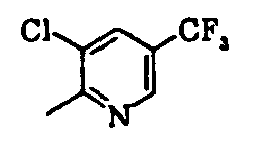
158-161 A-31 O Me H H Cl H H H CN 
162-165 A-32 O Me H H H H H H H H A-33 O Me H H H H H H H Me A-34 O Me H H H H H H H Et A-35 O Me H H H H H H H Pr A-36 O Me H H H H H H H CH2Ph A-37 O Me H H H H H H Me CH2CH=CH2 1.5421 A-38 O Me H H H H H H Me CH2Ph 1.5742 A-39 O Me H H H H H H Me Et 1.5389 A-40 O Me H H H H H H Me Me 1.5475 A-41 O Me H H H H H H Ph CH2CH=CH2 1.5869 m.p.: Melting point
RI: Refractive indexTable 2 Comp No. G R1 R2 R3 X1 X2 X3 X4 Q Y m.p.(°C)
or
RI(nD 20)A-42 O Me H H H H H H Ph Me 1.5939 A-43 O Me H H H H H H Ph Et 1.6795 A-44 O Me H H H H H H Ph(4-Cl) Et A-45 O Me H H Cl H H H Me H 124-127 A-46 O Me H H Cl H H H Me Me 69-72 A-47 O Et H H Cl H H H Me Me A-48 O Pr H H Cl H H H Me Me A-49 O Me H H Cl H H H Me Et 71-74 A-50 O Me H H Cl H H H Me Pr 1.5433 A-51 O Me H H Cl H H H Me Pr-i 1.5392 A-52 O Me H H Cl H H H Me Bu 38-40 A-53 O Me H H Cl H H H Me Bu-s 1.5332 A-54 O Me H H Cl H H H Me Bu-i 1.5333 A-55 O Me H H Cl H H H Me Bu-t 1.5269 A-56 O Me H H Cl H H H Me CH2Pr-c 1.5531 A-57 O Me H H Cl H H H Me Pen-c A-58 O Me H H Cl H H H Me CH2CH=CH2 69-72 A-59 O Me H H Cl H H H Me CH2C(Me)=CH2 A-60 O Me H H Cl H H H Me CH2CH=CHCO2Et A-61 O Me H H Cl H H H Me CH2C≡CH 85-88 A-62 O Me H H Cl H H H Me CH2CH2CH2Ph 1.5597 A-63 O Me H H Cl H H H Me CH2COOEt 1.5402 A-64 O Me H H Cl H H H Me CH2COOBu-t 1.5211 A-65 O Me H H Cl H H H Me CH2CON(Me)2 A-66 O Me H H Cl H H H Me CH2CO2H A-67 O Me H H Cl H H H Me CH2OMe 62-65 A-68 O Me H H Cl H H H Me CH2SMe A-69 O Me H H Cl H H H Me CH2SOMe A-70 O Me H H Cl H H H Me CH2CF3 91-94 A-71 O Me H H Cl H H H Me CH2CN 93-96 A-72 O Me H H Cl H H H Me CH=CH2 A-73 O Me H H Cl H H H Me Ph 87-90 A-74 O Me H H Cl H H H Me Ph(3-Cl) A-75 O Me H H Cl H H H Me Ph(4-Cl) A-76 O Me H H Cl H H H Me Ph(3-Me) A-77 O Me H H Cl H H H Me Ph(4-Me) A-78 O Me H H Cl H H H Me Ph(3-CF3) A-79 O Me H H Cl H H H Me Ph(4-CF3) A-80 O Me H H Cl H H H Me CH2Ph 65-68 A-81 O Me H H Cl H H H Me CH2Ph(2-F) 80.82 A-82 O Me H H Cl H H H Me CH2Ph(3-F) 88-91 A-83 O Me H H Cl H H H Me CH2Ph(4-F) 101-103 A-84 O Me H H Cl H H H Me CH2Ph(2-Cl) 88-91 A-85 O Me H H Cl H H H Me CH2Ph(3-Cl) 68-71 A-86 O Me H H Cl H H H Me CH2Ph(4-Cl) 103-106 A-87 O Me H H Cl H H H Me CH2Ph(2-Br) 80-83 A-88 O Me H H Cl H H H Me CH2Ph(3-Br) 79-81 A-89 O Me H H Cl H H H Me CH2Ph(4-Br) 108-110 A-90 O Me H H Cl H H H Me CH2Ph(2-Me) 88-91 A-91 O Me H H Cl H H H Me CH2Ph(3-Me) 1.5722 A-92 O Me H H Cl H H H Me CH2Ph(4-Me) 97-100 A-93 O Me H H Cl H H H Me CH2Ph(2-OMe) 116-119 A-94 O Me H H Cl H H H Me CH2Ph(3-OMe) 1.5789 A-95 O Me H H Cl H H H Me CH2Ph(4-OMe) 1.5762 A-96 O Me H H Cl H H H Me CH2Ph(2-Bu-t) Table 3 Comp. No. G R1 R2 R3 X1 X2 X3 X4 Q Y m.p.(°C)
or
RI(nD 20)A-97 O Me H H Cl H H H Me CH2Ph(3-Bu-t) A-98 O Me H H Cl H H H Me CH2Ph(4-Bu-t) 1.5552 A-99 O Me H H H Cl H H H Me CH2Ph(2-CF3) 81-83 A-100 O Me H H Cl H H H Me CH2Ph(3-CF3) 1.5329 A-101 O Me H H Cl H H H Me CH2Ph(4-CF3) 117-118 A-102 O Me H H Cl H H H Me CH2Ph(3-CN) 79-82 A-103 O Me H H Cl H H H Me CH2Ph(4-CN) 121-124 A-104 O Me H H Cl H H H Me CH2Ph(4-NO2) A-105 O Me H H Cl H H H Me CH2Ph(4-COOMe) 124-127 A-106 O Me H H Cl H H H Me CH2Ph(4-OCF3) 104-107 A-107 O Me H H Cl H H H Me CH2Ph(3-OPh) A-108 O Me H H Cl H H H Me CH2Ph(4-OPh) A-109 O Me H H Cl H H H Me 
172-175 A-110 O Me H H Cl H H H Me 
A-111 O Me H H Cl H H H Et Et 79-82 A-112 O Me H H Me H H H H CH2Ph 65-68 A-113 O Me H H Me H H H Me CH2Ph 92-95 A-114 NH Me H H Me H H H H CH2Ph A-115 NH Me H H Me H H H H Me A-116 NMe Me H H Me H H H H Me A-117 S Me H H Me H H H H Pr A-118 O Me H H Cl Me H H H CH2Ph A-119 O Me Me H Cl Me H H H Pr A-120 O Me Me H Cl Me H H H CH2Ph A-121 O Me CH2OMe H Cl Me H H Me Pr A-122 O Me CH2OMe H Cl Me H H Me CH2Ph A-123 O Me CH2CH=CH2 H Cl Me H H Me Pr A-124 O Me CH2CH=CH2 H Cl Me H H Me CH2Ph A-125 O Me CH2C≡CH H Cl H H H Me CH2Ph A-126 O Me CH2C≡CH H Cl H H H Me Et A.127 O Me CH2COMe H Cl H H H Me CH2Ph A-128 O Me CH2COMe H Cl H H H Me Me A-129 O Me CO2Me H Cl H H H Me CH2Ph A.130 O Me CO2Me H Cl H H H Me Ph A-131 O Me COMe H Cl Me H H Me Pr A-132 O Me COMe H Cl Me H H Me CH2Ph A-133 O Me OMe H Cl Me H H Me Pr A-134 O Me OMe H Cl Me H H Me CH2Ph A-135 O Me H H Cl Me H H Me H A-136 O Me H H Cl Me H H Me Me A-137 O Me H H Cl Me H H Me Et A-138 O Me H H Cl Me H H Me Pr A-139 O Me H H Cl Me H H Me Pr-i A-140 O Me H H Cl Me H H Me Bu A-141 O Me H H Cl Me H H Me Bu-s A-142 O Me H H Cl Me H H Me Bu-i A-143 O Me H H Cl Me H H Me Bu-t A-144 O Me H H Cl Me H H Me CH2CH=CH2 A-145 O Me H H Cl Me H H Me CH2C≡CH Table 4 Comp. No. G R1 R2 R3 X1 X2 X3 X4 Q Y m.p.(°C)
or
RI(nD 20)A-146 O Me H H Cl Me H H Me CH2CN A-147 O Me H H Cl Me H H Me CH2COOMe A-148 O Me H H Cl Me H H Me CH2COOEt A-149 O Me H H Cl Me H H Me CH2CO2H A-150 O Me H H Cl Me H H Me CH2Ph 1.5821 A-151 O Me H H Cl Me H H Me CH2Ph(3-F) 64-67 A-152 O Me H H Cl Me H H Me CH2Ph(4-F) 85-88 A-153 O Me H H Cl Me H H Me CH2Ph(3-Cl) 88-91 A-154 O Me H H Cl Me H H Me CH2Ph(4-Cl) 107-110 A-155 O Me H H Cl Me H H Me CH2Ph(3-Me) 1.5761 A-156 O Me H H Cl Me H H Me CH2Ph(4-Me) 75-78 A-157 O Me H H Cl Me H H Me CH2Ph(3-OMe) 73-76 A-158 O Me H H Cl Me H H Me CH2Ph(4-OMe) 1.5788 A-159 O Me H H Cl Me H H Me CH2Ph(3-CF3) 86-89 A-160 O Me H H Cl Me H H Me CH2Ph(4-CF3) 100-103 A-161 O Me H H Me H Me Me Me CH2CO2Me A-162 O Me H H Me H Me Me Me CH2C≡CH A-163 O Me H H Cl H H Cl Me CH2CH=CH2 A-164 O Me H H Cl H H Cl Me CH2Ph A-165 O Me H H OMe H H H Me Et A-166 O Me H H OMe H H H Me Pr-i A-167 O Me H H CF3 H H H Me Me A-168 O Me H H CF3 H H H Me CH2Ph A-169 O Me H H OCF3 H H H Me Me A-170 O Me H H OCF3 H H H Me CH2Ph A-171 O Me H H Cl H H H CF3 Me A-172 O Me H H Cl H H H CF3 CH2Ph A-173 O Me H H Cl H H H Pr-c CH2CN A-174 O Me H H Cl H H H Pr-c CH2OMe A-175 O Me H H Cl H H H Me CH2OH A-176 O Me H H Me H H H Me CH2OH A-177 O Me H H Cl H H H Me CH2CH2NH2 A-178 O Me H H Me H H H Me CH2CH2NH2 A-179 O Me H H Cl H H H Me CH2CH2N(Me)2 A-190 O Me H H Me H H H Me CH2CH2N(Me)2 A-181 O Me H H Cl H H H Me CH2COMe A-182 O Me H H Me H H H Me CH2COMe A-183 O Me H H Cl H H H Me CH2CONHMe A-184 O Me H H Me H H H Me CH2CONHMe A-185 O Me H H Cl H H H Me CH2CH=CCl2 65-68 A-186 O Me H H Me H H H Me CH2CH=CCl2 A-187 O Me H H Cl H H H Me CH2(CH2)2CH=CH2 A-188 O Me H H Me H H H Me CH2(CH2)2CH=CH2 A-189 O Me H H Cl H H H Me CH2CH=CHMe 1.5529 A-190 O Me H H Me H H H Me CH2CH=CHMe A-191 O Me H Me Cl H H H Me CH2Ph A-192 O Me H Me Cl H H H Me Pr A-193 O Me H Me Me H H H Me CH2Ph A-194 O Me H Me Me H H H Me Pr A-195 O Me H H Cl H H H Me CH2C≡CCH2CH2OMe A-196 O Me H H Cl H H H Me CH2C≡CCH2OH A-197 O Me H H H Cl H H H Me CH2C≡CC(O)Me Table 5 Comp. No. G R1 R2 R3 X1 X2 X3 X4 Q Y m.p.(°C)
or
RI(nD 20)A-198 O Me H H Cl H H H Me CH2CH2CH=CH2 1.5481 A-199 O Me H H H H H H Me CH2CH=CHCH2OH A-200 O Me H H H H H H Me CH2CH=CHCH2OMe A.201 O Me H H Cl H H H Me CH2CH=CHPh 83-86 A-202 O Me H H H H H H Me CH2CH=CHPh(3-OMe,4-OH) A-203 O Me H H H H H H Me CH2CH=CHPh(4-Cl) A.204 O Me H H H H H H Me CH2CH=CHPh(2-Me) A.205 O Me H H H H H H Me CH2CH=CHPh(3-NO2) A-206 O Me H H Cl H H H Me CH2Ph 1.5769 A-207 O Me H H Cl H H H Me CH2Ph(2-Cl) 1.5819 A-208 O Me H H Cl H H H Me CH2Ph(3-Cl) 60-62 A-209 O Me H H Cl H H H Me CH2Ph(4-Cl) 91-94 A-210 O Me H H H H Et H Me CH2Ph A-211 O Me H H H H Pr-i H Me CH2Ph A-212 O Me H H H H Hex H Me CH2Ph A-213 O Me H H OEt H H H Me CH2Ph(4-Cl) A-214 O Me H H OPr-i H H H Me CH2Ph(4-Cl) A-215 O Me H H Cl H H H Me 
1.6139 A-216 O Me H H Cl H H H Me CH(Me)Ph 1.5745 A-217 O Me H H Cl H H H Me CH2Ph(2-OCF3) 72-74 A-218 O Me H H Cl H H H Me CH2Ph(3-OCF3) 73-74 A-219 O Me CH2Ph(2-Cl) H Me H H H CN CH2Ph(2-Cl) 1.5883 A-220 O Me H H Cl H H H Me CH2Ph(2-CN) 89.92 A-221 O Me H H Br H H H Me CH2Ph(2-Cl) A-222 O Me H H I H H H Me CH2Ph(2-Cl) A-223 O Me H H H H Cl H Me CH2Ph(2-Cl) A-224 O Me H H Cl H Cl H Me CH2Ph(2-Cl) A-225 O Me H H Cl H H H Me 
105-108 A-226 O Me H H Cl H H H Me 
A-227 O Me H H Cl H H H Me 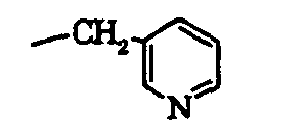
85-86 A-228 O Me H H Cl H H H Me 
81-84 A-229 O Me H H Cl H H H Me 
1.5532 A-230 O Me H H Cl H H H Me CH2C≡CPen-c A-231 O Me H H Cl H H H Me 
A-232 O Me H H Cl H H H Me 
Table 6 Comp. No. G R1 R2 R3 X1 X2 X3 X4 Q Y m.p.(°C)
or
RI(nD 20)A-233 O Me H H Cl H H H Me 
A-234 O Me H H Cl H H H Me CH2CH2N(Me)2 1.5461 A-236 O Me H H Cl H H H Me 
128-130 A-236 O Me H H Cl H H H Me 
A-237 O Me H H Cl H H H Me 
130-131 A-238 O Me H H Cl H H H Me 
A-239 O Me H H Cl H H H Me 
A-240 O Me H H Cl H H H Me 
1.5581 A-241 O Me H H Cl H H H Me 
1.5541 A-242 O Me H H Cl H H H Me CH2Hex-c 86-87 A-243 O Me H H Cl H H H Me 
A-244 O Me H H Cl H H H Me 
A-245 O Me H H Cl H H H Me 
144-146 A-246 O Me H H Cl H H H Me 
A-247 O Me H H Cl H H H Me 
A-248 O Me H H Cl H H H Me 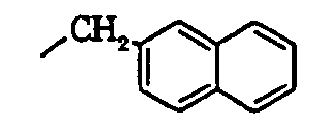
88-91 A-249 O Me H H Cl H H H Me 
Table 7 Comp. No- G R1 R2 R3 X1 X2 X3 X4 Q Y m.p.(°C)
or
RI(nD 20)A-250 O Me H H H H H H Me 
A-251 O Me H H Cl H H H Me -(CH2)6Me 1.5272 A-252 O Me H H Cl H H H Me CH2Ph(2,3-(Cl)2) 103-106 A-253 O Me H H Cl H H H Me CH2Ph(2,4-(Cl)2) 119-120 A-254 O Me H H Cl H H H Me CH2Ph(2,5-(Cl)2) 96-99 A-255 O Me H H Cl H H H Me CH2Ph(2,6-(Cl)2) 140-143 A-256 O Me H H Cl H H H Me CH2Ph(3,4-(Cl)2) 94-96 A-257 O Me H H Cl H H H Me CH2Ph(3,5-(Cl)2) 96-98 A-258 O Me H H Cl H H H Me CH2Ph(2,5-(Me)2) 88-91 A-259 O Pr-i H H H H H H Me CH2Ph(2-Cl) A-260 O Me H Pr-i Cl H H H Me CH2Ph(2-Cl) A-261 O Me H H Cl H H H Me 
168-171 A-262 O Me H H Cl H H H Me 
A-263 O Me H H Cl H H H Me 
A-264 O Me H H Cl H H H Me 
A-265 O Me H H Cl H H H Me 
A-266 O Me H H Cl H H H Me CH2Ph(3-NO2) 1.5811 A-267 O Me H H Cl H H H Me CH2Ph(4-COMe) 121-124 A-268 O Me H H CH2Br H H H Me CH2Ph(2-CH3) A-269 O Me H H Cl H H H Me CH2Ph(3-COMe) 1.5829 A-270 O Me H H H H CH2Cl H Me CH2Ph(2-CH3) A-271 O Me H H OCH2Cl H H H Me CH2Ph(4-CH3) A-272 O Me H H Cl H H H Me 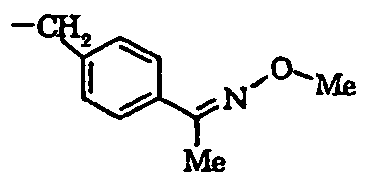
105-108 A-273 O Me H H Cl H H H H Pr-1 1.5381 A-274 O Me H H Cl H H H Hex-c CH2Ph A-275 O Me H H H H H H SMe CH2Ph A-276 O Me H H H H H H S(O)Me CH2Ph A-277 O Me H H Cl H H H CN CH2CH2Ph 87-90 A-278 O Me H H Cl H H H Me CH2Ph(3-CO2Me) 70-73 A-279 O Me H H Cl H H H Me CH2Ph(3,5-(Me)2) 79-82 A-280 O Me H H H H H H Me CH2CH2NO2 A-281 O Me H H Cl H H H Me CH2CH2NHEt A-282 O Me H H Cl H H H Me 
153-156 A-283 O Me H H Cl H H H Me 
122-125 Table 8 Comp. No. G R1 R2 R3 X1 X2 X3 X4 Q Y m.p.(°C)
or
RI(nD 20)A-284 O Me H H Cl H H H Me 
A-285 O Me H H Cl H H H Me 
75-78 A-286 O Me H H Cl H H H Me 
93-96 A-287 O Me H H Cl H H H CN 
103-106 A-288 O Me H H Cl H H H Et 
1.5659 A-289 O Me H H Cl H H H SO2Me CH2Ph(2-Cl) 1.5713 A-290 O Me H H Cl H H H SO2Me 
1.5681 A-291 O Me H H Cl H H H Me CH2Ph(3-C(Me)=NOMe) 1.5869 A-292 O Me H H Cl H H H Et CH2COMe 1.5421 A-293 O Me H H Cl H H H Et CH2C(Me)=NOMe 1.5282 A-294 O Me H H Me H H H Me CH2Ph(2-Cl) 103-106 A-295 O Me H H Me H H H Me CH2Ph(2-Me) 95-98 A-296 O Me H H Cl H H H Et CH2Ph(2-Cl) 74-77 A-297 O Me H H Cl H H H Et CH2Ph(2-CF3) 1.5238 A-298 O Me H H Cl H H H Et CH(Me)COMe 1.5258 A-299 O Me H H Cl H H H Et CH(Me)C(Me)=NOMe 1.5241 A-300 O Me H H Cl H H H Et CH(Me)C(Me)=NOEt 1.5218 A-301 O Me H H Cl H H H Me CH2C≡CCH2NH2 A-302 O Me H H Cl H H H Me CH2C≡CCO2Me A-303 O Me H H Cl H H H Et CH2Ph 1.5757 A-304 O Me H H Cl H H H Et CH2Ph(3-OMe) 1.5649 A-305 O Me H H Cl H H H Et 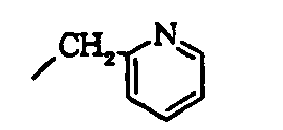
1.5691 A-306 O Me H H Cl H H H Me 
121-124 A-307 O Me H H Cl H H H Me 
A-308 O Me H H Cl H H H Me 
A-309 O Me H H Cl H H H Me CH(Me)Ph(2-Cl) 1.5749 A-310 O Me H H Cl H H H Me CH(Me)Ph(3-Cl) 1.5792 A-311 O Me H H Cl H H H Me CH(Me)Ph(4-Cl) 99-102 A-312 O Me H H Cl H H H Me CH(Me)Ph(3-OMe) 1.5734 A-313 O Me H H Cl H H H Me CH(Me)Ph(3-CF3) 1.5369 A-314 O Me H H Me H H H Me CH2Ph(2-CF3) 107-110 A-315 O Me H H Me H H H Me CH2Ph(3-OMe) 1.5621 A-316 O Me H H H H H H Me Ph(3,5-Cl2) A-317 O Me H H H H H H Me Ph(2-NO2) A-318 O Me H H H H H H Me Ph(3-Br) Table 9 Comp. No. G R1 R2 R3 X1 X2 X3 X4 Q Y m.p.(°C)
or
RI(nD 20)A-319 O Me H H H H H H Me Ph(4-F) A-320 O Me H H Cl Cl H H Me CH2Ph(2-Me) 89-92 A-321 O Me H H Cl Cl H H Me CH2Ph(2-Cl) 118-121 A-322 O Me CH2Ph(3-OMe) H Me H H H Me CH2Ph(3-OMe) 1.5653 A-323 O Me H H F H H H Me CH2Ph 59-62 A-324 O Me H H F H H H Me CH2Ph(2-F) 63-64 A-325 O Me H H F H H H Me CH2Ph(2-Cl) 66-67 A-326 O Me H H F H H H Me CH2Ph(2-Br) 66-57 A-327 O Me H H F H H H Me CH2Ph(2-Me) 80-81 A-328 O Me H H F H H H Me CH2Ph(2-CF3) 73-74 A-329 O Me H H F H H H Me CH2Ph(3-OMe) 1.5651 A-330 O Me H H F H H H Me 
81-83 A-331 O Me H H Cl Me H H Me CH2Ph(2-Cl) 103-104 A-332 O Me H H Cl Cl H H Me 
1.5823 A-333 O Me H H Me H H H Me 
1.5641 A-334 O Me H H Cl H H H Me 
82-85 A-335 O Me H H Cl H H H Me 
A-336 O Me H H Cl H H H Me 
A-337 O Me H H H H H H Me 
A-338 O Me H H H H H H Me CH2Ph(2-Cl) 1.5711 A.339 O Me H H H H H H Me CH2Ph(3-Cl) 1.5788 A-340 O Me H H H H H H Me CH2Ph(4-Cl) 72-75 A-341 O Me H H Cl H H H Pr-c CH2Ph(2-Cl) 1.5781 A-342 O Me H H Me H H H Me CH2Ph(2-F) 93-96 A-343 O Me H H H H H H Me CH2Ph(2-Me) 1.5739 A-344 O Me H H H H H H Me CH2Ph(3-Me) 1.5729 A-345 O Me H H H H H H Me CH2Ph(4-Me) 75-78 A-346 O Me H H Cl Me H H Me CH2Ph(2-Me) 82-85 A-347 O Me H H Cl Me H H Me CH2Ph(2-CF3) 71-73 A-348 O Me H H H H H H Me CH2Ph(2-CF3) 1.5399 A-349 O Me H H H H H H Me CH2Ph(3-CF3) 1.5349 A-350 O Me H H H H H H Me CH2Ph(4-CF3) 1.5291 A-351 O Me H H H H H H Me Ph(3-CO2Me) A-352 O Me H H H H H H Me Ph(2-NO2,4-Cl) A-353 O Me H H H H H H Me Ph(3-Cl,5-OMe) A-354 O Me H H Cl Me H H Me CH2Ph(2-OMe) 89-92 A-355 O Me H H Cl Me H H Me 
73-76 Table 10 Comp. No. G R1 R2 R3 X1 X2 X3 X4 Q Y m.p.(°C)
or
RI(nD 20)A-356 O Me H H Cl Me H H Me CH2Ph(2-CN) 107-110 A-357 O Me H H Cl Me H H Me CH2Ph(3-CN) 95-98 A-358 O Me H H Me Me H H Me CH2Ph(2-Cl) 107-110 A-359 O Me H H Cl H H H Pr-c CH2Ph(2-Me) 94-97 A-360 O Me H H Me H H H Me CH2Ph(2-CN) 63-66 A-361 O Me CH2Ph(2-CN) H Me H H H Me CH2Ph(2-CN) 1.5761 A-362 O Me H H Me H H H Me CH2Ph(3-Me) 69-72 A-363 O Me H H Me H H H Me CH2Ph(4-Me) 92-95 A-364 O Me H H Me H H H Me CH2Ph(3-Cl) 68-70 A-365 O Me H H Me H H H Me CH2Ph(4-Cl) 86-89 A-366 O Me CH2Ph(4-Cl) H Me H H H Me CH2Ph(4-Cl) 1.5778 A-367 O Me H H Cl Me H H Me CH2Ph(2-F) 85-88 A-368 O Me H H Me H H H Me CH2C(Me)=NOMe 1.5362 A-369 O Me H H H Me H H H Me CH2CH2Ph 1.5661 A-370 O Me H H Cl H H H Me 
78-81 A-371 O Me H H F H H H Me CH2Ph(3-Cl) 48-51 A-372 O Me H H F H H H Me CH2Ph(4-Cl) 85-88 A-373 O Me H H F H H H Me CH2Ph(3-Me) 1.5601 A-374 O Me H H F H H H Me CH2Ph(4-Me) 84-87 A-375 O Me H H F H H H Me CH2Ph(3-CF3) 50-52 A-376 O Me H H F H H H Me CH2Ph(4-CF3) 79-82 A-377 O Me H H F H H H Me CH2Ph(2-CN) 87-90 A-378 O Me H H F H H H Me CH(Me)Ph(2-Cl) 1.5621 A-379 O Me H H F H H H Me CH(Me)Ph(3-Cl) 1.5599 A-380 O Me H H F H H H Me CH(Me)Ph(4-Cl) 85-88 A-381 O Me H H Me Me Me Me Me CH2Ph A-382 O Me H H Cl Cl Cl Cl Me CH2Ph A-383 O Me H H Cl H H H Pr-c CH2Ph 1.5731 A.384 O Me H H Cl Me H H Me CH2Ph(4-CN) 120-122 A-385 O Me H H H H H H Me Ph(2-CN,3-Cl) A-386 O Me H H H H H H Me CH2Ph(2,3-(Cl)2) 71-74 A-387 O Me H H H H H H Me CH2Ph(2,4-(Cl)2) 96-99 A-388 O Me H H H H H H Me CH2Ph(2,5-(Cl)2) 94-97 A-389 O Me H H H H H H Me CH2Ph(2,6-(Cl)2) 92-95 A-390 O Me H H H H H H Me CH2Ph(3,4-(Cl)2) 56-59 A-391 O Me H H H H H H Me CH2Ph(3,5-(Cl)2) 76-78 A-392 O Me H H H H H H Me Ph(3.4.5-Cl3) A-393 O Me H H H H H H Me Ph(3-C1,5-OH) A-394 O Me H H Cl H H H Me CH2COPh 1.5768 A-395 O Me H H Cl H H H Me 
147-150 A-396 O Me H H Cl H H H Me 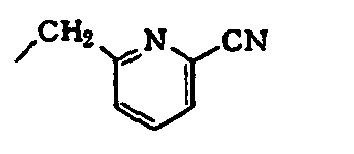
A-397 O Me H H Cl H H H Me 
Table 11 Comp. No. G R1 R2 R3 X1 X2 X3 X4 Q Y m.p.(°C)
or
RI(nD 20)A-398 O Me H H H H H H Me CH2Ph(2-F) 1.5667 A-399 O Me H H H H H H Me CH2Ph(3-F) 1.6641 A-400 O Me H H H H H H Me CH2Ph(4-F) 88-91 A-401 O Me H H Cl H H H Me CH2COPh(4-Me) 90-93 A-402 O Me H H Cl H H H Me 
99-102 A-403 O Me H H Cl H H H Me CH2COPh(4-Cl) 99-102 A-404 O Me H H Cl H H H Me CH2COPh(4-OMe) 63-66 A-405 O Me H H Cl H H H Pr-e 
1.5687 A-406 O Me H H Cl H H H Me CH(Me)Ph(2-Me) 1.5719 A-407 O Me H H Cl H H H Me CH(Me)Ph(3-Me) 1.5702 A-408 O Me H H Cl H H H Me CH(Me)Ph(4-Me) 1.5693 A-409 O Me H H Cl H H H Me 
98-101 A-410 O Me H H Cl H H H Me 
A-411 O Me H H Cl H H H Me 
A-412 O Me H H Cl H H H Me CH(C(Me)=NOMe)2 1.5411 A-413 O Me H H Cl H H H Me 
123-126 A-414 O Me H H Cl H H H Me CH2Ph(2-NO2) 104-107 A-415 O Me H H Cl H H H Me 
74-77 A-416 O Me H H Cl H H H Me 
76-79 A-417 O Me H H Cl H H H Me 
93-95 A-418 O Me H H Cl H H H Me 
56-59 A-419 O Me H H Cl H H H Me 
68-71 A-420 O Me H H H H H H Me 
1.5731 A-421 O Me H H Cl H H H Me 
116-119 Table 12 Comp. No. G R1 R2 R3 X1 X2 X3 X4 Q Y m.p.(°C)
or
RI(nD 20)A-422 O Me H H Cl H H H Me 
83-86 A-423 O Me H H Cl H H H Me 
103-105 A-424 O Me H H Cl H H H Me 
A-426 O Me H H Cl H H H Me 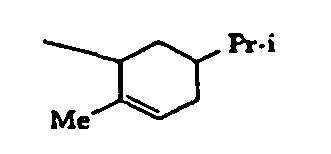
A-426 O Me H H Cl H H H Me 
64.67 A-427 O Me H H F H H H Me CH2Ph(3-OCF3) 35-37 A-428 O Me H H F H H H Me CH2Ph(3-CN) 1.5666 A-429 O Me H H Cl Me H H Me 
1.5769 A-430 O Me H H F H H H Me 
1.5609 A-431 O Me H H Cl H H H Me 
97-100 A-432 O Me H H Cl H H H Me 
93-96 A-433 O Me H H Cl H H H Me 
141-144 A-434 O Me H H Me H H H Me 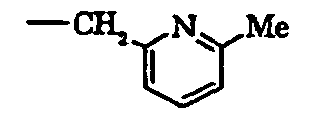
72-75 A-435 O Me Me H Cl Me H H Me CH2Ph(2-Cl) 1.5714 A-436 O Me H H Cl H H H H CH2Ph(2-Cl) 89-91 A.437 O Me H H Cl H H H H CH2Ph(3-Cl) 90-93 A-438 O Me H H Cl H H H H CH2Ph(4-Cl) 137-140 A-439 O Me H H Cl H H H H 
1.5839 A-440 O Me H H F H H H Me 
1.6004 A-441 O Me H H Cl Me H H Me 
111-114 A-442 O Me H H Cl Me H H Me CH2Ph(2-Cl) 88-91 Table 13 Comp. No. G R1 R2 R3 X1 X2 X3 X4 Q Y m.p.(°C)
or
RI(nD 20)A-443 O Me H H Cl H H H Me 
1.5549 A-444 O Me H H Cl H H H Me 
A-445 O Me H H Cl H H H Me 
1.5825 A-446 O Me H H Cl H H H Me 
A-447 O Me H H Cl H H H Me 
1.5689 A-448 O Me H H Cl H H H Me 
94-97 A-449 O Me H H Cl H H H Me 
111-114 A-450 O Me H H Cl H H H Me 
1.5649 - Typical processes for producing the carbamate derivative represented by the general formula [I] as the compound of the present invention, will be exemplified below. Here, the novel compound represented by the general formula [I] has a C=N double bond and thereby may form as an E/Z isomer mixture in some cases. The isomer mixture can be isolated into individual component by a purification method such as crystallization or column chromatography. An individual isomer and a mixture thereof are included in the present invention.
-

- The compound [I] of the present invention can be produced by reacting a compound [II] and a compound [III] in an inert solvent (see Jikken kagaku Kouza (Experimental Chemical Lecture), fourth edition, vol. 20, p. 349-355 (The Chemical Society of Japan) for example). Here, the material compound [III] to be used in the present production process may form a salt with e.g. hydrochloric acid or sulfuric acid. The compound [III] may be produced in accordance with a known process (see Jikken kagaku Kouza, fourth edition, vol. 20, p. 342-349 for example).
- With respect to the amount of the material compound to be used in the present reaction, the compound [III] is properly selected within a range of from 1 to 50 equivalents based on the compound [II], preferably from 1 to 10 equivalents. The inert solvent which can be used in the present production process may, for example, be an alcohol such as methanol, ethanol, propanol or isopropanol, an ether such as diethyl ether, diisopropyl ether, tetrahydrofuran, dioxane, dimethoxyethane or diethylene glycol dimethyl ether, an aromatic hydrocarbon such as benzene, chlorobenzene, nitrobenzene or toluene, or water. These inert solvents may be used alone or as mixed.
- In the present production process, an acid such as hydrochloric acid or acetic acid, or a base such as sodium acetate, sodium carbonate or sodium hydrogencarbonate, may coexist, and they may be used alone or in combination. The amount is properly selected within a range of from 0.001 to 50 equivalents based on the compound [II], preferably from 0.01 to 10 equivalents. The reaction temperature is within a range of from -10°C to the boiling point of the inert solvent to be used, and preferably within a range of from 0°C to the boiling point of the inert solvent to be used. The reaction time varies depending upon e.g. the reaction temperature and the reaction amount, but may be selected within a range of from 1 to 48 hours in general. After completion of the reaction, the desired product is isolated from the reaction system by a conventional method and may be purified by e.g. column chromatography or recrystallization, as the case requires.
-

- A compound [I-a] of the present invention can be produced by reacting a compound [IV] and a nitrite ester [V] in the presence of a base (see Organic Syntheses, vol. 6, p.199 (1988) for example). With respect to the amount of the material compound to be used in the present reaction, the compound [V] is properly selected within a range of from 1 to 50 equivalents based on the compound [IV], preferably from 1 to 10 equivalents.
- The base to be used in the present production process may, for example, be an alkali metal alcoholate such as sodium methoxide, sodium ethoxide or potassium tert-butoxide, or an inorganic base such as sodium hydroxide, potassium hydroxide, sodium carbonate or potassium carbonate, and the amount of the base is properly selected within a range of from 0.5 to 50 equivalents based on the compound [IV], preferably from 1 to 10 equivalents.
- The inert solvent which can be used in the present production process may be one which does not inhibit the progress of the present production process, and an ether such as diethyl ether, diisopropyl ether, tetrahydrofuran, dioxane, 1,2-dimethoxyethane or diethylene glycol dimethyl ether, a halogenated hydrocarbon such as dichloromethane, chloroform, carbon tetrachloride or tetrachloroethane, an aromatic hydrocarbon such as benzene, chlorobenzene or toluene, or an alcohol such as methanol, ethanol, propanol or isopropanol, may, for example, be used. These inert solvents may be used alone or as mixed.
- The reaction temperature is within a range of from -70°C to the boiling point of the inert solvent to be used, and preferably from -20°C to the boiling point of the inert solvent to be used. The reaction time varies depending upon e.g. the reaction temperature and the reaction amount, but may be selected within a range of from 1 to 100 hours in general, preferably from 12 to 75 hours.
- After completion of the reaction, the desired product is isolated from reaction system by a conventional method and may be purified by e.g. column chromatography or recrystallization, as the case requires.
-

- A compound [I-e] of the present invention can be produced by reacting a compound [I-b] of the present invention and a compound [VI] in the presence of a base.
- With respect to the amount of the material compound to be used in the present reaction, the compound [VI] is properly selected within a range of from 1 to 50 equivalents based on the compound [I-b], preferably from 1 to 5 equivalents.
- An inert solvent may be used in the present production process in some cases. The inert solvent may be one which does not inhibit the progress of the present reaction, and a ketone such as acetone, methyl ethyl ketone or cyclohexanone, an ether such as diethyl ether, diisopropyl ether, tetrahydrofuran, dioxane, dimethoxyethane or diethylene glycol dimethyl ether, an ester such as ethyl acetate or methyl acetate, a halogenated hydrocarbon such as dichloromethane, chloroform or carbon tetrachloride, an aromatic hydrocarbon such as benzene, chlorobenzene, nitrobenzene or toluene, a nitrile such as acetonitrile, or N,N-dimethylformamide, N,N-dimethylacetamide, 1,3-dimethyl-2-imidazolinone or dimethylsulfoxide may, for example, be used. These inert solvents may be used alone or as mixed.
- As the base which can be used, an alkali metal hydride such as sodium hydride, an alkali metal alcoholate such as potassium tert-butoxide, or an inorganic salt such as sodium carbonate or potassium carbonate may, for example, be used. The amount of the base may properly be selected within a range of from 1 to 50 equivalents based on the compound [I-b], preferably from 1 to 10 equivalents.
- The reaction temperature is within a range of from -70°C to the boiling point of the inert solvent to be used, preferably within a range of from 0°C to the boiling point of the inert solvent to be used. The reaction time varies depending upon e.g. the reaction temperature and the reaction amount, but may be selected within a range of from 1 hour to 72 hours in general. After completion of the reaction, the desired product is isolated from the reaction system by a conventional method and may be purified by e.g. column chromatography or recrystallization, as the case requires.
-

- A compound [VIII] can be produced by halogenating a compound [VII] by a known process (see Jikken kagaku Kouza fourth edition, vol. 19, p. 416-482 (The Chemical Society of Japan) for example) (Step 4.1). A compound [I-c] of the present invention can be produced by reacting the compound [VIII] with a compound [IX] in the presence of a base in an inert solvent (Step 4.2). Further, a compound [I-d] of the present invention can be produced by reacting the compound [VIII] with an alkali metal cyanate salt and a compound [X] in an inert solvent (see Journal of the Chemical Society of Japan, vol. 87, No. 5, p. 486 (1966) for example) (Step 4.3).
- The halogenating agent which can be used in Step 4.1 of the present production process may, for example, be N-bromosuccinimide, N-chlorosuccinimide or trichloroisocyanuric acid. The amount of the halogenating agent is properly selected within a range of from 0.5 to 10 equivalents based on the compound [VII], preferably from 1 to 3 equivalents. A catalyst such as azobisisobutyronitrile or benzoyl peroxide may be used in the present step, and its amount is properly selected within a range of from 0.001 to 10 equivalents based on the compound [VII], preferably from 0.001 to 1 equivalents.
- The inert solvent may be one which does not inhibit the progress of Step 4.1, and a halogenated hydrocarbon such as dichloromethane, chloroform or carbon tetrachloride or an aromatic hydrocarbon such as benzene or chlorobenzene may, for example, be used.
- The reaction temperature is within a range of from 0°C to the boiling point of the inert solvent to be used. The reaction time varies depending upon e.g. the reaction temperature and the reaction amount, but may be selected within a range of from several minutes to 48 hours in general. After completion of the reaction, the desired product is isolated from the reaction system by a conventional method and may be purified by e.g. column chromatography or recrystallization, as the case requires.
- With respect to the amount of the material compound [IX] to be used in Step 4.2 of the present production process, it is properly selected within a range of from 1 to 50 equivalents based on the compound [VIII], preferably from 1 to 10 equivalents.
- As the base to be used, an inorganic salt such as sodium carbonate, potassium carbonate or sodium hydrogencarbonate or an alkali metal hydride such as sodium hydride may be used, and the amount of the base is properly selected within a range of from 0.5 to 100 equivalents based on the compound [VIII], preferably from 1 to 10 equivalents.
- The inert solvent which can be used may be one which does not inhibit the progress of Step 4.2, and a ketone such as acetone, methyl ethyl ketone or cyclohexanone, an ether such as diethyl ether, diisopropyl ether, tetrahydrofuran, dioxane, monoglyme or diglyme, an ester such as ethyl acetate or methyl acetate, a halogenated hydrocarbon such as dichloromethane, chloroform or carbon tetrachloride, an aromatic hydrocarbon such as benzene, chlorobenzene, nitrobenzene or toluene, a nitrile such as acetonitrile, an alcohol such as methanol, ethanol or butanol, or N,N-dimethylformamide, N,N-dimethylacetamide, 1,3-dimethyl 2-imidazolinone or dimethylsulfoxide may, for example, be used, and these inert solvents may be used alone or as mixed.
- The reaction temperature is within a range of from -70°C to the boiling point of the inert solvent to be used, and preferably from -10°C to the boiling point of the inert solvent to be used. The reaction time varies depending upon e.g. the reaction temperature and the reaction amount, but may be selected within a range of from several minutes to 48 hours in general. After completion of the reaction, the desired product is isolated from the reaction system by a conventional method and may be purified by e.g. column chromatography or recrystallization, as the case requires.
- The alkali metal cyanate salt which can be used in Step 4.3 of the present production process may, for example, be potassium cyanate or sodium cyanate. The amount of the metal cyanate salt to be used is properly selected within a range of from 1 to 50 equivalents based on the compound [VIII], preferably from 1 to 10 equivalents, and the compound [X] is properly selected within a range of from 1 to 100 equivalents based on the compound [VIII], preferably from 1 to 20 equivalents. The inert solvent which can be used may be one which does not inhibit the progress of Step 4.3, and a ketone such as acetone, methyl ethyl ketone or cyclohexanone, an ether such as diethyl ether, diisopropyl ether, tetrahydrofuran, dioxane, monoglyme or diglyme, an ester such as ethyl acetate or methyl acetate, a halogenated hydrocarbon such as dichloromethane, chloroform or carbon tetrachloride, an aromatic hydrocarbon such as benzene, chlorobenzene, nitrobenzene or toluene, a nitrile such as acetonitrile, an alcohol such as methanol, ethanol or butanol, or N,N-dimethylformamide, N,N-dimethylacetamide, 1,3-dimethyl-2-imidazolinone or dimethylsulfoxide may, for example, be used, and these inert solvents may be used alone or as mixed.
- The reaction temperature is within a range of from 0°C to the boiling point of the inert solvent to be used. The reaction time varies depending upon e.g. the reaction temperature and the reaction amount, but may be selected within a range of form 1 hour to 48 hours in general. After completion of the reaction, the desired product is isolated from the reaction system by a conventional method and may be purified by e.g. column chromatography or recrystallization, as the case requires.
-

- A compound [I-f] of the present invention can be produced by diazotizing a compound [XVIII] by sodium nitrite in the presence of e.g. hydrochloric acid in accordance with a known process, and reacting a compound [XIX] therewith in the presence of e.g. sodium acetate and copper sulfate (see Organic Syntheses vol. 5, p. 139 (1973) for example).
- With respect to the amount of the material compound to be used in the present reaction, the compound [XIX] is properly selected within a range of from 1 to 50 equivalents based on the compound [XVIII], preferably from 1 to 5 equivalents.
- The solvent which can be used in the present production process may be one which does not inhibit the progress of the present reaction. For example, an ether such as diethyl ether, diisopropyl ether, tetrahydrofuran, dioxane, dimethoxyethane or diethylene glycol dimethyl ether, an ester such as ethyl acetate or methyl acetate, a halogenated hydrocarbon such as dichloromethane, chloroform or carbon tetrachloride, an aromatic hydrocarbon such as benzene, chlorobenzene, nitrobenzene or toluene, an organic acid such as acetic acid or trifluoroacetic acid, or water may, for example, be used, and these solvents may be used alone or as mixed.
- As the acid to be used in Step 1) diazotization of the present production process, a strong acid such as sulfuric acid, tetrafluoroboric acid, hydrobromic acid or trifluoroacetic acid may be used instead of the above-mentioned hydrochloric acid. The amount is properly selected within a range of from 1 to 50 equivalents based on the compound [XVIII], preferably from 2 to 4 equivalents. Further, a nitrite ester such as isoamyl nitrite or methyl nitrite may be used instead of the above-mentioned sodium nitrite. The amount is properly selected within a range of from 1 to 50 equivalents based on the compound [XVIII], preferably from 1 to 2 equivalents. The reaction temperature is within a range of from -20°C to 30°C, preferably within a range of from -5°C to 5°C. The reaction time varies depending upon e.g. the reaction temperature and the reaction amount, but may be selected within a range of from 30 minutes to 2 hours in general. As the copper compound to be used in Step 2) of coupling in the present reaction, a copper salt such as copper(I) chloride or copper(II) acetate may be used instead of the above-mentioned copper sulfate. The amount is properly selected within a range of from 0.02 to 2 equivalents based on the compound [XVIII], preferably from 0.02 to 0.5 equivalent. Further, the amount of sodium acetate is properly selected within a range of from 1 to 50 equivalents based on the compound [XVIII], preferably from 4 to 10 equivalents. The reaction temperature is within a range of from -20°C to 30°C, preferably within a range of from -5°C to 25°C. The reaction time varies depending upon e.g. the reaction temperature and the reaction amount, but may be selected within a range of from 30 minutes to 2 hours in general. After completion of the reaction, the desired product is isolated from the reaction system by a conventional method and may be purified by e.g. column chromatography or recrystallization, as the case requires.
- The compound [II] as an intermediate for the compound [I] of the present invention can be produced, for example, in accordance with the following known process, but the process is not limited thereto.

- A compound [XII] can be produced by halogenating a compound [XI] (see Jikken kagaku Kouza fourth edition, vol. 19, p. 416-482 (The Chemical Society of Japan) for example) (Step A-1). Further, the intermediate [II] can be produced by reacting the compound [XII] with the compound [IX] in the presence of a base (e.g. an inorganic salt such as sodium carbonate, potassium carbonate or sodium hydrogencarbonate or an alkali metal hydride such as sodium hydride) (Step A-2). Further, an intermediate [II-a] can be produced by reacting the compound [XII] with an alkali metal cyanate salt and the compound [X] in the presence of an inert solvent (see Journal of the Chemical Society of Japan, vol. 87, No. 5, p. 486 (1966) for example) (Step A-3).
- The compounds [II] and [IV-a] as intermediates for the compound [I] of the present invention can be produced, for example, in accordance with the following known process, but the process is not limited thereto.

- A compound [XIV] can be produced by halogenating a compound [XIII] (see Jikken kagaku Kouza, fourth edition, vol. 19, p. 416-482 (The Chemical Society of Japan) for example) (Step B-1). A compound [XV] can be produced by reacting the compound [XIV] with the compound [X] and an alkali metal cyanate salt (see Journal of the Chemical Society of Japan, vol. 87, No. 5, p. 486 (1966) for example) (Step B-2). Otherwise, the compound [XV] can be produced by reacting the compound [XIV] with the compound [IX] in the presence of an inorganic salt such as sodium carbonate, potassium carbonate or sodium hydrogencarbonate or a base such as an alkali metal hydride such as sodium hydride (Step B-3). A compound [XVI] can be produced by reducing the compound [XV] in accordance with a known process (Jikken kagaku Kouza, fourth edition, vol. 26, p. 159-266 (The Chemical Society of Japan) for example) (B-4). A compound [II-b] can be produced by oxidizing the compound [XVI] in accordance with a known process (see Jikken kagaku Kouza, fourth edition, vol. 21, p. 2-23 (The Chemical Society of Japan) for example) (Step B-5). A compound [XVII] can be produced by halogenating the compound [XVI] in accordance with a known process (see Jikken kagaku Kouza, fourth edition, vol. 19, p. 416-482 (The Chemical Society of Japan) for example) (Step B-6).
- A compound [IV-a] can be produced by cyanating the compound [XVII] in accordance with a known process (see Jikken kagaku Kouza, fourth edition, vol. 20, p. 437-462 (The Chemical Society of Japan) for example) (Step B-7).
- The compound [VII] as an intermediate for the compound [I] of the present invention can be produced, for example, in accordance with the following known process, but the process is not limited thereto.

- The compound [VII] of the present invention can be produced by reacting the compound [XI] and the compound [III] (see Jikken kagaku Kouza, fourth edition, vol. 20, p. 349-355 (The Chemical Society of Japan) for example). Here, the material compound [III] to be used in the present production process may form a salt with e.g. hydrochloric acid or sulfuric acid.
- The compound [XVIII] as an intermediate for the compound [I] of the present invention can be produced, for example, in accordance with the following known process, but the process is not limited thereto.
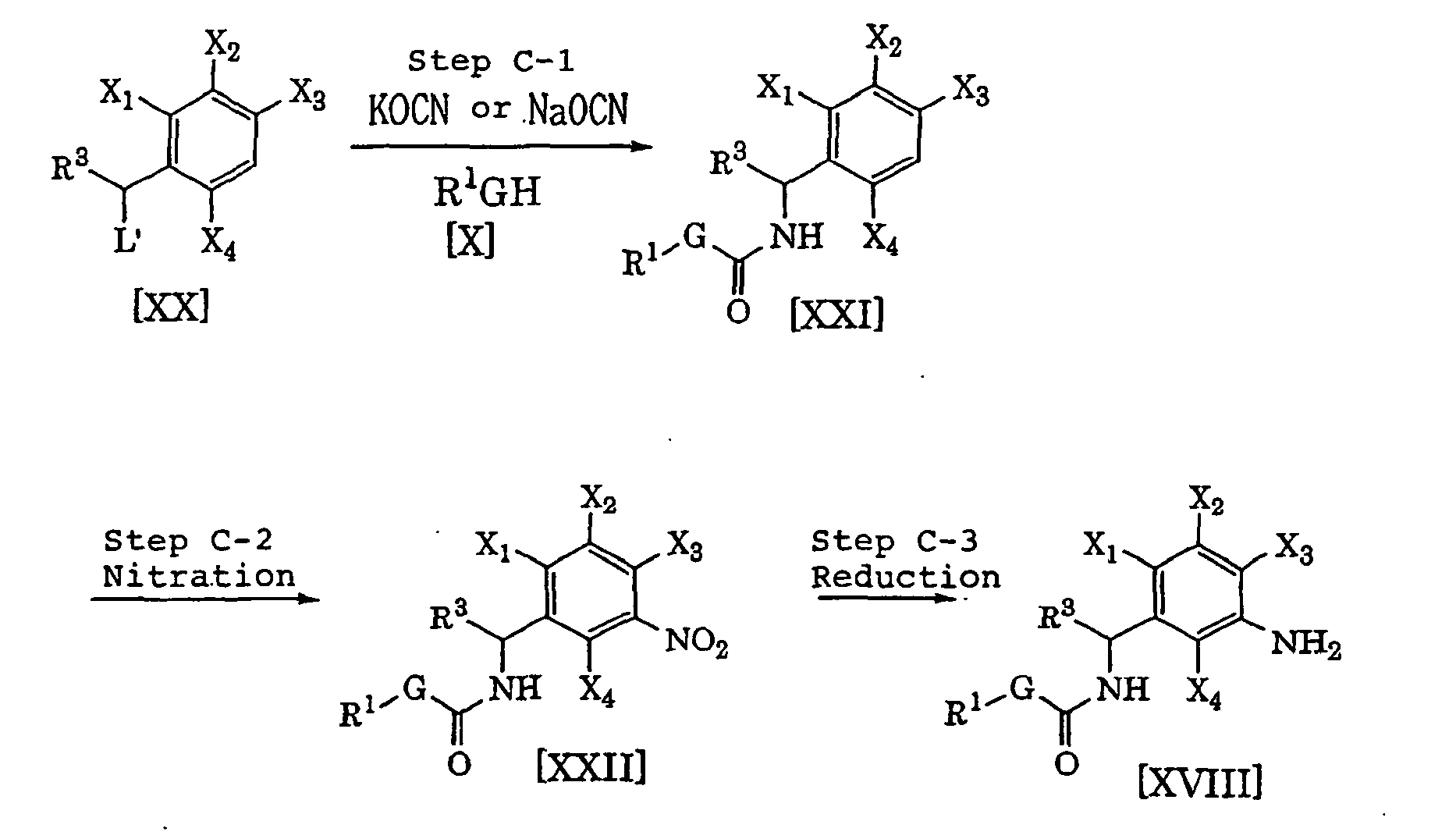
- An intermediate [XXI] can be produced by reacting a compound [XX] with an alkali metal cyanate salt and the compound [X] in an inert solvent (see Journal of the Chemical Society of Japan, vol. 87, No. 5, p. 486 (1966) for example) (Step C-1). An intermediate [XXII] can be produced by nitrating the compound [XXI] with e.g. nitric acid, acetyl nitrate or sodium nitrate (see Jikken kagaku Kouza, fourth edition, vol. 20, p. 394-399 (The Chemical Society of Japan) for example) (Step C-2). The intermediate [XVIII] can be produced by reducing the compound [XXII] in accordance with a known process (see Jikken kagaku Kouza, fourth edition, vol. 26, p. 159-266 (The Chemical Society of Japan) for example) (Step C-3).
- Now, the processes for producing the compound of the present invention, formulation methods and applications will be specifically described with reference to Examples.
- Symbols to be used in the text have the following meanings.
- 1H-NMR:
- Proton nuclear magnetic resonance
- CDCl3:
- Deuterated chloroform
- TMS:
- Tetramethylsilane
- 0.15 g of sodium hydroxide and 0.60 g of methyl N-(2-chloro-5-cyanomethylbenzyl)carbamate were added to 5 ml of ethanol, and 0.40 g of t-butyl nitrite was added to the mixture at room temperature, followed by stirring for 72 hours. After completion of the reaction, the reaction solution was poured into water, extraction with ethyl acetate was carried out, followed by washing with water, and the organic layer was dried over anhydrous magnesium sulfate. The solvent was distilled off under reduced pressure, and the residue was purified by silica gel column chromatography (Wakogel C-200, eluent: hexane/ethyl acetate=3/1) to obtain 0.46 g of 2-[4-chloro-3-(methoxycarbonylaminomethyl)phenyl]-2-hydroxyiminoacetonitrile as a colorless viscous liquid.
1H-NMR: (CDCl3/TMS, δ (ppm))
3.72(s,3H); 4.48(d,2H); 5.43(br,1H); 7.43-8.21(m,3H); 10.51, 11.15(br, 1H). - 0.36 g of 2-[4-chloro-3-(methoxycarbonylaminomethyl)phenyl]-2-hydroxyiminoacetonitrile and 0.54 g of a 28% sodium methylate methanol solution were added to 5 ml of methanol, and 0.49 g of methyl iodide was added thereto, followed by stirring at room temperature for 24 hours. The reaction solution was vacuum concentrated, the solvent was distilled off, water was added to the residue, extraction with ethyl acetate was carried out, and the organic layer was dried over anhydrous magnesium sulfate. The solvent was distilled off under reduced pressure, and the residue was purified by silica gel column chromatography (Wakogel C-200, eluent: hexane/ethyl acetate=4/1 - 5/1) to obtain 0.18 g of 2-[4-chloro-3-(methoxycarbonylaminomethyl)phenyl]-2-methoxyiminoacetonitrile as colorless crystals (m.p. 104-107°C).
1H-NMR: (CDCl3/TMS, δ (ppm))
3.71(s,3H); 4.22(s,3H); 4.48(d,2H); 5.23(br, 1H); 7.43-8.05(m,3H) - 5.0 g of methyl N-(2-chloro-5-acetylbenzyl)carbamate was dissolved in 10 ml of ethanol, and 1.5 g of hydroxylamine hydrochloride, 3.0 g of sodium acetate and 5 ml of water were added thereto, followed by reflux under heating for 4 hours. After completion of the reaction, water was added to the reaction mixture, extraction with ethyl acetate was carried out, the organic layer was dried over anhydrous magnesium sulfate, and the solvent was distilled off under reduced pressure. The obtained crystals were washed with hexane to obtain 5.2 g of methyl N-[2-chloro-5-(1-hydroxyiminoethyl)benzyl]carbamate as colorless crystals (m.p. 124-127°C).
1H-NMR: (CDCl3/TMS, δ (ppm))
2.25(s,3H); 3.70(s,3H); 4.46(d,2H); 5.31(br, 1H); 7.27-7.63(m,3H). - 0.40 g of methyl N-(3-acetylbenzyl)carbamate was dissolved in 10 ml of ethanol, and 0.36 g of methoxyamine hydrochloride and 5 ml of an aqueous solution of 0.54 g of sodium acetate were added thereto, followed by reflux under heating for 8 hours. After completion of the reaction, water was added to the reaction mixture, extraction with ethyl acetate was carried out, the organic layer was dried over anhydrous magnesium sulfate, and the solvent was distilled off under reduced pressure. The obtained crystals were washed with hexane to obtain 0.40 g of methyl N-[3-(1-methoxyiminoethyl)benzyl]carbamate as a pale yellow oily substance.
1H-NMR: (CDCl3/TMS, δ (ppm))
2.22(s,3H); 3.69(s,3H); 3.99(s,3H); 4.37(d,2H); 5.12(br,1H); 7.27-7.56(m,4H). - 0.70 g of methyl N-[2-chloro-5-(1-hydroxyiminoethyl)benzyl]carbamate was dissolved in 10 ml of N,N-dimethylformamide, and 0.13 g of 60% sodium hydride was added thereto under cooling with ice, followed by stirring for 1 hour. 0.57 g of 4-fluorobenzyl bromide was dissolved in 2 ml of N,N-dimethylformamide, which was dropwise added to the reaction mixture under cooling with ice. After completion of the dropwise addition, the mixture was stirred at room temperature for 16 hours. After completion of the reaction, the reaction solution was poured into water, extraction with ethyl acetate was carried out, followed by washing with water, and the organic layer was dried over anhydrous magnesium sulfate. The solvent was distilled off under reduced pressure, and the residue was purified by silica gel column chromatography (Wakogel C-200, eluent: hexane/ethyl acetate=5/1) to obtain 0.75 g of methyl N-{2-chloro-5-[1-(4-fluorobenzyloxyimino)ethyl]benzyl}carbamate (m.p. 101-103°C) as colorless crystals.
1H-NMR: (CDCl3/TMS, δ (ppm))
2.22(s,3H); 3.69(s,3H); 4.45(d,2H); 5.10(br,1H); 5.18(s,2H); 7.02-7.65(m,7H). - 10.7 g of methyl N-[5-amino-2-chlorobenzyl]carbamate was dissolved in 33 g of 14% hydrochloric acid, followed by stirring at room temperature for 1 hour. 7 ml of an aqueous solution of 3.8 g of sodium nitrite was dropwise added to the solution with stirring at from 0 to 5°C. The formed diazonium salt was dropwise added to a mixed solvent of water/ethyl acetate/toluene (80 ml/40 ml/40 ml) of 21.7 g of sodium acetate, 2.6 g of copper sulfate and 5.9 g of acetaldoxime with vigorously stirring at from 0 to 5°C over a period of 15 minutes, followed by stirring at room temperature further for 2 hours. The reaction solution was acidified with hydrochloric acid, extraction with ethyl acetate was carried out, followed by washing with water, and the organic layer was dried over anhydrous magnesium sulfate. The solvent was distilled off under reduced pressure, the obtained crude crystals were washed with a mixed solvent of ether/ethyl acetate to obtain 2.8 g of methyl N-[2-chloro-5-(1-hydroxyiminoethyl)benzyl]carbamate as colorless crystals (m.p. 124-127°C).
1H-NMR: (CDCl3/TMS, δ (ppm))
2.25(s,3H); 3.70(s,3H); 4.46(d,2H); 5.31(br,1H); 7.27-7.63(m,3H). - 0.43 g of methyl N-[2-methyl-5-(1-hydroxyiminoethyl)benzyl]carbamate was dissolved in 15 ml of N,N-dimethylformamide, 0.75 g of potassium carbonate and 0.32 g of 2-chloro-6-methylpyridine hydrochloride were added thereto, followed by stirring under heating at from 90 to 100°C for 8 hours. After completion of the reaction, the reaction solution was poured into water, extraction with ethyl acetate was carried out, followed by washing with water, and the organic layer was dried over anhydrous magnesium sulfate. The solvent was distilled off under reduced pressure, and the residue was purified by silica gel column chromatography (Wakogel C-200, eluent: hexane/ethyl acetate=4/1) to obtain 0.30 g of methyl N-{2-methyl-5-[1-(6-methylpyridin-2-yl methoxy)iminoethyl]benzyl}carbamate (m.p. 72-75°C) as pale yellow crystals.
1H-NMR: (CDCl3/TMS, δ (ppm))
2.30(s,3H); 2.32(s,3H); 2.56(s,3H); 3.69(s,3H); 4.35(d,2H); 4.94(br,1H); 5.33(s,2H); 7.04-7.59(m,6H). - Now, 1H-NMR (CDCl3/TMS, δ (ppm)) data of some among examples of the compound of the present invention, will be shown in Tables 14 to 20.
Table 14 Comp. No. 1H-NMR δ value (ppm) Solvent CDCl3/TMS A-2 3.72(s,3H); 4.48(d,2H); 5.43(br,1H); 7.43-8.21(m,3H) A-37 2.20,2.25(s,3H); 3.70(s,3H); 4.37(d,2H); 4.54, 4.71(d,2H); 5.08(br,1H); 5.20-5.38(m,2H); 6.00-6.11(m,1H) 7.29-7.56(m,4H). A-38 2.17, 2.25(s,3H); 3.68(s,3H); 4.35(d,2H); 5.05(br,1H); 5.09, 5.24(s,2H); 7.28-7.55(m,9H) A-39 1.24, 1.33(t,3H); 2.18, 2.22(s,3H); 3.69(s,3H); 4.09, 4.24(q,2H); 4.37(d,2H); 5.14(br,1H); 7.26-7.56(m,4H) A-40 2.22(s,3H); 3.69(s,3H); 3.99(s,3H); 4.37(d,2H); 5.12(br,1H); 7.27-7.56(m,4H) A-41 3.67(s, 3H); 4.35(dd,2H); 4.66-4.69(m,2H); 5.17(br.1H): 5.95-6.08(m,2H); 7.25-7.48(m,9H) A-42 3.67(s,3H); 3.96(s,3H); 4.11(dd,2H); 5.30(br,1H); 7.25-7.80(m,9H) A-43 1.27,1.29(t,3H); 3.67(s,3H); 4.22,4.23(q,2H); 4.34(dd,2H); 5.15(br,1H); 7.27-7.48(9H) A-50 0.98(t,3H); 1.76(quint,2H); 2.21(s,3H); 3.69(s,3H); 4.15(t,2H); 4.46(d,2H); 5.19(br,1H); 7.34(d,1H); 7.51(d,1H); 7.66(s,1H) A-51 1.30(d,6H); 2.19(s,3H); 3.69(s,3H); 4.41-4.49(m,3H); 5.20(br,1H); 7.34(d,1H); 7.52(dd,1H); 7.65(s.1H) A-53 0.95(t,3H); 1.27(d,3H); 1.52-1.78(m,2H); 2.19(s,3H); 3.68(s,3H); 4.21-4.28(m,1H); 4.44(d,2H); 5.27(br,1H); 7.30-7.65(m,3H) A-54 0.96(d,6H); 2.04(m,1H); 2.21(s,3H); 3.68(s,3H); 3.96(d,2H); 4.45(d,2H); 5.24(br,1H); 7.33(d,1H); 7.50(dd,1H); 7.65(s,1H) A-55 1.35(t,9H); 2.18(d,3H); 3.69(s,3H); 4.45(d,2H); 5.20(br,1H); 7.27-7.63(m,3H) Table 15 Comp. No. 1H-NMR δ value (ppm) Solvent CDCl3/TMS A-56 0.30-0.35(m,2H);0.54-0.60(m,2H); 1.14-1.27(m,1H);2.23(B,3H);3.69(s,3H); 4.01(d,2H); 4.45(d,2H); 5.20(br,1H); 7.34(d,1H); 7.51(dd,1H); 7.66(s,1H) A-62 2.05(quint,2H); 2.21(s,3H); 2.74(t,2H); 3.69(s,3H); 4.22(t,2H); 4.46(d,2H); 5.18(br,1H); 7.17-7.67(m,8H) A-63 1.29(t,3H); 2.29(s,3H); 3.69(s,3H); 4.25(q,2H); 4.47(d,2H); 4.73(s,2H); 5.22(br,1H); 7.34(d,1H); 7.50(dd,1H); 7.64(s,1H) A-64 1.49(s,9H); 2.28(s,3H); 3.69(s,3H); 4.46(d,2H); 4.63(s,2H); 5.19(br,1H); 7.35(1H); 7.5(dd,1H); 7.64(br,1H) A-91 2.25(s,3H); 2.39(s,3H); 3.70(s,3H); 4.45(d,2H); 5.22(s,2H); 5.31(br,1H); 7.13-7.54(m,7H) A-94 2.24(s,3H); 3.69(s,3H); 3.82(s,3H); 4.45(d,2H); 5.19(br,1H); 5.21(s,3H); 6.84-7.66(m,7H) A-95 2.21(s,3H); 3.70(s,3H); 3.81(s,3H); 4.45(d,2H); 5.16(s,3H); 5.21(br,1H); 6.89-7.66(m,7H) A-98 1-33,1.35(s,9H); 2.23,2.24(s,3H); 3.69(s,3H); 4.45(d,2H); 5.21,5.23(s,2H); 5.26(br,1H); 7.32-7.67(m,7H) A-100 2.25(s,3H); 3.68(s,3H); 4.44(d,2H); 5.22(br,1H); 5.27(s,2H); 7.32-7.65(m,7H) A-150 2.23(s,3H); 2.40(s,3H); 3.69(s,3H); 4.46(d,2H); 5.18(br,1H); 5.24(s.2H); 7.30-7.49(m,7H) A-155 2.22(s,3H); 2.36(s,3H); 2.39(s,3H); 3.67(s,3H); 4.44(d,2H); 5.20(br,1H); 5.21(s,2H); 7.10-7.48(m.6H) A-158 2.20(s,3H); 2.40(s,3H); 2.39(s,3H); 3.69(s,3H); 3.81(s,3H); 4.46(d,2H); 5.15(br,1H+s,2H); 6.89-7.49(m,6H) A-189 1.39,1.74(d,3H); 2.21(s,3H); 3.69(s,3H); 4.46(d,2H); 4.63,4.77(d,2H); 6.14-5.29(br,1H); 5.67-6.03(m,2H); 7.33-7.65(m,3H) A-198 2.20(s,3H); 2.48(q,2H); 3.69(s,3H); 4.24(t,2H); 4.46(d,2H); 5.05-5.16(m,2H); 5.20(br,1H); 5.80-5.94(m,1H); 7.33-7.66(m,3H) Table 16 Comp. No. 1H-NMR δ value (ppm) Solvent CDCl3/TMS A-206 2.17(s,3H); 3.68(s,3H); 4.44(d,2H); 5.09(s,2H); 5.23(br,1H) 7.26-7.53(m,8H) A.207 2.18(s,3H); 3.68(s,3H); 4.46(d,2H); 5.17(br,1H); 5.20(s,2H); 7.22-7.56(m,7H) A-215 2.21(s,3H); 3.69(s,3H); 4.46(d,2H); 5.17(br,1H); 5.69(s,2H); 7.26-8.18(m,10H) A-216 1.61(d,3H); 2.26(s,3H); 4.43(d,2H); 5.15(br,1H); 5.37(q,1H); 7.26-7.60(m,8H) A-219 2.25(br,3H); 3.75,3.79(s,3H); 4.53(br,4H); 5.47,5.53(s,2H); 7.19-7.78(m,1H) A-229 2.20(s,3H); 2.56(t,4H); 2.75(t,2H); 3.69(s,3H); 3.73(t,4H); 4.34(t,2H); 4.45(d,2H); 5.34(br,1H); 7.28-7.65(m,3H) A-234 2.32(s,3H); 2.68(t,2H); 3.68(s,3H); 4.30(t,2H); 4.45(d,2H); 5.40(br,1H) 7.33-7.65(m,3H) A-240 2.24(s,3H); 2.68(m,1H); 2.87(m,1H); 3.32(m,1H); 3.69(s,3H); 4.08-4.47(m,2H); 4.46(d,2H); 5.23(br,1H); 7.35(d,1H); 7.51(dd,1H); 7.66(s,1H) A-241 2.24(s,3H); 3.69(s,3H); 3.90-4.05(m,4H); 4.25(d,2H); 4.45(d,2H); 5.25(t,br,2H); 7.34(d,1H); 7.51(dd,1H); 7.65(s,1H) A-251 0.89(t,3H); 1.23-1.41(m,8H); 1.71(quintet,2H); 2.19(s,3H); 3.68(s,3H); 4.17(q,2H); 4.45(d,2H); 5.23(br,1H); 7.34(dd,1H); 7.51(dd,1H); 7.65(s,1H) A-266 2.27(s,3H); 3.68(s,3H); 4.44(d,2H); 5.25(br,1H); 5.31(s,2H); 7.33-8.27(m,7H) A-269 2.25(s,3H); 2.62(s,3H); 3.69(s,3H); 4.46(d,2H); 5.22(br,1H); 5.28(s,2H); 7.33-8.01(m,7H) A-273 1.30(d,6H); 3.70(s,3H); 4.41-4.49(m,3H); 5.18(br,1H); 7.35(d,1H); 7.62(dd,1H); 7.57(s,1H); 8.00(s,1H) A-286 2.29(s,3H); 2.56(s,3H); 3.67(s,3H); 4.44(d,2H); 5.33(br,3H); 7.05(d,1H); 7.19(d,1H); 7.32(d,1H); 7.49-7.64(m,3H) Table 17 Comp. No. 1H-NMR δ value (ppm) Solvent CDCl3/TMS A-289 3.17(s,3H); 3.69(s,3H); 4.48(d,2H); 5.18(br,1H); 5.35(s,2H); 7-27-7.69(m,7H) A-290 3.17(s,3H); 3.68(s,3H); 4.49(d,2H); 5.26(br,1H); 5.37(s,2H); 7.24-7.77(m,6H); 8.60(d, 1H) A-291 2.23(s,3H); 3.69(s,3H); 4.00(s,3H); 4.45(d,2H); 5.19(br,1H); 5.24(s,2H); 7.33-7.68(m,7H) A.292 1.18(t,3H); 2.21(s,3H); 2.81(q,2H); 3.69(s,3H); 4.46(d.2H); 4.67(s.2H); 5.18(br,1H); 7.36d,1H); 7.50(dd,1H); 7.65(s,1H) A-293 1.09-1.22(m,3H); 1.92(s,3H); 2.70-2.79(m,2H); 3.69(s,3H); 3.85,3.90(s,3H); 4.46(d,2H); 4.68,4.99(s,2H); 5.17(br,1H); 7.34-7.64(m,3H) A-297 1.41(t,3H); 2.79(q,2H); 3.68(s,3H); 4.45(d,2H); 5.20(br,1H); 5.43(s,2H); 7.33-7.73(m,7H) A-298 1.17(t,3H); 1.43(d,3H); 2.19(s,3H); 2.80(q,2H); 3.70(s,3H); 4.45(d,2H); 4.65(q,1H); 5.17(br,1H); 7.35(d,1H); 7.50(dd,1H); 7.62(s,1H) A-299 1.09-1.16(m,3H); 1.38,1.43(d,3H); 1.82,1.83(s,3H); 2.68,2.82(m,2H); 3.69(s,3H); 3.84,3.88(s,3H); 4.45(d,2H); 4.84,5.54(q,1H); 5.21(br,1H); 7.34(d,1H); 7.49(d,1H); 7.61(s,1H) A-300 1.09-1.16(m,3H); 1.23-1.29(m,3H); 1.38,1.42(d,3H); 1.83(s,3H); 2.68-2.82(m,2H); 3.69(s,3H); 4.03-4.16(m,2H); 4.45(d,2H); 4.84,5.54(q,1H); 5.21(br,1H); 7.34(dd,1H); 7.52(dd,1H); 7.65(s,1H) A-303 1.11(t,3H); 2.75(q,2H); 3.69(s,3H); 4.45(d,2H); 5.22(br,3H); 7.28-7.65(m,8H) A-304 1.12(t,3H); 2.76(q,2H); 3.69(s,3H); 3.82(s,3H); 4.46(d,2H); 5.20(br,3H); 3.84(dd,1H); 6.95-6.99(m.2H); 7.25-7.36(m,2H); 7.50(dd,1H); 7.65(s,1H) A-305 1.17(t,3H); 2.82(q,2H); 3.68(s,3H); 4.45(d,2H); 5.18(br,1H); 5.36(s,2H); 7.19-7.73(m,6H); 8.59(d,1H) A-309 1.59(d,3H); 3.00(s,3H); 3.68(s,3H); 4.43(d,2H); 5.14(br,1H); 5.75(q,1H); 7.16-7.59(m,7H) A-310 1.58(d,3H); 2.25(s,3H); 3.67(s,3H); 4.42(d,2H); 5.21(br,1H); 5.32(q,1H); 7.24-7.59(m,7H) Table 18 Comp. No. 1H-NMR δ value (ppm) Solvent CDCl3/TMS A-312 1.49,1.60(d,3H); 2.26(s,3H); 3.68(s,3H); 3.81(s,3H); 4.43(d,2H); 5.15(br,1H): 5.34(q,1H); 6.81(dd,1H); 6.92-6.97(m,2H); 7.24-7.32(m,2H); 7.48(dd,1H); 7.60(s,1H) A-313 1.62(d,3H); 2.27(s,3H); 3.68(s,3H); 4.43(d,3H); 4.43(d,2H); 5.15(br,1H); 5.40(q,1H); 7.30-7.61(m,7H) A-315 2.49(s,3H); 2.33(s,3H); 3.70(p,3H); 3.82(s,3H); 4.37(d,2H); 4.86(br,1H); 5.21(s,2H); 6.83-7.53(m,7H) A.322 2.23(br,6H); 3.74-3.81(br,9H); 4.33-4.54(br,4H); 5.21(s,2H); 6.68-7.48(m,11H) A-329 2.25(s,3H); 3.69(s,3H); 3.82(s,3H); 4.41(d,2H); 5.07(br,1H); 5.20(s,2H); 6.84-7.63(m,7H) A-332 2.29(s,3H); 3.69(s,3H); 4.46(d,2H); 5.26(br,1H); 5.37(s,2H); 7.19-7.73(m,5H); 8.60(d,1H) A-333 2.31(s,3H); 2.33(s,3H); 3.70(s,3H); 4.37(d,2H); 4.86(br,1H); 5.36(s,2H); 7.15-7.72(m,6H); 8.59(d,1H) A-338 2.30(s,3H); 3.71(s,3H); 4.38(d,2H); 4.99(br,1H); 5.36(s,2H); 7.22-7.56(m,8H) A-339 2.27(s,3H); 3.71(s,3H); 4.38(d,2H); 5.00(br,1H); 5.21(s,2H); 7.26-7.54(m,8H) A-341 0.60-0.70(m,2H); 0.93-0.99(m,2H); 2.19-2.28(m,1H); 3.69(s,3H); 4.44(d,2H); 5.14(br,1H); 5.32(s,2H); 7.21-7.55(m,7H) A-343 2.25(s,3H); 2.40(s,3H); 3.70(s,3H); 4.37(d,2H); 5.03(br,1H); 5.26(s,2H); 7.17-7.56(m,8H) A-344 2.25(s,3H); 2.37(s,3H); 3.70(s,3H); 4.37(d,2H); 5.04(br,1H): 5.20(s,2H); 7.11-7.56(m,8H) A-348 2.30(s,3H); 3.69(s,3H); 4.37(d,2H); 5.06(br,1H); 5.45(s,2H); 7.26-7.68(m,8H) A-349 2.27(s,3H); 3.69(s,3H); 4.37(d,2H); 5.07(br,1H); 5.27(s,2H); 7.25-7.67(m,8H) Table 19 Comp. No. 1H-NMR δ value (ppm) Solvent CDCl3/TMS A-350 2.27(s,3H); 3.68(s,3H); 4.35(d,2H); 5.11(br,1H); 5.28(s,2H); 7.25-7.62(m,8H) A-361 2.23,2.27(s,6H); 3.79(s,3H); 4.50-4.75(br,4H); 5.40(s,2H); 7.11-7.70(m,11H) A-366 2.21(br,6H); 3.80(s,3H); 4.25-4.52(br,4H); 5.18(s,2H); 7.13.7.45(m,11H) A-368 1.93(s,3H); 2.22,2.24(s,3H); 2.34(s,3H); 3.70(s,3H); 3.84,3.90(s,3H); 4.33(d,2H); 4.69,5.00(s,2H); 4.89(br,1H); 7.17(d,1H); 7.46(d,1H); 7.52(s,1H) A-369 2.19(s,3H); 2.34(s,3H); 3.04(t,2H); 3.70(s,3H); 4.32-4.41(m,4H); 4.86(br,1H); 7.16-7.52(m,8H) A-373 2.22(e,3H); 2.35(s,3H); 3.69(s,3H); 4.41(d,2H); 5.07(br,1H); 5.18(s,2H); 6.98-7.63(m,7H) A-378 1.58(d,3H); 2.30(s,3H); 3.68(s,3H); 4.39(d,2H); 5.05(br,1H); 5.74(q,1H); 6.96-7.57(m,7H) A-379 1.58(d,3H); 2.26(s,3H); 3.68(s,3H); 4.39(d,2H); 5.05(br,1H); 5.31(q,1H); 6.97-7.57(m,7H) A-383 0.61,0.92(m,4H); 2.21(m,1H); 3.69(s,3H); 4.44(d,2H); 5.14(br,1H); 5.21(s,2H); 7.26-7.47(m,8H) A-394 2.32(s,3H); 3.68(s,3H); 4.44(d,2H); 5.18(br,1H); 5.42(s,2H); 7.31-7.98(m,8H) A-398 2.26(s,3H); 3.70(s,3H); 4.38(d,2H); 5.00(br,1H); 5.31(s,2H); 7.04-7.56(m,8H) A-399 2.27(s,3H); 3.70(s,3H); 4.38(d,2H); 5.01(br,1H); 5.23(s,2H); 6.96-7.55(m,8H) A-400 1.90(s,6H); 2.26(s,3H); 3.68(s,3H); 3.89(s,6H); 4.43(d,2H); 5.26(s.2H): 5.41(br,1H); 7.32-7.63(m,3H) A-405 0.66,0.97(m,4H); 2.28(m,1H); 3.69(s,3H); 4.43(d,2H); 5.16(br,1H); 5.34(s,2H); 7.18-7.74(m,6H); 8.68(d,1H) Table 20 Comp. No. 1H-NMR δ value (ppm) Solvent CDCl3/TMS A-406 1.58(d,3H); 2.25(s,3H); 2.39(s,3H); 3.69(s,3H); 4.41(d,2H); 5.19(br,1H); 6.58(q,1H); 7.15-7.60(m,7H) A-407 1.59(d,3H); 2.25(s,3H); 2.36(s,3H); 3.68(s,3H); 4.42(d,2H); 5.17(br,1H); 5.33(q,1H); 7.07-7.60(m,7H) A-408 1.59(d,3H); 2.24(s,3H); 2.34(s,3H); 3.68(s,3H); 4.43(d,2H); 5.16(br,1H); 5.33(q,1H); 7.14-7.60(m,7H) A-412 1.90(s,6H); 2.26(s,3H); 3.68(s,3H); 3.89(s,6H); 4.43(d,2H); 5.26(s,1H); 5.41(br,1H); 7.33(d,1H); 7.52(dd,1H); 7.62(d,1H) A-420 2.32(s,3H); 2.57(s,3H); 3.70(s,3H); 4.37(d,2H); 5.05(br,1H); 5.34(s,2H); 7.04.7.60(m.7H) A-428 2.26(s,3H); 3.68(s,3H); 4.41(d,2H); 5.15(br,1H); 5.24(s.2H); 7.00-8.21(m,7H) A-429 2.29(s,3H); 2.38(s,3H); 2.56(s,3H); 3.67(s,3H); 4.44(d,2H); 5.27(br,1H); 5.33(s,2H); 7.06(d,1H); 7.19(d,1H); 7.47(br,2H); 7.57(t,1H) A-430 2.30(s,3H); 2.56(s,3H); 3.68(s,3H); 4.41(d.2H); 5.15(br,1H); 5.32(s,2H); 6.99-7.62(m,6H) A-435 2.26(s,3H); 2.40(s,3H); 2.88,2.95(br.3H); 3.71.3.76(br,3H): 4.63,4.57(br,2H); 5.35(s,2H); 7.22-7.47(m,6H) A-439 2.57(s.3H): 3.69(s.3H); 4.44(d,2H); 5.30(br.3H); 7.06-7.61(m,6H); 8.16(s,1H) A-440 2.31(s,3H); 3.64(s,3H); 4.37(d,2H); 5.37(br,1H); 5.52(s,2H); 6.94-8.27(m,9H) A-443 1.62-2.09(m,4H); 2.23(s,3H); 3-69(s,3H); 3.78-3.97(m,2H); 4.15-4.30(m,3H); 4.45(d,2H); 5.06-5.23(br,1H); 7.33-7.65(m,3H) A-445 1.40(t,3H); 2.25(s,3H); 3.05(q,2H); 3.69(s,3H); 4.46(d,2H); 5.20(br,1H); 5.31(s,2H); 7.13-7.66(m,4H) - Now, Preparation Examples of intermediates for the synthesis of the compound of the present invention will be shown below as Reference Examples.
- 40.4 g of methyl 4-chloro-3-methylbenzoate, 39 g of N-bromosuccinimide and 1 g of azobisisobutyronitrile were added to 300 ml of carbon tetrachloride, followed by reflux under heating for 4 hours. After completion of the reaction, the reaction mixture was cooled to room temperature, insoluble matters were collected by filtration and the filtrate was concentrated. The obtained crude crystals were washed with hexane to obtain 34.3 g of methyl 3-bromomethyl-4-chlorobenzoate as white crystals.
- 16.0 g of the obtained methyl 3-bromomethyl-4-chlorobenzoate, 15.0 g of potassium cyanate and 35 ml of methanol were added to 200 ml of N,N-dimethylformamide, followed by stirring at 90°C for 4 hours. After completion of the reaction, water was added to the reaction mixture, extraction with ethyl acetate was carried out, and the organic layer was dried over anhydrous magnesium sulfate. The solvent was distilled off under reduced pressure, and the obtained crude crystals were washed with isopropanol to obtain 25.2 g of methyl 4-chloro-3-(methoxycarbonylaminomethyl)benzoate as white crystals.
1H-NMR: (CDCl3/TMS, δ (ppm))
3.70(s,3H); 3.90(s,3H); 4.48(d,2H); 5.29(br,1H); 7.43(d,1H); 7.89(dd,1H); 8.05(s,1H). - 10.3 g of methyl 4-chloro-3-(methoxycarbonylaminomethyl)benzoate was dissolved in 80 ml of anhydrous tetrahydrofuran, 100 ml of diisobutylaluminum hydride (0.95 M hexane solution) was dropwise added thereto in an atmosphere of nitrogen at from -50°C to -30°C, and after completion of the dropwise addition, the mixture was stirred at room temperature for 16 hours. After completion of the reaction, diluted hydrochloric acid was dropwise added to the reaction mixture at 0°C, water was added thereto, extraction with ethyl acetate was carried out, and the organic layer was dried over anhydrous magnesium sulfate. The solvent was distilled off under reduced pressure, and the residue was purified by silica gel column chromatography (Wakogel C-200, eluent: hexane/ethyl acetate=1/1) to obtain 6.5 g of methyl N-(2-chloro-5-hydroxymethylbenzyl)carbamate as white crystals.
1H-NMR:(CDCl3/TMS, δ (ppm))
2.20(br,1H); 3.67(s,3H); 4.43(d,2H); 4.65(s,2H); 5.26(br,1H); 7.21-7.37(m,3H). - 6.2 g of methyl N-(2-chloro-5-hydroxymethylbenzyl)carbamate was dissolved in 50 ml of ethylene glycol dimethyl ether, and 2.7 g of phosphorus tribromide was dropwise added to this solution at -20°C, followed by stirring at room temperature for 1 hour. After completion of the reaction, water was added to the reaction solution, extraction with ethyl acetate was carried out, followed by washing with an aqueous sodium hydrogencarbonate solution, and the organic layer was dried over anhydrous magnesium sulfate. The solvent was distilled off under reduced pressure to obtain 6.1 g of methyl N-(5-bromomethyl-2-chlorobenzyl)carbamate as white crystals.
1H-NMR:(CDCl3/TMS, δ (ppm))
3.70(s,3H); 4.37(d,2H); 4.49(s,2H); 5.20(br,1H); 7.25-7.40(m,3H). - 2.3 g of the methyl N-(5-bromomethyl-2-chlorobenzyl)carbamate obtained in Reference Example 3 was dissolved in 20 ml of N,N-dimethylformamide, and 0.43 g of sodium cyanide was added thereto at 0°C. Stirring was carried out at 0°C for 1 hour, and stirring was carried out further for 4 hours at room temperature, then water was added to the reaction mixture, extraction with ethyl acetate was carried out, and the organic solvent was dried over anhydrous magnesium sulfate. The solvent was distilled off under reduced pressure, and the obtained crude crystals were washed with hexane to obtain 1.3 g of methyl N-(2-chloro-5-cyanomethylbenzyl)carbamate as white crystals.
1H-NMR: (CDCl3/TMS, δ (ppm))
3.70(s,3H); 3.73(s,2H); 4.44(d,2H); 5.21(br,1H); 7.24-7.40(m,3H). - 25.0 g of 4-chloro-3-methylacetophenone, 26.6 g of N-bromosuccinic imide and a catalytic amount of azobisisobutyronitrile were added to 150 ml of carbon tetrachloride, followed by reflux under heating for 2 hours. After completion of the reaction, the reaction mixture was cooled to room temperature, insoluble matters were collected by filtration, and the filtrate was concentrated under reduced pressure. The obtained residue, 18.0 g of potassium cyanate and 38 ml of methanol were added to 150 ml of N,N-dimethylformamide, followed by stirring at 90°C for 4 hours. After completion of the reaction, water was added to the reaction mixture, extraction with ethyl acetate was carried out, and the organic layer was dried over anhydrous magnesium sulfate. The solvent was distilled off under reduced pressure, and the obtained residue was purified by silica gel column chromatography (Wakogel C-200, eluent: hexane/ethyl acetate) and washed with isopropyl ether to obtain 6.8 g of methyl N-(2-chloro-5-acetylbenzyl)carbamate as colorless crystals.
1H-NMR: (CDCl3/TMS, δ (ppm))
2.59(s,3H); 3.70(s,3H); 4.50(d,2H); 5.31(br,1H); 7.46(d,1H); 7.81(dd,1H); 7.97(s,1H). - 25.0 g of 4-chloro-3-methylacetophenone and 13.9 g of trichloroisocyanuric acid were suspended in 150 ml of chlorobenzene. A catalytic amount of azobisisobutyronitrile was added thereto, followed by stirring under heating at from 85 to 90°C for 12 hours. After completion of the reaction, the reaction mixture was cooled to room temperature, and insoluble matters were collected by filtration. The filtrate was washed with an aqueous sodium hydroxide solution and water in this order, and the organic layer was dried over anhydrous magnesium sulfate. The solvent was distilled off under reduced pressure, and the obtained residue, 12.2 g of potassium cyanate and 14.4 g of methanol were added to 150 ml of N,N-dimethylformamide, followed by stirring under heating at 90°C for 4 hours. After completion of the reaction, water was added to the reaction mixture, extraction with ethyl acetate was carried out, and the organic layer was dried over anhydrous magnesium sulfate. The solvent was distilled off under reduced pressure, and the obtained residue was purified by silica gel column chromatography (Wakogel C-200, eluent: hexane/ethyl acetate=3/1). The obtained crystals were washed with isopropyl ether to obtain 6.0 g of methyl N-(2-chloro-5-acetylbenzyl)carbamate as colorless crystals.
1H-NMR: (CDCl3/TMS, δ (ppm))
2.59(s,3H); 3.70(s,3H); 4.50(d,2H); 5.31(br,1H); 7.46(d,1H); 7.81(dd,1H); 7.97(s,1H). - The agricultural/horticultural fungicides of the present invention contain carbamate derivatives represented by the general formula [I] as the active ingredients. When the compounds of the present invention are used for agricultural/horticultural fungicides, the active ingredient can be used in appropriate formulations depending on the purpose. The active ingredient is usually diluted with an inert liquid or solid carrier and is used in an appropriate dosage form such as a dust, a wettable powder, an emulsifiable concentrate or a granule by blending it with a surfactant and other ingredients, depending on its use. The blending proportion of the active ingredient is suitably selected depending on the case. However, preferable proportion is from 0.1 to 20% (by weight) in the cases of a dust or a granule, and from 5 to 80% (by weight) in the cases of an emulsifiable concentrate or a wettable powder.
- Preferable examples of carriers include solid carriers such as talc, bentonite, clay, kaolin, diatomaceous earth, white carbon, vermiculite, slaked lime, silica sand, ammonium sulfate and urea and liquid carriers such as isopropyl alcohol, xylene, cyclohexanone and methylnaphthalene. Examples of surfactants and dispersants include dinaphthylmethanesulfonates, alcohol-sulfuric acid ester salts, alkylarylsulfonates, lignin sulfonate, polyoxyethylene glycol ether, polyoxyethylene alkyl aryl ethers and polyoxyethylene sorbitan monoalkylate. Examples of adjuvants include carboxymethyl cellulose and the like.
- The agricultural/horticultural fungicides of the present invention are applied after these formulations are diluted or directly for foliage treatment, seed treatment, soil treatment, paddy water application or nursery box treatment. The dose depends on the type of the compound to be used, the disease to be controlled, the tendency of disease development, the degrees of the damage, the environmental conditions, the type of the formulation to be used and the like. For example, for direct use as a dust or a granule, the dose of the active ingredient is selected suitably within a range of from 0.1 g to 5 kg, preferably from 1 g to 1 kg, per 10 are. For use in a liquid state as an emulsifiable concentrate or a wettable powder, the dose is selected suitably within a range of from 0.1 ppm to 10,000 ppm, preferably from 10 to 3,000 ppm.
- The compound of the present invention in the above formulations can control plant diseases caused by Oomycetes, Ascomycetes, Basidiomycetes and Deuteromycetes. Specific but non-restrictive examples of microorganisms are given below. Pseudoperonospora genus such as Pseudoperonospora cubensis, Venturia genus such as Venturia inaequalis, Erysiphe genus such as Erysiphe graminis, Pyricularia genus such as Pyricularia oryzae, Botrytis genus such as Botrytis cinerea, Rhizoctonia genus such as Rhizoctonia solani, Puccinia genus such as Puccinia recondita, Septoria genus such as Septoria nodorum, and Sclerotinia such as Sclerotinia sclerotiorum.
- The compounds of the present invention can be used in combination with insecticides, other fungicides, herbicides, plant growth regulators or fertilizers, as the case requires. Now, typical formulations of the agricultural/horticultural fungicides of the present invention will be described with reference to Formulation Examples. Hereinafter, "%" means "% by weight". FORMULATION EXAMPLE 1 Dust
- 2% of Compound (A-30), 5% of diatomaceous earth and 93% of clay were uniformly mixed and pulverized to give a dust.
- 50% of Compound (A-31), 45% of diatomaceous earth, 2% of sodium dinaphthylmethanedisulfonate and 3% of sodium lignin sulfonate were uniformly mixed and pulverized to give a wettable powder.
- 30% of Compound (A-109), 20% of cyclohexanone, 11% of polyoxyethylene alkyl aryl ether, 4% of calcium alkylbenzenesulfonate and 35% of methylnaphthalene were uniformly dissolved to give an emulsifiable concentrate. FORMULATION EXAMPLE 4 Granule
- 5% of Compound (A-45), 2% of sodium salt of lauryl alcohol sulfuric ester, 5% of sodium lignin sulfonate, 2% of carboxymethyl cellulose and 86% of clay were uniformly mixed and pulverized. The resulting mixture was kneaded with 20% of water, granulated to 14 to 32 mesh by means of an extrusion granulator and dried to give a granule.
- Now, the effects of the agricultural/horticultural fungicides of the present invention will be described with reference to specific Test Examples.
- 10 Wheat seeds (variety: Norin-61-go) were sown in each plastic pot having a diameter of 6 cm, and grown in a greenhouse. Wheat seedlings which reached a two-leaf stage were treated with 10 ml per pot of aqueous solutions of wettable powders prepared in accordance with Formulation Example 2, at a concentration of 500 ppm in terms of the active ingredients, and dried in the air. Then, the seedlings were inoculated with Erysiphe graminis spore and controlled in a greenhouse. 10 Days after the inoculation, the total diseased area of the first leaves in each pot was observed and evaluated on the basis of the standards shown in Table 21. The results are shown in Table 22.
Table 21 Evaluation A No diseased area B Diseased area of less than 5% C Diseased area of at least 5% but less than 10% D Diseased area of at least 10% Table 22 Compound No. Evaluation A-3 A A-30 B A-31 B A-37 A A-38 A A-39 A A-40 A A-41 B A-42 A A-43 A A-46 A A-49 A A-50 A A-51 A A-55 A A-58 A A-61 A A-62 A A-64 B A-80 A A-81 A A-82 A A-83 A A-84 A A-85 A A-86 A A-87 A A-88 A A-89 A A-90 A A-91 A A-92 A A-98 A A-99 A A-100 A A-101 A A-112 A A-113 A - 10 Wheat seeds (variety: Norin-61-go) were sown in each plastic pot having a diameter of 6 cm, and grown in a greenhouse. Wheat seedlings which reached a two-leaf stage were treated with 10 ml per pot of aqueous solutions of wettable powders prepared in accordance with Formulation Example 2, at a concentration of 50 ppm in terms of the active ingredients, and dried in the air. Then, the seedlings were inoculated with Septoria nodorum pycnidia and controlled in a greenhouse. 10 Days after the inoculation, the total diseased area of the first leaves in each pot was observed and evaluated on the basis of the standards shown in Table 21. The results are shown in Table 23.
Table 23 Comp. No. Evaluation Comp. No. Evaluation Comp. No. Evaluation Comp. No. Evaluation Comp. No. Evaluation A-3 B A-153 A A-291 A A-346 A A-398 A A-7 A A-154 A A-293 A A-347 A A-400 B A-8 B A-155 A A-294 B A-348 B A-403 A A-20 B A-156 A A-295 B A-349 A A-404 A A-21 A A-157 A A-296 A A-354 B A-405 A A-51 B A-158 A A-297 B A-355 B A-406 A A-52 A A-159 A A-303 A A-356 A A-407 A A-53 A A-160 B A-304 A A-358 A A-410 A A-54 A A-185 A A-305 A A-359 B A-411 A A-56 B A-189 A A-306 A A-360 A A-412 A A-58 B A-198 A A-309 B A-361 B A-413 A A-61 B A-201 A A-310 A A-362 A A-414 A A-62 B A-206 B A-311 A A-363 A A-415 A A-64 A A-207 A A-312 A A-364 A A-416 A A-70 A A-208 B A-313 A A-365 B A-417 A A-73 A A-215 A A-314 A A-367 A A-418 A A-80 A A-216 A A-315 A A-368 A A-428 A A-81 B A-217 A A-320 A A-369 A A-429 A A-82 B A-218 A A-321 B A-370 A A-430 A A-83 A A-220 A A-322 A A-371 A A-431 A A-85 B A-225 A A-323 A A-372 A A-432 A A-87 B A-227 B A-324 A A-373 A A-433 B A-88 B A-228 B A-325 A A-374 A A-438 B A-89 B A-241 B A-326 A A-375 B A-440 B A-90 A A-242 A A-327 A A-376 B A-441 A A-91 B A-248 B A-328 A A-377 A A-443 B A-92 B A-251 A A-329 A A-378 A A-444 B A-93 A A-252 A A-330 B A-379 A A-94 A A-254 A A-331 A A-380 A A-95 A A-256 A A-332 A A-381 A A-98 A A-257 A A-333 A A-382 B A-99 B A-258 B A-334 A A-384 A A-102 A A-266 B A-338 A A-385 B A-103 B A-269 A A-339 A A-386 B A-111 A A-277 B A-340 B A-387 B A-112 B A-278 B A-341 A A-388 A A-113 A A-279 B A-342 A A-389 A A-150 B A-283 B A-343 A A-392 A A-151 A A-285 A A-344 A A-396 A A-152 A A-286 A A-345 B A-397 A - 4 cucumber seeds (variety: Sagami-hanziro) were sown in each plastic pot having a diameter of 6 cm and grown in a greenhouse. Cucumber young seedlings which reached a cotyledon stage were treated with 10 ml per pot of aqueous solutions of wettable powders prepared in accordance with Formulation Example 2, at a concentration of 500 ppm in terms of the active ingredients and dried in the air. Then, the seedlings were inoculated with Botrytis cinerea spore by putting a paper disc soaked with the spore suspension on the surface of the cucumber cotyledons, and the seedlings were immediately placed in a moist chamber of 22°C. 3 Days after the inoculation, the total diseased area of the cotyledons in each pot was observed and evaluated on the basis of the standards shown in Table 24. The results are shown in Table 25.
Table 24 Evaluation A No diseased area B Diseased area of less than 25% of the non-treated plot C Diseased area of at least 25% but less than 50% of the non-treated plot D Diseased area of at least 50% Table 25 Comp. No. Evaluation Comp. No. Evaluation Comp. No. Evaluation A-3 B A-305 B A-410 B A-7 B A-306 A A-412 A A-37 B A-309 A A-413 A A-38 A A-310 B A-415 A A-39 B A-311 B A-416 B A-40 B A-312 B A-417 A A-46 B A-313 A A-420 A A-49 B A-314 A A-424 A A-50 A A-315 A A-425 A A-51 A A-322 B A-427 A A-62 B A-323 A A-428 B A-81 A A-324 A A-429 A A-82 B A-325 A A-430 A A-83 B A-326 A A-432 B A-84 B A-327 B A-437 B A-87 B A-328 A A-438 B A-88 B A-329 B A-443 B A-90 B A-330 A A-99 B A-331 B A-100 B A-333 B A-112 A A-334 B A-113 B A-338 B A-150 B A-341 B A-157 B A-342 B A-206 B A-343 B A-220 B A-348 A A-225 B A-355 A A-254 B A-363 B A-255 B A-367 B A-256 B A-370 A A-258 B A-371 B A-279 B A-373 B A-285 B A-375 A A-286 A A-377 A A-291 B A-384 B A-294 A A-396 A A-295 B A-404 B A-296 A A-405 B A-297 B A-406 B A-300 B A-407 A - The agricultural/horticultural fungicides of the present invention have high controlling effects on cucumber downy mildew, apple scab, wheat powdery mildew, rice blast, cucumber gray mold, rice sheath blight, wheat brown leaf rust, wheat Septoria leaf blotch and cucumber stem rot, and are excellent in residual effectiveness and rain-fastness without damaging crops, and thus they are useful as agricultural/horticultural fungicides.
Claims (8)
- A carbamate derivative represented by the general formula [I] :

- The carbamate derivative according to Claim 1, wherein Y is a hydrogen atom, a substituted C1-C10 alkyl group (said group is substituted by the same or different at least one halogen atom, cyano group, nitro group, hydroxyl group, C3-C6 cycloalkyl group, C1-C6 alkoxy group, amino group, mono C1-C6 alkylamino group, di-C1-C6 alkylamino group, C1-C6 alkylthio group, C1-C6 alkylsulfinyl group, carboxyl group, C1-C6 alkylcarbonyl group, C1-C6 alkoxycarbonyl group, C1-C6 alkoxyimino group or C(O)NR5R6 (wherein each of R5 and R6 which are the same or different, is a hydrogen atom or a C1-C6 alkyl group)), a C2-C10 alkenyl group (said group may be substituted by the same or different at least one halogen atom, cyano group, nitro group, hydroxyl group, C1-C6 alkoxy group, amino group, mono C1-C6 alkylamino group, di-C1-C6 alkylamino group, C1-C6 alkylthio group, C1-C6 haloalkyl group, C1-C6 alkylcarbonyl group, C1-C6 alkoxycarbonyl group or C(O)NR5R6 (wherein each of R5 and R6 which are the same or different, is a hydrogen atom or a C1-C6 alkyl group)), a C2-C10 alkynyl group (said group may be substituted by the same or different at least one halogen atom, cyano group, nitro group, cycloalkyl group, hydroxyl group, C1-C6 alkoxy group, amino group, mono C1-C6 alkylamino group, di-C1-C6 alkylamino group, C1-C6 alkylthio group, C1-C6 haloalkyl group, C1-C6 alkylcarbonyl group, C1-C6 alkoxycarbonyl group or C(O)NR5R6 (wherein each of R5 and R6 which are the same or different, is a hydrogen atom or a C1-C6 alkyl group)), a C3-C6 cycloalkyl group (said group may be substituted by the same or different at least one halogen atom, cyano group, nitro group, C1-C6 alkyl group, C2-C6 alkenyl group, C2-C6 alkynyl group, hydroxyl group, C1-C6 alkoxy group, amino group, mono C1-C6 alkylamino group, di-C1-C6 alkylamino group, C1-C6 alkylthio group, C1-C6 haloalkyl group, C1-C6 alkylcarbonyl group, C1-C6 alkoxycarbonyl group or C(O)NR5R6 (wherein each of R5 and R6 which are the same or different, is a hydrogen atom or a C1-C6 alkyl group)), a C3-C6 cycloalkenyl group (said group may be substituted by the same or different at least one halogen atom, cyano group, nitro group, C1-C6 alkyl group, C2-C6 alkenyl group, hydroxyl group, C2-C6 alkynyl group, amino group, mono C1-C6 alkylamino group, di-C1-C6 alkylamino group, C1-C6 alkoxy group, C1-C6 alkylthio group, C1-C6 haloalkyl group, C1-C6 alkylcarbonyl group, C1-C6 alkoxycarbonyl group or C(O)NR5R6 (wherein each of R5 and R6 which are the same or different, is a hydrogen atom or a C1-C6 alkyl group)), a phenacyl group (said group may be substituted by the same or different at least one halogen atom, C1-C6 alkyl group, C1-C6 alkoxy group, C1-C6 haloalkyl group, C1-C6 alkylcarbonyl group or C1-C6 alkoxycarbonyl group), an aryl group (said group may be substituted by the same or different at least one halogen atom, cyano group, nitro group, C1-C6 alkyl group, C2-C6 alkenyl group, C2-C6 alkynyl group, hydroxyl group, C1-C6 alkoxy group, amino group, mono C1-C6 alkylamino group, di-C1-C6 alkylamino group, C1-C6 alkylthio group, C1-C6 haloalkyl group, C1-C6 alkylcarbonyl group, C1-C6 alkoxycarbonyl group or C(O)NR5R6 (wherein each of R5 and R6 which are the same or different, is a hydrogen atom or a C1-C6 alkyl group)), a heteroaryl group (said group may be substituted by the same or different at least one halogen atom, cyano group, nitro group, C1-C6 alkyl group, C2-C6 alkenyl group, C2-C6 alkynyl group, hydroxyl group, C1-C6 alkoxy group, amino group, mono C1-C6 alkylamino group, di-C1-C6 alkylamino group, C1-C6 alkylthio group, C1-C6 haloalkyl group, C1-C6 alkylcarbonyl group, C1-C6 alkoxycarbonyl group or C(O)NR5R6 (wherein each of R5 and R6 which are the same or different, is a hydrogen atom or a C1-C6 alkyl group)), an aryl-C1-C6 alkyl group (the aryl in said group may be substituted by the same or different at least one halogen atom, cyano group, nitro group, C1-C6 alkyl group, C2-C6 alkenyl group, C2-C6 alkynyl group, phenoxy group which may be substituted, hydroxyl group, C1-C6 alkoxy group, amino group, mono C1-C6 alkylamino group, di-C1-C6 alkylamino group, C1-C6 alkylthio group, C1-C6 haloalkyl group, C1-C6 haloalkoxy group, C1-C6 alkylcarbonyl group, C1-C6 alkoxycarbonyl group, C1-C6 alkoxyimino C1-C6 alkyl group or C(O)NR5R6 (wherein each of R5 and R6 which are the same or different, is a hydrogen atom or a C1-C6 alkyl group)), an aryl-C2-C6 alkenyl group (the aryl in said group may be substituted by the same or different at least one halogen atom, cyano group, nitro group, C1-C6 alkyl group, C2-C6 alkenyl group, C2-C6 alkynyl group, hydroxyl group, C1-C6 alkoxy group, amino group, mono C1-C6 alkylamino group, di-C1-C6 alkylamino group, C1-C6 alkylthio group, C1-C6 haloalkyl group, C1-C6 alkylcarbonyl group, C1-C6 alkoxycarbonyl group or C(O)NR5R6 (wherein each of R5 and R6 which are the same or different, is a hydrogen atom or a C1-C6 alkyl group)) or a heterocyclic-C1-C6 alkyl group (the heterocycle in said group may be substituted by the same or different at least one halogen atom, cyano group, nitro group, C1-C6 alkyl group, C2-C6 alkenyl group, C2-C6 alkynyl group, hydroxyl group, C1-C6 alkoxy group, amino group, mono C1-C6 alkylamino group, di-C1-C6 alkylamino group, C1-C6 alkylthio group, C1-C6 haloalkyl group, C1-C6 alkylcarbonyl group, C1-C6 alkoxycarbonyl group or C(O)NR5R6 (wherein each of R5 and R6 which are the same or different, is a hydrogen atom or a C1-C6 alkyl group)).
- The carbamate derivative according to Claim 1, wherein Y is a hydrogen atom, a C2-C10 alkenyl group (said group may be substituted by the same or different at least one halogen atom, cyano group, nitro group, hydroxyl group, C1-C6 alkoxy group, amino group, mono C1-C6 alkylamino group, di-C1-C6 alkylamino group, C1-C6 alkylthio group, C1-C6 haloalkyl group, C1-C6 alkylcarbonyl group, C1-C6 alkoxycarbonyl group or C(O)NR5R6 (wherein each of R5 and R6 which are the same or different, is a hydrogen atom or a C1-C6 alkyl group)), a C2-C10 alkynyl group (said group may be substituted by the same or different at least one halogen atom, cyano group, nitro group, cycloalkyl group, hydroxyl group, C1-C6 alkoxy group, amino group, mono C1-C6 alkylamino group, di-C1-C6 alkylamino group, C1-C6 alkylthio group, C1-C6 haloalkyl group, C1-C6 alkylcarbonyl group, C1-C6 alkoxycarbonyl group or C(O)NR5R6 (wherein each of R5 and R6 which are the same or different, is a hydrogen atom or a C1-C6 alkyl group)), a C3-C6 cycloalkyl group (said group may be substituted by the same or different at least one halogen atom, cyano group, nitro group, C1-C6 alkyl group, C2-C6 alkenyl group, C2-C6 alkynyl group, hydroxyl group, C1-C6 alkoxy group, amino group, mono C1-C6 alkylamino group, di-C1-C6 alkylamino group, C1-C6 alkylthio group, C1-C6 haloalkyl group, C1-C6 alkylcarbonyl group, C1-C6 alkoxycarbonyl group or C(O)NR5R6 (wherein each of R5 and R6 which are the same or different, is a hydrogen atom or a C1-C6 alkyl group)), a C3-C6 cycloalkenyl group (said group may be substituted by the same or different at least one halogen atom, cyano group, nitro group, C1-C6 alkyl group, C2-C6 alkenyl group, hydroxyl group, C2-C6 alkynyl group, amino group, mono C1-C6 alkylamino group, di-C1-C6 alkylamino group, C1-C6 alkoxy group, C1-C6 alkylthio group, C1-C6 haloalkyl group, C1-C6 alkylcarbonyl group, C1-C6 alkoxycarbonyl group or C(O)NR5R6 (wherein each of R5 and R6 which are the same or different, is a hydrogen atom or a C1-C6 alkyl group)), a phenacyl group (said group may be substituted by the same or different at least one halogen atom, C1-C6 alkyl group, C1-C6 alkoxy group, C1-C6 haloalkyl group, C1-C6 alkylcarbonyl group or C1-C6 alkoxycarbonyl group), an aryl group (said group may be substituted by the same or different at least one halogen atom, cyano group, nitro group, C1-C6 alkyl group, C2-C6 alkenyl group, C2-C6 alkynyl group, hydroxyl group, C1-C6 alkoxy group, amino group, mono C1-C6 alkylamino group, di-C1-C6 alkylamino group, C1-C6 alkylthio group, C1-C6 haloalkyl group, C1-C6 alkylcarbonyl group, C1-C6 alkoxycarbonyl group or C(O)NR5R6 (wherein each of R5 and R6 which are the same or different, is a hydrogen atom or a C1-C6 alkyl group)), a heteroaryl group (said group may be substituted by the same or different at least one halogen atom, cyano group, nitro group, C1-C6 alkyl group, C2-C6 alkenyl group, C2-C6 alkynyl group, hydroxyl group, C1-C6 alkoxy group, amino group, mono C1-C6 alkylamino group, di-C1-C6 alkylamino group, C1-C6 alkylthio group, C1-C6 haloalkyl group, C1-C6 alkylcarbonyl group, C1-C6 alkoxycarbonyl group or C(O)NR5R6 (wherein each of R5 and R6 which are the same or different, is a hydrogen atom or a C1-C6 alkyl group)), an aryl-C1-C6 alkyl group (the aryl in said group may be substituted by the same or different at least one halogen atom, cyano group, nitro group, C1-C6 alkyl group, C2-C6 alkenyl group, C2-C6 alkynyl group, phenoxy group which may be substituted, hydroxyl group, C1-C6 alkoxy group, amino group, mono C1-C6 alkylamino group, di-C1-C6 alkylamino group, C1-C6 alkylthio group, C1-C6 haloalkyl group, C1-C6 haloalkoxy group, C1-C6 alkylcarbonyl group, C1-C6 alkoxycarbonyl group, C1-C6 alkoxyimino C1-C6 alkyl group or C(O)NR5R6 (wherein each of R5 and R6 which are the same or different, is a hydrogen atom or a C1-C6 alkyl group)), an aryl-C2-C6 alkenyl group (the aryl in said group may be substituted by the same or different at least one halogen atom, cyano group, nitro group, C1-C6 alkyl group, C2-C6 alkenyl group, C2-C6 alkynyl group, hydroxyl group, C1-C6 alkoxy group, amino group, mono C1-C6 alkylamino group, di-C1-C6 alkylamino group, C1-C6 alkylthio group, C1-C6 haloalkyl group, C1-C6 alkylcarbonyl group, C1-C6 alkoxycarbonyl group or C(O)NR5R6 (wherein each of R5 and R6 which are the same or different, is a hydrogen atom or a C1-C6 alkyl group)) or a heterocyclic-C1-C6 alkyl group (the heterocycle in said group may be substituted by the same or different at least one halogen atom, cyano group, nitro group, C1-C6 alkyl group, C2-C6 alkenyl group, C2-C6 alkynyl group, hydroxyl group, C1-C6 alkoxy group, amino group, mono C1-C6 alkylamino group, di-C1-C6 alkylamino group, C1-C6 alkylthio group, C1-C6 haloalkyl group, C1-C6 alkylcarbonyl group, C1-C6 alkoxycarbonyl group or C(O)NR5R6 (wherein each of R5 and R6 which are the same or different, is a hydrogen atom or a C1-C6 alkyl group)).
- The carbamate derivative according to Claim 1, wherein Y is an aryl-C1-C6 alkyl group (the aryl in said group may be substituted by the same or different at least one halogen atom, cyano group, nitro group, C1-C6 alkyl group, C2-C6 alkenyl group, C2-C6 alkynyl group, phenoxy group which may be substituted, hydroxyl group, C1-C6 alkoxy group, amino group, mono C1-C6 alkylamino group, di-C1-C6 alkylamino group, C1-C6 alkylthio group, C1-C6 haloalkyl group, C1-C6 haloalkoxy group, C1-C6 alkylcarbonyl group, C1-C6 alkoxycarbonyl group, C1-C6 alkoxyimino C1-C6 alkyl group or C(O)NR5R6 (wherein each of R5 and R6 which are the same or different, is a hydrogen atom or a C1-C6 alkyl group)).
- The carbamate derivative according to Claim 1, wherein Y is a heterocyclic-C1-C6 alkyl group (the heterocycle in said group may be substituted by the same or different at least one halogen atom, cyano group, nitro group, C1-C6 alkyl group, C2-C6 alkenyl group, C2-C6 alkynyl group, hydroxyl group, C1-C6 alkoxy group, amino group, mono C1-C6 alkylamino group, di-C1-C6 alkylamino group, C1-C6 alkylthio group, C1-C6 haloalkyl group, C1-C6 alkylcarbonyl group, C1-C6 alkoxycarbonyl group or C(O)NR5R6 (wherein each of R5 and R6 which are the same or different, is a hydrogen atom or a C1-C6 alkyl group)).
- The carbamate derivative according to Claim 1, wherein Y is a heteroaryl-C1-C6 alkyl group (the heteroaryl in said group may be substituted by the same or different at least one halogen atom, cyano group, nitro group, C1-C6 alkyl group, C2-C6 alkenyl group, C2-C6 alkynyl group, hydroxyl group, C1-C6 alkoxy group, amino group, mono C1-C6 alkylamino group, di-C1-C6 alkylamino group, C1-C6 alkylthio group, C1-C6 haloalkyl group, C1-C6 alkylcarbonyl group, C1-C6 alkoxycarbonyl group or C(O)NR5R6 (wherein each of R5 and R6 which are the same or different, is a hydrogen atom or a C1-C6 alkyl group)).
- The carbamate derivative according to Claim 1, wherein Y is a benzyl group (said group may be substituted by the same or different at least one halogen atom, cyano group, nitro group, C1-C6 alkyl group, C2-C6 alkenyl group, C2-C6 alkynyl group, phenoxy group which may be substituted, hydroxyl group, C1-C6 alkoxy group, amino group, mono C1-C6 alkylamino group, di-C1-C6 alkylamino group, C1-C6 alkylthio group, C1-C6 haloalkyl group, C1-C6 haloalkoxy group, C1-C6 alkylcarbonyl group, C1-C6 alkoxycarbonyl group, C1-C6 alkoxyimino C1-C6 alkyl group or C(O)NR5R6 (wherein each of R5 and R6 which are the same or different, is a hydrogen atom or a C1-C6 alkyl group)) or a heteroaryl-C1-C6 alkyl group represented by a five- to six-membered cycle containing at least one nitrogen atom (the heteroaryl in said group may be substituted by the same or different at least one halogen atom, cyano group, nitro group, C1-C6 alkyl group, C2-C6 alkenyl group, C2-C6 alkynyl group, hydroxyl group, C1-C6 alkoxy group, amino group, mono C1-C6 alkylamino group, di-C1-C6 alkylamino group, C1-C6 alkylthio group, C1-C6 haloalkyl group, C1-C6 alkylcarbonyl group, C1-C6 alkoxycarbonyl group or C(O)NR5R6 (wherein each of R5 and R6 which are the same or different, is a hydrogen atom or a C1-C6 alkyl group)).
- An agricultural/horticultural fungicide containing the carbamate derivative as defined in any one of Claims 1 to 7 as the active ingredient.
Priority Applications (1)
| Application Number | Priority Date | Filing Date | Title |
|---|---|---|---|
| SI200030999T SI1201648T1 (en) | 1999-08-05 | 2000-08-03 | Carbamate derivatives and agricultural/horticultural bactericides |
Applications Claiming Priority (3)
| Application Number | Priority Date | Filing Date | Title |
|---|---|---|---|
| JP22189699 | 1999-08-05 | ||
| JP22189699 | 1999-08-05 | ||
| PCT/JP2000/005225 WO2001010825A1 (en) | 1999-08-05 | 2000-08-03 | Carbamate derivatives and agricultural/horticultural bactericides |
Publications (3)
| Publication Number | Publication Date |
|---|---|
| EP1201648A1 EP1201648A1 (en) | 2002-05-02 |
| EP1201648A4 EP1201648A4 (en) | 2006-08-02 |
| EP1201648B1 true EP1201648B1 (en) | 2008-04-02 |
Family
ID=16773874
Family Applications (1)
| Application Number | Title | Priority Date | Filing Date |
|---|---|---|---|
| EP00949984A Expired - Lifetime EP1201648B1 (en) | 1999-08-05 | 2000-08-03 | Carbamate derivatives and agricultural/horticultural bactericides |
Country Status (26)
| Country | Link |
|---|---|
| US (1) | US6812229B1 (en) |
| EP (1) | EP1201648B1 (en) |
| JP (1) | JP3472245B2 (en) |
| KR (1) | KR100629136B1 (en) |
| CN (1) | CN1171863C (en) |
| AT (1) | ATE391120T1 (en) |
| AU (1) | AU763888B2 (en) |
| BR (1) | BR0012969B1 (en) |
| CA (1) | CA2381001C (en) |
| CZ (1) | CZ302288B6 (en) |
| DE (1) | DE60038492T2 (en) |
| DK (1) | DK1201648T3 (en) |
| ES (1) | ES2303816T3 (en) |
| HU (1) | HU228270B1 (en) |
| IL (2) | IL147958A0 (en) |
| MX (1) | MXPA02001314A (en) |
| NZ (1) | NZ516857A (en) |
| PL (1) | PL204714B1 (en) |
| PT (1) | PT1201648E (en) |
| RU (1) | RU2228328C2 (en) |
| SI (1) | SI1201648T1 (en) |
| SK (1) | SK286881B6 (en) |
| TR (1) | TR200200302T2 (en) |
| UA (1) | UA73307C2 (en) |
| WO (1) | WO2001010825A1 (en) |
| ZA (1) | ZA200200833B (en) |
Families Citing this family (428)
| Publication number | Priority date | Publication date | Assignee | Title |
|---|---|---|---|---|
| WO2002062759A1 (en) * | 2001-02-02 | 2002-08-15 | Kumiai Chemical Industry Co., Ltd. | Iminooxymethylpyridine compound and agricultural or horticultural bactericide |
| ES2277142T3 (en) | 2002-08-30 | 2007-07-01 | Japan Tobacco Inc. | DIBENCILAMINE COMPOSITE AND ITS MEDICINAL USE. |
| AU2003292706B2 (en) * | 2002-12-26 | 2010-01-21 | Ihara Chemical Industry Co., Ltd. | Process for producing benzylamine derivative |
| MY150088A (en) * | 2003-05-19 | 2013-11-29 | Irm Llc | Immunosuppressant compounds and compositions |
| JP4804706B2 (en) * | 2003-05-20 | 2011-11-02 | クミアイ化学工業株式会社 | Agricultural / horticultural fungicide composition |
| JP4630623B2 (en) * | 2004-10-04 | 2011-02-09 | クミアイ化学工業株式会社 | Agricultural / horticultural fungicide composition |
| US20080153701A1 (en) * | 2004-12-23 | 2008-06-26 | Basf Aktiengesellschaft | Fungicidal Mixtures |
| CN104170838B (en) | 2005-06-09 | 2016-03-30 | 拜尔农作物科学股份公司 | active substance combination |
| DE102005026482A1 (en) | 2005-06-09 | 2006-12-14 | Bayer Cropscience Ag | Active substance combination, useful e.g. for combating unwanted phytopathogenic fungus, comprises herbicides e.g. glyphosate and active substances e.g. strobilurin, triazoles, valinamide and carboxamide |
| NZ593634A (en) | 2005-09-29 | 2011-11-25 | Syngenta Participations Ag | Fungicidal compositions of cyprodinil and flutianil ((2Z)-2-(2-fluoro-5-(trifluoromethyl)phenylthio)-2-(3-(2-methoxyphenyl)thiazolidin-2-ylidene)acetonitrile) |
| KR20080111058A (en) * | 2006-03-14 | 2008-12-22 | 바스프 에스이 | Method of inducing tolerance of plants against bacterioses |
| EP2038276B1 (en) * | 2006-06-21 | 2013-04-17 | Basf Se | Azolylmethyloxiranes, their use for controlling phytopathogenic fungi and compositions comprising them |
| JP2009541250A (en) * | 2006-06-23 | 2009-11-26 | ビーエーエスエフ ソシエタス・ヨーロピア | Azolylmethyloxirane, its use for controlling phytopathogenic fungi, and compositions containing it |
| US20090203700A1 (en) * | 2006-07-05 | 2009-08-13 | Basf Se | Azolylmethyloxiranes, Their Use for Controlling Phytopathogenic Fungi, and Compositions Comprising Them |
| US8236788B2 (en) | 2006-07-24 | 2012-08-07 | Basf Se | Azolylmethyloxiranes, use thereof for controlling plant pathogenic fungi, and agents containing the same |
| ATE524464T1 (en) | 2006-07-25 | 2011-09-15 | Basf Se | AZOLYLMETHYLOXIRANES, THEIR USE FOR CONTROLLING PLANT PATHOGENIC FUNGI AND AGENTS CONTAINING THEM |
| EP2091330B1 (en) | 2006-09-18 | 2017-07-05 | Basf Se | Pesticidal mixtures comprising an anthranilamide insecticide and a fungicide |
| JP5931322B2 (en) | 2006-11-10 | 2016-06-08 | ビーエーエスエフ ソシエタス・ヨーロピアBasf Se | Crystal modification of fipronil |
| PT2083629E (en) | 2006-11-10 | 2011-09-01 | Basf Se | Crystalline modification of fipronil |
| UA110598C2 (en) | 2006-11-10 | 2016-01-25 | Басф Се | METHOD OF OBTAINING CRYSTAL MODIFICATION OF FIPRONIL |
| MX2009004323A (en) | 2006-11-10 | 2009-05-05 | Basf Se | Crystalline modification of fipronil. |
| US7994340B2 (en) * | 2006-12-22 | 2011-08-09 | Basf Se | Azolylmethyloxiranes, their use for controlling phytopathogenic fungi, and compositions comprising them |
| EP2679096A1 (en) | 2007-02-06 | 2014-01-01 | Basf Se | Pesticidal mixtures |
| JP5580732B2 (en) | 2007-04-03 | 2014-08-27 | イー・アイ・デュポン・ドウ・ヌムール・アンド・カンパニー | Substituted benzene disinfectant and fungicides |
| DE102008000872A1 (en) | 2007-04-11 | 2008-11-13 | Basf Se | New pyrazine compounds useful in the fungicidal agent, for combating plant pathogenic fungus in protecting materials, plants, ground or seeds and to treat cancer |
| EP1980150A1 (en) | 2007-04-13 | 2008-10-15 | Basf Se | Fungicidal mixtures based on triazolopyrimidine compounds |
| WO2009003953A2 (en) * | 2007-06-29 | 2009-01-08 | Basf Se | Strobilurins for increasing the resistance of plants to abiotic stress |
| DE102007045920B4 (en) | 2007-09-26 | 2018-07-05 | Bayer Intellectual Property Gmbh | Synergistic drug combinations |
| WO2010103065A1 (en) | 2009-03-11 | 2010-09-16 | Basf Se | Fungicidal compositions and their use |
| UA104887C2 (en) | 2009-03-25 | 2014-03-25 | Баєр Кропсаєнс Аг | Synergic combinations of active ingredients |
| CN102448291B (en) | 2009-04-02 | 2015-05-27 | 巴斯夫欧洲公司 | Ways to reduce sun damage to plants |
| JP2012162460A (en) * | 2009-05-27 | 2012-08-30 | Nippon Soda Co Ltd | Nitrogen-containing heteroaryl derivative and germicide for agriculture and horticulture |
| US20120077676A1 (en) | 2009-06-12 | 2012-03-29 | Basf Se | Antifungal 1,2,4-Triazolyl Derivatives Having a 5-Sulfur Substituent |
| WO2010146032A2 (en) | 2009-06-16 | 2010-12-23 | Basf Se | Fungicidal mixtures |
| EP2443099A1 (en) | 2009-06-18 | 2012-04-25 | Basf Se | Antifungal 1, 2, 4-triazolyl derivatives having a 5- sulfur substituent |
| WO2010146115A1 (en) | 2009-06-18 | 2010-12-23 | Basf Se | Triazole compounds carrying a sulfur substituent |
| WO2010146116A1 (en) | 2009-06-18 | 2010-12-23 | Basf Se | Triazole compounds carrying a sulfur substituent |
| BRPI1009642A2 (en) | 2009-06-18 | 2015-08-18 | Basf Se | "triazole compounds of formulas ie ii, compounds of formula iv, agricultural composition, use of a compound of formula i, ii and / or iv, method for controlling harmful fungi, seed, pharmaceutical composition and method for treating cancer or viral infections, or to combat zoopathogenic or humanopathogenic fungi " |
| CN102459201A (en) | 2009-06-18 | 2012-05-16 | 巴斯夫欧洲公司 | Antifungal 1, 2, 4-triazolyl derivatives |
| EP2442653A2 (en) | 2009-06-18 | 2012-04-25 | Basf Se | Fungicidal mixtures |
| EP2443098A1 (en) | 2009-06-18 | 2012-04-25 | Basf Se | Antifungal 1, 2, 4-triazolyl derivatives |
| WO2010149758A1 (en) | 2009-06-25 | 2010-12-29 | Basf Se | Antifungal 1, 2, 4-triazolyl derivatives |
| BR112012001001A2 (en) | 2009-07-14 | 2016-11-16 | Basf Se | azole compounds of formulas i and ii, compounds of formulas i and i, compounds of formula ix, agricultural composition, use of a pharmaceutical compound, method for treating cancer or virus infections to combat zoopathogenic or humanopathogenic fungi |
| CN104430378A (en) | 2009-07-16 | 2015-03-25 | 拜尔农作物科学股份公司 | Synergistic active substance combinations containing phenyl triazoles |
| AU2010277783A1 (en) | 2009-07-28 | 2012-03-08 | Basf Se | Pesticidal suspo-emulsion compositions |
| WO2011026796A1 (en) | 2009-09-01 | 2011-03-10 | Basf Se | Synergistic fungicidal mixtures comprising lactylates and method for combating phytopathogenic fungi |
| WO2011069912A1 (en) | 2009-12-07 | 2011-06-16 | Basf Se | Triazole compounds, use thereof and agents containing said compounds |
| WO2011069916A1 (en) | 2009-12-08 | 2011-06-16 | Basf Se | Triazole compounds, use thereof as a fungicide, and agents comprising same |
| WO2011069894A1 (en) | 2009-12-08 | 2011-06-16 | Basf Se | Triazole compounds, use thereof, and agents containing same |
| MY159705A (en) | 2009-12-22 | 2017-01-13 | Mitsui Chemicals Agro Inc | Plant disease control composition and method for controlling plant disease by applying the same |
| US9000012B2 (en) * | 2009-12-28 | 2015-04-07 | Bayer Cropscience Ag | Fungicide hydroximoyl-heterocycles derivatives |
| WO2011110583A2 (en) | 2010-03-10 | 2011-09-15 | Basf Se | Fungicidal mixtures comprising triazole derivatives |
| PL2547209T3 (en) | 2010-03-18 | 2021-11-22 | Basf Se | Fungicidal compositions comprising a phosphate solubilizing microorganism and a fungicidally active compound |
| EP2366289A1 (en) | 2010-03-18 | 2011-09-21 | Basf Se | Synergistic fungicidal mixtures |
| DE102011017670A1 (en) | 2010-04-29 | 2011-11-03 | Basf Se | Composition, useful e.g. for combating phytopathogenic harmful fungi, e.g. soil-borne pathogens, from classes of Plasmodiophoromycetes, comprises 2',4'-dimethoxy-4-cyclopropyl-1,2,3-thiadiazol-5-carboxanilide and fluxapyroxad |
| DE102011017715A1 (en) | 2010-04-29 | 2012-03-08 | Basf Se | Composition useful for controlling phytopathogenic harmful fungi, and protecting plant propagation materials, comprises 2',4'-dimethoxy-4-cyclopropyl-1,2,3-thiadiazol-5-carboxanilide and pyrimethanil as active ingredients |
| DE102011017716A1 (en) | 2010-04-29 | 2011-11-03 | Basf Se | Composition, useful e.g. for combating phytopathogenic harmful fungi, e.g. soil-borne pathogens, from classes of Plasmodiophoromycetes, comprises 2',4'-dimethoxy-4-cyclopropyl-1,2,3-thiadiazol-5-carboxanilide and triticonazole |
| DE102011017669A1 (en) | 2010-04-29 | 2011-11-03 | Basf Se | Composition, useful e.g. for combating phytopathogenic harmful fungi, e.g. soil-borne pathogens, from classes of Plasmodiophoromycetes, comprises 2',4'-dimethoxy-4-cyclopropyl-1,2,3-thiadiazol-5-carboxanilide and fludioxonil |
| DE102011017541A1 (en) | 2010-04-29 | 2011-11-10 | Basf Se | Composition useful for controlling phytopathogenic harmful fungi, and protecting a plant propagation material, comprises2',4'-dimethoxy-4-cyclopropyl-1,2,3-thiadiazole-5-carboxanilide and silthiofam |
| TWI511965B (en) * | 2010-06-28 | 2015-12-11 | Bayer Ip Gmbh | Process for the preparation of 5-substituted 1-alkyltetrazolyl oxime derivatives |
| EP2402340A1 (en) | 2010-06-29 | 2012-01-04 | Basf Se | Pyrazolopyridine compounds |
| EP2402336A1 (en) | 2010-06-29 | 2012-01-04 | Basf Se | Pyrazolopyridine compounds |
| EP2402343A1 (en) | 2010-06-29 | 2012-01-04 | Basf Se | Pyrazole-fused bicyclic compounds |
| EP2401915A1 (en) | 2010-06-29 | 2012-01-04 | Basf Se | Pyrazolopyridine compounds |
| EP2402338A1 (en) | 2010-06-29 | 2012-01-04 | Basf Se | Pyrazolopyridine compounds |
| EP2402345A1 (en) | 2010-06-29 | 2012-01-04 | Basf Se | Pyrazole fused bicyclic compounds |
| EP2402335A1 (en) | 2010-06-29 | 2012-01-04 | Basf Se | Pyrazolopyridine compounds |
| EP2402339A1 (en) | 2010-06-29 | 2012-01-04 | Basf Se | Pyrazolopyridine compounds |
| EP2402337A1 (en) | 2010-06-29 | 2012-01-04 | Basf Se | Pyrazolopyridine compounds |
| EP2402344A1 (en) | 2010-06-29 | 2012-01-04 | Basf Se | Pyrazole fused bicyclic compounds |
| BR112013002538A2 (en) | 2010-08-03 | 2016-05-31 | Basf Se | fungicidal compositions, methods for controlling plant pathogenic fungi and protecting plants and for the protection of plant propagation material, use of plant propagation composition and material |
| JP2011042664A (en) * | 2010-10-08 | 2011-03-03 | Kumiai Chemical Industry Co Ltd | Germicidal composition for agriculture and horticulture |
| EP2447262A1 (en) | 2010-10-29 | 2012-05-02 | Basf Se | Pyrrole, furane and thiophene derivatives and their use as fungicides |
| EP2447261A1 (en) | 2010-10-29 | 2012-05-02 | Basf Se | Pyrrole, furane and thiophene derivatives and their use as fungicides |
| EP2465350A1 (en) | 2010-12-15 | 2012-06-20 | Basf Se | Pesticidal mixtures |
| US20130267476A1 (en) | 2010-12-20 | 2013-10-10 | Basf Se | Pesticidal Active Mixtures Comprising Pyrazole Compounds |
| EP2481284A3 (en) | 2011-01-27 | 2012-10-17 | Basf Se | Pesticidal mixtures |
| EP2688405B1 (en) | 2011-03-23 | 2017-11-22 | Basf Se | Compositions containing polymeric, ionic compounds comprising imidazolium groups |
| US9137997B2 (en) | 2011-04-15 | 2015-09-22 | Basf Se | Use of substituted dithiine-dicarboximides for combating phytopathogenic fungi |
| WO2012139987A1 (en) | 2011-04-15 | 2012-10-18 | Basf Se | Use of substituted dithiine-tetracarboximides for combating phytopathogenic fungi |
| EP2699090A1 (en) | 2011-04-21 | 2014-02-26 | Basf Se | 3,4-disubstituted pyrrole 2,5-diones and their use as fungicides |
| JP5714416B2 (en) | 2011-06-01 | 2015-05-07 | クミアイ化学工業株式会社 | Pest control composition and pest control method |
| MX2013013239A (en) | 2011-06-17 | 2014-01-08 | Basf Se | Compositions comprising fungicidal substituted dithiines and further actives. |
| ES2570187T3 (en) | 2011-07-13 | 2016-05-17 | Basf Agro Bv | Fungicidal compounds of 2- [2-halogenoalkyl-4- (phenoxy) -phenyl] -1- [1,2,4] triazol-1-yl-ethanol substituted |
| US9173402B2 (en) | 2011-07-15 | 2015-11-03 | Basf Se | Fungicidal alkyl-substituted 2[2-chloro-4-(4-chioro-phenoxy)-phenyl]-1[1,2,4]triazol-1-yl-ethanol compounds |
| US9137996B2 (en) | 2011-07-15 | 2015-09-22 | Basf Se | Fungicidal alkyl- and aryl-substituted 2[-2-chloro-4-(dihalo-phenoxy)-phenyl]-1-[1,2,4]triazol-1-yl-ethanol compounds |
| WO2013010894A1 (en) | 2011-07-15 | 2013-01-24 | Basf Se | Fungicidal phenylalkyl-substituted 2-[2-chloro-4-(4-chloro-phenoxy)-phenyl]-1-[1,2,4]triazol-1-yl-ethanol compounds |
| BR112014003412A2 (en) | 2011-08-15 | 2017-03-14 | Basf Se | compounds of formula i, process, compounds of formula xii, viii and xi, agrochemical compositions, use and coated seed |
| EP2559688A1 (en) | 2011-08-15 | 2013-02-20 | Basf Se | Fungicidal substituted 1-{2-[2-halo-4-(4-halogen-phenoxy)-phenyl]-2-butoxy-ethyl}-1h [1,2,4]triazole compounds |
| MX2014001669A (en) | 2011-08-15 | 2014-05-27 | Basf Se | Fungicidal substituted 1-{2-[2-halo-4-(4-halogen-phenoxy)-phenyl] -2-alkoxy-2-alkynyl/alkenyl-ethyl}-1h-[1,2,4]triazole compounds. |
| MX2014001671A (en) | 2011-08-15 | 2014-05-27 | Basf Se | Fungicidal substituted 1-{2-[2-halo-4-(4-halogen-phenoxy)-phenyl] -2-alkynyloxy-ethyl}-1h-[1,2,4]triazole compounds. |
| MX2014000511A (en) | 2011-08-15 | 2014-02-19 | Basf Se | Fungicidal substituted 1-{2-[2-halo-4-(4-halogen-phenoxy)-phenyl] -2-ethoxy-ethyl}-1h- [1,2,4]triazole compounds. |
| JP2014524431A (en) | 2011-08-15 | 2014-09-22 | ビーエーエスエフ ソシエタス・ヨーロピア | Bactericidal substituted 1- {2- [2-halo-4- (4-halogen-phenoxy) -phenyl] -2-alkoxy-hexyl} -1H- [1,2,4] triazole compounds |
| AU2012296887A1 (en) | 2011-08-15 | 2014-01-30 | Basf Se | Fungicidal substituted 1-{2-[2-halo-4-(4-halogen-phenoxy)-phenyl]-2-alkoxy-3-methyl-butyl}-1H-[1,2,4]triazole compounds |
| KR20140054235A (en) | 2011-08-15 | 2014-05-08 | 바스프 에스이 | Fungicidal substituted 1-{2-[2-halo-4-(4-halogen-phenoxy)-phenyl]-2-alkoxy-2-cyclyl-ethyl}-1h-[1,2,4]triazole compounds |
| EP2750507A2 (en) | 2011-09-02 | 2014-07-09 | Basf Se | Agricultural mixtures comprising arylquinazolinone compounds |
| JP2013107875A (en) | 2011-10-27 | 2013-06-06 | Sumitomo Chemical Co Ltd | Plant disease control composition and method for controlling plant disease |
| ES2665580T3 (en) | 2011-11-11 | 2018-04-26 | Gilead Apollo, Llc | ACC inhibitors and uses thereof |
| BR112014015535A8 (en) | 2011-12-21 | 2017-07-04 | Basf Se | use of compounds of formula i, method to combat phytopathogenic fungi and agrochemical compositions |
| WO2013113719A1 (en) | 2012-02-03 | 2013-08-08 | Basf Se | Fungicidal pyrimidine compounds ii |
| WO2013113720A1 (en) | 2012-02-03 | 2013-08-08 | Basf Se | Fungicidal pyrimidine compounds |
| WO2013113716A1 (en) | 2012-02-03 | 2013-08-08 | Basf Se | Fungicidal pyrimidine compounds |
| WO2013113788A1 (en) | 2012-02-03 | 2013-08-08 | Basf Se | Fungicidal pyrimidine compounds |
| WO2013113781A1 (en) | 2012-02-03 | 2013-08-08 | Basf Se | Fungicidal pyrimidine compounds i |
| WO2013113773A1 (en) | 2012-02-03 | 2013-08-08 | Basf Se | Fungicidal pyrimidine compounds |
| JP2015511940A (en) | 2012-02-03 | 2015-04-23 | ビーエーエスエフ ソシエタス・ヨーロピアBasf Se | Bactericidal pyrimidine compounds |
| WO2013113782A1 (en) | 2012-02-03 | 2013-08-08 | Basf Se | Fungicidal pyrimidine compounds |
| EP2809659A1 (en) | 2012-02-03 | 2014-12-10 | Basf Se | Fungicidal pyrimidine compounds |
| WO2013113778A1 (en) | 2012-02-03 | 2013-08-08 | Basf Se | Fungicidal pyrimidine compounds |
| WO2013113776A1 (en) | 2012-02-03 | 2013-08-08 | Basf Se | Fungicidal pyrimidine compounds |
| WO2013124250A2 (en) | 2012-02-20 | 2013-08-29 | Basf Se | Fungicidal substituted thiophenes |
| CA2865043A1 (en) | 2012-03-13 | 2013-09-19 | Basf Se | Fungicidal pyrimidine compounds |
| WO2013135672A1 (en) | 2012-03-13 | 2013-09-19 | Basf Se | Fungicidal pyrimidine compounds |
| WO2013144223A1 (en) | 2012-03-30 | 2013-10-03 | Basf Se | N-substituted pyrimidinylidene compounds and derivatives for combating animal pests |
| ES2626360T3 (en) | 2012-03-30 | 2017-07-24 | Basf Se | N-substituted thiocarbonyl pyridinylidene compounds and their use to combat animal pests |
| WO2013149940A1 (en) | 2012-04-02 | 2013-10-10 | Basf Se | Acrylamide compounds for combating invertebrate pests |
| US20150065501A1 (en) | 2012-04-03 | 2015-03-05 | Basf Se | N-substituted hetero-bicyclic furanone derivatives for combating animal |
| WO2013150115A1 (en) | 2012-04-05 | 2013-10-10 | Basf Se | N- substituted hetero - bicyclic compounds and derivatives for combating animal pests |
| WO2013164295A1 (en) | 2012-05-04 | 2013-11-07 | Basf Se | Substituted pyrazole-containing compounds and their use as pesticides |
| CN104487439B (en) | 2012-05-24 | 2017-06-09 | 巴斯夫欧洲公司 | N-thioanthranilamide compounds and their use as pesticides |
| MX2014015265A (en) | 2012-06-14 | 2015-08-12 | Basf Se | Pesticidal methods using substituted 3-pyridyl thiazole compounds and derivatives for combating animal pests. |
| WO2013189801A1 (en) | 2012-06-20 | 2013-12-27 | Basf Se | Pyrazole compound and pesticidal mixtures comprising a pyrazole compound |
| CN104427872A (en) | 2012-07-13 | 2015-03-18 | 巴斯夫欧洲公司 | Substituted thiadiazoles and their use as fungicides |
| WO2014009293A1 (en) | 2012-07-13 | 2014-01-16 | Basf Se | New substituted thiadiazoles and their use as fungicides |
| AR093772A1 (en) | 2012-10-01 | 2015-06-24 | Basf Se | METHOD FOR CONTROLLING INSECTICIDES INSECTICIDES MODULADORES DE RIANODINA |
| WO2014053401A2 (en) | 2012-10-01 | 2014-04-10 | Basf Se | Method of improving plant health |
| KR20150067270A (en) | 2012-10-01 | 2015-06-17 | 바스프 에스이 | Pesticidally active mixtures comprising anthranilamide compounds |
| EP2903437A1 (en) | 2012-10-01 | 2015-08-12 | Basf Se | Use of n-thio-anthranilamide compounds on cultivated plants |
| AR093828A1 (en) | 2012-10-01 | 2015-06-24 | Basf Se | ACTIVE MIXTURES AS PESTICIDES, WHICH INCLUDE ANTRANILAMIDE COMPOUNDS |
| AR093771A1 (en) | 2012-10-01 | 2015-06-24 | Basf Se | METHOD TO CONTROL INSECTICIDE RESISTANT INSECTS |
| WO2014053407A1 (en) | 2012-10-01 | 2014-04-10 | Basf Se | N-thio-anthranilamide compounds and their use as pesticides |
| US20150257383A1 (en) | 2012-10-12 | 2015-09-17 | Basf Se | Method for combating phytopathogenic harmful microbes on cultivated plants or plant propagation material |
| WO2014079820A1 (en) | 2012-11-22 | 2014-05-30 | Basf Se | Use of anthranilamide compounds for reducing insect-vectored viral infections |
| US20150313229A1 (en) | 2012-11-27 | 2015-11-05 | Basf Se | Substituted [1,2,4] Triazole Compounds |
| US20160029630A1 (en) | 2012-11-27 | 2016-02-04 | Basf Se | Substituted 2-[phenoxy-phenyl]-1-[1,2,4]triazol-1-yl-ethanol compounds and their use as fungicides |
| CN105008336A (en) | 2012-11-27 | 2015-10-28 | 巴斯夫欧洲公司 | Substituted 2-[phenoxy-phenyl]-1-[1,2,4]triazol-1-yl-ethanol compounds and their use as fungicides |
| WO2014082879A1 (en) | 2012-11-27 | 2014-06-05 | Basf Se | Substituted [1,2,4]triazole compounds |
| WO2014086854A1 (en) | 2012-12-04 | 2014-06-12 | Basf Agro B.V., Arnhem (Nl) | Compositions comprising a quillay extract and a plant growth regulator |
| WO2014086850A1 (en) | 2012-12-04 | 2014-06-12 | Basf Agro B.V., Arnhem (Nl) | Compositions comprising a quillay extract and a fungicidal inhibitor of respiratory complex ii |
| WO2014086856A1 (en) | 2012-12-04 | 2014-06-12 | Basf Agro B.V., Arnhem (Nl) | Compositions comprising a quillay extract and a biopesticide |
| US20150315212A1 (en) | 2012-12-04 | 2015-11-05 | Basf Se | Substituted 1,4-dithiine derivatives and their use as fungicides |
| EP2746264A1 (en) | 2012-12-19 | 2014-06-25 | Basf Se | Substituted [1,2,4]triazole and imidazole compounds |
| WO2014095548A1 (en) | 2012-12-19 | 2014-06-26 | Basf Se | Substituted [1,2,4]triazole compounds and their use as fungicides |
| EP2746277A1 (en) | 2012-12-19 | 2014-06-25 | Basf Se | Fungicidal imidazolyl and triazolyl compounds |
| EP2746279A1 (en) | 2012-12-19 | 2014-06-25 | Basf Se | Fungicidal imidazolyl and triazolyl compounds |
| BR112015014579A2 (en) | 2012-12-19 | 2017-07-11 | Basf Se | compounds of formula i, use of a compound of formula i, method for combating harmful fungi and seeds. |
| EP2746276A1 (en) | 2012-12-19 | 2014-06-25 | Basf Se | New substituted triazoles and imidazoles and their use as fungicides |
| EP2746275A1 (en) | 2012-12-19 | 2014-06-25 | Basf Se | New substituted triazoles and imidazoles and their use as fungicides |
| EP2746255A1 (en) | 2012-12-19 | 2014-06-25 | Basf Se | Substituted [1,2,4]triazole and imidazole compounds |
| EP2746278A1 (en) | 2012-12-19 | 2014-06-25 | Basf Se | Substituted [1,2,4]triazole and imidazole compounds |
| EP2746263A1 (en) | 2012-12-19 | 2014-06-25 | Basf Se | Alpha-substituted triazoles and imidazoles |
| EP2746266A1 (en) | 2012-12-19 | 2014-06-25 | Basf Se | New substituted triazoles and imidazoles and their use as fungicides |
| WO2014095534A1 (en) | 2012-12-19 | 2014-06-26 | Basf Se | New substituted triazoles and imidazoles and their use as fungicides |
| EP2746274A1 (en) | 2012-12-19 | 2014-06-25 | Basf Se | Substituted [1,2,4]triazole compounds |
| EP2746256A1 (en) | 2012-12-19 | 2014-06-25 | Basf Se | Fungicidal imidazolyl and triazolyl compounds |
| WO2014095555A1 (en) | 2012-12-19 | 2014-06-26 | Basf Se | New substituted triazoles and imidazoles and their use as fungicides |
| EP2745691A1 (en) | 2012-12-19 | 2014-06-25 | Basf Se | Substituted imidazole compounds and their use as fungicides |
| US20150307460A1 (en) | 2012-12-19 | 2015-10-29 | Basf Se | Substituted Triazoles and Imidazoles and Their Use as Fungicides |
| WO2014095381A1 (en) | 2012-12-19 | 2014-06-26 | Basf Se | Fungicidal imidazolyl and triazolyl compounds |
| EP2746262A1 (en) | 2012-12-19 | 2014-06-25 | Basf Se | Substituted [1,2,4]triazole and imidazole compounds for combating phytopathogenic fungi |
| BR112015014753B8 (en) | 2012-12-20 | 2020-03-03 | Basf Agro Bv | compositions, use of a composition, method for combating phytopathogenic fungi and use of the components |
| AR094112A1 (en) | 2012-12-20 | 2015-07-08 | Novartis Tiergesundheit Ag | (HETERO) USEFUL ARILACRILAMIDS TO CONTROL ECTOPARASITOS |
| EP2746257A1 (en) | 2012-12-21 | 2014-06-25 | Basf Se | Substituted [1,2,4]triazole and imidazole compounds |
| EP2746259A1 (en) | 2012-12-21 | 2014-06-25 | Basf Se | Substituted [1,2,4]triazole and imidazole compounds |
| EP2746260A1 (en) | 2012-12-21 | 2014-06-25 | Basf Se | Substituted [1,2,4]triazole and imidazole compounds |
| EP2746258A1 (en) | 2012-12-21 | 2014-06-25 | Basf Se | Substituted [1,2,4]triazole and imidazole compounds |
| CN105189489A (en) | 2012-12-27 | 2015-12-23 | 巴斯夫欧洲公司 | 2-(pyridin-3-yl)-5-hetaryl-thiazole compounds carrying an imine or imine-derived substituent for combating invertebrate pests |
| WO2014118099A1 (en) | 2013-01-30 | 2014-08-07 | Basf Se | Fungicidal naphthoquinones and derivatives |
| WO2014124850A1 (en) | 2013-02-14 | 2014-08-21 | Basf Se | Substituted [1,2,4]triazole and imidazole compounds |
| UA119442C2 (en) | 2013-03-20 | 2019-06-25 | Басф Корпорейшн | Synergistic compositions comprising a bacillus subtilis strain and a biopesticide |
| EP2975941A1 (en) | 2013-03-20 | 2016-01-27 | BASF Corporation | Synergistic compositions comprising a bacillus subtilis strain and a pesticide |
| EP2783569A1 (en) | 2013-03-28 | 2014-10-01 | Basf Se | Compositions comprising a triazole compound |
| WO2014170300A1 (en) | 2013-04-19 | 2014-10-23 | Basf Se | N-substituted acyl-imino-pyridine compounds and derivatives for combating animal pests |
| CA2911818A1 (en) | 2013-05-10 | 2014-11-13 | Nimbus Apollo, Inc. | Acc inhibitors and uses thereof |
| EP2813499A1 (en) | 2013-06-12 | 2014-12-17 | Basf Se | Substituted [1,2,4]triazole and imidazole compounds |
| EP2815649A1 (en) | 2013-06-18 | 2014-12-24 | Basf Se | Fungicidal mixtures II comprising strobilurin-type fungicides |
| EP2815647A1 (en) | 2013-06-18 | 2014-12-24 | Basf Se | Novel strobilurin-type compounds for combating phytopathogenic fungi |
| US20160145222A1 (en) | 2013-06-21 | 2016-05-26 | Basf Se | Methods for Controlling Pests in Soybean |
| AU2014292164C1 (en) | 2013-07-15 | 2018-09-27 | Basf Se | Pesticide compounds |
| WO2015011615A1 (en) | 2013-07-22 | 2015-01-29 | Basf Corporation | Mixtures comprising a trichoderma strain and a pesticide |
| EP2835052A1 (en) | 2013-08-07 | 2015-02-11 | Basf Se | Fungicidal mixtures comprising pyrimidine fungicides |
| EP2839745A1 (en) | 2013-08-21 | 2015-02-25 | Basf Se | Agrochemical formulations comprising a 2-ethyl-hexanol alkoxylate |
| WO2015036059A1 (en) | 2013-09-16 | 2015-03-19 | Basf Se | Fungicidal pyrimidine compounds |
| CA2923101A1 (en) | 2013-09-16 | 2015-03-19 | Basf Se | Fungicidal pyrimidine compounds |
| US10206397B2 (en) | 2013-09-19 | 2019-02-19 | Basf Se | N-acylimino heterocyclic compounds |
| MX386864B (en) | 2013-10-18 | 2025-03-19 | Basf Agrochemical Products Bv | USE OF ACTIVE CARBOXAMIDE DERIVATIVE AS A PESTICIDE IN SOIL AND SEED APPLICATION AND TREATMENT METHODS. |
| WO2015086462A1 (en) | 2013-12-12 | 2015-06-18 | Basf Se | Substituted [1,2,4]triazole and imidazole compounds |
| WO2015091649A1 (en) | 2013-12-18 | 2015-06-25 | Basf Se | N-substituted imino heterocyclic compounds |
| CN105829296A (en) | 2013-12-18 | 2016-08-03 | 巴斯夫欧洲公司 | Azole compounds with imine-derived substituents |
| KR101429719B1 (en) * | 2013-12-27 | 2014-08-12 | 늘푸른(주) | Ecofriendly disinfection composition having excellent eliminating larva and spreading effect |
| WO2015104422A1 (en) | 2014-01-13 | 2015-07-16 | Basf Se | Dihydrothiophene compounds for controlling invertebrate pests |
| BR112016020117B1 (en) | 2014-03-26 | 2020-03-17 | Basf Se | “COMPOUNDS, COMPOSITION AND METHOD FOR COMBATING PHYTOPATHOGENIC FUNGI |
| EP2924027A1 (en) | 2014-03-28 | 2015-09-30 | Basf Se | Substituted [1,2,4]triazole and imidazole fungicidal compounds |
| EP2949649A1 (en) | 2014-05-30 | 2015-12-02 | Basf Se | Fungicide substituted [1,2,4]triazole and imidazole compounds |
| EP2949216A1 (en) | 2014-05-30 | 2015-12-02 | Basf Se | Fungicidal substituted alkynyl [1,2,4]triazole and imidazole compounds |
| EP2952507A1 (en) | 2014-06-06 | 2015-12-09 | Basf Se | Substituted [1,2,4]triazole compounds |
| AR100743A1 (en) | 2014-06-06 | 2016-10-26 | Basf Se | COMPOUNDS OF [1,2,4] SUBSTITUTED TRIAZOL |
| BR122021017881B1 (en) | 2014-06-06 | 2021-11-23 | Basf Se | USE OF COMPOUNDS, AGROCHEMICAL COMPOSITION AND METHOD TO COMBAT PHYTOPATHOGENIC FUNGI |
| EP2952512A1 (en) | 2014-06-06 | 2015-12-09 | Basf Se | Substituted [1,2,4]triazole compounds |
| EP2952506A1 (en) | 2014-06-06 | 2015-12-09 | Basf Se | Substituted [1,2,4]triazole and imidazole compounds |
| EP2979549A1 (en) | 2014-07-31 | 2016-02-03 | Basf Se | Method for improving the health of a plant |
| BR112017005140A2 (en) | 2014-10-06 | 2018-01-23 | Basf Se | compounding, mixing, composition, crop protection methods and control or control of invertebrate pests, non-therapeutic method for the treatment of parasite and seed-infested animals |
| BR112017008200A2 (en) | 2014-10-24 | 2017-12-26 | Basf Se | particles, method for depositing a metal from an electrolyte, and, uses of a polymer and particles. |
| BR112017009513A2 (en) | 2014-11-06 | 2018-02-06 | Basf Se | use of a heterobicyclic compound, use of compounds i, compounds, agricultural or veterinary composition, method for pest control or control, method for crop and seed protection |
| EP3028573A1 (en) | 2014-12-05 | 2016-06-08 | Basf Se | Use of a triazole fungicide on transgenic plants |
| EP3253209A1 (en) | 2015-02-06 | 2017-12-13 | Basf Se | Pyrazole compounds as nitrification inhibitors |
| WO2016128240A1 (en) | 2015-02-11 | 2016-08-18 | Basf Se | Pesticidal mixture comprising a pyrazole compound and two fungicides |
| WO2016128261A2 (en) | 2015-02-11 | 2016-08-18 | Basf Se | Pesticidal mixture comprising a pyrazole compound, an insecticide and a fungicide |
| BR112017021450B1 (en) | 2015-04-07 | 2021-12-28 | Basf Agrochemical Products B.V. | PEST CONTROL METHODS, PLANT HEALTH IMPROVEMENT METHOD AND COATED SEED |
| MX2017014459A (en) | 2015-05-12 | 2018-03-16 | Basf Se | THIOETER COMPOUNDS AS INHIBITORS OF NITRIFICATION. |
| CN104996450A (en) * | 2015-06-03 | 2015-10-28 | 东莞市瑞德丰生物科技有限公司 | Sterilization composite contained with pyribencarb |
| WO2016198613A1 (en) | 2015-06-11 | 2016-12-15 | Basf Se | N-(thio)acylimino compounds |
| WO2016198611A1 (en) | 2015-06-11 | 2016-12-15 | Basf Se | N-(thio)acylimino heterocyclic compounds |
| WO2017016883A1 (en) | 2015-07-24 | 2017-02-02 | Basf Se | Process for preparation of cyclopentene compounds |
| WO2017055386A1 (en) | 2015-10-02 | 2017-04-06 | Basf Se | Imino compounds with a 2-chloropyrimidin-5-yl substituent as pest-control agents |
| WO2017060148A1 (en) | 2015-10-05 | 2017-04-13 | Basf Se | Pyridine derivatives for combating phytopathogenic fungi |
| WO2017076757A1 (en) | 2015-11-02 | 2017-05-11 | Basf Se | Substituted oxadiazoles for combating phytopathogenic fungi |
| EP3165094A1 (en) | 2015-11-03 | 2017-05-10 | Basf Se | Substituted oxadiazoles for combating phytopathogenic fungi |
| BR112018008288A2 (en) | 2015-11-04 | 2018-10-30 | Basf Se | use of formula compounds, formula compounds, mixture, agrochemical composition and method for combating fungi |
| EP3165093A1 (en) | 2015-11-05 | 2017-05-10 | Basf Se | Substituted oxadiazoles for combating phytopathogenic fungi |
| EP3167716A1 (en) | 2015-11-10 | 2017-05-17 | Basf Se | Substituted oxadiazoles for combating phytopathogenic fungi |
| WO2017081312A1 (en) | 2015-11-13 | 2017-05-18 | Basf Se | Substituted oxadiazoles for combating phytopathogenic fungi |
| EP3373732A1 (en) | 2015-11-13 | 2018-09-19 | Basf Se | Substituted oxadiazoles for combating phytopathogenic fungi |
| MX2018006244A (en) | 2015-11-19 | 2018-11-09 | Basf Se | Substituted oxadiazoles for combating phytopathogenic fungi. |
| CA3003946A1 (en) | 2015-11-19 | 2017-05-26 | Basf Se | Substituted oxadiazoles for combating phytopathogenic fungi |
| KR20180082557A (en) | 2015-11-25 | 2018-07-18 | 길리어드 아폴로, 엘엘씨 | Triazole ACC inhibitors and uses thereof |
| EA201890913A1 (en) | 2015-11-25 | 2018-11-30 | Джилид Аполло, Ллс | PYRAZOL COMPOUNDS AS ACC INHIBITORS AND THEIR APPLICATION |
| EA201890949A1 (en) | 2015-11-25 | 2018-12-28 | Джилид Аполло, Ллс | ESSENTIAL ETHERIC ACETYL-COA-CARBOXYLASE INHIBITORS AND THEIR OPTIONS |
| BR112018011165A2 (en) | 2015-11-30 | 2019-06-04 | Kumiai Chemical Industry Co | agrochemical composition and dispersion method for the same |
| CA3006256C (en) | 2015-11-30 | 2023-01-10 | Kumiai Chemical Industry Co., Ltd. | Aqueous pyribencarb suspension composition and dispersal method |
| KR102390275B1 (en) | 2015-11-30 | 2022-04-22 | 구미아이 가가쿠 고교 가부시키가이샤 | Aqueous Suspension Pesticide Composition |
| PL3383183T3 (en) | 2015-11-30 | 2020-11-16 | Basf Se | Compositions containing cis-jasmone and bacillus amyloliquefaciens |
| CN108290840A (en) | 2015-12-01 | 2018-07-17 | 巴斯夫欧洲公司 | Pyridine compounds as fungicide |
| CN108290839A (en) | 2015-12-01 | 2018-07-17 | 巴斯夫欧洲公司 | Pyridine compounds as fungicides |
| EP3205208A1 (en) | 2016-02-09 | 2017-08-16 | Basf Se | Mixtures and compositions comprising paenibacillus strains or fusaricidins and chemical pesticides |
| WO2017153217A1 (en) | 2016-03-09 | 2017-09-14 | Basf Se | Spirocyclic derivatives |
| WO2017153200A1 (en) | 2016-03-10 | 2017-09-14 | Basf Se | Fungicidal mixtures iii comprising strobilurin-type fungicides |
| BR112018068042A2 (en) | 2016-03-11 | 2019-01-08 | Basf Se | methods for controlling plant pests, plant propagating material and use of one or more compounds of formula i |
| CA3015934A1 (en) | 2016-04-01 | 2017-10-05 | Basf Se | Bicyclic compounds |
| BR112018069897B1 (en) | 2016-04-11 | 2023-01-17 | Basf Se | COMPOUND OF FORMULA I, AGROCHEMICAL COMPOSITION, PROCESS FOR PREPARING COMPOUNDS OF FORMULA I, NON-THERAPEUTIC USE OF COMPOUNDS AND METHOD FOR COMBATING HARMFUL PHYTOPATHOGENIC FUNGI |
| AU2017267129A1 (en) | 2016-05-18 | 2018-11-22 | Basf Se | Capsules comprising benzylpropargylethers for use as nitrification inhibitors |
| WO2018050421A1 (en) | 2016-09-13 | 2018-03-22 | Basf Se | Fungicidal mixtures i comprising quinoline fungicides |
| WO2018054723A1 (en) | 2016-09-26 | 2018-03-29 | Basf Se | Pyridine compounds for controlling phytopathogenic harmful fungi |
| WO2018054721A1 (en) | 2016-09-26 | 2018-03-29 | Basf Se | Pyridine compounds for controlling phytopathogenic harmful fungi |
| WO2018054711A1 (en) | 2016-09-26 | 2018-03-29 | Basf Se | Pyridine compounds for controlling phytopathogenic harmful fungi |
| WO2018065182A1 (en) | 2016-10-04 | 2018-04-12 | Basf Se | Reduced quinoline compounds as antifuni agents |
| WO2018073110A1 (en) | 2016-10-20 | 2018-04-26 | Basf Se | Quinoline compounds as fungicides |
| US20200077658A1 (en) | 2016-12-16 | 2020-03-12 | Basf Se | Pesticidal Compounds |
| EP3555056A1 (en) | 2016-12-19 | 2019-10-23 | Basf Se | Substituted oxadiazoles for combating phytopathogenic fungi |
| EP3339297A1 (en) | 2016-12-20 | 2018-06-27 | Basf Se | Substituted oxadiazoles for combating phytopathogenic fungi |
| EP3338552A1 (en) | 2016-12-21 | 2018-06-27 | Basf Se | Use of a tetrazolinone fungicide on transgenic plants |
| WO2018134127A1 (en) | 2017-01-23 | 2018-07-26 | Basf Se | Fungicidal pyridine compounds |
| WO2018149754A1 (en) | 2017-02-16 | 2018-08-23 | Basf Se | Pyridine compounds |
| WO2018153730A1 (en) | 2017-02-21 | 2018-08-30 | Basf Se | Substituted oxadiazoles for combating phytopathogenic fungi |
| WO2018162312A1 (en) | 2017-03-10 | 2018-09-13 | Basf Se | Spirocyclic derivatives |
| WO2018166855A1 (en) | 2017-03-16 | 2018-09-20 | Basf Se | Heterobicyclic substituted dihydroisoxazoles |
| BR112019020277B1 (en) | 2017-03-28 | 2023-02-14 | Basf Se | COMPOUNDS, COMPOSITION, METHOD FOR COMBATING OR CONTROLING INVERTEBRATE PESTS, METHOD FOR PROTECTING GROWING PLANTS, TREATED SEED, USES OF A COMPOUND OF FORMULA I |
| MX2019011785A (en) | 2017-03-31 | 2019-11-18 | Basf Se | Process for preparing chiral 2,3-dihydrothiazolo[3,2-a]pyrimidin- 4-ium compounds. |
| US20200187500A1 (en) | 2017-04-06 | 2020-06-18 | Basf Se | Pyridine compounds |
| RU2019136993A (en) | 2017-04-20 | 2021-05-20 | Пи Индастриз Лтд. | NEW PHENYLAMINE COMPOUNDS |
| WO2018192793A1 (en) | 2017-04-20 | 2018-10-25 | Basf Se | Substituted rhodanine derivatives |
| WO2018202428A1 (en) | 2017-05-02 | 2018-11-08 | Basf Se | Fungicidal mixture comprising substituted 3-phenyl-5-(trifluoromethyl)-1,2,4-oxadiazoles |
| EP3618628A1 (en) | 2017-05-05 | 2020-03-11 | Basf Se | Fungicidal mixtures comprising triazole compounds |
| CN110770210A (en) | 2017-05-18 | 2020-02-07 | Pi工业有限公司 | Novel amidine compounds |
| WO2018219797A1 (en) | 2017-06-02 | 2018-12-06 | Basf Se | Substituted oxadiazoles for combating phytopathogenic fungi |
| BR112019025331A2 (en) | 2017-06-16 | 2020-06-23 | Basf Se | COMPOUNDS OF FORMULA (I), COMPOSITION, METHODS OF PROTECTION OF CROPS AND COMBAT, NON-THERAPEUTIC METHOD OF TREATMENT, SEED, USE OF COMPOUNDS AND USE OF COMPOUND |
| WO2018234139A1 (en) | 2017-06-19 | 2018-12-27 | Basf Se | 2 - [[5- (TRIFLUOROMETHYL) -1,2,4-OXADIAZOL-3-YL] ARYLOXY] (THIO) ACETAMIDES FOR THE CONTROL OF PHYTOPATHOGENIC FUNGI |
| BR112019025191B1 (en) | 2017-06-19 | 2023-11-28 | Basf Se | SUBSTITUTED PYRIMIDINIUM COMPOUNDS, COMPOSITION, METHOD FOR PROTECTING CROPS, COATED SEED, USE OF THE COMPOUNDS AND USE OF A COMPOUND |
| WO2018234488A1 (en) | 2017-06-23 | 2018-12-27 | Basf Se | SUBSTITUTED CYCLOPROPYL DERIVATIVES |
| WO2019002158A1 (en) | 2017-06-30 | 2019-01-03 | Basf Se | Substituted trifluoromethyloxadiazoles for combating phytopathogenic fungi |
| WO2019025250A1 (en) | 2017-08-04 | 2019-02-07 | Basf Se | Substituted trifluoromethyloxadiazoles for combating phytopathogenic fungi |
| WO2019038042A1 (en) | 2017-08-21 | 2019-02-28 | Basf Se | Substituted trifluoromethyloxadiazoles for combating phytopathogenic fungi |
| EP3675638A1 (en) | 2017-08-29 | 2020-07-08 | Basf Se | Pesticidal mixtures |
| WO2019042932A1 (en) | 2017-08-31 | 2019-03-07 | Basf Se | Method of controlling rice pests in rice |
| EP3453706A1 (en) | 2017-09-08 | 2019-03-13 | Basf Se | Pesticidal imidazole compounds |
| EP3684761A1 (en) | 2017-09-18 | 2020-07-29 | Basf Se | Substituted trifluoromethyloxadiazoles for combating phytopathogenic fungi |
| WO2019057660A1 (en) | 2017-09-25 | 2019-03-28 | Basf Se | Indole and azaindole compounds with substituted 6-membered aryl and heteroaryl rings as agrochemical fungicides |
| US11399543B2 (en) | 2017-10-13 | 2022-08-02 | Basf Se | Substituted 1,2,3,5-tetrahydroimidazo[1,2-a]pyrimidiniumolates for combating animal pests |
| WO2019101511A1 (en) | 2017-11-23 | 2019-05-31 | Basf Se | Substituted trifluoromethyloxadiazoles for combating phytopathogenic fungi |
| WO2019115511A1 (en) | 2017-12-14 | 2019-06-20 | Basf Se | Fungicidal mixture comprising substituted 3-phenyl-5-(trifluoromethyl)-1,2,4-oxadiazoles |
| EP3723485A1 (en) | 2017-12-15 | 2020-10-21 | Basf Se | Fungicidal mixture comprising substituted pyridines |
| WO2019121143A1 (en) | 2017-12-20 | 2019-06-27 | Basf Se | Substituted cyclopropyl derivatives |
| MX2020006566A (en) | 2017-12-21 | 2020-09-25 | Basf Se | Pesticidal compounds. |
| IL275726B2 (en) | 2018-01-09 | 2024-06-01 | Basf Se | Hetaryl silylethynyl compounds as nitrification inhibitors |
| WO2019137995A1 (en) | 2018-01-11 | 2019-07-18 | Basf Se | Novel pyridazine compounds for controlling invertebrate pests |
| KR102892169B1 (en) | 2018-01-30 | 2025-11-26 | 피아이 인더스트리스 엘티디. | Oxadiazoles for use in controlling plant pathogenic fungi |
| WO2019150311A1 (en) | 2018-02-02 | 2019-08-08 | Pi Industries Ltd. | 1-3 dithiol compounds and their use for the protection of crops from phytopathogenic microorganisms |
| WO2019154665A1 (en) | 2018-02-07 | 2019-08-15 | Basf Se | New pyridine carboxamides |
| CA3088722A1 (en) | 2018-02-07 | 2019-08-15 | Basf Se | New pyridine carboxamides |
| EP3530118A1 (en) | 2018-02-26 | 2019-08-28 | Basf Se | Fungicidal mixtures |
| EP3530116A1 (en) | 2018-02-27 | 2019-08-28 | Basf Se | Fungicidal mixtures comprising xemium |
| WO2019166558A1 (en) | 2018-02-28 | 2019-09-06 | Basf Se | Use of pyrazole propargyl ethers as nitrification inhibitors |
| BR112020016425A2 (en) | 2018-02-28 | 2020-12-15 | Basf Se | USE OF ALCOXIPYRAZOL COMPOUND, COMPOSITION FOR USE IN REDUCING NITRIFICATION, AGRICULTURAL MIXTURE AND METHODS OF REDUCING NITRIFICATION AND TREATMENT OF FERTILIZER OR COMPOSITION |
| WO2019166252A1 (en) | 2018-02-28 | 2019-09-06 | Basf Se | Fungicidal mixtures comprising fenpropidin |
| PE20211754A1 (en) | 2018-02-28 | 2021-09-06 | Basf Se | USE OF N-FUNCTIONALIZED ALCOXY PYRAZOLE COMPOUNDS AS NITRIFICATION INHIBITORS |
| WO2019166257A1 (en) | 2018-03-01 | 2019-09-06 | BASF Agro B.V. | Fungicidal compositions of mefentrifluconazole |
| EP3533331A1 (en) | 2018-03-02 | 2019-09-04 | Basf Se | Fungicidal mixtures comprising pydiflumetofen |
| EP3533333A1 (en) | 2018-03-02 | 2019-09-04 | Basf Se | Fungicidal mixtures comprising pydiflumetofen |
| EP3536150A1 (en) | 2018-03-06 | 2019-09-11 | Basf Se | Fungicidal mixtures comprising fluxapyroxad |
| US20210002232A1 (en) | 2018-03-09 | 2021-01-07 | Pi Industries Ltd. | Heterocyclic compounds as fungicides |
| WO2019175712A1 (en) | 2018-03-14 | 2019-09-19 | Basf Corporation | New uses for catechol molecules as inhibitors to glutathione s-transferase metabolic pathways |
| WO2019175713A1 (en) | 2018-03-14 | 2019-09-19 | Basf Corporation | New catechol molecules and their use as inhibitors to p450 related metabolic pathways |
| WO2019185413A1 (en) | 2018-03-27 | 2019-10-03 | Basf Se | Pesticidal substituted cyclopropyl derivatives |
| BR112020020959A2 (en) | 2018-04-16 | 2021-01-19 | Pi Industries Ltd. | USE OF PHENYLAMIDINE 4-SUBSTITUTED COMPOUNDS TO CONTROL RUST DISEASES IN VEGETABLES |
| CN112423590B (en) | 2018-05-15 | 2022-07-08 | 巴斯夫欧洲公司 | Mixtures and use comprising benzpyrimoxan and oxazosulfyl and methods for their application |
| WO2019219464A1 (en) | 2018-05-15 | 2019-11-21 | Basf Se | Substituted trifluoromethyloxadiazoles for combating phytopathogenic fungi |
| WO2019224092A1 (en) | 2018-05-22 | 2019-11-28 | Basf Se | Pesticidally active c15-derivatives of ginkgolides |
| WO2020002472A1 (en) | 2018-06-28 | 2020-01-02 | Basf Se | Use of alkynylthiophenes as nitrification inhibitors |
| US12151991B2 (en) | 2018-07-23 | 2024-11-26 | Basf Se | Use of a substituted thiazolidine compound as nitrification inhibitor |
| DK3826983T3 (en) | 2018-07-23 | 2024-08-05 | Basf Se | USE OF SUBSTITUTED 2-THIAZOLINES AS NITRIFICATION INHIBITORS |
| TW202009235A (en) | 2018-08-17 | 2020-03-01 | 印度商皮埃企業有限公司 | 1,2-dithiolone compounds and use thereof |
| EP3613736A1 (en) | 2018-08-22 | 2020-02-26 | Basf Se | Substituted glutarimide derivatives |
| EP3628158A1 (en) | 2018-09-28 | 2020-04-01 | Basf Se | Pesticidal mixture comprising a mesoionic compound and a biopesticide |
| EP3628157A1 (en) | 2018-09-28 | 2020-04-01 | Basf Se | Method of controlling insecticide resistant insects and virus transmission to plants |
| US20220046925A1 (en) | 2018-09-28 | 2022-02-17 | Basf Se | Method of controlling pests by seed treatment application of a mesoionic compound or mixture thereof |
| EP3628156A1 (en) | 2018-09-28 | 2020-04-01 | Basf Se | Method for controlling pests of sugarcane, citrus, rapeseed, and potato plants |
| CA3112921A1 (en) | 2018-10-01 | 2020-04-09 | Pi Industries Ltd. | Novel oxadiazoles |
| JP2022504040A (en) | 2018-10-01 | 2022-01-13 | ピーアイ インダストリーズ リミテッド | New oxadiazole |
| EP3643705A1 (en) | 2018-10-24 | 2020-04-29 | Basf Se | Pesticidal compounds |
| WO2020095161A1 (en) | 2018-11-05 | 2020-05-14 | Pi Industries Ltd. | Nitrone compounds and use thereof |
| WO2020109039A1 (en) | 2018-11-28 | 2020-06-04 | Basf Se | Pesticidal compounds |
| EP3670501A1 (en) | 2018-12-17 | 2020-06-24 | Basf Se | Substituted [1,2,4]triazole compounds as fungicides |
| US20230031024A1 (en) | 2018-12-18 | 2023-02-02 | Basf Se | Substituted pyrimidinium compounds for combating animal pests |
| EP3696177A1 (en) | 2019-02-12 | 2020-08-19 | Basf Se | Heterocyclic compounds for the control of invertebrate pests |
| CA3131995A1 (en) | 2019-04-08 | 2020-10-15 | Pi Industries Limited | Novel oxadiazole compounds for controlling or preventing phytopathogenic fungi |
| EP3953353A1 (en) | 2019-04-08 | 2022-02-16 | PI Industries Ltd. | Novel oxadiazole compounds for controlling or preventing phytopathogenic fungi |
| BR112021020232A2 (en) | 2019-04-08 | 2021-12-07 | Pi Industries Ltd | Innovative Oxadiazole Compounds to Control or Prevent Phytopathogenic Fungi |
| EP3730489A1 (en) | 2019-04-25 | 2020-10-28 | Basf Se | Heteroaryl compounds as agrochemical fungicides |
| EP3975718A1 (en) | 2019-05-29 | 2022-04-06 | Basf Se | Mesoionic imidazolium compounds and derivatives for combating animal pests |
| EP3769623A1 (en) | 2019-07-22 | 2021-01-27 | Basf Se | Mesoionic imidazolium compounds and derivatives for combating animal pests |
| WO2020244969A1 (en) | 2019-06-06 | 2020-12-10 | Basf Se | Pyridine derivatives and their use as fungicides |
| WO2020244970A1 (en) | 2019-06-06 | 2020-12-10 | Basf Se | New carbocyclic pyridine carboxamides |
| MX2021014864A (en) | 2019-06-06 | 2022-01-18 | Basf Se | N-(PIRID-3-IL) CARBOXAMIDES FUNGICIDES. |
| EP3766879A1 (en) | 2019-07-19 | 2021-01-20 | Basf Se | Pesticidal pyrazole derivatives |
| AR119774A1 (en) | 2019-08-19 | 2022-01-12 | Pi Industries Ltd | OXADIAZOLE COMPOUNDS CONTAINING A 5-MEMBER HETEROAROMATIC RING TO CONTROL OR PREVENT PHYTOPATHOGENIC FUNGI |
| WO2021063735A1 (en) | 2019-10-02 | 2021-04-08 | Basf Se | New bicyclic pyridine derivatives |
| WO2021063736A1 (en) | 2019-10-02 | 2021-04-08 | Basf Se | Bicyclic pyridine derivatives |
| AR120374A1 (en) | 2019-11-08 | 2022-02-09 | Pi Industries Ltd | OXADIAZOLE COMPOUNDS CONTAINING FUSED HETEROCYCYL RINGS TO CONTROL OR PREVENT PHYTOPATHOGENIC FUNGI |
| CN114845551B (en) | 2019-12-23 | 2025-04-29 | 巴斯夫欧洲公司 | Enzymes enhance root uptake of agrochemically active compounds |
| US20230106291A1 (en) | 2020-02-28 | 2023-04-06 | BASF Agro B.V. | Methods and uses of a mixture comprising alpha-cypermethrin and dinotefuran for controlling invertebrate pests in t |
| WO2021175669A1 (en) | 2020-03-04 | 2021-09-10 | Basf Se | Use of substituted 1,2,4-oxadiazoles for combating phytopathogenic fungi |
| WO2021209360A1 (en) | 2020-04-14 | 2021-10-21 | Basf Se | Fungicidal mixtures comprising substituted 3-phenyl-5-(trifluoromethyl)-1,2,4-oxadiazoles |
| CN115443267B (en) | 2020-04-28 | 2025-09-05 | 巴斯夫欧洲公司 | Insecticidal compounds |
| EP3903583A1 (en) | 2020-04-28 | 2021-11-03 | Basf Se | Use of strobilurin type compounds for combating phytopathogenic fungi containing an amino acid substitution f129l in the mitochondrial cytochrome b protein conferring resistance to qo inhibitors iii |
| EP3903584A1 (en) | 2020-04-28 | 2021-11-03 | Basf Se | Use of strobilurin type compounds for combating phytopathogenic fungi containing an amino acid substitution f129l in the mitochondrial cytochrome b protein conferring resistance to qo inhibitors iv |
| EP3903582A1 (en) | 2020-04-28 | 2021-11-03 | Basf Se | Use of strobilurin type compounds for combating phytopathogenic fungi containing an amino acid substitution f129l in the mitochondrial cytochrome b protein conferring resistance to qo inhibitors ii |
| EP3903581A1 (en) | 2020-04-28 | 2021-11-03 | Basf Se | Use of strobilurin type compounds for combating phytopathogenic fungi containing an amino acid substitution f129l in the mitochondrial cytochrome b protein conferring resistance to qo inhibitors i |
| EP3909950A1 (en) | 2020-05-13 | 2021-11-17 | Basf Se | Heterocyclic compounds for the control of invertebrate pests |
| WO2021249800A1 (en) | 2020-06-10 | 2021-12-16 | Basf Se | Substituted [1,2,4]triazole compounds as fungicides |
| EP3945089A1 (en) | 2020-07-31 | 2022-02-02 | Basf Se | Use of strobilurin type compounds for combating phytopathogenic fungi containing an amino acid substitution f129l in the mitochondrial cytochrome b protein conferring resistance to qo inhibitors v |
| EP3960727A1 (en) | 2020-08-28 | 2022-03-02 | Basf Se | Use of strobilurin type compounds for combating phytopathogenic fungi containing an amino acid substitution f129l in the mitochondrial cytochrome b protein conferring resistance to qo inhibitors vi |
| EP3939961A1 (en) | 2020-07-16 | 2022-01-19 | Basf Se | Strobilurin type compounds and their use for combating phytopathogenic fungi |
| WO2022017836A1 (en) | 2020-07-20 | 2022-01-27 | BASF Agro B.V. | Fungicidal compositions comprising (r)-2-[4-(4-chlorophenoxy)-2-(trifluoromethyl)phenyl]-1- (1,2,4-triazol-1-yl)propan-2-ol |
| EP3970494A1 (en) | 2020-09-21 | 2022-03-23 | Basf Se | Use of strobilurin type compounds for combating phytopathogenic fungi containing an amino acid substitution f129l in the mitochondrial cytochrome b protein conferring resistance to qo inhibitors viii |
| PY2168941A (en) | 2020-08-18 | 2022-07-15 | Pi Industries Ltd | NEW HETEROCYCLIC COMPOUNDS TO COMBAT PHYTOPATHOGENIC FUNGI |
| EP4214203A1 (en) | 2020-09-15 | 2023-07-26 | PI Industries Ltd. | Novel picolinamide compounds for combating phytopathogenic fungi |
| WO2022058877A1 (en) | 2020-09-15 | 2022-03-24 | Pi Industries Limited | Novel picolinamide compounds for combating phytopathogenic fungi |
| TW202229241A (en) | 2020-09-26 | 2022-08-01 | 印度商皮埃企業有限公司 | Nematocidal compounds and use thereof |
| WO2022089969A1 (en) | 2020-10-27 | 2022-05-05 | BASF Agro B.V. | Compositions comprising mefentrifluconazole |
| WO2022090071A1 (en) | 2020-11-02 | 2022-05-05 | Basf Se | Use of mefenpyr-diethyl for controlling phytopathogenic fungi |
| WO2022090069A1 (en) | 2020-11-02 | 2022-05-05 | Basf Se | Compositions comprising mefenpyr-diethyl |
| WO2022106304A1 (en) | 2020-11-23 | 2022-05-27 | BASF Agro B.V. | Compositions comprising mefentrifluconazole |
| EP4018830A1 (en) | 2020-12-23 | 2022-06-29 | Basf Se | Pesticidal mixtures |
| EP4043444A1 (en) | 2021-02-11 | 2022-08-17 | Basf Se | Substituted isoxazoline derivatives |
| BR112023022854A2 (en) | 2021-05-05 | 2024-01-23 | Pi Industries Ltd | INNOVATIVE FUSED HETEROCYCLIC COMPOUNDS TO COMBAT PHYTOPATHOGENIC FUNGI |
| WO2022238157A1 (en) | 2021-05-11 | 2022-11-17 | Basf Se | Fungicidal mixtures comprising substituted 3-phenyl-5-(trifluoromethyl)-1,2,4-oxadiazoles |
| KR20240008857A (en) | 2021-05-18 | 2024-01-19 | 바스프 에스이 | Novel substituted pyridines as fungicides |
| JP2024519815A (en) | 2021-05-18 | 2024-05-21 | ビーエーエスエフ ソシエタス・ヨーロピア | New substituted pyridines as fungicides. |
| EP4341257A1 (en) | 2021-05-18 | 2024-03-27 | Basf Se | New substituted quinolines as fungicides |
| EP4341245A1 (en) | 2021-05-21 | 2024-03-27 | Basf Se | Use of ethynylpyridine compounds as nitrification inhibitors |
| EP4341248A1 (en) | 2021-05-21 | 2024-03-27 | Basf Se | Use of an n-functionalized alkoxy pyrazole compound as nitrification inhibitor |
| AR125925A1 (en) | 2021-05-26 | 2023-08-23 | Pi Industries Ltd | FUNGICIDAL COMPOSITION CONTAINING OXADIAZOLE COMPOUNDS |
| EP4094579A1 (en) | 2021-05-28 | 2022-11-30 | Basf Se | Pesticidal mixtures comprising metyltetraprole |
| BR112023027004A2 (en) | 2021-06-21 | 2024-03-12 | Basf Se | METAL-ORGANIC STRUCTURE, USE OF METAL-ORGANIC STRUCTURE, COMPOSITION FOR USE IN NITRIFICATION REDUCTION, AGROCHEMICAL MIXTURE AND METHODS OF NITRIFICATION REDUCTION, OF FERTILIZER TREATMENT OR FERTILIZER COMPOSITION AND OF PREPARING A METAL-ORGANIC FRAMEWORK |
| EP4119547A1 (en) | 2021-07-12 | 2023-01-18 | Basf Se | Triazole compounds for the control of invertebrate pests |
| MX2024001592A (en) | 2021-08-02 | 2024-02-15 | Basf Se | (3-quinolyl)-quinazoline. |
| AU2022321882A1 (en) | 2021-08-02 | 2024-02-15 | Basf Se | (3-pirydyl)-quinazoline |
| EP4140986A1 (en) | 2021-08-23 | 2023-03-01 | Basf Se | Pyrazine compounds for the control of invertebrate pests |
| EP4140995A1 (en) | 2021-08-27 | 2023-03-01 | Basf Se | Pyrazine compounds for the control of invertebrate pests |
| EP4151631A1 (en) | 2021-09-20 | 2023-03-22 | Basf Se | Heterocyclic compounds for the control of invertebrate pests |
| WO2023072671A1 (en) | 2021-10-28 | 2023-05-04 | Basf Se | Use of strobilurin type compounds for combating phytopathogenic fungi containing an amino acid substitution f129l in the mitochondrial cytochrome b protein conferring resistance to qo inhibitors ix |
| WO2023072670A1 (en) | 2021-10-28 | 2023-05-04 | Basf Se | Use of strobilurin type compounds for combating phytopathogenic fungi containing an amino acid substitution f129l in the mitochondrial cytochrome b protein conferring resistance to qo inhibitors x |
| EP4194453A1 (en) | 2021-12-08 | 2023-06-14 | Basf Se | Pyrazine compounds for the control of invertebrate pests |
| EP4198033A1 (en) | 2021-12-14 | 2023-06-21 | Basf Se | Heterocyclic compounds for the control of invertebrate pests |
| EP4198023A1 (en) | 2021-12-16 | 2023-06-21 | Basf Se | Pesticidally active thiosemicarbazone compounds |
| AR127972A1 (en) | 2021-12-17 | 2024-03-13 | Pi Industries Ltd | NOVEL FUSED SUBSTITUTED BICYCLIC CARBOXAMIDE PYRIDINE COMPOUNDS TO COMBAT PHYTOPATHOGENIC FUNGI |
| EP4238971A1 (en) | 2022-03-02 | 2023-09-06 | Basf Se | Substituted isoxazoline derivatives |
| WO2023203066A1 (en) | 2022-04-21 | 2023-10-26 | Basf Se | Synergistic action as nitrification inhibitors of dcd oligomers with alkoxypyrazole and its oligomers |
| WO2023208447A1 (en) | 2022-04-25 | 2023-11-02 | Basf Se | An emulsifiable concentrate having a (substituted) benzaldehyde-based solvent system |
| CA3263381A1 (en) | 2022-08-02 | 2024-02-08 | Basf Se | Pyrazolo pesticidal compounds |
| EP4342885A1 (en) | 2022-09-20 | 2024-03-27 | Basf Se | N-(3-(aminomethyl)-phenyl)-5-(4-phenyl)-5-(trifluoromethyl)-4,5-dihydroisoxazol-3-amine derivatives and similar compounds as pesticides |
| EP4361126A1 (en) | 2022-10-24 | 2024-05-01 | Basf Se | Use of strobilurin type compounds for combating phytopathogenic fungi containing an amino acid substitution f129l in the mitochondrial cytochrome b protein conferring resistance to qo inhibitors xv |
| CN120187295A (en) | 2022-11-14 | 2025-06-20 | 巴斯夫欧洲公司 | Fungicidal mixtures containing substituted pyridines |
| CN120202194A (en) | 2022-11-16 | 2025-06-24 | 巴斯夫欧洲公司 | Substituted tetrahydrobenzodiazepines as fungicides |
| WO2024104815A1 (en) | 2022-11-16 | 2024-05-23 | Basf Se | Substituted benzodiazepines as fungicides |
| EP4618760A1 (en) | 2022-11-16 | 2025-09-24 | Basf Se | Fungicidal mixture comprising substituted pyridines |
| EP4619399A1 (en) | 2022-11-16 | 2025-09-24 | Basf Se | New substituted tetrahydrobenzoxazepine |
| EP4619393A1 (en) | 2022-11-16 | 2025-09-24 | Basf Se | Substituted benzodiazepines as fungicides |
| EP4389210A1 (en) | 2022-12-21 | 2024-06-26 | Basf Se | Heteroaryl compounds for the control of invertebrate pests |
| WO2024165343A1 (en) | 2023-02-08 | 2024-08-15 | Basf Se | New substituted quinoline compounds for combatitng phytopathogenic fungi |
| CN120957986A (en) | 2023-03-17 | 2025-11-14 | 巴斯夫欧洲公司 | Substituted pyridyl/pyrazinyl dihydrobenzothiocyanate compounds for combating plant pathogenic fungi |
| EP4455137A1 (en) | 2023-04-24 | 2024-10-30 | Basf Se | Pyrimidine compounds for the control of invertebrate pests |
| EP4702006A1 (en) | 2023-04-26 | 2026-03-04 | Basf Se | Use of strobilurin type compounds for combating phytopathogenic fungi containing an amino acid substitution f129l in the mitochondrial cytochrome b protein conferring resistance to qo inhibitors xvi |
| EP4467535A1 (en) | 2023-05-25 | 2024-11-27 | Basf Se | Lactam pesticidal compounds |
| WO2025008227A1 (en) | 2023-07-05 | 2025-01-09 | Basf Se | Substituted pyridyl/pyrazinyl dihydropyrrolotriazine compounds for combatting phytopath-ogenic fungi |
| CN121464139A (en) | 2023-07-05 | 2026-02-03 | 巴斯夫欧洲公司 | Substituted quinolines for combating phytopathogenic fungi base/quinoxalinyl dihydro pyrrolotriazine compounds |
| EP4488273A1 (en) | 2023-07-06 | 2025-01-08 | Basf Se | Triazole compounds for the control of invertebrate pests |
| EP4488269A1 (en) | 2023-07-06 | 2025-01-08 | Basf Se | Triazole compounds for the control of invertebrate pests |
| EP4488270A1 (en) | 2023-07-06 | 2025-01-08 | Basf Se | Triazole compounds for the control of invertebrate pests |
| WO2025031843A1 (en) | 2023-08-09 | 2025-02-13 | Basf Se | New substituted benzoxazine picolinonitrile compounds for combatting phytopathogenic fungi |
| CN121646590A (en) | 2023-08-09 | 2026-03-10 | 巴斯夫欧洲公司 | Novel substituted benzo[a]oxazine-based pyridine carboxynitrile compounds for combating plant pathogenic fungi. |
| WO2025078181A1 (en) | 2023-10-09 | 2025-04-17 | Basf Se | Fungicidal mixture comprising substituted pyridines |
| AU2024358155A1 (en) | 2023-10-09 | 2026-04-16 | Basf Se | Fungicidal mixture comprising substituted quinazolyl quinolines |
| EP4574819A1 (en) | 2023-12-22 | 2025-06-25 | Basf Se | Diazinone compounds for the control of invertebrate pests |
| WO2025180964A1 (en) | 2024-03-01 | 2025-09-04 | Basf Se | New substituted benzoxazepine compounds for combatting phytopathogenic fungi |
| EP4640052A1 (en) | 2024-04-24 | 2025-10-29 | Basf Se | Mixtures of strobilurin type compounds for combating phytopathogenic fungi containing an amino acid substitution f129l in the mitochondrial cytochrome b protein conferring resistance to qo inhibitors with at least one further pesticide i |
| WO2025223904A1 (en) | 2024-04-24 | 2025-10-30 | Basf Se | Mixtures of strobilurin type compounds for combating phytopathogenic fungi containing an amino acid substitution f129l in the mitochondrial cytochrome b protein conferring resistance to qo inhibitors with at least one further pesticide i |
| WO2026012814A1 (en) | 2024-07-10 | 2026-01-15 | Basf Se | Compositions and methods to enhance crop yield and plant health |
| WO2026021912A1 (en) | 2024-07-23 | 2026-01-29 | Basf Se | New substituted benzothiazine pyridine compounds for combatting phytopathogenic fungi |
| WO2026021909A1 (en) | 2024-07-23 | 2026-01-29 | Basf Se | New substituted benzothiazine pyridine compounds for combatting phytopathogenic fungi |
| WO2026021910A1 (en) | 2024-07-23 | 2026-01-29 | Basf Se | New substituted benzothiazine pyridine compounds for combatting phytopathogenic fungi |
| WO2026021911A1 (en) | 2024-07-23 | 2026-01-29 | Basf Se | New substituted benzothiazine pyridine compounds for combatting phytopathogenic fungi |
| WO2026037853A1 (en) | 2024-08-14 | 2026-02-19 | Basf Se | Benzoxazole derivatives as pesticidal compounds |
| WO2026041702A1 (en) | 2024-08-21 | 2026-02-26 | Basf Se | Benzoxazole derivatives as pesticidal compounds |
| WO2026057374A1 (en) | 2024-09-11 | 2026-03-19 | Basf Se | Fungicidal mixture comprising substituted pyridyl/pyrazidyl dihydrobenzothiazepine compounds |
| WO2026057375A1 (en) | 2024-09-11 | 2026-03-19 | Basf Se | Mixtures of ambruticin with at least one further pesticide |
| EP4710766A1 (en) | 2024-09-11 | 2026-03-18 | Basf Se | Mixtures of ambruticin with at least one further pesticide |
| WO2026093251A1 (en) | 2024-10-28 | 2026-05-07 | Basf Se | Pesticidal compounds and uses thereof |
Family Cites Families (6)
| Publication number | Priority date | Publication date | Assignee | Title |
|---|---|---|---|---|
| CH624552A5 (en) * | 1975-09-04 | 1981-08-14 | Ciba Geigy Ag | |
| NZ200242A (en) * | 1981-04-16 | 1985-08-30 | Sumitomo Chemical Co | N-phenyl carbamates and fungicidal compositions |
| JP3283114B2 (en) * | 1992-09-07 | 2002-05-20 | クミアイ化学工業株式会社 | Condensed heterocyclic derivatives and agricultural and horticultural fungicides |
| DE4424788A1 (en) * | 1993-12-22 | 1995-06-29 | Bayer Ag | Arylacetic acid derivatives |
| PL324979A1 (en) * | 1995-08-17 | 1998-06-22 | Basf Ag | Fungicidal mixture |
| JP2000239261A (en) | 1998-08-03 | 2000-09-05 | Sumitomo Chem Co Ltd | Triazolone derivatives, their uses and intermediates for their production |
-
2000
- 2000-03-08 UA UA2002020955A patent/UA73307C2/en unknown
- 2000-07-14 JP JP2000213726A patent/JP3472245B2/en not_active Expired - Lifetime
- 2000-08-03 DK DK00949984T patent/DK1201648T3/en active
- 2000-08-03 US US10/048,925 patent/US6812229B1/en not_active Expired - Lifetime
- 2000-08-03 RU RU2002105610/04A patent/RU2228328C2/en active
- 2000-08-03 EP EP00949984A patent/EP1201648B1/en not_active Expired - Lifetime
- 2000-08-03 ES ES00949984T patent/ES2303816T3/en not_active Expired - Lifetime
- 2000-08-03 AU AU63185/00A patent/AU763888B2/en not_active Expired
- 2000-08-03 WO PCT/JP2000/005225 patent/WO2001010825A1/en not_active Ceased
- 2000-08-03 MX MXPA02001314A patent/MXPA02001314A/en active IP Right Grant
- 2000-08-03 SK SK189-2002A patent/SK286881B6/en not_active IP Right Cessation
- 2000-08-03 HU HU0202165A patent/HU228270B1/en unknown
- 2000-08-03 IL IL14795800A patent/IL147958A0/en active IP Right Grant
- 2000-08-03 PT PT00949984T patent/PT1201648E/en unknown
- 2000-08-03 BR BRPI0012969-0A patent/BR0012969B1/en not_active IP Right Cessation
- 2000-08-03 SI SI200030999T patent/SI1201648T1/en unknown
- 2000-08-03 NZ NZ516857A patent/NZ516857A/en not_active IP Right Cessation
- 2000-08-03 CZ CZ20020420A patent/CZ302288B6/en not_active IP Right Cessation
- 2000-08-03 CN CNB008112495A patent/CN1171863C/en not_active Expired - Lifetime
- 2000-08-03 CA CA002381001A patent/CA2381001C/en not_active Expired - Lifetime
- 2000-08-03 TR TR2002/00302T patent/TR200200302T2/en unknown
- 2000-08-03 PL PL353477A patent/PL204714B1/en unknown
- 2000-08-03 DE DE60038492T patent/DE60038492T2/en not_active Expired - Lifetime
- 2000-08-03 AT AT00949984T patent/ATE391120T1/en active
- 2000-08-03 KR KR1020027001489A patent/KR100629136B1/en not_active Expired - Lifetime
-
2002
- 2002-01-30 ZA ZA200200833A patent/ZA200200833B/en unknown
- 2002-02-03 IL IL147958A patent/IL147958A/en unknown
Also Published As
Similar Documents
| Publication | Publication Date | Title |
|---|---|---|
| US6812229B1 (en) | Carbamate derivative and agricultural/horticultural fungicide | |
| EP4165017B1 (en) | Use of strobilurin type compounds for combating phytopathogenic fungi containing an amino acid substitution f129l in the mitochondrial cytochrome b protein conferring resistance to qo inhibitors v | |
| EP4195928B1 (en) | Use of strobilurin type compounds for combating phytopathogenic fungi containing an amino acid substitution f129l in the mitochondrial cytochrome b protein conferring resistance to qo inhibitors viii | |
| US10785980B2 (en) | Substituted oxadiazoles for combating phytopathogenic fungi | |
| CA2280270C (en) | Acrylonitrile compounds, process for their production and pesticides containing them | |
| US6090815A (en) | Pyrimidinyloxyalkanoic amide derivatives and fungicides for agricultural and horticultural use | |
| US20100130359A1 (en) | Fungicidal Pyridazines, Processes for Their Preparation and Their Use for Controlling Harmful Fungi, and Compositions Comprising Them | |
| US20060069083A1 (en) | Pesticidal dibenzo(hetero)azepine derivatives | |
| US20210360919A1 (en) | Aryl sulfide comprising benzylamine, synthesis method and application thereof | |
| HUP0400385A2 (en) | Fungicidal triazolopyrimidines, method for the production thereof and use thereof in controlling noxious fungi and compositions containing them | |
| MX2008012513A (en) | 2-(pyridin-2-yl)-pyrimidines for use as fungicides. | |
| EP4368023A1 (en) | Nematocidal composition | |
| KR20010083945A (en) | Isothiazolecarboxylic acid derivatives | |
| US5869508A (en) | 1,2,3-Benzothiadiazole derivatives | |
| EA011360B1 (en) | 5,6-dialkyl-7-amino-triazolopyrimidines, method for their production and their use for controlling pathogenic fungi and also agents containing said compounds | |
| JPWO2002062759A1 (en) | Iminooxymethylpyridine compounds and agricultural and horticultural fungicides | |
| US20230303483A1 (en) | Use of strobilurin type compounds for combating phytopathogenic fungi containing an amino acid substitution f129l in the mitochondrial cytochrome b protein conferring resistance to qo inhibitors v | |
| JP2014101317A (en) | Substituted pyridazine compound and agricultural/horticultural germicide |
Legal Events
| Date | Code | Title | Description |
|---|---|---|---|
| PUAI | Public reference made under article 153(3) epc to a published international application that has entered the european phase |
Free format text: ORIGINAL CODE: 0009012 |
|
| 17P | Request for examination filed |
Effective date: 20020129 |
|
| AK | Designated contracting states |
Kind code of ref document: A1 Designated state(s): AT BE CH CY DE DK ES FI FR GB GR IE IT LI LU MC NL PT SE |
|
| AX | Request for extension of the european patent |
Free format text: AL;LT;LV;MK;RO PAYMENT 20020129;SI PAYMENT 20020129 |
|
| A4 | Supplementary search report drawn up and despatched |
Effective date: 20060629 |
|
| GRAP | Despatch of communication of intention to grant a patent |
Free format text: ORIGINAL CODE: EPIDOSNIGR1 |
|
| GRAS | Grant fee paid |
Free format text: ORIGINAL CODE: EPIDOSNIGR3 |
|
| GRAA | (expected) grant |
Free format text: ORIGINAL CODE: 0009210 |
|
| AK | Designated contracting states |
Kind code of ref document: B1 Designated state(s): AT BE CH CY DE DK ES FI FR GB GR IE IT LI LU MC NL PT SE |
|
| AX | Request for extension of the european patent |
Extension state: RO SI |
|
| REG | Reference to a national code |
Ref country code: GB Ref legal event code: FG4D |
|
| REG | Reference to a national code |
Ref country code: PT Ref legal event code: SC4A Free format text: AVAILABILITY OF NATIONAL TRANSLATION Effective date: 20080410 |
|
| REG | Reference to a national code |
Ref country code: CH Ref legal event code: NV Representative=s name: BOHEST AG Ref country code: CH Ref legal event code: EP Ref country code: IE Ref legal event code: FG4D |
|
| REF | Corresponds to: |
Ref document number: 60038492 Country of ref document: DE Date of ref document: 20080515 Kind code of ref document: P |
|
| REG | Reference to a national code |
Ref country code: GR Ref legal event code: EP Ref document number: 20080401087 Country of ref document: GR |
|
| REG | Reference to a national code |
Ref country code: DK Ref legal event code: T3 |
|
| REG | Reference to a national code |
Ref country code: ES Ref legal event code: FG2A Ref document number: 2303816 Country of ref document: ES Kind code of ref document: T3 |
|
| PG25 | Lapsed in a contracting state [announced via postgrant information from national office to epo] |
Ref country code: FI Free format text: LAPSE BECAUSE OF FAILURE TO SUBMIT A TRANSLATION OF THE DESCRIPTION OR TO PAY THE FEE WITHIN THE PRESCRIBED TIME-LIMIT Effective date: 20080402 |
|
| ET | Fr: translation filed | ||
| PG25 | Lapsed in a contracting state [announced via postgrant information from national office to epo] |
Ref country code: SE Free format text: LAPSE BECAUSE OF FAILURE TO SUBMIT A TRANSLATION OF THE DESCRIPTION OR TO PAY THE FEE WITHIN THE PRESCRIBED TIME-LIMIT Effective date: 20080702 |
|
| PLBE | No opposition filed within time limit |
Free format text: ORIGINAL CODE: 0009261 |
|
| STAA | Information on the status of an ep patent application or granted ep patent |
Free format text: STATUS: NO OPPOSITION FILED WITHIN TIME LIMIT |
|
| 26N | No opposition filed |
Effective date: 20090106 |
|
| PG25 | Lapsed in a contracting state [announced via postgrant information from national office to epo] |
Ref country code: MC Free format text: LAPSE BECAUSE OF NON-PAYMENT OF DUE FEES Effective date: 20080831 |
|
| PG25 | Lapsed in a contracting state [announced via postgrant information from national office to epo] |
Ref country code: CY Free format text: LAPSE BECAUSE OF FAILURE TO SUBMIT A TRANSLATION OF THE DESCRIPTION OR TO PAY THE FEE WITHIN THE PRESCRIBED TIME-LIMIT Effective date: 20080402 |
|
| REG | Reference to a national code |
Ref country code: CH Ref legal event code: PCAR Free format text: NEW ADDRESS: HOLBEINSTRASSE 36-38, 4051 BASEL (CH) |
|
| REG | Reference to a national code |
Ref country code: FR Ref legal event code: PLFP Year of fee payment: 17 |
|
| REG | Reference to a national code |
Ref country code: FR Ref legal event code: PLFP Year of fee payment: 18 |
|
| REG | Reference to a national code |
Ref country code: FR Ref legal event code: PLFP Year of fee payment: 19 |
|
| PGFP | Annual fee paid to national office [announced via postgrant information from national office to epo] |
Ref country code: NL Payment date: 20190712 Year of fee payment: 20 Ref country code: LU Payment date: 20190724 Year of fee payment: 20 |
|
| PGFP | Annual fee paid to national office [announced via postgrant information from national office to epo] |
Ref country code: FR Payment date: 20190711 Year of fee payment: 20 Ref country code: DE Payment date: 20190723 Year of fee payment: 20 Ref country code: PT Payment date: 20190802 Year of fee payment: 20 Ref country code: ES Payment date: 20190902 Year of fee payment: 20 Ref country code: IT Payment date: 20190821 Year of fee payment: 20 Ref country code: DK Payment date: 20190813 Year of fee payment: 20 Ref country code: IE Payment date: 20190813 Year of fee payment: 20 |
|
| PGFP | Annual fee paid to national office [announced via postgrant information from national office to epo] |
Ref country code: GR Payment date: 20190710 Year of fee payment: 20 Ref country code: BE Payment date: 20190716 Year of fee payment: 20 |
|
| PGFP | Annual fee paid to national office [announced via postgrant information from national office to epo] |
Ref country code: GB Payment date: 20190731 Year of fee payment: 20 Ref country code: AT Payment date: 20190725 Year of fee payment: 20 |
|
| PGFP | Annual fee paid to national office [announced via postgrant information from national office to epo] |
Ref country code: CH Payment date: 20190819 Year of fee payment: 20 |
|
| REG | Reference to a national code |
Ref country code: DE Ref legal event code: R071 Ref document number: 60038492 Country of ref document: DE |
|
| REG | Reference to a national code |
Ref country code: NL Ref legal event code: MK Effective date: 20200802 |
|
| REG | Reference to a national code |
Ref country code: DK Ref legal event code: EUP Expiry date: 20200803 |
|
| REG | Reference to a national code |
Ref country code: CH Ref legal event code: PL |
|
| REG | Reference to a national code |
Ref country code: GB Ref legal event code: PE20 Expiry date: 20200802 |
|
| REG | Reference to a national code |
Ref country code: BE Ref legal event code: MK Effective date: 20200803 |
|
| REG | Reference to a national code |
Ref country code: AT Ref legal event code: MK07 Ref document number: 391120 Country of ref document: AT Kind code of ref document: T Effective date: 20200803 |
|
| REG | Reference to a national code |
Ref country code: IE Ref legal event code: MK9A |
|
| PG25 | Lapsed in a contracting state [announced via postgrant information from national office to epo] |
Ref country code: GB Free format text: LAPSE BECAUSE OF EXPIRATION OF PROTECTION Effective date: 20200802 Ref country code: IE Free format text: LAPSE BECAUSE OF EXPIRATION OF PROTECTION Effective date: 20200803 Ref country code: PT Free format text: LAPSE BECAUSE OF EXPIRATION OF PROTECTION Effective date: 20200812 |
|
| REG | Reference to a national code |
Ref country code: ES Ref legal event code: FD2A Effective date: 20220126 |
|
| PG25 | Lapsed in a contracting state [announced via postgrant information from national office to epo] |
Ref country code: ES Free format text: LAPSE BECAUSE OF EXPIRATION OF PROTECTION Effective date: 20200804 |