EP1198577B1 - Gene mutant de la famille gras, et plantes a developpement reduit comprenant ledit gene - Google Patents
Gene mutant de la famille gras, et plantes a developpement reduit comprenant ledit gene Download PDFInfo
- Publication number
- EP1198577B1 EP1198577B1 EP00956593A EP00956593A EP1198577B1 EP 1198577 B1 EP1198577 B1 EP 1198577B1 EP 00956593 A EP00956593 A EP 00956593A EP 00956593 A EP00956593 A EP 00956593A EP 1198577 B1 EP1198577 B1 EP 1198577B1
- Authority
- EP
- European Patent Office
- Prior art keywords
- plants
- plant
- bzh
- protein
- sequence
- Prior art date
- Legal status (The legal status is an assumption and is not a legal conclusion. Google has not performed a legal analysis and makes no representation as to the accuracy of the status listed.)
- Expired - Lifetime
Links
Images
Classifications
-
- C—CHEMISTRY; METALLURGY
- C07—ORGANIC CHEMISTRY
- C07K—PEPTIDES
- C07K14/00—Peptides having more than 20 amino acids; Gastrins; Somatostatins; Melanotropins; Derivatives thereof
- C07K14/415—Peptides having more than 20 amino acids; Gastrins; Somatostatins; Melanotropins; Derivatives thereof from plants
-
- C—CHEMISTRY; METALLURGY
- C12—BIOCHEMISTRY; BEER; SPIRITS; WINE; VINEGAR; MICROBIOLOGY; ENZYMOLOGY; MUTATION OR GENETIC ENGINEERING
- C12N—MICROORGANISMS OR ENZYMES; COMPOSITIONS THEREOF; PROPAGATING, PRESERVING, OR MAINTAINING MICROORGANISMS; MUTATION OR GENETIC ENGINEERING; CULTURE MEDIA
- C12N15/00—Mutation or genetic engineering; DNA or RNA concerning genetic engineering, vectors, e.g. plasmids, or their isolation, preparation or purification; Use of hosts therefor
- C12N15/09—Recombinant DNA-technology
- C12N15/63—Introduction of foreign genetic material using vectors; Vectors; Use of hosts therefor; Regulation of expression
- C12N15/79—Vectors or expression systems specially adapted for eukaryotic hosts
- C12N15/82—Vectors or expression systems specially adapted for eukaryotic hosts for plant cells, e.g. plant artificial chromosomes (PACs)
- C12N15/8241—Phenotypically and genetically modified plants via recombinant DNA technology
- C12N15/8261—Phenotypically and genetically modified plants via recombinant DNA technology with agronomic (input) traits, e.g. crop yield
-
- Y—GENERAL TAGGING OF NEW TECHNOLOGICAL DEVELOPMENTS; GENERAL TAGGING OF CROSS-SECTIONAL TECHNOLOGIES SPANNING OVER SEVERAL SECTIONS OF THE IPC; TECHNICAL SUBJECTS COVERED BY FORMER USPC CROSS-REFERENCE ART COLLECTIONS [XRACs] AND DIGESTS
- Y02—TECHNOLOGIES OR APPLICATIONS FOR MITIGATION OR ADAPTATION AGAINST CLIMATE CHANGE
- Y02A—TECHNOLOGIES FOR ADAPTATION TO CLIMATE CHANGE
- Y02A40/00—Adaptation technologies in agriculture, forestry, livestock or agroalimentary production
- Y02A40/10—Adaptation technologies in agriculture, forestry, livestock or agroalimentary production in agriculture
- Y02A40/146—Genetically Modified [GMO] plants, e.g. transgenic plants
Definitions
- the invention relates to the production of plants with reduced development, and crucifers in particular.
- dwarf plants in agricultural production has many advantages; for example, in cereals, the use of short-straw mutant plants has made it possible to obtain crops that tolerate large amounts of nitrogen fertilizers, which are less affected by climatic conditions, and in particular more resistant to lodging than plants with normal size.
- the small size of the plants facilitates the maintenance of crops, including the application of phytosanitary treatments, as well as their harvest.
- Dwarf mutants of plants other than cereals have also been described in the literature.
- mutants having characteristics similar to those induced by a gibberellin deficiency and insensitive to the supply of exogenous gibberellins are mentioned below.
- Such mutants have in particular been described in Arabidopsis [KOORNNEEF et al., Physiol. Plant., 65, 33-39, (1985)].
- These mutants, called gay (for Gibberellic Acid Insensitive) are small and do not respond to exogenous applications of gibberellins.
- the gay mutation is a mutation of the "gain of function" type, semi-dominant.
- Heterozygous mutant GAI / gay have an intermediate phenotype between that of dwarf mutants gay / gay and wild plants GAI / Gay.
- the Inventors team obtained a B. rapa dwarf mutant [FOISSET et al., Theor. Appl. Genet., 91, 756-761, (1995)].
- the mutation, called bzh has characteristics of "semi-dominance" and insensitivity to gibberellins similar to the gay mutation.
- a hybrid of rapeseed, called "LUTIN" (B017), and comprising in its genome the mutant allele bzh in heterozygous form has been proposed for inclusion in the French Catalog of Plant Varieties on July 31, 1999, under the reference 072426 .
- the Arabidopsis GAI gene has recently been cloned and sequenced [PENG et al., Genes and Development, 11, 3194-3205, (1997); PCT application WO 97/29123 in the name of JOHN INNES CENTER INNOVATIONS LTD].
- This gene encodes a 532 aa protein (GAI).
- GAI The gay allele , responsible for dwarfism, contains a deletion of 51 base pairs in phase with the reading frame, which leads to the absence of 17 aa located near the N-terminus of the GAI protein.
- GAI is involved in the perception and response to gibberellins, and would act in wild plants as a negative regulator of cell elongation in the absence of gibberellins.
- This family encompasses, in addition to GAI, the RGA genes (SILVESTRONE et al., Genetics, 146, 1087-1099, (1998)], and SCARECROW [DI LAURENZIO et al., Cell, 86, 423-433, (1996)] of Arabidopsis, as well as the LS gene (Lateral suppressor) of tomato [SHUMACHER et al., PNAS, 96, 1, 290-295, (1999)]. related to the GRAS family have been identified in Arabidopsis.
- the proteins constituting the GRAS family have a very variable N-terminal part and a very conserved C-terminal part with five recognizable motifs, in particular the VHIID motif.
- the inventors have now characterized and sequenced the B. napus BZH gene , and its mutant bzh allele, associated with the dwarf phenotype previously observed by FOISSET et al (1995, publication cited above).
- sequence of the wild-type BZH gene is represented in the attached sequence listing under the number SEQ ID NO: 1, and the sequence of its translation product is represented under the number SEQ ID NO: 2.
- sequence of the mutant allele bzh is represented in the attached sequence listing under the number SEQ ID NO: 3, and the sequence of its translation product is represented under the number SEQ ID NO: 4.
- the coding portion of the BZH gene is 1716 pbs and the corresponding protein is 572 amino acids.
- the bzh mutation is totally different from the Arabidopsis gay mutation .
- the Arabidopsis gay mutation affects a region located in the N-terminal portion of the GAI protein
- the bzh mutation affects a region located in the C-terminal portion of the BZH protein.
- the present invention relates to a protein whose expression in a plant causes in said plant a size reduction insensitive to gibberellins, characterized in that it is defined by the sequence SEQ ID NO: 4.
- the invention also encompasses the nucleic acid sequences coding for a protein according to the invention, for example the sequence of the mutant allele bzh which is represented in the list of sequences in the appendix under the number SEQ ID NO: 3.
- the subject of the present invention is also the plants with reduced development expressing a protein according to the invention.
- These are mutant plants or transgenic plants that can be obtained by a method according to the invention, as well as their descendants, which can be obtained by sexual reproduction or vegetative propagation.
- plants according to the invention are Brassicaceae, chosen from rapeseed and the shuttle.
- Plants expressing a nucleic acid sequence according to the invention have, in relation to wild plants, a greater or lesser size reduction depending on the level of expression in said plant of the nucleic acid sequence conforming to the invention. invention. This level of expression depends in particular on the number of copies of the sequence. For example, in the case of rapeseed, BZH / bzh heterozygous plants have an intermediate size between that of homozygous bzh / bzh dwarf plants and that of BZH / BZH wild plants .
- the BZH gene was isolated on a 2352 base pair DNA fragment obtained from the "STELLAR" rapeseed line. This fragment contains a coding sequence of 1716 pbs, and the deduced polypeptide sequence is 572 amino acids.
- the coding sequence and the deduced polypeptide sequence are respectively represented on the attached sequence list under the numbers SEQ ID NO: 1 and 2.
- wild-type PRIMOR PS
- dwarf PRIMOR PN
- wild-type DARMOR DS
- dwarf DARMOR DN
- wild STELLAR STELLAR
- the DNA fragments corresponding to the BZH locus were amplified on these lines, using primers derived from the sequence of SEQ ID NO: 1.
- the coding sequence carried by the amplified nucleic acid fragment from the primur dwarf line, and the corresponding peptide sequence are respectively represented in the attached sequence listing under the numbers SEQ ID NO: 3 and 4.
Landscapes
- Health & Medical Sciences (AREA)
- Genetics & Genomics (AREA)
- Life Sciences & Earth Sciences (AREA)
- Chemical & Material Sciences (AREA)
- Organic Chemistry (AREA)
- Engineering & Computer Science (AREA)
- Molecular Biology (AREA)
- Biophysics (AREA)
- Bioinformatics & Cheminformatics (AREA)
- Zoology (AREA)
- Biochemistry (AREA)
- Wood Science & Technology (AREA)
- General Health & Medical Sciences (AREA)
- General Engineering & Computer Science (AREA)
- Biotechnology (AREA)
- Biomedical Technology (AREA)
- Botany (AREA)
- Physics & Mathematics (AREA)
- Cell Biology (AREA)
- Plant Pathology (AREA)
- Gastroenterology & Hepatology (AREA)
- Microbiology (AREA)
- Proteomics, Peptides & Aminoacids (AREA)
- Medicinal Chemistry (AREA)
- Breeding Of Plants And Reproduction By Means Of Culturing (AREA)
- Peptides Or Proteins (AREA)
- Preparation Of Compounds By Using Micro-Organisms (AREA)
Description
- L'invention est relative à l'obtention de végétaux à développement réduit, et notamment de crucifères.
- L'emploi de plantes naines dans le cadre des productions agricoles présente de nombreux avantages ; par exemple, chez les céréales, l'utilisation de plantes mutantes à paille courte a permis d'obtenir des cultures tolérant des quantités importantes d'engrais azotés, moins affectées par les conditions climatiques, et notamment plus résistantes à la verse que les plantes de taille normale. En outre, la petite taille des plantes facilite l'entretien des cultures, notamment l'application des traitements phytosanitaires, ainsi que leur récolte.
- Des mutants nains de végétaux autres que les céréales ont également été décrits dans la littérature. On mentionnera en particulier ci-après des mutants présentant des caractéristiques similaires à celles induites par une déficience en gibbérellines, et insensibles à l'apport de gibbérellines exogènes. De tels mutants ont notamment été décrits chez Arabidopsis [KOORNNEEF et al., Physiol. Plant., 65, 33-39, (1985)]. Ces mutants, dénommés gai (pour Gibberellic Acid Insensitive) ont une taille réduite et ne répondent pas aux applications exogènes de gibbérellines. La mutation gai est une mutation du type « gain de fonction », semi-dominante. Les mutants hétérozygotes GAI/gai ont un phénotype intermédiaire entre celui des mutants nains gai/gai et des plantes sauvages GAI/Gai.
- Des mutants présentant les mêmes caractéristiques que les mutants gai d'Arabidopsis ont été décrits par ZANEWICH et al. [J. Plant Growth Regul., 10, 121-127, (1991)], chez Brassica napus (mutation dwf1) et Brassica rapa (mutations dénommées dwf1 et dwf2).
- L'équipe des Inventeurs a obtenu un mutant nain de B. rapa [FOISSET et al., Theor. Appl. Genet., 91, 756-761, (1995)]. La mutation, dénommée bzh présente des caractéristiques de « semi-dominance » et d'insensibilité aux gibbérellines similaires à celles de la mutation gai.
- Une lignée de colza dénommée ISN1770, homozygote pour l'allèle mutant bzh, a fait l'objet d'un Certificat d'Obtention Végétale, déposé le 18 mai 1998, auprès du CPOV (11 rue Jean Nicaud, 75007 PARIS) sous la référence 10751. Un hybride de colza, dénommé « LUTIN » (B017), et comprenant dans son génome l'allèle mutant bzh sous forme hétérozygote a été proposé à l'inscription au Catalogue Français des Obtentions Végétales le 31 juillet 1999, sous la référence 072426.
- Le gène GAI d'Arabidopsis a récemment été cloné et séquencé [PENG et al., Genes and development, 11, 3194-3205, (1997) ; Demande PCT WO 97/29123 au nom de JOHN INNES CENTRE INNOVATIONS LTD]. Ce gène code pour une protéine (GAI) de 532 aa. L'alléle gai, responsable du nanisme, contient une délétion de 51 paires de bases en phase avec le cadre de lecture, qui conduit à l'absence de 17 aa situés près de l'extrémité N-terminale de la protéine GAI. La protéine GAI est impliquée dans la perception et la réponse aux gibbérellines, et agirait chez les plantes sauvages, comme un régulateur négatif de l'élongation cellulaire en absence de gibbérellines.
- La comparaison de la séquence de GAI avec celle des produits de traduction d'autres gènes connus a permis de la rattacher à la famille dénommée GRAS [PYSH et al., The Plant Journal, 18(1), 11-119, (1999)] ou VHIID [SCHUMACHER et al., P.N.A.S., 96, 1, 290-295, (1999)].
- Cette famille englobe, outre GAI, les gènes RGA (SILVESTRONE et al., Genetics, 146, 1087-1099, (1998)], et SCARECROW [DI LAURENZIO et al., Cell, 86, 423-433, (1996)] d'Arabidopsis, ainsi que le gène LS (Lateral suppressor) de la Tomate [SHUMACHER et al., P.N.A.S., 96, 1, 290-295, (1999)]. A l'heure actuelle, une vingtaine de gènes rattachés à la famille GRAS ont été identifiés chez Arabidopsis.
- Les protéines constituant la famille GRAS présentent une partie N-terminale très variable et une partie C-terminale très conservée avec cinq motifs reconnaissables, notamment le motif VHIID.
- Les fonctions biologiques de la plupart de ces protéines ne sont pas encore précisément connues mais leur rôle comme facteurs de transcription est fortement supposé. Les travaux effectués sur les 4 gènes les mieux étudiés à l'heure actuelle (SCR, GAI, RGA et LS) montrent que ces gènes codent des facteurs de transcription impliqués dans le contrôle de la perception et de la réponse aux gibbérellines, et indiquent l'importance probable de cette famille sur le contrôle de la morphogènèse et du développement des plantes supérieures.
- Les Inventeurs ont maintenant caractérisé et séquencé le gène BZH de B. napus, et son allèle mutant bzh, associé au phénotype nain précédemment observé par FOISSET et al.(1995, publication précitée).
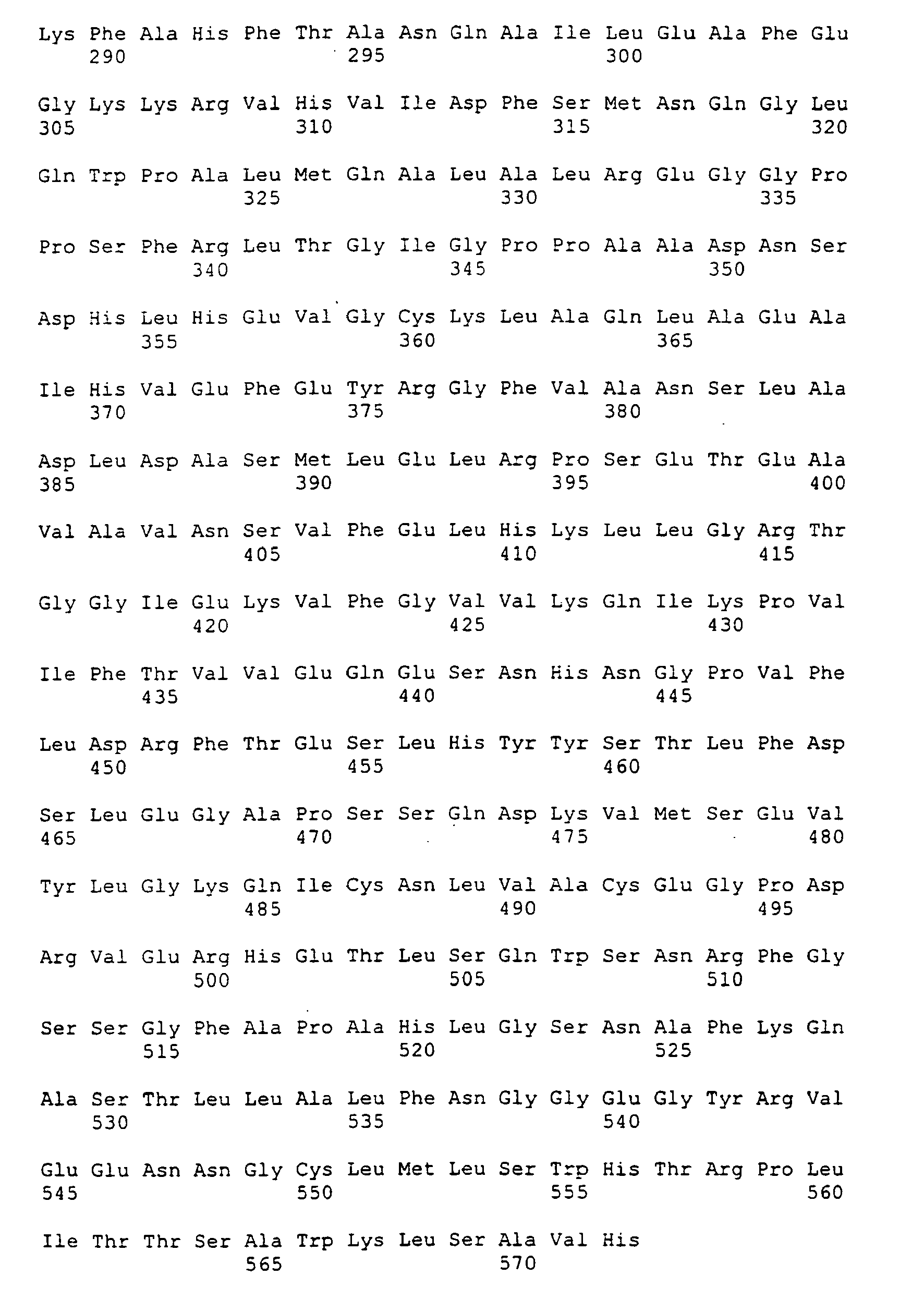
- La séquence du gène BZH sauvage est représentée dans la liste de séquences en annexe sous le numéro SEQ ID NO: 1, et la séquence de son produit de traduction est représentée sous le numéro SEQ ID NO: 2. La séquence de l'allèle mutant bzh est représentée dans la liste de séquences en annexe sous le numéro SEQ ID NO: 3, et la séquence de son produit de traduction est représentée sous le numéro SEQ ID NO: 4.
- La portion codante du gène BZH est de 1716 pbs et la protéine correspondante est de 572 acides aminés.
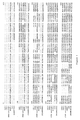
- L'analyse des séquences du gène BZH et de son produit de traduction permet de le rattacher à la famille GRAS, et notamment au sous-groupe comprenant GAI, RGA et RGA-like. L'alignement des séquences polypeptidiques déduites des gènes BZH avec d'autres gènes de la famille GRAS, à savoir les gènes GAI, RGA, RGA-LIKE, SCARECROW et LS, est représenté sur la Figure 1.
- L'analyse des séquences de l'allèle mutant bzh et de son produit de traduction montre que la mutation bzh est une subtitution G → A en position 1695 de la séquence codante. Elle conduit à un changement d'acide aminé acide glutamique → Lysine en position 546 de la séquence polypeptidique.
- De manière surprenante, la mutation bzh est totalement différente de la mutation gai d'Arabidopsis. En particulier, alors que la mutation gai d'Arabidopsis affecte une région située dans la portion N-terminale de la protéine GAI, la mutation bzh affecte une région située dans la portion C-terminale de la protéine BZH.
- La présente invention a pour objet une protéine dont l'expression dans une plante entraîne chez ladite plante une réduction de taille insensible aux gibbérellines, caractérisée en ce qu'elle est définie par la séquence SEQ ID NO: 4.
- L'invention englobe aussi les séquences d'acide nucléique codant pour une protéine conforme à l'invention, par exemple la séquence de l'allèle mutant bzh qui est représentée dans la liste de séquences en annexe sous le numéro SEQ ID NO:3.
- L'invention a également pour objet des procédés d'obtention de plantes à développement réduit comprenant une ou plusieurs copies d'une séquence d'acide nucléique conforme à l'invention, à savoir :
- un procédé d'obtention de plantes mutantes, à partir de plantes sauvages de la famille des Brassicacées comprenant une séquence d'acide nucléique codant pour une protéine définie par la séquence SEQ ID NO: 2, par les techniques classiques de mutagenèse, par exemple en traitant des semences par un agent mutagène physique ou chimique, en sélectionnant parmi les plantes issues des semences traitées, les plantes présentant un nanisme insensible aux gibbérellines, et en sélectionnant parmi celles-ci, par des techniques classiques de détection d'hybridation des acides nucléiques, celles qui comprennent une séquence d'acide nucléique codant pour une protéine conforme à l'invention ;
- un procédé d'obtention de plantes transgéniques, obtenues par transgenèse d'une plante hôte, en particulier une crucifère et avantageusement une brassicacée, avec une séquence d'acide nucléique conforme à l'invention ;
- La présente invention a aussi pour objet les plantes à développement réduit exprimant une protéine conforme à l'invention. Il s'agit des plantes mutantes ou des plantes transgéniques susceptibles d'être obtenues par un procédé conforme à l'invention, ainsi que de leurs descendants, pouvant être obtenus par reproduction sexuée ou multiplication végétative.
- Avantageusement, des plantes conformes à l'invention sont des brassicacées, choisies parmi le colza et la navette.
- Les plantes exprimant une séquence d'acide nucléique conforme à l'invention présentent, par rapport aux plantes sauvages, une réduction de taille plus ou moins importante selon le niveau d'expression dans ladite plante de la séquence d'acide nucléique conforme à l'invention. Ce niveau d'expression dépend en particulier du nombre de copies de la séquence. Par exemple, dans le cas du colza, les plants hétérozygotes BZH/bzh ont une taille intermédiaire entre celle des plants nains homozygotes bzh/bzh et celle des plants sauvages BZH/BZH.
- Les plantes conformes à l'invention présentent, notamment dans le cas du colza, les avantages suivants :
- possibilité de semis très précoces, permettant l'assimilation des nitrates, sans risque d'élongation de la tige avant l'hiver ;
- meilleure résistance au froid ;
- meilleur suivi de la culture, du fait d'une taille plus courte facilitant les traitements phytosanitaires ;
- très bonne résistance à la verse ;
- facilité de la récolte.
- La présente invention sera mieux comprise à l'aide du complément de description qui va suivre, qui se réfère à des exemples non limitatifs décrivant la caractérisation du gène BZH de colza, et d'une séquence conforme à l'invention dérivée dudit gène.
- Le gène BZH a été isolé sur un fragment d'ADN de 2352 paires de bases obtenu à partir de la lignée de colza « STELLAR ». Ce fragment contient une séquence codante de 1716 pbs, et la séquence polypeptidique déduite est de 572 acides aminés. La séquence codante et la séquence polypeptidique déduite sont respectivement représentées sur la liste de séquence en annexe sous les numéros SEQ ID NO: 1 et 2.
- Pour comparer la séquence du gène sauvage et de l'allèle mutant bzh, 5 lignées ont été étudiées: PRIMOR sauvage (PS), PRIMOR nain (PN), DARMOR sauvage (DS), DARMOR nain (DN) et STELLAR sauvage (STE).
- Les fragments d'ADN correspondant au locus BZH ont été amplifiés sur ces lignées, à l'aide d'amorces dérivées de la séquence du SEQ ID NO: 1.
- La comparaison des séquences des produits d'amplification obtenus a permis d'établir que la seule différence commune à PRIMOR nain et DARMOR nain par rapport aux génotypes sauvages est une substitution G → A en position 1695 de la séquence codante. Cette substitution conduit à un changement d'acide aminé Glu→Lys en position 546 de la séquence peptidique.
- La séquence codante portée par le fragment d'acide nucléique amplifié à partir de la lignée primur nain, et la séquence peptidique correspondante sont respectivement représentées dans la liste de séquences en annexe sous les numéros SEQ ID NO: 3 et 4.
- 49 lignées issues du croisement : DARMOR nain X YUDAL, ainsi que les couples de lignées isogéniques [sauvage]/[bzh] suivants : ISL1770/ISN1770, DOUBLOL/DOUBLOL-Bzh, GASPARD/GASPARD-Bzh, TAPIDOR/TAPIDOR-Bzh, ont été analysées par amplification PCR d'une région de 400 pb environ de la séquence codante, correspondant à la portion C-terminale de la protéine, et électrophorèse sur gel de polyacrylamide des produits d'amplification.
- Les lignées de phénotype « nain » présentaient sur le gel une bande caractéristique de la présence de la substitution G → A.
-
- <110> INRA
RENARD, Michel
DELOURME, Régine
BARRET, Pierre
BRUNEL, Dominique
FROGER, Nicole
TANGUY, Xavier - <120> GENE MUTANT DE LA FAMILLE GRAS, ET PLANTES A DEVELOPPEMENT REDUIT COMPRENANT LEDIT GENE
- <130> MJPcb539/95
- <140>
<141> - <150> FR 9910023
<151> 1999-08-02 - <160> 4
- <170> PatentIa Ver. 2.1
- <210> 1
<211> 1779
<212> ADN
<213> Brassica napus - <220>
<221> CDS
<222> (60) . . (1778) - <400> 1


- <210> 2
<211> 572
<212> PRT
<213> Brassica napus - <400> 2

- <210> 3
<211> 1779
<212> ADN
<213> Brassica napus - <220>
<221> CDS
<222> (60)..(1778) - <400> 3


- <210> 4
<211> 572
<212> PRT
<213> Brassica napus - <400> 4


Claims (9)
- Protéine dont l'expression dans une plante entraîne chez ladite plante une réduction de taille insensible aux gibbérellines, caractérisée en ce qu'elle est définie par la séquence SEQ ID NO: 4.
- Polynucléotide isolé codant pour une protéine selon la revendication 1.
- Procédé d'obtention de plantes à développement réduit, à partir de plantes de la famille des Brassicacées comprenant une séquence d'acide nucléique codant pour une protéine définie par la séquence SEQ ID NO: 2, par mutagénèse et sélection de plantes mutantes qui présentent un nanisme insensible aux gibbérellines, caractérisé en ce qu'il comprend en outre la sélection, parmi lesdites plantes mutantes, de celles qui comprennent une séquence d'acide nucléique codant pour une protéine selon la revendication 1.
- Procédé d'obtention d'une plante à développement réduit, caractérisé en ce qu'il comprend la transgenèse d'une plante hôte avec un polynucléotide selon la revendication 2.
- Procédé selon la revendication 4, caractérisé en ce que ladite plante est une crucifère.
- Procédé selon la revendication 4, caractérisé en ce que ladite plante est une Brassicacée.
- Procédé selon une quelconque des revendications 3 ou 6, caractérisé en ce que ladite Brassicacée est choisie parmi le colza et la navette.
- Plante à développement réduit, exprimant une protéine selon la revendication 1, et susceptible d'être obtenue par un procédé selon une quelconque des revendications 3 à 7.
- Plante à développement réduit, exprimant une protéine selon la revendication 1, descendant d'une plante selon la revendication 8.
Applications Claiming Priority (3)
| Application Number | Priority Date | Filing Date | Title |
|---|---|---|---|
| FR9910023 | 1999-08-02 | ||
| FR9910023A FR2797274B1 (fr) | 1999-08-02 | 1999-08-02 | Gene mutant de la famille gras, et plantes a developpement reduit comprenant ledit gene |
| PCT/FR2000/002216 WO2001009356A1 (fr) | 1999-08-02 | 2000-08-02 | Gene mutant de la famille gras, et plantes a developpement reduit comprenant ledit gene |
Publications (2)
| Publication Number | Publication Date |
|---|---|
| EP1198577A1 EP1198577A1 (fr) | 2002-04-24 |
| EP1198577B1 true EP1198577B1 (fr) | 2006-10-18 |
Family
ID=9548800
Family Applications (1)
| Application Number | Title | Priority Date | Filing Date |
|---|---|---|---|
| EP00956593A Expired - Lifetime EP1198577B1 (fr) | 1999-08-02 | 2000-08-02 | Gene mutant de la famille gras, et plantes a developpement reduit comprenant ledit gene |
Country Status (10)
| Country | Link |
|---|---|
| US (1) | US7645920B1 (fr) |
| EP (1) | EP1198577B1 (fr) |
| AR (1) | AR025009A1 (fr) |
| AT (1) | ATE342995T1 (fr) |
| AU (1) | AU778595B2 (fr) |
| CA (1) | CA2380847C (fr) |
| DE (1) | DE60031410T2 (fr) |
| DK (1) | DK1198577T3 (fr) |
| FR (1) | FR2797274B1 (fr) |
| WO (1) | WO2001009356A1 (fr) |
Families Citing this family (4)
| Publication number | Priority date | Publication date | Assignee | Title |
|---|---|---|---|---|
| ES2685636T3 (es) | 2007-06-29 | 2018-10-10 | Stelic Institute Of Regenerative Medicine, Stelic Institute & Co. | Método de fijación y expresión de sustancia fisiológicamente activa |
| WO2011137998A1 (fr) * | 2010-05-04 | 2011-11-10 | Bayer Bioscience N.V. | Brassicas dont l'architecture a été modifiée |
| CN103421105B (zh) * | 2013-06-25 | 2016-06-29 | 石河子大学 | 转录因子、突变体、构建体、宿主细胞及其在培育矮化植物中的应用 |
| CN112522281B (zh) * | 2020-12-07 | 2022-11-11 | 上海师范大学 | 一种用于调控小兰屿蝴蝶兰花瓣发育的基因PeGRAS序列及其应用 |
Family Cites Families (2)
| Publication number | Priority date | Publication date | Assignee | Title |
|---|---|---|---|---|
| GB9602796D0 (en) * | 1996-02-12 | 1996-04-10 | Innes John Centre Innov Ltd | Genetic control of plant growth and development |
| GB9717192D0 (en) * | 1997-08-13 | 1997-10-22 | Innes John Centre Innov Ltd | Genetic control of plant growth and development |
-
1999
- 1999-08-02 FR FR9910023A patent/FR2797274B1/fr not_active Expired - Lifetime
-
2000
- 2000-08-01 AR ARP000103973A patent/AR025009A1/es unknown
- 2000-08-02 DE DE60031410T patent/DE60031410T2/de not_active Expired - Lifetime
- 2000-08-02 AT AT00956593T patent/ATE342995T1/de active
- 2000-08-02 DK DK00956593T patent/DK1198577T3/da active
- 2000-08-02 WO PCT/FR2000/002216 patent/WO2001009356A1/fr not_active Ceased
- 2000-08-02 EP EP00956593A patent/EP1198577B1/fr not_active Expired - Lifetime
- 2000-08-02 US US10/030,194 patent/US7645920B1/en not_active Expired - Fee Related
- 2000-08-02 CA CA2380847A patent/CA2380847C/fr not_active Expired - Lifetime
- 2000-08-02 AU AU68483/00A patent/AU778595B2/en not_active Expired
Also Published As
| Publication number | Publication date |
|---|---|
| CA2380847C (fr) | 2010-04-06 |
| CA2380847A1 (fr) | 2001-02-08 |
| FR2797274A1 (fr) | 2001-02-09 |
| US7645920B1 (en) | 2010-01-12 |
| DE60031410T2 (de) | 2007-08-23 |
| FR2797274B1 (fr) | 2003-09-05 |
| AU6848300A (en) | 2001-02-19 |
| DK1198577T3 (da) | 2007-02-19 |
| ATE342995T1 (de) | 2006-11-15 |
| DE60031410D1 (de) | 2006-11-30 |
| WO2001009356A1 (fr) | 2001-02-08 |
| EP1198577A1 (fr) | 2002-04-24 |
| AU778595B2 (en) | 2004-12-09 |
| AR025009A1 (es) | 2002-11-06 |
Similar Documents
| Publication | Publication Date | Title |
|---|---|---|
| Pandolfini et al. | Optimisation of transgene action at the post-transcriptional level: high quality parthenocarpic fruits in industrial tomatoes | |
| AU762569C (en) | A starchless variety of (pisum sativum) having elevated levels of sucrose | |
| US20170066803A1 (en) | Isolated polypeptides and polynucleotides encoding same for generating plants with increased cuticlar water permeability | |
| CN114805509B (zh) | 蛋白质OsGATA6在调控植物开花时间、穗型、粒形和千粒重中的应用 | |
| CN112301039A (zh) | 一种玉米叶斑马条纹叶色基因zb9以及与其连锁的InDel分子标记和应用 | |
| CN113234731B (zh) | 编码大豆ARF转录因子的GmARF16基因及应用 | |
| CN108024518A (zh) | 具有抗裂荚性的芸薹属植物 | |
| CN108913668A (zh) | 水稻白化转绿叶基因val1及其编码的蛋白和应用 | |
| CN105732786B (zh) | 水稻基因OsEIN2L及其应用 | |
| CN109721649B (zh) | 一种水稻株型调控相关基因、蛋白质与应用 | |
| CN110092819B (zh) | 玉米苞叶宽度调控蛋白arf2及其编码基因与应用 | |
| CN109402078B (zh) | 一种水稻衰老控制基因OsCKX11及其应用 | |
| CN107353332A (zh) | 一种水稻叶绿体发育调控基因ahs1及其编码的蛋白质与应用 | |
| CA2380847C (fr) | Gene mutant de la famille gras, et plantes a developpement reduit comprenant ledit gene | |
| CN101585869A (zh) | 一种水稻分蘖相关蛋白及其编码基因与应用 | |
| CN111394363A (zh) | 玉米木聚糖侧链甲基化的关键基因、表达载体和应用 | |
| CN114990134B (zh) | 一种水稻油体蛋白基因OsOle6及其编码蛋白与应用 | |
| WO1996003505A1 (fr) | THIOREDOXINES h DE BLE TENDRE ET DE BLE DUR ET PROTEINES PRESENTANT DES SIMILITUDES FRAGMENTS D'ADN CODANT POUR CES PROTEINES ET PROCEDES D'OBTENTION | |
| CN114230648B (zh) | 水稻基因panda提高植物产量的应用 | |
| HU228383B1 (en) | Overexpression of phosphoenolpyruvate carboxylase | |
| CN110698551B (zh) | 大豆生长素响应基因或其蛋白的应用 | |
| CN114292859B (zh) | 黄瓜MYB111MULE-InDel基因及其应用 | |
| CA3152291C (fr) | Lignee de brassica juncea nubj1207 | |
| CN111454965B (zh) | GmLMM2基因在调控植物叶绿素合成及PCD中的应用 | |
| CN120943912A (zh) | 小麦粒重基因wgy1及其编码蛋白质与应用 |
Legal Events
| Date | Code | Title | Description |
|---|---|---|---|
| PUAI | Public reference made under article 153(3) epc to a published international application that has entered the european phase |
Free format text: ORIGINAL CODE: 0009012 |
|
| 17P | Request for examination filed |
Effective date: 20020207 |
|
| AK | Designated contracting states |
Kind code of ref document: A1 Designated state(s): AT BE CH CY DE DK ES FI FR GB GR IE IT LI LU MC NL PT SE |
|
| AX | Request for extension of the european patent |
Free format text: AL;LT;LV;MK;RO;SI |
|
| 17Q | First examination report despatched |
Effective date: 20031022 |
|
| GRAP | Despatch of communication of intention to grant a patent |
Free format text: ORIGINAL CODE: EPIDOSNIGR1 |
|
| GRAS | Grant fee paid |
Free format text: ORIGINAL CODE: EPIDOSNIGR3 |
|
| GRAA | (expected) grant |
Free format text: ORIGINAL CODE: 0009210 |
|
| AK | Designated contracting states |
Kind code of ref document: B1 Designated state(s): AT BE CH CY DE DK ES FI FR GB GR IE IT LI LU MC NL PT SE |
|
| PG25 | Lapsed in a contracting state [announced via postgrant information from national office to epo] |
Ref country code: IT Free format text: LAPSE BECAUSE OF FAILURE TO SUBMIT A TRANSLATION OF THE DESCRIPTION OR TO PAY THE FEE WITHIN THE PRESCRIBED TIME-LIMIT;WARNING: LAPSES OF ITALIAN PATENTS WITH EFFECTIVE DATE BEFORE 2007 MAY HAVE OCCURRED AT ANY TIME BEFORE 2007. THE CORRECT EFFECTIVE DATE MAY BE DIFFERENT FROM THE ONE RECORDED. Effective date: 20061018 |
|
| REG | Reference to a national code |
Ref country code: GB Ref legal event code: FG4D Free format text: NOT ENGLISH |
|
| REG | Reference to a national code |
Ref country code: IE Ref legal event code: FG4D Free format text: LANGUAGE OF EP DOCUMENT: FRENCH Ref country code: CH Ref legal event code: EP |
|
| REF | Corresponds to: |
Ref document number: 60031410 Country of ref document: DE Date of ref document: 20061130 Kind code of ref document: P |
|
| PG25 | Lapsed in a contracting state [announced via postgrant information from national office to epo] |
Ref country code: ES Free format text: LAPSE BECAUSE OF FAILURE TO SUBMIT A TRANSLATION OF THE DESCRIPTION OR TO PAY THE FEE WITHIN THE PRESCRIBED TIME-LIMIT Effective date: 20070129 |
|
| REG | Reference to a national code |
Ref country code: SE Ref legal event code: TRGR |
|
| GBT | Gb: translation of ep patent filed (gb section 77(6)(a)/1977) |
Effective date: 20070124 |
|
| PG25 | Lapsed in a contracting state [announced via postgrant information from national office to epo] |
Ref country code: PT Free format text: LAPSE BECAUSE OF FAILURE TO SUBMIT A TRANSLATION OF THE DESCRIPTION OR TO PAY THE FEE WITHIN THE PRESCRIBED TIME-LIMIT Effective date: 20070319 |
|
| PLBE | No opposition filed within time limit |
Free format text: ORIGINAL CODE: 0009261 |
|
| STAA | Information on the status of an ep patent application or granted ep patent |
Free format text: STATUS: NO OPPOSITION FILED WITHIN TIME LIMIT |
|
| 26N | No opposition filed |
Effective date: 20070719 |
|
| REG | Reference to a national code |
Ref country code: CH Ref legal event code: PCAR Free format text: ISLER & PEDRAZZINI AG;POSTFACH 1772;8027 ZUERICH (CH) |
|
| PG25 | Lapsed in a contracting state [announced via postgrant information from national office to epo] |
Ref country code: GR Free format text: LAPSE BECAUSE OF FAILURE TO SUBMIT A TRANSLATION OF THE DESCRIPTION OR TO PAY THE FEE WITHIN THE PRESCRIBED TIME-LIMIT Effective date: 20070119 Ref country code: MC Free format text: LAPSE BECAUSE OF NON-PAYMENT OF DUE FEES Effective date: 20070831 |
|
| PG25 | Lapsed in a contracting state [announced via postgrant information from national office to epo] |
Ref country code: CY Free format text: LAPSE BECAUSE OF FAILURE TO SUBMIT A TRANSLATION OF THE DESCRIPTION OR TO PAY THE FEE WITHIN THE PRESCRIBED TIME-LIMIT Effective date: 20061018 |
|
| REG | Reference to a national code |
Ref country code: FR Ref legal event code: PLFP Year of fee payment: 16 |
|
| REG | Reference to a national code |
Ref country code: FR Ref legal event code: PLFP Year of fee payment: 17 |
|
| REG | Reference to a national code |
Ref country code: FR Ref legal event code: PLFP Year of fee payment: 18 |
|
| REG | Reference to a national code |
Ref country code: FR Ref legal event code: PLFP Year of fee payment: 19 |
|
| PGFP | Annual fee paid to national office [announced via postgrant information from national office to epo] |
Ref country code: NL Payment date: 20190830 Year of fee payment: 20 Ref country code: LU Payment date: 20190821 Year of fee payment: 20 |
|
| PGFP | Annual fee paid to national office [announced via postgrant information from national office to epo] |
Ref country code: SE Payment date: 20190829 Year of fee payment: 20 Ref country code: FR Payment date: 20190829 Year of fee payment: 20 Ref country code: IE Payment date: 20190821 Year of fee payment: 20 Ref country code: DK Payment date: 20190822 Year of fee payment: 20 Ref country code: FI Payment date: 20190820 Year of fee payment: 20 Ref country code: DE Payment date: 20190829 Year of fee payment: 20 |
|
| PGFP | Annual fee paid to national office [announced via postgrant information from national office to epo] |
Ref country code: BE Payment date: 20190830 Year of fee payment: 20 |
|
| PGFP | Annual fee paid to national office [announced via postgrant information from national office to epo] |
Ref country code: AT Payment date: 20190820 Year of fee payment: 20 Ref country code: GB Payment date: 20190812 Year of fee payment: 20 |
|
| PGFP | Annual fee paid to national office [announced via postgrant information from national office to epo] |
Ref country code: CH Payment date: 20190830 Year of fee payment: 20 |
|
| REG | Reference to a national code |
Ref country code: DE Ref legal event code: R071 Ref document number: 60031410 Country of ref document: DE |
|
| REG | Reference to a national code |
Ref country code: DK Ref legal event code: EUP Expiry date: 20200802 |
|
| REG | Reference to a national code |
Ref country code: NL Ref legal event code: MK Effective date: 20200801 |
|
| REG | Reference to a national code |
Ref country code: CH Ref legal event code: PL |
|
| REG | Reference to a national code |
Ref country code: GB Ref legal event code: PE20 Expiry date: 20200801 |
|
| REG | Reference to a national code |
Ref country code: BE Ref legal event code: MK Effective date: 20200802 |
|
| REG | Reference to a national code |
Ref country code: AT Ref legal event code: MK07 Ref document number: 342995 Country of ref document: AT Kind code of ref document: T Effective date: 20200802 |
|
| REG | Reference to a national code |
Ref country code: FI Ref legal event code: MAE |
|
| REG | Reference to a national code |
Ref country code: SE Ref legal event code: EUG |
|
| REG | Reference to a national code |
Ref country code: IE Ref legal event code: MK9A |
|
| PG25 | Lapsed in a contracting state [announced via postgrant information from national office to epo] |
Ref country code: GB Free format text: LAPSE BECAUSE OF EXPIRATION OF PROTECTION Effective date: 20200801 Ref country code: IE Free format text: LAPSE BECAUSE OF EXPIRATION OF PROTECTION Effective date: 20200802 |
|
| REG | Reference to a national code |
Ref country code: DE Ref legal event code: R082 Ref document number: 60031410 Country of ref document: DE Representative=s name: KUHNEN & WACKER PATENT- UND RECHTSANWALTSBUERO, DE Ref country code: DE Ref legal event code: R081 Ref document number: 60031410 Country of ref document: DE Owner name: INSTITUT NATIONAL DE RECHERCHE POUR L'AGRICULT, FR Free format text: FORMER OWNER: INSTITUT NATIONAL DE LA RECHERCHE AGRONOMIQUE, PARIS, FR |