EP1162359A2 - Verfahren und Anordnung zur Regelung des Luft-Kraftstoff-Verhältnisses eines einem Verbrennungsprozess zuzuführenden Gemisches - Google Patents
Verfahren und Anordnung zur Regelung des Luft-Kraftstoff-Verhältnisses eines einem Verbrennungsprozess zuzuführenden Gemisches Download PDFInfo
- Publication number
- EP1162359A2 EP1162359A2 EP01113757A EP01113757A EP1162359A2 EP 1162359 A2 EP1162359 A2 EP 1162359A2 EP 01113757 A EP01113757 A EP 01113757A EP 01113757 A EP01113757 A EP 01113757A EP 1162359 A2 EP1162359 A2 EP 1162359A2
- Authority
- EP
- European Patent Office
- Prior art keywords
- air
- exhaust gas
- measurement signal
- mixture
- concentration
- Prior art date
- Legal status (The legal status is an assumption and is not a legal conclusion. Google has not performed a legal analysis and makes no representation as to the accuracy of the status listed.)
- Withdrawn
Links
Images
Classifications
-
- F—MECHANICAL ENGINEERING; LIGHTING; HEATING; WEAPONS; BLASTING
- F02—COMBUSTION ENGINES; HOT-GAS OR COMBUSTION-PRODUCT ENGINE PLANTS
- F02D—CONTROLLING COMBUSTION ENGINES
- F02D41/00—Electrical control of supply of combustible mixture or its constituents
- F02D41/02—Circuit arrangements for generating control signals
- F02D41/14—Introducing closed-loop corrections
- F02D41/1438—Introducing closed-loop corrections using means for determining characteristics of the combustion gases; Sensors therefor
- F02D41/1473—Introducing closed-loop corrections using means for determining characteristics of the combustion gases; Sensors therefor characterised by the regulation method
- F02D41/1475—Regulating the air fuel ratio at a value other than stoichiometry
- F02D41/1476—Biasing of the sensor
-
- F—MECHANICAL ENGINEERING; LIGHTING; HEATING; WEAPONS; BLASTING
- F02—COMBUSTION ENGINES; HOT-GAS OR COMBUSTION-PRODUCT ENGINE PLANTS
- F02D—CONTROLLING COMBUSTION ENGINES
- F02D41/00—Electrical control of supply of combustible mixture or its constituents
- F02D41/02—Circuit arrangements for generating control signals
- F02D41/14—Introducing closed-loop corrections
- F02D41/1438—Introducing closed-loop corrections using means for determining characteristics of the combustion gases; Sensors therefor
- F02D41/1444—Introducing closed-loop corrections using means for determining characteristics of the combustion gases; Sensors therefor characterised by the characteristics of the combustion gases
- F02D41/1454—Introducing closed-loop corrections using means for determining characteristics of the combustion gases; Sensors therefor characterised by the characteristics of the combustion gases the characteristics being an oxygen content or concentration or the air-fuel ratio
- F02D41/1456—Introducing closed-loop corrections using means for determining characteristics of the combustion gases; Sensors therefor characterised by the characteristics of the combustion gases the characteristics being an oxygen content or concentration or the air-fuel ratio with sensor output signal being linear or quasi-linear with the concentration of oxygen
-
- G—PHYSICS
- G01—MEASURING; TESTING
- G01N—INVESTIGATING OR ANALYSING MATERIALS BY DETERMINING THEIR CHEMICAL OR PHYSICAL PROPERTIES
- G01N27/00—Investigating or analysing materials by the use of electric, electrochemical, or magnetic means
- G01N27/26—Investigating or analysing materials by the use of electric, electrochemical, or magnetic means by investigating electrochemical variables; by using electrolysis or electrophoresis
- G01N27/416—Systems
- G01N27/417—Systems using cells, i.e. more than one cell and probes with solid electrolytes
- G01N27/419—Measuring voltages or currents with a combination of oxygen pumping cells and oxygen concentration cells
-
- F—MECHANICAL ENGINEERING; LIGHTING; HEATING; WEAPONS; BLASTING
- F02—COMBUSTION ENGINES; HOT-GAS OR COMBUSTION-PRODUCT ENGINE PLANTS
- F02D—CONTROLLING COMBUSTION ENGINES
- F02D41/00—Electrical control of supply of combustible mixture or its constituents
- F02D41/24—Electrical control of supply of combustible mixture or its constituents characterised by the use of digital means
- F02D41/26—Electrical control of supply of combustible mixture or its constituents characterised by the use of digital means using computer, e.g. microprocessor
- F02D41/28—Interface circuits
- F02D2041/281—Interface circuits between sensors and control unit
-
- F—MECHANICAL ENGINEERING; LIGHTING; HEATING; WEAPONS; BLASTING
- F02—COMBUSTION ENGINES; HOT-GAS OR COMBUSTION-PRODUCT ENGINE PLANTS
- F02D—CONTROLLING COMBUSTION ENGINES
- F02D41/00—Electrical control of supply of combustible mixture or its constituents
- F02D41/24—Electrical control of supply of combustible mixture or its constituents characterised by the use of digital means
- F02D41/26—Electrical control of supply of combustible mixture or its constituents characterised by the use of digital means using computer, e.g. microprocessor
- F02D41/28—Interface circuits
- F02D2041/286—Interface circuits comprising means for signal processing
-
- F—MECHANICAL ENGINEERING; LIGHTING; HEATING; WEAPONS; BLASTING
- F02—COMBUSTION ENGINES; HOT-GAS OR COMBUSTION-PRODUCT ENGINE PLANTS
- F02D—CONTROLLING COMBUSTION ENGINES
- F02D41/00—Electrical control of supply of combustible mixture or its constituents
- F02D41/24—Electrical control of supply of combustible mixture or its constituents characterised by the use of digital means
- F02D41/2406—Electrical control of supply of combustible mixture or its constituents characterised by the use of digital means using essentially read only memories
- F02D41/2425—Particular ways of programming the data
- F02D41/2429—Methods of calibrating or learning
- F02D41/2451—Methods of calibrating or learning characterised by what is learned or calibrated
- F02D41/2474—Characteristics of sensors
Definitions
- the invention relates to a method for regulating the air-fuel ratio a mixture to be fed to a combustion process, especially in an internal combustion engine that is based on concentration at least one component of the during the combustion process
- the resulting exhaust gas is based, the concentration in the process of the exhaust gas component concerned, corresponding to the detected Concentration generates a measurement signal, then the measurement signal evaluated, and the air-fuel ratio of the further combustion process mixture to be fed is adjusted if that evaluated measurement signal deviates from a predetermined value.
- the invention relates to an arrangement according to the preamble of the claim 14 for controlling the air-fuel ratio of one Mixture to be supplied to the combustion process.
- the method mentioned at the beginning and the arrangement mentioned at the beginning are used in particular in internal combustion engines to regulate the air-fuel ratio of the to be fed to the cylinders of the internal combustion engine Mixture of air and fuel used.
- an exhaust gas probe is used for this purpose, which measures the concentration at least one component of the during the combustion process generated exhaust gas and recorded with the concentration of a reference gas compares.
- this is usually the case the concentration of the oxygen molecules contained in the exhaust gas the concentration of the oxygen molecules contained in the ambient air compared.
- the difference in concentration gives a Measurement signal, for example a voltage, as the basis for the readjustment the air-fuel ratio of the further combustion process mixture to be supplied is used.
- ASIC application-specific circuit
- the invention solves the problem by a method with the features according to claim 1 and in particular in that the evaluation of the Measurement signal is carried out by a programmed algorithm. Furthermore, the task by an arrangement with the features of claim 14 solved.
- the measurement signal of the exhaust gas probe is evaluated, with which the concentration of the relevant exhaust gas component is specified with the help of the programmed algorithm of the computer unit.
- the Algorithm with which the measurement signal is evaluated without a large one Effort adapted to different boundary conditions of the regulation become.
- another one Sensor type used to monitor the exhaust gas it is not as before usually required, one designed for this special application To develop and manufacture circuitry. Much more control can be done by simply reprogramming the algorithm be adapted to the changed boundary conditions.
- the method is the use of a so-called broadband probe possible, which is characterized in particular by the fact that it a wide ⁇ range, with an air ratio ⁇ in a range from 0.7 to 4, shows a unique, linearly increasing signal, on the basis thereof the air-fuel ratio of the fuel to be fed into the further combustion process Mixtures are determined and adjusted accordingly can.
- This further development of the method also proposes that Setting the control signal using the programmed algorithm. This is it is advantageous if the control signal after evaluating the measurement signal recorded and with the help of the programmed algorithm for readjusting the Air-fuel ratio is evaluated. This ensures that the air-fuel ratio during the further combustion process can be set very precisely so that the air ratio ⁇ is at least approximately equal to 1.
- the previously described readjustment of the air-fuel ratio with The control signal is preferably used only during at least approximately stationary course of the combustion process carried out, in which the air ratio ⁇ is in a range from approximately 0.95 to 1.05, because with this air-fuel ratio readjustment method very precise regulation is possible.
- the combustion process is transient, i.e. the air ratio ⁇ is preferably less than 0.95 or greater than 1.05, it is proposed adjust the control signal in advance so that the concentration of the Exhaust gas component to be measured corresponds to a value as in Incineration of the combustion process immediately before Mixture results in which the air ratio ⁇ is significantly less than 0.95 or is greater than 1.05.
- the method described above enables the measuring device, for example the exhaust gas probe, which is the concentration of the exhaust gas component determined, specifically adjusted or preloaded to a to achieve early readjustment of the mixture, reducing dead time control in the event of sudden changes in the air-fuel ratio is shortened in the combustion process compared to known methods.
- the measuring device for example the exhaust gas probe, which is the concentration of the exhaust gas component determined, specifically adjusted or preloaded to a to achieve early readjustment of the mixture, reducing dead time control in the event of sudden changes in the air-fuel ratio is shortened in the combustion process compared to known methods.
- the method described above is particularly suitable for internal combustion engines, where, for example, during an acceleration process the mixture is enriched with fuel so that the air ratio ⁇ is clearly below a value of 0.95. Because of the flow rate and the distance that the mixture starts at the injection point The exhaust gas probe can travel to the exhaust gas sensor record the concentration of the exhaust gas component to be measured only with a delay. This delay corresponds to a dead time, in which a Mixture with an unfavorable air ratio ⁇ is present in the combustion process Exhaust gas probe, however, the composition of the exhaust gas previously made Combustion processes recorded. With the help of the targeted adjustment of the Measurement signal is reached as soon as the combustion process is transient, that the readjustment immediately after the combustion process shows a transient course, the mixture accordingly can be adjusted.
- the algorithm be dependent from the exhaust gas concentration determined in a previous measurement process the measurement signal and, if given, the control signal optionally on the basis of proportionality equations, through integration and / or evaluates or sets through differentiation. This is it possible that according to the determined exhaust gas concentration Evaluation and adjustment process is selected as quickly as possible appropriate regulation of the air-fuel ratio of the mixture can perform.
- the method according to the invention is used in an internal combustion engine, it is particularly advantageous if the air-fuel ratio for each cylinder of the mixture to be fed to the respective cylinder is adjusted. In this way, discrepancies between the individual cylinders balanced and the performance of the cylinders against each other be adjusted.
- Another focus of the invention is an arrangement that to regulate the air-fuel ratio of a combustion process mixture to be supplied.
- the arrangement has one Exhaust gas probe with which the concentration of at least one component of the resulting exhaust gas measuring signal is generated.
- the air-fuel ratio is readjusted by a control unit, those in the event of a deviation of the measurement signal from a predetermined one Value of the mixture to be fed to the further combustion process hires again.
- a programmable is used to evaluate the measurement signal Computer unit used.
- a broadband probe is preferably used as the exhaust gas probe is formed from a measuring cell and a pump cell.
- the concentration of the exhaust gas component to be detected by the measuring cell be set specifically so that the measuring signal of the measuring cell corresponds to the specified value.
- the control signal through which the pump cell the concentration of the exhaust gas component to be measured the programmable computer unit of the Control unit to what extent the air-fuel ratio of the mixture must be readjusted.
- the arrangement described above is particularly suitable for use in an internal combustion engine of a motor vehicle. With this Use case is used to adjust the air-fuel ratio of the Mixture adjusted the fuel to be added to the mixture.
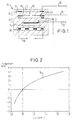
- a broadband probe 10 is shown, which in motor vehicles for Detecting the oxygen concentration in the exhaust gas is used.
- the broadband probe 10 is made of a solid electrolyte 12 such as, for example Zirconia formed, and has on its end facing the exhaust gas a protective layer 14 on the solid electrolyte 12 before the exhaust gas protects.
- a reference chamber 16 and one between the reference chamber 16 and that provided with the protective layer 14 Measuring chamber 18 arranged at the end face.
- the reference chamber 16 is through a channel, not shown, with the environment connected so that air from the environment enters the reference chamber 16 can flow.
- the measuring chamber 18 is through a channel 20 with the Exhaust system of the internal combustion engine, not shown, can flow into the measuring chamber 18 through the exhaust gas.
- an electrode 22 made of platinum is arranged, those formed on the between the reference chamber 16 and the measuring chamber 18 first electrolyte layer 24 is attached.
- a double electrode 26 also made of platinum is accommodated, that both on the first electrolyte layer 24 and on the intermediate the measuring chamber 18 and the protective layer 14 formed second Electrolyte layer 28 is attached.
- a pump electrode 30 is finally attached to the measuring chamber 18th is aligned.
- the electrode 22, the first electrolyte layer 24 and the double electrode 26 form a measuring cell 32, which works on the principle of a Nernst concentration cell is working.
- the double electrode 26 forms simultaneously with the second electrolyte layer 28 and the pump electrode 30 a pump cell 34, whose operation will be explained later.
- a heating electrode adjacent to the reference chamber 16 36 is received in a heating chamber 38 with which the solid electrolyte 12 can be heated to its operating temperature of about 600 ° C.
- a reference voltage U Ref of, for example, 2.5 volts is applied to the double electrode 26.
- an electrical voltage U N arises between the two interfaces of the first electrolyte layer 24, which voltage can be tapped at the electrode 22.
- the proportion of oxygen molecules in the measuring chamber 18 is adjusted with the aid of the pump cell 34 such that the amount at the electrode 22 the voltage U N applied to the measuring cell 32 corresponds approximately to this predetermined value of 450 mV, at which the air ratio ⁇ is equal to 1.
- the arrangement 40 changes the current I P present at the pump electrode 30 of the pump cell 34, so that oxygen ions are conveyed or pumped into the measuring chamber 18.
- the concentration of oxygen ions in the measuring chamber 18 is increased until the voltage U N applied to the electrode 22 of the measuring cell 32 again corresponds to its predetermined value of approximately 450 mV.
- the polarity of the current I P flowing into the pump electrode 30 is reversed, so that oxygen ions are conveyed or pumped out of the measuring chamber 18 become.
- the pump current I P is increased until the voltage U N applied to the electrode 22 again reaches its predetermined value of approximately 450 mV.
- the arrangement 40 can determine, on the basis of the pump current I P that has been set, which air ratio ⁇ and thus which air / fuel ratio the mixture which had just been burned had.
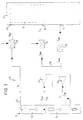
- the arrangement 40 has a control unit 42 which serves on the one hand to control the broadband probe 10 and on the other hand to control the fuel injection of the internal combustion engine.
- the control unit 42 is connected to a first output 44 with a digital-to-analog converter 46, which converts the control signal I DIG transmitted by the control unit 42 into an analog control signal I ANA .
- a first operational amplifier 48 connects to the digital-to-analog converter 46, which in turn is connected to the pump electrode 30 of the pump cell 34 and converts the analog control signal I ANA into the pump current I P to be set in each case.
- a branch 50 is provided between the digital-to-analog converter 46 and the first operational amplifier 48, which feeds the analog control signal I ANA to an analog-to-digital converter 52, which is connected to an input 54 of the control unit 42, and the analog control signal I ANA again converted into a digital actual signal I IST .
- the double electrode 26 of the broadband probe 10 is connected to a second operational amplifier connected by a voltage source, not shown controlled a constant voltage of 2.5 V at the double electrode 26 created.
- the electrode 22 of the broadband probe 10 is connected to a second analog-digital converter 58, which is connected to a second input 60 of the control unit 42 and converts the voltage U N applied to the electrode 22 into a digital measurement signal U DIG .
- the digital measurement signal U DIG is then passed on from the second analog-digital converter 58 to the control unit 42.
- a programmed computer unit 62 is provided in the control unit 42, with which the digital actuating signal I DIG is generated on the one hand, the digital actual signal I IST is checked on the other hand and the measurement signal U DIG is evaluated.
- the digital control signal I DIG is set in accordance with a stored algorithm by the computer unit 62 so that the voltage U N applied to the measuring cell 32 again assumes its predetermined value in the subsequent control process.
- the digital-to-analog converter 46 converts the control signal I DIG into the analog control signal I ANA , with which the first operational amplifier 48 is actuated.
- the first operational amplifier 48 adjusts the pump current I P present at the pump electrode 30 in accordance with the analog control signal I ANA , so that the concentration of the oxygen ions in the measuring chamber 18 is either increased or decreased.
- the voltage U N applied to the electrode 22 of the measuring cell 32 changes, which after the conversion by the second analog-digital converter 58 as a digital measuring signal U DIG from the computing unit 62 of the control unit 42 is evaluated.
- the analog control signal I ANA set during this control process is converted again by the first analog-digital converter 52 into the digital actual signal I IST , which is evaluated by the computer unit 62.
- the air ratio ⁇ of the mixture can be determined in accordance with the curve shown in FIG. 2, the exhaust gases of which were detected by the broadband probe 10 after the combustion.
- the control unit 42 then adjusts the air-fuel ratio of the mixture that is subsequently to be fed to the internal combustion engine based on the digital actuating signal I ACT , so that the air ratio ⁇ again approaches 1.
- the air-fuel ratio is adjusted continuously and in small steps over a predetermined period to the stoichiometric ratio, the pump current I P set by the control unit 42 moving along the curve shown in FIG. 2.
- the regulation described above is particularly suitable for a stationary one Engine operation in which the air ratio ⁇ is within a range fluctuates from 0.95 to 1.05.
- the air-fuel ratio changes the mixture to be supplied to the internal combustion engine is significantly stronger, so that the air ratio ⁇ , for example if a mixture with a high fuel content is injected during an acceleration process Value of up to 0.7 while, for example, during injected a mixture with a high proportion of air during a braking operation in which the air ratio ⁇ can assume a value of up to 1.3.
- the pumping current I P for the pumping cell 34 is set by the computer unit 62 to a value which corresponds to an air ratio ⁇ , which in turn corresponds to the air / fuel ratio of the mixture which was set immediately beforehand by the control unit 42 and which corresponds to the Internal combustion engine is being fed.
- the targeted adjustment of the oxygen ion concentration in the measuring chamber 18 results in a deliberate adjustment of the voltage U N applied to the electrode 22 of the measuring cell 32.
- the measuring cell 32 is set in advance to a value which corresponds to the exhaust gas resulting from this mixture.
- the air-fuel ratio is then determined based on the voltage U N applied to the electrode 22 of the measuring cell 32 and readjusted accordingly.
- the broadband probe 10 works as a conventional lean probe which is used exclusively as the Nernst concentration cell measuring cell 32 for regulating the air-fuel ratio of the mixture.
- the concentration of the exhaust gas component is kept at a value by the pump current I P until the voltage U N applied to the measuring cell 32 deviates from its predetermined value until the measuring cell 32 detects the actual concentration of the exhaust gas component of the mixture, on the basis of this Air-fuel ratio of the pump current I P was changed to adjust the voltage U N applied to the measuring cell 32.
- the pump current I P is deactivated so that the measuring cell 32 in the measuring chamber 18 can detect the concentration of the component of the actual exhaust gas.
- control unit 42 switches back to the control method in which the air ratio ⁇ is determined with the aid of the pump current I P and the air-fuel ratio of the mixture to be supplied to the internal combustion engine is set.
- the measurement signal U DIG or the control signal I DIG is optionally evaluated or set by the computer unit 32 on the basis of proportionality equations, by integration and / or by differentiation.
- This control also known as Vollinger control, has the advantage that, depending on the respective deviation, the control is carried out optionally with a P-link, an I-link or a D-link, depending on which of these transmission links enables the fastest readjustment.
- the arrangement described above makes it possible to in Depends on the time it takes the mixture to get from the injection system to get through the engine to the exhaust gas probe, for everyone individual cylinders of the internal combustion engine to determine which one Air-fuel ratio actually for the cylinder in question has been set, creating a targeted readjustment for each individual Cylinder becomes possible, so that exhaust emissions are reduced and the performance of the different cylinders can be adjusted to each other can.
Landscapes
- Engineering & Computer Science (AREA)
- Chemical & Material Sciences (AREA)
- Life Sciences & Earth Sciences (AREA)
- General Engineering & Computer Science (AREA)
- Mechanical Engineering (AREA)
- Health & Medical Sciences (AREA)
- Combustion & Propulsion (AREA)
- Electrochemistry (AREA)
- Biochemistry (AREA)
- General Health & Medical Sciences (AREA)
- General Physics & Mathematics (AREA)
- Immunology (AREA)
- Pathology (AREA)
- Analytical Chemistry (AREA)
- Physics & Mathematics (AREA)
- Chemical Kinetics & Catalysis (AREA)
- Molecular Biology (AREA)
- Electrical Control Of Air Or Fuel Supplied To Internal-Combustion Engine (AREA)
- Combined Controls Of Internal Combustion Engines (AREA)
- Regulation And Control Of Combustion (AREA)
Abstract
Description
- Fig. 1
- eine schematische Schnittdarstellung einer Breitbandsonde, die mit Hilfe einer Meßzelle und einer Pumpzelle die Konzentration einer Abgaskomponente erfaßt,
- Fig. 2
- ein Diagramm, in dem der Verlauf des an die Pumpzelle anzulegenden Pumpstroms bezogen auf die Luftzahl λ dargestellt ist, und
- Fig. 3
- eine Anordnung zur Regelung des Luft-Kraftstoff-Verhältnisses eines einem Verbrennungsmotor zuzuführenden Gemisches.
- 10
- Breitbandsonde
- 12
- Festelektrolyt
- 14
- Schutzschicht
- 16
- Referenzkammer
- 18
- Meßkammer
- 20
- Kanal
- 22
- Elektrode
- 24
- erste Elektrolytschicht
- 26
- Doppelelektrode
- 28
- zweite Elektrolytschicht
- 30
- Pumpelektrode
- 32
- Meßzelle
- 34
- Pumpzelle
- 36
- Heizelektrode
- 38
- Heizkammer
- 40
- Anordnung
- 42
- Regelungseinheit
- 44
- erster Ausgang
- IDIG
- digitales Stellsignal
- 46
- Digital-Analog-Wandler
- IANA
- analoges Stellsignal
- 48
- erster Operationsverstärker
- IP
- Pumpstrom
- 50
- Abzweigung
- 52
- erster Analog-Digital-Wandler
- IIST
- Istsignal
- 54
- erster Eingang
- 56
- zweiter Operationsverstärker
- URef
- Referenzspannung
- UN
- Spannung an der Meßzelle 32
- 58
- zweiter Analog-Digital-Wandler
- UDIG
- Meßsignal
- 60
- zweiter Eingang
- 62
- Rechnereinheit
Claims (21)
- Verfahren zur Regelung des Luft-Kraftstoff-Verhältnisses eines einem Verbrennungsprozeß zuzuführenden Gemisches, insbesondere in einem Verbrennungsmotor, die auf der Konzentration zumindest einer Komponente des während des Verbrennungsprozesses entstandenen Abgases basiert, wobei bei dem Verfahren die Konzentration der betreffenden Abgaskomponente erfaßt, entsprechend der erfaßten Konzentration ein Meßsignal (UN) erzeugt,
das Meßsignal (UN) anschließend ausgewertet,
und das Luft-Kraftstoff-Verhältnis des dem weiteren Verbrennungsprozeß zuzuführenden Gemisches nachgeregelt wird, wenn das ausgewertete Meßsignal (UN) von einem vorgegebenen Wert abweicht,
dadurch gekennzeichnet, daß die Auswertung des Meßsignals (UN) durch einen programmierten Algorithmus erfolgt. - Verfahren nach Anspruch 1,
dadurch gekennzeichnet, daß ein Stellsignal (IP) erzeugt wird, mit dem die zu messende Konzentration der Abgaskomponente derart eingestellt wird, daß das Meßsignal (UN) dem vorgegebenen Wert entspricht, und daß basierend auf dem erzeugten Stellsignal (IP) das Luft-Kraftstoff-Verhältnis des dem weiteren Verbrennungsprozeß zuzuführenden Gemisches nachgeregelt wird. - Verfahren nach Anspruch 2,
dadurch gekennzeichnet, daß das Stellsignals (IP) durch den programmierten Algorithmus eingestellt wird. - Verfahren nach Anspruch 2 oder 3,
dadurch gekennzeichnet, daß das Stellsignal (IP) nach dem Auswerten des Meßsignals (UN) erfaßt und mit Hilfe des programmierten Algorithmus zum Nachregeln des Luft-Kraftstoff-Verhältnisses des dem weiteren Verbrennungsprozeß zuzuführenden Gemisches ausgewertet wird. - Verfahren nach Anspruch 2, 3 oder 4,
dadurch gekennzeichnet, daß die Nachregelung des Luft-Kraftstoff-Verhältnisses des dem weiteren Verbrennungsprozeß zuzuführenden Gemisches nur während eines zumindest annähernd stationären Verlaufes des Verbrennungsprozesses, bei dem die Luftzahl λ vorzugsweise in einem Bereich von etwa 0,95 bis 1,05 liegt, auf Grundlage des Stellsignals (IP) erfolgt. - Verfahren nach einem der Ansprüche 2 bis 5,
dadurch gekennzeichnet, daß bei einem instationären Verlauf des Verbrennungsprozesses, beim dem die Luftzahl λ vorzugsweise kleiner als 0,95 oder größer als 1,05 ist, das Stellsignal (IP) vorab entsprechend der vorgenommenen Änderung des Luft-Kraftstoff-Verhältnisses des dem bisherigen Verbrennungsprozeß zugeführten Gemisches derart eingestellt wird, daß das Meßsignal (UN) von seinem vorgegebenen Wert abweicht,
daß das Meßsignal (UN) ausgewertet und mit dem vorgegebenen Wert verglichen wird, und
daß entsprechend der Abweichung des Meßsignals (UN) von dem vorgegebenen Wert das Luft-Kraftstoff-Verhältnis des dem weiteren Verbrennungsprozeß zuzuführenden Gemisches auf ein vorgegebenes Verhältnis, vorzugsweise auf ein Verhältnis, bei dem die Luftzahl λ in einem Bereich von 0,95 bis 1,05 liegt, nachgeregelt wird. - Verfahren nach Anspruch 6,
dadurch gekennzeichnet, daß das Stellsignal (IP) solange die Konzentration der zu messenden Abgaskomponente verstellt, bis das Meßsignal (UN) die tatsächliche Konzentration der Komponente des Abgases erfassen kann, das durch die Verbrennung des Gemisches entstanden ist, aufgrund dessen Luft-Kraftstoff-Verhältnis das Stellsignal (IP) die Konzentration der zu messenden Abgaskomponente vorab verstellt hatte. - Verfahren nach einem der Ansprüche 2 bis 7,
dadurch gekennzeichnet, daß das Stellsignal (IP) vorab entsprechend der vorgenommenen Änderung des Luft-Kraftstoff-Verhältnisses des dem bisherigen Verbrennungsprozeß zugeführten Gemisches derart eingestellt wird, daß das Meßsignal (UN) von seinem vorgegebenen Wert abweicht, daß nach dem Auswerten des Meßsignals (UN) das Stellsignal (IP) solange deaktiviert wird, bis das Meßsignal (UN) die tatsächliche Konzentration des Abgases anzeigt, und
daß, sobald das Meßsignal (UN) die tatsächliche Konzentration des Abgases erfaßt, das Stellsignal (IP) erneut derart eingestellt wird, daß das Meßsignal (UN) dem vorgegebenen Wert entspricht. - Verfahren nach einem der Ansprüche 1 bis 8,
dadurch gekennzeichnet, daß das analoge Meßsignal (UN) vor dem Auswerten in ein digitales Meßsignal (UDIG) umgewandelt wird. - Verfahren nach einem der Ansprüche 2 bis 9,
dadurch gekennzeichnet, daß das digitale Stellsignal (IDIG) vor dem Einstellen der Konzentration in ein analoges Stellsignal (IP) umgewandelt und gegebenenfalls verstärkt wird. - Verfahren nach einem der vorhergehenden Ansprüche,
dadurch gekennzeichnet, daß der Algorithmus in Abhängigkeit von der einem vorausgegangenen Meßvorgang ermittelten Abgaskonzentration das Meßsignal (UN) und/oder das Stellsignal (IP) wahlweise auf Grundlage von Proportionalitätsgleichungen, durch Integration und/oder durch Differentiation auswertet bzw. einstellt. - Verfahren nach einem der vorhergehenden Ansprüche,
dadurch gekennzeichnet, daß das Luft-Kraftstoff-Verhältnis des Gemisches durch Regeln der Kraftstoffzufuhr eingestellt wird. - Verfahren nach einem der vorhergehenden Ansprüche,
dadurch gekennzeichnet, daß das Verfahren bei einem Verbrennungsmotor eingesetzt wird, wobei vorzugsweise für jeden Zylinder das Luft-Kraftstoff-Verhältnis des dem jeweiligen Zylinder zuzuführenden Gemisches nachgeregelt wird. - Anordnung zur Regelung des Luft-Kraftstoff-Verhältnisses eines einem Verbrennungsprozeß zuzuführenden Gemisches, insbesondere in einem Verbrennungsmotor, mit einer Abgassonde (10) zum Erzeugen eines die Konzentration zumindest einer Komponente des während des Verbrennungsprozesses entstandenen Abgases anzeigenden Meßsignals (UN), und mit einer Regelungseinheit (42) zum Nachregeln des Luft-Kraftstoff-Verhältnisses des dem weiteren Verbrennungsprozeß zuzuführenden Gemisches bei einer Abweichung des Meßsignals (UN) von einem vorgegebenen Wert,
dadurch gekennzeichnet, daß die Abgassonde (10) zur Signalübertragung mit der Regelungseinheit (42) verbunden ist, und daß die Regelungseinheit (42) eine programmierbare Rechnereinheit (62) zum Auswerten des Meßsignals (UN) aufweist. - Anordnung nach Anspruch 14,
dadurch gekennzeichnet, daß zwischen der Abgassonde (10) und der Regelungseinheit (42) ein Analog-Digital-Wandler (58) zum Umwandeln des analogen Meßsignals (UN) in ein digitales Meßsignal (UDIG) angeordnet ist. - Anordnung nach Anspruch 14 oder 15,
dadurch gekennzeichnet, daß die Abgassonde eine Breitbandsonde (10) ist, die eine Referenzkammer (16), die mit der Umgebungsluft in Strömungsverbindung steht, eine Meßkammer (18), die mit der Abgasleitung in Strömungsverbindung steht, eine zwischen der Referenzkammer (16) und der Meßkammer (18) angeordnete, die Konzentration der Abgaskomponente erfassende Meßzelle (32), die das Meßsignal (UN) erzeugt, und eine Pumpzelle (34) aufweist, mit der die Konzentration der in der Meßkammer (18) befindlichen Abgaskomponente einstellbar ist. - Anordnung nach Anspruch 16,
dadurch gekennzeichnet, daß die Pumpzelle (34) zum Einstellen der Abgaskonzentration in der Meßkammer (18) von der Regelungseinheit (42) ansteuerbar ist. - Anordnung nach Anspruch 16 oder 17,
dadurch gekennzeichnet, daß zwischen der Regelungseinheit (42) und der mit dieser verbundenen Pumpzelle (34) ein Digital-Analog-Wandler (46) zum Umwandeln eines von der Regelungseinheit (42) zum Einstellen der Pumpzelle (34) abgegebenen digitalen Stellsignals (IDIG) in ein analoges Stellsignal (IANA, IP) angeordnet ist. - Anordnung nach Anspruch 18,
dadurch gekennzeichnet, daß zwischen dem Digital-Analog-Wandler (46) und der Pumpzelle (34) eine Abzweigung (50) vorgesehen ist, die das analoge Stellsignal (IANA, IP) wieder an die Regelungseinheit (42) zurückführt, wobei in der Abzweigung (50) ein Analog-Digital-Wandler (52) zum Umwandeln des analogen Stellsignals (IANA, IP) in ein digitales Istsignal (IIST) vorgesehen ist. - Anordnung nach einem der Anspruch 16 bis 19,
dadurch gekennzeichnet, daß die Meßzelle (32) und die Pumpzelle (34) eine gemeinsame Elektrode (26) aufweisen, und daß die Elektrode (26) an eine Referenzspannungsquelle (56) angeschlossen ist. - Anordnung nach einem der Ansprüche 14 bis 20,
dadurch gekennzeichnet, daß die Regelungseinheit (42) zum Nachregeln des dem Gemisch zuzuführenden Kraftstoffes dient.
Applications Claiming Priority (2)
| Application Number | Priority Date | Filing Date | Title |
|---|---|---|---|
| DE10027897 | 2000-06-06 | ||
| DE2000127897 DE10027897A1 (de) | 2000-06-06 | 2000-06-06 | Verfahren und Anordnung zur Regelung des Luft-Kraftstoff-Verhältnisses eines einem Verbrennungsprozeß zuzuführenden Gemisches |
Publications (2)
| Publication Number | Publication Date |
|---|---|
| EP1162359A2 true EP1162359A2 (de) | 2001-12-12 |
| EP1162359A3 EP1162359A3 (de) | 2005-04-06 |
Family
ID=7644806
Family Applications (1)
| Application Number | Title | Priority Date | Filing Date |
|---|---|---|---|
| EP01113757A Withdrawn EP1162359A3 (de) | 2000-06-06 | 2001-06-05 | Verfahren und Anordnung zur Regelung des Luft-Kraftstoff-Verhältnisses eines einem Verbrennungsprozess zuzuführenden Gemisches |
Country Status (2)
| Country | Link |
|---|---|
| EP (1) | EP1162359A3 (de) |
| DE (1) | DE10027897A1 (de) |
Family Cites Families (8)
| Publication number | Priority date | Publication date | Assignee | Title |
|---|---|---|---|---|
| DE19516239C2 (de) * | 1995-05-03 | 2001-07-19 | Siemens Ag | Verfahren zur Parametrierung eines linearen Lambdareglers für eine Brennkraftmaschine |
| DE19625899C2 (de) * | 1996-06-27 | 2002-11-28 | Siemens Ag | Verfahren zum Betreiben einer Sauerstoffsonde |
| JP3757507B2 (ja) * | 1996-12-24 | 2006-03-22 | 株式会社デンソー | 空燃比検出装置 |
| JP3674292B2 (ja) * | 1997-06-19 | 2005-07-20 | 株式会社デンソー | 空燃比検出装置 |
| DE19803532A1 (de) * | 1998-01-30 | 1999-08-05 | Bosch Gmbh Robert | Elektrochemischer Meßfühler |
| DE19836128A1 (de) * | 1998-08-10 | 2000-02-24 | Siemens Ag | Schaltungsanordnung zum Regeln eines Pumpstroms eines Abgassonde in einem Kraftfahrzeug |
| DE19838466A1 (de) * | 1998-08-25 | 2000-03-02 | Bosch Gmbh Robert | Verfahren zum Ansteuern eines Meßfühlers zum Bestimmen einer Sauerstoffkonzentration in einem Gasgemisch |
| DE19838456C2 (de) * | 1998-08-25 | 2003-12-18 | Bosch Gmbh Robert | Verfahren zur Temperaturregelung eines Meßfühlers |
-
2000
- 2000-06-06 DE DE2000127897 patent/DE10027897A1/de not_active Withdrawn
-
2001
- 2001-06-05 EP EP01113757A patent/EP1162359A3/de not_active Withdrawn
Also Published As
| Publication number | Publication date |
|---|---|
| DE10027897A1 (de) | 2001-12-13 |
| EP1162359A3 (de) | 2005-04-06 |
Similar Documents
| Publication | Publication Date | Title |
|---|---|---|
| DE10352064B4 (de) | Gaskonzentrationsmessgerät mit hohem Auflösungsvermögen | |
| EP1497638B1 (de) | Verfahren zum betreiben einer breitband-lambdasonde | |
| DE102005056515A1 (de) | Verfahren zur Erkennung der Diffusionsgaszusammensetzung in einer Breitband-Lambdasonde | |
| DE3028274A1 (de) | Vorrichtung zum erzeugen eines regelsignales fuer die rueckkopplungsregelung des kraftstoff-luftverhaeltnisses eines einer verbrennungseinrichtung gelieferten kraftstoff-luftgemisches | |
| WO2007104621A1 (de) | Verfahren zur ermittlung einer gaskonzentration in einem messgas mit einem gassensor | |
| DE2204192B2 (de) | Vorrichtung zur Verbesserung der Abgase einer Vergaser-Brennkraftmaschine | |
| DE4304966A1 (de) | Lambdawert-Ermittlungsvorrichtung | |
| DE102019002274A1 (de) | Gassensor und verfahren zum steuern eines gassensors | |
| DE3626162C2 (de) | ||
| DE102007035768B4 (de) | Verfahren zur Diagnose eines in einer Abgasanlagen einer Verbrennungskraftmaschine angeordneten NOx-Sensors | |
| DE102008006633A1 (de) | Sensor zur Konzentrationsbestimmung von im Abgas enthaltenen Bestandteilen und Verfahren zum Betreiben eines Sensors | |
| WO2000010001A1 (de) | Schaltungsanordnung zum regeln eines pumpstroms einer abgassonde in einem kraftfahrzeug | |
| DE102017110519A1 (de) | Gaskonzentrationsdetektionseinrichtung | |
| DE2505231A1 (de) | Vorrichtung zum regeln des stoechiometrischen verhaeltnisses von zwei verbrennungsmitteln bei einem energieerzeuger | |
| DE102018201266A1 (de) | Verfahren zum Ermitteln eines angepassten Kompensationsfaktors eines amperometrischen Sensors und amperometrischer Sensor | |
| DE3933830C2 (de) | ||
| DE3780604T2 (de) | Vorrichtung zur auswertung eines sauerstoffuehlers. | |
| DE102015210473A1 (de) | Verfahren und Vorrichtung zum Nachweis mindestens eines Anteils der Messgaskomponente mit gebundenem Sauerstoff in einem Gasgemisch | |
| DE10145804B4 (de) | Stickoxidsensor mit unterdrückter Sauerstoffabhängigkeit des NO↓X↓-Signals | |
| DE3830687A1 (de) | Kalibrierverfahren fuer einen regler zur regelung des luftverhaeltnisses von gasmotoren | |
| DE102007016276A1 (de) | Lambda-Regelung mit einer Kennlinienadaption | |
| DE10014881B4 (de) | Vorrichtung und Verfahren zur Kalibrierung von Lambdasonden | |
| EP0416197A1 (de) | Verfahren und Vorrichtung zur Verbesserung des Abgasverhaltens von gemischverdichtenden Brennkraftmaschinen | |
| DE102021125353B3 (de) | Verfahren zum Betreiben einer Antriebseinrichtung sowie entsprechende Antriebseinrichtung | |
| DE10161901A1 (de) | Verfahren und Vorrichtung zur Kompensation des Offsets der linearen Sensorcharakteristik eines im Abgas einer Verbrennungskraftmaschine angeordneten Sensors |
Legal Events
| Date | Code | Title | Description |
|---|---|---|---|
| PUAI | Public reference made under article 153(3) epc to a published international application that has entered the european phase |
Free format text: ORIGINAL CODE: 0009012 |
|
| AK | Designated contracting states |
Kind code of ref document: A2 Designated state(s): AT BE CH CY DE DK ES FI FR GB GR IE IT LI LU MC NL PT SE TR |
|
| AX | Request for extension of the european patent |
Free format text: AL;LT;LV;MK;RO;SI |
|
| PUAL | Search report despatched |
Free format text: ORIGINAL CODE: 0009013 |
|
| AK | Designated contracting states |
Kind code of ref document: A3 Designated state(s): AT BE CH CY DE DK ES FI FR GB GR IE IT LI LU MC NL PT SE TR |
|
| AX | Request for extension of the european patent |
Extension state: AL LT LV MK RO SI |
|
| AKX | Designation fees paid | ||
| REG | Reference to a national code |
Ref country code: DE Ref legal event code: 8566 |
|
| STAA | Information on the status of an ep patent application or granted ep patent |
Free format text: STATUS: THE APPLICATION IS DEEMED TO BE WITHDRAWN |
|
| 18D | Application deemed to be withdrawn |
Effective date: 20051007 |