EP1152382B1 - Verfahren zur Bestimmung einer Prioritätsordnung für die Ausgabe von Verkehrsmeldungen - Google Patents
Verfahren zur Bestimmung einer Prioritätsordnung für die Ausgabe von Verkehrsmeldungen Download PDFInfo
- Publication number
- EP1152382B1 EP1152382B1 EP20000201459 EP00201459A EP1152382B1 EP 1152382 B1 EP1152382 B1 EP 1152382B1 EP 20000201459 EP20000201459 EP 20000201459 EP 00201459 A EP00201459 A EP 00201459A EP 1152382 B1 EP1152382 B1 EP 1152382B1
- Authority
- EP
- European Patent Office
- Prior art keywords
- messages
- traffic messages
- order
- traffic
- reproduction
- Prior art date
- Legal status (The legal status is an assumption and is not a legal conclusion. Google has not performed a legal analysis and makes no representation as to the accuracy of the status listed.)
- Expired - Lifetime
Links
Images

Classifications
-
- H—ELECTRICITY
- H04—ELECTRIC COMMUNICATION TECHNIQUE
- H04H—BROADCAST COMMUNICATION
- H04H20/00—Arrangements for broadcast or for distribution combined with broadcast
- H04H20/53—Arrangements specially adapted for specific applications, e.g. for traffic information or for mobile receivers
- H04H20/59—Arrangements specially adapted for specific applications, e.g. for traffic information or for mobile receivers for emergency or urgency
-
- G—PHYSICS
- G08—SIGNALLING
- G08G—TRAFFIC CONTROL SYSTEMS
- G08G1/00—Traffic control systems for road vehicles
- G08G1/09—Arrangements for giving variable traffic instructions
- G08G1/091—Traffic information broadcasting
- G08G1/092—Coding or decoding of the information
-
- G—PHYSICS
- G08—SIGNALLING
- G08G—TRAFFIC CONTROL SYSTEMS
- G08G1/00—Traffic control systems for road vehicles
- G08G1/09—Arrangements for giving variable traffic instructions
- G08G1/091—Traffic information broadcasting
- G08G1/093—Data selection, e.g. prioritizing information, managing message queues, selecting the information to be output
-
- H—ELECTRICITY
- H04—ELECTRIC COMMUNICATION TECHNIQUE
- H04H—BROADCAST COMMUNICATION
- H04H20/00—Arrangements for broadcast or for distribution combined with broadcast
- H04H20/53—Arrangements specially adapted for specific applications, e.g. for traffic information or for mobile receivers
- H04H20/55—Arrangements specially adapted for specific applications, e.g. for traffic information or for mobile receivers for traffic information
Definitions
- the invention relates to a method for defining an order of priority in reproducing traffic messages and to a receiver using the method.
- US Patent 5,438,687 discloses a radio receiver using the Radio Data System (RDS) defined by the European Broadcasting Union (EBU) in Brussels.
- RDS Radio Data System
- EBU European Broadcasting Union
- a selection of route relevant information is provided, in which only those traffic messages are being released for reproduction, exceeding in priority or urgency a certain threshold.
- An indication for such urgency may be attributed to the traffic message at the transmitter end and such indication may be included in coded form in the digital traffic message code format.
- the traffic messages having a priority or urgency exceeding said certain threshold are being released for reproduction at their occurrence in the received signal.
- the driver is to make his own interpretation as to the urgency or priority of the reproduced traffic messages.
- EP 0725504 discloses a method for reproduction of received broadcast traffic messages.
- the reproduced messages are ordered according to several different criteria, including: location, urgency, time, etc..
- the teachings of EP 00725504 provide for driver access to a larger number of traffic messages according to the aforementioned order. The number of traffic messages received by the driver is not decreased.
- Preferably said method is characterized by continuously storing the received broadcast traffic messages, these received broadcast traffic messages being released for actual reproduction at any re-initiation of the method.
- a receiver for using the above method, comprising a tuner stage having an output, a decoder stage having an input connected to the output of the tuning stage for decoding digital broadcast traffic messages.
- such receiver is characterized by storage means for storing received broadcast traffic messages, control means for controlling the release for reproduction of said received broadcast traffic messages, and message reproduction means for reproducing said released broadcast traffic messages, said control means prioritizing for reproduction new broadcast traffic messages which are to be reproduced for the first time over broadcast traffic messages which have been reproduced.
- a preferred embodiment of a receiver is characterized by said storage means having a non-volatile memory for continuously storing the received broadcast traffic messages latest received, said control means releasing for reproduction said stored broadcast traffic messages at a re-initiation of the receiver.
- the table of Figure 1 shows traffic data inputted and stored in a local memory of an RDS radio receiver at a certain point in time in a certain reference sequence order.
- the stored traffic data is continuously actualised by replacing traffic messages, which have become obsolete and/or already have been represented to the user, by newly received traffic data.
- Reproduction of traffic data can be in audible form through speech synthesis or visually by displaying the messages in textform.
- the table shows under a column header "Road”, location code identifiers, indicating the specific road or geographical area to which the respective stored traffic messages pertain, e.g. expressed in roadnumbers or area codes.
- a closer definition of the location of interest is given, such as the exact place and/or direction of the event referred to in the respective traffic messages.
- Event the event of interest is characterised, such as fog, traffic jam, queu lengths, etc..
- the respective traffic messages are being classified in two classes of urgency: normal or urgent.
- the traffic messages classified as urgent are to be prioritised in reproduction over the normal traffic messages.
- Status an indication with regard to the novelty of the traffic messages: new traffic messsages which have not yet been represented to the user are indicated as new and are given the characterisation old, once they have been represented.
- Figure 2 shows the effect of the method of sorting of traffic messages in accordance with the invention when applied to the traffic messages included in the table of Figure 1.
- the sorted sequence order indicated in the most right hand column defines the order of priority for presentation or reproduction, such that the traffic message having highest urgency is placed in the top row, whereas the traffic message having lowest urgency is placed in the bottom row of the table.
- the traffic message having reference sequence order O2 now being placed at the top urgency row of the list, followed in decreasing order of urgency by the traffic message with respective reference sequence order O5, O3, O4 and O1.
- Figure 3 shows the sorting principle which is used to go from the message sequence order O1-O5 of Figure 1 to the message sequence order O2,O5,O3,O4,O1 of Figure 2 in memory listings 1-4.
- memory list 1 the messages received are being stored in any arbritary order, e.g. in order of reception.
- a sorting key K1 is used to divide the messages in memory list 1 in a category of newly received, not yet reproduced traffic messages on the one hand and a category of traffic messages, which have been reproduced at least once on the other hand.
- the new messages being are stored in a part N of a memory list 2 and the old messages in a part O of the memory list 2.
- a second sorting key K2 is used to order the traffic messages in either of both above classifications in accordance with the urgency of the respective messages.
- urgent traffic messages Ur are being separated from normal traffic messages, resulting in the parts N and O of the memory list 2 being subdivided into respective parts N ⁇ Ur, N ⁇ No, O ⁇ Ur and O ⁇ No as shown in memory list 3.
- a third sorting key K3 is used to place the traffic messages in each of the respective parts N ⁇ Ur, N ⁇ No, O ⁇ Ur and O ⁇ No of memory list 3 in alphabetic order of location. This results in a listing of traffic messages as shown in the memory list 4, or when starting from the table of Figure 1 in the order sequence as shown in the table of Figure 2.
- the resulting sequence order defines the order of release for reproduction of received broadcast traffic messages, in which new broadcast traffic messages which are to be reproduced for the first time are being prioritized over broadcast traffic messages which have been reproduced, in which the broadcast traffic messages within said categories are being ordered in reproduction priority in accordance with the urgency of the messages and within the order of urgency in alphabetic order of location.
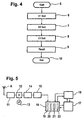
- Figure 4 shows the sorting method according to the invention in a flow diagram, starting from an initiating of the method in step 5.
- the method is applied to all broadcast traffic messages received either after the initiating step 5 or already available at the receiving end by a continuous storage of traffic messages.
- the initiating step 5 is followed respectively by first to third sorting steps 6-8, providing the result of the sorting method in step 9 and the ending of the method in step 10.
- FIG. 5 a receiver for using the method in accordance with the invention comprising an RF input circuit 11 an input thereof being coupled to an antenna A and an output thereof being coupled to a mixer stage 12, supplied with a local oscillator signal from a tunable oscillator 13, a selective intermediate frequency (IF) amplifier 14 for selecting and amplifying an IF signal, a decoder stage 15 for decoding digital broadcast traffic messages, storage means 16 for storing received broadcast traffic messages, control means 17 for controlling the release for reproduction of said received broadcast traffic messages, and traffic message reproduction means 18, comprising a display, for reproducing said released broadcast traffic messages.
- IF intermediate frequency
- the reception and decoding and selection of traffic messages is as such known: the RF input circuit 11, the mixer stage 12 and tunable oscillator 13 constitute a tuner stage, in which a wanted RF broadcast signal is selected and downconverted into an IF signal.
- the IF signal after being selectively amplified in the selective intermediate frequency (IF) amplifier 14, is being decoded in the decoder stage 15 for decoding and selecting traffic messages, which are supplied to the storage means 16.
- the storage means 16 comprise first to fourth memory banks 19-22 for storing therein respectively the traffic messages of the memory lists 1-4 of Figure 3.
- the first memory bank 19 may have a non-volatile memory in order for the receiver to continuously store the received broadcast traffic messages latest received.
- Said control means 17 provide for the release for reproduction of said stored broadcast traffic messages at a re-initiation of or switching on the receiver.
- the traffic messages after being stored and reordered in the first to fourth memory banks 19-22 are released for reproduction in traffic message reproduction means 18 in the sequence order of the memory list 4 in the fourth memory bank 22.
Landscapes
- Engineering & Computer Science (AREA)
- Multimedia (AREA)
- Physics & Mathematics (AREA)
- General Physics & Mathematics (AREA)
- Business, Economics & Management (AREA)
- Emergency Management (AREA)
- Signal Processing (AREA)
- Circuits Of Receivers In General (AREA)
Claims (3)
- Verfahren zum Definieren einer Freigabereihenfolge für die Reproduktion empfangener rundgesendeter Verkehrszustandsnachrichten (), wobei eine rundgesendete Nachricht mindestens Verkehrsinformationen bezüglich des Orts (location) und der Dringlichkeit (urgency) eines Verkehrs zustands umfassen, gekennzeichnet durch die folgenden Schritte:(K1) Unterteilen der Nachrichten in eine Kategorie (N) neuempfangener und noch nicht reproduzierter Nachrichten und in eine Kategorie (0) mindestens einmal reproduzierter Nachrichten und Speichern entsprechender Teile des Speichers (2); und(K2) Auftrennen jeder Kategorie (N, O) von Nachrichten in entsprechende Teile (N_Ur; N_NoUr; O_Ur, O_NoUr), wobei die Teile dringliche und nichtdringliche Nachrichten umfassen.
- Verfahren nach Anspruch 1, gekennzeichnet durch einen folgenden weiteren Schritt:(K3) Ordnen der Nachrichten in jeden getrennten entsprechenden Teil gemäß einer alphabetischen Reihenfolge des Orts.
- Verfahren nach Anspruch 1 oder 2, gekennzeichnet durch kontinuierliches Speichern der empfangenen rundgesendeten Nachrichten, wobei diese empfangenen rundgesendeten Nachrichten für die tatsächliche Reproduktion bei jeder Neueinleitung des Verfahrens freigegeben werden.
Priority Applications (2)
| Application Number | Priority Date | Filing Date | Title |
|---|---|---|---|
| DE2000613775 DE60013775T2 (de) | 2000-04-25 | 2000-04-25 | Verfahren zur Bestimmung einer Prioritätsordnung für die Ausgabe von Verkehrsmeldungen |
| EP20000201459 EP1152382B1 (de) | 2000-04-25 | 2000-04-25 | Verfahren zur Bestimmung einer Prioritätsordnung für die Ausgabe von Verkehrsmeldungen |
Applications Claiming Priority (1)
| Application Number | Priority Date | Filing Date | Title |
|---|---|---|---|
| EP20000201459 EP1152382B1 (de) | 2000-04-25 | 2000-04-25 | Verfahren zur Bestimmung einer Prioritätsordnung für die Ausgabe von Verkehrsmeldungen |
Publications (2)
| Publication Number | Publication Date |
|---|---|
| EP1152382A1 EP1152382A1 (de) | 2001-11-07 |
| EP1152382B1 true EP1152382B1 (de) | 2004-09-15 |
Family
ID=8171384
Family Applications (1)
| Application Number | Title | Priority Date | Filing Date |
|---|---|---|---|
| EP20000201459 Expired - Lifetime EP1152382B1 (de) | 2000-04-25 | 2000-04-25 | Verfahren zur Bestimmung einer Prioritätsordnung für die Ausgabe von Verkehrsmeldungen |
Country Status (2)
| Country | Link |
|---|---|
| EP (1) | EP1152382B1 (de) |
| DE (1) | DE60013775T2 (de) |
Families Citing this family (1)
| Publication number | Priority date | Publication date | Assignee | Title |
|---|---|---|---|---|
| DE102004017091B4 (de) * | 2004-04-07 | 2013-01-10 | Audi Ag | Verfahren zum Betrieb eines Navigationssystems für ein Kraftfahrzeug |
Family Cites Families (4)
| Publication number | Priority date | Publication date | Assignee | Title |
|---|---|---|---|---|
| EP0297473A3 (de) * | 1987-06-27 | 1990-06-06 | DRATON ELECTRONIC GmbH | Autoradio für Verkehrsfunkempfang |
| DE3806972A1 (de) * | 1988-03-03 | 1989-09-14 | Assmann Informatik 2000 Gmbh | Vorrichtung zum empfangen, erkennen und wiedergeben von verkehrsfunkansagen |
| DE19503414A1 (de) * | 1995-02-03 | 1996-08-08 | Bosch Gmbh Robert | Einrichtung zur Ausgabe von empfangenen digital codierten Verkehrsmeldungen |
| DE19628086A1 (de) * | 1996-07-12 | 1998-01-15 | Bosch Gmbh Robert | Verfahren und Einrichtung zur Selektion von digital codierten Verkehrsmeldungen |
-
2000
- 2000-04-25 EP EP20000201459 patent/EP1152382B1/de not_active Expired - Lifetime
- 2000-04-25 DE DE2000613775 patent/DE60013775T2/de not_active Expired - Lifetime
Also Published As
| Publication number | Publication date |
|---|---|
| DE60013775D1 (de) | 2004-10-21 |
| EP1152382A1 (de) | 2001-11-07 |
| DE60013775T2 (de) | 2005-04-14 |
Similar Documents
| Publication | Publication Date | Title |
|---|---|---|
| KR0182595B1 (ko) | 라디오 수신기 | |
| US5303401A (en) | RDS receiver with automatic region recognition | |
| JPH07312563A (ja) | Rdsデータ受信表示方法及び装置 | |
| US5465088A (en) | Receiver for traffic messages | |
| US5428827A (en) | Radio receiver with a radio data signal (RDS) decoder | |
| US5258739A (en) | Efficient message storage within a selective call receiver | |
| KR100429701B1 (ko) | 수신기에서디지털식으로부호화된교통메세지를관리하기위한장치 | |
| JPH07321679A (ja) | 多重放送選局方法及び当該方法を用いた受信機 | |
| KR100514419B1 (ko) | 디지털코딩된수신교통메시지의출력방법 | |
| EP1152382A1 (de) | Verfahren zur Bestimmung einer Prioritätsordnung für die Ausgabe von Verkehrsmeldungen | |
| MXPA06007796A (es) | Programa y alertas de datos y corrientes de datos auxiliares en un sistema de difusion de canales multiples. | |
| KR100352051B1 (ko) | 메시지처리및재생방법및수신기 | |
| JPH10124795A (ja) | ディジタル符号化されたトラフィックメッセージの選択方法及び装置 | |
| KR19980074989A (ko) | 알디에스방송수신용 카오디오의 이오엔정보저장처리방법 | |
| JP2693522B2 (ja) | Rds受信機の制御方法 | |
| EP1515466B1 (de) | Verkehrsnachrichtempfangsvorrichtung und -verfahren | |
| US20080086748A1 (en) | Method and apparatus for automatically updating data broadcasting | |
| JPH06188846A (ja) | Fm多重放送受信機 | |
| JPH0334630A (ja) | Rds受信機 | |
| JPS6362407A (ja) | 車載用放送受信システム | |
| JP3578427B2 (ja) | 多重放送受信機 | |
| JP3781475B2 (ja) | カーラジオ受信機 | |
| JP2883471B2 (ja) | ラジオ受信機 | |
| JP2865017B2 (ja) | ラジオ受信機 | |
| JPH08293809A (ja) | Fm多重放送受信機 |
Legal Events
| Date | Code | Title | Description |
|---|---|---|---|
| PUAI | Public reference made under article 153(3) epc to a published international application that has entered the european phase |
Free format text: ORIGINAL CODE: 0009012 |
|
| AK | Designated contracting states |
Kind code of ref document: A1 Designated state(s): AT BE CH CY DE DK ES FI FR GB GR IE IT LI LU MC NL PT SE Kind code of ref document: A1 Designated state(s): DE FR GB |
|
| AX | Request for extension of the european patent |
Free format text: AL;LT;LV;MK;RO;SI |
|
| RAP1 | Party data changed (applicant data changed or rights of an application transferred) |
Owner name: SIEMENS AKTIENGESELLSCHAFT |
|
| 17P | Request for examination filed |
Effective date: 20020318 |
|
| AKX | Designation fees paid |
Free format text: DE FR GB |
|
| 17Q | First examination report despatched |
Effective date: 20030813 |
|
| GRAP | Despatch of communication of intention to grant a patent |
Free format text: ORIGINAL CODE: EPIDOSNIGR1 |
|
| GRAS | Grant fee paid |
Free format text: ORIGINAL CODE: EPIDOSNIGR3 |
|
| GRAA | (expected) grant |
Free format text: ORIGINAL CODE: 0009210 |
|
| AK | Designated contracting states |
Kind code of ref document: B1 Designated state(s): DE FR GB |
|
| REG | Reference to a national code |
Ref country code: GB Ref legal event code: FG4D |
|
| REF | Corresponds to: |
Ref document number: 60013775 Country of ref document: DE Date of ref document: 20041021 Kind code of ref document: P |
|
| ET | Fr: translation filed | ||
| PLBE | No opposition filed within time limit |
Free format text: ORIGINAL CODE: 0009261 |
|
| STAA | Information on the status of an ep patent application or granted ep patent |
Free format text: STATUS: NO OPPOSITION FILED WITHIN TIME LIMIT |
|
| 26N | No opposition filed |
Effective date: 20050616 |
|
| REG | Reference to a national code |
Ref country code: FR Ref legal event code: TP |
|
| REG | Reference to a national code |
Ref country code: GB Ref legal event code: 732E Free format text: REGISTERED BETWEEN 20110825 AND 20110831 |
|
| PGFP | Annual fee paid to national office [announced via postgrant information from national office to epo] |
Ref country code: GB Payment date: 20130418 Year of fee payment: 14 |
|
| PGFP | Annual fee paid to national office [announced via postgrant information from national office to epo] |
Ref country code: FR Payment date: 20130515 Year of fee payment: 14 |
|
| PGFP | Annual fee paid to national office [announced via postgrant information from national office to epo] |
Ref country code: DE Payment date: 20140430 Year of fee payment: 15 |
|
| GBPC | Gb: european patent ceased through non-payment of renewal fee |
Effective date: 20140425 |
|
| REG | Reference to a national code |
Ref country code: FR Ref legal event code: ST Effective date: 20141231 |
|
| PG25 | Lapsed in a contracting state [announced via postgrant information from national office to epo] |
Ref country code: GB Free format text: LAPSE BECAUSE OF NON-PAYMENT OF DUE FEES Effective date: 20140425 |
|
| PG25 | Lapsed in a contracting state [announced via postgrant information from national office to epo] |
Ref country code: FR Free format text: LAPSE BECAUSE OF NON-PAYMENT OF DUE FEES Effective date: 20140430 |
|
| REG | Reference to a national code |
Ref country code: DE Ref legal event code: R119 Ref document number: 60013775 Country of ref document: DE |
|
| PG25 | Lapsed in a contracting state [announced via postgrant information from national office to epo] |
Ref country code: DE Free format text: LAPSE BECAUSE OF NON-PAYMENT OF DUE FEES Effective date: 20151103 |