EP1136817B1 - Verfahren und Vorrichtung zur Konzentrationsbestimmung von einer Lösung, und Vorrichtung zur Verdünnung und Vorbereitung von Reagenzen - Google Patents
Verfahren und Vorrichtung zur Konzentrationsbestimmung von einer Lösung, und Vorrichtung zur Verdünnung und Vorbereitung von Reagenzen Download PDFInfo
- Publication number
- EP1136817B1 EP1136817B1 EP01106098A EP01106098A EP1136817B1 EP 1136817 B1 EP1136817 B1 EP 1136817B1 EP 01106098 A EP01106098 A EP 01106098A EP 01106098 A EP01106098 A EP 01106098A EP 1136817 B1 EP1136817 B1 EP 1136817B1
- Authority
- EP
- European Patent Office
- Prior art keywords
- concentration
- temperature
- solution
- agent
- aqueous solution
- Prior art date
- Legal status (The legal status is an assumption and is not a legal conclusion. Google has not performed a legal analysis and makes no representation as to the accuracy of the status listed.)
- Expired - Lifetime
Links
- 238000000034 method Methods 0.000 title claims description 57
- 238000007865 diluting Methods 0.000 title claims description 46
- 239000000243 solution Substances 0.000 claims description 120
- 239000003795 chemical substances by application Substances 0.000 claims description 105
- 239000007864 aqueous solution Substances 0.000 claims description 82
- XLYOFNOQVPJJNP-UHFFFAOYSA-N water Substances O XLYOFNOQVPJJNP-UHFFFAOYSA-N 0.000 claims description 26
- 238000002360 preparation method Methods 0.000 claims description 23
- 239000000126 substance Substances 0.000 claims description 19
- 238000001514 detection method Methods 0.000 claims description 13
- 238000002156 mixing Methods 0.000 claims description 8
- 238000004590 computer program Methods 0.000 claims description 7
- 238000004364 calculation method Methods 0.000 claims description 2
- 101100379079 Emericella variicolor andA gene Proteins 0.000 claims 1
- KRHYYFGTRYWZRS-UHFFFAOYSA-N Fluorane Chemical compound F KRHYYFGTRYWZRS-UHFFFAOYSA-N 0.000 description 38
- WGTYBPLFGIVFAS-UHFFFAOYSA-M tetramethylammonium hydroxide Chemical compound [OH-].C[N+](C)(C)C WGTYBPLFGIVFAS-UHFFFAOYSA-M 0.000 description 38
- 238000005259 measurement Methods 0.000 description 19
- 239000011550 stock solution Substances 0.000 description 16
- 239000012895 dilution Substances 0.000 description 9
- 238000010790 dilution Methods 0.000 description 9
- 238000012886 linear function Methods 0.000 description 5
- 239000012530 fluid Substances 0.000 description 4
- 238000006386 neutralization reaction Methods 0.000 description 4
- 229920002120 photoresistant polymer Polymers 0.000 description 4
- 239000004065 semiconductor Substances 0.000 description 4
- 238000003756 stirring Methods 0.000 description 4
- 238000003860 storage Methods 0.000 description 4
- 238000004448 titration Methods 0.000 description 4
- KWYUFKZDYYNOTN-UHFFFAOYSA-M Potassium hydroxide Chemical compound [OH-].[K+] KWYUFKZDYYNOTN-UHFFFAOYSA-M 0.000 description 3
- HEMHJVSKTPXQMS-UHFFFAOYSA-M Sodium hydroxide Chemical compound [OH-].[Na+] HEMHJVSKTPXQMS-UHFFFAOYSA-M 0.000 description 3
- 238000005530 etching Methods 0.000 description 3
- IJGRMHOSHXDMSA-UHFFFAOYSA-N Atomic nitrogen Chemical compound N#N IJGRMHOSHXDMSA-UHFFFAOYSA-N 0.000 description 2
- CURLTUGMZLYLDI-UHFFFAOYSA-N Carbon dioxide Chemical compound O=C=O CURLTUGMZLYLDI-UHFFFAOYSA-N 0.000 description 2
- VEXZGXHMUGYJMC-UHFFFAOYSA-N Hydrochloric acid Chemical compound Cl VEXZGXHMUGYJMC-UHFFFAOYSA-N 0.000 description 2
- VYPSYNLAJGMNEJ-UHFFFAOYSA-N Silicium dioxide Chemical compound O=[Si]=O VYPSYNLAJGMNEJ-UHFFFAOYSA-N 0.000 description 2
- CDBYLPFSWZWCQE-UHFFFAOYSA-L Sodium Carbonate Chemical compound [Na+].[Na+].[O-]C([O-])=O CDBYLPFSWZWCQE-UHFFFAOYSA-L 0.000 description 2
- 229910052799 carbon Inorganic materials 0.000 description 2
- 230000000052 comparative effect Effects 0.000 description 2
- 238000002474 experimental method Methods 0.000 description 2
- 239000007789 gas Substances 0.000 description 2
- 239000004615 ingredient Substances 0.000 description 2
- 238000009434 installation Methods 0.000 description 2
- 238000011835 investigation Methods 0.000 description 2
- 239000004973 liquid crystal related substance Substances 0.000 description 2
- 239000011159 matrix material Substances 0.000 description 2
- 239000002994 raw material Substances 0.000 description 2
- 229910052814 silicon oxide Inorganic materials 0.000 description 2
- 239000003513 alkali Substances 0.000 description 1
- 230000005587 bubbling Effects 0.000 description 1
- 239000001569 carbon dioxide Substances 0.000 description 1
- 229910002092 carbon dioxide Inorganic materials 0.000 description 1
- 230000007812 deficiency Effects 0.000 description 1
- 238000011161 development Methods 0.000 description 1
- 239000007788 liquid Substances 0.000 description 1
- 238000004519 manufacturing process Methods 0.000 description 1
- 239000011259 mixed solution Substances 0.000 description 1
- 229910052757 nitrogen Inorganic materials 0.000 description 1
- 230000002035 prolonged effect Effects 0.000 description 1
- 229910000029 sodium carbonate Inorganic materials 0.000 description 1
- 239000007787 solid Substances 0.000 description 1
- 239000002904 solvent Substances 0.000 description 1
- 239000013589 supplement Substances 0.000 description 1
Images
Classifications
-
- G—PHYSICS
- G01—MEASURING; TESTING
- G01N—INVESTIGATING OR ANALYSING MATERIALS BY DETERMINING THEIR CHEMICAL OR PHYSICAL PROPERTIES
- G01N31/00—Investigating or analysing non-biological materials by the use of the chemical methods specified in the subgroup; Apparatus specially adapted for such methods
-
- G—PHYSICS
- G01—MEASURING; TESTING
- G01N—INVESTIGATING OR ANALYSING MATERIALS BY DETERMINING THEIR CHEMICAL OR PHYSICAL PROPERTIES
- G01N27/00—Investigating or analysing materials by the use of electric, electrochemical, or magnetic means
- G01N27/02—Investigating or analysing materials by the use of electric, electrochemical, or magnetic means by investigating impedance
- G01N27/04—Investigating or analysing materials by the use of electric, electrochemical, or magnetic means by investigating impedance by investigating resistance
- G01N27/06—Investigating or analysing materials by the use of electric, electrochemical, or magnetic means by investigating impedance by investigating resistance of a liquid
-
- Y—GENERAL TAGGING OF NEW TECHNOLOGICAL DEVELOPMENTS; GENERAL TAGGING OF CROSS-SECTIONAL TECHNOLOGIES SPANNING OVER SEVERAL SECTIONS OF THE IPC; TECHNICAL SUBJECTS COVERED BY FORMER USPC CROSS-REFERENCE ART COLLECTIONS [XRACs] AND DIGESTS
- Y10—TECHNICAL SUBJECTS COVERED BY FORMER USPC
- Y10T—TECHNICAL SUBJECTS COVERED BY FORMER US CLASSIFICATION
- Y10T436/00—Chemistry: analytical and immunological testing
- Y10T436/11—Automated chemical analysis
- Y10T436/117497—Automated chemical analysis with a continuously flowing sample or carrier stream
-
- Y—GENERAL TAGGING OF NEW TECHNOLOGICAL DEVELOPMENTS; GENERAL TAGGING OF CROSS-SECTIONAL TECHNOLOGIES SPANNING OVER SEVERAL SECTIONS OF THE IPC; TECHNICAL SUBJECTS COVERED BY FORMER USPC CROSS-REFERENCE ART COLLECTIONS [XRACs] AND DIGESTS
- Y10—TECHNICAL SUBJECTS COVERED BY FORMER USPC
- Y10T—TECHNICAL SUBJECTS COVERED BY FORMER US CLASSIFICATION
- Y10T436/00—Chemistry: analytical and immunological testing
- Y10T436/25—Chemistry: analytical and immunological testing including sample preparation
- Y10T436/25625—Dilution
Definitions
- the present invention relates to a method and an apparatus for detecting the concentration of a desired substance in a solution as well as a diluting preparation apparatus for diluting and preparing a solid and a high concentration agent to a predetermined concentration.
- an alkali developing solution for use in development of a positive photoresist is a deciding factor to improve the resolution, dimensional accuracy, and stability, etc., of the photoresist, so that it is necessary to strictly control the ingredients and concentration of the solution while adjusting the positive photoresist used.
- a diluted hydrofluoric acid an aqueous solution of hydrofluoric acid
- Japanese patents No. 2090366 JP, 6-7910,B), No.2751849 (cf. JP, 8-62852,A), No.2670211 (cf. JP, 6-29207,A; corresponding to US patent No. 5,843,602) disclose a dilution apparatus for a developing stock solution equipped with control means for such concentration.
- agents for which strict concentration control is required are shipped to makers using such agents after makers supplying such agents dilute and adjust the concentrations of the agents to desired concentrations, recently there are increased cases the makers using such agents dilute and adjust high concentration agents to desired concentration ones.
- the measurement for the solution is performed under the conditions where the temperature of the solution is kept at the setting temperature by passing the solution through a temperature controller.
- the batch method is a method as disclosed in the Japanese Patent No. 2670211 wherein there is repeated an operation, where after an agent is diluted with water the concentration of a diluted solution is measured to calculate the necessary amount of the agent and water and add them into a stirring tank until a solution that has a purposed concentration is obtained. Since in the above system, the agent or water is not supplied until the concentration is estimated, it is possible to set the time for which the solution passes through the temperature controller as desired. Therefore, the concentration measurement is achieved more accurately than that of the continuous system. However, the batch system suffers from a difficulty that preparing time is prolonged because there is increased the time needed for the solution to pass through the temperature controller. Further, the prior art measuring method with a conductivity meter has a problem in repeatability of the measurement values. Because of the large variation of the numerical values, the acceptable concentration of an agent to be prepared must be further narrowed in accordance with those variations than the acceptable concentration instructed by a user.
- Makers using agents who require convenient concentration control desire that the aforementioned difficulties are solved as quickly as possible. Since for accurately preparing an agent to a desired concentration it is essential to accurately detect the concentration of the agent, there is a relationship expressed by a linear equation in a predetermined temperature range and at a predetermined temperature both defined by the agent between the concentration of the agent and the electrical conductivity of the solution. Therefore, in an electrical conductivity meter used for the control of the concentration the concentration is in general calculated based on the electrical conductivity of the solution after determining the relationship between the electrical conductivity of the solution at a predetermined temperature and the concentration of an agent as well as a relationship between the electrical conductivity of the solution and the temperature in a certain temperature range.
- the prior art presupposes the assumption that in a predetermined temperature and concentration region determined by the agent the electrical conductivity becomes higher by d every time the measurement temperature of the electrical conductivity becomes higher by 1 degree, accurate concentration of the solution can be calculated provided the temperature of the solution is the same as the setting temperature, but when the temperature of the solution is shifted from a predetermined measurement temperature, there is produced an error between actual concentration and calculated concentration.
- the prior art suffers from a difficulty that it is difficult to grasp the concentration with accuracy tolerable against the conditions where strict concentration control management is needed.
- the prior art further suffers from a difficulty associated with the foregoing difficulties, as mentioned in the foregoing Japanese patent No. 2090366(JP, 6-7910, B), that the electrical conductivity is needed to be measured in the state where the temperature of a solution is kept at the setting temperature with the aid of a temperature controller.
- a heat source for a temperature keeping apparatus and the like and installation investment for the temperature controller resulting in the high cost of dilution preparing of an agent and complicated work.
- There is further another difficulty that when the concentration measurement is continuously performed with the aid of a temperature controller, there is the need of keeping the temperature at the set one, so that the measurement is retarded by the time required for the solution to pass through the temperature controller also as disclosed in Japanese patents No. 2090366 (JP, 6-7910) and No. 2751849.
- the present inventors have found solving means to complete the present invention as a result of the pursuit of our studies to solve the aforementioned difficulties.
- the present invention further relates to the aforementioned method for detecting the concentration of a solution wherein the constants A, B, a, b in the equation are values obtained by measuring the electrical conductivity of the solution at the plurality of the temperatures for each solution containing the same desired substance with the plurality of the concentrations while applying the least squares method to a measured result.
- the present invention further relates to the foregoing method for detecting the concentration of a solution wherein the plurality of the temperatures are included within a temperature range of ⁇ 5 degree of the desired temperature.
- the present invention still further relates to the aforementioned method for detecting the concentration of a solution wherein the plurality of the temperatures are included within a temperature range of ⁇ 10 degree of the desired temperature.
- the present invention furthermore relates to a method for detecting the concentration of a solution wherein the solution is an aqueous solution.
- the present invention still furthermore relates to the aforementioned method for detecting the concentration of a solution wherein the solution contains only one kind of a solute.
- the present invention further relates to a method for diluting and preparing an agent to a desired concentration utilizing the aforementioned method for detecting the concentration of a solution.
- the present invention relates to the aforementioned method for diluting and preparing an agent comprising a first step wherein the agent is mixed with water into an aqueous solution, a second step wherein the concentration of the agent in the aqueous solution is detected, and a third step wherein an agent or water is added to the aqueous solution to adjust the concentration of the agent to a desired concentration.
- the present invention further relates to the aforementioned method for diluting and preparing an agent wherein at least the second step and the third step are controlled with a computer program.
- the present invention yet still further relates to the concentration detecting apparatus wherein the constants A, B, a, b in the equation (1) are values by measuring for each of the solutions containing the same desired substance at a plurality of concentrations, the electric conductivities at a plurality of temperatures and by applying the least square method thereto.
- the present invention relates to the aforementioned concentration detecting apparatus wherein the plurality of temperatures are included within a temperature range of 5 ⁇ degree.
- the present invention further relates to the aforementioned apparatus wherein the plurality of temperatures are included within a desired temperature range of ⁇ 10 degree.
- the present invention relates to the aforementioned concentration detecting apparatus wherein a solution to be measured is an aqueous solution.
- the present invention further relates to the aforementioned concentration detecting apparatus wherein a solution to be measured involves only one kind of solute.
- the present inventors have found the following two facts as a result of thorough investigation on why variations of numerical values are large: that (1) air bubbles remaining in a measuring chamber sharply influence measured values, (2) there is left behind a solution used at the previous time of measurement in the measuring chamber depending upon the configuration of the inside of the measuring chamber, which solution is then mixed with a fluid flowing into next time to change the concentration of the solution.
- the configuration of the measuring chamber may be one having an outlet for aqueous solution at the head of the chamber and is desirable for the configuration which prevents any fluid from remaining in the measuring chamber.
- the configuration is preferable which is continuously reduced in size toward the outlet for aqueous solution for example, but it is not limited thereto.
- the present invention accordingly also relates to the aforementioned concentration detecting apparatus wherein electric conductivity measuring means includes a measuring chamber provided with an inlet for aqueous solution and a flow outlet at the head, and a horizontal cross sectional area of the measuring chamber is continuously reduced toward the outlet for aqueous solution.
- a measuring rod is disposed in the measuring chamber, which rod has a through-hole therethrough. Provided that air bubbles flow into the through-hole, it influences measured values if it is not removed quickly. To improve such a situation, the present inventors have found that a water flow may be formed in the direction of the through-hole in the measuring chamber.
- a further one inlet for aqueous solution is for example preferably provided in the vicinity of an intersection between an extension line of the through-hole and a wall surface of the measuring chamber, but the present invention is not limited thereto.
- the present invention accordingly further relaters to the aforementioned concentration detection apparatus wherein the measuring chamber includes a measuring rod disposed therein having a through-hole therethrough, and further a further another one inlet for aqueous solution is provided in the vicinity of an intersection between an extension line of the through-hole and a wall surface of the measuring chamber.
- the present invention further relates to the aforementioned agent diluting preparation apparatus equipped with the aforementioned concentration detection apparatus for diluting and preparing an agent to a desired concentration by mixing the agent with water
- the present invention still further relates to the aforementioned agent diluting and preparing apparatus including a diluting and preparing tank, mixing means for mixing an agent with water into an aqueous solution, and concentration adjusting means for adjusting the concentration of the agent to a desired one by adding an agent or water into an aqueous solution based upon detected concentration.
- the present invention furthermore relates to the aforementioned agent diluting and preparing apparatus wherein at least the concentration detection apparatus and the concentration adjusting means are controlled with a computer program.
- the present invention further relates to the aforementioned agent diluting and preparing apparatus wherein upon measuring the electric conductivity and temperature part of the aqueous solution is temporarily sent from the diluting and preparing tank to the electric conductivity measuring means of the concentration detecting apparatus, and the electric conductivity measuring means includes a measuring chamber having an inlet for aqueous solution and an outlet for aqueous solution at the head thereof, and further a horizontal cross sectional area of the measuring chamber is continuously reduced toward the outlet for aqueous solution.
- the present invention further relates to the aforementioned agent diluting and preparing apparatus wherein the measuring chamber includes a measuring rod disposed in the measuring chamber, and the measuring rod has a through-hole, and further the measuring rod further includes a further another one inlet for aqueous solution in the vicinity of an intersection between an extension line of the through-hole and a wall surface of the measuring chamber.
- the inclination w and intercept of the approximate linear equation however change as the temperature of the solution changes.
- the electric conductivity D of a solution is thus represented by (AT + B)C + (aT + b), and the aforementioned equation (1) is derived by solving the expression of D with respect to the concentration C.
- the present invention it is possible to accurately calculate the concentration of the solution by calculating the concentration from the electric conductivity using the equation (1) that is the relationship between temperature and the electric conductivity and concentration of the solution without the need of the temperature of the solution bringing to a predetermined one upon measuring the electric conductivity. It is contemplated to be rare that variations of the temperature of the solution the electric conductivity being actually measured exceeds ⁇ 10 degree. Accordingly, provided that the electric conductivity can be accurately measured within the foregoing temperature range, the measurement is sufficient for the detection of the concentration.
- the invention can be applied within this range.
- the constants are determined by solving the matrix.
- the values of the foregoing constants A, B, a, and b should be estimated taking desired temperature of an agent solution upon measuring the concentration and electric conductivity of an agent solution to be adjusted.
- the values of the constants A, B, a, and b are also varied even with solvents of agent solutions and kinds of agents.
- the plurality of temperatures used for calculating the constants A, B, a, and b are preferably included within a temperature range of a desired temperature ⁇ 5 degree, and more preferably included within a temperature range of the desired temperature ⁇ 10 degree.
- the solution is an aqueous solution, which preferably includes a solute of only one kind.
- the present invention is particularly useful upon detecting concentrations of agents requiring strict concentration control.
- agents there are known for example tetramethylammonium hydroxide (TMAH), sodium hydroxide, potassium hydroxide, sodium carbonate, hydrofluoric acid, hydrochloric acid, etc.
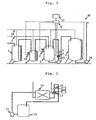
- FIG. 1 schematically illustrates an embodiment of a diluting preparation apparatus according to the present invention.
- the diluting preparation apparatus 20 comprises a stock solution storage tank 1 which stores a raw material of an agent, a pure water supplying pipe 2 from which pure water is supplied, a diluting preparation tank 3, a load cell 4, an electric conductivity meter 5, a resistance temperature sensor (thermometer) 6, a supply tank 7 in which a diluting preparation agent solution is stored, and pipes by which these each devices are connected, and electrical instruments.
- a stock solution of an agent for electronic industries is stored in the raw material storage tank 1, and is supplied into a measuring tank 8 following an instrument reading of the load cell 4.
- the stock solution of an agent for electronic industries is supplied into the measuring tank 8 up to a desired weight measured by the load cell 19, and then the stock solution is supplied into the diluting preparation tank 3 up to a desired weight measured by the load cell 4.
- pure water is supplied into the diluting preparation tank 3 up to a desired weight measured by the load cell 4.
- Stirring by nitrogen bubbling or pump circulation is performed until the agent to be diluted and prepared is mixed sufficiently, and then an electronic conductivity and temperature are measured with the electronic conductivity meter 5 and the resistance temperature sensor 6.
- the electric conductivity and the temperature are outputted to a system control instrument 9, and are substituted for the following equation (1) inputted previously into the system control instrument 9 to derive the concentration of the mixed solution.
- C (D - aT -b) / (AT + B), wherein C is a concentration of a desired substance, D is an electrical conductivity of a solution at temperature T, T is a temperature of the solution, and A, B, a, and b denote constants, has been previously inputted into the system control instrument 9, and the constants A, B, a, and b are, for example, previously determined as follows.
- a relationship among the concentration, temperature, and electric conductivity of a solution is investigated employing such an experimental apparatus illustrated in FIG. 2.
- the case of investigation of a relationship among the concentration, temperature, and electric conductivity of an aqueous solution of TMAH widely employed as an alkaline developing solution for use for developing positive-type photoresist in a step for producing a semiconductor is the case wherein the constants A, B, a, and b are determined on the assumption that an aqueous solution of 2.380% by mass of TMAH is prepared at temperature of 20 to 30 °C.
- an aqueous solution of 2.390 % by mass of TMAH is introduced into a container 10.
- a pump 11 is operated to circulate the aqueous solution of TMAH through a temperature adjusting unit 12, an electric conductivity meter 13, and a resistance temperature sensor 14 at a flow rate of about 2.5 little per minute.
- Setting temperature of the temperature adjusting unit 12 is changed to 20, 22.5, 25, 27.5, 30 °C, and the electrical conductivity of the aqueous solution of TMAH at each temperature is measured with the electrical conductivity meter 13.
- electrical conductivities at the foregoing temperatures are measured.
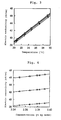
- FIG.3 illustrates a relationship between the temperature and electric conductivity of the aqueous solution of TMAH at each concentration.
- the constants A, B, a, b are estimated using the least squares method. Although they can be estimated in one step using the least squares method, a successive method for estimating them in succession is disclosed herein.
- An approximate linear equation is derived for a relationship between the temperature and electric conductivity of the aqueous solution of TMAH at each concentration.
- An approximate linear equation at each concentration is listed in Table 1. It is found from the change of the concentration from Table 1 that the inclination and intercept of the linear equation are varied. Then, 20, 25, 30 °C are substituted for T (temperature) in each approximate linear equation in Table 1, and the electric conductivity at each temperature is estimated.
- FIG.4 illustrates a relationship between the concentration and electric conductivity at each temperature.
- Table 1 illustrates the electric conductivity at each temperature.
- an agent and water are mixed and stirred in the diluting preparation tank into a uniform aqueous solution. Then, the concentration of the agent in the aqueous solution is detected.
- the concentration which derived from the aforementioned equation substituted with the temperature and electric conductivity of the diluted and prepared aqueous solution, is outputted to the system control instrument 9 as the concentration adjusting means controlled by a computer program. And the outputted concentration is compared with a previously setting desired value(2.380 % by mass) and an allowable error range ( ⁇ 0.005 % by mass). If the outputted concentration falls within an allowable error range with respect to the desired value, then the aqueous solution is sent to the supply tank 7.
- the concentration of the aqueous solution is less than the desired value involving the allowable error range, then the stock solution of the agent is supplied, while if it exceeds the desired value involving the allowable error range, then the solution is adjusted by supplying pure water. As to the adjusted aqueous solution, the foregoing step is repeated until the concentration of the solution falls within the desired value involving the allowable error range.
- the temperature of the agent solution is varied in the range of 20 to 30 °C
- the concentration of a resulting aqueous solution of TMAH is 2.380 % by mass (measured by a neutralization titration method).
- the aforementioned step including the mixing and stirring of an agent and water, the measurement of an electric conductivity, calculation of concentration, comparison with a desired value, and supplement of water or an agent stock solution are preferably controlled with a computer program.
- a method is preferably employed in which a part of the agent solution from the diluting preparation tank 3 is temporarily conveyed to the electric conductivity meter 5 and the resistance temperature sensor 6, the electric conductivity and temperature are measured, and then the agent solution is returned to the diluting preparation tank 3.
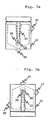
- the electric conductivity meter 5 is adapted, as illustrated in FIGs 7(a) and 7(b), such that it includes an inlet for an aqueous solution 30 and an outlet for an aqueous solution 31, and has a measuring rod 33 disposed in the measuring chamber 32 constructed in liquid tight, whereby the measuring rod 33 measures the electric conductivity of the aqueous solution flowing from the inlet for an aqueous solution 30 to the outlet for aqueous solution 31.
- the outlet for aqueous solution 31 is disposed on a head of the measuring chamber 32, as illustrated in FIG. 7(b), and, in the vicinity of the outlet for aqueous solution 31, a horizontal cross sectional area of the measuring chamber 32 is continuously reduced as it goes toward the outlet for aqueous solution 31.
- the use of an electric conductivity meter in which air bubbles along the ceiling are prevented from staying is preferable in view of reduction of variations of measured values.
- the measuring rod 32 is preferably protruded from a side wall or a bottom surface of the measuring chamber 32 from the view point of effectively preventing the staying of the air bubbles.
- the measuring rod 33 has a through-hole 36 equipped with two electrodes 35a, 35b, and measures therewith the electric conductivity of an aqueous solution upon both electrodes 35 being filled with the aqueous solution passing through the inside of the through-hole 36. Accordingly, provided air bubbles stay in the through-hole 36, the electric conductivity is prevented from being accurately measured.
- An upper space of the stock solution storage tank 1, measuring tank 8, diluting preparation tank 3, and supply tank 7 may be preferably encapsulated with inactive gas in order to prevent carbon dioxide gas from being sucked therethrough. Further, the diluted and prepared agent stored in the supply tank 7 may be supplied to a user side through a filter by operating the pump 16 following a request signal on the user side.
- FIG.2 illustrates a relationship among the concentration, temperature, and electric conductivity of a solution.
- the electric conductivity of the aqueous solution at each temperature is measured with the electric conductivity meter 13 by changing the setting temperature to 20, 22.5, 25, 27.5, 30 while circulating the solution through the temperature adjusting unit 12, electric conductivity meter 13, and resistance temperature sensor 14.
- a measurement using an aqueous solution of hydrofluoric acid with the concentration of any of 1.189, 1.073, 1.009, 0.910, and 0.806 % by mass is performed.
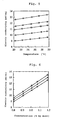
- FIG.5 illustrates a relationship between the temperature and electric conductivity of the aqueous solution of hydrofluoric acid at each concentration.
- an approximate linear equation is derived for a relationship between the temperature and electric conductivity of the aqueous solution of hydrofluoric acid at each concentration using the least squares method.
- Table 4 illustrates an approximate linear equation at each concentration. It is found from a concentration change in Table 4 that the inclination and intercept of the linear equation are varied. Then, each of 20, 25 and 30 °C is substituted for T of each approximate linear equation in Table 4 to estimate the electric conductivity at each temperature.
- FIG.6 illustrates a relationship between the concentration and electric conductivity at each temperature. Further, Table 4 illustrates the electric conductivity at each temperature.
- the dilution and the preparation are, for example, performed as follows:
- the concentration in the aqueous solution is detected.
- the concentration obtained by the foregoing equation from the temperature and electric conductivity of the diluted and prepared aqueous solution is outputted to the system control instrument 9 that is the concentration adjusting means controlled by a computer program, and is compared with a previously setting desired value (1.0 % by mass) and an allowable error range ( ⁇ 0.1 % by mass). If the outputted concentration falls within an allowable error range with respect to the desired value, then the aqueous solution is sent to the supply tank 7.
- the concentration is less than the desired value including the allowable error range, then an agent stock solution is supplied, while if it exceeds the desired value, then pure water is supplied for re-preparing.
- the aforementioned steps are repeated until the concentration of the solution falls within the desired value involving the allowable error range.
- the temperature of the agent solution is varied within the range of 20 to 30 °C.
- the concentration of the resulting aqueous solution of hydrofluoric acid is 1.0 % by mass (measured by a neutralization titration).
- the temperature of the agent solution is varied within the range of 20 to 30°C, the calculated concentration of the resulting aqueous solution of TMAH differs in maximum 0.0005 % by mass from the concentration obtained within the above-mentioned temperature range (measured by a neutralization titration), causing the possibility of erroneous information being outputted at the minimum and maximum concentrations within the allowable error range.
- the temperature of the agent solution varies from 20 to 30 °C
- the calculated concentration of the resulting aqueous hydrofluoric acid solution differs in maximum 0.03 % by mass from the concentration obtained within the above-mentioned temperature range (measured by neutralization titration), to cause the possibility of erroneous information being outputted at the minimum and maximum concentrations within the allowable error range.
- the electric conductivity of a solution can be measured and the concentration of the solution can be detected without keeping the temperature of the solution at setting temperature in real time and with reduced variations of numerical values with a higher accuracy than the prior art. Accordingly, the present invention is preferably used in agent supply makers who dilute and prepare agents required for strict concentration control, and fields of semiconductor and liquid crystals for example where agent stock solutions are diluted and prepared for use.
Landscapes
- Chemical & Material Sciences (AREA)
- Health & Medical Sciences (AREA)
- Life Sciences & Earth Sciences (AREA)
- General Health & Medical Sciences (AREA)
- Immunology (AREA)
- Pathology (AREA)
- Analytical Chemistry (AREA)
- Biochemistry (AREA)
- Physics & Mathematics (AREA)
- General Physics & Mathematics (AREA)
- Chemical Kinetics & Catalysis (AREA)
- Electrochemistry (AREA)
- Molecular Biology (AREA)
- Investigating Or Analyzing Materials By The Use Of Electric Means (AREA)
- Photosensitive Polymer And Photoresist Processing (AREA)
- Sampling And Sample Adjustment (AREA)
- Automatic Analysis And Handling Materials Therefor (AREA)
Claims (21)
- Verfahren zur Bestimmung der Konzentration einer gewünschten Substanz in einer Lösung, umfassend einen Schritt des Messens der elektrischen Leitfähigkeit und der Temperatur der Lösung und einen Schritt des Berechnens der Konzentration der gewünschten Substanz in der Lösung, bei welchem die Berechnung der Konzentration auf der Basis der folgenden Formel erfolgt:

wobei C die Konzentration einer gewünschten Substanz,
D die elektrische Leitfähigkeit der Lösung bei der Temperatur T und T die Temperatur der Lösung ist, und A, B, a und b Konstanten sind. - Verfahren zur Bestimmung einer Konzentration nach Anspruch 1, bei dem die Konstanten A, B, a und b der Formel 1 Werte sind, die erhalten werden durch Messen der elektrischen Leitfähigkeiten von Lösungen bei verschiedenen Temperaturen, welche die gleichen gewünschten Substanzen in verschiedenen Konzentrationen enthalten, und Bestimmen der Werte nach der Methode der kleinsten Quadrate.
- Verfahren zur Bestimmung einer Konzentration nach Anspruch 1 oder 2, bei dem die Konstanten A, B, a und b Werte sind, die durch ein Verfahren erhalten werden, das folgende Schritte umfasst:einen ersten Schritt zur Messung der elektrischen Leitfähigkeit von Lösungen bei verschiedenen Temperaturen, welche die gleichen Reagenzien in verschiedenen Konzentrationen enthalten;einen zweiten Schritt zur Herleitung, unter Verwendung der Methode der kleinsten Quadrate, einer Gleichung ersten Grades für eine Abhängigkeit zwischen der Temperatur und der elektrischen Leitfähigkeit bei jeder einzelnen Konzentration,einen dritten Schritt zur Berechnung der elektrischen Leitfähigkeit bei jeder einzelnen Temperatur durch Einsetzen der verschiedenen Temperaturen in jede der Gleichungen ersten Grades,einen vierten Schritt zur Herleitung einer Gleichung ersten Grades unter Verwendung der Methode der kleinsten Quadrate unter Berücksichtung der elektrischen Leitfähigkeit und der Konzentration bei jeder Temperatur des dritten Schrittes undeinen fünften Schritt zur Herleitung der Gleichungen ersten Grades w = AT + B und z = aT + b in Abhängigkeit von der Temperatur unter Verwendung der Steigungen w und der Achsenabschnitte z jeder der im vierten Schritt erhaltenen Gleichungen ersten Grades.
- Verfahren zur Bestimmung einer Konzentration nach Anspruch 1 oder 2, bei dem die verschiedenen Temperaturen innerhalb eines Temperaturbereichs von ±5 Grad der Solltemperatur liegen.
- Verfahren zur Bestimmung einer Konzentration nach Anspruch 1 oder 2, bei dem die verschiedenen Temperaturen innerhalb eines Temperaturbereichs von ±10 Grad der Solltemperatur liegen.
- Verfahren zur Bestimmung einer Konzentration nach Anspruch 1, 2, 3, 4 oder 5, bei dem die Lösung eine wässrige Lösung ist.
- Verfahren zur Bestimmung einer Konzentration nach einem oder mehreren der Ansprüche 1 bis 6, bei dem die Lösung nur eine Art von gelöstem Stoff enthält.
- Verfahren zur Verdünnung auf und Vorbereitung eines Reagenzes mit eine(r) Sollkonzentration unter Verwendung des Verfahrens zur Bestimmung der Konzentration nach einem oder mehreren der Ansprüche 1 bis 7.
- Verfahren zur Verdünnung und Vorbereitung eines Reagenzes nach Anspruch 8, umfassend
einen ersten Schritt zum Mischen des Reagenzes mit Wasser zu einer wässrigen Lösung des Reagenzes,
einen zweiten Schritt zur Bestimmung der Konzentration des Reagenzes in der wässrigen Lösung, und
einen dritten Schritt der Zugabe des Reagenzes oder von Wasser zu der wässrigen Lösung, um auf der Basis der ermittelten Konzentration des Reagenzes die Konzentration des Reagenzes auf eine Sollkonzentration einzustellen. - Verfahren zur Verdünnung und Vorbereitung eines Reagenzes nach Anspruch 9, bei dem zumindest der zweite und der dritte Schritt durch ein Computerprogramm gesteuert werden.
- Eine Vorrichtung zur Bestimmung einer Konzentration, umfassend eine Vorrichtung zur Messung der elektrischen Leitfähigkeit (5), einen Temperaturfühler (6) und eine Vorrichtung für die Durchführung von Rechenoperationen, bei welcher eine Konzentration einer gewünschten Substanz in einer Lösung durch die Vorrichtung zur Durchführung von Rechenoperationen auf der Basis der elektrischen Leitfähigkeit und der Temperatur der Lösung, welche von der Vorrichtung zur Messung der elektrischen Leitfähigkeit und dem Temperaturfühler gemessen wurden, bestimmt wird, und bei welcher die Vorrichtung zur Durchführung von Rechenoperationen die folgende Gleichung berechnet:

wobei C die Konzentration einer gewünschten Substanz,
D die elektrische Leitfähigkeit der Lösung bei der Temperatur T und T die Temperatur der Lösung ist, und A, B, a und b Konstanten sind. - Vorrichtung zur Bestimmung einer Konzentration nach Anspruch 11, bei der die Konstanten A, B, a und b der Formel 1 Werte sind, die erhalten werden durch Messen der elektrischen Leitfähigkeiten von Lösungen bei verschiedenen Temperaturen, welche die gleichen gewünschten Substanzen in verschiedenen Konzentrationen enthalten, und Bestimmen der Werte gemäß der Methode der kleinsten Quadrate.
- Vorrichtung zur Bestimmung einer Konzentration nach Anspruch 11 oder 12, bei welcher die Konstanten A, B, a und b Werte sind, die durch ein Verfahren bestimmt werden, welches die folgenden Schritte umfasst:einen ersten Schritt zur Messung der elektrischen Leitfähigkeit von Lösungen bei verschiedenen Temperaturen, welche die gleichen Reagenzien in verschiedenen Konzentrationen enthalten;einen zweiten Schritt zur Herleitung, unter Verwendung der Methode der kleinsten Quadrate, einer Gleichung ersten Grades für eine Abhängigkeit zwischen der Temperatur und der elektrischen Leitfähigkeit bei jeder einzelnen Konzentration,einen dritten Schritt zur Berechnung der elektrischen Leitfähigkeit bei jeder einzelnen Temperatur durch Einsetzen der verschiedenen Temperaturen in jede der Gleichungen ersten Grades,einen vierten Schritt zur Herleitung einer Gleichung ersten Grades unter Verwendung der Methode der kleinsten Quadrate unter Berücksichtigung der elektrischen Leitfähigkeit und der Konzentration bei jeder Temperatur des dritten Schritts undeinen fünften Schritt zur Herleitung der Gleichungen ersten Grades w = AT + B und z = aT + b in Abhängigkeit von der Temperatur, unter Verwendung der Steigungen w und der Achsenabschnitte z jeder der im vierten Schritt erhaltenen Gleichungen ersten Grades.
- Vorrichtung zur Bestimmung einer Konzentration nach Anspruch 11 oder 12, bei der die verschiedenen Temperaturen innerhalb eines Temperaturbereichs von ±5 Grad der Solltemperatur liegen.
- Vorrichtung zur Bestimmung einer Konzentration nach Anspruch 11 oder 12, bei der die verschiedenen Temperaturen innerhalb eines Temperaturbereichs von ±10 Grad der Solltemperatur liegen.
- Vorrichtung zur Bestimmung einer Konzentration nach einem oder mehreren der Ansprüche 11 bis 15, bei der die Vorrichtung zur Messung der elektrischen Leitfähigkeit eine Messkammer 32 umfasst, die mit einem Einlass 30 für die wässrige Lösung und einem am Kopf der Messkammer angeordneten Auslass 31 versehen ist, und bei welcher sich der horizontale Querschnitt der Messkammer zum Auslass für die wässrige Lösung hin kontinuierlich verjüngt.
- Vorrichtung zur Bestimmung einer Konzentration nach Anspruch 16, bei welcher die Messkammer einen Messstab 33 und weiterhin einen anderen Einlass 37 für die wässrige Lösung aufweist, der Messstab in der Messkammer angeordnet ist und ein durchgehendes Loch (36) aufweist, und der andere Einlass für die wässrige Lösung in der Nähe eines Schnittpunktes zwischen einer Verlängerungslinie des durchgehenden Loches mit einer Wandfläche der Messkammer angeordnet ist.
- Reagenzverdünnungsvorbereitungsvorrichtung, umfassend die Vorrichtung zur Konzentrationsbestimmung nach einem der Ansprüche 11 bis 17, bei welcher die Reagenzverdünnungsvorbereitungsvorrichtung eine Vorrichtung zum Mischen eines Reagenzes mit Wasser und zur Vorbereitung des Reagenzes mit einer gewünschten Konzentration unter Anwendung des Verfahrens zur Bestimmung einer Konzentration nach einem oder mehreren der Ansprüche 1 bis 7 umfasst.
- Reagenzverdünnungsvorbereitungsvorrichtung nach Anspruch 18, umfassend einen Verdünnungsvorbereitungskessel 3, eine Vorrichtung zum Mischen, für das Mischen eines Reagenzes mit Wasser, so dass eine wässrige Lösung erhalten wird, und eine Vorrichtung zum Einstellen der Konzentration für das Hinzufügen eines Reagenzes oder von Wasser zu der wässrigen Lösung auf der Basis der ermittelten Konzentration, sowie für das Einstellen der Konzentration des Reagenzes auf eine Sollkonzentration.
- Reagenzverdünnungsvorbereitungsvorrichtung nach Anspruch 19, bei der zumindest die Vorrichtung zur Bestimmung der Konzentration und die Vorrichtung zur Einstellung der Konzentration durch ein Computerprogramm gesteuert werden.
- Reagenzverdünnungsvorbereitungsvorrichtung nach Anspruch 19 oder 20, umfassend eine Vorrichtung (15) für die temporäre Leitung eines Teils der wässrigen Lösung von dem Verdünnungsvorbereitungskessel zu der Vorrichtung zur Messung der elektrischen Leitfähigkeit der Vorrichtung zur Konzentrationsbestimmung, wo die elektrische Leitfähigkeit und die Temperatur gemessen werden.
Applications Claiming Priority (2)
| Application Number | Priority Date | Filing Date | Title |
|---|---|---|---|
| JP2000072600 | 2000-03-15 | ||
| JP2000072600A JP4648513B2 (ja) | 2000-03-15 | 2000-03-15 | 濃度検知方法及び濃度検知装置並びに薬剤の希釈調合装置 |
Publications (3)
| Publication Number | Publication Date |
|---|---|
| EP1136817A2 EP1136817A2 (de) | 2001-09-26 |
| EP1136817A3 EP1136817A3 (de) | 2004-02-04 |
| EP1136817B1 true EP1136817B1 (de) | 2006-08-23 |
Family
ID=18590977
Family Applications (1)
| Application Number | Title | Priority Date | Filing Date |
|---|---|---|---|
| EP01106098A Expired - Lifetime EP1136817B1 (de) | 2000-03-15 | 2001-03-13 | Verfahren und Vorrichtung zur Konzentrationsbestimmung von einer Lösung, und Vorrichtung zur Verdünnung und Vorbereitung von Reagenzen |
Country Status (6)
| Country | Link |
|---|---|
| US (1) | US6706533B2 (de) |
| EP (1) | EP1136817B1 (de) |
| JP (1) | JP4648513B2 (de) |
| KR (1) | KR100775915B1 (de) |
| DE (1) | DE60122411D1 (de) |
| TW (1) | TW531639B (de) |
Families Citing this family (17)
| Publication number | Priority date | Publication date | Assignee | Title |
|---|---|---|---|---|
| US6845298B2 (en) * | 2001-08-31 | 2005-01-18 | Force Flow | Diluting system and method |
| KR20030053256A (ko) * | 2001-12-22 | 2003-06-28 | 재단법인 포항산업과학연구원 | 전기전도도 미터를 이용한 개방순환형 냉각수계의염소이온 농도 관리방법 |
| US7201290B2 (en) * | 2003-05-12 | 2007-04-10 | Ecolab Inc. | Method and apparatus for mass based dispensing |
| US8012421B2 (en) * | 2003-06-24 | 2011-09-06 | Ecolab Inc. | Concentration monitor |
| US7209837B2 (en) * | 2004-06-04 | 2007-04-24 | Invensys Systems, Inc. | Systems and methods for determining compensated conductivities |
| US7810987B2 (en) | 2005-07-27 | 2010-10-12 | Cargill, Incorporated | Automated solution maker apparatus |
| US20090092001A1 (en) | 2005-07-27 | 2009-04-09 | Clay Hildreth | Solution making system and method |
| JP4832121B2 (ja) * | 2006-03-10 | 2011-12-07 | シスメックス株式会社 | 分析システム |
| KR100947482B1 (ko) * | 2007-10-12 | 2010-03-17 | 세메스 주식회사 | 처리액 감지기를 갖는 밸브, 이를 이용한 기판 처리 장치및 기판 처리 방법 |
| US20110084030A1 (en) * | 2009-10-12 | 2011-04-14 | Force Flow | Method and system for monitoring and/or tracking sodium hypochlorite use |
| US9023555B2 (en) * | 2012-02-24 | 2015-05-05 | Alan Devoe | Method of making a fuel cell device |
| JP6343940B2 (ja) * | 2014-01-14 | 2018-06-20 | 株式会社ジェイテクト | 蓄電材料の製造装置および製造方法 |
| JP6721157B2 (ja) * | 2015-07-22 | 2020-07-08 | 株式会社平間理化研究所 | 現像液の成分濃度測定方法及び装置、並びに、現像液管理方法及び装置 |
| US10649336B2 (en) * | 2015-09-30 | 2020-05-12 | Taiwan Semiconductor Manufacturing Co., Ltd. | Method and system for fabricating semiconductor device |
| JP6955751B2 (ja) * | 2017-06-20 | 2021-10-27 | タイユ株式会社 | 濃度検出装置、及び工作機システム |
| US12000815B2 (en) * | 2019-02-15 | 2024-06-04 | Matthew Hummer | Devices, systems and methods for detecting, measuring and monitoring chemicals or characteristics of substances |
| CN114032693A (zh) * | 2021-11-19 | 2022-02-11 | 常州工学院 | 一种超疏水棉球的制备方法 |
Family Cites Families (28)
| Publication number | Priority date | Publication date | Assignee | Title |
|---|---|---|---|---|
| US3399037A (en) * | 1963-09-20 | 1968-08-27 | Leeds & Northrup Co | Methods and systems for determining the solute concentration of dilute aqueous solutions |
| JPS5516258B2 (de) * | 1972-08-25 | 1980-04-30 | ||
| JPS5744845A (en) * | 1980-08-29 | 1982-03-13 | Agency Of Ind Science & Technol | Concentration meter |
| JPS58162053U (ja) * | 1982-04-26 | 1983-10-28 | 株式会社鶴見精機 | 塩分検出装置 |
| JPS58198749A (ja) * | 1982-05-13 | 1983-11-18 | Masayoshi Hoshina | 電解質溶液濃度測定装置 |
| US5275957A (en) * | 1984-01-10 | 1994-01-04 | Anatel Corporation | Instrument and method for measurement of the organic carbon content of water |
| JPH067910B2 (ja) * | 1987-02-10 | 1994-02-02 | 日立プラント建設株式会社 | 現像原液の希釈装置 |
| US4822744A (en) * | 1987-05-01 | 1989-04-18 | Westinghouse Electric Corp. | System and method for detecting contaminants in a steam power generating system |
| GB2217848B (en) * | 1988-04-28 | 1991-11-27 | British Nuclear Fuels Plc | Monitoring the chemical composition of a fluid |
| US5149661A (en) * | 1988-06-08 | 1992-09-22 | Sarasep, Inc. | Fluid analysis with particulate reagent suspension |
| US5041386A (en) * | 1988-12-19 | 1991-08-20 | Nalco Chemical Company | Concentration cycles, percent life holding time and continuous treatment concentration monitoring in boiler systems by inert tracers |
| DE3934025A1 (de) * | 1989-10-12 | 1991-04-18 | Hoechst Ag | Verfahren zur kontinuierlichen bestimmung von dimethylformamid und dimethylamin in waessrigen loesungen, insbesondere in abwaessern |
| US5068090A (en) * | 1990-03-26 | 1991-11-26 | The Babcock & Wilcox Company | Aqueous carbon dioxide monitor |
| CA2081907A1 (en) * | 1990-05-01 | 1991-11-02 | Auburn University, Auburn Research Foundation | Liquid composition analyzer and method |
| JPH04291141A (ja) * | 1991-03-20 | 1992-10-15 | Ngk Insulators Ltd | 可燃ガス検出装置およびその補正演算方法 |
| JPH067910A (ja) | 1992-06-24 | 1994-01-18 | Nippon Steel Corp | 複層鋳片用連続鋳造設備の異種溶鋼境界位置検出装置 |
| JP2670211B2 (ja) * | 1992-07-10 | 1997-10-29 | 東京応化工業株式会社 | 現像液の調整方法 |
| EP1182264B1 (de) * | 1994-07-29 | 2006-03-01 | Gambro Lundia AB | Verfahren und Vorrichtung zur Messung der Konzentration einer Substanz in einer Lösung |
| GB9423435D0 (en) * | 1994-11-19 | 1995-01-11 | Belford Rona E | Solid state ion selective sensors: Conductimetric sensors using A.C. impedance and or admittance techniques as an alternative to potentiometric electrodes |
| JP2751849B2 (ja) * | 1995-01-30 | 1998-05-18 | 日立プラント建設株式会社 | 現像原液の希釈装置 |
| US5882598A (en) * | 1995-06-09 | 1999-03-16 | Scp Global Technologies | Wafer gap conductivity cell for characterizing process vessels and semiconductor fabrication processes and method of use |
| CN1173776C (zh) * | 1996-06-28 | 2004-11-03 | 卡钳技术有限公司 | 在微规模流体性设备里的高通过量的筛选分析系统 |
| US5869004A (en) * | 1997-06-09 | 1999-02-09 | Caliper Technologies Corp. | Methods and apparatus for in situ concentration and/or dilution of materials in microfluidic systems |
| US5872454A (en) * | 1997-10-24 | 1999-02-16 | Orion Research, Inc. | Calibration procedure that improves accuracy of electrolytic conductivity measurement systems |
| JPH11174011A (ja) * | 1997-12-13 | 1999-07-02 | Kosu:Kk | アンモニア濃度計 |
| DE69908602T2 (de) * | 1998-09-30 | 2004-06-03 | Cygnus, Inc., Redwood City | Verfahren und vorrichtung zum vorhersagen von physiologischen messwerten |
| US20030063997A1 (en) * | 1999-12-21 | 2003-04-03 | Ben Fryer | Monitoring sterilant concentration in a sterilization process |
| US6451613B1 (en) * | 2000-09-06 | 2002-09-17 | Anatel Corporation | Instruments for measuring the total organic carbon content of water |
-
2000
- 2000-03-15 JP JP2000072600A patent/JP4648513B2/ja not_active Expired - Lifetime
-
2001
- 2001-03-12 TW TW090105713A patent/TW531639B/zh not_active IP Right Cessation
- 2001-03-13 DE DE60122411T patent/DE60122411D1/de not_active Expired - Lifetime
- 2001-03-13 EP EP01106098A patent/EP1136817B1/de not_active Expired - Lifetime
- 2001-03-15 US US09/810,149 patent/US6706533B2/en not_active Expired - Fee Related
- 2001-03-15 KR KR1020010013412A patent/KR100775915B1/ko not_active Expired - Fee Related
Also Published As
| Publication number | Publication date |
|---|---|
| DE60122411D1 (de) | 2006-10-05 |
| EP1136817A2 (de) | 2001-09-26 |
| JP4648513B2 (ja) | 2011-03-09 |
| KR100775915B1 (ko) | 2007-11-16 |
| US6706533B2 (en) | 2004-03-16 |
| JP2001264277A (ja) | 2001-09-26 |
| US20010031501A1 (en) | 2001-10-18 |
| EP1136817A3 (de) | 2004-02-04 |
| TW531639B (en) | 2003-05-11 |
| KR20020073672A (ko) | 2002-09-28 |
Similar Documents
| Publication | Publication Date | Title |
|---|---|---|
| US6706533B2 (en) | Method for detecting a concentration of a solution | |
| US5800056A (en) | Apparatus for diluting a solution and method for the same | |
| Fainerman et al. | The measurement of dynamic surface tension by the maximum bubble pressure method | |
| EP0864123B1 (de) | Zweistufige chemische mischvorrichtung | |
| US5295083A (en) | Device for dynamically measuring bubble content of flowing liquid | |
| JP3141919B2 (ja) | 薬液調合装置および方法 | |
| US5992437A (en) | Method for diluting acid or alkaline stock solution and apparatus therefor | |
| JP3747174B2 (ja) | 半導体処理装置の薬液濃度制御装置 | |
| JP3183308B2 (ja) | 現像液の連続自動希釈装置 | |
| US6601006B2 (en) | Methods for the calibration of analyte assays | |
| EP3212300B1 (de) | Verfahren zur vorhersage des dynamischen ph-bereichs eines puffers | |
| US20020137219A1 (en) | Titration method for aqueous base developer solution | |
| JP2012181102A (ja) | 電解質測定装置 | |
| US7502715B1 (en) | Observability in metrology measurements | |
| JPH03264821A (ja) | 複合センサ出力信号処理方法 | |
| JPH11219931A (ja) | 基板処理装置、濃度測定装置、および濃度測定方法 | |
| JP2001201476A (ja) | 酸濃度計および酸濃度測定法 | |
| JPH06304462A (ja) | 複数液剤の混合装置 | |
| JP2025124430A (ja) | 薬液管理方法 | |
| KR100610004B1 (ko) | 캐미칼의 하중을 이용한 믹싱 장치 | |
| JPH0835944A (ja) | 臨床用電解質測定装置 | |
| JP2002131304A (ja) | フロー滴定分析法 | |
| Rożeń | Investigation of laminar micromixing of liquids differing in viscosity | |
| WO2024190175A1 (ja) | 物理量計測システム | |
| KR100620445B1 (ko) | 모액의 과포화도를 측정하는 방법 및 장치 |
Legal Events
| Date | Code | Title | Description |
|---|---|---|---|
| PUAI | Public reference made under article 153(3) epc to a published international application that has entered the european phase |
Free format text: ORIGINAL CODE: 0009012 |
|
| AK | Designated contracting states |
Kind code of ref document: A2 Designated state(s): AT BE CH CY DE DK ES FI FR GB GR IE IT LI LU MC NL PT SE TR |
|
| AX | Request for extension of the european patent |
Free format text: AL;LT;LV;MK;RO;SI |
|
| PUAL | Search report despatched |
Free format text: ORIGINAL CODE: 0009013 |
|
| AK | Designated contracting states |
Kind code of ref document: A3 Designated state(s): AT BE CH CY DE DK ES FI FR GB GR IE IT LI LU MC NL PT SE TR |
|
| AX | Request for extension of the european patent |
Extension state: AL LT LV MK RO SI |
|
| 17P | Request for examination filed |
Effective date: 20040604 |
|
| AKX | Designation fees paid |
Designated state(s): DE FR GB NL |
|
| 17Q | First examination report despatched |
Effective date: 20050629 |
|
| GRAP | Despatch of communication of intention to grant a patent |
Free format text: ORIGINAL CODE: EPIDOSNIGR1 |
|
| GRAS | Grant fee paid |
Free format text: ORIGINAL CODE: EPIDOSNIGR3 |
|
| GRAA | (expected) grant |
Free format text: ORIGINAL CODE: 0009210 |
|
| AK | Designated contracting states |
Kind code of ref document: B1 Designated state(s): DE FR GB NL |
|
| PG25 | Lapsed in a contracting state [announced via postgrant information from national office to epo] |
Ref country code: NL Free format text: LAPSE BECAUSE OF FAILURE TO SUBMIT A TRANSLATION OF THE DESCRIPTION OR TO PAY THE FEE WITHIN THE PRESCRIBED TIME-LIMIT Effective date: 20060823 |
|
| REG | Reference to a national code |
Ref country code: GB Ref legal event code: FG4D |
|
| REF | Corresponds to: |
Ref document number: 60122411 Country of ref document: DE Date of ref document: 20061005 Kind code of ref document: P |
|
| PG25 | Lapsed in a contracting state [announced via postgrant information from national office to epo] |
Ref country code: DE Free format text: LAPSE BECAUSE OF FAILURE TO SUBMIT A TRANSLATION OF THE DESCRIPTION OR TO PAY THE FEE WITHIN THE PRESCRIBED TIME-LIMIT Effective date: 20061124 |
|
| NLV1 | Nl: lapsed or annulled due to failure to fulfill the requirements of art. 29p and 29m of the patents act | ||
| ET | Fr: translation filed | ||
| PLBE | No opposition filed within time limit |
Free format text: ORIGINAL CODE: 0009261 |
|
| STAA | Information on the status of an ep patent application or granted ep patent |
Free format text: STATUS: NO OPPOSITION FILED WITHIN TIME LIMIT |
|
| 26N | No opposition filed |
Effective date: 20070524 |
|
| GBPC | Gb: european patent ceased through non-payment of renewal fee |
Effective date: 20070313 |
|
| PG25 | Lapsed in a contracting state [announced via postgrant information from national office to epo] |
Ref country code: GB Free format text: LAPSE BECAUSE OF NON-PAYMENT OF DUE FEES Effective date: 20070313 |
|
| PGFP | Annual fee paid to national office [announced via postgrant information from national office to epo] |
Ref country code: FR Payment date: 20100402 Year of fee payment: 10 |
|
| REG | Reference to a national code |
Ref country code: FR Ref legal event code: ST Effective date: 20111130 |
|
| PG25 | Lapsed in a contracting state [announced via postgrant information from national office to epo] |
Ref country code: FR Free format text: LAPSE BECAUSE OF NON-PAYMENT OF DUE FEES Effective date: 20110331 |