EP1110947A1 - Verfahren zur Reinigung von Kreatin - Google Patents
Verfahren zur Reinigung von Kreatin Download PDFInfo
- Publication number
- EP1110947A1 EP1110947A1 EP00128184A EP00128184A EP1110947A1 EP 1110947 A1 EP1110947 A1 EP 1110947A1 EP 00128184 A EP00128184 A EP 00128184A EP 00128184 A EP00128184 A EP 00128184A EP 1110947 A1 EP1110947 A1 EP 1110947A1
- Authority
- EP
- European Patent Office
- Prior art keywords
- creatine
- water
- monohydrate
- creatine monohydrate
- crystals
- Prior art date
- Legal status (The legal status is an assumption and is not a legal conclusion. Google has not performed a legal analysis and makes no representation as to the accuracy of the status listed.)
- Granted
Links
- CVSVTCORWBXHQV-UHFFFAOYSA-N creatine Chemical compound NC(=[NH2+])N(C)CC([O-])=O CVSVTCORWBXHQV-UHFFFAOYSA-N 0.000 title claims abstract description 172
- 229960003624 creatine Drugs 0.000 title claims abstract description 83
- 239000006046 creatine Substances 0.000 title claims abstract description 83
- 238000000746 purification Methods 0.000 title claims abstract 3
- 238000000034 method Methods 0.000 title claims description 38
- 230000008569 process Effects 0.000 title claims description 23
- 239000013078 crystal Substances 0.000 claims abstract description 75
- 239000007864 aqueous solution Substances 0.000 claims abstract description 33
- FSYKKLYZXJSNPZ-UHFFFAOYSA-N sarcosine Chemical compound C[NH2+]CC([O-])=O FSYKKLYZXJSNPZ-UHFFFAOYSA-N 0.000 claims abstract description 19
- 229920006395 saturated elastomer Polymers 0.000 claims abstract description 17
- 108010077895 Sarcosine Proteins 0.000 claims abstract description 12
- 238000005406 washing Methods 0.000 claims abstract description 12
- 230000036571 hydration Effects 0.000 claims abstract description 11
- 238000006703 hydration reaction Methods 0.000 claims abstract description 11
- 239000000243 solution Substances 0.000 claims abstract description 11
- 229940043230 sarcosine Drugs 0.000 claims abstract description 9
- 239000012736 aqueous medium Substances 0.000 claims abstract description 8
- 239000007788 liquid Substances 0.000 claims abstract description 6
- 239000003795 chemical substances by application Substances 0.000 claims abstract description 5
- 238000002360 preparation method Methods 0.000 claims abstract 2
- MEJYXFHCRXAUIL-UHFFFAOYSA-N 2-[carbamimidoyl(methyl)amino]acetic acid;hydrate Chemical compound O.NC(=N)N(C)CC(O)=O MEJYXFHCRXAUIL-UHFFFAOYSA-N 0.000 claims description 87
- 229960004826 creatine monohydrate Drugs 0.000 claims description 87
- XLYOFNOQVPJJNP-UHFFFAOYSA-N water Substances O XLYOFNOQVPJJNP-UHFFFAOYSA-N 0.000 claims description 72
- 238000002425 crystallisation Methods 0.000 claims description 28
- 230000008025 crystallization Effects 0.000 claims description 21
- 239000000725 suspension Substances 0.000 claims description 9
- 239000003960 organic solvent Substances 0.000 claims description 7
- 238000001035 drying Methods 0.000 claims description 6
- 239000000203 mixture Substances 0.000 claims description 4
- 239000007900 aqueous suspension Substances 0.000 claims description 3
- 238000001914 filtration Methods 0.000 claims description 3
- 238000011065 in-situ storage Methods 0.000 claims description 3
- 238000000926 separation method Methods 0.000 claims description 3
- 238000005119 centrifugation Methods 0.000 claims description 2
- 239000000047 product Substances 0.000 abstract description 5
- 239000002609 medium Substances 0.000 abstract description 4
- 150000004682 monohydrates Chemical class 0.000 abstract 6
- 239000002244 precipitate Substances 0.000 abstract 2
- 239000012043 crude product Substances 0.000 abstract 1
- 239000012452 mother liquor Substances 0.000 description 10
- 238000003786 synthesis reaction Methods 0.000 description 10
- 230000015572 biosynthetic process Effects 0.000 description 9
- 239000002245 particle Substances 0.000 description 9
- 239000002904 solvent Substances 0.000 description 8
- 239000012535 impurity Substances 0.000 description 7
- DDRJAANPRJIHGJ-UHFFFAOYSA-N creatinine Chemical compound CN1CC(=O)NC1=N DDRJAANPRJIHGJ-UHFFFAOYSA-N 0.000 description 6
- 230000000887 hydrating effect Effects 0.000 description 6
- 238000004519 manufacturing process Methods 0.000 description 6
- 238000001953 recrystallisation Methods 0.000 description 6
- 239000011877 solvent mixture Substances 0.000 description 6
- 239000000356 contaminant Substances 0.000 description 5
- 239000003651 drinking water Substances 0.000 description 5
- 235000020188 drinking water Nutrition 0.000 description 5
- LFQSCWFLJHTTHZ-UHFFFAOYSA-N Ethanol Chemical compound CCO LFQSCWFLJHTTHZ-UHFFFAOYSA-N 0.000 description 4
- RHYBFKMFHLPQPH-UHFFFAOYSA-N N-methylhydantoin Chemical compound CN1CC(=O)NC1=O RHYBFKMFHLPQPH-UHFFFAOYSA-N 0.000 description 4
- DRBBFCLWYRJSJZ-UHFFFAOYSA-N N-phosphocreatine Chemical compound OC(=O)CN(C)C(=N)NP(O)(O)=O DRBBFCLWYRJSJZ-UHFFFAOYSA-N 0.000 description 4
- QGBSISYHAICWAH-UHFFFAOYSA-N dicyandiamide Chemical compound NC(N)=NC#N QGBSISYHAICWAH-UHFFFAOYSA-N 0.000 description 4
- 150000003839 salts Chemical class 0.000 description 4
- XZMCDFZZKTWFGF-UHFFFAOYSA-N Cyanamide Chemical compound NC#N XZMCDFZZKTWFGF-UHFFFAOYSA-N 0.000 description 3
- OKKJLVBELUTLKV-UHFFFAOYSA-N Methanol Chemical compound OC OKKJLVBELUTLKV-UHFFFAOYSA-N 0.000 description 3
- PMZURENOXWZQFD-UHFFFAOYSA-L Sodium Sulfate Chemical compound [Na+].[Na+].[O-]S([O-])(=O)=O PMZURENOXWZQFD-UHFFFAOYSA-L 0.000 description 3
- YXFVVABEGXRONW-UHFFFAOYSA-N Toluene Chemical compound CC1=CC=CC=C1 YXFVVABEGXRONW-UHFFFAOYSA-N 0.000 description 3
- 238000006243 chemical reaction Methods 0.000 description 3
- 238000004140 cleaning Methods 0.000 description 3
- 238000011109 contamination Methods 0.000 description 3
- 229940109239 creatinine Drugs 0.000 description 3
- 238000000354 decomposition reaction Methods 0.000 description 3
- 230000008021 deposition Effects 0.000 description 3
- 238000004090 dissolution Methods 0.000 description 3
- 239000000463 material Substances 0.000 description 3
- 238000010899 nucleation Methods 0.000 description 3
- 230000006911 nucleation Effects 0.000 description 3
- 229940048098 sodium sarcosinate Drugs 0.000 description 3
- ZUFONQSOSYEWCN-UHFFFAOYSA-M sodium;2-(methylamino)acetate Chemical compound [Na+].CNCC([O-])=O ZUFONQSOSYEWCN-UHFFFAOYSA-M 0.000 description 3
- 239000000126 substance Substances 0.000 description 3
- ZRALSGWEFCBTJO-UHFFFAOYSA-N Guanidine Chemical compound NC(N)=N ZRALSGWEFCBTJO-UHFFFAOYSA-N 0.000 description 2
- DGAQECJNVWCQMB-PUAWFVPOSA-M Ilexoside XXIX Chemical compound C[C@@H]1CC[C@@]2(CC[C@@]3(C(=CC[C@H]4[C@]3(CC[C@@H]5[C@@]4(CC[C@@H](C5(C)C)OS(=O)(=O)[O-])C)C)[C@@H]2[C@]1(C)O)C)C(=O)O[C@H]6[C@@H]([C@H]([C@@H]([C@H](O6)CO)O)O)O.[Na+] DGAQECJNVWCQMB-PUAWFVPOSA-M 0.000 description 2
- FAPWRFPIFSIZLT-UHFFFAOYSA-M Sodium chloride Chemical compound [Na+].[Cl-] FAPWRFPIFSIZLT-UHFFFAOYSA-M 0.000 description 2
- XSQUKJJJFZCRTK-UHFFFAOYSA-N Urea Chemical compound NC(N)=O XSQUKJJJFZCRTK-UHFFFAOYSA-N 0.000 description 2
- 238000009825 accumulation Methods 0.000 description 2
- 239000008346 aqueous phase Substances 0.000 description 2
- 239000004202 carbamide Substances 0.000 description 2
- 238000010924 continuous production Methods 0.000 description 2
- 235000015872 dietary supplement Nutrition 0.000 description 2
- KJYHVLBOJRGXMP-UHFFFAOYSA-N hydron;methyl carbamimidate;methyl sulfate Chemical compound COC(N)=N.COS(O)(=O)=O KJYHVLBOJRGXMP-UHFFFAOYSA-N 0.000 description 2
- 238000007726 management method Methods 0.000 description 2
- 230000009467 reduction Effects 0.000 description 2
- 239000012047 saturated solution Substances 0.000 description 2
- 229910052708 sodium Inorganic materials 0.000 description 2
- 239000011734 sodium Substances 0.000 description 2
- 229910052938 sodium sulfate Inorganic materials 0.000 description 2
- 235000011152 sodium sulphate Nutrition 0.000 description 2
- 239000007787 solid Substances 0.000 description 2
- 230000002269 spontaneous effect Effects 0.000 description 2
- 238000003756 stirring Methods 0.000 description 2
- XWSGEVNYFYKXCP-UHFFFAOYSA-N 2-[carboxymethyl(methyl)amino]acetic acid Chemical compound OC(=O)CN(C)CC(O)=O XWSGEVNYFYKXCP-UHFFFAOYSA-N 0.000 description 1
- SREKYKXYSQMOIB-UHFFFAOYSA-N N-carbamoylsarcosine Chemical compound NC(=O)N(C)CC(O)=O SREKYKXYSQMOIB-UHFFFAOYSA-N 0.000 description 1
- CHJJGSNFBQVOTG-UHFFFAOYSA-N N-methyl-guanidine Natural products CNC(N)=N CHJJGSNFBQVOTG-UHFFFAOYSA-N 0.000 description 1
- ZLMJMSJWJFRBEC-UHFFFAOYSA-N Potassium Chemical compound [K] ZLMJMSJWJFRBEC-UHFFFAOYSA-N 0.000 description 1
- QAOWNCQODCNURD-UHFFFAOYSA-L Sulfate Chemical compound [O-]S([O-])(=O)=O QAOWNCQODCNURD-UHFFFAOYSA-L 0.000 description 1
- 241000251539 Vertebrata <Metazoa> Species 0.000 description 1
- 230000002745 absorbent Effects 0.000 description 1
- 239000002250 absorbent Substances 0.000 description 1
- 150000003862 amino acid derivatives Chemical class 0.000 description 1
- 239000012431 aqueous reaction media Substances 0.000 description 1
- 238000010533 azeotropic distillation Methods 0.000 description 1
- 230000004888 barrier function Effects 0.000 description 1
- 230000008901 benefit Effects 0.000 description 1
- 125000003739 carbamimidoyl group Chemical group C(N)(=N)* 0.000 description 1
- 230000000052 comparative effect Effects 0.000 description 1
- 230000002860 competitive effect Effects 0.000 description 1
- 238000001816 cooling Methods 0.000 description 1
- 230000002950 deficient Effects 0.000 description 1
- 230000001934 delay Effects 0.000 description 1
- 238000010790 dilution Methods 0.000 description 1
- 239000012895 dilution Substances 0.000 description 1
- SWSQBOPZIKWTGO-UHFFFAOYSA-N dimethylaminoamidine Natural products CN(C)C(N)=N SWSQBOPZIKWTGO-UHFFFAOYSA-N 0.000 description 1
- 238000007786 electrostatic charging Methods 0.000 description 1
- 208000030172 endocrine system disease Diseases 0.000 description 1
- 230000002349 favourable effect Effects 0.000 description 1
- 235000019264 food flavour enhancer Nutrition 0.000 description 1
- 238000000227 grinding Methods 0.000 description 1
- 239000001963 growth medium Substances 0.000 description 1
- 238000010438 heat treatment Methods 0.000 description 1
- 238000004128 high performance liquid chromatography Methods 0.000 description 1
- 239000005457 ice water Substances 0.000 description 1
- -1 if one is used Substances 0.000 description 1
- 238000004255 ion exchange chromatography Methods 0.000 description 1
- 238000002955 isolation Methods 0.000 description 1
- 229910052751 metal Inorganic materials 0.000 description 1
- 239000002184 metal Substances 0.000 description 1
- RMAHPRNLQIRHIJ-UHFFFAOYSA-N methyl carbamimidate Chemical class COC(N)=N RMAHPRNLQIRHIJ-UHFFFAOYSA-N 0.000 description 1
- 238000007069 methylation reaction Methods 0.000 description 1
- 210000003205 muscle Anatomy 0.000 description 1
- 230000004118 muscle contraction Effects 0.000 description 1
- 201000006938 muscular dystrophy Diseases 0.000 description 1
- 208000018360 neuromuscular disease Diseases 0.000 description 1
- 210000000056 organ Anatomy 0.000 description 1
- 230000000737 periodic effect Effects 0.000 description 1
- 230000036314 physical performance Effects 0.000 description 1
- 229910052700 potassium Inorganic materials 0.000 description 1
- 239000011591 potassium Substances 0.000 description 1
- XAEFZNCEHLXOMS-UHFFFAOYSA-M potassium benzoate Chemical compound [K+].[O-]C(=O)C1=CC=CC=C1 XAEFZNCEHLXOMS-UHFFFAOYSA-M 0.000 description 1
- VILYDVYHBMHOSG-UHFFFAOYSA-M potassium;2-(methylamino)acetate Chemical compound [K+].CNCC([O-])=O VILYDVYHBMHOSG-UHFFFAOYSA-M 0.000 description 1
- 239000000843 powder Substances 0.000 description 1
- 239000012429 reaction media Substances 0.000 description 1
- 229940071089 sarcosinate Drugs 0.000 description 1
- 238000010583 slow cooling Methods 0.000 description 1
- 239000011780 sodium chloride Substances 0.000 description 1
- 235000013599 spices Nutrition 0.000 description 1
- 239000007858 starting material Substances 0.000 description 1
- 238000003860 storage Methods 0.000 description 1
- 238000002560 therapeutic procedure Methods 0.000 description 1
- 230000009466 transformation Effects 0.000 description 1
- 210000002700 urine Anatomy 0.000 description 1
Images
Classifications
-
- C—CHEMISTRY; METALLURGY
- C07—ORGANIC CHEMISTRY
- C07C—ACYCLIC OR CARBOCYCLIC COMPOUNDS
- C07C277/00—Preparation of guanidine or its derivatives, i.e. compounds containing the group, the singly-bound nitrogen atoms not being part of nitro or nitroso groups
- C07C277/08—Preparation of guanidine or its derivatives, i.e. compounds containing the group, the singly-bound nitrogen atoms not being part of nitro or nitroso groups of substituted guanidines
Definitions
- the amino acid derivative creatine occurs in nature in particular as Creatine phosphate in the vertebrate muscle. Creatine phosphate is used here as the cell's energy source for muscular contraction energy. Creatine is used as a dietary supplement in therapy of neuromuscular diseases (e.g. muscular dystrophy) and Endocrinopathies where there is poor creatine storage and increased urine output. Next use in culture media and as a flavor enhancer in Spices are increasingly being used as a food supplement in sports to increase physical performance and especially used in body building.
- Creatine phosphate is used here as the cell's energy source for muscular contraction energy. Creatine is used as a dietary supplement in therapy of neuromuscular diseases (e.g. muscular dystrophy) and Endocrinopathies where there is poor creatine storage and increased urine output.
- neuromuscular diseases e.g. muscular dystrophy
- Endocrinopathies where there is poor creatine storage and increased urine output.
- Next use in culture media and as a flavor enhancer in Spices are increasingly
- the chemical synthesis or natural Sources of isolated creatine usually have contaminants on that from the isolation and synthesis process or from can originate from the creatine synthesis. Given the high daily consumption of up to 30 g creatine e.g. by Competitive athletes love the purity of the creatine consumed to place high demands on the accumulation of impurities to exclude. There is therefore a need for procedures that allow creatine to be created in the simplest possible To provide purity. Also falls the well-known manufacturing process mostly the creatine in one impractical small for processors and end users Particle size. A coarser product would therefore be desirable because it is less dusty and less electrostatic Charging and caking tend.
- EP 0 754 679 describes a process for the production of Creatine, in which you use cyanamide with sodium or potassium sarcosinate in water at a temperature of 20 to 150 ° C and a pH from 7.0 to 14.0. The resulting creatine falls as poorly soluble creatine monohydrate from the aqueous solution, which is separated and then for cleaning with cold or hot water is washed. It also points to the possibility a subsequent recrystallization.
- JP 59-000 500 describes creatine synthesis by continuous Introducing O-alkylisourea into an aqueous Sarcosine solution at a constant pH of 10 to 12 and a temperature of 5 to 25 ° C.
- the resulting creatine monohydrate crystals are a sequence of two washing operations cleaned with water and methanol. Unfortunately, it happens in the synthesis to spontaneous nucleation and thereby to a high variability in crystal size and an undesirable high proportion of fines.
- a recrystallization offers the possibility of a higher one Achieve degree of purity and also the crystal size adjust more precisely.
- the substance to be cleaned is under Heating in a solvent, e.g. Water, dissolved and crystallized when cooling in purer form from the solution.
- a solvent e.g. Water
- the recrystallization of creatine from water difficult in that both the absolute solubility as well as the temperature dependence the solubility of creatine in water is low.
- the solubility of creatine in water for example, is only about 1% at 0 ° C and about 9% at 80 ° C.
- the temperature difference not arbitrary between the dissolving and crystallizing process be increased, because above a temperature of about 80 ° C takes the decomposition of the creatine to decomposition products like Creatinine and N-methylhydantoin, to an unacceptable level to.
- creatine is recrystallized from water generally at least 12 parts by weight of water per part by weight Creatine required. A large volume of mother liquor therefore falls that needs to be refurbished or disposed of. For the Obtaining larger crystals is typical in recrystallization slow cooling required.
- the present invention is therefore based on the object Process for purifying creatine that specify the Does not have disadvantages.
- the invention therefore relates to a method for cleaning of creatine, whereby the creatine to be purified (hereinafter also "Raw creatine”) in crystal water-free form in a saturated aqueous solution of creatine monohydrate is entered, wherein the crystalline-free creatine is dissolved with hydration, crystals of creatine monohydrate from the aqueous solution separate and these are separated from the aqueous solution.
- Raw creatine the creatine to be purified
- any one is among creatine free of crystal water
- Form of creatine understood compared to creatine monohydrate is crystal water deficient, especially forms that per mole Creatine less than 0.3 mole, preferably less than 0.05 mole Contain crystal water.
- the raw creatine has - regardless of the content of crystal water - usually a purity of over 95%, preferred over 98%, e.g. up to 99.5%.
- the difference to 100% is due to impurities formed, the inorganic nature, such as salts, e.g. Sodium chloride or sodium sulfate, or organic in nature, such as Urea, dicyandiamide, creatinine, guanidine, N-methylhydantoin, N-methylhydantoic acid, methyliminodiacetic acid, sarcosine or Salts of it, can be.
- the impurities are usually water soluble.
- the crude creatine free of water of crystallization is preferred in finely divided form, e.g.
- the small particle size ensures complete resolution of the particles. In the case of larger particles, there may be There is a risk that a skin of poorly soluble creatine monohydrate will quickly form forms, which delays the further dissolution of the particles or prevented.
- the crude creatine free of water of crystallization is generally obtained from the obtained primarily as a product of a chemical synthesis, for example Creatine monohydrate (raw creatine monohydrate) by drying e.g. in a rack dryer, belt dryer or by pneumatic Delivery in a hot air stream at temperatures of preferably maintained up to 80 ° C. Drying can take place at normal pressure or in a vacuum.
- the crystal water escapes during drying from the layers of the crystal structure of creatine monohydrate, the crystals develop parallel to the Layers of cracks and ultimately decay completely into one amorphous powder (H. Mendel, D.C. Hodgkin, Acta Cryst. 7, 1954, 443-6; C.S. Frampton, C.C. Wilson, N. Shankland, A.J. Florence, J. Chem. Soc., Faraday Trans. 93 (10), 1997, 1875-9).
- Another way of transferring raw creatine monohydrate in crude creatine free from water of crystallization is the crude creatine monohydrate to be mixed with a solvent containing Water forms an azeotrope, such as ethanol or toluene, and the water of crystallization using azeotropic distillation.
- azeotrope such as ethanol or toluene
- the raw creatine is technically generally made by guanylation of sarcosine, i.e. Transfer of the guanyl residue (carbamimidoyl residue) made on sarcosine or its salts.
- a guanylating agent come O-alkylisourea salts, especially O-methylisourea methyl sulfate, (see JP 59-000 500, DE 197 48 696 or DE-A 198 60 048.8) or cyanamide (see EP 0 754 679).
- commercially available chemicals are used technical purity, e.g. technical solutions of potassium or sodium sarcosinate with a purity of 85 to 90% by weight.
- Technical cyanamide solutions usually contain about 5% dicyandiamide. The contaminants contained in these chemicals are partly found in raw creatine.
- aqueous solution In aqueous solution, the creatine molecule is associated with a hydration shell made up of a changing number of water molecules. When crystallized from aqueous solution, creatine crystallizes with one mole of water of crystallization, ie as creatine monohydrate.
- saturated aqueous solution of creatine monohydrate used here means an aqueous solution which is saturated with respect to creatine monohydrate and in which hydrated creatine molecules are present.
- the aqueous solution can contain, as solvent, only water or a mixture of water with, for example, up to 70% by weight, preferably up to 30% by weight, of water-miscible organic solvents, such as C 1 -C 4 -alkanols, in particular ethanol .
- the saturated aqueous solution of creatine monohydrate can be introduced or prepared in situ by introducing crude creatine free of water of crystallization into water or a water / solvent mixture, with a quantity of the creatine initially dissolving until the saturation concentration is reached. The addition of further crude creatine free of water of crystallization then leads to the formation of creatine monohydrate crystals.
- the weight ratio of anhydrous raw creatine to saturated aqueous creatine monohydrate solution is and can be varied within wide limits limited only by the fact that the suspension is formed of creatine monohydrate crystals still a stirrable consistency having. It is generally 1:15 to 1: 2, preferably 1: 5 to 1: 2.5. With continuous process management the given ratios apply to the feed per unit of time Amounts of crude creatine and water free of crystal water or water / solvent mixture. This is the case with the invention Process a significantly lower water or solvent use required than for recrystallization. It's falling consequently also a smaller amount of mother liquor.
- a resolution is found in parallel of crude creatine free of water of crystallization in an aqueous phase and a deposition of crystalline creatine monohydrate from the aqueous phase instead.
- the process is based on (1) the comparative high water solubility of anhydrous creatine, (2) the ready hydration of anhydrous water Creatine to form a hydration shell and (3) the comparatively low water solubility of creatine monohydrate.
- the impurities contained in the raw creatine are used in the Dilution of the water of crystalline raw creatine diluted.
- the Impurities are present in low concentrations and are in the Generally more water soluble than creatine monohydrate, so that they mostly remain in the aqueous solution. Is a the highest possible purity is sought in the invention
- Process preferably a high weight ratio of water or water / solvent mixture to the registered crystal water-free Raw creatine chosen.
- creatine monohydrate is free from water of crystallization Form the thermodynamically more favorable form; the negative free enthalpy of hydration of the crystal water free Creatine is the driving force of the method according to the invention
- finely divided crude creatine free of water of crystallization is the conversion to crystalline creatine monohydrate with one Reduction in specific surface area associated.
- the result conditional reduction in surface energy provides an additional Contribution to the driving force of the transformation. Due to the lower solubility of creatine monohydrate will be achieved after the saturation concentration, parallel to the entry of crystal water-free Crude creatine, creatine monohydrate crystals deposited.
- the procedure is expediently creatine monohydrate seed crystals in a saturated aqueous solution of creatine monohydrate suspended, and the crystal water-free raw creatine is added to the suspension.
- the process is expediently controlled in such a way that always part of the crystals of creatine monohydrate already formed is left in the reactor and as seed crystals for the Growing up further creatine monohydrate serves.
- the entry of the crystal water-free raw creatine and / or that The creatine monohydrate crystals can optionally be discharged continuously or be carried out discontinuously.
- a saturated presented aqueous solution of creatine monohydrate in a reactor in the continuously parallel water or a mixture of Water with a water miscible organic solvent and Raw water-free creatine in a constant ratio be entered and continuously a suspension of creatine monohydrate crystals is carried out.
- the process can be carried out, for example, in a loop reactor, Stirred kettle or in a kettle cascade.
- a two- or multi-stage arrangement is preferably used at least one dissolving and hydrating reactor in which the crystal water-free Raw creatine with the aqueous suspension of Creatine monohydrate crystals is contacted, and at least a post-crystallization reactor in which the crystals continue to grow and mature.
- the product stream from the dissolving and hydrating reactor to the post-crystallization reactor can periodically or take place continuously, preferably by suitable Measures are taken to prevent undissolved water of crystallization Crude creatine enters the post-crystallization reactor.
- From the Post-crystallization reactor is a continuously or periodically Suspension of creatine monohydrate crystals is withdrawn from the the crystals, e.g. separated by filtration or centrifugation become.
- Mother liquor contains the impurities introduced with the raw creatine; it is derived from the process to an accumulation to avoid contamination in the process. That with water or water / solvent mixture removed from the discharged mother liquor is by continuous or periodic Add water or water / solvent mixture in the solvent and Hydrating reactor replaced.
- the dissolving and hydrating step of the method according to the invention is preferably at a temperature of 25 to 75 ° C, in particular 40 to 60 ° C, particularly preferably carried out about 50 ° C.
- Higher Temperatures accelerate the dissolution and hydration of crude creatine free of water of crystallization, but lead to partial decomposition of creatine to creatinine and because of the higher Solubility of creatine monohydrate at the higher temperature to loss of yield.
- a post-crystallization reactor in this preferably a lower temperature than in the dissolving and hydrating reactor set for a more complete deposition of the to achieve dissolved creatine monohydrate.
- a temperature of 5 to 20 ° C can be set.
- the downstream further treatment of the from the reactor stripped suspension of creatine monohydrate crystals is preferably done at a temperature not lower than that Temperature in the dissolving and hydrating reactor or in Post-crystallization reactor, if one is used, to the falling of crystals on contact with container walls or to avoid filter elements etc.
- the crystal size can be selected by the choice of temperature and length of stay of the creatine monohydrate obtained by the process according to the invention can be controlled within wide limits. At higher Larger crystals are generally obtained at temperature. Preferably becomes an average crystal size of 200 to 600 ⁇ m, preferably set to 250 to 500 microns.
- the separated crystals of creatine monohydrate can be removed adhering residues of mother liquor with cold or warm Washed water and / or water-miscible organic solvents become. They can then be dried in the usual way.
- the obtained after separating the creatine monohydrate crystals saturated contaminants containing crude creatine aqueous solution of creatine monohydrate (mother liquor) can with Advantage as an aqueous reaction medium for guanylation of Sarcosine can be used, e.g. the starting materials in the synthesis process pre-dilute the creatine to be purified. It can also can be used as a washing liquid to avoid this during the synthesis process wash obtained crude creatine monohydrate. Through this The material losses of water, solvents, if one is used, and creatine is kept low become. If the saturated aqueous solution is high Contains water-miscible organic solvents, the mother liquor is preferably not used as the reaction medium for uses the guanylation, but only for washing the crude creatine monohydrate obtained in the synthesis process.
- Suitable guanylating agents are those mentioned above.
- the sarcosine is preferably in the form of its sodium or potassium salt used.
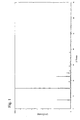
- Fig. 2 shows an X-ray diffractogram of crystal water-free Raw creatine (about 0.5 wt% water content).
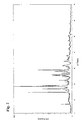
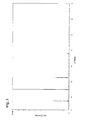
- the diffractogram of FIG. 3 shows in comparison to the diffractogram 1 shows a smaller number of bands with higher ones Band sharpness. This indicates a higher crystallinity of the invention treated creatine monohydrate.
- the diffractogram 2 shows numerous low intensity bands. This indicates that the raw water-free creatine is largely amorphous except for a "residual structure".
- the level reached a volume of 1500 ml, the flowed about 30% warm suspension of creatine monohydrate clocked in one below the double-walled face grinding piston, the was kept at a temperature of 15 ° C with a cryostat. A mean residence time resulted from the volume and the metering rate of 10 hours.
- the material ran clocked on a vacuum suction filter, in which a metal sintered plate as Filtration organ served. The absorbent material was removed every 24 hours separated, washed once with drinking water and in thin Air-dried layer. The crystallites showed one average particle diameter of 480 ⁇ m and showed one Drying loss of 12.1%.
Landscapes
- Chemical & Material Sciences (AREA)
- Organic Chemistry (AREA)
- Organic Low-Molecular-Weight Compounds And Preparation Thereof (AREA)
- Preparation Of Compounds By Using Micro-Organisms (AREA)
Abstract
Description
Claims (8)
- Verfahren zur Reinigung von Kreatin, wobei das zu reinigende Kreatin in kristallwasserfreier Form in eine gesättigte wässrige Lösung von Kreatin-Monohydrat eingetragen wird, wobei das kristallwasserfreie Kreatin unter Hydratisierung gelöst wird, sich Kristalle von Kreatin-Monohydrat aus der wässrigen Lösung abscheiden und diese von der wässrigen Lösung abgetrennt werden.
- Verfahren nach Anspruch 1, wobei die gesättigte wässrige Lösung von Kreatin-Monohydrat in situ hergestellt wird, indem man das kristallwasserfreie Kreatin in Wasser oder ein Gemisch von Wasser mit einem wassermischbaren organischen Lösungsmittel einträgt.
- Verfahren nach Anspruch 1, wobei das kristallwasserfreie Kreatin in eine wässrige Suspension von Kreatin-Monohydrat-Impfkristallen eingetragen wird.
- Verfahren nach Anspruch 3, wobei die wässrige Suspension von Kreatin-Monohydrat-Impfkristallen in einem Reaktor vorgelegt wird, in den kontinuierlich parallel Wasser oder ein Gemisch von Wasser mit einem wassermischbaren organischen Lösungsmittel und kristallwasserfreies Kreatin eingetragen werden und kontinuierlich eine Suspension von Kreatin-Monohydrat-Kristallen ausgetragen wird.
- Verfahren nach einem der vorhergehenden Ansprüche, wobei die Abtrennung der Kreatin-Monohydrat-Kristalle von der wässrigen Lösung durch Filtration oder Zentrifugation erfolgt.
- Verfahren nach einem der vorhergehenden Ansprüche, wobei die kristallwasserfreie Form des zu reinigenden Kreatins durch Trocknung von Kreatin-Monohydrat erhalten wird.
- Verfahren nach einem der vorhergehenden Ansprüche, wobei durch Wahl der Temperatur und Verweildauer eine mittlere Kristallgröße des erhaltenen Kreatin-Monohydrats von 200 bis 600 µm eingestellt wird.
- Verfahren zur Herstellung von Kreatin-Monohydrat, bei dem mana) Sarkosin in einem wässrigen Medium mit einem Guanylierungsmittel umsetzt, wobei sich rohes Kreatin-Monohydrat abscheidet,b) das rohe Kreatin-Monohydrat vom wässrigen Medium abtrennt,c) gegebenenfalls das abgetrennte rohe Kreatin-Monohydrat mit einer Waschflüssigkeit wäscht,d) das rohe Kreatin-Monohydrat in kristallwasserfreies Kreatin überführt,e) das kristallwasserfreie Kreatin in eine gesättigte wässrige Lösung von Kreatin-Monohydrat einträgt, wobei das kristallwasserfreie Kreatin unter Hydratisierung gelöst wird und sich Kristalle von Kreatin-Monohydrat abscheiden,f) die Kristalle von Kreatin-Monohydrat von der wässrigen Lösung abtrennt und die abgetrennte wässrige Lösung zumindest teilweise als wässriges Medium in Schritt a) und/ oder als Waschflüssigkeit in Schritt c) verwendet.
Applications Claiming Priority (2)
| Application Number | Priority Date | Filing Date | Title |
|---|---|---|---|
| DE19962227 | 1999-12-22 | ||
| DE19962227A DE19962227A1 (de) | 1999-12-22 | 1999-12-22 | Verfahren zur Reinigung von Kreatin |
Publications (2)
| Publication Number | Publication Date |
|---|---|
| EP1110947A1 true EP1110947A1 (de) | 2001-06-27 |
| EP1110947B1 EP1110947B1 (de) | 2003-03-05 |
Family
ID=7933947
Family Applications (1)
| Application Number | Title | Priority Date | Filing Date |
|---|---|---|---|
| EP00128184A Expired - Lifetime EP1110947B1 (de) | 1999-12-22 | 2000-12-21 | Verfahren zur Reinigung von Kreatin |
Country Status (5)
| Country | Link |
|---|---|
| US (1) | US6399819B1 (de) |
| EP (1) | EP1110947B1 (de) |
| JP (1) | JP2001181254A (de) |
| AT (1) | ATE233728T1 (de) |
| DE (2) | DE19962227A1 (de) |
Families Citing this family (3)
| Publication number | Priority date | Publication date | Assignee | Title |
|---|---|---|---|---|
| JP6055777B2 (ja) | 2011-11-10 | 2016-12-27 | 広久 西澤 | クレアチン組成物水溶液の製造方法 |
| JP6186236B2 (ja) * | 2013-10-08 | 2017-08-23 | 協和発酵バイオ株式会社 | アミノ酸の製造方法 |
| CN115260047B (zh) * | 2022-06-14 | 2024-07-12 | 太仓市新毛涤纶化工有限公司 | 一水肌酸的制备方法 |
Citations (2)
| Publication number | Priority date | Publication date | Assignee | Title |
|---|---|---|---|---|
| EP0754679A1 (de) * | 1995-07-18 | 1997-01-22 | SKW Trostberg Aktiengesellschaft | Verfahren zur Herstellung von Kreatin oder Kreatin-Monohydrat |
| US5612375A (en) * | 1994-02-28 | 1997-03-18 | Sueoka; Haruhiko | Creatine beverage and producing process thereof |
Family Cites Families (2)
| Publication number | Priority date | Publication date | Assignee | Title |
|---|---|---|---|---|
| DE19748696A1 (de) | 1997-11-04 | 1999-05-06 | Basf Ag | Verfahren zur Herstellung von substituierten Guanidinderivaten |
| DE19860048A1 (de) | 1998-12-23 | 2000-06-29 | Basf Ag | Verfahren zur Herstellung von Guanidinderivaten |
-
1999
- 1999-12-22 DE DE19962227A patent/DE19962227A1/de not_active Withdrawn
-
2000
- 2000-12-12 US US09/734,028 patent/US6399819B1/en not_active Expired - Fee Related
- 2000-12-20 JP JP2000387369A patent/JP2001181254A/ja not_active Withdrawn
- 2000-12-21 AT AT00128184T patent/ATE233728T1/de not_active IP Right Cessation
- 2000-12-21 EP EP00128184A patent/EP1110947B1/de not_active Expired - Lifetime
- 2000-12-21 DE DE50001372T patent/DE50001372D1/de not_active Expired - Fee Related
Patent Citations (2)
| Publication number | Priority date | Publication date | Assignee | Title |
|---|---|---|---|---|
| US5612375A (en) * | 1994-02-28 | 1997-03-18 | Sueoka; Haruhiko | Creatine beverage and producing process thereof |
| EP0754679A1 (de) * | 1995-07-18 | 1997-01-22 | SKW Trostberg Aktiengesellschaft | Verfahren zur Herstellung von Kreatin oder Kreatin-Monohydrat |
Also Published As
| Publication number | Publication date |
|---|---|
| DE19962227A1 (de) | 2001-06-28 |
| ATE233728T1 (de) | 2003-03-15 |
| JP2001181254A (ja) | 2001-07-03 |
| EP1110947B1 (de) | 2003-03-05 |
| US6399819B1 (en) | 2002-06-04 |
| DE50001372D1 (de) | 2003-04-10 |
Similar Documents
| Publication | Publication Date | Title |
|---|---|---|
| EP2705022B1 (de) | Verfahren zur herstellung eines kristallinen l-mgda-trialkalimetallsalzes | |
| DE3529529C2 (de) | ||
| DE60129728T2 (de) | Verfahren zur herstellung von nateglinid-kristallen | |
| EP0770060B2 (de) | Verfahren zur herstellung von ammonium-2-hydroxy-4-(methylthio)-butyrat | |
| EP0593896B1 (de) | RS-Thioctsäure mit neuartiger Morphologie | |
| EP0805210B1 (de) | Verfahren zur Isolierung von 2-Keto-L Gulonsäure | |
| EP2641898A1 (de) | Verfahren zur Herstellung von Methionin | |
| KR100337012B1 (ko) | 중탄산칼륨거대결정및이의제조방법 | |
| EP1110947B1 (de) | Verfahren zur Reinigung von Kreatin | |
| DE102008007155B4 (de) | Verfahren und Vorrichtung zur kontinuierlichen Herstellung eines grobkörnigen kristallinen Ammoniumsulfat-Produkts | |
| DE1543977C3 (de) | Verfahren zur Gewinnung von Äpfelsäure | |
| EP1013640B1 (de) | Synthese von Guanidinderivaten ausgehend von O-alkylisoharnstoffsalzen unter Anwendung von Impfkristallen | |
| EP1028106B1 (de) | Verfahren zur Herstellung von Guanidinderivaten | |
| DE19541558A1 (de) | Verfahren zur Reinigung von Lithiumchlorid-Lösungen | |
| EP0915084B1 (de) | Verfahren zur Herstellung von Kreatin | |
| DE69216902T2 (de) | Verfahren zur Kristallisierung von Aspartam | |
| DE69211756T2 (de) | Verfahren zur Herstellung von alpha-L-aspartyl-L-phenylalaninmethylester | |
| DD244540A1 (de) | Verfahren zur verarbeitung von glaubersalz zu alkalisulfaten | |
| JPH04360863A (ja) | N−アルキルアミノエタンスルホン酸ナトリウムの製造方法 | |
| DE69906876T2 (de) | Verfahren zur Reinigung von Carbazol-ester Vorstufen von 6-Chlor-alpha-methyl-carbazole-2-essigsäure | |
| DE3212415A1 (de) | Verfahren zum abtrennen von fluessigen tropfen von abgasen | |
| SU829567A1 (ru) | Способ получени сульфата кали | |
| DE60117029T2 (de) | Verfahren zur herstellung von fluoriertem dicyanobenzol | |
| DD295162A5 (de) | Verfahren zur herstellung von d-alpha-(4-ethyl-2,3-dioxo-piperazin-1-carbonylamino)-benzylpenicillin | |
| DE1193957B (de) | Verfahren zur Herstellung von Natrium-dichlorisocyanurat und dessen Mono- und Dihydraten |
Legal Events
| Date | Code | Title | Description |
|---|---|---|---|
| PUAI | Public reference made under article 153(3) epc to a published international application that has entered the european phase |
Free format text: ORIGINAL CODE: 0009012 |
|
| AK | Designated contracting states |
Kind code of ref document: A1 Designated state(s): AT BE CH CY DE DK ES FI FR GB GR IE IT LI LU MC NL PT SE TR |
|
| AX | Request for extension of the european patent |
Free format text: AL;LT;LV;MK;RO;SI |
|
| 17P | Request for examination filed |
Effective date: 20011102 |
|
| AKX | Designation fees paid |
Free format text: AT BE CH CY DE DK ES FI FR GB GR IE IT LI LU MC NL PT SE TR |
|
| AXX | Extension fees paid |
Free format text: RO PAYMENT 20011102;SI PAYMENT 20011102 |
|
| GRAG | Despatch of communication of intention to grant |
Free format text: ORIGINAL CODE: EPIDOS AGRA |
|
| 17Q | First examination report despatched |
Effective date: 20020531 |
|
| GRAG | Despatch of communication of intention to grant |
Free format text: ORIGINAL CODE: EPIDOS AGRA |
|
| GRAH | Despatch of communication of intention to grant a patent |
Free format text: ORIGINAL CODE: EPIDOS IGRA |
|
| GRAH | Despatch of communication of intention to grant a patent |
Free format text: ORIGINAL CODE: EPIDOS IGRA |
|
| GRAA | (expected) grant |
Free format text: ORIGINAL CODE: 0009210 |
|
| AK | Designated contracting states |
Designated state(s): AT BE CH CY DE DK ES FI FR GB GR IE IT LI LU MC NL PT SE TR |
|
| AX | Request for extension of the european patent |
Extension state: RO SI |
|
| PG25 | Lapsed in a contracting state [announced via postgrant information from national office to epo] |
Ref country code: TR Free format text: LAPSE BECAUSE OF FAILURE TO SUBMIT A TRANSLATION OF THE DESCRIPTION OR TO PAY THE FEE WITHIN THE PRESCRIBED TIME-LIMIT Effective date: 20030305 Ref country code: IE Free format text: LAPSE BECAUSE OF FAILURE TO SUBMIT A TRANSLATION OF THE DESCRIPTION OR TO PAY THE FEE WITHIN THE PRESCRIBED TIME-LIMIT Effective date: 20030305 Ref country code: GR Free format text: LAPSE BECAUSE OF FAILURE TO SUBMIT A TRANSLATION OF THE DESCRIPTION OR TO PAY THE FEE WITHIN THE PRESCRIBED TIME-LIMIT Effective date: 20030305 Ref country code: FI Free format text: LAPSE BECAUSE OF FAILURE TO SUBMIT A TRANSLATION OF THE DESCRIPTION OR TO PAY THE FEE WITHIN THE PRESCRIBED TIME-LIMIT Effective date: 20030305 |
|
| REG | Reference to a national code |
Ref country code: GB Ref legal event code: FG4D Free format text: NOT ENGLISH |
|
| REG | Reference to a national code |
Ref country code: CH Ref legal event code: NV Representative=s name: SCHMAUDER & PARTNER AG PATENTANWALTSBUERO Ref country code: CH Ref legal event code: EP |
|
| REG | Reference to a national code |
Ref country code: IE Ref legal event code: FG4D Free format text: GERMAN |
|
| REF | Corresponds to: |
Ref document number: 50001372 Country of ref document: DE Date of ref document: 20030410 Kind code of ref document: P |
|
| GBT | Gb: translation of ep patent filed (gb section 77(6)(a)/1977) |
Effective date: 20030428 |
|
| PG25 | Lapsed in a contracting state [announced via postgrant information from national office to epo] |
Ref country code: SE Free format text: LAPSE BECAUSE OF FAILURE TO SUBMIT A TRANSLATION OF THE DESCRIPTION OR TO PAY THE FEE WITHIN THE PRESCRIBED TIME-LIMIT Effective date: 20030605 Ref country code: PT Free format text: LAPSE BECAUSE OF FAILURE TO SUBMIT A TRANSLATION OF THE DESCRIPTION OR TO PAY THE FEE WITHIN THE PRESCRIBED TIME-LIMIT Effective date: 20030605 Ref country code: DK Free format text: LAPSE BECAUSE OF FAILURE TO SUBMIT A TRANSLATION OF THE DESCRIPTION OR TO PAY THE FEE WITHIN THE PRESCRIBED TIME-LIMIT Effective date: 20030605 |
|
| PG25 | Lapsed in a contracting state [announced via postgrant information from national office to epo] |
Ref country code: ES Free format text: LAPSE BECAUSE OF FAILURE TO SUBMIT A TRANSLATION OF THE DESCRIPTION OR TO PAY THE FEE WITHIN THE PRESCRIBED TIME-LIMIT Effective date: 20030930 |
|
| REG | Reference to a national code |
Ref country code: IE Ref legal event code: FD4D Ref document number: 1110947E Country of ref document: IE |
|
| ET | Fr: translation filed | ||
| PG25 | Lapsed in a contracting state [announced via postgrant information from national office to epo] |
Ref country code: LU Free format text: LAPSE BECAUSE OF NON-PAYMENT OF DUE FEES Effective date: 20031221 Ref country code: CY Free format text: LAPSE BECAUSE OF FAILURE TO SUBMIT A TRANSLATION OF THE DESCRIPTION OR TO PAY THE FEE WITHIN THE PRESCRIBED TIME-LIMIT Effective date: 20031221 |
|
| PG25 | Lapsed in a contracting state [announced via postgrant information from national office to epo] |
Ref country code: MC Free format text: LAPSE BECAUSE OF NON-PAYMENT OF DUE FEES Effective date: 20031231 Ref country code: BE Free format text: LAPSE BECAUSE OF NON-PAYMENT OF DUE FEES Effective date: 20031231 |
|
| PLBE | No opposition filed within time limit |
Free format text: ORIGINAL CODE: 0009261 |
|
| STAA | Information on the status of an ep patent application or granted ep patent |
Free format text: STATUS: NO OPPOSITION FILED WITHIN TIME LIMIT |
|
| 26N | No opposition filed |
Effective date: 20031208 |
|
| BERE | Be: lapsed |
Owner name: *BASF A.G. Effective date: 20031231 |
|
| PGFP | Annual fee paid to national office [announced via postgrant information from national office to epo] |
Ref country code: GB Payment date: 20041215 Year of fee payment: 5 |
|
| PGFP | Annual fee paid to national office [announced via postgrant information from national office to epo] |
Ref country code: CH Payment date: 20041229 Year of fee payment: 5 |
|
| PGFP | Annual fee paid to national office [announced via postgrant information from national office to epo] |
Ref country code: NL Payment date: 20051204 Year of fee payment: 6 |
|
| PGFP | Annual fee paid to national office [announced via postgrant information from national office to epo] |
Ref country code: FR Payment date: 20051208 Year of fee payment: 6 |
|
| PGFP | Annual fee paid to national office [announced via postgrant information from national office to epo] |
Ref country code: AT Payment date: 20051213 Year of fee payment: 6 |
|
| PGFP | Annual fee paid to national office [announced via postgrant information from national office to epo] |
Ref country code: DE Payment date: 20051215 Year of fee payment: 6 |
|
| PG25 | Lapsed in a contracting state [announced via postgrant information from national office to epo] |
Ref country code: GB Free format text: LAPSE BECAUSE OF NON-PAYMENT OF DUE FEES Effective date: 20051221 |
|
| PG25 | Lapsed in a contracting state [announced via postgrant information from national office to epo] |
Ref country code: LI Free format text: LAPSE BECAUSE OF NON-PAYMENT OF DUE FEES Effective date: 20051231 Ref country code: CH Free format text: LAPSE BECAUSE OF NON-PAYMENT OF DUE FEES Effective date: 20051231 |
|
| REG | Reference to a national code |
Ref country code: CH Ref legal event code: PL |
|
| GBPC | Gb: european patent ceased through non-payment of renewal fee |
Effective date: 20051221 |
|
| PGFP | Annual fee paid to national office [announced via postgrant information from national office to epo] |
Ref country code: IT Payment date: 20061231 Year of fee payment: 7 |
|
| PG25 | Lapsed in a contracting state [announced via postgrant information from national office to epo] |
Ref country code: NL Free format text: LAPSE BECAUSE OF NON-PAYMENT OF DUE FEES Effective date: 20070701 |
|
| PG25 | Lapsed in a contracting state [announced via postgrant information from national office to epo] |
Ref country code: DE Free format text: LAPSE BECAUSE OF NON-PAYMENT OF DUE FEES Effective date: 20070703 |
|
| NLV4 | Nl: lapsed or anulled due to non-payment of the annual fee |
Effective date: 20070701 |
|
| REG | Reference to a national code |
Ref country code: FR Ref legal event code: ST Effective date: 20070831 |
|
| PG25 | Lapsed in a contracting state [announced via postgrant information from national office to epo] |
Ref country code: AT Free format text: LAPSE BECAUSE OF NON-PAYMENT OF DUE FEES Effective date: 20061221 |
|
| PG25 | Lapsed in a contracting state [announced via postgrant information from national office to epo] |
Ref country code: FR Free format text: LAPSE BECAUSE OF NON-PAYMENT OF DUE FEES Effective date: 20070102 |
|
| PG25 | Lapsed in a contracting state [announced via postgrant information from national office to epo] |
Ref country code: IT Free format text: LAPSE BECAUSE OF NON-PAYMENT OF DUE FEES Effective date: 20071221 |