EP1109235A2 - Organic electroluminescence device - Google Patents

Organic electroluminescence device Download PDF

Info

Publication number
EP1109235A2
EP1109235A2 EP00250437A EP00250437A EP1109235A2 EP 1109235 A2 EP1109235 A2 EP 1109235A2 EP 00250437 A EP00250437 A EP 00250437A EP 00250437 A EP00250437 A EP 00250437A EP 1109235 A2 EP1109235 A2 EP 1109235A2
Authority
EP
European Patent Office
Prior art keywords
group
substituted
phenanthrolin
light
emitting zone
Prior art date
Legal status (The legal status is an assumption and is not a legal conclusion. Google has not performed a legal analysis and makes no representation as to the accuracy of the status listed.)
Granted
Application number
EP00250437A
Other languages
German (de)
French (fr)
Other versions
EP1109235A3 (en
EP1109235B1 (en
Inventor
Yukiko Morioka
Atsushi Oda
Hitoshi Ishikawa
Satoru Toguchi
Hiroshi Tada
Current Assignee (The listed assignees may be inaccurate. Google has not performed a legal analysis and makes no representation or warranty as to the accuracy of the list.)
Samsung SDI Co Ltd
Original Assignee
NEC Corp
Nippon Electric Co Ltd
Samsung SDI Co Ltd
Priority date (The priority date is an assumption and is not a legal conclusion. Google has not performed a legal analysis and makes no representation as to the accuracy of the date listed.)
Filing date
Publication date
Application filed by NEC Corp, Nippon Electric Co Ltd, Samsung SDI Co Ltd filed Critical NEC Corp
Publication of EP1109235A2 publication Critical patent/EP1109235A2/en
Publication of EP1109235A3 publication Critical patent/EP1109235A3/en
Application granted granted Critical
Publication of EP1109235B1 publication Critical patent/EP1109235B1/en
Anticipated expiration legal-status Critical
Expired - Lifetime legal-status Critical Current

Links

Images

Classifications

    • HELECTRICITY
    • H10SEMICONDUCTOR DEVICES; ELECTRIC SOLID-STATE DEVICES NOT OTHERWISE PROVIDED FOR
    • H10KORGANIC ELECTRIC SOLID-STATE DEVICES
    • H10K85/00Organic materials used in the body or electrodes of devices covered by this subclass
    • H10K85/60Organic compounds having low molecular weight
    • H10K85/615Polycyclic condensed aromatic hydrocarbons, e.g. anthracene
    • H10K85/626Polycyclic condensed aromatic hydrocarbons, e.g. anthracene containing more than one polycyclic condensed aromatic rings, e.g. bis-anthracene
    • HELECTRICITY
    • H05ELECTRIC TECHNIQUES NOT OTHERWISE PROVIDED FOR
    • H05BELECTRIC HEATING; ELECTRIC LIGHT SOURCES NOT OTHERWISE PROVIDED FOR; CIRCUIT ARRANGEMENTS FOR ELECTRIC LIGHT SOURCES, IN GENERAL
    • H05B33/00Electroluminescent light sources
    • H05B33/12Light sources with substantially two-dimensional [2D] radiating surfaces
    • H05B33/14Light sources with substantially two-dimensional [2D] radiating surfaces characterised by the chemical or physical composition or the arrangement of the electroluminescent material, or by the simultaneous addition of the electroluminescent material in or onto the light source
    • HELECTRICITY
    • H10SEMICONDUCTOR DEVICES; ELECTRIC SOLID-STATE DEVICES NOT OTHERWISE PROVIDED FOR
    • H10KORGANIC ELECTRIC SOLID-STATE DEVICES
    • H10K50/00Organic light-emitting devices
    • H10K50/10OLEDs or polymer light-emitting diodes [PLED]
    • H10K50/11OLEDs or polymer light-emitting diodes [PLED] characterised by the electroluminescent [EL] layers
    • HELECTRICITY
    • H10SEMICONDUCTOR DEVICES; ELECTRIC SOLID-STATE DEVICES NOT OTHERWISE PROVIDED FOR
    • H10KORGANIC ELECTRIC SOLID-STATE DEVICES
    • H10K85/00Organic materials used in the body or electrodes of devices covered by this subclass
    • H10K85/60Organic compounds having low molecular weight
    • H10K85/631Amine compounds having at least two aryl rest on at least one amine-nitrogen atom, e.g. triphenylamine
    • H10K85/633Amine compounds having at least two aryl rest on at least one amine-nitrogen atom, e.g. triphenylamine comprising polycyclic condensed aromatic hydrocarbons as substituents on the nitrogen atom
    • HELECTRICITY
    • H10SEMICONDUCTOR DEVICES; ELECTRIC SOLID-STATE DEVICES NOT OTHERWISE PROVIDED FOR
    • H10KORGANIC ELECTRIC SOLID-STATE DEVICES
    • H10K85/00Organic materials used in the body or electrodes of devices covered by this subclass
    • H10K85/30Coordination compounds
    • HELECTRICITY
    • H10SEMICONDUCTOR DEVICES; ELECTRIC SOLID-STATE DEVICES NOT OTHERWISE PROVIDED FOR
    • H10KORGANIC ELECTRIC SOLID-STATE DEVICES
    • H10K85/00Organic materials used in the body or electrodes of devices covered by this subclass
    • H10K85/30Coordination compounds
    • H10K85/321Metal complexes comprising a group IIIA element, e.g. Tris (8-hydroxyquinoline) gallium [Gaq3]
    • HELECTRICITY
    • H10SEMICONDUCTOR DEVICES; ELECTRIC SOLID-STATE DEVICES NOT OTHERWISE PROVIDED FOR
    • H10KORGANIC ELECTRIC SOLID-STATE DEVICES
    • H10K85/00Organic materials used in the body or electrodes of devices covered by this subclass
    • H10K85/30Coordination compounds
    • H10K85/321Metal complexes comprising a group IIIA element, e.g. Tris (8-hydroxyquinoline) gallium [Gaq3]
    • H10K85/324Metal complexes comprising a group IIIA element, e.g. Tris (8-hydroxyquinoline) gallium [Gaq3] comprising aluminium, e.g. Alq3
    • HELECTRICITY
    • H10SEMICONDUCTOR DEVICES; ELECTRIC SOLID-STATE DEVICES NOT OTHERWISE PROVIDED FOR
    • H10KORGANIC ELECTRIC SOLID-STATE DEVICES
    • H10K85/00Organic materials used in the body or electrodes of devices covered by this subclass
    • H10K85/60Organic compounds having low molecular weight
    • HELECTRICITY
    • H10SEMICONDUCTOR DEVICES; ELECTRIC SOLID-STATE DEVICES NOT OTHERWISE PROVIDED FOR
    • H10KORGANIC ELECTRIC SOLID-STATE DEVICES
    • H10K85/00Organic materials used in the body or electrodes of devices covered by this subclass
    • H10K85/60Organic compounds having low molecular weight
    • H10K85/615Polycyclic condensed aromatic hydrocarbons, e.g. anthracene
    • HELECTRICITY
    • H10SEMICONDUCTOR DEVICES; ELECTRIC SOLID-STATE DEVICES NOT OTHERWISE PROVIDED FOR
    • H10KORGANIC ELECTRIC SOLID-STATE DEVICES
    • H10K85/00Organic materials used in the body or electrodes of devices covered by this subclass
    • H10K85/60Organic compounds having low molecular weight
    • H10K85/615Polycyclic condensed aromatic hydrocarbons, e.g. anthracene
    • H10K85/623Polycyclic condensed aromatic hydrocarbons, e.g. anthracene containing five rings, e.g. pentacene
    • HELECTRICITY
    • H10SEMICONDUCTOR DEVICES; ELECTRIC SOLID-STATE DEVICES NOT OTHERWISE PROVIDED FOR
    • H10KORGANIC ELECTRIC SOLID-STATE DEVICES
    • H10K85/00Organic materials used in the body or electrodes of devices covered by this subclass
    • H10K85/60Organic compounds having low molecular weight
    • H10K85/615Polycyclic condensed aromatic hydrocarbons, e.g. anthracene
    • H10K85/624Polycyclic condensed aromatic hydrocarbons, e.g. anthracene containing six or more rings
    • HELECTRICITY
    • H10SEMICONDUCTOR DEVICES; ELECTRIC SOLID-STATE DEVICES NOT OTHERWISE PROVIDED FOR
    • H10KORGANIC ELECTRIC SOLID-STATE DEVICES
    • H10K85/00Organic materials used in the body or electrodes of devices covered by this subclass
    • H10K85/60Organic compounds having low molecular weight
    • H10K85/649Aromatic compounds comprising a hetero atom
    • H10K85/656Aromatic compounds comprising a hetero atom comprising two or more different heteroatoms per ring
    • HELECTRICITY
    • H10SEMICONDUCTOR DEVICES; ELECTRIC SOLID-STATE DEVICES NOT OTHERWISE PROVIDED FOR
    • H10KORGANIC ELECTRIC SOLID-STATE DEVICES
    • H10K85/00Organic materials used in the body or electrodes of devices covered by this subclass
    • H10K85/60Organic compounds having low molecular weight
    • H10K85/649Aromatic compounds comprising a hetero atom
    • H10K85/656Aromatic compounds comprising a hetero atom comprising two or more different heteroatoms per ring
    • H10K85/6565Oxadiazole compounds
    • HELECTRICITY
    • H10SEMICONDUCTOR DEVICES; ELECTRIC SOLID-STATE DEVICES NOT OTHERWISE PROVIDED FOR
    • H10KORGANIC ELECTRIC SOLID-STATE DEVICES
    • H10K85/00Organic materials used in the body or electrodes of devices covered by this subclass
    • H10K85/60Organic compounds having low molecular weight
    • H10K85/649Aromatic compounds comprising a hetero atom
    • H10K85/657Polycyclic condensed heteroaromatic hydrocarbons
    • YGENERAL TAGGING OF NEW TECHNOLOGICAL DEVELOPMENTS; GENERAL TAGGING OF CROSS-SECTIONAL TECHNOLOGIES SPANNING OVER SEVERAL SECTIONS OF THE IPC; TECHNICAL SUBJECTS COVERED BY FORMER USPC CROSS-REFERENCE ART COLLECTIONS [XRACs] AND DIGESTS
    • Y10TECHNICAL SUBJECTS COVERED BY FORMER USPC
    • Y10STECHNICAL SUBJECTS COVERED BY FORMER USPC CROSS-REFERENCE ART COLLECTIONS [XRACs] AND DIGESTS
    • Y10S428/00Stock material or miscellaneous articles
    • Y10S428/917Electroluminescent

Definitions

  • the present invention relates to an organic electroluminescence device having excellent luminescence properties.
  • An organic electroluminescence device (hereinafter abbreviated to the organic EL device) is a light-emitting device which makes use of the principle that when an electric field is applied, a fluorescent material emits light in response to the charge recombination of holes injected from an anode and electrons injected from a cathode.
  • C.W. Tang et al. of Eastman Kodak Company reported a low-voltage-driven organic EL device using a double layered structure (C.W. Tang, S.A. Vanslyke, Applied Physics Letters, 51, 913(1987) and the like), studies on an organic EL device have been briskly carried out. Tang et al.
  • a double layered structure composed of a hole-injecting and transporting layer and an electron-transporting and light-emitting layer or a triple layered structure composed of a hole-injecting and transporting layer, an electron-transporting and light-emitting layer and an electron-injecting and transporting layer is well known as an organic EL device.
  • an organic EL device In order to increase the recombination efficiency of injected holes and electrons, various improvements in the device structure or fabrication process have been introduced to such multilayered devices.
  • triphenylamine derivatives such as 4,4' , 4" -tris(3-methylphenylphenylamino)-triphenylamine and aromatic diamine derivatives such as N,N' -diphenyl-N,N' -bis(3-methylphenyl)-[1,1' -biphenyl]-4,4' -diamine, which are starburst molecules, are well known (e.g., Japanese Patent Application Laid-Open Nos. 20771/1996, 40995/1996, 40997/1996, 543397/1996 and 87122/1996).
  • oxadiazole derivatives As an electron-transporting material, oxadiazole derivatives, triazole derivatives and the like are well known.
  • chelate complexes such as tris(8-quinolinolate)aluminum complex are known, and it is also well-known that devices using the mixture of a light-emittingmaterial and a small amount of a fluorescent pigment have an improved efficiency.
  • fluorescent pigments there are known coumarin derivatives, tetraphenylbutadiene derivatives, bisstyrylarylene derivatives, oxadiazole derivatives, porphyrin derivatives, phenoxazoline type pigments, rhodamine type pigments, acridine type pigments and the like.
  • the present invention has been developed in view of the above-mentioned point, and an object of the present invention is to provide an organic EL device having a high luminance.
  • a mixture containing at least two compounds is used for a light-emitting zone, whereby the spectrum of the luminescence includes at least one peak at a wavelength which is different from neither of fluorescent peak positions of the compounds included in light-emitting zone and the luminescence is obtained with high brightness.
  • FIG. 1 is a cross-sectional view showing one example of an organic EL device regarding the present invention.
  • FIG. 2 is a cross-sectional view showing another example of the organic EL device regarding the present invention.
  • FIG. 3 is a cross-sectional view showing still another example of the organic EL device regarding the present invention.
  • FIG. 4 is a cross-sectional view showing a further example of the organic EL device regarding the present invention.
  • FIG. 5 shows an emission spectrum of the organic EL device regarding the present invention and a fluorescence spectrum of a compound used in a light-emitting zone.
  • numeral 1 is a substrate
  • 2 is an anode
  • 3 is a hole-injecting zone
  • 4 is a light-emitting zone
  • 5 is an electron-injecting zone
  • 6 is a cathode.
  • the present invention is directed to an organic EL device in which a mixture containing at least two compounds is used for a light-emitting zone, and it is characterized in that the organic EL device has at least one peak which is different from any one of the spectra of the compounds included in light-emitting zone.
  • Ar 1 designates a substituted or non-substituted arylene group having 5 to 42 carbon atoms.
  • this arylene group examples include a naphthylene group, an anthrylene group, a perylenylene group, a 1:2 benzopenylenylene group, a 1:2:7:8 dibenzopenylenylene group, a 1:2:11:12 dibenzopenylenylene group, a terylenylene group, a pentasenylene group, a bisanthrenylene group, a 10,10'-(9,9'-bisanthryl)ylene group, a 4,4'-(1,1'-binaphthyl)ylene, 4,10'-(1,9'-naphthylanthryl)ylene group, a divalent group represented by the formula [2] - Ar 6 - Ar 7 - Ar 8 - wherein Ar 6 to Ar 8 are each a naphthylene group or an anthrylene group, divalent groups formed by two hydrogen atoms removal from aromatic hydrocarbons or fused polycyclic hydrocarbons such as
  • Ar 2 to Ar 5 are each independently a substituted or non-substituted aryl group having 6 to 20 carbon atoms.
  • the aryl group having 6 to 20 carbon atoms include a phenyl group, a naphthyl group, an anthryl group, a phenanthryl group, a naphthacenyl group, a pyrenyl group, and derivatives thereof.
  • the fluorescence material contained in the mixture for forming the light-emitting zone in the present invention there is used a substituted or non-substituted aromatic hydrocarbon, a substituted or non-substituted fused polycyclic hydrocarbon, a substituted or non-substituted heterocyclic compound, a substituted or non-substituted fused heterocyclic compound, or the like.
  • aromatic hydrocarbon and the fused polycyclic hydrocarbon mentioned above examples include benzene, naphthalene, anthracene, phenanthrene, naphthacene, pentacene, pyrene, chrysene, picene, perylene, terphenyl, and derivatives thereof.
  • heterocyclic compound and the fused heterocyclic compound mentioned above examples include pyrrole, thiophene, furan, pyran, 4H-pyran, xanthene, imidazole, pyrazole, 3a,6a-diazapentalene, isothiazole, isoxazole, oxazole, oxadiazole, triazole, coumarin, isocoumarin, pyridine, pyrazine, pyrimidine, pyridazine, furazane, thianthrene, isobenzofuran, indolizine, indole, isoindole, 1H-indazole, purine, quinoline, isoquinoline, quinolone, acridone, phthalazine, naphthyridine, quinoxaline, quinazoline, cinnoline, pteridine, carbazole, ⁇ -carbazoline, phenanthridine, phen
  • Examples of a substituent which each of Ar 1 to Ar 8 , the aromatic hydrocarbon, the fused polycyclic hydrocarbon, the heterocyclic compound or the fused heterocyclic compound include a halogen atom, a hydroxyl group, a substituted or non-substituted amino group, a nitro group, a cyano group, a substituted or non-substituted alkyl group, a substituted or non-substituted alkenyl group, a substituted or non-substituted cycloalkyl group, a substituted or non-substituted alkoxy group, a substituted or non-substituted aromatic hydrocarbon, a substituted or non-substituted aromatic heterocyclic group, a substituted or non-substituted aralkyl group, a substituted or non-substituted aryloxy group, a substituted or non-substituted alkoxycarbonyl group, and a carb
  • Two of the substituents of Ar 1 to Ar 5 , the aromatic hydrocarbon, the fused polycyclic hydrocarbon, the heterocyclic compound and the fused heterocyclic compound may form a ring, and two of the substituents which each aryl group of Ar6 to Ar8 has may form a ring.
  • halogen atom examples include fluorine, chlorine, bromine and iodine.
  • X 1 and X 2 include, each independently, a hydrogen atom, methyl group, ethyl group, propyl group, isopropyl group, n-butyl group, s-butyl group, isobutyl group, t-butyl group, n-pentyl group, n-hexyl group, n-heptyl group, n-octyl group, hydroxymethyl group, 1-hydroxyethyl group, 2-hydroxyethyl group, 2-hydroxyisobutyl group, 1,2-dihydroxyethyl group, 1,3-dihydroxyisopropyl group, 2,3-dihydroxy-t-butyl group, 1,2,3-trihydroxypropyl group, chloromethyl group, 1-chloroethyl group, 2-chloroethyl group, 2-chloroisobutyl group
  • Examples of the substituted or non-substituted alkyl group mentioned above include a methyl group, ethyl group, propyl group, isopropyl group, n-butyl group, s-butyl group, isobutyl group, t-butyl group, n-pentyl group, n-hexyl group, n-heptyl group, n-octyl group, hydroxymethyl group, 1-hydroxyethyl group, 2-hydroxyethyl group, 2-hydroxyisobutyl group, 1,2-dihydroxyethyl group, 1,3-dihydroxyisopropyl group, 2,3-dihydroxy-t-butyl group, 1,2,3-trihydroxypropyl group, chloromethyl group, 1-chloroethyl group, 2-chloroethyl group, 2-chloroisobutyl group, 1,2-dichloroethyl group, 1,3-dichloroisopropyl group,
  • Examples of the substituted or non-substituted alkenyl group mentioned above include a vinyl group, allyl group, 1-butenyl group, 2-butenyl group, 3-butenyl group, 1,3-butanedienyl group, 1-methylvinyl group, styryl group, 4-diphenylaminostyryl group, 4-di-p-tolylaminostyryl group, 4-di-m-tolylaminostyryl group, 2,2-diphenylvinyl group, 1,2-diphenylvinyl group, 1-methylallyl group, 1,1-dimethylallyl group, 2-methylallyl group, 1-phenylallyl group, 2-phenylallyl group, 3-phenylallyl group, 3,3-diphenylallyl group, 1,2-dimethylallyl group, 1-phenyl-1-butenyl group and 3-phenyl-1-butenyl group.
  • Examples of the substituted or non-substituted cycloalkyl group mentioned above include a cyclopropyl group, cyclobutyl group, cyclopentyl group, cyclohexyl group and 4-methylcyclohexyl grouop.
  • the substituted or non-substituted alkoxy group is a group represented by -OY, and examples of Y include a methyl group, ethyl group, propyl group, isopropyl group, n-butyl group, s-butyl group, isobutyl group, t-butyl group, n-pentyl group, n-hexyl group, n-heptyl group, n-octyl group, hydroxymethyl group, 1-hydroxyethyl group, 2-hydroxyethyl group, 2-hydroxyisobutyl group, 1,2-dihydroxyethyl group, 1,3-dihydroxyisopropyl group, 2,3-dihydroxy-t-butyl group, 1,2,3-trihydroxypropyl group, chloromethyl group, 1-chloroethyl group, 2-chloroethyl group, 2-chloroisobutyl group, 1,2-dichloroethyl group, 1,3
  • Examples of the substituted or non-substituted aromatic hydrocarbon mentioned above include a phenyl group, 1-naphthyl group, 2-naphthyl group, 9-fluorenyl group, 1-anthryl group, 2-anthryl group, 9-anthryl group, 1-phenanthryl group, 2-phenanthryl group, 3-phenanthryl group, 4-phenanthryl group, 9-phenanthryl group, 1-naphthacenyl group, 2-naphthacenyl group, 9-naphthacenyl group, 1-pyrenyl group, 2-pyrenyl group, 4-pyrenyl group, 2-biphenylyl group, 3-biphenylyl group, 4-biphenylyl group, p-terphenyl-4-yl group, p-terphenyl-3-yl group, p-terphenyl-2-yl group, m-terphenyl-4-yl group, m-terpheny
  • Examples of the substituted or non-substituted aromatic heterocyclic group mentioned above include a 1-pyrrolyl group, 2-pyrrolyl group, 3-pyrrolyl group, pyrazinyl group, 2-pyridinyl group, 3-pyridinyl group, 4-pyridinyl group, 1-indolyl group, 2-indolyl group, 3-indolyl group, 4-indolyl group, 5-indolyl group, 6-indolyl group, 7-indolyl group, 1-isoindolyl group, 2-isoindolyl group, 3-isoindolyl group, 4-isoindolyl group, 5-isoindolyl group, 6-isoindolyl group, 7-isoindolyl group, 2-furyl group, 3-furyl group, 2-benzofuranyl group, 3-benzofuranyl group, 4-benzofuranyl group, 5-benzofuranyl group, 6-benzofuranyl
  • Examples of the substituted or non-substituted aralkyl group mentioned above include a benzyl group, 1-phenylethyl group, 2-phenylethyl group, 1-phenylisopropyl group, 2-phenylisopropyl group, phenyl-t-butyl group, ⁇ -naphthylmethyl group, 1- ⁇ -naphthylethyl group, 2- ⁇ -naphthylethyl group, 1- ⁇ -naphthylisopropyl group, 2- ⁇ -naphthylisopropyl group, ⁇ -naphthylmethyl group, 1- ⁇ -naphthylethyl group, 2- ⁇ -naphthylethyl group, 1- ⁇ -naphthylisopropyl group, 2- ⁇ -naphthylisopropyl group, 1-pyrrolylmethyl group, 2-(1-pyrrolyl)e
  • the substituted or non-substituted aryloxy group mentioned above can be represented by -OZ, and examples of Z include a phenyl group, 1-naphthyl group, 2-naphthyl group, 1-anthryl group, 2-anthryl group, 9-anthryl group, 1-phenanthryl group, 2-phenanthryl group, 3-phenanthryl group, 4-phenanthryl group, 9-phenanthryl group, 1-naphthacenyl group, 2-naphthacenyl group, 9-naphthacenyl group, 1-pyrenyl group, 2-pyrenyl group, 4-pyrenyl group, 2-biphenylyl group, 3-biphenylyl group, 4-biphenylyl group, p-terphenyl-4-yl group, p-terphenyl-3-yl group, p-terphenyl-2-yl group, m-terphenyl-4-yl group, m
  • the substituted or non-substituted alkoxycarbonyl group mentioned above can be represented by -COOY, and examples of Y include a methyl group, ethyl group, propyl group, isopropyl group, n-butyl group, s-butyl group, isobutyl group, t-butyl group, n-pentyl group, n-hexyl group n-heptyl group, n-octyl group, hydroxymethyl group, 1-hydroxyethyl group, 2-hydroxyethyl group, 2-hydroxyisobutyl group, 1,2-dihydroxyethyl group, 1,3-dihydroxyisopropyl group, 2,3-dihydroxy-t-butyl group, 1,2,3-trihydroxypropyl group, chloromethyl group, 1-chloroethyl group, 2-chloroethyl group, 2-chloroisobutyl group, 1,2-dichloroethyl group
  • examples of the substituted or non-substituted styryl group which at least one of Ar 2 to Ar 5 has as a substituent include non-substituted styryl group and a 2,2-diphenylvinyl group.
  • the substituted styryl group can be employed having, as a substituent on the terminal phenyl group, a halogen atom, a hydroxyl group, the substituted and non-substituted amino groups, a nitro group, a cyano group, the above substituted and non-substituted alkyl groups, the above substituted and non-substituted alkenyl groups, the above substituted and non-substituted cycloalkyl groups, the above substituted and non-substituted alkoxy groups, the above substituted and non-substituted aromatic hydrocarbons, the above substituted and non-substituted aromatic heterocyclic groups, the above substituted and non-substituted aralkyl groups, the above substituted and non-substituted aryloxy groups, the above substituted and non-substituted alkoxycarbonyl groups and carboxyl group as well as substituted 2,2'-diphenylvin
  • examples of the divalent group which can form a ring include a tetramethylene group, a pentamethylene group, a hexamethylene group, a diphenylmethane-2,2'-diyl group, a diphenylethane-3,3'-diyl group and a diphenylpropane-4,4'-diyl.
  • the organic EL device has a structure in which one organic layer or two or more organic layers are interposed between electrodes, and the present invention includes a structure comprising an anode/ light-emitting zone /cathode as shown in Fig. 1, a structure comprising an anode/ light-emitting zone / electron-injecting zone /cathode as shown in Fig. 2, a structure comprising an anode/ hole-injecting zone / light-emitting zone /cathode as shown in Fig. 3, and a structure comprising an anode/ hole-injecting zone / light-emitting zone / electron-injecting zone /cathode as shown in Fig. 4.
  • the above-mentioned compounds are used in the organic layer constituting the light-emitting zone, and they are mixed with another hole-injecting material, electroluminescent material, fluorescence material, electron-transporting material and the like to form the light-emitting zone.
  • the fluorescent peak positions of the electroluminescent materials and fluorescence materials are determined as the peak top wavelength of the fluorescence spectrum in powder form.
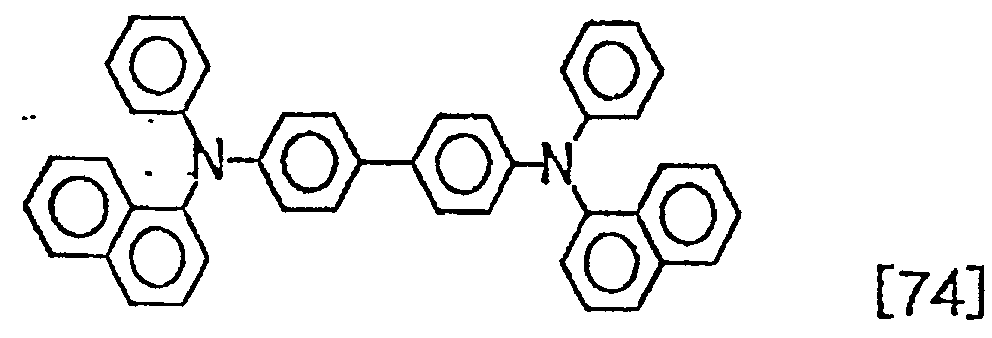
  • hole-injecting material there is no particular limitation imposed on the hole-injecting material to be used in the present invention. Any compound ordinarily employed as a hole-injecting material may be used. Examples include triphenyldiamines such as bis(di(p-tolyl)aminophenyl)-1,1-cyclohexane [72], N,N'-diphenyl-N,N'-bis(3-methylphenyl)-1,1'-biphenyl-4,4'-diamine [73] and N,N'-diphenyl-N-N-bis(1-naphthyl)-1,1'-biphenyl)-4,4'-diamine [74] and starburst type molecules ([75] to [77]).
  • triphenyldiamines such as bis(di(p-tolyl)aminophenyl)-1,1-cyclohexane [72], N,N'-diphenyl-
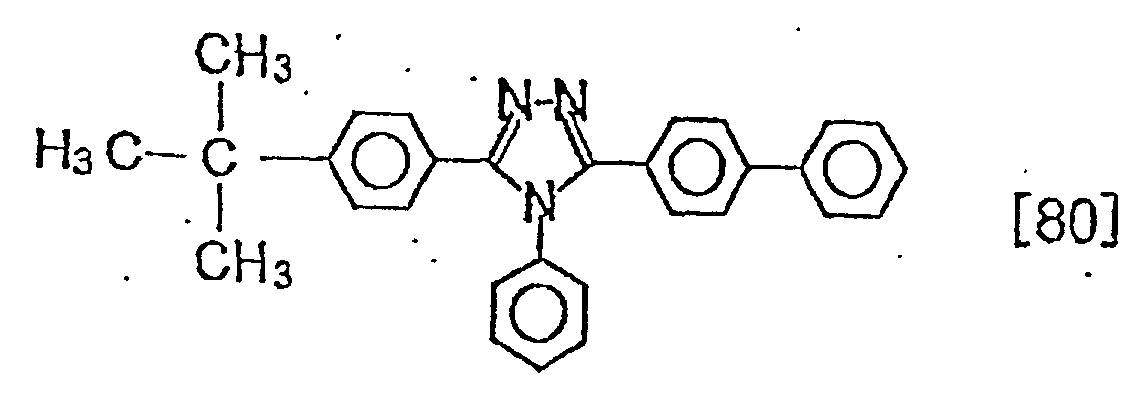
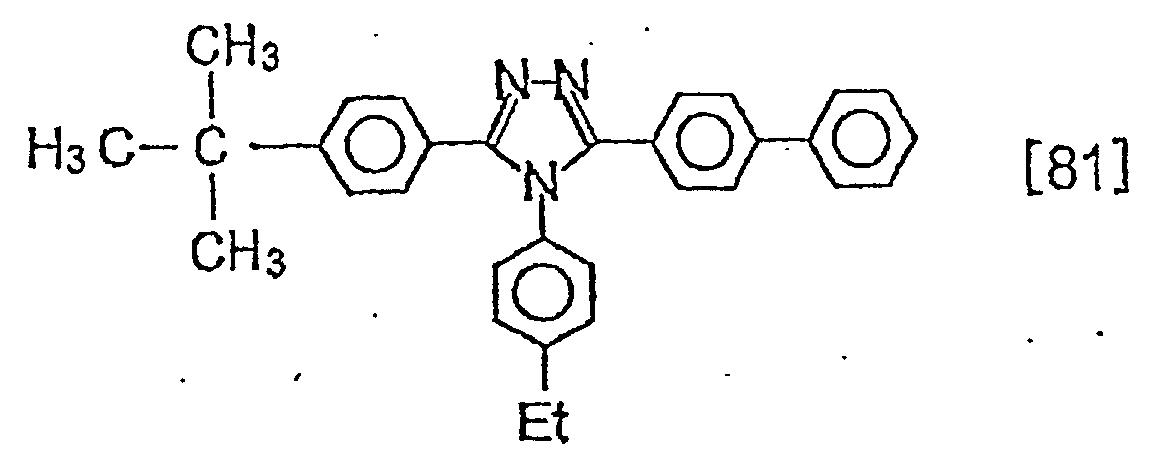
  • the electron-transporting material there is no particular limitation imposed on the electron-transporting material to be used in the present invention. Any compound ordinarily employed as a electron-transporting material may be used. Examples include oxadiazole derivatives such as 2-(4-biphenylyl)-5-(4-t-butylphenyl)-1,3,4-oxadiazole [78] and bis ⁇ 2-(4-t-butylphenyl)-1,3,4-oxadiazole ⁇ -m-phenylene [79] and triazole derivatives ([80], [81] and the like).
  • oxadiazole derivatives such as 2-(4-biphenylyl)-5-(4-t-butylphenyl)-1,3,4-oxadiazole [78] and bis ⁇ 2-(4-t-butylphenyl)-1,3,4-oxadiazole ⁇ -m-phenylene [79] and triazole derivatives ([80], [81] and the like).
  • quinolinol-based metal complexes as represented by formulae [82], [83] and [84] are also used as the electron-transporting material, wherein Q designates a substituted or non-substituted hydroxyl quinoline derivative or a substituted or non-substituted benzoquinoline derivative, "M” designates a metal atom, "n” designates a valency thereof, "L” designates a halogen atom, a substituted or non-substituted alkyl group, a substituted or non-substituted cycloalkyl group, and a substituted or non-substituted aryl group which may includes nitrogen atom.
  • Q is a substituted or an unsubstituted hydroxyquinoline derivative, or a substituted or an unsubstituted benzoquinoline derivative
  • M is a metal atom
  • n is its valence.
  • Q is a substituted or an unsubstituted hydroxyquinoline derivative, or a substituted or an unsubstituted benzoquinoline derivative
  • L is a halogen atom, a substituted or an unsubstituted alkyl group, a substituted or an unsubstituted cycloalkyl group, a substituted or an unsubstituted aryl group which may contain a nitrogen atom
  • M is a metal atom
  • n is its valence.
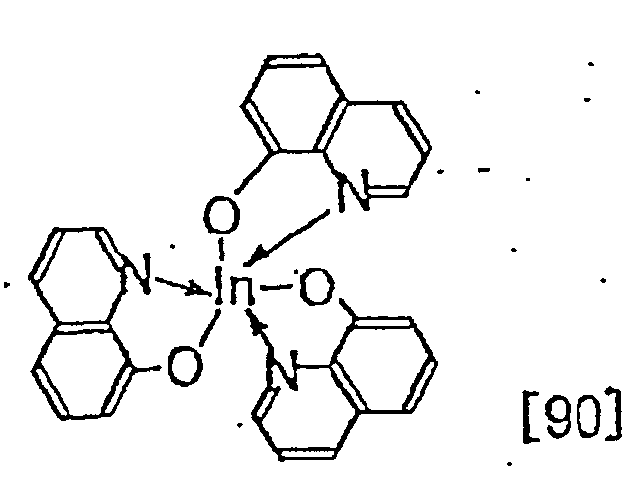
  • Typical examples of the compound represented by formula [82] include the following compounds represented by [85] to [90].
  • a light-emitting zone which is doped with metal having a smaller work function to make the zone electron-injectable can be used.
  • the doping metal specific examples including lithium, magnesium and aluminum, which may constitute the cathode, are preferably employed.
  • the anode of the organic EL device plays the role of injecting holes into the light-emitting zone or the hole-injecting zone, and it is effective that the anode has a work function of 4.5 eV or more.
  • Typical applicable examples of an anode material which can be used in the present invention include indium tin oxide alloy (ITO), tin oxide (NESA), gold, silver, platinum and copper.
  • a pretreatment method of the anode there can be used a suitable combination of a wet cleaning method, ozone cleaning, an exposure of plasma such as oxygen, ultraviolet light irradiation by an excimer UV lamp, an excimer laser or a deuterium lamp, or the like.
  • the cathode is preferably made of a material having a small work function for the purpose of injecting the electrons into the electron-injecting zone or the light-emitting zone.
  • a material having a small work function for the purpose of injecting the electrons into the electron-injecting zone or the light-emitting zone.
  • typical usable examples of the cathode material include indium, aluminum, magnesium, magnesium-indium alloy, magnesium-aluminum alloy, aluminum-lithium alloy, aluminum-scandium-lithium alloy and magnesium-silver alloy.
  • Each layer of the organic EL device according to the present invention can be fabricated by any method. Conventionally known methods such as vacuum deposition and spin coating can be employed.
  • the organic thin-film layer which is to be used in the organic EL device of the present invention and contains the compounds of the general formula [1] above can be fabricated by a known method such as vacuum deposition, molecular beam epitaxy (MBE) or coating including dipping, spin coating, casting, bar coating or roll coating of a solution of the compounds dissolved in a proper solvent. Especially, the vacuum evaporation method is preferable.
  • each organic layer of the organic EL device of the present invention there is no particular limitation on the thickness of each organic layer of the organic EL device of the present invention.
  • the thickness of layer is too thin, defects such as spin holes tend to occur.
  • the thickness of layer is too thick, on the other hand, a high-applied voltage is required, which decreases the efficiency.
  • the organic layers are therefore preferred to have a thickness within a range of several nm to 1 ⁇ m.
  • FIG. 1 shows a cross-sectional structure of an organic EL device regarding Example 1.
  • the organic EL device regarding this example comprises a glass substrate 1, an anode 2 and a cathode 6 formed on the glass substrate 1, and a light-emitting zone 4 sandwiched between the anode 2 and the cathode 6.
  • ITO was sputtered on a glass substrate to form a film having a sheet resistance of 20 ⁇ / ⁇ as an anode.
  • the ITO-covered substrate was washed with an alkali cleaning fluid, and then with isopropyl alcohol.
  • the cleaned substrate was irradiated with an ultraviolet light of wavelength 172 nm by Xe2 * lamp for three minutes.
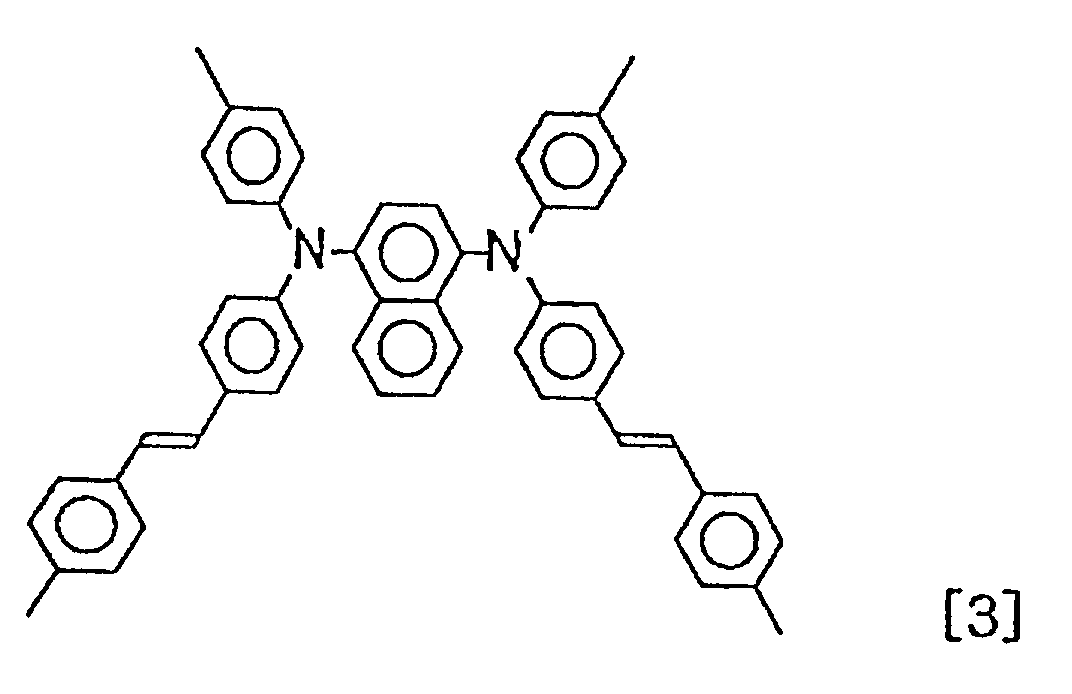
  • a 60 nm thick light-emitting zone was formed by the vacuum deposition of the compound represented by formula [3] whose fluorescent peak position is 470 nm and the compound represented by formula [20] whose fluorescent peak position is 580 nm.
  • a 150 nm thick cathode was formed by the vacuum deposition of magnesium-silver alloy, whereby the organic EL device was fabricated.
  • the emission spectrum includes a peak at 640 nm and a shoulder at about 680 nm, and a reddish-orange light emission of 3100 cd/m2 was obtained.
  • Example 2 The same procedure as in Example 1 was conducted except that a light-emitting zone 4 was formed as thick as 60 nm by a spin coating method using a chloroform solution in which the equal amounts of compounds [3] and [20] were dissolved, thereby preparing an organic EL device.
  • the emission spectrum includes a peak at 637 nm and a shoulder at about 680 nm, and a reddish-orange light emission of 2200 cd/m2 was obtained.
  • Fig. 2 shows a cross-sectional structure of an organic EL device regarding Example 3.
  • the organic EL device regarding this example comprises a glass substrate 1, an anode 2 and a cathode 6 formed on the glass substrate 1, and a light-emitting zone 4 and an electron-injecting zone 5 sandwiched between the anode 2 and the cathode 6.
  • ITO was sputtered on a glass substrate to form a film having a sheet resistance of 20 ⁇ / ⁇ as an anode.
  • the ITO-covered substrate was washed with an alkali cleaning fluid, and then with isopropyl alcohol.
  • the cleaned substrate was irradiated with an ultraviolet light of wavelength 172 nm by Xe2 * lamp for three minutes.
  • a 60 nm thick light-emitting zone was formed by the vacuum deposition of the compound represented by formula [3] whose fluorescent peak position is 470 nm and the compound represented by formula [20] whose fluorescent peak position is 580 nm.
  • Fig. 5 shows an EL spectra at a time when a DC voltage of 10 V was applied to the thus obtained organic EL device, and a fluorescence spectrum of the above compounds represented by formula [3] and [20].
  • the emission spectrum includes a peak at 641 nm and a shoulder at about 680 nm. And these wavelength are different from both the fluorescent peak position of the compounds represented by formula [3] and [20], and a reddish-orange light emission of 5200 cd/m2 was obtained.
  • Example 3 The same procedure as in Example 3 was conducted except that a compound [20] whose fluorescent peak position is 580 nm and a compound [44] whose fluorescent peak position is 368 nm were used to form a light-emitting zone 4, thereby preparing an organic EL device.
  • the emission spectrum includes a peak at 620 nm, and a reddish-orange light emission of 5900 cd/m2 was obtained.
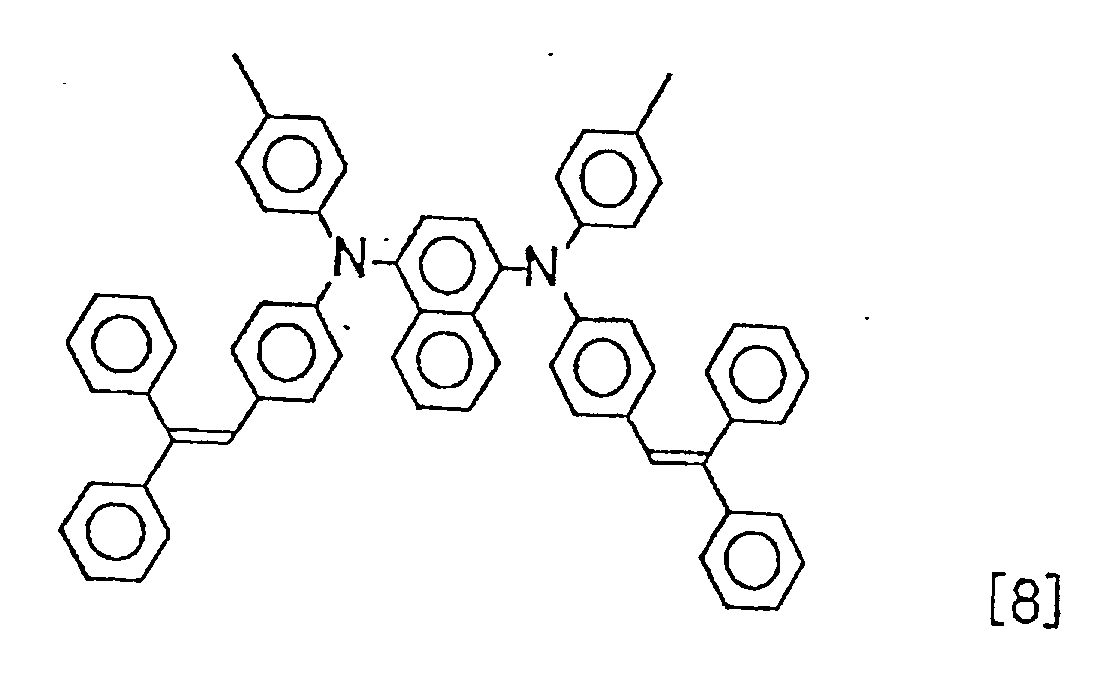
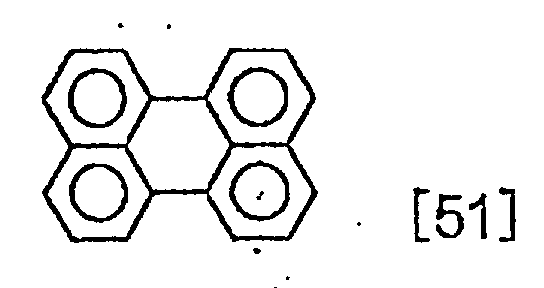
  • Example 3 The same procedure as in Example 3 was conducted except that a compound [8] whose fluorescent peak position is 470 nm and a compound [51] whose fluorescent peak position is 500 nm were used to form a light-emitting zone 4, thereby preparing an organic EL device.
  • the emission spectrum includes a peak at 520 nm and shoulders at about 560 nm and 600 nm, and a yellowish-orange light emission of 13800 cd/m2 was obtained.
  • Example 3 The same procedure as in Example 3 was conducted except that a compound [3] whose fluorescent peak position is 470 nm and a compound [51] whose fluorescent peak position is 500 nm were used to form a light-emitting zone 4, thereby preparing an organic EL device.
  • the emission spectrum includes a peak at 520 nm and shoulders at about 550 nm and 600 nm, and a yellowish-orange light emission of 11500 cd/m2 was obtained.
  • Fig. 4 shows a cross-sectional structure of an organic EL device regarding Example 7.
  • the organic EL device regarding this example comprises a glass substrate 1, an anode 2 and a cathode 6 formed on the glass substrate 1, and a hole-injecting zone 3, a light-emitting zone 4 and an electron-injecting zone 5 sandwiched between the anode 2 and the cathode 6.
  • ITO was sputtered on a glass substrate to form a film having a sheet resistance of 20 ⁇ / ⁇ as an anode.
  • the ITO-covered substrate was washed with an alkali cleaning fluid, and then with isopropyl alcohol.
  • the cleaned substrate was irradiated with an ultraviolet light of wavelength 172 nm by Xe2 * lamp for three minutes.
  • a 25 nm thick hole-injecting zone was formed by the vacuum deposition of compound represented by formula [76].
  • a 60 nm thick light-emitting zone was formed by the vacuum deposition of the compound represented by formula [3] whose fluorescent peak position is 470 nm and the compound represented by formula [20] whose fluorescent peak position is 580 nm.
  • a 25 nm thick electron-injecting zone was formed by the vacuum deposition of compound represented by formula [91].
  • a 150 nm thick cathode was formed by the vacuum deposition of magnesium-silver alloy, whereby the organic EL device was fabricated.
  • the emission spectrum includes a peak at 638 nm and a shoulder at about 680 nm, and a reddish-orange light emission of 3900 cd/m2 was obtained.

Landscapes

  • Physics & Mathematics (AREA)
  • Spectroscopy & Molecular Physics (AREA)
  • Chemical & Material Sciences (AREA)
  • Engineering & Computer Science (AREA)
  • Materials Engineering (AREA)
  • Optics & Photonics (AREA)
  • Electroluminescent Light Sources (AREA)

Abstract

An organic EL device including at least an anode, a cathode and an organic light-emitting zone with high brightness is provided. A mixture containing at least two compounds is used for a light-emitting zone and the spectrum of the luminescence from light-emitting zone includes at least one peak at a wavelength which is different from any one of fluorescent peak positions of the compounds included in light-emitting zone.

Description

BACKGROUND OF THE INVENTION (1) Field of the Invention
The present invention relates to an organic electroluminescence device having excellent luminescence properties.
(2) Description of the Prior Art
An organic electroluminescence device (hereinafter abbreviated to the organic EL device) is a light-emitting device which makes use of the principle that when an electric field is applied, a fluorescent material emits light in response to the charge recombination of holes injected from an anode and electrons injected from a cathode. After C.W. Tang et al. of Eastman Kodak Company reported a low-voltage-driven organic EL device using a double layered structure (C.W. Tang, S.A. Vanslyke, Applied Physics Letters, 51, 913(1987) and the like), studies on an organic EL device have been briskly carried out. Tang et al. reported an organic EL device using tris(8-hydroxyquinolinol aluminum) in an electron-transporting and light-emitting layer and a triphenyldiamine derivative in a hole-transporting layer. This stacked structure gives such advantages as an improvement in the injection efficiency of holes into the light-emitting layer; blocking of electrons injected from a cathode, which increase the efficiency of exciton production from charge recombination; and confinement of the excitons into the light-emitting layer. A double layered structure composed of a hole-injecting and transporting layer and an electron-transporting and light-emitting layer or a triple layered structure composed of a hole-injecting and transporting layer, an electron-transporting and light-emitting layer and an electron-injecting and transporting layer is well known as an organic EL device. In order to increase the recombination efficiency of injected holes and electrons, various improvements in the device structure or fabrication process have been introduced to such multilayered devices.
As a hole-transporting material, triphenylamine derivatives such as 4,4' , 4" -tris(3-methylphenylphenylamino)-triphenylamine and aromatic diamine derivatives such as N,N' -diphenyl-N,N' -bis(3-methylphenyl)-[1,1' -biphenyl]-4,4' -diamine, which are starburst molecules, are well known (e.g., Japanese Patent Application Laid-Open Nos. 20771/1996, 40995/1996, 40997/1996, 543397/1996 and 87122/1996).
As an electron-transporting material, oxadiazole derivatives, triazole derivatives and the like are well known.
As an electron-transporting and light-emitting material, chelate complexes such as tris(8-quinolinolate)aluminum complex are known, and it is also well-known that devices using the mixture of a light-emittingmaterial and a small amount of a fluorescent pigment have an improved efficiency. As these fluorescent pigments, there are known coumarin derivatives, tetraphenylbutadiene derivatives, bisstyrylarylene derivatives, oxadiazole derivatives, porphyrin derivatives, phenoxazoline type pigments, rhodamine type pigments, acridine type pigments and the like. It is reported that various color light in a visible region from blue to red are obtained from these materials, and realization of a full color organic EL device is expected (e.g., Japanese Patent Application Laid-Open Nos. 239655/1996, 138561/1995, 200289/1991 and the like).
Nowadays, the organic EL devices having a high luminance and a long life have been reported, but they are not always sufficient. Therefore, it has been strongly desired to develop the materials having a high performance.
SUMMARY OF THE INVENTION
The present invention has been developed in view of the above-mentioned point, and an object of the present invention is to provide an organic EL device having a high luminance.
The present invention is specified by aspects described in the following paragraphs (1) to (10).
  • (1) An organic electroluminescence device having at least an anode, a light-emitting zone and a cathode, wherein the light-emitting zone comprises a mixture containing at least two compounds, and the spectrum of the luminescence from light-emitting zone includes at least one peak at a wavelength which is different from any one of fluorescent peak positions of the compounds included in light-emitting zone;
  • (2) The organic electroluminescence device according to the above paragraph (1) wherein the spectrum of the luminescence from light-emitting zone includes at least one peak at a wavelength which is longer than any one of fluorescent peak positions of the compounds included in light-emitting zone;
  • (3) The organic electroluminescence device according to the above paragraph (1) or (2) wherein the light-emitting zone comprises a mixture containing at least two electroluminescent materials;
  • (4) The organic electroluminescence device according to the above paragraph (1) or (2) wherein the light-emitting zone comprises a mixture containing at least one electroluminescent material and one fluorescence material;
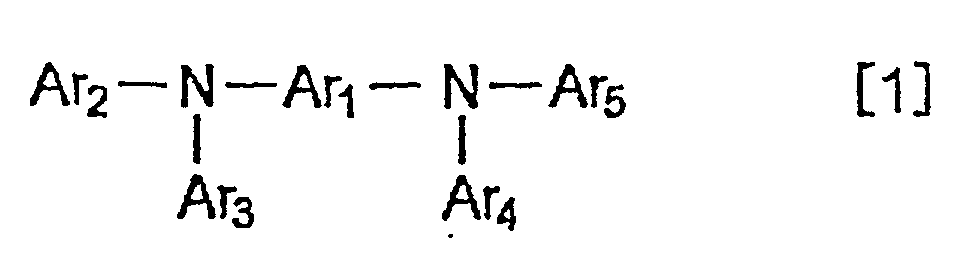
  • (5) The organic electroluminescence device according to any one of the above paragraphs (1) to (4) wherein light-emitting zone comprises a mixture containing at least one electroluminescent material represented by the following formula [1]
    Figure 00050001
    wherein Ar1 designates a substituted or non-substituted arylene group having 5 to 42 carbon atoms, Ar2 to Ar5 designate, independently with one another, a substituted or non-substituted aryl group having 6 to 20 carbon atoms;
  • (6) The organic electroluminescence device according to the above paragraph (5) wherein at least one of Ar2 to Ar5 of the compound represented by the formula [1] has a substituted or non-substituted styryl group as a substituent;
  • (7) The organic electroluminescence device according to any one of the above paragraphs (1), (2) and (4) to (6) wherein the light-emitting zone comprises a mixture containing at least one of fluorescence materials such as a substituted or non-substituted aromatic hydrocarbon, a substituted or non-substituted fused polycyclic hydrocarbon, a substituted or non-substituted heterocyclic compound, and a substituted or non-substituted fused heterocyclic compound;
  • (8) The organic electroluminescence device according to any one of the above paragraphs (1) to (7) wherein the light-emitting zone is adjacent to the anode;
  • (9) The organic electroluminescence device according to any one of the above paragraphs (1) to (7) wherein a hole-injecting zone is present between the anode and the light-emitting zone; and
  • (10) The organic electroluminescence device according to the above paragraph (8) or (9) wherein an electron-injecting zone is present between the cathode and the light-emitting zone.
  • In an organic electroluminescence device regarding the present invention, a mixture containing at least two compounds is used for a light-emitting zone, whereby the spectrum of the luminescence includes at least one peak at a wavelength which is different from neither of fluorescent peak positions of the compounds included in light-emitting zone and the luminescence is obtained with high brightness.
    BRIEF DESCRIPTION OF THE DRAWINGS
    FIG. 1 is a cross-sectional view showing one example of an organic EL device regarding the present invention.
    FIG. 2 is a cross-sectional view showing another example of the organic EL device regarding the present invention.
    FIG. 3 is a cross-sectional view showing still another example of the organic EL device regarding the present invention.
    FIG. 4 is a cross-sectional view showing a further example of the organic EL device regarding the present invention.
    FIG. 5 shows an emission spectrum of the organic EL device regarding the present invention and a fluorescence spectrum of a compound used in a light-emitting zone.
    In FIGS. 1 to 4, numeral 1 is a substrate, 2 is an anode, 3 is a hole-injecting zone, 4 is a light-emitting zone, 5 is an electron-injecting zone, and 6 is a cathode.
    DETAILED DESCRIPTION OF PREFERRED EMBODIMENTS
    Next, the present invention will be described in detail.
    The present invention is directed to an organic EL device in which a mixture containing at least two compounds is used for a light-emitting zone, and it is characterized in that the organic EL device has at least one peak which is different from any one of the spectra of the compounds included in light-emitting zone.
    In a compound of the above-mentioned formula [1] which is used as a electroluminescent material contained in a mixture for forming a light-emitting zone in the present invention, Ar1 designates a substituted or non-substituted arylene group having 5 to 42 carbon atoms. Examples of this arylene group include a naphthylene group, an anthrylene group, a perylenylene group, a 1:2 benzopenylenylene group, a 1:2:7:8 dibenzopenylenylene group, a 1:2:11:12 dibenzopenylenylene group, a terylenylene group, a pentasenylene group, a bisanthrenylene group, a 10,10'-(9,9'-bisanthryl)ylene group, a 4,4'-(1,1'-binaphthyl)ylene, 4,10'-(1,9'-naphthylanthryl)ylene group, a divalent group represented by the formula [2] - Ar6 - Ar7 - Ar8 - wherein Ar6 to Ar8 are each a naphthylene group or an anthrylene group, divalent groups formed by two hydrogen atoms removal from aromatic hydrocarbons or fused polycyclic hydrocarbons such as phenanthrene, pyrene and terphenyl;, or heterocyclic compounds or a fused heterocyclic compounds such as carbazole, pyrrole, thiophene, furan, imidazole, pyrazole, isothiazole, isoxazole, pyridine, pyrazine, pyrimidine, pyridazine, furazane, thianthrene, isobenzofuran phenoxazine, indolizine, indole, isoindole, 1H-indazole, purine, quinoline, isoquinoline, phthalazine, naphthyridine, quinoxaline, quinazoline, cinnoline, pteridine, carbazole, β-carbazoline, phenanthridine, acridine, perimidine, phenanthroline, phenazine, phenothiazine and phenoxazine, and derivatives thereof.
    In the compound of the above-mentioned formula [1], Ar2 to Ar5 are each independently a substituted or non-substituted aryl group having 6 to 20 carbon atoms. Examples of the aryl group having 6 to 20 carbon atoms include a phenyl group, a naphthyl group, an anthryl group, a phenanthryl group, a naphthacenyl group, a pyrenyl group, and derivatives thereof.
    As the fluorescence material contained in the mixture for forming the light-emitting zone in the present invention, there is used a substituted or non-substituted aromatic hydrocarbon, a substituted or non-substituted fused polycyclic hydrocarbon, a substituted or non-substituted heterocyclic compound, a substituted or non-substituted fused heterocyclic compound, or the like.
    Examples of the aromatic hydrocarbon and the fused polycyclic hydrocarbon mentioned above include benzene, naphthalene, anthracene, phenanthrene, naphthacene, pentacene, pyrene, chrysene, picene, perylene, terphenyl, and derivatives thereof.
    Examples of the heterocyclic compound and the fused heterocyclic compound mentioned above include pyrrole, thiophene, furan, pyran, 4H-pyran, xanthene, imidazole, pyrazole, 3a,6a-diazapentalene, isothiazole, isoxazole, oxazole, oxadiazole, triazole, coumarin, isocoumarin, pyridine, pyrazine, pyrimidine, pyridazine, furazane, thianthrene, isobenzofuran, indolizine, indole, isoindole, 1H-indazole, purine, quinoline, isoquinoline, quinolone, acridone, phthalazine, naphthyridine, quinoxaline, quinazoline, cinnoline, pteridine, carbazole, β-carbazoline, phenanthridine, acridine, perimidine, phenanthroline, phenazine, phenothiazine, phenoxazine, phenoxazone, and derivatives thereof.
    Examples of a substituent which each of Ar1 to Ar8, the aromatic hydrocarbon, the fused polycyclic hydrocarbon, the heterocyclic compound or the fused heterocyclic compound include a halogen atom, a hydroxyl group, a substituted or non-substituted amino group, a nitro group, a cyano group, a substituted or non-substituted alkyl group, a substituted or non-substituted alkenyl group, a substituted or non-substituted cycloalkyl group, a substituted or non-substituted alkoxy group, a substituted or non-substituted aromatic hydrocarbon, a substituted or non-substituted aromatic heterocyclic group, a substituted or non-substituted aralkyl group, a substituted or non-substituted aryloxy group, a substituted or non-substituted alkoxycarbonyl group, and a carboxyl group.
    Two of the substituents of Ar1 to Ar5, the aromatic hydrocarbon, the fused polycyclic hydrocarbon, the heterocyclic compound and the fused heterocyclic compound may form a ring, and two of the substituents which each aryl group of Ar6 to Ar8 has may form a ring.
    Examples of the halogen atom mentioned above include fluorine, chlorine, bromine and iodine.
    The substituted or non-substituted amino group mentioned above can be represented by -NX1X2, and examples of X1 and X2 include, each independently, a hydrogen atom, methyl group, ethyl group, propyl group, isopropyl group, n-butyl group, s-butyl group, isobutyl group, t-butyl group, n-pentyl group, n-hexyl group, n-heptyl group, n-octyl group, hydroxymethyl group, 1-hydroxyethyl group, 2-hydroxyethyl group, 2-hydroxyisobutyl group, 1,2-dihydroxyethyl group, 1,3-dihydroxyisopropyl group, 2,3-dihydroxy-t-butyl group, 1,2,3-trihydroxypropyl group, chloromethyl group, 1-chloroethyl group, 2-chloroethyl group, 2-chloroisobutyl group, 1,2-dichloroethyl group, 1,3-dichloroisopropyl group, 2,3-dichloro-t-butyl group, 1,2,3-trichloropropyl group, bromomethyl group, 1-bromoethyl group, 2-bromoethyl group, 2-bromoisobutyl group, 1,2-dibromoethyl group, 1,3-dibromoisopropyl group, 2,3-dibromo-t-butyl group, 1,2,3-tribromopropyl group, iodomethyl group, 1-iodoethyl group, 2-iodoethyl group, 2-iodoisobutyl group, 1,2-diiodoethyl group, 1,3-diiodopropyl group, 2,3-diiodo-t-butyl group, 1,2,3-triiodopropyl group, aminomethyl group, 1-aminoethyl group, 2-aminoethyl group, 2-aminoisobutyl group, 1,2-diaminoethyl group, 1,3-diaminoisopropyl group, 2,3-diamino-t-butyl group, 1,2,3-triaminopropyl group, cyanomethyl group 1-cyanoethyl group, 2-cyanoethyl group, 2-cyanoisobutyl group, 1,2-dicyanoethyl group, 1,3-dicyanoisopropyl group, 2,3-dicyano-t-butyl group, 1,2,3-tricyanopropyl group, nitromethyl group, 1-nitroethyl group, 2-nitroethyl group, 2-nitroisobutyl group, 1,2-dinitroethyl group, 1,3-dinitroisopropyl group, 2,3-dinitro-t-butyl group, 1,2,3-trinitropropyl group, phenyl group, 1-naphthyl group, 2-naphthyl group, 1-anthryl group, 2-anthryl group, 9-anthryl group, 1-phenanthryl group, 2-phenanthryl group, 3-phenanthryl group, 4-phenanthryl group, 9-phenanthryl group, 1-naphthacenyl group, 2-naphthacenyl group, 9-naphthacenyl group, 4-styrylphenyl group, 1-pyrenyl group, 2-pyrenyl group, 4-pyrenyl group, 2-biphenylyl group, 3-biphenylyl group, 4-biphenylyl group, p-terphenyl-4-yl group, p-terphenyl-3-yl group, p-terphenyl-2-yl group, m-terphenyl-4-yl group, m-terphenyl-3-yl group, m-terphenyl-2-yl group, o-tolyl group, m-tolyl group, p-tolyl group, p-t-butylphenyl group, p-(2-phenylpropyl)phenyl group, 3-methyl-2-naphthyl group, 4-methyl-1-naphthyl group, 4-methyl-1-anthryl group, 4'-methylbiphenylyl group, 4"-t-butyl-p-terphenyl-4-yl group, 2-pyrrolyl group, 3-pyrrolyl group, pyrazinyl group, 2-pyridinyl group, 3-pyridinyl group, 4-pyridinyl group, 2-indolyl group, 3-indolyl group, 4-indolyl group, 5-indolyl group, 6-indolyl group, 7-indolyl group, 1-isoindolyl group, 3-isoindolyl group, 4-isoindolyl group, 5-isoindolyl group, 6-isoindolyl group, 7-isoindolyl group, 2-furyl group, 3-furyl group, 2-benzofuranyl group, 3-benzofuranyl group, 4-benzofuranyl group, 5-benzofuranyl group, 6-benzofuranyl group, 7-benzofuranyl group, 1-isobenzofuranyl group, 3-isobenzofuranyl group, 4-isobenzofuranyl group, 5-isobenzofuranyl group, 6-isobenzofuranyl group, 7-isobenzofuranyl group, 2-quinolyl group, 3-quinolyl group, 4-quinolyl group, 5-quinolyl group, 6-quinolyl group, 7-quinolyl group, 8-quinolyl group, 1-isoquinolyl group, 3-isoquinolyl group, 4-isoquinolyl group, 5-isoquinolyl group, 6-isoquinolyl group, 7-isoquinolyl group, 8-isoquinolyl group, 2-quinoxalinyl group, 5-quinoxalinyl group, 6-quinoxalinyl group, 1-carbazolyl group, 2-carbazolyl group, 3-carbazolyl group, 4-carbazolyl group, 1-phenanthridinyl group, 2-phenanthridinyl group, 3-phenanthridinyl group, 4-phenanthridinyl group, 6-phenanthridinyl group, 7-phenanthridinyl group, 8-phenanthridinyl group, 9-phenanthridinyl group, 10-phenanthridinyl group, 1-acridinyl group, 2-acridinyl group, 3-acridinyl group, 4-acridinyl group, 9-acridinyl group, 1,7-phenanthrolin-2-yl group, 1,7-phenanthrolin-3-yl group, 1,7-phenanthrolin-4-yl group, 1,7-phenanthrolin-5-yl group, 1,7-phenanthrolin-6-yl group, 1,7-phenanthrolin-8-yl group, 1,7-phenanthrolin-9-yl group, 1,7-phenanthrolin-10-yl group, 1,8-phenanthrolin-2-yl group, 1,8-phenanthrolin-3-yl group, 1,8-phenanthrolin-4-yl group, 1,8-phenanthrolin-5-yl group, 1,8-phenanthrolin-6-yl group, 1,8-phenanthrolin-7-yl group, 1,8-phenanthrolin-9-yl group, 1,8-phenanthrolin-10-yl group, 1,9-phenanthrolin-2-yl group, 1,9-phenanthrolin-3-yl group, 1,9-phenanthrolin-4-yl group, 1,9-phenanthrolin-5-yl group, 1,9-phenanthrolin-6-yl group, 1,9-phenanthrolin-7-yl group, 1,9-phenanthrolin-8-yl group, 1,9-phenanthrolin-10-yl group, 1,10-phenanthrolin-2-yl group, 1,10-phenanthrolin-3-yl group, 1,10-phenanthrolin-4-yl group, 1,10-phenanthrolin-5-yl group, 2,9-phenanthrolin-1-yl group, 2,9-phenanthrolin-3-yl group, 2,9-phenanthrolin-4-yl group, 2,9-phenanthrolin-5-yl group, 2,9-phenanthrolin-6-yl group, 2,9-phenanthrolin-7-yl group, 2,9-phenanthrolin-8-yl group, 2,9-phenanthrolin-10-yl group, 2,8-phenanthrolin-1-yl group, 2,8-phenanthrolin-3-yl group, 2,8-phenanthrolin-4-yl group, 2,8-phenanthrolin-5-yl group, 2,8-phenanthrolin-6-yl group, 2,8-phenanthrolin-7-yl group, 2,8-phenanthrolin-9-yl group, 2,8-phenanthrolin-10-yl group, 2,7-phenanthrolin-1-yl group, 2,7-phenanthrolin-3-yl group, 2,7-phenanthrolin-4-yl group, 2,7-phenanthrolin-5-yl group, 2,7-phenanthrolin-6-yl group, 2,7-phenanthrolin-8-yl group, 2,7-phenanthrolin-9-yl group, 2,7-phenanthrolin-10-yl group, 1-phenazinyl group, 2-phenazinyl group, 1-phenothiazinyl group, 2-phenothiazinyl group, 3-phenothiazinyl group, 4-phenothiazinyl group, 1-phenoxazinyl group, 2-phenoxazinyl group, 3-phenoxazinyl group, 4-phenoxazinyl group, 2-oxazolyl group, 4-oxazolyl group, 5-oxazolyl group, 2-oxadiazolyl group, 5-oxadiazolyl group, 3-furazanyl group, 2-thienyl group, 3-thienyl group, 2-methylpyrrhol-1-yl group, 2-methylpyrrhol-3-yl group, 2-methylpyrrhol-4-yl group, 2-methylpyrrhol-5-yl group, 3-methylpyrrhol-1-yl group, 3-methylpyrrhol-2-yl group, 3-methylpyrrhol-4-yl group, 3-methylpyrrhol-5-yl group, 2-t-butylpyrrhol-4-yl group, 3-(2-phenylpropyl)pyrrhol-1-yl group, 2-methyl-1-indolyl group, 4-methyl-1-indolyl group, 2-methyl-3-indolyl group, 4-methyl-3-indolyl group, 2-t-butyl-l-indolyl group, 4-t-butyl-1-indolyl group, 2-t-butyl-3-indolyl group and 4-t-butyl-3-indolyl group.
    Examples of the substituted or non-substituted alkyl group mentioned above include a methyl group, ethyl group, propyl group, isopropyl group, n-butyl group, s-butyl group, isobutyl group, t-butyl group, n-pentyl group, n-hexyl group, n-heptyl group, n-octyl group, hydroxymethyl group, 1-hydroxyethyl group, 2-hydroxyethyl group, 2-hydroxyisobutyl group, 1,2-dihydroxyethyl group, 1,3-dihydroxyisopropyl group, 2,3-dihydroxy-t-butyl group, 1,2,3-trihydroxypropyl group, chloromethyl group, 1-chloroethyl group, 2-chloroethyl group, 2-chloroisobutyl group, 1,2-dichloroethyl group, 1,3-dichloroisopropyl group, 2,3-dichloro-t-butyl group, 1,2,3-trichloropropyl group, bromomethyl group, 1-bromoethyl group, 2-bromoethyl group, 2-bromoisobutyl group, 1,2-dibromoethyl group, 1,3-dibromoisopropyl group, 2,3-dibromo-t-butyl group, 1,2,3-tribromopropyl group, iodomethyl group, 1-iodoethyl group, 2-iodoethyl group, 2-iodoisobutyl group, 1,2-diiodoethyl group, 1,3-diiodopropyl group, 2,3-diiodo-t-butyl group, 1,2,3-triiodopropyl group, aminomethyl group, 1-aminoethyl group, 2-aminoethyl group, 2-aminoisobutyl group, 1,2-diaminoethyl group, 1,3-diaminoisopropyl group, 2,3-diamino-t-butyl group, 1,2,3-triaminopropyl group, cyanomethyl group, 1-cyanoethyl group, 2-cyanoethyl group, 2-cyanoisobutyl group, 1,2-dicyanoethyl group, 1,3-dicyanoisopropyl group, 2,3-dicyano-t-butyl group, 1,2,3-tricyanopropyl group, nitromethyl group, 1-nitroethyl group, 2-nitroethyl group, 2-nitroisobutyl group, 1,2-dinitroethyl group, 1,3-dinitroisopropyl group, 2,3-dinitro-t-butyl group and 1,2,3-trinitropropyl group.
    Examples of the substituted or non-substituted alkenyl group mentioned above include a vinyl group, allyl group, 1-butenyl group, 2-butenyl group, 3-butenyl group, 1,3-butanedienyl group, 1-methylvinyl group, styryl group, 4-diphenylaminostyryl group, 4-di-p-tolylaminostyryl group, 4-di-m-tolylaminostyryl group, 2,2-diphenylvinyl group, 1,2-diphenylvinyl group, 1-methylallyl group, 1,1-dimethylallyl group, 2-methylallyl group, 1-phenylallyl group, 2-phenylallyl group, 3-phenylallyl group, 3,3-diphenylallyl group, 1,2-dimethylallyl group, 1-phenyl-1-butenyl group and 3-phenyl-1-butenyl group.
    Examples of the substituted or non-substituted cycloalkyl group mentioned above include a cyclopropyl group, cyclobutyl group, cyclopentyl group, cyclohexyl group and 4-methylcyclohexyl grouop.
    The substituted or non-substituted alkoxy group is a group represented by -OY, and examples of Y include a methyl group, ethyl group, propyl group, isopropyl group, n-butyl group, s-butyl group, isobutyl group, t-butyl group, n-pentyl group, n-hexyl group, n-heptyl group, n-octyl group, hydroxymethyl group, 1-hydroxyethyl group, 2-hydroxyethyl group, 2-hydroxyisobutyl group, 1,2-dihydroxyethyl group, 1,3-dihydroxyisopropyl group, 2,3-dihydroxy-t-butyl group, 1,2,3-trihydroxypropyl group, chloromethyl group, 1-chloroethyl group, 2-chloroethyl group, 2-chloroisobutyl group, 1,2-dichloroethyl group, 1,3-dichloroisopropyl group, 2,3-dichloro-t-butyl group, 1,2,3-trichloropropyl group, bromomethyl group, 1-bromoethyl group, 2-bromoethyl group, 2-bromoisobutyl group, 1,2-dibromoethyl group, 1,3-dibromoisopropyl group, 2,3-dibromo-t-butyl group, 1,2,3-tribromopropyl group, iodomethyl group, 1-iodoethyl group, 2-iodoethyl group, 2-iodoisobutyl group, 1,2-diiodoethyl group, 1,3-diiodopropyl group, 2,3-diiodo-t-butyl group, 1,2,3-triiodopropyl group, aminomethyl group, 1-aminoethyl group, 2-aminoethyl group, 2-aminoisobutyl group, 1,2-diaminoethyl group, 1,3-diaminoisopropyl group, 2,3-diamino-t-butyl group, 1,2,3-triaminopropyl group, cyanomethyl group, 1-cyanoethyl group, 2-cyanoethyl group, 2-cyanoisobutyl group, 1,2-dicyanoethyl group, 1,3-dicyanoisopropyl group, 2,3-dicyano-t-butyl group, 1,2,3-tricyanopropyl group, nitromethyl group, 1-nitroethyl group, 2-nitroethyl group, 2-nitroisobutyl group, 1,2-dinitroethyl group, 1,3-dinitroisopropyl group, 2,3-dinitro-t-butyl group and 1,2,3-trinitropropyl group.
    Examples of the substituted or non-substituted aromatic hydrocarbon mentioned above include a phenyl group, 1-naphthyl group, 2-naphthyl group, 9-fluorenyl group, 1-anthryl group, 2-anthryl group, 9-anthryl group, 1-phenanthryl group, 2-phenanthryl group, 3-phenanthryl group, 4-phenanthryl group, 9-phenanthryl group, 1-naphthacenyl group, 2-naphthacenyl group, 9-naphthacenyl group, 1-pyrenyl group, 2-pyrenyl group, 4-pyrenyl group, 2-biphenylyl group, 3-biphenylyl group, 4-biphenylyl group, p-terphenyl-4-yl group, p-terphenyl-3-yl group, p-terphenyl-2-yl group, m-terphenyl-4-yl group, m-terphenyl-3-yl group, m-terphenyl-2-yl group, o-tolyl group, m-tolyl group, p-tolyl group, p-t-butylphenyl group, p-(2-phenylpropyl)phenyl group, 3-methyl-2-naphthyl group, 4-methyl-1-naphthyl group, 4-methyl-1-anthryl group, 4'-methylbiphenylyl group and 4"-t-butyl-p-terphenyl-4-yl group.
    Examples of the substituted or non-substituted aromatic heterocyclic group mentioned above include a 1-pyrrolyl group, 2-pyrrolyl group, 3-pyrrolyl group, pyrazinyl group, 2-pyridinyl group, 3-pyridinyl group, 4-pyridinyl group, 1-indolyl group, 2-indolyl group, 3-indolyl group, 4-indolyl group, 5-indolyl group, 6-indolyl group, 7-indolyl group, 1-isoindolyl group, 2-isoindolyl group, 3-isoindolyl group, 4-isoindolyl group, 5-isoindolyl group, 6-isoindolyl group, 7-isoindolyl group, 2-furyl group, 3-furyl group, 2-benzofuranyl group, 3-benzofuranyl group, 4-benzofuranyl group, 5-benzofuranyl group, 6-benzofuranyl group, 7-benzofuranyl group, 1-isobenzofuranyl group, 3-isobenzofuranyl group, 4-isobenzofuranyl group, 5-isobenzofuranyl group, 6-isobenzofuranyl group, 7-isobenzofuranyl group, 2-quinolyl group, 3-quinolyl group, 4-quinolyl group, 5-quinolyl group, 6-quinolyl group, 7-quinolyl group, 8-quinolyl group, 1-isoquinolyl group, 3-isoquinolyl group, 4-isoquinolyl group, 5-isoquinolyl group, 6-isoquinolyl group, 7-isoquinolyl group, 8-isoquinolyl group, 2-quinoxalinyl group, 5-quinoxalinyl group, 6-quinoxalinyl group, 1-carbazolyl group, 2-carbazolyl group, 3-carbazolyl group, 4-carbazolyl group, 9-carbazolyl group, 1-phenanthridinyl group, 2-phenanthridinyl group, 3-phenanthridinyl group, 4-phenanthridinyl group, 6-phenanthridinyl group, 7-phenanthridinyl group, 8-phenanthridinyl group, 9-phenanthridinyl group, 10-phenanthridinyl group, 1-acridinyl group, 2-acridinyl group, 3-acridinyl group, 4-acridinyl group, 9-acridinyl group, 1,7-phenanthrolin-2-yl group, 1,7-phenanthrolin-3-yl group, 1,7-phenanthrolin-4-yl group, 1,7-phenanthrolin-5-yl group, 1,7-phenanthrolin-6-yl group, 1,7-phenanthrolin-8-yl group, 1,7-phenanthrolin-9-yl group, 1,7-phenanthrolin-10-yl group, 1,8-phenanthrolin-2-yl group, 1,8-phenanthrolin-3-yl group, 1,8-phenanthrolin-4-yl group, 1,8-phenanthrolin-5-yl group, 1,8-phenanthrolin-6-yl group, 1,8-phenanthrolin-7-yl group, 1,8-phenanthrolin-9-yl group, 1,8-phenanthrolin-10-yl group, 1,9-phenanthrolin-2-yl group, 1,9-phenanthrolin-3-yl group, 1,9-phenanthrolin-4-yl group, 1,9-phenanthrolin-5-yl group, 1,9-phenanthrolin-6-yl group, 1,9-phenanthrolin-7-yl group, 1,9-phenanthrolin-8-yl group, 1,9-phenanthrolin-10-yl group, 1,10-phenanthrolin-2-yl group, 1,10-phenanthrolin-3-yl group, 1,10-phenanthrolin-4-yl group, 1,10-phenanthrolin-5-yl group, 2,9-phenanthrolin-1-yl group, 2,9-phenanthrolin-3-yl group, 2,9-phenanthrolin-4-yl group, 2,9-phenanthrolin-5-yl group, 2,9-phenanthrolin-6-yl group, 2,9-phenanthrolin-7-yl group, 2,9-phenanthrolin-8-yl group, 2,9-phenanthrolin-10-yl group, 2,8-phenanthrolin-1-yl group, 2,8-phenanthrolin-3-yl group, 2,8-phenanthrolin-4-yl group, 2,8-phenanthrolin-5-yl group, 2,8-phenanthrolin-6-yl group, 2,8-phenanthrolin-7-yl group, 2,8-phenanthrolin-9-yl group, 2,8-phenanthrolin-10-yl group, 2,7-phenanthrolin-1-yl group, 2,7-phenanthrolin-3-yl group, 2,7-phenanthrolin-4-yl group, 2,7-phenanthrolin-5-yl group, 2,7-phenanthrolin-6-yl group, 2,7-phenanthrolin-8-yl group, 2,7-phenanthrolin-9-yl group, 2,7-phenanthrolin-10-yl group, 1-phenazinyl group, 2-phenazinyl group, 1-phenothiazinyl group, 2-phenothiazinyl group, 3-phenothiazinyl group, 4-phenothiazinyl group, 10-phenothiazinyl group, 1-phenoxazinyl group, 2-phenoxazinyl group, 3-phenoxazinyl group, 4-phenoxazinyl group, 10-phenoxazinyl group, 2-oxazolyl group, 4-oxazolyl group, 5-oxazolyl group, 2-oxadiazolyl group, 5-oxadiazolyl group, 3-furazanyl group, 2-thienyl group, 3-thienyl group, 2-methylpyrrhol-1-yl group 2-methylpyrrhol-3-yl group, 2-methylpyrrhol-4-yl group, 2-methylpyrrhol-5-yl group, 3-methylpyrrhol-1-yl group, 3-methylpyrrhol-2-yl group, 3-methylpyrrhol-4-yl group, 3-methylpyrrhol-5-yl group, 2-t-butylpyrrhol-4-yl group, 3-(2-phenylpropyl)pyrrhol-1-yl group, 2-methyl-1-indolyl group, 4-methyl-1-indolyl group, 2-methyl-3-indolyl group, 4-methyl-3-indolyl group, 2-t-butyl-1-indolyl group, 4-t-butyl-1-indolyl group, 2-t-butyl-3-indolyl group and 4-t-butyl-3-indolyl group.
    Examples of the substituted or non-substituted aralkyl group mentioned above include a benzyl group, 1-phenylethyl group, 2-phenylethyl group, 1-phenylisopropyl group, 2-phenylisopropyl group, phenyl-t-butyl group, α-naphthylmethyl group, 1-α-naphthylethyl group, 2-α-naphthylethyl group, 1-α-naphthylisopropyl group, 2-α-naphthylisopropyl group, β-naphthylmethyl group, 1-β-naphthylethyl group, 2-β-naphthylethyl group, 1-β-naphthylisopropyl group, 2-β-naphthylisopropyl group, 1-pyrrolylmethyl group, 2-(1-pyrrolyl)ethyl group, p-methylbenzyl group, m-methylbenzyl group, o-methylbenzyl group, p-chlorobenzyl group, m-chlorobenzyl group, o-chlorobenzyl group, p-bromobenzyl group, m-bromobenzyl group o-bromobenzyl group, p-iodobenzyl group, m-iodobenzyl group, o-iodobenzyl group, p-hydroxybenzyl group, m-hydroxybenzyl group, o-hydroxybenzyl group, p-aminobenzyl group, m-aminobenzyl group, o-aminobenzyl group, p-nitrobenzyl group, m-nitrobenzyl group, o-nitrobenzyl group, p-cyanobenzyl group, m-cyanobenzyl group, o-cyanobenzyl group, 1-hydroxy-2-phenylisopropyl group and 1-chloro-2-phenylisopropyl group
    The substituted or non-substituted aryloxy group mentioned above can be represented by -OZ, and examples of Z include a phenyl group, 1-naphthyl group, 2-naphthyl group, 1-anthryl group, 2-anthryl group, 9-anthryl group, 1-phenanthryl group, 2-phenanthryl group, 3-phenanthryl group, 4-phenanthryl group, 9-phenanthryl group, 1-naphthacenyl group, 2-naphthacenyl group, 9-naphthacenyl group, 1-pyrenyl group, 2-pyrenyl group, 4-pyrenyl group, 2-biphenylyl group, 3-biphenylyl group, 4-biphenylyl group, p-terphenyl-4-yl group, p-terphenyl-3-yl group, p-terphenyl-2-yl group, m-terphenyl-4-yl group, m-terphenyl-3-yl group, m-terphenyl-2-yl group, o-tolyl group, m-tolyl group, p-tolyl group, p-t-butylphenyl group, p-(2-phenylpropyl)phenyl group, 3-methyl-2-naphthyl group, 4-methyl-1-naphthyl group, 4-methyl-1-anthryl group, 4'-methylbiphenylyl group, 4"-t-butyl-p-terphenyl-4-yl group, 2-pyrrolyl group, 3-pyrrolyl group, pyrazinyl group, 2-pyridinyl group, 3-pyridinyl group, 4-pyridinyl group, 2-indolyl group, 3-indolyl group, 4-indolyl group, 5-indolyl group, 6-indolyl group, 7-indolyl group, 1-isoindolyl group, 3-isoindolyl group, 4-isoindolyl group, 5-isoindolyl group, 6-isoindolyl group, 7-isoindolyl group, 2-furyl group, 3-furyl group, 2-benzofuranyl group, 3-benzofuranyl group, 4-benzofuranyl group, 5-benzofuranyl group, 6-benzofuranyl group, 7-benzofuranyl group, 1-isobenzofuranyl group, 3-isobenzofuranyl group, 4-isobenzofuranyl group, 5-isobenzofuranyl group, 6-isobenzofuranyl group, 7-isobenzofuranyl group, 2-quinolyl group, 3-quinolyl group, 4-quinolyl group, 5-quinolyl group, 6-quinolyl group, 7-quinolyl group, 8-quinolyl group, 1-isoquinolyl group, 3-isoquinolyl group, 4-isoquinolyl group, 5-isoquinolyl group, 6-isoquinolyl group, 7-isoquinolyl group, 8-isoquinolyl group, 2-quinoxalinyl group, 5-quinoxalinyl group, 6-quinoxalinyl group, 1-carbazolyl grou] 2-carbazolyl group, 3-carbazolyl group, 4-carbazolyl group, 1-phenanthridinyl group, 2-phenanthridinyl group, 3-phenanthridinyl group, 4-phenanthridinyl group, 6-phenanthridinyl group, 7-phenanthridinyl group, 8-phenanthridinyl group, 9-phenanthridinyl group, 10-phenanthridinyl group, 1-acridinyl group, 2-acridinyl group, 3-acridinyl group, 4-acridinyl group, 9-acridinyl group, 1,7-phenanthrolin-2-yl group, 1,7-phenanthrolin-3-yl group, 1,7-phenanthrolin-4-yl group, 1,7-phenanthrolin-5-yl group, 1,7-phenanthrolin-6-yl group, 1,7-phenanthrolin-8-yl group, 1,7-phenanthrolin-9-yl group, 1,7-phenanthrolin-10-yl group, 1,8-phenanthrolin-2-yl group, 1,8-phenanthrolin-3-yl group, 1,8-phenanthrolin-4-yl group, 1,8-phenanthrolin-5-yl group, 1,8-phenanthrolin-6-yl group, 1,8-phenanthrolin-7-yl group, 1,8-phenanthrolin-9-yl group, 1,8-phenanthrolin-10-yl group, 1,9-phenanthrolin-2-yl group, 1,9-phenanthrolin-3-yl group, 1,9-phenanthrolin-4-yl group, 1,9-phenanthrolin-5-yl group, 1,9-phenanthrolin-6-yl group, 1,9-phenanthrolin-7-yl group, 1,9-phenanthrolin-8-yl group, 1,9-phenanthrolin-10-yl group, 1,10-phenanthrolin-2-yl group, 1,10-phenanthrolin-3-yl group, 1,10-phenanthrolin-4-yl group, 1,10-phenanthrolin-5-yl group, 2,9-phenanthrolin-1-yl group, 2,9-phenanthrolin-3-yl group, 2,9-phenanthrolin-4-yl group, 2,9-phenanthrolin-5-yl group, 2,9-phenanthrolin-6-yl group, 2,9-phenanthrolin-7-yl group, 2,9-phenanthrolin-8-yl group, 2,9-phenanthrolin-10-yl group, 2,8-phenanthrolin-1-yl group, 2,8-phenanthrolin-3-yl group, 2,8-phenanthrolin-4-yl group, 2,8-phenanthrolin-5-yl group, 2,8-phenanthrolin-6-yl group, 2,8-phenanthrolin-7-yl group, 2,8-phenanthrolin-9-yl group, 2,8-phenanthrolin-10-yl group, 2,7-phenanthrolin-1-yl group, 2,7-phenanthrolin-3-yl group, 2,7-phenanthrolin-4-yl group, 2,7-phenanthrolin-5-yl group, 2,7-phenanthrolin-6-yl group, 2,7-phenanthrolin-8-yl group, 2,7-phenanthrolin-9-yl group, 2,7-phenanthrolin-10-yl group, 1-phenazinyl group, 2-phenazinyl group, 1-phenothiazinyl group, 2-phenothiazinyl group, 3-phenothiazinyl group, 4-phenothiazinyl group, 1-phenoxazinyl group, 2-phenoxazinyl group, 3-phenoxazinyl group, 4-phenoxazinyl group, 2-oxazolyl group, 4-oxazolyl group, 5-oxazolyl group, 2-oxadiazolyl group, 5-oxadiazolyl group, 3-furazanyl group, 2-thienyl group, 3-thienyl group, 2-methylpyrrhol-1-yl group, 2-methylpyrrhol-3-yl group, 2-methylpyrrhol-4-yl group, 2-methylpyrrhol-5-yl group, 3-methylpyrrhol-1-yl group, 3-methylpyrrhol-2-yl group, 3-methylpyrrhol-4-yl group, 3-methylpyrrhol-5-yl group, 2-t-butylpyrrhol-4-yl group, 3-(2-phenylpropyl)pyrrhol-1-yl group, 2-methyl-1-indolyl group, 4-methyl-1-indolyl group, 2-methyl-3-indolyl group, 4-methyl-3-indolyl group, 2-t-butyl-1-indolyl group, 4-t-butyl-1-indolyl group, 2-t-butyl-3-indolyl group and 4-t-butyl-3-indolyl group.
    The substituted or non-substituted alkoxycarbonyl group mentioned above can be represented by -COOY, and examples of Y include a methyl group, ethyl group, propyl group, isopropyl group, n-butyl group, s-butyl group, isobutyl group, t-butyl group, n-pentyl group, n-hexyl group n-heptyl group, n-octyl group, hydroxymethyl group, 1-hydroxyethyl group, 2-hydroxyethyl group, 2-hydroxyisobutyl group, 1,2-dihydroxyethyl group, 1,3-dihydroxyisopropyl group, 2,3-dihydroxy-t-butyl group, 1,2,3-trihydroxypropyl group, chloromethyl group, 1-chloroethyl group, 2-chloroethyl group, 2-chloroisobutyl group, 1,2-dichloroethyl group, 1,3-dichloroisopropyl group, 2,3-dichloro-t-butyl group, 1,2,3-trichloropropyl group, bromomethyl group, 1-bromoethyl group, 2-bromoethyl group, 2-bromoisobutyl group, 1,2-dibromoethyl group, 1,3-dibromoisopropyl group, 2,3-dibromo-t-butyl group, 1,2,3-tribromopropyl group, iodomethyl group, 1-iodoethyl group, 2-iodoethyl group, 2-iodoisobutyl group, 1,2-diiodoethyl group, 1,3-diiodopropyl group, 2,3-diiodo-t-butyl group, 1,2,3-triiodopropyl group, aminomethyl group, 1-aminoethyl group, 2-aminoethyl group, 2-aminoisobutyl group, 1,2-diaminoethyl group, 1,3-diaminoisopropyl group, 2,3-diamino-t-butyl group, 1,2,3-triaminopropyl group, cyanomethyl group, 1-cyanoethyl group, 2-cyanoethyl group, 2-cyanoisobutyl group, 1,2-dicyanoethyl group, 1,3-dicyanoisopropyl group, 2,3-dicyano-t-butyl group, 1,2,3-tricyanopropyl group, nitromethyl group, 1-nitroethyl group, 2-nitroethyl group, 2-nitroisobutyl group, 1,2-dinitroethyl group, 1,3-dinitroisopropyl group, 2,3-dinitro-t-butyl group and 1,2,3-trinitropropyl group.
    Furthermore, examples of the substituted or non-substituted styryl group which at least one of Ar2 to Ar5 has as a substituent include non-substituted styryl group and a 2,2-diphenylvinyl group. In addition, the substituted styryl group can be employed having, as a substituent on the terminal phenyl group, a halogen atom, a hydroxyl group, the substituted and non-substituted amino groups, a nitro group, a cyano group, the above substituted and non-substituted alkyl groups, the above substituted and non-substituted alkenyl groups, the above substituted and non-substituted cycloalkyl groups, the above substituted and non-substituted alkoxy groups, the above substituted and non-substituted aromatic hydrocarbons, the above substituted and non-substituted aromatic heterocyclic groups, the above substituted and non-substituted aralkyl groups, the above substituted and non-substituted aryloxy groups, the above substituted and non-substituted alkoxycarbonyl groups and carboxyl group as well as substituted 2,2'-diphenylvinyl can be employed.
    In addition, examples of the divalent group which can form a ring include a tetramethylene group, a pentamethylene group, a hexamethylene group, a diphenylmethane-2,2'-diyl group, a diphenylethane-3,3'-diyl group and a diphenylpropane-4,4'-diyl.
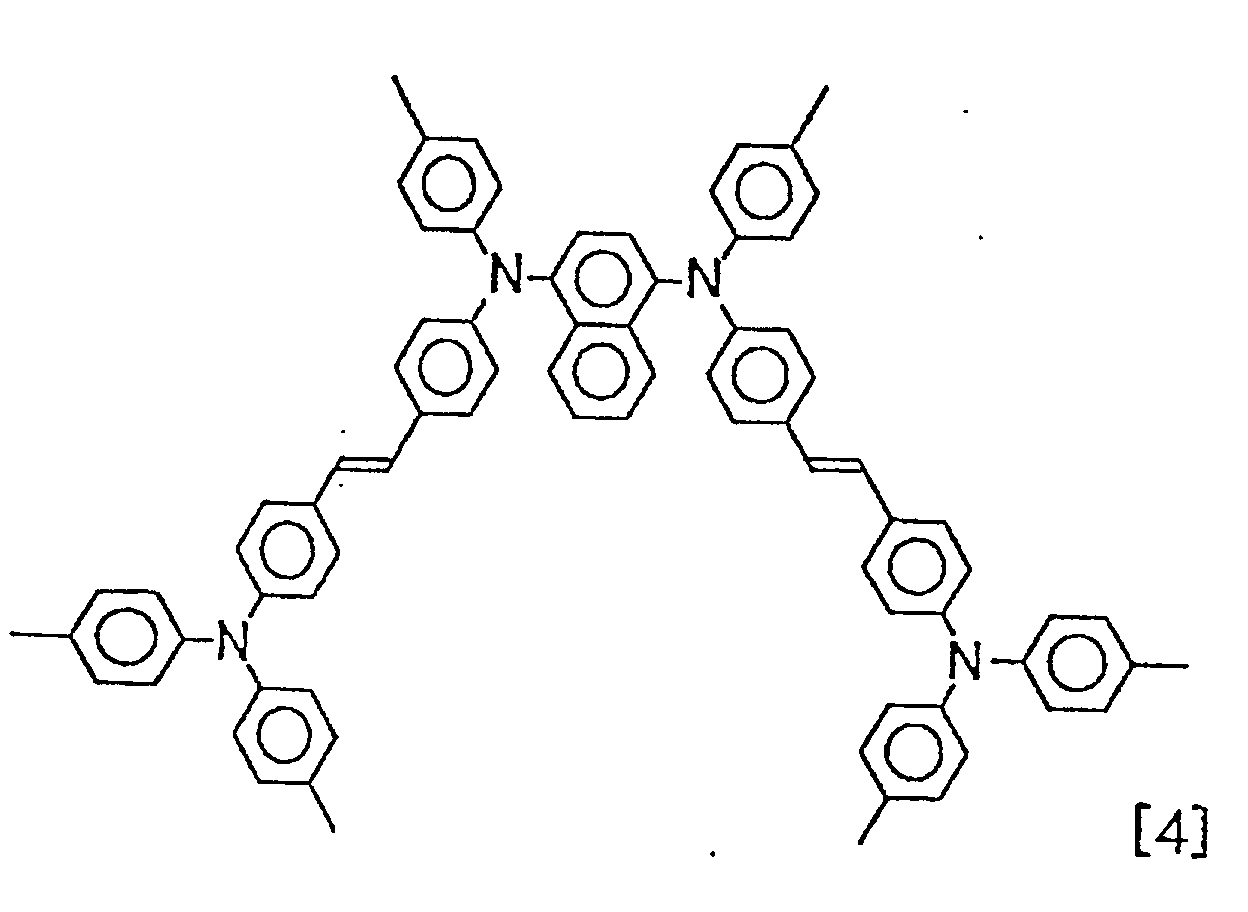
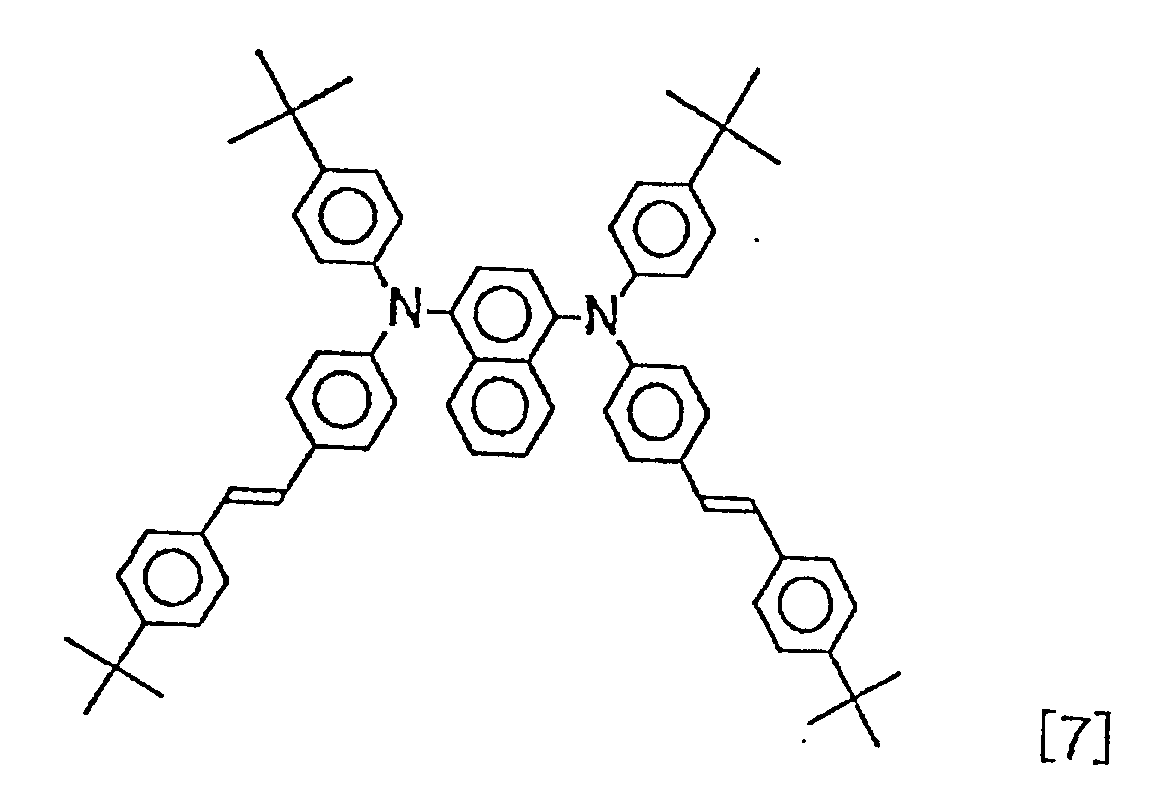
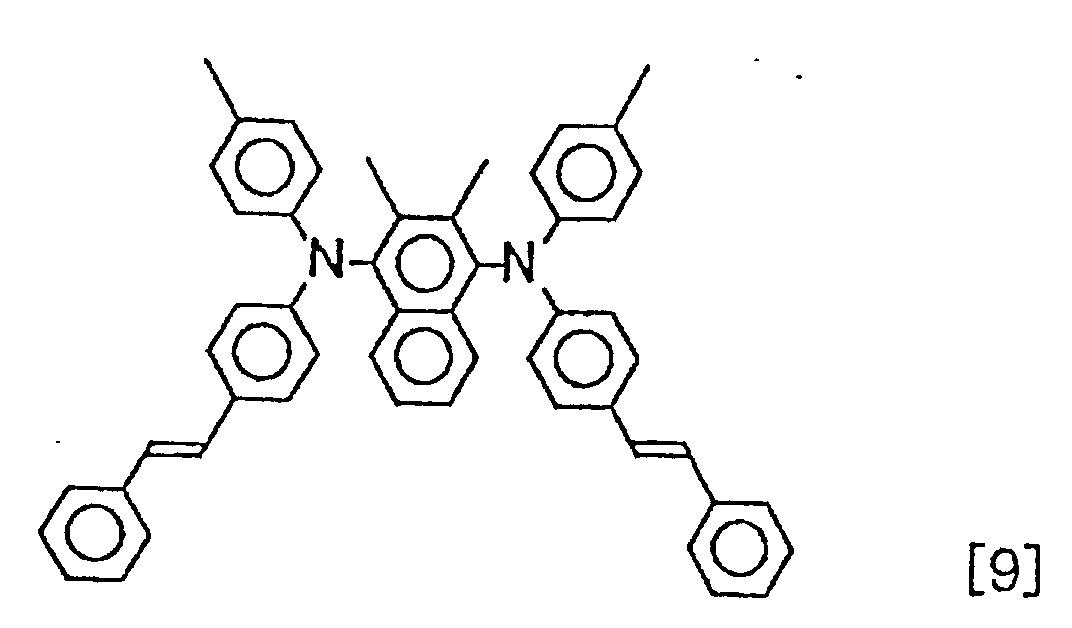
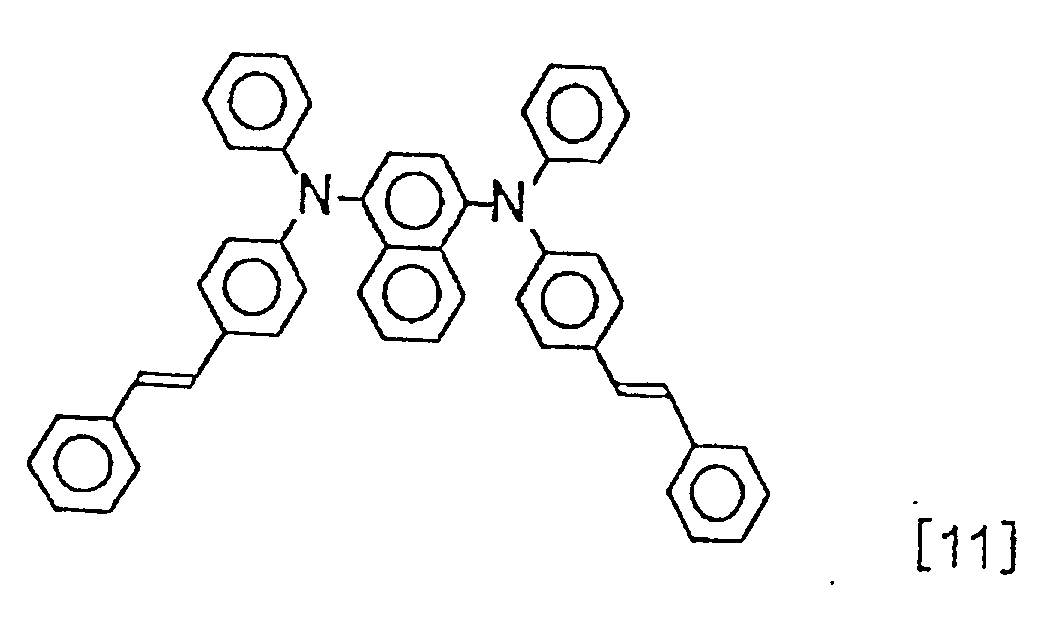
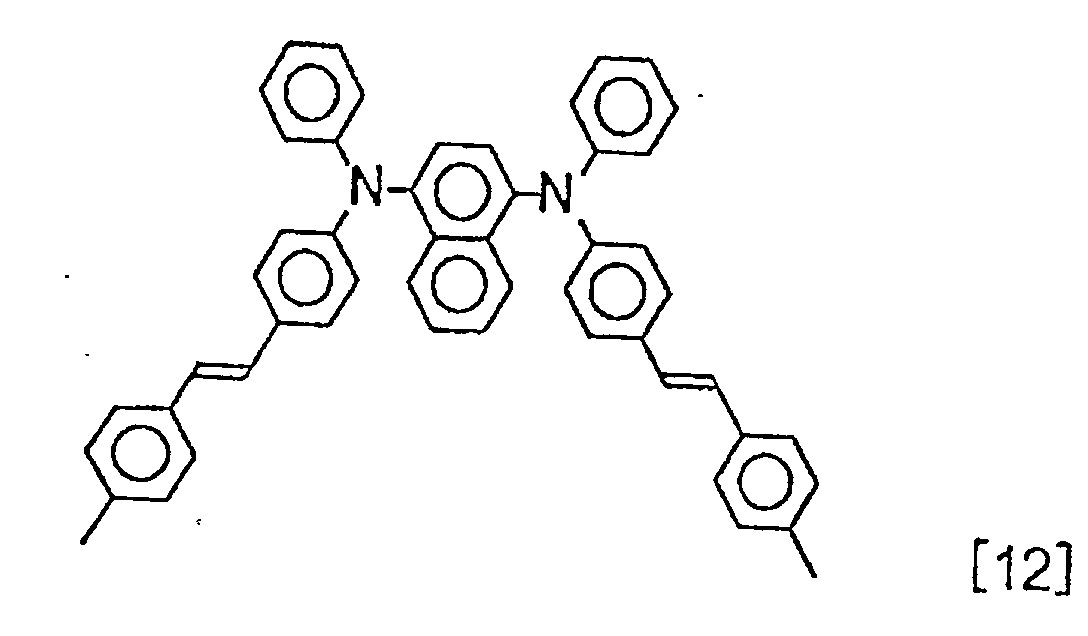
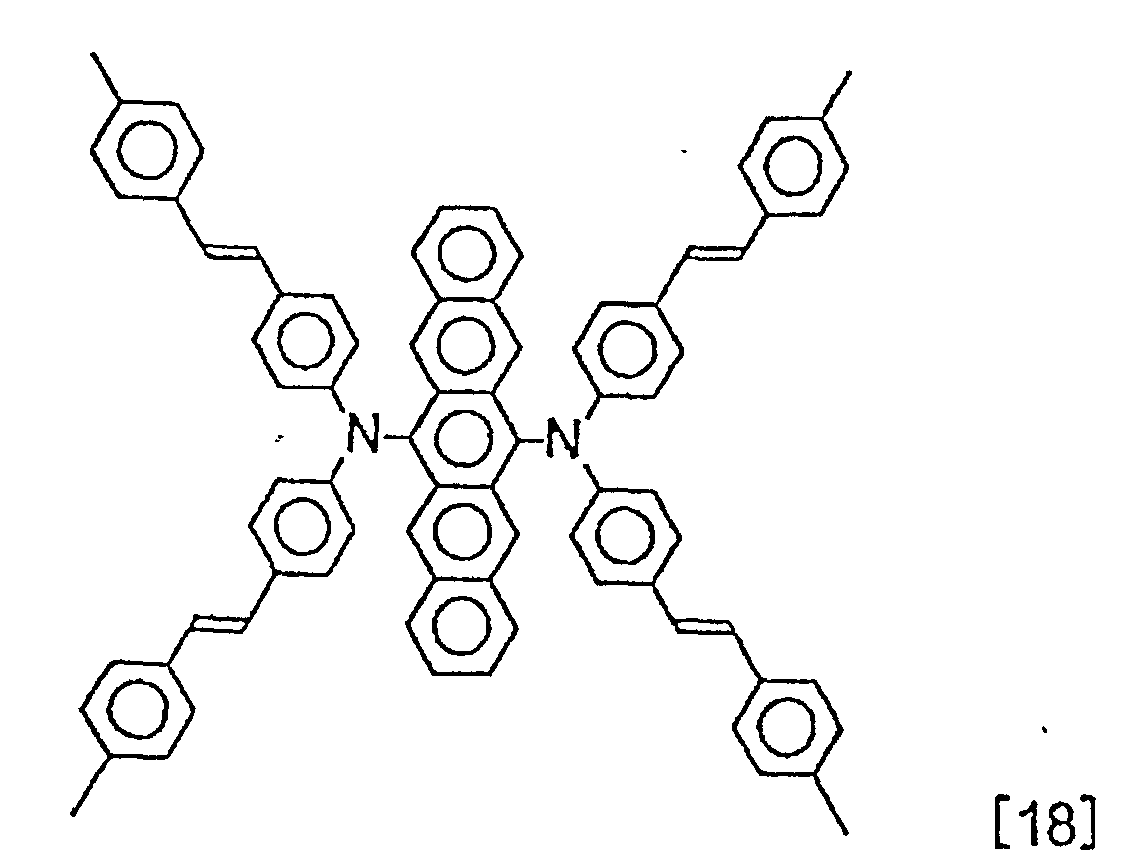
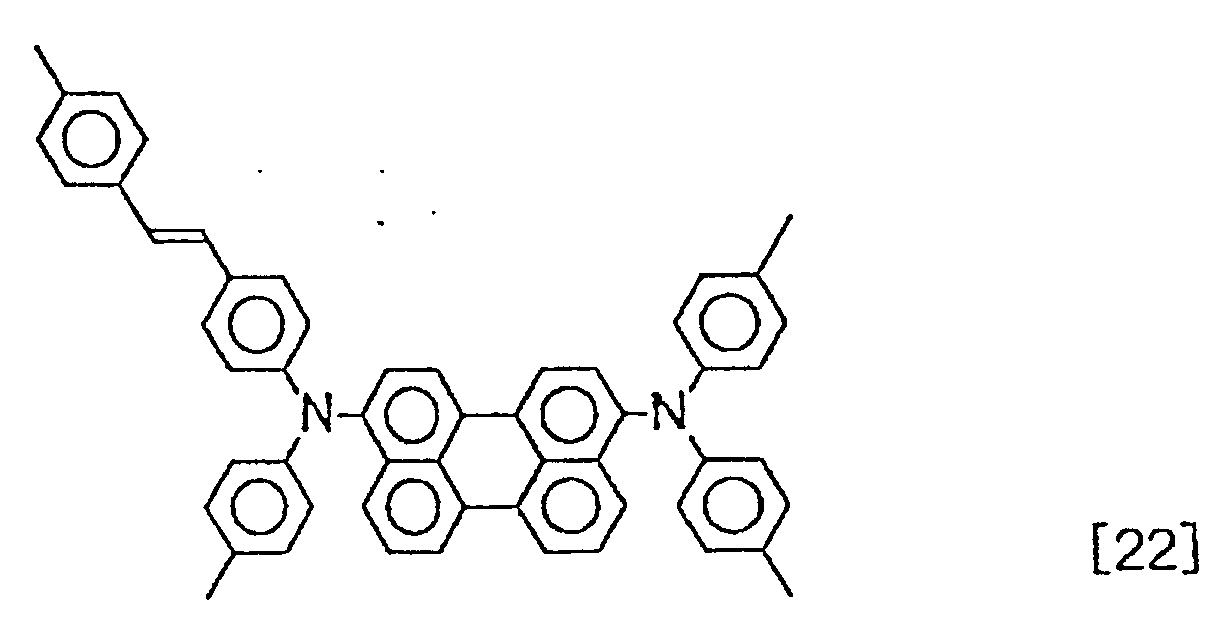
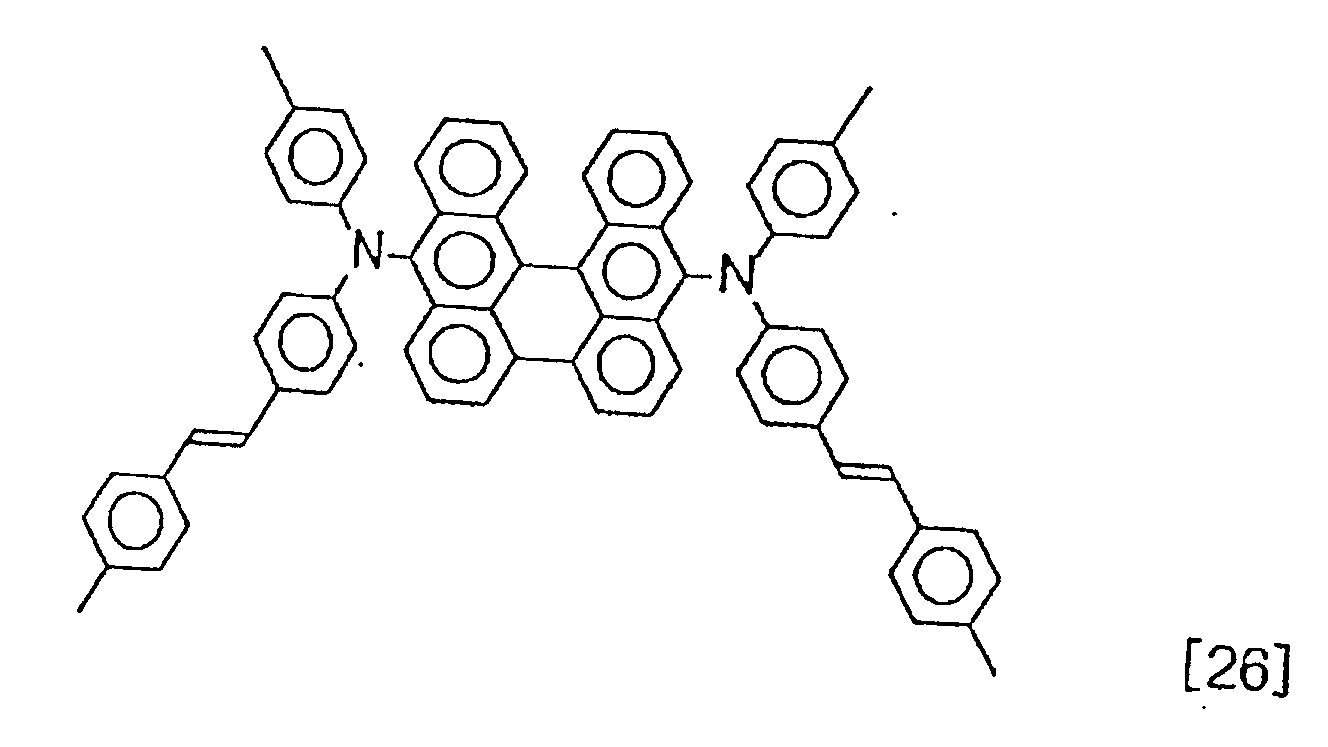
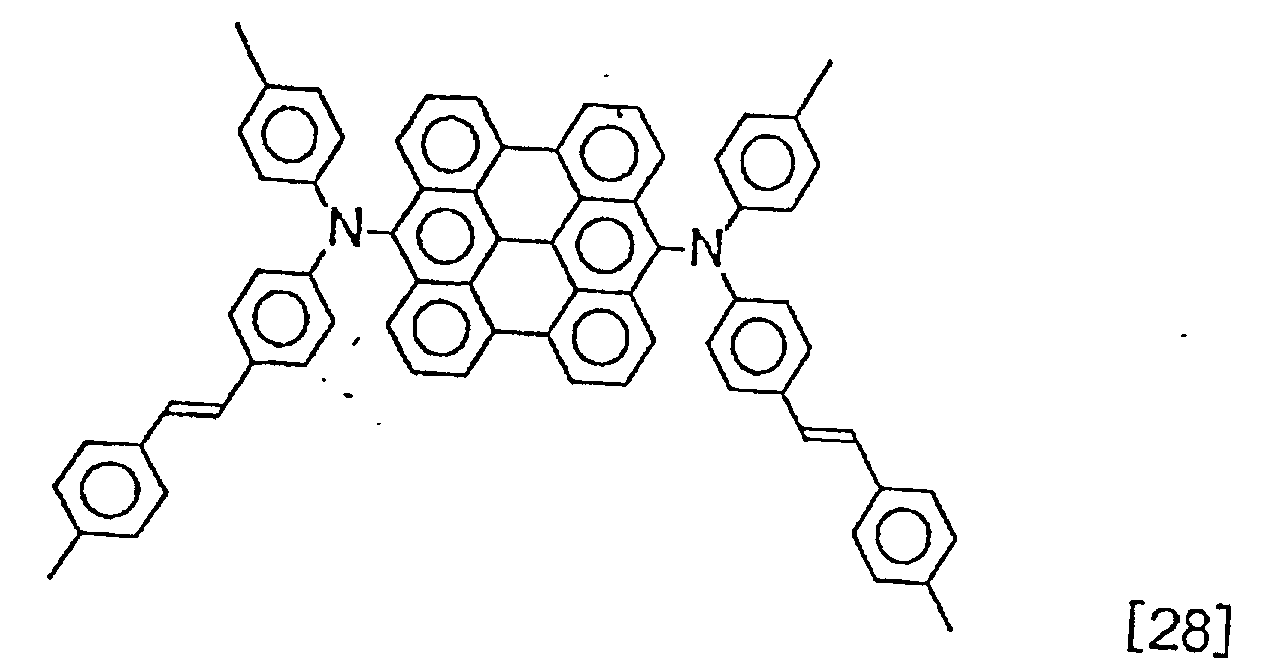
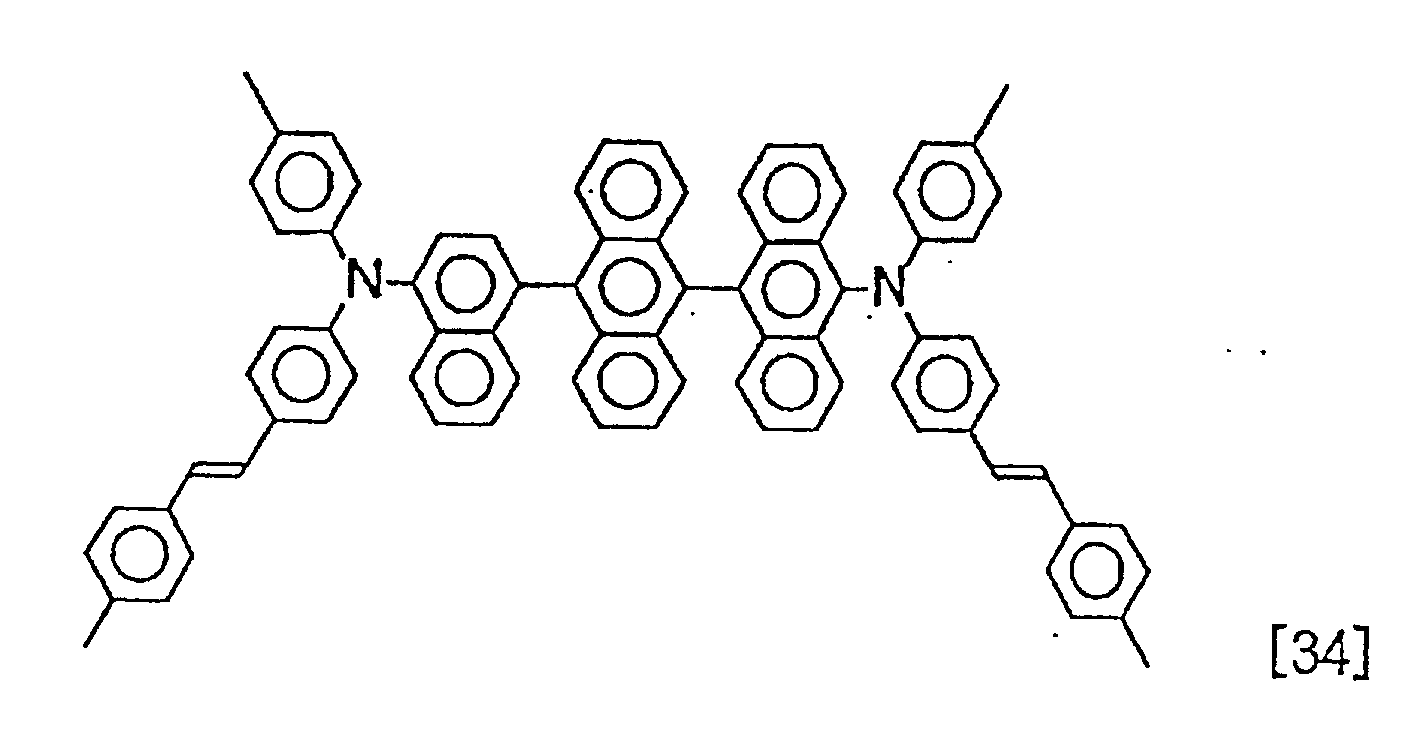
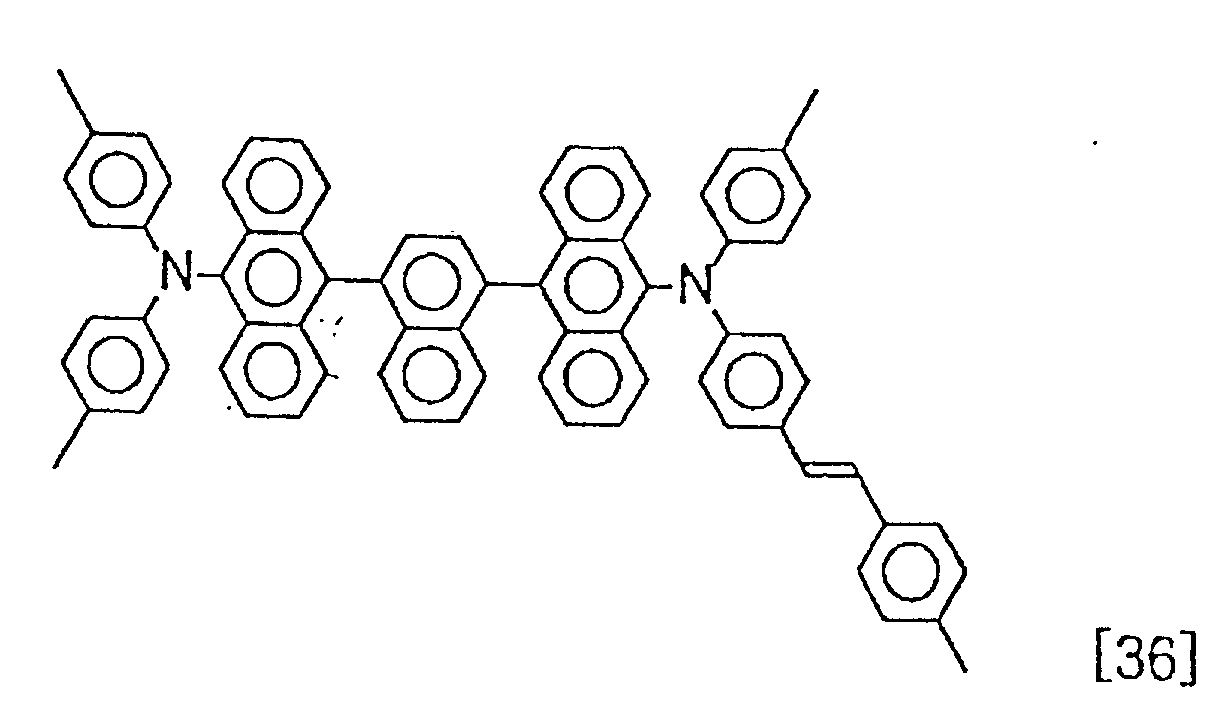
    Following are examples of the compounds represented by the above formula [1]. But the present invention is not limited to these examples unless the spirit or scope of the invention is changed.
    Figure 00290001
    Figure 00290002
    Figure 00290003
    Figure 00300001
    Figure 00300002
    Figure 00300003
    Figure 00310001
    Figure 00310002
    Figure 00310003
    Figure 00320001
    Figure 00320002
    Figure 00320003
    Figure 00330001
    Figure 00330002
    Figure 00330003
    Figure 00340001
    Figure 00340002
    Figure 00340003
    Figure 00350001
    Figure 00350002
    Figure 00350003
    Figure 00360001
    Figure 00360002
    Figure 00360003
    Figure 00370001
    Figure 00370002
    Figure 00370003
    Figure 00380001
    Figure 00380002
    Figure 00380003
    Figure 00380004
    Figure 00390001
    Figure 00390002
    Figure 00390003
    Figure 00400001
    Figure 00400002
    Figure 00400003
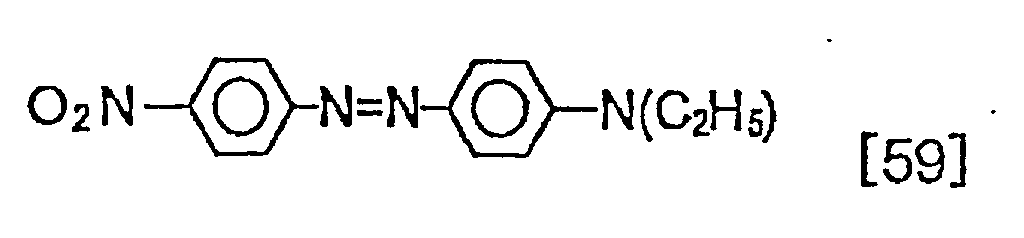
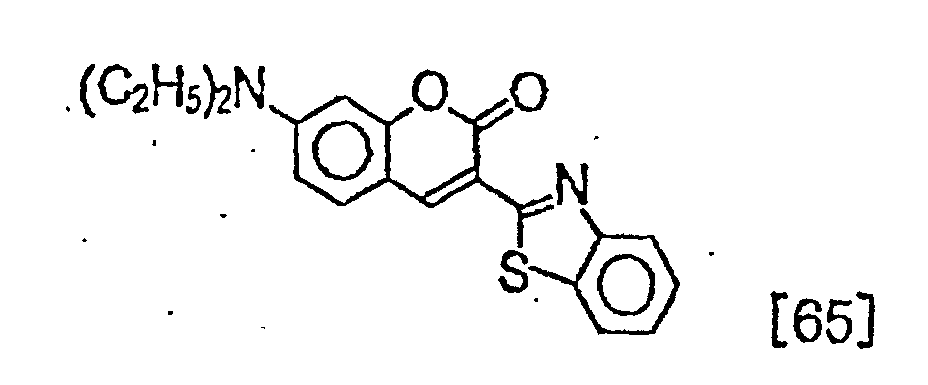
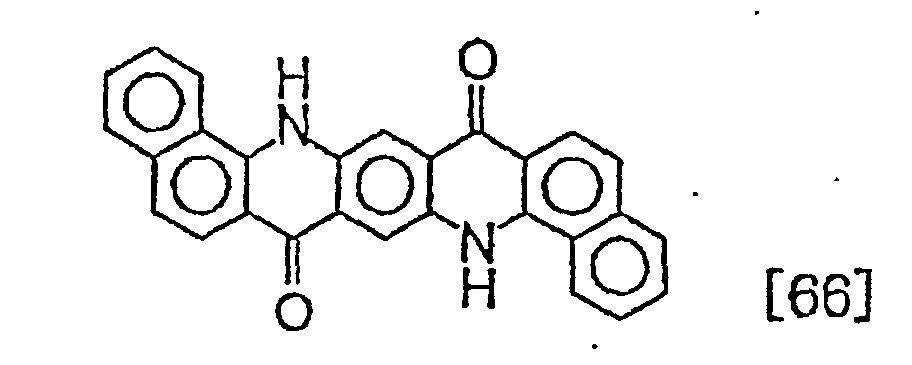
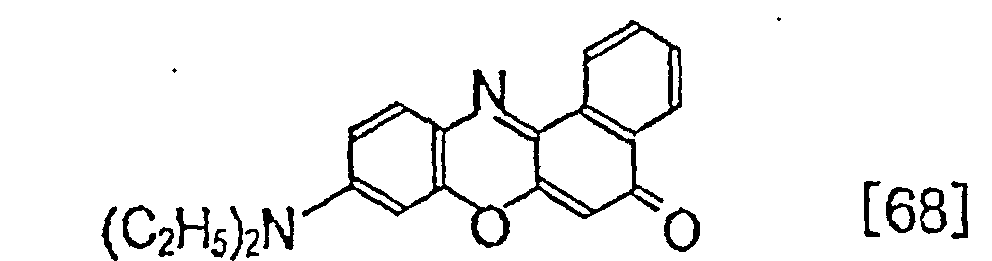
    Following are examples of the compounds which can also be used as a electroluminescent material. But the present invention is not limited to these examples unless the spirit or scope of the invention is changed.
    Figure 00410001
    Figure 00410002
    Figure 00410003
    Figure 00410004
    Figure 00420001
    Figure 00420002
    Figure 00420003
    Figure 00420004
    The organic EL device according to the present invention has a structure in which one organic layer or two or more organic layers are interposed between electrodes, and the present invention includes a structure comprising an anode/ light-emitting zone /cathode as shown in Fig. 1, a structure comprising an anode/ light-emitting zone / electron-injecting zone /cathode as shown in Fig. 2, a structure comprising an anode/ hole-injecting zone / light-emitting zone /cathode as shown in Fig. 3, and a structure comprising an anode/ hole-injecting zone / light-emitting zone / electron-injecting zone /cathode as shown in Fig. 4.
    The above-mentioned compounds are used in the organic layer constituting the light-emitting zone, and they are mixed with another hole-injecting material, electroluminescent material, fluorescence material, electron-transporting material and the like to form the light-emitting zone.
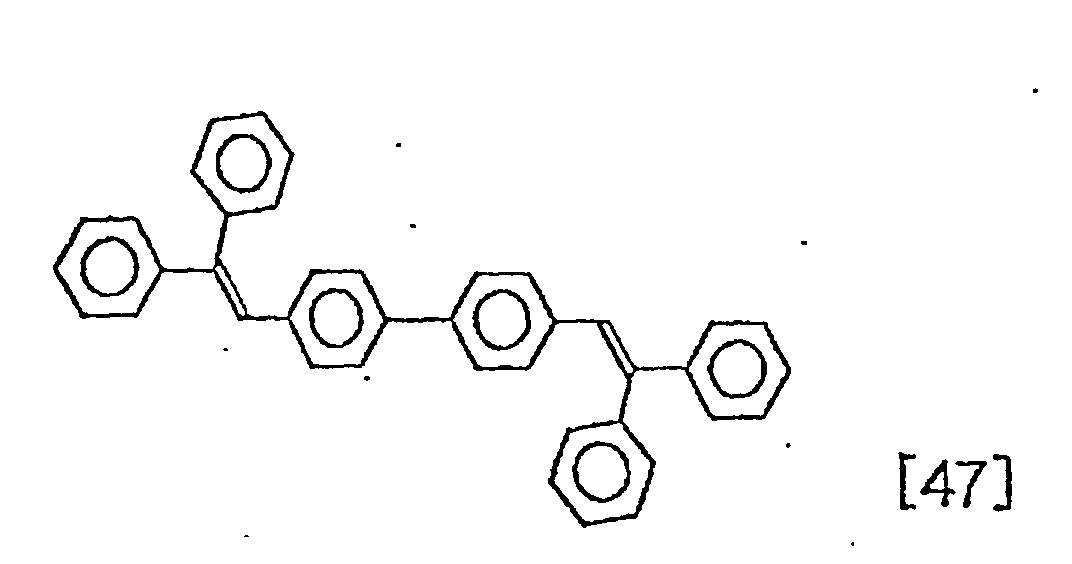
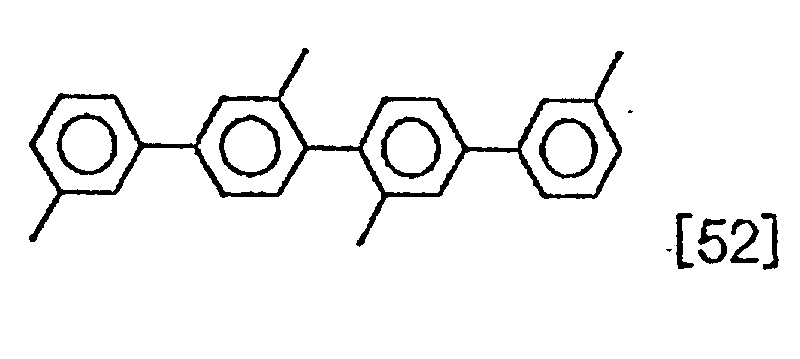
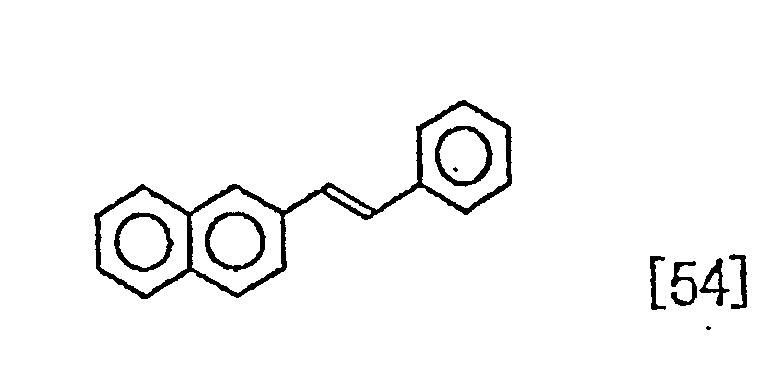
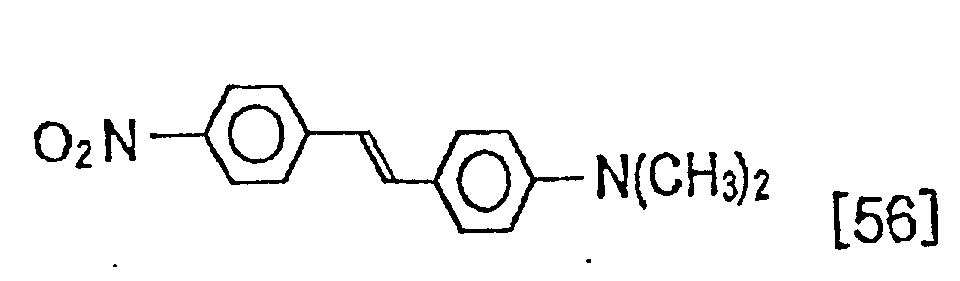
    Following are examples of the compounds which can be used as a fluorescence material. But the present invention is not limited to these examples unless the spirit or scope of the invention is changed.
    Figure 00430001
    Figure 00430002
    Figure 00430003
    Figure 00440001
    Figure 00440002
    Figure 00440003
    Figure 00440004
    Figure 00440005
    Figure 00440006
    Figure 00450001
    Figure 00450002
    Figure 00450003
    Figure 00450004
    Figure 00450005
    Figure 00450006
    Figure 00450007
    Figure 00460001
    Figure 00460002
    Figure 00460003
    Figure 00460004
    Figure 00460005
    Figure 00460006
    Figure 00470001
    Figure 00470002
    The fluorescent peak positions of the electroluminescent materials and fluorescence materials are determined as the peak top wavelength of the fluorescence spectrum in powder form.
    There is no particular limitation imposed on the hole-injecting material to be used in the present invention. Any compound ordinarily employed as a hole-injecting material may be used. Examples include triphenyldiamines such as bis(di(p-tolyl)aminophenyl)-1,1-cyclohexane [72], N,N'-diphenyl-N,N'-bis(3-methylphenyl)-1,1'-biphenyl-4,4'-diamine [73] and N,N'-diphenyl-N-N-bis(1-naphthyl)-1,1'-biphenyl)-4,4'-diamine [74] and starburst type molecules ([75] to [77]).
    Figure 00470003
    Figure 00480001
    Figure 00480002
    Figure 00480003
    Figure 00480004
    Figure 00490001
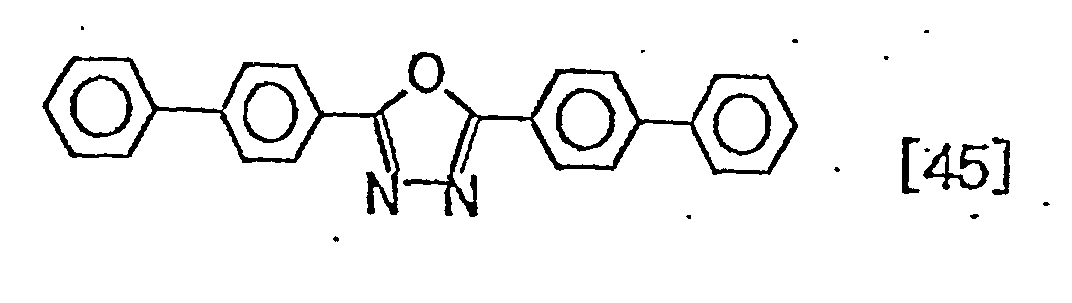
    There is no particular limitation imposed on the electron-transporting material to be used in the present invention. Any compound ordinarily employed as a electron-transporting material may be used. Examples include oxadiazole derivatives such as 2-(4-biphenylyl)-5-(4-t-butylphenyl)-1,3,4-oxadiazole [78] and bis{2-(4-t-butylphenyl)-1,3,4-oxadiazole}-m-phenylene [79] and triazole derivatives ([80], [81] and the like).
    Figure 00490002
    Figure 00490003
    Figure 00490004
    Figure 00500001
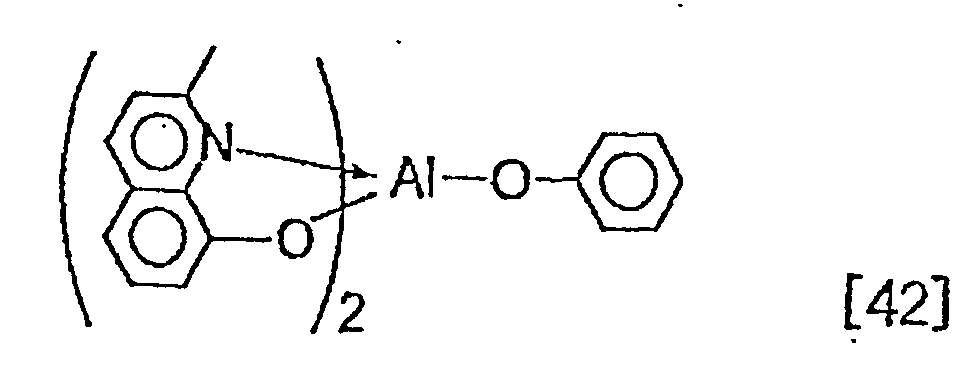
    Furthermore, quinolinol-based metal complexes as represented by formulae [82], [83] and [84] are also used as the electron-transporting material, wherein Q designates a substituted or non-substituted hydroxyl quinoline derivative or a substituted or non-substituted benzoquinoline derivative, "M" designates a metal atom, "n" designates a valency thereof, "L" designates a halogen atom, a substituted or non-substituted alkyl group, a substituted or non-substituted cycloalkyl group, and a substituted or non-substituted aryl group which may includes nitrogen atom. (Q)n-M wherein Q is a substituted or an unsubstituted hydroxyquinoline derivative, or a substituted or an unsubstituted benzoquinoline derivative; M is a metal atom; and n is its valence. (Q)n-1-M-O-L wherein Q is a substituted or an unsubstituted hydroxyquinoline derivative, or a substituted or an unsubstituted benzoquinoline derivative; L is a halogen atom, a substituted or an unsubstituted alkyl group, a substituted or an unsubstituted cycloalkyl group, a substituted or an unsubstituted aryl group which may contain a nitrogen atom; M is a metal atom; and n is its valence. (Q)n-1-M-O-M-(Q)n-1
    Typical examples of the compound represented by formula [82] include the following compounds represented by [85] to [90].
    Figure 00510001
    Figure 00510002
    Figure 00510003
    Figure 00510004
    Figure 00520001
    Figure 00520002
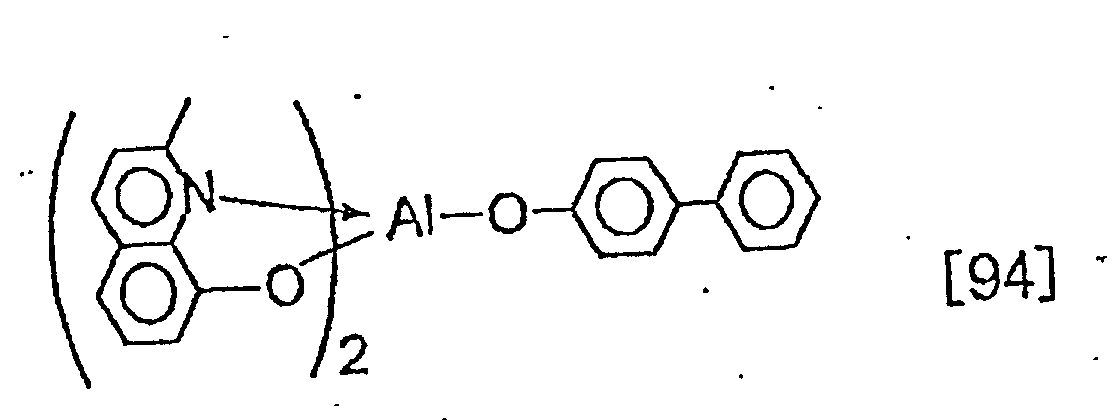
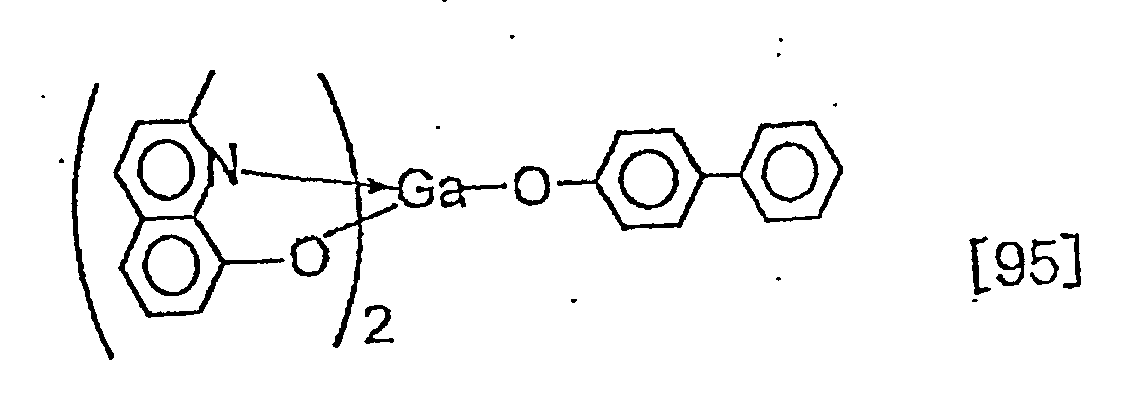
    Similarly, typical examples of the compound represented by formula [83] include the following compounds represented by [91] to [96].
    Figure 00520003
    Figure 00520004
    Figure 00530001
    Figure 00530002
    Figure 00530003
    Figure 00530004
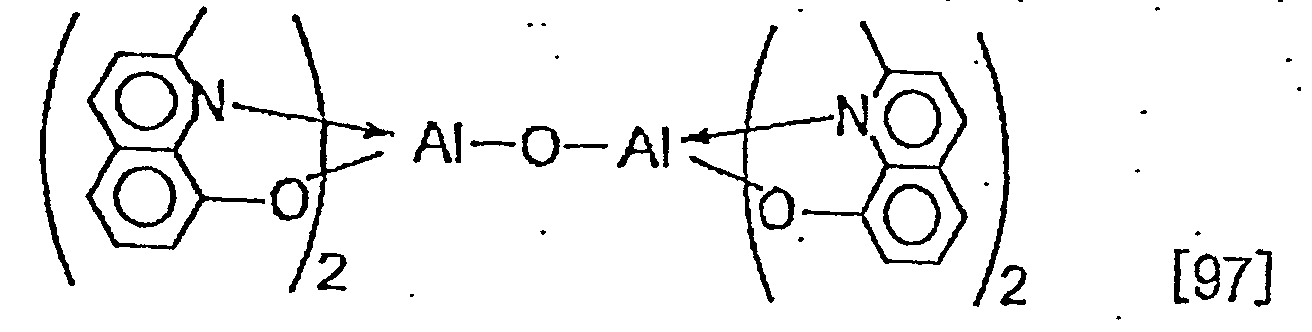
    Furthermore, typical examples of the compound represented by formula [84] include the following compounds represented by [97] to [99].
    Figure 00530005
    Figure 00530006
    Figure 00540001
    A light-emitting zone which is doped with metal having a smaller work function to make the zone electron-injectable can be used. Although there is no particular limitation imposed on the doping metal, specific examples including lithium, magnesium and aluminum, which may constitute the cathode, are preferably employed.
    The anode of the organic EL device plays the role of injecting holes into the light-emitting zone or the hole-injecting zone, and it is effective that the anode has a work function of 4.5 eV or more. Typical applicable examples of an anode material which can be used in the present invention include indium tin oxide alloy (ITO), tin oxide (NESA), gold, silver, platinum and copper.
    As a pretreatment method of the anode, there can be used a suitable combination of a wet cleaning method, ozone cleaning, an exposure of plasma such as oxygen, ultraviolet light irradiation by an excimer UV lamp, an excimer laser or a deuterium lamp, or the like.
    Furthermore, the cathode is preferably made of a material having a small work function for the purpose of injecting the electrons into the electron-injecting zone or the light-emitting zone. Although there is no particular limitation imposed on the cathode material, but typical usable examples of the cathode material include indium, aluminum, magnesium, magnesium-indium alloy, magnesium-aluminum alloy, aluminum-lithium alloy, aluminum-scandium-lithium alloy and magnesium-silver alloy.
    Each layer of the organic EL device according to the present invention can be fabricated by any method. Conventionally known methods such as vacuum deposition and spin coating can be employed. The organic thin-film layer which is to be used in the organic EL device of the present invention and contains the compounds of the general formula [1] above can be fabricated by a known method such as vacuum deposition, molecular beam epitaxy (MBE) or coating including dipping, spin coating, casting, bar coating or roll coating of a solution of the compounds dissolved in a proper solvent. Especially, the vacuum evaporation method is preferable.
    There is no particular limitation on the thickness of each organic layer of the organic EL device of the present invention. When the thickness of layer is too thin, defects such as spin holes tend to occur. When the thickness of layer is too thick, on the other hand, a high-applied voltage is required, which decreases the efficiency. Usually, the organic layers are therefore preferred to have a thickness within a range of several nm to 1 µ m.
    The present invention will hereinafter be described in detail by examples. It should however be borne in mind that the present invention is not limited only to the following examples so long as they do not depart from the spirit or scope of the invention.
    Example 1
    .Fig. 1 shows a cross-sectional structure of an organic EL device regarding Example 1. The organic EL device regarding this example comprises a glass substrate 1, an anode 2 and a cathode 6 formed on the glass substrate 1, and a light-emitting zone 4 sandwiched between the anode 2 and the cathode 6.
    Hereinafter, a preparation procedure of the organic EL device regarding Example 1 will be described.
    First, ITO was sputtered on a glass substrate to form a film having a sheet resistance of 20 Ω/□ as an anode. The ITO-covered substrate was washed with an alkali cleaning fluid, and then with isopropyl alcohol. The cleaned substrate was irradiated with an ultraviolet light of wavelength 172 nm by Xe2* lamp for three minutes. Over the anode, a 60 nm thick light-emitting zone was formed by the vacuum deposition of the compound represented by formula [3] whose fluorescent peak position is 470 nm and the compound represented by formula [20] whose fluorescent peak position is 580 nm. Then, a 150 nm thick cathode was formed by the vacuum deposition of magnesium-silver alloy, whereby the organic EL device was fabricated.
    When a DC voltage of 10 V was applied to the thus obtained organic EL device, the emission spectrum includes a peak at 640 nm and a shoulder at about 680 nm, and a reddish-orange light emission of 3100 cd/m2 was obtained.
    Example 2
    The same procedure as in Example 1 was conducted except that a light-emitting zone 4 was formed as thick as 60 nm by a spin coating method using a chloroform solution in which the equal amounts of compounds [3] and [20] were dissolved, thereby preparing an organic EL device.
    When a DC voltage of 10 V was applied to the thus obtained organic EL device, the emission spectrum includes a peak at 637 nm and a shoulder at about 680 nm, and a reddish-orange light emission of 2200 cd/m2 was obtained.
    Example 3
    Fig. 2 shows a cross-sectional structure of an organic EL device regarding Example 3. The organic EL device regarding this example comprises a glass substrate 1, an anode 2 and a cathode 6 formed on the glass substrate 1, and a light-emitting zone 4 and an electron-injecting zone 5 sandwiched between the anode 2 and the cathode 6.
    Hereinafter, a preparation procedure of the organic EL device regarding Example 3 will be described.
    First, ITO was sputtered on a glass substrate to form a film having a sheet resistance of 20 Ω/□ as an anode. The ITO-covered substrate was washed with an alkali cleaning fluid, and then with isopropyl alcohol. The cleaned substrate was irradiated with an ultraviolet light of wavelength 172 nm by Xe2* lamp for three minutes. Over the anode, a 60 nm thick light-emitting zone was formed by the vacuum deposition of the compound represented by formula [3] whose fluorescent peak position is 470 nm and the compound represented by formula [20] whose fluorescent peak position is 580 nm. Then, a 25 nm thick electron-injecting zone was formed by the vacuum deposition of compound represented by formula [91]. Then, a 150 nm thick cathode was formed by the vacuum deposition of magnesium-silver alloy, whereby the organic EL device was fabricated.
    Fig. 5 shows an EL spectra at a time when a DC voltage of 10 V was applied to the thus obtained organic EL device, and a fluorescence spectrum of the above compounds represented by formula [3] and [20]. The emission spectrum includes a peak at 641 nm and a shoulder at about 680 nm. And these wavelength are different from both the fluorescent peak position of the compounds represented by formula [3] and [20], and a reddish-orange light emission of 5200 cd/m2 was obtained.
    Example 4
    The same procedure as in Example 3 was conducted except that a compound [20] whose fluorescent peak position is 580 nm and a compound [44] whose fluorescent peak position is 368 nm were used to form a light-emitting zone 4, thereby preparing an organic EL device.
    When a DC voltage of 10 V was applied to the thus obtained organic EL device, the emission spectrum includes a peak at 620 nm, and a reddish-orange light emission of 5900 cd/m2 was obtained.
    Example 5
    The same procedure as in Example 3 was conducted except that a compound [8] whose fluorescent peak position is 470 nm and a compound [51] whose fluorescent peak position is 500 nm were used to form a light-emitting zone 4, thereby preparing an organic EL device.
    When a DC voltage of 10 V was applied to the thus obtained organic EL device, the emission spectrum includes a peak at 520 nm and shoulders at about 560 nm and 600 nm, and a yellowish-orange light emission of 13800 cd/m2 was obtained.
    Example 6
    The same procedure as in Example 3 was conducted except that a compound [3] whose fluorescent peak position is 470 nm and a compound [51] whose fluorescent peak position is 500 nm were used to form a light-emitting zone 4, thereby preparing an organic EL device.
    When a DC voltage of 10 V was applied to the thus obtained organic EL device, the emission spectrum includes a peak at 520 nm and shoulders at about 550 nm and 600 nm, and a yellowish-orange light emission of 11500 cd/m2 was obtained.
    Example 7
    Fig. 4 shows a cross-sectional structure of an organic EL device regarding Example 7. The organic EL device regarding this example comprises a glass substrate 1, an anode 2 and a cathode 6 formed on the glass substrate 1, and a hole-injecting zone 3, a light-emitting zone 4 and an electron-injecting zone 5 sandwiched between the anode 2 and the cathode 6.
    Hereinafter, a preparation procedure of the organic EL device regarding Example 7 will be described.
    First, ITO was sputtered on a glass substrate to form a film having a sheet resistance of 20 Ω/□ as an anode. The ITO-covered substrate was washed with an alkali cleaning fluid, and then with isopropyl alcohol. The cleaned substrate was irradiated with an ultraviolet light of wavelength 172 nm by Xe2* lamp for three minutes. Over the anode, a 25 nm thick hole-injecting zone was formed by the vacuum deposition of compound represented by formula [76]. Then, a 60 nm thick light-emitting zone was formed by the vacuum deposition of the compound represented by formula [3] whose fluorescent peak position is 470 nm and the compound represented by formula [20] whose fluorescent peak position is 580 nm. Then, a 25 nm thick electron-injecting zone was formed by the vacuum deposition of compound represented by formula [91]. Then, a 150 nm thick cathode was formed by the vacuum deposition of magnesium-silver alloy, whereby the organic EL device was fabricated.
    When a DC voltage of 10 V was applied to the thus obtained organic EL device, the emission spectrum includes a peak at 638 nm and a shoulder at about 680 nm, and a reddish-orange light emission of 3900 cd/m2 was obtained.

    Claims (10)

    1. An organic electroluminescence device having at least an anode, a light-emitting zone and a cathode, wherein the light-emitting zone comprises a mixture containing at least two compounds, and the spectrum of the luminescence from light-emitting zone includes at least one peak at a wavelength which is different from any one of fluorescent peak positions of the compounds included in light-emitting zone.
    2. The organic electroluminescence device according to Claim 1 wherein the spectrum of the luminescence from light-emitting zone includes at least one peak at a wavelength which is longer than any one of fluorescent peak positions of the compounds included in light-emitting zone.
    3. The organic electroluminescence device according to Claim 1 or 2 wherein the light-emitting zone comprises a mixture containing at least two electroluminescent materials.
    4. The organic electroluminescence device according to Claim 1 or 2 wherein the light-emitting zone comprises a mixture containing at least one electroluminescent material and one fluorescence material.
    5. The organic electroluminescence device according to any one of Claims 1 to 4 wherein light-emitting zone comprises a mixture containing at least one electroluminescent material represented by the following formula [1]
      Figure 00630001
      wherein Ar1 designates a substituted or non-substituted arylene group having 5 to 42 carbon atoms, Ar2 to Ar5 designate, independently with one another, a substituted or non-substituted aryl group having 6 to 20 carbon atoms.
    6. The organic electroluminescence device according to Claim 5 wherein at least one of Ar2 to Ar5 of the compound represented by formula [1] has a substituted or non-substituted styryl group as a substituent.
    7. The organic electroluminescence device according to any one of Claims 1, 2 and 4 to 6 wherein the light-emitting zone comprises a mixture containing at least one of fluorescence materials such as a substituted or non-substituted aromatic hydrocarbon, a substituted or non-substituted fused polycyclic hydrocarbon, a substituted or non-substituted heterocyclic compound, and a substituted or non-substituted fused heterocyclic compound.
    8. The organic electroluminescence device according to any one of Claims 1 to 7 wherein the light-emitting zone is adjacent to the anode.
    9. The organic electroluminescence device according to any one of Claims 1 to 7 wherein a hole-injecting zone is present between the anode and the light-emitting zone.
    10. The organic electroluminescence device according to Claim 8 or 9 wherein an electron-injecting zone is present between the cathode and the light-emitting zone.
    EP00250437A 1999-12-15 2000-12-15 Organic electroluminescence device Expired - Lifetime EP1109235B1 (en)

    Applications Claiming Priority (2)

    Application Number Priority Date Filing Date Title
    JP35668299 1999-12-15
    JP35668299 1999-12-15

    Publications (3)

    Publication Number Publication Date
    EP1109235A2 true EP1109235A2 (en) 2001-06-20
    EP1109235A3 EP1109235A3 (en) 2005-06-22
    EP1109235B1 EP1109235B1 (en) 2008-08-20

    Family

    ID=18450262

    Family Applications (1)

    Application Number Title Priority Date Filing Date
    EP00250437A Expired - Lifetime EP1109235B1 (en) 1999-12-15 2000-12-15 Organic electroluminescence device

    Country Status (5)

    Country Link
    US (2) US6899961B2 (en)
    EP (1) EP1109235B1 (en)
    JP (1) JP3509746B2 (en)
    KR (1) KR100387166B1 (en)
    DE (1) DE60039959D1 (en)

    Families Citing this family (9)

    * Cited by examiner, † Cited by third party
    Publication number Priority date Publication date Assignee Title
    US6899961B2 (en) * 1999-12-15 2005-05-31 Samsung Sdi Co., Ltd. Organic electroluminescence device
    US6872475B2 (en) * 2002-12-03 2005-03-29 Canon Kabushiki Kaisha Binaphthalene derivatives for organic electro-luminescent devices
    US7179542B2 (en) 2003-05-20 2007-02-20 Canon Kabushiki Kaisha Thiazole- and imidazole-fused phenanthroline molecules in organic light-emitting devices
    US9085729B2 (en) * 2004-02-09 2015-07-21 Lg Display Co., Ltd. Blue emitters for use in organic electroluminescence devices
    JP4653469B2 (en) 2004-12-01 2011-03-16 出光興産株式会社 Organic electroluminescence device
    US7906901B2 (en) * 2006-02-14 2011-03-15 Sharp Kabushiki Kaisha Organic electroluminescent device and organic electroluminescent display device
    JP2010118499A (en) 2008-11-13 2010-05-27 Murata Mfg Co Ltd Laminated ceramic electronic component
    JP2010182637A (en) * 2009-02-09 2010-08-19 Fujifilm Corp Organic electroluminescent element manufacturing method and organic electroluminescent element
    CN116003269B (en) * 2022-11-29 2024-10-18 广东省大湾区华南理工大学聚集诱导发光高等研究院 A triphenylethylene derivative and an organic electroluminescent device containing the same

    Family Cites Families (53)

    * Cited by examiner, † Cited by third party
    Publication number Priority date Publication date Assignee Title
    US5126214A (en) * 1989-03-15 1992-06-30 Idemitsu Kosan Co., Ltd. Electroluminescent element
    JP2897138B2 (en) 1989-06-30 1999-05-31 株式会社リコー EL device
    JP3069139B2 (en) * 1990-03-16 2000-07-24 旭化成工業株式会社 Dispersion type electroluminescent device
    JP3200889B2 (en) 1991-10-23 2001-08-20 ソニー株式会社 Image vibration correction device
    US5536949A (en) * 1992-08-28 1996-07-16 Idemistu Kosan Co., Ltd. Charge injection auxiliary material and organic electroluminescence device containing the same
    JP3332491B2 (en) 1993-08-27 2002-10-07 三洋電機株式会社 Organic EL device
    US5405709A (en) * 1993-09-13 1995-04-11 Eastman Kodak Company White light emitting internal junction organic electroluminescent device
    US5597890A (en) * 1993-11-01 1997-01-28 Research Corporation Technologies, Inc. Conjugated polymer exciplexes and applications thereof
    JPH07138561A (en) 1993-11-17 1995-05-30 Idemitsu Kosan Co Ltd Organic electroluminescent device
    JP3463358B2 (en) 1994-07-08 2003-11-05 東洋インキ製造株式会社 Hole transport material and its use
    JP3593717B2 (en) 1994-08-04 2004-11-24 東洋インキ製造株式会社 Novel triphenylamine derivative, its production method and use
    JP3593719B2 (en) 1994-08-04 2004-11-24 東洋インキ製造株式会社 Novel triphenylamine derivative, its production method and use
    JP2686418B2 (en) 1994-08-12 1997-12-08 東洋インキ製造株式会社 Diarylamine derivative, production method and use thereof
    JPH0887122A (en) 1994-09-16 1996-04-02 Toyo Ink Mfg Co Ltd Hole transport material and its use
    JP3724833B2 (en) 1995-03-06 2005-12-07 出光興産株式会社 Organic electroluminescence device
    US5792568A (en) * 1995-04-25 1998-08-11 Sharp Kabushiki Kaisha Organic electroluminescent element
    JP3564859B2 (en) 1996-04-01 2004-09-15 東洋インキ製造株式会社 Organic electroluminescent device material and organic electroluminescent device using the same
    KR970072511A (en) * 1996-04-22 1997-11-07 박원훈 Electroluminescent display device for white light emission and manufacturing method thereof
    JPH103990A (en) 1996-06-13 1998-01-06 Idemitsu Kosan Co Ltd Organic EL light emitting device
    JPH1079297A (en) * 1996-07-09 1998-03-24 Sony Corp EL device
    JP3752734B2 (en) * 1996-07-12 2006-03-08 双葉電子工業株式会社 Organic electroluminescence device and organic electroluminescence device material
    JP3228502B2 (en) 1996-10-08 2001-11-12 出光興産株式会社 Organic electroluminescence device
    JP3899566B2 (en) * 1996-11-25 2007-03-28 セイコーエプソン株式会社 Manufacturing method of organic EL display device
    JP3775020B2 (en) * 1997-01-07 2006-05-17 三菱化学株式会社 Organic electroluminescence device
    AU735823B2 (en) * 1997-03-11 2001-07-19 Ohio State University Research Foundation, The Color variable bipolar/AC light-emitting devices
    JP3503403B2 (en) * 1997-03-17 2004-03-08 東洋インキ製造株式会社 Light emitting material for organic electroluminescent device and organic electroluminescent device using the same
    JP3498533B2 (en) * 1997-04-30 2004-02-16 東洋インキ製造株式会社 Light emitting material for organic electroluminescent device and organic electroluminescent device using the same
    WO1998051131A1 (en) * 1997-05-08 1998-11-12 Sanyo Electric Co., Ltd. Organic electroluminescent device
    WO1998051757A1 (en) * 1997-05-15 1998-11-19 Sanyo Electric Co., Ltd. Organic electroluminescence element
    JPH1174079A (en) 1997-06-20 1999-03-16 Nec Corp Organic electroluminescence device
    US6582837B1 (en) * 1997-07-14 2003-06-24 Nec Corporation Organic electroluminescence device
    JPH11345686A (en) 1997-08-07 1999-12-14 Fuji Photo Film Co Ltd Organic electroluminescence device
    AR016969A1 (en) * 1997-10-23 2001-08-01 Procter & Gamble PROTEASE VARIANTE, ADN, EXPRESSION VECTOR, GUEST MICROORGANISM, CLEANING COMPOSITION, ANIMAL FOOD AND COMPOSITION TO TREAT A TEXTILE
    US6329083B1 (en) * 1997-11-05 2001-12-11 Nec Corporation Organic electroluminescent device containing a benzoperylene compound
    JP3008917B2 (en) * 1997-12-25 2000-02-14 日本電気株式会社 Organic electroluminescence device
    JP3104223B2 (en) 1997-11-06 2000-10-30 日本電気株式会社 Organic electroluminescent device
    JP4237839B2 (en) 1997-11-07 2009-03-11 ケミプロ化成株式会社 1,2,4-Triazole group-containing vinyl derivative, polymer thereof and organic EL device using the same
    JP3011165B2 (en) * 1997-12-08 2000-02-21 日本電気株式会社 Organic electroluminescent device
    JP3092583B2 (en) * 1998-03-23 2000-09-25 日本電気株式会社 Organic electroluminescent device material and organic electroluminescent device using the same
    US6312836B1 (en) * 1998-04-10 2001-11-06 The Trustees Of Princeton University Color-tunable organic light emitting devices
    DE69914523T2 (en) * 1998-04-28 2005-02-03 Canon K.K. Triarylamine compounds and luminescent device
    US6833200B2 (en) * 1998-04-28 2004-12-21 Canon Kabushiki Kaisha Luminescent device with a triarylamine compound
    JP2956691B1 (en) * 1998-05-22 1999-10-04 日本電気株式会社 Organic electroluminescence device
    US6468675B1 (en) * 1998-05-29 2002-10-22 Nec Corporation Organic electroluminescent device having high luminance efficiency
    US6465116B1 (en) * 1998-06-08 2002-10-15 Nec Corporation Organic electroluminescent device
    US6699594B1 (en) * 1998-06-08 2004-03-02 Nec Corporation Organic electroluminescent device
    KR100327105B1 (en) * 1998-08-14 2002-03-09 오길록 High luminance-phosphor and method for fabricating the same
    JP3548839B2 (en) * 1998-10-23 2004-07-28 三星エスディアイ株式会社 Organic electroluminescent device using hole transporting luminescent material
    US6310360B1 (en) * 1999-07-21 2001-10-30 The Trustees Of Princeton University Intersystem crossing agents for efficient utilization of excitons in organic light emitting devices
    US6899961B2 (en) * 1999-12-15 2005-05-31 Samsung Sdi Co., Ltd. Organic electroluminescence device
    US6821644B2 (en) * 1999-12-15 2004-11-23 Samsung Sdi Co., Ltd. Organic electroluminescent device
    JP3836300B2 (en) * 2000-05-25 2006-10-25 三星エスディアイ株式会社 Organic electroluminescence device
    US6746784B2 (en) * 2000-11-07 2004-06-08 Samsung Electronics Co., Ltd. Organic electroluminescent device

    Also Published As

    Publication number Publication date
    JP2001237078A (en) 2001-08-31
    KR20010062382A (en) 2001-07-07
    EP1109235A3 (en) 2005-06-22
    JP3509746B2 (en) 2004-03-22
    US20010006742A1 (en) 2001-07-05
    US6899961B2 (en) 2005-05-31
    US8349472B2 (en) 2013-01-08
    DE60039959D1 (en) 2008-10-02
    KR100387166B1 (en) 2003-06-12
    US20050221125A1 (en) 2005-10-06
    EP1109235B1 (en) 2008-08-20

    Similar Documents

    Publication Publication Date Title
    JP3148176B2 (en) Organic electroluminescence device
    US6582837B1 (en) Organic electroluminescence device
    JP2000208262A (en) Organic electroluminescent element
    JPH1174079A (en) Organic electroluminescence device
    US6746784B2 (en) Organic electroluminescent device
    JPH11339963A (en) Organic electroluminescent element
    US6322908B1 (en) Organic electroluminescent device
    JP3389905B2 (en) Organic electroluminescence device
    EP1109235B1 (en) Organic electroluminescence device
    JPH11228951A (en) Organic electroluminescent element
    US6682831B2 (en) Organic electroluminescent device
    JP3961200B2 (en) Organic electroluminescence device
    JP3102414B2 (en) Organic electroluminescence device
    JP3008917B2 (en) Organic electroluminescence device
    JP3139622B2 (en) Organic electroluminescence device
    JP3548841B2 (en) Organic electroluminescence device
    JP3636649B2 (en) Organic electroluminescence device
    US20020168543A1 (en) Organic electroluminscent device
    EP1069628A2 (en) Organic electroluminescent device and method for fabricating same
    JPH11152253A (en) Material for organic electroluminescence element and organic electroluminescence element produced by using the material
    JP4139055B2 (en) Organic electroluminescence device
    JP3156679B2 (en) Organic electroluminescence device
    JP3548842B2 (en) Organic electroluminescence device
    JP3465788B2 (en) Organic electroluminescence device and method of manufacturing the same
    JP2001028296A (en) Organic electroluminescence device and method of manufacturing the same

    Legal Events

    Date Code Title Description
    PUAI Public reference made under article 153(3) epc to a published international application that has entered the european phase

    Free format text: ORIGINAL CODE: 0009012

    AK Designated contracting states

    Kind code of ref document: A2

    Designated state(s): AT BE CH CY DE DK ES FI FR GB GR IE IT LI LU MC NL PT SE TR

    AX Request for extension of the european patent

    Free format text: AL;LT;LV;MK;RO;SI

    RAP1 Party data changed (applicant data changed or rights of an application transferred)
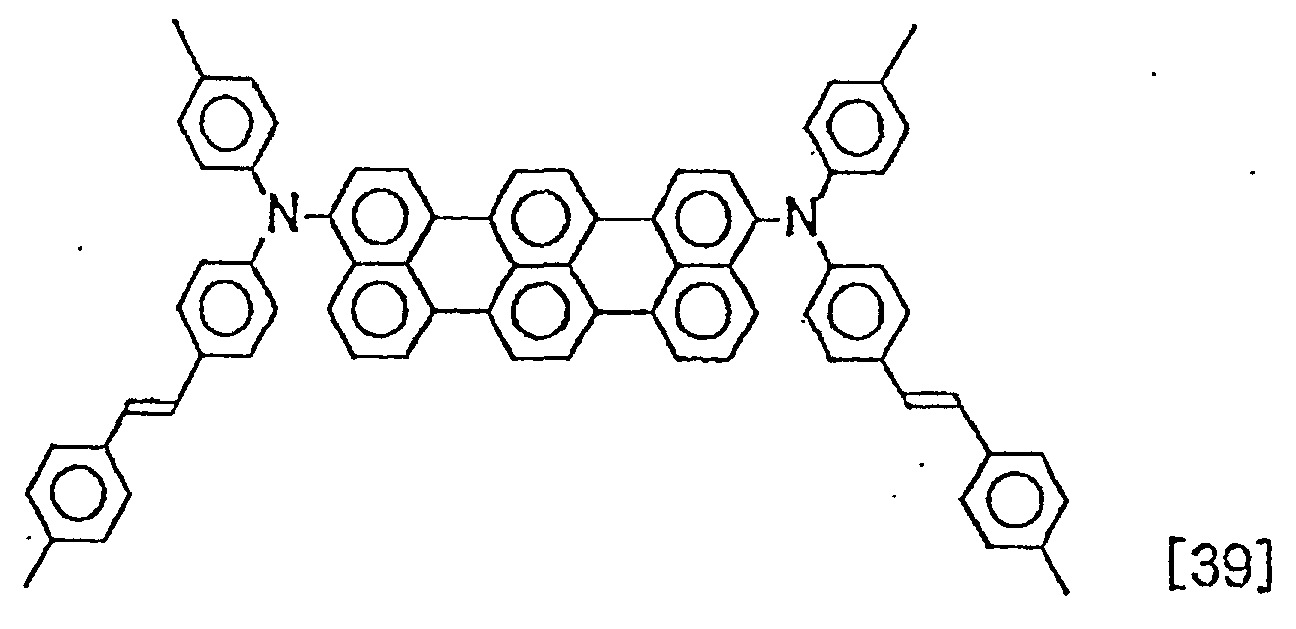
    Owner name: SAMSUNG SDI CO., LTD.

    PUAL Search report despatched

    Free format text: ORIGINAL CODE: 0009013

    AK Designated contracting states

    Kind code of ref document: A3

    Designated state(s): AT BE CH CY DE DK ES FI FR GB GR IE IT LI LU MC NL PT SE TR

    AX Request for extension of the european patent

    Extension state: AL LT LV MK RO SI

    RIC1 Information provided on ipc code assigned before grant

    Ipc: 7H 01L 51/30 B

    Ipc: 7H 01L 51/20 A

    17P Request for examination filed

    Effective date: 20051209

    AKX Designation fees paid

    Designated state(s): DE GB

    17Q First examination report despatched

    Effective date: 20060213

    GRAP Despatch of communication of intention to grant a patent

    Free format text: ORIGINAL CODE: EPIDOSNIGR1

    RIC1 Information provided on ipc code assigned before grant

    Ipc: H01L 51/00 20060101ALN20080229BHEP

    Ipc: H01L 51/50 20060101AFI20080229BHEP

    GRAS Grant fee paid

    Free format text: ORIGINAL CODE: EPIDOSNIGR3

    GRAA (expected) grant

    Free format text: ORIGINAL CODE: 0009210

    AK Designated contracting states

    Kind code of ref document: B1

    Designated state(s): DE GB

    REG Reference to a national code

    Ref country code: GB

    Ref legal event code: FG4D

    REF Corresponds to:

    Ref document number: 60039959

    Country of ref document: DE

    Date of ref document: 20081002

    Kind code of ref document: P

    REG Reference to a national code

    Ref country code: GB

    Ref legal event code: 732E

    PLBE No opposition filed within time limit

    Free format text: ORIGINAL CODE: 0009261

    STAA Information on the status of an ep patent application or granted ep patent

    Free format text: STATUS: NO OPPOSITION FILED WITHIN TIME LIMIT

    26N No opposition filed

    Effective date: 20090525

    REG Reference to a national code

    Ref country code: DE

    Ref legal event code: R082

    Ref document number: 60039959

    Country of ref document: DE

    Representative=s name: GULDE HENGELHAUPT ZIEBIG & SCHNEIDER, DE

    REG Reference to a national code

    Ref country code: DE

    Ref legal event code: R081

    Ref document number: 60039959

    Country of ref document: DE

    Owner name: SAMSUNG DISPLAY CO., LTD., YONGIN-CITY, KR

    Free format text: FORMER OWNER: SAMSUNG MOBILE DISPLAY CO. LTD., SUWON, GYEONGGI, KR

    Effective date: 20121026

    Ref country code: DE

    Ref legal event code: R082

    Ref document number: 60039959

    Country of ref document: DE

    Representative=s name: GULDE & PARTNER PATENT- UND RECHTSANWALTSKANZL, DE

    Effective date: 20121026

    Ref country code: DE

    Ref legal event code: R081

    Ref document number: 60039959

    Country of ref document: DE

    Owner name: SAMSUNG DISPLAY CO., LTD., KR

    Free format text: FORMER OWNER: SAMSUNG MOBILE DISPLAY CO. LTD., SUWON, KR

    Effective date: 20121026

    Ref country code: DE

    Ref legal event code: R082

    Ref document number: 60039959

    Country of ref document: DE

    Representative=s name: GULDE HENGELHAUPT ZIEBIG & SCHNEIDER, DE

    Effective date: 20121026

    REG Reference to a national code

    Ref country code: GB

    Ref legal event code: 732E

    Free format text: REGISTERED BETWEEN 20130103 AND 20130109

    PGFP Annual fee paid to national office [announced via postgrant information from national office to epo]

    Ref country code: DE

    Payment date: 20191205

    Year of fee payment: 20

    PGFP Annual fee paid to national office [announced via postgrant information from national office to epo]

    Ref country code: GB

    Payment date: 20191209

    Year of fee payment: 20

    REG Reference to a national code

    Ref country code: DE

    Ref legal event code: R071

    Ref document number: 60039959

    Country of ref document: DE

    REG Reference to a national code

    Ref country code: GB

    Ref legal event code: PE20

    Expiry date: 20201214

    PG25 Lapsed in a contracting state [announced via postgrant information from national office to epo]

    Ref country code: GB

    Free format text: LAPSE BECAUSE OF EXPIRATION OF PROTECTION

    Effective date: 20201214