EP1106524A2 - Verpackungung für pharmazeutische, kosmetische und medizinische Produkte - Google Patents
Verpackungung für pharmazeutische, kosmetische und medizinische Produkte Download PDFInfo
- Publication number
- EP1106524A2 EP1106524A2 EP00811117A EP00811117A EP1106524A2 EP 1106524 A2 EP1106524 A2 EP 1106524A2 EP 00811117 A EP00811117 A EP 00811117A EP 00811117 A EP00811117 A EP 00811117A EP 1106524 A2 EP1106524 A2 EP 1106524A2
- Authority
- EP
- European Patent Office
- Prior art keywords
- layer
- bag
- laminate
- tab
- area
- Prior art date
- Legal status (The legal status is an assumption and is not a legal conclusion. Google has not performed a legal analysis and makes no representation as to the accuracy of the status listed.)
- Withdrawn
Links
- 239000002537 cosmetic Substances 0.000 title claims abstract description 10
- 229940127554 medical product Drugs 0.000 title claims description 4
- 239000000463 material Substances 0.000 claims abstract description 34
- 230000007704 transition Effects 0.000 claims abstract description 25
- 238000000926 separation method Methods 0.000 claims abstract description 3
- 239000010410 layer Substances 0.000 claims description 176
- 239000012790 adhesive layer Substances 0.000 claims description 42
- 229920000728 polyester Polymers 0.000 claims description 34
- 238000007789 sealing Methods 0.000 claims description 33
- 238000007639 printing Methods 0.000 claims description 27
- 239000000853 adhesive Substances 0.000 claims description 19
- 230000001070 adhesive effect Effects 0.000 claims description 19
- 239000011888 foil Substances 0.000 claims description 15
- 230000003313 weakening effect Effects 0.000 claims description 14
- 229910052814 silicon oxide Inorganic materials 0.000 claims description 12
- 229920000098 polyolefin Polymers 0.000 claims description 11
- 239000012945 sealing adhesive Substances 0.000 claims description 10
- VYPSYNLAJGMNEJ-UHFFFAOYSA-N Silicium dioxide Chemical compound O=[Si]=O VYPSYNLAJGMNEJ-UHFFFAOYSA-N 0.000 claims description 9
- 229910052751 metal Inorganic materials 0.000 claims description 9
- 239000002184 metal Substances 0.000 claims description 9
- 239000004820 Pressure-sensitive adhesive Substances 0.000 claims description 7
- 239000012793 heat-sealing layer Substances 0.000 claims description 6
- 239000011140 metalized polyester Substances 0.000 claims description 5
- 239000003795 chemical substances by application Substances 0.000 claims description 2
- 230000001464 adherent effect Effects 0.000 claims 2
- 239000000945 filler Substances 0.000 claims 2
- 238000007373 indentation Methods 0.000 claims 2
- -1 polyethylene Polymers 0.000 description 45
- 239000000976 ink Substances 0.000 description 38
- 229920000139 polyethylene terephthalate Polymers 0.000 description 37
- 239000005020 polyethylene terephthalate Substances 0.000 description 25
- 238000000034 method Methods 0.000 description 21
- 238000004806 packaging method and process Methods 0.000 description 18
- 230000008569 process Effects 0.000 description 18
- 239000010408 film Substances 0.000 description 17
- 229920000573 polyethylene Polymers 0.000 description 17
- 239000004698 Polyethylene Substances 0.000 description 15
- 230000004888 barrier function Effects 0.000 description 13
- 238000000576 coating method Methods 0.000 description 12
- 239000011248 coating agent Substances 0.000 description 10
- 229920006267 polyester film Polymers 0.000 description 9
- 230000000694 effects Effects 0.000 description 8
- PNEYBMLMFCGWSK-UHFFFAOYSA-N Alumina Chemical compound [O-2].[O-2].[O-2].[Al+3].[Al+3] PNEYBMLMFCGWSK-UHFFFAOYSA-N 0.000 description 7
- 229910052782 aluminium Inorganic materials 0.000 description 7
- XAGFODPZIPBFFR-UHFFFAOYSA-N aluminium Chemical compound [Al] XAGFODPZIPBFFR-UHFFFAOYSA-N 0.000 description 7
- 238000003475 lamination Methods 0.000 description 7
- TWNQGVIAIRXVLR-UHFFFAOYSA-N oxo(oxoalumanyloxy)alumane Chemical compound O=[Al]O[Al]=O TWNQGVIAIRXVLR-UHFFFAOYSA-N 0.000 description 7
- 229910052710 silicon Inorganic materials 0.000 description 7
- 239000010703 silicon Substances 0.000 description 7
- XUIMIQQOPSSXEZ-UHFFFAOYSA-N Silicon Chemical compound [Si] XUIMIQQOPSSXEZ-UHFFFAOYSA-N 0.000 description 6
- LIVNPJMFVYWSIS-UHFFFAOYSA-N silicon monoxide Chemical class [Si-]#[O+] LIVNPJMFVYWSIS-UHFFFAOYSA-N 0.000 description 6
- 238000010030 laminating Methods 0.000 description 5
- 239000010409 thin film Substances 0.000 description 5
- 239000004952 Polyamide Substances 0.000 description 4
- 229920001577 copolymer Polymers 0.000 description 4
- 229920002647 polyamide Polymers 0.000 description 4
- 239000004743 Polypropylene Substances 0.000 description 3
- QVGXLLKOCUKJST-UHFFFAOYSA-N atomic oxygen Chemical compound [O] QVGXLLKOCUKJST-UHFFFAOYSA-N 0.000 description 3
- 230000008901 benefit Effects 0.000 description 3
- 229920001684 low density polyethylene Polymers 0.000 description 3
- 238000004519 manufacturing process Methods 0.000 description 3
- 239000001301 oxygen Substances 0.000 description 3
- 229910052760 oxygen Inorganic materials 0.000 description 3
- 229920001155 polypropylene Polymers 0.000 description 3
- 239000002966 varnish Substances 0.000 description 3
- 239000002131 composite material Substances 0.000 description 2
- 238000010276 construction Methods 0.000 description 2
- 238000001816 cooling Methods 0.000 description 2
- 230000006378 damage Effects 0.000 description 2
- 238000013461 design Methods 0.000 description 2
- 229920001903 high density polyethylene Polymers 0.000 description 2
- 239000004700 high-density polyethylene Substances 0.000 description 2
- 239000004702 low-density polyethylene Substances 0.000 description 2
- 239000005022 packaging material Substances 0.000 description 2
- 230000035699 permeability Effects 0.000 description 2
- 239000000825 pharmaceutical preparation Substances 0.000 description 2
- 229940127557 pharmaceutical product Drugs 0.000 description 2
- 229920000642 polymer Polymers 0.000 description 2
- 150000003673 urethanes Chemical class 0.000 description 2
- 229910000669 Chrome steel Inorganic materials 0.000 description 1
- 239000000020 Nitrocellulose Substances 0.000 description 1
- 229920006378 biaxially oriented polypropylene Polymers 0.000 description 1
- 239000011127 biaxially oriented polypropylene Substances 0.000 description 1
- 230000000903 blocking effect Effects 0.000 description 1
- 230000008859 change Effects 0.000 description 1
- 238000005229 chemical vapour deposition Methods 0.000 description 1
- 150000001875 compounds Chemical class 0.000 description 1
- 238000007796 conventional method Methods 0.000 description 1
- QMQBBUPJKANITL-MYXGOWFTSA-N dextropropoxyphene hydrochloride Chemical compound [H+].[Cl-].C([C@](OC(=O)CC)([C@H](C)CN(C)C)C=1C=CC=CC=1)C1=CC=CC=C1 QMQBBUPJKANITL-MYXGOWFTSA-N 0.000 description 1
- 229940079593 drug Drugs 0.000 description 1
- 239000003814 drug Substances 0.000 description 1
- 238000009820 dry lamination Methods 0.000 description 1
- 238000005516 engineering process Methods 0.000 description 1
- 230000007613 environmental effect Effects 0.000 description 1
- BFMKFCLXZSUVPI-UHFFFAOYSA-N ethyl but-3-enoate Chemical compound CCOC(=O)CC=C BFMKFCLXZSUVPI-UHFFFAOYSA-N 0.000 description 1
- 238000001125 extrusion Methods 0.000 description 1
- 238000009472 formulation Methods 0.000 description 1
- 230000004927 fusion Effects 0.000 description 1
- 239000007789 gas Substances 0.000 description 1
- 239000012775 heat-sealing material Substances 0.000 description 1
- 239000004615 ingredient Substances 0.000 description 1
- 238000005304 joining Methods 0.000 description 1
- 239000004922 lacquer Substances 0.000 description 1
- 239000005001 laminate film Substances 0.000 description 1
- 150000002739 metals Chemical class 0.000 description 1
- 239000000203 mixture Substances 0.000 description 1
- 238000012986 modification Methods 0.000 description 1
- 230000004048 modification Effects 0.000 description 1
- 229920001220 nitrocellulos Polymers 0.000 description 1
- 229920006284 nylon film Polymers 0.000 description 1
- 238000012856 packing Methods 0.000 description 1
- 238000005240 physical vapour deposition Methods 0.000 description 1
- 229920006254 polymer film Polymers 0.000 description 1
- 230000009467 reduction Effects 0.000 description 1
- 238000006748 scratching Methods 0.000 description 1
- 230000002393 scratching effect Effects 0.000 description 1
- 239000003566 sealing material Substances 0.000 description 1
- 238000009517 secondary packaging Methods 0.000 description 1
- 239000002904 solvent Substances 0.000 description 1
- 238000003860 storage Methods 0.000 description 1
- 239000000126 substance Substances 0.000 description 1
- 238000012549 training Methods 0.000 description 1
Images



Classifications
-
- B—PERFORMING OPERATIONS; TRANSPORTING
- B65—CONVEYING; PACKING; STORING; HANDLING THIN OR FILAMENTARY MATERIAL
- B65D—CONTAINERS FOR STORAGE OR TRANSPORT OF ARTICLES OR MATERIALS, e.g. BAGS, BARRELS, BOTTLES, BOXES, CANS, CARTONS, CRATES, DRUMS, JARS, TANKS, HOPPERS, FORWARDING CONTAINERS; ACCESSORIES, CLOSURES, OR FITTINGS THEREFOR; PACKAGING ELEMENTS; PACKAGES
- B65D75/00—Packages comprising articles or materials partially or wholly enclosed in strips, sheets, blanks, tubes or webs of flexible sheet material, e.g. in folded wrappers
- B65D75/28—Articles or materials wholly enclosed in composite wrappers, i.e. wrappers formed by associating or interconnecting two or more sheets or blanks
- B65D75/30—Articles or materials enclosed between two opposed sheets or blanks having their margins united, e.g. by pressure-sensitive adhesive, crimping, heat-sealing, or welding
-
- B—PERFORMING OPERATIONS; TRANSPORTING
- B65—CONVEYING; PACKING; STORING; HANDLING THIN OR FILAMENTARY MATERIAL
- B65D—CONTAINERS FOR STORAGE OR TRANSPORT OF ARTICLES OR MATERIALS, e.g. BAGS, BARRELS, BOTTLES, BOXES, CANS, CARTONS, CRATES, DRUMS, JARS, TANKS, HOPPERS, FORWARDING CONTAINERS; ACCESSORIES, CLOSURES, OR FITTINGS THEREFOR; PACKAGING ELEMENTS; PACKAGES
- B65D75/00—Packages comprising articles or materials partially or wholly enclosed in strips, sheets, blanks, tubes or webs of flexible sheet material, e.g. in folded wrappers
- B65D75/26—Articles or materials wholly enclosed in laminated sheets or wrapper blanks
-
- B—PERFORMING OPERATIONS; TRANSPORTING
- B65—CONVEYING; PACKING; STORING; HANDLING THIN OR FILAMENTARY MATERIAL
- B65D—CONTAINERS FOR STORAGE OR TRANSPORT OF ARTICLES OR MATERIALS, e.g. BAGS, BARRELS, BOTTLES, BOXES, CANS, CARTONS, CRATES, DRUMS, JARS, TANKS, HOPPERS, FORWARDING CONTAINERS; ACCESSORIES, CLOSURES, OR FITTINGS THEREFOR; PACKAGING ELEMENTS; PACKAGES
- B65D75/00—Packages comprising articles or materials partially or wholly enclosed in strips, sheets, blanks, tubes or webs of flexible sheet material, e.g. in folded wrappers
- B65D75/52—Details
- B65D75/54—Cards, coupons or other inserts or accessories
-
- B—PERFORMING OPERATIONS; TRANSPORTING
- B65—CONVEYING; PACKING; STORING; HANDLING THIN OR FILAMENTARY MATERIAL
- B65D—CONTAINERS FOR STORAGE OR TRANSPORT OF ARTICLES OR MATERIALS, e.g. BAGS, BARRELS, BOTTLES, BOXES, CANS, CARTONS, CRATES, DRUMS, JARS, TANKS, HOPPERS, FORWARDING CONTAINERS; ACCESSORIES, CLOSURES, OR FITTINGS THEREFOR; PACKAGING ELEMENTS; PACKAGES
- B65D75/00—Packages comprising articles or materials partially or wholly enclosed in strips, sheets, blanks, tubes or webs of flexible sheet material, e.g. in folded wrappers
- B65D75/52—Details
- B65D75/58—Opening or contents-removing devices added or incorporated during package manufacture
- B65D75/5827—Tear-lines provided in a wall portion
-
- B—PERFORMING OPERATIONS; TRANSPORTING
- B65—CONVEYING; PACKING; STORING; HANDLING THIN OR FILAMENTARY MATERIAL
- B65D—CONTAINERS FOR STORAGE OR TRANSPORT OF ARTICLES OR MATERIALS, e.g. BAGS, BARRELS, BOTTLES, BOXES, CANS, CARTONS, CRATES, DRUMS, JARS, TANKS, HOPPERS, FORWARDING CONTAINERS; ACCESSORIES, CLOSURES, OR FITTINGS THEREFOR; PACKAGING ELEMENTS; PACKAGES
- B65D75/00—Packages comprising articles or materials partially or wholly enclosed in strips, sheets, blanks, tubes or webs of flexible sheet material, e.g. in folded wrappers
- B65D75/52—Details
- B65D75/58—Opening or contents-removing devices added or incorporated during package manufacture
- B65D75/5855—Peelable seals
-
- B—PERFORMING OPERATIONS; TRANSPORTING
- B65—CONVEYING; PACKING; STORING; HANDLING THIN OR FILAMENTARY MATERIAL
- B65D—CONTAINERS FOR STORAGE OR TRANSPORT OF ARTICLES OR MATERIALS, e.g. BAGS, BARRELS, BOTTLES, BOXES, CANS, CARTONS, CRATES, DRUMS, JARS, TANKS, HOPPERS, FORWARDING CONTAINERS; ACCESSORIES, CLOSURES, OR FITTINGS THEREFOR; PACKAGING ELEMENTS; PACKAGES
- B65D2215/00—Child-proof means
- B65D2215/04—Child-proof means requiring the combination of different actions in succession
-
- B—PERFORMING OPERATIONS; TRANSPORTING
- B65—CONVEYING; PACKING; STORING; HANDLING THIN OR FILAMENTARY MATERIAL
- B65D—CONTAINERS FOR STORAGE OR TRANSPORT OF ARTICLES OR MATERIALS, e.g. BAGS, BARRELS, BOTTLES, BOXES, CANS, CARTONS, CRATES, DRUMS, JARS, TANKS, HOPPERS, FORWARDING CONTAINERS; ACCESSORIES, CLOSURES, OR FITTINGS THEREFOR; PACKAGING ELEMENTS; PACKAGES
- B65D2215/00—Child-proof means
- B65D2215/06—Child-proof means based on the difference in size between children's and adults' hands
-
- B—PERFORMING OPERATIONS; TRANSPORTING
- B65—CONVEYING; PACKING; STORING; HANDLING THIN OR FILAMENTARY MATERIAL
- B65D—CONTAINERS FOR STORAGE OR TRANSPORT OF ARTICLES OR MATERIALS, e.g. BAGS, BARRELS, BOTTLES, BOXES, CANS, CARTONS, CRATES, DRUMS, JARS, TANKS, HOPPERS, FORWARDING CONTAINERS; ACCESSORIES, CLOSURES, OR FITTINGS THEREFOR; PACKAGING ELEMENTS; PACKAGES
- B65D2215/00—Child-proof means
- B65D2215/08—Child-proof means for fooling children, e.g. fake closures
Definitions
- the present invention relates to improved packaging, particularly improved packaging Bags, for pharmaceutical, cosmetic, medical and similar products.
- Bags for pharmaceutical, cosmetic and medical products are on the market known, consisting of a front and a back, along its edge separable material assembled.
- the bags are made of a laminate manufactured according to the state of the art from laminates of metal foils and polymer films, and for example the bags on one or both of them are from the outside visible pages with decorative prints.
- Typical bag laminate constructions are laminates of polyester films attached to a metal foil such as an aluminum foil adhere, which in turn is produced on a sealing layer, usually made of a polyolefinic material such as polyethylene, polypropylene or copolymers of which is manufactured.
- the polyester film is usually printed on one side.
- the pressure can be between the polyester film and the adhesive, known as reverse printing, may be arranged, or the printing can be on the polyester film surface, on the outside Surface.
- the outside printing requires a top coat, known as top coat or print top coat, around the inks Protect from partial peeling or scratching when exposed to stress in packaging lines, transport loads and improper use exposed by the customer.
- the known bag constructions are made of several layers of material, which by means of of an adhesive are interconnected.
- the adhesive can but does not necessarily have to be based on urethanes or can be more polyethylene Natural, such as made of polyethylene or its copolymers.
- the choice of layers and the adhesives to bond the layers together, or the heat seal layers, to achieve the mutual sealing of the laminates depend on the product to be packaged, the conditions during use, the storage conditions and the blocking or barrier behavior that the packaged goods require. Moisture, oxygen, light and occasionally other gases can be harmful the packaged goods act and there will be protection against such environmental influences demands.
- a metal foil is often used as a barrier or barrier layer applied.
- Such a barrier layer is not used in individual applications required and cheaper structures can be used.
- Such structures can for example be made of biaxially oriented polypropylene with a polyolefinic Sealing layer, such as polyethylene, can be built up, or it can be a laminate of paper and a polymer-containing sealing layer can be applied
- the pouch is created by sealing the sealing layer, leaving a closed pocket for the goods to be packed, is formed (see Figure 1).
- such bags are under training a child-resistant package, designed so that the tear resistance of the material is high enough to prevent children from tearing them open.
- a common way of opening for adults is through a notch or slot in the sealed area allows, the notch not to the outer boundary of the Bag is enough.
- the sealed area must be folded over the notch and the Only then can the bag be torn open from the notch in the direction of the notch be (see Figures 2 and 3). This sequence of steps can be done by children under 51 months are not carried out and therefore such a bag is considered childproof.
- the object of the present invention is to provide improved childproof bags or individual packaging for pharmaceutical, medical, cosmetic products and the like to provide a large area to be printed without enlargement of the bag.
- the invention relates to a bag or individual packaging for pharmaceutical, cosmetic, medical or similar products.
- the bag has a structure from one upper laminate and a lower laminate.
- the outer surface is the surface facing outwards on a packaging and the inner surface is the on a packaging facing inwards, facing the filling material or against the other Laminate-facing surface of the respective laminate.
- a fill bag for the contents or the fill is formed in part of the bag structure.
- the upper laminate and the lower laminate are separable connected to each other, along the edge of the filling bag.
- Another part of the bag structure is designed as a tab, namely from a partial area of the upper laminate and a portion of the lower laminate that is easily separable and easily stick together peeled or peeled from each other.
- Means to the tab and the The product bag must be separated at the connection point between the flap and the product bag arranged. For example, a notch or slot in the edge area connected in a separable manner the filling bag can be arranged opposite the tab.
- the tab is practical larger than the filling bag.
- Both sides of the lower and the upper laminate can be printed. For example, a print can be seen both on the inner and also the exterior of the surfaces of both the top and bottom laminates, in Be attached to the area of the tab.
- the outer surface available for printing can are enlarged by reducing the size of the filling bag (compared to filling bags) According to the state of the art).
- the outer surface of the tab according to the bag according to the present invention can be enlarged by up to 50%.
- the bags according to the invention have the purpose of reducing the cost of packaging on the maintain the given level, the total surface available for printing significantly increase without increasing the cost of packaging or secondary packaging inflict.
- the bags according to the present invention such an increase in printable surface is without Addition of additional material and process costs achieved, with child safety remains present.
- the greatest advantage of the bags according to the present invention is in that the area that can be printed for the printing with information is enlarged, without adding any more material. Is from a common bag, such as a single sample packaging or -sachet, the size of the cavity is reduced while the length and width remain in their original size. The material difference is for the Printed with information on both surfaces, front and back.
- the upper and lower laminate of the tab are separated or detached from each other, you can the one formed from the upper laminate and the one formed from the lower laminate Tab part, together or individually, can be easily separated from the filling bag.
- a notch or slot at each end is the Perforation line arranged, which points in the direction of the longitudinal axis of the perforation line.
- the term "perforation line" is intended to be an arrangement of perforation holes in a curved shape and preferably describe a linear arrangement.
- a depression can also be Groove or weakening on the outer surface of the upper laminate and / or the lower laminates arranged along the transition area between the flap and the filling material pocket his.
- a notch or slot at each end of the recess, groove or Line of weakness, running in the direction of the longitudinal axis of the depression, groove or weakening, appropriate.
- the edge region of the product bag is preferably at an angle of 45 ° to 90 ° from 75 ° to 90 °, in particular 90 ° (right angle), based on the transition area between the product bag and the flap.
- the longitudinal axis is the notch or the slot perpendicular to the transition area between the filling bag and the Lasche achieves the best result in terms of security and opening the bag.
- the Notch or the slot in the separably sealed edge area of the product bag advantageously touches the perforation line is not and is preferably far enough from the perforation line removed so that the notch or slot does not tear when the top and / or the lower laminate of the flap is removed from the product bag.
- the edge region of the filling material pocket, which lies opposite the flap, is preferably wider (e.g. 20% to 100%, preferably 50%) than the other parts of the edge area.
- CERAMIS is a brand name for in a vacuum thin film process with oxides, e.g. with silicon oxides, coated polyester or polyolefin or polyamide films.
- the Brand CERAMIS is registered on the company Lawson Mardon Neher AG, a subsidiary of algroup AG, Switzerland.
- the polymer layers coated on one or both sides by means of a vacuum thin-film process are, for example, the preferred CERAMIS, a polyethylene terephthalate film coated with a silicon oxide.
- polyolefin or polyamide versions can also be used.
- the preferred polyamide version is a nylon film coated on one or both sides with a silicon oxide.
- the preferred polyolefin version is a polyethylene film coated on one or both sides with a silicon oxide (particularly preferably a high density polyethylene), and good results are also achieved with polypropylene films coated on one or both sides with silicon oxides.
- the polyethylene terephthalate, polyolefin or polyamide films can also be coated on one or both sides with an aluminum oxide.
- the above-mentioned silicon oxides can have the formula SiO x , where x is a number from 1 to 2, preferably from 1.2 to 1.8, or the aluminum oxides can have the formula Al y O z , where y / z is a number of 0, 2 to 1.5.
- the silicon or aluminum oxides or mixed oxides thereof, with other metals or semimetals, can be evaporated in a vacuum thin-film process (chemical or physical vapor deposition) in thicknesses of, for example, 5 to 500 nanometers.
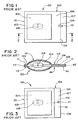
- FIG. 1 A bag according to the prior art is shown in FIG. 1, the bag 100 being a Filling bag 101 and an expansion section 102, both of which are continuous Composite material are formed.
- the composite material 114 as shown in Figure 2, has an upper laminate 111 and a lower laminate 112, which by means of an adhesive layer 113 separable, tightly adhesive (welded) are welded together.
- the balloon-shaped filling bag 104 contains the tablet 105.
- the edge region 103 around the balloon-shaped filling material pocket 104 around is sealed and separable by means of the heat-sealing adhesive layer 113 heat sealed.
- the inner surfaces included the parts of the top Laminates 111 and the lower laminate 112, which the balloon-shaped filling material bag 104 form, no heat-sealable adhesive layer 113, but can easily one heat sealable adhesive layer 113 on the inner surface, both on the upper laminate 111 or on the lower laminate 112 or on both laminates 111 and 112.
- the Border area section 106 is wider than the three remaining sections of the border area 103 and the edge area section 106 forms section 114.
- the parts of the upper one Laminates 111 and lower laminate 112, which form section 114, are separable and sealed together by means of the heat-sealing adhesive layer 113.
- section 114 Both outwardly facing surfaces of section 114 (e.g., outwardly facing surfaces Surfaces of the upper laminate 111 and the lower laminate 112) have printable surfaces Surfaces on. Section 114 can also be made significantly larger (not shown) and thus have even larger printable areas, the cost of one such bags according to the prior art increases accordingly.
- the notch 109 is substantially centrally located in section 114, as in FIG Figure 1 shown.
- a fold line 108 in section 114 is parallel to the adjacent side of FIG Filled goods bag 104 arranged and crosses the slot 109 (forming the outer Section 110 of the slot 109).
- the axis running longitudinally through the slot 109 is perpendicular to the fold line 108 and to the adjacent side of the product bag 104.
- section 114 is folded along fold line 108. In this way the slot 109 is also folded over and thus forms the notch 109/110 in the folding area of the Edge region section 106.
- the exposed notch 109/110 can then be torn open of the folded over edge portion 106 and the upper laminate 111 and the lower laminates 112 can be used to expose tablet 105. (A typical Crack line is marked 115.)
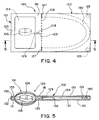
- FIGS Figures 4 to 6 An exemplary embodiment of the bag according to the present invention is shown in FIGS Figures 4 to 6 shown.
- the bag 120 has a filling bag 121 and an extension section 122 (tab 122). As shown in Figure 5, both are the top laminate 130, as well as the lower laminate 131 connected over the entire length of the bag, resp. continuous.
- the balloon-shaped filling material pocket 124 contains a tablet 105
- the edge area 123 around the balloon-shaped filling material pocket 124 is tight and separable by means of a Heat seal layer 132 heat sealed (welded).
- One side edge area 181 is wider than the other three remaining edge areas 123.
- the perforation line 126 is in the transition area between Tab 122 and the product bag 121 arranged.
- Other notches or slots 127 are located at each end of perforation line 126.
- the notch or slot 128 in the Edge region 181 is arranged, is perpendicular to the perforation line and touches the perforation line 126 not.
- the top laminate 130 and the adhesive layer 132/180 (125) is preferably a laminate 133 according to Figures 8, 10, 12, 14 and 16 and the description therefor.
- the lower Laminate 131 is preferably a laminate 135 according to FIGS. 9, 11, 13, 15 and 17 and the description.
- the parts of the upper laminate 130 and the lower laminate 131 are by means of the adhesive layer 132 sealed tightly and separably.
- the inside and the outward facing surface of the upper laminate 130 and the lower laminate 131 have large areas that can be printed.
- the tab 122 can be half the size of portion 114 of prior art bag 100 and always has same printable area.
- the tab 122 is the same size as the section 114 of the bag 100 according to the prior art, the tab 122 has the double printable Area.
- the present invention also includes a reduction in the size of the Product bag 124, compared to product bag 104, with tab 122 being larger as the section 114 according to the prior art bag 100 and the tab 122 has more than twice the printable surface.
- the upper laminate 130 and the lower laminate 131 are only lightly sealed, preferably in a pattern that is only a small part of the after inside facing surface of the upper laminate 130 and / or the lower laminate 131 covered (in the event that the upper laminate 130 and the lower laminate 131 are separated or peeled from each other), so that the surface areas of the inward-facing Surfaces of the upper laminate 130 and the lower laminate 131 which are printed can not be reduced significantly.
- the adhesive layer 125/180 can cover all or part of the surface facing inwards Extend the surface of the upper laminate 130 and the lower laminate 131.
- the Adhesive layers 125/180 can be on the upper laminate 130 and / or on the lower laminate 131, both when making the bag 120 or when the upper laminate 130 and that lower laminate 131 are still available separately, can be attached).
- the most preferred pattern for the adhesive layer 125/180 is shown in Figure 4, so the pattern of the adhesive layer 180 an arch shape or U shape, with the open side of the arch or the U is directed against the perforation line 126 and an adhesive layer 125 in e.g. Point-, Polygonal or circular surface shape on the outer corners of the tab 122.
- the top laminate 130 (with the weakly sealing adhesive layer 125/180) and the lower laminate 131 in the area of the tab or the tab 122 can be easily separated from each other to print on the inside Visualize surfaces of the upper laminate 130 and lower laminate 131. If the adhesive layer 125/180 is a resealable layer, the top one Laminate 130 and the lower laminate are sealed again. The tab 122 from the top Laminate 130 and the lower laminate 131 can extend from the fill bag 121 along the Perforation line 126 are separated.
- the notch or slot 128 is not as Opening aid for easy opening of the bag 120 recognizable. Only when the tab 122 (or the lower laminate 131) has been folded along the perforation line 126, the notch or slot 128 becomes easy to tear open the pouch 120 recognizable. If the tab 122 is separated from the filling bag 121, the notch can or the slot 128 as an aid for tearing open across the edge region 181 and thus the edge areas of the upper laminate 130 and the lower laminate 131 are used to reveal the tablet 105 (see typical tear line 129) by folding over of the edge area 181 such that the notch or slot 128 lies on an edge is coming. Since the notch or slot 128 does not touch the perforation line 126, it is for Small children difficult to open the bag 120 easily.
- Figure 7 shows the application of a weakening, such as a groove, crack 137 (on one or both sides of the bag 120) instead of a perforation line 126.
- a weakening such as a groove, crack 137 (on one or both sides of the bag 120) instead of a perforation line 126.
- Such structures are, for example, a polyester film which is laminated against a Ceramis® film, for example a polyester film coated with SiO x ; or a paper with a weight of 50 g / m 2 laminated with an SiO x coated polyester film or a metallized polyester film; a polyester film laminated to a metal foil such as an aluminum foil in a thickness of 6 to 12 ⁇ m, and further laminated to a polyolefin such as a polyethylene.
- the heat seal layers are compounds known per se, such as formulations containing ethyl vinyl acetate, which are applied wet and dried using a pressure dryer. Such simply constructed laminates are very cost effective and can be manufactured inexpensively.
- the present invention also encompasses more complex laminates.
- the polyolefins for the laminates are, for example, polyethylenes, polypropylenes and copolymers thereof, the low density polyethylenes being preferred.
- the adhesives are based on urethanes, for example, or are polyolefinic types such as polyethylenes and copolymers thereof.
- the laminates which are used for the bags according to the invention can also be used per se known equipment can be manufactured in a manner known per se.
- the lamination process can be used as a method of joining two or three materials into a multilayer structure are described and is referred to as duplex or triplex lamination.
- a Triplex lamination (film / foil / film) can be described as follows.
- the materials, e.g. Foil, Film A and Film B, are the process by unwinding material (Coils) fed.
- Lamination of the film to film A begins as a coating process.
- a solvent-based adhesive layer is applied to one side of the film.
- the adhesive is then dried using a multi-zone dryer, one sticky layer is produced and the film A is a laminating station, which at the end of the Dryer tunnel is arranged, fed.
- Film A which has a separate unwind and the conveying path to the laminating station is coated with the adhesive Foil connected.
- the two materials will be joined together as soon as this through a heated nip, formed by a heated chrome steel laminating roller and a rubber-coated counter-pressure roller are guided. Temperature and pressure result the necessary forces to achieve a bond.
- the laminating station contains a heated laminating roller with a pressure roller and two cooling rollers. The cooling rolls cool the laminate to stabilize the material and to make it easier to handle.
- This process is used to laminate film B on the other side of the film repeated. This process is called dry lamination and is done at speeds from e.g. over 100 m / min. executed.
- Structures for the bags described here can be made by other lamination methods, such as extrusion lamination and coating, and are produced by hot lamination.
- the laminates are then printed on both sides in the register, e.g. is the printed one Information printed on one side of the laminate in sync with the other Page.
- This process is known as double-sided printing and can be done at high speed run at low cost.
- a layer of a sealable coating can be applied, as well as either on the same side of the laminate cold sealing material or a heat sealing material which has a lower seal strength has as a sealing layer, are applied.
- the other side of the laminate which is also printed with a so-called heat-resistant top coat or Print topcoat, such as nitrocellulose or polyester-based topcoat, as in State of the art are coated.
- the finished laminate is on both sides with the appropriate provisions and product information printed.
- One side of such a laminate is with a heat resistant and / or a so-called release top coat to print the printing ink during to protect the subsequent heat sealing process or to stick to the cold seal layer or other sealing layers to avoid.
- the other side of the laminate will also printed, but with two different heat seal layers, or one heat seal layer and a cold seal layer on the printed information.
- Such heat seal coating (s) are preferably transparent and change the appearance of the printing Not.
- the most preferred laminate structures in FIGS. 8 to 13 are the make use of tightly sealing and lightly sealing options, and Figures 14 to 17, which have a different application due to other heat seal coatings or Generate heat seal layers, shown.
- the bag production is carried out on conventional bag manufacturing devices, only minor tool modifications to a bag sealing machine known per se are to be carried out.
- the laminate, described in the present invention is so-called fusion or anti-seperate seal around the contents, such as a pharmaceutical tablet, sealed, whereby only as little volume as required by the size of the product is used becomes.
- the sealing is carried out by means of the heat seal layer described above.
- the cold sealable or heat sealable part with a coating with low seal strength either cold or at the same temperature as for the heat seal layers is applied, sealed.
- the seal is designed so that it is the consumer enables the seal to be peeled off over a partial area and covers the seal not necessarily the entire outer edge of the bag.
- the outside of the bag is printed and the information or appearance can correspond to that of previous bags.
- the one on the other side of the laminate attached printing of the bag is visible by peeling off the part of the Bag that is either cold sealed or the one with the smaller coating Adhesive force than the rest of the seal has been sealed.
- the tab is meant to be peeled off the inward printing on the tab parts is visible to the consumer.
- the tab parts can be closed again and stick to each other as long as the Content has not been ingested.
- the amount of printed information for the Consumers increased significantly without even opening the bag. Should the content be included i.e. be consumed, it is necessary for the user to use the separable seal folded over at right angles to the existing notch in the seal and tearing open the structure, just like you would do with well-known bags.
- This characteristic combined with the perforation along the separable seal leads to a childproof Packaging. Be the two peelable sides of the bag with the additional printing peeled off powerfully, so the two are separated on this occasion Tab parts inevitably along the perforation of the separable sealed filling bag severed along the perforation.
- the tab separates along the perforations without giving access to the content and therefore lies childproof Packing before.
- the notches on the edge of the bag noticed and uses tensile forces, the notches and perforations will ensure that the tab of the separable sealed filling space, in which the product or the Content is recorded, is torn down. This will also make it childproof Packaging achieved.
- the only possible way to open the bag is by opening the area the separable seal, as described earlier, and fold the pouch from there to tear open. This poses a significant obstacle to opening for children, however it is extremely useful for adult users and especially for the older population is practical because there is no great effort or special manual dexterity to carry out of the two opening steps are required.
- the overall larger printable surface also allows larger fonts for Print the instructions for use, as well as the opening instructions, which is another welcome help for the older population.
- Large barrier or barrier effect means that the laminate has a low oxygen and has moisture permeability, while a medium barrier means that the laminate has a higher permeability to oxygen and moisture.
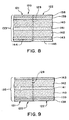
- FIGS. 8 and 9 A preferred embodiment of the present invention is shown in FIGS. 8 and 9.
- the illustrated part of the bag 120 is the section through the upper laminate 133 and the lower laminate 135, individually, in the transition area between the product bag 121 and the tab 122.
- the perforation line in the transition area of the filling bag 121 and the tab 122 is represented by reference number 129.
- the top laminate 133 shown a transparent laminate with high barrier effect, containing from the outside facing the inward-facing surface (a) covering the printing Layer of a top coat 138, (b) a first layer of printing inks 139, (c) a polyester layer (preferably polyethylene terephthalate) 140, (d) an adhesive layer 141, (e) one Ceramis® polyester layer (preferably polyethylene terephthalate) 142, (f) a second Layer of printing inks 143, and (g) reference numeral 144 represents a separable seal Heat seal layer in the filling bag 121 and the reference numeral 145 represents the weak adhesive layer on the tab 122.
- a transparent laminate with high barrier effect containing from the outside facing the inward-facing surface (a) covering the printing Layer of a top coat 138, (b) a first layer of printing inks 139, (c) a polyester layer (preferably polyethylene terephthalate) 140, (d) an adhesive layer 141, (e) one Ceramis
- Figure 9 is the lower laminate 135 a transparent laminate with high barrier effect, which, from the outside to the internal surface, (h) a layer of a top coat, which is the printing covers 138, (i) first ink layer 139, (j) polyester layer (preferably polyethylene terephthalate) 140, (k) adhesive layer 141, (l) CERAMIS® polyester layer (preferably Polyethylene terephthalate) 142, and (m) second ink layer 143.
- first ink layer 139 preferably polyethylene terephthalate
- polyester layer preferably polyethylene terephthalate
- adhesive layer 141 preferably Polyethylene terephthalate
- CERAMIS® polyester layer preferably Polyethylene terephthalate
- FIGS. 10 and 11 A further preferred embodiment of the invention is shown in FIGS. 10 and 11.
- the illustrated portion of the pouch 120 is a section through the top laminate 133 and that lower laminate 135, each individually, in the transition area between the product bag 120 and the flap 122.
- the perforation line in the transition area between the filling material pocket 121 and the tab 122 is indicated by reference numeral 129.
- Figure 10 that is upper laminate 133 is an opaque laminate with a high barrier effect and contains, from the outer Surface to the inner surface, (a) a lacquer layer covering the printing 146, (b) first ink layer 147, (c) paper 148, (d) adhesive layer 149, (e) CERAMIS® polyester layer (preferably polyethylene terephthalate) 150, (f) second Ink layer 151, and (g) reference numeral 152 indicates the heat-seal layer that seals permanently to the filling bag 121 and reference numeral 153 denotes the weak sealing adhesive layer in tab 121.
- the lower laminate 135 is one opaque laminate with high barrier effect and contains, from the outer surface to the inner surface (h) a coating varnish 146 over the printing, (i) first ink layer 147, (j) paper 148, (k) adhesive layer 149, (l) CERAMIS® polyester layer (preferably Polyethylene terephthalate) 150, and (m) second ink layer 151.
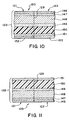
- FIGS. 12 and 13 show a further preferred embodiment of the invention.
- the portion of the bag 120 shown is a section through the top laminate 133 and the bottom Laminate 135, each separately, in the transition area between the product bag 121 and the tab 122.
- the perforation line in the transition area of the filling bag 121 and the Tab 122 is designated by reference number 129.
- Figure 12 is the top laminate 133 shown, an opaque laminate medium barrier effect, containing from the outer surface to the inner surface, (a) top coat over printing 154, (b) first ink layer 155, (c) paper 156, (d) adhesive layer 157, (e) metallized polyester layer (preferred) 158, (f) second ink layer 159, and (g) reference numeral 160 indicates the heat seal layer in the filling bag 121, which seals in a separably tight manner, and reference symbols 161 indicates the weakly sealing adhesive layer in the tab 122.
- FIG. 1 an opaque laminate medium barrier effect, containing from the outer surface to the inner surface, (a) top coat over printing 154, (b) first ink layer 155, (c) paper 156, (d) adhesive layer 157, (e) metallized polyester layer (preferred) 158, (f) second ink layer 159, and (g) reference numeral 160 indicates the heat seal layer in the filling bag 121, which seals in a separably tight manner
- the lower laminate 135 is an opaque laminate with a medium barrier effect, containing an overcoat from its outer surface to its inner surface (h) via printing 154, (i) first ink layer 155, (j) paper 156, (k) Adhesive layer 157, (l) metallized polyester layer (preferred) 158, and (m) second Ink layer 159.
- the layers 158 are particularly preferably metallized with aluminum Polyethylene terephthalate layers, but metallized polyolefin layers can also be used (preferably polyethylene, especially high density polyethylene).
- FIGS. 14 and 15 show a further preferred embodiment of the invention.
- the portion of the bag 120 shown is a section of the upper laminate 133 and the lower one Laminates 135, each individually, in the transition area between the filling bag 121 and the Tab 122.
- the perforation line in the transition area between product bag 121 and tab 122 is designated by reference number 129.
- the top laminate contains 133 from the outer surface to the inner surface, (a) a top coat over the printing 162, (b) first ink layer 163, (c) polyester layer (preferably polyethylene terephthalate) or paper 164, (d) first adhesive layer 165, (e) aluminum foil 166, (f) second adhesive layer 167, (g) polyethylene layer (preferably lower polyethylene Density) 168, (h) second ink layer 169 and (i) reference numeral 170 indicates the separable sealing heat seal on the filling bag 121 and reference number 171 indicates cold seal layer or the pressure sensitive adhesive layer or the weak seal Heat seal layer on the tab 122.
- the lower laminate contains 135, from the outer surface to the inner surface, (j) a varnish over the printing 162, (k) first ink layer 163, (l) polyester layer (preferably polyethylene terephthalate) or paper 164, (m) first adhesive layer 165, (n) aluminum foil 166, (o) second adhesive layer 167, (p) polyethylene layer (preferably polyethylene low density) 168, and (q) second ink layer 169.
- a varnish over the printing 162 the lower laminate contains 135, from the outer surface to the inner surface, (j) a varnish over the printing 162, (k) first ink layer 163, (l) polyester layer (preferably polyethylene terephthalate) or paper 164, (m) first adhesive layer 165, (n) aluminum foil 166, (o) second adhesive layer 167, (p) polyethylene layer (preferably polyethylene low density) 168, and (q) second ink layer 169.
- the part shown of the bag 120 is the section through the upper laminate 133 and the lower laminate 135, each individually, in
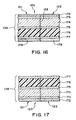
- top laminate 133 is shown containing from the outer surface to the inner surface (a) top coat 172 over the Printing, (b) first ink layer 173, (c) paper 174, (d) adhesive layer 175, (e) CERAMIS® polyester layer (preferably polyethylene terephthalate) 176, (f) second Ink layer 177, and (g) reference numeral 178 represents the heat seal that is sealable in the area of the filling material pocket 121 and the reference symbol 179 the weakly adhering one FIG.
- FIG. 17 shows the lower laminate 135 containing coating varnish 172 from the outer surface to the inner surface (h) printing, (i) first ink layer 173, (j) paper 174, (k) adhesive layer 175, (l) CERAMIS® polyester layer (preferably polyethylene terephthalate) 176, and (m) second ink layer 177.
Landscapes
- Engineering & Computer Science (AREA)
- Mechanical Engineering (AREA)
- Chemical & Material Sciences (AREA)
- Composite Materials (AREA)
- Bag Frames (AREA)
- Packages (AREA)
- Medical Preparation Storing Or Oral Administration Devices (AREA)
Abstract
Description
- weist eine grössere bedruckbare Fläche auf
- behält die Kosten des Verpackungsmaterials bei
- behält die bisherige Verfahrensökonomie und die Konfigurationen (keine Zusatzteile, wie zusätzliche Etiketten, Laschen, Einsätze, Beipackzettel, Datenblätter und faltbare Inhaltsetiketten usw.)
- erreicht Kindersicherheit
- gebraucht konventionelle Strukturen
- wendet konventionelle Verfahren an.
- wird durch neue Kombinationen von bisherigen Technologien die obigen Vorteile erreicht
- liegt eine neue Beutelgestaltung oder -konfiguration vor, mit leichtem Zugang zu zusätzlichen Verbraucher- oder Marketinginformationen
- sind neue kindersichere Mittel mit Perforationen vorhanden, um einen absichtlichen oder unabsichtlichen Zugang zum Produkt zu verhindern
- ist die Bedienungsfreundlichkeit für Senioren durch grössere Griffflächen verbessert, um das verlangte Umfalten und Oeffnen an der Kerbe zu ermöglichen
- ist die Kindersicherheit aus den oben angegebenen Gründen verbessert, weil die Griffflächen für Kinderhände zu gross sind und die Kerbe von der Beutelecke, in die Kinder üblicherweise hineinbeissen oder dort reissen, zu weit entfernt ist
- zeigt die Beschädigung am Beutel, dass am Beutel manipuliert wurde und es fehlen die Laschen, falls Kinder versucht haben sollten, den Beutel zu öffnen.
und das untere (bezogen auf einen liegenden Beutel, das nach unten zur Auflagefläche weisende) Laminat enthält, von dessen äusseren Oberfläche zu dessen inneren Oberfläche:
und das untere Laminat enthält von dessen äusseren Oberfläche zu seiner inneren Oberfläche:
und das untere Laminat enthält, von dessen äusseren Oberfläche zu seiner inneren Oberfläche
und das untere Laminat enthält, von dessen äusseren Oberfläche zu seiner inneren Oberfläche
Claims (16)
- Beutel für pharmazeutische, kosmetische und medizinische Produkte, dadurch gekennzeichnet, dass der Beutel eine Struktur umfasst, enthaltend ein oberes Laminat und ein unteres Laminat, eine Füllguttasche für das Produkt, die in einem Teil der Struktur eingeformt ist und wobei das obere Laminat und das untere Laminat trennfest im ganzen Randbereich um die Füllguttasche herum zusammengesiegelt sind, eine Lasche, geformt durch einen überstehenden Teil der Struktur, aus einem Teil des betreffenden oberen Laminates und einem Teil des betreffenden unteren Laminates, die schwach aneinander haften und leicht voneinander abschälbar sind, Mittel zum Abtrennen der Lasche von der Füllguttasche, die im Übergangsbereich zwischen der Lasche und der Füllguttasche angeordnet sind, eine Kerbe oder Schlitz, die im trennfest haftenden Randbereich der Füllguttasche gegenüber der Lasche angeordnet ist und beide Seiten des oberen Laminates und des unteren Laminates bedruckbar sind oder bedruckt sind.
- Beutel für pharmazeutische, kosmetische oder medizinische Produkte nach Anspruch 1, dadurch gekennzeichnet, dass die Struktur enthält:und einer Schwächungslinie, insbesondere eine Perforationslinie, entlang des Übergangsbereiches zwischen Füllguttasche und Lasche angeordnet ist und Kerben oder Schlitze an jedem Ende der Schwächungslinie, insbesondere der Perforationslinie, in der Längsachse der Schwächungs- oder Perforationslinie angebracht sind, und eine weitere Kerbe oder Schlitz sich im im trennfest haftenden Randbereich der Füllguttasche gegenüber der Lasche befindet, wobei diese weitere Kerbe oder Schlitz in rechtem Winkel zur Schwächungs-oder Perforationslinie angeordnet ist und die Schwächungs- oder Perforationslinie nicht berührt.(a) eine Füllguttasche enthaltend ein oberes Laminat und ein unteres Laminat, einen Randbereich der Füllguttasche (a) enthaltend den Randbereich des oberen Laminates und den Randbereich des unteren Laminates, die trennfest mittels eines Heisssiegelklebstoffes aneinander haften, wenigstens einen nach aussen geweiteten zentralen Bereich im oberen Laminat und/oder einen nach aussen geweiteten zentralen Bereich im unteren Laminat unter Ausformung einer Füllguttasche, worin das Produkt, Inhalt oder Füllgut aufgenommen ist, und(b) eine Lasche, welche die Verlängerung der Füllguttasche (a) darstellt, wobei die Lasche (b) aus einer Verlängerung des oberen Laminates und einer Verlängerung des unteren Laminates ist und diese Verlängerungen des oberen und des unteren Laminates vollständig oder über einen Teil ihrer inneren Oberflächen abschälbar sind und die Verlängerungen des oberen und des unteren Laminates mittels einer abschälbaren Klebstoffschicht, einem druckempfindlichen Klebstoff, einer Kaltsiegelschicht oder einer schwachhaftenden Heisssiegelschicht, vollflächig oder teilflächig aneinander haften
- Beutel nach Anspruch 1 dadurch gekennzeichnet, dass die Lasche grösser ist, als die Füllguttasche.
- Beutel nach Anspruch 1 dadurch gekennzeichnet, dass die Bedruckung auf der innenliegenden und der aussenliegenden Oberfläche von beiden, dem oberen Laminat und dem unteren Laminat, im Bereich der Lasche, sichtbar ist.
- Beutel nach Anspruch 1, dadurch gekennzeichnet, dass die Mittel zum Trennen der Lasche von der Füllguttasche eine Schwächung und vorzugsweise eine Perforationslinie umfassen, die entlang der Übergangsbereich zwischen der Lasche und der Füllguttasche angeordnet ist.
- Beutel nach Anspruch 5, dadurch gekennzeichnet, dass wenn der Laschenteil des oberen und des unteren Laminates, welche die Lasche bilden, voneinander getrennt oder abgeschält worden sind, der obere und der untere Laschenteil, jeder für sich, von der Füllguttasche abtrennbar sind.
- Beutel nach Anspruch 5, dadurch gekennzeichnet, dass je eine Kerbe oder ein Schlitz an jedem Ende der Schwächungslinie oder der Perforationslinie angebracht ist, die in Längsrichtung der Schwächungs- oder Perforationslinie ausgerichtet sind.
- Beutel nach Anspruch 1, dadurch gekennzeichnet, dass das Mittel für die Trennung der Lasche von der Füllguttasche eine linienförmige Schwächung, Rille oder linienförmige Vertiefung, die an der äusseren Oberfläche des oberen Laminates und/oder des unteren Laminates angeordnet ist, oder eine linienförmige Perforation darstellt, welche das obere und/oder das untere Laminat durchdringt, ist und das Mittel sich innerhalb des Übergangsbereiches zwischen Lasche und der Füllguttasche befindet.
- Beutel nach Anspruch 8, dadurch gekennzeichnet, dass an jedem Ende der linienförmigen Schwächung, Rille, Vertiefung oder Perforation eine Kerbe oder ein Schlitz angebracht ist, angeordnet auf der Längsachse der linienförmigen Schwächung, Rille, Vertiefung oder Perforation.
- Beutel nach Anspruch 1, dadurch gekennzeichnet, dass die Längsachse der Kerbe oder des Schlitzes im trennfest gesiegelten Randbereich der Füllguttasche in einem Winkel zwischen 45 und 90°, bezogen auf den Übergangsbereich, im Übergangsbereich zwischen der Füllguttasche und der Lasche angeordnet ist.
- Beutel nach Anspruch 10, dadurch gekennzeichnet, dass die Längsachse der Kerbe oder des Schlitzes im rechten Winkel, bezogen aus den Übergangsbereich, im Übergangsbereich zwischen der Füllguttasche und der Lasche angeordnet ist.
- Beutel nach Anspruch 10, dadurch gekennzeichnet, dass der trennfest gesiegelte Randbereich der Füllguttasche im Bereich der Lasche breiter ist als an den anderen Stellen dieses Randbereiches.
- Beutel nach Anspruch 1, dadurch gekennzeichnet, dass das obere Laminat, von der äusseren zur inneren Oberfläche,enthält.(a) eine Druck-Überlackschicht(b) eine erste Schicht einer Druckfarbe(c) eine Polyesterschicht oder ein Papier(d) eine erste Klebstoffschicht(e) eine Metallfolie(f) eine zweite Klebstoffschicht(g) eine Polyolefinschicht(h) eine zweite Schicht einer Druckfarbe(i) im Bereich der Füllguttasche eine trennfest bindende Siegelschicht und im Bereich der Lasche eine Kaltsiegelschicht oder einen druckempfindlichen Klebstoff oder eine abschälbare Siegelschicht oder eine schwach warmsiegelnde Schicht
enthält und das untere Laminat, von dessen äusseren Oberfläche zu dessen inneren Oberfläche,(j) eine Druck-Überlackschicht(k) eine erste Schicht einer Druckfarbe(l) eine Polyesterschicht oder ein Papier(m) eine erste Klebstoffschicht(n) eine Metallfolie(o) eine zweite Klebstoffschicht(p) eine Polyolefinschicht(q) eine zweite Schicht einer Druckfarbe - Beutel nach Anspruch 1, dadurch gekennzeichnet, dass das obere Laminat, von der äusseren zur inneren Oberfläche,enthält.(a) eine Druck-Überlackschicht(b) eine erste Schicht einer Druckfarbe(c) ein Papier(d) eine Klebstoffschicht(e) eine siliconoxidbeschichtete Polyesterschicht(f) eine zweite Schicht einer Druckfarbe(g) im Bereich der Füllguttasche eine trennfest bindende Siegelschicht und im Bereich der Lasche eine Kaltsiegelschicht oder einen druckempfindlichen Klebstoff oder eine abschälbare Siegelschicht oder eine schwach warmsiegelnde Schicht
enthält und das untere Laminat, von dessen äusseren Oberfläche zu seiner inneren Oberfläche,(h) eine Druck-Überlackschicht(i) eine erste Schicht einer Druckfarbe(i) ein Papier(k) eine Klebstoffschicht(l) eine siliconoxidbeschichtete Polyesterschicht(m) eine zweite Schicht einer Druckfarbe - Beutel nach Anspruch 1, dadurch gekennzeichnet, dass das obere Laminat transparent ist, und, von der äusseren zur inneren Oberfläche,enthält.(a) eine Druck-Überlackschicht(b) eine erste Schicht einer Druckfarbe(c) eine Polyesterschicht(d) eine Klebstoffschicht(e) eine siliconoxidbeschichtete Polyesterschicht(f) eine zweite Schicht einer Druckfarbe(g) im Bereich der Füllguttasche eine trennfest bindende Siegelschicht und im Bereich der Lasche eine schwachsiegelnde Klebstoffschicht
enthält und das untere Laminat, von dessen äusseren Oberfläche zu seiner inneren Oberfläche,(h) eine Druck-Überlackschicht(i) eine erste Schicht einer Druckfarbe(j) eine Polyesterschicht(k) eine Klebstoffschicht(l) eine siliconoxidbeschichtete Polyesterschicht(m) eine zweite Schicht einer Druckfarbe - Beutel nach Anspruch 1, dadurch gekennzeichnet, dass das obere Laminat opak ist, und, von der äusseren zur inneren Oberfläche,enthält.(a) eine Druck-Überlackschicht(b) eine erste Schicht einer Druckfarbe(c) ein Papier(d) eine Klebstoffschicht(e) eine siliconoxidbeschichtete Polyesterschicht oder eine metallisierte Polyesterschicht(f) eine zweite Schicht einer Druckfarbe(g) im Bereich der Füllguttasche eine trennfest bindende Siegelschicht und im Bereich der Lasche eine schwachsiegelnde Klebstoffschicht
enthält und das untere Laminat, von dessen äusseren Oberfläche zu seiner inneren Oberfläche,(h) eine Druck-Überlackschicht(i) eine erste Schicht einer Druckfarbe(j) ein Papier(k) eine Klebstoffschicht(l) eine siliconoxidbeschichtete Polyesterschicht oder eine metallisierte Polyesterschicht(m) eine zweite Schicht einer Druckfarbe
Applications Claiming Priority (2)
| Application Number | Priority Date | Filing Date | Title |
|---|---|---|---|
| US09/453,506 US6199698B1 (en) | 1999-12-03 | 1999-12-03 | Pharmaceutical packaging with separation means |
| US453506 | 1999-12-03 |
Publications (2)
| Publication Number | Publication Date |
|---|---|
| EP1106524A2 true EP1106524A2 (de) | 2001-06-13 |
| EP1106524A3 EP1106524A3 (de) | 2002-10-09 |
Family
ID=23800824
Family Applications (1)
| Application Number | Title | Priority Date | Filing Date |
|---|---|---|---|
| EP00811117A Withdrawn EP1106524A3 (de) | 1999-12-03 | 2000-11-23 | Verpackungung für pharmazeutische, kosmetische und medizinische Produkte |
Country Status (3)
| Country | Link |
|---|---|
| US (1) | US6199698B1 (de) |
| EP (1) | EP1106524A3 (de) |
| CA (1) | CA2327245A1 (de) |
Families Citing this family (60)
| Publication number | Priority date | Publication date | Assignee | Title |
|---|---|---|---|---|
| USD463275S1 (en) | 2000-04-25 | 2002-09-24 | Valois, Sa | Fluid product packaging |
| USD470763S1 (en) | 2000-02-21 | 2003-02-25 | Valois S.A. | Fluid product packaging case |
| US6352158B1 (en) * | 2000-07-06 | 2002-03-05 | Warner Lambert Company | Unit dose blister package with keyhole assisted opening feature |
| US6450685B1 (en) * | 2001-04-27 | 2002-09-17 | Steven Michael Scott | Resealable metalized thermal bag |
| NZ533452A (en) * | 2001-12-14 | 2005-12-23 | Huhtamaki Ronsberg | Packaging and sealing tool for production thereof |
| US20040159575A1 (en) * | 2001-12-26 | 2004-08-19 | Jutaro Shudo | Access resistant envelope |
| GB2394213A (en) * | 2002-10-14 | 2004-04-21 | Megaprint Group Ltd | Packaging comprising three layers, with a void in the middle layer |
| JP4121363B2 (ja) * | 2002-12-13 | 2008-07-23 | 三洋電機株式会社 | 薬剤包装機 |
| NL1022368C2 (nl) * | 2003-01-13 | 2004-07-15 | H J Heinz Holding B V | Verpakking. |
| ZA200402148B (en) * | 2003-04-04 | 2004-09-29 | Inventio Ag | Handrail-drive for an escalator or a moving walk. |
| JP2007523664A (ja) * | 2003-04-23 | 2007-08-23 | フェリング ベスローテン フェンノートシャップ | 医薬組成物用サシェ |
| US6708826B1 (en) * | 2003-04-30 | 2004-03-23 | Warner-Lambert Company, Llc | Packaged supply of individual doses of a personal care product |
| US6936318B2 (en) * | 2003-09-17 | 2005-08-30 | Reynolds Metals Company | No tear pharmaceutical pouch |
| USD518709S1 (en) | 2004-01-22 | 2006-04-11 | Warner-Lambert Company Llc | Dispenser with center opening covers |
| USD513980S1 (en) | 2004-01-22 | 2006-01-31 | Warner-Lambert Company Llc | Octagon shaped dispenser |
| USD517406S1 (en) | 2004-01-22 | 2006-03-21 | Warner-Lambert Company Llc | Octagon dispenser with bevel |
| US7264582B2 (en) * | 2004-03-11 | 2007-09-04 | 2004Adploy Limited Partnership | Pouch containers having advertising media and methods for their dissemination |
| DE102004012814A1 (de) * | 2004-03-16 | 2005-10-06 | Huhtamaki Ronsberg, Zweigniederlassung Der Huhtamaki Deutschland Gmbh & Co. Kg | Verfahren zum Herstellen eines Schlauchbeutels mit einem einstückig damit ausgebildeten Standboden und Schlauchbeutel |
| US7364047B2 (en) * | 2004-05-27 | 2008-04-29 | Zweigniederlassung Der Huhtamaki Deutschaland, Gmbh & Co. Kg | Tubular, especially can-shaped, receptacle for the accommodation of fluids, a method of manufacture, and use |
| US7543990B2 (en) * | 2004-05-27 | 2009-06-09 | Zweigniederlassung Der Huhtamaki Deutschland | Tubular bag |
| DE102004047445B4 (de) * | 2004-09-30 | 2007-05-31 | Lts Lohmann Therapie-Systeme Ag | Nichtwiederverschließbare Verpackung für gesundheitsgefährdende Erzeugnisse, Verwendung der Verpackung, sowie Verfahren zu deren Herstellung |
| DE102005006827A1 (de) * | 2004-11-04 | 2006-05-24 | Huhtamaki Ronsberg, Zweigniederlassung Der Huhtamaki Deutschland Gmbh & Co. Kg | Verfahren zur Herstellung eines flaschen- oder schlauchartigen Behälters, insbesondere Schlauchbeutels, mit einem eingesiegelten Boden sowie entsprechend hergestellter Schlauchbeutel |
| DE102004062864A1 (de) * | 2004-12-21 | 2006-06-22 | Boehringer Ingelheim Pharma Gmbh & Co. Kg | Folienbehälter |
| US20060157375A1 (en) * | 2005-01-20 | 2006-07-20 | Dejonge Stuart W | Child resistant blister pack container for stacked blister packs with non-coincidental notching |
| RU2401232C2 (ru) * | 2005-02-14 | 2010-10-10 | МакНЕЙЛ-ППС, ИНК. | Упаковка для индивидуальных лекарственных средств |
| DE102005026905A1 (de) * | 2005-03-01 | 2006-09-07 | Huhtamaki Ronsberg, Zweigniederlassung Der Huhtamaki Deutschland Gmbh & Co. Kg | Schlauchbeutel mit Deckel |
| DE102005010639A1 (de) * | 2005-03-08 | 2006-09-14 | Huhtamaki Ronsberg, Zweigniederlassung Der Huhtamaki Deutschland Gmbh & Co. Kg | Verpackungsbehälter, insbesondere dosenartiger Behälter |
| DE102005013585A1 (de) * | 2005-03-23 | 2006-09-28 | Huhtamaki Ronsberg, Zweigniederlassung Der Huhtamaki Deutschland Gmbh & Co. Kg | Wiederverschließbare Folien-Verpackung, insbesondere flow-wrap-Verpackung |
| DE102005016268A1 (de) * | 2005-04-08 | 2006-10-12 | Huhtamaki Ronsberg, Zweigniederlassung Der Huhtamaki Deutschland Gmbh & Co. Kg | Schlauchbeutel mit Deckel |
| DE202004021343U1 (de) * | 2005-04-18 | 2007-10-25 | Huhtamaki Ronsberg, Zweigniederlassung Der Huhtamaki Deutschland Gmbh & Co. Kg | Bedrucktes Trägersubstrat |
| RU2384498C2 (ru) * | 2005-04-18 | 2010-03-20 | Хутамаки Ронсберг, Цвайгнидерлассунг Дер Хутамаки Дойчланд Гмбх Унд Ко. Кг | Пленочная упаковка с индикацией вскрытия |
| DE102005039853A1 (de) * | 2005-08-23 | 2007-03-08 | Huhtamaki Ronsberg, Zweigniederlassung Der Huhtamaki Deutschland Gmbh & Co. Kg | Schlauchbeutel und Verfahren zur Befüllung desselben |
| US20070059464A1 (en) * | 2005-09-15 | 2007-03-15 | Sonoco Development Inc., A Corporation Of South Carolina | Controlled peel force packaging with pattern-applied energy-cured coating |
| US8398306B2 (en) | 2005-11-07 | 2013-03-19 | Kraft Foods Global Brands Llc | Flexible package with internal, resealable closure feature |
| US20070170196A1 (en) * | 2005-12-15 | 2007-07-26 | Autronic Plastics, Inc. | Package for storing and dispensing foil protected edible film strips |
| USD606856S1 (en) | 2006-06-12 | 2009-12-29 | Mcneil-Ppc, Inc. | Blister package |
| US7866475B2 (en) * | 2006-06-12 | 2011-01-11 | Mcneil-Ppc, Inc. | Blister package |
| US20110049154A1 (en) * | 2006-08-31 | 2011-03-03 | Andreas Michalsky | Packaging container, in particular can-like container |
| DE102007017339A1 (de) * | 2006-11-17 | 2008-05-21 | Huhtamaki Ronsberg, Zweigniederlassung Der Huhtamaki Deutschland Gmbh & Co. Kg | Behälter, insbesondere flexibler schlauchbeutel-und/oder dosenartiger Verpackungsbehälter |
| DE102006056778A1 (de) * | 2006-12-01 | 2008-06-05 | Huhtamaki Ronsberg, Zweigniederlassung Der Huhtamaki Deutschland Gmbh & Co. Kg | Verfahren zum Herstellen eines mehrschichtigen Laminats |
| DE102007027873B4 (de) * | 2007-05-18 | 2019-08-01 | Huhtamaki Flexible Packaging Germany Gmbh & Co. Kg | Mehrschichtiges Laminat für Tuben mit eingebetteter Aluminiumschicht, Verfahren zur Herstellung und daraus hergestellte Tube |
| US9232808B2 (en) | 2007-06-29 | 2016-01-12 | Kraft Foods Group Brands Llc | Processed cheese without emulsifying salts |
| BRPI0821460A2 (pt) * | 2007-12-31 | 2015-06-16 | Poppack Llc | Recipiente de armazenamento rígido com bolha de perímetro que pode ser rompida |
| FR2949195B1 (fr) * | 2009-08-24 | 2011-10-14 | Lfb Biomedicaments | Poche de stockage de solution therapeutique |
| MX2012009795A (es) | 2010-02-26 | 2012-09-12 | Kraft Foods Global Brands Llc | Envase susceptible de volver a cerrarse usando adhesivo de baja pegajosidad. |
| NZ591354A (en) | 2010-02-26 | 2012-09-28 | Kraft Foods Global Brands Llc | A low-tack, UV-cured pressure sensitive acrylic ester based adhesive for reclosable packaging |
| EP2578199A4 (de) * | 2010-05-31 | 2015-04-22 | Onedose Pharma S L | Hülle für eine medikamenten-einzeldosis |
| EP2687458A1 (de) * | 2012-07-17 | 2014-01-22 | LTS LOHMANN Therapie-Systeme AG | Verpackung für einzeldosierte wirkstoffhaltige Filme |
| US9266647B2 (en) | 2012-08-23 | 2016-02-23 | Waterview Innovation, Llc | Reusable shopping bag having multiple secondary uses |
| WO2014032024A1 (en) | 2012-08-23 | 2014-02-27 | Waterview Innovation, Llc | Reusable multi-purpose bag formed of nonwoven fibrous material |
| KR20140038237A (ko) * | 2012-09-20 | 2014-03-28 | 에스케이케미칼주식회사 | 리바스티그민의 안정성이 개선된 의약품 |
| US20140326634A1 (en) * | 2013-05-03 | 2014-11-06 | Ecolopharm Inc. | Blister Assembly for the Storage and Distribution of Pills |
| KR101483481B1 (ko) * | 2013-12-10 | 2015-01-29 | 주식회사 블리스팩 | 리필 또는 카트리지 타입 내용물 포장용기와 이를 수용하기 위한 케이스가 동시에 수납되는 블리스터 포장구조 |
| GB201409933D0 (en) * | 2014-06-04 | 2014-07-16 | Glaxo Group Ltd | Novel device |
| ES3058652T3 (en) * | 2016-10-06 | 2026-03-12 | Orbus Therapeutics Inc | Formulations for administration of eflornithine |
| US11673700B2 (en) | 2021-06-22 | 2023-06-13 | Vmi Holland B.V. | Device and methods for packaging medicaments with fault detection |
| US11273103B1 (en) | 2021-06-22 | 2022-03-15 | Vmi Holland B.V. | Method, computer program product and dispensing device for dispensing discrete medicaments |
| US12521315B2 (en) | 2021-06-22 | 2026-01-13 | Vmi Holland B.V. | Method, computer program product and dispensing device for dispensing discrete medicaments |
| US11498761B1 (en) | 2021-06-22 | 2022-11-15 | Vmi Holland B.V. | Method for dispensing discrete medicaments, a test station for testing a feeder unit, and a method for determining a fill level of a feeder unit |
| US12605349B2 (en) | 2024-09-05 | 2026-04-21 | Orbus Therapeutics, Inc. | Methods of treating grade 3 astrocytoma |
Family Cites Families (15)
| Publication number | Priority date | Publication date | Assignee | Title |
|---|---|---|---|---|
| CA558078A (en) * | 1954-12-08 | 1958-05-27 | E. Lakso Eino | Ampoules |
| GB1141810A (en) * | 1965-10-22 | 1969-02-05 | Sterling Winthrop Group Ltd | Suppository pack |
| US3503493A (en) * | 1968-01-08 | 1970-03-31 | Hoffmann La Roche | Medicament packaging device |
| US3750907A (en) * | 1970-04-08 | 1973-08-07 | Eastman Kodak Co | Fluid containers having both relatively strong and relatively weak seals |
| US3872970A (en) * | 1974-01-11 | 1975-03-25 | Lilly Co Eli | Child-resistant blister package |
| DE7435910U (de) * | 1974-10-26 | 1975-02-20 | Gundermann Unionpack | Folienverpackung fuer Medikamente |
| US4011949A (en) * | 1975-06-18 | 1977-03-15 | The Lehigh Press, Inc. | Package construction for opening only by a predetermined procedure |
| US4279344A (en) * | 1979-12-26 | 1981-07-21 | Reynolds Metals Company | Heat-sealable and peelable laminated packaging construction |
| US4303751A (en) * | 1980-06-16 | 1981-12-01 | Polaroid Corporation | Rupturable photographic processing alkaline fluid container |
| US4303750A (en) * | 1980-06-16 | 1981-12-01 | Polaroid Corporation | Alkaline fluid photographic processing composition containers |
| US5253754A (en) * | 1992-08-14 | 1993-10-19 | American Fluoroseal Corporation | Peel package and method of packaging organs |
| US5511665A (en) * | 1994-10-31 | 1996-04-30 | G. D. Searle & Co. | Child-resistant package |
| JPH08276527A (ja) * | 1995-04-05 | 1996-10-22 | Dainippon Printing Co Ltd | 包装用クリ−ンフィルムおよびそれを使用した包装用袋 |
| JP3253509B2 (ja) * | 1995-12-01 | 2002-02-04 | ティーディーケイ株式会社 | 開封性を改良したフィルム包装体 |
| US6003670A (en) * | 1996-07-30 | 1999-12-21 | Fres-Co System Usa, Inc. | Abuse resistant flexible package |
-
1999
- 1999-12-03 US US09/453,506 patent/US6199698B1/en not_active Expired - Lifetime
-
2000
- 2000-11-23 EP EP00811117A patent/EP1106524A3/de not_active Withdrawn
- 2000-12-01 CA CA002327245A patent/CA2327245A1/en not_active Abandoned
Non-Patent Citations (1)
| Title |
|---|
| None |
Also Published As
| Publication number | Publication date |
|---|---|
| US6199698B1 (en) | 2001-03-13 |
| CA2327245A1 (en) | 2001-06-03 |
| EP1106524A3 (de) | 2002-10-09 |
Similar Documents
| Publication | Publication Date | Title |
|---|---|---|
| DE68915048T2 (de) | Behälter und Behälterverschluss mit Anzeige unbefugten Öffnens. | |
| EP2326571B1 (de) | Kindersichere einzeldosisverpackung für transdermale therapeutische systeme oder folienförmige darreichungsformen | |
| US6199698B1 (en) | Pharmaceutical packaging with separation means | |
| DE69518759T2 (de) | Verwandelbare, kindersichere blisterpackung | |
| EP2148820B1 (de) | Folienverpackungsbeutel | |
| EP1799583B1 (de) | Nichtwiederverschliessbare verpackung für gesundheits-gefährdende erzeugnisse | |
| EP1449789B1 (de) | Verpackungsbehälter mit einer Verpackungsfolie mit integriertem Offnungs-und Wiederverschliesssystem | |
| EP1057750B1 (de) | Kindersichere Verpackung für Tabletten | |
| EP1196333B1 (de) | Kindersichere verpackung für tabletten | |
| EP0086214B1 (de) | Packung mit gasdichter packungshülle | |
| EP2396241B1 (de) | Kindergesicherte, hochinerte einzelverpackung | |
| DE1949723C2 (de) | Mehrschichtiger flexibler Folien-Beutel, insbesondere für Tabak | |
| WO2000075040A1 (de) | Kindersichere verpackung für tabletten | |
| DE69626737T2 (de) | Blisterverpackung für Pillen mit Sicherheitsträger | |
| DE102004062864A1 (de) | Folienbehälter | |
| EP3792192A1 (de) | Verpackungsbeutelanordnung sowie verfahren zur herstellung und handhabung der verpackungsbeutelanordnung | |
| DE60115751T2 (de) | Abziehbares Filmetikett für einen Behälter aus Verbundwerkstoff | |
| DE3835721A1 (de) | Verfahren zum herstellen von wiederverschliessbaren verpackungs-beuteln sowie danach hergestellte verpackungs-beutel | |
| EP2203359A2 (de) | Verpackungseinheit | |
| DE9410586U1 (de) | Verpackung für Zigarettenbündel mit mehr als einem Öffnungsmittel | |
| DE69905598T2 (de) | Verpackungshülle | |
| EP2578509A1 (de) | Verpackungsbeutel für Nahrungsmittel | |
| EP2563682A1 (de) | Wafertasche | |
| DE3839143A1 (de) | Beutel fuer bonbons u. dgl. | |
| EP3757036B1 (de) | Folienbeutel |
Legal Events
| Date | Code | Title | Description |
|---|---|---|---|
| PUAI | Public reference made under article 153(3) epc to a published international application that has entered the european phase |
Free format text: ORIGINAL CODE: 0009012 |
|
| AK | Designated contracting states |
Kind code of ref document: A2 Designated state(s): AT BE CH CY DE DK ES FI FR GB GR IE IT LI LU MC NL PT SE TR |
|
| AX | Request for extension of the european patent |
Free format text: AL;LT;LV;MK;RO;SI PAYMENT 20001125 |
|
| RAP1 | Party data changed (applicant data changed or rights of an application transferred) |
Owner name: ALCAN TECHNOLOGY & MANAGEMENT AG |
|
| PUAL | Search report despatched |
Free format text: ORIGINAL CODE: 0009013 |
|
| AK | Designated contracting states |
Kind code of ref document: A3 Designated state(s): AT BE CH CY DE DK ES FI FR GB GR IE IT LI LU MC NL PT SE TR |
|
| AX | Request for extension of the european patent |
Free format text: AL;LT;LV;MK;RO;SI PAYMENT 20001125 |
|
| RIC1 | Information provided on ipc code assigned before grant |
Free format text: 7B 65D 75/58 A, 7B 65D 75/30 B |
|
| 17P | Request for examination filed |
Effective date: 20030409 |
|
| AKX | Designation fees paid |
Designated state(s): AT BE CH CY DE DK ES FI FR GB GR IE IT LI LU MC NL PT SE TR |
|
| AXX | Extension fees paid |
Extension state: SI Payment date: 20001125 |
|
| 17Q | First examination report despatched |
Effective date: 20030704 |
|
| GRAP | Despatch of communication of intention to grant a patent |
Free format text: ORIGINAL CODE: EPIDOSNIGR1 |
|
| STAA | Information on the status of an ep patent application or granted ep patent |
Free format text: STATUS: THE APPLICATION IS DEEMED TO BE WITHDRAWN |
|
| 18D | Application deemed to be withdrawn |
Effective date: 20040728 |