EP1102592B1 - Coumarin and related aromatic-based polymeric prodrugs - Google Patents
Coumarin and related aromatic-based polymeric prodrugs Download PDFInfo
- Publication number
- EP1102592B1 EP1102592B1 EP99933882A EP99933882A EP1102592B1 EP 1102592 B1 EP1102592 B1 EP 1102592B1 EP 99933882 A EP99933882 A EP 99933882A EP 99933882 A EP99933882 A EP 99933882A EP 1102592 B1 EP1102592 B1 EP 1102592B1
- Authority
- EP
- European Patent Office
- Prior art keywords
- substituted
- compound
- group
- alkyls
- heteroalkyls
- Prior art date
- Legal status (The legal status is an assumption and is not a legal conclusion. Google has not performed a legal analysis and makes no representation as to the accuracy of the status listed.)
- Expired - Lifetime
Links
- 0 CC[C@](C(C1CO2)C=C(C(C(C3)=CC4*=C)=N[C@]4C=CC)N3C1=O)(C2=O)N=O Chemical compound CC[C@](C(C1CO2)C=C(C(C(C3)=CC4*=C)=N[C@]4C=CC)N3C1=O)(C2=O)N=O 0.000 description 4
Images

Classifications
-
- A—HUMAN NECESSITIES
- A61—MEDICAL OR VETERINARY SCIENCE; HYGIENE
- A61K—PREPARATIONS FOR MEDICAL, DENTAL OR TOILETRY PURPOSES
- A61K31/00—Medicinal preparations containing organic active ingredients
- A61K31/74—Synthetic polymeric materials
- A61K31/765—Polymers containing oxygen
-
- A—HUMAN NECESSITIES
- A61—MEDICAL OR VETERINARY SCIENCE; HYGIENE
- A61P—SPECIFIC THERAPEUTIC ACTIVITY OF CHEMICAL COMPOUNDS OR MEDICINAL PREPARATIONS
- A61P35/00—Antineoplastic agents
-
- A—HUMAN NECESSITIES
- A61—MEDICAL OR VETERINARY SCIENCE; HYGIENE
- A61P—SPECIFIC THERAPEUTIC ACTIVITY OF CHEMICAL COMPOUNDS OR MEDICINAL PREPARATIONS
- A61P43/00—Drugs for specific purposes, not provided for in groups A61P1/00-A61P41/00
Definitions
- the present invention relates to double prodrugs.
- the invention relates to polymeric-based double prodrugs having reversible linkages involving amino or hydroxyl moieties of chemical compounds and biologically active materials such as enzymes, proteins and the like.
- Prodrugs include chemical derivatives of a biologically-active parent compound which, upon administration, eventually liberate the parent compound in vivo .
- Prodrugs allow the artisan to modify the onset and/or duration of action of an agent in vivo and can modify the transportation, distribution or solubility of a drug in the body.
- prodrug formulations often reduce the toxicity and/or otherwise overcome difficulties encountered when administering pharmaceutical preparations.
- Typical examples of prodrugs include organic phosphates or esters of alcohols or thioalcohols. See Remington's Pharmaceutical Sciences , 16th Ed., A. Osol, Ed. (1980), the disclosure of which is incorporated by reference herein.
- Prodrugs are often biologically inert or substantially inactive forms of the parent or active compound.
- the rate of release of the active drug i.e. the rate of hydrolysis, is influenced by several factors but especially by the type of bond joining the parent drug to the modifier. Care must be taken to avoid preparing prodrugs which are eliminated through the kidney or reticular endothelial system, etc. before a sufficient amount of hydrolysis of the parent compound occurs.
- a polymer as part of the prodrug system, one can increase the circulating half-life of the drug.
- the hydrolytic reaction sequence involves a first step which usually is an enzymatic cleavage and the second involves a non-enzymatic hydrolysis that occurs only after the first has taken place.
- first step usually is an enzymatic cleavage
- second involves a non-enzymatic hydrolysis that occurs only after the first has taken place.
- B is a leaving group such as N-hydroxybenzotriazolyl, N-hydroxyphthalimidyl, halogen, p-nitrophenoxy, imidazolyl, N-hydroxysuccinimidyl, thiazolidinyl thione, or other activating groups.
- B is a residue of any amino-containing or hydroxyl-containing compound for which one or more of improved aqueous solubility, decreased antigenicity, prodrug and/or controlled release delivery is desired.
- B can be a residue of an enzyme, protein, or organic compound such as daunorubicin, doxorubicin, p -aminoaniline mustard, camptothecin, paclitaxel, Ara C, etc.
- the term "residue” shall be understood to mean that portion of a biologically active compound which remains after it has undergone a substitution reaction in which the prodrug carrier portion has been attached.
- alkyl shall be understood to include straight, branched, substituted C 1-12 alkyls, including alkoxy, C 3-8 cycloalkyls or substituted cycloalkyls, etc.
- the double prodrugs of the present invention are thus unique delivery systems.
- the polymeric portion is first released by hydrolysis or esterase activity and then the resultant "second prodrug" moiety undergoes a lactonization reaction to regenerate the amine-containing bioactive compound in vivo .
- the double prodrug compounds of the present invention are capable of solubilizing amine- or hydroxyl-containing compounds and extending their half-lives as compared to the native or even "second" prodrug counterparts.
- the polymeric portion can also impart an antigenicity-reducing effect on the parent compound.
- Another advantage of the systems of the present invention is that the linkage between the polymer portion and the "second prodrug" compound as described above, is designed to hydrolyze or otherwise cleave at a rate which allows the compound to retain its enhanced solubility and circulating half-life.
- the native drug however, is still not released at this point. Only after the "second prodrug" undergoes the relatively rapid lactonization reaction, will the desired native or parent molecule be released. It is readily apparent that this double prodrug approach of the present invention offers unique and unexpected characteristics which enhance the circulating half-life and solubility of native or unmodified molecules.
- substituted alkyls include carboxyalkyls, aminoalkyls, dialkylaminoalkyls, hydroxyalkyls and mercaptoalkyls; substituted cycloalkyls include moieties such as 4-chlorocyclohexyl; aryls include moieties such as napthyl; substituted aryls include moieties such as 3-bromophenyl; aralkyls include moieties such as toluyl; heteroalkyls include moieties such as ethylthiophene; substituted heteroalkyls include moieties such as 3-methoxythiophene; alkoxy includes moieties such as methoxy; and phenoxy includes moieties such as 3-nitrophenoxy. Halo- shall be understood to include flu
- Ar represents a moiety which results in the formation of a multi-substituted aromatic hydrocarbon or a multi- substituted heterocyclic group in Formula (I).
- ⁇ electrons must be shared within a "cloud" both above and below the plane of a cyclic molecule.
- the number of ⁇ electrons must satisfy the Hückel rule (4n + 2).
- Preferred aromatic moieties of the present invention include, without limitation: wherein J is O, S, or NR 1 , E and Z are independently CR 2 or NR 1 ; and R 2 , R 3 , R 5 and R 6 are independently selected from the group consisting of hydrogen, C 1-6 alkyls, C 1-6 alkoxy, phenoxy, C 1-8 heteroalkyls, C 1-8 heteroalkoxy, substituted C 1-6 alkyls, C 3-8 cycloalkyls, C 3-8 substituted cycloalkyls, aralkyls, aryls, substituted aryls, such as aryls substituted with halo-, nitro- and cyano-; carboxy-, carboxyalkyl, alkylcarbonyl, etc.
- R 2 , R 3 , R 5 and R 6 are either hydrogen or a lower, i.e. C 1-6 alkyl or substituted alkyl. More preferably, R 2 , R 3 , R 5 and R 6 are hydrogen. Isomers of the five and six-membered rings are also contemplated as well as benzo- and dibenzo- systems such as anthracine, napthlene and their related congeners are also contemplated. Particularly preferred moieties are based on coumarin and coumarin derivatives.
- the double prodrug linkages of the transport systems of the present invention are selected to hydrolyze via an esterase catalyzed hydrolysis in vivo at a rate which generates sufficient amounts of the "second" prodrug compound within a suitable time after administration.
- the term "sufficient amounts” for purposes of the present invention shall mean an amount which later undergoes sufficient lactonization in vivo to release the parent compound and achieve a desired effect.
- ( n ) is preferably an integer from about 1 to about 12 and more preferably 1 or 2; and R 7-10 are preferably hydrogen or a lower alkyl, when present.
- M may be X which is designated as an electron withdrawing group.
- X can be selected from moieties such as O, NR 12 , S, SO and SO 2 where Y 3 is the same as that defined for Y 1 and R 12 is the same as that defined for R 1 , i.e.
- C 1-6 alkyls branched alkyls, aryls, substituted aryls, C 1-6 alkyl aralkyls, heteroalkyls, substituted heteroalkyls or substituted C 1-6 alkyls such as carboxyalkyls, aminoalkyls, dialkylaminoalkyl, hydroxyalkyls or mercaptoalkyls, to name but a few.
- X is O, NR 12 or and R 12 is H.
- the polymer, R 11 is preferably attached to Q via a heteroatom such as oxygen.
- Q can be selected from the non-limiting list of C 2-4 alkyls or C 3-8 cycloalkyls, aryls or aralkyl groups substituted with a member of the group consisting of O, S and NR 12 , wherein R 12 is selected from the group consisting of hydrogen, C 1-6 alkyls, C 3-12 branched alkyls, C 3-8 cycloalkyls, C 1-6 substituted alkyls, C 3-8 substituted cycloalkyls, aryls, substituted aryls, aralkyls, C 1-6 heteroalkyls, substituted C 1-6 heteroalkyls.
- the free electron pair can be anywhere along the Q moiety as long as the defined spacing between the free electron pair and the oxygen is maintained.
- R 11 is attached to Q via NR 12 , O, or S.
- Q assists hydrolysis of the prodrug linkage by anchimeric assistance because the free electron pair moiety can generate a three- to six-membered, but preferably five-membered, ring by-product upon hydrolysis of the preferably ester linkage.
- the prodrug compounds of the present invention are designed so that the rate of hydrolysis > the rate of elimination in plasma.
- the linkages included in the compounds have hydrolysis rates in the plasma of the mammal being treated which is fast enough to allow sufficient amounts of the parent compounds, i.e. the amino-containing bioactive compound, to be released prior to elimination.
- Some preferred compounds of the present invention i.e. those in which (n) is 1 or 2, have a T 1/2 for hydrolysis in plasma ranging from about 5 minutes to about 12 hours.
- the compositions have a plasma T 1/2 hydrolysis ranging from about 0.5 to about 8 hours and most preferably from about 1 to about 6 hours.
- the "double prodrug" compositions of the present invention include a polymeric residue, R 11 which is described in detail below.
- R 11 includes a capping group A which can be hydrogen, C 1-6 alkyl moieties, carboxyalkyl, dialkyl acyl urea alkyls, or a compound of formula (II) shown below which forms a bis-system: wherein B' is the same as B or another member of the group defined by B and the remaining variables are as set forth above with regard to Formula (I).
- a capping group A which can be hydrogen, C 1-6 alkyl moieties, carboxyalkyl, dialkyl acyl urea alkyls, or a compound of formula (II) shown below which forms a bis-system: wherein B' is the same as B or another member of the group defined by B and the remaining variables are as set forth above with regard to Formula (I).
- Suitable examples of such polymers include polyalkylene oxides such as polyethylene glycols which are also preferably substantially non-antigenic.
- the general formula for PEG and its derivatives i.e. A'-O-(CH 2 CH 2 O) x -(CH 2 ) n -A, where (x) represents the degree of polymerization (i.e. 10-2,300) or number of repeating units in the polymer chain and is dependent on the molecular weight of the polymer, (n) is zero or a positive integer, (A) is a capping group as defined herein, i.e. an -H, amino, carboxy, halo, C 1-6 alkyl or other activating group and A' is the same as A or another A moiety.
- polypropylene glycols such as those described in commonly-assigned U.S. Patent No. 5,643,575, "star-PEG's” and multi-armed PEG's such as those described in Shearwater Polymers, Inc. catalog “Polyethylene Glycol Derivatives 1997-1998”; the disclosure of each is incorporated herein by reference. It will be understood that the water-soluble polymer will be functionalized for attachment to the linkage via M, X or Q herein.
- polyethylene glycols PEG's
- mono-activated, C 1-4 alkyl-terminated PAO's such as mono-methyl-terminated polyethylene glycols (mPEG's) are preferred when mono- substituted polymers are desired; bis -activated polyethylene oxides are preferred when disubstituted prodrugs are desired.
- mono- or di-acid activated polymers such as PEG acids or PEG diacids can be used as well as mono- or di-PEG amines and mono- or di-PEG diols.
- Suitable PAO acids can be synthesized by first converting mPEG-OH to an ethyl ester followed by saponification. See also Gehrhardt, H., et al. Polymer Bulletin 18: 487 (1987) and Veronese, F.M., et al., J. Controlled Release 10; 145 (1989).
- the PAO-acid can be synthesized by converting mPEG-OH into a t -butyl ester followed by acid cleavage. See, for example, commonly assigned U.S. Patent No. 5,605,976. The disclosures of each of the foregoing are incorporated by reference herein.
- PAO's and PEG's can vary substantially in molecular weight, polymers ranging from about 2,000 to about 100,000 are usually selected for the purposes of the present invention. Molecular weights of from about 5,000 to about 50,000 are preferred and 5,000 to about 40,000 are particularly preferred. The molecular weight of the polymer selected for inclusion in the "double prodrug" must be sufficient so as to provide sufficient circulation of the "double prodrug" before hydrolysis of the linker. Within the ranges provided above, polymers having molecular weight ranges of at least 20,000 are preferred for chemotherapeutic and organic moieties. In the case of nucleophiles such as some proteins, enzymes and the like, polymers having a molecular weight range of from about 2,000 to about 20,000 are preferred.
- the polymeric substances included herein are preferably water-soluble at room temperature.
- a non-limiting list of such polymers include polyalkylene oxide homopolymers such as polyethylene glycol (PEG) or polypropylene glycols, polyoxyethylenated polyols, copolymers thereof and block copolymers thereof, provided that the water solubility of the block copolymers is maintained.
- effectively non-antigenic materials such as dextran, polyvinyl alcohols, carbohydrate-based polymers, hydroxypropylmethacrylamide (HPMA), and copolymers thereof etc. and the like can be used if the same type of activation is employed as described herein for PAO's such as PEG.
- PAO's such as PEG.
- the double prodrugs of the present invention can be prepared in at least two fashions.
- the transport form (PEG-prodrug) can be prepared by:
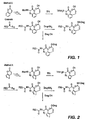
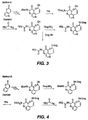
- Figure 4 does not show the reaction scheme for an OH-containing target, the reaction would nonetheless proceed in the manner illustrated with an ester bond being formed between the drug residue and the transport system.
- Intermediate compound (III) can be prepared using standard organic synthesis techniques.
- blocked coumarin derivatives and related compounds can be synthesized using a procedure similar to or as that disclosed by Binghe Wang, et al. in Bioorganic & Medicinal Chemistry Letters , Vol.6, No.23, pp 2823-2826, 1996. supra , the disclosure of which is incorporated herein by reference.
- Attachment of the parent amine-containing compound to intermediate compound (III) or (IV) can be carried out using standard organic synthesis techniques using coupling agents known to those of ordinary skill in the art such as 1,3-diisopropylcarbodiimide (DIPC), dialkyl carbodiimides, 2-halo-1-alkyl--pyridinium halides, 1-(3-dimethylaminopropyl)-3-ethyl carbodiimide (EDC), propane phosphonic acid cyclic anhydride (PPACA) and phenyl dichlorophosphates.
- DIPC 1,3-diisopropylcarbodiimide
- EDC 1-(3-dimethylaminopropyl)-3-ethyl carbodiimide
- PPACA propane phosphonic acid cyclic anhydride
- phenyl dichlorophosphates Alternatively, when B is a good leaving group such as those listed below in F. 1., a coupling agent is not required and
- the double prodrugs of the invention are preferably prepared either by reacting the activated transport form described above as compound (IV) with the parent compound in the presence of a coupling agent such as DIPC, EDC, DMAP, phenyldichlorophosphate, etc. or base, if required (see Figure 1) or attaching the parent compound to the intermediate compound (formula III) and thereafter reacting the resultant compound with an activated polymer as schematically shown in Figure 4.
- a coupling agent such as DIPC, EDC, DMAP, phenyldichlorophosphate, etc. or base, if required (see Figure 1) or attaching the parent compound to the intermediate compound (formula III) and thereafter reacting the resultant compound with an activated polymer as schematically shown in Figure 4.
- the resulting conjugated double prodrug composition is then recovered or isolated using techniques known to those of ordinary skill, i.e. recrystallized then filtered.
- the substituents are reacted in an inert solvent such as methylene chloride, chloroform, toluene, DMF or mixtures thereof.
- the reaction also preferably is conducted in the presence of a base, such as dimethylaminopyridine, diisopropylethylamine, pyridine, triethylamine, etc. to neutralize any acids generated and at a temperature from 0°C up to about 40°C (room temperature).
- Removal of the protecting group is carried out in the same manner as described in the first method.
- suitable groups include, without limitations, moieties such as N-hydroxybenzotriazolyl, halogen, N-hydroxyphthalimidyl, p-nitrophenoxy, imidazolyl, N-hydroxysuccinimidyl; thiazolidinyl thione, or other good leaving groups as will be apparent to those of ordinary skill.
- the leaving groups are attached to the aromatic, i.e. coumarin-or coumarin derivative portion of the compound after the "double" prodrug portion, i.e. the PEG and spacer has been attached. See, for illustrative purposes, Method A in Fig. 1.
- the double prodrug carrier portion instead of reacting the double prodrug carrier portion with a Drug-NH 2 or Drug-OH, it is reacted with a moiety which results in attaching the desired leaving group, i.e. PNP chloroformate or disuccinimidyl carbonate (DSC), etc.
- a moiety which results in attaching the desired leaving group i.e. PNP chloroformate or disuccinimidyl carbonate (DSC), etc.
- DSC disuccinimidyl carbonate
- B when B is a leaving group not a drug residue, are prepared by acylating a compound of Formula (III) with a moiety which results in the attachment of the polymeric portion and thereafter reacting the acylated resultant compound with an activating group for coupling to a target, e.g., compounds such as 4-nitrophenyl-chloroformate, DSC, carbonyldiimidazole, thiazolidine thione, etc. to provide the desired "activated" derivative.
- a target e.g., compounds such as 4-nitrophenyl-chloroformate, DSC, carbonyldiimidazole, thiazolidine thione, etc.
- activated form of the PEG double prodrug is ready for conjugation with an amine-containing or hydroxyl-containing compound.
- activated transport forms are shown below:
- B is a residue of an amine-containing compound
- suitable compounds include residues of organic compounds, enzymes, proteins, polypeptides, etc.
- Organic compounds include, without limitation, moieties such as anthracycline compounds including daunorubicin, doxorubicin; p -aminoaniline mustard, Ara-C (cytosine arabinoside) and related compounds, gemcitabine, etc.
- B can be a residue of an amine-containing cardiovascular agent, anti-neoplastic, anti-infective, anti-fungal such as nystatin or amphotericin B, anti-anxiety agent, gastrointestinal agent, central nervous system-activating agent, analgesic, fertility agent, contraceptive agent, anti-inflammatory agent, steroidal agent, anti-urecemic agent, vasodilating agent, vasoconstricting agent, etc.
- an amine-containing cardiovascular agent such as nystatin or amphotericin B, anti-anxiety agent, gastrointestinal agent, central nervous system-activating agent, analgesic, fertility agent, contraceptive agent, anti-inflammatory agent, steroidal agent, anti-urecemic agent, vasodilating agent, vasoconstricting agent, etc.
- Suitable proteins, polypeptides, enzymes, peptides and the like having at least one available amino group for polymer attachment include materials which have physiological or pharmacological activities as well as those which are able to catalyze reactions in organic solvents.
- the only other requirement of the amine-containing materials is that they maintain at least some portion of the activity associated with the unmodified protein, enzyme, peptide, etc. after the prodrug transport portion has hydrolyzed.
- Proteins, polypeptides and peptides of interest include, but are not limited to, hemoglobin, serum proteins such as blood factors including Factors VII, VIII, and IX; immunoglobulins, cytokines such as interleukins, i.e. IL-1 through IL-13, ⁇ -, ⁇ - and ⁇ -interferons, colony stimulating factors including granulocyte colony stimulating factors, platelet derived growth factors and phospholipase-activating protein (PLAP).
- hemoglobin serum proteins such as blood factors including Factors VII, VIII, and IX
- immunoglobulins such as interleukins, i.e. IL-1 through IL-13, ⁇ -, ⁇ - and ⁇ -interferons
- colony stimulating factors including granulocyte colony stimulating factors, platelet derived growth factors and phospholipase-activating protein (PLAP).
- PLAP phospholipase-activating protein
- proteins of general biological or therapeutic interest include insulin, plant proteins such as lectins and ricins, tumor necrosis factors and related proteins, growth factors such as transforming growth factors, such as TGF ⁇ 's or TGF ⁇ 's and epidermal growth factors, hormones, somatomedins, erythropoietin, pigmentary hormones, hypothalamic releasing factors, antidiuretic hormones, prolactin, chorionic gonadotropin, follicle-stimulating hormone, thyroid-stimulating hormone, tissue plasminogen activator, and the like.
- Immunoglobulins of interest include IgG, IgE, IgM, IgA, IgD and fragments thereof.
- Some proteins such as the interleukins, interferons and colony stimulating factors also exist in non-glycosylated form, usually as a result of using recombinant techniques.
- the non-glycosylated versions are also among the proteins of the present invention.
- Enzymes of interest include carbohydrate-specific enzymes, proteolytic enzymes, oxidoreductases, transferases, hydrolases, lyases, isomerases and ligases.
- examples of enzymes of interest include asparaginase, arginase, arginine deaminase, adenosine deaminase, superoxide dismutase, endotoxinases, catalases, chymotrypsin, lipases, uricases, adenosine diphosphatase, tyrosinases and bilirubin oxidase.
- Carbohydrate-specific enzymes of interest include glucose oxidases, glucodases, galactosidases, glucocerebrosidases, glucouronidases, etc.
- any portion of a biological polymer demonstrating in vivo bioactivity includes amino acid sequences, nucleic acids (DNA, RNA), peptide nucleic acids (PNA), antibody fragments, single chain binding proteins, see, for example U.S. Patent No. 4,946,778, disclosure of which is incorporated herein by reference, binding molecules including fusions of antibodies or fragments, polyclonal antibodies, monoclonal antibodies and catalytic antibodies.
- the proteins or portions thereof can be prepared or isolated by using techniques known to those of ordinary skill in the art such as tissue culture, extraction from animal sources, or by recombinant DNA methodologies.
- Transgenic sources of the proteins, polypeptides, amino acid sequences and the like are also contemplated. Such materials are obtained from transgenic animals, i.e., mice, pigs, cows, etc., wherein the proteins are expressed in milk, blood or tissues.
- Transgenic insects and baculovirus expression systems are also contemplated as sources.
- mutant versions of proteins, such as mutant interferons are also within the scope of the invention.
- proteins of interest are allergen proteins such as ragweed, Antigen E, honeybee venom, mite allergen, and the like.
- allergen proteins such as ragweed, Antigen E, honeybee venom, mite allergen, and the like.
- the foregoing is illustrative of the proteins which are suitable for the present invention. It is to be understood that those proteins, as defined herein, not specifically mentioned but having an available amino group are also intended and are within the scope of the present invention.
- the amino-containing compound is a biologically active compound that is suitable for medicinal or diagnostic use in the treatment of animals, e.g., mammals, including humans, for conditions for which such treatment is desired.
- animals e.g., mammals, including humans
- the amino-containing compound is a biologically active compound that is suitable for medicinal or diagnostic use in the treatment of animals, e.g., mammals, including humans, for conditions for which such treatment is desired.
- the foregoing list is meant to be illustrative and not limiting for the compounds which can be modified. Those of ordinary skill will realize that other such compounds can be similarly modified without undue experimentation. It is to be understood that those biologically active materials not specifically mentioned but having suitable amino-groups are also intended and are within the scope of the present invention.
- amino-containing molecules suitable for inclusion herein there is available at least one (primary or secondary) amine containing position which can react and link with a carrier portion and that there is not substantial loss of bioactivity after the double prodrug system releases and regenerates the parent compound.
- Camptothecin is a water-insoluble cytotoxic alkaloid produced by Camptotheca accuminata trees indigenous to China and nothapodytes foetida trees indigenous to India. Camptothecin and related compounds and analogs are also known to be potential anticancer or antitumor agents and have been shown to exhibit these activities in vitro and in vivo . Camptothecin and related compounds are also candidates for conversion to the double prodrugs of the present invention. Camptothecin and certain related analogues share the structure:
- the A ring in either or both of the 10- and 11-positions can be substituted with an OH.
- the A ring can also be substituted in the 9-position with a straight or branched C 1-30 alkyl or C 1-17 alkoxy, optionally linked to the ring by a heteroatom i.e.- O or S.
- the B ring can be substituted in the 7-position with a straight or branched C 1-30 alkyl or substituted alkyl-, C 5-8 cycloakyl, C 1-30 alkoxy, phenyl alkyl, etc., alkyl carbamate, alkyl carbazides, phenyl hydrazine derivatives, amino-, aminoalkyl-, aralkyl, etc.
- Other substitutions are possible in the C, D and E rings. See, for example, U.S. Patent Nos. 5,004,758; 4,943,579; Re 32,518, the contents of which are incorporated herein by reference.
- Such derivatives can be made using known synthetic techniques without undue experimentation.
- Preferred camptothecin derivatives for use herein include those which include a 20-OR or another OH moiety which is capable of reacting directly with activated forms of the polymer transport systems described herein or to the linking moiety intermediates, e.g. iminodiacetic acid, etc., which are then attached to a polymer such as PEG.
- a polymer such as PEG.
- taxanes One class of compounds included in the double prodrug compositions of the present invention is taxanes.
- taxanes include all compounds within the taxane family of terpenes.
- taxol paclitaxel
- 3'-substituted tert -butoxy-carbonyl-amine derivatives taxoteres
- taxoteres 3'-substituted tert -butoxy-carbonyl-amine derivatives
- Representative taxanes are shown below.
- the double prodrug formulations of the present invention can be prepared using many other compounds.
- biologically-active compounds such as gemcitabine: or podophyllotoxin: or triazole-based antifungal agents such as fluconazole: or ciclopirox: can be used.
- the parent compounds selected for double prodrug forms need not be substantially water-insoluble, although the polymer-based double prodrugs of the present invention are especially well suited for delivering such water-insoluble compounds.
- Other useful parent compounds include, for example, certain low molecular weight biologically active proteins, enzymes and peptides, including peptido glycans, as well as other anti-tumor agents; cardiovascular agents such as forskolin; anti-neoplastics such as combretastatin, vinblastine, doxorubicin, Ara-C, maytansine, etc.; anti-infectives such as vancomycin, erythromycin, etc.; antifungals such as nystatin, amphoteracin B, triazoles, papulocandins, pneumocandins, echinocandins, polyoxins, nikkomycins, pradimicins, benanomicins, etc.
- anti-anxiety agents include gastrointestinal agents, central nervous system-activating agents, analgesics, fertility or contraceptive agents, anti-inflammatory agents, steroidal agents, anti-urecemic agents, cardiovascular agents, vasodilating agents, vasoconstricting agents and the like.
- parent compounds suitable for incorporation into the double prodrug compositions of the invention may themselves be substances/compounds which are not active after hydrolytic release from the linked composition, but which will become active after undergoing a further chemical process/reaction.
- an anti-cancer drug that is delivered to the bloodstream by the double prodrug transport system may remain inactive until entering a cancer or tumor cell, whereupon it is activated by the cancer or tumor cell chemistry, e.g., by an enzymatic reaction unique to that cell.
- the residue of the unconjugated compound is referred to as the residue of the unconjugated compound.
- hybrid types of the polymeric double prodrug system described herein include not only the reversible double prodrug system but also a second polymeric system based on more permanent types of linkages.
- the hybrids can be prepared by at least two methods.
- the aromatic-based double prodrug protein conjugate can be first synthesized, and then PEGylated using any art-recognized activated polymer such as thiazolidine thione or succinimidyl carbonate-activated PEG.
- the more permanent conjugation reaction can be performed first (i.e. the parent compound is PEGylated) and the resultant conjugates can be used to form the aromatic-based double prodrug conjugates described herein.
- activated polymers will be understood to include polymers containing one or more terminal groups which are capable of reacting with one or more of ⁇ -amino groups, ⁇ -amino groups, histidine nitrogens, carboxyl groups, sulfhydryl groups, etc. found on enzymes, proteins, etc., as well as such groups found on synthetically prepared organic compounds.
- the activating terminal moiety can be any group which facilitates conjugation of the polymers with the biologically active material, i.e. protein, enzyme, etc. either before of after the double prodrug transport system of the present invention has been synthesized. See, for example, U.S. Patent No. 4,179,337, the disclosure of which is hereby incorporated by reference.
- Such activating groups can be a moiety selected from:
- the activating moiety can also include a spacer moiety located proximal to the polymer.
- the spacer moiety may be a heteroalkyl, alkoxy, alkyl containing up to 18 carbon atoms or even an additional polymer chain.
- the spacer moieties can added using standard synthesis techniques.
- Another aspect of the present invention comprises the manufacture of medicaments comprising the compounds of the invention for use in methods of treatment for various medical conditions in mammals.
- the methods include administering to the mammal in need of such treatment, an effective amount of a composition of the invention, as described herein, such as a double prodrug of doxorubicin
- a composition of the invention as described herein, such as a double prodrug of doxorubicin
- the prodrug compositions are useful for, among other things, treating diseases which are similar to those which are treated with the parent compound, e.g. enzyme replacement therapy, neoplastic disease, reducing tumor burden, preventing metastasis of neoplasms and preventing recurrences of tumor/neoplastic growths in mammals.
- the amount of the prodrug that is administered will depend upon the amount of the parent molecule included therein. Generally, the amount of prodrug used in the treatment methods is that amount which effectively achieves the desired therapeutic result in mammals. Naturally, the dosages of the various prodrug compounds will vary somewhat depending upon the parent compound, rate of in vivo hydrolysis, molecular weight of the polymer, etc. In general, double prodrug polymeric derivatives of nitrogen mustard derivatives are administered in amounts ranging from about 5 to about 500 mg/m 2 per day. The range set forth above is illustrative and those skilled in the art will determine the optimal dosing of the prodrug selected based on clinical experience and the treatment indication. Actual dosages will be apparent to the artisan without undue experimentation.
- compositions, including prodrugs, of the present invention can be included in one or more suitable pharmaceutical compositions for administration to mammals.
- the pharmaceutical compositions may be in the form of a solution, suspension, tablet, capsule or the like, prepared according to methods well known in the art. It is also contemplated that administration of such compositions may be by the oral and/or parenteral routes depending upon the needs of the artisan.
- a solution and/or suspension of the composition may be utilized, for example, as a carrier vehicle for injection or infiltration of the composition by any art known methods, e.g., by intravenous, intramuscular, subdermal injection and the like.
- Such administration may also be by infusion into a body space or cavity, as well as by inhalation and/or intranasal routes.
- the prodrugs are parenterally administered to mammals in need thereof.
- Compound 5 Trifluoroacetic acid salt of proline ester of 3-(2'-hydroxyphenyl)-2-propenoic acid.
- Compound 7 Coupling of 5 with PEG (40 kDa) dithiazolidine thione, 6 .
- N -diisoprapylethylamine 52.6 mg (0.41 mmol) of N , N -diisoprapylethylamine is added to the solution of 65 mg (0.17 mmol) of 5 and 1 g (0.025 mmol) of PEG (40 kDa) dithiazolidine thione ( 6 ) in 15 mL of anhydrous dichloromethane. The mixture is stirred at room temperature overnight. The solvent is removed in vacuo and the residue is recrystallized from 2-propanol to give 7 as a white solid.
- Compound 12 Conjugation of 10 to (L)-Asparaginase.
- PEG linker 10 450 mg (0.083 mmol, 317 equiv.) of PEG linker, 10 , is added to 37.5 mg (416 ⁇ L, 0.00027 mmol) of native (L)-asparaginase, 11 , in 3 mL of sodium phosphate buffer (0.1 M, pH 7.8) with gentle stirring. The solution is stirred at 30 °C for 30 min.
- a GPC column Zorbax GF-450 is used to monitor PEG conjugation: The PEG-Asp conjugate 12 has a retention time of about 8.5 min.
- the mixture was diluted with 12 mL of formulation buffer (0.05 M sodium phosphate, 0.85% sodium chloride, pH 7.3) and diafiltered with a Centriprep concentrator (Amicon) having a molecular weight cut-off 50,000 daltons to remove the unreacted PEG. Diafiltration is continued as needed at 4 °C until no more free PEG is detected by mixing equal amount of filtrate and 0.1% PMA (polymethacrylic acid in 0.1 M HCl).
- formulation buffer 0.05 M sodium phosphate, 0.85% sodium chloride, pH 7.3
- PMA polymethacrylic acid in 0.1 M HCl
- the product, 12 is not stable in basic buffer solution for prolonged periods of time, therefore the solution is lyophilized and 12 is stored in the freezer (-20 °C). After 15 days of storage in this manner, GPC analysis indicates less than 0.8% decomposition.
- Protein modification of asparaginase with SS-PEG (a permanent linker) using a procedure corresponding to that described in the aforementioned U.S. Patent No. 4,179,337 gives a permanent bond PEG conjugate with similar activity of 120 IU/mg.
- a TNBS assay is used to calculate the percentage modification of the protein, and the Biuret assay is used to check the protein concentration.
- Compound 13 A Protein Hybrid - Conjugation of 12 with SS-PEG
- the reaction mixture is diluted with 30 mL of sterile water and diafiltered using a Centriprep concentrator (Amicon) having a molecular weight cut-off of 50,000 daltons to remove any unreacted PEG. Diafiltration is continued as needed at 4 °C until no more free PEG is detected by mixing equal amount of filtrate and 0.1% PMA (polymethacrylic acid in 0.1 M HCl). A GPC column (Zorbax GF-450) is used to follow the course of the reaction. The final solution of product, 13 , (not shown in Figure 6) is lyophilized and stored in the freezer.
- Compound 14 Demonstration of Selective Removal of Reversible PEG Linker from the Hybrid, 13 - Generation of a Permanently Modified Asparaginase, 14 .
- hybrid linker modified asparaginase 13
- 100 mg of hybrid linker modified asparaginase, 13 is dissolved in 30 mL of pH 7.8 phosphate buffer and stirred at 30 °C overnight.
- This solution is diluted with 30 mL of sterile water, and diafiltered with a Centriprep concentrator (Amicon) having a molecular weight cut off of 50,000 daltons to remove the free PEG which is formed by selective cleavage of the conjugated from reversible PEG linker, 7 .
- the solution now contains only SS-PEG conjugated asparaginase, 14 .
- the reversible linker is hydrolyzed, leaving only the relatively permanently bonded PEG attached to asparaginase.
Landscapes
- Health & Medical Sciences (AREA)
- Animal Behavior & Ethology (AREA)
- Chemical & Material Sciences (AREA)
- Veterinary Medicine (AREA)
- Public Health (AREA)
- Medicinal Chemistry (AREA)
- General Health & Medical Sciences (AREA)
- Pharmacology & Pharmacy (AREA)
- Life Sciences & Earth Sciences (AREA)
- Organic Chemistry (AREA)
- Nuclear Medicine, Radiotherapy & Molecular Imaging (AREA)
- General Chemical & Material Sciences (AREA)
- Chemical Kinetics & Catalysis (AREA)
- Epidemiology (AREA)
- Engineering & Computer Science (AREA)
- Bioinformatics & Cheminformatics (AREA)
- Pharmaceuticals Containing Other Organic And Inorganic Compounds (AREA)
- Medicinal Preparation (AREA)
- Plural Heterocyclic Compounds (AREA)
- Pyridine Compounds (AREA)
- Saccharide Compounds (AREA)
- Pyrrole Compounds (AREA)
- Addition Polymer Or Copolymer, Post-Treatments, Or Chemical Modifications (AREA)
- Medicines That Contain Protein Lipid Enzymes And Other Medicines (AREA)
Applications Claiming Priority (3)
| Application Number | Priority Date | Filing Date | Title |
|---|---|---|---|
| US114860 | 1998-07-13 | ||
| US09/114,860 US6214330B1 (en) | 1998-07-13 | 1998-07-13 | Coumarin and related aromatic-based polymeric prodrugs |
| PCT/US1999/015652 WO2000002568A1 (en) | 1998-07-13 | 1999-07-12 | Coumarin and related aromatic-based polymeric prodrugs |
Publications (3)
| Publication Number | Publication Date |
|---|---|
| EP1102592A1 EP1102592A1 (en) | 2001-05-30 |
| EP1102592A4 EP1102592A4 (en) | 2001-12-19 |
| EP1102592B1 true EP1102592B1 (en) | 2004-05-12 |
Family
ID=22357836
Family Applications (1)
| Application Number | Title | Priority Date | Filing Date |
|---|---|---|---|
| EP99933882A Expired - Lifetime EP1102592B1 (en) | 1998-07-13 | 1999-07-12 | Coumarin and related aromatic-based polymeric prodrugs |
Country Status (9)
| Country | Link |
|---|---|
| US (1) | US6214330B1 (enExample) |
| EP (1) | EP1102592B1 (enExample) |
| JP (1) | JP4999226B2 (enExample) |
| AT (1) | ATE266424T1 (enExample) |
| AU (1) | AU4983999A (enExample) |
| CA (1) | CA2336663C (enExample) |
| DE (1) | DE69917281T2 (enExample) |
| DK (1) | DK1102592T3 (enExample) |
| WO (1) | WO2000002568A1 (enExample) |
Cited By (1)
| Publication number | Priority date | Publication date | Assignee | Title |
|---|---|---|---|---|
| EP1734988A4 (en) * | 2004-03-01 | 2009-08-05 | Enzon Pharmaceuticals Inc | INTERFERON BETA-polymer |
Families Citing this family (15)
| Publication number | Priority date | Publication date | Assignee | Title |
|---|---|---|---|---|
| AU2004264958B2 (en) | 2003-08-13 | 2010-04-15 | Biocon, Ltd | Micro-particle fatty acid salt solid dosage formulations for therapeutic agents |
| US7534902B2 (en) * | 2003-11-14 | 2009-05-19 | Wisconsin Alumni Research Foundation | Fluorescence assays with improved sensitivity |
| JP2007533750A (ja) * | 2004-04-21 | 2007-11-22 | アルザ コーポレイション | 緩和なチオール分解条件下で遊離可能なポリマー結合体 |
| MXPA06012144A (es) * | 2004-04-21 | 2007-01-31 | Alza Corp | Conjugado polimerico liberable bajo condiciones tioliticas suaves. |
| US8367065B2 (en) * | 2006-09-15 | 2013-02-05 | Enzon Pharmaceuticals, Inc. | Targeted polymeric prodrugs containing multifunctional linkers |
| JP2010503708A (ja) * | 2006-09-15 | 2010-02-04 | エンゾン ファーマスーティカルズ インコーポレイテッド | 多官能性リンカーを含む標的化ポリマープロドラッグ |
| CA2693645A1 (en) * | 2007-07-11 | 2009-01-15 | Enzon Pharmaceuticals, Inc. | Polymeric drug delivery systems containing an aromatic allylic acid |
| BRPI0818004B8 (pt) | 2007-10-16 | 2021-05-25 | Biocon Ltd | composição farmacêutica sólida administrável por via oral e o processo da mesma. |
| US20100227327A1 (en) * | 2008-08-08 | 2010-09-09 | Xiaoliang Sunney Xie | Methods and compositions for continuous single-molecule nucleic acid sequencing by synthesis with fluorogenic nucleotides |
| US20100036110A1 (en) * | 2008-08-08 | 2010-02-11 | Xiaoliang Sunney Xie | Methods and compositions for continuous single-molecule nucleic acid sequencing by synthesis with fluorogenic nucleotides |
| JP6747971B2 (ja) | 2013-10-15 | 2020-08-26 | シアトル ジェネティックス, インコーポレイテッド | 改善されたリガンド−薬物コンジュゲート薬物動態のためのpeg化薬物−リンカー |
| US11229708B2 (en) | 2015-12-04 | 2022-01-25 | Seagen Inc. | Conjugates of quaternized tubulysin compounds |
| US11793880B2 (en) | 2015-12-04 | 2023-10-24 | Seagen Inc. | Conjugates of quaternized tubulysin compounds |
| EP3433278A4 (en) | 2016-03-25 | 2019-11-06 | Seattle Genetics, Inc. | METHOD FOR THE PRODUCTION OF PEGYLATED ACTIVE LINKERS AND INTERMEDIATE PRODUCTS THEREOF |
| CN110430901B (zh) | 2017-03-24 | 2024-08-16 | 西雅图基因公司 | 制备葡糖苷酸药物-接头及其中间体的方法 |
Family Cites Families (9)
| Publication number | Priority date | Publication date | Assignee | Title |
|---|---|---|---|---|
| US4179337A (en) * | 1973-07-20 | 1979-12-18 | Davis Frank F | Non-immunogenic polypeptides |
| US4399282A (en) * | 1979-07-10 | 1983-08-16 | Kabushiki Kaisha Yakult Honsha | Camptothecin derivatives |
| US4943579A (en) * | 1987-10-06 | 1990-07-24 | The United States Of America As Represented By The Secretary Of The Department Of Health And Human Services | Water soluble prodrugs of camptothecin |
| FR2676058B1 (fr) | 1991-04-30 | 1994-02-25 | Hoechst Lab | Prodrogues glycosylees, leur procede de preparation et leur utilisation dans le traitement des cancers. |
| EP0727992A4 (en) * | 1993-10-20 | 2001-01-31 | Enzon Inc | SUBSTITUTED TAXOID SUBSTANCES IN 2 'AND / OR 7' POSITION |
| US5643575A (en) | 1993-10-27 | 1997-07-01 | Enzon, Inc. | Non-antigenic branched polymer conjugates |
| ES2227536T3 (es) | 1995-06-27 | 2005-04-01 | Pharmachemie B.V. | Nuevos profarmacos de antraciclina, procedimiento de preparacion asi como su uso en quimioterapia selectiva. |
| JPH1087815A (ja) * | 1996-08-22 | 1998-04-07 | Enzon Inc | ポリアルキレンオキシドカルボン酸の改良製造方法 |
| EP0961619A4 (en) | 1996-09-27 | 2001-09-26 | Bristol Myers Squibb Co | HYDROLYSABLE DRUGS FOR THE RELEASE OF ANTI-CANCER DRUGS IN METASTATIC CELLS |
-
1998
- 1998-07-13 US US09/114,860 patent/US6214330B1/en not_active Expired - Lifetime
-
1999
- 1999-07-12 DK DK99933882T patent/DK1102592T3/da active
- 1999-07-12 DE DE69917281T patent/DE69917281T2/de not_active Expired - Lifetime
- 1999-07-12 AT AT99933882T patent/ATE266424T1/de not_active IP Right Cessation
- 1999-07-12 JP JP2000558827A patent/JP4999226B2/ja not_active Expired - Fee Related
- 1999-07-12 CA CA002336663A patent/CA2336663C/en not_active Expired - Fee Related
- 1999-07-12 EP EP99933882A patent/EP1102592B1/en not_active Expired - Lifetime
- 1999-07-12 AU AU49839/99A patent/AU4983999A/en not_active Abandoned
- 1999-07-12 WO PCT/US1999/015652 patent/WO2000002568A1/en not_active Ceased
Cited By (1)
| Publication number | Priority date | Publication date | Assignee | Title |
|---|---|---|---|---|
| EP1734988A4 (en) * | 2004-03-01 | 2009-08-05 | Enzon Pharmaceuticals Inc | INTERFERON BETA-polymer |
Also Published As
| Publication number | Publication date |
|---|---|
| JP2002520288A (ja) | 2002-07-09 |
| AU4983999A (en) | 2000-02-01 |
| EP1102592A1 (en) | 2001-05-30 |
| WO2000002568A1 (en) | 2000-01-20 |
| CA2336663C (en) | 2009-10-20 |
| CA2336663A1 (en) | 2000-01-20 |
| US6214330B1 (en) | 2001-04-10 |
| ATE266424T1 (de) | 2004-05-15 |
| DE69917281D1 (de) | 2004-06-17 |
| DE69917281T2 (de) | 2005-06-30 |
| DK1102592T3 (da) | 2004-08-16 |
| JP4999226B2 (ja) | 2012-08-15 |
| EP1102592A4 (en) | 2001-12-19 |
Similar Documents
| Publication | Publication Date | Title |
|---|---|---|
| US6303569B1 (en) | Trialkyl-lock-facilitated polymeric prodrugs of amino-containing bioactive agents | |
| US6180095B1 (en) | Polymeric prodrugs of amino- and hydroxyl-containing bioactive agents | |
| CA2312975C (en) | Polymeric prodrugs of amino- and hydroxyl-containing bioactive agents | |
| US6251382B1 (en) | Biodegradable high molecular weight polymeric linkers and their conjugates | |
| US6638499B2 (en) | Terminally-branched polymeric linkers and polymeric conjugates containing the same | |
| US6777387B2 (en) | Terminally-branched polymeric linkers containing extension moieties and polymeric conjugates containing the same | |
| US6824766B2 (en) | Biodegradable high molecular weight polymeric linkers and their conjugates | |
| EP1102592B1 (en) | Coumarin and related aromatic-based polymeric prodrugs | |
| US7332164B2 (en) | Heterobifunctional polymeric bioconjugates | |
| WO2004108070A2 (en) | Releasable polymeric conjugates based on aliphatic biodegradable linkers | |
| US6756037B2 (en) | Polymer conjugates of biologically active agents and extension moieties for facilitating conjugation of biologically active agents to polymeric terminal groups | |
| WO2002043663A2 (en) | Tetrapartate prodrugs |
Legal Events
| Date | Code | Title | Description |
|---|---|---|---|
| PUAI | Public reference made under article 153(3) epc to a published international application that has entered the european phase |
Free format text: ORIGINAL CODE: 0009012 |
|
| 17P | Request for examination filed |
Effective date: 20010123 |
|
| AK | Designated contracting states |
Kind code of ref document: A1 Designated state(s): AT BE CH CY DE DK ES FI FR GB GR IE IT LI LU MC NL PT SE |
|
| AX | Request for extension of the european patent |
Free format text: AL PAYMENT 20010123;LT PAYMENT 20010123;LV PAYMENT 20010123;MK PAYMENT 20010123;RO PAYMENT 20010123;SI PAYMENT 20010123 |
|
| A4 | Supplementary search report drawn up and despatched |
Effective date: 20011107 |
|
| AK | Designated contracting states |
Kind code of ref document: A4 Designated state(s): AT BE CH CY DE DK ES FI FR GB GR IE IT LI LU MC NL PT SE |
|
| 17Q | First examination report despatched |
Effective date: 20020806 |
|
| RIC1 | Information provided on ipc code assigned before grant |
Ipc: 7A 61P 35/00 B Ipc: 7A 61K 47/48 A |
|
| RTI1 | Title (correction) |
Free format text: COUMARIN AND RELATED AROMATIC-BASED POLYMERIC PRODRUGS |
|
| GRAP | Despatch of communication of intention to grant a patent |
Free format text: ORIGINAL CODE: EPIDOSNIGR1 |
|
| RIC1 | Information provided on ipc code assigned before grant |
Ipc: 7A 61P 35/00 B Ipc: 7A 61K 47/48 A |
|
| RTI1 | Title (correction) |
Free format text: COUMARIN AND RELATED AROMATIC-BASED POLYMERIC PRODRUGS |
|
| RIC1 | Information provided on ipc code assigned before grant |
Ipc: 7A 61P 35/00 B Ipc: 7A 61K 47/48 A |
|
| RTI1 | Title (correction) |
Free format text: COUMARIN AND RELATED AROMATIC-BASED POLYMERIC PRODRUGS |
|
| GRAS | Grant fee paid |
Free format text: ORIGINAL CODE: EPIDOSNIGR3 |
|
| GRAA | (expected) grant |
Free format text: ORIGINAL CODE: 0009210 |
|
| AK | Designated contracting states |
Kind code of ref document: B1 Designated state(s): AT BE CH CY DE DK ES FI FR GB GR IE IT LI LU MC NL PT SE |
|
| AX | Request for extension of the european patent |
Extension state: AL LT LV MK RO SI |
|
| PG25 | Lapsed in a contracting state [announced via postgrant information from national office to epo] |
Ref country code: FI Free format text: LAPSE BECAUSE OF FAILURE TO SUBMIT A TRANSLATION OF THE DESCRIPTION OR TO PAY THE FEE WITHIN THE PRESCRIBED TIME-LIMIT Effective date: 20040512 Ref country code: CY Free format text: LAPSE BECAUSE OF FAILURE TO SUBMIT A TRANSLATION OF THE DESCRIPTION OR TO PAY THE FEE WITHIN THE PRESCRIBED TIME-LIMIT Effective date: 20040512 Ref country code: BE Free format text: LAPSE BECAUSE OF FAILURE TO SUBMIT A TRANSLATION OF THE DESCRIPTION OR TO PAY THE FEE WITHIN THE PRESCRIBED TIME-LIMIT Effective date: 20040512 Ref country code: AT Free format text: LAPSE BECAUSE OF FAILURE TO SUBMIT A TRANSLATION OF THE DESCRIPTION OR TO PAY THE FEE WITHIN THE PRESCRIBED TIME-LIMIT Effective date: 20040512 |
|
| REG | Reference to a national code |
Ref country code: GB Ref legal event code: FG4D |
|
| REG | Reference to a national code |
Ref country code: CH Ref legal event code: EP |
|
| REG | Reference to a national code |
Ref country code: IE Ref legal event code: FG4D |
|
| REF | Corresponds to: |
Ref document number: 69917281 Country of ref document: DE Date of ref document: 20040617 Kind code of ref document: P |
|
| PG25 | Lapsed in a contracting state [announced via postgrant information from national office to epo] |
Ref country code: LU Free format text: LAPSE BECAUSE OF NON-PAYMENT OF DUE FEES Effective date: 20040712 |
|
| PG25 | Lapsed in a contracting state [announced via postgrant information from national office to epo] |
Ref country code: MC Free format text: LAPSE BECAUSE OF NON-PAYMENT OF DUE FEES Effective date: 20040731 |
|
| PG25 | Lapsed in a contracting state [announced via postgrant information from national office to epo] |
Ref country code: SE Free format text: LAPSE BECAUSE OF FAILURE TO SUBMIT A TRANSLATION OF THE DESCRIPTION OR TO PAY THE FEE WITHIN THE PRESCRIBED TIME-LIMIT Effective date: 20040812 Ref country code: GR Free format text: LAPSE BECAUSE OF FAILURE TO SUBMIT A TRANSLATION OF THE DESCRIPTION OR TO PAY THE FEE WITHIN THE PRESCRIBED TIME-LIMIT Effective date: 20040812 |
|
| REG | Reference to a national code |
Ref country code: DK Ref legal event code: T3 |
|
| PG25 | Lapsed in a contracting state [announced via postgrant information from national office to epo] |
Ref country code: ES Free format text: LAPSE BECAUSE OF FAILURE TO SUBMIT A TRANSLATION OF THE DESCRIPTION OR TO PAY THE FEE WITHIN THE PRESCRIBED TIME-LIMIT Effective date: 20040823 |
|
| REG | Reference to a national code |
Ref country code: CH Ref legal event code: NV Representative=s name: R. A. EGLI & CO. PATENTANWAELTE |
|
| LTIE | Lt: invalidation of european patent or patent extension |
Effective date: 20040512 |
|
| ET | Fr: translation filed | ||
| PLBE | No opposition filed within time limit |
Free format text: ORIGINAL CODE: 0009261 |
|
| 26N | No opposition filed |
Effective date: 20050215 |
|
| PG25 | Lapsed in a contracting state [announced via postgrant information from national office to epo] |
Ref country code: PT Free format text: LAPSE BECAUSE OF NON-PAYMENT OF DUE FEES Effective date: 20041012 |
|
| PGFP | Annual fee paid to national office [announced via postgrant information from national office to epo] |
Ref country code: IE Payment date: 20090717 Year of fee payment: 11 Ref country code: DK Payment date: 20090714 Year of fee payment: 11 |
|
| PGFP | Annual fee paid to national office [announced via postgrant information from national office to epo] |
Ref country code: NL Payment date: 20090705 Year of fee payment: 11 |
|
| PGFP | Annual fee paid to national office [announced via postgrant information from national office to epo] |
Ref country code: IT Payment date: 20090722 Year of fee payment: 11 |
|
| PGFP | Annual fee paid to national office [announced via postgrant information from national office to epo] |
Ref country code: CH Payment date: 20100714 Year of fee payment: 12 |
|
| PGFP | Annual fee paid to national office [announced via postgrant information from national office to epo] |
Ref country code: FR Payment date: 20100805 Year of fee payment: 12 Ref country code: DE Payment date: 20100707 Year of fee payment: 12 |
|
| PGFP | Annual fee paid to national office [announced via postgrant information from national office to epo] |
Ref country code: GB Payment date: 20100707 Year of fee payment: 12 |
|
| REG | Reference to a national code |
Ref country code: NL Ref legal event code: V1 Effective date: 20110201 |
|
| REG | Reference to a national code |
Ref country code: IE Ref legal event code: MM4A |
|
| PG25 | Lapsed in a contracting state [announced via postgrant information from national office to epo] |
Ref country code: NL Free format text: LAPSE BECAUSE OF NON-PAYMENT OF DUE FEES Effective date: 20110201 Ref country code: IT Free format text: LAPSE BECAUSE OF NON-PAYMENT OF DUE FEES Effective date: 20100712 |
|
| PG25 | Lapsed in a contracting state [announced via postgrant information from national office to epo] |
Ref country code: IE Free format text: LAPSE BECAUSE OF NON-PAYMENT OF DUE FEES Effective date: 20100712 |
|
| REG | Reference to a national code |
Ref country code: DK Ref legal event code: EBP |
|
| REG | Reference to a national code |
Ref country code: CH Ref legal event code: PL |
|
| GBPC | Gb: european patent ceased through non-payment of renewal fee |
Effective date: 20110712 |
|
| REG | Reference to a national code |
Ref country code: FR Ref legal event code: ST Effective date: 20120330 |
|
| PG25 | Lapsed in a contracting state [announced via postgrant information from national office to epo] |
Ref country code: FR Free format text: LAPSE BECAUSE OF NON-PAYMENT OF DUE FEES Effective date: 20110801 Ref country code: DE Free format text: LAPSE BECAUSE OF NON-PAYMENT OF DUE FEES Effective date: 20120201 Ref country code: LI Free format text: LAPSE BECAUSE OF NON-PAYMENT OF DUE FEES Effective date: 20110731 Ref country code: CH Free format text: LAPSE BECAUSE OF NON-PAYMENT OF DUE FEES Effective date: 20110731 |
|
| REG | Reference to a national code |
Ref country code: DE Ref legal event code: R119 Ref document number: 69917281 Country of ref document: DE Effective date: 20120201 |
|
| PG25 | Lapsed in a contracting state [announced via postgrant information from national office to epo] |
Ref country code: GB Free format text: LAPSE BECAUSE OF NON-PAYMENT OF DUE FEES Effective date: 20110712 |
|
| PG25 | Lapsed in a contracting state [announced via postgrant information from national office to epo] |
Ref country code: DK Free format text: LAPSE BECAUSE OF NON-PAYMENT OF DUE FEES Effective date: 20100802 |