EP1077244A2 - Verwendung von reaktiven Phenolharzen bei der Herstellung von hochviskosen selbstklebenden Massen - Google Patents
Verwendung von reaktiven Phenolharzen bei der Herstellung von hochviskosen selbstklebenden Massen Download PDFInfo
- Publication number
- EP1077244A2 EP1077244A2 EP00116584A EP00116584A EP1077244A2 EP 1077244 A2 EP1077244 A2 EP 1077244A2 EP 00116584 A EP00116584 A EP 00116584A EP 00116584 A EP00116584 A EP 00116584A EP 1077244 A2 EP1077244 A2 EP 1077244A2
- Authority
- EP
- European Patent Office
- Prior art keywords
- sensitive adhesive
- pressure sensitive
- hot melt
- melt pressure
- rubbers
- Prior art date
- Legal status (The legal status is an assumption and is not a legal conclusion. Google has not performed a legal analysis and makes no representation as to the accuracy of the status listed.)
- Granted
Links
- 229920001568 phenolic resin Polymers 0.000 title claims abstract description 26
- 239000005011 phenolic resin Substances 0.000 title claims abstract description 22
- 239000000853 adhesive Substances 0.000 title claims description 21
- 239000000463 material Substances 0.000 title claims description 12
- 239000012943 hotmelt Substances 0.000 claims abstract description 83
- 239000004820 Pressure-sensitive adhesive Substances 0.000 claims abstract description 58
- 229920005989 resin Polymers 0.000 claims abstract description 28
- 239000011347 resin Substances 0.000 claims abstract description 28
- 229920002725 thermoplastic elastomer Polymers 0.000 claims abstract description 22
- 239000000126 substance Substances 0.000 claims abstract description 15
- OKKJLVBELUTLKV-UHFFFAOYSA-N Methanol Chemical class OC OKKJLVBELUTLKV-UHFFFAOYSA-N 0.000 claims abstract description 14
- KXGFMDJXCMQABM-UHFFFAOYSA-N 2-methoxy-6-methylphenol Chemical compound [CH]OC1=CC=CC([CH])=C1O KXGFMDJXCMQABM-UHFFFAOYSA-N 0.000 claims abstract description 7
- 238000004132 cross linking Methods 0.000 claims description 37
- 244000043261 Hevea brasiliensis Species 0.000 claims description 27
- 229920003052 natural elastomer Polymers 0.000 claims description 27
- 229920001194 natural rubber Polymers 0.000 claims description 27
- 238000000034 method Methods 0.000 claims description 26
- 238000004519 manufacturing process Methods 0.000 claims description 23
- 239000000203 mixture Substances 0.000 claims description 15
- 239000011248 coating agent Substances 0.000 claims description 14
- 238000000576 coating method Methods 0.000 claims description 14
- 229920001971 elastomer Polymers 0.000 claims description 13
- -1 polypropylenes Polymers 0.000 claims description 12
- 230000008569 process Effects 0.000 claims description 12
- 239000003921 oil Substances 0.000 claims description 10
- 239000000945 filler Substances 0.000 claims description 9
- 229920005549 butyl rubber Polymers 0.000 claims description 8
- 229920003051 synthetic elastomer Polymers 0.000 claims description 8
- 239000005060 rubber Substances 0.000 claims description 7
- 239000007788 liquid Substances 0.000 claims description 6
- 239000005061 synthetic rubber Substances 0.000 claims description 6
- 239000004743 Polypropylene Substances 0.000 claims description 5
- 229910052751 metal Inorganic materials 0.000 claims description 5
- 239000002184 metal Substances 0.000 claims description 5
- 239000004014 plasticizer Substances 0.000 claims description 5
- 229920001200 poly(ethylene-vinyl acetate) Polymers 0.000 claims description 5
- 229920002857 polybutadiene Polymers 0.000 claims description 5
- 229920001155 polypropylene Polymers 0.000 claims description 5
- 229920003048 styrene butadiene rubber Polymers 0.000 claims description 5
- 239000004698 Polyethylene Substances 0.000 claims description 4
- 229920005557 bromobutyl Polymers 0.000 claims description 4
- 229910044991 metal oxide Inorganic materials 0.000 claims description 4
- 150000004706 metal oxides Chemical class 0.000 claims description 4
- 229920000728 polyester Polymers 0.000 claims description 4
- 229920000573 polyethylene Polymers 0.000 claims description 4
- 229920000459 Nitrile rubber Polymers 0.000 claims description 3
- 239000004793 Polystyrene Substances 0.000 claims description 3
- 239000002174 Styrene-butadiene Substances 0.000 claims description 3
- 239000002253 acid Substances 0.000 claims description 3
- 230000000181 anti-adherent effect Effects 0.000 claims description 3
- 229920001400 block copolymer Polymers 0.000 claims description 3
- 239000006229 carbon black Substances 0.000 claims description 3
- 239000005038 ethylene vinyl acetate Substances 0.000 claims description 3
- 239000011521 glass Substances 0.000 claims description 3
- 229920003049 isoprene rubber Polymers 0.000 claims description 3
- 229920000098 polyolefin Polymers 0.000 claims description 3
- 229920002223 polystyrene Polymers 0.000 claims description 3
- 230000009257 reactivity Effects 0.000 claims description 3
- XOOUIPVCVHRTMJ-UHFFFAOYSA-L zinc stearate Chemical class [Zn+2].CCCCCCCCCCCCCCCCCC([O-])=O.CCCCCCCCCCCCCCCCCC([O-])=O XOOUIPVCVHRTMJ-UHFFFAOYSA-L 0.000 claims description 3
- 244000188595 Brassica sinapistrum Species 0.000 claims description 2
- 235000004977 Brassica sinapistrum Nutrition 0.000 claims description 2
- 239000004359 castor oil Substances 0.000 claims description 2
- 239000003925 fat Substances 0.000 claims description 2
- 229910052736 halogen Inorganic materials 0.000 claims description 2
- 150000002367 halogens Chemical class 0.000 claims description 2
- 229920002681 hypalon Polymers 0.000 claims description 2
- 150000007524 organic acids Chemical class 0.000 claims description 2
- 235000005985 organic acids Nutrition 0.000 claims description 2
- 229920002959 polymer blend Polymers 0.000 claims description 2
- 229920005594 polymer fiber Polymers 0.000 claims description 2
- 230000001698 pyrogenic effect Effects 0.000 claims description 2
- 210000002268 wool Anatomy 0.000 claims description 2
- YACLQRRMGMJLJV-UHFFFAOYSA-N chloroprene Chemical compound ClC(=C)C=C YACLQRRMGMJLJV-UHFFFAOYSA-N 0.000 claims 1
- 150000003839 salts Chemical class 0.000 claims 1
- 238000010998 test method Methods 0.000 description 28
- 238000012360 testing method Methods 0.000 description 20
- 230000008961 swelling Effects 0.000 description 18
- 239000002390 adhesive tape Substances 0.000 description 17
- 238000003860 storage Methods 0.000 description 16
- 229910000831 Steel Inorganic materials 0.000 description 12
- 239000010959 steel Substances 0.000 description 12
- 230000001070 adhesive effect Effects 0.000 description 10
- 238000005259 measurement Methods 0.000 description 10
- YXFVVABEGXRONW-UHFFFAOYSA-N Toluene Chemical compound CC1=CC=CC=C1 YXFVVABEGXRONW-UHFFFAOYSA-N 0.000 description 9
- 239000010410 layer Substances 0.000 description 9
- 230000005855 radiation Effects 0.000 description 9
- WYURNTSHIVDZCO-UHFFFAOYSA-N Tetrahydrofuran Chemical compound C1CCOC1 WYURNTSHIVDZCO-UHFFFAOYSA-N 0.000 description 8
- 229920000642 polymer Polymers 0.000 description 8
- AQWSFUIGRSMCST-UHFFFAOYSA-N 3-pyridin-3-ylsulfonyl-5-(trifluoromethyl)chromen-2-one Chemical compound N1=CC(=CC=C1)S(=O)(=O)C=1C(OC2=CC=CC(=C2C=1)C(F)(F)F)=O AQWSFUIGRSMCST-UHFFFAOYSA-N 0.000 description 7
- 238000006243 chemical reaction Methods 0.000 description 7
- 238000005516 engineering process Methods 0.000 description 7
- 238000009472 formulation Methods 0.000 description 7
- 229910052799 carbon Inorganic materials 0.000 description 6
- 239000000806 elastomer Substances 0.000 description 6
- 239000000835 fiber Substances 0.000 description 6
- 238000005227 gel permeation chromatography Methods 0.000 description 6
- 238000000691 measurement method Methods 0.000 description 6
- 238000009958 sewing Methods 0.000 description 6
- WSFSSNUMVMOOMR-UHFFFAOYSA-N Formaldehyde Chemical compound O=C WSFSSNUMVMOOMR-UHFFFAOYSA-N 0.000 description 5
- XLOMVQKBTHCTTD-UHFFFAOYSA-N Zinc monoxide Chemical compound [Zn]=O XLOMVQKBTHCTTD-UHFFFAOYSA-N 0.000 description 5
- 239000003795 chemical substances by application Substances 0.000 description 5
- 238000004898 kneading Methods 0.000 description 5
- 230000000873 masking effect Effects 0.000 description 5
- 229920001084 poly(chloroprene) Polymers 0.000 description 5
- RRHGJUQNOFWUDK-UHFFFAOYSA-N Isoprene Chemical compound CC(=C)C=C RRHGJUQNOFWUDK-UHFFFAOYSA-N 0.000 description 4
- 239000004840 adhesive resin Substances 0.000 description 4
- 229920006223 adhesive resin Polymers 0.000 description 4
- 238000010382 chemical cross-linking Methods 0.000 description 4
- 229920005556 chlorobutyl Polymers 0.000 description 4
- 238000010894 electron beam technology Methods 0.000 description 4
- 238000002156 mixing Methods 0.000 description 4
- 230000006855 networking Effects 0.000 description 4
- 239000004745 nonwoven fabric Substances 0.000 description 4
- ISWSIDIOOBJBQZ-UHFFFAOYSA-N phenol group Chemical group C1(=CC=CC=C1)O ISWSIDIOOBJBQZ-UHFFFAOYSA-N 0.000 description 4
- YLQBMQCUIZJEEH-UHFFFAOYSA-N tetrahydrofuran Natural products C=1C=COC=1 YLQBMQCUIZJEEH-UHFFFAOYSA-N 0.000 description 4
- 239000004831 Hot glue Substances 0.000 description 3
- 239000000654 additive Substances 0.000 description 3
- 239000012790 adhesive layer Substances 0.000 description 3
- 230000008901 benefit Effects 0.000 description 3
- 239000012876 carrier material Substances 0.000 description 3
- 230000000694 effects Effects 0.000 description 3
- 238000010348 incorporation Methods 0.000 description 3
- 238000010077 mastication Methods 0.000 description 3
- 230000018984 mastication Effects 0.000 description 3
- 239000011159 matrix material Substances 0.000 description 3
- VLKZOEOYAKHREP-UHFFFAOYSA-N n-Hexane Chemical compound CCCCCC VLKZOEOYAKHREP-UHFFFAOYSA-N 0.000 description 3
- 239000000047 product Substances 0.000 description 3
- 238000005496 tempering Methods 0.000 description 3
- DUIOKRXOKLLURE-UHFFFAOYSA-N 2-octylphenol Chemical compound CCCCCCCCC1=CC=CC=C1O DUIOKRXOKLLURE-UHFFFAOYSA-N 0.000 description 2
- RSWGJHLUYNHPMX-UHFFFAOYSA-N Abietic-Saeure Natural products C12CCC(C(C)C)=CC2=CCC2C1(C)CCCC2(C)C(O)=O RSWGJHLUYNHPMX-UHFFFAOYSA-N 0.000 description 2
- VQTUBCCKSQIDNK-UHFFFAOYSA-N Isobutene Chemical compound CC(C)=C VQTUBCCKSQIDNK-UHFFFAOYSA-N 0.000 description 2
- IMNFDUFMRHMDMM-UHFFFAOYSA-N N-Heptane Chemical compound CCCCCCC IMNFDUFMRHMDMM-UHFFFAOYSA-N 0.000 description 2
- OFBQJSOFQDEBGM-UHFFFAOYSA-N Pentane Chemical compound CCCCC OFBQJSOFQDEBGM-UHFFFAOYSA-N 0.000 description 2
- 229920002367 Polyisobutene Polymers 0.000 description 2
- KHPCPRHQVVSZAH-HUOMCSJISA-N Rosin Natural products O(C/C=C/c1ccccc1)[C@H]1[C@H](O)[C@@H](O)[C@@H](O)[C@@H](CO)O1 KHPCPRHQVVSZAH-HUOMCSJISA-N 0.000 description 2
- NINIDFKCEFEMDL-UHFFFAOYSA-N Sulfur Chemical compound [S] NINIDFKCEFEMDL-UHFFFAOYSA-N 0.000 description 2
- 230000003712 anti-aging effect Effects 0.000 description 2
- 239000002981 blocking agent Substances 0.000 description 2
- 238000009835 boiling Methods 0.000 description 2
- QXJJQWWVWRCVQT-UHFFFAOYSA-K calcium;sodium;phosphate Chemical compound [Na+].[Ca+2].[O-]P([O-])([O-])=O QXJJQWWVWRCVQT-UHFFFAOYSA-K 0.000 description 2
- 235000019241 carbon black Nutrition 0.000 description 2
- 229920002678 cellulose Polymers 0.000 description 2
- 239000001913 cellulose Substances 0.000 description 2
- 230000000052 comparative effect Effects 0.000 description 2
- 238000013329 compounding Methods 0.000 description 2
- 229920001577 copolymer Polymers 0.000 description 2
- 239000003480 eluent Substances 0.000 description 2
- 238000011156 evaluation Methods 0.000 description 2
- 238000000605 extraction Methods 0.000 description 2
- 239000004744 fabric Substances 0.000 description 2
- 239000006260 foam Substances 0.000 description 2
- 239000007789 gas Substances 0.000 description 2
- 239000008240 homogeneous mixture Substances 0.000 description 2
- 229930195733 hydrocarbon Natural products 0.000 description 2
- 150000002430 hydrocarbons Chemical class 0.000 description 2
- 238000002347 injection Methods 0.000 description 2
- 239000007924 injection Substances 0.000 description 2
- NNPPMTNAJDCUHE-UHFFFAOYSA-N isobutane Chemical compound CC(C)C NNPPMTNAJDCUHE-UHFFFAOYSA-N 0.000 description 2
- 238000011326 mechanical measurement Methods 0.000 description 2
- 239000011148 porous material Substances 0.000 description 2
- 238000012545 processing Methods 0.000 description 2
- 239000007787 solid Substances 0.000 description 2
- 239000002904 solvent Substances 0.000 description 2
- 239000000758 substrate Substances 0.000 description 2
- 229910052717 sulfur Inorganic materials 0.000 description 2
- 239000011593 sulfur Substances 0.000 description 2
- 239000004753 textile Substances 0.000 description 2
- 229920001169 thermoplastic Polymers 0.000 description 2
- KHPCPRHQVVSZAH-UHFFFAOYSA-N trans-cinnamyl beta-D-glucopyranoside Natural products OC1C(O)C(O)C(CO)OC1OCC=CC1=CC=CC=C1 KHPCPRHQVVSZAH-UHFFFAOYSA-N 0.000 description 2
- 239000011787 zinc oxide Substances 0.000 description 2
- WTARULDDTDQWMU-RKDXNWHRSA-N (+)-β-pinene Chemical compound C1[C@H]2C(C)(C)[C@@H]1CCC2=C WTARULDDTDQWMU-RKDXNWHRSA-N 0.000 description 1
- WTARULDDTDQWMU-IUCAKERBSA-N (-)-Nopinene Natural products C1[C@@H]2C(C)(C)[C@H]1CCC2=C WTARULDDTDQWMU-IUCAKERBSA-N 0.000 description 1
- NLHHRLWOUZZQLW-UHFFFAOYSA-N Acrylonitrile Chemical compound C=CC#N NLHHRLWOUZZQLW-UHFFFAOYSA-N 0.000 description 1
- 229920002799 BoPET Polymers 0.000 description 1
- WKBOTKDWSSQWDR-UHFFFAOYSA-N Bromine atom Chemical compound [Br] WKBOTKDWSSQWDR-UHFFFAOYSA-N 0.000 description 1
- 239000004215 Carbon black (E152) Substances 0.000 description 1
- VEXZGXHMUGYJMC-UHFFFAOYSA-M Chloride anion Chemical compound [Cl-] VEXZGXHMUGYJMC-UHFFFAOYSA-M 0.000 description 1
- 229920000742 Cotton Polymers 0.000 description 1
- 239000004971 Cross linker Substances 0.000 description 1
- PNVJTZOFSHSLTO-UHFFFAOYSA-N Fenthion Chemical compound COP(=S)(OC)OC1=CC=C(SC)C(C)=C1 PNVJTZOFSHSLTO-UHFFFAOYSA-N 0.000 description 1
- 239000013032 Hydrocarbon resin Substances 0.000 description 1
- 229920001328 Polyvinylidene chloride Polymers 0.000 description 1
- WTARULDDTDQWMU-UHFFFAOYSA-N Pseudopinene Natural products C1C2C(C)(C)C1CCC2=C WTARULDDTDQWMU-UHFFFAOYSA-N 0.000 description 1
- 239000004775 Tyvek Substances 0.000 description 1
- 229920000690 Tyvek Polymers 0.000 description 1
- HCHKCACWOHOZIP-UHFFFAOYSA-N Zinc Chemical compound [Zn] HCHKCACWOHOZIP-UHFFFAOYSA-N 0.000 description 1
- 238000010521 absorption reaction Methods 0.000 description 1
- 150000007513 acids Chemical class 0.000 description 1
- 150000001252 acrylic acid derivatives Chemical class 0.000 description 1
- 239000012190 activator Substances 0.000 description 1
- 230000002411 adverse Effects 0.000 description 1
- 150000001335 aliphatic alkanes Chemical class 0.000 description 1
- 125000001931 aliphatic group Chemical group 0.000 description 1
- 229920006271 aliphatic hydrocarbon resin Polymers 0.000 description 1
- XCPQUQHBVVXMRQ-UHFFFAOYSA-N alpha-Fenchene Natural products C1CC2C(=C)CC1C2(C)C XCPQUQHBVVXMRQ-UHFFFAOYSA-N 0.000 description 1
- QVGXLLKOCUKJST-UHFFFAOYSA-N atomic oxygen Chemical compound [O] QVGXLLKOCUKJST-UHFFFAOYSA-N 0.000 description 1
- 230000009286 beneficial effect Effects 0.000 description 1
- 229930006722 beta-pinene Natural products 0.000 description 1
- 230000015572 biosynthetic process Effects 0.000 description 1
- GDTBXPJZTBHREO-UHFFFAOYSA-N bromine Substances BrBr GDTBXPJZTBHREO-UHFFFAOYSA-N 0.000 description 1
- 229910052794 bromium Inorganic materials 0.000 description 1
- OEDMOCYNWLHUDP-UHFFFAOYSA-N bromomethanol Chemical compound OCBr OEDMOCYNWLHUDP-UHFFFAOYSA-N 0.000 description 1
- 239000002775 capsule Substances 0.000 description 1
- 239000000969 carrier Substances 0.000 description 1
- 230000015556 catabolic process Effects 0.000 description 1
- 238000004440 column chromatography Methods 0.000 description 1
- 239000007859 condensation product Substances 0.000 description 1
- 238000010276 construction Methods 0.000 description 1
- 230000003247 decreasing effect Effects 0.000 description 1
- 230000007547 defect Effects 0.000 description 1
- 238000006731 degradation reaction Methods 0.000 description 1
- 230000006866 deterioration Effects 0.000 description 1
- 238000011161 development Methods 0.000 description 1
- 238000001704 evaporation Methods 0.000 description 1
- 230000008020 evaporation Effects 0.000 description 1
- 239000011888 foil Substances 0.000 description 1
- MCPSMQGVSYDFLC-UHFFFAOYSA-N formaldehyde;2-octylphenol Chemical compound O=C.CCCCCCCCC1=CC=CC=C1O MCPSMQGVSYDFLC-UHFFFAOYSA-N 0.000 description 1
- SLGWESQGEUXWJQ-UHFFFAOYSA-N formaldehyde;phenol Chemical class O=C.OC1=CC=CC=C1 SLGWESQGEUXWJQ-UHFFFAOYSA-N 0.000 description 1
- LCWMKIHBLJLORW-UHFFFAOYSA-N gamma-carene Natural products C1CC(=C)CC2C(C)(C)C21 LCWMKIHBLJLORW-UHFFFAOYSA-N 0.000 description 1
- 229920005555 halobutyl Polymers 0.000 description 1
- 238000000265 homogenisation Methods 0.000 description 1
- 229920006270 hydrocarbon resin Polymers 0.000 description 1
- 230000001771 impaired effect Effects 0.000 description 1
- 230000005865 ionizing radiation Effects 0.000 description 1
- JEIPFZHSYJVQDO-UHFFFAOYSA-N iron(III) oxide Inorganic materials O=[Fe]O[Fe]=O JEIPFZHSYJVQDO-UHFFFAOYSA-N 0.000 description 1
- 239000001282 iso-butane Substances 0.000 description 1
- 239000012948 isocyanate Substances 0.000 description 1
- 150000002513 isocyanates Chemical class 0.000 description 1
- 238000004811 liquid chromatography Methods 0.000 description 1
- 239000007791 liquid phase Substances 0.000 description 1
- 229910001510 metal chloride Inorganic materials 0.000 description 1
- 150000002739 metals Chemical class 0.000 description 1
- 238000000465 moulding Methods 0.000 description 1
- 125000002524 organometallic group Chemical group 0.000 description 1
- 229910052760 oxygen Inorganic materials 0.000 description 1
- 239000001301 oxygen Substances 0.000 description 1
- 238000004806 packaging method and process Methods 0.000 description 1
- 230000000737 periodic effect Effects 0.000 description 1
- 239000012071 phase Substances 0.000 description 1
- 239000000049 pigment Substances 0.000 description 1
- 229920001195 polyisoprene Polymers 0.000 description 1
- 229920006254 polymer film Polymers 0.000 description 1
- 150000003097 polyterpenes Chemical class 0.000 description 1
- 239000005033 polyvinylidene chloride Substances 0.000 description 1
- 238000004886 process control Methods 0.000 description 1
- 230000001681 protective effect Effects 0.000 description 1
- 230000000717 retained effect Effects 0.000 description 1
- 238000000926 separation method Methods 0.000 description 1
- 238000007493 shaping process Methods 0.000 description 1
- 238000003892 spreading Methods 0.000 description 1
- 230000007480 spreading Effects 0.000 description 1
- 239000007858 starting material Substances 0.000 description 1
- 239000000454 talc Substances 0.000 description 1
- 229910052623 talc Inorganic materials 0.000 description 1
- 150000003505 terpenes Chemical class 0.000 description 1
- 235000007586 terpenes Nutrition 0.000 description 1
- 239000004416 thermosoftening plastic Substances 0.000 description 1
- 238000012549 training Methods 0.000 description 1
- 238000012546 transfer Methods 0.000 description 1
- 239000002966 varnish Substances 0.000 description 1
- 238000004073 vulcanization Methods 0.000 description 1
- 238000005303 weighing Methods 0.000 description 1
- 239000002759 woven fabric Substances 0.000 description 1
- 229910052725 zinc Inorganic materials 0.000 description 1
- 239000011701 zinc Substances 0.000 description 1
Images
Classifications
-
- C—CHEMISTRY; METALLURGY
- C09—DYES; PAINTS; POLISHES; NATURAL RESINS; ADHESIVES; COMPOSITIONS NOT OTHERWISE PROVIDED FOR; APPLICATIONS OF MATERIALS NOT OTHERWISE PROVIDED FOR
- C09J—ADHESIVES; NON-MECHANICAL ASPECTS OF ADHESIVE PROCESSES IN GENERAL; ADHESIVE PROCESSES NOT PROVIDED FOR ELSEWHERE; USE OF MATERIALS AS ADHESIVES
- C09J107/00—Adhesives based on natural rubber
-
- C—CHEMISTRY; METALLURGY
- C09—DYES; PAINTS; POLISHES; NATURAL RESINS; ADHESIVES; COMPOSITIONS NOT OTHERWISE PROVIDED FOR; APPLICATIONS OF MATERIALS NOT OTHERWISE PROVIDED FOR
- C09J—ADHESIVES; NON-MECHANICAL ASPECTS OF ADHESIVE PROCESSES IN GENERAL; ADHESIVE PROCESSES NOT PROVIDED FOR ELSEWHERE; USE OF MATERIALS AS ADHESIVES
- C09J161/00—Adhesives based on condensation polymers of aldehydes or ketones; Adhesives based on derivatives of such polymers
- C09J161/04—Condensation polymers of aldehydes or ketones with phenols only
-
- C—CHEMISTRY; METALLURGY
- C08—ORGANIC MACROMOLECULAR COMPOUNDS; THEIR PREPARATION OR CHEMICAL WORKING-UP; COMPOSITIONS BASED THEREON
- C08L—COMPOSITIONS OF MACROMOLECULAR COMPOUNDS
- C08L2666/00—Composition of polymers characterized by a further compound in the blend, being organic macromolecular compounds, natural resins, waxes or and bituminous materials, non-macromolecular organic substances, inorganic substances or characterized by their function in the composition
- C08L2666/02—Organic macromolecular compounds, natural resins, waxes or and bituminous materials
-
- C—CHEMISTRY; METALLURGY
- C08—ORGANIC MACROMOLECULAR COMPOUNDS; THEIR PREPARATION OR CHEMICAL WORKING-UP; COMPOSITIONS BASED THEREON
- C08L—COMPOSITIONS OF MACROMOLECULAR COMPOUNDS
- C08L2666/00—Composition of polymers characterized by a further compound in the blend, being organic macromolecular compounds, natural resins, waxes or and bituminous materials, non-macromolecular organic substances, inorganic substances or characterized by their function in the composition
- C08L2666/02—Organic macromolecular compounds, natural resins, waxes or and bituminous materials
- C08L2666/14—Macromolecular compounds according to C08L59/00 - C08L87/00; Derivatives thereof
- C08L2666/16—Addition or condensation polymers of aldehydes or ketones according to C08L59/00 - C08L61/00; Derivatives thereof
-
- C—CHEMISTRY; METALLURGY
- C08—ORGANIC MACROMOLECULAR COMPOUNDS; THEIR PREPARATION OR CHEMICAL WORKING-UP; COMPOSITIONS BASED THEREON
- C08L—COMPOSITIONS OF MACROMOLECULAR COMPOUNDS
- C08L61/00—Compositions of condensation polymers of aldehydes or ketones; Compositions of derivatives of such polymers
- C08L61/04—Condensation polymers of aldehydes or ketones with phenols only
Definitions
- the present invention relates to the use of reactive phenolic resins for chemical / thermal crosslinking of pressure sensitive hotmelt PSAs (pressure sensitive adhesives, PSA) based on non-thermoplastic elastomers, such as for example natural rubber, using tackifying resins, if necessary Fillers and plasticizers and on the coating of these hotmelt PSAs for the production of self-adhesive articles, in particular for the production high-performance self-adhesive article such as tapes or labels.
- PSA pressure sensitive hotmelt PSAs
- non-thermoplastic elastomers such as for example natural rubber
- Organometallic derivatives of metals are used to accelerate this reaction Group IV of the periodic table, inorganic activators (zinc oxide, zinc resinates) and acids described as suitable.
- vulcanization accelerators in the side chains are halogenated reactive phenolic resins, polychloroprene, chlorinated paraffins, zinc stearates and metal chlorides such as Zn-II chloride, SnCl 2 * 2 H 2 O, FeCl 3 * 6 H 2 0.
- non-thermoplastic polymer-based hotmelt adhesives developed in recent years Elastomers, such as natural rubber or other high molecular weight Rubbers have one for without a crosslinking step after coating most applications have insufficient cohesion. This manifests itself in the lack of The shear strength of the self-adhesive tapes thus manufactured and can even be used for training of annoying adhesive residues, which lead to a desired residue-free Make releasability impossible after use.
- UV crosslinking for many common components such as fillers, non-transparent resins and pigments as well as in the case of thick adhesive layers only extremely limited use.
- non-thermoplastic rubbers as an elastomer component in the pressure sensitive adhesive formulation with the existing cost advantage that, for example, natural rubbers have over the commercially available block copolymers, and the outstanding properties, in particular the shear strength of the natural rubber and corresponding synthetic rubbers, as well as methods of manufacture, coating and the crosslinking of hotmelt PSAs based on non-thermoplastic elastomers are also described in the patents WO 94 11 175 A1, WO 95 25 774 A1, WO 97 07 963 A1 and correspondingly US 5,539,033, US 5,550,175 and EP 0 751 980 B1 and EP 0 668 819 B 1 shown in detail.
- the additives commonly used in pressure sensitive adhesive technology such as tackifier resins, plasticizers and fillers, are described.
- the manufacturing process disclosed in each case is based on a twin-screw extruder which, in the chosen process control via mastication of the rubber and subsequent gradual addition of the individual additives with a corresponding temperature control, enables compounding to form a homogeneous adhesive mixture.
- the mastication step of the rubber which precedes the actual manufacturing process, is described in detail. It is necessary and characteristic of the selected method, since with the technology selected there it is indispensable for the subsequent absorption of the further components and for the extrudability of the completely mixed hotmelt PSA.
- the feeding of atmospheric oxygen as recommended by R. Brzoskowski, JL and B. Kalvani in Kunststoffe 80 (8), (1990), p. 922 ff., Is also described in order to accelerate the rubber mastication.
- This procedure makes the subsequent step of electron beam crosslinking (ESH) inevitable, as well as the use of reactive substances as ESH promoters to achieve an effective crosslinking yield.
- ESH electron beam crosslinking
- thermally activatable substances in the twin screw extruder are suitable for crosslinking the self-adhesive compositions, such as reactive (optional halogenated) phenolic resins, sulfur or sulfur releasing crosslinking systems, because it is so because of the chemical crosslinking reactions used in the process considerable increase in viscosity comes that the resulting hotmelt PSA Spreadability loses.
- ESH dose 40 Mrad
- backing materials such as impregnated and / or glued papers as well as fabric backings based on cellulose etc. the system is not very suitable since the high radiation doses result in significant carrier damage.
- release varnishes that are customary in the production of adhesive tape are applied Electron radiation damaged and thus impaired in its effect. This can in extreme cases for the unrollability of adhesive tape rolls or for non-reusability lead from transfer release papers required in the tape production process.
- PIB polyisobutylene
- IIR butyl rubber
- XIIR butyl rubber
- ESH promoters are known as ESH promoters.
- These restrictions and certain beneficial ones Combinations of ESH promoters and non-crosslinking phenolic adhesive resins are the subject of, in particular, the document WO 97/07963.
- non-thermoplastic elastomers are also described in JP 95 331 197, natural rubber with an average molecular weight (weight average) M w ⁇ 1 million g / mol being used with aliphatic, non-reactive hydrocarbon resins, which is mixed with blocked isocyanates, at 150 ° C is pre-crosslinked for five minutes and then cured for several minutes (for example 15 minutes) at 180 ° C. after subsequent spreading on PET film.
- the object of the invention is to remedy this and the economic advantages of Solvent-free production and coating of hotmelt PSAs based on non-thermoplastic Elastomer with the chemical-thermal cross-linking possibilities the conventional solvent technology for thick, also filled and colored Hotmelt pressure sensitive adhesive with high layer thicknesses on radiation and temperature sensitive To connect carrier materials and the disadvantages of according to the prior art in Bypass hot melt PSA usable thermal crosslinker.
- crosslinking of hotmelt pressure-sensitive adhesives based on non-thermoplastic elastomers with phenol-formaldehyde resins has a particular advantage in that a Desired residue-free removability after use made possible becomes.
- the elastomer or the elastomer mixture preferably has an average molar mass of 300,000 to 1.5 * 106 g / mol, the value being determined as a weight average using a GPC measurement.
- GPC measurement gel permeation chromatography, a liquid chromatography carried out as column chromatography
- a liquid phase with the dissolved polymer is passed through a gel.
- Smaller molecules of the solute can penetrate (diffuse) into all pores, and the entire volume of the mobile phase in the separation column is available to them. For this reason, they are retained in the column longer than the larger molecules.
- Such molecules, which are larger than the largest pores of the swollen gel cannot penetrate the gel grains and migrate past them; they leave the pillar first.
- the molecules therefore appear in the eluate in the order of decreasing molecular size. Since the molecular size is generally proportional to the molecular weight, gel chromatography offers the possibility of separating and purifying substances of different molecular weights and for determining the molecular weight.
- the hot melt pressure sensitive adhesive shows a complex in the uncrosslinked state Viscosity from 10,000 to 300,000 Pa * s at 0.1 rad / s and 110 ° C, preferably 30,000 up to 170,000 Pa * s at 0.1 rad / s and 110 ° C, especially 40,000 to 140,000 Pa * s at 0.1 rad / s and 110 ° C.
- reactive phenolic resins can also be used as reactive phenolic resins that are characterized by different reactivity. Furthermore can reactive, halogenated phenolic resins are used, which are characterized by increased reactivity highlight.
- the crosslinking reaction can take place in the usual way on the open belt in duct systems with suitable temperature control.
- the tempering processes often used in adhesive tape production such as are required, for example, to relax film materials, can be used for the crosslinking of the hotmelt PSA or the crosslinking can take place at room temperature on the tape.
- the accelerator substances are selected in particular from the group of organic Acids, especially the acid group-containing resins, the metal oxides, the Metal stearates, metal resinates, chlorinated paraffins, the group of chloroprenes, the chlorinated and brominated butyl rubbers or chlorosulfonated polyethylenes.
- Fillers can be added to the hotmelt PSA, which can be selected in particular from the group of metal oxides, chalks, particularly preferably chalks with specific surfaces of 3 to 20 m 2 / g, precipitated or pyrogenic silicas, particularly preferably silicas with specific surfaces of 20 up to 250 m 2 / g, preferably 40 to 200 m 2 / g, solid or hollow glass spheres, particularly preferably solid or hollow glass spheres with an average diameter of 3 to 200 ⁇ m, preferably 5 to 135 ⁇ m, the microballoons, the carbon black, particularly preferably the carbon blacks with specific surfaces of 20 to 120 m 2 / g, and / or the glass or the polymer fibers.
- the surface-modified variants of the fillers listed above can also be used.
- the microballoons are elastic, thermoplastic hollow spheres that have a polymer shell. These balls are filled with low-boiling liquids or liquefied gas. Acrylonitrile, PVDC, PVC or acrylates are particularly suitable as polymers for the shell. Hydrocarbons such as the lower alkanes, for example pentane, are suitable as the low-boiling liquid, and chemicals such as isobutane are suitable as the liquefied gas. Particularly advantageous properties are shown when the microballoons are those which at 25 ° C. have a diameter of 3 ⁇ m to 40 ⁇ m, in particular 5 ⁇ m to 20 ⁇ m. When exposed to heat, the capsules expand irreversibly and expand three-dimensionally. The expansion ends when the internal and external pressure equalize. So you get a closed-cell foam carrier, which is characterized by good flow behavior and high restoring forces.
- the microballoons advantageously have a diameter of 20 ⁇ m to 200 ⁇ m, in particular 40 ⁇ m to 100 ⁇ m.
- the expansion can take place before or after incorporation into the polymer matrix, but also before or after incorporation into the polymer matrix and the shaping. It is also possible to carry out the expansion after incorporation into the polymer matrix and before molding.
- the fillers should be in proportions of 1 to 300 parts by mass based on 100 parts of elastomer can be added, individually or in any combination of the individual Fillers.
- plasticizers to the hotmelt PSA, which in turn is selected in particular from the group of the paraffinic or naphthenic oils, particularly preferably the paraffinic or naphthenic oils with kinematic viscosities at 20 ° C.
- the oligomeric nitrile rubbers particularly preferably the liquid nitrile rubbers with an ACN content of 20 to 40% by weight, particularly 20 to 35% by weight
- the liquid isoprene rubbers particularly preferably the isoprene rubbers with molar masses between 10,000 and 70,000 g / mol
- the oligobutadienes particularly preferably the oligobutadienes or functionalized oligobutadienes with molar masses from 1,500 to 70,000 g / mol
- the soft resins particularly preferably the soft resins with molar masses from 100 to 2000 g / mol, particularly 250 to 1700 g / mol
- the wool fats or the rapeseed and castor oils particularly preferably the soft resins with molar masses from 100 to 2000 g / mol, particularly 250 to 1700 g / mol
- the wool fats or the rapeseed and castor oils particularly preferably the wool fats or the rapeseed and castor oils.
- the hotmelt pressure-sensitive adhesive according to the invention can be used to produce a self-adhesive article by applying it to a web-like material, for example a material coated on both sides with an anti-adhesive layer, at least on one side, the hotmelt pressure-sensitive adhesive having a preferred mass application of 5 to 3000 g / m 2 being particularly preferred from 10 to 200 g / m 2 is coated:
- the web-like material is in particular a paper carrier coated on one or both sides or a polymer film carrier coated on one or both sides, the mass application being between 5 to 200 g / m 2 and in particular from 10 to 100 g / m 2 .
- Woven fabrics or nonwovens of all kinds can also be used as supports.
- Solidified nonwovens are used, for example, on sewing machines of the type Malivlies "manufactured by Malimo and can be obtained from Naue Fasertechnik and Techtex GmbH, among others.
- a Malivlies is characterized in that a cross-fiber fleece is consolidated by the formation of meshes from fibers of the fleece.
- a fleece of the type Kunitvlies or Multiknitvlies can also be used as a carrier.
- a Kunitvlies is characterized in that it results from the processing of a non-woven fiber fleece into a flat structure that has meshes on one side and mesh webs or poly fiber folds on the other, but has neither threads nor prefabricated flat structures.
- Such a fleece is also used, for example, on sewing machines of the type Kunitvlies "from the company Karl Mayer, formerly Malimo, has been manufactured for a long time.
- Another characteristic feature of this fleece is that it can absorb high tensile forces in the longitudinal direction as a longitudinal fiber fleece.
- a multiknitvties is characterized in that the fleece by the piercing on both sides with needles is fixed on both the upper and the lower side.
- nonwovens are also suitable.
- a sewing fleece is formed from a fleece material with a plurality of seams running parallel to one another. These seams are created by sewing or sewing textile threads. For this type of fleece are sewing machines of the type Maliwatt "from Karl Mayer, formerly Malimo.
- polyester, polypropylene or cotton fibers are provided as starting materials for the textile backing.
- the present invention is not limited to that mentioned materials, but there can be a variety of other fibers Production of the fleece can be used.
- Needled, wet-laid or air and / or water-jet bonded nonwovens can be obtained, for example, from Freudenberg.
- Thicknesses of the hotmelt PSA are particularly suitable sheet material between 5 ⁇ m and 3000 ⁇ m, preferably between 15 ⁇ m and 150 ⁇ m.
- the hotmelt PSA can be coated on both sides with an anti-adhesive coating
- Release paper can be applied in a thickness of 20 ⁇ m to 3000 ⁇ m, especially 40 ⁇ m to 1500 ⁇ m.
- a particularly suitable method for producing the self-adhesive set out above Articles, especially for the production of high-performance self-adhesive Items such as tapes or labels consist of coating the hot melt pressure sensitive adhesive with the help of a multi-roll applicator, the two to five rolls having.
- the adhesive tests of the adhesive tape samples were carried out after 24 hours of storage at room temperature and comparative depending on the example after 7 days of tempering 70 ° C, the tempered samples additionally before the measurements for the purpose of comparability of the measurement results 24 hours at 23 ° C and 50% humidity were stored.
- the adhesive strength (peel strength) of the adhesive tape samples was determined according to AFERA 4001. Falling adhesive strength values are generally a sign of an increasing degree of crosslinking of hot melt pressure sensitive adhesive.
- the shear strength of the examined adhesive tape samples was determined according to PSTC 7 (Holding Power). All stated values were determined at room temperature and the specified load of 20 N with a bond area of 20x13 mm 2 . The results are given in minutes of holding time.
- Hot melt pressure sensitive adhesive formulation a higher degree of crosslinking or one higher cohesion.
- the degree of crosslinking of the natural rubber hotmelt PSA already coated was determined on the finished adhesive tape by the gel content of the hotmelt PSA.
- adhesive tape samples were punched out in pieces of 20 cm 2 and welded into a bag made of spunbonded polyethylene (Tyvek from Du Pont with a basis weight of approx. 55 g / cm 2 ).
- the samples were extracted with toluene for 3 days with shaking at room temperature. The toluene was changed daily. After extraction, the toluene was exchanged for hexane / heptane and the samples were dried at 110 ° C.
- the gel fraction was determined by differential weighing, taking into account the extraction losses of the spunbonded nonwoven and the carrier. The result is given as a gel value in percent, with the initially uncrosslinked elastomer being set at 100%.
- the degree of crosslinking of the hotmelt PSA can the polymer base of non-thermoplastic elastomers also comparative from swelling measurements be determined.
- a strip of adhesive tape is placed in boiling-point spirit 60/95 for 10 minutes and then visually and mechanically with a spatula for presence and on Consistency of the swollen hotmelt adhesive gel remaining on the tape examined.
- Source test grade Gel consistency during swelling test Corresponds to gel content according to method 4 [%] 0 Dissolving mass layer and muddy, ie cross-linking not recognizable 0 - 5 1 Strong swelling, mass very slimy and self-draining ie very little networking 5 - 15 2 Strong swelling, slimy mass and easily removable 15-25 3rd Good swelling, mass less slimy and pushable 25-35 4th Weak swelling, mass hardly slimy, still removable 35-45 5 Hardly any swelling, mass almost resistant to layers and hardly removable 45-55 6 No swelling, mass resistant to layers and only scratchable > 55
- the optimal balance of cohesion and adhesion, expressed by the source test grade of the respective pressure sensitive adhesive depends on the application of the specific adhesive tape.
- the optimal swelling test grade is, for example, 2-3 for High-temperature masking tapes with temperature resistance greater than 140 ° C the optimal swelling test grade 4-5.
- Test method 5 Viscoelastic properties of hotmelt PSAs:
- the degree of crosslinking of a given hotmelt PSA can be determined very easily from the measurement of its viscoelastic properties.
- the evaluation of these measurement results requires a comparison with the uncrosslinked state of the hotmelt PSA, since the recipe has a strong influence on the absolute measured values.
- Both the ratio of the viscosity of the crosslinked hotmelt PSA to the viscosity of the uncrosslinked hotmelt PSA and the corresponding ratio of the loss angle, usually expressed as, can be used as the crosslinking measure tan ⁇ , can be specified.
- a device of the type RDA II (Rheometric Dynamic Analyzer II from Rheometric Scientific GmbH, a torsion rheometer with plate / plate measuring system, was used.
- a prepared, flat, bubble-free sample of the hotmelt PSA with a layer thickness of 1.5 mm was used in the measuring system The measurement was carried out in the temperature range from -50 ° to +200 ° C and a frequency range from 0.1 rad / s to 100 rad / s with a constant normal force of 150g.
- the measured value was recorded with the aid of a computer, the viscoelastic properties (storage module G ', loss module G'', loss angle tan ⁇ , complex viscosity ⁇ *) of the hotmelt PSA was determined for the specified temperature and frequency ranges in the usual way from the amount and time course of the measured shear stresses.
- Measurements of this type can be carried out on prepared hotmelt PSA samples as well be carried out on complete adhesive tapes, in the latter case adhesive tape samples laminated to each other until the appropriate layer thickness is reached and the carrier side of the top layer with the help of a suitable construction adhesive must be attached to the corresponding plate of the measuring system.
- Test method 6 processing viscosity of the hotmelt PSA
- Test method 7 Molecular mass determination using gel permeation chromatography
- a natural rubber hot-melt pressure sensitive adhesive was used in each case in one or more stages of the gross recipe PA. All recipes are given in phr, that means in relation to 100 parts by weight of natural rubber.
- the natural rubber was granulated before use, in a granulator from Pallmann using small amounts of talc as a release agent.
- the synthetic rubbers were also used in granular form.
- the hotmelt PSA was coated according to the 2-roll application process described above on a lightly creped, paper-impregnated paper carrier with release and primer layers, with an adhesive layer thickness of 50 ⁇ m.
- a coating gap was set between the first and the second web-guiding coating roller in accordance with the application thickness.
- the first roller was heated to 140 ° C, the web-guiding roller to 60 to 80 ° C.
- the natural rubber hotmelt pressure-sensitive adhesive fed to the nip had a temperature of 70 ° C to 120 ° C.
- the coating was carried out at the web speed adapted to the respective manufacturing process.
- the natural rubber hotmelt pressure-sensitive adhesive was fed to the nip by means of a belt belt or conveyor extruder.
- a preliminary batch was produced in a first process step.
- the pre-batch was produced according to the recipe designated as VB-PA in a Banbury kneader of the GK 1.4 N type from Werner & Pfleiderer, Stuttgart.
- Kneading chamber and rotors were kept at 25 ° C, the blade speed was 50 min -1 .
- the total weight of the pre-batch was 1.1 kg. All components were premixed dry and dosed together with the white oil. A mixing time of six minutes was sufficient for the homogenization of the components of the pre-batch.
- a process step 2 the natural rubber hotmelt PSA was mixed.
- a kneading machine of the type LUK1.0 K3 from Werner & Pfleiderer, Stuttgart all other additives were added to the pre-batch, so that a natural rubber hotmelt pressure sensitive adhesive according to the gross recipe PA resulted.
- the pre-batch was kneaded for 1 ⁇ 2 minute, then all of the adhesive resin, including the reactive phenolic resin, was added in accordance with recipe F-PA.
- Recipe F-PA phr Pre-batch VB-PA 141.18 Staybelite resin 35.29 Vulcanases PA 510 19.61
- the total weight of the hot melt pressure sensitive adhesive was 500 g.
- the chamber temperature was set to 80 ° C during the entire pre-mixing process.
- the total kneading time was 10 minutes.
- Example P1 was repeated.
- a kneading machine of the VI U 20 L type from Aachener Misch- und Knetmaschinen-Fabrik Peter Küpper, Aachen, with a discharge screw was used in the second process step of ready mixing.
- the pre-batch was kneaded for 1 ⁇ 2 minute, then the entire adhesive resin and the reactive phenolic resin were added in accordance with recipe F-PA.
- the total weight of the hot melt pressure sensitive adhesive was 12 kg.
- the chamber temperature was set to 80 ° C.
- the total kneading time was 10 minutes, the emptying time 7 Minutes.
- a planetary roller extruder was used to manufacture the natural rubber hotmelt PSA from ENTEX Rust & Mitschke with three roller cylinders.
- the diameter the roller cylinder was 70 mm.
- the first of the thrust rings was with radial holes provided, via which the liquids were supplied by metering pumps.
- Gravimetric Dosers, dosing pumps and the speed of the central spindle were set so that there was a product rate of 65 kg / h with a homogeneous mixture.
- the temperature of the individual roller cylinders was such that there was a product temperature of 80 ° C.
- Examples P4 to P6 show hot melt pressure sensitive adhesive formulations using the method were prepared according to Example P1.
- the recipe components natural rubber, Synthetic rubbers, silox actif, anti-aging agents and white oil with a mixing time of 4 minutes mixed in the internal mixer.
- the other recipe components were in metered in the second process step.
- the coating was carried out according to the above cover 2-roll process.
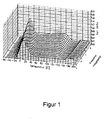
- a masking tape was produced according to the procedure from example P3 and examined according to test method 5.
- the drop in the loss angle tan ⁇ at temperatures above 130 ° C shows the crosslinking process of the hot melt pressure sensitive adhesive on the paper carrier during the measuring process (see Figure 1).
- phr SVR 5L 100 Staybelite resin 50
Landscapes
- Chemical & Material Sciences (AREA)
- Organic Chemistry (AREA)
- Adhesives Or Adhesive Processes (AREA)
- Adhesive Tapes (AREA)
- Application Of Or Painting With Fluid Materials (AREA)
- Manufacturing Of Multi-Layer Textile Fabrics (AREA)
- Treatments For Attaching Organic Compounds To Fibrous Goods (AREA)
Abstract
Description
Dieser Stand der Technik ist beispielsweise in

Hierbei werden die in der Haftklebertechnik gebräuchlichen Zusätze wie Tackifier-Harze, Weichmacher und Füllstoffe beschrieben.
Das jeweils offenbarte Herstellungsverfahren basiert auf einem Doppelschneckenextruder, der bei der gewählten Prozeßführung über Mastikation des Kautschuks und anschließender stufenweise Zugabe der einzelnen Zusätze mit einer entsprechenden Temperaturführung die Compoundierung zu einer homogenen Haftkleberabmischung ermöglicht.
Ausführlich wird der dem eigentlichen Herstellprozeß vorgeschaltete Mastikationsschritt des Kautschuks beschrieben. Er ist notwendig und charakteristisch für das gewählte Verfahren, da er bei der dort gewählten Technologie unumgänglich für die nachfolgende Aufnahme der weiteren Komponenten und für die Extrudierbarkeit des fertig abgemischten Schmelzhaftklebers ist. Beschrieben wird auch die Einspeisung von Luftsauerstoff, wie sie von R. Brzoskowski, J.L. und B. Kalvani in Kunststoffe 80 (8), (1990), S. 922 ff., empfohlen wird, um die Kautschukmastikation zu beschleunigen.
Für Trägermaterialien wie imprägnierte und/oder geleimte Papiere sowie Gewebeträger auf Basis Zellwolle u.ä. ist das System wenig tauglich, da bei den erforderlich hohen Strahlendosen eine signifikante Trägerschädigung erfolgt.
- 100 Masseteilen des oder der nicht-thermoplastischen Elastomere,
- 1 bis 200 Masseteilen eines oder mehrerer klebrigmachender Harze,
- 1 bis 100 Masseteilen eines oder mehrerer reaktiver, gegebenenfalls auch halogenierter Phenol-Formaldehydharze, wobei deren Methylolgehalt zwischen 1 und 20 Gew.-% und/oder deren Halogengehalt zwischen 1 und 20 Gew.-%, jeweils bezogen auf das reaktive Phenolharz, beträgt,
- 1 bis 100 Masseteilen Beschleunigersubstanzen.
Bei der GPC-Messung (Gelpermeationschromatographie, eine als Säulenchromatographie durchgeführte Flüssigkeitschromatographie) wird eine flüssige Phase mit dem gelösten Polymeren durch ein Gel gegeben. Kleinere Moleküle des Gelösten können in alle Poren eindringen (diffundieren), ihnen steht das gesamte Volumen der mobilen Phase in der Trennsäule zur Verfügung. Aus diesem Grund werden sie länger in der Säule zurückgehalten als die größeren Moleküle. Solche Moleküle, die größer sind als die größten Poren des gequollenen Gels, können die Gelkörner nicht durchdringen und wandern an diesen vorbei; sie verlassen die Säule zuerst. Die Moleküle erscheinen daher im Eluat in der Reihenfolge abnehmender Molekülgröße. Da die Molekülgröße im allgemeinen der Molmasse proportional ist, bietet die Gelchromatographie die Möglichkeit zu Trennung und Reinigung von Substanzen verschiedener Molmassen und zur Molmassenbestimmung.
- Naturkautschuke
- statistisch copolymerisierte Styrol-Butadien-Kautschuke (SBR)
- Butadien-Kautschuke (BR)
- synthetische Polyisoprene (IR)
- Butyl-Kautschuke (IIR)
- halogenierte Butyl-Kautschuke (XIIR)
- Etylen-Vinylacetat-Copolymeren (EVA).
- Polypropylene
- Polyethylene
- Metallocen-katalysierte Polyolefine
- Polyester
- Polystyrole
- Blockcopolymeren-Synthesekautschuke.
| Bezeichnung | Methylolgehalt Gew.-% |
| SP 103 | 12 |
| SFP 121 | 17 |
| SP 126 | 11 |
| SP 134 | 16 |
| SP 154 | 10 |
| FRJ 551 | 14 |
| SFP 183 | 15 |
| Bezeichnung | Methylolgehalt Gew.-% |
| Vulkarasen PA 510 | 6-9 |
| Vulkarasen PA 130 | 11-14 |
| Bezeichnung | Methylolgehalt Gew.-% | Bromgehalt Gew.-% |
| SP 1055 | 10-14 | 3,5 - 4,5 |
| SP 1056 | 7,5 - 11 | 6 - 9 |
Weiterhin können die in der Klebebandproduktion oft genutzten Temperprozesse, wie sie beispielsweise zur Entspannung von Folienmaterialien nötig sind, für die Vernetzung der Schmelzhaftkleber genutzt werden oder die Vernetzung kann bei Raumtemperatur auf dem Band erfolgen.
Besonders vorteilhafte Eigenschaften zeigen sich, wenn es sich bei den Mikroballons um solche handelt, die bei 25 °C einen Durchmesser aufweisen von 3 µm bis 40 µm, insbesondere 5 µm bis 20 µm.
Durch Wärmeeinwirkung dehnen sich die Kapseln irreversibel aus und expandieren dreidimensional. Die Expansion ist beendet, wenn der Innen- und Außendruck sich ausgleichen. So erzielt man einen geschlossenzelligen Schaumträger, welcher sich durch gutes Auffließverhalten und hohe Rückstellkräfte auszeichnet.
Die Expansion kann dabei vor oder nach dem Einarbeiten in die Polymermatrix erfolgen, aber auch vor oder nach dem Einarbeiten in die Polymermatrix und dem Ausformen. Möglich ist, auch die Expansion nach dem Einarbeiten in die Polymermatrix und vor dem Ausformen vorzunehmen.
Als Träger kann weiterhin ein Vlies vom Typ Kunitvlies oder Multiknitvlies verwendet werden. Ein Kunitvlies ist dadurch gekennzeichnet, daß es aus der Verarbeitung eines längsonentierten Faservlieses zu einem Flächengebilde hervorgeht, das auf einer Seite Maschen und auf der anderen Maschenstege oder Polfaser-Falten aufweist, aber weder Fäden noch vorgefertigte Flächengebilde besitzt. Auch ein derartiges Vlies wird beispielsweise auf Nähwirkmaschinen des Typs
Schließlich sind auch Nähvliese geeignet. Ein Nähvlies wird aus einem Vliesmaterial mit einer Vielzahl parallel zueinander verlaufender Nähte gebildet. Diese Nähte entstehen durch das Einnähen oder Nähwirken von textilen Fäden. Für diesen Typ Vlies sind Nähwirkmaschinen des Typs
- untervernetzte (schwach kohäsive) Schmelzhaftkleber: kurze Scherstandzeiten bei köhäsivem Versagen
- optimal vemetzte Schmelzhaftkleber: lange Scherstandzeiten
- übervernetzte (zu kohäsive) Schmelzhaftkleber: kurze Scherstandzeiten durch adhäsives Versagen
| Quelltestnote | Gelkonsistenz bei Quelltest | Entspricht Gelgehalt nach Methode 4 [%] |
| 0 | Masseschicht auflösend und schlammig d.h. Vernetzung nicht erkennbar | 0 - 5 |
| 1 | Starkes Quellen, Masse stark schleimig und selbstablaufend d.h. sehr geringe Vernetzung | 5 - 15 |
| 2 | Starkes Quellen, Masse schleimig und leicht abschiebbar | 15 - 25 |
| 3 | Gutes Quellen, Masse weniger schleimig und abschiebbar | 25 - 35 |
| 4 | Schwaches Quellen, Masse kaum schleimig, noch abschiebbar | 35 - 45 |
| 5 | Kaum Quellen, Masse fast schichtbeständig und kaum abschiebbar | 45 - 55 |
| 6 | Kein Quellen, Masse schichtbeständig und nur abkratzbar | > 55 |
Die Meßwerterfassung erfolgte rechnergestützt, die viskoelastischen Eigenschaften (Speichermodul G', des Verlustmodul G'', Verlustwinkel
Der Wert der komplexen Viskosität bei einer Frequenz von 0,1 rad/s und einer Temperatur von 110 °C gibt bei identischer Rezeptur Aufschluß über die Kohäsivität beziehungsweise Vernetzungsgrades des Schmelzhaftklebers.
- VZ =
- Viskosität des vernetzten Schmelzhaftklebers/Viskosität des unvernetzten Schmelzhaftklebers.
- Eluent:
- Tetrahydrofuran (THF) p.a.
- Säulen:
- PSS-SDV, 5µm 103 Å, ID 8.0 mm × 300 mm
- Vorsäule:
- PSS-SDV, 5µm 105 Å, ID 8.0 mm × 300 mm PSS-SDV, 5µm 106 Å, ID 8.0 mm × 300 mm
- Pumpe:
- TSP P200
- Fluß:
- 1.0 ml/min
- Injektionssystem:
- TSP AS3000 mit 100 ml Injektionsvolumen
- Temperatur:
- 25 °C
- Detektoren:
- TSP UV 2000 UV/VIS Detektor bei 254 nm Shodex Differentialfraktionmeter RI 71
- Auswertung:
- PSS- WinGPC Version 4.02
- Naturkautschuk
- SVR 5L (zu beziehen bei Fa. Weber Schaer, Hamburg)
- Klebharz steller
-
HERCOTAC 205, ein aromatisch modifiziertes aliphatisches Kohlenwasserstoffharz (Fa. Hercules BV, Rijswijk, NL) - Füllstoff
- Zinkoxid
- Phenolvemetzungsharz
- ein octyl-Phenolformaldehydharz mit einem Methylolgehalt
von 6 bis 9 Gew.-% (
- Alterungsschutzmittel
- Lowinox ® 22M46, ein 2,2-Methylen-bis-[6-(1,1-dimethylethyl)-4-methyl-phenol)] von der Firma GREAT LAKES
| Rezeptur PA | |
| phr | |
| Naturkautschuk SVR 5L | 100,00 |
| Staybelite Resin | 35,29 |
| Hercotac 205 | 19,61 |
| Vulkarasen PA 510 | 19,61 |
| Silox actif | 17,65 |
| Lowinox ® 22M46 | 3,92 |
| Summe | 196,08 |
| Vorbatch-Rezeptur VB-PA | |
| Phr | |
| Naturkautschuk SVR 5L, granuliert | 100,00 |
| Harz Hercotac 205 | 19,61 |
| Lowinox | 3,92 |
| Silox actif | 17,65 |
| Rezeptur F-PA | |
| phr | |
| Vorbatch VB-PA | 141,18 |
| Staybelite Resin | 35,29 |
| Vulkarasen PA 510 | 19,61 |
Für die Vereinfachung des Entleerens wurde im zweiten Verfahrensschritt des Fertigmischens eine Knetmaschine der Bauart VI U 20 L der Firma Aachener Misch- und Knetmaschinen-Fabrik Peter Küpper, Aachen, mit Austragsschnecke benutzt. Der Vorbatch wurde ½ Minute geknetet, dann das gesamte Klebharz sowie das reaktive Phenolharz gemäß Rezeptur F-PA zugesetzt.
| Lagerung 4 Tage bei Raumtemperatur | Lagerung 7 Tage bei 70°C | Meßmethode | |
| Schertest 20 N auf Stahl [min] | PSTC 7 | ||
| BEISPIEL P1 | 23 | 4226 | |
| BEISPIEL P2 | 50 | 3850 | |
| BEISPIEL P3 | 12 | 2112 | |
| Klebkraft auf Stahl [N/cm] | AFERA 4001 | ||
| BEISPIEL P1 | 4,1 | 3,7 | |
| BEISPIEL P2 | 4,1 | 3,5 | |
| BEISPIEL P3 | 4,5 | 4,0 | |
| Gelwert | Prüfmethode 3 | ||
| BEISPIEL P1 | 4,3 | 30 | |
| BEISPIEL P2 | 2,7 | 29 | |
| BEISPIEL P3 | 5 | 19 | |
| Quelltest | Prüfmethode 4 | ||
| BEISPIEL P1 | 0 | 3 | |
| BEISPIEL P2 | 0 | 3 | |
| BEISPIEL P3 | 0 | 2,5 | |
| komplexe Viskosität bei T=110°C, f=0,1 rad/s [Pas] | Prüfmethode 6 | ||
| BEISPIEL P1 | 7,3*104 | 1,18*105 | |
| BEISPIEL P2 | 6,5*104 | 1,19*105 | |
| BEISPIEL P3 | 5,1*104 | 1,01*105 |
| Phr | |||
| SVR 5L | 78 | ||
| Neoprene WRT | 22 | ||
| Staybelite Resin | 46 | ||
| Vukarasen PA 510 | 6,0 | ||
| Dercolyte S 115 | 22 | ||
| Silox actif | 20 | ||
| Weißöl | 6 | ||
| Summe | 200 | ||
| Lagerung 4 Tage bei Raumtemperatur | Lagerung 7 Tage bei 70 °C | Meßmethode | |
| Schertest 20 N auf Stahl [min] | 32 | 180 | PSTC 7 |
| Klebkraft auf Stahl [N/cm] | 4,2 | 3,8 | AFERA 4001 |
| Gelwert | 7,7 | Nicht betimmt | Prüfmethode 3 |
| Quelltest | 0 | 1 | Prüfmethode 4 |
| komplexe Viskosität bei T=110°C, f=0,1 rad/s [Pas] | 6,04e+04 | 9,01e+04 | Prüfmethode 6 |
| phr | |||
| SVR 5L | 78 | ||
| EXXON ®Chlorobutyl | 22 | ||
| Staybelite Resin | 46 | ||
| Vulkarasen PA510 | 6,0 | ||
| Dercolyte S 115 | 22 | ||
| Silox actif | 20 | ||
| Weißöl | 6 | ||
| Summe | 200 | ||
| Lagerung 4 Tage bei Raumtemperatur | Lagerung 7 Tage bei 70 °C | Meßmethode | |
| Schertest 20 N auf Stahl [min] | 38 | 629 | PSTC 7 |
| Klebkraft auf Stahl [N/cm] | 4,1 | 3,5 | AFERA 4001 |
| Gelwert | 7,4 | nicht bestimmt | Prüfmethode 3 |
| Quelltest | 0 | 1 | Prüfmethode 4 |
| komplexe Viskosität bei T=110°C, f=0,1 rad/s [Pas] | 6,53e+04 | 9,37e+04 | Prüfmethode 6 |
| phr | |||
| SVR 5L | 78 | ||
| Polysar Brombutyl X2 | 22 | ||
| Staybelite Resin | 46 | ||
| Vulkarasen PA510 | 6,0 | ||
| Dercolyte S 115 | 22 | ||
| Silox actif | 20 | ||
| Weißöl | 6 | ||
| Summe | 200 | ||
| Lagerung 4 Tage bei Raumtemperatur | Lagerung 7 Tage bei 70°C | Meßmethode | |
| Schertest 20 N auf Stahl [min] | 25 | 7406 | PSTC 7 |
| Klebkraft auf Stahl [N/cm] | 2,9 | 2,7 | AFERA 4001 |
| Gelwert | 9,1 | nicht bestimmt | Prüfmethode 3 |
| Quelltest | 0 | 4 | Prüfmethode 4 |
| komplexe Viskosität bei T=110°C, f=0,1 rad/s [Pas] | 7,79e+04 | 1,37e+05 | Prüfmethode 6 |
| Phr | |||
| SVR 5L | 100,00 | ||
| Staybelite Resin | 38 | ||
| Hercotac 205 | 11 | ||
| Vulkarasen PA510 | 19 | ||
| Silox actif | 17 | ||
| Sontal | 3,8 | ||
| Lagerung 4 Tage bei Raumtemperatur | Lagerung 7 Tage bei 70 °C | Meßmethode | |
| Schertest 20 N auf Stahl [min] | 103 | > 10000 | PSTC 7 |
| Klebkraft auf Stahl [N/cm] | 2,9 | 2,5 | AFERA 4001 |
| Gelwert | 7,1 | nicht bestimmt | Prüfmethode 3 |
| Quelltest | 0 | 6 | Prüfmethode 4 |
| komplexe Viskosität bei T=110°C, f=0,1 rad/s [Pas] | 1,60e+05 | 5,42e+05 | Prüfmethode 6 |
| phr | |||
| SVR 5L | 100 | ||
| Staybelite Resin | 19 | ||
| Hercotac 205 | 37 | ||
| Harz SP 1056 | 11 | ||
| Silox actif | 19 | ||
| Lagerung 4 Tage bei Raumtemperatur | Lagerung 7 Tage bei 70°C | Meßmethode | |
| Schertest 20 N auf Stahl [min] | 324 | > 10000 | PSTC 7 |
| Klebkraft auf Stahl [N/cm] | 2,5 | 2,4 | AFERA 4001 |
| Gelwert | 5,3 | nicht bestimmt | Prüfmethode 3 |
| Quelltest | 1 | 6 | Prüfmethode 4 |
| komplexe Viskosität bei T=110°C, f=0,1 rad/s [Pas] | 1,60e+05 | 3,42e+05 | Prüfmethode 6 |
| phr | |
| SVR 5L | 100 |
| Staybelite Resin | 50 |
| Vulkarasen PA510 | 10 |
| Silox actif | 33 |
| Weißöl | 15 |
| Dercolyte S 115 | 42 |
Claims (12)
- Schmelzhaftkleber auf der Basis eines oder mehrerer nicht-thermoplastischer Elastomerer, mindestens bestehend aus100 Masseteilen des oder der nicht-thermoplastischen Elastomere,1 bis 200 Masseteilen eines oder mehrerer klebrigmachender Harze,1 bis 100 Masseteilen eines oder mehrerer reaktiver Phenolharze mit Methylolgehalten von 1 bis 20 Gew.-% bezogen auf das reaktive Phenolharz,1 bis 100 Masseteilen von beschleunigenden Substanzen.
- Schmelzhaftkleber nach Anspruch 1, dadurch gekennzeichnet, daß die nicht-thermoplastischen Elastomere ausgewählt sind aus der Gruppe der Naturkautschuke, der statistisch copolymensierten Styrol-Butadien-Kautschuke (SBR), der Butadien-Kautschuke (BR), der synthetischen Polyisoprene (IR), der Butyl-Kautschuke (IIR), und der Etylen-Vinylacetat-Copolymeren (EVA).
- Schmelzhaftkleber nach Anspruch 1 und 2, dadurch gekennzeichnet, daß er basiert auf einem Polymerblend von einem oder mehreren der nicht- thermoplastischen Elastomeren und einem oder mehreren thermoplastischen Elastomeren ausgewählt aus der Gruppe, der Polypropylene, der Polyethylene, der Metallocen katalysierten Polyolefinen, der Polyester, der Polystyrolen, und der Blockcopolymeren Synthesekautschuke.
- Schmelzhaftkleber nach den Ansprüchen 1 bis 3, dadurch gekennzeichnet daß die vernetzungsbeschleunigenden Substanzen ausgewählt sind aus der Gruppe der Chloroprene, chlorierten Buytylkautschuke, bromierten Butylkautschuke und der chlorsulfonierten Polyethylene oder aus der Gruppe der Metalloxide, der Gruppe der organischen Säuren oder ihrer Salze, insbesondere der säuregruppenhaltigen Harze, der Metallstearate und der Metallresinate.
- Schmelzhaftkleber nach den Ansprüchen 1 bis 4, dadruch gekennzeichnet, daß die reaktiven Phenolharze halogeniert sind und einen Halogengehalt von 1 bis 20 Gew.-%, bezogen auf das reaktive Phenolharz aufweisen.
- Schmelzhaftkleber nach den Ansprüchen 1 bis 5, dadurch gekennzeichnet, daß das reaktive Phenolharz aus einem Gemisch unterschiedlicher reaktiver Phenolharze, welche sich durch unterschiedliche Reaktivitäten auszeichnen.
- Schmelzhaftkleber nach Anspruch 1 bis 6, dadurch gekennzeichnet, daß dem Schmelzhaftkleber Füllstoffe zugesetzt sind, insbesondere ausgewählt aus der Gruppe der Metalloxide, Kreiden, gefällter oder pyrogener Kieselsäuren, Voll- oder Hohlglaskugeln, der Mikroballons, der Ruße und/oder der Glas- oder der Polymerfasern.
- Schmelzhaftkleber nach zumindest einem der vorherigen Ansprüche, dadurch gekennzeichnet, daß dem Schmelzhaftkleber Weichmacher zugesetzt sind, insbesondere ausgewählt aus der Gruppe der paraffinischen oder naphthenischen Öle, der oligomeren Nitrilkautschuke, der flüssigen Isoprenkautschuke, der Oligobutadiene, der Weichharze, der Wollfette und/oder der Raps- und Rhizinusöle.
- Selbstklebender Artikel, erhalten nach mindestens einem der vorhergehenden Ansprüche, dadurch gekennzeichnet, daß auf ein bahnförmiges Material zumindest einseitig die Schmelzhaftkleber aufgetragen wird.
- Selbstklebender Artikel nach zumindest einem der vorherigen Ansprüche, dadurch gekennzeichnet, daß die Dicke der Schmelzhaftkleber auf dem bahnförmigen Material beträgt zwischen 5 µm und 3000 µm, vorzugsweise zwischen 15 µm und 150 µm.
- Selbstklebender Artikel nach zumindest einem der vorherigen Ansprüche, dadurch gekennzeichnet, daß auf ein beidseitig antiadhäsiv beschichtetes Trennpapier der Schmelzhaftkleber in einer Dicke aufgetragen ist von 20 µm bis 3000 µm, besonders 40 µm bis 1500 µm.
- Verfahren zur Herstellung von selbstklebenden Artikeln, insbesondere zur Herstellung hochleistungsfähiger selbstklebender Artikel wie Bänder oder Etiketten, gekennzeichnet dadurch, daß die Beschichtung des Schmelzhaftklebers mit Hilfe eines Mehrwalzenauftragswerkes erfolgt, das zwei bis fünf Walzen aufweist.
Applications Claiming Priority (2)
| Application Number | Priority Date | Filing Date | Title |
|---|---|---|---|
| DE19939074A DE19939074A1 (de) | 1999-08-18 | 1999-08-18 | Verwendung von reaktiven Phenolharzen bei der Herstellung von hochviskosen selbstklebenden Massen |
| DE19939074 | 1999-08-18 |
Publications (3)
| Publication Number | Publication Date |
|---|---|
| EP1077244A2 true EP1077244A2 (de) | 2001-02-21 |
| EP1077244A3 EP1077244A3 (de) | 2001-09-05 |
| EP1077244B1 EP1077244B1 (de) | 2006-03-22 |
Family
ID=7918737
Family Applications (1)
| Application Number | Title | Priority Date | Filing Date |
|---|---|---|---|
| EP00116584A Revoked EP1077244B1 (de) | 1999-08-18 | 2000-08-01 | Verwendung von reaktiven Phenolharzen bei der Herstellung von hochviskosen selbstklebenden Massen |
Country Status (5)
| Country | Link |
|---|---|
| US (2) | US6822029B1 (de) |
| EP (1) | EP1077244B1 (de) |
| JP (1) | JP4700790B2 (de) |
| DE (2) | DE19939074A1 (de) |
| ES (1) | ES2259586T3 (de) |
Cited By (5)
| Publication number | Priority date | Publication date | Assignee | Title |
|---|---|---|---|---|
| EP2202263A1 (de) * | 2008-12-23 | 2010-06-30 | tesa AG | Verfahren zur Herstellung einer thermisch reaktiven Haftklebemasse |
| EP2716353A3 (de) * | 2003-11-24 | 2014-07-02 | Intertape Polymer Corp. | Verfahren zur Herstellung von Klebstoff unter Verwendung eines Planetenextruders |
| CN111793290A (zh) * | 2020-07-30 | 2020-10-20 | 江苏荣岳工业材料有限公司 | 无氯丁胶硫化胶囊及制作方法和应用、轮胎、粒状混合物 |
| CN113637286A (zh) * | 2021-10-15 | 2021-11-12 | 北京玻钢院复合材料有限公司 | 一种增韧、阻燃热熔型酚醛树脂、预浸料、复合材料及其制备方法 |
| CN117070162A (zh) * | 2023-08-08 | 2023-11-17 | 德州科顺建筑材料有限公司 | 反应胶组合物、聚烯烃防水卷材及其制备方法和应用 |
Families Citing this family (27)
| Publication number | Priority date | Publication date | Assignee | Title |
|---|---|---|---|---|
| DE19939074A1 (de) * | 1999-08-18 | 2001-02-22 | Beiersdorf Ag | Verwendung von reaktiven Phenolharzen bei der Herstellung von hochviskosen selbstklebenden Massen |
| US7700707B2 (en) | 2002-10-15 | 2010-04-20 | Exxonmobil Chemical Patents Inc. | Polyolefin adhesive compositions and articles made therefrom |
| US7541402B2 (en) | 2002-10-15 | 2009-06-02 | Exxonmobil Chemical Patents Inc. | Blend functionalized polyolefin adhesive |
| US7550528B2 (en) | 2002-10-15 | 2009-06-23 | Exxonmobil Chemical Patents Inc. | Functionalized olefin polymers |
| US7223822B2 (en) | 2002-10-15 | 2007-05-29 | Exxonmobil Chemical Patents Inc. | Multiple catalyst and reactor system for olefin polymerization and polymers produced therefrom |
| BR0315341B1 (pt) | 2002-10-15 | 2014-02-18 | Adesivos compreendendo poliolefina. | |
| FR2882298B1 (fr) * | 2005-02-23 | 2010-02-26 | Arkema | Film multicouche protecteur a base de pvdf et de pmma |
| US7889959B2 (en) * | 2008-02-07 | 2011-02-15 | Lockheed Martin Corporation | Composite material for cable floatation jacket |
| DE102008012185A1 (de) * | 2008-03-03 | 2009-09-10 | Tesa Se | Verfahren zur Herstellung einer hochkohäsiven Haftklebemasse |
| DE102008056980A1 (de) * | 2008-11-12 | 2010-05-20 | Tesa Se | Strahlenchemisch vernetzbare, geschäumte Selbstklebemasse basierend auf Vinylaromatenblockcopolymeren |
| US9578923B2 (en) * | 2010-06-25 | 2017-02-28 | Mission Product Holdings, Inc. | Athletic shoe sole coating for traction enhancement |
| PL2602282T3 (pl) * | 2011-12-05 | 2015-05-29 | Mondi Gronau Gmbh | Folia elastyczna dla pieluch |
| US20140079897A1 (en) * | 2012-09-14 | 2014-03-20 | Henkel Corporation | Adhesive Compositions and Use Thereof |
| WO2014056553A1 (de) | 2012-10-11 | 2014-04-17 | Entex Gmbh Rust & Mitschke Gmbh | Extruder zur verarbeitung von kunststoffen, die zum kleben neigen |
| DE202013002602U1 (de) * | 2013-03-18 | 2014-06-23 | Grass Gmbh | Facheinteilungseinrichtung für Möbelteile mit Innenfächern |
| DE202013002600U1 (de) * | 2013-03-18 | 2014-06-23 | Grass Gmbh | Facheinteilungseinrichtung für Möbelteile mit Innenfächern |
| WO2015195616A1 (en) * | 2014-06-17 | 2015-12-23 | 3M Innovative Properties Company | Adhesive tape bearing a pressure-sensitive adhesive that comprises a polar phenolic tackifier |
| EP2975097B1 (de) * | 2014-07-17 | 2022-03-09 | 3M Innovative Properties Company | Mehrschichtige druckempfindliche haftanordnung mit thermoplastischem füllmaterial |
| DE102016002143A1 (de) | 2016-02-25 | 2017-08-31 | Entex Rust & Mitschke Gmbh | Füllteilmodul in Planetwalzenextruderbauweise |
| US11466180B2 (en) | 2017-05-08 | 2022-10-11 | Avery Dennison Corporation | Vulcanization tire label |
| DE102017006638A1 (de) | 2017-07-13 | 2019-01-17 | Entex Rust & Mitschke Gmbh | Füllteilmodul in Planetwalzenextruderbauweise |
| DE102017221039B4 (de) * | 2017-11-24 | 2020-09-03 | Tesa Se | Verfahren zur Herstellung einer Haftklebemasse auf Basis von Acrylnitril-Butadien-Kautschuk |
| WO2019166125A1 (de) | 2018-02-28 | 2019-09-06 | Entex Rust & Mitschke Gmbh | Verfahren zur herstellung und verarbeitung von polymeren und polymermischungen in einem modular aufgebauten planetwalzenextruder |
| CN114479715A (zh) * | 2020-10-27 | 2022-05-13 | 深圳科宏健科技有限公司 | 一种smt接料带用的胶粘剂的制备方法 |
| EP4288500A1 (de) | 2021-02-03 | 2023-12-13 | 3M Innovative Properties Company | Band mit reaktiver schicht und verfahren zur herstellung des bandes |
| US20240343948A1 (en) | 2021-09-27 | 2024-10-17 | 3M Innovative Properties Company | Pressure-sensitive adhesive tape including sulfur and related processes |
| KR102791708B1 (ko) * | 2024-11-07 | 2025-04-09 | (주)플러버 | 통기성 및 고내열 개선용 무용재 핫멜트 접착제 조성물 |
Family Cites Families (19)
| Publication number | Priority date | Publication date | Assignee | Title |
|---|---|---|---|---|
| US3597377A (en) * | 1968-05-06 | 1971-08-03 | Exxon Research Engineering Co | Butyl rubber adhesive and caulking compositions |
| US4028292A (en) * | 1974-05-23 | 1977-06-07 | Johnson & Johnson | Hot melt adhesive |
| US4332655A (en) * | 1975-04-15 | 1982-06-01 | Raychem Corporation | Adhesive compositions comprising ethylene/polar monomer copolymer and an elastomer |
| JPS59100177A (ja) * | 1982-11-29 | 1984-06-09 | Sekisui Chem Co Ltd | クロロプレン系接着剤組成物 |
| US5095068A (en) * | 1983-04-05 | 1992-03-10 | Ashland Oil, Inc. | Adhesive of butyl rubber, curing agent, c-black and tackifier |
| JPH0234680A (ja) * | 1988-07-25 | 1990-02-05 | Hitachi Chem Co Ltd | マスキングテープ用粘着剤 |
| EP0609396A1 (de) * | 1991-09-03 | 1994-08-10 | Exxon Chemical Patents Inc. | Vulkanisationsverfahren |
| US5539033A (en) | 1992-11-06 | 1996-07-23 | Minnesota Mining And Manufacturing Company | Solventless compounding and coating of non-thermoplastic hydrocarbon elastomers |
| AU674183B2 (en) | 1992-11-06 | 1996-12-12 | Minnesota Mining And Manufacturing Company | Process for solventless compounding and coating of pressure sensitive adhesive |
| US5760135A (en) * | 1992-11-17 | 1998-06-02 | Ralf Korpman Associates, Inc. | Pressure sensitive adhesive |
| JP2902232B2 (ja) * | 1992-11-19 | 1999-06-07 | 日東電工株式会社 | 粘着剤組成物、及びそれを用いた粘着テープ |
| KR100349699B1 (ko) * | 1994-01-18 | 2003-10-04 | 미네소타 마이닝 앤드 매뉴팩춰링 캄파니 | 감압성접착제조성물및이의제품 |
| DE4404955A1 (de) * | 1994-02-17 | 1995-08-24 | Beiersdorf Ag | Klebematerial mit Nachvernetzungsreserve |
| JPH0748491A (ja) * | 1994-02-25 | 1995-02-21 | Japan Synthetic Rubber Co Ltd | 難燃用ベース樹脂組成物および難燃熱可塑性樹脂組成物 |
| WO1997003143A1 (en) * | 1995-07-10 | 1997-01-30 | Minnesota Mining And Manufacturing Company | Screen printable adhesive compositions |
| US5914157A (en) | 1995-08-31 | 1999-06-22 | Minnesota Mining And Manufacturing Company | Solventless hot melt process for the preparation of pressure sensitive adhesives |
| US5952425A (en) * | 1996-12-31 | 1999-09-14 | Advanced Elastomer Systems, L.P. | Preferred structure of phenolic resin curative for thermoplastic vulcanizate |
| US6287411B1 (en) * | 1999-06-18 | 2001-09-11 | Rockwell Automation Technologies, Inc. | Bonding a thermoplastic elastomer to a magnesium based metal |
| DE19939074A1 (de) * | 1999-08-18 | 2001-02-22 | Beiersdorf Ag | Verwendung von reaktiven Phenolharzen bei der Herstellung von hochviskosen selbstklebenden Massen |
-
1999
- 1999-08-18 DE DE19939074A patent/DE19939074A1/de not_active Ceased
-
2000
- 2000-08-01 EP EP00116584A patent/EP1077244B1/de not_active Revoked
- 2000-08-01 DE DE50012428T patent/DE50012428D1/de not_active Expired - Lifetime
- 2000-08-01 ES ES00116584T patent/ES2259586T3/es not_active Expired - Lifetime
- 2000-08-10 JP JP2000242414A patent/JP4700790B2/ja not_active Expired - Fee Related
- 2000-08-18 US US09/641,645 patent/US6822029B1/en not_active Expired - Lifetime
-
2004
- 2004-07-29 US US10/901,781 patent/US7226967B2/en not_active Expired - Lifetime
Cited By (9)
| Publication number | Priority date | Publication date | Assignee | Title |
|---|---|---|---|---|
| EP2716353A3 (de) * | 2003-11-24 | 2014-07-02 | Intertape Polymer Corp. | Verfahren zur Herstellung von Klebstoff unter Verwendung eines Planetenextruders |
| US9328268B2 (en) | 2003-11-24 | 2016-05-03 | Intertape Polymer Corp. | Process for preparing adhesive using planetary extruder |
| EP2202263A1 (de) * | 2008-12-23 | 2010-06-30 | tesa AG | Verfahren zur Herstellung einer thermisch reaktiven Haftklebemasse |
| DE102008063036A1 (de) | 2008-12-23 | 2010-07-01 | Tesa Se | Verfahren zur Herstellung einer thermisch reaktiven Haftklebemasse |
| US8680178B2 (en) | 2008-12-23 | 2014-03-25 | Tesa Se | Process for preparing a thermally reactive pressure-sensitive adhesive |
| CN111793290A (zh) * | 2020-07-30 | 2020-10-20 | 江苏荣岳工业材料有限公司 | 无氯丁胶硫化胶囊及制作方法和应用、轮胎、粒状混合物 |
| CN113637286A (zh) * | 2021-10-15 | 2021-11-12 | 北京玻钢院复合材料有限公司 | 一种增韧、阻燃热熔型酚醛树脂、预浸料、复合材料及其制备方法 |
| CN117070162A (zh) * | 2023-08-08 | 2023-11-17 | 德州科顺建筑材料有限公司 | 反应胶组合物、聚烯烃防水卷材及其制备方法和应用 |
| CN117070162B (zh) * | 2023-08-08 | 2024-01-30 | 德州科顺建筑材料有限公司 | 反应胶组合物、聚烯烃防水卷材及其制备方法和应用 |
Also Published As
| Publication number | Publication date |
|---|---|
| JP2001107002A (ja) | 2001-04-17 |
| EP1077244B1 (de) | 2006-03-22 |
| ES2259586T3 (es) | 2006-10-16 |
| US6822029B1 (en) | 2004-11-23 |
| DE19939074A1 (de) | 2001-02-22 |
| DE50012428D1 (de) | 2006-05-11 |
| EP1077244A3 (de) | 2001-09-05 |
| JP4700790B2 (ja) | 2011-06-15 |
| US7226967B2 (en) | 2007-06-05 |
| US20050004287A1 (en) | 2005-01-06 |
Similar Documents
| Publication | Publication Date | Title |
|---|---|---|
| EP1077244B1 (de) | Verwendung von reaktiven Phenolharzen bei der Herstellung von hochviskosen selbstklebenden Massen | |
| EP1081203B1 (de) | Verwendung von Isocyanaten bei der Herstellung von hochviskosen selbstklebenden Massen | |
| DE68913141T2 (de) | Klebstoff für den Mehrfachlinienaufbau von Wegwerfartikeln | |
| DE102008004388A1 (de) | Geschäumte, insbesondere druckempfindliche Klebemasse, Verfahren zur Herstellung sowie die Verwendung derselben | |
| WO2009147098A1 (de) | Haftklebstoff aus polypropylenharz | |
| EP1116763B1 (de) | Verfahren zur kontinuierlichen Herstellung und Beschichtung von Selbstklebemassen auf Basis von Polyisobutylen mit mindestens einem pharmazeutischen Wirkstoff | |
| EP1414420B1 (de) | Verfahren zur kontinuierlichen herstellung und beschichtung von selbstklebemassen auf basis von sbc mit mindestens einem pharmazeutischen wirkstoff | |
| EP3594303B1 (de) | Herstellung einer haftklebemasse auf basis von festem epdm-kautschuk | |
| WO2017042221A1 (de) | Haftklebestoff auf basis epdm | |
| EP3473689A1 (de) | Härtbarer haftklebestreifen auf basis von vinylaromatenblockcopolymer | |
| EP3585850B1 (de) | Klebeband | |
| EP2313468A1 (de) | Strapping-klebeband | |
| EP1081204B1 (de) | Verwendung von Schwefel und Schwefelspendern zur Vernetzung von hochviskosen selbstklebenden Schmelzhaftklebermassen basierend auf nicht thermoplastischen Elastomeren | |
| WO2015118138A1 (de) | Klebeband | |
| EP3585849A1 (de) | Klebeband | |
| EP2895571B1 (de) | Reaktiver polyolefin-schmelzklebstoff zur verwendung als reaktivierbare vorbeschichtung | |
| EP4077572B1 (de) | Klebeband geeignet für den fliegenden rollenwechsel von materialien mit niederenergetischen oberflächen | |
| DE102024110804B4 (de) | Haftklebmasse, ihre Verwendung und Verfahren zu ihrer Herstellung | |
| WO2019185374A1 (de) | Verfahren zum homogenen einarbeiten von füllstoff in eine, insbesondere thermisch vernetzbare, selbstklebemasse auf basis von nicht-thermoplastischem elastomer | |
| EP3907263A1 (de) | Hochtemperatur-haftklebemasse auf basis von epdm-kautschuk | |
| WO2025132700A1 (de) | Haftklebmasse | |
| DE102010043152A1 (de) | Hoch-cis-haltige Polybutadien-(Haft)klebemassen | |
| DE202017003329U1 (de) | Klebeband und Folie |
Legal Events
| Date | Code | Title | Description |
|---|---|---|---|
| PUAI | Public reference made under article 153(3) epc to a published international application that has entered the european phase |
Free format text: ORIGINAL CODE: 0009012 |
|
| AK | Designated contracting states |
Kind code of ref document: A2 Designated state(s): AT BE CH CY DE DK ES FI FR GB GR IE IT LI LU MC NL PT SE |
|
| AX | Request for extension of the european patent |
Free format text: AL;LT;LV;MK;RO;SI |
|
| PUAL | Search report despatched |
Free format text: ORIGINAL CODE: 0009013 |
|
| AK | Designated contracting states |
Kind code of ref document: A3 Designated state(s): AT BE CH CY DE DK ES FI FR GB GR IE IT LI LU MC NL PT SE |
|
| AX | Request for extension of the european patent |
Free format text: AL;LT;LV;MK;RO;SI |
|
| RIC1 | Information provided on ipc code assigned before grant |
Free format text: 7C 09J 107/00 A, 7C 09J 161/04 B, 7C 08L 61/06 B |
|
| RAP1 | Party data changed (applicant data changed or rights of an application transferred) |
Owner name: TESA AG |
|
| 17P | Request for examination filed |
Effective date: 20020111 |
|
| AKX | Designation fees paid |
Free format text: DE ES FR GB IT |
|
| 17Q | First examination report despatched |
Effective date: 20040416 |
|
| RAP1 | Party data changed (applicant data changed or rights of an application transferred) |
Owner name: TESA AG |
|
| GRAP | Despatch of communication of intention to grant a patent |
Free format text: ORIGINAL CODE: EPIDOSNIGR1 |
|
| RTI1 | Title (correction) |
Free format text: USE OF REACTIVE PHENOLIC RESINS IN THE PREPARATION OF HIGHLY VISCOUS, SELF-ADHESIVE MATERIALS |
|
| GRAS | Grant fee paid |
Free format text: ORIGINAL CODE: EPIDOSNIGR3 |
|
| GRAA | (expected) grant |
Free format text: ORIGINAL CODE: 0009210 |
|
| RIN1 | Information on inventor provided before grant (corrected) |
Inventor name: KREFT, CHRISTIAN Inventor name: STAEHR, JOCHEN Inventor name: HANSEN, SVEN Inventor name: BURMEISTER, AXEL Inventor name: LEYDECKER, HEIKO |
|
| AK | Designated contracting states |
Kind code of ref document: B1 Designated state(s): DE ES FR GB IT |
|
| REG | Reference to a national code |
Ref country code: GB Ref legal event code: FG4D Free format text: NOT ENGLISH |
|
| GBT | Gb: translation of ep patent filed (gb section 77(6)(a)/1977) |
Effective date: 20060412 |
|
| REF | Corresponds to: |
Ref document number: 50012428 Country of ref document: DE Date of ref document: 20060511 Kind code of ref document: P |
|
| REG | Reference to a national code |
Ref country code: ES Ref legal event code: FG2A Ref document number: 2259586 Country of ref document: ES Kind code of ref document: T3 |
|
| ET | Fr: translation filed | ||
| PLBI | Opposition filed |
Free format text: ORIGINAL CODE: 0009260 |
|
| PLAX | Notice of opposition and request to file observation + time limit sent |
Free format text: ORIGINAL CODE: EPIDOSNOBS2 |
|
| 26 | Opposition filed |
Opponent name: 3M INNOVATIVE PROPERTIES COMPANY 3M CENTER Effective date: 20061221 |
|
| PLAF | Information modified related to communication of a notice of opposition and request to file observations + time limit |
Free format text: ORIGINAL CODE: EPIDOSCOBS2 |
|
| PLAF | Information modified related to communication of a notice of opposition and request to file observations + time limit |
Free format text: ORIGINAL CODE: EPIDOSCOBS2 |
|
| PLAF | Information modified related to communication of a notice of opposition and request to file observations + time limit |
Free format text: ORIGINAL CODE: EPIDOSCOBS2 |
|
| PLAF | Information modified related to communication of a notice of opposition and request to file observations + time limit |
Free format text: ORIGINAL CODE: EPIDOSCOBS2 |
|
| PLAF | Information modified related to communication of a notice of opposition and request to file observations + time limit |
Free format text: ORIGINAL CODE: EPIDOSCOBS2 |
|
| PLAB | Opposition data, opponent's data or that of the opponent's representative modified |
Free format text: ORIGINAL CODE: 0009299OPPO |
|
| RAP2 | Party data changed (patent owner data changed or rights of a patent transferred) |
Owner name: TESA SE |
|
| REG | Reference to a national code |
Ref country code: FR Ref legal event code: CJ Ref country code: FR Ref legal event code: CD |
|
| RDAF | Communication despatched that patent is revoked |
Free format text: ORIGINAL CODE: EPIDOSNREV1 |
|
| APBM | Appeal reference recorded |
Free format text: ORIGINAL CODE: EPIDOSNREFNO |
|
| APBP | Date of receipt of notice of appeal recorded |
Free format text: ORIGINAL CODE: EPIDOSNNOA2O |
|
| APAH | Appeal reference modified |
Free format text: ORIGINAL CODE: EPIDOSCREFNO |
|
| APBQ | Date of receipt of statement of grounds of appeal recorded |
Free format text: ORIGINAL CODE: EPIDOSNNOA3O |
|
| PLAB | Opposition data, opponent's data or that of the opponent's representative modified |
Free format text: ORIGINAL CODE: 0009299OPPO |
|
| R26 | Opposition filed (corrected) |
Opponent name: 3M INNOVATIVE PROPERTIES COMPANY Effective date: 20061221 |
|
| REG | Reference to a national code |
Ref country code: ES Ref legal event code: PC2A Owner name: TESA SE Effective date: 20110415 |
|
| PGFP | Annual fee paid to national office [announced via postgrant information from national office to epo] |
Ref country code: GB Payment date: 20120821 Year of fee payment: 13 |
|
| PGFP | Annual fee paid to national office [announced via postgrant information from national office to epo] |
Ref country code: ES Payment date: 20120828 Year of fee payment: 13 Ref country code: FR Payment date: 20120906 Year of fee payment: 13 Ref country code: DE Payment date: 20120831 Year of fee payment: 13 Ref country code: IT Payment date: 20120823 Year of fee payment: 13 |
|
| REG | Reference to a national code |
Ref country code: DE Ref legal event code: R103 Ref document number: 50012428 Country of ref document: DE Ref country code: DE Ref legal event code: R064 Ref document number: 50012428 Country of ref document: DE |
|
| APBU | Appeal procedure closed |
Free format text: ORIGINAL CODE: EPIDOSNNOA9O |
|
| APBC | Information on closure of appeal procedure deleted |
Free format text: ORIGINAL CODE: EPIDOSDNOA9O |
|
| APBU | Appeal procedure closed |
Free format text: ORIGINAL CODE: EPIDOSNNOA9O |
|
| RDAG | Patent revoked |
Free format text: ORIGINAL CODE: 0009271 |
|
| STAA | Information on the status of an ep patent application or granted ep patent |
Free format text: STATUS: PATENT REVOKED |
|
| 27W | Patent revoked |
Effective date: 20130523 |
|
| GBPR | Gb: patent revoked under art. 102 of the ep convention designating the uk as contracting state |
Effective date: 20130523 |
|
| REG | Reference to a national code |
Ref country code: DE Ref legal event code: R107 Ref document number: 50012428 Country of ref document: DE Effective date: 20130926 |