EP1045574A1 - Method and apparatus for sending or receiving a secure fax - Google Patents
Method and apparatus for sending or receiving a secure fax Download PDFInfo
- Publication number
- EP1045574A1 EP1045574A1 EP00302952A EP00302952A EP1045574A1 EP 1045574 A1 EP1045574 A1 EP 1045574A1 EP 00302952 A EP00302952 A EP 00302952A EP 00302952 A EP00302952 A EP 00302952A EP 1045574 A1 EP1045574 A1 EP 1045574A1
- Authority
- EP
- European Patent Office
- Prior art keywords
- fax
- document
- secure
- intended recipient
- secure fax
- Prior art date
- Legal status (The legal status is an assumption and is not a legal conclusion. Google has not performed a legal analysis and makes no representation as to the accuracy of the status listed.)
- Withdrawn
Links
- 238000000034 method Methods 0.000 title claims abstract description 28
- 238000012545 processing Methods 0.000 claims description 6
- 230000002093 peripheral effect Effects 0.000 claims description 5
- 238000004891 communication Methods 0.000 description 6
- 230000008569 process Effects 0.000 description 5
- 230000005540 biological transmission Effects 0.000 description 2
- 238000010586 diagram Methods 0.000 description 2
- 230000005055 memory storage Effects 0.000 description 2
- 238000012937 correction Methods 0.000 description 1
- 238000013500 data storage Methods 0.000 description 1
- 238000013507 mapping Methods 0.000 description 1
- 230000007246 mechanism Effects 0.000 description 1
- 238000012986 modification Methods 0.000 description 1
- 230000004048 modification Effects 0.000 description 1
- 230000008707 rearrangement Effects 0.000 description 1
- 230000004044 response Effects 0.000 description 1
- 238000006467 substitution reaction Methods 0.000 description 1
Images


Classifications
-
- H—ELECTRICITY
- H04—ELECTRIC COMMUNICATION TECHNIQUE
- H04N—PICTORIAL COMMUNICATION, e.g. TELEVISION
- H04N1/00—Scanning, transmission or reproduction of documents or the like, e.g. facsimile transmission; Details thereof
- H04N1/44—Secrecy systems
- H04N1/448—Rendering the image unintelligible, e.g. scrambling
- H04N1/4486—Rendering the image unintelligible, e.g. scrambling using digital data encryption
Definitions
- the present invention relates to sending and receiving facsimile documents via a facsimile machine, and more particularly to sending and receiving secure facsimile documents via a facsimile machine such that the receiving party cannot directly read the received facsimile document.
- FAX facsimile
- the intended receiving party may not be the only party/person who views the received FAX document.
- a received FAX document may be handled and viewed by FAX room personnel, hotel personnel, or various corporate staff members prior to the received FAX arriving in the hands of the intended recipient.
- the important, sensitive information on the received FAX document may be seen or reviewed by parties who should not be viewing the document. Having sensitive information viewed by unintended viewers could result in a tremendous negative impact on an individual or corporation.
- the drawback of the standard system for sending and receiving FAX documents is that the intended FAX recipient does not need to be present when the FAX document is received and printed or displayed.
- One technique for solving the problem is for the sender and intended recipient of the FAX document to arrange a mutually convenient time for sending/receiving the FAX document so that the intended recipient can wait by the FAX machine for the document to be received and printed. This will insure that the intended recipient is the only viewer of the received FAX document.
- a drawback of this solution is that it can be inconvenient for both parties to set up a mutually acceptable time. It is further inconvenient for a travelling party who is receiving a FAX document at a hotel, client's business location, or, other location that is not in the control of the intended recipient.
- What is needed is a method and/or apparatus for sending and receiving FAX documents in a manner that disables the ability of people, other than the intended recipient, from viewing the received FAX document.
- the encrypted heading informs a FAX operator who the encrypted FAX is for.
- the unencrypted header and the encrypted body of the FAX document are FAXed as a normal FAX via a system capable of transmitting a FAX document.
- the FAXed document When the FAXed document is received, it may be printed out as a normal FAX.
- the receiving party who may not be the intended recipient of the FAXed document, will not be able to read the encrypted body of the received FAX document.
- the receiving party will be able to read the unencrypted header. Via the header, the received FAX can be delivered to the intended recipient.
- the intended recipient can scan the received encrypted FAX into a computer and provide a decode code.
- the computer via software will decrypt the encrypted body of the received FAX document with the decode code to produce a facsimile of the original document for the intended recipient.
- An exemplary embodiment of the present secure FAX method and apparatus provides a means for protecting the information on a received hard copy FAX.
- the sender of the FAX enters a "code" into either a FAX machine's control panel or an associated computer which is running a secure FAX software package.
- the code is known by the intended recipient of the FAX (or at least his secure FAX software).
- the document to be sent via secure FAX in accordance with the present invention is scanned by the sender's FAX machine or other scanning device.
- the scanned data is encrypted via one of a variety of known encryption techniques.
- the code provided by the sender could be utilized in the secure FAX encryption process.
- a non-encrypted FAX header information is created by either the sending secure FAX machine or the sending computer.
- the secure FAX header preferably will indicate to the actual receiver of the FAX that the information following the header is a secure FAX.
- the header will also indicate, at least, who is the intended recipient of the received secure FAX.
- the FAX encryption process along with the header information, are combined to produce a secure FAX data stream in standard FAX data format.
- the secure FAX data stream is sent over standard telephone line (like a normal FAX) or could be sent via the Internet as a FAX document.
- the secure FAX data stream is received by a receiving FAX machine (or a reasonable facsimile) and printed or viewed in a normal manner.
- the printed or viewed received FAX will have the unencrypted header at the top of the page so that the receiving party (who may not be the intended recipient) will know to whom the received secure FAX document should be given to. For example a hotel's business centre would need to know which guest the secure FAX should be delivered to.
- the encrypted portion of the received FAX is unreadable by a human so that the, for example, hotel personnel, cannot read the contents of the secure FAX.
- the encrypted portion of the document may include black and white dots, bars, squares or other indicia that appear to be randomly spaced or placed on the encrypted data areas of the received FAX document.
- the intended recipient of the secure FAX When the intended recipient of the secure FAX receives the encrypted FAX document, he or she may process it by using a multifunction FAX/printer or scanner combined with a personal computer. The encrypted document is then read or scanned. The intended recipient must provide a decode code. The dots, bars, or squares are decoded into the original source text or graphics and either printed out or displayed by the computer. Note that the process does not necessarily require the received FAX to be printed because the received FAX could have been stored on the computers hard drive or on another memory storage medium such as a floppy disk or flash memory card.
- FIGURE 1 an exemplary embodiment of a system 10 for processing a secure FAX transmission, receipt and decode is shown.
- a multi functional printer/FAX machine 12 is connected to a personal computer (PC) 14.
- the exemplary multifunction printer/FAX could be either a stand-alone multifunction printer/FAX with encryption software installed therein and directly connected to a communication system 16, such as telephone system or Internet communication system via connection 18.
- the multifunction printer/FAX machine 12 could also be peripheral to a personal computer 14. Control of the multifunction printer/FAX machine may be handled by a user either at a control panel 20 on the multifunction printer/FAX or a control panel 22 which operates as a window on the screen of a monitor associated with the PC 14.
- the PC 14 contains secure FAX software (not specifically shown) which will request a code from the user and encrypt data received over the printer/FAX connection 26.
- the user essentially has the document 28 scanned by the multifunction printer/FAX machine 12 and enters a code in response to a software request.
- the document to be sent 28 is encoded using the code provided by the user and then turned into a standard FAX bit mapping.
- An unencoded header containing, at least, information describing who the intended recipient of the FAX document and who the FAX document is from, along with other pertinent information is included.
- the secure FAX data (secure bit map and header) is sent as a normal FAX to a communication system 16.
- the communication system can be a standard phone system, Internet system or any communication system that can or is adopted to carry a FAX transmission.
- the secure FAX data is received by either a standard FAX machine 30 or another computer (personal computer) 32. If the secure FAX data is received by a standard FAX machine, it is printed out like a standard FAX.
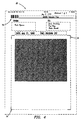
- An exemplary secure FAX printout 34 is shown in FIGURE 4.
- the header indicates who the secure FAX is from and who the intended recipient(s) is. The date and time may be included along with an unencrypted note from the sender.
- the encrypted portion of the FAX is unreadable by a human and may take the form of black and white dots, blocks or bars. Also there may be alignment indicators 36 which are used to remove rotation errors when the secure FAX document 34 is being scanned for processing.
- the secure FAX document 34 may then be delivered to the intended recipient.
- the intended recipient will then scan the secure FAX document on a scanner 38.
- the scanner 38 can be any equipment or computer peripheral that can scan a document and provide data to a computer 32 to turn it into a graphics documents such as .pdf, .gif, .jpg, .bmp, .tga, .pcx, .ppm, .pgm, .tif or other common graphics document type.
- the graphics document may be utilized by the computer 32 and a secure FAX program or driver located on the hard drive, RAM or other memory storage device on the computer 32.
- the secure FAX driver asks the user via a control panel 23 on the scanning device (or via guided user instructions GUI if a PC application is controlling the decoding) for a decryption code.
- the intended recipient enters the decryption code via, for example, the computer keyboard.
- the secure FAX driver then reads the graphics document data and/or the scanners bit stream.
- the decryption code and the alignments markings 36 on the secure FAX document 34 the encrypted portion of the secure FAX document is decrypted into the originally sent document 28.
- the decryption process uses a known decryption techniques such as RSA, PDP, PGP, DES, or other encryption/decryption techniques.
- the resulting decrypted original document can be displayed on the screen associated with the computer 32 or can be printed out on a printer or the multi functional printer/FAX machine 30 associated with the decryption computer 32.
- the received secure FAX document could have been received by a FAX card or circuitry within the computer 32.
- the computer user may be informed that a FAX has been received.
- the user could preview or view the received secure FAX on the computer screen in its encrypted format. If the user knows the code to decrypt the received secure FAX, then it can be entered into the computer so that the dots, bars or boxes in the encrypted portion of the received secure FAX can be read by secure FAX driver and decrypted.
- the decrypted FAX which looks like the original document 28, can then be either displayed on the screen or printed for the user.
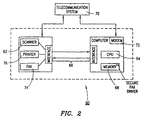
- FIGURE 2 depicts a block diagram of an exemplary apparatus 60 for sending or receiving a secure FAX in accordance with the present invention.
- a device that can scan the document to be securely FAXed such as a scanner is needed.
- the scanner 62 must be able to interface with a central processing unit (CPU) 64.
- the interface 66 may be any one of a plurality of interface buses including a parallel or serial style bus.
- the CPU 64 must be associated with a memory circuit and/or data storage mechanism (such as RAM, flash memory, hard drive, floppy drive or other memory circuitry).
- the memory circuitry will store the scanned document and allow the CPU 64 to encrypt and manipulate the data into the encrypted portion of the secure FAX document.
- the CPU 64, memory 68 and scanner 62 may all be contained in a multifunction printer/scanner/FAX machine. Such a printer/scanner/FAX machine would accept a "code” from a user via a control panel, then create a "plain text" header "To and From” information at the top of the secure FAX.
- the printer/scanner/FAX may connect directly to a telecommunication system 70 such that FAX circuitry 74 sends the secure FAX directly to the telecommunication system 70.
- the CPU 64 and memory 68 may be integral circuits within a personal computer and the scanner 62 may be part of a peripheral device that interfaces with the personal computer.
- the scanned document may be sent to the personal computer via the interfaces 66.
- the personal computer uses a secure FAX driver 67 stored in memory to operate on the scanned document data to produce the secure FAX document.
- the secure FAX document is then sent via a modem 72 to the telecommunication system 70 and then ultimately to the intended recipient.
- the telecommunication system 70 will deliver the secure FAX document in the form of FAX data to the FAX circuitry 74.
- the FAX circuitry 74 receives the secure FAX document data and prints it out via the printer 76.
- the FAX circuitry 74 could send the received secure FAX data, via the interface 66, to the memory 68 for storage until the receiving party requests that the received FAX be printed or viewed.
- the received FAX is printed it will look something like that which is depicted in FIGURE 4.
- the printed secure FAX will have an indicia 78 indicating it is a secure FAX. It will also have an unencrypted header which will, at least, indicate who the intended recipient of the secure FAX is. Another portion will contain encrypted data in the form of black and white lines, bars, dots, squares that can be read by the encryption decoder driver.
- the secure FAX will also comprise alignment indicators to aid the decryption drivers to remove or compensate for rotation or skew in the scanned secure FAX.
- the received and printed secure FAX is then provided to the intended recipient.
- the intended recipient must rescan the document in a scanner 62 so that the data is provided to a CPU 64 and memory 68. Once stored in memory the intended recipient will be queried for the decode code by the CPU 64.
- the CPU and secure FAX decode driver/program utilizes the decode code to decrypt the stored secure FAX and then print out a copy of the original document that was sent via the printer 76.
- the main utilitarian aspect of the present invention is that only the intended recipient can decode the secure FAX document. None of the people who handle the received FAX are able to understand the information contained in the secure FAX. Only the intended recipient can decode it because he/she will now the decode code.
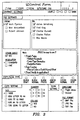
- FIGURE 3 depicts a FAX control form that can be used to create a cover page or header for a secure FAX.
- a user may have the depicted control form scanned by a scanner.
- the software will read the scanned document and detect which boxes are checked.
- the secure FAX box is checked and can be scanned by the scanner and interpreted by the secure FAX software. Furthermore, the person the FAX is from and the people who are the intended recipients are also checked.
- the note portion of the control form will also be scanned.
- the received secure FAX will have a header with to "to and from” information along with the note portion in an unencrypted format.
- FIGURE 4 depicts an exemplary received secure FAX that has been printed by a standard FAX machine.
- An indicia 78 is shown and is read by the scanner and the associated secure FAX software.
- the indicia 78 may be used to indicate that the document is in a secure FAX format.
- an unencrypted header is printed.
- the unencrypted header may include who the secure FAX is from, who the intended recipients are and the note portion (note shown).
- Below the unencrypted header is the encrypted portion of the secure FAX.
- FIGURE 4 depicts the encrypted portion to be a plurality of black and white squares.
- the black and white squares represent an encrypted data stream. Error protection and redundant data may be incorporated into the encrypted data portion of the secure FAX document.
- Alignment markings 36 are found on the secure FAX document 34 to enable the secure FAX software to interpret, among other things, the beginning and end of the secure data portion, and provide skew and rotation correction information so that the encrypted information can be read correctly.
- FIGURE 5 depicts exemplary steps required to send a secure FAX in accordance with the present invention.
- a person decides they want to send a secure FAX to an intended recipient.
- the sending party first decides what documents are going to be FAXed. They must decide who the document is going to be FAXed to. If they are going to use the control form depicted in FIGURE 3 they will fill out the check marks in the control form. If they are not going to use the control form they may call up the secure FAX software in their computer and input the necessary destination data.
- step S12 the user indicates that this is a secure FAX.
- the secure FAX software/drivers create the unencrypted header and request a "code" in step S14 to use in the encryption technique.
- step S16 the body of the original document is then encrypted into an encrypted bit map which is an encrypted representation of the body of the original document.
- bit map and the unencrypted header are combined into a standard style FAX document and transmitted via a communication system as a normal FAX in step S18.
- FIGURE 6 depicts exemplary steps required to receive and read a secure FAX document.
- a FAX machine or a device that can receive a FAX document receives and prints the received secure FAX document as if it was a normal FAX.
- the FAX operator realizes that the document is a secure FAX (because he can't read the content), but can read the unencrypted portion of the received FAX.
- the unencrypted header tells the FAX operator who the intended recipient of the document is.
- the received secure FAX is then provided to the intended recipient.
- the intended recipient scans the secure FAX document in a scanning device connected to a computer.
- step S24 the scanned document is read, adjusted for skew and rotation, and turned into a bit map/bit stream representing an encrypted form of the original document.
- step S26 the user is queried for the code (decryption code) that must be used to decrypt the encrypted bit map/bit stream into a human readable document.
- step S28 the secure FAX software/drivers decrypt the encrypted FAX bit map/bit stream and either print out the human readable document or display the same on a computer screen.
- the human readable document is a reasonable facsimile of the original document that was sent by the sending party.
Landscapes
- Engineering & Computer Science (AREA)
- Multimedia (AREA)
- Signal Processing (AREA)
- Facsimile Transmission Control (AREA)
- Facsimiles In General (AREA)
Applications Claiming Priority (2)
| Application Number | Priority Date | Filing Date | Title |
|---|---|---|---|
| US290504 | 1981-08-06 | ||
| US09/290,504 US6542261B1 (en) | 1999-04-12 | 1999-04-12 | Method and apparatus for sending or receiving a secure fax |
Publications (1)
| Publication Number | Publication Date |
|---|---|
| EP1045574A1 true EP1045574A1 (en) | 2000-10-18 |
Family
ID=23116309
Family Applications (1)
| Application Number | Title | Priority Date | Filing Date |
|---|---|---|---|
| EP00302952A Withdrawn EP1045574A1 (en) | 1999-04-12 | 2000-04-07 | Method and apparatus for sending or receiving a secure fax |
Country Status (3)
| Country | Link |
|---|---|
| US (1) | US6542261B1 (enExample) |
| EP (1) | EP1045574A1 (enExample) |
| JP (1) | JP2001016458A (enExample) |
Cited By (13)
| Publication number | Priority date | Publication date | Assignee | Title |
|---|---|---|---|---|
| WO2003013121A1 (en) * | 2001-07-12 | 2003-02-13 | Pitney Bowes Inc. | Secure delivery and printing of documents |
| US6654601B2 (en) | 2000-11-30 | 2003-11-25 | Pitney Bowes Inc. | Method and system for remote retrieval of messages using spontaneous networking technology |
| US6744528B2 (en) | 2000-11-30 | 2004-06-01 | Pitney Bowes Inc. | Method and system for remote printing of documents |
| US6751732B2 (en) | 2001-07-12 | 2004-06-15 | Pitney Bowes Inc. | Method and system for secure delivery and printing of documents via a network device |
| US6801932B1 (en) | 2000-11-07 | 2004-10-05 | Pitney Bowes Inc | Method and system for remote retrieval of documents |
| EP1542396A1 (en) * | 2003-11-27 | 2005-06-15 | Océ-Technologies B.V. | Secure data transmission in a network system of image processing devices |
| US6996235B2 (en) | 2001-10-08 | 2006-02-07 | Pitney Bowes Inc. | Method and system for secure printing of documents via a printer coupled to the internet |
| US7072473B2 (en) | 2001-07-12 | 2006-07-04 | Pitney Bowes Inc. | Method and system for secure delivery and retrieval of documents utilizing a facsimile machine |
| US7536547B2 (en) | 2003-11-27 | 2009-05-19 | Oce-Technologies B.V. | Secure data transmission in a network system of image processing devices |
| US8290160B1 (en) | 2001-10-17 | 2012-10-16 | Appalachian Technologies Corporation of Pennsylvania | Method and apparatus for secured facsimile transmission |
| EP2079228A4 (en) * | 2006-10-31 | 2012-12-12 | Fujitsu Ltd | DEVICE, METHOD AND PROGRAM FOR ENCRYPTING / DECORATING PICTURES |
| CN105956992A (zh) * | 2016-05-23 | 2016-09-21 | 温文媖 | 基于视觉意义加密图像的显著性区域保护方法 |
| CN108921495A (zh) * | 2018-06-01 | 2018-11-30 | 贵州电网有限责任公司 | 一种基于城乡智能配电网的安健环设备标识系统 |
Families Citing this family (26)
| Publication number | Priority date | Publication date | Assignee | Title |
|---|---|---|---|---|
| JP4860806B2 (ja) * | 2000-04-07 | 2012-01-25 | キヤノン株式会社 | ジョブ処理システム及びその制御方法及び記憶媒体 |
| GB2362009B (en) * | 2000-05-04 | 2002-07-24 | Insitu Ltd | Method and apparatus for enhancing communication between points of sale devices |
| US7103182B2 (en) * | 2001-03-19 | 2006-09-05 | Hewlett-Packard Development Company, L.P. | Public encryption of a stored print job |
| US7826076B2 (en) * | 2001-09-05 | 2010-11-02 | Xerox Corporation | System and method for providing secure value-added document network services |
| US20040181661A1 (en) * | 2003-03-13 | 2004-09-16 | Sharp Laboratories Of America, Inc. | Print processor and spooler based encryption |
| JP2005071175A (ja) * | 2003-08-26 | 2005-03-17 | Ricoh Co Ltd | 印刷データ生成方法、その方法をコンピュータに実行させるプログラム、クライアント端末、プリンタサーバ、印刷データ生成装置および画像形成装置 |
| US20050071738A1 (en) * | 2003-09-30 | 2005-03-31 | Park David J. | Scan document identification-send scanning using a template so that users can handwrite the destination and identification information |
| US20050094174A1 (en) * | 2003-10-20 | 2005-05-05 | Cunnagin Stephen K. | All-in-one printing system having an operator panel |
| JP3962721B2 (ja) * | 2003-12-15 | 2007-08-22 | キヤノン株式会社 | 文書処理装置及び文書処理方法 |
| US20050210259A1 (en) * | 2004-03-22 | 2005-09-22 | Sharp Laboratories Of America, Inc. | Scan to confidential print job communications |
| US20050262340A1 (en) * | 2004-05-04 | 2005-11-24 | Xerox Corporation | Methods and systems in a computer network for enhanced electronic document security |
| JP4442313B2 (ja) * | 2004-05-17 | 2010-03-31 | セイコーエプソン株式会社 | 印刷管理システムおよびこれに用いる装置、プログラム、印刷方法 |
| US7639807B2 (en) * | 2004-09-24 | 2009-12-29 | Toshiba Corporation | System and method for encryption of image data in a networked environment |
| JP3928640B2 (ja) * | 2004-11-09 | 2007-06-13 | コニカミノルタビジネステクノロジーズ株式会社 | 画像処理装置 |
| US20070283446A1 (en) * | 2006-06-05 | 2007-12-06 | Kabushiki Kaisha Toshiba | System and method for secure handling of scanned documents |
| US7570398B2 (en) * | 2006-10-10 | 2009-08-04 | Ricoh Company, Ltd. | Secure scanning device |
| US20080259385A1 (en) * | 2006-11-22 | 2008-10-23 | Canon Kabushiki Kaisha | Communication apparatus, transmission processing method, and reception processing method |
| US20080252933A1 (en) * | 2007-04-12 | 2008-10-16 | Microsoft Corporation | Enhanced facsimile handling |
| JP2009152758A (ja) * | 2007-12-19 | 2009-07-09 | Sharp Corp | 画像処理装置及びデータ暗号化通信システム |
| JP5309654B2 (ja) * | 2008-03-31 | 2013-10-09 | 富士通株式会社 | 画像暗号装置及び画像復号化装置 |
| EP2294525B1 (en) * | 2008-05-30 | 2018-01-10 | Hewlett-Packard Development Company, L.P. | Secured document transmission |
| US8533466B2 (en) * | 2008-12-23 | 2013-09-10 | Nbcuniversal Media, Llc | Electronic file access control system and method |
| US20110296511A1 (en) * | 2010-05-28 | 2011-12-01 | Xerox Corporation | Secure Fax with Passcode and Recipient Notification |
| US20120013945A1 (en) * | 2010-07-13 | 2012-01-19 | Toshiba Tec Kabushiki Kaisha | Image forming apparatus and data notification and printing method by image forming apparatus |
| US9710619B2 (en) | 2015-03-31 | 2017-07-18 | Canon Information And Imaging Solutions, Inc. | System and method for providing an electronic document |
| US10771655B2 (en) | 2018-12-20 | 2020-09-08 | HCL Technologies Italy S.p.A. | System and method for transferring a document |
Citations (4)
| Publication number | Priority date | Publication date | Assignee | Title |
|---|---|---|---|---|
| US5159630A (en) * | 1991-05-29 | 1992-10-27 | International Communication Systems Corporation | Facsimile message encryption system |
| US5398283A (en) * | 1992-09-21 | 1995-03-14 | Krypto Fax Partners L.P. | Encryption device |
| US5692048A (en) * | 1993-04-15 | 1997-11-25 | Ricoh Company, Ltd. | Method and apparatus for sending secure facsimile transmissions and certified facsimile transmissions |
| WO1998047261A1 (en) * | 1997-04-11 | 1998-10-22 | Lincoln Investments, Limited | System and method for secured transmission of data over telephone communications system |
Family Cites Families (16)
| Publication number | Priority date | Publication date | Assignee | Title |
|---|---|---|---|---|
| US4364993A (en) * | 1980-07-14 | 1982-12-21 | Celanese Corporation | Sized carbon fibers, and thermoplastic polyester based composite structures employing the same |
| US5166977A (en) * | 1991-05-31 | 1992-11-24 | Encrypto, Inc. | Protocol converter for a secure fax transmission system |
| US5491563A (en) * | 1992-02-04 | 1996-02-13 | Aliroo Ltd. | Apparatus for scrambling and unscrambling documents |
| FR2700906B1 (fr) * | 1993-01-28 | 1995-03-10 | France Telecom | Système et procédé de transmission de télécopies sécurisées. |
| BE1007075A3 (nl) * | 1993-05-10 | 1995-03-07 | Philips Electronics Nv | Telecommunicatienetwerk. |
| JP3493522B2 (ja) * | 1993-10-20 | 2004-02-03 | ミノルタ株式会社 | 画像処理装置 |
| US5450493A (en) * | 1993-12-29 | 1995-09-12 | At&T Corp. | Secure communication method and apparatus |
| JP3263558B2 (ja) * | 1995-03-10 | 2002-03-04 | ブラザー工業株式会社 | プリンタ機能付ファクシミリ装置 |
| US6021186A (en) * | 1995-04-17 | 2000-02-01 | Ricoh Company Ltd. | Automatic capture and processing of facsimile transmissions |
| WO1998034403A1 (en) * | 1995-09-29 | 1998-08-06 | Intel Corporation | Apparatus and method for securing captured data transmitted between two sources |
| US5671285A (en) * | 1995-12-13 | 1997-09-23 | Newman; Bruce D. | Secure communication system |
| US5633932A (en) * | 1995-12-19 | 1997-05-27 | Intel Corporation | Apparatus and method for preventing disclosure through user-authentication at a printing node |
| US6073118A (en) * | 1996-09-10 | 2000-06-06 | Ricoh Company, Ltd. | Method for performing secure financial transactions using facsimile transmissions |
| US6314521B1 (en) * | 1997-11-26 | 2001-11-06 | International Business Machines Corporation | Secure configuration of a digital certificate for a printer or other network device |
| US6065120A (en) * | 1997-12-09 | 2000-05-16 | Phone.Com, Inc. | Method and system for self-provisioning a rendezvous to ensure secure access to information in a database from multiple devices |
| US6421781B1 (en) * | 1998-04-30 | 2002-07-16 | Openwave Systems Inc. | Method and apparatus for maintaining security in a push server |
-
1999
- 1999-04-12 US US09/290,504 patent/US6542261B1/en not_active Expired - Fee Related
-
2000
- 2000-04-07 EP EP00302952A patent/EP1045574A1/en not_active Withdrawn
- 2000-04-11 JP JP2000109233A patent/JP2001016458A/ja active Pending
Patent Citations (4)
| Publication number | Priority date | Publication date | Assignee | Title |
|---|---|---|---|---|
| US5159630A (en) * | 1991-05-29 | 1992-10-27 | International Communication Systems Corporation | Facsimile message encryption system |
| US5398283A (en) * | 1992-09-21 | 1995-03-14 | Krypto Fax Partners L.P. | Encryption device |
| US5692048A (en) * | 1993-04-15 | 1997-11-25 | Ricoh Company, Ltd. | Method and apparatus for sending secure facsimile transmissions and certified facsimile transmissions |
| WO1998047261A1 (en) * | 1997-04-11 | 1998-10-22 | Lincoln Investments, Limited | System and method for secured transmission of data over telephone communications system |
Cited By (15)
| Publication number | Priority date | Publication date | Assignee | Title |
|---|---|---|---|---|
| US6801932B1 (en) | 2000-11-07 | 2004-10-05 | Pitney Bowes Inc | Method and system for remote retrieval of documents |
| US6654601B2 (en) | 2000-11-30 | 2003-11-25 | Pitney Bowes Inc. | Method and system for remote retrieval of messages using spontaneous networking technology |
| US6744528B2 (en) | 2000-11-30 | 2004-06-01 | Pitney Bowes Inc. | Method and system for remote printing of documents |
| US7072473B2 (en) | 2001-07-12 | 2006-07-04 | Pitney Bowes Inc. | Method and system for secure delivery and retrieval of documents utilizing a facsimile machine |
| US6751732B2 (en) | 2001-07-12 | 2004-06-15 | Pitney Bowes Inc. | Method and system for secure delivery and printing of documents via a network device |
| US7113300B2 (en) | 2001-07-12 | 2006-09-26 | Pitney Bowes Inc. | Method and system for secure delivery and printing of documents |
| WO2003013121A1 (en) * | 2001-07-12 | 2003-02-13 | Pitney Bowes Inc. | Secure delivery and printing of documents |
| US6996235B2 (en) | 2001-10-08 | 2006-02-07 | Pitney Bowes Inc. | Method and system for secure printing of documents via a printer coupled to the internet |
| US8290160B1 (en) | 2001-10-17 | 2012-10-16 | Appalachian Technologies Corporation of Pennsylvania | Method and apparatus for secured facsimile transmission |
| EP1542396A1 (en) * | 2003-11-27 | 2005-06-15 | Océ-Technologies B.V. | Secure data transmission in a network system of image processing devices |
| US7536547B2 (en) | 2003-11-27 | 2009-05-19 | Oce-Technologies B.V. | Secure data transmission in a network system of image processing devices |
| EP2079228A4 (en) * | 2006-10-31 | 2012-12-12 | Fujitsu Ltd | DEVICE, METHOD AND PROGRAM FOR ENCRYPTING / DECORATING PICTURES |
| US8433067B2 (en) | 2006-10-31 | 2013-04-30 | Fujitsu Limited | Device, method, and program for image encryption/decryption |
| CN105956992A (zh) * | 2016-05-23 | 2016-09-21 | 温文媖 | 基于视觉意义加密图像的显著性区域保护方法 |
| CN108921495A (zh) * | 2018-06-01 | 2018-11-30 | 贵州电网有限责任公司 | 一种基于城乡智能配电网的安健环设备标识系统 |
Also Published As
| Publication number | Publication date |
|---|---|
| US6542261B1 (en) | 2003-04-01 |
| JP2001016458A (ja) | 2001-01-19 |
Similar Documents
| Publication | Publication Date | Title |
|---|---|---|
| US6542261B1 (en) | Method and apparatus for sending or receiving a secure fax | |
| US5321749A (en) | Encryption device | |
| US20050097335A1 (en) | Secure document access method and apparatus | |
| US5692048A (en) | Method and apparatus for sending secure facsimile transmissions and certified facsimile transmissions | |
| JP4217146B2 (ja) | スキャナ装置、ビューア装置、画像保護方法、 | |
| JP2001016458A5 (enExample) | ||
| EP1536305A1 (en) | Secure transmission of electronic documents | |
| US7382481B2 (en) | Image communication device, method of communicating image, program and recording medium | |
| CN101262550A (zh) | 图像处理装置 | |
| EP2210406B1 (en) | Method and apparatus for secured facsimile transmission | |
| US8290160B1 (en) | Method and apparatus for secured facsimile transmission | |
| US5905801A (en) | File transfer using facsimile modem | |
| US20080019519A1 (en) | System and method for secure facsimile transmission | |
| KR101035868B1 (ko) | 팩스에 의해 통신되는 문서의 보안을 유지하는 방법 및 컴퓨터 판독가능 매체 | |
| US20100002268A1 (en) | Image communication apparatus | |
| JP4665663B2 (ja) | 画像送受信システム、画像受信処理装置、プログラム、方法 | |
| JP3616601B2 (ja) | 文書の電子署名可能な画像形成装置、データ処理装置及び文書の電子署名システム | |
| US20090136032A1 (en) | Image reading apparatus and image forming apparatus | |
| US20040165723A1 (en) | Image processing apparatus, image processing system, and image information transmission method | |
| JP2009130675A (ja) | ファクシミリ通信装置及びファクシミリ通信システム | |
| US20080199008A1 (en) | Image forming device and image forming method | |
| KR20040087541A (ko) | 디지털 복합기를 이용한 보안문서 암호화 방법 | |
| JP3701052B2 (ja) | 文書伝送方法及び文書伝送装置 | |
| JPH0575880A (ja) | 送達原稿秘匿方法 | |
| EP1307996A1 (en) | A method and system for secure transmission of data |
Legal Events
| Date | Code | Title | Description |
|---|---|---|---|
| PUAI | Public reference made under article 153(3) epc to a published international application that has entered the european phase |
Free format text: ORIGINAL CODE: 0009012 |
|
| AK | Designated contracting states |
Kind code of ref document: A1 Designated state(s): DE FR GB |
|
| AX | Request for extension of the european patent |
Free format text: AL;LT;LV;MK;RO;SI |
|
| 17P | Request for examination filed |
Effective date: 20010417 |
|
| AKX | Designation fees paid |
Free format text: DE FR GB |
|
| STAA | Information on the status of an ep patent application or granted ep patent |
Free format text: STATUS: THE APPLICATION IS DEEMED TO BE WITHDRAWN |
|
| 18D | Application deemed to be withdrawn |
Effective date: 20061011 |