EP1009767B1 - Menschliche defensin def-x, gen und cdna, deren enthaltende zusammensetzungen und deren diagnostische und therapeutische anwendungen - Google Patents
Menschliche defensin def-x, gen und cdna, deren enthaltende zusammensetzungen und deren diagnostische und therapeutische anwendungen Download PDFInfo
- Publication number
- EP1009767B1 EP1009767B1 EP98942796A EP98942796A EP1009767B1 EP 1009767 B1 EP1009767 B1 EP 1009767B1 EP 98942796 A EP98942796 A EP 98942796A EP 98942796 A EP98942796 A EP 98942796A EP 1009767 B1 EP1009767 B1 EP 1009767B1
- Authority
- EP
- European Patent Office
- Prior art keywords
- fact
- polypeptide
- sequence
- pharmaceutical composition
- nucleic acid
- Prior art date
- Legal status (The legal status is an assumption and is not a legal conclusion. Google has not performed a legal analysis and makes no representation as to the accuracy of the status listed.)
- Expired - Lifetime
Links
Images




Classifications
-
- A—HUMAN NECESSITIES
- A61—MEDICAL OR VETERINARY SCIENCE; HYGIENE
- A61Q—SPECIFIC USE OF COSMETICS OR SIMILAR TOILETRY PREPARATIONS
- A61Q17/00—Barrier preparations; Preparations brought into direct contact with the skin for affording protection against external influences, e.g. sunlight, X-rays or other harmful rays, corrosive materials, bacteria or insect stings
- A61Q17/005—Antimicrobial preparations
-
- A—HUMAN NECESSITIES
- A61—MEDICAL OR VETERINARY SCIENCE; HYGIENE
- A61K—PREPARATIONS FOR MEDICAL, DENTAL OR TOILETRY PURPOSES
- A61K8/00—Cosmetics or similar toiletry preparations
- A61K8/18—Cosmetics or similar toiletry preparations characterised by the composition
- A61K8/30—Cosmetics or similar toiletry preparations characterised by the composition containing organic compounds
- A61K8/64—Proteins; Peptides; Derivatives or degradation products thereof
-
- A—HUMAN NECESSITIES
- A61—MEDICAL OR VETERINARY SCIENCE; HYGIENE
- A61P—SPECIFIC THERAPEUTIC ACTIVITY OF CHEMICAL COMPOUNDS OR MEDICINAL PREPARATIONS
- A61P29/00—Non-central analgesic, antipyretic or antiinflammatory agents, e.g. antirheumatic agents; Non-steroidal antiinflammatory drugs [NSAID]
-
- A—HUMAN NECESSITIES
- A61—MEDICAL OR VETERINARY SCIENCE; HYGIENE
- A61P—SPECIFIC THERAPEUTIC ACTIVITY OF CHEMICAL COMPOUNDS OR MEDICINAL PREPARATIONS
- A61P35/00—Antineoplastic agents
-
- A—HUMAN NECESSITIES
- A61—MEDICAL OR VETERINARY SCIENCE; HYGIENE
- A61P—SPECIFIC THERAPEUTIC ACTIVITY OF CHEMICAL COMPOUNDS OR MEDICINAL PREPARATIONS
- A61P37/00—Drugs for immunological or allergic disorders
- A61P37/02—Immunomodulators
-
- A—HUMAN NECESSITIES
- A61—MEDICAL OR VETERINARY SCIENCE; HYGIENE
- A61Q—SPECIFIC USE OF COSMETICS OR SIMILAR TOILETRY PREPARATIONS
- A61Q19/00—Preparations for care of the skin
-
- C—CHEMISTRY; METALLURGY
- C07—ORGANIC CHEMISTRY
- C07K—PEPTIDES
- C07K14/00—Peptides having more than 20 amino acids; Gastrins; Somatostatins; Melanotropins; Derivatives thereof
- C07K14/435—Peptides having more than 20 amino acids; Gastrins; Somatostatins; Melanotropins; Derivatives thereof from animals; from humans
- C07K14/46—Peptides having more than 20 amino acids; Gastrins; Somatostatins; Melanotropins; Derivatives thereof from animals; from humans from vertebrates
- C07K14/47—Peptides having more than 20 amino acids; Gastrins; Somatostatins; Melanotropins; Derivatives thereof from animals; from humans from vertebrates from mammals
- C07K14/4701—Peptides having more than 20 amino acids; Gastrins; Somatostatins; Melanotropins; Derivatives thereof from animals; from humans from vertebrates from mammals not used
- C07K14/4723—Cationic antimicrobial peptides, e.g. defensins
-
- G—PHYSICS
- G01—MEASURING; TESTING
- G01N—INVESTIGATING OR ANALYSING MATERIALS BY DETERMINING THEIR CHEMICAL OR PHYSICAL PROPERTIES
- G01N33/00—Investigating or analysing materials by specific methods not covered by groups G01N1/00 - G01N31/00
- G01N33/48—Biological material, e.g. blood, urine; Haemocytometers
- G01N33/50—Chemical analysis of biological material, e.g. blood, urine; Testing involving biospecific ligand binding methods; Immunological testing
- G01N33/53—Immunoassay; Biospecific binding assay; Materials therefor
-
- G—PHYSICS
- G01—MEASURING; TESTING
- G01N—INVESTIGATING OR ANALYSING MATERIALS BY DETERMINING THEIR CHEMICAL OR PHYSICAL PROPERTIES
- G01N33/00—Investigating or analysing materials by specific methods not covered by groups G01N1/00 - G01N31/00
- G01N33/48—Biological material, e.g. blood, urine; Haemocytometers
- G01N33/50—Chemical analysis of biological material, e.g. blood, urine; Testing involving biospecific ligand binding methods; Immunological testing
- G01N33/68—Chemical analysis of biological material, e.g. blood, urine; Testing involving biospecific ligand binding methods; Immunological testing involving proteins, peptides or amino acids
-
- A—HUMAN NECESSITIES
- A61—MEDICAL OR VETERINARY SCIENCE; HYGIENE
- A61K—PREPARATIONS FOR MEDICAL, DENTAL OR TOILETRY PURPOSES
- A61K38/00—Medicinal preparations containing peptides
-
- G—PHYSICS
- G01—MEASURING; TESTING
- G01N—INVESTIGATING OR ANALYSING MATERIALS BY DETERMINING THEIR CHEMICAL OR PHYSICAL PROPERTIES
- G01N2333/00—Assays involving biological materials from specific organisms or of a specific nature
- G01N2333/435—Assays involving biological materials from specific organisms or of a specific nature from animals; from humans
- G01N2333/46—Assays involving biological materials from specific organisms or of a specific nature from animals; from humans from vertebrates
- G01N2333/47—Assays involving proteins of known structure or function as defined in the subgroups
- G01N2333/4701—Details
- G01N2333/4721—Cationic antimicrobial peptides, e.g. defensins
Definitions
- the present invention relates to a novel polypeptide defensin human Def-X, homolog of HNP-4, its genomic DNA and cDNA.
- the invention also relates to cloning and expression vectors, cells transformed by said vectors.
- the invention also relates to the use said polypeptides as an antibiotic, cytotoxic, repair and endocrine regulation or as a pesticide as well as cosmetic compositions or pharmaceuticals for the treatment of microbial infections, in particular bacterial, fungal, and viral, or parasitic, cancer, inflammation and immune deficiency.
- the invention includes diagnostic methods and kits for the determination of a microbial or parasitic infection and an inflammation, or for screening for predisposition to immune deficiencies or diseases cancerous.
- Antimicrobial substances are essential elements in the defense of multicellular organisms. These substances include both simple inorganic compounds (hydrogen peroxide, hypochlorous acid, nitric oxide) and complex peptides and proteins. They are present on the first lines of defense, on the surface of the mucous membranes of various organs, in particular in the epithelial cells of the intestine and the lungs, depending on the species, as well as in the microbicidal organelles of phagocytic cells of hematopoietic origin, where they were first highlighted.
- Antimicrobial proteins less than a hundred amino acids in size are arbitrarily called antimicrobial peptides.
- Several families of peptides antimicrobials have been identified, which differ in the presence within them of bridges disulfides, as regards their amino acid composition, their structural conformation and to their spectrum of activity.
- Antimicrobial peptides with six cysteines preserved form the family of defensins. This family is composed of peptides antimicrobials present in many abundant species of about 3-4 kDa (Ganz and Lehrer, 1994). These peptides are formed from 30 to 40 amino acids, including six Invariant cysteines which form three intramelecular disulfide bonds.
- Defensins fall into three families of peptides, structurally different: "classic" defensins, beta-defensins and insect defensins. These families show differences in the position and spacing of conserved cysteine residues, as well as those of other conserved amino acids (proline, glycine) (Ganz and Lehrer, 1995).
- Human defensins come essentially from two sources. They were first identified by peptide purification from neutrophil extracts. Four defensins have thus been isolated: "human neutrophil "HNP-1, HNP-2, HNP-3, and HNP-4 peptides. The first three are products different from the same gene (Ganz and Lehrer, 1995). These three peptides represent 99% the defensin content of neutrophils, while HNP-4 is also present, but at concentrations 100 times lower. More recently, two enteric defensins human, HD-5 and HD-6, have been characterized in the small intestine and more precisely in Paneth cells (Bevins et al., 1996). While 16 defensin genes enteric have been demonstrated in mice, only these two homologs have been identified in humans (Mallow et al., 1996).
- Defensins have an antimicrobial action on a broad spectrum of microorganisms in vitro (Martin et al., 1995). This particularly broad spectrum of action includes bacteria, Gram-positive and Gram-negative, several fungi, mycobacteria, parasites including spirochetes and several enveloped viruses including HSV and HIV viruses. They are also cytotoxic for several categories of normal and malignant cells, including cells resistant to TNF-alpha and to the cytolytic factor NK (Kagan et al., 1994). The large quantity of defensin targets and their abundance in immune defense blood cells, as well as the dramatic increase in their concentration during severe infections, suggest that these molecules play an important role in natural immunity to infections and cancer.
- the increase in the transcription of the defensin genes and the release of cytoplasmic granules containing defensins pre-synthesized in response to stimuli contribute to the local antimicrobial response, the defensins being able to participate in the inflammation reaction, in the processes repair and endocrine regulation during infection.
- Hematopoietic defensins could contribute to the phenomenon of lysis of cancer cells, a phenomenon mediated by neutrophils during the antibody-dependent immune response.
- enteric defensins is not clearly established. They could stem the proliferation of intraluminal flora or prevent the translocation of bacteria through the intestinal mucosa (Mallow et al., 1996).
- a concentration of defensins corresponding to 10% of the normal rate is found in patients with "specific granule deficiency", a rare disease of development of granulocytes. Affected subjects suffer from frequent infections, caused by common bacteria (Ganz and Lehrer, 1995).
- Biochemically modified defensins are potential agents prophylactics and therapeutics against infections (Ganz and Lehrer, 1995).
- the research on these antimicrobial peptides or other molecules involved in natural immunity, has acquired particular importance since the development of resistance of microorganisms to traditional antibiotics (Bevins et al., 1996).
- defensins The primary structure of defensins, including human defensins, has has been the subject of recent studies (White et al., 1995; Mallow et al., 1996).
- the defensins classics include 29 to 35 amino acids, but are derived from precursors - preproproteins - comprising 90 to 100 amino acids.
- the proteolytic maturation of human neutrophil defensins into mature peptides is coupled with their addressing towards the granulocytes; the function of the propeptide would include inactivation of the form precursor of defensin and a support for the acquisition of the active conformation of mature peptide (Martin et al., 1995).
- Peptide homologies are maximum at level of the peptide signals, and minimal at the level of the mature peptides, which nevertheless contain six fully conserved cysteine residues. If the conservation of these residues seem necessary for the acquisition of secondary structures involved in defensin activity, the sequence differences existing within the very broad family of these antimicrobial peptides, in particular at their N-terminal end, but also in other unconserved regions, seem to be important determinants their spectrum of activity, and their antimicrobial or cytotoxic efficacy.
- Sparkes et al. (1989) located the gene coding for HNP-1 on chromosome 8, in the region 8p23.
- Bevins et al. (1995), and Mallow et al. (1996) located the two genes coding for HD-5 and HD-6 on chromosome 8, more precisely in the 8p21-pter region, a region including the region previously identified as carrying hematopoietic defensins.
- the genes coding for human enteric defensins HD-5 and HD-6 contain two exons, while those coding for hematopoietic defensins contain three, the last two exons coding for prepropeptide, both in humans and in humans.
- the 8p23 chromosomal region is involved in many pathologies, in particular cancerous: we will cite by example hepatocellular carcinoma (Becker et al., 1996), non-lung cancer small cells (Sundareshan and Augustus, 1996), prostate cancer (Ichikawa and al., 1996), and colorectal carcinoma (Yaremko et al., 1994). Although this never been documented, it is possible that a deficiency in either of the defensins have a role in the predisposition to such pathologies, or in their development.
- the present invention relates to a new human defensin, Def-X, HNP-4 defensin homolog.
- Polypeptide means a protein or peptide.
- the polypeptide according to the invention is characterized in that that it consists of the polypeptide of sequence SEQ ID No. 3.
- polypeptides of the invention are in non-form natural, that is to say that they are not taken in their natural environment but that they could have been obtained by purification from natural sources or else obtained by genetic recombination or by chemical synthesis as will be described below.
- homologous polypeptide is meant a polypeptide whose sequence amino acids present at least 80%, and preferably 90%, of acids amines in common.
- variant polypeptide is intended to denote a mutated polypeptide or corresponding to a polymorphism which may exist, in particular in humans and which may have a truncation, a substitution, a deletion and / or an addition of minus one amino acid compared to the polypeptide according to the invention.
- modified polypeptide is meant a polypeptide obtained by genetic recombination or by chemical synthesis as will be described below, showing a change from the normal sequence.
- modifications may in particular relate to the pre-, pro- or mature domains of the polypeptide according to the invention, on the amino acids at the origin of a specificity of spectrum or efficiency of the activity, or at the origin of the structural conformation, of the load, or of hydraphobicity, and the multimerization and membrane insertion capacity of the polypeptide according to the invention.
- the modifications may also relate to the sequences involved in the maturation, transport and addressing of the polypeptide.
- the biologically active fragments of polypeptides according to the invention will have at least 10 amino acids, preferably 15 amino acids.
- a preferred fragment is the mature acid sequence peptide amines SEQ ID N ° 6.
- the biologically active fragments of this mature peptide contain preferably 10 to 15 amino acids, which may be of interest to be obtained easily by chemical synthesis.
- the above compounds can be obtained using chemistry combinatorial, in which it is possible to vary parts systematically of polypeptide before testing them on models, cell cultures or microorganisms for example, to select the most active compounds or having the desired properties.
- non-natural amino acids for example in D form
- amino acid analogs especially sulfur forms for example.
- the structure of mature defensin or its homologs, variants or modified, as well as the corresponding fragments can be integrated into polypeptide or other chemical structures.
- the invention also includes isolated nucleic acids encoding a polypeptide according to the invention.
- sequences genomics in their natural chromosomal environment are sequences which have been isolated, i.e. they have been taken directly or indirectly, their environment having been at least partially modified.
- genomic DNA can thus be genomic DNA, cDNA, or RNA, comprising or not unnatural nucleotides; they may be isolated natural nucleic acids, or synthetic nucleic acids.
- nucleic acid a nucleic acid coding for the polypeptides according to the invention, taking into account the degeneracy of the genetic code, and the corresponding cDNAs and RNAs.
- homologous nucleic acid is meant a nucleic acid whose sequence has a homology of at least 80%, preferably 90%, with the nucleic acid sequences according to the invention.
- nucleic acid By mutated nucleic acid is meant any nucleic acid encoding a variant polypeptide according to the invention, and any nucleic acid comprising, relative SEQ ID N ° 1 and SEQ ID N ° 2 sequences, at least one mutation in the sequences promoters and / or regulators, which may have an effect on the expression of polypeptide in particular on its level of expression and the tissue-specificity thereof.
- sequences with a polymorphism present in humans are therefore included in the invention. Among these polymorphisms, some may lead to immune deficiencies, response to infections, predispositions and / or development of cancers.
- modified nucleic acid any nucleic acid coding for a modified polypeptide according to the invention, or any nucleic acid obtained by mutagenesis according to techniques well known to those skilled in the art, and comprising modifications compared to normal sequences, including mutations in the sequences regulators and / or promoters, in particular leading to a modification of the rate and / or tissue-specificity of expression of the polypeptide.
- the present invention relates to all primers and probes, which may be marked according to methods well known to those skilled in the art, allowing to highlight, in particular by techniques based on hybridization or on amplification, for example by PCR, the nucleic sequences according to the invention, including discriminating the normal sequences from the sequences mutated.
- nucleic acid fragments of interest mention should be made of particularly antisense oligonucleotides, that is to say the structure of which ensures, by hybridization with the target sequence, inhibition of product expression corresponding. Mention should also be made of sense oligonucleotides which, by interaction with proteins involved in regulating the expression of the corresponding product, will induce either an inhibition or an activation of this expression.
- sequences which act as well at the level of the sequences exonics or intronics described only on the flanking sequences in particular the 5 'UTR promoters and / or regions.
- the present invention also relates to cloning vectors or of expression comprising a nucleotide sequence as described above.
- These cloning or expression vectors may include elements ensuring the expression of the sequence in a host cell, in particular sequences promoters and effective regulatory sequences in said cell.
- the vector in question may be autonomous replication or intended for ensuring the integration of the sequence within the chromosomes of the host cell.
- the vector viruses can be in particular adenovirus (Perricaudet et al., 1992), retroviruses, poxviruses or viruses herpes (Epstein et al., 1992).
- adenovirus Perricaudet et al., 1992
- retroviruses poxviruses
- viruses herpes Epstein et al., 1992
- the culture is carried out in complementation cells, this avoiding the risks possible proliferation of an infectious viral vector.
- the invention also relates to prokaryotic or eukaryotic cells. transformed by a vector as described above and this in order to ensure the expression of a defensin Def-X natural, normal or variant, or modified, or else, for example, from one of its fragments.
- the present invention relates also the polypeptides obtained by culture of the cells thus transformed and recovery of the expressed protein, said recovery being able to be carried out intracellularly or extracellularly in the culture medium when the vector was designed to ensure secretion of the protein through, for example, a “signal” sequence, the polypeptide being in the form of a pre-polypeptide or prepro-polypeptide.
- the constructs allowing secretion of the polypeptides are known, both for prokaryotic systems and eukaryotic systems.
- some of the Def-X polypeptides may include their own secretion or membrane insertion system.
- the recombinant polypeptides according to the invention may be obtained in glycosylated or non-glycosylated form and may or may not have the natural tertiary structure.
- the cells thus obtained can make it possible to prepare polypeptides natural, variant or modified, Def-X, but also fragments of these polypeptides, in particular polypeptides which may correspond to the fragments biologically active.
- the present invention further relates to the same polypeptides according to the invention but obtained by chemical synthesis and which may contain amino acids unnatural or modified.
- polypeptides according to the present invention in particular defensin mature, as well as the modified mature homologs, derivatives or polypeptides, can be obtained by chemical synthesis using any of the numerous known peptide syntheses, for example techniques using uses solid phases or techniques using partial solid phases, for example condensation of fragments or by synthesis in conventional solution.
- the C-terminal amino acid is fixed on an inert solid support and contains protecting groups for its amino group in alpha (and if this is necessary, protections on its lateral functional groups).
- the protecting group of the terminal amino group is eliminated and the second amino acid is fixed, which also includes the protections required.
- N-terminal protecting groups are removed after each acid amine was fixed, on the other hand, of course, protection is maintained on the chains side.
- the peptide is cleaved from its support and the lateral protection groups are eliminated.
- the preferred protecting groups for the alpha-amino groups are urethane-type protective groups (BOC or FMOC).
- BOC or FMOC urethane-type protective groups
- coupling reagents they are very numerous, among them of course it is necessary to cite more particularly N, N'-diisopropyl-carbodiimine (DIC) generally implemented in DMF or DCM.
- DIC N, N'-diisopropyl-carbodiimine
- the present invention also relates to polyclonal antibodies or monoclonals obtained by immunological reaction of a human or animal organism with an immunogenic agent consisting of a polypeptide according to the invention, in particular a polypeptide obtained by culture of one of the cells described above, or by chemical synthesis as previously indicated.
- the invention therefore extends to monoclonal and polyclonal antibodies or a of their fragments, chimeric antibodies, capable of specifically recognizing a polypeptide according to the invention.
- the invention also includes the antibodies according to the invention, characterized in that that they are marked.
- the labeled antibodies may, for example, be immunoconjugated to enzymes such as peroxidase or alkaline phosphatase, or labeled with fluorescent compounds, biotin or even radiolabelled.
- enzymes such as peroxidase or alkaline phosphatase
- fluorescent compounds such as peroxidase or alkaline phosphatase
- biotin such as biotin or even radiolabelled.
- the invention also extends to a polypeptide according to the invention for use as an antimicrobial agent, in particular antibacterial, antifungal, antiviral and / or antiparasitic, as a cytotoxic agent, with a particular anticancer aim, and / or as an agent for modulating inflammation, tissue repair and endocrine regulation, in particular corticostatic.
- an antimicrobial agent in particular antibacterial, antifungal, antiviral and / or antiparasitic
- cytotoxic agent with a particular anticancer aim
- an agent for modulating inflammation, tissue repair and endocrine regulation in particular corticostatic.
- the invention relates to a pharmaceutical composition
- a pharmaceutical composition comprising a polypeptide according to the invention, which can be associated with a vehicle pharmaceutically acceptable.
- composition can be administered systemically, locally or topical.
- Its mode of administration, its dosage, its optimal dosage forms may be determined according to the criteria generally taken into account in the establishment of a treatment adapted to a patient, in particular his age, his weight body, tolerance of treatment, its side effects noted, etc.
- the invention also comprises a pharmaceutical composition
- a pharmaceutical composition comprising a vector according to the invention capable of expressing in vivo a polypeptide according to the invention, which can be associated with a pharmaceutically acceptable vehicle.
- Said pharmaceutical compositions are, according to the invention, intended for the prevention and / or treatment of microbial infections, especially infections microbials of bacterial origin, Gram-positive or Gram-negative bacteria, mycobacterial, fungal and viral, or parasitic, especially spirochetes.
- the invention advantageously relates to pharmaceutical compositions according to the invention characterized in that the infections Viral infections are linked to enveloped viruses, including HSV and HIV.
- a subject of the invention is also pharmaceutical compositions according to the invention, intended for the prevention and / or treatment of cancers, in particular melanoma, cancer of the liver, prostate, non-small cell lung or colorectal carcinoma.
- the invention further comprises pharmaceutical compositions according to the invention, intended to increase the immune defenses, to increase the defenses immune in case of acquired immunodeficiency or to prevent immunodeficiency, especially for the treatment of psoriasis, or to modulate inflammatory processes especially in cases of diseases with chronic inflammation.
- polypeptides according to the present invention are more particularly usable in external topical form, for example on the skin and mucous membranes.
- These external topical forms may be for pharmaceutical use as well, dermatological only for cosmetic use.
- compositions can be used as an agent pharmaceutical antiseptic or as an antiseptic in certain cosmetics, either to cleanse the skin or integuments and / or as a preservative for compositions.
- topical compositions according to the present invention can be used especially in certain skin, eye, vaginal or oral conditions. They can also be used as an additional cosmetic agent, in particular in certain treating shampoos.
- the invention also relates to the demonstration of the absence or of a abnormal amount of protein or nucleic acid corresponding to defensin X as a marker for infection or pathologies which will be described below.
- the invention also relates to the detection of an abnormal shape of the protein or the presence of an abnormal nucleic acid corresponding to a mutated defensin which can possibly be totally inactive.
- presence of this abnormal form can be a marker of predisposition to certain ailments, including immunodeficiency and / or cancer.
- the present invention relates to a diagnostic method immunodeficiency and / or predisposition to certain types of cancer, characterized in that the presence in a patient sample is highlighted an abnormal defensin and / or a sequence encoding an abnormal defensin.
- the diagnostic methods according to the present invention allow, in particular, the demonstration of an immunodeficiency, and / or a predisposition to one or more cancers, in particular those mentioned above, in particular in families at risk. This type of diagnosis will generally be carried out by highlighting the forms mutated protein or nucleic acid sequences.
- the invention also relates to methods of diagnosing inflammation, immunodeficiency, predisposition to cancer-like conditions and / or infections caused by microorganisms or linked to an immunodeficiency or inflammatory phenomenon, characterized in that they comprise the dosage of a polypeptide or nucleic acid according to the invention in a biological sample and comparing the result of said assay obtained with the quantity of polypeptide or nucleic acid normally present in an equivalent biological sample.
- the peptide assay will, in general, allow detection of a microbial or parasitic infection and / or inflammation.
- Peptide assays can be carried out by any known method, ELISA or RIA for example. Setting evidence of an abnormal form of defensin-X can be achieved, for example, at using a monoclonal antibody specific for this form, in particular antibodies subject of the invention.
- the invention advantageously comprises the methods characterized in that they use a probe and / or a primer oligonucleotide according to the invention.
- PCR-like we mean to designate all methods using direct or indirect reproductions of the sequences nucleic acids, or in which the labeling systems have been amplified, these techniques are of course known, in general it is the amplification of DNA by a polymerase; when the original sample is an RNA it is advisable prior to performing a reverse transcription.
- the invention further relates to diagnostic kits or kits for the determination of microbial or parasitic infection, inflammation, immunodeficiency and / or predisposition to cancer-like conditions, characterized in that they comprise an antibody according to the invention.
- Diagnostic kits or kits for determining infection microbial or parasitic, inflammation, immunodeficiency and / or predisposition to cancer-like conditions characterized in that they include a probe and / or a primer according to the invention also form part of the invention.
- the invention finally relates to the use of polypeptide according to the invention as a pesticide, in particular for the cultivation of plants of industrial interest such as, for example for example, food crops such as corn, wheat, soy, rice or rapeseed, fodder plants, fruit trees, vines or ornamental plants.
- plants of industrial interest such as, for example for example, food crops such as corn, wheat, soy, rice or rapeseed, fodder plants, fruit trees, vines or ornamental plants.
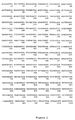
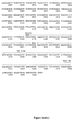
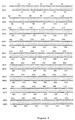
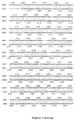
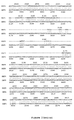
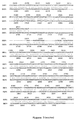
- hDef-X The entire genomic DNA sequence of hDef-X is presented, which has a significant homology with the gene coding for hDef-4 (HNP-4).
- Annotations show the positions on the hDef-4 sequence of CAAT signals box, TATA box, splicing sites, beginnings and ends of introns / exons, start of transcription, polyadenylation site.
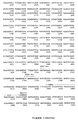
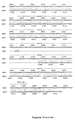
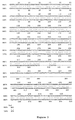
- the sequences have an overall homology of 61.4%.
- the alignment reveals a insertion of approximately 75 bases downstream of the STOP codon, present on the hDef-4 sequence, but not on that of hDef-X; strong homology resumes throughout the region included between the end of this insertion and that of the cDNA. Outside this region insertion, the degree of homology between nucleic acid sequences is therefore remarkable.
- BAC Bacterial Artificial Chromosome
- the clones thus obtained were "pooled” and screened according to a previously described three-dimensional analysis procedure for screening for YACs ("Yeast Artificial Chromosome") banks (Chumakov et al., 1992 and 1995).
- the three-dimensional pools obtained were screened by PCR using the primers surrounding the marker SHGC-10793, for Neutrophil defensin 4 precursor (GeneBank: accession number U18745); a clone of BAC B0725 B12 was thus isolated.
- the size of the insert carried by this BAC was determined on a 0.8% agarose gel after migration by electrophoresis in alternating field (CHEF) (4 hours at 9Volts / cm, with an angle of 100 °, at 11 ° C in buffer 0.5 x TAE). It has thus been demonstrated that the BAC B0725B12 carries an insert 220 kb, with an internal site for the enzyme NotI.
- CHEF alternating field
- chromosomal location of BAC in the candidate region 8p23.1-23.2 has been confirmed by fluorescent in situ hybridization (FISH) on chromosomes metaphasic, according to the method described by Cherif et al., (1990).
- FISH fluorescent in situ hybridization
- the cells from a liter of overnight culture were treated by alkaline lysis according to conventional techniques. After centrifuging the product obtained in a cesium chloride gradient, 12 ⁇ g of BAC B0725B12 DNA were purified. 3 ⁇ g of DNA were sonicated in order to obtain fragments whose sizes are distributed uniformly from 1.2 kb to 1.5 kb. The fragments obtained were treated in a volume of 50 ⁇ l with 2 units of Vent polymerase for 20 minutes at 70 ° C., in the presence of the 4 deoxytriphosphates (100 ⁇ M). The blunt-ended fragments resulting from this step were separated by gel electrophoresis 1% agarose at low melting point (60 volts for 3 hours).
- the fragments grouped according to their sizes were excised and the bands obtained treated with agarose. After extraction with chloroform and dialysis on Microcon 100 columns, the DNA in solution was adjusted to a concentration of 100 ng / ⁇ l. A ligation was carried out "overnight” by bringing into contact 100 ng of the fragmented DNA of BAC B0725B12 and 20 ng of DNA of the vector BluescriptSK linearized by enzymatic digestion, and treated with alkaline phosphatase. This reaction was carried out in a final volume of 10 ⁇ l in the presence of 40 units / ⁇ l of T4 DNA ligase (New England Biolabs).
- the ligation products were then used to transform by electroporation, either an XL-Blue strain (for multicopy plasmids), or a D10HB strain (for subclones derived from BAC).
- the IacZ - antibiotic resistant clones were subcultured individually in microplates for storage and sequencing.
- the inserts of these subclones were amplified by PCR on cultures bacterial conducted "overnight", using the primers of the vectors flanking the insertions.
- the sequence of the ends of these inserts was determined by automatic fluorescent sequencing on an ABI 377 sequencer, equipped with ABI Prism DNA Sequencing Analysis software (version 2.1.2).
- sequence fragments from the sub-BACs were assembled by Gap4 software from R. Staden (Bonfield et al., 1995). This software allows reconstruction of a complete sequence from fragments of sequences. The sequence deduced from the alignment of the different fragments is the consensus sequence.
- the potential exons of the BAC B0725B12 insert were identified by homology research on public protein, nucleic acid and of EST (Expressed Sequence Tags).
- the bank of proteins used consists of the non-redundant fusion of banks Genpept (machine translation from GenBank, NCBI; Benson et al., 1996); Swissprot (George et al., 1996) and PIR / NBRF (Bairoch et al., 1996). Duplicates have been eliminated by "nrdb” software (public domain, NCBI; Benson et al., 1996). The repetitions internals were then masked by "xnu” software (public domain, NCBI; Benson et al., 1996). The resulting bank, called NRPU (Non-Redundant Protein-Unique) served as a reference for research into protein homologies.
- the EST bank used is made up of Genbank "gbest" (1-9) subsections (NCBI; Benson et al., 1996). It contains all the fragments of public transcripts.
- the nucleic acid library (other than TSEs) used contains all other subsections of Genbank and the EMBL (Rodriguez-Tome et al., 1996) whose duplicates have been eliminated as before.
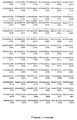
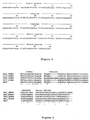
- the overall homology is 49.5%.
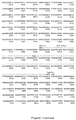
- Amino acids are found in the primary protein sequence of Def-X kept in the class of classical defensins, in particular the six cysteines involved in the three-dimensional structure of these ( Figure 5).
- the genomic DNA of immunodeficient or cancer patients is peripheral venous blood extract after cell lysis, protein digestion, partition organic and finally alcoholic precipitation, according to conventional techniques well known to those skilled in the art.
- Oligonucleotide primers are used for amplification genomics of exonic sequences derived from BAC B0725B12; they are predicted by computer analysis, and defined using OSP software (Hillier et al., 1991).
- All of these primers contain, upstream, specifically targeted bases by amplification, a common universal oligonucleotide tail, intended for allow sequencing of the amplified fragments (PU: 5'-TGTAAAACGACGGCCAGT-3 ' for upstream primers, and RP: 5'-CAGGAAACAGCTATGACC-3 ' for downstream primers).
- the oligonucleotide primers are synthesized according to the method of phosphoramidites, on a GENSET UFPS 24.1 synthesizer.
- PCR polymerase chain reaction
- Amplification is carried out in a Perkin Elmer 9600 or MJ thermal cycler Research PTC200 with heated lid. After heating to 94 ° C for 10 minutes, 35 cycles are performed. Each cycle includes: 30 seconds at 94 ° C, 1 minute at 55 ° C and 30 seconds at 72 ° C. A final stretching segment of 7 minutes to 72 ° C ends the amplification.
- the amount of amplification products obtained is determined on 96-well microplate, by fluorometry, using Picogreen intercalating agent (Molecular Probes).
- the products of genomic amplification by PCR are sequenced on ABI 377 automatic sequencer, using fluorescent primers marked with ABI fluorochromes (Joe, Fam, Rox and Tamra) and DNA polymerase Thermosequanase (Amersham).
- the products of the sequence reactions are precipitated in ethanol, resuspended in loading buffer containing formamide, denatured, and deposited on 4% acrylamide gels; electrophoresis (2 hours 30 to 3000 Volts) are run on ABI 377 sequencers equipped with software ABI for collection and analysis (ABI Prism DNA Sequencing Analysis Software, version 2.1.2.).
- sequences obtained from patients with impairments studied, especially in patients from families with a high predisposition to cancer are compared to the sequences obtained in control subjects, related and not related.
- a statistical analysis (calculation of lod score) allows to conclude as to the significance of the presence of a heterozygosity site and its association with predisposition to cancers.
- Epstein A. Herpetic vectors for gene transfer - Medicine / Science 8: 902-911 (1992).
- Temin H.M. Retrovirus vectors for gene transfer. In Kucherlapati R., ed. Uncomfortable Transfer, New York, Plenum Press, 149-187 (1986).
Landscapes
- Health & Medical Sciences (AREA)
- Life Sciences & Earth Sciences (AREA)
- Chemical & Material Sciences (AREA)
- General Health & Medical Sciences (AREA)
- Engineering & Computer Science (AREA)
- Immunology (AREA)
- Molecular Biology (AREA)
- Medicinal Chemistry (AREA)
- Animal Behavior & Ethology (AREA)
- Public Health (AREA)
- Veterinary Medicine (AREA)
- Biomedical Technology (AREA)
- Hematology (AREA)
- Urology & Nephrology (AREA)
- Organic Chemistry (AREA)
- Biochemistry (AREA)
- Physics & Mathematics (AREA)
- Food Science & Technology (AREA)
- Cell Biology (AREA)
- Dermatology (AREA)
- Microbiology (AREA)
- Pathology (AREA)
- General Physics & Mathematics (AREA)
- Proteomics, Peptides & Aminoacids (AREA)
- Biotechnology (AREA)
- Analytical Chemistry (AREA)
- Chemical Kinetics & Catalysis (AREA)
- General Chemical & Material Sciences (AREA)
- Nuclear Medicine, Radiotherapy & Molecular Imaging (AREA)
- Pharmacology & Pharmacy (AREA)
- Toxicology (AREA)
- Epidemiology (AREA)
- Birds (AREA)
- Genetics & Genomics (AREA)
- Zoology (AREA)
- Gastroenterology & Hepatology (AREA)
- Biophysics (AREA)
- Bioinformatics & Cheminformatics (AREA)
- Pain & Pain Management (AREA)
- Rheumatology (AREA)
Claims (47)
- Isoliertes Polypeptid, ausgewählt aus den folgenden Polypeptiden:a) Polypeptid, dessen Aminosäure-Sequenz die Sequenz SEQ ID Nr. 6 ist;b) Polypeptid, das zu mindestens 80 % identisch ist mit dem Polypeptid, dessen Aminosäure-Sequenz die Sequenz SEQ ID Nr. 6 ist;c) Polypeptid, dessen Aminosäure-Sequenz die Aminosäure-Sequenz eines biologisch aktiven Fragments aus mindestens 10 aufeinanderfolgenden Aminosäuren des Polypeptids ist, wie es unter (a) definiert ist, wobei das genannte Fragment mindestens eine Aktivität, ausgewählt unter den folgenden Aktivitäten, aufweist:Erkennung des unter (a) definierten Polypeptids durch einen spezifischen Antikörper;antibiotische Aktivität;zytotoxische Aktivität; oderAntitumor-Aktivität; undd) Polypeptid, das mindestens ein Polypeptid umfasst, wie es unter (a), (b) oder (c) definiert ist.
- Polypeptid nach Anspruch 1, dadurch gekennzeichnet, dass das genannte Fragment mindestens 15 aufeinanderfolgende Aminosäuren umfasst.
- Polypeptid nach Anspruch 1, dadurch gekennzeichnet, dass die Aminosäure-Sequenz des genannten Polypeptids die Sequenz SEQ ID Nr. 3 ist.
- Polypeptid nach einem der Ansprüche 1 bis 3, dadurch gekennzeichnet, dass es durch chemische Synthese erhalten worden ist.
- Isolierte Nucleinsäure, die für ein Polypeptid nach einem der Ansprüche 1 bis 3 codiert.
- Nucleinsäure nach Anspruch 5, die ausgewählt ist unter den folgenden Nucleinsäuren:a) Nucleinsäure mit der Sequenz SEQ ID Nr. 1;b) Nucleinsäure mit der Sequenz SEQ ID Nr. 2;c) Nucleinsäure, die zu 80 % identisch ist mit den Nucleinsäuren gemäß (a) oder (b); undd) Nucleinsäure-Fragment mit der Sequenz SEQ ID Nr. 1, das mindestens ein Sequenz-Exon nt 1836 bis 1874, nt 3394 bis 3577 oder nt 4164 bis 4379 der Sequenz SEQ ID Nr. 1 umfasst.
- Vektor zum Klonieren oder Exprimieren einer Nucleotid-Sequenz in einer geeigneten Wirtszelle, dadurch gekennzeichnet, dass er eine Sequenz nach einem der Ansprüche 5 oder 6 umfasst.
- Vektor nach Anspruch 7, dadurch gekennzeichnet, dass er die Elemente umfasst, die eine Expression der genannten Sequenz in der genannten Wirtszelle gewährleisten.
- Zelle, die durch einen Vektor nach einem der Ansprüche 7 und 8 transformiert worden ist.
- Zelle nach Anspruch 9, dadurch gekennzeichnet, dass es sich dabei um eine Prokaryontenzelle handelt.
- Zelle nach Anspruch 9, dadurch gekennzeichnet, dass es sich dabei um eine Eukaryontenzellen handelt.
- Verfahren zur Herstellung eines Polypeptids nach einem der Ansprüche 1 bis 3, dadurch gekennzeichnet, dass man eine Zelle nach einem der Ansprüche 8 bis 10 kultiviert und das gebildete Polypeptid daraus gewinnt.
- Monoklonaler oder polyklonaler Antikörper oder eines ihrer Fragmente, Chimären-Antikörper, dadurch gekennzeichnet, dass er (es) in der Lage ist, ein Polypeptid nach einem der Ansprüche 1 bis 4 spezifisch zu erkennen.
- Antikörper nach Anspruch 13, dadurch gekennzeichnet, dass er markiert ist.
- Oligonucleotid-Sonde oder -Initiator, dadurch gekennzeichnet, dass sie (er) aus einer Nucleinsäure nach einem der Ansprüche 5 und 6 besteht.
- Sonde nach Anspruch 15, dadurch gekennzeichnet, dass sie markiert ist.
- Polypeptid nach einem der Ansprüche 1 bis 4 für die Verwendung als antimikrobielles, antiparasitäres und/oder antivirales Agens.
- Polypeptid nach einem der Ansprüche 1 bis 4 für die Verwendung als zytotoxisches Agens.
- Polypeptid nach Anspruch 18, dadurch gekennzeichnet, dass das genannte zytotoxische Agens als Antikrebsmittel verwendbar ist.
- Polypeptid nach einem der Ansprüche 1 bis 4 für die Verwendung als Agens zur Modulierung von Entzündungs-, Gewebsreparatur- und endokrinen Regulations-Prozessen.
- Polypeptid nach Anspruch 20, dadurch gekennzeichnet, dass die genannte Modulation eine corticostatische Modulation ist.
- Pharmazeutische Zusammensetzung, die ein Peptid nach einem der Ansprüche 1 bis 4 umfasst.
- Pharmazeutische Zusammensetzung nach Anspruch 22 für die äußere topische Anwendung, dadurch gekennzeichnet, dass sie mindestens ein Peptid nach einem der Ansprüche 1 bis 4 umfasst.
- Kosmetische Zusammensetzung für die äußere topische Anwendung, die ein Polypeptid nach einem der Ansprüche 1 bis 4 umfasst.
- Zusammensetzung nach einem der Ansprüche 23 oder 24, dadurch gekennzeichnet, dass es sich dabei um eine Zusammensetzung handelt, die als antiseptisches Agens verwendet wird.
- Pharmazeutische Zusammensetzung, die einen Vektor nach einem der Ansprüche 7 und 8 umfasst, der in der Lage ist, ein Polypeptid nach einem der Ansprüche 1 bis 3 in vivo zu exprimieren.
- Pharmazeutische Zusammensetzung, die eine transformierte Zelle nach einem der Ansprüche 9 bis 11 umfasst, die in der Lage ist, ein Polypeptid nach einem der Ansprüche 1 bis 3 in vivo zu exprimieren.
- Pharmazeutische Zusammensetzung nach einem der Ansprüche 22, 23, 26 und 27, dadurch gekennzeichnet, dass sie ein pharmazeutisch akzeptables Vehiculum umfasst.
- Pharmazeutische Zusammensetzung nach einem der Ansprüche 22, 23 und 26 bis 28, die für die Prävention und/oder Behandlung von Mikroben-, Parasiten- oder Viren-Infektionen bestimmt ist.
- Pharmazeutische Zusammensetzung nach Anspruch 29, dadurch gekennzeichnet, dass die Mikroben- oder Parasiten-Infektionen Infektionen bakteriellen Ursprungs, Infektionen von Gram-positiven oder Gram-negativen Bakterien, Mycobakterien, Fungi sind oder mit Spirochäten in Verbindung stehen.
- Pharmazeutische Zusammensetzung nach Anspruch 29, dadurch gekennzeichnet, dass die viralen Infektionen Infektionen sind, die mit Hüllen-Viren in Verbindung stehen.
- Pharmazeutische Zusammensetzung nach Anspruch 31, dadurch gekennzeichnet, dass die genannten Hüllen-Viren die Viren HSV und HIV sind.
- Pharmazeutische Zusammensetzung nach einem der Ansprüche 22, 23 und 26 bis 28, die für die Prävention und/oder Behandlung von Krebsen bestimmt sind.
- Pharmazeutische Zusammensetzung nach Anspruch 33, dadurch gekennzeichnet, dass die genannten Krebse Melanome sind.
- Pharmazeutische Zusammensetzung nach Anspruch 34, dadurch gekennzeichnet, dass es sich bei dem Krebs um Leberkrebs, Prostatakrebs, Lungenkrebs mit kleinen Zellen oder um das Colorectal-Carcinom handelt.
- Pharmazeutische Zusammensetzung nach einem der Ansprüche 22, 23 und 26 bis 28, die zur Erhöhung der Immunabwehr, zur Erhöhung der Immunabwehr im Falle einer erworbenen Immundefizienz oder zur Prävention der Immundefizienz bestimmt ist.
- Pharmazeutische Zusammensetzung nach Anspruch 36, dadurch gekennzeichnet, dass sie zur Behandlung der Psoriasis bestimmt ist.
- Pharmazeutische Zusammensetzung nach einem der Ansprüche 22, 23 und 26 bis 28, dass sie zur Modulation der entzündlichen Prozesse bestimmt ist.
- Pharmazeutische Zusammensetzung nach Anspruch 38, dadurch gekennzeichnet, dass sie dazu bestimmt ist, die Entzündungsprozesse der Erkrankungen mit chronischer Entzündung zu modulieren.
- Verfahren zum Nachweis einer anormalen Expression des Proteins mit der Sequenz SEQ ID Nr. 3 in einer vorher entnommenen biologischen Probe eines Patienten, der leidet unter einer Entzündung, einer Immundefizienz, Prädispositionen für Erkrankungen vom Krebs-Typ und/oder Infektionen durch Mikroorganismen oder solchen, die mit einem Immundefizit oder einem Entzündungsphänomen in Verbindung stehen, dadurch gekennzeichnet, dass es die folgenden Stufen umfasst:a) Bestimmung eines Polypeptids nach einem der Ansprüche 1 bis 3 in der biologischen Probe; undb) Vergleich des erhaltenen Ergebnisses der Bestimmung mit der Menge des Polypeptids, die normalerweise in einer äquivalenten biologischen Probe vorhanden ist.
- Verfahren zum Nachweis einer anormalen Expression des Proteins mit der Sequenz SEQ ID Nr. 3 in einer vorher entnommenen biologischen Probe eines Patienten, der leidet unter einer Entzündung, einem Immundefizit, unter Prädispositionen für Erkrankungen vom Krebs-Typ und/oder Infektionen, die auf Mikroorganismen zurückzuführen sind oder mit einem Immundefizit oder einem Entzündungsphänomen in Verbindung stehen, dadurch gekennzeichnet, dass es die folgenden Stufen umfasst:c) Bestimmung einer Nucleinsäure nach einem der Ansprüche 5 und 6 in der biologischen Probe; undd) Vergleich des erhaltenen Ergebnisses der Bestimmung mit der Menge der Nucleinsäure, die normalerweise in einer äquivalenten biologischen Probe vorhanden ist.
- Verfahren nach Anspruch 40, dadurch gekennzeichnet, dass man einen Antikörper nach einem der Ansprüche 13 und 14 einsetzt.
- Verfahren nach Anspruch 41, dadurch gekennzeichnet, dass man eine Oligonucleotid-Sonde und/oder einen Oligonucleotid-Initiator nach einem der Ansprüche 15 und 16 einsetzt.
- Diagnostisches Kit oder diagnostisches Gerät zur Bestimmung einer Mikroben- oder Parasiten-Infektion, einer Entzündung, eines Immundefizits und/oder einer Prädisposition für Erkrankungen vom Krebs-Typ, dadurch gekennzeichnet, dass er (es) einen Antikörper nach einem der Ansprüche 13 und 14 umfasst.
- Diagnostisches Kit oder diagnostisches Gerät zur Bestimmung einer Mikroben- oder Parasiten-Infektion, einer Entzündung, eines Immundefizits und/oder einer Prädisposition für Erkrankungen vom Krebs-Typ, dadurch gekennzeichnet, dass er (es) eine Sonde und/oder einen Initiator nach einem der Ansprüche 15 und 16 umfasst.
- Verwendung eines Polypeptids nach einem der Ansprüche 1 bis 4 als Pestizid.
- Verwendung nach Anspruch 46, dadurch gekennzeichnet, dass das genannte Pestizid zur Kultivierung von industriell verwertbaren Pflanzen eingesetzt wird.
Priority Applications (1)
| Application Number | Priority Date | Filing Date | Title |
|---|---|---|---|
| DK98942796T DK1009767T3 (da) | 1998-08-28 | 1998-08-28 | Humant defensin Def-X, gen og cDNA, præparat indeholdende disse og anvendelser til diagnose og behandling |
Applications Claiming Priority (3)
| Application Number | Priority Date | Filing Date | Title |
|---|---|---|---|
| FR9710823A FR2767832B1 (fr) | 1997-08-29 | 1997-08-29 | Polypeptide defensine humaine def-x, adn genomique et adnc, composition les contenant et applications au diagnostic et au traitement therapeutique |
| FR9710823 | 1997-08-29 | ||
| PCT/FR1998/001864 WO1999011663A1 (fr) | 1997-08-29 | 1998-08-28 | DEFENSINE HUMAINE DEF-X, GENE ET cDNA, COMPOSITION LES CONTENANT ET APPLICATIONS AU DIAGNOSTIC ET A LA THERAPIE |
Publications (2)
| Publication Number | Publication Date |
|---|---|
| EP1009767A1 EP1009767A1 (de) | 2000-06-21 |
| EP1009767B1 true EP1009767B1 (de) | 2004-12-08 |
Family
ID=9510617
Family Applications (1)
| Application Number | Title | Priority Date | Filing Date |
|---|---|---|---|
| EP98942796A Expired - Lifetime EP1009767B1 (de) | 1997-08-29 | 1998-08-28 | Menschliche defensin def-x, gen und cdna, deren enthaltende zusammensetzungen und deren diagnostische und therapeutische anwendungen |
Country Status (11)
| Country | Link |
|---|---|
| US (3) | US6329340B1 (de) |
| EP (1) | EP1009767B1 (de) |
| JP (1) | JP2001514264A (de) |
| AT (1) | ATE284414T1 (de) |
| AU (1) | AU759482B2 (de) |
| CA (1) | CA2299560C (de) |
| DE (1) | DE69828063T2 (de) |
| ES (1) | ES2230714T3 (de) |
| FR (1) | FR2767832B1 (de) |
| PT (1) | PT1009767E (de) |
| WO (1) | WO1999011663A1 (de) |
Families Citing this family (17)
| Publication number | Priority date | Publication date | Assignee | Title |
|---|---|---|---|---|
| US6984622B2 (en) * | 1998-03-25 | 2006-01-10 | The Regents Of The University Of California | Use of lipopolysaccharides to manage corneal infections and wounds |
| US6335318B1 (en) | 1999-05-10 | 2002-01-01 | The Regents Of The University Of California | Antimicrobial theta defensins and methods of using same |
| WO2003070176A2 (en) | 2002-02-19 | 2003-08-28 | The Government Of The United States Of America As Represented By The Secretary Of The Department Of Health And Human Services | Modified defensins and their use |
| US7119070B2 (en) | 2002-04-30 | 2006-10-10 | The Regents Of The University Of California | Antimicrobial theta defensins, analogs thereof, and methods of use |
| US20040096820A1 (en) * | 2002-05-31 | 2004-05-20 | Ciphergen Biosystems, Inc. | Comparative proteomics of progressor and nonprogressor populations |
| EP1534306A2 (de) * | 2002-05-31 | 2005-06-01 | Ciphergen Biosystems, Inc. | Defensine: verwendung als antivirale mittel |
| US20060166295A1 (en) * | 2002-07-01 | 2006-07-27 | James Woods | Method for determination of likelihood of occurrence of preterm labor in pregnant females |
| GB0223655D0 (en) | 2002-10-10 | 2002-11-20 | Mabtech Ab | Method of diagnosis |
| JP2006514106A (ja) * | 2002-12-19 | 2006-04-27 | ヒルマン,イチャク | 抗菌ペプチド阻害剤による疾患治療 |
| AU2004227018A1 (en) * | 2003-04-08 | 2004-10-21 | Colotech A/S | A method for detection of colorectal cancer in human samples |
| US8202835B2 (en) | 2005-06-17 | 2012-06-19 | Yitzchak Hillman | Disease treatment via antimicrobial peptides or their inhibitors |
| US9044438B2 (en) | 2005-06-17 | 2015-06-02 | Yitzchak Hillman | Disease treatment via antimicrobial peptides or their inhibitors |
| CA2823086C (en) | 2010-12-28 | 2019-11-26 | Kamedis Ltd. | Plant extracts for the treatment and prevention of infections |
| US10967031B2 (en) | 2010-12-28 | 2021-04-06 | Kamedis Ltd. | Synergistic herbal compositions with prebiotic properties for treatment of skin infections, allergies and inflammation |
| WO2015195677A1 (en) * | 2014-06-18 | 2015-12-23 | Medicell Technologies, Llc | Stem cell stimulating compositions and methods |
| RU2597789C2 (ru) * | 2014-11-10 | 2016-09-20 | Илья Владимирович Духовлинов | Анальгетическое средство на основе плазмидной днк, кодирующей hnp-1, либо hnp-2, либо hnp-3 (варианты) |
| WO2024036134A2 (en) * | 2022-08-08 | 2024-02-15 | Sri International | Defensin proteins for infection assessment |
Family Cites Families (5)
| Publication number | Priority date | Publication date | Assignee | Title |
|---|---|---|---|---|
| US5032574A (en) * | 1988-05-26 | 1991-07-16 | Invitron Corporation | Novel antimicrobial peptide |
| US5242902A (en) * | 1989-09-06 | 1993-09-07 | The Regents Of The University Of California | Defensin peptide compositions and methods for their use |
| JPH07507213A (ja) * | 1992-05-22 | 1995-08-10 | ザ・チルドレンズ・ホスピタル・オブ・フィラデルフィア | 消化器デフェンシン,そのcDNA配列及び製造方法並びにその使用 |
| US5459235A (en) * | 1993-03-19 | 1995-10-17 | The Regents Of The University Of California | Antimicrobial peptides antibodies and nucleic acid molecules from bovine neutrophils |
| US5550109A (en) * | 1994-05-24 | 1996-08-27 | Magainin Pharmaceuticals Inc. | Inducible defensin peptide from mammalian epithelia |
-
1997
- 1997-08-29 FR FR9710823A patent/FR2767832B1/fr not_active Expired - Fee Related
-
1998
- 1998-08-28 US US09/486,580 patent/US6329340B1/en not_active Expired - Fee Related
- 1998-08-28 AU AU90798/98A patent/AU759482B2/en not_active Ceased
- 1998-08-28 ES ES98942796T patent/ES2230714T3/es not_active Expired - Lifetime
- 1998-08-28 EP EP98942796A patent/EP1009767B1/de not_active Expired - Lifetime
- 1998-08-28 CA CA2299560A patent/CA2299560C/fr not_active Expired - Fee Related
- 1998-08-28 JP JP2000508701A patent/JP2001514264A/ja active Pending
- 1998-08-28 WO PCT/FR1998/001864 patent/WO1999011663A1/fr not_active Ceased
- 1998-08-28 AT AT98942796T patent/ATE284414T1/de active
- 1998-08-28 PT PT98942796T patent/PT1009767E/pt unknown
- 1998-08-28 DE DE69828063T patent/DE69828063T2/de not_active Expired - Lifetime
-
2001
- 2001-10-18 US US10/045,180 patent/US7105651B2/en not_active Expired - Fee Related
- 2001-12-10 US US10/013,770 patent/US6960441B2/en not_active Expired - Fee Related
Also Published As
| Publication number | Publication date |
|---|---|
| JP2001514264A (ja) | 2001-09-11 |
| ES2230714T3 (es) | 2005-05-01 |
| CA2299560C (fr) | 2012-03-20 |
| DE69828063D1 (de) | 2005-01-13 |
| US6329340B1 (en) | 2001-12-11 |
| US20020115151A1 (en) | 2002-08-22 |
| AU9079898A (en) | 1999-03-22 |
| DE69828063T2 (de) | 2005-12-01 |
| EP1009767A1 (de) | 2000-06-21 |
| CA2299560A1 (fr) | 1999-03-11 |
| US20020182703A1 (en) | 2002-12-05 |
| PT1009767E (pt) | 2005-02-28 |
| US7105651B2 (en) | 2006-09-12 |
| US6960441B2 (en) | 2005-11-01 |
| WO1999011663A1 (fr) | 1999-03-11 |
| FR2767832A1 (fr) | 1999-03-05 |
| ATE284414T1 (de) | 2004-12-15 |
| FR2767832B1 (fr) | 2001-08-10 |
| AU759482B2 (en) | 2003-04-17 |
Similar Documents
| Publication | Publication Date | Title |
|---|---|---|
| EP1009767B1 (de) | Menschliche defensin def-x, gen und cdna, deren enthaltende zusammensetzungen und deren diagnostische und therapeutische anwendungen | |
| KR100697360B1 (ko) | 인간 유래 β-디펜신 타입 2 및/또는 타입 3의 유도활성성분 및 상기 활성성분을 포함하는 화장품 또는약학적 조성물 | |
| Robert et al. | Hox‐7, a mouse homeobox gene with a novel pattern of expression during embryogenesis. | |
| Broughton et al. | Two individuals with features of both xeroderma pigmentosum and trichothiodystrophy highlight the complexity of the clinical outcomes of mutations in the XPD gene | |
| Ouellette | IV. Paneth cell antimicrobial peptides and the biology of the mucosal barrier | |
| JP3474190B2 (ja) | 合成ポリヌクレオチド | |
| DE19531931A1 (de) | Modulatoren des Körpergewichts, korrespondierende Nukleinsäuren und Proteine, und diagnostische und therapeutische Verwendungen derselben | |
| KR101842521B1 (ko) | 부화액 효소 및 그 용도 | |
| US7094569B2 (en) | Hair follicle growth factor proteins | |
| EP1204744B1 (de) | Polypeptid aus stratum corneum und seine verwendung | |
| AU6293799A (en) | Nlk1 -interacting proteins | |
| EP0941341B1 (de) | Nukleotidsequenz, die für eine flavinmonooxygenase kodiert, das korrespondierende protein, sowie deren verwendungen in diagnostik und therapie | |
| KR101500755B1 (ko) | Lox 단백질과 nrage 단백질 사이의 정상적인동시발현 및 상호작용을 복구시키기 위한 물질 | |
| CN1152337A (zh) | 超氧化物歧化酶-4 | |
| CA2400256C (fr) | Compositions utilisables pour reguler l'activite de la parkine | |
| JPH07289297A (ja) | 癌抑制遺伝子 | |
| JPH11206391A (ja) | ヒトlig−1相同体(hlig−1) | |
| AU2002324283B2 (en) | Variants and exons of the GlyT1 transporter | |
| JP4557983B2 (ja) | 哺乳類の皮膚の美化及び/又は改善のための無毛タンパク質相互作用パートナー複合体及びその方法 | |
| US20090275033A1 (en) | Uses of BNIPXL-Beta in premature canities |
Legal Events
| Date | Code | Title | Description |
|---|---|---|---|
| PUAI | Public reference made under article 153(3) epc to a published international application that has entered the european phase |
Free format text: ORIGINAL CODE: 0009012 |
|
| 17P | Request for examination filed |
Effective date: 20000228 |
|
| AK | Designated contracting states |
Kind code of ref document: A1 Designated state(s): AT BE CH CY DE DK ES FI FR GB GR IE IT LI LU MC NL PT SE |
|
| 17Q | First examination report despatched |
Effective date: 20010824 |
|
| RAP1 | Party data changed (applicant data changed or rights of an application transferred) |
Owner name: GENSET |
|
| GRAP | Despatch of communication of intention to grant a patent |
Free format text: ORIGINAL CODE: EPIDOSNIGR1 |
|
| GRAS | Grant fee paid |
Free format text: ORIGINAL CODE: EPIDOSNIGR3 |
|
| GRAA | (expected) grant |
Free format text: ORIGINAL CODE: 0009210 |
|
| AK | Designated contracting states |
Kind code of ref document: B1 Designated state(s): AT BE CH CY DE DK ES FI FR GB GR IE IT LI LU MC NL PT SE |
|
| REG | Reference to a national code |
Ref country code: GB Ref legal event code: FG4D Free format text: NOT ENGLISH |
|
| REG | Reference to a national code |
Ref country code: CH Ref legal event code: EP |
|
| REG | Reference to a national code |
Ref country code: IE Ref legal event code: FG4D Free format text: FRENCH |
|
| REF | Corresponds to: |
Ref document number: 69828063 Country of ref document: DE Date of ref document: 20050113 Kind code of ref document: P |
|
| REG | Reference to a national code |
Ref country code: CH Ref legal event code: NV Representative=s name: SERONO INTERNATIONAL SA CORPORATE IP DEPARTMENT |
|
| GBT | Gb: translation of ep patent filed (gb section 77(6)(a)/1977) |
Effective date: 20050118 |
|
| REG | Reference to a national code |
Ref country code: PT Ref legal event code: SC4A Free format text: AVAILABILITY OF NATIONAL TRANSLATION Effective date: 20041228 |
|
| REG | Reference to a national code |
Ref country code: DK Ref legal event code: T3 |
|
| REG | Reference to a national code |
Ref country code: GR Ref legal event code: EP Ref document number: 20050400293 Country of ref document: GR |
|
| REG | Reference to a national code |
Ref country code: ES Ref legal event code: FG2A Ref document number: 2230714 Country of ref document: ES Kind code of ref document: T3 |
|
| PLBE | No opposition filed within time limit |
Free format text: ORIGINAL CODE: 0009261 |
|
| STAA | Information on the status of an ep patent application or granted ep patent |
Free format text: STATUS: NO OPPOSITION FILED WITHIN TIME LIMIT |
|
| 26N | No opposition filed |
Effective date: 20050909 |
|
| REG | Reference to a national code |
Ref country code: CH Ref legal event code: PFA Owner name: SERONO GENETICS INSTITUTE S.A. Free format text: GENSET#ROUTE NATIONALE 7#91000 EVRY (FR) -TRANSFER TO- SERONO GENETICS INSTITUTE S.A.#ROUTE NATIONALE 7#91000 EVRY (FR) Ref country code: CH Ref legal event code: PCAR Free format text: MERCK SERONO INTERNATIONAL S.A. CORPORATE IP DEPARTMENT;9, CHEMIN DES MINES;1202 GENEVE (CH) |
|
| REG | Reference to a national code |
Ref country code: CH Ref legal event code: PFA Owner name: MERCK SERONO BIODEVELOPMENT SAS Free format text: MERCK SERONO BIODEVELOPMENT SAS#37 RUE SAINT ROMAIN#69008 LYON (FR) -TRANSFER TO- MERCK SERONO BIODEVELOPMENT SAS#37 RUE SAINT ROMAIN#69008 LYON (FR) Ref country code: CH Ref legal event code: PFA Owner name: MERCK SERONO BIODEVELOPMENT SAS Free format text: SERONO GENETICS INSTITUTE S.A.#ROUTE NATIONALE 7#91000 EVRY (FR) -TRANSFER TO- MERCK SERONO BIODEVELOPMENT SAS#37 RUE SAINT ROMAIN#69008 LYON (FR) |
|
| PGFP | Annual fee paid to national office [announced via postgrant information from national office to epo] |
Ref country code: CY Payment date: 20100721 Year of fee payment: 13 |
|
| PGFP | Annual fee paid to national office [announced via postgrant information from national office to epo] |
Ref country code: CH Payment date: 20110812 Year of fee payment: 14 Ref country code: DK Payment date: 20110810 Year of fee payment: 14 |
|
| PGFP | Annual fee paid to national office [announced via postgrant information from national office to epo] |
Ref country code: LU Payment date: 20120827 Year of fee payment: 15 |
|
| PGFP | Annual fee paid to national office [announced via postgrant information from national office to epo] |
Ref country code: MC Payment date: 20120726 Year of fee payment: 15 Ref country code: FI Payment date: 20120810 Year of fee payment: 15 Ref country code: SE Payment date: 20120813 Year of fee payment: 15 Ref country code: GB Payment date: 20120822 Year of fee payment: 15 Ref country code: IE Payment date: 20120810 Year of fee payment: 15 |
|
| PGFP | Annual fee paid to national office [announced via postgrant information from national office to epo] |
Ref country code: GR Payment date: 20120726 Year of fee payment: 15 |
|
| PGFP | Annual fee paid to national office [announced via postgrant information from national office to epo] |
Ref country code: BE Payment date: 20120820 Year of fee payment: 15 Ref country code: IT Payment date: 20120813 Year of fee payment: 15 Ref country code: ES Payment date: 20120907 Year of fee payment: 15 Ref country code: FR Payment date: 20120823 Year of fee payment: 15 Ref country code: DE Payment date: 20120822 Year of fee payment: 15 |
|
| PGFP | Annual fee paid to national office [announced via postgrant information from national office to epo] |
Ref country code: PT Payment date: 20120229 Year of fee payment: 15 Ref country code: NL Payment date: 20120809 Year of fee payment: 15 |
|
| PGFP | Annual fee paid to national office [announced via postgrant information from national office to epo] |
Ref country code: AT Payment date: 20120726 Year of fee payment: 15 |
|
| PG25 | Lapsed in a contracting state [announced via postgrant information from national office to epo] |
Ref country code: CY Free format text: LAPSE BECAUSE OF NON-PAYMENT OF DUE FEES Effective date: 20120828 |
|
| BERE | Be: lapsed |
Owner name: *GENSET Effective date: 20130831 |
|
| REG | Reference to a national code |
Ref country code: PT Ref legal event code: MM4A Free format text: LAPSE DUE TO NON-PAYMENT OF FEES Effective date: 20140228 |
|
| REG | Reference to a national code |
Ref country code: NL Ref legal event code: V1 Effective date: 20140301 |
|
| REG | Reference to a national code |
Ref country code: CH Ref legal event code: PL Ref country code: DK Ref legal event code: EBP Effective date: 20130831 |
|
| REG | Reference to a national code |
Ref country code: SE Ref legal event code: EUG |
|
| REG | Reference to a national code |
Ref country code: AT Ref legal event code: MM01 Ref document number: 284414 Country of ref document: AT Kind code of ref document: T Effective date: 20130828 |
|
| GBPC | Gb: european patent ceased through non-payment of renewal fee |
Effective date: 20130828 |
|
| REG | Reference to a national code |
Ref country code: GR Ref legal event code: ML Ref document number: 20050400293 Country of ref document: GR Effective date: 20140305 |
|
| PG25 | Lapsed in a contracting state [announced via postgrant information from national office to epo] |
Ref country code: DE Free format text: LAPSE BECAUSE OF NON-PAYMENT OF DUE FEES Effective date: 20140301 Ref country code: SE Free format text: LAPSE BECAUSE OF NON-PAYMENT OF DUE FEES Effective date: 20130829 Ref country code: LI Free format text: LAPSE BECAUSE OF NON-PAYMENT OF DUE FEES Effective date: 20130831 Ref country code: FI Free format text: LAPSE BECAUSE OF NON-PAYMENT OF DUE FEES Effective date: 20130828 Ref country code: NL Free format text: LAPSE BECAUSE OF NON-PAYMENT OF DUE FEES Effective date: 20140301 Ref country code: MC Free format text: LAPSE BECAUSE OF NON-PAYMENT OF DUE FEES Effective date: 20130902 Ref country code: CH Free format text: LAPSE BECAUSE OF NON-PAYMENT OF DUE FEES Effective date: 20130831 |
|
| REG | Reference to a national code |
Ref country code: IE Ref legal event code: MM4A |
|
| REG | Reference to a national code |
Ref country code: DE Ref legal event code: R119 Ref document number: 69828063 Country of ref document: DE Effective date: 20140301 |
|
| REG | Reference to a national code |
Ref country code: FR Ref legal event code: ST Effective date: 20140430 |
|
| PG25 | Lapsed in a contracting state [announced via postgrant information from national office to epo] |
Ref country code: BE Free format text: LAPSE BECAUSE OF NON-PAYMENT OF DUE FEES Effective date: 20130831 Ref country code: IT Free format text: LAPSE BECAUSE OF NON-PAYMENT OF DUE FEES Effective date: 20130828 Ref country code: AT Free format text: LAPSE BECAUSE OF NON-PAYMENT OF DUE FEES Effective date: 20130828 Ref country code: GR Free format text: LAPSE BECAUSE OF NON-PAYMENT OF DUE FEES Effective date: 20140305 |
|
| PG25 | Lapsed in a contracting state [announced via postgrant information from national office to epo] |
Ref country code: PT Free format text: LAPSE BECAUSE OF NON-PAYMENT OF DUE FEES Effective date: 20140228 |
|
| PG25 | Lapsed in a contracting state [announced via postgrant information from national office to epo] |
Ref country code: IE Free format text: LAPSE BECAUSE OF NON-PAYMENT OF DUE FEES Effective date: 20130828 Ref country code: GB Free format text: LAPSE BECAUSE OF NON-PAYMENT OF DUE FEES Effective date: 20130828 |
|
| PG25 | Lapsed in a contracting state [announced via postgrant information from national office to epo] |
Ref country code: FR Free format text: LAPSE BECAUSE OF NON-PAYMENT OF DUE FEES Effective date: 20130902 |
|
| PG25 | Lapsed in a contracting state [announced via postgrant information from national office to epo] |
Ref country code: DK Free format text: LAPSE BECAUSE OF NON-PAYMENT OF DUE FEES Effective date: 20130831 |
|
| PG25 | Lapsed in a contracting state [announced via postgrant information from national office to epo] |
Ref country code: ES Free format text: LAPSE BECAUSE OF NON-PAYMENT OF DUE FEES Effective date: 20130829 |
|
| PG25 | Lapsed in a contracting state [announced via postgrant information from national office to epo] |
Ref country code: LU Free format text: LAPSE BECAUSE OF NON-PAYMENT OF DUE FEES Effective date: 20130828 |