EP0983318B1 - Zusammensetzung aus chloriertem polyvinylchlorid mit ausgezeichneter physikalischer und chemischer beständigkeit und ausgezeichneten verarbeitungseigenschaften - Google Patents
Zusammensetzung aus chloriertem polyvinylchlorid mit ausgezeichneter physikalischer und chemischer beständigkeit und ausgezeichneten verarbeitungseigenschaften Download PDFInfo
- Publication number
- EP0983318B1 EP0983318B1 EP98922406A EP98922406A EP0983318B1 EP 0983318 B1 EP0983318 B1 EP 0983318B1 EP 98922406 A EP98922406 A EP 98922406A EP 98922406 A EP98922406 A EP 98922406A EP 0983318 B1 EP0983318 B1 EP 0983318B1
- Authority
- EP
- European Patent Office
- Prior art keywords
- parts
- cpvc
- compound
- chlorine
- weight
- Prior art date
- Legal status (The legal status is an assumption and is not a legal conclusion. Google has not performed a legal analysis and makes no representation as to the accuracy of the status listed.)
- Expired - Lifetime
Links
Images


Classifications
-
- C—CHEMISTRY; METALLURGY
- C08—ORGANIC MACROMOLECULAR COMPOUNDS; THEIR PREPARATION OR CHEMICAL WORKING-UP; COMPOSITIONS BASED THEREON
- C08F—MACROMOLECULAR COMPOUNDS OBTAINED BY REACTIONS ONLY INVOLVING CARBON-TO-CARBON UNSATURATED BONDS
- C08F8/00—Chemical modification by after-treatment
- C08F8/18—Introducing halogen atoms or halogen-containing groups
- C08F8/20—Halogenation
- C08F8/22—Halogenation by reaction with free halogens
-
- C—CHEMISTRY; METALLURGY
- C08—ORGANIC MACROMOLECULAR COMPOUNDS; THEIR PREPARATION OR CHEMICAL WORKING-UP; COMPOSITIONS BASED THEREON
- C08L—COMPOSITIONS OF MACROMOLECULAR COMPOUNDS
- C08L27/00—Compositions of homopolymers or copolymers of compounds having one or more unsaturated aliphatic radicals, each having only one carbon-to-carbon double bond, and at least one being terminated by a halogen; Compositions of derivatives of such polymers
- C08L27/22—Compositions of homopolymers or copolymers of compounds having one or more unsaturated aliphatic radicals, each having only one carbon-to-carbon double bond, and at least one being terminated by a halogen; Compositions of derivatives of such polymers modified by chemical after-treatment
- C08L27/24—Compositions of homopolymers or copolymers of compounds having one or more unsaturated aliphatic radicals, each having only one carbon-to-carbon double bond, and at least one being terminated by a halogen; Compositions of derivatives of such polymers modified by chemical after-treatment halogenated
-
- C—CHEMISTRY; METALLURGY
- C08—ORGANIC MACROMOLECULAR COMPOUNDS; THEIR PREPARATION OR CHEMICAL WORKING-UP; COMPOSITIONS BASED THEREON
- C08L—COMPOSITIONS OF MACROMOLECULAR COMPOUNDS
- C08L23/00—Compositions of homopolymers or copolymers of unsaturated aliphatic hydrocarbons having only one carbon-to-carbon double bond; Compositions of derivatives of such polymers
- C08L23/26—Compositions of homopolymers or copolymers of unsaturated aliphatic hydrocarbons having only one carbon-to-carbon double bond; Compositions of derivatives of such polymers modified by chemical after-treatment
- C08L23/28—Compositions of homopolymers or copolymers of unsaturated aliphatic hydrocarbons having only one carbon-to-carbon double bond; Compositions of derivatives of such polymers modified by chemical after-treatment by reaction with halogens or halogen-containing compounds
- C08L23/286—Chlorinated polyethylene
-
- C—CHEMISTRY; METALLURGY
- C08—ORGANIC MACROMOLECULAR COMPOUNDS; THEIR PREPARATION OR CHEMICAL WORKING-UP; COMPOSITIONS BASED THEREON
- C08L—COMPOSITIONS OF MACROMOLECULAR COMPOUNDS
- C08L51/00—Compositions of graft polymers in which the grafted component is obtained by reactions only involving carbon-to-carbon unsaturated bonds; Compositions of derivatives of such polymers
- C08L51/003—Compositions of graft polymers in which the grafted component is obtained by reactions only involving carbon-to-carbon unsaturated bonds; Compositions of derivatives of such polymers grafted on to macromolecular compounds obtained by reactions only involving unsaturated carbon-to-carbon bonds
-
- C—CHEMISTRY; METALLURGY
- C08—ORGANIC MACROMOLECULAR COMPOUNDS; THEIR PREPARATION OR CHEMICAL WORKING-UP; COMPOSITIONS BASED THEREON
- C08L—COMPOSITIONS OF MACROMOLECULAR COMPOUNDS
- C08L55/00—Compositions of homopolymers or copolymers, obtained by polymerisation reactions only involving carbon-to-carbon unsaturated bonds, not provided for in groups C08L23/00 - C08L53/00
- C08L55/02—ABS [Acrylonitrile-Butadiene-Styrene] polymers
-
- C—CHEMISTRY; METALLURGY
- C08—ORGANIC MACROMOLECULAR COMPOUNDS; THEIR PREPARATION OR CHEMICAL WORKING-UP; COMPOSITIONS BASED THEREON
- C08L—COMPOSITIONS OF MACROMOLECULAR COMPOUNDS
- C08L83/00—Compositions of macromolecular compounds obtained by reactions forming in the main chain of the macromolecule a linkage containing silicon with or without sulfur, nitrogen, oxygen or carbon only; Compositions of derivatives of such polymers
- C08L83/04—Polysiloxanes
Definitions
- This invention relates to a unique compound having good physical properties including heat deflection temperature, impact strength, tensile strength and modulus of elasticity.
- the invention relates to chlorinated polyvinyl chloride compound which at a minimum meets ASTM D 1784 cell class 23447, while maintaining suitable processability and good chemical resistance.
- the invention relates to an article made from this unique compound.
- Chlorinated polyvinyl chloride is known to have excellent high temperature performance characteristics, among other desirable physical properties. Typically. CPVC has an excess of 57% bound chlorine. CPVC is conveniently made by the chlorination of polyvinyl chloride (PVC) by any one of several available methods including a solution process, a fluidized bed process, a photo-slurry process, a thermal process or a liquid chlorine process. Examples of these processes can be found in U.S.-A-2,996,489; 3,100,762; 4,412,898; 3,532,612; 3,506,637;3,534,013; 3,591,571; 4,049,517; 4,350,798; and 4,377,459.
- CPVC is an important specialty polymer due to its high glass transition temperature, high heat deflection temperature, outstanding flame and smoke properties and chemical inertness.
- the glass transition temperature of the CPVC generally increases as the amount of chlorine increases. It is also known that CPVC resins have low impact properties. However, as the chlorine content increases, the CPVC becomes more difficult to process and becomes more brittle.
- EP-A-0343545A2 to Lawson discloses a composition of crosslinked CPVC which has good melt strength yet improved processing properties such as reduced melt temperatures as well as reduced torque processing characteristics.
- Table II Recipe 1, Lawson also discloses a CPVC compound comprising a blend of CPVC resin formed by the use of a photo-slurry process having an inherent viscosity of 1.1 and 68.5 % chlorine which is not crosslinked, an acrylic impact modifier and chlorinated polyethylene.
- EP-A-0603753 A1 to Hartitz dicloses a CPVC compound intended for low shear extrusion.
- the compound comprises CPVC resin having from 69% to 74% by weight chlorine; an acrylic impact modifier, a first chlorinated polyethylene containing from 32 to 37% by weight of chlorine and a Mooney viscosity of from 25 to 45, and a second chlorinated polyethylene containing from 36 to 42 % chlorine and a Mooney viscosity of from 60 to 95.
- Compression molded plaques derived from compound exhibit a good balance of tensile strength, tensile modulus, Izod impact strength, heat deflection temperature and dynamic thermal stability.
- US-A-08/565,910 filed December 1, 1995 by Forsyth, et.al., discloses plastic pipe, fittings and other piping appurtenances which are prepared from CPVC formulations and meet the requirements of ASTM D 1784, cell class 23448-B.
- the CPVC resin used in these formulations has a specified weight percent of chlorine of at least 70%.
- the formulation includes impact modifiers, and other optional ingredients.
- European Patent Application EP-A-0695782 discloses a CPVC compound comprising a blend of a CPVC and an impact modifier containing a polyorganosiloxane.
- Table 1 Compound #3, a CPVC resin containing 72% chlorine is used in conjunction with an impact modifier containing a polyorganosiloxane.
- ASTM D 1784 sets forth the standard specifications for rigid CPVC compositions for general purpose use in extruded or molded form.
- the compound may include lubricants, stabilizers, non-poly(vinyl chloride) resin modifiers, pigments and inorganic fillers.
- the standard specifications are identified in terms of cell classifications, which are indicative of certain physical properties of the formulations.
- Cell Class 23447 identifies certain commercially available CPVC compounds.
- the first digit (2) identifies the base resin as CPVC.
- the second (3) and third (4) digits identify impact strength and tensile strength characteristics.
- the fourth (4) and fifth digits (7) identify the modulus of elasticity and the heat deflection temperatures.
- DTS Dynamic thermal stability
- a CPVC composition having a balance of good physical properties, and chemical resistance, which can be easily processed.
- a need for a CPVC composition which has at a minimum a heat deflection temperature above 100°C (212°F) and has a balance of physical properties as well as chemical resistance.
- the present invention comprises a CPVC compound meeting at a minimum ASTM D 1784 cell class 23447, while maintaining suitable processability.
- the present invention relates to a compound comprising
- the two impact modifiers can be added separately or can be blended together prior to their addition to the compound. Further preferred embodiments become apparent from the dependent claims.
- Another aspect of the invention is an article made from the CPVC compound which has a heat deflection temperature of at least 100°C (212° F), while maintaining suitable processability, physical properties and chemical resistance.
- Figure 1 graphically illustrates the Two Step chlorination of PVC as described further in Example 1 using a 0.757m 3 (200 gallon) reactor in which the relative pressure of chlorine, the temperature of the reactor's jacket and the temperature of the reaction mass are plotted as a function of time during which the reaction proceeds until the desired 69.5 % chlorine content of the CPVC is achieved.
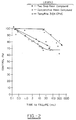
- Figure 2 graphically illustrates the relative environmental stress cracking results in propylene glycol at 23°C for a compound formed from a Two Step CPVC Resin (as hereinafter defined) having 67.3% chlorine content according to the instant invention as compared to conventional CPVC compound.
- Figure 3 graphically illustrates the relative environmental stress cracking results in ethylene glycol at 23°C for a compound formed from a Two Step CPVC Resin (as hereinafter defined) having 67.3% chlorine content according to the instant invention as compared to conventional CPVC compound.
- the CPVC compound of the instant invention comprises a blend of a CPVC resin formed by a Two Step process and having a chlorine content in the range of 67 % to 75%, chlorinated polyethylene and a second impact modifier.
- Other ingredients generally added to chlorinated polyvinyl chloride compositions, such as, for example, but not limited to lubricants, processing aids and pigments may also be optionally included in the CPVC compound.
- the CPVC resin to be used in the instant invention is produced by a Two Step process which comprises post chlorinating PVC in the presence of an peroxy catalyst during both steps.
- the process is fully described in U.S.-A-5,216,088 and 5,340,880.
- the process will hereinafter be referred to as the Two Step Process.
- CPVC resin formed by this Two Step Process will be hereinafter referred to a Two Step CPVC Resin.
- the PVC used in the process is a homopolymer in the form of macrogranules obtained by either mass, suspension or emulsion polymerization techniques. Macrogranules are clusters or aggregates of randomly, closely packed primary particles of polymers. Typically PVC macrogranules used in the process will have an average diameter in excess of 20 micrometers. A preponderance of the particles are in excess of 50 micrometers ( ⁇ m) in diameter. Preferably, macrogranules have a size distribution in the range of 50 ⁇ m to 500 ⁇ m. Each macrogranule is made up of a multiplicity of particles in the size range of from 0.05 ⁇ m to 5 ⁇ m. In addition, the PVC homopolymer has a chlorine content in the range of from 55% to 58%.
- the preferred PVC preferably has a high molecular weight, possessing an inherent viscosity in the range of 0.5 to 1.4.
- the most preferred PVC is a suspension polymerized PVC having a porosity in the range of 1.0 m 2 /g to 3.0 m 2 /g and an inherent viscosity in the range of 0.85 to 1.2.
- An example of a commercially available preferred PVC to be used in the process is Geon 103 EP F- 76 TR PVC, available from The Geon Company.
- vinyl chloride resins may be used.
- suitable monoolefinically unsaturated comonomers include, vinylidene chloride, olefins such as ethylene and propylene, vinyl aromatics such as styrene, vinyl esters such as vinyl acetate, acrylic acids and their derivatives such as ethyl acrylate, acrylamide and acrylonitrile and vinyl heterocyclic compounds such as pyridine.
- the other resins should contain more than 70% by weight of vinyl chloride.
- the peroxy catalyst used in the Two Step Process which will be discussed in greater detail below is selected from the group consisting of peroxy carboxylic acid esters, diorganoperoxy carbonates, diacyl peroxides and mixed anhydrides of organic sulfoperacids with carboxylic acids or mixtures thereof. Typically a mixture of catalysts is used; one catalyst decomposing at a lower temperature than the other during the first step.
- the peroxy catalysts should have a 10 hour half life in the range of 30-130°C.
- Preferred peroxyesters particularly for the first step of the process are t-amylperoxyneodecanote (Lupersol 546M75); 3-hydroxy-1,1-dimethylbutylperoxyneodecanoate (Lupersol 610M50); 1,1-dimethyl-3-hydroxybutylperoxyneoheptanoate (Lupersol 688M50); t-butylperoxypivalate (Lupersol 11); t-butylperoxyneodecanoate (Lupersol 10); di(2-ethylhexyl)peroxydicarbonate (Lupersol 223); di(sec-butyl)peroxydicarbonate (Lupersol 225); and acetylcycclohexylsulfonylperoxide (Lupersol 228-Z).
- Lupersol is a trademark of Atochem and is available from Atochem North America, Inc., Organic Peroxides
- Most preferred peroxy catalyst for the first step is a hydroperoxide having the structure selected from the group R-OOH and, where R is a hydrocarbyl group having from 4 to 24 carbon atoms; R 1 and R 2 represent C 1 - C 20 alkyl, or C 7 -C 24 aralkyl, most preferably C 1 - C 6 alkyl, and R 1 and R 2 may be the same or different, and n represents an integer in the range of 1 to 6, preferably 1,2,3,or 4.
- the preferred catalysts for the first step of the reaction include Lupersol Delta X-9 MEK, DHD-9, DDM-9; all these catalysts are available from Atochem.
- the most preferred catalysts for the first step of the Two Step Process are Lupersol Delta X-9 or DHD-9, available from Atochem.
- Preferred peroxyesters, particularly useful for the second step are t-butylperoxy-2-ethylhexanoate (Lupersol PMS) and t-butylperoxybenzoate. Both of these peroxyesters are available from Atochem.
- the most preferred catalyst for the second step is hydrogen peroxide.
- PVC granules are slurried in deionized water at room temperature in a jacketed pressurizable reactor, suitable for wet chlorine and hot hydrogen chloride service.
- a jacketed pressurizable reactor suitable for wet chlorine and hot hydrogen chloride service.
- the reactor is fitted with a stirrer.
- the suspension comprises from 15 to 35% by weight of PVC solids.
- Oxygen must be removed from the aqueous suspension and from the PVC macrogranules prior to the initiation of the chlorination process in order to obtain the desired CPVC product.
- the removal of oxygen can be done by any conventional means. Removal of oxygen may also be assisted by agitation of the suspension. A possible way to remove the oxygen is to bring the slurry up to 35 °C and sparge it with nitrogen. Alternatively, the slurry can be heated to between 50 - 75° C and then subjected to vacuum.
- the measure of oxygen in the slurry should be less than 50 ppm, preferably less than 5 ppm.
- a substantially stoichiometric amount of chlorine is introduced, either as a liquid or gas, sufficient to produce the desired chlorine content in the CPVC end product.
- a substantially stoichiometric amount includes a small excess of less than 10 wt. % over the stoichiometric amount of chlorine. The amount is insufficient to provide a distinct chlorine liquid phase. The chlorine swells the PVC macrogranules.
- the peroxy catalyst for both steps may be added at the outset or separately for the first step and then consequentially at the start of the second step.
- a mixture of catalysts is added at the beginning of the process; one catalyst decomposes at a lower temperature than the other.
- from 0.005 to. 0.5 % by weight of the catalyst is added based upon PVC weight.
- the pressure at which the reaction is carried out depends upon the peroxy catalyst used, the amount of chlorine charged and the temperature at which the reaction is carried out. The higher the temperature, the more quickly the polyvinyl chloride resin will be chlorinated. Preferably, the pressure is in the range of 2.73 bar (25 psig) to 21.7 bar (300 psig).
- the reaction mass Upon initiation of the chlorination reaction in the first step, the reaction mass gradually increases in temperature. The temperature is maintained below 100°C until the relative pressure of the chlorine begins to decrease and then stabilize. This marks the end of the first step of the process.
- the chlorination reaction continues by raising the temperature to around 130°C.
- a catalytic amount of oxygen containing gas (optionally generated in situ) is introduced to increase the speed of the reaction since the rate of the reaction to produce very high chlorine CPVC resin may be too slow to be commercially viable.
- a substantially stoichiometric amount of chlorine is maintained. Generally from 0.5 to 10 % excess of the stoichiometric amount of chlorine is used. However, this amount is dependent upon the chlorine content of the end product desired.
- the reaction is continued until the relative pressure of the chlorine is less than 0.1 and the desired level of chlorine in the polymer is obtained.
- the desired level is at least 3 % higher than the level that is achieved during the first step of the process.
- the reactor Upon completion of the second step, the reactor is depressurized and the CPVC in the slurry is conventionally recovered.
- the slurry is filtered and washed with water, then dried in a convection oven or hot air tower where the wet resin is recirculated with hot air until dry.
- the CPVC resin formed by this process has a lower concentration of chlorine near its surface causing the CPVC end product to fuse at the same temperature as other CPVC resins made by conventional techniques and having lower chlorine contents.
- any Two Step CPVC Resin formed according to the Two Step Process can be used in the compound.
- the Two Step CPVC Resin has a chlorine content greater than 70%.
- the Two Step CPVC Resin has a chlorine content of 70.6%.
- blends of various CPVC resins can also be used.
- the CPVC resin can be blended with another CPVC resin, whether produced by the Two Step Process or any conventional method, in an amount of other resin of 1% to. 50%, provided that the composition does not loose its properties and ASTM D 1784 cell classification 23447.
- the chlorinated polyethylene (CPE) used in the compound is a rubbery material resulting from the chlorination of polyethylene having a substantially linear structure.
- the polyethylene can be chlorinated by various methods including aqueous suspension, solution or gas phase methods.
- An example of a method for preparing CPE can be found in U.S.-A-3,563,974.
- the aqueous suspension method is used to form the CPE.
- the CPE material contains from 5 to 50% by weight of chlorine.
- the CPE contains from 25 to 45 % by weight of chlorine.
- CPE is commercially available from The Dow Chemical Company.
- the preferred CPE materials to be used in the compound include Tyrin 2000 and Tyrin 3615P; both available from the Dow Chemical Company.
- Tyrin is a trademark of the Dow Chemical Company.
- the most preferred CPE material is Tyrin 3615P, from the Dow Chemical Company.
- the CPE can comprise a mixture of chlorinated polyethylenes, provided that the overall mixture has a chlorine content in the range of 25 to 45% by weight chlorine.
- the CPE is added to the Two Step CPVC Resin in the range of from 1 to 10 parts per hundred parts of Two Step CPVC Resin.
- the amount of CPE added to the compound is 2.5 to 7.0 parts per 100 parts of the Two Step CPVC Resin.
- the amount of CPE added to the compound is 7.0 parts per 100 parts of the Two Step CPVC Resin.
- An impact modifier can be used in the compound of the present invention in addition to the Two Step CPVC Resin and the CPE.
- impact modifiers include acrylic impact modifiers, methacrylate-butadiene-styrene (MBS) impact modifiers and acrylonitrile-butadiene-styrene (ABS) impact modifiers.
- the polyalkyl(meth)acrylate may be prepared using an alkyl(meth)acrylate, a crosslinking agent and a grafting agent.
- the alkyl(meth)acrylate may be an acryl acrylate such as methyl acrylate, ethyl acrylate, n-propyl acrylate, n-butyl acrylate or 2-ethylhexyl acrylate, or an alkylmethacrylate such as hexyl methacrylate, 2-ethylhexyl methacrylate or n-lauryl methacrylate. It is particularly preferred to use n-butyl acrylate.
- the crosslinking agent for the alkyl(meth)acrylate may be, for example, ethylene glycol dimethacrylate, propylene glycol dimethacrylate, 1,3-butylene glycol dimethacrylate or 1,4-butylene glycol dimethacrylate.
- the grafting agent for the alkyl(meth)acrylate may be, for example, allyl methacrylate, triallyl cyanurate or triallyl isocyanurate. Allyl methacrylate can be used alone as a crosslinking agent.
- the preparation of the polyalkyl(meth)acrylate is well within the scope of one of ordinary skill in the art and does not form part of this invention.
- acrylic impact modifiers can also be used as the second impact modifier in the instant invention.
- U.S.-A-3,678,133 describes the compositions conventionally referred to as acrylic impact modifiers.
- the impact modifier is a composite interpolymer comprising a multi-phase acrylic base material comprising a first elastomeric phase polymerized from a monomer mix comprising at least 50 wt.
- Acrylic impact modifiers are polyacrylates including (C 4 -C 12 ) acrylate homo or copolymers, second stage graft copolymerized with methyl methacrylate, polybutyl acrylate jointly graft copolymerized with methyl methacrylate and styrene, poly(ethylhexyl acrylate-co-butyl acrylate) graft copolymerized with styrene, and/or acrylonitrile and/or methylmethacrylate; polybutyl acrylate graft polymerized with acrylonitrile and styrene (Blendex 975, 977 or 979 (Blendex is a trademark of GE Plastics)).
- Paraloid KM 334 KM 365 and KM 330.
- the most preferred acrylic impact modifier is Paraloid KM 334 impact modifier. If used as an impact modifier in the composition, 4 parts of the Paraloid KM 334 acrylic impact modifier are added.
- MBS impact modifiers are graft polymers.
- MBS impact modifiers are prepared by polymerizing methyl methacrylate or mixtures of methyl methacrylate with other monomers in the presence of polybutadiene or polybutadiene-styrene rubbers. Further information on MBS impact modifiers can be found in the Second Edition of the Encyclopedia of PVC, edited by Leonard I. Nass, Marcel Dekker, Inc. (N.Y. 1988, p. 448-452). Examples of commercially available MBS impact modifiers include Kane Ace B-56 and Kane Ace B-22 impact modifier, available from Kaneka; and Paraloid KM 680 impact modifier, available from Rohm & Haas. The most preferred impact modifier is Kane Ace B-22 impact modifier. If used in the instant invention, 4 parts of the Kane Ace B-22 impact modifier is added.
- ABS impact modifiers can be used in instant compounds.
- ABS modifiers are usually prepared by grafting styrene and acrylonitrile monomers onto polybutadiene rubber styrene-butadiene rubber substrates in emulsion. Further information on ABS impact modifiers can be found in the Second Edition of the Encyclopedia of PVC, edited by Leonard I. Nass, Marcel Dekker, Inc., (N.Y. 1988, p. 453-459).
- Examples of commercially available ABS impact modifiers which can be used in the instant invention include Blendex 338, Blendex 310 and Blendex 311; all available from GE Plastics. If used as the impact modifier of choice, 4 parts of ABS impact modifier are used. If the ABS impact modifier is used, the preferred ABS impact modifier is Blendex 310 impact modifier.
- Additives can also be added to the unique compound as needed. Conventional additives known in the art as well any other additives may be used, provided that the additive does not alter the unique combination of physical properties and processability associated with the novel compound. Examples of additives which can be used include antioxidants, lubricants, stabilizers, impact modifiers, pigments, glass transition enhancing additives, processing aids, fusion aids; filler, fibrous reinforcing agents and antistatic agents.
- Exemplary lubricants are polyglycerols of di- and trioleates, polyolefins such as polyethylene, polypropylene and oxidized polyolefins such as oxidized polyethylene and high molecular weight paraffin waxes. Since several lubricants can be combined in countless variations, the total amount of lubricant can vary from application to application. Optimization of the particular lubricant composition is not within the scope of the present invention and can be determined easily by one of ordinary skill in the art.
- an oxidized polyethylene is used.
- An example of an oxidized polyethylene is AC 629, sold by Allied Signal.
- Lubricants can be used in the amount of 0.01 to 5 parts by weight of lubricant per 100 parts of the Two Step CPVC Resin. Preferably from 0.4 to 2.0 parts by weight of lubricant per 100 parts of Two Step CPVC Resin are used.
- the tin stabilizer used in the present invention can be any stabilizer containing tin. Suitable stabilizers include tin salts of monocarboxylic acids such as stannous maleate. Additionally, organo-tin stabilizers such as dialkyl tin mercaptides, carboxylates, and thiazoles can be used.
- organo-tin stabilizers include without limitation: dibutyltin dilaurate, dibutyltin maleate, di(n-octyl) tin maleate, dibutyl tin bis(2-ethylhexyl mercaptoacetate), dibutyltin bis(lauryl mercaptide), dibutyltin, S,S-bis(isooctyl thioglycoate), dibutyltin ⁇ -mercaptoproprionate, di-n-octyltin S,S-bis(isooctyl thioglycolate), and di-n-octyltin ⁇ -mercaptoproprionate.
- the composition usually from about 1 to about 5 parts by weight of stabilizer per 100 parts by weight of the Two Step CPVC Resin is used in the composition. Most preferably, the composition uses between 2 and 4 parts by weight of dibutyl tin bis(2-ethylhexyl mercaptoacetate) per 100 parts of the Two Step CPVC Resin.
- This stabilizer is commercially available as Mark 292-S from Witco Chemical and Thermolite 31HF from Elf Atochem.
- Co-stabilizers may be included, if desired, but are not necessary. However, if a solid co-stabilizer is added, the particle size of the co-stabilizer must be small enough so as not to affect the impact properties of the unique compound.
- co- stabilizers include metal salts of phosphoric acid, polyols, epoxidized oils, and acid acceptors which are not detrimental to the base Two Step CPVC Resin used. The stabilizers can be used by themselves or in any combination as desired.
- metal salts of phosphoric acid include water-soluble, alkali metal phosphate salts, disodium hydrogen phosphate, orthophosphates such as mono-,di-, and tri-orthophosphates of said alkali metals, alkali metal polyphosphates, -tetrapolyphosphates and - metaphosphates.
- Polyols such as sugar alcohols, and epoxides such as epoxidized soya oil can be used.
- acid acceptors include potassium citrate, aluminum magnesium hydroxy carbonate hydrate, magnesium aluminum silicates and alkali metal alumino silicates.
- An example of commercially available aluminum magnesium hydroxy carbonate hydrate is Hysafe® 510, available from the J.M.
- the most preferred co-stabilizer is disodium hydrogen phosphate (DSP) and is used by treating the Two Step CPVC Resin itself, after the resin has been chlorinated. Typical levels of co-stabilizers can range from 0.1 weight parts to 7.0 weight parts per 100 weight parts of the Two Step CPVC Resin, if used at all. DSP is commercially available from The Monsanto Company.
- Suitable processing aids include acrylic polymers such as methyl acrylate copolymers.
- An example of an acrylic process aid is Acryloid KM 330 sold by Rohm & Hass, lnc.
- Other process aids include Paraloid K 120ND, K-120N, K-175; all available from Rohm & Haas.
- a description of other types of processing aids which can be used in the compound can be found in The Plastics and Rubber Institute: International Conference on PVC Processing, April 26-28 (1983), Paper No. 17.
- no processing aid is necessary, but if used, the processing aid should be used in the amount of 0.5 to 3.0 by weight of processing aid per 100 parts of the Two Step CPVC Resin.
- lower molecular weight CPVC resins can function as a process aid.
- CPVC resins having an inherent viscosity in the range of 0.45 to 0.80, preferably 0.50 to 0.70.
- Specific examples include TempRite 679 x 705 sold by The B.F. Goodrich Company (TempRite is a trademark of The B.F.Goodrich Co.).
- a lower molecular weight CPVC resin should be blended in an amount to 50 weight % based on the total amount of CPVC resin, preferably 10 to 30% by weight.
- antioxidants to be used in the compound include Irganox 1010 (tetrakis[methylene(3,5-di-tert-butyl-4-hydoxy-hydrocinnamate)]methane) sold by Ciba Geigy.
- the antioxidant is used in the amount of 0.25 to 5.0 parts by weight per 100 parts of the Two Step CPVC Resin, if used at all.
- Suitable pigments include among others titanium dioxide, and carbon black. If included, the pigments are used generally in the amount of 0.5 to 10.0 parts by weight per 100 parts of the Two Step CPVC Resin.
- the preferred titanium dioxide is Tiona RCL-6 from SCM Pigments.
- Suitable fillers include calcium carbonate, talc, clay, mica, wollastonite, silicas, and other filling agents. If used in the compound, the amount of filler used is the range of 0.5 to 10.0 parts by weight of filler per 100 parts of the Two Step CPVC Resin.
- the components of the unique CPVC compound can be made in any manner wherein the various components are added together and mixed under heat.
- the appropriate amount of the Two Step CPVC Resin can be added to a vessel such as Henschel mixer or a ribbon blender. The remaining ingredients of the compound can then be added thereto and mixed. If pellets are to be formed, the compound can be melt mixed. Melt mixing can generally occur in the temperature range of 150 to 250°C. Once the blend is formed, it can be processed further depending upon the desired application in any conventional manner, using extrusion or molding techniques.
- extrusion machinery such as a multi-screw extruder or a single screw extruder are used.
- An extruder generally has conveying means, an intermediate screw processing means and a final die through which the material is discharged in the form of an extrudate.
- a multi-screw extruder is used for the extrusion of pipe.
- Examples of possible conventional extruders to be used to process the CPVC compound of the instant invention include the following twin screw counterrotating extruder models from Cincinnati Milacron: CM 35HP, CM 55HP, CM 65HP, CM 80HP, CM 92HP.
- suitable conical twin screw extruders from Krauss Maffei include KMD-2/40KK and KMD-2/50KK.
- the CPVC compound can be formed into any article desired.
- These articles will have a heat deflection temperature of at least 100°C (212°F) and have good chemical resistance. Examples include but are not limited to pipe, fittings, valves, sheets, injection molded and thermoformed industrial parts, appliance housing, and different containers.
- This Example sets forth the method to make the Two Step CPVC Resin used in all the Examples, although all three resins have a different chlorine content.
- the process will be described for the 69.5 % chlorine level Two Step CPVC resin; Tables 1 and 2 below will indicate the conditions for the other two resins used in this application.
- a 0.757 m 3 (200 gallon) glass-lined reactor is charged with 0.530 m 3 (140 gallons) of de-ionized water, 65.5 kg (200 pounds) of Geon 103EP F-76 TR PVC (available from The Geon Company), and 40 grams of Lupersol Delta X-9 MEK peroxide (available from Atochem). The reactor was closed and pressurized with nitrogen to 16.87 bar (230 psig).
- the reactor was vented and pulled under vacuum ⁇ 0.068 bar ( ⁇ 1 psia) for fifteen (15) minutes 71.21 kg (157 lbs). of liquid chlorine at room temperature was then charged to the reactor. Next, heat was applied to the reactor jacket as shown in Figure 1. There is a substantial lag time during which the jacket of the reactor is being heated up. The relative pressure initially rises because much of the liquid chlorine charge remains in solution while the reaction mass is being heated. The relative pressure curve begins to fall after the reaction mass reaches 30°C and the chlorine is consumed rapidly as seen by the precipitous drop of the relative pressure. The relative pressure levels out at 0.18 at 95°C indicating the end of the first step.
- Environmental stress cracking is a failure mechanism used for thermoplastics in which the material in the presence of an environmental stress cracking agent fails at lower stresses and/or shorter times than would be predicted by the properties of the material. In the absence of stress, an environmental stress cracking agent has no noticeable effect on the strength of the material.
- Tensile bars used in the test were type IV bars from ASTM D638. The experiments are carried out at room temperature following the protocol set forth in ASTM D2990, sections 6.4; 10.2.1.1, 11.1, 11.3, 11.4, 11.4.1, 12.1, and 12.5 for creep rupture. The samples are tested in both water which is used as the control as well as stress cracking chemicals.
- the data for the test results is plotted in Figures 2 and 3.
- the results are plotted as stress versus time to break on a log-log scale.
- the data is normalized relative to the control stress which is water.
- the critical stress and critical time are then determined by the intersection of lines which can be drawn through the transition region and the final leveled off region.
- the results from the testing in ethylene glycol indicate that both TempRite 3104 CPVC and the Comparative Compound exhibited signs of stress cracking in less than about 5 minutes as evidenced from the deviation from the control line. Only TempRite 3104 CPVC showed a critical time and critical stress level of about 15 hours and 80% respectively.
- the Comparative Compound did not exhibit a critical time or stress level for testing up to 500 hours, indicating that it has better stress cracking resistance. However, the stress level was reduced to 90% of the control. Only the compound made according to the instant invention using the Two Step CPVC Resin did not exhibit any signs of stress cracking for testing up to about 1500 hours. The data shows that the compound of the instant invention has improved chemical resistance.
- Example 2 All three compounds listed above in Example 2 were extruded into pipe 19.05 mm ((3/4 inch) SDR-1 CTS tubing) using a Cincinnati Milacron CM55 HP extruder. The extruder was set at the following conditions in Table 4. Pipe conformed to dimension in ASTM D 2846.
- Example 5 The compounds set forth in Example 5 were formed into 50.8 by 50.8 mm (2" by 2") by 3.175 mm (1 ⁇ 8") plaques. These plaques were exposed in hot air ovens (Precision Scientific Compounding Catalog Number 1240) at 107.2°C (225°F) for a period of four months. The oven conformed to ASTM E-145 (Standard Specifications for Gravity-Convection and forced Ventilation Ovens). The plaques were then subject to drop weight impact testing (according to ASTM D3763-93). A Rheometrics RDT 5000 was used for the drop weight test. The conditions were as follows:
- the recipe for Two-Step CPVC (69.5%) was compared to the Example set forth in U.S.-A-5,604,278 to Hartitz.
- the two compounds were compounded (powder form) and extruded (19.05 mm (3/4 inch) SDR-11 cts tubing) under conditions set forth in Table 4 for 69.5% Cl resin.
- the pipe dimensions satisfied the criteria specified in ASTM D 2846.
- Short Term ( ⁇ 250 hrs.) and medium term ( ⁇ 2000 hrs.) hydrostatic testing was conducted at 95.0°C (203°F) to predict the 100,000 hr. intercept point known as the long term hydrostatic strength (LTHS) value.
- LTHS long term hydrostatic strength
- This value is the estimated tensile stress in the wall of the pipe in the circumferential orientation that when applied continuously will cause failure of the pipe at 100,000 hours.
- the LTHS is categorized according to Table 1 of ASTM D 2837 to yield the hydrostatic design basis (HDB) of the material.
- a LTHS between 66.19-82.05 bar-hs (960-1190 psi-hs) falls into the 68.95 bar-hs (1000 psi-hs) category.
- a LTHS between 52.4-65.5 bar-hs (760-950 psi-hs) falls into the 56.16 bar-hs (800 psi-hs) category.
- the hydrostatic design strength is the HDB multiplied by a safety factor of 0.5.
- MIAK dry methyl iso-amyl ketone
Landscapes
- Chemical & Material Sciences (AREA)
- General Chemical & Material Sciences (AREA)
- Health & Medical Sciences (AREA)
- Chemical Kinetics & Catalysis (AREA)
- Medicinal Chemistry (AREA)
- Polymers & Plastics (AREA)
- Organic Chemistry (AREA)
- Compositions Of Macromolecular Compounds (AREA)
Claims (8)
- Compound, umfassend:ein CPVC-Harz, das durch ein zweistufiges Verfahren in einer wässrigen Suspension gebildet wird, welches folgendes umfasst: im ersten Schritt das Chlorieren von granulärem mikroporösem Polyvinylchlorid mit einem Chlorgehalt von 57% bei einer Starttemperatur im Bereich von 30 bis 75 °C in Abwesenheit von flüssigem Chlor und freiem Sauerstoff, aber in Gegenwart wenigstens einer stöchiometrischen Menge Chlor, aber weniger als 10% Überschuss gegenüber der zur Herstellung des CPVC-Endprodukts erforderlichen Menge, und einer katalytischen Menge eines organischen Peroxykatalysators, die ausreicht, um das CPVC des ersten Schrittes mit einem intermediären CI-Gehalt an chemisch gebundenem Chlor im Bereich von 64-72 Gew.-% zu erzeugen, wobei der Peroxykatalysator eine Halbwertszeit von 10 h im Bereich von 30-130 °C hat, und in einem zweiten Schritt das weitere Chlorieren des im ersten Schritt gebildeten CPVC in Gegenwart von wenigstens einer stöchiometrischen Menge Chlor, aber weniger als 10% Überschuss gegenüber der zur Herstellung des CPVC-Endprodukts erforderlichen Menge, bei einer Temperatur im Bereich von 90 bis 130 °C und mit einem Chlorgehalt von 67-75%;ein chloriertes Polyethylen; undeinen Schlagzähmacher, der aus der Gruppe ausgewählt ist, die im wesentlichen aus Acryl-Schlagzähmachern, Methacrylat-Butadien-Styrol-Schlagzähmachern oder Acrylnitril-Butadien-Styrol-Schlagzähmachern und Gemischen davon besteht.
- Compound gemäß Anspruch 1, wobei das chlorierte Polyethylen im Bereich von 1 bis 10 Gewichtsteilen pro 100 Gewichtsteile des CPVC-Harzes gefunden wird.
- Compound gemäß Anspruch 1, wobei der Schlagzähmacher im Bereich von 1 bis 15 Gewichtsteilen pro 100 Gewichtsteile des CPVC-Harzes gefunden wird.
- Compound gemäß Anspruch 1, wobei das chlorierte Polyethylen im Bereich von 1 bis 10 Gewichtsteilen pro 100 Gewichtsteile des CPVC-Harzes gefunden wird und wobei der Schlagzähmacher im Bereich von 1 bis 15 Gewichtsteilen pro 100 Gewichtsteile des CPVC-Harzes gefunden wird.
- Compound gemäß Anspruch 1, das 100 Teile des CPVC-Harzes mit einem Chlorgehalt von 67,3%, 4,0 Teile des chlorierten Polyethylens und 4,0 Teile des Schlagzähmachers umfasst.
- Compound gemäß Anspruch 1, das 100 Teile des CPVC-Harzes mit einem Chlorgehalt von 70,6%, 7,0 Teile des chlorierten Polyethylens und 4,0 Teile des Schlagzähmachers umfasst.
- Compound gemäß Anspruch 1, das 100 Teile des CPVC-Harzes mit einem Chlorgehalt von 69,5%, 4,0 Teile des chlorierten Polyethylens und 4,0 Teile des Schlagzähmachers umfasst.
- Artikel, der das Compound gemäß einem der Ansprüche 1 bis 7 umfasst.
Applications Claiming Priority (5)
| Application Number | Priority Date | Filing Date | Title |
|---|---|---|---|
| US85950797A | 1997-05-20 | 1997-05-20 | |
| US859507 | 1997-05-20 | ||
| US09/038,592 US5981663A (en) | 1996-05-24 | 1998-03-11 | Chlorinated polyvinyl chloride compound having excellent physical, chemical resistance and processing properties |
| US38592 | 1998-03-11 | ||
| PCT/US1998/010149 WO1998053005A1 (en) | 1997-05-20 | 1998-05-18 | Chlorinated polyvinyl chloride compound having excellent physical, chemical resistance and processing properties |
Publications (2)
| Publication Number | Publication Date |
|---|---|
| EP0983318A1 EP0983318A1 (de) | 2000-03-08 |
| EP0983318B1 true EP0983318B1 (de) | 2002-02-13 |
Family
ID=26715360
Family Applications (1)
| Application Number | Title | Priority Date | Filing Date |
|---|---|---|---|
| EP98922406A Expired - Lifetime EP0983318B1 (de) | 1997-05-20 | 1998-05-18 | Zusammensetzung aus chloriertem polyvinylchlorid mit ausgezeichneter physikalischer und chemischer beständigkeit und ausgezeichneten verarbeitungseigenschaften |
Country Status (4)
| Country | Link |
|---|---|
| US (1) | US5981663A (de) |
| EP (1) | EP0983318B1 (de) |
| DE (1) | DE69803848T2 (de) |
| WO (1) | WO1998053005A1 (de) |
Families Citing this family (9)
| Publication number | Priority date | Publication date | Assignee | Title |
|---|---|---|---|---|
| JPH11181205A (ja) * | 1997-12-25 | 1999-07-06 | Kanegafuchi Chem Ind Co Ltd | 塩素化塩化ビニル系樹脂組成物 |
| GB2379221B (en) * | 2001-08-29 | 2005-08-17 | Anthony Richard Gaukroger | Masterbatch |
| US20050112311A1 (en) * | 2003-11-26 | 2005-05-26 | Dalal Girish T. | CPVC compositions having good impact strength and heat stability, and smooth surfaces |
| MXPA04011608A (es) | 2004-11-23 | 2006-05-25 | Servicios Condumex Sa | Formulaciones termoplasticas para fabricar tuberia y accesorios para fluidos de uso domestico e industrial y proceso. |
| KR101223915B1 (ko) | 2011-10-31 | 2013-01-21 | (주)피피아이평화 | 고유동성 경질 염화비닐계 수지 조성물 |
| RU2630797C2 (ru) * | 2012-02-15 | 2017-09-13 | Басф Се | Композиции пвх, обладающие высокой ударопрочностью |
| WO2022210365A1 (ja) * | 2021-03-29 | 2022-10-06 | 積水化学工業株式会社 | 塩素化塩化ビニル系樹脂組成物及び塩素化塩化ビニル系樹脂成形体 |
| CN113683851B (zh) * | 2021-09-15 | 2022-10-25 | 金川集团股份有限公司 | 一种改善氯化聚氯乙烯树脂加工性能的方法 |
| CN118146602B (zh) * | 2024-05-10 | 2024-07-26 | 山东东立高分子材料有限公司 | 一种具有良好热稳定性的cpvc组合物及其制备方法 |
Family Cites Families (40)
| Publication number | Priority date | Publication date | Assignee | Title |
|---|---|---|---|---|
| BE639752A (de) * | 1958-01-08 | |||
| US3264375A (en) * | 1963-01-16 | 1966-08-02 | Monsanto Co | Process for the graft polymerization of styrene on alkyl lithium catalyzed polybutadiene using a peroxide catalyst |
| US3334077A (en) * | 1964-06-04 | 1967-08-01 | Goodrich Co B F | Chlorination of polyvinyl chloride |
| US3334078A (en) * | 1964-09-21 | 1967-08-01 | Goodrich Co B F | Process for the chlorination of polyvinyl chloride |
| US3506637A (en) * | 1967-03-14 | 1970-04-14 | Nippon Carbide Kogyo Kk | Process for the preparation of chlorinated polyvinyl chloride |
| US3534013A (en) * | 1967-07-08 | 1970-10-13 | Nippon Carbide Kogyo Kk | Process for the preparation of chlorinated polyvinyl chloride resin |
| US3453347A (en) * | 1968-01-02 | 1969-07-01 | Goodrich Co B F | Blends of postchlorinated vinyl chloride resin and a postchlorinated linear polyethylene containing a small amount of a rubbery,amorphous polyepoxide |
| DE1769376A1 (de) * | 1968-05-16 | 1971-08-12 | Dynamit Nobel Ag | Thermoplastische Formmassen auf Basis von nachchloriertem Polyvinylchlorid |
| US3592571A (en) * | 1969-12-08 | 1971-07-13 | Chauncey R Drury | Rotary volumetric machine |
| JPS5148795B2 (de) * | 1974-05-18 | 1976-12-22 | ||
| US4173598A (en) * | 1976-07-13 | 1979-11-06 | Abraham Quintero | Polymeric compositions and methods for their production |
| US4213891A (en) * | 1978-12-18 | 1980-07-22 | The General Tire & Rubber Company | Thermoformable, high impact low-smoke plastic |
| FR2476177B1 (fr) * | 1980-02-18 | 1987-06-19 | Paul Dominique | Dispositif de fixation de panneaux de parement lors de la realisation de parois de beton et outil a main pour la mise en oeuvre de ce dispositif |
| US4377459A (en) * | 1980-08-14 | 1983-03-22 | The B. F. Goodrich Company | Process for chlorination of poly(vinyl chloride) with liquid chlorine, and chlorinated poly(vinyl chloride) composition |
| US4412898A (en) * | 1980-08-26 | 1983-11-01 | The B.F. Goodrich Company | Process for chlorination of PVC in water without use of swelling agents |
| DE3041231A1 (de) * | 1980-11-03 | 1982-06-09 | Bayer Ag, 5090 Leverkusen | Polyvinylchlorid-formmasse |
| JPS57102940A (en) * | 1980-12-18 | 1982-06-26 | Mitsubishi Rayon Co Ltd | Polyvinyl chloride resin composition |
| US4335032A (en) * | 1980-12-31 | 1982-06-15 | General Electric Company | Polycarbonate resin impact modified with polyolefins and containing polyorganosiloxane fluids |
| US4459387A (en) * | 1981-01-26 | 1984-07-10 | The B. F. Goodrich Company | Chlorination of poly(vinyl chloride) in liquid chlorine, and chlorinated poly(vinyl chloride) composition |
| US4350798A (en) * | 1981-01-26 | 1982-09-21 | The B. F. Goodrich Company | Chlorination of poly(vinyl chloride) in liquid chlorine, and chlorinated poly(vinyl chloride) composition |
| US4443585A (en) * | 1981-12-21 | 1984-04-17 | Rohm And Haas Company | Diene/acrylate based impact modifier for PVC |
| JPS60166337A (ja) * | 1984-02-07 | 1985-08-29 | Sumitomo Chem Co Ltd | 二次成形用シ−ト材料 |
| US4680343A (en) * | 1986-03-27 | 1987-07-14 | The B. F. Goodrich Company | Chlorinated poly(vinyl chloride) thermoplastic alloys |
| JPH0611857B2 (ja) * | 1986-09-11 | 1994-02-16 | 三菱レイヨン株式会社 | ポリフエニレンエ−テル樹脂組成物 |
| JP2567627B2 (ja) * | 1987-09-21 | 1996-12-25 | 三菱レイヨン株式会社 | 熱可塑性ポリエステル樹脂組成物 |
| AU604179B2 (en) * | 1988-01-25 | 1990-12-06 | Mitsubishi Rayon Company Limited | Vinyl chloride resin composition |
| US4983687A (en) * | 1988-05-23 | 1991-01-08 | The B. F. Goodrich Company | Crosslinked chlorinated polyvinyl chloride resin compositions |
| US5086122A (en) * | 1988-05-23 | 1992-02-04 | The B. F. Goodrich Company | Crosslinked chlorinated polyvinyl chloride resin compositions |
| US5334656A (en) * | 1990-08-27 | 1994-08-02 | Matsubishi Rayon Co., Ltd. | Polyester resin compositions |
| US5268424A (en) * | 1990-11-29 | 1993-12-07 | The B. F. Goodrich Company | Chlorinated polyvinyl chloride/polycarbonate blend |
| US5194471A (en) * | 1991-02-15 | 1993-03-16 | The B. F. Goodrich Company | Rigid chlorinated polyvinyl chloride compound and articles derived therefrom |
| JP2684258B2 (ja) * | 1991-04-02 | 1997-12-03 | 三菱レイヨン株式会社 | 粉体特性が優れたポリオルガノシロキサン系グラフト共重合体組成物の製造方法 |
| US5274043A (en) * | 1991-05-09 | 1993-12-28 | The B. F. Goodrich Company | Chlorinated PVC blends |
| DE4132697A1 (de) * | 1991-10-01 | 1993-04-08 | Wacker Chemie Gmbh | Verfahren zur herstellung von organopolysiloxanharz |
| US5216088A (en) * | 1992-02-18 | 1993-06-01 | The B. F. Goodrich Company | Two-step process for post-chlorinating poly(vinyl chloride) |
| ES2099893T3 (es) * | 1992-12-23 | 1997-06-01 | Goodrich Co B F | Composicion de cloruro de polivinilo post-clorado para la extrusion de tubo y tubo a partir de la misma. |
| EP0612602A3 (en) * | 1993-02-26 | 1996-01-24 | Goodrich Co B F | Method for the manufacture of weatherable, rigid extrusion profiles having improved surface appearance. |
| ATE173486T1 (de) * | 1994-08-05 | 1998-12-15 | Goodrich Co B F | Material aus chloriertem polyvinylchlorid mit verbesserter zähigkeit und stabilität, sowie niedrige rauch- und wärmeabgabe |
| US5603998A (en) * | 1994-09-28 | 1997-02-18 | The B.F. Goodrich Company | CPVC compounds and articles made therefrom for design stress rating above 180° C. |
| US5821304A (en) * | 1996-05-24 | 1998-10-13 | The B. F. Goodrich Company | Chlorinated polyvinyl chloride compound having excellent physical, chemical resistance and processing properties |
-
1998
- 1998-03-11 US US09/038,592 patent/US5981663A/en not_active Expired - Lifetime
- 1998-05-18 DE DE69803848T patent/DE69803848T2/de not_active Expired - Fee Related
- 1998-05-18 WO PCT/US1998/010149 patent/WO1998053005A1/en not_active Ceased
- 1998-05-18 EP EP98922406A patent/EP0983318B1/de not_active Expired - Lifetime
Also Published As
| Publication number | Publication date |
|---|---|
| DE69803848T2 (de) | 2002-09-12 |
| US5981663A (en) | 1999-11-09 |
| WO1998053005A1 (en) | 1998-11-26 |
| DE69803848D1 (de) | 2002-03-21 |
| EP0983318A1 (de) | 2000-03-08 |
Similar Documents
| Publication | Publication Date | Title |
|---|---|---|
| EP0808851B1 (de) | Zusammensetzung aus chloriertem Polyvinylchlorid mit ausgezeichneter physikalisch-chemischer Beständigkeit und verbesserten Verarbeitungseigenschaften | |
| EP0510310B1 (de) | Steifes Material aus chlorierten Polyvinylchlorid und daraus hergestellte Artikel | |
| US8742020B2 (en) | Impact modifier composition, an impact resistant composition, method of producing the same, and articles made therefrom | |
| US20050203230A1 (en) | Flame-retardant polyvinyl chloride compositions | |
| EP0603753B1 (de) | CPVC-Zusammensetzung für die Rohr-Extrusion sowie daraus hergestelltes Rohr | |
| US6277915B1 (en) | Block chlorinated polyolefins for use as impact modifier enhancers for PVC or CPVC | |
| EP0708143B1 (de) | Kunststoffzusammensetzung auf Basis von Polyvinylchlorid und daraus abgeleitete Produkte | |
| JPH05132602A (ja) | 塩素化pvcブレンド | |
| US5981663A (en) | Chlorinated polyvinyl chloride compound having excellent physical, chemical resistance and processing properties | |
| US6187868B1 (en) | Chlorinated polyvinyl chloride compound having excellent physical, chemical resistance and processing properties | |
| CS220792B2 (en) | Self-extinguishing impact resistant mixture | |
| US5603998A (en) | CPVC compounds and articles made therefrom for design stress rating above 180° C. | |
| WO1999067332A2 (en) | Chlorinated polyvinyl chloride compounds having excellent combustion characteristics | |
| JP2002273790A (ja) | 耐熱性塩化ビニル樹脂管の製造方法、並びに、耐熱性塩化ビニル樹脂成形体 | |
| JPH08269287A (ja) | 耐熱性塩化ビニル系樹脂組成物 | |
| JPH0782332A (ja) | ブロック共重合体及びそれを含有する樹脂組成物 | |
| Daniels et al. | Modification of Poly (Vinyl Chloride) | |
| JPH03255134A (ja) | 一部に軟質部分を持つた硬質の耐熱性成形体 | |
| JPH03255135A (ja) | 一部に軟質部分を持つた硬質の耐熱性成形体 | |
| JP2001098126A (ja) | 耐熱塩化ビニル系樹脂組成物および成形体 |
Legal Events
| Date | Code | Title | Description |
|---|---|---|---|
| PUAI | Public reference made under article 153(3) epc to a published international application that has entered the european phase |
Free format text: ORIGINAL CODE: 0009012 |
|
| 17P | Request for examination filed |
Effective date: 19991113 |
|
| AK | Designated contracting states |
Kind code of ref document: A1 Designated state(s): BE DE DK ES FR GB IT NL PT SE |
|
| 17Q | First examination report despatched |
Effective date: 20010426 |
|
| GRAG | Despatch of communication of intention to grant |
Free format text: ORIGINAL CODE: EPIDOS AGRA |
|
| GRAG | Despatch of communication of intention to grant |
Free format text: ORIGINAL CODE: EPIDOS AGRA |
|
| GRAH | Despatch of communication of intention to grant a patent |
Free format text: ORIGINAL CODE: EPIDOS IGRA |
|
| GRAH | Despatch of communication of intention to grant a patent |
Free format text: ORIGINAL CODE: EPIDOS IGRA |
|
| GRAH | Despatch of communication of intention to grant a patent |
Free format text: ORIGINAL CODE: EPIDOS IGRA |
|
| GRAA | (expected) grant |
Free format text: ORIGINAL CODE: 0009210 |
|
| REG | Reference to a national code |
Ref country code: GB Ref legal event code: IF02 |
|
| RAP1 | Party data changed (applicant data changed or rights of an application transferred) |
Owner name: NOVEON IP HOLDINGS CORP. |
|
| AK | Designated contracting states |
Kind code of ref document: B1 Designated state(s): BE DE DK ES FR GB IT NL PT SE |
|
| PG25 | Lapsed in a contracting state [announced via postgrant information from national office to epo] |
Ref country code: NL Free format text: LAPSE BECAUSE OF FAILURE TO SUBMIT A TRANSLATION OF THE DESCRIPTION OR TO PAY THE FEE WITHIN THE PRESCRIBED TIME-LIMIT Effective date: 20020213 Ref country code: IT Free format text: LAPSE BECAUSE OF FAILURE TO SUBMIT A TRANSLATION OF THE DESCRIPTION OR TO PAY THE FEE WITHIN THE PRESCRIBED TIME-LIMIT;WARNING: LAPSES OF ITALIAN PATENTS WITH EFFECTIVE DATE BEFORE 2007 MAY HAVE OCCURRED AT ANY TIME BEFORE 2007. THE CORRECT EFFECTIVE DATE MAY BE DIFFERENT FROM THE ONE RECORDED. Effective date: 20020213 |
|
| REF | Corresponds to: |
Ref document number: 69803848 Country of ref document: DE Date of ref document: 20020321 |
|
| PG25 | Lapsed in a contracting state [announced via postgrant information from national office to epo] |
Ref country code: SE Free format text: LAPSE BECAUSE OF FAILURE TO SUBMIT A TRANSLATION OF THE DESCRIPTION OR TO PAY THE FEE WITHIN THE PRESCRIBED TIME-LIMIT Effective date: 20020513 Ref country code: PT Free format text: LAPSE BECAUSE OF FAILURE TO SUBMIT A TRANSLATION OF THE DESCRIPTION OR TO PAY THE FEE WITHIN THE PRESCRIBED TIME-LIMIT Effective date: 20020513 Ref country code: DK Free format text: LAPSE BECAUSE OF FAILURE TO SUBMIT A TRANSLATION OF THE DESCRIPTION OR TO PAY THE FEE WITHIN THE PRESCRIBED TIME-LIMIT Effective date: 20020513 |
|
| NLV1 | Nl: lapsed or annulled due to failure to fulfill the requirements of art. 29p and 29m of the patents act | ||
| ET | Fr: translation filed | ||
| PG25 | Lapsed in a contracting state [announced via postgrant information from national office to epo] |
Ref country code: ES Free format text: LAPSE BECAUSE OF FAILURE TO SUBMIT A TRANSLATION OF THE DESCRIPTION OR TO PAY THE FEE WITHIN THE PRESCRIBED TIME-LIMIT Effective date: 20020829 |
|
| PLBE | No opposition filed within time limit |
Free format text: ORIGINAL CODE: 0009261 |
|
| STAA | Information on the status of an ep patent application or granted ep patent |
Free format text: STATUS: NO OPPOSITION FILED WITHIN TIME LIMIT |
|
| 26N | No opposition filed |
Effective date: 20021114 |
|
| PGFP | Annual fee paid to national office [announced via postgrant information from national office to epo] |
Ref country code: GB Payment date: 20050511 Year of fee payment: 8 |
|
| PGFP | Annual fee paid to national office [announced via postgrant information from national office to epo] |
Ref country code: FR Payment date: 20050517 Year of fee payment: 8 |
|
| PGFP | Annual fee paid to national office [announced via postgrant information from national office to epo] |
Ref country code: BE Payment date: 20050624 Year of fee payment: 8 |
|
| PGFP | Annual fee paid to national office [announced via postgrant information from national office to epo] |
Ref country code: DE Payment date: 20050630 Year of fee payment: 8 |
|
| PG25 | Lapsed in a contracting state [announced via postgrant information from national office to epo] |
Ref country code: GB Free format text: LAPSE BECAUSE OF NON-PAYMENT OF DUE FEES Effective date: 20060518 |
|
| PG25 | Lapsed in a contracting state [announced via postgrant information from national office to epo] |
Ref country code: BE Free format text: LAPSE BECAUSE OF NON-PAYMENT OF DUE FEES Effective date: 20060531 |
|
| PG25 | Lapsed in a contracting state [announced via postgrant information from national office to epo] |
Ref country code: DE Free format text: LAPSE BECAUSE OF NON-PAYMENT OF DUE FEES Effective date: 20061201 |
|
| GBPC | Gb: european patent ceased through non-payment of renewal fee |
Effective date: 20060518 |
|
| REG | Reference to a national code |
Ref country code: FR Ref legal event code: ST Effective date: 20070131 |
|
| BERE | Be: lapsed |
Owner name: *NOVEON IP HOLDINGS CORP. Effective date: 20060531 |
|
| PG25 | Lapsed in a contracting state [announced via postgrant information from national office to epo] |
Ref country code: FR Free format text: LAPSE BECAUSE OF NON-PAYMENT OF DUE FEES Effective date: 20060531 |