EP0968818B1 - Thermoformbare Verbundfolie - Google Patents
Thermoformbare Verbundfolie Download PDFInfo
- Publication number
- EP0968818B1 EP0968818B1 EP19990111881 EP99111881A EP0968818B1 EP 0968818 B1 EP0968818 B1 EP 0968818B1 EP 19990111881 EP19990111881 EP 19990111881 EP 99111881 A EP99111881 A EP 99111881A EP 0968818 B1 EP0968818 B1 EP 0968818B1
- Authority
- EP
- European Patent Office
- Prior art keywords
- film
- cyclopentadienyl
- zirkondichlorid
- zirconium dichloride
- indenyl
- Prior art date
- Legal status (The legal status is an assumption and is not a legal conclusion. Google has not performed a legal analysis and makes no representation as to the accuracy of the status listed.)
- Expired - Lifetime
Links
- 239000011888 foil Substances 0.000 title description 4
- 229920001577 copolymer Polymers 0.000 claims description 24
- 239000002131 composite material Substances 0.000 claims description 17
- 239000005026 oriented polypropylene Substances 0.000 claims description 7
- 238000000034 method Methods 0.000 claims description 5
- 229920001169 thermoplastic Polymers 0.000 claims description 4
- 239000004416 thermosoftening plastic Substances 0.000 claims description 4
- 239000012205 single-component adhesive Substances 0.000 claims 2
- -1 cyclic olefins Chemical class 0.000 description 63
- VPGLGRNSAYHXPY-UHFFFAOYSA-L zirconium(2+);dichloride Chemical compound Cl[Zr]Cl VPGLGRNSAYHXPY-UHFFFAOYSA-L 0.000 description 26
- 229920000089 Cyclic olefin copolymer Polymers 0.000 description 19
- 230000004888 barrier function Effects 0.000 description 11
- ZSWFCLXCOIISFI-UHFFFAOYSA-N endo-cyclopentadiene Natural products C1C=CC=C1 ZSWFCLXCOIISFI-UHFFFAOYSA-N 0.000 description 10
- XLYOFNOQVPJJNP-UHFFFAOYSA-N water Chemical compound O XLYOFNOQVPJJNP-UHFFFAOYSA-N 0.000 description 10
- 125000000058 cyclopentadienyl group Chemical group C1(=CC=CC1)* 0.000 description 8
- 238000004806 packaging method and process Methods 0.000 description 8
- VGGSQFUCUMXWEO-UHFFFAOYSA-N Ethene Chemical compound C=C VGGSQFUCUMXWEO-UHFFFAOYSA-N 0.000 description 6
- 239000005977 Ethylene Substances 0.000 description 6
- 239000003054 catalyst Substances 0.000 description 6
- 239000003814 drug Substances 0.000 description 6
- 230000000694 effects Effects 0.000 description 6
- 239000000203 mixture Substances 0.000 description 6
- INYHZQLKOKTDAI-UHFFFAOYSA-N 5-ethenylbicyclo[2.2.1]hept-2-ene Chemical compound C1C2C(C=C)CC1C=C2 INYHZQLKOKTDAI-UHFFFAOYSA-N 0.000 description 5
- 239000011248 coating agent Substances 0.000 description 5
- 238000000576 coating method Methods 0.000 description 5
- 125000004122 cyclic group Chemical group 0.000 description 5
- 238000001035 drying Methods 0.000 description 5
- 239000000463 material Substances 0.000 description 5
- JFNLZVQOOSMTJK-KNVOCYPGSA-N norbornene Chemical compound C1[C@@H]2CC[C@H]1C=C2 JFNLZVQOOSMTJK-KNVOCYPGSA-N 0.000 description 5
- 229940079593 drug Drugs 0.000 description 4
- 239000010410 layer Substances 0.000 description 4
- SJYNFBVQFBRSIB-UHFFFAOYSA-N norbornadiene Chemical compound C1=CC2C=CC1C2 SJYNFBVQFBRSIB-UHFFFAOYSA-N 0.000 description 4
- JRZJOMJEPLMPRA-UHFFFAOYSA-N olefin Natural products CCCCCCCC=C JRZJOMJEPLMPRA-UHFFFAOYSA-N 0.000 description 4
- 239000004800 polyvinyl chloride Substances 0.000 description 4
- 238000002360 preparation method Methods 0.000 description 4
- 125000004805 propylene group Chemical group [H]C([H])([H])C([H])([*:1])C([H])([H])[*:2] 0.000 description 4
- 229920001897 terpolymer Polymers 0.000 description 4
- XBFJAVXCNXDMBH-UHFFFAOYSA-N tetracyclo[6.2.1.1(3,6).0(2,7)]dodec-4-ene Chemical compound C1C(C23)C=CC1C3C1CC2CC1 XBFJAVXCNXDMBH-UHFFFAOYSA-N 0.000 description 4
- 239000004743 Polypropylene Substances 0.000 description 3
- 238000011049 filling Methods 0.000 description 3
- 238000003475 lamination Methods 0.000 description 3
- 238000004519 manufacturing process Methods 0.000 description 3
- 229920000642 polymer Polymers 0.000 description 3
- 229920000098 polyolefin Polymers 0.000 description 3
- 229920001155 polypropylene Polymers 0.000 description 3
- 229920000915 polyvinyl chloride Polymers 0.000 description 3
- 150000003623 transition metal compounds Chemical class 0.000 description 3
- CTBFXDVGDCMIQR-UHFFFAOYSA-L C[SiH](C)[Zr](Cl)(Cl)(C1C=CC=C1)C1C=Cc2ccccc12 Chemical compound C[SiH](C)[Zr](Cl)(Cl)(C1C=CC=C1)C1C=Cc2ccccc12 CTBFXDVGDCMIQR-UHFFFAOYSA-L 0.000 description 2
- MPJLHVOQWLKMRN-UHFFFAOYSA-L C[SiH](C)[Zr](Cl)(Cl)(C1C=CC=C1)C1c2ccccc2-c2ccccc12 Chemical compound C[SiH](C)[Zr](Cl)(Cl)(C1C=CC=C1)C1c2ccccc2-c2ccccc12 MPJLHVOQWLKMRN-UHFFFAOYSA-L 0.000 description 2
- VTYYLEPIZMXCLO-UHFFFAOYSA-L Calcium carbonate Chemical compound [Ca+2].[O-]C([O-])=O VTYYLEPIZMXCLO-UHFFFAOYSA-L 0.000 description 2
- 239000004215 Carbon black (E152) Substances 0.000 description 2
- SVHPGKHHBXQFLQ-UHFFFAOYSA-L Cl[Zr](Cl)(C1C=CC=C1)(C1c2ccccc2-c2ccccc12)=C(c1ccccc1)c1ccccc1 Chemical compound Cl[Zr](Cl)(C1C=CC=C1)(C1c2ccccc2-c2ccccc12)=C(c1ccccc1)c1ccccc1 SVHPGKHHBXQFLQ-UHFFFAOYSA-L 0.000 description 2
- HCYNNFRJVSZIHW-UHFFFAOYSA-N O=C(C1=CC=CC=C1)[Zr](C1C=CC=C1)(C1C2=CC=CC=C2C=C1)C(C1=CC=CC=C1)=O.Cl.Cl Chemical compound O=C(C1=CC=CC=C1)[Zr](C1C=CC=C1)(C1C2=CC=CC=C2C=C1)C(C1=CC=CC=C1)=O.Cl.Cl HCYNNFRJVSZIHW-UHFFFAOYSA-N 0.000 description 2
- 239000004698 Polyethylene Substances 0.000 description 2
- GWEVSGVZZGPLCZ-UHFFFAOYSA-N Titan oxide Chemical compound O=[Ti]=O GWEVSGVZZGPLCZ-UHFFFAOYSA-N 0.000 description 2
- LBKBUQUIRJQWLH-UHFFFAOYSA-L [Cl-].[Cl-].C1(=CC=CC=C1)CC=[Zr+2](C1C=CC=C1)C1C2=CC=CC=C2C=2C=CC=CC1=2 Chemical compound [Cl-].[Cl-].C1(=CC=CC=C1)CC=[Zr+2](C1C=CC=C1)C1C2=CC=CC=C2C=2C=CC=CC1=2 LBKBUQUIRJQWLH-UHFFFAOYSA-L 0.000 description 2
- BWUKAWLFMALYIV-UHFFFAOYSA-L [Cl-].[Cl-].C1=CC2=CC=CC=C2C1[Hf+2](C1C2=CC=CC=C2C=C1)[SiH](C=1C=CC=CC=1)C1=CC=CC=C1 Chemical compound [Cl-].[Cl-].C1=CC2=CC=CC=C2C1[Hf+2](C1C2=CC=CC=C2C=C1)[SiH](C=1C=CC=CC=1)C1=CC=CC=C1 BWUKAWLFMALYIV-UHFFFAOYSA-L 0.000 description 2
- NWBSMOHZFZYBLB-UHFFFAOYSA-L [Cl-].[Cl-].C1=CC2=CC=CC=C2C1[Zr+2](=C(C)C)C1C2=CC=CC=C2C=C1 Chemical compound [Cl-].[Cl-].C1=CC2=CC=CC=C2C1[Zr+2](=C(C)C)C1C2=CC=CC=C2C=C1 NWBSMOHZFZYBLB-UHFFFAOYSA-L 0.000 description 2
- XVMVAJPMNDQYLF-UHFFFAOYSA-L [Cl-].[Cl-].C1=CC2=CC=CC=C2C1[Zr+2](C1C2=CC=CC=C2C=C1)[SiH2]C=CC1=CC=CC=C1 Chemical compound [Cl-].[Cl-].C1=CC2=CC=CC=C2C1[Zr+2](C1C2=CC=CC=C2C=C1)[SiH2]C=CC1=CC=CC=C1 XVMVAJPMNDQYLF-UHFFFAOYSA-L 0.000 description 2
- DHOIFLAXQKMNNF-UHFFFAOYSA-L [Cl-].[Cl-].C1=CC2=CC=CC=C2C1[Zr+2](C1C2=CC=CC=C2C=C1)[SiH](C=1C=CC=CC=1)C1=CC=CC=C1 Chemical compound [Cl-].[Cl-].C1=CC2=CC=CC=C2C1[Zr+2](C1C2=CC=CC=C2C=C1)[SiH](C=1C=CC=CC=1)C1=CC=CC=C1 DHOIFLAXQKMNNF-UHFFFAOYSA-L 0.000 description 2
- DPXFROCZZRXAGW-UHFFFAOYSA-L [Cl-].[Cl-].C1=CC2=CC=CC=C2C1[Zr+2]([GeH](C)C)C1C2=CC=CC=C2C=C1 Chemical compound [Cl-].[Cl-].C1=CC2=CC=CC=C2C1[Zr+2]([GeH](C)C)C1C2=CC=CC=C2C=C1 DPXFROCZZRXAGW-UHFFFAOYSA-L 0.000 description 2
- FJMJPZLXUXRLLD-UHFFFAOYSA-L [Cl-].[Cl-].C1=CC2=CC=CC=C2C1[Zr+2]([SiH](C)C)C1C2=CC=CC=C2C=C1 Chemical compound [Cl-].[Cl-].C1=CC2=CC=CC=C2C1[Zr+2]([SiH](C)C)C1C2=CC=CC=C2C=C1 FJMJPZLXUXRLLD-UHFFFAOYSA-L 0.000 description 2
- WDVXVGHXKSQSJA-UHFFFAOYSA-L [Cl-].[Cl-].C1C=CC=2CC(CCC12)[Zr+2] Chemical compound [Cl-].[Cl-].C1C=CC=2CC(CCC12)[Zr+2] WDVXVGHXKSQSJA-UHFFFAOYSA-L 0.000 description 2
- DIDTVPPGXZOJGG-UHFFFAOYSA-L [Cl-].[Cl-].C1C[SiH](C1)[Zr++](C1C=Cc2ccccc12)C1C=Cc2ccccc12 Chemical compound [Cl-].[Cl-].C1C[SiH](C1)[Zr++](C1C=Cc2ccccc12)C1C=Cc2ccccc12 DIDTVPPGXZOJGG-UHFFFAOYSA-L 0.000 description 2
- OKPFRHMGNFRBIW-UHFFFAOYSA-L [SiH](c1ccccc1)c1ccccc1.Cl[Zr](Cl)(C1C=CC=C1)C1c2ccccc2-c2ccccc12 Chemical compound [SiH](c1ccccc1)c1ccccc1.Cl[Zr](Cl)(C1C=CC=C1)C1c2ccccc2-c2ccccc12 OKPFRHMGNFRBIW-UHFFFAOYSA-L 0.000 description 2
- 150000005674 acyclic monoalkenes Chemical class 0.000 description 2
- 239000000654 additive Substances 0.000 description 2
- 239000000853 adhesive Substances 0.000 description 2
- 230000001070 adhesive effect Effects 0.000 description 2
- 239000012790 adhesive layer Substances 0.000 description 2
- 150000001336 alkenes Chemical class 0.000 description 2
- 229910052782 aluminium Inorganic materials 0.000 description 2
- XAGFODPZIPBFFR-UHFFFAOYSA-N aluminium Chemical compound [Al] XAGFODPZIPBFFR-UHFFFAOYSA-N 0.000 description 2
- AYJRCSIUFZENHW-UHFFFAOYSA-L barium carbonate Chemical compound [Ba+2].[O-]C([O-])=O AYJRCSIUFZENHW-UHFFFAOYSA-L 0.000 description 2
- TZCXTZWJZNENPQ-UHFFFAOYSA-L barium sulfate Chemical compound [Ba+2].[O-]S([O-])(=O)=O TZCXTZWJZNENPQ-UHFFFAOYSA-L 0.000 description 2
- OSGAYBCDTDRGGQ-UHFFFAOYSA-L calcium sulfate Chemical compound [Ca+2].[O-]S([O-])(=O)=O OSGAYBCDTDRGGQ-UHFFFAOYSA-L 0.000 description 2
- 239000002775 capsule Substances 0.000 description 2
- 125000004432 carbon atom Chemical group C* 0.000 description 2
- 238000001816 cooling Methods 0.000 description 2
- 238000003851 corona treatment Methods 0.000 description 2
- IVTQDRJBWSBJQM-UHFFFAOYSA-L dichlorozirconium;indene Chemical compound C1=CC2=CC=CC=C2C1[Zr](Cl)(Cl)C1C2=CC=CC=C2C=C1 IVTQDRJBWSBJQM-UHFFFAOYSA-L 0.000 description 2
- 235000013305 food Nutrition 0.000 description 2
- 239000007789 gas Substances 0.000 description 2
- 239000004519 grease Substances 0.000 description 2
- 125000004435 hydrogen atom Chemical group [H]* 0.000 description 2
- 238000009434 installation Methods 0.000 description 2
- 125000001449 isopropyl group Chemical group [H]C([H])([H])C([H])(*)C([H])([H])[H] 0.000 description 2
- 150000004291 polyenes Chemical class 0.000 description 2
- 229920000573 polyethylene Polymers 0.000 description 2
- 238000003847 radiation curing Methods 0.000 description 2
- 229920006395 saturated elastomer Polymers 0.000 description 2
- 239000004711 α-olefin Substances 0.000 description 2
- NIXOWILDQLNWCW-UHFFFAOYSA-M Acrylate Chemical compound [O-]C(=O)C=C NIXOWILDQLNWCW-UHFFFAOYSA-M 0.000 description 1
- 0 CC(C*)N*I Chemical compound CC(C*)N*I 0.000 description 1
- 241000196324 Embryophyta Species 0.000 description 1
- CERQOIWHTDAKMF-UHFFFAOYSA-M Methacrylate Chemical compound CC(=C)C([O-])=O CERQOIWHTDAKMF-UHFFFAOYSA-M 0.000 description 1
- 240000007594 Oryza sativa Species 0.000 description 1
- 235000007164 Oryza sativa Nutrition 0.000 description 1
- 239000004952 Polyamide Substances 0.000 description 1
- 229920001328 Polyvinylidene chloride Polymers 0.000 description 1
- 229910000831 Steel Inorganic materials 0.000 description 1
- 244000269722 Thea sinensis Species 0.000 description 1
- YCIQPHTUFUTPAN-UHFFFAOYSA-L [Cl-].[Cl-].C1=CC2=CC=CC=C2C1[Hf+2](C1C2=CC=CC=C2C=C1)[SiH2]CC1=CC=CC=C1 Chemical compound [Cl-].[Cl-].C1=CC2=CC=CC=C2C1[Hf+2](C1C2=CC=CC=C2C=C1)[SiH2]CC1=CC=CC=C1 YCIQPHTUFUTPAN-UHFFFAOYSA-L 0.000 description 1
- IIYQHRJOJALMSW-UHFFFAOYSA-L [Cl-].[Cl-].C1=CC2=CC=CC=C2C1[Zr+2](C1C2=CC=CC=C2C=C1)[SiH2]CC1=CC=CC=C1 Chemical compound [Cl-].[Cl-].C1=CC2=CC=CC=C2C1[Zr+2](C1C2=CC=CC=C2C=C1)[SiH2]CC1=CC=CC=C1 IIYQHRJOJALMSW-UHFFFAOYSA-L 0.000 description 1
- UCIKZESDXASJNG-UHFFFAOYSA-L [Cl-].[Cl-].C1=CC=C2C([Zr+2])C=CC2=C1 Chemical compound [Cl-].[Cl-].C1=CC=C2C([Zr+2])C=CC2=C1 UCIKZESDXASJNG-UHFFFAOYSA-L 0.000 description 1
- 239000002250 absorbent Substances 0.000 description 1
- 125000003118 aryl group Chemical group 0.000 description 1
- QVGXLLKOCUKJST-UHFFFAOYSA-N atomic oxygen Chemical compound [O] QVGXLLKOCUKJST-UHFFFAOYSA-N 0.000 description 1
- 230000005540 biological transmission Effects 0.000 description 1
- 230000015572 biosynthetic process Effects 0.000 description 1
- 235000015895 biscuits Nutrition 0.000 description 1
- 229910000019 calcium carbonate Inorganic materials 0.000 description 1
- 235000019504 cigarettes Nutrition 0.000 description 1
- 230000000052 comparative effect Effects 0.000 description 1
- 150000001875 compounds Chemical class 0.000 description 1
- 239000000470 constituent Substances 0.000 description 1
- 238000010276 construction Methods 0.000 description 1
- 230000007797 corrosion Effects 0.000 description 1
- 238000005260 corrosion Methods 0.000 description 1
- 238000005336 cracking Methods 0.000 description 1
- 150000001925 cycloalkenes Chemical class 0.000 description 1
- 238000011161 development Methods 0.000 description 1
- 230000018109 developmental process Effects 0.000 description 1
- 239000008298 dragée Substances 0.000 description 1
- 238000009820 dry lamination Methods 0.000 description 1
- 229920001971 elastomer Polymers 0.000 description 1
- 238000010894 electron beam technology Methods 0.000 description 1
- 230000007613 environmental effect Effects 0.000 description 1
- 229920001038 ethylene copolymer Polymers 0.000 description 1
- 238000010438 heat treatment Methods 0.000 description 1
- 238000007210 heterogeneous catalysis Methods 0.000 description 1
- 238000007172 homogeneous catalysis Methods 0.000 description 1
- 229930195733 hydrocarbon Natural products 0.000 description 1
- 238000005984 hydrogenation reaction Methods 0.000 description 1
- 239000011256 inorganic filler Substances 0.000 description 1
- 229910003475 inorganic filler Inorganic materials 0.000 description 1
- 239000001023 inorganic pigment Substances 0.000 description 1
- 238000010030 laminating Methods 0.000 description 1
- 239000000178 monomer Substances 0.000 description 1
- 210000003205 muscle Anatomy 0.000 description 1
- 239000012766 organic filler Substances 0.000 description 1
- 229920000620 organic polymer Polymers 0.000 description 1
- 150000002902 organometallic compounds Chemical class 0.000 description 1
- 239000001301 oxygen Substances 0.000 description 1
- 229910052760 oxygen Inorganic materials 0.000 description 1
- 239000005022 packaging material Substances 0.000 description 1
- 238000012858 packaging process Methods 0.000 description 1
- 239000002985 plastic film Substances 0.000 description 1
- 229920006255 plastic film Polymers 0.000 description 1
- 229920002647 polyamide Polymers 0.000 description 1
- 239000004417 polycarbonate Substances 0.000 description 1
- 229920000515 polycarbonate Polymers 0.000 description 1
- 125000003367 polycyclic group Chemical group 0.000 description 1
- 229920000728 polyester Polymers 0.000 description 1
- 229920006324 polyoxymethylene Polymers 0.000 description 1
- 239000005033 polyvinylidene chloride Substances 0.000 description 1
- QQONPFPTGQHPMA-UHFFFAOYSA-N propylene Natural products CC=C QQONPFPTGQHPMA-UHFFFAOYSA-N 0.000 description 1
- 150000003254 radicals Chemical class 0.000 description 1
- 235000009566 rice Nutrition 0.000 description 1
- 238000007151 ring opening polymerisation reaction Methods 0.000 description 1
- 239000005060 rubber Substances 0.000 description 1
- 238000007789 sealing Methods 0.000 description 1
- 230000035939 shock Effects 0.000 description 1
- 239000002356 single layer Substances 0.000 description 1
- 235000011888 snacks Nutrition 0.000 description 1
- 239000007858 starting material Substances 0.000 description 1
- 239000010959 steel Substances 0.000 description 1
- 238000003860 storage Methods 0.000 description 1
- 239000000829 suppository Substances 0.000 description 1
- 230000009897 systematic effect Effects 0.000 description 1
- 239000003826 tablet Substances 0.000 description 1
- 238000003856 thermoforming Methods 0.000 description 1
- 150000003608 titanium Chemical class 0.000 description 1
- 239000004408 titanium dioxide Substances 0.000 description 1
- 235000021122 unsaturated fatty acids Nutrition 0.000 description 1
- 150000004670 unsaturated fatty acids Chemical class 0.000 description 1
- 229910052720 vanadium Inorganic materials 0.000 description 1
- LEONUFNNVUYDNQ-UHFFFAOYSA-N vanadium atom Chemical compound [V] LEONUFNNVUYDNQ-UHFFFAOYSA-N 0.000 description 1
- 238000009816 wet lamination Methods 0.000 description 1
Images



Classifications
-
- C—CHEMISTRY; METALLURGY
- C08—ORGANIC MACROMOLECULAR COMPOUNDS; THEIR PREPARATION OR CHEMICAL WORKING-UP; COMPOSITIONS BASED THEREON
- C08J—WORKING-UP; GENERAL PROCESSES OF COMPOUNDING; AFTER-TREATMENT NOT COVERED BY SUBCLASSES C08B, C08C, C08F, C08G or C08H
- C08J5/00—Manufacture of articles or shaped materials containing macromolecular substances
- C08J5/12—Bonding of a preformed macromolecular material to the same or other solid material such as metal, glass, leather, e.g. using adhesives
- C08J5/124—Bonding of a preformed macromolecular material to the same or other solid material such as metal, glass, leather, e.g. using adhesives using adhesives based on a macromolecular component
- C08J5/128—Adhesives without diluent
Definitions
- the present invention relates to a thermoformable composite film, a process for producing a thermoformable composite film and their use as packaging material.
- the foil serves first as protection of the filling material.
- the film must protect the contents from environmental influences.
- the film must therefore have a high water vapor, gas and UV barrier.
- the film must have mechanical stability in order to protect the contents from physical influences and not to be damaged by the product itself.
- the filling material must not interfere with the delivery of its own constituents of the film.
- the starting material for a blister pack is a thermoformable film. These are plastic films which are brought to a state of heating in which they are relatively easily deformed by the application of pneumatic overpressure, underpressure or stamping. By suitable choice of the molds so depressions (blisters) in the film (bottom sheet) can bring, which can be adapted to the shape of the object to be packaged. After this deformation step, the object to be packaged is introduced into the resulting blister. After filling the blister, a cover sheet is applied to the bottom sheet which encloses the article to be packaged in its blister.
- PVC polyvinyl chloride
- uPP Non-oriented polypropylene
- COC mono- or multilayer films as a base film described in EP-A-570 188 and EP-A-631 864 enable good processing and good barrier properties.
- EP-A-649737 describes a thermoformable composite film comprising a layer of cycloolefin copolymer, a solventless adhesive layer laminated on the cycloolefin layer and a polypropylene layer laminated on the adhesive layer thereon, and the use of the film as.
- the blister packaging offers the possibility of substantially reducing the effect of atmospheric moisture and oxygen and thus increasing the storage times.
- Object of the present invention is to provide a composite film with high barrier properties, very good thermoforming behavior and good grease resistance and an economical and environmentally friendly process for their preparation and their use for the production of blister packs.
- thermoformable composite film comprising at least one film containing cycloolefin copolymer and a thermoplastic oPP film laminated thereon on at least one side thereof.
- the film has a water vapor permeation of ⁇ 0.05 g / m 2 d, a puncture resistance of ⁇ 20 N and a thickness of ⁇ 100 ⁇ m.
- the films suitable for the purposes of the invention comprise at least one cycloolefin polymer selected from polymers containing 0.1-100% by weight, preferably 10-90% by weight, based on the total mass of the cycloolefin polymer, of polymerized units of at least one cyclic olefin of the formulas I.
- R 1 , R 2 , R 3 , R 4 , R 5 , R 6 , R 7 and R 8 are the same or different and represent a hydrogen atom or a C 1 -C 20 hydrocarbon radical, such as a linear or branched C 1 -C 8- alkyl radical, C 6 -C 18 -aryl radical, C 7 -C 20 -alkylenearyl radical, represent a cyclic or acyclic C 2 -C 20 -alkenyl radical, or form a saturated, unsaturated or aromatic ring, where identical radicals R 1 to R 8 in the various formulas I to VI may have a different meaning, in which n values from 0 to 5, and 0 to 99.9 mol%, based on the total composition of the cycloolefin copolymer, of polymerized units which are derived from one or more acyclic olefins of the formula VII wherein R 9 , R
- the cycloolefin copolymers can also be obtained by ring-opening polymerization of at least one of the monomers of the formulas I to VI and subsequent hydrogenation of the products obtained.
- the elastomeric cycloolefin copolymer according to the invention may contain from 0 to 45 mol%, based on the total composition of the cycloolefin copolymer, of polymerized units which are derived from one or more monocyclic olefins of the formula VIII wherein m is a number from 2 to 10.
- the proportion of polymerized units derived from cyclic, in particular polycyclic, olefins is preferably from 3 to 75 mol%, based on the total composition of the cycloolefin copolymer.
- the proportion of the polymerized units derived from acyclic olefins is preferably from 5 to 80 mol% based on the total composition of the cycloolefin copolymer.
- the cycloolefin copolymers preferably consist of polymerized units which are derived from one or more polycyclic olefins, in particular polycyclic olefins of the formulas I or III, and polymerized units derived from one or more acyclic olefins of the formula VII, in particular ⁇ -olefins having 2 up to 20 C atoms.
- Particularly preferred are cycloolefin copolymers consisting of polymerized units derived from a polycyclic olefin of formula I or III and an acyclic olefin of formula VII.
- terpolymers consisting of polymerized units derived from a polycyclic monoolefin Formula I or III, an acyclic monoolefin of formula VII and a cyclic or acyclic olefin containing at least two double bonds (polyene), in particular cyclic, preferably polycyclic dienes such as norbornadiene or cyclic, more preferably polycyclic alkenes, a C 2 -C 20 -Alkenylrest such as vinyl norbornene.
- the elastomeric cycloolefin copolymers according to the invention preferably contain norbornene-based olefins, more preferably norbornene, tetracyclododecene and optionally vinylnorbornene or norbornadiene. Also preferred are cycloolefin copolymers containing polymerized units which are deriving acyclic olefins having terminal double bonds, such as ⁇ -olefins having 2 to 20 C atoms, particularly preferably ethylene or propylene. Particularly preferred are norbornene / ethylene and tetracyclododecene / ethylene copolymers.
- Particularly preferred terpolymers are norbornene / vinylnorbornene / ethylene, norbornene / norbornadiene / ethylene, tetracyclododecene / vinylnorbornene / ethylene, tetracyclododecene / vinyltetracyclododecene / ethylene terpolymers.
- the proportion of the polymerized units which are derived from a polyene, preferably vinyl norbornene or norbornadiene, is 0.1 to 50 mol%, preferably 0.1 to 20 mol%
- the proportion of the acyclic monoolefin of the formula VII is 0 to 99.9 mol%, preferably 5 to 80 mol%, based on the total composition of the cycloolefin copolymer.
- the proportion of the polycyclic monoolefin is 0.1 to 99.9 mol%, preferably 3 to 75 mol%, based on the total composition of the cycloolefin copolymer.
- the cycloolefin copolymer according to the invention preferably contains at least one cycloolefin copolymer which contains polymerized units which can be derived from polycyclic olefins of the formula I, and polymerized units which can be derived from acyclic olefins of the formula VII.
- the cycloolefin copolymers of the invention can be prepared at temperatures of -78 to 200 ° C and a pressure of 0.01 to 200 bar, in the presence of one or more catalyst systems which contain at least one transition metal compound and optionally a cocatalyst and optionally a support material.
- Suitable transition metal compounds are metallocenes, in particular stereorigid metallocenes. Examples of catalyst systems which are suitable for the preparation of the elastomeric cycloolefin copolymers according to the invention are described in EP-A-407 870, EP-A-485 893 and EP-A-503 422.
- the COC films used according to the invention are distinguished by special mechanical properties.
- the films can be processed on the machines used and at the same time have a low puncture resistance and a high barrier, especially against water vapor.
- These COC films are appropriately unoriented. These may be monolayer or multilayer films.
- the films may contain organic or inorganic fillers to reduce the light transmission so that the contents are not visible (childproof packaging) or to improve the printability or the sealing properties.
- the cycloolefin copolymers are prepared by heterogeneous or homogeneous catalysis with organometallic compounds and are described in a large number of patents. Catalyst systems based on mixed catalysts of titanium salts and organoaluminum compounds are described in DD-A-109,224 and DD-A-237,070. EP-A-156 464 describes the preparation with vanadium-based catalysts. EP-A-283 164, EP-A-407 870, EP-A-485 893 and EP-A-503 422 describe the preparation of cycloolefin polymers with catalysts based on soluble metallocene complexes.
- Extruded non-oriented COC films are brittle and can be processed very poorly under difficult conditions, cf. DE-A-4,304,309th So they tend to tear easily during tearing or unwinding under train or tear. For this reason, the mechanical strength must be increased. This can be done by orienting (mono- or biaxial stretching) the films. The thus oriented films can be handled much better, without having the disadvantages described as described in DE-A-4304309.
- the puncture resistance of oriented films was investigated according to DIN 53373. As a measure of the puncture resistance, inter alia, the puncture work can be used. It has now been found that with orientation, the puncture resistance of the films increases. The measured values were invariably greater than those of the non-oriented films of comparable thickness.
- the water vapor barrier effect of the films is comparable to the values observed for unstretched COC films. That the orientation has no significant influence on the barrier effect of the films.
- the thicknesses of the cover films based on COC films should therefore be in the range of the thicknesses of the films in the molded blister. This results in film thicknesses for the cover films in the range of 20 to 150 microns, preferably in the range of 40 to 100 microns.
- the water vapor barrier effect is not significantly affected by the addition of organic or inorganic additives. It is in the range of 0.2 to 0.4 g / m 2 * d for a film thickness of 100 microns.
- the polarity of the surface can be increased by a corona treatment of the film.
- the additives may be organic polymers such as polypropylene or polyethylene as homo- or copolymers, polyesters, polyamides, polycarbonate, polyacetals, acrylate and methacrylate polymers.
- organic polymers such as polypropylene or polyethylene as homo- or copolymers, polyesters, polyamides, polycarbonate, polyacetals, acrylate and methacrylate polymers.
- inorganic pigments titanium dioxide, barium sulfate, calcium sulfate, calcium carbonate or barium carbonate can be used.
- the COC film is laminated on one or both sides with films containing oriented polyethylene.
- the thickness of the lamen elected on the COC film is from 1 .mu.m to 150 .mu.m, preferably from 1 .mu.m to 100 .mu.m, more preferably from 5 .mu.m to 50 .mu.m. at The lamination is a solvent-free one-component adhesive is used.
- Oriented polypropylene can be produced as a substantially thinner film compared to COC.
- COC and oPP provide as a laminate a good looking flexible, puncture resistant multi-layer film.
- the thickness of the total film is from 50 microns to 550 microns, preferably from 150 microns to 400 microns and more preferably from 200 microns to 350 microns.
- the thickness of the oPP film is from 1 ⁇ m to 150 ⁇ m, preferably from 2 ⁇ m to 50 ⁇ m and particularly preferably from 4 ⁇ m to 10 ⁇ m.
- the thickness of the COC film is from 50 ⁇ m to 400 ⁇ m, preferably from 150 ⁇ m to 350 ⁇ m, particularly preferably from 175 ⁇ m to 300 ⁇ m.
- thermoformable composite film according to the invention is used for the production of blister packs. Due to the very good water vapor barrier, the blister pack or PTP produced therefrom increases the value of the article packaged therein. It can be in it contents, such as drugs and food, especially pelletized and encapsulated drugs, rice-containing food, biscuits, snacks, and water-absorbent items, such as cigarettes and tea bags pack.
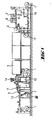
- 1 comprises an unrolling unit (1), applicator unit (2), short-wave infrared radiator (3), medium-wave infrared radiator (4), floating dryer (5), dry-laminating station (6), corona installation (7), web edge control (8), Re-humidifying device (9), cooling station (10), reeling (11), electron beam unit (12), wet lamination station (13) and UV emitter (14).
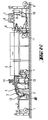
- the application unit of the coating installation according to FIG. 3 shows the smooth-roller application with 4 rollers (wet).
- the rollers are heated and cooled.
- the smooth-wash application is preferred for lamination of COC with PVC or oPP.
- a COC film with a thickness of 190 ⁇ m (194 g / m 2 ) was applied from both sides with an oriented polypropylene film having a thickness of 5 ⁇ m (4.6 g / m 2 ) with a solvent-free one-component adhesive 1 K. LF 190X3 of the company Herberts GmbH lameniert.
- the application was 1.50 g / m 2 .
- the corona treatment 48 KW.
- the lamination was carried out at a width of 810 mm, a speed of 50 m / min, a four-roll smooth-roll application system and one pass per laminated side.
- the thermoformable composite film had a thickness of 210 ⁇ m.
- thermoformable composite film had a thickness of 210 ⁇ m.
Landscapes
- Chemical & Material Sciences (AREA)
- Engineering & Computer Science (AREA)
- Manufacturing & Machinery (AREA)
- Materials Engineering (AREA)
- Health & Medical Sciences (AREA)
- Chemical Kinetics & Catalysis (AREA)
- Medicinal Chemistry (AREA)
- Polymers & Plastics (AREA)
- Organic Chemistry (AREA)
- Laminated Bodies (AREA)
- Packages (AREA)
- Manufacture Of Macromolecular Shaped Articles (AREA)
- Compositions Of Macromolecular Compounds (AREA)
Description
- Die vorliegende Erfindung betrifft eine thermoformbare Verbundfolie, ein Verfahren zur Herstellung einer thermoformbaren Verbundfolie und deren Verwendung als Verpackungsmaterial.
- Zur Herstellung von Verpackungen mit hohen Anforderungen werden flexible Folien unter Einwirkung von Wärme und Druck mit mechanischem Stempel bei Über-und/oder Unterdruck schalen- oder napfartig geformt. Die Folie dient zuerst als Schutz des Füllgutes. Die Folie muß das Füllgut vor Umwelteinflüssen schützen. Die Folie muß daher eine hohe Wasserdampf-, Gas- und UV-Barriere aufweisen. Die Folie muß eine mechanische Stabilität aufweisen, um das Füllgut vor physischen Einflüssen zu schützen und um nicht selbst vom Füllgut beschädigt zu werden. Das Füllgut darf durch Abgabe von Eigenbestandteilen der Folie nicht beeinträchtigen.
- Als Verpackung für verschiedenste Gegenstände werden immer häufiger Blisterverpackungen gewählt, da diese Verpackungsform vielfältige Gestaltungsmöglichkeiten bietet und einem mechanisierten Verpackungsprozess entgegen kommt. Ausgangsmaterial für eine Blisterverpackung ist eine thermisch verformbare Folie. Es handelt sich dabei um Kunststoffolien, die durch Erwärmen in einen Zustand gebracht werden in welchem sie sich relativ leicht durch Anwendung von pneumatischem Über- oder Unterdruck oder durch Stempel verformen lassen. Durch geeignete Wahl der Formwerkzeuge lassen sich so Vertiefungen (Blister) in die Folie (Bodenfolie) einbringen, die der Gestalt des zu verpackenden Gegenstandes angepaßt werden können. Nach diesem Verformungsschritt wird der zu verpackende Gegenstand in den entstandenen Blister eingebracht. Nach dem Befüllen des Blisters wird auf die Bodenfolie eine Abdeckfolie aufgebracht, die den zu verpackenden Gegenstand in seinem Blister einschließt.
- Die Erforderlichen Eigenschaften einer Folie werden durch verbinden von mehr als einer Folie zu einer Verbundfolie erreicht, wenn die Gesamtanforderungen durch ein Material nicht abgedeckt werden können. Folien hergestellt aus Cycloolefincopolymeren weisen eine sehr gute Wasserdampfdichte auf. Diese Folien weisen aber eine schlechte Fettbeständigkeit auf. Es kommt zur Bildung von Spannungsrißkorrosion durch die Einwirkung von ungesättigten Fettsäuren.
- Die am häufigsten verwendete Folie in Blisterverpackungen ist Polyvinylchlorid (PVC). Zur Erhöhung der Barrierewirkung gegen Gase, insbesondere Wasserdampf wird die PVC Bodenfolie häufig mit PVDC beschichtet. Folien aus unorientierten Polypropylen (uPP) bieten eine bessere Wasserdampfsperrwirkung als PVC-Folien und sind unter ökologischen Gesichtspunkten unbedenklicher. Der Nachteil ist jedoch die schlechtere Tiefziehbarkeit und der höhere Schrumpf dieses Materials.
- Die in EP-A-570 188 und EP-A-631 864 beschriebenen COC Mono- oder Multischichtfolien als Bodenfolie ermöglichen gute Verarbeitung und gute Barriereeigenschaften.
- Neuere Entwicklungen auf dem Gebiet der Blisterverpackungen für Arzneimittel beschreiben die Verwendung von amorphen Polyolefinen, die sich durch gutes Verarbeitungsverhalten und hohe Barrieren gegen Wasserdampf auszeichnen. So beschreiben EP-A-570 188 und EP-A-631 864 die Verwendung von Polyolefinen mit cyclischen Olefinen als Polymerbaustein. In diesen Anmeldungen wird die Verwendung dieser Polyolefine (Cycloolefincopolymere oder abgekürzt COC) in Form von Mono-oder Multischichtfolien für Blisterverpackungen beschrieben
- EP-A-649737 beschreibt eine thermoformbare Verbundfolie, die eine Schicht aus Cycloolefincopolymer, eine auf die Cycloolefinschicht laminierte, lösungsmittelfreie Klebschicht und eine auf die Klebschicht darauf laminierte Polypropylenschicht aufweist sowie die Verwendung der Folie als.
- Die Blisterverpackung bietet neben der automatisierten Verpackung und Präsentation des im Blister geschützten Produktes, wie Arzneimitteln in Form von Tabletten, Kapseln oder ähnlichem die Möglichkeit das Einwirken von Luftfeuchtigkeit und Sauerstoff wesentlich zu reduzieren und so die Lagerzeiten zu erhöhen.
- Aufgabe der vorliegende Erfindung ist es, eine Verbundfolie mit hohen Barriereeigenschaften, sehr gutem Tiefziehverhalten und guter Fettbeständigkeit und ein wirtschaftliches und umweltschonendes Verfahren zu deren Herstellung sowie deren Verwendung zur Herstellung von Blisterverpackungen bereitzustellen.
- Die Aufgabe der vorliegenden Erfindung wird gelöst durch eine thermoformbare Verbundfolie, enthaltend mindestens eine Cycloolefincopolymer enthaltende Folie und eine mindestens auf einer Seite darauf lamenierte thermoplastische oPP-Folie.
- Die Folie weist bei einer relativen Feuchte von etwa 85% und einer Temperatur von etwa 23 °C eine Wasserdampfpermeation von ≤ 0,05 g/m2d, eine Durchstoßfestigkeit von ≤ 20 N und eine Dicke von ≤ 100 µm auf.
- Die im Sinne der Erfindung geeigneten Folien enthalten mindestens ein Cycloolefinpolymer ausgewählt aus Polymeren enthaltend 0,1 - 100 Gew.-%, bevorzugt 10 - 90 Gew.-%, bezogen auf die Gesamtmasse des Cycloolefinpolymers, polymerisierte Einheiten mindestens eines cyclischen Olefins der Formeln I, II, II'III, IV, V oder VI


einen cyclischen oder acyclischen C2-C20-Alkenylrest bedeuten, oder einen gesättigten, ungesättigten oder aromatischen Ring bilden, wobei gleiche Reste R1 bis R8 in den verschiedenen Formeln I bis VI eine unterschiedliche Bedeutung haben können, worin n Werte von 0 bis 5 annehmen kann, und
0 bis 99,9 mol-%, bezogen auf die Gesamtzusammensetzung des Cycloolefincopolymers, polymerisierte Einheiten, welche sich ableiten von einem oder mehreren acyclischen Olefinen der Formel VII
- Die Cycloolefincopolymere können auch durch ringöffnende Polymerisation mindestens eines der Monomere mit den Formeln I bis VI und anschließender Hydrierung der erhaltenen Produkte erhalten werden.
- Außerdem kann das erfindungsgemäße elastomeren Cycloolefincopolymer 0 bis 45 mol-%, bezogen auf die Gesamtzusammensetzung des Cycloolefincopolymers, polymerisierte Einheiten enthalten, welche sich ableiten von einem oder mehreren monocyclischen Olefinen der Formel VIII

- Der Anteil der polymerisierten Einheiten, die sich ableiten von cyclischen, insbesondere polycyclischen Olefinen beträgt bevorzugt 3 bis 75 mol-% bezogen auf die Gesamtzusammensetzung des Cycloolefincopolymers. Der Anteil der polymerisierten Einheiten, die sich ableiten von acyclischen Olefinen beträgt bevorzugt 5 bis 80 mol% bezogen auf die Gesamtzusammensetzung des Cycloolefincopolymers.
- Bevorzugt bestehen die Cycloolefincopolymere aus polymerisierten Einheiten, die sich ableiten von einem oder mehreren polycyclischen Olefinen, insbesondere polycyclischen Olefinen der Formeln I oder III, und polymerisierten Einheiten, die sich ableiten von einem oder mehreren acyclischen Olefinen der Formel VII, insbesondere α-Olefinen mit 2 bis 20 C-Atomen. Insbesondere sind Cycloolefincopolymere bevorzugt, die aus polymerisierten Einheiten bestehen, die sich ableiten von einem polycyclischen Olefin der Formel I oder III und einem acyclischen Olefin der Formel VII. Weiterhin bevorzugt sind Terpolymere, die aus polymerisierten Einheiten bestehen, die sich ableiten von einem polycyclischen Monoolefin der Formel I oder III, einem acyclischen Monoolefin der Formel VII und einem cyclischen oder acyclischen Olefin, welches mindestens zwei Doppelbindungen enthält (Polyen), insbesondere cyclische, bevorzugt polycyclische Diene wie Norbornadien oder cyclische, besonders bevorzugt polycyclische Alkene, die einen C2-C20-Alkenylrest tragen wie Vinylnorbornen.
- Bevorzugt enthalten die erfindungsgemäßen elastomeren Cycloolefincopolymere Olefine mit Norbornengrundstruktur, besonders bevorzugt Norbornen, Tetracyclododecen und gegebenenfalls Vinylnorbornen oder Norbornadien. Bevorzugt sind auch Cycloolefincopolymere, die polymerisierte Einheiten enthalten, die sich ableiten von acyclischen Olefinen mit endständigen Doppelbindungen wie α-Olefinen mit 2 bis 20 C-Atomen, besonders bevorzugt Ethylen oder Propylen. Besonders bevorzugt sind Norbornen/Ethylen- und Tetracyclododecen/Ethylen-Copolymere.
- Bei den Terpolymeren sind besonders bevorzugt Norbornen/Vinylnorbonen/ Ethylen-, Norbornen/Norbornadien/Ethylen-, Tetracyclododecen/Vinylnorbomen/ Ethylen-, Tetracyclododecen/Vinyltetracyclododecen/Ethylen-Terpolymere. Der Anteil der polymerisierten Einheiten, die sich ableiten von einem Polyen, bevorzugt Vinylnorbornen oder Norbornadien, liegt bei 0,1 bis 50 mol-%, vorzugsweise bei 0,1 bis 20 mol-%, der Anteil des acyclischen Monoolefins der Formel VII beträgt 0 bis 99,9 mol-%, bevorzugt 5 bis 80 mol-%, bezogen auf die Gesamtzusammensetzung des Cycloolefincopolymers. In den beschriebenen Terpolymeren liegt der Anteil des polycyclischen Monoolefins bei 0,1 bis 99,9 mol-%, bevorzugt 3 bis 75 mol-%, bezogen auf die Gesamtzusammensetzung des Cycloolefincopolymers.
- Das erfindungsgemäße Cycloolefincopolymer enthält vorzugsweise mindestens ein Cycloolefincopolymer, welches polymerisierte Einheiten enthält, die sich ableiten lassen von polycyclischen Olefinen der Formel I, und polymerisierte Einheiten, die sich ableiten lassen von acyclischen Olefinen der Formel VII.
- Die erfindungsgemäßen Cycloolefincopolymere können hergestellt werden bei Temperaturen von -78 bis 200 °C und einem Druck von 0,01 bis 200 bar, in Gegenwart eines oder mehrerer Katalysatorsysteme, welche mindestens eine Übergangsmetallverbindung und gegebenenfalls einen Cokatalysator und gegebenenfalls ein Trägermaterial enthalten. Als Übergangsmetallverbindungen eignen sich Metallocene, insbesondere stereorigide Metallocene. Beispiele für Katalysatorsysteme, welche für die Herstellung der erfindungsgemäßen elastomeren Cycloolefincopolymere geeignet sind, sind beschrieben in EP-A-407 870, EP-A-485 893 und EP-A-503 422.
- Beispiele für eingesetzte Übergangsmetallverbindungen sind:
- rac-Dimethylsilyl-bis-(1-indenyl)-zirkondichlorid,
- rac-Dimethylgermyl-bis-(1-indenyl)-zirkondichlorid,
- rac-Phenylmethylsilyl-bis-(1-indenyl)-zirkondichlorid,
- rac-Phenylvinylsilyl-bis-(1-indenyl)-zirkondichlorid,
- 1-Silacyclobutyl-bis-(1-indenyl)-zirkondichlorid,
- rac-Diphenylsilyl-bis-(1-indenyl)-hafniumdichlorid,
- rac-Phenylmethylsilyl-bis-(1-indenyl)-hafniumdichlorid,
- rac-Diphenylsilyl-bis-(1-indenyl)-zirkondichlorid,
- rac-Ethylen-1,2-bis-(1-indenyl)-zirkondichlorid,
- Dimethylsilyl-(9-fluorenyl)-(cyclopentadienyl)-zirkondichlorid,
- Diphenylsilyl-(9-fluorenyl)-(cyclopentadienyl)-zirkondichlorid,
- Bis(1-indenyl)-zirkondichlorid,
- Diphenylmethylen-(9-fluorenyl)-cyclopentadienylzirkondichlorid,
- Isopropylen-(9-fluorenyl)-cyclopentadienyl-zirkondichlorid,
- rac-Isopropyliden-bis-(1-indenyl)zirkondichlorid,
- Phenylmethylmethylen-(9-fluorenyl)-cyclopentadienyl-zirkondichlorid,
- Isopropylen-(9-fluorenyl)-(1-(3-isopropyl)cyclopentadienyl)-zirkondichlorid,
- Isopropylen-(9-fluorenyl)(1-(3-methyl)cyclopentadienyl)-zirkondichlorid,
- Diphenylmethylen-(9-fluorenyl)(1-(3-methyl)cyclopentadienyl)-zirkondichlorid
- Methylphenylmethylen-(9-fluorenyl)(1-(3-methyl)cyclopentadienyl)-zirkondichlorid,
- Dimethylsilyl-(9-fluorenyl)(1-(3-methyl)-cyclopentadienyl)-zirkondichlorid,
- Diphenylsilyl-(9-fluorenyl)(1-(3-methyl)cyclopentadienyl)-zirkondichlorid,
- Diphenylmethylen-(9-fluorenyl)(1-(3-tert.-butyt)cyclopentadienyl)-zirkondichlorid,
- Isopropylen-(9-fluorenyl)(1-(3-tert.-butyl)cyclopentadienyl)-zirkondichlorid,
- Isopropylen-(cyclopentadienyl)-(1-indenyl)-zirkondichlorid,
- Diphenylcarbonyl-(cyclopentadienyl)-(1-indenyl)-zirkondichlorid,
- Dimethylsilyl-(cyclopentadienyl)-(1-indenyl)-zirkondichlorid,
- Isopropylen-(methylcyclopentadienyl)-(1-indenyl)-zirkondichlorid, 4-(η5-cyclopentadienyl)-4,7,7-trimethyl-(η5-4,5,6,7-tetrahydroindenyl-zirkondichlorid,
- [4-(η5-cyclopentadienyl)-4,7,7-triphenyl-(η5-4,5,6,7-tetrahydroindenyl)]zirkondichlorid,
- [4-(η5-cyclopentadienyl)-4,7-dimethyl-7-phenyl-(η5-4,5,6,7-tetrahydroindenyl)]zirkondichlorid,
- [4-(η5-3'-tert.-butylcyclopentadienyl)-4,7,7-triphenyl-(η5-4,5,6,7-tetrahydroindenyl)]zirkondichlorid,
- [4-( η5-3'-tert.-butylcyclopentadienyl)-4,7-dimethyl-7-phenyl-(η5-4,5,6,7-tetrahydroindenyl)]zirkondichlorid,
- [4-(η5-3'-methylcyclopentadienyl)-4,7,7-trimethyl-(η5-4,5,6,7-tetrahydroindenyl)]zirkondichlorid,
- [4-(η5-3'-methylcyclopentadienyl)-4,7,7-triphenyl-(η5-4,5,6,7-tetrahydroindenyl)]zirkondichlorid,
- [4-(η5-3'-methylcyclopentadienyl)-4,7-dimethyl-7-phenyl-(η5-4,5,6,7-tetrahydroindenyl)]zirkondichlorid,
- [4-(η5-3'-isopropylcyclopentadienyl)-4,7,7-trimethyl-(η5-4,5,6,7-tetrahydroindenyl)]zirkondichlorid,
- [4-(η5-3'-isoproplycyclopentadienyl)-4,7,7-triphenyl-(η5-4,5,6,7-tetrahydroindenyl)]zirkondichlorid,
- [4-(η5-3'-isopropylcyclopentadienyl)-4,7-dimethyl-7-phenyl-(η5-4,5,6,7-tetrahydroindenyl)]zirkondichlorid,
- [4-(η5-cyclopentadienyl)(η5-4,5-tetrahydropentalen)]zirkondichlorid,
- [4-(η5-cyclopentadienyl)-4-methyl-(η5-4,5-tetrahydropentalen)]zirkondichlorid,
- [4-(η5-cyclopentadienyl)-4-phenyl-(η5-4,5-tetrahydropentalen)]zirkondichlorid,
- [4-(η5-3'-methyl-cyclopentadienyl)(η5-4,5-tetrahydropentalen)]zirkondichlorid,
- [4-(η5-3'-isopropylcyclopentadienyl)(η5-4,5-tetrahydropentalen)]zirkondichlorid,
- [4-(η5-3'-benzyl-cyclopentadienyl)(η5-4,5-tetrahydropentalen)]zirkondichlorid,
- [2,2,4Trimethyl-4-(η5-cyclopentadienyl)-(η5-4,5-tetrahydropentalen)]-zirkoniumdichlorid,
- [2;2,4Trimethyl-4-(η5-(3,4-Di-isopropyl)cyclopentadienyl)-(η5-4,5-tetrahydropentalen)]-zirkoniumdichlorid.
- Die erfindungsgemäß verwendeten COC-Folien zeichnen sich durch spezielle mechanische Eigenschaften aus. Die Folien können auf den verwendeten Maschinen verarbeitet werden und besitzen gleichzeitig eine geringe Durchstoßfestigkeit und eine hohe Barriere, vor allem gegen Wasserdampf. Diese COC-Folien, sind in geeigneter Weise unorientiert. Dabei kann es sich um Mono- oder Mehrschichtfolien handeln. Die Folien können organische oder anorganische Füllstoffe enthalten, um die Lichtdurchlässigkeit zu verringern damit das Füllgut nicht sichtbar zu machen (kindersichere Verpackung) oder die Bedruckbarkeit oder die Siegeleigenschaften zu verbessern.
- Die Herstellung der Cycloolefincopolymere geschieht durch eine heterogene oder homogene Katalyse mit metallorganischen Verbindungen und ist in einer Vielzahl von Patenten beschrieben. Katalysatorsysteme basierend auf Mischkatalysatoren aus Titansalzen und Aluminiumorganylen werden in DD-A-109 224 und DD-A-237 070 beschreiben. EP-A-156 464 beschreibt die Herstellung mit Katalysatoren auf Vanadiumbasis. EP-A-283 164, EP-A-407 870, EP-A-485 893 und EP-A-503 422 beschreiben die Herstellung von Cycloolefinpolymeren mit Katalysatoren basierend auf löslichen Metallocenkomplexen.
- Extrudierte nicht orientierte COC-Folien sind spröde und lassen sich unter erschwerten Bedingungen nur sehr schlecht weiterverarbeiten, vgl. DE-A-4304309. So neigen sie dazu beim Aufwickeln bzw. Abwickeln unter Zug leicht einzureißen oder zu zerreißen. Aus diesem Grund muß die mechanische Festigkeit erhöht werden. Dies kann durch Orientieren (mono- oder biaxiale Reckung) der Folien geschehen. Die so orientierten Folien lassen sich wesentlich besser handhaben, ohne daß sie die geschilderten Nachteile aufweisen wie in DE-A-4304309 beschreiben. Die Durchstoßfestigkeit von orientierten Folien wurde nach DIN 53373 untersucht. Als Maß für die Durchstoßfestigkeit kann unter anderem die Durchstoßarbeit herangezogen werden. Es wurde nun festgestellt, daß mit der Orientierung die Durchstoßfestigkeit der Folien zunimmt. Die gemessenen Werte waren ausnahmslos größer als die der nicht orientierten Folien vergleichbarer Dicke. In DE-A-4414669 wird ein Wert von 450 N/mm als zu hoch für einen sinnvollen Einsatz der Folie als Abdeckfolien für Blisterverpackungen angegeben. Auf Blistermaschinen für empfindliche Arzneimittel sollten wesentlich niedrigere Werte angestrebt werden. Als eine erste Orientierung können die Werte der Durchstoßfestigkeiten für Aluminiumfolien herangezogen werden. Die Durchstoßfestigkeit einer Aluminiumfolie (16 µm) liegt bei 90 N/mm. Eine leichte Entnahme der Arzneimittel aus den Blisterverpackungen ist bei Verwendung von orientierten COC-Folien deshalb nicht mehr gewährleistet. Neben einer optimalen aber nicht zu niedrigen Duchstoßfestigkeit muß die Blisterfolie eine erhöhte Zähigkeit aufweisen. Erst die gezielte Abstimmung von mechanischer Festigkeit (Härte), Flexibilität und erforderlicher Kraft zum Zusammendrücken des Näpfchens ermöglicht es das Füllgut, wie Tablette, Kapsel, Zäpfchen oder Dragee ohne Beschädigung und unnötigen Kraftaufwand aus der Verpackung herauszulösen. Der geringe Kraftaufwand ist insbesondere für die Verwendung bei älteren Menschen sowie im Klinikbereich gefordert, wo das medizinische Personal fortlaufend Tabletten durchdrücken muß und es zu Ermüdungserscheinung und Muskelkater in den Fingern kommen kann.
- Die Wasserdampfsperrwirkung der Folien ist vergleichbar mit den Werten wie sie für unverstreckte COC-Folien beobachtet werden. D.h. die Orientierung hat keinen deutlichen Einfluß auf die Barrierewirkung der Folien. Die Dicken der Abdeckfolien auf der Basis von COC-Folien sollten deshalb im Bereich der Dicken der Folien im ausgeformten Blister liegen. Damit ergeben sich Foliendicken für die Abdeckfolien im Bereich von 20 bis 150 µm, bevorzugt im Bereich von 40 bis 100 µm.
- Die Wasserdampfsperrwirkung wird durch die Zugabe von organischen oder anorganischen Zusätzen nicht signifikant beeinflußt. Sie liegt im Bereich von 0,2 bis 0,4 g/m2*d für eine Foliendicke von 100 µm. Die Polarität der Oberfläche kann durch eine Koronabehandlung der Folie erhöht werden.
- Bei den Zusätzen kann es sich um organische Polymere wie Polypropylen oder Polyethylen als Homo- oder Copolymere, Polyester, Polyamide, Polycarbonat, Polyacetale, Acrylat- und Methacrylatpolymere handeln. Als anorganische Pigmente können Titandioxid, Bariumsulfat, Calciumsulfat, Calciumcarbonat oder Bariumcarbonat eingesetzt werden.
- Die COC-Folie wird ein oder beidseitig mit Folienlameniert, die orientiertes Polyethylen enthalten. Die Dicke der auf der COC-Folie lamenierten Folie beträgt von 1 µm bis 150µm, bevorzugt von 1 µm bis 100 µm, besonders bevorzugt von 5 µm bis 50 µm. Bei der Lamenierung wird ein lösungsmittelfreier Einkomponentenkleber verwendet. Orientiertes Polypropylen kann als wesentlich dünnere Folie hergestellt werden im Vergleich zu COC. COC und oPP ergeben als Laminat eine gut aussehende flexible, durchstoßfeste Mehrschichtfolie.
- Die Dicke der Gesamtfolie beträgt von 50 µm bis 550 µm, bevorzugt von 150 µm bis 400 µm und besonders bevorzugt von 200 µm bis 350 µm. Die Dicke der oPP-Folie beträgt von 1 µm bis 150 µm, bevorzugt von 2 µm bis 50 µm und besonders bevorzugt von 4 µm bis 10 µm. Die Dicke der COC-Folie beträgt von 50 µm bis 400 µm, bevorzugt von 150 µm bis 350 µm, besonders bevorzugt von 175 µm bis 300 µm.
- Die erfindungsgemäße thermoformbare Verbundfolie wird zur Herstellung von Blisterverpackungen verwendet.Aufgrund der sehr guten Wasserdampfbarriere erhöht die daraus hergestellte Blisterverpackung oder PTP (push through packaging) den Wert des darin verpackten Artikels. Es läßt sich darin Füllgut, wie Arzenimittel und Nahrungsmittel, insbesondere pelletisierte und gekapselte, Arzneimittel, reishaltige Eßwaren, Kekse, Snacks, sowie wasseranziehende Artikel, wie Zigaretten und Teebeutel verpacken.
- Die Erfindung wird anhand einer Zeichnung und Beispielen näher erläutert.
- Die Zeichnung enthält Figuren 1 bis 3. Es zeigen:
- Fig 1: Beschichtungsanlage,
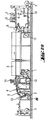
- Fig 2: Aufbau der Beschichtungsanlage,
- Fig 3: Antragswerk der Beschichtungsanlage.
- Die Beschichtungsanlage gemäß Fig. 1 enthält eine Abrollung (1), Auftragwerk (2), Infrarotstrahler kurzwellig (3), Infrarotstrahler mittelwellig (4), Schwebetrockner (5), Trockenkaschierstation (6), Coronaanlage (7), Bahnkantenregelung (8), Rückfeuchteeinrichtung (9), Kühlstation (10), Aufrollung (11), Elektronenstrahleinheit (12), Nasskaschierstation (13) und UV-Strahler (14).
- Der Aufbau der Beschichtungsanlage gemäß Fig. 2 zeigt die Abläufe:
- A) thermische Trocknung oder UV-Strahlenhärtung,
- B) thermische Trocknung mit Schockkühlung,
- C) thermische Trocknung mit Rückbefeuchtung,
- D) thermische Trocknung mit Trockenkaschierung,
- E) thermische Trocknung mit UV-Strahlenhärtung.
- Das Antragswerk der Beschichtungsanlage gemäß Fig 3 zeigt den Glattwalzenauftrag mit 4 Walzen (nass). Dabei bedeuten G = Gummiwalze und S = Stahlwalze. Dabei werden die Walzen geheizt und gekühlt. Der Glattwazenauftrag eignet sich bevorzugt für für die Lamenierung von COC mit PVC oder oPP.
- Es wurde eine COC-Folie mit einer Dicke von 190 µm (194 g/m2) von beiden Seiten mit einer orientierten Polypropylen-Folie mit einer Dicke von 5 µm (4,6 g/m2) mit einem lösungsmittelfreien Einkomponentenkleber 1 K-LF 190X3 der Fa. Herberts GmbH lameniert. Der Antrag betrug 1.50 g/m2. Die Corona-Behandlung 48 KW. Die Kaschierung erfolgte bei einer Breite von 810 mm, einer Geschwindigkeit von 50 m/min, einem Glattwalzen-Antragssystem mit vier Walzen und je einem Durchgang pro kaschierte Seite. Die thermoformbare Verbundfolie wies eine Dicke von 210 µm auf. Bei der Messung der Verbundfestigkeit der Verbundfolie führte die hohe Verbundfestigkeit zu einem Abriß der Verbundfolie.
- Es wurde genauso verfahren wie im Beispiel nur mit dem Unterschied, daß die COC-Folie von beiden Seiten mit einer unorientierten Polypropylen-Folie lameniert wurde. Die thermoformbare Verbundfolie wies eine Dicke von 210 µm auf.
Claims (6)
- Thermoformbare Verbundfolie, enthaltend mindestens eine Cycloolefincopolymer enthaltende Folie und mindestens auf einer Seite darauf lamenierte thermoplastische Folie, dadurch gekennzeichnet, dass die thermoplastische Folie orientiertes Polypropylen (oPP) enthält und dass sie mittels eines lösungsmittelfreien Einkomponentenklebers aufgebracht wird.
- Thermoformbare Verbundfolie, nach Anspruch 1, wobei die Dicke der oPP-Folie von 1 µm bis 150 µm und die Dicke der COC-Folie von 50 µm bis 400 µm beträgt.
- Thermoformbare Verbundfolie nach Anspruch 1 oder 2, wobei die Dicke der oPP- Folie von 2 µm bis 50 µm und die Dicke der COC-Folie von 150 µm bis 350 µm beträgt.
- Thermoformbare Verbundfolie nach einem oder mehreren der Ansprüche 1 bis 3, wobei die Dicke der oPP-Folie von 4 µm bis 10 µm und die Dicke der COC-Folie von 175 µm bis 300 µm beträgt.
- Verfahren zur Herstellung einer thermoformbaren Verbundfolie nach einem oder mehreren der Ansprüche 1 bis 4, wobei die auf der Cycloolefincopolymer enthaltenden Folie lamenierte thermoplastische Folie mittels eines lösungsmittelfreien Einkomponentenklebers Klebers aufgebracht wird.
- Verwendung einer thermoformbaren Verbundfolie nach einem oder mehreren der Ansprüche 1 bis 4 zur Herstellung von Blisterverpackungen.
Applications Claiming Priority (2)
| Application Number | Priority Date | Filing Date | Title |
|---|---|---|---|
| DE1998128858 DE19828858A1 (de) | 1998-06-29 | 1998-06-29 | Thermoformbare Verbundfolie |
| DE19828858 | 1998-06-29 |
Publications (3)
| Publication Number | Publication Date |
|---|---|
| EP0968818A2 EP0968818A2 (de) | 2000-01-05 |
| EP0968818A3 EP0968818A3 (de) | 2000-04-05 |
| EP0968818B1 true EP0968818B1 (de) | 2006-08-30 |
Family
ID=7872316
Family Applications (1)
| Application Number | Title | Priority Date | Filing Date |
|---|---|---|---|
| EP19990111881 Expired - Lifetime EP0968818B1 (de) | 1998-06-29 | 1999-06-21 | Thermoformbare Verbundfolie |
Country Status (4)
| Country | Link |
|---|---|
| EP (1) | EP0968818B1 (de) |
| JP (1) | JP2000037817A (de) |
| CA (1) | CA2276540A1 (de) |
| DE (2) | DE19828858A1 (de) |
Families Citing this family (7)
| Publication number | Priority date | Publication date | Assignee | Title |
|---|---|---|---|---|
| EP1123869A4 (de) * | 1998-06-30 | 2009-07-01 | Nippon Zeon Co | Blasgeformter behälter und produkt |
| DE19832500A1 (de) * | 1998-07-20 | 2000-01-27 | Ticona Gmbh | Thermoformbare Verbundfolie |
| DE19915715A1 (de) | 1999-04-08 | 2000-10-19 | Ticona Gmbh | Mikrostrukturierte Bauteile |
| ATE334820T1 (de) * | 2000-12-06 | 2006-08-15 | Huhtamaki Deutschland Gmbh & C | Verfahren zum herstellen einer verbundfolie |
| GB0225621D0 (en) | 2002-11-02 | 2002-12-11 | Glaxo Group Ltd | Medicament carrier |
| CA2598665C (en) * | 2005-02-23 | 2012-09-11 | Topas Advanced Polymers, Inc. | Multilayer films including cycloolefin copolymer and styrene-butadiene copolymer |
| WO2022256474A1 (en) | 2021-06-03 | 2022-12-08 | Tekni-Plex, Inc. | Recyclable blister package |
Family Cites Families (11)
| Publication number | Priority date | Publication date | Assignee | Title |
|---|---|---|---|---|
| JPH04249149A (ja) * | 1991-02-06 | 1992-09-04 | Nippon Zeon Co Ltd | 複合成形体およびその製造方法 |
| JP3227709B2 (ja) * | 1991-03-04 | 2001-11-12 | 日本ゼオン株式会社 | 医療用または食品包装用容器 |
| JP3055353B2 (ja) * | 1992-05-14 | 2000-06-26 | 三井化学株式会社 | Ptpまたはブリスターパック包装用シートまたはフィルム、包装体、およびその形成方法 |
| KR100235089B1 (en) * | 1992-05-14 | 1999-12-15 | Mitsui Chemicals Inc | Ptp or blister packaging articles and packaging material therefor |
| JPH0740520A (ja) * | 1993-05-21 | 1995-02-10 | Taisei Kako Kk | 非晶性樹脂製積層シート状物から形成された区分包装体用構成材、その製造方法、その製造装置、該構成材とライナー層とからなる区分包装体用積層体、その製造方法並びにその製造装置 |
| CA2134320C (en) * | 1993-10-26 | 2001-01-09 | Toshiyuki Hirose | Polyolefin multilayer laminate and use thereof |
| JPH0872210A (ja) * | 1993-10-26 | 1996-03-19 | Mitsui Petrochem Ind Ltd | ポリオレフィン系多層積層体および用途 |
| EP0773102A4 (de) * | 1994-07-05 | 1997-08-06 | Mitsui Petrochemical Ind | Mehrschichtfolie und ihre verwendung |
| JPH1034845A (ja) * | 1996-04-11 | 1998-02-10 | Tousero Kk | 積層フィルムおよび包装材 |
| DE69713661T2 (de) * | 1996-04-11 | 2003-02-13 | Mitsui Chemicals, Inc. | Mehrschichtfolie und Verpackunsgmaterial |
| JPH11165387A (ja) * | 1997-12-03 | 1999-06-22 | Mitsui Chem Inc | ポリオレフィン系多層積層体およびその用途 |
-
1998
- 1998-06-29 DE DE1998128858 patent/DE19828858A1/de not_active Withdrawn
-
1999
- 1999-06-21 EP EP19990111881 patent/EP0968818B1/de not_active Expired - Lifetime
- 1999-06-21 DE DE59913810T patent/DE59913810D1/de not_active Expired - Fee Related
- 1999-06-28 CA CA 2276540 patent/CA2276540A1/en not_active Abandoned
- 1999-06-29 JP JP11182941A patent/JP2000037817A/ja active Pending
Also Published As
| Publication number | Publication date |
|---|---|
| JP2000037817A (ja) | 2000-02-08 |
| EP0968818A2 (de) | 2000-01-05 |
| EP0968818A3 (de) | 2000-04-05 |
| DE19828858A1 (de) | 1999-12-30 |
| CA2276540A1 (en) | 1999-12-29 |
| DE59913810D1 (de) | 2006-10-12 |
Similar Documents
| Publication | Publication Date | Title |
|---|---|---|
| DE19832500A1 (de) | Thermoformbare Verbundfolie | |
| EP0838293B1 (de) | Mono- oder Mehrschichtfilm | |
| EP1539867B1 (de) | Verfahren zum herstellen einer verpackung aus thermoformbarer folie mit hoher wärmeformbeständigkeit und wasserdampfbarriere | |
| DE602004002562T2 (de) | Biaxial orientierte Mehrschichtfolie enthaltend eine Deckschicht aus einem statistischen Propylen-Ethylen-Blockcopolymer | |
| DE60103333T2 (de) | Als wärmeschrumpfbares Schrumpfetikett geeignete Harzzusammensetzung und Folie, die diese enthält | |
| EP0968816B1 (de) | Extrusionsbeschichtete Folie | |
| EP0668157B1 (de) | Siegelbare polyolefinische Mehrschichtfolie, Verfahren zu ihrer Herstellung und ihre Verwendung | |
| JP6740592B2 (ja) | 積層体およびそれを用いた包装体 | |
| EP1089878B1 (de) | Siegelbare mehrschichtfolie aus einem propen-terpolymeren | |
| DE19707034A1 (de) | Wärmeaktiviertes Etikett und Verfahren zur Herstellung eines mit einem Etikett versehenen Formkörpers | |
| EP0968818A2 (de) | Thermoformbare Verbundfolie | |
| EP0968817A2 (de) | Thermoformbare Verbundfolie | |
| EP0968819A2 (de) | Verfahren zur Herstellung einer thermoformbaren Verbundfolie | |
| US6641925B1 (en) | Thermoformable composite film and process to make | |
| DE102008051399A1 (de) | Folien und deren Verwendung | |
| WO2001098083A1 (de) | Weisse, siegelfähige, biaxial orientierte, koextrudierte polyesterfolie mit cycloolefincopolymer (coc), verfahren zu ihrer herstellung und ihre verwendung | |
| DE19725975A1 (de) | Blisterverpackung | |
| DE19644675A1 (de) | Blisterverpackung | |
| EP0849074A2 (de) | Cycloolefincopolymer enthaltende siegelfähige, orientierte Folien | |
| JP2905328B2 (ja) | 積層体の製造方法 | |
| DE4406931A1 (de) | Siegelbare polyolefinische Mehrschichtfolie, Verfahren zu ihrer Herstellung und ihre Verwendung | |
| DE19652774A1 (de) | Folien |
Legal Events
| Date | Code | Title | Description |
|---|---|---|---|
| PUAI | Public reference made under article 153(3) epc to a published international application that has entered the european phase |
Free format text: ORIGINAL CODE: 0009012 |
|
| AK | Designated contracting states |
Kind code of ref document: A2 Designated state(s): DE FR GB IT |
|
| AX | Request for extension of the european patent |
Free format text: AL;LT;LV;MK;RO;SI |
|
| PUAL | Search report despatched |
Free format text: ORIGINAL CODE: 0009013 |
|
| AK | Designated contracting states |
Kind code of ref document: A3 Designated state(s): AT BE CH CY DE DK ES FI FR GB GR IE IT LI LU MC NL PT SE |
|
| AX | Request for extension of the european patent |
Free format text: AL;LT;LV;MK;RO;SI |
|
| RIC1 | Information provided on ipc code assigned before grant |
Free format text: 7B 32B 27/32 A, 7B 32B 7/12 B, 7C 08J 5/12 B |
|
| 17P | Request for examination filed |
Effective date: 20001005 |
|
| AKX | Designation fees paid |
Free format text: DE FR GB IT |
|
| RAP1 | Party data changed (applicant data changed or rights of an application transferred) |
Owner name: TICONA GMBH |
|
| 17Q | First examination report despatched |
Effective date: 20030903 |
|
| GRAP | Despatch of communication of intention to grant a patent |
Free format text: ORIGINAL CODE: EPIDOSNIGR1 |
|
| GRAC | Information related to communication of intention to grant a patent modified |
Free format text: ORIGINAL CODE: EPIDOSCIGR1 |
|
| GRAC | Information related to communication of intention to grant a patent modified |
Free format text: ORIGINAL CODE: EPIDOSCIGR1 |
|
| RAP1 | Party data changed (applicant data changed or rights of an application transferred) |
Owner name: TOPAS ADVANCED POLYMERS GMBH |
|
| GRAS | Grant fee paid |
Free format text: ORIGINAL CODE: EPIDOSNIGR3 |
|
| GRAA | (expected) grant |
Free format text: ORIGINAL CODE: 0009210 |
|
| AK | Designated contracting states |
Kind code of ref document: B1 Designated state(s): DE FR GB IT |
|
| PG25 | Lapsed in a contracting state [announced via postgrant information from national office to epo] |
Ref country code: IT Free format text: LAPSE BECAUSE OF FAILURE TO SUBMIT A TRANSLATION OF THE DESCRIPTION OR TO PAY THE FEE WITHIN THE PRESCRIBED TIME-LIMIT;WARNING: LAPSES OF ITALIAN PATENTS WITH EFFECTIVE DATE BEFORE 2007 MAY HAVE OCCURRED AT ANY TIME BEFORE 2007. THE CORRECT EFFECTIVE DATE MAY BE DIFFERENT FROM THE ONE RECORDED. Effective date: 20060830 |
|
| REG | Reference to a national code |
Ref country code: GB Ref legal event code: FG4D Free format text: NOT ENGLISH |
|
| REF | Corresponds to: |
Ref document number: 59913810 Country of ref document: DE Date of ref document: 20061012 Kind code of ref document: P |
|
| ET | Fr: translation filed | ||
| PLBE | No opposition filed within time limit |
Free format text: ORIGINAL CODE: 0009261 |
|
| STAA | Information on the status of an ep patent application or granted ep patent |
Free format text: STATUS: NO OPPOSITION FILED WITHIN TIME LIMIT |
|
| 26N | No opposition filed |
Effective date: 20070531 |
|
| GBPC | Gb: european patent ceased through non-payment of renewal fee |
Effective date: 20070621 |
|
| REG | Reference to a national code |
Ref country code: FR Ref legal event code: ST Effective date: 20080229 |
|
| PG25 | Lapsed in a contracting state [announced via postgrant information from national office to epo] |
Ref country code: DE Free format text: LAPSE BECAUSE OF NON-PAYMENT OF DUE FEES Effective date: 20080101 |
|
| PG25 | Lapsed in a contracting state [announced via postgrant information from national office to epo] |
Ref country code: GB Free format text: LAPSE BECAUSE OF NON-PAYMENT OF DUE FEES Effective date: 20070621 |
|
| PG25 | Lapsed in a contracting state [announced via postgrant information from national office to epo] |
Ref country code: FR Free format text: LAPSE BECAUSE OF NON-PAYMENT OF DUE FEES Effective date: 20070702 |