EP0912901B1 - Verfahren und reagenz zur überwachung des blutspiegels von antiplättchen-verbindungen - Google Patents
Verfahren und reagenz zur überwachung des blutspiegels von antiplättchen-verbindungen Download PDFInfo
- Publication number
- EP0912901B1 EP0912901B1 EP97924591A EP97924591A EP0912901B1 EP 0912901 B1 EP0912901 B1 EP 0912901B1 EP 97924591 A EP97924591 A EP 97924591A EP 97924591 A EP97924591 A EP 97924591A EP 0912901 B1 EP0912901 B1 EP 0912901B1
- Authority
- EP
- European Patent Office
- Prior art keywords
- amino
- compound
- phenyl
- antiplatelet
- aminoiminomethyl
- Prior art date
- Legal status (The legal status is an assumption and is not a legal conclusion. Google has not performed a legal analysis and makes no representation as to the accuracy of the status listed.)
- Expired - Lifetime
Links
Images

Classifications
-
- C—CHEMISTRY; METALLURGY
- C07—ORGANIC CHEMISTRY
- C07K—PEPTIDES
- C07K16/00—Immunoglobulins [IG], e.g. monoclonal or polyclonal antibodies
- C07K16/44—Immunoglobulins [IG], e.g. monoclonal or polyclonal antibodies against material not provided for elsewhere, e.g. haptens, metals, DNA, RNA, amino acids
-
- G—PHYSICS
- G01—MEASURING; TESTING
- G01N—INVESTIGATING OR ANALYSING MATERIALS BY DETERMINING THEIR CHEMICAL OR PHYSICAL PROPERTIES
- G01N33/00—Investigating or analysing materials by specific methods not covered by groups G01N1/00 - G01N31/00
- G01N33/48—Biological material, e.g. blood, urine; Haemocytometers
- G01N33/50—Chemical analysis of biological material, e.g. blood, urine; Testing involving biospecific ligand binding methods; Immunological testing
- G01N33/86—Chemical analysis of biological material, e.g. blood, urine; Testing involving biospecific ligand binding methods; Immunological testing involving blood coagulating time or factors, or their receptors
-
- G—PHYSICS
- G01—MEASURING; TESTING
- G01N—INVESTIGATING OR ANALYSING MATERIALS BY DETERMINING THEIR CHEMICAL OR PHYSICAL PROPERTIES
- G01N33/00—Investigating or analysing materials by specific methods not covered by groups G01N1/00 - G01N31/00
- G01N33/48—Biological material, e.g. blood, urine; Haemocytometers
- G01N33/50—Chemical analysis of biological material, e.g. blood, urine; Testing involving biospecific ligand binding methods; Immunological testing
- G01N33/94—Chemical analysis of biological material, e.g. blood, urine; Testing involving biospecific ligand binding methods; Immunological testing involving narcotics or drugs or pharmaceuticals, neurotransmitters or associated receptors
-
- Y—GENERAL TAGGING OF NEW TECHNOLOGICAL DEVELOPMENTS; GENERAL TAGGING OF CROSS-SECTIONAL TECHNOLOGIES SPANNING OVER SEVERAL SECTIONS OF THE IPC; TECHNICAL SUBJECTS COVERED BY FORMER USPC CROSS-REFERENCE ART COLLECTIONS [XRACs] AND DIGESTS
- Y10—TECHNICAL SUBJECTS COVERED BY FORMER USPC
- Y10S—TECHNICAL SUBJECTS COVERED BY FORMER USPC CROSS-REFERENCE ART COLLECTIONS [XRACs] AND DIGESTS
- Y10S435/00—Chemistry: molecular biology and microbiology
- Y10S435/808—Optical sensing apparatus
-
- Y—GENERAL TAGGING OF NEW TECHNOLOGICAL DEVELOPMENTS; GENERAL TAGGING OF CROSS-SECTIONAL TECHNOLOGIES SPANNING OVER SEVERAL SECTIONS OF THE IPC; TECHNICAL SUBJECTS COVERED BY FORMER USPC CROSS-REFERENCE ART COLLECTIONS [XRACs] AND DIGESTS
- Y10—TECHNICAL SUBJECTS COVERED BY FORMER USPC
- Y10S—TECHNICAL SUBJECTS COVERED BY FORMER USPC CROSS-REFERENCE ART COLLECTIONS [XRACs] AND DIGESTS
- Y10S435/00—Chemistry: molecular biology and microbiology
- Y10S435/975—Kit
Definitions
- This invention generally relates to methods for monitoring the amount of antiplatelet compounds administered to a subject. More particularly, the invention provides methods and kits which allow for the rapid determination of the amount of an antiplatelet compound in a subject by the measurement of the activated clotting time of the subject's blood.
- Platelets have a beneficial function in the cessation of blood flow (hemostasis) by providing the initial hemostatic plug at sites of vascular injury. Generally, the platelet first adheres to macromolecules in the subendothelial regions of an injured blood vessel and then aggregates to form the primary hemostatic plug. The aggregate of platelets near the injury then activates plasma coagulation factors which lead to the formation of a fibrin clot that supports and reinforces the aggregate.
- Platelets also participate in harmful reactions such as those leading to atherosclerosis and pathological thrombosis.
- Thrombosis is a process in which a platelet aggregate and/or fibrin clot blocks a blood vessel.
- a thrombus blocking an artery may lead to the death of the tissue which is supplied blood by that artery. This blockage causes such conditions as stroke, unstable angina and myocardial infarction.
- Thrombosis can also cause complications after surgical procedures.
- blood clots can form at sites which have been opened for implantation of prostheses, such as artificial heart valves, or for percutaneous transluminal angioplasty (PCTA).
- Antagonists of platelet function have therefore been studied and antiplatelet compounds developed to treat or prevent such complications arising from atherosclerosis and pathological thrombosis.
- Zablocki et al. describe fibrinogen receptor antagonists in development which function by disrupting the fibrinogen-platelet glycoprotein IIb/IIIa ("gpIIb/IIIa") interaction and are active inhibitors of all platelet activating agents.
- Compounds such as dipyridamole, ticlopidine and aspirin are also known antiplatelet compounds.
- Majerus, P. W. et al. in Goodman and Gilman's The Pharmacological Basis of Therapeutics (Hardman, J. and Limbird, L. 9th Ed.
- an activated clotting time number referenced herein as the "ACT number”
- ACT number an activated clotting time number
- EPA 0 520 436 discloses a competitive immunochemical assay for determining an unknown platelet-inhibitor concentration. Thereby, an antibody recognizing 6,15-DK-13,14-DH-PGF 1 ⁇ which is specifically labelled and an anti-antibody on a solid phase are reacted and the marker's activity is measured.
- This invention provides a method for determining the amount of an antiplatelet compound in the blood of a subject being treated with the compound which comprises calculating the ACT number of the subject's blood containing a reagent which immunoreacts with the antiplatelet compound and comparing the calculated ACT number to a standardized concentration curve thereby determining the amount of antiplatelet compound in the blood of the subject.
- This invention also provides a method for determining the amount of an antiplatelet compound in a subject being treated with the compound which comprises calculating the ACT number of the subject's blood containing heparin and a reagent which immunoreacts with the antiplatelet compound and comparing the calculated ACT number to a standardized concentration curve thereby determining the amount of antiplatelet compound in the blood of the subject.
- This invention also provides a method for determining the concentration of an antiplatelet compound in the blood of a subject being treated with the compound which comprises:
- This invention further provides a monoclonal antibody produced by a murine hybridoma cell line which immunoreacts with an antiplatelet compound and essentially does not immunoreact with heparin.
- this invention provides a kit for monitoring the concentration of a glycoprotein IIb/IIIa antagonist in a subject being treated with the antagonist comprising a reagent which immunoreacts with the antagonist.
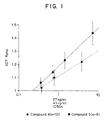
- FIG. 1 This figure shows the effect on the measured activated clotting time (ACT) for various concentrations of two antiplatelet test compounds B ( ⁇ ) and D ( ⁇ ).
- ACT activated clotting time
- ⁇ concentration of two antiplatelet test compounds
- D concentration of two antiplatelet test compounds
- Concentrations are represented as multiples of the IC 50 's for each compound.
- the IC 50 of compound B is 27 ng/ml and the IC 50 compound D is 43 ng/ml.
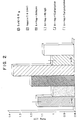
- FIG. 2 This figure shows a comparison of activated clotting time ratios for blood samples with and without antibodies.
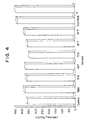
- FIG. 4 This figure shows a comparison of activated clotting times for blood containing the antiplatelet compound B in the presence of various monoclonal antibodies.
- Control represents the clotting time of the blood with no compound B and no anticompound B antibody present.
- Cons Mab is the clotting time for an antibody directed against an irrelevant protein.
- B is the clotting time of blood with only compound B present.
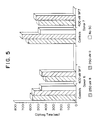
- FIG. 5 Monoclonal antibody 9F7 was tested in whole blood from two different donors for its ability to neutralize antiplatelet compounds B and D.
- This invention provides a method for determining the amount of an antiplatelet compound in the blood of a subject being treated with the compound which comprises calculating the ACT number of the subject's blood containing a reagent which immunoreacts with the antiplatelet compound and comparing the calculated ACT number to a standardized concentration curve thereby determining the amount of antiplatelet compound in the blood of the subject.
- the ACT number is intended to encompass any calculation which would provide a number which can be compared to a standardized curve.
- the ACT number may represent the ratio of a) the activated clotting time of the subject's blood sample with the immunoreactive reagent present in the blood sample to b) the activated clotting time of the subject's blood sample without the immunoactive reagent in the blood.
- the calculated ACT number may represent the difference between the activated clotting times with and without the immunoreactive reagent present in the blood sample.
- the ACT number will be calculated in the same manner for the subject's blood sample as the standardized concentration curve so that they can be quickly compared and the concentration of the compound in the blood determined.
- standardized concentration curve refers to any method of demonstrating the relationship between activated clotting times and blood concentrations of antiplatelet compounds.
- a standardized concentration curve may have the activated clotting times plotted along the y-axis for an anti-platelet compound and the concentration of the compound plotted along the x-axis.
- the plot would most likely be a "curve" as the term is understood by those skilled in the art.
- the "comparison" of the calculated ACT number to the standardized curve in this example would comprise finding the value on the y-axis equal to the calculated ACT number and then finding the point on the "curve” which has the same y-axis value and reading the x-axis value for the point on the curve.
- the x-axis value thus gives the concentration of the compound in the blood.
- the "curve" can also be represented by a table of calculated values.
- these values would be pre-calculated for various ranges and presented in a table which could be read quickly to give a precise value or range for the concentration of the compound in the blood of the subject.
- the standardized curve could also be represented by a mathematical equation which could then be used to calculate concentration values based on measured activated clotting times.
- this equation, or algorithm could be incorporated into a computer program which would automatically calculate blood concentrations based on inputted activated clotting times or ACT numbers. Such a program could also be incorporated into the instruments used to measure activated clotting times.
- the methods of this invention are preferably used to monitor the concentration of antiplatelet compounds such as gpIIb/IIIa antagonists in the blood of a subject.
- the subject is preferably a mammal and, more preferably, a human patient undergoing treatment for such ailments as stroke, myocardial infarction, or unstable angina whether as an admitted patient to a hospital or as an ambulatory "out-patient”.
- the methods can also be used to monitor blood levels of antiplatelet compounds in subjects who are undergoing operations to insert prostheses such as artificial heart valves or PCTA.
- antiplatelet compounds are being developed and some are undergoing clinical testing.
- compounds which could be monitored by the methods of this invention include, but are not limited to, antibody C7E3 (Centocor) ; MK383: N(butylsulfonyl) -0-(4-(4-piperidinyl)butyl)-L-tyrosine, monohydrochloride (Merck, West Point, PA, USA 19486-0004); L-703014: (R) -beta[[[[[ 1-oxo-4(4-piperidinyl)butyl]amino]acetyl]amino]-1H-indole-3-pentanoic acid (Merck); RO 44-9883: (S)-[[1-[2-[[4-(aminoiminomethyl)benzoyl]amino]-3-(4-hydroxyphenyl) -1-oxopropyl]-4-piperidinyl]oxy]acetic acid
- BIBU 104 methyl trans-5-(S)-[[4-[4-(imino[(methoxycarbonyl)amino]methyl]phenyl]phenoxy]. methyl]-2-oxopyrrolidine-3-acetate (Boehringer Ingleheim, Ridgefield, CT, U.S.A. 06877-0368); DMP 728: N-[3-(aminomethyl)benzoyl]-D-2-aminobutanoyl-N2-methyl-L-arginyl-glycyl-L-aspartic acid, cyclic (41 ⁇ 1)-peptide; (DuPont Merck, Wilmington, DE, U.S.A. 19805 and the cyclic heptapeptide IntegrelinTM (COR Therapeutics, So. San Francisco, CA, USA).
- the gpIIb/IIIa antagonist is any of the ⁇ -amino acid derivatives described in U.S. Patent No. 5,344,957.
- compositions having the structure: (ethyl 3S-[[4-[[4-(aminoiminomethyl)phenyl]amino]-1,4-dioxobutyl]amino]-4-pentynoate, monohydrochloride).
- Compound A is the prodrug form of the active gpIIb/IIIa antagonist "compound B” which has the structure: (3S-[[4-[[4-(aminoiminomethyl)phenyl]amino]-1,4-dioxobutyl]amino]-4-pentynoic acid).
- the antiplatelet compound is any of the 1-amidinophenylpyrrolidones, piperidinones or azetinones described in PCT Application Publication No. WO 94/22820. These compounds have the general formula:
- a particularly preferred embodiment of these compounds is "compound C” having the structure: (N-[[[1-[4-(aminoiminomethyl)phenyl] -2-oxo-3S-pyrrolidinyl]amino]carbonyl] ⁇ -alanine,ethyl ester).
- Compound C is the prodrug form of the active gpIIb/IIIa antagonist "compound D” which has the structure: (3-[[[[1-[4-(aminoiminomethyl)phenyl]-2-oxo-pyrrolidin-3S-yl]amino]carbonyl]amino]propanoic acid, trifluoroacetate).
- the anticoagulant heparin is a glycosaminoglycan which is found in human tissues that contain mast cells.
- the heparin administered to subjects is typically extracted from porcine intestinal mucosa or bovine lung.
- the methods of this invention can be used on subjects being treated with an antiplatelet compound, such as those described above, either by itself, in combination with other antiplatelet compounds, or in combination with heparin.
- the invention contemplates adding heparin to the sample prior to the measurement of the activated clotting times so as to enhance the effect of the antiplatelet compound.
- the invention also provides a method for determining the amount of an antiplatelet compound in the blood of a subject being treated with the compound which comprises calculating the ACT number of the subject's blood containing heparin and a reagent which immunoreacts with the antiplatelet compound and comparing the calculated ACT number to a standardized concentration curve thereby determining the amount of antiplatelet compound in the blood of the subject.
- the invention also provides a method for determining the concentration of an antiplatelet compound in the blood of a subject being treated with the compound which comprises:
- blood can be drawn from a subject being treated with an antiplatelet compound into a syringe containing heparin or heparin can be added after drawing the blood.
- the heparin to whole blood ratio should be less than or equal to about 1:10, such that the final concentration of heparin in the blood is in the range of between 1.0 Units/ml and 3.0 Units/ml, preferably about 1.5 Units/ml.
- the amount of immunoreactive reagent that should be used is an amount which is effective to neutralize the action of the antiplatelet compound.
- Methods of determining the effective amount are known to those skilled in the art.
- the effective amount would be an amount which would give a final concentration of immunoreactive reagent in the sample between about 100 nM and 500 nM.
- Activated clotting times can be measured by several instruments presently available.
- the two most widely available instruments are the Hemotech (Metronic, Parker Co. U.S.A. 80134-9061) and the Hemochron (International Techindyne; NJ U.S.A).
- the Hemotech uses a mechanical plunger that is dipped in and out of kaolin-activated blood samples. Coagulation tests are performed using multiple two-channel test cartridges. Each cartridge contains a reagent reservoir and a reaction chamber and is either prewarmed in an external heat block or warmed in the instrument. The blood sample is added to the warmed cartridge.
- the machine When the test is initiated the machine automatically emptys the kaolin reagent into the reaction chamber and begins raising and lowering a plunger in each chamber at predetermined intervals. The action of the plunger mixes the sample with reagent and tests for clot formation. When a clot forms, the downward motion of the plunger is decreased. The decrease in the fall rate of the plunger is detected by a photo-optic system and the formation of a clot is signaled by the machine. Individual clotting times, or the average and differences for the channels, are displayed on the front of the machine.
- the Hemochron is a similar device which uses diatomaceous earth instead of kaolin to activate clotting of the blood. The Hemochron measures clot formation by monitoring a magnet as it moves away from the detector.
- the reagent which immunoreacts with the antiplatelet compound can be either polyclonal antisera or a monoclonal antibody.
- the reagent which immunoreacts with the antiplatelet compound is a monoclonal antibody.
- antibody in its various grammatical forms is used herein to refer to immunoglobulin molecules and immunologically active portions of immunoglobulin molecules, i.e., molecules that contain an antibody combining site or "paratope".
- Antibody as used herein can refer to intact immunoglobulin molecules or any portions of an immunoglobulin molecule that contain the paratope, including those portions known in the art as Fab, Fab', F(ab')2, and F(v).
- immunosorbent in its various forms refers to the specific binding between an antigenic determinant-containing molecule and a molecule containing an antibody combining site such as a whole antibody molecule or a portion thereof.
- antigenic determinant refers to the actual structural portion of the antigen that is immunologically bound by an antibody combining site.
- epipe refers to a non-random binding reaction between a cell surface receptor and a ligand molecule.
- Polyclonal antibodies or "antisera” can be produced by injecting an animal, for example a goat, mouse or rabbit, with the compound of interest producing antibodies to the compounds. When the antibody level or "titer” reaches a sufficient level, antibody-containing serum is drawn from the animal. Antibodies which immunoreact with a compound of interest can be separated by techniques known to those skilled in the art such as by affinity chromatography.
- Monoclonal antibodies can be produced using known methods such as that described by Kohler and Milstein in Nature, Vol. 256; pp. 495-497 (1975), the text of which is incorporated herein by reference.
- a mouse is inoculated with an antigen of interest. This stimulates the proliferation of lymphocytes expressing antibodies against the antigen. Lymphocytes are taken from the spleen and fused to myeloma cells by treatment with a polymer such as polyethylene glycol.
- Hybrid cells are selected by growing in a culture which does not allow for the growth of unfused cells. Individual hybrid cells are further cultured and tested for the presence of antibodies that bind the antigen.
- the antigen of interest may not stimulate the inoculated animal to produce antibodies.
- the antigen may be connected to a carrier molecule to produce a compound large enough to stimulate an immune response in the animal.
- Carrier molecules can comprise a protein, for example bovine serum albumin (BSA) or thyroglobulin.
- BSA bovine serum albumin
- the new compounds, comprising the carrier molecule and antigen of interest, are known as haptens and can be prepared by methods known to those skilled in the art.
- this invention provides an antibody which immunoreacts with any of the antiplatelet compounds described above.
- the antibodies can be purified or unpurified polyclonal antisera or monoclonal antibodies, including immunoreactive fragments thereof.
- This invention also provides hybridomas which produce or "secrete” the monoclonal antibodies.
- this invention also provides a monoclonal antibody, produced by a murine hybridoma cell line, which immunoreacts with an antiplatelet compound and essentially does not immunoreact with heparin.
- kits for performing the methods of the invention.
- the kit would provide an immunoreactive "reagent", i.e., the antibodies defined above, for a specific antiplatelet compound.
- the kit would also include a standardized curve as defined above to compare the calculated ACT numbers and determine the amount of antiplatelet compound in the blood of the subject.
- these curves could otherwise be made available to the public or could be determined by one skilled in the art using routine skills and the teaching of the subject invention.
- the invention also provides a kit for monitoring the concentration of a glycoprotein IIb/IIIa antagonist in a subject being treated with the antagonist comprising a reagent which immunoreacts with the antagonist.
- the reagent is a monoclonal antibody selected from the monoclonal antibodies produced by the hybridomas designated ATCC HB-12081 and ATCC HB-12082.
- Example 1 Method for measuring Activated Clotting Times (ACT) in heparinized human whole blood.
- This example shows how activated clotting times were measured using a Hemochron-8000.
- This method can be used to calculate a standardized concentration curve for various known concentrations of anti-platelet compounds.
- the method can also be used to measure activated clotting times for use in calculating the ACT number for the methods of the invention.
- the activated clotting time was first measured (in seconds) for control whole blood from each donor containing only 1.4 U/ml of heparin. The clotting times were then measured as shown in Example 1 by varying concentrations of antiplatelet compounds B&D in addition to heparin for each donor. The clotting time for a particular concentration of compound was divided by the clotting time of the control without any compound to give the clot ratio. This clot ratio is then plotted against the compound concentration. Figure 1 shows that different concentrations of antiplatelet compounds directly effect the activated clotting time as measured by the method of Example 1.
- Activated clotting times were calculated as described in Example 1 for blood samples containing heparin only (control) and heparin with 5 x 10 -8 M antiplatelet compound B in the absence and presence of irrelevant rabbit antisera, rabbit IgG, and 10 ⁇ l and 5 ⁇ l of a rabbit polyclonal antibody raised to compound B.
- the activated clotting time ratios were calculated as described in Example 2. As can be seen in Figure 2, the presence of antibodies had a distinct effect on the activated clotting time of blood containing the antiplatelet compound. The higher concentration of antibody (10 ⁇ l) completely reversed the effect of compound B on the clotting time.
- a lysine containing derivative of compound B "compound E” (N-[N-[4-[[4-(aminoiminomethyl)phenyl]amino]-1,4-dioxobutyl]-L-aspartyl]-L-lysine,bis (trifluoroacetate),dihydrate), was used as the hapten for production of antibodies.
- This hapten was conjugated to thyroglobulin to provide a carrier protein and injected into mice. The mice were screened for antibodies to compound E conjugated to bovine serum albumin (BSA) and a mouse with the highest titer was chosen to produce clones for monoclonal production.
- BSA bovine serum albumin
- mice were immunized monthly via intraperitoneal injection of 25 ⁇ g of compound E.
- the antigen was administered in Freund's adjuvant and the course of immunizations lasted eight weeks.
- the spleen was excised from a mouse producing high titers of circulating anti-compound E and the spleen was dissociated to liberate splenocytes.
- the splenocytes were fused to mouse myeloma cells (SP2/mil6) obtained from American type Culture Collection, Rockville, MD 20852, USA; ATCC No. CRL-2016. See, J. Immunol. Methods, Vol. 148, pp. 199-207 (1992).
- the cells were fused with polyethylene glycol and grown under selective conditions (HAT medium) that allow only cells resulting from the fusion of a splenocyte with a myeloma cell to proliferate.
- HAT medium selective conditions
- Progeny from the fusion were analyzed for the presence of antibodies by assessing the ability of conditioned media samples to bind immobilized compound E conjugated to bovine serum albumin. Positive progeny were subcloned into soft agar in order to obtain colonies of cells arising from the product of a single fusion event. Ten positive colonies were obtained which produced anti-compound E antibodies. Of the ten, nine were IgGl, K isotype and one (7C4) was IgG2,K isotype. All purified antibodies specifically bound compound B.
- Ascites fluid containing these antibodies were produced in Balb/c mice and the antibodies were purified to homogeneity via Protein G-Sepharose affinity chromatography. Both the ascites and purified IgG were subsequently tested in the aggregation assay (Example 5) and ACT assay (Example 7) for neutralizing activity.
- Example 5 Aggregation of human platelet rich plasma.
- Human platelet rich plasma (“PRP”) was prepared by centrifugation of citrated whole blood at 970 x g for 3.1 minutes at room temperature. PRP was carefully removed from red cells and placed in 50 ml conical tubes. Platelet aggregation was measured as an increase in light transmission in an aggregometer (Bio-Data model PAP-4, Horsham, PA) using ADP (20 ⁇ M) or collagen (4 ⁇ g/ml) as the agonist.
- Antibodies produced according to Example 4 were tested in aggregation for their ability to neutralize the gpIIb/IIIa antagonists compound B, compound D and Merck compound MK383 as a means of screening which ones recognized the antagonists in a useful manner. The levels of antiplatelet compounds used gave at least 50% inhibition of aggregation by themselves. Results are demonstrated in Figure 3.
- Example 4 Activated clotting times were calculated according to the method of Example 1 for a series of the antibodies in the presence of 5 x 10 -8 M compound B. As seen from Figure 4, all of the monoclonal antibodies lowered the clotting time as compared to that with the compound alone. A control monoclonal antibody ("Cont Mab”) against an irrelevant protein had no effect.
- Example 7 Neutralizing activity of monoclonal antibody.
- antibody 9F7 showed a distinct effect on the measured activated clotting times for the two antiplatelet compounds.
Landscapes
- Health & Medical Sciences (AREA)
- Life Sciences & Earth Sciences (AREA)
- Engineering & Computer Science (AREA)
- Chemical & Material Sciences (AREA)
- Molecular Biology (AREA)
- Immunology (AREA)
- Hematology (AREA)
- Urology & Nephrology (AREA)
- Biomedical Technology (AREA)
- Biochemistry (AREA)
- General Health & Medical Sciences (AREA)
- Medicinal Chemistry (AREA)
- Pathology (AREA)
- Analytical Chemistry (AREA)
- Physics & Mathematics (AREA)
- Organic Chemistry (AREA)
- Biotechnology (AREA)
- Cell Biology (AREA)
- General Physics & Mathematics (AREA)
- Microbiology (AREA)
- Food Science & Technology (AREA)
- Genetics & Genomics (AREA)
- Pharmacology & Pharmacy (AREA)
- Bioinformatics & Cheminformatics (AREA)
- Proteomics, Peptides & Aminoacids (AREA)
- Biophysics (AREA)
- Investigating Or Analysing Biological Materials (AREA)
- Peptides Or Proteins (AREA)
- Preparation Of Compounds By Using Micro-Organisms (AREA)
- Micro-Organisms Or Cultivation Processes Thereof (AREA)
- Measuring Or Testing Involving Enzymes Or Micro-Organisms (AREA)
Claims (28)
- Eine Methode zur Bestimmung der Menge einer Antiblutplättchenverbindung im Blut eines Patienten, der mit der Verbindung behandelt wurde, umfassend die Berechnung der ACT-Nummer vom Blut des Patienten, enthaltend ein Reagens, das immunreagiert mit der Antiblutplättchenverbindung und Vergleichen der berechneten ATC-Nummer (aktivierte Gerinnungszeit) gegenüber einer standardisierten Konzentrationskurve, wodurch die Menge an Antiblutplättchenverbindung im Blut des Patienten bestimmt wird.
- Die Methode des Anspruchs 1, worin die Antiblutplättchenverbindung ein gpIIb/IIIa-Antagonist ist.
- Die Methode des Anspruchs 2, worin der gpIIb/IIIa-Antagonist ausgewählt ist aus der Gruppe bestehend aus 3S-[[4-[[4-(Aminoiminomethyl)phenyl]amino]-1,4-dioxobutyl]amino]-4-pentynsäure und (3-[[[[1-[4-(Aminoiminomethyl)phenyl]-2-oxo-pyrrolidin-3S-yl]amino]carbonyl]amino]propansäure-trifluoracetat.
- Die Methode des Anspruchs 1, worin das Reagens, das immunreagiert mit der Antiblutplättchenverbindung, ein monoklonaler Antikörper ist.
- Die Methode des Anspruchs 4, worin der monoklonale Antikörper immunreagiert mit einer Antiblutplättchenverbindung, ausgewählt aus der Gruppe bestehend aus 3S-[[4-[[4-(Aminoiminomethyl)phenyl]amino]-1,4-dioxobutyl]amino]-4-pentynsäure und (3-[[[[1-[4-(Aminoiminomethyl)phenyl]-2-oxo-pyrrolidin-3S-yl]amino]-carbonyl]amino]propansäuretrifluoracetat.
- Die Methode des Anspruchs 4, worin der monoklonale Antikörper ein Antikörper ist, der durch ein Hybridoma produziert wurde, ausgewählt aus der Gruppe bestehend aus den Hybridomas, bezeichnet als ATCC HB-12081 und HB-12082.
- Eine Methode gemäß Anspruch 1, umfassend die Berechnung der ACT-Nummer vom Blut des Patienten, enthaltend Heparin und ein Reagens, das immunreagiert mit der Antiblutplättchenverbindung und Vergleichen der berechneten ATC-Nummer mit einer standardisierten Konzentrationskurve, wodurch die Anzahl von Antiblutplättchenverbindung im Blut des Patienten bestimmt wird.
- Die Methode des Anspruchs 7, worin die Antiblutplättchenverbindung ein gpIIb/IIIa-Antagonist ist.
- Die Methode des Anspruchs 8, worin der gpIIb/IIIa-Antagonist ausgewählt ist aus der Gruppe bestehend aus 3S-[[4-[[4-(Aminoiminomethyl)phenyl]amino]-1,4-dioxobutyl]amino]-4-pentynsäure und (3-[[[[1-[4-(Aminoiminomethyl)phenyl]-2-oxo-pyrrolidin-3S-yl]amino]carbonyl]-amino]propansäure-trifluoracetat.
- Die Methode des Anspruchs 7, worin das Reagens, das immunreagiert mit der Antiblutplättchenverbindung, ein monoklonaler Antikörper ist.
- Die Methode des Anspruchs 10, worin der monoklonale Antikörper immunreagiert mit einer Antiblutplättchenverbindung, ausgewählt aus der Gruppe bestehend aus 3S-[[4-[[4-(Aminoiminomethyl)phenyl]amino]-1,4-dioxobutyl]amino]-4-pentynsäure und (3-[[[[1-[4-(Aminoiminomethyl)phenyl]-2-oxo-pyrrolidin-3S-yl]amino]-carbonyl]amino]propansäure-trifluoracetat.
- Die Methode des Anspruchs 10, worin der monoklonale Antikörper ein Antikörper ist, produziert durch das Hybridoma bezeichnet als ATCC HB-12081.
- Die Methode des Anspruchs 10, worin der monoklonale Antikörper ein Antikörper ist, produziert durch das Hybridoma bezeichnet als ATCC HB-12082.
- Eine Methode gemäß Anspruch 1, umfassend:a) Trennung einer Blutprobe vom Patienten in mindestens zwei Portionen und Zugabe eines Reagens, das immunreagiert mit der Antiblutplättchenverbindung zu mindestens einer der Portionen;b) Messen der aktivierten Gerinnungszeit von mindestens einer Portion der Blutprobe von (a), die nicht das Reagens enthält;c) Messen der aktivierten Gerinnungszeit von mindestens einer Portion der Blutprobe von (a), die das Reagens enthält;d) Berechnen der ACT-Nummer von den Messungen von (b) und (c); unde) Vergleichen der berechneten ACT-Nummer von (d) gegenüber einer standardisierten Konzentrationskurve, wodurch die Konzentration der Antiblutplättchenverbindung im Patienten bestimmt wird.
- Die Methode des Anspruchs 14, worin die Antiblutplättchenverbindung ein gpIIb/IIIa-Antagonist ist.
- Die Methode des Anspruchs 15, worin der gpllb/IIIa-Antagonist ausgewählt ist aus der Gruppe bestehend aus 3S-[[4-[[4-(Aminoiminomethyl)phenyl]amino]-1,4-dioxobutyl]amino]-4-pentynsäure und (3-[[[[1-[4-(Aminoiminomethyl)phenyl]-2-oxo-pyrrolidin-3S-yl]amino]-carbonyl]amino]propansäure-trifluoracetat.
- Die Methode des Anspruchs 14, worin das Reagens, das immunreagiert mit der Antiblutplättchenverbindung, ein monoklonaler Antikörper ist.
- Die Methode des Anspruchs 17, worin der monoklonale Antikörper immunreagiert mit einer Antiblutplättchenverbindung, ausgewählt aus der Gruppe bestehend aus 3S-[[4-[[4-(Aminoiminomethyl)phenyl]amino]-1,4-dioxobutyl]amino]-4-pentynsäure und (3-[[[[1-[4-(Aminoiminomethyl)phenyl]-2-oxo-pyrrolidin-3S-yl]amino]-carbonyl]amino]propansäure-trifluoracetat.
- Die Methode des Anspruchs 17, worin der monoklonale Antikörper ein Antikörper ist, produziert durch das Hybridoma bezeichnet als ATCC HB-12081.
- Die Methode des Anspruchs 17, worin der monoklonale Antikörper ein Antikörper ist, produziert durch das Hybridoma bezeichnet als ATCC HB-12082.
- Ein monoklonaler Antikörper, produziert durch eine Maus-Hybridoma.Zelllinie, worin der Antikörper immunreagiert mit einer Antiblutplättchenverbindung und im wesentlichen nicht immunreagiert mit Heparin, wobei die Antiblutplättchenverbindung ein gpIIb/IIIa-Antagonist ist.
- Der monoklonale Antikörper des Anspruchs 21, worin der gpllb/IIIa-Antagonist ausgewählt ist aus der Gruppe bestehend aus Ethyl-3S-[[4-[[4-(aminoiminomethyl)phenyl]amino]-1,4-dioxobutyl]amino]-4-pentynsäure und (3-[[[[1-[4-(Aminoiminomethyl)phenyl]-2-oxo-pyrrolidin-3S-yl]amino]-carbonyl]amino]propansäure-trifluoracetat.
- Hybridoma-Zelllinie, bezeichnet als ATCC HB-12081.
- Hybridoma-Zelllinie, bezeichnet als ATCC HB-12082.
- Ein monoklonaler Antikörper, produziert durch die Hybridoma-Zelllinie des Anspruchs 23.
- Ein monoklonaler Antikörper, produziert durch die Hybridoma-Zelllinie des Anspruchs 24.
- Ein Kit, enthaltend ein Reagens, welches ein monoklonaler Antikörper ist, ausgewählt aus den monoklonalen Antikörpern, produziert durch die Hybridomas bezeichnet als ATCC HB-12081 und ATCC HB-12082, zur Überwachung der Konzentration eines Glykoprotein-IIb/IIIa-Antagonisten in einem Patienten, der mit dem Antagonisten behandelt wurde, durch Berechnung der ATC-Nummer vom Blut des Patienten, enthaltend ein Reagens, das immunreagiert mit dem Antagonisten, und Vergleichen der berechneten ATC-Nummer gegenüber einer standardisierten Konzentrationskurve.
- Das Kit von Anspruch 27, worin der Glykoprotein-llb/llla-Antagonist ausgewählt ist aus der Gruppe bestehend aus Ethyl-3S-[[4-[[4-(aminoiminomethyl)phenyl]amino]-1,4-dioxobutyl]amino]-4-pentynsäure und (3-[[[[1-[4-(Aminoiminomethyl)phenyl]-2-oxo-pyrrolidin-3S-yl]amino]-carbonyl]amino]propansäure-trifluoracetat.
Applications Claiming Priority (3)
| Application Number | Priority Date | Filing Date | Title |
|---|---|---|---|
| US1771096P | 1996-05-15 | 1996-05-15 | |
| US17710P | 1996-05-15 | ||
| PCT/US1997/007645 WO1997043650A1 (en) | 1996-05-15 | 1997-05-12 | Method and reagent for monitoring blood levels of antiplatelet compounds |
Publications (2)
| Publication Number | Publication Date |
|---|---|
| EP0912901A1 EP0912901A1 (de) | 1999-05-06 |
| EP0912901B1 true EP0912901B1 (de) | 2001-11-07 |
Family
ID=21784121
Family Applications (1)
| Application Number | Title | Priority Date | Filing Date |
|---|---|---|---|
| EP97924591A Expired - Lifetime EP0912901B1 (de) | 1996-05-15 | 1997-05-12 | Verfahren und reagenz zur überwachung des blutspiegels von antiplättchen-verbindungen |
Country Status (11)
| Country | Link |
|---|---|
| US (1) | US6150114A (de) |
| EP (1) | EP0912901B1 (de) |
| JP (1) | JP2000510700A (de) |
| AT (1) | ATE208505T1 (de) |
| AU (1) | AU2997597A (de) |
| CA (1) | CA2253402A1 (de) |
| DE (1) | DE69708102T2 (de) |
| DK (1) | DK0912901T3 (de) |
| ES (1) | ES2166996T3 (de) |
| PT (1) | PT912901E (de) |
| WO (1) | WO1997043650A1 (de) |
Families Citing this family (5)
| Publication number | Priority date | Publication date | Assignee | Title |
|---|---|---|---|---|
| US6221672B1 (en) * | 1996-04-30 | 2001-04-24 | Medtronic, Inc. | Method for determining platelet inhibitor response |
| WO2000029019A1 (en) * | 1998-11-18 | 2000-05-25 | G.D. Searle & Co. | Restoration of platelet aggregation by antibody administration after gpiib/iiia antagonist treatment |
| RU2263109C2 (ru) * | 1999-05-07 | 2005-10-27 | Тексэс Байотекнолоджи Копэрейшн | ПРОИЗВОДНЫЕ КАРБОНОВЫХ КИСЛОТ (ВАРИАНТЫ), ФАРМАЦЕВТИЧЕСКАЯ КОМПОЗИЦИЯ И СПОСОБ СЕЛЕКТИВНОГО ИНГИБИРОВАНИЯ СВЯЗЫВАНИЯ α4β1 ИНТЕГРИНА У МЛЕКОПИТАЮЩЕГО |
| US6972296B2 (en) | 1999-05-07 | 2005-12-06 | Encysive Pharmaceuticals Inc. | Carboxylic acid derivatives that inhibit the binding of integrins to their receptors |
| AU2005243161A1 (en) * | 2004-05-11 | 2005-11-24 | Heptest Laboratories, Inc. | Compositions, kit and one-step method for monitoring compounds having anti-factor Xa and/or anti factor iia activities |
Family Cites Families (7)
| Publication number | Priority date | Publication date | Assignee | Title |
|---|---|---|---|---|
| US4393040A (en) * | 1981-03-24 | 1983-07-12 | Lopapa Institute, Inc. | In-vitro diagnostic method for detection of acetylsalicylic acid ingestion |
| US4871677A (en) * | 1985-02-25 | 1989-10-03 | Hemotec, Inc. | Method of collecting and analyzing a sample of blood when monitoring heparin therapy |
| US5182260A (en) * | 1989-01-27 | 1993-01-26 | Biogen, Inc. | Dna sequences encoding snake venom inhibitors of platelet activation processes for producing those inhibitors and compositions using them |
| EP0520436A3 (en) * | 1991-06-28 | 1993-07-21 | Takeda Chemical Industries, Ltd. | Monoclonal antibody, method of production thereof and use thereof |
| US5239113A (en) * | 1991-10-15 | 1993-08-24 | Monsanto Company | Substituted β-amino acid derivatives useful as platelet aggregation inhibitors and intermediates thereof |
| DE69425431T2 (de) * | 1993-03-31 | 2001-02-08 | G.D. Searle & Co., Chicago | 1-amdinophenyl-pyrrolidone/piperidinone als blutblättchen-aggregations inhibitoren |
| US5662671A (en) * | 1996-07-17 | 1997-09-02 | Embol-X, Inc. | Atherectomy device having trapping and excising means for removal of plaque from the aorta and other arteries |
-
1997
- 1997-05-12 EP EP97924591A patent/EP0912901B1/de not_active Expired - Lifetime
- 1997-05-12 DK DK97924591T patent/DK0912901T3/da active
- 1997-05-12 CA CA002253402A patent/CA2253402A1/en not_active Abandoned
- 1997-05-12 ES ES97924591T patent/ES2166996T3/es not_active Expired - Lifetime
- 1997-05-12 PT PT97924591T patent/PT912901E/pt unknown
- 1997-05-12 DE DE69708102T patent/DE69708102T2/de not_active Expired - Fee Related
- 1997-05-12 WO PCT/US1997/007645 patent/WO1997043650A1/en not_active Ceased
- 1997-05-12 JP JP09540929A patent/JP2000510700A/ja not_active Ceased
- 1997-05-12 AT AT97924591T patent/ATE208505T1/de not_active IP Right Cessation
- 1997-05-12 AU AU29975/97A patent/AU2997597A/en not_active Abandoned
- 1997-05-15 US US08/856,761 patent/US6150114A/en not_active Expired - Fee Related
Also Published As
| Publication number | Publication date |
|---|---|
| JP2000510700A (ja) | 2000-08-22 |
| ATE208505T1 (de) | 2001-11-15 |
| DE69708102D1 (de) | 2001-12-13 |
| CA2253402A1 (en) | 1997-11-20 |
| EP0912901A1 (de) | 1999-05-06 |
| DE69708102T2 (de) | 2002-07-11 |
| WO1997043650A1 (en) | 1997-11-20 |
| AU2997597A (en) | 1997-12-05 |
| US6150114A (en) | 2000-11-21 |
| PT912901E (pt) | 2002-04-29 |
| DK0912901T3 (da) | 2002-02-25 |
| ES2166996T3 (es) | 2002-05-01 |
Similar Documents
| Publication | Publication Date | Title |
|---|---|---|
| US4722903A (en) | Monoclonal antibodies specific to in vivo fragments derived from human fibrinogen, human fiberin I or human fibrin II | |
| RU2137130C1 (ru) | Способ раннего определения, определения тяжести заболевания и оценка процесса лечения сепсиса, а также средства для осуществления указанного способа | |
| EP0795608B1 (de) | Antithrombose mittel und gegen den von willebrand-faktor gerichtete monoklonale antikörper | |
| US9541564B2 (en) | Reagent for assaying D-dimer and kit of reagent for assaying D-dimer | |
| JPS5929622A (ja) | モノクロ−ナル抗体、その製造法およびその用途 | |
| Kageyama et al. | Anti-thrombotic effects and bleeding risk of AJvW-2, a monoclonal antibody against human von Willebrand factor | |
| Arroyave et al. | Detection of complement activation by counterimmunoelectrophoresis (CIE) | |
| US6150114A (en) | Method and reagent for monitoring blood levels of antiplantelet compounds | |
| Harris et al. | Antiphospholipid antibodies and the antiphospholipid syndrome | |
| Katzmann et al. | Monoclonal antibodies to von Willebrand's factor: reactivity with porcine and human antigens | |
| Yakulis et al. | Surface immunoglobulins of circulating lymphocytes in mouse plasmacytoma. I. Characteristics of lymphocyte surface immunoglobulins | |
| US20030118584A1 (en) | Restoration of platelet aggregation by antibody administration after GPIIB/IIIa antagonist treatment | |
| JP3018110B2 (ja) | モノクローナル抗体 | |
| US4851334A (en) | Monoclonal antibodies specific to in vivo fragments derived from human fibrinogen, human fibrin I or human fibrin II | |
| Olsen et al. | Unique antigenic determinants (idiotypes) used as markers in a patient with macroglobulinemia and urticaria: similar idiotypes demonstrated in the skin and on peripheral blood lymphocytes | |
| US5231025A (en) | Anti-platelet monoclonal antibody | |
| KR910008637B1 (ko) | 심근 미오신 중사슬에 대한 단일클론항체 | |
| US4649115A (en) | Monoclonal antibodies to skin cells | |
| US5206086A (en) | Particle-stabilized epitopes for standardization and control of immunoassays | |
| Waller | IgG hydrolysis in abscesses: I. A study of the IgG in human abscess fluid | |
| US20020177172A1 (en) | Restoration of platelet aggregation by antibody administration after gpiib/iiia antagonist treatment | |
| Cucina et al. | Hybridoma monoclonal antibodies to human fetal haemoglobin | |
| DK173362B1 (da) | Monoklonalt antistof, hybridoma, som udskiller antistoffet, cellekulturpræparat indeholdende et sådant hybridoma, diagnosti | |
| JP4318085B2 (ja) | 抗体およびハイブリドーマ、並びにこれらを用いた免疫学的測定法 | |
| JPH03156369A (ja) | ヒトアルブミンの測定方法 |
Legal Events
| Date | Code | Title | Description |
|---|---|---|---|
| PUAI | Public reference made under article 153(3) epc to a published international application that has entered the european phase |
Free format text: ORIGINAL CODE: 0009012 |
|
| 17P | Request for examination filed |
Effective date: 19981104 |
|
| AK | Designated contracting states |
Kind code of ref document: A1 Designated state(s): AT BE CH DE DK ES FI FR GB GR IE IT LI LU NL PT SE |
|
| 17Q | First examination report despatched |
Effective date: 20000119 |
|
| GRAG | Despatch of communication of intention to grant |
Free format text: ORIGINAL CODE: EPIDOS AGRA |
|
| GRAG | Despatch of communication of intention to grant |
Free format text: ORIGINAL CODE: EPIDOS AGRA |
|
| GRAH | Despatch of communication of intention to grant a patent |
Free format text: ORIGINAL CODE: EPIDOS IGRA |
|
| GRAH | Despatch of communication of intention to grant a patent |
Free format text: ORIGINAL CODE: EPIDOS IGRA |
|
| GRAA | (expected) grant |
Free format text: ORIGINAL CODE: 0009210 |
|
| AK | Designated contracting states |
Kind code of ref document: B1 Designated state(s): AT BE CH DE DK ES FI FR GB GR IE IT LI LU NL PT SE |
|
| PG25 | Lapsed in a contracting state [announced via postgrant information from national office to epo] |
Ref country code: GR Free format text: LAPSE BECAUSE OF FAILURE TO SUBMIT A TRANSLATION OF THE DESCRIPTION OR TO PAY THE FEE WITHIN THE PRESCRIBED TIME-LIMIT Effective date: 20011107 |
|
| REF | Corresponds to: |
Ref document number: 208505 Country of ref document: AT Date of ref document: 20011115 Kind code of ref document: T |
|
| REG | Reference to a national code |
Ref country code: CH Ref legal event code: EP |
|
| REG | Reference to a national code |
Ref country code: CH Ref legal event code: NV Representative=s name: DIETLIN & CIE S.A. |
|
| REG | Reference to a national code |
Ref country code: IE Ref legal event code: FG4D |
|
| REF | Corresponds to: |
Ref document number: 69708102 Country of ref document: DE Date of ref document: 20011213 |
|
| REG | Reference to a national code |
Ref country code: GB Ref legal event code: IF02 |
|
| REG | Reference to a national code |
Ref country code: DK Ref legal event code: T3 |
|
| REG | Reference to a national code |
Ref country code: GR Ref legal event code: EP Ref document number: 20010402366 Country of ref document: GR |
|
| REG | Reference to a national code |
Ref country code: PT Ref legal event code: SC4A Free format text: AVAILABILITY OF NATIONAL TRANSLATION Effective date: 20020109 |
|
| REG | Reference to a national code |
Ref country code: ES Ref legal event code: FG2A Ref document number: 2166996 Country of ref document: ES Kind code of ref document: T3 |
|
| PLBE | No opposition filed within time limit |
Free format text: ORIGINAL CODE: 0009261 |
|
| STAA | Information on the status of an ep patent application or granted ep patent |
Free format text: STATUS: NO OPPOSITION FILED WITHIN TIME LIMIT |
|
| 26N | No opposition filed | ||
| PGFP | Annual fee paid to national office [announced via postgrant information from national office to epo] |
Ref country code: AT Payment date: 20030422 Year of fee payment: 7 |
|
| PGFP | Annual fee paid to national office [announced via postgrant information from national office to epo] |
Ref country code: NL Payment date: 20030423 Year of fee payment: 7 |
|
| PGFP | Annual fee paid to national office [announced via postgrant information from national office to epo] |
Ref country code: PT Payment date: 20030424 Year of fee payment: 7 |
|
| PGFP | Annual fee paid to national office [announced via postgrant information from national office to epo] |
Ref country code: GB Payment date: 20030507 Year of fee payment: 7 |
|
| PGFP | Annual fee paid to national office [announced via postgrant information from national office to epo] |
Ref country code: IE Payment date: 20030520 Year of fee payment: 7 Ref country code: FR Payment date: 20030520 Year of fee payment: 7 |
|
| PGFP | Annual fee paid to national office [announced via postgrant information from national office to epo] |
Ref country code: SE Payment date: 20030521 Year of fee payment: 7 |
|
| PGFP | Annual fee paid to national office [announced via postgrant information from national office to epo] |
Ref country code: FI Payment date: 20030522 Year of fee payment: 7 Ref country code: DK Payment date: 20030522 Year of fee payment: 7 Ref country code: CH Payment date: 20030522 Year of fee payment: 7 |
|
| PGFP | Annual fee paid to national office [announced via postgrant information from national office to epo] |
Ref country code: GR Payment date: 20030529 Year of fee payment: 7 |
|
| PGFP | Annual fee paid to national office [announced via postgrant information from national office to epo] |
Ref country code: LU Payment date: 20030605 Year of fee payment: 7 |
|
| PGFP | Annual fee paid to national office [announced via postgrant information from national office to epo] |
Ref country code: ES Payment date: 20030606 Year of fee payment: 7 |
|
| PGFP | Annual fee paid to national office [announced via postgrant information from national office to epo] |
Ref country code: BE Payment date: 20030613 Year of fee payment: 7 |
|
| PGFP | Annual fee paid to national office [announced via postgrant information from national office to epo] |
Ref country code: DE Payment date: 20030626 Year of fee payment: 7 |
|
| PG25 | Lapsed in a contracting state [announced via postgrant information from national office to epo] |
Ref country code: LU Free format text: LAPSE BECAUSE OF NON-PAYMENT OF DUE FEES Effective date: 20040512 Ref country code: IE Free format text: LAPSE BECAUSE OF NON-PAYMENT OF DUE FEES Effective date: 20040512 Ref country code: GB Free format text: LAPSE BECAUSE OF NON-PAYMENT OF DUE FEES Effective date: 20040512 Ref country code: FI Free format text: LAPSE BECAUSE OF NON-PAYMENT OF DUE FEES Effective date: 20040512 Ref country code: AT Free format text: LAPSE BECAUSE OF NON-PAYMENT OF DUE FEES Effective date: 20040512 |
|
| PG25 | Lapsed in a contracting state [announced via postgrant information from national office to epo] |
Ref country code: SE Free format text: LAPSE BECAUSE OF NON-PAYMENT OF DUE FEES Effective date: 20040513 Ref country code: ES Free format text: LAPSE BECAUSE OF NON-PAYMENT OF DUE FEES Effective date: 20040513 |
|
| PG25 | Lapsed in a contracting state [announced via postgrant information from national office to epo] |
Ref country code: LI Free format text: LAPSE BECAUSE OF NON-PAYMENT OF DUE FEES Effective date: 20040531 Ref country code: CH Free format text: LAPSE BECAUSE OF NON-PAYMENT OF DUE FEES Effective date: 20040531 Ref country code: BE Free format text: LAPSE BECAUSE OF NON-PAYMENT OF DUE FEES Effective date: 20040531 |
|
| PG25 | Lapsed in a contracting state [announced via postgrant information from national office to epo] |
Ref country code: DK Free format text: LAPSE BECAUSE OF NON-PAYMENT OF DUE FEES Effective date: 20040601 |
|
| PG25 | Lapsed in a contracting state [announced via postgrant information from national office to epo] |
Ref country code: PT Free format text: LAPSE BECAUSE OF NON-PAYMENT OF DUE FEES Effective date: 20041112 |
|
| BERE | Be: lapsed |
Owner name: G.D. *SEARLE & CO. Effective date: 20040531 |
|
| PG25 | Lapsed in a contracting state [announced via postgrant information from national office to epo] |
Ref country code: NL Free format text: LAPSE BECAUSE OF NON-PAYMENT OF DUE FEES Effective date: 20041201 Ref country code: DE Free format text: LAPSE BECAUSE OF NON-PAYMENT OF DUE FEES Effective date: 20041201 |
|
| EUG | Se: european patent has lapsed | ||
| REG | Reference to a national code |
Ref country code: DK Ref legal event code: EBP |
|
| GBPC | Gb: european patent ceased through non-payment of renewal fee |
Effective date: 20040512 |
|
| REG | Reference to a national code |
Ref country code: CH Ref legal event code: PL |
|
| PG25 | Lapsed in a contracting state [announced via postgrant information from national office to epo] |
Ref country code: FR Free format text: LAPSE BECAUSE OF NON-PAYMENT OF DUE FEES Effective date: 20050131 |
|
| REG | Reference to a national code |
Ref country code: PT Ref legal event code: MM4A Effective date: 20041112 |
|
| NLV4 | Nl: lapsed or anulled due to non-payment of the annual fee |
Effective date: 20041201 |
|
| REG | Reference to a national code |
Ref country code: IE Ref legal event code: MM4A |
|
| REG | Reference to a national code |
Ref country code: FR Ref legal event code: ST |
|
| PG25 | Lapsed in a contracting state [announced via postgrant information from national office to epo] |
Ref country code: IT Free format text: LAPSE BECAUSE OF NON-PAYMENT OF DUE FEES Effective date: 20050512 |
|
| REG | Reference to a national code |
Ref country code: ES Ref legal event code: FD2A Effective date: 20040513 |