EP0904434B1 - Fibre a teinture par colorant acide - Google Patents
Fibre a teinture par colorant acide Download PDFInfo
- Publication number
- EP0904434B1 EP0904434B1 EP97924396A EP97924396A EP0904434B1 EP 0904434 B1 EP0904434 B1 EP 0904434B1 EP 97924396 A EP97924396 A EP 97924396A EP 97924396 A EP97924396 A EP 97924396A EP 0904434 B1 EP0904434 B1 EP 0904434B1
- Authority
- EP
- European Patent Office
- Prior art keywords
- polyamide
- acid
- nitrogen
- fibre according
- polyamide fibre
- Prior art date
- Legal status (The legal status is an assumption and is not a legal conclusion. Google has not performed a legal analysis and makes no representation as to the accuracy of the status listed.)
- Expired - Lifetime
Links
Classifications
-
- C—CHEMISTRY; METALLURGY
- C08—ORGANIC MACROMOLECULAR COMPOUNDS; THEIR PREPARATION OR CHEMICAL WORKING-UP; COMPOSITIONS BASED THEREON
- C08G—MACROMOLECULAR COMPOUNDS OBTAINED OTHERWISE THAN BY REACTIONS ONLY INVOLVING UNSATURATED CARBON-TO-CARBON BONDS
- C08G69/00—Macromolecular compounds obtained by reactions forming a carboxylic amide link in the main chain of the macromolecule
- C08G69/02—Polyamides derived from amino-carboxylic acids or from polyamines and polycarboxylic acids
-
- C—CHEMISTRY; METALLURGY
- C08—ORGANIC MACROMOLECULAR COMPOUNDS; THEIR PREPARATION OR CHEMICAL WORKING-UP; COMPOSITIONS BASED THEREON
- C08G—MACROMOLECULAR COMPOUNDS OBTAINED OTHERWISE THAN BY REACTIONS ONLY INVOLVING UNSATURATED CARBON-TO-CARBON BONDS
- C08G69/00—Macromolecular compounds obtained by reactions forming a carboxylic amide link in the main chain of the macromolecule
- C08G69/02—Polyamides derived from amino-carboxylic acids or from polyamines and polycarboxylic acids
- C08G69/08—Polyamides derived from amino-carboxylic acids or from polyamines and polycarboxylic acids derived from amino-carboxylic acids
-
- C—CHEMISTRY; METALLURGY
- C08—ORGANIC MACROMOLECULAR COMPOUNDS; THEIR PREPARATION OR CHEMICAL WORKING-UP; COMPOSITIONS BASED THEREON
- C08G—MACROMOLECULAR COMPOUNDS OBTAINED OTHERWISE THAN BY REACTIONS ONLY INVOLVING UNSATURATED CARBON-TO-CARBON BONDS
- C08G69/00—Macromolecular compounds obtained by reactions forming a carboxylic amide link in the main chain of the macromolecule
- C08G69/02—Polyamides derived from amino-carboxylic acids or from polyamines and polycarboxylic acids
- C08G69/08—Polyamides derived from amino-carboxylic acids or from polyamines and polycarboxylic acids derived from amino-carboxylic acids
- C08G69/14—Lactams
-
- C—CHEMISTRY; METALLURGY
- C08—ORGANIC MACROMOLECULAR COMPOUNDS; THEIR PREPARATION OR CHEMICAL WORKING-UP; COMPOSITIONS BASED THEREON
- C08G—MACROMOLECULAR COMPOUNDS OBTAINED OTHERWISE THAN BY REACTIONS ONLY INVOLVING UNSATURATED CARBON-TO-CARBON BONDS
- C08G69/00—Macromolecular compounds obtained by reactions forming a carboxylic amide link in the main chain of the macromolecule
- C08G69/02—Polyamides derived from amino-carboxylic acids or from polyamines and polycarboxylic acids
- C08G69/26—Polyamides derived from amino-carboxylic acids or from polyamines and polycarboxylic acids derived from polyamines and polycarboxylic acids
-
- D—TEXTILES; PAPER
- D01—NATURAL OR MAN-MADE THREADS OR FIBRES; SPINNING
- D01F—CHEMICAL FEATURES IN THE MANUFACTURE OF ARTIFICIAL FILAMENTS, THREADS, FIBRES, BRISTLES OR RIBBONS; APPARATUS SPECIALLY ADAPTED FOR THE MANUFACTURE OF CARBON FILAMENTS
- D01F6/00—Monocomponent artificial filaments or the like of synthetic polymers; Manufacture thereof
- D01F6/58—Monocomponent artificial filaments or the like of synthetic polymers; Manufacture thereof from homopolycondensation products
- D01F6/60—Monocomponent artificial filaments or the like of synthetic polymers; Manufacture thereof from homopolycondensation products from polyamides
-
- Y—GENERAL TAGGING OF NEW TECHNOLOGICAL DEVELOPMENTS; GENERAL TAGGING OF CROSS-SECTIONAL TECHNOLOGIES SPANNING OVER SEVERAL SECTIONS OF THE IPC; TECHNICAL SUBJECTS COVERED BY FORMER USPC CROSS-REFERENCE ART COLLECTIONS [XRACs] AND DIGESTS
- Y10—TECHNICAL SUBJECTS COVERED BY FORMER USPC
- Y10T—TECHNICAL SUBJECTS COVERED BY FORMER US CLASSIFICATION
- Y10T428/00—Stock material or miscellaneous articles
- Y10T428/29—Coated or structually defined flake, particle, cell, strand, strand portion, rod, filament, macroscopic fiber or mass thereof
- Y10T428/2913—Rod, strand, filament or fiber
Definitions
- the invention relates to an acid-dyeable polyamide fibre.
- the acid dyeing of polyamide fibres takes place by ion exchange in aqueous medium.
- the dye is dissolved in an aqueous medium and attached to the fibre by means of ion exchange.
- the amino end groups of the polyamide chains serve as ionexchange sites in this process.
- the concentration of amino end groups in the polyamide should be in the order of at least 20 meq/kg, see for instance EP-A-0,462,476.
- the end group concentration in a polyamide fibre is determined by various conditions and imposes very high demands on the reproducibility of the production process of the polyamide and of the fibre. Interferences during the production process of the polyamide and its spinning to form fibre have a great influence on the end group content. As a result, it is difficult to achieve very reproducible colours which are demanded by the consumer.
- the subject of the invention is a polyamide fibre whose affinity for dyestuffs is not influenced or influenced only to a small extent by the production process for the polyamide and the spinning to form fibre.
- a further subject of the invention is a polyamide fibre having a high thermal and light stability.
- the inventors have succeeded in producing such a fibre by starting from a polyamide having a very low amino end group content, i.e. less than 10 meq/kg, preferably less than 5 meq/kg, still more preferably less than 3 meq/kg.
- a polyamide having a very low amino end group content i.e. less than 10 meq/kg, preferably less than 5 meq/kg, still more preferably less than 3 meq/kg.
- the greatest preference is given to a polyamide in which the amino end groups are virtually completely absent.
- Such polyamides having a very low amino end group content are obtainable by using, in the polymerization process for the preparation of the polyamide, a quantity of a monofunctional, difunctional, trifunctional or more highly functional acid as chain stopper or chain extender, which quantity is such that the amino end groups have been removed by reaction with the acid at the desired degree of polymerization.
- Polyamides having a very low amino end group content are known from for instance US-A-3,386,967.
- the fibre obtained from such a polyamide will not be acid-dyeable or will be acid-dyeable only to a very limited extent as a result of the virtual absence of amino end groups.
- Such polyamides can be obtained conventionally by copolymerization of the respective acids with the monomers for the polyamide under the conditions for the polycondensation of diamines and dicarboxylic acids to form polyamides of the AABB type and polycondensation of ⁇ , ⁇ -amino acids or ring-opening polymerization of lactams to form polyamides of the AB type.
- the polyamides are subjected in this process to a postcondensation in the solid phase.
- Organic radicals having a basic nature are, inter alia, radicals of compounds which contain nitrogen or oxygen or both nitrogen and oxygen.
- Suitable compounds are, for example, heterocyclic compounds, preferably with nitrogen in the ring.
- nitrogen-containing heterocyclic compounds are pyridine, piperidine, quinoline, quinoxaline, acridine, indole, phenanthridine, 1,4-diazines, for example 1,4-piperazine, 1,3,5-triazines, for example melamine and melam, furan and proline, which have been substituted, if desired.
- melamine is strongly preferred.
- 1,3,5-triazine-2,4,6-trisaminocarboxylic acid in a polyamide of the AB type.
- the amino acid preferably corresponds to the aminocarboxylic acid from which the units of the polyamide chains have been derived.
- Such polyamides which have a degree of branching of at least 3, are exceptionally suitable for high spinning speeds.
- polyamides of the AABB type use of monocarboxylic or dicarboxylic acids derived from nitrogen-containing heterocyclic compounds is advantageous.
- monocarboxylic or dicarboxylic acids derived from nitrogen-containing heterocyclic compounds are advantageous.
- these are picolinic acid, nicotinic acid, piperidine dicarboxylic acids, 2- or 4-piperidine carboxylic acid, acridine carboxylic acids, for example 9-acridine carboxylic acid and 4,9-acridine dicarboxylic acid, quinoline carboxylic acid, in particular 2-, 4- or 8-quinoline carboxylic acid and quinoxaline carboxylic acid.
- Such acids are available commercially.
- dicarboxylic acids with which polyamides are obtained which lend themselves better to spinning the fibres according to the invention at high speed.
- R H, alkyl or aryl.
- the diamine may also be substituted by 2 or 3 groups.
- carboxylic acids are generally easy to obtain by addition of a nitrile, for example, acrylonitrile to the amine, followed by hydrolysis to form carboxylic acid.
- a nitrile for example, acrylonitrile
- amine-substituted heterocyclic and aromatic compounds in which one or two aliphatic carboxylic acids are substituted at the amine are, for example,
- a requirement of the acids used as comonomer is that they are at least stable under the conditions of the polymerization and the processing to form fibre.
- the stability can be improved by first producing, at lower temperature, an oligomer by reaction with, for example, aminocaproic acid, which is then used in the ring-opening polymerization of caprolactam to form polyamide-6 at higher temperature.
- Polyamide (1) A polyamide-6 was prepared by polymerizing ⁇ -caprolactam in the presence of 2,4,6-trisaminocaproic acid-1,3,5-triazine under the standard conditions for the hydrolytic preparation of aliphatic polyamide-6.
- 3.50 kg of ⁇ -caprolactam, 35.0 g of ⁇ -aminocaproic acid, 70.0 g of water and 58.7 g of trisaminocaproic acid triazine were added together to a 5 l reactor. The temperature was then brought to 275°C in approximately 2 hours and kept there for 8 hours. The temperature was then brought back to 245°C in 1 hour and kept there for 2 hours.
- Polyamide (2) A subsequent polyamide-6 was synthesized in the same way as polyamide 1, with the exception of the postcondensation. However 0.27% by weight of adipic acid was added instead of 2,4,6-triaminocaproic acid 1,3,5-triazine.
- the yarns were carefully cleaned with cold water.
- the dyestuff content of the fibres was determined by dissolving the fibres in concentrated formic acid and determining the light absorption of this solution using a spectrophotometer. In this determination, the absorption value was kept between 0.2 and 1.2 by adequate dilution. Any titanium oxide present was filtered off.
- the melt viscosity was determined using DMA (dynamic mechanical analysis) going from high to low frequency using a Rheometrics 800 apparatus at 240°C. ⁇ o was determined by extrapolation to the frequency zero.
- Fibres were spun from the various polyamides under the conditions specified above and cold-stretched or hot-stretched, respectively. The relative viscosity and the amino end groups content of the polyamide were determined before and after spinning. The affinity for acidic dyestuffs of the fibres was determined as specified above. The results are shown in Table II. Polyamide ⁇ rel [NH 2 ] meq/kg Fibre dyestuff absorption before after before after mg/g polyamide mg/m eq NH 2 spinning spinning Akulon VMT 1203 2.82 2.93 47 43 2.60 0.060 (1) 2.69 2.69 - - 2.11 0.054 (2) 2.68 2.78 27 23 1.43 0.062
- the fibre according to the invention can be spun much more reproducibly than, inter alia, the fibre from polyamide (2) which is virtually identical to the polyamide according to Example 5b of WO 93/25736 which is spun to produce fibre in Example 12.
- Only the polyamide in the fibre according to the invention has a relative viscosity which does not differ from that of the initial polyamide, which means that, during the spinning process, no perceptible alterations occur in the polyamide, as a result of which a very reproducible fibre is obtained, and that interferences in the spinning process will not result in altered chemical properties of the fibre.
- the excellent thermal stability is also apparent from the dynamic melt viscosity measurement in which the polyamide (1), showed virtually no change over a period of 10 minutes, whereas for polyamide (2) and the Akulon VMT 1203 a decrease, resp. an increase of melt viscosity was observed.
- the fibre according to the invention very surprisingly has an affinity for dyestuffs which is comparable to that of fibres which contain an appreciable content of amino end groups.
- a fibre can nevertheless be spun with a branched polyamide such as polyamide 1.
- the mechanical properties of the fibre obtained are comparable to those of a fibre composed of a linear polyamide of the same relative viscosity.
- the modulus of elasticity even appears to be approximately 25% higher.
- a further advantage of this fibre containing branched polyamide is that it can be obtained with an appreciably lower spinning filter pressure with the same spinning speed as a fibre composed of linear polyamide having the same relative viscosity. Spinning speed may be further increased without fibre rupture than for a comparable unbranched polyamide. Additional benefit can probably be achieved in relation to the mechanical properties by optimizing the spinning conditions.
Landscapes
- Chemical & Material Sciences (AREA)
- Chemical Kinetics & Catalysis (AREA)
- Health & Medical Sciences (AREA)
- Medicinal Chemistry (AREA)
- Polymers & Plastics (AREA)
- Organic Chemistry (AREA)
- General Chemical & Material Sciences (AREA)
- Engineering & Computer Science (AREA)
- Textile Engineering (AREA)
- Polyamides (AREA)
- Artificial Filaments (AREA)
- Coloring (AREA)
- Treatments For Attaching Organic Compounds To Fibrous Goods (AREA)
Claims (8)
- Fibre polyamide qu'on peut obtenir en filant un polyamide ayant un taux de groupes amino terminaux de moins de 10 méq/kg dans laquelle le polyamide ayant un taux de groupes amino terminaux de moins de 10 méq/kg est constitué de motifs de répétition produits par réaction entre au moins une diamine et au moins un acide dicarboxylique (AABB) ou par polymérisation par ouverture de cycle d'un lactame (AB) ou par condensation d'un aminoacide (AB), caractérisée en ce que, dans chaque chaíne polyamide dans le cas de motifs AABB, est présent dans la chaíne polyamide au moins un motif obtenu à partir d'un acide dibasique ayant la formule
- Fibre polyamide selon la revendication 1, caractérisée en ce que, Z est
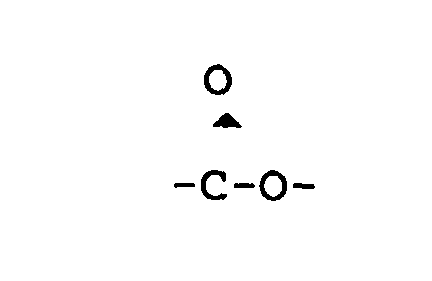
- Fibre polyamide selon la revendication 1, caractérisée en ce que, X est un radical d'un composé organique contenant de l'azote et/ou contenant de l'oxygène.
- Fibre polyamide selon la revendication 3, caractérisée en ce que, X est un radical d'un composé hétérocyclique contenant de l'azote et/ou contenant de l'oxygène.
- Fibre polyamide selon la revendication 4, caractérisée en ce que, X est un radical d'un composé hétérocyclique contenant de l'azote.
- Fibre polyamide selon la revendication 5, caractérisée en ce que, le composé hétérocyclique contenant de l'azote est choisi parmi la pyridine, la pipéridine, la quinoléine, la quinoxaline, l'acridine, l'indole, la phénanthridine, les 1-4-diazines, les 1,3,5-triazines, le furane et la proline, qui ont été substitués, si nécessaire.
- Fibre polyamide selon la revendication 6, caractérisée en ce que, le composé hétérocyclique contenant de l'azote est la mélamine.
- Fibre polyamide selon la revendication 6, caractérisée en ce qu'au moins un motif par chaíne polyamide est choisi parmi l'acide picolinique, les acides piridine-dicarboxylique, l'acide 2- ou 4-pipéridinecarboxylique, les acides acridinecarboxyliques, l'acide 2-, 4- ou 8-quinoléinecarboxylique et les acides quinoxalinecarboxyliques.
Applications Claiming Priority (3)
| Application Number | Priority Date | Filing Date | Title |
|---|---|---|---|
| BE9600513A BE1010331A3 (nl) | 1996-06-06 | 1996-06-06 | Zuur aanverfbare vezel. |
| BE9600513 | 1996-06-06 | ||
| PCT/NL1997/000323 WO1997046746A1 (fr) | 1996-06-06 | 1997-06-06 | Fibre a teinture par colorant acide |
Publications (2)
| Publication Number | Publication Date |
|---|---|
| EP0904434A1 EP0904434A1 (fr) | 1999-03-31 |
| EP0904434B1 true EP0904434B1 (fr) | 2000-09-20 |
Family
ID=3889788
Family Applications (1)
| Application Number | Title | Priority Date | Filing Date |
|---|---|---|---|
| EP97924396A Expired - Lifetime EP0904434B1 (fr) | 1996-06-06 | 1997-06-06 | Fibre a teinture par colorant acide |
Country Status (23)
| Country | Link |
|---|---|
| US (1) | US6074749A (fr) |
| EP (1) | EP0904434B1 (fr) |
| JP (1) | JP2000511599A (fr) |
| KR (1) | KR20000016466A (fr) |
| CN (1) | CN1080328C (fr) |
| AT (1) | ATE196515T1 (fr) |
| AU (1) | AU2982297A (fr) |
| BE (1) | BE1010331A3 (fr) |
| BG (1) | BG62702B1 (fr) |
| BR (1) | BR9709544A (fr) |
| CA (1) | CA2257244A1 (fr) |
| CZ (1) | CZ398898A3 (fr) |
| DE (1) | DE69703154T2 (fr) |
| EA (1) | EA000994B1 (fr) |
| ES (1) | ES2152674T3 (fr) |
| HU (1) | HUP0001569A3 (fr) |
| PL (1) | PL330291A1 (fr) |
| RO (1) | RO119205B1 (fr) |
| SK (1) | SK281589B6 (fr) |
| TR (1) | TR199802526T2 (fr) |
| TW (1) | TW340856B (fr) |
| WO (1) | WO1997046746A1 (fr) |
| YU (1) | YU55398A (fr) |
Families Citing this family (3)
| Publication number | Priority date | Publication date | Assignee | Title |
|---|---|---|---|---|
| DE10247470A1 (de) * | 2002-10-11 | 2004-04-29 | Ems-Chemie Ag | Abbaustabiles Polyamid und Verfahren zu dessen Herstellung |
| US20090198039A1 (en) * | 2005-11-17 | 2009-08-06 | Berg Van Den Hendrik J | Process for the preparation of a polymer having improved dyeability |
| TW202235710A (zh) * | 2021-01-20 | 2022-09-16 | 大陸商東麗纖維研究所(中國)有限公司 | 聚醯胺複合加工絲 |
Family Cites Families (12)
| Publication number | Priority date | Publication date | Assignee | Title |
|---|---|---|---|---|
| US2904536A (en) * | 1955-06-29 | 1959-09-15 | Du Pont | Polyamide containing interlinear piperazine units |
| NL302296A (fr) * | 1962-12-21 | |||
| US3296214A (en) * | 1963-10-10 | 1967-01-03 | Monsanto Co | Piperidine-nu-acetic acid modified polyamides of improved dyeabilty |
| US3386967A (en) * | 1965-01-19 | 1968-06-04 | Allied Chem | Polycaproamide having excess number of carboxyl end groups over amino end groups |
| US3890286A (en) * | 1973-12-20 | 1975-06-17 | Allied Chem | Production of polycaproamide fiber |
| US4075271A (en) * | 1975-09-10 | 1978-02-21 | Allied Chemical Corporation | Production of polycaproamide fiber wherein polycaproamide is reacted with phenylene bis-(3-butane-1,2-dicarboxylic anhydride) |
| US4061621A (en) * | 1975-09-10 | 1977-12-06 | Allied Chemical Corporation | Production of polycaproamide fiber from polycaproamide reacted with cyclic tetracarboxylic acid dianhydride |
| DE3920029C2 (de) * | 1988-06-30 | 1999-05-20 | Clariant Finance Bvi Ltd | Farbstoffe zum Färben von Kunststoffen |
| DE4019780A1 (de) * | 1990-06-21 | 1992-01-02 | Basf Ag | Verfahren zur kontinuierlichen herstellung von polycaprolactam mit geregeltem aminoendgruppengehalt |
| DE4218719A1 (de) * | 1992-06-06 | 1993-12-09 | Basf Ag | Schnellgesponnene Fäden auf der Basis von Polycaprolactam und Verfahren zu ihrer Herstellung |
| EP0682057A1 (fr) * | 1994-05-09 | 1995-11-15 | Dsm N.V. | Procédé d'amélioration des caractéristiques de mise en oeuvre de compositions polymères, compositions ainsi obtenues |
| US5851238A (en) * | 1996-07-31 | 1998-12-22 | Basf Corporation | Photochemically stabilized polyamide compositions |
-
1996
- 1996-06-06 BE BE9600513A patent/BE1010331A3/nl not_active IP Right Cessation
-
1997
- 1997-06-06 SK SK1670-98A patent/SK281589B6/sk unknown
- 1997-06-06 AT AT97924396T patent/ATE196515T1/de not_active IP Right Cessation
- 1997-06-06 PL PL97330291A patent/PL330291A1/xx unknown
- 1997-06-06 KR KR1019980710050A patent/KR20000016466A/ko not_active Abandoned
- 1997-06-06 EA EA199801082A patent/EA000994B1/ru not_active IP Right Cessation
- 1997-06-06 BR BR9709544A patent/BR9709544A/pt unknown
- 1997-06-06 RO RO98-01653A patent/RO119205B1/ro unknown
- 1997-06-06 DE DE69703154T patent/DE69703154T2/de not_active Expired - Fee Related
- 1997-06-06 CA CA002257244A patent/CA2257244A1/fr not_active Abandoned
- 1997-06-06 CZ CZ983988A patent/CZ398898A3/cs unknown
- 1997-06-06 WO PCT/NL1997/000323 patent/WO1997046746A1/fr not_active Ceased
- 1997-06-06 JP JP10500446A patent/JP2000511599A/ja active Pending
- 1997-06-06 YU YU55398A patent/YU55398A/sh unknown
- 1997-06-06 HU HU0001569A patent/HUP0001569A3/hu unknown
- 1997-06-06 CN CN97197095A patent/CN1080328C/zh not_active Expired - Fee Related
- 1997-06-06 AU AU29822/97A patent/AU2982297A/en not_active Abandoned
- 1997-06-06 ES ES97924396T patent/ES2152674T3/es not_active Expired - Lifetime
- 1997-06-06 EP EP97924396A patent/EP0904434B1/fr not_active Expired - Lifetime
- 1997-06-06 TR TR1998/02526T patent/TR199802526T2/xx unknown
- 1997-06-18 TW TW086108531A patent/TW340856B/zh active
-
1998
- 1998-12-03 BG BG102986A patent/BG62702B1/bg unknown
- 1998-12-04 US US09/205,175 patent/US6074749A/en not_active Expired - Fee Related
Also Published As
| Publication number | Publication date |
|---|---|
| DE69703154D1 (de) | 2000-10-26 |
| RO119205B1 (ro) | 2004-05-28 |
| CA2257244A1 (fr) | 1997-12-11 |
| CN1227614A (zh) | 1999-09-01 |
| YU55398A (sh) | 2000-03-21 |
| JP2000511599A (ja) | 2000-09-05 |
| WO1997046746A1 (fr) | 1997-12-11 |
| CZ398898A3 (cs) | 1999-06-16 |
| EA000994B1 (ru) | 2000-08-28 |
| EP0904434A1 (fr) | 1999-03-31 |
| EA199801082A1 (ru) | 1999-04-29 |
| BG62702B1 (bg) | 2000-05-31 |
| ATE196515T1 (de) | 2000-10-15 |
| PL330291A1 (en) | 1999-05-10 |
| DE69703154T2 (de) | 2001-05-17 |
| AU2982297A (en) | 1998-01-05 |
| SK281589B6 (sk) | 2001-05-10 |
| BR9709544A (pt) | 1999-08-10 |
| SK167098A3 (en) | 1999-07-12 |
| TW340856B (en) | 1998-09-21 |
| HUP0001569A2 (hu) | 2000-09-28 |
| CN1080328C (zh) | 2002-03-06 |
| KR20000016466A (ko) | 2000-03-25 |
| ES2152674T3 (es) | 2001-02-01 |
| BG102986A (en) | 1999-08-31 |
| TR199802526T2 (xx) | 1999-03-22 |
| BE1010331A3 (nl) | 1998-06-02 |
| US6074749A (en) | 2000-06-13 |
| HUP0001569A3 (en) | 2003-02-28 |
Similar Documents
| Publication | Publication Date | Title |
|---|---|---|
| US6150496A (en) | Inherently light-and-heat-stabilized polyamide and method of making the same | |
| EP0843696B1 (fr) | Substrat polyamide photostabilise et procede de fabrication | |
| EP0904435B1 (fr) | Fibres en polyamide fortement ramifiees | |
| US6812323B1 (en) | Inherently light- and heat-stabilized polyamides with improved wet fastness | |
| WO1999046323A1 (fr) | Polyamide photostable et thermostable | |
| US6074749A (en) | Acid dyeable fibre | |
| IL157427A (en) | Process for manufacturing polyamide-based yarns, fibres and filaments | |
| US6051312A (en) | Fibers of strongly branched polyamide | |
| KR920000207B1 (ko) | 염착성이 우수한 폴리아미드 섬유의 제조방법 | |
| DE68907418T2 (de) | Molekulargewicht-Regulator für die Polymerisation von Lactamen zu Polyamiden. | |
| JPH115839A (ja) | 繊維用ポリアミドおよびそれを用いてなる繊維ならびに着色繊維の製造方法 | |
| MXPA00005085A (en) | Inherently light- and heat-stabilized polyamide and method of making the same |
Legal Events
| Date | Code | Title | Description |
|---|---|---|---|
| PUAI | Public reference made under article 153(3) epc to a published international application that has entered the european phase |
Free format text: ORIGINAL CODE: 0009012 |
|
| 17P | Request for examination filed |
Effective date: 19981117 |
|
| AK | Designated contracting states |
Kind code of ref document: A1 Designated state(s): AT BE CH DE ES FR GB GR IE IT LI LU NL PT SE |
|
| AX | Request for extension of the european patent |
Free format text: LT PAYMENT 981117;LV PAYMENT 981117;SI PAYMENT 981117 |
|
| GRAG | Despatch of communication of intention to grant |
Free format text: ORIGINAL CODE: EPIDOS AGRA |
|
| 17Q | First examination report despatched |
Effective date: 19991222 |
|
| GRAG | Despatch of communication of intention to grant |
Free format text: ORIGINAL CODE: EPIDOS AGRA |
|
| GRAH | Despatch of communication of intention to grant a patent |
Free format text: ORIGINAL CODE: EPIDOS IGRA |
|
| GRAH | Despatch of communication of intention to grant a patent |
Free format text: ORIGINAL CODE: EPIDOS IGRA |
|
| GRAA | (expected) grant |
Free format text: ORIGINAL CODE: 0009210 |
|
| AK | Designated contracting states |
Kind code of ref document: B1 Designated state(s): AT BE CH DE ES FR GB GR IE IT LI LU NL PT SE |
|
| AX | Request for extension of the european patent |
Free format text: LT PAYMENT 19981117;LV PAYMENT 19981117;SI PAYMENT 19981117 |
|
| PG25 | Lapsed in a contracting state [announced via postgrant information from national office to epo] |
Ref country code: LI Free format text: LAPSE BECAUSE OF FAILURE TO SUBMIT A TRANSLATION OF THE DESCRIPTION OR TO PAY THE FEE WITHIN THE PRESCRIBED TIME-LIMIT Effective date: 20000920 Ref country code: CH Free format text: LAPSE BECAUSE OF FAILURE TO SUBMIT A TRANSLATION OF THE DESCRIPTION OR TO PAY THE FEE WITHIN THE PRESCRIBED TIME-LIMIT Effective date: 20000920 Ref country code: AT Free format text: LAPSE BECAUSE OF FAILURE TO SUBMIT A TRANSLATION OF THE DESCRIPTION OR TO PAY THE FEE WITHIN THE PRESCRIBED TIME-LIMIT Effective date: 20000920 |
|
| REF | Corresponds to: |
Ref document number: 196515 Country of ref document: AT Date of ref document: 20001015 Kind code of ref document: T |
|
| REG | Reference to a national code |
Ref country code: CH Ref legal event code: EP |
|
| REF | Corresponds to: |
Ref document number: 69703154 Country of ref document: DE Date of ref document: 20001026 |
|
| REG | Reference to a national code |
Ref country code: IE Ref legal event code: FG4D |
|
| ITF | It: translation for a ep patent filed | ||
| PG25 | Lapsed in a contracting state [announced via postgrant information from national office to epo] |
Ref country code: SE Free format text: LAPSE BECAUSE OF FAILURE TO SUBMIT A TRANSLATION OF THE DESCRIPTION OR TO PAY THE FEE WITHIN THE PRESCRIBED TIME-LIMIT Effective date: 20001220 Ref country code: PT Free format text: LAPSE BECAUSE OF FAILURE TO SUBMIT A TRANSLATION OF THE DESCRIPTION OR TO PAY THE FEE WITHIN THE PRESCRIBED TIME-LIMIT Effective date: 20001220 |
|
| PG25 | Lapsed in a contracting state [announced via postgrant information from national office to epo] |
Ref country code: GR Free format text: LAPSE BECAUSE OF FAILURE TO SUBMIT A TRANSLATION OF THE DESCRIPTION OR TO PAY THE FEE WITHIN THE PRESCRIBED TIME-LIMIT Effective date: 20001222 |
|
| ET | Fr: translation filed | ||
| REG | Reference to a national code |
Ref country code: ES Ref legal event code: FG2A Ref document number: 2152674 Country of ref document: ES Kind code of ref document: T3 |
|
| REG | Reference to a national code |
Ref country code: CH Ref legal event code: PL |
|
| PG25 | Lapsed in a contracting state [announced via postgrant information from national office to epo] |
Ref country code: LU Free format text: LAPSE BECAUSE OF NON-PAYMENT OF DUE FEES Effective date: 20010606 Ref country code: IE Free format text: LAPSE BECAUSE OF NON-PAYMENT OF DUE FEES Effective date: 20010606 |
|
| PLBE | No opposition filed within time limit |
Free format text: ORIGINAL CODE: 0009261 |
|
| STAA | Information on the status of an ep patent application or granted ep patent |
Free format text: STATUS: NO OPPOSITION FILED WITHIN TIME LIMIT |
|
| 26N | No opposition filed | ||
| REG | Reference to a national code |
Ref country code: GB Ref legal event code: IF02 |
|
| PGFP | Annual fee paid to national office [announced via postgrant information from national office to epo] |
Ref country code: FR Payment date: 20020517 Year of fee payment: 6 |
|
| PGFP | Annual fee paid to national office [announced via postgrant information from national office to epo] |
Ref country code: GB Payment date: 20020529 Year of fee payment: 6 |
|
| PGFP | Annual fee paid to national office [announced via postgrant information from national office to epo] |
Ref country code: DE Payment date: 20020620 Year of fee payment: 6 |
|
| PGFP | Annual fee paid to national office [announced via postgrant information from national office to epo] |
Ref country code: ES Payment date: 20020710 Year of fee payment: 6 |
|
| PGFP | Annual fee paid to national office [announced via postgrant information from national office to epo] |
Ref country code: BE Payment date: 20020711 Year of fee payment: 6 |
|
| PGFP | Annual fee paid to national office [announced via postgrant information from national office to epo] |
Ref country code: NL Payment date: 20030522 Year of fee payment: 7 |
|
| PG25 | Lapsed in a contracting state [announced via postgrant information from national office to epo] |
Ref country code: GB Free format text: LAPSE BECAUSE OF NON-PAYMENT OF DUE FEES Effective date: 20030606 |
|
| PG25 | Lapsed in a contracting state [announced via postgrant information from national office to epo] |
Ref country code: ES Free format text: LAPSE BECAUSE OF NON-PAYMENT OF DUE FEES Effective date: 20030607 |
|
| PG25 | Lapsed in a contracting state [announced via postgrant information from national office to epo] |
Ref country code: BE Free format text: LAPSE BECAUSE OF NON-PAYMENT OF DUE FEES Effective date: 20030630 |
|
| BERE | Be: lapsed |
Owner name: *DSM N.V. Effective date: 20030630 |
|
| PG25 | Lapsed in a contracting state [announced via postgrant information from national office to epo] |
Ref country code: DE Free format text: LAPSE BECAUSE OF NON-PAYMENT OF DUE FEES Effective date: 20040101 |
|
| GBPC | Gb: european patent ceased through non-payment of renewal fee |
Effective date: 20030606 |
|
| PG25 | Lapsed in a contracting state [announced via postgrant information from national office to epo] |
Ref country code: FR Free format text: LAPSE BECAUSE OF NON-PAYMENT OF DUE FEES Effective date: 20040227 |
|
| REG | Reference to a national code |
Ref country code: FR Ref legal event code: ST |
|
| REG | Reference to a national code |
Ref country code: ES Ref legal event code: FD2A Effective date: 20030607 |
|
| PG25 | Lapsed in a contracting state [announced via postgrant information from national office to epo] |
Ref country code: NL Free format text: LAPSE BECAUSE OF NON-PAYMENT OF DUE FEES Effective date: 20050101 |
|
| NLV4 | Nl: lapsed or anulled due to non-payment of the annual fee |
Effective date: 20050101 |
|
| PG25 | Lapsed in a contracting state [announced via postgrant information from national office to epo] |
Ref country code: IT Free format text: LAPSE BECAUSE OF NON-PAYMENT OF DUE FEES Effective date: 20050606 |