EP0904070B1 - Verwendung von buckminsterfulleren zur behandlung neurotoxischer verletzungen - Google Patents
Verwendung von buckminsterfulleren zur behandlung neurotoxischer verletzungen Download PDFInfo
- Publication number
- EP0904070B1 EP0904070B1 EP97927037A EP97927037A EP0904070B1 EP 0904070 B1 EP0904070 B1 EP 0904070B1 EP 97927037 A EP97927037 A EP 97927037A EP 97927037 A EP97927037 A EP 97927037A EP 0904070 B1 EP0904070 B1 EP 0904070B1
- Authority
- EP
- European Patent Office
- Prior art keywords
- cooh
- nmda
- neuronal
- injury
- buckminsterfullerene
- Prior art date
- Legal status (The legal status is an assumption and is not a legal conclusion. Google has not performed a legal analysis and makes no representation as to the accuracy of the status listed.)
- Expired - Lifetime
Links
Images




Classifications
-
- A—HUMAN NECESSITIES
- A61—MEDICAL OR VETERINARY SCIENCE; HYGIENE
- A61K—PREPARATIONS FOR MEDICAL, DENTAL OR TOILETRY PURPOSES
- A61K31/00—Medicinal preparations containing organic active ingredients
- A61K31/185—Acids; Anhydrides, halides or salts thereof, e.g. sulfur acids, imidic, hydrazonic or hydroximic acids
- A61K31/19—Carboxylic acids, e.g. valproic acid
- A61K31/194—Carboxylic acids, e.g. valproic acid having two or more carboxyl groups, e.g. succinic, maleic or phthalic acid
-
- A—HUMAN NECESSITIES
- A61—MEDICAL OR VETERINARY SCIENCE; HYGIENE
- A61K—PREPARATIONS FOR MEDICAL, DENTAL OR TOILETRY PURPOSES
- A61K31/00—Medicinal preparations containing organic active ingredients
- A61K31/185—Acids; Anhydrides, halides or salts thereof, e.g. sulfur acids, imidic, hydrazonic or hydroximic acids
- A61K31/19—Carboxylic acids, e.g. valproic acid
Definitions
- the invention relates to carboxylated derivatives of the formula C 60 (C(COOH) 2 ) n wherein C 60 is buckminsterfullerene and n is 1 to 4.
- Buckminsterfullerene, C 60 is a carbon sphere with alternating 5- and 6-carbon rings; the 30 carbon double bonds react easily with oxygen radicals (Science 259, 1183-1185, 1991) and so can act as a free radical scavenger.
- Native C 60 is soluble only in a limited number of solvents, such as toluene or benzene.
- the compounds useful in accordance with the present invention are water soluble carboxyfullerenes, i.e., buckminsterfullerene which has been mono- or multipli-derivativized with malonic acid, or the pharmaceutically acceptable malonic acid salts, esters and amides, where the methylene group of the malonic acid is bonded to two carbons of the fullerene sphere.
- Glutamate the main excitatory neurotransmitter in the central nervous system, is necessary for many normal neurological functions, including learning and memory. Overactivation of glutamate receptors, however, and resulting excitotoxic neuronal injury, has been implicated in the pathogenesis of neuronal loss in the central nervous system (CNS) following several acute insults, including hypoxia/ischemia (Science 226, 850-852, 1984; Trends Pharmacol. Sci., 11 , 379-387; Ann. Neurol. 19 , 105-111, 1986; Science 247, 571-574, 1990); trauma (Ann. Neurol.
- Oxidative stress caused by reactive oxygen species, represents another injury mechanism implicated in many of the same acute and chronic diseases (Stroke 9 , 445-447, 1978; Proq. Brain Res. 63 , 227-235, 1985; J. Neurosurq. 64 , 803-807, 1986; Cerebrovas. Brain Mezab. Rev. 1 , 165-211, 1989; Free. Radic. Biol. Med. 6 , 289-301, 1989; J. Neurochem. 59 , 1609-1623, 1992).
- Reactive oxygen species e.g., superoxide radical
- glutamate excitotoxicity and oxidative stress may be interlinked; reactive oxygen species formation may occur as a direct consequence of glutamate receptor overstimulation (Soc. Neurosci. Abs. 18 , 756, 1992; Nature 364, 535-537, 1993) and thus mediate a component of glutamate neurotoxicity (Neuron. 1 , 623-634, 1988; Science 262 , 689-694, 1993).
- Excitotoxicity in turn, can be reduced by free radical scavengers, including Cu, Zn-superoxide dismutase and catalase (J. Neurochem.
- Free radical scavengers are neuroprotective in in vitro as well as in vivo models of traumatic or hypoxic/ischemic CNS injury.
- N-methyl-D-aspartate and AMPA/kainate receptor antagonists are neuroprotective in oxygen-glucose deprivation injury in vitro (Neuron 1 , 623-634, 1988; J. Neurosci. 13 , 3510-3524, 1993), and reduce loss of brain tissue in animal models of ischemia (Science 226 , 850-852, 1984; Science 247, 571-574, 1990).
- Free radical scavengers also protect against excitotoxic neuronal death in vitro (J. Neurochem.
- apoptosis also contributes to cell death in certain neurologic disease states. For example, apoptosis would mediate delayed neuronal degeneration days after ischemia-reperfusion (J. Neurochem. 61 , 1973-1976, 1994; Neuroreport 5 , 493-496, 1994), and would be a factor in neuronal cell death in certain neurodegenerative diseases (Neurosci. Lett. 170, 191-194, 1994). Oxidative stress due to free radical oxygen species would be one of the insults that can trigger apoptosis (Nature 356, 397-400, 1992; Neurotoxicol. 15 , 81-91, 1994; J. Natl. Cancer Inst.
- Bcl-2 appears to act on a free radical scavenging pathway to mediate its cytoprotective effects against apoptosis (Cell. 75 , 241-251, 1993).
- the main object of the present invention is the use of carboxylated derivatives of C 60 (C(COOH) 2 ) n , wherein C 60 is buckminsterfullerene and n is an integer from 1 to 4, for the manufacture of a medicament for the treatment or prophylaxis of diseases caused by free radicals, especially when the free radicals are released as a result of glutamate neurotoxicity.
- Treating neurotoxic injury within the meaning of the present invention means reducing the extent of damage to central neurons surrounding a central neuron which has released glutamate due to its having been damaged by a neurotoxic event.
- Neurotoxic events include acute neurological insults such as hypoxia/ischemia, such as occurs during stroke, hypoglycemia, epilepsy or trauma. Neurotoxic events may also be chronic neuronal damage caused by neurodegenerative disorders such as Huntington's disease, Alzheimer's disease, amyotropic lateral sclerosis ("ALS”), and the neurodegenerative effects of AIDS.
- ALS amyotropic lateral sclerosis
- a further object of the present invention is the use of buckminsterfullerene for the manufacture of a medicament for inhibiting neurotoxic injury in patients where said injury is caused by the metabolism of arachidonic acid released by neurons due to stimulation by glutamate of NMDA receptors of said neurons.
- AA Arachidonic acid
- NMDA receptor stimulation by glutamate (the glutamate having been released by neurons which were damaged by the neurotoxic event, itself).
- the excessive Ca 2+ influx activates phospholipase A 2 , a calcium-dependent enzyme which breaks down cell membranes liberating the AA.
- the metabolism of AA by endogenous lipoxygenases and cyclooxygenases leads to the production of the oxygen free radicals that trigger peroxidative degradation of neuronal lipid membranes (Acta Physiol. Scand. 492, 121-128, 1980; Proq. Brain Res. 63 , 227-232, 1985) which results in the neuronal damage or death. Therefore, in accordance with the present invention, reducing oxygen-derived free radicals by administering a composition comprising a free radical scavenging carboxyfullerene described herein provides an alternative mechanism by which glutamate-induced neurotoxicity is inhibited.
- stroke is defined as an acute neurotoxic event in the brain of a patient wherein the neurotoxic event occurs due to a loss of blood flow to neurons of the brain.
- the carboxyfullerene compounds described herein are administered systematically as a medicament containing the active compound and a pharmaceutically acceptable carrier compatible with said compound.
- a pharmaceutically acceptable carrier compatible with said compound.
- any conventional pharmaceutically acceptable carrier may be utilized.
- the drug is administered orally, it is generally administered at regular intervals.
- the compounds useful in accordance with the invention may be administered by any route whereby drugs are conventionally administered.
- routes include intravenously, intramuscularly, subcutaneously, intrathecally, intraperitoneally, topically, as well as orally.
- the method of the invention is carried out via oral or intravenous routes of administration.
- the medicament can be made up in any conventional form, including a solid form for oral administration such as tablets, capsules, pills, powders, granules, and the like.
- the medicament may be sterilized and/or may contain adjuvants such as preservatives, stabilizers, wetting agents, emulsifiers, salts for varying the osmotic pressure, and/or buffers.
- Typical preparations for intravenous administration would be sterile aqueous solutions including water/buffered solutions.
- Intravenous vehicles include fluid, nutrient and electrolyte replenishers. Preservatives and other additives may also be present such as antibiotics and antioxidants.
- Medicaments for bolus i.v. administration may contain up to 10 mg/ml (10,000 mg/liter) of a carboxyfullerene described herein.
- Medicaments for drip i.v. administration preferably contain from about 50 mg/liter to about 500 mg/liter of a carboxyfullerene described herein.
- the carboxyfullerenes described herein are useful in pharmaceutically acceptable oral modes.
- These medicaments contain said compound in association with a compatible pharmaceutically acceptable carrier material.
- Any conventional carrier material can be utilized. Any conventional oral dosage form such as tablets, capsules, pills, powders, granules, and the like may be used.
- the carrier material can be an organic or inorganic inert carrier material suitable for oral administration. Suitable carriers include water, gelatin, gum arabic, lactose, starch, magnesium stearate, talc, vegetable oils, polyalkylene-glycols, petroleum jelly and the like.
- the medicament may contain other pharmaceutically active agents. Additional additives such as flavoring agents, preservatives, stabilizers, emulsifying agents, buffers and the like may be added in accordance with accepted practices of pharmaceutical compounding.
- a preferred oral dosage form comprises tablets, capsules of hard or soft gelatin, methylcellulose or of another suitable material easily dissolved in the digestive tract.
- the oral dosages contemplated in accordance with the present invention will vary in accordance with the needs of the individual patient as determined by the prescribing physician.
- the preferred oral dosage form is capsules or tablets containing from 50 to 500 mg of a carboxyfullerene useful in accordance with the present invention.
- a compound useful in accordance with the invention is generally given to adults daily, preferably orally or intravenously, in an amount of from about 1.5 mg/kg to about 1500 mg/kg daily, in single or divided doses, preferably from about 10 mg/kg to about 60 mg/kg daily, with the precise dosage being varied depending upon the needs of the patient.
- this therapy is carried out for a period of about, three months.
- the method of the invention may be carried out prophylactically for an indefinite time in those patients who are have a high risk of suffering an acute neurotoxic event, such as a stroke.
- the patient should be treated in accordance with the method of the invention as soon as possible after the diagnosis of the acute neurotoxic event, preferably within twelve hours, and most preferably within six hours, of the onset of the neurotoxic event.
- Fig. 1 Structures of hexacarboxyfullerene, C 60 (C(COOH) 2 ) 3 , isomers O-3a and R-3b.
- Fig. 2 Spectrum of purified C 60 (C(COOH) 2 ) 3 malonic ester (O-3a enantiomer) by proton NMR spectroscopy.
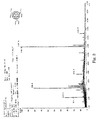
- Fig. 3 Spectrum of purified C 60 (C(COOH) 2 ) 3 malonic ester (O-3a enantiomer) by fast-atom bombardment mass spectrometry.
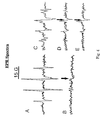
- FIG. 4 Electron paramagnetic resonance spectra demonstrating the free radical scavenging activity of C 60 (C(COOH) 2 ) 3 against H 2 O 2 (A: untreated, B: treated with the O-3a enantiomer) and superoxide radical O 2 •- (C: untreated, D: treated with the O-3a enantiomer, E: treated with the R-3b enantiomer).
- the arrows point to an artifactual signal generated by a contaminant in the EPR cavity.
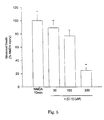
- Fig. 5 Neurotoxicity produced by exposure of cultured neurons to NMDA without treatment and with three concentrations of C 60 (C(COOH) 2 ) 3 .
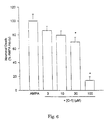
- Fig. 6 Neurotoxicity produced by exposure of cultured neurons to AMPA without treatment and with four concentrations of C 60 (C(COOH) 2 ) 3 .
- Fig. 7 NMDA-stimulated accumulation of tracer 45 Ca 2+ in cultured neurons with and without the co-application of C 60 (C(COOH) 2 ) 3 .
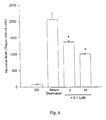
- Fig. 8 Apoptotic neuronal cell death produced in glial-deficient cultures by serum deprivation without treatment and with two concentrations of C 60 (C(COOH) 2 ) 3 .
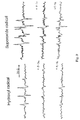
- Fig. 9 EPR spectra comparing the free radical scavenging activity of two C 60 (C(COOH) 2 ) 3 isomers.
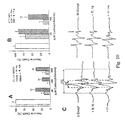
- Fig. 10 Comparison of two C 60 (C(COOH) 2 ) 3 isomers in protecting neurons from injury produced by application of NMDA (A) and AMPA-induced neuronal death (B). EPR spectra of spin-labeled lipids (5- or 16-doxyl ketostearic acid) (C incoporated into lipids from mouse brain, plus either of the two C 60 (C(COOH) 2 ) 3 isomers.
- Fig. 11 Survival curves for FALS mice treated with intraperitoneal mini-osmotic pumps containg saline or 15 mg/ kg/ day carboxyfullerene.
- carboxyfullerenes are a novel class of antioxidants with the ability to scavenge multiple oxygen-derived free radicals, and that these compounds have unusual broad and powerful neuroprotective capabilities, attenuating neuronal death due to glutamate excitotoxicity, and apoptosis.
- MS Media stock
- MS consists of Eagle's Minimal Essential Media with 25 mM glucose, minus L-glutamine.
- Plating medium consists of MS supplemented with L-glutamine (2 mM), 5% fetal calf serum, and 5% horse serum.
- Growth medium contains MS, 10% horse serum, and 2 mM L-glutamine.
- HEPES-buffered balanced salt solution pH 7.40 (HBBSS)
- HEPES-buffered balanced salt solution pH 7.40
- NMDA NMDA-buffered balanced salt solution
- BSS Balanced salt solution
- the original isomer of C 60 (C(COOH) 2 ) 3 was the O-3a isomer, which represents the major product of the synthesis.
- Stock of this compound was prepared as a 25 mM solution in water. Stocks were used within 72 hours of preparation, and were stored at -20°C in the dark.
- Unmodified C 60 was dissolved in toluene to make a 50 mM stock.
- Mouse neocortical cultures were prepared as neuron-astrocyte co-cultures (approximately 50% astrocytes) (Rose et al., 1992) or as neuronal cultures ( ⁇ 2% astrocytes).
- Mouse embryos (gestational day 15) are removed from pregnant anesthetized Swiss-Webster mice, and the neocortex is dissected away from other brain structures. After brief incubation in trypsin, the cells are dissociated by trituration, and the cell suspension is then diluted into plating medium and plated onto previously-prepared 24-well Plastek culture plates coated with poly-D-lysine/laminin (for neuronal cultures) or onto an existing bed of astrocytes (for co-cultures).
- glial conditioned medium After 1-2 days in vitro, a partial exchange with glial conditioned medium is made for "pure" neuronal cultures, and cytosine arabinoside (3 ⁇ M) is added immediately after feeding to inhibit glial proliferation.
- Mixed cultures are fed biweekly with growth medium until 11-12 days in vitro, when they are fed with serum-free MS containing 2 mM L-glutamine. Unless otherwise stated, cells were used at 14-16 days in vitro.
- Diethyl 2,2-fulleromalonic ester C 60 (1 g, 1.39 mmol) was added to freshly distilled toluene (1000 ml) and stirred for a few minutes to obtain a clear, violet solution. Diethyl bromomalonate (0.474 ml, 2.78 mmol) was added dropwise to the stirred solution. Addition of 0.526 ml (3.475 mmol) DBU (1,8-diazobicyclo[5,4,0]-undec-7-ene) to the fullerene solution caused the color to change from violet to dark red. After stirring overnight in air at room temperature, the solution was filtered to remove the ammonium salts, and the solvent was evaporated in varus.
- C 60 (C(COOH) 2 ) n compounds proved to be a potent free radical scavengers, capable of eliminating both hydroxyl and superoxide radials.
- Fig. 4 shows EPR spectra A - E demonstrating the free radical scavenging activity of C 60 (C(COOH) 2 ) 3 .
- Spectra A and B respectively, show the hydroxyl radical (spin adduct: DMPO-OH ( ) generated by H 2 O 2 over a 15 minute period, and the elimination of this OH signal when 150 (M O-3a isomer was included with the H 2 O 2 .
- the hexacarboxylated compound, C 60 (C(COOH) 2 ) 3 which was soluble in water to at least 50 mM, protected cortical neurons against excitotoxic injury produced by exposure to N-methyl-D-aspartate (NMDA) and (-amino-3-hydroxy-5-methyl-4-isoxazole propionic acid (AMPA).
- NMDA N-methyl-D-aspartate
- AMPA -amino-3-hydroxy-5-methyl-4-isoxazole propionic acid
- the dicarboxy and tetracarboxy fullerene derivatives were less soluble in aqueous solution and, while possessing neuroprotective activity, were less effective neuroprotectants than the hexacarboxy derivative.
- Carboxyfullerene (3-300 (M) was co-applied to neuron-astrocyte co-cultures described above with NMDA for assessment of neuroprotection. Brief exposure to NMDA in the presence of the carboxyfullerene was carried out by triple exchange of the medium with HBBSS, followed by addition of 50 ⁇ M- 500 ⁇ M NMDA plus carboxyfullerene for 10 minutes. The NMDA and carboxyfullerene were removed by quadruple exchange of the medium with MS, and the cultures were placed in the humidified, CO 2 (5%), 37°C incubator for 24 hours, when the extent of injury was assessed.
- M AMPA 5-100
- carboxyfullerene 3-300 (M) was co-applied to neuron-astrocyte co-cultures described above, with AMPA, for assessment of neuroprotection. After the medium was exchanged twice with MS, AMPA and carboxyfullerene were added and cultures were returned to the 37°C incubator.
- Neuronal death was assessed at 24 hours after NMDA or AMPA administration by phase contrast microscopy at 200-400x, and by measurement of lactate dehydrogenase (LDH) efflux from dying cells into the bathing medium (Koh and Choi, 1987). Quantitation of cell death was confirmed in some experiments by trypan blue or propidium iodide staining and cell counting.
- LDH lactate dehydrogenase
- C 60 (C(COOH) 2 ) 3 results for C 60 (C(COOH) 2 ) 3 are shown in Figures 5 and 6.
- C 60 (C(COOH) 2 ) 3 showed robust neuroprotection against NMDA (Fig. 5) and AMPA-induced (Fig. 6) excitotoxic neuronal injury.
- C 60 (C(COOH) 2 ) 3 reduced neuronal cell death from AMPA by >80% at 100 (M (Fig. 6).
- Cortical neurons in cultures containing less than 1 % astrocytes were deprived of serum by exchanging the serum-containing growth medium with a balanced salt solution supplemented with amino acids (excluding glutamine). Washed controls were returned to medium containing 2% fetal calf serum, 2% horse serum in BSS. After 24 and 48 hours, the cells were photographed using phase contrast optics at 100-400X, using a Nikon inverted microscope.
- neuronal cell death was determined at 48 hours removal of serum by counting cells that are no longer able to exclude trypan blue.
- neuronal cell death determined at 48 hours after the onset of serum-deprivation by counting cells that were no longer able to exclude trypan blue, demonstrated a significant reduction in neuronal death.
- Figure 9 shows that, chemically, these two isomers showed similar abilities to scavenge • OH and O 2 •- free radicals, as judged from spin-trap/EPR spectra.
- Figure 9 shows the EPR spectra of • OH (from 100 ⁇ M H 2 O 2 in Fe 2+ by the Fenton reaction) and O 2 •- (from xanthine + xanthine oxidase) radicals with 100 mM 5,5-dimethyl-1-pyrolline-N-oxide (DMPO) as the spin-trapping agent.
- DMPO 5,5-dimethyl-1-pyrolline-N-oxide
- Hydroxyl radical (spectra on left): • OH in the presence of DMPO alone (top), in the presence of 4 ⁇ M O-3a (middle), or in the presence of 4 ⁇ M R-3b (bottom).
- Superoxide radical (right): O 2 •- in DMPO alone (top), in the presence of 400 ⁇ M O-3a (middle), in the presence of 400 ⁇ M R-3b (bottom).
- the arrow designates a spurious signal due to an unknown radical in the cavity.
- O-3a In addition to its greater activity in protecting neurons from NMDA and AMPA receptor-mediated injuries, O-3a provided enhanced protection over R-3b from such injury in endothelial cell cultures and in hepatocytes. This difference was apparently due to the ability of the O-3a isomer to enter membranes to a greater extent than R-3b. The polarity of O-3a enables it to enter the cell membrane more easily. This ability to intercalate into membranes suggests that O-3a would provide better protection of cell membranes from lipid peroxidation than R-3b. Thus, the location of functional groups (polar vs. circumferential) is important for the protective efficacy of C 60 derivatives.
- C 60 (C(COOH) 2 ) 3 was used to treat FALS mice (Gurney GI strain) to determine its ability to treat FALS.
- Alzet mino-osmotic pumps 28 day, 6 (l/day, 15 mg/kg/day) containing C 60 (C(COOH) 2 ) 3 (the mixed isomers, which consist of >90% O-3a) or saline were implanted intraperitoneally. The pumps were replaced at 14 weeks of age.
- Videotaped assessments of open field walking were performed and scored using the Bresnahan scale for spinal cord injury (Basso et al., 1995). As reported by Gurney and colleagues, these animals develop motor symptoms by approximately 90 days of age, and are moribund between 125 and 145 days of age.
- Figure 11 shows the survival curves for FALS mice treated with intraperitoneal mini-osmotic pumps containing saline or 15 mg/kg/day carboxyfullerene.
Landscapes
- Health & Medical Sciences (AREA)
- Chemical & Material Sciences (AREA)
- Medicinal Chemistry (AREA)
- Pharmacology & Pharmacy (AREA)
- Epidemiology (AREA)
- Life Sciences & Earth Sciences (AREA)
- Animal Behavior & Ethology (AREA)
- General Health & Medical Sciences (AREA)
- Public Health (AREA)
- Veterinary Medicine (AREA)
- Acyclic And Carbocyclic Compounds In Medicinal Compositions (AREA)
- Organic Low-Molecular-Weight Compounds And Preparation Thereof (AREA)
- Pharmaceuticals Containing Other Organic And Inorganic Compounds (AREA)
Claims (3)
- Verwendung von carboxylierten Derivaten der Formel
sowie pharmazeutisch annehmbare Salze, Ester und Amide davon zur Herstellung von Medikamenten für die Kontrolle oder Behandlung von Krankheiten basierend auf freien Sauerstoff-Radikalen, die ausgesendet werden durch Neuronen, welche durch den Glutamat NMDA Rezeptor stimuliert werden. - Die Verwendung von Verbindungen der Formel I entsprechend Anspruch 1, wobei Krankheiten zu neurotoxischen Schäden umfasst werden wie neurologische Anfälle , zum Beispiel Hypoxie/Ischämie, wie sie während eines Schlaganfalls, Hypoglykämie, Epilepsie oder neurodegenerativen Schäden wie der Huntington'schen Krankheit, der Alzheimer'schen Krankheit der Amyotrophen lateralen Sklerose (ALS) and neurodegenerativen Wirkungen von AIDS, auftreten.
- Die Verwendung ensprechend Ansprüchen 1 - 2, worin in Formel I n 3 ist.
Applications Claiming Priority (3)
| Application Number | Priority Date | Filing Date | Title |
|---|---|---|---|
| US1889996P | 1996-06-03 | 1996-06-03 | |
| US18899P | 1996-06-03 | ||
| PCT/EP1997/002679 WO1997046227A1 (en) | 1996-06-03 | 1997-05-26 | The use of buckminsterfullerene for treatment of neurotoxic injury |
Publications (2)
| Publication Number | Publication Date |
|---|---|
| EP0904070A1 EP0904070A1 (de) | 1999-03-31 |
| EP0904070B1 true EP0904070B1 (de) | 2000-03-15 |
Family
ID=21790333
Family Applications (1)
| Application Number | Title | Priority Date | Filing Date |
|---|---|---|---|
| EP97927037A Expired - Lifetime EP0904070B1 (de) | 1996-06-03 | 1997-05-26 | Verwendung von buckminsterfulleren zur behandlung neurotoxischer verletzungen |
Country Status (16)
| Country | Link |
|---|---|
| EP (1) | EP0904070B1 (de) |
| JP (1) | JP2000514412A (de) |
| KR (1) | KR20000016238A (de) |
| CN (1) | CN1221340A (de) |
| AR (1) | AR007369A1 (de) |
| AT (1) | ATE190486T1 (de) |
| AU (1) | AU720528B2 (de) |
| BR (1) | BR9709636A (de) |
| CA (1) | CA2255913C (de) |
| DE (1) | DE69701458T2 (de) |
| DK (1) | DK0904070T3 (de) |
| ES (1) | ES2145608T3 (de) |
| GR (1) | GR3033646T3 (de) |
| PT (1) | PT904070E (de) |
| TR (1) | TR199802504T2 (de) |
| WO (1) | WO1997046227A1 (de) |
Families Citing this family (11)
| Publication number | Priority date | Publication date | Assignee | Title |
|---|---|---|---|---|
| US6538153B1 (en) | 2001-09-25 | 2003-03-25 | C Sixty Inc. | Method of synthesis of water soluble fullerene polyacids using a macrocyclic malonate reactant |
| US20030162837A1 (en) * | 2002-02-23 | 2003-08-28 | Dugan Laura L. | Carboxyfullerenes and methods of use thereof |
| US7145032B2 (en) | 2002-02-23 | 2006-12-05 | Washington University | Therapeutic malonic acid/acetic acid C60 tri-adducts of buckminsterfullerene and methods related thereto |
| CA2518766C (en) * | 2003-03-10 | 2012-07-03 | Mitsubishi Corporation | Anti-hepatitis c virus agents and anti-hiv agents |
| JP2006524245A (ja) * | 2003-04-10 | 2006-10-26 | シー スィクスティ、インコーポレイテッド | 皮膚病学的症状を改善するためのフラーレン組成物 |
| US7163956B2 (en) * | 2003-10-10 | 2007-01-16 | C Sixty Inc. | Substituted fullerene compositions and their use as antioxidants |
| WO2006028635A2 (en) * | 2004-09-02 | 2006-03-16 | C Sixty Inc. | Fullerene compositions for ameliorating hearing loss, collateral damage of chemotherapy, or mucositis |
| JP6471288B2 (ja) * | 2014-12-19 | 2019-02-20 | 昭和電工株式会社 | フラーレン組成物、樹脂添加剤および樹脂組成物 |
| TWI704127B (zh) * | 2017-03-16 | 2020-09-11 | 國立臺灣大學 | 富勒烯衍生物及其用途 |
| CN117202896A (zh) * | 2021-03-01 | 2023-12-08 | 赞迪亚制药公司 | C60谷胱甘肽多巴和方法 |
| CN117203156A (zh) * | 2021-03-01 | 2023-12-08 | 赞迪亚制药公司 | 阿尔茨海默病的治疗和方法 |
Family Cites Families (1)
| Publication number | Priority date | Publication date | Assignee | Title |
|---|---|---|---|---|
| WO1996036631A1 (en) * | 1995-05-19 | 1996-11-21 | Sphere Biosystems, Inc. | Multiply-substituted fullerenes and methods for their preparation and characterization |
-
1997
- 1997-05-26 EP EP97927037A patent/EP0904070B1/de not_active Expired - Lifetime
- 1997-05-26 AU AU31672/97A patent/AU720528B2/en not_active Expired
- 1997-05-26 ES ES97927037T patent/ES2145608T3/es not_active Expired - Lifetime
- 1997-05-26 DK DK97927037T patent/DK0904070T3/da active
- 1997-05-26 BR BR9709636A patent/BR9709636A/pt not_active Application Discontinuation
- 1997-05-26 CA CA002255913A patent/CA2255913C/en not_active Expired - Lifetime
- 1997-05-26 AT AT97927037T patent/ATE190486T1/de not_active IP Right Cessation
- 1997-05-26 WO PCT/EP1997/002679 patent/WO1997046227A1/en not_active Ceased
- 1997-05-26 TR TR1998/02504T patent/TR199802504T2/xx unknown
- 1997-05-26 PT PT97927037T patent/PT904070E/pt unknown
- 1997-05-26 JP JP10500167A patent/JP2000514412A/ja active Pending
- 1997-05-26 KR KR1019980709809A patent/KR20000016238A/ko not_active Ceased
- 1997-05-26 DE DE69701458T patent/DE69701458T2/de not_active Expired - Lifetime
- 1997-05-26 CN CN97195219A patent/CN1221340A/zh active Pending
- 1997-06-02 AR ARP970102373A patent/AR007369A1/es not_active Application Discontinuation
-
2000
- 2000-06-12 GR GR20000401333T patent/GR3033646T3/el not_active IP Right Cessation
Also Published As
| Publication number | Publication date |
|---|---|
| GR3033646T3 (en) | 2000-10-31 |
| DE69701458T2 (de) | 2000-09-07 |
| ATE190486T1 (de) | 2000-04-15 |
| TR199802504T2 (xx) | 1999-03-22 |
| AR007369A1 (es) | 1999-10-27 |
| EP0904070A1 (de) | 1999-03-31 |
| AU720528B2 (en) | 2000-06-01 |
| CN1221340A (zh) | 1999-06-30 |
| CA2255913A1 (en) | 1997-12-11 |
| BR9709636A (pt) | 1999-08-10 |
| DK0904070T3 (da) | 2000-06-26 |
| DE69701458D1 (de) | 2000-04-20 |
| JP2000514412A (ja) | 2000-10-31 |
| WO1997046227A1 (en) | 1997-12-11 |
| PT904070E (pt) | 2000-08-31 |
| KR20000016238A (ko) | 2000-03-25 |
| CA2255913C (en) | 2007-07-31 |
| AU3167297A (en) | 1998-01-05 |
| ES2145608T3 (es) | 2000-07-01 |
Similar Documents
| Publication | Publication Date | Title |
|---|---|---|
| EP1071419B1 (de) | Cannabinoiden als antioxidantien und neuroschützende mittel | |
| US6265443B1 (en) | Method for treating neuronal injury with carboxyfullerene | |
| CA2255913C (en) | The use of buckminsterfullerene for treatment of neurotoxic injury | |
| US20070105918A1 (en) | Use of Pramipexole to Treat Amyotrophic Lateral Sclerosis | |
| US20030162837A1 (en) | Carboxyfullerenes and methods of use thereof | |
| JP2025071293A (ja) | ミトコンドリア障害を処置するための方法 | |
| MXPA01001255A (es) | Inhibidores de senalizacion de reduccion-oxidacion y metodos para utilizar los mismos.. | |
| JP4153663B2 (ja) | デカーシンを含む医薬組成物 | |
| US20040167217A1 (en) | Neuroprotective effects of polyphenolic compounds | |
| US20050228041A1 (en) | Protective and therapeutic uses for tocotrienols | |
| LT4602B (lt) | 2-fenil-1,2-benzizoselenazol-3(2h)-ono panaudojimas alchaimerio ligos gydymui skirtai farmacinei kompozicijai gauti | |
| GB2427824A (en) | Treatment of proliferative or viral conditions | |
| EP0270046B1 (de) | Pharmazeutisches Präparat zur Behandlung des Katarakts | |
| NZ513565A (en) | Use of tianeptin in the production of medicaments to treat neurodegenerative pathologies | |
| JP2000510114A (ja) | 抗酸化剤化合物 | |
| US5955485A (en) | Use of fused benzothiazoles as neuroprotectants | |
| MXPA98010050A (en) | The use of buckminster-fulereno for the treatment of neurotoxi injuries | |
| US9029419B2 (en) | Use of zinc N-acetyltaurinate | |
| EP1867337B1 (de) | Medizinische zusammensetzung enthaltend fullerenen zur behandlung/prävention von motorischen organerkrankungen mit knorpeldegeneration | |
| RU2807600C1 (ru) | Антиоксидантный препарат для животных на основе водного раствора фуллерена С60, ресвератрола и альфа-липоевой кислоты | |
| KR100425798B1 (ko) | 신규한 다마란 유도체, 그 제조 방법 및 그를 활성성분으로 포함하는 뇌신경세포 보호제 | |
| CN117427074A (zh) | 四氢喹啉醇作为铁死亡抑制剂在制备急性肾损伤药物中的应用 | |
| MXPA97004669A (en) | Use of nebivolol as an antiaterogen | |
| WO2003099282A1 (en) | White matter neuroprotectant pyrroloquinoline quinone compounds and methods of use thereof | |
| CA2594186A1 (en) | Pharmaceutical composition containing decursin |
Legal Events
| Date | Code | Title | Description |
|---|---|---|---|
| PUAI | Public reference made under article 153(3) epc to a published international application that has entered the european phase |
Free format text: ORIGINAL CODE: 0009012 |
|
| 17P | Request for examination filed |
Effective date: 19981126 |
|
| AK | Designated contracting states |
Kind code of ref document: A1 Designated state(s): AT BE CH DE DK ES FI FR GB GR IE IT LI LU NL PT SE |
|
| 17Q | First examination report despatched |
Effective date: 19990323 |
|
| GRAG | Despatch of communication of intention to grant |
Free format text: ORIGINAL CODE: EPIDOS AGRA |
|
| GRAG | Despatch of communication of intention to grant |
Free format text: ORIGINAL CODE: EPIDOS AGRA |
|
| GRAH | Despatch of communication of intention to grant a patent |
Free format text: ORIGINAL CODE: EPIDOS IGRA |
|
| GRAH | Despatch of communication of intention to grant a patent |
Free format text: ORIGINAL CODE: EPIDOS IGRA |
|
| GRAA | (expected) grant |
Free format text: ORIGINAL CODE: 0009210 |
|
| AK | Designated contracting states |
Kind code of ref document: B1 Designated state(s): AT BE CH DE DK ES FI FR GB GR IE IT LI LU NL PT SE |
|
| REF | Corresponds to: |
Ref document number: 190486 Country of ref document: AT Date of ref document: 20000415 Kind code of ref document: T |
|
| REG | Reference to a national code |
Ref country code: CH Ref legal event code: EP |
|
| REF | Corresponds to: |
Ref document number: 69701458 Country of ref document: DE Date of ref document: 20000420 |
|
| REG | Reference to a national code |
Ref country code: IE Ref legal event code: FG4D |
|
| ITF | It: translation for a ep patent filed | ||
| ET | Fr: translation filed | ||
| REG | Reference to a national code |
Ref country code: DK Ref legal event code: T3 |
|
| REG | Reference to a national code |
Ref country code: ES Ref legal event code: FG2A Ref document number: 2145608 Country of ref document: ES Kind code of ref document: T3 |
|
| REG | Reference to a national code |
Ref country code: PT Ref legal event code: SC4A Free format text: AVAILABILITY OF NATIONAL TRANSLATION Effective date: 20000531 |
|
| PLBE | No opposition filed within time limit |
Free format text: ORIGINAL CODE: 0009261 |
|
| STAA | Information on the status of an ep patent application or granted ep patent |
Free format text: STATUS: NO OPPOSITION FILED WITHIN TIME LIMIT |
|
| 26N | No opposition filed | ||
| REG | Reference to a national code |
Ref country code: GB Ref legal event code: IF02 |
|
| PGFP | Annual fee paid to national office [announced via postgrant information from national office to epo] |
Ref country code: LU Payment date: 20040325 Year of fee payment: 8 |
|
| PGFP | Annual fee paid to national office [announced via postgrant information from national office to epo] |
Ref country code: IE Payment date: 20040406 Year of fee payment: 8 Ref country code: AT Payment date: 20040406 Year of fee payment: 8 |
|
| PGFP | Annual fee paid to national office [announced via postgrant information from national office to epo] |
Ref country code: NL Payment date: 20040413 Year of fee payment: 8 Ref country code: DK Payment date: 20040413 Year of fee payment: 8 |
|
| PGFP | Annual fee paid to national office [announced via postgrant information from national office to epo] |
Ref country code: FI Payment date: 20040414 Year of fee payment: 8 |
|
| PGFP | Annual fee paid to national office [announced via postgrant information from national office to epo] |
Ref country code: ES Payment date: 20040518 Year of fee payment: 8 |
|
| PGFP | Annual fee paid to national office [announced via postgrant information from national office to epo] |
Ref country code: CH Payment date: 20040527 Year of fee payment: 8 |
|
| PG25 | Lapsed in a contracting state [announced via postgrant information from national office to epo] |
Ref country code: LU Free format text: LAPSE BECAUSE OF NON-PAYMENT OF DUE FEES Effective date: 20050526 Ref country code: IT Free format text: LAPSE BECAUSE OF NON-PAYMENT OF DUE FEES;WARNING: LAPSES OF ITALIAN PATENTS WITH EFFECTIVE DATE BEFORE 2007 MAY HAVE OCCURRED AT ANY TIME BEFORE 2007. THE CORRECT EFFECTIVE DATE MAY BE DIFFERENT FROM THE ONE RECORDED. Effective date: 20050526 Ref country code: IE Free format text: LAPSE BECAUSE OF NON-PAYMENT OF DUE FEES Effective date: 20050526 Ref country code: FI Free format text: LAPSE BECAUSE OF NON-PAYMENT OF DUE FEES Effective date: 20050526 Ref country code: AT Free format text: LAPSE BECAUSE OF NON-PAYMENT OF DUE FEES Effective date: 20050526 |
|
| PG25 | Lapsed in a contracting state [announced via postgrant information from national office to epo] |
Ref country code: SE Free format text: LAPSE BECAUSE OF NON-PAYMENT OF DUE FEES Effective date: 20050527 Ref country code: ES Free format text: LAPSE BECAUSE OF NON-PAYMENT OF DUE FEES Effective date: 20050527 |
|
| PG25 | Lapsed in a contracting state [announced via postgrant information from national office to epo] |
Ref country code: LI Free format text: LAPSE BECAUSE OF NON-PAYMENT OF DUE FEES Effective date: 20050531 Ref country code: DK Free format text: LAPSE BECAUSE OF NON-PAYMENT OF DUE FEES Effective date: 20050531 Ref country code: CH Free format text: LAPSE BECAUSE OF NON-PAYMENT OF DUE FEES Effective date: 20050531 |
|
| PG25 | Lapsed in a contracting state [announced via postgrant information from national office to epo] |
Ref country code: NL Free format text: LAPSE BECAUSE OF NON-PAYMENT OF DUE FEES Effective date: 20051201 |
|
| REG | Reference to a national code |
Ref country code: CH Ref legal event code: PL |
|
| EUG | Se: european patent has lapsed | ||
| NLV4 | Nl: lapsed or anulled due to non-payment of the annual fee |
Effective date: 20051201 |
|
| REG | Reference to a national code |
Ref country code: IE Ref legal event code: MM4A |
|
| REG | Reference to a national code |
Ref country code: DK Ref legal event code: EBP |
|
| PGFP | Annual fee paid to national office [announced via postgrant information from national office to epo] |
Ref country code: PT Payment date: 20060324 Year of fee payment: 10 |
|
| PGFP | Annual fee paid to national office [announced via postgrant information from national office to epo] |
Ref country code: GR Payment date: 20060406 Year of fee payment: 10 |
|
| REG | Reference to a national code |
Ref country code: GB Ref legal event code: 732E |
|
| PGFP | Annual fee paid to national office [announced via postgrant information from national office to epo] |
Ref country code: SE Payment date: 20060504 Year of fee payment: 10 |
|
| PGFP | Annual fee paid to national office [announced via postgrant information from national office to epo] |
Ref country code: BE Payment date: 20060531 Year of fee payment: 10 |
|
| REG | Reference to a national code |
Ref country code: FR Ref legal event code: TP |
|
| REG | Reference to a national code |
Ref country code: ES Ref legal event code: FD2A Effective date: 20050527 |
|
| REG | Reference to a national code |
Ref country code: FR Ref legal event code: RM |
|
| REG | Reference to a national code |
Ref country code: PT Ref legal event code: MM4A Free format text: LAPSE DUE TO NON-PAYMENT OF FEES Effective date: 20071126 |
|
| BERE | Be: lapsed |
Owner name: F. *HOFFMANN-LA ROCHE A.G. Effective date: 20070531 |
|
| PG25 | Lapsed in a contracting state [announced via postgrant information from national office to epo] |
Ref country code: PT Free format text: LAPSE BECAUSE OF NON-PAYMENT OF DUE FEES Effective date: 20071126 |
|
| PG25 | Lapsed in a contracting state [announced via postgrant information from national office to epo] |
Ref country code: BE Free format text: LAPSE BECAUSE OF NON-PAYMENT OF DUE FEES Effective date: 20070531 |
|
| PG25 | Lapsed in a contracting state [announced via postgrant information from national office to epo] |
Ref country code: GR Free format text: LAPSE BECAUSE OF NON-PAYMENT OF DUE FEES Effective date: 20071204 |
|
| REG | Reference to a national code |
Ref country code: FR Ref legal event code: PLFP Year of fee payment: 20 |
|
| PGFP | Annual fee paid to national office [announced via postgrant information from national office to epo] |
Ref country code: DE Payment date: 20160518 Year of fee payment: 20 Ref country code: GB Payment date: 20160525 Year of fee payment: 20 |
|
| PGFP | Annual fee paid to national office [announced via postgrant information from national office to epo] |
Ref country code: FR Payment date: 20160412 Year of fee payment: 20 |
|
| REG | Reference to a national code |
Ref country code: DE Ref legal event code: R071 Ref document number: 69701458 Country of ref document: DE |
|
| REG | Reference to a national code |
Ref country code: GB Ref legal event code: PE20 Expiry date: 20170525 |
|
| PG25 | Lapsed in a contracting state [announced via postgrant information from national office to epo] |
Ref country code: GB Free format text: LAPSE BECAUSE OF EXPIRATION OF PROTECTION Effective date: 20170525 |