EP0896022B1 - Methode zur Verbesserung der Kristallisationsgeschwindigkeit von syndiotaktischem Polypropylen, sPP mit verbesserter Tc, daraus gefertigte Produkte - Google Patents
Methode zur Verbesserung der Kristallisationsgeschwindigkeit von syndiotaktischem Polypropylen, sPP mit verbesserter Tc, daraus gefertigte Produkte Download PDFInfo
- Publication number
- EP0896022B1 EP0896022B1 EP98114796A EP98114796A EP0896022B1 EP 0896022 B1 EP0896022 B1 EP 0896022B1 EP 98114796 A EP98114796 A EP 98114796A EP 98114796 A EP98114796 A EP 98114796A EP 0896022 B1 EP0896022 B1 EP 0896022B1
- Authority
- EP
- European Patent Office
- Prior art keywords
- syndiotactic polypropylene
- polypropylene
- composition
- range
- additive
- Prior art date
- Legal status (The legal status is an assumption and is not a legal conclusion. Google has not performed a legal analysis and makes no representation as to the accuracy of the status listed.)
- Expired - Lifetime
Links
Images



Classifications
-
- C—CHEMISTRY; METALLURGY
- C08—ORGANIC MACROMOLECULAR COMPOUNDS; THEIR PREPARATION OR CHEMICAL WORKING-UP; COMPOSITIONS BASED THEREON
- C08L—COMPOSITIONS OF MACROMOLECULAR COMPOUNDS
- C08L23/00—Compositions of homopolymers or copolymers of unsaturated aliphatic hydrocarbons having only one carbon-to-carbon double bond; Compositions of derivatives of such polymers
- C08L23/02—Compositions of homopolymers or copolymers of unsaturated aliphatic hydrocarbons having only one carbon-to-carbon double bond; Compositions of derivatives of such polymers not modified by chemical after-treatment
- C08L23/10—Homopolymers or copolymers of propene
- C08L23/12—Polypropene
-
- C—CHEMISTRY; METALLURGY
- C08—ORGANIC MACROMOLECULAR COMPOUNDS; THEIR PREPARATION OR CHEMICAL WORKING-UP; COMPOSITIONS BASED THEREON
- C08K—Use of inorganic or non-macromolecular organic substances as compounding ingredients
- C08K5/00—Use of organic ingredients
- C08K5/04—Oxygen-containing compounds
- C08K5/09—Carboxylic acids; Metal salts thereof; Anhydrides thereof
-
- C—CHEMISTRY; METALLURGY
- C08—ORGANIC MACROMOLECULAR COMPOUNDS; THEIR PREPARATION OR CHEMICAL WORKING-UP; COMPOSITIONS BASED THEREON
- C08K—Use of inorganic or non-macromolecular organic substances as compounding ingredients
- C08K5/00—Use of organic ingredients
- C08K5/0008—Organic ingredients according to more than one of the "one dot" groups of C08K5/01 - C08K5/59
-
- C—CHEMISTRY; METALLURGY
- C08—ORGANIC MACROMOLECULAR COMPOUNDS; THEIR PREPARATION OR CHEMICAL WORKING-UP; COMPOSITIONS BASED THEREON
- C08K—Use of inorganic or non-macromolecular organic substances as compounding ingredients
- C08K5/00—Use of organic ingredients
- C08K5/02—Halogenated hydrocarbons
-
- C—CHEMISTRY; METALLURGY
- C08—ORGANIC MACROMOLECULAR COMPOUNDS; THEIR PREPARATION OR CHEMICAL WORKING-UP; COMPOSITIONS BASED THEREON
- C08K—Use of inorganic or non-macromolecular organic substances as compounding ingredients
- C08K5/00—Use of organic ingredients
- C08K5/16—Nitrogen-containing compounds
- C08K5/20—Carboxylic acid amides
-
- C—CHEMISTRY; METALLURGY
- C08—ORGANIC MACROMOLECULAR COMPOUNDS; THEIR PREPARATION OR CHEMICAL WORKING-UP; COMPOSITIONS BASED THEREON
- C08K—Use of inorganic or non-macromolecular organic substances as compounding ingredients
- C08K5/00—Use of organic ingredients
- C08K5/49—Phosphorus-containing compounds
- C08K5/51—Phosphorus bound to oxygen
- C08K5/52—Phosphorus bound to oxygen only
- C08K5/521—Esters of phosphoric acids, e.g. of H3PO4
-
- C—CHEMISTRY; METALLURGY
- C08—ORGANIC MACROMOLECULAR COMPOUNDS; THEIR PREPARATION OR CHEMICAL WORKING-UP; COMPOSITIONS BASED THEREON
- C08K—Use of inorganic or non-macromolecular organic substances as compounding ingredients
- C08K5/00—Use of organic ingredients
- C08K5/49—Phosphorus-containing compounds
- C08K5/51—Phosphorus bound to oxygen
- C08K5/52—Phosphorus bound to oxygen only
- C08K5/521—Esters of phosphoric acids, e.g. of H3PO4
- C08K5/523—Esters of phosphoric acids, e.g. of H3PO4 with hydroxyaryl compounds
-
- C—CHEMISTRY; METALLURGY
- C08—ORGANIC MACROMOLECULAR COMPOUNDS; THEIR PREPARATION OR CHEMICAL WORKING-UP; COMPOSITIONS BASED THEREON
- C08L—COMPOSITIONS OF MACROMOLECULAR COMPOUNDS
- C08L2207/00—Properties characterising the ingredient of the composition
- C08L2207/10—Peculiar tacticity
- C08L2207/12—Syndiotactic polypropylene
Definitions
- the present invention relates to methods of treating syndiotactic polypropylene, treated syndiotactic polypropylene, and to products made thereof.
- the present invention relates to methods of treating syndiotactic polypropylene to improve the crystallization rate and temperature, to syndiotactic polypropylene compositions having improved crystallization rate and temperature, and to products made thereof.
- the present invention relates to methods of increasing the cell II (low melting form) structure content of syndiotactic polypropylene, to syndiotactic polypropylene compositions having increased content of cell II (low melting form) structure, and to products made thereof.
- Polypropylene has long been known to exist in several forms.
- isotactic propylene iPP
- sPP syndiotactic polypropylene
- isotactic structure is typically described as having the methyl groups attached to the tertiary carbon atoms of successive monomeric units on the same side of a hypothetical plane through the main chain of the polymer, e.g., the methyl groups are all above or all below the plane.
- the stereochemical sequence of isotactic polypropylene is described as follows:
- Bovey's NMR nomenclature for an isotactic pentad is ...mmmm... with each "m” representing a “meso" dyad or successive methyl groups on the same side in the plane.
- any deviation or inversion in the structure of the chain lowers the degree of isotacticity and crystallinity of the polymer.
- Syndiotactic polymers in contrast to the isotactic structure, are those in which the methyl groups attached to the tertiary carbon atoms of successive monomeric units in the chain lie on alternate sides of the plane of the polymer.
- Fischer projection formula the structure of a syndiotactic polymer is designated as:
- this pentad is described as ...rrrr... in which each "r” represents a "racemic" dyad, i.e., successive methyl group on alternate sides of the plane.
- the percentage of r dyads in the chain determines the degree of syndiotacticity of the polymer.
- Syndiotactic polymers are crystalline and, like the isotactic polymers, are insoluble in xylene. This crystallinity distinguishes both syndiotactic and isotactic polymers from an atactic polymer which is soluble in xylene.
- Atactic polymer exhibits no regular order of repeating unit configurations in the polymer chain and forms essentially a waxy product.
- Clarity, toughness and elasticity are some of the extraordinary advantages offered by syndiotactic polypropylene over some other semi-crystalline polyolefins such as isotactic polypropylene.
- syndiotactic polypropylene either in the unstabilized form or the stabilized form against degradation, cannot be realized due to problems associated with low crystallization rates and low crystallization temperatures.
- Prior art document EP-A-419677 discmoses a syndiotactic polypropylene resin composition comprising polypropylene having a substantially syndiotactic sstructure and a nucleating agent.
- the resin composition has a crystallisation temperature as measured by differential scanning calorimetry of at least 5 °C higher than that of a composition that does not contain a nucleating agent
- syndiotactic polypropylene has been shown to exhibit polymorphism, as described, for example in A.J. Lovinger et al., "Morphology and Thermal Properties of Fully Snydiotactic Polypropylene",Macromolecules, 27, 6603-6611 (1994).
- X-ray diffraction data, electron diffraction data, and DSC ("Differential Scanning Calorimeter") curves all have shown that the crystal structure of syndiotactic polypropylene may contain right handed helices along the "a" and "b" crystallographic axes, in which case the type of structure is denoted "cell I" type.
- a “cell II” (or low melting form) type structure contains anti-chiral helices along "a" crystallographic axis and chiral helices along "b” crystallographic axes.
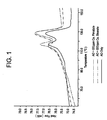
- “Cell III” (or high melting form) type of syndiotactic polypropylene structure contains anti-chiral helices along both "a" and "b” crystallographic axes. Correlation of DSC melting peaks with the X-ray and electron diffraction results show that cell II (low melting form) type structure corresponds to the lower melting peak in DSC, whereas cell III (high melting form) type structure corresponds to the higher melting peak of syndiotactic polypropylene.
- a non-nucleated and non-annealed sample of syndiotactic polypropylene shows the presence of two melting peaks by DSC.
- cell II (low melting form) type structure is kinetically controlled and is formed at rapid rates
- cell III (high melting form) type structure is the thermodynamically more stable structure and is formed more slowly.
- Cell III (high melting form) type structures have also been shown by Lovinger, in the aforementioned reference, to be prone to development of microcracks.
- syndiotactic polypropylene have crystallization temperatures and rates that could be improved, some common processing additives, such as calcium stearate, tend to reduce the crystallization rate even more.
- a method of treating syndiotactic polypropylene comprising the step of contacting syndiotactic polypropylene with at least one selected from the group consisting of polytetrafluoroethylene, pimellic acid, calcium pimallate.
- composition comprising syndiotactic polypropylene and at least one selected from the group consisting of polytetrafluoroethylene,sodium 2,2-methylene-bis-(4,6,di-tert-butylphenyl)phosphate)), pimellic acid, calcium pimallate.
- composition comprising syndiotactic polypropylene having a crystallization temperature greater than about 67°C.
- syndiotactic polypropylene composition comprising at least 25 weight percent cell II (low melting form) type structure polypropylene, based on the total of weight of cell II (low melting form) structure and cell III (high melting form) type structure of syndiotactic polypropylene.
- a method of forming a product includes the step of heating a mixture comprising syndiotactic polypropylene and an additive above the melt temperature of the syndiotactic polypropylene to form a melted mixture, wherein the additive comprises at least one selected from the group consisting of polytetrafluoroethylene, pimellic acid, calcium pimallate.
- the method also includes the step of forming the melted mixture into a desired shape.
- the method finally includes cooling the desired shape to below the melt temperature of the syndiotactic polypropylene.
- composition of the present invention includes a syndiotactic polypropylene and a crystallization additive for increasing the crystallization rate and temperature of the syndiotactic polypropylene.
- syndiotactic polypropylene utilized in the present invention and methods of making such a syndiotactic polypropylene, are well known to those of skill in the polyolefin art.
- An example of a suitable syndiotactic polypropylene and a method of its making can be found in U.S. Patent Nos. 4,892,851, 5,334,677, and 5,476,914.
- the syndiotactic polypropylene utilized in the present invention comprises tacticity of at least 70 percent rr dyads molecules as defined by the percent of rr dyads. More preferably, the syndiotactic polypropylene utilized in the present invention comprises tacticity of at least 80 percent rr dyads, even more preferably at least 83 percent rr dyads, and still more preferably at least about 90 percent rr dyads. Most preferably the syndiotactic polypropylene utilized in the present invention comprises substantially syndiotactic molecules.
- the still more preferred syndiotactic polypropylenes utilized in the present invention generally comprise tacticity in the range of about 83 to about 95 percent rr dyads, more preferably in the range of about 85 to about 95 percent rr dyads, and most preferably in the range of about 89 to about 95 percent rr dyads.
- the syndiotactic polypropylene useful in the present invention will generally be selected according to the desired end use of polypropylene, for compatibility with the additives, and for compatibility with the processing conditions, and with any other polymers to be added thereto.
- the molecular weight upper range for the syndiotactic polypropylene is generally dictated by the desired handling compatibility.
- the lower range is generally dictated by the desired end use of the blend.
- a suitable syndiotactic polypropylene which may be utilized in the present invention may generally be described as having a number molecular weight in the range of about 30000 to about 150000, a weight average molecular weight in the range of about 60000 to 350000, a melting point in the range of about 95°C to about 165°C, a bulk density in the range of about 0.28 to about 0.55 g/cc, polymer density in the range of about 0.87 to 0.90 g/cc, polydispersity in the range of about 2 to about 5, and percent dyad and pentad value over 70 percent.
- Crystallization additives useful in the present invention include polytetrafluoroethylene (“PTFE”), pimellic acid, sodium 2,2-methylene-bis-(4,6,di-tert-butylphenyl)phosphate)), 3,4-dimethylbenzylidine sorbitol, calcium pimallate.
- PTFE polytetrafluoroethylene
- Non-limiting commercially available products suitable for use in the practice of the present invention include Millad® 3988 ( 3,4-dimethylbenzylidine sorbitol), available from Milliken Chemicals, Teflon® (PTFE), available from DuPont, and NA-11-uy®, sodium 2,2-methylene-bis-(4,6,di-tert-butylphenyl)phosphate)), available from Asahi Denka Kogyo.
- the preferred crystallization additives include polytetrafluoroethylene and NA-11, and the more preferred crystallization additive is polytetrafluoroethylene.
- calcium stearate is or will be present in the syndiotactic polypropylene
- calcium pimallate or pimellic acid be added to the syndiotactic polypropylene.
- the crystallization additive may be added to the syndiotactic polypropylene during or after polymerization. Preferably, it is added to the syndiotactic polypropylene as it is being extruded through the extrusion die.
- the crystallization additive is generally added to the syndiotactic polypropylene in an amount suitable to increase the crystallization rate and temperature. Generally in the range of about 100 to about 10,000 parts crystallization additive will be added per million parts of polypropylene. Preferably, in the range of about 500 to about 5,000 crystallization additive will be added per million parts of polypropylene, and more preferably in the range of about 800 to about 1500 crystallization additive will be added per million parts of polypropylene.
- ethylene bisstearamide may be added to syndiotactic polypropylene to reduce product stickiness along with one or more of the crystallization additives discussed above.
- EBS ethylene bisstearamide
- the syndiotactic polypropylene treated with the crystallization additive will have a crystallization temperature that is improved as compared to the untreated syndiotactic polypropylene.
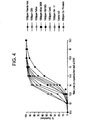
- the crystallization temperature of the treated syndiotactic polypropylene will be in the range of about 50°C to about 120°C, preferably in the range of about 60°C to about 110°C, and more preferably in the range of about 65°C to about 105°C.
- the syndiotactic polypropylene crystallized according to the present invention will also have an increased content of cell II (low melting form) structure and a decreased content of cell III (high melting form) structure as compared to the prior art syndiotactic polypropylenes.
- the syndiotactic polypropylenes crystallized by the present invention will comprise in the range of about 20 weight percent to about 100 weight percent cell II (low melting form) type structure, based on the total weight of cell II and cell III type structures, preferably in the range of about 25 weight percent to about 90 weight percent cell II (low melting form) type structure, and more preferably in the range of about 30 weight percent to about 80 weight percent cell II (low melting form) type structure.
- the weight ratio of cell II (low melting form) type structure to cell III (high melting form) type structure will be in the range of about 1:4 to about 1:0, preferably in the range of about 1:3 to about 9:1, and more preferably in the range of about 3:7 to about 4:1.
- the syndiotactic polypropylene compositions of the present invention may also contain conventional ingredients as are known to those of skill in the art.
- conventional ingredients include antiblocking agents, antistatic agents, antioxidants, blowing agents, crystallization aids, dyes, flame retardants, fillers, impact modifiers, mold release agents, oils, other polymers, pigments, processing agents, reinforcing agents, stabilizers, UV resistance agents, and the like.
- Non-limiting examples of reinforcing agents include inorganic or organic products of high molecular weight, including glass fiber, asbestos, boron fibers, carbon and graphite fibers, whiskers, quartz and silica fibers, and synthetic organic fibers.
- Polymer sPP-1 is a syndiotactic polypropylene with a polydispersity of 2.5, D' of 2.01, Mw and Mn of the closest material of 132300 and 52800, respectively, fluff melt flow rate (MFR) of 4.00 g/10 min., 2.9% Xylene solubles, and with tacticity data as follows: mmmm, 3.07; mmmr, 0.51; rmmr, 2.46, mmrr, 4.68; xmrx, 3.51; rmrm, 1.68; rrrr, 76.02; rrrm, 7.7; mrrm, 0.37.
- MFR fluff melt flow rate
- the fluff containing 50 ppm Irganox® 1076 ⁇ Ciba-Geigy, Octadecyl 3,5,di-tert-butyl-4-hydroxyhydrocinnamate ⁇ was compounded with an antioxidant package containing 1000 ppm Irganox® 1010 ⁇ Ciba Geigy, tetrakis-(methylene[3,5-di-tert-butyl-4-hydroxyhydrocinnamate]methane) ⁇ and 500 ppm Irgafos® 168 ⁇ Ciba Geigy, tris-(2,4-di-tert-butylphenyl)phosphite ⁇ , as well as with the desired crystallization additive(s) with or without ethylene bis-stearate according to Table I and Table II.
- the compounded fluff was shaken thoroughly and extruded on a RandCastle microextruder into strands.
- the strands were cooled to room temperature and pelletized using a laboratory pelletizer.
- Extrusion conditions were as follows: Zone 1, 370°F, Zone 2, 415°F, Zone 3, 435°F, and Zone 4 (die), 455°F.
- a screw speed of 16.4 rpm was generally used.
- Each formulation was approximately 200 grams.
- Polymer sPP-3 is a highly syndiotactic polypropylene with rrrr content of 91%, Tc of 91.8°C, Tm of 143.4°C and 138.7°C.
- the tacticity data is a follows:
- Zone 3 temperature was 425°F
- Zone 4 temperature was 440°F
- the screw speed was 12 rpm.
Landscapes
- Chemical & Material Sciences (AREA)
- Health & Medical Sciences (AREA)
- Chemical Kinetics & Catalysis (AREA)
- Medicinal Chemistry (AREA)
- Polymers & Plastics (AREA)
- Organic Chemistry (AREA)
- Addition Polymer Or Copolymer, Post-Treatments, Or Chemical Modifications (AREA)
- Compositions Of Macromolecular Compounds (AREA)
- Processes Of Treating Macromolecular Substances (AREA)
- Organic Low-Molecular-Weight Compounds And Preparation Thereof (AREA)
Claims (12)
- Eine Zusammensetzung, die syndiotaktisches Polypropylen und zumindest ein Additiv, gewählt aus der aus Polytetrafluorethylen, Pimelinsäure und Calciumpimalat bestehenden Gruppe, enthält.
- Die Zusammensetzung gemäß Anspruch 1, wobei das Additiv weiterhin Ethylen-Bistearamid enthält.
- Die Zusammensetzung gemäß Anspruch 1 oder 2, wobei das Additiv Polytetrafluorethylen ist.
- Die Zusammensetzung gemäß einem der vorgenannten Ansprüche, wobei das Additiv im Bereich von 100 Teilen bis 10.000 Teilen pro Million Teile des syndiotaktischen Polypropylens enthält.
- Die Zusammensetzung gemäß Anspruch 4, wobei das Additiv im Bereich von etwa 800 Teilen bis etwa 1.500 Teilen pro Million Teile des syndiotaktischen Polypropylens enthält.
- Die Zusammensetzung gemäß einem der vorgenannten Ansprüche, die syndiotaktisches Polypropylen mit einer Kristallisationstemperatur im Bereich von etwa 50°C bis etwa 120°C enthält.
- Die Zusammensetzung gemäß einem der vorgenannten Ansprüche, die im Bereich von 20 bis 100 Gewichtsprozent Polypropylen mit Zellen-II-Typenstruktur enthält, basiert auf dem Gesamtgewicht syndiotaktischen Polypropylens mit Zellen-II-Struktur und Zellen-III-Typenstruktur.
- Ein Verfahren zur Behandlung syndiotaktischen Polypropylens, umfassend den Schritt des Inkontaktbringens von syndiotaktischem Polypropylen mit zumindest einem Additiv, gewählt aus der aus Polytetrafluorethylen, Pimelinsäure und Calciumpimalat bestehenden Gruppe.
- Das Verfahren gemäß Anspruch 8, wobei das Additiv weiterhin Ethylen-Bistearamid enthält.
- Das Verfahren gemäß Anspruch 8 oder Anspruch 9, wobei das Additiv Polytetrafluorethylen ist.
- Das Verfahren gemäß einem der Ansprüche 8 bis 10, wobei das Additiv im Bereich von 100 Teilen bis 10.000 Teile pro Million Teile des syndiotaktischen Polypropylens umfasst.
- Ein Verfahren zur Bildung eines Produkts, das die Schritte umfasst des:(a) Erwärmens der Zusammensetzung gemäß einem der Ansprüche 1 bis 7 bis über die Schmelztemperatur des syndiotaktischen Polypropylens;(b) Formens der geschmolzenen Zusammensetzung zu einer gewünschten Form; und(c) Abkühlens der gewünschten Form auf unter die Schmelztemperatur des syndiotaktischen Polypropylens.
Applications Claiming Priority (2)
| Application Number | Priority Date | Filing Date | Title |
|---|---|---|---|
| US08/910,974 US5969021A (en) | 1997-08-07 | 1997-08-07 | Method of improving crystallization rate and temperature of syndiotactic polypropylene and compositions and products made therefrom |
| US910974 | 1997-08-07 |
Publications (2)
| Publication Number | Publication Date |
|---|---|
| EP0896022A1 EP0896022A1 (de) | 1999-02-10 |
| EP0896022B1 true EP0896022B1 (de) | 2004-09-29 |
Family
ID=25429595
Family Applications (1)
| Application Number | Title | Priority Date | Filing Date |
|---|---|---|---|
| EP98114796A Expired - Lifetime EP0896022B1 (de) | 1997-08-07 | 1998-08-06 | Methode zur Verbesserung der Kristallisationsgeschwindigkeit von syndiotaktischem Polypropylen, sPP mit verbesserter Tc, daraus gefertigte Produkte |
Country Status (9)
| Country | Link |
|---|---|
| US (1) | US5969021A (de) |
| EP (1) | EP0896022B1 (de) |
| JP (1) | JPH11228707A (de) |
| KR (1) | KR19990023177A (de) |
| CN (1) | CN1122069C (de) |
| AT (1) | ATE277967T1 (de) |
| DE (1) | DE69826588T2 (de) |
| ES (1) | ES2227748T3 (de) |
| TW (1) | TW418213B (de) |
Families Citing this family (25)
| Publication number | Priority date | Publication date | Assignee | Title |
|---|---|---|---|---|
| US6387529B1 (en) * | 1997-12-24 | 2002-05-14 | Exxon Mobil Oil Corporation | Biaxially oriented HDPE multilayer film |
| US6245857B1 (en) * | 1999-02-22 | 2001-06-12 | Fina Technology, Inc. | Compositions useful for tough, high crystallinity films |
| US6632885B2 (en) | 1999-04-13 | 2003-10-14 | Mitsui Chemicals, Inc. | Soft syndiotactic polypropylene composition and molded product |
| EP1319687A1 (de) * | 2001-12-17 | 2003-06-18 | ATOFINA Research | Modifiziertes Polypropylen |
| AU2003226284A1 (en) * | 2002-04-12 | 2003-10-27 | Milliken And Company | Highly nucleated syndiotactic polypropylene |
| US6703434B2 (en) * | 2002-04-12 | 2004-03-09 | Milliken & Company | Methods of producing highly nucleated syndiotactic polypropylene |
| US6642290B1 (en) | 2002-04-12 | 2003-11-04 | Milliken & Company | Highly nucleated syndiotactic polypropylene |
| US20040010086A1 (en) * | 2002-07-12 | 2004-01-15 | Deenadayalu Chundury | Low temperature impact resistant polyolefin alloys |
| US7998579B2 (en) | 2002-08-12 | 2011-08-16 | Exxonmobil Chemical Patents Inc. | Polypropylene based fibers and nonwovens |
| US7271209B2 (en) | 2002-08-12 | 2007-09-18 | Exxonmobil Chemical Patents Inc. | Fibers and nonwovens from plasticized polyolefin compositions |
| US7622523B2 (en) | 2002-08-12 | 2009-11-24 | Exxonmobil Chemical Patents Inc. | Plasticized polyolefin compositions |
| US7652094B2 (en) | 2002-08-12 | 2010-01-26 | Exxonmobil Chemical Patents Inc. | Plasticized polyolefin compositions |
| CN100345896C (zh) | 2002-08-12 | 2007-10-31 | 埃克森美孚化学专利公司 | 增塑聚烯烃组合物 |
| US7652092B2 (en) * | 2002-08-12 | 2010-01-26 | Exxonmobil Chemical Patents Inc. | Articles from plasticized thermoplastic polyolefin compositions |
| US7531594B2 (en) | 2002-08-12 | 2009-05-12 | Exxonmobil Chemical Patents Inc. | Articles from plasticized polyolefin compositions |
| US8003725B2 (en) | 2002-08-12 | 2011-08-23 | Exxonmobil Chemical Patents Inc. | Plasticized hetero-phase polyolefin blends |
| US8192813B2 (en) | 2003-08-12 | 2012-06-05 | Exxonmobil Chemical Patents, Inc. | Crosslinked polyethylene articles and processes to produce same |
| KR101154564B1 (ko) * | 2003-12-26 | 2012-06-08 | 신닛폰 리카 가부시키가이샤 | 폴리올레핀계 수지의 결정화 속도 제어를 위한 조성물 및방법, 수지 조성물 및 수지 성형체 |
| US8389615B2 (en) | 2004-12-17 | 2013-03-05 | Exxonmobil Chemical Patents Inc. | Elastomeric compositions comprising vinylaromatic block copolymer, polypropylene, plastomer, and low molecular weight polyolefin |
| WO2007011530A2 (en) | 2005-07-15 | 2007-01-25 | Exxonmobil Chemical Patents, Inc. | Elastomeric compositions |
| US20070149640A1 (en) * | 2005-12-28 | 2007-06-28 | Sasa Andjelic | Bioabsorbable polymer compositions exhibiting enhanced crystallization and hydrolysis rates |
| US8236904B2 (en) | 2005-12-28 | 2012-08-07 | Ethicon, Inc. | Bioabsorbable polymer compositions exhibiting enhanced crystallization and hydrolysis rates |
| KR100695337B1 (ko) | 2006-03-14 | 2007-03-16 | 삼성토탈 주식회사 | 굴곡탄성율 및 충격강도가 우수한 폴리프로필렌 수지조성물 |
| US20100160518A1 (en) * | 2006-03-21 | 2010-06-24 | Basell Poliolefine Italia S.R.L. | Controlled Nucleated Polymer Composition |
| JP2010232895A (ja) * | 2009-03-26 | 2010-10-14 | Fuji Xerox Co Ltd | 通信制御装置及び情報処理装置 |
Family Cites Families (6)
| Publication number | Priority date | Publication date | Assignee | Title |
|---|---|---|---|---|
| US4645792A (en) * | 1983-08-24 | 1987-02-24 | Shell Oil Company | Nucleating agents for stereoregular elastomeric butene-1 polymer compositions |
| CA2030532C (en) * | 1989-04-18 | 1995-08-01 | Tadashi Asanuma | Syndiotactic polypropylene resin composition |
| JP2894823B2 (ja) * | 1989-12-06 | 1999-05-24 | 三井化学株式会社 | 耐放射線ポリプロピレン樹脂組成物及び耐放射線成形物の製造方法 |
| DE4420991A1 (de) * | 1994-06-16 | 1995-12-21 | Danubia Petrochem Deutschland | Thermoformen von ß-nukleierten Polypropylenen |
| JPH08217928A (ja) * | 1995-02-16 | 1996-08-27 | Mitsui Toatsu Chem Inc | シンジオタクチックポリプロピレン樹脂組成物およびその製造方法 |
| US5688457A (en) * | 1996-04-10 | 1997-11-18 | E. I. Du Pont De Nemours And Company | High speed extrusion |
-
1997
- 1997-08-07 US US08/910,974 patent/US5969021A/en not_active Expired - Fee Related
-
1998
- 1998-06-25 KR KR1019980026503A patent/KR19990023177A/ko not_active Ceased
- 1998-07-28 TW TW087112335A patent/TW418213B/zh not_active IP Right Cessation
- 1998-07-30 JP JP10228552A patent/JPH11228707A/ja active Pending
- 1998-08-06 EP EP98114796A patent/EP0896022B1/de not_active Expired - Lifetime
- 1998-08-06 AT AT98114796T patent/ATE277967T1/de not_active IP Right Cessation
- 1998-08-06 ES ES98114796T patent/ES2227748T3/es not_active Expired - Lifetime
- 1998-08-06 DE DE69826588T patent/DE69826588T2/de not_active Expired - Fee Related
- 1998-08-07 CN CN98116255A patent/CN1122069C/zh not_active Expired - Fee Related
Also Published As
| Publication number | Publication date |
|---|---|
| TW418213B (en) | 2001-01-11 |
| KR19990023177A (ko) | 1999-03-25 |
| ES2227748T3 (es) | 2005-04-01 |
| ATE277967T1 (de) | 2004-10-15 |
| JPH11228707A (ja) | 1999-08-24 |
| CN1209445A (zh) | 1999-03-03 |
| US5969021A (en) | 1999-10-19 |
| DE69826588D1 (de) | 2004-11-04 |
| EP0896022A1 (de) | 1999-02-10 |
| DE69826588T2 (de) | 2005-10-06 |
| CN1122069C (zh) | 2003-09-24 |
Similar Documents
| Publication | Publication Date | Title |
|---|---|---|
| EP0896022B1 (de) | Methode zur Verbesserung der Kristallisationsgeschwindigkeit von syndiotaktischem Polypropylen, sPP mit verbesserter Tc, daraus gefertigte Produkte | |
| EP0611271B1 (de) | Natriumbenzoat als Nukleierungsmittel für monoaxial orientierten Polypropenfilm | |
| EP2112200B1 (de) | Harzadditiv-masterbatch | |
| KR20100075876A (ko) | 폴리올레핀 수지용 핵형성제 마스터배치 | |
| CN104114616B (zh) | 树脂添加剂母料 | |
| US20090088513A1 (en) | Resin additive composition and resin composition | |
| JPS6257405A (ja) | 改善された透明性のプロピレン重合体組成物の製造法 | |
| KR20230093352A (ko) | 첨가제 조성물, 및 이를 사용한 중합체 조성물의 제조 방법 | |
| BR112012029119B1 (pt) | composição de polímero de propileno, película e artigo moldado | |
| BR112021000306A2 (pt) | Composição aditiva e método para produção de uma composição de polímero usando a mesma | |
| KR20200046063A (ko) | 조성물, 이것을 사용한 열가소성 수지 조성물, 및 그 성형체 | |
| CN111499976A (zh) | 一种聚丙烯成核降温双功能母粒及其制备方法和应用 | |
| JP2002517587A (ja) | 低煙発生性オレフィンポリマー組成物及び当該組成物から調製された繊維、フィルム及びファブリック | |
| EP3497158A1 (de) | Additivzusammensetzung und polymerzusammensetzungen damit | |
| TWI856224B (zh) | 樹脂組成物、其成形品及該樹脂組成物的製造方法 | |
| JP2020152838A (ja) | ポリオレフィン系樹脂の核形成を促す化合物、マスターバッチ、樹脂組成物および成形品 | |
| CA2368286A1 (en) | Olefin polymer composition having low smoke generation and fiber, film and fabric prepared therefrom | |
| JP2025539653A (ja) | 特性を向上させたリサイクルポリマーを含むポリマーブレンド | |
| JP2025527447A (ja) | メタロセンポリプロピレン組成物 | |
| JPH06287369A (ja) | ポリプロピレン組成物 | |
| BR112020011694B1 (pt) | Composição à base de polipropileno de alto peso molecular, método para preparar a composição à base de polipropileno de alto peso molecular, e, artigo | |
| CA2665029A1 (en) | Polyethylene-syndiotactic polypropylene composition and processing thereof | |
| JP2002249673A (ja) | 結晶性合成樹脂組成物 | |
| JPH0473106A (ja) | シンジオタクチックスポリプロピレンの造粒法 | |
| JPH0977919A (ja) | ポリオレフィン用結晶核剤及びポリオレフィン組成物 |
Legal Events
| Date | Code | Title | Description |
|---|---|---|---|
| PUAI | Public reference made under article 153(3) epc to a published international application that has entered the european phase |
Free format text: ORIGINAL CODE: 0009012 |
|
| 17P | Request for examination filed |
Effective date: 19980806 |
|
| AK | Designated contracting states |
Kind code of ref document: A1 Designated state(s): AT BE CH DE ES FR GB IT LI NL SE |
|
| AX | Request for extension of the european patent |
Free format text: AL;LT;LV;MK;RO;SI |
|
| AKX | Designation fees paid |
Free format text: AT BE CH DE ES FR GB IT LI NL SE |
|
| RAP1 | Party data changed (applicant data changed or rights of an application transferred) |
Owner name: FINA TECHNOLOGY, INC. |
|
| 17Q | First examination report despatched |
Effective date: 20021112 |
|
| GRAP | Despatch of communication of intention to grant a patent |
Free format text: ORIGINAL CODE: EPIDOSNIGR1 |
|
| GRAS | Grant fee paid |
Free format text: ORIGINAL CODE: EPIDOSNIGR3 |
|
| GRAA | (expected) grant |
Free format text: ORIGINAL CODE: 0009210 |
|
| RAP1 | Party data changed (applicant data changed or rights of an application transferred) |
Owner name: ATOFINA RESEARCH |
|
| AK | Designated contracting states |
Kind code of ref document: B1 Designated state(s): AT BE CH DE ES FR GB IT LI NL SE |
|
| PG25 | Lapsed in a contracting state [announced via postgrant information from national office to epo] |
Ref country code: NL Free format text: LAPSE BECAUSE OF FAILURE TO SUBMIT A TRANSLATION OF THE DESCRIPTION OR TO PAY THE FEE WITHIN THE PRESCRIBED TIME-LIMIT Effective date: 20040929 Ref country code: LI Free format text: LAPSE BECAUSE OF FAILURE TO SUBMIT A TRANSLATION OF THE DESCRIPTION OR TO PAY THE FEE WITHIN THE PRESCRIBED TIME-LIMIT Effective date: 20040929 Ref country code: CH Free format text: LAPSE BECAUSE OF FAILURE TO SUBMIT A TRANSLATION OF THE DESCRIPTION OR TO PAY THE FEE WITHIN THE PRESCRIBED TIME-LIMIT Effective date: 20040929 Ref country code: AT Free format text: LAPSE BECAUSE OF FAILURE TO SUBMIT A TRANSLATION OF THE DESCRIPTION OR TO PAY THE FEE WITHIN THE PRESCRIBED TIME-LIMIT Effective date: 20040929 |
|
| REG | Reference to a national code |
Ref country code: GB Ref legal event code: FG4D |
|
| REG | Reference to a national code |
Ref country code: CH Ref legal event code: EP |
|
| REF | Corresponds to: |
Ref document number: 69826588 Country of ref document: DE Date of ref document: 20041104 Kind code of ref document: P |
|
| RAP2 | Party data changed (patent owner data changed or rights of a patent transferred) |
Owner name: TOTAL PETROCHEMICALS RESEARCH FELUY |
|
| PG25 | Lapsed in a contracting state [announced via postgrant information from national office to epo] |
Ref country code: SE Free format text: LAPSE BECAUSE OF FAILURE TO SUBMIT A TRANSLATION OF THE DESCRIPTION OR TO PAY THE FEE WITHIN THE PRESCRIBED TIME-LIMIT Effective date: 20041229 |
|
| NLT2 | Nl: modifications (of names), taken from the european patent patent bulletin |
Owner name: TOTAL PETROCHEMICALS RESEARCH FELUY |
|
| NLV1 | Nl: lapsed or annulled due to failure to fulfill the requirements of art. 29p and 29m of the patents act | ||
| REG | Reference to a national code |
Ref country code: ES Ref legal event code: FG2A Ref document number: 2227748 Country of ref document: ES Kind code of ref document: T3 |
|
| REG | Reference to a national code |
Ref country code: CH Ref legal event code: PL |
|
| ET | Fr: translation filed | ||
| PLBE | No opposition filed within time limit |
Free format text: ORIGINAL CODE: 0009261 |
|
| STAA | Information on the status of an ep patent application or granted ep patent |
Free format text: STATUS: NO OPPOSITION FILED WITHIN TIME LIMIT |
|
| PGFP | Annual fee paid to national office [announced via postgrant information from national office to epo] |
Ref country code: ES Payment date: 20050816 Year of fee payment: 8 |
|
| 26N | No opposition filed |
Effective date: 20050630 |
|
| PGFP | Annual fee paid to national office [announced via postgrant information from national office to epo] |
Ref country code: DE Payment date: 20060816 Year of fee payment: 9 |
|
| PGFP | Annual fee paid to national office [announced via postgrant information from national office to epo] |
Ref country code: FR Payment date: 20060817 Year of fee payment: 9 |
|
| PGFP | Annual fee paid to national office [announced via postgrant information from national office to epo] |
Ref country code: GB Payment date: 20060824 Year of fee payment: 9 |
|
| PGFP | Annual fee paid to national office [announced via postgrant information from national office to epo] |
Ref country code: IT Payment date: 20060831 Year of fee payment: 9 |
|
| GBPC | Gb: european patent ceased through non-payment of renewal fee |
Effective date: 20070806 |
|
| REG | Reference to a national code |
Ref country code: FR Ref legal event code: ST Effective date: 20080430 |
|
| PG25 | Lapsed in a contracting state [announced via postgrant information from national office to epo] |
Ref country code: DE Free format text: LAPSE BECAUSE OF NON-PAYMENT OF DUE FEES Effective date: 20080301 |
|
| PG25 | Lapsed in a contracting state [announced via postgrant information from national office to epo] |
Ref country code: FR Free format text: LAPSE BECAUSE OF NON-PAYMENT OF DUE FEES Effective date: 20070831 |
|
| REG | Reference to a national code |
Ref country code: ES Ref legal event code: FD2A Effective date: 20070807 |
|
| PG25 | Lapsed in a contracting state [announced via postgrant information from national office to epo] |
Ref country code: GB Free format text: LAPSE BECAUSE OF NON-PAYMENT OF DUE FEES Effective date: 20070806 |
|
| PG25 | Lapsed in a contracting state [announced via postgrant information from national office to epo] |
Ref country code: ES Free format text: LAPSE BECAUSE OF NON-PAYMENT OF DUE FEES Effective date: 20070807 |
|
| PG25 | Lapsed in a contracting state [announced via postgrant information from national office to epo] |
Ref country code: IT Free format text: LAPSE BECAUSE OF NON-PAYMENT OF DUE FEES Effective date: 20070806 |
|
| PGFP | Annual fee paid to national office [announced via postgrant information from national office to epo] |
Ref country code: BE Payment date: 20130823 Year of fee payment: 16 |
|
| PG25 | Lapsed in a contracting state [announced via postgrant information from national office to epo] |
Ref country code: BE Free format text: LAPSE BECAUSE OF NON-PAYMENT OF DUE FEES Effective date: 20140831 |