EP0862635B1 - Purified proteins, recombinant dna sequences and processes for producing caffeine free beverages - Google Patents
Purified proteins, recombinant dna sequences and processes for producing caffeine free beverages Download PDFInfo
- Publication number
- EP0862635B1 EP0862635B1 EP97919934A EP97919934A EP0862635B1 EP 0862635 B1 EP0862635 B1 EP 0862635B1 EP 97919934 A EP97919934 A EP 97919934A EP 97919934 A EP97919934 A EP 97919934A EP 0862635 B1 EP0862635 B1 EP 0862635B1
- Authority
- EP
- European Patent Office
- Prior art keywords
- dna
- xanthosine
- sequence
- coffee
- added
- Prior art date
- Legal status (The legal status is an assumption and is not a legal conclusion. Google has not performed a legal analysis and makes no representation as to the accuracy of the status listed.)
- Expired - Lifetime
Links
Images



Classifications
-
- C—CHEMISTRY; METALLURGY
- C12—BIOCHEMISTRY; BEER; SPIRITS; WINE; VINEGAR; MICROBIOLOGY; ENZYMOLOGY; MUTATION OR GENETIC ENGINEERING
- C12N—MICROORGANISMS OR ENZYMES; COMPOSITIONS THEREOF; PROPAGATING, PRESERVING, OR MAINTAINING MICROORGANISMS; MUTATION OR GENETIC ENGINEERING; CULTURE MEDIA
- C12N15/00—Mutation or genetic engineering; DNA or RNA concerning genetic engineering, vectors, e.g. plasmids, or their isolation, preparation or purification; Use of hosts therefor
- C12N15/09—Recombinant DNA-technology
- C12N15/11—DNA or RNA fragments; Modified forms thereof; Non-coding nucleic acids having a biological activity
- C12N15/52—Genes encoding for enzymes or proenzymes
-
- C—CHEMISTRY; METALLURGY
- C12—BIOCHEMISTRY; BEER; SPIRITS; WINE; VINEGAR; MICROBIOLOGY; ENZYMOLOGY; MUTATION OR GENETIC ENGINEERING
- C12N—MICROORGANISMS OR ENZYMES; COMPOSITIONS THEREOF; PROPAGATING, PRESERVING, OR MAINTAINING MICROORGANISMS; MUTATION OR GENETIC ENGINEERING; CULTURE MEDIA
- C12N9/00—Enzymes; Proenzymes; Compositions thereof; Processes for preparing, activating, inhibiting, separating or purifying enzymes
- C12N9/10—Transferases (2.)
- C12N9/1003—Transferases (2.) transferring one-carbon groups (2.1)
- C12N9/1007—Methyltransferases (general) (2.1.1.)
-
- C—CHEMISTRY; METALLURGY
- C12—BIOCHEMISTRY; BEER; SPIRITS; WINE; VINEGAR; MICROBIOLOGY; ENZYMOLOGY; MUTATION OR GENETIC ENGINEERING
- C12N—MICROORGANISMS OR ENZYMES; COMPOSITIONS THEREOF; PROPAGATING, PRESERVING, OR MAINTAINING MICROORGANISMS; MUTATION OR GENETIC ENGINEERING; CULTURE MEDIA
- C12N15/00—Mutation or genetic engineering; DNA or RNA concerning genetic engineering, vectors, e.g. plasmids, or their isolation, preparation or purification; Use of hosts therefor
- C12N15/09—Recombinant DNA-technology
- C12N15/63—Introduction of foreign genetic material using vectors; Vectors; Use of hosts therefor; Regulation of expression
- C12N15/79—Vectors or expression systems specially adapted for eukaryotic hosts
- C12N15/82—Vectors or expression systems specially adapted for eukaryotic hosts for plant cells, e.g. plant artificial chromosomes (PACs)
- C12N15/8241—Phenotypically and genetically modified plants via recombinant DNA technology
- C12N15/8242—Phenotypically and genetically modified plants via recombinant DNA technology with non-agronomic quality (output) traits, e.g. for industrial processing; Value added, non-agronomic traits
- C12N15/8243—Phenotypically and genetically modified plants via recombinant DNA technology with non-agronomic quality (output) traits, e.g. for industrial processing; Value added, non-agronomic traits involving biosynthetic or metabolic pathways, i.e. metabolic engineering, e.g. nicotine, caffeine
Definitions
- This application relates to purified proteins, recombinant DNA sequences, hosts transformed therewith and processes for producing caffeine-free beverages and food products. More particularly, this application relates to purified proteins, and recombinant DNA sequences that suppress the expression of caffeine in coffee plants, and in fruit harvested therefrom.
- the invention produces stable lines of caffeine free coffee plants whose fruit, after roasting and grinding, can be used to prepare caffeine free coffee. It is expected that the invention can be used to suppress caffeine synthesis in tea ( Camellia sinensis ) and cola ( Cola acuminata ), as well as related alkaloids in chocolate ( Theobroma cacao ).
- Coffee is prepared from the roasted ground beans of the plants of the genus Coffea, generally from the species C. arabica . Coffee plants produce the alkaloid caffeine, which is present in their dried fruit, coffee beans. Because many coffee drinkers prefer coffee without caffeine, a number of processes have been developed to remove caffeine from coffee beans. All of these processes result in the removal of substances other than caffeine from the beans, thereby adversely affecting the taste of coffee brewed from the treated beans. Although a few naturally occurring caffeine free coffees and related genera are known ( Mascarocoffea spp. and Coffea bengalensis ), they have no commercial value.
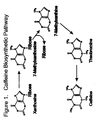
- Caffeine is a naturally occurring purine alkaloid produced by coffee and tea plants, among others. It is believed that caffeine synthesis protects the plants from insects. Coffee plants synthesize caffeine from the nucleoside xanthosine in four sequential reactions as shown in Figure 1. For review see Suzuki, T., Ashihara, H. and Waller, G.R., Phytochemistry 31 :2575 (1992). The first step in the pathway is the methylation of the nucleoside xanthosine by S-adenosylmethionine, which is catalyzed by the enzyme xanthosine N 7 methyl transferase (XMT).
- XMT xanthosine N 7 methyl transferase
- a strategy for selectively eliminating caffeine from coffee plants is to prevent synthesis of specific enzymes in the pathway for caffeine biosynthesis.
- this invention relates to genetic alteration of coffee plants to eliminate synthesis of XMT.
- synthesis of XMT is suppressed by transforming coffee plants with a DNA sequence that codes on transcription for a messenger RNA (mRNA) that is antisense to the mRNA that codes on expression for XMT.
- mRNA messenger RNA
- the invention may be generalized to produce other caffeine free beverages and food products, including tea, cocoa, and other chocolate-based beverages or foods.
- the DNA sequences and recombinant DNA molecules are characterized in that they code on expression for an enzyme, xanthosine N 7 methyl transferase (XMT), that is the first step in the pathway for caffeine synthesis in coffee.
- XMT xanthosine N 7 methyl transferase
- Coffee plants are transformed with DNA molecules that code on transcription for mRNA that is antisense to mRNA that codes on expression for at least one enzyme in the pathway for caffeine biosynthesis.
- the antisense RNA binds to XMT mRNA, thereby inactivating the mRNA encoding the first step in the pathway for caffeine synthesis. The result is that the transformed plants are incapable of synthesizing caffeine, though other aspects of their metabolism is not affected.
- the strategy for producing caffeine free coffee may be generalized to other enzymes in the pathway for caffeine synthesis in coffee and other caffeine producing plants, in the presently preferred embodiment of this invention, the expression of the first unique enzyme in the pathway, xanthosine N 7 methyl transfersase (XMT) is suppressed. While the role of XMT in caffeine synthesis has been elucidated by radiolabeling of precursors, to date the enzyme has not been purified nor has its amino acid sequence been determined. This invention therefore includes substantially purified XMT. The invention further includes the amino acid sequence of tryptic fragments isolated from the purified XMT.
- cDNA probes based on portions the amino acid sequence obtained from samples of the purified enzyme were synthesized and a portion of the gene was amplified using PCR.
- the PCR products were used to screen a cDNA library synthesized from young leaf mRNA to identify transcripts encoding XMT.
- the positive transcripts were sequenced and approximately 90% of the gene encoding XMT was obtained.
- DNA that codes on expression for XMT are incorporated into a pBI-121 transformation vector which includes a kanamycin resistance gene. Successful incorporation of the vectar into plant cells will be monitored by acquisition of antibiotic resistance.
- the constructs are used to transform coffee somatic embryos in tissue culture. The transformed embryos are thereafter grown into novel coffee plants that do not produce caffeine. Naturally decaffeinated coffee is prepared from roasted ground fruit from these novel plants.
- the purity of the protein isolates was determined using SDS PAGE electrophoresis and two dimensional gel electrophoresis. Silver staining of one dimensional SDS PAGE gels indicated the presence of a doublet with the enzymatic activity of XMT, with a molecular weight of 36-37 kiloDaltons (kD) as shown in Figure 2. Each protein was further resolved with isoelectric focusing. The data indicates the presence of isozymes of XMT that may result from post translational modification of the protein; alternatively, there may be a gene family encoding XMT enzymes.
- the cDNA was fractionated and inserted into phage for amplification.
- the cDNA library was screened with a PCR synthesized probe produced using primers based on the DNA sequence expected from the amino acid sequence of the purified XMT.
- a clone producing a cDNA containing all of the sequences encoding XMT has been identified.
- the cDNA corresponding to the gene encoding XMT is used to transform embryonic coffee plants.
- the plasmid pBI-121 is used as a transforming vector.
- the sequences corresponding to DNA that codes on expression for XMT is inserted into the plasmid in an inverted orientation adjacent to a cauliflower mosaic virus 35S promoter.
- RNA transcribed therefrom will be complementary to mRNA that encodes the amino acid sequence of XMT.
- Complete constructs are amplified in bacterial hosts. The hosts are disrupted and the amplified vector is attached to colloidal gold particles.
- the gold particles with adherent vectors are inserted into coffee plant protoplasts by propelling the particles at high speed at the cells as described in U.S. patent 5,107,065. Young plants successfully transformed are identified by antibiotic resistance. The transformed plants do not produce caffeine.
- Young leaf tissue less than 5 mm in length (equivalent to the B3 stage (Frischknecht, P.M., Ulmer-Dufek, J. and Baumann, T.W. (1986) Phytochemistry 25 :613) were collected from trees grown at the University of Hawaii Waimanalo Research Station, Oahu, Hawaii. Leaves were immediately immersed in liquid nitrogen (liquid N 2 ) and stored at -70°C until used. All subsequent procedures were carried out at 4°C unless otherwise stated. Leaf tissue (150 g) was macerated in a mortar and pestle under liquid N 2 and, while still frozen, transferred to a pre-chilled domestic coffee grinder and ground with a small piece of dry ice for about 30 sec.
- the powdered tissue was added to a beaker containing 1.5 L of ice cold 80% acetone, 5 mM thiourea, and 12.5 mM ⁇ -mercaptoethanol. After mixing on a magnetic stirrer for 45 min, the tissue was recovered by filtration under vacuum in a Buchner funnel containing Whatman No. 1 filter paper. The tissue was washed with 2.5 L of 80% ice cold acetone containing thiourea and ⁇ -mercaptoethanol as above, air dried for 20 min and then lyophilized for 48 hours.
- the resulting acetone powder was homogenized in a blender with 400 mL of extraction buffer (EB) (0.1 M PIPES [pH 7.0], 0.5 mM Na 2 EDTA, 0.5 mM Na 2 EGTA, 5% ascorbic acid, 5 mM dithiothreitol [DTT], 5 mM thiourea, 12 mM L-cysteine HCl, 1% polyethylene glycol (PEG) 20,000, 0.1 mM phenylmethylsulfonyl fluoride [PMSF], and 20 g polyvinyl-polypyrrolidone [PVPP]).
- EB extraction buffer
- the 350 mL crude supernatant obtained was brought to 40% ammonium sulfate (AS) saturation over 30 min by the slow addition of 79.86 g AS powder while being stirred in a beaker surrounded by an ice bath.
- AS ammonium sulfate
- the mixture was once again transferred to 250 mL centrifuge bottles and centrifuged at 23,000xg for 30 min as above.
- the 350 mL supernatant obtained was loaded into a 40 mL Macro-Prep (Bio-Rad) methyl hydrophobic interaction chromatography (HIC) column at the flow rate of 2.5 mL/min. All column fractions were monitored for protein using absorbance at 280 nm.
- Macro-Prep Bio-Rad
- HIC methyl hydrophobic interaction chromatography
- the HIC column was washed with pre-equilibration buffer containing 1.7 M AS, 20 mM bis-tris-propane (pH 6.8), and 5 mM DTT until a baseline near zero was established.
- the column was then stripped with a buffer containing 10 mM tris (pH 7.0), 5 mM DTT, 1 mM MgCl 2 .
- the first 15 mL out of the column was discarded and the remaining eluate (200 mL) was loaded under gravity into a 100 mL Affi-Gel blue affinity gel (100-200 mesh, Bio-Rad) column that had the dye Cibacron blue F3GA covalently attached to the matrix.
- the gel was pre-equilibrated with 10 mM tris (pH 7.0), 5 mM DTT, 1 mM MgCl 2 loading buffer.
- the column was washed extensively with this loading buffer until the baseline stabilized near zero, and the bound proteins were eluted with a buffer containing 10 mM tris (pH 7.0), 5mM DTT, and 1.5 M sodium chloride (NaCl).
- the 142 mL Affi-Gel Blue Gel column eluate was made 1.7 M AS by the slow addition of 31.8 g AS powder while being stirred for 30 min in a beaker surrounded by an ice bath.
- the slurry was centrifuged in 250 mL centrifuge bottles at 23,000xg for 30 min as above, and the supernatant loaded into an FPLC Phenyl-Sepharose column XK 26/20 (Pharmacia) at 23°C.
- the column was pre-equilibrated with a buffer containing 20 mM bis-Tris-Propane (pH 6.8), 5 mM DTT, and 1.7 M AS.
- the 0 M AS elution buffer contained 10 mM tris (pH 7.0), 5 mM DTT, and 1 mM MgCl 2 .
- the collection tubes contained 100 ⁇ L 0.5 M tricine buffer (pH 7.0), and 50 mM DTT to give a final concentration in 1 mL of 50 mM tricine (pH 7.0), and 5 mM DTT in 1 min fractions. This in effect stabilized the final pH conditions for the proteins eluted under slightly acidic pH from the Mono-P column.
- the major activity for xanthosine-N 7 -methyltransferase in collection tubes without tricine was found in fractions 15 and 16 of the gradient eluting from the column with a pH of 5.42 and 5.35 respectively. It was important not to freeze the protein samples at any stage of the purification, as this had a substantial negative effect on the activity state of xanthosine-N 7 -methyltransferase.
- the 100 ⁇ L standard assay mixture contained 50 mM tricine (pH 7.0), 1200 ⁇ M xanthosine, 5 mM DTT, 7.5 ⁇ M S-adenosyl-L-[methyl- 14 C]-methionine (SAM) (60mCi/mmol; DuPont NEN), and 1 mM Na 2 EDTA.
- the reaction mixture 50 ⁇ L without enzyme was preincubated for 10 min at 25°C and the reaction was initiated by the addition of 50 ⁇ L enzyme solution and allowed to proceed at 25°C for 1 hour.
- the position of 7-methylxanthosine was determined by its blue fluorescence when exposed to short wavelength UV light. This region was cut out of the chromatograms and the radioactivity was determined by scintillation counting using 3 mL Scinti-verse scintillation fluid (Fisher Scientific). Counting efficiency was 74.7%. Background and non-specific radiation detected in the 7-methylxanthosine region of the zero time samples were subtracted.
- the site of methylation on the xanthine ring was identified by hydrolysis of the sugar from the methylated xanthosine reaction product and separation in 4 different chromatography systems.
- the chromatogram was developed in n -BuOH-HOAc-H 2 O (4:1:1).
- the region of the chromatogram corresponding to methylated xanthosine was detected as above, cut into small pieces, placed in a sterile tube, and incubated with 35 mL of deionized water at 37°C with shaking overnight.
- the extract was filtered through 2 layers of miracloth followed by a 0.22 ⁇ m filter and then lyophilized.
- the dried extract was resuspended in 1.0 mL of deionized water, placed in a glass digestion vial and lyophilized.
- the sample was resuspended in 400 ⁇ L of 1.0 M HCl and incubated for 1 hour at 100°C.
- the digest was lyophilized, resuspended in 400 ⁇ L of 3 mM 7-methylxanthine and again lyophilized.
- the digest was resuspended in 40 ⁇ L of deionized water, and 10 ⁇ L was chromatographed in each of four different systems.
- Extracts obtained as above were used in single dimension (1D) SDS-PAGE minigels (main gel: 12.5% acrylamide, 0.8% methylene bisacrylamide; stacking gel:7.5% acrylamide, 0.21% methylene bisacrylamide) by mixing with Laemmli sample buffer (Laemmli, U.K., Nature 227:680 (1970)), and in two-dimensional (2D) mini IEF/SDS-PAGE by the modified method of O'Farrell et.al. (O'Farrell, P.Z., Goodman, H.M., O'Farrell P.H., Cell 12 :1133 (1977)).
- Two-dimensional electrophoresis was made possible by precipitating proteins with 50 volumes of 100% ethanol for 1 hour and redissolving the proteins in isoelectric focusing (IEF) sample buffer containing 5% ampholines (1:1, v:v, pH 3-10:pH 5-7, LKB-Pharmacia).
- IEF isoelectric focusing
- the ratio of the original protein extract to the IEF sample buffer was maintained at least 1:2 to ensure that any remaining buffer constituents from the chromatography steps did not interfere with IEF.
- Equal total protein samples ( ⁇ 20 ⁇ g) were applied to the basic end of prefocused tube gels (8.8% acrylamide, 1.6% methylene bisacrylamide) containing 5% ampholines as above. The gels were focused for 10,000V-hours plus an additional 2 hours at 1,000 V.
- Blank focused gels were cut into 5 mm sections and incubated in 0.5 mL of 100 mM CaCl 2 for 24 hours, and the pH of the segments was determined. From this analysis, the pH gradient of the IEF gel was estimated to range from 4.4 to 6.0.
- the tube gels were prepared for SDS-PAGE by a brief H 2 O wash followed by three washes (10 min each) in hot Laemmli sample buffer.
- the tube gels were placed on the top of SDS-PAGE gels (main gel:12.5% acrylamide, 0.8% methylene bisacrylamide; stacking gel:7.5% acrylamide, 0.21% methylene bisacrylamide) and held in place with 3% agarose in Laemmli sample buffer. Proteins were visualized by silver-staining. In 1D gels the Mono-P fraction 16 which had the highest enzymic activity indicated only the presence of a doublet under silver staining (Figure 2). The molecular weights of these proteins (kD) were approximately 37.6 and 36.1 kD.
- a 900 ⁇ L portion of Mono-P fraction 16 representing 90 ⁇ g was placed in a sterile 1.5 mL microcentrifuge tube and 216 ⁇ L of 100% trichloroacetic acid (TCA) was added to it. After mixing, the tube was allowed to incubate on ice overnight, and was then centrifuged at 14,000 rpm in a microcentrifuge for 30 min at 4°C. The supernatant was removed by aspiration, and the pellet washed twice with 1 mL of 75% ethanol, each washing being followed by a centrifugation step. The pellet was dried by placing the tube in a speedvac and spinning for 1 min under vacuum.
- TCA trichloroacetic acid
- the precipitate had 20 ⁇ L of 2 x Laemmli sample buffer added to it. It was then boiled in a water bath for 5 min, and then microfuged for 1 min. When the tube temperature had cooled down to 23°C the whole amount was loaded into a single lane of a 12.5% 1 D gel.
- electrophoresis proteins were visualized by staining with 0.1 % Coomassie R-250 in aqueous 50% methanol and 10% acetic acid, (w:v:v), and then destained.
- the same doublet of 37.6 and 36.1 kD observed in silver stained gels was also visible in the Coomassie stained gels. The region of the gel comprising this doublet was cut out and used for protein sequencing by automated Edman degradation.
- Protein sequencing was performed by the University of California, Davis, Protein Structure Laboratory standard protocol.
- the gel piece containing the doublet was washed 4 times with 15 mL of H 2 O by shaking gently for 15 min to remove the acetic acid and SDS remaining from the previous steps.
- the gel piece was diced with a razor blade to 2 mm squares, and transferred to a 1.5 mL microcentrifuge tube.
- the gel pieces were dehydrated in a Speed-Vac for 2 hours until they did not adhere to the tube.
- 30 ⁇ L of gel rehydration buffer (0.1 M Tris-HCl, pH 9.0, 0.05% SDS) was added, and the pH verified at 8.0 by spotting 0.5 ⁇ L on pH paper.
- the digestion enzyme Lys-C (0.2 ug) from Achromobacter lyticus (Wako) was added, along with additional rehydration buffer to completely hydrate the gel pieces and leave a little extra buffer. The mixture was allowed to incubate overnight at 30°C. After the incubation period, the supernatant was removed to a fresh, sterile microcentrifuge tube and stored. Enough water was added to cover the gel pieces, and they were incubated for a further 2 hours at 30°C. The supernatant was removed and stored in the same microcentrifuge as before. This wash step was repeated once more, with the supernatants being combined with the previous two washes.
- the gel pieces were then covered with a solution comprising of 0.1% trifluoroacetic acid (TFA) in 80% acetonitrile, and incubated for 1 hour at 30°C. The supernatant was collected and added to the tube containing all the previous supernatants. The last wash was repeated once more, and the pooled supernatants were dried in a speed-vac.
- TFA trifluoroacetic acid
- the dried tryptic digestion products were dissolved in 25 ⁇ L of 6 M guanidine-HCl, 0.4 M tris (pH 8.2), and the pH verified by spotting 0.5 ⁇ L on pH paper.
- One ⁇ L of 450 mM DTT was added and the digest was incubated for 45 min at 50°C. After cooling to room temperature 2 ⁇ L of 500 mM iodoacetamide was added, and incubated for a further 15 min at 23°C. At the end of this incubation 72 ⁇ L of water was added to give a final concentration of 1.5 M guanidine, and 0.1 M tris.
- the sample was then centrifuged for 5 min at 14,000 rpm in a microcentrifuge and the supernatant was carefully removed to a new microcentrifuge tube.
- To the precipitated pellet 25 ⁇ L of 0.1 % TFA vas added and vortexed.
- the tube was then re-centrifuged as before, and the supernatant added to that from the previous step.
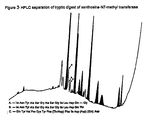
- the cleavage fragments from the tryptic digestion were resolved from each other by capillary high pressure liquid chromatography (HPLC) in a C18 1 mm x 10 cm column, utilizing a linear gradient over 90 min of 5% solvent A (0.1% TFA) to 70% solvent B (0.075% acetonitrile) at a flow rate 100 ⁇ L per min.
- the UV detection was set at 210 nm with the scale ranging from 0 to 0.1 A.
- the recovery of individual peaks indicated the presence of several distinct peptides as shown in Figure 3.
- As a control a portion of the original BDS-PAGE gel that did not contain protein was carried through the digestion process.
- the filled peaks shown in Figure 3 were common between this control and the sample.
- the tissue was then homogenized in a glass beaker in an ice bath for 2 min at high speed in a Polytron homogenizer. Immediately after homogenization 14 mL 3 M sodium acetate (pH 4.0) was added and mixed by operating the homogenizer for an additional 1 min. The homogenate was then stored on ice for 15 min., and subsequently transferred into two 250 mL polypropylene centrifuge tubes. Centrifugation was performed in a GSA (DuPont Sorvall) rotor at 16,000xg for 10 min. The aqueous phase (top layer) was transferred to a new 250 mL polypropylene centrifuge tube and an equal volume of isopropanol was added to it.
- GSA DuPont Sorvall
- This mixture was incubated overnight at -20°C and then centrifuged at 10,000xg for 10 min to collect the precipitated RNA.
- RNA pellet was washed with 70% ethanol and re-centrifuged at 10,000xg for 5 min. The ethanol was decanted and the pellet dried under vacuum for 5 min. The pellet was then resuspended in 15 mL of DEPC-treated water.
- the RNA suspension was transferred into a sterile 40 mL screw-cap centrifuge tube and the insoluble material removed by centrifugation at 10,000xg for 5 min. The supernatant was transferred to a new 40 mL screw-cap centrifuge tube and 5 mL of 8 M LiCl was added to it to give a final concentration of 2 M LiCl. The tube was incubated overnight at 4°C and the RNA was recovered by centrifugation at 14,000xg for 10 min.
- RNA pellet was then washed with 70% ethanol, centrifuged at 10,000xg for 5 min, and briefly dried under vacuum. The pellet was resuspended in 5 mL DEPC-treated water and centrifuged at 10,000xg for 5 min to remove insoluble material. The supernatant was transferred into four sterile 1.5 mL microcentrifuge tubes and stored on ice. The quantitation of 10 ⁇ L of the total RNA solution in a Shimadzu UV 160U spectrophotometer in a 230 to 330 nm spectrum indicated that there was 42.8 mg of RNA. The tubes containing the RNA were stored at -70°C.
- RNA preparation was enriched for poly (A + ) RNA (mRNA) using the PolyATtract II mRNA isolation system kit (Promega Corporation). A 600 ⁇ L aliquot of the total RNA equalling 5.1 mg was added into a tube of the above mentioned kit and made to 2.43 mL final volume with RNase-free water. After heating at 65°C for 10 min, 10 ⁇ L of 50 pmole/ml biotinylated oligo(dT) and 60 ⁇ L of 20x SSC (175.3 g/L NaCl, 88.2 g/L sodium citrate, pH 7.0) were added and the mixture was allowed to slowly cool to room temperature over a period of approximately 30 min.
- the mRNA was recovered by suspending the particles in 1.0 mL RNase-free water and removing the water while the particles were captured on the side of the tube. The water was placed, 500 ⁇ L at a time, into two 1.5 mL sterile microcentrifuge tubes. After the addition of 1/10th volume of 3 M sodium acetate (50 ⁇ L per tube), the mRNA was recovered by precipitation with an equal volume of isopropanol (550 ⁇ L per tube). The tubes were stored at -20°C overnight and then centrifuged at 14,000 rpm for 30 min at 4°C. The pellet was washed with 500 ⁇ L of 75% ice-cold ethanol and re-centrifuged.
- the ethanol was decanted and the pellet dried briefly under vacuum.
- the mRNA was dissolved in 60 ⁇ L of DEPC-treated nuclease-free sterile water. Quantitation was performed on 15 ⁇ L of the dissolved mRNA as described for total RNA. Approximately 9.6 ⁇ g of mRNA was recovered from 5 mg of total RNA.
- First and second strand cDNA was synthesized using the ZAP-cDNA synthesis kit (Stratagene). Four ⁇ g of mRNA in 25 ⁇ L of water was incubated at 65°C for 5 min. Three ⁇ L of 100 mM methyl mercury was added and incubated at room temperature for 10 min. Four ⁇ L of 700 mM ⁇ -mercaptoethanol was added and incubation was continued for an additional 5 min.
- the aqueous phase was removed to a new tube and re-extracted with chloroform.
- the aqueous phase recovered as above.
- the double-stranded cDNA was recovered by precipitation overnight at -20°C after the addition of 33.3 ⁇ L of 3M sodium acetate and 867 ⁇ L of 100% ethanol.
- the precipitate was recovered by centrifugation in a microcentrifuge at 4°C for 60 min.
- the precipitate was washed with 1 ⁇ L of 80% ethanol and recovered by centrifugation at room temperature at full speed in a microcentrifuge.
- the supernatant was removed, the precipitate was dried under vacuum and dissolved in 45 ⁇ L of water.
- Three ⁇ L of the resuspended double-stranded cDNA was removed and frozen at -20°C until analyzed by gel electrophoresis.
- the blunt-ended double-stranded DNA was recovered by precipitation by incubating on ice for 30 min and microcentrifuging at full speed at 4°C for 60 min. The pellet was washed with 300 ⁇ L of 80% ethanol, centrifuged and dried as before. Seven ⁇ L of 0.4 ⁇ g/ ⁇ L Eco RI linkers were added to the dried cDNA.
- the structures of the Eco RI linkers are: After vortexing to resuspend the cDNA, 1 ⁇ L of 10 x ligation buffer, 1 ⁇ L 10 mM ATP and 1 ⁇ L of 4 Weiss u/ ⁇ L T4 DNA ligase was added and the reaction was incubated over night at 8°C. The ligase was inactivated by heating at 70°C for 30 min. The 5' ends of the Eco RI linkers attached to the cDNA were phosphorylated using polynucleotide kinase.
- Xho I "sticky ends" were generated at the end of the cDNA corresponding to the 3' end of the mRNA by digestion of the Xho I site in the linker-primer (see above). Twenty-eight ⁇ L of Xho I buffer and 3 ⁇ L of 40 u/mL Xho I were added to the cDNA and the reaction was incubated at 37°C for 1.5 hours. The cDNA with Eco RI sticky ends at the 5' end and Xho I sticky ends at the 3' end (relative to the original mRNA) were size fractionated by passage through a Sephacryl S-400 spin column as follows.
- One ⁇ L of the 500 ⁇ L primary library was mixed with 9 ⁇ L of SM buffer for a 1/10 dilution.
- the cells were incubated at 37°C for 15 min with gentle shaking.
- the infected cells were then mixed with 2.5 mL of 48°C top agar containing 15 ⁇ L of 0.5 M IPTG, and 50 ⁇ L of 250 mg/ml X-gal and plated on 100x15 mm NZY plates (5 g/L NaCl, 2 g/L MgSO 4 .7H 2 O, 5 g/L yeast extract, 10 g/L NZ amine [pH 7.5], and 15 g/L Difco agar). The plates were incubated overnight at 37°C. Background plaques were blue, while the recombinant plaques were white. The average of three such plates indicated that 1 ⁇ L of primary library produced 1,930 white recombinant plaques, and 65 blue plaques. The total 500 ⁇ L primary library was calculated to represent 965,000 recombinant plaques.
- the SM buffer was collected with a sterile pipette and stored in a sterile 250 mL centrifuge tube. Each plate was washed with about 4 mL of fresh SM buffer which was added to the previously collected material. Chloroform, to a final volume of 5%, was added to the amplified library. The library was then incubated at room temperature for 15 min and then centrifuged at 2,000xg for 10 min to remove cell debris. The supernatant (114.5 mL) was recovered and then transferred to a sterile polypropylene bottle. Chloroform was added to a final volume of 0.3% and the amplified library was stored at 4°C.
- One ⁇ L of a 10 -11 dilution of the amplified library in SM buffer contained 192 recombinant plaques when plated as described above.
- 6.5 mL of 48°C top agar was added and the library was plated on 150x15 mm NZY plates. Four such plates representing 200,000 recombinant plaques, were prepared and incubated at 37°C overnight. The plates were then chilled for 4 hours at 4°C, and then used for DNA screening of the library.
- PCR polymerase chain reaction
- PCR conditions were 94°C for 4 min [1 cycle]; 94°C for 1 min, 43°C for 1 min, 72°C for 1 min [35 cycles]; 72°C for 5 min [1 cycle]).
- Reactions were done in 500 ⁇ L sterile microcentrifuge tubes using a Perkin Elmer DNA thermal cycler 480. Only the primer combination 1 and 6 resulted in a single product at an annealing temperature of 43°C. The product was measured by agarose gel electrophoresis using SeaPlaque agarose (FMC) to be approximately 750 base pairs. A commercially available 100 bp ladder was used as a size marker (Promega Corporation).
- the 750 bp fragment obtained using primers 1 and 6 (Fig.4) in a 50 ⁇ L PCR reaction had 50 ⁇ L of chloroform, and 100 ⁇ L of sterile water added to it. The mixture was vortexed and then centrifuged in a microcentrifuge at 14,000 rpm for 2 min. The top aqueous layer containing the DNA was removed and placed in a sterile tube. Ethidium-bromide plate quantitation indicated the presence of about 5 ng of about PCR amplfied DNA/ ⁇ L.
- the PCR product was then ligated into a TA Cloning Kit pCR II vector (Invitrogen Corporation) in a 10 ⁇ L ligation reaction containing 1 ⁇ L 10 x ligation buffer, 2 ⁇ L pCR II vector (25 ng/ ⁇ L), 3 ⁇ L fresh PCR product (5 ng/ ⁇ L), 1 ⁇ L T4 DNA Ligase, and 3 ⁇ L of sterile water.
- the ligation reaction was incubated at a 14°C overnight.
- the ligation reactions were centrifuged at 14,000 rpm for 2 min and placed on ice. To a freshly thawed vial of E.
- coli XL1-Blue competent cells 2 ⁇ L of 0.5 M â-mercaptoethanol was added and mixed gently with the pipette tip. Two ⁇ L of the ligation reaction was pipetted into the cells and they were stirred gently with the pipette tip to mix. The vial was then incubated on ice for 30 minutes and heat shocked for exactly 30 seconds in a 42°C heat-block. The vial was placed on ice.
- the transformed cells were plated by pipetting 50 ⁇ L and/or 200 ⁇ L from the cell suspension onto one of two LB plates (10 g/L tryptone, 5 g/L yeast extract, 10 g/L NaCl, 15 g/L Difco agar, pH 7.5) containing 50 ⁇ g/mL ampicillin and 40 ⁇ g/mL X-Gal.
- the plates were incubated at 37°C for 20 hours and then moved to 4°C for 3 hours to allow color development.
- Six white transformant colonies were analyzed for the presence and orientation of the PCR fragment.
- Each of the transformant colonies was grown in 5 mL sterile terrific broth (12 g/L tryptone, 24 g/L yeast extract, 4 mL/L glycerol, 100 mL/L 10x TB phosphate [0.17 M KH 2 PO 4 , 0.72 M K 2 HPO 4 ]) supplemented with 50 ⁇ g/mL ampicillin.
- the tubes were incubated overnight in a rotary shaker at 37°C.
- Three mL of each colony was transferred to a 1.5 mL microcentrifuge tube, 1 mL at a time, and the cells concentrated by centrifugation at 14,000 rpm for 2 min. The supernatant was discarded each time and the cell pellet left as dry as possible.
- the cells were washed one time with 1 mL of sterile H 2 O and centrifuged as before. The supernatant was discarded and the cell pellet resuspended in 320 ⁇ L STET buffer (8% sucrose, 0.5% triton X-100, 50 mM EDTA, 10 mM tris-HCl, pH 8.0).
- STET buffer 8% sucrose, 0.5% triton X-100, 50 mM EDTA, 10 mM tris-HCl, pH 8.0.
- 32 ⁇ L of 10 mg/mL lysozyme in TE buffer (10 mL/L 1 M tris-HCl pH 8.0, 2 mL/L 0.5 M EDTA pH 8.0) was added and mixed by inverting the tubes several times. The tubes were placed in a boiling water bath for 5 min, and then placed immediately on ice.
- a reaction mixture of 25 ⁇ L was prepared by adding 15 ⁇ L of plasmid mini-prep DNA as obtained above, 2.5 ⁇ L of buffer H (90 mM tris-HCl [pH 7.5], 10 mM MgCl 2 , 50 mM NaCl), 1 ⁇ L of Eco RI (8-12 u/ ⁇ L), and 6.5 ⁇ L of sterile H 2 O.
- the mixture was incubated in a shaking water bath at 37°C for 1 hour, and then boiled in a water bath for 1 min. The tubes were centrifuged at 14,000 rpm for 15 seconds and then allowed to cool down to room temperature.
- Plasmid DNA was purified using the QIAGEN plasmid mini kit procedure (Qiagen Inc.). The washed bacterial pellet was resuspended in 0.3 mL of buffer P1 which contains the supplied RNase. To this 0.3 mL of alkaline lysis buffer P2 was added, mixed gently by flicking the tube and incubated for no longer than 5 min at room temperature. Next 0.3 mL of chilled buffer P3 was added and mixed by inverting the tube 6 times. After 10 min on ice the extract was centrifuged 14,000 rpm for 15 min in a microcentrifuge.
- the supernatant was removed and applied to a QIAGEN-tip 20 that was previously equilibrated by the application of 1 mL QBT buffer by gravity flow.
- the applied cell extract supernatant was also allowed to enter the resin of the column by gravity flow.
- the QIAGEN-tip 20 was washed 4 times with one mL buffer QC.
- the DNA was eluted by washing the QIAGEN-tip 20 with 0.8 mL buffer QF and precipitated by the addition of 0.7 volumes (560 ⁇ L) of room temperature isopropanol. The tube was immediately centrifuged at 14,000 rpm for 30 min and the supernatant carefully removed.
- the precipitated DNA was washed with 1 mL of ice-cold 70% ethanol, centrifuged as above, and air dried for 5 min.
- the DNA was resuspended in 100 ⁇ L of sterile H 2 O. UV spectrophotometry, as described above, on 1 ⁇ L of the DNA resuspension indicated that there was 55 ⁇ g of purified recombinant pCRII plasmid DNA per 100 ⁇ L.
- a random primed probe was systhesized from 30 ng (3 ⁇ L) of the purified DNA.
- Three ⁇ L of the DNA was added to 27 ⁇ L of sterile water and the DNA was denatured by heating in a boiling water bath.
- the Promega Corporations Prime-a-Gene kit constituents (10 ⁇ L 5x labeling buffer, 2 ⁇ L of unlabeled dNTP's [20 ⁇ M each dCTP, dGTP, TTP], 2 ⁇ L 1 mg/mL acetylated BSA, 1 ⁇ L 5u/ ⁇ L Klenow enzyme) and 5 ⁇ L of [ ⁇ - 32 P]dATP (50 ⁇ Ci, 3,000 Ci/mmole; DuPont NEN) were added to a final volume of 50 ⁇ L, and allowed to incubate at room temperature for 1 hour. The reaction was terminated by the addition of 2 ⁇ L 0.5 M Na 2 EDTA (20 mM final concentration) and heated for 2 min in a boiling
- the four 150x15 mm NZY plates that had approximately 50,000 recombinant clones per plate were chilled to 4°C (see above for plating and growth conditions), and the recombinant plaques lifted by first presoaking 132 mm Magna nylon transfer membranes (MSI Corporation) on chromatography paper saturated with 5x SSC buffer for 10 sec. The membranes were placed onto the plates containing the recombinant plaques for 5 min, and then lifted and placed, phage containing side up, for 2 min on chromatography paper saturated with 0.5 M NaOH and 1.5 M NaCl. The membranes were neutralized by transferring onto chromatography paper saturated with 0.5 M tris-HCl (pH 8.0) and 1.5 M NaCl for 5 min.
- the four membranes were prehybridized at 65°C for 2 hours in 100 mL 6x SSPE (52.2 g/L NaCl, 8.3 g/L NaH 2 PO 4 .H 2 O, 2.2 g/L Na 2 EDTA, [pH 7.4]), 5x Denhardt's solution (1 g/L Ficoll, 1 g/L polyvinylpyrrolidone, 1 g/L BSA [pentax fraction V]), 0.5% SDS and 100 ⁇ g/mL denatured herring sperm DNA in a Hybrid Mark II hybridization oven.
- 6x SSPE 52.2 g/L NaCl, 8.3 g/L NaH 2 PO 4 .H 2 O, 2.2 g/L Na 2 EDTA, [pH 7.4]
- 5x Denhardt's solution (1 g/L Ficoll, 1 g/L polyvinylpyrrolidone, 1 g/L BSA [pentax fraction V]
- Hybridization was carried out at 65°C for 12 hours in 10 mL of 6x SSPE, 0.5% SDS, 100 ⁇ g/mL powdered/denatured herring sperm DNA, and 52 ⁇ L 15 X10 6 dpms/ml of the random primed probe described above.
- the probe was removed and the membranes briefly washed for 30 sec with 100 mL of 65°C 2x SSC containing 0.5% SDS. The membranes were then washed for an additional 30 min with the same amount and concentration of fresh buffer.
- the membranes were subjected to two more 100 mL washes for 30 min with 65°C, 0.2x SSC, 0.5% SDS, and then rapped in a cellophane envelope and exposed to pre-flashed Fuji RX GCU X-ray film at -70°C for 24 hours. Fifteen positive clones were observed. These plaques were picked and placed in 1 mL SM buffer containing 20 ⁇ L chloroform (phage stock). Of these, 11 were processed to secondary or tertiary screening until single individual plaques were obtained.
- the sizes of the putative xanthosine-N 7 -methyltransferase cDNA clones were determined by polymerase chain reaction using primers homologous to the T3 and T7 promoters that are present in the cloning vector and that flank the cDNA insertion site. Conditions for polymerase chain reaction were as described above except that the cycle was 35 cycles of 95°C for 1 minute, 50°C for 1 minute and 72°C for 2 minutes. Analysis was by agarose gel electrophoresis as before. The three largest clones obtained were subjected to in vivo excision by mixing in a sterile tube 200 ⁇ L of single plaque phage stock with 200 ⁇ L of fresh XL1-Blue MRF' cells grown to an O.D.
Landscapes
- Health & Medical Sciences (AREA)
- Life Sciences & Earth Sciences (AREA)
- Genetics & Genomics (AREA)
- Engineering & Computer Science (AREA)
- Chemical & Material Sciences (AREA)
- Wood Science & Technology (AREA)
- Organic Chemistry (AREA)
- Bioinformatics & Cheminformatics (AREA)
- Biotechnology (AREA)
- Zoology (AREA)
- Biomedical Technology (AREA)
- General Engineering & Computer Science (AREA)
- Molecular Biology (AREA)
- Biochemistry (AREA)
- General Health & Medical Sciences (AREA)
- Microbiology (AREA)
- Plant Pathology (AREA)
- Physics & Mathematics (AREA)
- Biophysics (AREA)
- Nutrition Science (AREA)
- Medicinal Chemistry (AREA)
- Cell Biology (AREA)
- Enzymes And Modification Thereof (AREA)
- Preparation Of Compounds By Using Micro-Organisms (AREA)
- Micro-Organisms Or Cultivation Processes Thereof (AREA)
- Breeding Of Plants And Reproduction By Means Of Culturing (AREA)
- Tea And Coffee (AREA)
- Peptides Or Proteins (AREA)
Applications Claiming Priority (3)
| Application Number | Priority Date | Filing Date | Title |
|---|---|---|---|
| US08/622,679 US6075184A (en) | 1996-03-26 | 1996-03-26 | Purified proteins, recombinant DNA sequences and processes for producing caffeine free beverages |
| US622679 | 1996-03-26 | ||
| PCT/US1997/004982 WO1997035960A1 (en) | 1996-03-26 | 1997-03-24 | Purified proteins, recombinant dna sequences and processes for producing caffeine free beverages |
Publications (3)
| Publication Number | Publication Date |
|---|---|
| EP0862635A1 EP0862635A1 (en) | 1998-09-09 |
| EP0862635A4 EP0862635A4 (enExample) | 1998-09-16 |
| EP0862635B1 true EP0862635B1 (en) | 2006-10-11 |
Family
ID=24495092
Family Applications (1)
| Application Number | Title | Priority Date | Filing Date |
|---|---|---|---|
| EP97919934A Expired - Lifetime EP0862635B1 (en) | 1996-03-26 | 1997-03-24 | Purified proteins, recombinant dna sequences and processes for producing caffeine free beverages |
Country Status (23)
| Country | Link |
|---|---|
| US (2) | US6075184A (enExample) |
| EP (1) | EP0862635B1 (enExample) |
| JP (1) | JP2001519649A (enExample) |
| KR (1) | KR100561889B1 (enExample) |
| AP (1) | AP752A (enExample) |
| AT (1) | ATE342363T1 (enExample) |
| AU (1) | AU711481B2 (enExample) |
| BR (1) | BR9710815A (enExample) |
| CA (1) | CA2257120A1 (enExample) |
| CZ (1) | CZ295397B6 (enExample) |
| DE (1) | DE69736801T2 (enExample) |
| EA (1) | EA003835B1 (enExample) |
| ES (1) | ES2275285T3 (enExample) |
| FI (1) | FI982070L (enExample) |
| HU (1) | HUP0300851A3 (enExample) |
| IS (1) | IS4851A (enExample) |
| NO (1) | NO324871B1 (enExample) |
| NZ (1) | NZ330290A (enExample) |
| OA (1) | OA11175A (enExample) |
| PT (1) | PT862635E (enExample) |
| TR (1) | TR199801909T2 (enExample) |
| UA (1) | UA73465C2 (enExample) |
| WO (1) | WO1997035960A1 (enExample) |
Families Citing this family (12)
| Publication number | Priority date | Publication date | Assignee | Title |
|---|---|---|---|---|
| US6448474B1 (en) | 1995-06-07 | 2002-09-10 | University Of Hawaii | Purified proteins, recombinant DNA sequences and processes for controlling the ripening of coffee plants |
| WO1998042848A1 (en) * | 1997-03-24 | 1998-10-01 | University Of Hawaii | Purified proteins, recombinant dna sequences and processes for producing caffeine free beverages |
| WO1998036053A2 (en) * | 1998-02-13 | 1998-08-20 | University Of Hawaii | Purified proteins, recombinant dna sequences and processes for producing caffeine free beverages |
| US6930227B1 (en) * | 1999-05-26 | 2005-08-16 | Mitsui Chemicals, Inc. | Camellia sinensis gene encoding a caffeine synthesis associated n-methyl transferase with 7-methylxanthine n3 methyl transferase, theobromine n1 methyl transferase, and paraxanthine n3 methyl transferase activities and use thereof |
| JP3520328B2 (ja) | 2000-10-06 | 2004-04-19 | 奈良先端科学技術大学院大学長 | コーヒー属植物のテオブロミン合成酵素ポリペプチド及び当該ポリペプチドをコードする遺伝子 |
| JP2004049022A (ja) * | 2002-07-16 | 2004-02-19 | Nara Institute Of Science & Technology | 遺伝子組換えによるカフェインレスコーヒー植物の製造方法 |
| US8609366B2 (en) * | 2006-07-28 | 2013-12-17 | Legacy Emanuel Hospital & Health Center | Method and systems for tissue culture |
| GB0803068D0 (en) * | 2008-02-20 | 2008-03-26 | Health Prot Agency | Cross-linked biological indicator |
| US10466245B2 (en) | 2008-02-20 | 2019-11-05 | The Secretary Of State For Health | Covalently linked thermostable kinase for decontamination process validation |
| CN105861408B (zh) * | 2016-06-22 | 2019-11-19 | 安徽农业大学 | 发酵生产咖啡碱的工程菌、其构建方法及应用 |
| JP7422069B2 (ja) | 2017-09-19 | 2024-01-25 | トロピック バイオサイエンシーズ ユーケー リミテッド | 真核細胞において遺伝子発現をサイレンシングするための非コードrna分子の特異性の改変 |
| GB201807192D0 (en) * | 2018-05-01 | 2018-06-13 | Tropic Biosciences Uk Ltd | Compositions and methods for reducing caffeine content in coffee beans |
Family Cites Families (13)
| Publication number | Priority date | Publication date | Assignee | Title |
|---|---|---|---|---|
| US5453566A (en) | 1986-03-28 | 1995-09-26 | Calgene, Inc. | Antisense regulation of gene expression in plant/cells |
| NZ219472A (en) * | 1986-03-28 | 1990-08-28 | Calgene Inc | Regulation of phenotype in plant cells using dsdna constructs |
| US5296376A (en) | 1986-11-04 | 1994-03-22 | Imperial Chemical Industries Plc | DNA, constructs, cells and plants derived therefrom |
| US5436395A (en) | 1988-11-07 | 1995-07-25 | Kraft Foods, Inc. | Induction and selection of somaclonal variation in coffee |
| KR920701453A (ko) | 1989-03-17 | 1992-08-11 | 미리엄 디. 멕코나헤이 | 유전자발현의 외부조절 |
| US5334529A (en) * | 1989-06-27 | 1994-08-02 | Escagenetics Corporation | Stably transformed coffee plant cells and plantlets |
| GB8916213D0 (en) * | 1989-07-14 | 1989-08-31 | Ici Plc | Dna constructs,cells and plants derived therefrom |
| MX9100993A (es) * | 1990-09-10 | 1992-05-04 | Us Agriculture | Secuencia de adn aislado y enzima acido 1-aminociclopropan-1-carboxilico sintasa,recombinante |
| US5457041A (en) | 1994-03-25 | 1995-10-10 | Science Applications International Corporation | Needle array and method of introducing biological substances into living cells using the needle array |
| AU715924B2 (en) * | 1994-09-02 | 2000-02-10 | Seminis Vegetable Seeds, Inc. | Transgenic plants expressing ACC oxidase genes |
| US5633440A (en) * | 1994-12-20 | 1997-05-27 | Dna Plant Technology Corporation | P119 promoters and their uses |
| WO1996021027A1 (en) * | 1994-12-30 | 1996-07-11 | Asgrow Seed Company | Transgenic plants expressing acc synthase gene |
| WO1998036053A2 (en) * | 1998-02-13 | 1998-08-20 | University Of Hawaii | Purified proteins, recombinant dna sequences and processes for producing caffeine free beverages |
-
1996
- 1996-03-26 US US08/622,679 patent/US6075184A/en not_active Expired - Fee Related
-
1997
- 1997-03-24 EA EA199800765A patent/EA003835B1/ru not_active IP Right Cessation
- 1997-03-24 EP EP97919934A patent/EP0862635B1/en not_active Expired - Lifetime
- 1997-03-24 UA UA98095007A patent/UA73465C2/uk unknown
- 1997-03-24 BR BR9710815-4A patent/BR9710815A/pt not_active Application Discontinuation
- 1997-03-24 CA CA002257120A patent/CA2257120A1/en not_active Abandoned
- 1997-03-24 HU HU0300851A patent/HUP0300851A3/hu not_active Application Discontinuation
- 1997-03-24 PT PT97919934T patent/PT862635E/pt unknown
- 1997-03-24 TR TR1998/01909T patent/TR199801909T2/xx unknown
- 1997-03-24 ES ES97919934T patent/ES2275285T3/es not_active Expired - Lifetime
- 1997-03-24 JP JP53462397A patent/JP2001519649A/ja not_active Ceased
- 1997-03-24 NZ NZ330290A patent/NZ330290A/xx unknown
- 1997-03-24 FI FI982070A patent/FI982070L/fi not_active IP Right Cessation
- 1997-03-24 KR KR1019980711025A patent/KR100561889B1/ko not_active Expired - Fee Related
- 1997-03-24 AP APAP/P/1998/001347A patent/AP752A/en active
- 1997-03-24 CZ CZ19983091A patent/CZ295397B6/cs not_active IP Right Cessation
- 1997-03-24 WO PCT/US1997/004982 patent/WO1997035960A1/en not_active Ceased
- 1997-03-24 AT AT97919934T patent/ATE342363T1/de not_active IP Right Cessation
- 1997-03-24 AU AU45111/97A patent/AU711481B2/en not_active Ceased
- 1997-03-24 DE DE69736801T patent/DE69736801T2/de not_active Expired - Fee Related
-
1998
- 1998-09-18 OA OA9800172A patent/OA11175A/en unknown
- 1998-09-23 IS IS4851A patent/IS4851A/is unknown
- 1998-09-25 NO NO19984463A patent/NO324871B1/no unknown
- 1998-10-02 US US09/165,922 patent/US6348641B1/en not_active Expired - Fee Related
Also Published As
Similar Documents
| Publication | Publication Date | Title |
|---|---|---|
| Weaver et al. | Dbp3p, a putative RNA helicase in Saccharomyces cerevisiae, is required for efficient pre-rRNA processing predominantly at site A3 | |
| Taylor et al. | Genes with homology to fungal and S-gene RNases are expressed in Arabidopsis thaliana | |
| AU711481B2 (en) | Purified proteins, recombinant DNA sequences and processes for producing caffeine free beverages | |
| Guo et al. | Molecular cloning and expression of alfalfa (Medicago sativa L.) vestitone reductase, the penultimate enzyme in medicarpin biosynthesis | |
| CA2260765C (en) | Purified proteins, recombinant dna sequences and processes for controlling the ripening of coffee plants | |
| US6734342B2 (en) | Theobromine synthase polypeptide of coffee plant and the gene encoding said polypeptide | |
| WO1998036053A2 (en) | Purified proteins, recombinant dna sequences and processes for producing caffeine free beverages | |
| WO1998042848A1 (en) | Purified proteins, recombinant dna sequences and processes for producing caffeine free beverages | |
| US20070218461A1 (en) | Indole-Diterpene Biosynthesis | |
| US6727406B2 (en) | Purified proteins, recombinant DNA sequences and processes for controlling the ripening of coffee plants | |
| JPH11178577A (ja) | ノルコクラウリン6−o−メチルトランスフェラーゼおよび該酵素遺伝子 | |
| EP0824591A1 (en) | Transgenic carnations exhibit prolonged post-harvest life | |
| JP2000516462A (ja) | 改変されたトマト斑紋ジェミニウイルスコート蛋白質遺伝子 | |
| AU4690193A (en) | Genetic sequences encoding flavonol synthase enzymes and uses therefor |
Legal Events
| Date | Code | Title | Description |
|---|---|---|---|
| PUAI | Public reference made under article 153(3) epc to a published international application that has entered the european phase |
Free format text: ORIGINAL CODE: 0009012 |
|
| 17P | Request for examination filed |
Effective date: 19980430 |
|
| AK | Designated contracting states |
Kind code of ref document: A1 Designated state(s): AT BE CH DE DK ES FI FR GB GR IE IT LI LU MC NL PT SE |
|
| A4 | Supplementary search report drawn up and despatched |
Effective date: 19980731 |
|
| AK | Designated contracting states |
Kind code of ref document: A4 Designated state(s): AT BE CH DE DK ES FI FR GB GR IE IT LI LU MC NL PT SE |
|
| 17Q | First examination report despatched |
Effective date: 20030506 |
|
| GRAP | Despatch of communication of intention to grant a patent |
Free format text: ORIGINAL CODE: EPIDOSNIGR1 |
|
| GRAS | Grant fee paid |
Free format text: ORIGINAL CODE: EPIDOSNIGR3 |
|
| GRAA | (expected) grant |
Free format text: ORIGINAL CODE: 0009210 |
|
| AK | Designated contracting states |
Kind code of ref document: B1 Designated state(s): AT BE CH DE DK ES FI FR GB GR IE IT LI LU MC NL PT SE |
|
| PG25 | Lapsed in a contracting state [announced via postgrant information from national office to epo] |
Ref country code: FI Free format text: LAPSE BECAUSE OF FAILURE TO SUBMIT A TRANSLATION OF THE DESCRIPTION OR TO PAY THE FEE WITHIN THE PRESCRIBED TIME-LIMIT Effective date: 20061011 |
|
| REG | Reference to a national code |
Ref country code: GB Ref legal event code: FG4D |
|
| REG | Reference to a national code |
Ref country code: CH Ref legal event code: EP |
|
| REG | Reference to a national code |
Ref country code: IE Ref legal event code: FG4D |
|
| REF | Corresponds to: |
Ref document number: 69736801 Country of ref document: DE Date of ref document: 20061123 Kind code of ref document: P |
|
| PG25 | Lapsed in a contracting state [announced via postgrant information from national office to epo] |
Ref country code: SE Free format text: LAPSE BECAUSE OF FAILURE TO SUBMIT A TRANSLATION OF THE DESCRIPTION OR TO PAY THE FEE WITHIN THE PRESCRIBED TIME-LIMIT Effective date: 20070111 Ref country code: DK Free format text: LAPSE BECAUSE OF FAILURE TO SUBMIT A TRANSLATION OF THE DESCRIPTION OR TO PAY THE FEE WITHIN THE PRESCRIBED TIME-LIMIT Effective date: 20070111 |
|
| REG | Reference to a national code |
Ref country code: PT Ref legal event code: SC4A Free format text: AVAILABILITY OF NATIONAL TRANSLATION Effective date: 20061229 |
|
| REG | Reference to a national code |
Ref country code: CH Ref legal event code: NV Representative=s name: CRONIN INTELLECTUAL PROPERTY Ref country code: GR Ref legal event code: EP Ref document number: 20070400021 Country of ref document: GR |
|
| PGFP | Annual fee paid to national office [announced via postgrant information from national office to epo] |
Ref country code: DE Payment date: 20070322 Year of fee payment: 11 |
|
| PGFP | Annual fee paid to national office [announced via postgrant information from national office to epo] |
Ref country code: NL Payment date: 20070325 Year of fee payment: 11 |
|
| PGFP | Annual fee paid to national office [announced via postgrant information from national office to epo] |
Ref country code: LU Payment date: 20070326 Year of fee payment: 11 |
|
| PGFP | Annual fee paid to national office [announced via postgrant information from national office to epo] |
Ref country code: PT Payment date: 20070327 Year of fee payment: 11 |
|
| PGFP | Annual fee paid to national office [announced via postgrant information from national office to epo] |
Ref country code: MC Payment date: 20070328 Year of fee payment: 11 Ref country code: AT Payment date: 20070328 Year of fee payment: 11 |
|
| PGFP | Annual fee paid to national office [announced via postgrant information from national office to epo] |
Ref country code: IE Payment date: 20070329 Year of fee payment: 11 |
|
| PGFP | Annual fee paid to national office [announced via postgrant information from national office to epo] |
Ref country code: ES Payment date: 20070330 Year of fee payment: 11 |
|
| REG | Reference to a national code |
Ref country code: CH Ref legal event code: PCAR Free format text: CRONIN INTELLECTUAL PROPERTY;CHEMIN DE PRECOSSY 31;1260 NYON (CH) |
|
| ET | Fr: translation filed | ||
| PGFP | Annual fee paid to national office [announced via postgrant information from national office to epo] |
Ref country code: BE Payment date: 20070514 Year of fee payment: 11 |
|
| REG | Reference to a national code |
Ref country code: ES Ref legal event code: FG2A Ref document number: 2275285 Country of ref document: ES Kind code of ref document: T3 |
|
| PLBE | No opposition filed within time limit |
Free format text: ORIGINAL CODE: 0009261 |
|
| STAA | Information on the status of an ep patent application or granted ep patent |
Free format text: STATUS: NO OPPOSITION FILED WITHIN TIME LIMIT |
|
| 26N | No opposition filed |
Effective date: 20070712 |
|
| PGFP | Annual fee paid to national office [announced via postgrant information from national office to epo] |
Ref country code: CH Payment date: 20080326 Year of fee payment: 12 |
|
| PGFP | Annual fee paid to national office [announced via postgrant information from national office to epo] |
Ref country code: GB Payment date: 20080326 Year of fee payment: 12 |
|
| BERE | Be: lapsed |
Owner name: UNIVERSITY OF HAWAII Effective date: 20080331 |
|
| PGFP | Annual fee paid to national office [announced via postgrant information from national office to epo] |
Ref country code: IT Payment date: 20080329 Year of fee payment: 12 |
|
| REG | Reference to a national code |
Ref country code: PT Ref legal event code: MM4A Free format text: LAPSE DUE TO NON-PAYMENT OF FEES Effective date: 20080924 |
|
| PG25 | Lapsed in a contracting state [announced via postgrant information from national office to epo] |
Ref country code: PT Free format text: LAPSE BECAUSE OF NON-PAYMENT OF DUE FEES Effective date: 20080924 Ref country code: MC Free format text: LAPSE BECAUSE OF NON-PAYMENT OF DUE FEES Effective date: 20080331 |
|
| PG25 | Lapsed in a contracting state [announced via postgrant information from national office to epo] |
Ref country code: NL Free format text: LAPSE BECAUSE OF NON-PAYMENT OF DUE FEES Effective date: 20081001 Ref country code: AT Free format text: LAPSE BECAUSE OF NON-PAYMENT OF DUE FEES Effective date: 20080324 |
|
| PGFP | Annual fee paid to national office [announced via postgrant information from national office to epo] |
Ref country code: FR Payment date: 20080328 Year of fee payment: 12 |
|
| NLV4 | Nl: lapsed or anulled due to non-payment of the annual fee |
Effective date: 20081001 |
|
| PG25 | Lapsed in a contracting state [announced via postgrant information from national office to epo] |
Ref country code: IE Free format text: LAPSE BECAUSE OF NON-PAYMENT OF DUE FEES Effective date: 20080324 Ref country code: DE Free format text: LAPSE BECAUSE OF NON-PAYMENT OF DUE FEES Effective date: 20081001 |
|
| PG25 | Lapsed in a contracting state [announced via postgrant information from national office to epo] |
Ref country code: BE Free format text: LAPSE BECAUSE OF NON-PAYMENT OF DUE FEES Effective date: 20080331 |
|
| PGFP | Annual fee paid to national office [announced via postgrant information from national office to epo] |
Ref country code: GR Payment date: 20080326 Year of fee payment: 12 |
|
| REG | Reference to a national code |
Ref country code: ES Ref legal event code: FD2A Effective date: 20080325 |
|
| PG25 | Lapsed in a contracting state [announced via postgrant information from national office to epo] |
Ref country code: ES Free format text: LAPSE BECAUSE OF NON-PAYMENT OF DUE FEES Effective date: 20080325 |
|
| REG | Reference to a national code |
Ref country code: CH Ref legal event code: PL |
|
| GBPC | Gb: european patent ceased through non-payment of renewal fee |
Effective date: 20090324 |
|
| REG | Reference to a national code |
Ref country code: FR Ref legal event code: ST Effective date: 20091130 |
|
| PG25 | Lapsed in a contracting state [announced via postgrant information from national office to epo] |
Ref country code: LI Free format text: LAPSE BECAUSE OF NON-PAYMENT OF DUE FEES Effective date: 20090331 Ref country code: CH Free format text: LAPSE BECAUSE OF NON-PAYMENT OF DUE FEES Effective date: 20090331 |
|
| PG25 | Lapsed in a contracting state [announced via postgrant information from national office to epo] |
Ref country code: GB Free format text: LAPSE BECAUSE OF NON-PAYMENT OF DUE FEES Effective date: 20090324 Ref country code: FR Free format text: LAPSE BECAUSE OF NON-PAYMENT OF DUE FEES Effective date: 20091123 |
|
| PG25 | Lapsed in a contracting state [announced via postgrant information from national office to epo] |
Ref country code: LU Free format text: LAPSE BECAUSE OF NON-PAYMENT OF DUE FEES Effective date: 20080324 Ref country code: GR Free format text: LAPSE BECAUSE OF NON-PAYMENT OF DUE FEES Effective date: 20091002 |
|
| PG25 | Lapsed in a contracting state [announced via postgrant information from national office to epo] |
Ref country code: IT Free format text: LAPSE BECAUSE OF NON-PAYMENT OF DUE FEES Effective date: 20090324 |