EP0830161B1 - Nitric oxide-releasing nitroso compositions and methods and intravascular devices for using them to prevent restenosis - Google Patents
Nitric oxide-releasing nitroso compositions and methods and intravascular devices for using them to prevent restenosis Download PDFInfo
- Publication number
- EP0830161B1 EP0830161B1 EP96912990A EP96912990A EP0830161B1 EP 0830161 B1 EP0830161 B1 EP 0830161B1 EP 96912990 A EP96912990 A EP 96912990A EP 96912990 A EP96912990 A EP 96912990A EP 0830161 B1 EP0830161 B1 EP 0830161B1
- Authority
- EP
- European Patent Office
- Prior art keywords
- nitric oxide
- blood
- polymer
- nitroso compound
- stent
- Prior art date
- Legal status (The legal status is an assumption and is not a legal conclusion. Google has not performed a legal analysis and makes no representation as to the accuracy of the status listed.)
- Expired - Lifetime
Links
- MWUXSHHQAYIFBG-UHFFFAOYSA-N Nitric oxide Chemical compound O=[N] MWUXSHHQAYIFBG-UHFFFAOYSA-N 0.000 title claims abstract description 106
- 238000000034 method Methods 0.000 title claims description 30
- 239000000203 mixture Substances 0.000 title claims description 9
- 125000000018 nitroso group Chemical group N(=O)* 0.000 title description 7
- 208000037803 restenosis Diseases 0.000 title description 7
- 150000002832 nitroso derivatives Chemical class 0.000 claims abstract description 35
- 229920000642 polymer Polymers 0.000 claims abstract description 33
- 239000011248 coating agent Substances 0.000 claims abstract description 30
- 238000000576 coating method Methods 0.000 claims abstract description 30
- 210000004369 blood Anatomy 0.000 claims abstract description 28
- 239000008280 blood Substances 0.000 claims abstract description 28
- LUQZKEZPFQRRRK-UHFFFAOYSA-N 2-methyl-2-nitrosopropane Chemical compound CC(C)(C)N=O LUQZKEZPFQRRRK-UHFFFAOYSA-N 0.000 claims abstract description 17
- 208000010110 spontaneous platelet aggregation Diseases 0.000 claims abstract description 16
- 210000004204 blood vessel Anatomy 0.000 claims abstract description 15
- 230000036760 body temperature Effects 0.000 claims abstract description 10
- 229920002451 polyvinyl alcohol Polymers 0.000 claims abstract description 9
- 238000007887 coronary angioplasty Methods 0.000 claims abstract description 8
- 238000001356 surgical procedure Methods 0.000 claims abstract description 8
- 239000004372 Polyvinyl alcohol Substances 0.000 claims abstract description 7
- 230000002631 hypothermal effect Effects 0.000 claims abstract description 6
- 229920003023 plastic Polymers 0.000 claims abstract description 6
- 239000004033 plastic Substances 0.000 claims abstract description 6
- 230000002776 aggregation Effects 0.000 claims abstract description 5
- 238000004220 aggregation Methods 0.000 claims abstract description 5
- 230000002401 inhibitory effect Effects 0.000 claims abstract description 4
- 102000009123 Fibrin Human genes 0.000 claims description 14
- 108010073385 Fibrin Proteins 0.000 claims description 14
- BWGVNKXGVNDBDI-UHFFFAOYSA-N Fibrin monomer Chemical compound CNC(=O)CNC(=O)CN BWGVNKXGVNDBDI-UHFFFAOYSA-N 0.000 claims description 14
- 229950003499 fibrin Drugs 0.000 claims description 14
- 108090000190 Thrombin Proteins 0.000 claims description 8
- 239000008135 aqueous vehicle Substances 0.000 claims description 8
- 229960004072 thrombin Drugs 0.000 claims description 8
- 239000000539 dimer Substances 0.000 claims description 7
- 239000000178 monomer Substances 0.000 claims description 7
- 210000002381 plasma Anatomy 0.000 claims description 7
- 210000004623 platelet-rich plasma Anatomy 0.000 claims description 7
- 230000002265 prevention Effects 0.000 claims description 5
- 238000003780 insertion Methods 0.000 claims description 4
- 230000037431 insertion Effects 0.000 claims description 4
- 239000003981 vehicle Substances 0.000 claims description 4
- 125000004178 (C1-C4) alkyl group Chemical group 0.000 claims description 3
- 239000002253 acid Substances 0.000 claims description 3
- 125000003118 aryl group Chemical group 0.000 claims description 3
- 229910052751 metal Inorganic materials 0.000 claims description 3
- 239000002184 metal Substances 0.000 claims description 3
- 230000001737 promoting effect Effects 0.000 claims description 3
- 125000003158 alcohol group Chemical group 0.000 claims description 2
- 239000008199 coating composition Substances 0.000 claims description 2
- 125000000623 heterocyclic group Chemical group 0.000 claims description 2
- 239000007788 liquid Substances 0.000 claims description 2
- 125000002950 monocyclic group Chemical group 0.000 claims description 2
- 150000007524 organic acids Chemical class 0.000 claims description 2
- 125000001997 phenyl group Chemical group [H]C1=C([H])C([H])=C(*)C([H])=C1[H] 0.000 claims description 2
- 229920000233 poly(alkylene oxides) Polymers 0.000 claims description 2
- 125000002837 carbocyclic group Chemical group 0.000 claims 1
- 125000003367 polycyclic group Chemical group 0.000 claims 1
- 230000001404 mediated effect Effects 0.000 abstract description 2
- 208000007536 Thrombosis Diseases 0.000 abstract 1
- 230000004199 lung function Effects 0.000 abstract 1
- 208000010125 myocardial infarction Diseases 0.000 abstract 1
- 150000001875 compounds Chemical class 0.000 description 12
- 238000002399 angioplasty Methods 0.000 description 10
- 238000012377 drug delivery Methods 0.000 description 10
- 239000003814 drug Substances 0.000 description 9
- 229940079593 drug Drugs 0.000 description 8
- 239000002840 nitric oxide donor Substances 0.000 description 7
- 235000019422 polyvinyl alcohol Nutrition 0.000 description 7
- 239000012528 membrane Substances 0.000 description 6
- 239000000243 solution Substances 0.000 description 5
- 229910001220 stainless steel Inorganic materials 0.000 description 5
- 229920002988 biodegradable polymer Polymers 0.000 description 4
- 239000004621 biodegradable polymer Substances 0.000 description 4
- 238000002513 implantation Methods 0.000 description 4
- 230000004044 response Effects 0.000 description 4
- 239000010935 stainless steel Substances 0.000 description 4
- 210000001519 tissue Anatomy 0.000 description 4
- 230000002792 vascular Effects 0.000 description 4
- XLYOFNOQVPJJNP-UHFFFAOYSA-N water Substances O XLYOFNOQVPJJNP-UHFFFAOYSA-N 0.000 description 4
- 230000004913 activation Effects 0.000 description 3
- 238000013459 approach Methods 0.000 description 3
- 238000006243 chemical reaction Methods 0.000 description 3
- 230000001419 dependent effect Effects 0.000 description 3
- 230000008021 deposition Effects 0.000 description 3
- -1 e.g. Chemical group 0.000 description 3
- 238000004519 manufacturing process Methods 0.000 description 3
- 229920001059 synthetic polymer Polymers 0.000 description 3
- 238000012360 testing method Methods 0.000 description 3
- NLXLAEXVIDQMFP-UHFFFAOYSA-N Ammonia chloride Chemical compound [NH4+].[Cl-] NLXLAEXVIDQMFP-UHFFFAOYSA-N 0.000 description 2
- 239000004215 Carbon black (E152) Substances 0.000 description 2
- OIPILFWXSMYKGL-UHFFFAOYSA-N acetylcholine Chemical compound CC(=O)OCC[N+](C)(C)C OIPILFWXSMYKGL-UHFFFAOYSA-N 0.000 description 2
- 229960004373 acetylcholine Drugs 0.000 description 2
- 239000003146 anticoagulant agent Substances 0.000 description 2
- 229940127219 anticoagulant drug Drugs 0.000 description 2
- 210000001367 artery Anatomy 0.000 description 2
- 239000007853 buffer solution Substances 0.000 description 2
- 125000004432 carbon atom Chemical group C* 0.000 description 2
- 210000003038 endothelium Anatomy 0.000 description 2
- 239000012530 fluid Substances 0.000 description 2
- 238000010505 homolytic fission reaction Methods 0.000 description 2
- 229930195733 hydrocarbon Natural products 0.000 description 2
- 150000002430 hydrocarbons Chemical class 0.000 description 2
- 125000002496 methyl group Chemical group [H]C([H])([H])* 0.000 description 2
- 210000000440 neutrophil Anatomy 0.000 description 2
- 231100000252 nontoxic Toxicity 0.000 description 2
- 230000003000 nontoxic effect Effects 0.000 description 2
- 230000008520 organization Effects 0.000 description 2
- 230000003647 oxidation Effects 0.000 description 2
- 238000007254 oxidation reaction Methods 0.000 description 2
- 238000002360 preparation method Methods 0.000 description 2
- 230000008569 process Effects 0.000 description 2
- 230000002035 prolonged effect Effects 0.000 description 2
- 150000003254 radicals Chemical class 0.000 description 2
- LKZMBDSASOBTPN-UHFFFAOYSA-L silver carbonate Substances [Ag].[O-]C([O-])=O LKZMBDSASOBTPN-UHFFFAOYSA-L 0.000 description 2
- ZXSQEZNORDWBGZ-UHFFFAOYSA-N 1,3-dihydropyrrolo[2,3-b]pyridin-2-one Chemical compound C1=CN=C2NC(=O)CC2=C1 ZXSQEZNORDWBGZ-UHFFFAOYSA-N 0.000 description 1
- JKMHFZQWWAIEOD-UHFFFAOYSA-N 2-[4-(2-hydroxyethyl)piperazin-1-yl]ethanesulfonic acid Chemical compound OCC[NH+]1CCN(CCS([O-])(=O)=O)CC1 JKMHFZQWWAIEOD-UHFFFAOYSA-N 0.000 description 1
- CCRGYMRZYGPFRS-UHFFFAOYSA-N 2-methyl-2-nitrosobutane Chemical compound CCC(C)(C)N=O CCRGYMRZYGPFRS-UHFFFAOYSA-N 0.000 description 1
- QTBSBXVTEAMEQO-UHFFFAOYSA-M Acetate Chemical compound CC([O-])=O QTBSBXVTEAMEQO-UHFFFAOYSA-M 0.000 description 1
- 102000009027 Albumins Human genes 0.000 description 1
- 108010088751 Albumins Proteins 0.000 description 1
- 102000008186 Collagen Human genes 0.000 description 1
- 108010035532 Collagen Proteins 0.000 description 1
- LFQSCWFLJHTTHZ-UHFFFAOYSA-N Ethanol Chemical compound CCO LFQSCWFLJHTTHZ-UHFFFAOYSA-N 0.000 description 1
- 108010010803 Gelatin Proteins 0.000 description 1
- AEMRFAOFKBGASW-UHFFFAOYSA-N Glycolic acid Polymers OCC(O)=O AEMRFAOFKBGASW-UHFFFAOYSA-N 0.000 description 1
- 239000007995 HEPES buffer Substances 0.000 description 1
- AVXURJPOCDRRFD-UHFFFAOYSA-N Hydroxylamine Chemical compound ON AVXURJPOCDRRFD-UHFFFAOYSA-N 0.000 description 1
- 208000001953 Hypotension Diseases 0.000 description 1
- 150000004008 N-nitroso compounds Chemical class 0.000 description 1
- SNIOPGDIGTZGOP-UHFFFAOYSA-N Nitroglycerin Chemical compound [O-][N+](=O)OCC(O[N+]([O-])=O)CO[N+]([O-])=O SNIOPGDIGTZGOP-UHFFFAOYSA-N 0.000 description 1
- 239000000006 Nitroglycerin Substances 0.000 description 1
- 108010064719 Oxyhemoglobins Proteins 0.000 description 1
- 229920000954 Polyglycolide Polymers 0.000 description 1
- 206010040844 Skin exfoliation Diseases 0.000 description 1
- 230000005856 abnormality Effects 0.000 description 1
- 230000009471 action Effects 0.000 description 1
- 230000001154 acute effect Effects 0.000 description 1
- 230000004931 aggregating effect Effects 0.000 description 1
- 125000000217 alkyl group Chemical group 0.000 description 1
- 229910052782 aluminium Inorganic materials 0.000 description 1
- XAGFODPZIPBFFR-UHFFFAOYSA-N aluminium Chemical compound [Al] XAGFODPZIPBFFR-UHFFFAOYSA-N 0.000 description 1
- 239000007864 aqueous solution Substances 0.000 description 1
- YEESUBCSWGVPCE-UHFFFAOYSA-N azanylidyneoxidanium iron(2+) pentacyanide Chemical compound [Fe++].[C-]#N.[C-]#N.[C-]#N.[C-]#N.[C-]#N.N#[O+] YEESUBCSWGVPCE-UHFFFAOYSA-N 0.000 description 1
- 230000008901 benefit Effects 0.000 description 1
- 239000011230 binding agent Substances 0.000 description 1
- 230000015572 biosynthetic process Effects 0.000 description 1
- 230000017531 blood circulation Effects 0.000 description 1
- 210000000988 bone and bone Anatomy 0.000 description 1
- 210000004556 brain Anatomy 0.000 description 1
- 229910052799 carbon Inorganic materials 0.000 description 1
- WIKQEUJFZPCFNJ-UHFFFAOYSA-N carbonic acid;silver Chemical compound [Ag].[Ag].OC(O)=O WIKQEUJFZPCFNJ-UHFFFAOYSA-N 0.000 description 1
- 238000013131 cardiovascular procedure Methods 0.000 description 1
- 239000005018 casein Substances 0.000 description 1
- BECPQYXYKAMYBN-UHFFFAOYSA-N casein, tech. Chemical compound NCCCCC(C(O)=O)N=C(O)C(CC(O)=O)N=C(O)C(CCC(O)=N)N=C(O)C(CC(C)C)N=C(O)C(CCC(O)=O)N=C(O)C(CC(O)=O)N=C(O)C(CCC(O)=O)N=C(O)C(C(C)O)N=C(O)C(CCC(O)=N)N=C(O)C(CCC(O)=N)N=C(O)C(CCC(O)=N)N=C(O)C(CCC(O)=O)N=C(O)C(CCC(O)=O)N=C(O)C(COP(O)(O)=O)N=C(O)C(CCC(O)=N)N=C(O)C(N)CC1=CC=CC=C1 BECPQYXYKAMYBN-UHFFFAOYSA-N 0.000 description 1
- 235000021240 caseins Nutrition 0.000 description 1
- 238000005119 centrifugation Methods 0.000 description 1
- 230000035602 clotting Effects 0.000 description 1
- 229920001436 collagen Polymers 0.000 description 1
- 238000001246 colloidal dispersion Methods 0.000 description 1
- 238000001816 cooling Methods 0.000 description 1
- 230000003247 decreasing effect Effects 0.000 description 1
- 230000035618 desquamation Effects 0.000 description 1
- 238000001514 detection method Methods 0.000 description 1
- 238000011161 development Methods 0.000 description 1
- 238000009792 diffusion process Methods 0.000 description 1
- 201000010099 disease Diseases 0.000 description 1
- 208000037265 diseases, disorders, signs and symptoms Diseases 0.000 description 1
- 239000006185 dispersion Substances 0.000 description 1
- 239000012153 distilled water Substances 0.000 description 1
- 238000010828 elution Methods 0.000 description 1
- 210000002889 endothelial cell Anatomy 0.000 description 1
- 125000001495 ethyl group Chemical group [H]C([H])([H])C([H])([H])* 0.000 description 1
- 238000002474 experimental method Methods 0.000 description 1
- 239000011888 foil Substances 0.000 description 1
- 239000007789 gas Substances 0.000 description 1
- 229920000159 gelatin Polymers 0.000 description 1
- 239000008273 gelatin Substances 0.000 description 1
- 235000019322 gelatine Nutrition 0.000 description 1
- 235000011852 gelatine desserts Nutrition 0.000 description 1
- 229960003711 glyceryl trinitrate Drugs 0.000 description 1
- 210000002216 heart Anatomy 0.000 description 1
- 238000010438 heat treatment Methods 0.000 description 1
- 230000007062 hydrolysis Effects 0.000 description 1
- 238000006460 hydrolysis reaction Methods 0.000 description 1
- 230000036543 hypotension Effects 0.000 description 1
- 239000007943 implant Substances 0.000 description 1
- 238000011065 in-situ storage Methods 0.000 description 1
- 238000002347 injection Methods 0.000 description 1
- 239000007924 injection Substances 0.000 description 1
- 238000010255 intramuscular injection Methods 0.000 description 1
- 239000007927 intramuscular injection Substances 0.000 description 1
- 230000002147 killing effect Effects 0.000 description 1
- 230000005923 long-lasting effect Effects 0.000 description 1
- 210000004072 lung Anatomy 0.000 description 1
- 210000002540 macrophage Anatomy 0.000 description 1
- 230000000813 microbial effect Effects 0.000 description 1
- 230000003278 mimic effect Effects 0.000 description 1
- 229920005615 natural polymer Polymers 0.000 description 1
- 230000007935 neutral effect Effects 0.000 description 1
- 125000004971 nitroalkyl group Chemical group 0.000 description 1
- 229960002460 nitroprusside Drugs 0.000 description 1
- 125000002524 organometallic group Chemical group 0.000 description 1
- 230000001575 pathological effect Effects 0.000 description 1
- 230000000737 periodic effect Effects 0.000 description 1
- 230000000144 pharmacologic effect Effects 0.000 description 1
- 239000008363 phosphate buffer Substances 0.000 description 1
- 238000006303 photolysis reaction Methods 0.000 description 1
- 230000015843 photosynthesis, light reaction Effects 0.000 description 1
- 229920000747 poly(lactic acid) Polymers 0.000 description 1
- 239000000376 reactant Substances 0.000 description 1
- 230000009467 reduction Effects 0.000 description 1
- 230000002829 reductive effect Effects 0.000 description 1
- 230000001105 regulatory effect Effects 0.000 description 1
- 229910052707 ruthenium Inorganic materials 0.000 description 1
- 208000037974 severe injury Diseases 0.000 description 1
- 230000009528 severe injury Effects 0.000 description 1
- 229910001958 silver carbonate Inorganic materials 0.000 description 1
- KQTXIZHBFFWWFW-UHFFFAOYSA-L silver(I) carbonate Inorganic materials [Ag]OC(=O)O[Ag] KQTXIZHBFFWWFW-UHFFFAOYSA-L 0.000 description 1
- 210000002460 smooth muscle Anatomy 0.000 description 1
- 230000004936 stimulating effect Effects 0.000 description 1
- 238000003860 storage Methods 0.000 description 1
- 208000024891 symptom Diseases 0.000 description 1
- 230000009885 systemic effect Effects 0.000 description 1
- 231100000057 systemic toxicity Toxicity 0.000 description 1
- 229940124597 therapeutic agent Drugs 0.000 description 1
- 231100000331 toxic Toxicity 0.000 description 1
- 230000002588 toxic effect Effects 0.000 description 1
- 231100000419 toxicity Toxicity 0.000 description 1
- 230000001988 toxicity Effects 0.000 description 1
- 230000006442 vascular tone Effects 0.000 description 1
- 238000012795 verification Methods 0.000 description 1
Images
Classifications
-
- A—HUMAN NECESSITIES
- A61—MEDICAL OR VETERINARY SCIENCE; HYGIENE
- A61F—FILTERS IMPLANTABLE INTO BLOOD VESSELS; PROSTHESES; DEVICES PROVIDING PATENCY TO, OR PREVENTING COLLAPSING OF, TUBULAR STRUCTURES OF THE BODY, e.g. STENTS; ORTHOPAEDIC, NURSING OR CONTRACEPTIVE DEVICES; FOMENTATION; TREATMENT OR PROTECTION OF EYES OR EARS; BANDAGES, DRESSINGS OR ABSORBENT PADS; FIRST-AID KITS
- A61F2/00—Filters implantable into blood vessels; Prostheses, i.e. artificial substitutes or replacements for parts of the body; Appliances for connecting them with the body; Devices providing patency to, or preventing collapsing of, tubular structures of the body, e.g. stents
- A61F2/82—Devices providing patency to, or preventing collapsing of, tubular structures of the body, e.g. stents
- A61F2/86—Stents in a form characterised by the wire-like elements; Stents in the form characterised by a net-like or mesh-like structure
- A61F2/90—Stents in a form characterised by the wire-like elements; Stents in the form characterised by a net-like or mesh-like structure characterised by a net-like or mesh-like structure
-
- A—HUMAN NECESSITIES
- A61—MEDICAL OR VETERINARY SCIENCE; HYGIENE
- A61L—METHODS OR APPARATUS FOR STERILISING MATERIALS OR OBJECTS IN GENERAL; DISINFECTION, STERILISATION OR DEODORISATION OF AIR; CHEMICAL ASPECTS OF BANDAGES, DRESSINGS, ABSORBENT PADS OR SURGICAL ARTICLES; MATERIALS FOR BANDAGES, DRESSINGS, ABSORBENT PADS OR SURGICAL ARTICLES
- A61L29/00—Materials for catheters, medical tubing, cannulae, or endoscopes or for coating catheters
- A61L29/08—Materials for coatings
- A61L29/085—Macromolecular materials
-
- A—HUMAN NECESSITIES
- A61—MEDICAL OR VETERINARY SCIENCE; HYGIENE
- A61L—METHODS OR APPARATUS FOR STERILISING MATERIALS OR OBJECTS IN GENERAL; DISINFECTION, STERILISATION OR DEODORISATION OF AIR; CHEMICAL ASPECTS OF BANDAGES, DRESSINGS, ABSORBENT PADS OR SURGICAL ARTICLES; MATERIALS FOR BANDAGES, DRESSINGS, ABSORBENT PADS OR SURGICAL ARTICLES
- A61L29/00—Materials for catheters, medical tubing, cannulae, or endoscopes or for coating catheters
- A61L29/14—Materials characterised by their function or physical properties, e.g. lubricating compositions
- A61L29/16—Biologically active materials, e.g. therapeutic substances
-
- A—HUMAN NECESSITIES
- A61—MEDICAL OR VETERINARY SCIENCE; HYGIENE
- A61L—METHODS OR APPARATUS FOR STERILISING MATERIALS OR OBJECTS IN GENERAL; DISINFECTION, STERILISATION OR DEODORISATION OF AIR; CHEMICAL ASPECTS OF BANDAGES, DRESSINGS, ABSORBENT PADS OR SURGICAL ARTICLES; MATERIALS FOR BANDAGES, DRESSINGS, ABSORBENT PADS OR SURGICAL ARTICLES
- A61L31/00—Materials for other surgical articles, e.g. stents, stent-grafts, shunts, surgical drapes, guide wires, materials for adhesion prevention, occluding devices, surgical gloves, tissue fixation devices
- A61L31/08—Materials for coatings
- A61L31/10—Macromolecular materials
-
- A—HUMAN NECESSITIES
- A61—MEDICAL OR VETERINARY SCIENCE; HYGIENE
- A61L—METHODS OR APPARATUS FOR STERILISING MATERIALS OR OBJECTS IN GENERAL; DISINFECTION, STERILISATION OR DEODORISATION OF AIR; CHEMICAL ASPECTS OF BANDAGES, DRESSINGS, ABSORBENT PADS OR SURGICAL ARTICLES; MATERIALS FOR BANDAGES, DRESSINGS, ABSORBENT PADS OR SURGICAL ARTICLES
- A61L31/00—Materials for other surgical articles, e.g. stents, stent-grafts, shunts, surgical drapes, guide wires, materials for adhesion prevention, occluding devices, surgical gloves, tissue fixation devices
- A61L31/14—Materials characterised by their function or physical properties, e.g. injectable or lubricating compositions, shape-memory materials, surface modified materials
- A61L31/16—Biologically active materials, e.g. therapeutic substances
-
- A—HUMAN NECESSITIES
- A61—MEDICAL OR VETERINARY SCIENCE; HYGIENE
- A61L—METHODS OR APPARATUS FOR STERILISING MATERIALS OR OBJECTS IN GENERAL; DISINFECTION, STERILISATION OR DEODORISATION OF AIR; CHEMICAL ASPECTS OF BANDAGES, DRESSINGS, ABSORBENT PADS OR SURGICAL ARTICLES; MATERIALS FOR BANDAGES, DRESSINGS, ABSORBENT PADS OR SURGICAL ARTICLES
- A61L33/00—Antithrombogenic treatment of surgical articles, e.g. sutures, catheters, prostheses, or of articles for the manipulation or conditioning of blood; Materials for such treatment
- A61L33/02—Use of inorganic materials
- A61L33/027—Other specific inorganic materials not covered by A61L33/022 or A61L33/025
-
- A—HUMAN NECESSITIES
- A61—MEDICAL OR VETERINARY SCIENCE; HYGIENE
- A61F—FILTERS IMPLANTABLE INTO BLOOD VESSELS; PROSTHESES; DEVICES PROVIDING PATENCY TO, OR PREVENTING COLLAPSING OF, TUBULAR STRUCTURES OF THE BODY, e.g. STENTS; ORTHOPAEDIC, NURSING OR CONTRACEPTIVE DEVICES; FOMENTATION; TREATMENT OR PROTECTION OF EYES OR EARS; BANDAGES, DRESSINGS OR ABSORBENT PADS; FIRST-AID KITS
- A61F2250/00—Special features of prostheses classified in groups A61F2/00 - A61F2/26 or A61F2/82 or A61F9/00 or A61F11/00 or subgroups thereof
- A61F2250/0058—Additional features; Implant or prostheses properties not otherwise provided for
- A61F2250/0067—Means for introducing or releasing pharmaceutical products into the body
-
- A—HUMAN NECESSITIES
- A61—MEDICAL OR VETERINARY SCIENCE; HYGIENE
- A61L—METHODS OR APPARATUS FOR STERILISING MATERIALS OR OBJECTS IN GENERAL; DISINFECTION, STERILISATION OR DEODORISATION OF AIR; CHEMICAL ASPECTS OF BANDAGES, DRESSINGS, ABSORBENT PADS OR SURGICAL ARTICLES; MATERIALS FOR BANDAGES, DRESSINGS, ABSORBENT PADS OR SURGICAL ARTICLES
- A61L2300/00—Biologically active materials used in bandages, wound dressings, absorbent pads or medical devices
- A61L2300/10—Biologically active materials used in bandages, wound dressings, absorbent pads or medical devices containing or releasing inorganic materials
- A61L2300/114—Nitric oxide, i.e. NO
-
- A—HUMAN NECESSITIES
- A61—MEDICAL OR VETERINARY SCIENCE; HYGIENE
- A61L—METHODS OR APPARATUS FOR STERILISING MATERIALS OR OBJECTS IN GENERAL; DISINFECTION, STERILISATION OR DEODORISATION OF AIR; CHEMICAL ASPECTS OF BANDAGES, DRESSINGS, ABSORBENT PADS OR SURGICAL ARTICLES; MATERIALS FOR BANDAGES, DRESSINGS, ABSORBENT PADS OR SURGICAL ARTICLES
- A61L2300/00—Biologically active materials used in bandages, wound dressings, absorbent pads or medical devices
- A61L2300/40—Biologically active materials used in bandages, wound dressings, absorbent pads or medical devices characterised by a specific therapeutic activity or mode of action
- A61L2300/42—Anti-thrombotic agents, anticoagulants, anti-platelet agents
-
- A—HUMAN NECESSITIES
- A61—MEDICAL OR VETERINARY SCIENCE; HYGIENE
- A61L—METHODS OR APPARATUS FOR STERILISING MATERIALS OR OBJECTS IN GENERAL; DISINFECTION, STERILISATION OR DEODORISATION OF AIR; CHEMICAL ASPECTS OF BANDAGES, DRESSINGS, ABSORBENT PADS OR SURGICAL ARTICLES; MATERIALS FOR BANDAGES, DRESSINGS, ABSORBENT PADS OR SURGICAL ARTICLES
- A61L2300/00—Biologically active materials used in bandages, wound dressings, absorbent pads or medical devices
- A61L2300/60—Biologically active materials used in bandages, wound dressings, absorbent pads or medical devices characterised by a special physical form
- A61L2300/606—Coatings
Definitions
- This invention relates generally to novel nitric oxide-releasing nitroso compositions and drug delivery systems and method for using them, more particularly for the prevention of restenosis after percutaneous transluminal coronary angioplasty, and for the prevention of acute or subacute thrombic occlusion related to the use of or deployment of a synthetic device within the vascular tree.
- nitric oxide has been found to: (a) inhibit neutrophil adhesion, (b) antagonize platelet aggregation and (c) enhance macrophage-mediated microbial killing (See, S.H. Snyder and D.S. Bredt, Sci. Amer. 68-77, May 1992; S. Moncada and A. Higgs, New Engl. J. Med . 329:2002-2012, 1993).
- nitric oxide appears to be central to the regulation of many physiologic functions, it is not surprising that this free radical can attenuate many pathological conditions, which, in the absence of nitric oxide, would result in severe injury.
- nitric oxide is a gas, it is not suitable for administration systemically to treat a localized abnormality or disease because a nontoxic therapeutically effective dosage, in those circumstances, is difficult, if not impossible, to achieve. Even if it were possible to carefully titrate the dose of nitric oxide to minimize systemic toxicity, it would be very difficult to deliver locally an effective dose to a site of interest. Therefore, the development of therapeutic agent, which would mimic the pharmacological action of nitric oxide, has received considerable attention.
- nitric oxide-releasing compounds include syndnoeimine (Noack and Feelisch, J. Cardiovasc . Pharmacol., 14S:51-55, 1989), nitroglycerin (Noack and Feelisch, J. Cardiovasc. Pharmacol ., 14S:51-55, 1989), S-nitrosoderivatives (Ignarro, Lippton, Edwards, Baribos, Hyman, Kadowitz and Gretter, J. Pharmacol. Exp. Ther ., 218:739-729, 1981; Kowaluk and Fung, J. Pharmacol. Exp.
- Apparatuses and methods have been developed for delivering nitric oxide-releasing compounds and other drugs selectively and locally to a selected internal body tissue site, e.g., for preventing restenosis after percutaneous transluminal coronary angioplasty.
- An example is U.S. 5,282,785, which employs a drug delivery apparatus, comprising a flexible catheter for insertion into an internal target area of the body and a drug delivery means connected to the catheter.
- the latter delivers the drug in a radically restricted manner and comprises (a) a drug delivery chamber at the distal end of the drug delivery apparatus, which has a selectively permeable outer membrane portion and circumferential lips adjacent both the proximal and distal ends of the drug delivery system to minimize movement of a drug beyond a segment of internal tissue and a fluid delivery passageway extending from the chamber to the proximal end of the catheter; and (b) a non-permeable balloon affixed to and surrounding a portion of the chamber, which, when inflated, secures the chamber at the target area and radially restricts local delivery of the drug by providing intimate contact between the balloon and a portion of the internal body tissue.
- the apparatus also includes means of assisting the transport of the drug across the selectively permeable outer membrane with or without application of pressure.
- U.S. 5,286,254 which also employs an apparatus, comprising a flexible catheter having a distal end and a proximal end and which is adapted for insertion into an internal area of a body; a drug delivery means having a fluid delivery passageway for delivering a drug to the distal end of the apparatus, an outer wall and a selectively permeable microporous outer membrane portion proximate to the distal end and an impermeable end to enhance delivery of the drug to the target area; and phoresis means for assisting the transport of the drug across the selectively permeable membrane.
- the method of this invention provides a method of decreasing platelet aggregation, either in the form of a coating that builds up on a medical device that is permanently implanted in a blood vessel or that comes in contact with the circulating blood of a living being on a temporary basis or in the form of a detachable clot which, if it travels to the brain, lung or heart, can be a debilitating or life threatening sequelae to a cardiovascular surgical procedure.
- US 5 405 919 discloses the use of NO- releasing compounds being structurally different from the compounds of the present invention for the manufacture of nitric oxide releasing medical devices, in order to inhibit e.g. restenosis after stent implantation.
- this invention relates to a method for the prevention of the aggregation of platelets from blood flowing in a living being resulting from exposure of the blood to a foreign body, which comprises coating the surface of the foreign body which contacts the blood prior to contact therewith, with a physiological acceptable polymer which is insoluble in the blood and which contains dissolved or dispersed therein an amount of a nitroso compound which slowly decomposes at body temperature and in so doing releases an amount of nitric oxide from the coating effective to inhibit the platelet aggregation which would otherwise be promoted by the foreign body.
- this invention relates to an aqueous liquid coating composition
- an aqueous liquid coating composition comprising (a) an aqueous vehicle; (b) an injectable physiologically acceptable polymer dissolved or dispersed in the vehicle; and (c) a nitroso compound which slowly decomposes at body temperature and in so doing produces nitric oxide, wherein the polymer is precipitable from the aqueous vehicle, e.g., by altering the pH or ionic strength of the aqueous vehicle, and the concentration of the nitroso compound in the aqueous vehicle is effective to generate a platelet aggregation-inhibiting amount of nitric oxide when the polymer with the nitroso compound occluded therein is deposited on a platelet aggregation promoting surface within the body of a living being.
- this invention relates to an intravascular medical device, such as a balloon or catheter tip adapted for insert in or a stent adapted for implantation onto the inner wall of a blood vessel, e.g., in conjunction with percutaneous transluminal angioplasty, whose surfaces which are in contact with the blood stream of a living being are coated with a coating of a physiological acceptable polymer which is insoluble in blood and which contains dissolved or dispersed therein an amount of a nitroso compound which slowly decomposes at body temperature over a prolonged period and in so doing releases nitric oxide at a rate effective to prevent the platelet aggregation which could otherwise occur when the stent is implanted in a blood vessel.
- an intravascular medical device such as a balloon or catheter tip adapted for insert in or a stent adapted for implantation onto the inner wall of a blood vessel, e.g., in conjunction with percutaneous transluminal angioplasty, whose surfaces which are in contact with the blood stream of a living being
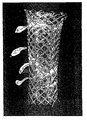
- the drawing depicts an otherwise conventional surgical stent 1, adapted for implantation into the section of a blood vessel which has been subjected to coronary angioplasty, in the form of a length of an open weave tube formed from a plurality of interwoven stainless steel wires 2, for attachment to the interior wall of the blood vessel, which wires have a membranous transparent coating 3 thereon and the interstices therebetween have a film of fibrin which contains a nitric oxide-releasing nitroso compound.
- This invention is based on the discovery that the aggregation of platelets in blood as a result of exposure of the blood to a foreign body or to the injured endothelium can be inhibited by coating at least the surface of the foreign body to which the circulating blood is exposed with a coating containing an amount of nitroso compound which is stable at room temperature but at body temperature is unstable and releases from the coating a platelet aggregating-inhibiting amount of nitric oxide, which amount achieves a nitric oxide concentration locally at the surface of the foreign body which cannot safely be achieved by the administration of a nitric oxide-releasing compound systemically, whether per se or by intramuscular injection or by injection directly into the blood vessel itself.
- nitroso compounds examples include ⁇ -substituted nitroso compounds, such as 2-methyl-2-nitrosopropane. See Wajer, A.J.W. et al., Tetrahedron , 23 : 4021-4026, 1967.
- each R is an inert monovalent group, e.g., hydrocarbon, preferably alkyl, more preferably straight or branched lower (C 1-4 ) alkyl, which can be alike or different and which can be unsubstituted or substituted, e.g., 2-methyl-2-nitrosopropane or a corresponding group substituted by a non-reactive (chemically and physiologically while in situ ), moiety, such as, for example, -C(CH 3 ) 2 CH 2 OH, -C(CH 3 ) 2 CH 2 OR 1 , -C(CH 3 ) 2 CH 2 OAc, -C(CH 3 ) 2 Aryl, -C(CH 3 )(Aryl) 3 or -C(Aryl) 3 in which R 1 is an alcohol moiety, e.g., of a hydrocarbon
- the dimer form predominates.
- the concentration of nitric oxide achieved at the surface of the foreign body is dependent upon the concentration of nitroso-containing compound.
- This invention relates to methods, compositions and articles of manufacture useful in the prevention of platelet deposition either on a foreign body introduced surgically into a blood vessel or at vascular sites which have received treatment, e.g., balloon angioplasty or stent implantation.
- the reduction of platelet deposition has important implications for reducing the likelihood of the phenomenon of restenosis occurring following balloon angioplasty.
- an implantable intravascular device such as a metal stent (as shown in the drawing)
- nitric oxide can be locally delivered at a low dose which can be controlled by varying the concentration of the nitroso-containing compound and the nature of the polymer forming the coating on the implantable intravascular device.
- systemic nitric oxide toxicity e.g., hypotension, can be prevented from occurring.
- nitroso compounds employed in the composition of this invention are:
- the nitric oxide-releasing reaction is temperature dependent, i.e., it increases at elevated temperatures. Therefore, the selected nitroso compound should be one in which the reaction occurs at the desired rate at the body temperature of a being treated in accordance with this invention.
- the nitroso compounds employed in this invention e.g., 2-methyl-2-nitrosopropane, are soluble in water, thus allowing the preparation thereof over a wide concentration range. For example, a 1 mM solution of 2-methyl-2-nitrosopropane in HEPES buffer at pH 7.4 and at 37°C releases only 20% of the available nitric oxide in one hour.
- the coating on the foreign body preferably is from 0.1-1.0 mm thick and contains from 1 ⁇ moles to 100 ⁇ moles of nitroso compound per mm 2 . Higher concentrations are desirable when the diffusion rate of the nitric oxide from the polymer is very slow or when it is desired that the release of the nitric oxide occurs over a prolonged period of time, e.g., more than 48 hours.
- tert.-C-nitroso compounds of can be synthesized by reducing a nitroalkane with Zn/NH 4 Cl to the corresponding N-hydroxylamine according to the method of Bonnett et al., J. Chem. Soc ., 2094-2102, 1959, followed by oxidation using silver carbonate (Ag 2 CO 3 ). See Maasen and DeBoer, Rec. Trav. Chim ., 90:373-376 1971.
- polymers can be used to encapsulate 2-methyl-2-nitrosopropane, including both physiologically inert and biodegradable polymers and those which are only slowly soluble and those which are insoluble in blood.
- the insoluble polymers which are suitable are those which form a permeable membrane coating around the foreign body so that the nitric oxide can migrate therefrom as it is produced.
- the foreign body When the foreign body is inserted into the living being, it preferably is physiologically inert and, when permanently implanted, also biogradable.
- biodegradable polymers which can be used as drug delivery systems including the natural polymers: (1) collagen, (2) albumin, (3) casein, (4) fibrin and (5) gelatin [S.
- Synthetic polymer systems include: polylactide and polyglycolide [D.H. Lewis, in: Biodegradable Polymers as Drug Delivery Systems , Ed. by M. Chasin and R. Langer, Marcel Dekker, Inc., New York, pp. 1-42, 1990]; polyvinyl alcohols [P.R. Byron and R.N. Dalby, J. Pharm. Sci ., 76:65-67, 1987]. Human or porcine fibrin is especially preferred.
- synthetic polymers are the polyvinyl alcohols and polyalkylene oxides.
- the characteristics of an "ideal" coating for a stent is one which: can be applied to luminal or subluminal surface; does not cause a significant increase in stent wall thickness; is stable over time without desquamation; has a surface tension below 30 dyne/cm; has a smooth surface texture ( ⁇ 1 ⁇ m irregularities); has a negative or neutral surface charge; allows rapid endothelialization; permits timed elution of the nitric oxide; and delivers an effective concentration locally of the nitric oxide. See S.R. Bailey, "Coating of Endovascular Stents" in Textbook of Interventional Cardiology , ed. by E.J. Topol, Vol. 2, 2nd edition, W.B. Saunders, Philadelphia, pp. 754-765 (1994).
- the desired coating can be formed by immersing the foreign body in a solution or colloidal dispersion of the selected polymer in an aqueous vehicle containing the nitroso compound and then insolubilizing the polymer, e.g., by changing the pH or the ionic strength of the vehicle or denaturing a proteinaceous polymer, so that a coating of the polymer containing the nitric oxide-releasing nitroso compound occluded therein deposits on the exposed surfaces of the foreign body.
- a stent is placed in platelet-rich plasma which contains the nitric oxide releasing compound.
- the surface of the stent is thereby coated with a solution of platelet-rich human or porcine plasma containing the nitric oxide releasing compound and fibrin which is precipitated onto the surface of the stent.
- the rate at which nitric oxide will be secreted from the coating on the stent when the stent is surgically implanted in a blood vessel can be determined by placing the coated stent in a buffer solution, pH 7.4 at 37°C, and measuring •NO concentration in the buffer solution at periodic intervals.
- the foreign body can be any medical device or product which has a surface which is exposed to the blood stream of a living being and is susceptible to neutrophil adhesion thereto or which promotes platelet aggregation.
- Intravascular devices and angioplasty surgery in general frequently promotes restenosis. Therefore, patients who have undergone a percutaneous transluminal coronary angioplasty, with or without a stent implant, require extended hospitalization after surgery because of their susceptibility to restenosis.
- patients undergoing blood flow diversion outside the body e.g,. in conjunction with hypothermic surgery, have increased susceptibility to platelet aggregation due to a foreign body response resulting from the exposure of the blood to the plastic tubing used to transport the blood.
- a preferred embodiment of the intravascular device aspect of this invention is a metal, e.g., stainless steel or polymeric, intravascular stent which typically is implanted temporarily or permanently in a blood vessel after percutaneous transluminal coronary angioplasty.
- platelet-rich human or porcine plasma PRP
- PRP platelet-rich human or porcine plasma
- a test tube containing 5 mL of the platelet-rich plasma is added 2-methyl-2-nitrosopropane (Aldrich Chemical Co.) to bring its concentration in the plasma to 100 ⁇ M followed by an excess of thrombin, thus stimulating clot formation.
- a stainless steel stent (9 mm diameter; 28 mm length, formed of interwoven 0.17 mm stainless steel wire) is placed in the plasma at room temperature. After organization of the clot, which takes about 35-50 min., the stent is removed and air dried, which takes about 4-5 hrs. This process leaves a translucent 2-methyl-2-nitrosopropane-containing fibrin film as a coating on the walls of the stent and an intersticial membrane enveloping the stent.
- a stainless steel stent is placed in a test tube containing 5 mL of the platelet-rich plasma, prepared as described above. To this platelet-rich plasma is added 2-ethyl-2-nitrosopropane (100 ⁇ M, final concentration) in the dark just prior to the addition thereto of a cell-aggregating amount of thrombin.
- the test tube is covered in aluminum foil to prevent light induced cleaving of the nitroso compound.
- the process for coating the stent is as described above.
- Verification that the nitric oxide-releasing compound is present in the coated stent is based on measuring uptake of the nitroso compound into the fibrin and the detection of nitric oxide, when the fibrin coated stent is placed in phosphate buffer, pH 7.4 at 37°C, using the oxyhemoglobin method of Pou, Anderson, Surichamorn, Keaton and Tod, Mol. Pharmacol ., 46:709-715, 1994.
- the concentration of nitric oxide-releasing compound in the platelet-rich plasma into which the stent is dipped the nitric oxide (nitric oxide release rate) can be varied as desired.
- a synthetic polymer coated stent To prepare a synthetic polymer coated stent, a 1% (w/v) aqueous solution, prepared by heating a dispersion of polyvinyl alcohol in water at 60°C for 2 hours as described in Byron and Dalby [ J. Pharm. Sci ., 76:65-67, 1987], to which 2-methyl-2-nitrosopropane is dissolved in the dark, after cooling to 10°C, to a final concentration of 100 ⁇ M. In the dark, the polyvinyl alcohol solution containing the nitric oxide-releasing agent is then poured over the stent and dried in the dark at room temperature overnight. A polyvinyl alcohol film containing 2-methyl-2-nitrosopropane is then deposited as a coating on the walls of the stent.
- thrombin Armour Pharmaceutical Co., Collegeville, PA
- distilled water 1000 units of thrombin in 5.0 cc of water
- This procedure resulted in the immediate formation of a clot around the stent.
- the clot and tube were maintained for 2 hours at room temperature for clot organization and then placed under a ventilated hood to dry. In 24-36 hours, the system had dried completely, resulting in the stent coated with human fibrin, as shown in the drawing.
- An angioplasty balloon device comprising a catheter, wires and balloon is coated with a coating of fibrin or polyvinyl alcohol containing 1-100 ⁇ moles of 2-methyl-2-nitrosopropane as the nitric oxide-releasing compound is delivered to the appropriate arterial site using standard angioplasty techniques. After expansion of the balloon for about 10 minutes, the balloon is then deflated and the device removed. The nitric oxide device released from the device during the angioplasty procedure inhibits platelet adhesion to the site of angioplasty.
- tubing used to transport blood from and back to a patient undergoing hypothermic surgery is coated by filling the tubing with a platelet-rich plasma solution of 2-methyl-2-nitrosopropane and thrombin or polyvinyl alcohol as described above at room temperature or below until a fibrin coating containing the 2-methyl-2-nitrosopropane forms on the inner wall of the tubing.
- Tubing thus treated inhibits platelet aggregation in the blood of the patient undergoing the hypothermic surgery.
- the preceding examples can be repeated with similar success by substituting the generically or specifically described reactants and/or operating conditions of this invention for those used in the preceding examples.
- the tip of a catheter used to scrape a deposit from the interior wall of an artery can similarly be coated.
Landscapes
- Health & Medical Sciences (AREA)
- Life Sciences & Earth Sciences (AREA)
- Veterinary Medicine (AREA)
- Animal Behavior & Ethology (AREA)
- General Health & Medical Sciences (AREA)
- Public Health (AREA)
- Epidemiology (AREA)
- Engineering & Computer Science (AREA)
- Biomedical Technology (AREA)
- Heart & Thoracic Surgery (AREA)
- Chemical & Material Sciences (AREA)
- Surgery (AREA)
- Vascular Medicine (AREA)
- Medicinal Chemistry (AREA)
- Molecular Biology (AREA)
- Cardiology (AREA)
- Transplantation (AREA)
- Oral & Maxillofacial Surgery (AREA)
- Inorganic Chemistry (AREA)
- Hematology (AREA)
- Materials For Medical Uses (AREA)
- Pharmaceuticals Containing Other Organic And Inorganic Compounds (AREA)
- Media Introduction/Drainage Providing Device (AREA)
- Medicinal Preparation (AREA)
Applications Claiming Priority (3)
| Application Number | Priority Date | Filing Date | Title |
|---|---|---|---|
| US426848 | 1995-04-24 | ||
| US08/426,848 US5665077A (en) | 1995-04-24 | 1995-04-24 | Nitric oxide-releasing nitroso compositions and methods and intravascular devices for using them to prevent restenosis |
| PCT/US1996/005544 WO1996033757A1 (en) | 1995-04-24 | 1996-04-23 | Nitric oxide-releasing nitroso compositions and methods and intravascular devices for using them to prevent restenosis |
Publications (3)
| Publication Number | Publication Date |
|---|---|
| EP0830161A1 EP0830161A1 (en) | 1998-03-25 |
| EP0830161A4 EP0830161A4 (en) | 2000-08-02 |
| EP0830161B1 true EP0830161B1 (en) | 2004-07-28 |
Family
ID=23692464
Family Applications (1)
| Application Number | Title | Priority Date | Filing Date |
|---|---|---|---|
| EP96912990A Expired - Lifetime EP0830161B1 (en) | 1995-04-24 | 1996-04-23 | Nitric oxide-releasing nitroso compositions and methods and intravascular devices for using them to prevent restenosis |
Country Status (7)
| Country | Link |
|---|---|
| US (1) | US5665077A (enExample) |
| EP (1) | EP0830161B1 (enExample) |
| JP (1) | JPH11505135A (enExample) |
| AT (1) | ATE271888T1 (enExample) |
| AU (1) | AU5562896A (enExample) |
| DE (1) | DE69633012T2 (enExample) |
| WO (1) | WO1996033757A1 (enExample) |
Cited By (1)
| Publication number | Priority date | Publication date | Assignee | Title |
|---|---|---|---|---|
| WO2016142068A1 (en) | 2015-03-10 | 2016-09-15 | Sasol Wax Gmbh | Water based wax dispersion comprising a hydrocarbon wax and a dialkylether for the coating paper products |
Families Citing this family (100)
| Publication number | Priority date | Publication date | Assignee | Title |
|---|---|---|---|---|
| US5861168A (en) * | 1993-06-11 | 1999-01-19 | The Board Of Trustees Of The Leland Stanford Junior University | Intramural delivery of nitric oxide enhancer for inhibiting lesion formation after vascular injury |
| US5891459A (en) * | 1993-06-11 | 1999-04-06 | The Board Of Trustees Of The Leland Stanford Junior University | Enhancement of vascular function by modulation of endogenous nitric oxide production or activity |
| US6087479A (en) * | 1993-09-17 | 2000-07-11 | Nitromed, Inc. | Localized use of nitric oxide-adducts to prevent internal tissue damage |
| US6425881B1 (en) * | 1994-10-05 | 2002-07-30 | Nitrosystems, Inc. | Therapeutic mixture useful in inhibiting lesion formation after vascular injury |
| US6283951B1 (en) * | 1996-10-11 | 2001-09-04 | Transvascular, Inc. | Systems and methods for delivering drugs to selected locations within the body |
| IL124037A (en) | 1995-10-13 | 2003-01-12 | Transvascular Inc | Device and system for interstitial transvascular intervention |
| WO1997032544A1 (en) | 1996-03-05 | 1997-09-12 | Divysio Solutions Ulc. | Expandable stent and method for delivery of same |
| US5797887A (en) * | 1996-08-27 | 1998-08-25 | Novovasc Llc | Medical device with a surface adapted for exposure to a blood stream which is coated with a polymer containing a nitrosyl-containing organo-metallic compound which releases nitric oxide from the coating to mediate platelet aggregation |
| US20030093143A1 (en) * | 1999-03-01 | 2003-05-15 | Yiju Zhao | Medical device having surface depressions containing nitric oxide releasing compound |
| EP1595573B1 (en) * | 1996-08-30 | 2008-10-01 | Duke University | Stent comprising manipulators of nitrosative stress to reduce restenosis |
| ATE255859T1 (de) * | 1997-07-08 | 2003-12-15 | Evysio Medical Devices Ulc | Expandierbarer stent |
| US6221425B1 (en) | 1998-01-30 | 2001-04-24 | Advanced Cardiovascular Systems, Inc. | Lubricious hydrophilic coating for an intracorporeal medical device |
| US6379691B1 (en) * | 1998-09-29 | 2002-04-30 | Medtronic/Ave, Inc. | Uses for medical devices having a lubricious, nitric oxide-releasing coating |
| WO2000074701A2 (en) * | 1999-06-05 | 2000-12-14 | The Board Of Trustees Of The Leland Stanford Junior University | Method and composition for inhibiting cardiovascular cell proliferation |
| WO2001010344A1 (en) * | 1999-08-04 | 2001-02-15 | C.R. Bard, Inc. | Nitric oxide releasing medical devices |
| US6334868B1 (en) | 1999-10-08 | 2002-01-01 | Advanced Cardiovascular Systems, Inc. | Stent cover |
| US6738661B1 (en) | 1999-10-22 | 2004-05-18 | Biosynergetics, Inc. | Apparatus and methods for the controllable modification of compound concentration in a tube |
| US6613432B2 (en) * | 1999-12-22 | 2003-09-02 | Biosurface Engineering Technologies, Inc. | Plasma-deposited coatings, devices and methods |
| DE60131537T2 (de) | 2000-06-22 | 2008-10-23 | Nitromed, Inc., Lexington | Nitrosierte und nitrosylierte taxane, zubereitungen und methoden der verwendung |
| EP1313574B1 (en) * | 2000-08-11 | 2008-10-29 | WHITLOCK, David R. | Compositions including ammonia oxidizing bacteria to increase production of nitric oxide and nitric oxide precursors and methods of using same |
| US7049308B2 (en) * | 2000-10-26 | 2006-05-23 | Duke University | C-nitroso compounds and use thereof |
| US6706274B2 (en) * | 2001-01-18 | 2004-03-16 | Scimed Life Systems, Inc. | Differential delivery of nitric oxide |
| US7135189B2 (en) * | 2001-08-23 | 2006-11-14 | Boston Scientific Scimed, Inc. | Compositions and techniques for localized therapy |
| WO2003057380A2 (en) * | 2002-01-11 | 2003-07-17 | Whitlock David R | Compositions including ammonia oxidizing bacteria and methods of using same |
| WO2003092763A1 (en) * | 2002-05-03 | 2003-11-13 | Duke University | Carbon nanotubules for storage of nitric oxide |
| US7972137B2 (en) | 2003-06-30 | 2011-07-05 | Rosen Gerald M | Anti-microbial dental formulations for the prevention and treatment of oral mucosal disease |
| CZ300625B6 (cs) * | 2003-09-25 | 2009-07-01 | Dr. Karel Volenec-Ella-Cs | Stent k zastavení krvácení v jícnu |
| US20050165452A1 (en) * | 2004-01-28 | 2005-07-28 | Medtronic, Inc. | Antithrombogenic medical device |
| US7569559B2 (en) * | 2004-02-09 | 2009-08-04 | Noxilizer, Inc. | Nitric oxide-releasing molecules |
| CA2555591C (en) * | 2004-02-09 | 2011-01-04 | Amulet Pharmaceuticals, Inc. | Nitric oxide-releasing polymers |
| US20050192210A1 (en) * | 2004-03-01 | 2005-09-01 | Rothbard Jonathan B. | Compositions and methods for treating diseases |
| US20060029640A1 (en) * | 2004-08-05 | 2006-02-09 | Gilbert Jeremy L | Medical devices with surface modification for regulating cell growth on or near the surface |
| US20060095121A1 (en) * | 2004-10-28 | 2006-05-04 | Medtronic Vascular, Inc. | Autologous platelet gel on a stent graft |
| US20060111704A1 (en) * | 2004-11-22 | 2006-05-25 | Rox Medical, Inc. | Devices, systems, and methods for energy assisted arterio-venous fistula creation |
| JP5274248B2 (ja) | 2005-05-27 | 2013-08-28 | ザ ユニバーシティ オブ ノース カロライナ アット チャペル ヒル | 酸化窒素治療及び医生物的応用のための酸化窒素放出粒子 |
| WO2007024501A2 (en) | 2005-08-25 | 2007-03-01 | Medtronic Vascular, Inc. | Nitric oxide-releasing biodegradable polymers useful as medical devices and coatings therefore |
| WO2007059311A2 (en) * | 2005-11-16 | 2007-05-24 | Nitromed, Inc. | Furoxan compounds, compositions and methods of use |
| EP1968615A4 (en) * | 2005-12-06 | 2010-08-04 | Amulet Pharmaceuticals Inc | POLYMERS RELEASING NITRIC OXIDE |
| US8241619B2 (en) | 2006-05-15 | 2012-08-14 | Medtronic Vascular, Inc. | Hindered amine nitric oxide donating polymers for coating medical devices |
| US9259535B2 (en) | 2006-06-22 | 2016-02-16 | Excelsior Medical Corporation | Antiseptic cap equipped syringe |
| US11229746B2 (en) | 2006-06-22 | 2022-01-25 | Excelsior Medical Corporation | Antiseptic cap |
| US20090112197A1 (en) | 2007-10-30 | 2009-04-30 | Searete Llc | Devices configured to facilitate release of nitric oxide |
| US8642093B2 (en) | 2007-10-30 | 2014-02-04 | The Invention Science Fund I, Llc | Methods and systems for use of photolyzable nitric oxide donors |
| US7862598B2 (en) | 2007-10-30 | 2011-01-04 | The Invention Science Fund I, Llc | Devices and systems that deliver nitric oxide |
| US8221690B2 (en) | 2007-10-30 | 2012-07-17 | The Invention Science Fund I, Llc | Systems and devices that utilize photolyzable nitric oxide donors |
| US7811600B2 (en) * | 2007-03-08 | 2010-10-12 | Medtronic Vascular, Inc. | Nitric oxide donating medical devices and methods of making same |
| US8303639B2 (en) * | 2007-03-22 | 2012-11-06 | Medtronic Vascular, Inc. | Releasable polymer on drug elution stent and method |
| US8273828B2 (en) * | 2007-07-24 | 2012-09-25 | Medtronic Vascular, Inc. | Methods for introducing reactive secondary amines pendant to polymers backbones that are useful for diazeniumdiolation |
| US7897399B2 (en) | 2007-10-30 | 2011-03-01 | The Invention Science Fund I, Llc | Nitric oxide sensors and systems |
| US8877508B2 (en) | 2007-10-30 | 2014-11-04 | The Invention Science Fund I, Llc | Devices and systems that deliver nitric oxide |
| US10080823B2 (en) | 2007-10-30 | 2018-09-25 | Gearbox Llc | Substrates for nitric oxide releasing devices |
| US8980332B2 (en) | 2007-10-30 | 2015-03-17 | The Invention Science Fund I, Llc | Methods and systems for use of photolyzable nitric oxide donors |
| US8349262B2 (en) | 2007-10-30 | 2013-01-08 | The Invention Science Fund I, Llc | Nitric oxide permeable housings |
| US20090170933A1 (en) * | 2007-12-26 | 2009-07-02 | Cook Incorporated | Method for removing a medical device from a spasmodic constriction in a bodily passageway |
| US20090222088A1 (en) * | 2008-02-29 | 2009-09-03 | Medtronic Vascular, Inc. | Secondary Amine Containing Nitric Oxide Releasing Polymer Composition |
| US20090232868A1 (en) * | 2008-03-17 | 2009-09-17 | Medtronic Vascular, Inc. | Nitric Oxide Releasing Polymer Composition |
| US20090232863A1 (en) * | 2008-03-17 | 2009-09-17 | Medtronic Vascular, Inc. | Biodegradable Carbon Diazeniumdiolate Based Nitric Oxide Donating Polymers |
| US9078992B2 (en) | 2008-10-27 | 2015-07-14 | Pursuit Vascular, Inc. | Medical device for applying antimicrobial to proximal end of catheter |
| US8158187B2 (en) * | 2008-12-19 | 2012-04-17 | Medtronic Vascular, Inc. | Dry diazeniumdiolation methods for producing nitric oxide releasing medical devices |
| JP5694964B2 (ja) | 2009-02-23 | 2015-04-01 | ノクシライザー, インコーポレイテッドNoxilizer, Incorporated | ガス滅菌装置及びガス滅菌方法 |
| US8709465B2 (en) * | 2009-04-13 | 2014-04-29 | Medtronic Vascular, Inc. | Diazeniumdiolated phosphorylcholine polymers for nitric oxide release |
| US8888840B2 (en) * | 2009-05-20 | 2014-11-18 | Boston Scientific Scimed, Inc. | Drug eluting medical implant |
| US9265633B2 (en) | 2009-05-20 | 2016-02-23 | 480 Biomedical, Inc. | Drug-eluting medical implants |
| US9309347B2 (en) | 2009-05-20 | 2016-04-12 | Biomedical, Inc. | Bioresorbable thermoset polyester/urethane elastomers |
| US8137396B2 (en) | 2009-05-20 | 2012-03-20 | 480 Biomedical, Inc | Medical implant |
| US20110319987A1 (en) | 2009-05-20 | 2011-12-29 | Arsenal Medical | Medical implant |
| US8992601B2 (en) | 2009-05-20 | 2015-03-31 | 480 Biomedical, Inc. | Medical implants |
| US9919072B2 (en) | 2009-08-21 | 2018-03-20 | Novan, Inc. | Wound dressings, methods of using the same and methods of forming the same |
| CN102711729B (zh) | 2009-08-21 | 2015-04-01 | 诺万公司 | 局部用凝胶 |
| US8372133B2 (en) * | 2009-10-05 | 2013-02-12 | 480 Biomedical, Inc. | Polymeric implant delivery system |
| US8591876B2 (en) | 2010-12-15 | 2013-11-26 | Novan, Inc. | Methods of decreasing sebum production in the skin |
| EP2681286B1 (en) | 2011-02-28 | 2018-08-15 | Novan, Inc. | Nitric oxide-releasing s-nitrosothiol-modified silica particles and methods of making the same |
| US10166381B2 (en) | 2011-05-23 | 2019-01-01 | Excelsior Medical Corporation | Antiseptic cap |
| WO2013009998A2 (en) | 2011-07-12 | 2013-01-17 | Pursuit Vascular, Inc. | Device for delivery of antimicrobial agent into trans-dermal catheter |
| US20130046375A1 (en) | 2011-08-17 | 2013-02-21 | Meng Chen | Plasma modified medical devices and methods |
| EP2953660B1 (en) | 2013-02-07 | 2020-04-01 | The Regents Of The University Of Michigan | Thromboresistant/bactericidal s-nitroso-n-acetylpenicillamine (snap)-doped nitric oxide release polymers with enhanced stability |
| US11225640B2 (en) | 2014-04-15 | 2022-01-18 | Aobiome Llc | Ammonia oxidizing bacteria for treatment of psoriasis |
| CN106456678A (zh) | 2014-04-15 | 2017-02-22 | Ao生物医学有限责任公司 | 氨氧化型亚硝化单胞菌菌株d23 |
| JP6546988B2 (ja) | 2014-05-02 | 2019-07-17 | エクセルシオール・メディカル・コーポレイションExcelsior Medical Corporation | 防腐キャップのためのストリップパッケージ |
| WO2016182822A1 (en) | 2015-05-08 | 2016-11-17 | Icu Medical, Inc. | Medical connectors configured to receive emitters of therapeutic agents |
| JP7005609B2 (ja) | 2016-10-14 | 2022-02-10 | アイシーユー・メディカル・インコーポレーテッド | 医療用コネクタのための浄化キャップ |
| WO2018204206A2 (en) | 2017-05-01 | 2018-11-08 | Icu Medical, Inc. | Medical fluid connectors and methods for providing additives in medical fluid lines |
| CA3090184A1 (en) | 2018-03-16 | 2019-09-19 | Icu Medical, Inc. | Sanitizing caps for medical connectors |
| US11517732B2 (en) | 2018-11-07 | 2022-12-06 | Icu Medical, Inc. | Syringe with antimicrobial properties |
| US11534595B2 (en) | 2018-11-07 | 2022-12-27 | Icu Medical, Inc. | Device for delivering an antimicrobial composition into an infusion device |
| US11400195B2 (en) | 2018-11-07 | 2022-08-02 | Icu Medical, Inc. | Peritoneal dialysis transfer set with antimicrobial properties |
| US11541220B2 (en) | 2018-11-07 | 2023-01-03 | Icu Medical, Inc. | Needleless connector with antimicrobial properties |
| US11541221B2 (en) | 2018-11-07 | 2023-01-03 | Icu Medical, Inc. | Tubing set with antimicrobial properties |
| EP3883638A1 (en) | 2018-11-21 | 2021-09-29 | ICU Medical, Inc. | Antimicrobial device comprising a cap with ring and insert |
| CN113395931A (zh) | 2018-12-12 | 2021-09-14 | 爱德华兹生命科学公司 | 集成压力感测的心脏植入装置 |
| WO2020219265A1 (en) | 2019-04-22 | 2020-10-29 | Edwards Lifesciences Corporation | Anchor for transcatheter access into the coronary sinus |
| EP3982845A1 (en) | 2019-06-12 | 2022-04-20 | Edwards Lifesciences Corporation | Fluid bypass conduit for left atrial pressure management |
| CN122297046A (zh) | 2019-08-22 | 2026-06-30 | 爱德华兹生命科学公司 | 穿刺针 |
| CN114340522B (zh) | 2019-09-19 | 2026-04-21 | 爱德华兹生命科学公司 | 经导管穿刺针系统 |
| WO2021096766A1 (en) | 2019-11-14 | 2021-05-20 | Edwards Lifesciences Corporation | Transcatheter medical implant delivery |
| EP4255552A1 (en) | 2020-12-07 | 2023-10-11 | ICU Medical, Inc. | Peritoneal dialysis caps, systems and methods |
| CA3203459A1 (en) | 2020-12-18 | 2022-06-23 | Edwards Lifesciences Corporation | Flexible shunt implants |
| US12527942B2 (en) | 2021-02-01 | 2026-01-20 | Edwards Lifesciences Corporation | Pulmonary vein shunting |
| AU2022224692A1 (en) * | 2021-02-22 | 2023-07-20 | Biomedix S.A. | Methods and devices for medical implants |
| IL308303A (en) | 2021-05-21 | 2024-01-01 | Edwards Lifesciences Corp | I will secure a conducting catheter in the coronary sinus using a mechanical release arm |
Family Cites Families (14)
| Publication number | Priority date | Publication date | Assignee | Title |
|---|---|---|---|---|
| US5212204A (en) * | 1989-10-18 | 1993-05-18 | The United States Of America As Represented By The Department Of Health And Human Services | Antihypertensive compositions and use thereof |
| EP0533816B1 (en) * | 1990-06-15 | 1995-06-14 | Cortrak Medical, Inc. | Drug delivery apparatus |
| DE560928T1 (de) * | 1990-12-05 | 1994-09-22 | The General Hospital Corp., Charlestown, Mass. | Vorrichtung zum behandeln einer lungengefässverengung und von asthma. |
| US5324261A (en) * | 1991-01-04 | 1994-06-28 | Medtronic, Inc. | Drug delivery balloon catheter with line of weakness |
| US5380758A (en) * | 1991-03-29 | 1995-01-10 | Brigham And Women's Hospital | S-nitrosothiols as smooth muscle relaxants and therapeutic uses thereof |
| ES2112332T3 (es) * | 1991-09-24 | 1998-04-01 | Us Health | Derivados de substitucion de oxigeno de productos de adicion de nucleofilo-oxido nitrico utilizados como promedicamentos donadores de oxido nitrico. |
| WO1993020806A1 (en) * | 1992-04-13 | 1993-10-28 | The United States Of America, Represented By The Secretary, Department Of Health And Human Services | Use of nitric oxide/nucleophile complexes for the treatment of cancer |
| US5272074A (en) * | 1992-04-23 | 1993-12-21 | Mcmaster University | Fibrin coated polymer surfaces |
| US5278192A (en) * | 1992-07-02 | 1994-01-11 | The Research Foundation Of State University Of New York | Method of vasodilator therapy for treating a patient with a condition |
| US5405919A (en) * | 1992-08-24 | 1995-04-11 | The United States Of America As Represented By The Secretary Of Health And Human Services | Polymer-bound nitric oxide/nucleophile adduct compositions, pharmaceutical compositions and methods of treating biological disorders |
| US5428070A (en) * | 1993-06-11 | 1995-06-27 | The Board Of Trustees Of The Leland Stanford Junior University | Treatment of vascular degenerative diseases by modulation of endogenous nitric oxide production of activity |
| WO1995007691A1 (en) * | 1993-09-17 | 1995-03-23 | Brigham And Women's Hospital | Use of nitric oxide-adducts to prevent thrombosis on artificial and vascular surfaces |
| DE4334272C2 (de) * | 1993-10-07 | 1996-07-18 | Stemberger Axel Dr | Beschichtung für Biomaterial und seine Verwendung |
| US5470307A (en) * | 1994-03-16 | 1995-11-28 | Lindall; Arnold W. | Catheter system for controllably releasing a therapeutic agent at a remote tissue site |
-
1995
- 1995-04-24 US US08/426,848 patent/US5665077A/en not_active Expired - Lifetime
-
1996
- 1996-04-23 EP EP96912990A patent/EP0830161B1/en not_active Expired - Lifetime
- 1996-04-23 AT AT96912990T patent/ATE271888T1/de not_active IP Right Cessation
- 1996-04-23 DE DE69633012T patent/DE69633012T2/de not_active Expired - Fee Related
- 1996-04-23 AU AU55628/96A patent/AU5562896A/en not_active Abandoned
- 1996-04-23 WO PCT/US1996/005544 patent/WO1996033757A1/en not_active Ceased
- 1996-04-23 JP JP8532622A patent/JPH11505135A/ja not_active Ceased
Cited By (1)
| Publication number | Priority date | Publication date | Assignee | Title |
|---|---|---|---|---|
| WO2016142068A1 (en) | 2015-03-10 | 2016-09-15 | Sasol Wax Gmbh | Water based wax dispersion comprising a hydrocarbon wax and a dialkylether for the coating paper products |
Also Published As
| Publication number | Publication date |
|---|---|
| ATE271888T1 (de) | 2004-08-15 |
| DE69633012T2 (de) | 2005-07-21 |
| US5665077A (en) | 1997-09-09 |
| AU5562896A (en) | 1996-11-18 |
| WO1996033757A1 (en) | 1996-10-31 |
| EP0830161A1 (en) | 1998-03-25 |
| DE69633012D1 (de) | 2004-09-02 |
| JPH11505135A (ja) | 1999-05-18 |
| EP0830161A4 (en) | 2000-08-02 |
Similar Documents
| Publication | Publication Date | Title |
|---|---|---|
| US5665077A (en) | Nitric oxide-releasing nitroso compositions and methods and intravascular devices for using them to prevent restenosis | |
| US5797887A (en) | Medical device with a surface adapted for exposure to a blood stream which is coated with a polymer containing a nitrosyl-containing organo-metallic compound which releases nitric oxide from the coating to mediate platelet aggregation | |
| US7077860B2 (en) | Method of reducing or eliminating thrombus formation | |
| US6997949B2 (en) | Medical device for delivering a therapeutic agent and method of preparation | |
| JP4868565B2 (ja) | 血管用ステント | |
| US5900246A (en) | Drug incorporating and releasing polymeric coating for bioprosthesis | |
| US7754272B2 (en) | Local drug delivery | |
| US5342621A (en) | Antithrombogenic surface | |
| JP3816802B2 (ja) | 医療装置 | |
| US5980551A (en) | Composition and method for making a biodegradable drug delivery stent | |
| US6203536B1 (en) | Medical device for delivering a therapeutic substance and method therefor | |
| JP5153340B2 (ja) | 薬剤放出制御組成物および薬剤放出性医療器具 | |
| US20100023116A1 (en) | Biocorrodible implant with a coating containing a drug eluting polymer matrix | |
| CA2218103A1 (en) | Coating for biomaterial which can be introduced into the bloodstream or into the tissue of the human body | |
| US20100262238A1 (en) | Diazeniumdiolated Phosphorylcholine Polymers for Nitric Oxide Release | |
| US6746481B1 (en) | Implatable device including a polyamino acid component | |
| JP2002320629A (ja) | 体内埋め込み医療材料および体内埋め込み医療器具 | |
| US20060093647A1 (en) | Multiple layer coating composition | |
| JP2001198209A (ja) | 血管内治療用材料および血管内治療用器具 |
Legal Events
| Date | Code | Title | Description |
|---|---|---|---|
| PUAI | Public reference made under article 153(3) epc to a published international application that has entered the european phase |
Free format text: ORIGINAL CODE: 0009012 |
|
| 17P | Request for examination filed |
Effective date: 19971125 |
|
| AK | Designated contracting states |
Kind code of ref document: A1 Designated state(s): AT BE CH DE ES FR GB IT LI NL SE |
|
| RAP1 | Party data changed (applicant data changed or rights of an application transferred) |
Owner name: NOVOVASC, LLC |
|
| RIC1 | Information provided on ipc code assigned before grant |
Free format text: 7A 61L 33/00 A, 7A 61L 31/00 B, 7A 61L 29/00 B, 7A 61M 5/32 B, 7A 61M 25/00 B, 7A 61M 31/00 B, 7C 08C 19/22 B, 7C 08F 8/30 B |
|
| A4 | Supplementary search report drawn up and despatched |
Effective date: 20000619 |
|
| AK | Designated contracting states |
Kind code of ref document: A4 Designated state(s): AT BE CH DE ES FR GB IT LI NL SE |
|
| 17Q | First examination report despatched |
Effective date: 20030430 |
|
| RAP1 | Party data changed (applicant data changed or rights of an application transferred) |
Owner name: NOVOVASCULAR, INC. |
|
| GRAP | Despatch of communication of intention to grant a patent |
Free format text: ORIGINAL CODE: EPIDOSNIGR1 |
|
| GRAS | Grant fee paid |
Free format text: ORIGINAL CODE: EPIDOSNIGR3 |
|
| GRAA | (expected) grant |
Free format text: ORIGINAL CODE: 0009210 |
|
| AK | Designated contracting states |
Kind code of ref document: B1 Designated state(s): AT BE CH DE ES FR GB IT LI NL SE |
|
| PG25 | Lapsed in a contracting state [announced via postgrant information from national office to epo] |
Ref country code: LI Free format text: LAPSE BECAUSE OF FAILURE TO SUBMIT A TRANSLATION OF THE DESCRIPTION OR TO PAY THE FEE WITHIN THE PRESCRIBED TIME-LIMIT Effective date: 20040728 Ref country code: CH Free format text: LAPSE BECAUSE OF FAILURE TO SUBMIT A TRANSLATION OF THE DESCRIPTION OR TO PAY THE FEE WITHIN THE PRESCRIBED TIME-LIMIT Effective date: 20040728 Ref country code: BE Free format text: LAPSE BECAUSE OF FAILURE TO SUBMIT A TRANSLATION OF THE DESCRIPTION OR TO PAY THE FEE WITHIN THE PRESCRIBED TIME-LIMIT Effective date: 20040728 Ref country code: AT Free format text: LAPSE BECAUSE OF FAILURE TO SUBMIT A TRANSLATION OF THE DESCRIPTION OR TO PAY THE FEE WITHIN THE PRESCRIBED TIME-LIMIT Effective date: 20040728 |
|
| REG | Reference to a national code |
Ref country code: GB Ref legal event code: FG4D |
|
| REG | Reference to a national code |
Ref country code: CH Ref legal event code: EP |
|
| REF | Corresponds to: |
Ref document number: 69633012 Country of ref document: DE Date of ref document: 20040902 Kind code of ref document: P |
|
| PG25 | Lapsed in a contracting state [announced via postgrant information from national office to epo] |
Ref country code: SE Free format text: LAPSE BECAUSE OF FAILURE TO SUBMIT A TRANSLATION OF THE DESCRIPTION OR TO PAY THE FEE WITHIN THE PRESCRIBED TIME-LIMIT Effective date: 20041028 |
|
| PG25 | Lapsed in a contracting state [announced via postgrant information from national office to epo] |
Ref country code: ES Free format text: LAPSE BECAUSE OF FAILURE TO SUBMIT A TRANSLATION OF THE DESCRIPTION OR TO PAY THE FEE WITHIN THE PRESCRIBED TIME-LIMIT Effective date: 20041108 |
|
| REG | Reference to a national code |
Ref country code: CH Ref legal event code: PL |
|
| ET | Fr: translation filed | ||
| PLBE | No opposition filed within time limit |
Free format text: ORIGINAL CODE: 0009261 |
|
| STAA | Information on the status of an ep patent application or granted ep patent |
Free format text: STATUS: NO OPPOSITION FILED WITHIN TIME LIMIT |
|
| 26N | No opposition filed |
Effective date: 20050429 |
|
| PGFP | Annual fee paid to national office [announced via postgrant information from national office to epo] |
Ref country code: IT Payment date: 20060430 Year of fee payment: 11 |
|
| PGFP | Annual fee paid to national office [announced via postgrant information from national office to epo] |
Ref country code: GB Payment date: 20061030 Year of fee payment: 11 |
|
| PGFP | Annual fee paid to national office [announced via postgrant information from national office to epo] |
Ref country code: NL Payment date: 20061031 Year of fee payment: 11 Ref country code: FR Payment date: 20061031 Year of fee payment: 11 Ref country code: DE Payment date: 20061031 Year of fee payment: 11 |
|
| GBPC | Gb: european patent ceased through non-payment of renewal fee |
Effective date: 20070423 |
|
| NLV4 | Nl: lapsed or anulled due to non-payment of the annual fee |
Effective date: 20071101 |
|
| PG25 | Lapsed in a contracting state [announced via postgrant information from national office to epo] |
Ref country code: NL Free format text: LAPSE BECAUSE OF NON-PAYMENT OF DUE FEES Effective date: 20071101 Ref country code: DE Free format text: LAPSE BECAUSE OF NON-PAYMENT OF DUE FEES Effective date: 20071101 |
|
| PG25 | Lapsed in a contracting state [announced via postgrant information from national office to epo] |
Ref country code: GB Free format text: LAPSE BECAUSE OF NON-PAYMENT OF DUE FEES Effective date: 20070423 |
|
| PG25 | Lapsed in a contracting state [announced via postgrant information from national office to epo] |
Ref country code: FR Free format text: LAPSE BECAUSE OF NON-PAYMENT OF DUE FEES Effective date: 20070430 |
|
| PG25 | Lapsed in a contracting state [announced via postgrant information from national office to epo] |
Ref country code: IT Free format text: LAPSE BECAUSE OF NON-PAYMENT OF DUE FEES Effective date: 20070423 |