EP0823418A2 - Indanylidenverbindungen, Verfahren zu ihrer Herstellung und ihre Verwendung als UV-Absorber - Google Patents
Indanylidenverbindungen, Verfahren zu ihrer Herstellung und ihre Verwendung als UV-Absorber Download PDFInfo
- Publication number
- EP0823418A2 EP0823418A2 EP97112936A EP97112936A EP0823418A2 EP 0823418 A2 EP0823418 A2 EP 0823418A2 EP 97112936 A EP97112936 A EP 97112936A EP 97112936 A EP97112936 A EP 97112936A EP 0823418 A2 EP0823418 A2 EP 0823418A2
- Authority
- EP
- European Patent Office
- Prior art keywords
- compounds
- independently
- group
- formula
- another
- Prior art date
- Legal status (The legal status is an assumption and is not a legal conclusion. Google has not performed a legal analysis and makes no representation as to the accuracy of the status listed.)
- Granted
Links
- 0 *C(*)(C(*)(*)c1c(*)c(I)c(*)c(*)c11)C1=C(*)c1c(*)c(*)c(*)c(*)c1* Chemical compound *C(*)(C(*)(*)c1c(*)c(I)c(*)c(*)c11)C1=C(*)c1c(*)c(*)c(*)c(*)c1* 0.000 description 1
Classifications
-
- C—CHEMISTRY; METALLURGY
- C07—ORGANIC CHEMISTRY
- C07C—ACYCLIC OR CARBOCYCLIC COMPOUNDS
- C07C309/00—Sulfonic acids; Halides, esters, or anhydrides thereof
- C07C309/01—Sulfonic acids
- C07C309/28—Sulfonic acids having sulfo groups bound to carbon atoms of six-membered aromatic rings of a carbon skeleton
- C07C309/57—Sulfonic acids having sulfo groups bound to carbon atoms of six-membered aromatic rings of a carbon skeleton containing carboxyl groups bound to the carbon skeleton
- C07C309/60—Sulfonic acids having sulfo groups bound to carbon atoms of six-membered aromatic rings of a carbon skeleton containing carboxyl groups bound to the carbon skeleton the carbon skeleton being further substituted by singly-bound oxygen atoms
-
- A—HUMAN NECESSITIES
- A61—MEDICAL OR VETERINARY SCIENCE; HYGIENE
- A61K—PREPARATIONS FOR MEDICAL, DENTAL OR TOILETRY PURPOSES
- A61K8/00—Cosmetics or similar toiletry preparations
- A61K8/18—Cosmetics or similar toiletry preparations characterised by the composition
- A61K8/30—Cosmetics or similar toiletry preparations characterised by the composition containing organic compounds
- A61K8/40—Cosmetics or similar toiletry preparations characterised by the composition containing organic compounds containing nitrogen
-
- A—HUMAN NECESSITIES
- A61—MEDICAL OR VETERINARY SCIENCE; HYGIENE
- A61K—PREPARATIONS FOR MEDICAL, DENTAL OR TOILETRY PURPOSES
- A61K8/00—Cosmetics or similar toiletry preparations
- A61K8/18—Cosmetics or similar toiletry preparations characterised by the composition
- A61K8/30—Cosmetics or similar toiletry preparations characterised by the composition containing organic compounds
- A61K8/46—Cosmetics or similar toiletry preparations characterised by the composition containing organic compounds containing sulfur
- A61K8/466—Cosmetics or similar toiletry preparations characterised by the composition containing organic compounds containing sulfur containing sulfonic acid derivatives; Salts
-
- A—HUMAN NECESSITIES
- A61—MEDICAL OR VETERINARY SCIENCE; HYGIENE
- A61Q—SPECIFIC USE OF COSMETICS OR SIMILAR TOILETRY PREPARATIONS
- A61Q17/00—Barrier preparations; Preparations brought into direct contact with the skin for affording protection against external influences, e.g. sunlight, X-rays or other harmful rays, corrosive materials, bacteria or insect stings
- A61Q17/04—Topical preparations for affording protection against sunlight or other radiation; Topical sun tanning preparations
-
- C—CHEMISTRY; METALLURGY
- C07—ORGANIC CHEMISTRY
- C07C—ACYCLIC OR CARBOCYCLIC COMPOUNDS
- C07C255/00—Carboxylic acid nitriles
- C07C255/01—Carboxylic acid nitriles having cyano groups bound to acyclic carbon atoms
- C07C255/32—Carboxylic acid nitriles having cyano groups bound to acyclic carbon atoms having cyano groups bound to acyclic carbon atoms of a carbon skeleton containing at least one six-membered aromatic ring
- C07C255/41—Carboxylic acid nitriles having cyano groups bound to acyclic carbon atoms having cyano groups bound to acyclic carbon atoms of a carbon skeleton containing at least one six-membered aromatic ring the carbon skeleton being further substituted by carboxyl groups, other than cyano groups
-
- A—HUMAN NECESSITIES
- A61—MEDICAL OR VETERINARY SCIENCE; HYGIENE
- A61Q—SPECIFIC USE OF COSMETICS OR SIMILAR TOILETRY PREPARATIONS
- A61Q5/00—Preparations for care of the hair
- A61Q5/02—Preparations for cleaning the hair
-
- C—CHEMISTRY; METALLURGY
- C07—ORGANIC CHEMISTRY
- C07C—ACYCLIC OR CARBOCYCLIC COMPOUNDS
- C07C2602/00—Systems containing two condensed rings
- C07C2602/02—Systems containing two condensed rings the rings having only two atoms in common
- C07C2602/04—One of the condensed rings being a six-membered aromatic ring
- C07C2602/08—One of the condensed rings being a six-membered aromatic ring the other ring being five-membered, e.g. indane
Definitions
- the invention relates to new indanylidene compounds, a process for their preparation and the use as a UV absorber e.g. in cosmetic products, especially sunscreens, day care products and hair care products, but also to improve the light resistance of techn. Products like Paints, varnishes, plastics, textiles, packaging materials and rubbers.
- UV rays are classified as UV-A rays (320-400 nm, UV-A-I: 340-400 nm, UV-A-II: 320-340 nm) or UV-B rays (280-320 nm).
- UV-A rays 320-400 nm
- UV-A-I 340-400 nm
- UV-A-II 320-340 nm
- UV-B rays 280-320 nm
- UV rays can cause skin damage, whereby the UV-B radiation cause a sunburn (erythema) up to severe skin burns can.
- erythema sunburn
- Very frequent and unprotected exposure of the skin to sunlight also results loss of skin elasticity and increased wrinkling, overall premature aging of the skin.
- abnormal skin changes can occur up to skin cancer.
- UV-A radiation causes rapid, weak direct pigmentation of the skin. UV-A rays penetrate into the deeper layers of the skin, where they can cause the aging process accelerate the skin.
- the shorter-wave UV-A-II radiation supports the Formation of sunburn. Furthermore, the UV-A radiation can be phototoxic or trigger photoallergic skin reactions. There are reliable relationships between UV-A exposure and increased risk of skin cancer.
- UV absorbers are used for cosmetics and pharmacological preparations divided into UV-A and UV-B absorbers; is absorbed by a UV absorber both UV-A and UV-B, one speaks in in this case from a UV-A / B broadband absorber.
- UV absorbers DE-A 3 206 398
- 2-hydroxy-4-methoxybenzophenone US 3,751,563
- 4-tert-butyl-4'-methoxy-dibenzoylmethane DE-A 2 945 925
- This Compounds either do not have the desired broad UV-A and UV-B absorption or have little absorption in this range or are not sufficiently photostable.
- the invention is therefore based on the object of improved UV-A and UV-B broadband absorbers to provide.
- the invention therefore furthermore relates to compounds of the formula (I) Exception of the compounds mentioned in EP-A 670 298.
- Preferred compounds are those in which X is cyan and Y is carb-C 1 -C 4 -alkoxy. Furthermore, preferred compounds are those in which R 6 is alkyl or especially alkoxy; they have a high extinction.
- the preferred compounds I correspond to the formulas
- the compounds according to the invention are particularly suitable for use in sunscreens, preferably in cosmetic and pharmaceutical preparations but also as an anti-aging agent for technical products. You stand out with excellent light stability.
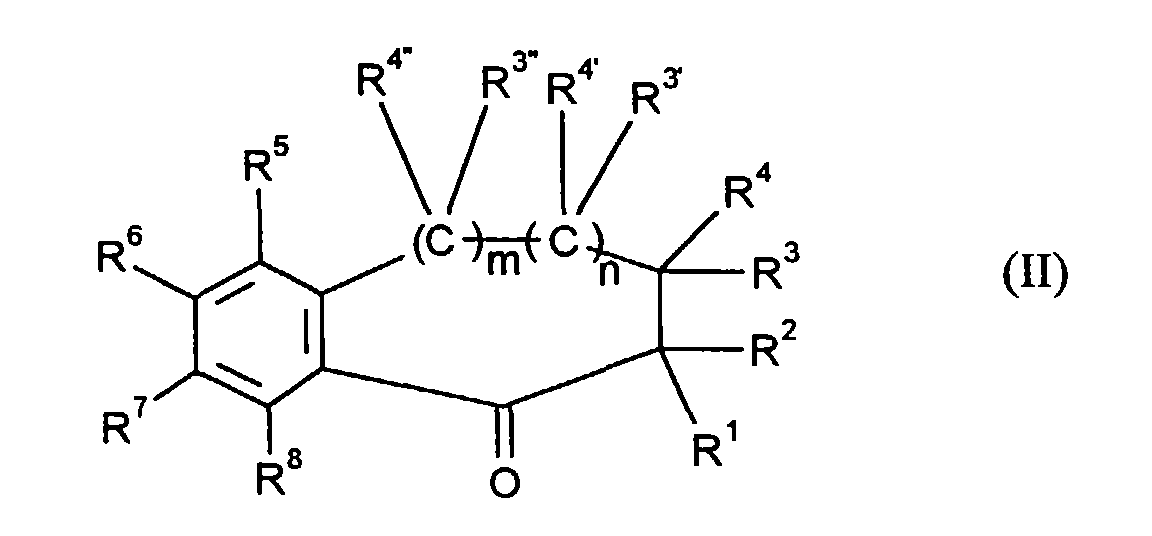
- the compounds (I) can be obtained by (Knoevenagel) condensation of compounds of the formula where R 1 to R 8 have the meaning given above, with compounds of the formula with the meaning given for X and Y. are produced (see Organikum, VEB Deutscher Verlag, Berlin 1986, p 459) and can be obtained with good to very good yields.
- the indanones used for this can be prepared by FC reaction of (substituted) acrylic acid esters with (substituted) aromatics or in the case of hydroxy substituents (R 5 -R 8 ) by Fies' rearrangement of the corresponding phenol esters.
- the compounds according to the invention can be used as UV broadband absorbers in cosmetics or pharmaceutical preparations are used to prevent passage prevent UV rays from the applied film of the preparation. This is generally the case when the cosmetic or pharmaceutical preparations 0.5 to 15, preferably 1 to 10, in particular 2 to 7% by weight (based on the total weight of the preparation) of the compounds according to the invention.
- the preparations containing the compounds according to the invention can be used for Protection of the skin and hair - especially with perm, coloring and bleaching hair that has already been damaged - be used before UV radiation.
- This to protect the skin from cosmetic and pharmaceutical UV radiation Preparations can be used in the commonly used forms are present, i.e. as an oil-in-water or water-in-oil emulsion, as milk, as Lotion or cream, aqueous or aqueous-alcoholic gel or lotion, aerosol, Hydrodispersion gel (emulsifier free) or any other common cosmetic or pharmaceutical preparation.
- preparations for protecting the hair from UV rays prefers preparations as shampoo, conditioner, treatment, gel, lotion, spray or cream used.
- the cosmetic and pharmaceutical preparations can be used in these agents commonly used ingredients such as Emulsifiers, surfactants Compounds, lanolin, petroleum jelly, water, triglycerides of fatty acids, polyethylene glycols, Fatty alcohols, ethoxylated fatty alcohols, fatty acid esters (e.g. isopropyl palmitate, Isooctyl stearate, diisopropyl adipate, etc.), natural or synthetic oils or waxes, pigments (e.g. titanium dioxide, zinc oxide, pearlescent pigments, color pigments), Thickeners (e.g. hydroxyethyl cellulose, bentonite, etc.), preservatives, Moisturizers, vitamins, silicone oils, glycerin, ethyl alcohol, perfume oils contain.
- Emulsifiers e.g. isopropyl palmitate, Isooctyl stearate, diisopropyl adipate, etc.
- the compounds according to the invention are also particularly suitable for Photostabilization of UV absorbers with low UV light stability. Especially succeeds in photostabilizing the very light-unstable compounds of the dibenzoylmethanes.
- a light-stable UV filter combination to protect human skin against UV rays in the range of 280-380 nm in cosmetic products are achieved by using 1 to 5% by weight of e.g. 4-tert-butyl-4'-methoxydibenzoylmethane and at least 1% by weight of the compound of the formula I, preferably in the ratio 2-4 parts of the compound according to formula I to 1 part of tert-butylmethoxydibenzoylmethane.
- the molar ratio should be 1 or greater.
- Another light stable UV filter combination is achieved by using 1-10 % By weight of p-methoxycinnamic acid ethylhexyl ester or isoamyl ester with at least 1 % By weight of the compound of the formula I, preferably in a ratio of 1: 1.
- the molar ratio should be 0.8 or greater.
- the combinations of p-methoxycinnamate and dibenzoylmethane derivatives and compounds of the formula I can be formulated in a light-stable manner by using e.g. 1-5% by weight of 4-tert-butyl-4'-methoxydibenzoylmethane, 1-10% by weight of ethylhexyl or isoamyl p-methoxycinnamate and at least 2% by weight of the compounds of formula I, preferably in a ratio of 1 part dibenzoylmethane derivative, 2 parts p-methoxycinnamic acid ester and 2 parts of the compound of formula I.
- UV absorbers such as Methylbenzylidene camphor, 2-ethylhexyl-2-cyano-3,3'-diphenyl acrylate or octyltriazon.
- the compounds of the invention can also be used with UV absorbers, which are used for the protection of technical products.
- UV absorbers examples include compounds from the series of benzotriazoles, Benzophenones, triazines, cinnamic acid esters and oxalanilides.
Landscapes
- Health & Medical Sciences (AREA)
- Organic Chemistry (AREA)
- Chemical & Material Sciences (AREA)
- Life Sciences & Earth Sciences (AREA)
- Veterinary Medicine (AREA)
- Animal Behavior & Ethology (AREA)
- General Health & Medical Sciences (AREA)
- Public Health (AREA)
- Epidemiology (AREA)
- Birds (AREA)
- Dermatology (AREA)
- Cosmetics (AREA)
- Organic Low-Molecular-Weight Compounds And Preparation Thereof (AREA)
Abstract
Description

- R1 bis R4, R3', R3'', R4' und R4''
- unabhängig voneinander Wasserstoff, C1-C8-Alkyl
oder C5-C10-Cycloalkyl bedeuten, mit der Maßgabe, daß auch zwei Substituenten
an benachbarten C-Atomen zusammen eine gegebenenfalls
substituierte C1-C4-Alkylengruppe, insbesondere C3-C4-Alkylen, bedeuten
können, wobei eine Methylengruppe durch -O-, -S-, oder -NH- ersetzt sein
kann, weiterhin
unabhängig voneinander C1-C4-Alkoxy, Hydroxy, Carboxy, Carbalkoxy oder Carbamoyl bedeuten, - R5 bis R8
- unabhängig voneinander die Bedeutung von R1, R2 oder Sulfo oder Aminosulfonyl haben,
- X und Y
- unabhängig voneinander CN, CO2R9, CO2NR9R10 oder COR9 bedeuten, wobei R9 und R10 unabhängig voneinander für Wasserstoff, C1 bis C8-Alkyl oder C5-C10-Cycloalkyl stehen und weiterhin einer der Reste
- X oder Y
- zusätzlich ein C1-C8-Alkylrest, ein C5-C10-Arylrest, insbesondere Phenyl, oder ein 5- bis 6-gliedriger Heteroarylrest welcher 1 bis 2 Heteroatome aus der Reihe N, O, S enthält sein kann, oder
- X und Y
- zusammen mit dem β-Atom, an welches sie gebunden sind, einen 5- bis 7-gliedrigen
Ring bedeuten, der bis zu 3 Heteroatome, insbesondere Sauerstoff
und/oder Stickstoff enthält, wobei die Ringatome substituiert sein können,
insbesondere mit exocyclisch doppelt gebundenem Sauerstoff (Ketogruppe),
bevorzugt in Nachbarstellung zu dem β-Atom,
und - n, m
- unabhängig voneinander Null oder 1 bedeuten,
als UV-Absorber, vorzugsweise in Sonnenschutzmitteln.
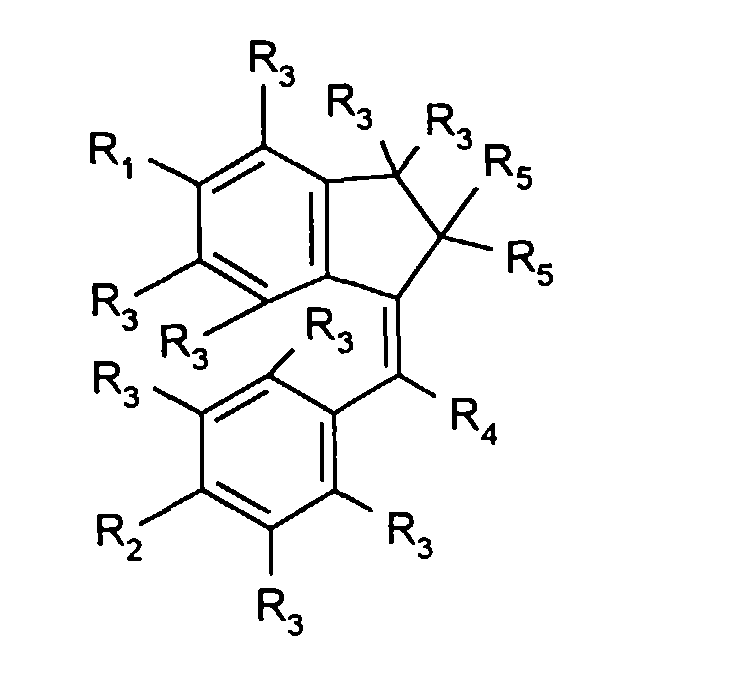
- R1, R2, und R3
- jeweils unabhängig voneinander gleich oder verschieden sein können und Wasserstoffatom, Halogenatom, Hydroxygruppe, Nitrogruppe, Cyanogruppe oder einwertiger, gegebenenfalls substituierter organischer Rest bedeuten und
- R4
- Wasserstoffatom, Halogenatom, Nitrogruppe, Cyanogruppe oder einwertiger, gegebenenfalls substituierter organischer Rest bedeutet und
- R5
- gleich oder verschieden sein kann und Halogenatom, Hydroxygruppe, Nitrogruppe, Cyanogruppe oder einwertiger, gegebenenfalls substituierter organischer Rest bedeutet.
- X und Y
- keinen unsubstituierten oder substituierten Phenylring bedeuten, sofern m = n = Null.
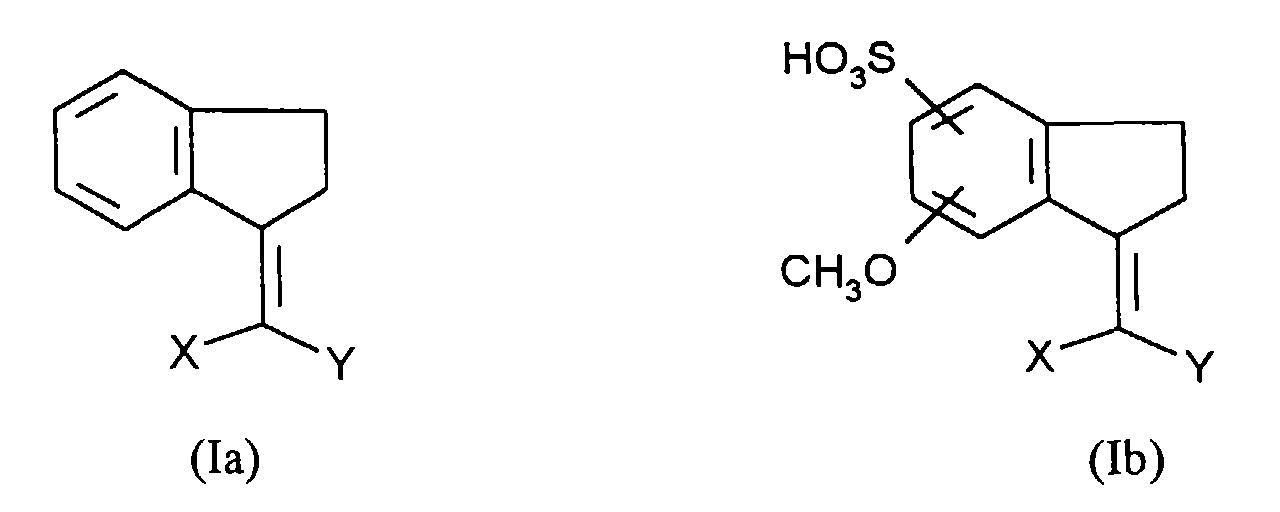
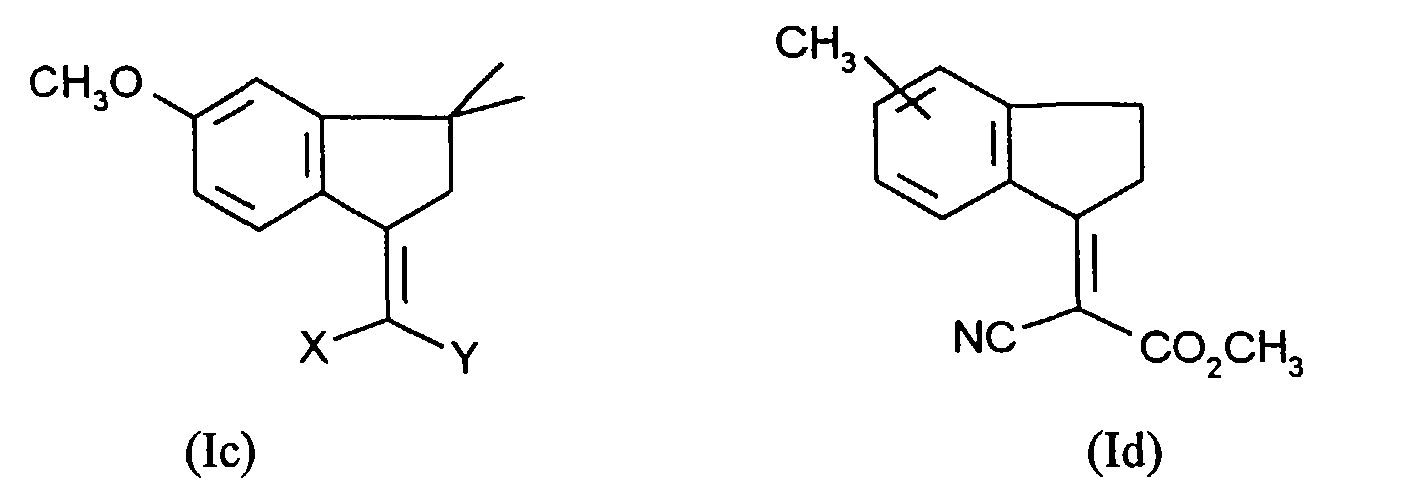
mit Verbindungen der Formel
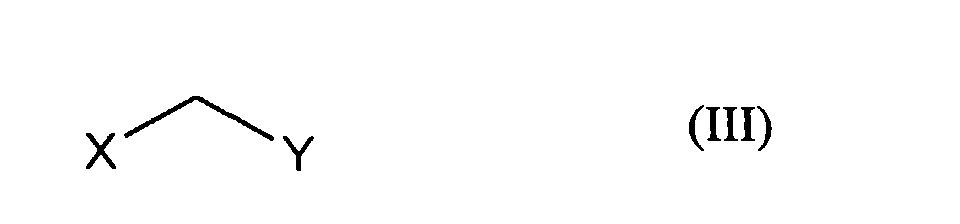
hergestellt werden (vgl. Organikum, VEB Deutscher Verlag, Berlin 1986, S 459) und sind mit guten bis sehr guten Ausbeuten zu erhalten.
- hohe UV-Schutzleistung bei bereits niedrigen Einsatzkonzentrationen,
- ausgezeichnete Lichtstabilität,
- ausgezeichnete Thermostabilität,
- gute Löslichkeit in kosmetischen Lösungsmitteln und ausgezeichnete Löslichkeit der kristallinen, öllöslichen UV-Absorber in flüssigen, öllöslichen Absorbern wie p-Methoxyzimtsäure-ethyl-, -isoamyl und -isooctylester, Ethylhexylsalicylat, Homomenthylsalicylat, Menthylanthranilat, p-Aminobenzoesäureethylhexylester, 3,3-Diphenyl-2-cyanoacrylsäure-ethyl- und -ethylhexylester oder Kombinationen fllüssiger, öllöslicher UV-Absorber,
- Verträglichkeit mit kosmetischen Grundstoffen,
- pH-Stabilität,
- problemlose Verarbeitbarkeit in kosmetischen Formulierungen und Stabilität unter Anwendungsbedingungen,
- Verträglichkeit mit Verpackungsmaterialien,
- keine Verfärbung von Textilien bzw. Flecken sind problemlos auswaschbar,
- Farblosigkeit und Geruchsneutralität,
- wasserfester UV-Schutz.


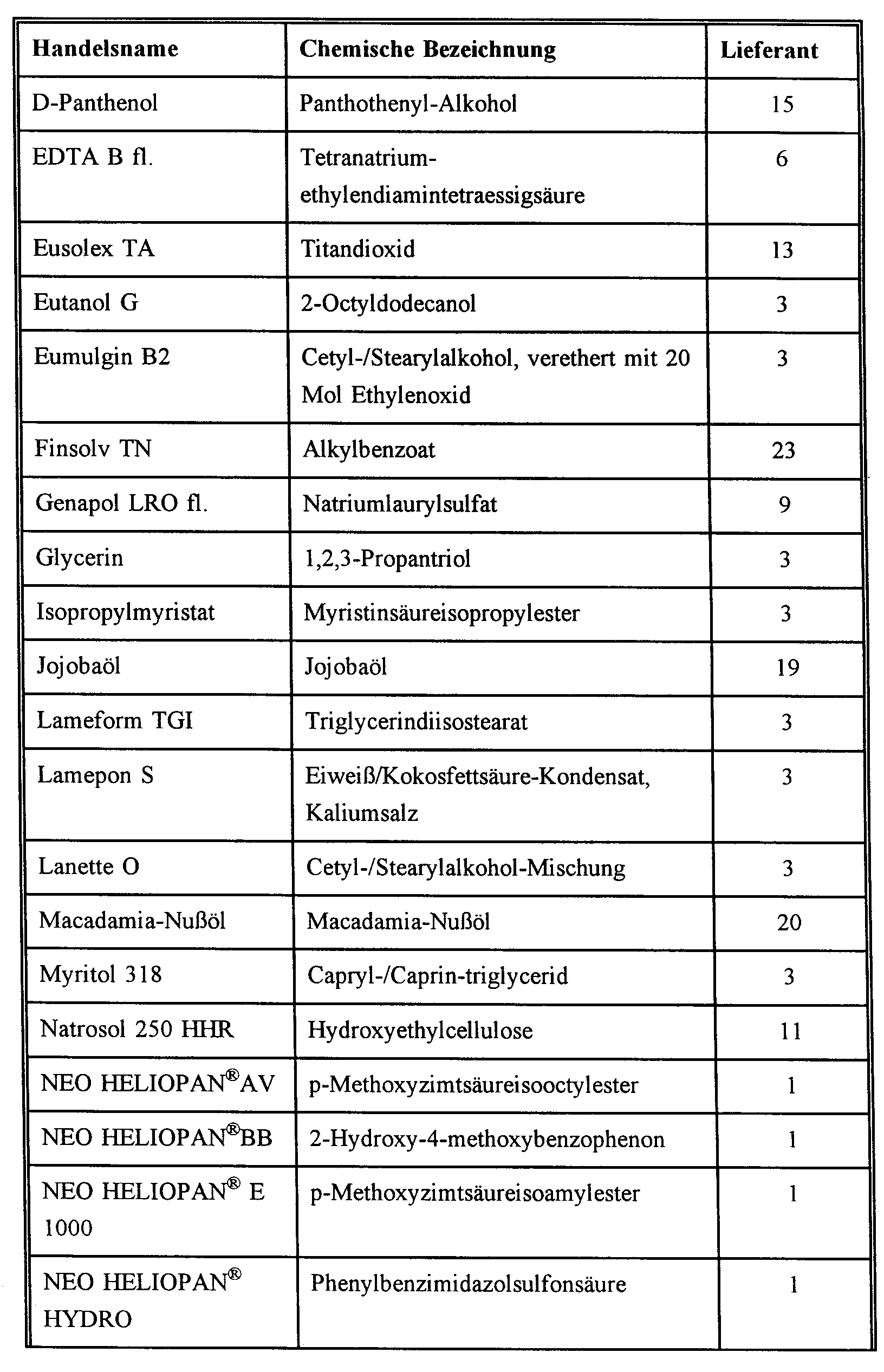
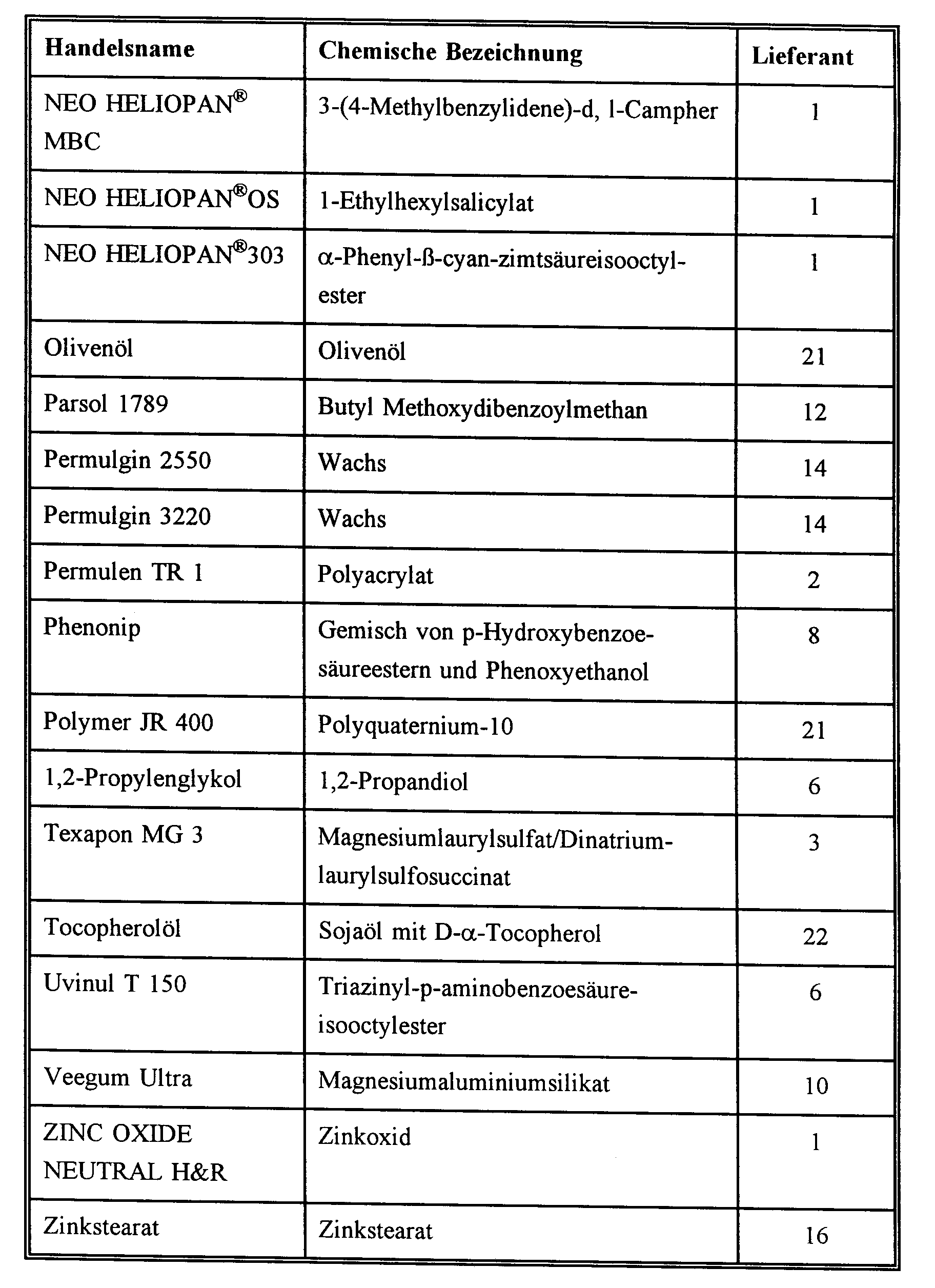
| 1. | Haarmann & Reimer GmbH., Holzminden |
| 2. | B.F. Goodrich Company, Neuss |
| 3. | Henkel KGaA, Düsseldorf |
| 4. | ICI Speciality Chemicals, Frankfurt |
| 5. | Bayer AG, Leverküsen |
| 6. | BASF, Ludwigshafen |
| 7. | Goldschmidt AG, Essen |
| 8. | Nipa Lab. Ltd., Pontypridd Mid Glam, Wales / GB |
| 9. | Hoechst AG, Frankfurt |
| 10. | R.T. Vanderbilt Company Inc., Norwalk / USA |
| 11. | Hercules Inc., Wilmington, Delaware/USA |
| 12. | Hoffmann-LaRoche, Basel/CH |
| 13. | E. Merck, Darmstadt |
| 14. | Koster Keunen Holland BV, Bladl /NL |
| 15. | Akzo Chemie GmbH, Düren |
| 16 | Chemische Werke Bärlocher, München |
| 17. | Rheox Inc., Hightstown, New Jersey / USA |
| 18. | ISP Global Technologies Deutschland GmbH, Frechen |
| 19. | Henry Lamotte, Bremen |
| 20 | Erhard Wagner GmbH, Bremen |
| 21. | Nordmann & Rassmann GmbH & Co., Hamburg |
| 22 | Richter GmbH, Berlin |
| 23. | Witco Surfactants GmbH, Steinau a.d. Straße |


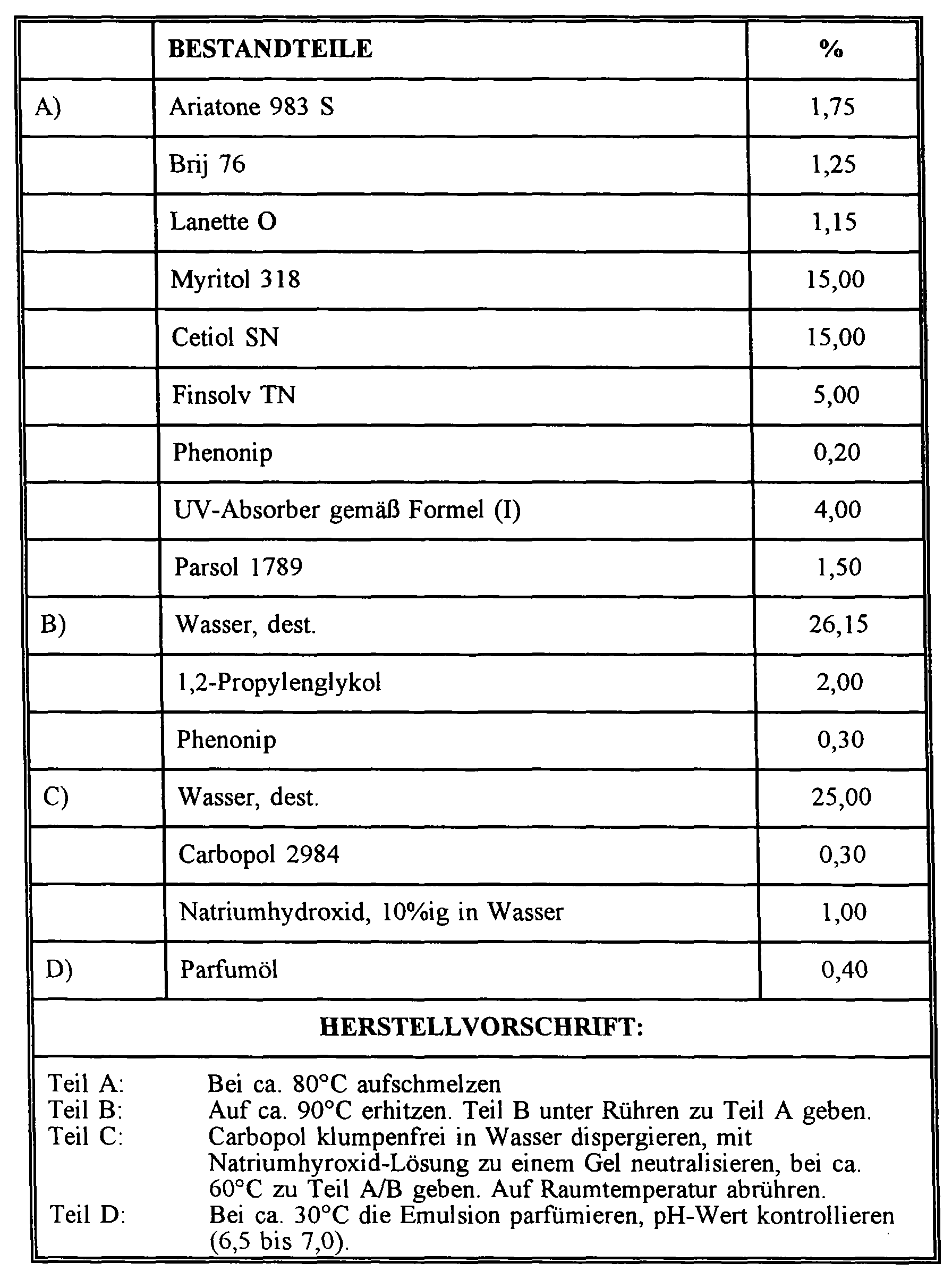


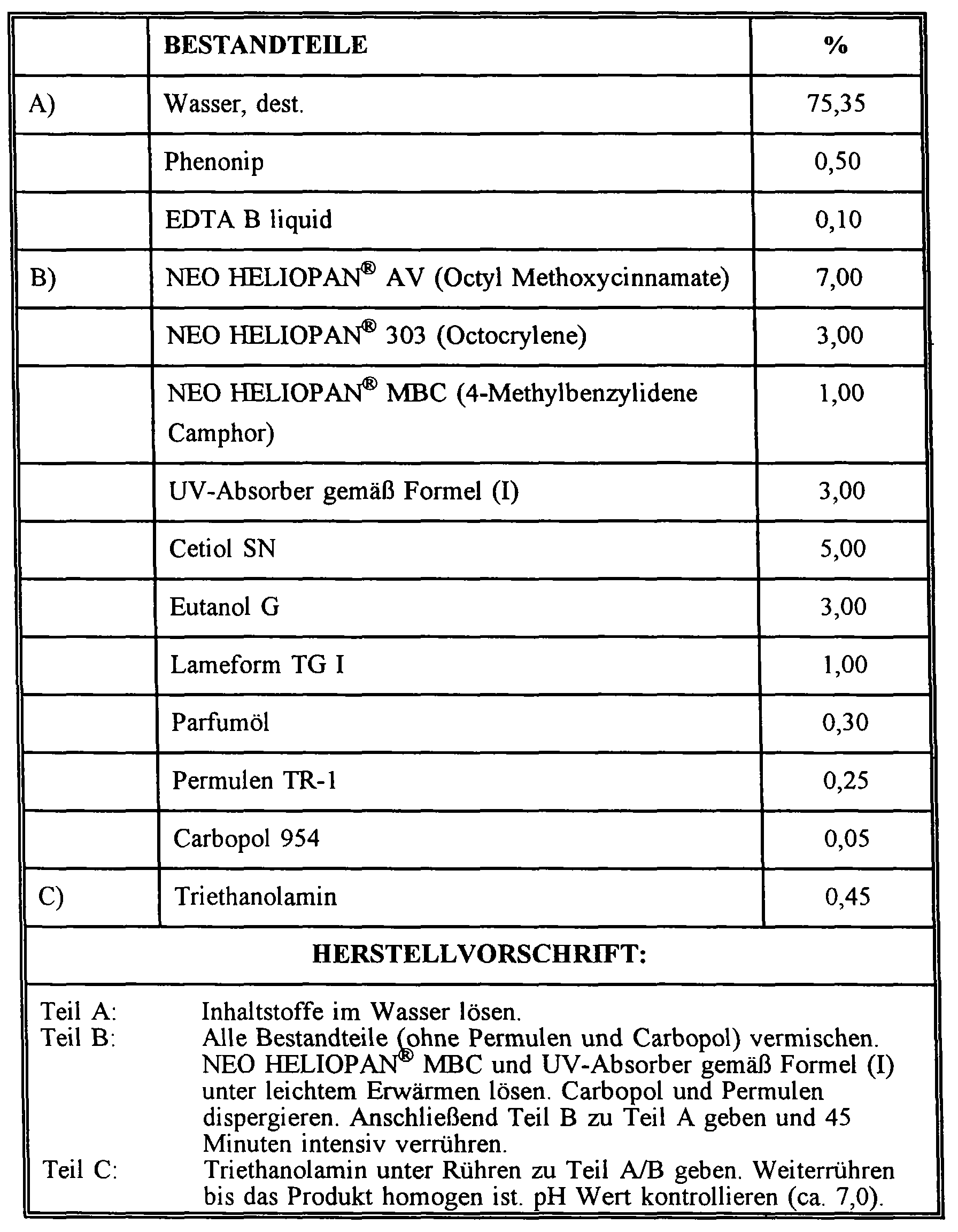
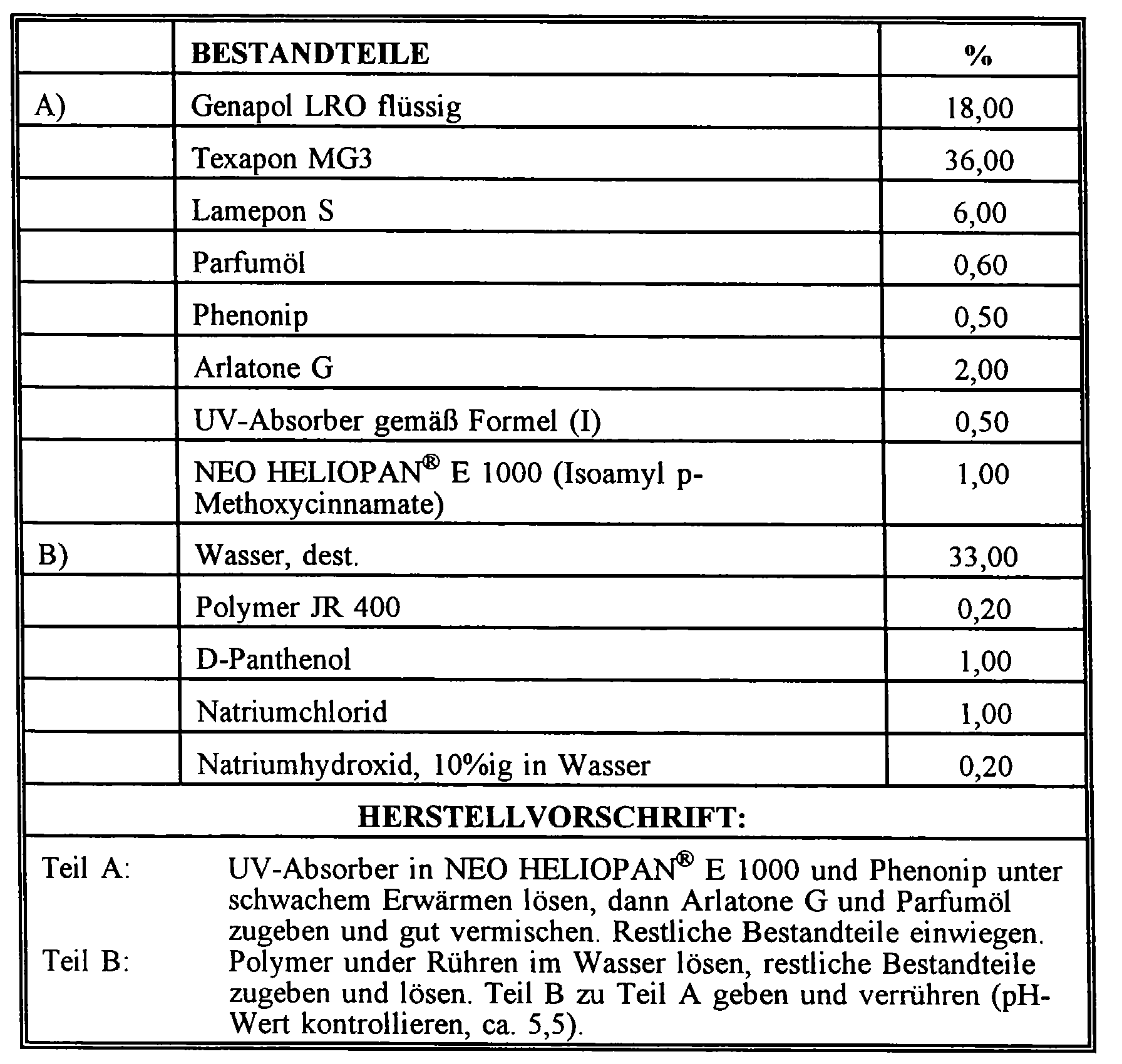
Claims (4)
- Verwendung von Verbindungen der Formelworin

- R1 bis R4, R3', R3'', R4' und R4''
- unabhängig voneinander Wasserstoff, C1-C8-Alkyl
oder C5-C10-Cycloalkyl bedeuten, mit der Maßgabe, daß auch
zwei Substituenten an benachbarten C-Atomen zusammen eine
gegebenenfalls substituierte C1-C4-Alkylengruppe, insbesondere C3-C4-Alkylen,
bedeuten können, wobei eine Methylengruppe durch -O-, -S-,
oder -NH- ersetzt sein kann, weiterhin
unabhängig voneinander C1-C4-Alkoxy, Hydroxy, Carboxy, Carbalkoxy oder Carbamoyl bedeuten, - R5 bis R8
- unabhängig voneinander die Bedeutung von R1, R2 oder Sulfo oder Aminosulfonyl haben,
- X und Y
- unabhängig voneinander CN, CO2R9, CO2NR9R10 oder COR9 bedeuten, wobei R9 und R10 unabhängig voneinander für Wasserstoff, C1 bis C8-Alkyl oder C5-C10-Cycloalkyl stehen und weiterhin einer der Reste
- X oder Y
- zusätzlich ein C1-C8-Alkylrest, ein C5-C10-Arylrest, insbesondere Phenyl, oder ein 5- bis 6-gliedriger Heteroarylrest welcher 1 bis 2 Heteroatome aus der Reihe N, O, S enthält, sein kann, oder
- X und Y
- zusammen mit dem β-Atom, an welches sie gebunden sind, einen 5- bis
7-gliedrigen Ring bedeuten, der bis zu 3 Heteroatome, insbesondere
Sauerstoff und/oder Sticksstoff enthält, wobei die Ringatome
substituiert sein können, insbesondere mit exocyclisch doppelt
gebundenem Sauerstoff(Ketogruppe), bevorzugt in Nachbarstellung zu
dem β-Atom,
und - n, m
- unabhängig voneinander Null oder 1 bedeuten,
als UV-Absorber.
- Verwendung nach Anspruch 1 von Verbindungen der Formelnworin X und Y die in Anspruch 1 angegebenen Bedeutungen besitzen.

- Verbindungen der Formel (I) nach Anspruch 1 mit Ausnahme von Verbindungen der Formelworin

- R1, R2 und R3
- jeweils unabhängig voneinander gleich oder verschieden sein können und Wasserstoffatom, Halogenatom, Hydroxygruppe, Nitrogruppe, Cyanogruppe oder einwertiger, gegebenenfalls substituierter organischer Rest bedeuten und
- R4
- Wasserstoff, Halogenatom, Nitrogruppe, Cyanogruppe oder einwertiger, gegebenenfalls substituierter organischer Rest bedeutet und
- R5
- gleich oder verschieden sein kann und Halogenatom, Hydroxygruppe, Nitrogruppe, Cyanogruppe oder einwertiger, gegebenenfalls substituierter organischer Rest bedeutet.
- Verfahren zur Herstellung der Verbindungen nach Anspruch 3, durch Kondensation von Verbindungen der Formelworin

R1 bis R8 und m und n die in Anspruch 1 genannte Bedeutung besitzen,
mit Verbindungen der Formelmit der für X und Y in Anspruch 1 genannten Bedeutung.
Applications Claiming Priority (2)
| Application Number | Priority Date | Filing Date | Title |
|---|---|---|---|
| DE19631863 | 1996-08-07 | ||
| DE19631863A DE19631863A1 (de) | 1996-08-07 | 1996-08-07 | Indanylidenverbindungen, Verfahren zu ihrer Herstellung und ihre Verwendung als UV-Absorber |
Publications (3)
| Publication Number | Publication Date |
|---|---|
| EP0823418A2 true EP0823418A2 (de) | 1998-02-11 |
| EP0823418A3 EP0823418A3 (de) | 1998-04-29 |
| EP0823418B1 EP0823418B1 (de) | 2002-10-09 |
Family
ID=7802020
Family Applications (1)
| Application Number | Title | Priority Date | Filing Date |
|---|---|---|---|
| EP97112936A Expired - Lifetime EP0823418B1 (de) | 1996-08-07 | 1997-07-28 | Indanylidenverbindungen und ihre Verwendung als UV-Absorber |
Country Status (9)
| Country | Link |
|---|---|
| US (2) | US5965066A (de) |
| EP (1) | EP0823418B1 (de) |
| JP (1) | JP3597347B2 (de) |
| KR (1) | KR100512508B1 (de) |
| AU (1) | AU738152B2 (de) |
| CA (1) | CA2212256C (de) |
| DE (2) | DE19631863A1 (de) |
| ES (1) | ES2187704T3 (de) |
| ZA (1) | ZA976991B (de) |
Cited By (12)
| Publication number | Priority date | Publication date | Assignee | Title |
|---|---|---|---|---|
| EP1000950A3 (de) * | 1998-11-11 | 2002-04-03 | F. Hoffmann-La Roche Ag | Indanylidenverbindungen |
| WO2002038537A1 (de) * | 2000-11-10 | 2002-05-16 | Haarmann & Reimer Gmbh | Neue indanylidenverbindungen |
| US6416746B1 (en) | 1998-11-11 | 2002-07-09 | Roche Vitamins Inc. | Indanylidene compounds |
| WO2003076379A1 (de) | 2002-03-11 | 2003-09-18 | Symrise Gmbh & Co. Kg | Alkoxy-substituierte indane und deren herstellung |
| FR2949673A1 (fr) * | 2009-09-08 | 2011-03-11 | Oreal | Composition contenant une s-triazine siliciee substituee par au moins deux groupes alkylaminobenzoates et un filtre uv indanylidene |
| WO2011042358A1 (en) | 2009-10-08 | 2011-04-14 | L'oreal | Photoprotective composition based on a 2-alkoxy-4-alkyl ketone phenol compound; use of said compound for increasing the sun protection factor |
| WO2011080043A1 (en) | 2010-01-04 | 2011-07-07 | L'oreal | Ureidopyrimidones; cosmetic use as uv-screening agents; antisun compositions containing them |
| WO2011157746A1 (en) | 2010-06-16 | 2011-12-22 | L'oreal | Cosmetic antioxidant aromatic c-glycosides |
| WO2012010554A1 (en) | 2010-07-20 | 2012-01-26 | L'oreal | Use of compounds resulting from a sugar polyol or from a dehydrogenated sugar polyol derivative as a uv-screening agent; antisun compositions containing same; and novel compounds |
| WO2013011094A2 (en) | 2011-07-21 | 2013-01-24 | L'oreal | Cosmetic and/or dermatological composition containing a merocyanine derivative comprising specific polar groups consisting of hydroxyl- and ether-functionalities |
| WO2016203062A1 (fr) | 2015-09-25 | 2016-12-22 | Rhodia Operations | Composition cosmetique photoprotectrice |
| WO2019102114A1 (fr) | 2017-11-24 | 2019-05-31 | Rhodia Operations | Particules d'oxyde de cerium / silice |
Families Citing this family (14)
| Publication number | Priority date | Publication date | Assignee | Title |
|---|---|---|---|---|
| JP2001518112A (ja) * | 1997-03-25 | 2001-10-09 | バイヤースドルフ・アクチエンゲゼルシヤフト | 乳化剤を含まない油中水型の微細分散系 |
| US6464965B1 (en) * | 1997-09-24 | 2002-10-15 | Noveon Ip Holdings Corp. | Sunscreen composition |
| DE19842786A1 (de) * | 1998-09-18 | 2000-03-23 | Beiersdorf Ag | Emulgatorfreie feindisperse Systeme vom Typ Öl-in-Wasser und Wasser-in-Öl |
| US6838088B2 (en) | 1998-09-18 | 2005-01-04 | Beiersdorf Ag | Emulsifier-free finely disperse systems of the oil-in-water- and water-in-oil- type |
| DE19842767A1 (de) * | 1998-09-18 | 2000-03-23 | Beiersdorf Ag | Emulgatorfreie feindisperse Systeme von Typ Öl-in-Wasser und Wasser-in-Öl |
| DE19842732A1 (de) | 1998-09-18 | 2000-03-23 | Beiersdorf Ag | Emulgatorfreie feindisperse Systeme vom Typ Öl-in-Wasser und Wasser-in-Öl |
| DE19842730A1 (de) | 1998-09-18 | 2000-03-23 | Beiersdorf Ag | Emulgatorfreie feindisperse Systeme vom Typ Öl-in-Wasser und Wasser-in-Öl |
| DE19842744B4 (de) | 1998-09-18 | 2006-12-21 | Beiersdorf Ag | Emulgatorfreie feindisperse Systeme vom Typ Öl-in-Wasser und Wasser-in-Öl und deren Verwendung |
| DE19857252A1 (de) | 1998-12-11 | 2000-06-15 | Haarmann & Reimer Gmbh | Benzyliden-gamma-butyrolactone, Verfahren zu ihrer Herstellung und ihre Verwendung als UV-Absorber |
| DE19950059A1 (de) * | 1999-10-16 | 2001-04-19 | Beiersdorf Ag | Kosmetische und dermatologische Lichtschutzformulierungen in Form von O/W-Makroemulsionen oder O/W-Mikroemulsionen, mit einem Gehalt an mehrfach sulfonierten Lichtschutzfiltern |
| DE10321912A1 (de) * | 2003-05-13 | 2004-12-09 | Kerner, Uwe, Dr. med. | Sonnencreme |
| KR100615233B1 (ko) | 2004-07-21 | 2006-08-25 | 삼성에스디아이 주식회사 | 박막 트랜지스터, 및 이를 구비한 평판 표시장치 |
| DE102005044262A1 (de) * | 2005-09-09 | 2007-03-15 | Beiersdorf Ag | UV-Filterkomposition enthaltend PPG-3 Benzylethermyristat |
| WO2025242899A1 (en) * | 2024-05-24 | 2025-11-27 | Basf Se | Substituted cinnamic acid derivatives as uv absorbers and uses thereof |
Family Cites Families (6)
| Publication number | Priority date | Publication date | Assignee | Title |
|---|---|---|---|---|
| US3751563A (en) * | 1969-06-11 | 1973-08-07 | Union Carbide Corp | Sunscreens preparations |
| DE2816819A1 (de) * | 1978-04-18 | 1979-10-31 | Bayer Ag | Lichtschutzmittel |
| US4307108A (en) * | 1979-12-26 | 1981-12-22 | Pfizer Inc. | Method for lowering sorbitol levels using spiro-imides |
| DE3206398A1 (de) * | 1982-02-23 | 1983-09-01 | Basf Ag, 6700 Ludwigshafen | S-triazinderivate und ihre verwendung als lichtschutzmittel |
| JPH04134043A (ja) * | 1990-09-25 | 1992-05-07 | Kao Corp | 新規α―ベンジリデンケトン誘導体、これを含有する紫外線吸収剤及びこれを含有する化粧料 |
| KR0165729B1 (ko) * | 1994-02-18 | 1999-03-20 | 로베르트 뢰머 | 스틸벤 기재물질, 그 제조방법 및 그 사용 |
-
1996
- 1996-08-07 DE DE19631863A patent/DE19631863A1/de not_active Withdrawn
-
1997
- 1997-07-28 EP EP97112936A patent/EP0823418B1/de not_active Expired - Lifetime
- 1997-07-28 ES ES97112936T patent/ES2187704T3/es not_active Expired - Lifetime
- 1997-07-28 DE DE59708417T patent/DE59708417D1/de not_active Expired - Lifetime
- 1997-08-01 CA CA002212256A patent/CA2212256C/en not_active Expired - Fee Related
- 1997-08-01 US US08/905,258 patent/US5965066A/en not_active Expired - Lifetime
- 1997-08-01 AU AU32447/97A patent/AU738152B2/en not_active Ceased
- 1997-08-01 JP JP22102397A patent/JP3597347B2/ja not_active Expired - Fee Related
- 1997-08-06 KR KR1019970037469A patent/KR100512508B1/ko not_active Expired - Fee Related
- 1997-08-06 ZA ZA9706991A patent/ZA976991B/xx unknown
-
1999
- 1999-01-28 US US09/238,287 patent/US6153175A/en not_active Expired - Lifetime
Cited By (15)
| Publication number | Priority date | Publication date | Assignee | Title |
|---|---|---|---|---|
| EP1000950A3 (de) * | 1998-11-11 | 2002-04-03 | F. Hoffmann-La Roche Ag | Indanylidenverbindungen |
| US6416746B1 (en) | 1998-11-11 | 2002-07-09 | Roche Vitamins Inc. | Indanylidene compounds |
| WO2002038537A1 (de) * | 2000-11-10 | 2002-05-16 | Haarmann & Reimer Gmbh | Neue indanylidenverbindungen |
| EP1466892A1 (de) * | 2000-11-10 | 2004-10-13 | Symrise GmbH & Co. KG | Neue Indanylidenverbindungen |
| WO2003076379A1 (de) | 2002-03-11 | 2003-09-18 | Symrise Gmbh & Co. Kg | Alkoxy-substituierte indane und deren herstellung |
| FR2949673A1 (fr) * | 2009-09-08 | 2011-03-11 | Oreal | Composition contenant une s-triazine siliciee substituee par au moins deux groupes alkylaminobenzoates et un filtre uv indanylidene |
| WO2011042358A1 (en) | 2009-10-08 | 2011-04-14 | L'oreal | Photoprotective composition based on a 2-alkoxy-4-alkyl ketone phenol compound; use of said compound for increasing the sun protection factor |
| EP3281620A1 (de) | 2009-10-08 | 2018-02-14 | L'oreal | Lichtschützende zusammensetzung auf basis einer 2-alkoxy-4-alkylketonphenolverbindung; verwendung dieser verbindung zur erhöhung des sonnenschutzfaktors |
| WO2011080043A1 (en) | 2010-01-04 | 2011-07-07 | L'oreal | Ureidopyrimidones; cosmetic use as uv-screening agents; antisun compositions containing them |
| WO2011157746A1 (en) | 2010-06-16 | 2011-12-22 | L'oreal | Cosmetic antioxidant aromatic c-glycosides |
| WO2012010554A1 (en) | 2010-07-20 | 2012-01-26 | L'oreal | Use of compounds resulting from a sugar polyol or from a dehydrogenated sugar polyol derivative as a uv-screening agent; antisun compositions containing same; and novel compounds |
| WO2013011094A2 (en) | 2011-07-21 | 2013-01-24 | L'oreal | Cosmetic and/or dermatological composition containing a merocyanine derivative comprising specific polar groups consisting of hydroxyl- and ether-functionalities |
| WO2013010590A1 (en) | 2011-07-21 | 2013-01-24 | L'oreal | Cosmetic and/or dermatological composition containing a merocyanine derivative comprising specific polar groups consisting of hydroxyl- and ether-functionalities |
| WO2016203062A1 (fr) | 2015-09-25 | 2016-12-22 | Rhodia Operations | Composition cosmetique photoprotectrice |
| WO2019102114A1 (fr) | 2017-11-24 | 2019-05-31 | Rhodia Operations | Particules d'oxyde de cerium / silice |
Also Published As
| Publication number | Publication date |
|---|---|
| EP0823418B1 (de) | 2002-10-09 |
| AU3244797A (en) | 1998-02-12 |
| US5965066A (en) | 1999-10-12 |
| EP0823418A3 (de) | 1998-04-29 |
| JP3597347B2 (ja) | 2004-12-08 |
| KR19980018417A (ko) | 1998-06-05 |
| DE19631863A1 (de) | 1998-02-12 |
| AU738152B2 (en) | 2001-09-13 |
| ES2187704T3 (es) | 2003-06-16 |
| DE59708417D1 (de) | 2002-11-14 |
| KR100512508B1 (ko) | 2006-01-27 |
| US6153175A (en) | 2000-11-28 |
| JPH1077220A (ja) | 1998-03-24 |
| ZA976991B (en) | 1998-03-03 |
| CA2212256C (en) | 2004-09-14 |
| CA2212256A1 (en) | 1998-02-07 |
Similar Documents
| Publication | Publication Date | Title |
|---|---|---|
| EP0823418B1 (de) | Indanylidenverbindungen und ihre Verwendung als UV-Absorber | |
| DE69726529T2 (de) | Benzoxazolderivate und ihre Verwendung als UV-Filter | |
| DE69815449T2 (de) | Filtrierendes Kosmetisches Mittel | |
| DE69100593T2 (de) | Lichtbeständige filternde kosmetische zusammensetzung enthaltend einen uva-filter und ein beta-beta-diphenylacrylat oder einen alpha-cyano-beta-beta-diphenylacrylsäure-alkylester. | |
| US5087445A (en) | Photoprotection compositions having reduced dermal irritation | |
| EP0669323B1 (de) | Kosmetische und dermatologische zubereitungen, enthaltend phenylen-1,4-bisbenzimidiazolesulfonsäuren | |
| EP1167358B1 (de) | 2-Phenylbenzimidazolsulfonsäuren als UV-B-Filter | |
| DE19648010A1 (de) | Verwendung von substituierten Benzazolen als UV-Absorber, neue Benzazole und Verfahren zu ihrer Herstellung | |
| WO2002038537A1 (de) | Neue indanylidenverbindungen | |
| US5738842A (en) | Sun protecting cosmetic compositions comprising derivatives of dibenzoylmethane, of diphenylcyanoacrylic acid and of triazine | |
| DE69700045T2 (de) | Zusammensetzungen enthaltend einen 4-ter-Butyl-4'-Methoxydibenzoylmethan, einen 1,3,5-Triazinderivat und einen (Alpha-cyano)-beta, beta'-Diphenylacrylsäure-Alkylester sowie ihre Verwendung | |
| EP0581955A1 (de) | Verwendung von benzimidazol-derivaten als lichtschutzfilter. | |
| EP0838214B2 (de) | Kosmetische Mittel enthaltend eine Kombination von UV-Absorbern, einschliesslich Triazinderivate | |
| DE69730575T2 (de) | Kosmetische Sonnenschutzmittel, die Derivate von Dibenzoylmethan und Benzophenon enthalten | |
| DE69700402T2 (de) | Mittel enthaltend ein Dibenzoylmethanederivaten, einen Triazinderivaten und einen Dialkyl-benzalmalonaten | |
| DE4223890A1 (de) | Triazin-derivate | |
| DE19508608B4 (de) | Lichtbeständiges kosmetisches Mittel enthaltend Tetraalkylquercetin sowie Tetraalkylquercetine als solche | |
| US5733532A (en) | Sun protecting cosmetic compositions comprising derivatives of dibenzoylmethane, of benzophenone and of triazine | |
| EP0576974A1 (de) | Benzyliden-chinuclidinone als Sonnenschutzmittel | |
| EP1167359A1 (de) | Verfahren zur Herstellung von 2-Arylbenzimidazolsulfonsäuren und deren Verwendung als UV-Filter | |
| DE60104504T2 (de) | Kosmetische Zusammensetzung, die Retinol und ein UV-A-Filter enthält | |
| DE602004007181T2 (de) | 2,4,6-Tris(dineopentyl-4'-amino-benzalmalonat)-s-triazin, kosmetische Lichtschutzmittel, die diese Verbindung enthalten, und Verwendung dieser Verbindung | |
| DE69616185T2 (de) | Photostabile kosmetische Lichtschutzmittel | |
| DE19634229A1 (de) | Photostabile UV-A-Filter enthaltende kosmetische Zubereitungen | |
| EP0474063A1 (de) | Dialkoxybenzylidenkampfer-Derivate |
Legal Events
| Date | Code | Title | Description |
|---|---|---|---|
| PUAI | Public reference made under article 153(3) epc to a published international application that has entered the european phase |
Free format text: ORIGINAL CODE: 0009012 |
|
| AK | Designated contracting states |
Kind code of ref document: A2 Designated state(s): CH DE ES FR GB GR IE IT LI NL SE |
|
| PUAL | Search report despatched |
Free format text: ORIGINAL CODE: 0009013 |
|
| AK | Designated contracting states |
Kind code of ref document: A3 Designated state(s): AT BE CH DE DK ES FI FR GB GR IE IT LI LU MC NL PT SE |
|
| 17P | Request for examination filed |
Effective date: 19981029 |
|
| AKX | Designation fees paid |
Free format text: CH DE ES FR GB GR IE IT LI NL SE |
|
| RBV | Designated contracting states (corrected) |
Designated state(s): CH DE ES FR GB GR IE IT LI NL SE |
|
| 17Q | First examination report despatched |
Effective date: 19990910 |
|
| RTI1 | Title (correction) |
Free format text: INDANYLIDENE DERIVATIVES AND THEIR USE AS UV-ABSORBERS |
|
| GRAG | Despatch of communication of intention to grant |
Free format text: ORIGINAL CODE: EPIDOS AGRA |
|
| GRAG | Despatch of communication of intention to grant |
Free format text: ORIGINAL CODE: EPIDOS AGRA |
|
| GRAH | Despatch of communication of intention to grant a patent |
Free format text: ORIGINAL CODE: EPIDOS IGRA |
|
| GRAH | Despatch of communication of intention to grant a patent |
Free format text: ORIGINAL CODE: EPIDOS IGRA |
|
| GRAA | (expected) grant |
Free format text: ORIGINAL CODE: 0009210 |
|
| AK | Designated contracting states |
Kind code of ref document: B1 Designated state(s): CH DE ES FR GB GR IE IT LI NL SE |
|
| PG25 | Lapsed in a contracting state [announced via postgrant information from national office to epo] |
Ref country code: IE Free format text: LAPSE BECAUSE OF FAILURE TO SUBMIT A TRANSLATION OF THE DESCRIPTION OR TO PAY THE FEE WITHIN THE PRESCRIBED TIME-LIMIT Effective date: 20021009 Ref country code: GR Free format text: LAPSE BECAUSE OF FAILURE TO SUBMIT A TRANSLATION OF THE DESCRIPTION OR TO PAY THE FEE WITHIN THE PRESCRIBED TIME-LIMIT Effective date: 20021009 |
|
| REG | Reference to a national code |
Ref country code: GB Ref legal event code: FG4D Free format text: NOT ENGLISH |
|
| REG | Reference to a national code |
Ref country code: CH Ref legal event code: NV Representative=s name: E. BLUM & CO. PATENTANWAELTE Ref country code: CH Ref legal event code: EP |
|
| GBT | Gb: translation of ep patent filed (gb section 77(6)(a)/1977) |
Effective date: 20021009 |
|
| REG | Reference to a national code |
Ref country code: IE Ref legal event code: FG4D Free format text: GERMAN |
|
| REF | Corresponds to: |
Ref document number: 59708417 Country of ref document: DE Date of ref document: 20021114 |
|
| PG25 | Lapsed in a contracting state [announced via postgrant information from national office to epo] |
Ref country code: SE Free format text: LAPSE BECAUSE OF FAILURE TO SUBMIT A TRANSLATION OF THE DESCRIPTION OR TO PAY THE FEE WITHIN THE PRESCRIBED TIME-LIMIT Effective date: 20030109 |
|
| ET | Fr: translation filed | ||
| REG | Reference to a national code |
Ref country code: ES Ref legal event code: FG2A Ref document number: 2187704 Country of ref document: ES Kind code of ref document: T3 |
|
| REG | Reference to a national code |
Ref country code: IE Ref legal event code: FD4D Ref document number: 0823418E Country of ref document: IE |
|
| PLBE | No opposition filed within time limit |
Free format text: ORIGINAL CODE: 0009261 |
|
| STAA | Information on the status of an ep patent application or granted ep patent |
Free format text: STATUS: NO OPPOSITION FILED WITHIN TIME LIMIT |
|
| 26N | No opposition filed |
Effective date: 20030710 |
|
| REG | Reference to a national code |
Ref country code: CH Ref legal event code: PFA Owner name: SYMRISE GMBH & CO. KG Free format text: HAARMANN & REIMER GMBH#POSTFACH 12 53#D-37601 HOLZMINDEN (DE) -TRANSFER TO- SYMRISE GMBH & CO. KG#MUEHLENFELDSTRASSE 1#37603 HOLZMINDEN (DE) |
|
| REG | Reference to a national code |
Ref country code: GB Ref legal event code: 732E |
|
| NLS | Nl: assignments of ep-patents |
Owner name: SYMRISE GMBH & CO. KG Owner name: DRAGOCO GERBERDING & CO AKTIENGESELLSCHAFT |
|
| REG | Reference to a national code |
Ref country code: FR Ref legal event code: TP Ref country code: FR Ref legal event code: CJ Ref country code: FR Ref legal event code: CD Ref country code: FR Ref legal event code: CA |
|
| REG | Reference to a national code |
Ref country code: CH Ref legal event code: PFA Owner name: SYMRISE GMBH & CO. KG Free format text: SYMRISE GMBH & CO. KG#MUEHLENFELDSTRASSE 1#37603 HOLZMINDEN (DE) -TRANSFER TO- SYMRISE GMBH & CO. KG#MUEHLENFELDSTRASSE 1#37603 HOLZMINDEN (DE) |
|
| REG | Reference to a national code |
Ref country code: NL Ref legal event code: SD Effective date: 20110530 |
|
| PGFP | Annual fee paid to national office [announced via postgrant information from national office to epo] |
Ref country code: CH Payment date: 20110725 Year of fee payment: 15 |
|
| PGFP | Annual fee paid to national office [announced via postgrant information from national office to epo] |
Ref country code: GB Payment date: 20120723 Year of fee payment: 16 |
|
| PGFP | Annual fee paid to national office [announced via postgrant information from national office to epo] |
Ref country code: ES Payment date: 20120723 Year of fee payment: 16 Ref country code: FR Payment date: 20120803 Year of fee payment: 16 Ref country code: IT Payment date: 20120725 Year of fee payment: 16 Ref country code: DE Payment date: 20120807 Year of fee payment: 16 |
|
| PGFP | Annual fee paid to national office [announced via postgrant information from national office to epo] |
Ref country code: NL Payment date: 20120718 Year of fee payment: 16 |
|
| REG | Reference to a national code |
Ref country code: NL Ref legal event code: V1 Effective date: 20140201 |
|
| REG | Reference to a national code |
Ref country code: CH Ref legal event code: PL |
|
| GBPC | Gb: european patent ceased through non-payment of renewal fee |
Effective date: 20130728 |
|
| REG | Reference to a national code |
Ref country code: FR Ref legal event code: ST Effective date: 20140331 |
|
| PG25 | Lapsed in a contracting state [announced via postgrant information from national office to epo] |
Ref country code: NL Free format text: LAPSE BECAUSE OF NON-PAYMENT OF DUE FEES Effective date: 20140201 Ref country code: GB Free format text: LAPSE BECAUSE OF NON-PAYMENT OF DUE FEES Effective date: 20130728 Ref country code: DE Free format text: LAPSE BECAUSE OF NON-PAYMENT OF DUE FEES Effective date: 20140201 Ref country code: LI Free format text: LAPSE BECAUSE OF NON-PAYMENT OF DUE FEES Effective date: 20130731 Ref country code: CH Free format text: LAPSE BECAUSE OF NON-PAYMENT OF DUE FEES Effective date: 20130731 |
|
| REG | Reference to a national code |
Ref country code: DE Ref legal event code: R119 Ref document number: 59708417 Country of ref document: DE Effective date: 20140201 |
|
| PG25 | Lapsed in a contracting state [announced via postgrant information from national office to epo] |
Ref country code: FR Free format text: LAPSE BECAUSE OF NON-PAYMENT OF DUE FEES Effective date: 20130731 Ref country code: IT Free format text: LAPSE BECAUSE OF NON-PAYMENT OF DUE FEES Effective date: 20130728 |
|
| PG25 | Lapsed in a contracting state [announced via postgrant information from national office to epo] |
Ref country code: ES Free format text: LAPSE BECAUSE OF NON-PAYMENT OF DUE FEES Effective date: 20130729 |