EP0820006A2 - Signalprozessor - Google Patents
Signalprozessor Download PDFInfo
- Publication number
- EP0820006A2 EP0820006A2 EP97202203A EP97202203A EP0820006A2 EP 0820006 A2 EP0820006 A2 EP 0820006A2 EP 97202203 A EP97202203 A EP 97202203A EP 97202203 A EP97202203 A EP 97202203A EP 0820006 A2 EP0820006 A2 EP 0820006A2
- Authority
- EP
- European Patent Office
- Prior art keywords
- signal processor
- program
- memory
- decoder
- decoding
- Prior art date
- Legal status (The legal status is an assumption and is not a legal conclusion. Google has not performed a legal analysis and makes no representation as to the accuracy of the status listed.)
- Granted
Links
Images
Classifications
-
- G—PHYSICS
- G06—COMPUTING OR CALCULATING; COUNTING
- G06F—ELECTRIC DIGITAL DATA PROCESSING
- G06F9/00—Arrangements for program control, e.g. control units
- G06F9/06—Arrangements for program control, e.g. control units using stored programs, i.e. using an internal store of processing equipment to receive or retain programs
- G06F9/30—Arrangements for executing machine instructions, e.g. instruction decode
- G06F9/38—Concurrent instruction execution, e.g. pipeline or look ahead
- G06F9/3885—Concurrent instruction execution, e.g. pipeline or look ahead using a plurality of independent parallel functional units
-
- G—PHYSICS
- G06—COMPUTING OR CALCULATING; COUNTING
- G06F—ELECTRIC DIGITAL DATA PROCESSING
- G06F9/00—Arrangements for program control, e.g. control units
- G06F9/06—Arrangements for program control, e.g. control units using stored programs, i.e. using an internal store of processing equipment to receive or retain programs
- G06F9/30—Arrangements for executing machine instructions, e.g. instruction decode
- G06F9/30145—Instruction analysis, e.g. decoding, instruction word fields
- G06F9/30156—Special purpose encoding of instructions, e.g. Gray coding
-
- G—PHYSICS
- G06—COMPUTING OR CALCULATING; COUNTING
- G06F—ELECTRIC DIGITAL DATA PROCESSING
- G06F9/00—Arrangements for program control, e.g. control units
- G06F9/06—Arrangements for program control, e.g. control units using stored programs, i.e. using an internal store of processing equipment to receive or retain programs
- G06F9/30—Arrangements for executing machine instructions, e.g. instruction decode
- G06F9/3017—Runtime instruction translation, e.g. macros
- G06F9/30174—Runtime instruction translation, e.g. macros for non-native instruction set, e.g. Javabyte, legacy code
-
- G—PHYSICS
- G06—COMPUTING OR CALCULATING; COUNTING
- G06F—ELECTRIC DIGITAL DATA PROCESSING
- G06F9/00—Arrangements for program control, e.g. control units
- G06F9/06—Arrangements for program control, e.g. control units using stored programs, i.e. using an internal store of processing equipment to receive or retain programs
- G06F9/30—Arrangements for executing machine instructions, e.g. instruction decode
- G06F9/3017—Runtime instruction translation, e.g. macros
- G06F9/30178—Runtime instruction translation, e.g. macros of compressed or encrypted instructions
-
- G—PHYSICS
- G06—COMPUTING OR CALCULATING; COUNTING
- G06F—ELECTRIC DIGITAL DATA PROCESSING
- G06F9/00—Arrangements for program control, e.g. control units
- G06F9/06—Arrangements for program control, e.g. control units using stored programs, i.e. using an internal store of processing equipment to receive or retain programs
- G06F9/30—Arrangements for executing machine instructions, e.g. instruction decode
- G06F9/30181—Instruction operation extension or modification
- G06F9/30196—Instruction operation extension or modification using decoder, e.g. decoder per instruction set, adaptable or programmable decoders
Definitions
- the invention relates to a signal processor with a program memory for storing compressed program command words and a decoder for decoding the compressed program command words, which are provided in the decoded form for controlling functions of the signal processor.
- Digital signal processors are special microprocessors with high computing power, the instruction sets and architectures of which are tailored to special requirements in the field of digital signal processing and which are used in particular to implement complex algorithms in real time.
- signal processors are used in the field of mobile radio according to the GSM standard, where they are used in mobile radio terminals (mobile stations) or mobile radio base stations to implement complex speech processing algorithms.
- Further areas of application are, for example, audio, video, medical and automotive technology.
- Usual signal processors have a program memory in which program instructions are stored in compressed (i.e. coded) form, the call of which leads to the parallel execution of different signal processing operations, e.g. the simultaneous execution of two data transfers via two different data buses, two address calculation operations, one arithmetic / logic Operation and a multiplication.
- Examples of common signal processors are the Philips PCF 5083 (KISS), the AT&T DSP 16xx and the Texas Instruments TMS 320.
- the program instructions for these signal processors are stored as 16-bit words in the program memory.
- the compressed 16-bit program instruction words become program instruction words with a larger word width, which depend on the complexity of the signal processor used depends, implemented (expanded).
- a typical word width for the expanded program command words is in the range between 32 and 128 bits.
- program command words are decoded by means of a hard-wired decoder which carries out the decoding by means of logical operations. Due to the compression of the program command words, only a correspondingly reduced number of different compressed program command words can be encoded in the program memory in comparison with the theoretical maximum of different program command words. In connection with the use of a hard-wired decoder, this leads to a restricted program instruction set (restricted parallel signal processing). In the above example, only 2 16 different program command words or program commands are possible for compressed 16-bit program command words. Theoretically, 2 32 ... 2 128 different program command words would be conceivable.
- the object of the invention is now to provide a signal processor which, compared to previously known signal processors of the type mentioned, enables optimum adaptation to the respective area of application.
- the object is achieved in that the decoding functions of the decoder are partly fixed and partly programmable.
- the program instruction set can be adapted so that the signal processor can be optimally used for special, very computationally intensive applications.
- the programmable decoding functions can also be modified during operation of the signal processor or a device in which the signal processor is currently being used, by loading new decoding tables which replace the previously loaded decoding tables, in order to enable adaptation to different operating states.
- the data throughput of the signal processor can be increased by the described adaptation of the program instruction set, which advantageously also leads to a reduction in the power consumption. This is an important advantage, particularly in the area of use in mobile radio terminals.
- the programmable decoder To carry out the programmable decoding functions of the decoder, provision is preferably made for addressing memory cells of a memory of the signal processor in which decoded program command words are stored. In this way, decoding tables can be implemented. Other decoded program command words are obtained using the fixed (hard-wired) part of the decoder.
- the programmable decoder used is simple, effective and variable.
- the memory used to store the program instructions in their decoded (decompressed) form is preferably in the form of RAM or ROM.
- the design of the memory as RAM is used due to the high flexibility, particularly in signal processors that are still in development or are produced in small numbers.
- the execution of the memory as RAM has the advantage that a change of the signal processor instruction set is also possible during the operation of the signal processor.
- the ROM version is preferably used in mass-produced signal processors in order to achieve a cost reduction compared to the use of RAM memories.
- a compressed program instruction word supplied by the program memory for the decoding of which a programmable decoding function of the decoder is provided, contains a first number of bits for determining a program instruction category and a second number of bits for determining the address of a memory cell of the memory.
- the different program instructions / program instruction categories are identified with the aid of the first number of bits.
- These bits also determine whether decoding (decompression) takes place using the fixed or the programmable part of the decoder.
- the second number of bits is additionally required to implement the respective program instructions and defines the details of the program instructions with regard to the generation of corresponding bits to be applied to control lines for the generation of signal processing steps to be carried out.
- these bits are stored in the memory cells of said memory and are read out by the second number of bits according to the addressing and applied to the associated control lines of the signal processor.
- the invention also relates to a mobile radio terminal and a mobile radio base station with a signal processor according to the invention, which is used in these applications for digital signal processing, for. B. for the implementation of speech processing algorithms, for channel coding / decoding and / or for the implementation of equalizer functions (equalizer functions). It is also advantageous to use the signal processor for digital signal processing in other devices, e.g. in radio equipment for digital broadcasting, ISDN terminals and DECT systems ("Digital European Cordless Telephone").
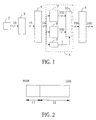
- the signal processor structure shown in FIG. 1, which does not show the parts of the associated signal processor which are not essential to the invention for reasons of clarity, contains a program counter which controls a program memory 3 by means of 16 bit wide control signals.
- the program instructions required to implement a program are stored in the program memory 3 by means of coded (ie compressed) program instruction words.
- the compressed program command words each consist of 16 bits, which are decoded (ie decompressed) into 100 bit wide program command words as described below.
- the usual width of the decoded program command words is in the range between 32 and 128 bits.
- the corresponding compressed program command word stored in the program memory 3 is first read out and temporarily stored in a register 4. Such a program instruction word is then fed to a decoder 5, which converts the compressed program instruction word with 16 bits into a decoded program instruction word with 100 bits.
- the 100-bit program command word generated by the decoder 5 is applied to control lines of the signal processor after buffering in a register 6 in order to control an associated signal processing function of the signal processor.
- the signal processor contains 100 parallel control lines to which the 100 bits of a program command word temporarily stored in register 6 are applied in parallel.
- the decoder 5 contains a first decoder part 7, a second decoder part 8, a functional unit 9 for detecting program instruction categories and a multiplexer 10.
- the compressed 16-bit program instruction words temporarily stored in register 4 are fed in parallel to the first and second decoder parts and the functional unit 9.
- Such a program instruction word has the form shown in FIG. 2. It consists of a first field 11 and a second field 12.
- the bits belonging to the first field 11 describe the respective program command category, ie the format of a program command.
- the second field 12 contains bits for the precise determination of the details of the corresponding program instruction. As will be explained later, addresses can also be in the second field 12.
- the first field 11 contains the most significant bits of the program instruction word with the MSB ("Most Significant Bit").
- the second field 12 contains the remaining least significant bits with the LSB ("Least Significant Bit”).
- the distribution of the total number of bits available between the two fields 11 and 12 is variable and depends on the individual program command categories.
- a compressed program command word supplied by the register 4 is decoded (decompressed) by either the decoder part 7 or the decoder part 8.
- the decoder part 7 contains a hard-wired decoding arrangement which uses suitable logic operations to generate a 100-bit program instruction word from a compressed 16-bit program instruction word.
- a decoding of a compressed 16-bit program instruction word supplied by the register 4 can also be carried out by means of the decoder part 8.
- This is a programmable 100-bit wide memory, in the memory cells of which the decompressed 100-bit program instruction words to be generated from the compressed 16-bit program instruction words are stored. In the present example it is implemented as ROM. However, execution as RAM is particularly advantageous for development purposes because of the greater flexibility.
- the decoding with the programmable decoder part 8 is carried out by addressing the memory cells with the second field 12 of the compressed 16-bit program instruction words and the corresponding reading of the memory content of the addressed memory cells. Which of the decoder parts 7 or 8 is used for decoding is determined by the first field 11 of the respective compressed 16-bit program instruction words (see FIG. 2). Which program instruction categories belong to which decoder part is determined a priori, so that a corresponding assignment to the decoder part 7 or to the decoder part 8 can take place during operation of the signal processor.
- the programmable decoder part 8 is used for decoding application-specific program command words (also called ASI "Application Specific Instructions").
- ASI Application Specific Instructions
- the memory 8 can be overwritten with new decoding data in order to change the decoding functions.
- the decoding functions which can be carried out with the aid of the hard-wired decoder part 7 cannot be changed.
- decoding functions are therefore realized which belong to program instructions which are provided for many different applications and are therefore not application-specific.
- the programmable decoder part 8 can be used to implement program instructions tailored specifically to a specific application, the processing of the signal processor which is possible in this way is more effective and the data processing throughput can be increased, which also results in a reduction in power consumption .
- Standard operations (arithmetic operations, data transfers via the signal processor's data buses, branching operations, etc.) can now be combined in any way into parallel program instructions, with each program instruction causing the standard operations it summarizes to be executed in parallel.
- the use of such a signal processor is advantageous due to the very complex and specific algorithms to be implemented, to which a signal processor according to the invention can be adapted by adapting its program instruction set as described above is customizable.
- the use of such a signal processor in a mobile radio base station or in a mobile radio terminal can be found, for example, in DE-A 43 44 157.
- the functional unit 9 likewise uses the first field 11 of a compressed 16-bit program instruction word supplied to it to determine which decoder part 7 or 8 is performing the decoding. On the basis of this evaluation, the functional unit 9 generates a 1-bit control signal for controlling the multiplexer 10. Depending on which of the two possible control states the one supplied by the functional unit 9 Control signal, the multiplexer 10 couples either the 100 outputs of the decoder part 7 or the 100 outputs of the decoder part 8 with the 100 inputs of the register 6 in order to temporarily store the respective decompressed program command word in the register 6 for later use as a control signal for signal processing.
- the signal processor structure described ensures increased flexibility of the signal processor. From the theoretically possible amount of 2 100 program instructions, 2 16 program instructions are implemented. Some of these implemented program instructions (N) can be defined by the respective user, who can thus adapt the signal processor to very specific applications. A particularly high degree of flexibility is ensured by the fact that a modification of the program commands detected by the decoder 5 is possible even during the operation of a device using the signal processor. For this purpose, the decoder part 8 designed as a memory is simply overwritten with the new decoding data.
- the signal processor according to the invention can also be used for digital signal processing in other devices, e.g. in radio equipment for digital broadcasting, ISDN terminals and DECT systems (not shown).
Landscapes
- Engineering & Computer Science (AREA)
- Software Systems (AREA)
- Theoretical Computer Science (AREA)
- Physics & Mathematics (AREA)
- General Engineering & Computer Science (AREA)
- General Physics & Mathematics (AREA)
- Executing Machine-Instructions (AREA)
- Advance Control (AREA)
Abstract
Description
- Die Erfindung betrifft einen Signalprozessor mit einem Programmspeicher zur Speicherung komprimierter Programmbefehlsworte und einem Decoder zur Decodierung der komprimierten Programmbefehlsworte, die in der decodierten Form zur Steuerung von Funktionen des Signalprozessors vorgesehen sind.
- Digitale Signalprozessoren (DSP) sind spezielle Mikroprozessoren mit hoher Rechenleistung, deren Befehlssätze und Architekturen auf spezielle Anforderungen im Bereich der digitalen Signalverarbeitung abgestimmt sind und die insbesondere zur Umsetzung komplexer Algorithmen in Echtzeit dienen. Beispielsweise finden Signalprozessoren auf dem Gebiet des Mobilfunks nach der GSM-Norm Verwendung, wo sie in Mobilfunkendgeräten (Mobilstationen) oder Mobilfunkbasisstationen zur Umsetzung komplexer Sprachverarbeitungsalgorithmen dienen. Weitere Anwendungsgebiete sind beispielsweise Audio-, Video-, Medizin- und Kraftfahrzeugtechnik.
- Übliche Signalprozessoren weisen einen Programmspeicher auf, in dem in komprimierter Form (d.h. codierter Form) Programmbefehle abgelegt sind, deren Aufruf zur parallelen Ausführung unterschiedlicher Signalverarbeitungsoperationen führt, z.B. die gleichzeitige Ausführung von zwei Datentransfers über zwei verschiedene Datenbusse, zwei Adreßberechnungsoperationen, einer Arithmetik-/Logik-Operation und einer Multiplikation. Beispiele für übliche Signalprozessoren sind der Philips PCF 5083 (KISS), der AT&T DSP 16xx und der Texas Instruments TMS 320. Die Programmbefehle sind bei diesen Signalprozessoren als 16-Bit-Worte im Programmspeicher abgelegt. Bei einer Decodierung (Dekompression) mittels eines Decoders werden die komprimierten 16-Bit-Programmbefehlsworte in Programmbefehlsworte mit einer größeren Wortbreite, die von der Komplexität des verwendeten Signalprozessors abhängt, umgesetzt (expandiert). Eine typische Wortbreite für die expandierten Programmbefehlsworte liegt im Bereich zwischen 32 und 128 Bit. Durch einen Aufruf von Programmbefehlen während eines Programmablaufs wird eine parallele Signalverarbeitung realisiert, wobei die einzelnen Bits der decodierten Programmbefehlsworte an entsprechende Steuerleitungen des Signalprozessors angelegt werden. Die Speicherung der Programmbefehle mittels komprimierter Programmbefehlsworte führt gegenüber einer Speicherung in nicht komprimierter Form zu einer Verringerung des Speicherplatzbedarfs und ist möglich, weil die Anzahl der verschiedenen theoretisch möglichen Programmbefehlsworte entsprechend begrenzt wird.
- Die Decodierung von Programmbefehlsworten erfolgt bei derartigen Signalprozessoren mittels eines festverdrahteten Decoders, der die Decodierung mittels logischer Operationen ausführt. Aufgrund der Komprimierung der Programmbefehlsworte ist im Vergleich mit dem theoretischen Maximum von verschiedenen Programmbefehlsworten nur eine entsprechend reduzierte Anzahl verschiedener komprimierter Programmbefehlsworte im Programmspeicher kodierbar. Dies führt im Zusammenhang mit der Verwendung eines festverdrahteten Decoders zu einem eingeschränkten Programmbefehlssatz (eingeschränkte parallele Signalverarbeitung). Im oben genannten Beispiel sind bei komprimierten Programmbefehlsworten mit 16 Bit nur 216 unterschiedliche Programmbefehlsworte bzw. Programmbefehle möglich. Theoretisch wären 232 ... 2128 verschiedene Programmbefehlsworte denkbar. Weitere mit einer anderen Kombination unterschiedlicher Signalverarbeitungsoperationen verbundene Programmbefehle, die aufgrund der gegebenen Signalprozessorarchitekturen durchaus möglich wären, können nicht zur Programmierung des Signalprozessors verwendet werden. Bei speziellen rechenintensiven Anwendungen, z.B. bei der Umsetzung des "Half-Rate-Codec" oder des "Enhanced-Full-Rate-Codec" im Bereich des Mobilfunks (GSM), reicht der vorgegebene Standard-Befehlssatz der oben angeführten Signalprozessoren nicht zur effektiven Umsetzung der entsprechenden komplexen Signalverarbeitungsalgorithmen in Echtzeit aus.
- Aufgabe der Erfindung ist es nun, einen Signalprozessor zu schaffen, der gegenüber bisher bekannen Signalprozessoren der eingangs genannten Art eine optimale Anpassung an den jeweiligen Anwendungsbereich ermöglicht.
- Die Aufgabe wird dadurch gelöst, daß die Decodierfunktionen des Decoders teilweise fest und teilweise programmierbar sind.
- Auf diese Weise wird bei unveränderter Gesamtzahl möglicher Programmbefehle eine Modifizierung des Programmbefehlssatzes ermöglicht. Der Vorteil des verringerten Programmspeicherbedarf aufgrund der durch die Komprimierung verringerten erforderlichen Wortbreite für einen Programmbefehl bleibt erhalten. Zusätzlich kann nun durch Änderung oder Ersetzung bestimmter Programmbefehle mittels Änderung der programmierbaren Decodierfunktionen des Decoders eine Anpassung des Programmbefehlssatzes erfolgen, so daß der Signalprozessor für spezielle sehr rechenintensive Anwendungen optimal einsetzbar wird. Darüberhinaus lassen sich die programmierbaren Decodierfunktionen auch während des Betriebs des Signalprozessors bzw. eines Geräts, in dem der Signalprozessor gerade eingesetzt wird, durch Laden von neuen Decodiertabellen, die die vorher geladenen Decodiertabellen ersetzen, modifizieren, um eine Anpassung an verschiedene Betriebszustände zu ermöglichen. Durch die beschriebene Anpassung des Programmbefehlssatzes läßt sich der Datendurchsatz des Signalprozessors erhöhen, was in vorteilhafter Weise auch zu einer Reduktion des Stromverbrauchs führt. Dies ist insbesondere im Bereich der Anwendung in Mobilfunkendgeräten ein wichtiger Vorteil.
- Zur Durchführung der programmierbaren Decodierfunktionen des Decoders ist vorzugsweise vorgesehen, eine Adressierung von Speicherzellen eines Speichers des Signalprozessors, in denen decodierte Programmbefehlsworte abgelegt sind, vorzunehmen. Auf diese Weise sind Decodiertabellen umsetzbar. Andere decodierte Programmbefehlsworte erhält man mit Hilfe des festen (festverdrahteten) Teils des Decoders. Der verwendete programmierbare Decoder ist einfach, effektiv und variabel. Der zur Speicherung der Programmbefehle in ihrer decodierten (dekomprimierten) Form dienende Speicher wird vorzugsweise als RAM oder als ROM ausgeführt. Die Ausführung des Speichers als RAM wird aufgrund der hohen Flexibilität insbesondere bei noch in der Entwicklung befindlichen oder in geringen Stückzahlen produzierten Signalprozessoren verwendet. Darüberhinaus bietet die Ausführung des Speichers als RAM den Vorteil, daß eine Änderung des Signalprozessorbefehlssatzes auch während des Betriebs des Signalprozessors möglich ist. Die Ausführung als ROM wird vorzugsweise in in Massenproduktion auf den Markt kommenden Signalprozessoren verwendet, um eine Kostenreduktion gegenüber der Verwendung von RAM-Speichern zu erreichen.
- In einer Ausgestaltung der Erfindung ist vorgesehen, daß ein vom Programmspeicher geliefertes komprimiertes Programmbefehlswort, zu dessen Decodierung eine programmierbare Decodierfunktion des Decoders vorgesehen ist, eine erste Anzahl Bits zur Bestimmung einer Programmbefehlskategorie und eine zweite Anzahl Bits zur Bestimmung der Adresse einer Speicherzelle des Speichers enthält. Mit Hilfe der ersten Anzahl Bits werden die unterschiedlichen Programmbefehle/Programmbefehlskategorien identifiziert. Diese Bits legen auch fest, ob eine Decodierung (Dekomprimierung) mit Hilfe des festen oder des programmierbaren Teils des Decoders erfolgt. Die zweite Anzahl Bits ist zusätzlich zur Umsetzung der jeweiligen Programmbefehle erforderlich und definiert die Programmbefehle in ihren Einzelheiten bezüglich der Erzeugung entsprechender an Steuerleitungen anzulegender Bits für die Generierung durchzuführender Signalverarbeitungsschritte. Beim programmierbaren Decoderteil sind diese Bits sind in den Speicherzellen des genannten Speichers abgelegt und werden entsprechend der Adressierung durch die zweite Anzahl Bits ausgelesen und an die zugehörigen Steuerleitungen des Signalprozessors angelegt.
- Die Erfindung bezieht sich auch auf ein Mobilfunkendgerät und eine Mobilfunkbasisstation mit einem erfindungsgemäßen Signalprozessor, der bei diesen Anwendungen zur digitalen Signalverarbeitung dient, z. B. zur Umsetzung von Sprachverarbeitungsalgorithmen, zur Kanalcodierung/-decodierung und/oder zur Umsetzung von Equalizerfunktionen (Entzerrerfunktionen). Weiterhin ist es vorteilhaft, den Signalprozessor zur digitalen Signalverarbeitung auch in anderen Geräten zu verwenden, z.B. in Rundfunkgeräten für den digitalen Rundfunk, ISDN-Endgeräten und DECT-Systemen ("Digital European Cordless Telephone").
- Ein Ausführungsbeispiel der Erfindung wird nachstehend anhand der Zeichnungen näher erläutert. Es zeigen:
- Fig. 1 eine die Erfindung beschreibende Signalprozessorstruktur und
- Fig. 2 den Aufbau eines komprimierten Programmbefehlswortes.
- Die in Fig. 1 dargestellte Signalprozessorstruktur, die die nicht erfindungswesentlichen Teile des zugehörigen Signalprozessors aus Gründen der Übersichtlichkeit nicht zeigt, enthält einen Programmzähler, der mittels 16 Bit breiter Steuersignale einen Programmspeicher 3 ansteuert. Die zur Umsetzung eines Programmes erforderlichen Programmbefehle sind mittels codierter (d.h. komprimierter) Programmbefehlsworte im Programmspeicher 3 gespeichert. Im vorliegenden Fall bestehen die komprimierten Programmbefehlsworte aus jeweils 16 Bit, die wie nachfolgend beschrieben hier in 100 Bit breite Programmbefehlsworte decodiert (d.h. dekomprimiert) werden. Die übliche Breite der decodierten Programmbefehlsworte liegt im Bereich zwischen 32 und 128 Bits.
- Beim Aufruf eines Programmbefehls wird zunächst das entsprechende im Programmspeicher 3 abgelegte komprimierte Programmbefehlswort ausgelesen und in einem Register 4 zwischengespeichert. Ein solches Programmbefehlswort wird anschließend einem Decoder 5 zugeführt, der das komprimierte Programmbefehlswort mit 16 Bit in ein decodiertes Programmbefehlswort mit 100 Bit umsetzt. Das vom Decoder 5 erzeugte 100-Bit-Programmbefehlswort wird nach einer Zwischenspeicherung in einem Register 6 an Steuerleitungen des Signalprozessors angelegt, um eine zugehörige Signalverarbeitungsfunktion des Signalprozessors zu steuern. Im vorliegenden Fall enthält der Signalprozessor 100 parallele Steuerleitungen, an die parallel die 100 Bit eines im Register 6 zwischengespeicherten Programmbefehlswortes angelegt werden.
- Der Decoder 5 enthält einen ersten Decoderteil 7, einen zweiten Decoderteil 8, eine Funktionseinheit 9 zur Detektierung von Programmbefehlskategorien und einen Multiplexer 10. Die im Register 4 zwischengespeicherten komprimierten 16-Bit-Programmbefehlswörter werden parallel dem ersten und zweiten Decoderteil und der Funktionseinheit 9 zugeführt.
- Ein solches Programmbefehlswort hat die in Fig. 2 dargestellte Form. Es besteht aus einem ersten Feld 11 und einem zweiten Feld 12. Die zum ersten Feld 11 gehörenden Bits beschreiben die jeweilige Programmbefehlskategorie, d.h. das Format eines Programmbefehls. Das zweite Feld 12 enthält Bits zur genauen Festlegung der Einzelheiten des entsprechenden Programmbefehls. Wie später noch erläutert wird, können im zweiten Feld 12 auch Adressen stehen. Das erste Feld 11 enthält die höherwertigen Bits des Programmbefehlswortes mit dem MSB ("Most Significant Bit"). Das zweite Feld 12 enthält die übrigen niederwertigen Bits mit dem LSB ("Least Significant Bit"). Die Aufteilung der zur Verfügung stehenden Gesamtzahl Bits auf die beiden Felder 11 und 12 ist variabel und hängt von den einzelnen Programmbefehlskategorien ab.
- Ein komprimiertes und vom Register 4 geliefertes Programmbefehlswort wird entweder von dem Decoderteil 7 oder dem Decoderteil 8 decodiert (dekomprimiert). Der Decoderteil 7 enthält eine fest verdrahtete Decodieranordnung, die mittels geeigneter logischer Operationen aus einem komprimierten 16-Bit-Programmbefehlswort ein 100-Bit-Programmbefehlswort erzeugt. Eine Decodierung eines vom Register 4 gelieferten komprimierten 16-Bit-Programmbefehlswortes kann aber auch mittels des Decodersteils 8 erfolgen. Dieses ist ein programmierbarer 100 Bit breiter Speicher, in dessen Speicherzellen die aus den komprimierten 16-Bit-Programmbefehlsworten zu erzeugenden dekomprimierten 100-Bit-Programmbefehlsworte abgelegt sind. Er ist im vorliegenden Beispiel als ROM ausgeführt. Jedoch ist insbesondere für Entwicklungszwecke eine Ausführung als RAM wegen der größeren Flexibilität vorteilhaft. Die Decodierung mit dem programmierbaren Decoderteil 8 erfolgt durch Adressierung der Speicherzellen mit dem zweite Feld 12 der komprimierten 16-Bit-Programmbefehlsworte und dem entsprechenden Auslesen des Speicherinhaltes der adressierten Speicherzellen. Welches der Decoderteile 7 oder 8 zur Decodierung herangezogen wird, ist durch das erste Feld 11 der jeweiligen komprimierten 16-Bit-Programmbefehlsworte (siehe Fig. 2) festgelegt. Welche Programmbefehlskategorien zu welchem Decoderteil gehören, wird a priori festgelegt, so daß im Betrieb des Signalprozessors eine entsprechende Zuordnung zum Decoderteil 7 oder zum Decoderteil 8 erfolgen kann.
- Das programmierbare Decoderteil 8 dient im Gegensatz zum Decoderteil 7 zur Decodierung anwendungsspezifischer Programmbefehlsworte (auch ASI "Application Specific Instructions" genannt). Je nach Anwendungsfall läßt sich der Speicher 8 mit neuen Decodierdaten überschreiben, um so eine Änderung der Decodierfunktionen zu bewirken. Im Gegensatz dazu kann eine Änderung der mit Hilfe des fest verdrahteten Decoderteils 7 ausführbaren Decodierfunktionen nicht erfolgen. Mit Hilfe des Decoderteils 7 werden deshalb Decodierfunktionen realisiert, die zu Programmbefehlen gehören, die für viele unterschiedliche Anwendungsfälle vorgesehen und somit nicht anwendungsspezifisch sind.
- Im hier vorliegenden Beispiel mit komprimierten 16 Bit enthaltenden Programmbefehlsworten sind maximal 216 verschiedene Programmbefehle realisierbar. Unter der Annahme, daß N Programmbefehle mittels des Decoderteils 8 umgesetzt werden, dient das Decoderteil 7 zur Umsetzung von 216 - N Standard-Programmbefehlen. Ein typischer Bereich für N ist gegeben durch 64 ≤ N ≤ 512. Jedoch hängt N stark von in Betracht kommenden Einsatzgebieten des Signalprozessors ab.
- Da mit Hilfe des programmierbaren Decoderteils 8 speziell auf eine bestimmte Anwendung zugeschnittene Programmbefehle realisierbar sind, läßt sich aufgrund der auf diese Weise möglichen effektiveren parallelen Signalverarbeitung eine höhere Verarbeitungsgeschwindigkeit bzw. ein höherer Datendurchsatz des Signalprozessors erreichen, was gleichzeitig auch mit einer Verringerung des Stromverbrauchs verbunden ist. So lassen sich nun zur Verfügung stehende Standardoperationen (arithmetische Operationen, Datentransfers über die Datenbusse des Signalprozessors, Verzweigungsoperationen, etc.) in beliebiger Weise zu parallelen Programmbefehlen zusammenfassen, wobei jeder Programmbefehl ein paralleles Ausführen der durch ihn zusammengefaßten Standardoperationen bewirkt. Insbesondere bei der digitalen Signalverarbeitung im Bereich des Mobilfunks (Sprachverarbeitung, Kanalcodierung/-Decodierung, Equalizer-/Entzerrerfunktionen) ist der Einsatz eines solchen Signalprozessors aufgrund der sehr komplexen und spezifischen umzusetzenden Algorithmen vorteilhaft, an die ein erfindungsgemäßer Signalprozessor durch Anpassung seines Programmbefehlssatzes wie oben beschrieben anpaßbar ist. Der Einsatz eines solchen Signalprozessors in einer Mobilfunkbasisstation oder in einem Mobilfunkendgerät läßt sich beispielsweise aus der DE-A 43 44 157 entnehmen.
- Die Funktionseinheit 9 stellt ebenfalls anhand des ersten Feldes 11 eines ihr zugeführten komprimierten 16-Bit-Programmbefehlswortes fest, welches Decoderteil 7 oder 8 die Decodierung durchführt. Die Funktionseinheit 9 generiert aufgrund dieser Auswertung ein 1-Bit-Steuersignal zur Steuerung des Multiplexers 10. Je nachdem, welcher der beiden möglichen Steuerzustände das von der Funktionseinheit 9 gelieferte Steuersignal aufweist, koppelt der Multiplexer 10 entweder die 100 Ausgänge des Decoderteils 7 oder die 100 Ausgänge des Decoderteils 8 mit den 100 Eingängen des Registers 6, um das jeweilige dekomprimierte Programmbefehlswort im Register 6 für eine spätere Verwendung als Steuersignal zur Signalverarbeitung zwischenzuspeichern.
- Mit der beschriebenen Signalprozessorstruktur wird eine erhöhte Flexibilität des Signalprozessors sichergestellt. Aus der theoretisch möglichen Menge an 2100 Programmbefehlen werden 216 Programmbefehle umgesetzt. Ein Teil dieser umgesetzten Programmbefehle (N) ist vom jeweiligen Benutzer definierbar, der somit den Signalprozessor an sehr spezifische Anwendungen anpassen kann. Ein besonders hohes Maß an Flexibilität wird dadurch sichergestellt, daß selbst während des Betriebes eines den Signalprozessor verwendenden Gerätes eine Modifikation der durch den Decoder 5 erfaßten Programmbefehle möglich ist. Hierzu wird der als Speicher ausgeführte Decoderteil 8 einfach mit den neuen Decodierungsdaten überschrieben.
- Der erfindungsgemäße Signalprozessor ist zur digitalen Signalverarbeitung auch in anderen Geräten einsetzbar, z.B. in Rundfunkgeräten für den digitalen Rundfunk, ISDN-Endgeräten und DECT-Systemen (nicht dargestellt).
Claims (10)
- Signalprozessor mit einem Programmspeicher (3) zur Speicherung komprimierter Programmbefehlsworte (11,12) und einem Decoder (5) zur Decodierung der komprimierten Programmbefehlsworte, die in der decodierten Form zur Steuerung von Funktionen des Signalprozessors vorgesehen sind,
dadurch gekennzeichnet,
daß die Decodierfunktionen des Decoders teilweise fest und teilweise programmierbar sind. - Signalprozessor nach Anspruch 1,
dadurch gekennzeichnet,
daß eine Adressierung von Speicherzellen eines Speichers (8) des Signalprozessors, in denen decodierte Programmbefehlsworte abgelegt sind, zur Durchführung der programmierbaren Decodierfunktionen des Decoders (5) vorgesehen ist. - Signalprozessor nach Anspruch 2,
dadurch gekennzeichnet,
daß der Speicher (8) als RAM ausgeführt ist. - Signalprozessor nach Anspruch 2,
dadurch gekennzeichnet,
daß der Speicher (8) als ROM ausgeführt ist. - Signalprozessor nach einem der Ansprüche 2 bis 4,
dadurch gekennzeichnet,
daß ein vom Programmspeicher (3) geliefertes komprimiertes Programmbefehlswort, zu dessen Decodierung eine programmierbare Decodierfunktion des Decoders (5) vorgesehen ist, eine erste Anzahl Bits (11) zur Bestimmung einer Programmbefehlskategorie und eine zweite Anzahl Bits (12) zur Bestimmung der Adresse einer Speicherzelle des Speichers (8) enthält. - Mobilfunkendgerät mit einem Signalprozessor nach einem der Ansprüche 1 bis 5 zur digitalen Signalverarbeitung.
- Mobilfunkbasisstation mit einem Signalprozessor nach einem der Ansprüche 1 bis 5 zur digitalen Signalverarbeitung.
- Rundfunkgerät für digitalen Rundfunk mit einem Signalprozessor nach einem der Ansprüche 1 bis 5 zur digitalen Signalverarbeitung.
- ISDN-Endgerät mit einem Signalprozessor nach einem der Ansprüche 1 bis 5 zur digitalen Signalverarbeitung.
- DECT-System mit einem Signalprozessor nach einem der Ansprüche 1 bis 5 zur digitalen Signalverarbeitung.
Applications Claiming Priority (2)
| Application Number | Priority Date | Filing Date | Title |
|---|---|---|---|
| DE19629130 | 1996-07-19 | ||
| DE19629130A DE19629130A1 (de) | 1996-07-19 | 1996-07-19 | Signalprozessor |
Publications (3)
| Publication Number | Publication Date |
|---|---|
| EP0820006A2 true EP0820006A2 (de) | 1998-01-21 |
| EP0820006A3 EP0820006A3 (de) | 1999-04-28 |
| EP0820006B1 EP0820006B1 (de) | 2007-09-19 |
Family
ID=7800258
Family Applications (1)
| Application Number | Title | Priority Date | Filing Date |
|---|---|---|---|
| EP97202203A Expired - Lifetime EP0820006B1 (de) | 1996-07-19 | 1997-07-14 | Signalprozessor |
Country Status (4)
| Country | Link |
|---|---|
| US (1) | US6049862A (de) |
| EP (1) | EP0820006B1 (de) |
| JP (2) | JPH10133871A (de) |
| DE (2) | DE19629130A1 (de) |
Cited By (1)
| Publication number | Priority date | Publication date | Assignee | Title |
|---|---|---|---|---|
| WO2001029659A1 (en) * | 1999-10-21 | 2001-04-26 | Bops, Incorporated | Methods and apparatus for abbreviated instruction and configurable processor architecture |
Families Citing this family (22)
| Publication number | Priority date | Publication date | Assignee | Title |
|---|---|---|---|---|
| US6105125A (en) * | 1997-11-12 | 2000-08-15 | National Semiconductor Corporation | High speed, scalable microcode based instruction decoder for processors using split microROM access, dynamic generic microinstructions, and microcode with predecoded instruction information |
| US6185670B1 (en) * | 1998-10-12 | 2001-02-06 | Intel Corporation | System for reducing number of opcodes required in a processor using an instruction format including operation class code and operation selector code fields |
| US6338132B1 (en) * | 1998-12-30 | 2002-01-08 | Intel Corporation | System and method for storing immediate data |
| FR2812416B1 (fr) * | 2000-07-28 | 2002-10-11 | Suisse Electronique Microtech | Procede de memorisation comprimee d'un programme |
| DE10064102A1 (de) * | 2000-12-21 | 2002-07-25 | Infineon Technologies Ag | Architektur für DSP, Entzerrer und Kanaldekodierer |
| TW536684B (en) * | 2001-06-20 | 2003-06-11 | Sunplus Technology Co Ltd | Micro-controller architecture capable of increasing the code density by changeable instruction format |
| US6892292B2 (en) * | 2002-01-09 | 2005-05-10 | Nec Corporation | Apparatus for one-cycle decompression of compressed data and methods of operation thereof |
| EP1408405A1 (de) * | 2002-10-11 | 2004-04-14 | STMicroelectronics S.r.l. | Eine rekonfigurierbare Kontrollstruktur für CPUs und eine Methode für dessen Betrieb |
| WO2004079564A2 (de) * | 2003-03-05 | 2004-09-16 | Bridgeco Ag | Prozessor mit verschiedenartigen steuerwerken für gemeinsam genutzte ressourcen |
| WO2004092913A2 (en) * | 2003-04-14 | 2004-10-28 | Arc International | Digital processor apparatus with code compression and method |
| JP4784912B2 (ja) * | 2004-03-02 | 2011-10-05 | パナソニック株式会社 | 情報処理装置 |
| US20060101257A1 (en) * | 2004-09-07 | 2006-05-11 | Frans Sijstermans | System and method to provide a processor with dynamic instruction set and decoder |
| JP2006285402A (ja) * | 2005-03-31 | 2006-10-19 | Pioneer Electronic Corp | 画像処理装置 |
| JP2007004475A (ja) * | 2005-06-23 | 2007-01-11 | Fujitsu Ltd | プロセッサ及びプログラム実行方法 |
| US20070291571A1 (en) * | 2006-06-08 | 2007-12-20 | Intel Corporation | Increasing the battery life of a mobile computing system in a reduced power state through memory compression |
| US7660203B2 (en) * | 2007-03-08 | 2010-02-09 | Westerngeco L.L.C. | Systems and methods for seismic data acquisition employing asynchronous, decoupled data sampling and transmission |
| US7529909B2 (en) * | 2006-12-28 | 2009-05-05 | Microsoft Corporation | Security verified reconfiguration of execution datapath in extensible microcomputer |
| US7979685B1 (en) * | 2007-11-27 | 2011-07-12 | Oracle America, Inc. | Multiple instruction execution mode resource-constrained device |
| US8281109B2 (en) * | 2007-12-27 | 2012-10-02 | Intel Corporation | Compressed instruction format |
| US20120226890A1 (en) * | 2011-02-24 | 2012-09-06 | The University Of Tokyo | Accelerator and data processing method |
| US11841792B1 (en) | 2019-12-09 | 2023-12-12 | Amazon Technologies, Inc. | Instructions with multiple memory access modes |
| US11334358B2 (en) * | 2019-12-09 | 2022-05-17 | Amazon Technologies, Inc. | Hardware accelerator having reconfigurable instruction set and reconfigurable decoder |
Family Cites Families (29)
| Publication number | Priority date | Publication date | Assignee | Title |
|---|---|---|---|---|
| US3889242A (en) * | 1971-10-04 | 1975-06-10 | Burroughs Corp | Modifiable computer function decoder |
| US4484268A (en) * | 1982-02-22 | 1984-11-20 | Thoma Nandor G | Apparatus and method for decoding an operation code using a plurality of multiplexed programmable logic arrays |
| US4697250A (en) * | 1983-08-22 | 1987-09-29 | Amdahl Corporation | Flexible computer control unit |
| GB2211638A (en) * | 1987-10-27 | 1989-07-05 | Ibm | Simd array processor |
| US5115500A (en) * | 1988-01-11 | 1992-05-19 | International Business Machines Corporation | Plural incompatible instruction format decode method and apparatus |
| JPH0476626A (ja) * | 1990-07-13 | 1992-03-11 | Toshiba Corp | マイクロコンピュータ |
| DE4026871A1 (de) * | 1990-08-25 | 1991-03-28 | Daniel Grenzendorf | Mikroprogrammierbares steuerwerk fuer eine mikroprogrammierbare informationsverarbeitungsvorrichtung und verfahren zu ihrem betrieb |
| JPH0612253A (ja) * | 1992-06-25 | 1994-01-21 | Rohm Co Ltd | マイクロコンピュータ |
| US5408674A (en) * | 1992-12-23 | 1995-04-18 | Amdahl Corporation | System for checking the validity of two byte operation code by mapping two byte operation codes into control memory in order to reduce memory size |
| JPH06348490A (ja) * | 1993-06-08 | 1994-12-22 | Hitachi Ltd | 演算処理方法、及びマイクロコンピュータ |
| JP3532975B2 (ja) * | 1993-09-27 | 2004-05-31 | 株式会社ルネサステクノロジ | マイクロコンピュータおよびそれを用いて命令を実行する方法 |
| JPH07121352A (ja) * | 1993-10-21 | 1995-05-12 | Canon Inc | 演算処理装置 |
| GB9406666D0 (en) * | 1994-04-05 | 1994-05-25 | Communicate Ltd | Computer system |
| GB2289354B (en) * | 1994-05-03 | 1997-08-27 | Advanced Risc Mach Ltd | Multiple instruction set mapping |
| GB2307072B (en) * | 1994-06-10 | 1998-05-13 | Advanced Risc Mach Ltd | Interoperability with multiple instruction sets |
| JP2682469B2 (ja) * | 1994-09-20 | 1997-11-26 | 日本電気株式会社 | 命令コード符号化方式 |
| JP3171758B2 (ja) * | 1994-09-30 | 2001-06-04 | 株式会社リコー | ファクシミリ装置 |
| US5636352A (en) * | 1994-12-16 | 1997-06-03 | International Business Machines Corporation | Method and apparatus for utilizing condensed instructions |
| US5619665A (en) * | 1995-04-13 | 1997-04-08 | Intrnational Business Machines Corporation | Method and apparatus for the transparent emulation of an existing instruction-set architecture by an arbitrary underlying instruction-set architecture |
| US5768597A (en) * | 1996-05-02 | 1998-06-16 | Starfish Software, Inc. | System and methods for improved installation of compressed software programs |
| US5826054A (en) * | 1996-05-15 | 1998-10-20 | Philips Electronics North America Corporation | Compressed Instruction format for use in a VLIW processor |
| US5852741A (en) * | 1996-05-15 | 1998-12-22 | Philips Electronics North America Corporation | VLIW processor which processes compressed instruction format |
| US5787302A (en) * | 1996-05-15 | 1998-07-28 | Philips Electronic North America Corporation | Software for producing instructions in a compressed format for a VLIW processor |
| US5867681A (en) * | 1996-05-23 | 1999-02-02 | Lsi Logic Corporation | Microprocessor having register dependent immediate decompression |
| US5794010A (en) * | 1996-06-10 | 1998-08-11 | Lsi Logic Corporation | Method and apparatus for allowing execution of both compressed instructions and decompressed instructions in a microprocessor |
| US5896519A (en) * | 1996-06-10 | 1999-04-20 | Lsi Logic Corporation | Apparatus for detecting instructions from a variable-length compressed instruction set having extended and non-extended instructions |
| US5742781A (en) * | 1996-08-09 | 1998-04-21 | Hitachi America, Ltd. | Decoded instruction buffer apparatus and method for reducing power consumption in a digital signal processor |
| US5870576A (en) * | 1996-12-16 | 1999-02-09 | Hewlett-Packard Company | Method and apparatus for storing and expanding variable-length program instructions upon detection of a miss condition within an instruction cache containing pointers to compressed instructions for wide instruction word processor architectures |
| US5884071A (en) * | 1997-03-31 | 1999-03-16 | Intel Corporation | Method and apparatus for decoding enhancement instructions using alias encodings |
-
1996
- 1996-07-19 DE DE19629130A patent/DE19629130A1/de not_active Withdrawn
-
1997
- 1997-07-14 EP EP97202203A patent/EP0820006B1/de not_active Expired - Lifetime
- 1997-07-14 DE DE59712883T patent/DE59712883D1/de not_active Expired - Fee Related
- 1997-07-16 US US08/895,407 patent/US6049862A/en not_active Expired - Lifetime
- 1997-07-18 JP JP9193902A patent/JPH10133871A/ja active Pending
-
2006
- 2006-08-09 JP JP2006217009A patent/JP4243624B2/ja not_active Expired - Fee Related
Cited By (3)
| Publication number | Priority date | Publication date | Assignee | Title |
|---|---|---|---|---|
| WO2001029659A1 (en) * | 1999-10-21 | 2001-04-26 | Bops, Incorporated | Methods and apparatus for abbreviated instruction and configurable processor architecture |
| US6408382B1 (en) | 1999-10-21 | 2002-06-18 | Bops, Inc. | Methods and apparatus for abbreviated instruction sets adaptable to configurable processor architecture |
| USRE40509E1 (en) | 1999-10-21 | 2008-09-16 | Altera Corporation | Methods and apparatus for abbreviated instruction sets adaptable to configurable processor architecture |
Also Published As
| Publication number | Publication date |
|---|---|
| EP0820006A3 (de) | 1999-04-28 |
| DE19629130A1 (de) | 1998-05-14 |
| EP0820006B1 (de) | 2007-09-19 |
| JP2006344239A (ja) | 2006-12-21 |
| JPH10133871A (ja) | 1998-05-22 |
| DE59712883D1 (de) | 2007-10-31 |
| US6049862A (en) | 2000-04-11 |
| JP4243624B2 (ja) | 2009-03-25 |
Similar Documents
| Publication | Publication Date | Title |
|---|---|---|
| EP0820006B1 (de) | Signalprozessor | |
| DE69126655T2 (de) | Verfahren und Vorrichtung zur gleichzeitig Erzeugung eines Ausgangssignals aus digitalen Audio-Daten und durch MIDI synthesierter Musik | |
| EP0230437B1 (de) | Verfahren zum komprimieren und dekomprimieren mehrerer strukturverwandter datenfolgen sowie einrichtungen zur durchführung des verfahrens | |
| DE2208664A1 (de) | Verfahren zur Decodierung eines vorsatzfreien Verdichtungscodes veränderlicher Länge | |
| CH692882A5 (de) | Hörgerät mit verschiedenen Baugruppen zur Aufnahme, Weiterverarbeitung sowie Anpassung eines Schallsignals an das Hörvermögen eines Schwerhörigen. | |
| EP1347599A1 (de) | Verfahren und Protokolltester zum Dekodieren gemäss einer Protokollbeschreibung kodierter Daten | |
| AT403969B (de) | Verfahren zur kompression eines analogen signals | |
| DE2900586A1 (de) | Anordnung zum decodieren von codewoertern variabler laenge | |
| DE69823458T2 (de) | Mehrband-Sprachdecoder | |
| DE4213504C1 (de) | ||
| DE4441293C2 (de) | Verfahren und Schaltungsanordnung zum Lesen von Codewörtern variabler Länge aus einem Datenspeicher mit fester Wortlänge | |
| EP0340301B1 (de) | Digitales adaptives transformationscodierverfahren | |
| DE3101270A1 (de) | Rechnersystem zur kombinierten wortverarbeitung und bitverarbeitung | |
| DE2721235A1 (de) | Elektronischer prozessrechner zur steuerung des fernsprechverkehrs | |
| DE3328344C1 (de) | Verfahren zum Übertragen von digitalen Tonsignalen sowie Einrichtung zum Empfangen eines nach diesem Verfahren übertragenen Tonsignals | |
| DE69918313T2 (de) | Verfahren und vorrichtung zur signalkompression im festpunktformat ohne bias | |
| EP0133697B1 (de) | Verfahren zum Übertragen von digitalen Tonsignalen sowie Einrichtung zum Empfangen eines nach diesem Verfahren übertragenen Tonsignals | |
| EP1116098B1 (de) | Verfahren und vorrichtung zum schreiben und lesen eines pufferspeichers | |
| EP1091290B1 (de) | Prozessorsystem mit Speicher- oder Ladebebefehl mit Trenninformation | |
| WO2010010132A1 (de) | Vorrichtung zur zustandsabhängigen ausgabe von klängen in einem kraftfahrzeug | |
| DE102005012374B4 (de) | Vorrichtung und Verfahren zum Identifizieren von für einen Busteilnehmer relevanten Nachrichten in einem Datenbussystem | |
| DE69833092T2 (de) | System und Methode mit Modusbits, zur Unterstützung mehrfache Kodierungstandards. | |
| DE69426526T2 (de) | Gerät zur Dekodierung mit Fehlerkorrektur in digitalen Datenübertragungssystemen | |
| EP1764682A2 (de) | Verfahren zum Verarbeiten von Daten verschiedenen Datentyps in einer Prozessorarchitektur | |
| EP0774849A2 (de) | Verfahren zum Übertragen von binären, asynchronen Daten über einen synchronen Kanal |
Legal Events
| Date | Code | Title | Description |
|---|---|---|---|
| PUAI | Public reference made under article 153(3) epc to a published international application that has entered the european phase |
Free format text: ORIGINAL CODE: 0009012 |
|
| AK | Designated contracting states |
Kind code of ref document: A2 Designated state(s): DE FR GB |
|
| AX | Request for extension of the european patent |
Free format text: AL;LT;LV;RO;SI |
|
| PUAL | Search report despatched |
Free format text: ORIGINAL CODE: 0009013 |
|
| AK | Designated contracting states |
Kind code of ref document: A3 Designated state(s): AT BE CH DE DK ES FI FR GB GR IE IT LI LU MC NL PT SE |
|
| AX | Request for extension of the european patent |
Free format text: AL;LT;LV;RO;SI |
|
| 17P | Request for examination filed |
Effective date: 19991028 |
|
| AKX | Designation fees paid |
Free format text: DE FR GB |
|
| RAP3 | Party data changed (applicant data changed or rights of an application transferred) |
Owner name: KONINKLIJKE PHILIPS ELECTRONICS N.V. Owner name: PHILIPS CORPORATE INTELLECTUAL PROPERTY GMBH |
|
| RAP1 | Party data changed (applicant data changed or rights of an application transferred) |
Owner name: ADELANTE TECHNOLOGIES B.V. |
|
| GRAP | Despatch of communication of intention to grant a patent |
Free format text: ORIGINAL CODE: EPIDOSNIGR1 |
|
| GRAS | Grant fee paid |
Free format text: ORIGINAL CODE: EPIDOSNIGR3 |
|
| GRAA | (expected) grant |
Free format text: ORIGINAL CODE: 0009210 |
|
| AK | Designated contracting states |
Kind code of ref document: B1 Designated state(s): DE FR GB |
|
| REG | Reference to a national code |
Ref country code: GB Ref legal event code: FG4D Free format text: NOT ENGLISH |
|
| REF | Corresponds to: |
Ref document number: 59712883 Country of ref document: DE Date of ref document: 20071031 Kind code of ref document: P |
|
| GBT | Gb: translation of ep patent filed (gb section 77(6)(a)/1977) |
Effective date: 20071105 |
|
| ET | Fr: translation filed | ||
| PLBE | No opposition filed within time limit |
Free format text: ORIGINAL CODE: 0009261 |
|
| STAA | Information on the status of an ep patent application or granted ep patent |
Free format text: STATUS: NO OPPOSITION FILED WITHIN TIME LIMIT |
|
| 26N | No opposition filed |
Effective date: 20080620 |
|
| REG | Reference to a national code |
Ref country code: GB Ref legal event code: 732E Free format text: REGISTERED BETWEEN 20090115 AND 20090121 |
|
| REG | Reference to a national code |
Ref country code: FR Ref legal event code: TP |
|
| PGFP | Annual fee paid to national office [announced via postgrant information from national office to epo] |
Ref country code: FR Payment date: 20090710 Year of fee payment: 13 |
|
| PGFP | Annual fee paid to national office [announced via postgrant information from national office to epo] |
Ref country code: DE Payment date: 20090709 Year of fee payment: 13 |
|
| REG | Reference to a national code |
Ref country code: FR Ref legal event code: ST Effective date: 20110331 |
|
| PG25 | Lapsed in a contracting state [announced via postgrant information from national office to epo] |
Ref country code: DE Free format text: LAPSE BECAUSE OF NON-PAYMENT OF DUE FEES Effective date: 20110201 |
|
| REG | Reference to a national code |
Ref country code: DE Ref legal event code: R119 Ref document number: 59712883 Country of ref document: DE Effective date: 20110201 |
|
| PG25 | Lapsed in a contracting state [announced via postgrant information from national office to epo] |
Ref country code: FR Free format text: LAPSE BECAUSE OF NON-PAYMENT OF DUE FEES Effective date: 20100802 |
|
| PGFP | Annual fee paid to national office [announced via postgrant information from national office to epo] |
Ref country code: GB Payment date: 20120629 Year of fee payment: 16 |
|
| GBPC | Gb: european patent ceased through non-payment of renewal fee |
Effective date: 20130714 |
|
| PG25 | Lapsed in a contracting state [announced via postgrant information from national office to epo] |
Ref country code: GB Free format text: LAPSE BECAUSE OF NON-PAYMENT OF DUE FEES Effective date: 20130714 |