EP0810285A2 - Mutanten von menschlichen Interleukin-3 - Google Patents
Mutanten von menschlichen Interleukin-3 Download PDFInfo
- Publication number
- EP0810285A2 EP0810285A2 EP96203516A EP96203516A EP0810285A2 EP 0810285 A2 EP0810285 A2 EP 0810285A2 EP 96203516 A EP96203516 A EP 96203516A EP 96203516 A EP96203516 A EP 96203516A EP 0810285 A2 EP0810285 A2 EP 0810285A2
- Authority
- EP
- European Patent Office
- Prior art keywords
- glu
- arg
- lys
- ala
- amino acids
- Prior art date
- Legal status (The legal status is an assumption and is not a legal conclusion. Google has not performed a legal analysis and makes no representation as to the accuracy of the status listed.)
- Withdrawn
Links
Images


Classifications
-
- C—CHEMISTRY; METALLURGY
- C07—ORGANIC CHEMISTRY
- C07K—PEPTIDES
- C07K14/00—Peptides having more than 20 amino acids; Gastrins; Somatostatins; Melanotropins; Derivatives thereof
- C07K14/435—Peptides having more than 20 amino acids; Gastrins; Somatostatins; Melanotropins; Derivatives thereof from animals; from humans
- C07K14/52—Cytokines; Lymphokines; Interferons
- C07K14/54—Interleukins [IL]
- C07K14/5403—IL-3
-
- A—HUMAN NECESSITIES
- A61—MEDICAL OR VETERINARY SCIENCE; HYGIENE
- A61P—SPECIFIC THERAPEUTIC ACTIVITY OF CHEMICAL COMPOUNDS OR MEDICINAL PREPARATIONS
- A61P3/00—Drugs for disorders of the metabolism
- A61P3/02—Nutrients, e.g. vitamins, minerals
-
- A—HUMAN NECESSITIES
- A61—MEDICAL OR VETERINARY SCIENCE; HYGIENE
- A61P—SPECIFIC THERAPEUTIC ACTIVITY OF CHEMICAL COMPOUNDS OR MEDICINAL PREPARATIONS
- A61P35/00—Antineoplastic agents
-
- A—HUMAN NECESSITIES
- A61—MEDICAL OR VETERINARY SCIENCE; HYGIENE
- A61P—SPECIFIC THERAPEUTIC ACTIVITY OF CHEMICAL COMPOUNDS OR MEDICINAL PREPARATIONS
- A61P37/00—Drugs for immunological or allergic disorders
-
- A—HUMAN NECESSITIES
- A61—MEDICAL OR VETERINARY SCIENCE; HYGIENE
- A61P—SPECIFIC THERAPEUTIC ACTIVITY OF CHEMICAL COMPOUNDS OR MEDICINAL PREPARATIONS
- A61P43/00—Drugs for specific purposes, not provided for in groups A61P1/00-A61P41/00
-
- A—HUMAN NECESSITIES
- A61—MEDICAL OR VETERINARY SCIENCE; HYGIENE
- A61P—SPECIFIC THERAPEUTIC ACTIVITY OF CHEMICAL COMPOUNDS OR MEDICINAL PREPARATIONS
- A61P7/00—Drugs for disorders of the blood or the extracellular fluid
-
- C—CHEMISTRY; METALLURGY
- C07—ORGANIC CHEMISTRY
- C07K—PEPTIDES
- C07K16/00—Immunoglobulins [IG], e.g. monoclonal or polyclonal antibodies
- C07K16/18—Immunoglobulins [IG], e.g. monoclonal or polyclonal antibodies against material from animals or humans
- C07K16/24—Immunoglobulins [IG], e.g. monoclonal or polyclonal antibodies against material from animals or humans against cytokines, lymphokines or interferons
- C07K16/244—Interleukins [IL]
-
- C—CHEMISTRY; METALLURGY
- C07—ORGANIC CHEMISTRY
- C07K—PEPTIDES
- C07K2317/00—Immunoglobulins specific features
- C07K2317/30—Immunoglobulins specific features characterized by aspects of specificity or valency
- C07K2317/34—Identification of a linear epitope shorter than 20 amino acid residues or of a conformational epitope defined by amino acid residues
Definitions
- the present invention relates to mutants of colony stimulating factors, obtained by recombinant DNA techniques. Specifically, the invention relates to mutants of interleukin-3. More specifically, said mutants contain one or more deletions and/or one or more substitutions. The pharmacological applicability of these mutants depends on their specific receptor binding and signal transducing properties.
- CSFs colony-stimulating factors
- these proteins include G-CSF and M-CSF. These proteins stimulate the in vitro formation of predominantly neutrophilic granulocyte and macrophage colonies, respectively.
- Interleukin-2 (“IL-2”) stimulates the proliferation of both activated T-cells and activated B-cells, but is not considered a colony stimulating factor.
- GM-CSF and Interleukin-3 stimulate the formation of both macrophage and neutrophilic and eosinophilic granulocyte colonies.
- IL-3 stimulates the formation of mast, megakaryocyte and pure and mixed erythroid colonies (D. Metcalf, "The hematopoietic colony-stimulating factors", 1984, Elsevier, Amsterdam, and D. Metcalf, Science 299 (1985) 16-22).
- Growth factor-induced cell proliferation is a complicated process. Following highly specific binding of the growth factor to its receptor at the cell surface, the complex is internalized by endocytosis and induces an intracellular response, often preceded by phosphorylation of the receptor (Sibley et al ., Cell 48 (1987) 913-922). These intracellular signals result in specific gene transcription and finally in DNA synthesis and cell replication.
- hIL-3 Human IL-3
- Mature hIL-3 consists of 133 amino acids; the protein contains one disulfide bridge and has two potential glycosylation sites (Yang et al ., Cell 47 (1986) 3-10). It has inter alia the following activities:
- Useful agonists and antagonists of a protein can be created once the structure-function relationship of the molecule is understood. Generally, this relationship is studied by modifying, replacing or deleting amino acids. In this way information can be obtained about the importance of each of the amino acids for the activity of the protein.
- Important domains of proteins may be the active site, metal and cofactor binding sites, receptor binding sites, the amino acids involved in subunit interactions and the antigenic determinants.
- the aim of the present invention is to provide IL-3 mutants with similar or improved pharmaceutical properties with respect to the native IL-3, preferably using the procedures mentioned above.
- cDNA clones coding for murine IL-3 were isolated (Fung et al ., Nature 307 (1984) 233-237 and Yokota et al ., Proc. Natl. Acad. Sci. USA 81 (1984) 1070-1074). This cDNA would not hybridize with human DNA or cDNA clones. Thus, it was speculated that a human counterpart for murine IL-3 (mIL-3) did not exist. This belief was reinforced by the wide spectrum of activities of the human GM-CSF. Finally, in 1986 a gibbon cDNA expression library provided the gibbon IL-3 sequence. This sequence was subsequently used as a probe against a human genomic library. This provided evidence for the presence of IL-3 in human beings (Yang et al ., Cell 47 (1986) 3-10).
- IL-1 human interleukin-1
- the carboxyl terminal third (63 amino acids) of the polypeptide contains the active site (Makino et al ., Proc. Natl. Acad. Sci. USA 84 (1987) 7841-7845).
- a recent study of IL-1 ⁇ and IL-1 ⁇ showed that 140 and 147 amino acids respectively (out of a total of 153 amino acids), are required for full biological activity (Mosley et al ., Proc. Natl. Acad. Sci. USA 84 (1987) 4572-4576).
- Single amino acid changes at both termini resulted in a significant decrease of biological activity.
- no detailed information with respect to the receptor-binding domain of IL-1 has been obtained from these studies.
- a study on the role of the disulfide bridges showed that replacement of two of the four Cys residues by Ala (Cys 79 , Cys 140 -> Ala 79 , Ala 140 ) resulted in an increased activity (Clark-Lewis et al ., Proc. Natl. Acad. Sci. U.S.A. 85 (1988) 7897-7901).
- EP-A-0275598 (WO 88/04691) illustrates that Ala 1 can be deleted while retaining biological activity.
- Some mutant hIL-3 sequences are provided, viz. two double mutants, Ala 1 -> Asp 1 , Trp 13 -> Arg 13 (pGB/IL-302) and Ala 1 -> Asp 1 , Met 3 -> Thr 3 (pGB/IL-304) and one triple mutant Ala 1 -> Asp 1 , Leu 9 -> Pro 9 , Trp 13 -> Arg 13 (pGB/IL-303) [numbering starts with the first amino acid of the mature protein.]
- WO 88/05469 describes how the deglycosylation mutants mentioned above can be obtained and also mutants of Arg 54 Arg 55 and Arg 108 Arg 109 Lys 110 (converted to the same numbering as in EP-A-0275598). The latter are suggested in order to avoid proteolysis upon expression in Saccharomyces cerevisiae by KEX2 protease. No mutated proteins are disclosed. Glycosylation and the KEX2 protease activity are only important, in this context, upon expression in yeast.
- EP-A-0282185 mentions various mutants that may be conformationally and antigenically neutral. To achieve this a series of synonymous amino acid substitutions are suggested. The proposed amino acid changes are aimed at keeping the structure and charge distributiuon of the IL-3 molecule unaltered. The only actually performed mutations are Met 2 -> Ile 2 and Ile 131 -> Leu 131 . It is not disclosed whether the contemplated neutralities are obtained.
- the present invention provides two new classes of pharmacologically interesting compounds, viz. deletion mutants and substitution mutants of hIL-3, showing biological activities similar and in some cases antagonistic to those of hIL-3.
- biologically active polypeptide analogs of interleukin-3 are provided having a deletion of at least 2 amino acids.
- Preferred mutants are those having one or more deletions at the N-terminus (amino acids 1-14) and/or the C-terminus (amino acids 120-130 and/or 130-133).
- substitution mutants of hIL-3 having at least one of the following substitutions: Asp 21 Glu 22 -> Lys 21 Arg 22 Asp 36 -> Arg 36 Glu 43 Asp 44 -> Lys 43 Arg 44 Arg 54 Arg 55 -> Glu 54 Asp 55 Asp 46 -> Lys 46 or Arg 46 Glu 50 -> Lys 50 or Arg 50 Glu 59 -> Lys 59 or Arg 59 Glu 59 -> Gly 59 or Pro 59 ( ⁇ -helix breaker) Arg 63 Ala 64 -> Pro 63 Gly 64 Glu 75 -> Arg 75 or Gly 75 Lys 79 -> Glu 79 Arg Arg 94 -> Pro 94 His 98 Lys 100 Asp 101 -> Glu 98 Asp 100 Gln 101 Glu 106 -> Lys 106 Arg 108 Arg 109 Lys 110 -> Glu 108 Asp 109 Glu 110 Phe 113 Tyr 114 -> Ala 113 Thr
- substitution mutants of hIL-3 are disclosed that are more potent in receptor binding than in stimulation of DNA synthesis, thus antagonists are disclosed. More specifically, these are single or double Cys mutants. Preferably Cys is replaced by Ala (Cys 16 -> Ala 16 , Cys 16 Cys 84 -> Ala 16 Ala 84 ). Other mutants having an antagonistic effect are Glu 50 -> Lys 50 and Lys 79 -> Glu 79 .
- the mentioned polypeptides are obtained through expression of suitably modified DNA sequences.
- the present invention also provides suitable expression vectors and host cells compatible therewith.
- the invention comprises pharmaceutical compositions that include biologically active peptide analogs of hIL-3 as described above, in combination with a pharmaceutically acceptable carrier.
- the present invention discloses monoclonal antibodies aimed at an epitope localized between amino acids 29 and 54.
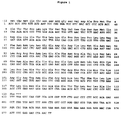
- Figure 1 shows the nucleotide and translated amino acid sequence of the fusion protein insert of pGB/IL-336. Amino acids indicated with lower case letters are non-hIL-3 amino acids, the IL-3 protein sequence starts at Ala 1.
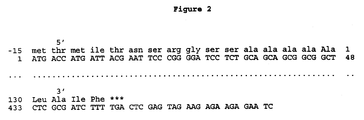
- Figure 2 shows the 5' and 3' sequence changes introduced to obtain pGB/IL-339.
- Figure 1 lower case lettered amino acids indicate non-hIL-3 amino acids, the mature IL-3 protein sequence starts at Ala 1.
- Figure 3 is a photograph of the polyacrylamide gel of the following 19 IL-3 mutants (lanes 1 to 19 respectively): pGB/IL-336, pGB/IL-339, 932, 810, 934, 812, 935, 813, 936, 820, 937, 821, 938, 822, 939, 9329, 904, 905, 9045; and the Pharmacia LMW marker (lane 20). Mutations corresponding with these numbers are given in Table 4.
- Figure 4 shows an AML proliferation assay for IL-3 (*) and IL-3 mutant 821 ( ⁇ ).
- Figure 5 shows an IL-3-receptor binding experiment. Radiolabeled IL-3 binding to patient AML blasts is competed with unlabeled IL-3 protein (reference preparation). The levels of non-specific (lower bar) and maximal total binding (upper bar) in this experiment are indicated (see Example 5).
- Figure 6 shows a comparison of selected mutant IL-3 proteins with respect to relative biological activity (open bars) and relative binding activity (closed bars). The percentage of activity compared to the reference IL-3 preparation is indicated (Table 4).
- human IL-3 corresponds to the amino acid (1-133) as depicted in Figure 1. Naturally occuring variants are also included.
- hIL-3 molecules which are modified post-translationally e.g. glycosylation
- derivatives of IL-3 is meant any IL-3 molecule that has been chemically or enzymatically modified, thereby retaining at least a part of its biological activity.
- Analogs of human IL-3 as used herein pertain to molecules having a sequence which differs from the mature IL-3 by one or more deletions or substitutions.
- Human IL-3 is further characterized by its biological activity to stimulate colony formation by human hematopoietic progenitor cells.
- the colonies formed include erythroids, granulocytes, megakaryocytes, granulocyte macrophages and mixtures thereof.
- the biological activity of hIL-3 can (for the present purpose) be further devided in two parts; signal transduction and receptor binding.
- an hIL-3 analog exhibiting improved properties we mean that the analog has a better signal transduction/receptor binding ratio. Where better is dependent on the desired properties. For example, a higher binding coefficient for an antogonist or an equal or higher biological activity for a deletion mutant. Better can also mean that the polypeptide analog is less susceptible to forming aggregates.
- the (biological) activity of the human IL-3 analogs is determined by DNA synthesis by human acute myelogenous blasts. Furthermore, receptor binding assays are performed with donor leucocytes, patient AML cells or MV4-11 cells.
- IL-3 is active in both receptor binding and signal transduction. If it would be possible to attribute these activities to specific amino acid sequences, which may be either continuous or discontinuous, it would become possible to uncouple the binding and signal transducing activities. Thus enabling the production of specific IL-3 receptor antagonists.
- hIL-3 As a first step to achieve these goals a firm understanding of the structure-function relationship of hIL-3 is required.
- the properties of the naturally occurring or naturally mutated IL-3 may be altered by introducing a variety of mutations in the protein. Such alterations are suitably introduced using the mutagenesis techniques described herein and the mutated molecules (hIL-3 muteins) are suitably synthesized using the expression vectors described.
- mutagenesis techniques are inter alia to be considered:
- One aspect of the present invention is the development of a specific antagonist which blocks the receptor by binding specifically to it, preferably with a high binding coefficient, thereby hindering the signal transduction.
- An antagonist can be any chemical molecule that binds to the receptor and thereby avoids binding of the agonist.
- the present invention specifically aims at proteins having such a blocking effect.
- the present invention provides hIL-3 muteins which may have at least a partial antagonistic effect. More specifically, these are single or double Cys mutants. Preferably, Cys is replaced by Ala (Cys 16 -> Ala 16 , Cys 16 Cys 84 -> Ala 16 Ala 84 ). Other mutants having an antagonistic effect are Glu 50 -> Lys 50 and Lys 79 -> Glu 79 . It may be envisaged that administration of a significant dosis of the described mutants will prevent the binding of the physiologically available IL-3, thereby exhibiting its antagonistic activity.
- proteins having hIL-3 or hIL-3-like activity which are smaller, preferably from about 3 to about 25%, than the native hIL-3 molecule.
- proteins having hIL-3 or hIL-3-like activity which are smaller, preferably from about 3 to about 25%, than the native hIL-3 molecule.
- amino acids are substituted, this also enables the determination of amino acids that are important in receptor binding and/or in signal transduction.
- Deletion mutants have been made, together covering virtually the complete coding region.
- Deletions as used herein can be any amino acid deletion of minimally two consecutive (or separated) amino acids. Preferably, four or more amino acids can be deleted. Said deletions can start with any amino acid in the molecule (except of course near the C-terminus). It is also possible to have two separated deletions in the molecule (e.g. two times one amino acid deletion, two times two etc.). In one of the most preferred embodiments 32 amino acids are deleted, 14 at the N-terminus and 18 at the C-terminus of the protein. Surprisingly, all of the expressed deletion mutant proteins showed specific IL-3 biological activity, albeit mostly strongly reduced. Hence, it can be concluded that there is not a single continuous peptide domain on the protein that binds with the receptor.
- the N-terminal deletion mutant missing amino acids 1 to 14, the C-terminal deletion mutant missing amino acids 120 to 130, the double mutant thereof and the C-terminal mutant 130-133 showed biological and binding activity which is comparable to that of the native IL-3 molecule. It is surprising that hIL-3 missing up to 25 amino acids (about 20% of the full length hIL-3) still retains its full activity. In view of Cys 16 which is involved in the formation of a disulfide bridge it is to be expected that a -15 N-terminal deletion mutant retains its full activity. The double deletion mutants missing the 14 N-terminal and upto 18 C-terminal amino acids (Table 4, X and Z) still retain the full activity.
- Such mutants which lack up to 32 amino acids miss at most approximately 25% of the native molecule. Since this double mutant retains full activity it is to be expected that the -18 C-terminal mutant will also be fully active. Mutants having only internal deletions have also been made. An internal deletion mutant with completely retained activity is described in this invention, this mutant lacks amino acids 120 to 130 (Table 4, 939). It is likely that more such mutants can be made. For processing reasons it may be advantageous to retain the first few amino acids of the mature IL-3 protein. Since the -14 N-terminal deletion mutant retains full activity it is expected that an internal deletion mutant in the N-terminal region will also retain its activity. Another region where a deletion could be introduced successfully seems the Gln 29 - Leu 35 region. Deletion of 1 to 7 amino acids, possibly in combination with a Lys 28 -> Pro 28 substitution may provide another set of internal deletion mutants.
- a pharmaceutical composition containing hIL-3 can be administered parenterally, intravenously or subcutaneously.
- the use of a hydrogel composed of biodegradable polymer enclosing the polypeptide and continuously releasing said polypeptide is limited by the amount of peptide that can be enclosed.
- Using a deletion mutant of the polypeptide with higher specific activity implies that on a molar basis more of the active substance can be enclosed in the same volume thereby increasing the time between successive administrations or possibly avoiding repeated administrations.
- Substitution mutants have been made by introducing specific mutations at the DNA level thereby introducing amino acid substitutions into the encoded protein. These substitutions may be introduced in regions that are important for the conformation or the activity of the protein.
- An example of such a mutation is a mutation disturbing the disulfide bridge which is present between Cys 16 and Cys 84 . By replacing either (or both) of the cysteine residues by an alanine the bridge cannot be formed, resulting in heavily decreased activity. All three of the possible mutants have been made and they show a relatively high binding activity (compared to the biological activity) in a receptor binding assay. Since different ratios of relative binding activity to relative biological activity (Table 4) are found it may be advantageous to use combinations of the disclosed IL-3 analogs. Furthermore, it may be advantageous to use polypeptide analogs having both one or more deletions and one or more substitutions.
- the new hIL-3 mutants according to the present invention are conveniently prepared by site-directed mutagenesis, but a variety of other techniques which are known in the art to cause modified proteins can also be used.
- Suitable vectors which are capable of transforming microorganisms, which can express the mutated DNA sequences encoding the desired hIL-3 mutants include expression vectors comprising said mutated sequences derived from the mature hIL-3 coding sequence, joined to expression regulating regions and terminator regions. These regions are chosen depending on the prokaryotic or eukaryotic cells which are used as host cells. Preferably, E . coli or Bacillus are used as host strains. However, fungi, yeast cells and tissue culture cells can also be employed (see EP-A-0275598).
- expression constructs which are capable of secreting the protein out of the host cell. This is for example done in the Bacillus constructs used. Isolation from inclusion bodies, as exemplified here in E. coli , is also possible.
- Purification of the polypeptide obtained after expression is dependent on the host cell and the expression construct that is used. Generally the purification of hIL-3 muteins can be performed in the same way as the purification of native hIL-3. To obtain highly purified hIL-3 muteins the following steps are to be used; hydrophobic interaction chromatography, followed by anion exchange chromatography and optionally followed by gel filtration. It may also be sufficient to use only one or two of these purification steps (a detailed description of the purification of hIL-3 is disclosed in EPA 90200624.6 filed March 15, 1990, based on the following priorities: EPA 89200660.2 filed on March 15, 1989 and EPA 89201967.0 filed on July 25, 1989).
- the purified muteins can be formulated into pharmaceutical compositions by admixture with a pharmaceutically acceptable nontoxic carrier.
- a pharmaceutically acceptable nontoxic carrier such compositions may be prepared for use for parenteral (subcutaneous, intramuscular or intravenous) administration particularly in the form of liquid solutions or suspensions.
- the compositions may conveniently be administered in unit dosage form and may be prepared by any of the methods known in the pharmaceutical art, for example, as described in Remington's Pharmaceutical Sciences, Mack Publishing Company, Easton, Pa., 1970.
- Formulations for parenteral administration may contain as common excipients sterile water or saline, polyalkylene glycols such as polyethylene glycol, oils of vegetable origin, hydrogenated naphtalenes and the like.
- the materials of this invention can be employed as the sole active agent in a pharmaceutical or can be used in combination with other active ingredients.
- Other active ingredients can be selected for example from appropriate hematopoietins, CSFs and interleukins. These include GM-CSF, CSF-1, G-CSF, M-CSF, erythropoietin, IL-1 ⁇ , IL-1 ⁇ , IL-2, IL-4 to IL-8 and tumour necrosis factor.
- hIL-3 analogs of the invention can be tested using techniques well known in the art, to see if the protein stimulates colony formation by human hematopoietic progenitor cells.
- the colonies formed include erythroids, granulocytes and granulocyte macrophages.
- AML acute myelogenous leukemia
- the biologically active polypeptide analogs of human IL-3 as provided by the present invention can be used for both therapeutic and diagnostic purposes.
- Therapeutic uses include the treatment and prevention of malignant and non-malignant disorders. Due to the special properties of the presented mutants application can be improved. Applications include treatment of:
- IL-3 cDNA insert of pLH1 was excised with Hin cII and Hin dIII, ligated to a synthetic oligonucleotide ( Sal I-overhang/blunt, 419/420, Table 1) comprising the sequence encoding the N-terminal 14 amino acids of the mature IL-3 and inserted into Sal I- Hin dIII digested pTZ18R (Pharmacia).
- the complete insert was transferred to pUC8 for protein production (as described previously in EP-A-0275598), resulting in plasmid pGB/IL-335.
- the PvuI fragment of plasmid pTZ18R carrying the f1-origin of replication was used to replace the corresponding PvuI fragment of pUC8.
- the resulting bacterial expression plasmid pGB/IL-336 gives rise to a fusion protein of 145 amino acids with a calculated Mw of 16,384 dalton ( Figure 1).
- pGB/IL-336 was digested with Hpa I and Hin dIII to remove most of the 3'-terminal part of the IL-3 cDNA. The protruding ends were made blunt and subsequently a blunt fragment carrying the corresponding IL-3 sequences (nt 137-497) and the B . licheniformis alpha-amylase terminator from plasmid pGB/IL-337 was ligated into it, resulting in plasmid GB/IL-338.
- pGB/IL-337 had been constructed from pGB/IL-324 (as disclosed in the European Patent Application No.
- Plasmid pGB/IL-338 was digested with Bam HI and Hin cII and part of the polylinker and 5'-terminal IL-3 sequences were substituted by the phosphorylated synthetic oligonucleotides 1055/1056 (Table 1) giving rise to plasmid pGB/IL-339.
- the IL-3 gene was reconstructed with a slightly modified heterologous signal peptide encoding sequence.
- a fusion protein of 148 aa with calculated Mw of 16,541 dalton is synthesized ( Figure 2).
- the DNA sequence of pGB/IL-339 was verified and found to be correct. The biological activity of the expressed fusion protein was found to be unaltered.
- E . coli expression vector pGB/IL-340 was constructed, in which the lacZ promoter is followed immediately by sequences encoding the Bacillus alpha-amylase signal peptide precisely fused to mature IL-3, with the amylase terminator downstream thereof.
- This plasmid which also serves as an intermediate for the construction of Bacillus expression vectors, was constructed by introduction of the Nde I- Kpn I fragment from pGB/IL-337, carrying all the sequences just mentioned, into the Nde I- Kpn I cleaved E . coli vector pTZ18RN.
- pTZ18RN is pTZ18R (Pharmacia) modified just upstream of the lacZ ATG startcodon to introduce an Nde I site, using oligonucleotide 731 (see Table 1).
- pGB/IL-340 gives rise to high production of IL-3 in E . coli .
- Purified pGB/IL-336 or pGB/IL-339 ssDNA ( ⁇ 100 ng) was annealed with 20 ng of phosphorylated primer at 65°C and slowly cooled to room temperature. Synthesis of the complementary strand was performed using 1-2 ⁇ g of gene 32 protein, 4 units of T4-DNA polymerase and 2.5 units of T4-DNA ligase. Reaction was carried out at 0°C for 5 min, at 20°C for 10 min and at 37°C for 90 min. After completion, one third of the reaction mixture was mixed with thawed competent (Hanahan, D. (1985) in: "DNA Cloning" (D.M. Glover ed.) Vol.
- the double cysteine mutant (9045) was constructed by ligation of the corresponding Bst BI- Bam HI fragments of the plasmids carrying the mutant IL-3 genes 904 and 905.
- the combination mutants X and Z were constructed by ligation of fragments containing a 5' deletion and fragments containing a 3' deletions. Resulting clones were checked by restriction enzyme analysis and sequence analysis.
- Mutant 9329 was derived from 939 following Hpa I and Bam HI digestion and ligation with oligonucleotides 1424/1425. Clones were verified first for loss of the Hpa I site and subsequently for correct DNA sequence.
- plasmid DNA was isolated for a second round of transformation into JM109 cells to exclude potential contamination with the parental IL-3 construct. Following sequence verification, these clones were used for protein production.
- mutants described here 811, 933 and 9329 were introduced into pGB/IL-340. This was done by ligating the PstI- Xho I fragment of a pGB/IL-339 derived mutant into Pst I- Xho I cleaved pGB/IL-340, this resulted in plasmids pGB/IL-340/811, pGB/IL-340/933 and pGB/IL-340/9329.
- Bacillus expression vectors for IL-3 muteins were constructed by exchanging the Pst I- Hin dIII fragment of pGB/IL-322 (carrying part of the alpha-amylase signal peptide, the complete mature IL-3 cDNA sequence and the amylase terminator) with the Pst I -Hin dIII fragment of a pGB/IL-340 mutant derivative (carrying part of the alpha-amylase signal peptide, the mutant IL-3 cDNA sequence and the alpha-amylase terminator).
- the Bacillus expression vectors for the muteins 811, 933 and 9329 were named pGB/IL-322/811, pGB/IL-322/933 and pGB/IL-322/9329 respectively.
- mutants 1455 lacking amino acids 130-133 were constructed directly in pGB/IL-340 by loop-out mutagenesis, using oligonucleotide 1455 (Table 1), resulting in plasmid pGB/IL-340/1455. Subsequently, the mutant sequence was transferred to pGB/IL-322 in a similar way as described for mutants 811, 933 and 9329 resulting in plasmid pGB/IL-341.
- E . coli JM109 cultures (100 ml) were inoculated with 0.5 ml of a fresh overnight culture of the (mutant) IL-3 clone and grown at 37°C until an OD of 0.4-0.6 at 550 nm was reached. Plasmid directed protein synthesis was induced by addition of 1 mM of IPTG (Pharmacia). After an additional culture for 3-16 hrs, the cells were collected by centrifugation (10 min, 4000 rpm at 4°C) and stored frozen.
- TE Tris-HCl pH 8; 1 mM EDTA
- the pellet was resuspended in 4 ml of 55% sucrose in buffer TPD (50 mM Tris-HCl, pH 8; 0.1mM PMSF and 2mM DTT) by sonification and either pelleted and solubilized in urea for direct assaying of biological activity or layered onto a discontinuous sucrose gradient (2 ml portions of 75% and 60% of sucrose in TPD buffer), essentially as described in WO 88/00598. Following centrifugation at 200,000xg (35,000 rpm in a Sorvall TH641 rotor) at 25°C for 2 hours, the inclusion bodies containing the IL-3 proteins were recovered from the 75% sucrose interphase.
- TPD 50 mM Tris-HCl, pH 8; 0.1mM PMSF and 2mM DTT
- the inclusion bodies were pelleted at 25,000xg (30 min at 13,000 rpm in the Beckman JS13.1 rotor) and sonificated in 5ml of 8M urea containing 50 mM Tris-HCl pH 8.9 and 2 mM DTT and left overnight at 4°C.
- the clarified solution was subsequently applied to a 3 ml DEAE-Sepharose Fast Flow column (Pharmacia), equilibrated with 8 M urea, 50 mM Tris-HCl pH 8.9 and 1 mM DTT buffer.
- the IL-3 protein was bound to the column and step eluted with 75 mM NaCl in the same buffer.
- the eluted protein was dialyzed against several portions of 10 mM Tris-HCl pH 8.0 and 1 mM DTT buffer and made isotonic by adding 10-fold concentrated RPMI cell culture medium (Sigma) containing 1% bovine serum albumin.
- the filter sterilized (0.22 ⁇ m Millex-GV, Millipore) solution was used for biochemical and biological characterization.
- Mutant proteins 811, 933, 1455, 9329, X and Z produced by Bacillus were exported into the culture medium and did not require such drastic purification procedures for testing of biological activity. Therefore the clarified supernatant (1 litre) (adjusted to 5mM EDTA, 1mM PMSF and 1 M ammonium sulphate) was passed over a 15-20 ml Fractogel TSK Butyl 650 (C) column (Merck) equilibrated with 1 M ammonium sulphate in 10 mM Tris-HCl pH 7.0 buffer.
- the bound IL-3 protein was eluted with 10 mM Tris-HCl buffer and subsequently passed over a 1.5 ml DEAE-Sepharose Fast Flow colum equilibrated with 10 mM Tris-HCl pH 8.0 buffer. The flow through was collected and adjusted to 70% ammonium sulphate to concentrate the IL-3 protein. The precipitate was collected by centrifugation at 10,000 rpm (JS-13 rotor), dissolved and dialyzed against 10 mM Tris-HCl pH 8.0, 1 mM DTT buffer.
- the expression in E . coli of mutant pGB/IL-339 derived IL-3 proteins was generally higher than the same mutant protein from the pGB/IL-336 expression vector.
- the applied purification procedure was not devised to render completely pure IL-3 protein preparations. In general, minor higher molecular weight contaminants were observed on SDS gels. Using densitometric scanning of stained SDS gels, the amount of IL-3 protein was determined. Although occasionally severe loss of protein occurred following dialysis, total recovery was generally 0.1-1 mg of "purified" IL-3 protein. The only exception were the mutants 811 and 933, which gave no fusion protein production in either of the E . coli expression vectors.
- the only convenient method for synthesis of the muteins 811 and 933 is expression in Bacillus licheniformis . Although the amount of protein produced is very low, compared to the amount of protein produced by Bacillus strains synthesizing other muteins such as 9329 and 1455, enough is made to partially purify the muteins 811 and 933 in sufficient quantities to carry out the biological assays described herein.
- the gel fractionated proteins were transferred onto nitrocellulose (0.2 ⁇ m, Schleicher and Schuell BA83) using the semi-dry blotting system (Novablot, Pharmacia/LKB) with a continuous buffer system (39 mM glycine, 48 mM Tris, 0.0375% SDS and 20% methanol) at 1.2 mA/cm 2 for 90 min.
- the nitrocellulose filter was subsequently air dried, preincubated with a 3% bovine serum albumin (BSA, Sigma) solution (10 mM Tris-HCl pH 7.6; 350 mM NaCl; 0.1% PMSF and 0.1% sodium azide) and incubated for 4-16 hr with the polyclonal (10 -3 dilution) or monoclonal (depending on the intended aim of the experiments) antibodies directed against human IL-3 (MCA A1, A4, A5, A8, A18 at 10 -4 dilution) in RIA buffer (10 mM Tris/HCl, pH 7.6; 150 mM NaCl; 1% Triton X-100; 0.1% SDS; 0.5% Na-deoxycholaat; 0.1 mM PMSF and 0.3% BSA).
- BSA bovine serum albumin
- Immunological complexes were visualized using biotinylated anti-rabbit or mouse Ig, streptavidin-biotinylated horseradish peroxidase (Amersham International, Amersham, UK) and 4-chloro-1-naphtol (Gibco-BRL) according to the protocols provided by the manufacturer.
- antiserum incubations were performed in Tris-buffered saline plus 0.05% Tween 20.
- Alkaline phosphatase-linked anti-mouse Ig complexes were visualized according to standard protocols (Promega).
- Human AML193 cells (ATCC: CRL-9589) were maintained in Serum Free Medium (SFM), [Iscove's Modified Dulbecco's Medium (Gibco BRL) containing 0.1% BSA (Behringwerke AG, Marburg), 10 ⁇ g/ml of Insulin (Organon) and Transferrin, 0.1 mM ⁇ -mercaptoethanol] and 10 to 20 units of human IL-3.
- SFM Serum Free Medium
- Gabco BRL Iscove's Modified Dulbecco's Medium
- Insulin Organon
- Transferrin 0.1 mM ⁇ -mercaptoethanol
- 3 H-Thymidine (0.1 ⁇ Ci, 2 ⁇ Ci/mmol) was added in 20 ⁇ l SFM and cells were harvested 16 hours later.
- An unit of IL-3 activity was defined as the amount required to give 50% of maximal DNA synthesis in this assay.
- the specific activity varied between 2 x 10 6 to 2 x 10 7 Units per mg of protein. In general, the biological activity of the muteins was compared to this reference preparation.
- Figure 4 shows an example of the AML proliferation assay in which mutein 812 is compared with the reference IL-3 expressed in Bacillus .
- the graph shows that the mutein 812 has an activity which is reduced by about 4 orders of magnitude with respect to unmodified IL-3. However, the mutein is still able to stimulate the AML cells to maximal activity, only more protein is needed.
- IL-3 receptor binding assay was performed with purified recombinant hIL-3 (see EP-A-0275598 and EPA 90200624.6).
- IL-3 was radiolabeled with the Bolton-Hunter reagent (as described by Budel et al . Blood, 74 (1989) 565-571). The specific activity was estimated at 80,000 cpm/ng of IL-3.
- As target either donor leukocytes, patient AML cells, or MV4-11 (ATC: CRL-9591) cells were used. Cells were washed in Hanks Balanced Salt solution and suspended in Alpha-MEM plus 1% BSA.
- IL-3 fusion proteins derived from both pGB/IL-336 and pGB/IL-339 expression plasmids were identical in biological activity and were not significantly different from the B . licheniformis reference preparation derived from expression of the full length IL-3 cDNA in pGB/IL-322 (see EPA 89201967.0). Apparently, no negative effect on the biological activity is exerted by the heterologous leader peptide in the E . coli fusion proteins. Most IL-3 deletion mutants were significantly reduced in biological activity. Deletions between amino acids 50 and 105, resulted in more than 10,000-fold reduction in specific activity.
- the muteins expressed in E . coli described in the section above are all fusion proteins.
- construct pGB/IL-322/9329 was made and expressed in B . licheniformis . This construct gives rise to a 1-14/ 120-130 IL-3 mutein without any extra amino acids at the N-terminus.
- the activity of this mutein is comparable to the wild-type molecule proving that only the residual 108 amino acids are responsible for the IL-3 activity.
Landscapes
- Health & Medical Sciences (AREA)
- Chemical & Material Sciences (AREA)
- Organic Chemistry (AREA)
- Life Sciences & Earth Sciences (AREA)
- Medicinal Chemistry (AREA)
- General Health & Medical Sciences (AREA)
- Chemical Kinetics & Catalysis (AREA)
- General Chemical & Material Sciences (AREA)
- Nuclear Medicine, Radiotherapy & Molecular Imaging (AREA)
- Veterinary Medicine (AREA)
- Pharmacology & Pharmacy (AREA)
- Animal Behavior & Ethology (AREA)
- Public Health (AREA)
- Bioinformatics & Cheminformatics (AREA)
- Engineering & Computer Science (AREA)
- Diabetes (AREA)
- Genetics & Genomics (AREA)
- Hematology (AREA)
- Proteomics, Peptides & Aminoacids (AREA)
- Molecular Biology (AREA)
- Immunology (AREA)
- Biochemistry (AREA)
- Biophysics (AREA)
- Gastroenterology & Hepatology (AREA)
- Zoology (AREA)
- Toxicology (AREA)
- Nutrition Science (AREA)
- Obesity (AREA)
- Preparation Of Compounds By Using Micro-Organisms (AREA)
- Peptides Or Proteins (AREA)
- Medicines That Contain Protein Lipid Enzymes And Other Medicines (AREA)
- Medicines Containing Antibodies Or Antigens For Use As Internal Diagnostic Agents (AREA)
- Micro-Organisms Or Cultivation Processes Thereof (AREA)
Priority Applications (1)
| Application Number | Priority Date | Filing Date | Title |
|---|---|---|---|
| EP96203516A EP0810285A3 (de) | 1989-08-14 | 1990-08-02 | Mutanten von menschlichen Interleukin-3 |
Applications Claiming Priority (6)
| Application Number | Priority Date | Filing Date | Title |
|---|---|---|---|
| EP89202082 | 1989-08-14 | ||
| EP89202082 | 1989-08-14 | ||
| EP89202331 | 1989-09-14 | ||
| EP89202331 | 1989-09-14 | ||
| EP90202117A EP0413383B1 (de) | 1989-08-14 | 1990-08-02 | Mutanten von Interleukin-3 |
| EP96203516A EP0810285A3 (de) | 1989-08-14 | 1990-08-02 | Mutanten von menschlichen Interleukin-3 |
Related Parent Applications (2)
| Application Number | Title | Priority Date | Filing Date |
|---|---|---|---|
| EP90202117.9 Division | 1990-08-02 | ||
| EP90202117A Division EP0413383B1 (de) | 1989-08-14 | 1990-08-02 | Mutanten von Interleukin-3 |
Publications (2)
| Publication Number | Publication Date |
|---|---|
| EP0810285A2 true EP0810285A2 (de) | 1997-12-03 |
| EP0810285A3 EP0810285A3 (de) | 1998-07-08 |
Family
ID=26121243
Family Applications (2)
| Application Number | Title | Priority Date | Filing Date |
|---|---|---|---|
| EP90202117A Revoked EP0413383B1 (de) | 1989-08-14 | 1990-08-02 | Mutanten von Interleukin-3 |
| EP96203516A Withdrawn EP0810285A3 (de) | 1989-08-14 | 1990-08-02 | Mutanten von menschlichen Interleukin-3 |
Family Applications Before (1)
| Application Number | Title | Priority Date | Filing Date |
|---|---|---|---|
| EP90202117A Revoked EP0413383B1 (de) | 1989-08-14 | 1990-08-02 | Mutanten von Interleukin-3 |
Country Status (17)
| Country | Link |
|---|---|
| EP (2) | EP0413383B1 (de) |
| JP (1) | JP3192416B2 (de) |
| AT (1) | ATE154638T1 (de) |
| AU (1) | AU636641B2 (de) |
| CA (1) | CA2023246C (de) |
| DD (1) | DD301724A9 (de) |
| DE (1) | DE69030937T2 (de) |
| DK (1) | DK0413383T3 (de) |
| ES (1) | ES2106017T3 (de) |
| FI (1) | FI105192B (de) |
| GR (1) | GR3024679T3 (de) |
| HU (1) | HUT54411A (de) |
| IE (2) | IE980055A1 (de) |
| IL (1) | IL95350A0 (de) |
| NO (1) | NO301481B1 (de) |
| NZ (1) | NZ234869A (de) |
| PT (1) | PT94992B (de) |
Cited By (1)
| Publication number | Priority date | Publication date | Assignee | Title |
|---|---|---|---|---|
| US6270758B1 (en) | 1998-10-08 | 2001-08-07 | Duke University | Substantially non-toxic biologically active mucosal adjuvants in vertebrate subjects |
Families Citing this family (15)
| Publication number | Priority date | Publication date | Assignee | Title |
|---|---|---|---|---|
| US5591427A (en) * | 1979-10-07 | 1997-01-07 | Medvet Science Pty. Ltd. | Human Interleukin-3(Il-3) variants and their use to promote or antagonize IL-3-mediated processes |
| US5772992A (en) * | 1992-11-24 | 1998-06-30 | G.D. Searle & Co. | Compositions for co-administration of interleukin-3 mutants and other cytokines and hematopoietic factors |
| US6057133A (en) * | 1992-11-24 | 2000-05-02 | G. D. Searle | Multivariant human IL-3 fusion proteins and their recombinant production |
| US6153183A (en) * | 1992-11-24 | 2000-11-28 | G. D. Searle & Company | Co-administration of interleukin-3 mutant polypeptides with CSF's or cytokines for multi-lineage hematopoietic cell production |
| US6361976B1 (en) | 1992-11-24 | 2002-03-26 | S. Christopher Bauer | Co-administration of interleukin-3 mutant polypeptides with CSF'S for multi-lineage hematopoietic cell production |
| US6413509B1 (en) | 1992-11-24 | 2002-07-02 | S. Christopher Bauer | Methods of ex-vivo expansion of hematopoietic cells using interleukin-3 mutant polypeptides with other hematopoietic growth factors |
| US6361977B1 (en) * | 1992-11-24 | 2002-03-26 | S. Christopher Bauer | Methods of using multivariant IL-3 hematopoiesis fusion protein |
| US6403076B1 (en) | 1992-11-24 | 2002-06-11 | S. Christopher Bauer | Compositions for increasing hematopoiesis with interleukin-3 mutants |
| DK0672145T3 (da) * | 1992-11-24 | 2003-08-11 | Searle & Co | Interleukin-3-(IL-3)-polypeptider med flere mutationer |
| US5738849A (en) * | 1992-11-24 | 1998-04-14 | G. D. Searle & Co. | Interleukin-3 (IL-3) variant fusion proteins, their recombinant production, and therapeutic compositions comprising them |
| US5501962A (en) * | 1993-06-21 | 1996-03-26 | G. D. Searle & Co. | Interleuken-3 (IL-3) human/murine hybrid polypeptides and recombinant production of the same |
| WO1995004075A1 (en) * | 1993-07-28 | 1995-02-09 | Medvet Science Pty. Ltd. | Haemopoietic growth factor antagonists |
| US6465616B1 (en) | 1994-04-08 | 2002-10-15 | Bresagen Limited | Interleukin-5 antagonist |
| US6017523A (en) * | 1995-06-06 | 2000-01-25 | G.D. Searle & Co. | Therapeutic methods employing mutant human interleukin-3 (IL-3) polypeptides |
| JP4735670B2 (ja) * | 2008-06-11 | 2011-07-27 | 富士ゼロックス株式会社 | プリント基板および画像処理装置 |
Citations (5)
| Publication number | Priority date | Publication date | Assignee | Title |
|---|---|---|---|---|
| WO1988000598A1 (en) | 1986-07-14 | 1988-01-28 | Genetics Institute, Inc. | A novel family of primate hematopoietic growth factors |
| WO1988004691A1 (en) | 1986-12-16 | 1988-06-30 | Gist-Brocades N.V. | Molecular cloning and expression of human il-3 |
| EP0275598A1 (de) | 1986-12-16 | 1988-07-27 | Gist-Brocades N.V. | Molekulare Klonierung und Expression von menschlichem IL-3 |
| WO1988005469A1 (en) | 1987-01-20 | 1988-07-28 | Immunex Corporation | Human interleukin-3 proteins |
| EP0282185A1 (de) | 1987-02-18 | 1988-09-14 | Schering Biotech Corporation | Human-Interleukin-3 und seine Muteine |
Family Cites Families (1)
| Publication number | Priority date | Publication date | Assignee | Title |
|---|---|---|---|---|
| US4743264A (en) * | 1987-02-05 | 1988-05-10 | Sherva Parker Carole J | External prothesis with magnetic field |
-
1990
- 1990-08-02 DE DE69030937T patent/DE69030937T2/de not_active Revoked
- 1990-08-02 ES ES90202117T patent/ES2106017T3/es not_active Expired - Lifetime
- 1990-08-02 EP EP90202117A patent/EP0413383B1/de not_active Revoked
- 1990-08-02 EP EP96203516A patent/EP0810285A3/de not_active Withdrawn
- 1990-08-02 AT AT90202117T patent/ATE154638T1/de not_active IP Right Cessation
- 1990-08-02 DK DK90202117.9T patent/DK0413383T3/da active
- 1990-08-10 AU AU60960/90A patent/AU636641B2/en not_active Ceased
- 1990-08-13 FI FI903996A patent/FI105192B/fi not_active IP Right Cessation
- 1990-08-13 NO NO903544A patent/NO301481B1/no unknown
- 1990-08-13 DD DD90343414A patent/DD301724A9/de unknown
- 1990-08-13 NZ NZ234869A patent/NZ234869A/en unknown
- 1990-08-13 IL IL95350A patent/IL95350A0/xx unknown
- 1990-08-13 IE IE19980055A patent/IE980055A1/en unknown
- 1990-08-13 IE IE292190A patent/IE902921A1/en unknown
- 1990-08-14 CA CA002023246A patent/CA2023246C/en not_active Expired - Fee Related
- 1990-08-14 JP JP21488390A patent/JP3192416B2/ja not_active Expired - Fee Related
- 1990-08-14 HU HU905006A patent/HUT54411A/hu unknown
- 1990-08-14 PT PT94992A patent/PT94992B/pt not_active IP Right Cessation
-
1997
- 1997-09-10 GR GR970402325T patent/GR3024679T3/el unknown
Patent Citations (5)
| Publication number | Priority date | Publication date | Assignee | Title |
|---|---|---|---|---|
| WO1988000598A1 (en) | 1986-07-14 | 1988-01-28 | Genetics Institute, Inc. | A novel family of primate hematopoietic growth factors |
| WO1988004691A1 (en) | 1986-12-16 | 1988-06-30 | Gist-Brocades N.V. | Molecular cloning and expression of human il-3 |
| EP0275598A1 (de) | 1986-12-16 | 1988-07-27 | Gist-Brocades N.V. | Molekulare Klonierung und Expression von menschlichem IL-3 |
| WO1988005469A1 (en) | 1987-01-20 | 1988-07-28 | Immunex Corporation | Human interleukin-3 proteins |
| EP0282185A1 (de) | 1987-02-18 | 1988-09-14 | Schering Biotech Corporation | Human-Interleukin-3 und seine Muteine |
Non-Patent Citations (28)
| Title |
|---|
| "Remington's Pharmaceutical Sciences.", 1970, MACK PUBLISHING CO., EASTON, PA. |
| BIOU ET AL., PROT. ENG., vol. 2, 1988, pages 185 - 191 |
| BUDEL ET AL., BLOOD., vol. 74, 1989, pages 565 - 571 |
| CARMENES ET AL., BIOCHEM. BIOPHYS. RES. COMMUN., vol. 159, 1989, pages 687 - 693 |
| CLARK-LEWIS ET AL., PROC. NATL. ACAD. SCI. USA., vol. 85, 1988, pages 7897 - 7901 |
| CLARK-LEWIS ET AL., SCIENCE., vol. 231, 1986, pages 134 - 139 |
| COHEN ET AL., SCIENCE., vol. 234, 1986, pages 349 - 352 |
| COLLINS ET AL., PROC. NATL. ACAD. SCI. USA., vol. 85, 1988, pages 7709 - 7713 |
| DORSSERS ET AL., GENE., vol. 55, 1987, pages 115 - 124 |
| FUNG ET AL., NATURE., vol. 307, 1984, pages 233 - 237 |
| GARNIER ET AL., J. MOL. BIOL., vol. 120, 1978, pages 97 - 120 |
| GLOVER D.M.: "DNA Cloning.", vol. 1, 1985, IRL PRESS., WASHINGTON., article HANAHAN D. |
| GOUGH ET AL., EUR. J. BIOCHEM., vol. 169, 1987, pages 353 - 358 |
| HOPP AND WOODS., PROC. NATL. ACAD. SCI. USA., vol. 78, 1981, pages 3824 - 3828 |
| KAUSHANSKY ET AL., PROC. NATL. ACAD. SCI. USA., vol. 86, 1989, pages 1213 - 1217 |
| KUGA ET AL., BIOCHEM. BIOPHYS. RES. COM., vol. 159, 1989, pages 103 - 111 |
| KUNKEL ET AL., METH. ENZYMOL., vol. 154, 1987, pages 367 - 382 |
| MAKINO ET AL., PROC. NATL. ACAD. SCI. USA., vol. 84, 1987, pages 7841 - 7845 |
| METCALF D., SCIENCE., vol. 299, 1985, pages 16 - 22 |
| METCALF D.: "The Hematopoietic Colony-Stimulating Factors.", 1984, ELSEVIER., AMSTERDAM. |
| MOONEN ET AL., PROC. NATL. ACAD. SCI. USA., vol. 84, 1987, pages 4428 - 4431 |
| MOSLEY ET AL., PROC. NATL. ACAD. SCI. USA., vol. 84, 1987, pages 4572 - 4576 |
| ROBB ET AL., PROC. NATL. ACAD. SCI. USA., vol. 85, 1988, pages 5654 - 5658 |
| SIBLEY ET AL., CELL., vol. 48, 1987, pages 913 - 922 |
| WANG ET AL., SCIENCE., vol. 224, 1984, pages 1431 - 1433 |
| YANG ET AL., CELL., vol. 47, 1986, pages 3 - 10 |
| YOKOTA ET AL., PROC. NATL. ACAD. SCI. USA., vol. 81, 1984, pages 1070 - 1074 |
| ZURAWSKI AND ZURAWSKI., EMBO J., vol. 7, 1988, pages 1061 - 1069 |
Cited By (2)
| Publication number | Priority date | Publication date | Assignee | Title |
|---|---|---|---|---|
| US6270758B1 (en) | 1998-10-08 | 2001-08-07 | Duke University | Substantially non-toxic biologically active mucosal adjuvants in vertebrate subjects |
| US7041294B2 (en) | 1998-10-08 | 2006-05-09 | Duke University | Substantially non-toxic biologically active mucosal adjuvants in vertebrate subjects |
Also Published As
| Publication number | Publication date |
|---|---|
| AU636641B2 (en) | 1993-05-06 |
| CA2023246A1 (en) | 1991-02-15 |
| HUT54411A (en) | 1991-02-28 |
| FI105192B (fi) | 2000-06-30 |
| DE69030937T2 (de) | 1997-10-09 |
| DK0413383T3 (da) | 1997-07-07 |
| DE69030937D1 (de) | 1997-07-24 |
| JP3192416B2 (ja) | 2001-07-30 |
| EP0810285A3 (de) | 1998-07-08 |
| JPH0420295A (ja) | 1992-01-23 |
| NO903544L (no) | 1991-02-15 |
| GR3024679T3 (en) | 1997-12-31 |
| DD301724A9 (de) | 1993-08-12 |
| PT94992B (pt) | 1997-09-30 |
| ATE154638T1 (de) | 1997-07-15 |
| NO903544D0 (no) | 1990-08-13 |
| EP0413383B1 (de) | 1997-06-18 |
| CA2023246C (en) | 2002-02-19 |
| IE980055A1 (en) | 2000-02-23 |
| ES2106017T3 (es) | 1997-11-01 |
| EP0413383A1 (de) | 1991-02-20 |
| NO301481B1 (no) | 1997-11-03 |
| IE902921A1 (en) | 1991-02-27 |
| PT94992A (pt) | 1991-04-18 |
| IL95350A0 (en) | 1991-06-30 |
| AU6096090A (en) | 1991-02-14 |
| FI903996A0 (fi) | 1990-08-13 |
| NZ234869A (en) | 1991-12-23 |
Similar Documents
| Publication | Publication Date | Title |
|---|---|---|
| US5516512A (en) | N- and C-terminal truncation and deletion mutants of human interleukin-3 | |
| EP0413383B1 (de) | Mutanten von Interleukin-3 | |
| JP3507507B2 (ja) | 非免疫原性ペプチドを介して結合されたインターフェロン―αと免疫グロブリンとのハイブリッド | |
| ES2198416T3 (es) | Polipeptidos de mutacion multiples de interleuquina-3 (il-3). | |
| US4959455A (en) | Primate hematopoietic growth factors IL-3 and pharmaceutical compositions | |
| AU708549B2 (en) | Antagonists of interleukin-15 | |
| JP2642942B2 (ja) | 霊長動物造血成長因子の新規種族 | |
| US6433142B1 (en) | Megakaryocyte stimulating factors | |
| US5606024A (en) | Canine G-CSF polypeptides and pharmaceutical compositions comprising same | |
| US5153310A (en) | Il-2 analogs containing n-linked glycosylation sites | |
| JPH01502157A (ja) | ヒトil―3の分子クローン化および発現 | |
| Lokker et al. | Structure‐activity relationship study of human interleukin‐3: role of the C‐terminal region for biological activity. | |
| WO1997010338A9 (en) | Improved interleukin-6 receptor antagonist | |
| WO1997010338A1 (en) | Improved interleukin-6 receptor antagonist | |
| WO1990001039A1 (en) | Nonglycosylated human interleukin-3 compositions | |
| EP0715633A1 (de) | Antagonisten des hämopoietischen wachstumsfaktor | |
| US5696250A (en) | DNA encoding megakaryocyte growth and development factor analogs | |
| US5925343A (en) | Canine granulocyte macrophage colony stimulating factor | |
| WO1996001319A1 (en) | Variants of leukemia inhibitory factor | |
| WO1992013548A1 (en) | Method of inhibiting replication of hiv in macrophages | |
| AU7341494A (en) | Haemopoietic growth factor antagonists | |
| IE871727L (en) | Novel family of primate il3-like hematopoietic growth¹factors. | |
| HK1066827A (en) | Megakaryocyte stimulating factors | |
| HK1075258A (en) | Megakaryocyte stimulating factors |
Legal Events
| Date | Code | Title | Description |
|---|---|---|---|
| PUAI | Public reference made under article 153(3) epc to a published international application that has entered the european phase |
Free format text: ORIGINAL CODE: 0009012 |
|
| AC | Divisional application: reference to earlier application |
Ref document number: 413383 Country of ref document: EP |
|
| AK | Designated contracting states |
Kind code of ref document: A2 Designated state(s): AT BE CH DE DK ES FR GB GR IT LI LU NL SE |
|
| PUAL | Search report despatched |
Free format text: ORIGINAL CODE: 0009013 |
|
| AK | Designated contracting states |
Kind code of ref document: A3 Designated state(s): AT BE CH DE DK ES FR GB GR IT LI LU NL SE |
|
| 17P | Request for examination filed |
Effective date: 19980910 |
|
| RAP1 | Party data changed (applicant data changed or rights of an application transferred) |
Owner name: DSM N.V. |
|
| RAP1 | Party data changed (applicant data changed or rights of an application transferred) |
Owner name: DSM IP ASSETS B.V. |
|
| 17Q | First examination report despatched |
Effective date: 20030714 |
|
| STAA | Information on the status of an ep patent application or granted ep patent |
Free format text: STATUS: THE APPLICATION IS DEEMED TO BE WITHDRAWN |
|
| 18D | Application deemed to be withdrawn |
Effective date: 20040525 |