EP0808852A2 - Zusammensetzungen mit niedrigem Chlorgehalt aus polyalkylen-substituierten Carbonsäure-Acylierungsmitteln - Google Patents
Zusammensetzungen mit niedrigem Chlorgehalt aus polyalkylen-substituierten Carbonsäure-Acylierungsmitteln Download PDFInfo
- Publication number
- EP0808852A2 EP0808852A2 EP97303428A EP97303428A EP0808852A2 EP 0808852 A2 EP0808852 A2 EP 0808852A2 EP 97303428 A EP97303428 A EP 97303428A EP 97303428 A EP97303428 A EP 97303428A EP 0808852 A2 EP0808852 A2 EP 0808852A2
- Authority
- EP
- European Patent Office
- Prior art keywords
- composition
- reaction products
- sulfur
- chlorine
- halogen
- Prior art date
- Legal status (The legal status is an assumption and is not a legal conclusion. Google has not performed a legal analysis and makes no representation as to the accuracy of the status listed.)
- Granted
Links
Images
Classifications
-
- C—CHEMISTRY; METALLURGY
- C10—PETROLEUM, GAS OR COKE INDUSTRIES; TECHNICAL GASES CONTAINING CARBON MONOXIDE; FUELS; LUBRICANTS; PEAT
- C10M—LUBRICATING COMPOSITIONS; USE OF CHEMICAL SUBSTANCES EITHER ALONE OR AS LUBRICATING INGREDIENTS IN A LUBRICATING COMPOSITION
- C10M133/00—Lubricating compositions characterised by the additive being an organic non-macromolecular compound containing nitrogen
- C10M133/52—Lubricating compositions characterised by the additive being an organic non-macromolecular compound containing nitrogen having a carbon chain of 30 or more atoms
-
- C—CHEMISTRY; METALLURGY
- C08—ORGANIC MACROMOLECULAR COMPOUNDS; THEIR PREPARATION OR CHEMICAL WORKING-UP; COMPOSITIONS BASED THEREON
- C08F—MACROMOLECULAR COMPOUNDS OBTAINED BY REACTIONS ONLY INVOLVING CARBON-TO-CARBON UNSATURATED BONDS
- C08F8/00—Chemical modification by after-treatment
-
- C—CHEMISTRY; METALLURGY
- C08—ORGANIC MACROMOLECULAR COMPOUNDS; THEIR PREPARATION OR CHEMICAL WORKING-UP; COMPOSITIONS BASED THEREON
- C08F—MACROMOLECULAR COMPOUNDS OBTAINED BY REACTIONS ONLY INVOLVING CARBON-TO-CARBON UNSATURATED BONDS
- C08F8/00—Chemical modification by after-treatment
- C08F8/14—Esterification
-
- C—CHEMISTRY; METALLURGY
- C08—ORGANIC MACROMOLECULAR COMPOUNDS; THEIR PREPARATION OR CHEMICAL WORKING-UP; COMPOSITIONS BASED THEREON
- C08F—MACROMOLECULAR COMPOUNDS OBTAINED BY REACTIONS ONLY INVOLVING CARBON-TO-CARBON UNSATURATED BONDS
- C08F8/00—Chemical modification by after-treatment
- C08F8/26—Removing halogen atoms or halogen-containing groups from the molecule
-
- C—CHEMISTRY; METALLURGY
- C08—ORGANIC MACROMOLECULAR COMPOUNDS; THEIR PREPARATION OR CHEMICAL WORKING-UP; COMPOSITIONS BASED THEREON
- C08F—MACROMOLECULAR COMPOUNDS OBTAINED BY REACTIONS ONLY INVOLVING CARBON-TO-CARBON UNSATURATED BONDS
- C08F8/00—Chemical modification by after-treatment
- C08F8/30—Introducing nitrogen atoms or nitrogen-containing groups
- C08F8/32—Introducing nitrogen atoms or nitrogen-containing groups by reaction with amines
-
- C—CHEMISTRY; METALLURGY
- C08—ORGANIC MACROMOLECULAR COMPOUNDS; THEIR PREPARATION OR CHEMICAL WORKING-UP; COMPOSITIONS BASED THEREON
- C08F—MACROMOLECULAR COMPOUNDS OBTAINED BY REACTIONS ONLY INVOLVING CARBON-TO-CARBON UNSATURATED BONDS
- C08F8/00—Chemical modification by after-treatment
- C08F8/34—Introducing sulfur atoms or sulfur-containing groups
-
- C—CHEMISTRY; METALLURGY
- C08—ORGANIC MACROMOLECULAR COMPOUNDS; THEIR PREPARATION OR CHEMICAL WORKING-UP; COMPOSITIONS BASED THEREON
- C08F—MACROMOLECULAR COMPOUNDS OBTAINED BY REACTIONS ONLY INVOLVING CARBON-TO-CARBON UNSATURATED BONDS
- C08F8/00—Chemical modification by after-treatment
- C08F8/42—Introducing metal atoms or metal-containing groups
-
- C—CHEMISTRY; METALLURGY
- C08—ORGANIC MACROMOLECULAR COMPOUNDS; THEIR PREPARATION OR CHEMICAL WORKING-UP; COMPOSITIONS BASED THEREON
- C08F—MACROMOLECULAR COMPOUNDS OBTAINED BY REACTIONS ONLY INVOLVING CARBON-TO-CARBON UNSATURATED BONDS
- C08F8/00—Chemical modification by after-treatment
- C08F8/46—Reaction with unsaturated dicarboxylic acids or anhydrides thereof, e.g. maleinisation
-
- C—CHEMISTRY; METALLURGY
- C10—PETROLEUM, GAS OR COKE INDUSTRIES; TECHNICAL GASES CONTAINING CARBON MONOXIDE; FUELS; LUBRICANTS; PEAT
- C10L—FUELS NOT OTHERWISE PROVIDED FOR; NATURAL GAS; SYNTHETIC NATURAL GAS OBTAINED BY PROCESSES NOT COVERED BY SUBCLASSES C10G OR C10K; LIQUIFIED PETROLEUM GAS; USE OF ADDITIVES TO FUELS OR FIRES; FIRE-LIGHTERS
- C10L1/00—Liquid carbonaceous fuels
- C10L1/10—Liquid carbonaceous fuels containing additives
- C10L1/14—Organic compounds
- C10L1/143—Organic compounds mixtures of organic macromolecular compounds with organic non-macromolecular compounds
-
- C—CHEMISTRY; METALLURGY
- C10—PETROLEUM, GAS OR COKE INDUSTRIES; TECHNICAL GASES CONTAINING CARBON MONOXIDE; FUELS; LUBRICANTS; PEAT
- C10L—FUELS NOT OTHERWISE PROVIDED FOR; NATURAL GAS; SYNTHETIC NATURAL GAS OBTAINED BY PROCESSES NOT COVERED BY SUBCLASSES C10G OR C10K; LIQUIFIED PETROLEUM GAS; USE OF ADDITIVES TO FUELS OR FIRES; FIRE-LIGHTERS
- C10L1/00—Liquid carbonaceous fuels
- C10L1/10—Liquid carbonaceous fuels containing additives
- C10L1/14—Organic compounds
- C10L1/18—Organic compounds containing oxygen
- C10L1/188—Carboxylic acids; metal salts thereof
-
- C—CHEMISTRY; METALLURGY
- C10—PETROLEUM, GAS OR COKE INDUSTRIES; TECHNICAL GASES CONTAINING CARBON MONOXIDE; FUELS; LUBRICANTS; PEAT
- C10L—FUELS NOT OTHERWISE PROVIDED FOR; NATURAL GAS; SYNTHETIC NATURAL GAS OBTAINED BY PROCESSES NOT COVERED BY SUBCLASSES C10G OR C10K; LIQUIFIED PETROLEUM GAS; USE OF ADDITIVES TO FUELS OR FIRES; FIRE-LIGHTERS
- C10L1/00—Liquid carbonaceous fuels
- C10L1/10—Liquid carbonaceous fuels containing additives
- C10L1/14—Organic compounds
- C10L1/18—Organic compounds containing oxygen
- C10L1/192—Macromolecular compounds
- C10L1/198—Macromolecular compounds obtained otherwise than by reactions involving only carbon-to-carbon unsaturated bonds homo- or copolymers of compounds having one or more unsaturated aliphatic radicals, each having only one carbon to carbon double bond, and at least one being terminated by an acyloxy radical of a saturated carboxylic acid, of carbonic acid
-
- C—CHEMISTRY; METALLURGY
- C10—PETROLEUM, GAS OR COKE INDUSTRIES; TECHNICAL GASES CONTAINING CARBON MONOXIDE; FUELS; LUBRICANTS; PEAT
- C10L—FUELS NOT OTHERWISE PROVIDED FOR; NATURAL GAS; SYNTHETIC NATURAL GAS OBTAINED BY PROCESSES NOT COVERED BY SUBCLASSES C10G OR C10K; LIQUIFIED PETROLEUM GAS; USE OF ADDITIVES TO FUELS OR FIRES; FIRE-LIGHTERS
- C10L1/00—Liquid carbonaceous fuels
- C10L1/10—Liquid carbonaceous fuels containing additives
- C10L1/14—Organic compounds
- C10L1/22—Organic compounds containing nitrogen
- C10L1/234—Macromolecular compounds
- C10L1/238—Macromolecular compounds obtained otherwise than by reactions involving only carbon-to-carbon unsaturated bonds
-
- C—CHEMISTRY; METALLURGY
- C10—PETROLEUM, GAS OR COKE INDUSTRIES; TECHNICAL GASES CONTAINING CARBON MONOXIDE; FUELS; LUBRICANTS; PEAT
- C10L—FUELS NOT OTHERWISE PROVIDED FOR; NATURAL GAS; SYNTHETIC NATURAL GAS OBTAINED BY PROCESSES NOT COVERED BY SUBCLASSES C10G OR C10K; LIQUIFIED PETROLEUM GAS; USE OF ADDITIVES TO FUELS OR FIRES; FIRE-LIGHTERS
- C10L1/00—Liquid carbonaceous fuels
- C10L1/10—Liquid carbonaceous fuels containing additives
- C10L1/14—Organic compounds
- C10L1/22—Organic compounds containing nitrogen
- C10L1/234—Macromolecular compounds
- C10L1/238—Macromolecular compounds obtained otherwise than by reactions involving only carbon-to-carbon unsaturated bonds
- C10L1/2383—Polyamines or polyimines, or derivatives thereof (poly)amines and imines; derivatives thereof (substituted by a macromolecular group containing 30C)
-
- C—CHEMISTRY; METALLURGY
- C10—PETROLEUM, GAS OR COKE INDUSTRIES; TECHNICAL GASES CONTAINING CARBON MONOXIDE; FUELS; LUBRICANTS; PEAT
- C10L—FUELS NOT OTHERWISE PROVIDED FOR; NATURAL GAS; SYNTHETIC NATURAL GAS OBTAINED BY PROCESSES NOT COVERED BY SUBCLASSES C10G OR C10K; LIQUIFIED PETROLEUM GAS; USE OF ADDITIVES TO FUELS OR FIRES; FIRE-LIGHTERS
- C10L10/00—Use of additives to fuels or fires for particular purposes
-
- C—CHEMISTRY; METALLURGY
- C10—PETROLEUM, GAS OR COKE INDUSTRIES; TECHNICAL GASES CONTAINING CARBON MONOXIDE; FUELS; LUBRICANTS; PEAT
- C10L—FUELS NOT OTHERWISE PROVIDED FOR; NATURAL GAS; SYNTHETIC NATURAL GAS OBTAINED BY PROCESSES NOT COVERED BY SUBCLASSES C10G OR C10K; LIQUIFIED PETROLEUM GAS; USE OF ADDITIVES TO FUELS OR FIRES; FIRE-LIGHTERS
- C10L10/00—Use of additives to fuels or fires for particular purposes
- C10L10/18—Use of additives to fuels or fires for particular purposes use of detergents or dispersants for purposes not provided for in groups C10L10/02 - C10L10/16
-
- C—CHEMISTRY; METALLURGY
- C10—PETROLEUM, GAS OR COKE INDUSTRIES; TECHNICAL GASES CONTAINING CARBON MONOXIDE; FUELS; LUBRICANTS; PEAT
- C10M—LUBRICATING COMPOSITIONS; USE OF CHEMICAL SUBSTANCES EITHER ALONE OR AS LUBRICATING INGREDIENTS IN A LUBRICATING COMPOSITION
- C10M129/00—Lubricating compositions characterised by the additive being an organic non-macromolecular compound containing oxygen
- C10M129/86—Lubricating compositions characterised by the additive being an organic non-macromolecular compound containing oxygen having a carbon chain of 30 or more atoms
- C10M129/92—Carboxylic acids
- C10M129/93—Carboxylic acids having carboxyl groups bound to acyclic or cycloaliphatic carbon atoms
-
- C—CHEMISTRY; METALLURGY
- C10—PETROLEUM, GAS OR COKE INDUSTRIES; TECHNICAL GASES CONTAINING CARBON MONOXIDE; FUELS; LUBRICANTS; PEAT
- C10M—LUBRICATING COMPOSITIONS; USE OF CHEMICAL SUBSTANCES EITHER ALONE OR AS LUBRICATING INGREDIENTS IN A LUBRICATING COMPOSITION
- C10M129/00—Lubricating compositions characterised by the additive being an organic non-macromolecular compound containing oxygen
- C10M129/86—Lubricating compositions characterised by the additive being an organic non-macromolecular compound containing oxygen having a carbon chain of 30 or more atoms
- C10M129/92—Carboxylic acids
- C10M129/94—Carboxylic acids having carboxyl groups bound to a carbon atom of a six-membered aromatic ring
-
- C—CHEMISTRY; METALLURGY
- C10—PETROLEUM, GAS OR COKE INDUSTRIES; TECHNICAL GASES CONTAINING CARBON MONOXIDE; FUELS; LUBRICANTS; PEAT
- C10M—LUBRICATING COMPOSITIONS; USE OF CHEMICAL SUBSTANCES EITHER ALONE OR AS LUBRICATING INGREDIENTS IN A LUBRICATING COMPOSITION
- C10M129/00—Lubricating compositions characterised by the additive being an organic non-macromolecular compound containing oxygen
- C10M129/86—Lubricating compositions characterised by the additive being an organic non-macromolecular compound containing oxygen having a carbon chain of 30 or more atoms
- C10M129/95—Esters
-
- C—CHEMISTRY; METALLURGY
- C08—ORGANIC MACROMOLECULAR COMPOUNDS; THEIR PREPARATION OR CHEMICAL WORKING-UP; COMPOSITIONS BASED THEREON
- C08F—MACROMOLECULAR COMPOUNDS OBTAINED BY REACTIONS ONLY INVOLVING CARBON-TO-CARBON UNSATURATED BONDS
- C08F2810/00—Chemical modification of a polymer
- C08F2810/20—Chemical modification of a polymer leading to a crosslinking, either explicitly or inherently
-
- C—CHEMISTRY; METALLURGY
- C10—PETROLEUM, GAS OR COKE INDUSTRIES; TECHNICAL GASES CONTAINING CARBON MONOXIDE; FUELS; LUBRICANTS; PEAT
- C10L—FUELS NOT OTHERWISE PROVIDED FOR; NATURAL GAS; SYNTHETIC NATURAL GAS OBTAINED BY PROCESSES NOT COVERED BY SUBCLASSES C10G OR C10K; LIQUIFIED PETROLEUM GAS; USE OF ADDITIVES TO FUELS OR FIRES; FIRE-LIGHTERS
- C10L1/00—Liquid carbonaceous fuels
- C10L1/10—Liquid carbonaceous fuels containing additives
- C10L1/14—Organic compounds
- C10L1/18—Organic compounds containing oxygen
- C10L1/1817—Compounds of uncertain formula; reaction products where mixtures of compounds are obtained
-
- C—CHEMISTRY; METALLURGY
- C10—PETROLEUM, GAS OR COKE INDUSTRIES; TECHNICAL GASES CONTAINING CARBON MONOXIDE; FUELS; LUBRICANTS; PEAT
- C10L—FUELS NOT OTHERWISE PROVIDED FOR; NATURAL GAS; SYNTHETIC NATURAL GAS OBTAINED BY PROCESSES NOT COVERED BY SUBCLASSES C10G OR C10K; LIQUIFIED PETROLEUM GAS; USE OF ADDITIVES TO FUELS OR FIRES; FIRE-LIGHTERS
- C10L1/00—Liquid carbonaceous fuels
- C10L1/10—Liquid carbonaceous fuels containing additives
- C10L1/14—Organic compounds
- C10L1/18—Organic compounds containing oxygen
- C10L1/188—Carboxylic acids; metal salts thereof
- C10L1/1881—Carboxylic acids; metal salts thereof carboxylic group attached to an aliphatic carbon atom
- C10L1/1883—Carboxylic acids; metal salts thereof carboxylic group attached to an aliphatic carbon atom polycarboxylic acid
-
- C—CHEMISTRY; METALLURGY
- C10—PETROLEUM, GAS OR COKE INDUSTRIES; TECHNICAL GASES CONTAINING CARBON MONOXIDE; FUELS; LUBRICANTS; PEAT
- C10L—FUELS NOT OTHERWISE PROVIDED FOR; NATURAL GAS; SYNTHETIC NATURAL GAS OBTAINED BY PROCESSES NOT COVERED BY SUBCLASSES C10G OR C10K; LIQUIFIED PETROLEUM GAS; USE OF ADDITIVES TO FUELS OR FIRES; FIRE-LIGHTERS
- C10L1/00—Liquid carbonaceous fuels
- C10L1/10—Liquid carbonaceous fuels containing additives
- C10L1/14—Organic compounds
- C10L1/18—Organic compounds containing oxygen
- C10L1/188—Carboxylic acids; metal salts thereof
- C10L1/189—Carboxylic acids; metal salts thereof having at least one carboxyl group bound to an aromatic carbon atom
- C10L1/1895—Carboxylic acids; metal salts thereof having at least one carboxyl group bound to an aromatic carbon atom polycarboxylic acid
-
- C—CHEMISTRY; METALLURGY
- C10—PETROLEUM, GAS OR COKE INDUSTRIES; TECHNICAL GASES CONTAINING CARBON MONOXIDE; FUELS; LUBRICANTS; PEAT
- C10L—FUELS NOT OTHERWISE PROVIDED FOR; NATURAL GAS; SYNTHETIC NATURAL GAS OBTAINED BY PROCESSES NOT COVERED BY SUBCLASSES C10G OR C10K; LIQUIFIED PETROLEUM GAS; USE OF ADDITIVES TO FUELS OR FIRES; FIRE-LIGHTERS
- C10L1/00—Liquid carbonaceous fuels
- C10L1/10—Liquid carbonaceous fuels containing additives
- C10L1/14—Organic compounds
- C10L1/18—Organic compounds containing oxygen
- C10L1/19—Esters ester radical containing compounds; ester ethers; carbonic acid esters
- C10L1/1905—Esters ester radical containing compounds; ester ethers; carbonic acid esters of di- or polycarboxylic acids
-
- C—CHEMISTRY; METALLURGY
- C10—PETROLEUM, GAS OR COKE INDUSTRIES; TECHNICAL GASES CONTAINING CARBON MONOXIDE; FUELS; LUBRICANTS; PEAT
- C10L—FUELS NOT OTHERWISE PROVIDED FOR; NATURAL GAS; SYNTHETIC NATURAL GAS OBTAINED BY PROCESSES NOT COVERED BY SUBCLASSES C10G OR C10K; LIQUIFIED PETROLEUM GAS; USE OF ADDITIVES TO FUELS OR FIRES; FIRE-LIGHTERS
- C10L1/00—Liquid carbonaceous fuels
- C10L1/10—Liquid carbonaceous fuels containing additives
- C10L1/14—Organic compounds
- C10L1/18—Organic compounds containing oxygen
- C10L1/19—Esters ester radical containing compounds; ester ethers; carbonic acid esters
- C10L1/191—Esters ester radical containing compounds; ester ethers; carbonic acid esters of di- or polyhydroxyalcohols
-
- C—CHEMISTRY; METALLURGY
- C10—PETROLEUM, GAS OR COKE INDUSTRIES; TECHNICAL GASES CONTAINING CARBON MONOXIDE; FUELS; LUBRICANTS; PEAT
- C10L—FUELS NOT OTHERWISE PROVIDED FOR; NATURAL GAS; SYNTHETIC NATURAL GAS OBTAINED BY PROCESSES NOT COVERED BY SUBCLASSES C10G OR C10K; LIQUIFIED PETROLEUM GAS; USE OF ADDITIVES TO FUELS OR FIRES; FIRE-LIGHTERS
- C10L1/00—Liquid carbonaceous fuels
- C10L1/10—Liquid carbonaceous fuels containing additives
- C10L1/14—Organic compounds
- C10L1/22—Organic compounds containing nitrogen
- C10L1/221—Organic compounds containing nitrogen compounds of uncertain formula; reaction products where mixtures of compounds are obtained
-
- C—CHEMISTRY; METALLURGY
- C10—PETROLEUM, GAS OR COKE INDUSTRIES; TECHNICAL GASES CONTAINING CARBON MONOXIDE; FUELS; LUBRICANTS; PEAT
- C10L—FUELS NOT OTHERWISE PROVIDED FOR; NATURAL GAS; SYNTHETIC NATURAL GAS OBTAINED BY PROCESSES NOT COVERED BY SUBCLASSES C10G OR C10K; LIQUIFIED PETROLEUM GAS; USE OF ADDITIVES TO FUELS OR FIRES; FIRE-LIGHTERS
- C10L1/00—Liquid carbonaceous fuels
- C10L1/10—Liquid carbonaceous fuels containing additives
- C10L1/14—Organic compounds
- C10L1/22—Organic compounds containing nitrogen
- C10L1/222—Organic compounds containing nitrogen containing at least one carbon-to-nitrogen single bond
- C10L1/224—Amides; Imides carboxylic acid amides, imides
-
- C—CHEMISTRY; METALLURGY
- C10—PETROLEUM, GAS OR COKE INDUSTRIES; TECHNICAL GASES CONTAINING CARBON MONOXIDE; FUELS; LUBRICANTS; PEAT
- C10L—FUELS NOT OTHERWISE PROVIDED FOR; NATURAL GAS; SYNTHETIC NATURAL GAS OBTAINED BY PROCESSES NOT COVERED BY SUBCLASSES C10G OR C10K; LIQUIFIED PETROLEUM GAS; USE OF ADDITIVES TO FUELS OR FIRES; FIRE-LIGHTERS
- C10L1/00—Liquid carbonaceous fuels
- C10L1/10—Liquid carbonaceous fuels containing additives
- C10L1/14—Organic compounds
- C10L1/24—Organic compounds containing sulfur, selenium and/or tellurium
- C10L1/2493—Organic compounds containing sulfur, selenium and/or tellurium compounds of uncertain formula; reactions of organic compounds (hydrocarbons, acids, esters) with sulfur or sulfur containing compounds
-
- C—CHEMISTRY; METALLURGY
- C10—PETROLEUM, GAS OR COKE INDUSTRIES; TECHNICAL GASES CONTAINING CARBON MONOXIDE; FUELS; LUBRICANTS; PEAT
- C10L—FUELS NOT OTHERWISE PROVIDED FOR; NATURAL GAS; SYNTHETIC NATURAL GAS OBTAINED BY PROCESSES NOT COVERED BY SUBCLASSES C10G OR C10K; LIQUIFIED PETROLEUM GAS; USE OF ADDITIVES TO FUELS OR FIRES; FIRE-LIGHTERS
- C10L1/00—Liquid carbonaceous fuels
- C10L1/10—Liquid carbonaceous fuels containing additives
- C10L1/14—Organic compounds
- C10L1/26—Organic compounds containing phosphorus
- C10L1/2691—Compounds of uncertain formula; reaction of organic compounds (hydrocarbons acids, esters) with Px Sy, Px Sy Halz or sulfur and phosphorus containing compounds
-
- C—CHEMISTRY; METALLURGY
- C10—PETROLEUM, GAS OR COKE INDUSTRIES; TECHNICAL GASES CONTAINING CARBON MONOXIDE; FUELS; LUBRICANTS; PEAT
- C10L—FUELS NOT OTHERWISE PROVIDED FOR; NATURAL GAS; SYNTHETIC NATURAL GAS OBTAINED BY PROCESSES NOT COVERED BY SUBCLASSES C10G OR C10K; LIQUIFIED PETROLEUM GAS; USE OF ADDITIVES TO FUELS OR FIRES; FIRE-LIGHTERS
- C10L1/00—Liquid carbonaceous fuels
- C10L1/10—Liquid carbonaceous fuels containing additives
- C10L1/14—Organic compounds
- C10L1/30—Organic compounds compounds not mentioned before (complexes)
- C10L1/301—Organic compounds compounds not mentioned before (complexes) derived from metals
- C10L1/303—Organic compounds compounds not mentioned before (complexes) derived from metals boron compounds
-
- C—CHEMISTRY; METALLURGY
- C10—PETROLEUM, GAS OR COKE INDUSTRIES; TECHNICAL GASES CONTAINING CARBON MONOXIDE; FUELS; LUBRICANTS; PEAT
- C10M—LUBRICATING COMPOSITIONS; USE OF CHEMICAL SUBSTANCES EITHER ALONE OR AS LUBRICATING INGREDIENTS IN A LUBRICATING COMPOSITION
- C10M2207/00—Organic non-macromolecular hydrocarbon compounds containing hydrogen, carbon and oxygen as ingredients in lubricant compositions
- C10M2207/02—Hydroxy compounds
- C10M2207/023—Hydroxy compounds having hydroxy groups bound to carbon atoms of six-membered aromatic rings
- C10M2207/026—Hydroxy compounds having hydroxy groups bound to carbon atoms of six-membered aromatic rings with tertiary alkyl groups
-
- C—CHEMISTRY; METALLURGY
- C10—PETROLEUM, GAS OR COKE INDUSTRIES; TECHNICAL GASES CONTAINING CARBON MONOXIDE; FUELS; LUBRICANTS; PEAT
- C10M—LUBRICATING COMPOSITIONS; USE OF CHEMICAL SUBSTANCES EITHER ALONE OR AS LUBRICATING INGREDIENTS IN A LUBRICATING COMPOSITION
- C10M2207/00—Organic non-macromolecular hydrocarbon compounds containing hydrogen, carbon and oxygen as ingredients in lubricant compositions
- C10M2207/10—Carboxylix acids; Neutral salts thereof
- C10M2207/12—Carboxylix acids; Neutral salts thereof having carboxyl groups bound to acyclic or cycloaliphatic carbon atoms
- C10M2207/121—Carboxylix acids; Neutral salts thereof having carboxyl groups bound to acyclic or cycloaliphatic carbon atoms having hydrocarbon chains of seven or less carbon atoms
- C10M2207/123—Carboxylix acids; Neutral salts thereof having carboxyl groups bound to acyclic or cycloaliphatic carbon atoms having hydrocarbon chains of seven or less carbon atoms polycarboxylic
-
- C—CHEMISTRY; METALLURGY
- C10—PETROLEUM, GAS OR COKE INDUSTRIES; TECHNICAL GASES CONTAINING CARBON MONOXIDE; FUELS; LUBRICANTS; PEAT
- C10M—LUBRICATING COMPOSITIONS; USE OF CHEMICAL SUBSTANCES EITHER ALONE OR AS LUBRICATING INGREDIENTS IN A LUBRICATING COMPOSITION
- C10M2207/00—Organic non-macromolecular hydrocarbon compounds containing hydrogen, carbon and oxygen as ingredients in lubricant compositions
- C10M2207/10—Carboxylix acids; Neutral salts thereof
- C10M2207/12—Carboxylix acids; Neutral salts thereof having carboxyl groups bound to acyclic or cycloaliphatic carbon atoms
- C10M2207/129—Carboxylix acids; Neutral salts thereof having carboxyl groups bound to acyclic or cycloaliphatic carbon atoms having hydrocarbon chains of thirty or more carbon atoms
-
- C—CHEMISTRY; METALLURGY
- C10—PETROLEUM, GAS OR COKE INDUSTRIES; TECHNICAL GASES CONTAINING CARBON MONOXIDE; FUELS; LUBRICANTS; PEAT
- C10M—LUBRICATING COMPOSITIONS; USE OF CHEMICAL SUBSTANCES EITHER ALONE OR AS LUBRICATING INGREDIENTS IN A LUBRICATING COMPOSITION
- C10M2207/00—Organic non-macromolecular hydrocarbon compounds containing hydrogen, carbon and oxygen as ingredients in lubricant compositions
- C10M2207/10—Carboxylix acids; Neutral salts thereof
- C10M2207/22—Acids obtained from polymerised unsaturated acids
-
- C—CHEMISTRY; METALLURGY
- C10—PETROLEUM, GAS OR COKE INDUSTRIES; TECHNICAL GASES CONTAINING CARBON MONOXIDE; FUELS; LUBRICANTS; PEAT
- C10M—LUBRICATING COMPOSITIONS; USE OF CHEMICAL SUBSTANCES EITHER ALONE OR AS LUBRICATING INGREDIENTS IN A LUBRICATING COMPOSITION
- C10M2207/00—Organic non-macromolecular hydrocarbon compounds containing hydrogen, carbon and oxygen as ingredients in lubricant compositions
- C10M2207/28—Esters
- C10M2207/282—Esters of (cyclo)aliphatic oolycarboxylic acids
-
- C—CHEMISTRY; METALLURGY
- C10—PETROLEUM, GAS OR COKE INDUSTRIES; TECHNICAL GASES CONTAINING CARBON MONOXIDE; FUELS; LUBRICANTS; PEAT
- C10M—LUBRICATING COMPOSITIONS; USE OF CHEMICAL SUBSTANCES EITHER ALONE OR AS LUBRICATING INGREDIENTS IN A LUBRICATING COMPOSITION
- C10M2207/00—Organic non-macromolecular hydrocarbon compounds containing hydrogen, carbon and oxygen as ingredients in lubricant compositions
- C10M2207/28—Esters
- C10M2207/287—Partial esters
-
- C—CHEMISTRY; METALLURGY
- C10—PETROLEUM, GAS OR COKE INDUSTRIES; TECHNICAL GASES CONTAINING CARBON MONOXIDE; FUELS; LUBRICANTS; PEAT
- C10M—LUBRICATING COMPOSITIONS; USE OF CHEMICAL SUBSTANCES EITHER ALONE OR AS LUBRICATING INGREDIENTS IN A LUBRICATING COMPOSITION
- C10M2207/00—Organic non-macromolecular hydrocarbon compounds containing hydrogen, carbon and oxygen as ingredients in lubricant compositions
- C10M2207/28—Esters
- C10M2207/34—Esters having a hydrocarbon substituent of thirty or more carbon atoms, e.g. substituted succinic acid derivatives
-
- C—CHEMISTRY; METALLURGY
- C10—PETROLEUM, GAS OR COKE INDUSTRIES; TECHNICAL GASES CONTAINING CARBON MONOXIDE; FUELS; LUBRICANTS; PEAT
- C10M—LUBRICATING COMPOSITIONS; USE OF CHEMICAL SUBSTANCES EITHER ALONE OR AS LUBRICATING INGREDIENTS IN A LUBRICATING COMPOSITION
- C10M2209/00—Organic macromolecular compounds containing oxygen as ingredients in lubricant compositions
- C10M2209/02—Macromolecular compounds obtained by reactions only involving carbon-to-carbon unsaturated bonds
- C10M2209/08—Macromolecular compounds obtained by reactions only involving carbon-to-carbon unsaturated bonds containing monomers having an unsaturated radical bound to a carboxyl radical, e.g. acrylate type
- C10M2209/084—Acrylate; Methacrylate
-
- C—CHEMISTRY; METALLURGY
- C10—PETROLEUM, GAS OR COKE INDUSTRIES; TECHNICAL GASES CONTAINING CARBON MONOXIDE; FUELS; LUBRICANTS; PEAT
- C10M—LUBRICATING COMPOSITIONS; USE OF CHEMICAL SUBSTANCES EITHER ALONE OR AS LUBRICATING INGREDIENTS IN A LUBRICATING COMPOSITION
- C10M2215/00—Organic non-macromolecular compounds containing nitrogen as ingredients in lubricant Compositions
- C10M2215/02—Amines, e.g. polyalkylene polyamines; Quaternary amines
- C10M2215/04—Amines, e.g. polyalkylene polyamines; Quaternary amines having amino groups bound to acyclic or cycloaliphatic carbon atoms
-
- C—CHEMISTRY; METALLURGY
- C10—PETROLEUM, GAS OR COKE INDUSTRIES; TECHNICAL GASES CONTAINING CARBON MONOXIDE; FUELS; LUBRICANTS; PEAT
- C10M—LUBRICATING COMPOSITIONS; USE OF CHEMICAL SUBSTANCES EITHER ALONE OR AS LUBRICATING INGREDIENTS IN A LUBRICATING COMPOSITION
- C10M2215/00—Organic non-macromolecular compounds containing nitrogen as ingredients in lubricant Compositions
- C10M2215/02—Amines, e.g. polyalkylene polyamines; Quaternary amines
- C10M2215/06—Amines, e.g. polyalkylene polyamines; Quaternary amines having amino groups bound to carbon atoms of six-membered aromatic rings
- C10M2215/064—Di- and triaryl amines
-
- C—CHEMISTRY; METALLURGY
- C10—PETROLEUM, GAS OR COKE INDUSTRIES; TECHNICAL GASES CONTAINING CARBON MONOXIDE; FUELS; LUBRICANTS; PEAT
- C10M—LUBRICATING COMPOSITIONS; USE OF CHEMICAL SUBSTANCES EITHER ALONE OR AS LUBRICATING INGREDIENTS IN A LUBRICATING COMPOSITION
- C10M2215/00—Organic non-macromolecular compounds containing nitrogen as ingredients in lubricant Compositions
- C10M2215/086—Imides [having hydrocarbon substituents containing less than thirty carbon atoms]
-
- C—CHEMISTRY; METALLURGY
- C10—PETROLEUM, GAS OR COKE INDUSTRIES; TECHNICAL GASES CONTAINING CARBON MONOXIDE; FUELS; LUBRICANTS; PEAT
- C10M—LUBRICATING COMPOSITIONS; USE OF CHEMICAL SUBSTANCES EITHER ALONE OR AS LUBRICATING INGREDIENTS IN A LUBRICATING COMPOSITION
- C10M2215/00—Organic non-macromolecular compounds containing nitrogen as ingredients in lubricant Compositions
- C10M2215/24—Organic non-macromolecular compounds containing nitrogen as ingredients in lubricant Compositions having hydrocarbon substituents containing thirty or more carbon atoms, e.g. nitrogen derivatives of substituted succinic acid
- C10M2215/26—Amines
-
- C—CHEMISTRY; METALLURGY
- C10—PETROLEUM, GAS OR COKE INDUSTRIES; TECHNICAL GASES CONTAINING CARBON MONOXIDE; FUELS; LUBRICANTS; PEAT
- C10M—LUBRICATING COMPOSITIONS; USE OF CHEMICAL SUBSTANCES EITHER ALONE OR AS LUBRICATING INGREDIENTS IN A LUBRICATING COMPOSITION
- C10M2215/00—Organic non-macromolecular compounds containing nitrogen as ingredients in lubricant Compositions
- C10M2215/24—Organic non-macromolecular compounds containing nitrogen as ingredients in lubricant Compositions having hydrocarbon substituents containing thirty or more carbon atoms, e.g. nitrogen derivatives of substituted succinic acid
- C10M2215/28—Amides; Imides
-
- C—CHEMISTRY; METALLURGY
- C10—PETROLEUM, GAS OR COKE INDUSTRIES; TECHNICAL GASES CONTAINING CARBON MONOXIDE; FUELS; LUBRICANTS; PEAT
- C10M—LUBRICATING COMPOSITIONS; USE OF CHEMICAL SUBSTANCES EITHER ALONE OR AS LUBRICATING INGREDIENTS IN A LUBRICATING COMPOSITION
- C10M2217/00—Organic macromolecular compounds containing nitrogen as ingredients in lubricant compositions
- C10M2217/04—Macromolecular compounds from nitrogen-containing monomers obtained otherwise than by reactions only involving carbon-to-carbon unsaturated bonds
- C10M2217/046—Polyamines, i.e. macromoleculars obtained by condensation of more than eleven amine monomers
-
- C—CHEMISTRY; METALLURGY
- C10—PETROLEUM, GAS OR COKE INDUSTRIES; TECHNICAL GASES CONTAINING CARBON MONOXIDE; FUELS; LUBRICANTS; PEAT
- C10M—LUBRICATING COMPOSITIONS; USE OF CHEMICAL SUBSTANCES EITHER ALONE OR AS LUBRICATING INGREDIENTS IN A LUBRICATING COMPOSITION
- C10M2217/00—Organic macromolecular compounds containing nitrogen as ingredients in lubricant compositions
- C10M2217/06—Macromolecular compounds obtained by functionalisation op polymers with a nitrogen containing compound
-
- C—CHEMISTRY; METALLURGY
- C10—PETROLEUM, GAS OR COKE INDUSTRIES; TECHNICAL GASES CONTAINING CARBON MONOXIDE; FUELS; LUBRICANTS; PEAT
- C10M—LUBRICATING COMPOSITIONS; USE OF CHEMICAL SUBSTANCES EITHER ALONE OR AS LUBRICATING INGREDIENTS IN A LUBRICATING COMPOSITION
- C10M2219/00—Organic non-macromolecular compounds containing sulfur, selenium or tellurium as ingredients in lubricant compositions
- C10M2219/02—Sulfur-containing compounds obtained by sulfurisation with sulfur or sulfur-containing compounds
- C10M2219/022—Sulfur-containing compounds obtained by sulfurisation with sulfur or sulfur-containing compounds of hydrocarbons, e.g. olefines
-
- C—CHEMISTRY; METALLURGY
- C10—PETROLEUM, GAS OR COKE INDUSTRIES; TECHNICAL GASES CONTAINING CARBON MONOXIDE; FUELS; LUBRICANTS; PEAT
- C10M—LUBRICATING COMPOSITIONS; USE OF CHEMICAL SUBSTANCES EITHER ALONE OR AS LUBRICATING INGREDIENTS IN A LUBRICATING COMPOSITION
- C10M2219/00—Organic non-macromolecular compounds containing sulfur, selenium or tellurium as ingredients in lubricant compositions
- C10M2219/04—Organic non-macromolecular compounds containing sulfur, selenium or tellurium as ingredients in lubricant compositions containing sulfur-to-oxygen bonds, i.e. sulfones, sulfoxides
- C10M2219/046—Overbased sulfonic acid salts
-
- C—CHEMISTRY; METALLURGY
- C10—PETROLEUM, GAS OR COKE INDUSTRIES; TECHNICAL GASES CONTAINING CARBON MONOXIDE; FUELS; LUBRICANTS; PEAT
- C10M—LUBRICATING COMPOSITIONS; USE OF CHEMICAL SUBSTANCES EITHER ALONE OR AS LUBRICATING INGREDIENTS IN A LUBRICATING COMPOSITION
- C10M2219/00—Organic non-macromolecular compounds containing sulfur, selenium or tellurium as ingredients in lubricant compositions
- C10M2219/08—Thiols; Sulfides; Polysulfides; Mercaptals
- C10M2219/082—Thiols; Sulfides; Polysulfides; Mercaptals containing sulfur atoms bound to acyclic or cycloaliphatic carbon atoms
- C10M2219/087—Thiols; Sulfides; Polysulfides; Mercaptals containing sulfur atoms bound to acyclic or cycloaliphatic carbon atoms containing hydroxy groups; Derivatives thereof, e.g. sulfurised phenols
-
- C—CHEMISTRY; METALLURGY
- C10—PETROLEUM, GAS OR COKE INDUSTRIES; TECHNICAL GASES CONTAINING CARBON MONOXIDE; FUELS; LUBRICANTS; PEAT
- C10M—LUBRICATING COMPOSITIONS; USE OF CHEMICAL SUBSTANCES EITHER ALONE OR AS LUBRICATING INGREDIENTS IN A LUBRICATING COMPOSITION
- C10M2219/00—Organic non-macromolecular compounds containing sulfur, selenium or tellurium as ingredients in lubricant compositions
- C10M2219/08—Thiols; Sulfides; Polysulfides; Mercaptals
- C10M2219/082—Thiols; Sulfides; Polysulfides; Mercaptals containing sulfur atoms bound to acyclic or cycloaliphatic carbon atoms
- C10M2219/087—Thiols; Sulfides; Polysulfides; Mercaptals containing sulfur atoms bound to acyclic or cycloaliphatic carbon atoms containing hydroxy groups; Derivatives thereof, e.g. sulfurised phenols
- C10M2219/088—Neutral salts
-
- C—CHEMISTRY; METALLURGY
- C10—PETROLEUM, GAS OR COKE INDUSTRIES; TECHNICAL GASES CONTAINING CARBON MONOXIDE; FUELS; LUBRICANTS; PEAT
- C10M—LUBRICATING COMPOSITIONS; USE OF CHEMICAL SUBSTANCES EITHER ALONE OR AS LUBRICATING INGREDIENTS IN A LUBRICATING COMPOSITION
- C10M2219/00—Organic non-macromolecular compounds containing sulfur, selenium or tellurium as ingredients in lubricant compositions
- C10M2219/08—Thiols; Sulfides; Polysulfides; Mercaptals
- C10M2219/082—Thiols; Sulfides; Polysulfides; Mercaptals containing sulfur atoms bound to acyclic or cycloaliphatic carbon atoms
- C10M2219/087—Thiols; Sulfides; Polysulfides; Mercaptals containing sulfur atoms bound to acyclic or cycloaliphatic carbon atoms containing hydroxy groups; Derivatives thereof, e.g. sulfurised phenols
- C10M2219/089—Overbased salts
-
- C—CHEMISTRY; METALLURGY
- C10—PETROLEUM, GAS OR COKE INDUSTRIES; TECHNICAL GASES CONTAINING CARBON MONOXIDE; FUELS; LUBRICANTS; PEAT
- C10M—LUBRICATING COMPOSITIONS; USE OF CHEMICAL SUBSTANCES EITHER ALONE OR AS LUBRICATING INGREDIENTS IN A LUBRICATING COMPOSITION
- C10M2223/00—Organic non-macromolecular compounds containing phosphorus as ingredients in lubricant compositions
- C10M2223/02—Organic non-macromolecular compounds containing phosphorus as ingredients in lubricant compositions having no phosphorus-to-carbon bonds
- C10M2223/04—Phosphate esters
- C10M2223/045—Metal containing thio derivatives
-
- C—CHEMISTRY; METALLURGY
- C10—PETROLEUM, GAS OR COKE INDUSTRIES; TECHNICAL GASES CONTAINING CARBON MONOXIDE; FUELS; LUBRICANTS; PEAT
- C10M—LUBRICATING COMPOSITIONS; USE OF CHEMICAL SUBSTANCES EITHER ALONE OR AS LUBRICATING INGREDIENTS IN A LUBRICATING COMPOSITION
- C10M2229/00—Organic macromolecular compounds containing atoms of elements not provided for in groups C10M2205/00, C10M2209/00, C10M2213/00, C10M2217/00, C10M2221/00 or C10M2225/00 as ingredients in lubricant compositions
- C10M2229/02—Unspecified siloxanes; Silicones
-
- C—CHEMISTRY; METALLURGY
- C10—PETROLEUM, GAS OR COKE INDUSTRIES; TECHNICAL GASES CONTAINING CARBON MONOXIDE; FUELS; LUBRICANTS; PEAT
- C10M—LUBRICATING COMPOSITIONS; USE OF CHEMICAL SUBSTANCES EITHER ALONE OR AS LUBRICATING INGREDIENTS IN A LUBRICATING COMPOSITION
- C10M2229/00—Organic macromolecular compounds containing atoms of elements not provided for in groups C10M2205/00, C10M2209/00, C10M2213/00, C10M2217/00, C10M2221/00 or C10M2225/00 as ingredients in lubricant compositions
- C10M2229/04—Siloxanes with specific structure
- C10M2229/05—Siloxanes with specific structure containing atoms other than silicon, hydrogen, oxygen or carbon
-
- C—CHEMISTRY; METALLURGY
- C10—PETROLEUM, GAS OR COKE INDUSTRIES; TECHNICAL GASES CONTAINING CARBON MONOXIDE; FUELS; LUBRICANTS; PEAT
- C10N—INDEXING SCHEME ASSOCIATED WITH SUBCLASS C10M RELATING TO LUBRICATING COMPOSITIONS
- C10N2010/00—Metal present as such or in compounds
- C10N2010/04—Groups 2 or 12
-
- C—CHEMISTRY; METALLURGY
- C10—PETROLEUM, GAS OR COKE INDUSTRIES; TECHNICAL GASES CONTAINING CARBON MONOXIDE; FUELS; LUBRICANTS; PEAT
- C10N—INDEXING SCHEME ASSOCIATED WITH SUBCLASS C10M RELATING TO LUBRICATING COMPOSITIONS
- C10N2040/00—Specified use or application for which the lubricating composition is intended
-
- C—CHEMISTRY; METALLURGY
- C10—PETROLEUM, GAS OR COKE INDUSTRIES; TECHNICAL GASES CONTAINING CARBON MONOXIDE; FUELS; LUBRICANTS; PEAT
- C10N—INDEXING SCHEME ASSOCIATED WITH SUBCLASS C10M RELATING TO LUBRICATING COMPOSITIONS
- C10N2040/00—Specified use or application for which the lubricating composition is intended
- C10N2040/04—Oil-bath; Gear-boxes; Automatic transmissions; Traction drives
-
- C—CHEMISTRY; METALLURGY
- C10—PETROLEUM, GAS OR COKE INDUSTRIES; TECHNICAL GASES CONTAINING CARBON MONOXIDE; FUELS; LUBRICANTS; PEAT
- C10N—INDEXING SCHEME ASSOCIATED WITH SUBCLASS C10M RELATING TO LUBRICATING COMPOSITIONS
- C10N2040/00—Specified use or application for which the lubricating composition is intended
- C10N2040/04—Oil-bath; Gear-boxes; Automatic transmissions; Traction drives
- C10N2040/042—Oil-bath; Gear-boxes; Automatic transmissions; Traction drives for automatic transmissions
-
- C—CHEMISTRY; METALLURGY
- C10—PETROLEUM, GAS OR COKE INDUSTRIES; TECHNICAL GASES CONTAINING CARBON MONOXIDE; FUELS; LUBRICANTS; PEAT
- C10N—INDEXING SCHEME ASSOCIATED WITH SUBCLASS C10M RELATING TO LUBRICATING COMPOSITIONS
- C10N2040/00—Specified use or application for which the lubricating composition is intended
- C10N2040/04—Oil-bath; Gear-boxes; Automatic transmissions; Traction drives
- C10N2040/044—Oil-bath; Gear-boxes; Automatic transmissions; Traction drives for manual transmissions
-
- C—CHEMISTRY; METALLURGY
- C10—PETROLEUM, GAS OR COKE INDUSTRIES; TECHNICAL GASES CONTAINING CARBON MONOXIDE; FUELS; LUBRICANTS; PEAT
- C10N—INDEXING SCHEME ASSOCIATED WITH SUBCLASS C10M RELATING TO LUBRICATING COMPOSITIONS
- C10N2040/00—Specified use or application for which the lubricating composition is intended
- C10N2040/04—Oil-bath; Gear-boxes; Automatic transmissions; Traction drives
- C10N2040/046—Oil-bath; Gear-boxes; Automatic transmissions; Traction drives for traction drives
-
- C—CHEMISTRY; METALLURGY
- C10—PETROLEUM, GAS OR COKE INDUSTRIES; TECHNICAL GASES CONTAINING CARBON MONOXIDE; FUELS; LUBRICANTS; PEAT
- C10N—INDEXING SCHEME ASSOCIATED WITH SUBCLASS C10M RELATING TO LUBRICATING COMPOSITIONS
- C10N2040/00—Specified use or application for which the lubricating composition is intended
- C10N2040/08—Hydraulic fluids, e.g. brake-fluids
-
- C—CHEMISTRY; METALLURGY
- C10—PETROLEUM, GAS OR COKE INDUSTRIES; TECHNICAL GASES CONTAINING CARBON MONOXIDE; FUELS; LUBRICANTS; PEAT
- C10N—INDEXING SCHEME ASSOCIATED WITH SUBCLASS C10M RELATING TO LUBRICATING COMPOSITIONS
- C10N2040/00—Specified use or application for which the lubricating composition is intended
- C10N2040/20—Metal working
-
- C—CHEMISTRY; METALLURGY
- C10—PETROLEUM, GAS OR COKE INDUSTRIES; TECHNICAL GASES CONTAINING CARBON MONOXIDE; FUELS; LUBRICANTS; PEAT
- C10N—INDEXING SCHEME ASSOCIATED WITH SUBCLASS C10M RELATING TO LUBRICATING COMPOSITIONS
- C10N2040/00—Specified use or application for which the lubricating composition is intended
- C10N2040/25—Internal-combustion engines
-
- C—CHEMISTRY; METALLURGY
- C10—PETROLEUM, GAS OR COKE INDUSTRIES; TECHNICAL GASES CONTAINING CARBON MONOXIDE; FUELS; LUBRICANTS; PEAT
- C10N—INDEXING SCHEME ASSOCIATED WITH SUBCLASS C10M RELATING TO LUBRICATING COMPOSITIONS
- C10N2040/00—Specified use or application for which the lubricating composition is intended
- C10N2040/25—Internal-combustion engines
- C10N2040/251—Alcohol-fuelled engines
-
- C—CHEMISTRY; METALLURGY
- C10—PETROLEUM, GAS OR COKE INDUSTRIES; TECHNICAL GASES CONTAINING CARBON MONOXIDE; FUELS; LUBRICANTS; PEAT
- C10N—INDEXING SCHEME ASSOCIATED WITH SUBCLASS C10M RELATING TO LUBRICATING COMPOSITIONS
- C10N2040/00—Specified use or application for which the lubricating composition is intended
- C10N2040/25—Internal-combustion engines
- C10N2040/255—Gasoline engines
-
- C—CHEMISTRY; METALLURGY
- C10—PETROLEUM, GAS OR COKE INDUSTRIES; TECHNICAL GASES CONTAINING CARBON MONOXIDE; FUELS; LUBRICANTS; PEAT
- C10N—INDEXING SCHEME ASSOCIATED WITH SUBCLASS C10M RELATING TO LUBRICATING COMPOSITIONS
- C10N2040/00—Specified use or application for which the lubricating composition is intended
- C10N2040/25—Internal-combustion engines
- C10N2040/255—Gasoline engines
- C10N2040/28—Rotary engines
-
- C—CHEMISTRY; METALLURGY
- C10—PETROLEUM, GAS OR COKE INDUSTRIES; TECHNICAL GASES CONTAINING CARBON MONOXIDE; FUELS; LUBRICANTS; PEAT
- C10N—INDEXING SCHEME ASSOCIATED WITH SUBCLASS C10M RELATING TO LUBRICATING COMPOSITIONS
- C10N2040/00—Specified use or application for which the lubricating composition is intended
- C10N2040/30—Refrigerators lubricants or compressors lubricants
-
- C—CHEMISTRY; METALLURGY
- C10—PETROLEUM, GAS OR COKE INDUSTRIES; TECHNICAL GASES CONTAINING CARBON MONOXIDE; FUELS; LUBRICANTS; PEAT
- C10N—INDEXING SCHEME ASSOCIATED WITH SUBCLASS C10M RELATING TO LUBRICATING COMPOSITIONS
- C10N2040/00—Specified use or application for which the lubricating composition is intended
- C10N2040/32—Wires, ropes or cables lubricants
-
- C—CHEMISTRY; METALLURGY
- C10—PETROLEUM, GAS OR COKE INDUSTRIES; TECHNICAL GASES CONTAINING CARBON MONOXIDE; FUELS; LUBRICANTS; PEAT
- C10N—INDEXING SCHEME ASSOCIATED WITH SUBCLASS C10M RELATING TO LUBRICATING COMPOSITIONS
- C10N2040/00—Specified use or application for which the lubricating composition is intended
- C10N2040/34—Lubricating-sealants
-
- C—CHEMISTRY; METALLURGY
- C10—PETROLEUM, GAS OR COKE INDUSTRIES; TECHNICAL GASES CONTAINING CARBON MONOXIDE; FUELS; LUBRICANTS; PEAT
- C10N—INDEXING SCHEME ASSOCIATED WITH SUBCLASS C10M RELATING TO LUBRICATING COMPOSITIONS
- C10N2040/00—Specified use or application for which the lubricating composition is intended
- C10N2040/36—Release agents or mold release agents
-
- C—CHEMISTRY; METALLURGY
- C10—PETROLEUM, GAS OR COKE INDUSTRIES; TECHNICAL GASES CONTAINING CARBON MONOXIDE; FUELS; LUBRICANTS; PEAT
- C10N—INDEXING SCHEME ASSOCIATED WITH SUBCLASS C10M RELATING TO LUBRICATING COMPOSITIONS
- C10N2040/00—Specified use or application for which the lubricating composition is intended
- C10N2040/38—Conveyors or chain belts
-
- C—CHEMISTRY; METALLURGY
- C10—PETROLEUM, GAS OR COKE INDUSTRIES; TECHNICAL GASES CONTAINING CARBON MONOXIDE; FUELS; LUBRICANTS; PEAT
- C10N—INDEXING SCHEME ASSOCIATED WITH SUBCLASS C10M RELATING TO LUBRICATING COMPOSITIONS
- C10N2040/00—Specified use or application for which the lubricating composition is intended
- C10N2040/40—Generators or electric motors in oil or gas winning field
-
- C—CHEMISTRY; METALLURGY
- C10—PETROLEUM, GAS OR COKE INDUSTRIES; TECHNICAL GASES CONTAINING CARBON MONOXIDE; FUELS; LUBRICANTS; PEAT
- C10N—INDEXING SCHEME ASSOCIATED WITH SUBCLASS C10M RELATING TO LUBRICATING COMPOSITIONS
- C10N2040/00—Specified use or application for which the lubricating composition is intended
- C10N2040/42—Flashing oils or marking oils
-
- C—CHEMISTRY; METALLURGY
- C10—PETROLEUM, GAS OR COKE INDUSTRIES; TECHNICAL GASES CONTAINING CARBON MONOXIDE; FUELS; LUBRICANTS; PEAT
- C10N—INDEXING SCHEME ASSOCIATED WITH SUBCLASS C10M RELATING TO LUBRICATING COMPOSITIONS
- C10N2040/00—Specified use or application for which the lubricating composition is intended
- C10N2040/44—Super vacuum or supercritical use
-
- C—CHEMISTRY; METALLURGY
- C10—PETROLEUM, GAS OR COKE INDUSTRIES; TECHNICAL GASES CONTAINING CARBON MONOXIDE; FUELS; LUBRICANTS; PEAT
- C10N—INDEXING SCHEME ASSOCIATED WITH SUBCLASS C10M RELATING TO LUBRICATING COMPOSITIONS
- C10N2040/00—Specified use or application for which the lubricating composition is intended
- C10N2040/50—Medical uses
-
- C—CHEMISTRY; METALLURGY
- C10—PETROLEUM, GAS OR COKE INDUSTRIES; TECHNICAL GASES CONTAINING CARBON MONOXIDE; FUELS; LUBRICANTS; PEAT
- C10N—INDEXING SCHEME ASSOCIATED WITH SUBCLASS C10M RELATING TO LUBRICATING COMPOSITIONS
- C10N2070/00—Specific manufacturing methods for lubricant compositions
- C10N2070/02—Concentrating of additives
Definitions
- This invention relates to the synthesis and use of low chlorine content polyalkylene substituted carboxylic acylating agent compositions.
- the primary use of the compositions are to form reaction products with alcohols, polyamines, metals and the like, which products when used in minor amounts in lubricating fluids impart improved dispersing and viscosity properties to such fluids.
- carboxylic acylating agents produced by polyalkylene reactions with carboxylic-containing compounds when further reacted with (a) an amine having at least one H-N ⁇ group; (b) an alcohol; (c) reactive metal or reactive metal compound and (d) a combination of any two or more of (a)-(c), the components of (d) being reacted simultaneously or sequentially produce compositions having dispersing, fluidity or detergency properties or combinations thereof depending on the nature of the composition.
- their properties and modes of preparation and post treatments are discussed in detail in U.S. Patents 4,234,435; 5,041,622; and 5,230,714 which are herein incorporated by reference in their entirety, including references cited therein, for disclosure and examples and enablement related to this invention.
- polyalkylene such as polyisobutylene derived from acid catalyzed polymerization of a C 4 -raffinate of a cat cracker or ethylene plant butane/butene stream, so there is a continued interest in using a chlorine-containing process to react polyalkylenes with maleic anhydrides to form polyalkylene substituted acylating compositions.
- polyalkylenes derived from C 2 -C 16 olefins are reacted with unsaturated carboxylic acids or derivatives thereof in the presence of chlorine to form chlorine-containing substituted carboxylic acylating agents.
- the chlorine-containing substituted acylating agents are further reacted with elemental sulfur at elevated temperatures whereby the chlorine content in the substituted acylating agent is reduced.
- a further aspect of this invention is that new compositions of matter, including polyalkylene phthalic anhydrides are formed.
- the substituted phthalic anhydrides having reduced chlorine content are thermally stable components of the sulfur treated substituted acylating agent.
- Reaction products from sulfur treated substituted acylating agents generally contain sulfur and often have an increased kinematic viscosity at 100°C when compared to substituted acylating agents prior to sulfurization.
- a polyalkylene derived from a C 2 -C 16 polyolefin is reacted in the presence of chlorine with a ⁇ - ⁇ unsaturated mono or dicarboxylic acid or derivatives such as maleic anhydride or acrylic acids or esters to form chlorine-containing polyalkylene substituted "carboxylic" acylating agents.
- Said di-carboxylic acylating agents are also known as succinic acylating agents.
- this well known reaction is depicted in Formula I below for maleic anhydride.
- R is preferably Mn 140-10,000 polyalkylene.
- R is more preferably low vinylidene polyisobutylenes which are commercially available.
- maleic anhydride is depicted as the carboxylic agent to condense with the polyalkylene to give a substituted succinic compound.
- maleic anhydride compounds are representative of those compounds as such, but also represent a class of acidic compounds depicted by Formula II which react with polyalkylenes under the influence of chlorine.
- X and X' are the same or different provided at least one of X and X' is such that the substituted acylating agent can function as carboxylic acylating agents. That is, at least one of X and X' must be such that the substituted acylating agent can esterify alcohols, form amides or amine salts with amines or ammonia, form metal salts with reactive metals or basically reacting metal compounds, and otherwise function as a conventional carboxylic acid acylating agents. Transesterification and transamidation reactions are considered, for purposes of this invention, as conventional acylating reactions.
- X and/or X' is usually -OH, -O, -hydrocarbyl, -Cl, and together X and X' can be -O so as to form the anhydride.
- the specific identity of any X or X' group which is not one of the above is not critical so long as its presence does not prevent the remaining group from entering into acylation reactions.
- X and X' are each such that both carboxyl functions of the succinic group (i.e., both can enter into acylation reactions.
- the preferred compounds as depicted by Formula II are maleic acid, maleic anhydride and mixtures thereof. However, in the claims appended hereto, maleic acid and anhydride represent these chemicals as such, but also all other applicable compounds which have been described hereinabove in connection with Formula II.
- the reaction depicted in Formula I shows chlorine as being a part of the reaction.
- the polyalkylene substituent may be chlorinated before being reacted with the maleic anhydride.
- the alkylation reaction may also be run by mixing the polyalkylene and maleic component and adding chlorine to the mixture.
- the important point is that the preferred method for forming the substituted acylating agent from ⁇ - ⁇ unsaturated acids and anhydrides and polyalkylenes with low vinylidene content is to use chlorine in the reaction whereby some chlorine is retained in the substituted acylating agent.
- the novel class of substituted succinic acylating agents of this invention are those which can be characterized by the presence within their structure of two groups or moieties.
- the first group or moiety is referred to herein, for convenience, as the "substituent group(s)" and is derived from a polyalkylene.
- the polyalkylene from which the substituted groups are derived is characterized by a Mn (number average molecular weight) value of from 140 to about 10,000 and a Mw/Mn value of about 1.5 to about 4. More preferably, the polyalkylene may be a M n 1000-2000 polyisobutylene.
- succinic group(s) or “carboxylic groups”, both of which names are used herein.
- the succinic groups are those groups characterized by the structure in Formulas I and II and have been discussed herein above.
- the substituted succinic acylating agents are characterized by the presence within their structure of at least 1.0 succinic groups (that is, groups corresponding to Formulas I and II) for each equivalent weight of substituent groups.
- the number of equivalent weights of substituent groups is deemed to be the number corresponding to the quotient obtained by dividing the Mn value of the polyalkylene from which the substituent is derived into the total weight of the substituent groups present in the substituted succinic acylating agents.
- the chlorine content of the substituted acylating agents of this invention will normally run to less than one percent by weight based on the weight of the acylating agent but the value can range as high as 2-3 weight percent and as low as 0.5 weight percent or less depending on the specific reaction conditions. Low chlorine is preferred in products in which said acylating agents or compounds derived therefrom are included.
- reaction products of a polyalkylene with maleic anhydride is treated with sulfur at elevated temperatures to reduce the chlorine content of the substituted acylating agent.
- the chlorine content of the reaction products shown in Formula I can be reduced by at least 50% or even up to 75% or even more depending on the given reaction products and the process used to reduce chlorine.
- Formula I symbolizes the well-known reaction of a polyalkylene and maleic anhydride in the presence of chlorine to form a substituted acylating agent with a given chlorine content.
- a more accurate depiction of the reaction products is formed.
- the chlorine containing substituted tetrahydrophthalic anhydrides and substituted disuccinic acylating agent from Formula III form significant amounts of the reaction products.
- the disuccinic carboxylic acylating agent is a tetracarboxylic acid or anhydride. It is thought that these products are formed by Diels-Alder condensation of a "diene” derived from the polyalkylene substituent and an "ene” derived from the maleic anhydride substituent.
- the reaction products contain chlorine.
- the substituted tetrahydrophthalic acylating agent may be present in an amount of up to 65 tetrahydrophthalic containing units per 100 substituent groups.
- polyalkylene groups being condensed with maleic anhydride to form a polyalkylene substituted maleic anhydride
- up to 65 per 100 polyalkylene groups may contain the tetrahydrophthalic substituent group.
- the disuccinic component of the reaction mixture may contain up to 30 groups per 100 polyalkylene groups in the reaction products.
- the disuccan reaction product has at least two groups derived from the ⁇ - ⁇ unsaturated moiety per polyalkylene group.
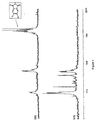
- Figure 1 demonstrates spectral characteristics of reaction products formed by reacting sulfur with the reaction products of Formulas I and III.
- Trace 1(A) shows the 13 C NMR spectra for the carboxy region for the reaction products of a M n 1000 polyisobutylene with maleic anhydride in the presence of chlorine.
- the trace for the products from reacting sulfur with the products of 1(A) at 210°C is shown in 1(B).
- the tracing at 210°C, 1(B) shows nearly complete conversion of the tetrahydrophthalic component to the aromatized phthalic component. Conversion at 190°C was not complete.
- the time used in the reactions shown in FIGURE 1 was 4.5 hours but up to 12 hours or longer may be preferred.
- the sulfurization of the substituted tetrahydrophthalic component of the reaction products leads to the phthalic compound through dehydrogenation.
- the disuccinic component of the reaction products is largely unaffected.
- sulfur charge for the dehydrogenation reaction only the amount of the substituted tetrahydrophthalic component of the reaction products should be considered.
- a mixture of M n 1000 polyisobutylene in 20% (m/m) cyclohexane is reacted with 1.1 equivalents of chlorine at 65°C.
- the cyclohexane is removed by distillation and the resulting polyisobutylene chloride is reacted with 1.1 equivalents of maleic anhydride at 200°C for 24 hrs. Excess/unreacted maleic anhydride is removed by vacuum stripping.
- reaction products are treated with iodine and then with the mixture of sulfur and a Lewis acid or mineral acid.
- the preferred Lewis acid for use in the scope of this invention is zinc acetate.
- a wide variety of Lewis acids are useful in the process of the present invention.
- Various compounds of zinc, magnesium, calcium, iron, copper, boron, aluminum, tin and titanium are useful Lewis acids.
- Examples of zinc compounds useful as well as Lewis acids in the process of the present invention includes zinc acetate, zinc oleate, zinc bromide, zinc chloride, zinc iodide, zinc oxide and zinc sulfate.
- iron compounds include ferrous acetate, ferric acetate, ferrous bromide, ferric bromide, ferrous chloride, ferric chloride, ferrous iodide and ferric iodide.
- magnesium compounds include magnesium iodide and magnesium sulfate. Calcium compounds such as calcium iodide and calcium sulfate are useful.
- copper compounds include cuprous oxide, curprous chloride cupric acetate, cupric bromide, cupric chloride, cupric iodide, cupric oxide, cupric sulfate and cupric sulfide.
- Examples of boron compounds include boron trifluoride, boron trichloride, boron tribromide, trimethylborane, triethylborane, trimethylborate, triethylborate, triisopropylborate and tributylborate.
- Examples of aluminum compounds include trialkylaluminum compounds such trimethylaluminum, triethylaluminum and triisobutylaluminum; aluminum alkoxides such as aluminum isopropoxides, aluminum sec-butoxides and aluminum t-butoxides; aluminum halides such as aluminum fluorides, aluminum chlorides and aluminum bromides; and aluminum oxide.
- tin compounds include the stannous and stannic forms of tin acetate, tin bromide, tin chloride, tin iodide and tin sulfate.
- titanium compounds include titanium (IV) chloride, titanium (IV) isopropoxide, titanium (IV) isobutoxide and titanium (IV) ethoxide and titanium oxides.
- Any of the above Lewis acids may be converted to other Lewis acids under the process conditions.
- zinc oxide may be converted to zinc chloride by reaction with chlorine or hydrogen chloride present in the organochlorine compound, or the zinc oxide may be converted to zinc iodide by reaction with the source of iodine added to the reaction mixture.
- Lewis acids may also be formed in situ by adding to the reaction mixtures, metals such as magnesium, aluminum, zinc, etc.
- Other examples of Lewis acids which may be utilized include tetraethylenetetracarboxylate and tetracyanoethylene.
- Mineral acids other than hydriodic acid and hydrobromic acid which may be utilized in the present invention include strong mineral acids such as sulfuric acid, nitric acid, phosphoric acid, pyrophosphorus acid, etc.
- the acid also may be a strong organic acid such as organic acids having a pKa of less than about 2.
- acids include aliphatic and aromatic sulfonic acids such as methane sulfonic acid, trifluoromethyl sulfonic acid, benzene sulfonic acid, various p-alkylbenzene sulfonic acids, p-toluene sulfonic acid, and naphthalene sulfonic acid; carboxylic acids such as cyclopropane-1,1-dicarboxylic acid, nitroacetic acid, dichloroacetic acid, maleic acid, oxalic acid, picric acid, trichloroacetic acid, trifluoroacetic acid, trihydroxybenzoic acid; phenolic compounds such as trinitrophenol; and phosphonic acids such as phenyl phosphonic acid, methyl phosphonic acid and trifluoromethyl phosphonic acid.
- carboxylic acids such as cyclopropane-1,1-dicarboxylic acid, nitroacetic acid, dichloroacetic acid, maleic acid
- organic sulfur donors may be used.
- Thiuram disulfides are represented by tetramethylthiuram disulfide.
- dipentamethylene-thiuram tetra and hexasulfides can be used to reduce chlorine.
- 2-(4-morpholinodithio) benzothiazole and 4,4 1 -dithiobismorpholine are also of use.
- sulfur as well as organic sulfur donors mentioned above are vulcanizing agents used in the rubber industry but which are also useful in the present invention. Vulcanizing agents are often used with accelerators and such accelerators may be useful to this invention also.
- Table 1 gives analytical data for a chlorine containing substituted acylating agent and for the acylating agent following various chemical treatments.
- the acylating agent is prepared by reacting polyisobutylenes of M n 1000 and M n 2000 with maleic anhydride and chlorine in the "one step" process.
- Example 1 In addition to the reduction of chlorine content of polyalkylene substituted acylating agents by sulfur, other methods may be used to further reduce the chlorine content. Such methods were summarized hereinabove using sulfur or sulfur and Lewis acid combined to treat various substituted acylating agents.
- the reaction products of Example 1. above may also be treated with iodine prior to treatment with sulfur, or Example 1. products may be treated with sulfur and a Lewis acid simultaneously, or iodine treated products of Example 1. above may be treated with sulfur and a Lewis acid simultaneously or an iodine Lewis acid treatment may be made prior to sulfur.
- the preferred Lewis acid is zinc (II) acetate .2H 2 O. The results of some of these treatments is given in Table 2.
- Example 2 Lewis acid. iodine and sulfur treatments of chlorine-containing substituted acylating agents.
- Example 1 Substituted chlorine-containing acylating agents from Example 1. were treated with sulfur as in Example 1.(C) and included in the sulfur treatment was 0.02 weight percent, based on the weight percent of the products from Example 1., of zinc (II) acetate ⁇ 2H 2 O.
- B. Substituted chlorine-containing acylating agents from Example 1. were treated with iodine to reduce chlorine. In the iodine reaction, 1000 grams of the products of Example 1. were heated to 150°C and 2-5 grams iodine added. The reaction mixture is heated at about 150°C for two hours.
- reaction products from Examples 1(A) and 1(B) were first treated with 0.2-0.5 weight percent iodine to displace chlorine, and the iodine treated reaction products were then treated as in various ways with sulfur and zinc acetate and combinations thereof.
- Table 3. below gives analytical data for sulfur treatment of the chlorine-reduced substituted acylating agent from Example 2.(B) where chlorine reduction is effected by iodine treatment.
- Table 3. Analytical Data for Sulfurization of Iodine Treated Products of Example 2.(B).
- D445 and D1522 are ASTM standard tests for 100°C kinematic viscosity in centistroke units and weight percent sulfur in a sample respectively.
- Tests identified as AgNO 3 and XRF are for chlorine and chlorine and iodine respectively.
- AgNO 3 for chlorine a sensitivity limit of about 200 ppm chlorine prevails.
- the chlorine-containing sample is combusted with a Parr oxygen bomb. Following combustion, the residue is worked up with water which is diluted with an equal volume of isopropyl alcohol and one drop concentrated HNO 3 and cooled to about 5°C. The cooled solution is titrated with N/100 AgNO 3 standardized solution against a chloride specific electrode.
- Test XRF is a wavelength dispersive x-ray fluorescence analysis for chlorine in the range of 0-0.75 mass percent and iodine in the range of 0-0.5 mass percent.
- a sample is placed in the x-ray beam and the intensity of the appropriate fluorescence lines of chlorine and iodine are measured. The concentration of the elements are determined from a calibration curve.
- An x-ray spectrometer such as an ARL-Eisons WDXRF 8410 equipped for soft x-ray detection is used in this test.
- the spectrometer must also include GEIII and LiF 200 analyzing crystals for use in analyzing chlorine and iodine respectively.
- TAN refers to total acid number and SAP to saponification number.
- substituted carboxylic acylating agents with reduced chlorine content may be made through sulfurization of chlorine-containing acylating agent prepared by reaction of chlorine, polyalkylene component, and maleic acid and/or anhydride component.
- the chlorine-containing sulfurization products contain new compositions of matter defined herein above as chlorine-containing substituted phthalic components, and chlorine-containing bicylic or disuccinic components and, if sulfurization is not carried to completion, chlorine-containing substituted tetrahydrophthalic components.
- the major use of the low chlorine substituted acylating agent reaction products of this invention is to react said products with other compounds to form new materials. Such materials are added to lubricating fluids to improve the desired qualities and properties of the lubricating fluids.
- lubricating fluids comprises fluids for use as lubricants and greases and fluids which are functional and fluids which are both.
- lubricating fluids are engine oils, gear lubricants, manual transmission fluids and the like.
- a functional fluid is a term which encompasses a variety of fluids including but not limited to tractor fluids, automatic transmission fluids, manual transmission fluids, hydraulic fluids, power steering fluids, fluids related to power train components and fluids which have the ability to act in various different capacities.
- the materials may also be used as additives to fuel compositions.
- the term lubricating composition encompasses fluids for lubrication, greases, and fluids with functional properties as well as fuels.
- the low chlorine substituted carboxylic acylating agents which have been formed by sulfurizing the chlorine-containing substituted carboxylic acylating agents formed by reacting a polyalkylene and maleic anhydride in the presence of chlorine will be identified as acylating agents.
- the acylating agents of this invention have utility, in and of themselves, as additives for lubricant and fuel compositions in the same manner as the known high molecular weight carboxylic acid acylating agents of the prior art.
- the acylating agents of this invention which are succinic acids, succinic acid anhydrides, and lower alkyl esters of succinic acids can be used as fuel additives to reduce deposit formations when used in concentrations of about 50 to about 1000 ppm in hydrocarbon-based fuels boiling substantially in the range of 100° to 750° F.
- U.S. Pat. No. 3,346,354 is expressly incorporated herein by reference for instructions for using the known high molecular weight carboxylic acid acylating agents since those instructions are applicable to the acylating agents of this invention.
- 3,288,714 is expressly incorporated herein by reference for its teachings of how to use known high molecular weight carboxylic acid acylating agents which are succinic anhydrides as additives in lubricant compositions where they function as dispersant/detergents since these teachings are applicable to the acylating agents of this invention.
- U.S. Pat. No. 3,714,042 is expressly incorporated herein by reference for its teachings with respect to how to use the acylating agents of this invention to treat overbased complexes.
- the acylating agents of this invention containing succinic acid groups, succinic anhydride groups, and succinic ester groups can be used to treat basic metal sulfonate complexes, sulfonatecarboxylate complexes, and carboxylate complexes in the same manner and according to the same procedure as described in U.S. Pat. No. 3,714,042 by replacing the high molecular weight carboxylic acid acylating agents discussed therein with the acylating agents of this invention on an equivalent weight basis.
- acylating agents of this invention have utility in and of themselves, beyond that of being intermediates for preparing other novel compositions, lubricant compositions and concentrates containing the acylating agents, as mentioned hereinbefore and described more fully hereafter constitute a part of this invention.
- the major compounds with which the low chlorine substituted acylating agents of this invention are reacted are those presented in U.S. Patents 4,234,435, 5,041,622 and 5,230,714 which are incorporated herein by reference in their entirety.
- acylating agents of this invention is as intermediates in processes for preparing carboxylic derivative compositions comprising reacting one or more acylating agents with a reactant selected from the group consisting of (a) amine characterized by the presence within its structure of at least one HN ⁇ group, (b) alcohol, (c) reactive metal or reactive metal compound, and (d) a combination of two or more of (a) through (c), the components of (d) being reacted with said acylating agents simultaneously or sequentially in any order.
- Reaction conditions for condensing the chlorine containing substituted acylating agents of this invention with compounds of (a)-(d) above are given in U.S. Patent 4,234,435 which has been incorporated herein by reference.
- the amine (that is, (a) above) characterized by the presence within its structure of at least one HN ⁇ group can be a monoamine or polyamine compound.
- hydrazine and substituted hydrazines containing up to three substituents are included as amines suitable for preparing carboxylic derivative compositions.
- Mixtures of two or more amines can be used in the reaction with one or more acylating agents of this invention.
- the amine contains at least one primary amino group (i.e., -NH 2 ) and more preferably the amine is a polyamine, especially a polyamine containing at least two HN ⁇ groups, either or both of which are primary or secondary amines.
- the polyamines not only result in carboxylic acid derivative compositions which are usually more effective as dispersant/detergent additives, relative to derivative compositions derived from monoamines, but these preferred polyamines result in carboxylic derivative compositions which exhibit more pronounced viscosity improving properties.
- Alcohols which can be used as (b) include the monohydric and polyhydric alcohols. Again, the polyhydric alcohols are preferred since they usually result in carboxylic derivative compositions which are more effective dispersant/detergents relative to carboxylic derivative compositions derived from monohydric alcohols. Further, the carboxylic acid derivative compositions derived from polyhydric alcohols exhibit very pronounced viscosity improving properties and are especially preferred reactants.
- Reactive metals and reactive metal compounds useful as (c) are those which are known to form salts and complexes when reacted with carboxylic acid and carboxylic acid acylating agents.
- Detailed disclosure of the reactions of (a), (b), (c) and (d) above with various acylating agents as well as the compounds defined under (a), (b) and (c) above are given in U.S. patents 4,234,435, 5,041,622 and 5,230,714.
- those prepared from novel acylating agents and the alkylene polyamines, especially polyethylene polyamines, and/or polyhydric alcohols, especially the polyhydric alkanols are especially preferred.
- mixtures of polyamines and/or polyhydric alcohols are contemplated.
- all the carboxyl functions on the acylating agents of this invention will either be esterified or involved in formation of an amine salt, amide, imide or imidazoline in this preferred group of carboxylic derivative compositions.
- polyfunctional reactants For example, polyamines having two or more primary and/or secondary amino groups, polyhydric alcohols, amino alcohols in which there are one or more primary and/or secondary amino groups and one or more hydroxy groups, and polyvalent metal or polyvalent metal compounds.
- the polyfunctional reactants serve to provide "bridges" or crosslinking in the carboxylic derivative compositions and this, in turn, is somehow responsible for the viscosity improving properties.
- the mechanism by which viscosity improving properties is obtained is not understood and applicants do not intend to be bound by this theory. Since the carboxylic derivative compositions derived, in whole or in part, from polyhydric alcohols appear to be particularly effective in permitting a reduction of the amount of viscosity improver in lubricating compositions, the polyfunctionality of reactants (a), (b) and (c) may not fully explain the viscosity improving properties of the carboxylic derivative compositions.
- acylating agents it is not necessary that all of the amine, alcohol, reactive metal, or reactive metal compound reacted with the acylating agents be polyfunctional.
- combinations of mono- and polyfunctional amines, alcohols, reactive metals and reactive metal compounds can be used; for example, monoamine with a polyhydric alcohol, a monohydric alcohol with polyamine, an amino alcohol with a reactive metal compound in which the metal is monovalent, and the like. While the parameters have not been fully determined as yet, it is believed that acylating agents of this invention should be reacted with amines, alcohols, reactive metals, reactive metal compounds, or mixtures of these which contain sufficient polyfunctional reactant, (e.g.
- Acylated nitrogen, and hydroxy compositions, prepared by reacting the acylating agents of this invention with amines and alcohols as described above are post-treated by contacting the acylated compositions thus formed (e.g., the carboxylic derivative compositions) with one or more post-treating agents selected from the group consisting of boron oxide, boron oxide hydrate, boron halides, boron acids, esters of boron acids, carbon disulfide, sulfur, sulfur chlorides, alkenyl cyanides, carboxylic acid acylating agents, aldehydes, ketones, urea, thiourea, guanidine, dicyanodiamide, hydrocarbyl phosphates, hydrocarbyl phosphites, hydrocarbyl thiophosphates, hydrocarbyl thiophosphites, phosphorus sulfides, phosphorus oxides, phosphoric acid, hydrocarbyl thiocyanates, hydrocarbyl isocyanates,
- the same post-treating agents are used with carboxylic derivative compositions prepared from the acylating agents of this invention and a combination of amines and alcohols as described above.
- the post-treating agents are usually selected from the group consisting of boron oxide, boron oxide hydrate, boron halides, boron acids, esters of boron acids, sulfur, sulfur chlorides, phosphorus sulfides, phosphorus oxides, carboxylic acid acylating agents, epoxides, and episulfides.
- acylating agents, the carboxylic derivative compositions, and the post-treated carboxylic derivative compositions of this invention are useful as additives in lubricating oils. From the foregoing description, it is seen that the acylating agents, the carboxylic derivative compositions, and the post-treated carboxylic derivative compositions, especially the latter two, function primarily as dispersant/detergents and Viscosity improvers.
- the lubricant compositions of this invention include lubricating oils and greases although, for the most part they will be lubricating oils.
- the lubricating oil compositions of this invention are based on natural and synthetic lubricating oils and mixtures thereof. These lubricants include crankcase lubricating oils for spark-ignited and compression-ignited internal combustion engines, such as automobile and truck engines, marine and railroad diesel engines, and the like. Automatic transmission fluids, transaxle lubricants, gear lubricants, metal-working lubricants, hydraulic fluids and other lubricating oil and grease compositions can also benefit from the incorporation therein of the acylating agents and carboxylic derivative compositions of the present invention.
- the lubricant and functional fluid compositions of the present invention are based on diverse oils of lubricating viscosity, including natural and synthetic lubricating oils and mixtures thereof
- the lubricating compositions may be lubricating oils and greases useful in industrial applications and in automotive engines, transmissions and axles. These lubricating compositions are effective in a variety of applications including crankcase lubricating oils for spark-ignited and compression-ignited internal combustion engines, including automobile and truck engines, two-cycle engines, aviation piston engines, marine and low-load diesel engines, and the like.
- the lubricants and functional fluid compositions of this invention employ an oil of lubricating viscosity which is generally present in a major amount (i.e. an amount greater than about 50% by weight). Generally, the oil of lubricating viscosity is present in an amount of greater than about 80% by weight of the composition.
- the natural oils useful in making the inventive lubricants and functional fluids include animal oils and vegetable oils (e.g., lard oil, castor oil) as well as mineral lubricating oils such as liquid petroleum oils and solvent treated or acid-treated mineral lubricating oils of the paraffinic, naphthenic or mixed paraffinicnaphthenic types which may be further refined by hydrocracking and hydrofinishing processes and are dewaxed. Oils of lubricating viscosity derived from coal or shale are also useful.
- animal oils and vegetable oils e.g., lard oil, castor oil
- mineral lubricating oils such as liquid petroleum oils and solvent treated or acid-treated mineral lubricating oils of the paraffinic, naphthenic or mixed paraffinicnaphthenic types which may be further refined by hydrocracking and hydrofinishing processes and are dewaxed. Oils of lubricating viscosity derived from coal or shale are also useful.
- Synthetic lubricating oils include hydrocarbon oils and halo-substituted hydrocarbon oils such as polymerized and interpolymerized olefins (e.g., polybutylenes, polypropylenes, propylene-isobutylene copolymers, chlorinated polybutylenes, etc.); poly(1-hexenes), poly(1-octenes), poly(1-decenes), etc.
- polymerized and interpolymerized olefins e.g., polybutylenes, polypropylenes, propylene-isobutylene copolymers, chlorinated polybutylenes, etc.
- poly(1-hexenes), poly(1-octenes), poly(1-decenes) e.g., poly(1-hexenes), poly(1-octenes), poly(1-decenes), etc.
- alkyl-benzenes e.g., dodecylbenzenes, tetradecylbenzenes, dinonylbenzenes, di-(2-ethylhexyl)-benzenes, etc.
- polyphenyls e.g., biphenyls, terphenyls, alkylated polyphenyls, etc.
- Alkylene oxide polymers and interpolymers and derivatives thereof where the terminal hydroxyl groups have been modified by esterification, etherification, etc. constitute another class of known synthetic lubricating oils that can be used. These are exemplified by the oils prepared through polymerization of ethylene oxide or propylene oxide, the alkyl and aryl ethers of these polyoxyalkylene polymers (e.g., methyl-polyisopropylene glycol ether having an average molecular weight of about 1000, diphenyl ether of polyethylene glycol having a molecular weight of about 500-1000, diethyl ether of polypropylene glycol having a molecular weight of about 1000-1500, etc.) or mono- and polycarboxylic esters thereof, for example, the acetic acid esters, mixed C 3-8 fatty acid esters, or the C 13 Oxo acid diester of tetraethylene glycol.
- the oils prepared through polymerization of ethylene oxide or propylene oxide the alky
- esters of dicarboxylic acids e.g., phthalic acid, succinic acid, alkyl succinic acids, alkenyl succinic acids, maleic acid, azelaic acid, suberic acid, sebacic acid, fumaric acid, adipic acid, linoleic acid dimer, malonic acid, alkyl malonic acids, alkenyl malonic acids, etc.
- alcohols e.g., butyl alcohol, hexyl alcohol, dodecyl alcohol, 2-ethylhexyl alcohol, ethylene glycol, diethylene glycol monoether, propylene glycol, etc.
- these esters include dibutyl adipate, di(2-ethylhexyl) sebacate, di-n-hexyl fumarate, dioctyl sebacate, diisooctyl azelate, diis
- Esters useful as synthetic oils also include those made from C 5 to C 12 monocarboxylic acids and polyols and polyol ethers such as neopentyl glycol, trimethylol propane, pentaerythritol, dipentaerythritol, tripentaerythritol, etc.
- Silicon-based oils such as the polyalkyl-, polyaryl-, polyalkoxy-, or polyaryloxy-siloxane oils and silicate oils comprise another useful class of synthetic lubricants (e.g., tetraethyl silicate, tetraisopropyl silicate, tetra-(2-ethylhexyl)silicate, tetra-(4-methyl-hexyl)silicate, tetra-(p-tert-butylphenyl) silicate, hexyl-(4-methyl-2pentoxy)disiloxane, poly(methyl) siloxanes, poly-(methylphenyl)siloxanes, etc.).
- synthetic lubricants e.g., tetraethyl silicate, tetraisopropyl silicate, tetra-(2-ethylhexyl)silicate, tetra-(4-methyl-he
- Other synthetic lubricating oils include liquid esters of phosphorus-containing acids (e.g., tricresyl phosphate, trioctyl phosphate, diethyl ester of decane phosphonic acid, etc.), polymeric tetrahydrofurans and the like.
- Unrefined, refined and re-refined oils either natural or synthetic (as well as mixtures of two or more of any of these) of the type disclosed hereinabove can be used in the lubricants of the present invention.
- Unrefined oils are those obtained directly from a natural or synthetic source without further purification treatment.
- a shale oil obtained directly from retorting operations a petroleum oil obtained directly from primary distillation or ester oil obtained directly from an esterification process and used without further treatment would be an unrefined oil.
- Refined oils are similar to the unrefined oils except they have been further treated in one or more purification steps to improve one or more properties. Many such purification techniques are known to those skilled in the art such as solvent extraction, secondary distillation, acid or base extraction, filtration, percolation, etc.
- Re-refined oils are obtained by processes similar to those used to obtain refined oils applied to refined oils which have been already used in service.
- the oil of lubricating viscosity is a poly-alpha-olefin (PAO).
- PAO poly-alpha-olefin
- the poly-alpha-olefins are derived from monomers having from about 4 to about 30, or from about 4 to about 20, or from about 6 to about 16 carbon atoms.
- useful PAOs include those derived from 1-decene. These PAOs may have a viscosity from about 2 to about 150.
- the various chlorine containing substituted carboxylic acylating agents, carboxylic derivative compositions and post-treated carboxylic derivative compositions are contained as additives in a composition comprising a majority of lubricating oil, functional fluid or fuel.
- the compositions of this invention are included with several other components in an oil of lubricating viscosity and/or function fluid.
- the components of this invention when included in a oil of lubricating viscosity provide superior wear properties when used in a (Ford) Sequence VE Engine Test, ASTM D5302-92.
- Wear values for Sequence VE tests in mils are given below for a series of oil compositions and for an oil composition having a low chlorine content substituted carboxylic acylating agent derivative prepared by reacting the low chlorine containing acylating agent with amine bottoms to form the substituted acylating agent derivative.
- Table 5 Wear Values in Mils for Sequence VE Test Wear 1. 2. Max 1.03 0.40 Ave. 0.8 0.23
- the value given in column 1. is for the composition without the composition of this invention.
- the values in column 1. were selected as the best values available from three base line tests. One can determine that the composition of column 2. is superior to the best values of the base line composition. The only difference between the composition used for columns 1. and 2. is that the succinimide dispersant of the composition of column 2.
- Lubricating Compositions for Use in Sequence VE Wear Tests Component Weight Percent 1. Base oil, 100N HT Ashland, Cattlesburg 72.2 2. Base oil, 325N HT Ashland, Cattlesburg 9.9 3. Viscosity improver, contains 91.4% Ashland, Cattlesburg 100HT; 0.1% 2,6 di-ditertiarybutyl paracresol 8.5% Uniroyal cc-988 copolymer 8.20 4. Polymethacrylate pour point depressant 0.20 5. Performance package 9.50 The performance package is listed below. The weight percent of each component is based on its weight based on the weight of the lubricating compositions.
- composition 2 contains a low chlorine containing succinimide dispersant prepared in accordance with this invention.
- the chlorine containing dispersant is prepared by reacting M n 2000 polyisobutylene with maleic anhydride in the presence of chlorine to form a chlorine containing substituted acylating agent.
- the chlorine content of the acylating agent may vary but would normally be in the range of about 0.7-1.5 weight percent.
- the chlorine content of the chlorine containing acylating agent is then reduced using 0.6 equivalents of sulfur per equivalent of anhydride. This is based on two equivalents of sulfur per equivalent of tetrahydrophthalic anhydride units in the substituted acylating reaction mixture.
- the sulfur reaction is carried out at 210°C in the presence of 0.02 weight percent zinc acetate dihydrate for a period of eight hours.
- the substituted acylating agent has a reduced chlorine content of about 0.12 weight percent based on the weight of the acylating agent.
- the chlorine containing substituted acylating agent described hereinabove, 4.04 equivalents, 2645.2 grams is heated to 110°C with about 3.335 L 100N dil oil and 10 drops antifoam agent.
- To this stirred mixture is added 3.37 equivalents of Union Carbide PM 1969 polyamine mixture containing about 25% diethylenetriamine and 72% amine bottoms.
- the mixture is held at 110°C for one hour, when the temperature is increased to 155-160°C for 4 hours, cooled to 50°C.
- the mixture is then heated again to 140°C, filter aid added, 183 grams, and the mixture is filtered.
- the reaction above is now under a 0.25CFM N 2 purge.
- the chlorine content of the succinimide dispersant - low chlorine content substituted carboxylic acylating derivative - made by the process is about 0.05 weight percent.
- the HT base oils are commercially available.
- the pour point depressant is a polymethacrylate.
- the viscosity improver, in addition to the oil and di-t-butyl cresol can be Uniroyal cc-988, an olefin copolymer or Uniroyal X-3548, an olefin copolymer.
- the high molecular weight dispersants of Table 7. can be made as described hereinabove or as described in U.S. Patent 4,234,435.
- the succinate dispersant can be made as in Example 13 of the '435 patent which describes the reaction of a polyisobutylene succinic acylating agent and pentaerythritol (an alcohol) and ethylene polyamines.
- Zinc dithiophosphate and nonylated diphenyl amine may be purchased as is well-known to those skilled in the art.
- the sulfurized olefins are C 15 -C 18 olefins reacted with S 2 C1 2 and then with Na 2 S.
- Sulfurization reactions may be found in U.S. Patents 2,708,199; 3,471,404; 4,191,659; 3,498,915 and 4,582,618 which are incorporated herein by reference for disclosure of sulfurization reactions.
- the calcium overbased sulfurized docecylphenol as listed above is described in U.S. Patent 5,328,620 which is incorporated herein by reference for its disclosure of overbased sulfurized phenols.
- the phenol composition as used above contains about 5 weight percent M n 1000 polyisobutylene substituted acylating agent and about 3 weight percent on a chemical basis of an overbased calcium sulfonate having TBN 30. The latter two additives to the sulfurized overbased phenol aid in compatibility.
- the calcium overbased sulfonate having 300 TBN is a well-known type of detergent to those skilled in the art.
- the overbased calcium salt is a mixture containing roughly 40% dil oil and 3.5 weight percent of 1000 M n polyisobutylene substituted acylating agent and 2.5 weight percent of the calcium salt of a formaldehyde coupled phenol mixture. The latter contains 69% dil oil.
- the sodium overbased carboxylate is a 1000 M n polyisobutylene substituted acylating agent having TBN of 300. This type of compound is described in U.S. Patent 5,449,470 which is incorporated herein by reference for compounds of this type.
- the specific 300 TBN of this example also contains 2 weight percent dodecylphenol.
- the magnesium overbased sulfonate with 400 TBN is well known to those skilled in the art.
- the particular magnesium salt used above has 32 weight percent dil oil and contains 5 weight percent 1000 M n polyisobutylene substituted acylating agent which aids compatibility of this component.
- compositions of this invention while useful in themselves, are also useful in oils for lubrication, fuels, greases, hydraulic fluids and the like either alone or in mixtures with other additives.
- the lubricants of the present invention contain a lubricating improving amount of one or more of the compositions of this invention, e.g., sufficient to provide it with improved detergent/dispersant and/or viscosity properties.
- the amount employed will be about 0.05% to about 20%, preferably about 0.1% to about 10% of the total weight of the lubricating composition. This amount is exclusive of solvent/diluent medium.
- the metal salts of this invention may be present in amounts of up to about 30% by weight or more, of the total weight of the lubricating composition.
- additives include, for example, detergents and dispersants of the ash-producing or ashless type, corrosion- and oxidation-inhibiting agents, pour point depressing agents, extreme pressure agents, antiwear agents, color stabilizers and antifoam agents.
- the ash-producing detergents are exemplified by oil-soluble neutral and basic salts of alkali or alkaline earth metals with sulfonic acids, carboxylic acids, or organic phosphorus acids characterized by at least one direct carbon-to-phosphorus linkage such as those prepared by the treatment of an olefin polymer (e.g., polyisobutene having a molecular weight of 1000) with a phosphorizing agent such as phosphorus trichloride, phosphorus heptasulfide, phosphorus pentasulfide, phosphorus trichloride and sulfur, white phosphorus and a sulfur halide, or phosphorothioic chloride.
- olefin polymer e.g., polyisobutene having a molecular weight of 1000
- a phosphorizing agent such as phosphorus trichloride, phosphorus heptasulfide, phosphorus pentasulfide,
- Antifoam agents are used to reduce or prevent the formation of stable foam.
- Typical antifoam agents include silicones or organic polymers. Additional antifoam compositions are described in "Foam Control Agents", by Henry T. Kerner (Noyes Data Corporation, 1976), pages 125-162.
- compositions of this invention can be added directly to the fuels or lubricants. Preferably, however, they are diluted with a substantially inert, normally liquid organic diluent such as mineral oil, naphtha, benzene, toluene or xylene, to form an additive concentrate.
- a substantially inert, normally liquid organic diluent such as mineral oil, naphtha, benzene, toluene or xylene
- These concentrates usually contain from about 10% to 80% by weight of the composition of this invention, and 20% to 90% by weight of the inert diluents.
- the concentrates also may contain one or more other additives known in the art or described hereinabove.
Landscapes
- Chemical & Material Sciences (AREA)
- Organic Chemistry (AREA)
- Oil, Petroleum & Natural Gas (AREA)
- Chemical Kinetics & Catalysis (AREA)
- General Chemical & Material Sciences (AREA)
- Health & Medical Sciences (AREA)
- Engineering & Computer Science (AREA)
- Medicinal Chemistry (AREA)
- Polymers & Plastics (AREA)
- Emergency Medicine (AREA)
- Combustion & Propulsion (AREA)
- Lubricants (AREA)
- Organic Low-Molecular-Weight Compounds And Preparation Thereof (AREA)
Applications Claiming Priority (2)
| Application Number | Priority Date | Filing Date | Title |
|---|---|---|---|
| US08/646,783 US5885944A (en) | 1996-05-21 | 1996-05-21 | Low chlorine polyalkylene substituted carboxylic acylating agent compositions and compounds derived therefrom |
| US646783 | 1996-05-21 |
Publications (3)
| Publication Number | Publication Date |
|---|---|
| EP0808852A2 true EP0808852A2 (de) | 1997-11-26 |
| EP0808852A3 EP0808852A3 (de) | 1998-02-25 |
| EP0808852B1 EP0808852B1 (de) | 2003-12-17 |
Family
ID=24594439
Family Applications (1)
| Application Number | Title | Priority Date | Filing Date |
|---|---|---|---|
| EP97303428A Expired - Lifetime EP0808852B1 (de) | 1996-05-21 | 1997-05-20 | Zusammensetzungen mit niedrigem Chlorgehalt aus polyalkylen-substituierten Carbonsäure-Acylierungsmitteln |
Country Status (4)
| Country | Link |
|---|---|
| US (1) | US5885944A (de) |
| EP (1) | EP0808852B1 (de) |
| CA (1) | CA2205643A1 (de) |
| DE (1) | DE69726790T2 (de) |
Cited By (3)
| Publication number | Priority date | Publication date | Assignee | Title |
|---|---|---|---|---|
| EP0926224A3 (de) * | 1997-12-25 | 2000-06-28 | Tonen Corporation | Schmiermittelzusammensetzung |
| US6562904B2 (en) | 2001-06-25 | 2003-05-13 | Infineum International Ltd. | Polyalkene-substituted carboxylic acid compositions having reduced chlorine content |
| AU778615B2 (en) * | 1999-12-15 | 2004-12-16 | Lubrizol Corporation, The | Lubricants containing a bimetallic detergent system and a method of reducing NOx emissions employing same |
Families Citing this family (32)
| Publication number | Priority date | Publication date | Assignee | Title |
|---|---|---|---|---|
| US6440905B1 (en) * | 2001-04-24 | 2002-08-27 | The Lubrizol Corporation | Surfactants and dispersants by in-line reaction |
| NZ535682A (en) * | 2002-03-22 | 2006-10-27 | Oil Process Systems Inc | Process of stabilizing hot cooking oil comprising periodically introducing into hot cooking oil an aqueous mixture comprising at least one antioxidant in combination with a water-soluble or water-dispersible emulsifier |
| AU2006257823B2 (en) | 2005-06-16 | 2011-09-08 | The Lubrizol Corporation | Quaternary ammonium salt detergents for use in fuels |
| US20090171031A1 (en) * | 2007-12-26 | 2009-07-02 | Richard Joseph Severt | Method of Forming Polyalkene Substituted Carboxylic Acid Compositions |
| EP2075264B1 (de) | 2007-12-26 | 2016-09-28 | Infineum International Limited | Verfahren zum Bilden von polyalken-substituierten Carboxylsäure-Zusammensetzungen |
| US7662887B1 (en) | 2008-10-01 | 2010-02-16 | Infineum International Limited | Method of forming polyalkene substituted carboxylic acid compositions |
| CA3025740C (en) | 2008-10-10 | 2021-11-09 | The Lubrizol Corporation | Additives to reduce metal pick-up in fuels |
| ES2690473T5 (es) | 2009-05-15 | 2021-07-12 | Lubrizol Corp | Sales de amida de amonio cuaternario |
| BR112012011087A2 (pt) | 2009-11-10 | 2016-07-05 | Lubrizol Corp | composicoes para limpeza de sistema lubrificante e seus métodos |
| CN102985518A (zh) | 2010-05-18 | 2013-03-20 | 卢布里佐尔公司 | 提供去污力的方法和组合物 |
| KR101822212B1 (ko) | 2010-05-25 | 2018-01-25 | 더루우브리졸코오포레이션 | 기관의 동력 증가를 제공하는 방법 |
| WO2011159742A1 (en) | 2010-06-15 | 2011-12-22 | The Lubrizol Corporation | Methods of removing deposits in oil and gas applications |
| FR2969654B1 (fr) | 2010-12-22 | 2013-02-08 | Rhodia Operations | Composition d'additif carburant a base d'une dispersion de particules de fer et d'un detergent |
| JP6105567B2 (ja) | 2011-05-26 | 2017-03-29 | ザ ルブリゾル コーポレイションThe Lubrizol Corporation | 摩擦調整剤を含有する安定化されたブレンド |
| CA2834569A1 (en) | 2011-05-26 | 2012-11-29 | The Lubrizol Corporation | Stabilized blends containing friction modifiers |
| US9631160B2 (en) | 2011-05-26 | 2017-04-25 | The Lubrizol Corporation | Stabilized blends containing friction modifiers |
| US20140107000A1 (en) | 2011-05-26 | 2014-04-17 | The Lubrizol Corporation | Stabilized blends containing antioxidants |
| CA2839312A1 (en) | 2011-06-21 | 2012-12-27 | The Lubrizol Corporation | Lubricating compositions containing salts of hydrocarbyl substituted acylating agents |
| WO2013043332A1 (en) | 2011-09-23 | 2013-03-28 | The Lubrizol Corporation | Quaternary ammonium salts in heating oils |
| JP2015532356A (ja) | 2012-10-23 | 2015-11-09 | ザ ルブリゾル コーポレイションThe Lubrizol Corporation | 低分子量ペナルティーがないディーゼル清浄剤 |
| WO2014137800A1 (en) | 2013-03-07 | 2014-09-12 | The Lubrizol Corporation | Ion tolerant corrosion inhibitors and inhibitor combinations for fuels |
| EP2984156A1 (de) | 2013-05-28 | 2016-02-17 | The Lubrizol Corporation | Asphalten-inhibition |
| EP3149127A1 (de) | 2014-05-30 | 2017-04-05 | The Lubrizol Corporation | Hochmolekulares imid mit quaternären ammoniumsalzen |
| BR112016028067A2 (pt) | 2014-05-30 | 2017-08-22 | Lubrizol Corp | Amida/éster de alto peso molecular contendo sais de amônio quaternário |
| DK3149129T3 (da) | 2014-05-30 | 2019-05-13 | Lubrizol Corp | Anvendelse af imidazolholdige kvaternære ammoniumsalte |
| PL3514220T3 (pl) | 2014-05-30 | 2020-09-07 | The Lubrizol Corporation | Amid/ester o niskiej masie cząsteczkowej zawierający czwartorzędowe sole amoniowe |
| US20170101594A1 (en) | 2014-05-30 | 2017-04-13 | The Lubrizol Corporation | Coupled quaternary ammonium salts |
| SG11201609885XA (en) | 2014-05-30 | 2016-12-29 | Lubrizol Corp | Branched amine containing quaternary ammonium salts |
| EP3149130B1 (de) | 2014-05-30 | 2019-04-03 | The Lubrizol Corporation | Verwendung epoxidquaternierter quaternärer ammoniumsalze |
| US10669433B2 (en) | 2015-11-09 | 2020-06-02 | The Lubrizol Corporation | Using quaternary amine additives to improve water separation |
| SG11201804230PA (en) | 2015-12-02 | 2018-06-28 | Lubrizol Corp | Ultra-low molecular weight amide/ester containing quaternary ammonium salts having short hydrocarbon tails |
| PE20190852A1 (es) | 2016-10-17 | 2019-06-18 | Lubrizol Corp | Tecnologia de emulsionante acido para sistemas acidos emulsionados mixtos continuos |
Family Cites Families (27)
| Publication number | Priority date | Publication date | Assignee | Title |
|---|---|---|---|---|
| CA495560A (en) * | 1953-08-25 | H. Bump Albert | Purification of phthalic anhydride | |
| US3231587A (en) * | 1960-06-07 | 1966-01-25 | Lubrizol Corp | Process for the preparation of substituted succinic acid compounds |
| US3288714A (en) * | 1961-12-06 | 1966-11-29 | Monsanto Co | Lubricating oil compositions containing alkenyl succinic anhydrides |
| DE1250951B (de) * | 1962-11-30 | 1967-09-28 | Esso Research and Engineering Company Elizabeth, NJ (V St A) | Morway, Clark, N J , James Nixon, Elizabeth N J , Rudolph Kassmger, Westfield, N J (V St. A) I Schmiermittel |
| US3303203A (en) * | 1965-07-06 | 1967-02-07 | Witco Chemical Corp | Purification of crude phthalic anhydride |
| US3407216A (en) * | 1966-02-07 | 1968-10-22 | Chemical Process Corp | Method for reducing phthalide content of phthalic anhydride |
| US3632797A (en) * | 1968-11-26 | 1972-01-04 | Union Carbide Corp | Process for the preparation of polyimides |
| US3714042A (en) * | 1969-03-27 | 1973-01-30 | Lubrizol Corp | Treated overbased complexes |
| US3954812A (en) * | 1973-05-10 | 1976-05-04 | Standard Oil Company | Polybutene composition containing halogen-containing additives and use thereof |
| US4240916A (en) * | 1976-07-09 | 1980-12-23 | Exxon Research & Engineering Co. | Pour point depressant additive for fuels and lubricants |
| EP0014288B1 (de) * | 1978-12-07 | 1983-06-08 | Exxon Research And Engineering Company | Verfahren zur Herstellung öllöslicher Derivate ungesättigter C4-C10 Dicarbonsäure-Materialien |
| US4235786A (en) * | 1979-10-01 | 1980-11-25 | Exxon Research & Engineering Co. | Process for producing oil-soluble derivatives of unsaturated C4 -C.sub. |
| US4234435A (en) * | 1979-02-23 | 1980-11-18 | The Lubrizol Corporation | Novel carboxylic acid acylating agents, derivatives thereof, concentrate and lubricant compositions containing the same, and processes for their preparation |
| FR2457712A1 (fr) * | 1979-05-29 | 1980-12-26 | Dia Prosim | Procede de preparation de resines anioniques fortement basiques a faible teneur en chlore |
| GB2061958B (en) * | 1979-10-24 | 1983-07-20 | Shell Int Research | Process for the preparation of polyalkenyl-substituted succinic anhydride |
| US4560772A (en) * | 1984-10-22 | 1985-12-24 | Stauffer Chemical Company | Preparation of substituted phthalic anhydrides |
| US4564687A (en) * | 1984-12-20 | 1986-01-14 | Stauffer Chemical Company | Process for preparing substituted phthalic anhydrides |
| US4652600A (en) * | 1985-09-20 | 1987-03-24 | Exxon Research And Engineering Company | Sulfomaleation of polyolefins (C-1966) |
| US5041622A (en) * | 1988-04-22 | 1991-08-20 | The Lubrizol Corporation | Three-step process for making substituted carboxylic acids and derivatives thereof |
| KR900701720A (ko) * | 1988-09-29 | 1990-12-04 | 원본미기재 | 교체되는 폴리알킬렌과 호박산 그룹을 갖는 신규 중합 분산제 |
| US5057617A (en) * | 1988-11-07 | 1991-10-15 | Exxon Chemical Patents Inc. | Dispersant additives prepared from monoepoxy thiols |
| DE69021256T2 (de) * | 1989-05-01 | 1996-01-04 | Texaco Development Corp | Dispergierende Antioxidationsadditive und diese Additive enthaltende Schmierölzusammensetzungen. |
| US5071919A (en) * | 1990-05-17 | 1991-12-10 | Ethyl Petroleum Additives, Inc. | Substituted acylating agents and their production |
| DE4319671A1 (de) * | 1993-06-14 | 1994-12-15 | Basf Ag | Verfahren zur Herstellung von Polyisobutylbernsteinsäureanhydriden |
| AU679809B2 (en) * | 1994-01-28 | 1997-07-10 | Lubrizol Corporation, The | Treatment of organic compounds to reduce chlorine level |
| EP0684262A3 (de) * | 1994-05-26 | 1995-12-06 | The Lubrizol Corporation | Behandlung von Schmieröl-Zwischenprodukten |
| US5489390A (en) * | 1995-03-14 | 1996-02-06 | The Lubrizol Corporation | Treatment of organic compounds to reduce chlorine level |
-
1996
- 1996-05-21 US US08/646,783 patent/US5885944A/en not_active Expired - Fee Related
-
1997
- 1997-05-16 CA CA002205643A patent/CA2205643A1/en not_active Abandoned
- 1997-05-20 EP EP97303428A patent/EP0808852B1/de not_active Expired - Lifetime
- 1997-05-20 DE DE69726790T patent/DE69726790T2/de not_active Expired - Fee Related
Cited By (3)
| Publication number | Priority date | Publication date | Assignee | Title |
|---|---|---|---|---|
| EP0926224A3 (de) * | 1997-12-25 | 2000-06-28 | Tonen Corporation | Schmiermittelzusammensetzung |
| AU778615B2 (en) * | 1999-12-15 | 2004-12-16 | Lubrizol Corporation, The | Lubricants containing a bimetallic detergent system and a method of reducing NOx emissions employing same |
| US6562904B2 (en) | 2001-06-25 | 2003-05-13 | Infineum International Ltd. | Polyalkene-substituted carboxylic acid compositions having reduced chlorine content |
Also Published As
| Publication number | Publication date |
|---|---|
| US5885944A (en) | 1999-03-23 |
| EP0808852A3 (de) | 1998-02-25 |
| DE69726790D1 (de) | 2004-01-29 |
| EP0808852B1 (de) | 2003-12-17 |
| CA2205643A1 (en) | 1997-11-21 |
| DE69726790T2 (de) | 2004-10-07 |
Similar Documents
| Publication | Publication Date | Title |
|---|---|---|
| EP0808852B1 (de) | Zusammensetzungen mit niedrigem Chlorgehalt aus polyalkylen-substituierten Carbonsäure-Acylierungsmitteln | |
| US3390086A (en) | Sulfur containing ashless disperant | |
| DE69612051T2 (de) | Schmierflüssigkeiten zur Verminderung des Lufteintrags und zum verbesserten Zahnradschutz | |
| CA2275402C (en) | Power transmitting fluids with improved anti-shudder durability | |
| US4090854A (en) | Sulfurized Mannich condensation products and fuel compositions containing same | |
| EP0391993B1 (de) | Schmiermittelzusammensetzungen und additiv-konzentrate zu ihrer herstellung | |
| JPH0248599B2 (de) | ||
| KR101811891B1 (ko) | 아스팔텐 분산제를 함유하는 윤활 조성물 | |
| US4093614A (en) | Metal complexes of nitrogen compounds | |
| EP0451380A1 (de) | Bernsteinsäureimid-Zusammensetzungen | |
| CA2936418C (en) | Method of improving vehicle transmission operation through use of specific lubricant compositions | |
| EP0594814B1 (de) | Als brennstoff- und schmiermitteladditive verwendbare metallcarboxylate von alkylen bis-phenol-carbonsäuren | |
| JPH0328477B2 (de) | ||
| KR20180048596A (ko) | 칼슘-함유 세제를 갖는 윤활제 및 저속 조기-점화 개선을 위한 이의 용도 | |
| CA2085372A1 (en) | Overbased alkali metal salts and methods for making same | |
| US8138130B2 (en) | Fused-ring aromatic amine based wear and oxidation inhibitors for lubricants | |
| JP2599600B2 (ja) | 油性組成物において有用なラクトン変成、アミノ化分散剤添加剤 | |
| EP0408735B1 (de) | Hydroxyalkanphosphonsäuren, deren derivate und diese enthaltende schmiermittel | |
| KR100242407B1 (ko) | 윤활유중의 개선된 인/붕소 담체로서의 저분자량의 염기성 질소-함유 반응생성물 | |
| US5059335A (en) | Lubricants containing salts of hydroxyalkane phosphonic acids | |
| US5296560A (en) | Ashless dispersants | |
| KR20250123876A (ko) | 무세제 및 저회분 윤활 조성물 | |
| US3468798A (en) | Ashless dispersant-inhibitors and petroleum hydrocarbons containing the same | |
| JP7856777B2 (ja) | 高いパラ位選択性を有するポリアルファオレフィンフェノール | |
| WO1992001032A1 (en) | Ashless dispersants |
Legal Events
| Date | Code | Title | Description |
|---|---|---|---|
| PUAI | Public reference made under article 153(3) epc to a published international application that has entered the european phase |
Free format text: ORIGINAL CODE: 0009012 |
|
| AK | Designated contracting states |
Kind code of ref document: A2 Designated state(s): DE FR GB |
|
| PUAL | Search report despatched |
Free format text: ORIGINAL CODE: 0009013 |
|
| AK | Designated contracting states |
Kind code of ref document: A3 Designated state(s): DE FR GB |
|
| 17P | Request for examination filed |
Effective date: 19980717 |
|
| 17Q | First examination report despatched |
Effective date: 20020220 |
|
| GRAH | Despatch of communication of intention to grant a patent |
Free format text: ORIGINAL CODE: EPIDOS IGRA |
|
| GRAS | Grant fee paid |
Free format text: ORIGINAL CODE: EPIDOSNIGR3 |
|
| GRAA | (expected) grant |
Free format text: ORIGINAL CODE: 0009210 |
|
| AK | Designated contracting states |
Kind code of ref document: B1 Designated state(s): DE FR GB |
|
| REG | Reference to a national code |
Ref country code: GB Ref legal event code: FG4D |
|
| REF | Corresponds to: |
Ref document number: 69726790 Country of ref document: DE Date of ref document: 20040129 Kind code of ref document: P |
|
| PGFP | Annual fee paid to national office [announced via postgrant information from national office to epo] |
Ref country code: GB Payment date: 20040512 Year of fee payment: 8 |
|
| PGFP | Annual fee paid to national office [announced via postgrant information from national office to epo] |
Ref country code: FR Payment date: 20040519 Year of fee payment: 8 |
|
| PGFP | Annual fee paid to national office [announced via postgrant information from national office to epo] |
Ref country code: DE Payment date: 20040630 Year of fee payment: 8 |
|
| ET | Fr: translation filed | ||
| PLBE | No opposition filed within time limit |
Free format text: ORIGINAL CODE: 0009261 |
|
| STAA | Information on the status of an ep patent application or granted ep patent |
Free format text: STATUS: NO OPPOSITION FILED WITHIN TIME LIMIT |
|
| 26N | No opposition filed |
Effective date: 20040920 |
|
| PG25 | Lapsed in a contracting state [announced via postgrant information from national office to epo] |
Ref country code: GB Free format text: LAPSE BECAUSE OF NON-PAYMENT OF DUE FEES Effective date: 20050520 |
|
| PG25 | Lapsed in a contracting state [announced via postgrant information from national office to epo] |
Ref country code: DE Free format text: LAPSE BECAUSE OF NON-PAYMENT OF DUE FEES Effective date: 20051201 |
|
| GBPC | Gb: european patent ceased through non-payment of renewal fee |
Effective date: 20050520 |
|
| PG25 | Lapsed in a contracting state [announced via postgrant information from national office to epo] |
Ref country code: FR Free format text: LAPSE BECAUSE OF NON-PAYMENT OF DUE FEES Effective date: 20060131 |
|
| REG | Reference to a national code |
Ref country code: FR Ref legal event code: ST Effective date: 20060131 |