EP0773015B1 - Haarpflegemittel - Google Patents
Haarpflegemittel Download PDFInfo
- Publication number
- EP0773015B1 EP0773015B1 EP96117107A EP96117107A EP0773015B1 EP 0773015 B1 EP0773015 B1 EP 0773015B1 EP 96117107 A EP96117107 A EP 96117107A EP 96117107 A EP96117107 A EP 96117107A EP 0773015 B1 EP0773015 B1 EP 0773015B1
- Authority
- EP
- European Patent Office
- Prior art keywords
- hair
- polymer
- water vapor
- vapor transmission
- film
- Prior art date
- Legal status (The legal status is an assumption and is not a legal conclusion. Google has not performed a legal analysis and makes no representation as to the accuracy of the status listed.)
- Expired - Lifetime
Links
- 239000000203 mixture Substances 0.000 title claims description 25
- XLYOFNOQVPJJNP-UHFFFAOYSA-N water Chemical compound O XLYOFNOQVPJJNP-UHFFFAOYSA-N 0.000 claims description 61
- 230000005540 biological transmission Effects 0.000 claims description 52
- 229920000642 polymer Polymers 0.000 claims description 39
- 229920006254 polymer film Polymers 0.000 claims description 31
- 229920002451 polyvinyl alcohol Polymers 0.000 claims description 13
- 239000004372 Polyvinyl alcohol Substances 0.000 claims description 12
- 125000003010 ionic group Chemical group 0.000 claims description 10
- 239000000178 monomer Substances 0.000 claims description 5
- JAHNSTQSQJOJLO-UHFFFAOYSA-N 2-(3-fluorophenyl)-1h-imidazole Chemical compound FC1=CC=CC(C=2NC=CN=2)=C1 JAHNSTQSQJOJLO-UHFFFAOYSA-N 0.000 claims description 2
- IMROMDMJAWUWLK-UHFFFAOYSA-N Ethenol Chemical compound OC=C IMROMDMJAWUWLK-UHFFFAOYSA-N 0.000 claims description 2
- 150000001732 carboxylic acid derivatives Chemical class 0.000 claims description 2
- LVHBHZANLOWSRM-UHFFFAOYSA-N methylenebutanedioic acid Natural products OC(=O)CC(=C)C(O)=O LVHBHZANLOWSRM-UHFFFAOYSA-N 0.000 claims description 2
- UZNHKBFIBYXPDV-UHFFFAOYSA-N trimethyl-[3-(2-methylprop-2-enoylamino)propyl]azanium;chloride Chemical compound [Cl-].CC(=C)C(=O)NCCC[N+](C)(C)C UZNHKBFIBYXPDV-UHFFFAOYSA-N 0.000 claims description 2
- 229920005604 random copolymer Polymers 0.000 claims 1
- 239000006210 lotion Substances 0.000 description 13
- 239000011550 stock solution Substances 0.000 description 11
- DNIAPMSPPWPWGF-UHFFFAOYSA-N Propylene glycol Chemical compound CC(O)CO DNIAPMSPPWPWGF-UHFFFAOYSA-N 0.000 description 7
- 101100327917 Caenorhabditis elegans chup-1 gene Proteins 0.000 description 6
- 239000003795 chemical substances by application Substances 0.000 description 6
- 238000000034 method Methods 0.000 description 6
- 230000000052 comparative effect Effects 0.000 description 5
- 229920001577 copolymer Polymers 0.000 description 5
- 239000003380 propellant Substances 0.000 description 5
- 239000008367 deionised water Substances 0.000 description 4
- 229910021641 deionized water Inorganic materials 0.000 description 4
- 239000006260 foam Substances 0.000 description 4
- 239000002304 perfume Substances 0.000 description 4
- JAUFWPNLLLUYNV-UHFFFAOYSA-N 3-(16-methylheptadecoxy)propane-1,2-diol Chemical compound CC(C)CCCCCCCCCCCCCCCOCC(O)CO JAUFWPNLLLUYNV-UHFFFAOYSA-N 0.000 description 3
- PEDCQBHIVMGVHV-UHFFFAOYSA-N Glycerine Chemical compound OCC(O)CO PEDCQBHIVMGVHV-UHFFFAOYSA-N 0.000 description 3
- NIXOWILDQLNWCW-UHFFFAOYSA-N acrylic acid group Chemical group C(C=C)(=O)O NIXOWILDQLNWCW-UHFFFAOYSA-N 0.000 description 3
- ASGSROHYBOETMM-UHFFFAOYSA-N alpha-monoisostearyl glycerylether Natural products CC(C)CCCCCCCCCCCCCCCCC(=O)OCC(O)CO ASGSROHYBOETMM-UHFFFAOYSA-N 0.000 description 3
- 239000007864 aqueous solution Substances 0.000 description 3
- 238000003287 bathing Methods 0.000 description 3
- 239000002537 cosmetic Substances 0.000 description 3
- 238000001035 drying Methods 0.000 description 3
- 230000007613 environmental effect Effects 0.000 description 3
- 239000011521 glass Substances 0.000 description 3
- 239000000463 material Substances 0.000 description 3
- 239000005022 packaging material Substances 0.000 description 3
- 239000007921 spray Substances 0.000 description 3
- 238000012360 testing method Methods 0.000 description 3
- LFQSCWFLJHTTHZ-UHFFFAOYSA-N Ethanol Chemical compound CCO LFQSCWFLJHTTHZ-UHFFFAOYSA-N 0.000 description 2
- WHNWPMSKXPGLAX-UHFFFAOYSA-N N-Vinyl-2-pyrrolidone Chemical compound C=CN1CCCC1=O WHNWPMSKXPGLAX-UHFFFAOYSA-N 0.000 description 2
- NBIIXXVUZAFLBC-UHFFFAOYSA-N Phosphoric acid Chemical compound OP(O)(O)=O NBIIXXVUZAFLBC-UHFFFAOYSA-N 0.000 description 2
- QQONPFPTGQHPMA-UHFFFAOYSA-N Propene Chemical group CC=C QQONPFPTGQHPMA-UHFFFAOYSA-N 0.000 description 2
- GSEJCLTVZPLZKY-UHFFFAOYSA-N Triethanolamine Chemical compound OCCN(CCO)CCO GSEJCLTVZPLZKY-UHFFFAOYSA-N 0.000 description 2
- -1 alginic acid salt Chemical class 0.000 description 2
- 230000001276 controlling effect Effects 0.000 description 2
- 239000002274 desiccant Substances 0.000 description 2
- 239000003915 liquefied petroleum gas Substances 0.000 description 2
- 238000012986 modification Methods 0.000 description 2
- 230000004048 modification Effects 0.000 description 2
- 239000003921 oil Substances 0.000 description 2
- 125000005375 organosiloxane group Chemical group 0.000 description 2
- 238000006116 polymerization reaction Methods 0.000 description 2
- 230000001105 regulatory effect Effects 0.000 description 2
- 239000012173 sealing wax Substances 0.000 description 2
- PRAKJMSDJKAYCZ-UHFFFAOYSA-N squalane Chemical compound CC(C)CCCC(C)CCCC(C)CCCCC(C)CCCC(C)CCCC(C)C PRAKJMSDJKAYCZ-UHFFFAOYSA-N 0.000 description 2
- VZCYOOQTPOCHFL-UHFFFAOYSA-N trans-butenedioic acid Natural products OC(=O)C=CC(O)=O VZCYOOQTPOCHFL-UHFFFAOYSA-N 0.000 description 2
- UVHQXWILFGUDTA-LNKPDPKZSA-N (z)-4-ethoxy-4-oxobut-2-enoic acid;methoxyethene Chemical compound COC=C.CCOC(=O)\C=C/C(O)=O UVHQXWILFGUDTA-LNKPDPKZSA-N 0.000 description 1
- SMZOUWXMTYCWNB-UHFFFAOYSA-N 2-(2-methoxy-5-methylphenyl)ethanamine Chemical compound COC1=CC=C(C)C=C1CCN SMZOUWXMTYCWNB-UHFFFAOYSA-N 0.000 description 1
- UXVMQQNJUSDDNG-UHFFFAOYSA-L Calcium chloride Chemical compound [Cl-].[Cl-].[Ca+2] UXVMQQNJUSDDNG-UHFFFAOYSA-L 0.000 description 1
- 239000004215 Carbon black (E152) Substances 0.000 description 1
- 229920001661 Chitosan Polymers 0.000 description 1
- CERQOIWHTDAKMF-UHFFFAOYSA-N Methacrylic acid Chemical compound CC(=C)C(O)=O CERQOIWHTDAKMF-UHFFFAOYSA-N 0.000 description 1
- 239000002202 Polyethylene glycol Substances 0.000 description 1
- OFOBLEOULBTSOW-UHFFFAOYSA-N Propanedioic acid Natural products OC(=O)CC(O)=O OFOBLEOULBTSOW-UHFFFAOYSA-N 0.000 description 1
- 229920002125 Sokalan® Polymers 0.000 description 1
- 229930006000 Sucrose Natural products 0.000 description 1
- 239000004809 Teflon Substances 0.000 description 1
- 229920006362 Teflon® Polymers 0.000 description 1
- 239000006096 absorbing agent Substances 0.000 description 1
- 238000010521 absorption reaction Methods 0.000 description 1
- 239000000654 additive Substances 0.000 description 1
- 239000000853 adhesive Substances 0.000 description 1
- 230000001070 adhesive effect Effects 0.000 description 1
- 150000001298 alcohols Chemical class 0.000 description 1
- 239000000783 alginic acid Substances 0.000 description 1
- 229920000615 alginic acid Polymers 0.000 description 1
- 229960001126 alginic acid Drugs 0.000 description 1
- 235000010443 alginic acid Nutrition 0.000 description 1
- 229910000147 aluminium phosphate Inorganic materials 0.000 description 1
- 125000000129 anionic group Chemical group 0.000 description 1
- 239000003945 anionic surfactant Substances 0.000 description 1
- 229920006187 aquazol Polymers 0.000 description 1
- 229910021538 borax Inorganic materials 0.000 description 1
- 239000001110 calcium chloride Substances 0.000 description 1
- 229910001628 calcium chloride Inorganic materials 0.000 description 1
- 238000005266 casting Methods 0.000 description 1
- 125000002091 cationic group Chemical group 0.000 description 1
- 239000003093 cationic surfactant Substances 0.000 description 1
- 239000007765 cera alba Substances 0.000 description 1
- 239000002738 chelating agent Substances 0.000 description 1
- 239000003240 coconut oil Substances 0.000 description 1
- 238000004040 coloring Methods 0.000 description 1
- 150000001875 compounds Chemical class 0.000 description 1
- 238000007906 compression Methods 0.000 description 1
- 230000006835 compression Effects 0.000 description 1
- 230000003750 conditioning effect Effects 0.000 description 1
- 235000014113 dietary fatty acids Nutrition 0.000 description 1
- GQOKIYDTHHZSCJ-UHFFFAOYSA-M dimethyl-bis(prop-2-enyl)azanium;chloride Chemical compound [Cl-].C=CC[N+](C)(C)CC=C GQOKIYDTHHZSCJ-UHFFFAOYSA-M 0.000 description 1
- 230000000694 effects Effects 0.000 description 1
- 239000010696 ester oil Substances 0.000 description 1
- 238000011156 evaluation Methods 0.000 description 1
- 239000003925 fat Substances 0.000 description 1
- 239000000194 fatty acid Substances 0.000 description 1
- 229930195729 fatty acid Natural products 0.000 description 1
- 150000004665 fatty acids Chemical class 0.000 description 1
- 239000004088 foaming agent Substances 0.000 description 1
- 229960002989 glutamic acid Drugs 0.000 description 1
- 239000008266 hair spray Substances 0.000 description 1
- 229930195733 hydrocarbon Natural products 0.000 description 1
- 150000002430 hydrocarbons Chemical class 0.000 description 1
- VZCYOOQTPOCHFL-UPHRSURJSA-N maleic acid Chemical compound OC(=O)\C=C/C(O)=O VZCYOOQTPOCHFL-UPHRSURJSA-N 0.000 description 1
- 239000011976 maleic acid Substances 0.000 description 1
- 238000005259 measurement Methods 0.000 description 1
- 229910052751 metal Inorganic materials 0.000 description 1
- 239000002184 metal Substances 0.000 description 1
- 235000010270 methyl p-hydroxybenzoate Nutrition 0.000 description 1
- 239000004292 methyl p-hydroxybenzoate Substances 0.000 description 1
- XJRBAMWJDBPFIM-UHFFFAOYSA-N methyl vinyl ether Chemical compound COC=C XJRBAMWJDBPFIM-UHFFFAOYSA-N 0.000 description 1
- LXCFILQKKLGQFO-UHFFFAOYSA-N methylparaben Chemical compound COC(=O)C1=CC=C(O)C=C1 LXCFILQKKLGQFO-UHFFFAOYSA-N 0.000 description 1
- 239000003595 mist Substances 0.000 description 1
- JXTPJDDICSTXJX-UHFFFAOYSA-N n-Triacontane Natural products CCCCCCCCCCCCCCCCCCCCCCCCCCCCCC JXTPJDDICSTXJX-UHFFFAOYSA-N 0.000 description 1
- 239000002736 nonionic surfactant Substances 0.000 description 1
- 239000002674 ointment Substances 0.000 description 1
- 239000008188 pellet Substances 0.000 description 1
- 239000008194 pharmaceutical composition Substances 0.000 description 1
- 229920001223 polyethylene glycol Polymers 0.000 description 1
- 229920001296 polysiloxane Polymers 0.000 description 1
- 230000002035 prolonged effect Effects 0.000 description 1
- 239000008213 purified water Substances 0.000 description 1
- 229940071139 pyrrolidone carboxylate Drugs 0.000 description 1
- 125000001453 quaternary ammonium group Chemical group 0.000 description 1
- 230000000717 retained effect Effects 0.000 description 1
- 229920002545 silicone oil Polymers 0.000 description 1
- GCLGEJMYGQKIIW-UHFFFAOYSA-H sodium hexametaphosphate Chemical compound [Na]OP1(=O)OP(=O)(O[Na])OP(=O)(O[Na])OP(=O)(O[Na])OP(=O)(O[Na])OP(=O)(O[Na])O1 GCLGEJMYGQKIIW-UHFFFAOYSA-H 0.000 description 1
- 239000004328 sodium tetraborate Substances 0.000 description 1
- 235000010339 sodium tetraborate Nutrition 0.000 description 1
- 239000000243 solution Substances 0.000 description 1
- 239000002904 solvent Substances 0.000 description 1
- 230000002269 spontaneous effect Effects 0.000 description 1
- 229940032094 squalane Drugs 0.000 description 1
- 239000000126 substance Substances 0.000 description 1
- 239000005720 sucrose Substances 0.000 description 1
- 150000003512 tertiary amines Chemical group 0.000 description 1
- 239000002562 thickening agent Substances 0.000 description 1
- 230000004584 weight gain Effects 0.000 description 1
- 235000019786 weight gain Nutrition 0.000 description 1
Images
Classifications
-
- A—HUMAN NECESSITIES
- A61—MEDICAL OR VETERINARY SCIENCE; HYGIENE
- A61Q—SPECIFIC USE OF COSMETICS OR SIMILAR TOILETRY PREPARATIONS
- A61Q5/00—Preparations for care of the hair
- A61Q5/06—Preparations for styling the hair, e.g. by temporary shaping or colouring
-
- A—HUMAN NECESSITIES
- A61—MEDICAL OR VETERINARY SCIENCE; HYGIENE
- A61K—PREPARATIONS FOR MEDICAL, DENTAL OR TOILETRY PURPOSES
- A61K8/00—Cosmetics or similar toiletry preparations
- A61K8/02—Cosmetics or similar toiletry preparations characterised by special physical form
- A61K8/04—Dispersions; Emulsions
- A61K8/046—Aerosols; Foams
-
- A—HUMAN NECESSITIES
- A61—MEDICAL OR VETERINARY SCIENCE; HYGIENE
- A61K—PREPARATIONS FOR MEDICAL, DENTAL OR TOILETRY PURPOSES
- A61K8/00—Cosmetics or similar toiletry preparations
- A61K8/18—Cosmetics or similar toiletry preparations characterised by the composition
- A61K8/72—Cosmetics or similar toiletry preparations characterised by the composition containing organic macromolecular compounds
- A61K8/81—Cosmetics or similar toiletry preparations characterised by the composition containing organic macromolecular compounds obtained by reactions involving only carbon-to-carbon unsaturated bonds
- A61K8/8141—Compositions of homopolymers or copolymers of compounds having one or more unsaturated aliphatic radicals, each having only one carbon-to-carbon double bond, and at least one being terminated by only one carboxyl radical, or of salts, anhydrides, esters, amides, imides or nitriles thereof; Compositions of derivatives of such polymers
- A61K8/8158—Homopolymers or copolymers of amides or imides, e.g. (meth) acrylamide; Compositions of derivatives of such polymers
-
- A—HUMAN NECESSITIES
- A61—MEDICAL OR VETERINARY SCIENCE; HYGIENE
- A61K—PREPARATIONS FOR MEDICAL, DENTAL OR TOILETRY PURPOSES
- A61K8/00—Cosmetics or similar toiletry preparations
- A61K8/18—Cosmetics or similar toiletry preparations characterised by the composition
- A61K8/72—Cosmetics or similar toiletry preparations characterised by the composition containing organic macromolecular compounds
- A61K8/81—Cosmetics or similar toiletry preparations characterised by the composition containing organic macromolecular compounds obtained by reactions involving only carbon-to-carbon unsaturated bonds
- A61K8/8164—Compositions of homopolymers or copolymers of compounds having one or more unsaturated aliphatic radicals, each having only one carbon-to-carbon double bond, and at least one being terminated by a carboxyl radical, and containing at least one other carboxyl radical in the molecule, or of salts, anhydrides, esters, amides, imides or nitriles thereof; Compositions of derivatives of such polymers, e.g. poly (methyl vinyl ether-co-maleic anhydride)
Definitions
- This invention relates to the use of a polyvinyl alcohol containing a specified ionic group as a hair treatment composition which aims at retaining a hair set while maintaining the natural hair texture even under rainy weather or strong wind.
- EP 0 141 269 A2 describes modified polyvinyl alcohol polymers containing oxylinked pendant quaternary ammonium or tertiary amine groups that are applied to skin as conditioning lotions or ointments in cosmetic and pharmaceutical formulations. According to two examples,. the modifying group is represented by -COCH 2 N + (CH 3 ) 2 (CH 2 Ph)Cl.
- JP-A-63035511 describes a pack cosmetic that is applied to the skin and contains a first agent comprising an aqueous solution of a carboxy-modified polyvinyl alcohol and a specific metal alt and a second agent comprising an aqueous solution of a specific alginic acid salt and borax,
- An object of the present invention is to solve the above-mentioned problems encountering in the prior art from a viewpoint different from the modulus of film elasticity of setting polymers (i.e., without forming any highly elastic film on the hair) by providing a hair treatment composition which can impart an excellent set-retaining power to the hair and protects the hairstyle from rainy or windy weather, while sustaining the natural hair texture.
- the present inventors have found out that the water content of the hair varies depending on the environmental humidity but the hair-set is deformed depending not merely on the environmental humidity but largely on the transmission rate of water which is determined on the difference between the water content of the hair and the environmental humidity; and that the hair-set can be efficaciously protected from deformation by regulating the transmission rate of water into the hair.
- the present invention provides the use for a hair treatment composition of an ionic group containing polyvinyl alcohol containing a polymer capable of forming a polymer film having a water vapor transmission coefficient, which is determined on the basis of a water vapor transmission rate measured in accordance with "Testing Methods for Determination of the Water Vapor Transmission Rate of Moisture-proof Packaging Materials” [Japanese Industrial Standard (JIS) Z0208-1976], at a temperature of 20 °C under a relative humidity of 90 %, of 0.8 x 10 -3 g ⁇ m -1 ⁇ hr -1 or less.
- JIS Japanese Industrial Standard
- the hair treatment composition a film with a low water vapor transmission rate is formed on the hair. Therefore, even when the hair is under highly humid conditions (for example, rain), the transmission rate of the water into the hair can be suppresed at a low level.
- a hair-set is deformed at a rate largely depending on the transmission rate of water into the hair. Namely, the higher transmission rate causes the more deformation. Therefore, the hair treatment composition using said specific polymer makes it possible to considerably prevent the hair-set from deformation.
- the modulus of elasticity of the hair is not unnecessarily elevated in order to prevent the hair-set from deformation. As a result, it becomes possible to impart a natural feel to the hair-set.
- the hair treatment composition is characterized by comprising a polymer having a water vapor transmission rate represented by a water vapor transmission coefficient of the polymer film not exceeding a definite level so as to improve the set-retaining power.
- a modified polyvinyl alcohol containing polymer having a regulated water vapor transmission rate of the polymer film namely, one having a water vapor transmission coefficient of the polymer film, which is determined on the basis of a water vapor transmission rate measured in accordance with "Testing Methods for Determination of the Water Vapor Transmission Rate of Moisture-proof Packaging Materials” [JIS-Z0208-1976], at a temperature of 20 °C under a relative humidity of 90 %, of 0.8 x 10 -3 g ⁇ m -1 ⁇ hr -1 or less, still preferably 0.6 x 10 -3 g ⁇ m -1 ⁇ hr -1 or below.
- water vapor transmission rate means the amount (g ⁇ m -2 ⁇ hr -1 ) of water vapor transmission through a unit area of a polymer film within a definite time.
- a larger water vapor transmission rate means that water vapor can the more easily transmit through the film.
- the water vapor transmission rate varies between films depending on the film thickness, even though these film are made of the same material.
- water vapor transmission rate cannot be employed as an indication for the' comparison between the water vapor transmission rates of films differing in thickness and material from each other.
- water vapor transmission coefficient is used as a value showing the water vapor transmission rate of a material.
- Water vapor transmission coefficient is the slope (g ⁇ m -1 ⁇ hr -1 ) of a line obtained by plotting the water vapor transmission rate against the reciprocal of the thickness. A larger water vapor transmission coefficient means that water vapor can the more easily transmit through the film.
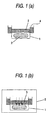
- the water vapor transmission coefficient of a polymer film is obtained on the basis of a water vapor transmission rate measured in accordance with "Testing Methods for Determination of the Water Vapor Transmission Rate of Moisture-proof Packaging Materials" [JIS-Z0208-1976] in the following manner. Namely, as shown in Fig. 1 (a), 5 g of calcium chloride is introduced as a desiccant 2 into a cup 1 having an effective transmission sectional area of 28.27 cm 2 . Then the cup 1 is coated with a polymer film 3 and sealed by using white bees wax pellets as a sealing wax 4.
- the polymer film 3 employed in this case is one formed by casting a polymer solution onto a Petri dish made of Teflon and drying under reduced pressure (i.e., a cast method) and having a thickness of from 0.1 to 0.03 mm.
- the cup coated with the polymer film 3 is allowed to stand in a glove box 5 (temperature: 20 ⁇ 0.1 °C, humidity: 90 ⁇ 2 %).
- the humidity in this glove box 5 is controlled by using an aqueous solution of a compound which is commonly used for controlling humidity (i.e., phosphoric acid or glycerol).
- a compound which is commonly used for controlling humidity i.e., phosphoric acid or glycerol.
- the cup 1 coated with the polymer film 3 is weighed with the passage of time. After the cup 1 is allowed to stand for 20 hours so as to attain the stationary state, it is weighed at intervals of 1.5 hours.
- the cup 1 When the cup 1 is allowed to stand in the glove box 5, namely, the weight of the cup is increased during the first several hours due to both of the water vapor transmission through the polymer film 3 and the moisture adsorbed by the polymer film 3 per se. After 20 hours, however, the weight of the cup 1 is changed exclusively by the water vapor transmission through the polymer film 3. Therefore, the cup is weighed at definite intervals (1.5 hours) after allowing to stand for 20 hours.
- the weight gain is plotted against time and the water vapor transmission rate J (g ⁇ m -2 ⁇ hr -1 ) of the polymer film 3 of the corresponding thickness is determined from the slope of the line thus obtained.
- polymer films differing in thickness from each other are also evaluated in the same manner and the water vapor transmission rate J of each polymer film is determined.
- the water vapor transmission rate is plotted against the reciprocal of film thickness and thus the water vapor transmission coefficient P (g ⁇ m -1 ⁇ hr -1 ) is determined from the slope of the line thus obtained.
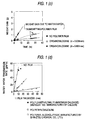
- Fig. 1 (c) shows an example with the use of organosiloxane (organosiloxane A-2 described in EP-A-640643 corresponding to JP-A-7-133352; the term "JP-A” as used herein means an "unexamined published Japanese patent application”) films having a thickness of 0.036 mm and 0.601 mm as the polymer film.
- Fig. 1 (d) shows another example with the use of poly(dimethyldiallylammonium chloride) (Merquat 100: manufactured by Calgon), polyethyloxazoline (molecular weight: 50,000) and polyvinyl alcohol (PA24, manufactured by Shin-Etsu Chemical Co., Ltd.) as the polymer film.
- organosiloxane organosiloxane A-2 described in EP-A-640643 corresponding to JP-A-7-133352; the term "JP-A" as used herein means an "unexamined published Japanese patent application” films having
- a polyvinyl alcohol containing polymer capable of thus forming a polymer film with a water vapor transmission coefficient of 0.8 x 10 -3 g ⁇ m -1 ⁇ hr -1 or less.
- the water vapor transmission rate of water into the hair can be sufficiently controlled in the process of the absorption of water by the hair, which makes it possible to retain the hair-set for a prolonged period of time.
- the ionic group-modified polyvinyl alcohol containing polymer makes it possible not only to regulate the water vapor transmission coefficient of the polymer film at a low level but also to improve the adhesion of the film to the hair. In addition, flaking can be prevented and further a soft touch can be imparted to the hair thereby. In this case, the effects of the modification can be achieved even though the polymer has been modified by the ionic group only at a low ratio. On the other hand, excessive modification is not preferable, since it would cause an increase in the water vapor transmission coefficient of the polymer film. Accordingly, it is preferable that the ratio of the monomers containing the ionic group is not more than 50 % by mol based on the total monomers.
- Such the polymer containing an ionic group and capable of forming a polymer film with a low water vapor transmission coefficient can be obtained as a copolymer of vinyl alcohol with a monomer containing the ionic group.
- the ionic group include carboxylic acid, such as acrylic acid, methacrylic acid, maleic acid or itaconic acid, and methacryloylaminopropyltrimethylammonium chloride,
- the polymer to be used is one having a degree of polymerization of at least 500. It is not preferable that the degree of polymerization is excessively low, since such the polymer is liable to be plasticized under a high humidity so as to lower the set-retaining power.
- the polymer to be used in the present invention is one capable of forming a polymer film which has a modulus of elasticity (20 °C, relative humidity 65 %) ranging from 0.01 x 10 7 Pa to 7 x 10 7 Pa, preferably from 0.01 x 10 7 Pa to 5 x 10 7 Pa. It has been a practice to use a polymer having a high modulus of film elasticity in order to strengthen the set-retaining power of a hair treatment. In the present invention, however, it is not necessary to elevate the modulus of film elasticity in order to strengthen the set-retaining power, since the set-retaining power has been improved by controlling the water vapor transmission coefficient of the film as described above.
- a high modulus of film elasticity makes the hair stiff and deteriorates the natural feel of the styled hair. Therefore, in the present invention a polymer forming a film with a relatively low modulus of elasticity of not more than 7 x 10 7 , preferably, not more than 5 x 10 7 is used.
- the modulus of film elasticity is excessively low, on the other hand, the polymer film is too soft for sustaining the hairstyle, even though the polymer can form a film having a very low water vapor transmission coefficient.
- a polymer capable of forming a polymer film with a modulus of film elasticity falling within the range as defined above is used.
- use can be made of either one of the polymers capable of forming a polymer film with a low water vapor transmission coefficient or a combination of two or more of the same.
- the content of the polymer component is at least 0.1 % by weight of the stock solution of the composition. In general, the upper limit of the content thereof is about 80 % by weight.
- the hair treatment composition may further contain various components.
- it may contain polymers (e.g., polyethylene glycol or polymeric silicone ), oils (hydrocarbon oil, ester oil or silicone oil ) or fats.
- oils hydrocarbon oil, ester oil or silicone oil
- it may contain solvents, anionic, cationic or nonionic surfactants, higher alcohols, in order to solubilize or emulsify the hair treatment composition.
- it may contain various additives commonly employed in cosmetics (thickener, chelating agent, pearling agent, perfume, coloring matter, UV absorber, foaming agent or propellant, ), if needed.
- the hair treatment composition may be processed into various forms (hair foam, hair spray, hair set mist, hair set gel, color lotion, set lotion or blow lotion, ) without restriction.
- a set lotion was prepared by mixing the components as shown in Table 1 with the use of each polymer as listed in Table 2 as the polymer components.
- Composition 1 Component wt. % Polymer 2 Ethanol 49 Purified water 49
- the water vapor transmission coefficient was determined by forming a film by the cast method and measuring its water vapor transmission tate in accordance with JIS-Z0208-1976 at a temperature of 20 °C under a relative humidity of 90 %.
- the modulus of film elasticity was determined by using the film formed by the cast method similar to the determination of the water vapor transmission coefficient as a sample (30 mm in length, 5 mm in width, 0.3 mm in thickness). The measurement was performed by using a universal tensile compression tester ("Model TCM-20S", manufactured by Shinko Tsushin Kogyo) at 20 °C under a relative humidity of 65 % at a crosshead speed of 20 mm/min.
- the set lotions of the above Examples and Comparative Examples were evaluated in (i) set-retaining power in moist state; (ii) flaking; and (iii) softness; each in the following manner.
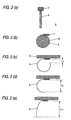
- one end of hair 9 (a virgin hair bundle of a Japanese female, 10 cm in length, 1 g) was sandwiched between two acrylic plates and fixed with an adhesive, while another end was made free so as to prepare a plate tress 8.
- the plate tress 8 was immersed in deionized water for 5 minutes and then the moisture was sufficiently eliminated with towel.
- each of the set lotions of Examples and Comparative Examples was applied onto the hair 9 of the plate tress 8 at a bathing ratio (hair : set lotion) of 1 : 0.2.
- the hair 9 was wound around a glass rod 10 (4 cm in diameter) and allowed to stand at 20 °C under a relative humidity of 65 % for 24 hours.
- the set-retaining power in the moist state was evaluated in 3 grades as specified below.
- a sheet tress (a virgin hair bundle of a Japans female, 10 cm in length, 1 g) was prepared in the same manner as described above. Then each of the set lotions of Examples and Comparative Examples was applied onto the hair of the plate tress at a bathing ratio (hair : set lotion) of 1 : 0.2. After spontaneously drying, the plate tress was combed 5 times and then flaking was evaluated with the naked eye by skilled panelists in 4 grades as specified below. No or scarcely conspicuous flaking Excellent (E). Somewhat flaking but not conspicuous Good (G). Somewhat conspicuous flaking Fair (F). Conspicuous flaking Bad (B).
- a sheet tress (a virgin hair bundle of a Japans female, 10 cm in length, 1 g) was prepared in the same manner as described above. Then each of the set lotions of Examples and Comparative Examples was applied onto the hair of the plate tress at a bathing ratio (hair : set lotion) of 1 : 0.2. After spontaneously drying, the softness of the plate tress was evaluated by touching by skilled panelists in 4 grades as specified below. Soft Excellent (E). Somewhat soft Good (G). Moderate Fair (F). Hard Bad (B). Ex. no. Set-retaining power in moist state Flaking Softness Ex. 1 G E E Ex. 2 G E E Ex. 3 G E E C. Ex. 1 B B G C. Ex. 2 B B B C. Ex. 3 B F B C. Ex. 4 B G B
- the set lotions of Examples each containing a polymer capable of forming a polymer film with a water vapor transmission coefficient of 0.8 x 10 -3 g ⁇ m -1 ⁇ hr -1 or less, make it possible to achieve a good set-retaining power and to impart a soft texture.
- composition 2 A hair set foam stock solution of the composition 2 as specified in Table 4 was prepared by mixing the components.
- Component wt. % Anionized polyvinyl alcohol ("HL12E”, manufactured by Kuraray) 3 N-coconut oil fatty acid acyl-L-glutamic acid triethanolamine ("Amisoft CT12", manufactured by Ajinomoto) 0.3 Propylene glycol 0.1 ⁇ -Monoisostearyl glyceryl ether 0.1 8-Acetyl sucrose-modified alcohol 10.0 Perfume trace Deionized water the balance
- This hair set foam was evaluated in (i) set-retaining power in moist state; (ii) flaking; and (iii) softness; each in the same manner as described in Example 1. As a result, it showed a setting efficiency of 75 %, which indicated that it had a good set-retaining power.
- the flaking and softness were both evaluated as E (excellent).
- composition 3 as specified in Table 5 was prepared by mixing the components.
- Component wt. % Anionized polyvinyl alcohol (HL12E manufactured by Kuraray) 2 ⁇ -Monoisostearyl glyceryl ether 0.1 Squalane 0.2 Propylene glycol 0.5 Deionized water 20.0 Perfume trace 8-Acetyl sucrose modified alcohol the balance
- This hair set spray was evaluated in (i) set-retaining power in moist state; (ii) flaking; and (iii) softness; each in the same manner as described in Example 1. As a result, it showed a setting efficiency of 77 %, which indicated that it had a good set-retaining power.
- the flaking and softness were both evaluated as E (excellent).
- composition 4 as specified in Table 6 was prepared by mixing the components.
- Component wt. % Anionized polyvinyl alcohol (M115 manufactured by Kuraray) [water vapor transmission coefficient: 0.11 x 10 -3 g ⁇ m -1 ⁇ hr -1 modulus of film elasticity: 7.0 x 10 7 Pa] 0.5 Anionized polyvinyl alcohol ("HL12E", manufactured by Kuraray) 3 Carboxyvinyl polymer 1.0 Triethanolamine (89 %) 1.2 ⁇ -Monoisostearyl glyceryl ether 0.1 Propylene glycol 1.0 Methyl p-hydroxybenzoate 0.2 Perfume trace Deionized water the balance
- the stock solution and the hair gel thus obtained were evaluated in (i) set-retaining power in moist state; (ii) flaking; and (iii) softness; each in the same manner as described in Example 1. As a result, it showed a setting efficiency of 80 %, which indicated that it had a good set-retaining power.
- the flaking and softness were both evaluated as E (excellent).
- an excellent set-retaining power can be imparted to the hair while maintaining the natural texture of the hair.
Landscapes
- Life Sciences & Earth Sciences (AREA)
- Health & Medical Sciences (AREA)
- Animal Behavior & Ethology (AREA)
- General Health & Medical Sciences (AREA)
- Public Health (AREA)
- Veterinary Medicine (AREA)
- Birds (AREA)
- Epidemiology (AREA)
- Chemical & Material Sciences (AREA)
- Dispersion Chemistry (AREA)
- Cosmetics (AREA)
Claims (5)
- Verwendung eines Polymers mit einer ionischen Gruppe, umfassend Polyvinylalkohol, worin die ionische Gruppe ausgewählt ist aus Carbonsäure und Methacryloylaminopropyltrimethylammoniumchlorid und worin das Polymer in der Lage ist, einen Polymerfilm mit einem Wasserdampf-Transmissionskoeffizienten bei einer Temperatur von 20°C unter einer relativen Feuchtigkeit von 90% von 0,8 x 10⁻³ g x m-1 x h-1 oder weniger zu bilden, worin der Polymerfilm einen Modul der Filmelastizität bei 20°C und einer relativen Feuchtigkeit von 65% im Bereich von 0,01 x 10⁷ Pa bis 7 x 10⁷ Pa aufweist, für eine Haarbehandlungszusammensetzung.
- Verwendung nach Anspruch 1, worin das Verhältnis eines Monomers mit einer ionischen Gruppe zu den Gesamtmonomeren, die das Polymer ausmachen, 50 Mol-% oder weniger ist.
- Verwendung nach Anspruch 1 oder 2, worin das Polymer einen Polymerisationsgrad von wenigstens 500 hat.
- Verwendung nach einem der Ansprüche 1 bis 3, worin der Polymerfilm einen Elastizitätsmodul im Bereich von 0,01 x 10⁷ Pa bis 5 x 10⁷ Pa hat.
- Verwendung nach einem der Ansprüche 1 bis 4, worin das Polymer ein statistisches Copolymer aus Vinylalkohol und Itaconsäure ist.
Applications Claiming Priority (3)
| Application Number | Priority Date | Filing Date | Title |
|---|---|---|---|
| JP30378595 | 1995-10-28 | ||
| JP30378595A JP3528373B2 (ja) | 1995-10-28 | 1995-10-28 | 毛髪処理組成物 |
| JP303785/95 | 1995-10-28 |
Publications (3)
| Publication Number | Publication Date |
|---|---|
| EP0773015A2 EP0773015A2 (de) | 1997-05-14 |
| EP0773015A3 EP0773015A3 (de) | 1998-11-25 |
| EP0773015B1 true EP0773015B1 (de) | 2004-01-07 |
Family
ID=17925268
Family Applications (1)
| Application Number | Title | Priority Date | Filing Date |
|---|---|---|---|
| EP96117107A Expired - Lifetime EP0773015B1 (de) | 1995-10-28 | 1996-10-24 | Haarpflegemittel |
Country Status (6)
| Country | Link |
|---|---|
| US (1) | US5985254A (de) |
| EP (1) | EP0773015B1 (de) |
| JP (1) | JP3528373B2 (de) |
| CN (1) | CN1117557C (de) |
| DE (1) | DE69631279T2 (de) |
| TW (1) | TW516963B (de) |
Families Citing this family (4)
| Publication number | Priority date | Publication date | Assignee | Title |
|---|---|---|---|---|
| US6372601B1 (en) | 1998-09-03 | 2002-04-16 | Micron Technology, Inc. | Isolation region forming methods |
| US6514918B1 (en) | 2000-08-18 | 2003-02-04 | Johnson & Johnson Consumer Companies, Inc. | Viscous, mild, and effective cleansing compositions |
| DE102004046223A1 (de) * | 2004-09-22 | 2006-03-23 | Henkel Kgaa | Pflegende Haarbehandlungsmittel mit Polyvinylalkohol |
| JP2012036130A (ja) * | 2010-08-06 | 2012-02-23 | Kao Corp | 整髪方法 |
Family Cites Families (13)
| Publication number | Priority date | Publication date | Assignee | Title |
|---|---|---|---|---|
| DE2404046C3 (de) * | 1974-01-29 | 1984-07-26 | Henkel KGaA, 4000 Düsseldorf | Verwendung von Carboxyl- bzw. Carboxylat- und Hydroxylgruppen aufweisenden Polymeren als Hautfeuchthaltemittel |
| JPS57116006A (en) * | 1981-01-09 | 1982-07-19 | Kuraray Co Ltd | Additive for cosmetic |
| LU83350A1 (fr) * | 1981-05-08 | 1983-03-24 | Oreal | Composition destinee au traitement des fibres keratiniques a base de polymere cationique et de polymere anionique a groupements vinylsulfoniques et procede de traitement la mettant en oeuvre |
| US4690817A (en) * | 1983-10-07 | 1987-09-01 | Ici Americas Inc. | Quaternary nitrogen containing polyvinyl alcohol polymers for use in skin conditioning, cosmetic and pharmaceutical formulations |
| EP0141269B1 (de) * | 1983-10-07 | 1989-08-23 | Ici Americas Inc. | Modifizierte Polyvinylalkohol-Polymere |
| US4689217A (en) * | 1983-10-07 | 1987-08-25 | Ici Americas Inc. | Amine and ammonium nitrogen containing polyvinyl alcohol polymers having improved lipophilic properties for use in skin conditioning, cosmetic and pharmaceutical formulations |
| JPS60202103A (ja) * | 1984-03-27 | 1985-10-12 | Kuraray Co Ltd | 化粧料用添加剤 |
| JPS61261341A (ja) * | 1985-05-15 | 1986-11-19 | Nitto Electric Ind Co Ltd | 含水弾性体組成物 |
| GB8618634D0 (en) * | 1986-07-30 | 1986-09-10 | Unilever Plc | Treatment of keratinous fibres |
| JPS6335511A (ja) * | 1986-07-30 | 1988-02-16 | Shiseido Co Ltd | パツク化粧料 |
| US5112886A (en) * | 1986-09-26 | 1992-05-12 | Ici Americas Inc. | Allantoin salts of quaternary nitrogen containing polymers for use in skin conditioning, cosmetic and pharmaceutical formulations |
| US5338541A (en) * | 1992-10-15 | 1994-08-16 | Calgon Corporation | Dual cationic terpolymers providing superior conditioning properties in hair, skin and nail care products |
| DE69424100T2 (de) | 1993-08-10 | 2000-10-12 | Kao Corp | Organopolysiloxane und ein Verfahren zum Haarfestigen unter Verwendung derselben |
-
1995
- 1995-10-28 JP JP30378595A patent/JP3528373B2/ja not_active Expired - Lifetime
-
1996
- 1996-10-21 US US08/734,263 patent/US5985254A/en not_active Expired - Lifetime
- 1996-10-22 TW TW085112883A patent/TW516963B/zh not_active IP Right Cessation
- 1996-10-24 DE DE1996631279 patent/DE69631279T2/de not_active Expired - Lifetime
- 1996-10-24 EP EP96117107A patent/EP0773015B1/de not_active Expired - Lifetime
- 1996-10-28 CN CN96123358A patent/CN1117557C/zh not_active Expired - Fee Related
Also Published As
| Publication number | Publication date |
|---|---|
| EP0773015A3 (de) | 1998-11-25 |
| JP3528373B2 (ja) | 2004-05-17 |
| CN1117557C (zh) | 2003-08-13 |
| CN1159911A (zh) | 1997-09-24 |
| US5985254A (en) | 1999-11-16 |
| EP0773015A2 (de) | 1997-05-14 |
| DE69631279T2 (de) | 2004-11-18 |
| TW516963B (en) | 2003-01-11 |
| JPH09124448A (ja) | 1997-05-13 |
| DE69631279D1 (de) | 2004-02-12 |
Similar Documents
| Publication | Publication Date | Title |
|---|---|---|
| RU2183449C2 (ru) | Композиция для укладки волос, содержащая полимер с особыми характеристиками и пленкообразующий ионный полимер | |
| AU594345B2 (en) | Hair styling mousse | |
| KR100375576B1 (ko) | 모발화장재료 | |
| US6139849A (en) | Cosmetic composition for fixing and sheen | |
| US5620684A (en) | Cosmetic compositions for maintaining hairstyle possessing improved fixing power | |
| US8529878B2 (en) | Method for strengthening keratinous fibers | |
| US4059688A (en) | Hair fixing compositions containing fluoroterpolymers and method | |
| NZ243273A (en) | Hair care compositions comprising ampholytic terpolymers | |
| AU3772089A (en) | Autophobic silicone copolyols in hairspray compositions | |
| WO2009079288A1 (en) | Hair styling compositions and methods of use | |
| EP2355792A1 (de) | Klare haargelfestiger | |
| WO2015022259A1 (en) | Composition comprising a silane and a particular thickening polymer | |
| JP2007217314A (ja) | 霧状毛髪化粧料 | |
| RU2153870C2 (ru) | Композиция для обработки кератиновых волокон и способ обработки кератиновых волокон | |
| JP2017512230A (ja) | ヘアスタイリングへの使用に好適なポリマー | |
| CN100423706C (zh) | 含阴离子聚合物的头发定型组合物 | |
| US5663261A (en) | Film-forming resin and hair care cosmetic containing the same | |
| EP0773015B1 (de) | Haarpflegemittel | |
| BR9914447B1 (pt) | composição estilizadora de cabelo. | |
| DE69717695T2 (de) | Zusammensetzung, die ein fixierendes Polymer, ein C5-C8-n-Alkan und Aceton enthält | |
| US6998114B2 (en) | Hair grooming formulations and methods for the use thereof | |
| US20040146471A1 (en) | Hair treatment composition containing a combination of three different film-forming hair-fixing polymers | |
| WO1993014024A1 (en) | Hair care compositions | |
| Rigoletto et al. | Polyquaternium-69: A New Fixative Polymer with Enhanced Styling Benefits | |
| CA2127664A1 (en) | Low molecular weight hair fixative polymers in low voc formulations |
Legal Events
| Date | Code | Title | Description |
|---|---|---|---|
| PUAI | Public reference made under article 153(3) epc to a published international application that has entered the european phase |
Free format text: ORIGINAL CODE: 0009012 |
|
| AK | Designated contracting states |
Kind code of ref document: A2 Designated state(s): DE FR GB |
|
| RHK1 | Main classification (correction) |
Ipc: A61K 7/06 |
|
| PUAL | Search report despatched |
Free format text: ORIGINAL CODE: 0009013 |
|
| AK | Designated contracting states |
Kind code of ref document: A3 Designated state(s): DE FR GB |
|
| 17P | Request for examination filed |
Effective date: 19990315 |
|
| 17Q | First examination report despatched |
Effective date: 20020412 |
|
| GRAH | Despatch of communication of intention to grant a patent |
Free format text: ORIGINAL CODE: EPIDOS IGRA |
|
| GRAS | Grant fee paid |
Free format text: ORIGINAL CODE: EPIDOSNIGR3 |
|
| GRAA | (expected) grant |
Free format text: ORIGINAL CODE: 0009210 |
|
| AK | Designated contracting states |
Kind code of ref document: B1 Designated state(s): DE FR GB |
|
| REG | Reference to a national code |
Ref country code: GB Ref legal event code: FG4D |
|
| REF | Corresponds to: |
Ref document number: 69631279 Country of ref document: DE Date of ref document: 20040212 Kind code of ref document: P |
|
| ET | Fr: translation filed | ||
| PLBE | No opposition filed within time limit |
Free format text: ORIGINAL CODE: 0009261 |
|
| STAA | Information on the status of an ep patent application or granted ep patent |
Free format text: STATUS: NO OPPOSITION FILED WITHIN TIME LIMIT |
|
| 26N | No opposition filed |
Effective date: 20041008 |
|
| PGFP | Annual fee paid to national office [announced via postgrant information from national office to epo] |
Ref country code: DE Payment date: 20121017 Year of fee payment: 17 Ref country code: FR Payment date: 20121018 Year of fee payment: 17 |
|
| PGFP | Annual fee paid to national office [announced via postgrant information from national office to epo] |
Ref country code: GB Payment date: 20121024 Year of fee payment: 17 |
|
| REG | Reference to a national code |
Ref country code: DE Ref legal event code: R119 Ref document number: 69631279 Country of ref document: DE |
|
| GBPC | Gb: european patent ceased through non-payment of renewal fee |
Effective date: 20131024 |
|
| REG | Reference to a national code |
Ref country code: DE Ref legal event code: R079 Ref document number: 69631279 Country of ref document: DE Free format text: PREVIOUS MAIN CLASS: A61K0007060000 Ipc: A61K0008810000 |
|
| PG25 | Lapsed in a contracting state [announced via postgrant information from national office to epo] |
Ref country code: GB Free format text: LAPSE BECAUSE OF NON-PAYMENT OF DUE FEES Effective date: 20131024 |
|
| REG | Reference to a national code |
Ref country code: FR Ref legal event code: ST Effective date: 20140630 |
|
| PG25 | Lapsed in a contracting state [announced via postgrant information from national office to epo] |
Ref country code: FR Free format text: LAPSE BECAUSE OF NON-PAYMENT OF DUE FEES Effective date: 20131031 Ref country code: DE Free format text: LAPSE BECAUSE OF NON-PAYMENT OF DUE FEES Effective date: 20140501 |
|
| REG | Reference to a national code |
Ref country code: DE Ref legal event code: R119 Ref document number: 69631279 Country of ref document: DE Effective date: 20140501 Ref country code: DE Ref legal event code: R079 Ref document number: 69631279 Country of ref document: DE Free format text: PREVIOUS MAIN CLASS: A61K0007060000 Ipc: A61K0008810000 Effective date: 20140728 |